


In today’s fast-paced world, the minimalist living room has emerged as a sanctuary of calm and clarity. This design philosophy embraces the principle that less is more, creating spaces that breathe with intention and purpose. A thoughtfully designed minimalist living room eliminates visual clutter while maximizing functionality, allowing each carefully chosen element to shine. The result is an environment that promotes mental clarity, reduces stress, and provides a peaceful retreat from daily chaos.
Minimalist interior design goes far beyond simply removing furniture or decorative items. It represents a deliberate approach to spatial composition, where every piece serves a purpose and contributes to the overall harmony. The style celebrates quality over quantity, emphasizing clean lines, neutral palettes, and natural materials. Whether you’re drawn to Scandinavian simplicity, Japanese zen aesthetics, or contemporary industrial minimalism, this design approach can transform your living space into a sophisticated haven that reflects your refined taste and lifestyle priorities.
This comprehensive guide explores ten distinctive minimalist living room concepts, each showcasing unique interpretations of this timeless design philosophy. From monochromatic schemes to natural material combinations, these spaces demonstrate how strategic restraint creates visual impact. You’ll discover practical design tips, material selections, and lighting strategies that will help you achieve the perfect balance between simplicity and style in your own home.
1. Serene Grey and White Foundation
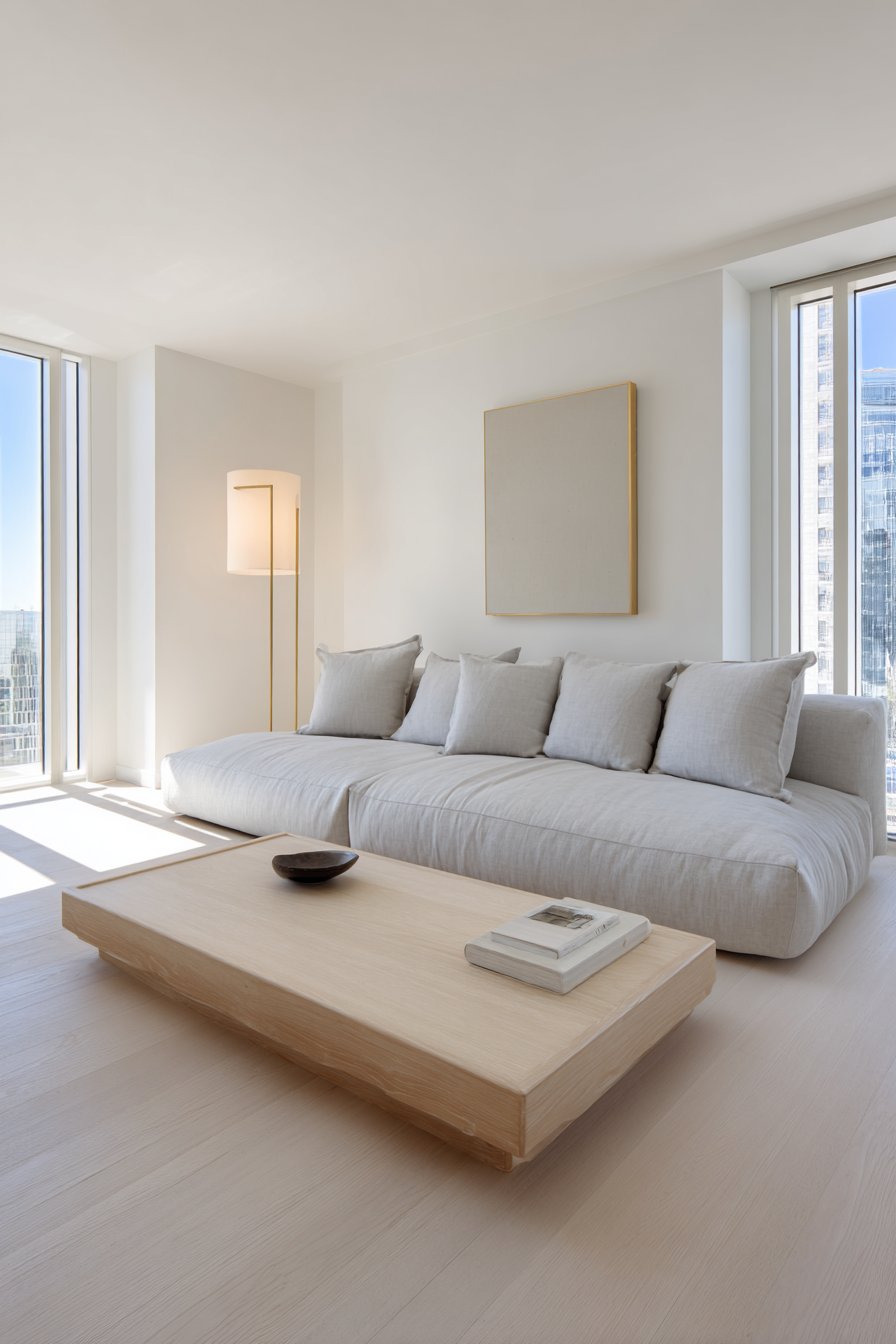
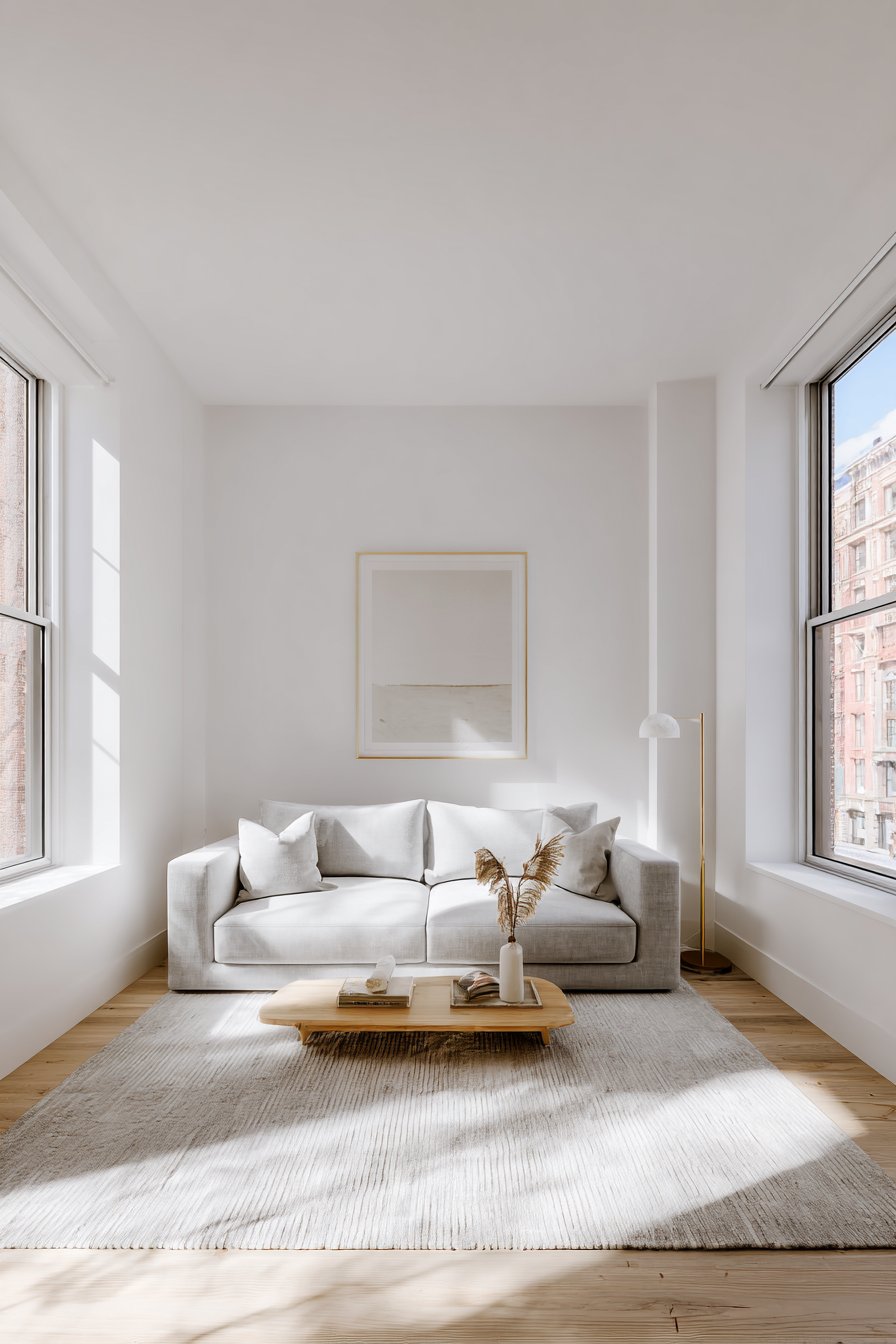
The beauty of a minimalist living room begins with a carefully curated foundation of neutral tones. Picture a low-profile grey linen sofa with impeccably clean lines positioned against pristine white walls. This classic combination creates an immediate sense of tranquility and spaciousness. The grey linen fabric introduces subtle texture without overwhelming the senses, while the white backdrop amplifies natural light throughout the space.
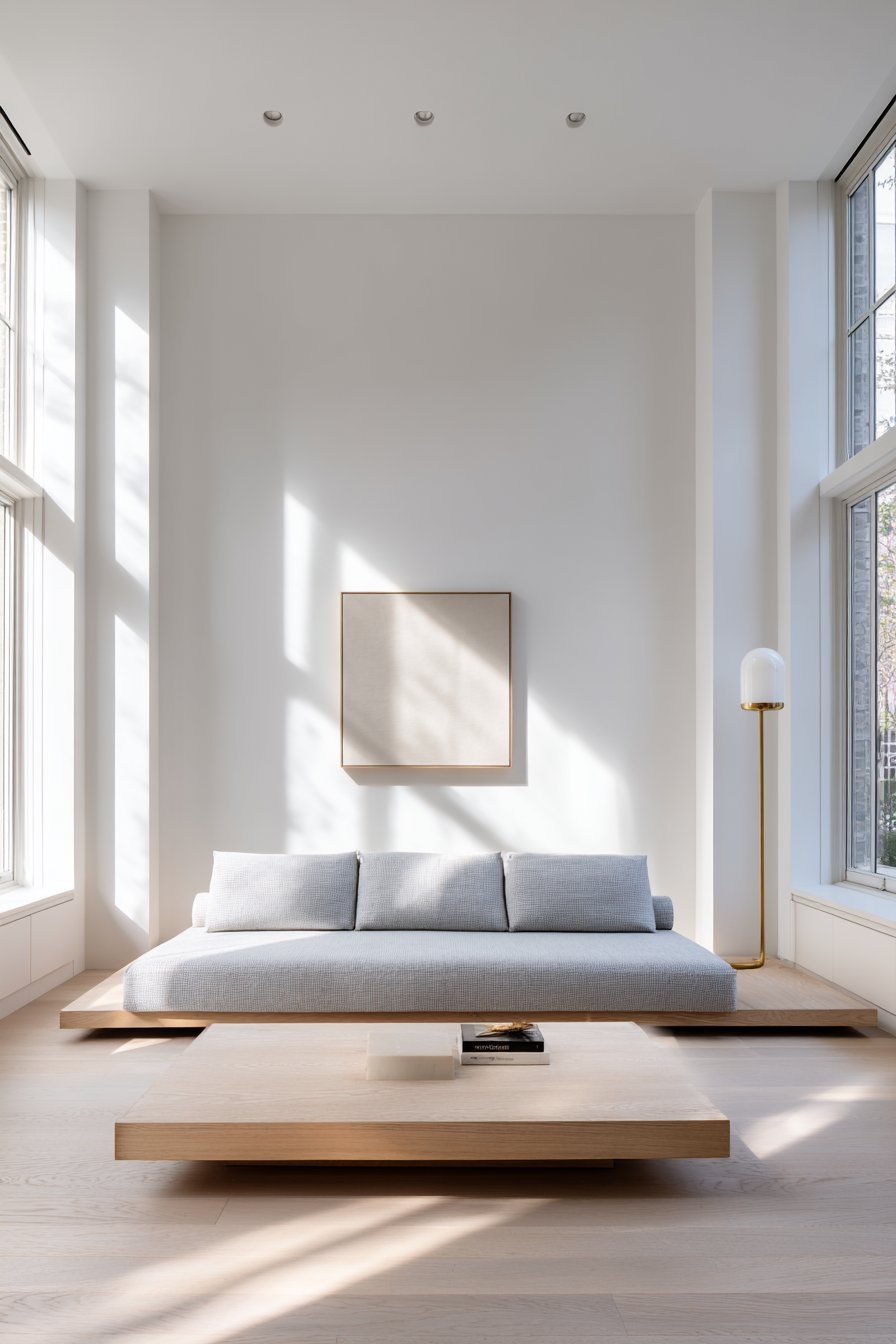
A simple blonde wood coffee table serves as the functional centerpiece, sitting gracefully on light oak hardwood flooring. The warm wood tones prevent the room from feeling too stark or clinical. The natural grain patterns add organic visual interest while maintaining the overall minimalist aesthetic. Only essential elements populate this space: one carefully selected floor lamp with a slim brass stem and white shade provides targeted illumination without cluttering sightlines.
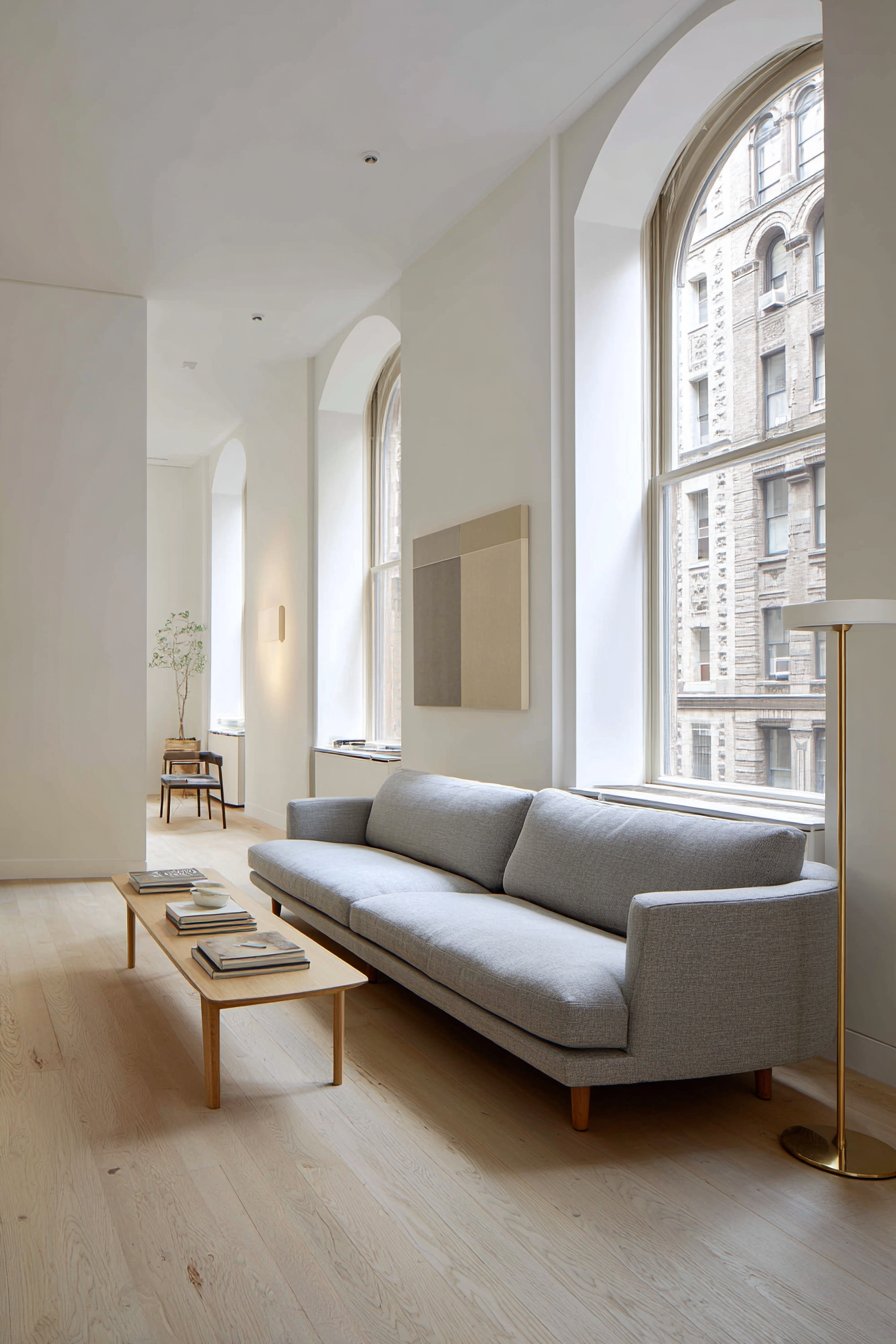
Large windows without treatments become architectural features in their own right. They flood the interior with natural daylight, creating ever-changing patterns of soft shadows that emphasize the room’s uncluttered aesthetic. One piece of abstract art in muted tones hangs on the wall, serving as a thoughtful focal point. The careful use of negative space allows each element to command attention and respect.
Key Design Tips:
- Select furniture with clean, simple silhouettes that won’t date quickly
- Embrace natural light as your primary illumination source during daytime
- Choose one statement piece of art rather than multiple smaller works
- Maintain consistent wood tones throughout the space for visual cohesion
- Allow generous breathing room between furniture pieces for optimal flow
2. Neutral Palette Perfection
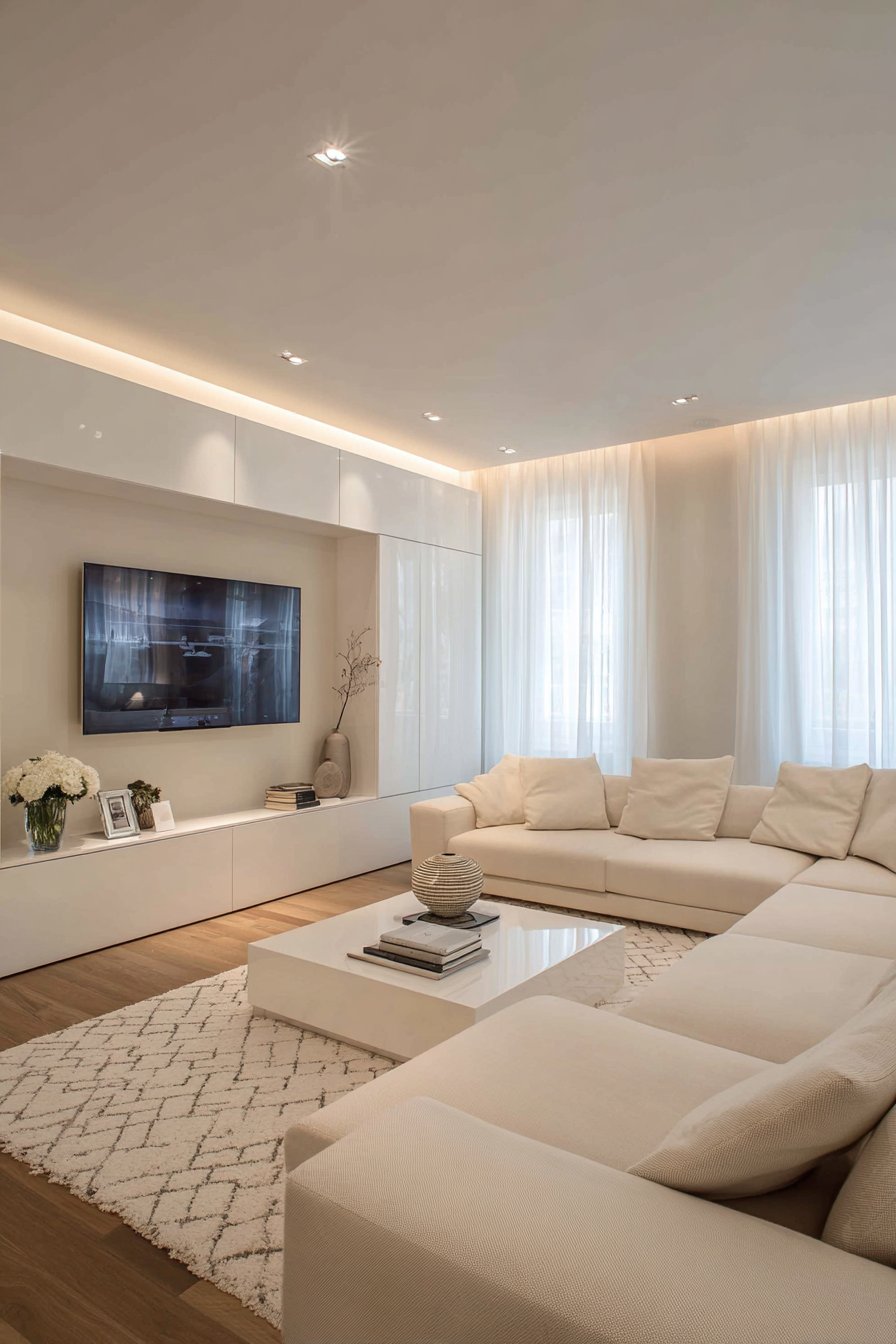
A minimalist living room dominated by whites, beiges, and warm greys creates an envelope of calm sophistication. The streamlined modular sofa in cream fabric offers flexible seating arrangements while maintaining visual simplicity.
Its clean profile and neutral tone allow it to recede into the overall composition rather than demanding attention. Facing the sofa, a concealed media unit features seamless white lacquered doors that hide technology and storage behind perfectly smooth surfaces.
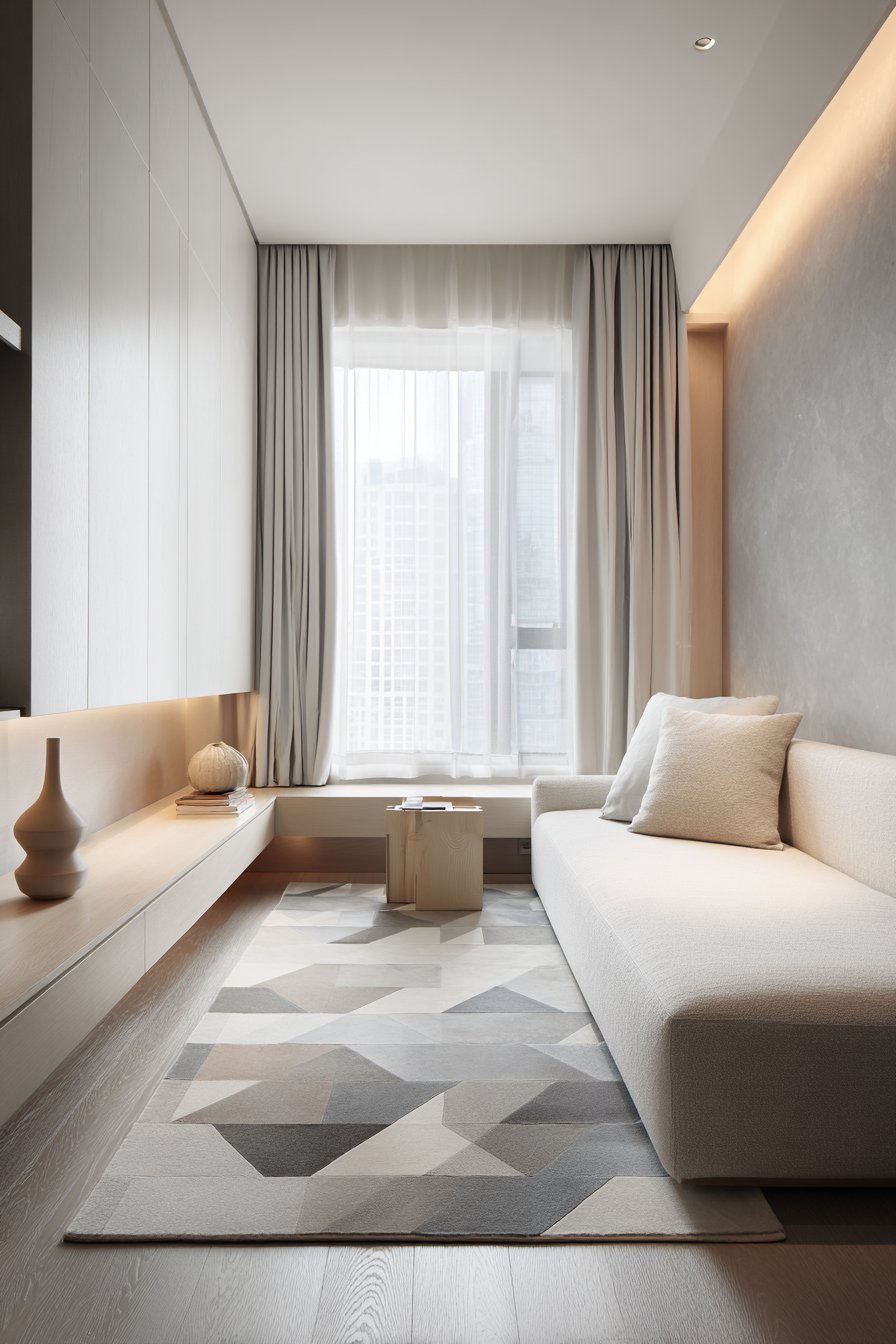
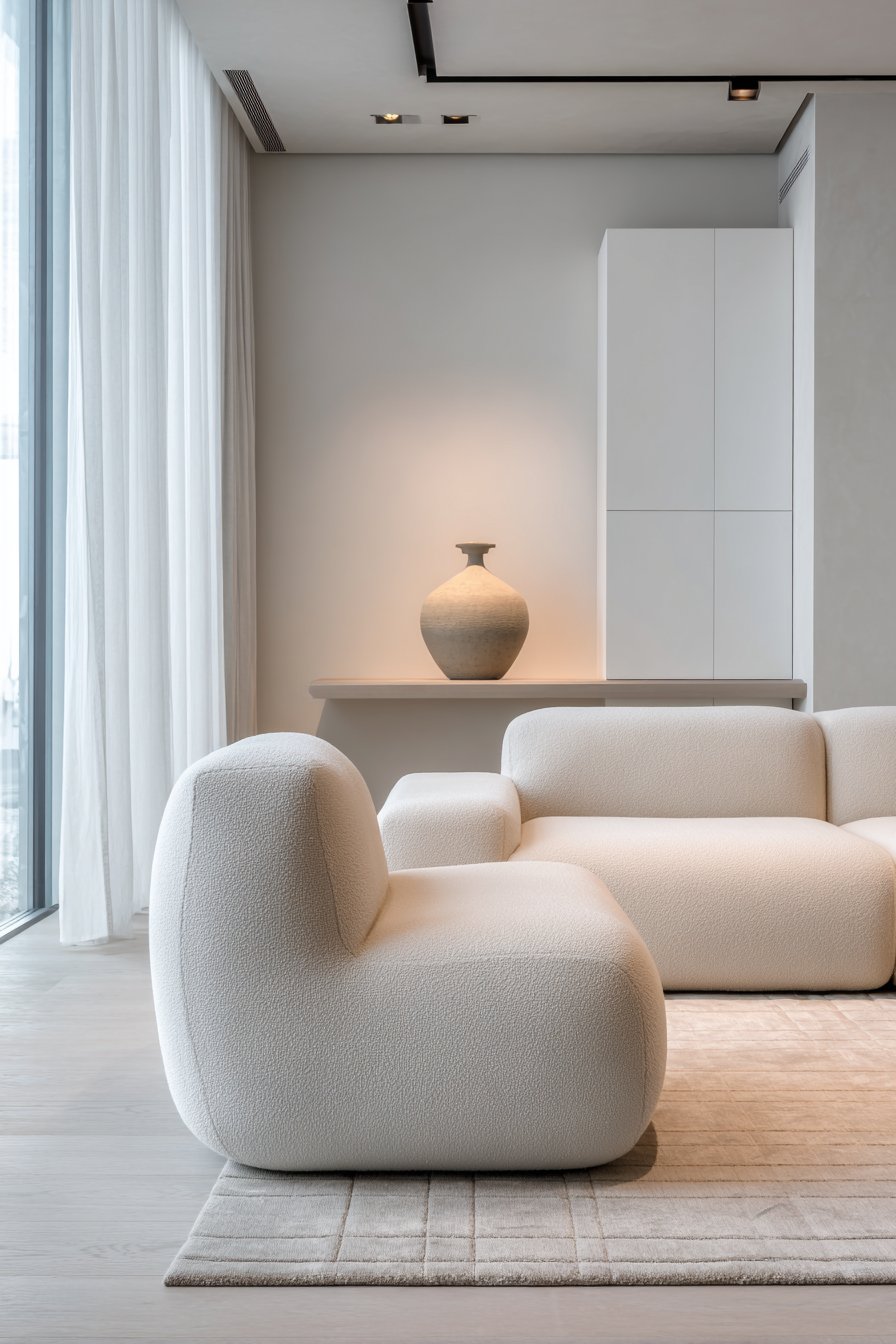
The room’s decoration remains intentionally sparse yet impactful. A single sculptural ceramic vase rests on a simple console table, its organic form providing artistic interest without visual chaos. A geometric wool rug defines the seating area, adding warmth underfoot while introducing subtle pattern through its minimalist design. The rug’s earth tones bridge the cream sofa and white walls, creating color continuity.
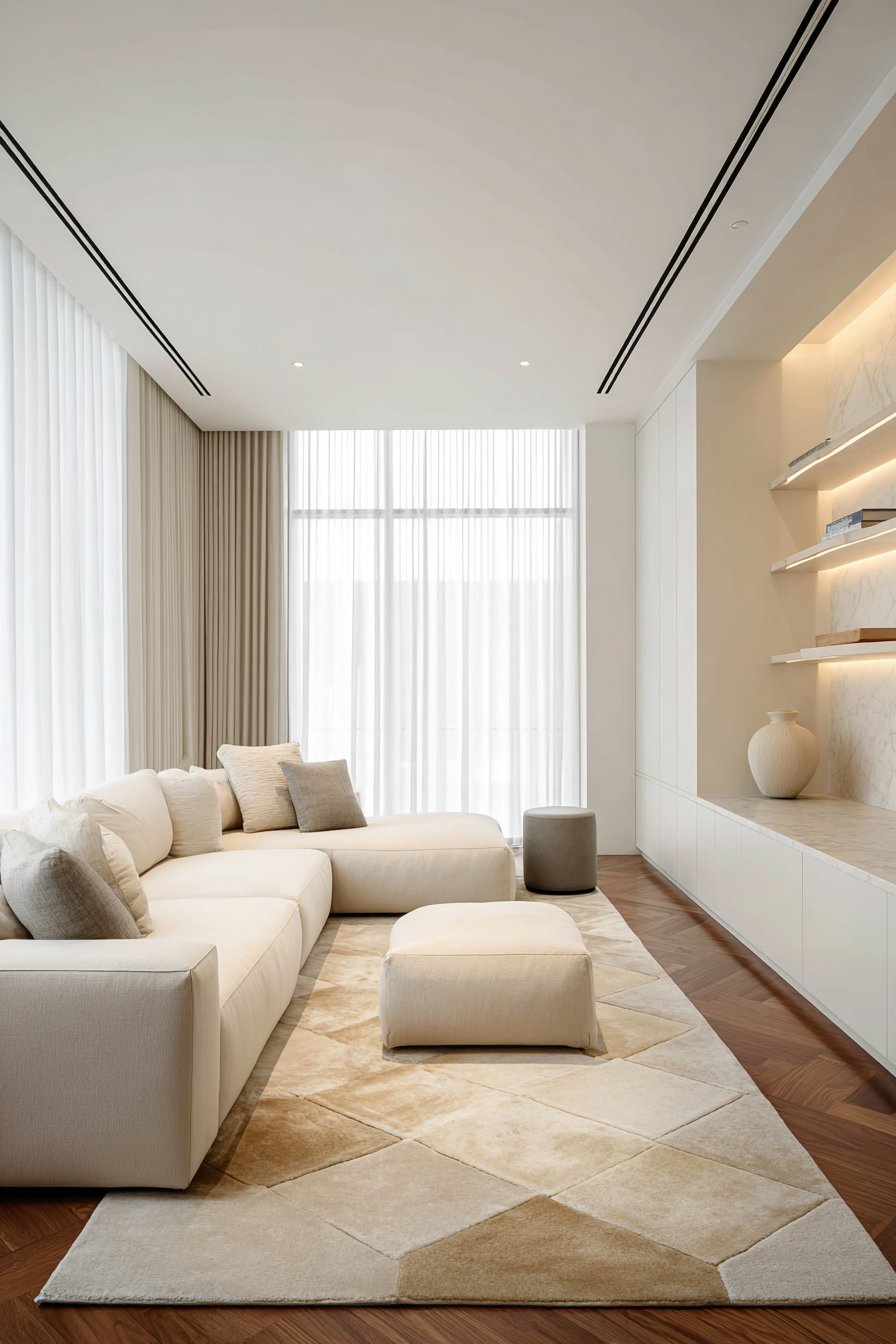
Recessed lighting provides even, unobtrusive illumination that doesn’t interrupt ceiling planes. During daylight hours, sheer linen curtains filter natural light, softening its intensity while maintaining the room’s connection to the outdoors. The layered lighting approach ensures functionality without compromising the minimalist vision. Every surface remains clutter-free, demonstrating disciplined editing and thoughtful organization.
Key Design Tips:
- Invest in concealed storage to maintain clean surfaces and hidden clutter
- Use modular furniture for flexibility without sacrificing minimalist aesthetics
- Select one sculptural object to serve as your decorative focal point
- Layer different shades of neutrals to prevent the space from appearing flat
- Choose furniture with hidden legs or seamless bases for floating visual effect
3. Japanese-Inspired Zen Simplicity
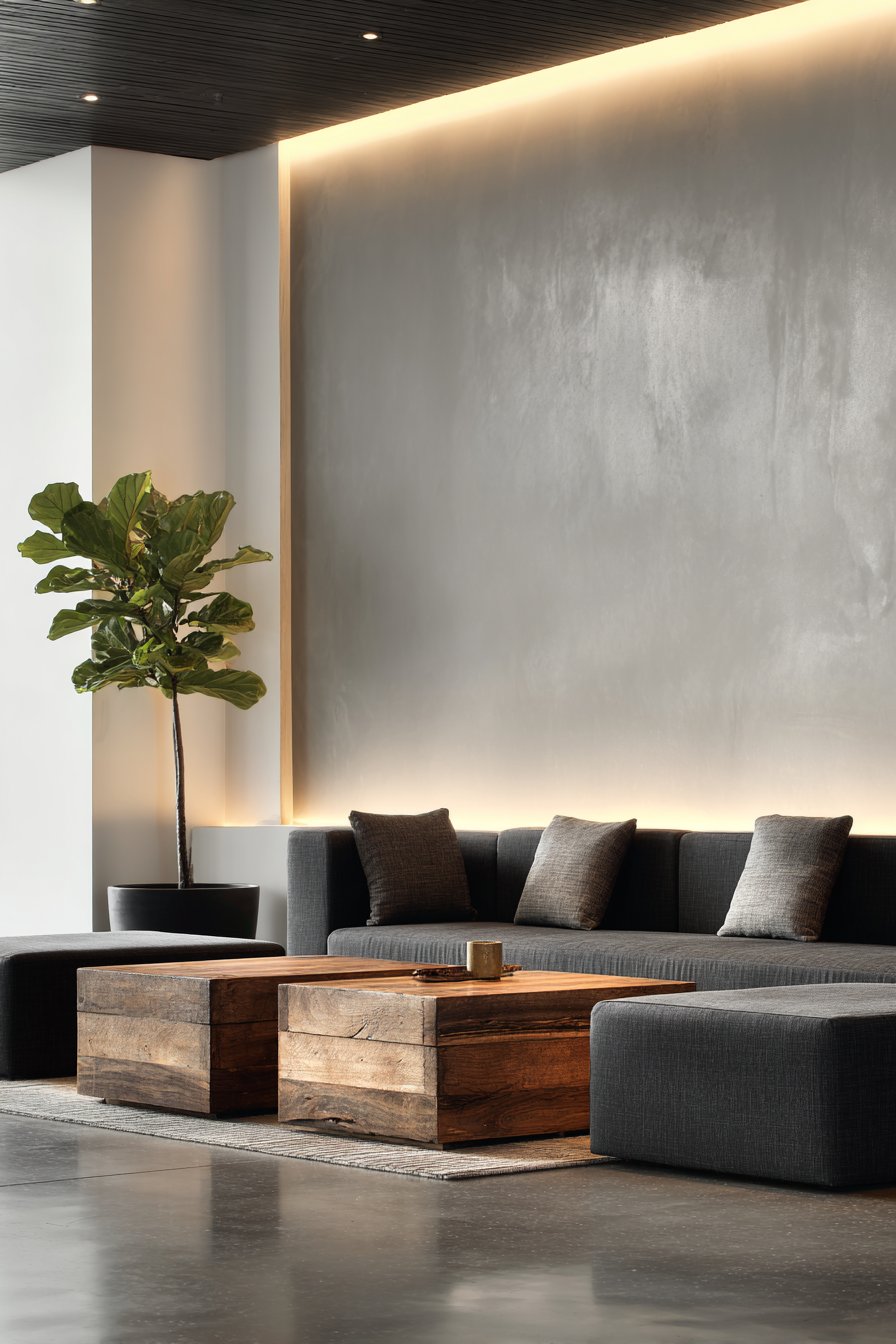
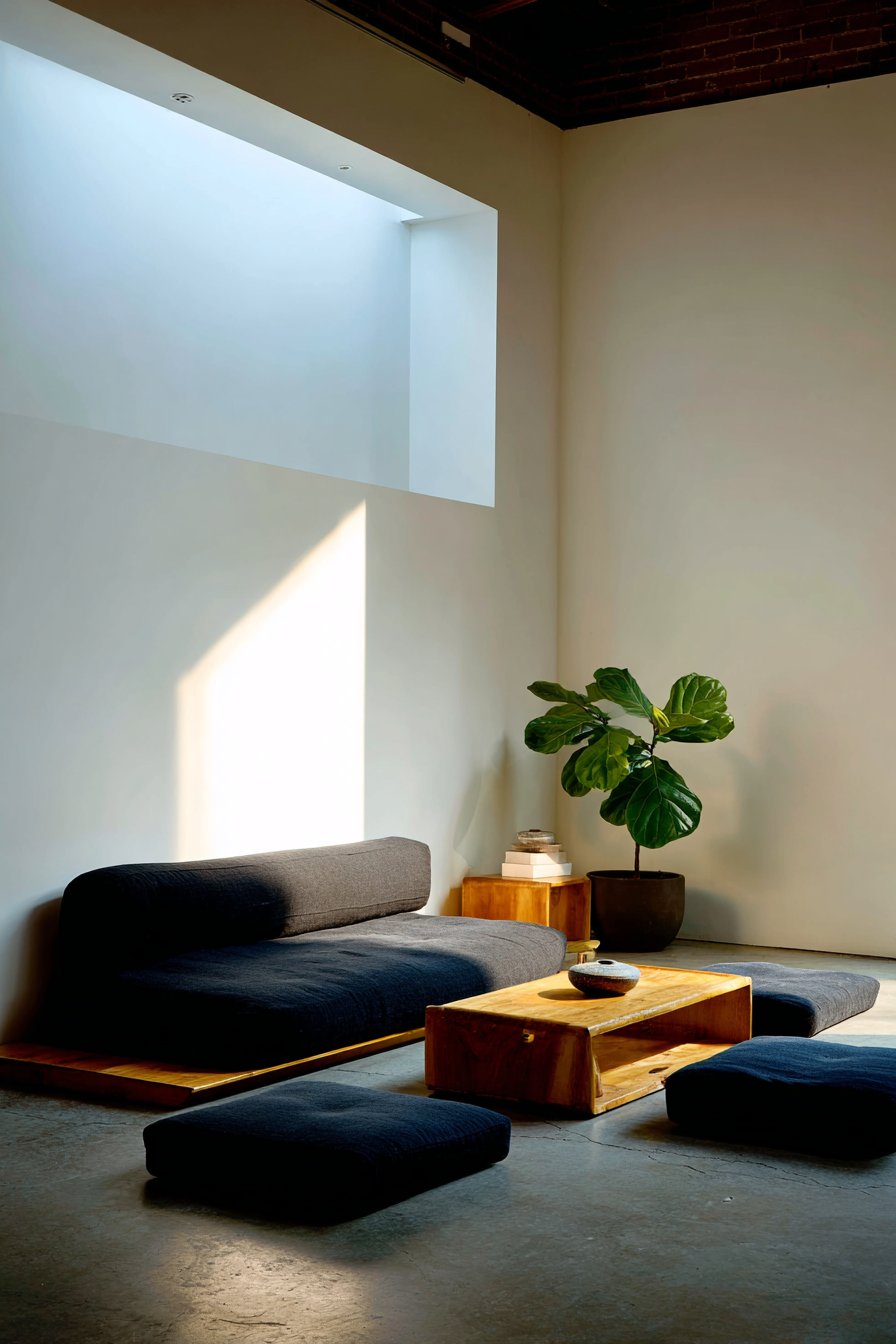
Drawing inspiration from traditional Japanese design principles, this minimalist living room emphasizes low seating and natural materials. A charcoal grey sofa sits close to the ground, accompanied by two cushioned floor seats arranged around a black walnut coffee table.
The visible wood grain tells a story of natural beauty, celebrating the material’s inherent character. This low furniture arrangement creates a grounding effect that encourages relaxation and mindful presence.
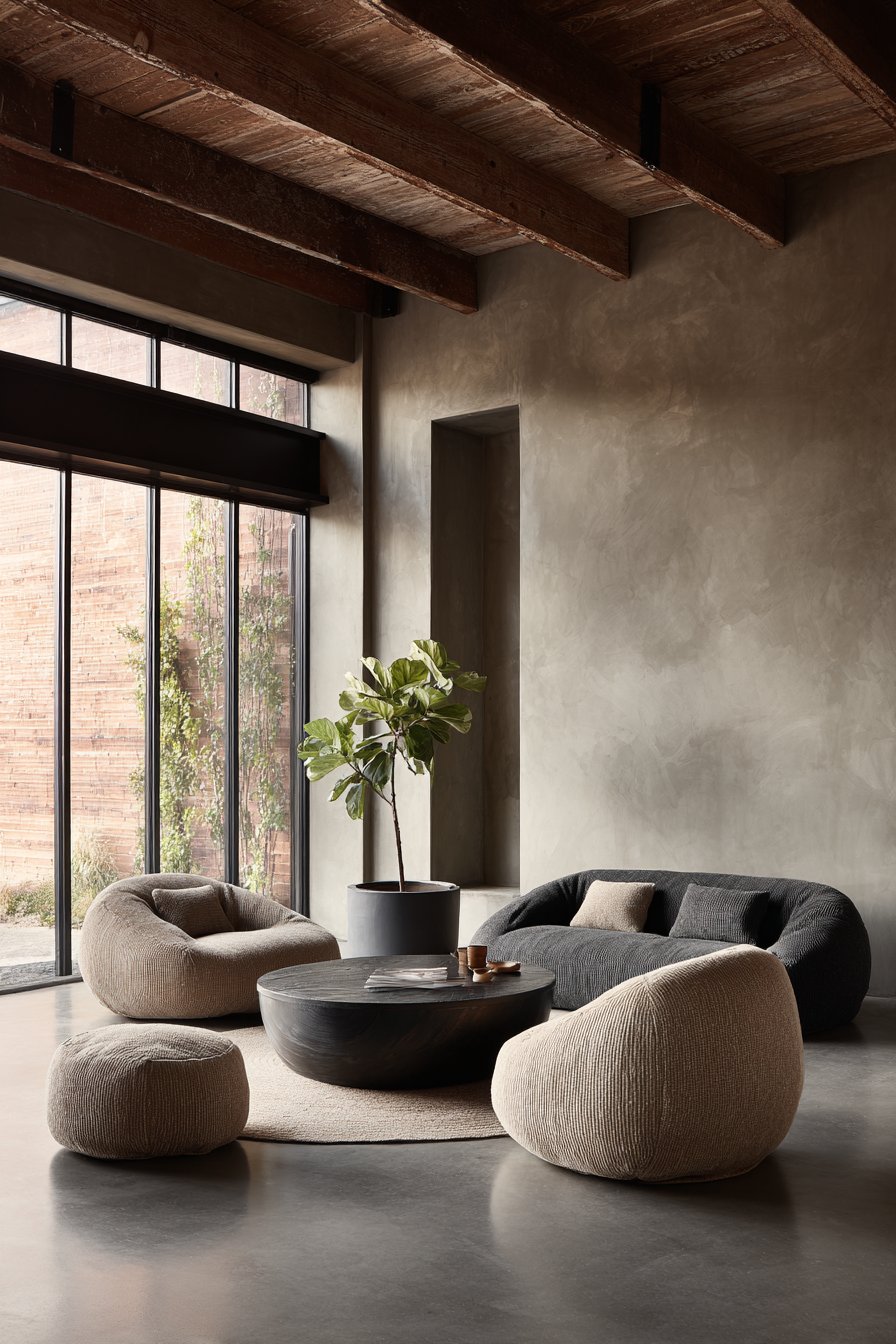
The architectural elements reinforce the zen aesthetic through deliberate restraint. Walls remain bare except for one horizontal window strip positioned near the ceiling. This unconventional window placement maintains privacy while allowing natural light to wash the walls, creating ambient illumination. The polished concrete floor introduces industrial minimalism, its smooth surface reflecting subtle light and adding contemporary edge to the traditional Japanese influences.
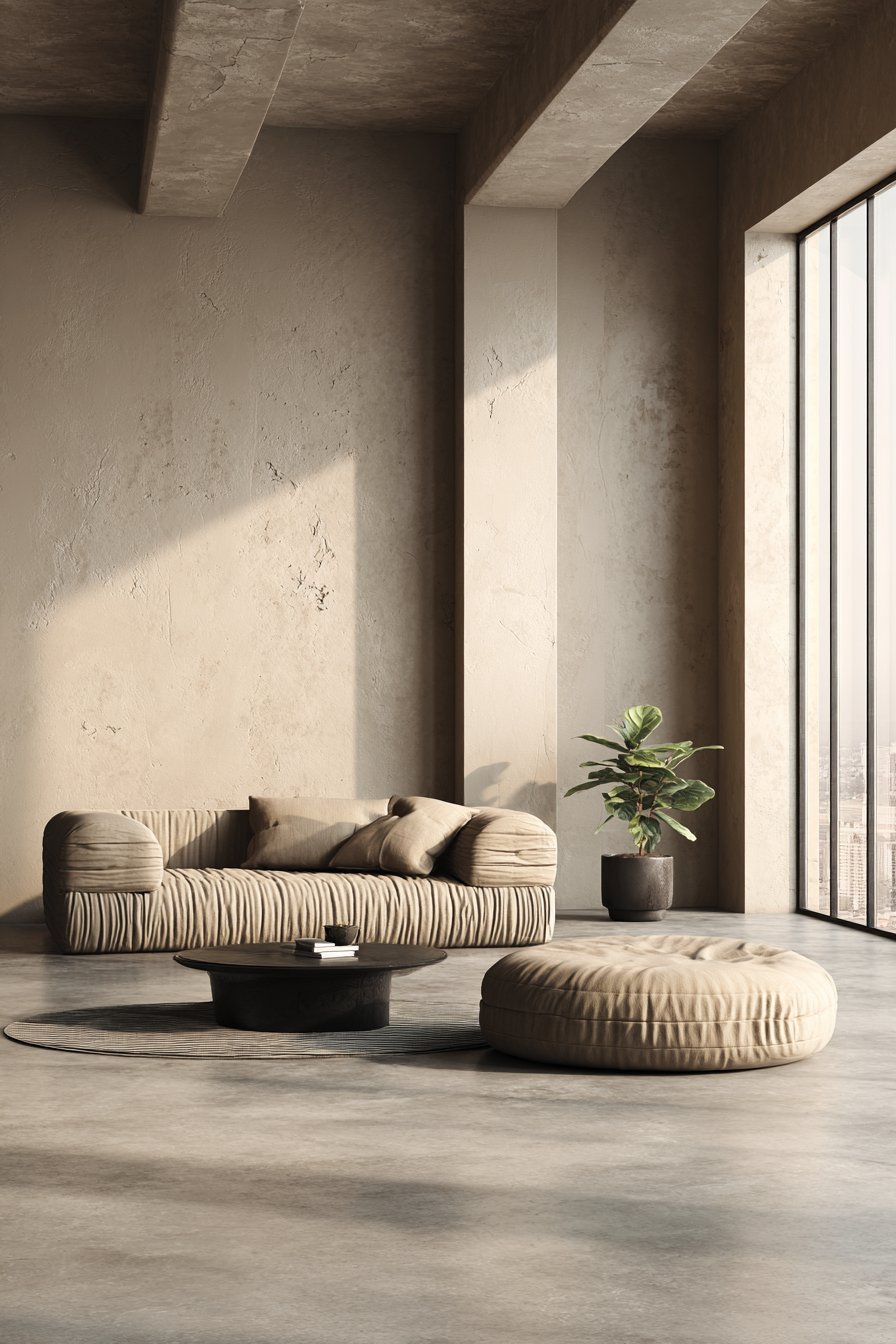
A single potted fiddle leaf fig provides the only organic accent, its sculptural leaves creating dynamic shadows and introducing life into the space. The plant serves both aesthetic and wellness purposes, improving air quality while connecting the interior to nature.
Golden hour lighting transforms the room, with soft directional light emphasizing geometric forms and the restrained material palette. The interplay between light and shadow becomes a design element itself.
Key Design Tips:
- Embrace low-profile furniture to create grounding, peaceful energy
- Incorporate one significant plant as living sculpture and natural purifier
- Select wood pieces that showcase natural grain and organic imperfections
- Use concrete or stone flooring for cool, contemporary industrial contrast
- Position windows strategically to maximize natural light while ensuring privacy
4. Seamless Storage Solutions
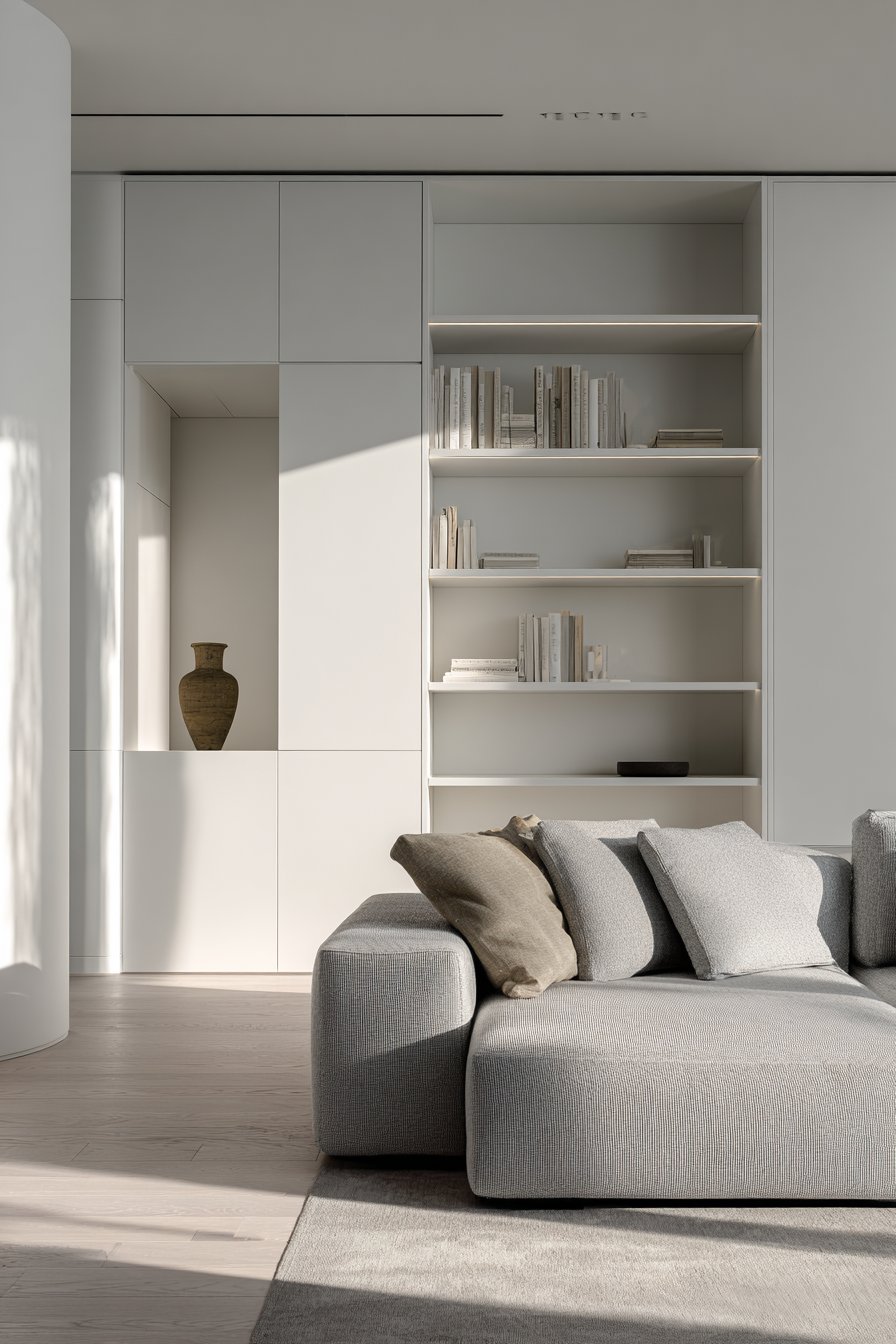
The challenge of minimalist design lies in concealing life’s necessary clutter while maintaining visual purity. This living room solves that puzzle with floor-to-ceiling built-in cabinetry spanning an entire wall. The matte white finish and push-to-open doors eliminate visible hardware, creating seamless surfaces that appear almost architectural. The storage wall provides ample space for books, electronics, and personal items while keeping them hidden from view.
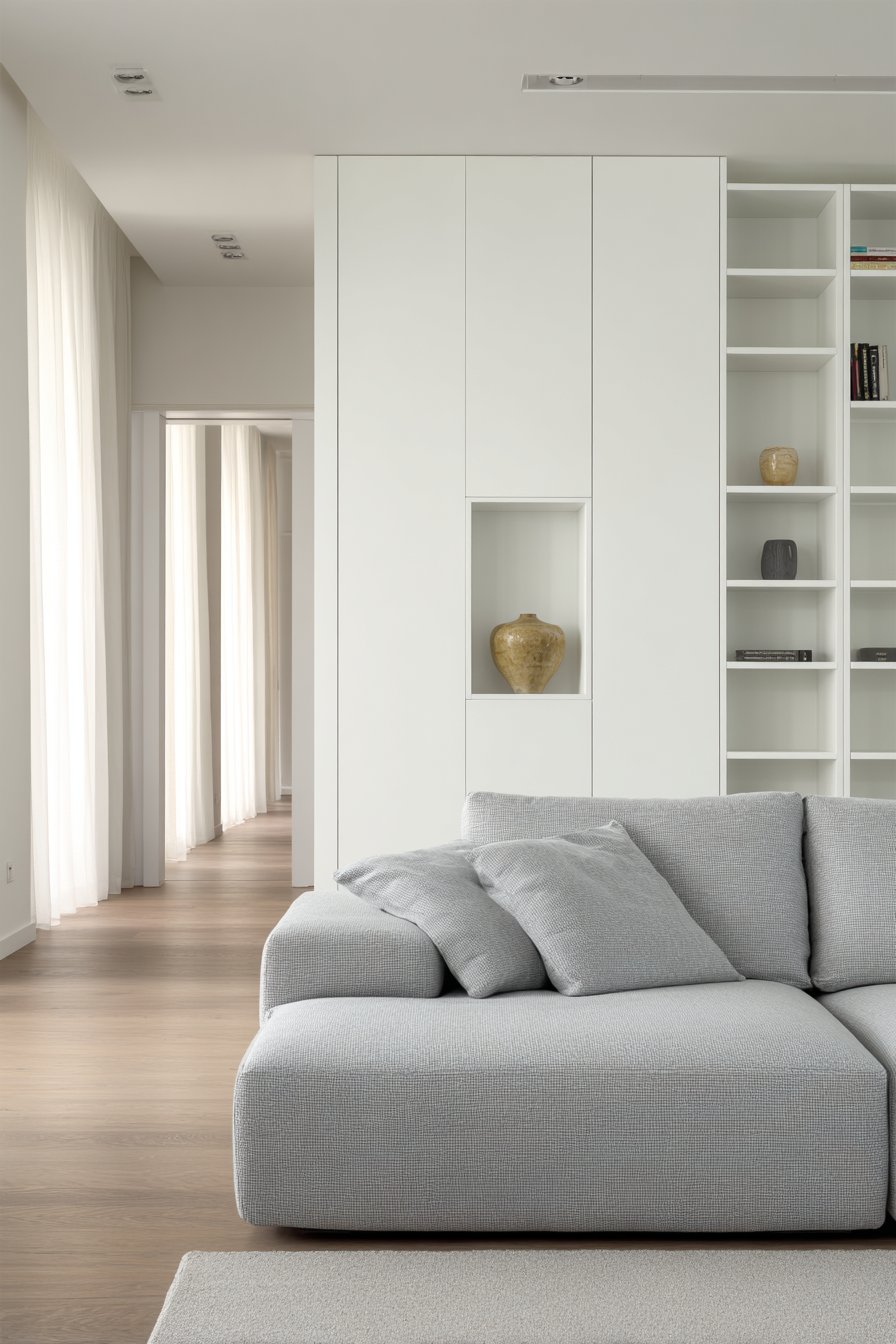
A small display niche interrupts the cabinet expanse, showcasing a single ceramic piece that receives spotlight treatment. This deliberate break in the storage wall creates visual interest and provides a curated focal point. The simple grey sectional sofa faces the clean wall, positioned thoughtfully on light ash flooring. The wood’s pale tone maintains brightness while adding natural warmth underfoot.
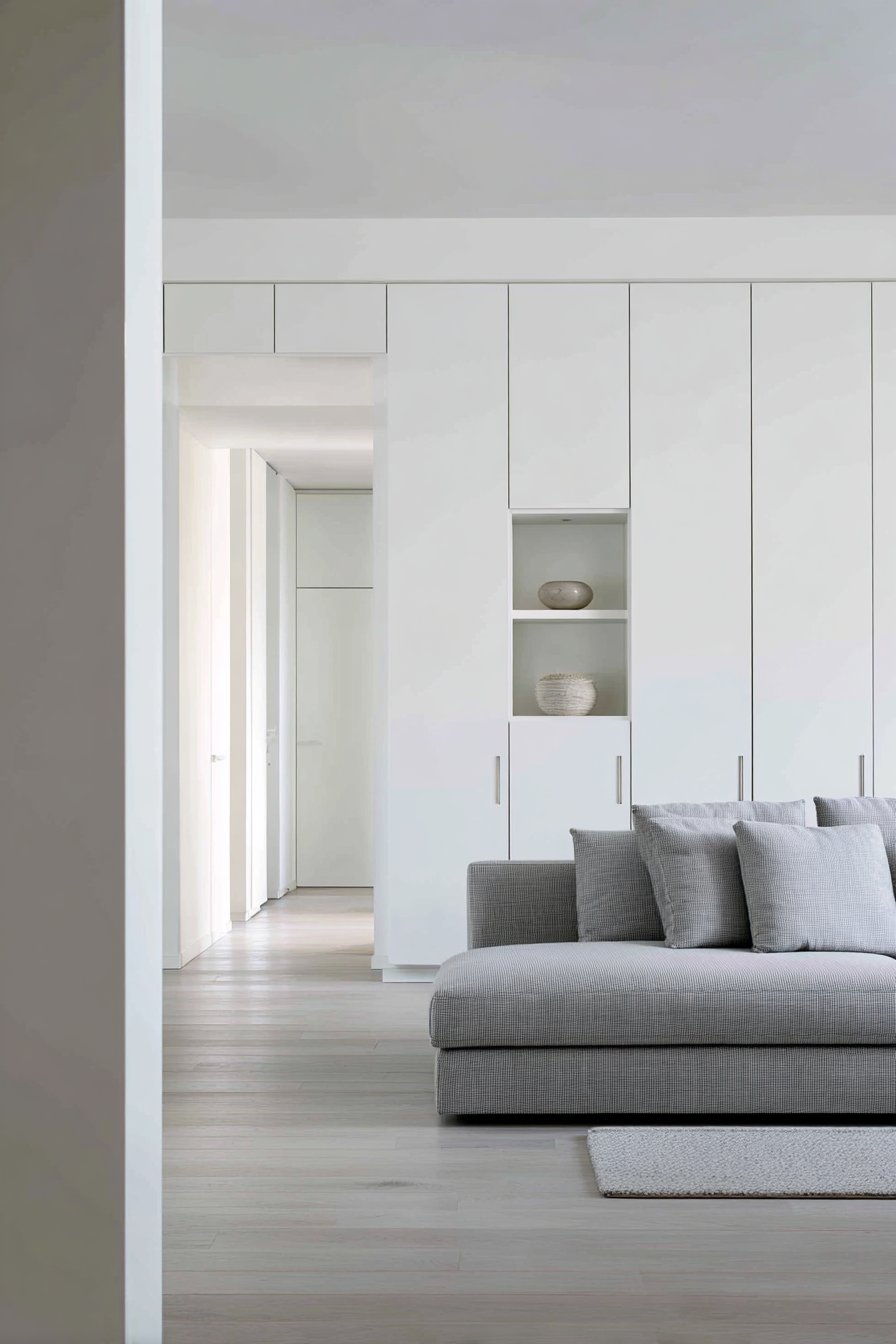
Natural light filtering from an adjacent room creates subtle gradations on the white surfaces, adding depth through shadow play. The sophisticated storage approach demonstrates how minimalism accommodates real life without compromising aesthetic principles.
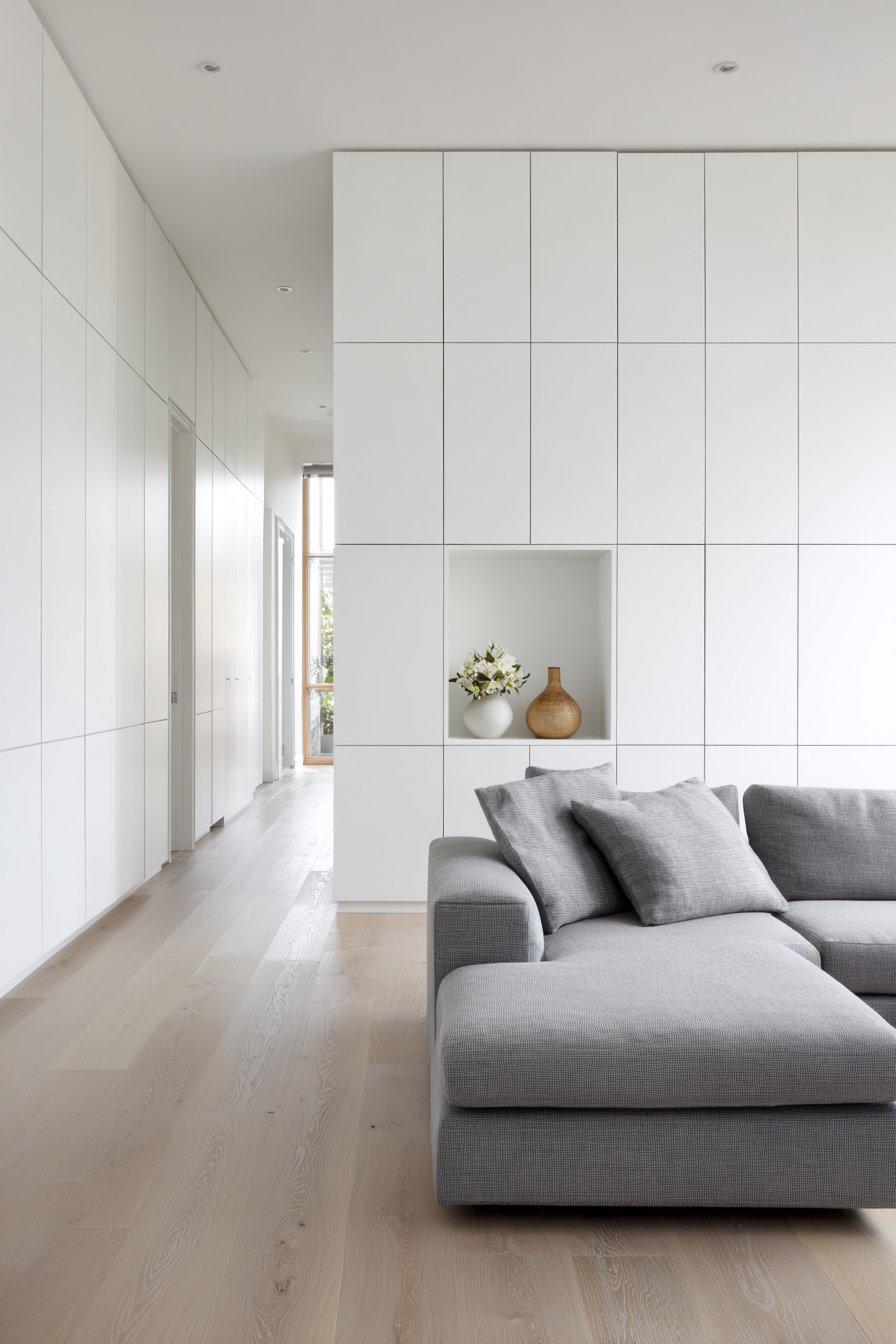
Perfect symmetry and proportion govern the space, creating harmony through mathematical balance. Every measurement appears intentional, resulting in a composition that feels both effortless and precisely calculated.
Key Design Tips:
- Invest in custom built-in storage for maximum space efficiency and clean lines
- Choose push-to-open mechanisms to eliminate visible handles and hardware
- Create one display niche to showcase a carefully selected treasured object
- Maintain symmetry in architectural elements for visual calm and balance
- Use light wood flooring to prevent all-white spaces from feeling cold
5. Industrial Loft Minimalism
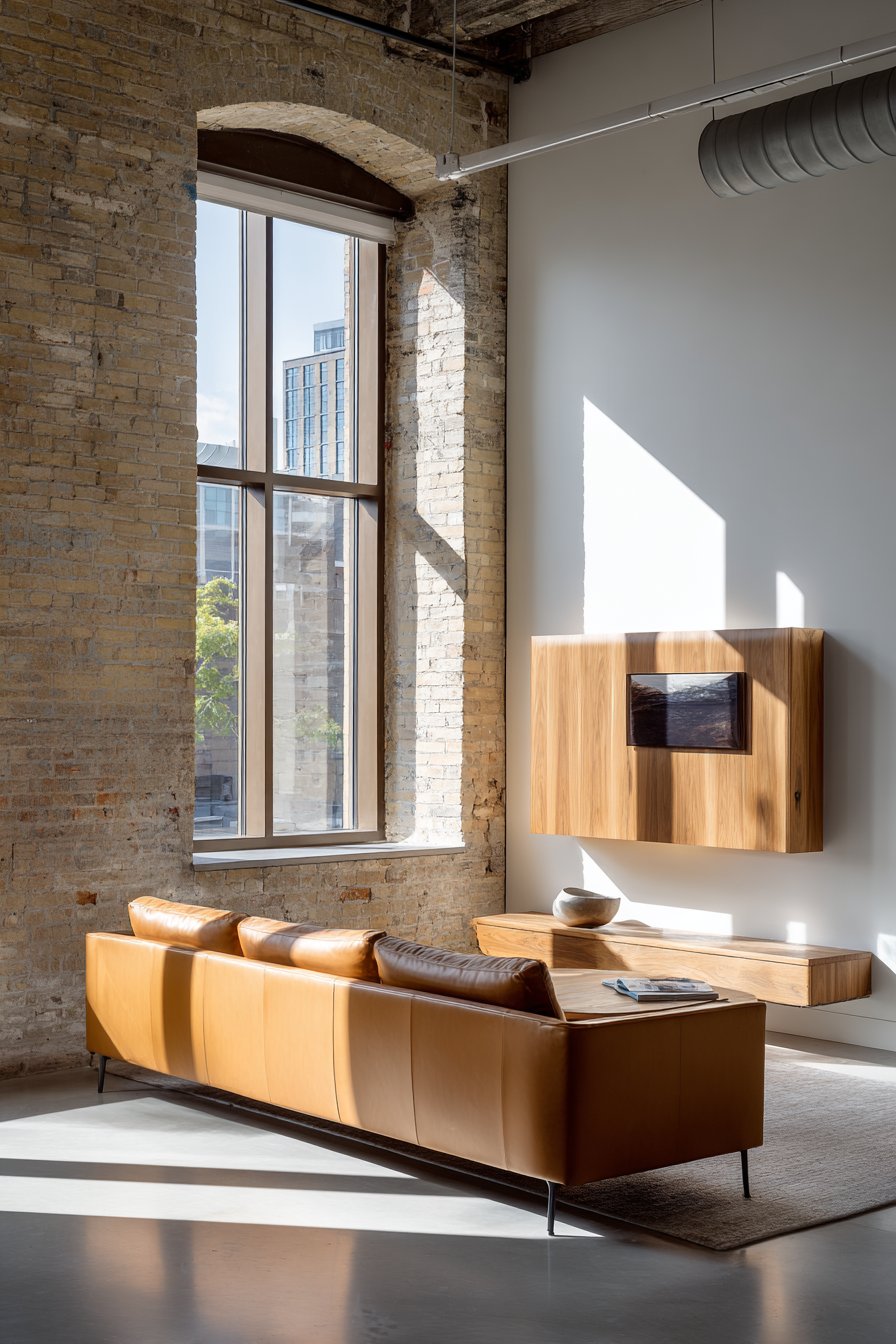
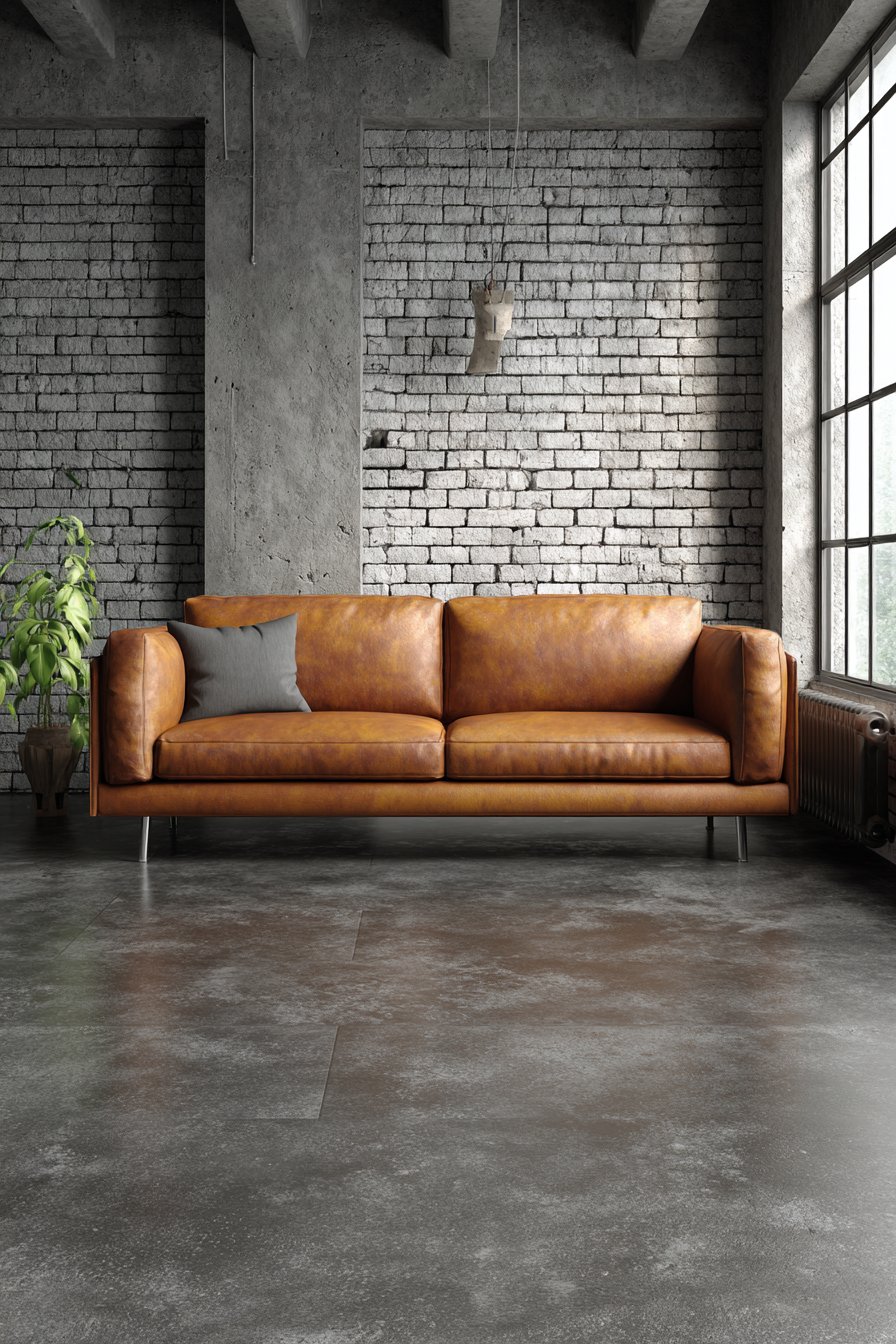
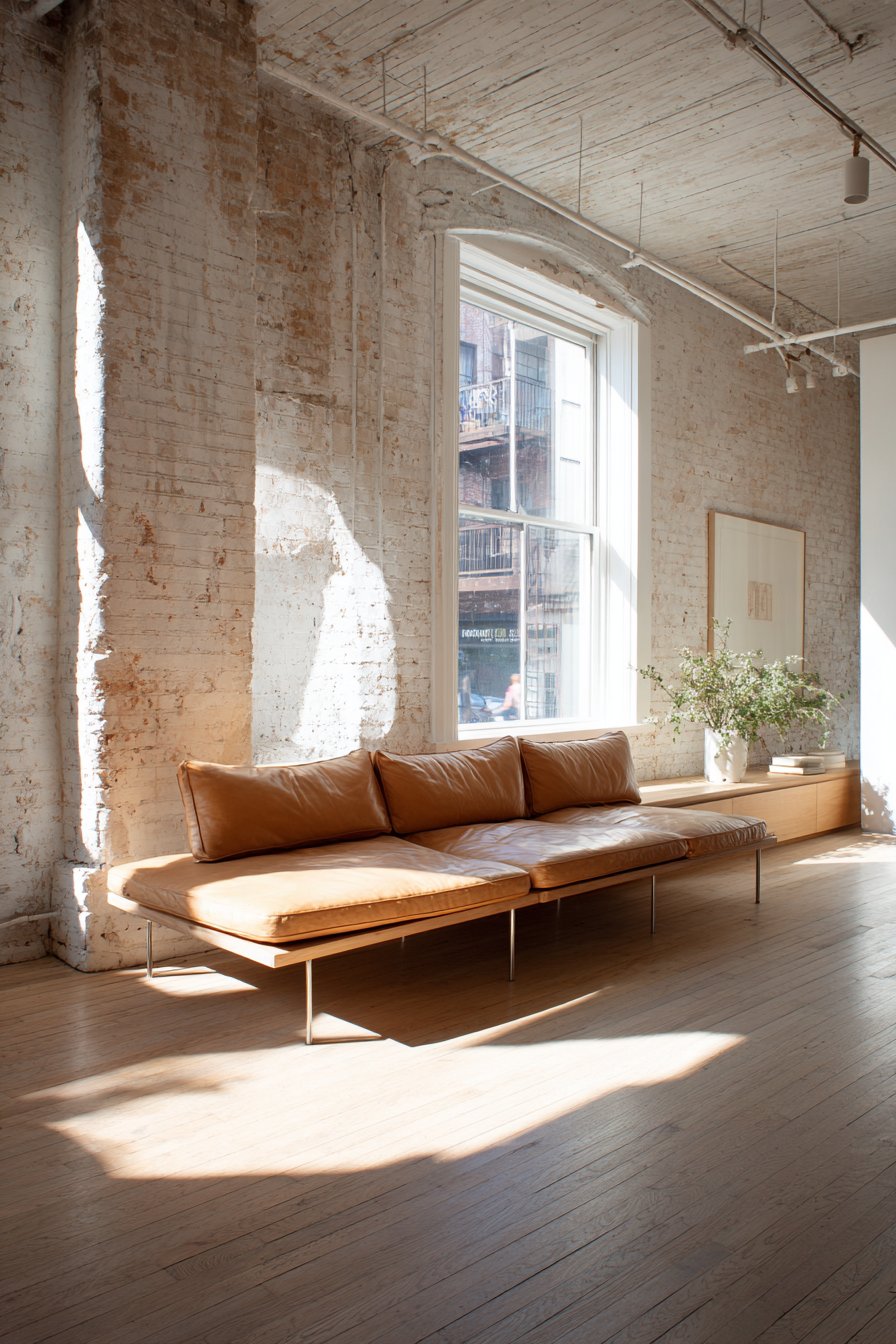
Vertical space takes center stage in this loft-style minimalist living room featuring an exposed white-painted brick accent wall. The textured brick provides raw architectural character while the white paint brightens and modernizes the industrial element. A sleek tan leather sofa with thin metal legs introduces warm sophistication, its streamlined silhouette complementing rather than competing with the architectural features.
Opposite the sofa, a minimalist floating TV console in natural oak appears to hover against the brick wall. The floating design eliminates visual weight at floor level, enhancing the sense of spaciousness. The console’s natural oak finish adds organic warmth that softens the industrial edges. Strategic negative space defines this room—only three deliberate furnishings populate the area, with no decorative accessories to distract from the architectural statement.
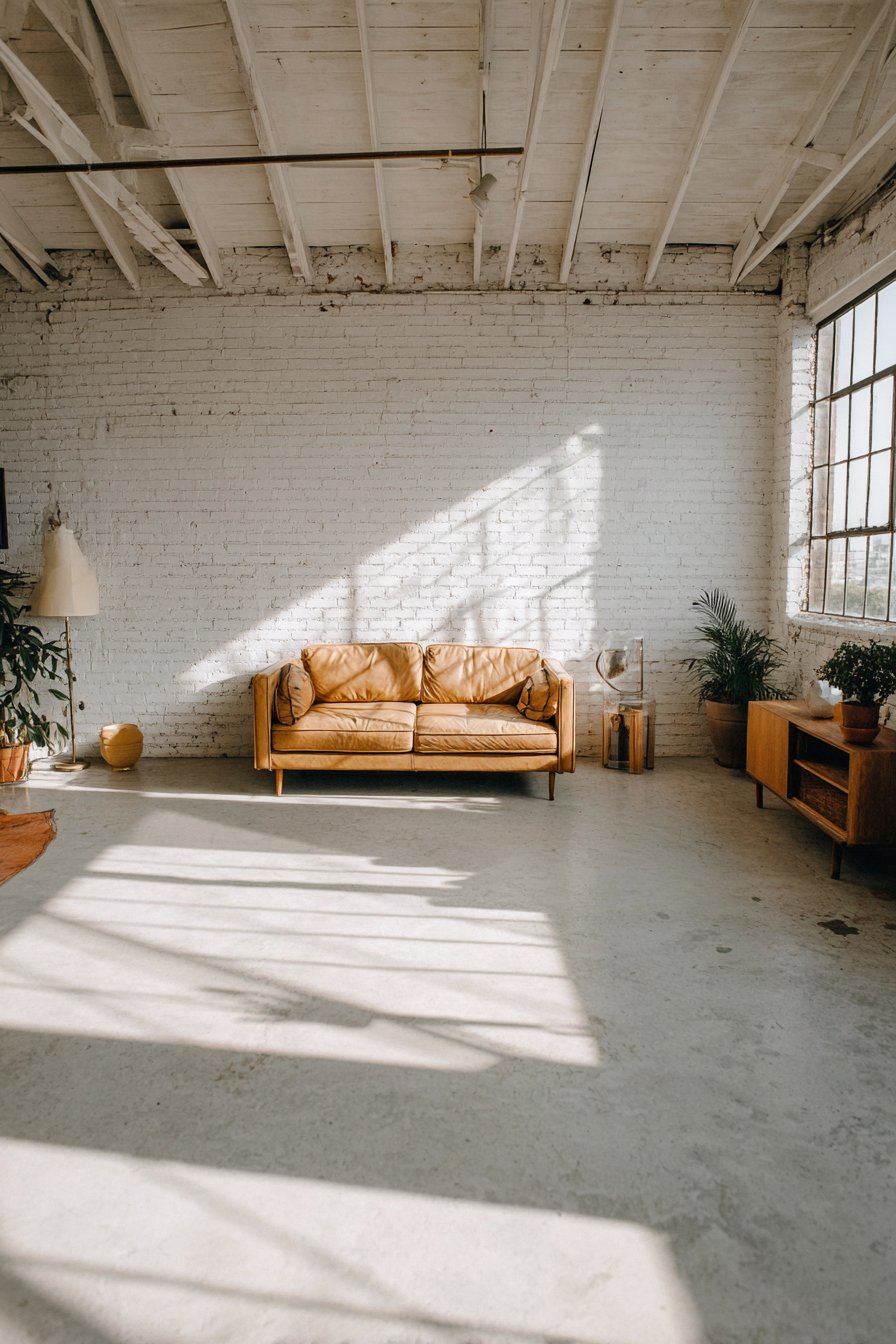
Industrial-style windows without coverings provide abundant natural light while maintaining the loft aesthetic. These large windows create dramatic shadows on the textured brick throughout the day, transforming the wall into an ever-changing canvas.
The interplay between refined minimalist furnishings and raw architectural elements demonstrates how simplicity creates powerful visual impact. Exposed ductwork and structural elements remain visible, celebrated rather than concealed.
Key Design Tips:
- Embrace existing architectural features like brick or concrete as design elements
- Select furniture with visible metal frames to reinforce industrial aesthetic
- Use floating consoles to reduce visual weight and maximize floor space
- Leave windows bare in loft settings to maximize light and maintain character
- Limit furniture to three essential pieces for maximum dramatic impact
6. Monochromatic Texture Layers
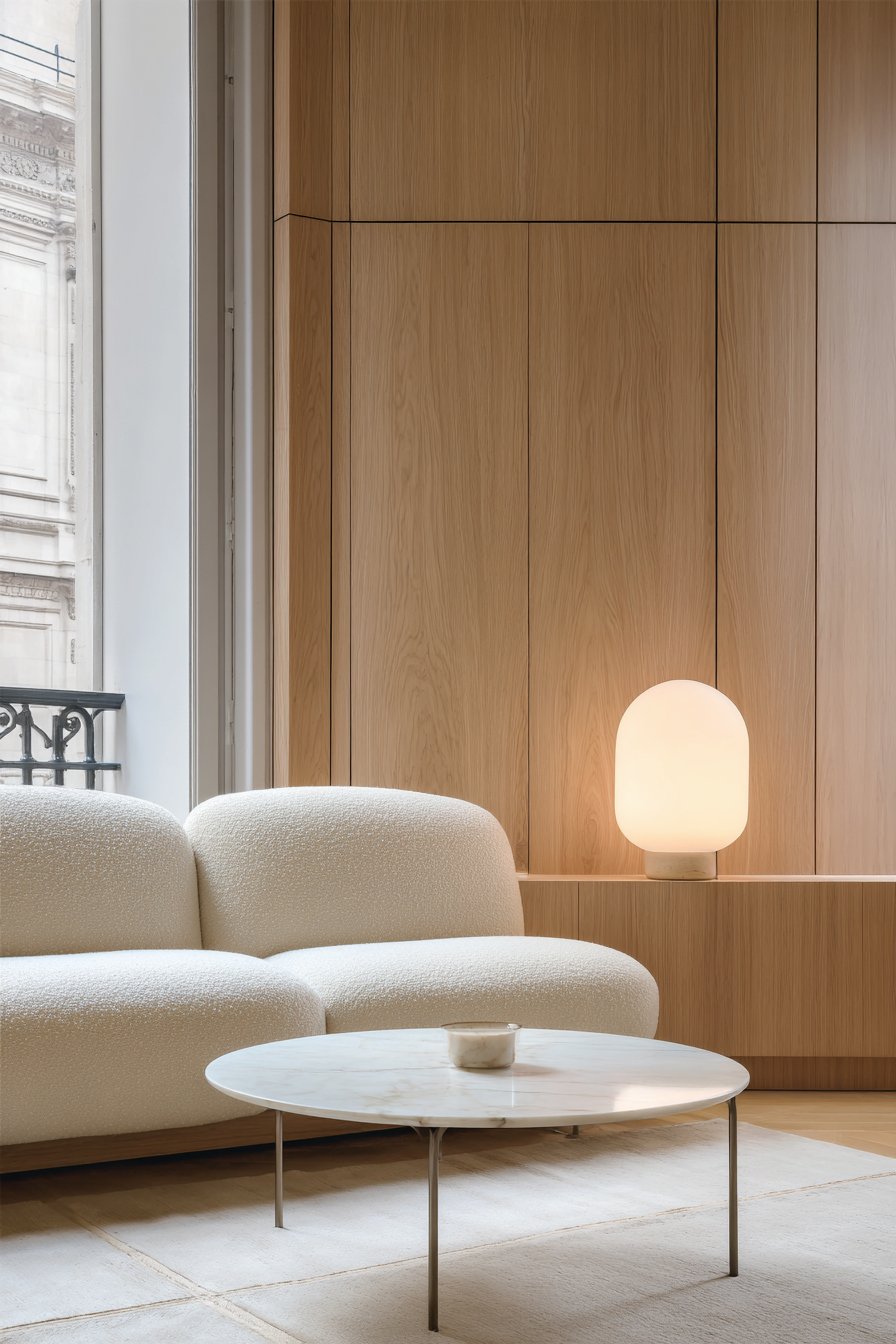
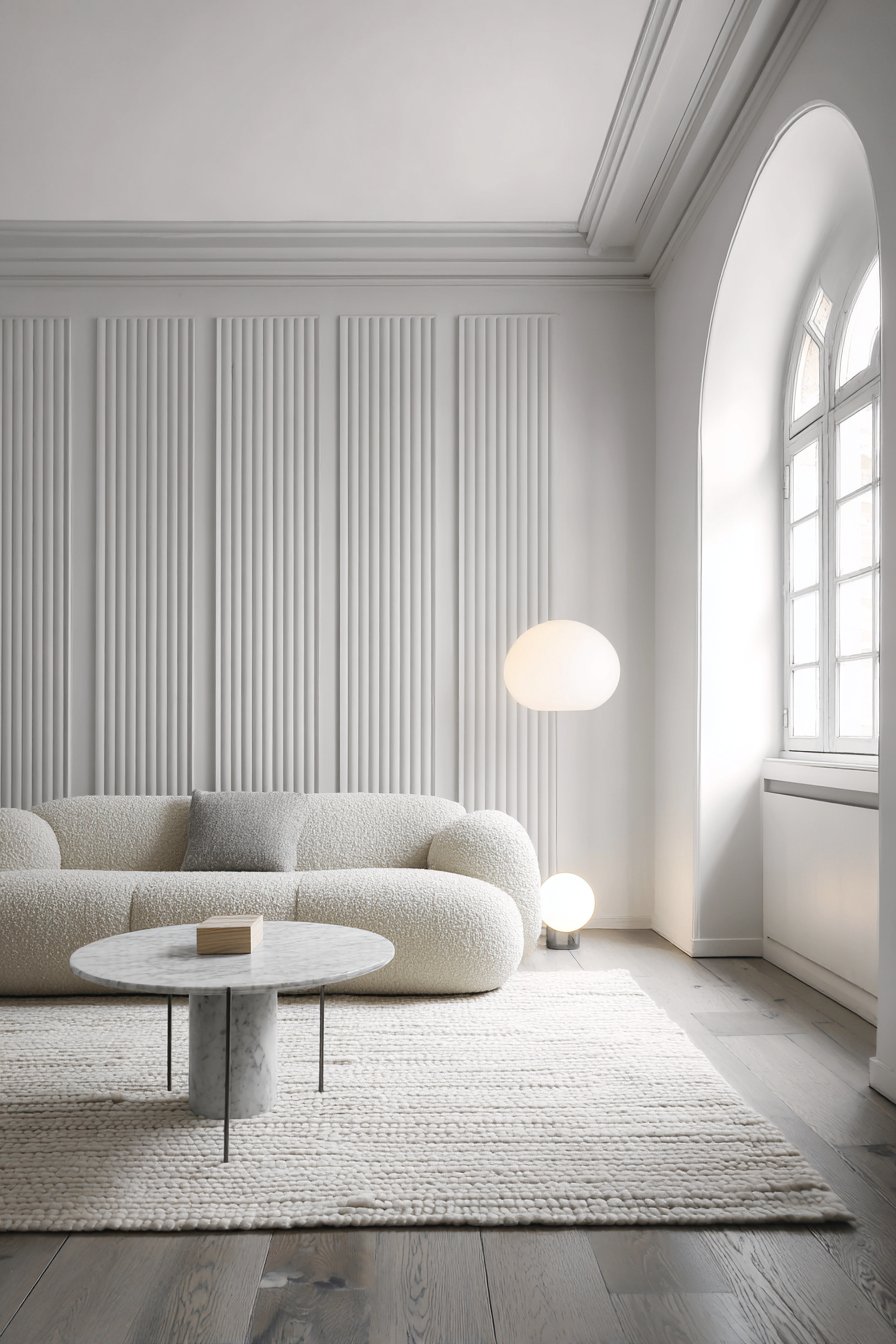
A white-on-white color scheme could risk appearing sterile, but this minimalist living room uses layered textures to create sophisticated visual interest. The bouclé upholstered sofa in cream introduces tactile richness through its looped fabric texture.
Positioned against white oak paneling with subtle vertical grain patterns, the sofa benefits from a backdrop that adds dimension without introducing color contrast.
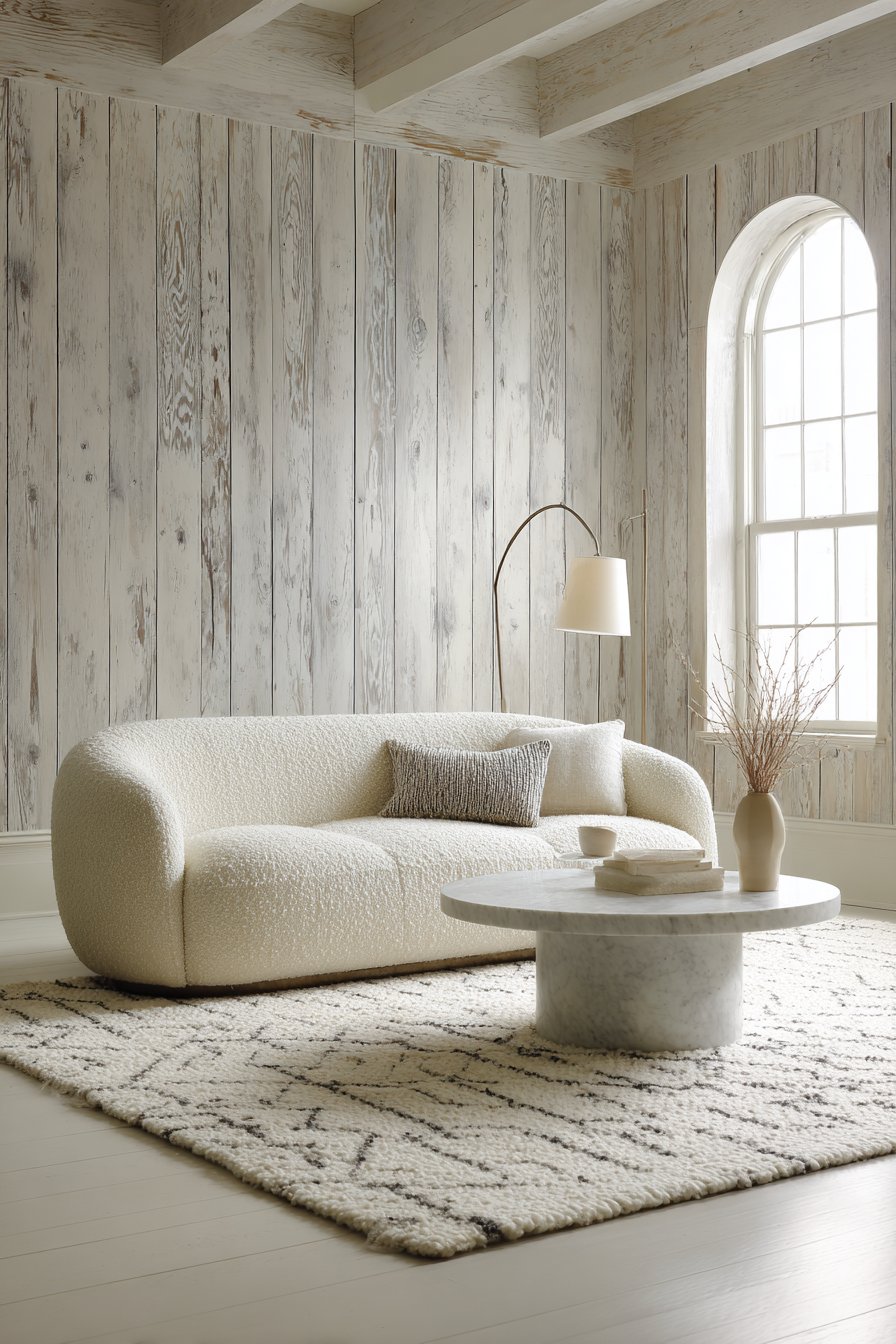
A simple round marble coffee table with a thin metal base centers the composition. The marble’s natural veining provides organic pattern, while its white tones maintain the monochromatic scheme. Beneath sits a handwoven ivory wool rug featuring minimal geometric patterns. The rug’s texture and subtle design add warmth and definition to the seating area without disrupting color harmony.
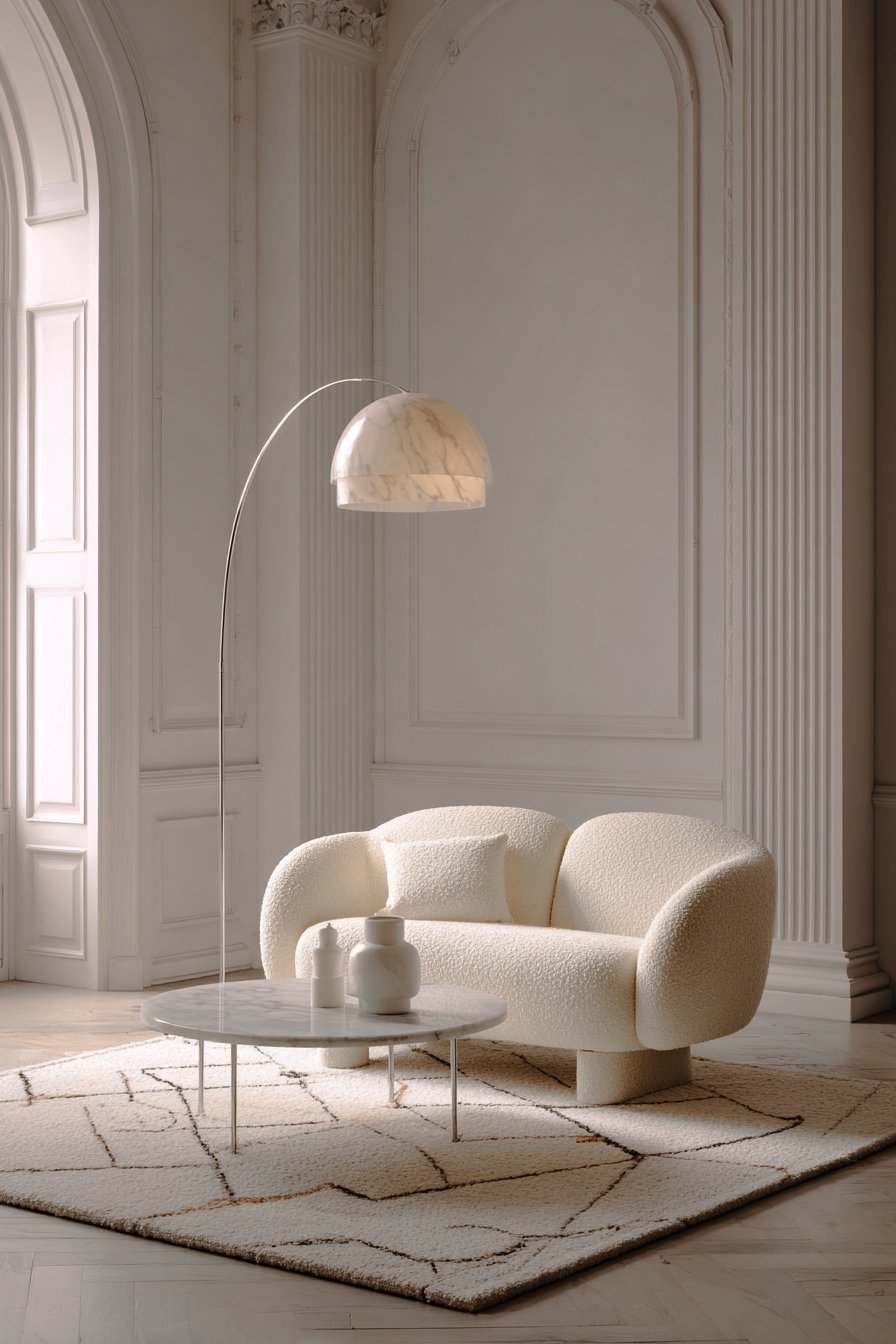
One arched floor lamp with an alabaster shade provides soft ambient lighting, its graceful curve introducing sculptural form. The alabaster material diffuses light beautifully, creating warm illumination that enhances the room’s serene atmosphere.
Soft diffused natural light from nearby windows bathes the space in gentle luminosity. This masterful use of tone-on-tone layering proves that minimalism can be visually rich and inviting when texture receives thoughtful attention.
Key Design Tips:
- Layer multiple textures within a single color family for depth
- Choose natural materials like marble, wood, and wool for organic variation
- Select one sculptural lighting piece with beautiful form and quality materials
- Use subtle patterns in textiles to add interest without breaking color scheme
- Position furniture to maximize natural light reflection off light-colored surfaces
7. Intimate Reading Corner
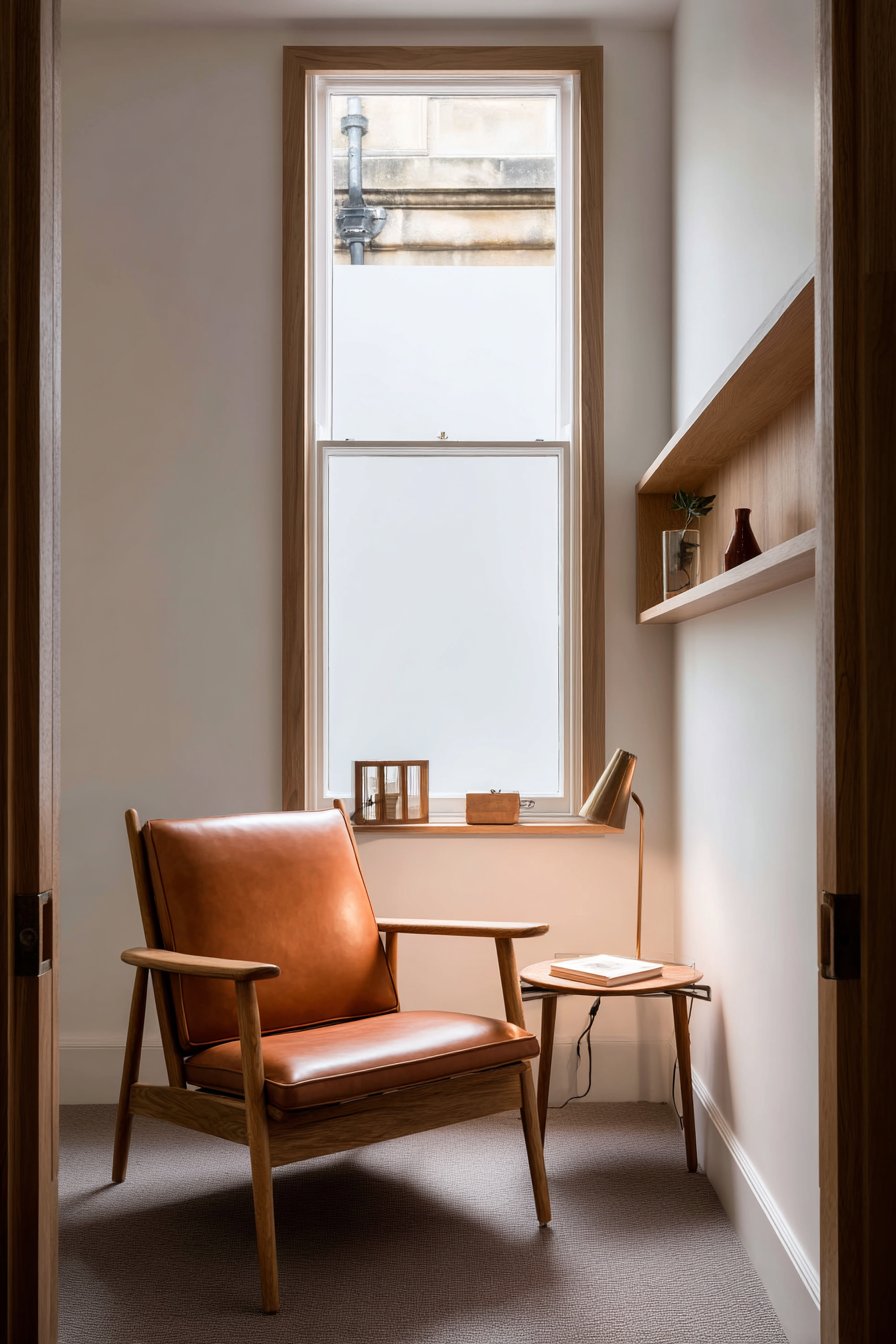
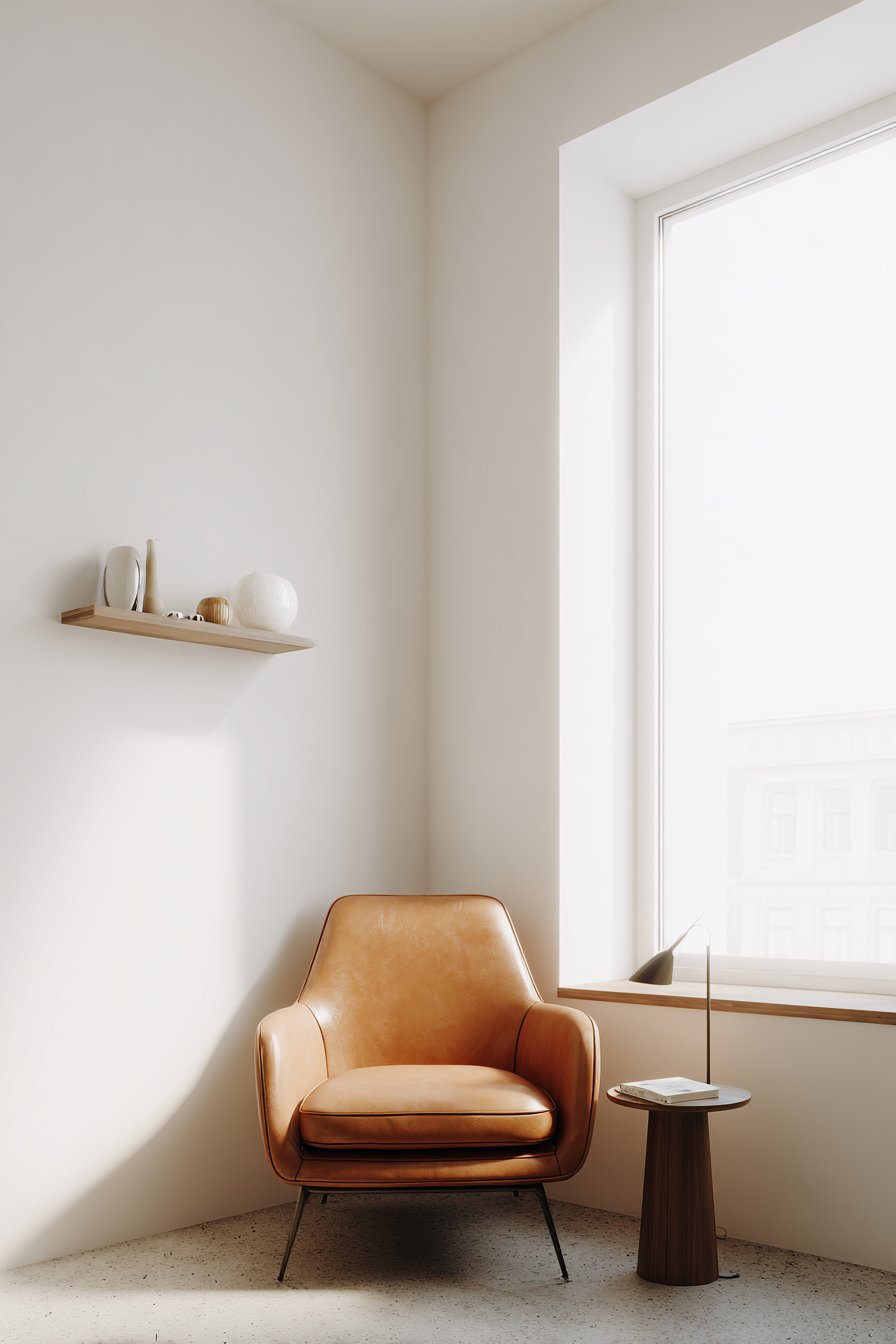
Not all minimalist living rooms require large open layouts—this corner reading nook demonstrates how thoughtful simplicity creates tranquil functional areas. A single mid-century inspired armchair in caramel leather occupies the space beside a tall narrow window. The chair’s rich leather develops character over time, embodying the minimalist principle of investing in quality pieces that age beautifully.
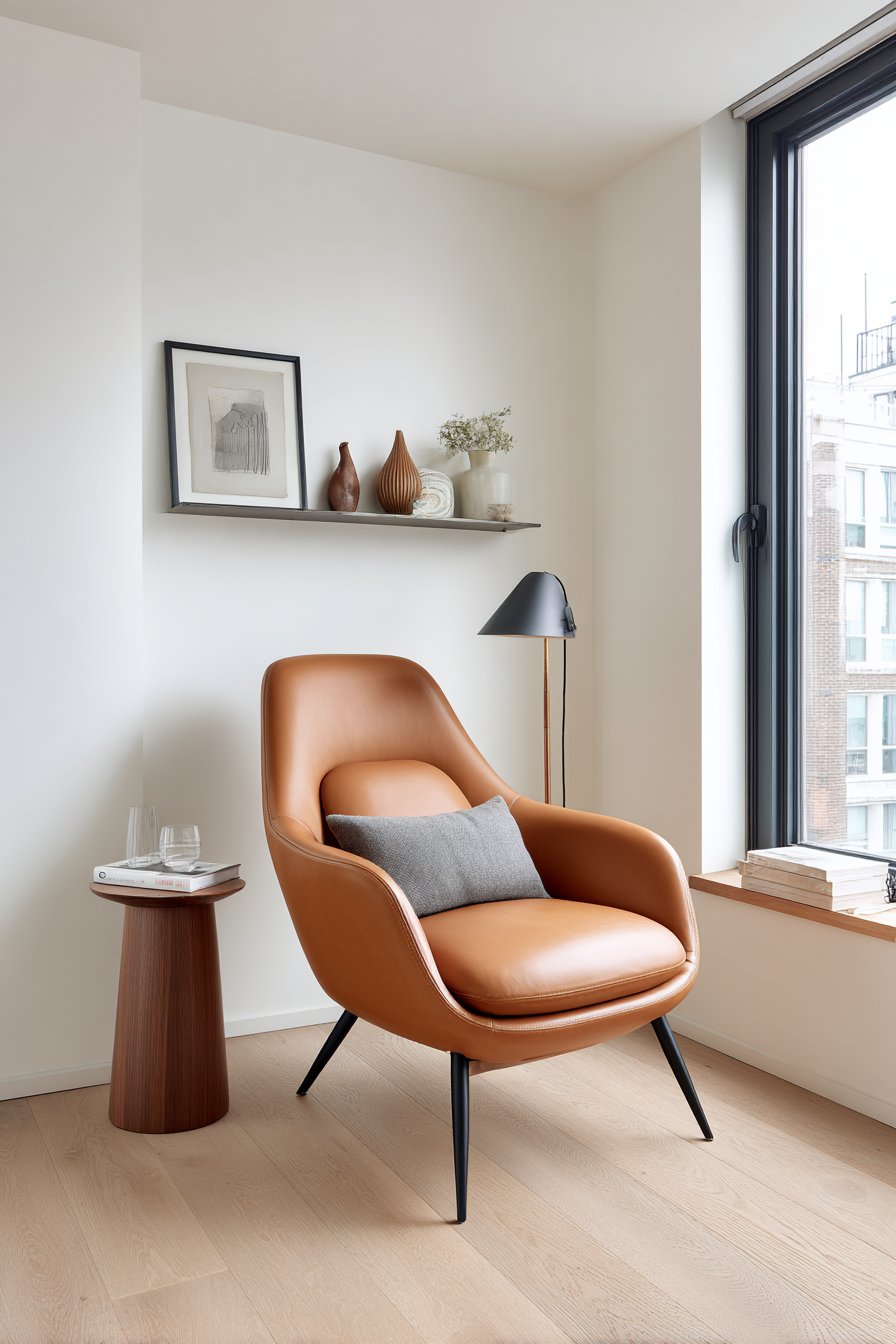
A slim side table in walnut holds only essential items: one reading lamp with a simple conical shade and a single book. This disciplined approach to surface styling maintains visual calm while ensuring functionality. The surrounding walls wear warm white paint, creating a cocoon-like atmosphere. One floating shelf displays three carefully curated objects—each selected for personal meaning rather than decorative filler.
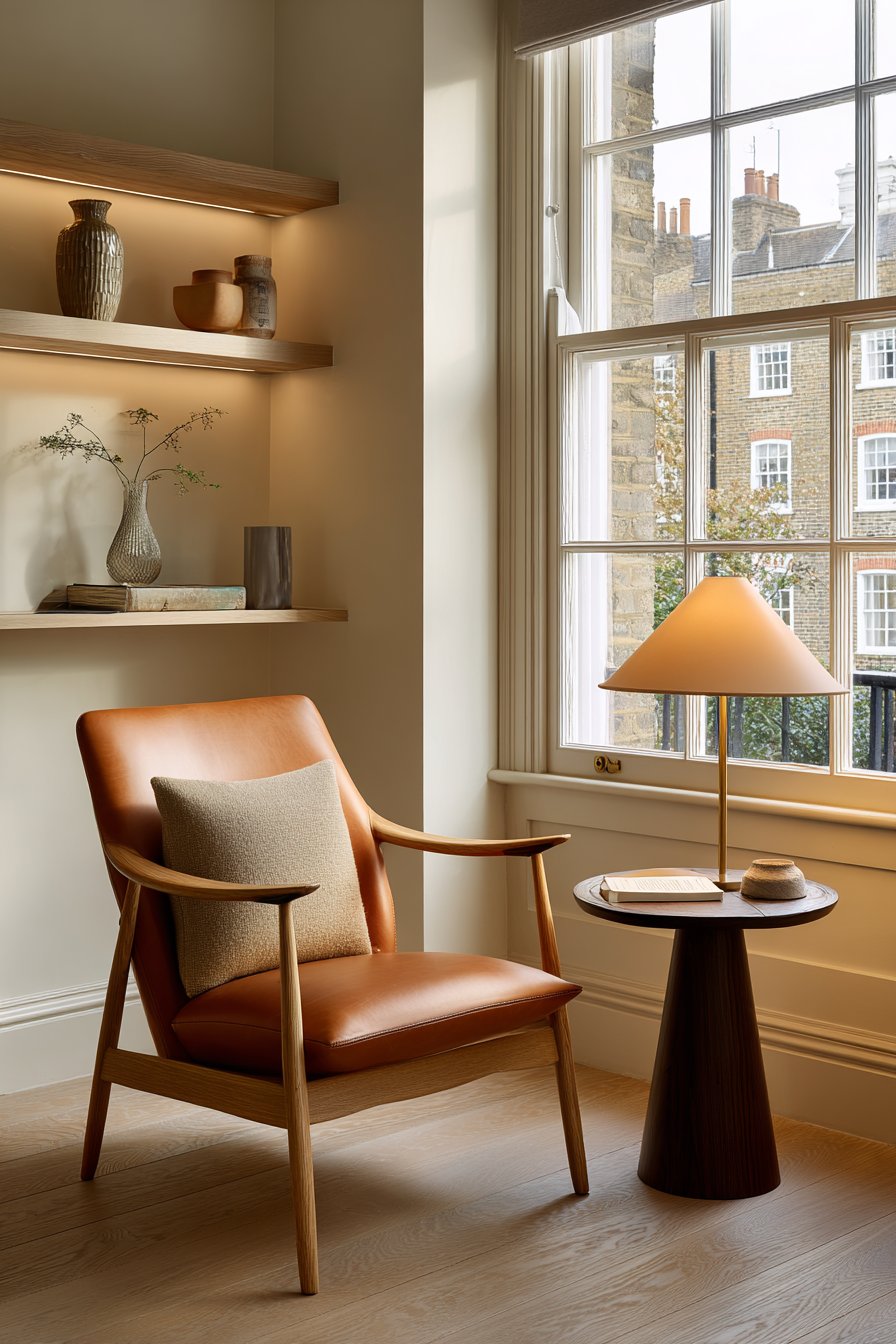
Natural light streams through the bare window, creating the perfect reading atmosphere during daylight hours. The lamp provides focused illumination for evening reading sessions. This intentional solitude space shows how minimalism enhances life quality by creating dedicated areas for specific activities. The corner’s peaceful simplicity invites regular use rather than serving merely as display space.
Key Design Tips:
- Create dedicated activity zones with purpose-specific furniture arrangements
- Invest in one high-quality statement chair rather than multiple seating options
- Maintain discipline with surface styling—only functional items allowed
- Position reading areas near natural light sources for daytime enjoyment
- Display only three to five meaningful objects rather than collections
8. Scandinavian Breathing Space
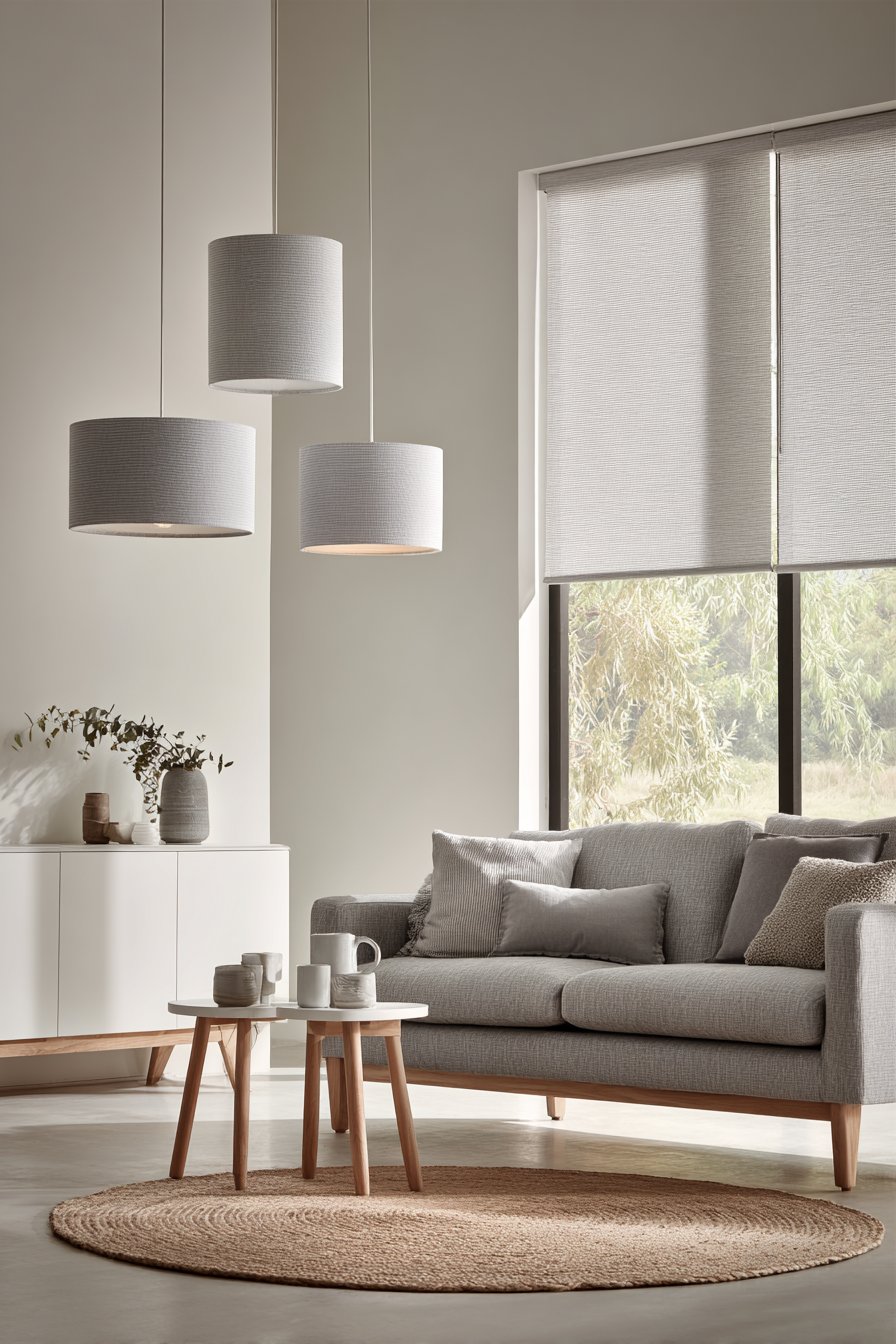
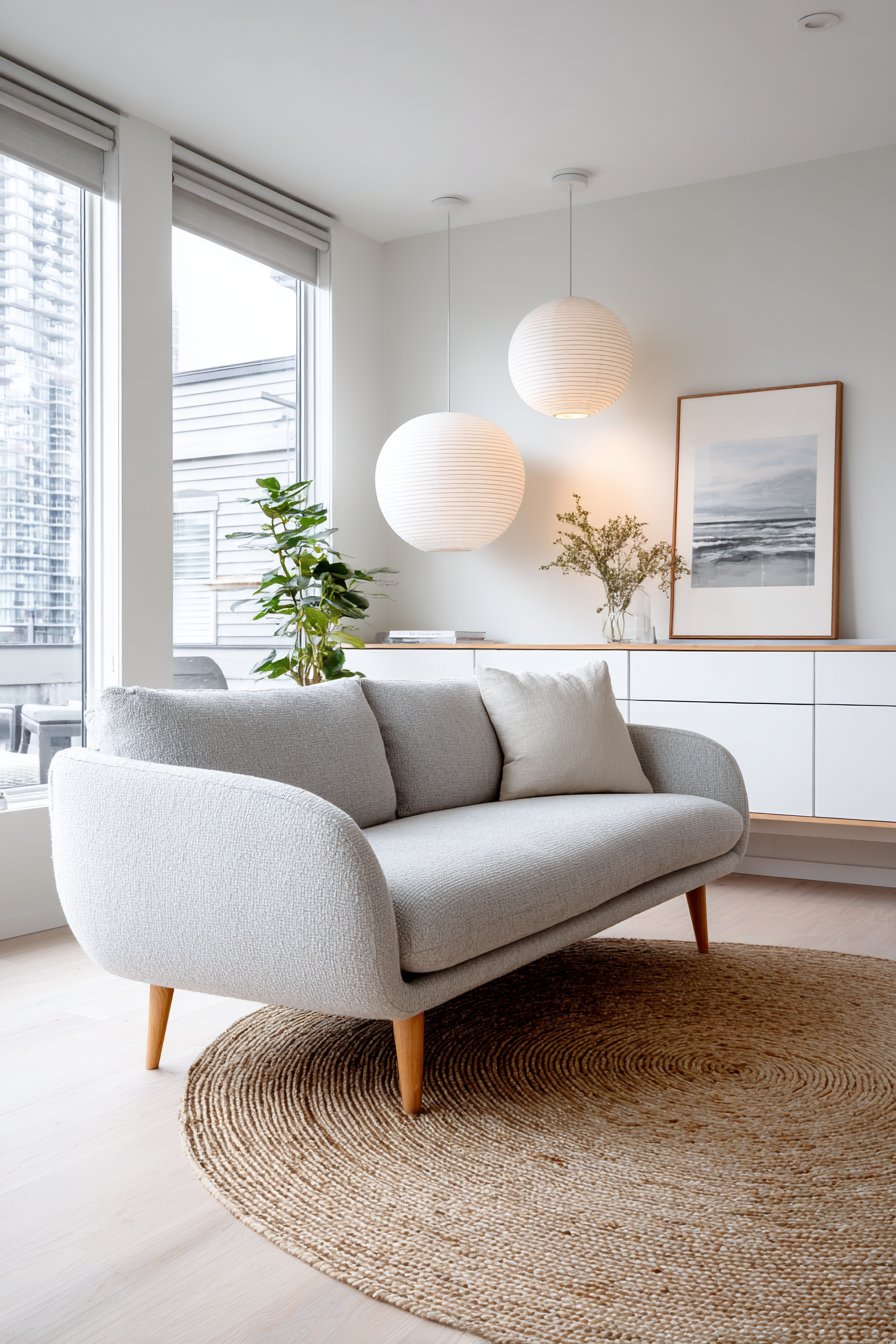
Scandinavian design principles infuse this minimalist living room with hygge warmth and functional beauty. A light grey fabric sofa features wooden legs in natural finish, exemplifying the Nordic approach to combining comfort with craftsmanship. The sofa’s simple profile and neutral tone allow it to serve as backdrop rather than focal point, supporting the overall composition without dominating attention.
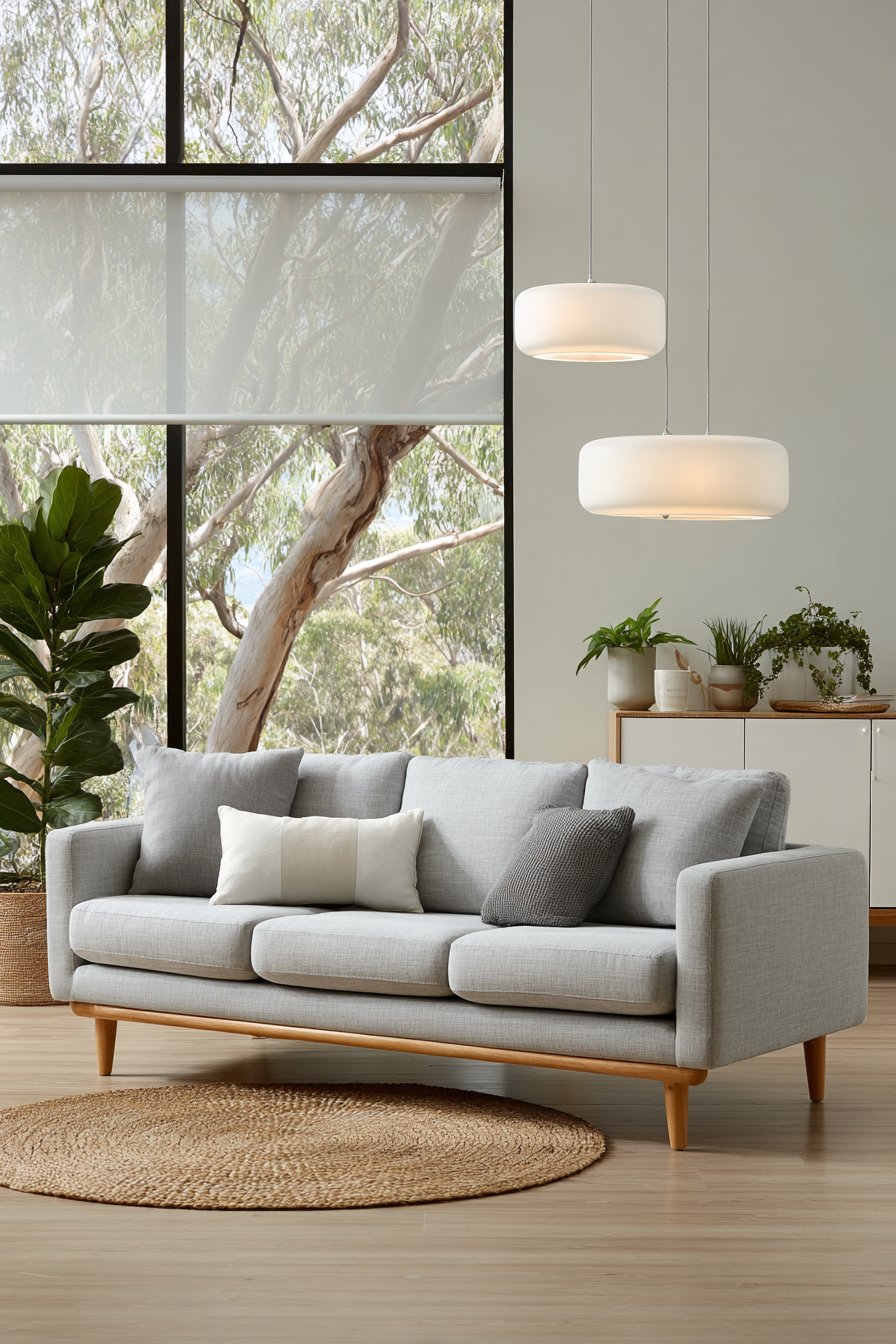
A simple white sideboard with tapered legs stands against the wall, providing storage while maintaining visual lightness. The tapered legs prevent the piece from appearing heavy despite its storage function. A round jute rug defines the seating area, its natural fiber texture adding organic warmth underfoot. Two matching ceramic pendant lights in matte white finish hang at different heights, creating visual interest through varied placement while maintaining design unity.
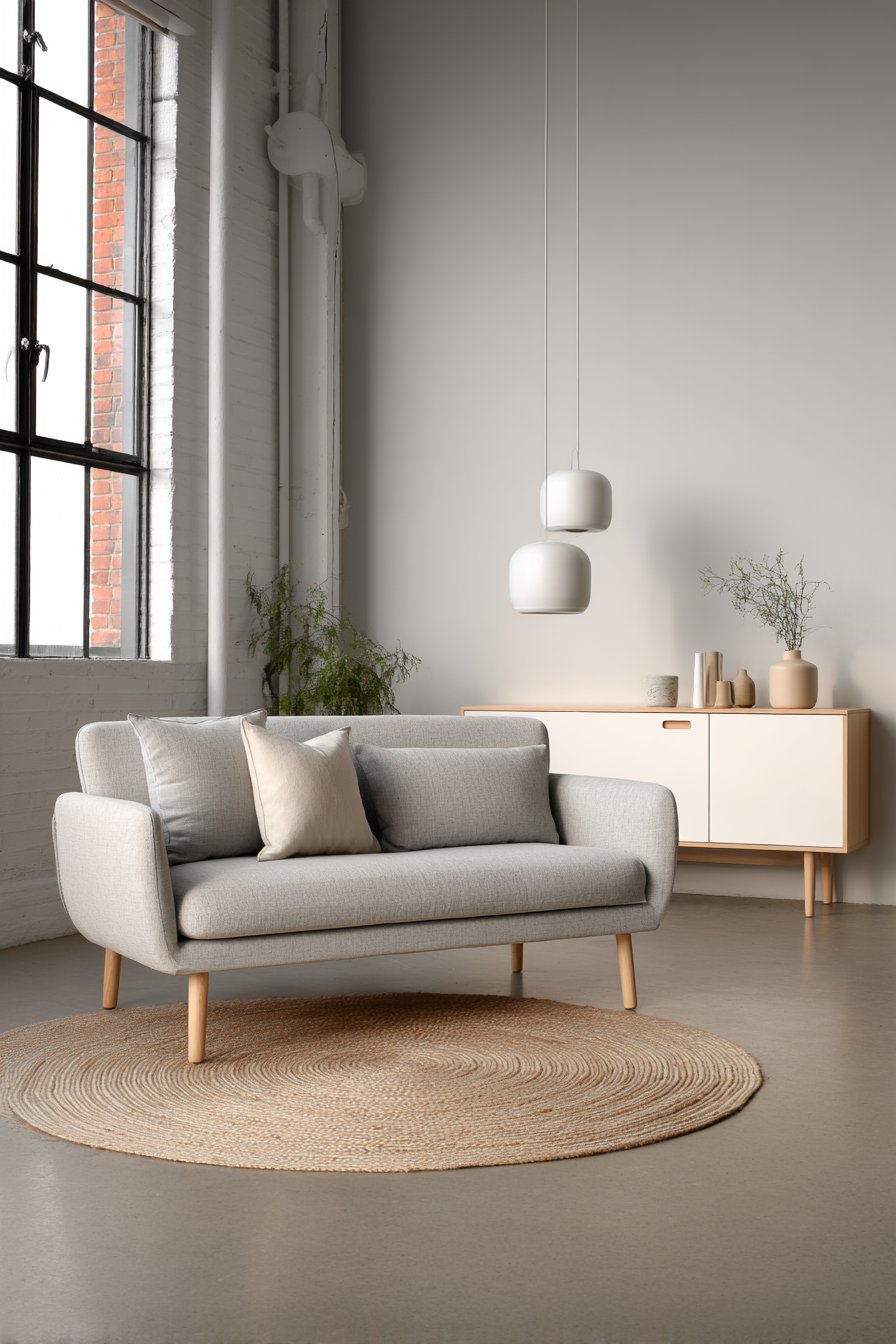
Large windows feature light-filtering roller shades in linen texture. These shades allow controlled natural light adjustment throughout the day while adding soft textile warmth. The room demonstrates breathing space—the Nordic concept of allowing generous gaps between furniture pieces. This intentional spacing creates flow, reduces visual tension, and makes the room feel larger and more serene.
Key Design Tips:
- Incorporate natural wood tones to warm Scandinavian minimalist palettes
- Select furniture with visible craftsmanship and quality joinery details
- Use natural fiber rugs like jute or sisal for organic texture
- Vary lighting fixture heights to create dynamic visual interest
- Allow generous spacing between furniture pieces for breathing room
9. Horizontal Line Emphasis
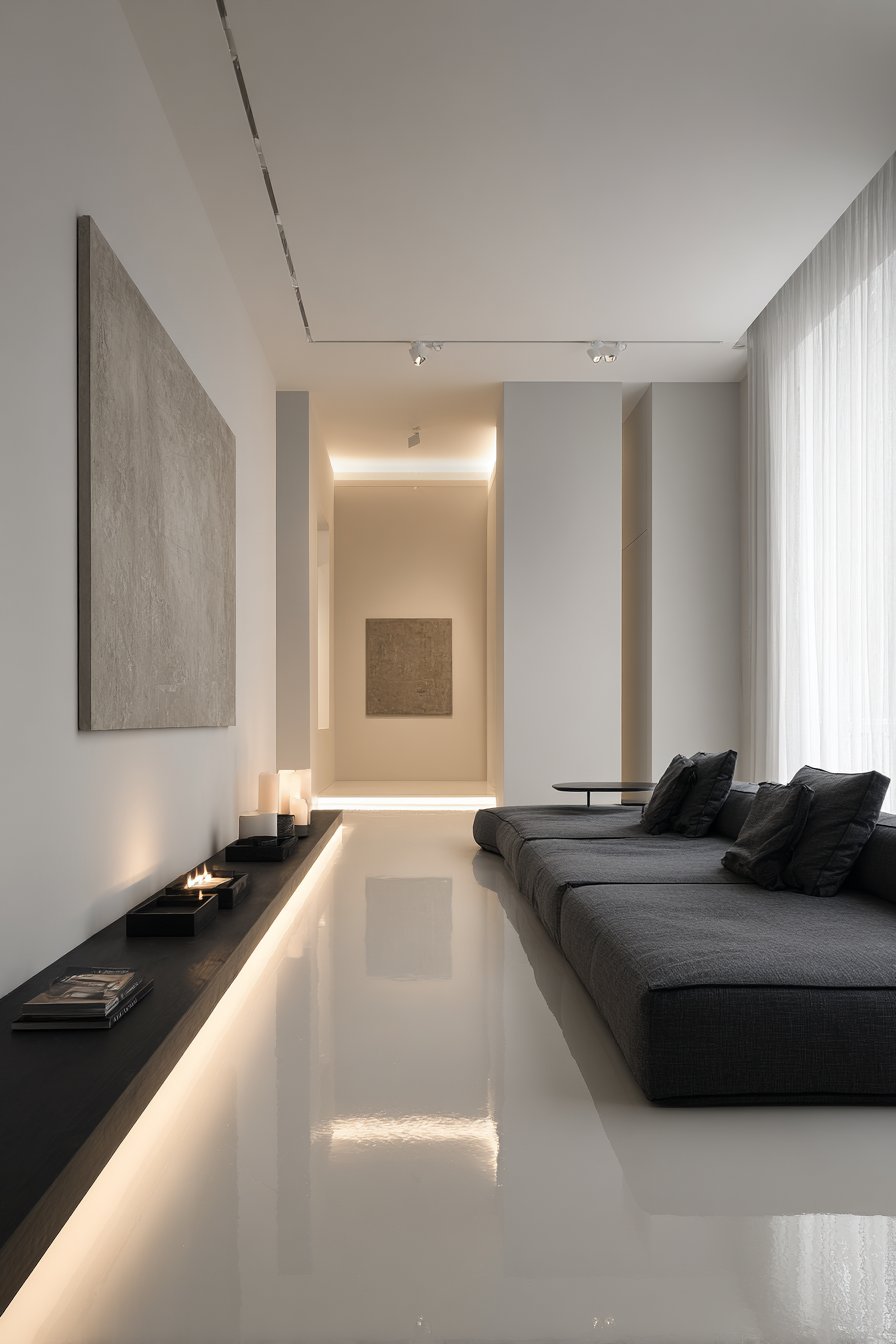
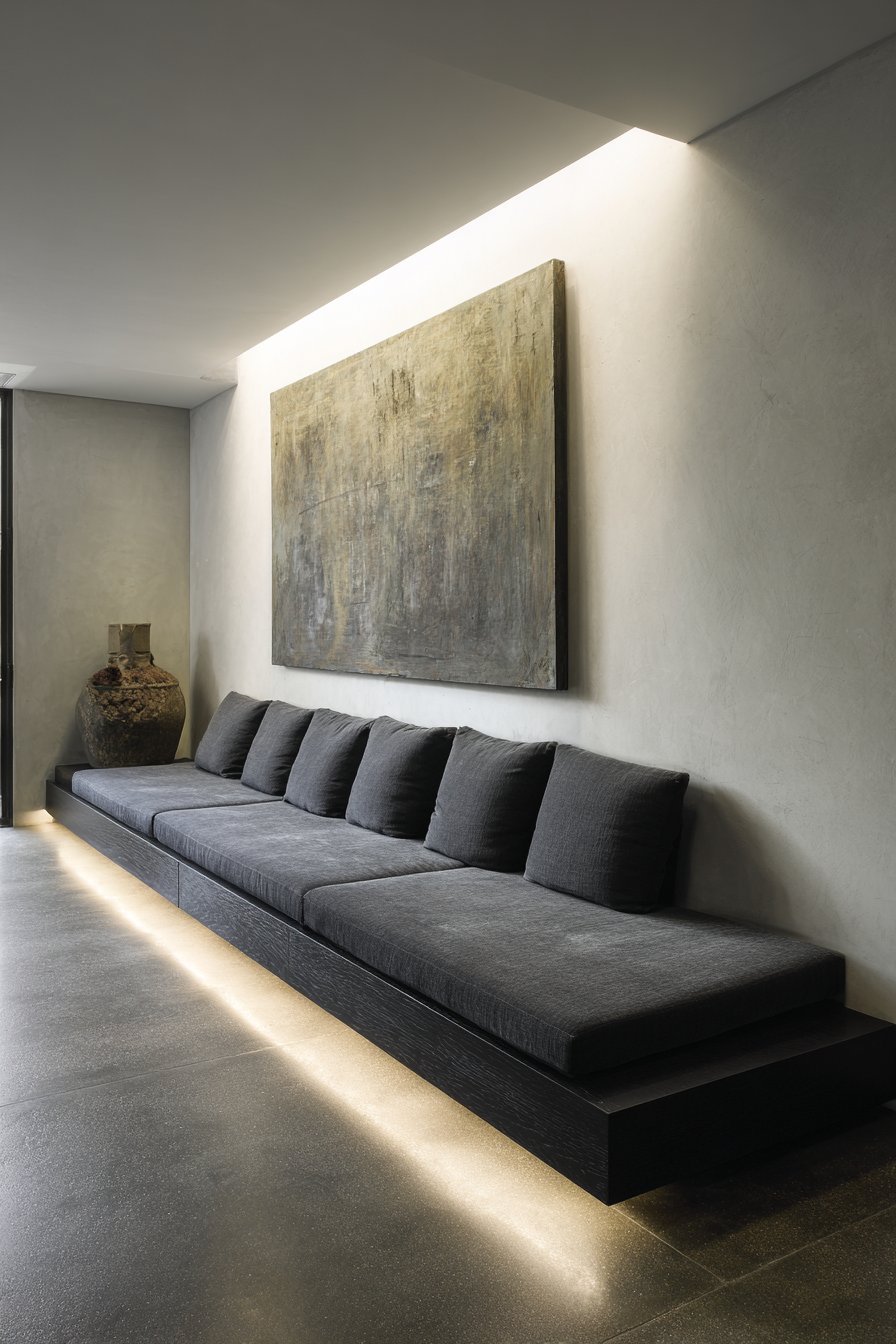
Architectural precision defines this minimalist living room that emphasizes strong horizontal lines. A custom-built platform sofa in charcoal grey upholstery stretches along one wall, its low profile and extended length creating powerful horizontal emphasis. The built-in design eliminates furniture legs, allowing the piece to appear grounded and permanent. This architectural approach to seating transforms furniture into spatial element.
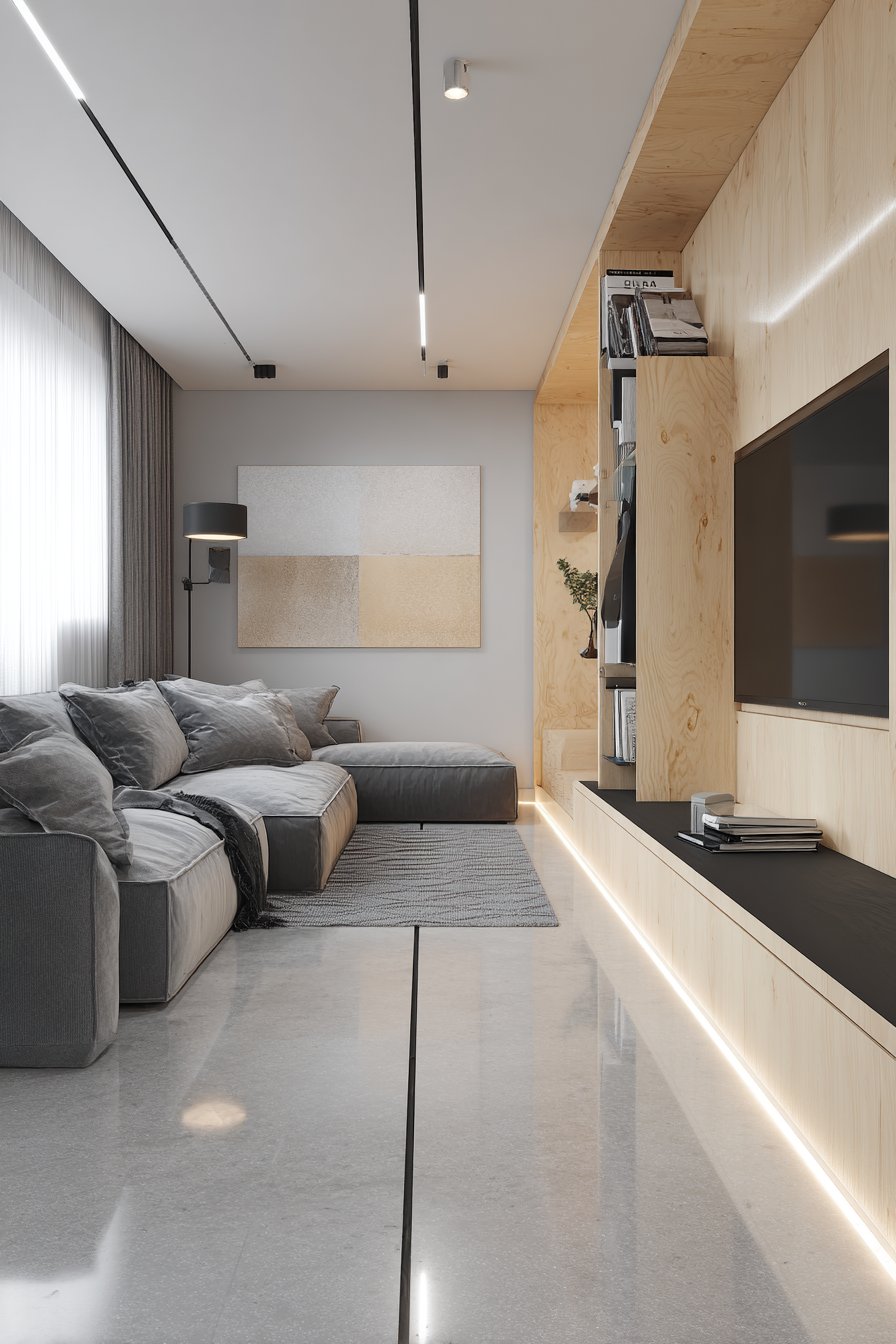
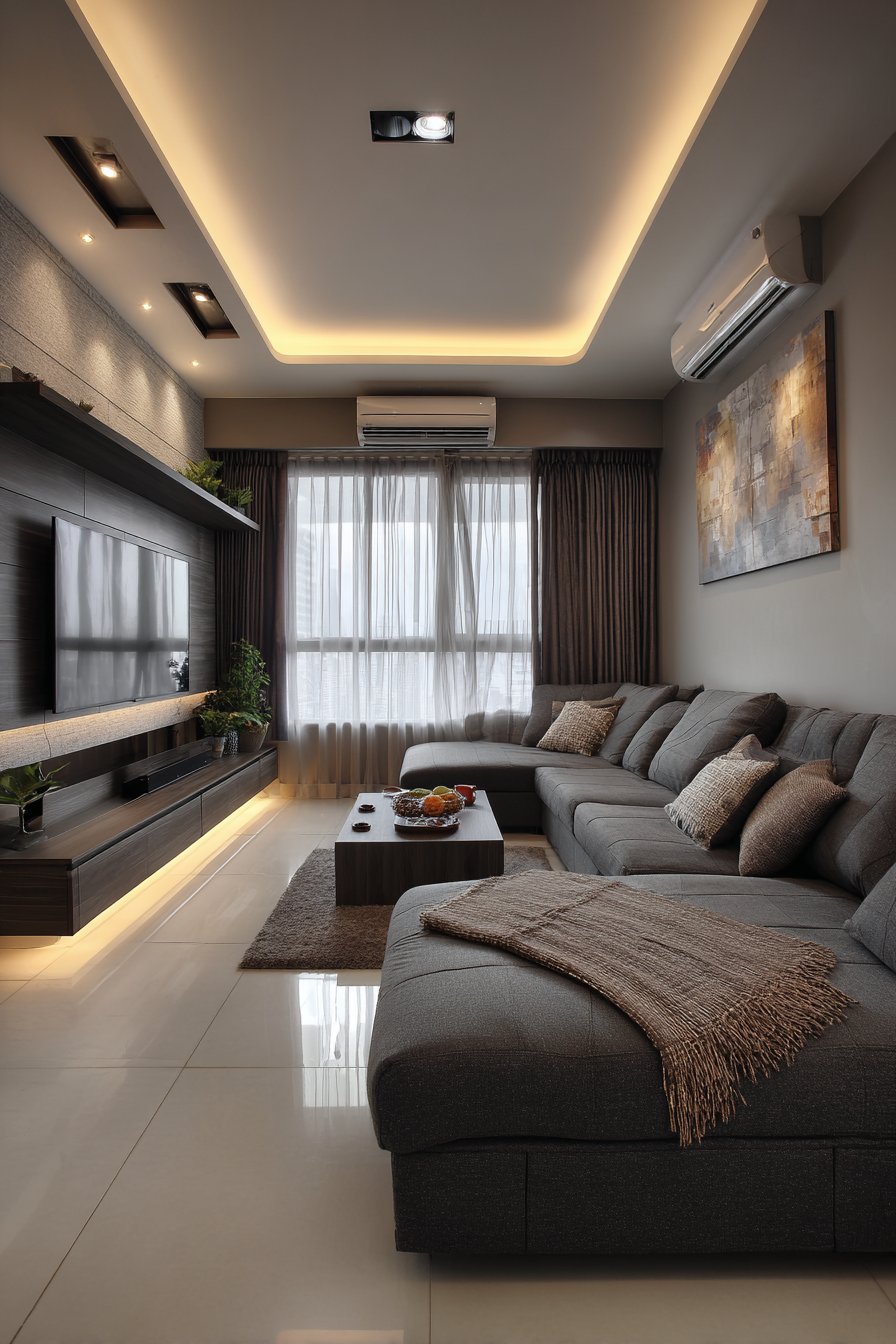
The opposite wall features a low-profile entertainment unit in black-stained oak running the entire length. Concealed cable management maintains clean lines without visible technology clutter. The unit’s dark finish provides dramatic contrast against lighter walls while its horizontal orientation reinforces the room’s linear geometry. The polished concrete floor reflects subtle ambient light from hidden LED strips, adding atmospheric glow without visible light sources.
One large-scale abstract painting in muted earth tones provides the only wall decoration. Its horizontal orientation continues the room’s linear theme while its substantial size ensures proper scale. The painting’s earth tones soften the grey and black palette, preventing the space from feeling too austere. Perfect symmetry governs the composition, with soft shadows adding depth to the deliberate linearity.
Key Design Tips:
- Use built-in furniture to create architectural permanence and clean lines
- Employ concealed lighting like LED strips for ambient glow without visible fixtures
- Select one large-scale artwork rather than multiple smaller pieces
- Maintain consistent horizontal lines throughout furniture and architectural elements
- Use polished concrete for modern edge and subtle light reflection
10. Balanced Conversation Area
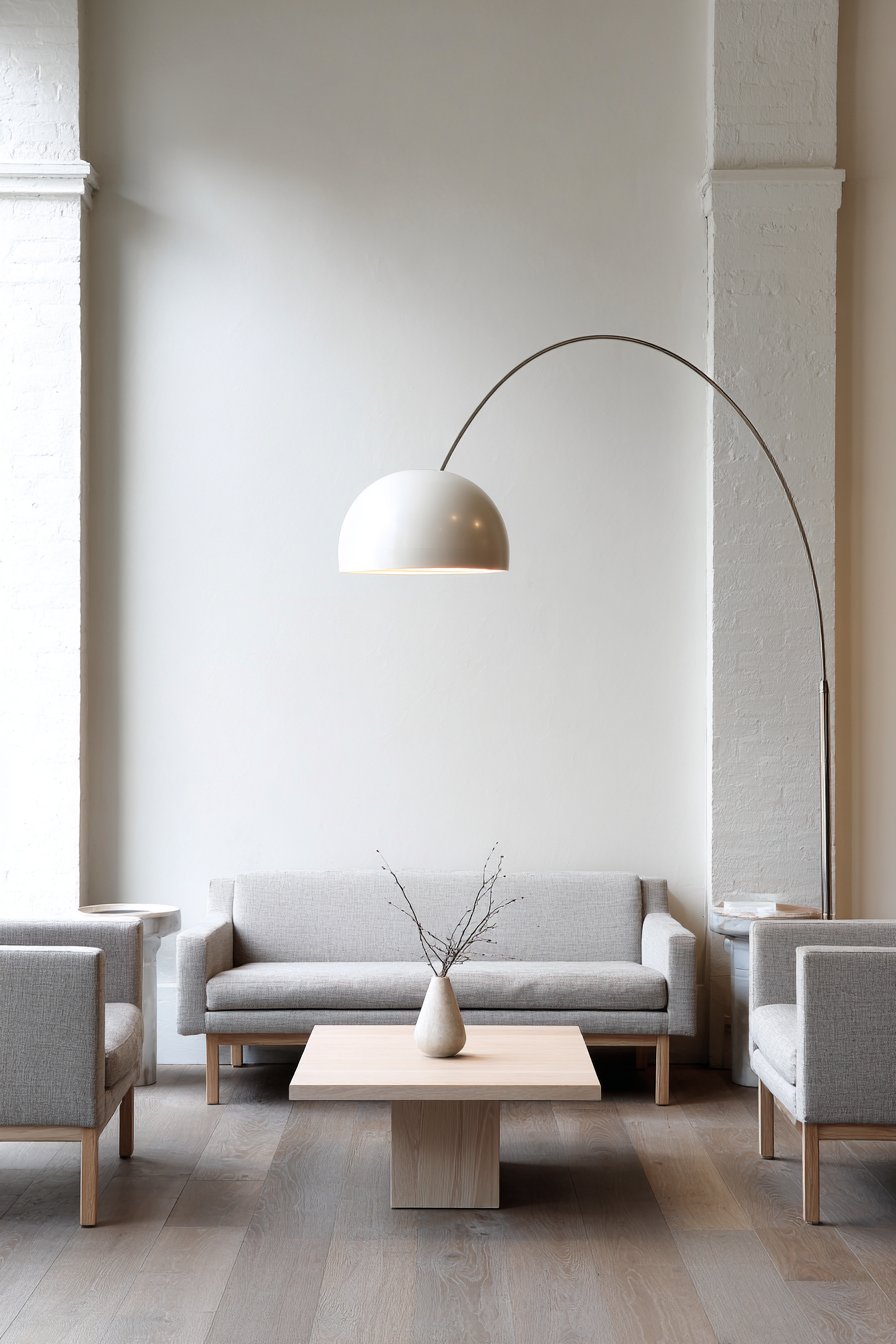
This minimalist living room centers on human connection through thoughtful furniture arrangement. Two matching armchairs in light grey linen face a simple two-seater sofa in coordinating fabric. This arrangement creates an intimate conversation area that encourages face-to-face interaction. The matching upholstery ensures visual cohesion while the symmetrical placement establishes formal balance.
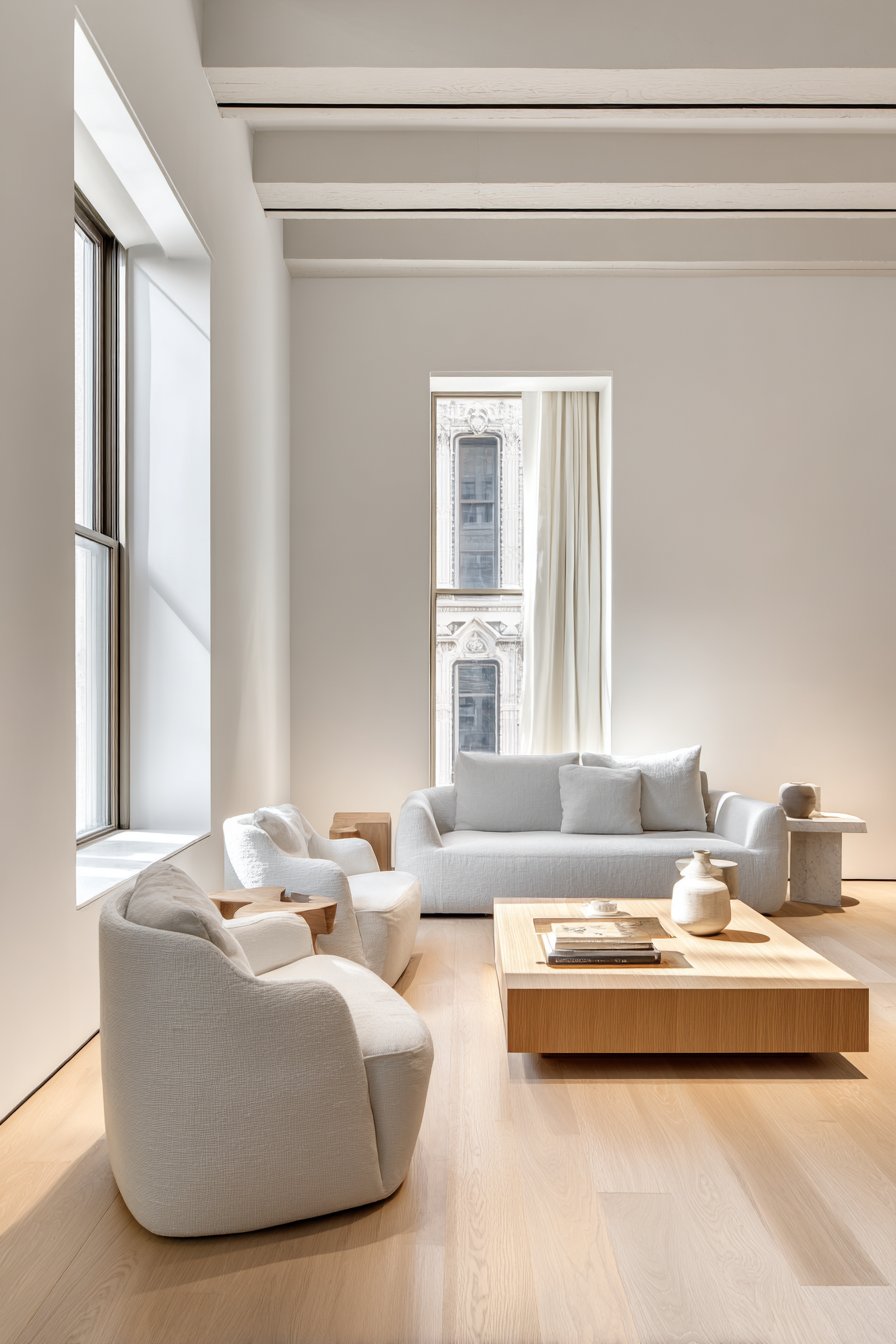
A square coffee table in white oak with visible grain sits perfectly centered on pale maple hardwood floors. The table’s modest size ensures it supports the seating area without creating barriers between occupants. Its square shape echoes the room’s geometric precision while the natural wood grain adds organic softness. Essential lighting comes from one arc floor lamp featuring a marble base and brushed metal finish, its sweeping form adding sculptural drama.
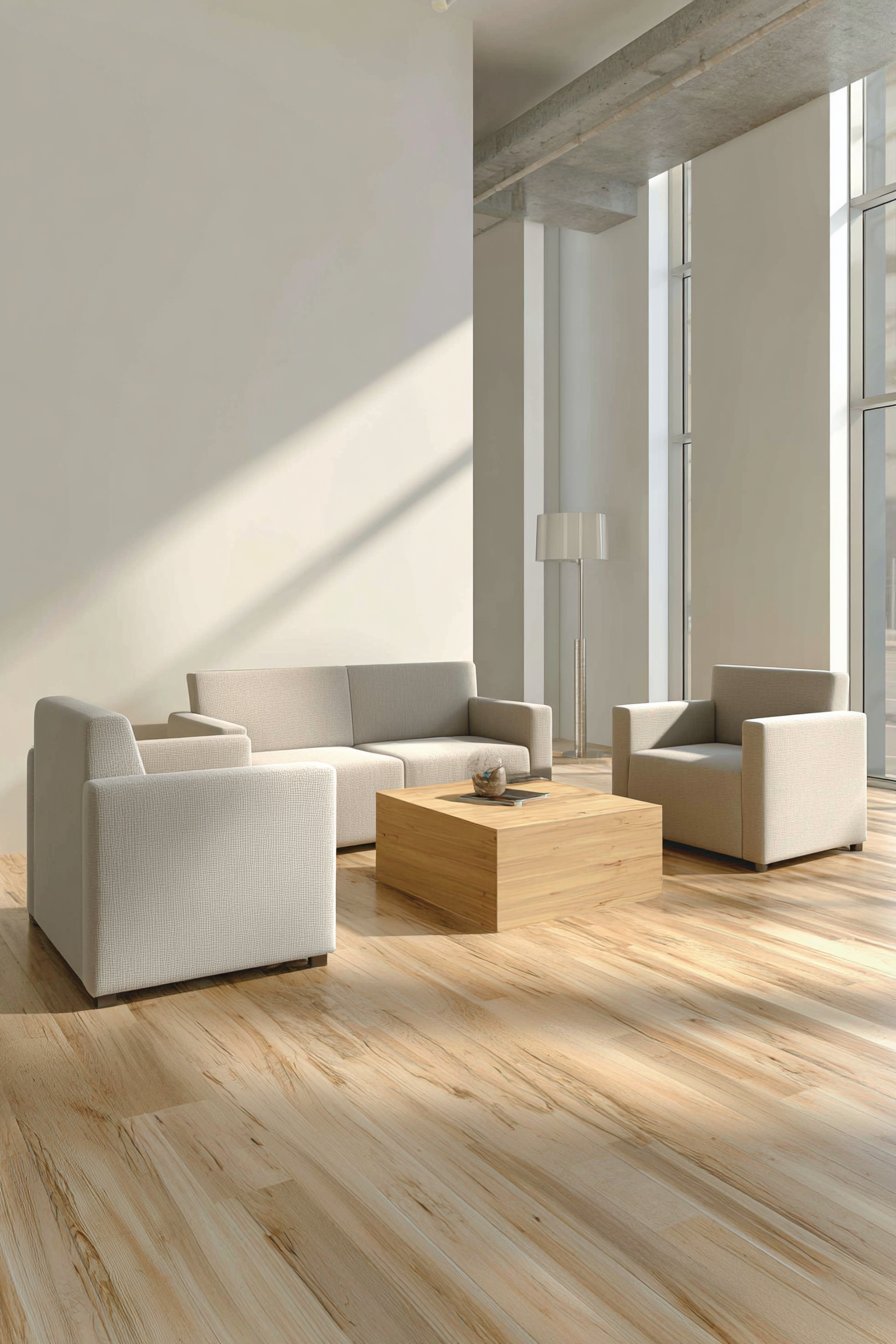
White walls remain completely unadorned, allowing natural architectural shadows to provide the only wall decoration. Afternoon light creates soft shadows that add depth to the minimal composition. The careful furniture placement demonstrates restraint and intention—each piece occupies its space purposefully. This balanced exposure highlights how deliberate editing creates rooms that feel complete rather than empty.
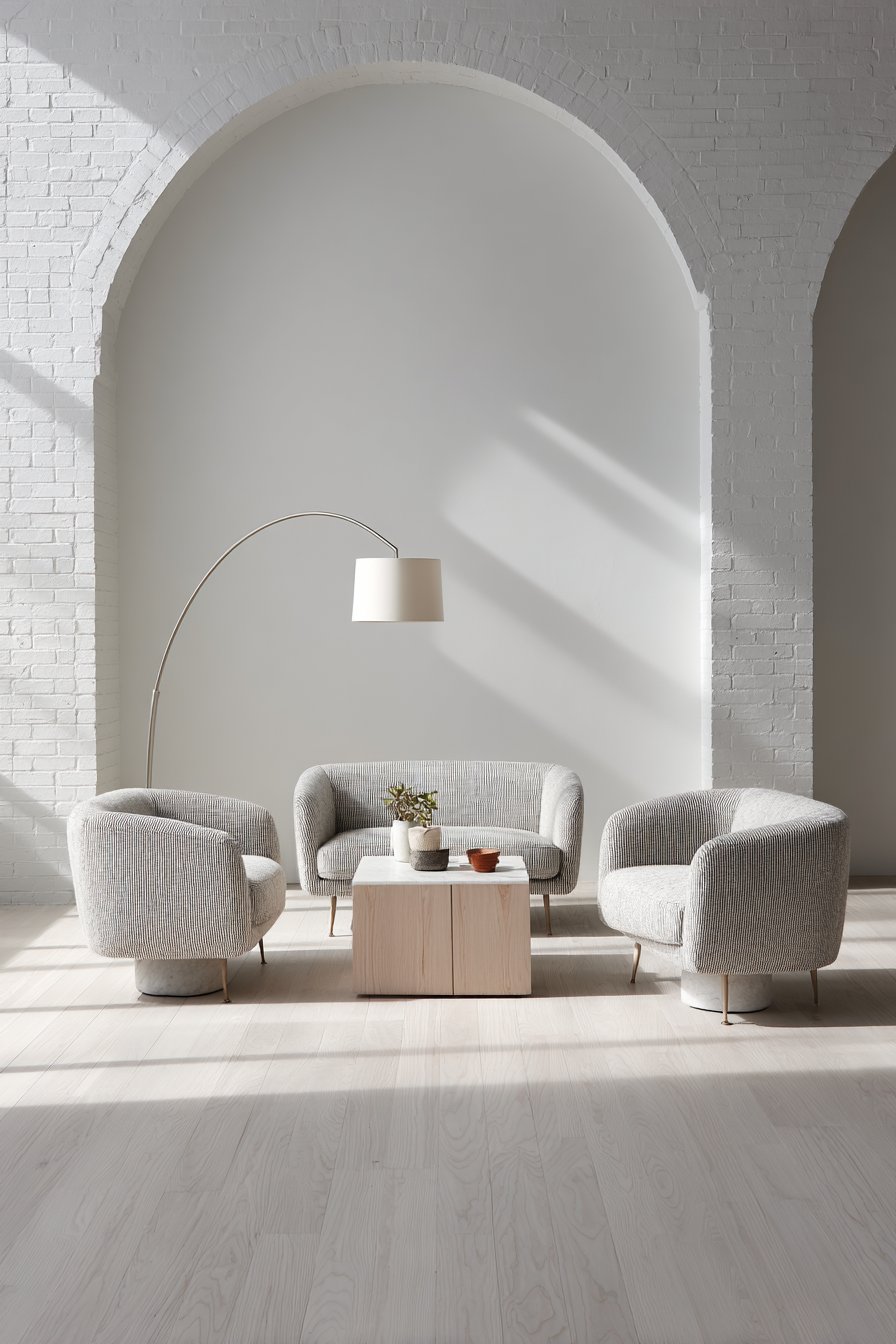
Key Design Tips:
- Arrange seating to encourage conversation and human connection
- Choose matching upholstery for formal symmetry and visual calm
- Select coffee table size that supports function without creating barriers
- Use one dramatic lamp as both functional light source and sculptural element
- Embrace blank walls and let natural shadow play provide decoration
Why These Minimalist Living Room Designs Excel
These ten minimalist living room concepts represent the pinnacle of contemporary interior design, each demonstrating mastery of spatial composition, material selection, and functional elegance. The minimalist aesthetic succeeds because it prioritizes quality over quantity, creating environments that support both psychological wellbeing and practical daily living. Each design showcases how deliberate restraint produces more powerful visual impact than decorative abundance.
The neutral color palettes featured throughout these spaces—ranging from pure white to charcoal grey—provide timeless foundations that won’t date quickly. These sophisticated neutrals allow homeowners to adapt their spaces over time through simple accent changes. The emphasis on natural materials like wood, linen, leather, and marble ensures these rooms feel warm rather than sterile, connecting inhabitants to organic elements that promote calm.
Functional simplicity defines each space, with furniture serving clear purposes and concealed storage maintaining visual purity. The clean lines and geometric forms create harmony through mathematical proportion. Natural lighting strategies maximize daylight, reducing energy consumption while supporting circadian rhythms. These sustainable design choices align with contemporary environmental consciousness.
The Japanese-inspired and Scandinavian influences evident in several designs bring centuries of wisdom about creating peaceful, functional homes. These traditions understand that negative space holds as much importance as filled areas, allowing rooms to breathe and occupants to relax. The industrial elements in loft-style designs prove that raw architectural features can coexist beautifully with refined minimalism.
Each design demonstrates thoughtful curation—selecting one perfect piece rather than multiple mediocre items. This philosophy extends to artwork selection, lighting fixtures, and even plant choices. The result transforms living rooms into serene sanctuaries that reduce mental clutter while elevating everyday experiences. These spaces prove that minimalist living rooms represent sophisticated design achievement rather than decorative deficit.
Conclusion
Creating a stunning minimalist living room requires discipline, vision, and commitment to intentional living. These ten design concepts demonstrate that minimalism encompasses far more than empty rooms—it represents a thoughtful approach to crafting spaces that enhance life quality. By embracing clean lines, neutral palettes, natural materials, and strategic restraint, you can transform your living area into a sophisticated sanctuary.
The key lies in quality over quantity, functionality over decoration, and breathing space over visual clutter. Start by editing your existing possessions ruthlessly, keeping only items that serve purpose or bring genuine joy. Invest in fewer, better pieces that will age gracefully. Allow natural light to become your primary design element, supplemented by carefully chosen lighting fixtures.
Whether you’re drawn to Scandinavian warmth, Japanese zen, or industrial edge, these minimalist principles adapt to various aesthetic preferences. Experiment with texture layering within neutral schemes, embrace architectural features, and create dedicated functional zones. Your minimalist living room awaits—a peaceful retreat where simplicity creates profound beauty and intentional design supports mindful living.
