


In an era where our homes serve as sanctuaries from increasingly hectic lives, the kitchen has evolved beyond its traditional role as merely a cooking space. Today’s kitchen represents the heart of modern living, where functionality meets tranquility, and where the philosophy of “less is more” transforms everyday cooking into a meditative experience. Minimalist kitchen design embodies this transformation, stripping away unnecessary elements to reveal the pure essence of culinary spaces—clean lines, purposeful materials, and an unwavering commitment to both beauty and utility.
The minimalist approach to kitchen design is not about deprivation or sterility; rather, it celebrates the intentional curation of space, where every element serves a purpose and contributes to a harmonious whole. This design philosophy recognizes that true luxury lies not in ornate embellishments but in the quality of materials, the precision of craftsmanship, and the thoughtful organization of space. By eliminating visual clutter and embracing negative space, minimalist kitchens create environments that feel larger, brighter, and infinitely more peaceful than their cluttered counterparts.
Throughout this comprehensive exploration, we’ll journey through ten distinctive interpretations of minimalist kitchen design, each offering unique insights into how simplicity can be achieved through different layouts, material selections, and spatial configurations. From handleless cabinetry systems to open shelving solutions, from monochromatic palettes to subtle natural material accents, these designs demonstrate that minimalism is not a singular aesthetic but rather a flexible philosophy adaptable to various spaces, needs, and personal preferences. Whether you’re renovating an expansive culinary workspace or optimizing a compact galley kitchen, the principles explored here will guide you toward creating a kitchen that breathes tranquility while performing flawlessly.
1. The Seamless Sanctuary: Handleless White Kitchen Perfection
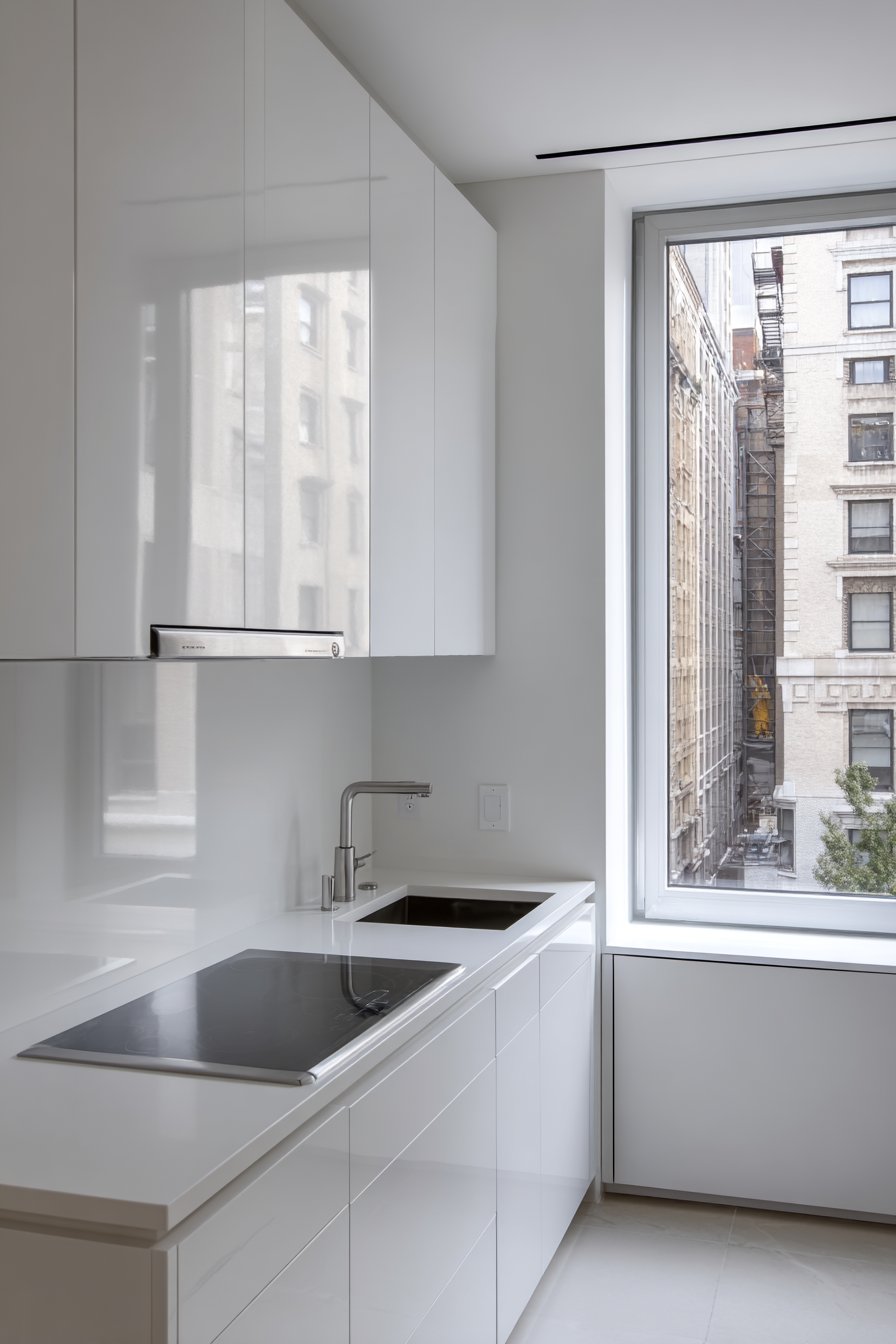
Picture a kitchen where surfaces flow uninterrupted, where cabinetry appears as continuous planes of pristine white, and where the eye finds rest rather than distraction. This interpretation of minimalist design centers on handleless cabinetry equipped with sophisticated push-to-open mechanisms that eliminate the need for visible hardware entirely.
The clean white surfaces create a canvas of serenity, while light grey quartz countertops introduce subtle tonal variation without disrupting the monochromatic harmony. Every element has been carefully integrated—the induction cooktop sits perfectly flush with the counter surface, creating an unbroken plane that transforms into functional cooking space at the touch of a button.

The genius of this design lies in its invisible complexity. Behind those smooth cabinet facades exists a world of thoughtful organization, where every utensil, appliance, and ingredient has its designated place. The single stainless steel sink becomes a sculptural element in its simplicity, paired with a minimalist faucet that reduces the fixture to its essential geometric form.
Natural daylight becomes an active design participant, streaming through large windows to cast soft, evolving shadows that add depth and dimension to what might otherwise feel static. These shadows dance across the uncluttered surfaces throughout the day, creating a living artwork that changes with the sun’s journey.
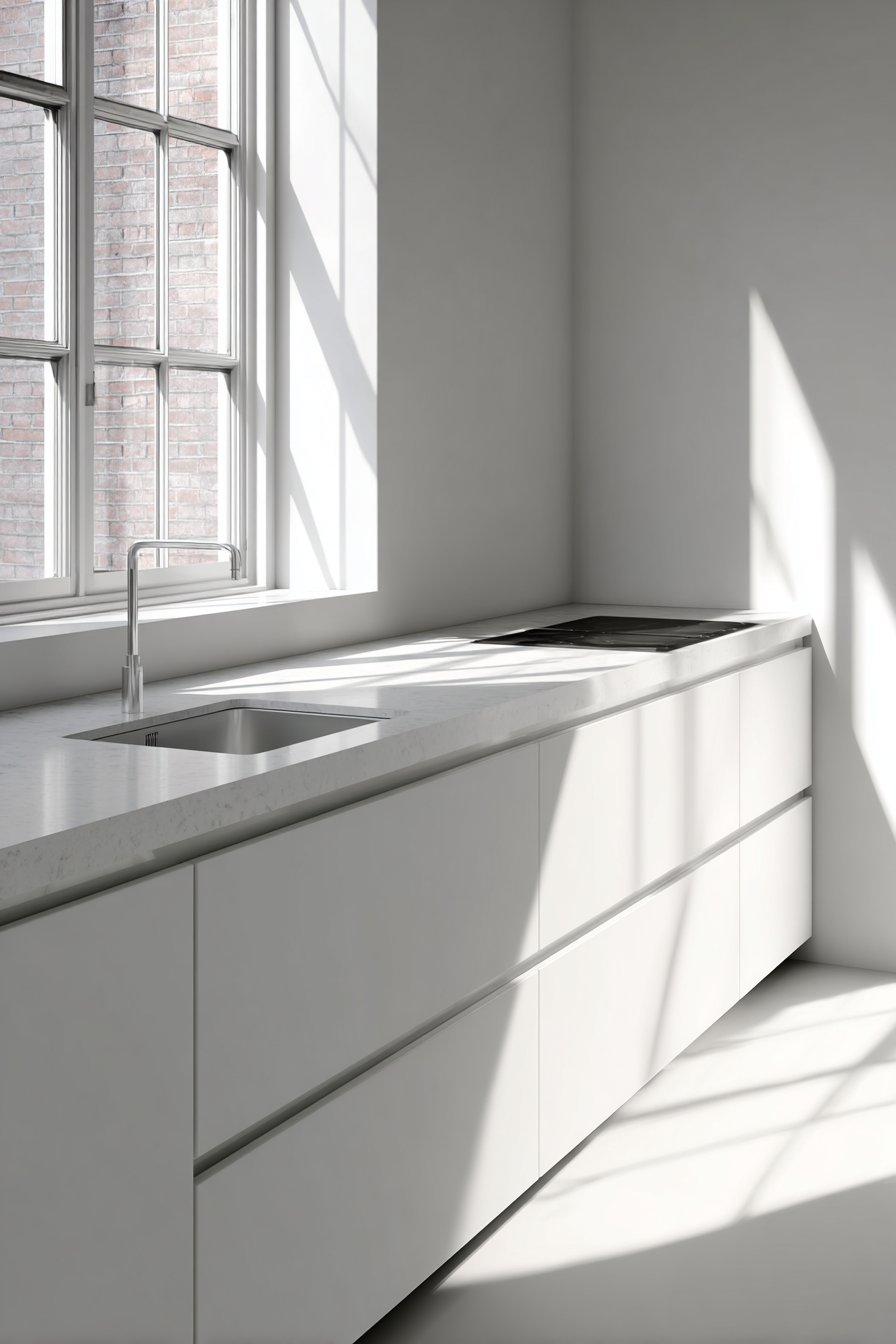
The material quality in this space speaks volumes through whispers. The quartz countertops offer durability and ease of maintenance while their subtle grey veining provides visual interest that reveals itself slowly, rewarding closer inspection. The white cabinetry, finished to perfection, reflects light beautifully, making the space feel larger and more open. This kitchen proves that minimalism doesn’t require sacrifice—it simply requires the discipline to choose quality over quantity, to invest in superior materials and craftsmanship rather than decorative excess. The result is a space that feels simultaneously expansive and intimate, modern yet timeless.
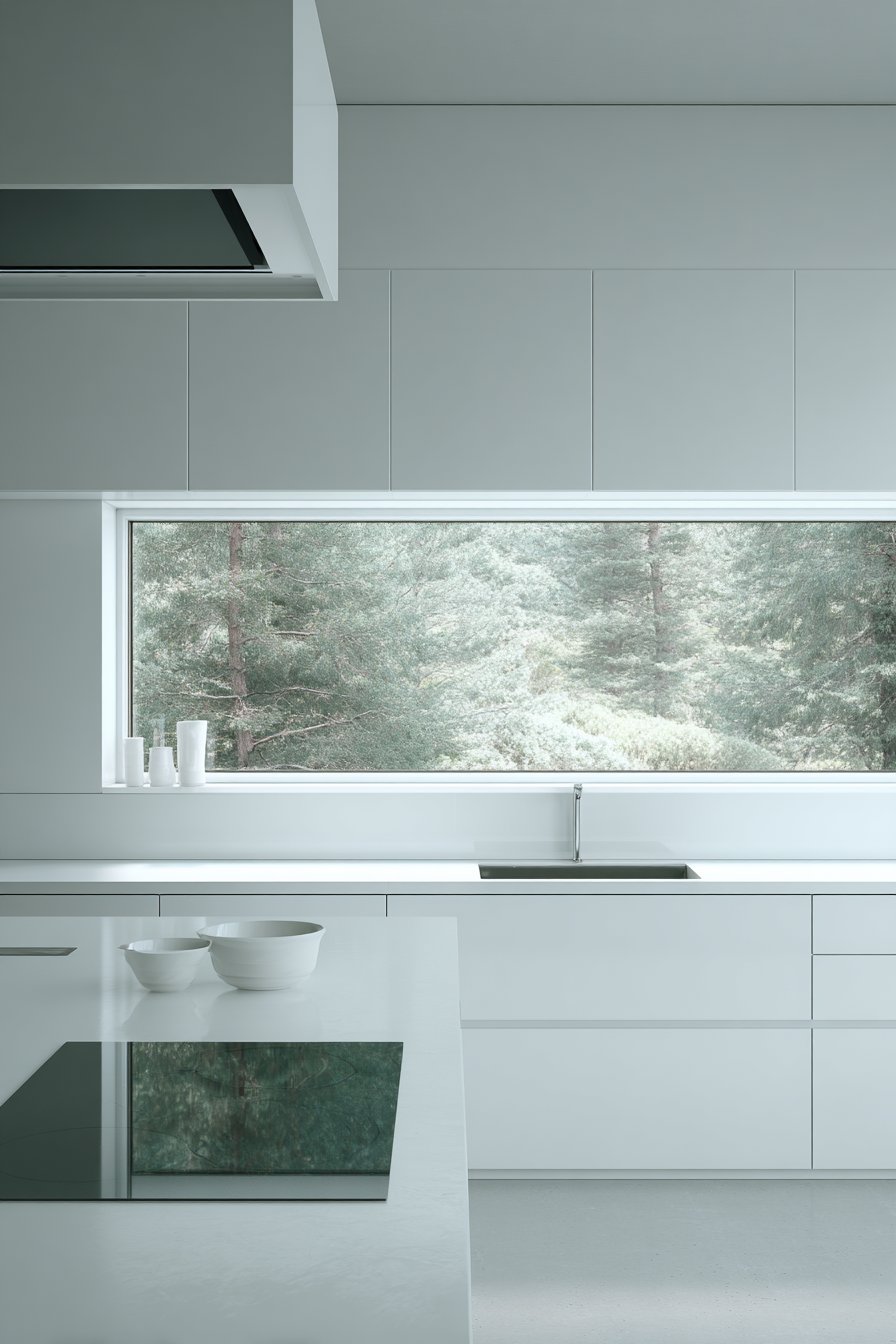
Key design tips for achieving this seamless sanctuary include investing in high-quality push-to-open mechanisms that operate smoothly and reliably, as these are essential to maintaining the handleless aesthetic over time. Choose quartz countertops with subtle veining rather than completely uniform surfaces to add gentle visual interest without disrupting minimalist principles. Ensure flush installation of all appliances, including cooktops and sinks to maintain the continuous surface aesthetic that defines this approach. Maximize natural light through strategic window placement and keep window treatments minimal or absent to allow light to animate the space throughout the day. Finally, implement concealed electrical outlets and pop-up solutions to keep countertops completely clear when not in use.
2. The Curated Display: Open Shelving Minimalism

Challenging the conventional wisdom that minimalist kitchens require everything to be hidden, this design embraces open shelving as both functional storage and intentional display. The upper cabinets have been completely removed, replaced by floating shelves that showcase essential white dishware and simple glassware arranged in carefully organized rows. This approach requires a different kind of discipline—the commitment to owning only what you truly need and ensuring that every visible item contributes to the overall aesthetic. The lower cabinets maintain the minimalist ethos with flat-panel doors in matte white, their concealed hardware preserving the clean lines while providing ample hidden storage for less photogenic necessities.
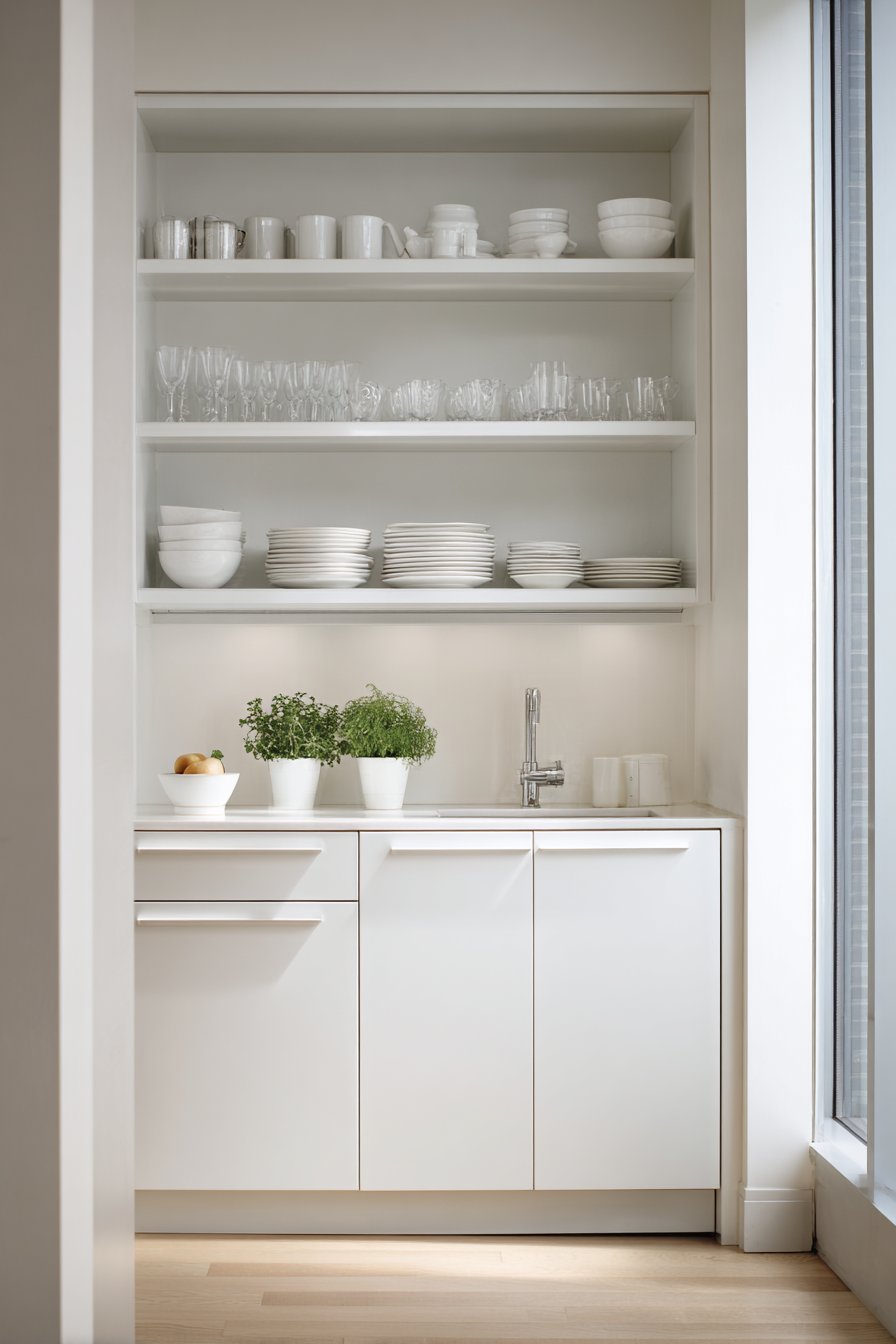
Light oak flooring introduces warmth to this composition without compromising the minimal aesthetic. The natural wood grain provides textural interest and grounds the space with organic authenticity, creating a bridge between the stark white surfaces and the human experience of the room. A small potted herb plant on the counter serves as the only organic element—a single point of living green that emphasizes rather than disrupts the simplicity. This careful restraint transforms what could be a cold, sterile environment into a space that feels warm, accessible, and genuinely livable.
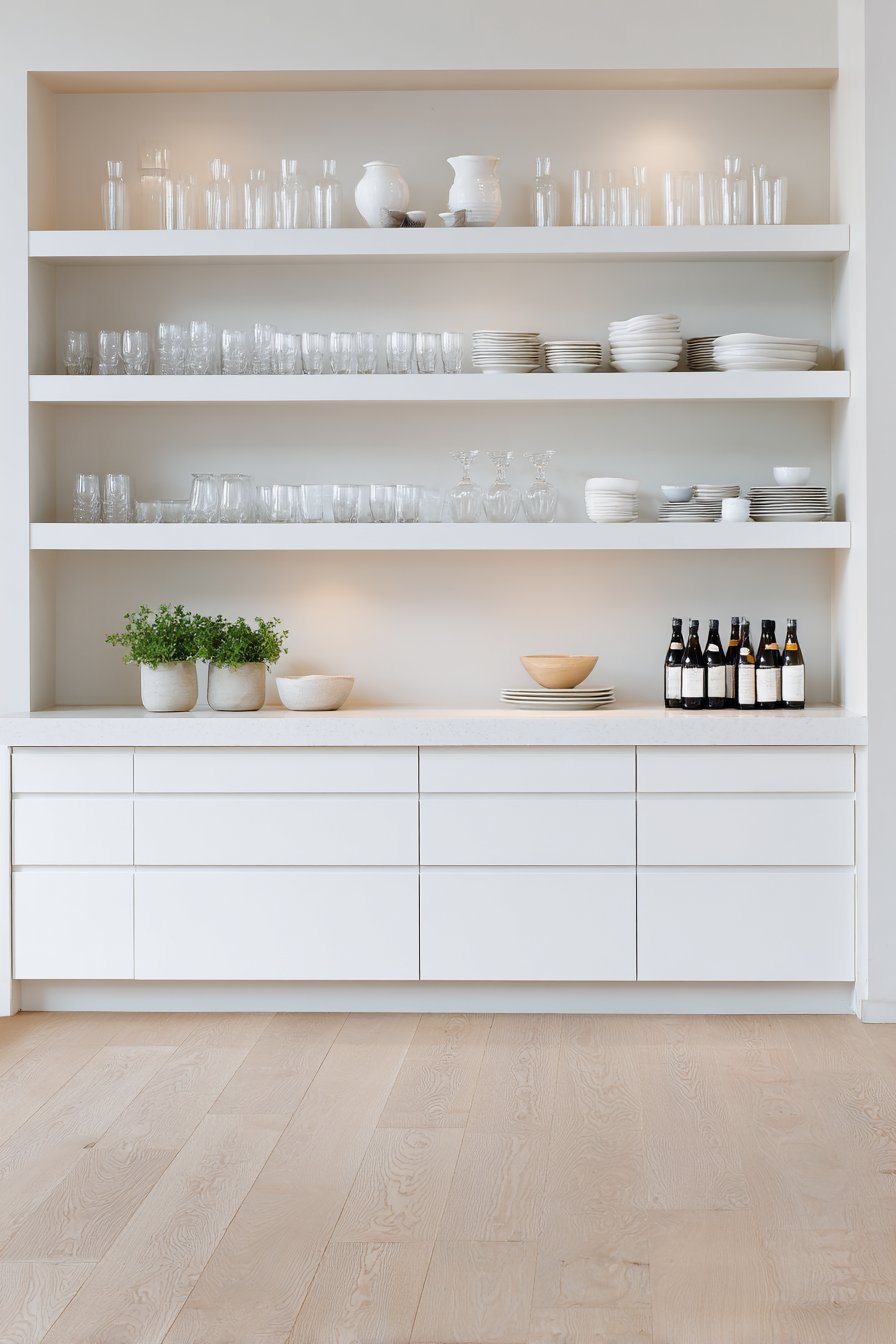
The beauty of open shelving in minimalist design lies in its honest transparency. There’s nowhere to hide disorder, no cabinet doors to close on chaos. This constraint becomes liberating, forcing a mindful approach to possessions and daily habits. Each plate, each glass becomes part of the visual composition, selected not just for function but for form. The repetition of similar items creates rhythm and calm—stacks of white plates become sculptural elements, rows of clear glassware catch and refract light. This kitchen demonstrates that minimalism can be both practical and beautiful, that display and storage need not be opposing concepts.
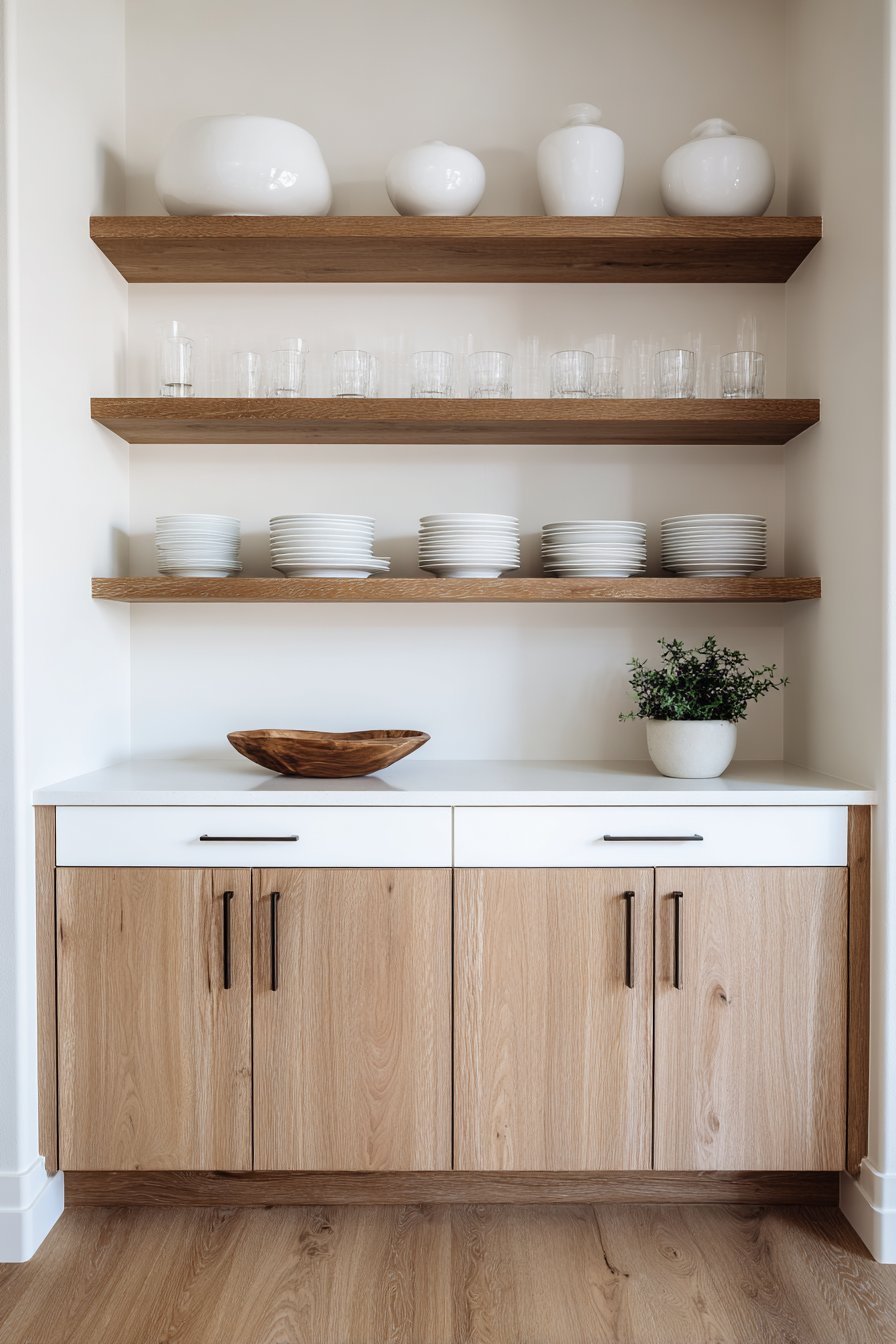
When implementing this curated display approach, carefully curate your displayed items, choosing pieces that share a cohesive color palette and similar aesthetic qualities to maintain visual harmony. Organize shelving contents by category and height to create pleasing visual rhythm and make items easy to locate and access.
Balance open and closed storage by using lower cabinets for less attractive but necessary items, keeping only photogenic essentials on display. Introduce warmth through natural wood flooring to prevent the space from feeling too clinical or cold. Limit decorative elements to one or two carefully chosen pieces, such as a small plant or single art object to maintain focus.
3. The Concrete Statement: Waterfall Island as Focal Point
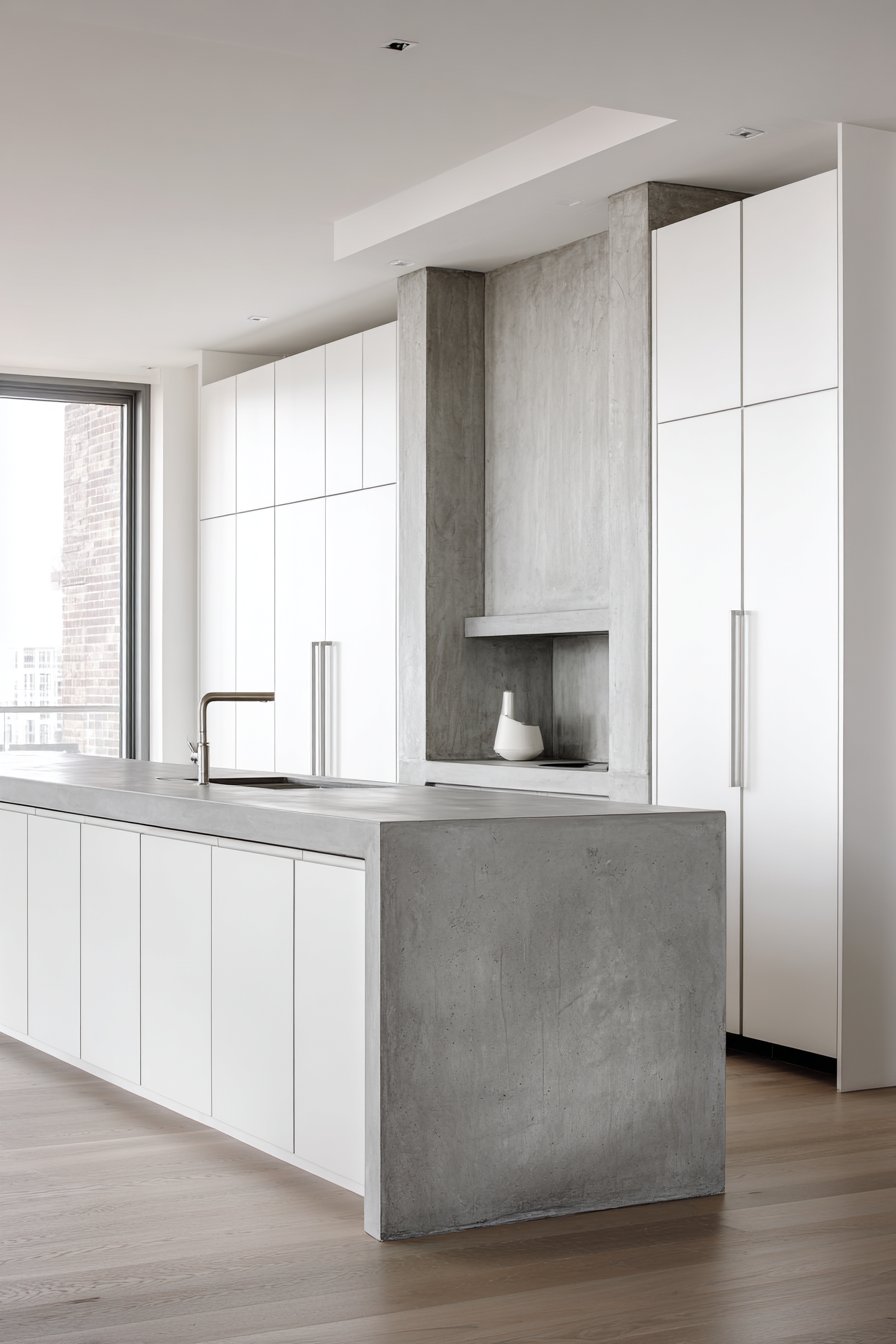
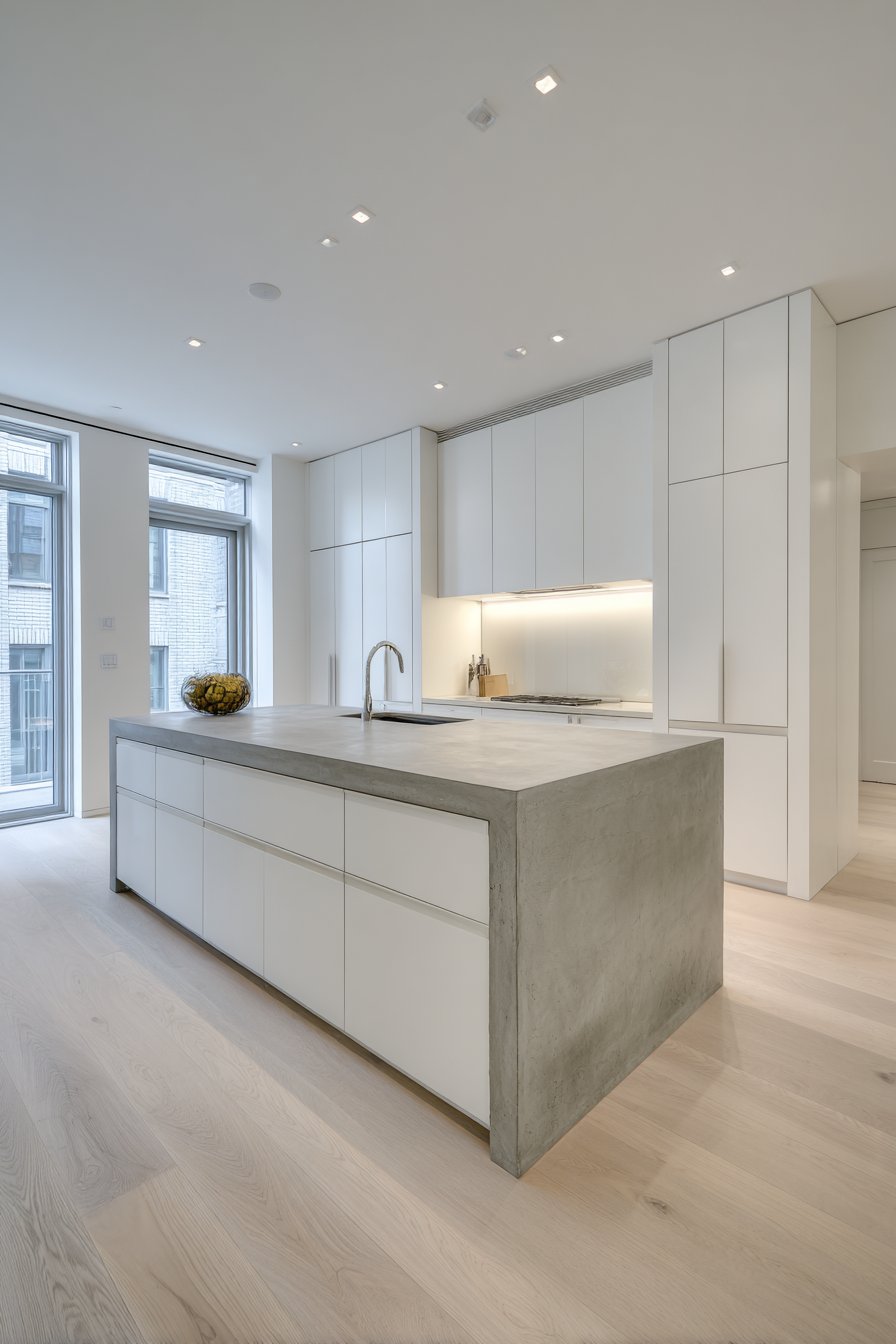
In this interpretation, minimalist design finds its anchor in a stunning kitchen island featuring a waterfall-edge concrete countertop in soft grey tones. The concrete cascades seamlessly down the sides of the island, creating a continuous surface that appears carved from a single monolithic block. This dramatic element becomes the sculptural centerpiece of the kitchen, its raw industrial beauty softened by the gentle grey coloration that bridges between warm and cool tones. The island houses hidden storage compartments accessed through pressure-release mechanisms, maintaining the clean silhouette while providing essential functionality.

Surrounding this central feature, matte white cabinetry extends from floor to ceiling, creating a gallery-like backdrop that allows the concrete island to command attention. These tall cabinets maximize storage capacity while preserving visual simplicity—their unbroken vertical lines emphasize ceiling height and create a sense of architectural grandeur. The decision to eliminate upper cabinets in the island area creates generous negative space, allowing the eye to rest and the mind to settle. Recessed lighting provides even, shadow-free illumination without introducing decorative fixtures that might compete with the architectural elements.
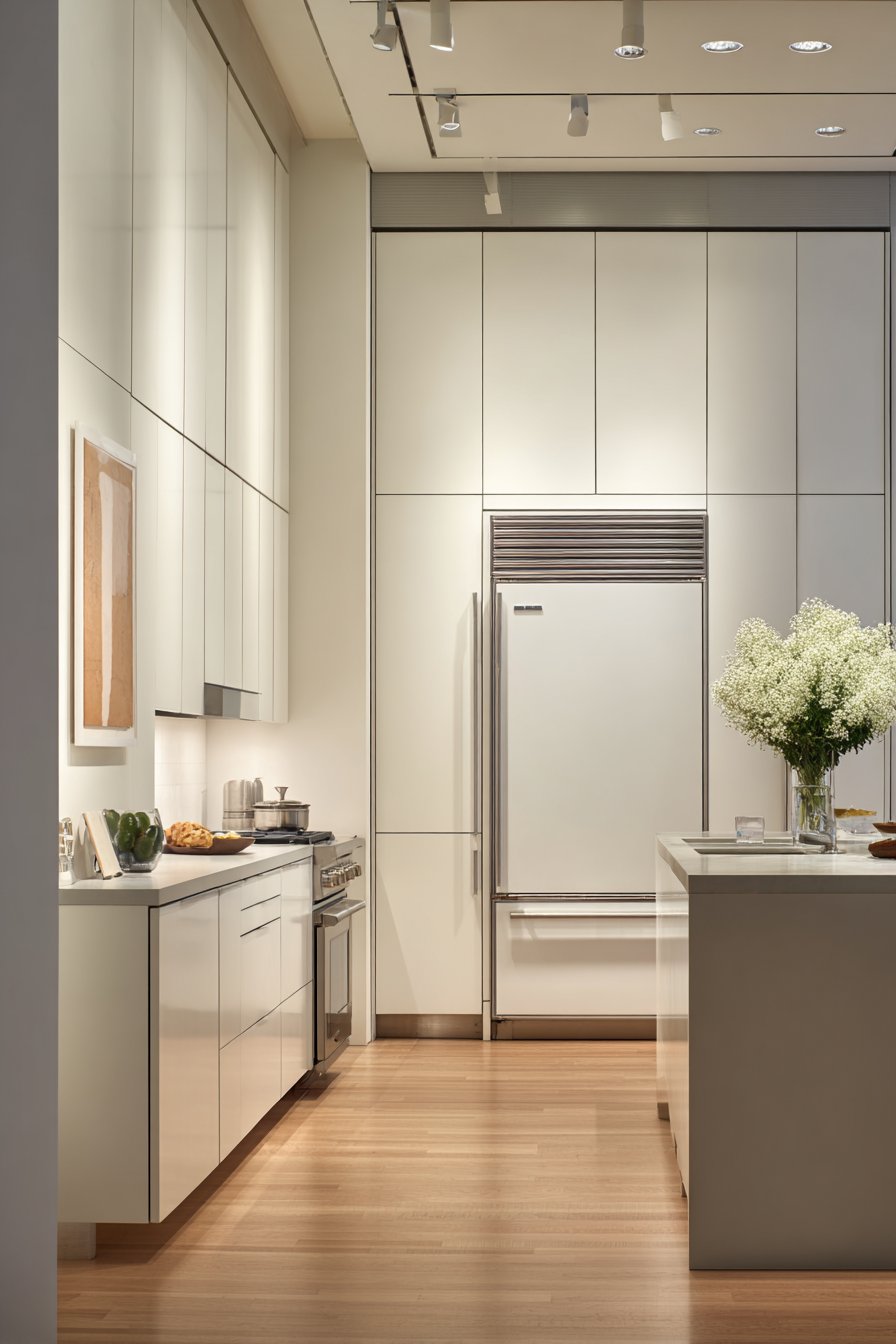
The interplay between the concrete’s organic texture and the cabinetry’s smooth finish creates subtle but essential contrast. Concrete, despite its industrial origins, possesses natural variation—subtle color shifts, tiny air bubbles, the unique character of each pour. These imperfections humanize the space, reminding us that minimalism can celebrate authentic materials rather than synthetic perfection.
The waterfall edge serves both aesthetic and practical purposes, protecting the island’s corners while creating a satisfying visual conclusion to the countertop plane. This kitchen proves that minimalist design can make bold statements, that simplicity and drama need not be mutually exclusive.
To achieve this concrete statement design, consider concrete countertops for their unique character and durability, accepting the natural variations as part of their beauty rather than flaws to be corrected. Use waterfall edges strategically on islands or peninsula counters to create architectural interest while maintaining clean lines.
Balance bold material choices with neutral surroundings to ensure focal points command attention without overwhelming the space. Implement floor-to-ceiling cabinetry to maximize storage while creating strong vertical lines that enhance spatial perception. Choose recessed lighting over pendant fixtures when you want the architecture and materials to remain the primary visual focus.
4. The Efficient Corridor: Galley Kitchen Optimization
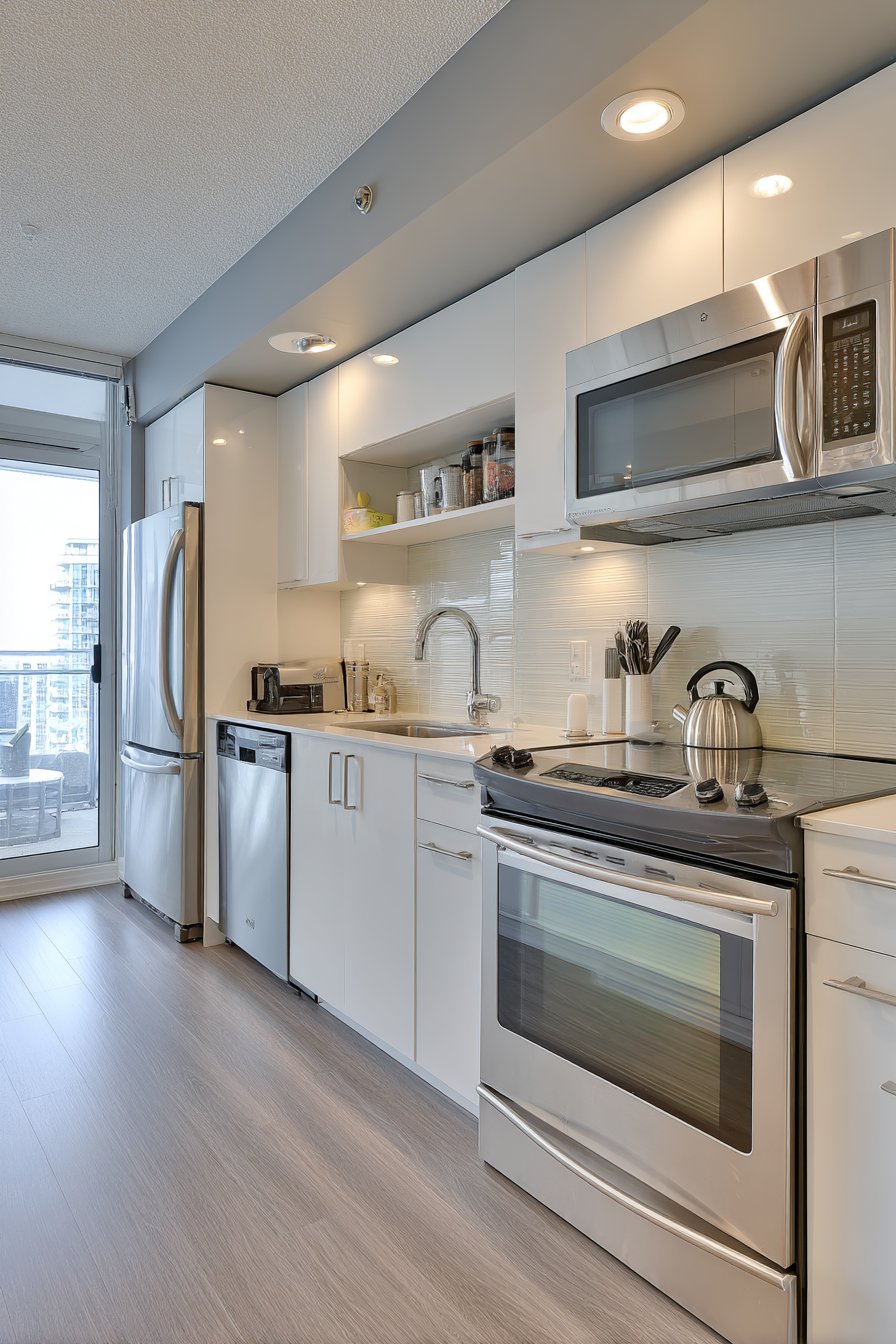
The galley kitchen layout receives minimalist treatment in this design, where parallel runs of white flat-panel cabinets create an efficient corridor optimized for cooking workflow. This configuration, born from space constraints, becomes an opportunity to demonstrate minimalist principles at their most practical. Every inch serves a purpose, every element earns its place through function rather than decoration. Stainless steel appliances integrate seamlessly into the cabinetry, their panel-ready fronts creating a uniform appearance that prioritizes visual continuity over appliance branding or decorative details.
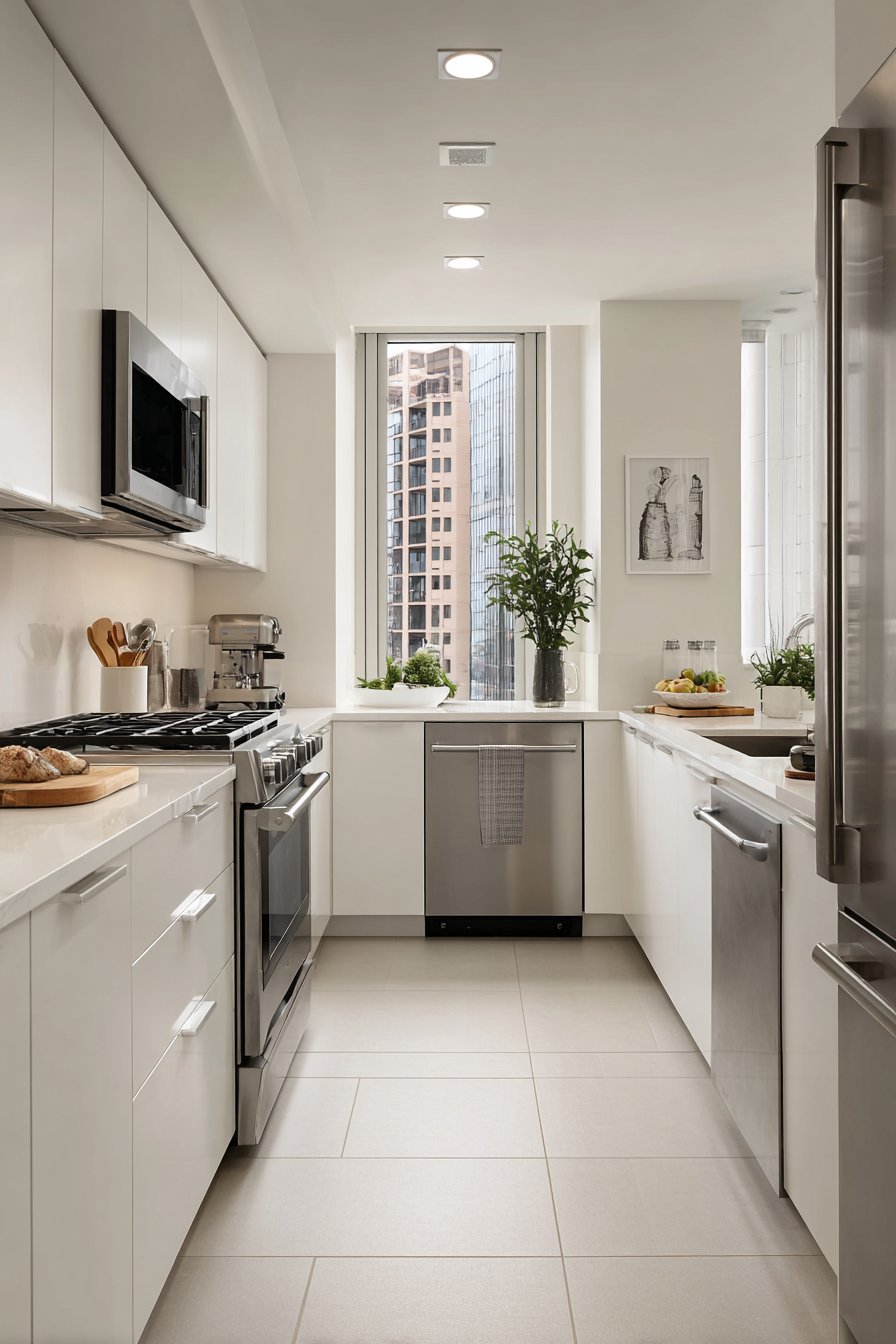
A narrow window above the sink provides natural light while maintaining privacy—a crucial consideration in urban settings where kitchens often face neighboring buildings. This slender opening becomes a picture frame for changing sky and weather, connecting the interior to natural rhythms without sacrificing the sense of enclosure that makes a kitchen feel secure and focused.
The backsplash features large-format white porcelain tiles with minimal grout lines, reducing visual interruption and simplifying cleaning. These tiles reflect light beautifully, bouncing illumination from the window throughout the galley and making the narrow space feel more open.

The galley layout inherently supports minimalist principles by enforcing efficiency and eliminating unnecessary movement. Everything sits within easy reach, the parallel counters creating a natural work triangle that makes cooking intuitive and flowing. This design celebrates the beauty of pure function, proving that spatial constraints need not feel limiting when embraced with thoughtful planning.
The white palette expands the perceived space, while the streamlined cabinetry ensures that even a small kitchen can accommodate substantial storage. This is minimalism in service of daily life, where design dissolves into use, where form follows function so perfectly that the two become indistinguishable.

For optimal galley kitchen design, optimize the layout work triangle by positioning sink, cooktop, and refrigerator for maximum efficiency within the parallel runs. Choose large-format tiles for backsplashes to minimize grout lines and create a more unified, easier-to-clean surface.
Integrate appliances behind panel-ready fronts to maintain visual consistency and make cabinetry, not appliances, define the aesthetic. Use strategic window placement to bring in natural light without compromising privacy or wall space needed for cabinetry. Keep the color palette light and unified in narrow spaces to maximize the sense of openness and prevent claustrophobia.
5. The Flexible Living Space: Multi-Functional Minimalism

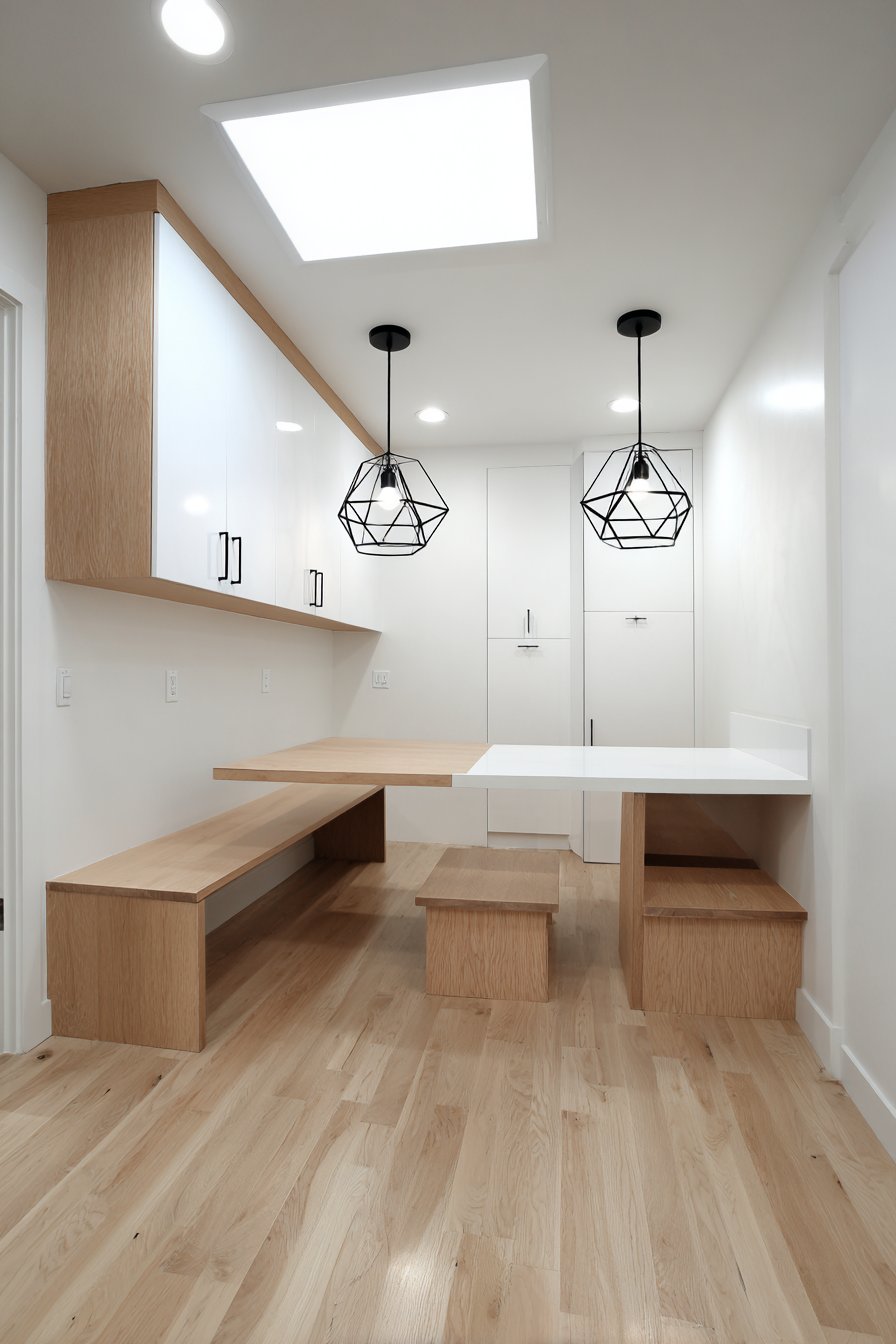
This design expands the minimalist kitchen concept to include an integrated breakfast nook, demonstrating how restraint can create flexible, multi-functional spaces. The monochromatic palette of white and light grey provides the calm foundation, while a single accent of natural wood on a floating shelf introduces organic warmth without disrupting the visual simplicity.
The breakfast nook features simple bench seating built into the wall, maximizing space efficiency while providing comfortable dining. A wall-mounted table folds away when not in use, transforming the nook from dining area to open space with a simple gesture—the ultimate minimalist furniture solution.

Pendant lighting consisting of single geometric fixtures in matte black provides the only decorative element, their stark silhouettes creating sculptural interest against the white ceiling. These fixtures serve double duty, illuminating both the kitchen workspace and the dining area while their industrial-minimal aesthetic bridges between function and form.
Above, a skylight floods the space with natural light, eliminating the need for extensive artificial lighting during daylight hours and creating a connection to the sky that expands the perceived space beyond its physical boundaries.
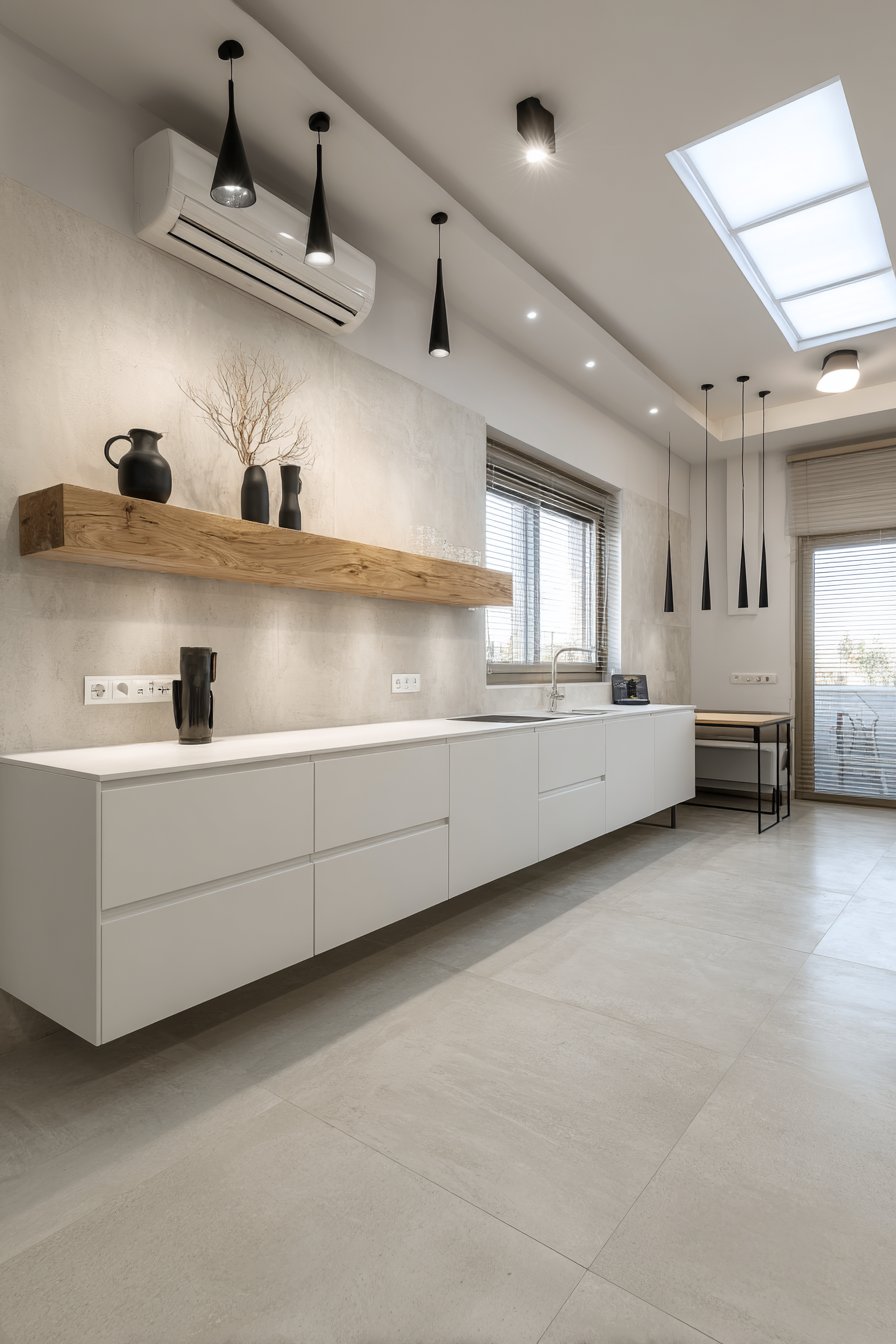
The genius of this design lies in its adaptability. The folding table allows the space to transform based on immediate needs—fully extended for family meals, partially folded for quick breakfasts, completely stowed when maximum floor space is required. This flexibility embodies minimalist thinking: rather than dedicating permanent space to a single function, design elements that can adapt and transform as needed.
The bench seating includes hidden storage beneath the cushions, continuing the theme of concealed organization that keeps the space feeling open and uncluttered. Every element works harder, serves multiple purposes, and contributes to the overall sense of spaciousness despite the compact footprint.
When creating flexible multi-functional spaces, incorporate wall-mounted folding tables in small spaces to create flexible dining areas that can disappear when not needed. Use built-in bench seating with hidden storage to maximize space efficiency while providing comfortable dining and clever organization.
Limit accent colors to single strategic elements such as pendant fixtures to create visual interest without overwhelming the minimal palette. Install skylights where possible to introduce abundant natural light and create a connection to the outdoors that expands perceived space. Choose multi-functional furniture and fixtures that can adapt to different needs rather than single-purpose pieces that occupy permanent space.
6. The Hidden Infrastructure: Concealed Storage Mastery
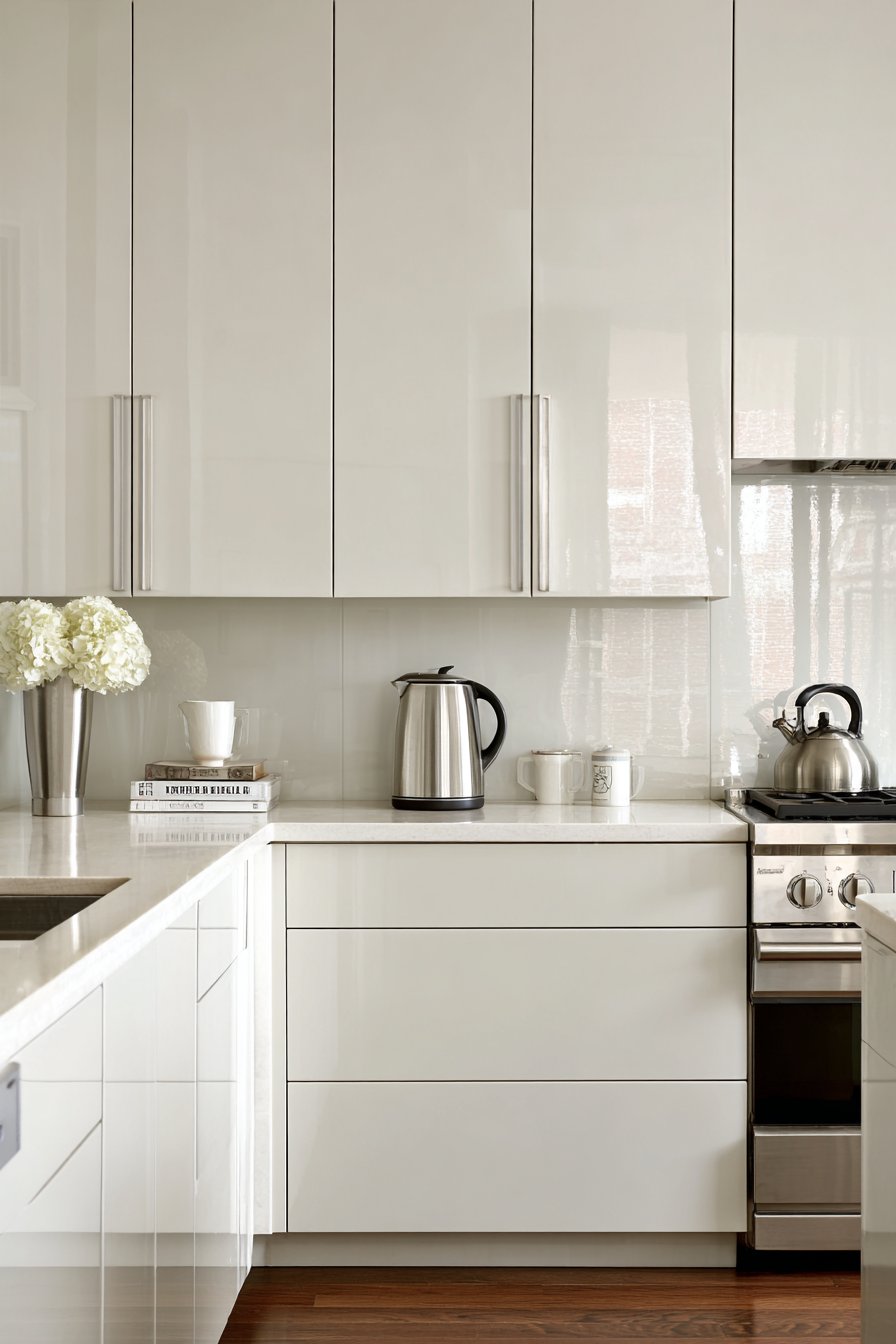
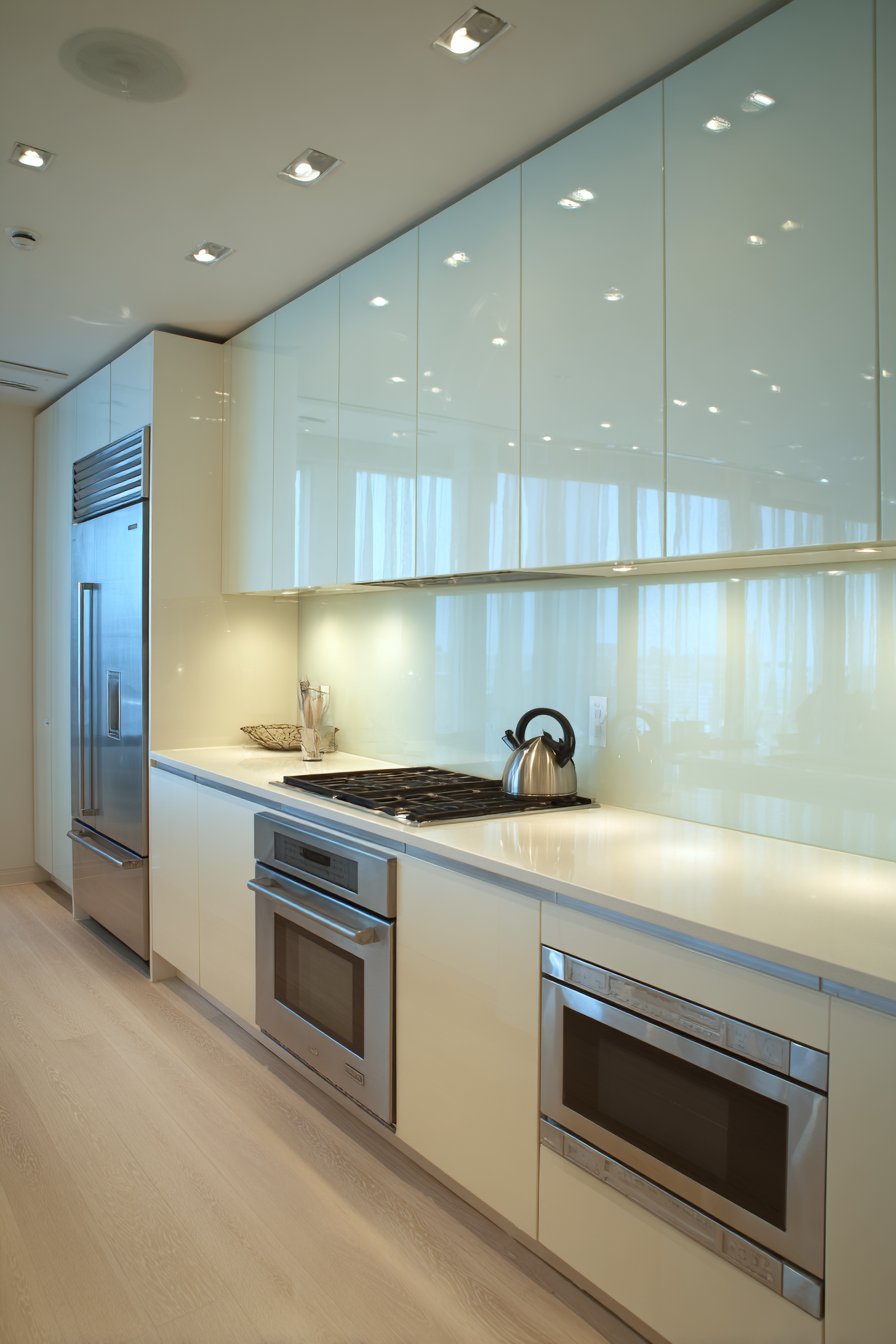
This design takes minimalism to its logical conclusion: a kitchen where every functional element can be concealed behind smooth, uninterrupted surfaces. Floor-to-ceiling pantry cabinets finished in smooth white lacquer feature no visible hardware whatsoever—pressure-release mechanisms allow doors to open at a touch, then close flush with the surrounding surfaces.
The counter space remains completely clear except for a single modern kettle, its sculptural form carefully chosen to serve as both functional tool and aesthetic object. This extreme restraint creates a space that feels more like a gallery than a kitchen, where the architecture itself becomes the artwork.
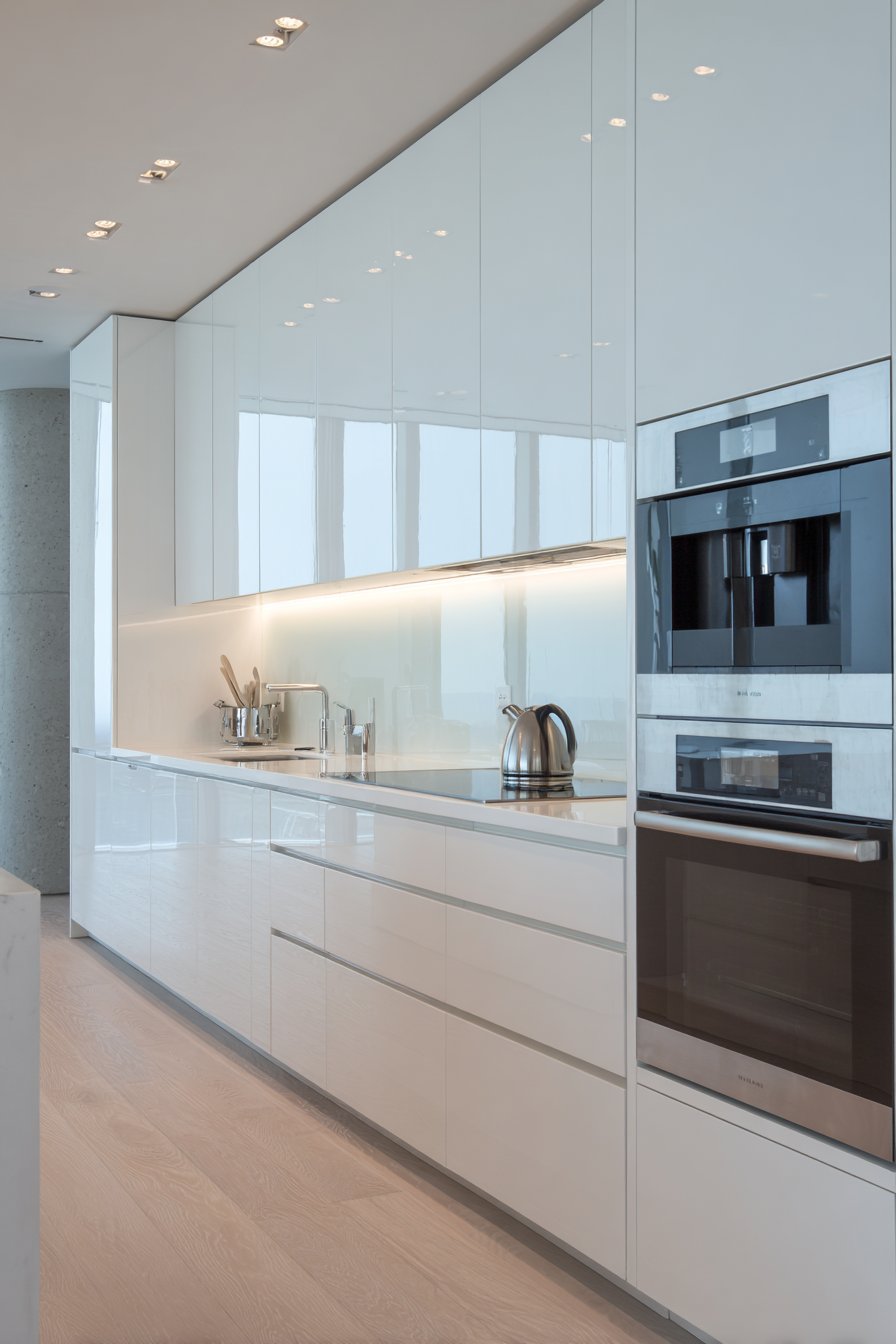
The backsplash features seamless white glass panels that reflect light and maintain visual continuity with the cabinetry. These panels eliminate the traditional distinction between horizontal and vertical surfaces, creating a continuous white envelope that wraps the kitchen in serene simplicity. Stainless steel appliances are panel-ready and integrated behind matching cabinetry fronts, rendering them invisible when not in use. The refrigerator, dishwasher, and even the microwave hide in plain sight, their presence revealed only when needed. This approach requires significant planning and investment in quality concealed mechanisms, but the payoff is a space of unparalleled visual calm.
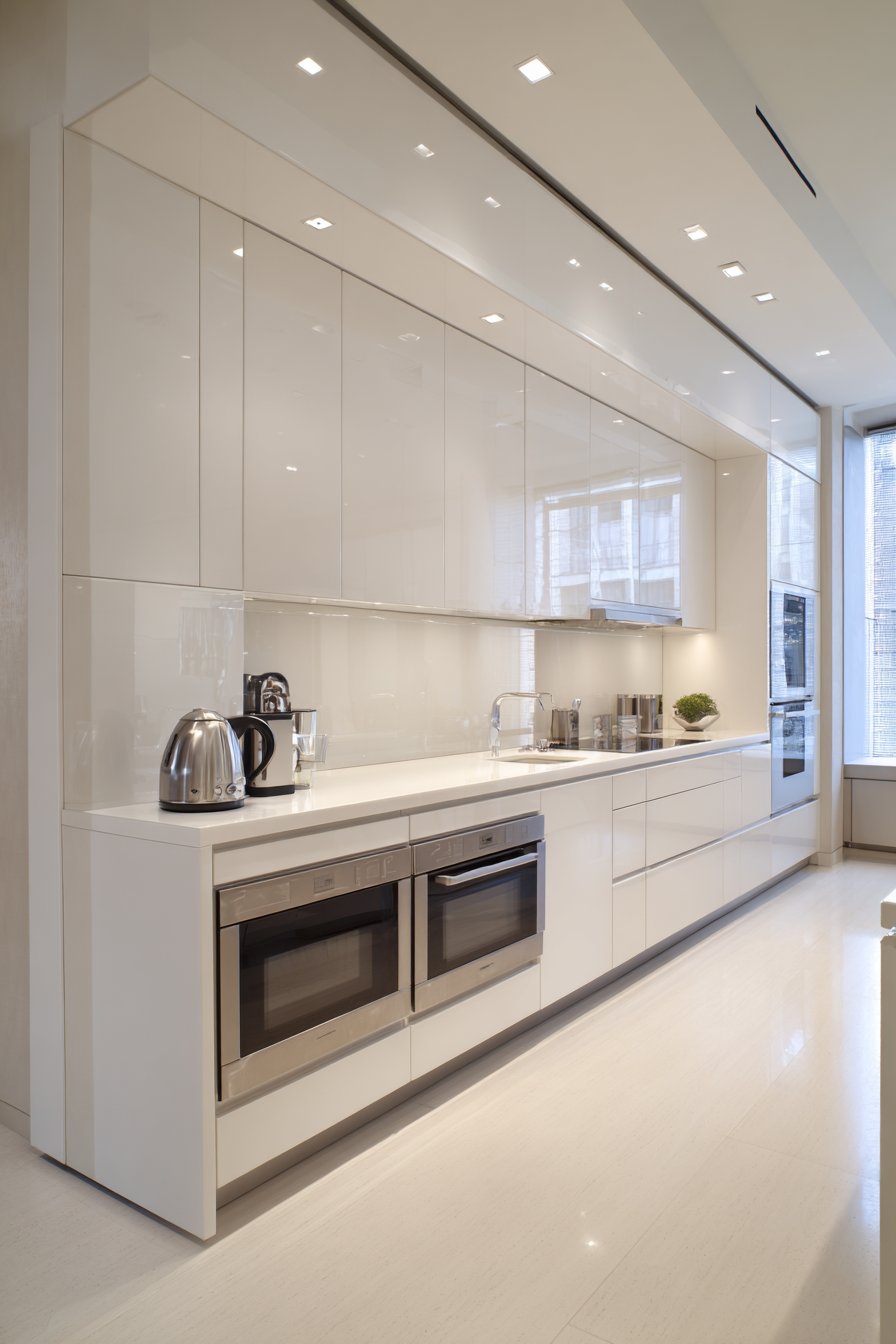
The commitment to concealed storage in this design reflects a deep understanding of minimalist philosophy: that visual simplicity creates mental clarity, that the absence of clutter allows the mind to rest. Behind those pristine facades exists meticulously organized storage—pull-out pantry systems, drawer dividers, and specialized organizers that ensure everything has its place and can be easily accessed.
This is not minimalism that makes cooking difficult; rather, it’s minimalism that makes cooking a pleasure by eliminating visual and physical chaos. The thoughtful organizational systems mean that despite the clear counters, everything needed for meal preparation is immediately at hand, stored in intuitive locations that become second nature with use.
To master concealed storage design, invest heavily in quality concealment hardware, including soft-close mechanisms and push-to-open systems that will operate smoothly for years. Plan detailed internal organization systems before installation to ensure concealed storage remains practical and accessible for daily use.
Choose panel-ready appliances that can integrate seamlessly behind cabinetry fronts to maintain uninterrupted visual surfaces. Use glass backsplash panels for their reflective properties and ability to create seamless transitions between surfaces. Limit visible objects to one or two carefully chosen pieces that serve both functional and aesthetic purposes.
7. The Warm Minimalist: Natural Wood and Dining Integration
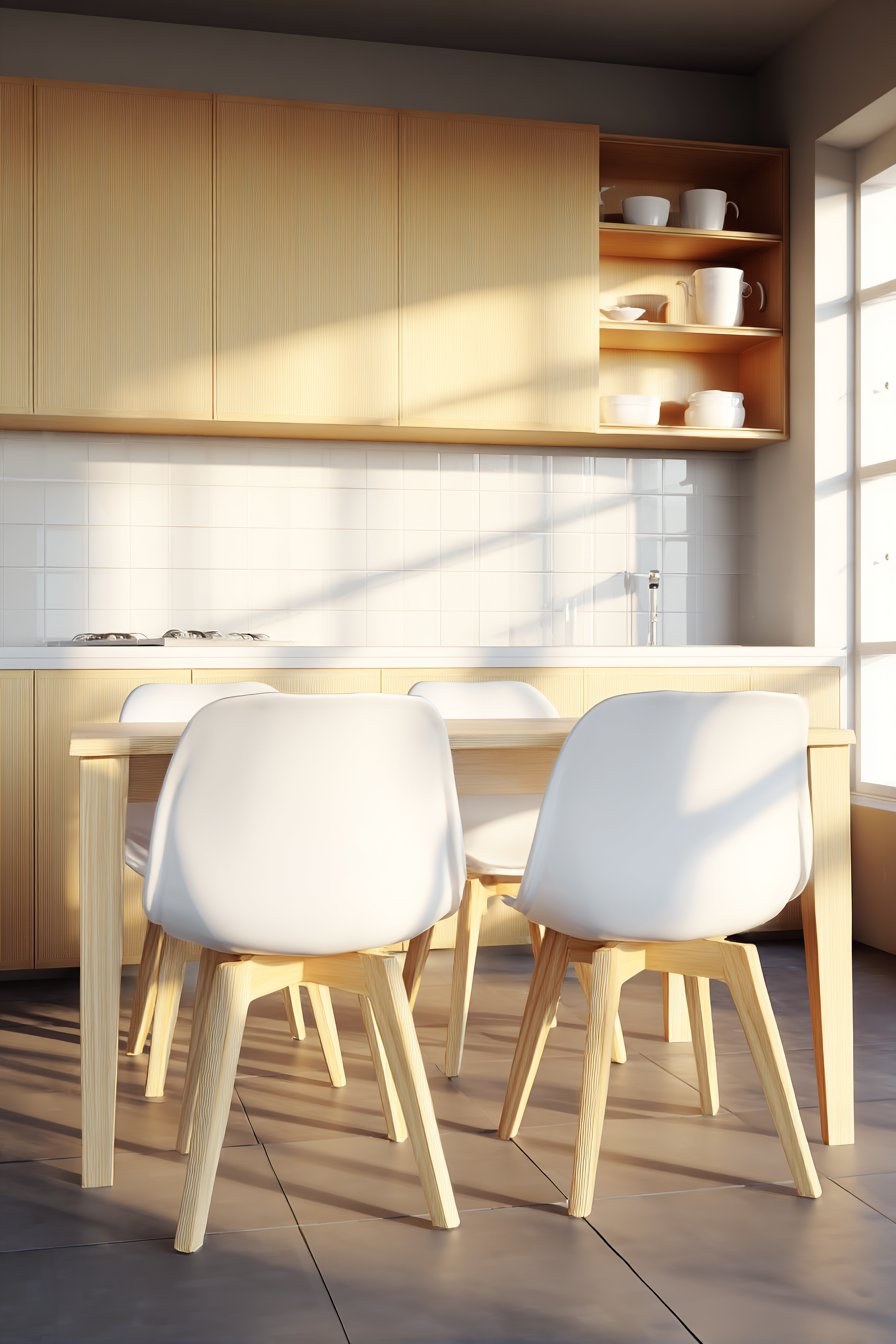
Minimalism need not mean coldness, as this design beautifully demonstrates through its integration of a small dining area within the kitchen space. A simple rectangular table in light ash wood provides a warm focal point, surrounded by four white molded plastic chairs that balance organic and industrial elements. The kitchen features lower cabinets only, finished in warm grey with white quartz countertops, while the upper walls remain open and painted in soft white. This decision creates an airy, uncluttered environment that feels spacious and breathable, the absence of upper cabinets allowing the eye to travel upward and appreciate the full volume of the room.
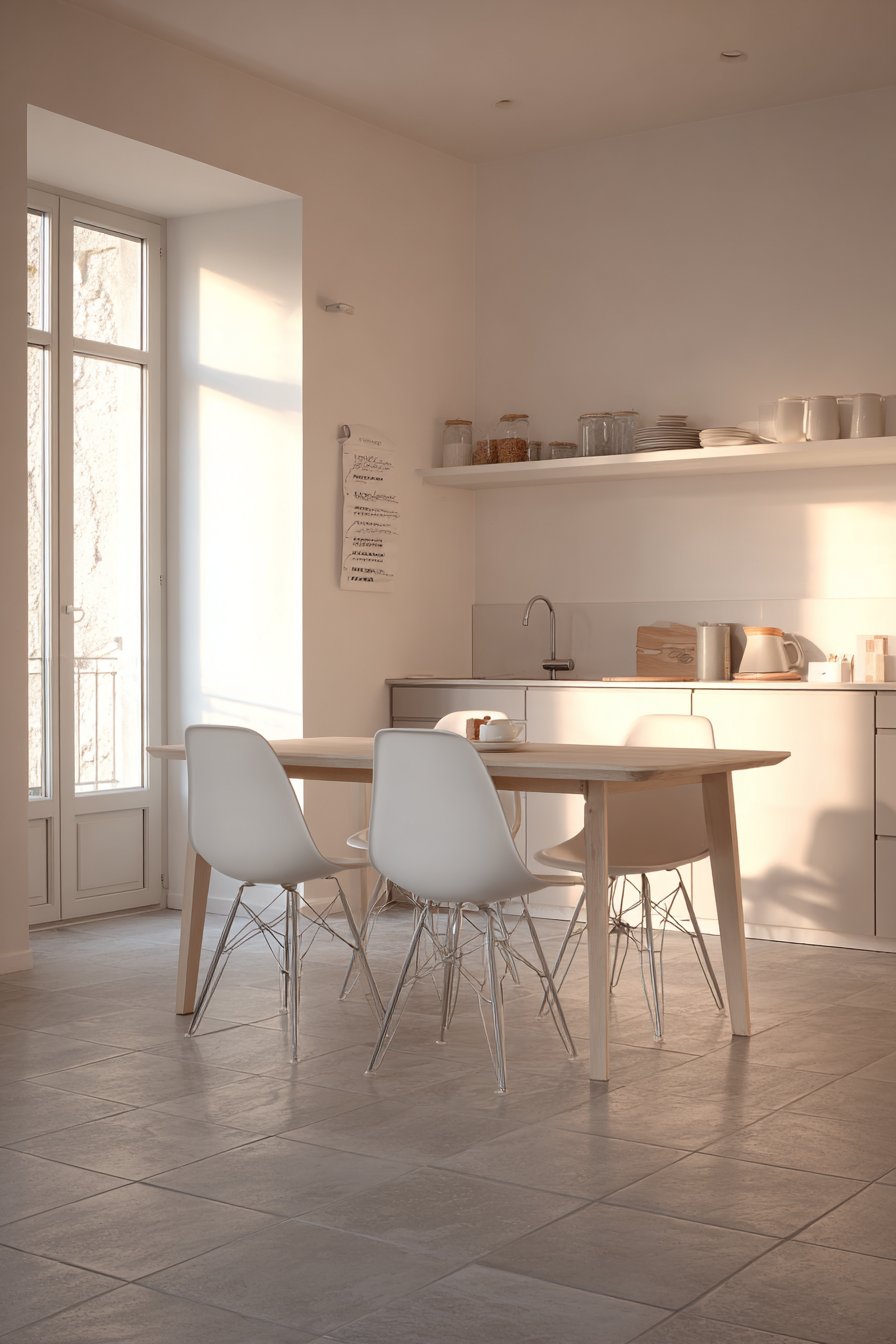
A single rail-mounted shelf holds everyday essentials—coffee mugs, frequently used spices, a small collection of cookbooks. This minimal display serves both practical and aesthetic purposes, keeping daily necessities accessible while adding visual interest through carefully curated objects.
Large format grey floor tiles with minimal grout lines unify the kitchen and dining areas, their neutral tone providing a sophisticated foundation that doesn’t compete for attention. The tiles’ substantial size creates a sense of expansiveness, while their minimal grout lines reduce visual fragmentation and simplify maintenance.
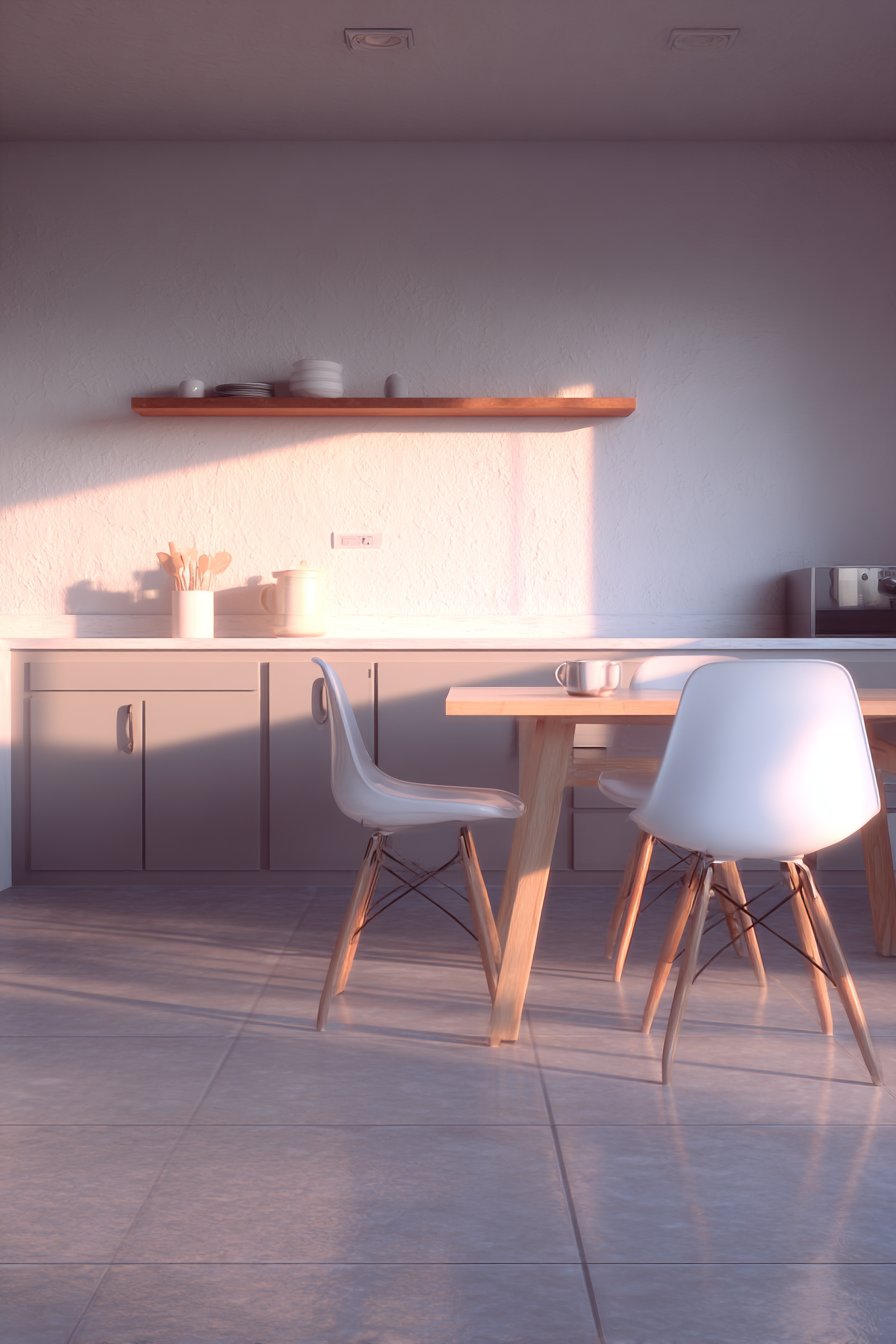
Golden hour natural light streaming through a window creates the magic in this space, casting gentle shadows that emphasize the clean geometry and reveal the subtle textures of materials. The light ash wood dining table glows warmly in this illumination, its natural grain patterns creating organic visual interest that contrasts beautifully with the geometric precision of the cabinetry.
The white molded chairs, classics of mid-century modern design, bridge the gap between minimalist aesthetics and comfortable functionality. This kitchen demonstrates that minimalism can embrace warmth, that reducing visual clutter doesn’t require eliminating emotional connection or human comfort.
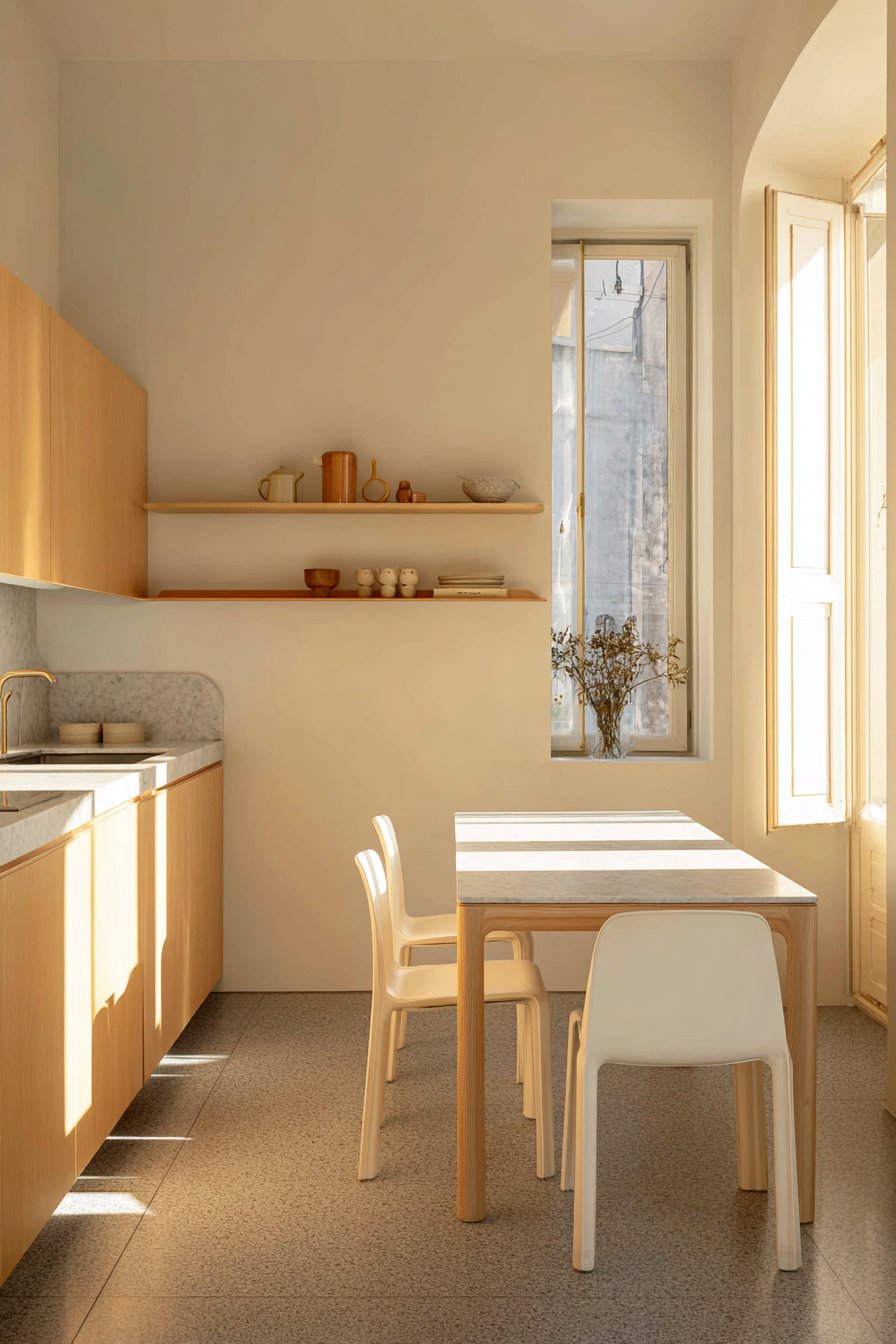
For achieving warm minimalist design, select light wood tones like ash or oak to introduce natural warmth without disrupting minimal aesthetics. Remove upper cabinets to create open, airy spaces that feel larger and more breathable while using a single rail-mounted shelf for essential daily items. Choose large-format floor tiles in neutral tones to unify spaces and reduce visual complexity while simplifying cleaning and maintenance. Position dining areas near windows to maximize natural light and create inviting spaces for meals and gathering. Balance industrial elements like metal or plastic with organic materials to create spaces that feel human-scaled and welcoming.
8. The Illuminated Workspace: Task Lighting Excellence

This design highlights the critical role of lighting in minimalist kitchen functionality, featuring efficient task lighting with under-cabinet LED strips that illuminate white subway tile backsplash and pale grey countertops. The focused illumination transforms work surfaces into precisely lit zones perfect for food preparation, while the LED strips themselves remain nearly invisible, tucked beneath the upper cabinets. The white subway tiles, a timeless choice, gain new dimension under this direct lighting—their slight texture creates subtle shadow patterns that add depth without decorative excess.

The cabinetry features simple shaker-style doors in soft white with small round knobs in brushed nickel as the only hardware detail. This nod to traditional design demonstrates that minimalism can incorporate classic elements when they’re executed with restraint and precision.
The shaker doors’ simple recessed panels provide just enough visual interest to prevent monotony while maintaining the overall sense of simplicity. The brushed nickel knobs, small and unobtrusive, offer both functionality and a subtle metallic accent that catches light without demanding attention.

A stainless steel range hood maintains the industrial-minimal aesthetic, its clean lines and metallic finish providing functional ventilation while serving as a sculptural element above the cooktop. The hood’s substantial presence anchors the cooking zone without overwhelming the space, its reflective surface bouncing light and creating visual interest through material contrast rather than decorative detailing.
Captured during twilight hours, this kitchen reveals how thoughtful artificial lighting enhances minimal design—the under-cabinet LEDs create pools of warm light on work surfaces while the upper portions of the room fade into softer, ambient illumination. This layered lighting approach proves that minimalist spaces can be warm and inviting, that reducing decorative elements doesn’t require sacrificing comfort or functionality.
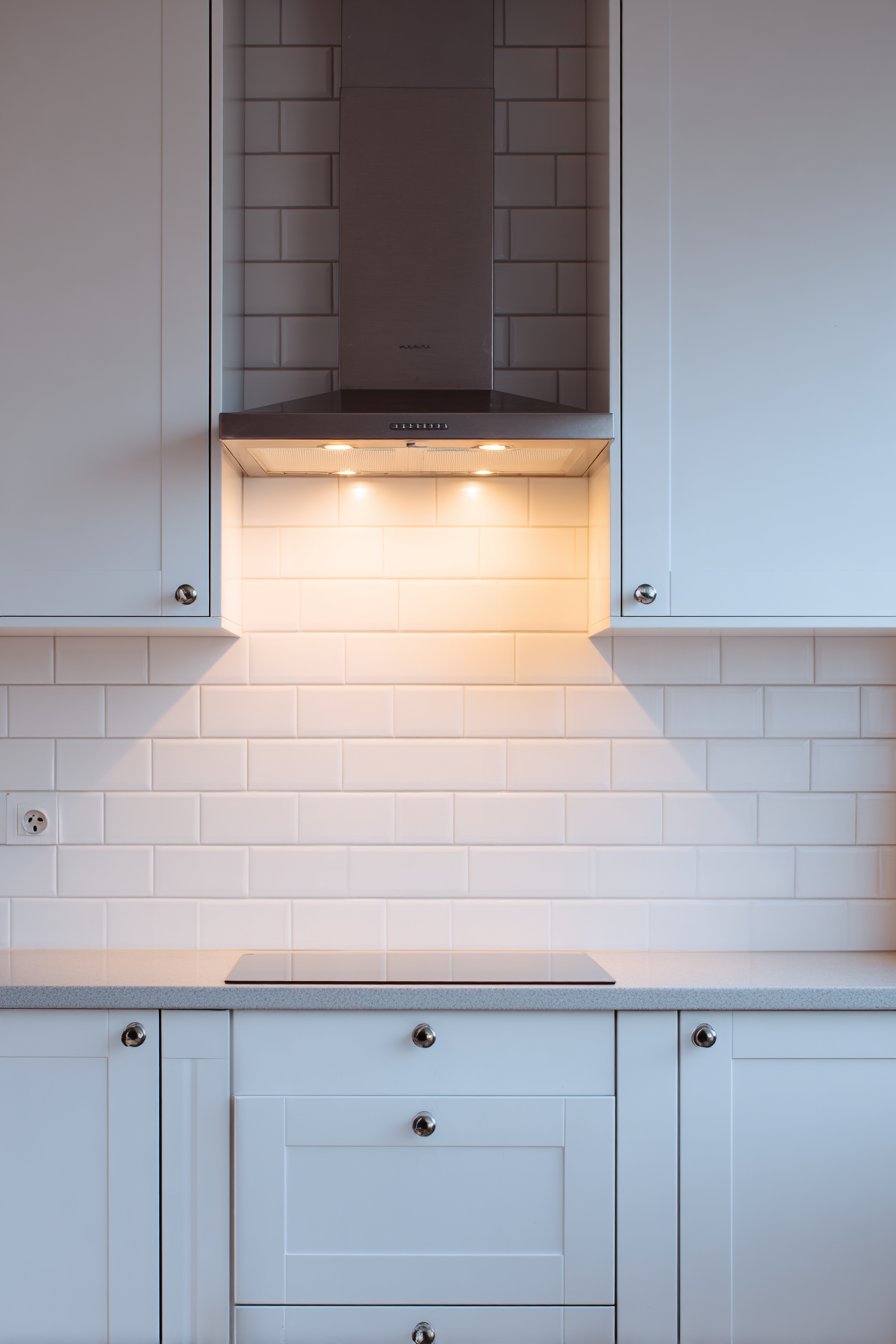
To achieve excellent task lighting in minimalist kitchens, install under-cabinet LED strips for focused work surface illumination that remains visually unobtrusive. Choose subway tiles or other simple geometric patterns for backsplashes that gain dimension through lighting rather than decorative complexity.
Incorporate classic elements like shaker-style doors when executed with restraint to add subtle visual interest without compromising minimalist principles. Select minimal hardware in quality finishes like brushed nickel that provide function and subtle accent without demanding attention. Layer ambient and task lighting to create warm, functional spaces that work beautifully at all hours of the day.
9. The Natural Material Showcase: Wood Grain and Concrete Harmony
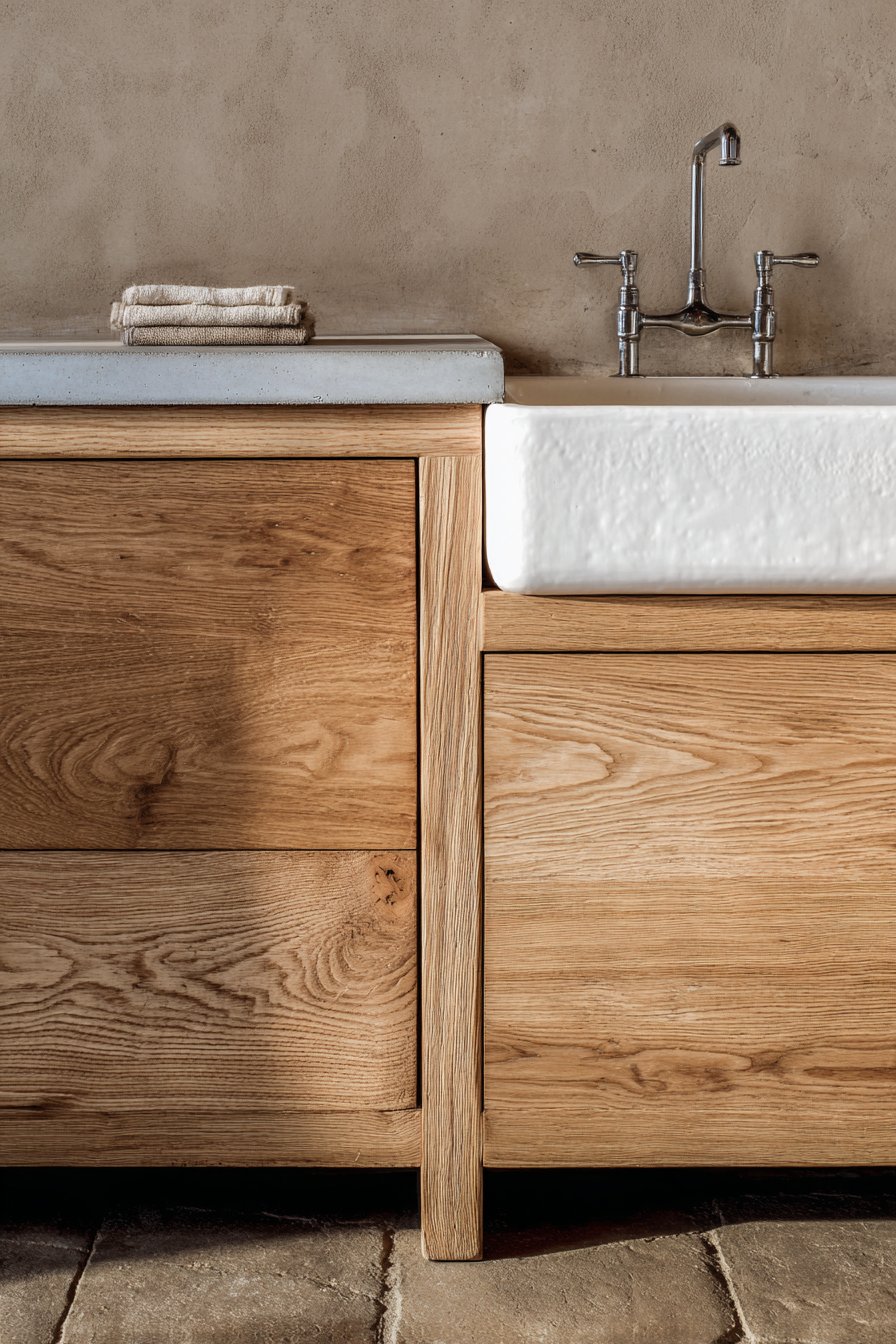
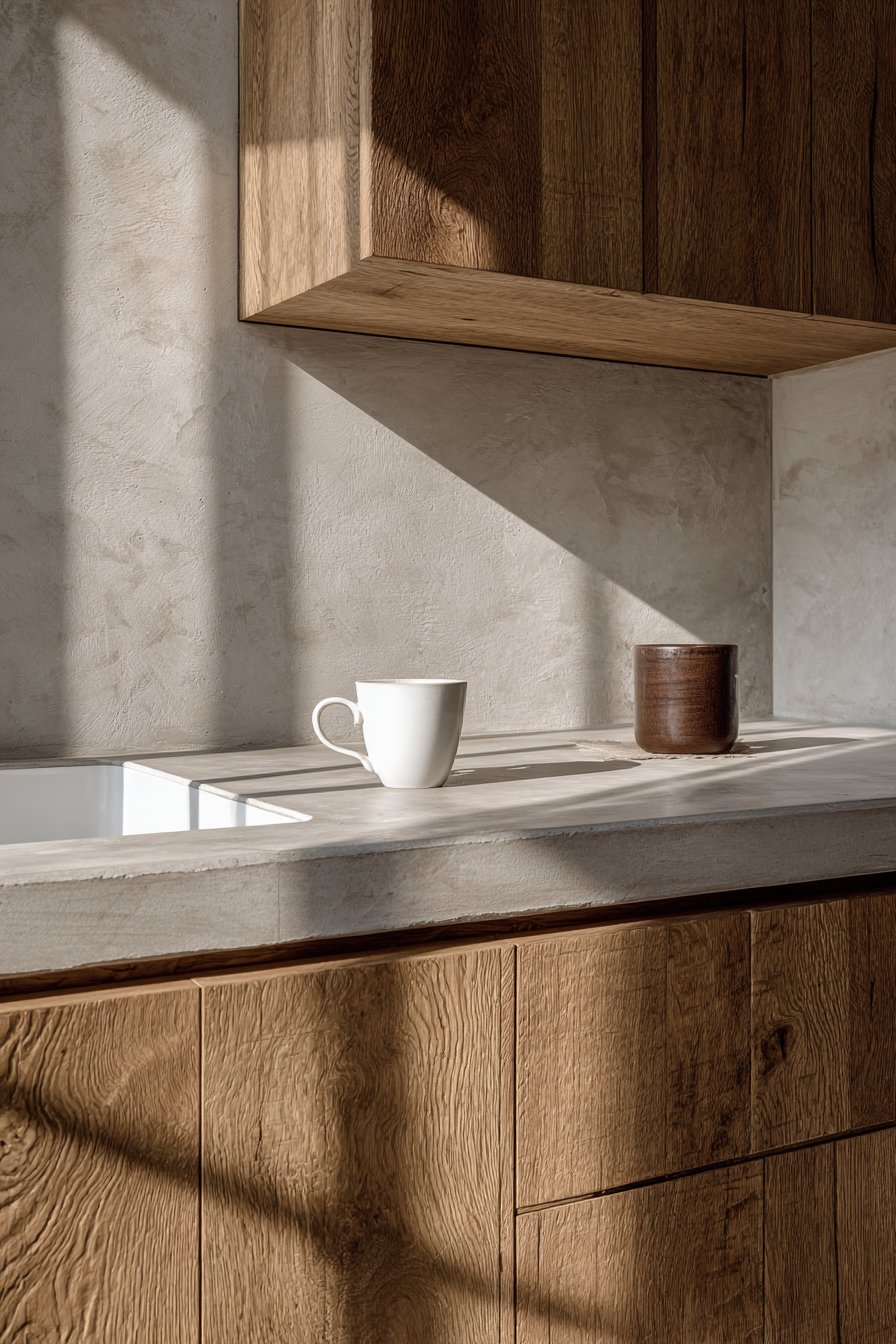
This design emphasizes natural materials, with white oak flat-panel cabinets featuring visible wood grain and matte clear finish that celebrates rather than conceals the organic beauty of wood. The grain patterns become the decoration, their flowing lines and natural variation providing visual interest that never feels contrived or excessive. Polished concrete countertops in light grey provide durable work surfaces with subtle color variation—each section of concrete possesses unique character, slight tonal shifts and organic patterns that make the material feel alive rather than manufactured.
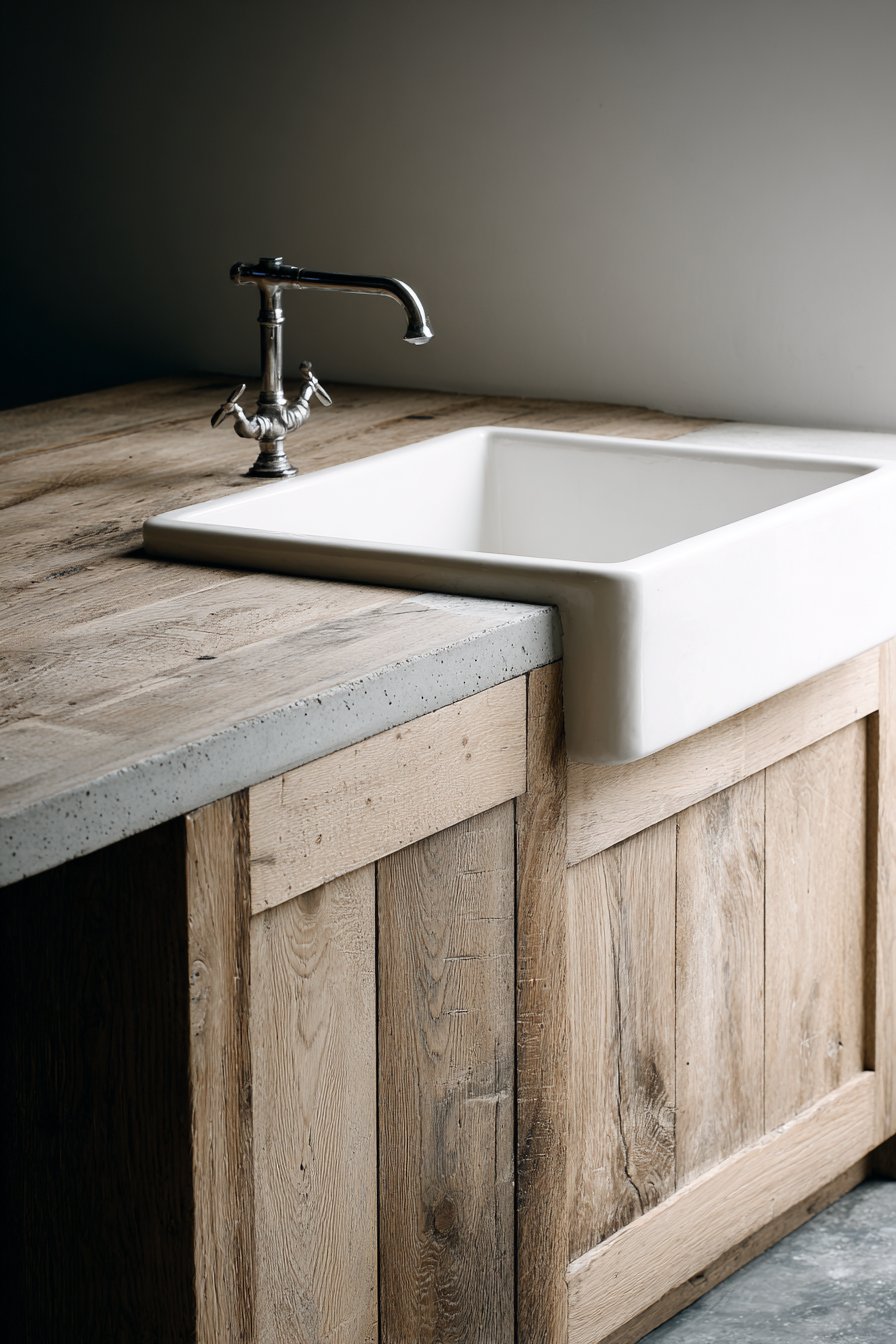
A simple white ceramic farmhouse sink contrasts beautifully with the warm wood tones, its traditional form executed in pristine white that bridges between the natural materials and the minimalist aesthetic. The sink’s generous basin provides practical functionality while its classic shape adds architectural interest without decorative excess.
The floor consists of large concrete tiles with natural texture, their raw, authentic surface grounding the space with industrial authenticity while connecting visually to the concrete countertops. The textural quality of these tiles—slightly rough, honestly material—provides sensory richness that minimalist spaces often lack.
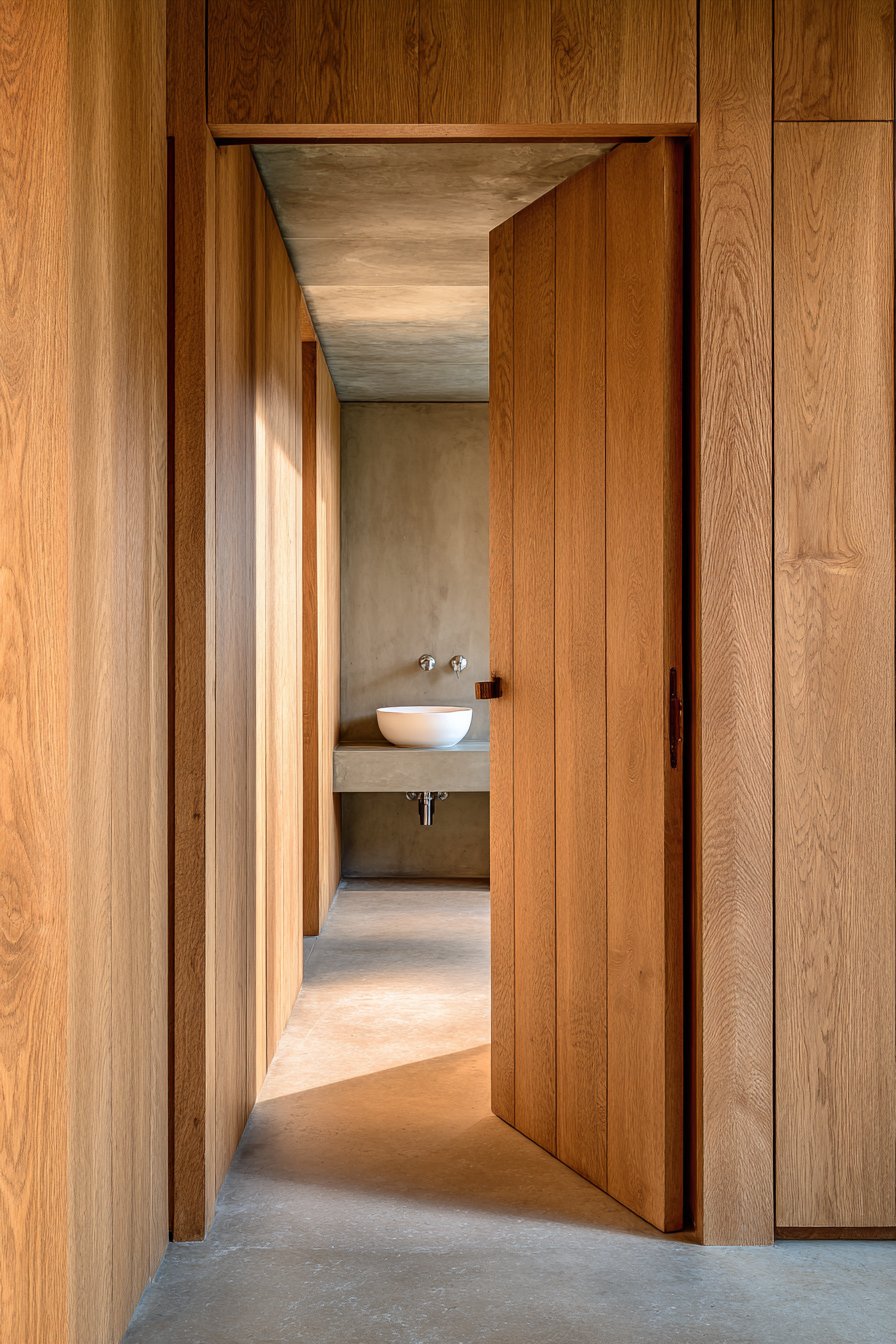
Wide-angle captures in soft diffused daylight reveal how this minimalist approach allows the natural beauty of wood and stone to take center stage. Without decorative competition, the eye can truly appreciate the subtle variations in wood grain, the organic patterns in concrete, the honest texture of materials that have been carefully selected and thoughtfully applied. This kitchen proves that minimalism isn’t about synthetic perfection or sterile uniformity—it’s about creating space for authentic materials to reveal their inherent beauty. The natural material palette creates warmth and connection to the organic world, making the space feel grounded and genuinely livable despite its minimal approach.
When showcasing natural materials in minimalist design, choose wood with visible grain patterns and clear finishes that celebrate rather than conceal organic beauty. Pair warm wood tones with cool concrete or stone to create balanced contrast that feels natural rather than forced. Select traditional fixture shapes like farmhouse sinks in modern finishes to bridge classic and contemporary aesthetics. Use textured flooring materials like concrete tiles to add sensory richness and ground spaces with authentic material presence. Allow natural materials to serve as the primary decoration by keeping surrounding elements simple and neutral.
10. The Compact Perfection: U-Shaped Layout Efficiency

This design features a compact U-shaped layout with continuous white cabinetry and a single open niche displaying three carefully chosen ceramic pieces. The U-shaped configuration maximizes storage and work surface in a limited footprint, wrapping the user in functional efficiency while the all-white treatment keeps the compact space feeling open and airy. The open niche interrupts the continuous cabinetry at a strategic location, providing visual relief and a curated display opportunity that personalizes the space without cluttering it. The three ceramic pieces—perhaps a vase, a bowl, and a sculptural object—have been selected for their complementary forms and neutral coloring that harmonizes with the overall palette.
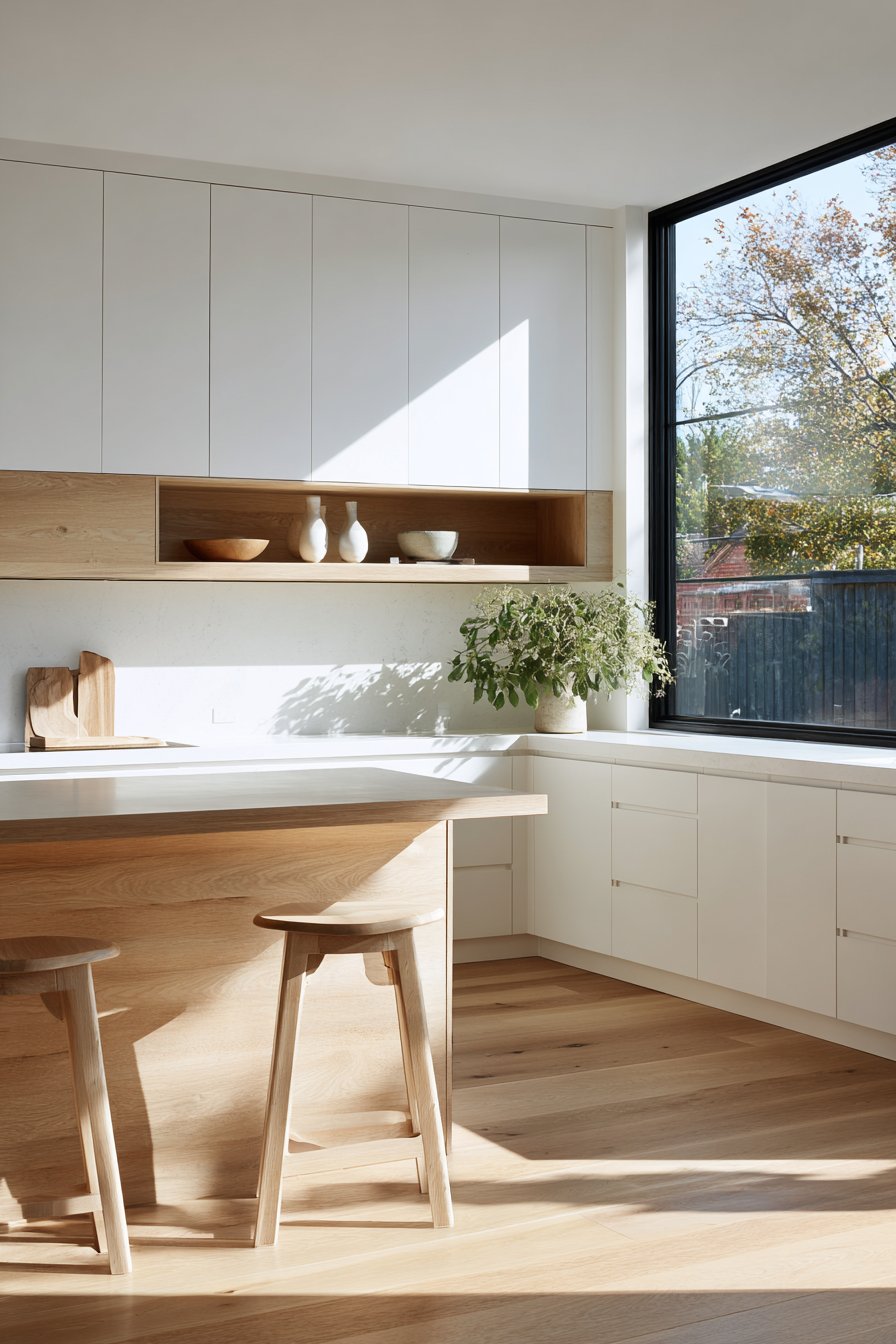
The countertop extends slightly to create a small breakfast bar with two simple bar stools in natural wood. This extension serves multiple purposes: additional work surface when cooking, casual dining space for quick meals, and a subtle demarcation between kitchen and adjacent living areas. The natural wood bar stools echo the warm tones found in the carefully chosen ceramic display, creating visual connection across the space while their simple construction maintains the minimalist aesthetic. Their natural material presence humanizes the all-white kitchen, preventing it from feeling too clinical or detached.
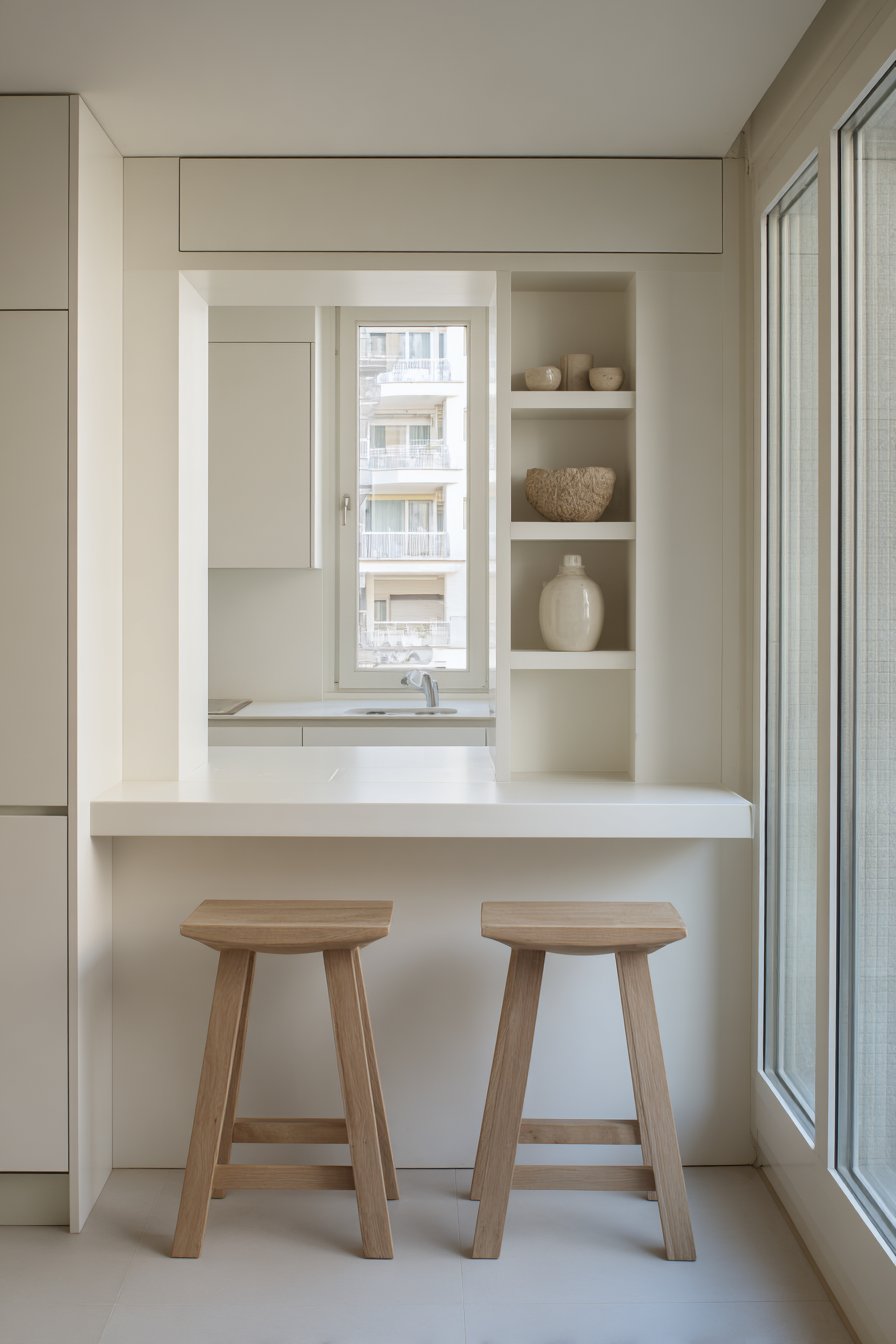
A frameless window above the sink provides an unobstructed view while flooding the space with natural light. The absence of a window frame creates a pure opening to the outside, a rectangle of sky or garden that becomes artwork constantly changing with weather and season. This natural light creates depth through subtle shadows on the pristine white surfaces, revealing the three-dimensional quality of the cabinetry and emphasizing the intentional emptiness of the design. The compact U-shaped layout proves that even small kitchens can achieve minimalist perfection—that careful planning, quality materials, and disciplined restraint can create spaces that feel generous despite limited square footage.

For compact U-shaped kitchen success, maximize the layout by utilizing all three walls for continuous storage and work surfaces while maintaining consistent cabinetry treatment. Create a single display niche rather than multiple open shelving areas to provide visual relief and personalization opportunity without cluttering the space. Extend countertops to create breakfast bars that serve multiple functions in limited spaces—additional work surface, casual dining, and spatial definition. Install frameless windows where possible to create clean views and maximize natural light penetration without visual obstruction. Use natural light strategically to create depth and dimension through shadows that reveal the three-dimensional quality of minimal design.
Why These Minimalist Kitchen Designs Represent the Best Approach
These ten minimalist kitchen designs demonstrate that minimalism is a flexible philosophy adaptable to diverse spaces, budgets, and lifestyles. Each embodies core principles—intentional simplicity, functional efficiency, quality over quantity—while offering unique interpretations.
Handleless cabinetry with push-to-open mechanisms creates seamless surfaces where architecture and materials speak without distraction. Monochromatic palettes featuring white cabinets and light grey countertops maximize natural light and create timeless appeal.
Open shelving challenges traditional storage, proving that minimalism can embrace transparency when approached with discipline. Natural wood elements—oak flooring, floating shelves—prevent spaces from feeling cold or institutional.
Concrete countertops with waterfall edges offer industrial-minimal appeal, creating architectural drama while maintaining clean, continuous surfaces. The material contrast between concrete’s texture and smooth cabinetry adds visual interest without decoration.
Galley layouts prove minimalist principles work exceptionally well in compact spaces. Panel-ready appliances eliminate visual chaos, while large-format tiles with minimal grout lines enhance spaciousness.
Multi-functional solutions—folding tables, built-in bench seating with hidden storage—address modern living where spaces adapt to multiple uses. Skylights and strategic windows maximize natural light, crucial in minimalist interiors.
Concealed storage with floor-to-ceiling cabinetry creates exceptional visual calm. Glass backsplashes eliminate grout lines, while completely clear countertops reflect Japanese wabi-sabi influence.
Natural materials—white oak cabinetry, concrete floors, polished stone—bring organic textures without compromising clean aesthetics. Farmhouse sinks bridge traditional and contemporary styles.
The common thread is intentionality—every element carefully considered for function and aesthetic impact. Minimalist kitchens often require higher upfront investment in quality materials and precise craftsmanship, but deliver timeless appeal, easier maintenance, and environments that enhance wellbeing. Task lighting becomes crucial, with under-cabinet LEDs and layered ambient lighting creating warmth and dimension in spaces without decorative elements.
Conclusion:
The journey through these ten minimalist kitchen designs reveals a fundamental truth: minimalism is not about deprivation but about liberation. By eliminating the unnecessary, we create space—both physical and mental—for what truly matters. A well-designed minimalist kitchen doesn’t just look beautiful; it functions effortlessly, supports healthy cooking habits, and provides a calm refuge from the chaos of modern life.
Whether you’re drawn to the seamless perfection of handleless cabinetry, the honest transparency of open shelving, the dramatic statement of concrete countertops, or the warm authenticity of natural wood, the principles remain constant: choose quality over quantity, prioritize function alongside beauty, embrace negative space as a positive design element, and allow authentic materials to provide decoration through their inherent characteristics. These principles transcend specific aesthetics, offering a flexible framework applicable to kitchens of any size, budget, or architectural style.
As you consider implementing minimalist design in your own kitchen, remember that perfection is not the goal—intentionality is. Start by decluttering ruthlessly, keeping only what you truly use and genuinely love. Invest in quality storage solutions that keep necessities accessible but invisible. Choose materials that will age beautifully rather than trendy finishes that will feel dated in a few years. Prioritize natural light and thoughtful artificial lighting that creates warmth and depth. Most importantly, design for how you actually live, not for how you think you should live—a minimalist kitchen that doesn’t support your real cooking habits and lifestyle is simply an empty room, not a functional sanctuary.
The minimalist kitchen represents more than just a design trend; it embodies a philosophy of intentional living that resonates deeply in our cluttered, overstimulated world. By creating spaces that breathe, that allow us to focus on the essential act of nourishing ourselves and our loved ones, we reclaim our kitchens as the true hearts of our homes. Let these designs inspire you to reimagine your own culinary space, to strip away the unnecessary and reveal the beauty of simplicity, functionality, and thoughtful design.
