


The art of minimal living room design represents more than just a trend. It embodies a philosophy of intentional living where every element serves a purpose. In today’s fast-paced world, creating a serene sanctuary free from visual clutter has become essential for mental well-being. Minimalist interiors offer clarity, breathing room, and a sophisticated aesthetic that never goes out of style. The beauty lies in the careful selection of quality pieces over quantity, allowing architecture and natural light to shine.
Thoughtful interior design transforms houses into homes that reflect our values and lifestyle. Different design approaches cater to diverse personalities and needs. Some prefer warm textures and organic materials, while others gravitate toward sleek surfaces and geometric forms. The minimal living room concept embraces this diversity through various interpretations of simplicity. Each approach maintains the core principle of “less is more” while offering unique character through material choices, spatial arrangements, and lighting strategies.
This comprehensive guide explores ten distinctive minimal living room concepts. Each design demonstrates how restraint and intentionality create powerful visual impact. From Japanese-inspired serenity to Scandinavian functionality, these spaces prove that minimalism offers endless creative possibilities. You’ll discover practical strategies for achieving uncluttered elegance while maintaining comfort and livability. Whether you’re redesigning your entire space or seeking subtle improvements, these ideas will inspire your minimalist journey.
1. Serene Grey Linen Retreat with Natural Light
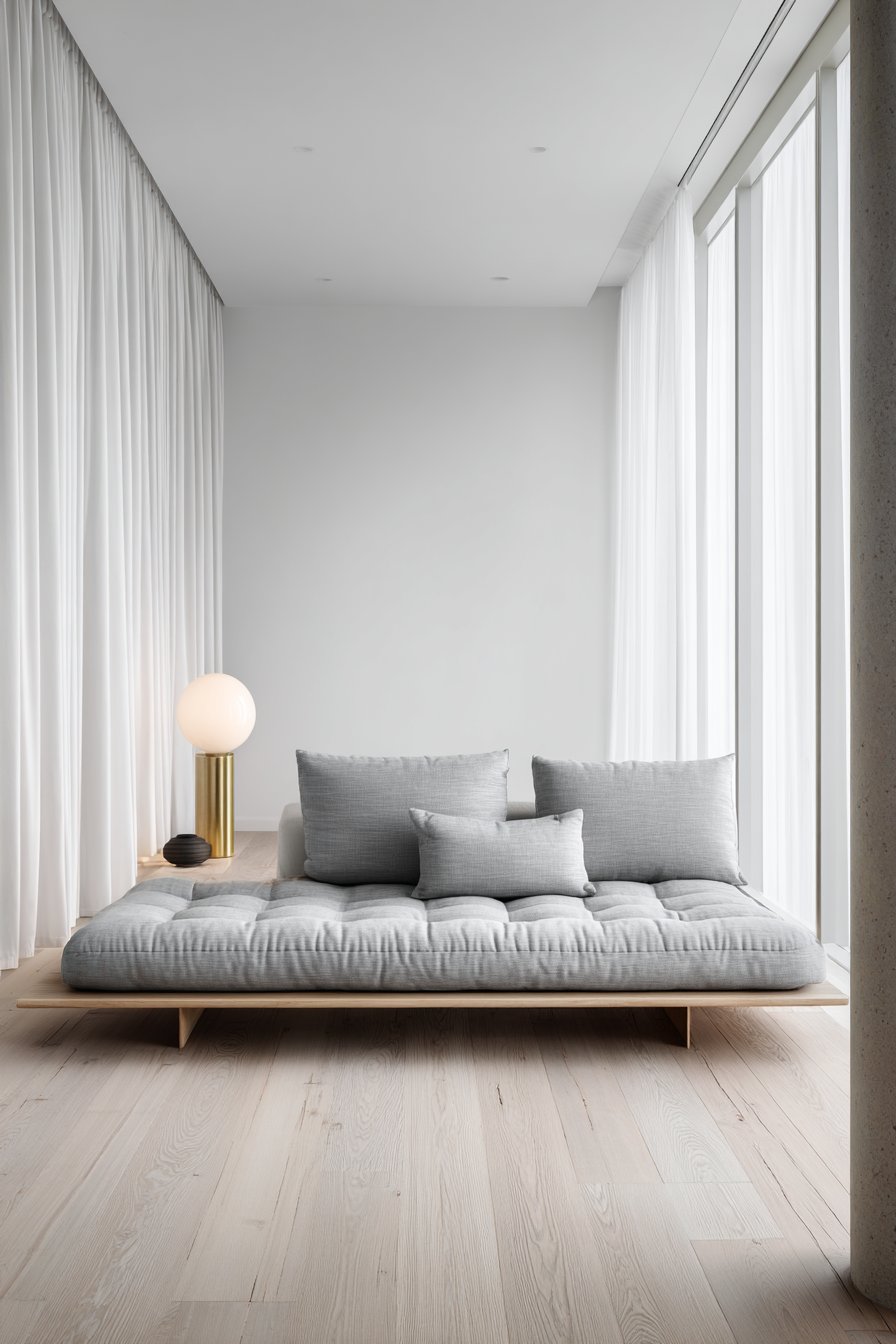
Picture a living room where simplicity reigns supreme through thoughtful material selection. A low-profile sofa upholstered in grey linen becomes the centerpiece against pristine white walls. The clean lines of the furniture create visual calm without sacrificing comfort. Natural oak flooring extends throughout, its subtle grain variations adding organic warmth underfoot. This foundation establishes a neutral palette that feels both sophisticated and welcoming.
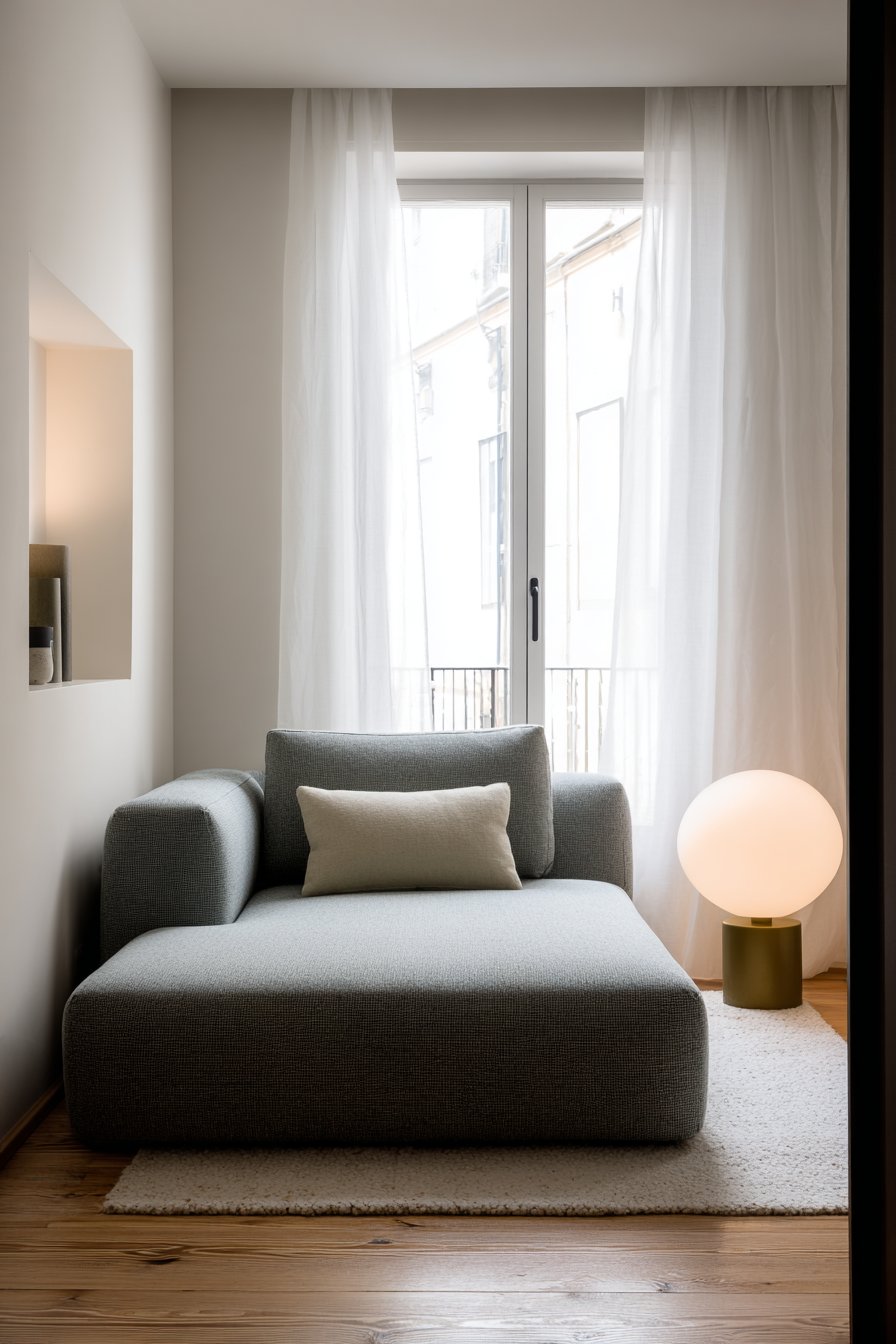
The magic happens when natural light enters through floor-to-ceiling windows. Sheer white curtains soften the incoming rays, creating a diffused glow that changes throughout the day. This ever-shifting illumination brings life to the space without additional decoration. The interplay between natural materials and light becomes the room’s primary design feature. A single sculptural floor lamp with a brass base provides evening illumination while serving as functional art.
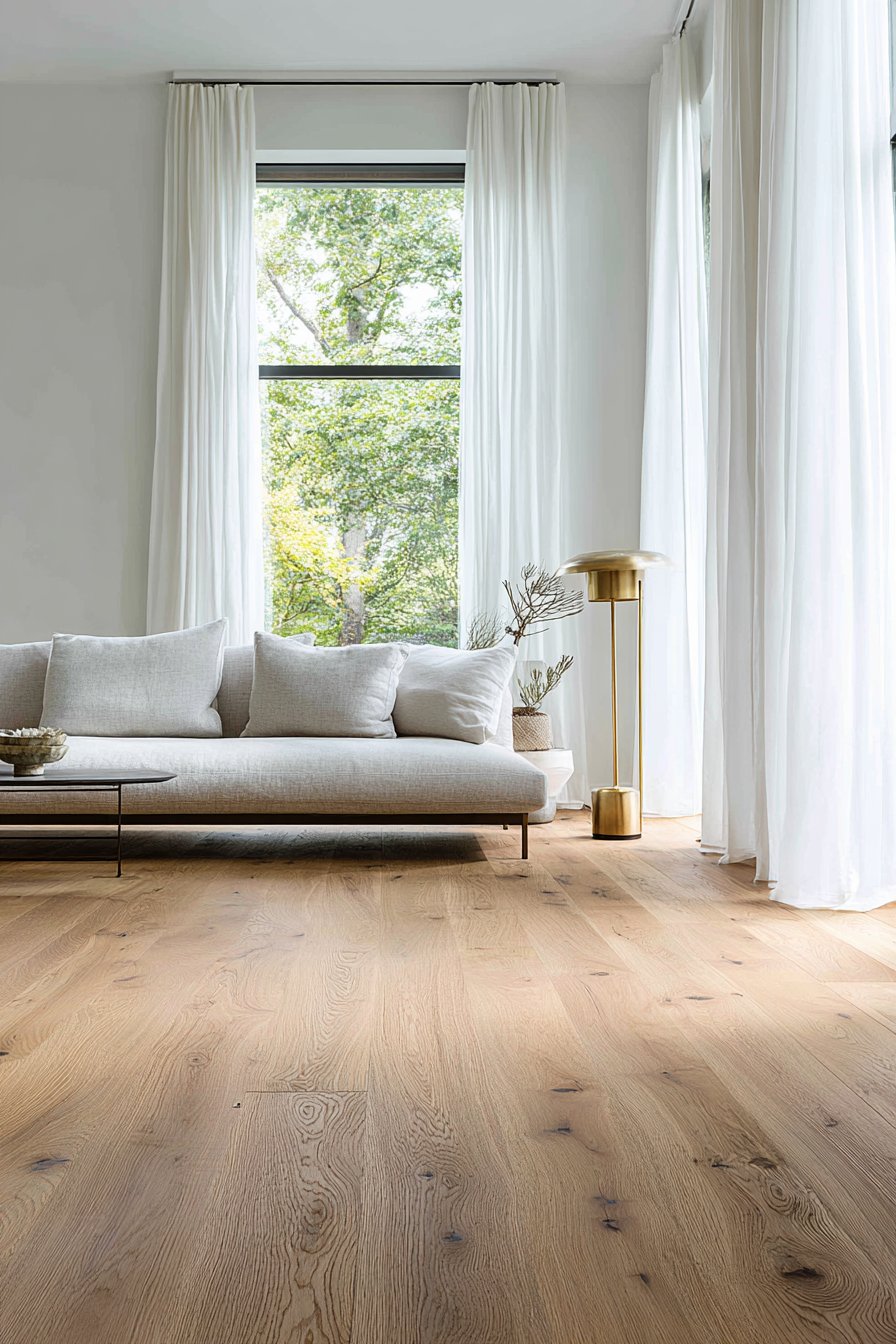
Intentional negative space defines this minimal approach. Empty wall areas feel deliberate rather than unfinished. The room breathes, allowing your mind to rest from visual stimulation. This spaciousness makes the room appear larger than its actual dimensions. The quality of each carefully selected piece becomes more apparent when surrounded by openness.
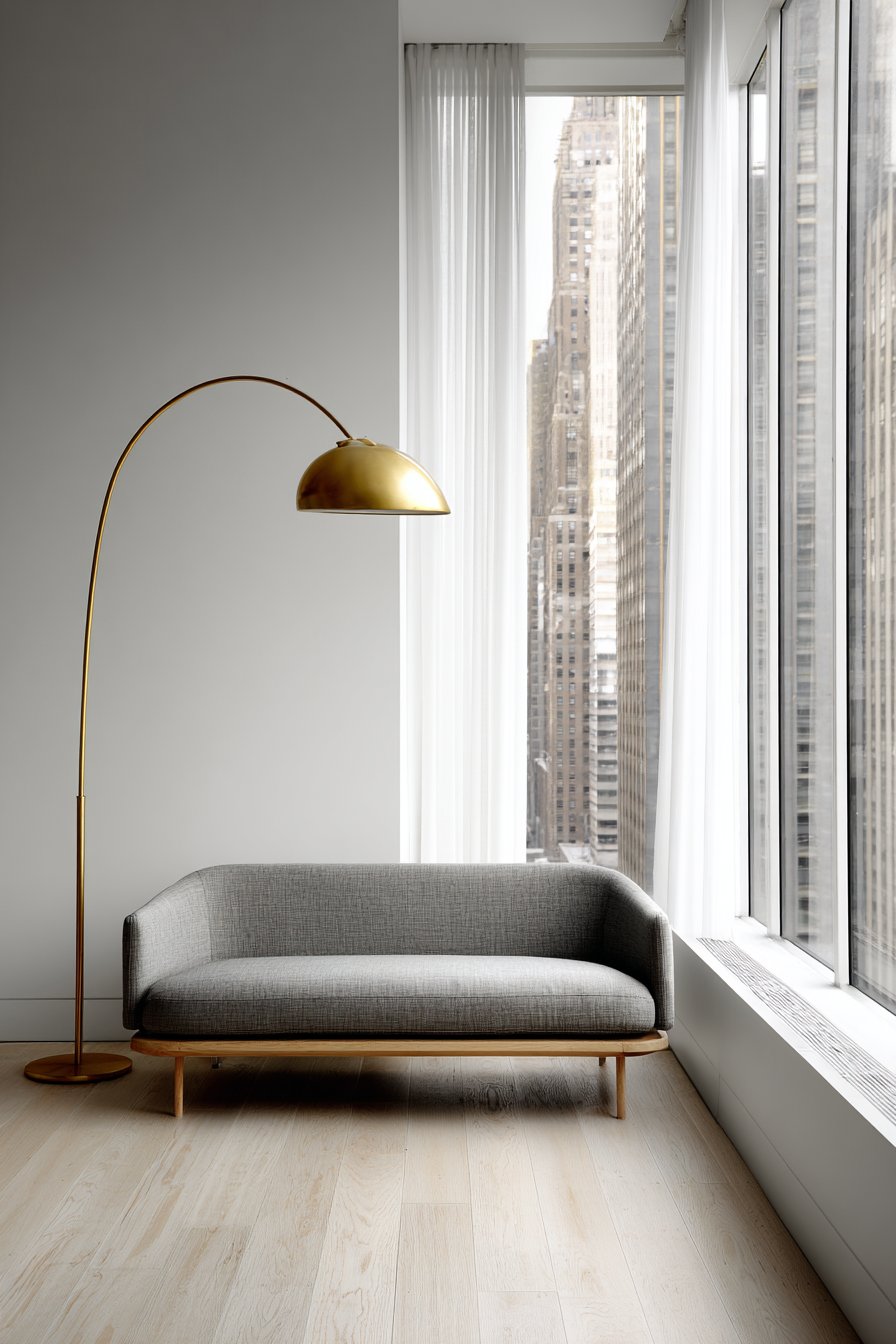
The combination of soft textiles, natural wood, and metallic accents creates subtle depth without complexity. Grey linen offers tactile interest while maintaining visual simplicity. Oak flooring grounds the ethereal white walls with organic warmth. The brass lamp base introduces a refined metallic note that catches light beautifully. These layers work harmoniously to prevent sterility while honoring minimalist principles.
Key Design Tips:
- Select low-profile furniture to emphasize horizontal lines and create spaciousness
- Choose natural materials like linen and oak for warmth within minimal aesthetics
- Install floor-to-ceiling windows to maximize natural light as a design element
- Use sheer curtains to diffuse harsh sunlight while maintaining brightness
- Limit furniture pieces to essentials, allowing negative space to enhance tranquility
- Invest in one statement lighting fixture rather than multiple decorative pieces
2. Floating Media Console with Seamless Integration
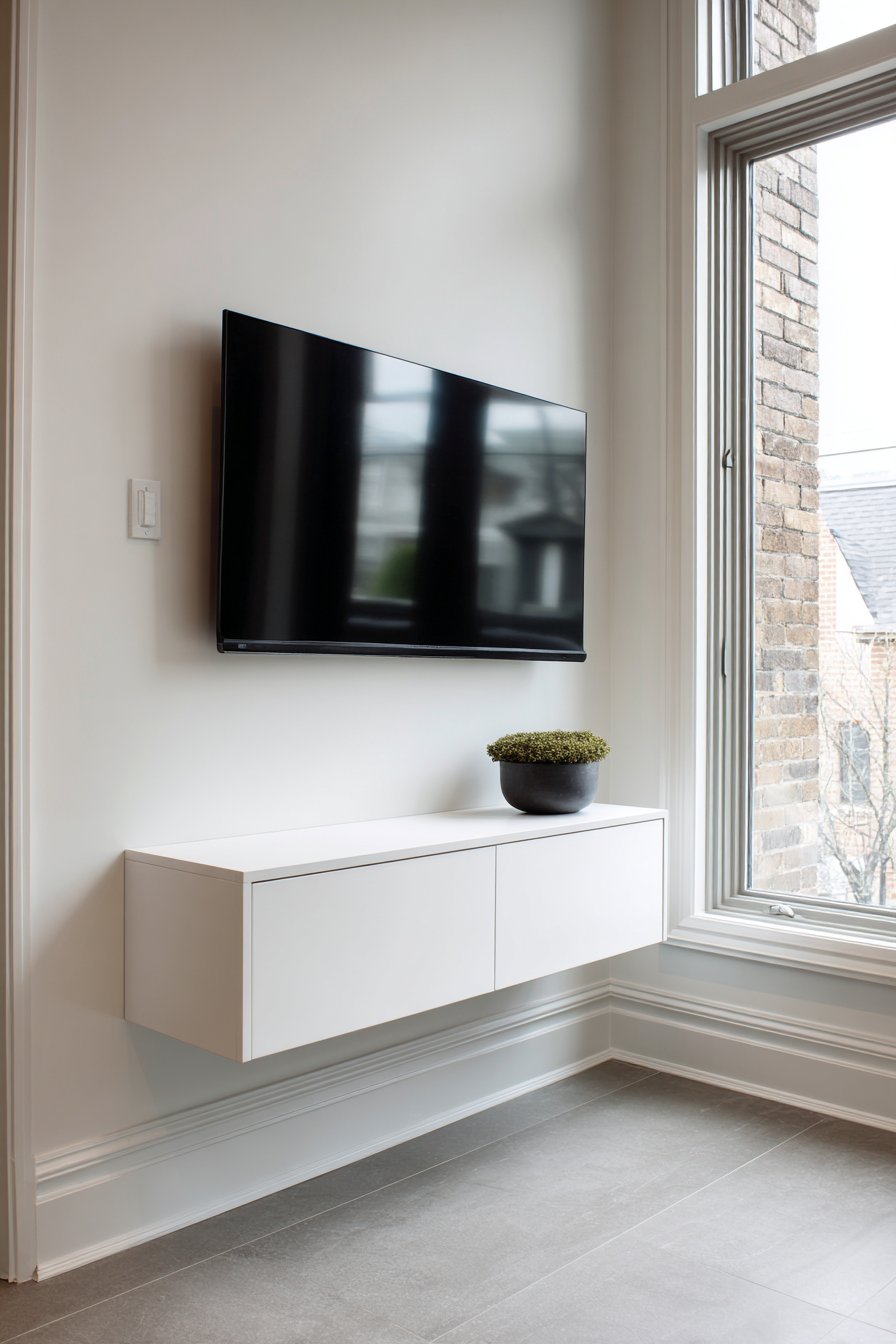
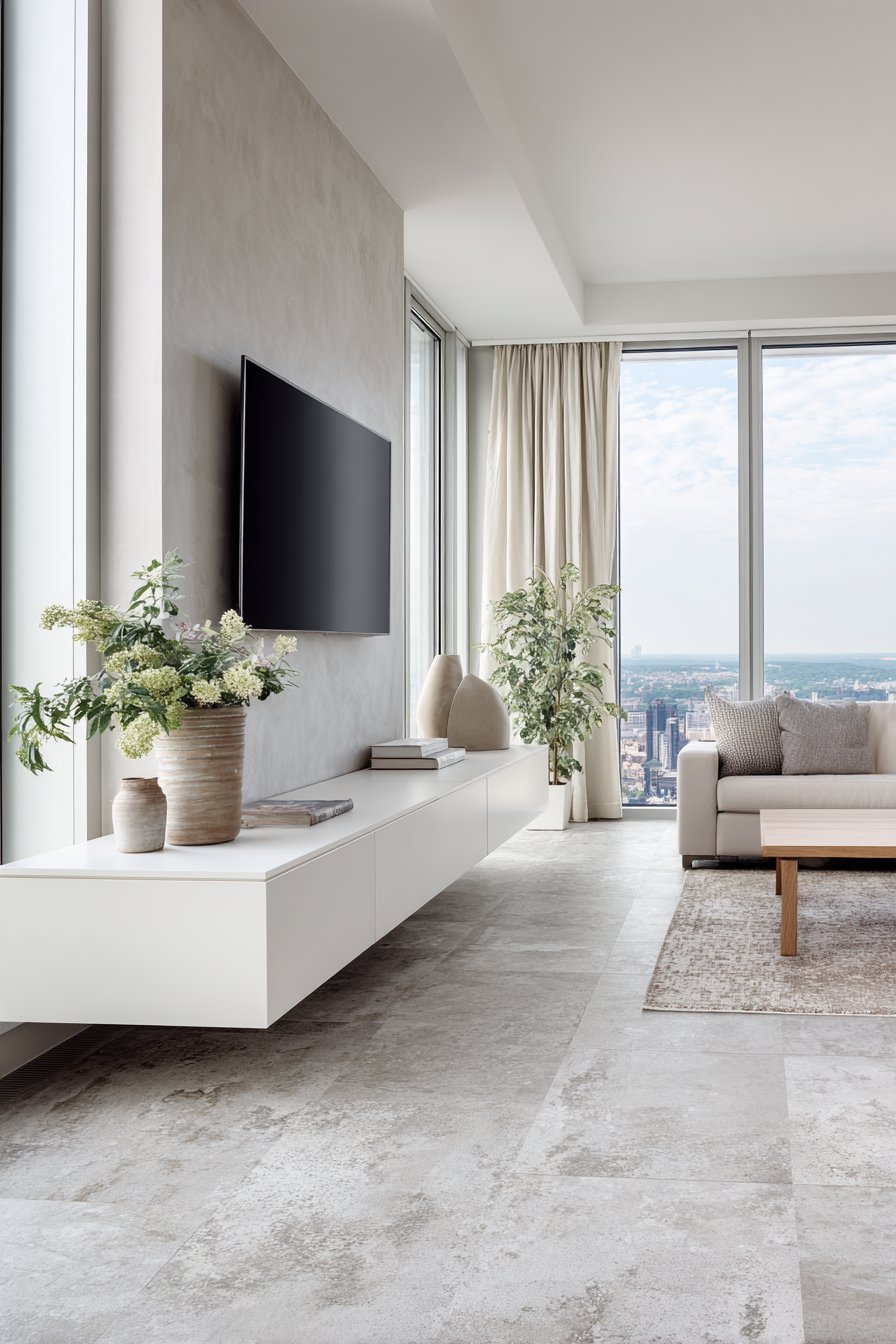
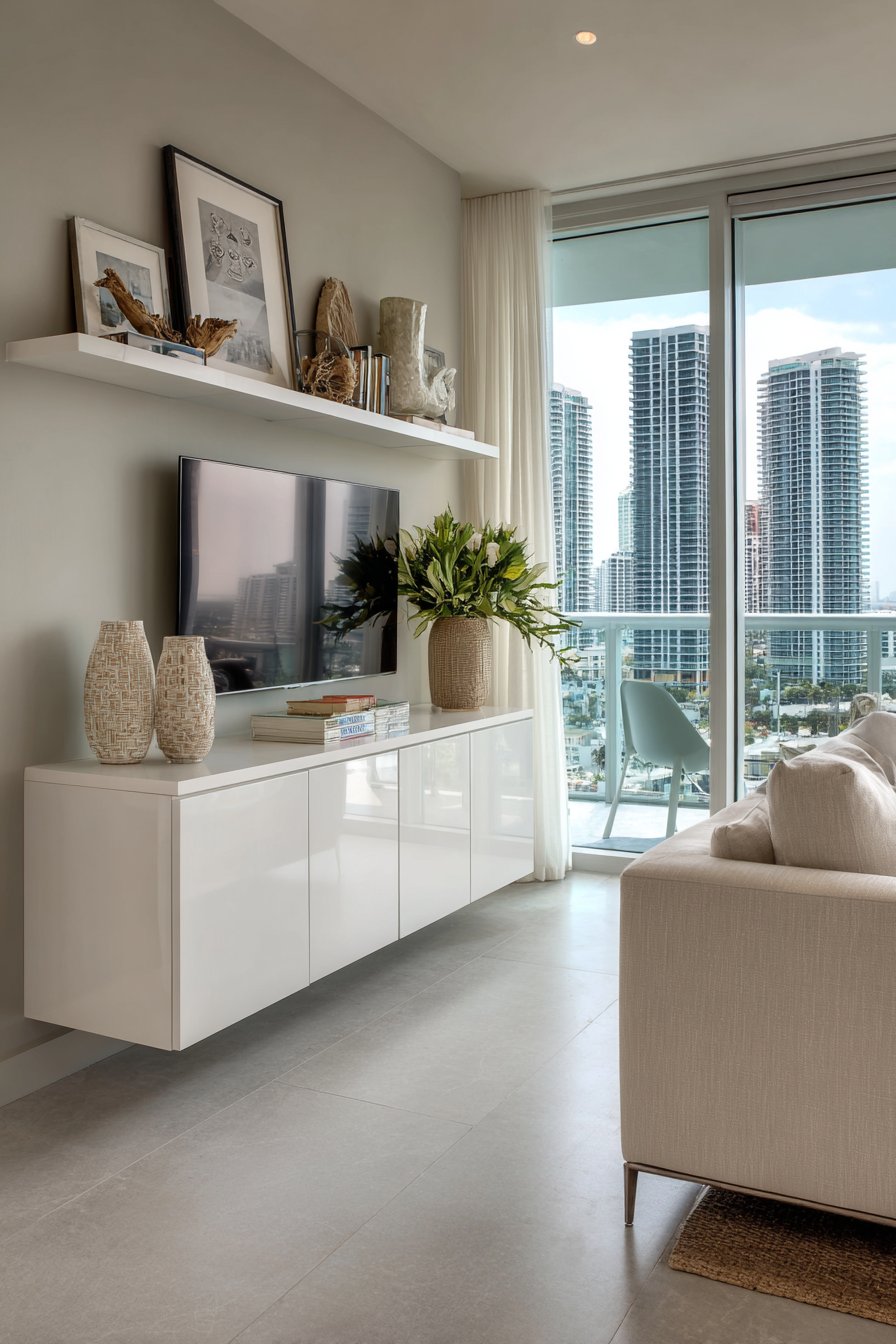
Modern minimalism embraces technology while keeping it visually recessive. A floating media console in white lacquer demonstrates this principle perfectly. The wall-mounted unit appears to levitate, creating clean lines from floor to ceiling. Hidden cable management ensures no wires disrupt the streamlined appearance. Minimal hardware maintains the seamless look, with push-to-open mechanisms eliminating visible handles.
The television mounts directly above the console with nothing else competing for attention. This restraint allows the functional elements to fade into the background. When not in use, the screen becomes a dark rectangle that doesn’t dominate. The wall remains largely empty, emphasizing architectural proportions over decorative additions. This approach works especially well in smaller spaces where every element must justify its presence.
Light grey concrete-look porcelain tiles provide subtle texture underfoot. The industrial-inspired flooring adds visual interest through material choice rather than pattern. These tiles offer durability and easy maintenance while supporting the minimal aesthetic. Their cool tones complement the white lacquer, creating a cohesive monochromatic scheme. The slight texture prevents the space from feeling too slick or untouchable.
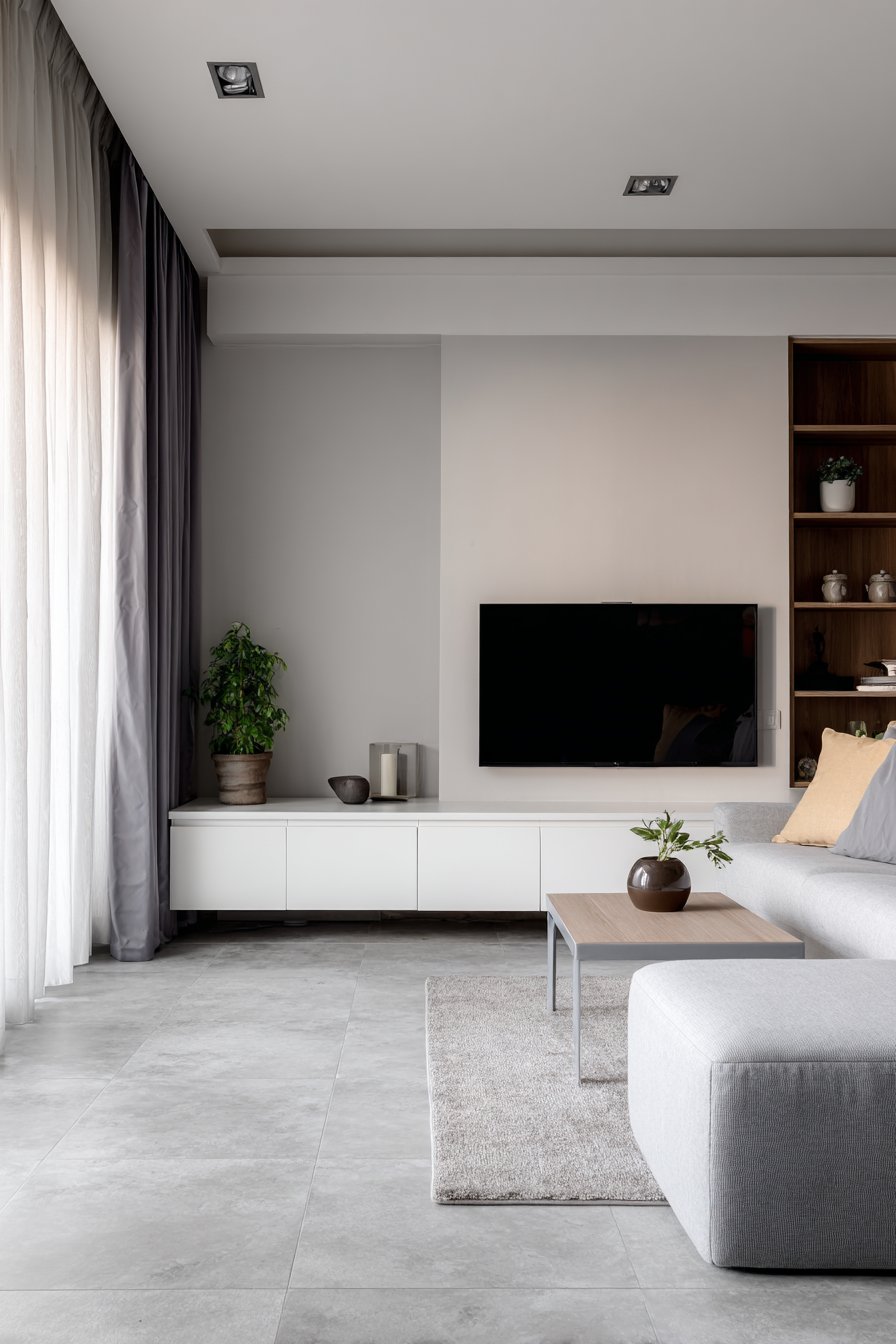
Soft natural lighting from a nearby window eliminates the need for complex lighting schemes. This functional simplicity makes the room easy to use and maintain. The organized aesthetic reduces daily stress by eliminating visual chaos. Everything has its designated place within the concealed storage. This living room proves that minimalism enhances daily life through thoughtful organization.
Key Design Tips:
- Choose floating furniture to create visual lightness and ease cleaning underneath
- Invest in cable management systems to eliminate unsightly wire clutter
- Select handleless storage solutions for uninterrupted surfaces and modern appeal
- Use monochromatic color schemes to create cohesive, calming environments
- Prioritize natural light over artificial lighting whenever possible
- Mount televisions at proper viewing height without adding unnecessary shelving
3. Geometric Precision with Muted Abstract Art
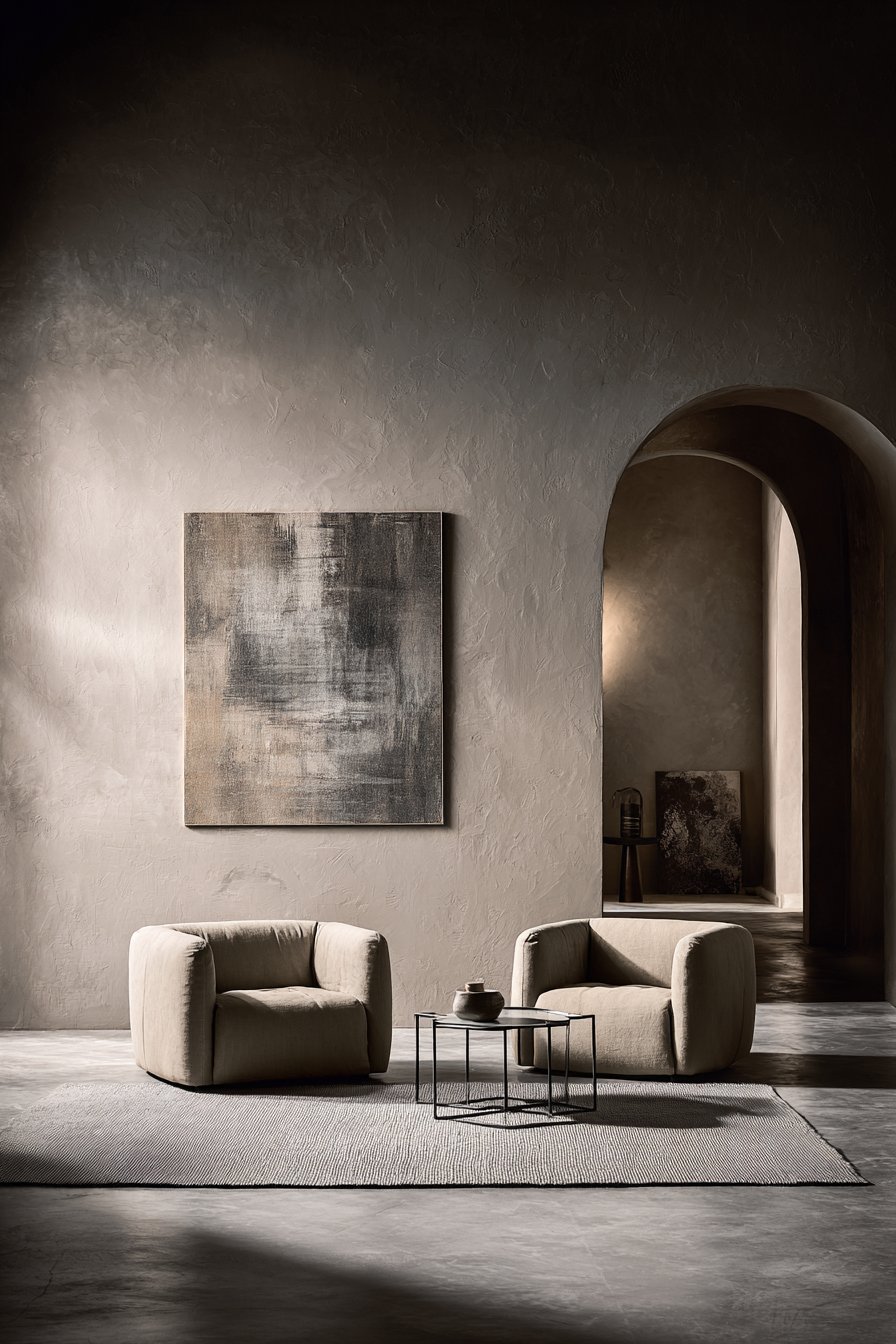
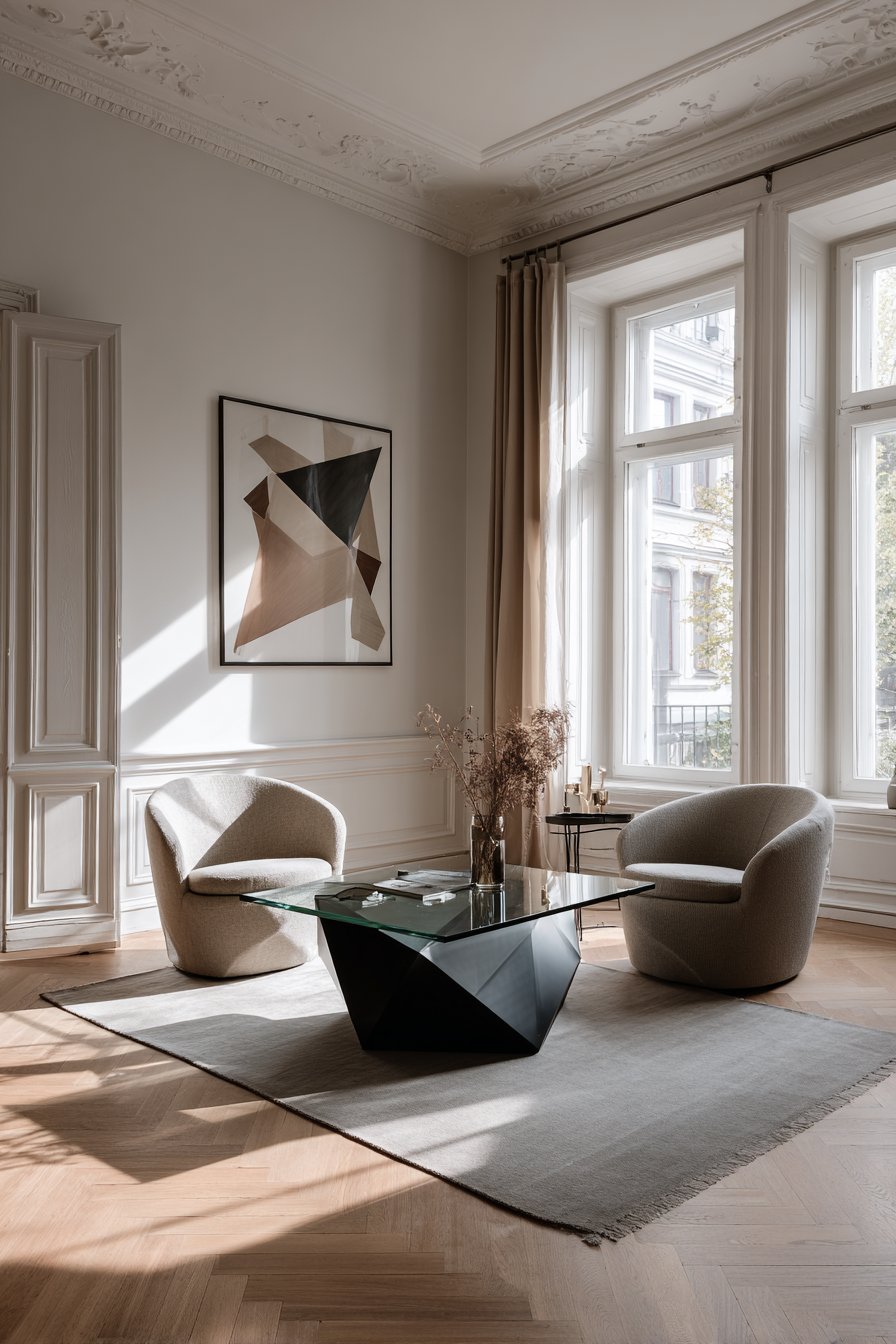
Balance and symmetry define this minimal living room centered on geometric forms. A simple glass and steel coffee table serves as the focal point. Its transparent surface maintains visual openness while providing functionality. The steel frame introduces industrial elegance through clean lines and precise angles. This piece exemplifies how minimalist furniture can be both beautiful and practical.
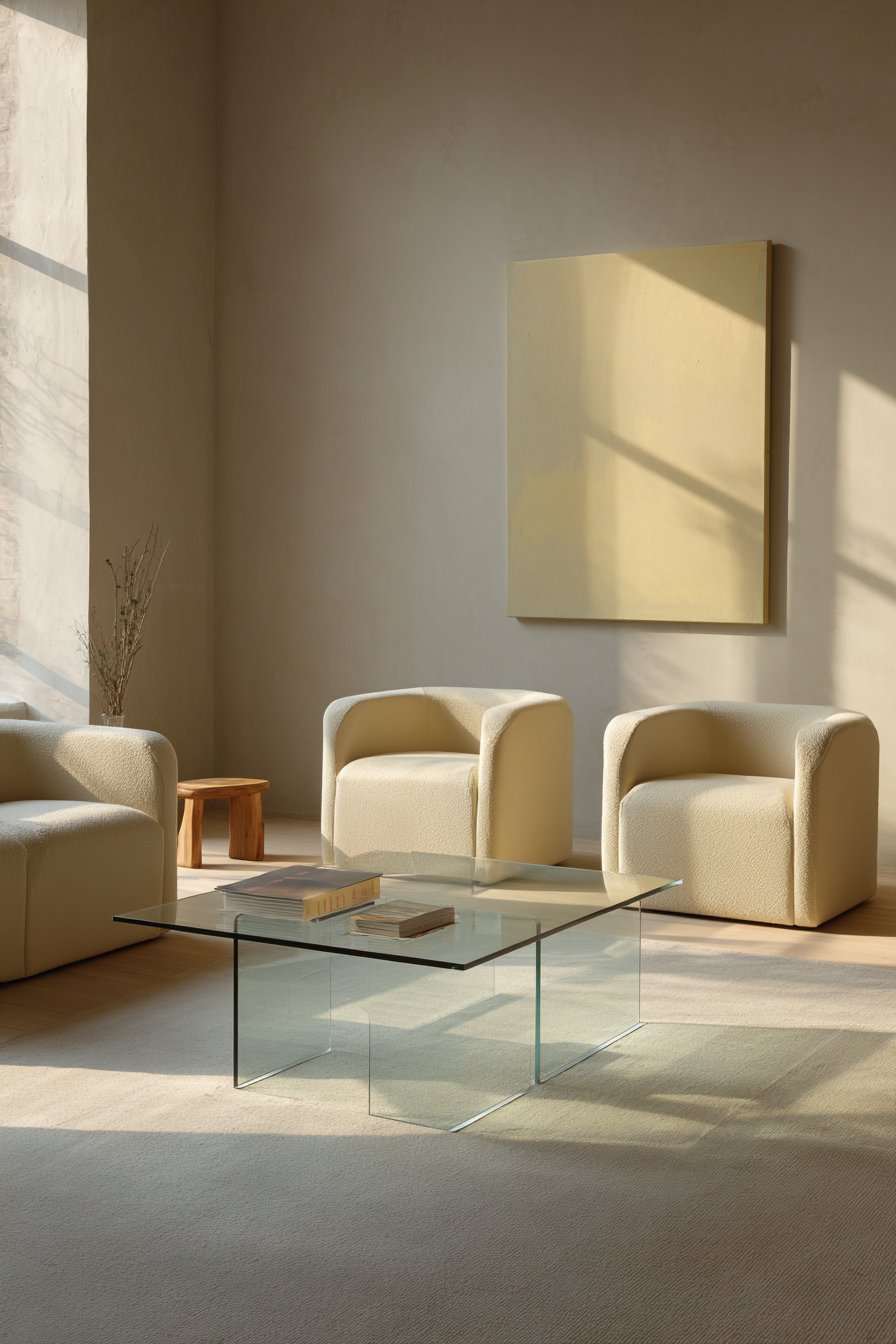
Two matching armchairs in oatmeal linen flank the coffee table with deliberate spacing. The symmetrical arrangement creates formal balance without feeling stuffy. Natural linen adds warmth and texture to the neutral palette. The chairs’ simple silhouettes complement the coffee table’s geometry. A monochromatic wool area rug in warm grey grounds the seating arrangement while adding softness underfoot.
A single large-scale abstract art piece hangs as the room’s only wall decoration. The muted tones echo the existing color palette while adding visual interest. This restraint makes the artwork more impactful than a gallery wall would be. The piece becomes a meditation point, drawing the eye without overwhelming. Its abstract nature allows personal interpretation, making it timeless rather than trendy.
Golden hour natural light transforms this space throughout the day. Gentle shadows cast by the furniture create dynamic patterns on walls and floors. These shifting shadows add depth and interest without permanent fixtures. The deliberate furniture arrangement allows light to move freely through the space. This consideration of natural light patterns shows sophisticated design thinking.
Key Design Tips:
- Use transparent furniture pieces like glass tables to maintain visual openness
- Create symmetrical arrangements for formal balance and visual calm
- Select one large-scale art piece rather than multiple small decorations
- Choose muted color palettes that complement rather than compete
- Position furniture to allow natural light movement throughout the day
- Invest in quality wool rugs for comfort and acoustic softening
4. Seamless Storage Wall with Hidden Functionality
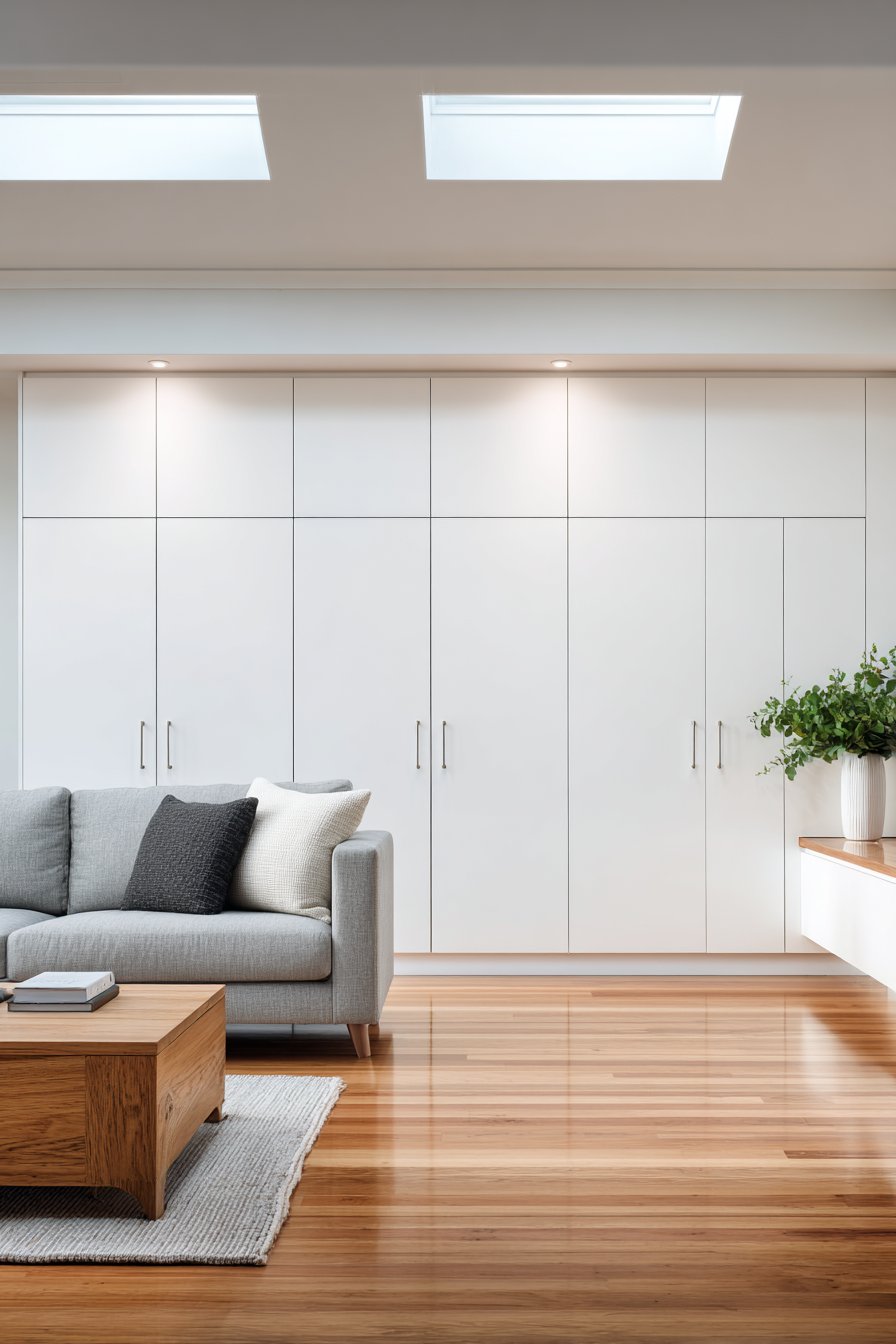
Built-in storage solutions revolutionize minimal living rooms by concealing clutter. White storage units with handleless push-to-open doors create a seamless wall. The clean joinery maintains uninterrupted lines across the entire surface. This flush installation makes the storage appear as architectural elements rather than added furniture. The result is a room that feels spacious despite abundant storage capacity.
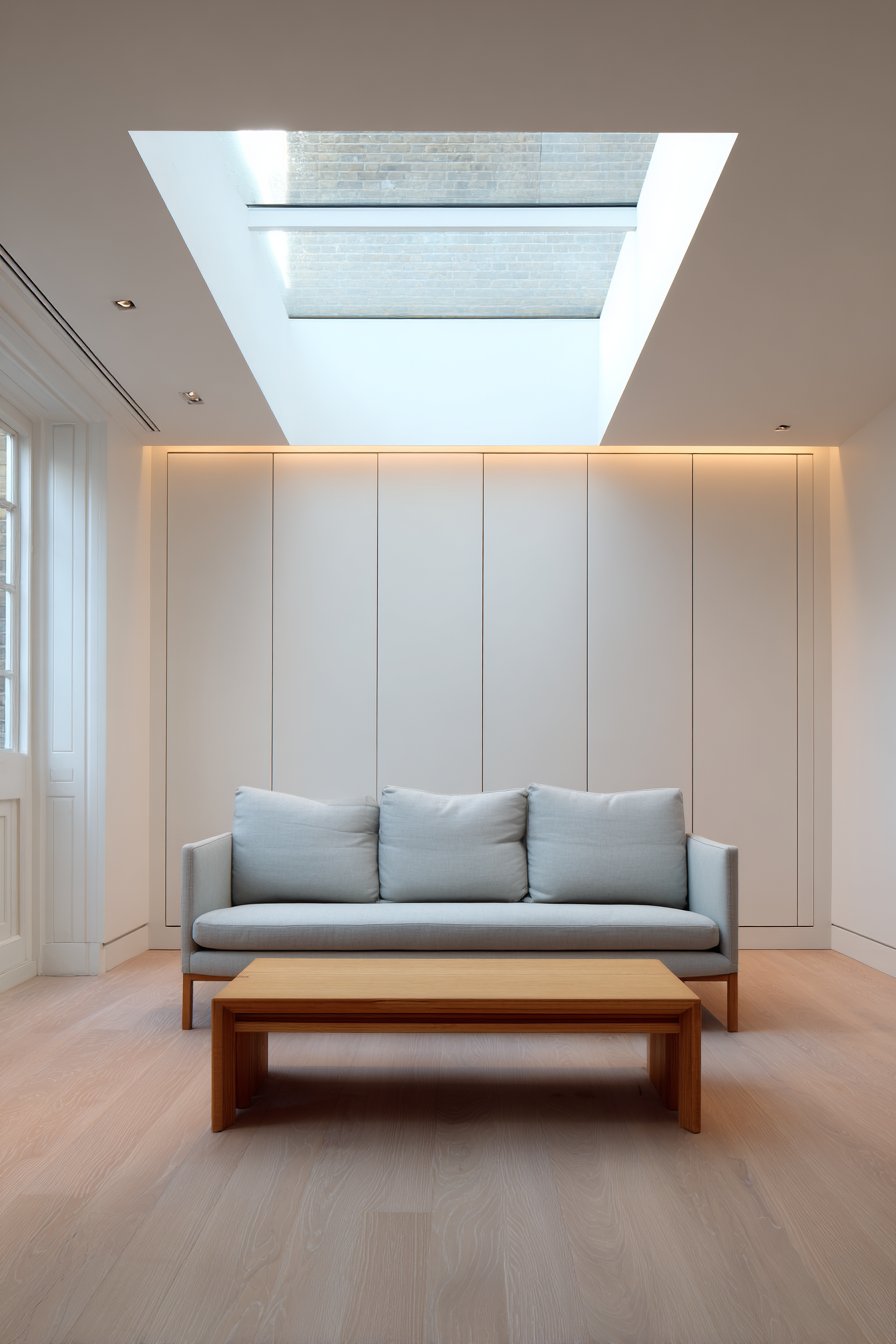
A simple grey sofa faces the storage wall, allowing the built-ins to shine. The sofa’s understated design prevents competition between focal points. A low wooden bench serves as a coffee table, adding natural warmth. This multi-functional piece can also provide extra seating when needed. The minimal furniture selection keeps the floor area open and easy to navigate.
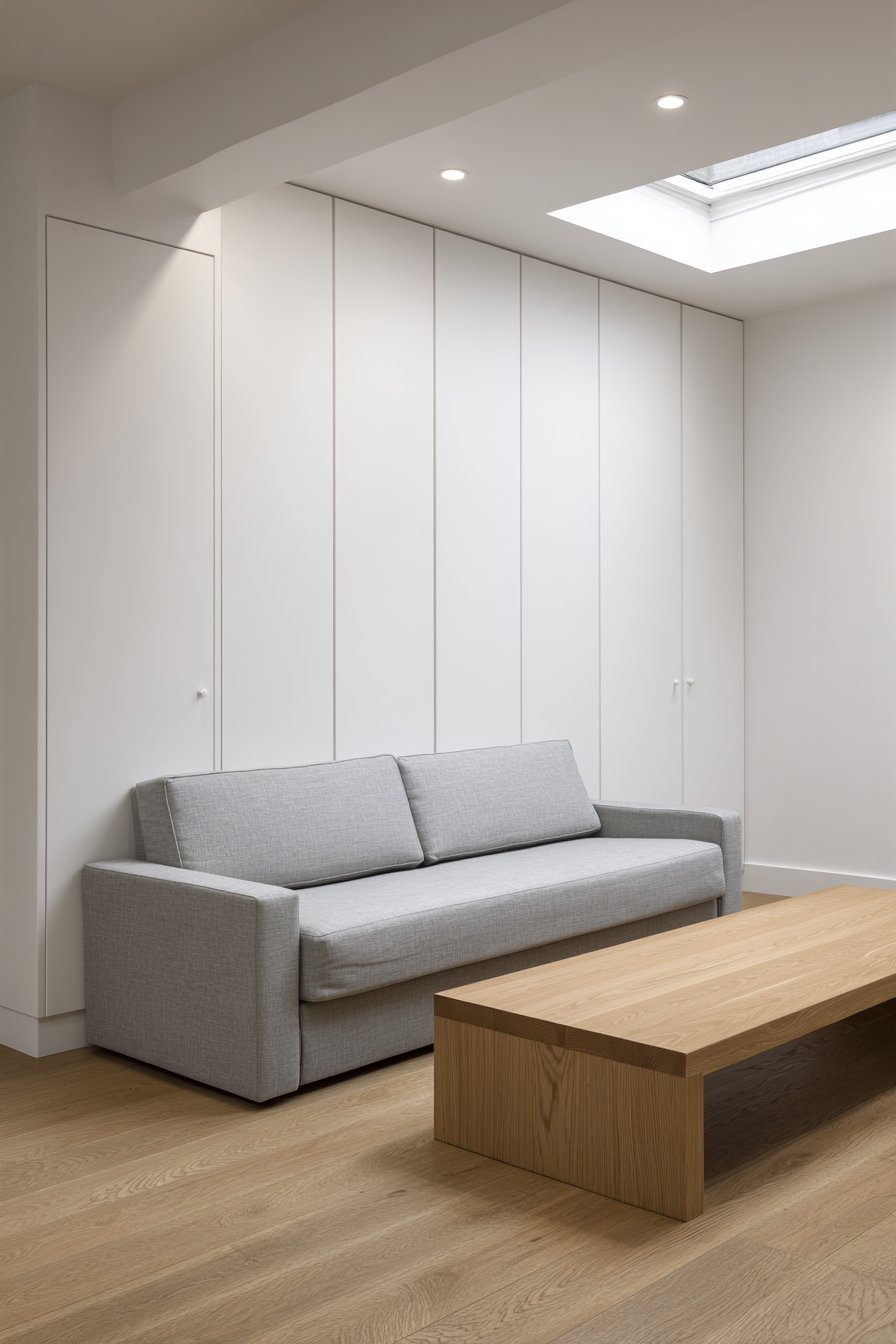
Skylights provide soft diffused daylight that illuminates the space evenly. This overhead natural lighting eliminates harsh shadows and dark corners. The even distribution creates a peaceful atmosphere perfect for relaxation. Skylights also free up wall space by reducing the need for windows. This architectural solution demonstrates how minimalism extends beyond furniture to the building itself.
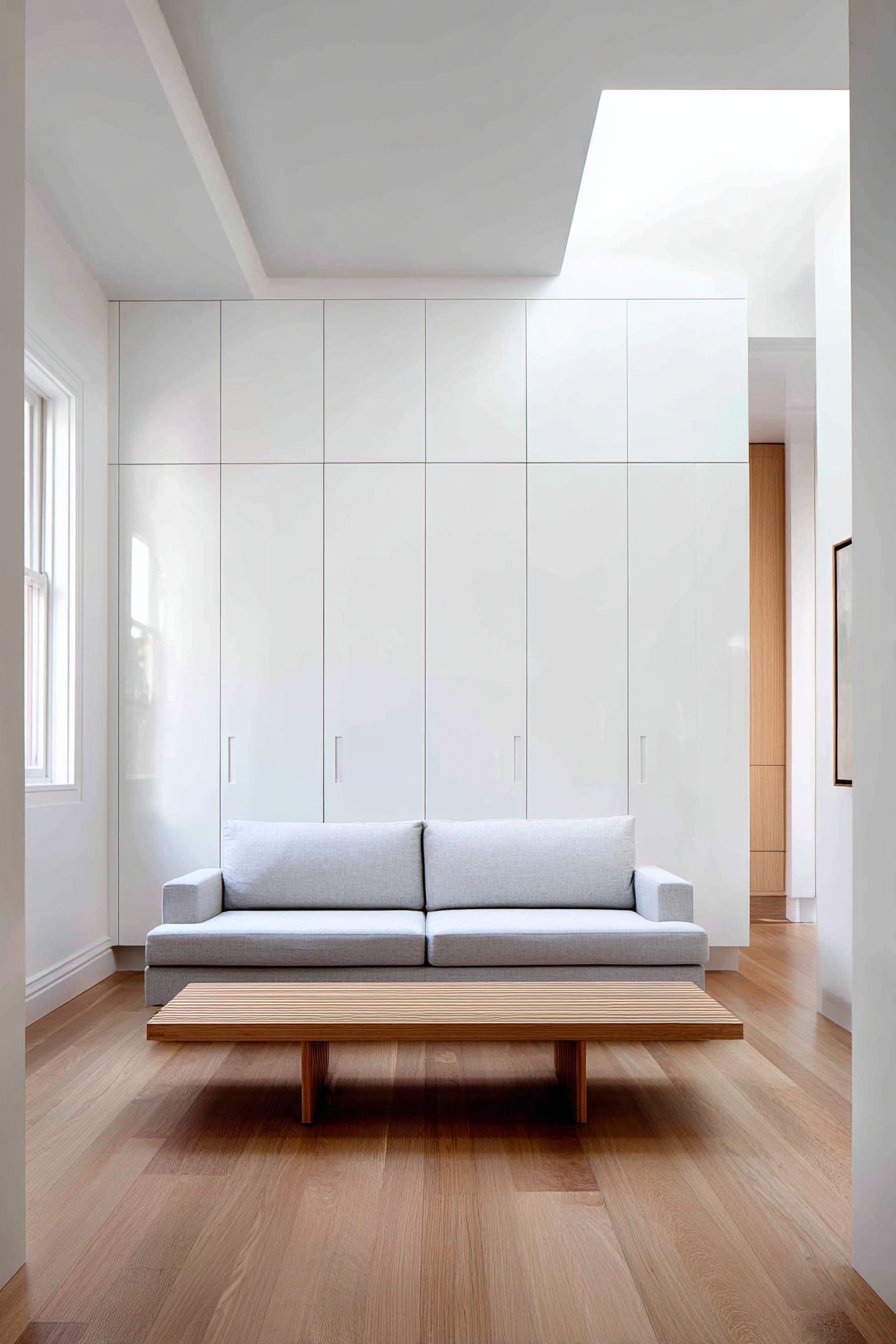
The practical benefits of this design approach are substantial. Concealed storage keeps everyday items organized but accessible. The clean surfaces are easy to maintain and keep dust-free. The room adapts easily to different uses throughout the day. This efficiency makes minimalism particularly suitable for modern lifestyles where spaces must serve multiple functions.
Key Design Tips:
- Invest in built-in storage to maximize capacity while minimizing visual impact
- Choose handleless designs for clean, contemporary aesthetics
- Use push-to-open mechanisms for seamless surfaces without visible hardware
- Install skylights to bring in natural light without sacrificing wall space
- Select multi-functional furniture pieces that serve more than one purpose
- Maintain white or light colors for built-ins to help them recede visually
5. Textured Neutrals with Organic Elements
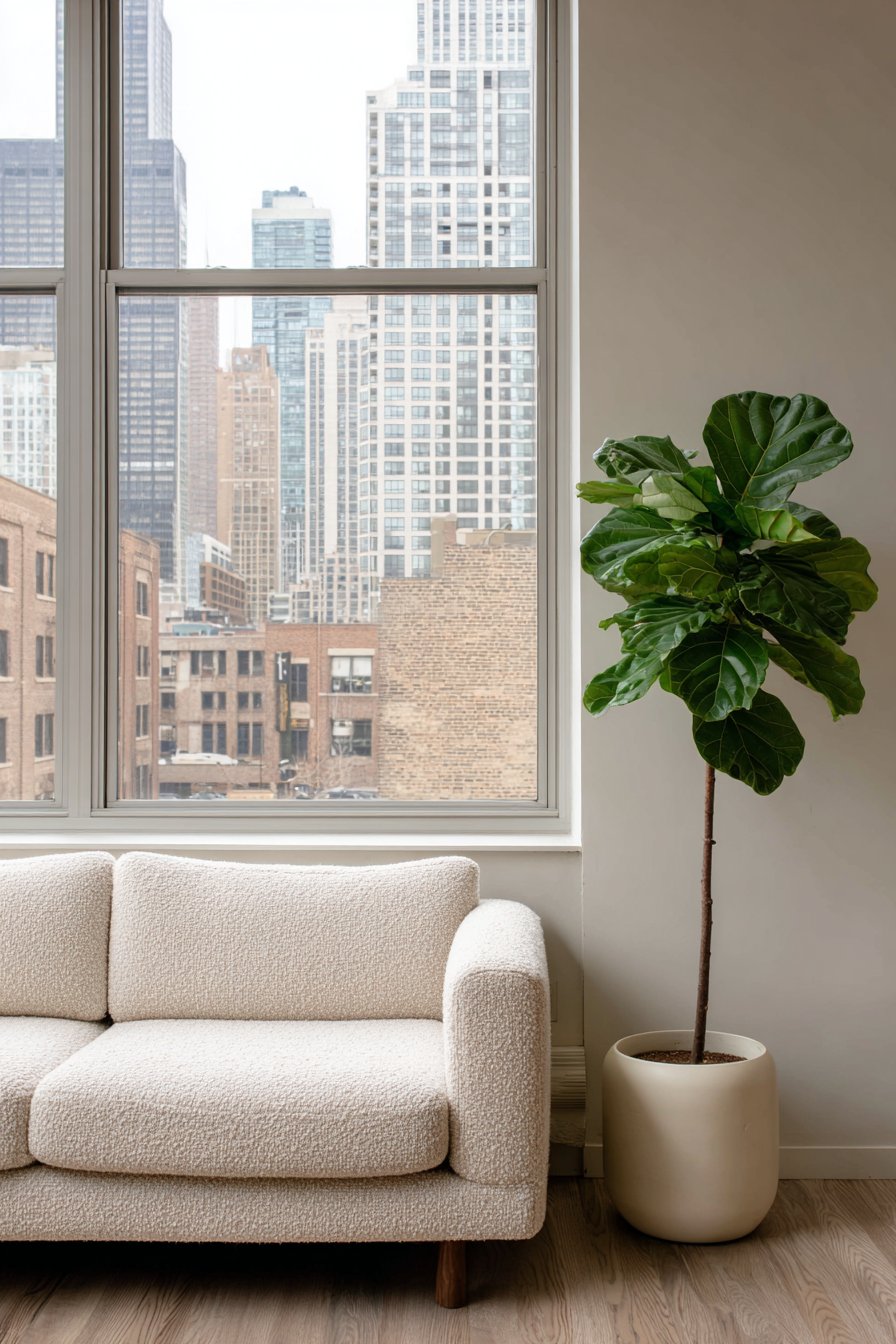
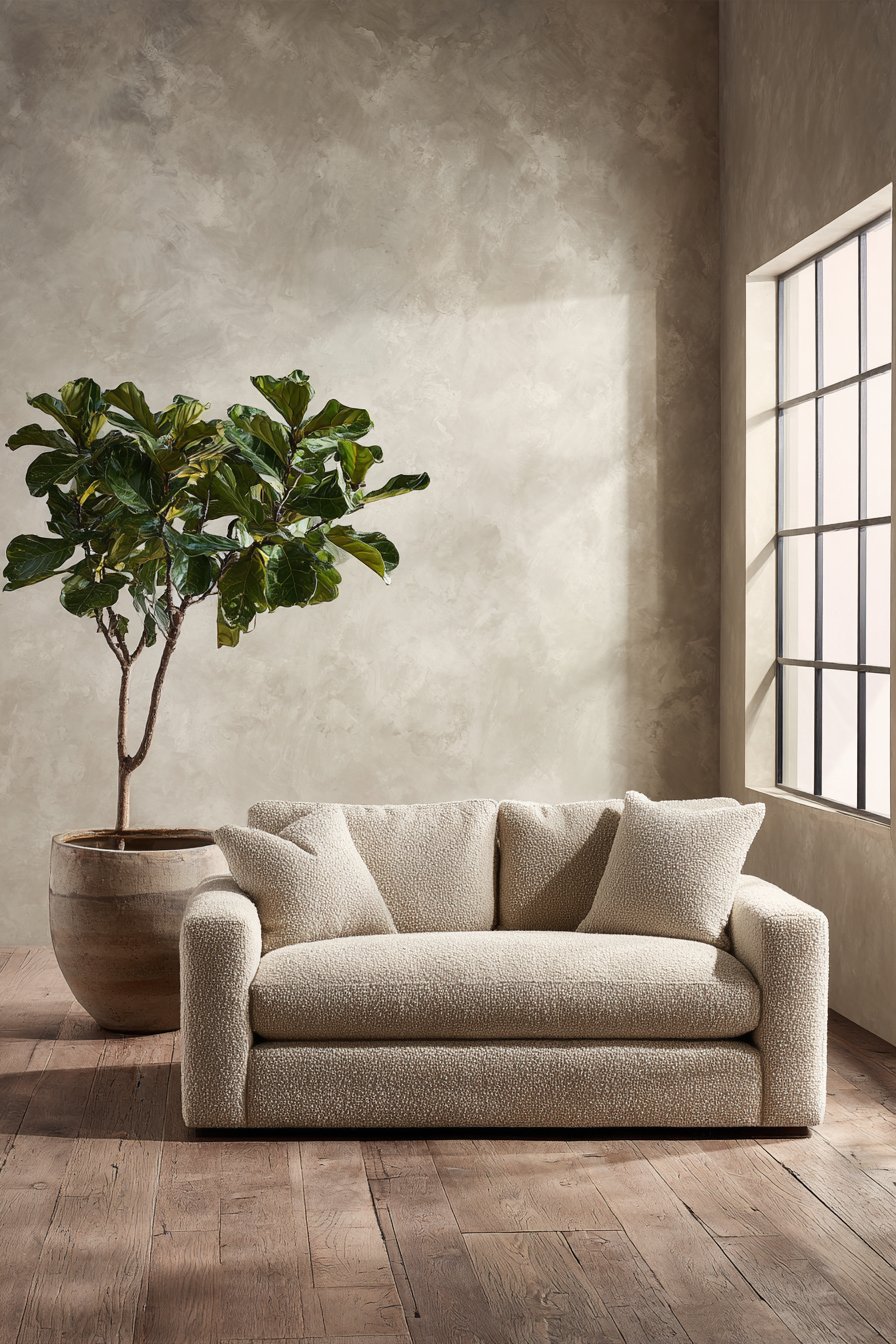
Natural materials and subtle textures create warmth within minimal frameworks. A beige bouclé sofa introduces tactile interest as the room’s sole seating element. The nubby texture catches light beautifully, creating depth without pattern. This fabric choice proves that minimalism doesn’t require smooth, hard surfaces. Comfort and visual interest coexist through thoughtful material selection.
Pale oak wide-plank flooring provides warmth through natural wood tones. The grain variations and subtle color shifts add organic beauty. Wide planks create fewer visual interruptions than narrow boards. This flooring choice grounds the space with natural authenticity. The pale tone keeps the room bright while introducing gentle warmth.
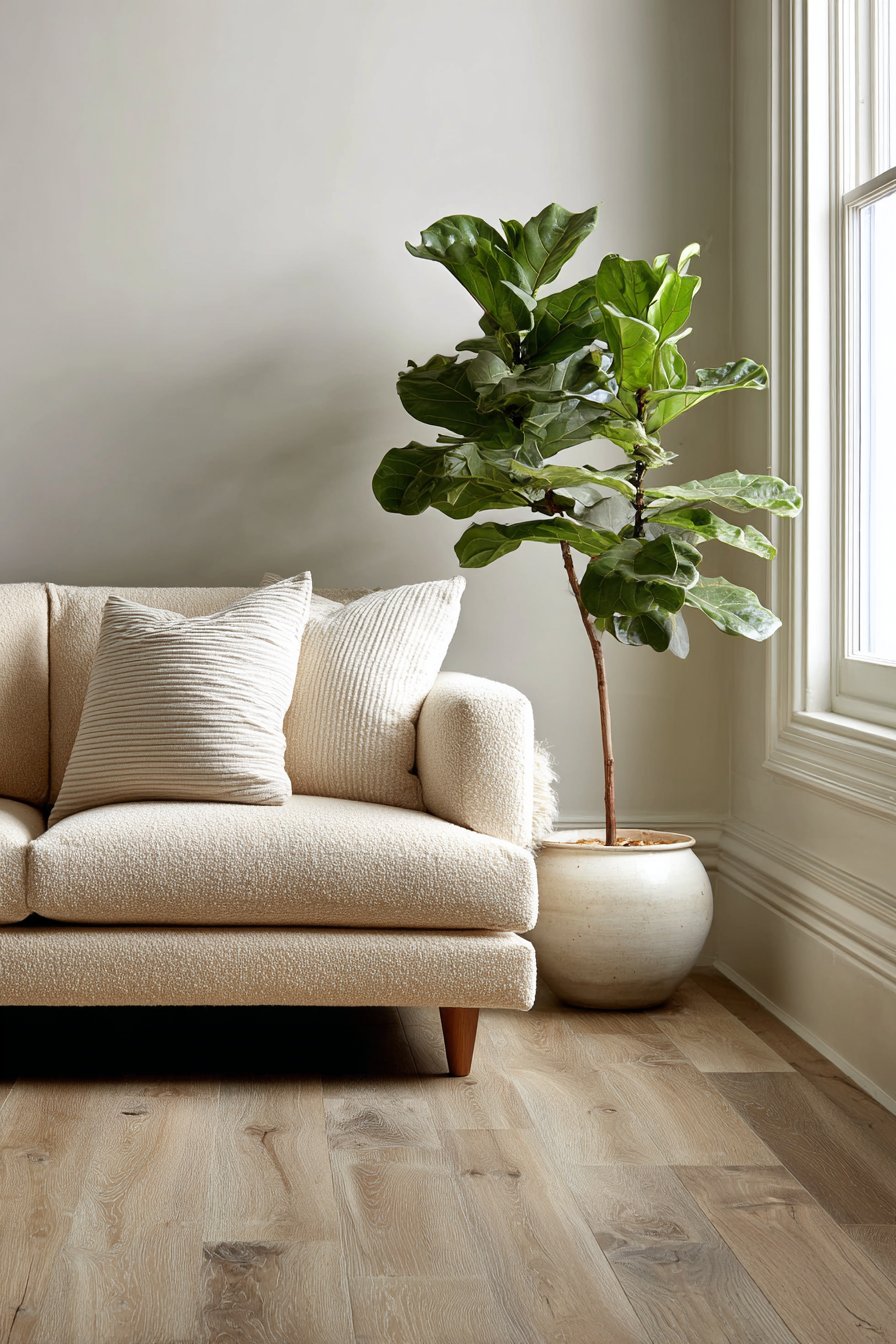
A single potted fiddle leaf fig tree adds living greenery without cluttering. The plant’s sculptural form becomes architectural in its own right. Simple ceramic planter complements the neutral palette while serving functional needs. This organic element softens the space and improves air quality. The strategic placement creates a focal point without overcrowding.
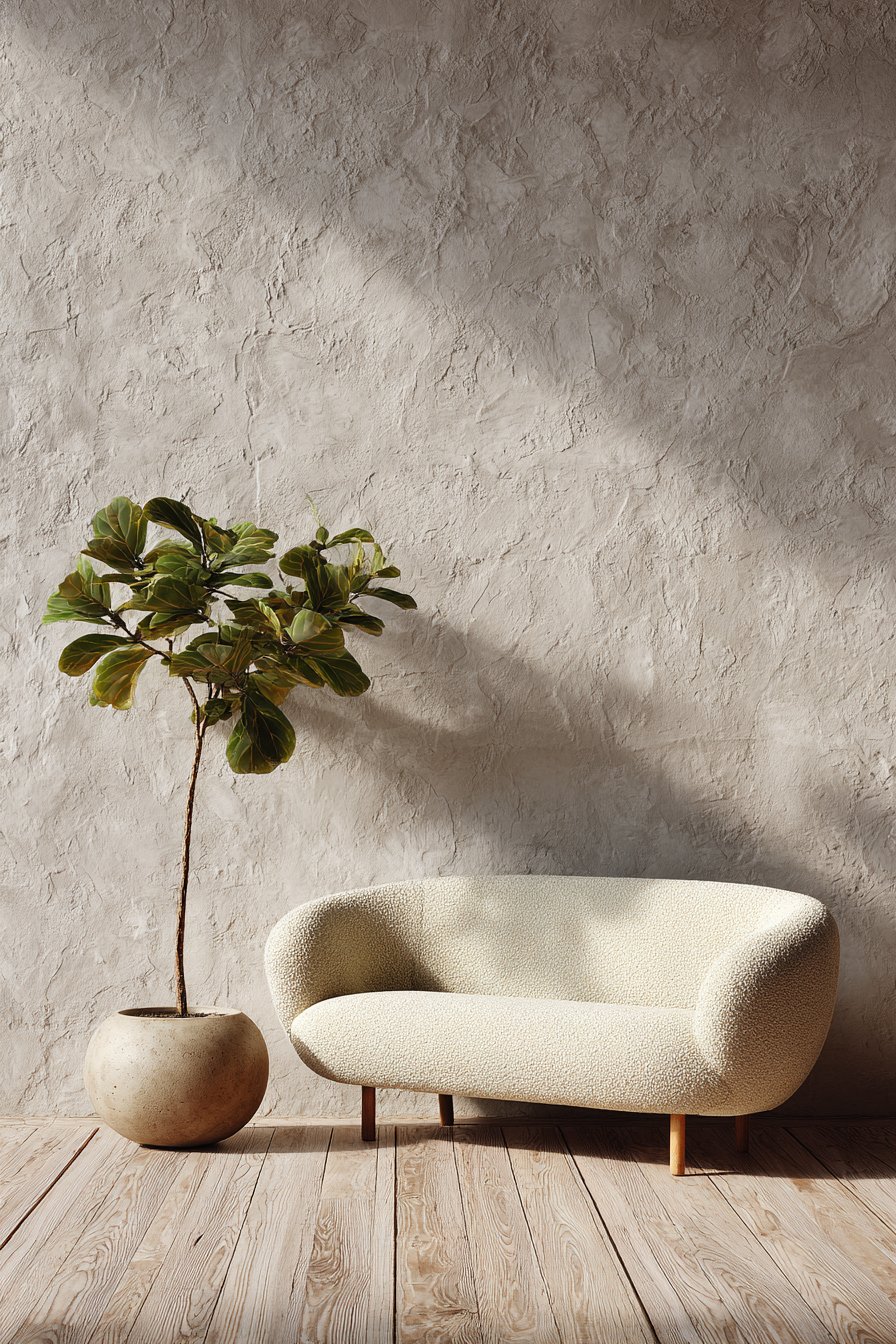
Natural window light creates soft shadows that highlight the restrained material selection. The way light interacts with bouclé texture throughout the day adds visual dynamism. These natural variations keep the space from feeling static or boring. The intentional sparseness allows appreciation of each material’s inherent beauty. Quality over quantity becomes evident in every design decision.
Key Design Tips:
- Incorporate textured fabrics like bouclé for warmth and visual interest
- Choose wide-plank flooring to minimize visual interruption and create flow
- Add one large plant rather than multiple small plants for sculptural impact
- Select ceramic planters in neutral tones that complement the overall palette
- Allow natural light to interact with textures throughout the day
- Focus on material quality and inherent beauty over decorative additions
6. Corner Reading Sanctuary with Architectural Focus
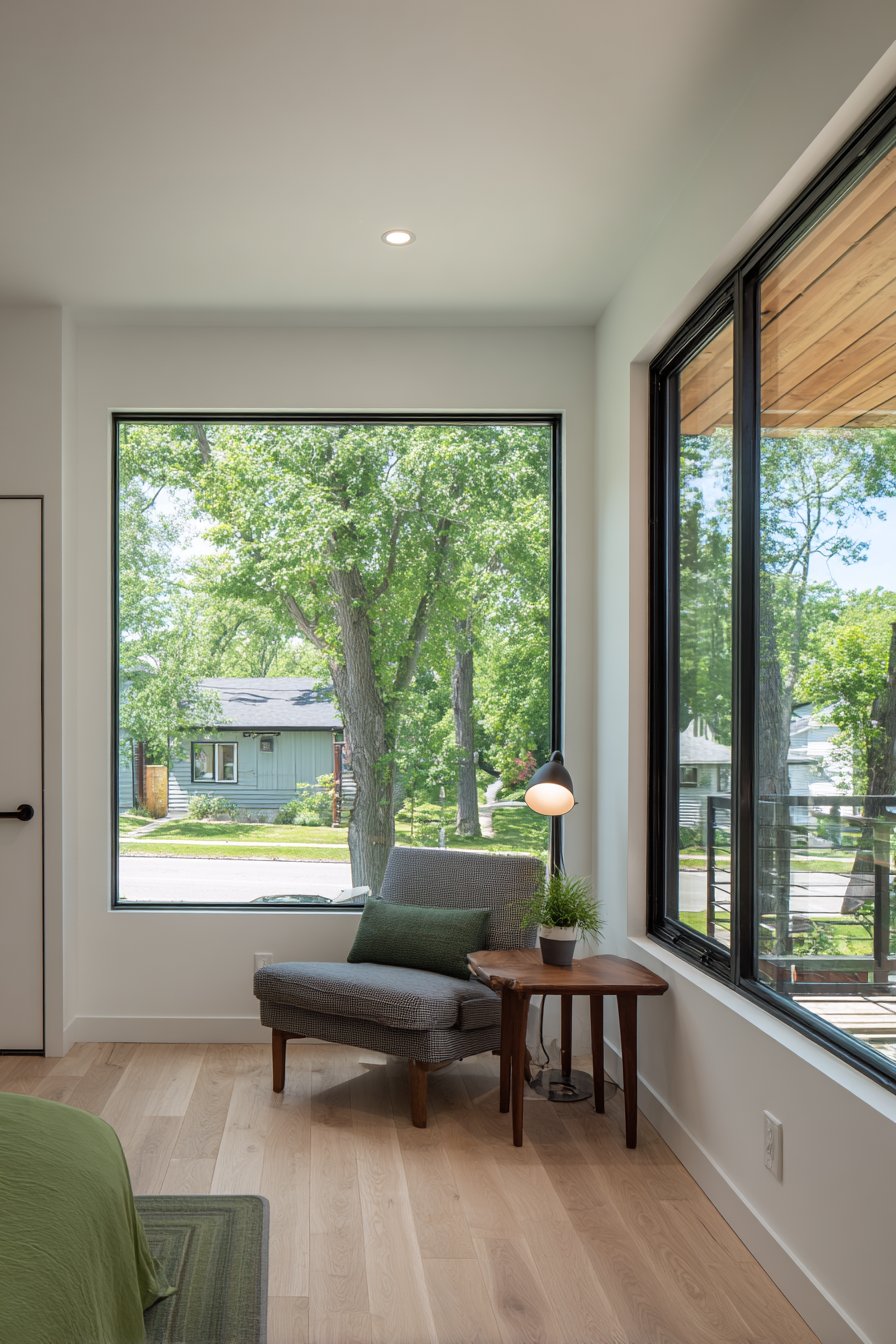
Functional minimalism shines in this corner reading nook design. A simple charcoal grey lounge chair positioned near floor-to-ceiling windows maximizes natural light. The dark upholstery creates contrast against light walls and flooring. This color choice defines the reading area without physical barriers. The chair’s clean lines maintain the minimal aesthetic while providing comfort.
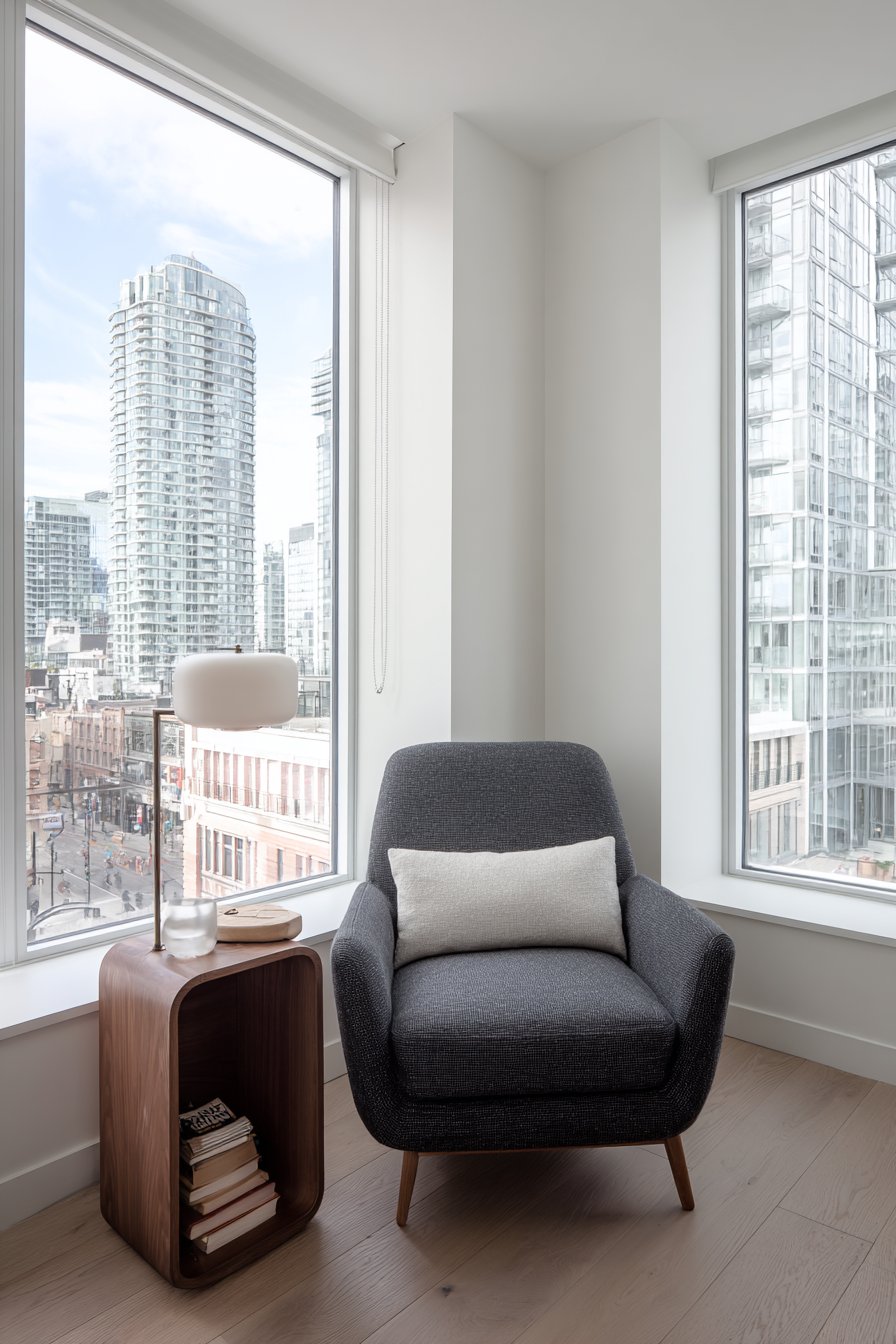
A slim side table in walnut wood holds a single reading lamp. The warm wood tone adds organic richness to the neutral palette. The table’s minimal footprint keeps the area from feeling crowded. A reading lamp with clean lines provides task lighting for evening use. This functional setup creates a dedicated space for quiet activities within the larger room.
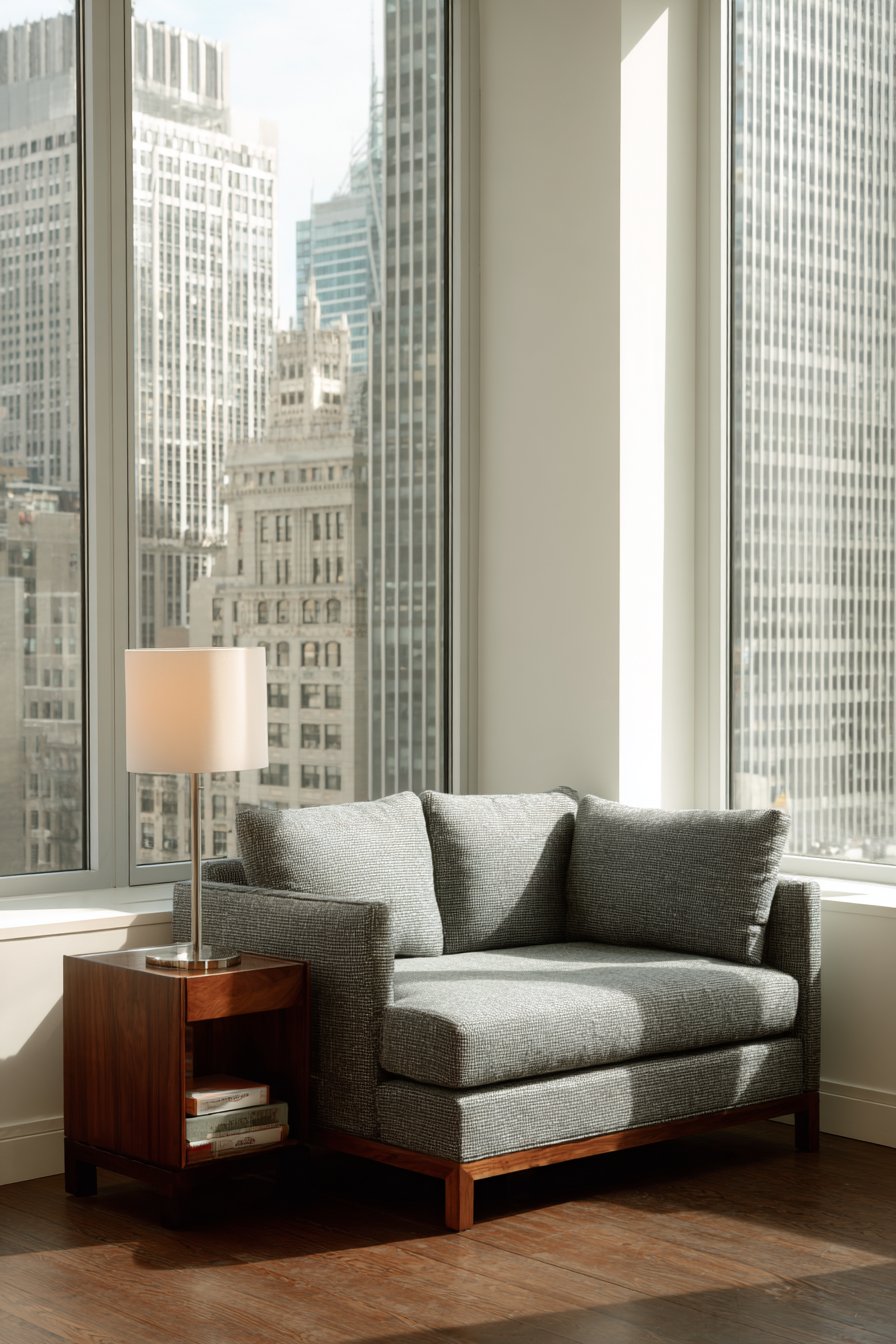
White walls and light wood flooring create an airy backdrop that enhances brightness. The neutral foundation allows architectural elements to become prominent. Floor-to-ceiling windows frame outdoor views like living artwork. This connection to nature brings the outside in without additional decoration. The minimal furniture placement ensures nothing blocks these views.
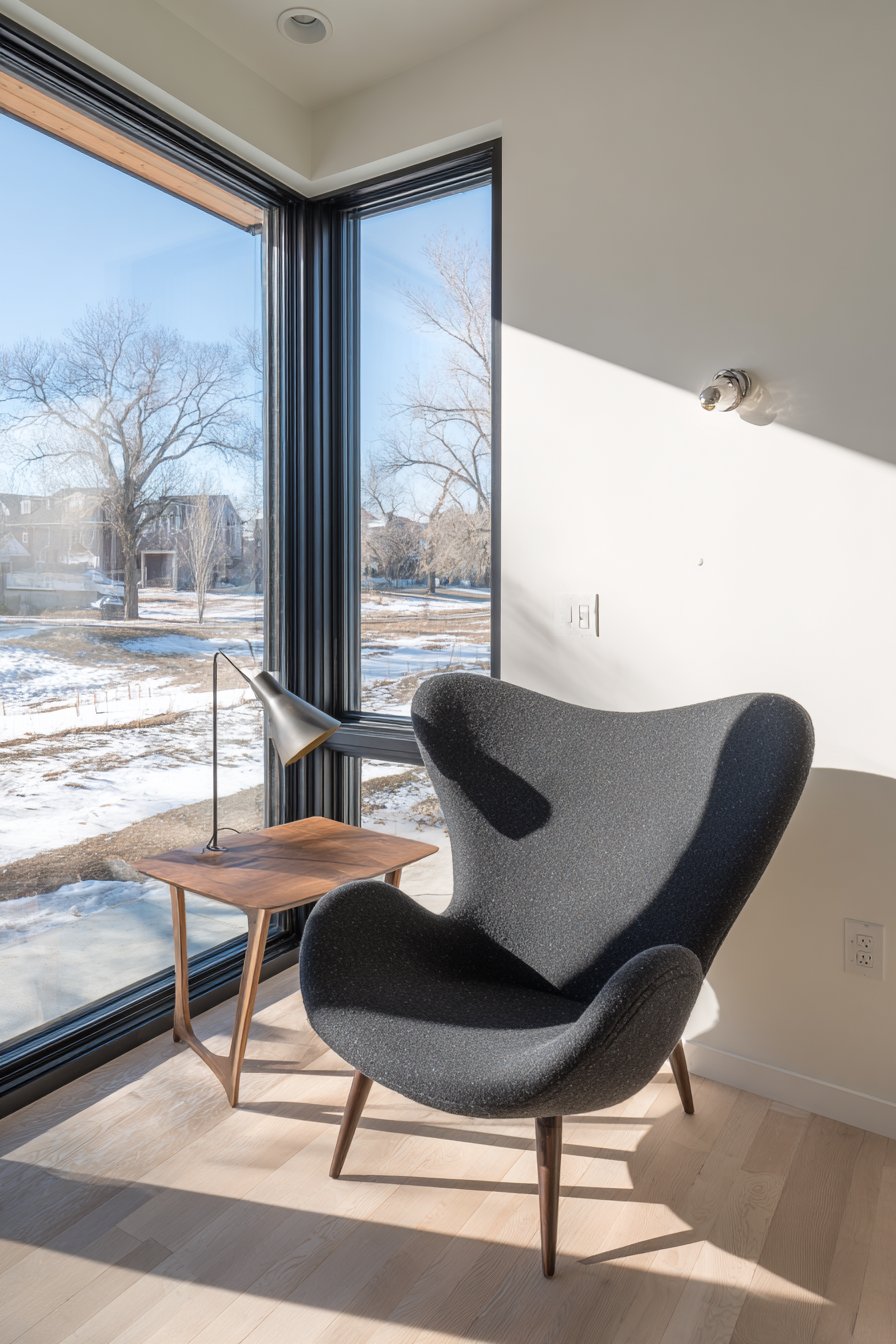
Balanced exposure in photography terms means the space photographs beautifully in natural light. This real-world benefit translates to a room that feels good throughout the day. The functional simplicity makes the space easy to use and maintain. Every element serves a clear purpose without redundancy. This approach demonstrates how minimalism enhances daily living through thoughtful planning.
Key Design Tips:
- Position seating near windows to maximize natural light and views
- Create functional zones within open spaces using minimal furniture placement
- Choose contrasting colors strategically to define areas without walls
- Select slim-profile tables to provide function without visual bulk
- Ensure task lighting for specific activities while maintaining ambient simplicity
- Allow architectural features like windows to serve as primary design elements
7. Floating Modular Sofa on Industrial Floors
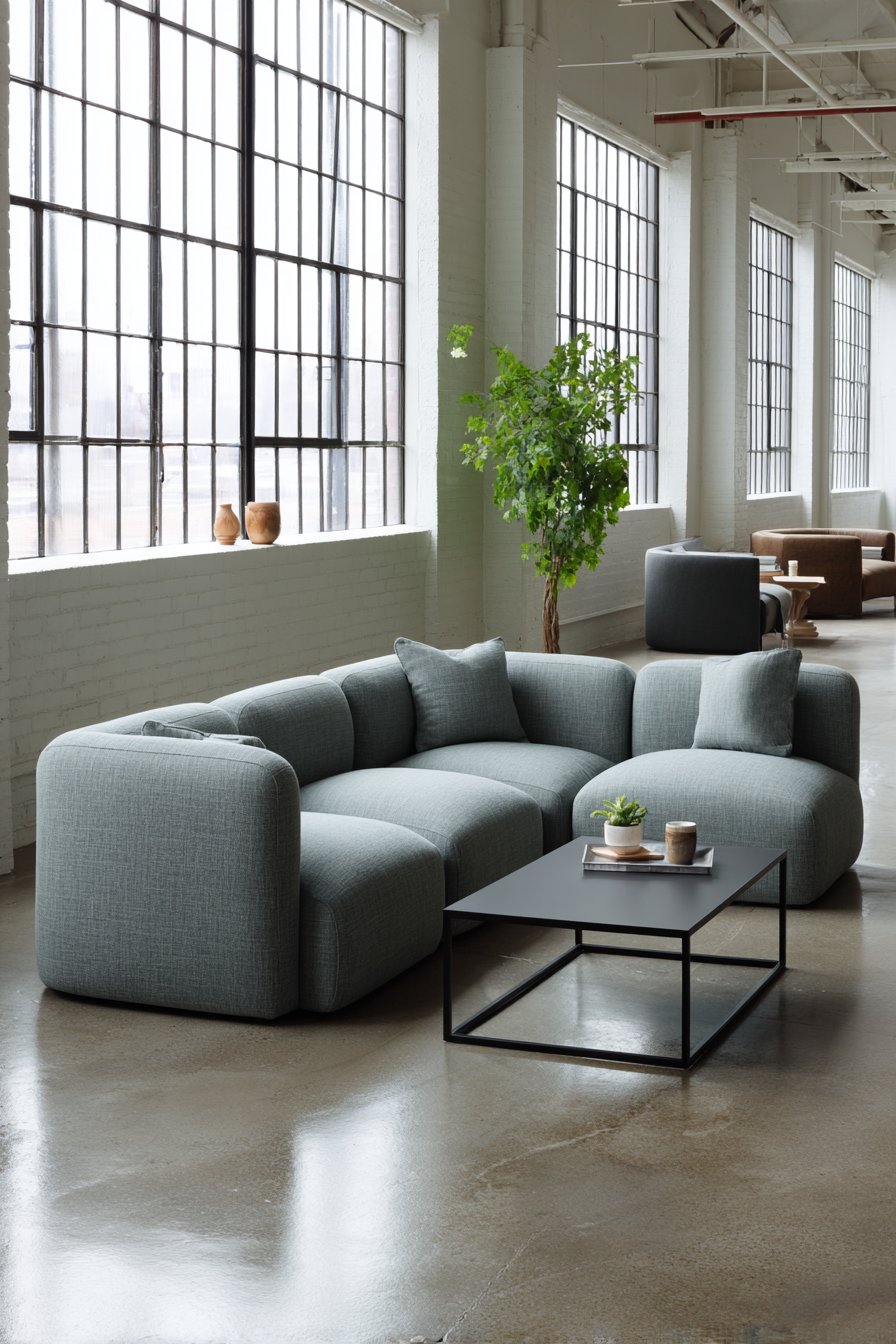
Contemporary minimalism embraces modular flexibility and industrial materials. An L-shaped sofa in soft grey fabric features removable covers for easy maintenance. The lack of visible legs creates a floating appearance that feels modern. This design choice makes the large seating piece appear lighter than traditional sofas. The modular nature allows reconfiguration as needs change over time.
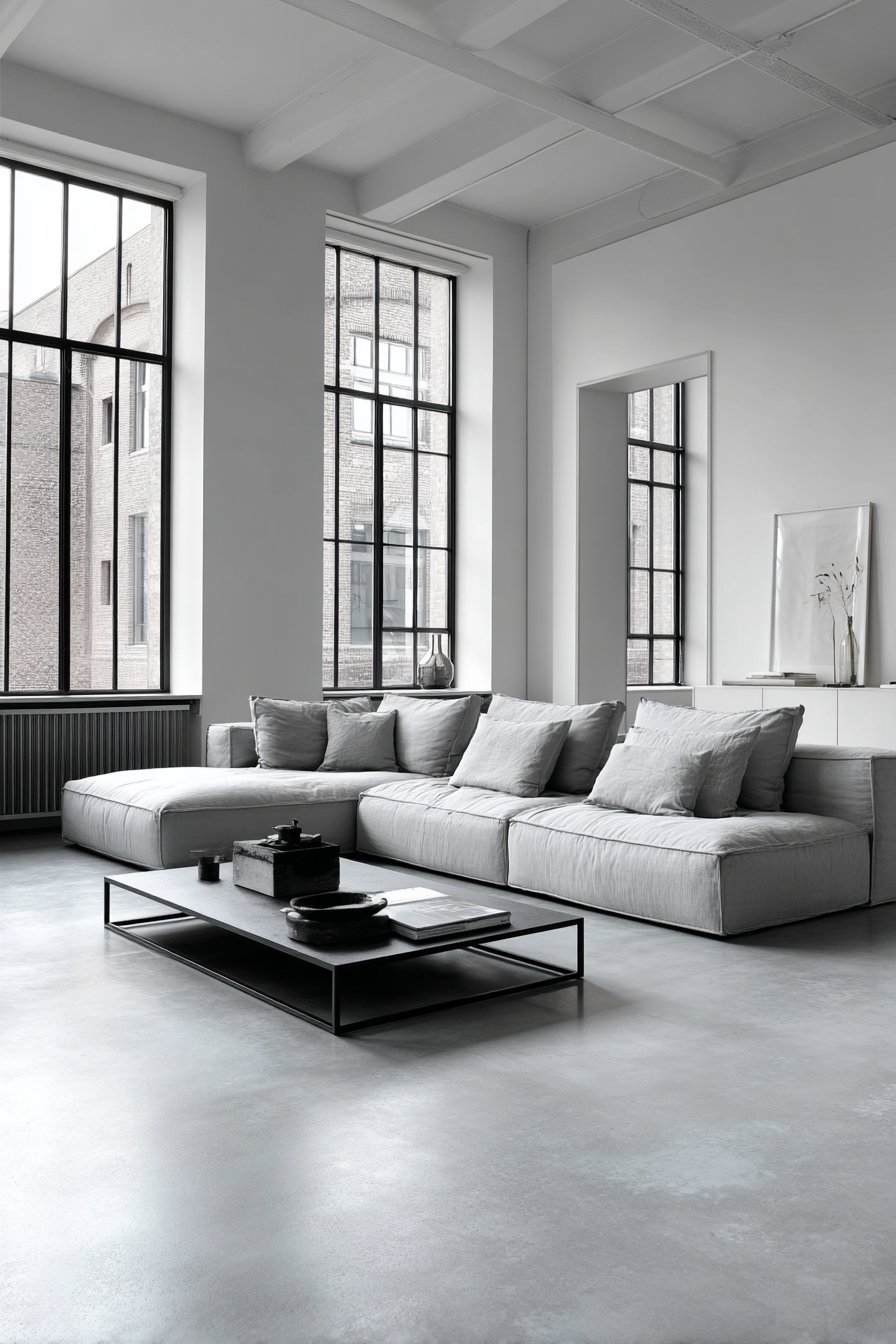
Polished concrete flooring introduces industrial elegance through honest materials. Natural imperfections and subtle color variations add character without busyness. The reflective surface bounces light around the room, enhancing brightness. Concrete’s durability makes it practical for high-traffic living spaces. Its cool tone balances the soft grey fabric beautifully.
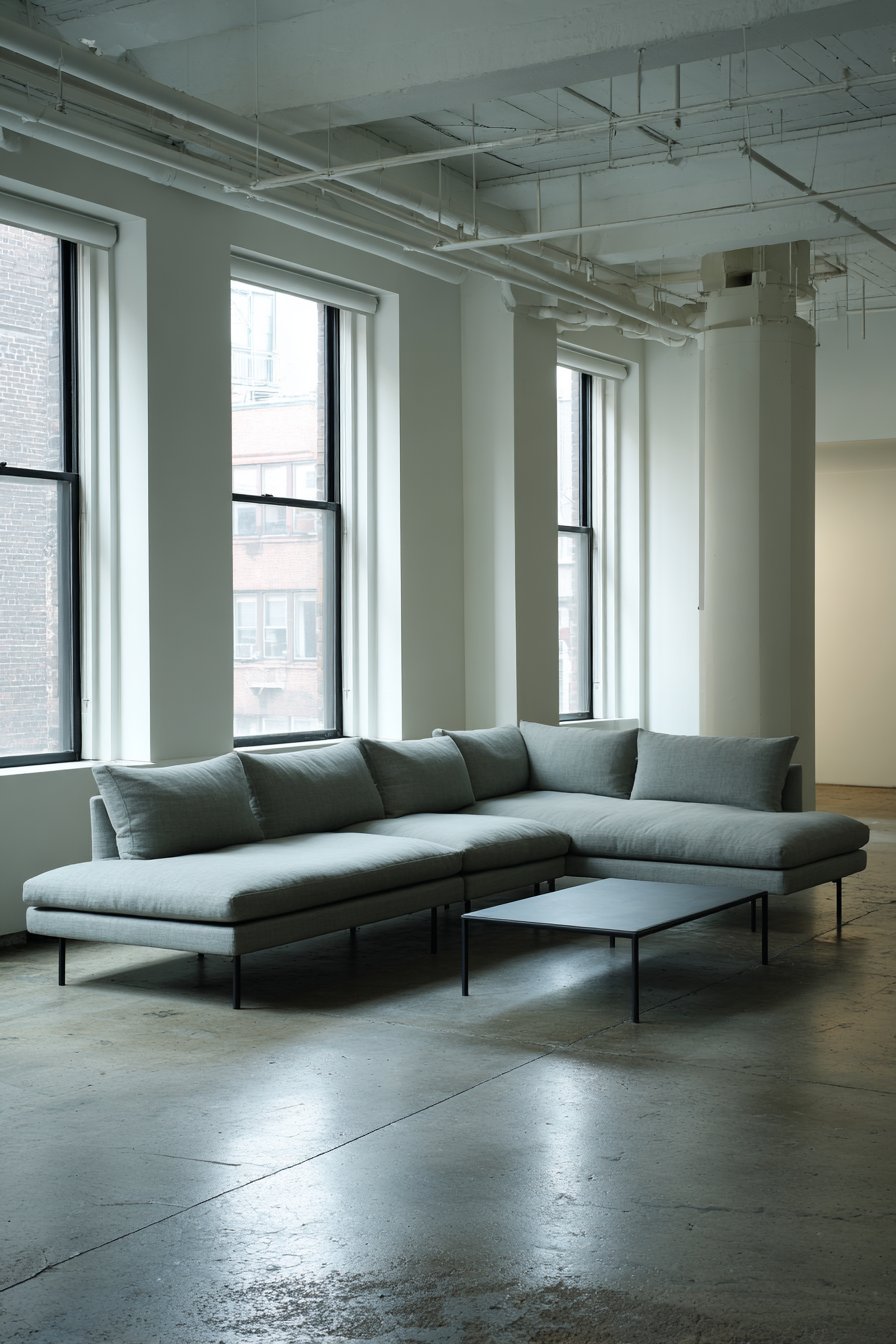
A single low-profile rectangular coffee table in black steel frames the seating area. The minimal design doesn’t compete with the substantial sofa. Black steel introduces contrast and definition to the neutral palette. The low height maintains sight lines across the open floor plan. This restrained approach to furniture selection creates a spacious feeling.
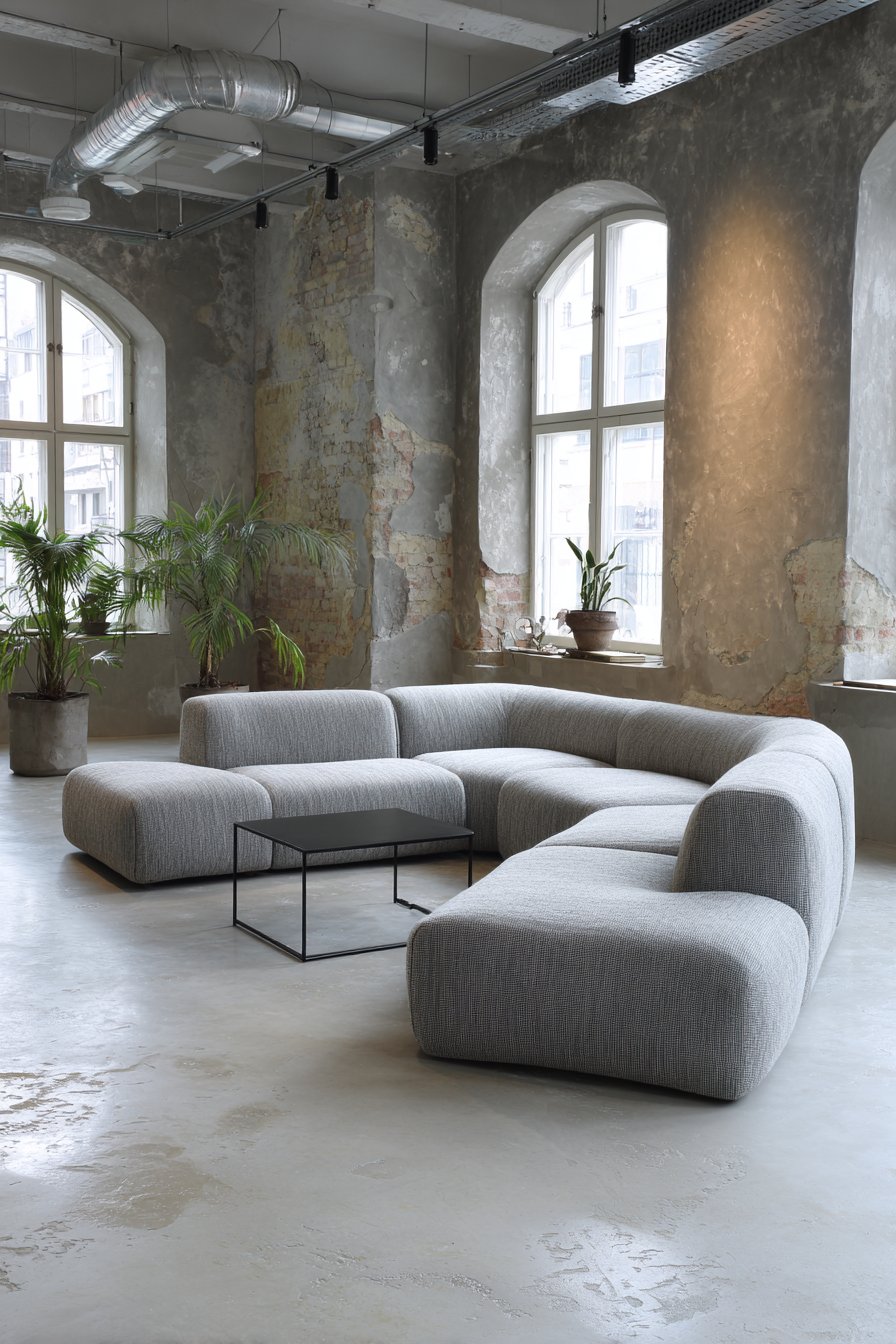
Large windows provide soft natural lighting that emphasizes the calm atmosphere. The abundant light makes the concrete floor glow rather than appear cold. Open floor planning allows visual continuity from space to space. Limiting furniture pieces ensures easy movement and flexible use. This minimal living room adapts to various activities from entertaining to relaxation.
Key Design Tips:
- Choose modular furniture for flexibility and future reconfiguration options
- Select sofas without visible legs for a contemporary floating appearance
- Embrace polished concrete floors for durability and an industrial aesthetic
- Use low-profile coffee tables to maintain sight lines in open plans
- Limit furniture to essential pieces to enhance a spacious feeling
- Balance hard surfaces like concrete with soft textiles for comfort
8. Stone Accent Wall as Singular Focus
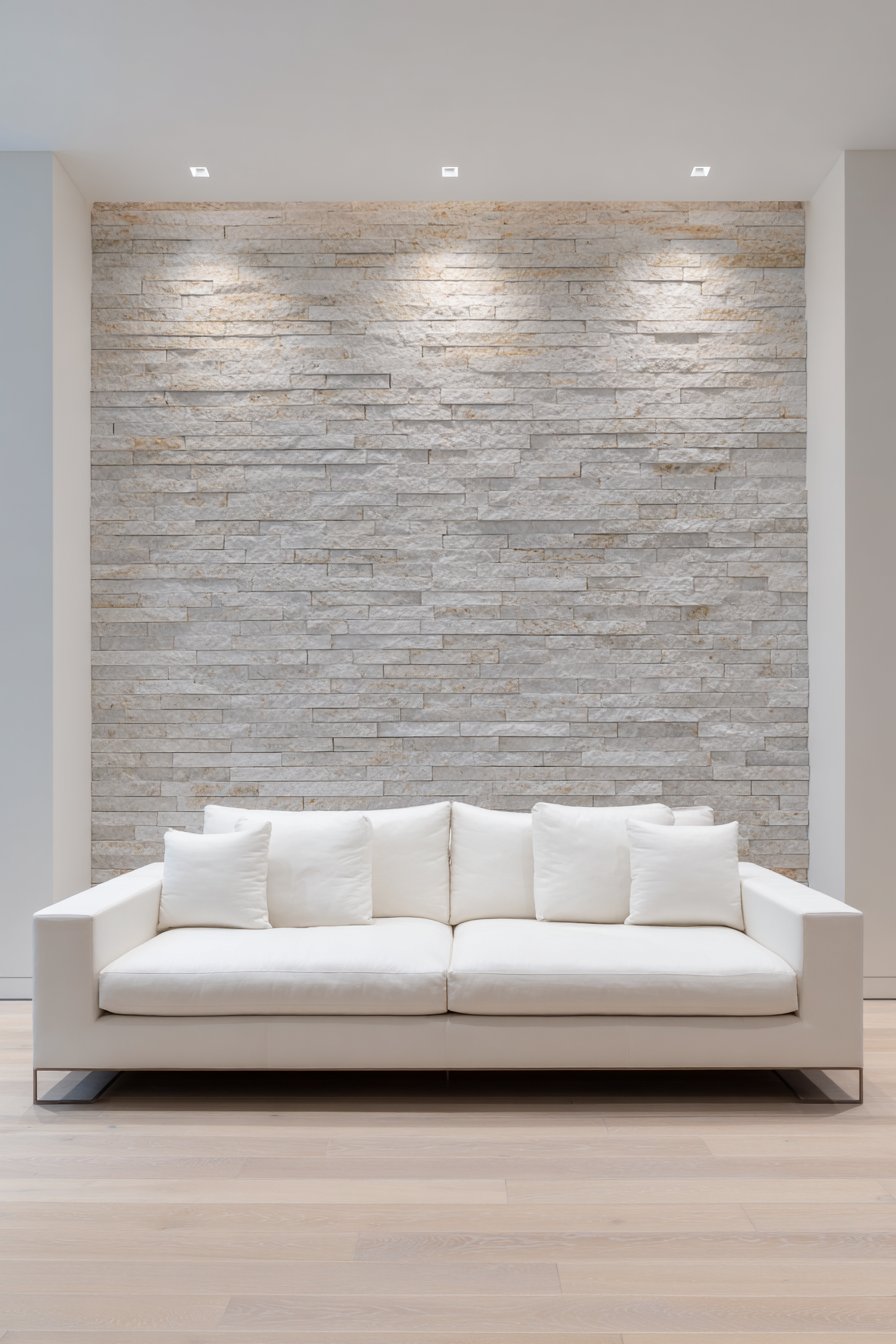
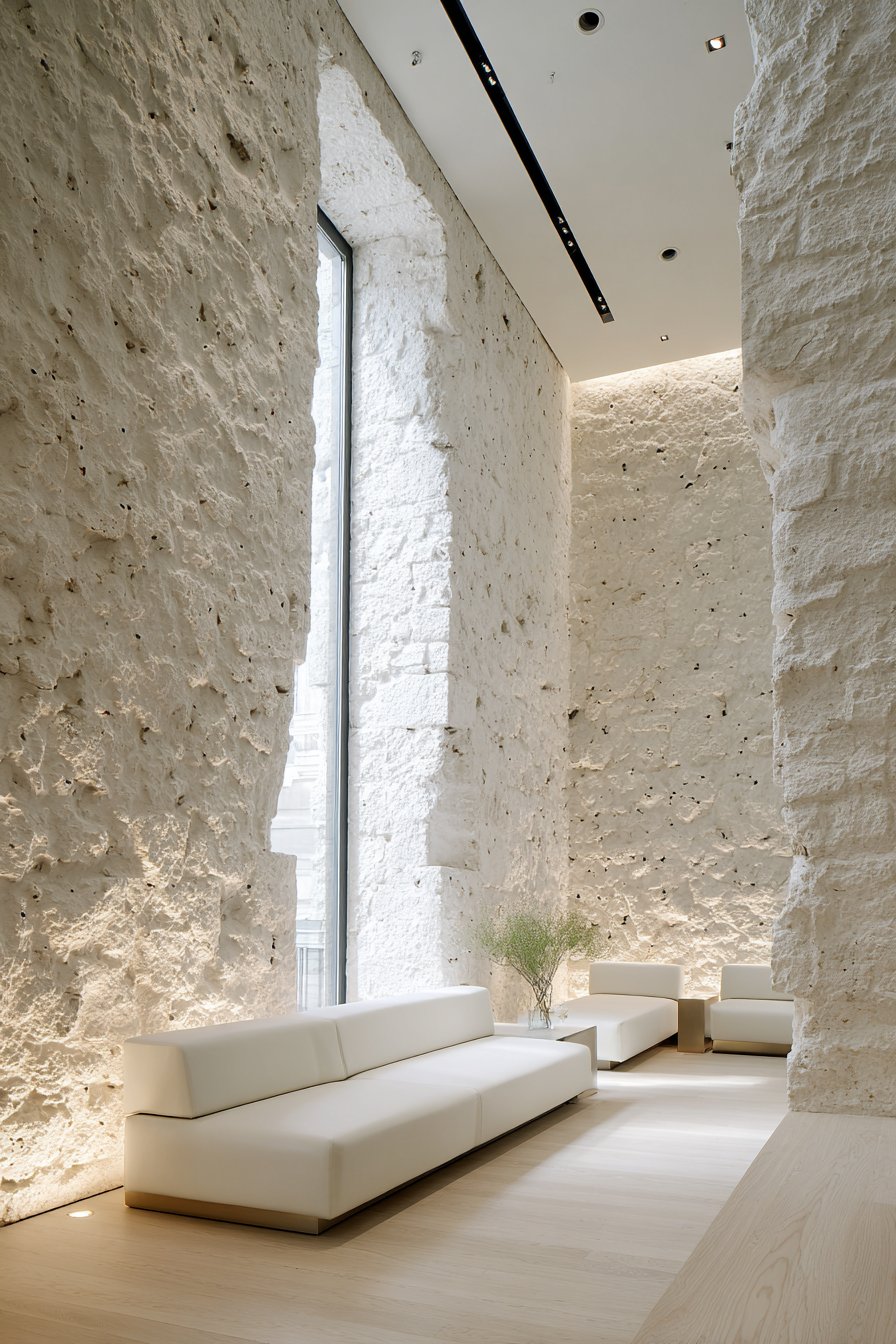
Strategic material use creates dramatic impact within minimal frameworks. A stone accent wall in light grey limestone provides natural texture and variation. This singular focal point becomes the room’s statement element. The stone’s organic patterns offer visual interest without additional decoration. Its neutral color maintains the minimal palette while adding depth and character.
A streamlined white sofa faces the textured wall with precise alignment. The clean upholstery provides contrast to the stone’s natural irregularity. This pairing demonstrates the power of juxtaposition in minimal design. The white sofa recedes visually, allowing the stone wall to command attention. Precise alignment creates intentional formality that feels sophisticated rather than stiff.
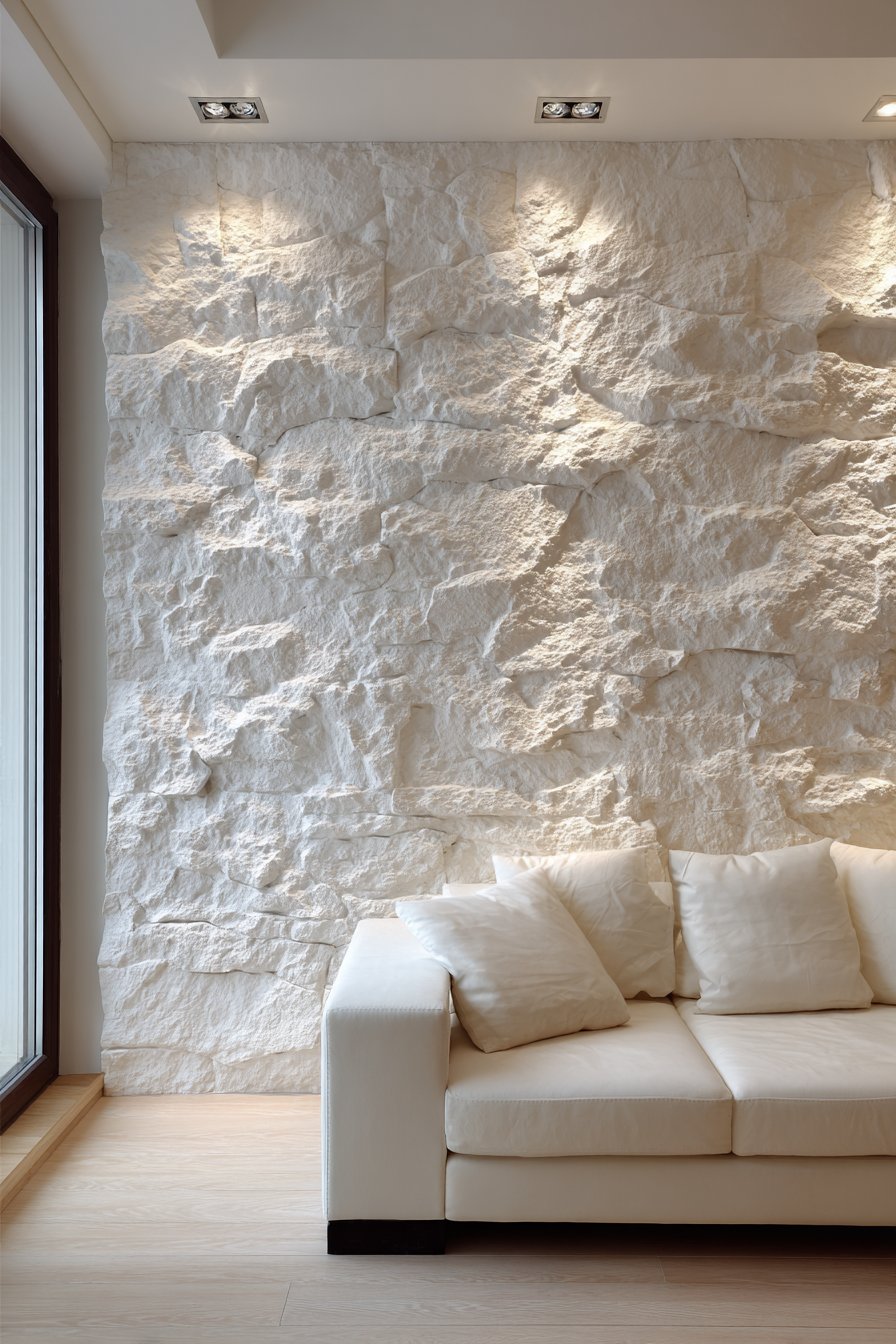
Recessed lighting creates subtle highlights on the stone surface throughout the day. These shadows and highlights reveal the material’s natural beauty. The lighting design maintains overall soft ambient illumination. This layered approach provides functionality while enhancing the focal wall. Pale wood flooring grounds the space with warmth and organic texture.
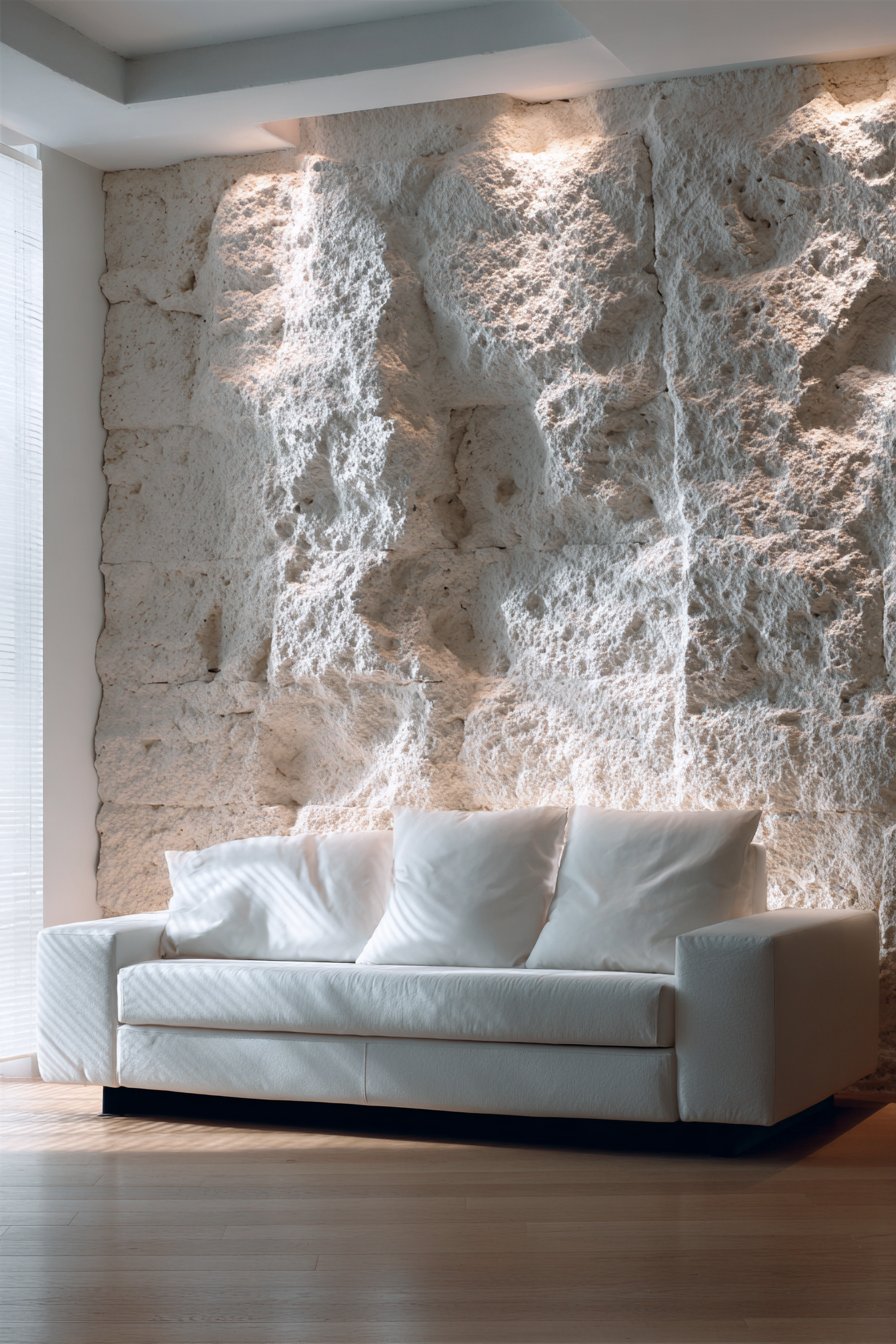
No additional decorative elements compete for attention in this space. The stone wall provides all the visual interest needed. This restraint shows confidence in the design concept. Every element serves to support rather than distract from the main feature. Professional design thinking appears in how one statement material eliminates the need for clutter.
Key Design Tips:
- Select one statement material or wall to serve as the room’s focal point
- Use natural stone for organic texture and timeless appeal
- Position furniture to face and highlight architectural features
- Install recessed lighting to enhance texture without visible fixtures
- Maintain neutral palettes to allow statement materials to shine
- Resist adding decorative elements when architecture provides interest
9. Japanese-Inspired Low Platform Serenity
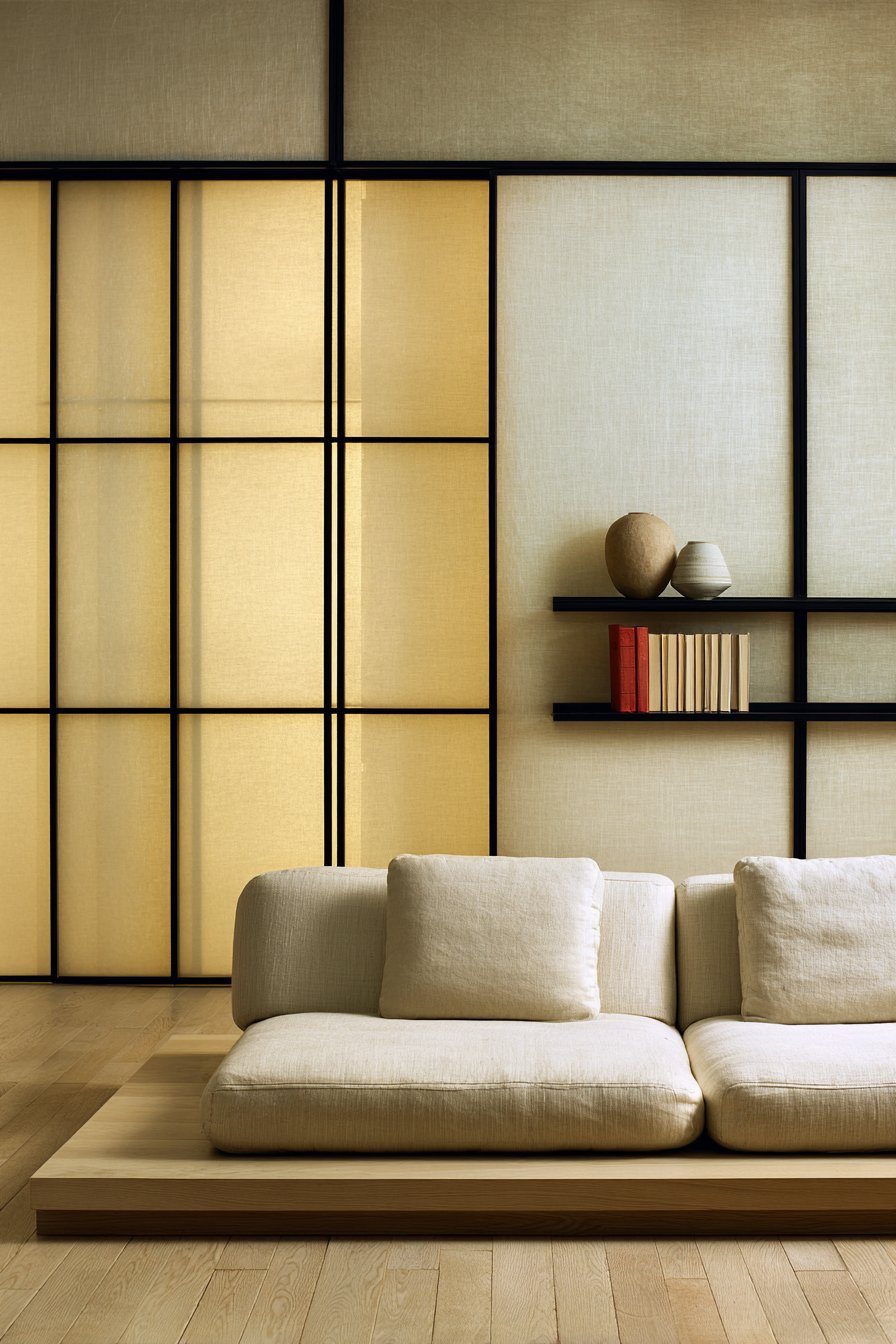
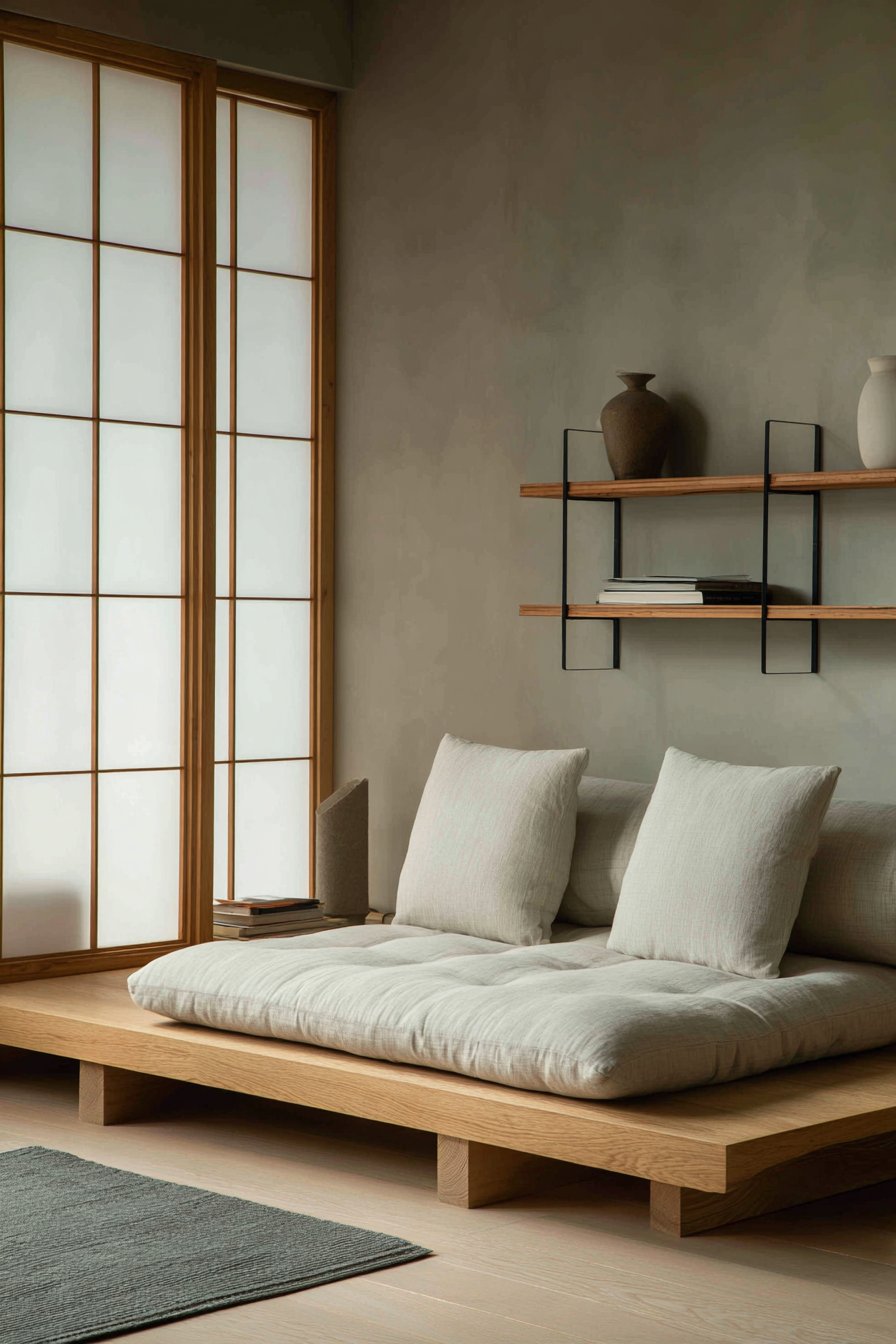
Eastern minimalism offers profound lessons in restraint and intentionality. A low platform sofa with thin cushions in natural linen sits directly on bamboo flooring. This ground-level seating creates intimacy and connection to the floor plane. The natural linen breathes and ages beautifully over time. The thin cushions maintain the clean lines of the platform base.
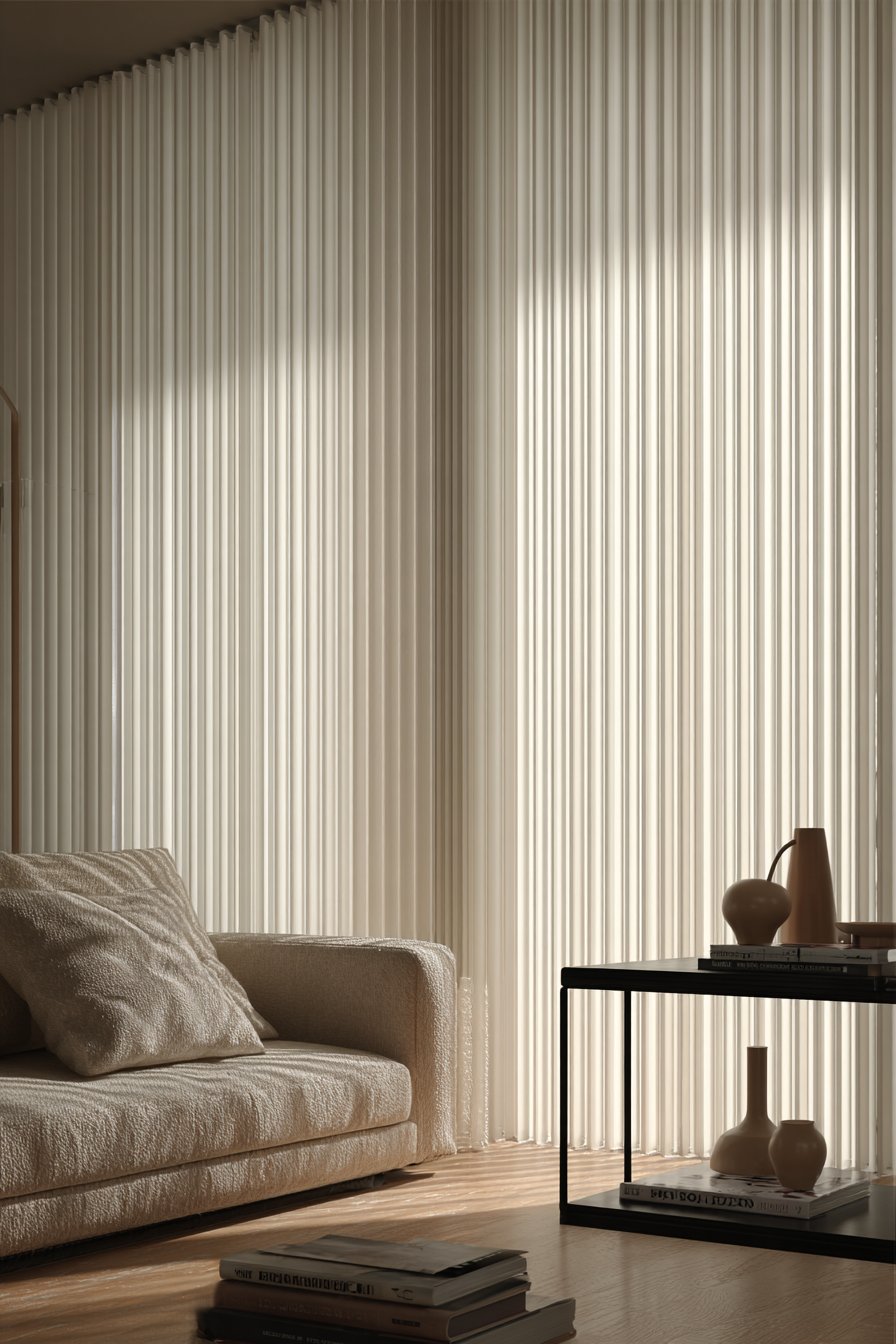
Shoji-style sliding panels in white rice paper diffuse incoming natural light. This traditional Japanese element creates an even, peaceful glow throughout the space. The panels soften harsh sunlight while maintaining privacy. Their geometric grid pattern adds subtle visual interest without decoration. This lighting solution demonstrates how functional elements can be beautiful.
A simple black steel shelf unit displays carefully curated objects. Only three books and one ceramic vessel appear on the shelves. This extreme restraint elevates each object to artwork status. The black steel provides contrast against light bamboo and white panels. The vertical shelf draws the eye upward, adding height to the low-profile space.
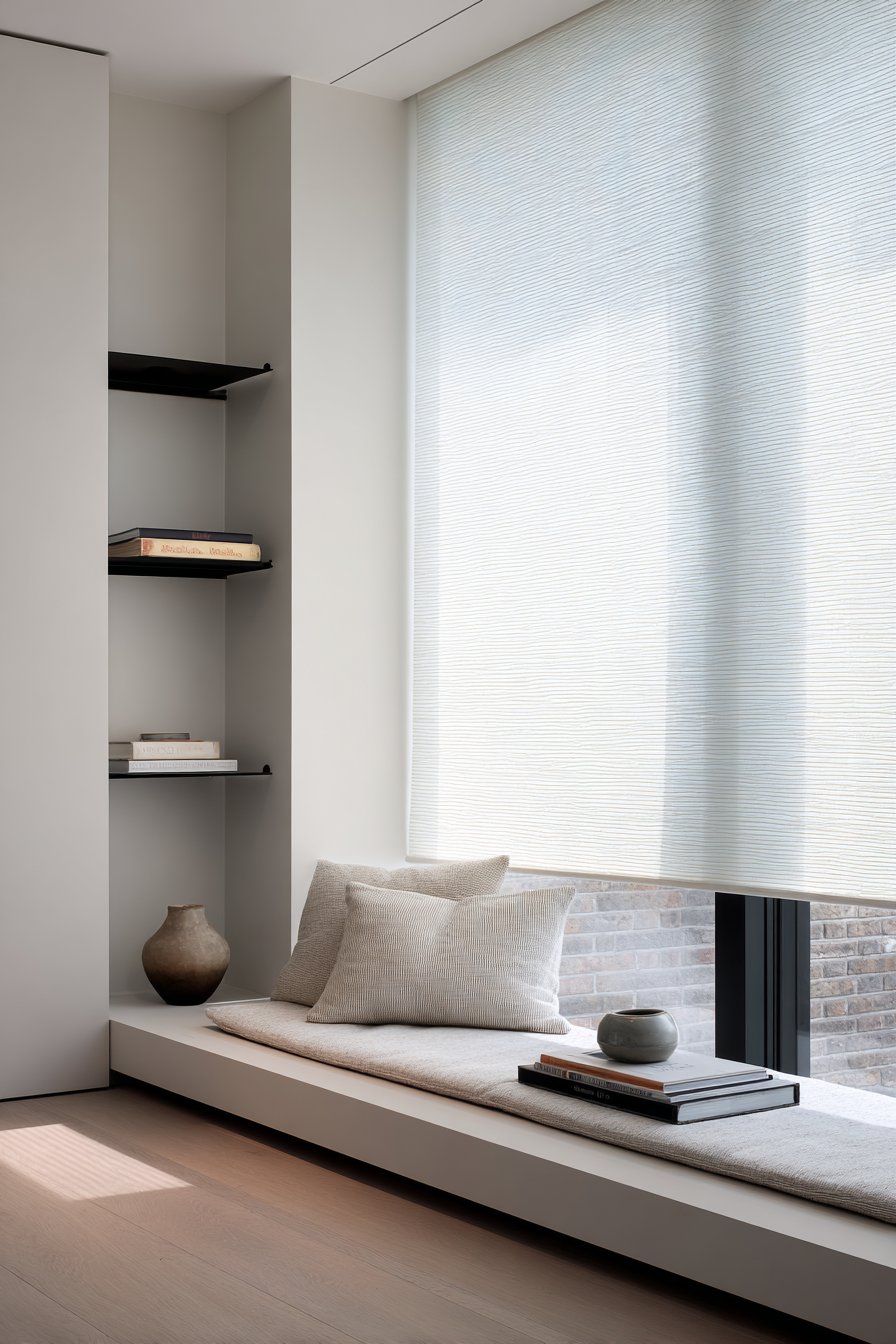
This design captures the essence of minimalist principles through Eastern philosophy. Restraint becomes an art form where every element receives careful consideration. Quality materials like natural linen and bamboo age gracefully with use. Intentional empty space allows contemplation and peace. The room serves as a sanctuary from the overwhelming stimulation of modern life.
Key Design Tips:
- Consider low-platform seating for Eastern-inspired minimal aesthetics
- Use shoji-style panels to diffuse natural light beautifully
- Limit displayed objects to a curated few with personal meaning
- Choose natural materials like bamboo and linen for organic warmth
- Embrace empty space as an essential design element, not something to fill
- Create calm through symmetry, natural materials, and soft filtered light
10. Monochromatic Scandinavian Simplicity
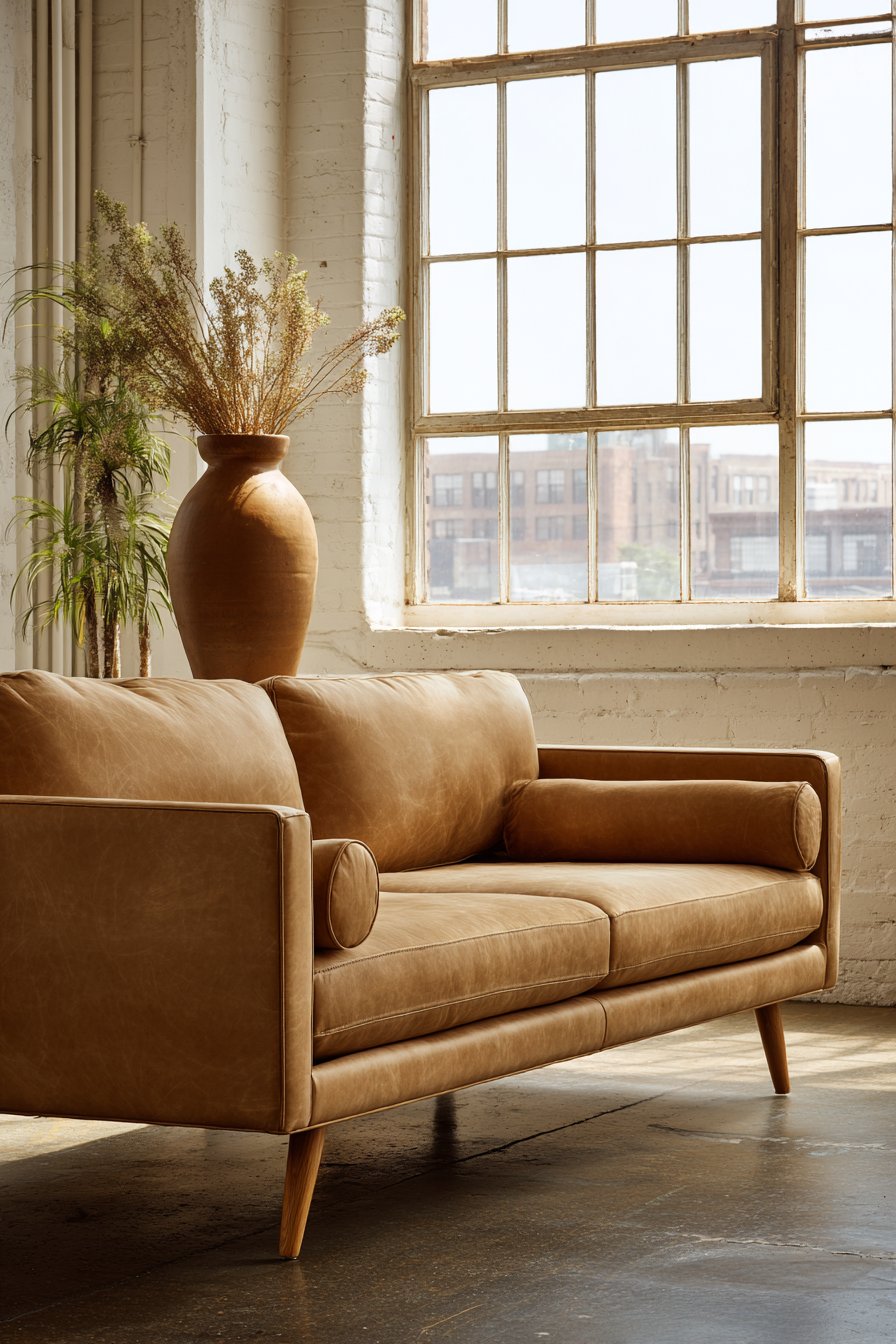
Scandinavian minimalism balances functionality with hygge warmth. A taupe leather sofa features clean lines and exposed wooden legs in natural oak. The leather develops character over time, becoming more beautiful with age. Exposed wooden legs connect the piece to the floor rather than floating. This grounding creates a sense of stability and honest craftsmanship.
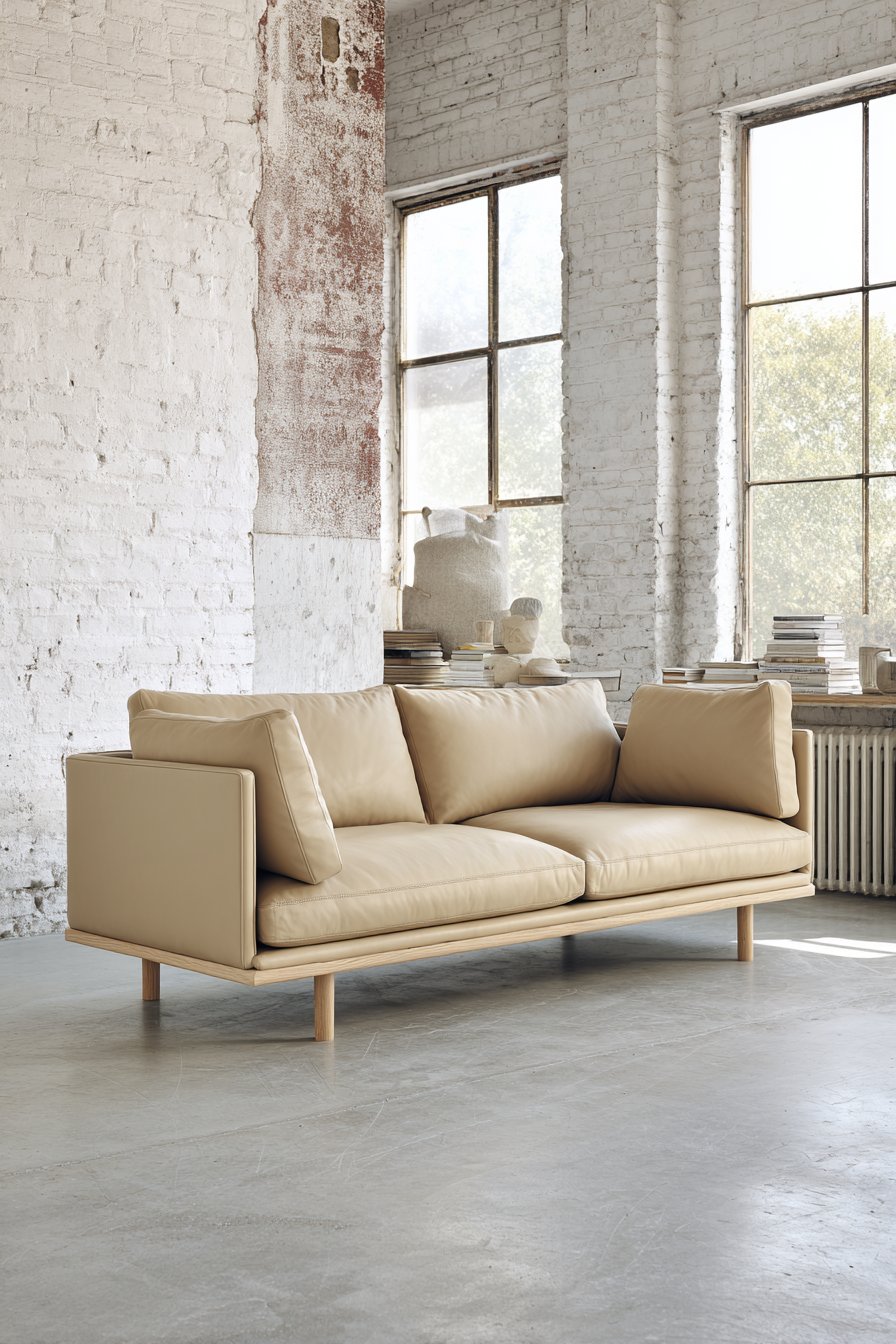
White painted brick walls provide subtle texture while maintaining simplicity. The brick’s dimensionality adds visual interest without pattern or color. Painting the brick white brightens the space while preserving architectural character. This treatment demonstrates how to balance preservation with modern aesthetics. The textured surface catches light beautifully throughout the day.
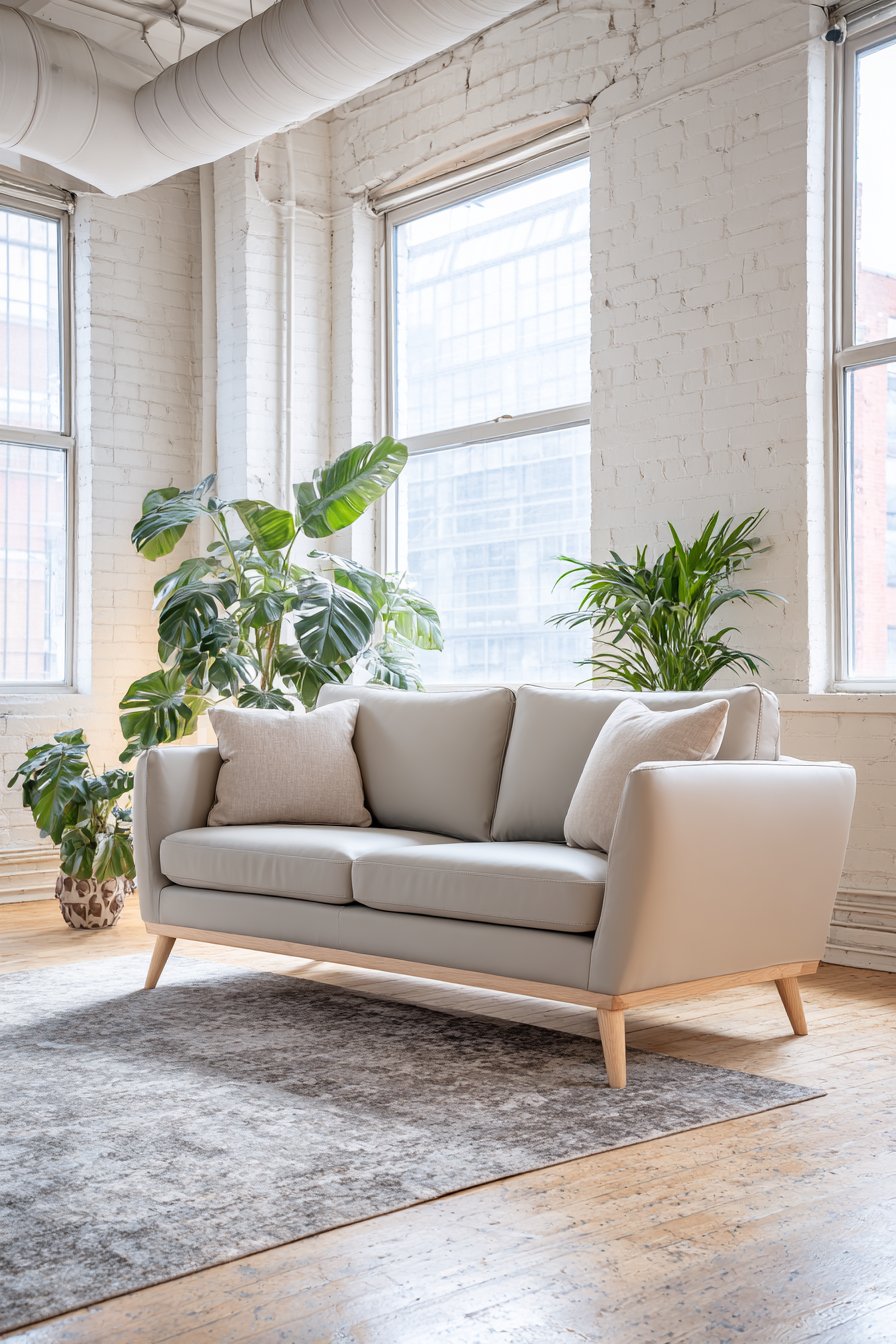
A single oversized window with no treatments allows abundant natural daylight. This bold choice prioritizes light over privacy or window dressing. The large glass expanse frames outdoor views like living artwork. Natural daylight floods the space, creating connection to the changing seasons. This architectural element becomes the room’s primary feature.
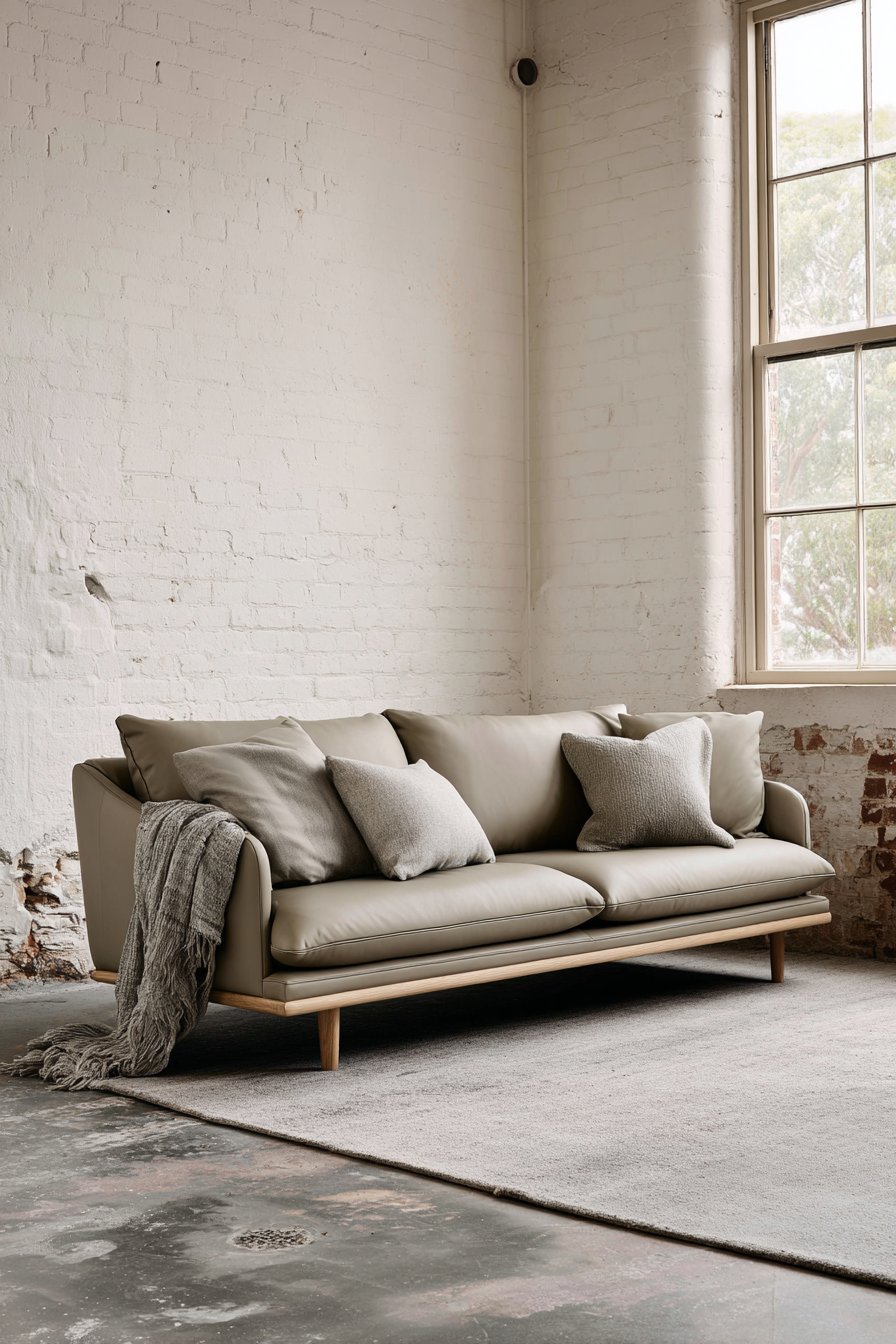
Polished concrete floors with natural color variations complete the material palette. The industrial surface balances the organic warmth of leather and wood. Its durability suits active lifestyles where practicality matters. Every element in this room serves a clear purpose without excess. Quality and function triumph over decorative additions that would add no real value.
Key Design Tips:
- Choose leather upholstery that develops patina and improves with age
- Show furniture legs for an honest, grounded aesthetic
- Paint the brick white to maintain texture while brightening spaces
- Install large windows without treatments when privacy allows
- Select durable materials like polished concrete for high-traffic areas
- Embrace natural color variations and imperfections as design features
Why These Minimal Living Room Designs Excel
These ten minimal living room concepts represent the best approaches to contemporary simplified living. Each design demonstrates how intentional reduction creates powerful visual impact. The emphasis on quality materials over quantity elevates these spaces beyond basic interiors. Natural elements like oak flooring, linen upholstery, and stone walls bring organic warmth. These materials prevent the sterility often associated with minimalist aesthetics.
The strategic use of natural light serves as a unifying design principle across all concepts. Floor-to-ceiling windows, skylights, and shoji panels maximize daylight penetration. This focus reduces dependence on artificial lighting while connecting inhabitants to natural rhythms. The interplay between light and carefully selected materials creates ever-changing visual interest. Shadows cast by minimal furniture add dynamic depth without permanent fixtures.
Functional storage solutions prove essential to successful minimal living room design. Built-in units, floating consoles, and concealed cable management eliminate visual clutter. These organizational systems allow inhabitants to maintain the clean aesthetic long-term. Without adequate storage, minimalism quickly devolves into bare rooms with hidden chaos. The best designs integrate storage seamlessly into architectural elements.
Neutral color palettes featuring whites, greys, taupes, and natural wood tones dominate these successful spaces. These sophisticated schemes create calm environments that promote relaxation and focus. The absence of bold colors allows architectural features and natural materials to shine. Subtle variations in texture and tone provide depth without introducing visual noise. This restrained approach proves timeless, avoiding trend-driven color choices that quickly feel dated.
Each design emphasizes negative space as an essential element rather than empty area. This intentional openness allows the mind to rest and rooms to breathe. The space between furniture pieces becomes as important as the furnishings themselves. This philosophy challenges conventional decorating wisdom that suggests filling every corner. The breathing room created actually makes spaces feel larger and more luxurious.
The incorporation of single statement elements demonstrates sophisticated design restraint. Whether a stone accent wall, large-scale artwork, or sculptural plant, one focal point commands attention. This strategy prevents visual competition and creates clear hierarchy within the space. The singular focus approach allows appreciation of exceptional materials and craftsmanship. It proves that less truly can be more when selections are exceptional.
Scandinavian and Japanese design principles influence many of these successful minimal concepts. Both traditions value simplicity, natural materials, and connection to nature. The hygge concept from Scandinavia ensures that minimalism maintains warmth and livability. Japanese wabi-sabi philosophy embraces imperfection and natural aging of materials. These cultural design traditions offer time-tested wisdom for contemporary minimal living.
The modular and flexible furniture choices reflect modern lifestyle needs. Removable sofa covers, reconfigurable seating, and multi-functional pieces adapt to changing requirements. This flexibility extends the functional life of furnishings beyond fixed traditional furniture. The ability to modify spaces without complete redesign demonstrates practical minimalist thinking. These solutions particularly benefit smaller urban dwellings where space efficiency matters.
Industrial materials like concrete, steel, and exposed brick introduce honest materiality. These surfaces don’t pretend to be something else through coverings or finishes. The authenticity of polished concrete floors or steel tables aligns with minimalist philosophy. These durable materials also support sustainable living through longevity and low maintenance. The industrial aesthetic balances softer textile elements beautifully.
Technology integration remains discreet within these minimal living room designs. Floating media consoles with hidden cables keep devices accessible but visually recessive. This approach acknowledges modern life while preventing technology from dominating spaces. The ability to conceal screens and electronics when not in use maintains the peaceful atmosphere. Thoughtful planning ensures functionality without sacrificing aesthetic principles.
Conclusion
Minimal living room design offers a transformative approach to contemporary home interiors. These ten distinctive concepts prove that simplicity allows creativity and personal expression. The key lies in thoughtful selection rather than deprivation. Each carefully chosen element gains importance when surrounded by intentional openness. Quality materials, natural light, and functional beauty create spaces that nurture rather than overwhelm.
The benefits extend beyond aesthetics to improved daily living and mental clarity. Reduced visual clutter decreases stress and promotes focus on what truly matters. Easier maintenance and cleaning free time for more meaningful activities. The timeless nature of minimal design prevents frequent costly redesigns. These practical advantages make minimalism appealing beyond pure visual preference.
As you consider implementing these ideas in your own home, start with one concept that resonates. Perhaps a single statement wall or improved natural light through window treatments. Gradually remove unnecessary items and notice how the remaining pieces gain prominence. Invest in fewer, better-quality furnishings that will serve you for years. Remember that achieving beautiful minimalism takes time and thoughtful curation.
The minimal living room represents more than interior design—it embodies a conscious lifestyle choice. It challenges consumer culture that equates possessions with happiness. These spaces demonstrate that true luxury lies in quality, beauty, and breathing room. Experiment with these principles and discover how less can genuinely enhance your daily experience. Your living room can become a peaceful sanctuary that supports your best life.
