


Designing a medium-sized living room presents a unique opportunity to create a space that perfectly balances comfort, functionality, and aesthetic appeal. Unlike smaller rooms where every inch must be carefully calculated, or larger spaces that can feel cavernous and impersonal, a medium living room offers the ideal canvas for expressing your personal style while maintaining practical livability. These spaces typically range from 200 to 400 square feet, providing enough room for comfortable furniture arrangements without the challenge of filling excessive space. The key to success lies in understanding how to maximize this sweet spot of square footage through thoughtful furniture selection, strategic layout planning, and purposeful design choices that enhance both form and function.
In today’s diverse design landscape, homeowners are embracing an array of styles that reflect their unique personalities and lifestyles. From the clean lines of Scandinavian minimalism to the warmth of industrial-modern aesthetics, from coastal-inspired tranquility to transitional sophistication, the possibilities for medium living rooms are virtually endless. Each design approach offers distinct advantages, whether you’re seeking to create an intimate conversation area for entertaining guests, a multi-functional family space that serves various needs throughout the day, or a serene retreat where you can unwind after a busy day. The beauty of working with medium-sized proportions is that you have sufficient space to incorporate layered design elements—varied textures, multiple lighting sources, and carefully curated accessories—without overwhelming the room or creating visual chaos.
This comprehensive guide explores ten distinctive medium living room ideas, each showcasing a different design philosophy and practical approach to spatial planning. You’ll discover how to work with various color palettes, furniture configurations, and decorative elements to create a living room that not only looks professionally designed but also serves your daily needs with effortless grace. Whether you’re drawn to the timeless elegance of neutral tones, the bold statement of jewel-toned upholstery, or the organic warmth of natural materials, these ideas will inspire you to reimagine your medium living room as a space that truly reflects who you are while providing the comfort and functionality your lifestyle demands.
1. Classic Comfort with Soft Grey Sophistication
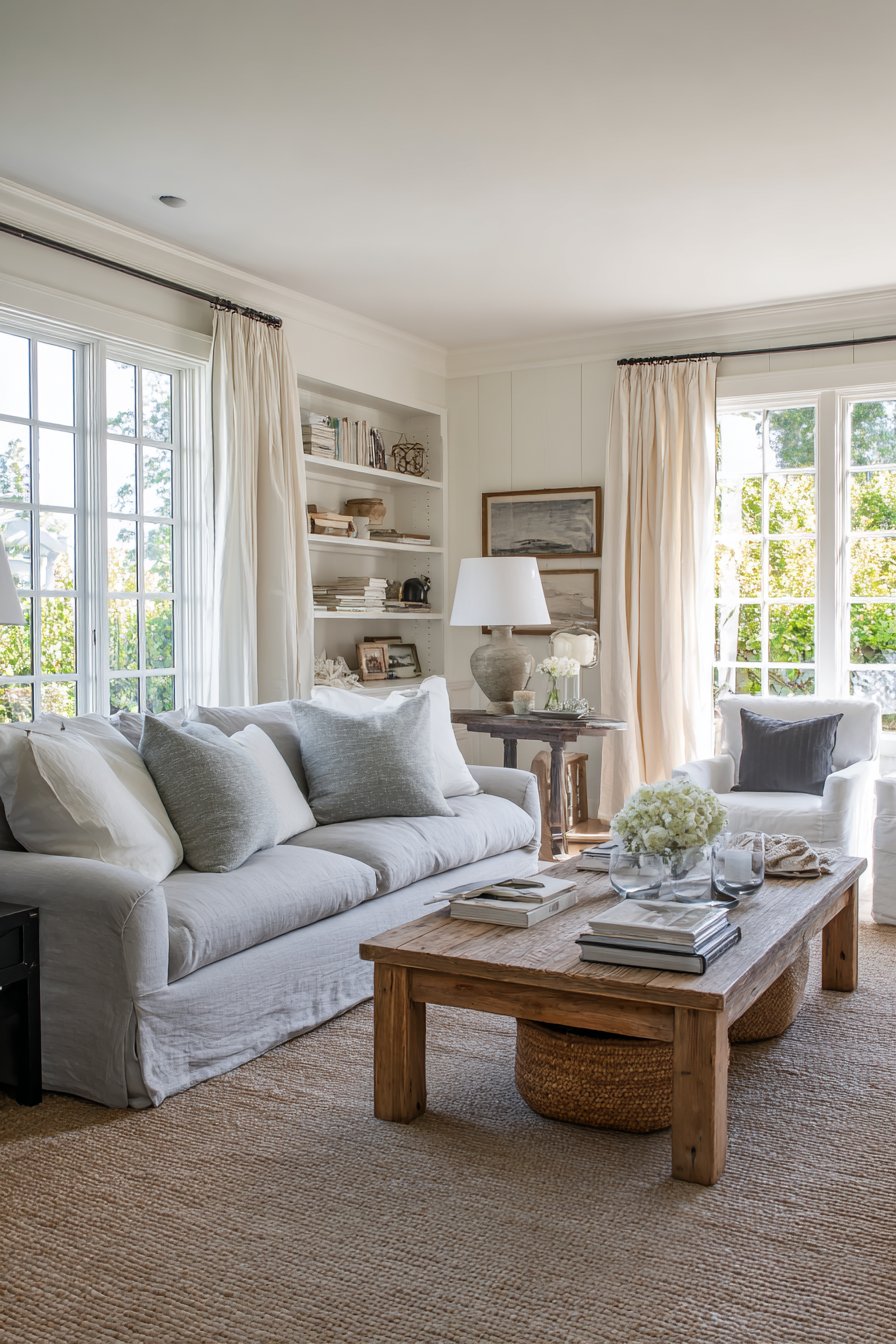
Step into a medium living room where understated elegance meets everyday functionality through the centered presence of a three-seater sofa upholstered in soft grey fabric. This versatile neutral acts as the perfect foundation, positioned confidently against the main wall to anchor the entire space. The comfortable proportions of the sofa invite relaxation without dominating the room, while its subtle texture adds depth that prevents the grey from appearing flat or lifeless.
A practical wooden coffee table takes center stage atop a textured area rug, creating a defined gathering spot that draws the eye and encourages interaction. The natural grain patterns in the wood provide organic visual interest, while the rug’s varied texture grounds the furniture grouping and adds warmth underfoot.
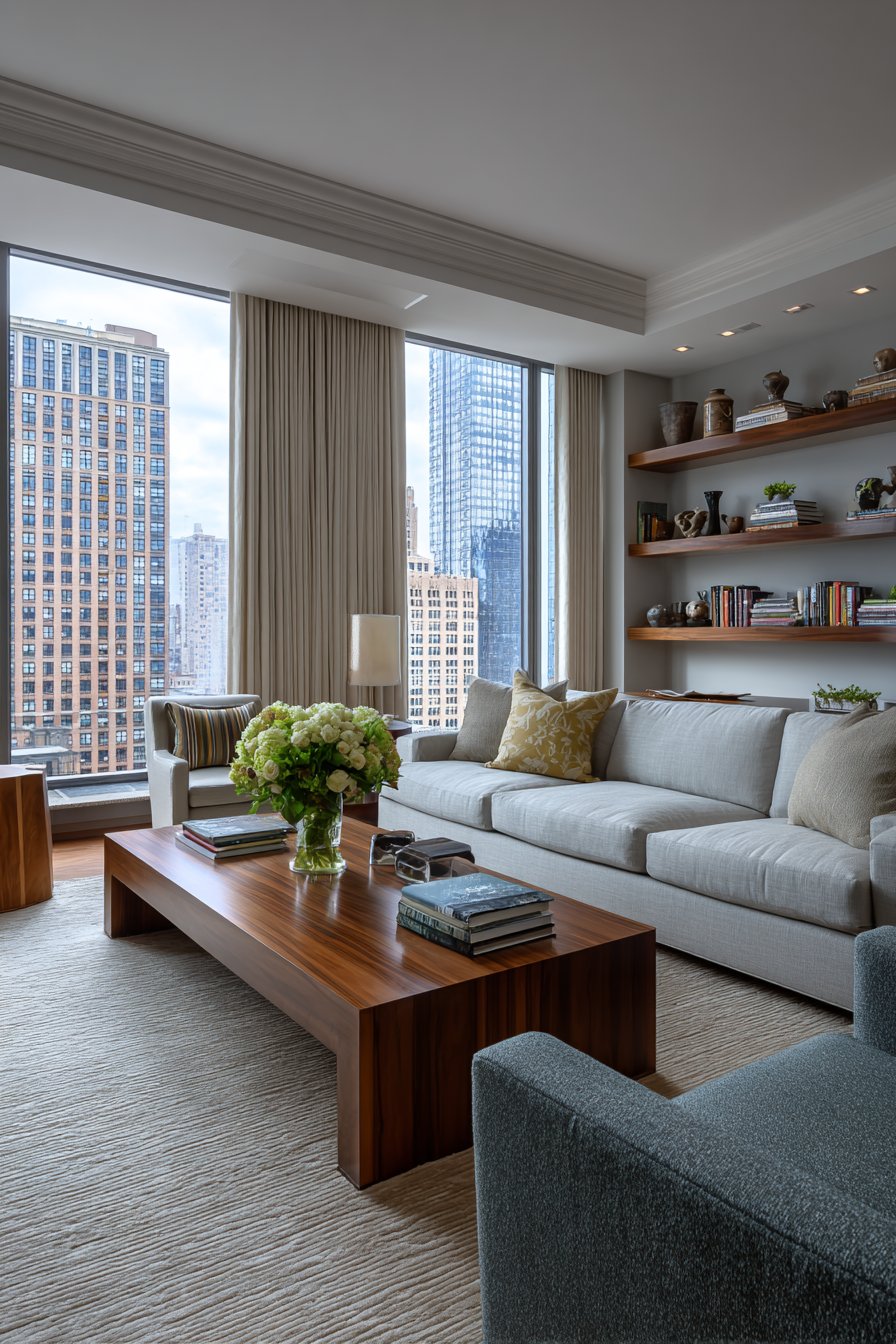
Two thoughtfully selected accent chairs flank the seating area, establishing an intimate conversation zone that transforms the living room into a welcoming space for both family gatherings and entertaining guests. These additional seating pieces create a balanced triangular furniture arrangement that facilitates easy conversation flow while maintaining clear pathways for movement throughout the room.
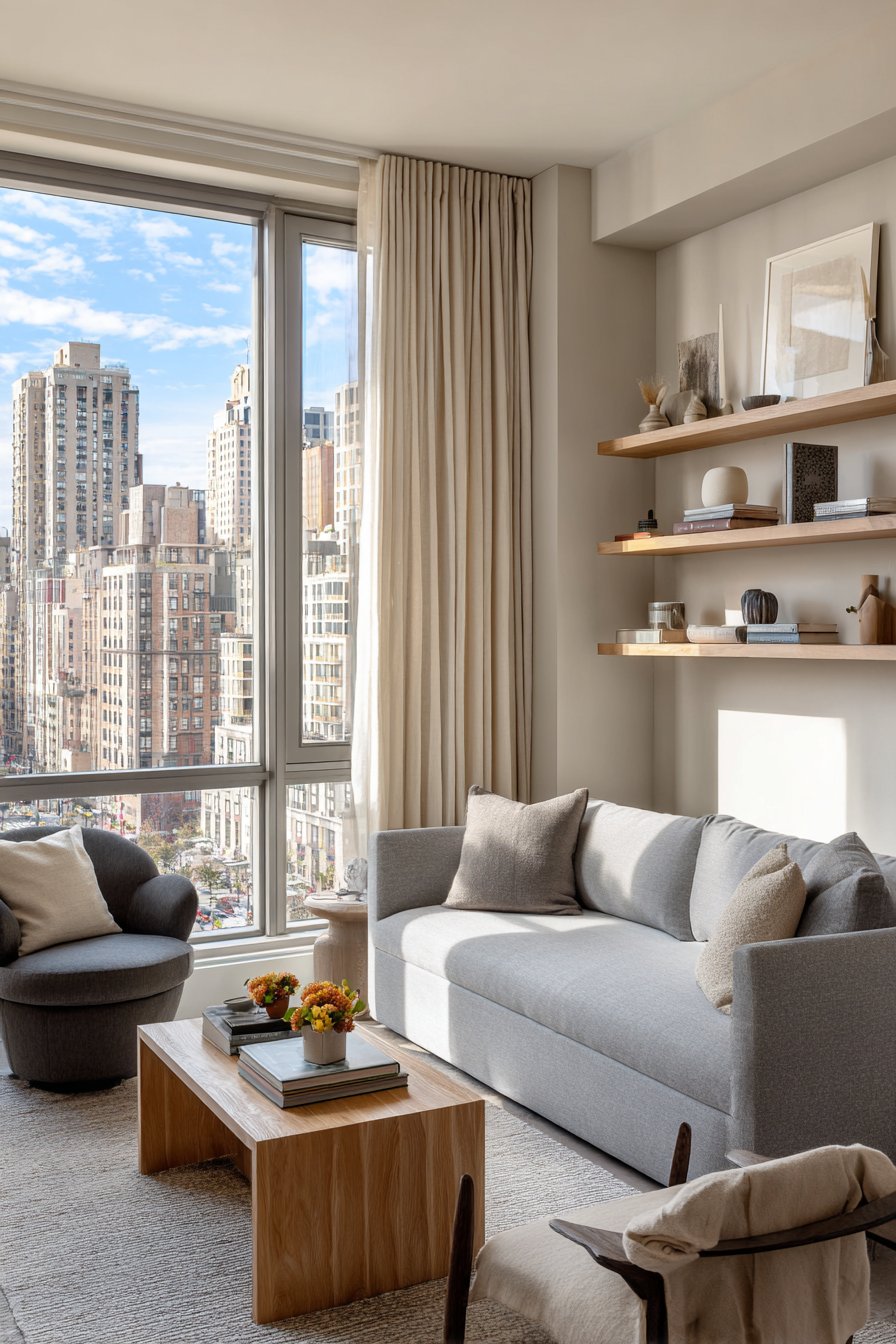
Natural light becomes a design element in itself, streaming generously through medium-sized windows dressed with simple linen curtains that filter harsh rays while maintaining the room’s connection to the outdoors. The linen’s relaxed texture and neutral tone complement the grey sofa beautifully, adding softness without competing for attention.
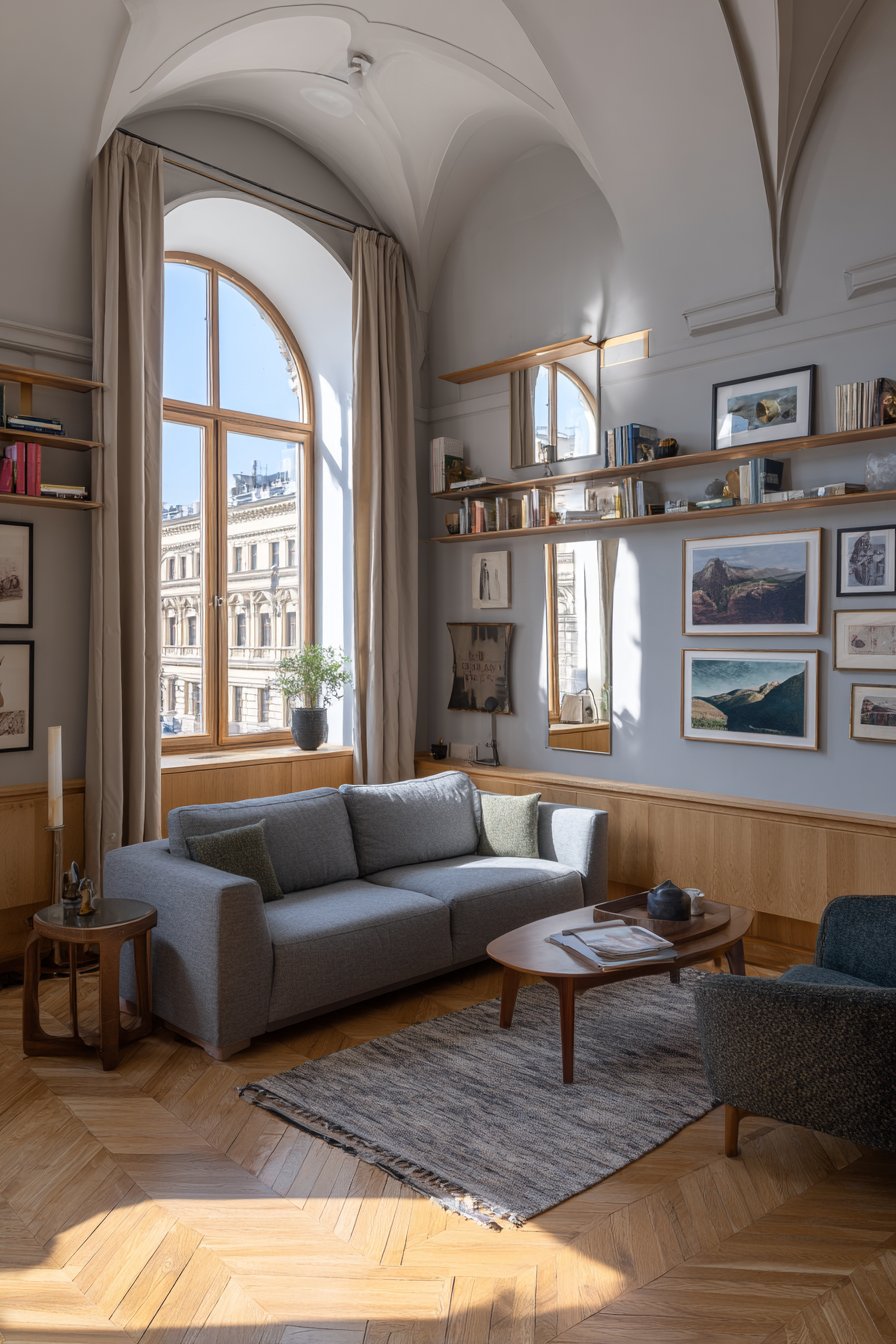
Floating shelves mounted on available wall space display a curated collection of decor items and books, introducing personality and visual interest at eye level without consuming precious floor space. This vertical storage solution keeps the room feeling open and spacious while providing opportunities to showcase treasured objects, framed photographs, and design books that reflect your personal taste.
The careful curation prevents the shelves from appearing cluttered, with each displayed item earning its place through either aesthetic appeal or meaningful significance. The overall composition achieves that coveted balance between looking professionally styled and feeling genuinely livable, with warm artificial lighting from strategically placed lamps creating ambient illumination that complements the natural daylight filtering through the windows.
Key Design Tips:
- Choose a three-seater sofa in neutral grey to create a versatile foundation that works with changing decor and accessories over time.
- Position accent chairs at angles to soften the room’s geometry and encourage comfortable conversation without creating rigid formality.
- Layer window treatments by combining simple linen curtains with blinds or shades for light control flexibility throughout the day.
- Use floating shelves strategically to add storage and display space without overwhelming the walls or making the room feel busy.
- Select a textured area rug that introduces subtle pattern and warmth while coordinating with your neutral color scheme.
- Maintain clear pathways of at least 30 inches around furniture groupings to ensure comfortable circulation through the space.
2. Neutral Beige Sectional with Smart Storage Solutions
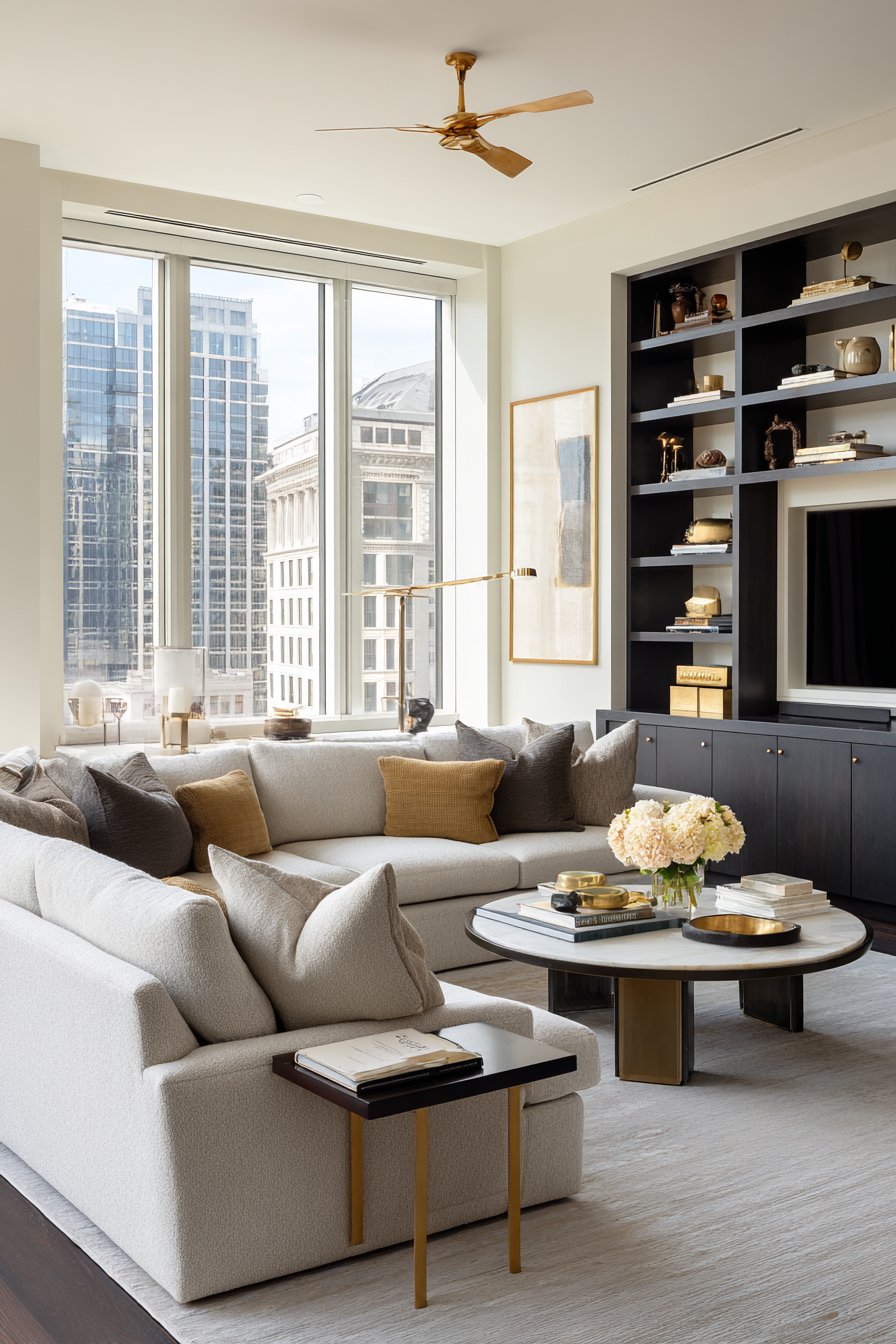
A well-proportioned medium living room demonstrates the power of maximizing seating capacity without sacrificing spaciousness through a carefully selected sectional sofa in neutral beige fabric. The L-shaped configuration wraps invitingly around the room’s corner, providing ample seating for family movie nights and social gatherings while maintaining an open, airy feeling that smaller individual pieces might not achieve as effectively.
The beige tone brings warmth and versatility, serving as a neutral backdrop that allows accent pillows, throws, and seasonal decor to shine without competing for visual attention. The fabric choice balances durability with comfort, ensuring the piece withstands daily use while remaining inviting and soft to the touch.
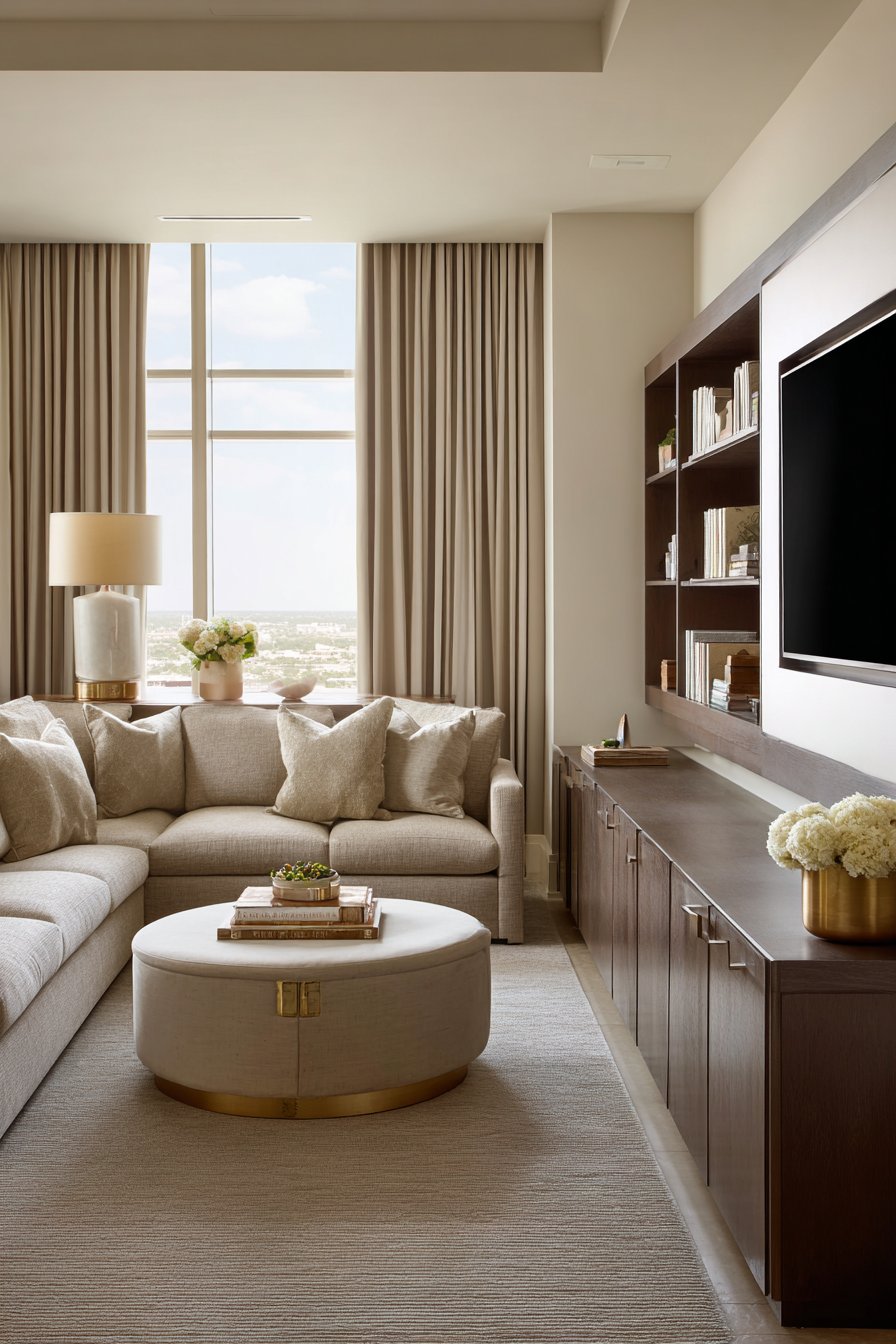
Against one wall, a sleek entertainment center combines closed and open storage compartments, addressing the practical need for media equipment housing and everyday item organization. The closed cabinets conceal less attractive necessities like electronics, cables, and miscellaneous items, while the open shelving provides display opportunities for decorative objects, family photos, and carefully arranged books that add personality to the space.
This dual-function approach maintains visual cleanliness while celebrating personal style. A round coffee table with elegant brass legs introduces an unexpected geometric contrast to the sectional’s angular lines, its circular form softening the overall composition and encouraging better traffic flow around the seating area.
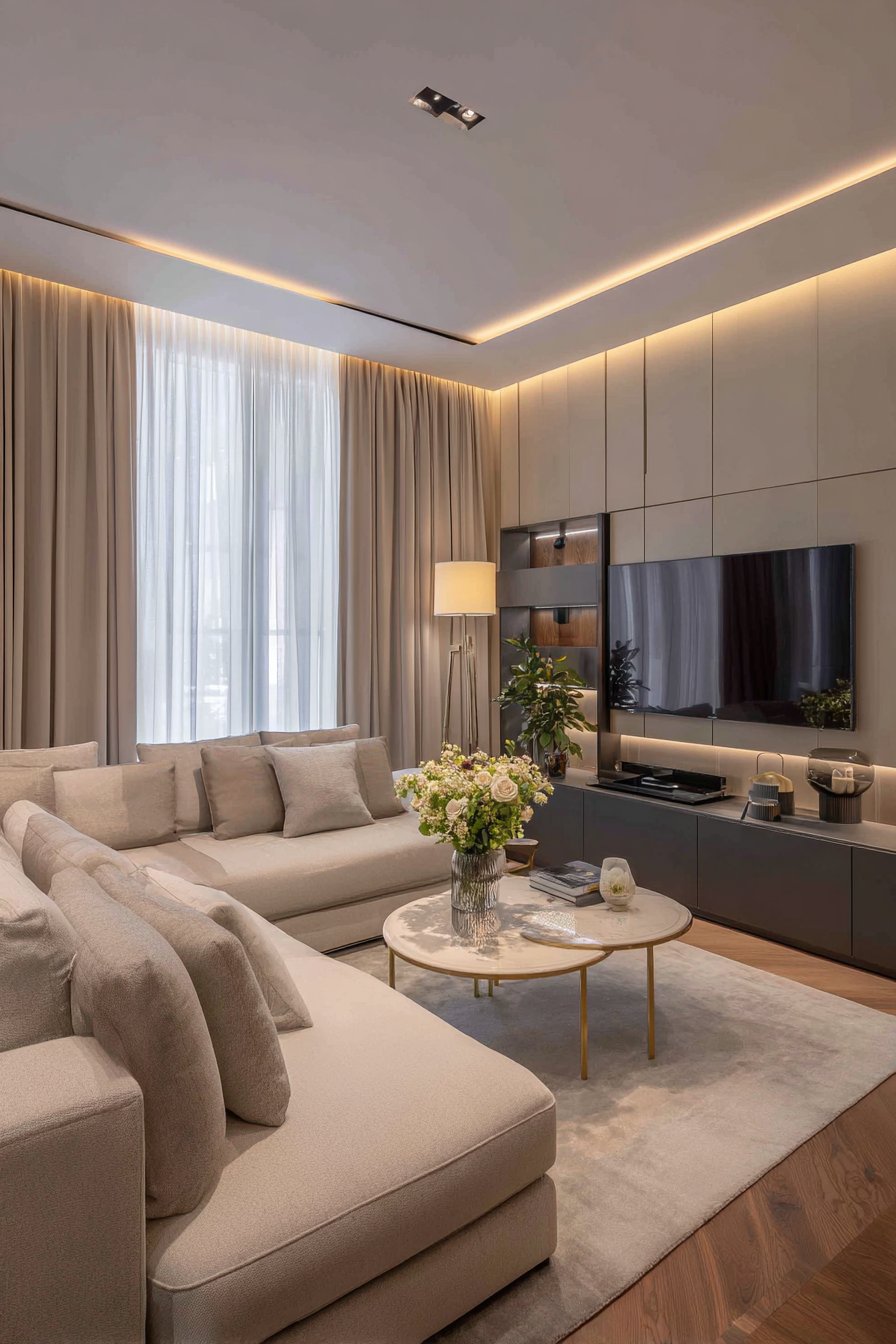
Warm artificial lighting from a modern floor lamp strategically positioned near the seating area combines harmoniously with natural daylight streaming through the windows, creating layered illumination that adapts to different times of day and various activities. The floor lamp’s adjustable arm or directional shade allows for task lighting when reading or working on a laptop, while its overall presence contributes to the room’s ambient glow during evening hours.
This thoughtful lighting strategy eliminates harsh shadows and creates a welcoming atmosphere regardless of the time or season. The brass accents on the coffee table legs echo throughout the space in light fixtures and decorative accessories, establishing a cohesive metallic thread that ties the design together with understated sophistication.
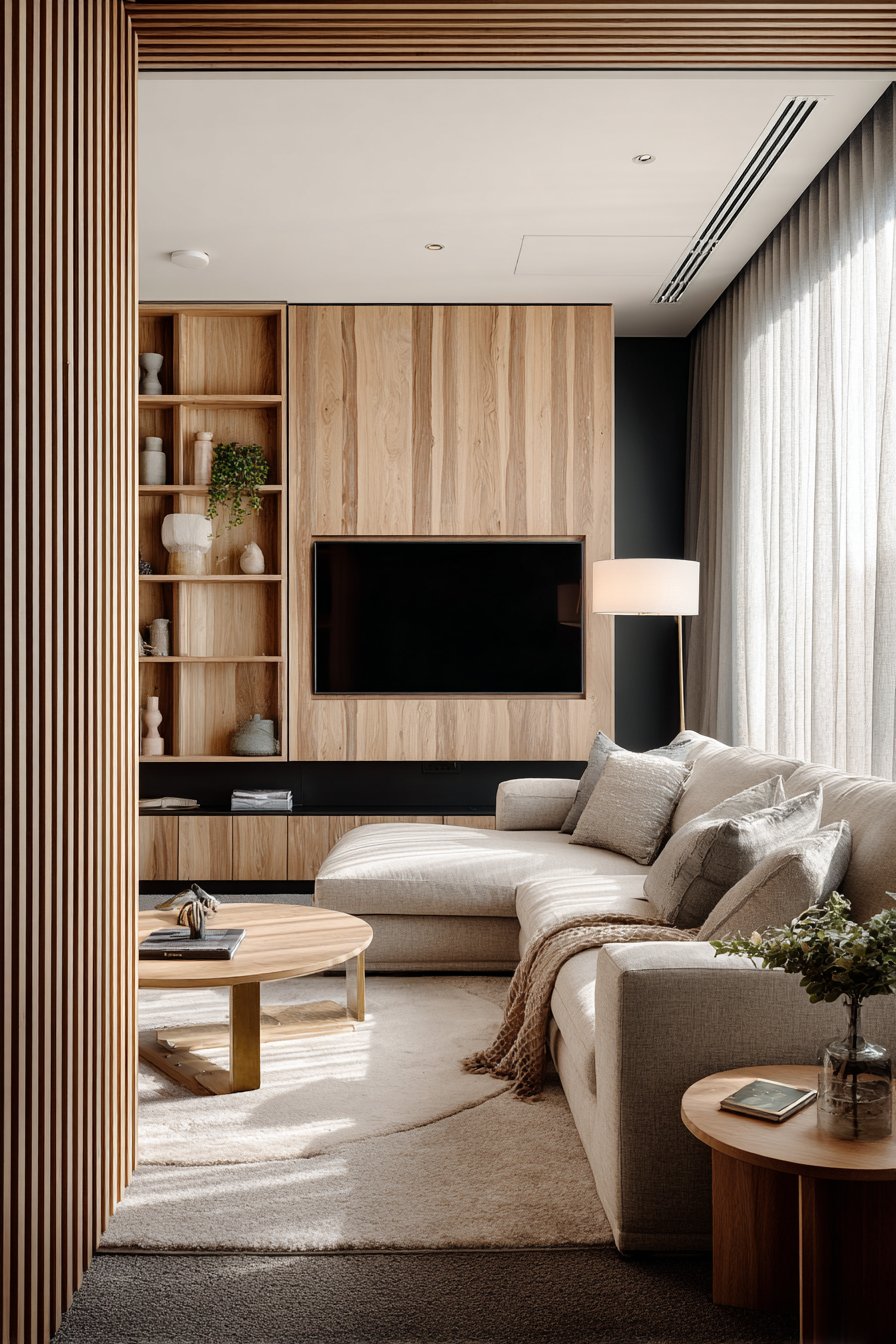
Key Design Tips:
- Select a sectional sofa that fits your room’s proportions without overwhelming the space, leaving adequate room for traffic flow and other furniture pieces.
- Combine closed and open storage in entertainment centers to balance practical concealment with decorative display opportunities.
- Choose a round coffee table to soften angular furniture arrangements and improve circulation around seating areas.
- Incorporate metallic accents like brass or gold in consistent but subtle ways throughout the room for visual cohesion.
- Layer different types of lighting including ambient, task, and accent sources to create flexible illumination for various activities.
- Use neutral beige as a versatile foundation that accommodates evolving color schemes and seasonal decor changes.
3. Navy Blue Velvet Statement with Gallery Wall Drama
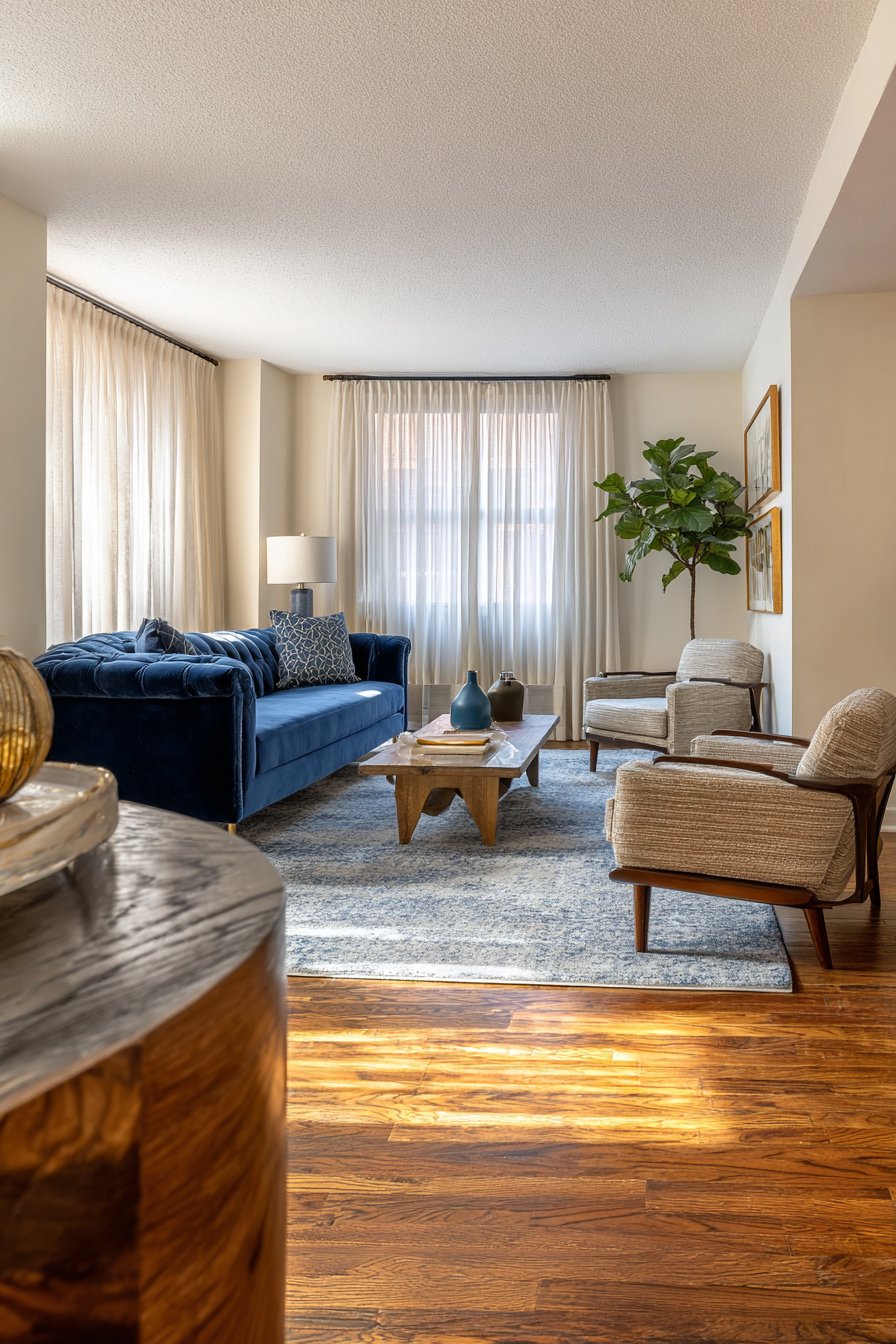
A medium living room transforms into a sophisticated sanctuary when anchored by a navy blue velvet sofa that commands attention as the undeniable focal point of the space. The rich, jewel-toned upholstery brings depth and luxury, while the velvet’s characteristic sheen catches and reflects light throughout the day, creating subtle variations in color intensity that add visual interest. This bold furniture choice demonstrates confidence in design, proving that medium-sized rooms can absolutely handle statement pieces when balanced with complementary elements. The navy provides a dramatic departure from ubiquitous neutral sofas, establishing a foundation for a more personalized and memorable living space.
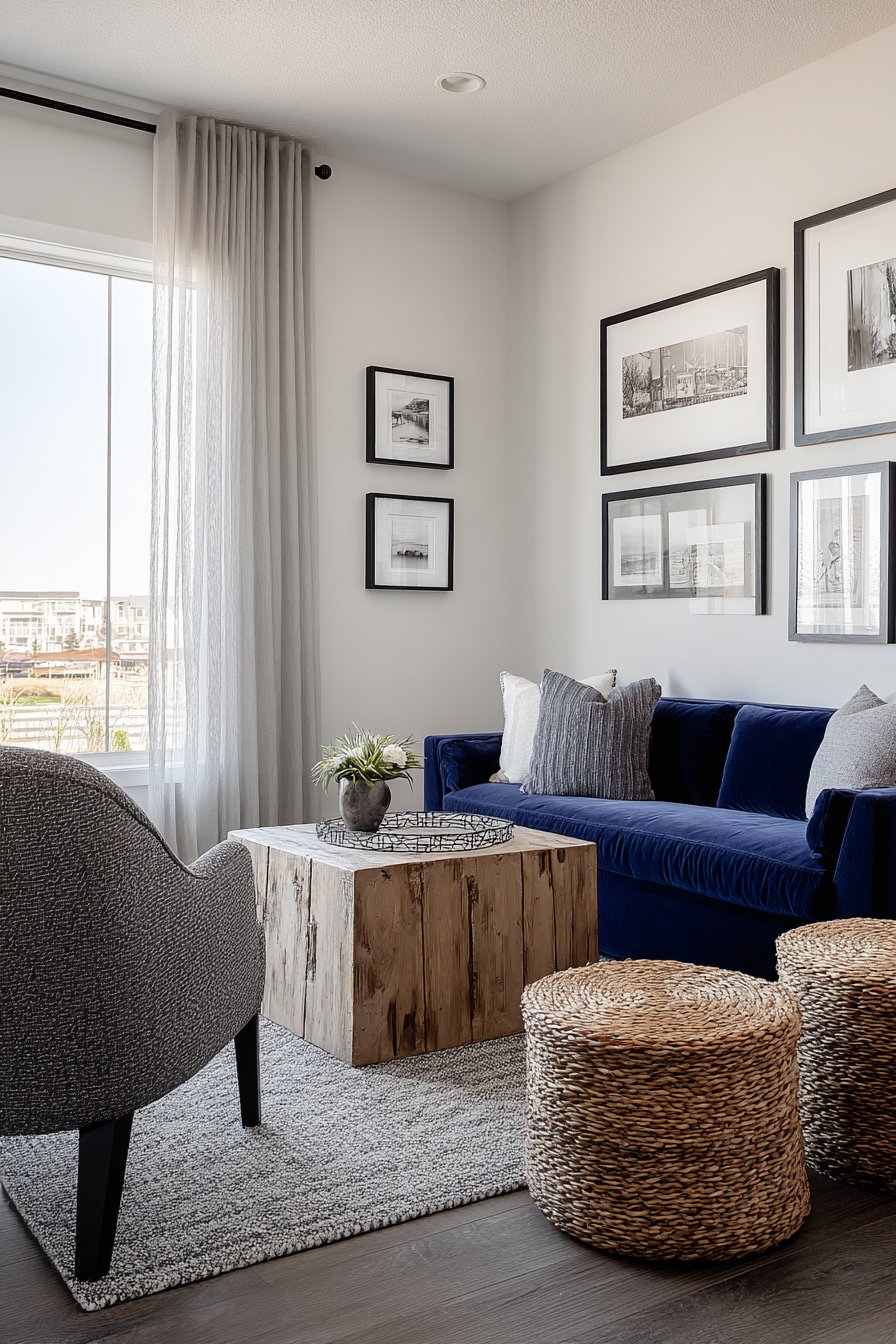
Complementing the sofa’s elegance, a pair of woven accent chairs introduces textural contrast and natural warmth that prevents the room from feeling too formal or precious. The woven construction adds organic appeal and tactile interest, inviting guests to settle in comfortably while contributing to the room’s layered aesthetic. A natural wood coffee table positioned centrally showcases visible grain texture that celebrates the material’s inherent beauty, its honest simplicity grounding the more dramatic elements surrounding it. The wood’s warm tones create a bridge between the cool navy and the neutral woven chairs, harmonizing the color palette with effortless grace.
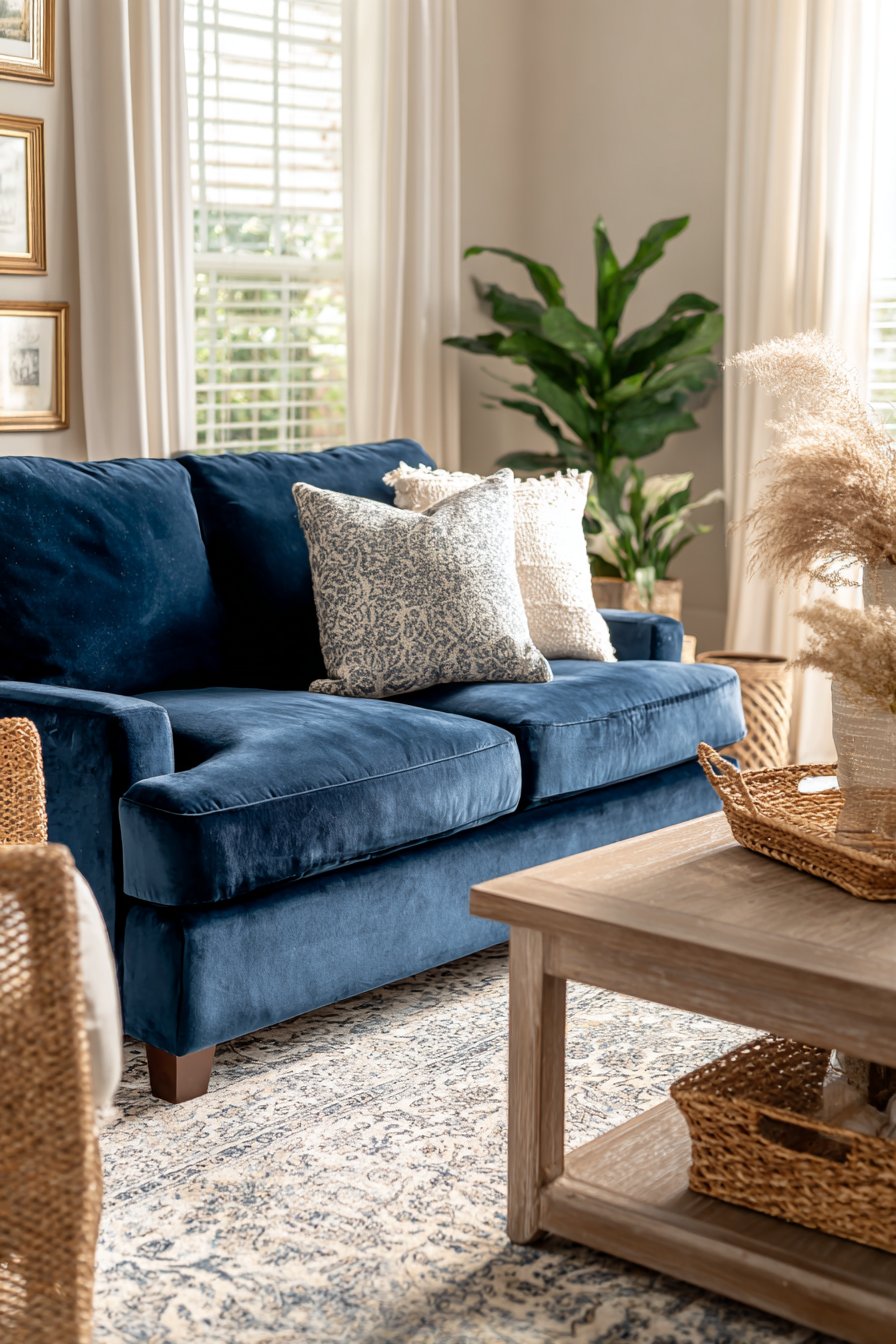
The gallery wall becomes an artistic focal point that personalizes the space and draws the eye upward, expanding the room’s perceived dimensions. Varied frame sizes create dynamic visual rhythm, while the curated collection of artwork, photographs, and prints tells a story about the inhabitants’ interests and travels. The arrangement balances larger statement pieces with smaller supporting works, creating an intentional yet organic composition that appears collected over time rather than purchased as a matching set. A plush area rug defines the seating zone, its soft pile adding comfort underfoot while visually anchoring the furniture grouping and preventing the space from feeling disconnected or floating.
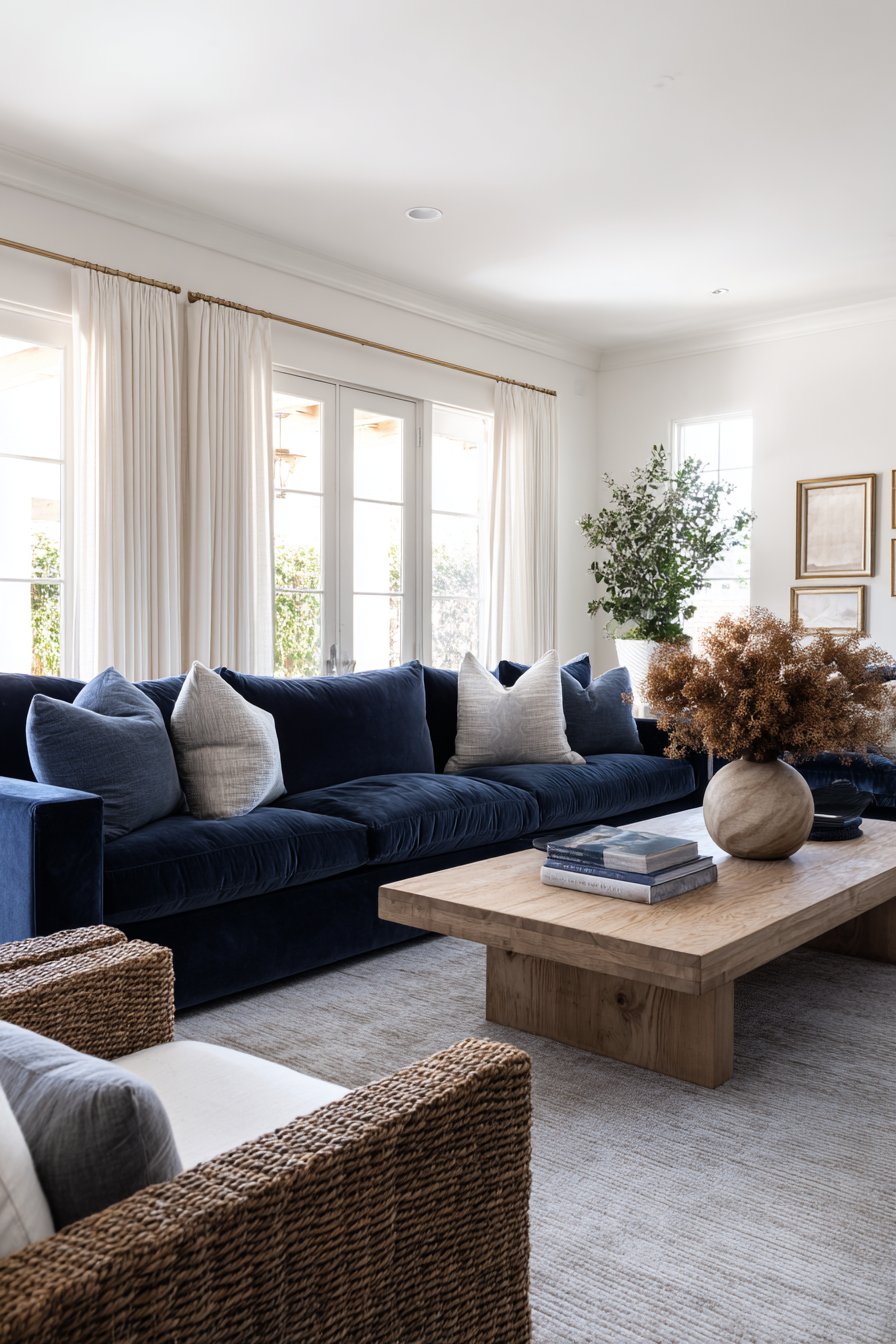
Soft diffused natural lighting filters through sheer curtains, creating gentle shadows that add dimension and atmosphere throughout the day. The sheers maintain privacy without blocking beneficial daylight, preserving the room’s connection to the outdoors while controlling glare and UV exposure that could damage furnishings. This approach to window treatments keeps the space feeling light and open, essential for maintaining the airy quality that prevents medium rooms from feeling confined or dark.
Key Design Tips:
- Embrace bold upholstery colors like navy blue velvet to create a memorable focal point that anchors your medium living room with confidence and personality.
- Mix textures intentionally by combining smooth velvet, natural woven materials, and visible wood grain to create tactile richness and visual interest.
- Create a gallery wall with varied frame sizes and art styles to add personality and draw the eye upward, making the room feel more spacious.
- Use natural wood coffee tables to ground bolder design choices with organic warmth and honest material beauty.
- Layer area rugs beneath furniture groupings to define zones and add comfort while visually anchoring the seating arrangement.
- Install sheer curtains to maintain natural light flow while providing privacy and protecting furnishings from harsh UV exposure.
4. Scandinavian-Inspired Simplicity with Mid-Century Modern Flair
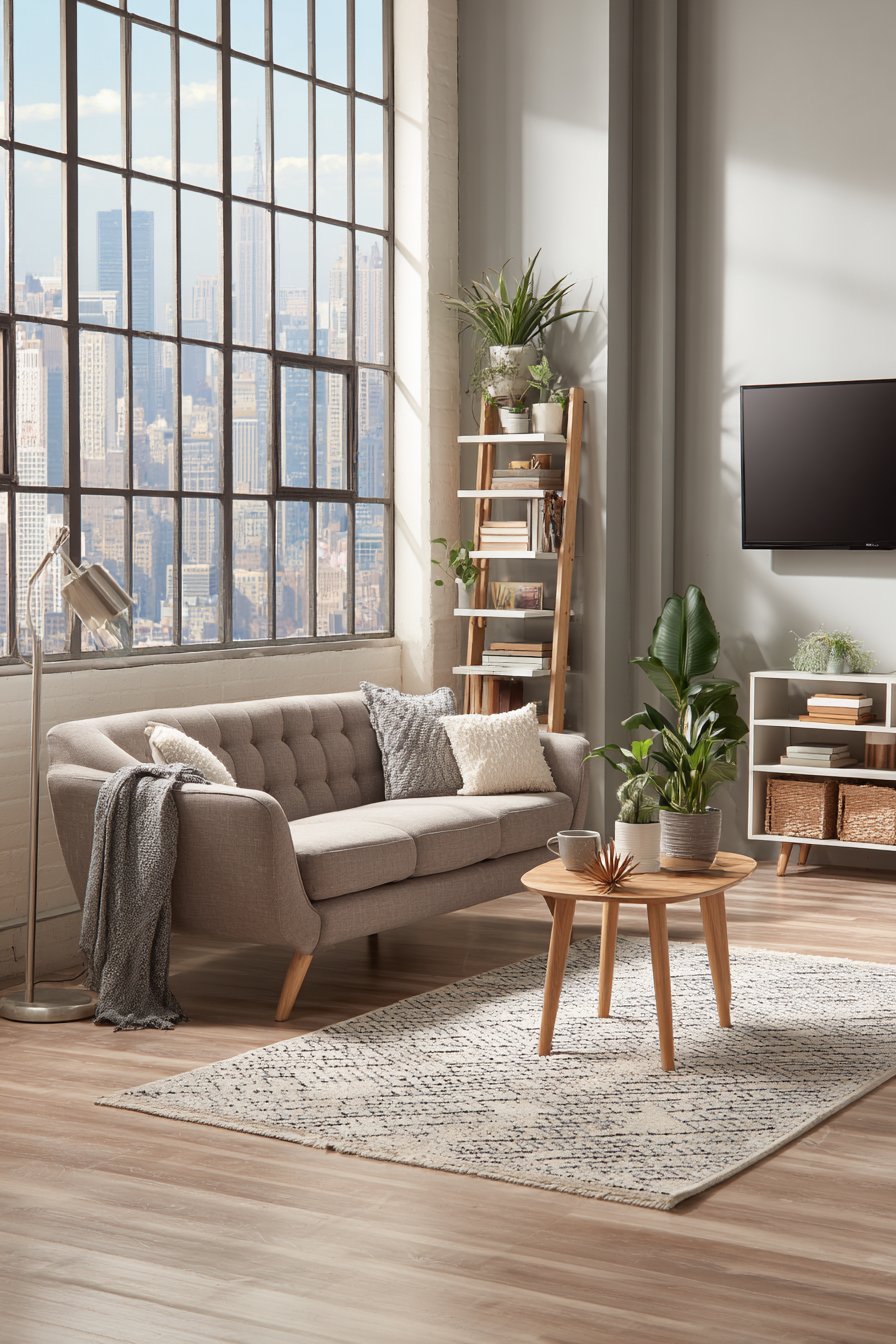
A medium living room embraces the principles of Scandinavian design through an emphasis on light, natural materials, and functional beauty that creates an inherently peaceful atmosphere. Light oak flooring establishes the foundation, its pale honey tones reflecting natural light throughout the space and contributing to the signature Nordic aesthetic of bright, welcoming interiors. The wood’s subtle grain pattern adds organic texture without overwhelming the minimalist sensibility that defines this design approach. A mid-century modern sofa in warm taupe provides comfortable seating with clean lines and tapered legs that maintain visual lightness, allowing the eye to travel easily around the room without obstruction.
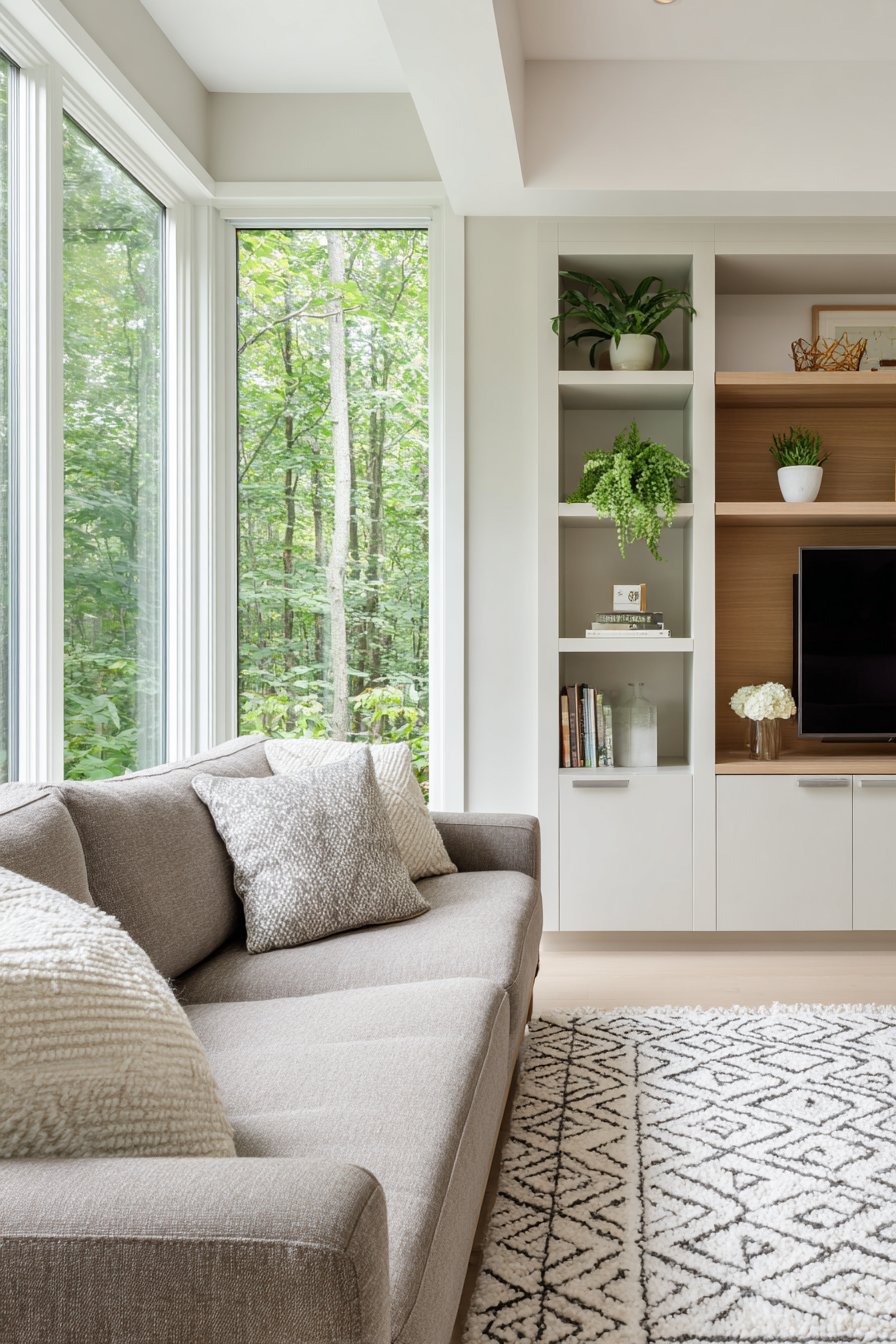
Open shelving units flank a wall-mounted television, transforming a purely functional entertainment setup into an opportunity for thoughtful display and organization. The open construction maintains the room’s airy quality while providing homes for carefully selected plants that bring life and natural color into the space, along with minimal decor pieces that earn their place through both beauty and meaning.
This curated approach to styling prevents the common pitfall of cluttered shelves, instead creating intentional vignettes that appear effortlessly arranged. The shelving’s simple construction echoes Scandinavian design’s emphasis on honest materials and functional forms.
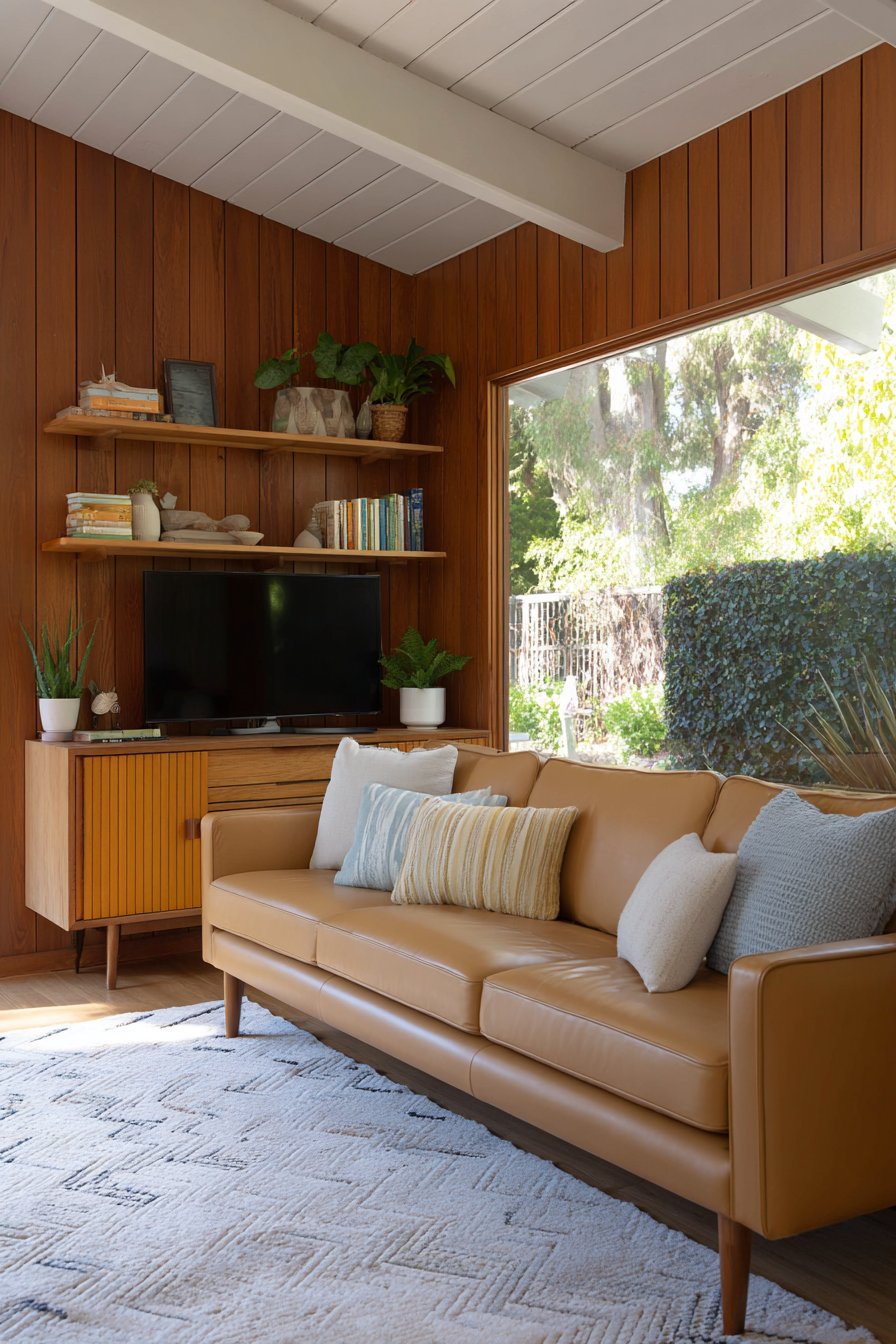
A geometric patterned rug anchors the seating area, introducing subtle visual interest through repeating shapes and lines while maintaining the overall aesthetic’s commitment to simplicity and lightness. The pattern adds energy and modern appeal without overwhelming the calm atmosphere, proving that minimalist design need not be devoid of personality or pattern.
Large windows flood the space with abundant natural light, the most essential element in Scandinavian interiors. This emphasis on natural illumination reduces reliance on artificial lighting during daylight hours, creating a healthier, more energy-efficient living environment.
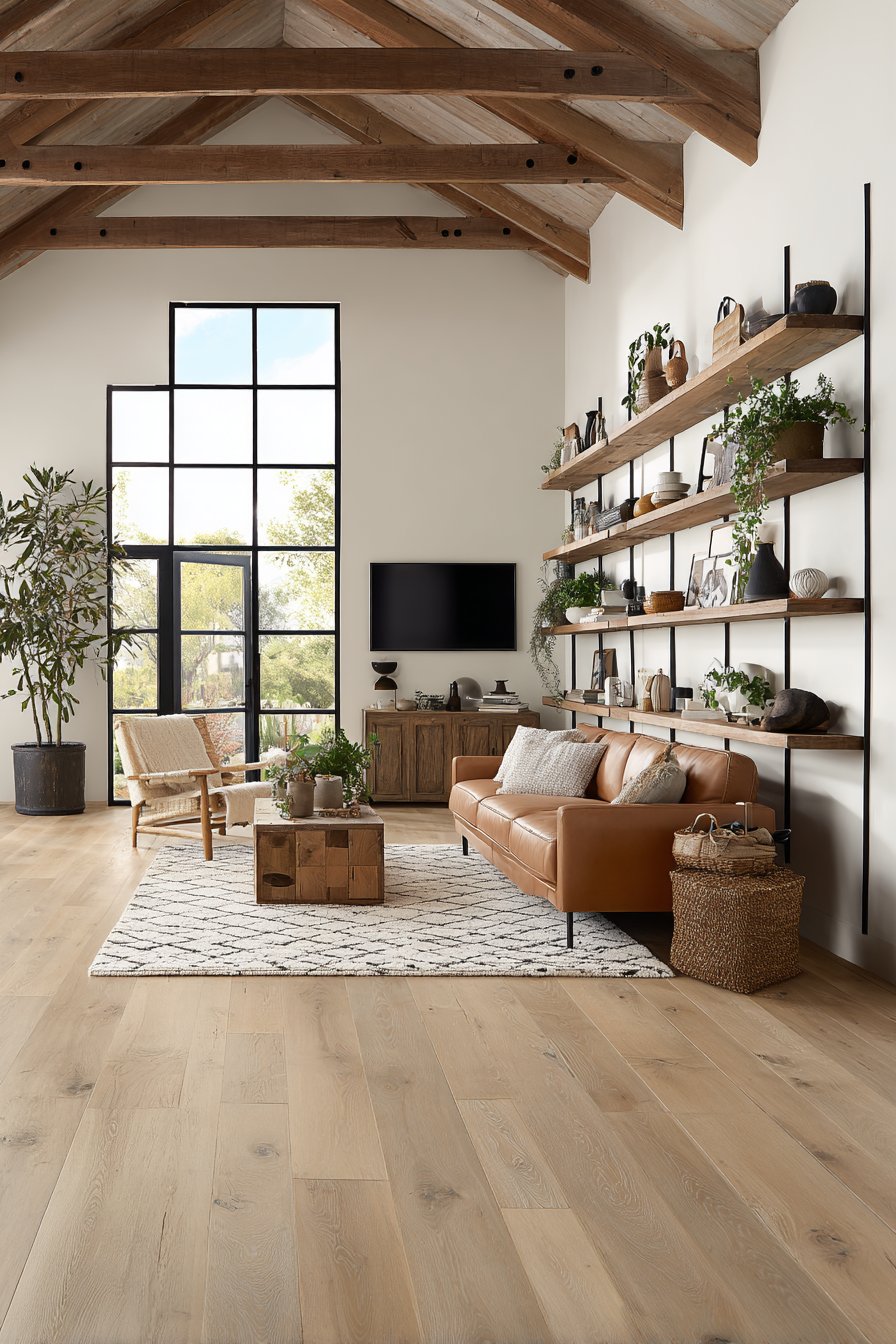
The color palette remains intentionally restrained, focusing on warm neutrals, soft whites, and natural wood tones with strategic touches of muted greens from plants and perhaps soft textiles. This restraint creates a serene backdrop for daily life, reducing visual noise and promoting a sense of calm that many homeowners crave in our visually overstimulated world. The mid-century modern furniture pieces add historical depth and design credibility, their timeless forms proving that good design transcends temporary trends.
Key Design Tips:
- Choose light oak or blonde wood flooring to maximize natural light reflection and create the bright, airy foundation essential to Scandinavian design.
- Select mid-century modern furniture with tapered legs and clean lines to maintain visual lightness and easy cleaning access beneath pieces.
- Use open shelving sparingly and style with careful curation, displaying only items that serve functional or aesthetic purposes.
- Incorporate living plants throughout the space to bring natural color, improve air quality, and connect the interior with nature.
- Select geometric patterned rugs that add visual interest while maintaining the overall minimalist aesthetic through simple repeating forms.
- Maximize natural light through large unobstructed windows and minimal window treatments that preserve the connection to outdoors.
5. Built-In Storage Brilliance with Functional Elegance
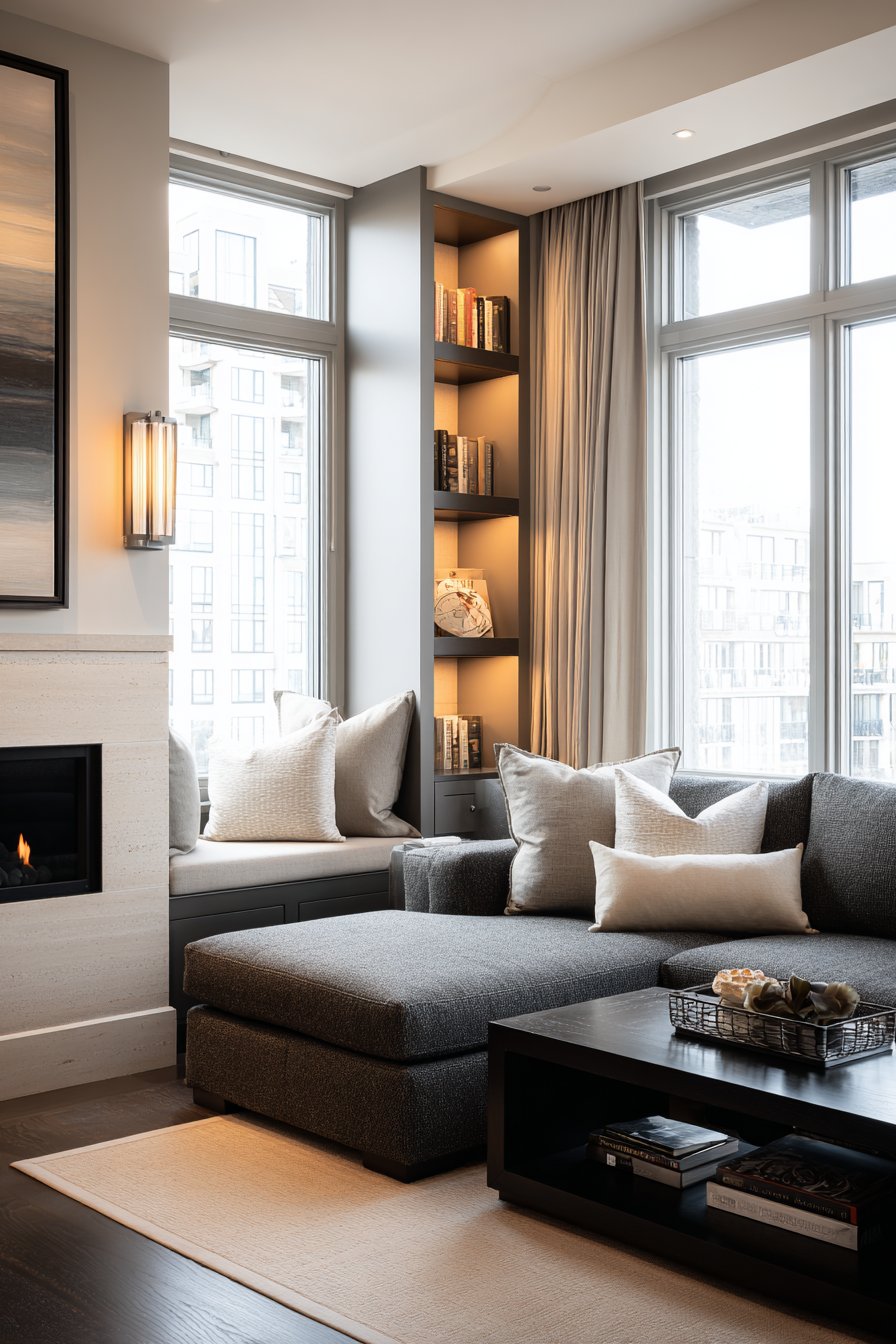
A functional medium living room demonstrates that thoughtful storage integration need not compromise aesthetic appeal through built-in solutions that maximize every available inch while maintaining an uncluttered, sophisticated atmosphere.
A window seat with hidden compartments beneath transforms an architectural feature into valuable storage real estate, providing a cozy perch for reading or daydreaming while concealing seasonal items, extra linens, or children’s toys within easy reach but out of sight. The window seat’s cushioned top invites lingering, creating an additional seating option that doesn’t consume floor space or interfere with furniture arrangements.
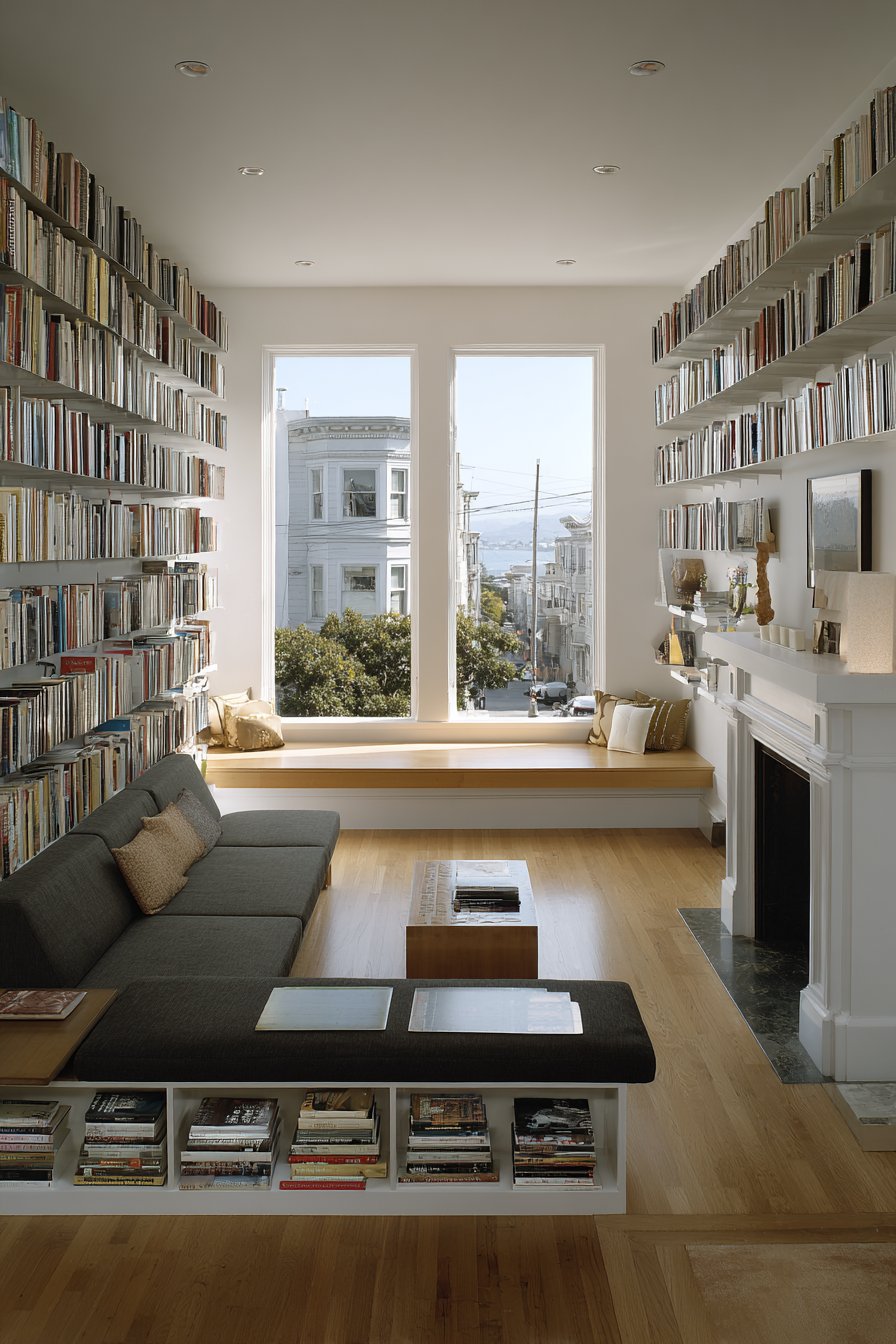
Floor-to-ceiling bookshelves command one wall, offering expansive storage and display capacity that bibliophiles and collectors dream about. The vertical expanse draws the eye upward, emphasizing the room’s height and creating an impressive architectural feature that serves multiple purposes simultaneously.
Books arranged both vertically and horizontally create visual rhythm, while the strategic placement of decorative objects, framed photographs, and small plants prevents the monotony of uniform spines. This approach to shelving celebrates personal collections while keeping them organized and accessible, proving that storage can be both beautiful and functional.
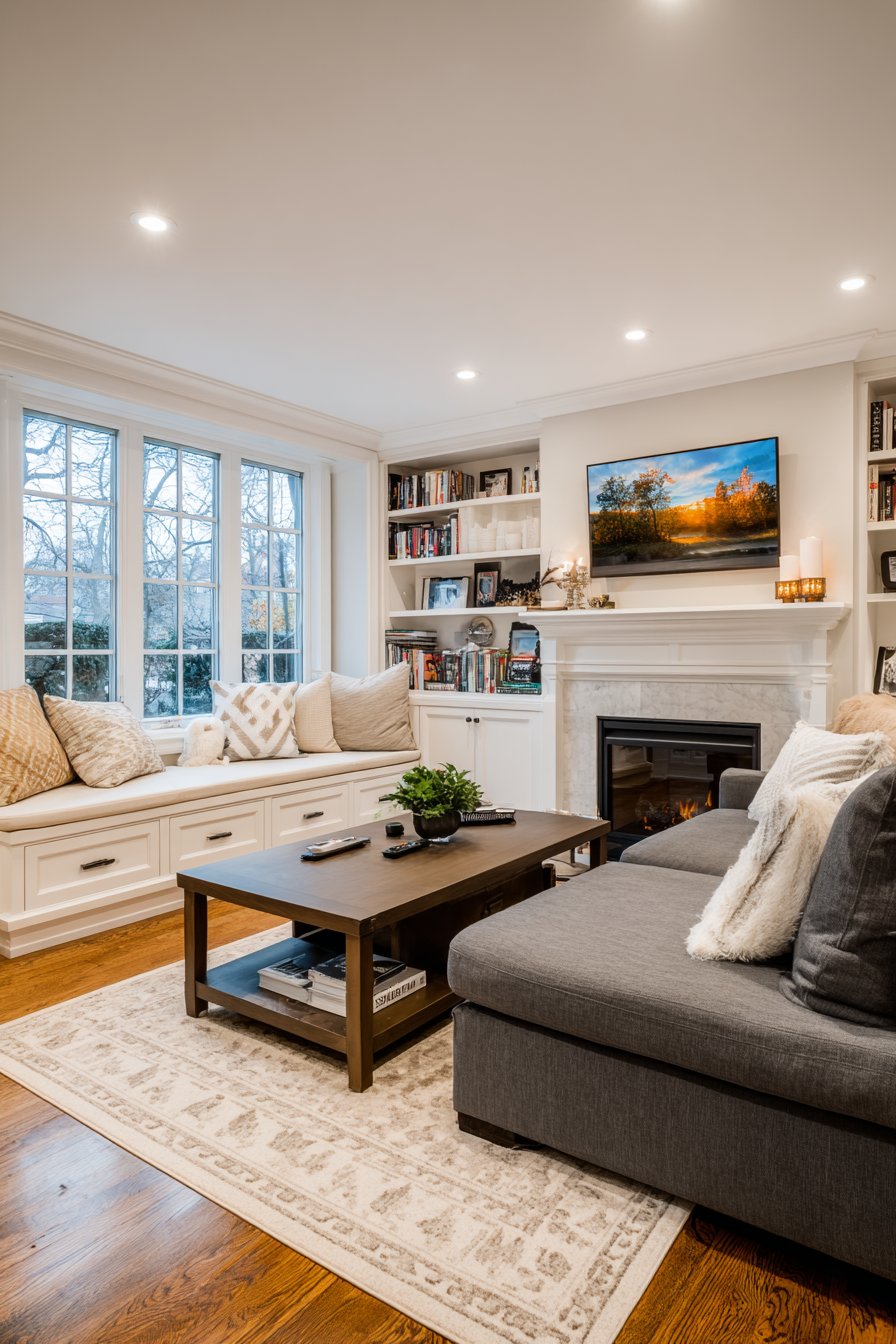
A comfortable L-shaped sofa in charcoal fabric faces a simple fireplace mantel, establishing a classic conversation and relaxation zone oriented toward the room’s natural focal point. The dark charcoal provides sophisticated contrast against lighter walls while maintaining the practical advantage of concealing everyday wear and minor stains that lighter fabrics show more readily.
The L-configuration maximizes seating capacity while defining the room’s primary gathering space, with arms and back creating psychological boundaries that make the area feel intentionally designed rather than randomly arranged.
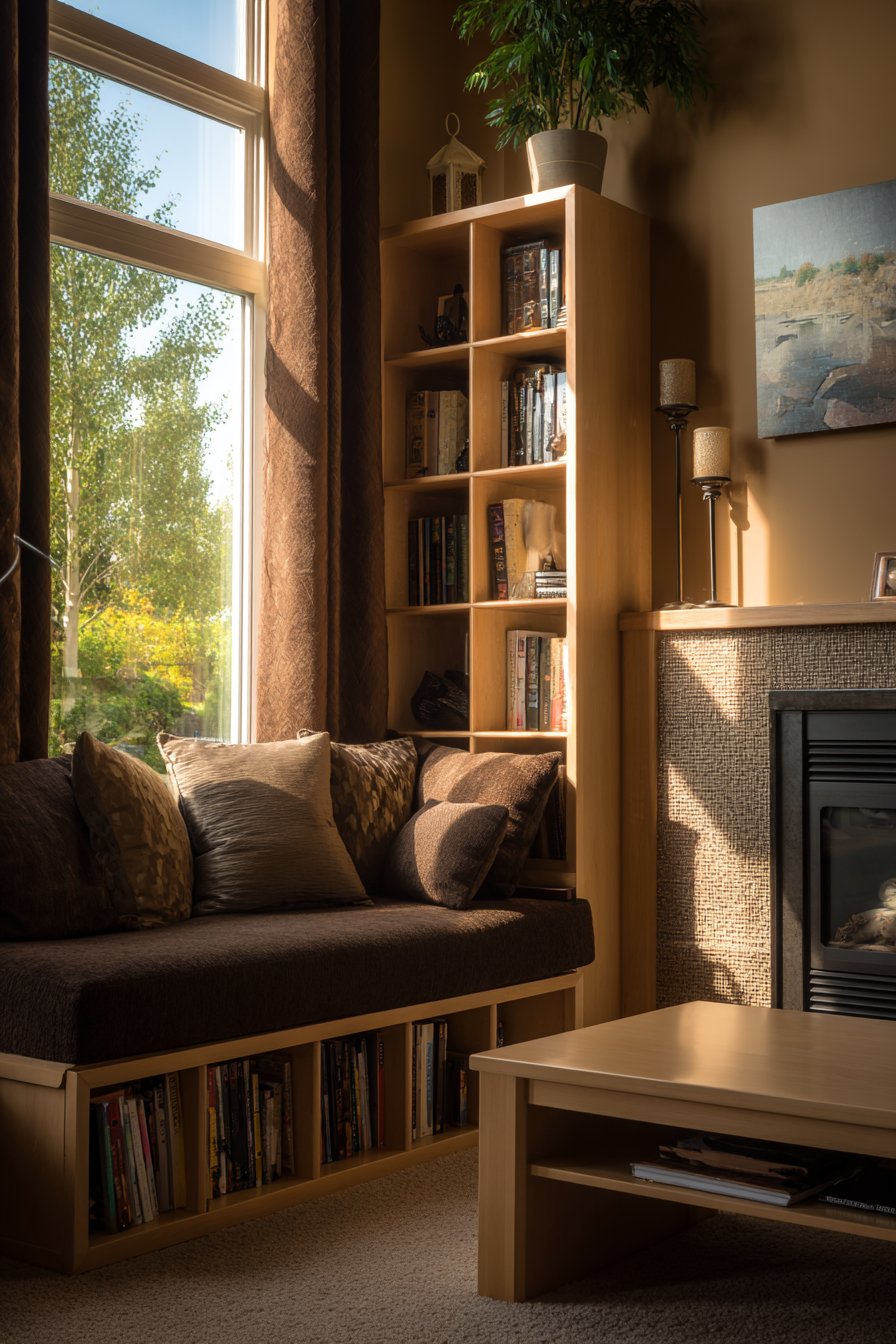
The coffee table features a lower shelf for magazine and remote storage, embodying the principle that every piece of furniture should work harder in a medium-sized space. This practical detail keeps frequently used items within arm’s reach while preventing countertop clutter that can make rooms feel disorganized and chaotic.
Natural afternoon light creates a warm ambiance as it shifts through the space, highlighting different areas throughout the day and connecting the interior with the natural rhythms of sunlight. The overall design achieves the difficult balance of providing abundant storage while maintaining an open, breathable quality that prevents the room from feeling cramped or over-furnished.
Key Design Tips:
- Incorporate window seats with lift-top storage to maximize use of architectural features while adding charming seating options.
- Install floor-to-ceiling bookshelves to emphasize vertical space and provide extensive storage without consuming valuable floor area.
- Choose coffee tables with lower shelf storage to keep remotes, magazines, and everyday items accessible but organized.
- Select L-shaped sofas to maximize seating capacity while clearly defining the primary conversation zone within the room.
- Use charcoal or darker upholstery fabrics in high-traffic areas for practical durability and easier maintenance over time.
- Position seating to face architectural focal points like fireplaces to create natural gathering spots and conversation areas.
6. Contemporary Modular Flexibility with Sage Green Serenity
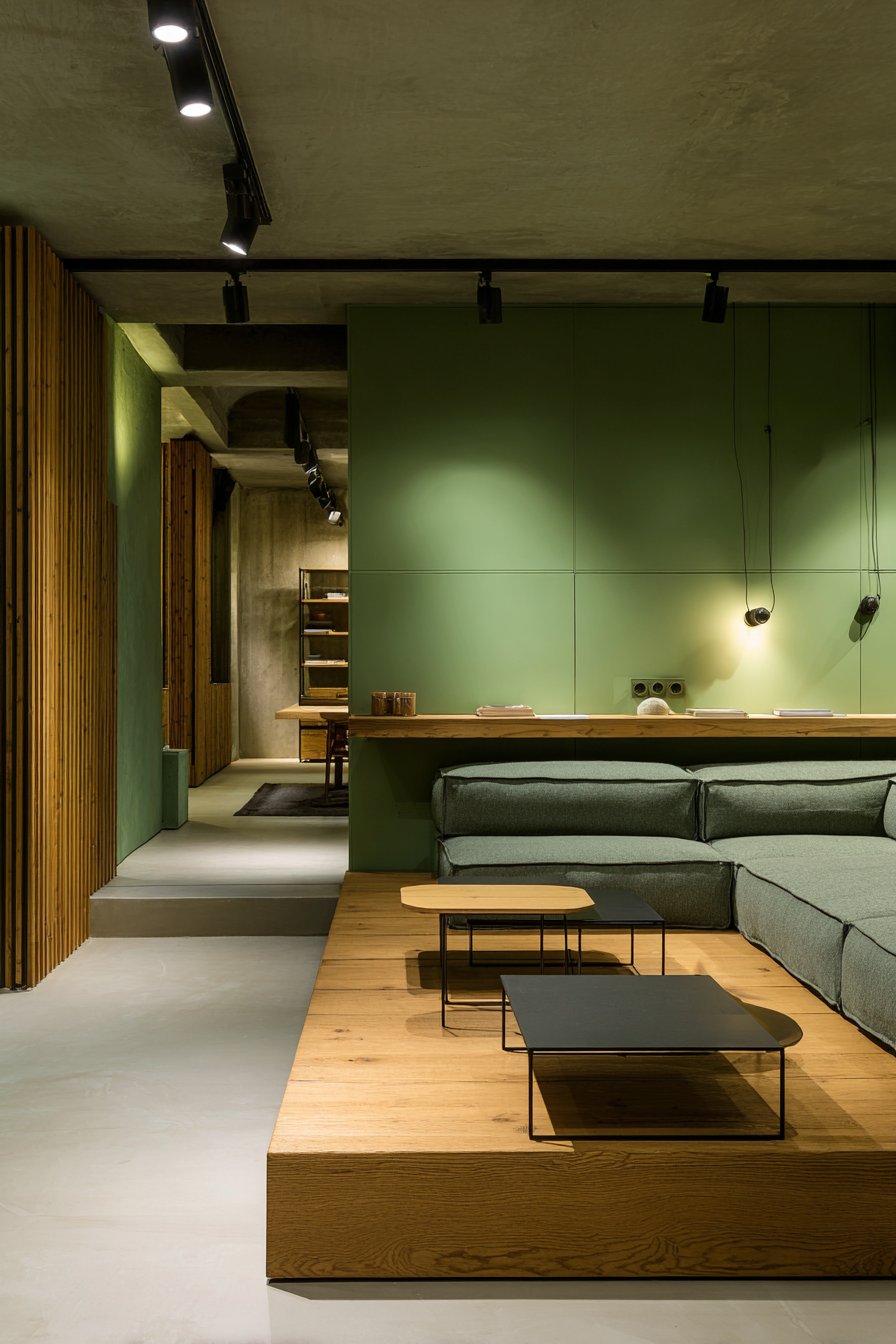
A medium living room showcases contemporary design flexibility through a modular sofa system that adapts to different occasions and evolving needs with remarkable ease. Individual sections can be rearranged to create traditional seating configurations for movie nights, opened up for parties and gatherings, or reconfigured entirely when moving to a new home or simply refreshing the space.
This adaptability makes modular systems particularly valuable for homeowners who appreciate versatility and resist being locked into permanent furniture arrangements. The contemporary styling features clean lines and tailored upholstery that maintains a sophisticated appearance regardless of configuration.
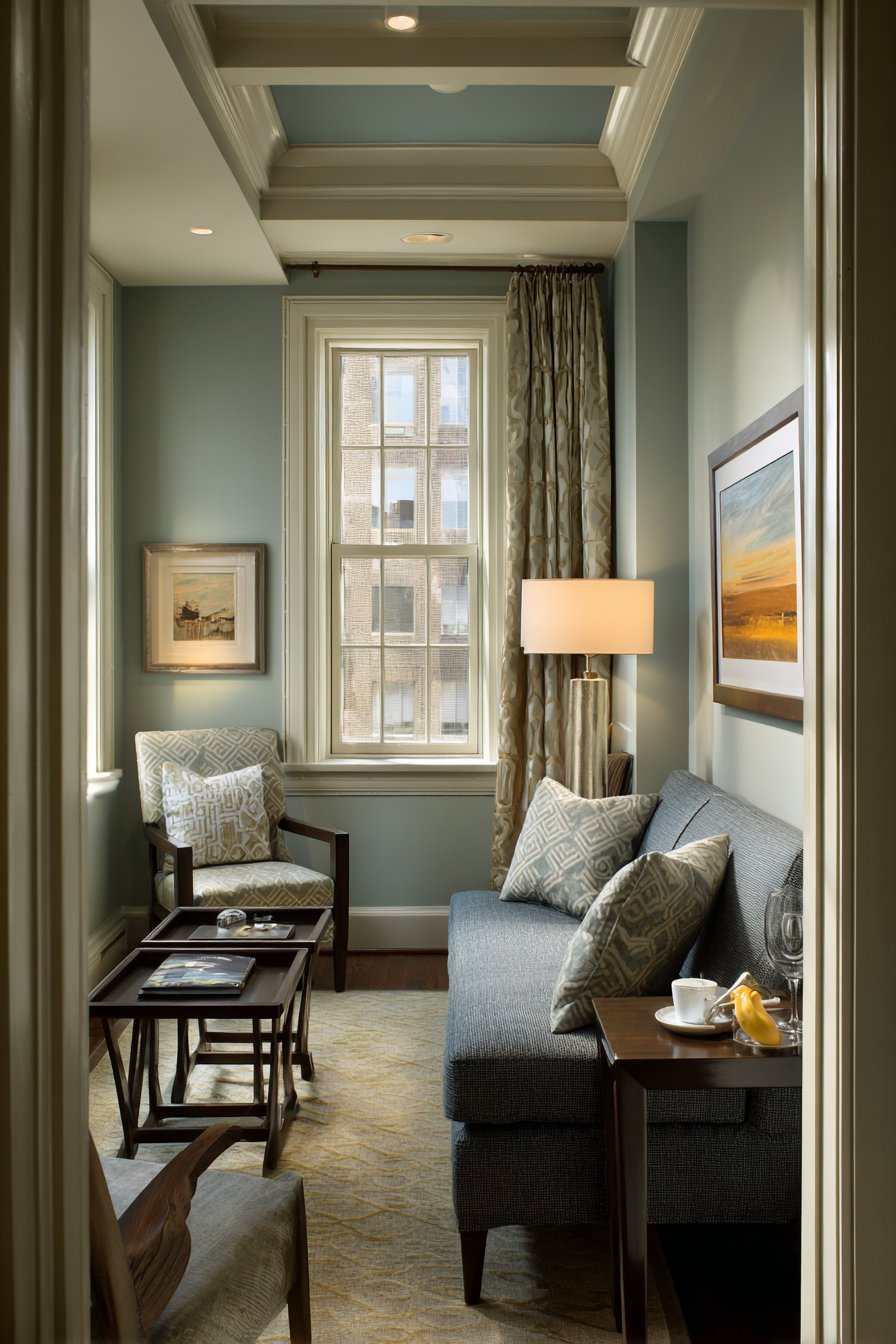
A sleek console table positioned behind the sofa provides additional surface space for table lamps, decorative objects, or even a working surface for those who need flexible home office options. This often-overlooked placement strategy makes use of otherwise dead space while keeping functional items within easy reach from the seating area.
The console’s slim profile doesn’t interfere with traffic patterns or make the room feel crowded, proving that strategic furniture placement can increase functionality without sacrificing spaciousness. A nesting coffee table set offers similar flexibility, with smaller tables tucking neatly beneath the largest piece when not needed, then pulling out to provide additional surface area when entertaining guests or serving meals in the living room.
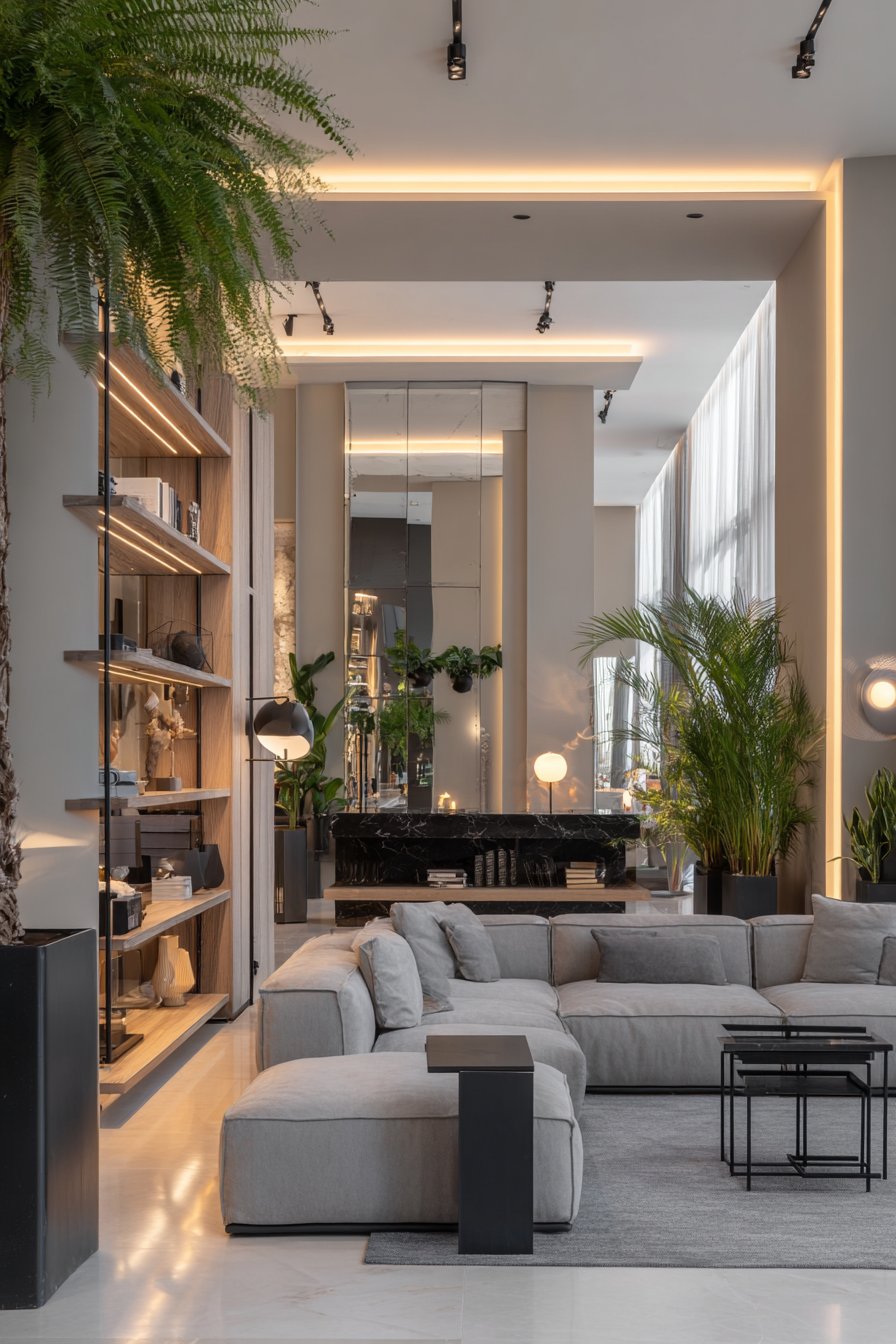
Walls painted in soft sage green create a serene, nature-inspired backdrop that promotes relaxation while remaining sophisticated and contemporary. The muted green brings color into the space without overwhelming or competing with furnishings and decor, striking that delicate balance between neutral and distinctive.
This shade works beautifully with natural wood elements scattered throughout the room, creating an organic color palette that feels cohesive and intentional. The sage green also has the remarkable ability to shift in appearance throughout the day as natural light changes, sometimes appearing more grey, other times more green, adding subtle visual interest.
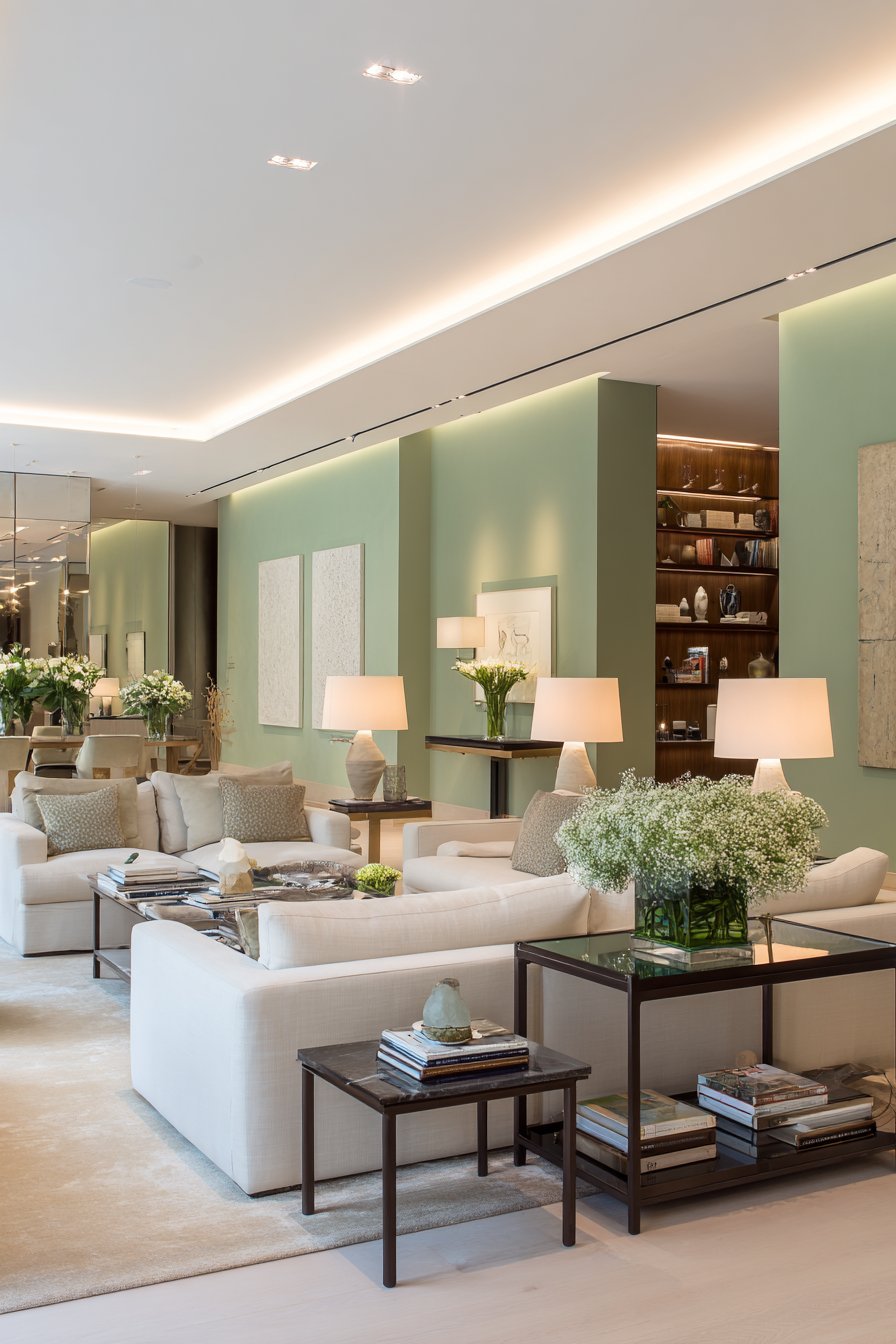
Recessed lighting installed in the ceiling combines with carefully positioned table lamps to create layered illumination that serves multiple purposes and moods. The recessed fixtures provide overall ambient lighting without visual clutter or consuming valuable surface space, while table lamps add warmth, task lighting for reading, and decorative elements that contribute to the room’s style. This comprehensive lighting strategy ensures the space remains functional and inviting from morning through evening, with different combinations creating varied atmospheres for different activities and times of day.
Key Design Tips:
- Invest in modular sofa systems that can be rearranged and reconfigured to accommodate different occasions and evolving lifestyle needs.
- Position console tables behind sofas to add functional surface space without interfering with traffic patterns or consuming floor area.
- Select nesting coffee table sets that provide flexibility and can be tucked away when additional floor space is needed.
- Paint walls in soft sage green to create a serene, nature-inspired atmosphere that works beautifully with natural wood tones.
- Install recessed lighting for clean ambient illumination that doesn’t consume surface space or create visual clutter.
- Layer different lighting types including ambient, task, and decorative sources to create flexible illumination for various activities and moods.
7. Cozy Textured Comfort with Multifunctional Elements
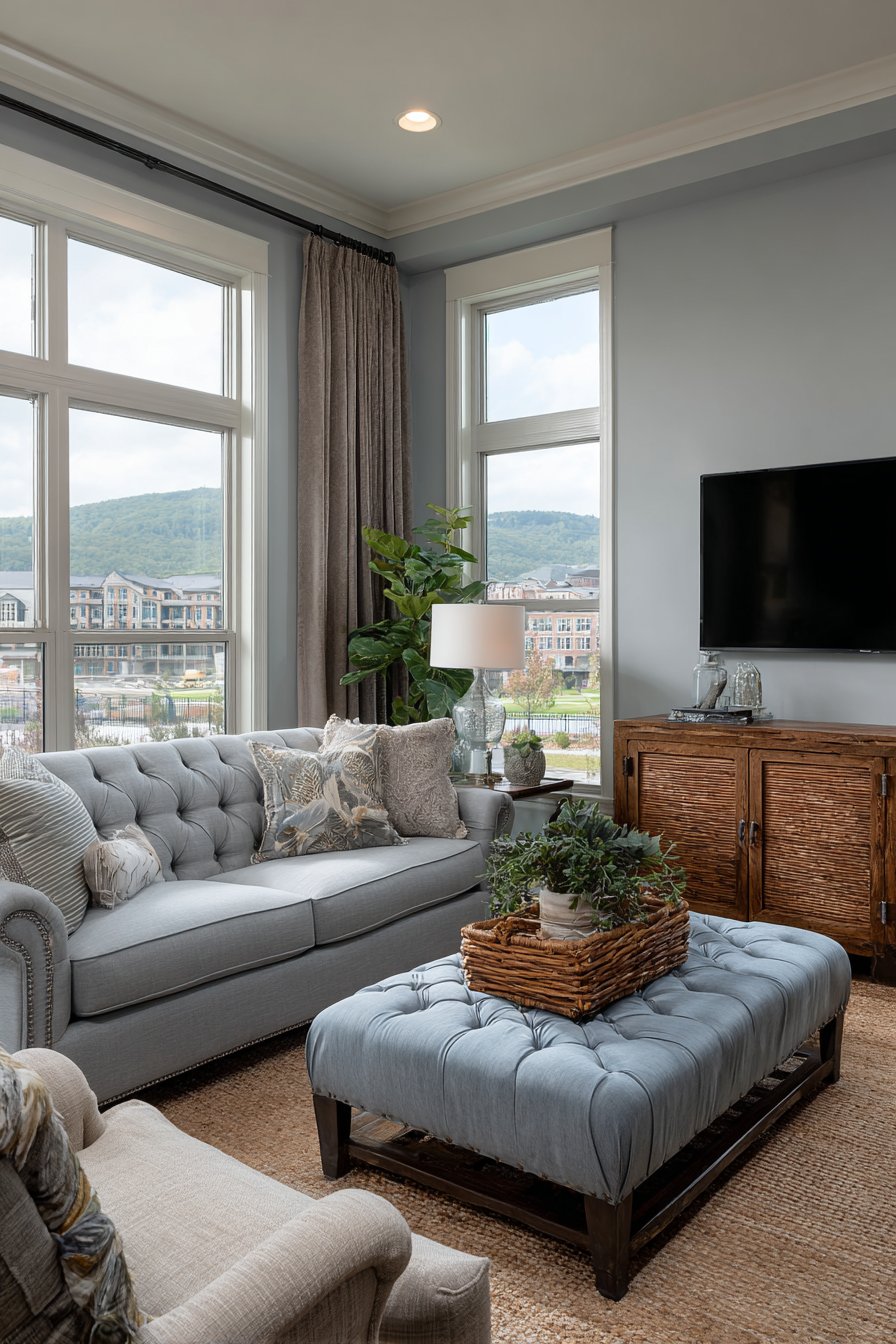
A cozy medium living room centers around a tufted linen sofa positioned strategically to face both the entertainment area and conversation zone, maximizing its functional utility while maintaining comfortable sight lines to multiple areas of interest.
The tufting adds classic detailing and textural depth to the linen fabric, which brings natural, breathable comfort and casual elegance that resists looking overly formal or precious. The neutral linen color provides versatility for changing accent colors through pillows, throws, and seasonal decor, ensuring the space can evolve without requiring major furniture replacements.
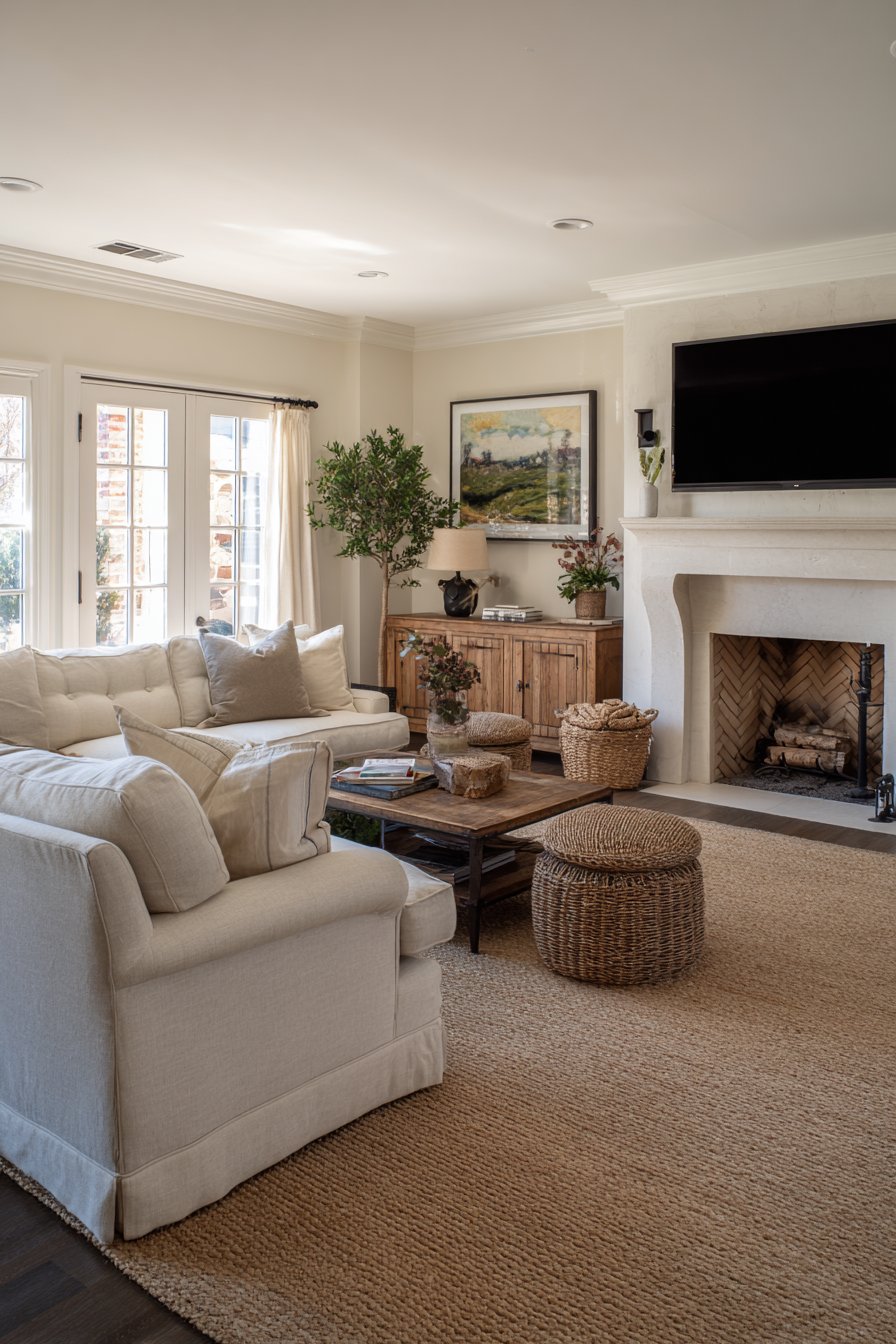
Two matching ottomans provide extra seating that can be positioned as needed when guests arrive, then tucked away discreetly when not in use to maximize open floor space for daily living. This flexibility proves invaluable in medium-sized rooms where permanent extra seating might create a crowded feeling, but the occasional need for additional seats is genuine. The ottomans can also serve as footrests for comfortable lounging, temporary surface space for serving drinks or snacks, or even impromptu coffee tables when topped with decorative trays.
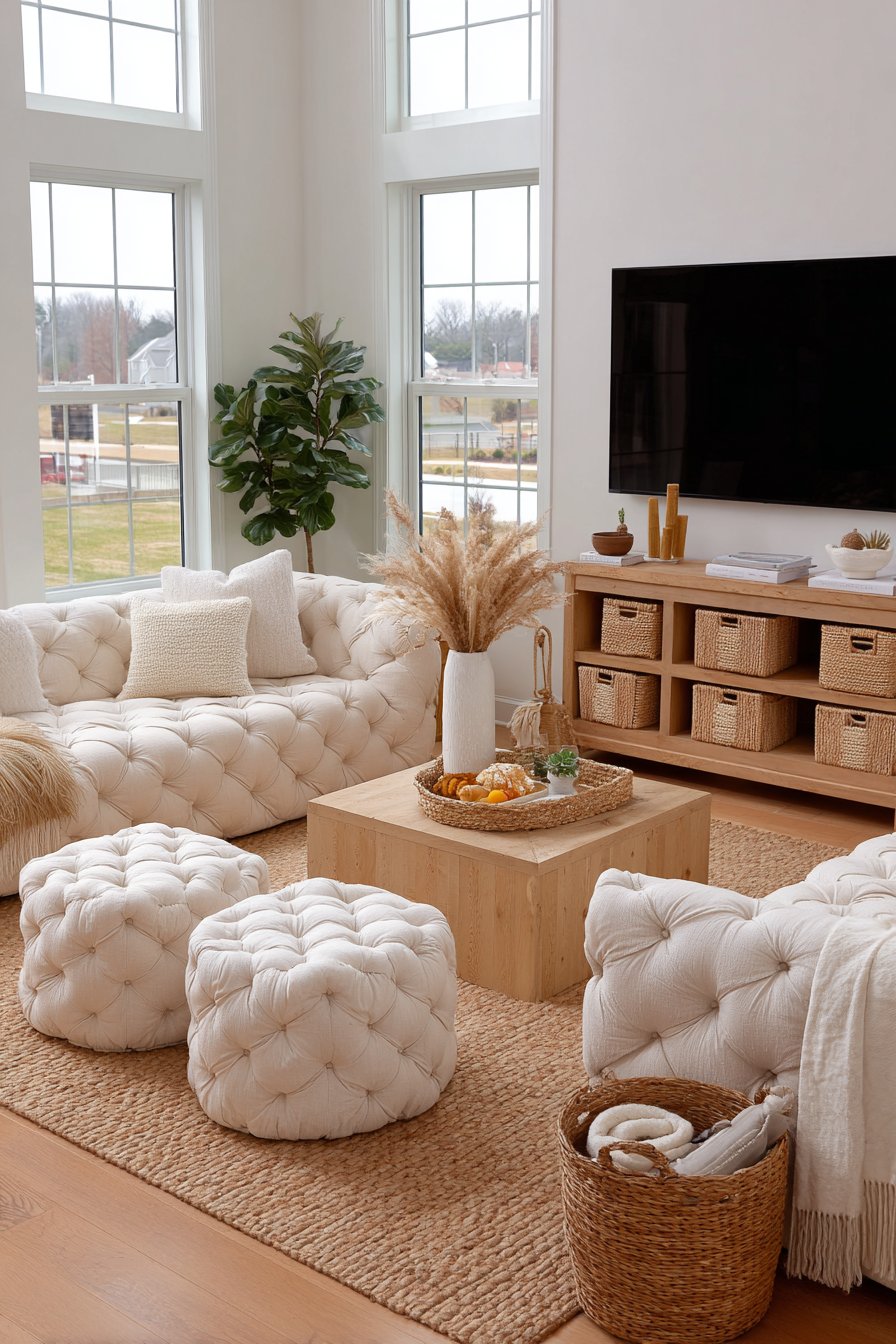
A jute area rug adds natural texture and organic warmth while grounding the furniture arrangement with its substantial presence. The jute’s neutral sandy tone complements virtually any color scheme while bringing earthy appeal that connects the interior with natural materials and sustainable design choices.
The rug’s texture provides visual interest and tactile variety underfoot, creating a more layered and sophisticated look than smooth surfaces alone could achieve. A wooden media console with woven basket storage keeps the space organized by providing concealed storage for items that don’t deserve display, such as electronic accessories, remote controls, video game equipment, and miscellaneous household items.
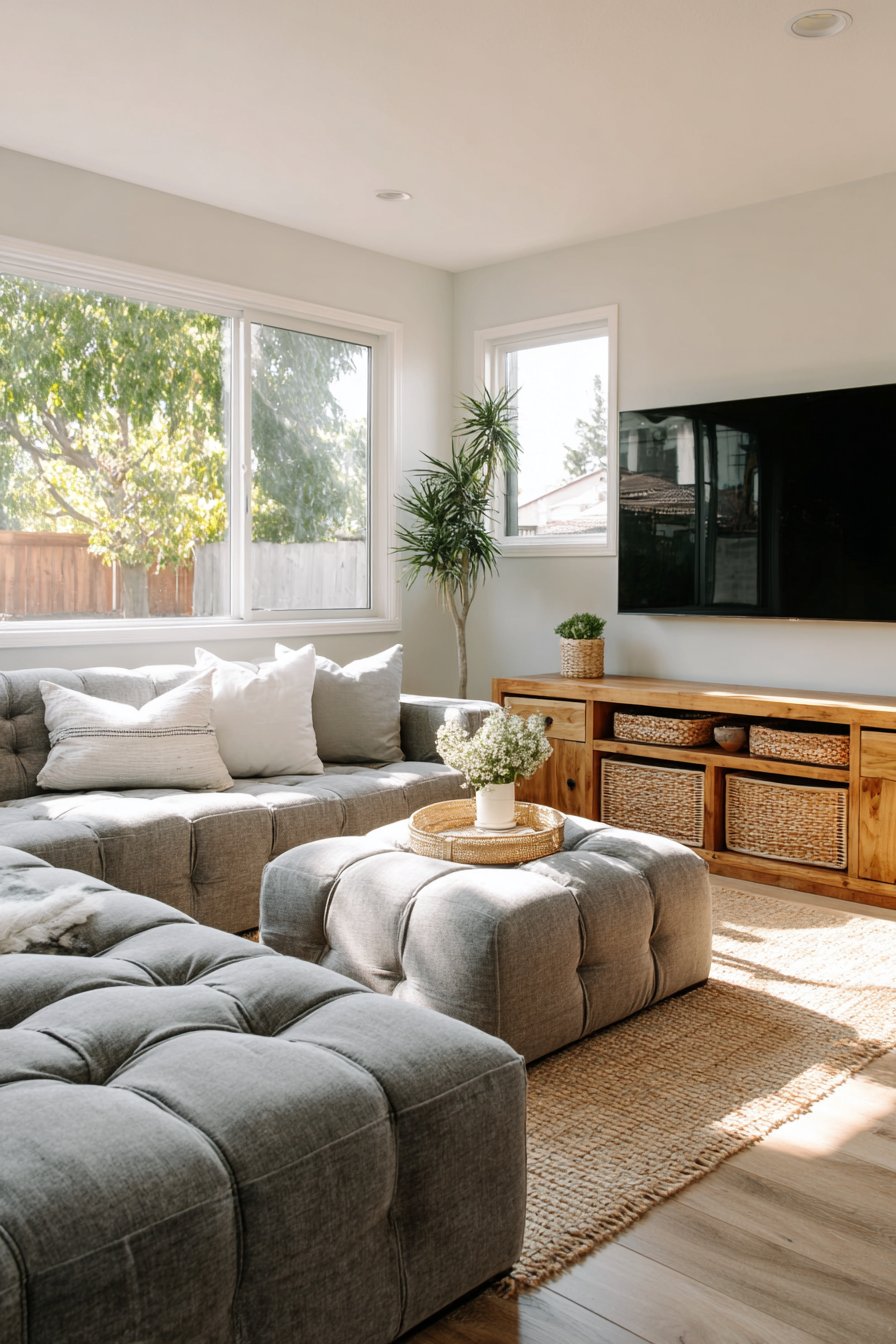
Natural light from double windows illuminates the space generously, the dual openings providing balanced illumination that reduces harsh shadows and creates an evenly lit environment perfect for various activities from reading to crafting to entertaining. The windows’ positioning allows for cross-ventilation during pleasant weather, improving air quality and connecting the interior with outdoor conditions. The overall design achieves practical balance between comfort and function, proving that cozy doesn’t mean cluttered and functional doesn’t mean sterile. Every element earns its place through both aesthetic contribution and practical purpose.
Key Design Tips:
- Choose tufted linen sofas for classic detailing, natural comfort, and versatile neutral tones that work with evolving color schemes.
- Position primary seating to face multiple focal points when possible, maximizing functional utility and comfortable sight lines.
- Use matching ottomans as flexible seating that can be arranged when needed and tucked away to maintain open floor space.
- Select jute area rugs to add natural texture, warmth, and organic appeal while maintaining neutral tones that complement any palette.
- Incorporate woven basket storage within media consoles and shelving to conceal less attractive necessities while adding textural interest.
- Maximize natural light through multiple windows positioned to provide balanced illumination and cross-ventilation opportunities.
8. Industrial-Modern Edge with Authentic Material Character
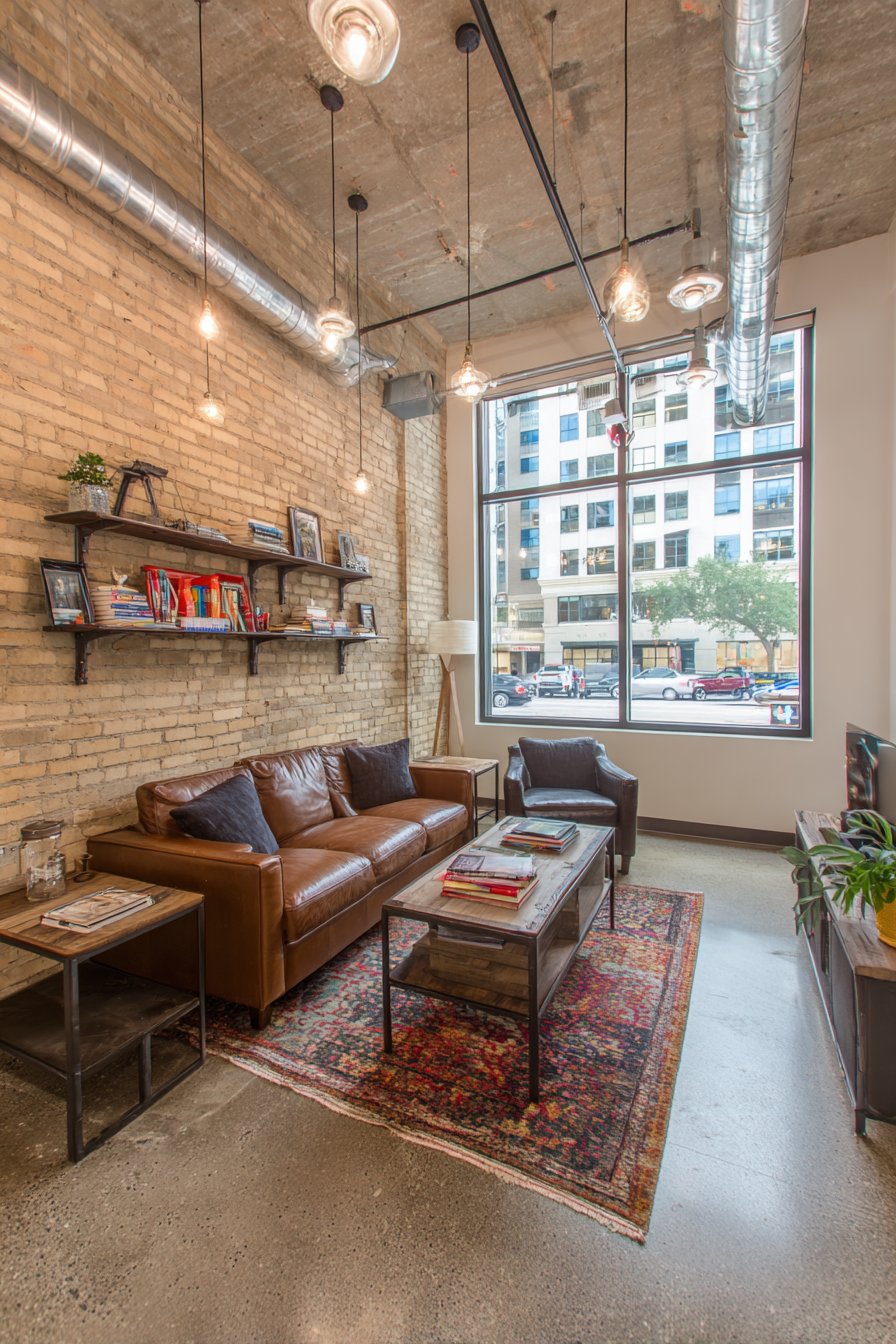
A medium living room showcases industrial-modern design through the dramatic presence of an exposed brick accent wall that brings architectural character, textural richness, and historical depth to the contemporary space. The brick’s weathered surface tells a story, its varied tones and occasional imperfections adding authenticity that new construction simply cannot replicate.
This architectural feature becomes the room’s defining characteristic, requiring minimal additional decoration while providing a stunning backdrop for modern furnishings. Concrete-look porcelain flooring extends throughout the space, offering the industrial aesthetic of polished concrete without the maintenance concerns, coldness, or installation challenges of authentic poured concrete.
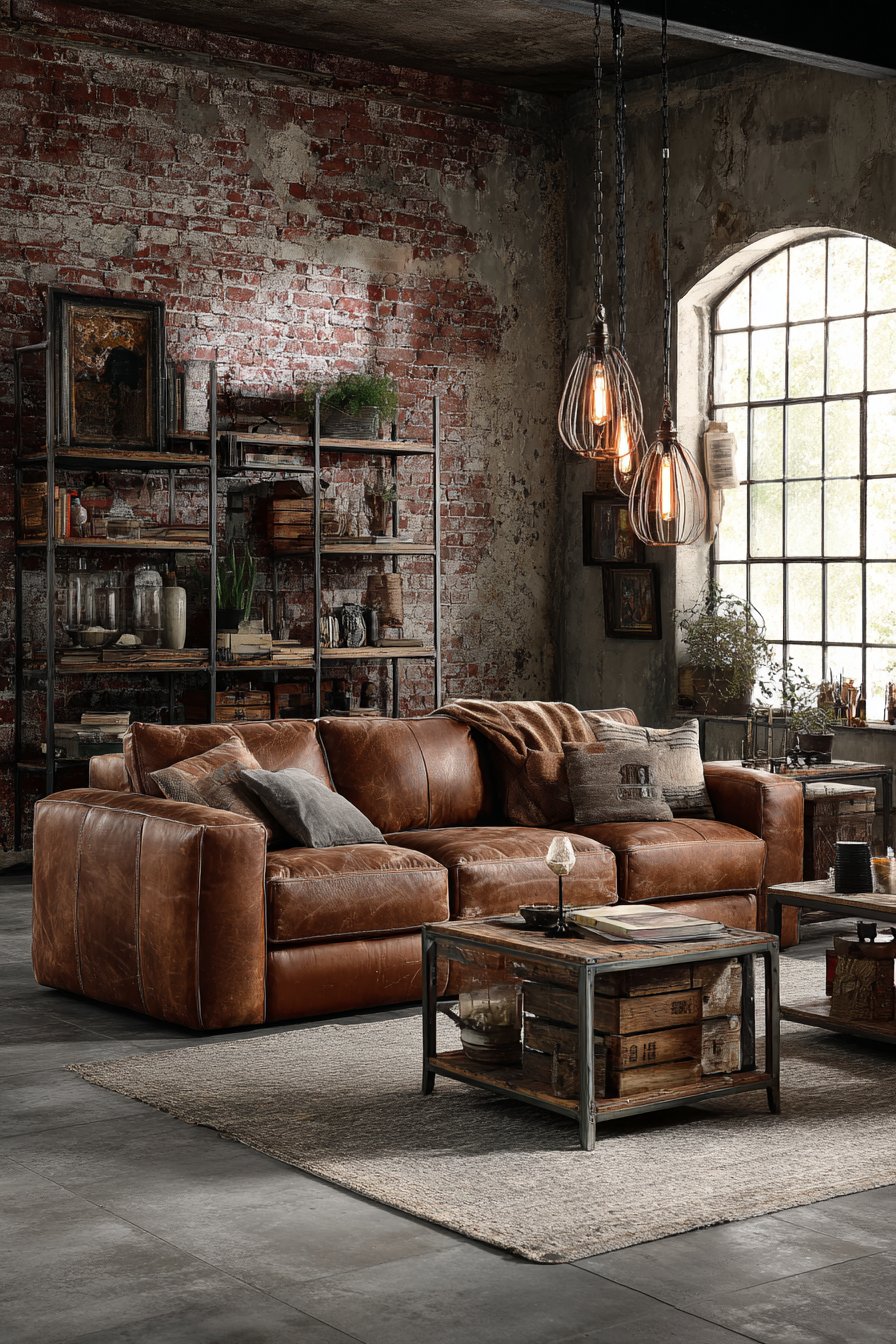
A leather sofa in cognac brown anchors the room with warm, living material that improves with age and use, developing a beautiful patina over time that adds character and personal history. The rich brown leather provides luxurious comfort while maintaining the slightly rough, masculine edge that defines industrial design.
Its substantial presence balances the room’s harder surfaces with inviting softness, creating a space that feels collected and lived-in rather than showroom-perfect. Metal-framed side tables with reclaimed wood tops flank the seating area, their mixed-material construction embodying the industrial aesthetic’s celebration of honest materials and functional forms.
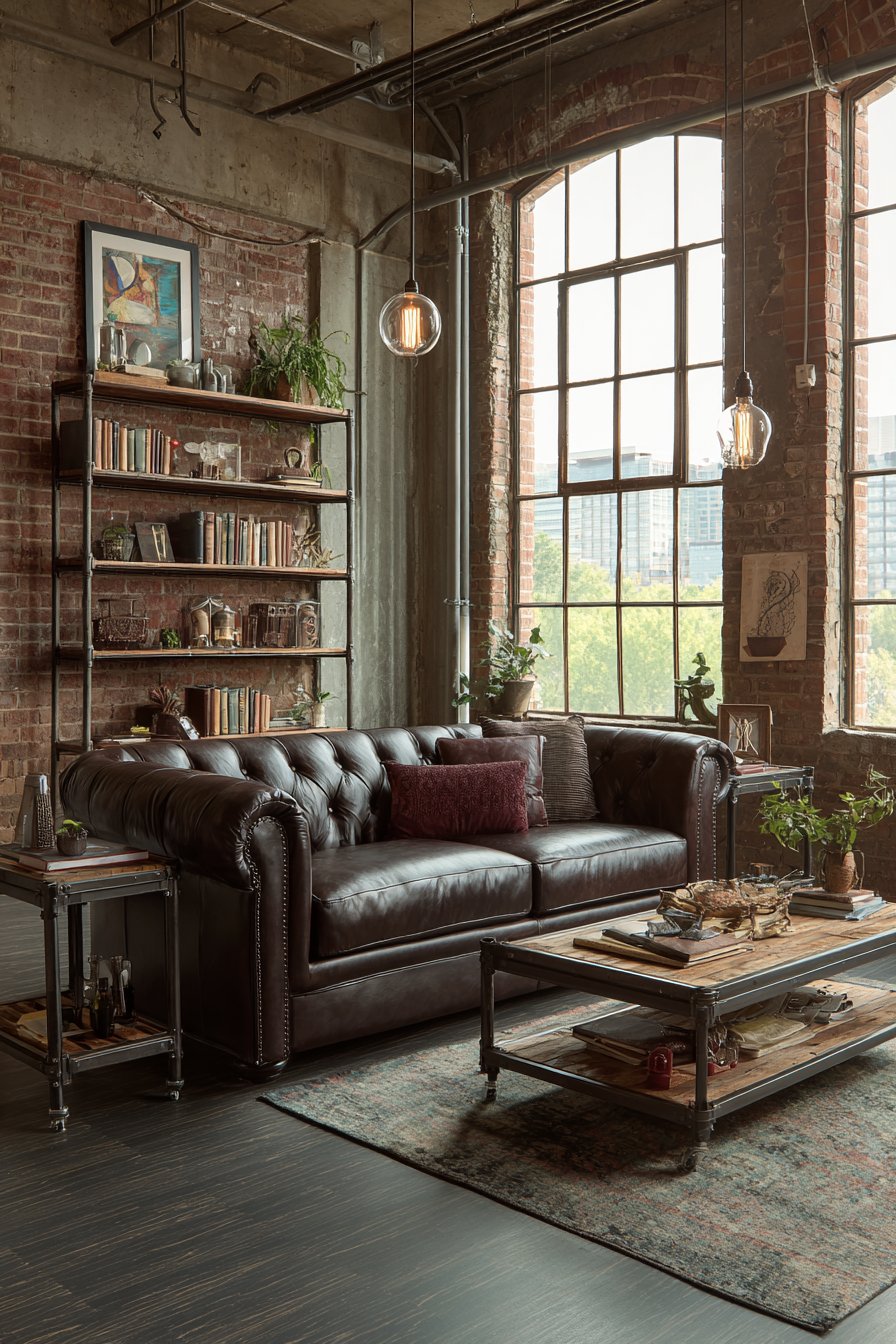
Open pipe shelving displays books and plants with utilitarian simplicity, the exposed metal piping and wood planks making no attempt to disguise their structural purpose. This straightforward approach to design creates visual interest through materials and construction rather than ornamental details, celebrating the beauty of functional objects. The shelving’s open construction maintains the room’s industrial spaciousness while providing necessary storage and display capacity. Living plants soften the harder industrial elements, bringing organic shapes, natural colors, and improved air quality into the space.
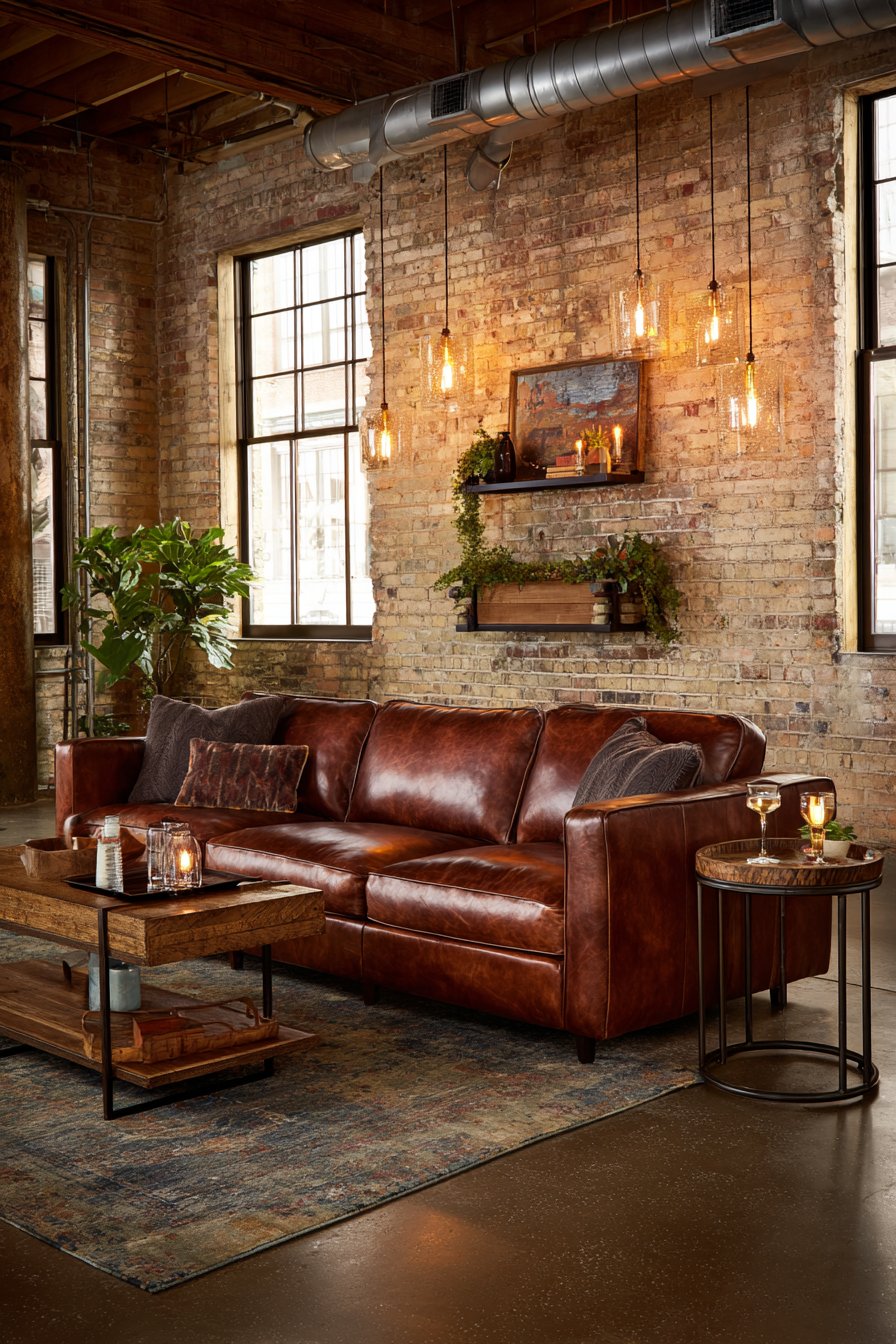
Edison bulb pendant lights provide ambient lighting with vintage appeal, their exposed filaments glowing warmly and adding nostalgic charm that references early industrial lighting before decorative shades became standard. The pendants hang at varied heights, creating visual interest and ensuring adequate illumination across different areas. Large factory-style windows offer generous natural illumination while reinforcing the industrial aesthetic through their oversized proportions and minimal frames. The authentic material textures throughout—brick, leather, metal, reclaimed wood—create a cohesive urban aesthetic within practical medium dimensions that proves industrial design works beautifully at any scale.
Key Design Tips:
- Feature exposed brick accent walls to add architectural character, textural richness, and authentic industrial appeal as a dramatic focal point.
- Choose concrete-look porcelain flooring for industrial style without the maintenance challenges and coldness of authentic concrete.
- Select cognac brown leather sofas that age beautifully, develop character over time, and provide warm contrast to harder industrial surfaces.
- Incorporate mixed-material furniture combining metal frames with reclaimed wood tops to celebrate honest materials and functional forms.
- Install open pipe shelving to provide storage while emphasizing the industrial aesthetic’s straightforward approach to design.
- Use Edison bulb pendant lights at varied heights for ambient lighting with vintage appeal and exposed decorative filament character.
9. Transitional Balance with Fireplace Symmetry
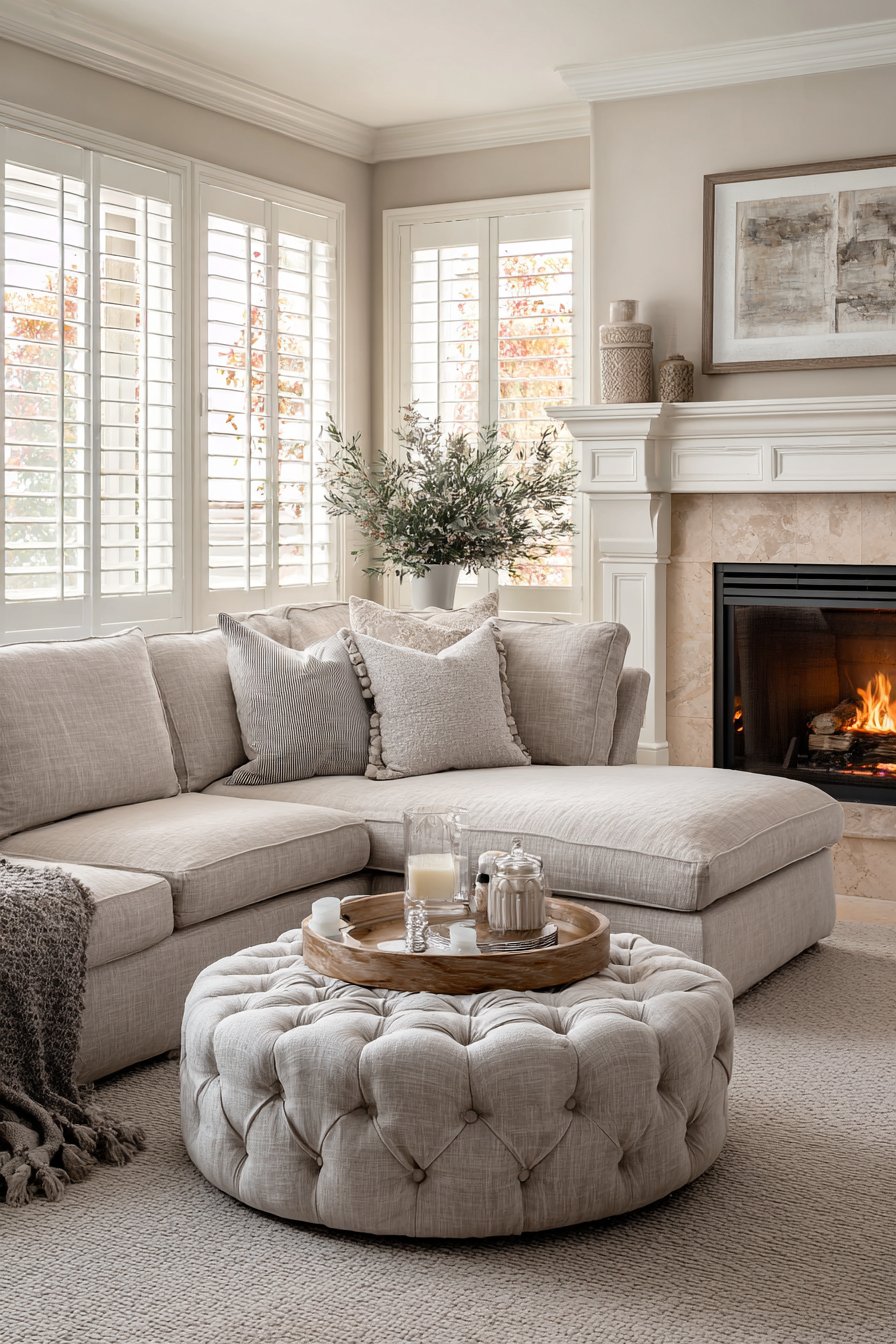
A transitional medium living room demonstrates the artful blending of classic and contemporary elements through a neutral palette anchored by a beige sectional sofa arranged in an L-configuration that maximizes seating capacity without overwhelming the room’s proportions.
The transitional style’s hallmark is its ability to honor traditional design principles while incorporating modern simplicity and comfort, creating spaces that feel both timeless and current. The beige upholstery provides versatile neutrality that works with both warm and cool accent colors, allowing the space to evolve stylistically without requiring major furniture replacements.
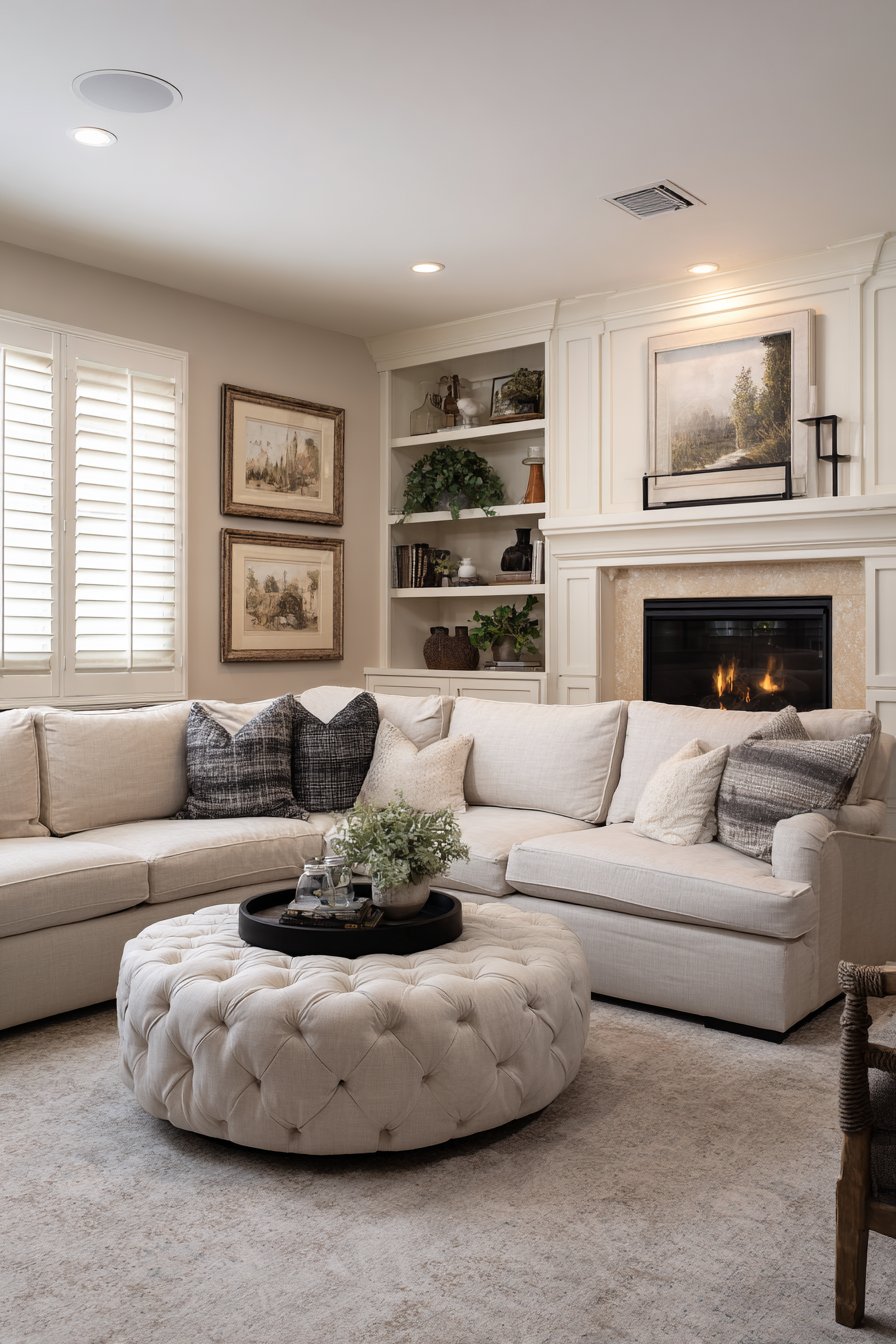
A round tufted ottoman serves double duty as both coffee table and extra seating, embodying the transitional style’s emphasis on practical elegance. The tufted detailing adds classic charm while the ottoman’s soft surface and absence of sharp corners creates family-friendly functionality perfect for homes with young children.
A decorative tray placed on top transforms the ottoman into a stable surface for drinks and remotes, easily removed when the ottoman needs to function as seating. This flexibility proves invaluable in medium-sized rooms where furniture must often serve multiple purposes.
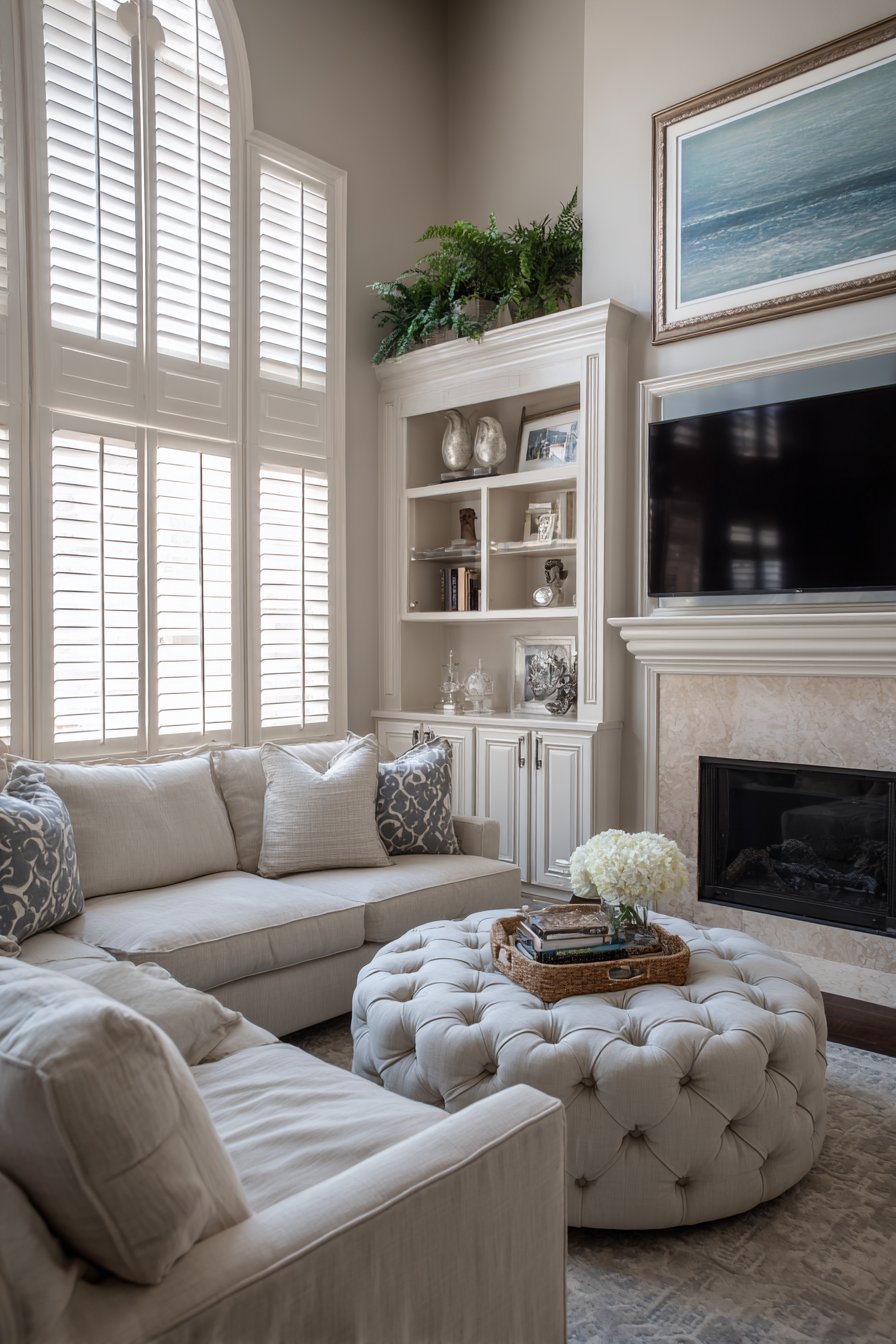
Built-in cabinetry on either side of a decorative fireplace provides symmetrical display and storage space that creates architectural interest while maximizing the room’s organizational capacity. The symmetry brings classical formality and visual balance that pleases the eye and creates a sense of order, while the combination of closed cabinets and open shelving offers flexibility for both concealed storage and curated display. The fireplace serves as the room’s natural focal point, its decorative surround and mantel providing opportunities for seasonal decor and personal treasures.
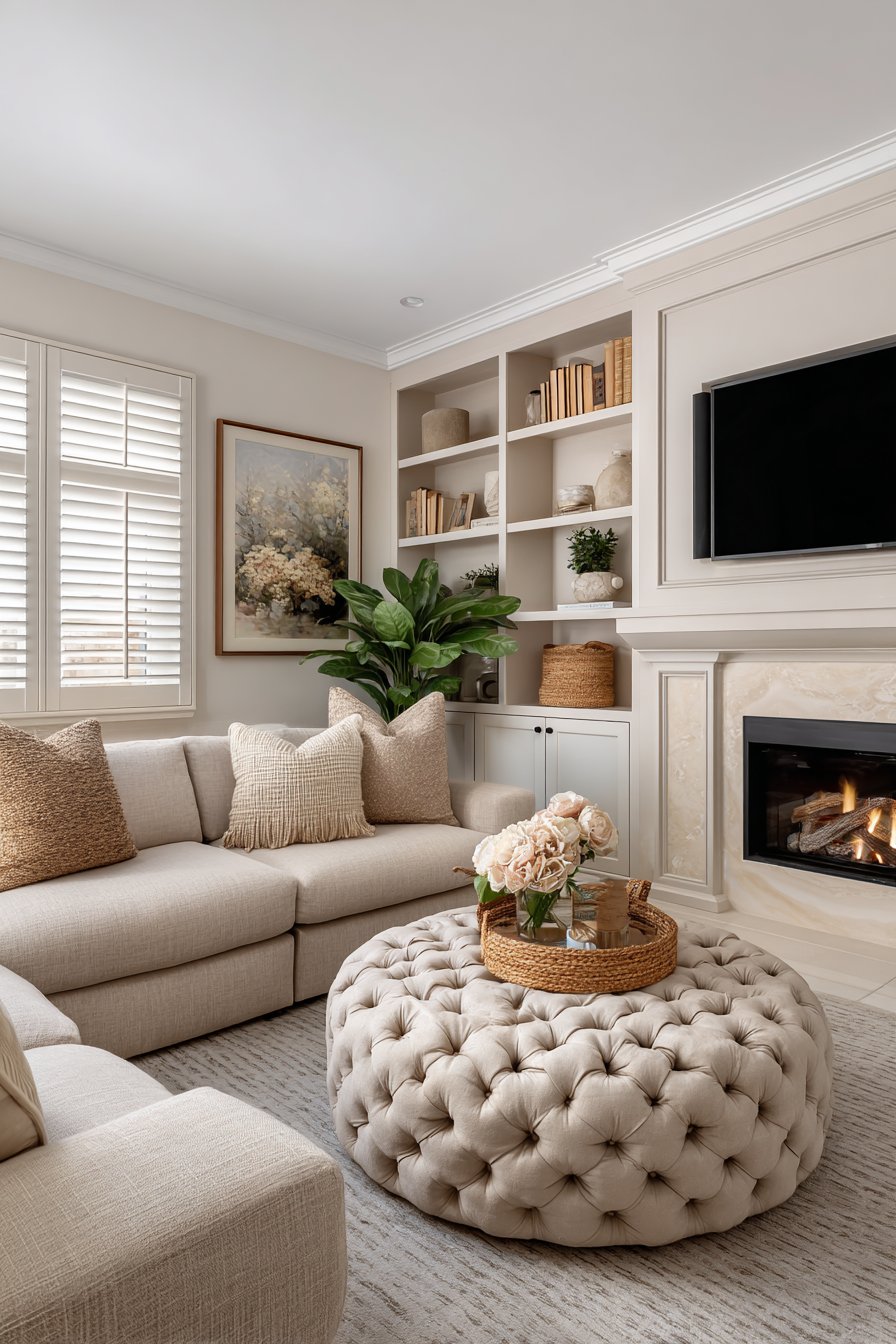
Soft natural lighting filters through plantation shutters that offer precise light control while maintaining the transitional aesthetic through their classic styling and clean horizontal lines. The shutters can be adjusted throughout the day to direct light where needed, provide privacy without darkness, or opened fully to maximize natural illumination.
Their painted finish coordinates with trim and built-in cabinetry, creating cohesive architectural detailing. The space successfully demonstrates how classic and contemporary elements blend seamlessly in a medium-scale room when unified through consistent color palette and balanced proportions.
Key Design Tips:
- Choose beige sectional sofas in L-configurations to maximize seating while maintaining versatile neutral tones that work with evolving decor.
- Use round tufted ottomans as flexible coffee tables that provide soft surfaces safe for families while offering extra seating when needed.
- Install built-in cabinetry flanking fireplaces to create architectural symmetry while maximizing storage and display capacity.
- Select plantation shutters for precise light control, classic styling, and adjustable privacy that maintains connection with outdoors.
- Create symmetrical arrangements around focal points like fireplaces to bring classical balance and visual order to the space.
- Blend traditional elements like tufted details and built-ins with contemporary simplicity to achieve timeless transitional style.
10. Coastal-Inspired Serenity with Relaxed Sophistication
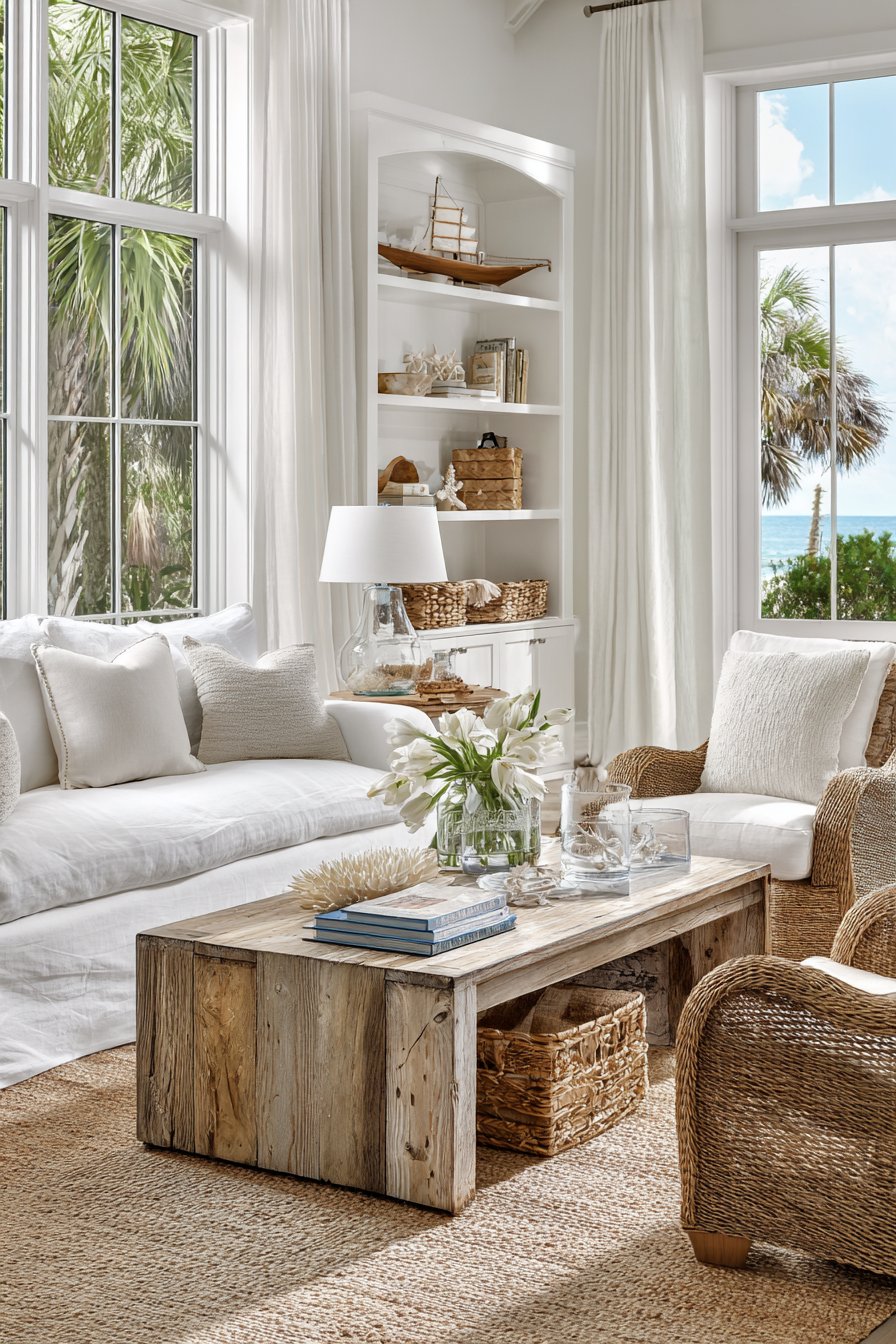
A medium living room captures coastal-inspired tranquility through a slipcovered white sofa that embodies the relaxed sophistication of seaside living. The slipcover’s practical beauty lies in its removability for easy cleaning, essential for maintaining the fresh white appearance that defines coastal style.
The loose-fit construction adds casual charm while the white upholstery creates an airy, light-reflecting foundation that makes the room feel more spacious and connected to bright beach environments. A weathered wood coffee table introduces organic texture and sun-bleached tones that reference driftwood and weather-worn boardwalks, bringing authentic coastal character without resorting to obvious nautical clichés.
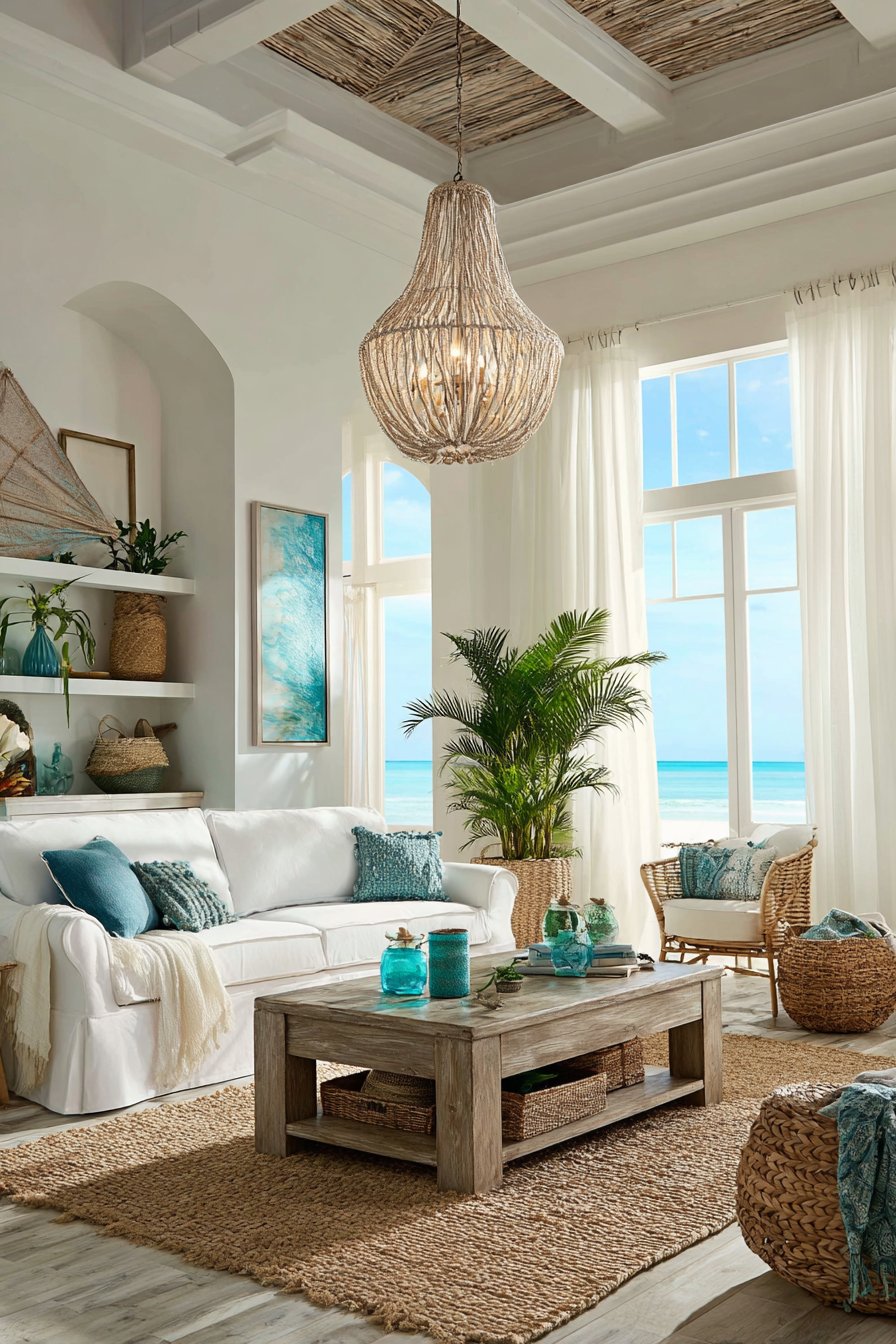
Natural fiber accent chairs constructed from seagrass, rattan, or wicker add texture while maintaining the light, airy feel essential to coastal design. These organic materials bring earthy warmth and tactile interest that prevents the predominantly white palette from appearing cold or sterile.
The chairs’ natural tones create subtle contrast against the white sofa while maintaining overall visual lightness. A sisal rug grounds the seating area with natural texture that feels appropriate underfoot in a beach-inspired space, its neutral sandy tone and organic fibers connecting the interior with natural coastal landscapes.
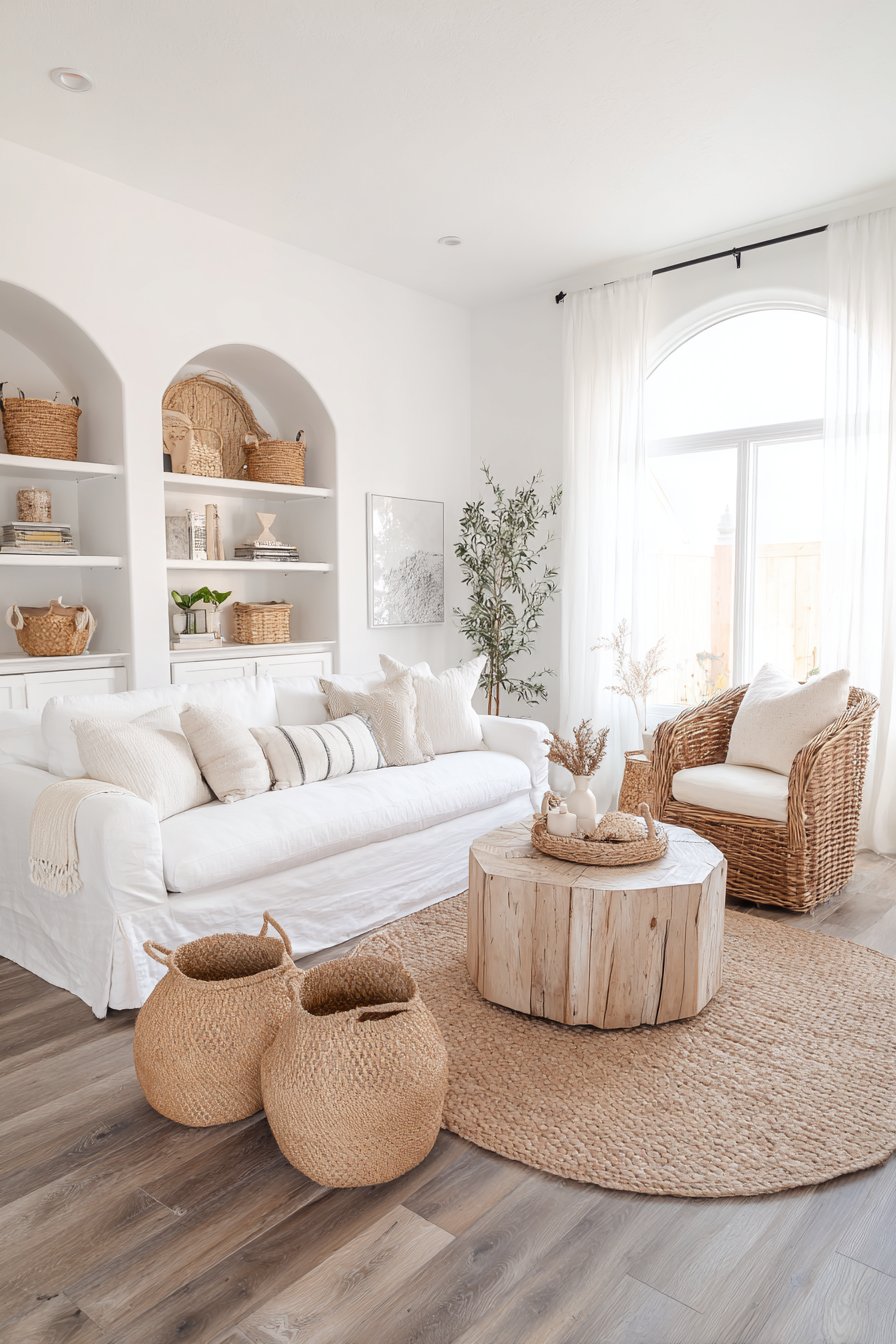
Open shelving displays beach-inspired decor including collected shells, coral specimens, framed coastal photography, and perhaps a few treasured pieces of sea glass or interesting driftwood fragments. Woven baskets positioned on lower shelves provide concealed storage for less photogenic necessities like remote controls, magazines, and children’s toys, maintaining the room’s clean, uncluttered aesthetic while ensuring everything has a designated home. The combination of display and concealed storage keeps the space feeling organized and intentional rather than sparse or sterile.
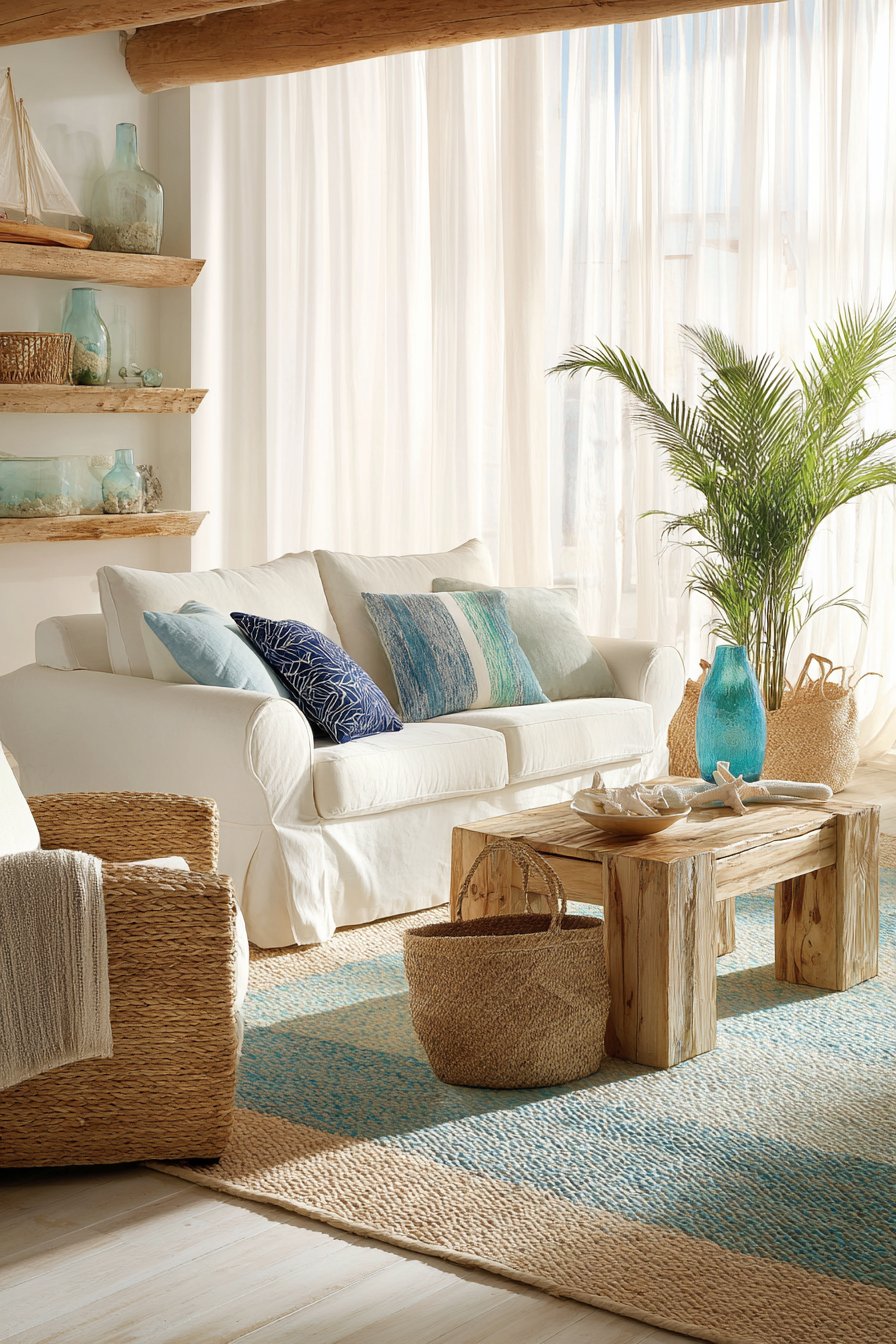
Sheer white curtains diffuse bright natural light while maintaining privacy and protecting furnishings from harsh UV exposure that could cause fading over time. The sheers’ gauzy quality adds softness and movement when breezes blow through open windows, creating a connection with outdoor coastal environments. The fabric’s subtle texture catches light beautifully, creating gentle shadows that add dimension throughout the day. The overall aesthetic achieves that elusive balance of looking carefully put-together while maintaining the relaxed, effortless quality that defines the best coastal interiors, proving that beach style works beautifully far from the shoreline.
Key Design Tips:
- Choose slipcovered white sofas for easy-care coastal style that can be removed and laundered to maintain fresh, bright appearance.
- Select weathered wood coffee tables to introduce organic texture and sun-bleached tones that reference authentic coastal character.
- Incorporate natural fiber accent chairs in seagrass, rattan, or wicker to add warmth and texture while maintaining overall visual lightness.
- Use sisal rugs to ground seating areas with natural texture appropriate for beach-inspired spaces while providing neutral foundation.
- Display beach-inspired collected objects on open shelving while using woven baskets for concealed storage of everyday necessities.
- Install sheer white curtains to diffuse bright light, maintain privacy, and add softness while preserving connection to outdoor environments.
Why These Medium Living Room Ideas Work Best
These ten medium living room design concepts represent the best approaches to creating beautiful, functional spaces because they address the unique challenges and opportunities that medium-sized rooms present. Each design demonstrates how to maximize approximately 200 to 400 square feet through strategic furniture selection, thoughtful spatial planning, and purposeful design choices that enhance both aesthetic appeal and practical livability. The variety of styles ensures that homeowners with different tastes, lifestyles, and functional requirements can find inspiration that resonates with their personal vision.
The grey upholstered sofa design works exceptionally well for medium living rooms because neutral foundations provide maximum versatility for changing decor over time without requiring expensive furniture replacement. The sectional sofa approach maximizes seating capacity while maintaining open floor space, addressing the common challenge of accommodating guests without cramping the room. Navy velvet with gallery walls proves that medium spaces can absolutely handle bold statements when balanced with complementary elements, dispelling the myth that only neutrals work in modest-sized rooms.
Scandinavian-inspired designs excel in medium living rooms because the emphasis on light, natural materials, and functional simplicity creates inherently peaceful, spacious-feeling environments without requiring excessive square footage. The built-in storage concept addresses modern life’s organizational challenges while maintaining sophisticated aesthetics, proving that practical storage need not compromise beauty. Modular flexibility responds to contemporary lifestyle needs for adaptable spaces that serve multiple purposes and accommodate evolving requirements.
Industrial-modern designs bring architectural character through authentic materials and honest construction that create visual interest without cluttering the space with unnecessary decorative objects. Transitional styles honor traditional comfort and classical proportions while incorporating modern simplicity, creating timeless spaces that won’t feel dated as trends evolve. Coastal-inspired designs demonstrate how specific aesthetic themes can be executed with sophistication, avoiding cliché while creating distinctive, memorable environments.
The key to success across all these medium living room ideas lies in understanding fundamental design principles including proper furniture scale, strategic color palette selection, layered lighting approaches, and the critical importance of maintaining clear circulation paths. Medium-sized rooms benefit from furniture with visible legs that create visual lightness rather than heavy skirted pieces that appear to consume floor space. Vertical storage solutions like floor-to-ceiling shelving and floating shelves maximize capacity without sacrificing precious square footage.
Color choices significantly impact how spacious medium rooms feel, with lighter neutral palettes generally creating more open, airy environments while darker or bolder colors can add drama and sophistication when balanced with adequate lighting. The most successful medium living rooms incorporate layered lighting including ambient ceiling fixtures, task lighting for specific activities, and accent lighting that highlights architectural features or artwork. This comprehensive approach ensures the space remains functional and inviting throughout the day and evening hours.
Texture plays an essential role in creating visual interest without pattern or color, particularly important in neutral-heavy schemes that might otherwise appear flat or boring. Combining smooth upholstery with natural woven materials, visible wood grain, plush textiles, and varied surface finishes creates richness that engages the eye and invites tactile exploration. The best medium living room designs also consider traffic flow, ensuring furniture arrangements facilitate easy movement rather than creating obstacle courses that frustrate daily living.
Each design concept presented demonstrates different approaches to addressing entertainment needs, from wall-mounted televisions with supporting storage to dedicated media consoles that house equipment while displaying decorative objects. The most thoughtful designs integrate technology seamlessly without allowing it to dominate the aesthetic, using solutions like closed cabinetry, cable management systems, and strategic placement that makes screens accessible but not omnipresent.
Storage solutions represent another critical factor in medium living room success, with the best designs incorporating both closed storage for concealing less attractive necessities and open display space for showcasing meaningful objects, books, and decorative items. This balance maintains organized, clutter-free environments while allowing personality and individual style to shine. Furniture with built-in storage like window seats with lift-tops, coffee tables with lower shelves, and ottomans with hidden compartments maximize organizational capacity without consuming additional floor space.
These medium living room ideas work best because they balance aesthetic aspiration with practical reality, creating spaces that look professionally designed while serving everyday needs with grace and efficiency. They demonstrate that beautiful, functional living spaces are achievable at a modest scale when approached with thoughtful planning, careful selection, and attention to fundamental design principles. Whether drawn to contemporary minimalism, traditional comfort, bold statements, or organic simplicity, homeowners can create medium living rooms that genuinely reflect their personality while providing the comfortable, functional environment their lifestyle demands.
Conclusion
Creating a beautiful, functional medium living room requires balancing aesthetic vision with practical considerations, ensuring the space serves your daily needs while reflecting your personal style. The ten design concepts explored throughout this comprehensive guide demonstrate that medium-sized living rooms—typically ranging from 200 to 400 square feet—offer the perfect canvas for creating welcoming, sophisticated spaces that feel neither cramped nor cavernous. From the timeless elegance of soft grey upholstery to the bold drama of navy velvet, from the serene simplicity of Scandinavian design to the authentic character of industrial-modern aesthetics, the possibilities for transforming your medium living room are virtually limitless.
The key takeaways center around understanding fundamental design principles that make medium spaces work beautifully. Furniture scale matters tremendously—choose pieces that fit your room’s proportions without overwhelming the space, and favor designs with visible legs that create visual lightness and make rooms feel more spacious. Strategic color choices impact perception significantly, with lighter neutrals generally expanding visual boundaries while bolder hues add personality and depth when balanced with adequate lighting. Layer your lighting sources by combining ambient ceiling fixtures, task lighting for specific activities, and accent illumination that highlights architectural features, creating flexible atmospheres suitable for various times of day and different activities.
Storage integration proves essential in medium living rooms where every square foot matters. Embrace built-in solutions like floor-to-ceiling shelving, window seats with hidden compartments, and furniture pieces that serve multiple purposes. Coffee tables with lower shelves, ottomans with concealed storage, and media consoles with both closed cabinets and open display space maximize organizational capacity without consuming precious floor space. This thoughtful approach maintains the uncluttered aesthetic that makes medium rooms feel spacious while ensuring everything has a designated home.
Texture creates visual interest and sophistication without requiring bold colors or busy patterns. Combine smooth upholstery fabrics with natural woven materials, incorporate visible wood grain, add plush area rugs, and vary surface finishes throughout the space. This layered approach engages the eye and invites tactile exploration, transforming neutral color schemes from potentially boring to beautifully nuanced. Don’t underestimate the power of textural variety in creating rooms that feel professionally designed and genuinely inviting.
Flexibility and adaptability should inform furniture selection, particularly in homes where needs evolve over time. Modular seating systems can be rearranged for different occasions, nesting tables provide surface space when needed and tuck away when not in use, and multi-functional pieces like ottomans that serve as both seating and coffee tables maximize utility without cluttering the room. This adaptive approach ensures your medium living room continues serving your lifestyle even as circumstances change.
Perhaps most importantly, remember that the best medium living room designs reflect the people who inhabit them. While design principles provide valuable guidance, your space should ultimately accommodate your lifestyle, showcase your personality, and bring you genuine joy every time you enter. Whether you’re drawn to the collected comfort of transitional style, the breezy relaxation of coastal aesthetics, or the bold confidence of statement-making jewel tones, trust your instincts and create a space that feels yours.
As you embark on transforming your medium living room, start by assessing your specific needs and priorities. Consider how you use the space currently and how you’d like to use it in the future. Do you entertain frequently and need flexible seating options? Is storage a critical concern? Do you crave bold color or prefer serene neutrality? Does natural light flood the space or do you need to maximize artificial illumination? Answering these questions honestly will guide your decision-making process and help you prioritize which design elements matter most for your particular situation.
Don’t feel pressured to complete your living room transformation overnight. The most successful, personally meaningful spaces often evolve gradually over time as you collect pieces that genuinely resonate with you rather than purchasing everything at once from a single store or collection. Start with foundational elements like your primary seating and essential storage, then layer in accessories, artwork, and finishing touches as you discover them. This measured approach allows you to live with pieces before committing to complementary items, ensuring everything works together harmoniously while giving you time to make thoughtful choices rather than impulsive decisions.
Experiment with furniture arrangements before settling on a final configuration. Most medium living rooms can accommodate multiple layouts depending on priorities—orienting seating toward a fireplace creates an intimate conversation zone, while facing a television prioritizes entertainment and family movie nights. Try different configurations to discover which arrangement best serves your lifestyle and creates the most comfortable traffic flow. Don’t be afraid to move furniture around seasonally or when your needs change; flexibility keeps spaces feeling fresh and responsive to evolving circumstances.
Pay attention to scale and proportion as you select furniture and accessories. A massive sectional might provide ample seating but could overwhelm a medium room, while too many small pieces can create visual clutter and a disjointed feeling. Strive for balance, mixing larger anchor pieces with appropriately scaled accent furniture and accessories that complement rather than compete. Step back frequently during the design process to assess how elements work together, ensuring your space feels cohesive and intentionally composed.
Remember that creating a beautiful medium living room isn’t about achieving perfection or replicating magazine-worthy spaces that feel untouchable and sterile. It’s about crafting an environment where you feel comfortable, inspired, and genuinely at home. Allow your space to show signs of life—the book you’re currently reading resting on the coffee table, the throw blanket casually draped over the sofa arm, the family photos displayed on open shelving. These personal touches transform a well-designed room into a truly lived-in home that welcomes you and your guests with authentic warmth.
As you implement these medium living room ideas, maintain realistic expectations about budget and timeline. Beautiful spaces can be created at various price points by mixing investment pieces with more affordable finds, shopping secondhand for unique vintage treasures, and embracing DIY projects that add personal character. Focus your budget on high-quality, frequently used items like your primary seating, while being more budget-conscious with accessories and decorative elements that can easily be changed or updated as your style evolves.
The journey of creating your ideal medium living room should be enjoyable rather than stressful. Embrace the process of discovery, remain open to unexpected inspiration, and trust that you’re creating something uniquely suited to your life and aesthetic preferences. Whether you ultimately embrace one of these ten design concepts in its entirety or cherry-pick favorite elements from multiple styles to create your own personalized hybrid, the result will be a medium living room that serves you beautifully while reflecting your individual taste and lifestyle requirements.
Your medium living room holds tremendous potential to become the heart of your home—a space where family gathers for conversations and game nights, where friends congregate during parties, where you unwind after long days, and where life’s daily moments unfold against a backdrop that brings you consistent joy. With thoughtful planning, strategic furniture selection, and attention to the design principles outlined throughout this guide, you can transform your medium living room into a space that exceeds your expectations and serves you beautifully for years to come. Start today by taking one small step toward your vision, whether that’s selecting a paint color, measuring for new furniture, or simply clearing clutter to better assess your current space. Every remarkable transformation begins with a single intentional action, and your dream medium living room awaits.
