


The walls of your living room serve as the canvas upon which your personal style comes to life. They frame your daily experiences, provide backdrop to cherished memories, and set the tone for every gathering. A thoughtfully designed living room wall transcends mere aesthetics—it creates atmosphere, defines character, and transforms a simple room into a sanctuary that reflects who you are. Whether you gravitate toward minimalist serenity or bold artistic expression, your wall design choices speak volumes about your taste and lifestyle.
In today’s diverse design landscape, living room walls offer endless possibilities for creative expression. From textured accent walls that add dimension to gallery arrangements that tell your story, each approach brings its own unique energy to the space. The interplay of materials, colors, and lighting can dramatically alter how a room feels and functions. Modern homeowners increasingly recognize that walls are not passive elements but active participants in creating environments that inspire, comfort, and delight.
This comprehensive guide explores ten distinctive living room wall designs, each offering a different path to transforming your space. You’ll discover approaches ranging from rustic reclaimed wood to sleek geometric panels, from coastal-inspired paneling to sophisticated board and batten treatments. Each design concept includes practical tips for implementation, helping you bring these inspiring visions into your own home with confidence and creativity.
1. Modern Geometric Textured Accent Wall
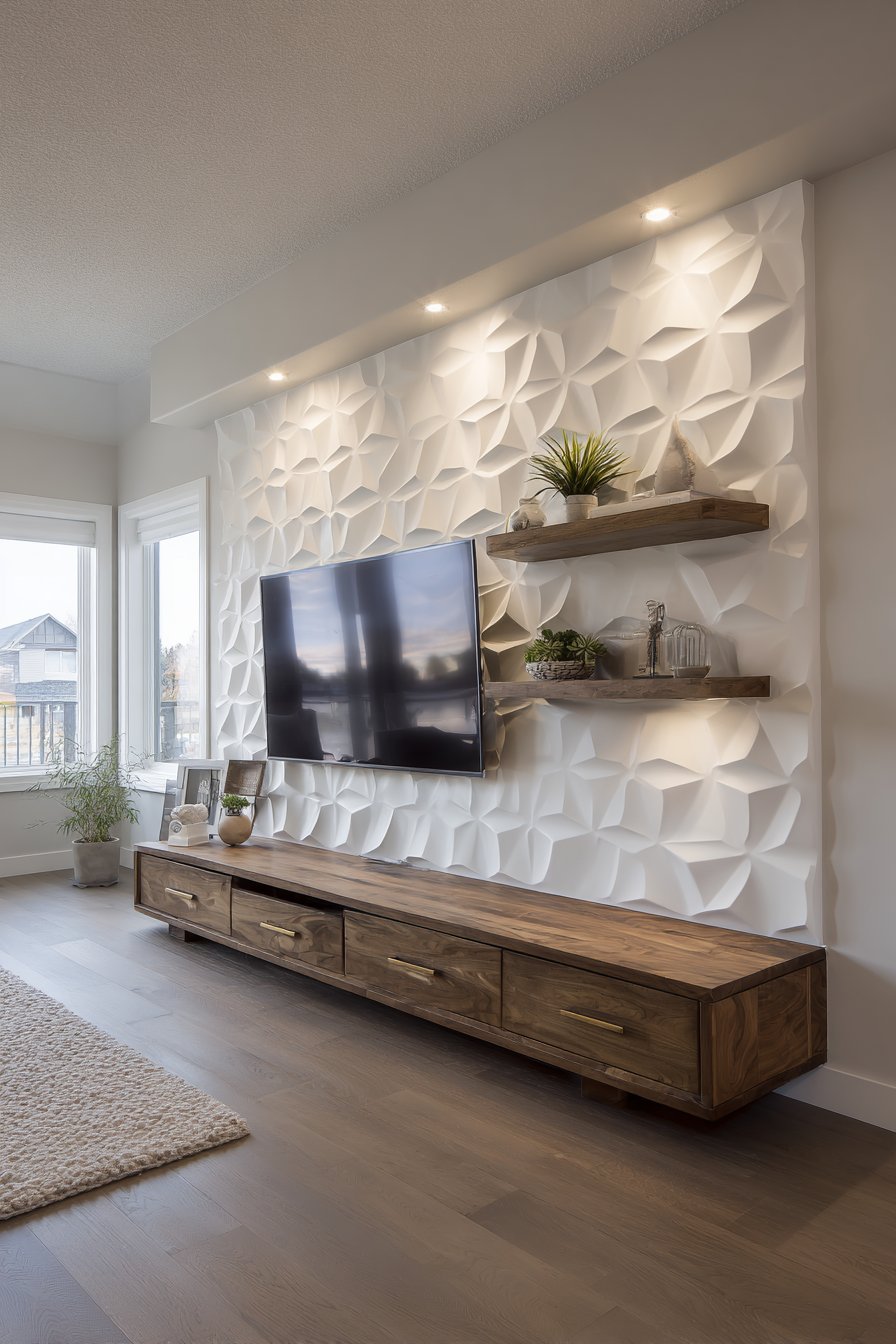
The power of three-dimensional design takes center stage with geometric panel installations that redefine contemporary living spaces. These sculptural wall treatments create visual intrigue through layered surfaces that catch light and cast shadows throughout the day.
Warm grey tones provide sophisticated neutrality while the dimensional quality adds depth that flat paint simply cannot achieve. This design approach works exceptionally well behind media consoles, creating a striking focal point that elevates your entertainment area from functional to fabulous.
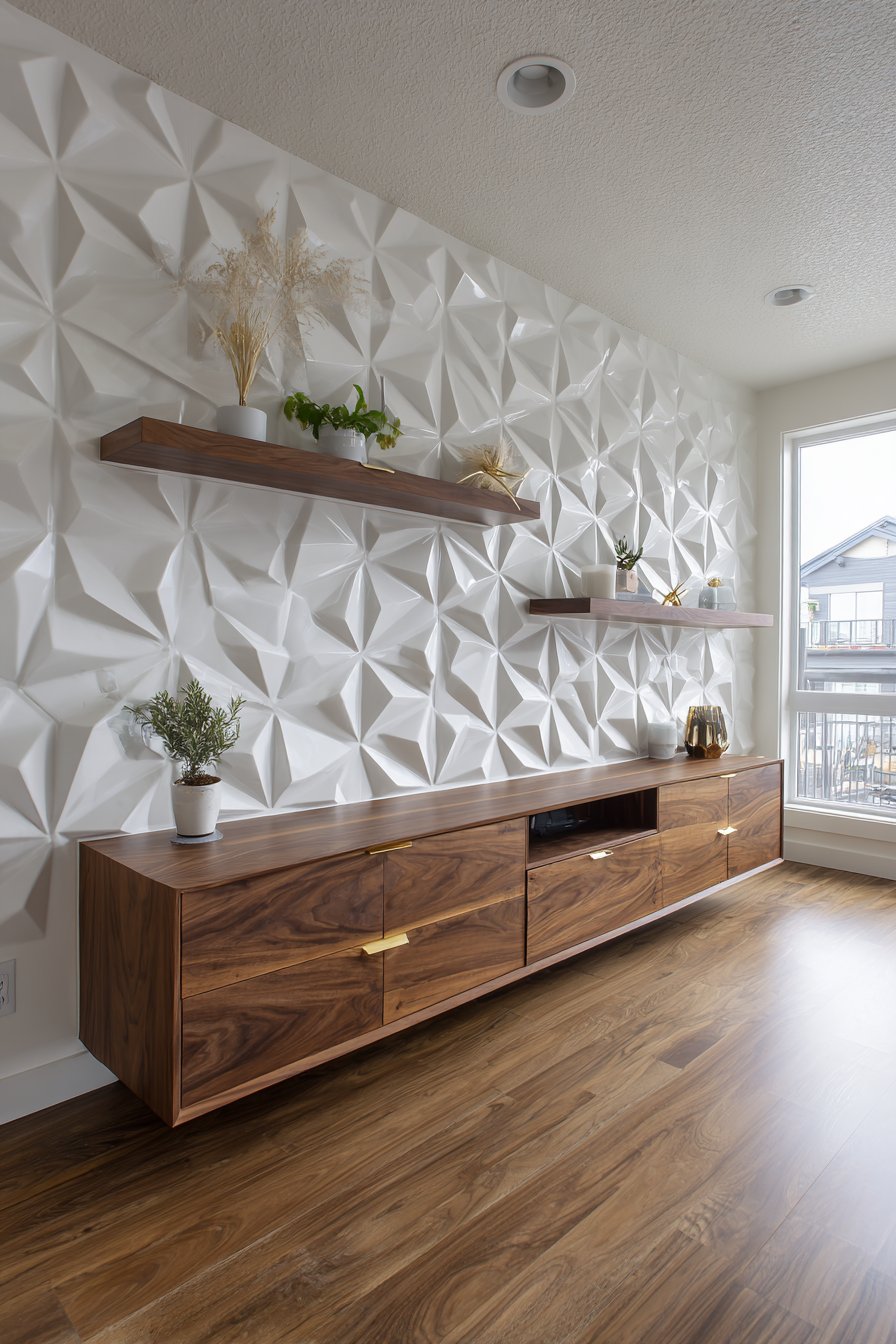
The geometric patterns available range from subtle angular variations to bold, dramatic configurations. Each panel interlocks seamlessly, creating continuous flow across the wall surface. The texture invites touch while commanding visual attention, making it perfect for spaces where you want to make a statement without overwhelming color. Natural walnut wood elements ground the design, introducing organic warmth that balances the architectural precision of the geometric forms.
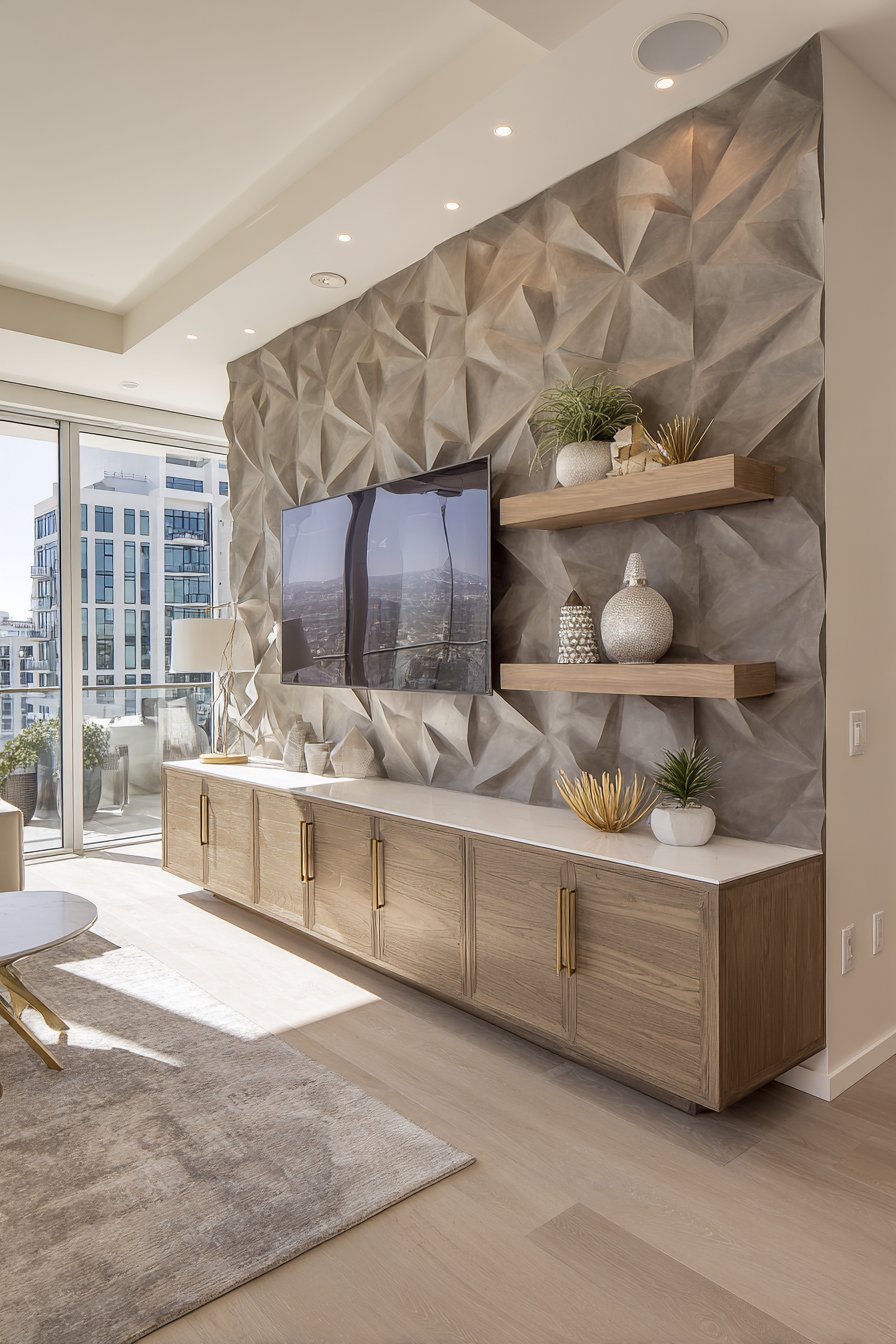
Strategic lighting transforms this wall design from impressive to extraordinary. Recessed fixtures positioned at carefully calculated angles emphasize the dimensional qualities of the panels. Shadows become part of the design vocabulary, shifting as daylight changes throughout the day. The interplay between light and shadow creates a living artwork that never looks the same twice, offering constant visual interest that keeps the space feeling fresh and dynamic.
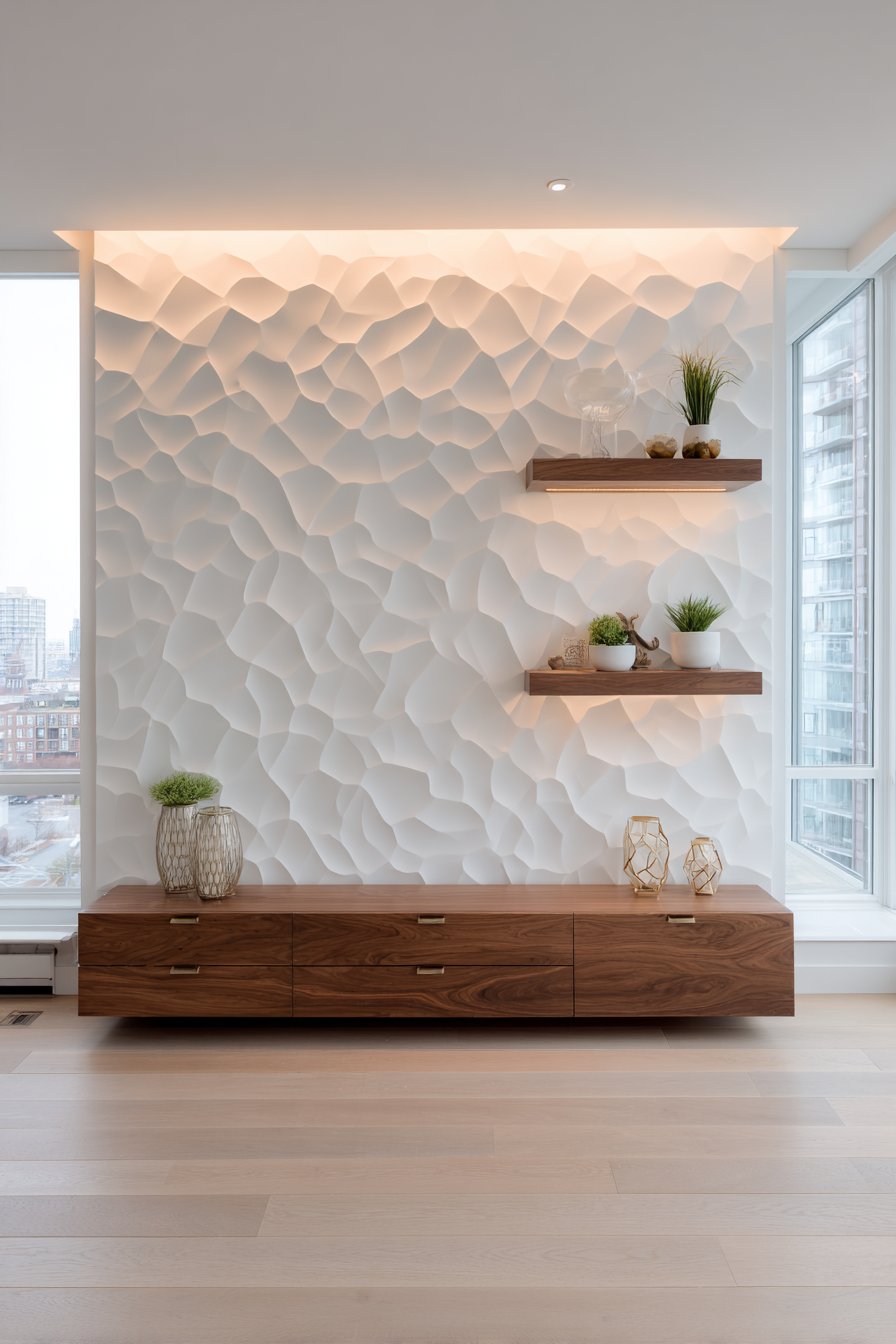
Brass hardware accents provide refined metallic touches that catch the eye without competing with the textural statement. Floating shelves integrate seamlessly, offering display opportunities for curated decor items and living greenery. The combination of materials—textured panels, natural wood, metallic accents, and organic plant life—creates a balanced composition that feels both sophisticated and welcoming.
Key Design Tips:
- Select geometric panels in neutral tones to maintain versatility
- Install recessed lighting at 30-degree angles for optimal shadow play
- Limit decorative items on floating shelves to prevent visual clutter
- Choose low-profile furniture to avoid competing with the wall texture
- Consider panel scale relative to wall size for proper proportion
2. Scandinavian Floor-to-Ceiling Built-In Shelving
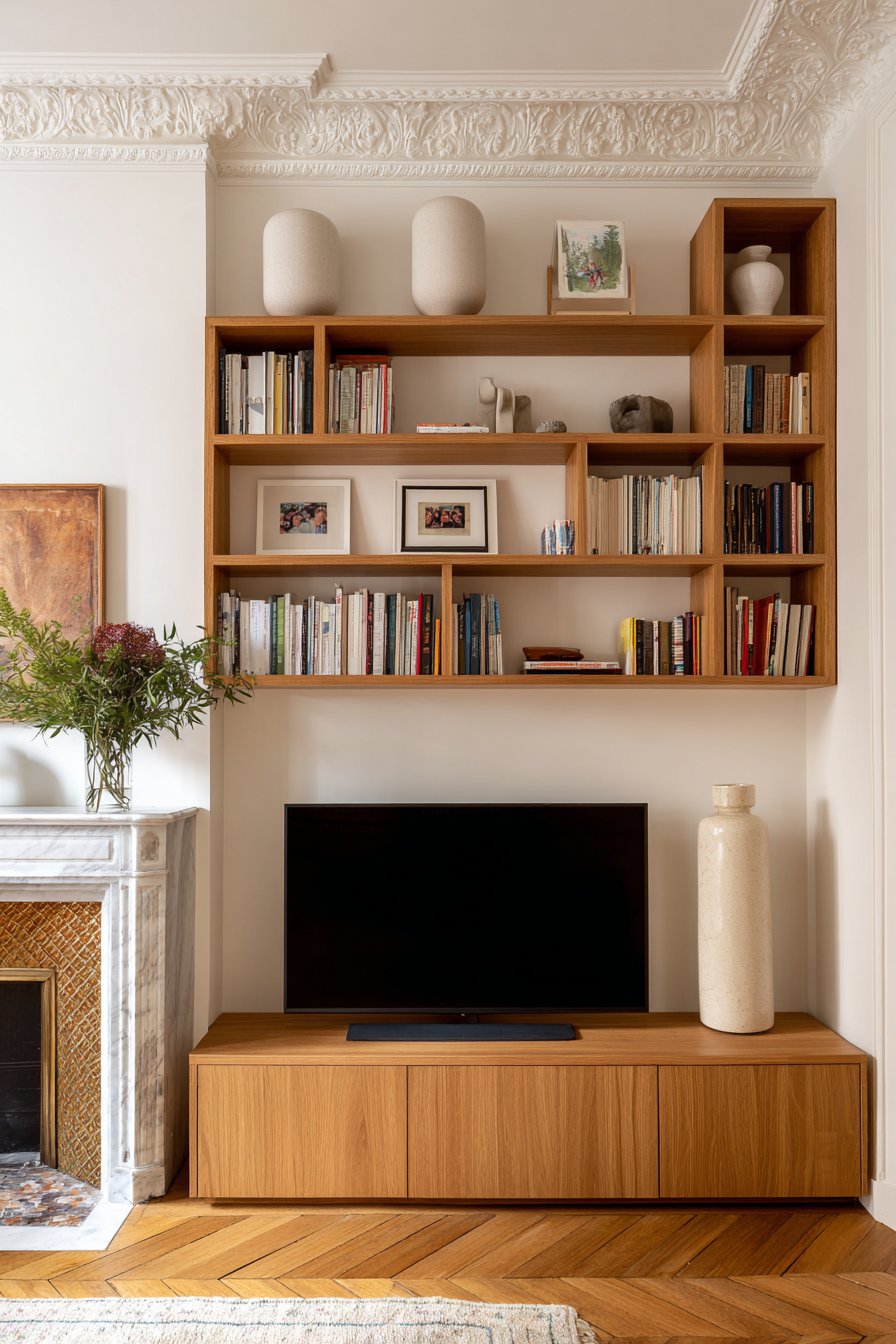
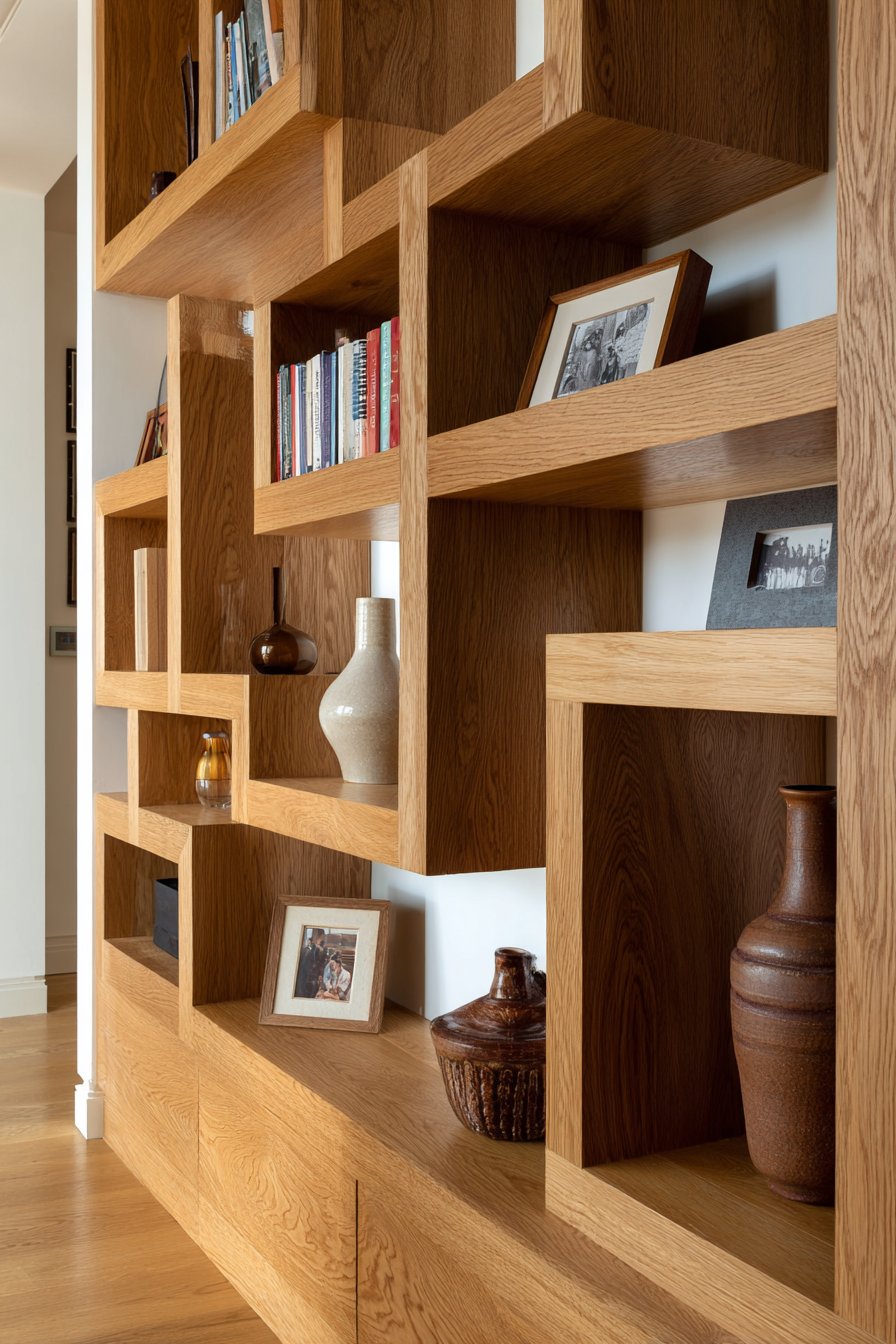
Scandinavian design philosophy celebrates functionality without sacrificing beauty, and nowhere is this more evident than in floor-to-ceiling built-in shelving systems. Light oak wood brings warmth and natural character while maintaining the airy feel characteristic of Nordic interiors.
These comprehensive storage solutions integrate seamlessly with wall surfaces, creating the illusion that they’ve always been part of the room’s architecture. The mix of open compartments and closed cabinets provides display opportunities alongside concealed storage for a clutter-free aesthetic.
The beauty of built-in shelving lies in its customization potential. Each compartment can be sized to accommodate specific items, from oversized art books to small ceramic collections. The natural grain variations in oak wood add organic interest, ensuring the shelving itself becomes a design feature rather than merely a functional element. White walls surrounding the woodwork create crisp contrast that defines the shelving’s architectural presence while maintaining the light, bright atmosphere central to Scandinavian style.
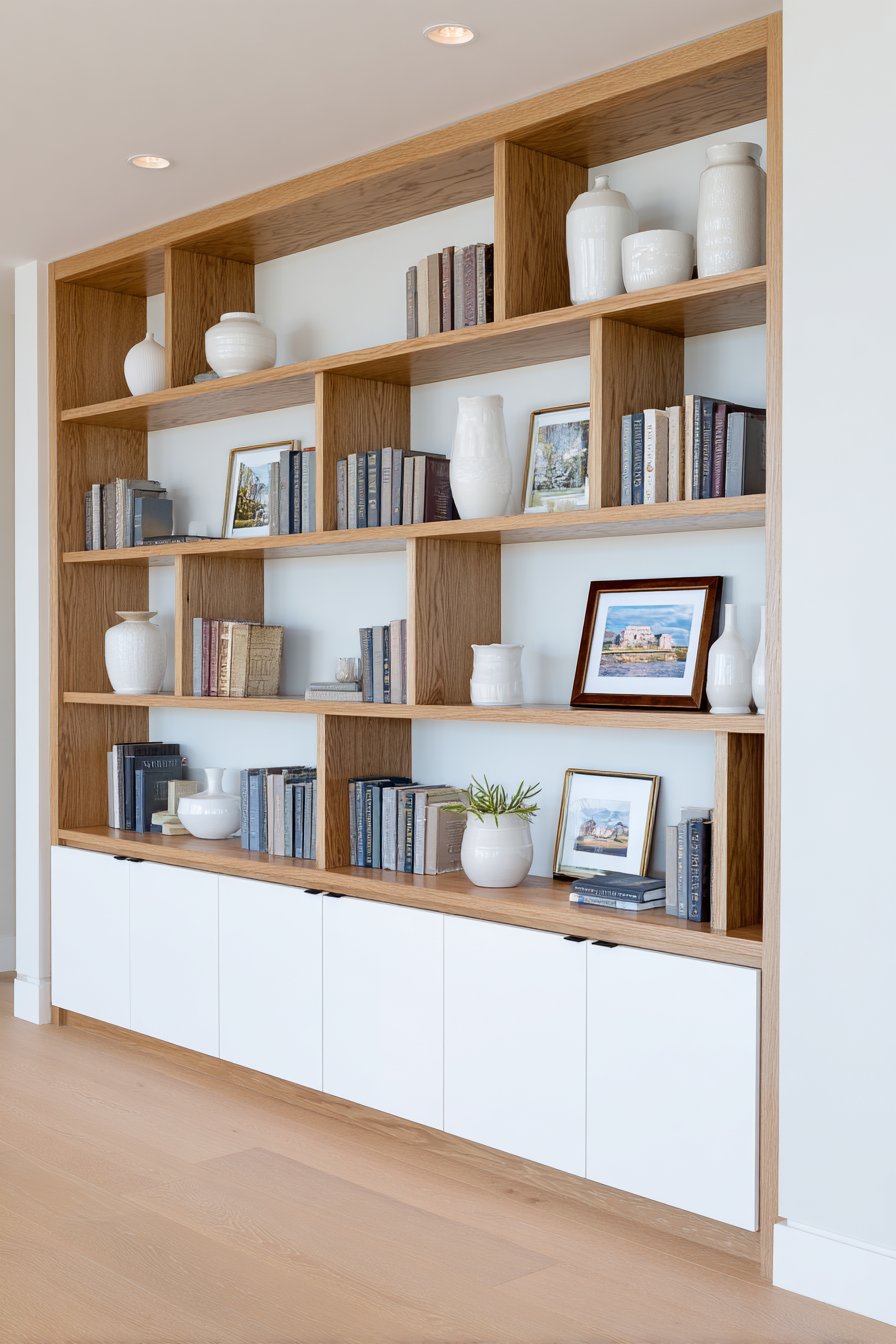
Styling these shelves requires thoughtful curation rather than filling every available space. Books arranged both vertically and horizontally create visual rhythm. Ceramic vases in muted tones add sculptural interest. Framed family photographs personalize the space while maintaining the organized aesthetic.
The key is achieving balance between display and breathing room, allowing each item space to be appreciated individually while contributing to the overall composition.
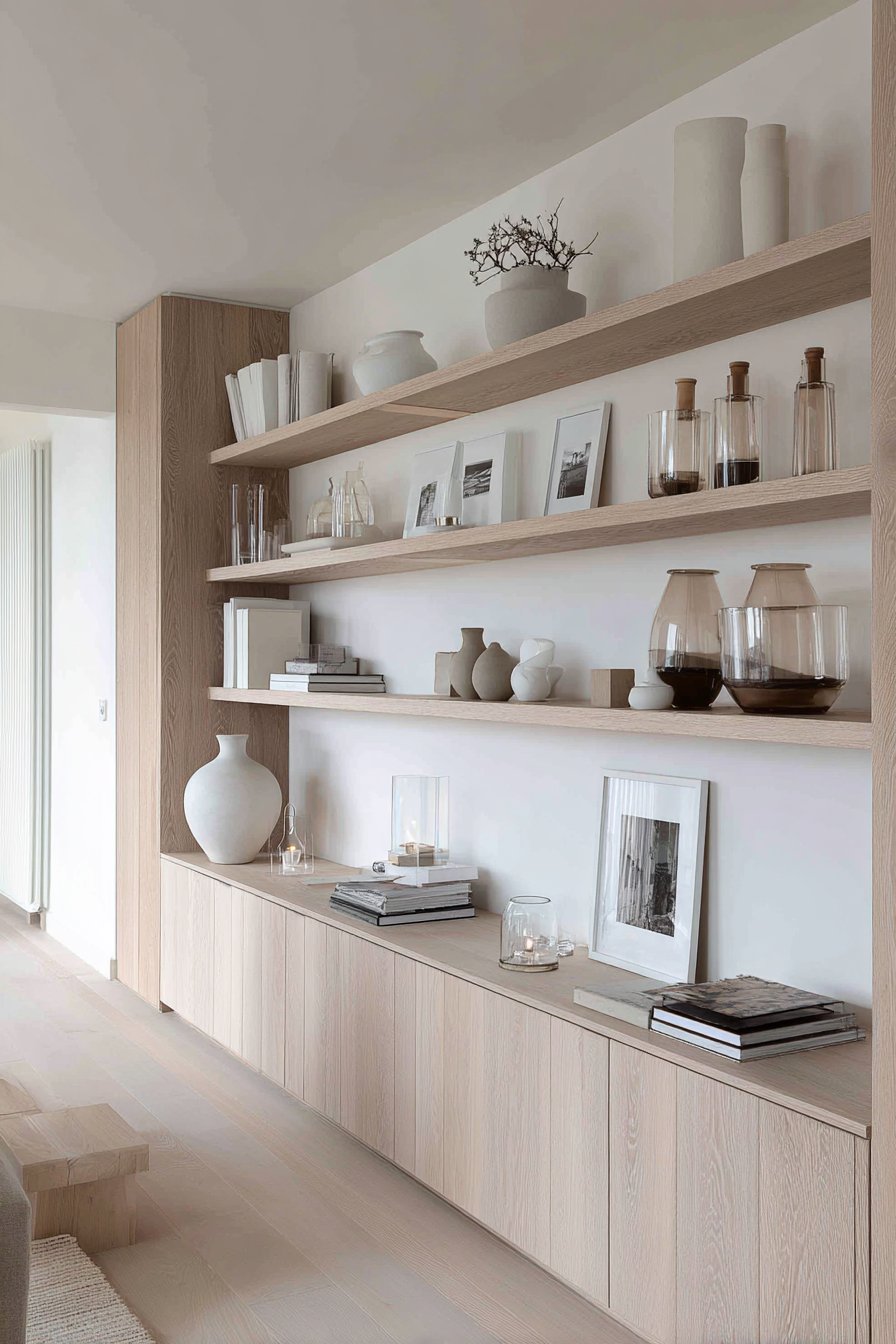
This design approach proves particularly valuable in smaller living rooms where space efficiency matters. The vertical emphasis draws the eye upward, creating the perception of greater height. Closed lower cabinets hide everyday clutter while upper open shelving displays treasured items. The result is a living room that feels both expansive and intimately personal, efficiently organized yet warmly lived-in.
Key Design Tips:
- Install lighting inside shelving compartments to highlight displayed items
- Maintain a 60/40 ratio between filled and empty shelf space
- Group similar items in odd numbers for visual appeal
- Use closed cabinets for items you access frequently but prefer hidden
- Select hardware in brushed nickel or brass for subtle sophistication
3. Contemporary Gallery Wall Arrangement
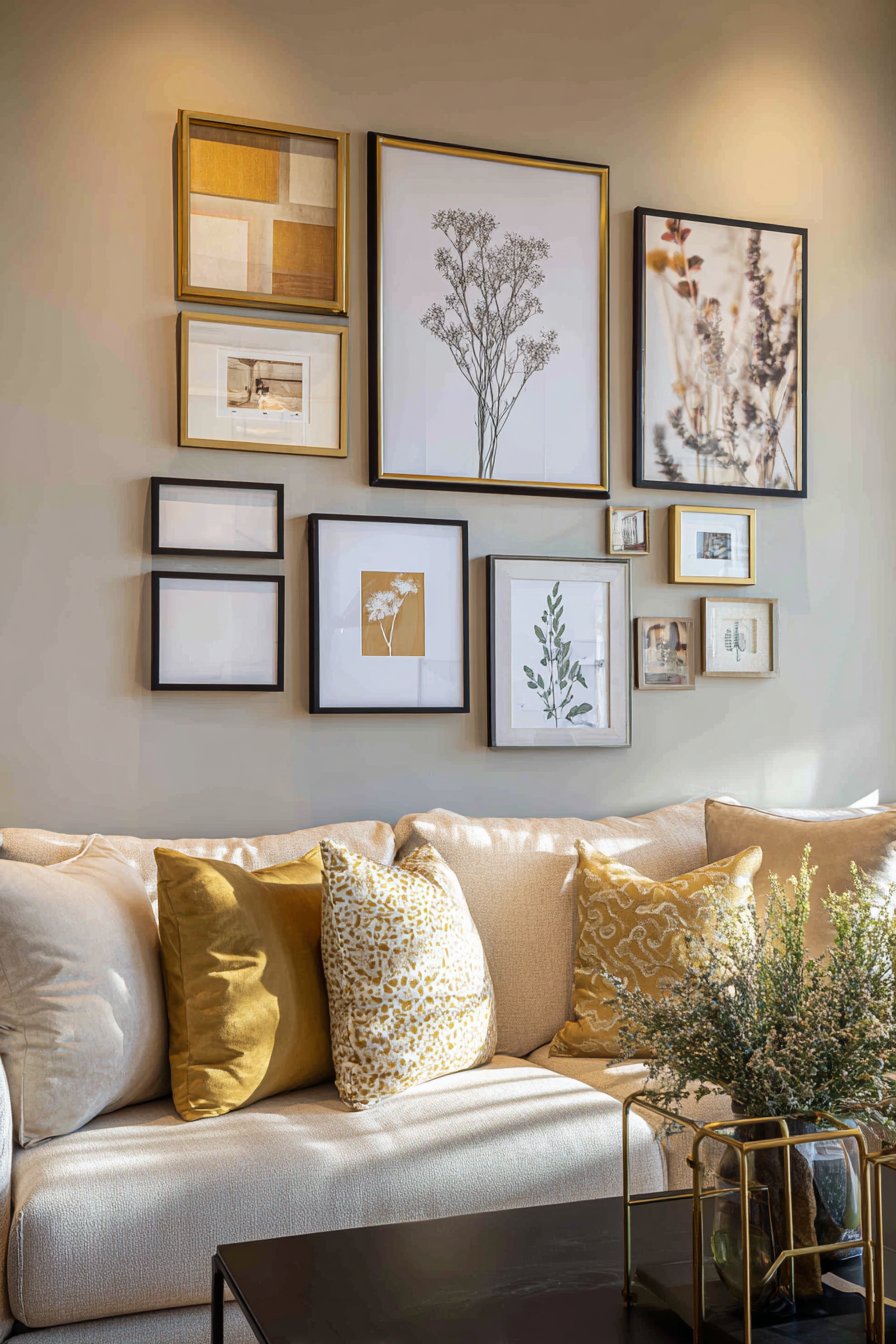
Gallery walls transform blank spaces into personal museums that celebrate your aesthetic sensibilities and cherished memories. The contemporary approach to gallery arrangements embraces asymmetry while maintaining overall balance, creating dynamic compositions that draw the eye across the entire display. Mixed frame finishes—black for drama, natural wood for warmth, brass for elegance—add depth and prevent monotony. This layered approach creates visual complexity that rewards repeated viewing, revealing new details with each glance.
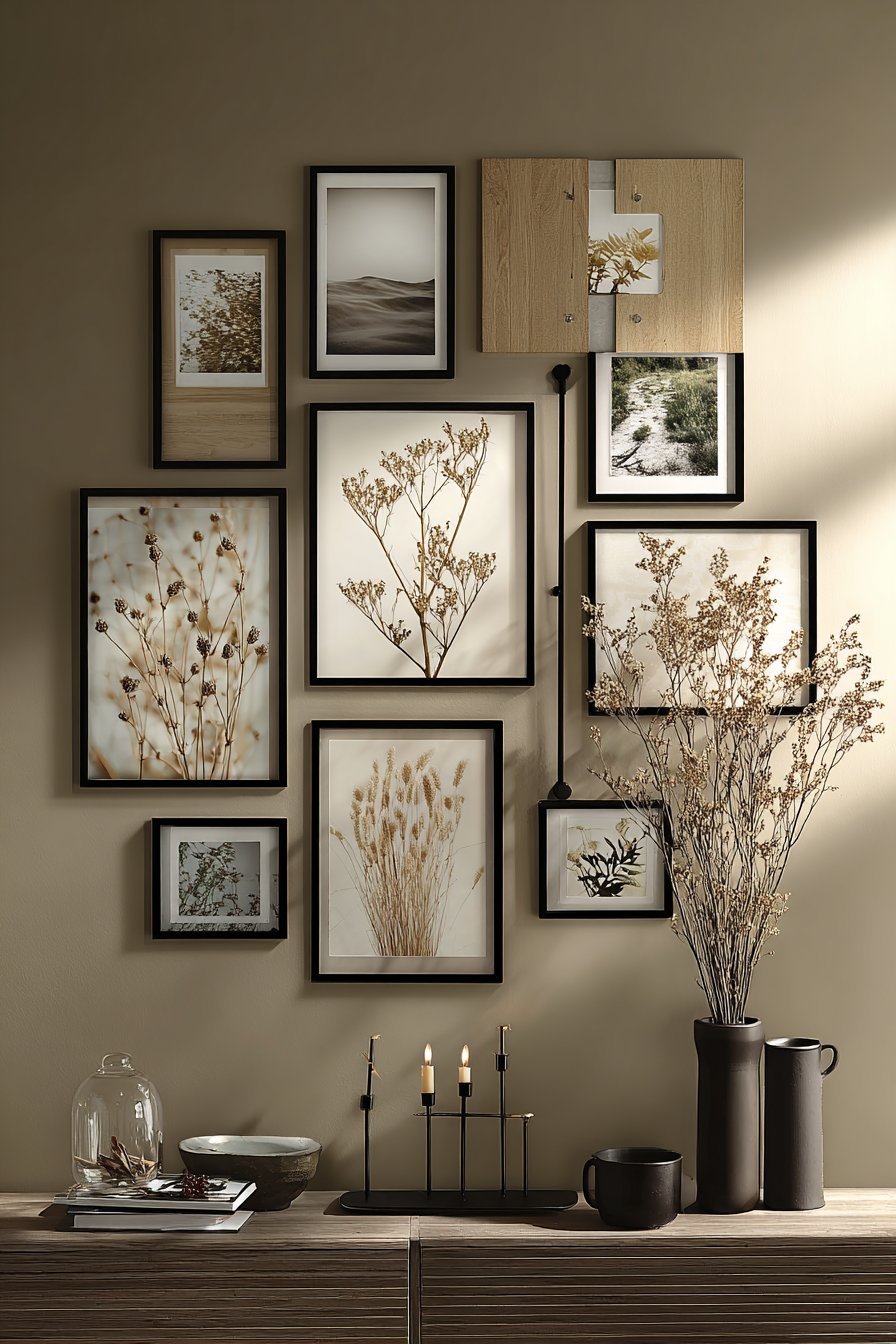
The art selection process offers opportunities for meaningful curation. Abstract prints provide bold focal points with their gestural energy. Photography captures moments and perspectives that resonate personally. Botanical illustrations introduce organic elements and natural color palettes. The mix of styles prevents the wall from feeling too precious or formal, instead creating an eclectic yet cohesive collection that reflects diverse interests and experiences.
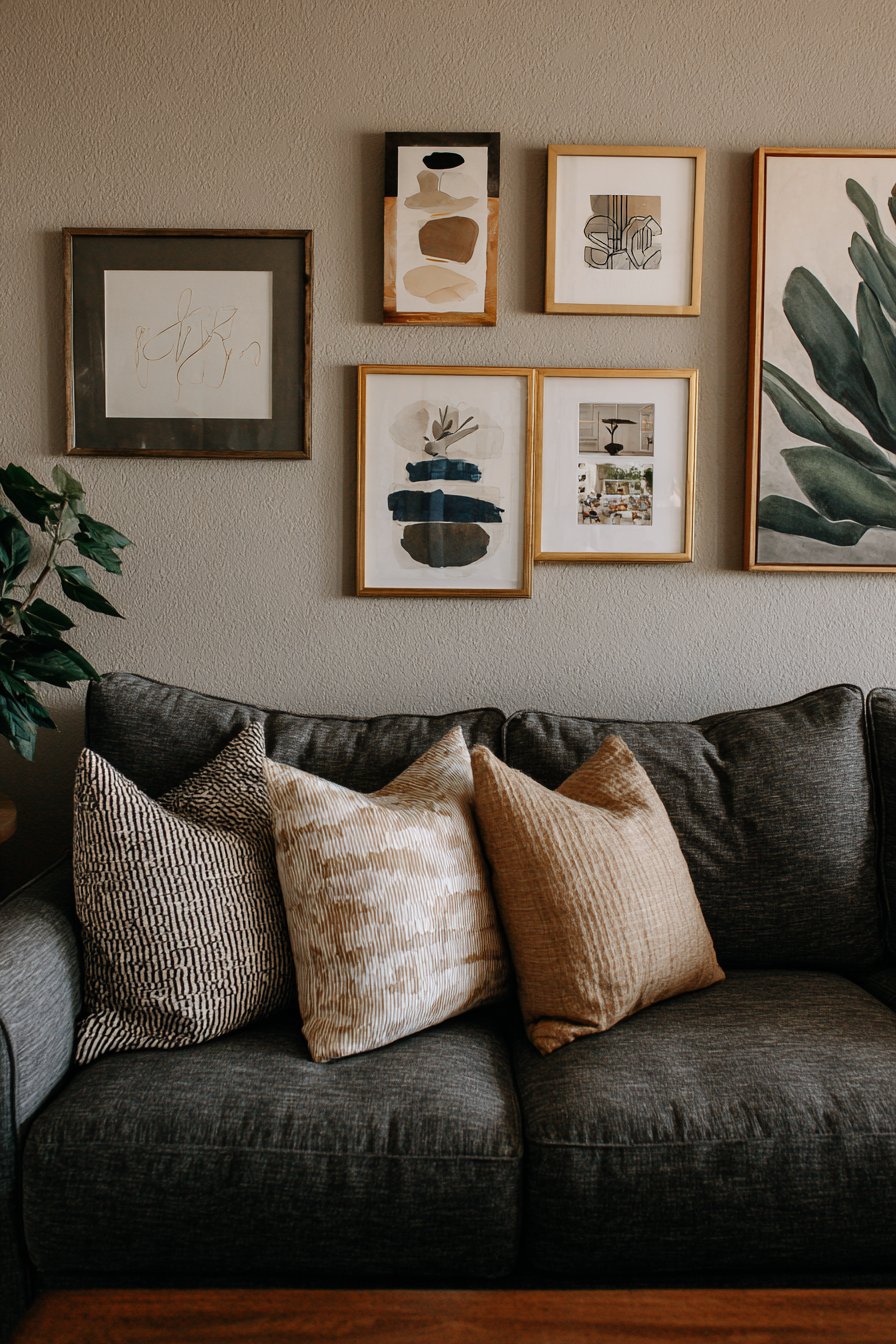
Wall color plays a crucial supporting role in gallery wall success. Warm grey paint with matte finish provides sophisticated backdrop that doesn’t compete with the artwork. The subtle tone adds depth compared to stark white while maintaining neutrality that allows the frames and art to command attention. Professional lighting techniques prevent glare on glass-covered pieces while ensuring each artwork receives appropriate illumination.
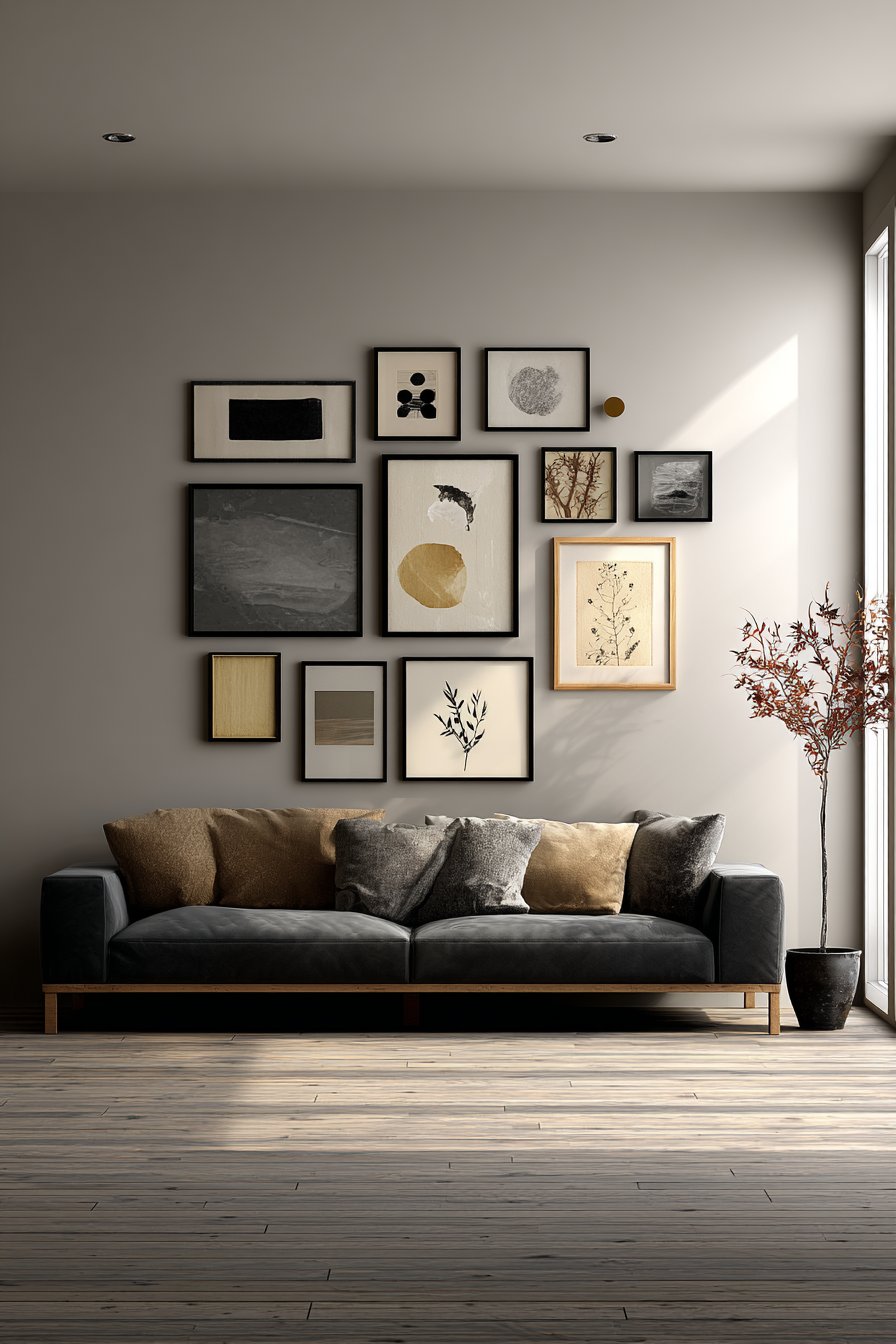
Planning the arrangement before installation proves essential for achieving balanced composition. Lay pieces on the floor first, experimenting with spacing and arrangement. Maintain consistent spacing between frames—typically 2-3 inches works well. Consider the overall shape of the arrangement, whether horizontal, vertical, or clustered around a central piece. The goal is creating intentional composition rather than random placement.
Key Design Tips:
- Create paper templates of each frame before hanging to test arrangements
- Maintain eye-level placement for the gallery wall’s center point
- Mix horizontal and vertical orientations for dynamic visual flow
- Include pieces in varying sizes to prevent uniform, static appearance
- Update artwork periodically to keep the gallery feeling fresh
4. Rustic Reclaimed Wood Accent Wall
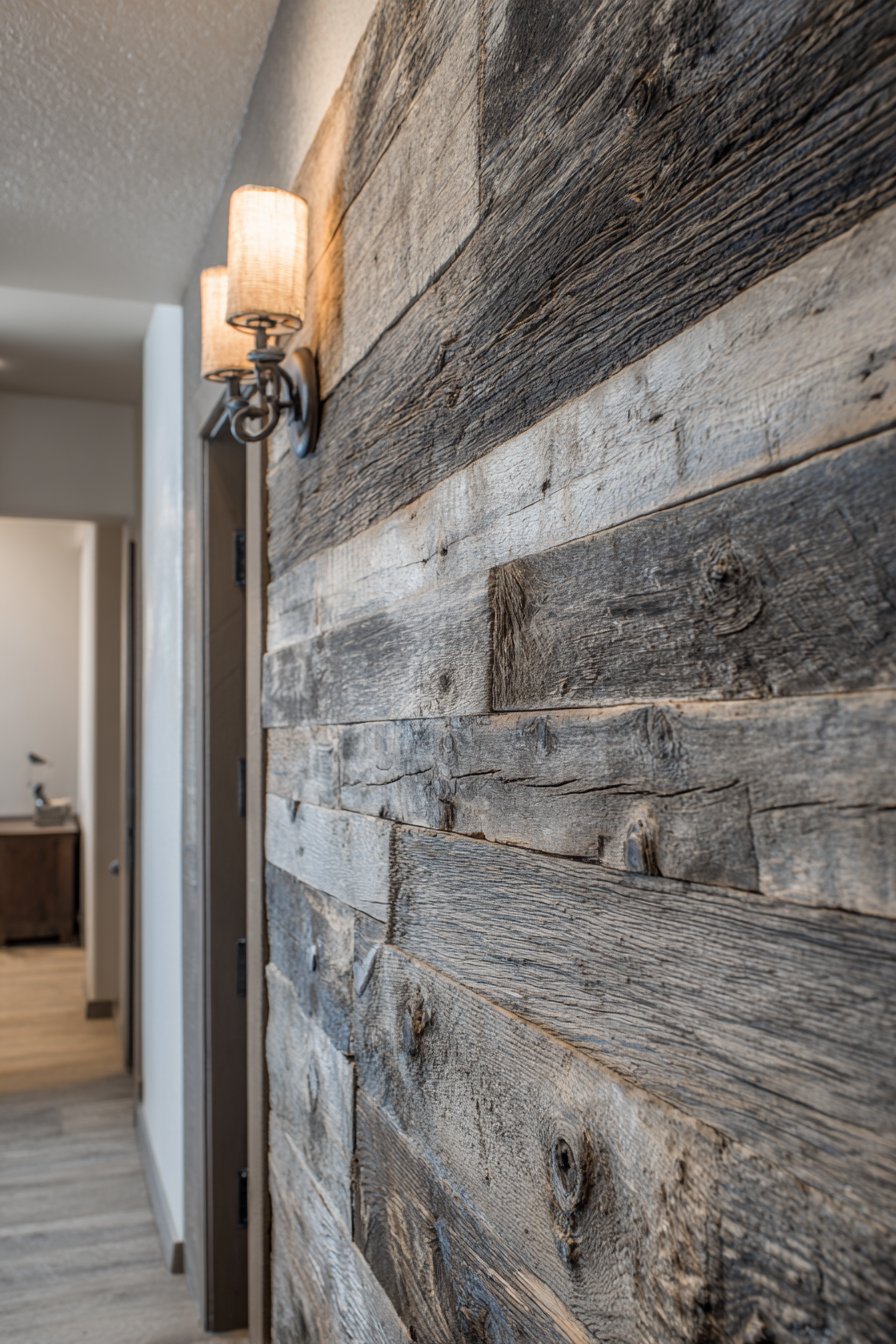
Reclaimed barn wood brings unmatched authenticity and character to living room spaces, each plank carrying stories written in weathered grain and natural patina. The horizontal installation emphasizes width, making rooms feel more expansive.
Varied grey-brown tones create organic color gradations that paint would struggle to replicate. Natural knots, nail holes, and weathering marks aren’t flaws but features that distinguish genuine reclaimed materials from manufactured alternatives.
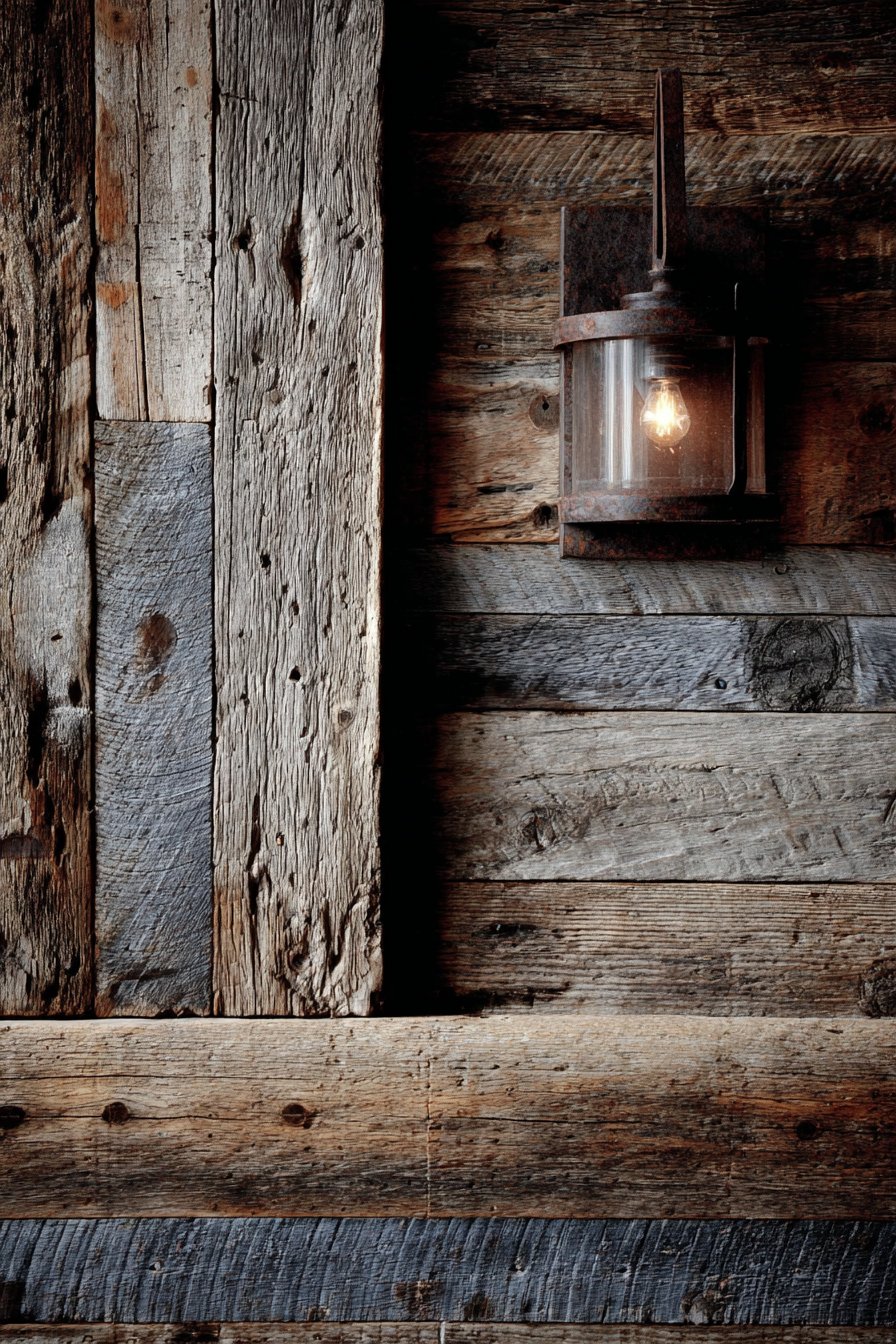
This design approach celebrates imperfection as beauty, embracing the authentic character that comes from decades of exposure to the elements. Some planks show deep grey tones where rain once touched them. Others retain warmer brown hues protected by barn roofs. The variation creates natural visual interest that draws the eye across the wall surface, discovering new details in the wood’s story with each viewing.
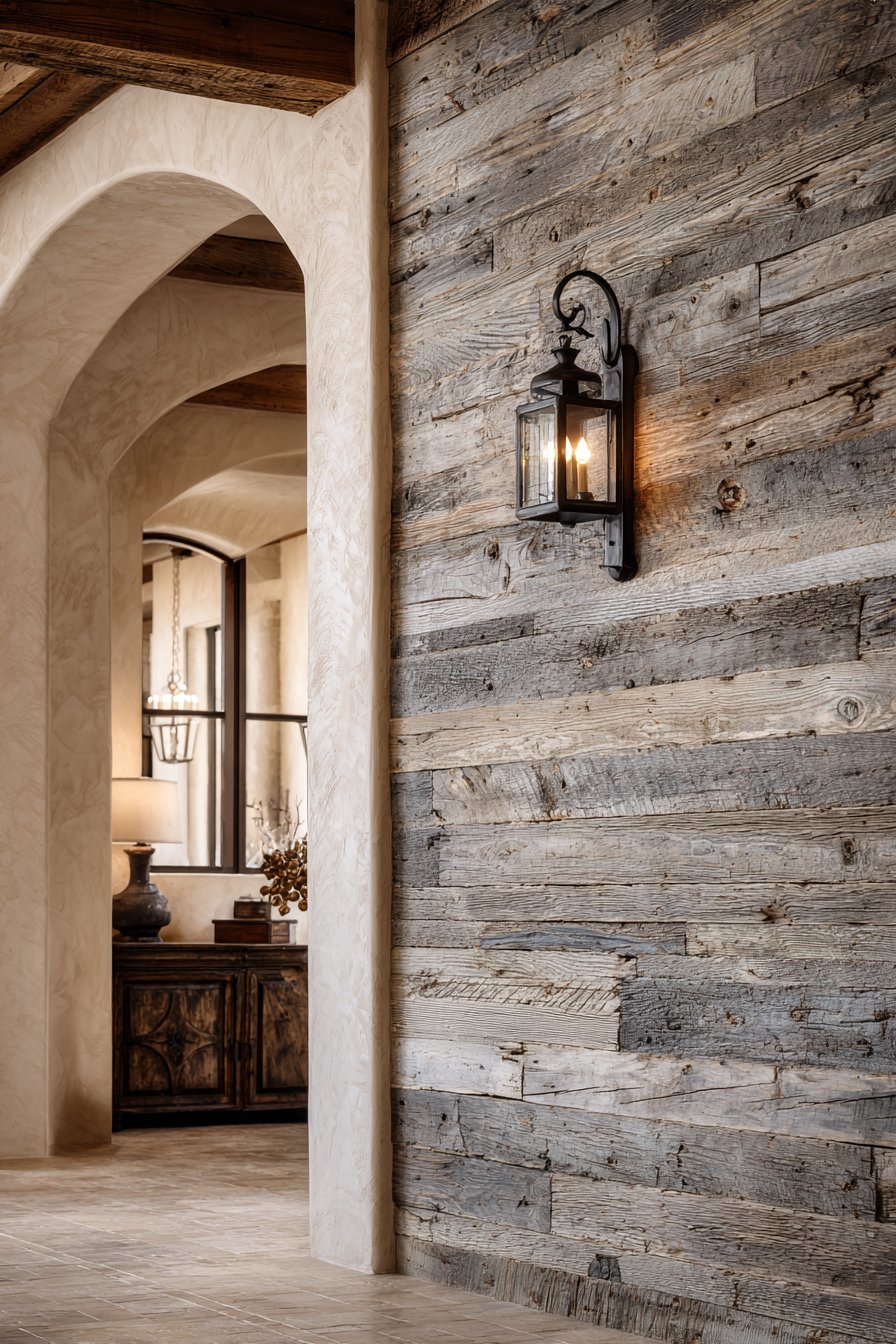
Lighting strategy significantly impacts how reclaimed wood presents in the space. Soft illumination emphasizes grain patterns and texture without creating harsh shadows. Wrought iron wall sconces provide both functional lighting and stylistic consistency with the rustic aesthetic. The fixtures’ aged metal finishes complement the weathered wood, creating cohesive material dialogue throughout the space.
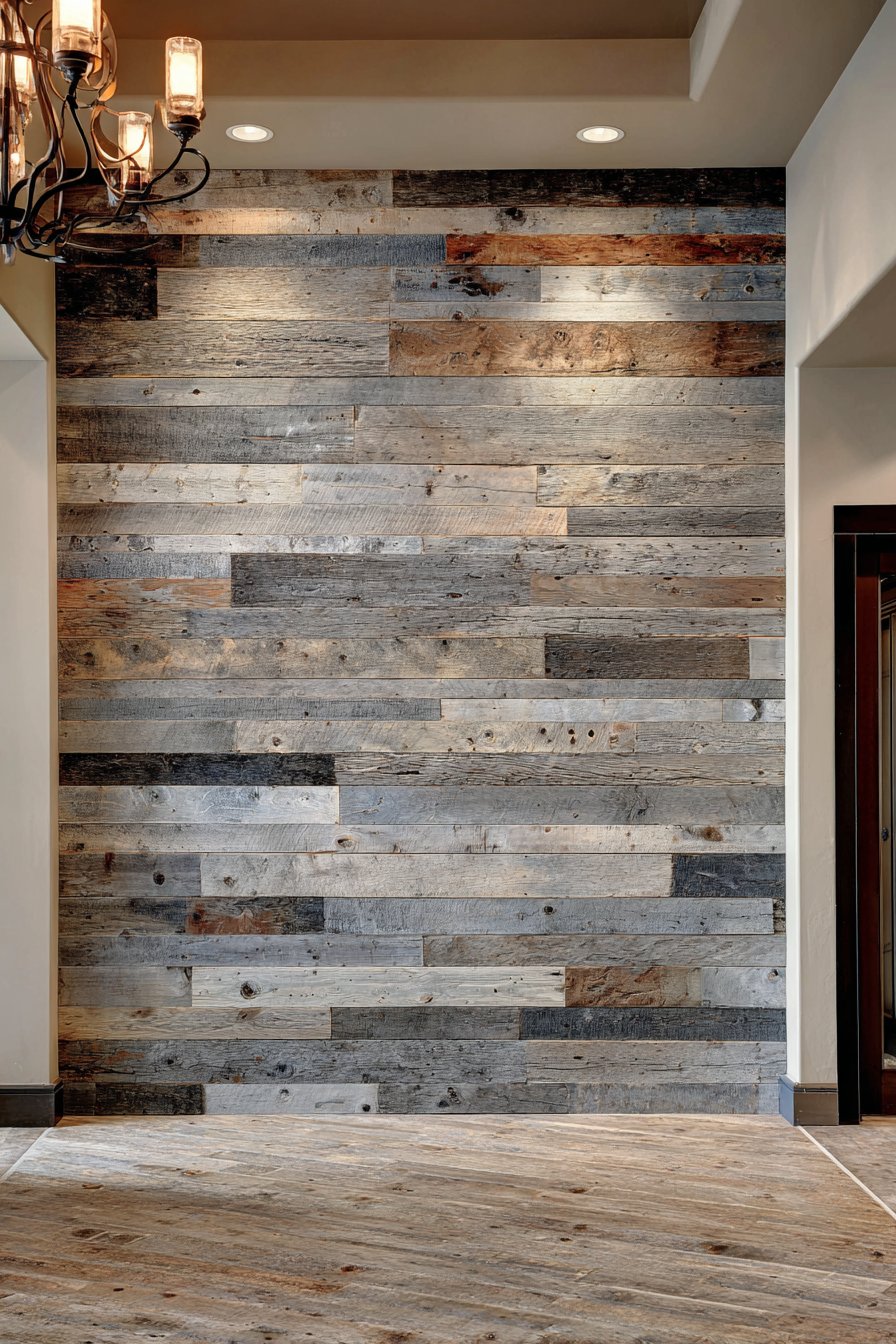
Installing reclaimed wood requires attention to structural considerations. Ensure proper acclimation to your home’s humidity levels before installation. Consider whether you want variation in plank widths or uniform sizing. Decide on finish—some prefer raw, unfinished wood while others opt for clear sealants that protect while preserving natural appearance. Each decision impacts the final aesthetic and maintenance requirements.
Key Design Tips:
- Source wood from reputable suppliers who verify authenticity
- Allow wood to acclimate in your home for two weeks before installation
- Apply clear matte sealant to protect wood while maintaining natural appearance
- Mix plank widths for more authentic, varied visual texture
- Balance the rustic wall with cleaner-lined furniture to prevent overwhelming
5. Minimalist White Shiplap Design
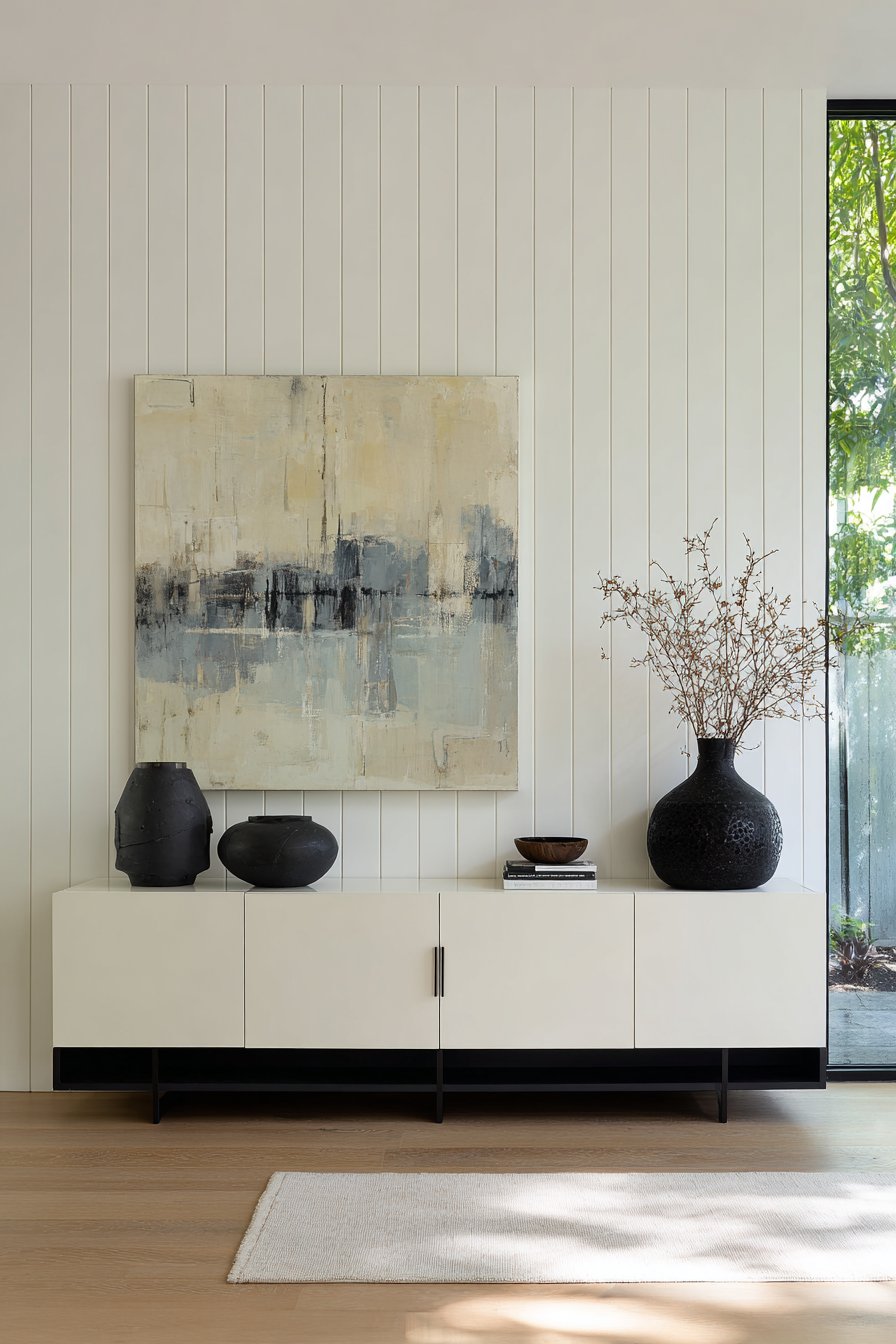
Shiplap paneling embodies the “less is more” philosophy, creating architectural interest through subtle horizontal lines rather than bold colors or busy patterns. Clean white paint amplifies natural light, making rooms feel larger and more open. The negative space becomes as important as the elements present, creating serene atmosphere conducive to relaxation and clear thinking. This design proves that simplicity, executed with precision, creates powerful impact.
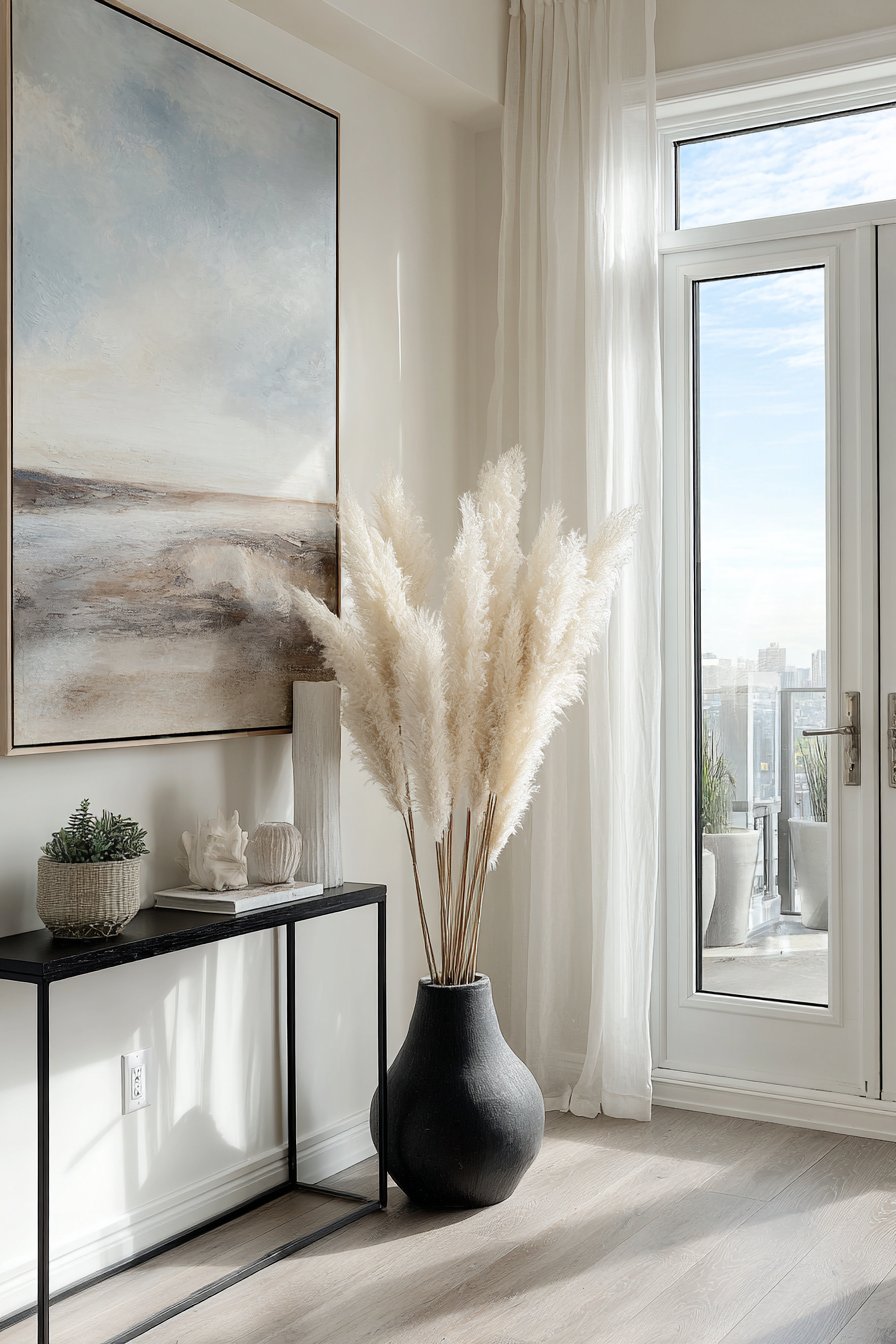
The floor-to-ceiling application creates vertical emphasis while the horizontal plank orientation balances this with lateral movement. Small shadow lines between boards add subtle texture that prevents the white surface from appearing flat or sterile. These gentle shadows shift with changing light throughout the day, adding quiet dynamism to the seemingly static surface.
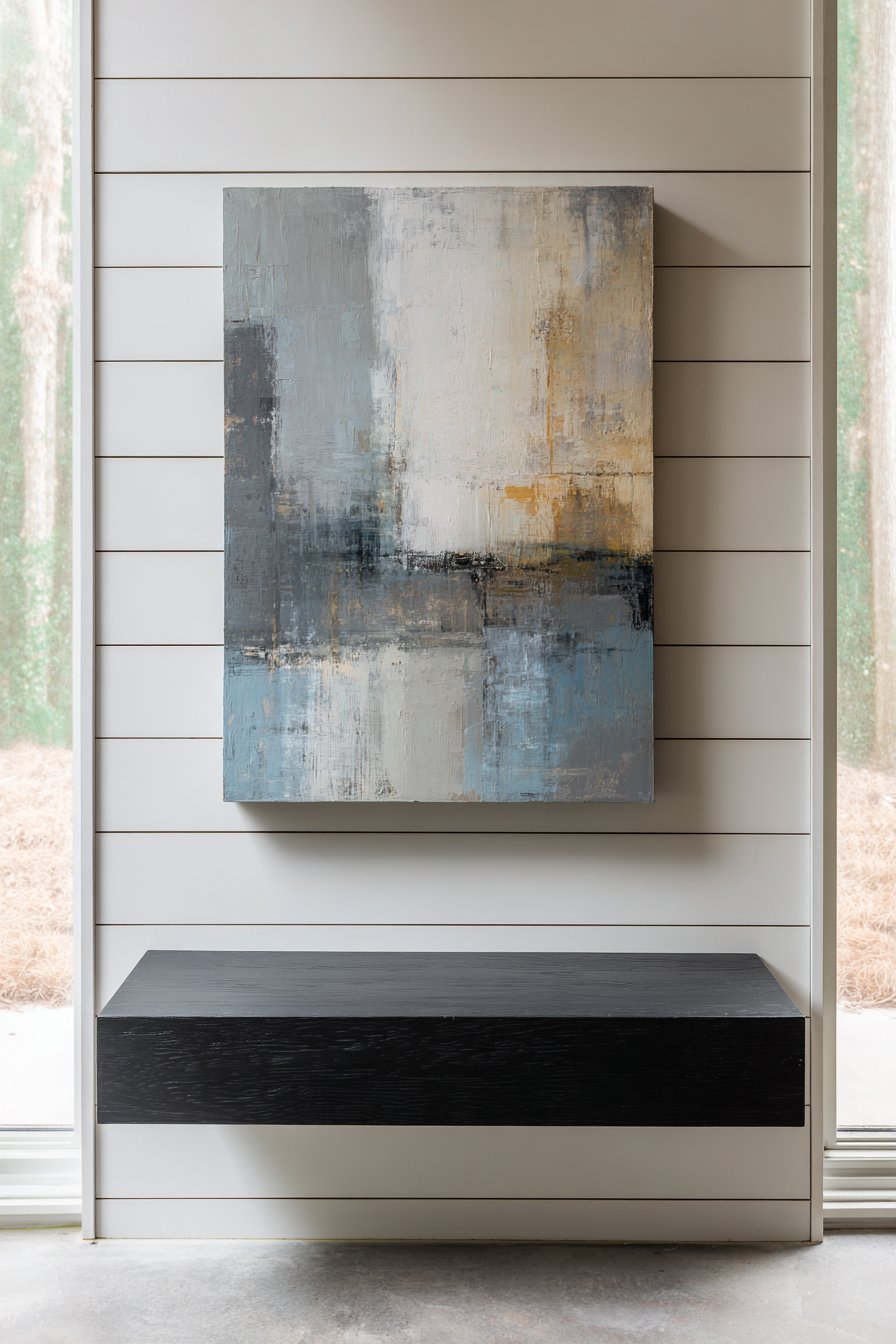
Artwork selection becomes crucial in minimalist spaces. A single oversized abstract canvas serves as focal point without cluttering the visual field. Neutral tones of beige, grey, and soft blue maintain the calm aesthetic while introducing gentle color variation. The large scale makes bold statement through size rather than complexity, demonstrating that minimalism doesn’t mean boring.
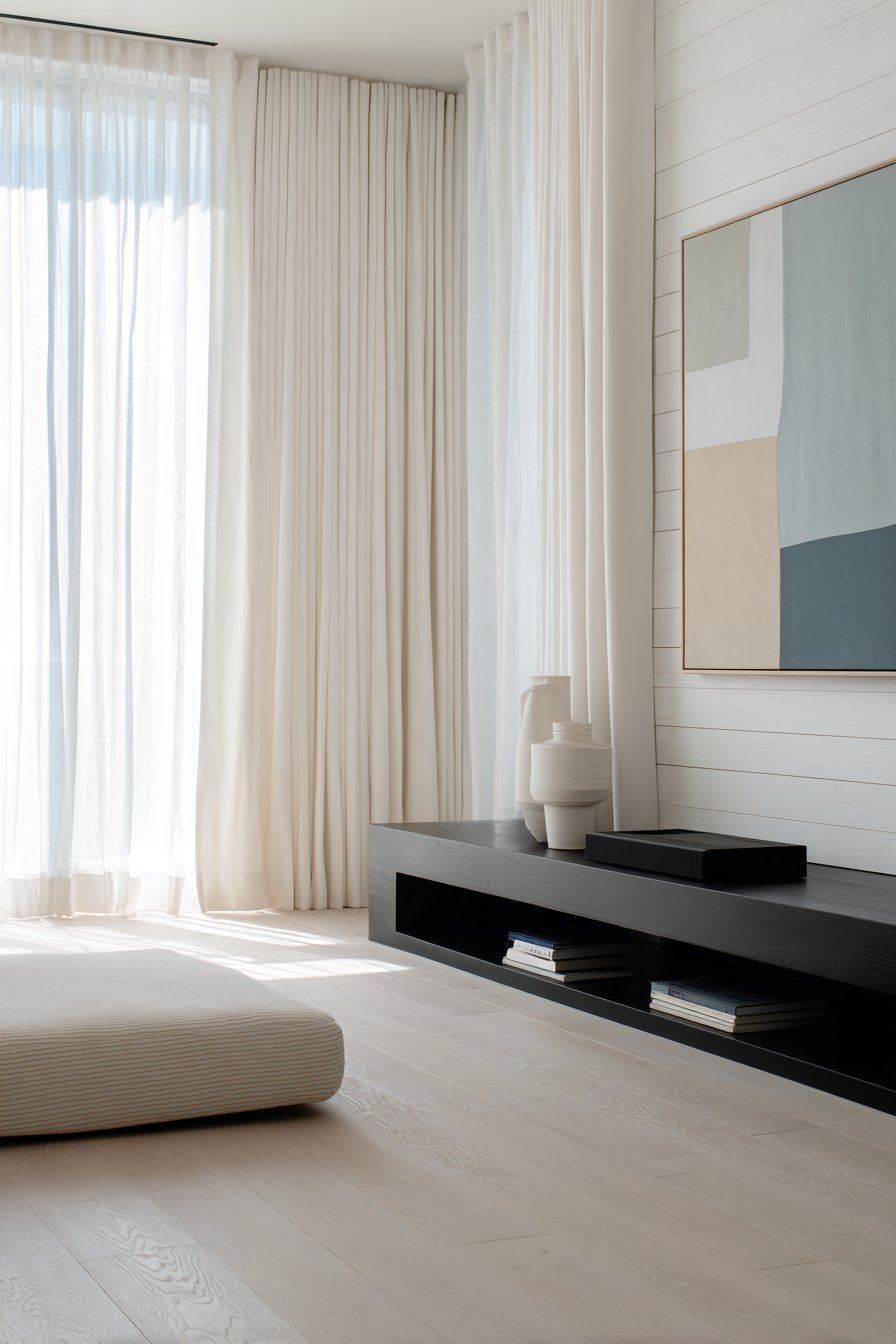
Furniture and styling require restraint in minimalist designs. A narrow floating console in matte black provides necessary function without visual weight. Minimal styling—perhaps a single sculptural object or small plant—maintains the uncluttered aesthetic. The composition breathes, allowing each element space to be appreciated individually while contributing to the peaceful whole.
Key Design Tips:
- Use premium paint with slight sheen to reflect light beautifully
- Maintain precise spacing between shiplap boards for professional appearance
- Limit decor to 3-5 carefully chosen pieces throughout the room
- Choose furniture with clean lines and minimal ornamentation
- Embrace negative space as intentional design element rather than emptiness
6. Bohemian Textured Fiber Art Display
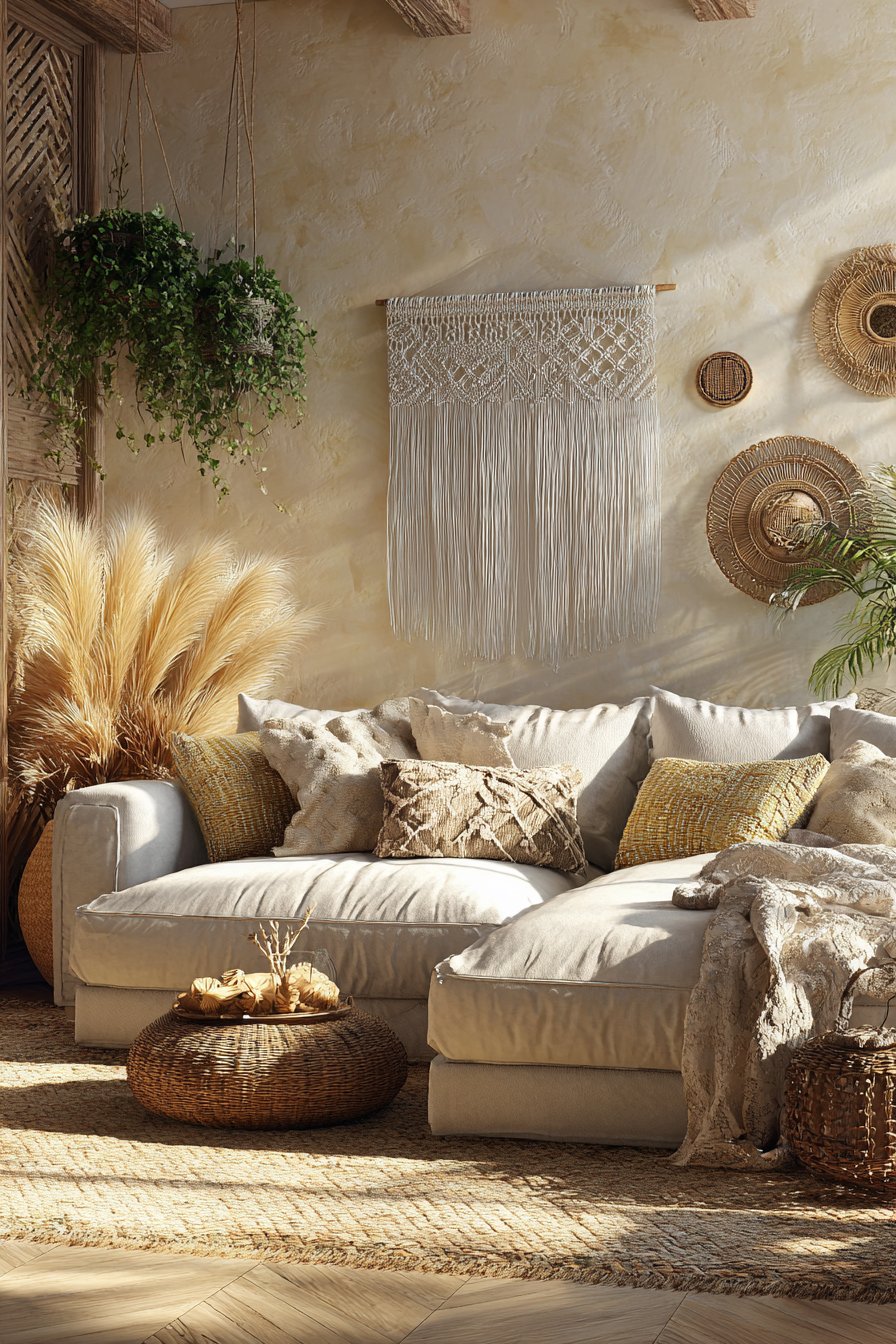
Bohemian design celebrates handcrafted beauty and natural materials, creating spaces that feel collected, personal, and warmly eclectic. Large macramé wall hangings serve as stunning focal points, their intricate knotwork demonstrating the beauty of patient craftsmanship. The ivory-toned fibers bring softness to wall surfaces while the dimensional quality adds depth and visual interest. Surrounding the central piece with smaller woven baskets, rattan mirrors, and dried botanical elements creates layered composition that rewards close inspection.

Texture becomes the primary design vocabulary in bohemian spaces. Smooth walls provide neutral backdrop that allows woven materials to shine. Rough-textured baskets contrast with delicate macramé knots. Glossy mirror surfaces reflect light differently than matte fibers. This textural diversity creates rich sensory experience that feels warm and inviting, encouraging touch and close examination.
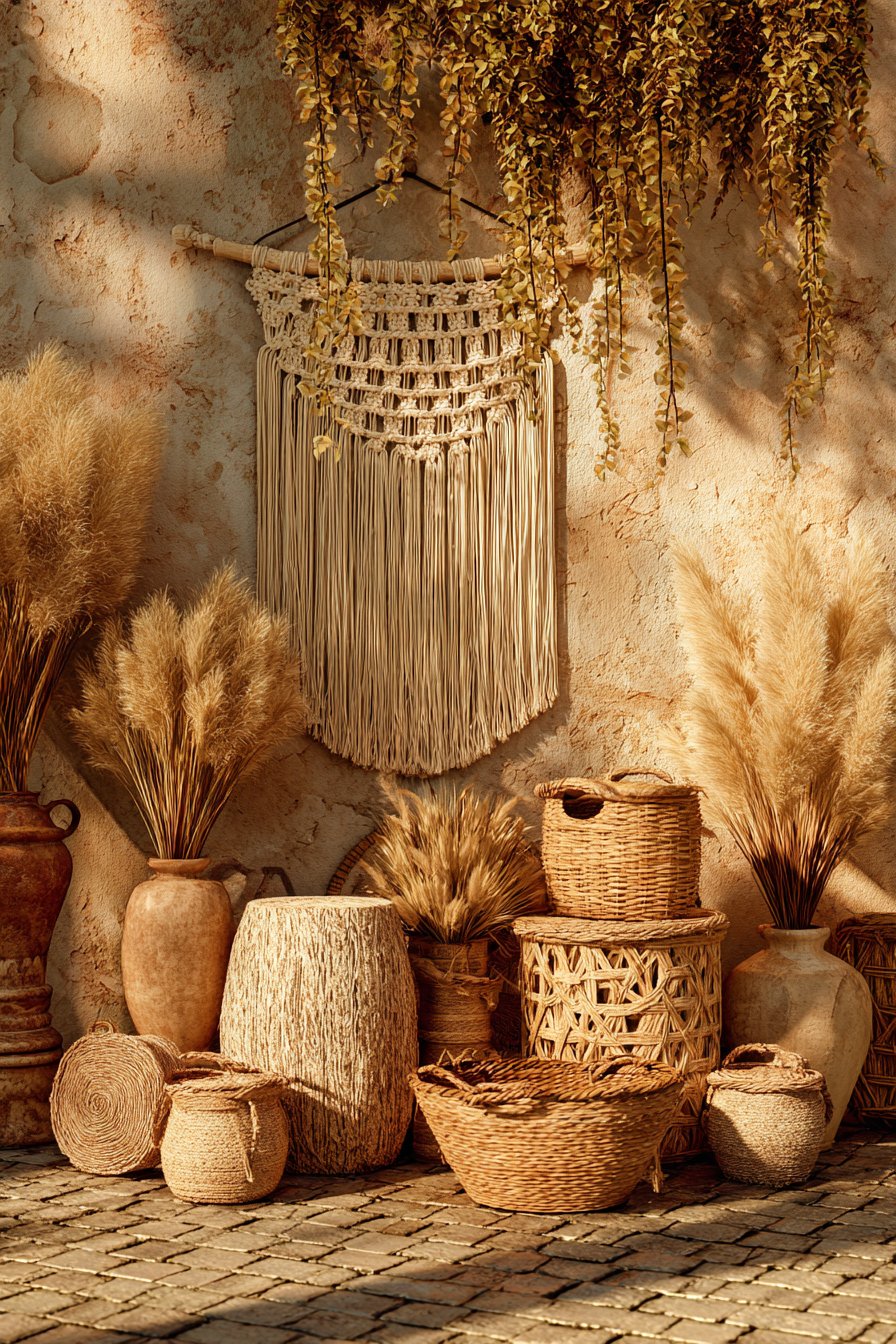
Living plants integrate seamlessly into bohemian wall designs, their organic growth patterns complementing handcrafted elements. Trailing pothos or string of pearls cascade from hanging planters at varying heights, creating vertical interest and bringing life to the composition. The greenery introduces natural color variation while reinforcing the connection to natural materials and artisanal traditions.

Golden hour lighting particularly enhances bohemian aesthetics. Warm afternoon light streaming through windows catches fiber textures, creating glowing halos around woven elements. Side lighting emphasizes dimensional qualities, casting gentle shadows that accentuate the handcrafted nature of each piece. The result feels magical and welcoming, perfect for spaces dedicated to relaxation and creativity.
Key Design Tips:
- Anchor the arrangement with the largest piece at center
- Vary sizes and shapes to create dynamic, asymmetrical composition
- Include pieces with different textures for sensory interest
- Allow 4-6 inches between hanging elements to prevent crowding
- Incorporate living plants to add movement and fresh energy
7. Industrial Exposed Brick Statement
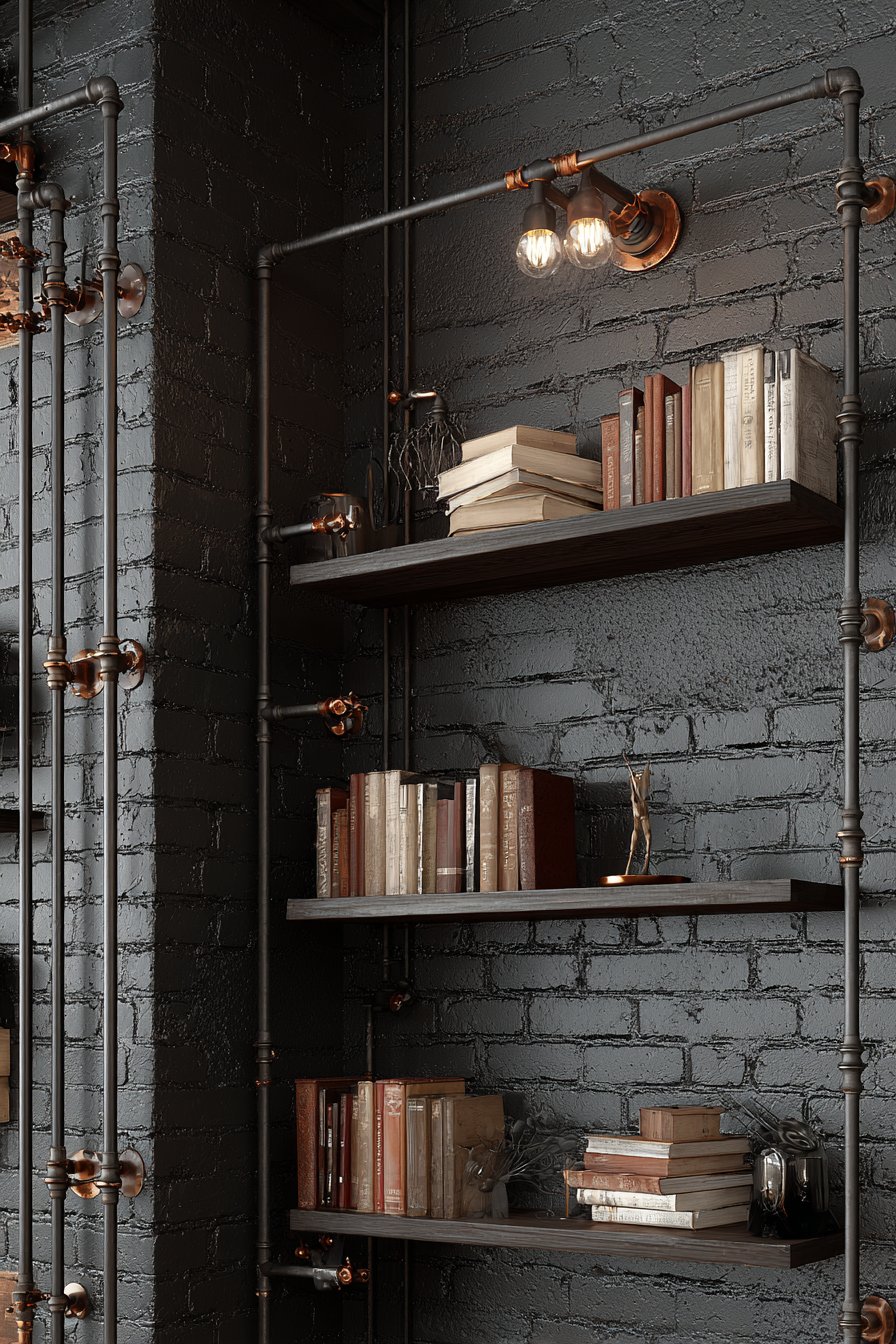
Industrial design embraces raw materials and urban aesthetics, celebrating elements typically hidden in traditional interiors. Exposed brick painted in dark charcoal grey creates dramatic backdrop while maintaining the authentic texture and character of masonry. Original mortar lines remain visible, telling the story of the wall’s construction. This approach works particularly well in loft spaces, converted warehouses, or homes seeking to capture urban sophistication.
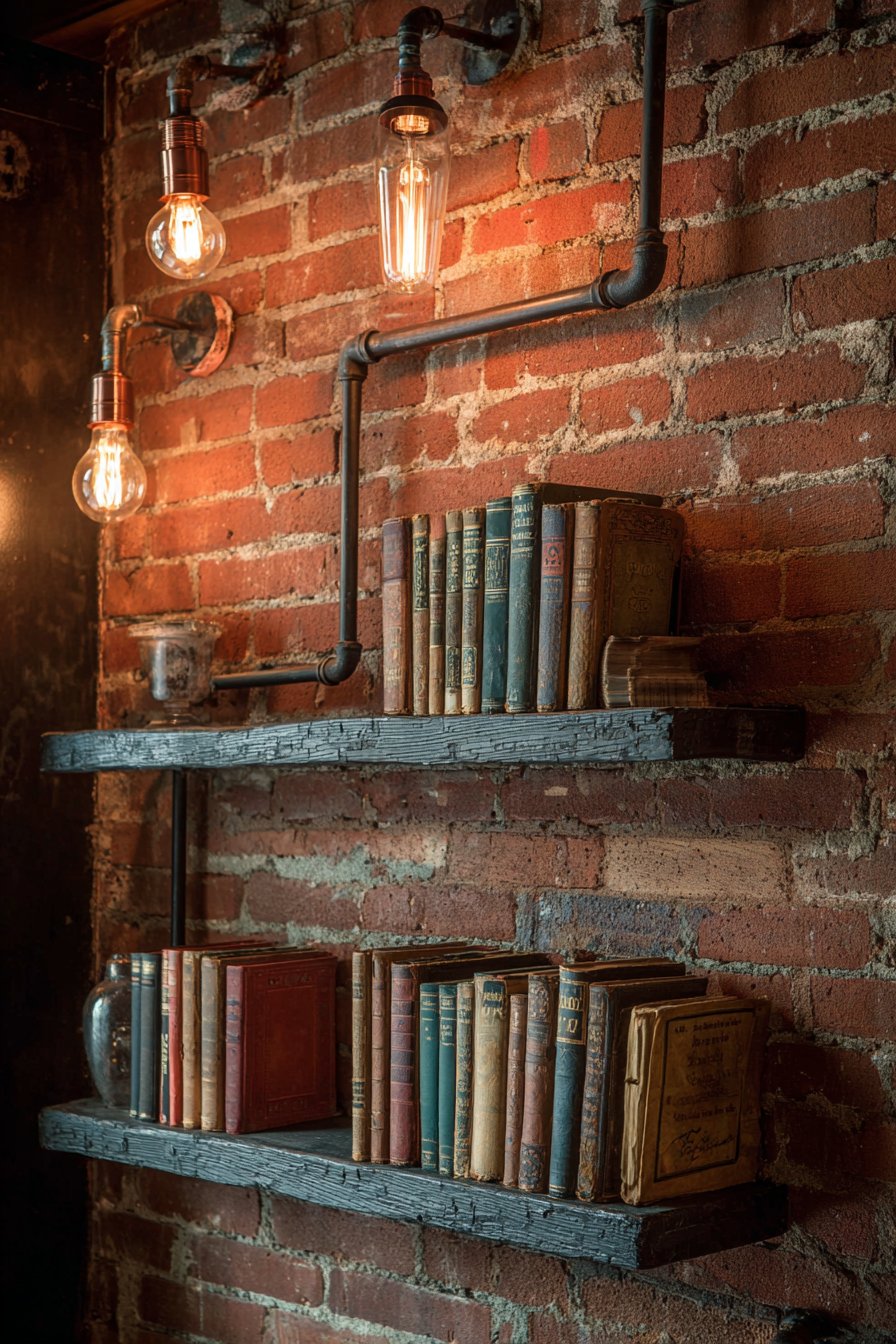
The dimensional quality of brick creates natural shadow play that changes throughout the day. Morning light emphasizes horizontal mortar lines. Afternoon sun creates stronger shadows in the recessed mortar joints. Evening artificial lighting can be directed to graze the surface, dramatically emphasizing texture. This ever-changing quality keeps the wall feeling dynamic and alive.
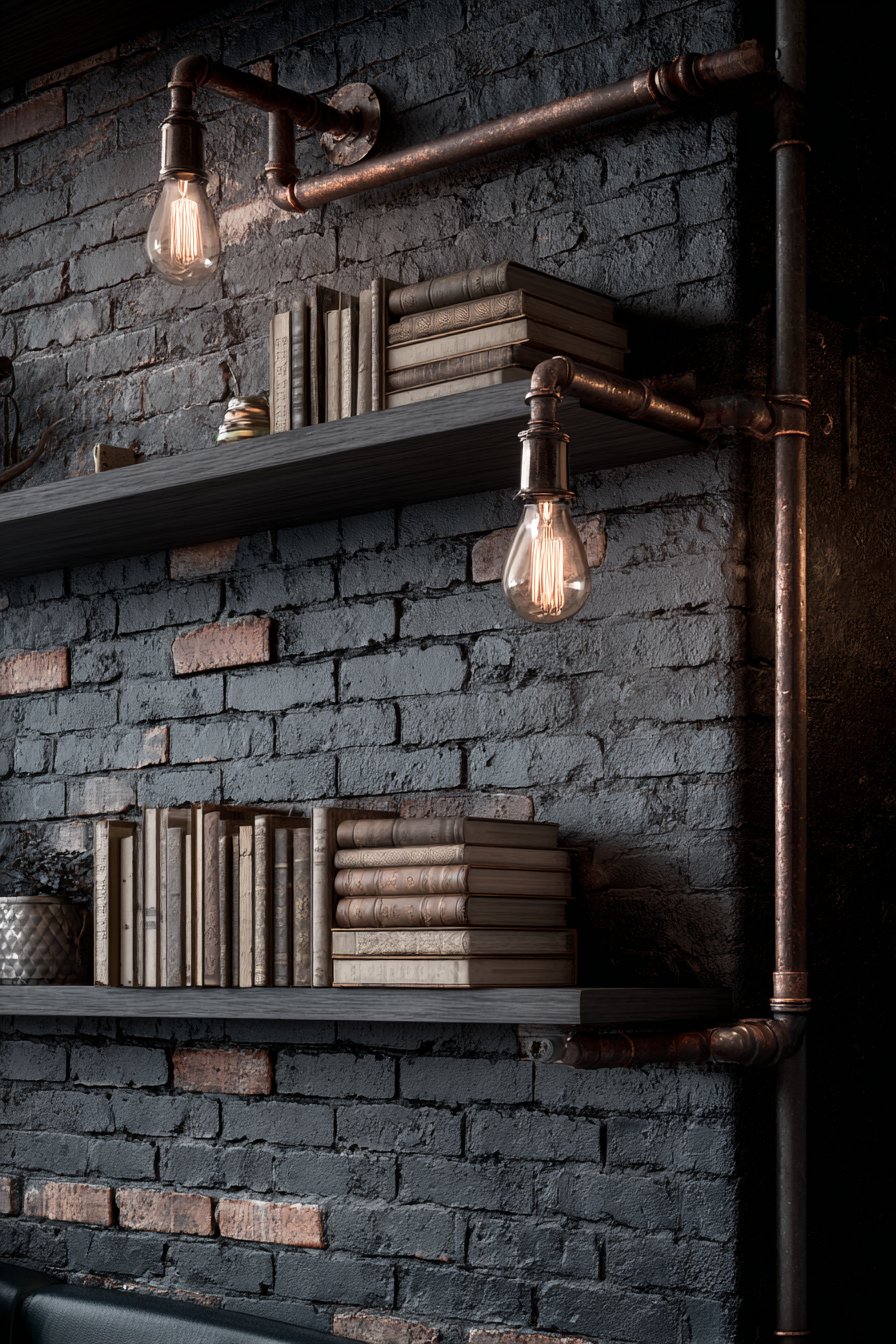
Black metal pipe shelving integrates perfectly with industrial aesthetics while providing functional storage and display opportunities. The raw metal finish complements the painted brick, creating cohesive material palette. Vintage books, industrial decor pieces, and found objects displayed on shelving reinforce the urban aesthetic. Each element feels purposeful rather than purely decorative.
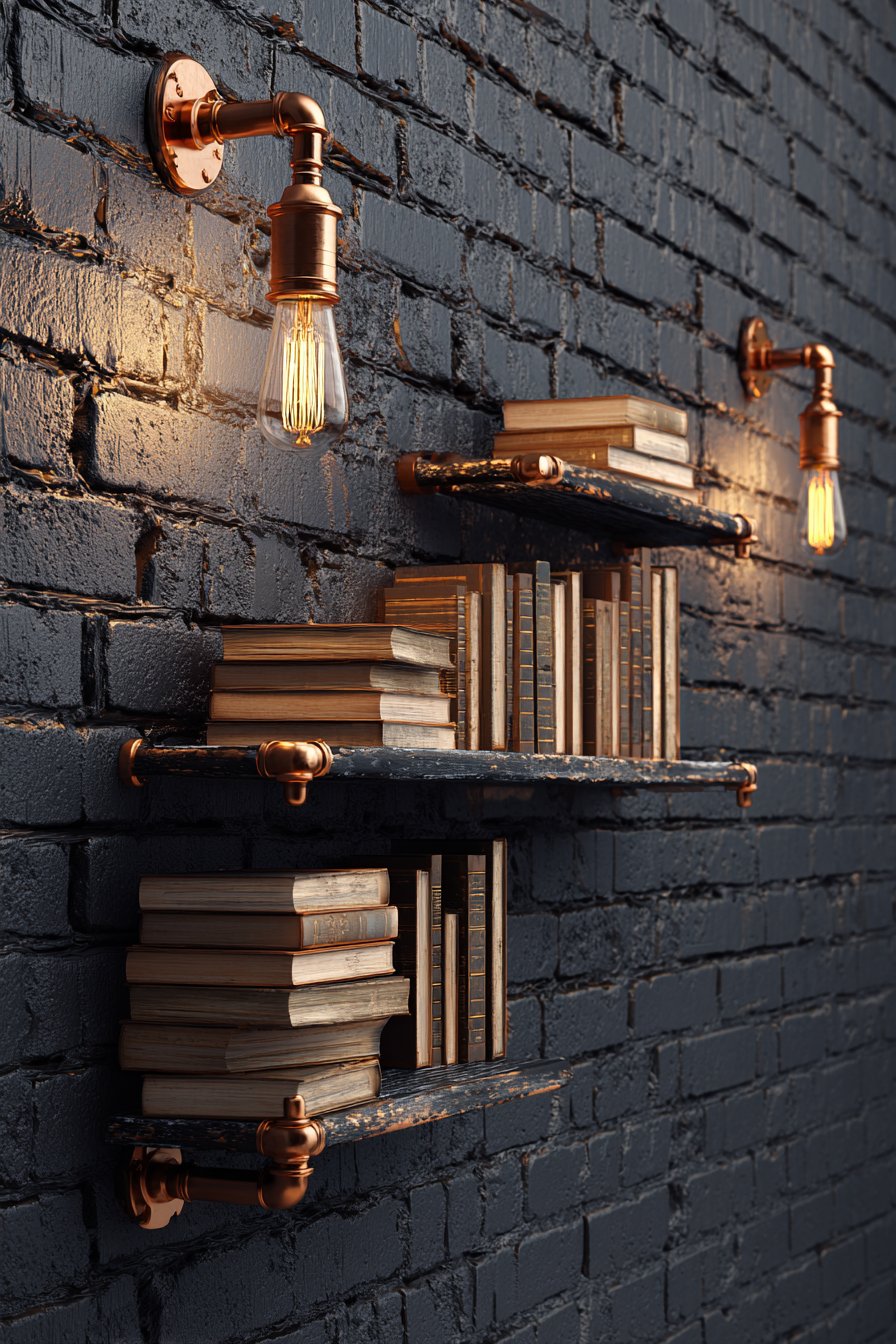
Edison bulb fixtures with copper detailing provide atmospheric lighting that serves both function and style. The exposed filaments and warm amber glow celebrate early industrial design while the copper finishes introduce warm metallic notes that soften the cooler grey and black palette. Wall sconces positioned to highlight specific areas create intimate lighting zones within the larger space.
Key Design Tips:
- Test paint colors on small brick section before full application
- Use pipe shelving with floor flanges for authentic industrial appearance
- Balance dark walls with lighter furniture to prevent cave-like feeling
- Install dimmer switches to control atmospheric lighting intensity
- Mix vintage and modern elements to prevent theme-park effect
8. Transitional Board and Batten Elegance
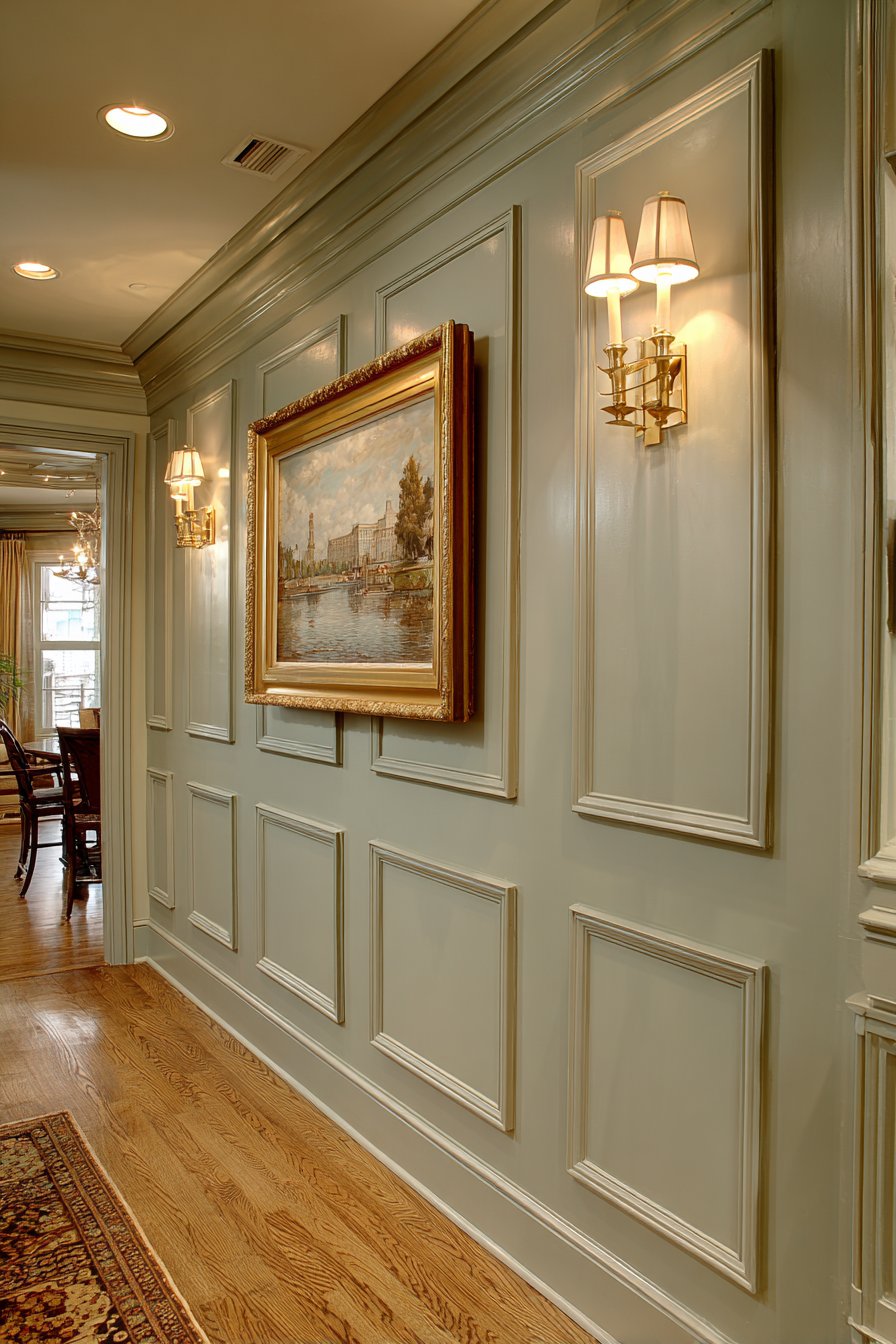
Board and batten paneling brings classical architectural detail to contemporary living spaces, creating sophisticated walls that bridge traditional and modern aesthetics. Soft sage green paint introduces gentle color that feels both current and timeless. The vertical lines created by battens add architectural interest and create the perception of greater ceiling height. This treatment works beautifully in rooms with traditional furniture while remaining fresh enough for contemporary tastes.
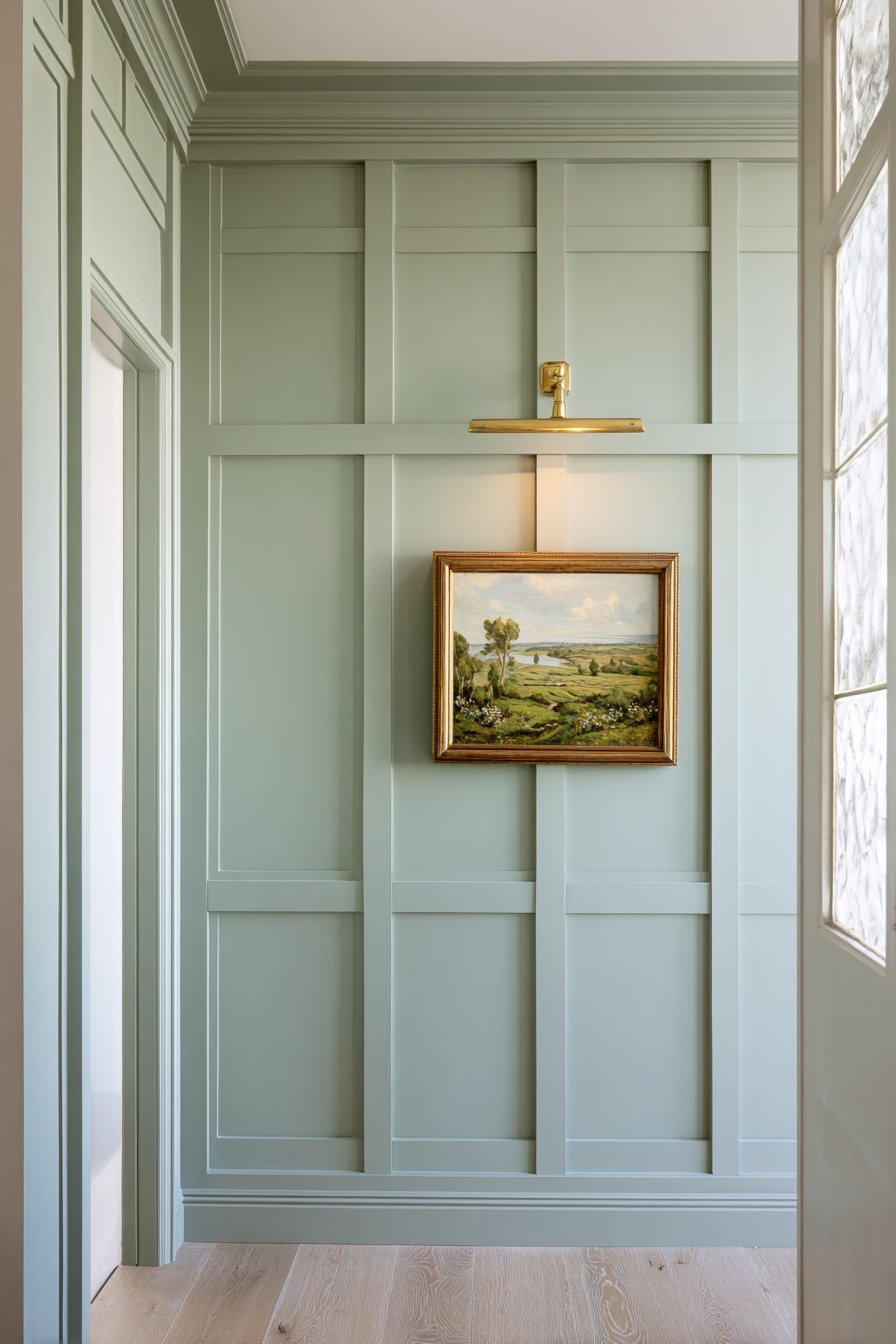
The proportional decisions significantly impact the final appearance. Extending paneling two-thirds up the wall creates elegant division without cutting the wall exactly in half, which can feel static. Crisp white crown molding at the top edge provides clean visual termination while introducing bright contrast against the sage tone. The relationship between painted panels, white trim, and upper wall creates layered composition that adds depth to the room.
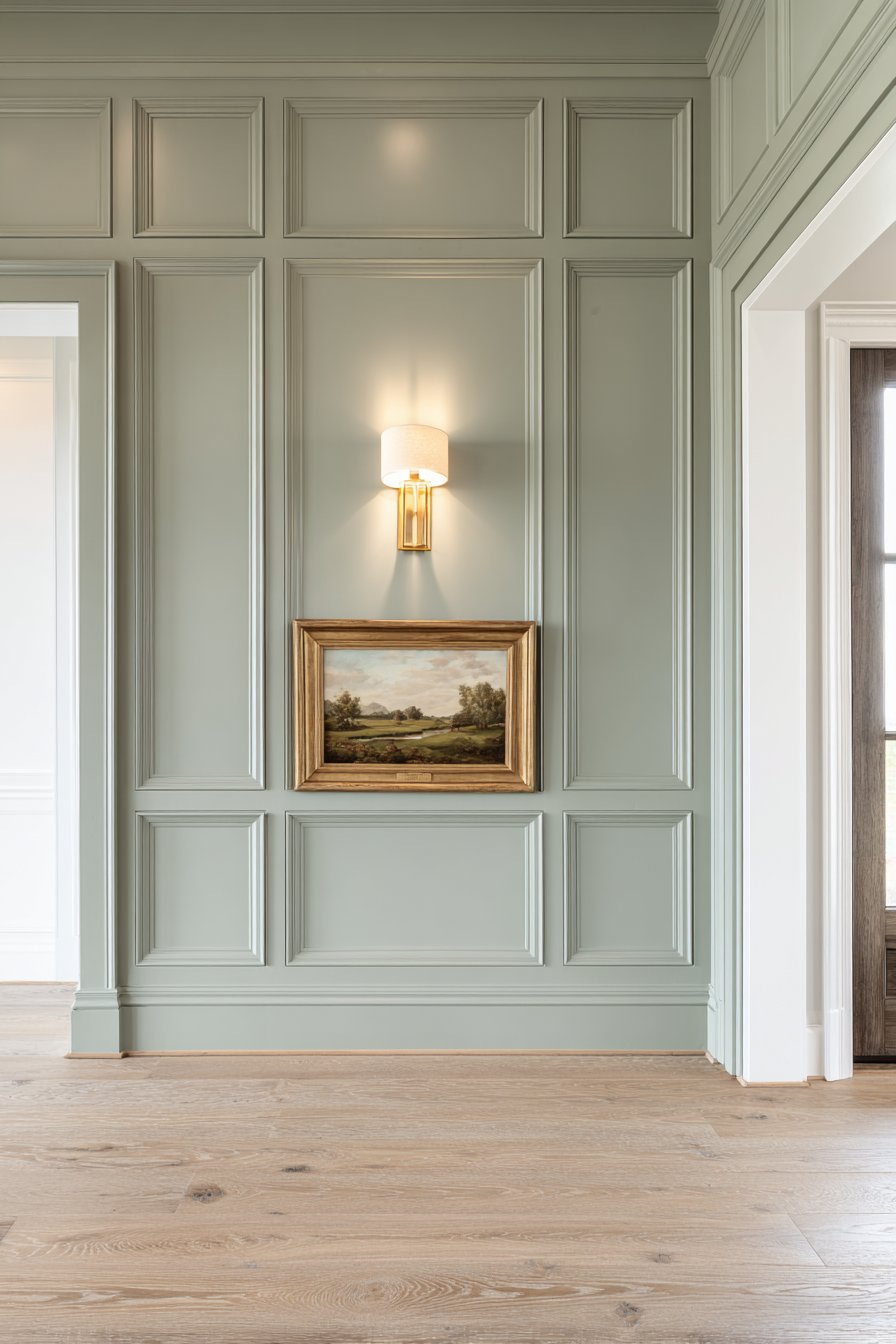
Artwork presentation requires consideration in paneled spaces. A traditional landscape painting centered on the wall provides focal point while complementing the classical treatment. Brass picture lighting directed at the artwork adds gallery-quality illumination while the warm metallic finish coordinates with other brass elements throughout the space. The combination feels refined without being stuffy.
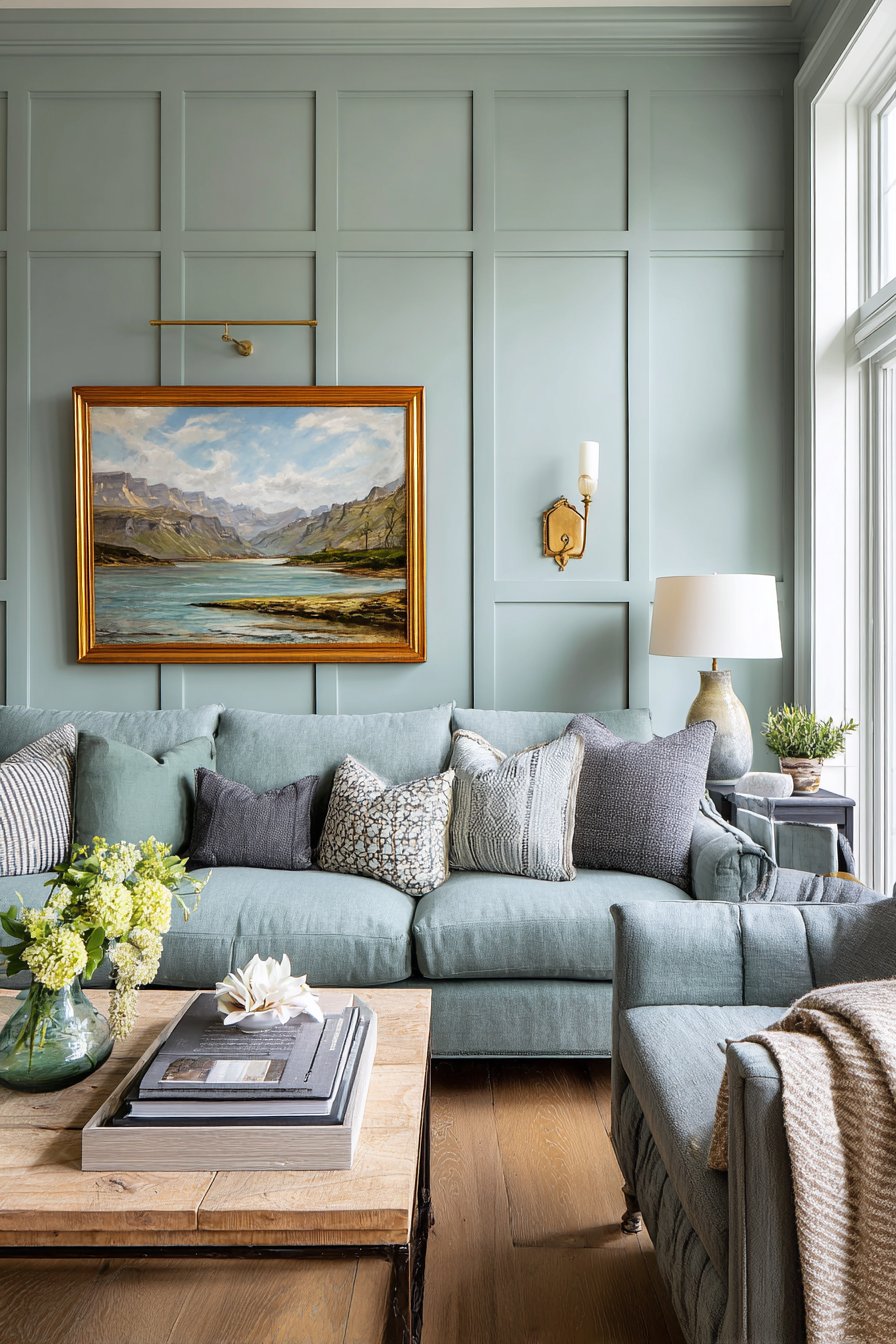
Material quality matters significantly in achieving high-end appearance. Smooth, premium paint application ensures clean finish without brush marks. Precisely installed battens with tight joints at corners and edges demonstrate craftsmanship. The attention to detail elevates the treatment from basic to beautiful, creating custom appearance that adds genuine value to the home.
Key Design Tips:
- Space battens 12-16 inches apart for balanced proportion
- Use MDF for battens to ensure smooth paint finish
- Apply primer before painting for even color coverage
- Install battens with both construction adhesive and finish nails
- Consider the room’s existing architectural details when planning proportions
9. Coastal Tongue and Groove Paneling
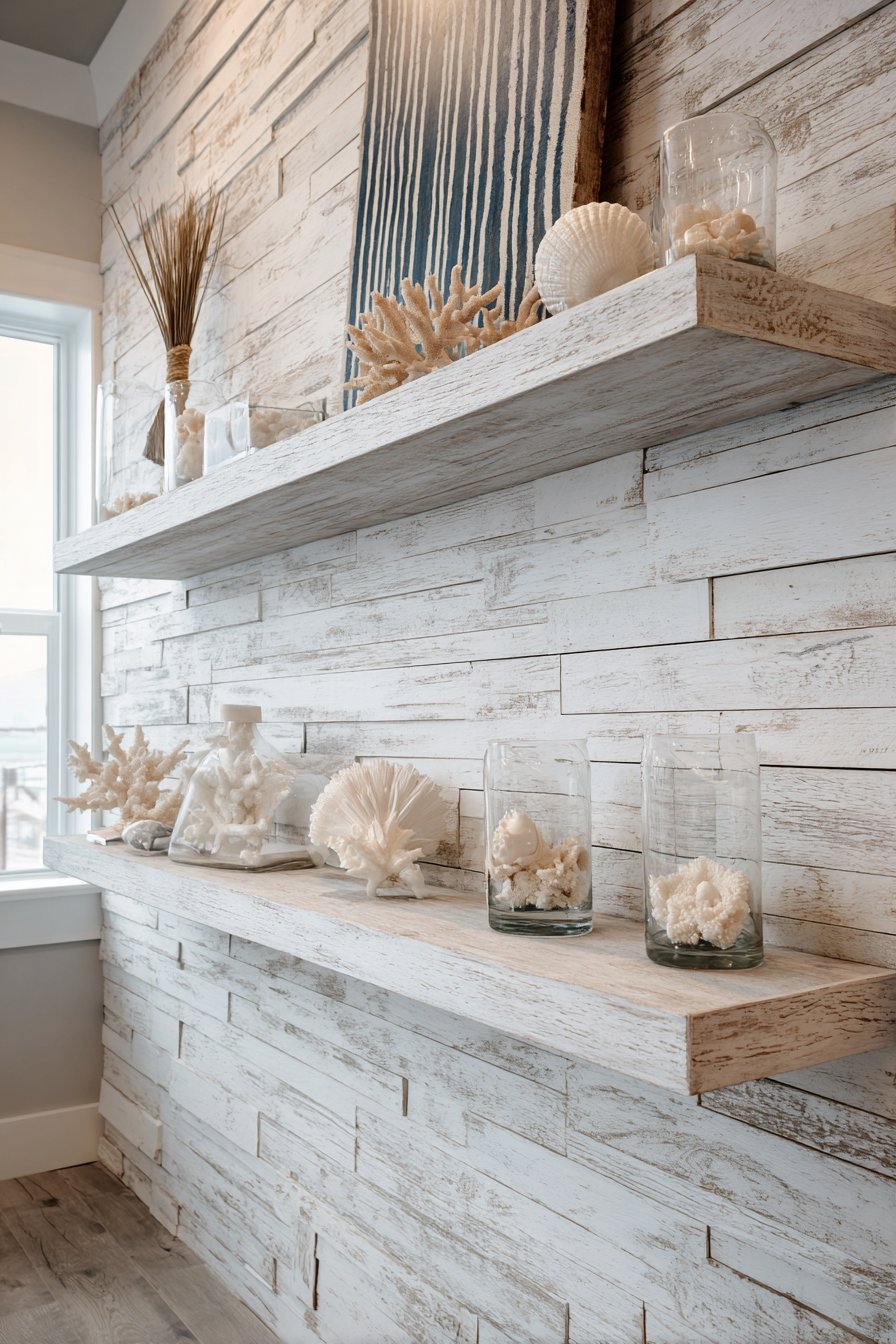
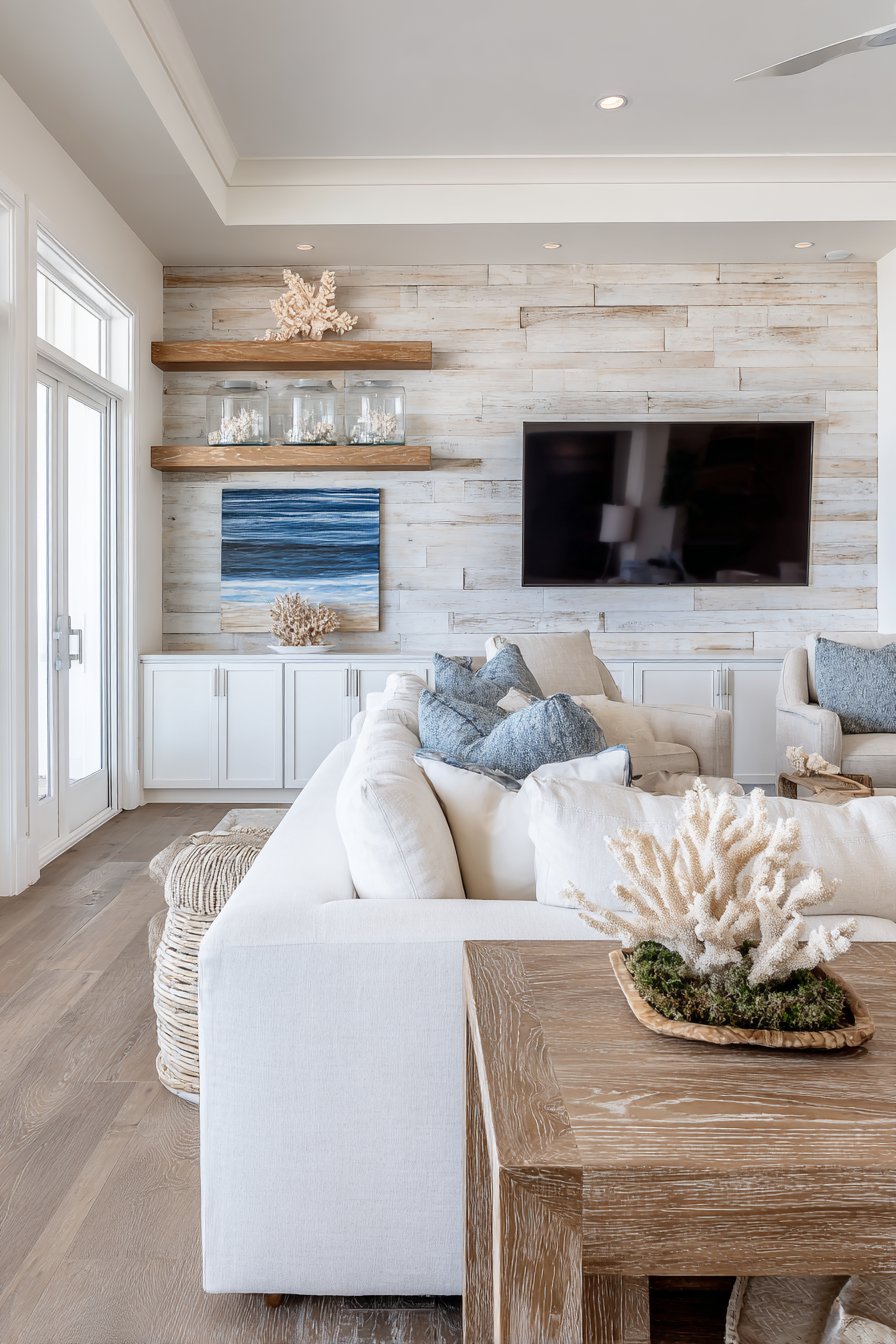
Coastal design transports you to seaside retreats through material choices and color palettes inspired by beach environments. Horizontal tongue and groove paneling painted in weathered white with grey undertones creates relaxed backdrop that feels breezy and casual. The wood grain variations peek through the paint, adding organic texture that prevents the surface from appearing flat or lifeless. This treatment immediately establishes the coastal mood without resorting to obvious beach clichés.
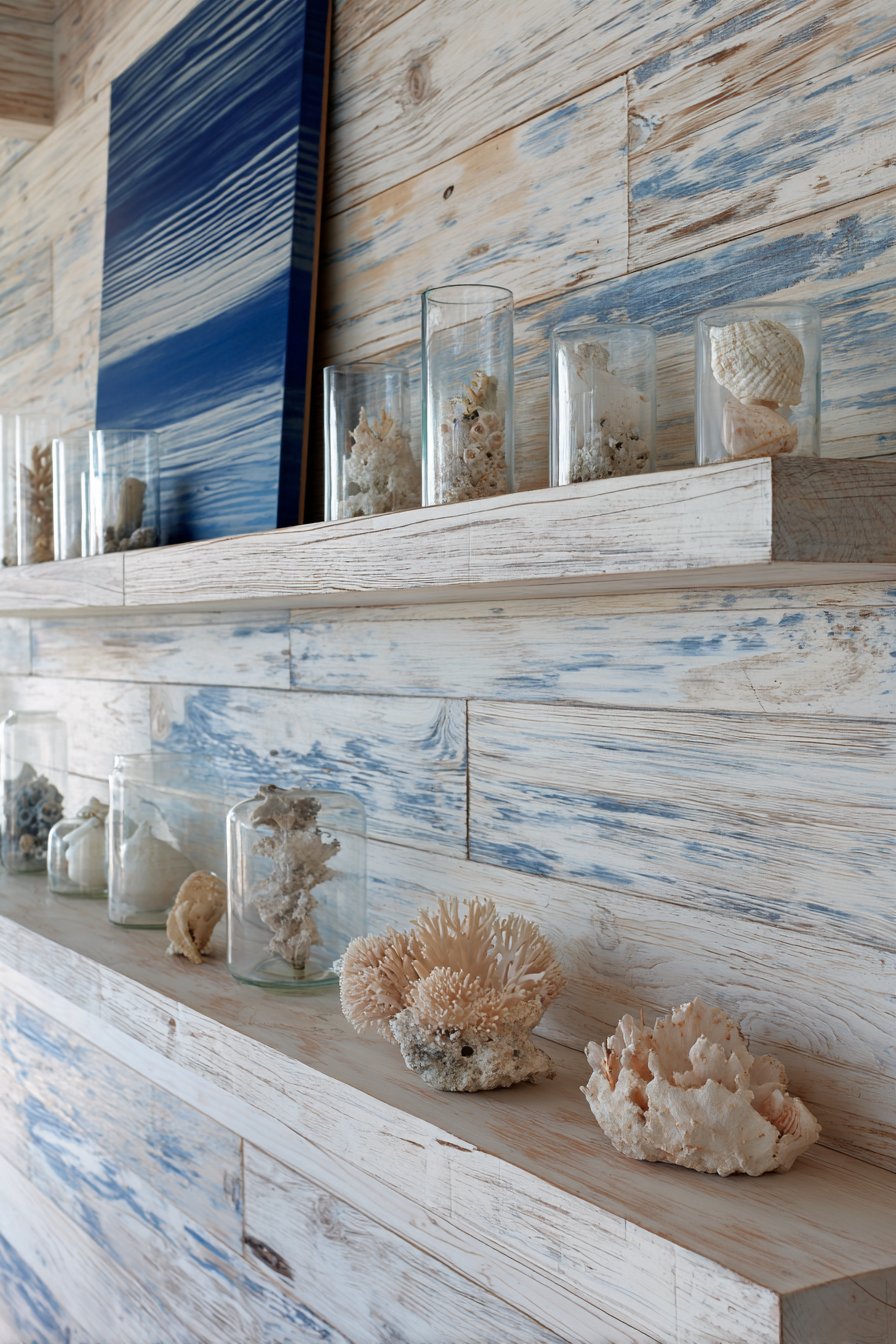
Floating shelves in driftwood finish provide display opportunities while reinforcing the natural material palette. The weathered grey-brown wood tones complement the painted paneling, creating cohesive color story. Displayed items continue the coastal theme with subtlety—coral specimens, collected shells, and beach glass in clear vessels allow natural forms and colors to speak for themselves. The styling feels collected rather than purchased, as though each piece represents a treasured beach walk.
Textile art adds color and pattern to the composition. Navy blue and white striped hanging introduces nautical reference while providing visual weight that grounds the lighter wood tones. The bold graphic quality creates focal point without requiring framed artwork, keeping the aesthetic casual and approachable. The stripes also introduce repetitive pattern that creates rhythm across the wall surface.
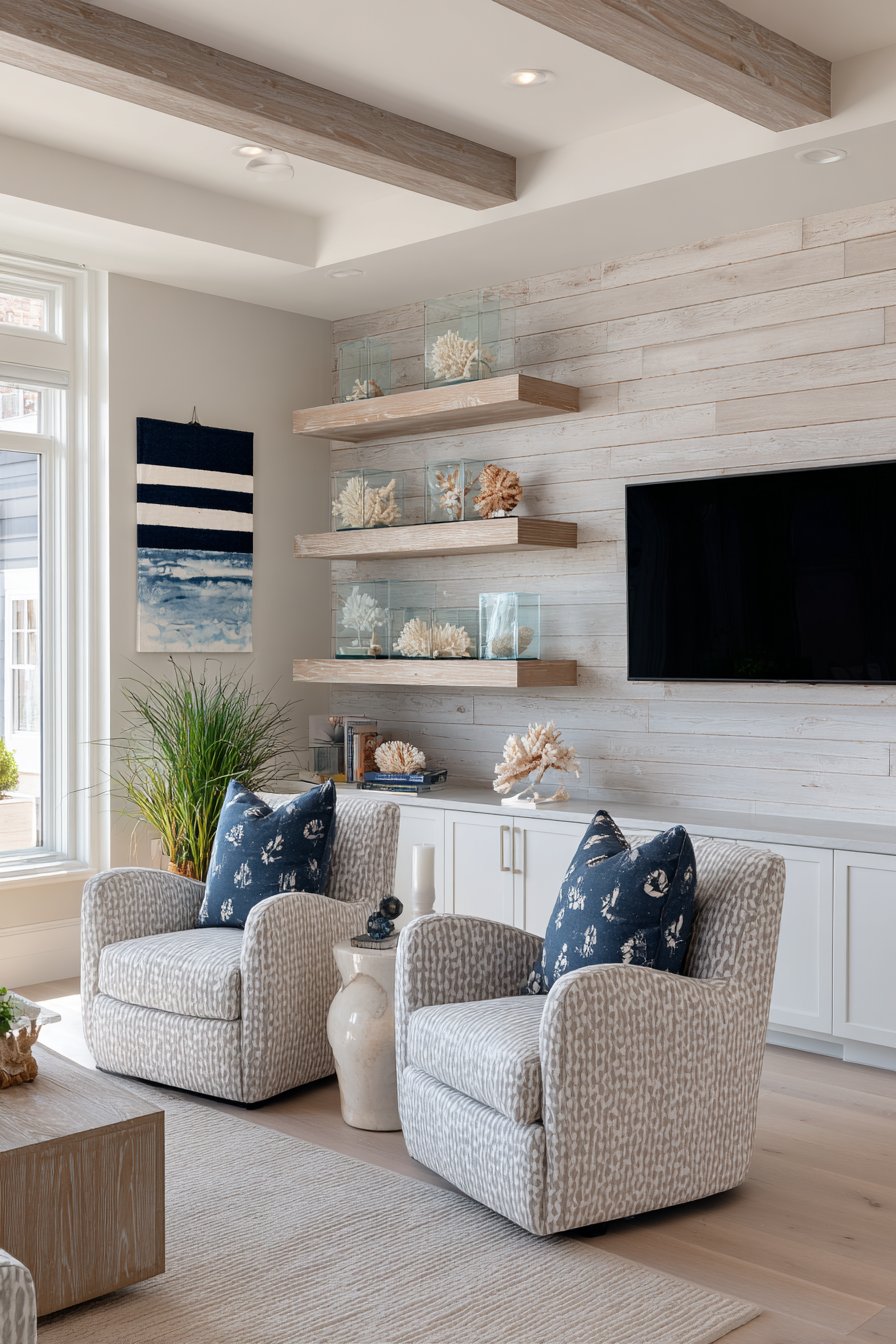
Natural lighting enhances coastal aesthetics better than any artificial illumination. Large windows or sliding doors allowing sunlight to stream across the wall emphasize the weathered white finish and natural wood grains. The bright, airy quality captures the feeling of being at the beach even in landlocked locations. Sheer white curtains diffuse harsh direct sun while maintaining the luminous quality.
Key Design Tips:
- Apply paint with dry brush technique for authentic weathered appearance
- Select shelving with visible wood grain for natural character
- Display collections in groups of three or five for visual balance
- Layer different shades of blue to add depth to color palette
- Keep furniture light-colored to maintain bright, airy feeling
10. Mid-Century Modern Color Block Treatment
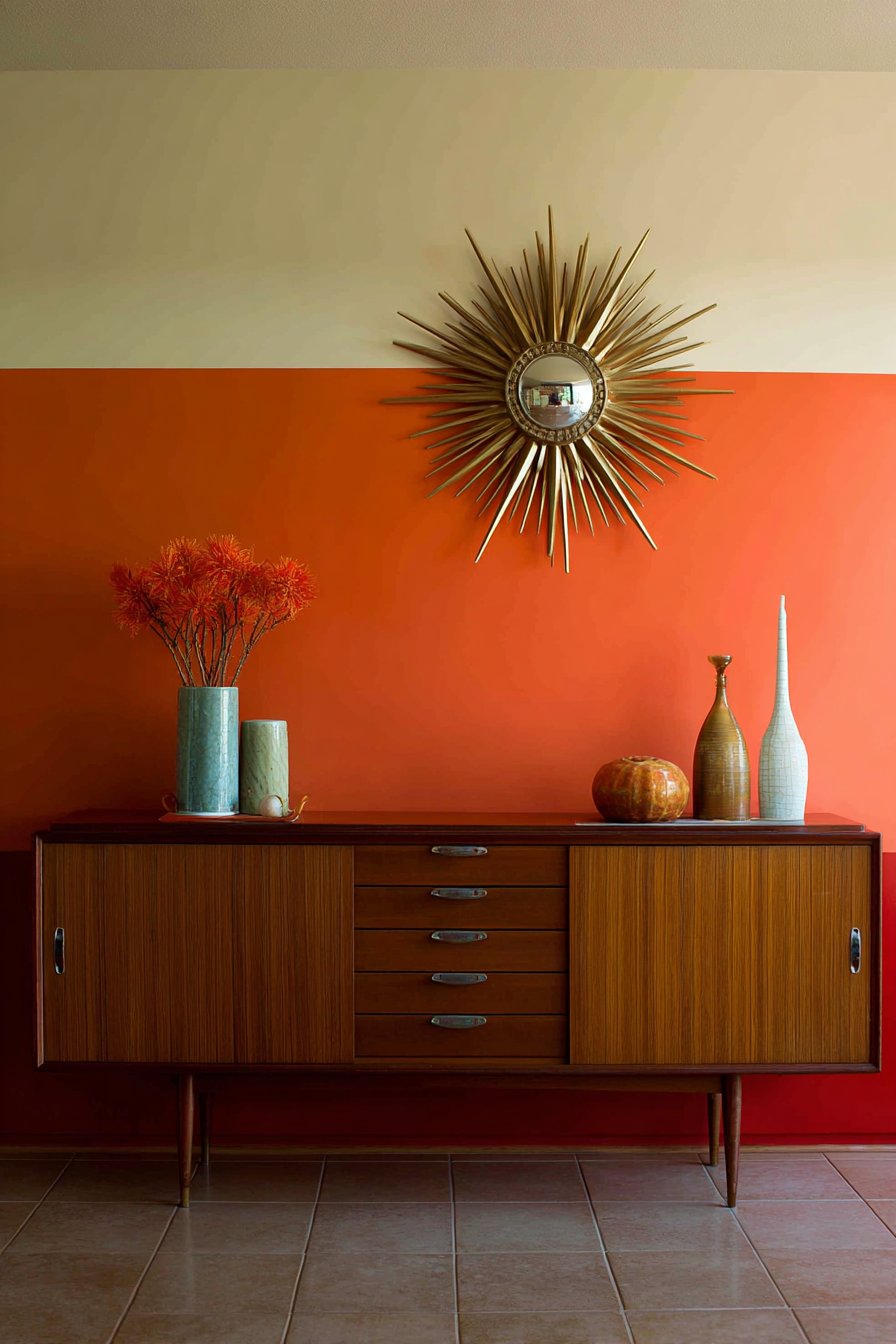
Mid-century modern design celebrates bold geometric forms and warm, optimistic color palettes. Two-tone color blocking creates dramatic visual impact through simplicity rather than complexity. Dividing the wall horizontally with warm terracotta on the bottom two-thirds and cream on top creates grounded feeling while introducing retro-inspired warmth. This treatment requires no special materials or textures—just paint and precise execution—making it accessible for DIY enthusiasts.
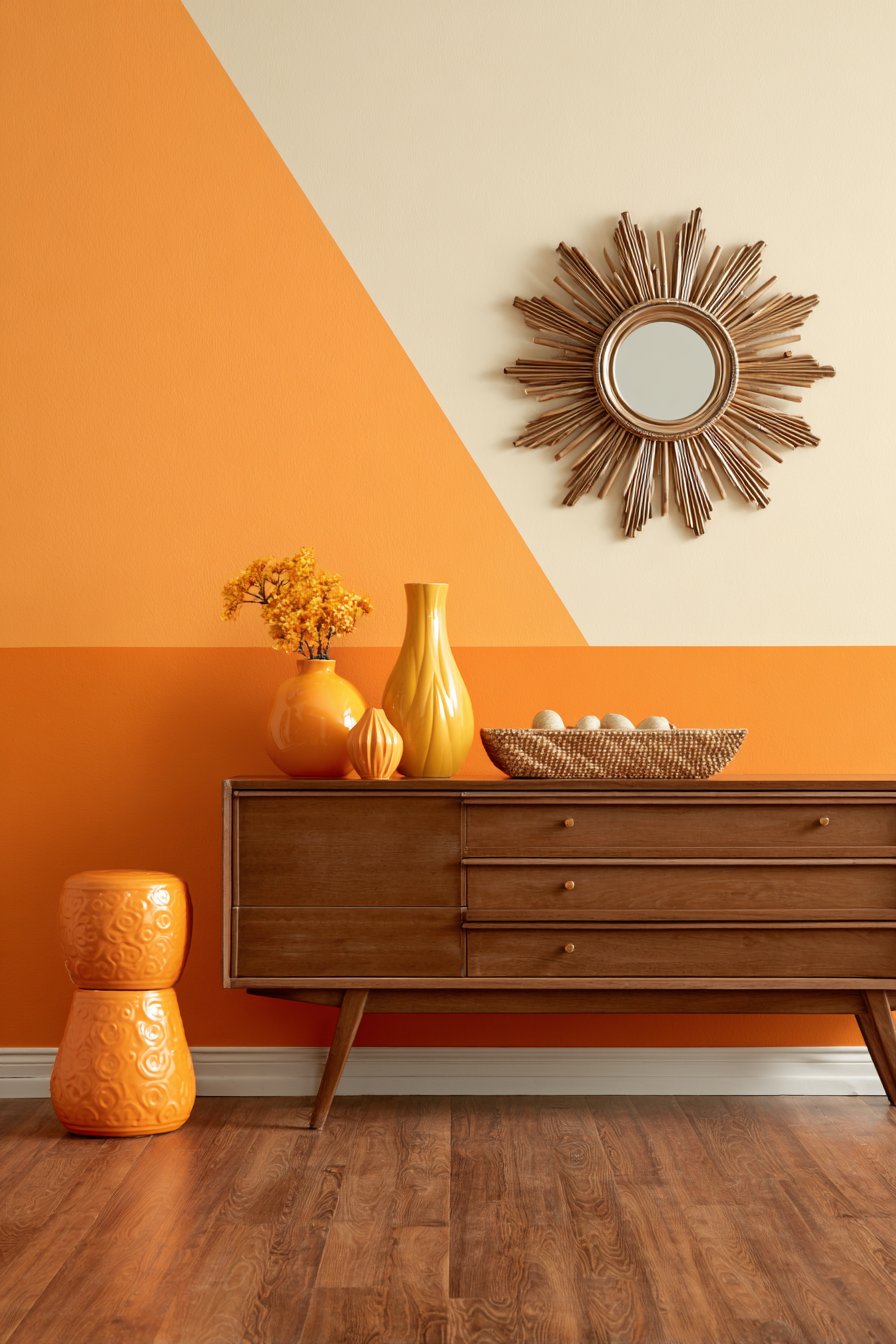
The horizontal division plays with perceived proportions. The heavier, darker color positioned below creates stability while the lighter upper section prevents the room from feeling top-heavy or closed in. The division line becomes architectural element itself, providing natural place to hang artwork or mirrors. The technique demonstrates how strategic color placement impacts how we experience space.
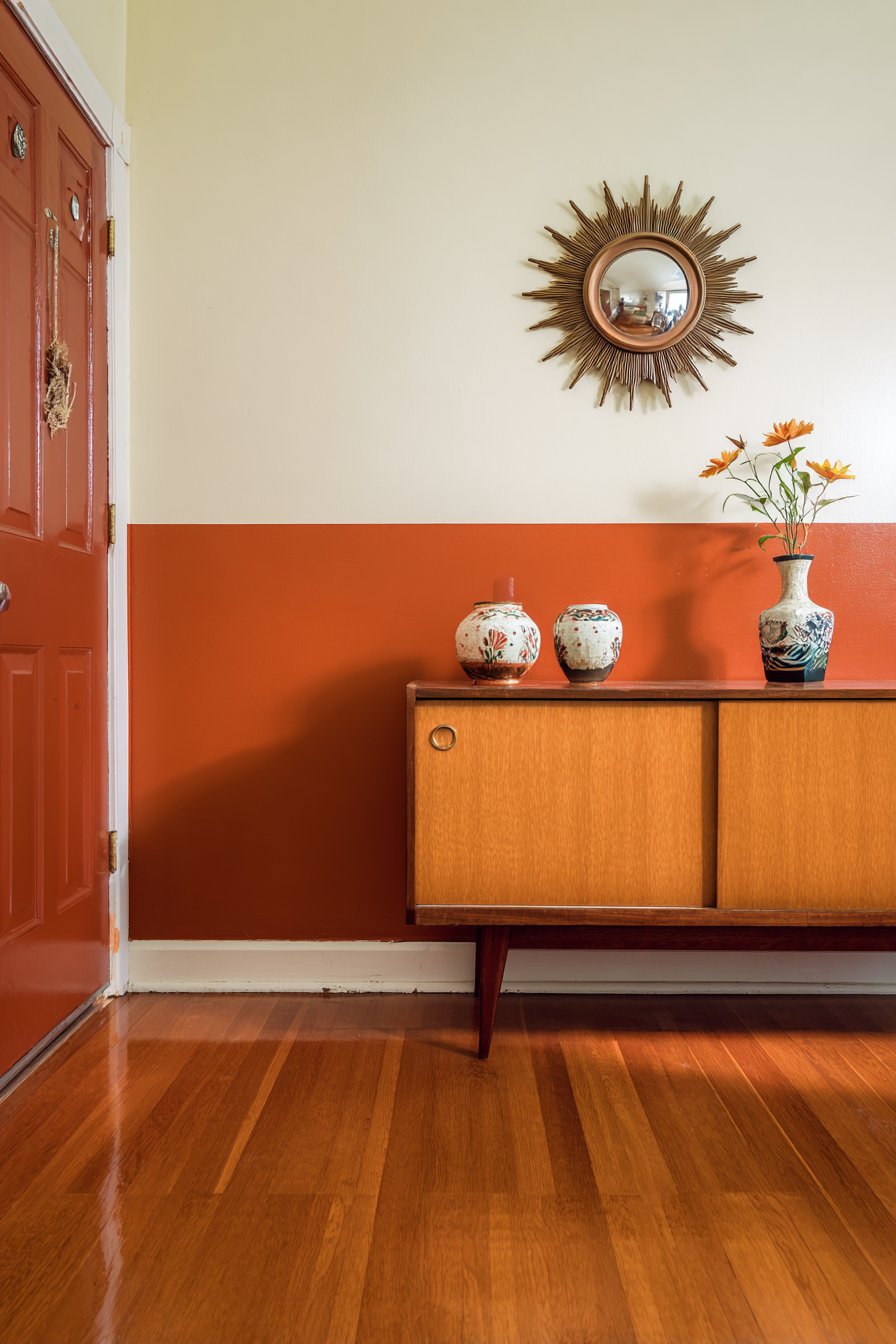
Period-appropriate furniture completes the mid-century vision. A teak credenza with characteristic tapered legs exemplifies the era’s furniture design, combining beautiful wood craftsmanship with practical storage. Ceramic vases in organic shapes add sculptural interest while authentic vintage pieces bring history and character. The sunburst mirror positioned at the color division line serves as perfect focal point, its radiating metal spokes capturing the optimistic, space-age aesthetic of the 1950s and 60s.
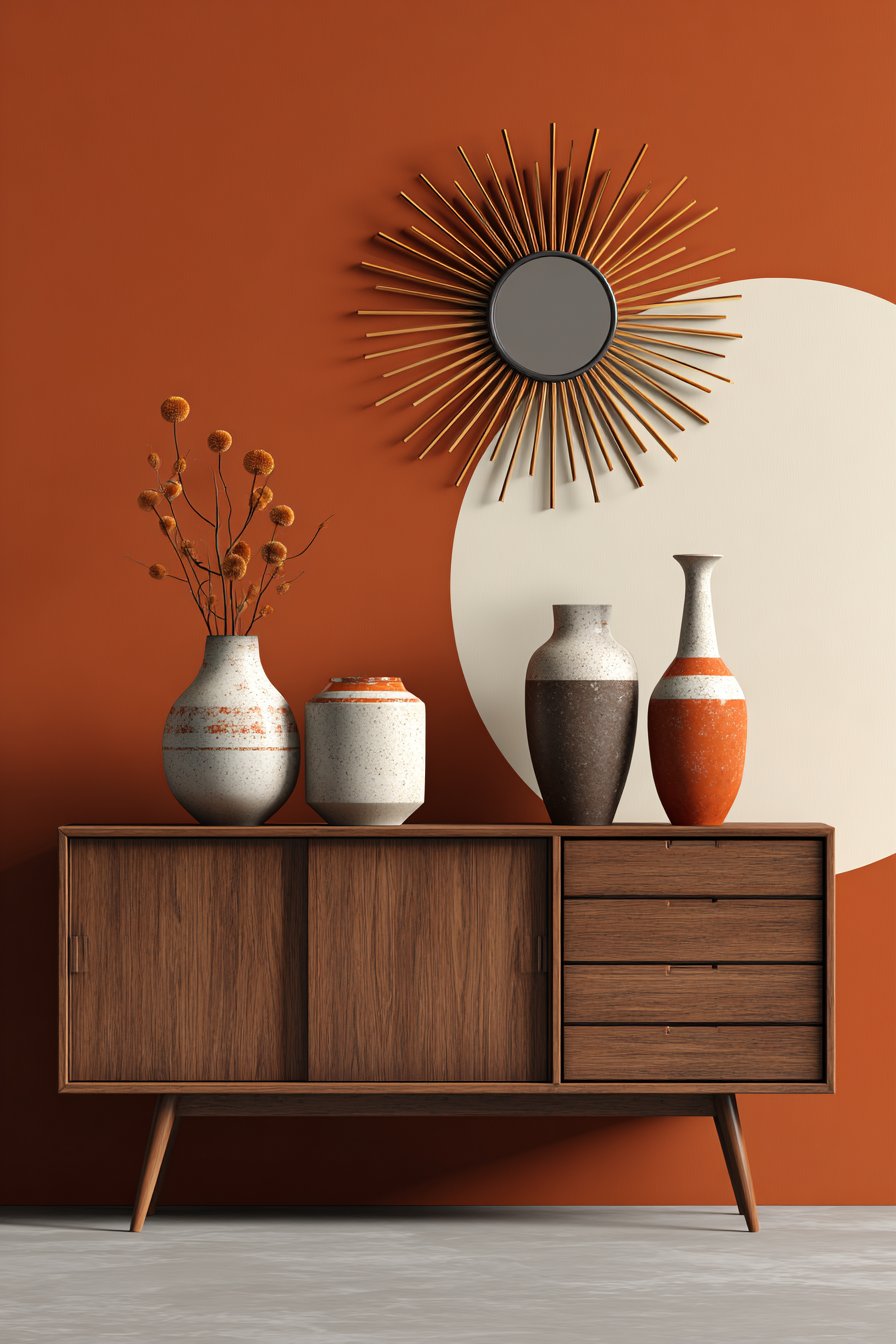
Color selection significantly impacts the final mood. Terracotta brings earthy warmth without feeling heavy or dark. Cream provides soft contrast without the starkness of pure white. Together they create welcoming, energized atmosphere that feels both nostalgic and fresh. The warm palette works particularly well in rooms with abundant natural light, which prevents the terracotta from feeling too saturated.
Key Design Tips:
- Use painter’s tape and level to ensure perfectly straight division line
- Apply primer before color to ensure even coverage and true color
- Position division line at 24-30 inches from floor for proper proportion
- Select furniture with authentic mid-century lines rather than reproductions
- Add brass or copper accents to reinforce warm metallic tones
Why These Living Room Wall Designs Stand Out
These ten wall design approaches represent the breadth of contemporary interior design possibilities while maintaining practical feasibility for real homes. Each style offers distinct aesthetic direction, allowing homeowners to select approaches that genuinely resonate with their personal tastes and lifestyle needs. The geometric textured panels appeal to those seeking modern sophistication, while reclaimed wood satisfies desires for rustic authenticity and environmental consciousness.
The Scandinavian built-in shelving demonstrates how functional storage solutions can become beautiful architectural features. This approach particularly benefits small-space dwellers who need every element to serve multiple purposes. Gallery walls remain perennially popular because they allow personal expression through curated art collections, creating walls that tell your unique story. The minimalist shiplap proves that simplicity executed with precision creates powerful impact without requiring complex installations or expensive materials.
Bohemian fiber art displays celebrate handcrafted beauty in an increasingly mass-produced world. These walls feel warm, personal, and collected over time rather than designed all at once. Industrial exposed brick appeals to urban dwellers and those drawn to raw, honest materials that celebrate a building’s history. The transitional board and batten bridges traditional and contemporary aesthetics, making it perfect for homes that blend classic architecture with modern furnishings.
Coastal paneling brings vacation vibes home, creating daily escape to more relaxed mindsets. The mid-century color blocking demonstrates how strategic paint use creates dramatic transformation without requiring construction skills or significant investment. Each design succeeds because it commits fully to its aesthetic vision while remaining accessible to real homeowners with real budgets and real DIY capabilities.
The materials emphasized across these designs—natural wood, authentic brick, quality paint, handcrafted textiles, and curated art—share a common thread of authenticity. Contemporary homeowners increasingly reject cookie-cutter solutions in favor of spaces that reflect genuine personality and considered design choices. These wall treatments provide frameworks for self-expression while offering professional-level results that enhance home value and daily living quality.
Conclusion
Living room walls present tremendous opportunities for creative expression and personal style development. The ten designs explored here demonstrate that walls can be far more than painted surfaces—they can be textured sculptures, personal galleries, architectural features, or material celebrations. Whether you’re drawn to modern geometric precision, rustic reclaimed authenticity, or somewhere in between, there’s an approach that will resonate with your vision.
The key to successful wall design lies in committing to your chosen aesthetic while maintaining quality execution. Take time to plan carefully, source appropriate materials, and invest in proper installation. Consider how lighting interacts with your chosen treatment, as illumination dramatically impacts final appearance. Don’t rush the process—thoughtful design decisions create lasting satisfaction.
Start with one accent wall rather than transforming your entire living room at once. This approach allows experimentation without overwhelming commitment. Pay attention to how the new wall makes you feel and how it changes the room’s atmosphere. Use this experience to inform future design decisions throughout your home. Your living room walls are canvases waiting for your creative vision—embrace the possibilities and create spaces that truly feel like home.
