


In the ever-evolving landscape of modern interior design, the concept of open-plan living has transformed how we think about residential spaces. While spacious, flowing layouts offer numerous advantages, they also present unique challenges when it comes to defining distinct functional zones within a single room. This is where the art of room division becomes essential. Living room dividers serve as both practical solutions and design statements, allowing homeowners to create intimate areas within larger spaces without sacrificing the sense of openness that makes contemporary homes so appealing. These versatile design elements can dramatically transform the way you experience your living environment, offering privacy when needed while maintaining visual connectivity and natural light flow.
The beauty of implementing divider solutions lies in their remarkable versatility and the vast array of styles available to suit every aesthetic preference and functional requirement. Whether you’re working with a studio apartment that requires clever zoning, a sprawling open-concept home that needs subtle definition, or a traditional space that could benefit from modern updates, the right divider can solve multiple design challenges simultaneously. From sleek glass partitions that preserve sightlines to substantial wooden screens that make bold architectural statements, each approach offers unique benefits tailored to specific lifestyle needs and design sensibilities.
This comprehensive guide explores ten distinctive living room divider concepts that represent the full spectrum of contemporary interior design possibilities. Each solution has been carefully selected to showcase different materials, styles, and functional approaches, from minimalist Scandinavian-inspired sliding panels to lush biophilic living walls that bring nature indoors. You’ll discover options that range from permanent architectural installations to flexible, portable solutions that adapt to changing needs. Whether your style leans toward industrial chic, rustic farmhouse charm, bohemian eclecticism, or clean modernism, you’ll find inspiring ideas that can be adapted to your unique space and personal aesthetic vision.
1. Natural Oak Slatted Wood Partition: Bringing Warmth and Rhythm to Open Spaces
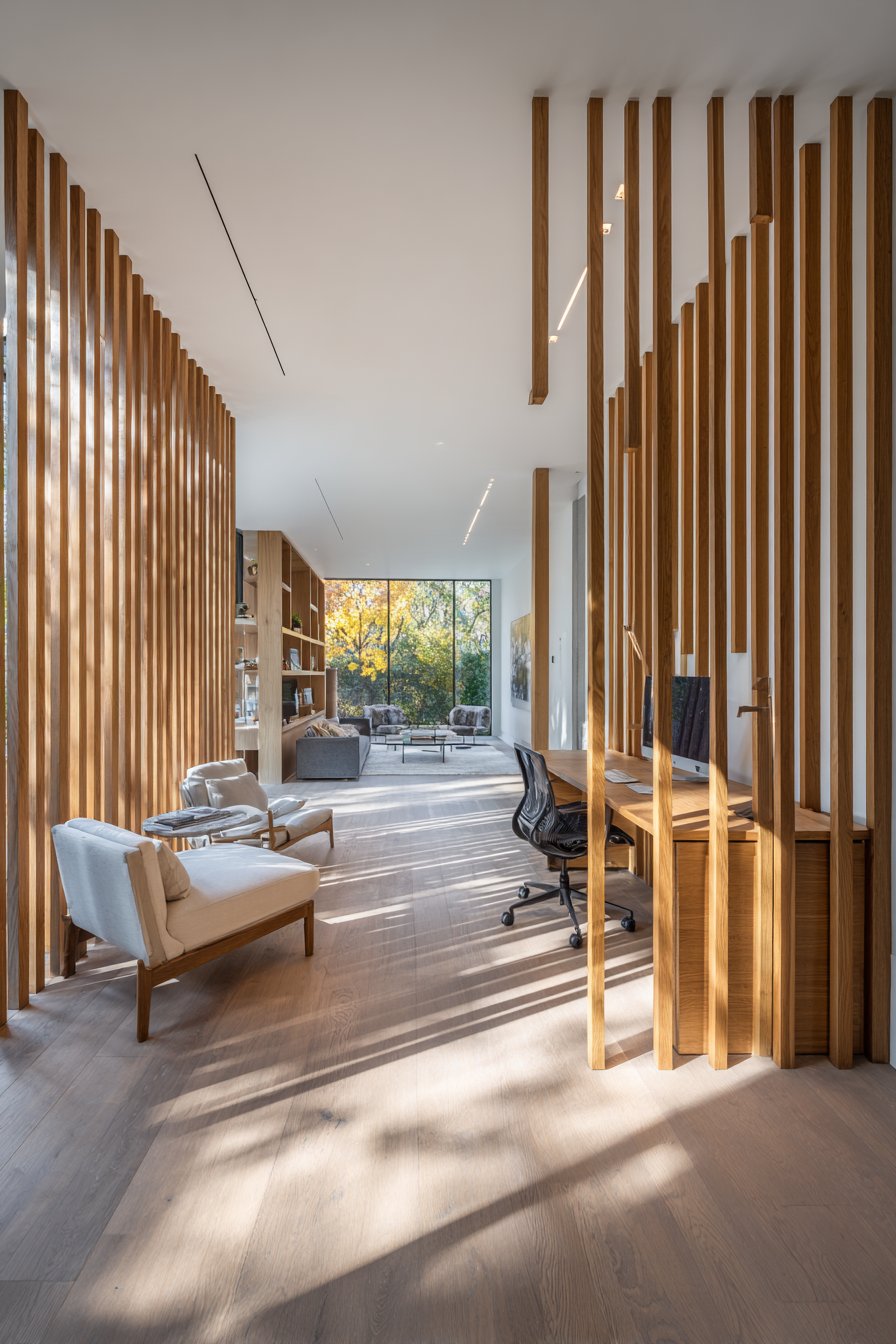
The timeless appeal of natural wood finds its perfect expression in a floor-to-ceiling slatted partition crafted from beautiful oak. This divider stands as a testament to how organic materials can create both functional separation and visual poetry within a living space. The varying widths of the slats introduce a captivating rhythm that draws the eye upward, transforming a simple partition into a dynamic architectural feature. As natural daylight filters through the carefully spaced gaps, it creates an ever-changing play of light and shadow that adds depth and dimension to both sides of the divided space. The warm honey tones of the oak grain bring inherent coziness to the environment, making the separation feel welcoming rather than divisive.
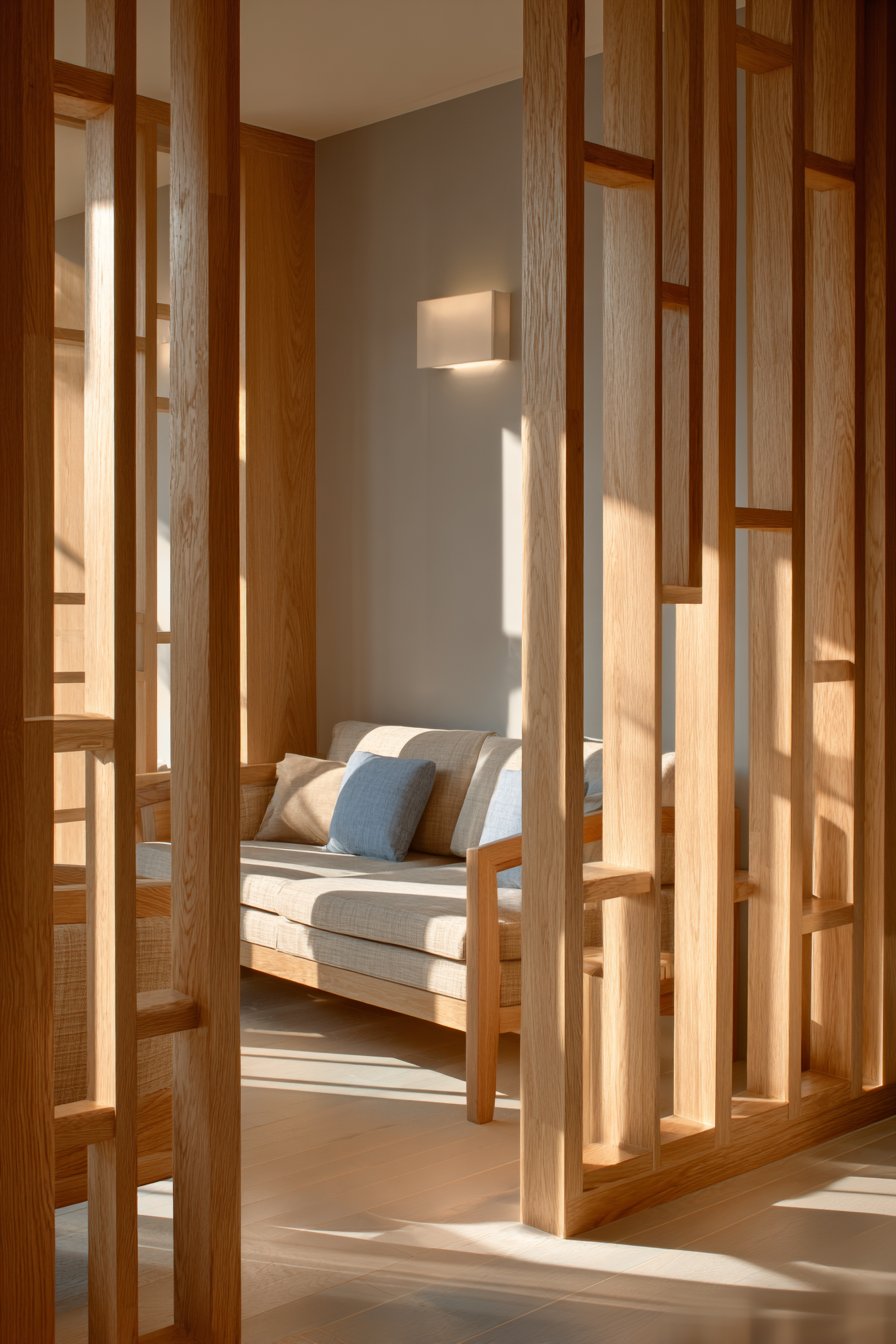
This type of divider excels at creating distinct zones while maintaining a sense of connection between spaces. Imagine separating a comfortable seating area from a productive home office nook without completely isolating either function. The transparency created by the gaps between slats allows visual communication across zones and ensures that natural light reaches even the interior portions of your room. The vertical lines created by the slats also have the practical benefit of making ceilings appear higher, adding a sense of grandeur to rooms of any size. The natural wood finish requires minimal maintenance while aging gracefully over time, developing a richer patina that only enhances its character.
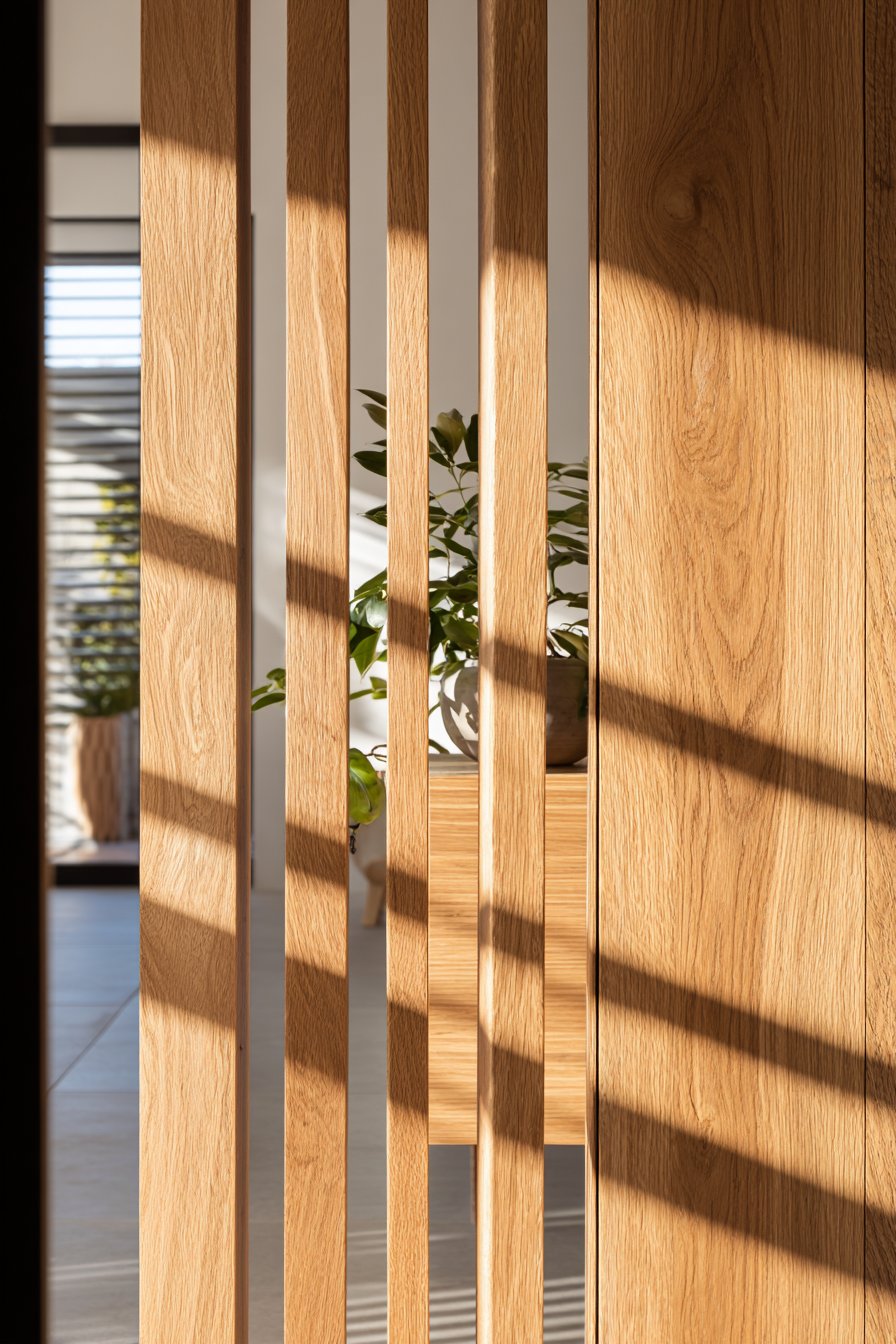
The installation of a slatted wood divider requires careful consideration of your room’s proportions and existing design elements. The beauty of this approach lies in its adaptability—the spacing between slats can be adjusted to control the level of privacy and light filtration, while the choice of oak provides a neutral foundation that complements virtually any color palette. Whether your existing decor leans toward contemporary minimalism or embraces more traditional elements, the organic warmth of natural wood serves as a unifying element. The varying slat widths prevent the design from feeling monotonous, creating visual interest that rewards closer inspection while reading as cohesively elegant from a distance.
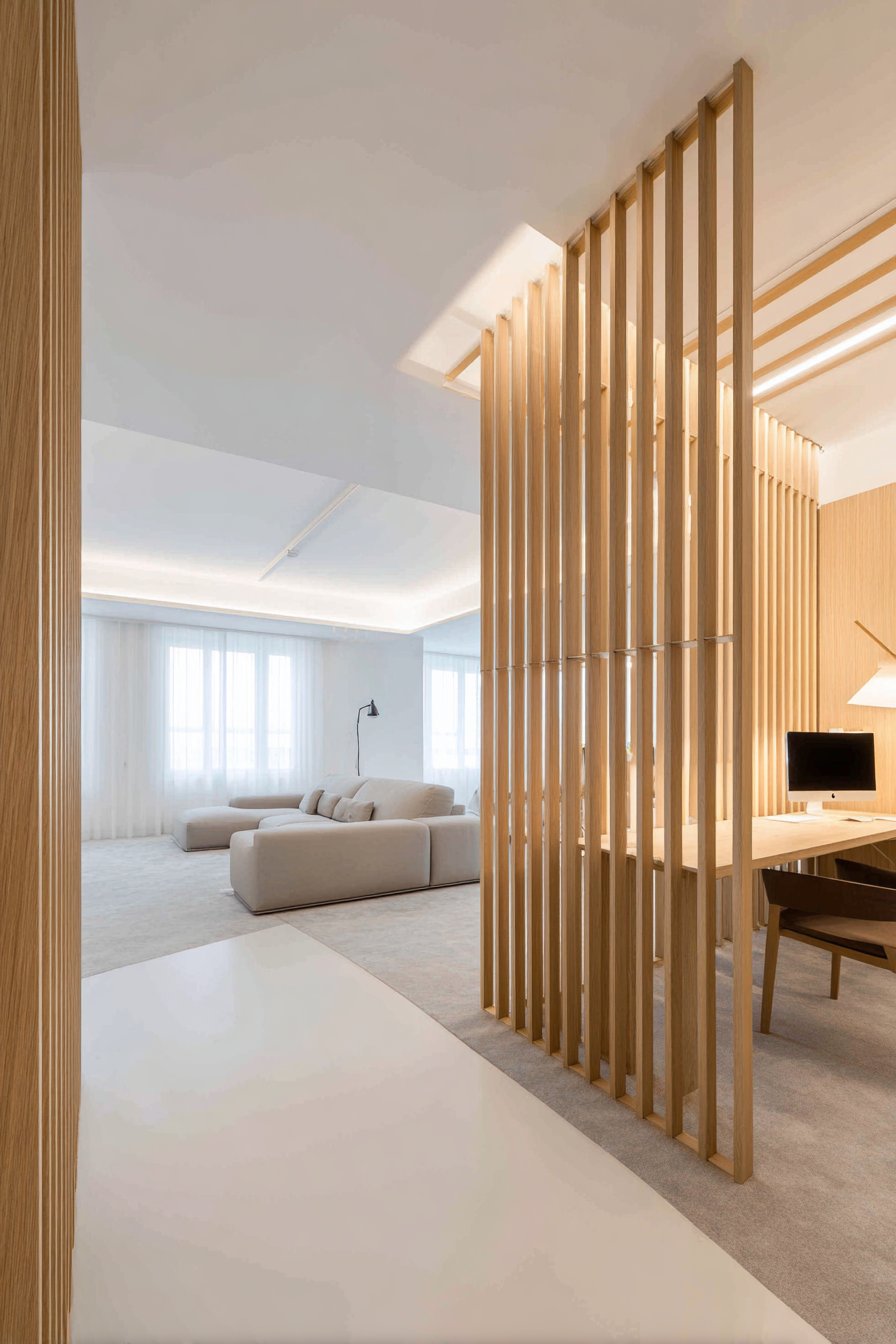
When considering the functional aspects of this divider, think about how it interacts with your daily routines. The slatted design allows air circulation between spaces, preventing the stuffiness that can occur with solid partitions. This makes it particularly suitable for climates where cross-ventilation is important or in homes where maintaining consistent temperature across zones is desired. The oak material also contributes to acoustic management, absorbing some sound while allowing conversation to flow naturally between areas when desired.
Key Design Tips:
- Select oak with visible grain patterns to maximize visual interest and natural beauty in your space
- Vary slat widths between two and six inches to create dynamic rhythm without appearing chaotic or random
- Maintain consistent spacing of one to three inches between slats to balance privacy with openness and light flow
- Install the divider perpendicular to your main light source to maximize the dramatic shadow play throughout the day
- Consider adding subtle LED strip lighting within the slat channels for evening ambiance and increased functionality after dark
- Treat the wood with clear matte finish to protect the surface while preserving the natural texture and authentic appearance
- Anchor the structure securely to both floor and ceiling to ensure stability and prevent any movement or wobbling
2. Industrial Metal-Framed Glass Partition: Contemporary Elegance Meets Transparency
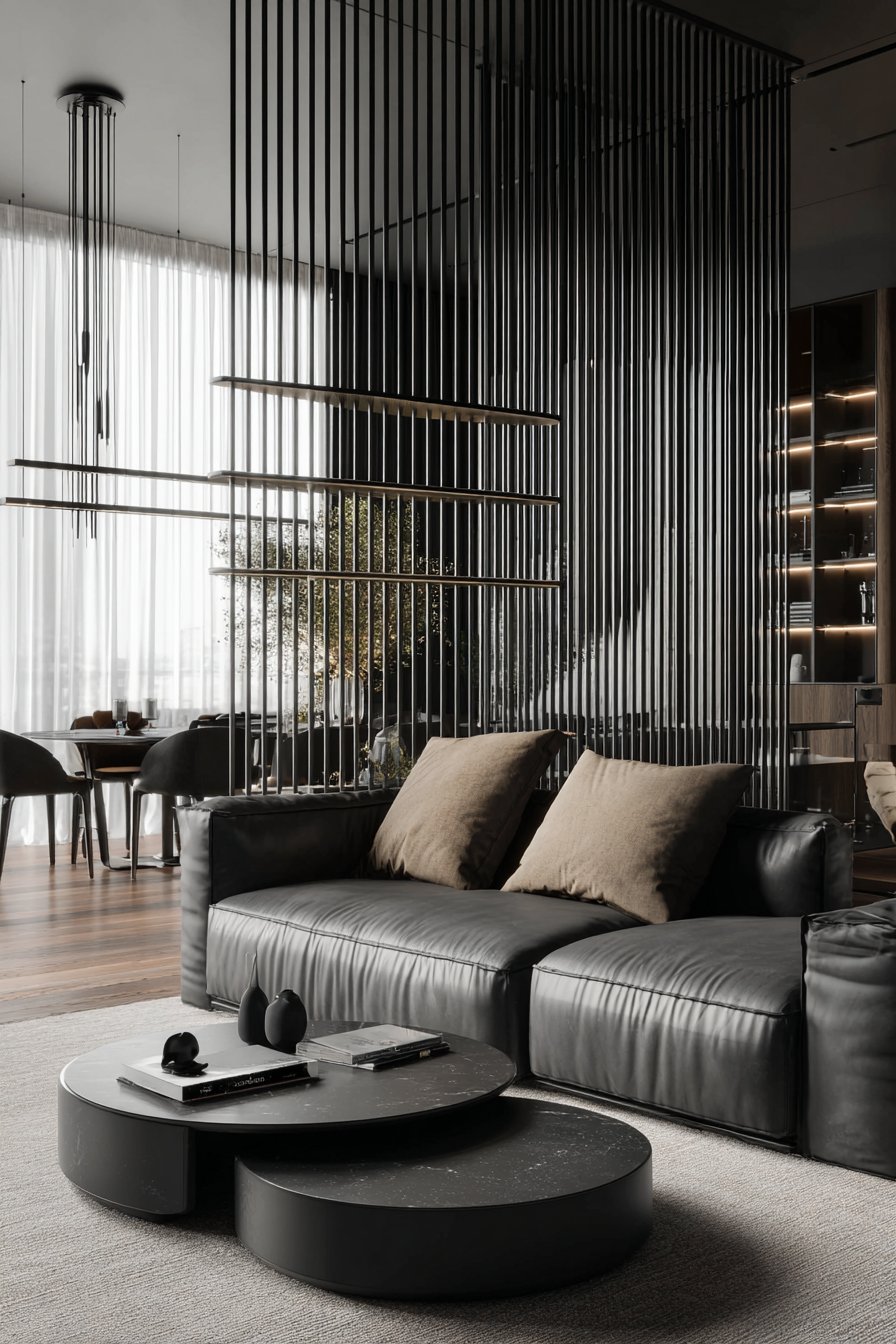
The marriage of sleek metal and transparent glass creates a divider solution that embodies contemporary sophistication with an unmistakable industrial edge. This partition features black matte-finished metal frames that provide bold geometric definition while the glass panels maintain complete visual openness across your living space. The result is a divider that clearly delineates zones without creating the visual weight or spatial interruption of solid walls. This approach is particularly effective for those who appreciate the aesthetic of converted lofts, modern urban apartments, or any space where maintaining sightlines and maximizing natural light distribution are paramount design considerations.
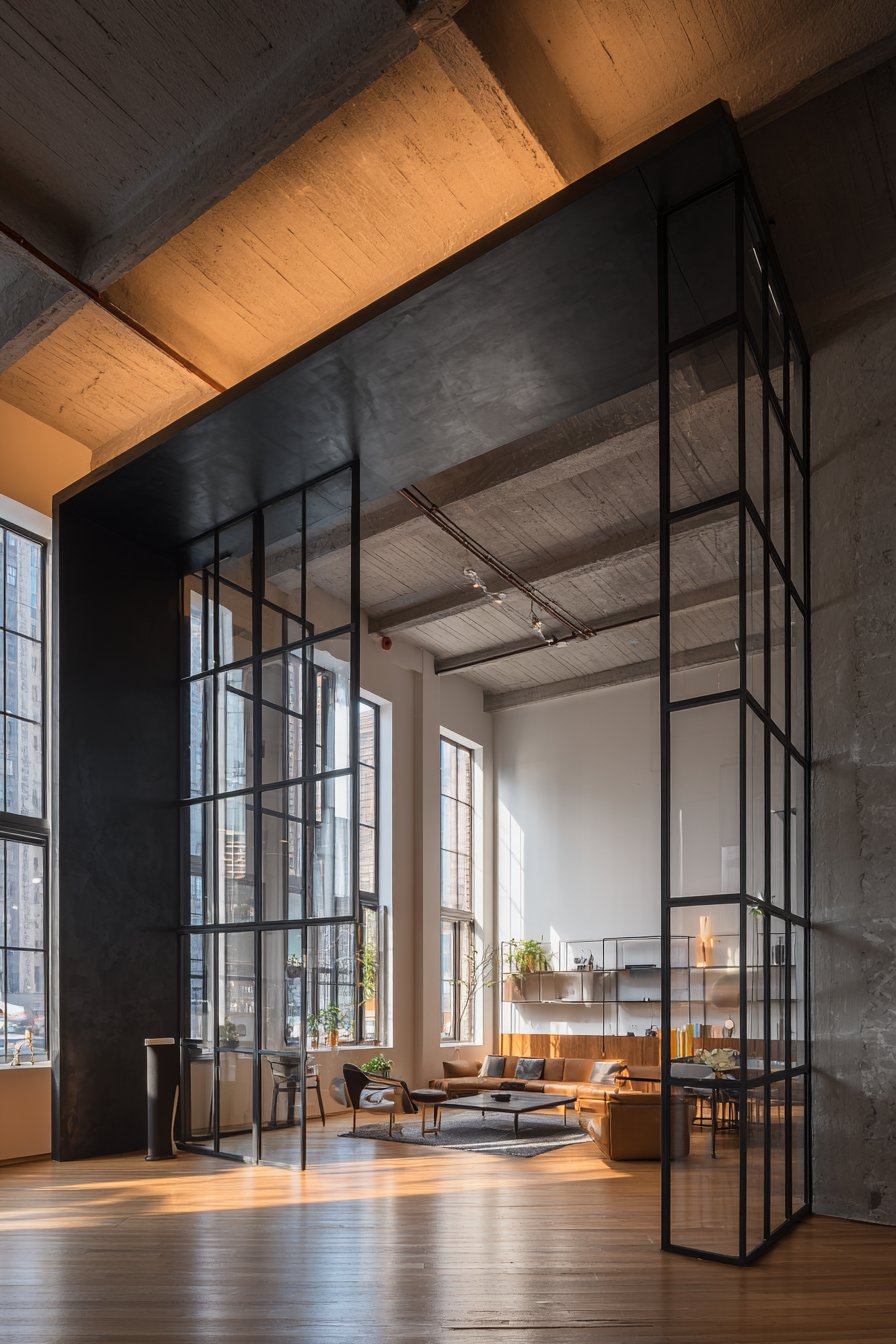
The transparency of glass offers unique advantages that solid materials simply cannot match. While creating a physical barrier between your living and dining areas, the glass allows unobstructed views that make both spaces feel larger and more connected to the overall room. Natural light passes freely through the panels, eliminating the dark corners that can result from traditional room division. The glass surface also creates subtle reflections that add depth and visual interest to your space, particularly when positioned to catch and multiply light from windows or artificial sources. The clean, minimalist aesthetic of this divider makes it virtually invisible from certain angles while providing strong architectural presence when viewed head-on.
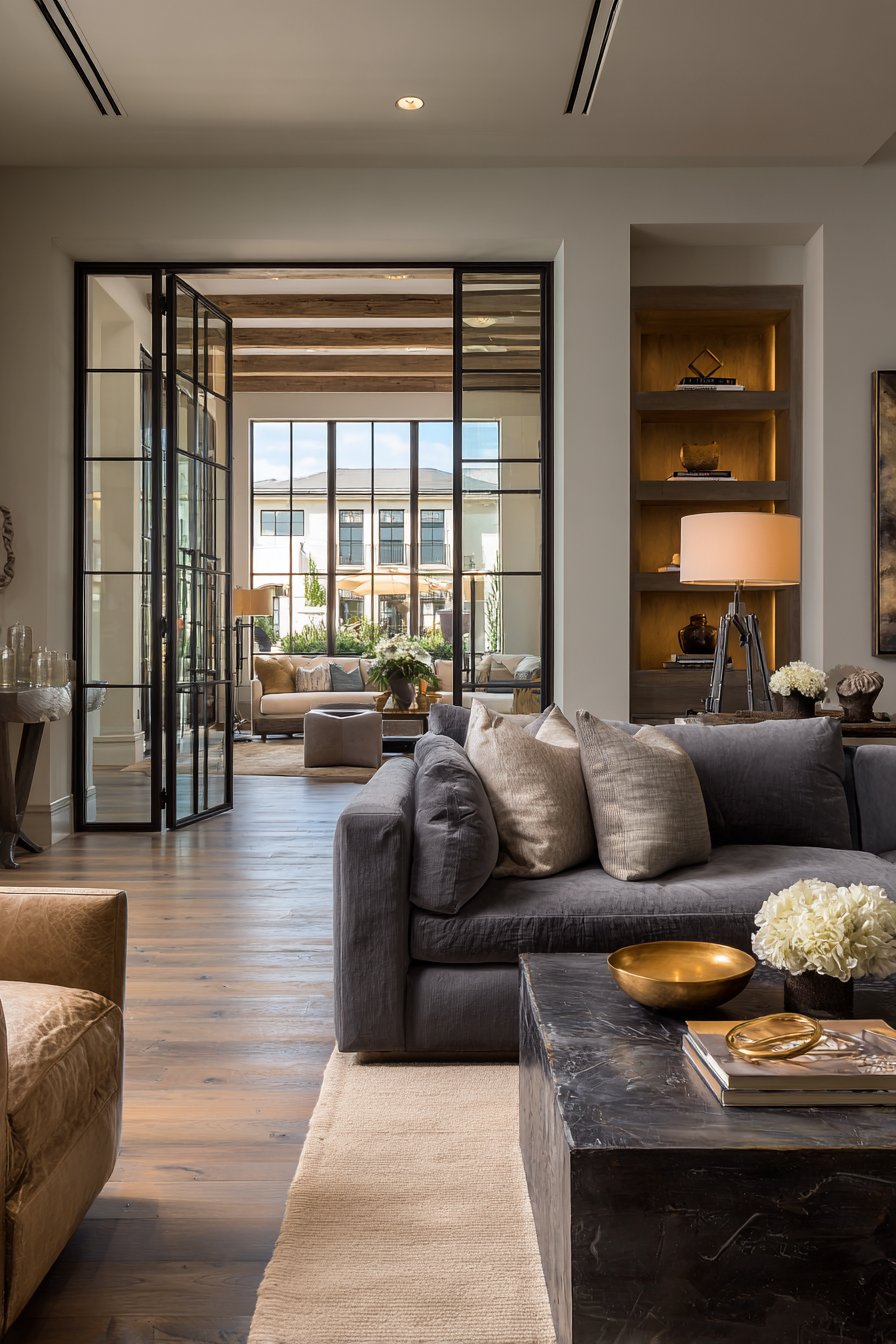
The black matte metal framework provides the structural integrity and visual punctuation that transforms simple glass panels into a design statement. This dark contrast against the transparency creates a modern interpretation of classic industrial warehouse windows, bringing that same sense of urban sophistication into residential settings. The matte finish eliminates glare and fingerprints better than glossy alternatives, ensuring that your divider maintains its crisp appearance with minimal maintenance. The rigid frame structure also allows for larger glass panels, reducing the number of vertical supports needed and maximizing the unobstructed view through the partition.
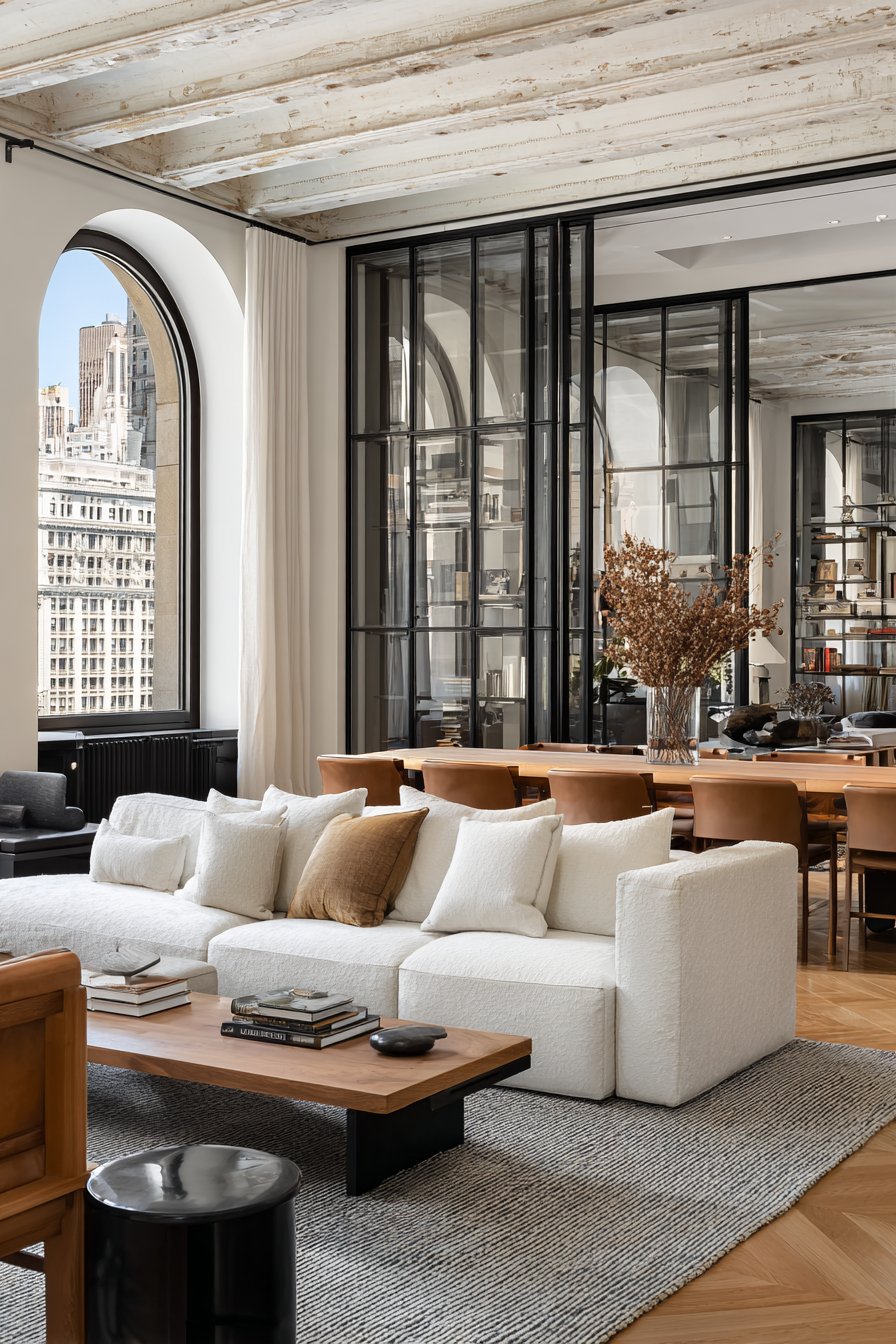
Installation of a metal-framed glass partition requires professional expertise to ensure proper anchoring and perfect alignment. The weight of glass necessitates solid floor and ceiling attachment points, and precise measurements are crucial for achieving the seamless look that makes this divider so effective. However, once installed, the partition becomes a permanent architectural feature that adds substantial value to your home. The durability of both materials ensures decades of maintenance-free use, with only occasional cleaning required to keep the glass sparkling and the metal frame looking fresh.
Key Design Tips:
- Choose tempered safety glass for durability and peace of mind, especially in homes with children or pets
- Position the divider to maximize natural light distribution while creating functional separation between activity zones
- Coordinate the black metal finish with other hardware and fixtures throughout your space for cohesive design continuity
- Consider adding frosted or textured glass panels at specific heights if additional privacy is desired in certain areas
- Install the partition parallel to major architectural lines to create visual harmony and balanced proportions
- Add small LED spotlights to graze along the metal frames for dramatic evening ambiance and architectural emphasis
- Maintain the glass with ammonia-free cleaners to preserve clarity and prevent streaking or film buildup
3. Double-Sided Bookshelf Divider: Storage Meets Smart Space Definition
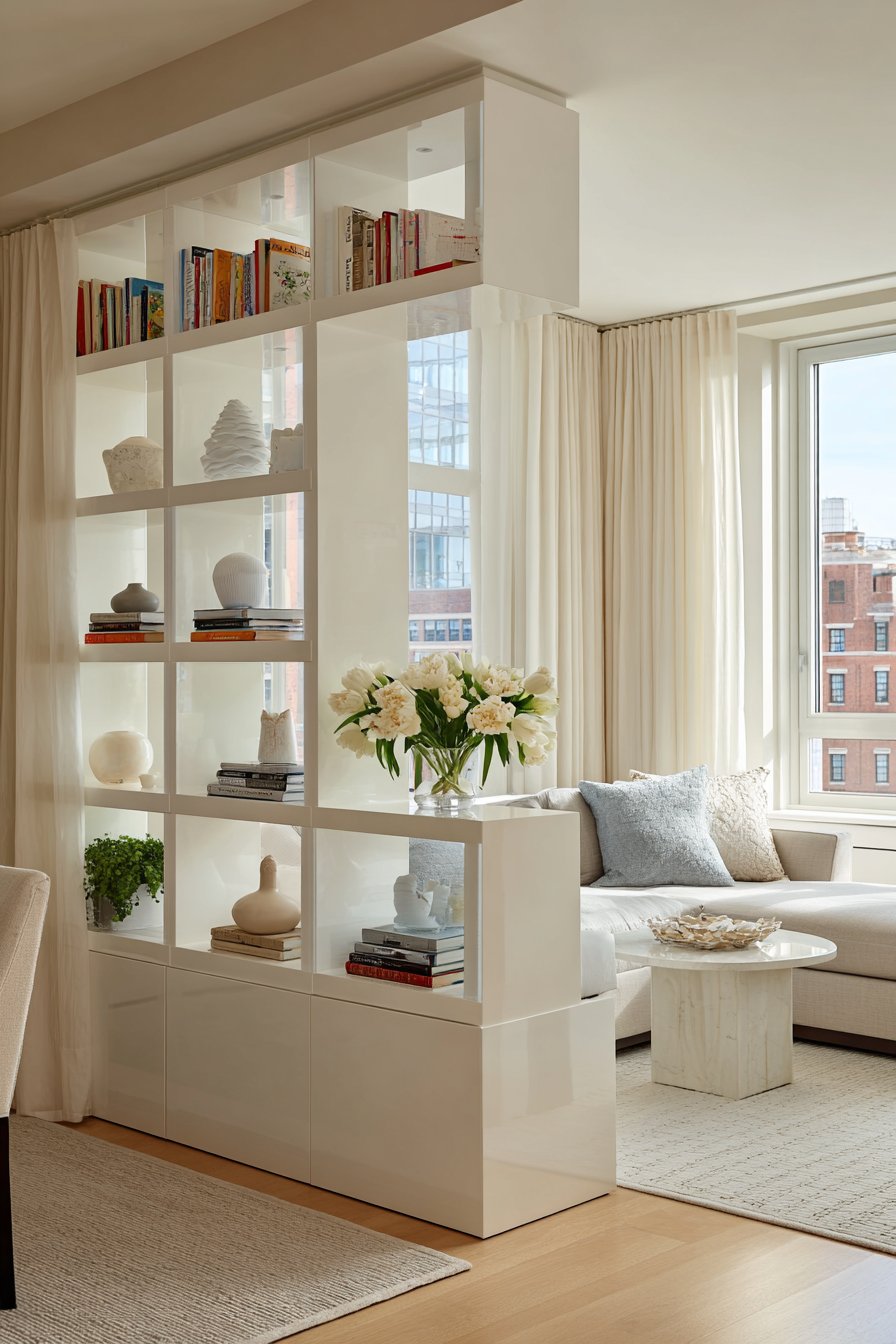
The genius of a double-sided bookshelf divider lies in its multifunctionality—it simultaneously solves storage challenges, displays your personality through curated objects, and creates clear spatial boundaries. This approach features a pristine white lacquer finish that brings contemporary elegance while providing a neutral canvas for whatever you choose to display. The open shelving concept ensures that light continues to flow between spaces, preventing the heaviness that can come with solid partitions. Imagine transitioning from your living room seating area to a cozy reading nook, with this beautiful piece serving both zones while maintaining visual connection across your home.
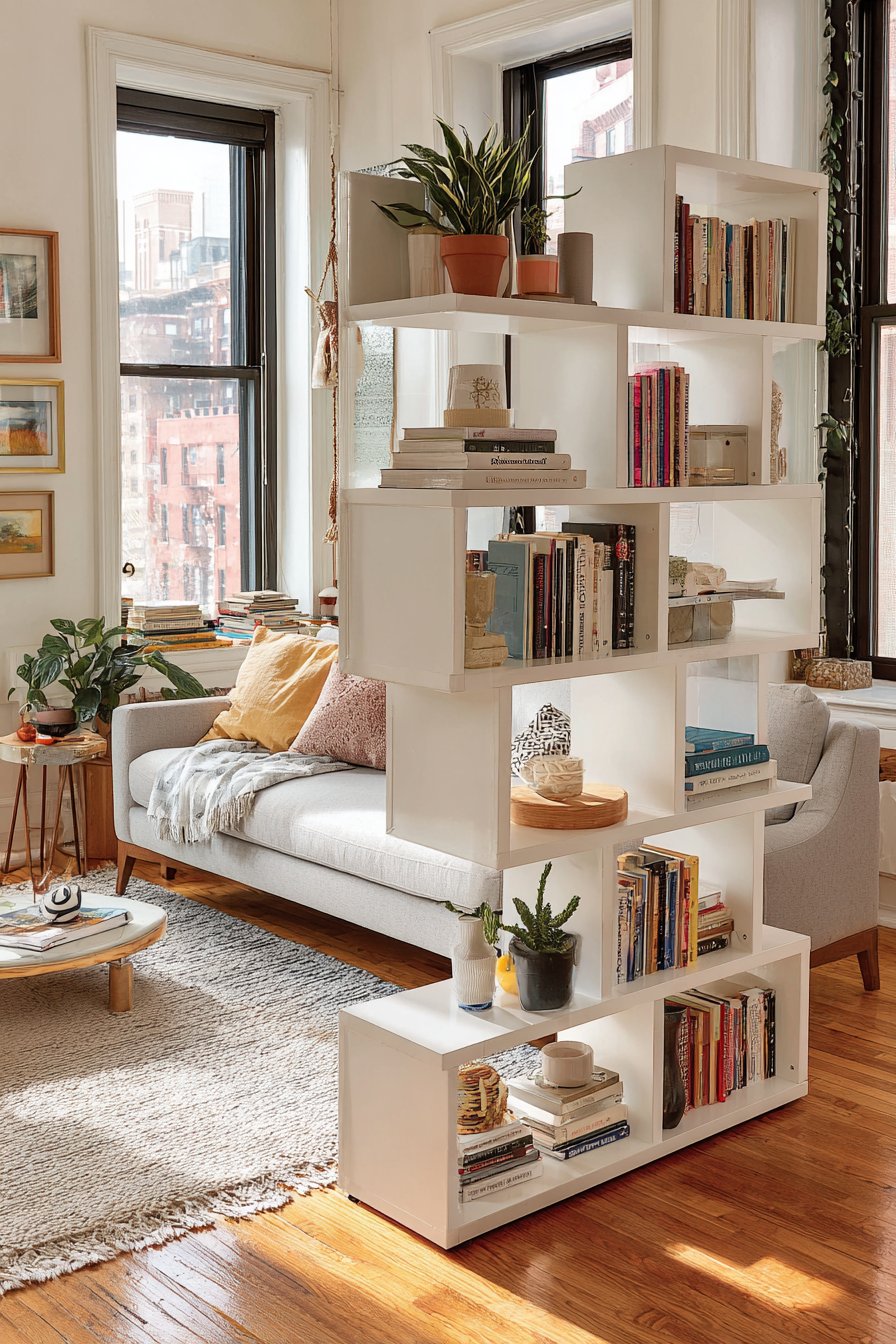
The versatility of bookshelf dividers cannot be overstated. Each shelf becomes an opportunity for personal expression through the careful curation of books, plants, decorative objects, and meaningful mementos. The double-sided nature means you can style each side differently to suit the function and aesthetic of its respective zone. The living room side might display coffee table books, sculptural objects, and statement plants, while the reading nook side could house your working library, task lighting, and personal treasures. This customization ensures that the divider feels integrated and intentional rather than afterthought furniture placement.
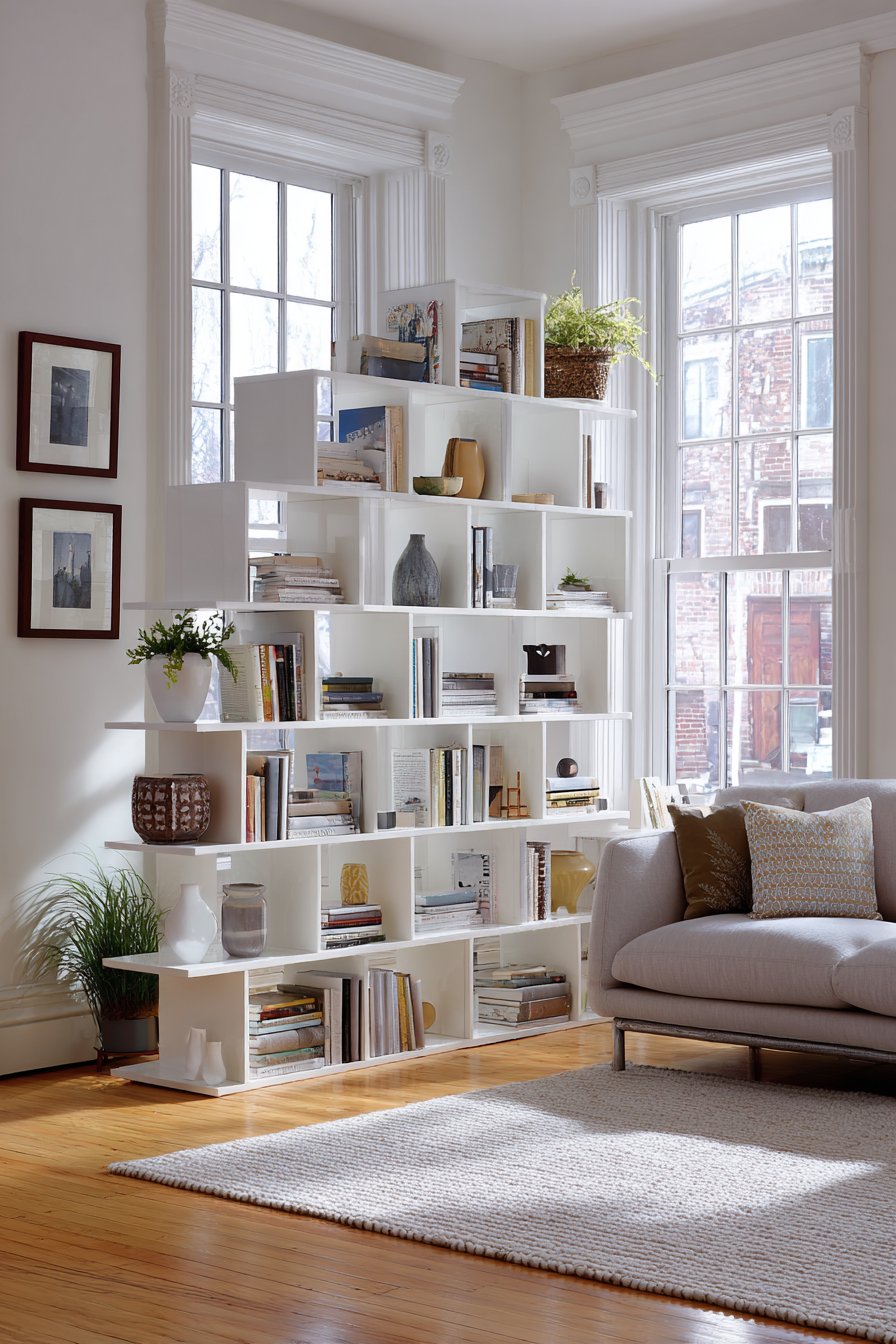
The white lacquer finish offers practical benefits beyond its clean aesthetic appeal. The reflective quality of the lacquered surface helps bounce light around your space, enhancing brightness and creating a sense of airiness. This makes it particularly valuable in rooms where natural light is limited or where you want to maximize the perceived spaciousness. The smooth, sealed surface is also incredibly easy to maintain—dust and fingerprints wipe away effortlessly, keeping your divider looking pristine with minimal effort. The durability of quality lacquer means this piece will maintain its glossy appearance for years, resisting yellowing and wear.
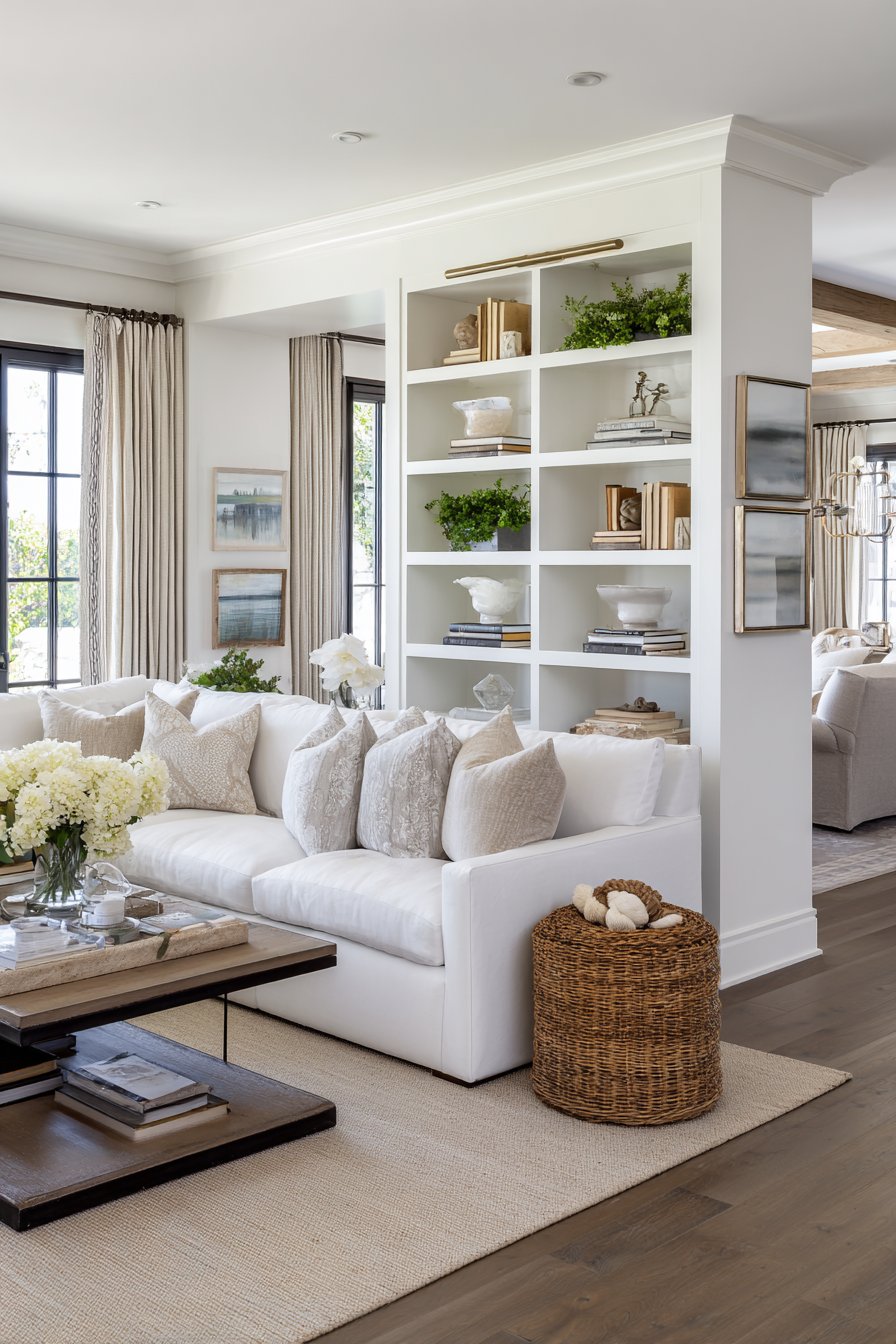
Strategic placement of this divider requires consideration of both traffic patterns and visual balance. Positioning it on a neutral area rug helps anchor the piece while defining the boundary it creates. The rug serves as a visual foundation that signals the transition between spaces while protecting your flooring and adding textural interest. The height of the unit should be proportional to your ceiling height—too tall and it feels imposing, too short and it fails to provide adequate definition. Most effective installations use units that reach approximately two-thirds of the ceiling height, creating presence without overwhelming the space.
Key Design Tips:
- Select a unit with varying shelf heights to accommodate objects of different sizes and create visual rhythm
- Style shelves with a mix of vertical books, horizontal stacks, plants, and decorative objects for balanced composition
- Leave some shelves partially empty to prevent visual clutter and maintain the airy, open feeling
- Use matching baskets or boxes on select shelves to hide less attractive items while adding texture
- Position taller objects on upper shelves and heavier items lower to create visual stability
- Add small battery-operated picture lights or LED strips to illuminate displays and add ambiance
- Anchor the unit to the wall at the top to prevent tipping, especially important if children or pets are present
4. Suspended Rope Partition: Bohemian Texture with Flowing Movement
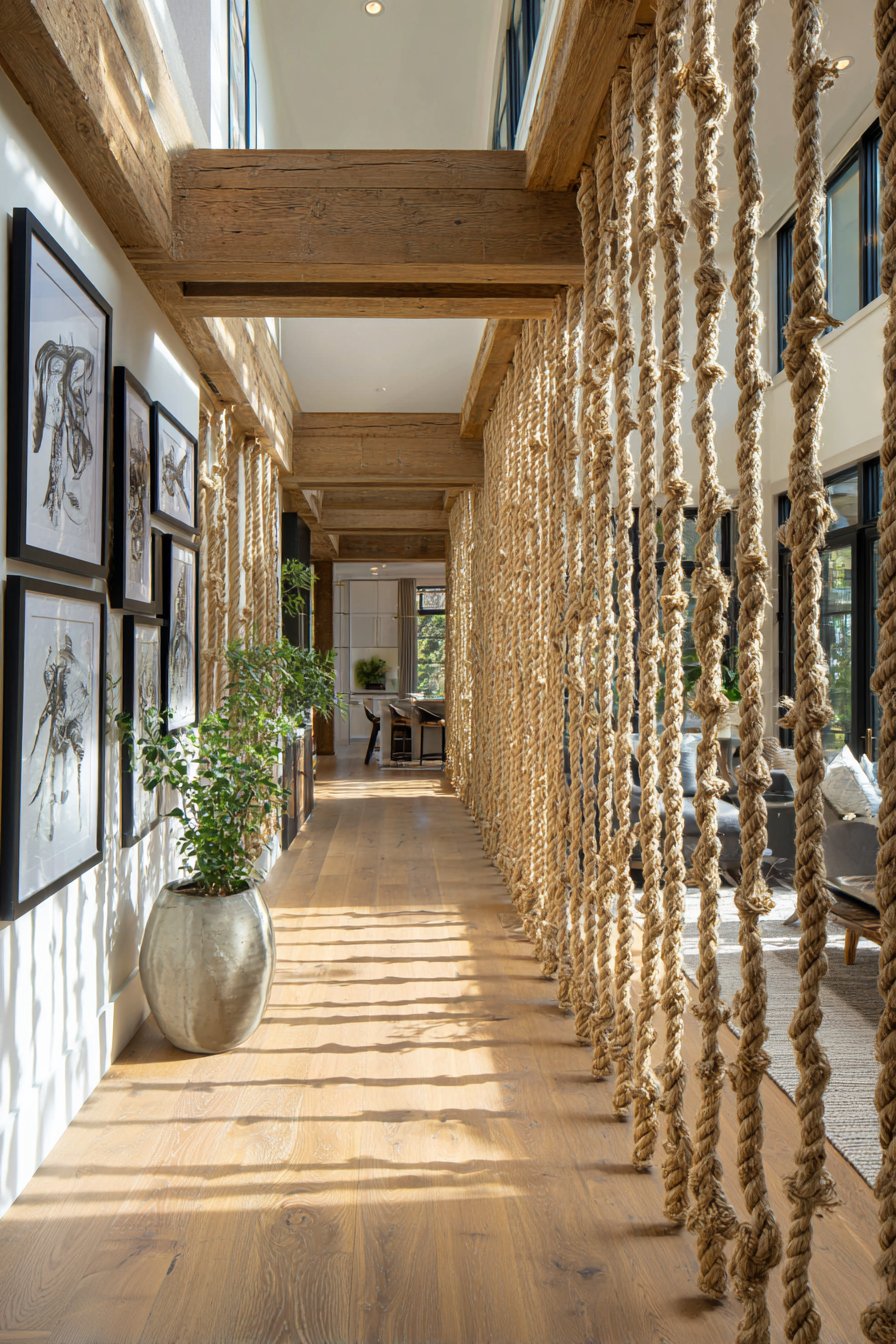
For those drawn to organic materials and artistic expression, a suspended rope partition offers an utterly unique approach to room division. Natural jute rope strands cascade from ceiling to floor, creating a textile curtain that gently defines space while maintaining an airy, open ambiance. This divider brings tactile richness and visual softness to your living area, separating the main seating zone from an entryway without the hard edges or visual weight of traditional partitions. The individual rope strands move subtly with air currents, adding gentle motion and life to your space in a way that rigid materials simply cannot achieve.
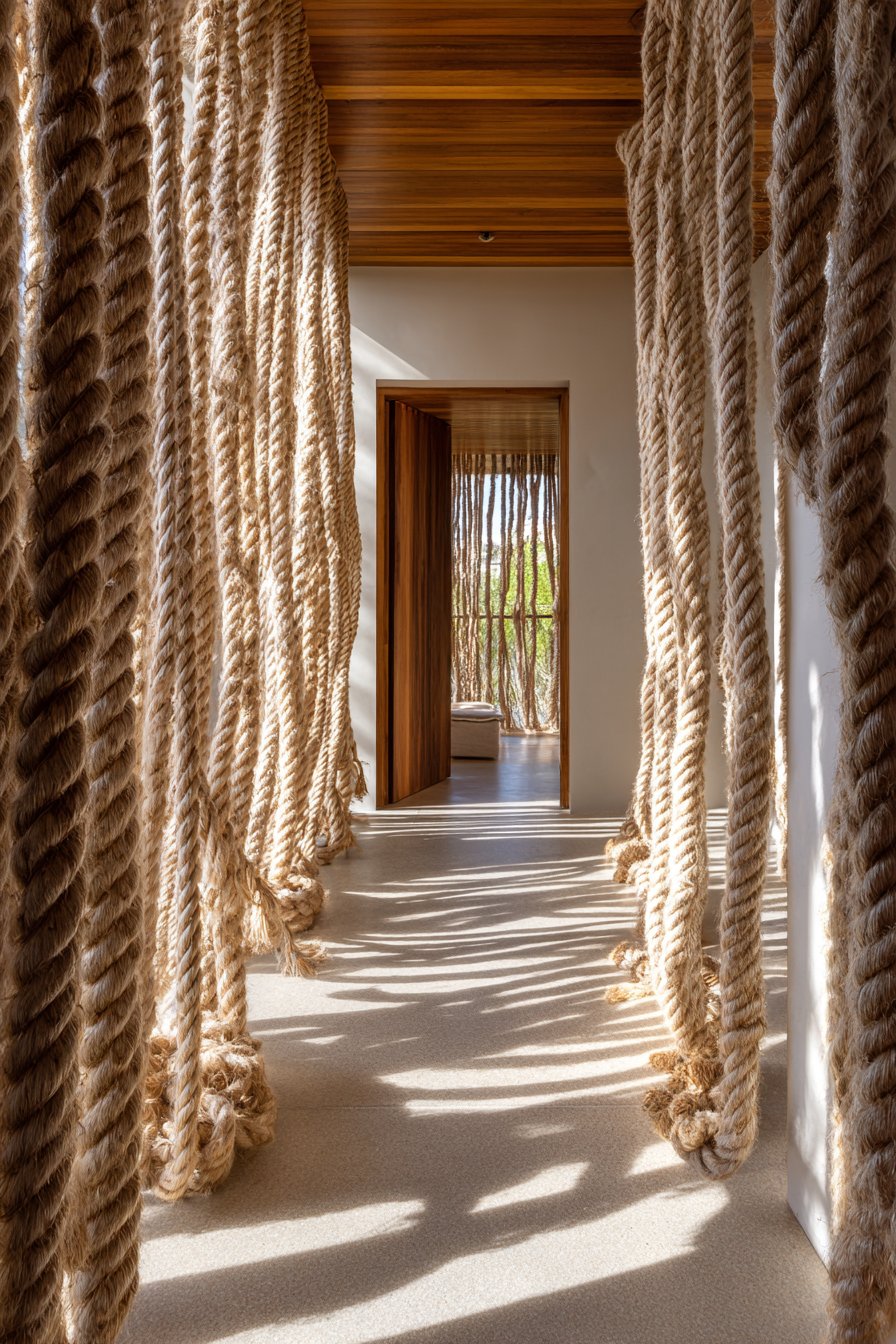
The natural jute material brings earthy warmth and authentic bohemian character to contemporary interiors. The neutral tan color of jute complements virtually any color palette while adding organic texture that softens modern furnishings and architectural elements. As natural light filters through the hanging strands, it creates dimensional shadows that shift throughout the day, adding ever-changing visual interest to your walls and floors. This interplay of light and shadow transforms the rope partition from a simple divider into a living art installation that responds to environmental conditions and creates atmosphere.
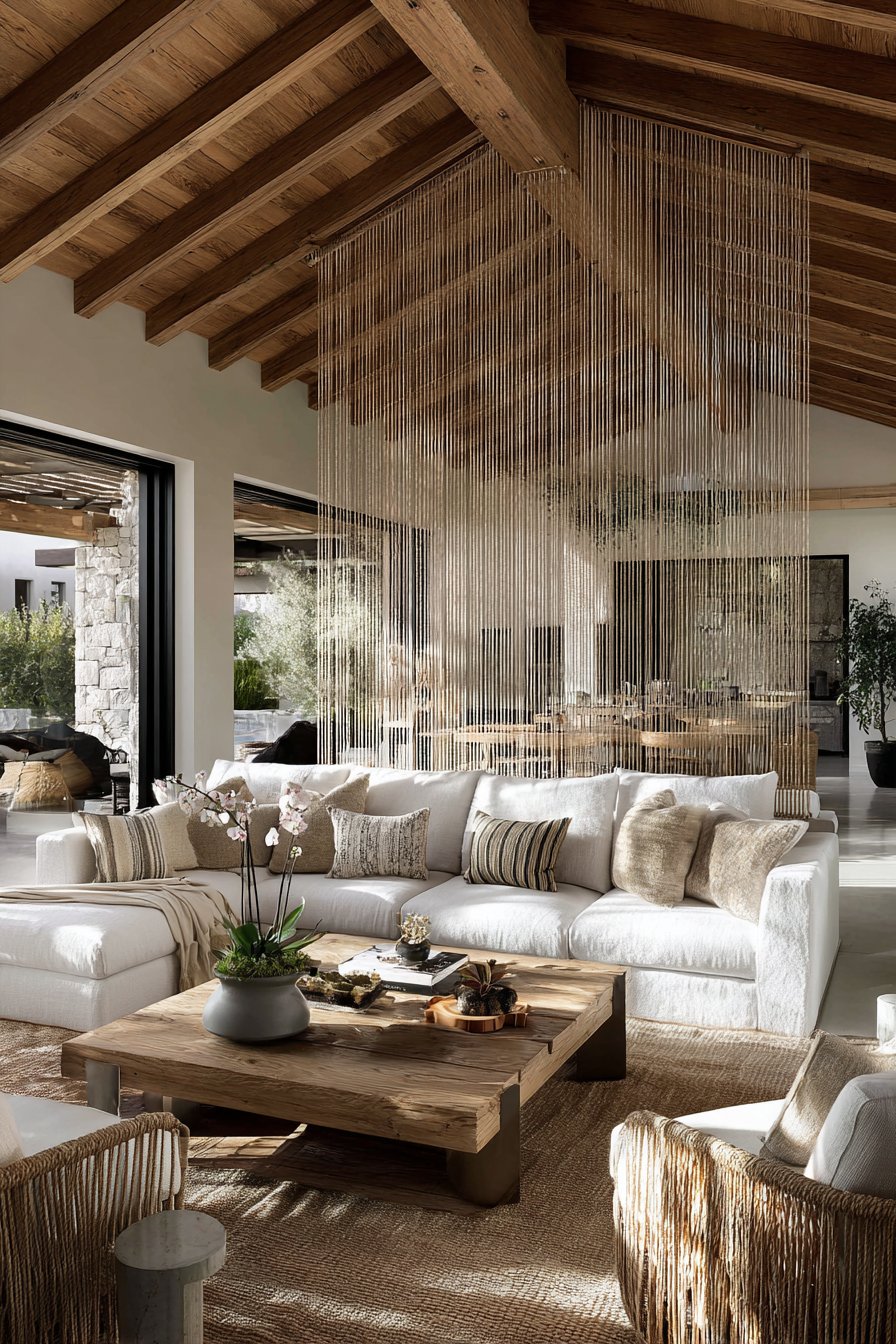
Installation of a rope partition requires a sturdy ceiling beam or specially reinforced mounting point to support the distributed weight of the hanging material. The rope strands typically attach to a wooden beam that becomes part of the design aesthetic, adding horizontal architectural interest that contrasts beautifully with the vertical flow of the ropes. The spacing between individual rope strands can be adjusted to control the level of visual separation—closer spacing creates more definition and privacy, while wider spacing maintains maximum openness. Most installations use strands spaced between two and four inches apart to achieve the right balance.
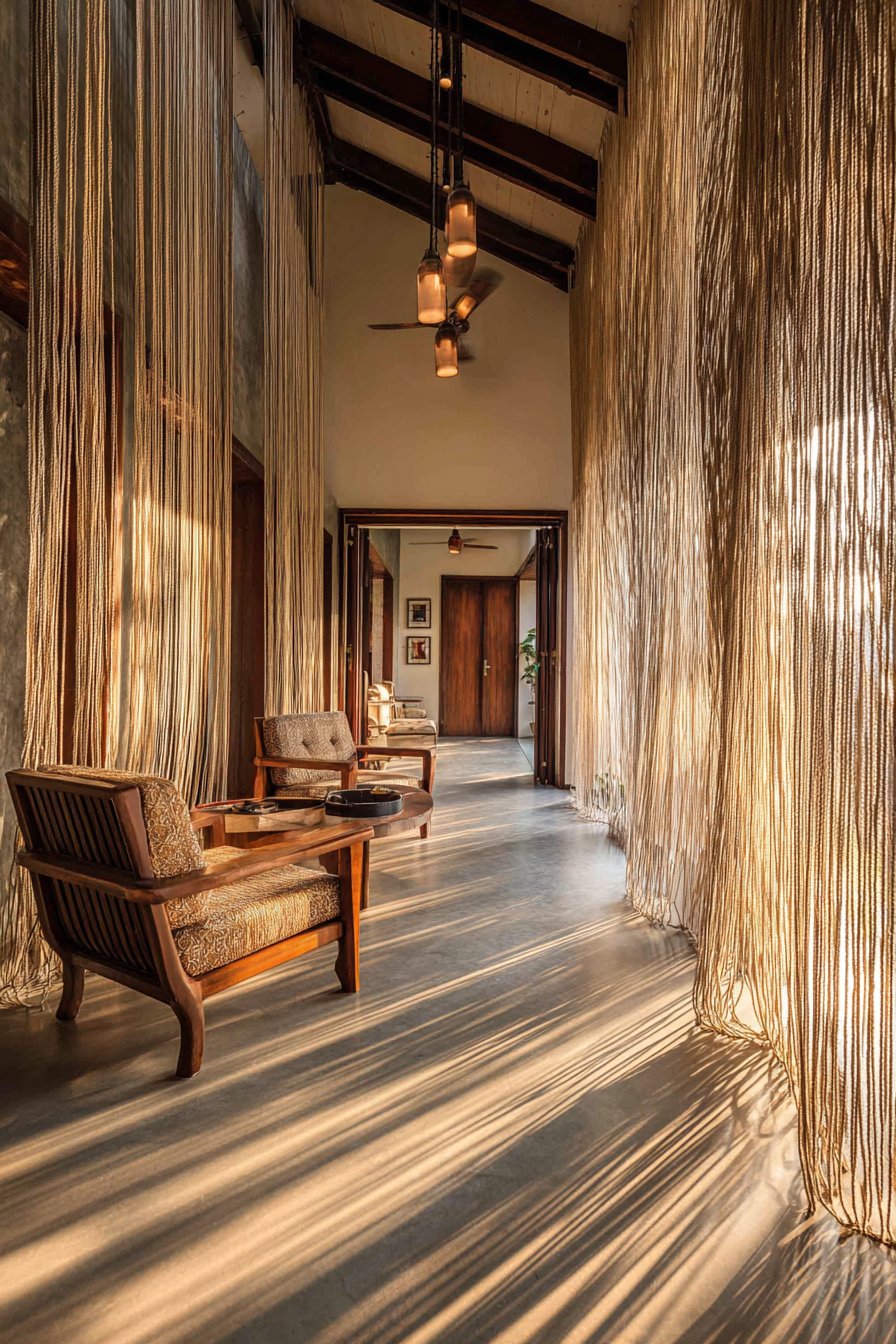
The maintenance requirements for a rope divider are minimal but worth considering. Natural jute is relatively durable and resists tangling, but it does collect dust over time. Regular vacuuming with a brush attachment or gentle shaking can keep the ropes looking fresh. The natural material may darken slightly with age and exposure to sunlight, developing a richer patina that many find enhances the organic aesthetic. If you prefer to maintain the original color, positioning the divider away from direct sunlight will slow this natural aging process.
Key Design Tips:
- Install rope strands at varying lengths with a subtle graduated pattern for added visual interest and organic flow
- Use rope diameter between half-inch and three-quarters-inch for optimal visual impact and proper draping weight
- Secure the ceiling beam to structural joists rather than just drywall to ensure safe and stable installation
- Treat natural jute with fabric protector spray to resist moisture and make dust removal easier
- Combine the rope divider with floor pillows and woven textiles to create a cohesive bohemian aesthetic
- Position the partition where air movement from windows or HVAC can create gentle swaying motion
- Consider adding decorative beads or wooden elements threaded onto select strands for personalized detail
5. Mid-Century Modern Credenza with Integrated Planters: Low-Profile Natural Division
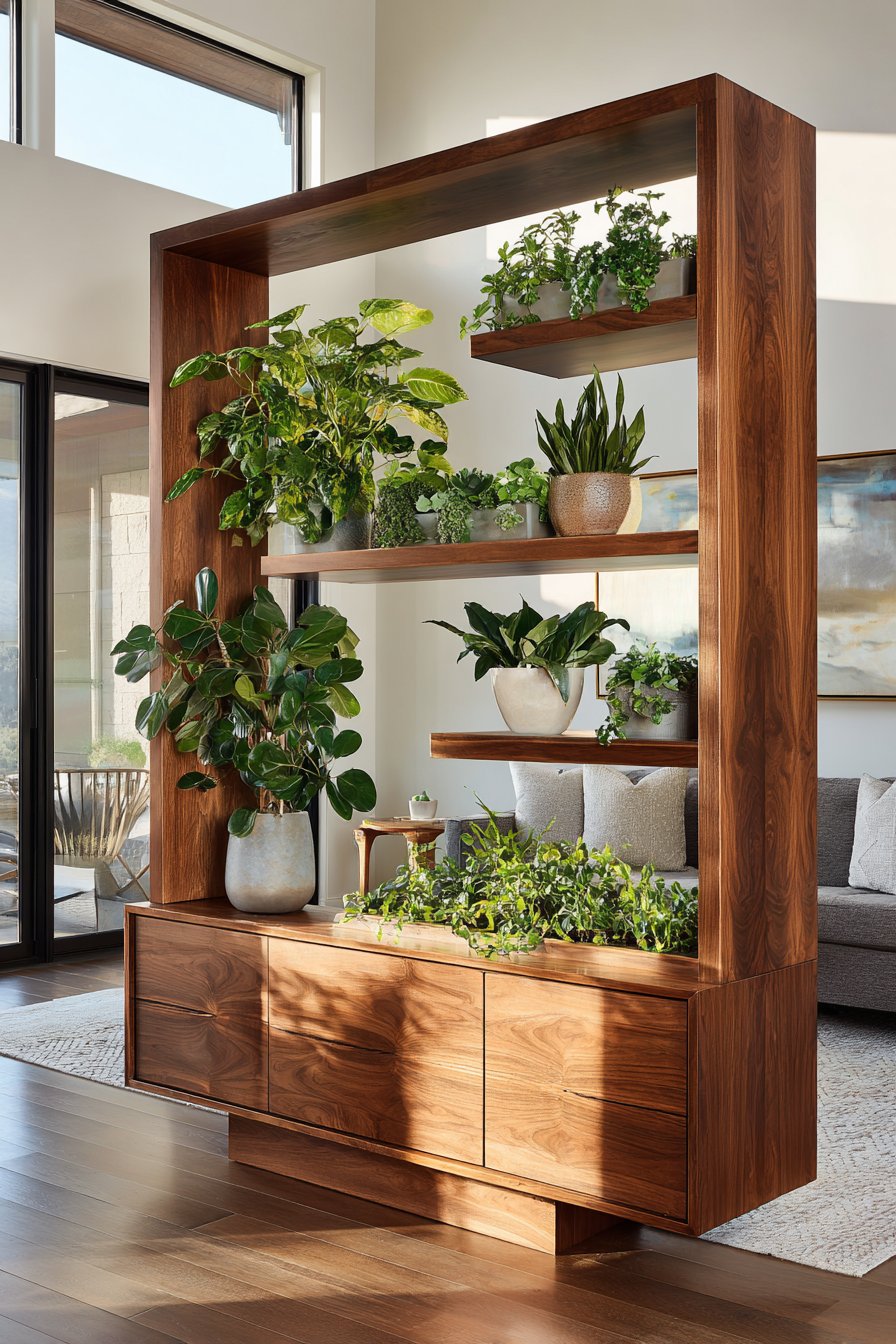
The beauty of low-profile division lies in its subtlety—creating distinct zones without obstructing sightlines or overwhelming your space. A mid-century modern credenza in rich walnut wood serves this purpose brilliantly, sitting at waist height to define areas while maintaining visual connection across your room. The integrated planters positioned on top introduce a living green barrier that adds height, color, and organic movement without the permanence of built-in structures. This approach provides valuable storage within the credenza cabinet while the varied plant heights create vertical interest that draws the eye upward, making your space feel taller and more dynamic.
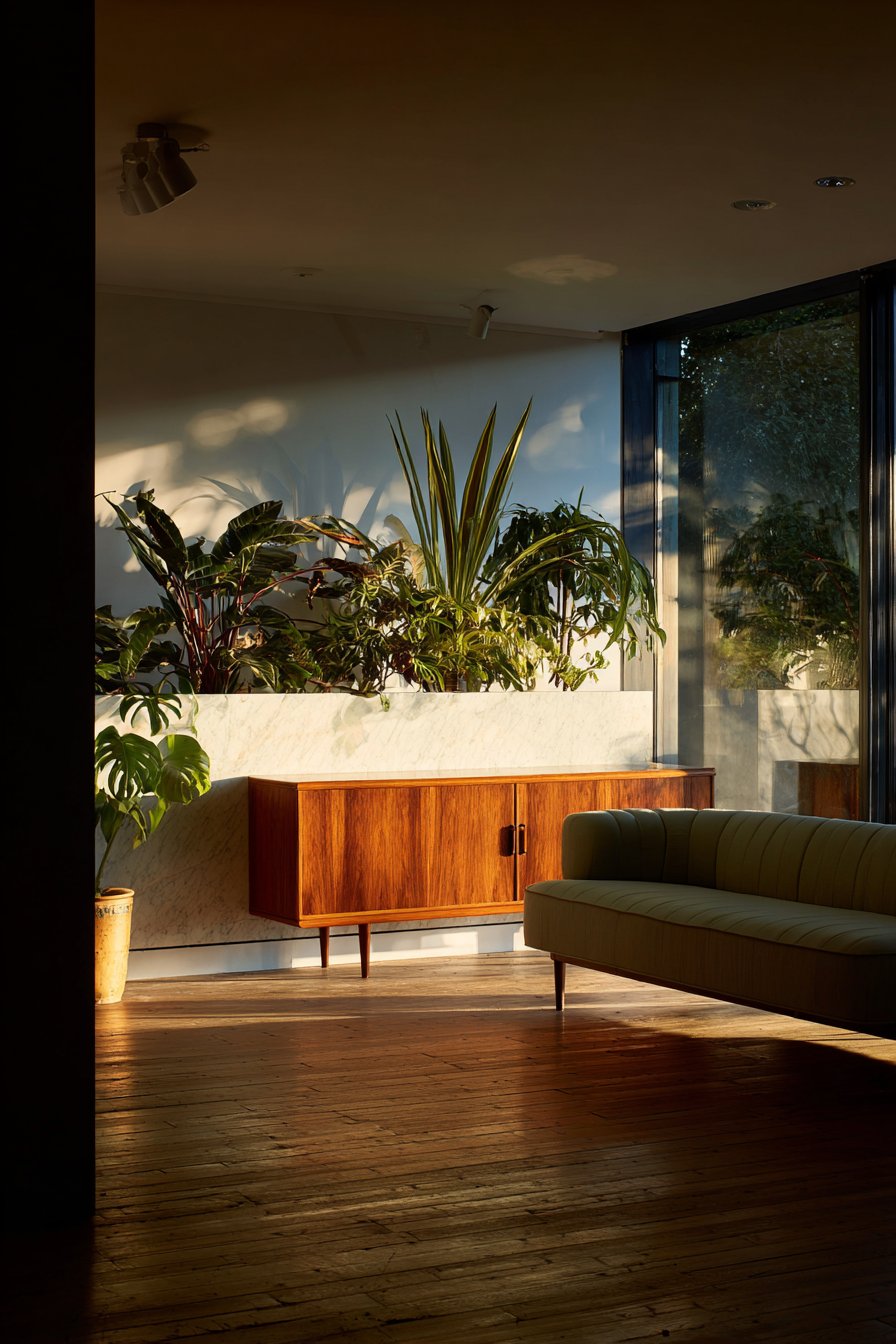
The warm, rich tones of walnut wood bring timeless sophistication and natural beauty that anchors this divider firmly in mid-century design tradition. The wood grain patterns create visual texture that adds interest without business, while the organic material connects your interior space with the natural world. The credenza typically features clean lines, tapered legs, and minimal ornamentation—hallmarks of mid-century modern design that ensure it remains stylish across changing trends. The horizontal emphasis of the piece creates visual stability and grounding, providing a foundation for the vertical plant display above.
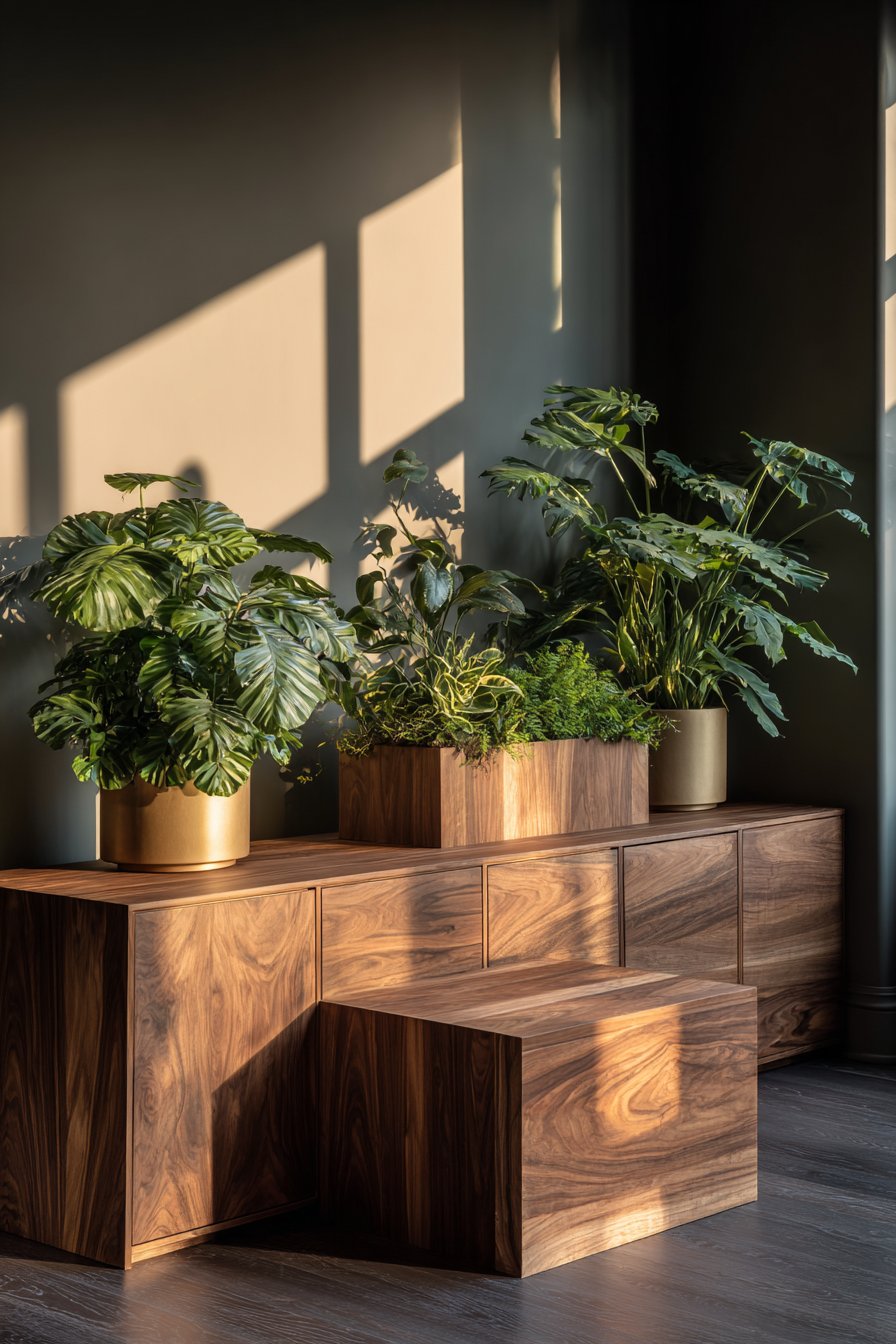
The integrated planter concept transforms a simple storage piece into a living design element. By housing plants of varying heights—from low succulents to medium ferns to tall dracaenas or fiddle leaf figs—you create layers of green that provide progressive screening as the eye travels upward. This natural barrier softens the division between spaces while improving indoor air quality, adding humidity, and bringing the psychological benefits of biophilic design into your home. The plants introduce color, texture, and organic movement that contrast beautifully with the static geometry of furniture and architecture.
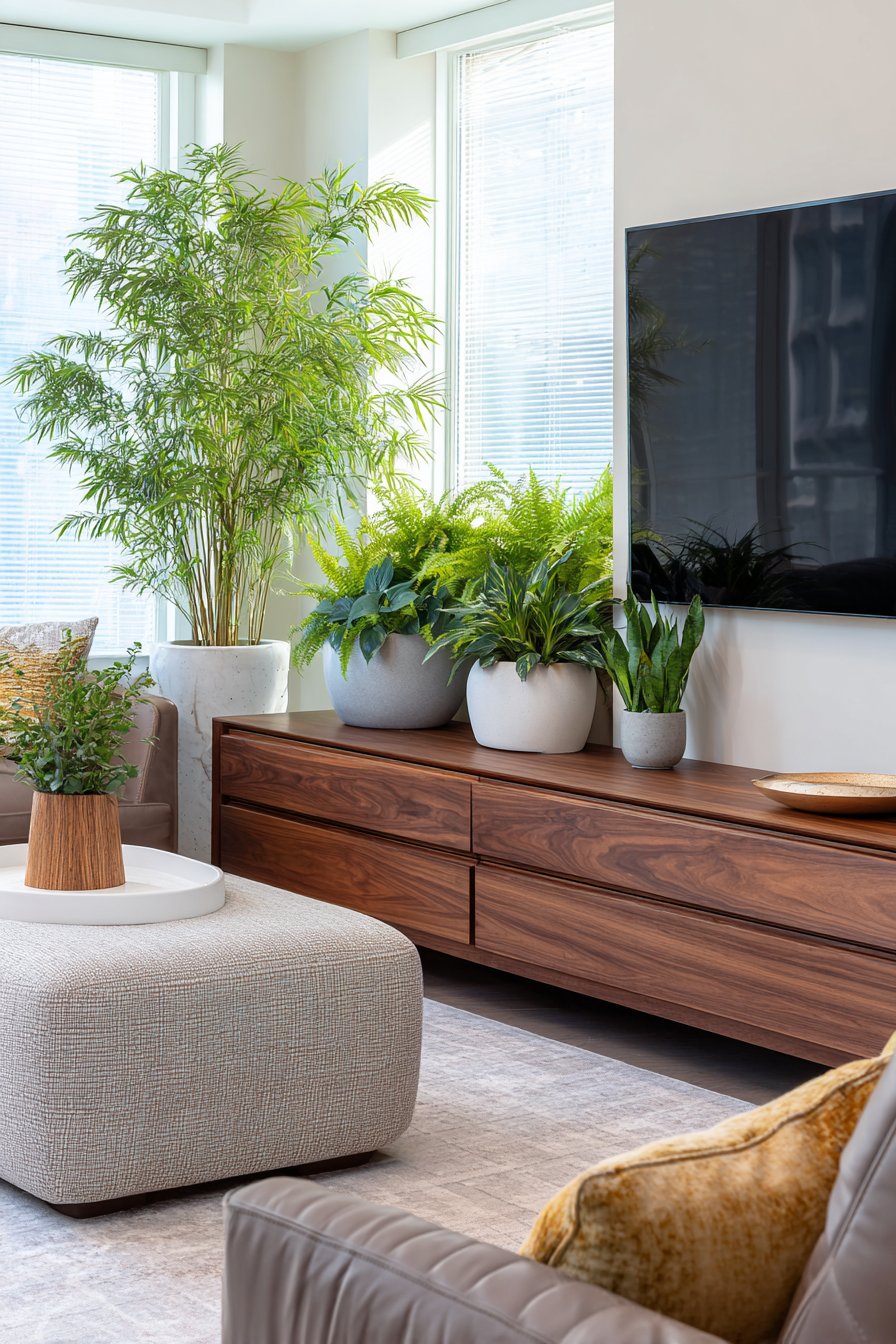
Strategic placement of this divider requires consideration of both function and circulation. The credenza should be positioned to create clear pathways around it while defining the boundary between zones. Because it sits at approximately three feet high, it maintains visual connection across spaces while providing enough physical presence to signal the room division. This makes it ideal for open-concept spaces where you want to maintain the sense of flow while creating distinct areas for different activities. The storage capacity below makes it practical for stashing items you want accessible but not visible—from entertainment accessories to board games, linens, or office supplies.
Key Design Tips:
- Choose a credenza with doors or drawers to hide storage while maintaining the clean lines essential to mid-century aesthetic
- Select plants with varying heights from twelve inches to four feet to create progressive screening and visual rhythm
- Ensure adequate natural light reaches the plants or supplement with full-spectrum grow lights for optimal plant health
- Use planters in complementary materials like ceramic, brass, or concrete to add textural variety and design interest
- Position the credenza perpendicular to windows when possible to ensure plants receive adequate indirect light
- Add trailing plants like pothos or philodendron to create cascading greenery that softens the piece’s geometric lines
- Maintain consistent watering and care schedules to keep plants looking lush and healthy as living design elements
6. Geometric Moroccan-Inspired Metal Screen: Portable Artistry and Pattern Play
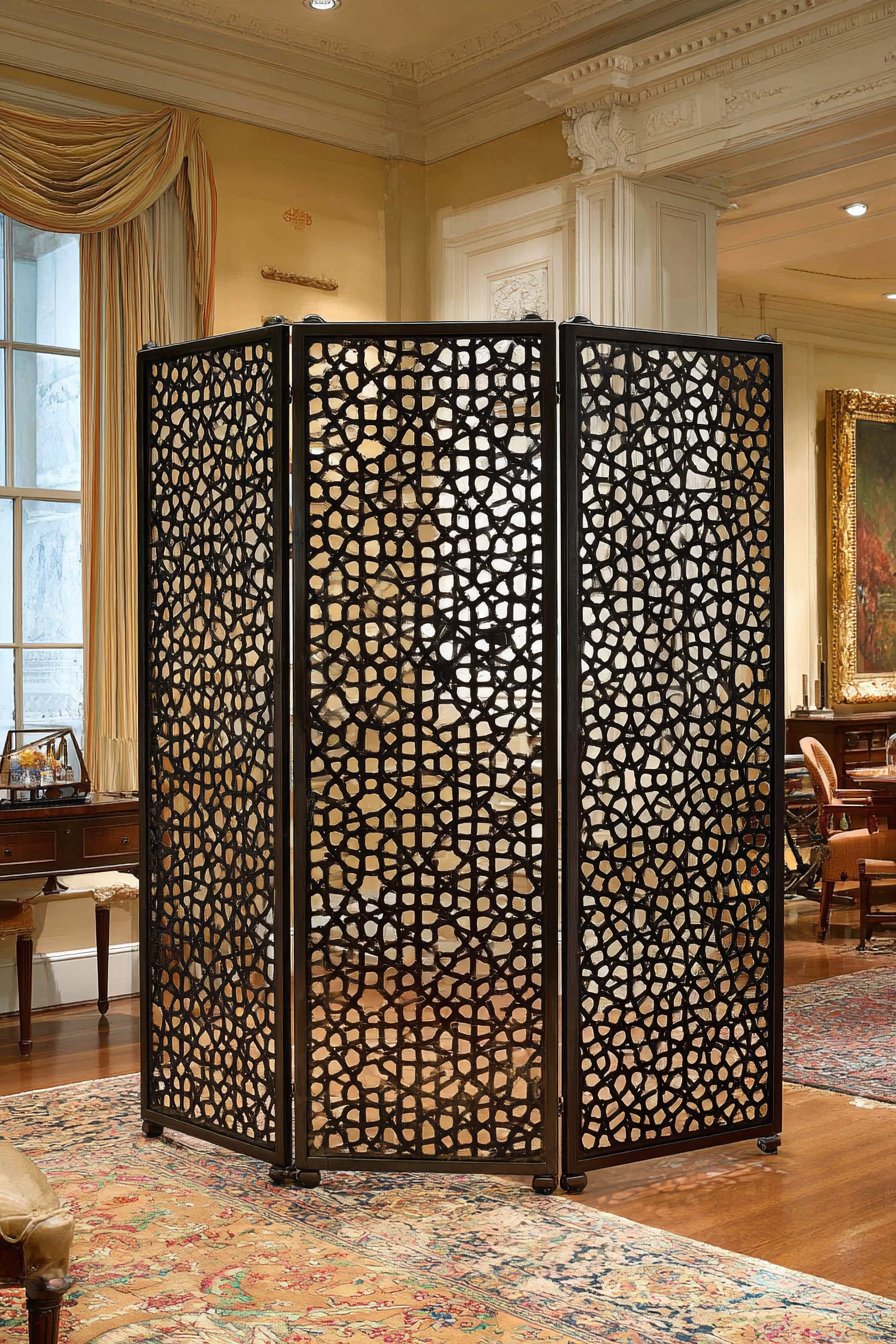
The allure of geometric patterns finds spectacular expression in a folding metal screen inspired by traditional Moroccan design motifs. This three-panel divider features intricate laser-cut patterns in matte black metal that create both visual interest and functional room division. The portability of a folding screen offers flexibility that permanent installations cannot match—move it as your needs change, fold it away when not needed, or reposition it to create different spatial configurations. Beyond its practical function, this screen serves as sculptural art, casting decorative shadow patterns on surrounding walls that transform throughout the day as light shifts and changes.
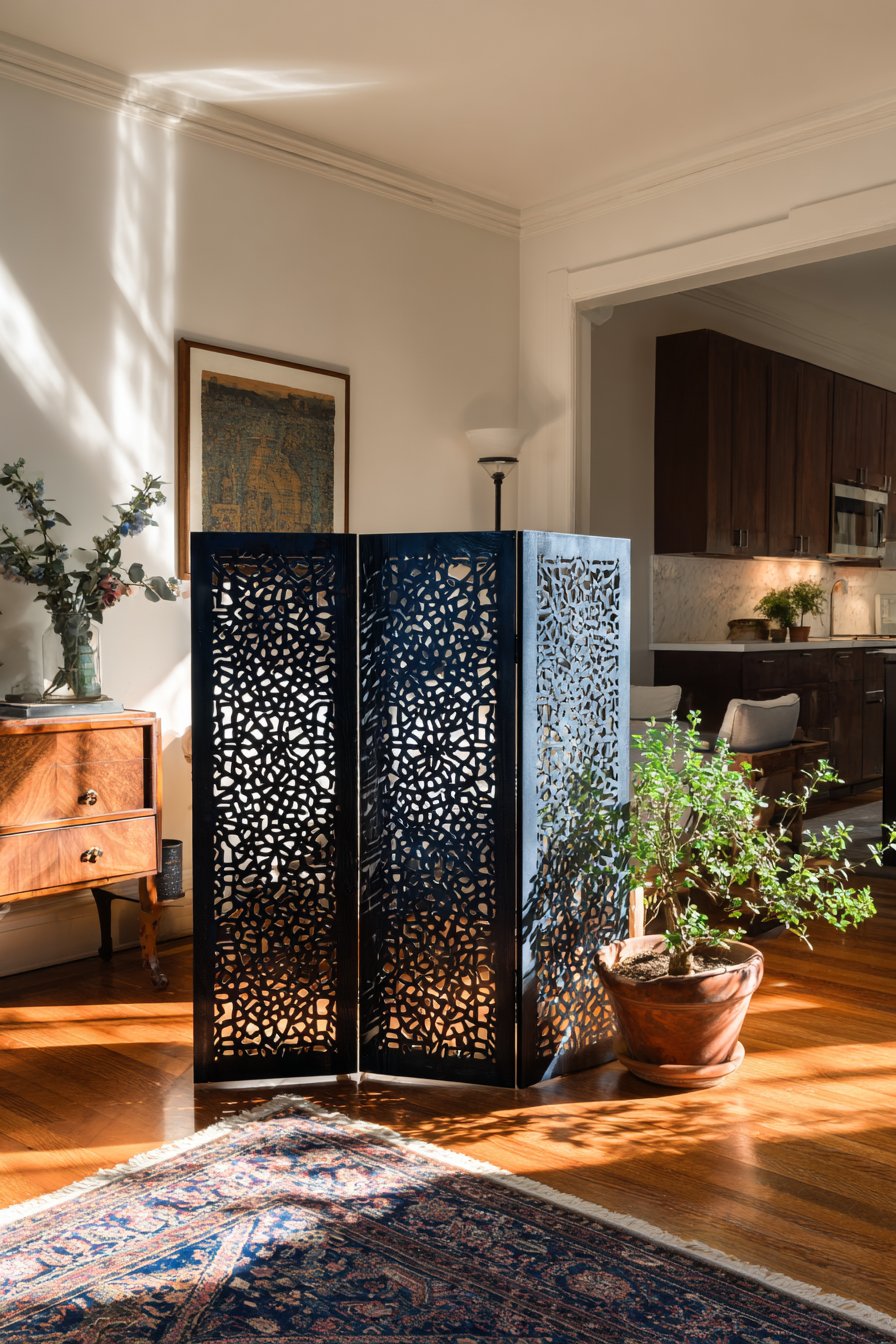
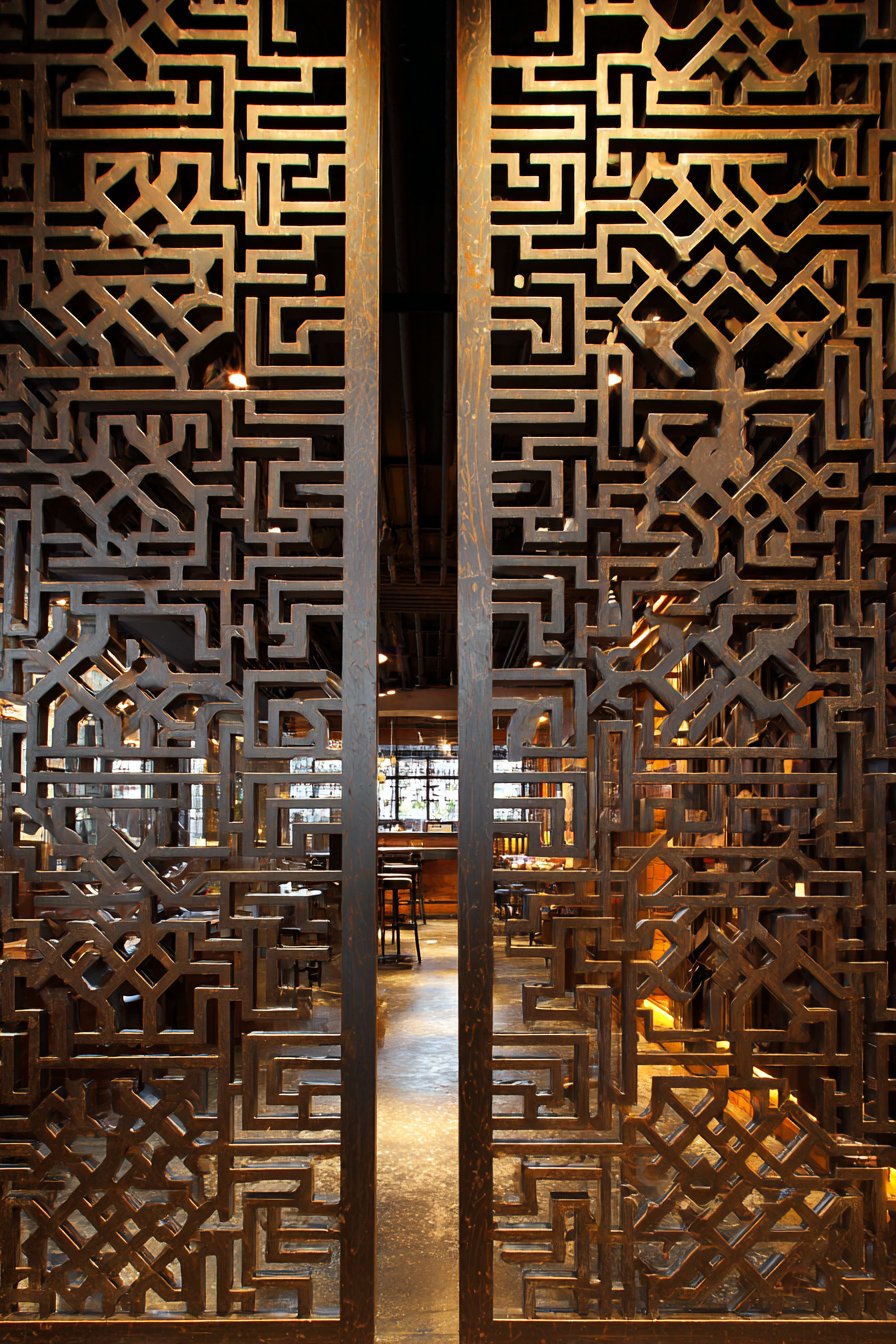
The laser-cut patterns showcase incredible detail and precision, with interlocking geometric shapes that reference traditional Islamic art and architecture. These complex designs create visual density that provides privacy and separation while maintaining enough transparency to allow light and air circulation. The interplay between solid metal and negative space creates rhythm and movement that engages the eye, transforming a functional divider into a focal point worthy of attention. The matte black finish provides sophisticated contrast against light-colored walls while grounding the ornate patterns in contemporary sensibility.
The three-panel folding configuration offers tremendous versatility in how you deploy the screen. Each panel can be angled independently, allowing you to create different depths and curves in the screen’s overall shape. This means you can wrap it partially around a seating area, create an angled division between spaces, or accordion it into a tight Z-shape for maximum compactness. The hinged connections between panels are typically reinforced metal that withstands repeated folding and repositioning while maintaining alignment and stability. Quality screens include floor glides or rubber feet that protect flooring and prevent sliding.
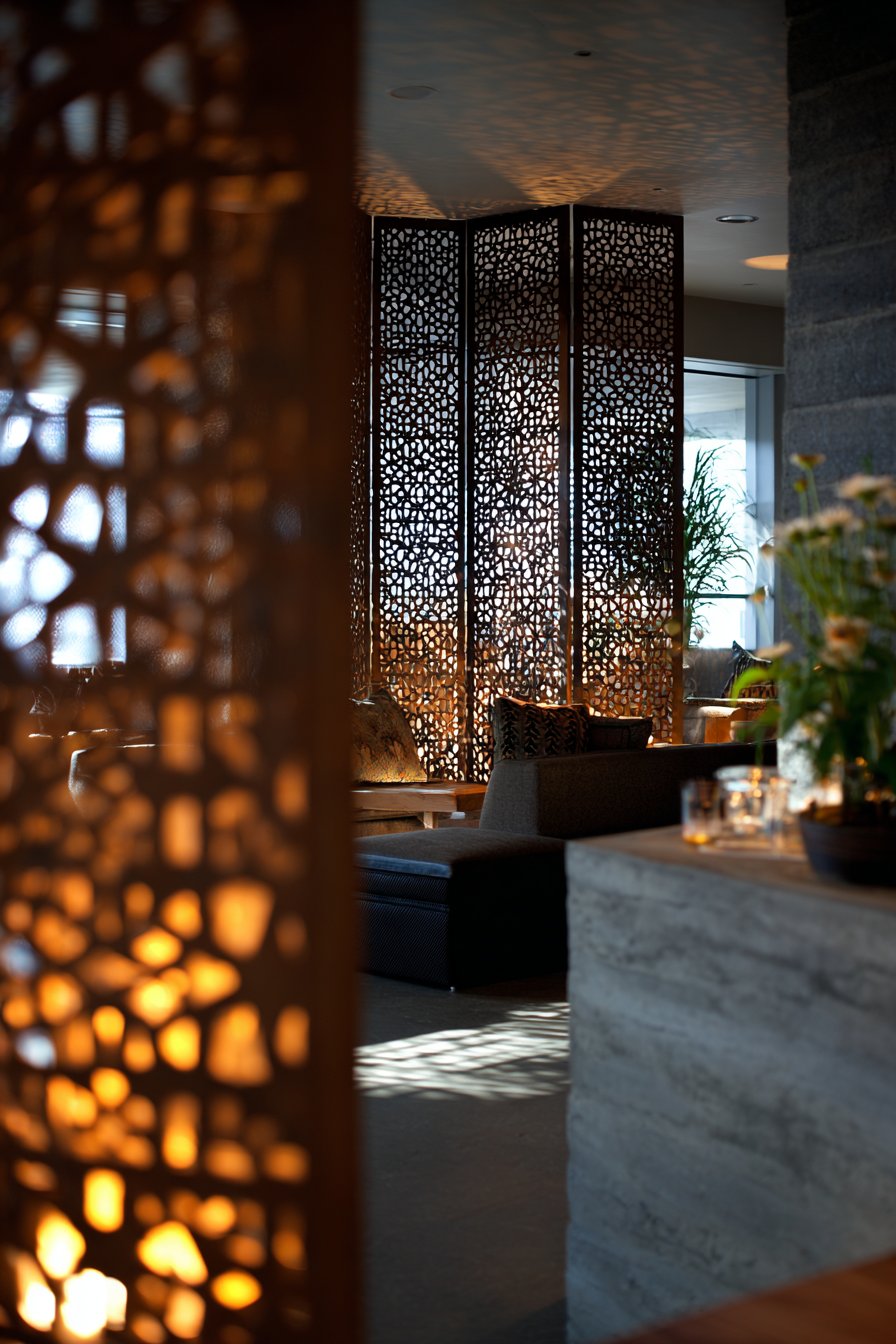
The decorative shadow patterns cast by the laser-cut design add an extra dimension of visual interest that changes throughout the day. Morning light might create crisp, defined shadows, while afternoon sun could produce softer, more diffused patterns. Evening backlighting transforms the screen into a luminous focal point with the patterns appearing to glow against the dark metal. This dynamic quality means the screen contributes to your space’s ambiance in different ways depending on time of day and lighting conditions, providing ongoing visual interest rather than static decoration.
Key Design Tips:
- Position the screen where light sources can create shadow patterns on blank walls for maximum decorative impact
- Choose patterns with varying scales of detail—large open areas balanced with intricate fine work for visual interest
- Consider the weight of the screen if you plan to move it frequently; heavier models provide stability but reduce portability
- Use the screen to conceal less attractive areas like exercise equipment, storage, or work-from-home setups
- Angle the panels to create dimensional depth rather than keeping them in a flat, straight configuration
- Coordinate the matte black finish with other black accents throughout your space for cohesive design harmony
- Protect the screen from moisture in humid environments to prevent rust or deterioration of the metal finish
7. Scandinavian Sliding Frosted Glass Panels: Minimalist Flexibility and Nordic Calm
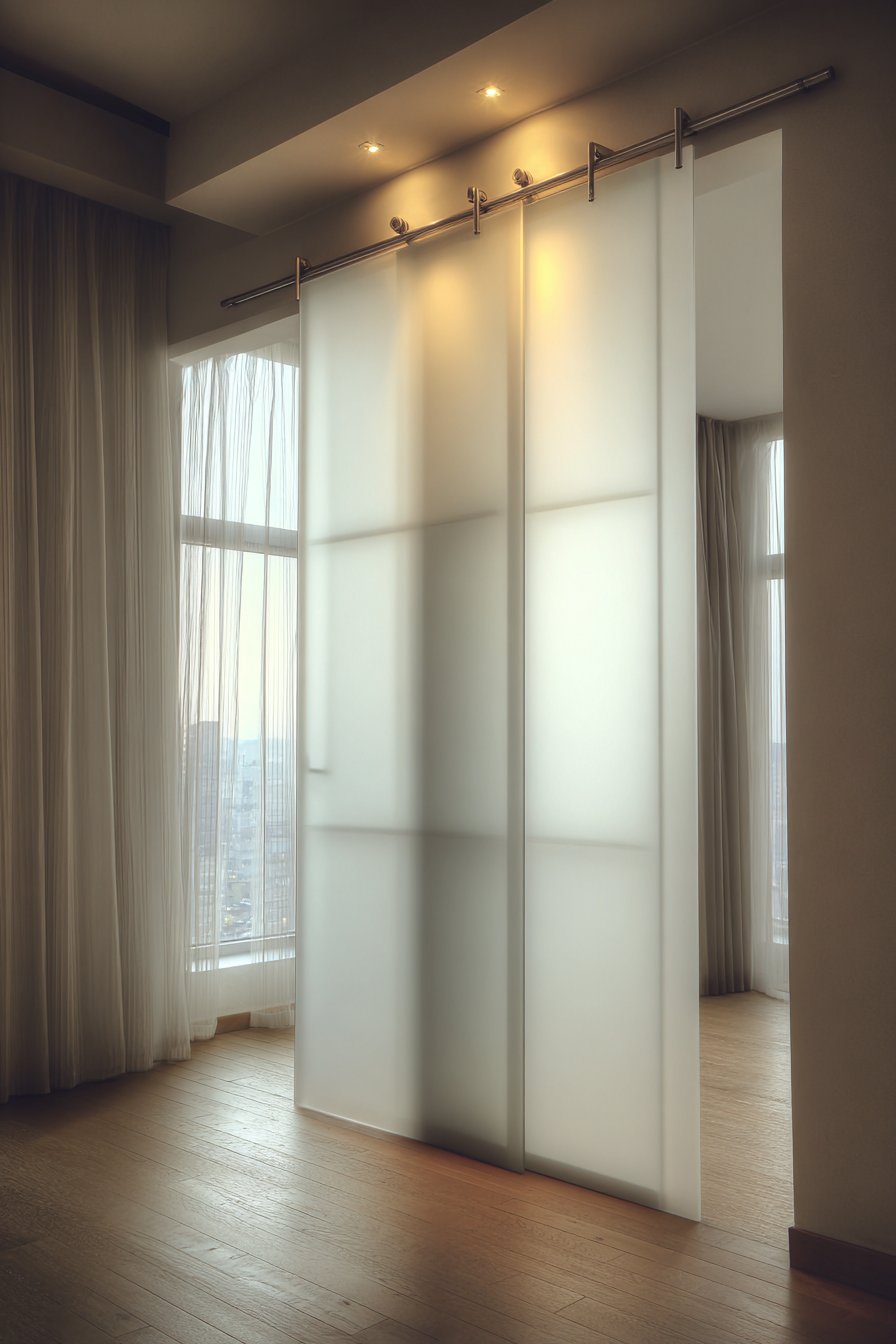
The clean simplicity of Scandinavian design finds perfect expression in floor-to-ceiling sliding frosted glass panels mounted on brushed aluminum tracks. This divider system embodies minimalist principles through its pared-down aesthetic, neutral palette, and focus on function over ornamentation. The translucent frosted glass provides privacy between your living room and home gym area while diffusing natural light into a soft, even glow that enhances the serene atmosphere. The sliding mechanism offers flexibility—open the panels to merge spaces when you want expansiveness, close them for privacy during workouts or when guests visit. This adaptability makes the system ideal for modern living where spaces must serve multiple functions.
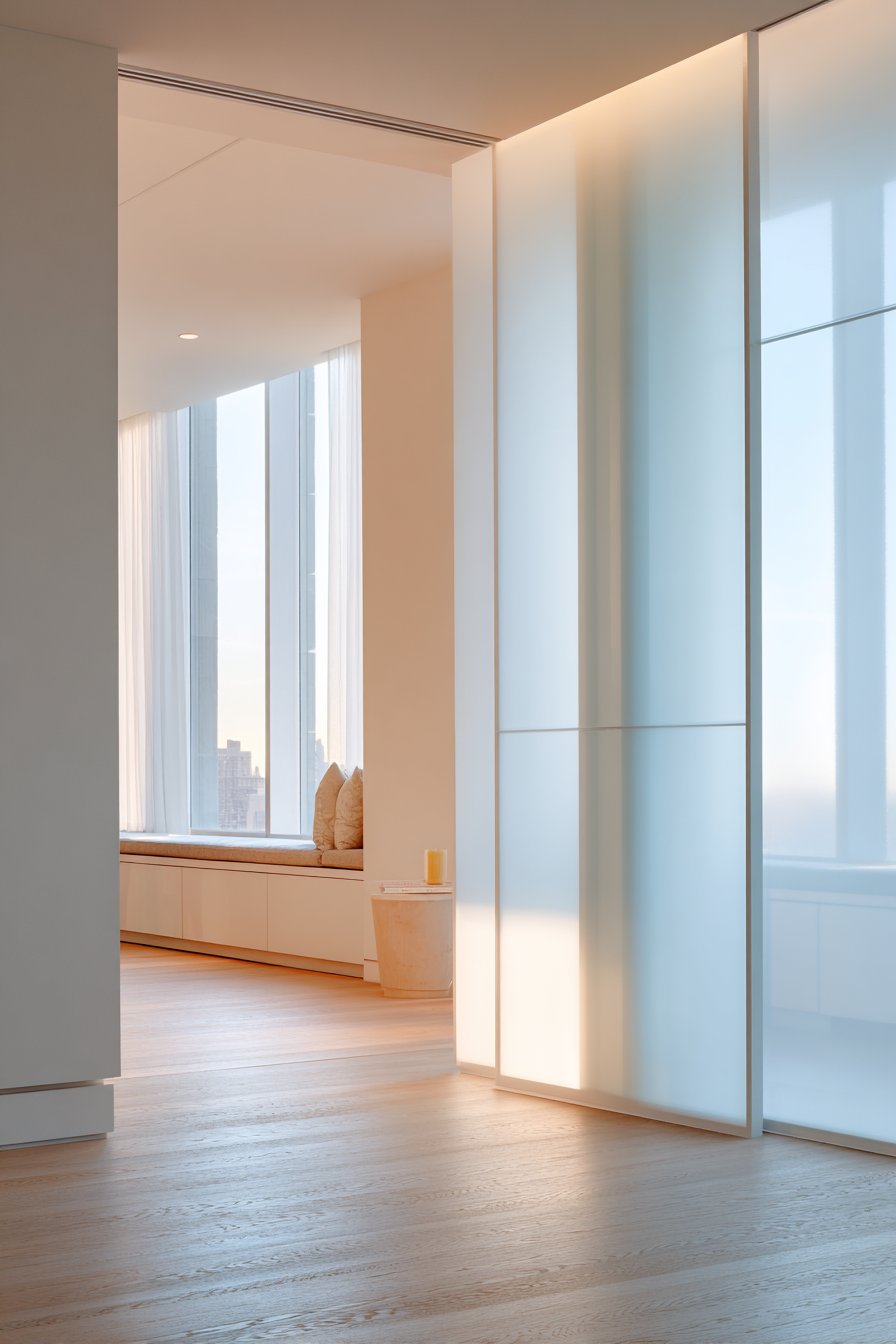
The frosted glass treatment transforms ordinary glass into a luminous material that glows softly when backlit, creating ambiance while obscuring details. Unlike clear glass that reveals everything or opaque materials that block light entirely, frosted glass strikes the perfect balance—maintaining privacy while preserving brightness. The smooth, even texture provides visual softness that contrasts beautifully with hard architectural elements and sharp corners. The translucent quality also reduces the visual weight of the partition, preventing it from feeling like a solid wall while still providing clear spatial definition.
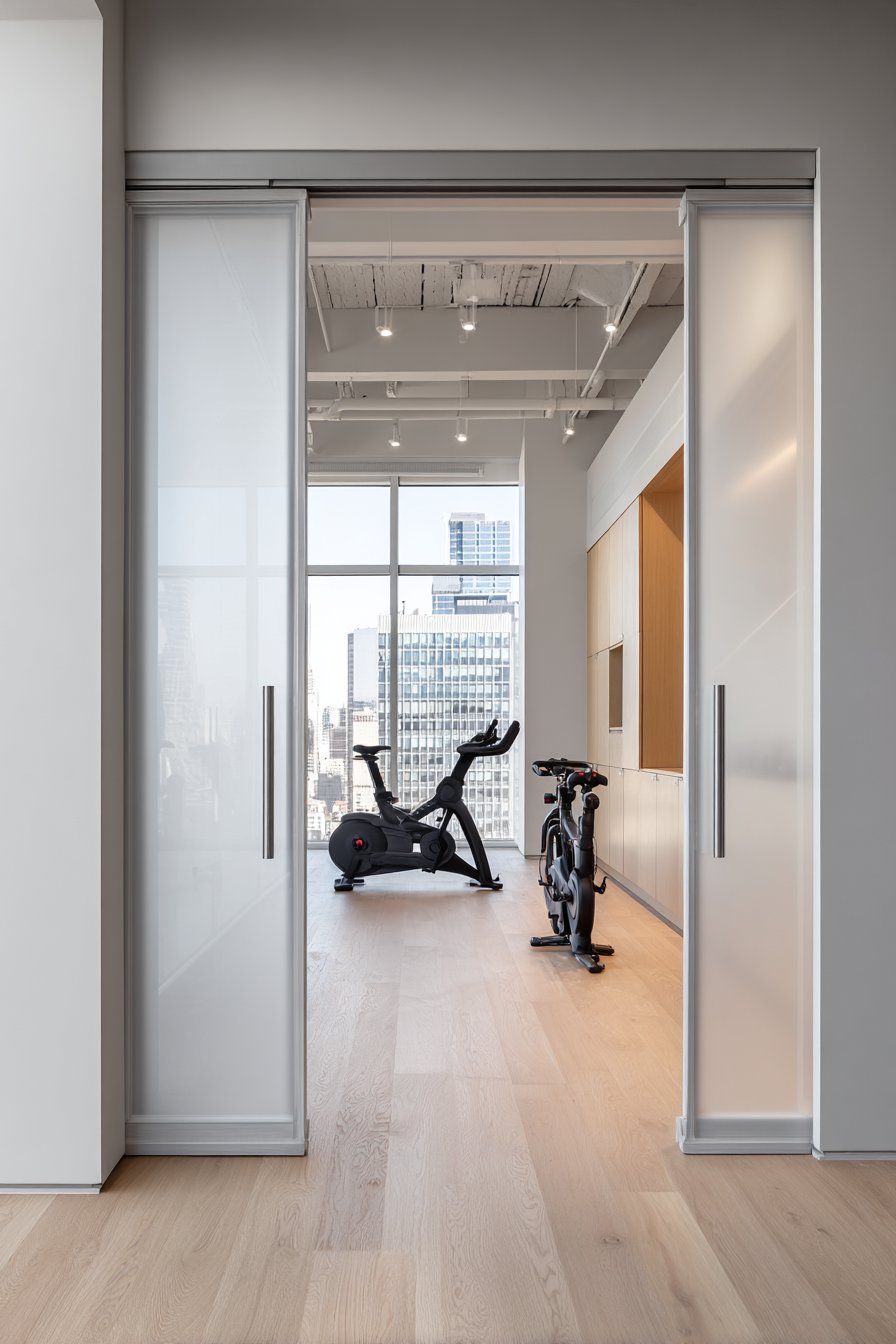
The brushed aluminum track system demonstrates the Scandinavian commitment to quality materials and thoughtful engineering. The top-mounted track allows panels to glide smoothly and silently with minimal effort, while the bottom guide keeps them aligned without requiring a floor track that could create tripping hazards or interrupt flooring patterns. The brushed finish on the aluminum provides subtle texture that hides fingerprints and minor scratches while complementing the frosted glass perfectly. The minimal hardware maintains the clean aesthetic—no visible screws, bulky handles, or unnecessary decoration, just pure function executed with precision.
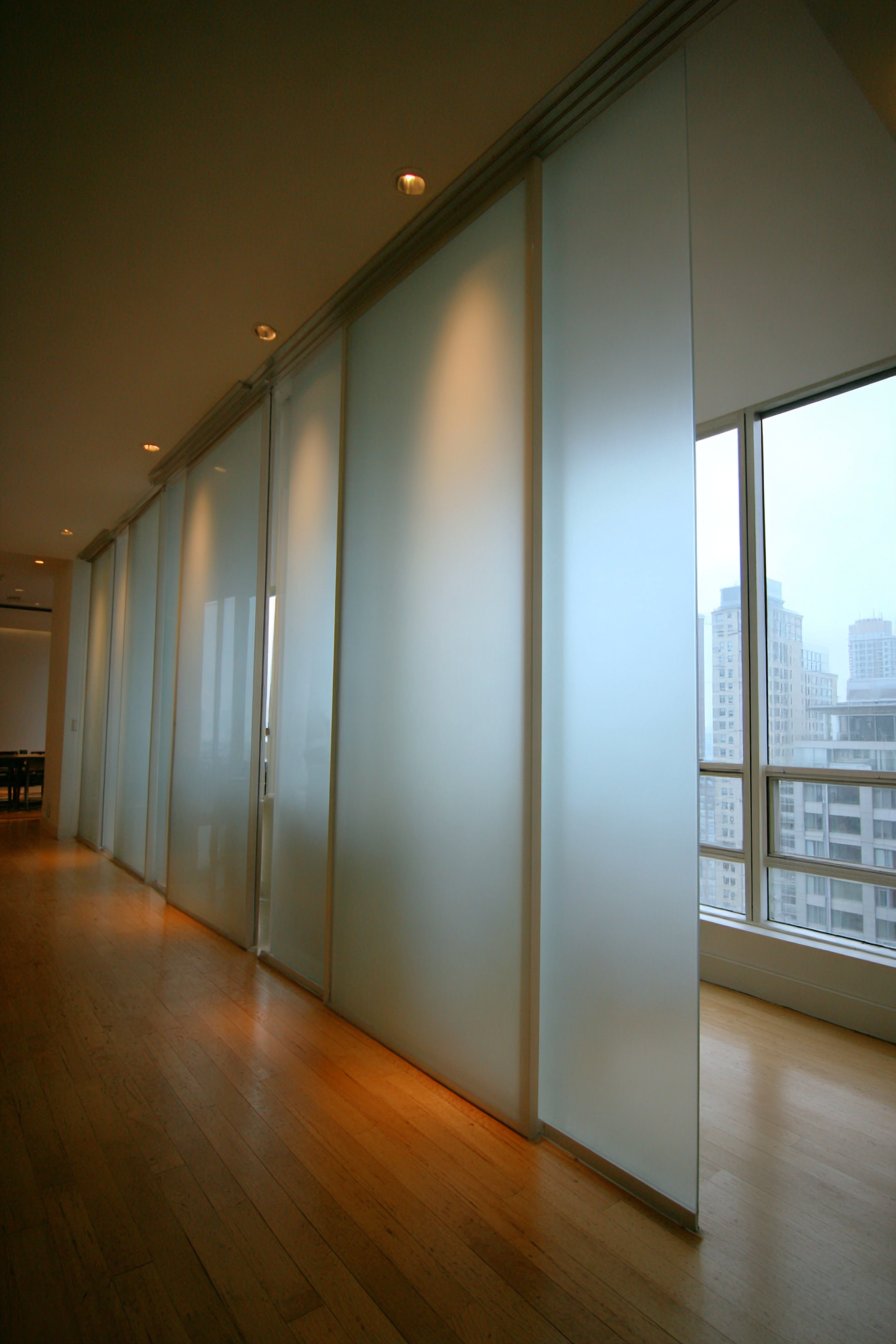
The floor-to-ceiling installation creates maximum visual impact and spatial definition. By extending from the lowest point to the highest, the panels emphasize your room’s full height, making ceilings appear taller and spaces feel more generous. This full-height approach also ensures complete privacy when panels are closed—no gaps above or below that compromise the separation. The continuous glass surface creates a sense of architectural permanence despite the system’s inherent flexibility, striking a perfect balance between adaptability and presence.
Key Design Tips:
- Specify heavy-duty track systems rated for the weight of floor-to-ceiling glass panels to ensure smooth operation
- Install panels that overlap slightly when closed to eliminate gaps and light leaks for complete privacy
- Choose frosted glass with different opacity levels if you want to vary privacy and light transmission in different areas
- Coordinate the brushed aluminum finish with door hardware, light fixtures, and other metal elements throughout your space
- Add soft-close mechanisms to prevent slamming and protect the glass from impact damage over time
- Clean frosted glass with microfiber cloths and gentle cleaners to maintain the even, matte appearance
- Position panels to align with major architectural features like windows or doorways for visual harmony
8. Living Plant Wall Installation: Biophilic Design Meets Natural Air Purification
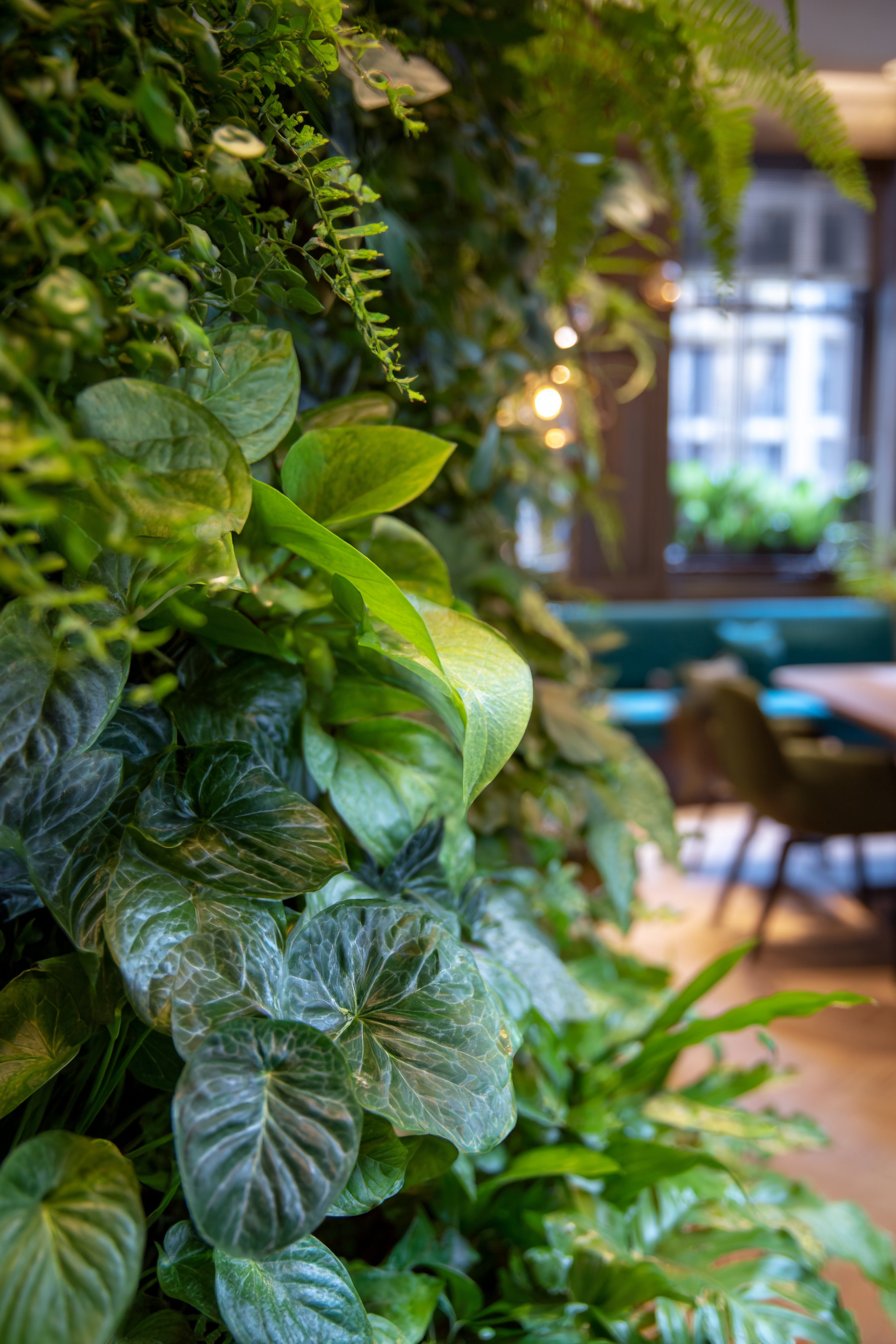
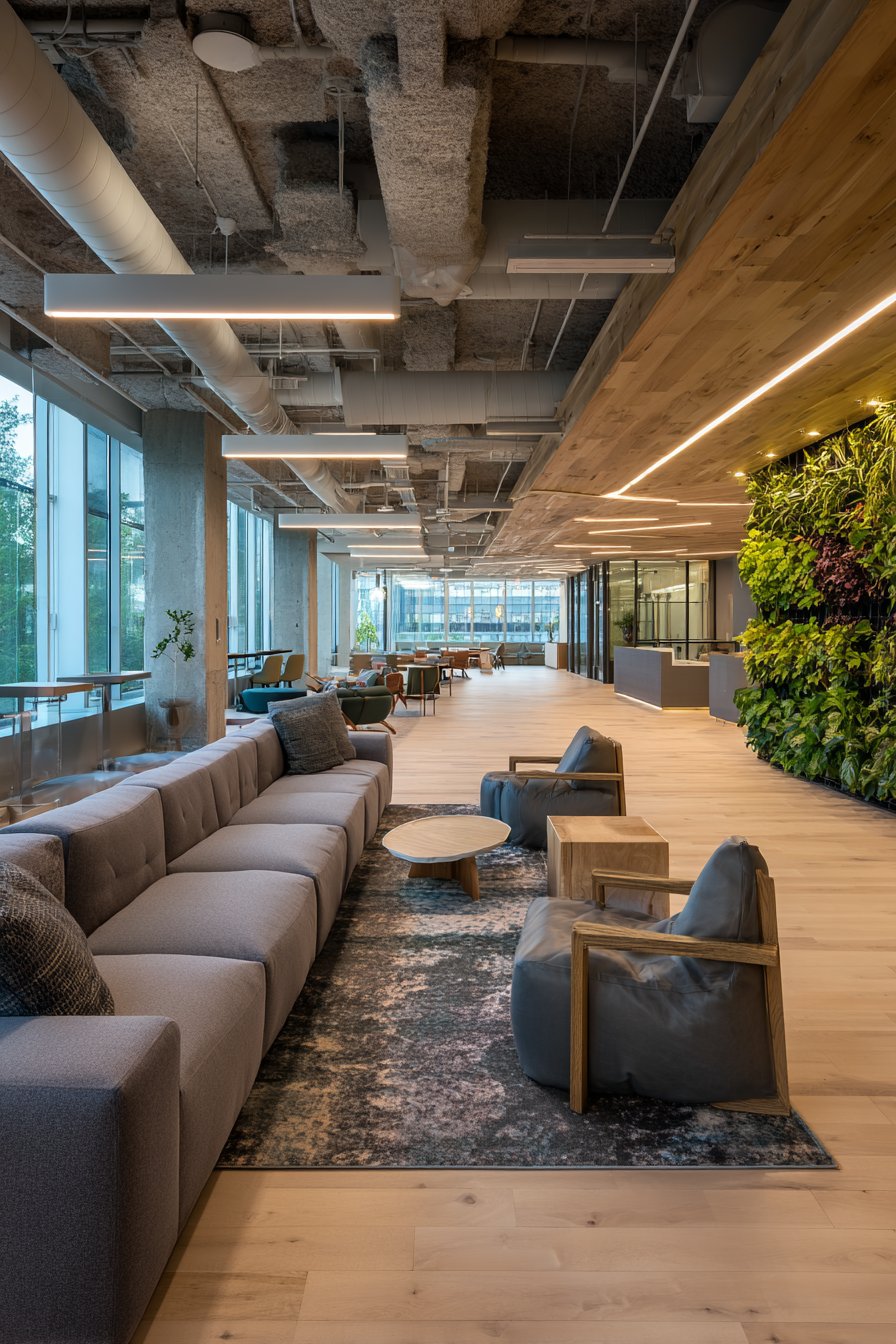
The transformative power of nature finds its fullest indoor expression in a living plant wall—a vertical garden that serves as both room divider and living art installation. This modular system features a diverse selection of plants including trailing pothos, lush ferns, and cascading varieties that create layers of texture and varying shades of green. The bio-wall separates your seating area from the dining space while delivering the proven psychological and physical benefits of biophilic design—reduced stress, improved air quality, enhanced mood, and increased humidity. The built-in irrigation system maintains optimal moisture levels automatically, making this seemingly complex installation surprisingly low-maintenance once established.
The visual impact of a plant wall cannot be overstated. The varied textures range from the delicate fronds of ferns to the bold, glossy leaves of pothos and the fine, trailing tendrils of string-of-pearls or similar varieties. These textural contrasts create depth and visual interest that flat surfaces simply cannot achieve. The spectrum of green tones—from deep forest to bright chartreuse, dusty sage to vibrant emerald—adds subtle color variation that remains soothing and harmonious. The organic forms of living plants soften the hard edges and geometric precision of typical interior architecture, creating a more welcoming and human-scaled environment.
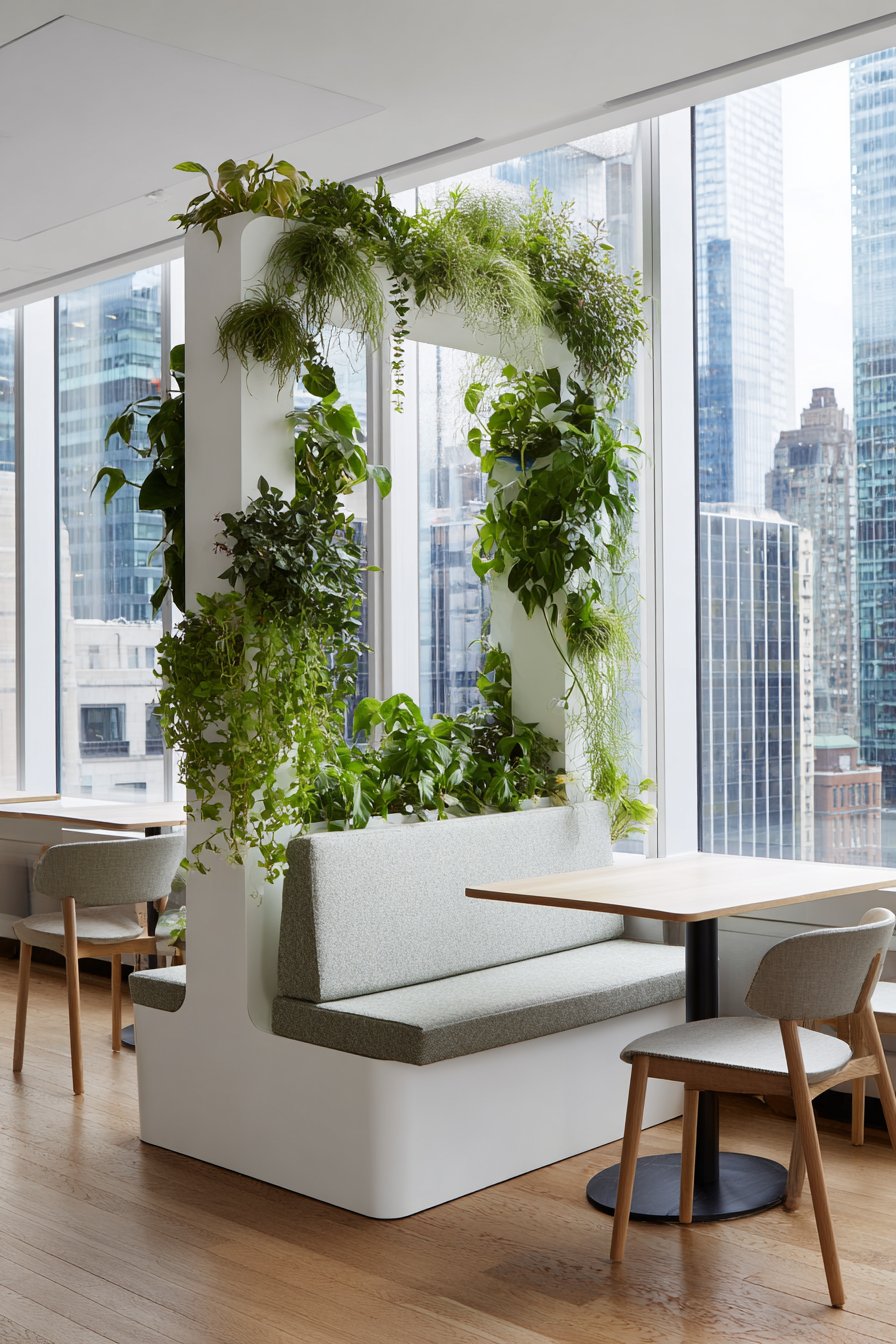
The modular vertical garden system makes installation and maintenance more practical than traditional living walls. Individual planted modules can be arranged in various configurations, replaced if a plant struggles, or rearranged to change the overall composition. The system typically includes a backing structure that mounts securely to the wall, individual planting cells or pockets that hold growing medium and plants, and an integrated irrigation system with tubing that delivers water to each module. Many systems include subtle moisture indicators that help you monitor the system’s function and ensure plants receive appropriate hydration without guesswork.

The air quality benefits of a living plant wall extend beyond mere aesthetics. Plants naturally filter airborne toxins, produce oxygen, and regulate humidity levels—creating a healthier indoor environment for you and your family. In an age where we spend the majority of our time indoors, these benefits have measurable impacts on wellness and quality of life. The presence of plants has also been shown to reduce stress, improve concentration, boost creativity, and enhance overall mood. By incorporating this divider into your living space, you’re investing in both design and wellness simultaneously.
Key Design Tips:
- Select plants with similar light and water requirements to simplify maintenance and ensure all plants thrive equally
- Include a mix of upright, mounding, and trailing growth habits to create dimensional variety and visual movement
- Install the system near a window or supplement with full-spectrum grow lights to ensure adequate illumination
- Use a timer on the irrigation system to maintain consistent watering schedules and prevent over or under-watering
- Start with hardy, low-maintenance species like pothos, philodendron, and spider plants until you’re comfortable with the system
- Prune regularly to maintain the desired shape and encourage bushier, fuller growth throughout the wall
- Monitor for pests and treat organically if issues arise, as chemical pesticides can be problematic in indoor environments
9. Reclaimed Barn Wood Vertical Partition: Rustic Character with Sustainable Style
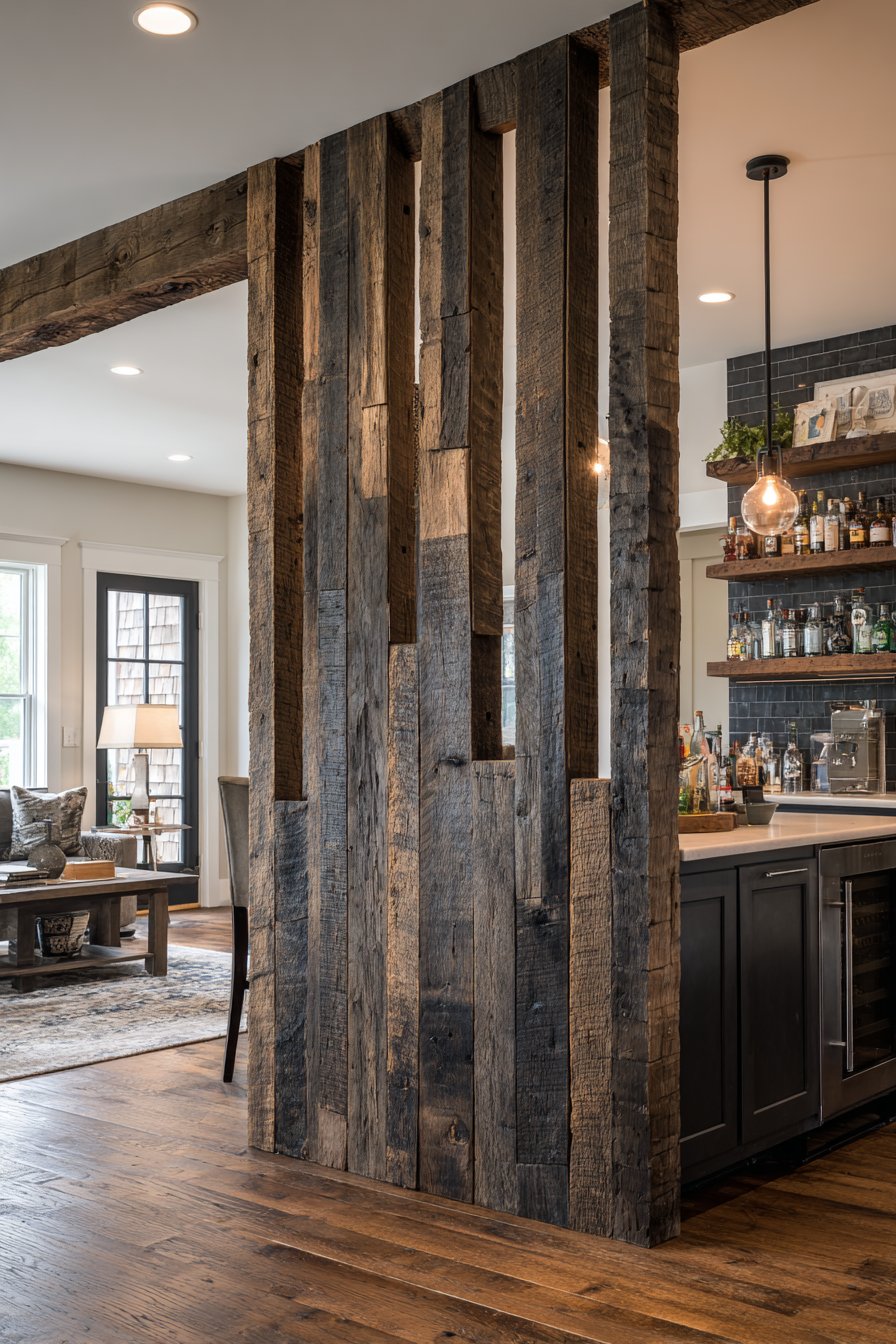
The weathered beauty of reclaimed barn wood brings instant history and authentic character to modern interiors. This divider features vertical planks salvaged from old agricultural buildings, displaying natural grain patterns, knots, nail holes, and aged patina that tell stories of decades of use. The intentional gaps between planks allow light to penetrate while maintaining the rustic aesthetic that makes farmhouse style so enduringly popular. This partition separates your main living area from a small home bar while ensuring the warm, lived-in character flows consistently throughout your space. The vertical orientation of the planks draws the eye upward, emphasizing ceiling height while the varied widths and tones of the wood create organic visual rhythm.
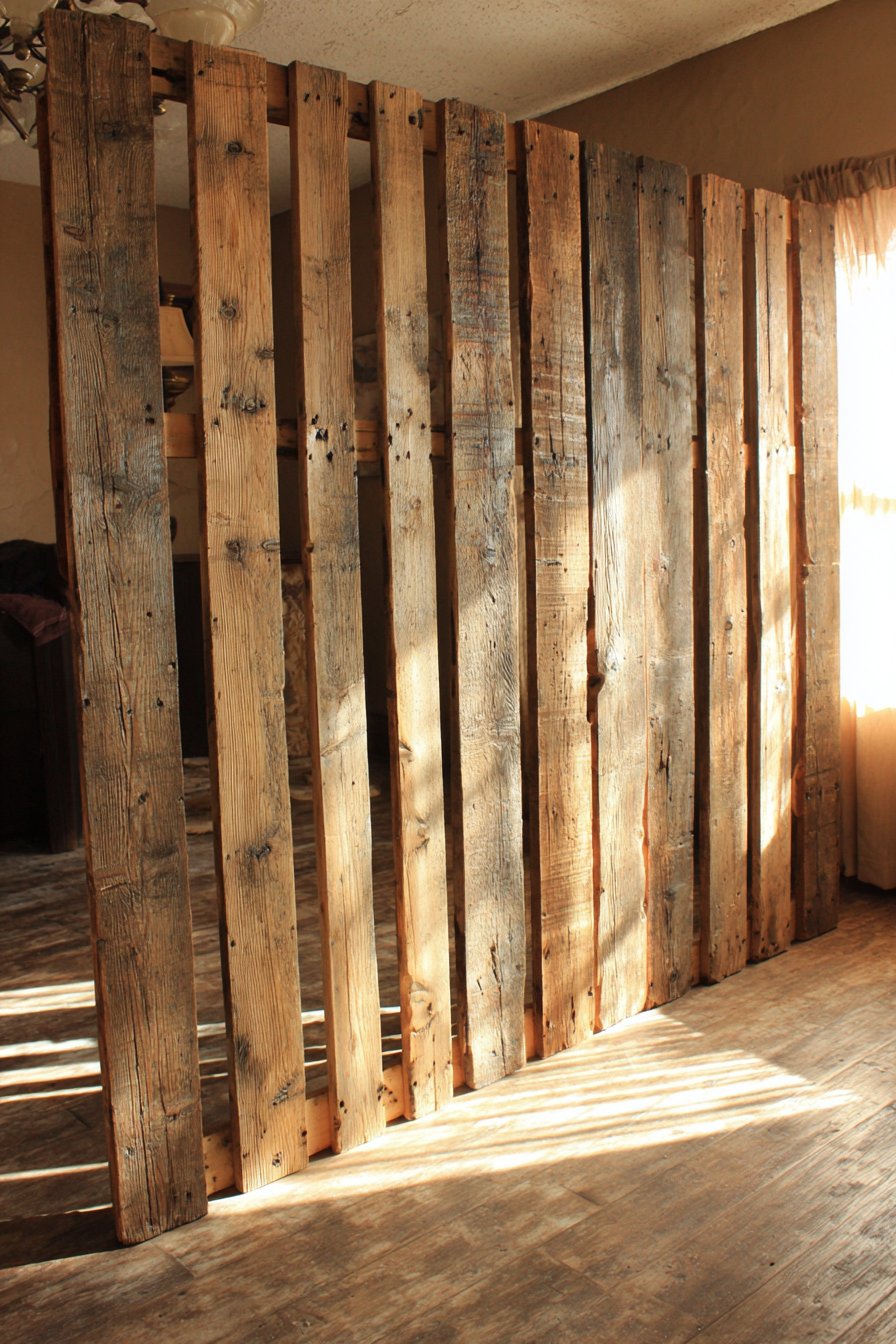
Each piece of reclaimed barn wood is utterly unique, bearing the marks of its previous life and natural aging process. Some planks display silvered gray tones where weather exposure bleached the wood, while others retain rich brown hues protected by shelter. The wood grain itself tells stories—tight, dense rings indicating slow growth during challenging years, wider spacing showing seasons of abundance. Knots, cracks, and nail holes add textural interest and visual punctuation that give the material depth and character impossible to replicate with new lumber. This authenticity resonates with homeowners seeking materials with soul and environmental consciousness.
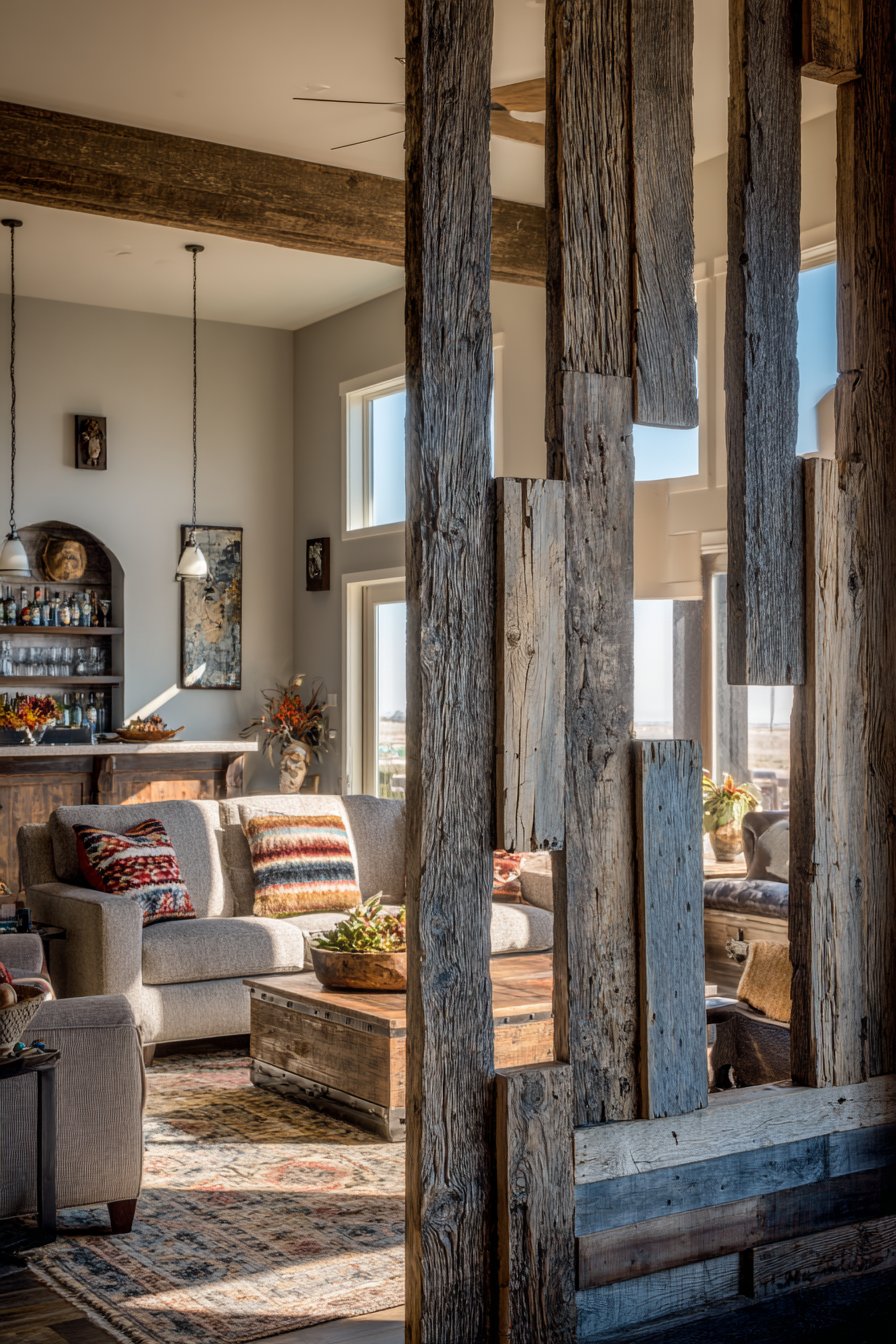
The sustainability aspect of using reclaimed wood cannot be overlooked in our increasingly eco-conscious world. By repurposing lumber from demolished barns and agricultural buildings, you prevent quality wood from entering landfills while avoiding the environmental impact of harvesting new timber. Many reclaimed wood pieces come from old-growth forests, featuring tighter grain and superior density compared to quickly grown modern lumber. This makes them more durable and stable while connecting your home to a time when craftsmanship and material quality were paramount. Using reclaimed materials demonstrates environmental responsibility while acquiring distinctive materials with unmatched character.
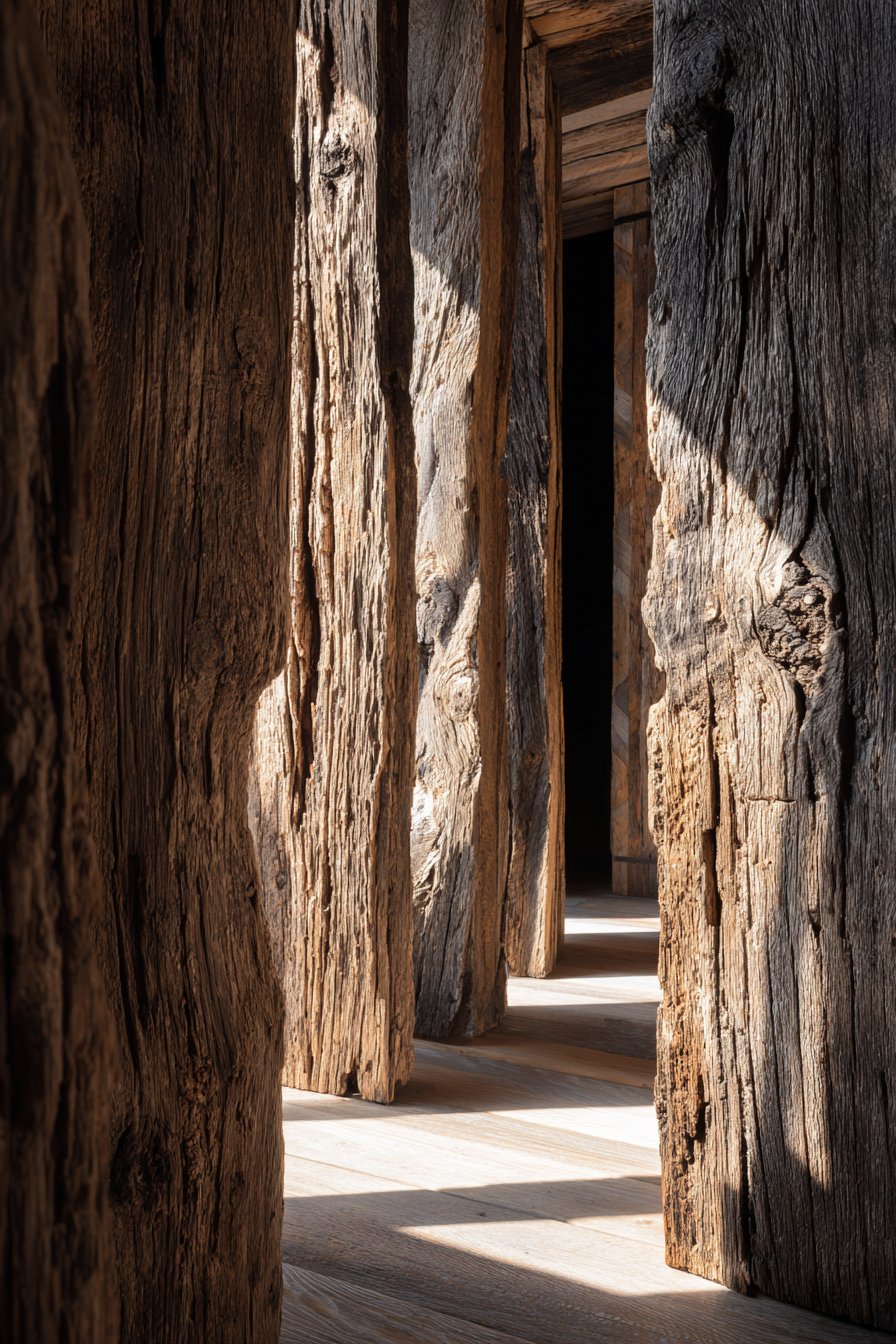
The installation process for a reclaimed wood divider requires working with irregular materials that may vary in thickness, width, and straightness. This variability is part of the charm but demands more skilled carpentry than standard dimensional lumber. The vertical pattern with intentional gaps must be carefully planned to ensure structural stability while achieving the desired transparency. Most installations attach the planks to horizontal support beams top and bottom, with additional mid-span support depending on plank length and ceiling height. The raw, weathered appearance typically requires minimal finishing—perhaps just a clear sealer to prevent splinters and stabilize loose fibers while preserving the authentic aged appearance.
Key Design Tips:
- Source reclaimed wood from reputable suppliers who can verify the wood’s origin and ensure it’s been properly treated
- Mix plank widths between four and ten inches to create natural variation and visual interest in the partition
- Space gaps between planks at two to four inches to balance privacy, light transmission, and structural integrity
- Apply clear matte sealer to protect the wood while preserving the raw, weathered appearance and texture
- Embrace imperfections like nail holes, cracks, and color variation as design features rather than flaws to be hidden
- Consider the wood’s color palette and select pieces that coordinate with your existing flooring and furniture tones
- Install the partition on a slight raised base to protect floor surfaces and allow air circulation beneath the wood
10. Heavyweight Linen Curtain System: Soft Texture with Ultimate Flexibility
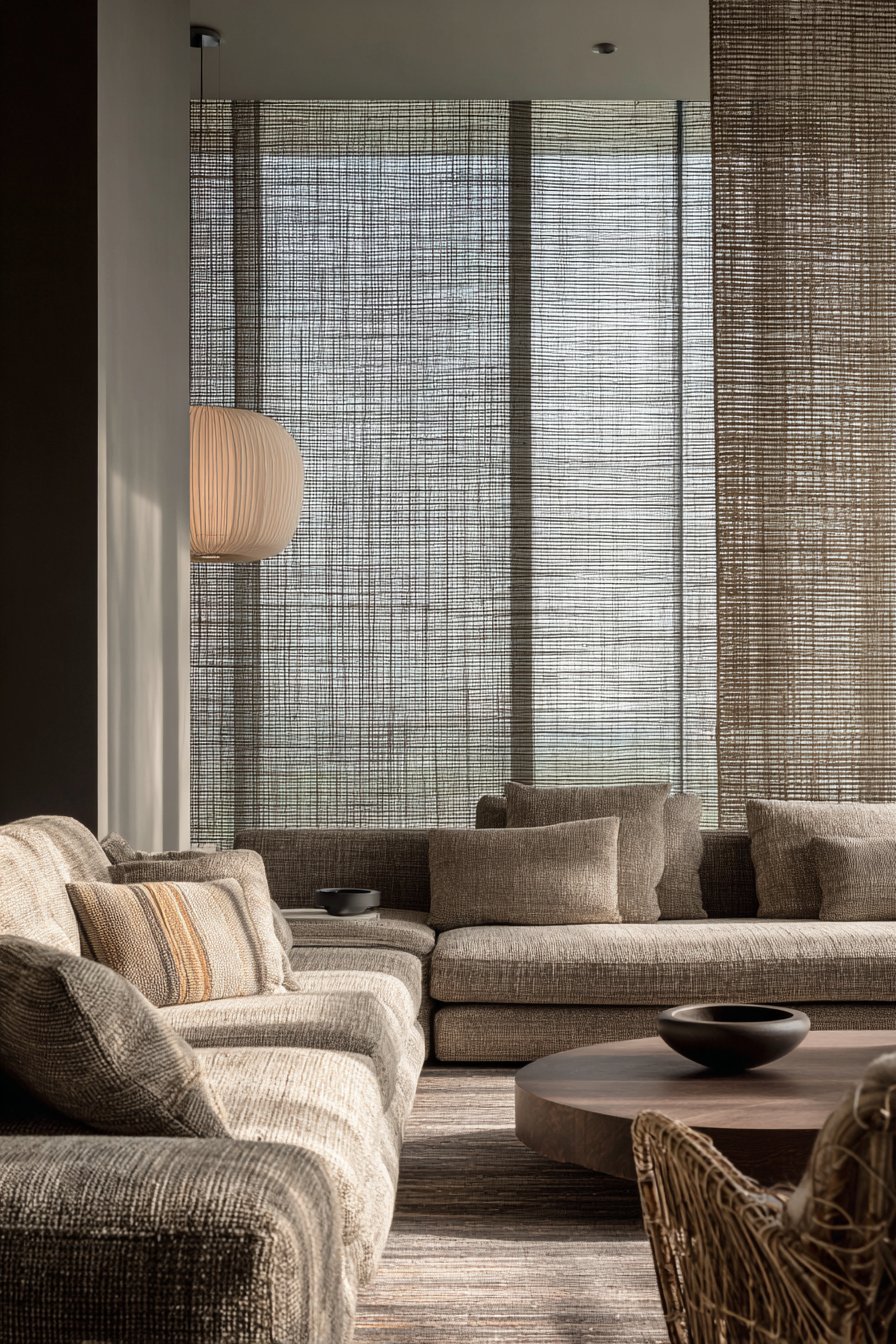
The inherent flexibility of fabric curtains makes them ideal for spaces requiring adaptable room division. A ceiling-mounted heavyweight linen curtain in warm beige tones provides the ultimate in versatile separation between your living room and a guest sleeping area. Draw the curtain closed for complete privacy when hosting overnight guests, or gather it open to merge spaces and maximize your living area when the room is not in use. The natural linen weave creates gentle translucency that diffuses light beautifully while maintaining privacy—bright enough during the day to prevent darkness, subtle enough at night to provide seclusion. The soft, flowing fabric introduces tactile warmth and visual softness that contrasts beautifully with hard surfaces and angular furniture.
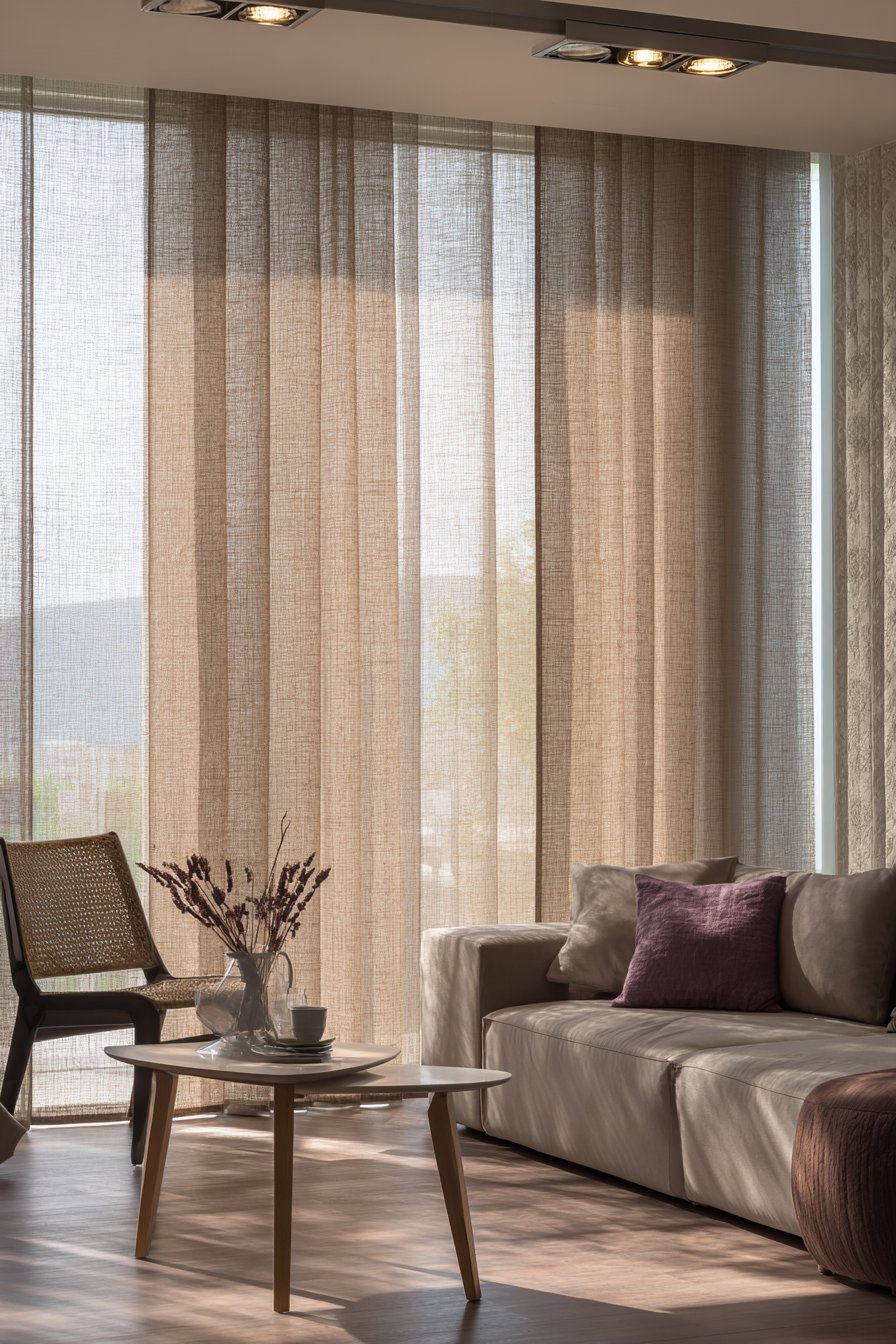
Linen’s natural properties make it particularly suited to room-dividing applications. The fabric’s inherent texture—visible even from a distance—adds dimensional interest that flat materials lack. The natural fibers have subtle irregularities and slubs that create an organic, handcrafted appearance that feels authentic and high-quality. Linen naturally regulates temperature, staying cool in summer and providing insulation in winter, contributing to your room’s overall comfort. The fabric also improves with age, softening with washing and developing a lived-in character that enhances rather than diminishes its appeal. The natural resistance to moths and mildew makes linen more practical than many other fabric options.
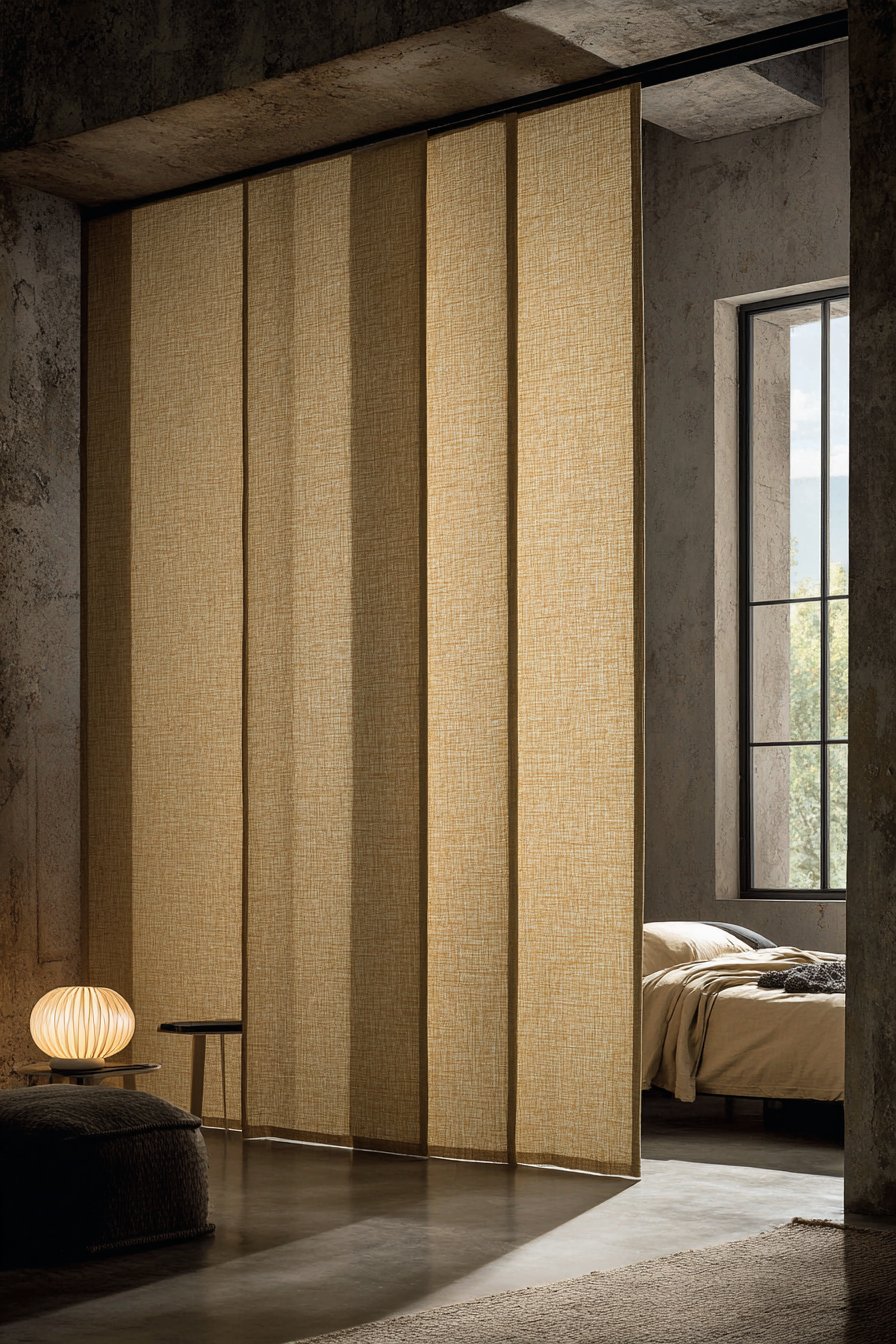
The warm beige color selection demonstrates sophisticated restraint—neutral enough to complement any decor scheme while adding warmth that pure white or gray cannot achieve. This color reads as sandy, natural, and earthy—bringing calm and serenity without the starkness of cooler neutrals. The shade plays beautifully with natural light, glowing warmly in golden hour while maintaining its subtle presence throughout the day. The neutral palette also ensures the curtain never feels dated or overly trendy, remaining appropriate as your style and furnishings evolve over years.
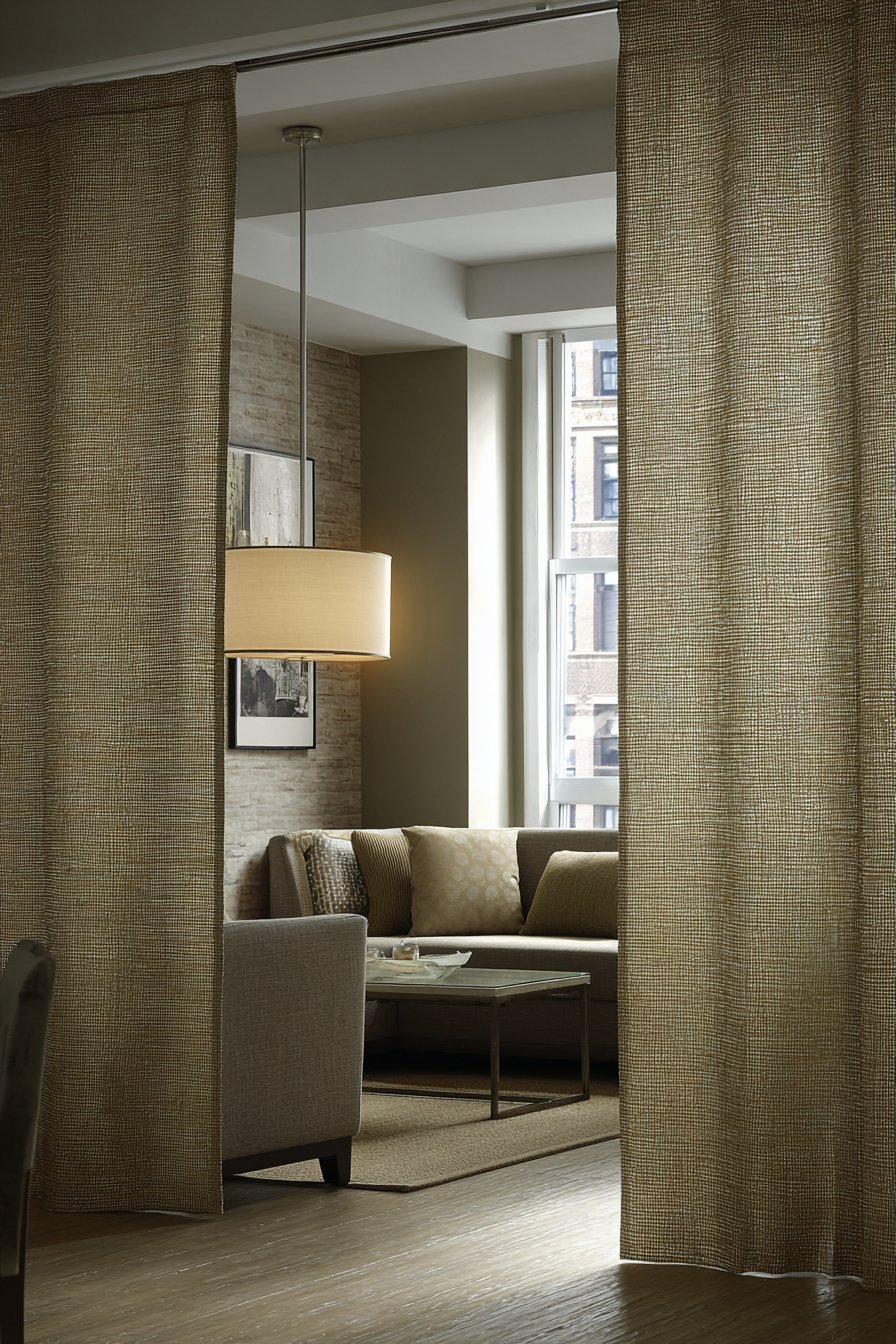
The ceiling-mounted track system provides the clean, architectural quality that elevates this solution from temporary expedient to legitimate design feature. By mounting at the ceiling rather than on the wall, you emphasize your room’s full height and create sleek, uninterrupted lines from top to bottom. The track should be heavy-duty to support the weight of floor-to-ceiling heavyweight linen without sagging or binding. Quality systems include smooth gliding mechanisms that allow effortless operation even with large, heavy curtain panels. The hardware should be minimal and unobtrusive—allowing the beauty of the fabric to take center stage rather than drawing attention to mechanical elements.
Key Design Tips:
- Select true heavyweight linen at eight to twelve ounces per yard for optimal draping, privacy, and sound absorption
- Specify curtains with double the track width in fabric to ensure adequate fullness when drawn and gathered appearance
- Choose pre-washed linen to minimize future shrinkage and enjoy the soft, relaxed texture from day one
- Install the track with commercial-grade mounting hardware to support the considerable weight of floor-to-ceiling heavyweight linen
- Consider adding a blackout lining to one side if the guest sleeping area requires complete darkness for overnight visitors
- Maintain linen curtains with regular vacuuming and occasional professional cleaning to preserve the fabric’s natural beauty
- Allow curtains to puddle slightly on the floor for a luxurious, high-end appearance, or hem to just graze for cleaner lines
Why These Living Room Divider Ideas Represent the Best Design Solutions
The ten divider concepts presented in this comprehensive guide represent the pinnacle of contemporary interior design thinking, each addressing specific needs while offering distinctive aesthetic contributions. These solutions stand out as the best options available because they successfully balance multiple crucial factors: functionality, beauty, flexibility, durability, and value. Unlike outdated approaches that prioritize one aspect at the expense of others, these modern divider ideas demonstrate how thoughtful design can satisfy practical requirements while elevating your space’s overall aesthetic appeal and livability.
The slatted wood partition and reclaimed barn wood divider excel for homeowners seeking natural materials with authentic character and timeless appeal. These wood-based solutions bring organic warmth that synthetic materials simply cannot replicate, while their sustainable nature appeals to environmentally conscious consumers. The vertical orientation of both options helps emphasize ceiling height, making rooms feel more spacious and grand. The ability to control light filtration through slat or plank spacing provides customizable privacy levels that adapt to your specific needs. Wood dividers also contribute to acoustic management, absorbing sound waves and reducing echo in open-plan spaces—a practical benefit that enhances comfort beyond mere visual appeal.
The glass partitions—both the industrial metal-framed version and the Scandinavian sliding panels—represent optimal choices for maintaining visual openness while creating defined zones. These transparent and translucent solutions prevent the cave-like feeling that can result from solid dividers, ensuring that natural light reaches all areas of your room. Glass dividers work exceptionally well in smaller spaces where preserving sightlines helps maintain a sense of spaciousness despite physical division. The frosted glass option provides privacy without darkness, while the clear glass maintains complete visual connection. Both systems demonstrate how modern materials and engineering can create seamless room division that feels effortless and sophisticated.
The double-sided bookshelf and mid-century credenza with planters stand out as the best options for homeowners seeking multifunctional solutions that maximize value. These dividers don’t just separate spaces—they provide storage, display opportunities, and in the case of the credenza, support for living plants that improve air quality and bring biophilic benefits. The open shelving concept maintains light flow while offering extensive customization options through personal styling. The low-profile credenza specifically addresses the needs of those wanting separation without obstruction, maintaining visual connection while clearly defining zones. These practical solutions demonstrate that room dividers can work harder and deliver more value than mere partitioning.
The living plant wall represents the ultimate expression of biophilic design principles, delivering benefits that extend far beyond aesthetics into health and wellness territory. This divider actively improves your indoor environment by filtering airborne toxins, producing oxygen, and regulating humidity levels. The psychological benefits of daily exposure to living plants—reduced stress, improved mood, enhanced creativity—make this option particularly valuable for home offices, meditation spaces, or any area where mental wellbeing is prioritized. The verdant wall creates an immersive natural experience that connects interior spaces with the outdoors, addressing the fundamental human need for nature contact that modern urban living often denies.
The portable and flexible options—including the Moroccan metal screen, suspended rope partition, and linen curtain system—excel for renters, frequent redecorators, or anyone who values adaptability in their living space. These dividers can be repositioned, removed, or reconfigured as needs change, providing impermanent solutions without sacrificing style or quality. The folding screen moves between rooms or stores away completely when not needed. The rope partition can be reinstalled in a new location with minimal difficulty. The curtain system adjusts from fully open to completely closed depending on immediate needs. This flexibility makes these options ideal for multipurpose rooms, guest spaces, or homes where spatial requirements evolve frequently.
From an interior design keyword perspective, these dividers embody current trends including open-concept living, flexible space planning, biophilic design, sustainable materials, industrial aesthetic, Scandinavian minimalism, bohemian style, mid-century modern revival, farmhouse charm, and transparent architecture. The solutions address common search queries around room separation ideas, studio apartment dividers, open floor plan solutions, privacy screens, space-saving furniture, multi-functional design, natural room dividers, modern partition walls, decorative screens, and flexible living arrangements. Each concept delivers on the promise of creating distinct zones without sacrificing the spatial generosity and light-filled quality that makes contemporary homes so desirable.
The material diversity represented across these ten solutions ensures compatibility with virtually any existing design scheme. Whether your home features industrial loft aesthetics, traditional farmhouse charm, contemporary minimalism, eclectic bohemian sensibility, or mid-century modern sophistication, you’ll find divider options that integrate seamlessly. The natural materials—wood, jute, linen, and living plants—bring organic warmth and texture that balance the cool precision of glass and metal. The neutral color palettes featured throughout ensure these dividers enhance rather than compete with your existing furnishings and decorative choices.
From a practical functionality standpoint, these dividers address real-world challenges that homeowners face daily. The solutions provide privacy for work-from-home situations, create temporary guest accommodations, separate exercise areas from living spaces, define dining zones in open kitchens, establish home office boundaries, conceal storage or utility areas, and create intimate conversation nooks within larger rooms. The varying levels of transparency and solidity offer options for every privacy need—from the complete visual separation of curtains and plant walls to the filtered transparency of slatted wood and glass panels.
The acoustic properties of these dividers shouldn’t be overlooked, as sound management significantly impacts comfort in open-plan homes. Solid materials like wood planks and bookshelf contents absorb sound waves, reducing echo and creating more intimate acoustic environments. Fabric curtains provide excellent sound dampening, making them ideal for separating sleeping areas or home theaters. Plant walls offer surprising acoustic benefits as the varied surfaces disrupt and absorb sound reflections. Even glass partitions help contain sound within zones, though they provide less absorption than textile or organic materials. Considering acoustic performance alongside visual and spatial factors ensures comprehensive problem-solving.
Installation complexity and permanence vary significantly across these options, allowing homeowners to select solutions matching their skill level, budget, and commitment. The portable screens and curtain systems require minimal installation—simple ceiling mounting or freestanding placement. The bookshelf and credenza options need only positioning and basic anchoring for safety. The more architectural solutions—glass partitions, slatted wood walls, and plant wall systems—require professional installation but deliver permanent, value-adding features that enhance property appeal. Understanding these differences helps homeowners make informed decisions aligned with their capabilities and intentions.
The maintenance requirements across these divider types range from minimal to moderate, with none demanding excessive ongoing effort. Wood dividers need occasional dusting and rare refinishing. Glass partitions require regular cleaning to maintain clarity and shine. Bookshelf dividers need periodic reorganization and dusting of displayed items. Plant walls demand consistent watering, occasional pruning, and plant replacement as needed. Fabric curtains benefit from periodic vacuuming and occasional professional cleaning. Metal screens need only occasional dusting and wipe-downs. The living plant wall represents the highest maintenance option but delivers ongoing wellness benefits that justify the additional care.
Cost considerations span a wide range, ensuring accessibility for various budgets. Fabric curtain systems and portable screens offer entry-level pricing while delivering legitimate design impact. Bookshelf dividers and credenza options fall into mid-range pricing, offering excellent value through multifunctionality. Custom glass partitions, living plant wall systems, and architectural wood installations represent premium investments but deliver proportional quality, durability, and visual impact. The price spectrum ensures that achieving beautiful, functional room division isn’t reserved for unlimited budgets—creative solutions exist at every price point.
The environmental impact of these divider choices varies considerably, with several options standing out for sustainability. Reclaimed barn wood prevents quality lumber from entering landfills while avoiding new timber harvesting. Living plant walls actively improve indoor air quality while connecting homes with nature. Natural materials like linen, jute, and solid wood offer biodegradability and lower environmental footprints compared to synthetic alternatives. Even the glass and metal options score well for longevity and recyclability at end of life. Homeowners prioritizing environmental responsibility can confidently select from multiple eco-conscious options without compromising design quality.
The psychological impact of thoughtful room division extends beyond mere functionality into emotional wellbeing territory. Defined zones create a sense of order and intentionality that reduces stress and enhances comfort. Privacy when needed supports feelings of security and autonomy. Natural materials and living plants trigger positive biophilic responses hardwired into human psychology. Beautiful objects and thoughtful design contribute to daily pleasure and life satisfaction. The ability to control your environment—opening curtains, repositioning screens, adjusting spatial configurations—provides agency that combats feelings of helplessness or constraint. These psychological benefits, though harder to quantify than practical functions, significantly impact quality of life.
Conclusion:
The journey toward optimal living space configuration requires balancing numerous factors—aesthetics, functionality, flexibility, budget, maintenance, and personal style preferences. The ten living room divider ideas explored in this comprehensive guide represent diverse approaches to this design challenge, each offering unique strengths and addressing specific needs. From the organic warmth of natural wood and living plants to the sleek sophistication of glass and metal, from permanent architectural installations to portable, adaptable solutions, the range of options ensures every homeowner can find approaches suited to their particular circumstances and vision.
The transformative power of well-executed room division cannot be overstated. These dividers don’t merely separate spaces—they define them, enhance them, and help them fulfill their intended purposes more effectively. A thoughtfully placed partition can turn a chaotic open area into organized zones that support different activities without conflict. Privacy becomes possible without darkness. Storage emerges where only empty space existed. Living art installations purify air while creating visual focal points. Flexibility replaces rigidity, allowing spaces to evolve with changing needs rather than remaining static.
As you consider implementing divider solutions in your own home, reflect on your specific requirements and priorities. Do you need complete privacy or just subtle zoning? Is natural light preservation crucial? Would multifunctional storage add significant value? Are you drawn to natural materials or contemporary synthetics? Can you commit to permanent installation or do you need flexibility? Does your style lean traditional or modern? Honest answers to these questions will guide you toward the solutions that serve your needs while resonating with your aesthetic sensibilities.
Don’t hesitate to adapt and personalize these concepts to suit your unique space and circumstances. The slatted wood divider could be painted rather than natural. The glass partition might incorporate frosted patterns or colored glass. The bookshelf could display collections specific to your interests and passions. The plant wall might feature succulents in arid climates or tropical varieties in humid regions. The curtain could be bold patterned linen rather than neutral solid. Your home should reflect your personality and serve your lifestyle—use these ideas as inspiration and starting points rather than rigid prescriptions.
Remember that successful room division enhances rather than diminishes your living experience. The goal is creating spaces that feel more functional, more beautiful, more comfortable, and more aligned with how you actually live. Whether you implement one bold architectural statement or combine several subtle approaches, the effort invested in thoughtful spatial planning delivers daily dividends in improved functionality and increased pleasure. Your home becomes not just a place to exist but a carefully crafted environment that actively supports your wellbeing, productivity, and happiness.
Take time to measure carefully, plan thoroughly, and execute thoughtfully. Consult professionals when installing permanent features or working with heavy materials. Start with temporary solutions to test concepts before committing to permanent installations. Photograph your space from multiple angles to visualize how dividers will impact sightlines and proportions. Consider traffic patterns and ensure adequate clearance around all installations. Think about lighting at different times of day and how your divider will interact with natural and artificial illumination. These preparatory steps prevent expensive mistakes and increase the likelihood of results that exceed your expectations.
The beauty of living in an era with such diverse design options is that you’re never limited to a single approach or permanently locked into early decisions. If your first attempt doesn’t fully satisfy, adjust and refine. If your needs change, adapt your dividers accordingly. If you develop new style preferences, update your materials and finishes. Your home should evolve with you, and flexible room division strategies make this evolution possible without major renovation. Embrace the process of creating spaces that truly serve you, knowing that each thoughtful decision brings you closer to the home of your dreams.
