


The kitchen has evolved from a purely functional space into the heart of the home—a place where families gather, meals are lovingly prepared, and memories are created. In this transformation, the choice of color palette plays a pivotal role in setting the mood and defining the character of this essential space. Among the myriad of design options available today, the light grey kitchen has emerged as a timeless favorite, offering a perfect balance between contemporary sophistication and warm approachability. This versatile neutral serves as an ideal canvas for homeowners who desire a space that feels both modern and enduring, avoiding the stark coldness of pure white while maintaining a bright, airy atmosphere.
Light grey kitchens possess a remarkable ability to adapt to various design styles, from the clean lines of Scandinavian minimalism to the warmth of transitional farmhouse aesthetics. This chameleon-like quality makes grey an intelligent investment for homeowners, as it provides longevity in design while allowing for easy updates through accessories and accent colors. The subtle sophistication of grey cabinetry creates a serene backdrop that doesn’t compete with architectural features or decorative elements, instead allowing the quality of materials and thoughtful design details to take center stage.
Throughout this comprehensive guide, we’ll explore ten distinctive approaches to light grey kitchen design, each offering unique perspectives on how this elegant neutral can transform your culinary space. From compact urban kitchens that maximize every square inch to expansive layouts featuring statement islands and professional-grade appliances, these design concepts demonstrate the incredible versatility and enduring appeal of light grey. Whether you’re planning a complete renovation or seeking inspiration for a refresh, these carefully curated spaces will illuminate the possibilities that await when you embrace the refined beauty of light grey in your kitchen.
1. Classic Shaker Elegance with Subtle Grey Sophistication
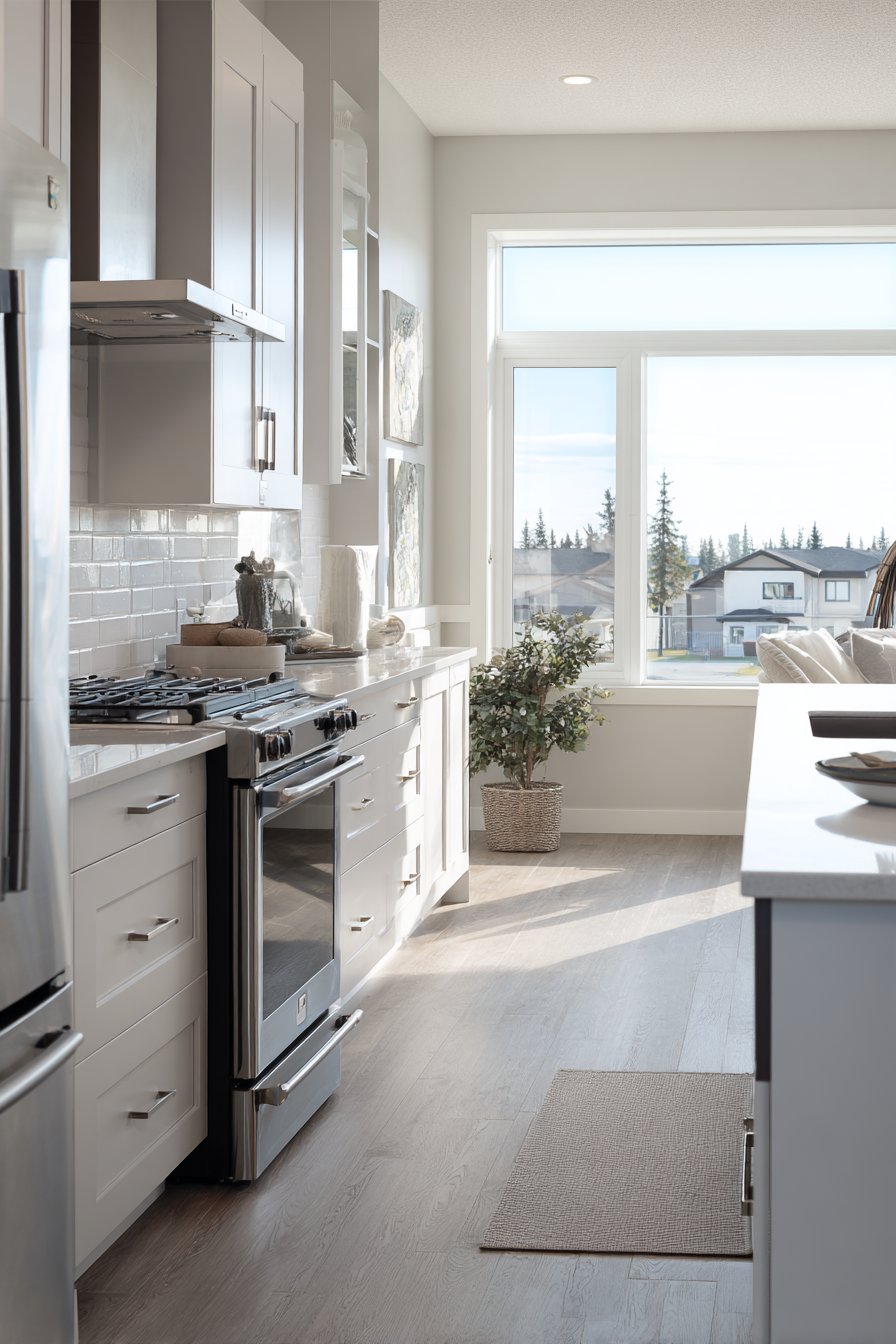
The foundation of timeless kitchen design often rests on the enduring appeal of shaker-style cabinetry, and when rendered in a soft light grey finish, this traditional profile takes on contemporary relevance. This kitchen exemplifies how classic design elements can feel fresh and current when executed in a thoughtful color palette. The shaker cabinets feature clean, recessed panel doors with precise joinery that creates subtle shadow lines, adding depth and visual interest to the grey surfaces. The soft-close door mechanisms ensure quiet operation while the brushed nickel hardware provides just the right amount of metallic accent without overwhelming the serene color scheme.
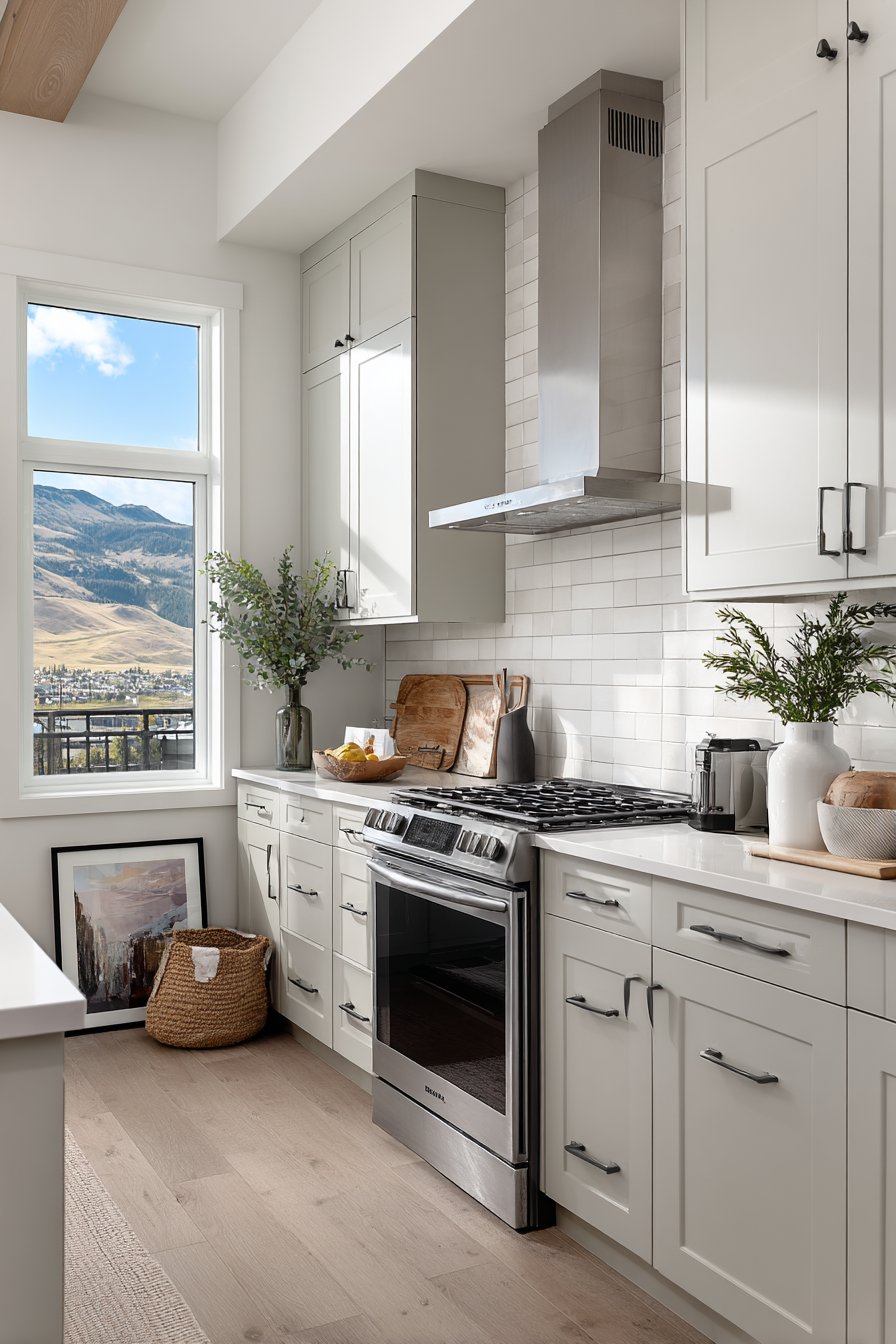
White quartz countertops with delicate grey veining create a harmonious relationship with the cabinet color, establishing a sophisticated monochromatic palette that feels cohesive rather than monotonous. The veining in the quartz echoes the grey tones of the cabinetry, creating subtle visual connections that tie the entire design together. This durable surface not only withstands the demands of daily cooking but also reflects light beautifully, contributing to the overall brightness of the space. The material choice demonstrates how practical considerations and aesthetic goals can align perfectly in thoughtful kitchen design.
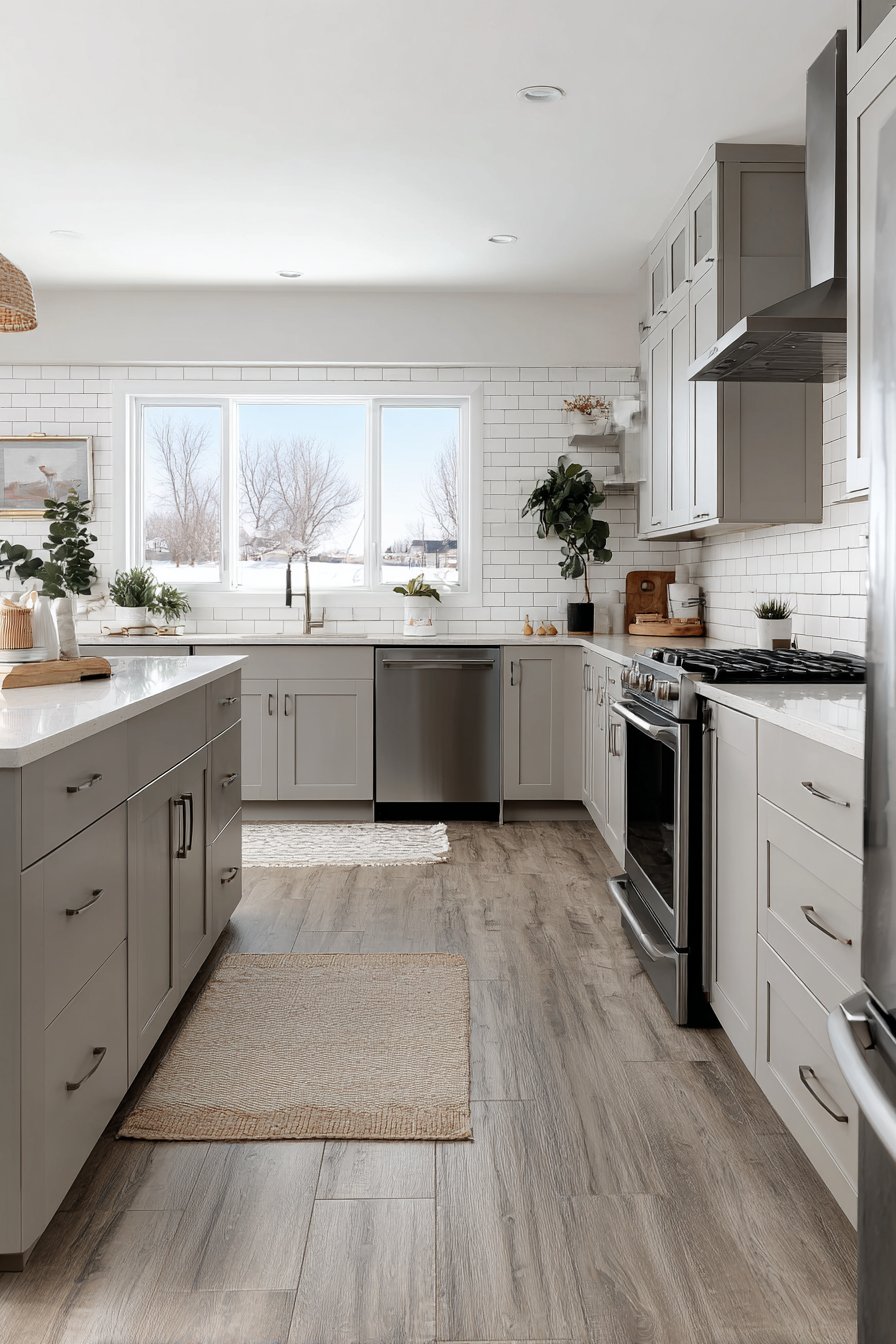
The subway tile backsplash in crisp white extends to the underside of the upper cabinets, providing a clean, traditional backdrop that allows the grey cabinetry to remain the focal point. This classic tile pattern has endured for good reason—its simple rectangular format creates visual interest through the pattern of grout lines without competing with other design elements. The integration of stainless steel appliances adds professional functionality while maintaining the cool, sophisticated color palette. Natural light streaming through a large window illuminates every corner of the space, creating soft shadows that accentuate the cabinet door profiles and reveal the true depth of the grey finish. The interplay of natural light with the various grey and white surfaces creates a dynamic environment that changes subtly throughout the day, ensuring the space never feels static or dull.

Key Design Tips:
- Select shaker-style cabinets with quality construction and precise joinery to ensure the classic profile looks crisp and intentional
- Choose brushed nickel or satin nickel hardware for a understated metallic accent that complements cool grey tones without creating harsh contrast
- Invest in white quartz with subtle grey veining to create visual connection between countertops and cabinetry while maintaining durability
- Use classic subway tile in white to provide a timeless backsplash that won’t compete with the sophisticated grey cabinetry
- Position the kitchen to maximize natural light exposure, as grey tones reveal their true beauty and complexity in natural illumination
- Incorporate stainless steel appliances for a cohesive cool-toned palette that feels professional and polished
2. The Statement Island: Grey Waterfall Design as Centerpiece
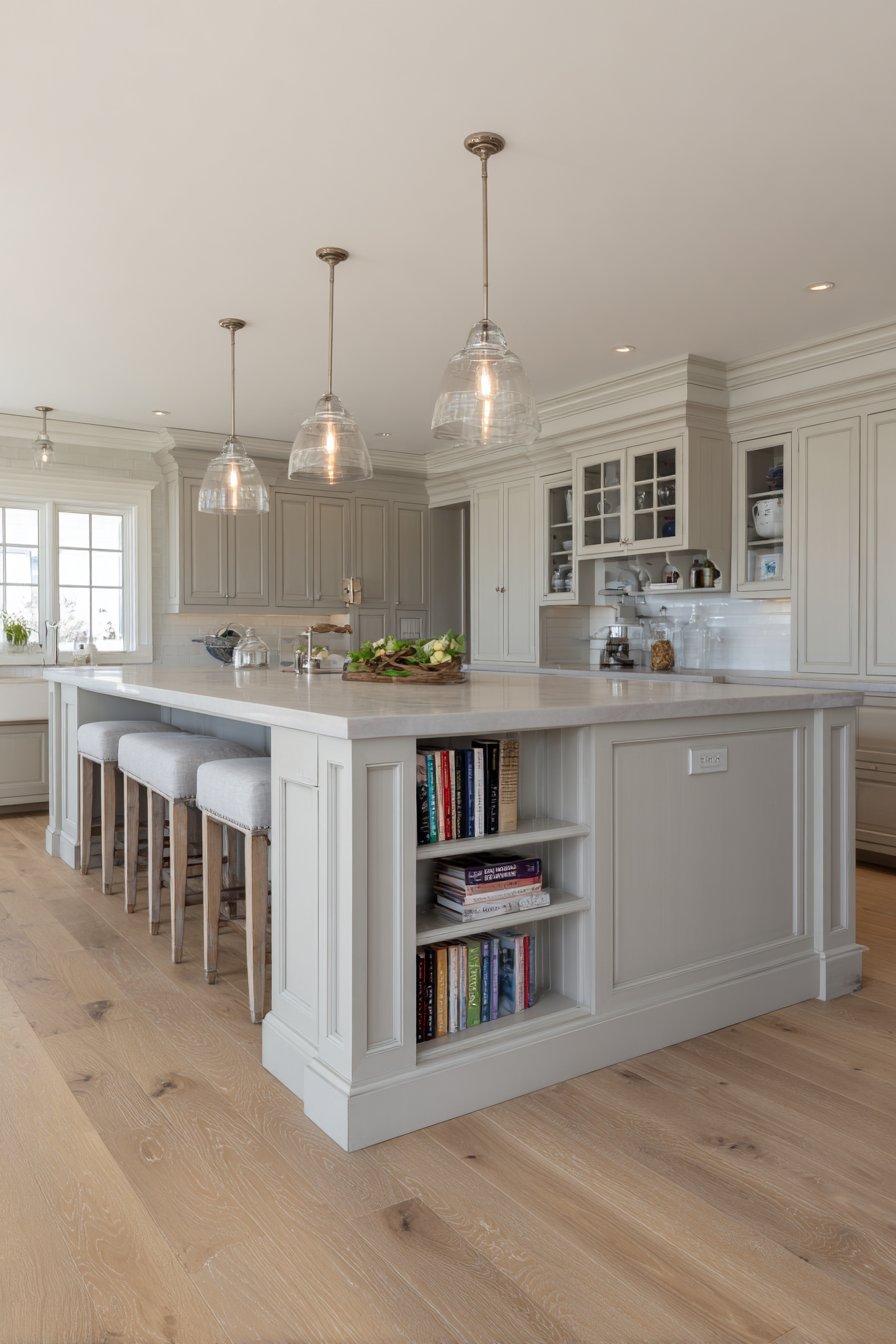
A kitchen island serves multiple purposes—additional workspace, casual dining area, and architectural focal point—and when designed with intention, it can elevate the entire kitchen aesthetic. This light grey kitchen island commands attention through its dramatic waterfall edge design, where the quartz countertop material extends seamlessly down both sides, creating uninterrupted vertical surfaces that showcase the material’s beauty. The waterfall edge detail represents both aesthetic sophistication and practical durability, protecting the island’s corners from wear while creating a furniture-like quality that distinguishes the island as a special element within the space.
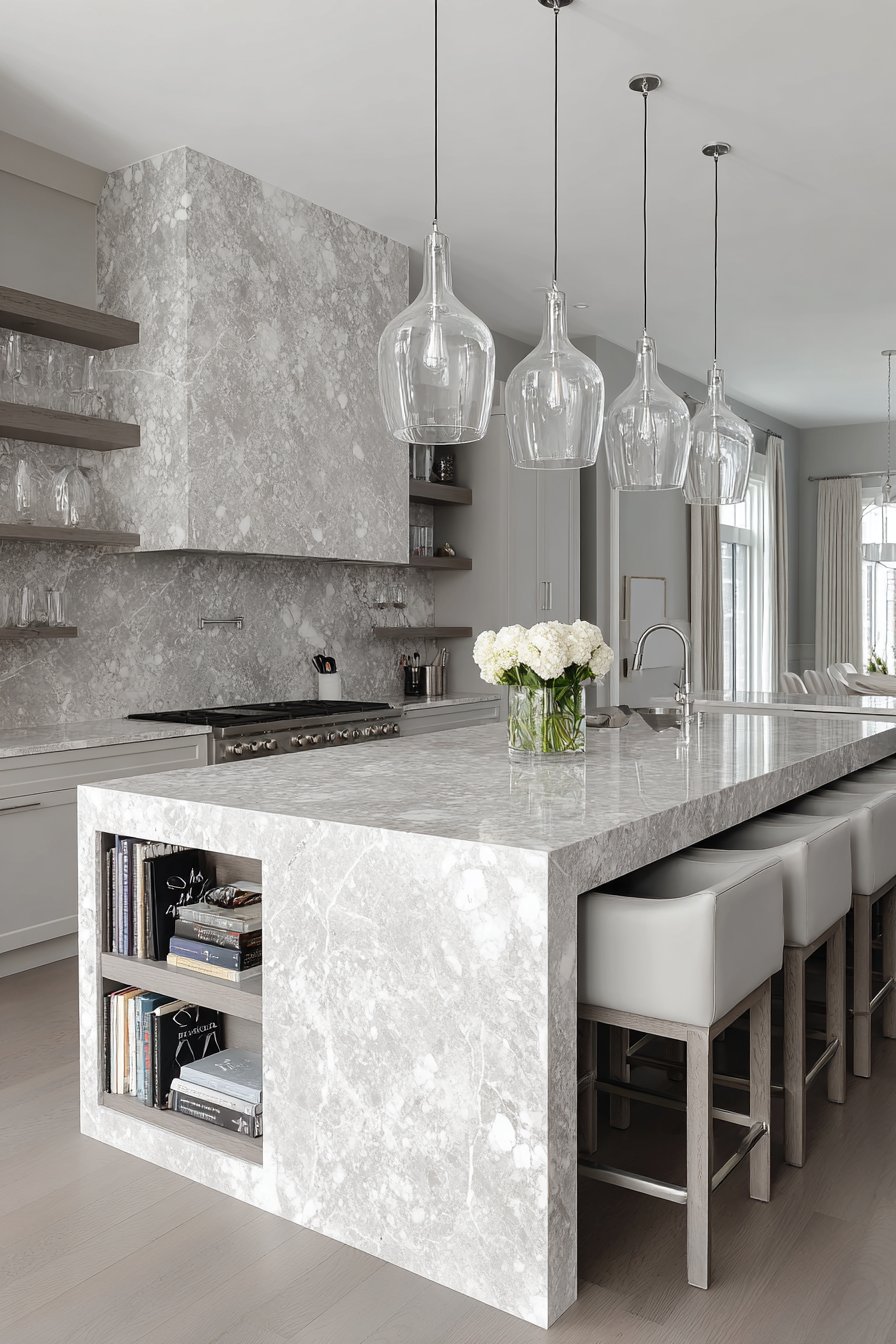
The island’s design incorporates thoughtful functionality through open shelving on one end, breaking up the solid mass of cabinetry and providing an opportunity to display coordinated dishware, favorite cookbooks, and decorative objects that add personality to the space. This open storage creates visual breathing room and makes frequently used items easily accessible, combining form and function in a way that enhances daily kitchen life. The display area becomes an opportunity to introduce subtle color accents or natural materials through the items chosen, allowing for easy seasonal updates without major design changes.
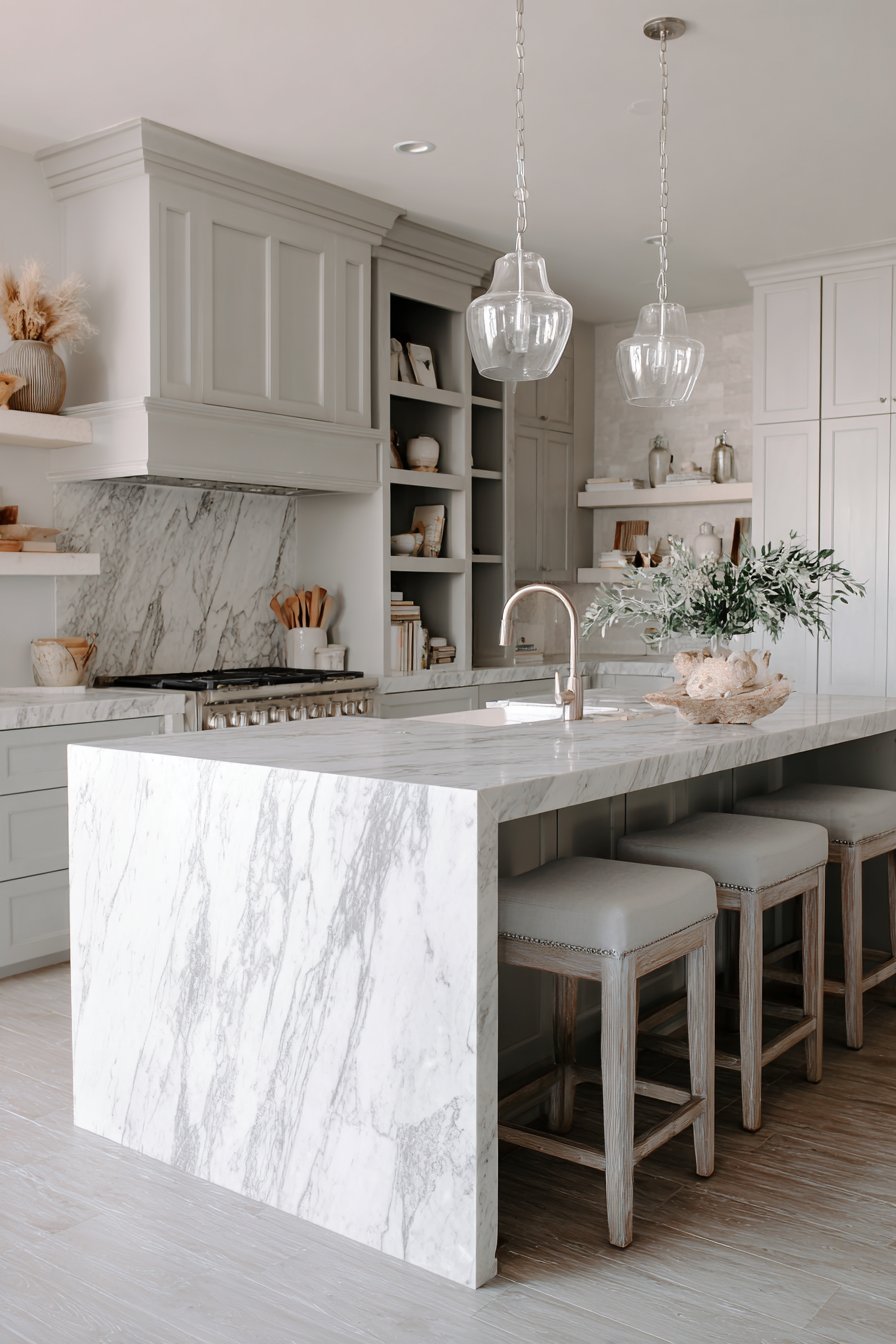
Four modern bar stools with light grey upholstered seats cluster around the island, establishing it as a natural gathering point for family and friends. The upholstered seats add comfort and softness to the hard surfaces that dominate kitchen spaces, while their grey tone maintains the cohesive color story throughout. Above, pendant lights with clear glass shades hang at carefully calculated heights, providing task lighting for food preparation while creating ambient glow during evening hours. The transparency of the glass shades ensures the light fixtures enhance rather than obstruct the visual flow of the space. The combination of general ambient lighting and focused pendant illumination creates layers of light that make the island functional at any time of day while highlighting the subtle texture variations in the light grey quartz surfaces.
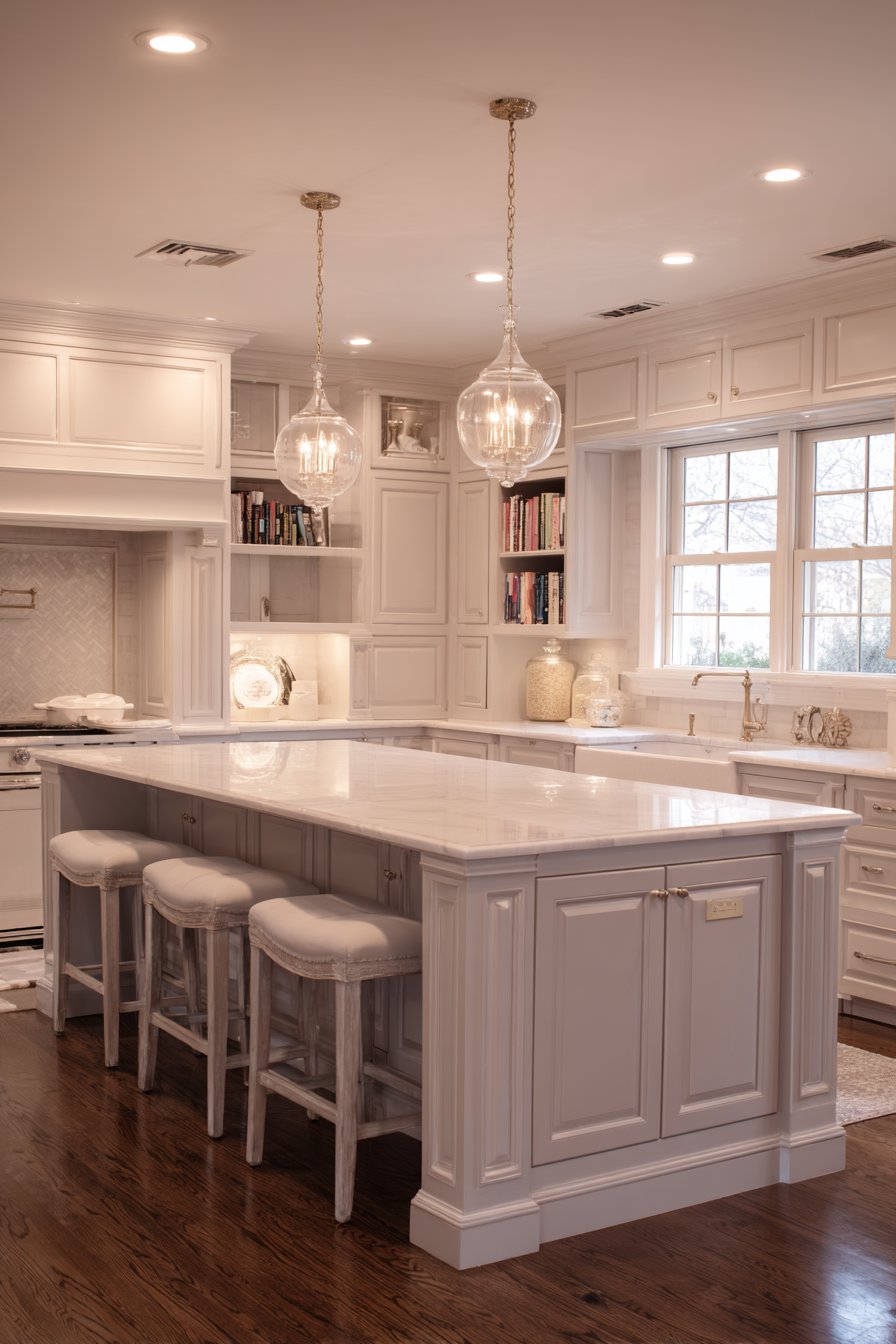
Key Design Tips:
- Choose waterfall edge design for islands to create architectural drama and protect corners from damage in high-traffic areas
- Ensure the island includes varied functions such as storage, display space, and seating to maximize its value in the kitchen layout
- Select bar stools with upholstered seats in complementary grey tones to add comfort while maintaining color cohesion
- Install pendant lights with transparent or translucent shades that provide focused illumination without blocking sightlines
- Incorporate open shelving to break up solid cabinetry and create opportunities for personalized styling and display
- Position the island to allow adequate clearance on all sides—typically 42-48 inches for comfortable traffic flow
3. Space-Savvy Compact Kitchen in Serene Grey
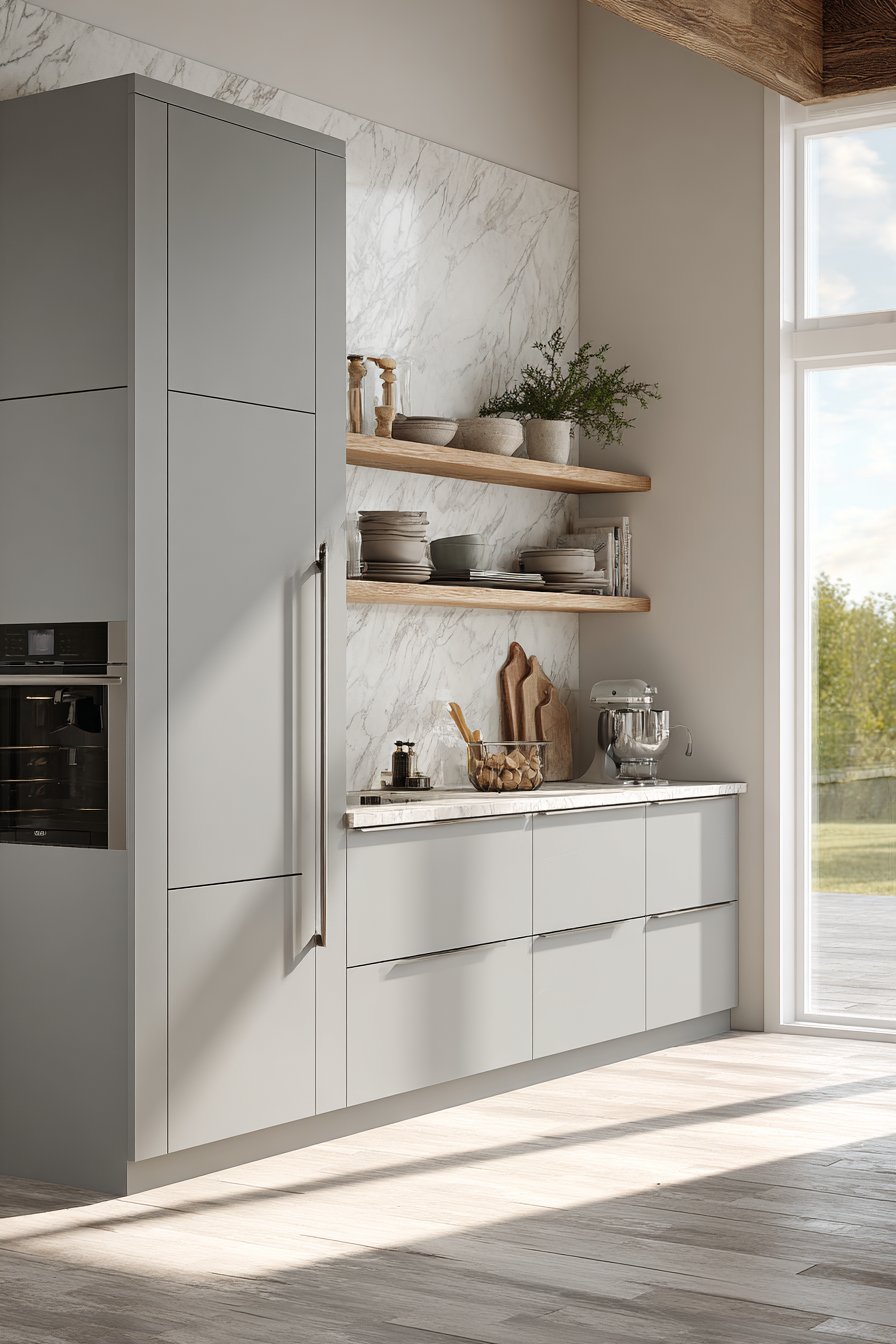
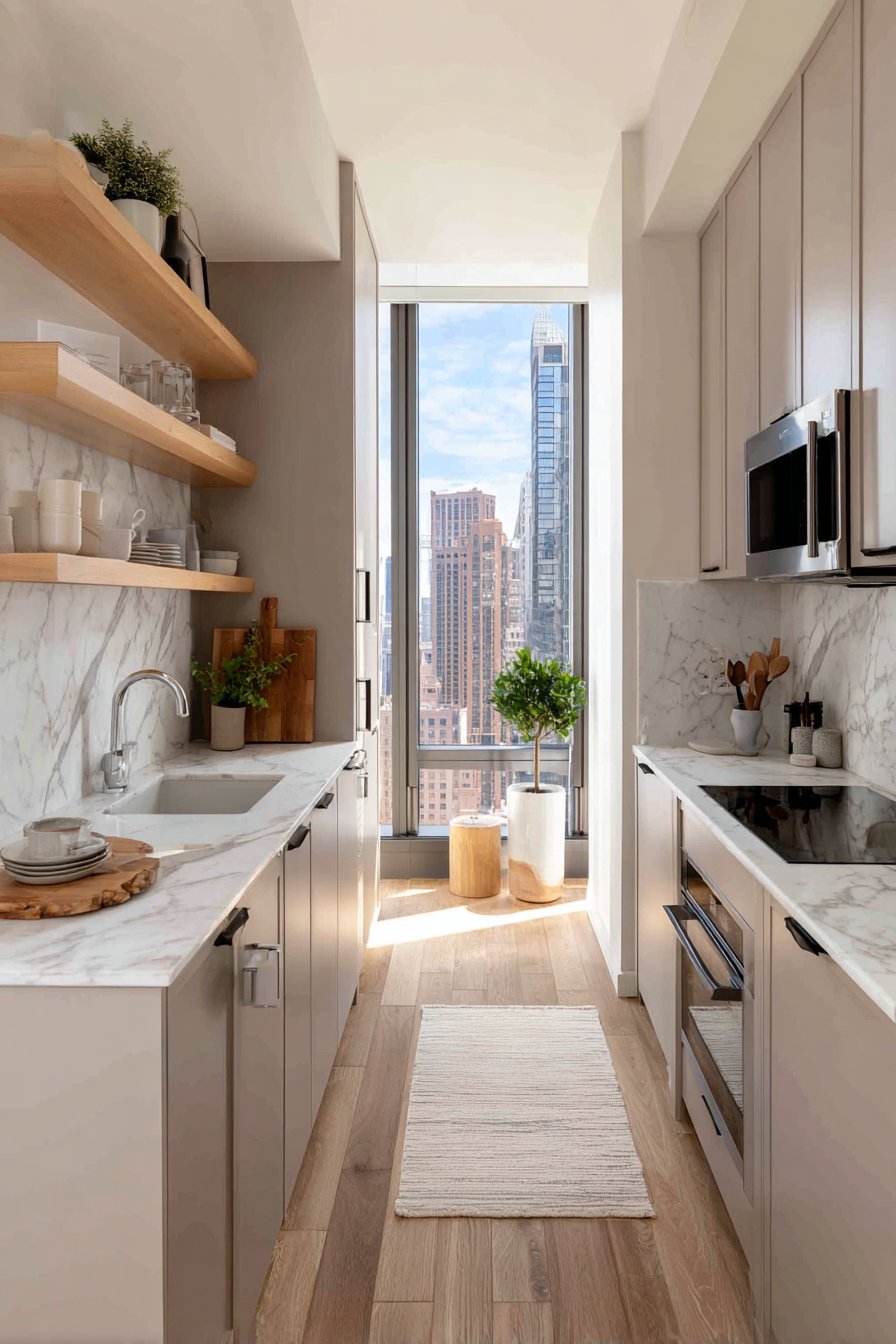
Small kitchens present unique design challenges that require creative solutions and strategic planning, but size limitations need not compromise style or functionality. This compact light grey kitchen demonstrates how thoughtful design can transform even the most modest footprint into an efficient and beautiful workspace. Floor-to-ceiling cabinetry in a soft grey tone maximizes vertical storage capacity, utilizing every inch of available space while the uniform color treatment creates a sense of visual calm that makes the small area feel less cluttered and more intentional.
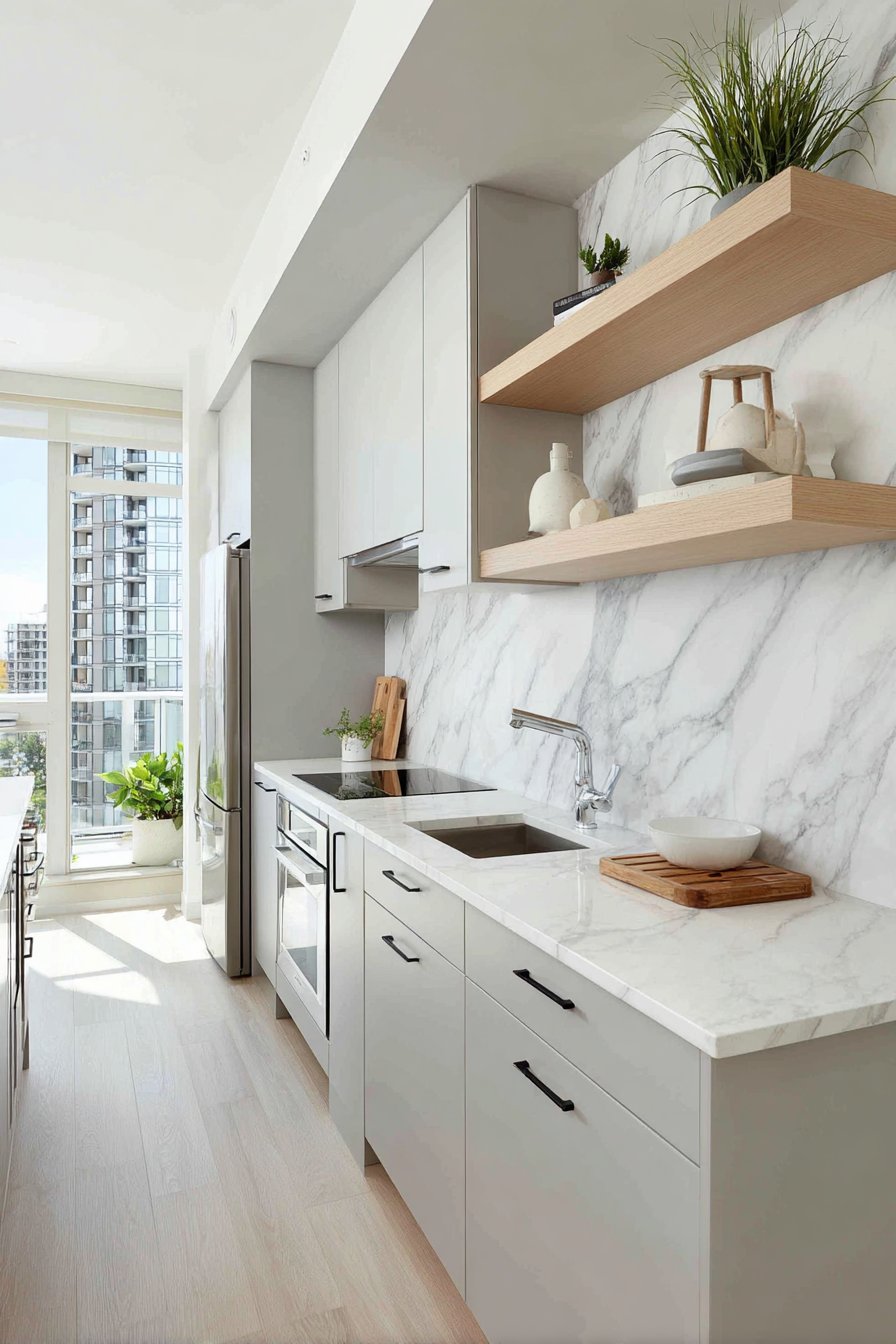
The handleless push-to-open mechanisms eliminate protruding hardware that could create visual noise or physical obstacles in the tight quarters. This sleek detail contributes to the clean, minimalist aesthetic while improving safety and ease of movement in the compact space. The smooth cabinet fronts reflect light more effectively than traditional recessed panel designs, further enhancing the sense of spaciousness. Open floating shelves in warm white oak break up the runs of grey cabinetry, introducing natural wood tones that add warmth and prevent the space from feeling too cool or institutional. These open shelves display everyday essentials in an organized, accessible manner, combining practical storage with decorative opportunity.
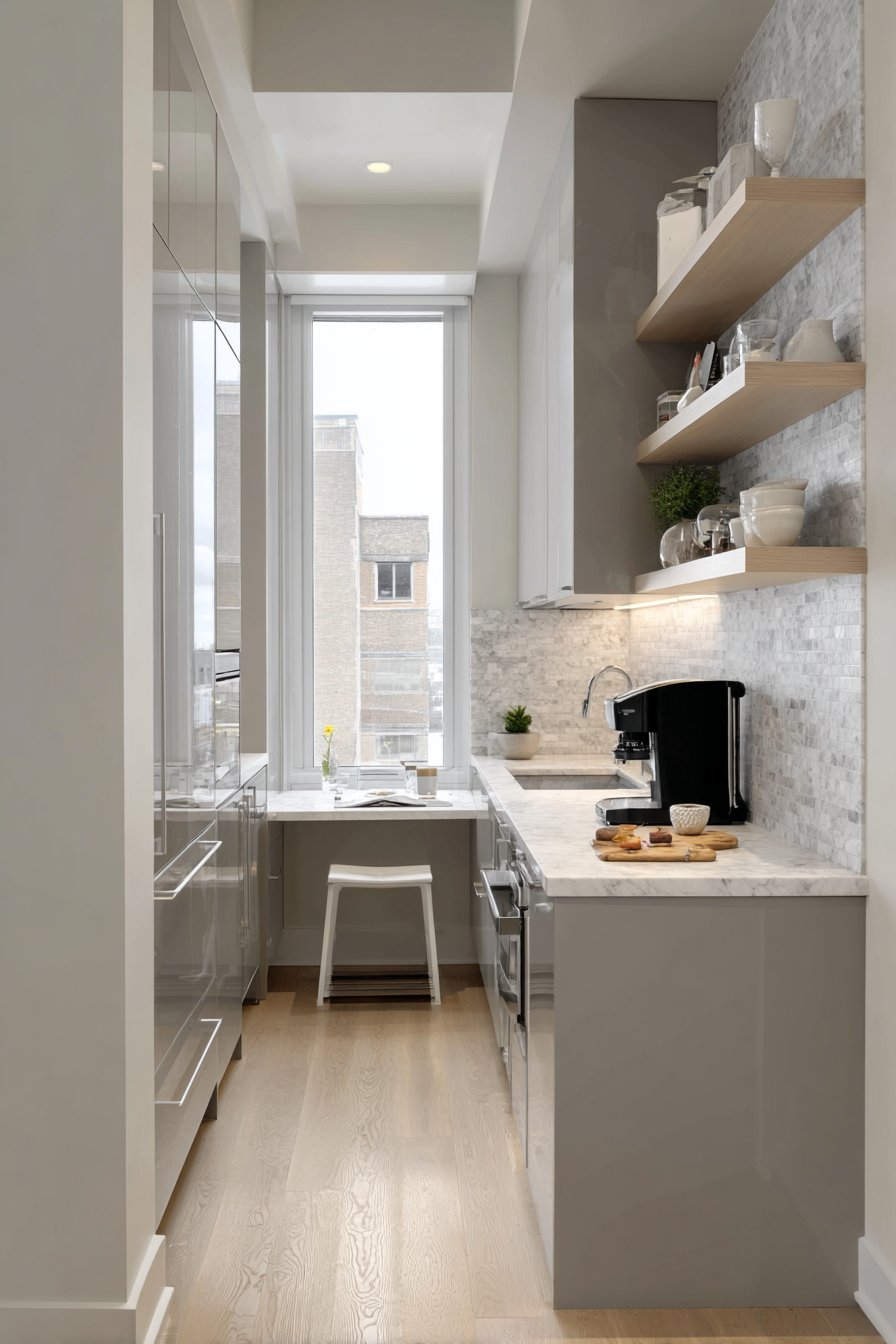
A narrow breakfast bar extending from the counter creates additional workspace without requiring dedicated floor space, demonstrating the importance of multi-functional design elements in compact kitchens. This integrated eating area allows for casual meals or laptop work without the need for a separate dining table. Under-cabinet LED lighting illuminates the white marble-look tile backsplash, adding both task lighting for food preparation and ambient glow that makes the space feel larger and more welcoming. The LED strips also highlight the backsplash material, creating visual interest and depth. Morning light streaming through a nearby window brings natural illumination that changes throughout the day, connecting the small kitchen to the outdoor environment and preventing it from feeling like an enclosed box. The efficient layout proves that with careful planning and smart design choices, even the smallest kitchen can feel spacious, organized, and genuinely beautiful.
Key Design Tips:
- Utilize floor-to-ceiling cabinetry in light grey to maximize storage capacity while creating a cohesive, calming visual effect
- Choose handleless push-to-open cabinets to eliminate hardware that creates visual clutter in small spaces
- Integrate open floating shelves in contrasting wood tones to add warmth and break up expanses of grey cabinetry
- Install a narrow breakfast bar as a space-efficient alternative to a separate dining table
- Add under-cabinet LED lighting to improve task lighting and create ambient glow that makes small spaces feel larger
- Select light-reflecting materials like glossy backsplash tiles to bounce light around the compact area
4. Farmhouse Charm Meets Contemporary Grey Palette

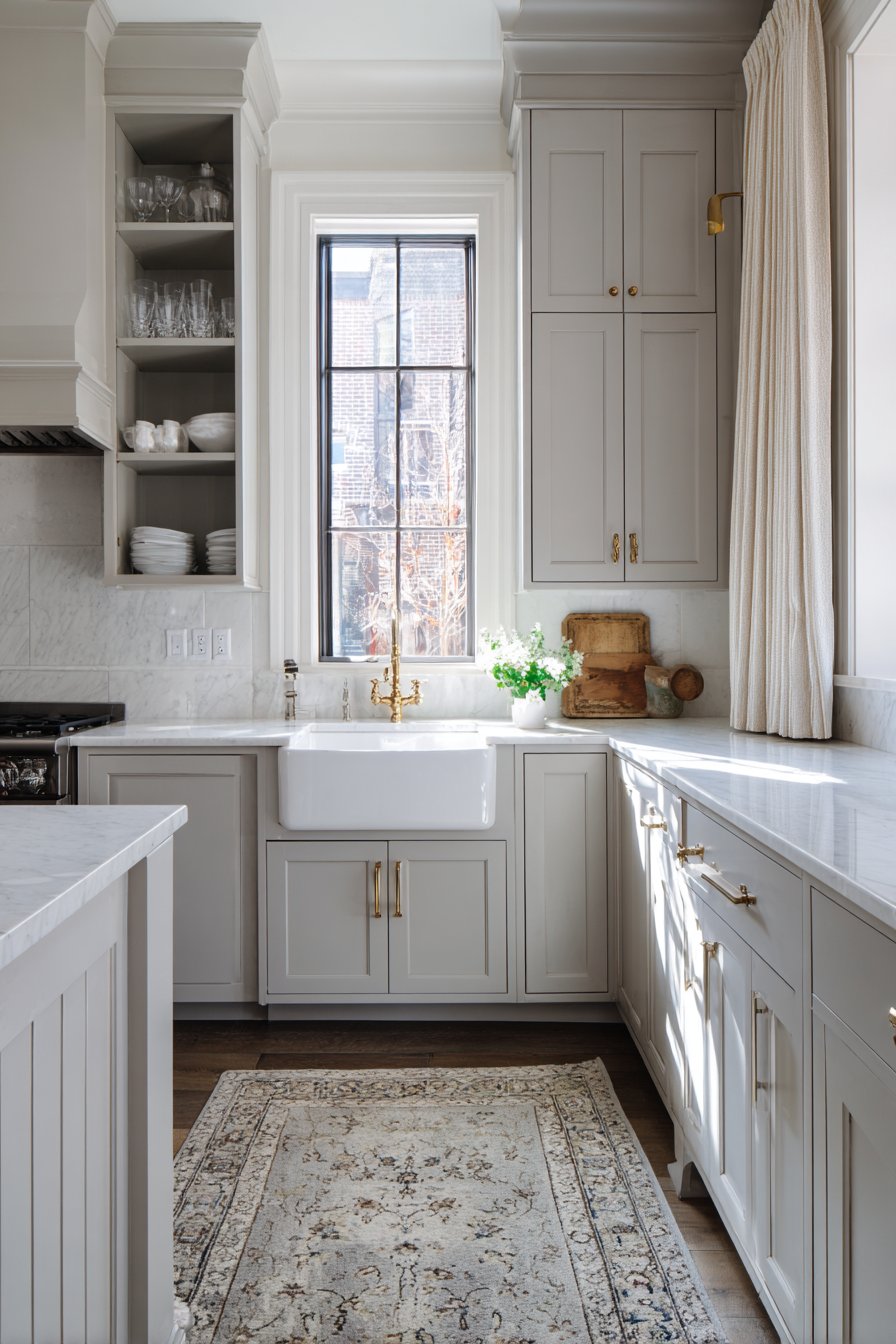
The marriage of farmhouse design elements with contemporary color choices creates kitchens that feel both comfortably familiar and refreshingly current. This light grey kitchen successfully bridges traditional and modern sensibilities, beginning with the focal point of a classic farmhouse sink set into pristine white marble countertops. The apron-front sink design adds authentic period character while the generous basin provides practical workspace for everything from washing oversized pots to arranging fresh flowers. The marble countertops introduce natural veining and subtle color variation that adds organic interest to the predominantly grey palette.
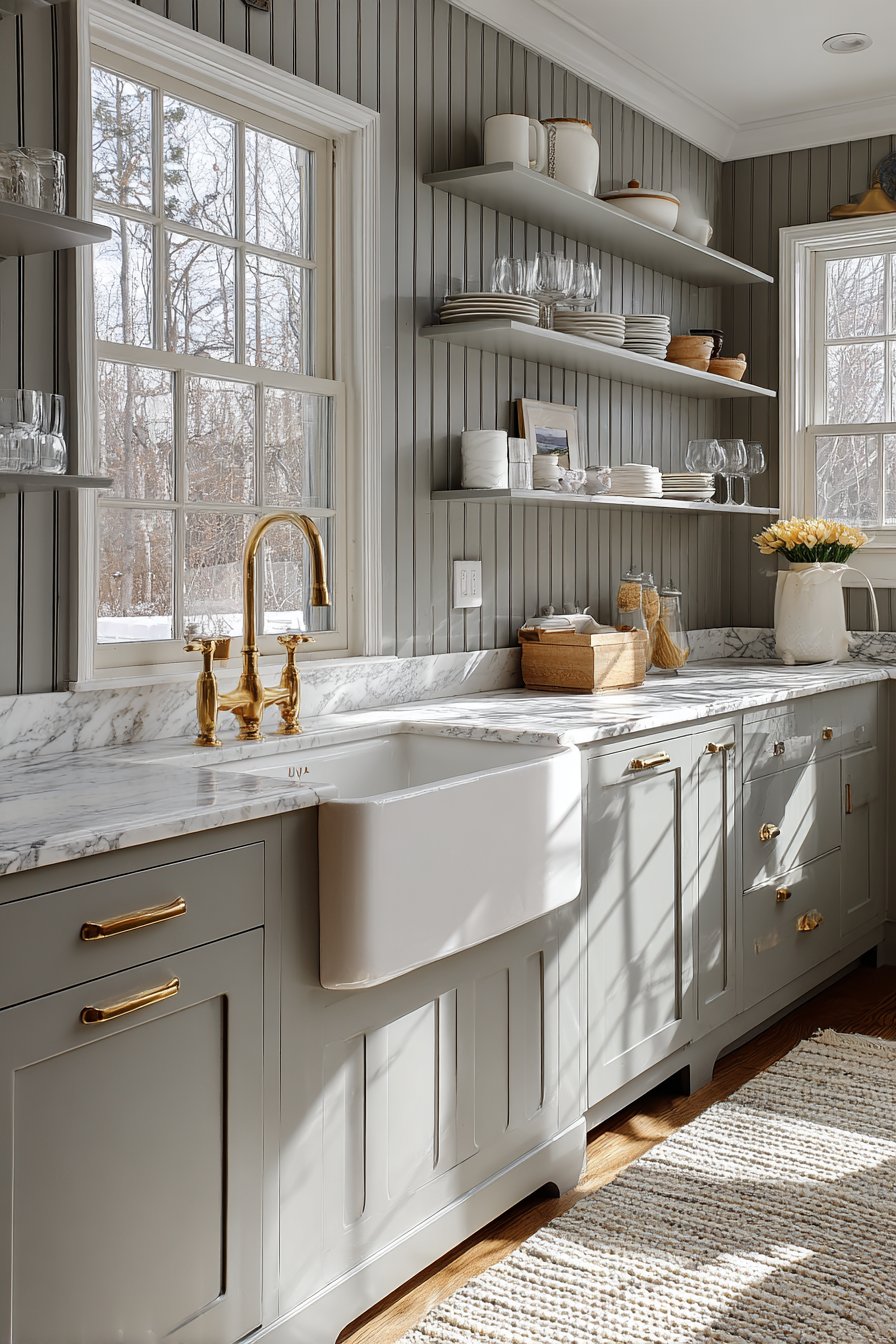
The grey cabinetry features traditional beadboard panel details that reference historical design while the soft grey finish gives these classic elements a contemporary interpretation. The vertical lines of the beadboard add subtle texture and visual movement to the cabinet fronts, creating depth that flat panels cannot achieve. Brass cabinet hardware and a matching brass faucet introduce warm metallic accents that beautifully complement the cool grey palette, creating a sophisticated balance of warm and cool tones. The brass develops a living patina over time, adding character and connecting the kitchen to traditional craftsmanship values.
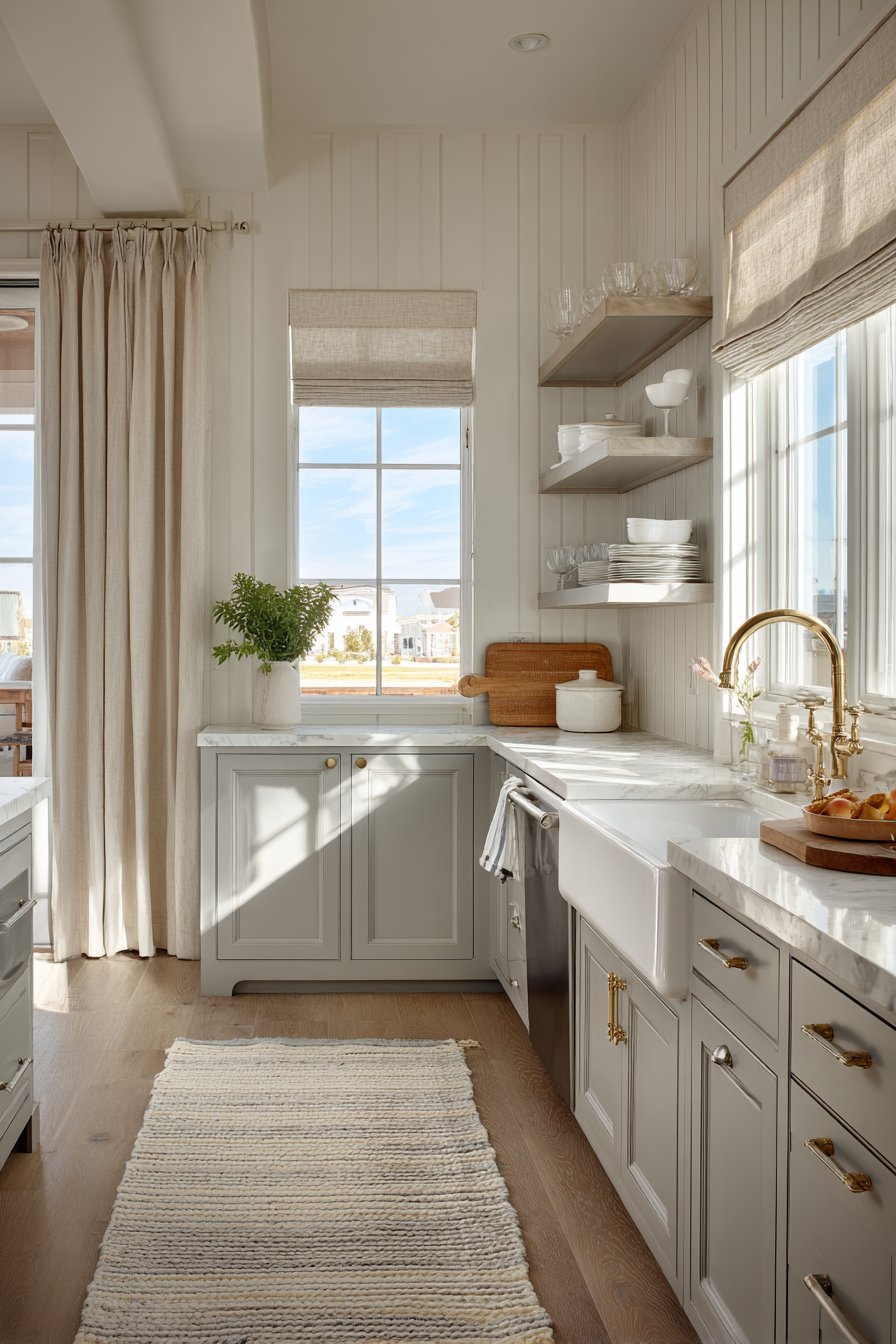
Open upper shelving displays white ceramic dishes and glassware, creating an opportunity to showcase beautiful everyday items while making them easily accessible. This open storage breaks up the mass of cabinetry and introduces display opportunities that add personality to the functional space. A vintage-inspired runner rug in coordinating grey and cream tones grounds the space and adds unexpected softness underfoot, making the kitchen more comfortable for extended cooking sessions. The textile introduces pattern and texture that balances the hard surfaces dominating the room. Natural daylight filters through linen cafe curtains, creating an inviting atmosphere that feels both fresh and timeless. The cafe curtain style provides privacy and light control while maintaining an open, airy feeling. This kitchen proves that farmhouse style need not rely on dark woods or distressed finishes to create authentic character—light grey cabinetry with traditional details offers a refined interpretation that feels perfectly suited to contemporary life.
Key Design Tips:
- Choose a farmhouse sink as a statement piece that combines authentic character with generous functionality
- Incorporate beadboard panel details on cabinet doors to add traditional texture and visual interest
- Select brass or bronze hardware and fixtures to introduce warm metallic accents that balance cool grey tones
- Install open upper shelving to display beautiful dishware and break up solid cabinet runs
- Add a runner rug in complementary tones to introduce softness, pattern, and comfort underfoot
- Use cafe curtains in natural fabrics like linen to filter light while maintaining an open, airy atmosphere
5. Sleek Modern Minimalism in Monochromatic Grey
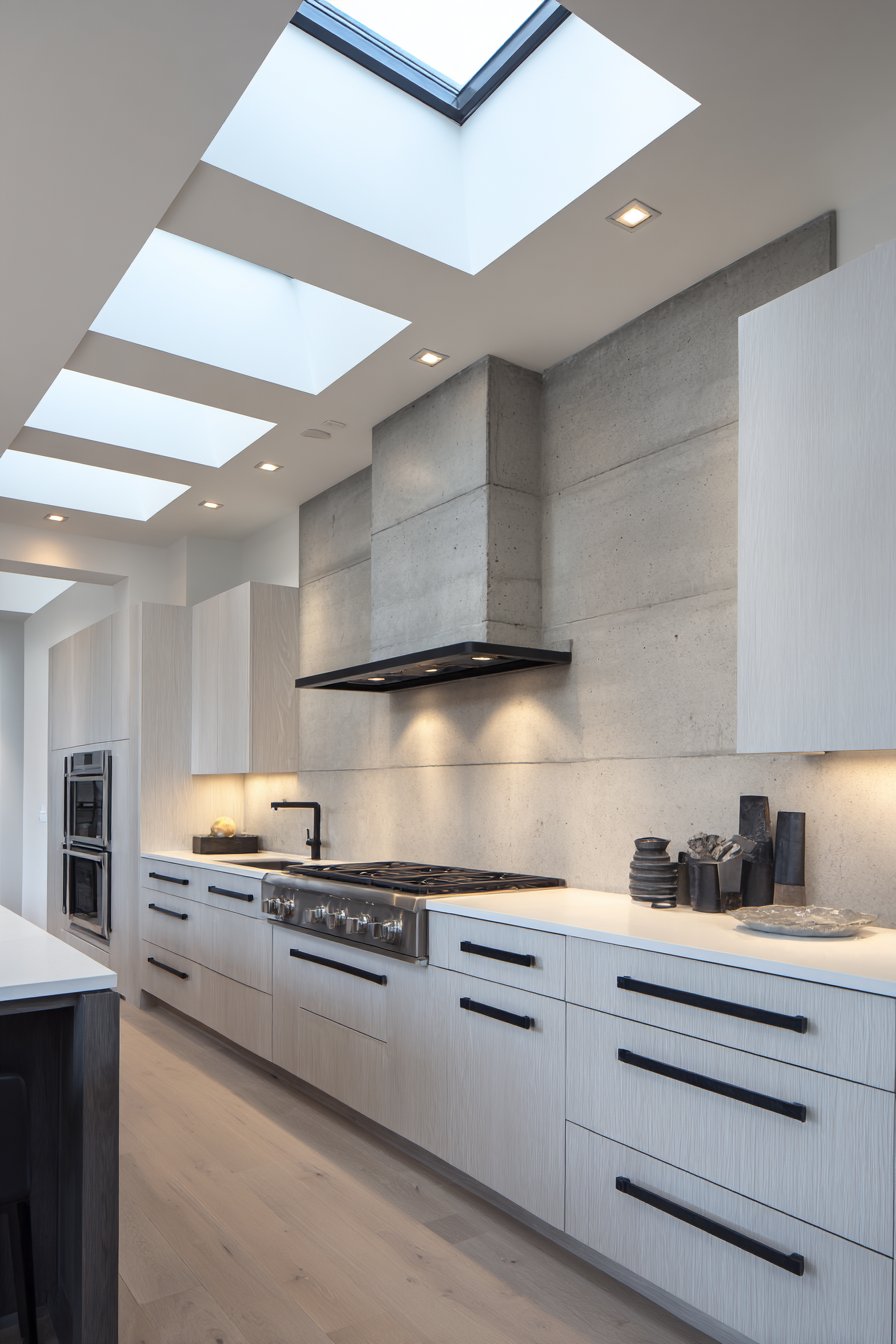
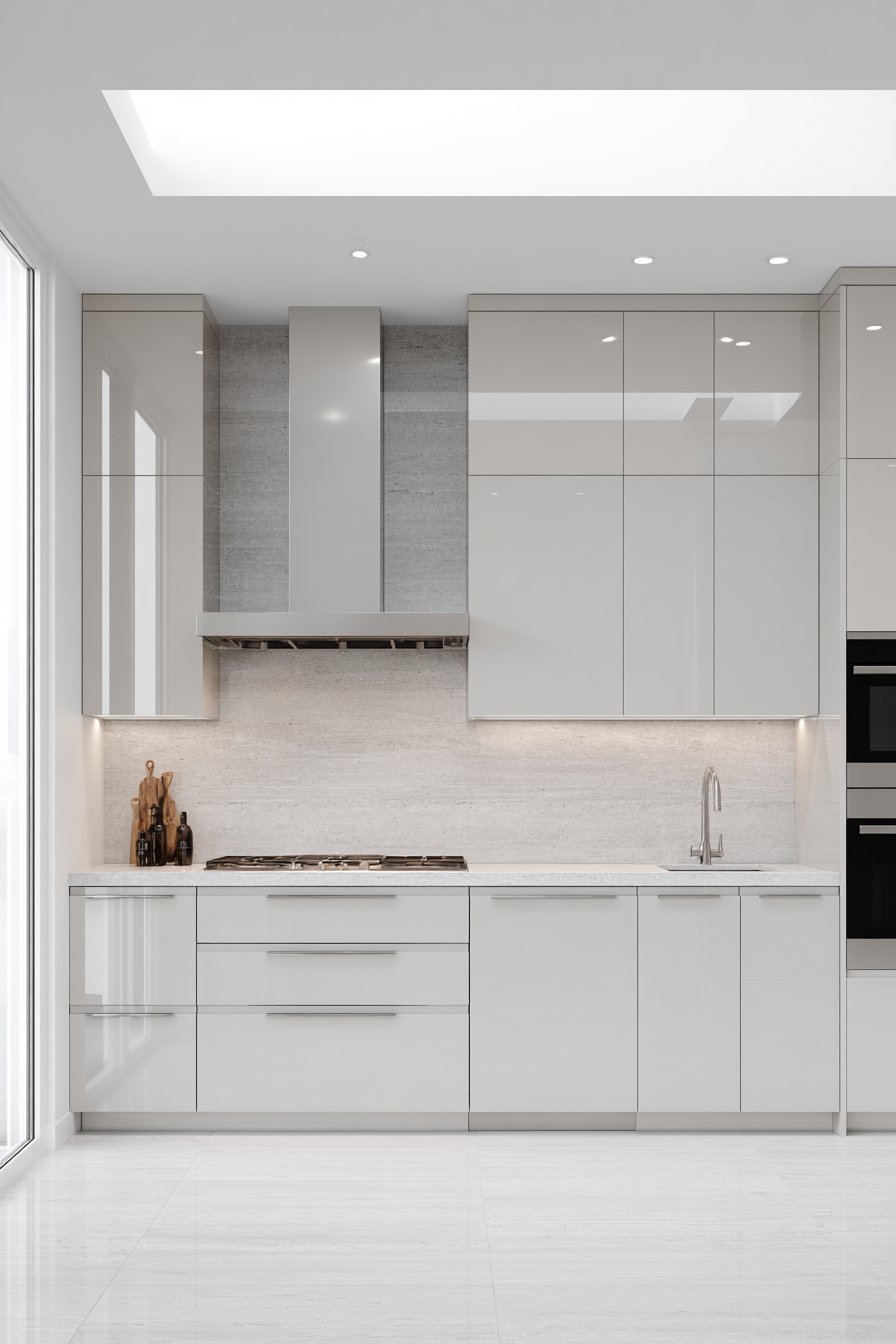
For those who gravitate toward clean lines and uncluttered spaces, the modern minimalist kitchen represents the pinnacle of intentional design. This light grey kitchen embraces minimalist principles through sleek flat-panel cabinets with integrated handles that create uninterrupted surfaces and emphasize horizontal lines. The sophisticated grey finish has a smooth, uniform appearance that reflects the precision of contemporary manufacturing. The absence of visible hardware contributes to the serene, uncluttered aesthetic while the integrated handle design provides ergonomic functionality without compromise.
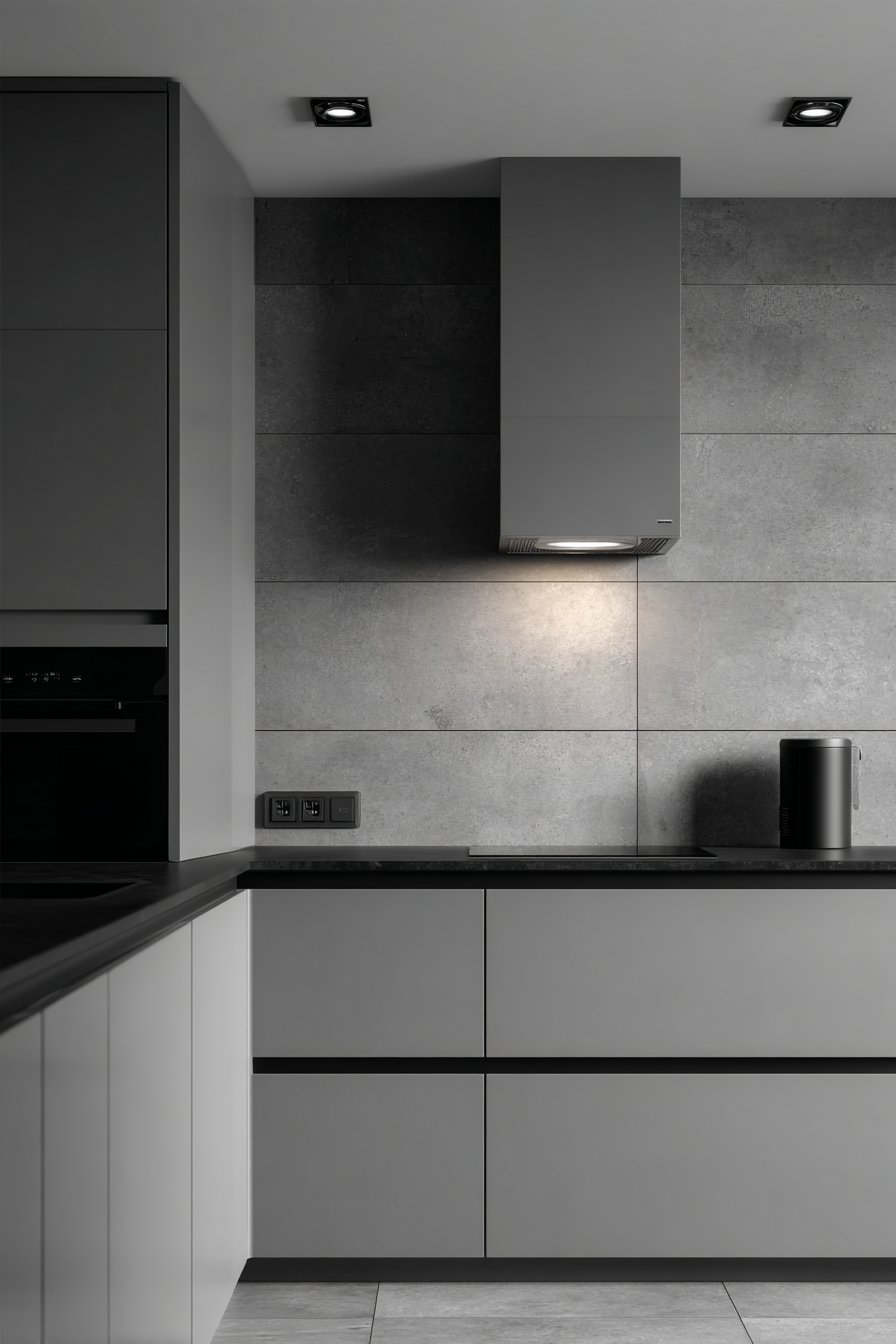
The backsplash showcases large-format grey porcelain tiles with a subtle concrete-look texture that adds depth and interest to the monochromatic scheme. These oversized tiles minimize grout lines, creating a more seamless appearance that aligns with minimalist principles. The concrete-inspired texture introduces an industrial edge that feels urban and contemporary while maintaining the overall sophistication of the space. Matte black fixtures and appliances create bold, intentional contrast against the light grey cabinetry, serving as graphic punctuation marks that define the modern aesthetic. The black elements include the range, refrigerator panels, cabinet hardware, and plumbing fixtures, creating a cohesive thread of dark accent throughout the space.
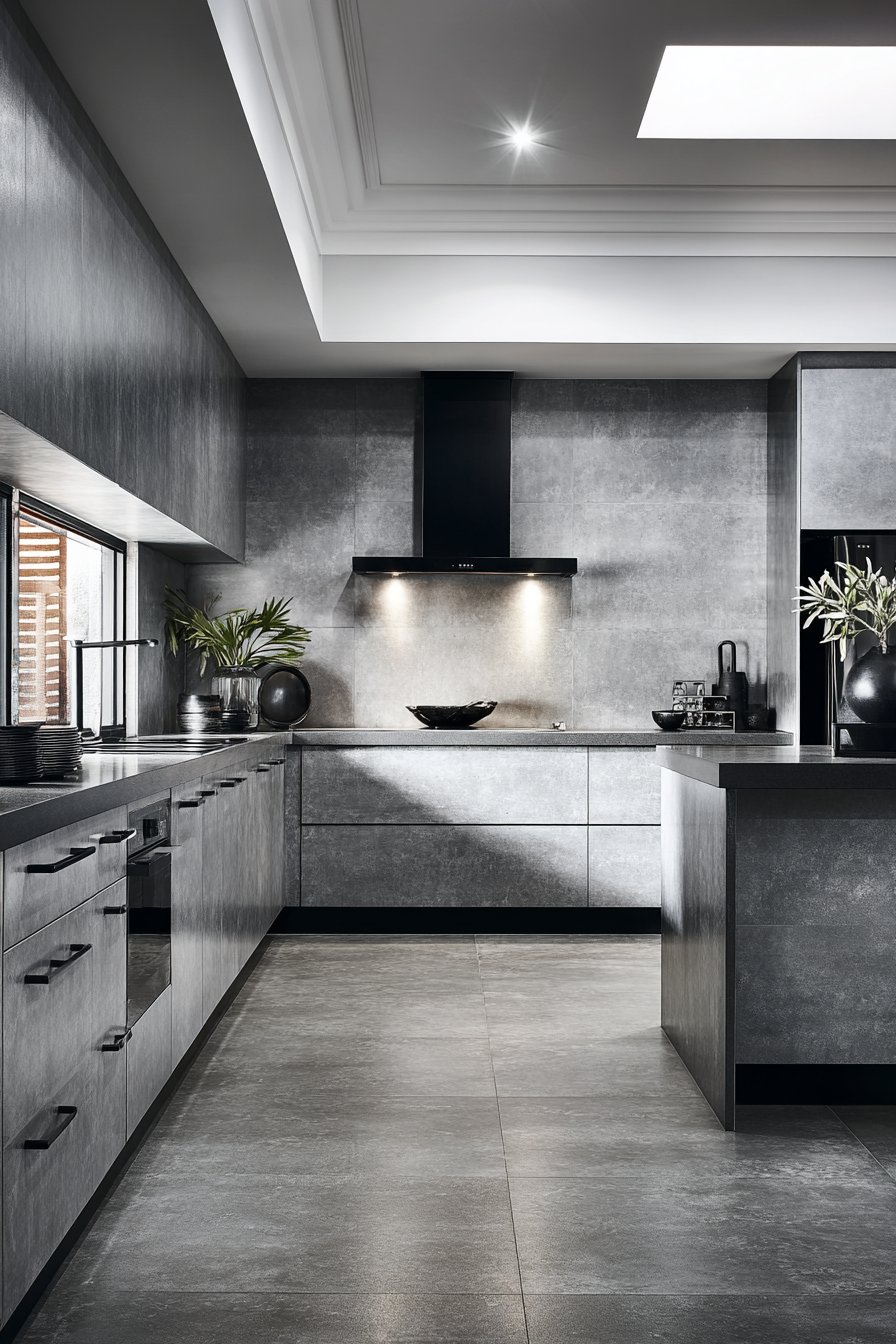
A minimalist range hood in matching grey blends seamlessly with the upper cabinets, demonstrating the importance of integrating functional elements into the overall design rather than allowing them to appear as afterthoughts. The hood’s sleek profile maintains the clean horizontal lines that define the space. Recessed lighting combined with natural light from skylights illuminates the space evenly, eliminating shadows and highlighting the interplay between different grey surfaces. The skylights bring natural illumination from above, creating dynamic light patterns that change throughout the day and connecting the kitchen to the sky beyond. The monochromatic color scheme, far from being boring, creates a sophisticated backdrop that allows architectural details, material quality, and the play of light and shadow to become the true stars of the design. This kitchen proves that restraint in color and ornamentation can result in spaces of exceptional beauty and enduring style.
Key Design Tips:
- Select flat-panel cabinets with integrated handles to create clean, uninterrupted surfaces that define modern minimalist design
- Choose large-format tiles with subtle texture to add visual interest while maintaining the minimalist aesthetic
- Incorporate matte black fixtures and appliances as bold contrast elements that anchor the grey palette
- Integrate the range hood into the cabinetry design rather than treating it as a separate, conspicuous element
- Install both recessed lighting and skylights to create even, shadow-free illumination that showcases material quality
- Embrace monochromatic color schemes as opportunities to highlight texture, form, and the quality of materials
6. Two-Toned Grey Layers Creating Visual Depth
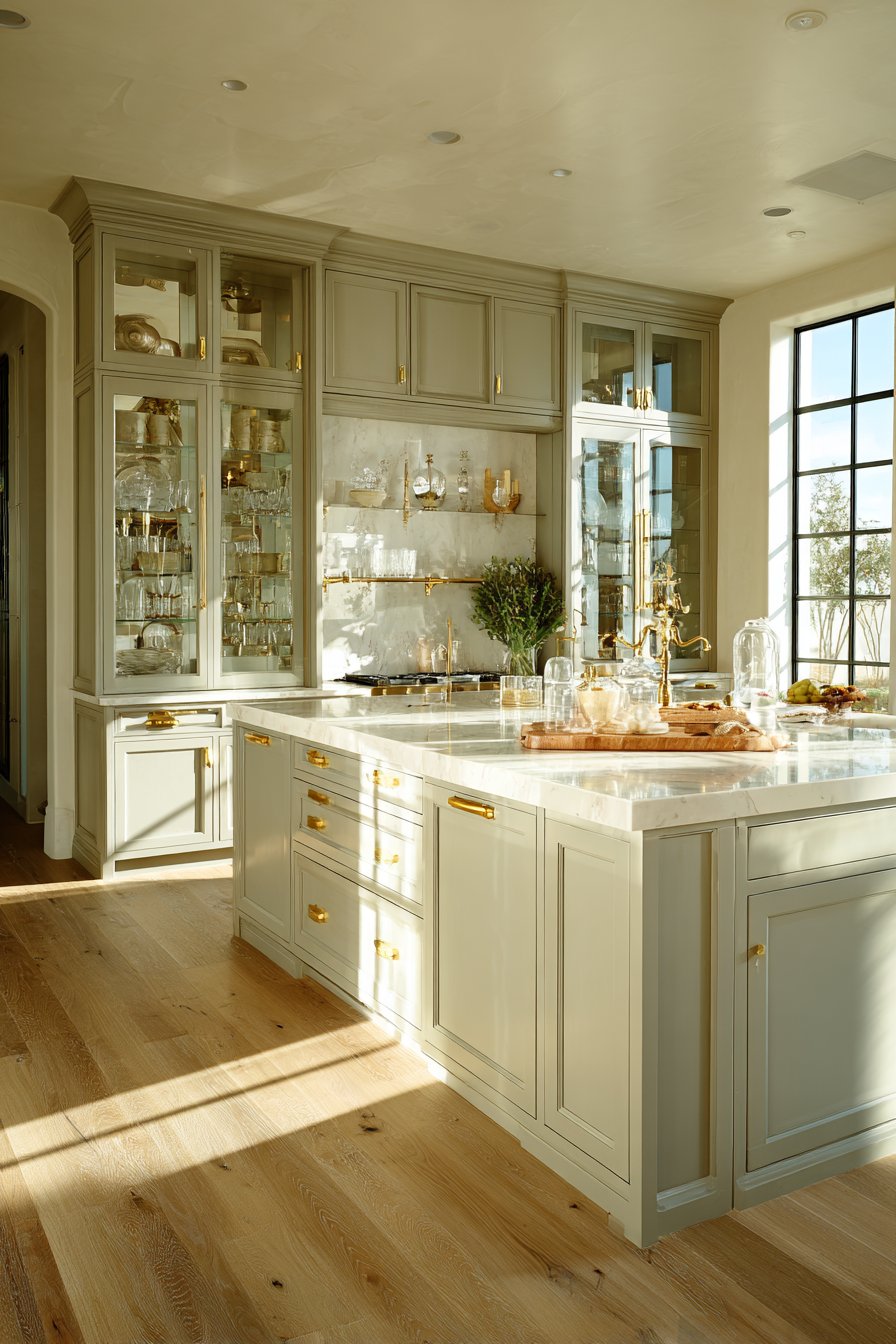
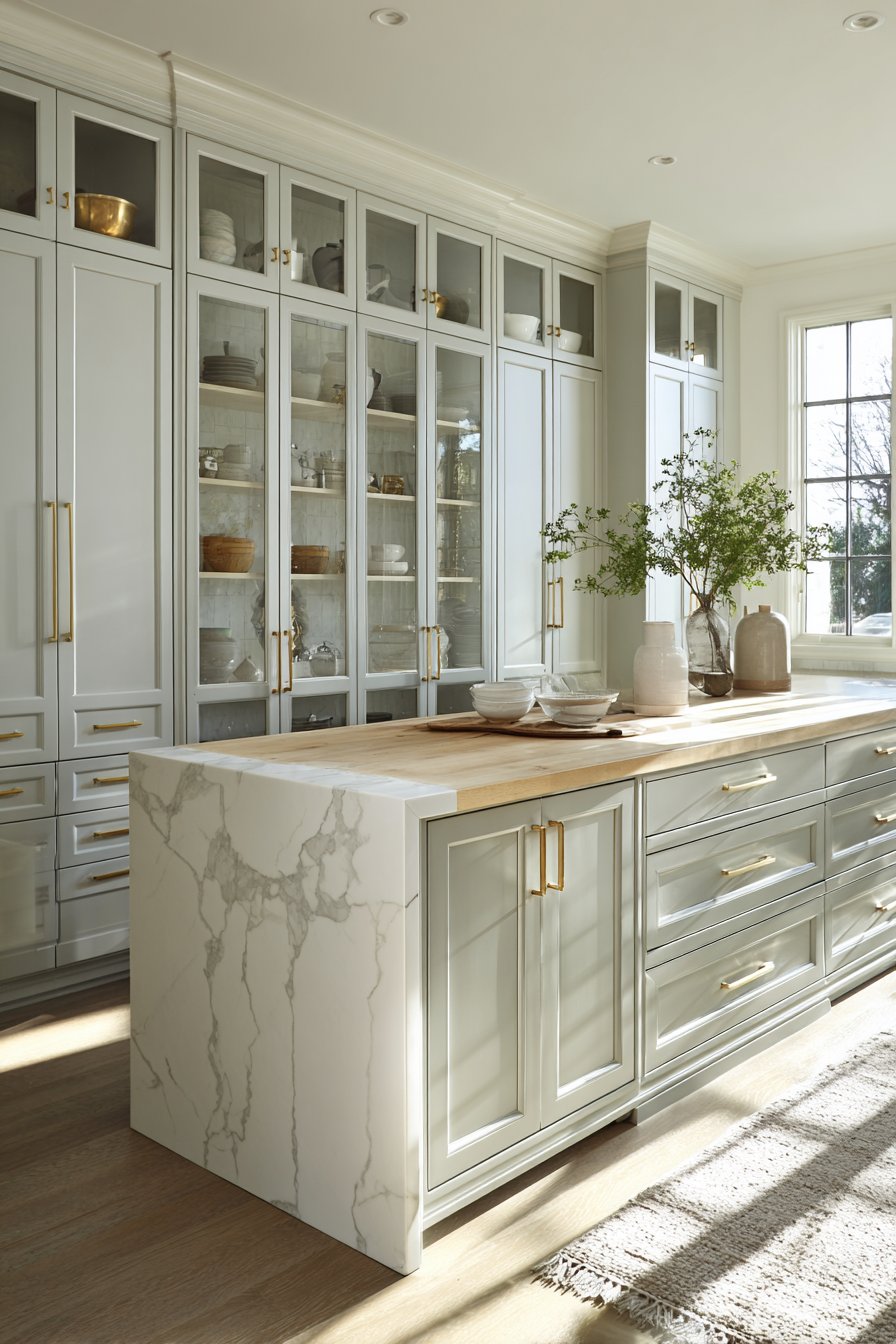
While monochromatic kitchens offer serene beauty, introducing subtle color variation through two-toned cabinetry adds visual depth and architectural interest. This light grey kitchen employs a sophisticated approach to the two-tone trend, featuring light grey upper cabinets paired with slightly darker grey base cabinets. This tonal variation creates gentle definition between upper and lower cabinetry, adding dimension that makes the space feel more dynamic and intentionally designed. The darker lower cabinets also provide practical benefits, as they show less wear and soiling in high-traffic areas near the floor.
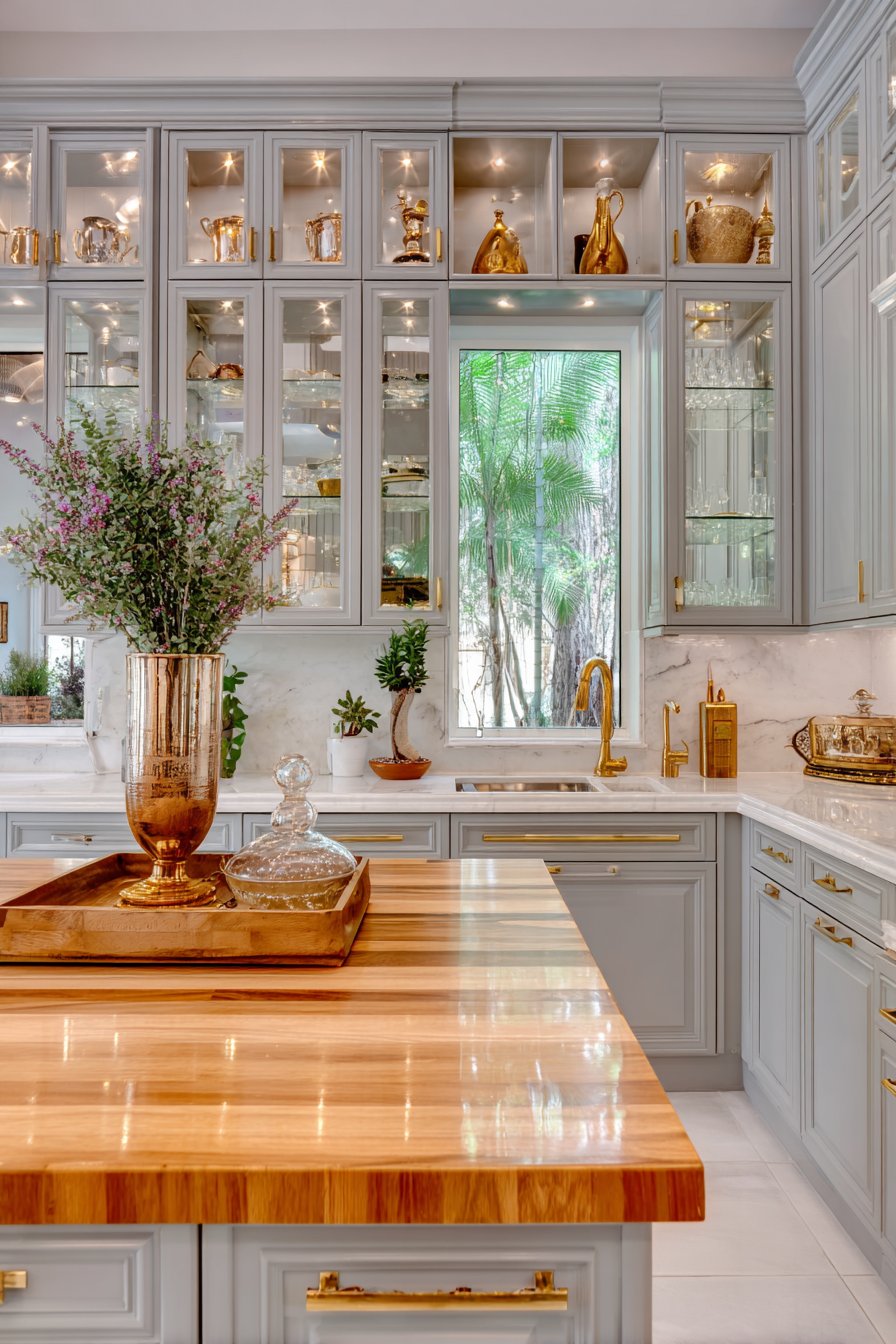
Butcher block wooden countertops on the island introduce significant natural warmth, creating a welcoming focal point that balances the cool grey tones surrounding it. The wood grain patterns and honey-colored tones bring organic beauty and tactile appeal, making the island feel like a special gathering place. The butcher block also provides an ideal surface for food preparation, developing character through use while remaining easily renewable through periodic sanding and oiling. Perimeter counters use white quartz, creating a bright, durable work surface that maintains the sophisticated grey and white palette established by the cabinetry.
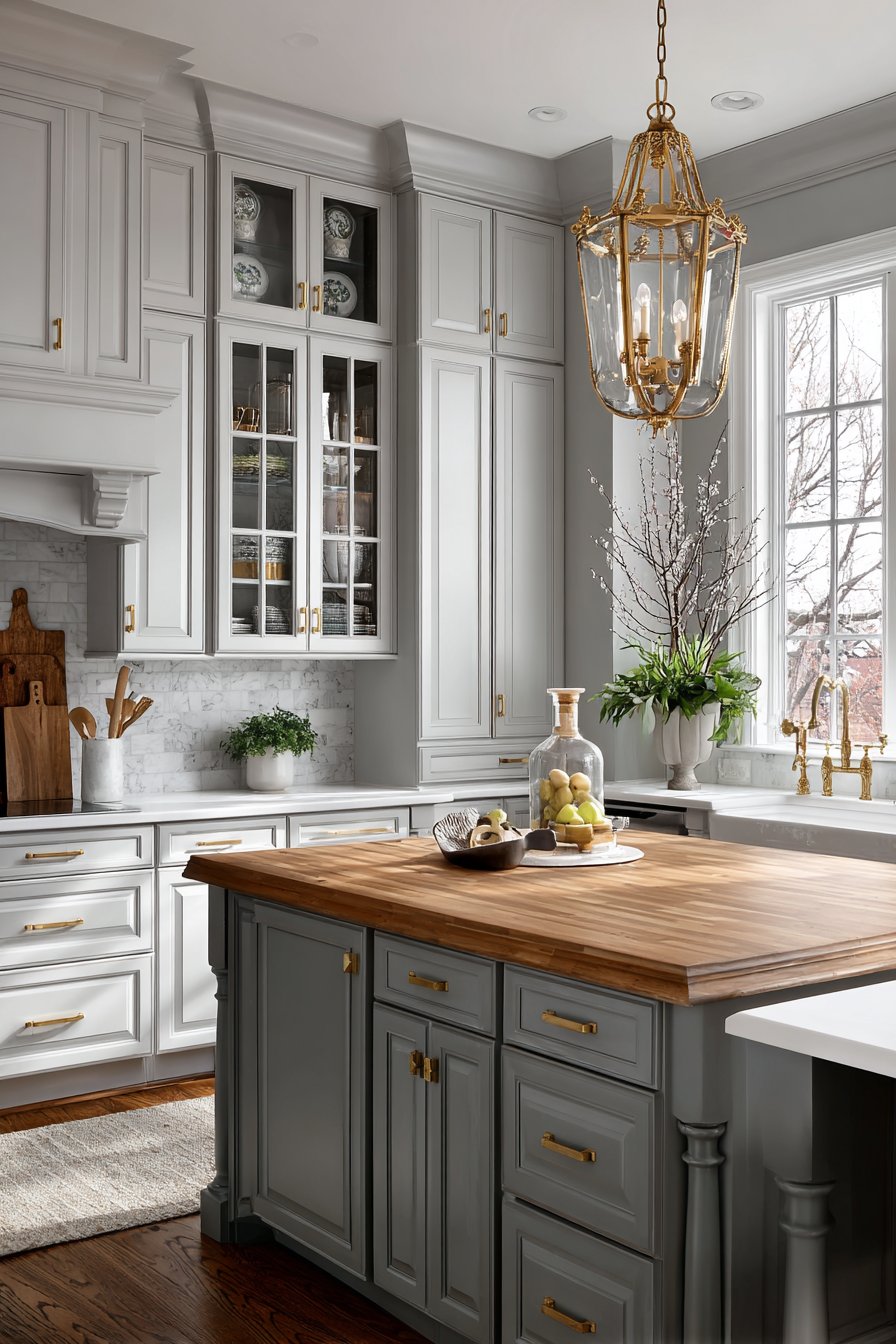
Glass-front upper cabinets display curated collections of dishware, glassware, or decorative objects against the light grey cabinet interiors, adding personal touches that reveal the homeowner’s taste and personality. The glass fronts break up solid cabinetry while maintaining a sense of enclosure and protection for displayed items. Brushed gold hardware provides elegant contrast throughout the space, introducing a warm metallic accent that feels luxurious without appearing ostentatious. The gold tone harmonizes beautifully with the wood countertop while creating visual connection points across the kitchen. Golden hour sunlight streaming through windows bathes the space in warm highlights that bring out the complexity of the layered grey tones, demonstrating how natural light interacts differently with each shade of grey. This thoughtfully layered approach to color and material creates a kitchen that feels rich, sophisticated, and full of visual interest while maintaining overall harmony and balance.
Key Design Tips:
- Use two different shades of grey for upper and lower cabinets to create subtle definition and visual interest
- Incorporate butcher block wood countertops on the island to introduce natural warmth and tactile appeal
- Choose white quartz for perimeter counters to maintain brightness and durability where it matters most
- Install glass-front cabinets strategically to display curated collections and add personality to the design
- Select brushed gold hardware as a warm metallic accent that elevates the overall sophistication
- Position the kitchen to capture golden hour sunlight that reveals the complexity of layered grey tones
7. Transitional Kitchen with Professional-Grade Focal Point

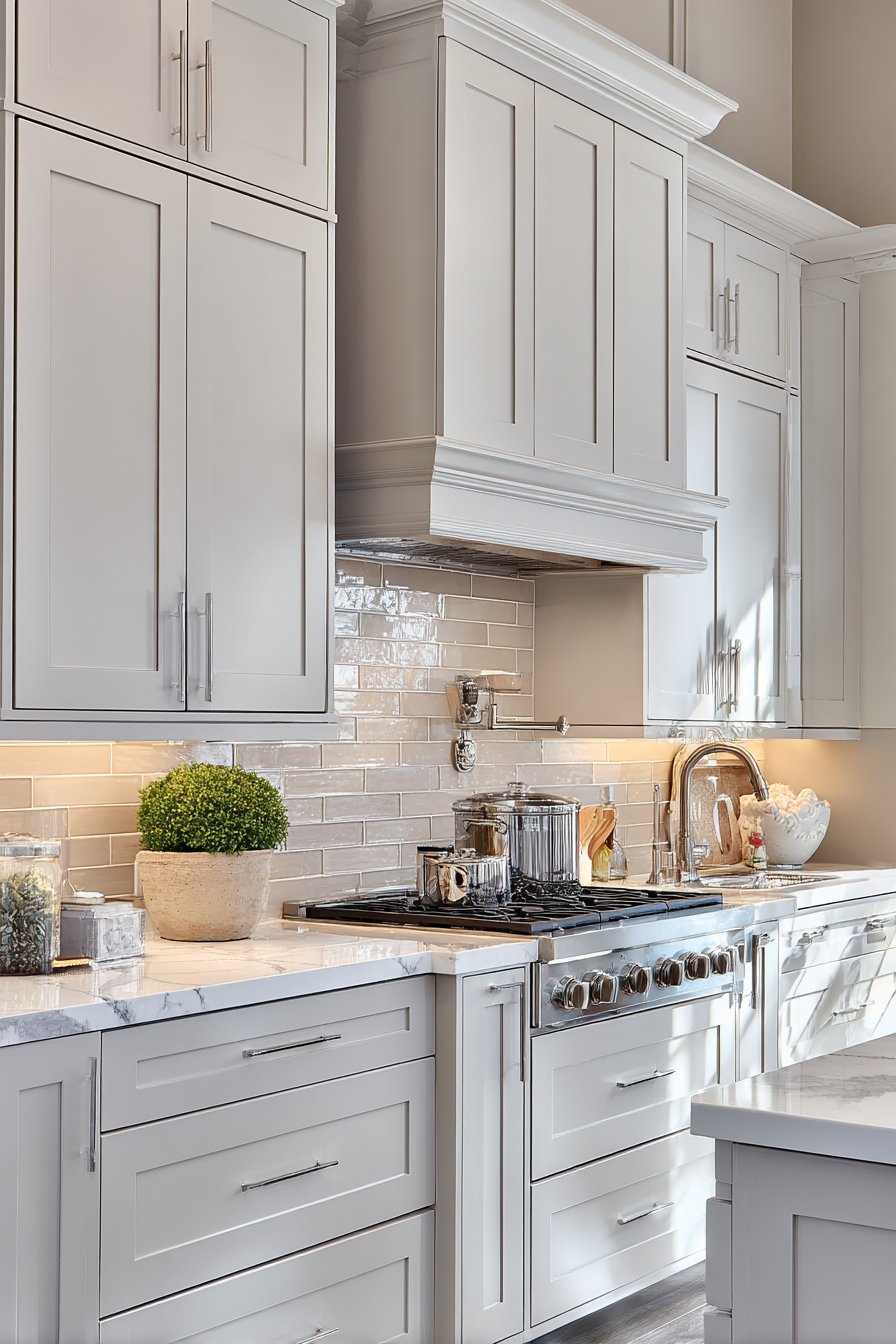
Transitional design successfully marries traditional and contemporary elements, creating spaces that feel both timeless and current. This light grey kitchen achieves transitional sophistication by featuring a professional-grade gas range as the commanding focal point, flanked by light grey shaker cabinets with decorative crown molding. The substantial range represents serious cooking capability while its professional presence elevates the entire kitchen’s design impact. The shaker cabinet style with crown molding detail references traditional design while the light grey finish keeps the look fresh and contemporary.
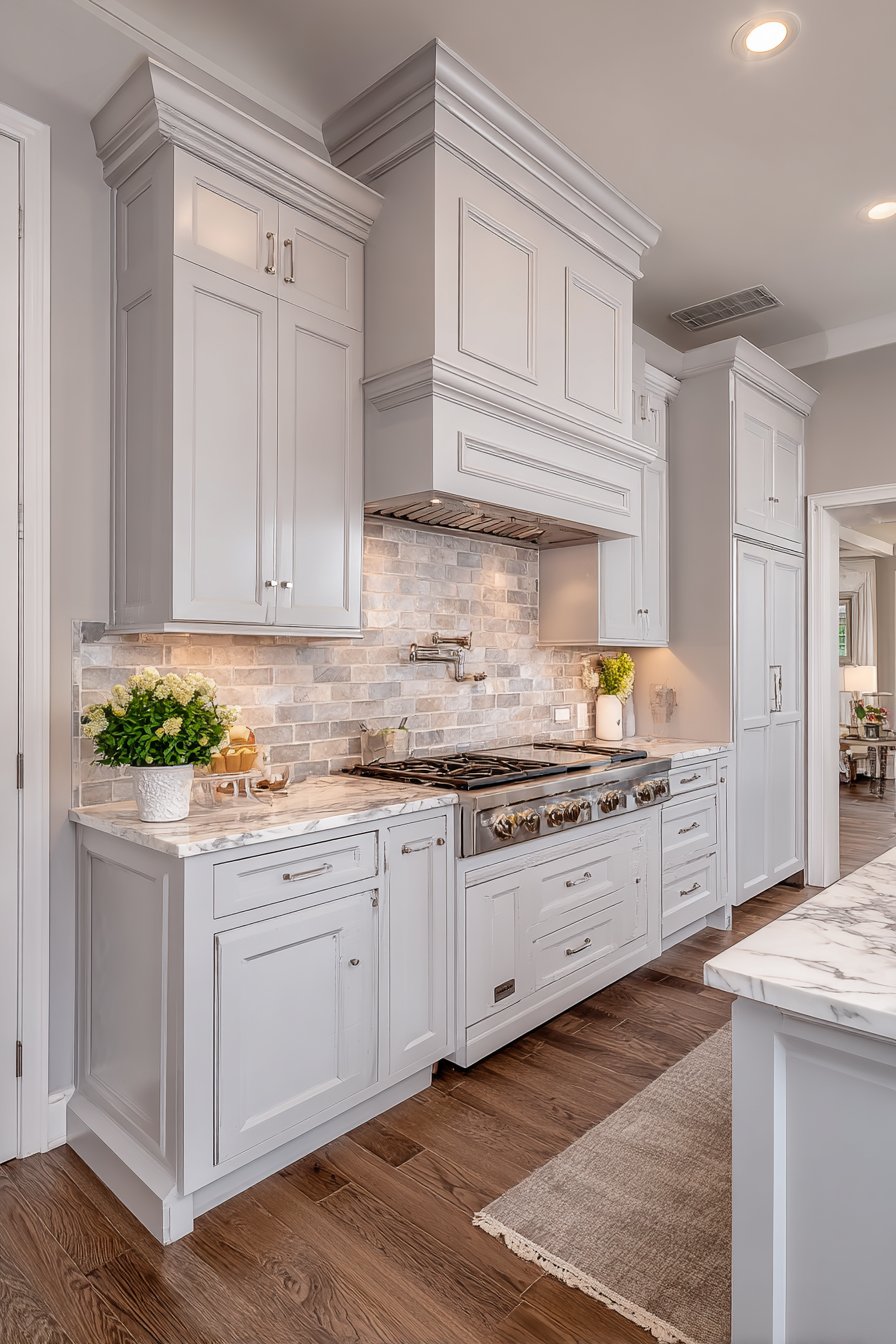
The range backsplash showcases handmade ceramic tiles in varying shades of light grey arranged in a classic subway pattern. These artisan tiles introduce subtle color variation and textural imperfections that add authenticity and character impossible to achieve with machine-made materials. The slightly irregular edges and tonal variations celebrate the handmade quality, creating a focal point that rewards close inspection. Grey-veined white marble countertops extend throughout the kitchen, providing a luxurious surface that combines practical durability with natural beauty. The marble veining introduces organic patterns that add visual movement and interest to the predominantly grey palette.
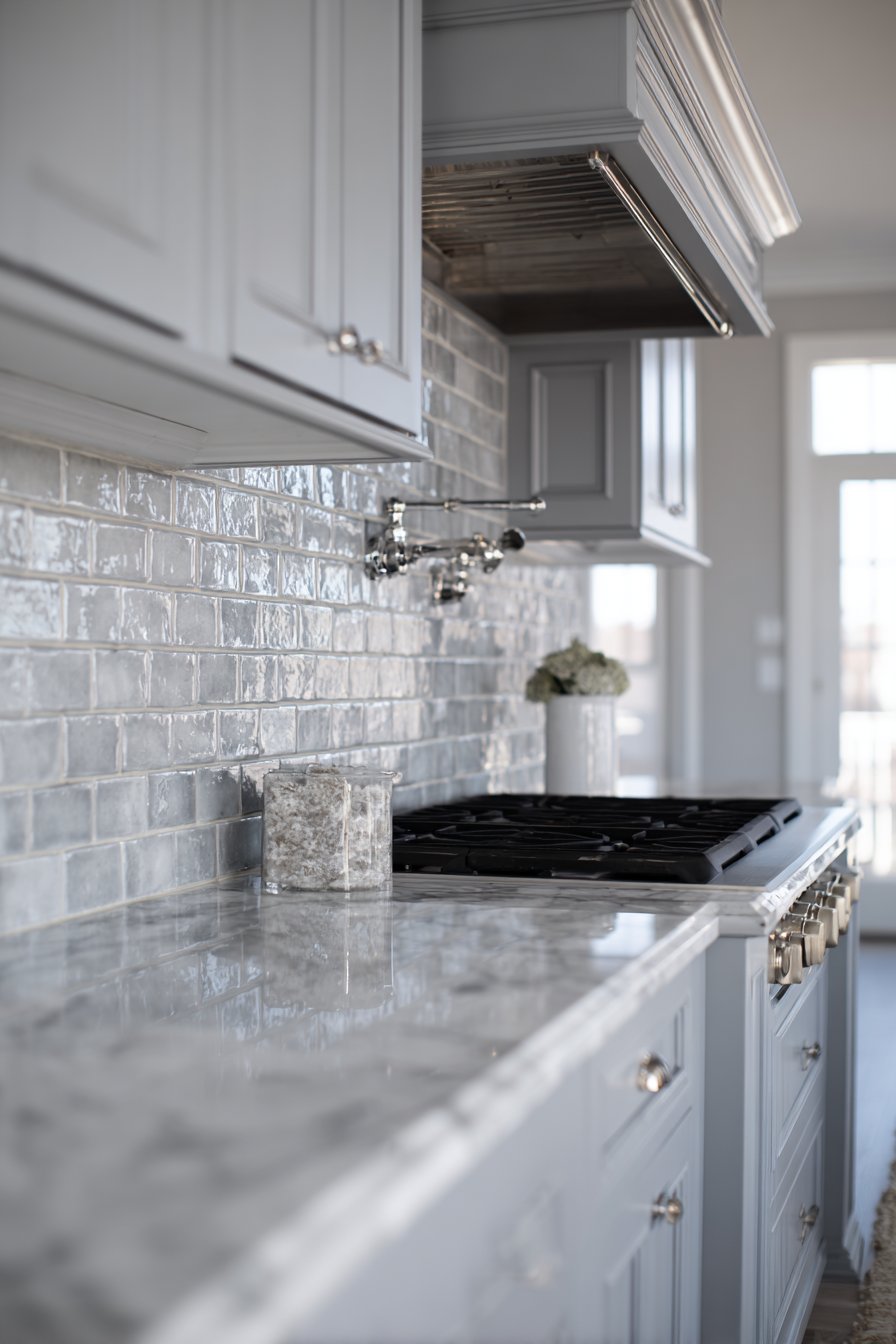
A pot filler faucet in polished chrome extends from the wall above the range, adding functional elegance that speaks to serious cooking while the chrome finish coordinates with other kitchen hardware. This professional detail eliminates the need to carry heavy pots of water from the sink to the stove, demonstrating how thoughtful amenities can improve daily kitchen function. Natural light mixed with warm under-cabinet lighting creates dimensional illumination that highlights quality materials and reveals the craftsmanship invested in every detail. The layered lighting approach ensures the kitchen functions beautifully at any time of day while the under-cabinet lights specifically illuminate work surfaces and showcase the beautiful handmade tile backsplash. This transitional kitchen proves that combining traditional architectural details with professional-grade appliances and contemporary colors creates spaces of exceptional sophistication and enduring appeal.
Key Design Tips:
- Feature a professional-grade range as the kitchen’s focal point to signal serious cooking capability and design impact
- Choose handmade ceramic tiles for backsplash areas to introduce authentic character and subtle color variation
- Install crown molding on cabinets to add traditional architectural detail that elevates the overall design
- Incorporate a pot filler faucet above the range for professional functionality and elegant practicality
- Select grey-veined white marble for countertops to combine luxury, durability, and natural beauty
- Layer natural light with warm under-cabinet lighting to create dimensional illumination that highlights quality materials
8. Scandinavian Simplicity in Pale Grey and Natural Wood
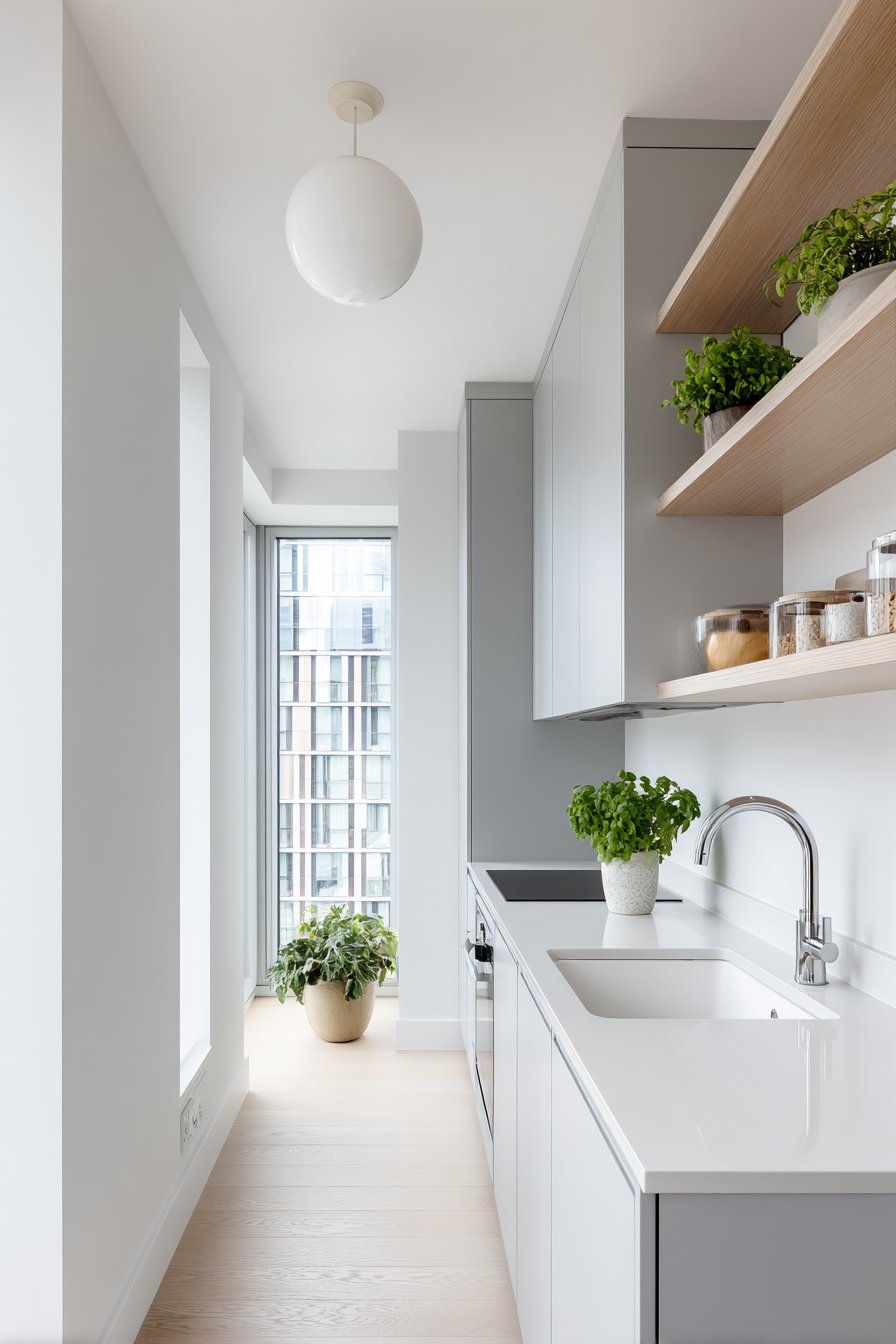
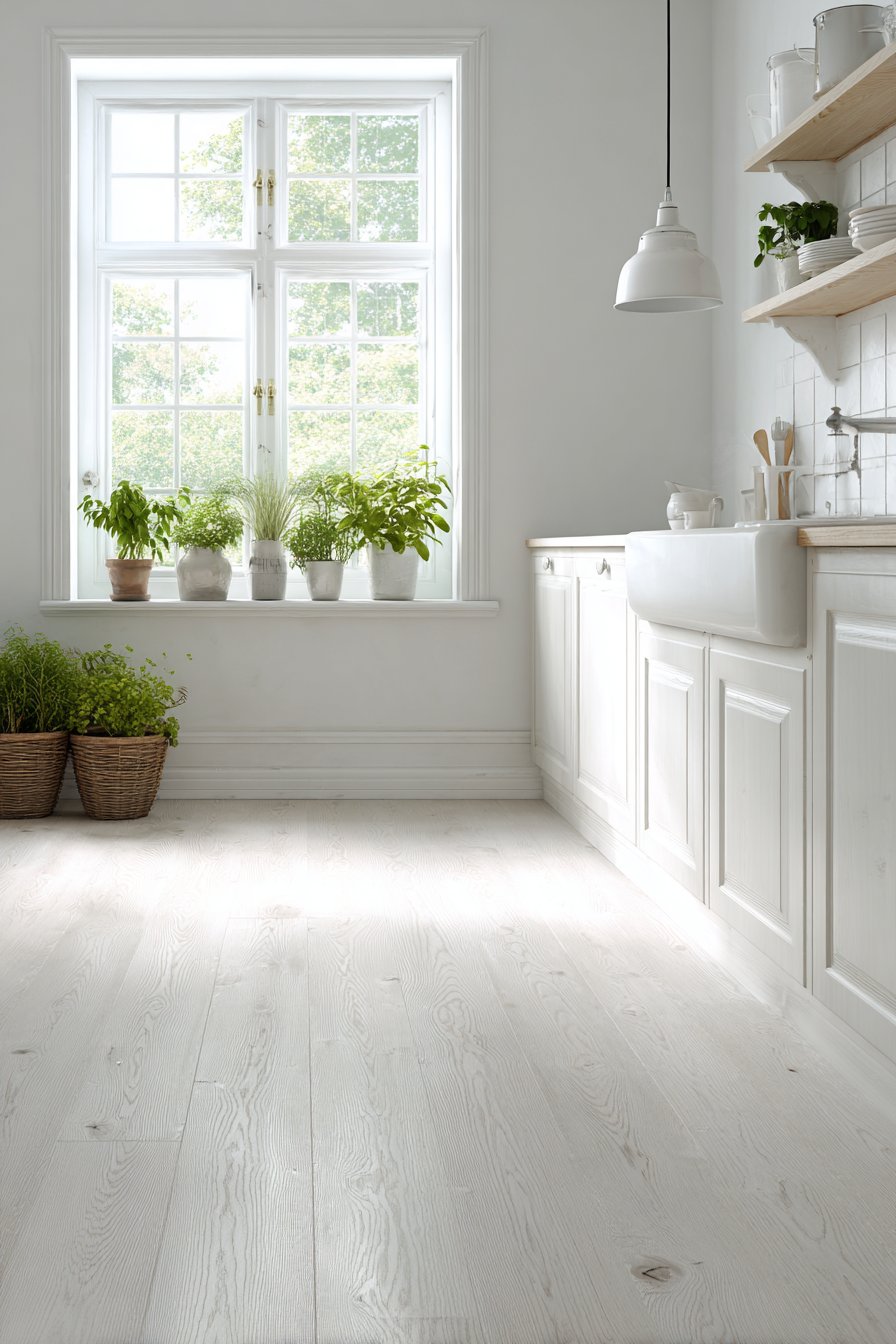
Scandinavian design principles emphasize simplicity, functionality, and connection to natural materials—creating spaces that feel calm, uncluttered, and genuinely livable. This light grey kitchen embodies these principles through minimalist flat-front cabinets in a pale grey matte finish that creates serene, uninterrupted surfaces. The matte finish eliminates reflective glare while the pale grey tone maintains brightness without the starkness of pure white. The flat-front cabinet style, with its absence of raised panels or decorative details, epitomizes Scandinavian restraint and focus on essential form.
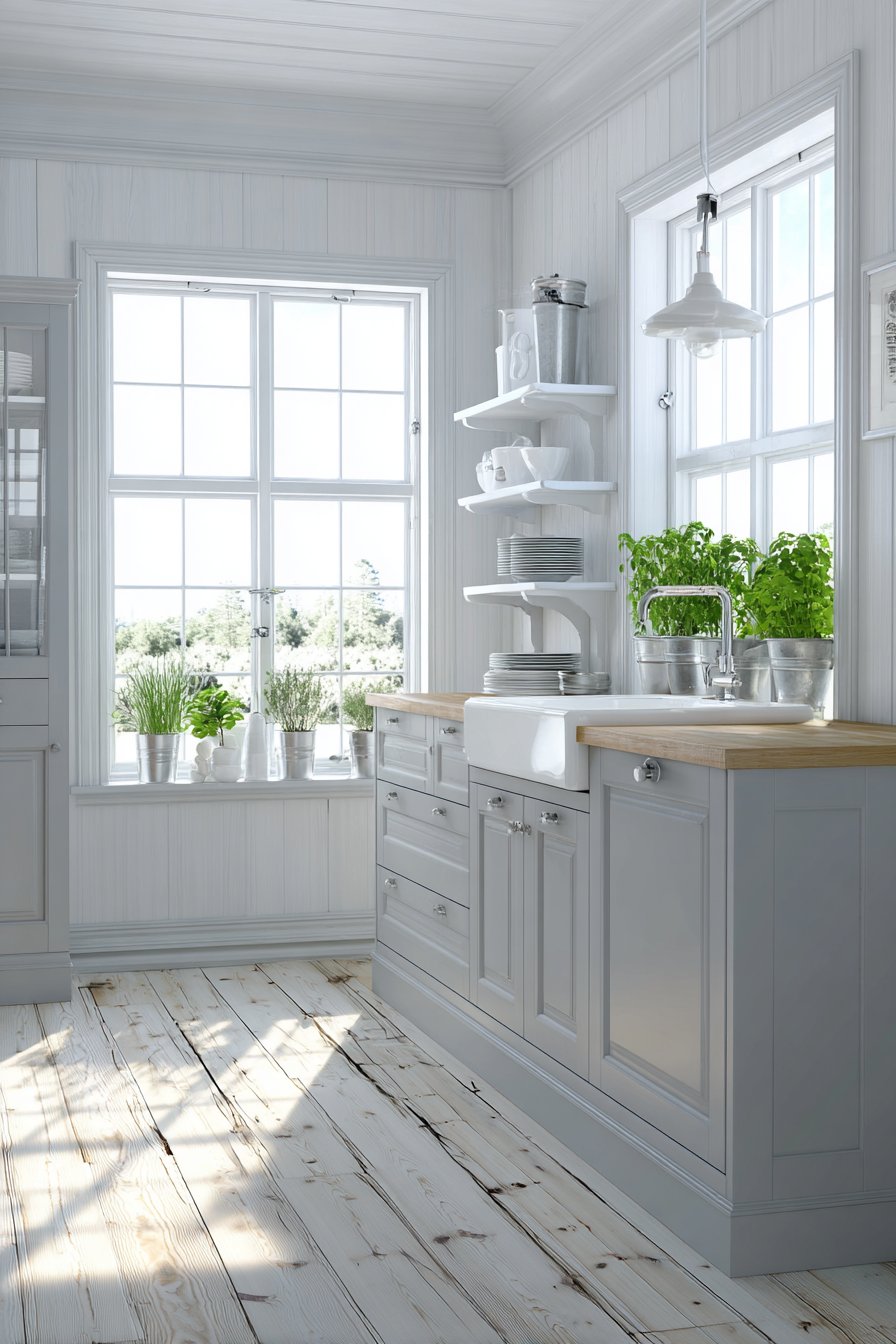
Light oak flooring brings warmth and natural beauty underfoot, creating a welcoming foundation that balances the cool grey cabinetry. The wood grain patterns introduce organic variation and visual interest without competing for attention. Matching oak open shelving continues the natural wood presence at eye level, providing functional storage and display opportunities that keep everyday items accessible while contributing to the overall aesthetic. The combination of pale grey and light oak represents the quintessential Scandinavian palette—cool neutrals warmed by natural wood tones.
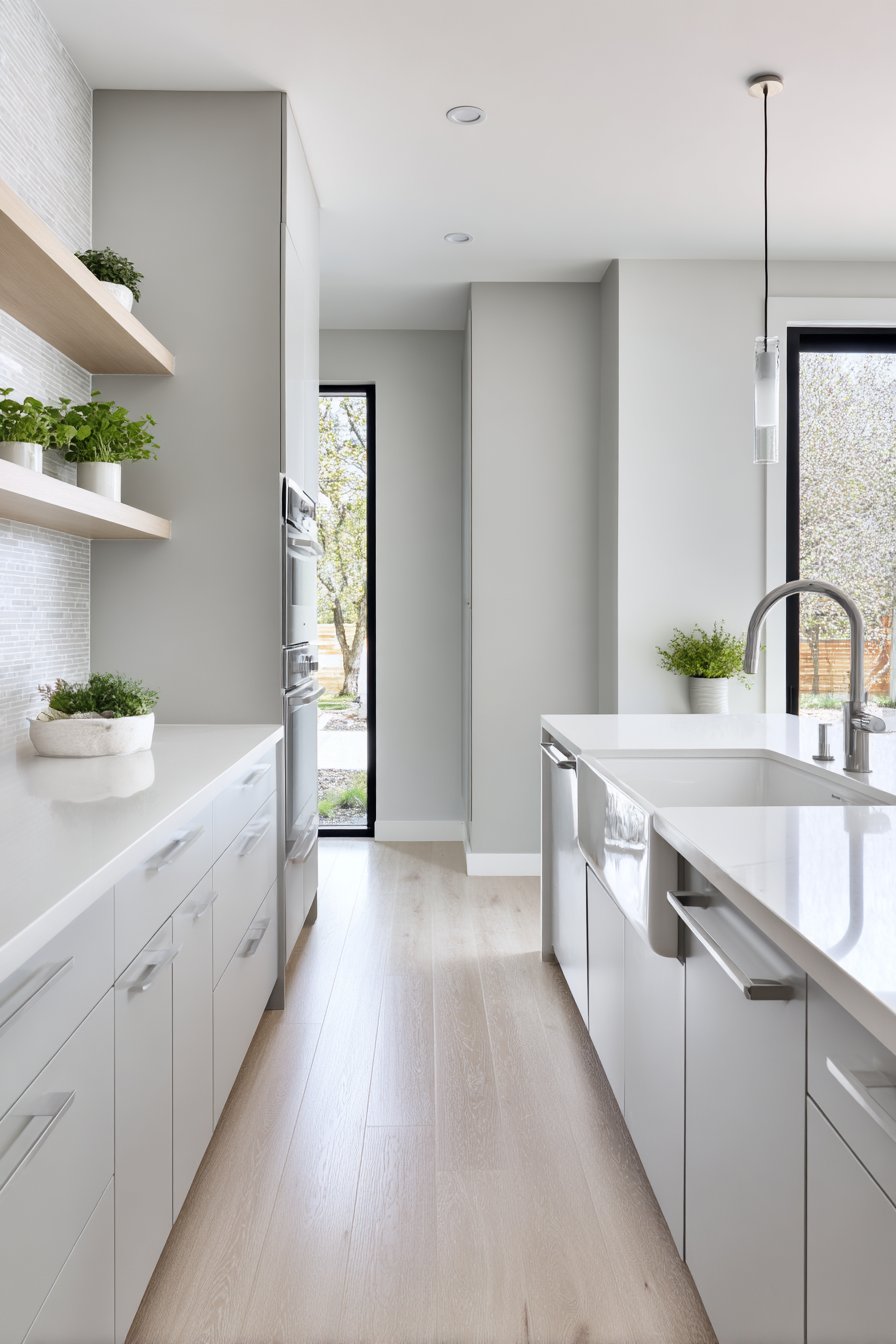
A simple white ceramic apron sink pairs with a modern chrome faucet, demonstrating how functional elements can be beautiful in their straightforward simplicity. The sink’s clean lines and generous basin provide practical workspace without unnecessary ornamentation. Walls painted in soft white reflect natural light throughout the space, maximizing brightness and creating the airy atmosphere essential to Scandinavian design. The white walls also serve as a bright backdrop that allows the grey cabinetry and wood elements to stand out with clarity. Potted herbs on the windowsill bring life and greenery into the space while providing fresh ingredients for cooking, connecting the kitchen to natural growing cycles. A single pendant light with simple lines illuminates the space without dominating it visually, demonstrating the Scandinavian principle that lighting fixtures should provide illumination first and decoration second. This kitchen proves that beauty emerges naturally from simplicity, quality materials, and thoughtful attention to light and space.
Key Design Tips:
- Choose flat-front cabinets in pale grey matte finish to create serene surfaces that embody Scandinavian simplicity
- Incorporate light oak flooring and shelving to introduce natural warmth and organic texture
- Select a white ceramic apron sink for its clean lines and straightforward functionality
- Paint walls in soft white to maximize natural light reflection and create an airy atmosphere
- Add potted herbs on windowsills to bring life, greenery, and fresh cooking ingredients into the space
- Install simple pendant lights that prioritize illumination over decorative impact
9. Organized Perfection: Light Grey Pantry and Planning Station
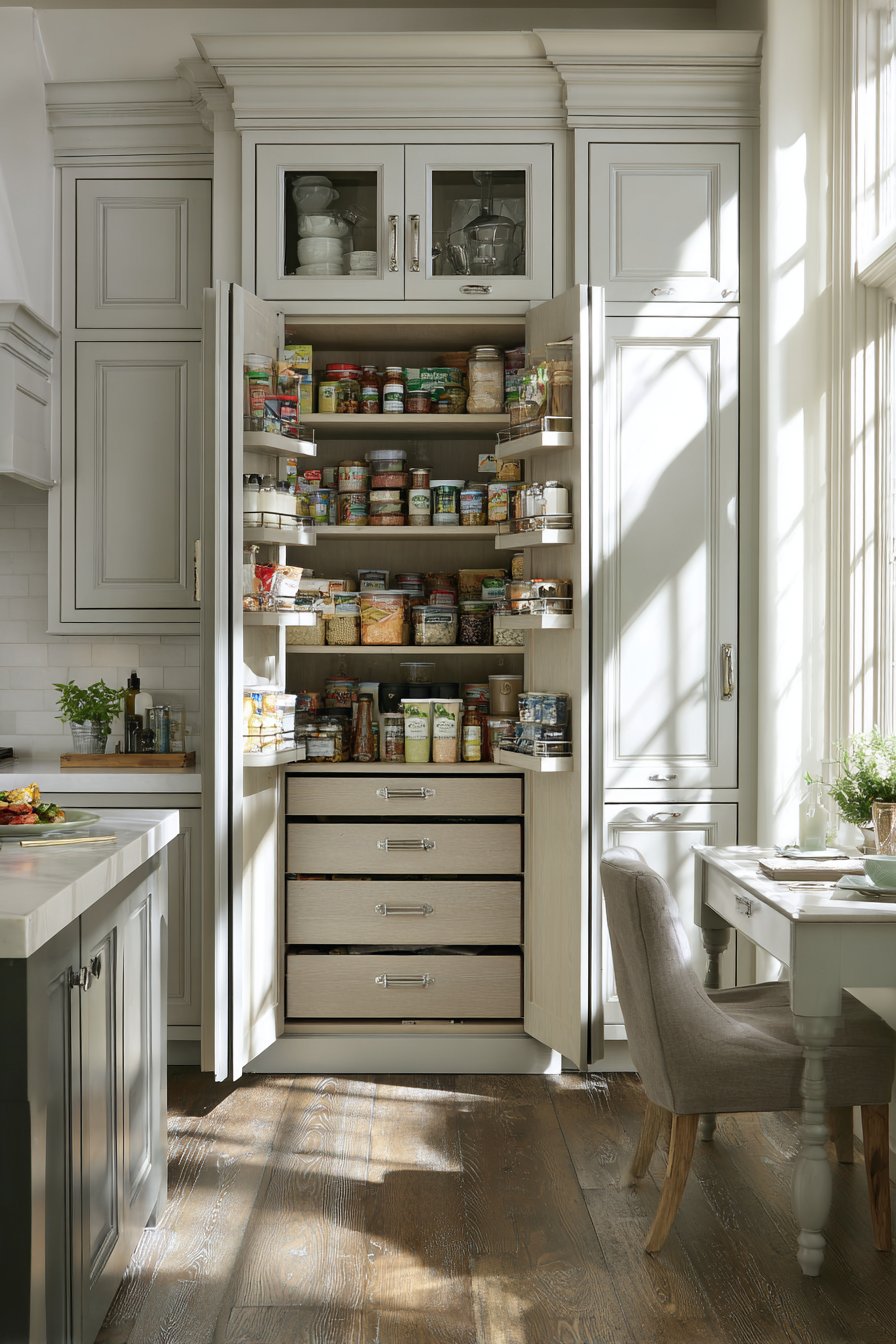
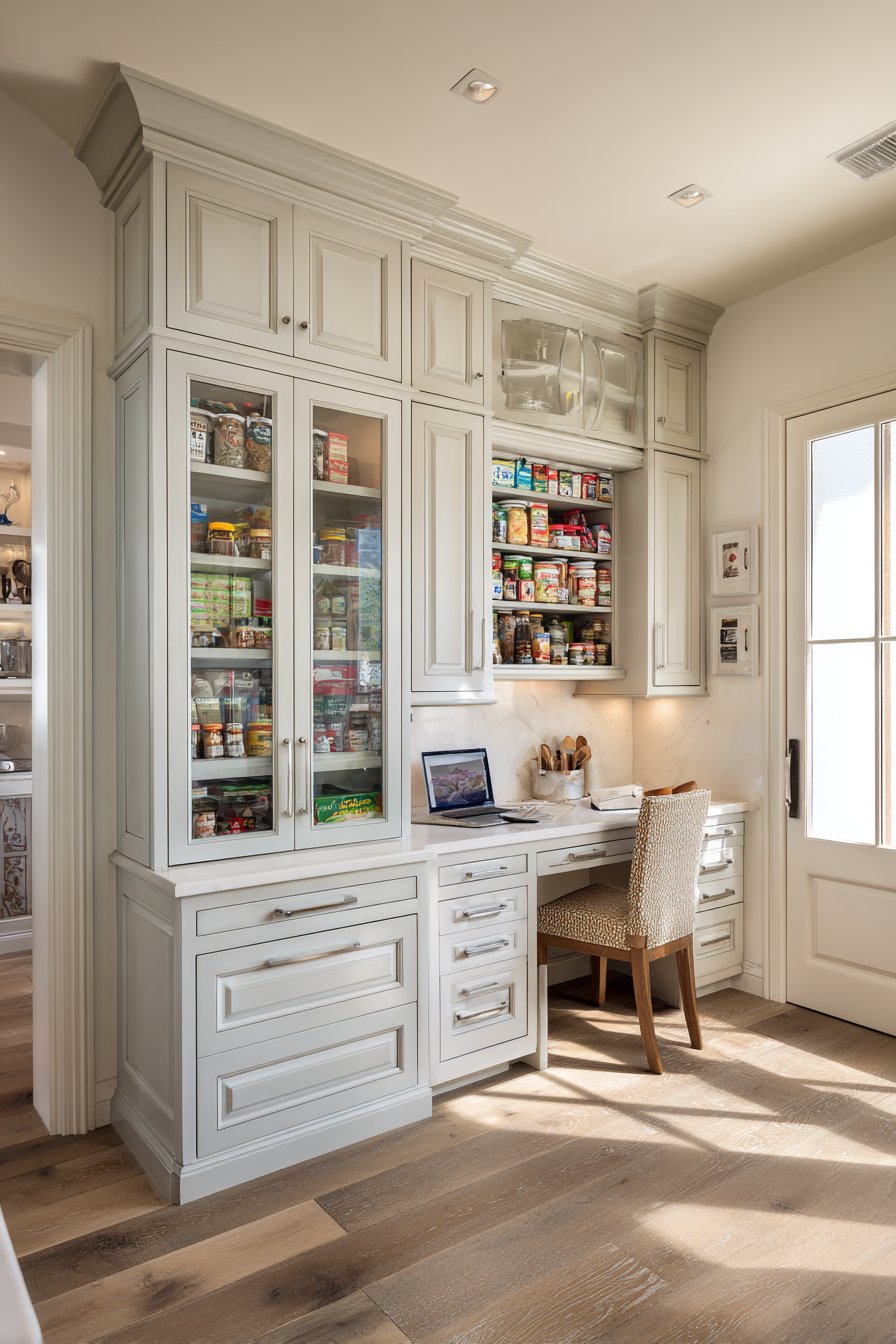
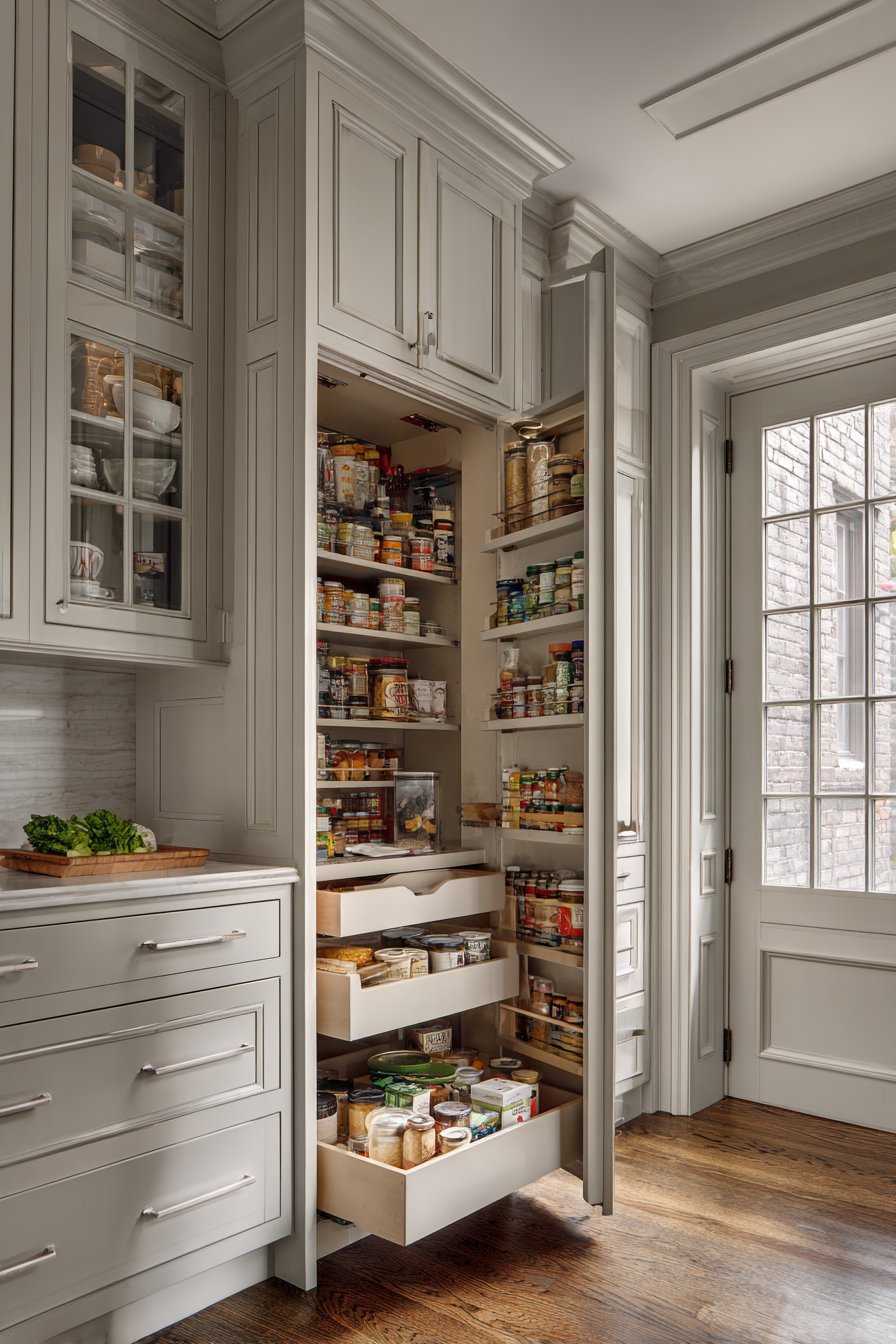
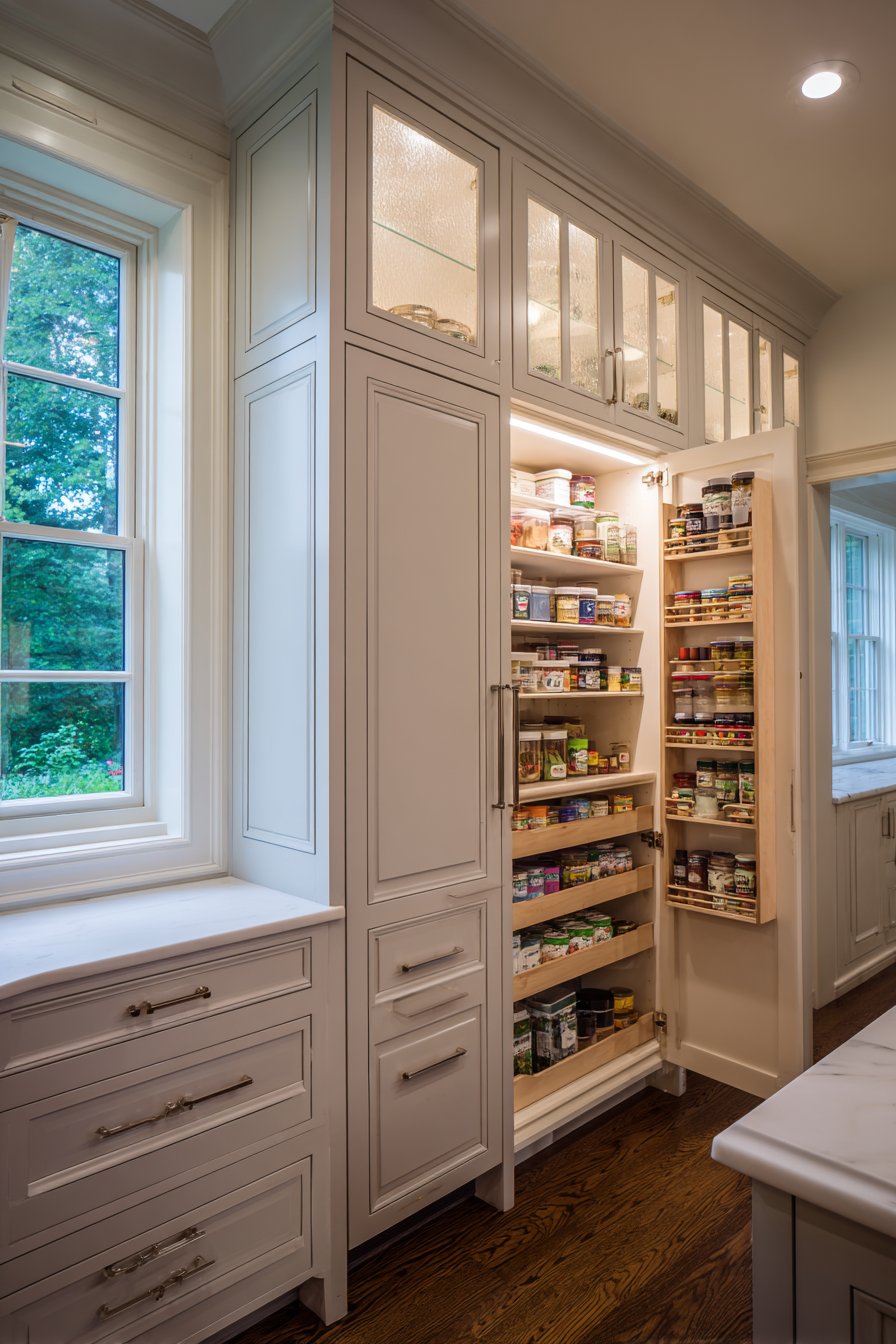
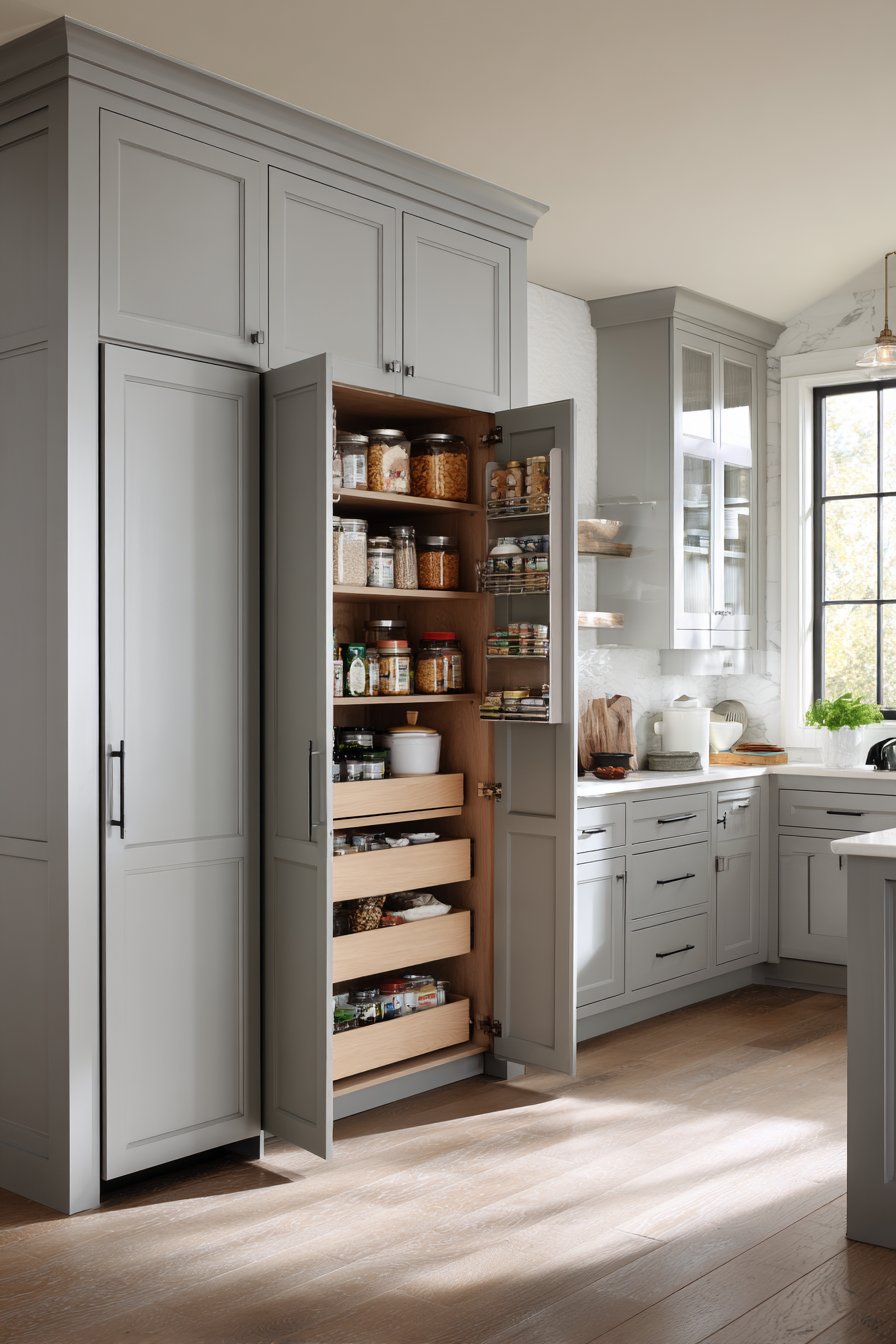
Behind every beautifully functioning kitchen lies thoughtful storage and organization, and this light grey pantry area demonstrates how custom cabinetry can transform storage from purely functional necessity into an attractive design feature. Floor-to-ceiling custom cabinetry maximizes vertical storage capacity while the light grey finish maintains visual consistency with the main kitchen cabinetry. Glass-panel upper doors reveal organized storage within, creating a sense of transparency and order while protecting contents from dust. The glass panels also reflect light, preventing the tall cabinetry from feeling heavy or imposing.
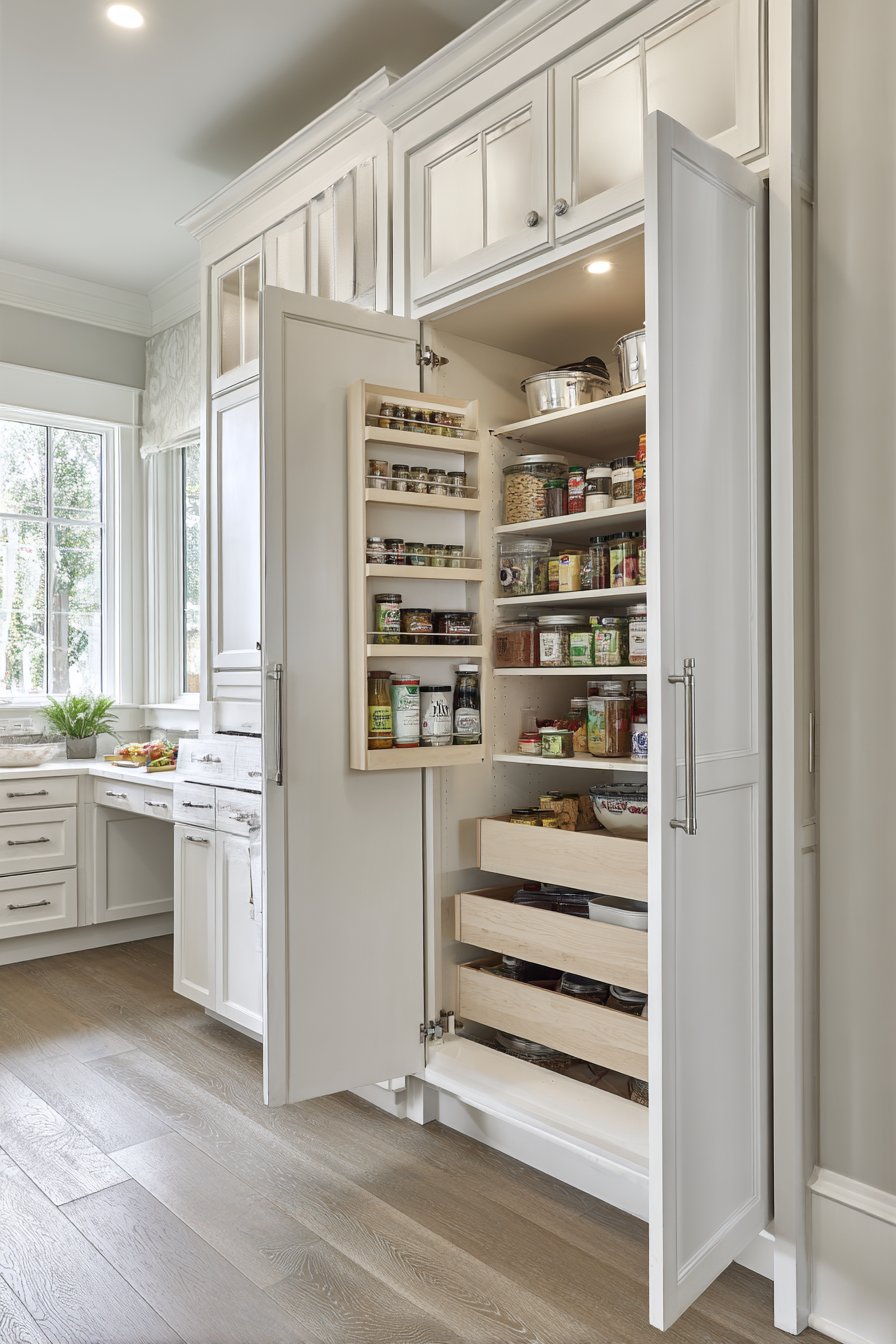
The pantry cabinets incorporate multiple specialized storage features including pull-out drawers that provide easy access to items at the back, adjustable shelving that accommodates various item sizes, and integrated spice racks that keep frequently used seasonings organized and accessible. These thoughtful details demonstrate how custom cabinetry can be designed to specifically support individual cooking and storage needs. Brushed nickel hardware maintains consistency throughout, creating visual coherence between the pantry area and the main kitchen. Interior cabinet lighting illuminates the organized contents, making it easy to find items while adding a touch of luxury to what is typically a purely functional space.
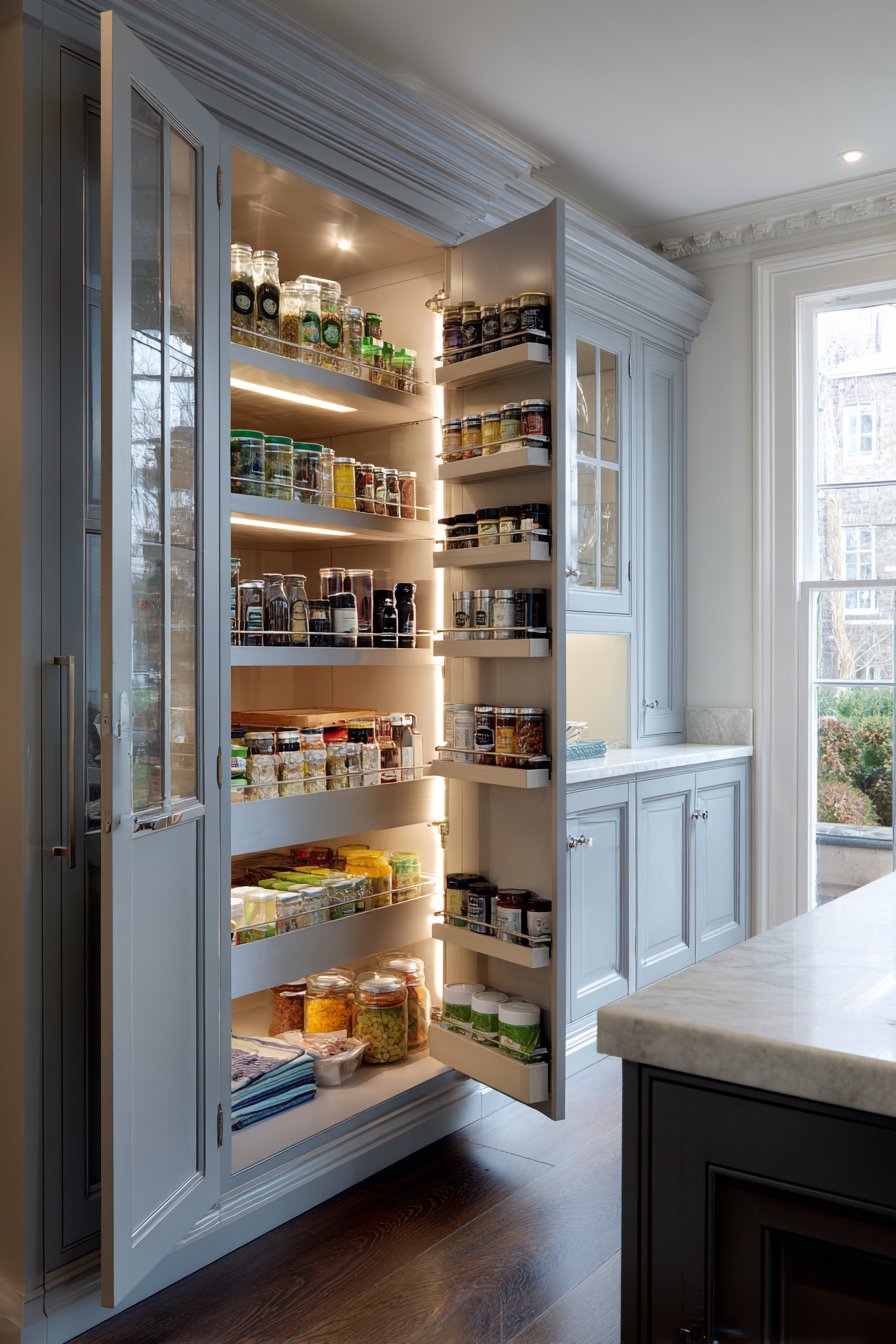
Adjacent to the pantry, a small built-in desk area in matching light grey provides a dedicated space for meal planning, recipe storage, and household management. This planning station represents the evolution of the kitchen as a multi-functional space that accommodates not just cooking but also the planning and organization that supports family life. The desk might include file drawers for recipes and household documents, a bulletin board for calendars and reminders, and outlets for charging devices. Natural light from an adjacent window illuminates both the pantry and planning station, preventing these support areas from feeling dark or secondary. This comprehensive approach to kitchen storage and planning demonstrates that true kitchen design excellence extends beyond the visible cooking areas to encompass all the systems that support efficient, enjoyable home life.
Key Design Tips:
- Incorporate floor-to-ceiling custom cabinetry to maximize vertical storage capacity in pantry areas
- Choose glass-panel upper doors to create visual transparency and allow light to penetrate deep storage areas
- Include specialized storage features like pull-out drawers, adjustable shelving, and integrated spice racks
- Add interior cabinet lighting to improve visibility and elevate the everyday experience of accessing storage
- Create a built-in desk area in matching cabinetry for meal planning and household management
- Position storage areas near windows to provide natural light that prevents them from feeling dark or secondary
10. Cohesive Flow: Kitchen to Breakfast Nook in Harmonious Grey

The most successful kitchen designs extend beyond the cooking area to create seamless transitions into adjacent spaces, and this light grey kitchen with integrated breakfast nook exemplifies this holistic approach. A built-in banquette with light grey upholstered cushions creates comfortable seating that maximizes space efficiency while the upholstery color maintains the grey theme established in the kitchen. Throw pillows in complementary neutral patterns add comfort and visual interest, introducing subtle pattern and texture that makes the eating area feel intentionally styled and welcoming.
The dining table in light oak with simple modern lines provides a natural material complement to the predominantly grey palette, creating warmth and organic beauty in the eating area. The table’s clean-lined design bridges traditional and contemporary aesthetics, ensuring the breakfast nook feels cohesive with the kitchen’s overall transitional style. Two matching chairs complete the seating arrangement, providing flexibility for different dining configurations. Upper walls painted white create brightness and visual lift while light grey wainscoting below coordinates directly with the kitchen cabinetry visible in the background. This thoughtful color transition creates architectural interest while maintaining visual connection between the spaces.
A window with simple white roman shades allows abundant natural light to flood the eating area, making it an appealing spot for morning coffee or casual meals throughout the day. The roman shades provide light control and privacy when needed while their clean, tailored appearance aligns with the overall design aesthetic. The cohesive flow between the light grey kitchen and dining area creates a unified environment where cooking, eating, and gathering feel naturally connected. The harmonious grey color scheme throughout both spaces ensures visual continuity while varied textures and materials prevent monotony. This integrated approach demonstrates that successful kitchen design considers not just the cooking area in isolation but the entire experience of how we live, gather, and connect in our homes around food and shared meals.
Key Design Tips:
- Build in a banquette with upholstered seating to maximize space efficiency and create comfortable dining
- Choose upholstery in grey tones that coordinate with kitchen cabinetry for visual cohesion
- Select a light wood dining table to introduce natural warmth and organic beauty to the eating area
- Use wainscoting in matching grey to create architectural interest and visual connection with the kitchen
- Install roman shades in white or neutral tones for clean, tailored window treatments that control light
- Ensure abundant natural light in eating areas to make them appealing destinations throughout the day
Why These Light Grey Kitchen Designs Represent the Best in Contemporary Home Design
Light grey kitchens have emerged as the preferred choice for discerning homeowners and professional designers because they successfully balance numerous competing demands of modern kitchen design. The neutral grey palette provides versatility that accommodates changing styles, accessories, and personal preferences over time, making it an intelligent long-term investment. Unlike trend-driven colors that may feel dated within a few years, light grey maintains its relevance and sophistication across design eras and style preferences. This enduring quality means homeowners can confidently invest in quality grey cabinetry knowing it will remain beautiful and relevant for decades.
The psychological impact of grey in kitchen spaces cannot be overstated—it creates calm, focused environments that support both efficient cooking and relaxed gathering. Grey lacks the clinical coldness that pure white can sometimes convey while avoiding the heaviness of darker colors, striking an ideal balance that most people find innately appealing. Kitchen designers appreciate how light grey serves as a perfect backdrop for other design elements, allowing beautiful countertop materials, statement lighting fixtures, and architectural details to take center stage without color competition. The grey palette also photographs beautifully, which matters in our contemporary world where homeowners often share their spaces on social media and buyers evaluate homes through online listings before ever visiting in person.
From a practical standpoint, light grey cabinetry shows less wear, dust, and fingerprints than either white or dark cabinets, maintaining its fresh appearance with minimal maintenance. The color has enough depth to hide minor imperfections while remaining light enough to keep spaces feeling open and bright. Light grey also coordinates effortlessly with virtually any appliance finish—from classic stainless steel to trendy matte black to warm brass and copper—giving homeowners flexibility in appliance selection without being constrained by cabinet color. The designs presented in this article demonstrate the remarkable range possible within the light grey kitchen category, from farmhouse charm to minimalist modernity, from compact efficiency to expansive luxury. This versatility confirms that light grey represents not a single aesthetic but rather a sophisticated foundation upon which countless beautiful kitchen designs can be built.
The material combinations showcased across these ten designs—grey cabinetry with white quartz, with butcher block wood, with marble, with concrete-look tiles—demonstrate how grey serves as an ideal neutral that harmonizes with virtually any material palette. This compatibility with diverse materials means homeowners can create truly personalized spaces that reflect their individual preferences while maintaining overall design cohesion. The integration of natural materials with grey cabinetry, particularly warm woods like oak and walnut, creates balance between cool and warm tones that makes spaces feel genuinely welcoming rather than sterile or cold. This temperature balance represents one of the key reasons why light grey kitchens consistently satisfy homeowners more than single-temperature palettes that lean too warm or too cool.
Contemporary kitchen design emphasizes the importance of lighting—both natural and artificial—and light grey cabinetry responds beautifully to varied lighting conditions. The designs explored here demonstrate how grey reveals its complexity and depth under different lighting scenarios, from morning sunlight to golden hour glow to evening ambient lighting. This light-responsive quality means grey kitchens never appear flat or monotonous but instead display subtle variations and dimensional beauty that changes throughout the day. The incorporation of under-cabinet lighting, pendant fixtures, recessed lighting, and skylights across these designs shows how layered illumination strategies enhance grey’s natural beauty while providing the task and ambient lighting essential for kitchen functionality.
Storage and organization represent critical concerns in any kitchen design, and the light grey pantry and planning station example demonstrates how grey cabinetry can extend seamlessly into support spaces, creating visual continuity throughout the entire kitchen zone. The psychological benefit of this visual consistency cannot be overstated—when storage areas match primary kitchen cabinetry, the entire space feels intentionally designed and cohesive rather than appearing as a collection of separate zones. This holistic design approach, where every cabinet, drawer, and storage element contributes to a unified aesthetic, represents the hallmark of truly excellent kitchen design.
The hardware selections across these designs—brushed nickel, brass, bronze, gold, and matte black—illustrate how light grey cabinetry provides a neutral canvas that allows hardware to make distinct style statements. This flexibility means homeowners can update the kitchen’s aesthetic significantly by simply changing hardware, a relatively inexpensive update that can transform the space’s personality without requiring major renovation. The ability to refresh and update represents another key advantage of choosing light grey cabinetry—it provides longevity while remaining adaptable to evolving preferences and design trends.
The integration of technology and professional-grade appliances into these light grey kitchen designs demonstrates how contemporary functionality can coexist beautifully with sophisticated aesthetics. The grey cabinetry provides a refined backdrop that allows high-performance cooking equipment to integrate visually without overwhelming the design. For serious home cooks who demand restaurant-quality appliances, light grey cabinetry offers a way to showcase these functional investments while maintaining residential warmth and approachability.
Finally, the breakfast nook integration demonstrates how light grey can successfully extend beyond the cooking zone to create cohesive, flowing spaces where cooking, dining, and gathering feel naturally connected. This holistic approach to kitchen design—considering not just the cooking area but also how it connects to dining and living spaces—represents contemporary understanding that kitchens function as the true heart of the home. The visual continuity provided by consistent grey tones throughout these connected spaces creates environments that feel spacious, intentional, and beautifully unified.
Conclusion:
The journey through these ten distinctive light grey kitchen designs reveals a fundamental truth about contemporary home design—the most successful spaces balance timeless elegance with personal expression, practical functionality with aesthetic beauty. Light grey emerges as the ideal color choice for homeowners seeking kitchens that will remain relevant and beautiful for decades while providing the flexibility to evolve with changing preferences and lifestyles. Whether your design sensibilities lean toward the clean lines of Scandinavian minimalism, the warmth of farmhouse charm, or the sophistication of modern transitional style, light grey cabinetry provides the perfect foundation.
The designs explored here demonstrate that choosing light grey represents not a limitation but rather an opportunity—a neutral canvas upon which to layer materials, textures, and personal touches that create truly unique spaces. The versatility of grey allows it to harmonize with virtually any secondary color, material palette, or design style, making it the ultimate team player in kitchen design. From the sleek integration of professional appliances to the warmth of natural wood countertops, from the sparkle of metallic hardware to the organic beauty of marble veining, grey accommodates and enhances every element it encounters.
As you consider your own kitchen design or renovation, take inspiration from these diverse approaches to light grey cabinetry. Think carefully about which materials, textures, and design details will make your kitchen feel uniquely yours while maintaining the timeless foundation that grey provides. Consider how natural light enters your space and how different shades of grey might respond to that light throughout the day. Evaluate your storage needs and explore how custom grey cabinetry can be designed to support your specific cooking style and organizational preferences. Most importantly, trust that choosing light grey represents a sophisticated, enduring decision that will serve you beautifully for years to come—a foundation for creating not just a beautiful kitchen, but a true heart of your home where memories are made, meals are shared, and life unfolds in all its everyday beauty.
