


The art of Korean interior design has captured the hearts of homeowners worldwide with its emphasis on simplicity, functionality, and natural harmony. Korean bedrooms embody a philosophy that goes beyond mere aesthetics—they represent a lifestyle centered on mindfulness, balance, and the careful curation of space. In a world often cluttered with excess, these serene sanctuaries offer a refreshing approach to bedroom design that prioritizes quality over quantity, natural materials over synthetic finishes, and peaceful minimalism over overwhelming ornamentation.
Korean bedroom design draws from centuries-old traditions while seamlessly incorporating modern sensibilities. The concept of “nunchi,” or the subtle art of gauging another’s mood and needs, extends to interior design through spaces that intuitively understand what occupants require for rest and rejuvenation. These bedrooms feature low-profile furniture that creates a sense of spaciousness, neutral color palettes that calm the mind, and an abundance of natural light that connects inhabitants with the rhythms of day and night. The integration of ondol heating systems, traditional hanji paper elements, and minimalist storage solutions demonstrates how Korean design solves practical problems with elegant simplicity.
In this comprehensive guide, we explore twenty distinct Korean bedroom concepts that showcase the versatility and timeless appeal of this design philosophy. From traditional ondol-style sleeping areas to modern studio apartment solutions, from nature-inspired retreats to efficient urban bedrooms, each design offers unique insights into creating a peaceful personal sanctuary. Whether you’re redesigning a master suite, furnishing a guest room, or optimizing a compact space, these Korean-inspired ideas provide actionable inspiration for transforming your bedroom into a haven of tranquility and style.
1. Natural Oak Platform Serenity
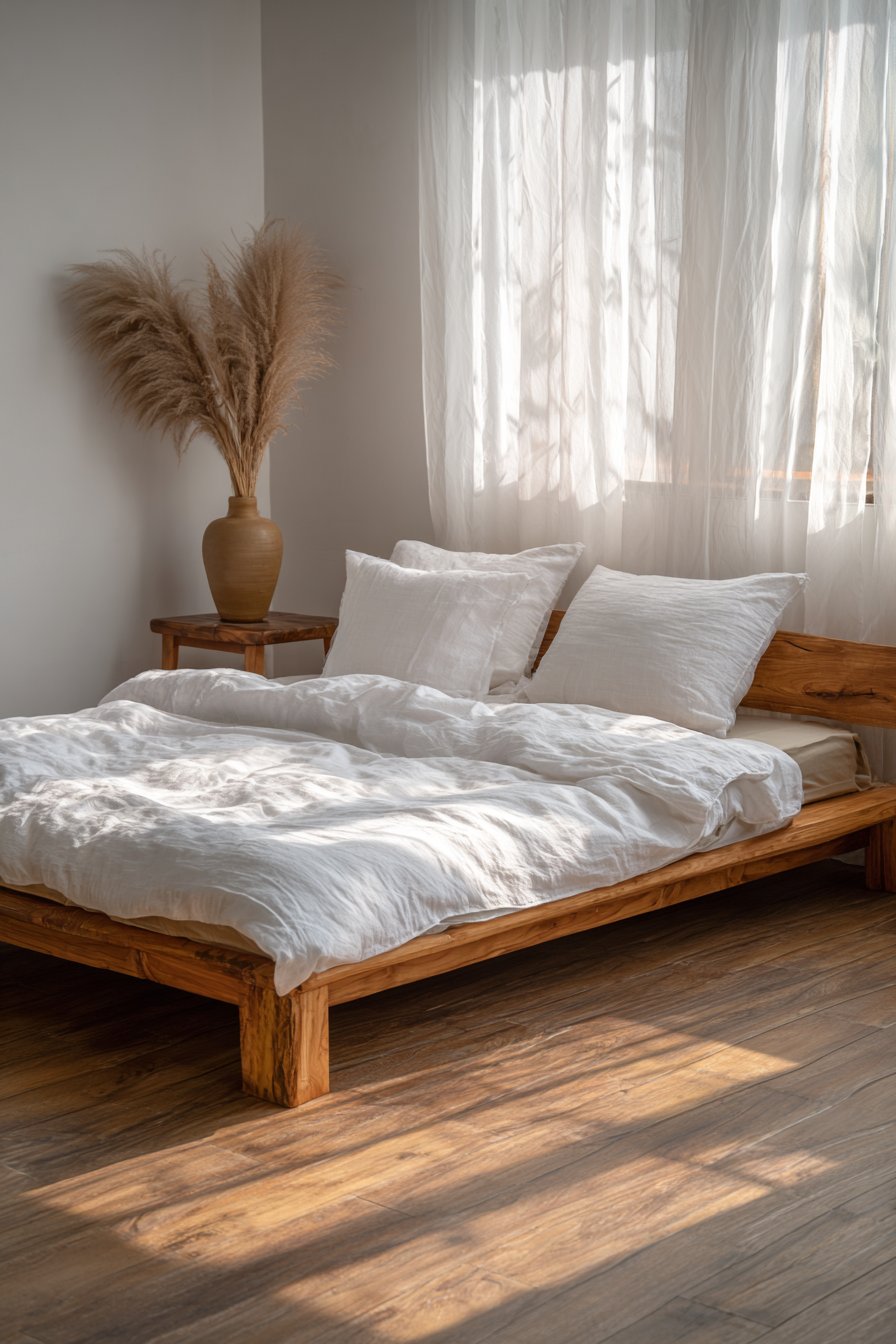
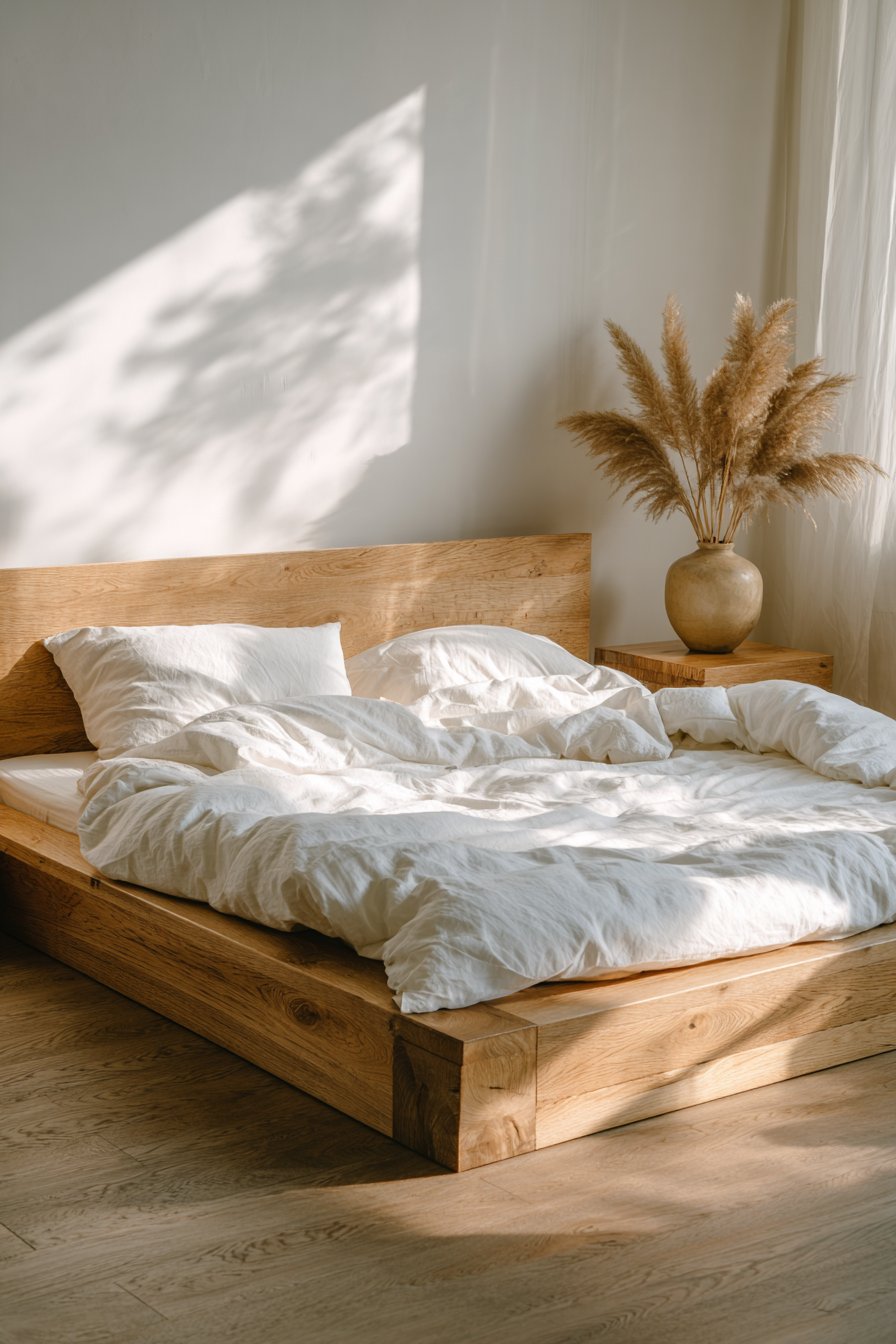
The foundation of this Korean bedroom lies in its masterful use of natural materials and clean architectural lines. A low-profile platform bed crafted from natural oak becomes the room’s centerpiece, its horizontal orientation creating an immediate sense of calm and grounding.
The bed frame’s honest wood grain patterns tell their own story, celebrating the organic beauty of the material rather than concealing it beneath heavy finishes. Dressed in crisp white linen bedding with its characteristic subtle texture and breathable quality, the sleeping area exemplifies the Korean principle of using natural fibers that improve with age and use.
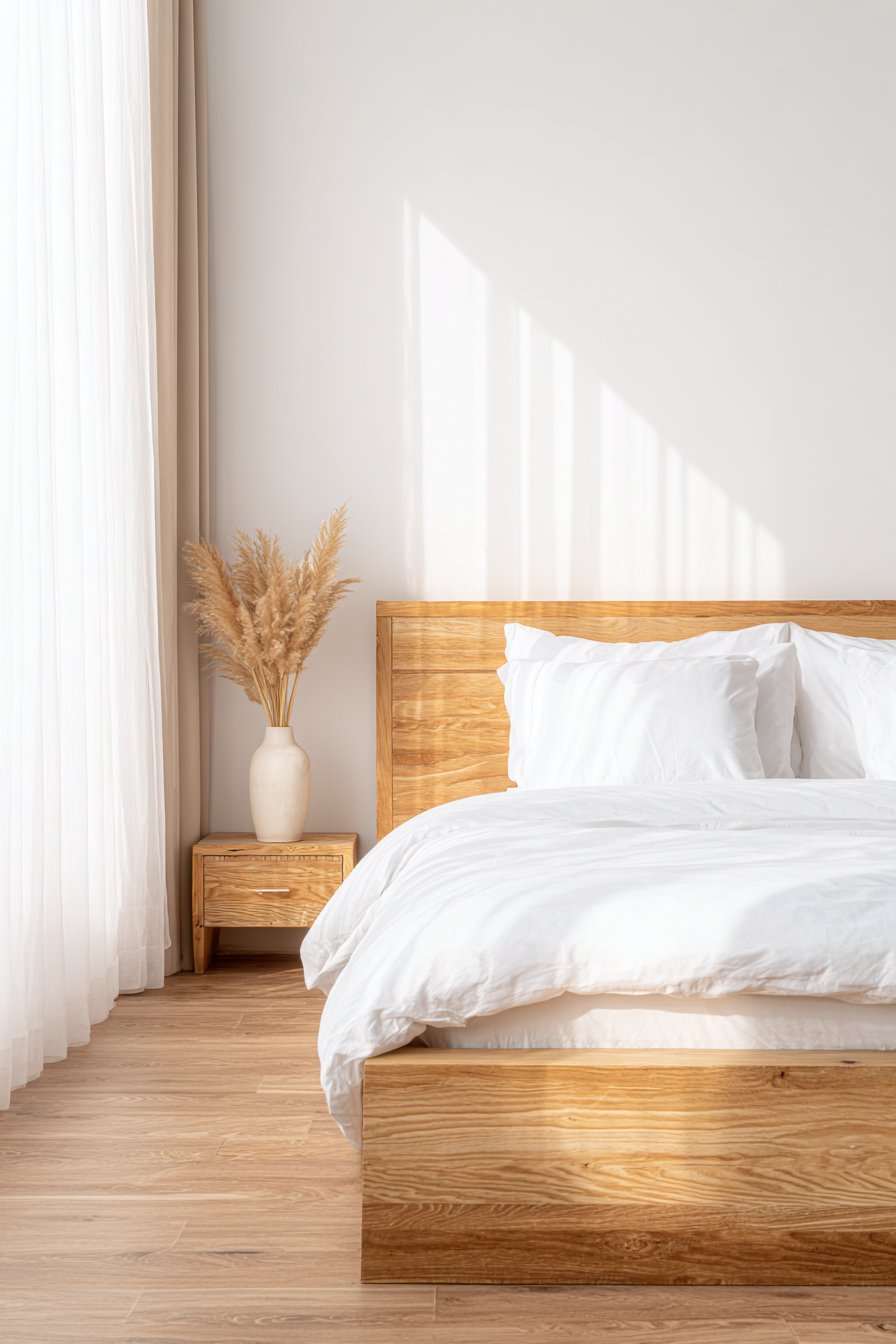
Against the clean white wall, the oak bed frame creates a striking yet subtle contrast that defines the space without overwhelming it. The warm wood flooring beneath extends this natural palette, its subtle grain patterns adding visual interest while maintaining overall simplicity. This thoughtful material selection creates layers of neutral tones that prevent the room from feeling stark or clinical, instead achieving the warm minimalism that characterizes authentic Korean design.
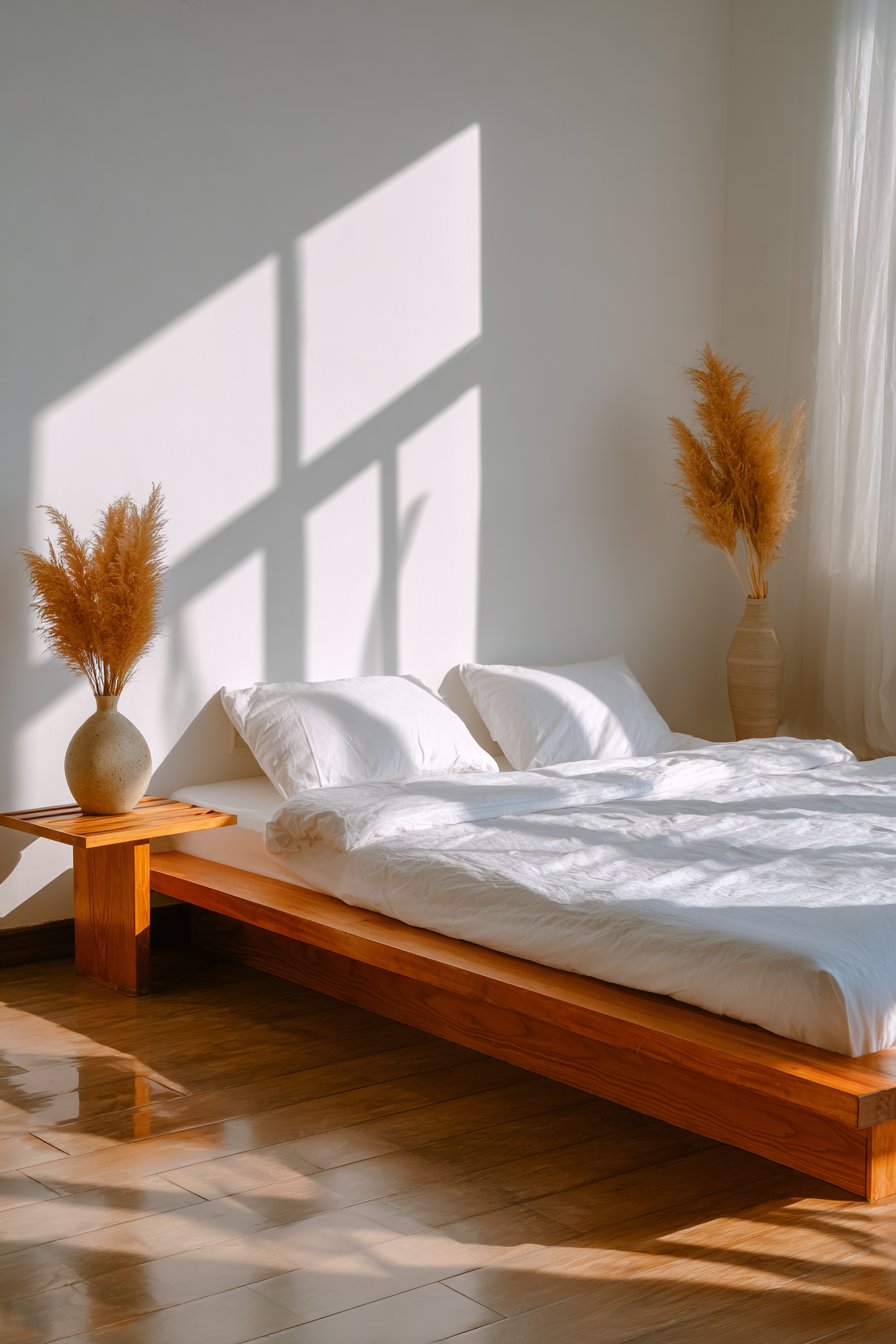
The styling demonstrates restraint at its finest—a minimal bedside table holds only a single ceramic vase containing dried pampas grass, its delicate plumes adding organic movement and soft texture. Sheer curtains filter natural light into gentle shadows that shift throughout the day, creating an ever-changing yet consistently peaceful atmosphere. This bedroom proves that luxury lies not in abundance but in the careful selection of quality elements.
Key Design Tips:
- Select platform beds in natural oak or similar light woods to create visual weight at floor level while maintaining an airy feel above
- Invest in high-quality linen bedding in white or cream for its natural texture, breathability, and ability to soften with each wash
- Use sheer curtains to maximize natural light while maintaining privacy and creating soft, diffused illumination
- Embrace negative space as a design element—empty wall areas contribute to the room’s peaceful atmosphere
- Choose one meaningful decorative item rather than multiple accessories to serve as a focal point
2. Traditional Ondol-Inspired Warmth

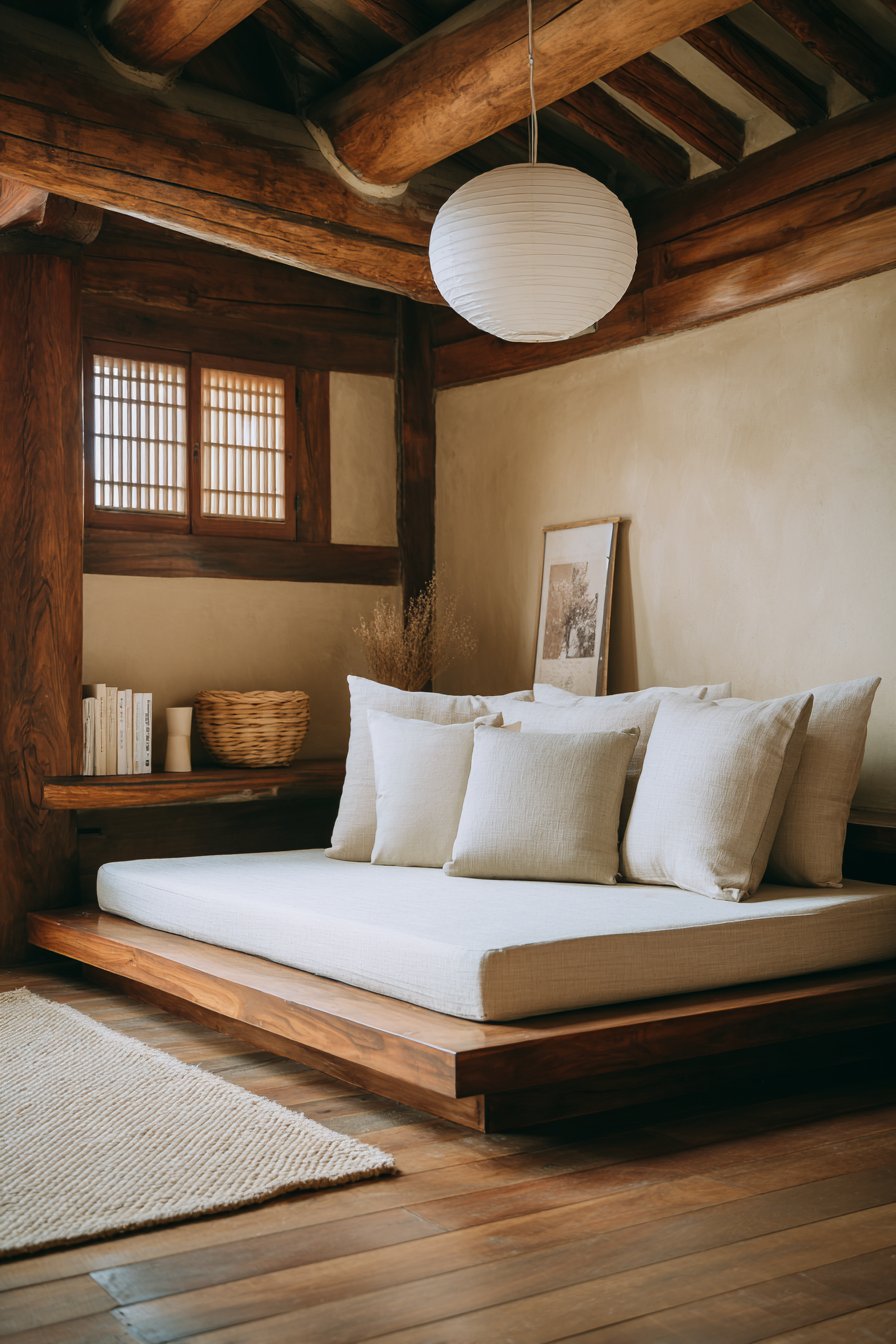
This bedroom honors the centuries-old Korean ondol heating tradition with a contemporary interpretation that brings historical wisdom into modern living. The low wooden bed frame sits mere inches from the floor, positioned to take full advantage of radiant floor heating—a principle that has warmed Korean homes for generations. This proximity to the heated surface creates not just physical warmth but a psychological sense of being grounded and connected to the space. The sleeping platform’s minimal height also contributes to better air circulation and a more intimate relationship with the room’s proportions.
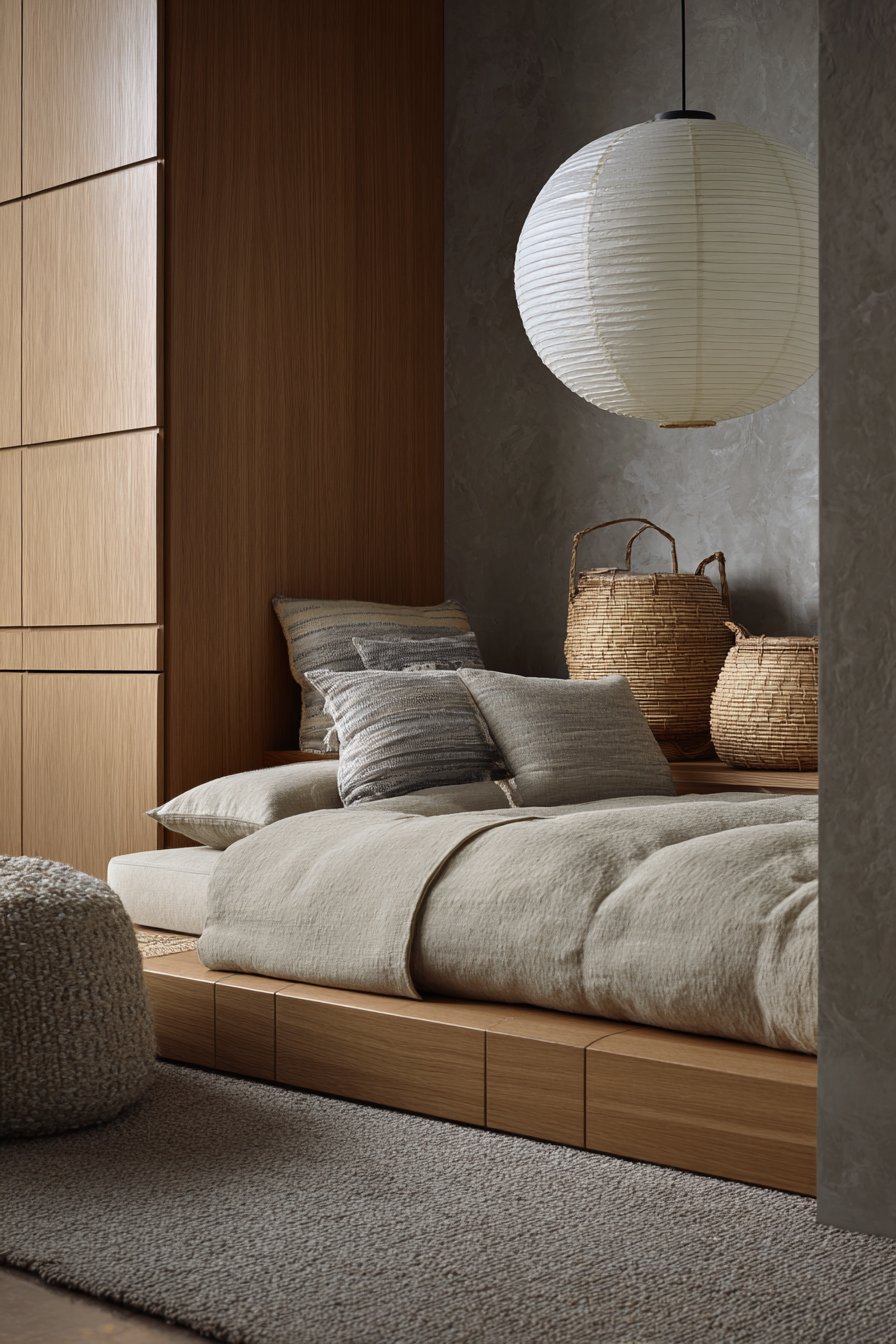
The color palette draws exclusively from nature’s neutral spectrum—beiges that recall sun-bleached sand, creams reminiscent of natural cotton, and the warm honey tones of aged wood. Textured linen bedding invites touch and creates subtle visual interest through its organic weave patterns. These carefully chosen textiles regulate temperature naturally, staying cool in summer and providing cozy warmth in winter, perfectly complementing the ondol heating system beneath.
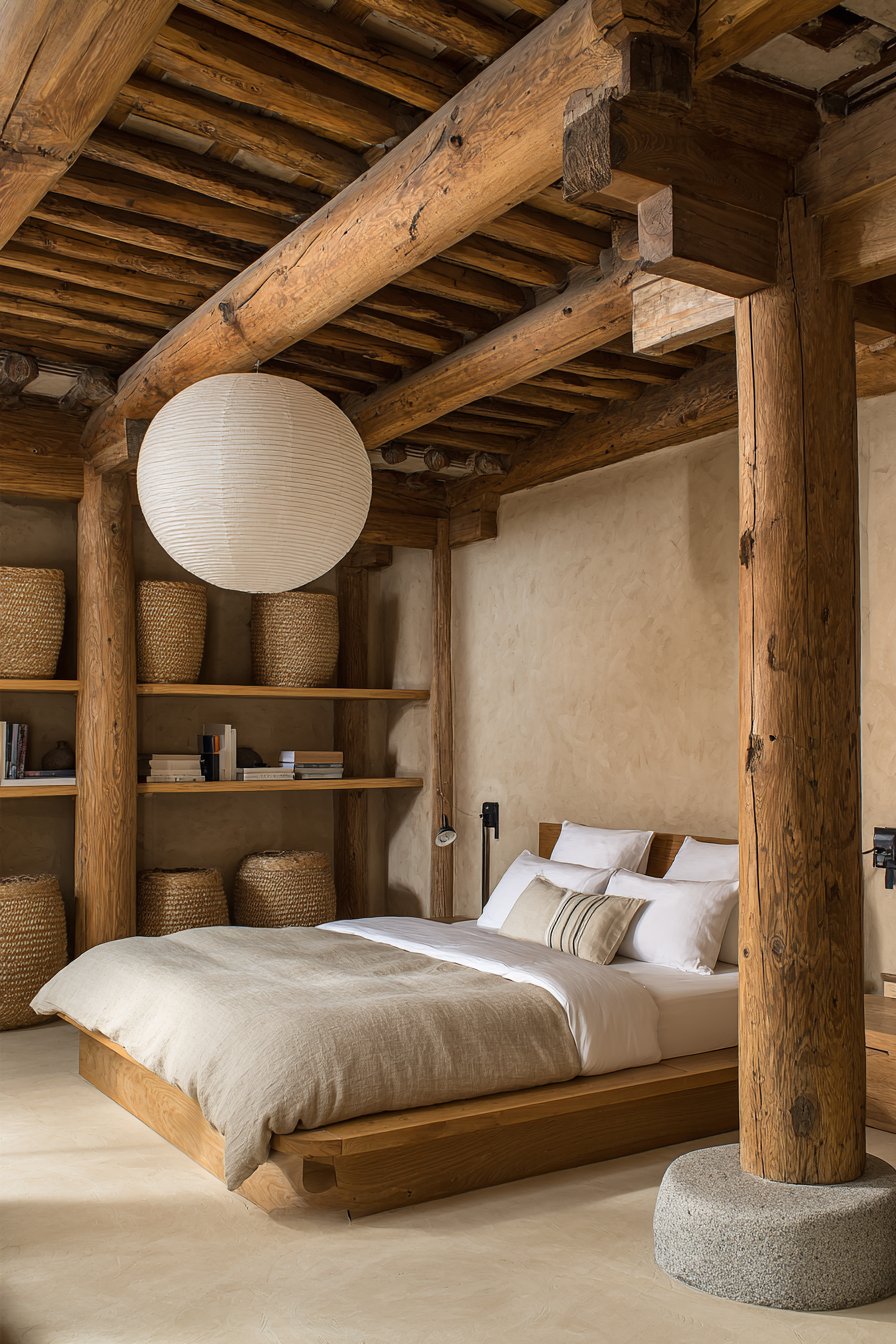
A simple paper lantern pendant suspended from the ceiling provides ambient lighting that casts a soft, diffused glow throughout the space. Natural bamboo storage baskets arranged along one wall offer practical organization while introducing another organic texture and maintaining the room’s commitment to sustainable, natural materials. The overall effect transports occupants to a space where traditional Korean wisdom meets contemporary comfort.
Key Design Tips:
- Consider radiant floor heating to embrace the ondol concept and enjoy energy-efficient, even warmth throughout the space
- Layer different textures within the same neutral color family to create depth without visual clutter
- Incorporate traditional elements like paper lanterns for ambient lighting that softens the entire atmosphere
- Use natural storage solutions such as bamboo, rattan, or wooden baskets that double as decorative elements
- Keep furniture low to enhance the sense of spaciousness and align with traditional Korean proportions
3. Integrated Workspace Harmony
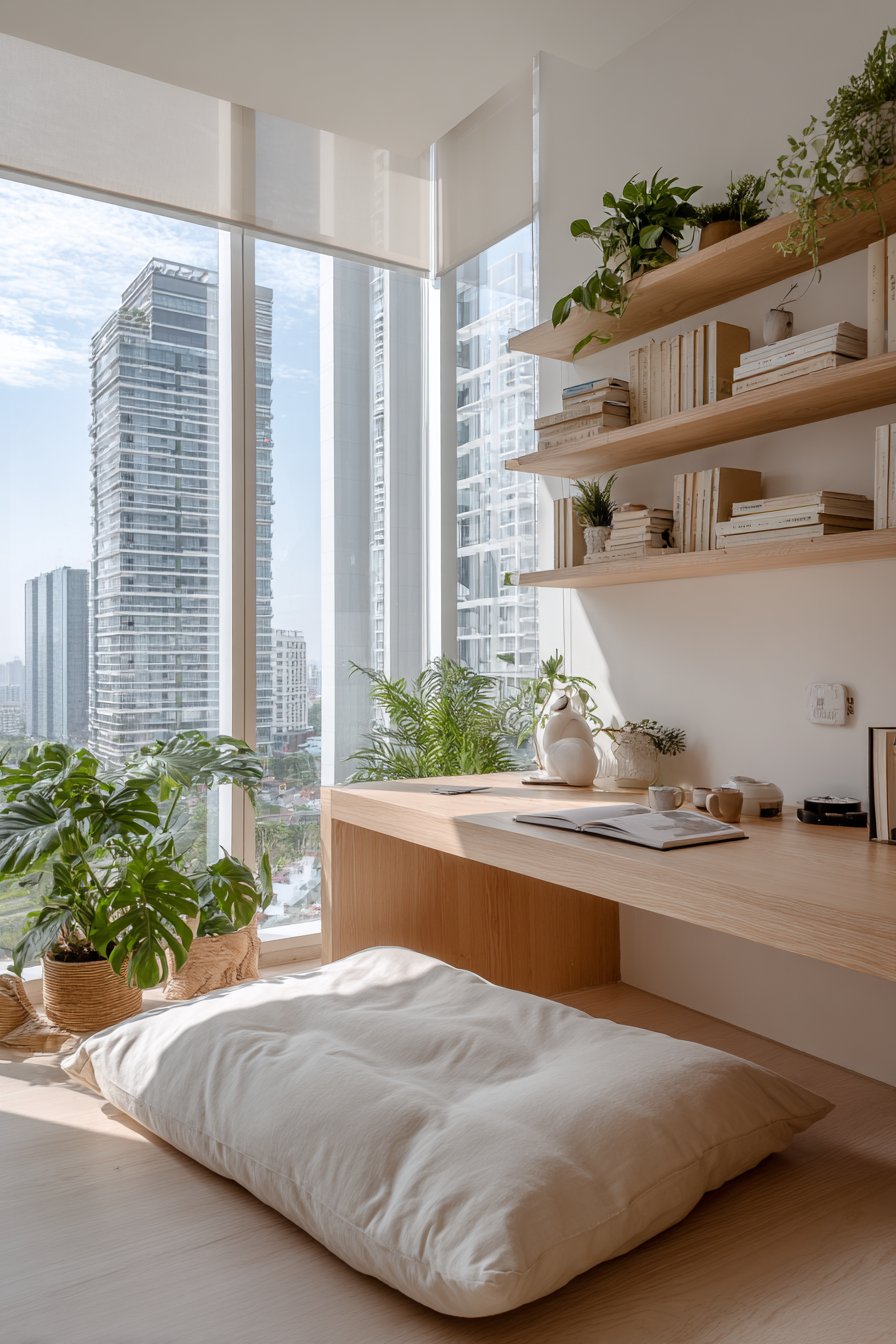
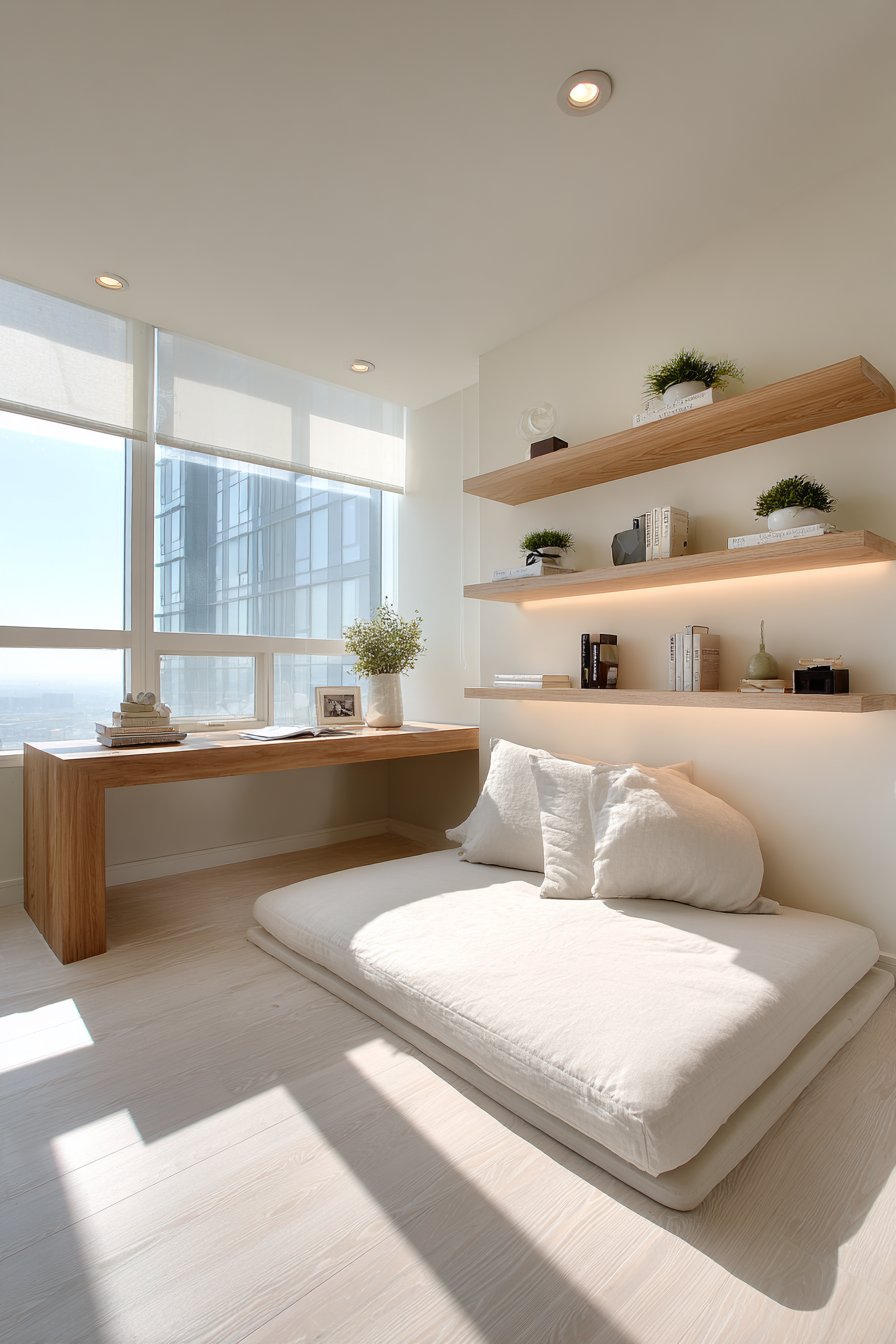
Modern Korean design brilliantly addresses the contemporary need for multi-functional spaces, as exemplified by this bedroom that seamlessly integrates a workspace within the sleeping area. A low wooden desk with clean, unadorned lines provides a dedicated work surface without disrupting the room’s peaceful aesthetic. The desk’s minimal profile and natural wood construction ensure it feels like a natural extension of the bedroom rather than an intrusive element from another realm of life.
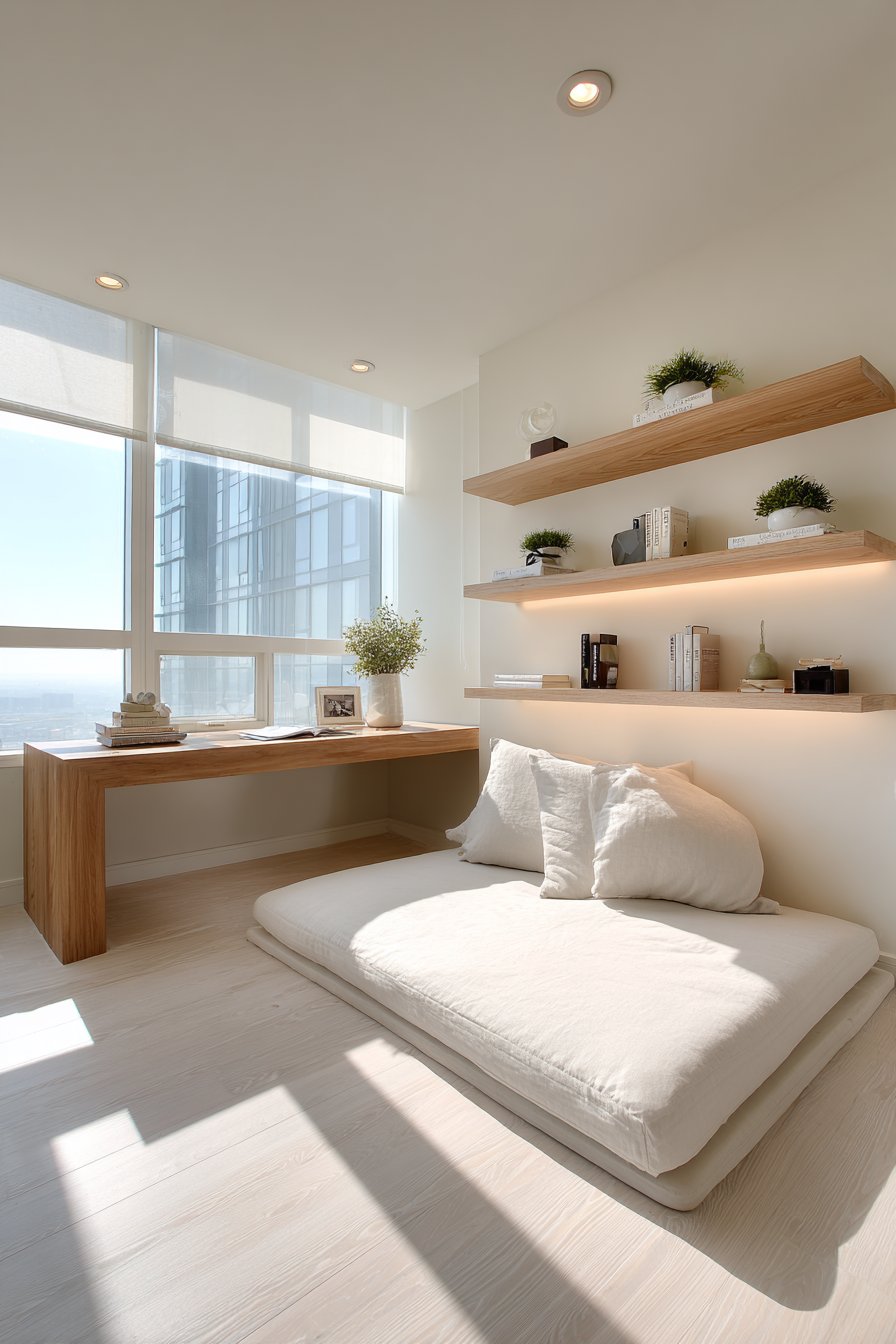
Floor cushions for seating demonstrate the Korean approach to furniture that serves multiple purposes while taking up minimal visual space. These cushions can be easily stored when not needed, allowing the room to transform between work and rest modes. Floating shelves in light wood mount to the wall above the desk, displaying neatly arranged books and small potted plants that bring life and oxygen into the space without requiring floor space or creating clutter.

The neutral palette of whites and natural woods creates a backdrop that supports both concentration during work hours and relaxation during rest periods. Large windows with minimal treatments flood the space with natural light, reducing eye strain during work and maintaining the essential connection to the outside world that Korean design values. This bedroom proves that even in compact urban settings, thoughtful design can accommodate modern life’s demands without sacrificing serenity.
Key Design Tips:
- Choose low-profile desks that align with the bedroom’s overall furniture height to maintain visual consistency
- Use floating shelves to maximize storage and display without consuming valuable floor space
- Incorporate floor cushions that can be stored away to allow flexible use of space
- Position the workspace near windows to maximize natural light for both productivity and wellbeing
- Select multifunctional furniture pieces that serve bedroom and workspace needs equally well
4. Contemporary Korean Elegance
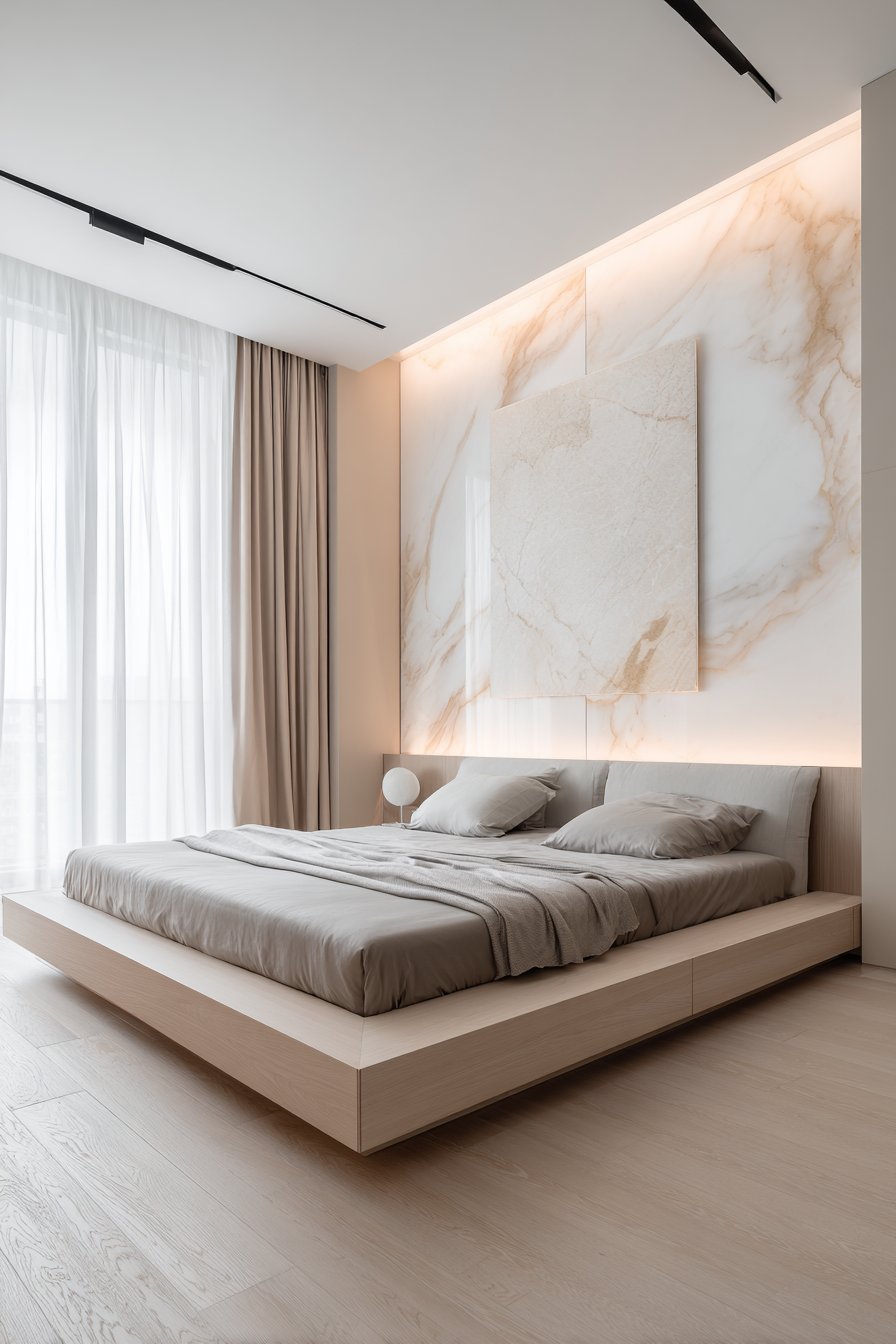
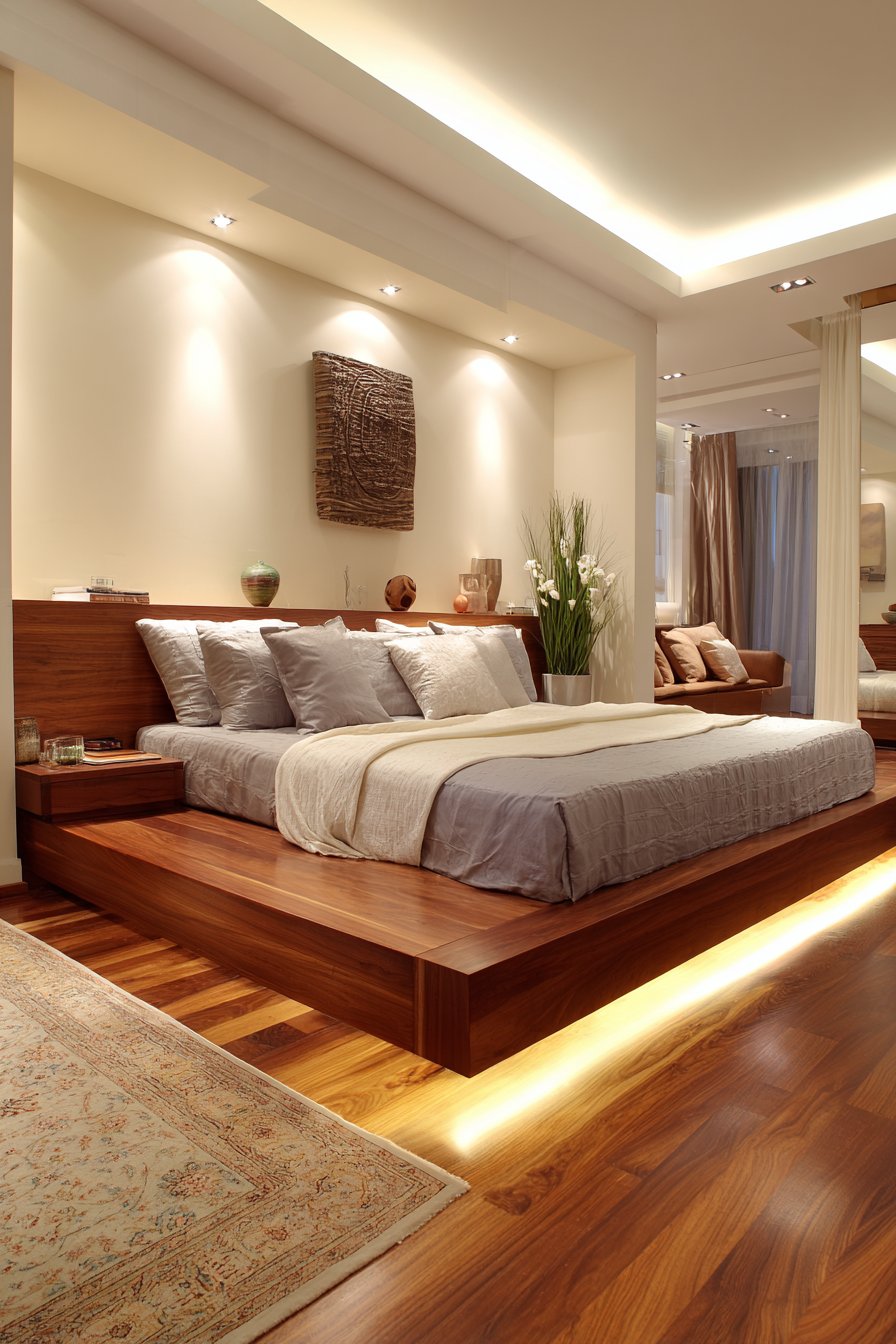
This bedroom represents a sophisticated evolution of traditional Korean design principles applied to contemporary living. A sleek low platform bed in rich walnut finish provides a modern interpretation of classic Korean sleeping arrangements, its dark wood tones adding depth and gravitas to the space. Dressed in organic cotton bedding in soft gray tones, the bed demonstrates how Korean minimalism can incorporate subtle color while maintaining its essential calmness. The organic cotton speaks to the ongoing Korean commitment to natural, sustainable materials that improve quality of life.
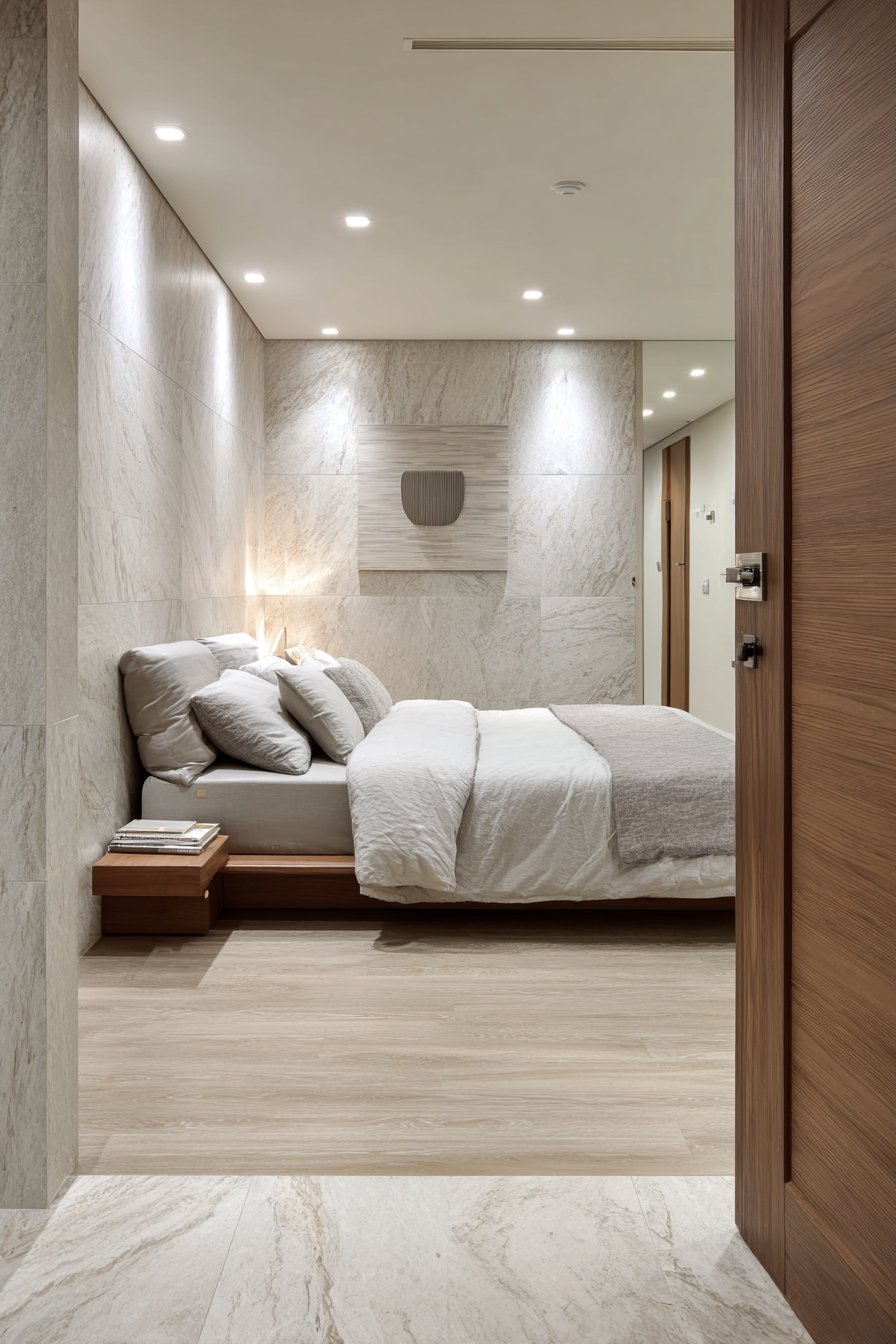
A single statement piece of Korean ceramic art adorns the wall, carefully chosen to represent the room’s only decorative flourish. This restraint allows the artwork to truly shine, giving it the attention and appreciation it deserves. The ceramic piece likely features the organic forms and subtle glazes characteristic of Korean pottery tradition, creating a cultural connection while serving as a sophisticated focal point.
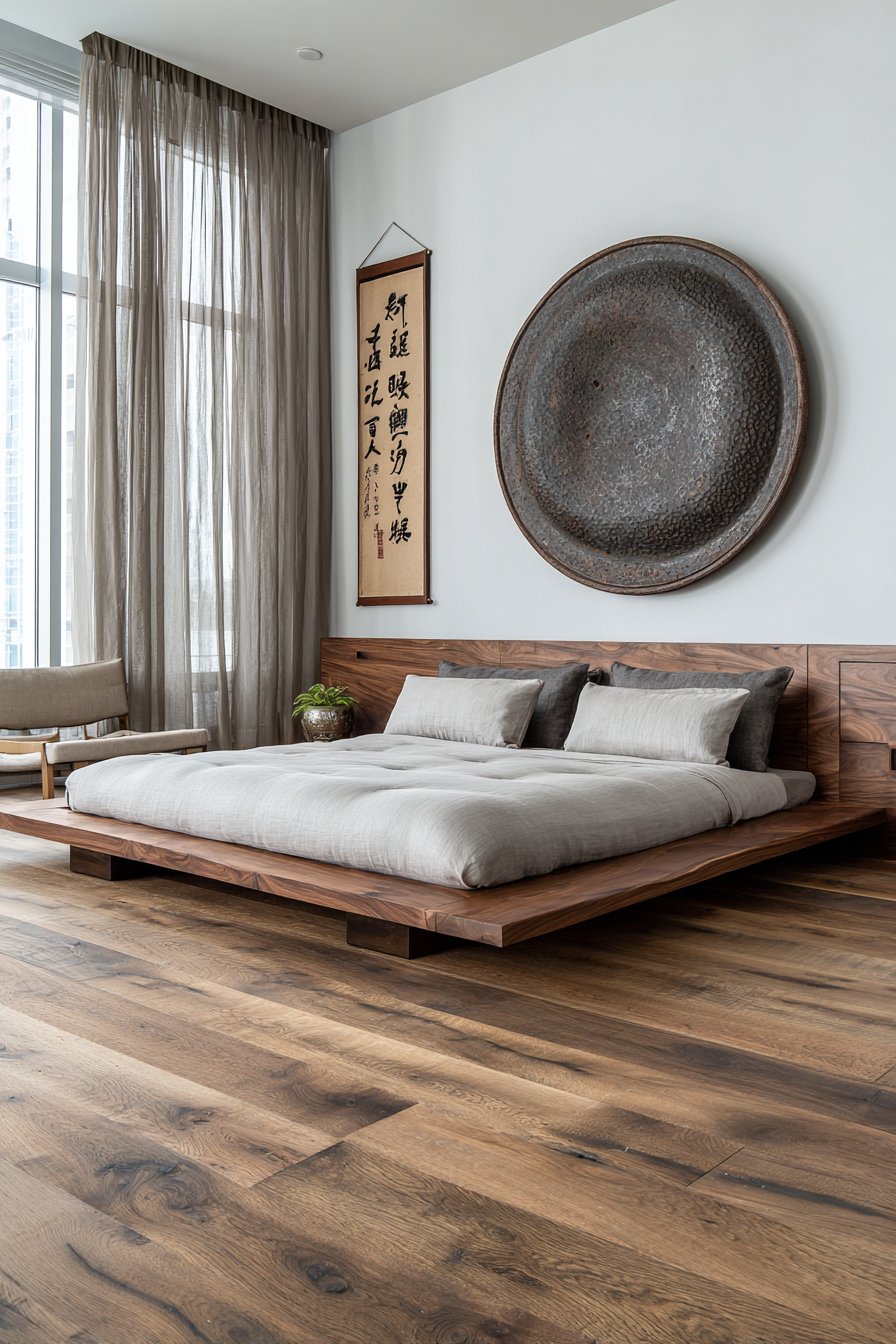
Recessed lighting provides subtle illumination that maintains the minimalist aesthetic by eliminating the need for visible light fixtures. This approach creates ambient lighting that seems to emanate from the architecture itself. Natural oak flooring with its visible grain patterns adds warmth and texture underfoot, grounding the room’s cooler gray tones with organic beauty. The harmonious balance achieved here demonstrates how traditional Korean simplicity can be translated into thoroughly modern, luxurious spaces.
Key Design Tips:
- Mix wood tones thoughtfully—darker furniture against lighter floors creates sophisticated contrast
- Invest in one significant art piece rather than multiple smaller items for maximum impact
- Choose organic cotton or other natural fiber bedding in soft colors beyond pure white for subtle visual interest
- Install recessed lighting to eliminate visual clutter while providing excellent illumination
- Allow each element breathing room to be appreciated individually within the overall composition
5. Cozy Reading Sanctuary
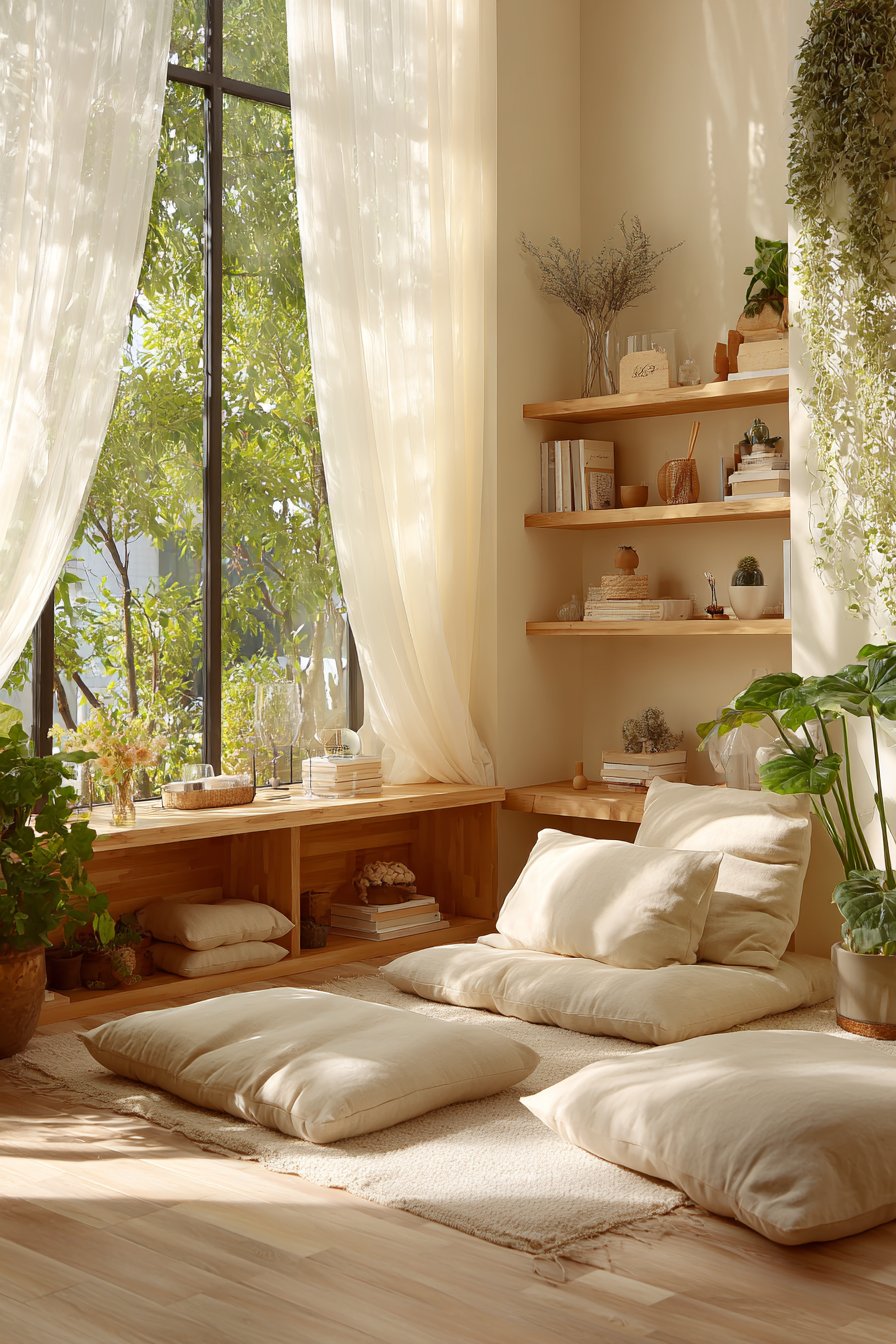
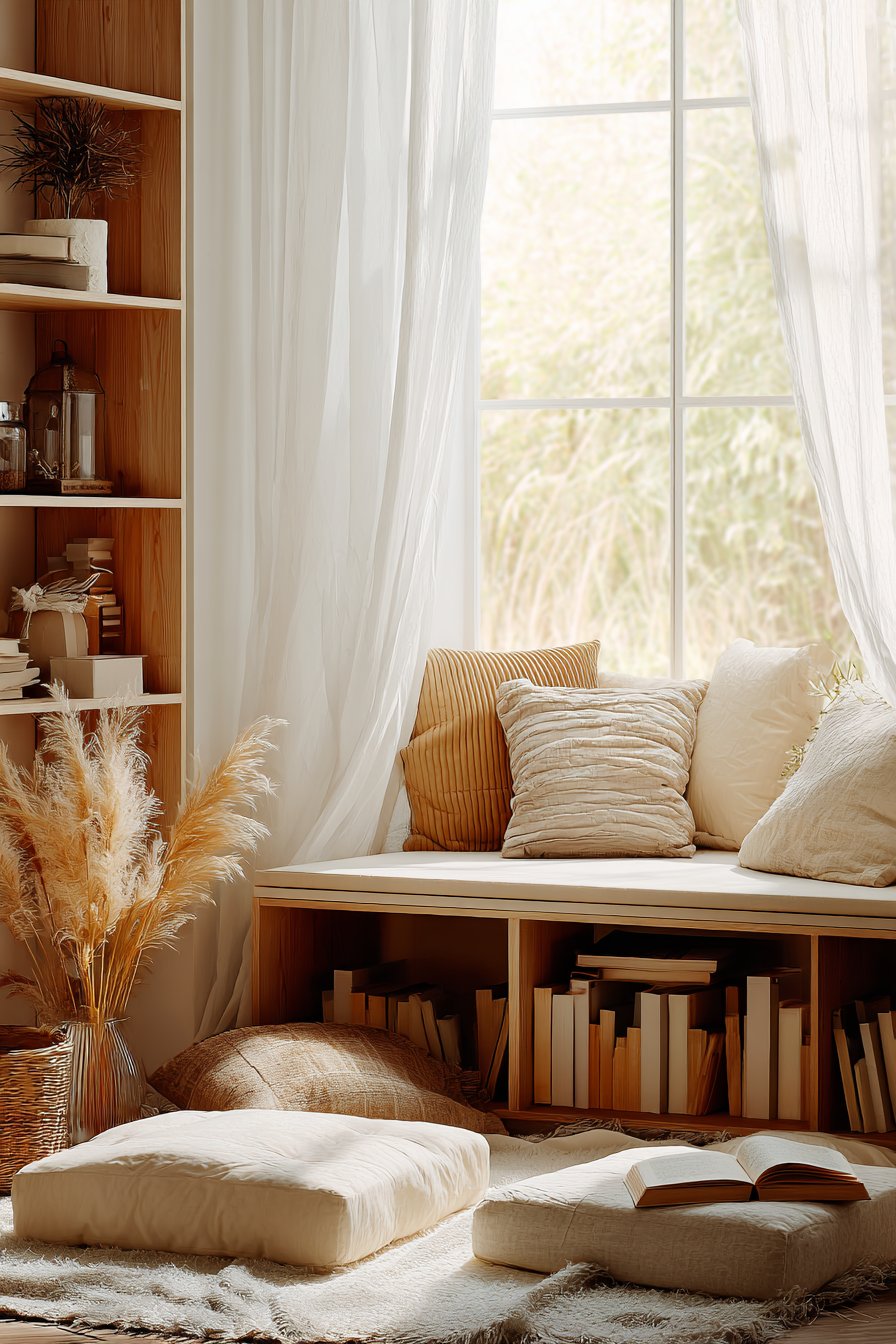
This Korean bedroom design celebrates the joy of reading and contemplation by incorporating a dedicated reading nook that feels integral to the space. Floor cushions upholstered in natural linen create comfortable seating positioned strategically near a large window to capture optimal natural light. The cushions’ low profile maintains the Korean aesthetic while providing surprising comfort for extended reading sessions. Their neutral linen covering ages beautifully, developing character over time rather than showing wear.
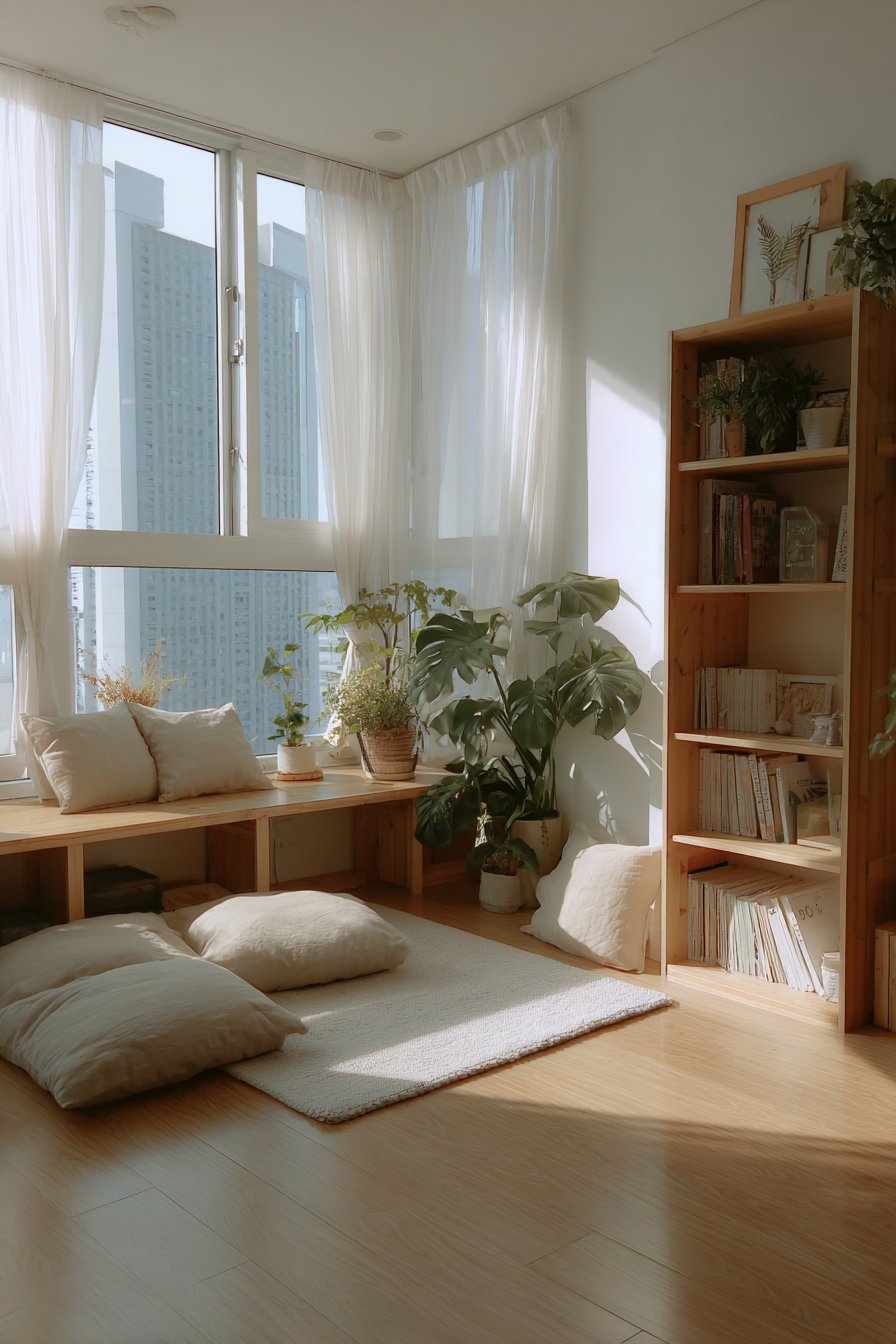
A low wooden bookshelf displays carefully curated items—each book, plant, and object chosen for its meaning or beauty rather than simply to fill space. This curation reflects the Korean concept of mindful living, where every possession serves a purpose or brings joy. Small potted plants interspersed among the books bring life and natural air purification to the space while adding varied textures and organic forms.

The room embodies Korean minimalism through its restricted color scheme of cream, beige, and soft wood tones that create a cohesive, calming environment. Sheer white curtains perform their essential function of diffusing harsh sunlight into a gentle, even glow that’s perfect for reading without causing glare or eyestrain. This thoughtful attention to how natural light behaves throughout the day demonstrates the Korean design principle of working with nature rather than against it.
Key Design Tips:
- Create dedicated zones within the bedroom for different activities to enhance functionality without requiring separate rooms
- Position seating areas near windows to take advantage of natural light and views
- Curate book and object displays carefully, removing items that don’t add value or beauty
- Use floor cushions for flexible, space-efficient seating that can be reconfigured as needed
- Layer different shades of neutral colors to prevent monotony while maintaining overall calmness
6. Clever Storage Solutions
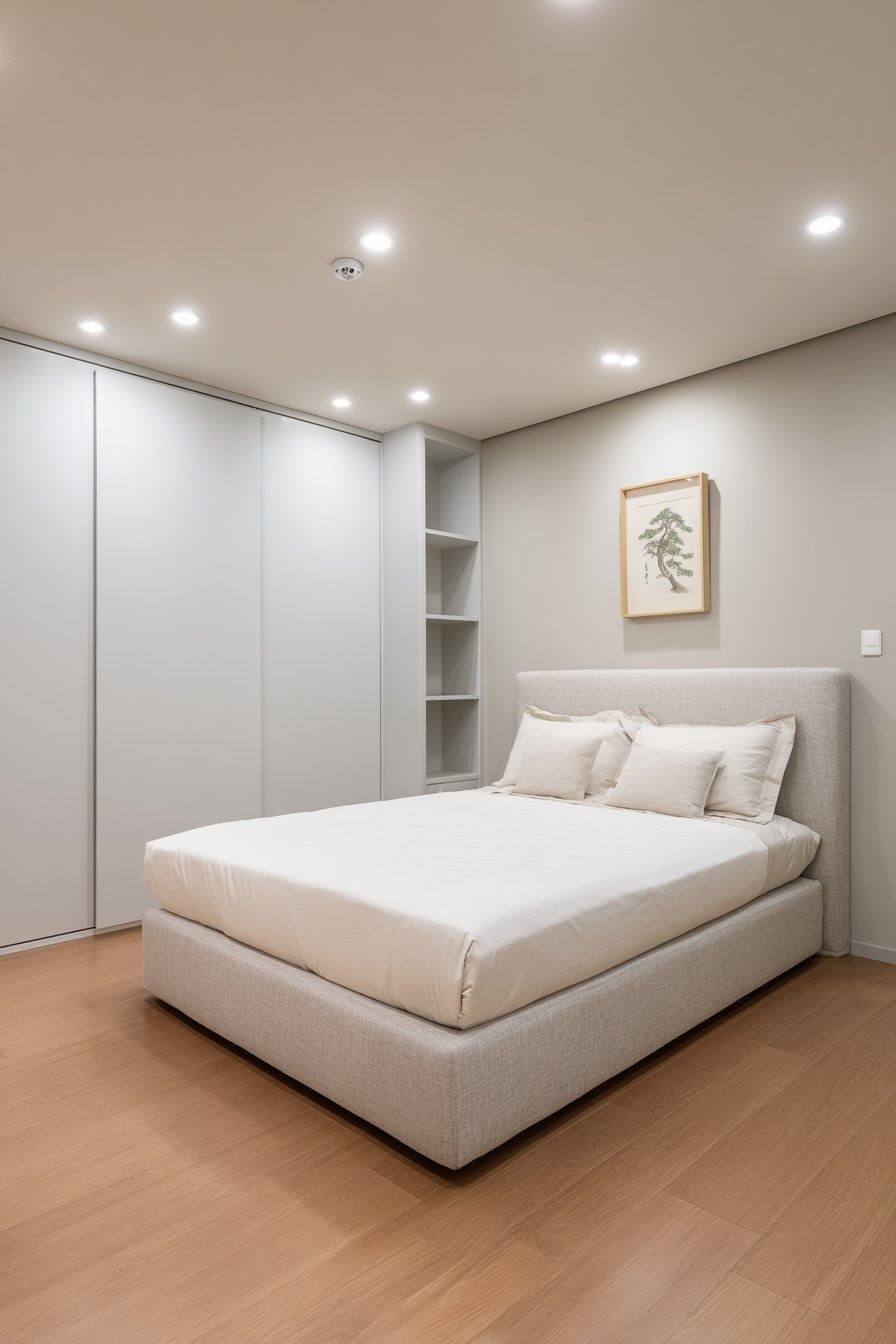
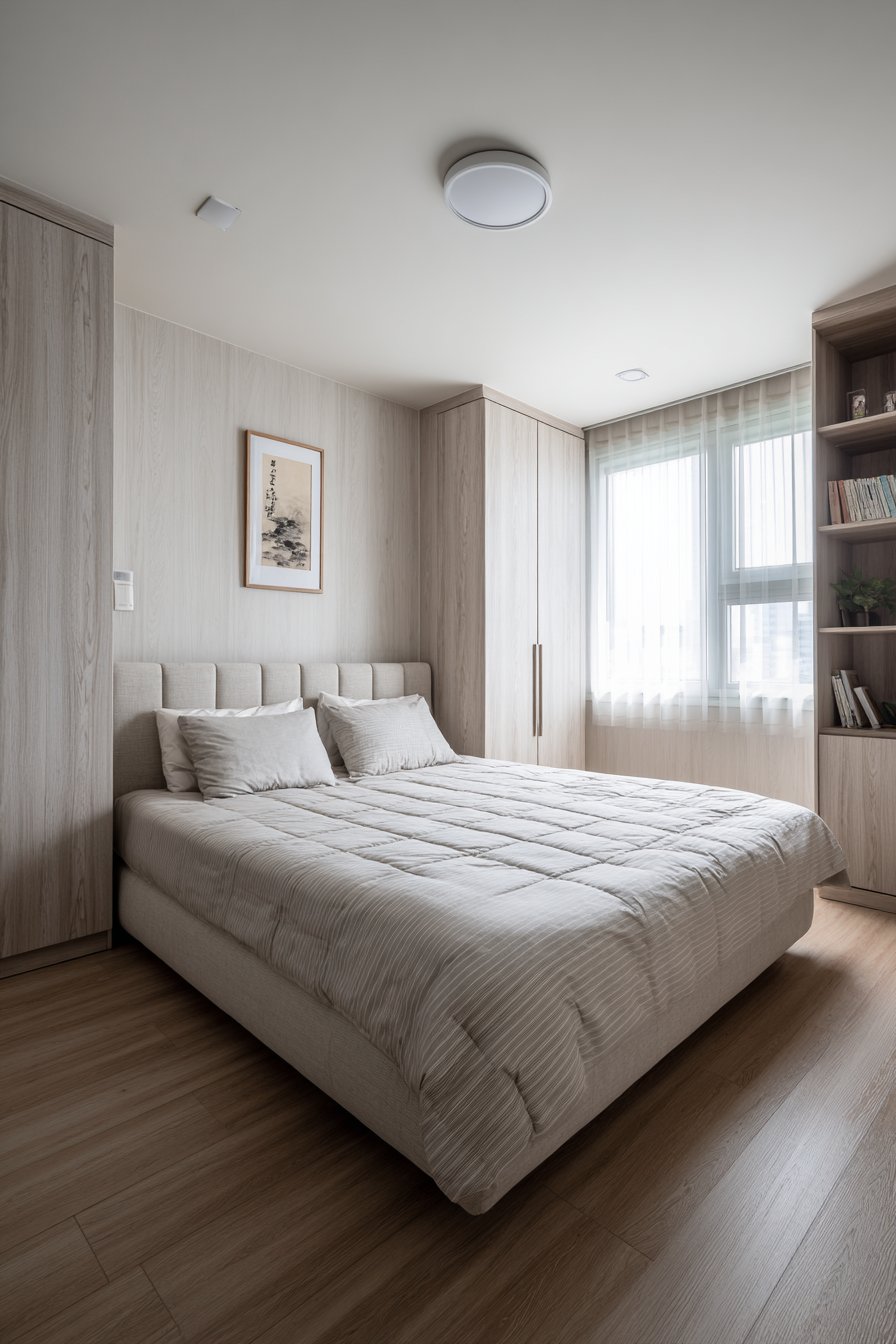
Korean design’s genius for maximizing functionality within minimal visual footprint shines in this bedroom featuring built-in storage solutions. Custom wardrobes with sliding doors in light wood finish blend seamlessly with the walls, creating a unified surface that disguises considerable storage capacity. The sliding door mechanism saves space compared to hinged doors while adding a subtle nod to traditional Korean architecture’s use of sliding paper screens.

A low bed with an upholstered headboard in natural fabric sits centered in the room, its positioning creating equal access from both sides and establishing symmetry that appeals to the eye and mind. The upholstered headboard adds softness and comfort for sitting up in bed while maintaining the room’s commitment to natural materials and neutral tones. Its low height keeps sight lines open and contributes to the spacious feeling.
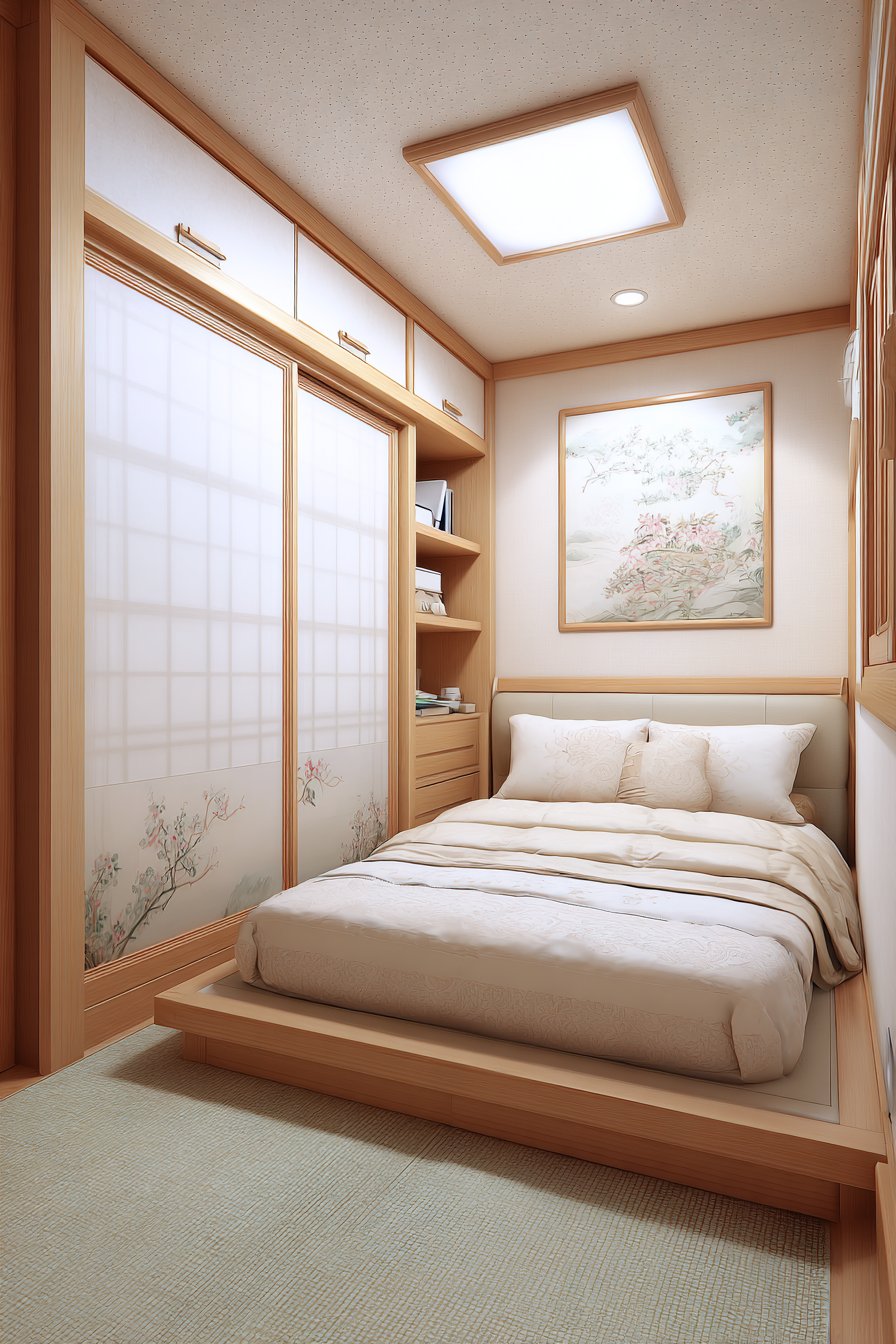
Minimal decoration philosophy reaches its zenith with a single piece of traditional Korean art—perhaps a delicate brush painting or a piece of calligraphy—that provides cultural connection and visual interest without overwhelming the space. Soft overhead lighting works in concert with natural daylight to provide layered illumination suitable for various activities and times of day. This bedroom demonstrates how functional elegance and clean aesthetics can coexist beautifully.
Key Design Tips:
- Invest in built-in storage that matches wall colors to maximize capacity while minimizing visual impact
- Choose sliding doors for wardrobes to save space and reference traditional Korean architectural elements
- Center the bed in the room when possible to create symmetry and equal access from both sides
- Use upholstered headboards in natural fabrics for comfort without sacrificing the minimalist aesthetic
- Implement layered lighting with both natural and artificial sources for flexibility throughout the day
7. Authentic Floor-Level Living
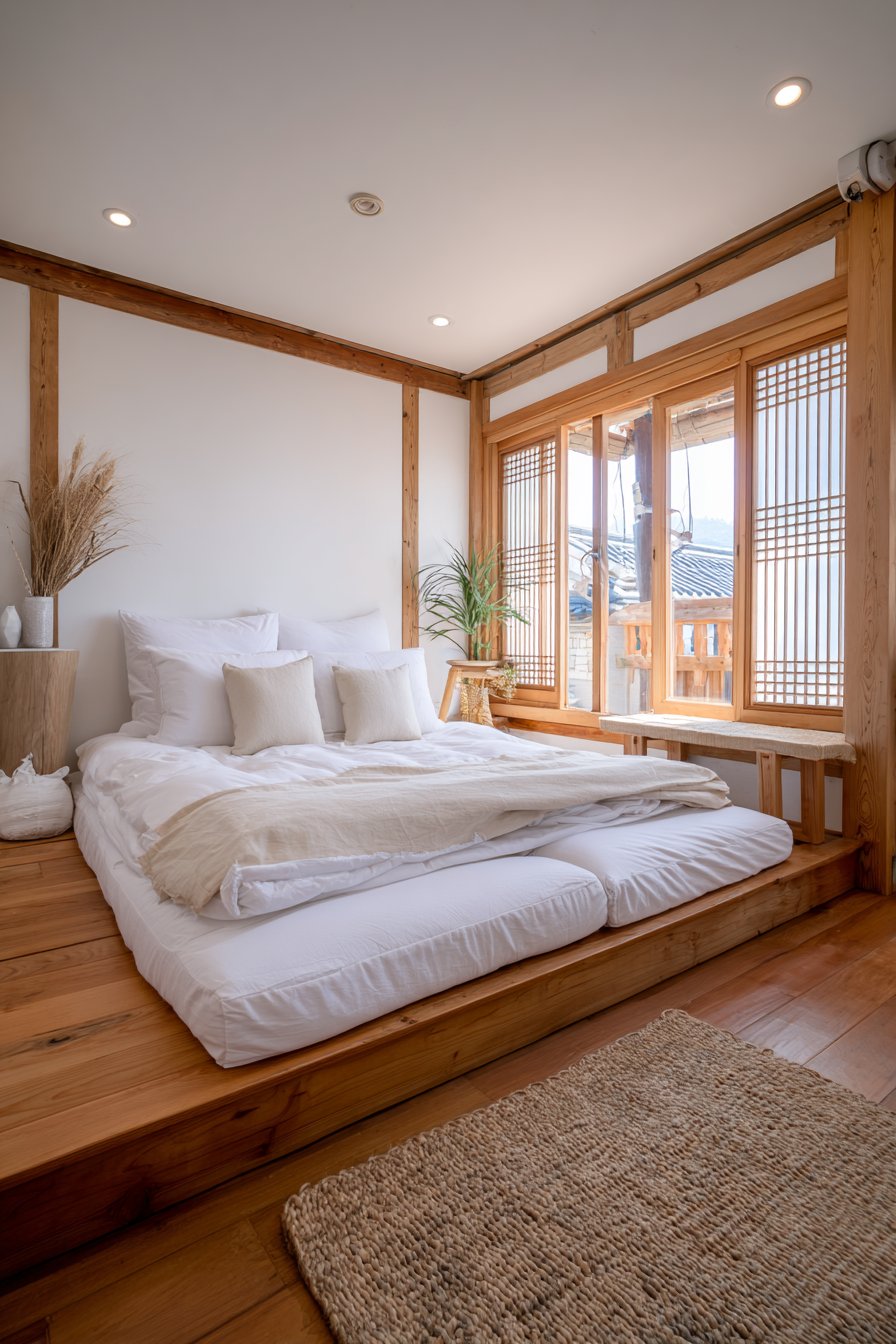
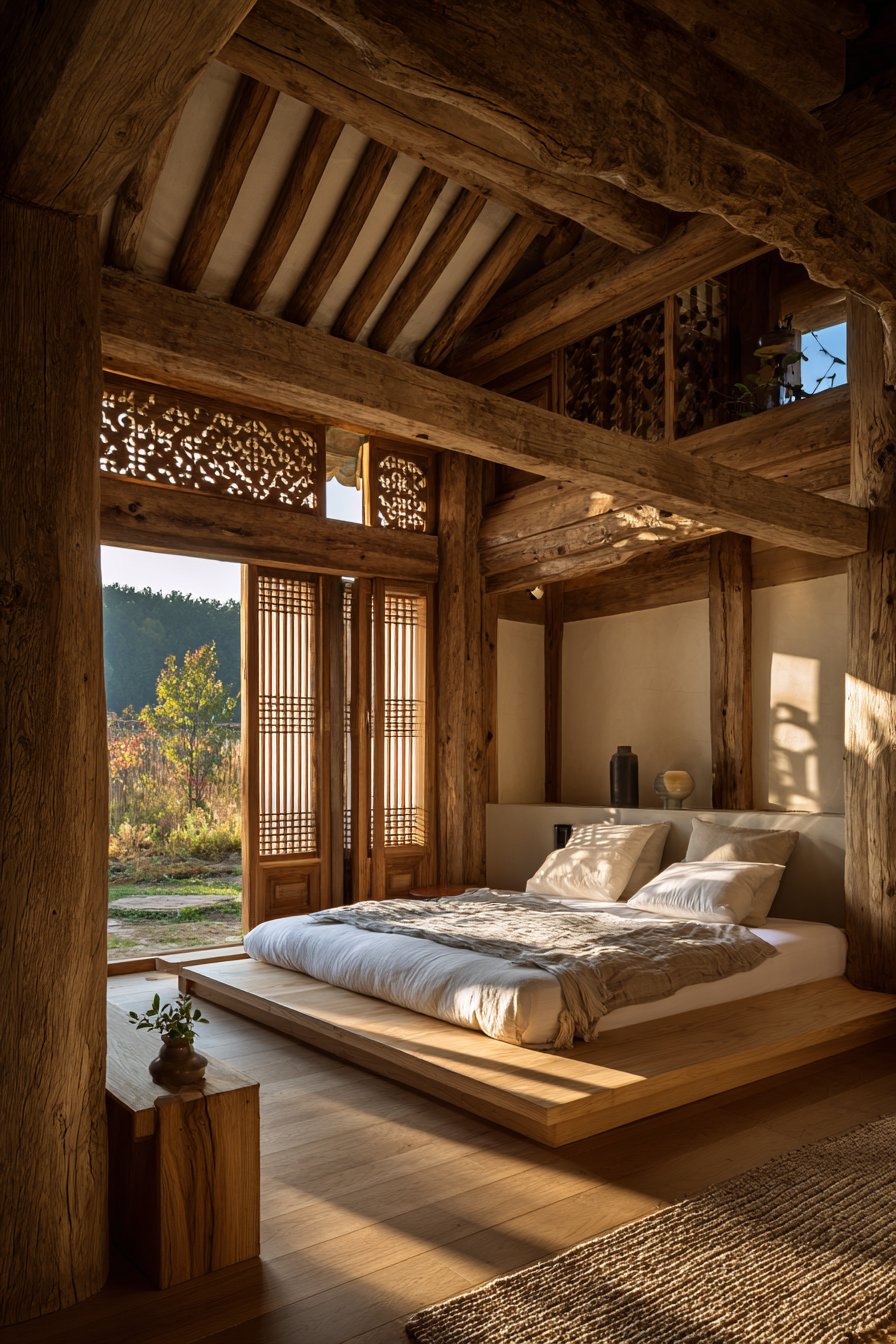
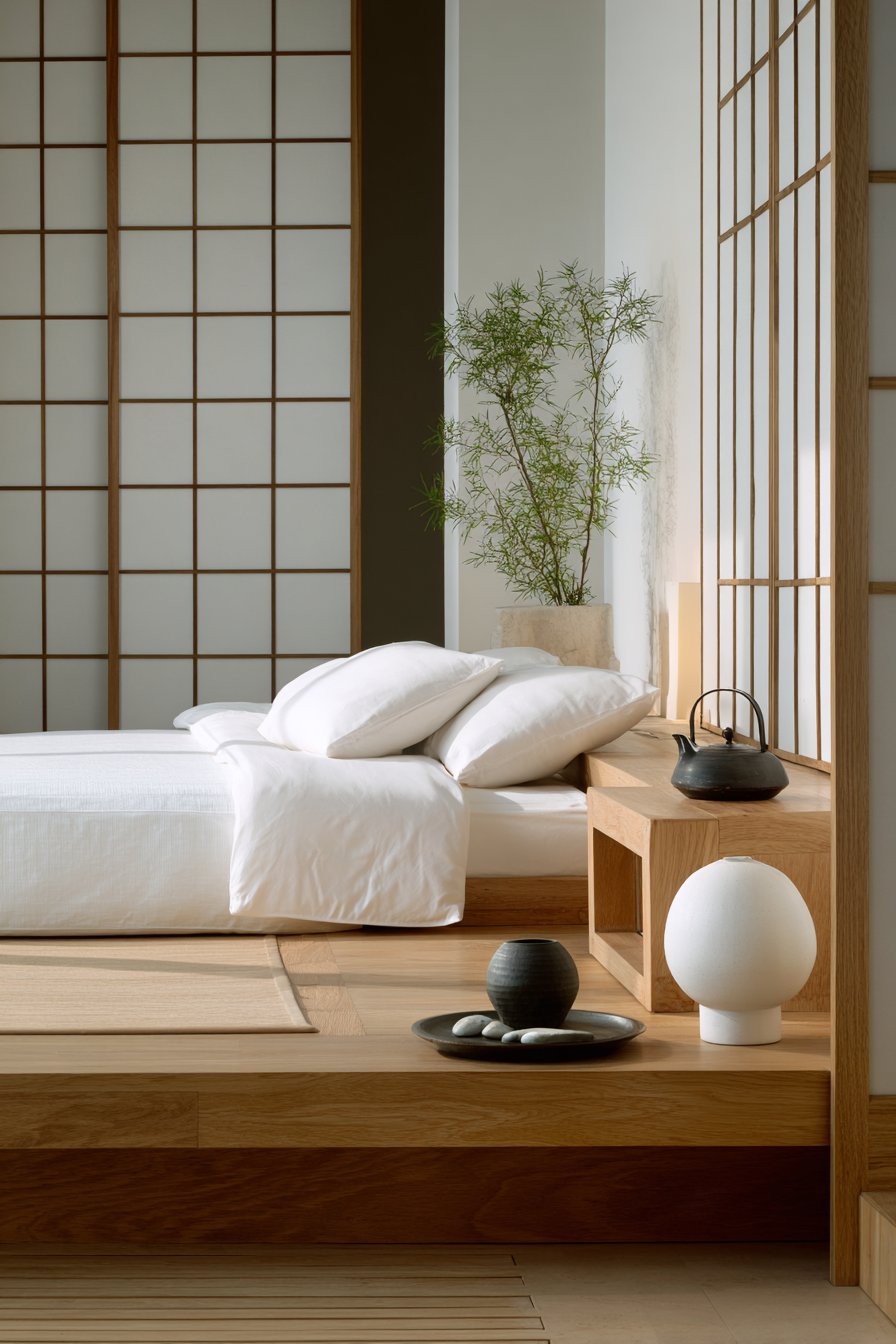
This bedroom embraces the most traditional Korean sleeping arrangement with a floor-level futon-style mattress placed on a raised wooden platform. This elevated platform provides subtle separation from the floor while maintaining the low-profile aesthetic central to Korean design. Dressed in white and natural linen layers, the sleeping area achieves cloud-like softness while remaining visually light and airy. The layering of different linen textures creates depth and interest within the monochromatic scheme.

Paper sliding doors reminiscent of traditional shoji screens filter soft light into the room, creating beautiful patterns and gentle illumination throughout the day. These screens serve multiple functions—providing privacy, controlling light, and adding authentic cultural elements that connect the space to Korean design heritage. Their translucent quality maintains a sense of openness even when closed, preventing the room from feeling confined.

A low wooden bench serves as a minimalist nightstand, its simple form providing just enough surface for essentials without adding visual weight. A natural fiber rug adds textural warmth to polished wood floors, defining the sleeping area and providing comfort underfoot. This bedroom represents the purest expression of Korean sleeping traditions adapted for contemporary comfort, proving that authentic design can coexist with modern convenience.
Key Design Tips:
- Consider a raised platform for floor-level sleeping to provide subtle elevation and built-in storage potential
- Layer different white and natural linens for visual and textural interest within a monochromatic palette
- Install paper sliding doors or screens to control light while adding traditional architectural interest
- Use simple benches as nightstands for an authentic low-profile look
- Add natural fiber rugs to define spaces and provide textural warmth on hard flooring
8. Modern Apartment Living
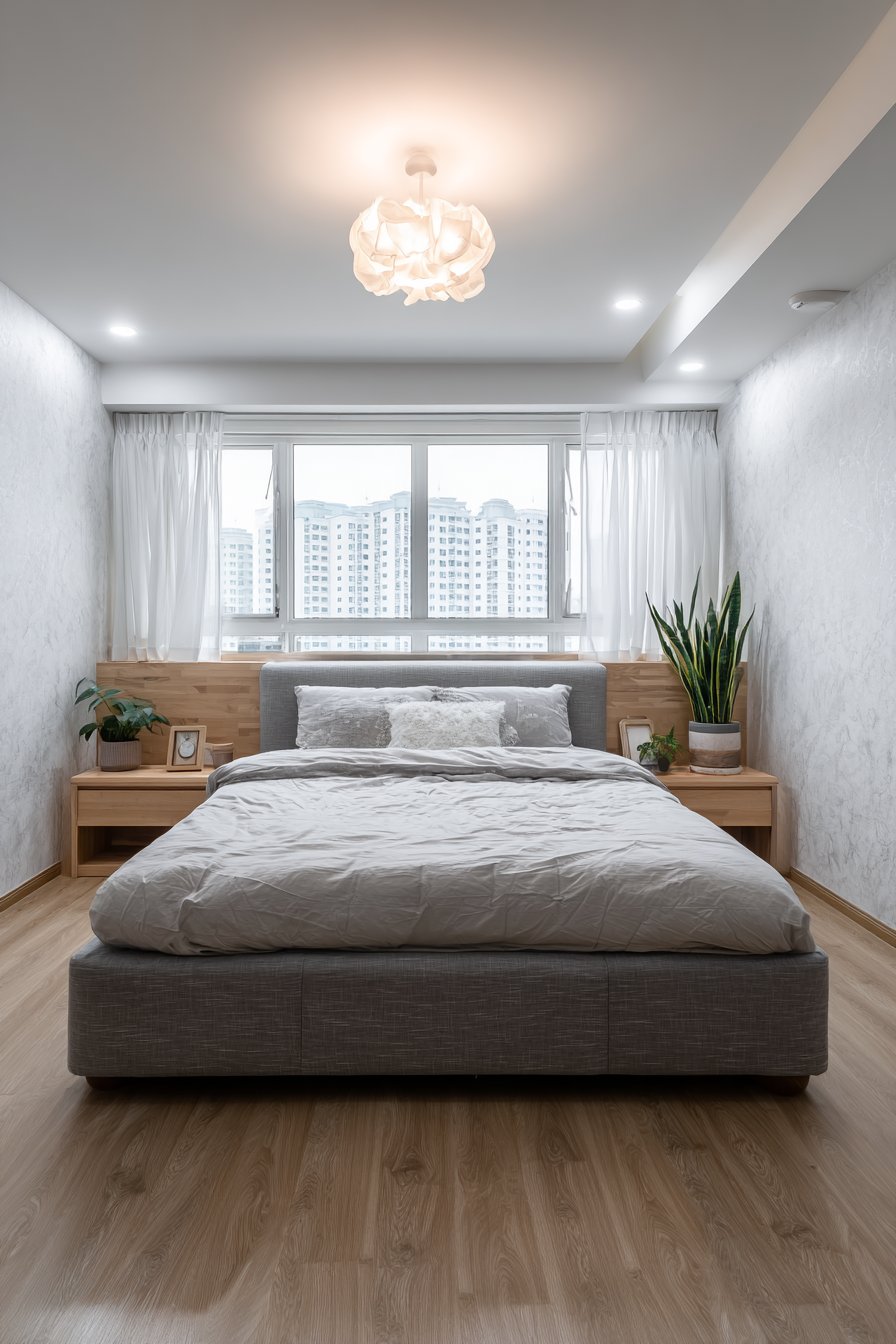
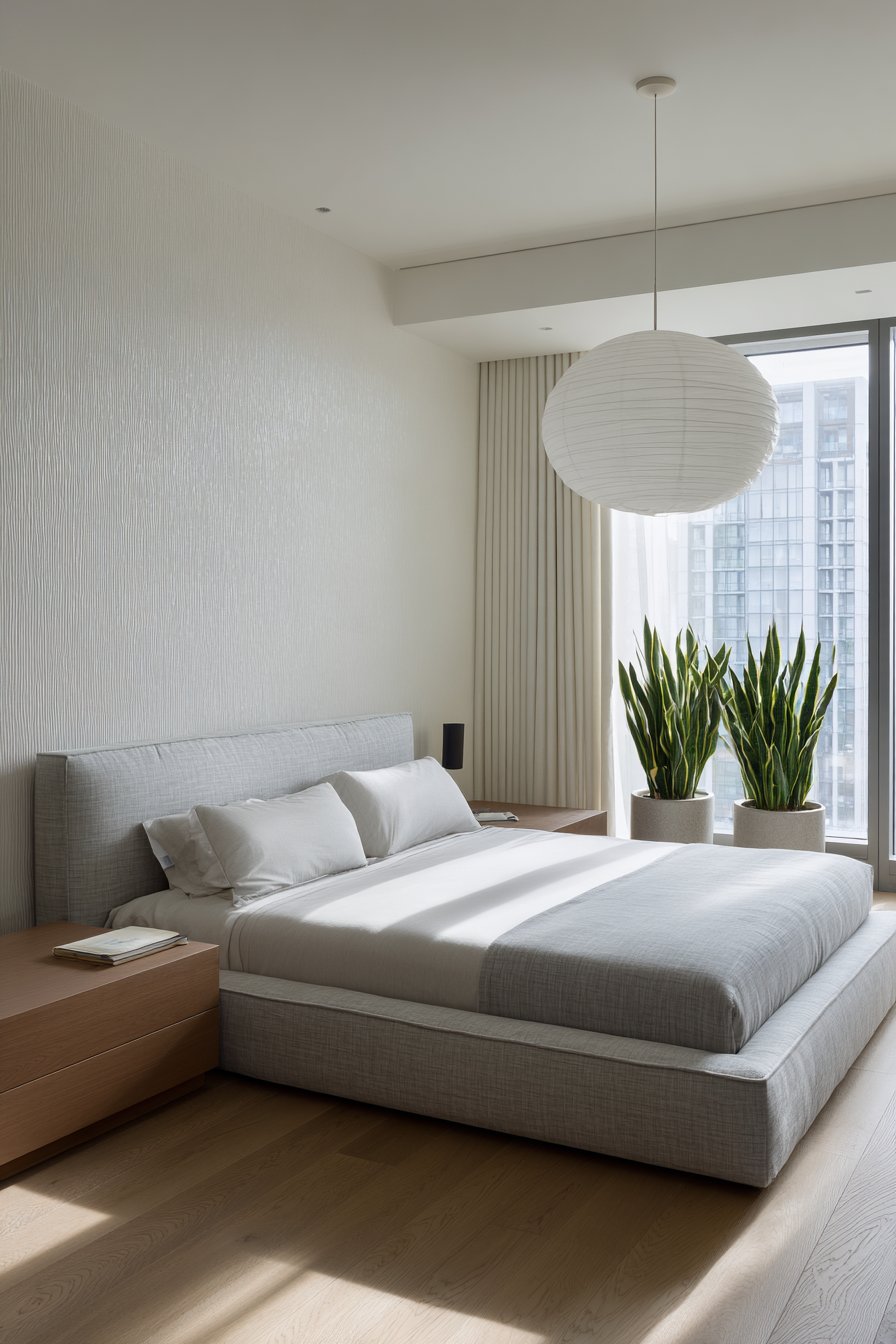
This Korean apartment bedroom showcases how minimalist principles create spacious, peaceful environments even in compact urban settings. A low upholstered bed in soft gray fabric provides contemporary comfort while maintaining the essential low profile that characterizes Korean bedroom design. The gray tone introduces subtle color without disrupting the room’s calming neutrality, demonstrating that Korean minimalism need not be limited to pure white.

Simple wooden floating nightstands flank the bed, their wall-mounted construction keeping the floor clear and contributing to the airy atmosphere. These streamlined surfaces provide just enough space for bedside essentials—a lamp, perhaps a book, maybe a glass of water—encouraging occupants to pare down to what’s truly needed. A delicate paper pendant light hangs above, providing warm ambient glow while serving as a subtle focal point that draws the eye upward.
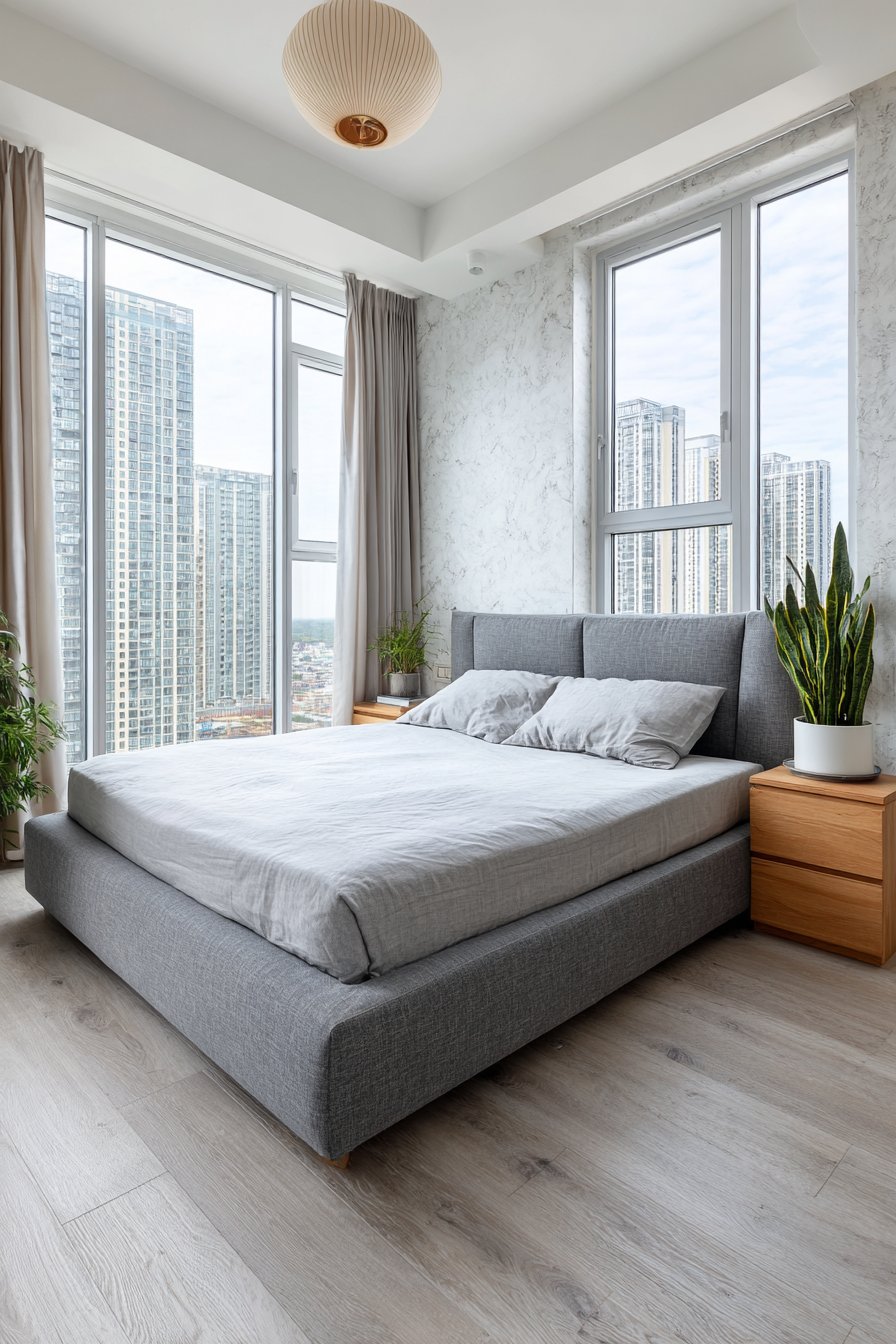
Potted snake plants add vertical life to the space without creating clutter, their architectural leaves complementing the room’s clean lines while purifying the air. These nearly indestructible plants perfectly suit the low-maintenance philosophy of Korean design. Natural afternoon light streams through gauzy curtains, creating the soft, diffused illumination that makes the space feel both energizing and restful throughout the day.
Key Design Tips:
- Choose upholstered beds in soft neutrals like gray or beige for contemporary comfort with minimalist aesthetics
- Install floating nightstands to keep floors clear and enhance the sense of spaciousness
- Use paper pendant lights for ambient illumination that adds visual interest without overwhelming the space
- Select low-maintenance plants like snake plants that provide benefits without requiring constant attention
- Hang sheer or gauzy curtains to maximize natural light while softening its intensity
9. Compact Urban Efficiency
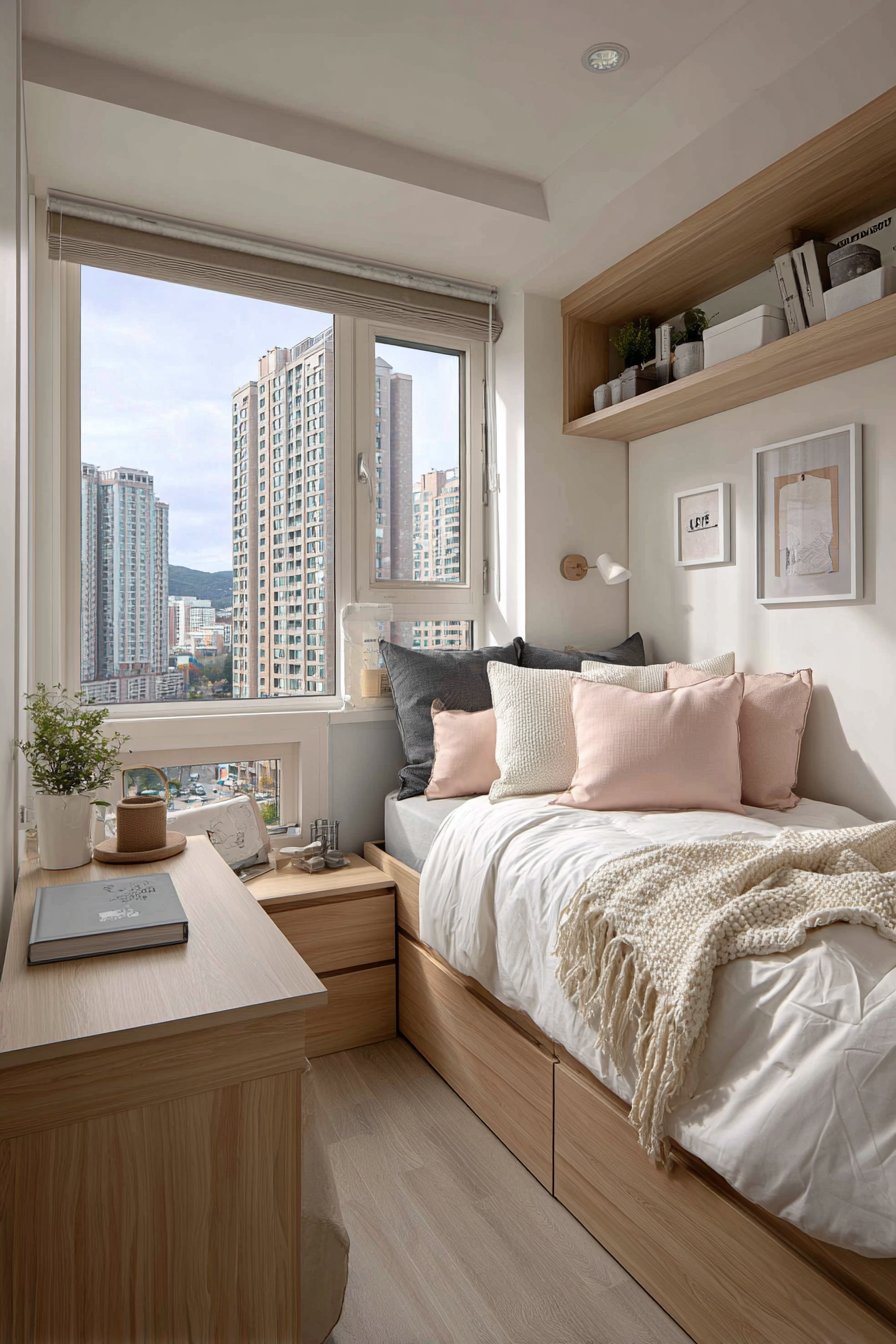
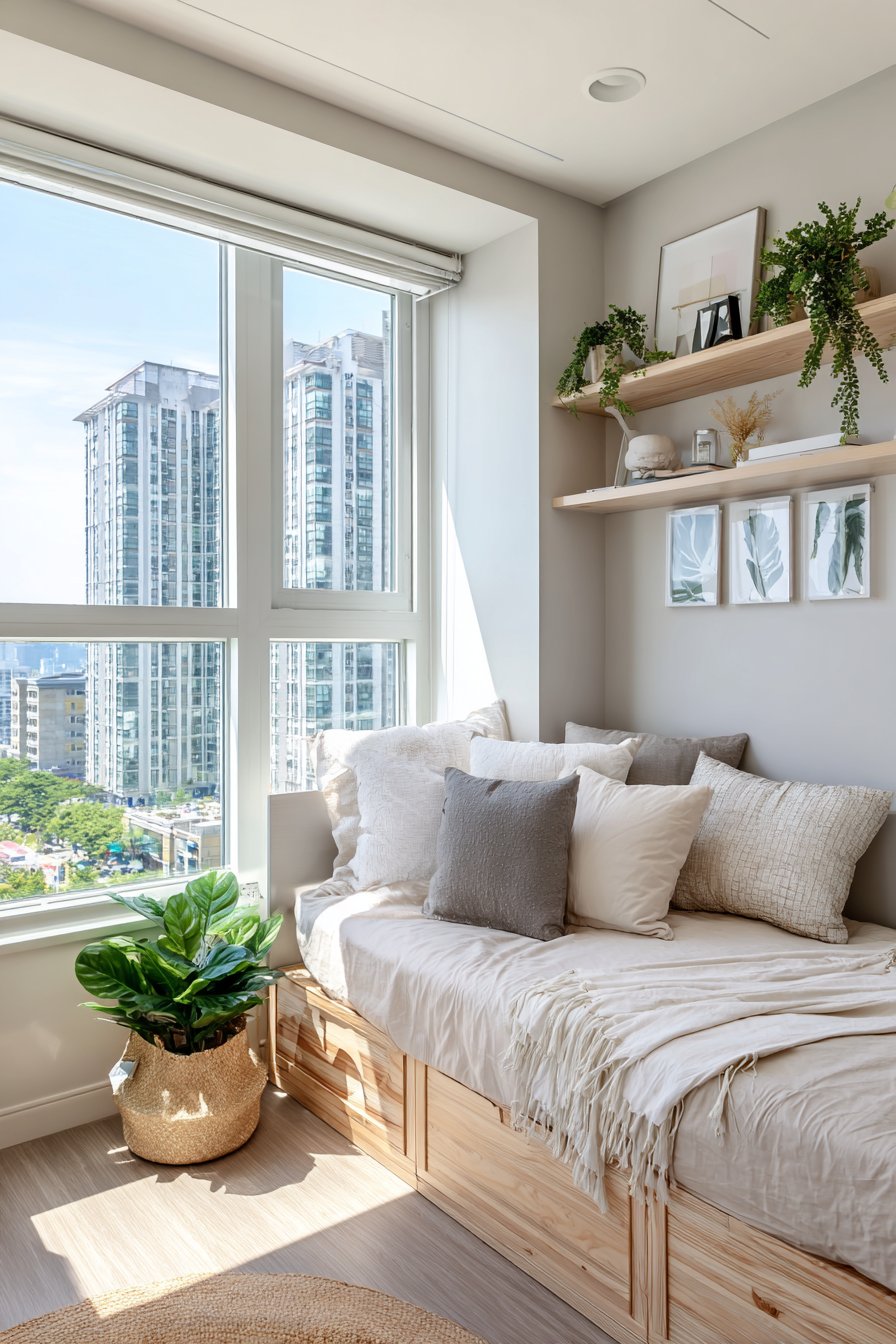
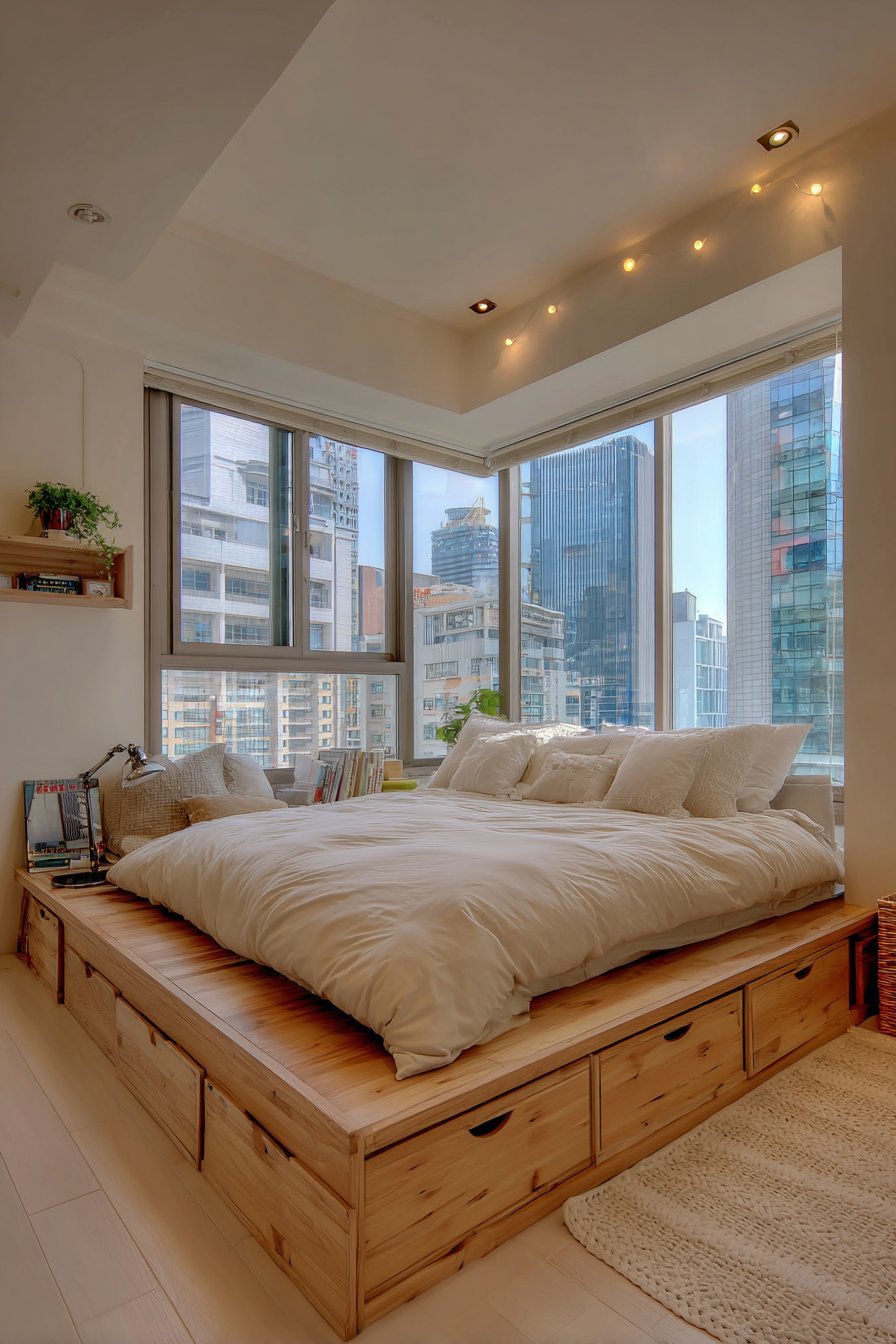
Korean design’s brilliance in small-space living shines through this compact urban bedroom that maximizes every square foot without feeling cramped. A low bed with integrated storage drawers in natural oak demonstrates the practical thinking that characterizes Korean furniture design. These drawers provide ample storage for bedding, clothing, or seasonal items while eliminating the need for additional furniture pieces that would consume precious floor space.
A wall-mounted foldable desk represents ingenious space-saving thinking, providing a functional workspace that completely disappears when not in use. This transformable element allows the room to shift between bedroom and office modes seamlessly, addressing modern life’s demands without permanent spatial commitment. The desk’s light wood construction matches the bed and overall aesthetic, maintaining visual consistency.

The neutral palette of white walls, blonde wood, and soft beige textiles creates a calm, cohesive environment that makes the compact space feel larger and more open. Natural light from a single large window serves as the room’s primary light source, emphasizing the Korean principle of maximizing natural elements even in dense urban settings. This bedroom proves that small spaces can be just as serene and functional as larger rooms when designed with intelligence and intention.
Key Design Tips:
- Select beds with integrated storage to maximize functionality without adding furniture
- Install wall-mounted foldable desks for flexible workspace that doesn’t permanently consume floor area
- Maintain a consistent color palette to create visual flow that makes small spaces feel larger
- Maximize natural light from available windows rather than relying primarily on artificial lighting
- Choose multi-functional furniture that serves multiple purposes without requiring additional pieces
10. Tranquil Traditional Elements

This master bedroom incorporates traditional Korean paper, or hanji, wall panels that create subtle texture and warmth while connecting the space to cultural heritage. Hanji’s natural fibers provide gentle visual interest and subtle sound absorption, contributing to the room’s peaceful atmosphere. These panels represent centuries of Korean craftsmanship applied to contemporary bedroom design, demonstrating how traditional materials remain relevant in modern contexts.
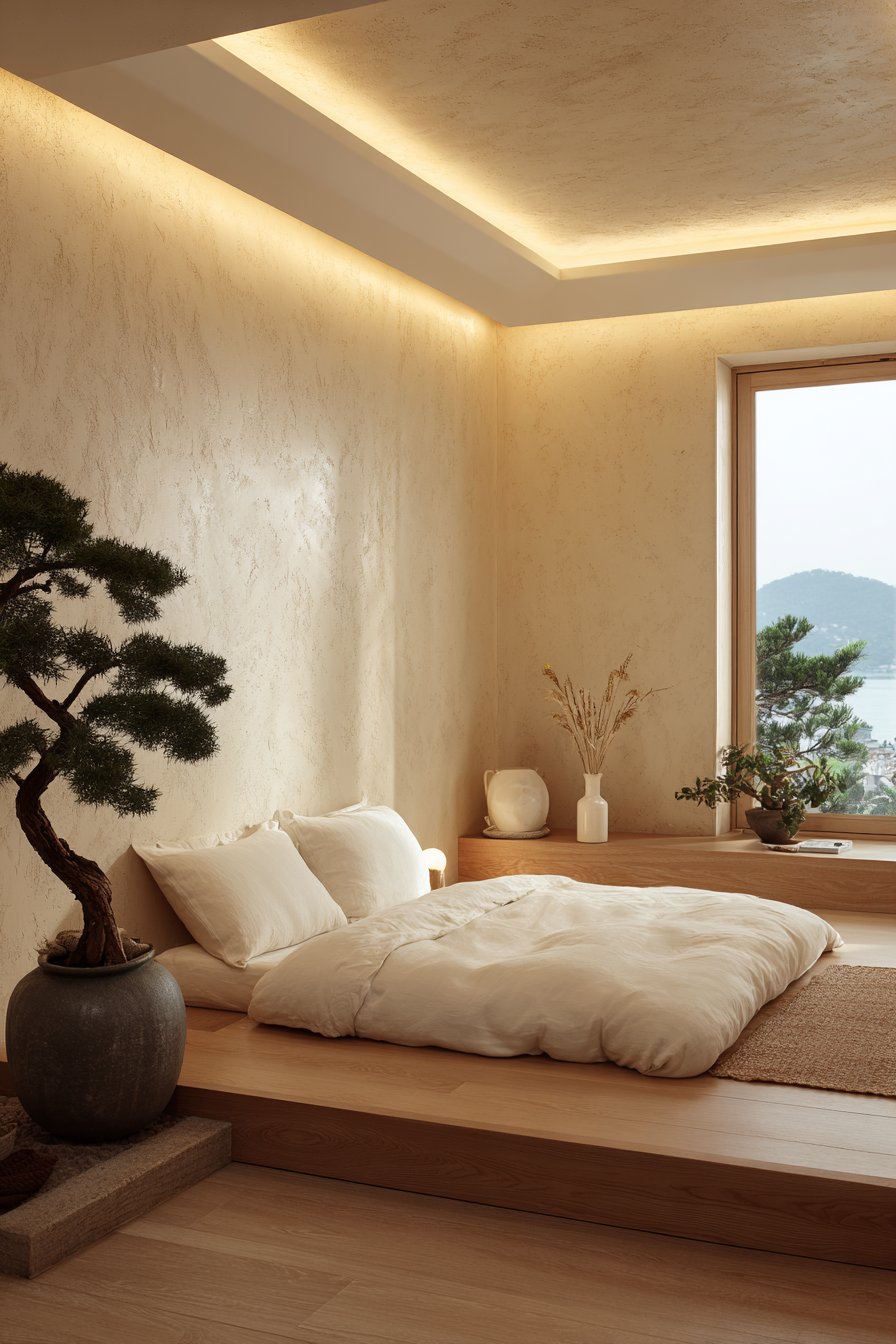
A low wooden bed platform with white organic cotton bedding serves as the focal point, its simplicity allowing the hanji walls to shine. The bed’s minimal frame and pure white bedding create a sleeping area that feels cloud-like and serene, inviting deep rest and rejuvenation. The organic cotton’s natural breathability and softness improve with each wash, embodying the Korean appreciation for materials that age gracefully.
Minimal decor includes a ceramic moon jar—a traditional Korean pottery form prized for its organic, imperfect beauty—and a small bonsai tree that brings living nature indoors. These carefully chosen elements represent the Korean aesthetic principle of finding beauty in simplicity and imperfection. Soft recessed lighting combined with natural window light creates peaceful ambiance that shifts gently throughout the day, supporting the body’s natural rhythms.
Key Design Tips:
- Consider hanji or similar natural paper wall treatments for subtle texture and cultural authenticity
- Choose ceramic moon jars or similar traditional pottery as meaningful decorative elements
- Incorporate small bonsai or similar miniature plants for living decoration that requires mindful care
- Combine recessed lighting with natural light for layered, flexible illumination
- Select organic cotton bedding in pure white for ultimate freshness and simplicity
11. Japandi-Korean Fusion
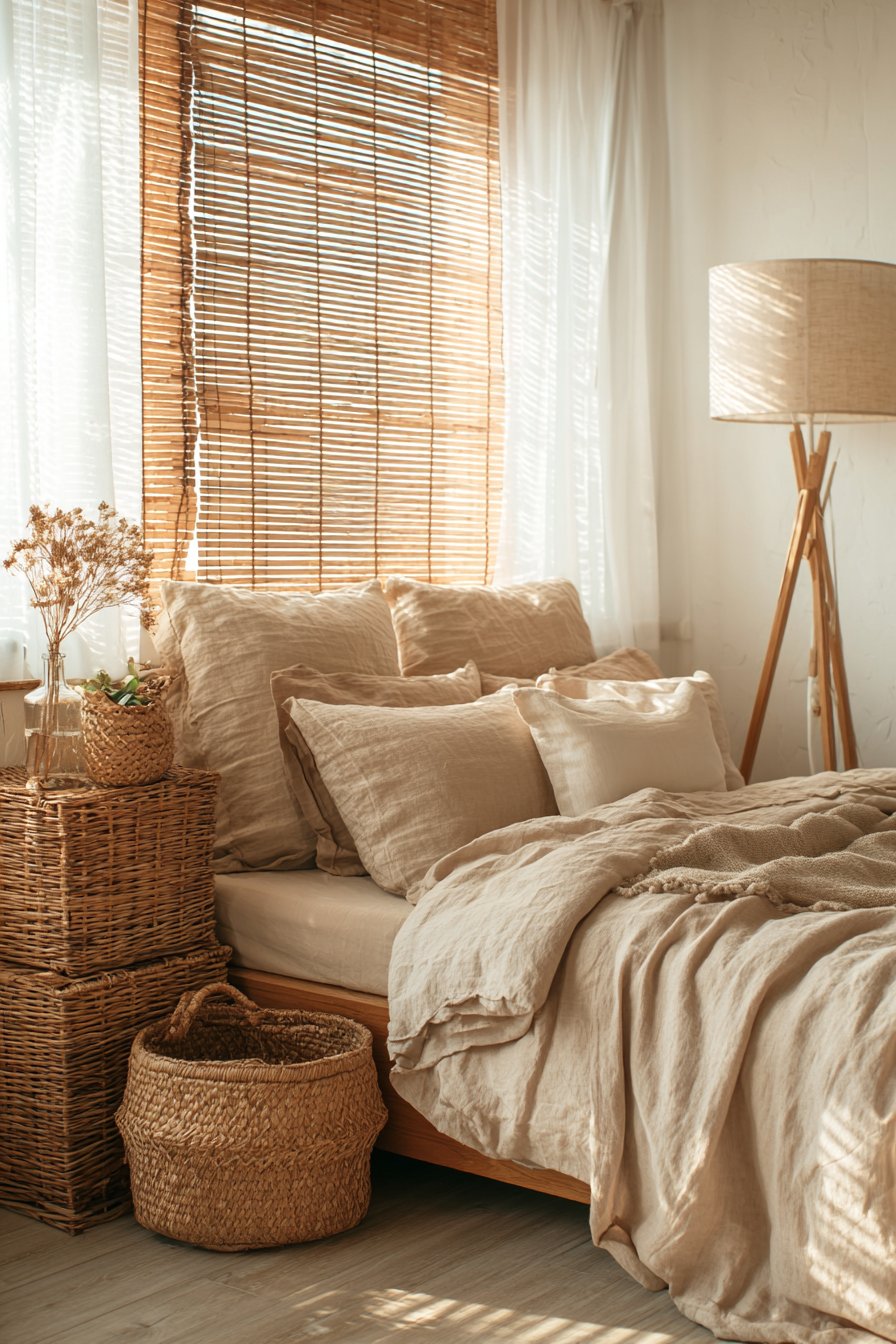
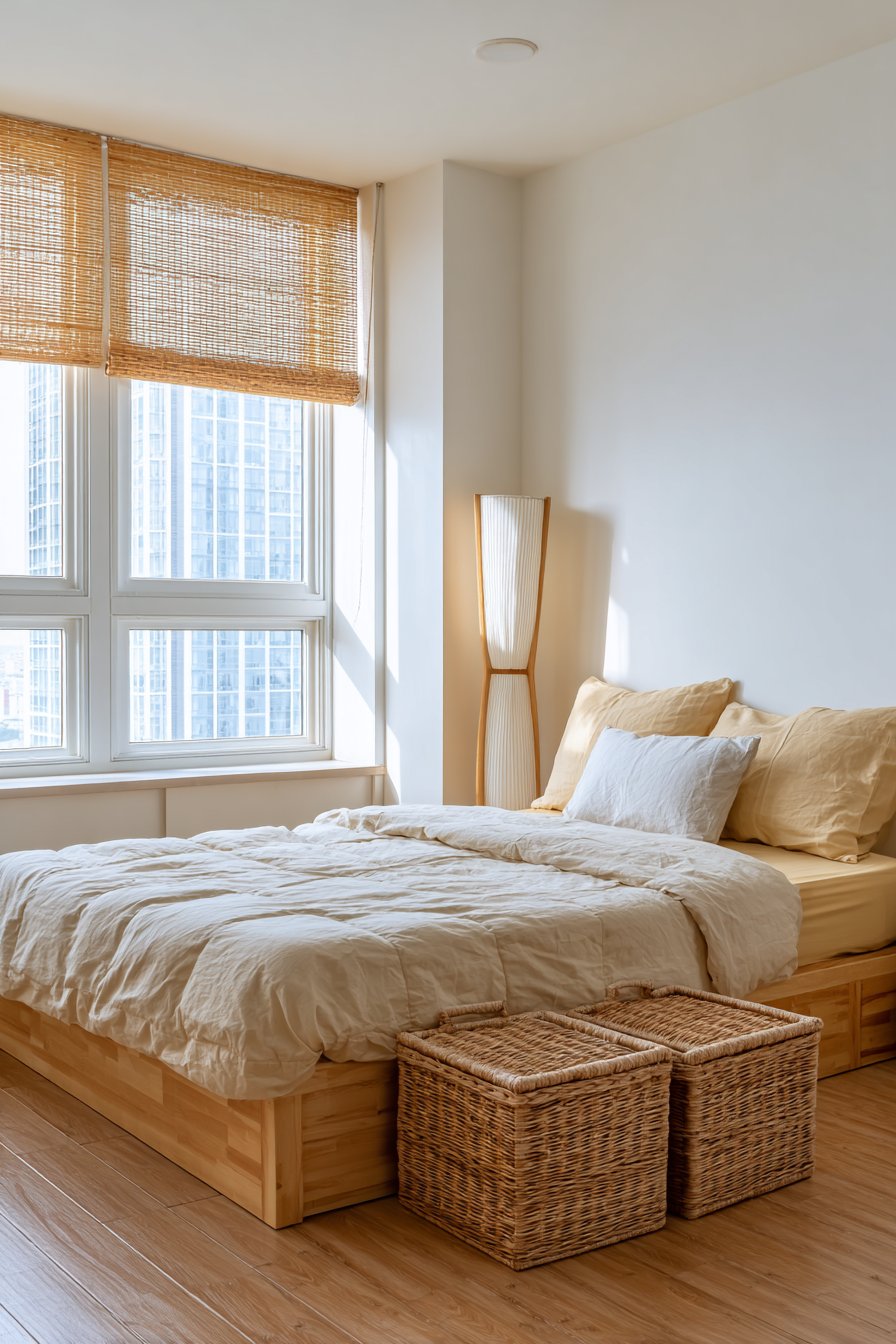
This bedroom beautifully merges Japanese and Korean design philosophies, creating a Japandi-Korean fusion that amplifies the best of both traditions. A low walnut bed frame provides depth and richness while maintaining the low profile essential to both aesthetics. Neutral linen bedding in warm beige tones adds softness and texture, creating an inviting sleeping area that balances the darker wood frame.
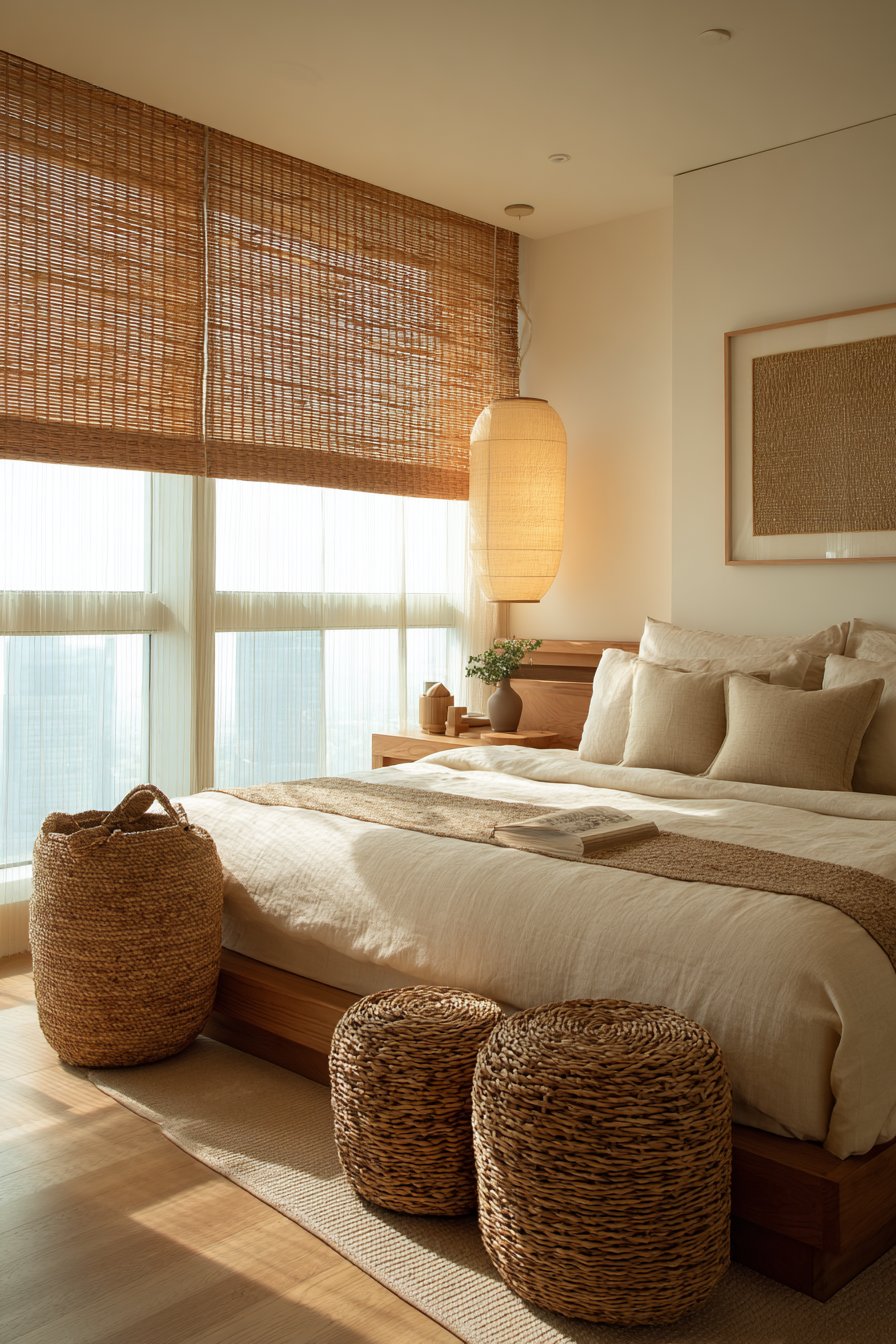
Natural rattan storage baskets introduce organic texture against clean white walls, providing practical storage while adding visual warmth. These handwoven elements celebrate traditional craftsmanship and natural materials, core values in both Japanese and Korean design. Their neutral tones and organic forms integrate seamlessly into the minimalist aesthetic while adding essential storage capacity.
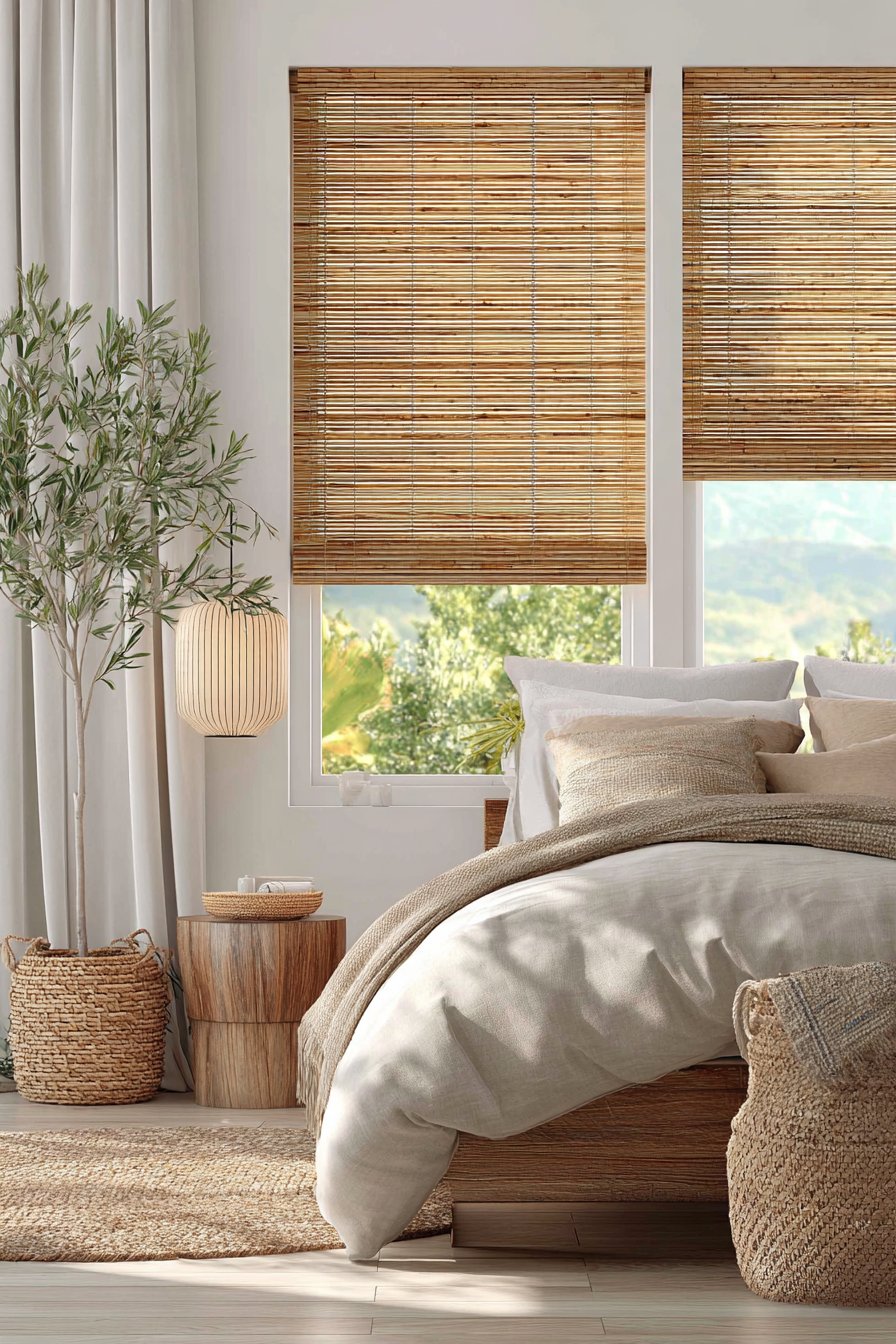
A single floor lamp with rice paper shade offers gentle illumination that creates soft shadows and ambient warmth in the evening hours. Large windows with bamboo blinds provide excellent control over natural light, allowing full sun when desired or filtered light for a more subdued atmosphere. This fusion bedroom demonstrates how related design philosophies can be combined to create something greater than either alone.
Key Design Tips:
- Mix Japanese and Korean elements thoughtfully to create fusion designs that honor both traditions
- Use walnut or other rich woods for beds to add visual weight while maintaining low profiles
- Incorporate rattan or woven storage for texture and practical organization
- Choose floor lamps with natural materials like rice paper for soft, ambient lighting
- Install bamboo blinds for flexible light control with organic aesthetic appeal
12. Mindful Children’s Space
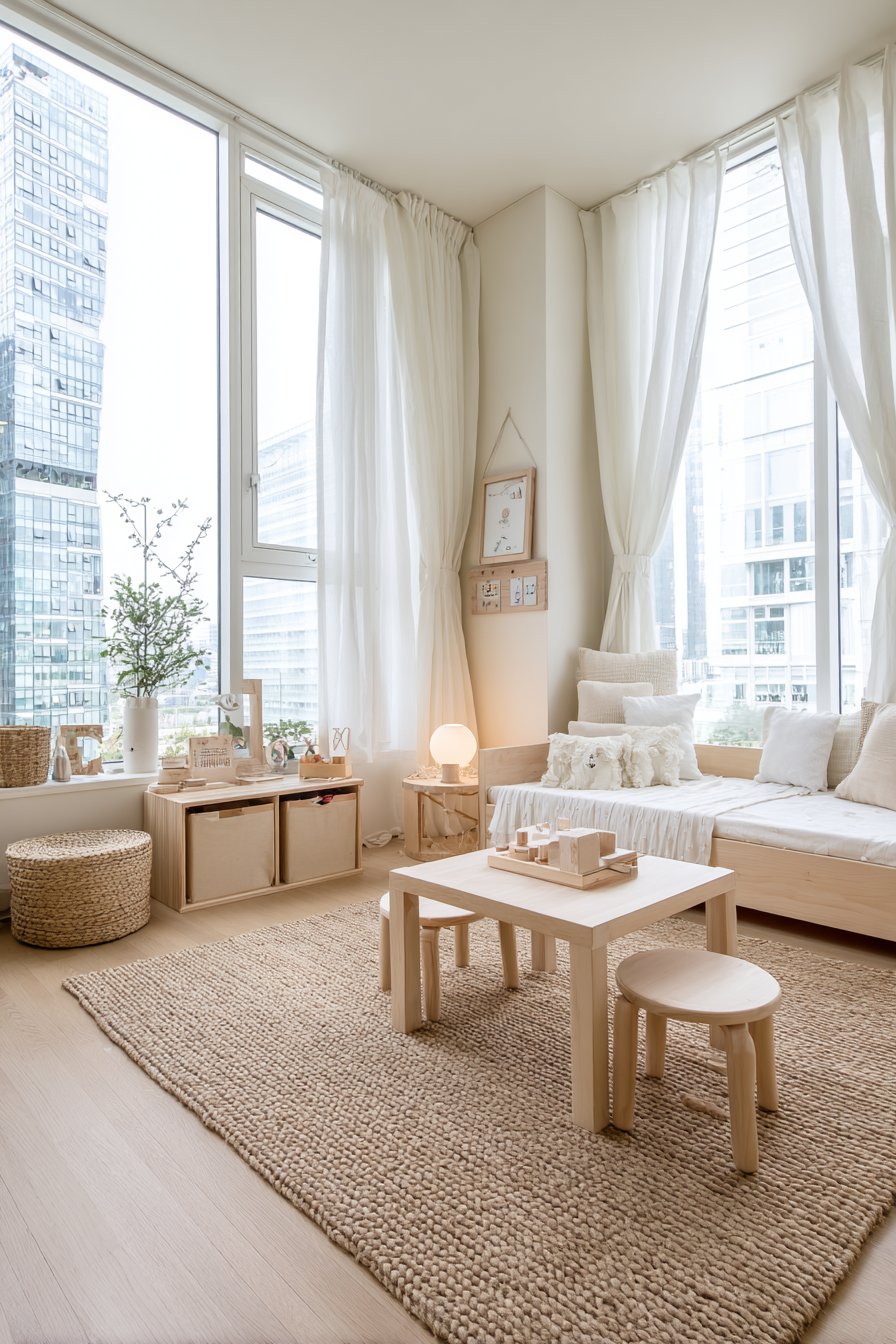
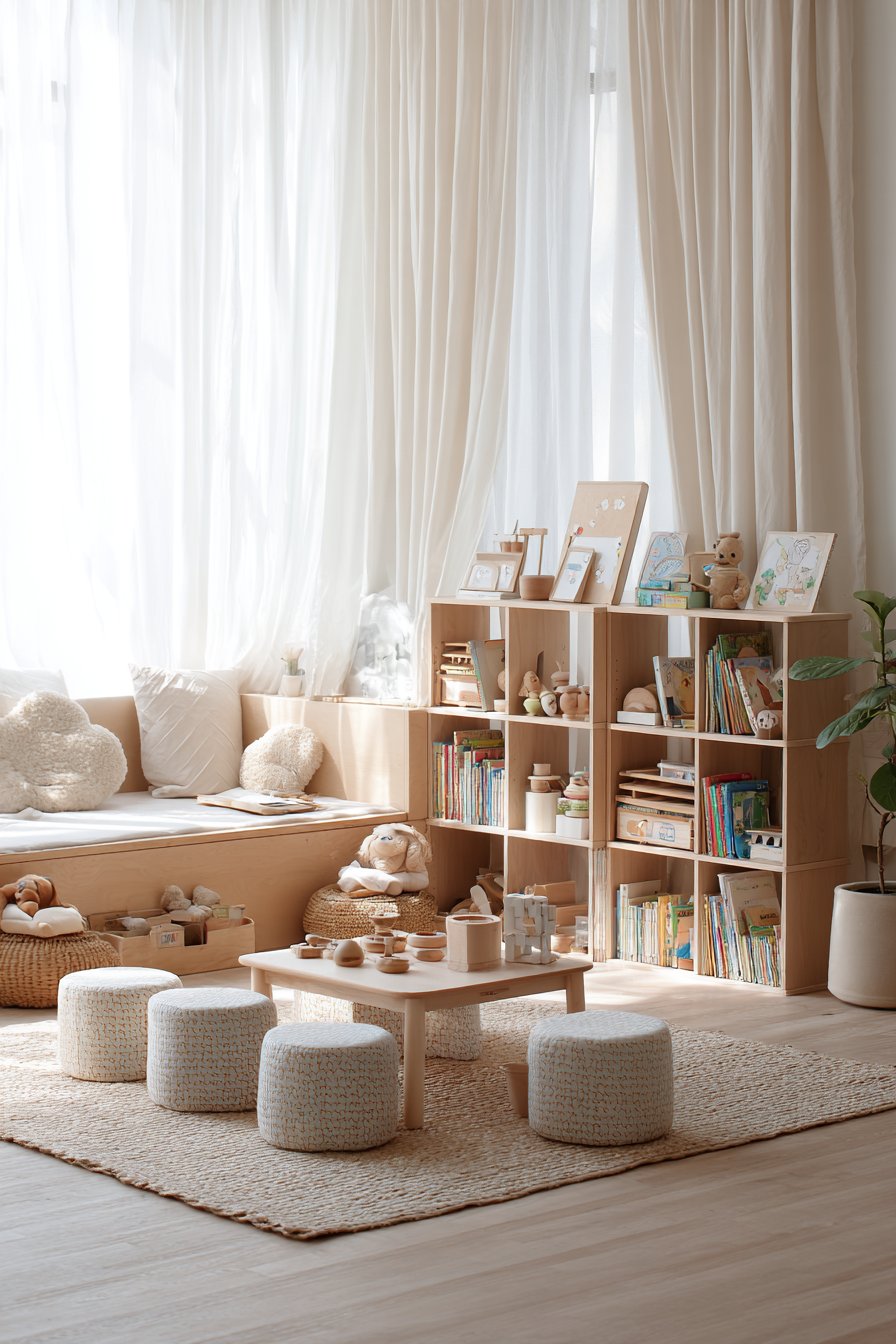
Korean design principles translate beautifully to children’s bedrooms, creating calm, safe environments that support rest and play. Low furniture scaled appropriately for children includes a platform bed in light wood that’s easy for small ones to access independently. Simple storage cubes provide organized spaces for toys and books, teaching tidiness while maintaining the minimalist aesthetic. The low height of all furniture elements ensures safety while contributing to the room’s open, uncluttered feeling.
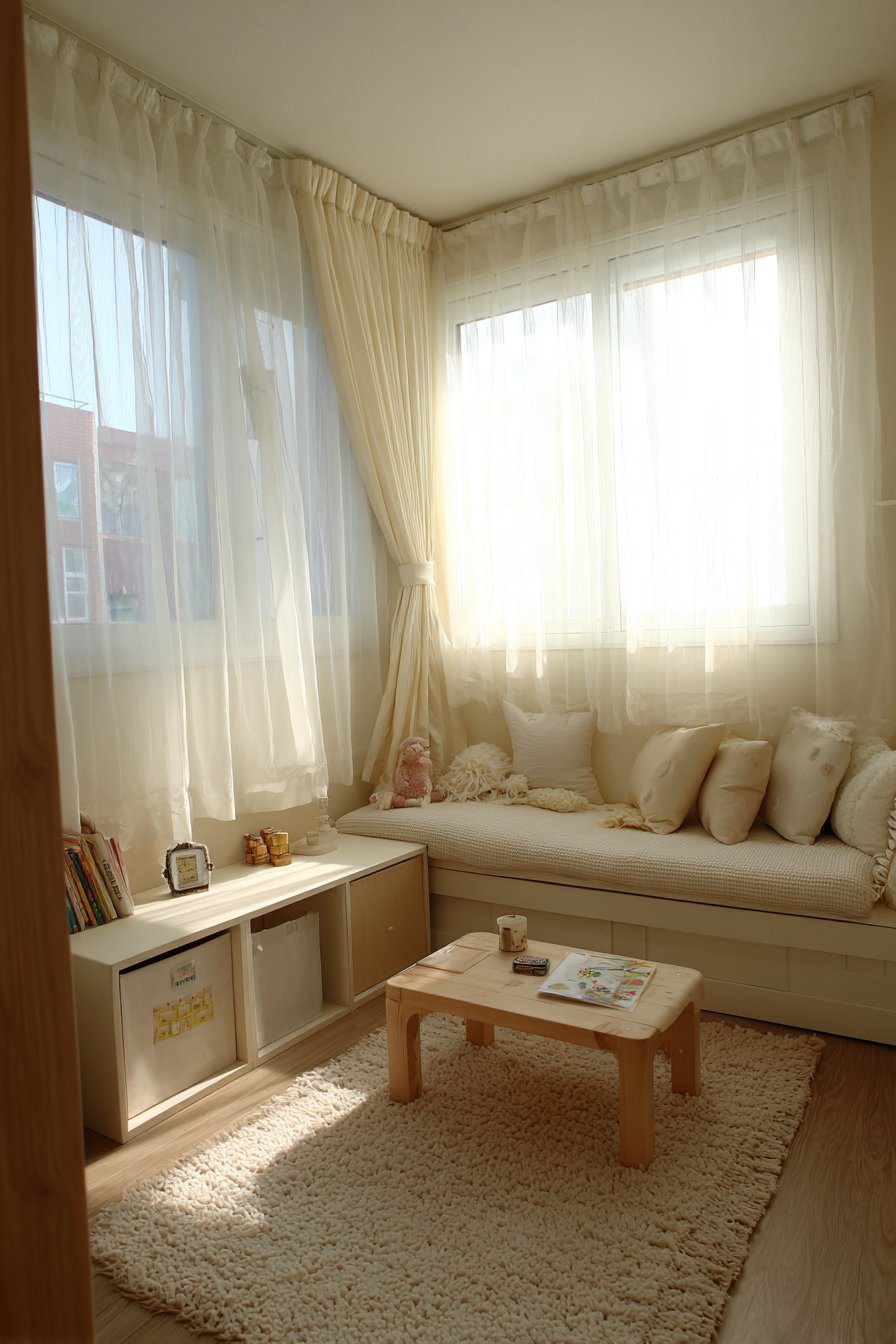
Soft neutral colors of cream and natural wood create a calming environment that supports quality sleep and peaceful play. These gentle tones provide a restful backdrop that won’t overstimulate young minds, particularly important in bedrooms where rest is essential. The neutral palette also grows with the child, remaining appropriate from toddlerhood through teenage years without requiring complete redesign.
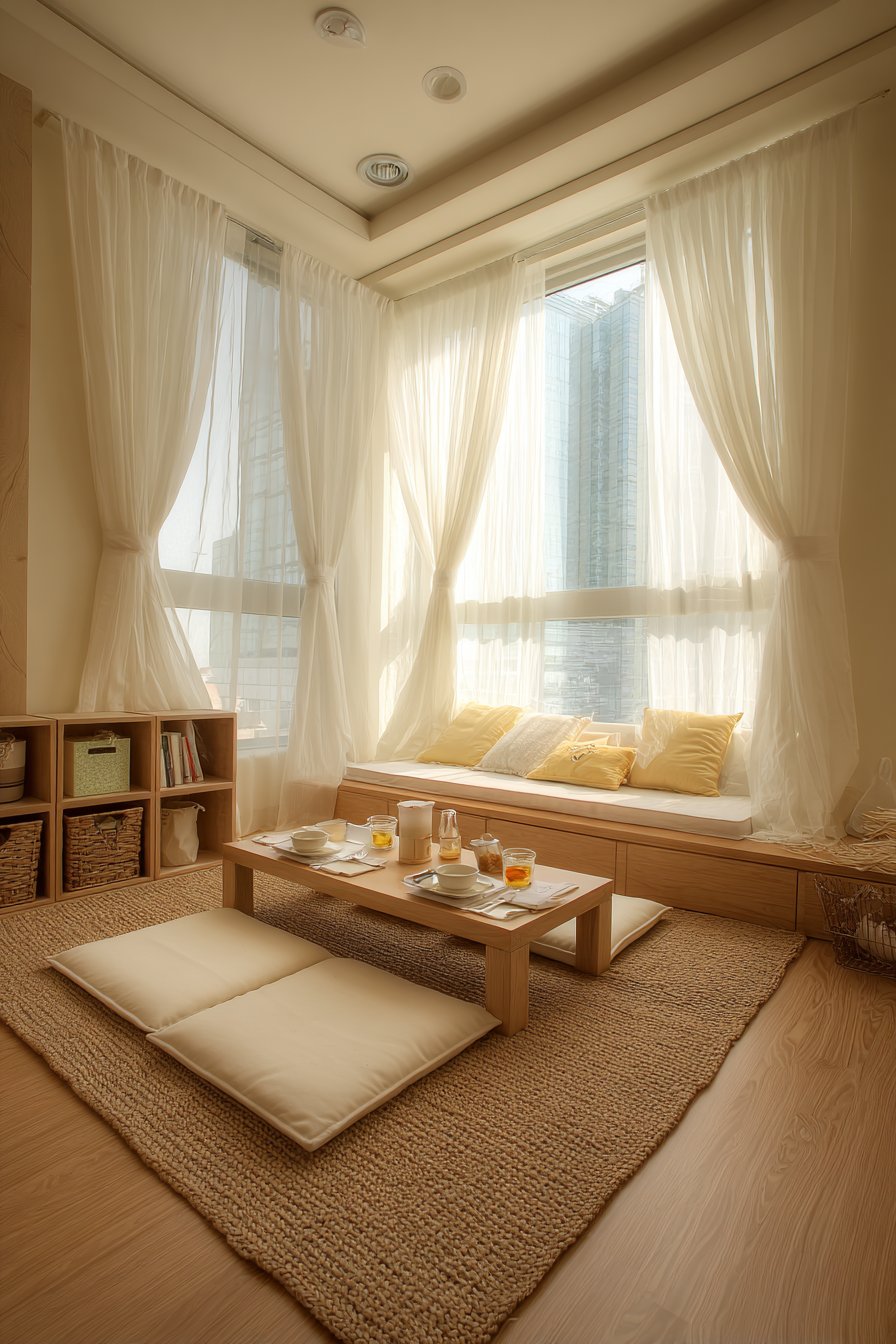
A small low table for activities sits on a natural fiber rug, creating a dedicated space for drawing, puzzles, or quiet play. Gentle natural lighting through sheer curtains provides healthy illumination that supports developing eyes while maintaining the soft, peaceful atmosphere. This children’s bedroom proves that minimalist design can be both child-friendly and beautiful.
Key Design Tips:
- Scale all furniture appropriately for children’s heights to encourage independence and ensure safety
- Choose neutral colors that create calm while remaining suitable as children grow
- Provide simple, accessible storage to teach organization from an early age
- Create dedicated activity zones with rugs or low tables to define different areas for play and rest
- Prioritize natural light while using sheer curtains to soften intensity for sensitive young eyes
13. Sophisticated Cultural Connection
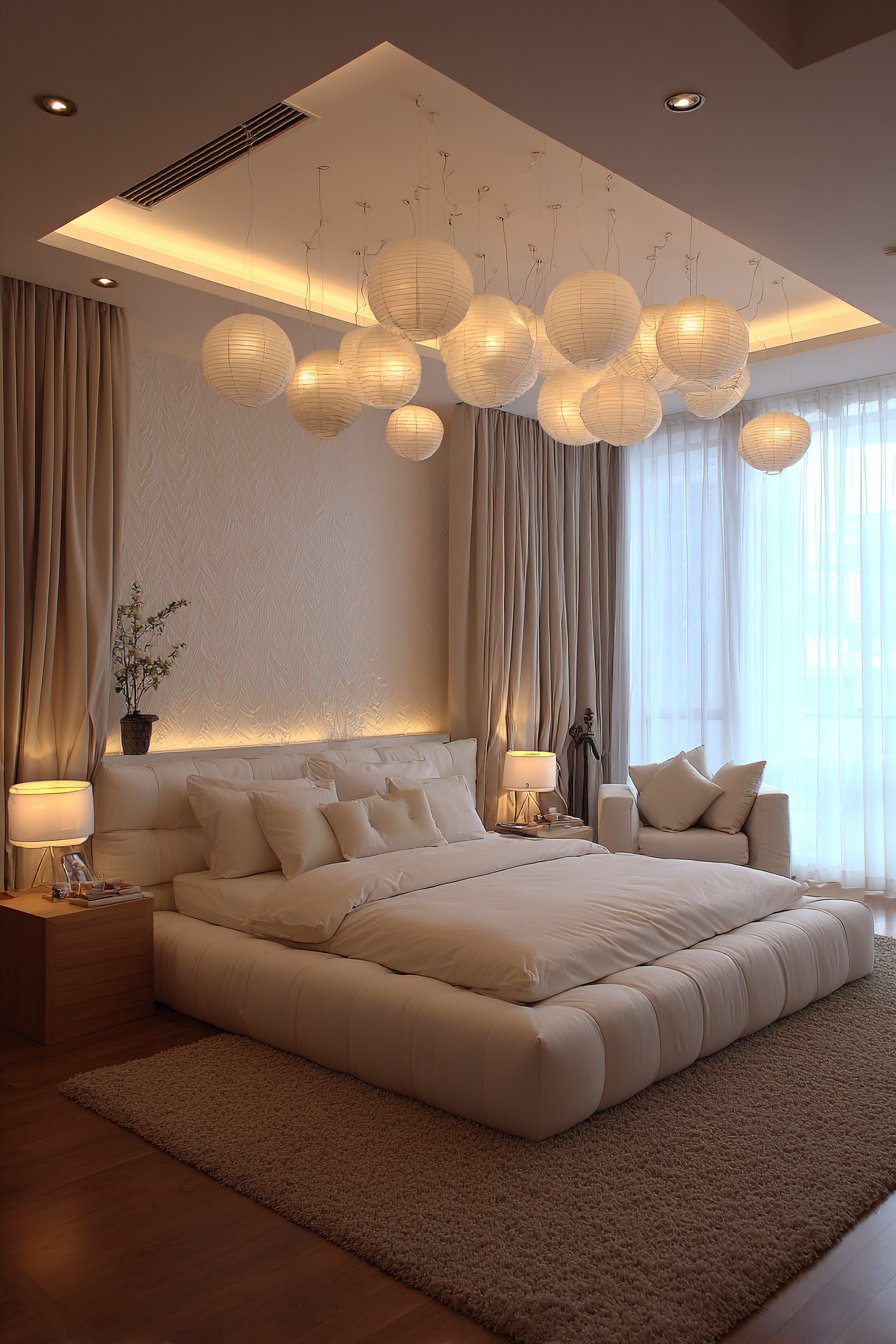
This elegant bedroom demonstrates how traditional Korean elements can be incorporated into sophisticated contemporary design. A tufted low-profile bed in natural linen fabric provides luxurious comfort while maintaining the essential horizontal emphasis of Korean furniture. The tufting adds subtle texture and visual interest without overwhelming the minimalist aesthetic, while the natural linen covering ensures breathability and organic beauty.
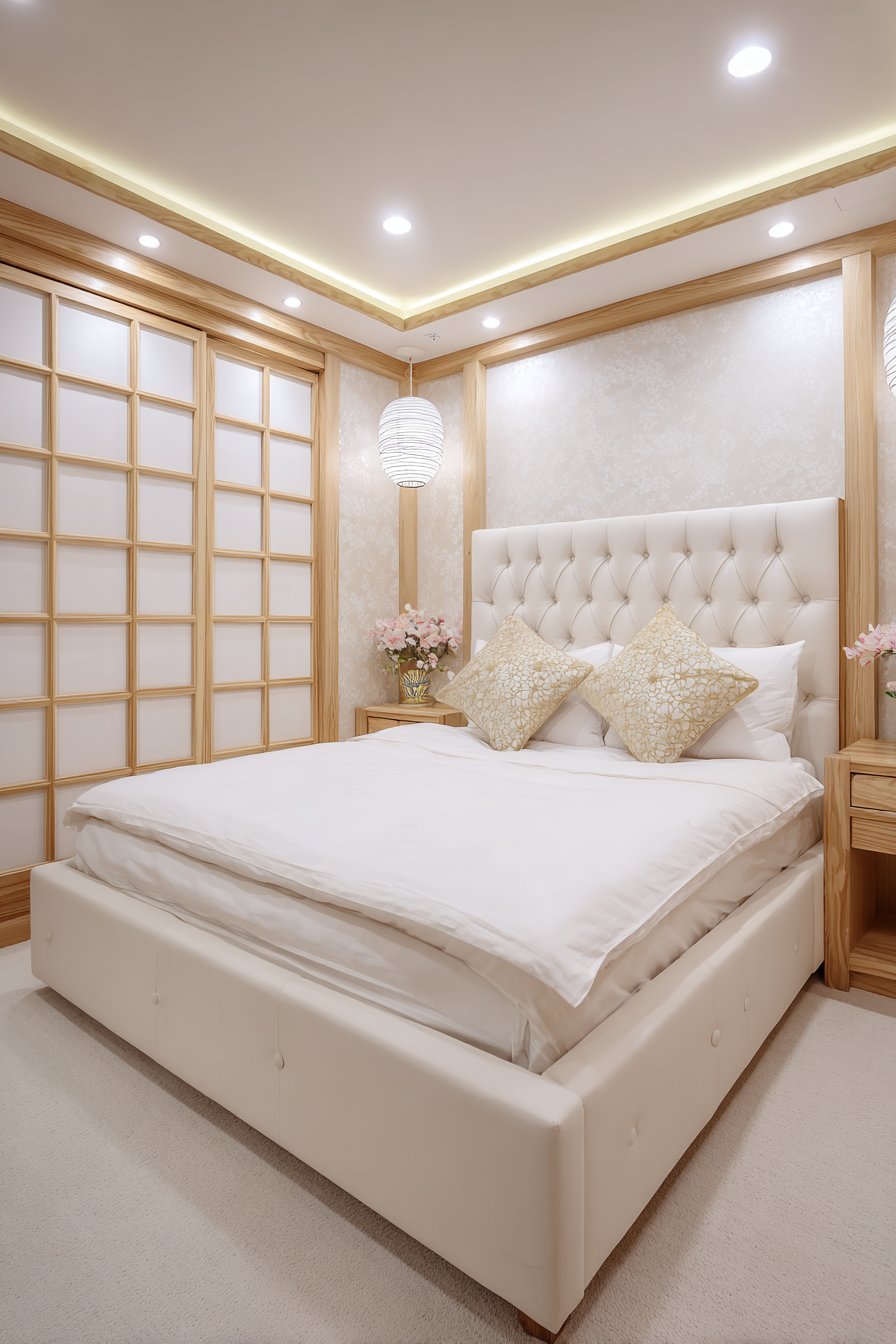
Matching bedside tables in blonde oak flank the bed, their light wood tones creating warmth and continuity throughout the space. The walls feature a subtle texture finish in warm white that adds depth and interest to what might otherwise be plain surfaces. This textured treatment catches light beautifully, creating gentle shadows and highlights that change throughout the day.
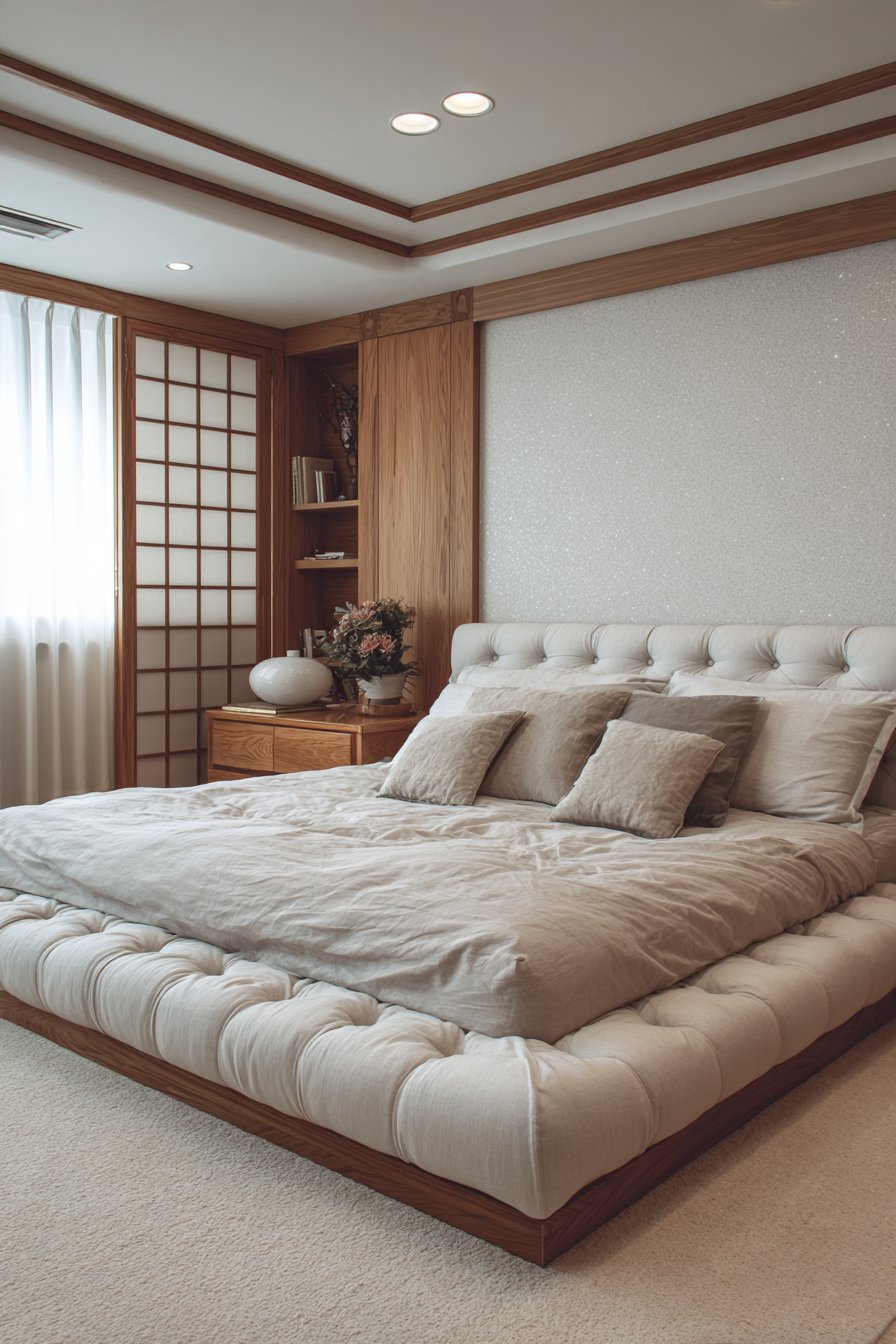
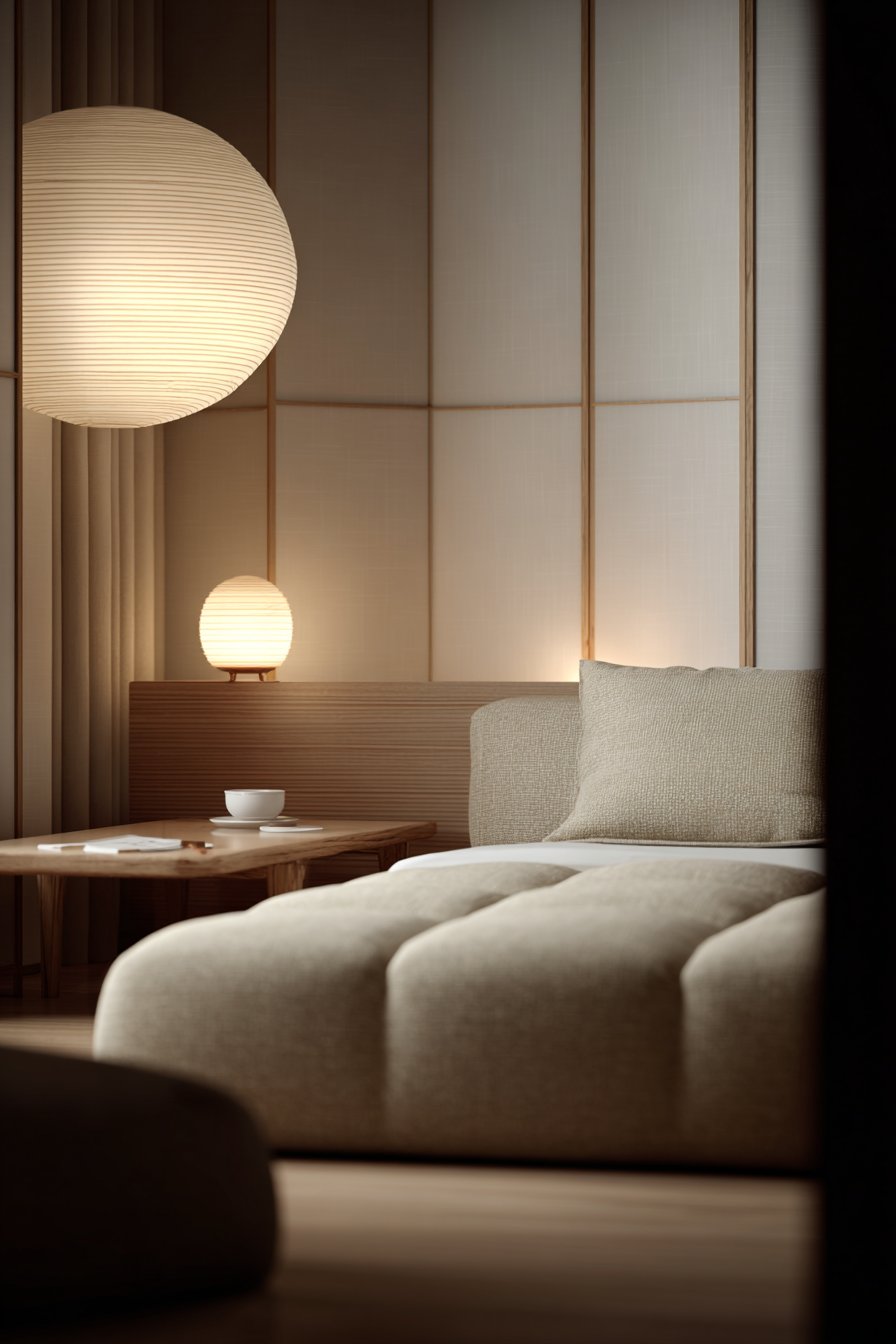
A traditional Korean folding screen adds cultural authenticity and practical function, providing privacy, dividing space, or simply serving as a beautiful art piece. These screens often feature hand-painted designs or intricate woodwork that represents significant artistic heritage. Layered lighting includes paper lanterns and recessed spots, providing flexibility for different moods and activities while maintaining the sophisticated aesthetic.
Key Design Tips:
- Choose tufted upholstery in natural fabrics for subtle luxury that aligns with minimalist principles
- Use textured wall finishes in neutral tones to add visual interest without color or pattern
- Incorporate traditional folding screens as functional art pieces that connect to cultural heritage
- Layer different lighting types for maximum flexibility in creating various atmospheres
- Select blonde or light oak furniture for warmth without heaviness
14. Studio Apartment Solution
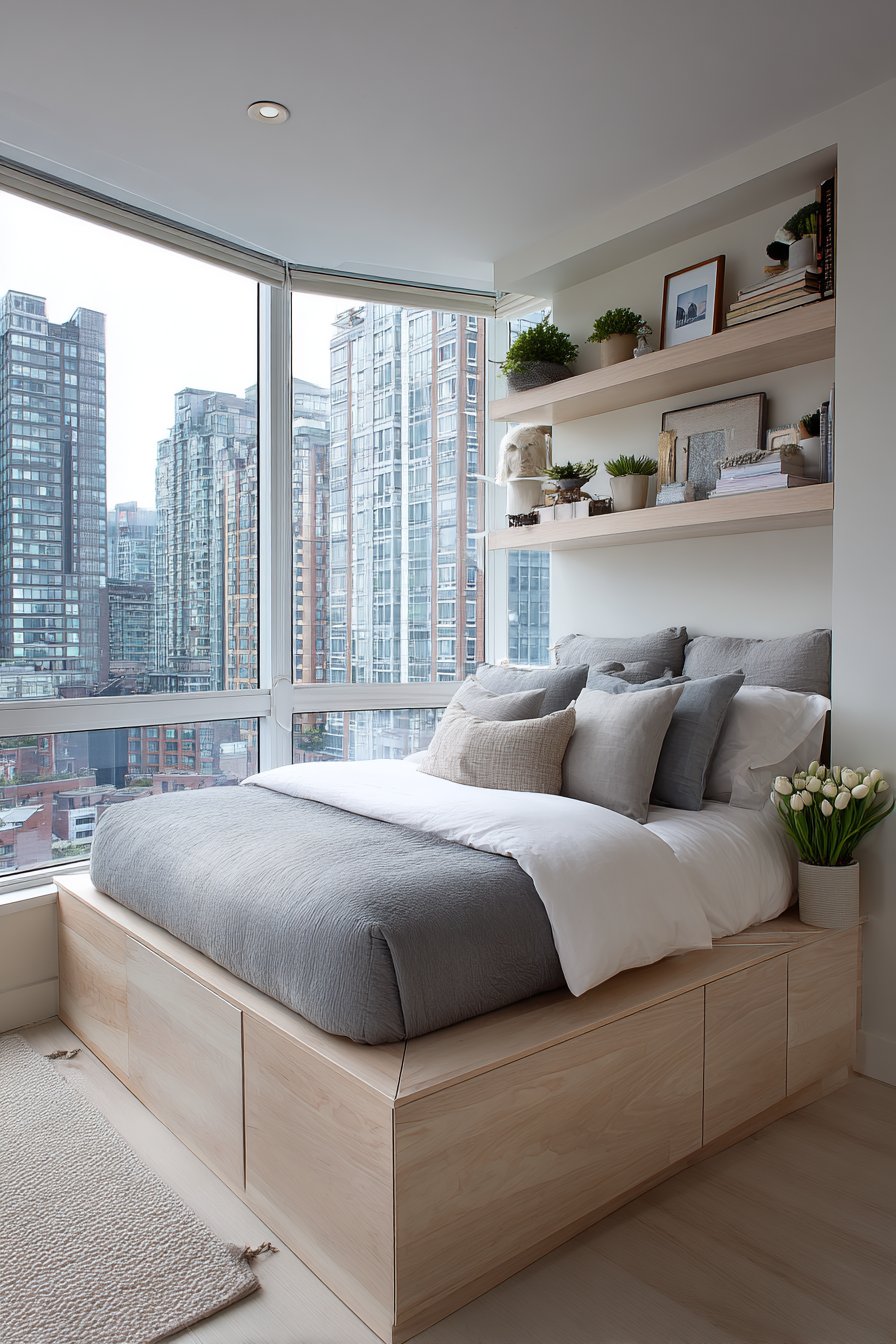
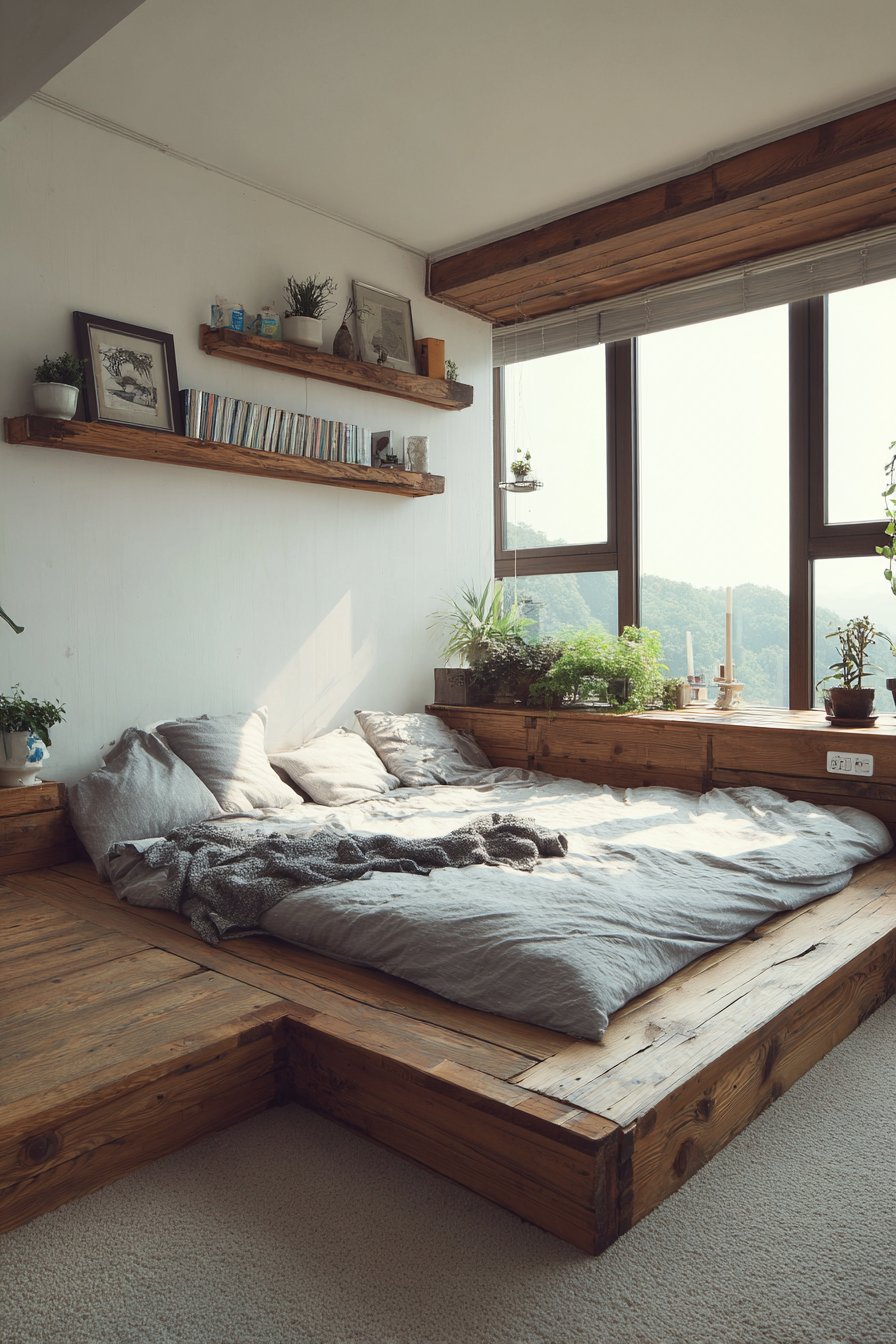
This studio apartment sleeping area demonstrates how Korean design principles create defined zones within open-plan living. A low platform bed with built-in side tables in continuous oak construction serves multiple functions while appearing as a single, cohesive furniture piece. This integrated approach minimizes visual clutter while maximizing functionality, essential in small-space living where every element must work efficiently.
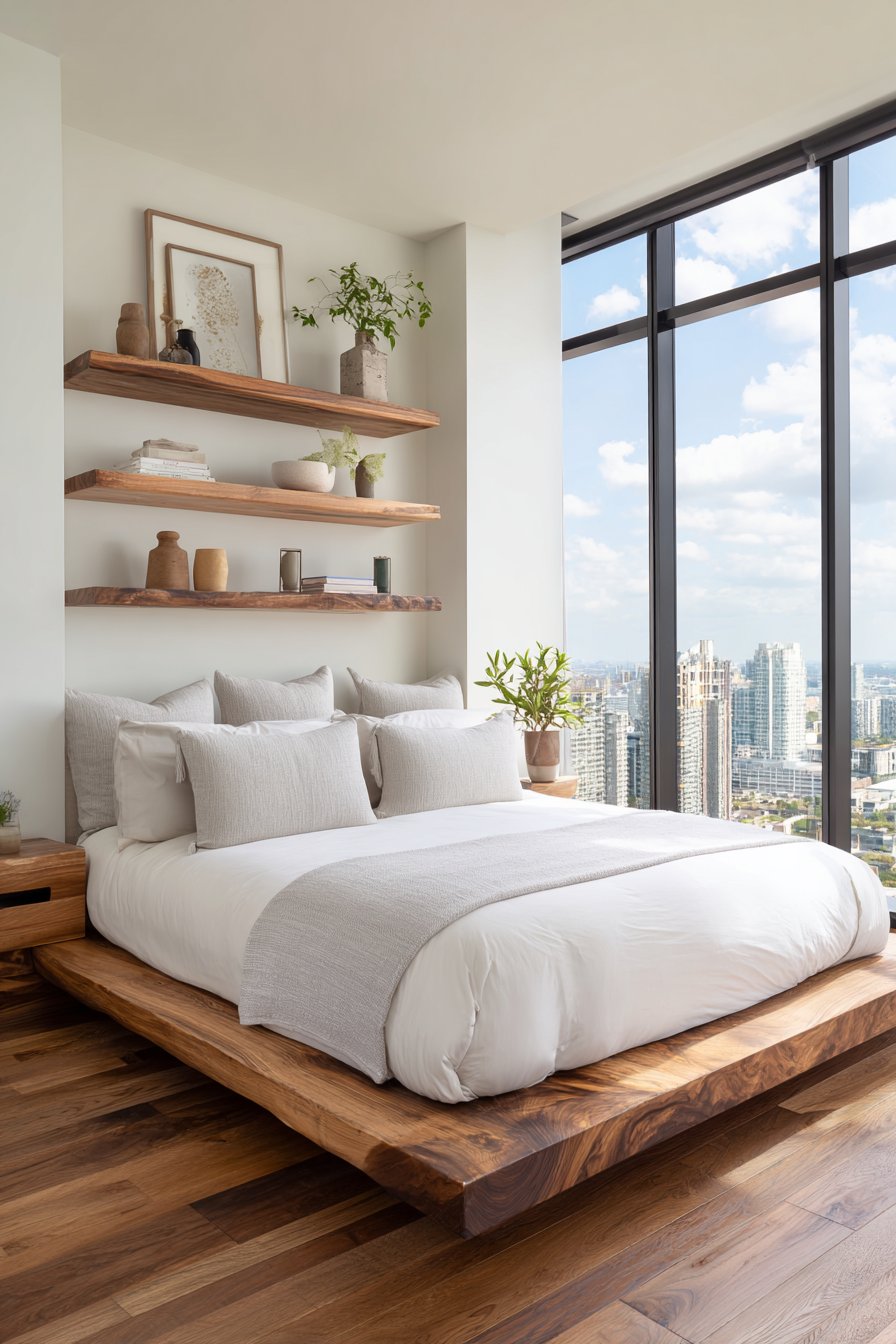
Floating shelves mounted above the bed display minimal decor and small plants, providing storage and decoration without consuming floor space or requiring additional furniture. The vertical use of wall space draws the eye upward, making the room feel taller and more spacious. Each item on display is carefully chosen for its beauty or usefulness, embodying the Korean principle of intentional possession.
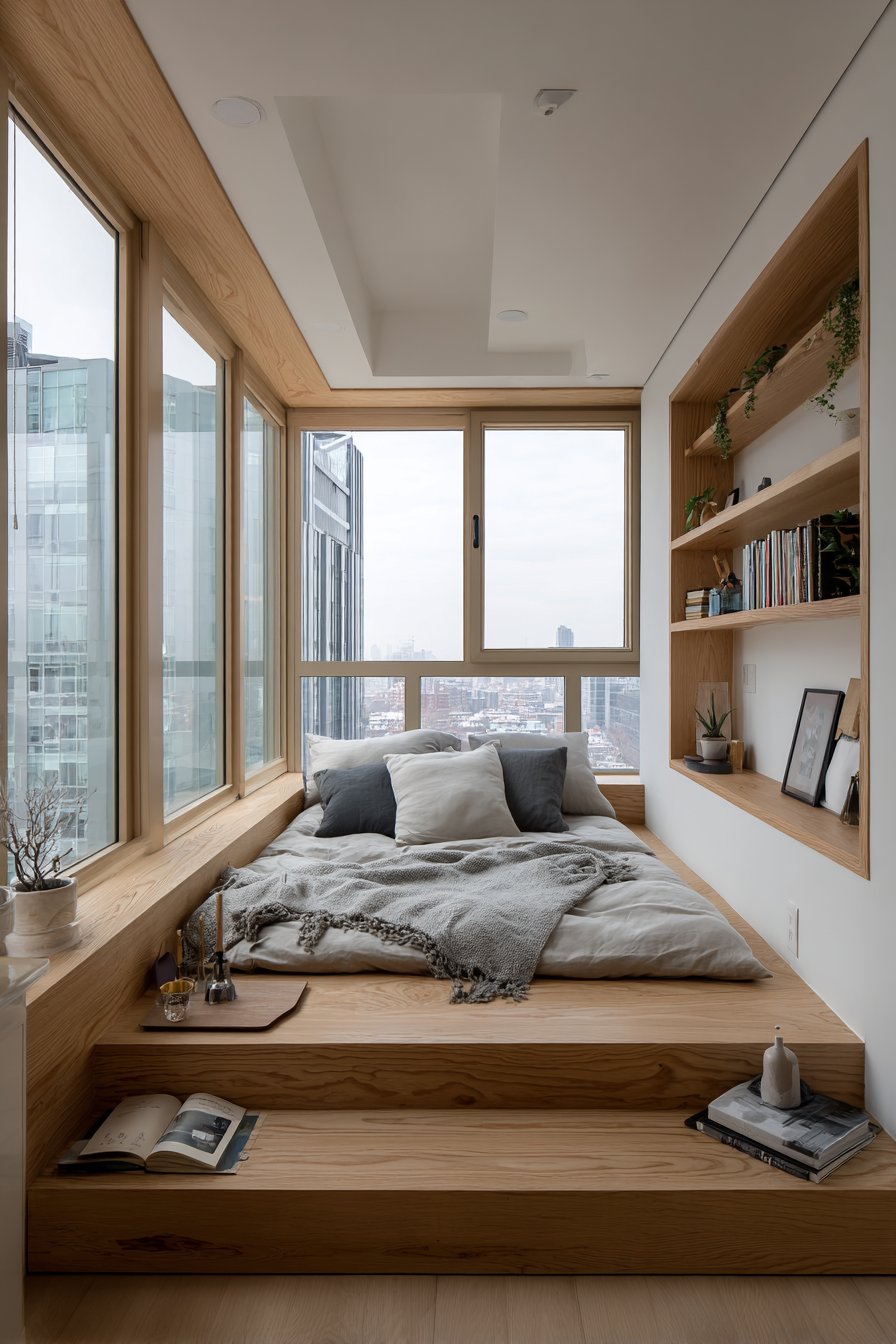
The color scheme relies exclusively on natural wood, white walls, and soft gray textiles to create a cohesive palette that makes the small space feel larger and more organized. Natural light from floor-to-ceiling windows fills the space, blurring the boundaries between indoors and outdoors and creating a sense of expansion beyond the room’s physical limits. This studio sleeping area proves that even the smallest urban dwellings can embody Korean design’s peaceful, organized aesthetic.
Key Design Tips:
- Choose platform beds with integrated nightstands to reduce furniture count in small spaces
- Use floating shelves for storage and display without consuming precious floor area
- Maintain a strict color palette of neutrals to create visual cohesion in compact spaces
- Maximize floor-to-ceiling windows to bring in natural light and create visual expansion
- Apply vertical design principles to draw the eye upward and make spaces feel taller
15. Meditative Inner Sanctuary

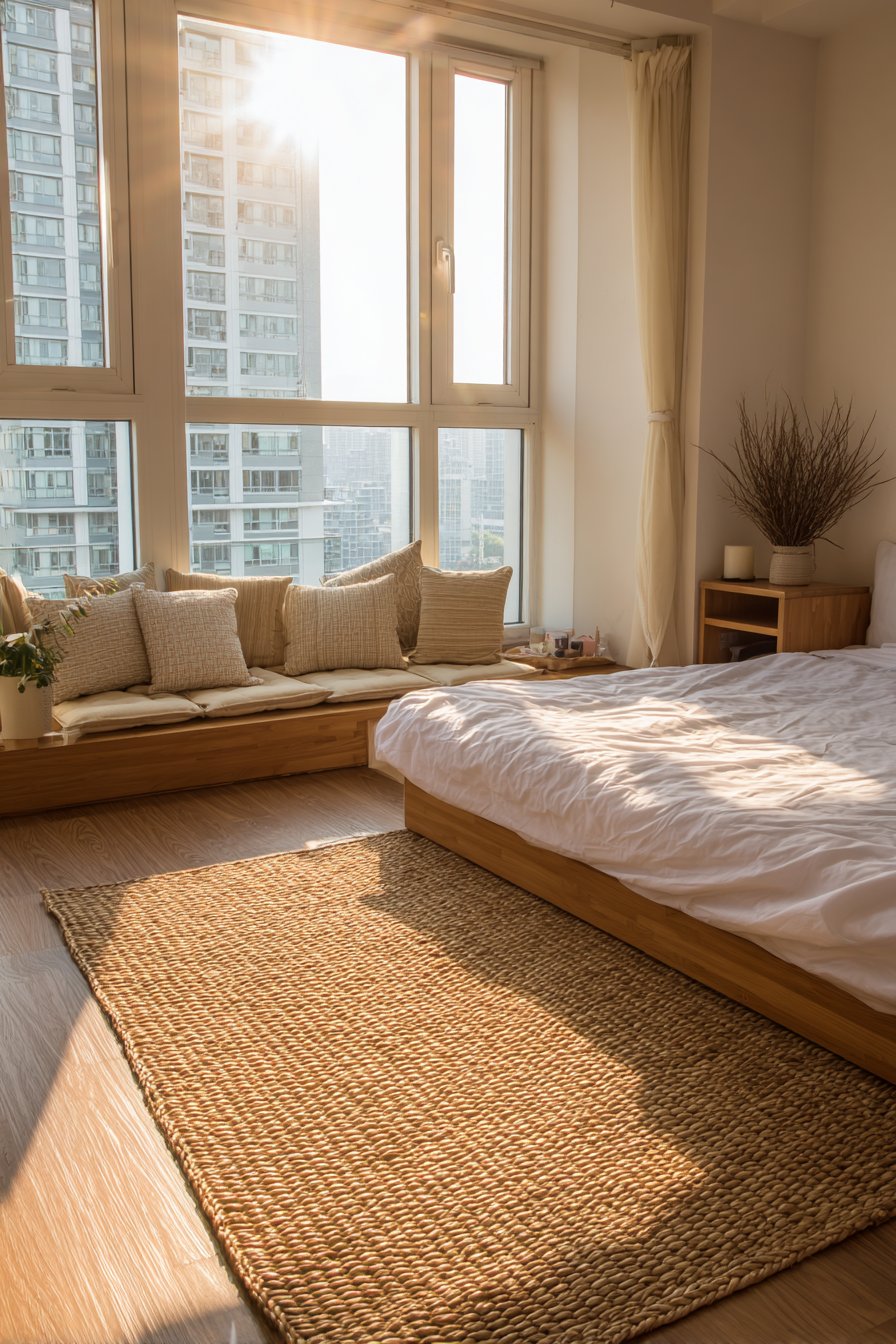
This bedroom incorporates a dedicated meditation corner that transforms the space into a true sanctuary for both sleep and spiritual practice. Floor cushions in natural fabrics are arranged on a woven mat, creating a comfortable area for seated meditation or quiet contemplation. The cushions’ neutral tones and organic materials integrate seamlessly with the bedroom’s overall aesthetic while serving their specific meditative purpose.

A low wooden altar-style shelf holds candles and simple objects—perhaps stones, a small Buddha, or meaningful personal items—creating a focal point for meditation practice. This shelf’s low profile and minimal design ensure it enhances rather than disrupts the room’s peaceful atmosphere. The surrounding bedroom features a minimalist bed with white bedding that maintains the sense of purity and simplicity essential for both restful sleep and meditative practice.

Warm wood flooring provides a natural, grounding surface that connects practitioners to earth elements during meditation. Soft natural light creates a contemplative atmosphere that shifts gently throughout the day, supporting morning meditation practice or evening reflection. This bedroom demonstrates how Korean design’s spiritual roots can be honored in contemporary spaces that support both physical rest and inner peace.
Key Design Tips:
- Create dedicated meditation spaces within bedrooms using floor cushions and woven mats
- Install low altar-style shelves for meaningful objects without disrupting the minimalist aesthetic
- Choose warm wood flooring for grounding energy and natural beauty
- Position meditation areas to receive optimal natural light for morning or evening practice
- Maintain overall bedroom simplicity to support both restful sleep and contemplative practice
16. Contemporary Sophistication

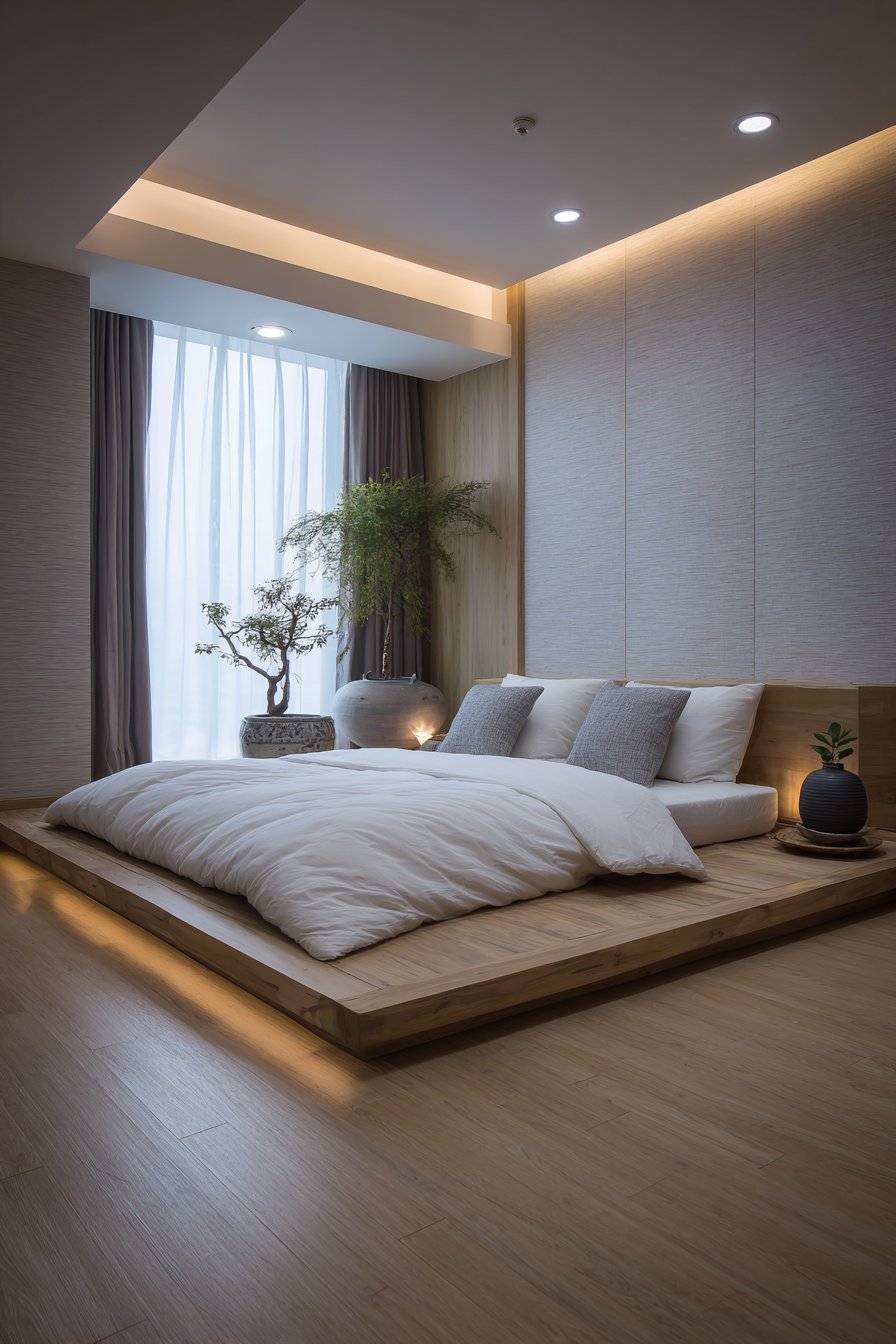
This modern bedroom pushes Korean minimalism toward cutting-edge contemporary design with a sleek low bed featuring a floating appearance. The bed’s construction creates the illusion that it hovers above the floor, achieved through hidden support structures that maintain stability while creating visual lightness. Dressed in layered white and cream linens, the bed becomes a cloud-like focal point that seems to defy gravity.
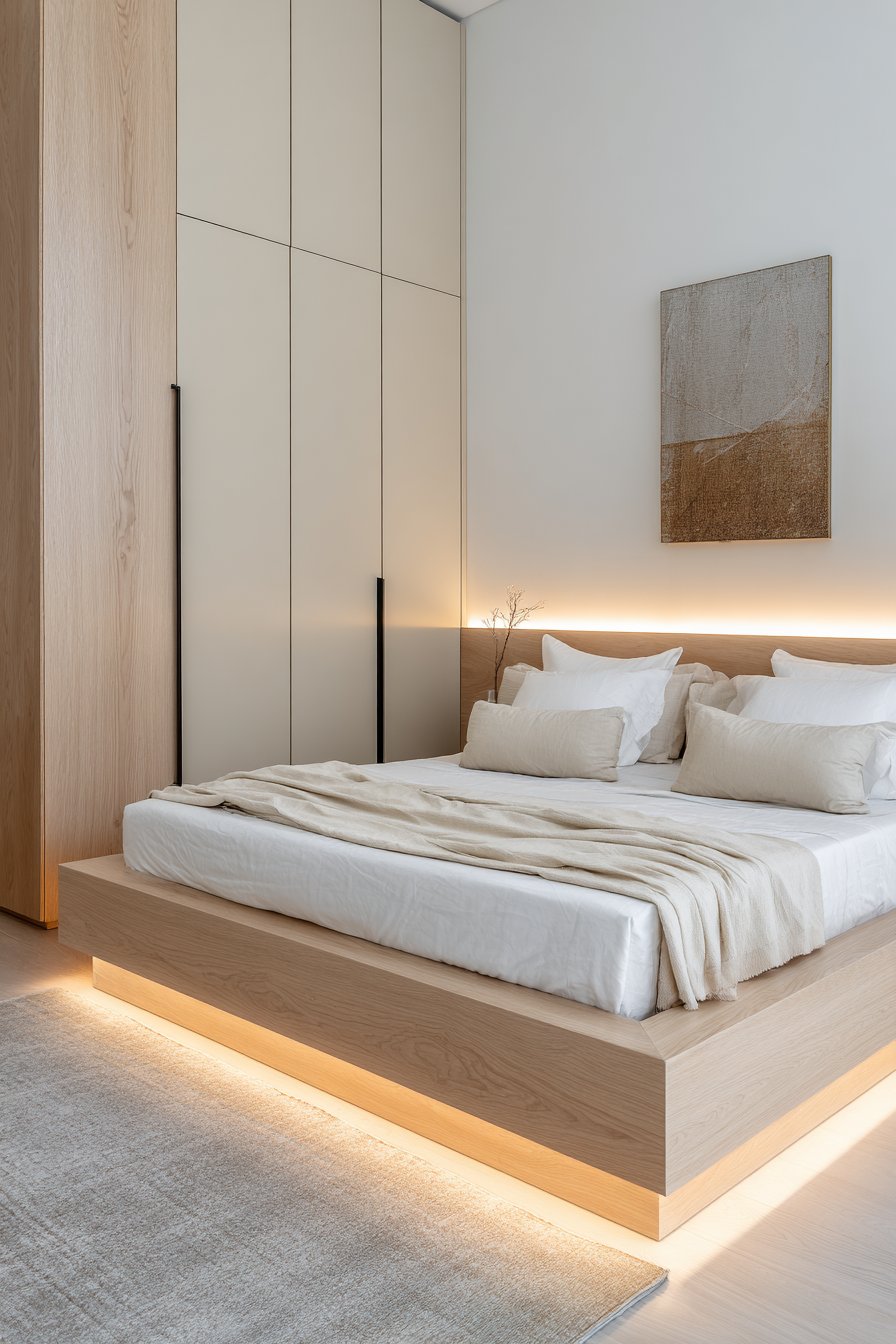
A statement piece of contemporary Korean art provides the only wall decoration, carefully selected to represent the intersection of traditional Korean artistic values and modern expression. This singular focus allows the artwork to command attention and appreciation, demonstrating how less truly can be more in creating impactful spaces. The piece might incorporate traditional Korean motifs reimagined through contemporary techniques or materials.
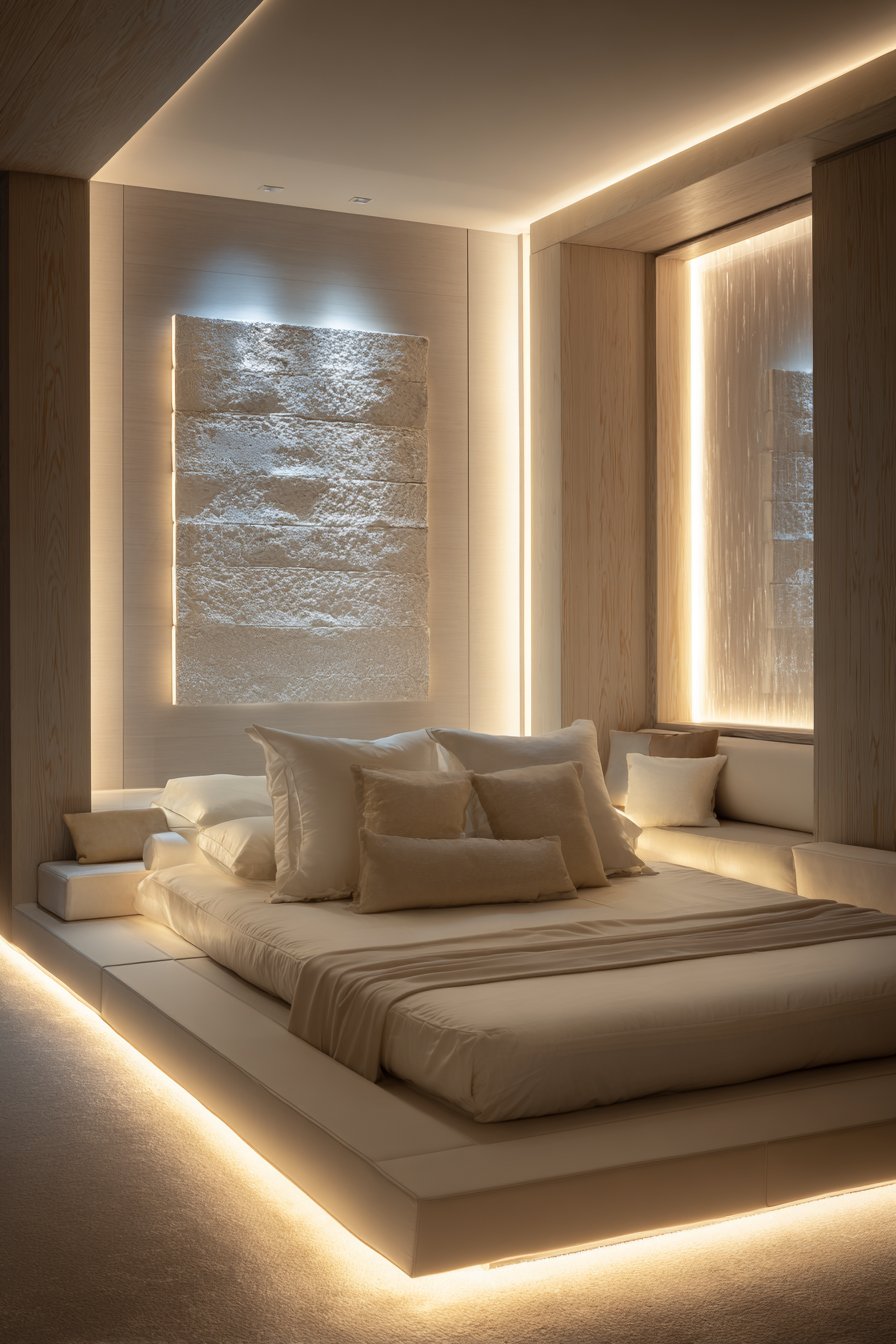
Built-in wardrobes in light wood maintain clean lines while providing ample storage, their seamless integration into the walls creating unbroken surfaces that enhance the room’s spacious feeling. Soft LED strip lighting installed under furniture creates an ambient glow that seems to emanate from the pieces themselves, adding futuristic sophistication while providing practical illumination. This bedroom represents Korean minimalism’s evolution into thoroughly contemporary territory.

Key Design Tips:
- Consider floating bed frames for dramatic visual impact and contemporary edge
- Select one significant contemporary art piece rather than multiple decorative items
- Install LED strip lighting under furniture for an ambient glow and futuristic aesthetic
- Choose built-in wardrobes that blend with the walls for seamless, uncluttered surfaces
- Layer white and cream linens for depth and luxury within a monochromatic scheme
17. Seasonal Comfort Design
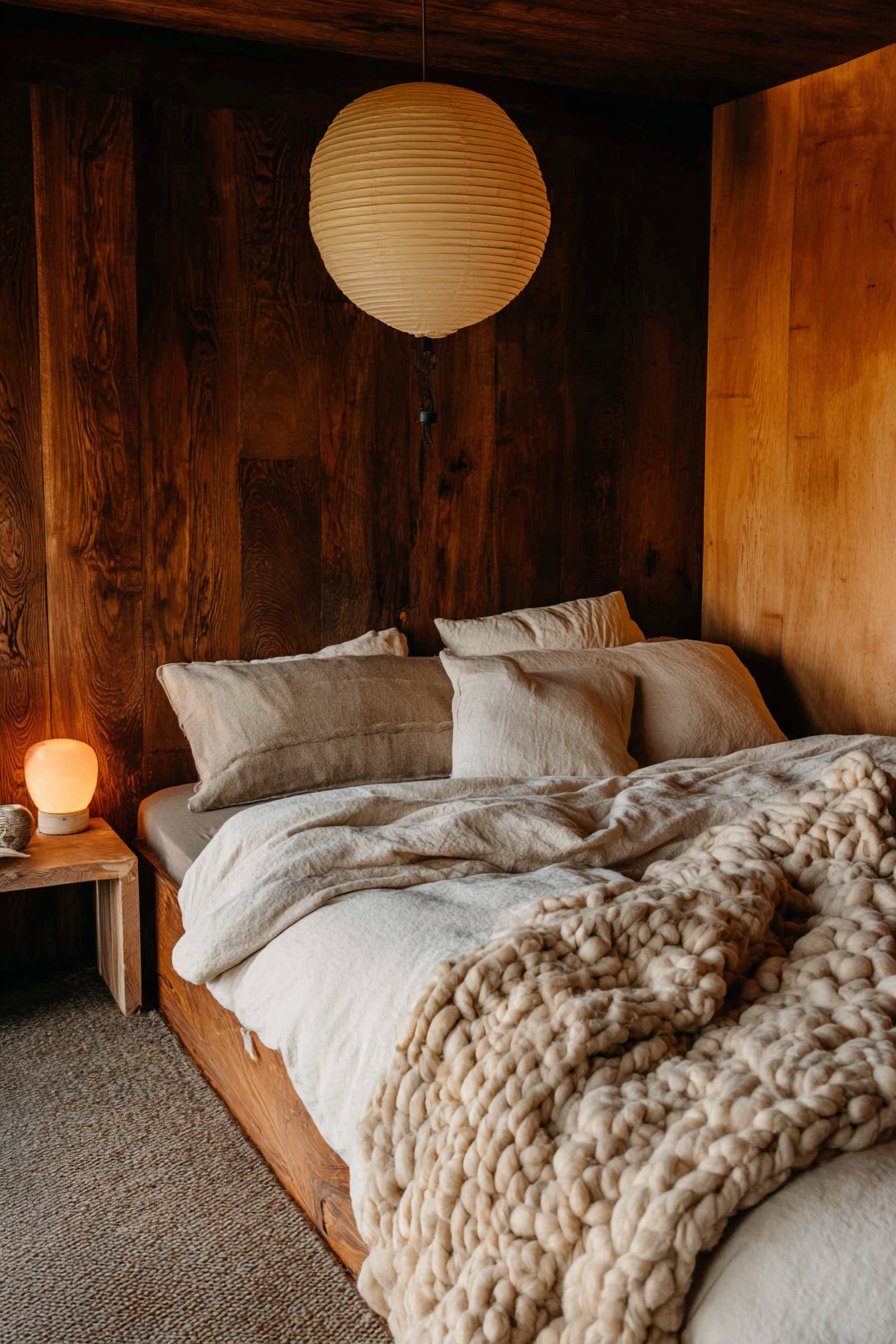
This cozy winter bedroom setup celebrates Korean design’s responsiveness to seasonal changes with an ondol-inspired heated bed platform. The low platform covered in thick cotton bedding and chunky knit throw creates immediate visual and physical warmth, perfect for cold months. The layering of different textures—smooth cotton sheets, fluffy blankets, and chunky knits—provides both practical warmth and inviting tactile variety.
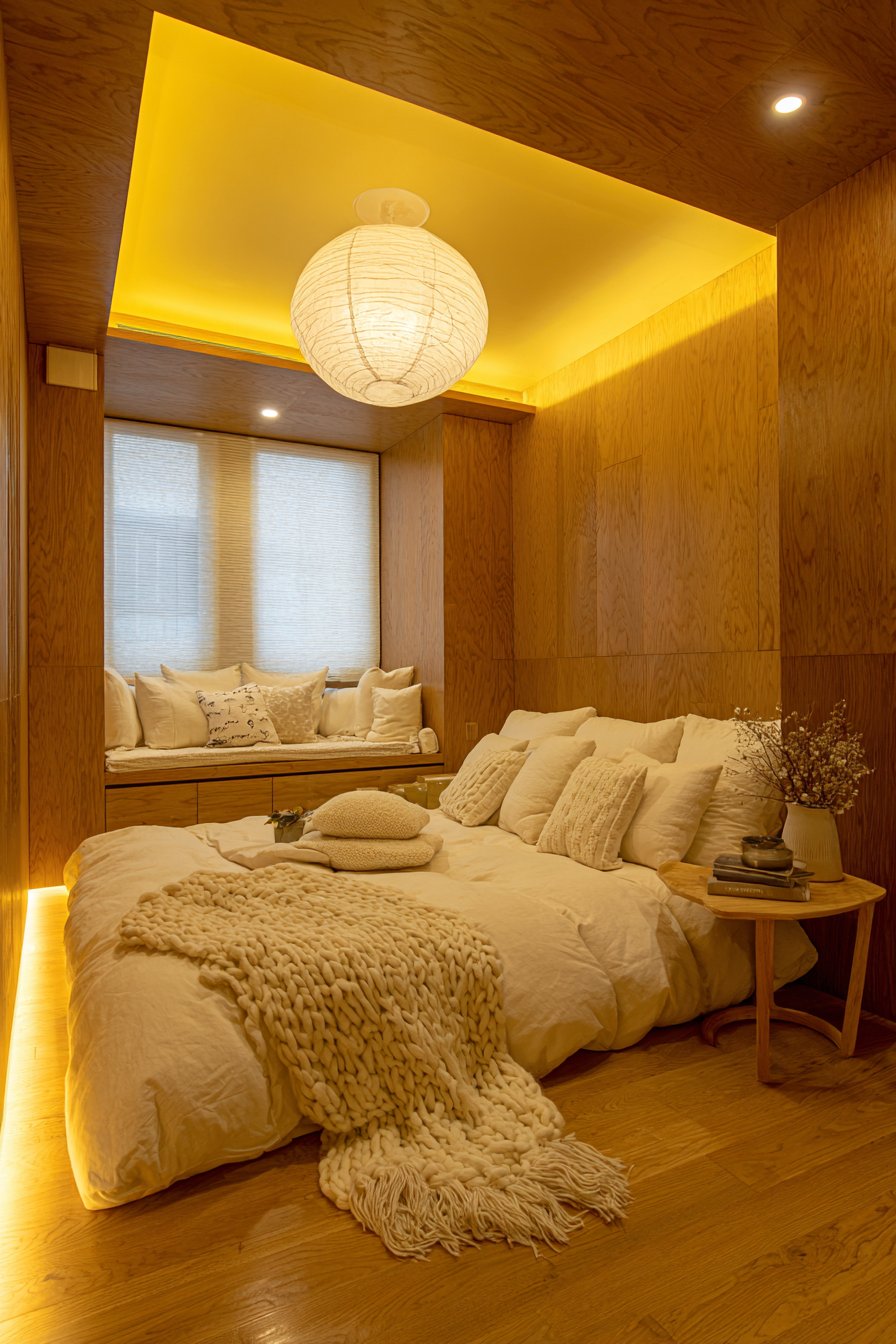
Warm wood paneling on one accent wall adds texture and insulation while creating a cozy cabin-like atmosphere that contrasts beautifully with the room’s overall minimalism. This single accent wall prevents the wood from overwhelming the space while providing significant visual and atmospheric warmth. The natural wood grain patterns create organic visual interest that changes with varying light throughout short winter days.
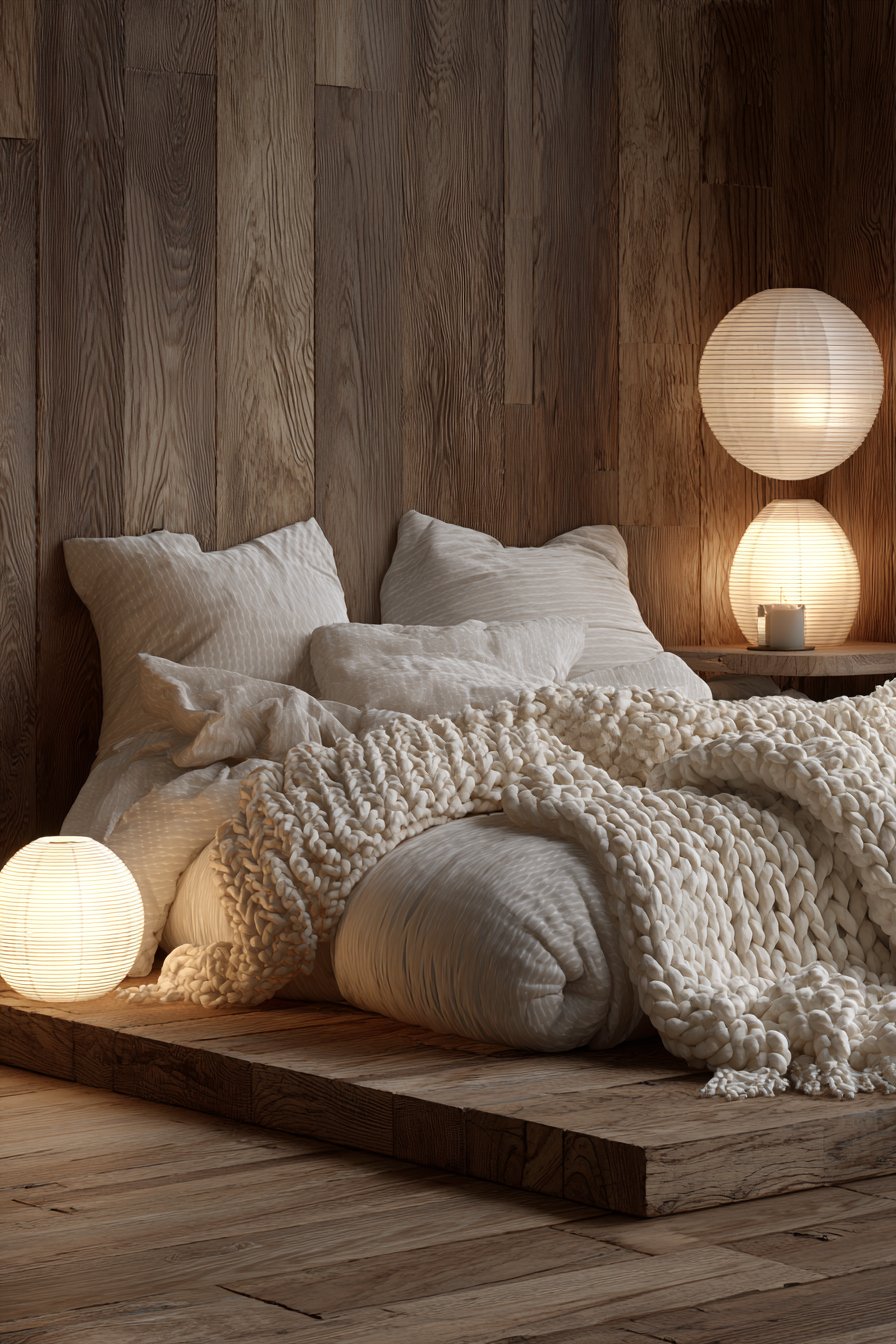
Minimal furnishings include a low bench for sitting or holding extra blankets and a small side table for essentials. Paper lantern lighting provides soft illumination that creates a warm, cocoon-like atmosphere perfect for long winter evenings. This bedroom demonstrates how Korean design adapts to seasonal needs while maintaining its core principles of simplicity and natural materials.

Key Design Tips:
- Embrace seasonal changes by adjusting textiles and layers for winter warmth or summer lightness
- Use accent walls in warm wood paneling to add coziness without overwhelming the space
- Layer different textures in similar tones for visual and tactile richness
- Choose paper lanterns for soft, warm lighting that creates intimate evening atmospheres
- Incorporate heated flooring or platforms for energy-efficient, comfortable warmth
18. Versatile Guest Welcome
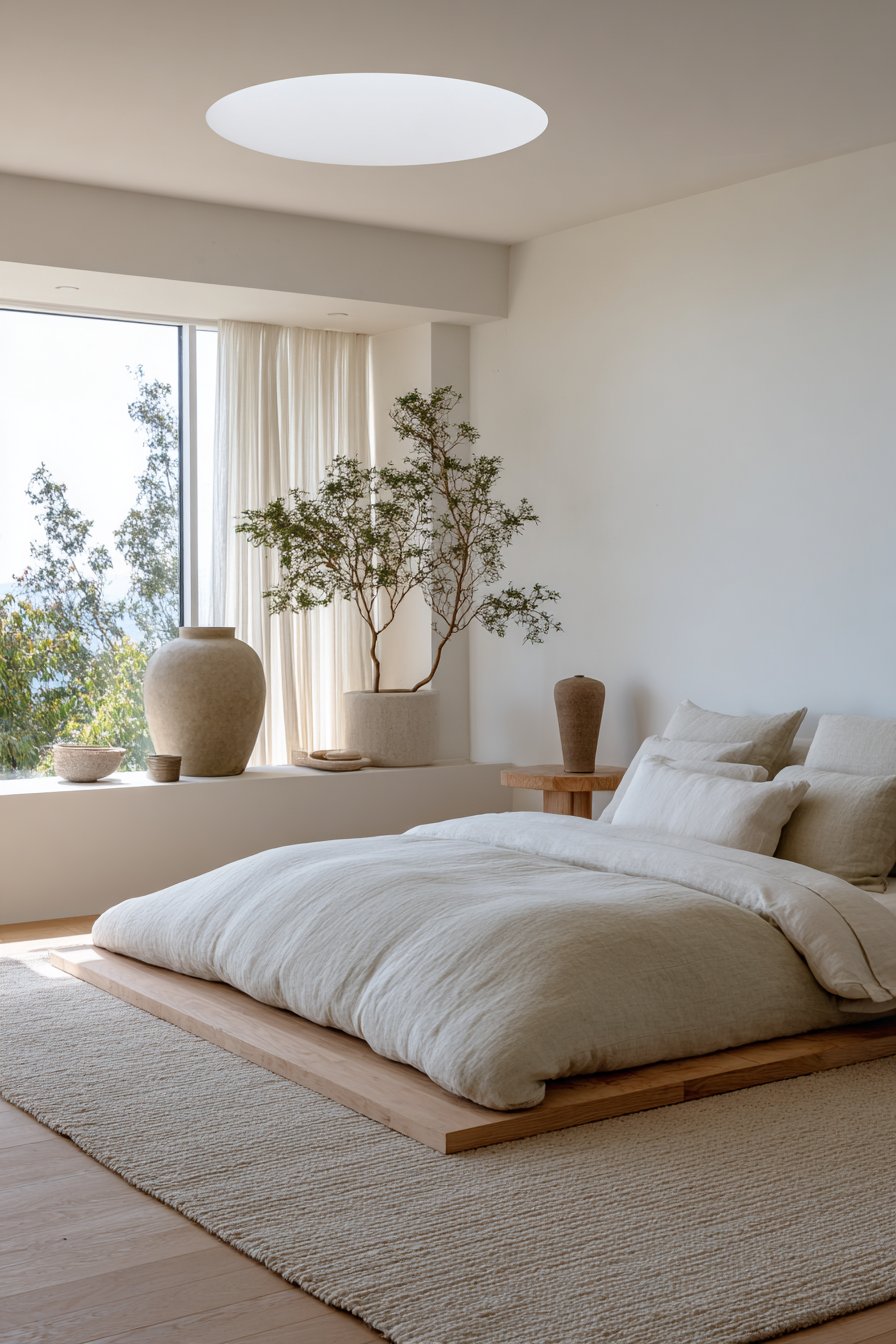
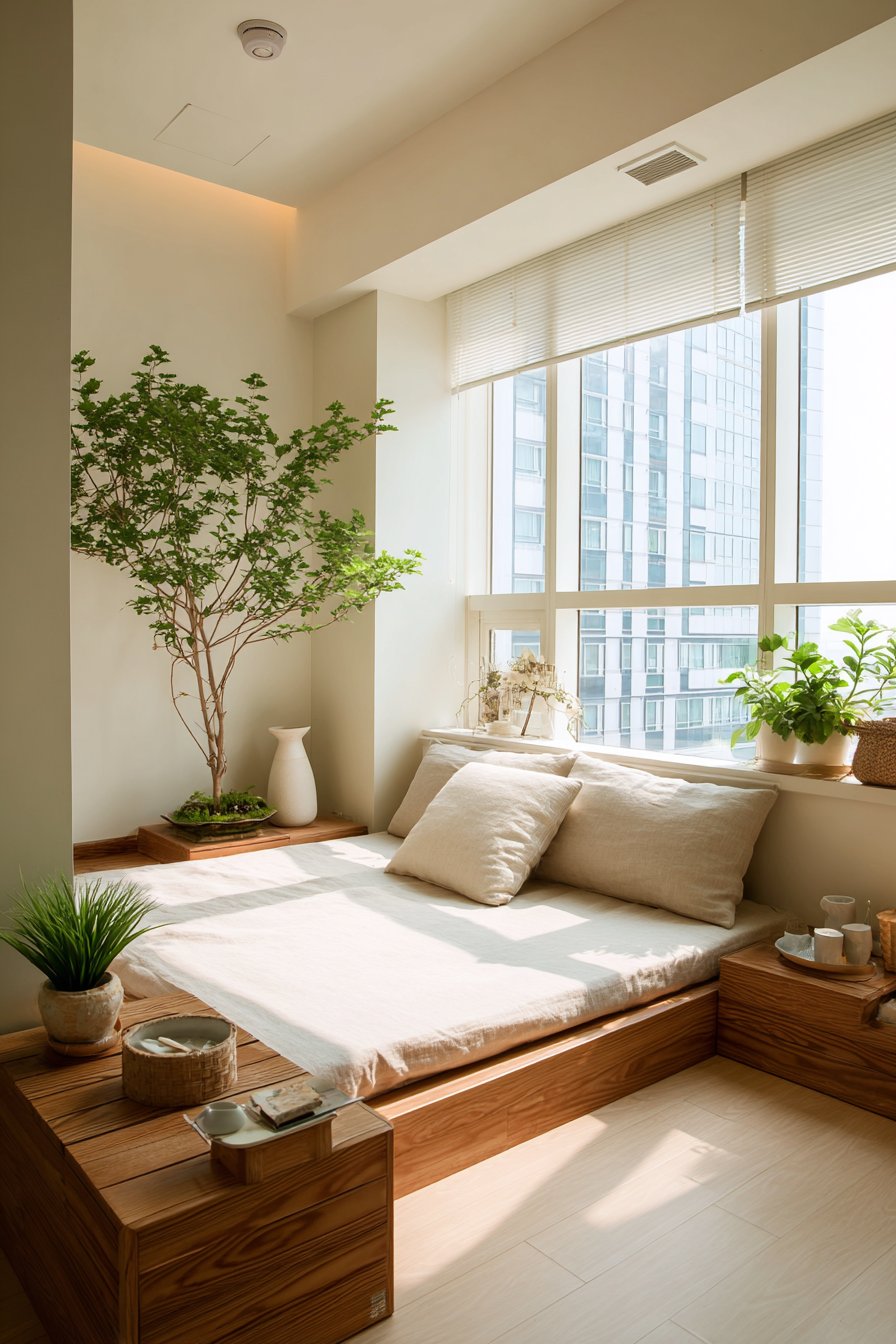
This guest bedroom demonstrates Korean hospitality through thoughtful, functional design. A versatile low daybed upholstered in natural oatmeal linen serves dual purposes as both sleeping surface and seating area, accommodating guests whether they’re staying overnight or just visiting for conversation. The oatmeal tone provides warmth while remaining neutral enough to suit any guest’s preferences.
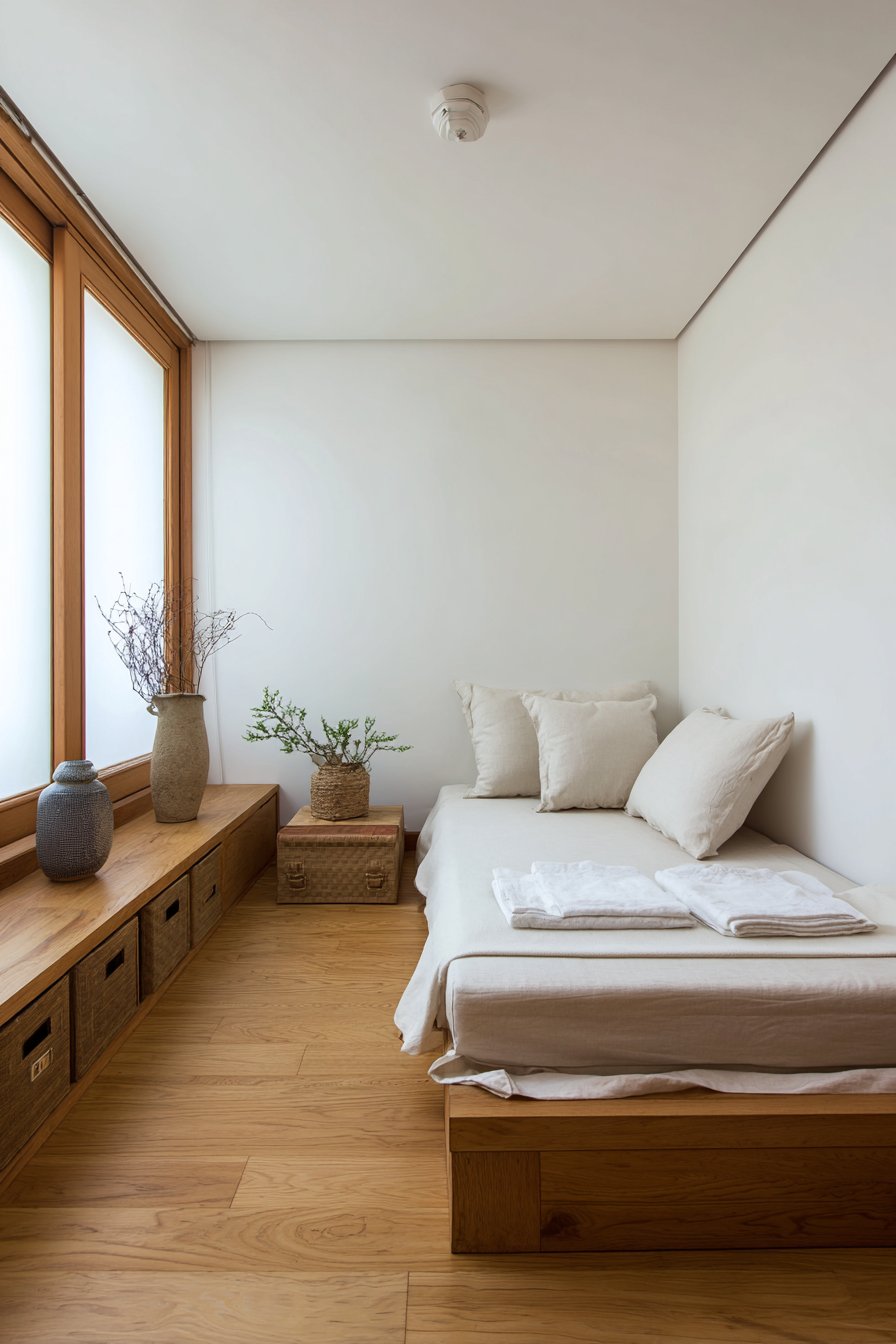
Simple wooden storage boxes slide underneath the daybed, providing guests with space to store belongings while keeping the floor clear and maintaining the room’s uncluttered appearance. These boxes can be easily accessed yet remain hidden from view, demonstrating the Korean talent for concealing practical elements within beautiful design. White walls and light oak flooring maintain the minimalist aesthetic while creating a bright, welcoming atmosphere.
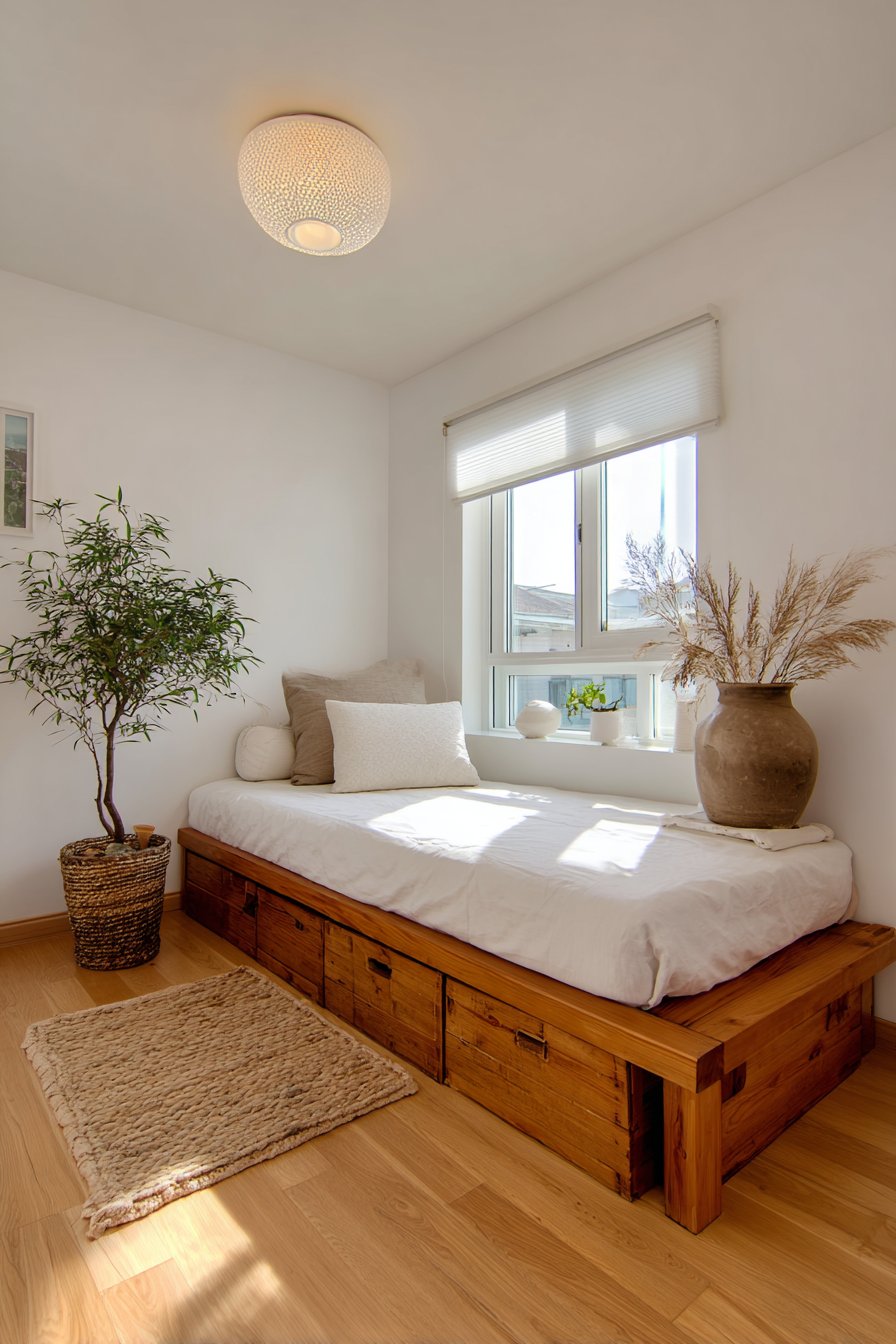
A single potted plant and ceramic vase provide decoration without overwhelming the space, allowing guests to add their own personal items without creating clutter. Natural window light and a simple ceiling fixture illuminate the space adequately for various needs—reading, dressing, or relaxing. This guest bedroom embodies the Korean principle of providing warm hospitality through thoughtful, functional spaces.
Key Design Tips:
- Choose daybeds for guest rooms to provide sleeping space that doubles as seating
- Use under-bed storage boxes that slide out of sight to keep spaces clear
- Maintain minimal decoration to allow guests to personalize without overcrowding
- Provide adequate natural and artificial light for guests’ various needs
- Select neutral, warm tones that create welcome without imposing specific style preferences
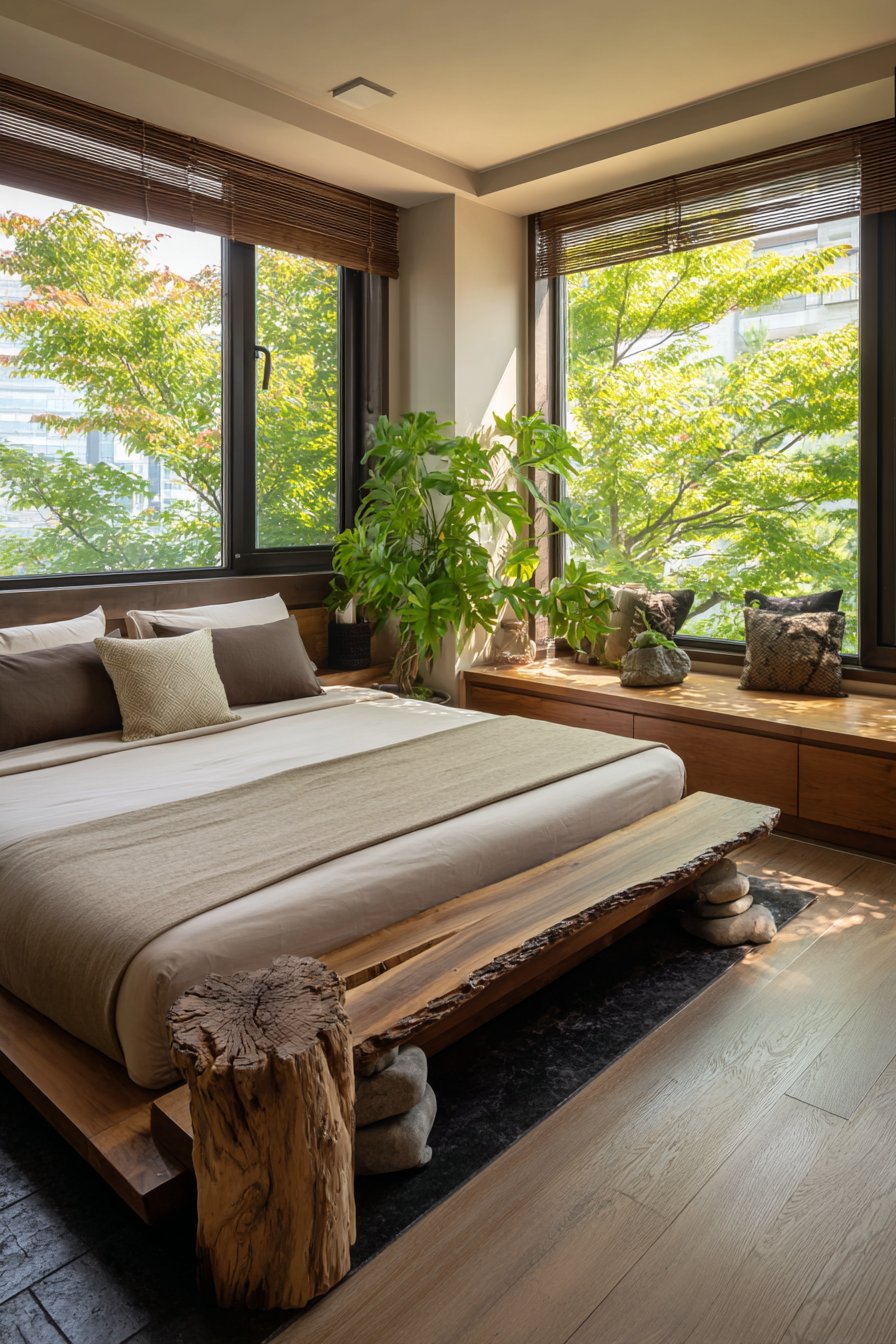
19. Nature-Connected Retreat
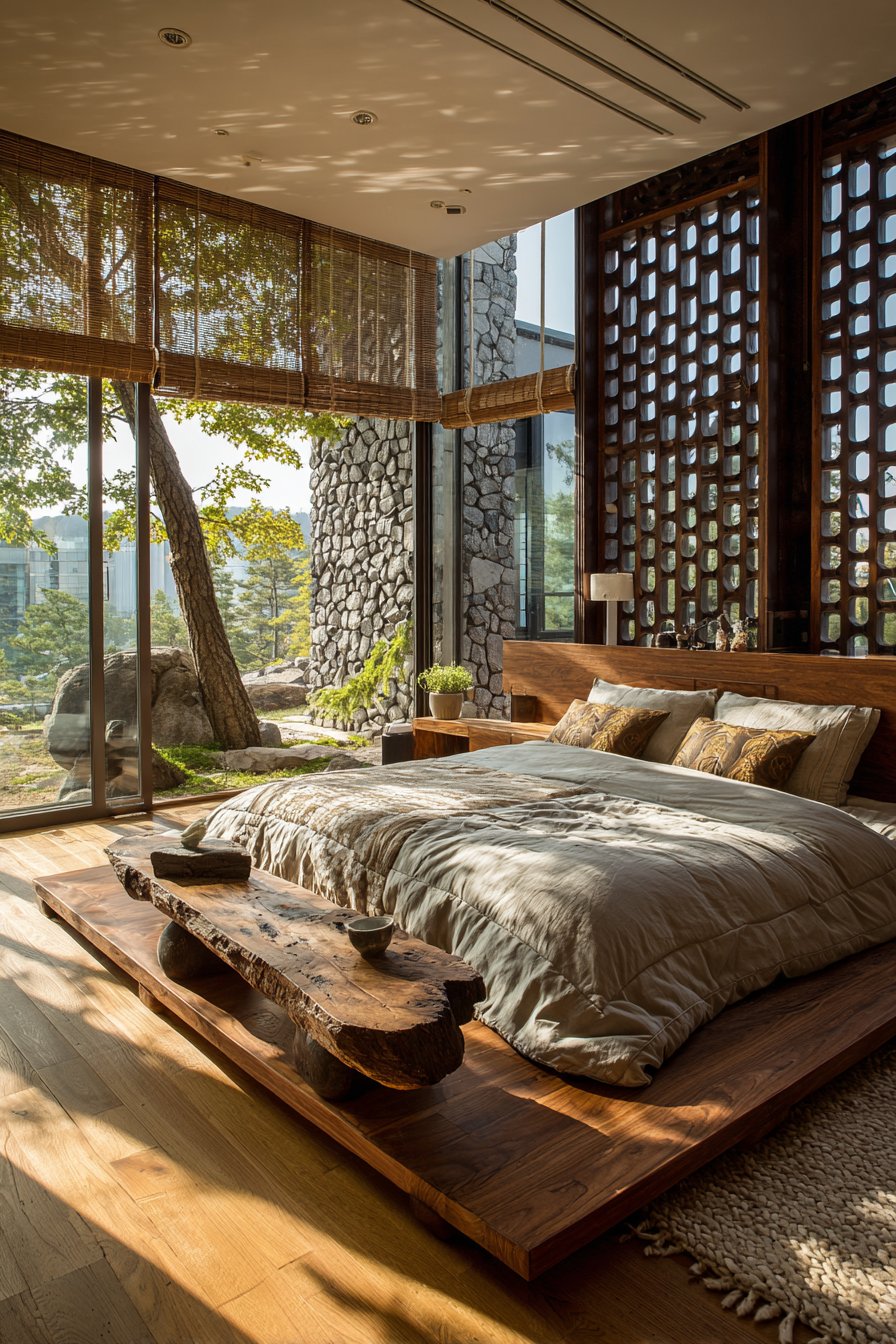
This nature-inspired bedroom celebrates Korean design’s deep connection to the natural world with large windows overlooking greenery. A low wooden bed dressed in organic cotton in earth tones—warm browns, soft greens, muted creams—creates a sleeping area that feels like an extension of the outdoor environment. The earth-tone palette grounds the space while maintaining the calming atmosphere essential to restful sleep.
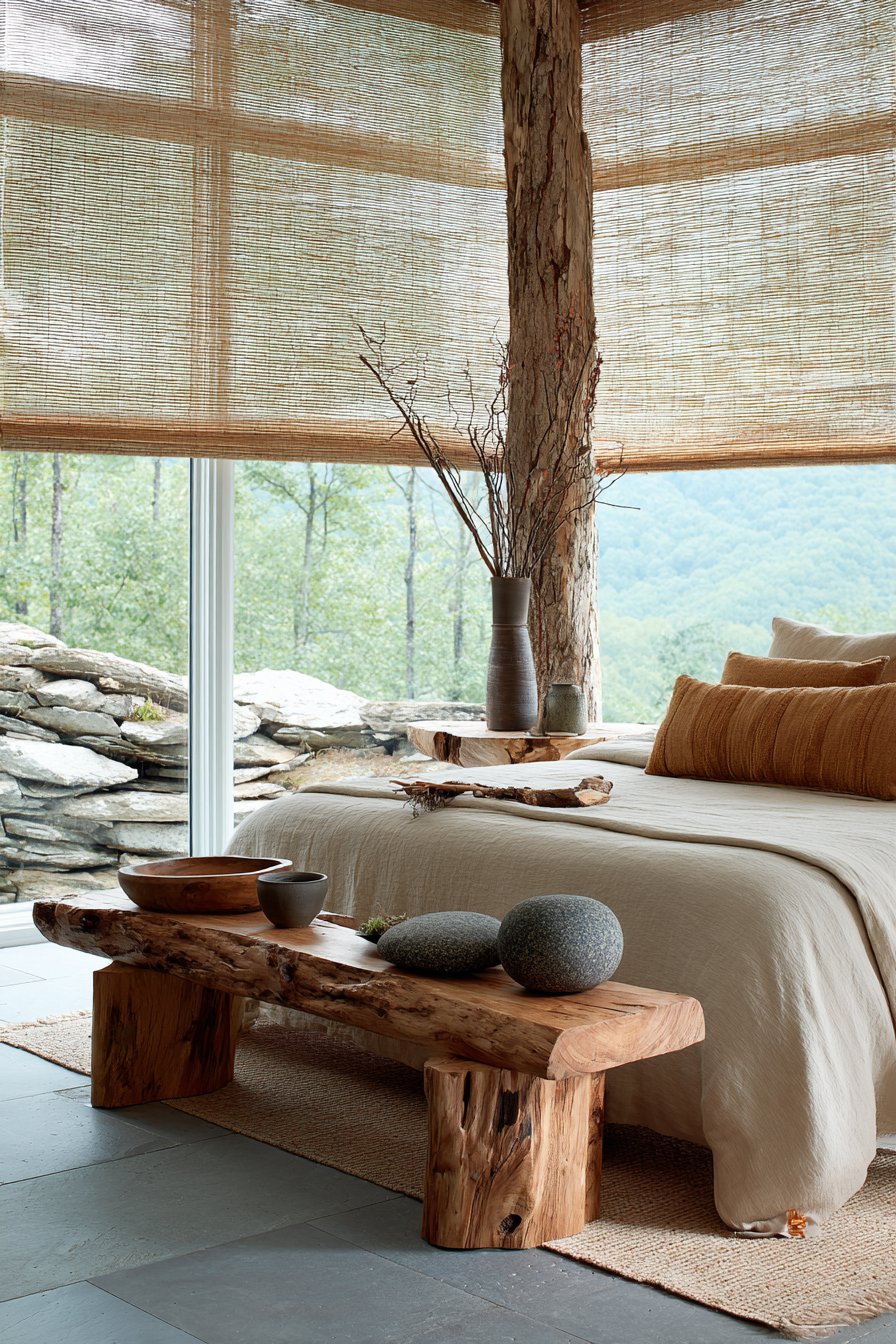
Natural elements throughout the room reinforce this connection: a live edge wood bench that celebrates the organic form of the tree it came from, stone accent pieces that bring geological beauty indoors, and the constant presence of green views through expansive windows. These elements create a bedroom that feels less like a constructed space and more like a natural sanctuary.
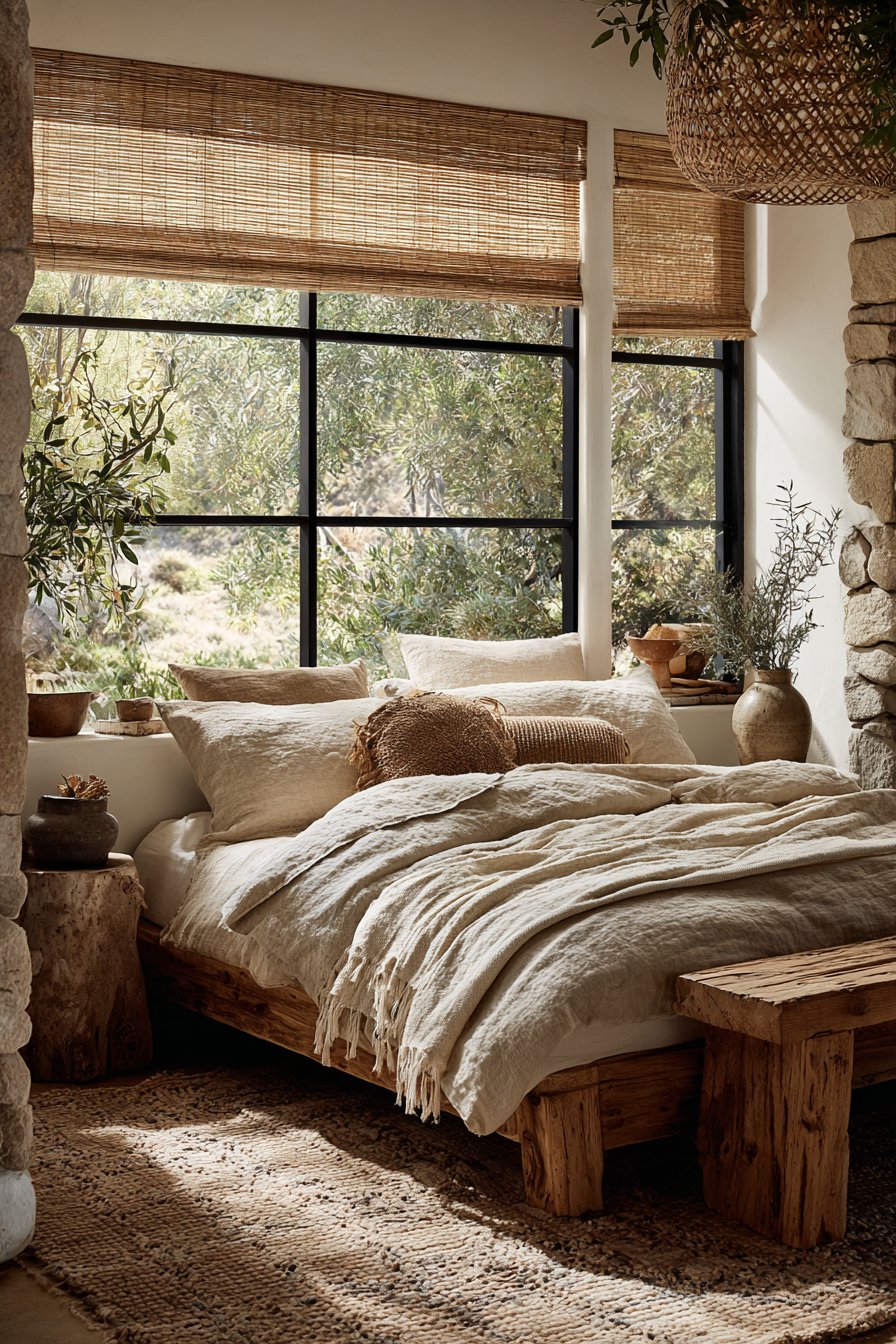
Bamboo roller shades provide sun control when needed while maintaining the organic aesthetic—their natural material and neutral tone integrate seamlessly with the room’s nature-focused design. The palette of browns, greens, and creams reflects the colors visible through the windows, creating visual continuity between indoor and outdoor spaces. This bedroom demonstrates how Korean design’s reverence for nature can be expressed through material choices, color palettes, and spatial planning.
Key Design Tips:
- Position beds to maximize views of natural landscapes or greenery
- Use earth-tone bedding that echoes outdoor color palettes
- Incorporate live edge wood furniture that celebrates natural tree forms
- Add stone accent pieces for geological beauty and grounding energy
- Install bamboo or natural fiber window treatments for organic light control
20. Timeless Hanji Elegance

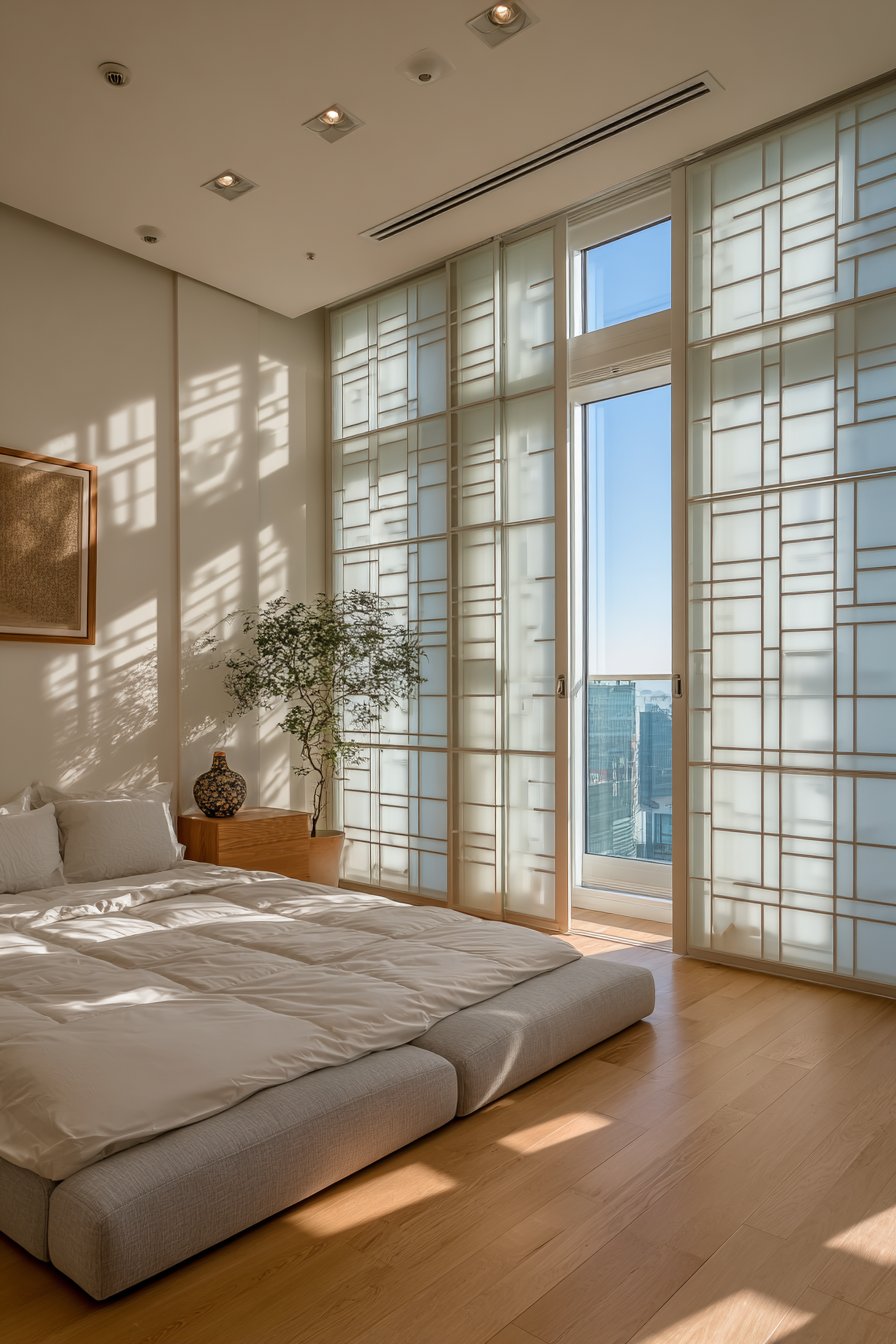
This refined bedroom showcases traditional Korean sliding paper doors, or hanji screens, leading to a small balcony. These doors cast beautiful filtered light patterns throughout the day, creating ever-changing natural artwork on walls and floors. The hanji paper’s translucent quality allows light to pass through while providing privacy, creating a soft, diffused glow that’s gentler than direct sunlight and more interesting than artificial light.
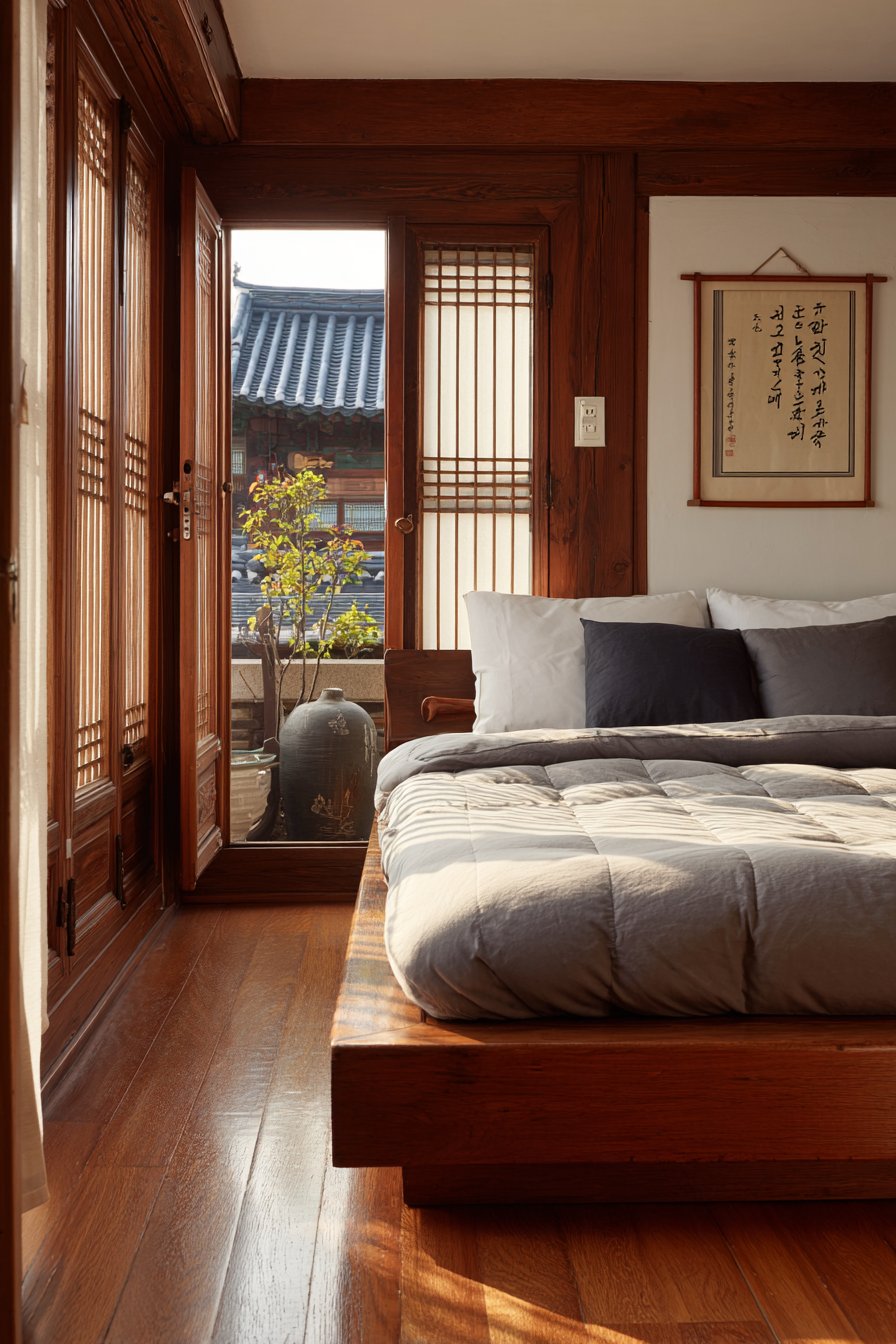
A low upholstered bed in soft gray sits on warm oak flooring, the combination of cool and warm tones creating a sophisticated balance. The gray upholstery adds contemporary comfort while maintaining the low profile essential to Korean bedroom design. Minimal built-in storage maintains clean walls, ensuring the hanji doors and their light patterns remain the room’s primary visual feature.
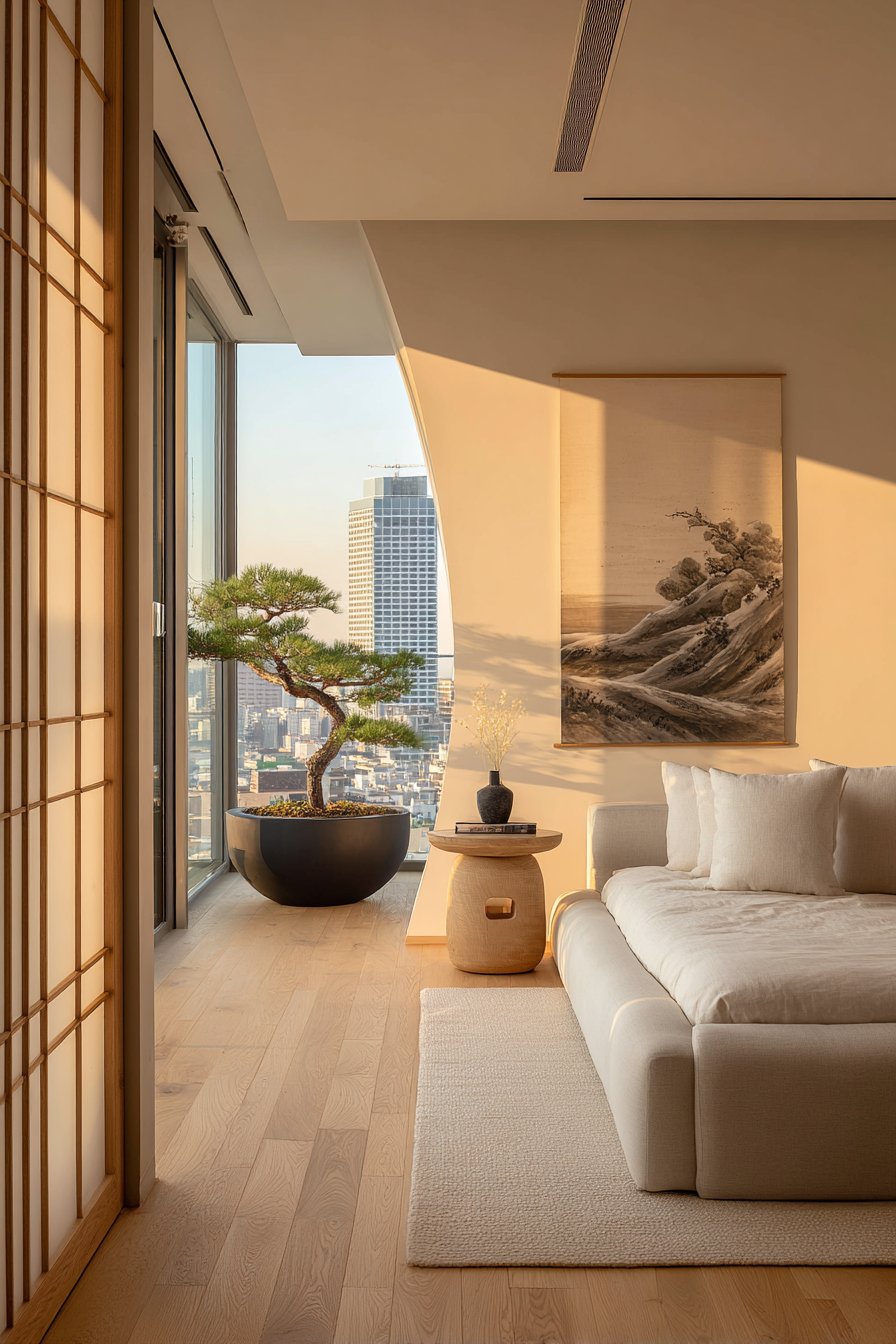
A single ceramic art piece—perhaps a contemporary interpretation of traditional Korean pottery—and a small indoor tree complete the space with restrained elegance. The tree brings life and air purification while its organic form provides gentle visual interest. This bedroom represents the timeless elegance of Korean residential design, where traditional elements like hanji doors coexist beautifully with modern comfort and contemporary sensibilities.
Key Design Tips:
- Install hanji paper doors or screens to create beautiful filtered light effects
- Position bedrooms to take advantage of balcony or outdoor connections
- Combine cool and warm tones for sophisticated balance and visual interest
- Choose minimal built-in storage to maintain focus on architectural features
- Use single trees or large plants as living sculptures within minimalist spaces
Why These Korean Bedroom Designs Represent the Best in Contemporary Interior Design
Korean bedroom ideas have emerged as some of the most sought-after interior design concepts in modern home decor, and for compelling reasons rooted in both aesthetics and functionality. These twenty designs showcase why Korean minimalist bedrooms, ondol-inspired sleeping spaces, and nature-connected retreats have captured the imagination of homeowners, interior designers, and architecture enthusiasts worldwide. The Korean approach to bedroom design offers solutions to contemporary challenges while honoring time-tested principles of harmonious living.
The emphasis on low-profile platform beds and floor-level sleeping arrangements in Korean bedroom design creates immediate benefits for small spaces and apartments. By keeping furniture close to the ground, these designs make ceilings appear higher and rooms feel more spacious—a critical advantage in urban environments where square footage comes at a premium. Korean bedroom furniture proportions have been refined over centuries to maximize both physical comfort and psychological ease, creating sleeping environments that feel simultaneously cozy and open.
Natural materials form the foundation of authentic Korean bedroom aesthetics, with oak beds, linen bedding, bamboo accessories, and hanji paper elements creating spaces that breathe and age beautifully. Unlike synthetic materials that degrade over time, the organic materials favored in Korean interior design—natural wood flooring, cotton textiles, ceramic accessories, and rattan storage—develop character and patina that enhance their beauty. This commitment to sustainable bedroom materials aligns perfectly with contemporary values around environmental responsibility and healthy living spaces.
The Korean color palette for bedrooms—dominated by whites, creams, beiges, soft grays, and natural wood tones—creates calming environments proven to support better sleep quality and reduced stress levels. These neutral bedroom color schemes provide versatile backdrops that accommodate personal style evolution without requiring complete redesign. The subtle layering of different neutral tones prevents monotony while maintaining the peaceful atmosphere essential to restorative rest.
Storage solutions in Korean bedroom design demonstrate remarkable ingenuity, with built-in wardrobes, under-bed drawers, floating shelves, and integrated nightstands maximizing functionality without visual clutter. This approach to bedroom organization reflects the Korean principle that everything should have its place, creating ordered environments that support mental clarity. Wall-mounted and built-in bedroom storage eliminates the need for freestanding furniture that can make spaces feel crowded and chaotic.
Lighting in Korean bedrooms shows masterful understanding of how illumination affects mood, circadian rhythms, and spatial perception. The prioritization of natural light through large windows, sheer curtains, and strategic furniture placement ensures bedrooms receive healthy doses of sunlight that regulate sleep-wake cycles. Supplemental lighting—whether paper lanterns, recessed fixtures, or LED strips—provides ambient illumination that creates atmosphere without harshness. This layered lighting approach allows Korean bedrooms to adapt to different times of day and various activities.
The integration of traditional elements like ondol heating, hanji screens, moon jar ceramics, and Korean folding screens connects these contemporary bedrooms to centuries of design wisdom. These cultural touchstones provide authenticity and depth while serving practical functions—ondol heating offers energy-efficient warmth, hanji screens create beautiful light diffusion, and traditional ceramics add artisanal beauty. Modern Korean bedroom design proves that traditional elements can enhance rather than date contemporary spaces.
Multifunctional design thinking permeates Korean bedroom concepts, with workspace integration, reading nooks, meditation corners, and flexible guest accommodations demonstrating how single rooms can serve multiple purposes. Wall-mounted desks, floor cushions, and daybed-style sleeping platforms allow bedrooms to transform between different uses throughout the day. This versatility makes Korean bedroom design particularly relevant for modern lifestyles that demand flexibility from living spaces.
The connection to nature evident in Korean bedroom design—through large windows, indoor plants, natural views, earth-tone palettes, and organic materials—supports wellbeing in ways that sterile, disconnected spaces cannot. Biophilic design principles embedded in Korean bedroom aesthetics reduce stress, improve air quality, and maintain human connection to natural rhythms. Bedrooms that incorporate greenery, natural light, and organic materials create healthier sleeping environments.
Minimalist decoration in Korean bedrooms—often limited to single art pieces, carefully chosen ceramics, or meaningful objects—creates spaces that feel curated rather than cluttered. This restraint allows each element to be truly appreciated and prevents the visual noise that can interfere with relaxation. Korean bedroom styling demonstrates that luxury lies in quality and intention rather than quantity and excess.
The scalability of Korean bedroom design principles means they work equally well in compact studio apartments and spacious master suites. Whether working with limited square footage or generous proportions, the emphasis on low furniture, neutral palettes, natural materials, and thoughtful organization creates successful sleeping spaces. Small bedroom solutions and large bedroom designs can both benefit from Korean design thinking.
Adaptability to different life stages makes Korean bedroom design particularly valuable—from children’s rooms with low, safe furniture to guest bedrooms with versatile daybeds to master suites with meditation spaces. The neutral palettes and timeless materials ensure these bedrooms remain appropriate as needs and tastes evolve. Investment in Korean bedroom furniture and finishes provides long-term value rather than trendy elements requiring frequent replacement.
The psychological benefits of Korean bedroom design extend beyond mere aesthetics to support mental health and emotional wellbeing. Ordered, peaceful environments reduce anxiety and support quality sleep, while the emphasis on natural materials and light creates spaces that feel inherently healthy. Bedroom environments that embody Korean design principles become true sanctuaries from the stresses of modern life.
Conclusion
Korean bedroom design offers a masterclass in creating spaces that balance beauty with function, tradition with modernity, and simplicity with sophistication. These twenty design concepts demonstrate the remarkable versatility of Korean aesthetic principles—from traditional ondol-inspired sleeping platforms to contemporary floating beds, from compact urban solutions to nature-connected retreats. Each approach shares core values: respect for natural materials, commitment to functional simplicity, appreciation for quality over quantity, and understanding that true luxury emerges from thoughtful restraint.
The enduring appeal of Korean bedroom ideas lies in their ability to create peaceful sanctuaries that support modern life’s demands while remaining rooted in timeless design wisdom. Whether you’re drawn to the authentic cultural elements of hanji screens and floor-level sleeping, the contemporary sophistication of floating platforms and LED lighting, or the practical efficiency of integrated storage and multi-functional furniture, Korean design principles offer actionable inspiration for transforming your bedroom into a haven of tranquility.
As you consider implementing these ideas in your own home, remember that Korean design is less about rigid rules and more about understanding principles—keep furniture low to enhance spaciousness, choose natural materials for their beauty and sustainability, embrace neutral palettes for their calming effects, maximize natural light for health and wellbeing, and curate possessions mindfully to create uncluttered environments. Start with elements that resonate most deeply with your needs and preferences, whether that’s investing in a quality platform bed, replacing synthetic textiles with organic linens, or simply clearing surfaces to allow negative space to work its magic. Your bedroom should evolve into a personal sanctuary that honors both Korean design wisdom and your unique lifestyle, creating a space where you can truly rest, recharge, and find peace in our busy modern world.
