


The kitchen has evolved far beyond its traditional role as a purely functional space for meal preparation. Today’s modern kitchen serves as the heart of the home—a gathering place for family conversations, a backdrop for culinary creativity, and an expression of personal style. Yet, while homeowners invest considerable time and resources into selecting the perfect cabinets, countertops, and appliances, the walls often remain an afterthought, representing a significant missed opportunity for creating a truly cohesive and inspiring environment.
Thoughtful kitchen wall decor bridges the gap between aesthetics and practicality, transforming bare walls into engaging visual statements while enhancing the room’s functionality. Whether you’re drawn to the warmth of rustic farmhouse charm, the clean lines of Scandinavian minimalism, or the edgy appeal of industrial design, your kitchen walls offer an invaluable canvas for self-expression. The key lies in understanding how different materials, textures, colors, and arrangements can work together to create a space that not only looks beautiful but also supports your daily culinary activities.
In this comprehensive guide, we’ll explore ten distinctive kitchen wall decor concepts that demonstrate the remarkable versatility of this often-overlooked design element. From gallery wall arrangements that showcase your personality to innovative storage solutions that combine form and function, each approach offers unique possibilities for elevating your kitchen’s visual appeal. These ideas span various design aesthetics and budget ranges, ensuring that every homeowner can find inspiration suited to their space, lifestyle, and creative vision. Whether you’re planning a complete kitchen renovation or simply seeking to refresh your existing space with strategic decorative touches, these concepts will help you transform your kitchen walls into captivating features that enhance both the beauty and usability of your culinary sanctuary.
1. Botanical Gallery Wall with Functional Floating Shelves
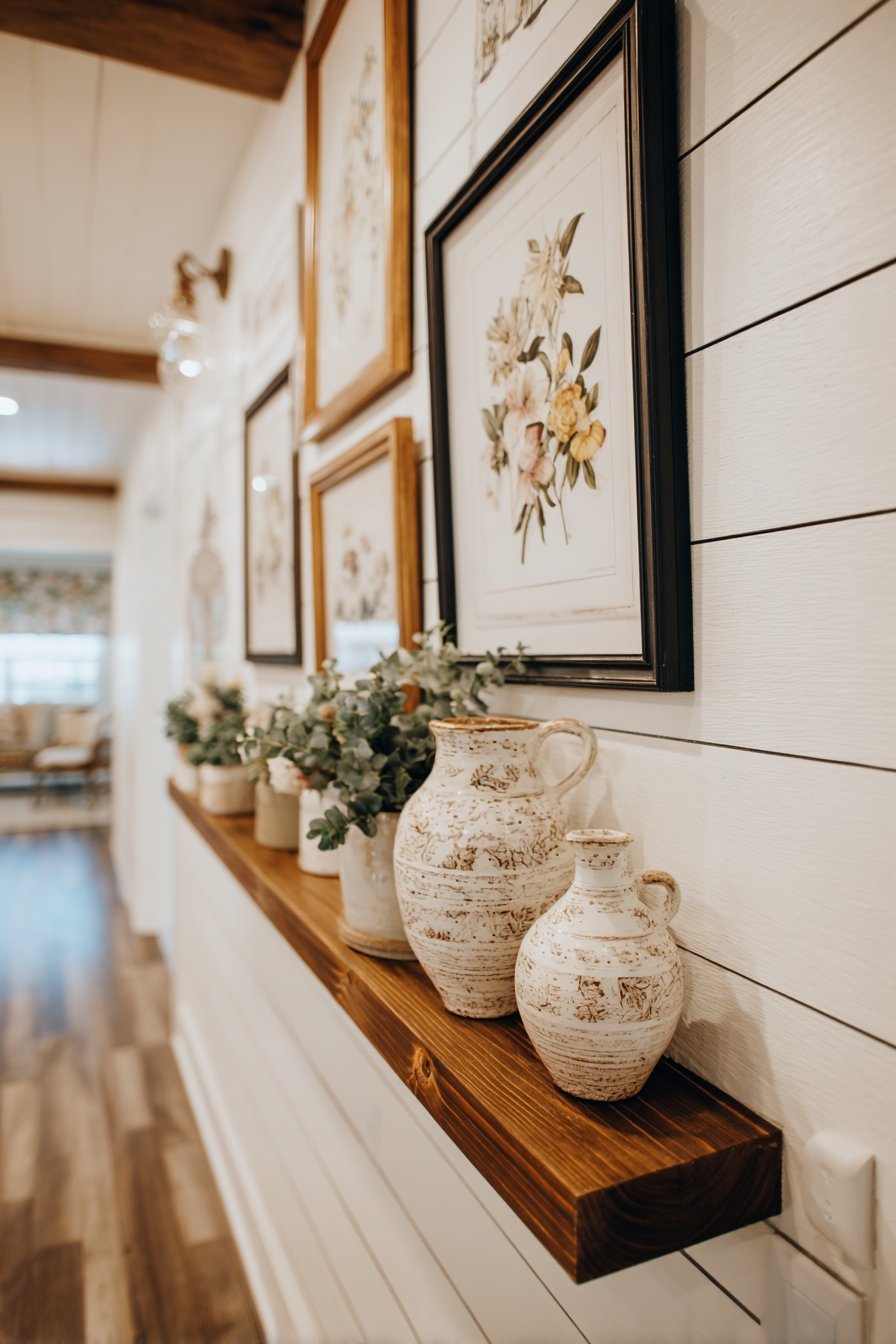
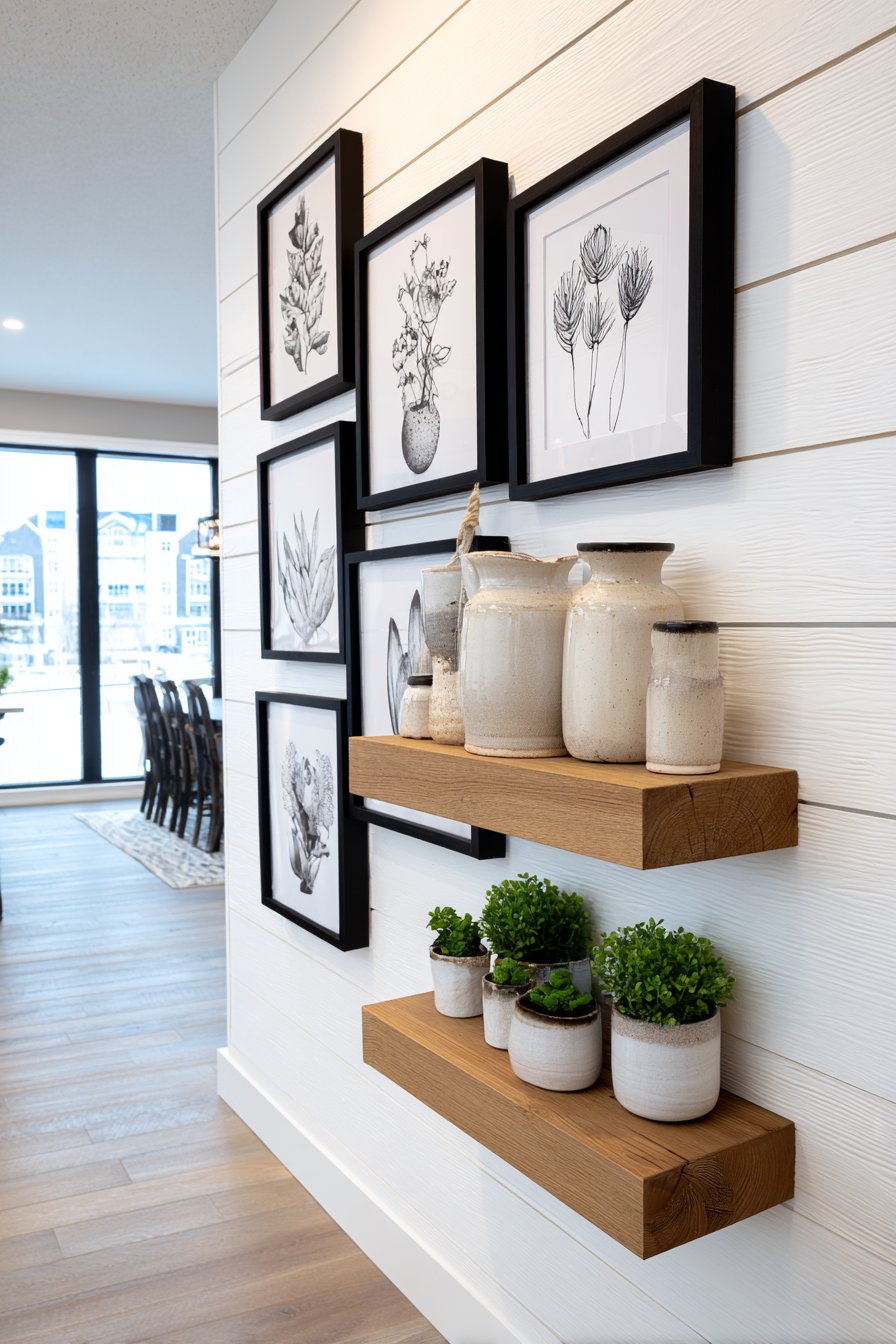
The marriage of artistic display and practical storage creates a sophisticated focal point that immediately draws the eye upon entering the kitchen. This design concept centers on a carefully curated gallery wall featuring black-framed botanical prints arranged in a balanced composition against white shiplap paneling.
The shiplap itself introduces subtle texture and dimensional interest while maintaining the clean, fresh aesthetic that allows the artwork to truly shine. The contrast between the crisp white background and the dark frames creates striking visual definition that anchors the entire arrangement.

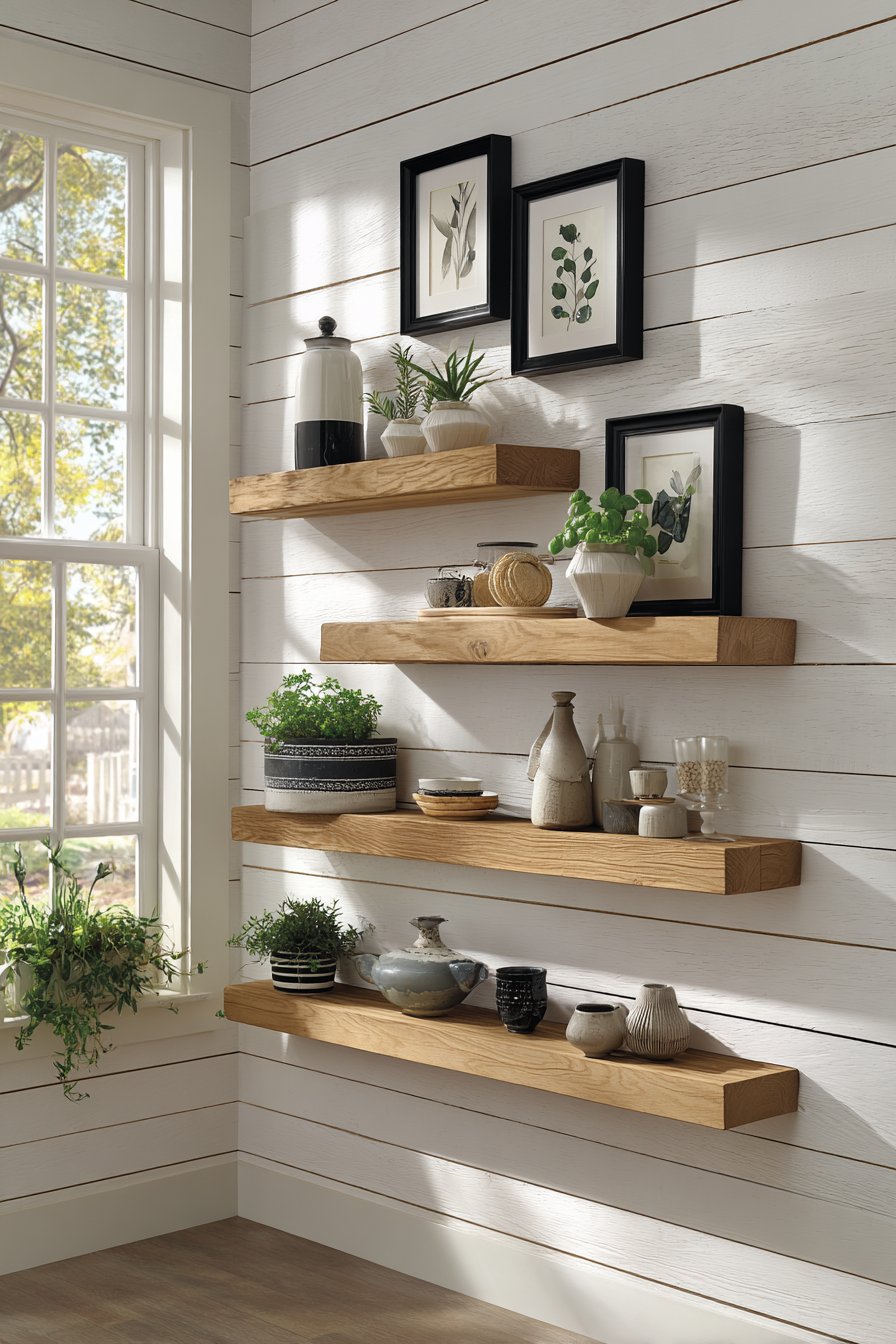
Interspersed among the botanical prints, natural oak floating shelves mounted at varying heights introduce an organic element that softens the geometric precision of the framed artwork. These shelves showcase ceramic vessels in neutral tones—cream, terracotta, and soft grey—alongside small potted herbs like basil, thyme, and rosemary.
The visible grain patterns in the oak bring warmth and natural beauty to the composition, creating a pleasing textural contrast with the smooth ceramic surfaces. This variation in height prevents visual monotony and guides the eye through the entire arrangement in a natural, flowing movement.
The positioning near a window proves strategic, as soft natural light filters across the arrangement throughout the day, casting gentle shadows that emphasize the dimensional quality of the floating shelves and highlight the delicate details within the botanical prints.
This ever-changing interplay of light and shadow ensures the display never appears static, instead offering new visual interest as the day progresses. The living herbs introduce not only visual appeal but also wonderful aromatic qualities that enhance the sensory experience of the kitchen space.
This approach exemplifies how kitchen wall decor can transcend mere decoration to become an integrated design element that serves multiple purposes. The combination of art, functional storage, and living plants creates layers of visual interest while maintaining the clean, uncluttered aesthetic that modern homeowners desire. The natural materials—wood, ceramic, and living greenery—introduce organic warmth that prevents the space from feeling too sterile or clinical.
Key Design Tips:
- Select botanical prints with similar color palettes or artistic styles to maintain cohesion while choosing varied plant species for visual diversity
- Mount floating shelves at different heights, ranging from 6 to 12 inches apart to create dynamic visual rhythm rather than rigid uniformity
- Choose ceramic vessels in complementary neutral tones that echo colors within the botanical prints for a curated, intentional appearance
- Position the arrangement near natural light sources to benefit from changing illumination throughout the day while ensuring herbs receive adequate sunlight
- Maintain negative space between elements—aim for approximately 2-3 inches between frames and 4-6 inches around shelving to prevent visual overcrowding
2. Vintage Open Shelving with Farmhouse Appeal
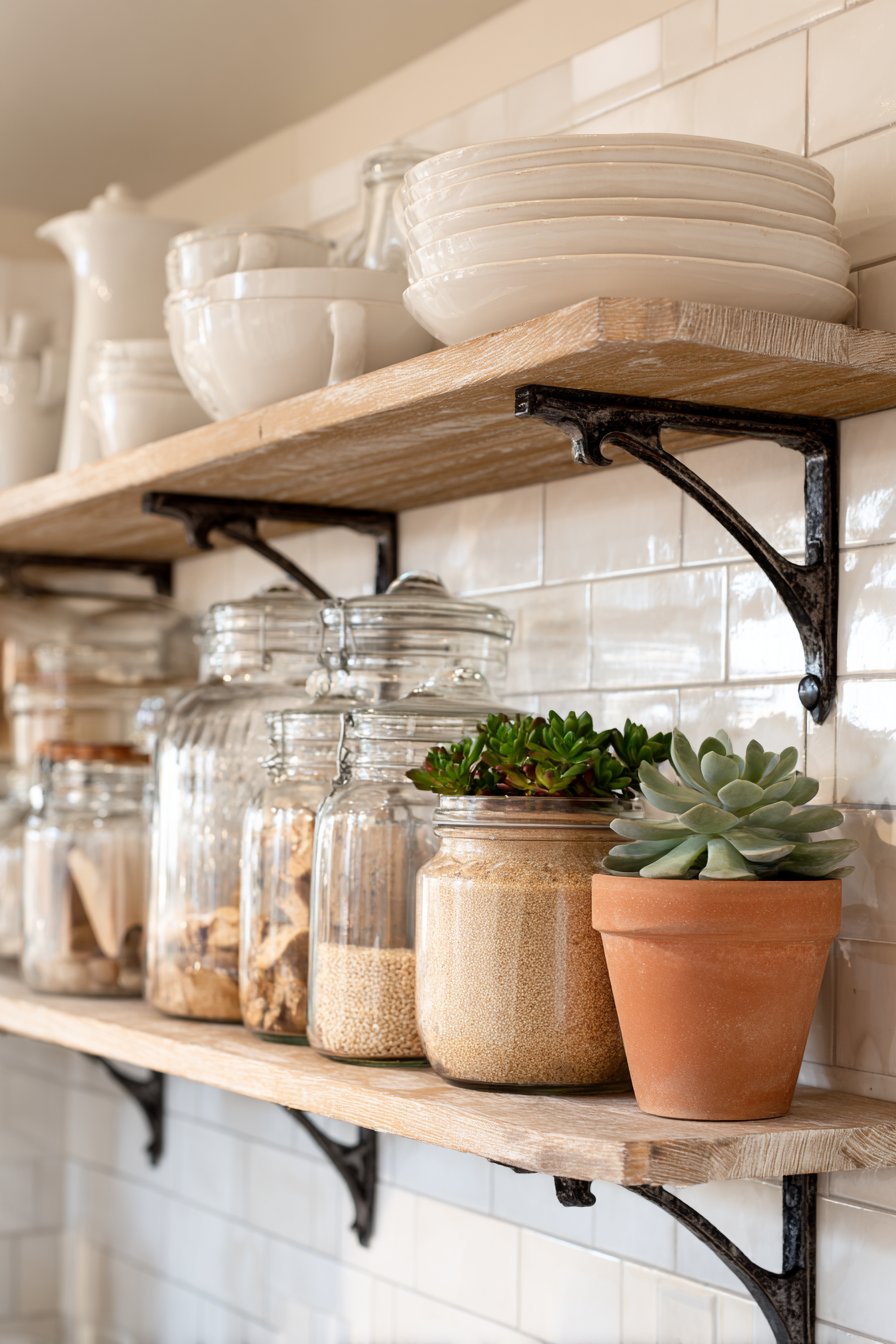
The timeless charm of open shelving finds new expression in this vintage-inspired design that transforms a kitchen wall into both a functional storage solution and a captivating visual display. At the heart of this concept lies a substantial open shelving system featuring wrought iron brackets that evoke the craftsmanship of earlier eras.
These brackets, with their hand-forged appearance and substantial construction, provide both structural support and decorative appeal against a classic subway tile backsplash that extends from countertop to the base of the shelving system.
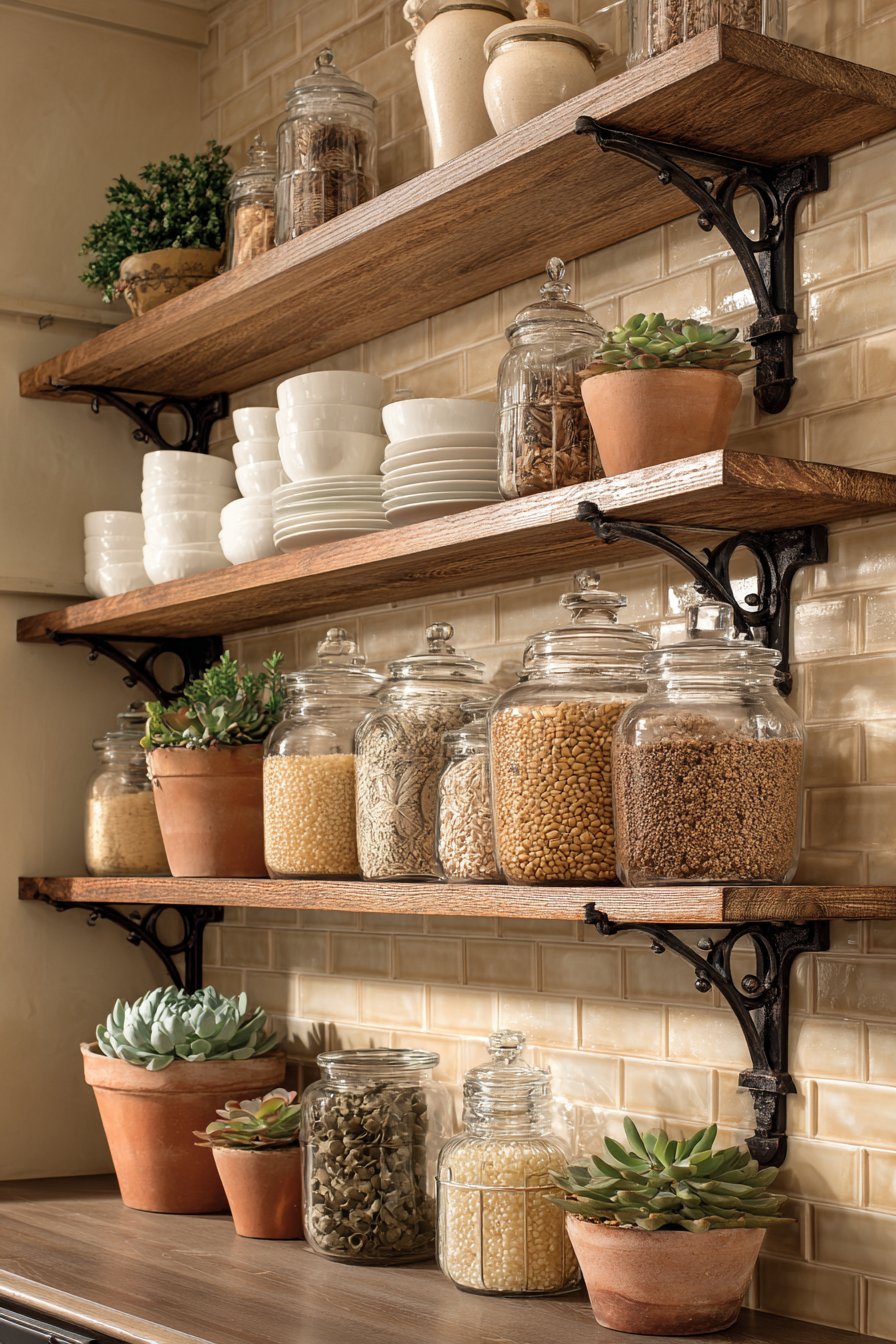
The shelves themselves showcase a carefully curated collection that balances everyday functionality with aesthetic appeal. White ceramic dishware—plates, bowls, and serving pieces—creates a cohesive visual foundation through its uniform color while the varied shapes and sizes add dimensional interest.
Glass storage jars filled with colorful dry goods like pasta, beans, lentils, and grains introduce pops of natural color and texture, transforming pantry staples into decorative elements. Small succulents in terracotta pots punctuate the arrangement, bringing living greenery and organic shapes that soften the geometric precision of the dishware and jars.
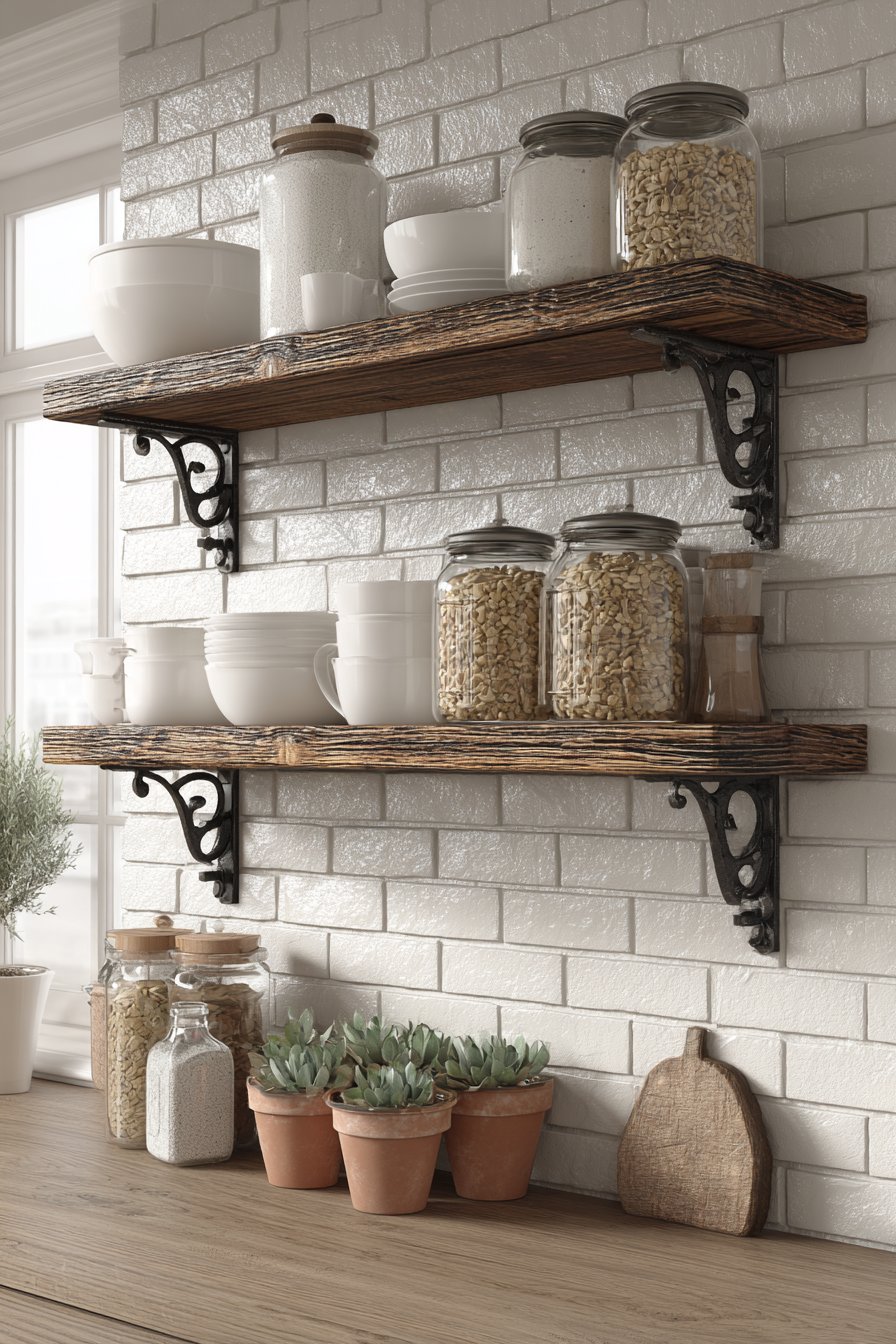
The subway tile backsplash provides an ideal backdrop for this display, its classic white surface and traditional brick-pattern layout offering visual interest without competing for attention with the shelving contents. The slightly reflective quality of the tile’s glazed surface helps bounce light throughout the space, creating a brighter, more open feeling. The farmhouse aesthetic shines through in every carefully considered detail—from the rustic iron brackets to the honest simplicity of the white dishes and the practical beauty of visible food storage.
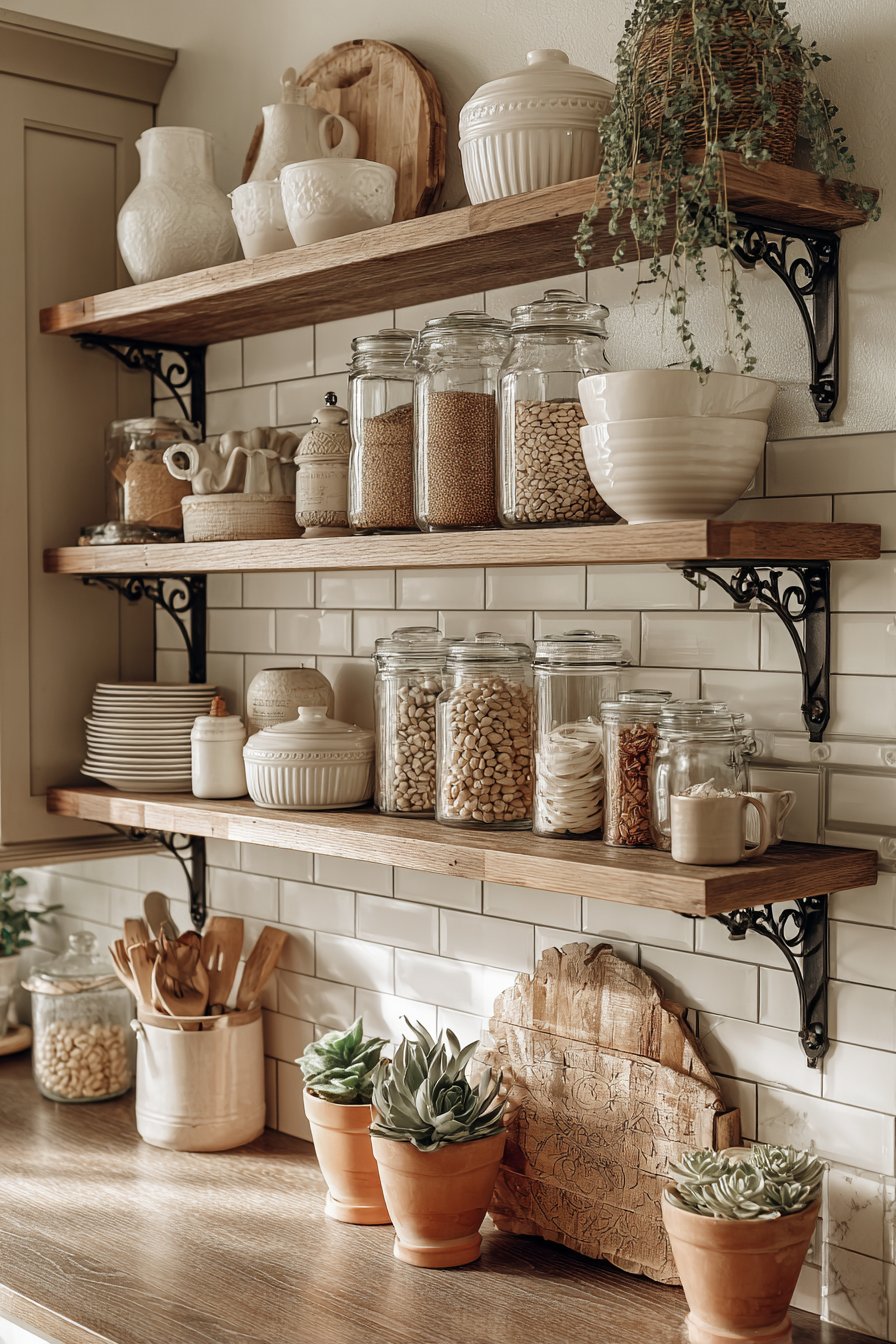
This approach to kitchen wall decor celebrates the growing trend toward open, honest displays of daily-use items rather than hiding them behind closed cabinet doors. The arrangement demonstrates how functional storage can become a design feature when executed with attention to color, texture, and composition. The soft, diffused lighting that bathes the shelving system enhances the farmhouse character while ensuring that items remain easily visible and accessible during meal preparation.
Key Design Tips:
- Invest in quality wrought iron brackets that can support substantial weight while providing authentic vintage character through hand-forged details and dark finishes
- Create visual rhythm by alternating between clusters of similar items—group dishes together, then jars, then decorative elements, rather than mixing randomly
- Choose glass jars with consistent sizes and shapes for visual cohesion, but fill them with varied contents to introduce natural color and texture
- Position your most frequently used items at the most accessible heights while reserving upper shelves for occasional-use pieces and decorative elements
- Maintain the white color scheme for larger items like dishware to prevent visual chaos, introducing color through smaller elements like jar contents and plants
3. Modern Chalkboard Wall for Interactive Design
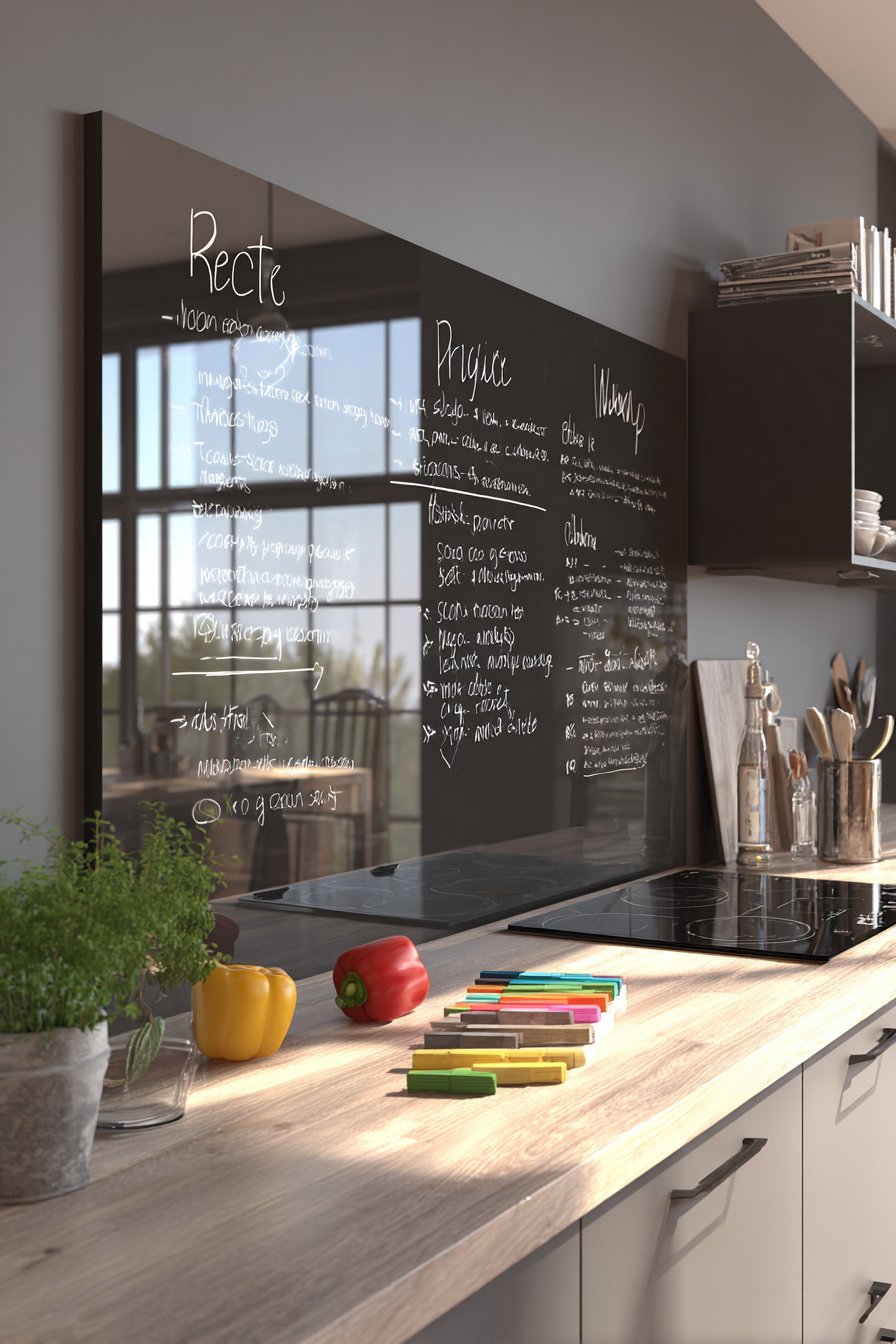
Innovation meets practicality in this contemporary approach to kitchen wall decor that transforms a section of wall into an interactive chalkboard surface. The matte black chalkboard creates a bold, dramatic focal point that commands attention while serving multiple practical functions—from displaying handwritten recipe notes and ingredient lists to organizing weekly meal plans and family messages. This design concept positions the chalkboard beside the cooking area where it’s most useful, creating a convenient reference point during meal preparation.
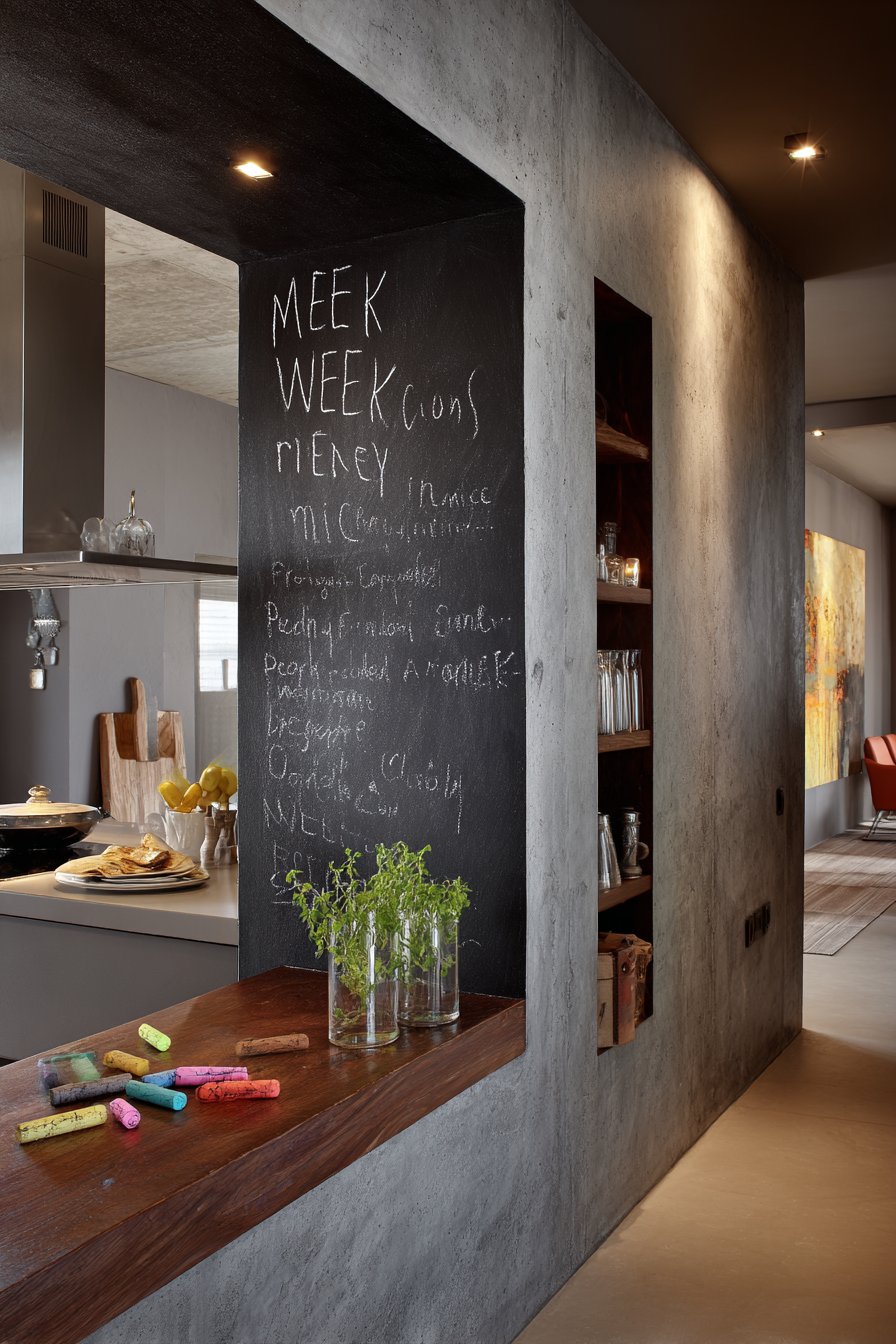
The strategic framing of the chalkboard section by light grey painted walls creates strong visual contrast that defines the space and prevents the dark surface from overwhelming the room. This color blocking technique adds modern sophistication while clearly delineating the chalkboard as an intentional design feature rather than an unfinished surface. The grey walls provide a soft, neutral backdrop that complements the black chalkboard without creating harsh contrast, resulting in a balanced, harmonious composition.
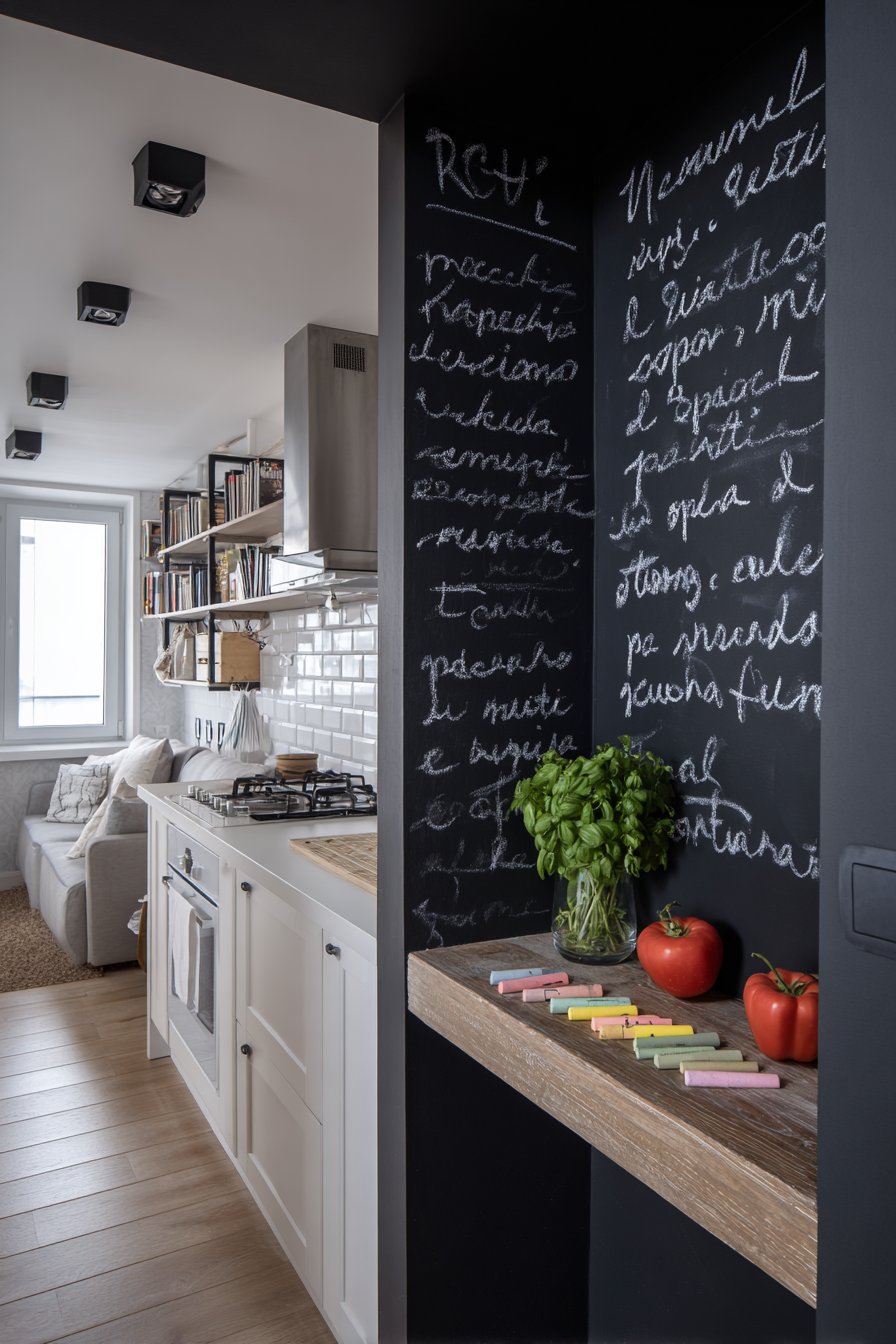
Below the chalkboard, a narrow wooden ledge in natural finish provides practical storage for colorful chalk pieces, erasers, and a small vase holding fresh herbs like mint or cilantro. This ledge serves as both a functional element and a visual anchor, grounding the chalkboard within the overall wall composition. The natural wood introduces warmth that softens the contemporary edge of the black and grey color scheme, creating a more inviting, approachable aesthetic.
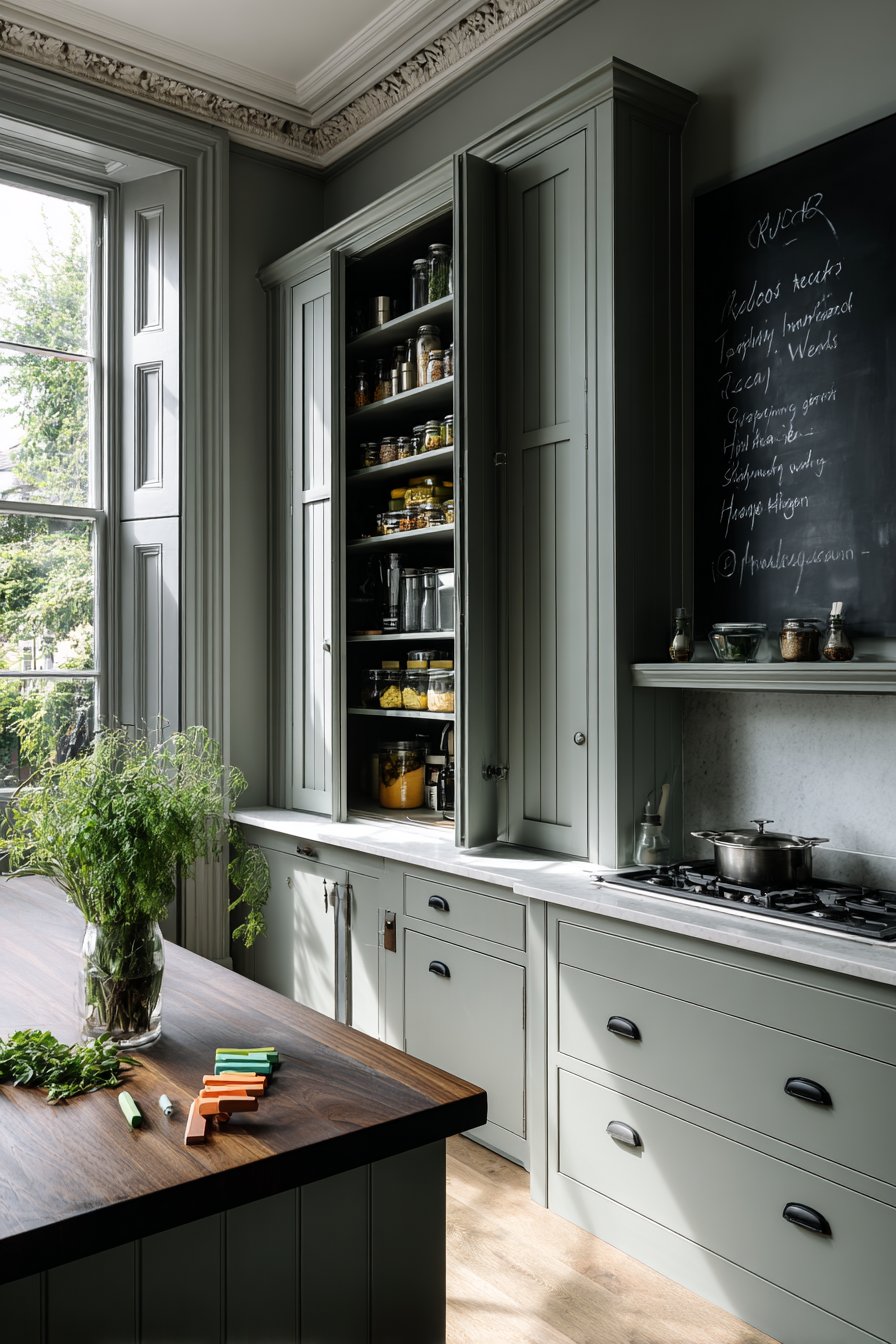
The beauty of this design lies in its dynamic, ever-changing nature. Unlike static wall art, the chalkboard invites interaction and personalization, allowing the kitchen’s appearance to evolve with your needs and creativity. Whether displaying elaborate hand-lettered menu plans, children’s artwork, inspirational cooking quotes, or simple shopping lists, the surface remains endlessly adaptable. Natural lighting highlights the textural contrast between the smooth chalkboard surface and the slightly textured grey walls, emphasizing the intentional design choices.
Key Design Tips:
- Apply three coats of high-quality chalkboard paint for a smooth, durable surface that erases cleanly and resists ghosting from frequently written words
- Size the chalkboard section proportionally to your wall—aim for approximately 40-60% coverage to maintain visual balance with surrounding painted surfaces
- Choose chalk markers in addition to traditional chalk for more permanent displays like meal planning grids that don’t require daily erasing
- Install the wooden ledge at a comfortable height for writing, typically 36-42 inches from the floor depending on your height preferences
- Consider adding small brass or copper hooks to the ledge sides for hanging small kitchen tools or decorative elements that complement the modern aesthetic
4. Copper Cookware Display on Sage Green Walls
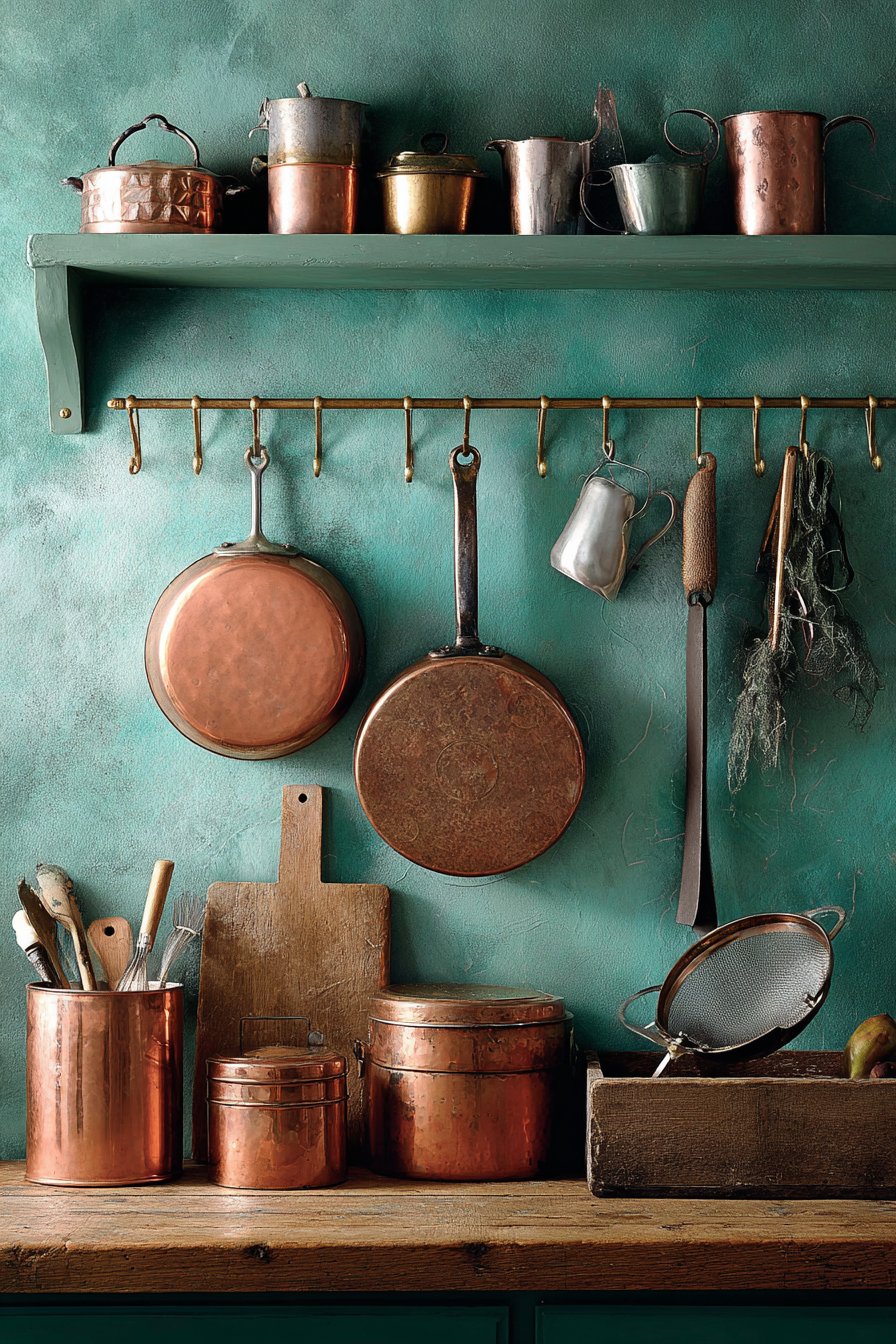
Warmth radiates from this elegant design concept that celebrates vintage copper cookware as both functional tools and beautiful decorative objects. Against a sophisticated sage green wall, an arrangement of copper pieces—including a decorative bundt pan, various-sized measuring cups, and a vintage colander—creates a stunning visual display mounted on individual brass hooks. The warm metallic tones of the copper create a glorious contrast with the cool, organic sage green paint, resulting in a color combination that feels both timeless and distinctly contemporary.
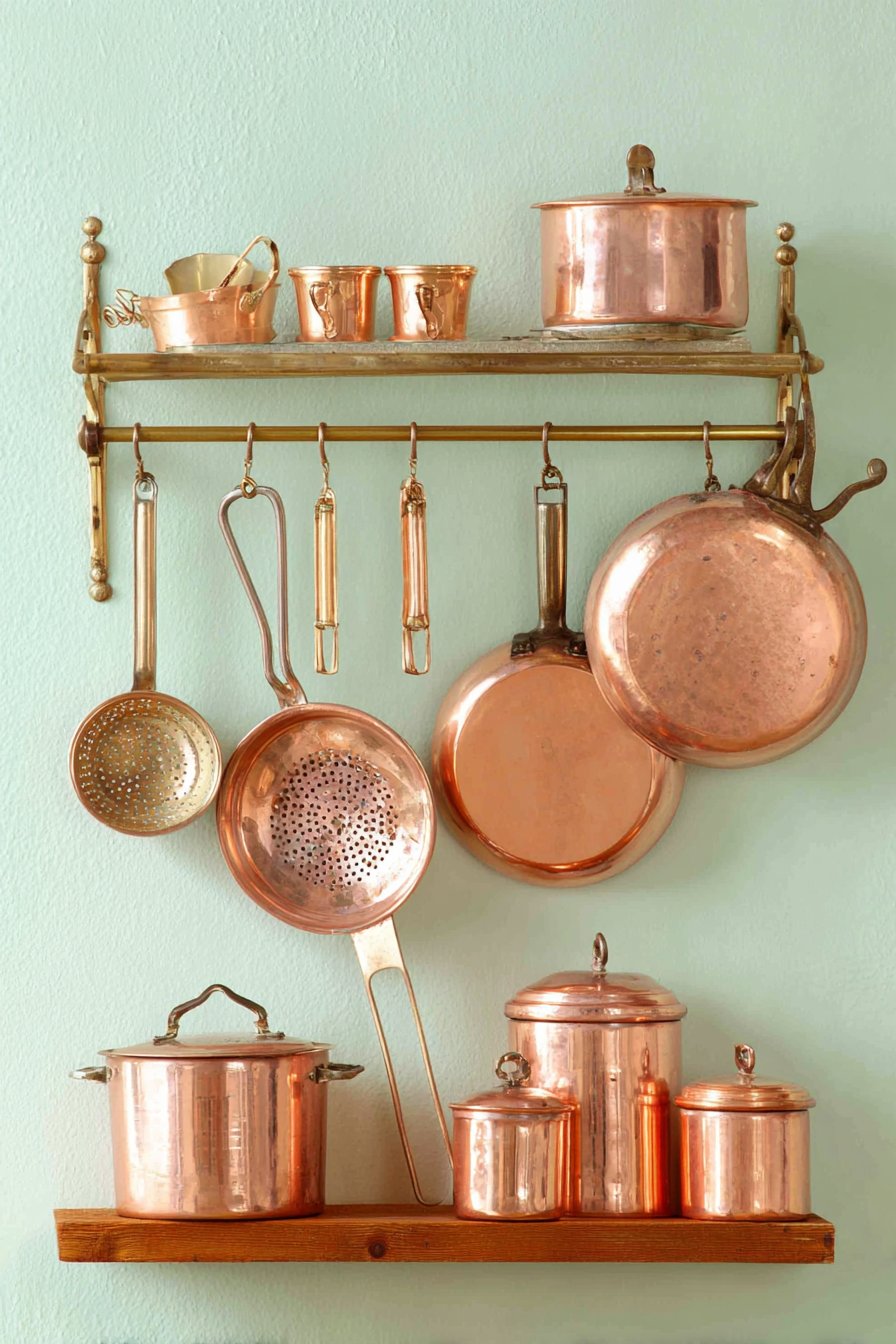
The sage green wall color serves as far more than a simple backdrop; it’s a critical component that elevates the entire design. This particular shade of green, with its grey undertones and muted saturation, provides sophisticated neutrality while introducing subtle color that enlivens the space.
The green enhances the warm peachy-pink tones inherent in copper, creating a complementary relationship that makes both elements appear more vibrant. This color pairing draws inspiration from classical interior design while maintaining relevance in modern aesthetics.
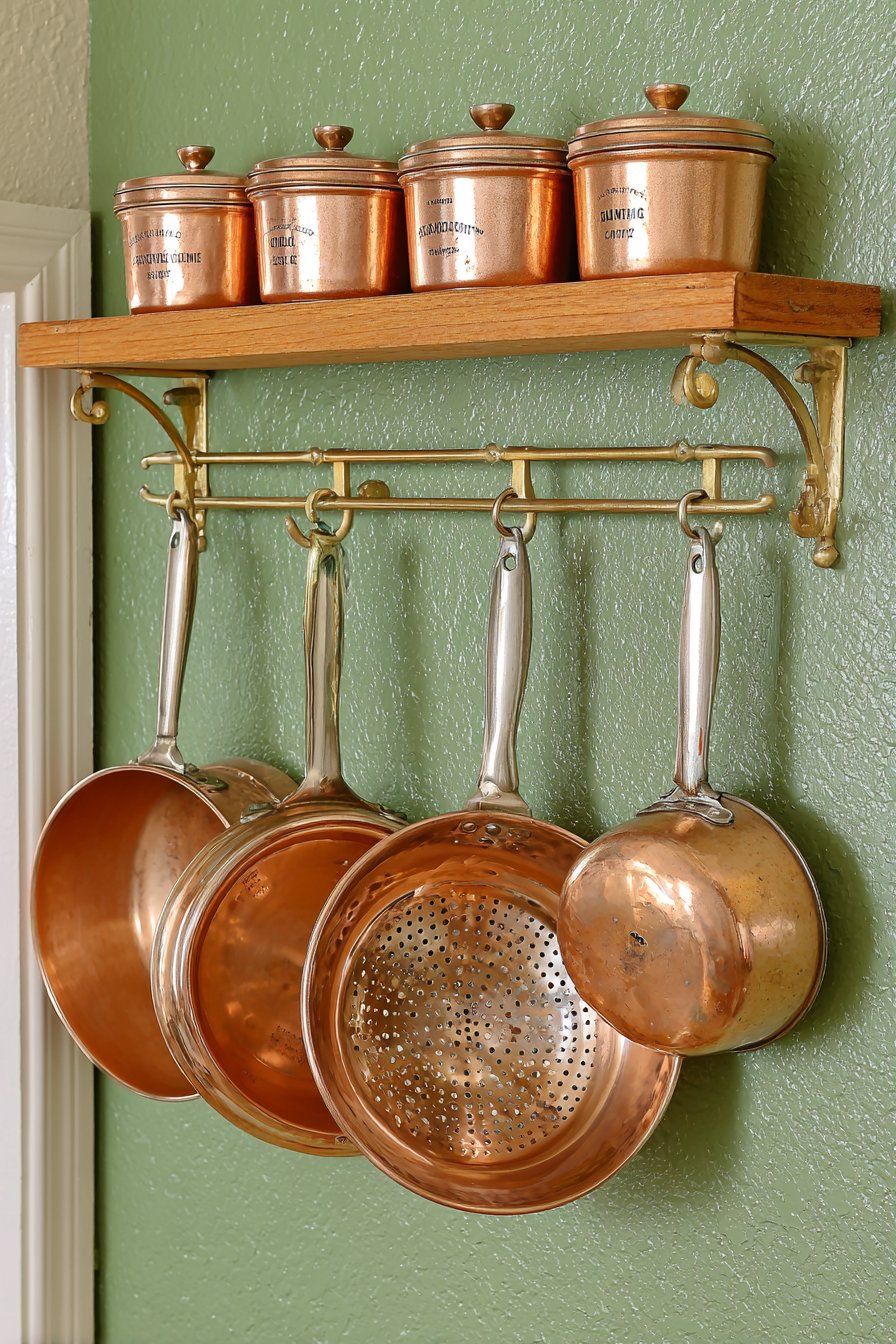
Below the mounted cookware, a rustic wooden shelf in weathered finish holds additional copper canisters that provide practical storage for coffee, tea, sugar, or other frequently used ingredients. This lower shelf grounds the wall arrangement and creates a layered composition that adds depth and visual interest. The natural wood grain and slightly distressed finish introduce organic texture that softens the refined appearance of the polished copper and painted walls.
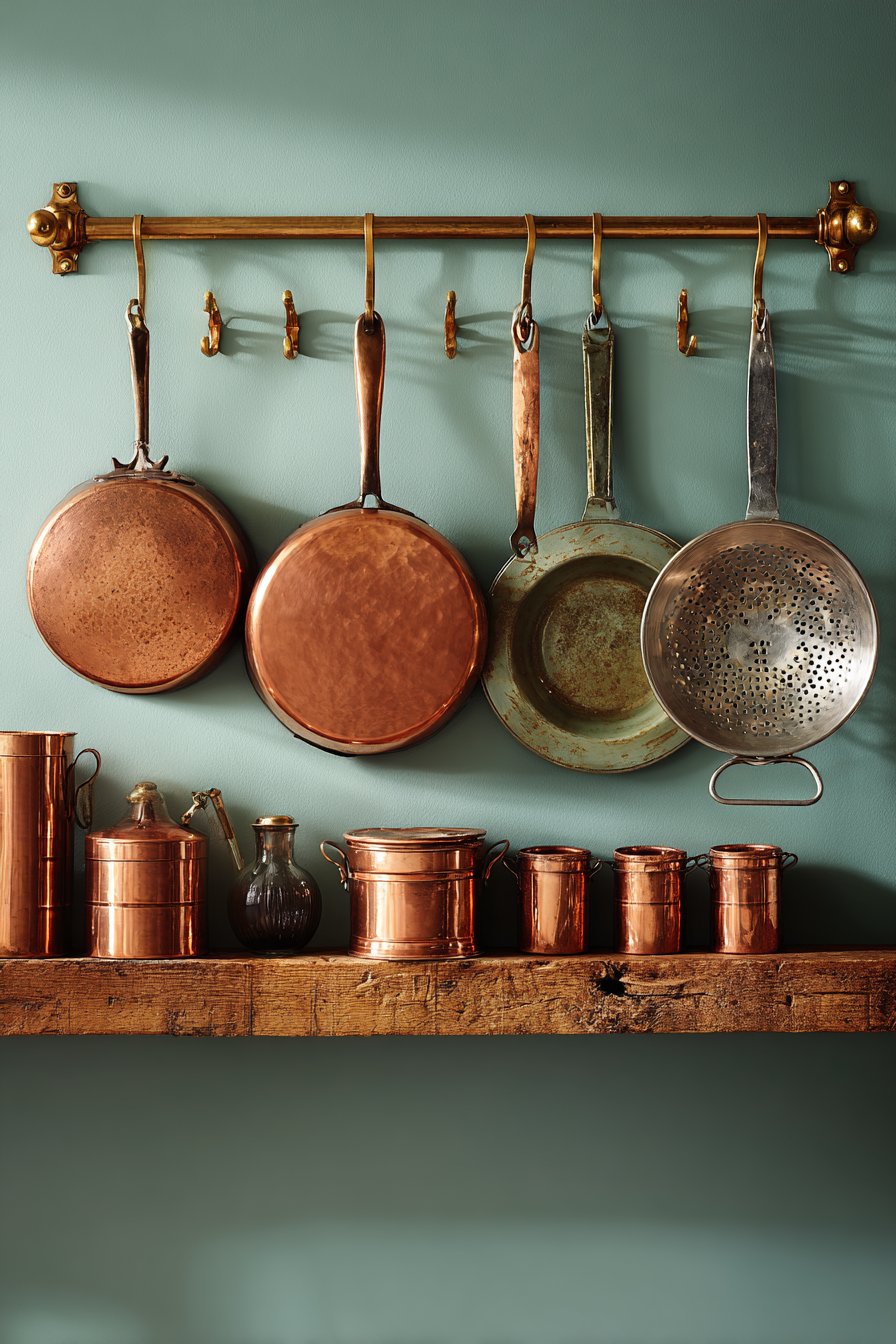
The magic of this design truly reveals itself during golden hour when natural ambient lighting streams through nearby windows. The copper surfaces come alive, reflecting and amplifying the warm light while creating natural highlights and subtle shadows that emphasize their dimensional curves and vintage patina.
This interplay of light on metal surfaces creates an ever-changing display that appears different throughout the day, ensuring the wall decor never becomes static or predictable. The brass hooks themselves contribute to the cohesive metallic theme while providing secure mounting that allows the copper pieces to hang slightly away from the wall, creating subtle shadows that enhance the three-dimensional quality.
Key Design Tips:
- Select copper pieces with varied shapes and sizes to create visual interest while maintaining a cohesive material theme—combine flat items like pans with dimensional pieces like molds or colanders
- Space brass hooks approximately 4-6 inches apart vertically to allow each copper piece to be clearly distinguished while maintaining a unified grouping
- Choose sage green paint with grey undertones rather than yellow undertones to create a sophisticated contrast that complements rather than clashes with copper’s warmth
- Arrange copper pieces in a triangular or diamond composition to create dynamic visual flow that guides the eye across the entire display
- Mix vintage patinated copper with newly polished pieces to introduce tonal variation that adds depth and prevents the display from appearing too uniform
5. Scandinavian Minimalist Art and Organic Elements
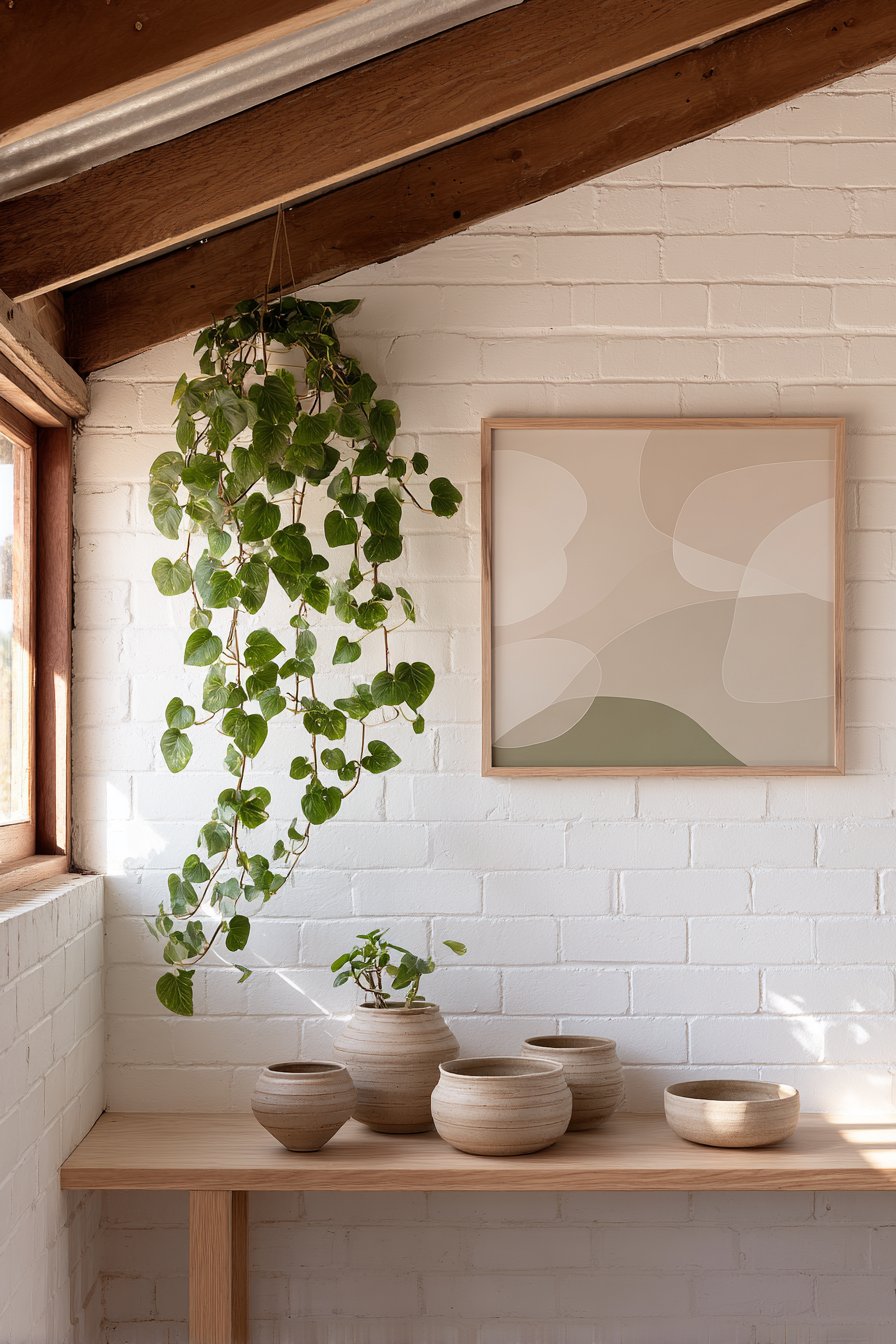
Restraint becomes a design virtue in this minimalist approach that demonstrates how less truly can be more when executed with careful intention. A single large-scale abstract art print in muted earth tones—soft terracotta, warm grey, dusty sage, and cream—hangs centered on a pristine white wall, creating a focal point through its substantial size and subtle color palette. The artwork’s abstract nature, perhaps featuring organic shapes or gentle color field transitions, introduces visual interest without demanding attention or overwhelming the space.
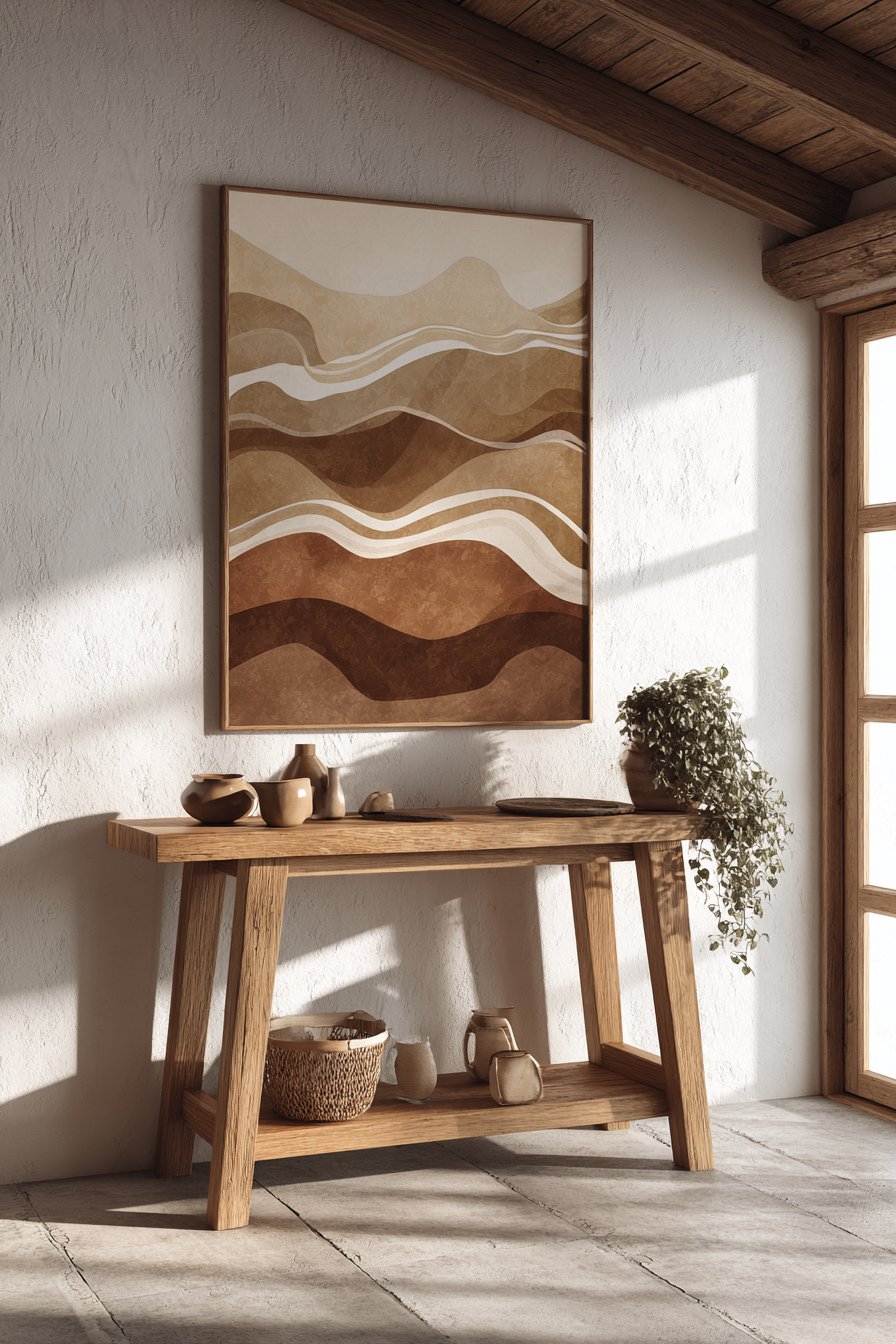
Below the artwork, a simple console table in light natural wood serves as a landing zone for a small, carefully edited collection of handmade ceramic bowls. These bowls, likely in neutral tones that echo colors within the artwork, showcase the imperfect beauty of artisan craftsmanship through subtle variations in glaze, slight asymmetry, and visible traces of the maker’s hand. Their organic, irregular forms contrast beautifully with the clean geometric lines of the console table and the rectangular format of the artwork above.
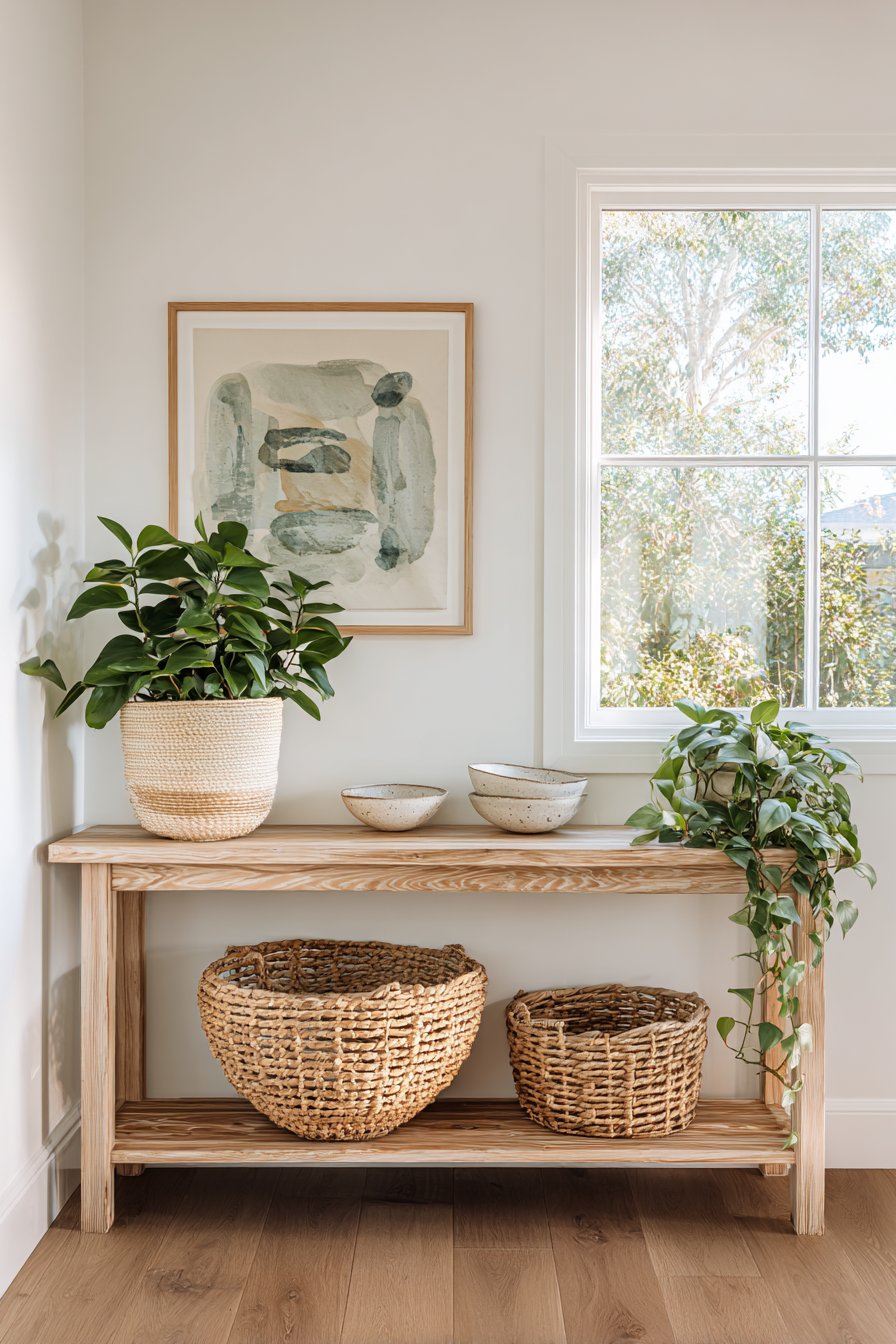
A trailing pothos plant in a simple ceramic pot adds the essential element of living greenery that Scandinavian design champions. The cascading vines introduce movement and natural unpredictability to the carefully composed arrangement, their heart-shaped leaves creating organic shapes that soften the minimalist aesthetic. The plant serves as a reminder that minimalism isn’t about creating sterile environments but rather about making intentional choices that allow each element to be appreciated fully.
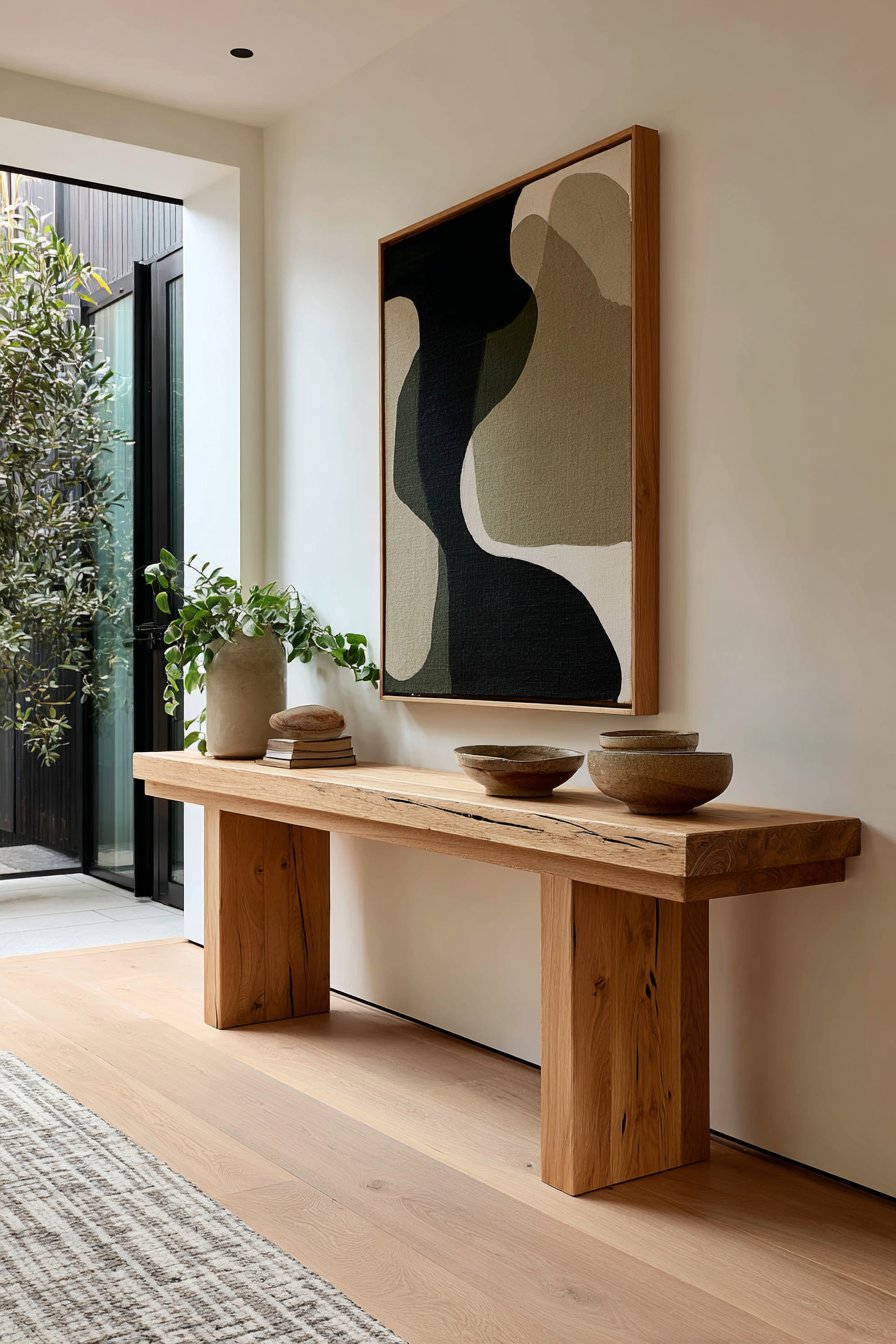
Natural daylight streaming from an adjacent window proves essential to this design’s success, as Scandinavian aesthetics prioritize connection with natural light. The abundant illumination ensures the white wall remains bright and welcoming rather than stark or cold, while creating subtle shadows that add dimensional interest to the simple composition.
The balanced exposure of professional interior photography captures this space perfectly, showing how negative space functions as an active design element rather than empty void—creating visual breathing room that allows the eye to rest and appreciate each carefully chosen piece.
Key Design Tips:
- Select artwork measuring at least 36×48 inches or larger to create appropriate visual weight on a kitchen wall without requiring multiple pieces or busy arrangements
- Maintain a restricted color palette of 3-4 muted, earthy tones that repeat across artwork, ceramics, and natural elements to create cohesive harmony
- Position the console table 8-12 inches from the wall to create subtle depth and allow the pothos vines to cascade naturally without crushing against the wall surface
- Limit decorative objects to 3-5 carefully chosen pieces that exhibit excellent craftsmanship and natural materials—quality over quantity guides all selections
- Embrace white space intentionally by leaving approximately 30-40% of the wall surface completely bare to achieve authentic minimalist aesthetics
6. Navy Pegboard Organization System
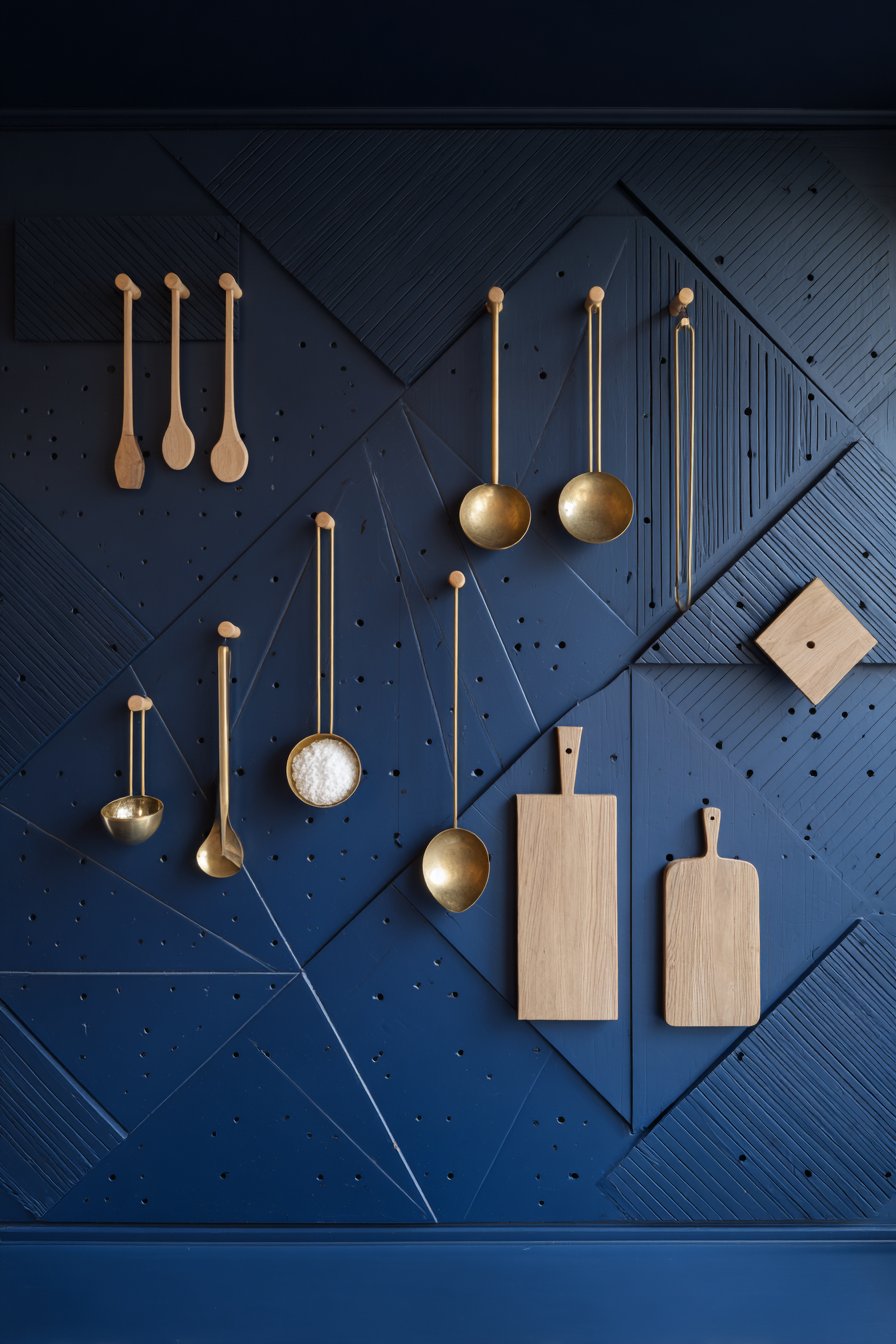
Function and form unite brilliantly in this innovative storage solution that transforms humble pegboard into a stylish organizational centerpiece. The pegboard, painted in a rich deep navy blue, creates unexpected sophistication while maintaining the practical utility that makes the pegboard invaluable in workshop settings. Against this dramatic backdrop, natural wood pegs in light oak or maple create pleasing contrast while providing secure mounting points for an array of cooking utensils, measuring spoons, small cutting boards, and kitchen tools.
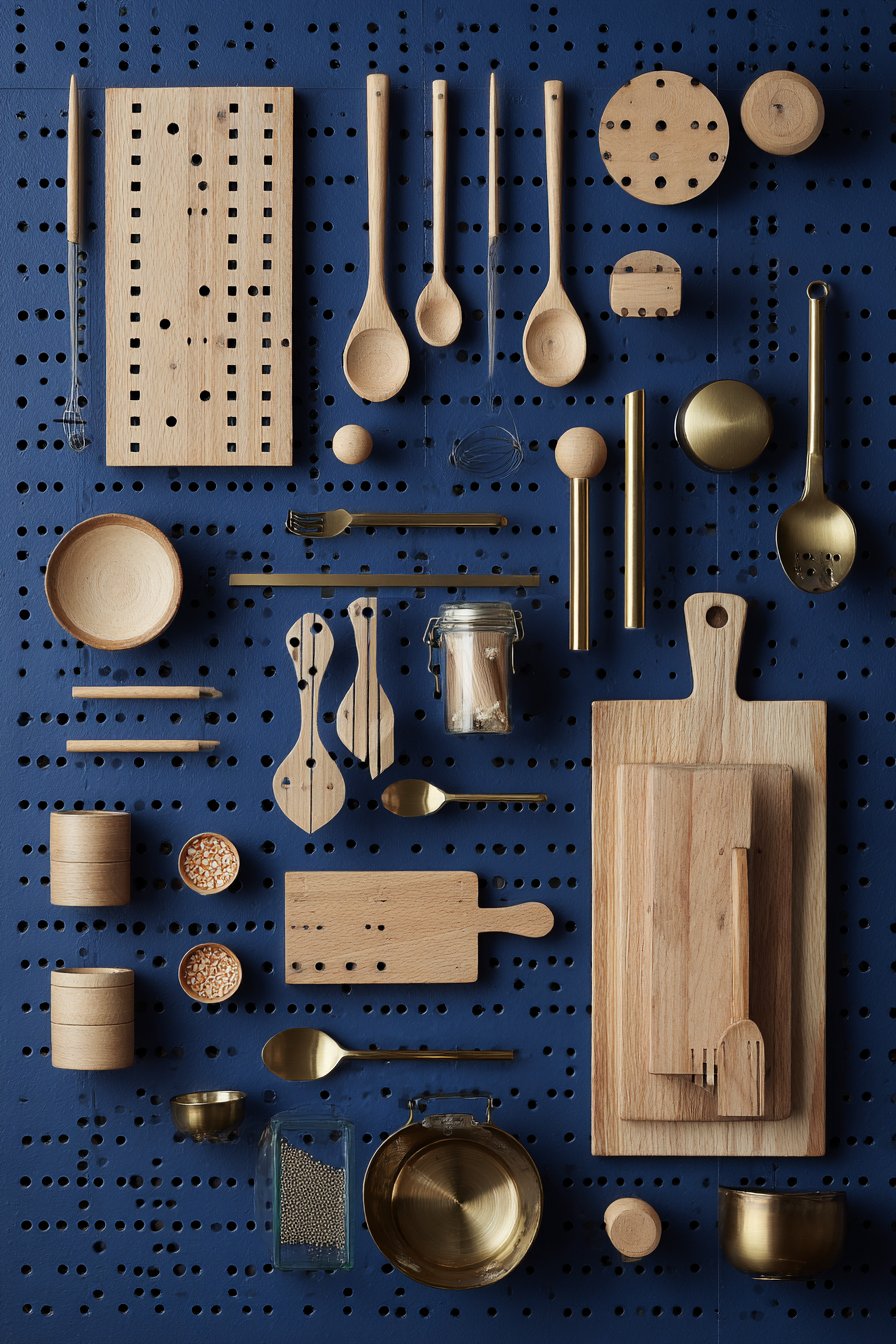
The geometric pattern inherent in pegboard design—the regular grid of circular holes—creates visual interest through repetition and order. This pattern provides structure that prevents the display from appearing chaotic even when holding numerous items.
The deep navy color elevates the pegboard beyond purely utilitarian status, transforming it into a design statement that wouldn’t look out of place in a high-end kitchen showroom. The color choice also provides versatility, complementing both warm and cool kitchen color schemes while adding depth and richness to the space.
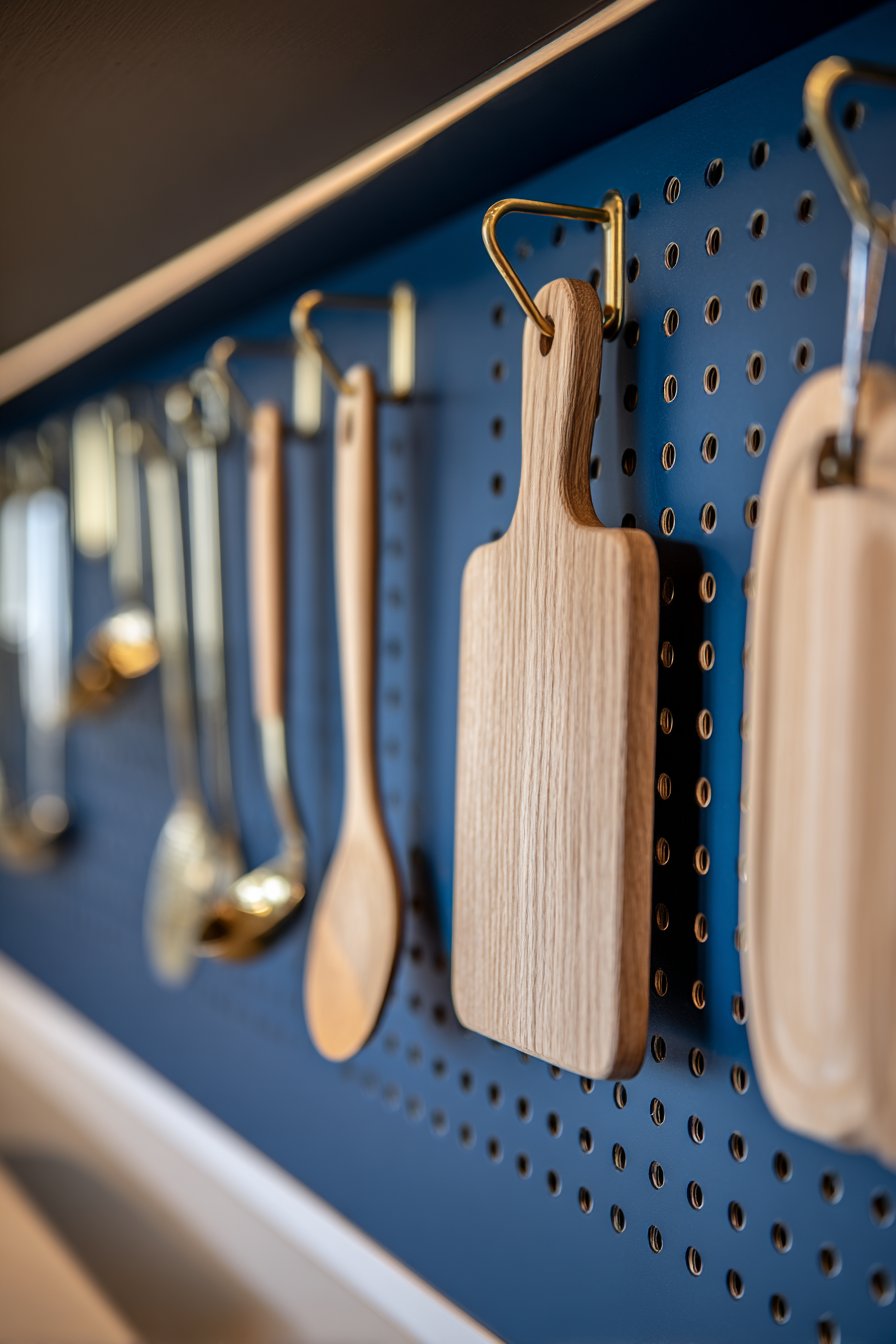
Brass S-hooks scattered throughout the pegboard introduce metallic accent notes that catch and reflect light, creating small sparkle points that enliven the display. These hooks allow for flexible arrangement and easy reorganization as kitchen needs evolve, while their warm brass finish adds a touch of elegance that prevents the system from feeling too industrial or workshop-like. The ability to adjust hook and peg positions means the pegboard grows and adapts with your kitchen tool collection.
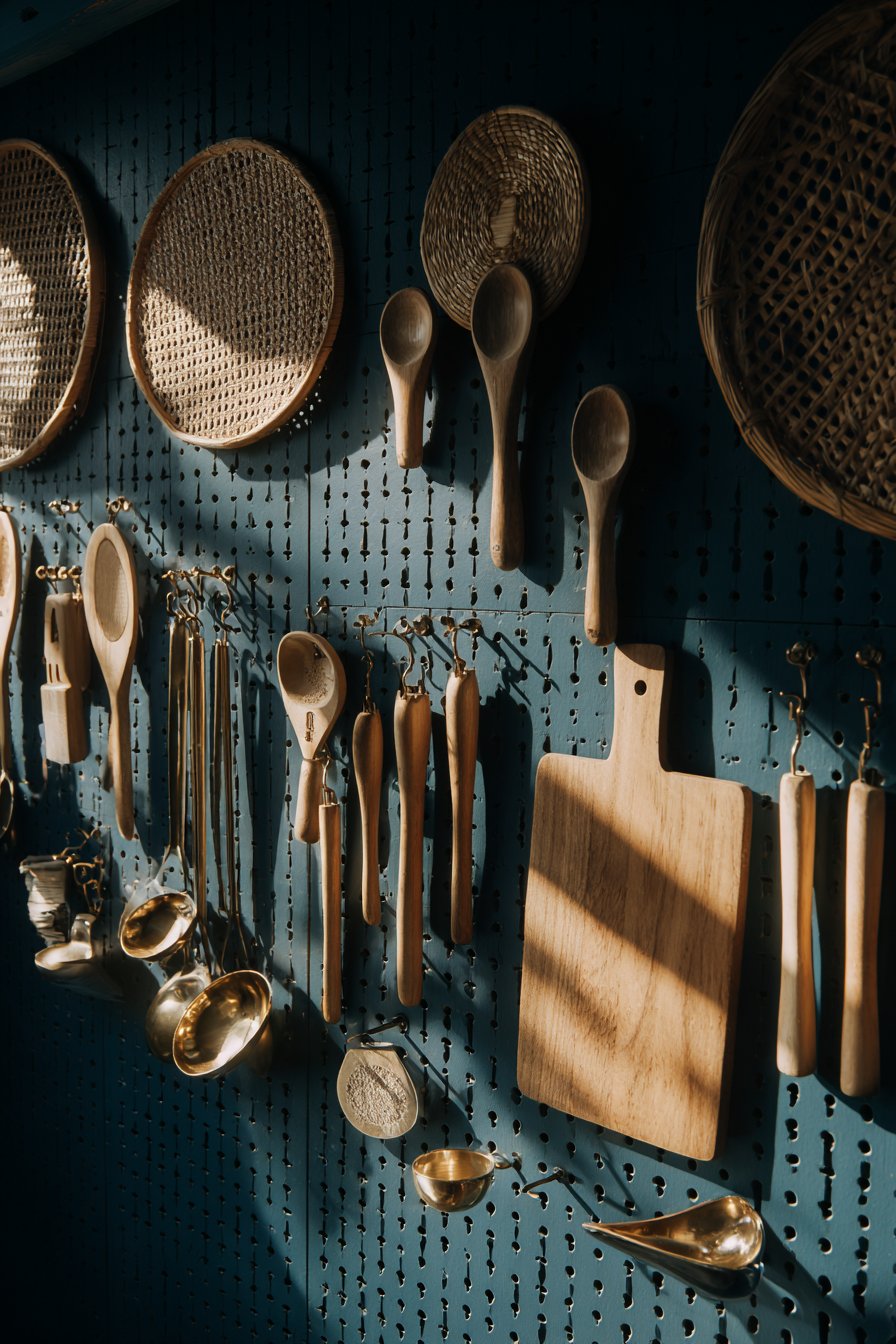
The clever storage solution captures attention not just for its practical benefits but for its honest, straightforward approach to displaying everyday kitchen tools. Whisks, spatulas, tongs, and ladles become design elements when thoughtfully arranged, their varied silhouettes creating interesting shapes against the navy background. Soft natural lighting emphasizes the textured surface of the pegboard and organized arrangement, creating subtle shadows around each tool that enhance the three-dimensional quality of the display.
Key Design Tips:
- Prime the pegboard thoroughly before painting with navy color to ensure paint adheres properly and creates smooth, even coverage without streaking
- Arrange tools by frequency of use, positioning most-grabbed items at eye level and arm’s reach while reserving higher and lower positions for occasional-use pieces
- Mix natural wood pegs with brass S-hooks to create visual variety and accommodate different tool types—pegs work well for items with holes, hooks for everything else
- Maintain some empty pegs and open space within the pegboard to prevent overcrowding and preserve the organizational clarity that makes this system effective
- Consider creating zones for different tool categories—baking tools together, cooking utensils grouped, measuring items clustered—to maintain visual order and improve functionality
7. Rustic Reclaimed Wood Accent Wall
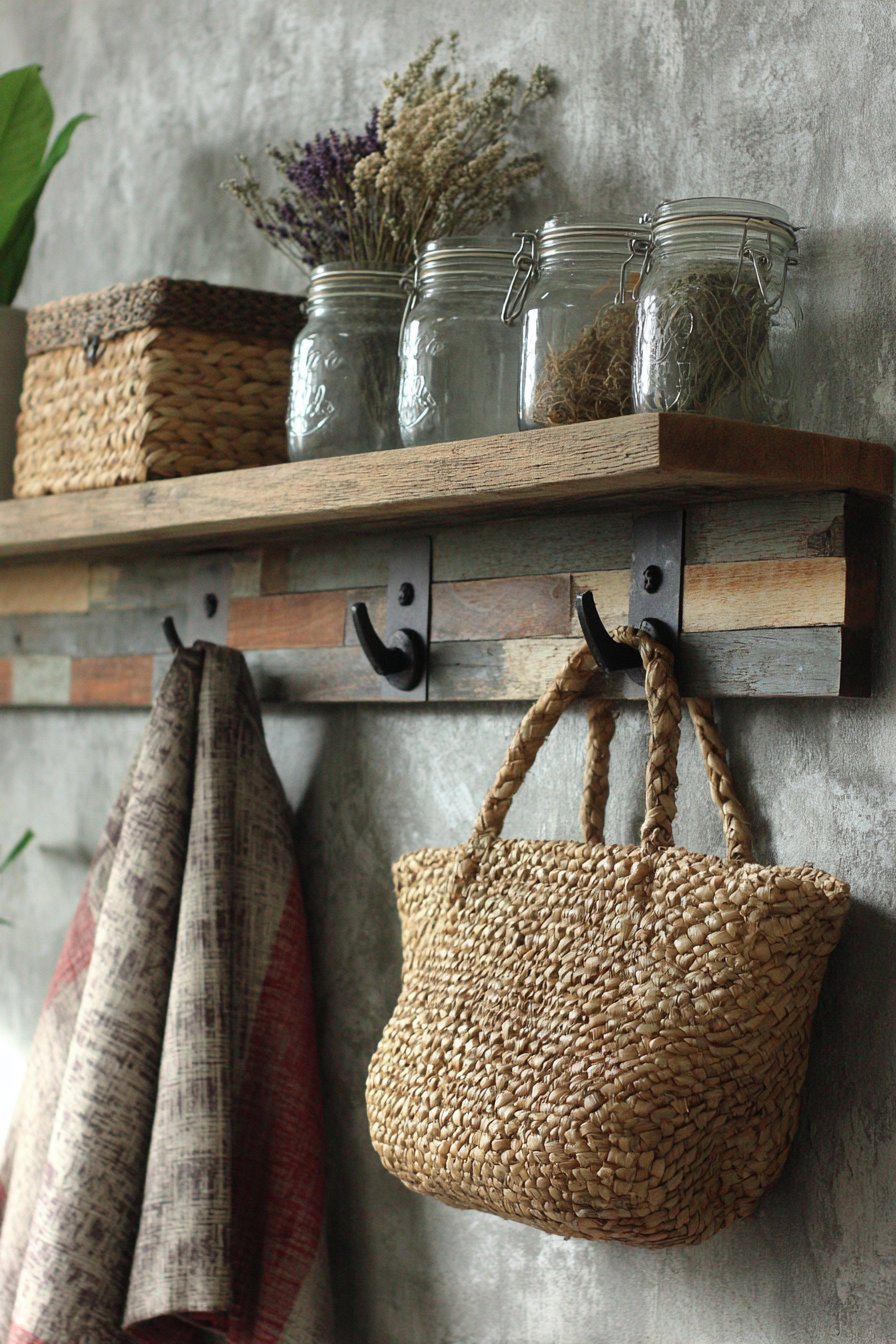
Authentic character emanates from every inch of this rustic design that celebrates the natural beauty of reclaimed wood. Horizontal planks showing genuine weathering, varied wood tones, visible grain patterns, and natural imperfections create an accent wall that tells a story of age and previous use.
The authentic patina that develops on wood over decades cannot be replicated, making truly reclaimed materials the gold standard for achieving this aesthetic. The varied tones—from silvered grey to warm honey to deep walnut—create natural visual interest without requiring additional decoration.
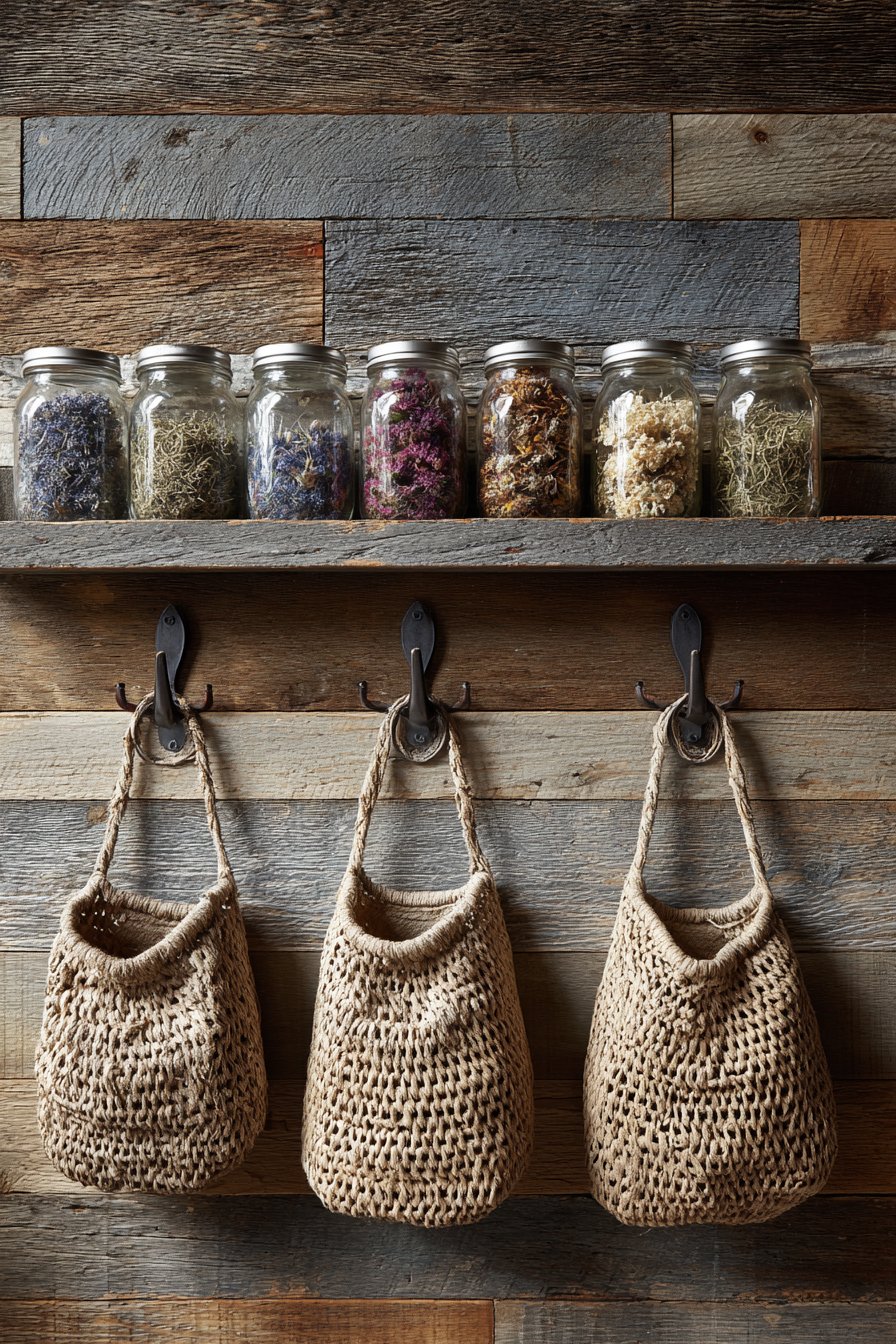
Against this richly textured backdrop, simple iron hooks provide mounting points for woven baskets and vintage kitchen textiles. The iron’s dark, matte finish complements the rustic character of the wood while introducing industrial elements that prevent the design from feeling too country or overly themed. The woven baskets, likely in natural materials like seagrass, willow, or wire, provide practical storage for produce, bread, or kitchen linens while contributing organic texture and warm neutral tones.
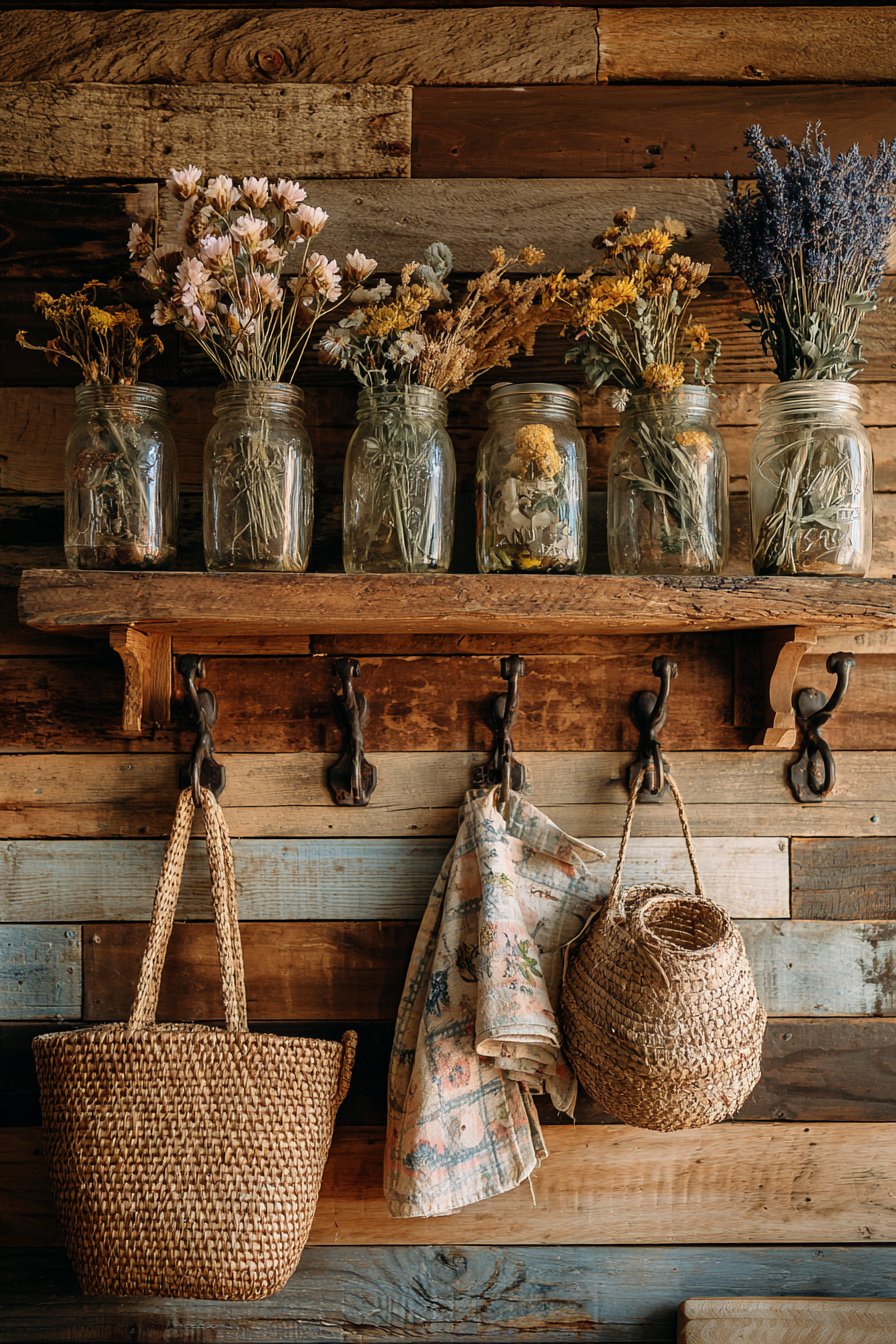
A floating shelf, also in reclaimed wood, continues the material theme while providing display space for mason jars filled with dried flowers and herbs. These jars introduce subtle color and delicate organic forms that soften the substantial presence of the wood wall. The dried botanicals—perhaps lavender, eucalyptus, wheat stalks, or hydrangeas—add visual lightness and wonderful texture without requiring the maintenance of fresh flowers.
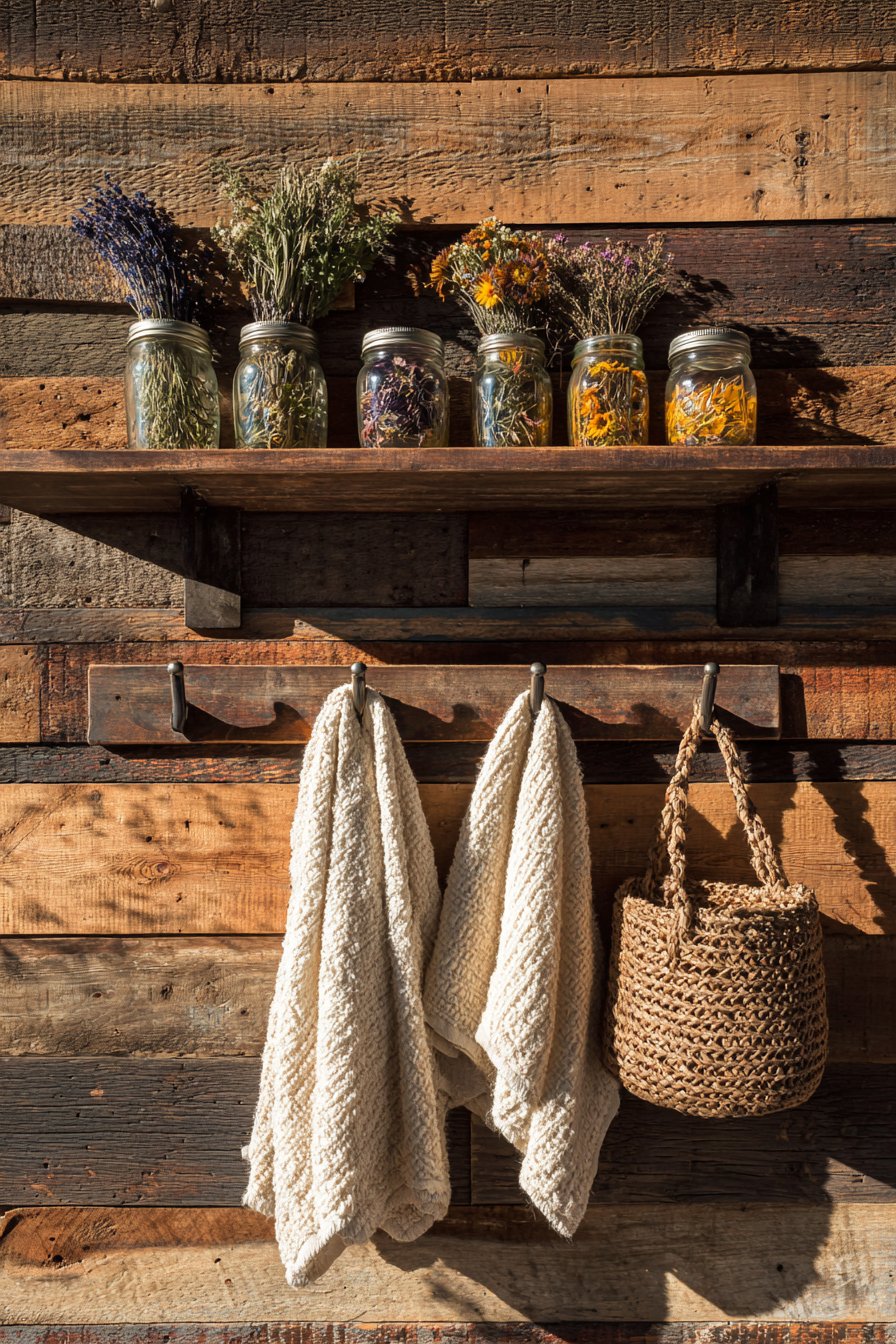
Natural lighting plays a crucial role in showcasing this design’s beauty, highlighting the authentic wood grain, knots, and subtle color variations that create organic warmth throughout the kitchen space. As light moves across the wall throughout the day, different planks catch illumination while others recede into shadow, creating an ever-changing display that emphasizes the wood’s natural dimensionality. The honest, unpretentious nature of this design creates immediate comfort and authenticity.
Key Design Tips:
- Source genuinely reclaimed wood from barns, factories, or salvage yards rather than new wood with distressed finish to achieve authentic character and patina
- Install planks horizontally to visually expand the space and create a more relaxed, casual aesthetic compared to vertical installation
- Seal reclaimed wood with a clear matte finish to protect the surface and facilitate cleaning while maintaining the natural appearance and texture
- Limit additional decoration to maintain focus on the wood’s inherent beauty—choose 2-3 simple elements like hooks and a single floating shelf
- Select iron or black metal hardware that provides visual weight appropriate to the substantial character of the wood without competing for attention
8. Modern Geometric Tile Feature Wall
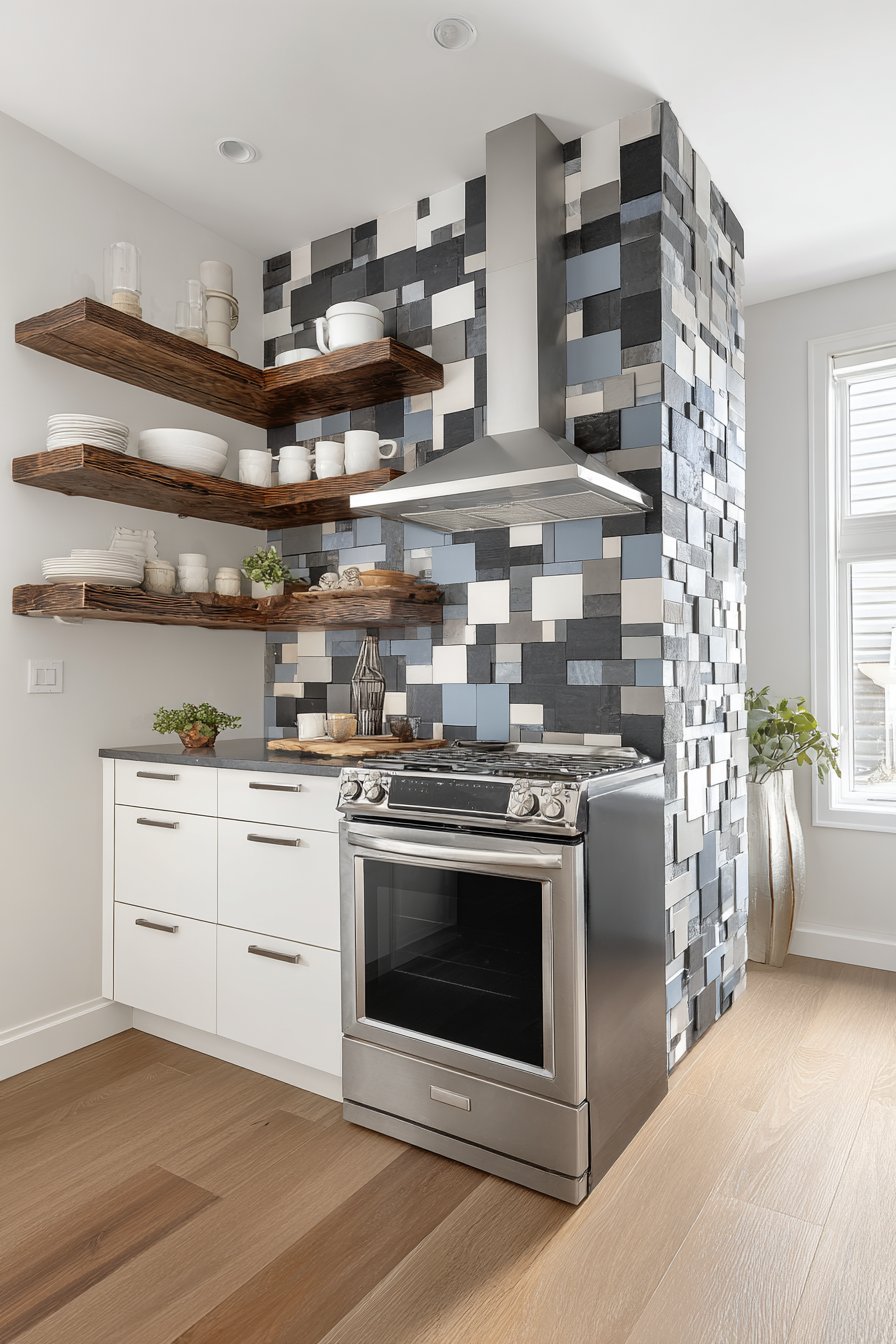
Contemporary elegance defines this sophisticated approach that extends the traditional backsplash concept into a full feature wall. Modern geometric tiles in a coordinated palette of grey, white, and soft blue create intricate pattern through their arrangement and color variation. The pattern might involve hexagons, diamonds, chevrons, or other angular shapes that introduce visual movement and contemporary appeal. The tiles begin at the countertop as a functional backsplash behind the stove area before continuing upward to transform the entire wall into a decorative feature.
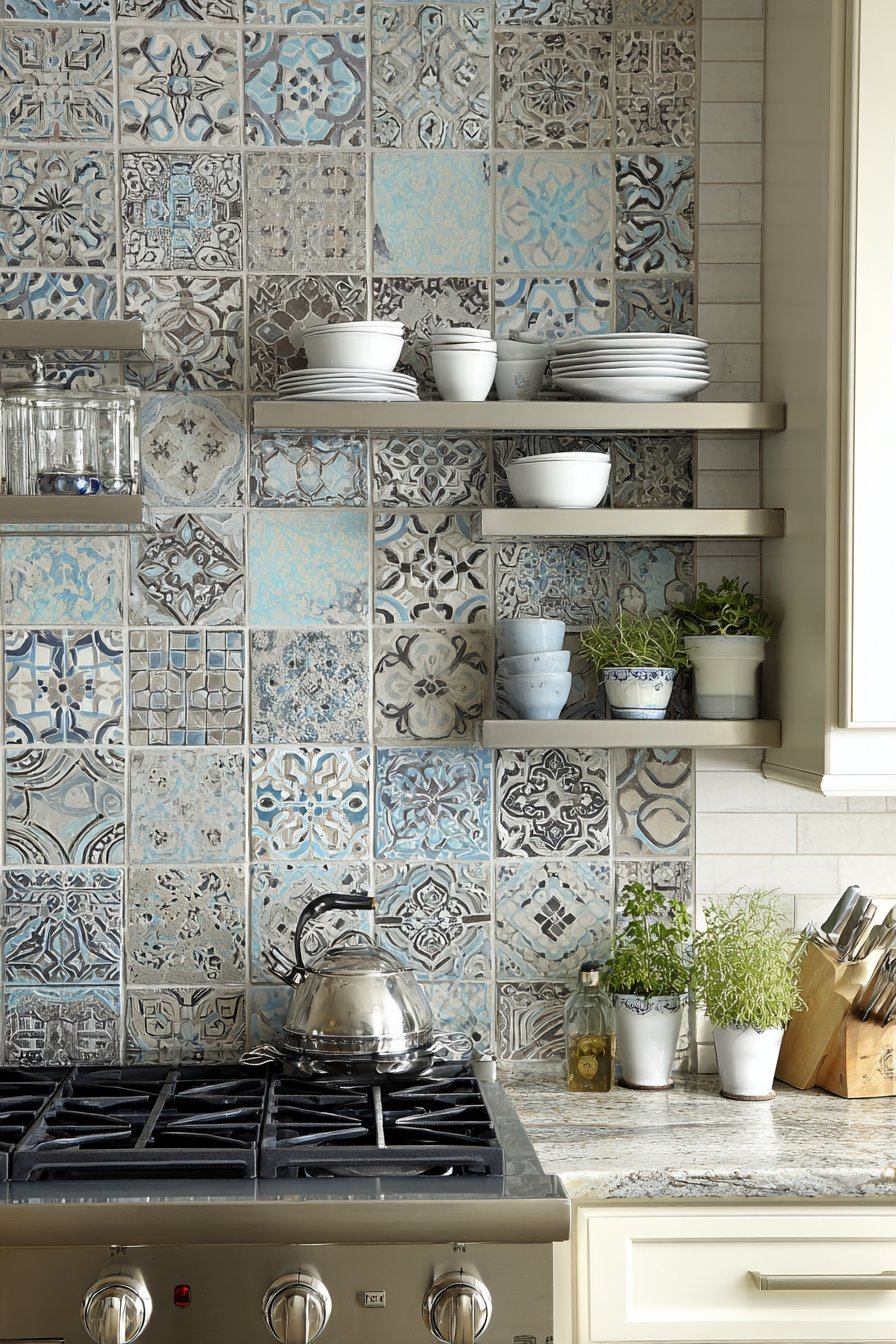
The color palette proves essential to the design’s success—the combination of cool greys, crisp whites, and gentle blue tones creates soothing sophistication without overwhelming the space. The blue introduces just enough color to prevent the scheme from feeling too neutral while maintaining the serene, uncluttered aesthetic that characterizes contemporary design. The geometric pattern provides visual interest and focal point without requiring additional wall decoration.
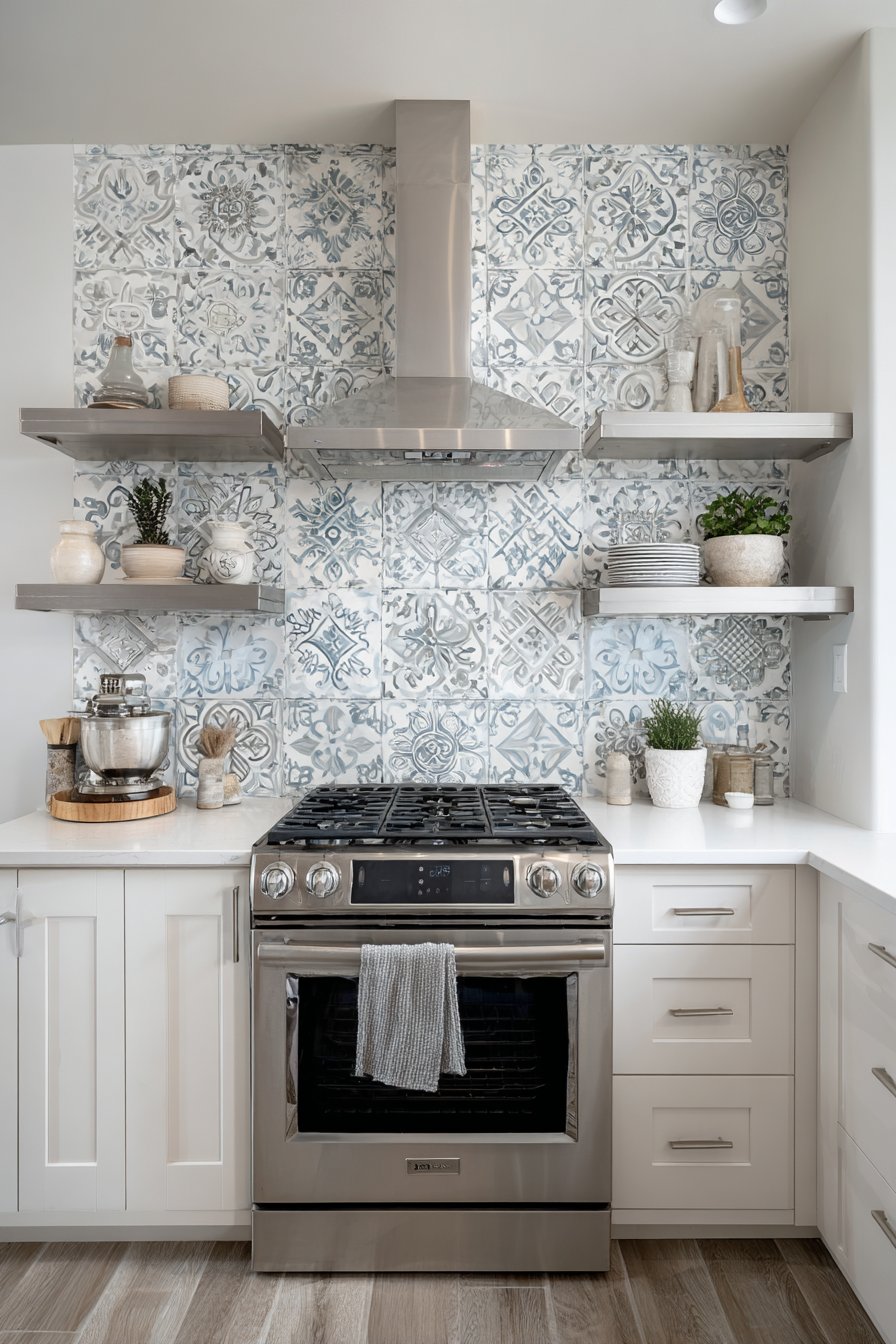
Stainless steel floating shelves mounted on either side of the tiled area introduce functional storage while contributing to the modern aesthetic through their sleek, minimalist construction and reflective metallic finish. These shelves hold white dishware that echoes the tile colors and small potted herbs that introduce organic elements and living greenery. The stainless steel’s cool tone harmonizes with the tile’s grey and blue shades, creating material cohesion across the entire wall composition.
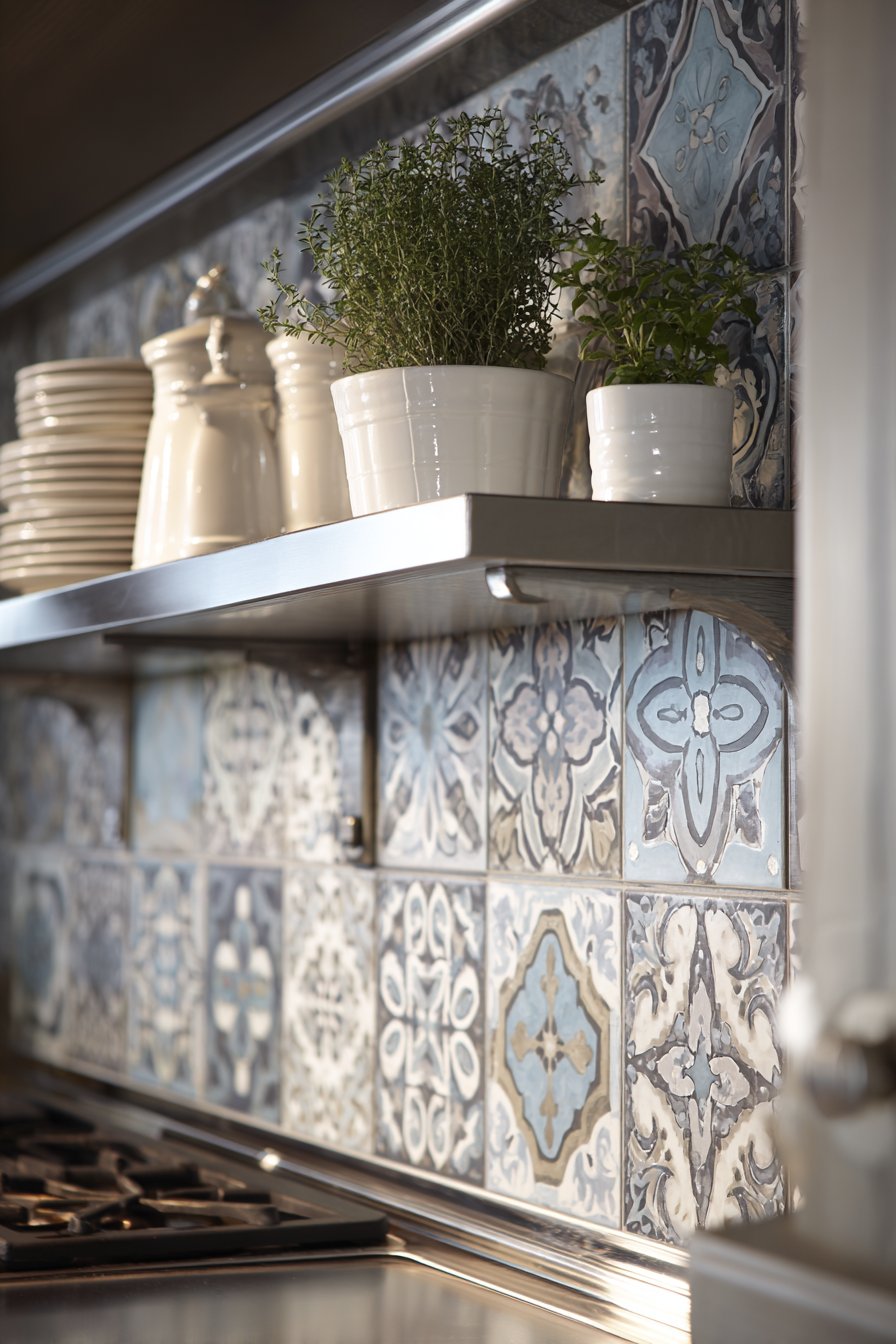
Professional interior photography with balanced exposure showcases the tile pattern details and demonstrates how functional elements integrate seamlessly with decorative features. The slightly reflective quality of the tile glaze helps bounce light throughout the space, contributing to an open, airy feeling. The geometric patterns create visual texture that adds dimension and interest without the three-dimensional bulk of other wall treatments, making this approach ideal for smaller kitchens where maintaining a sense of spaciousness remains important.
Key Design Tips:
- Select geometric tiles with 2-3 coordinating colors rather than single-color tiles to create pattern interest while maintaining visual cohesion
- Extend the tile feature wall at least 18-24 inches above the practical backsplash height to create sufficient visual impact and justify the feature wall designation
- Ensure grout color complements the tile palette—white or light grey grout typically works best for contemporary geometric patterns
- Position floating shelves at heights that don’t interrupt the tile pattern’s flow—align shelf edges with grout lines when possible for cleaner visual integration
- Consider LED strip lighting beneath floating shelves to illuminate the tile surface and emphasize the geometric pattern during evening hours
9. Vintage Seed Packet Collection with Herb Garden
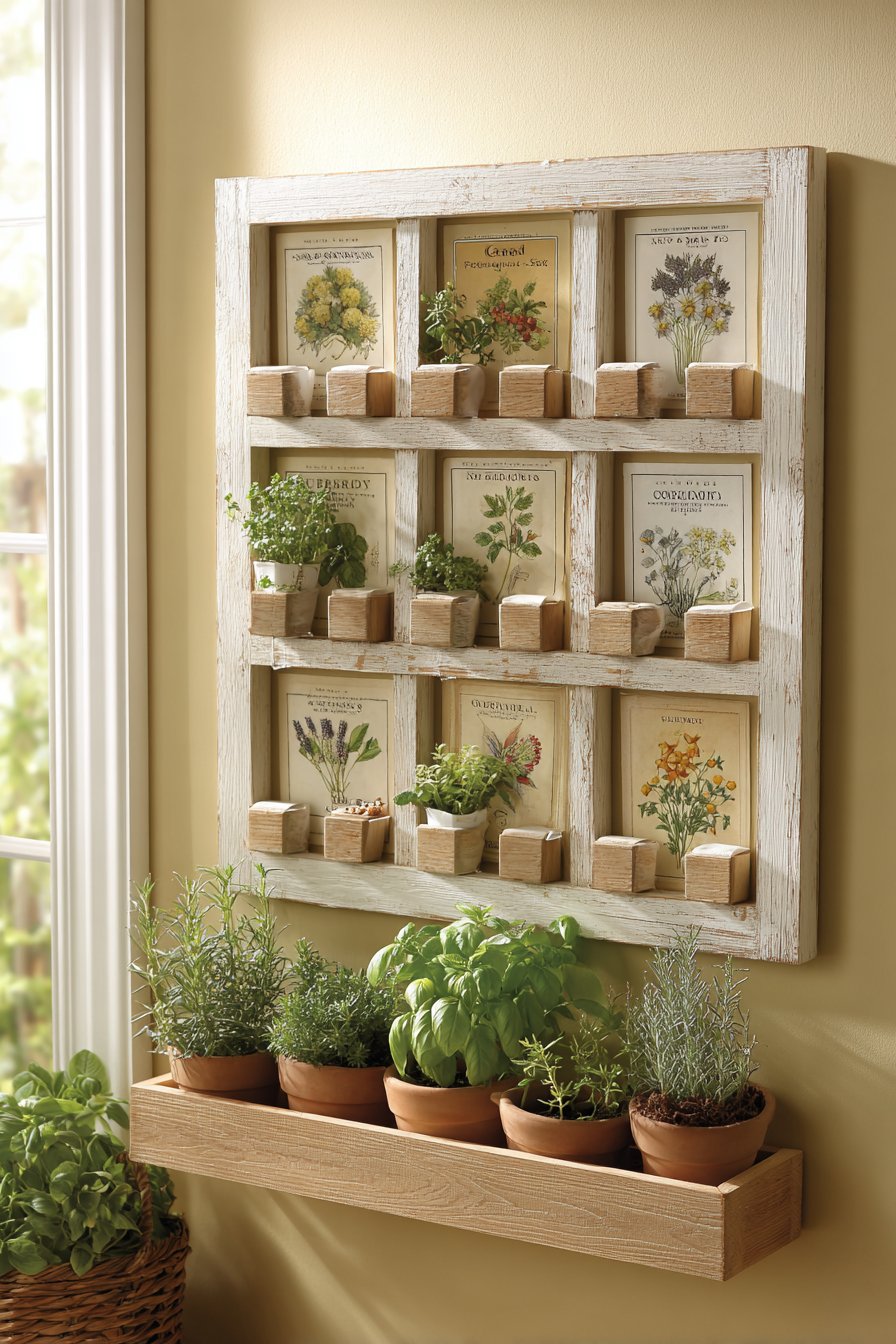
Charming nostalgia meets practical function in this delightful design that celebrates vintage seed packet artwork and botanical illustrations. A collection of framed prints arranged in a precise grid pattern adorns a light butter-yellow wall, creating an organized display that showcases the beautiful graphic design and typography of historical seed packaging. The frames alternate between natural wood and white painted finishes, introducing subtle variation that prevents the grid from appearing too rigid while maintaining overall cohesion through consistent sizing.
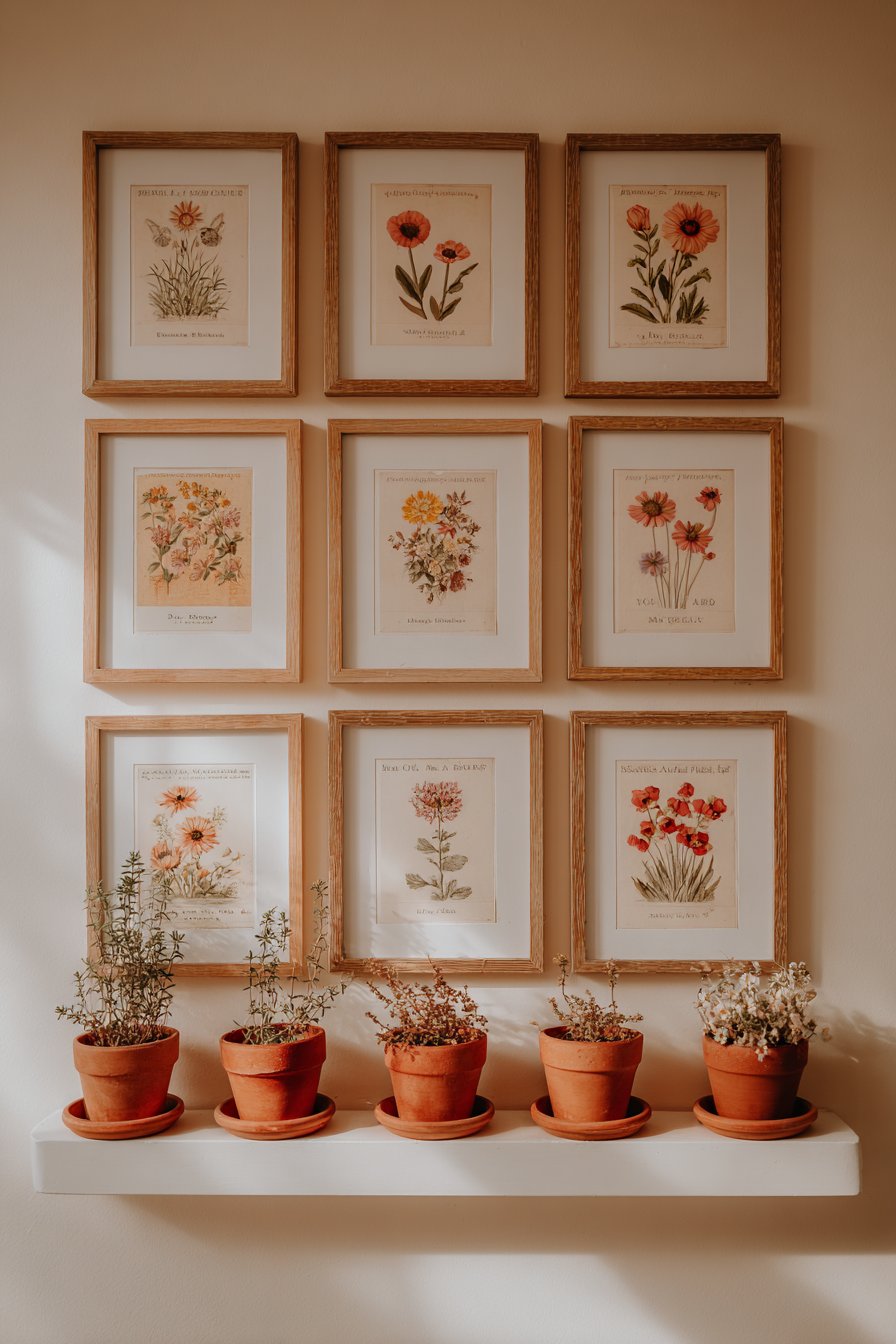
The butter-yellow wall color provides the perfect backdrop for this cottage-inspired display, introducing gentle warmth and cheerful brightness without overwhelming the delicate artwork. This particular shade of yellow—soft, buttery, and slightly muted rather than bright or saturated—evokes the warmth of afternoon sunlight and creates an immediately welcoming atmosphere. The color enhances the vintage character of the seed packet prints while providing sufficient contrast to make the framed pieces clearly visible.
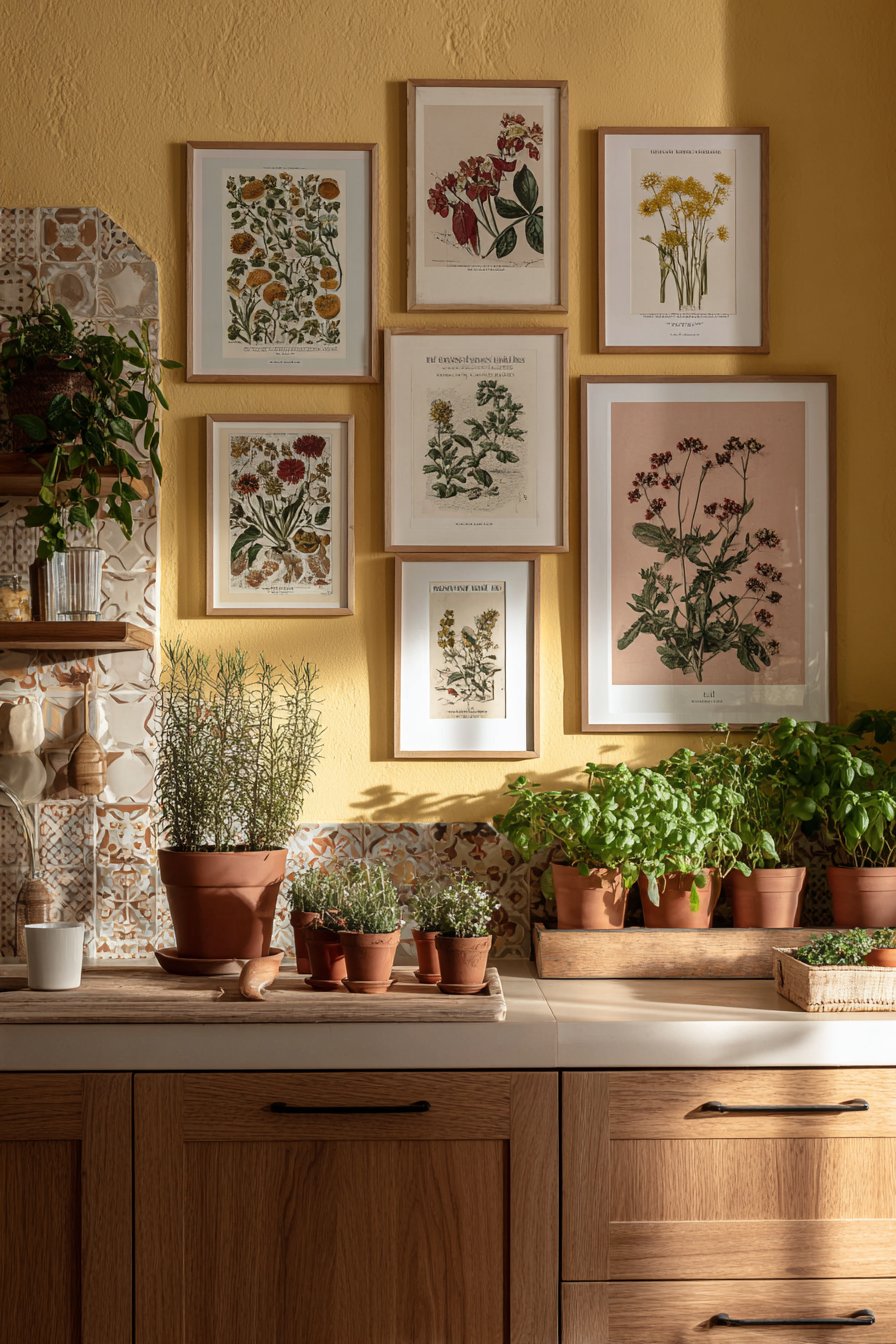
Below the framed collection, a narrow picture ledge in white or natural wood provides flexible display space for small terracotta pots containing fresh kitchen herbs. This integration of practical herb garden with decorative wall display exemplifies the best of kitchen design—beautiful and useful in equal measure.
The living herbs introduce wonderful fragrance, varied green tones, and organic texture that brings the botanical theme to life. Common kitchen herbs like basil, oregano, thyme, parsley, and chives thrive in this position when located near adequate natural light.
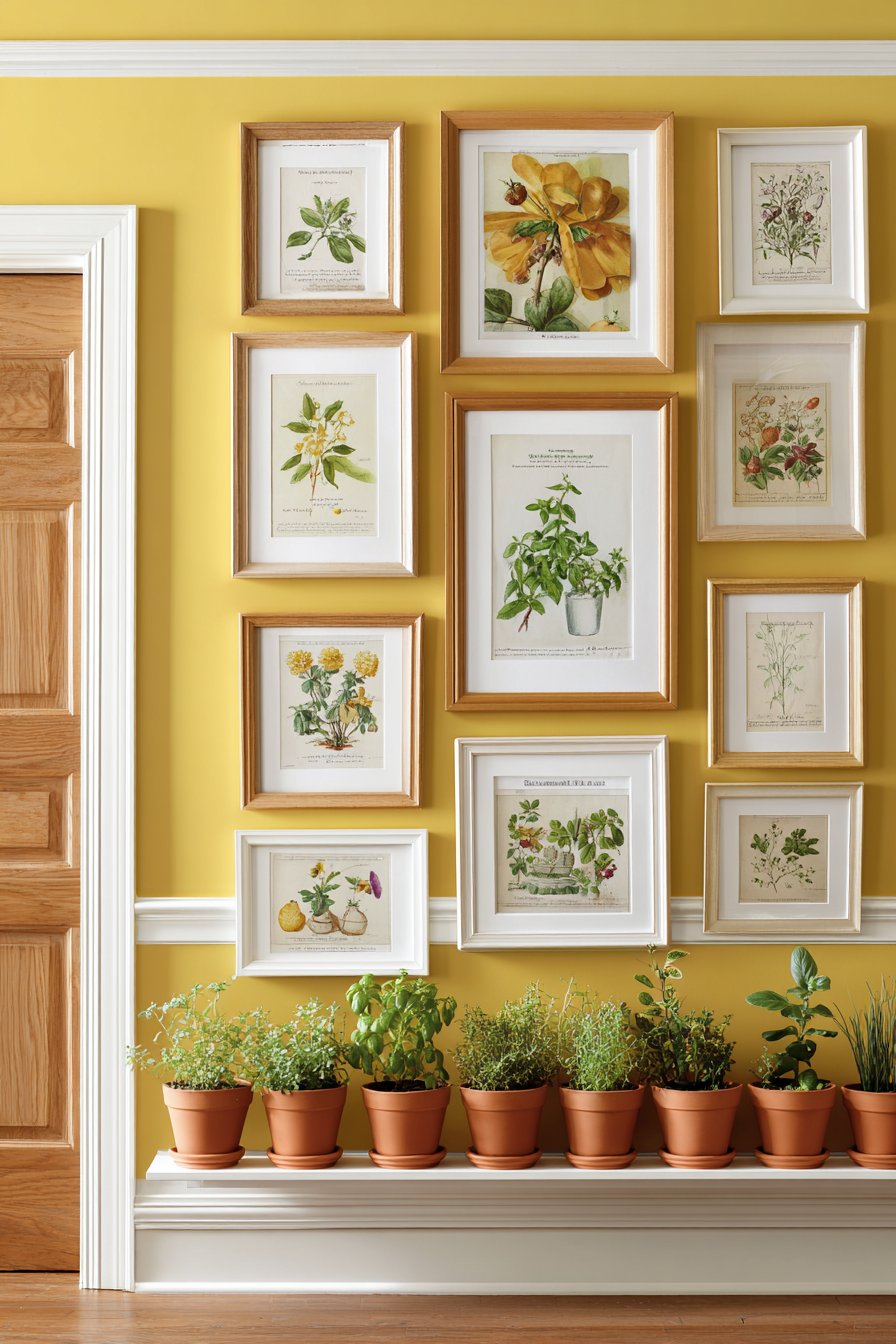
Soft, diffused natural lighting captures the charming cottage aesthetic and illuminates both the framed artwork and the living herb garden below. The picture ledge allows for easy rearrangement and seasonal updates—switching out herb varieties or adding small decorative elements without requiring new wall mounting. The overall effect creates a space that feels both collected over time and thoughtfully curated, blending vintage charm with contemporary functionality.
Key Design Tips:
- Source vintage seed packet reproductions or botanical prints in consistent size (typically 8×10 or 11×14 inches) to create a uniform grid that appears intentional rather than haphazard
- Space frames in grid with approximately 2-3 inches between each frame horizontally and vertically to maintain clean, organized appearance
- Choose picture ledge depth of at least 3-4 inches to securely hold terracotta pots without risk of toppling forward
- Select butter-yellow paint in matte or eggshell finish to create soft, non-reflective surface that enhances vintage cottage aesthetic
- Rotate herb varieties seasonally to maintain healthy plants and vary the display—start new plants from seed to continue the seed packet theme
10. Industrial Metal Grid with Exposed Brick

Urban sophistication and raw materiality converge in this industrial-style design that celebrates honest materials and functional beauty. An industrial metal grid panel—similar to those found in restaurant kitchens or workshop settings—mounts against an exposed brick accent wall, creating fascinating textural contrast between the geometric precision of the metal and the organic irregularity of the brick. The grid accommodates S-hooks that hold an impressive display of copper pots, heavy cast iron skillets, and various kitchen utensils, transforming everyday cooking tools into sculptural elements.
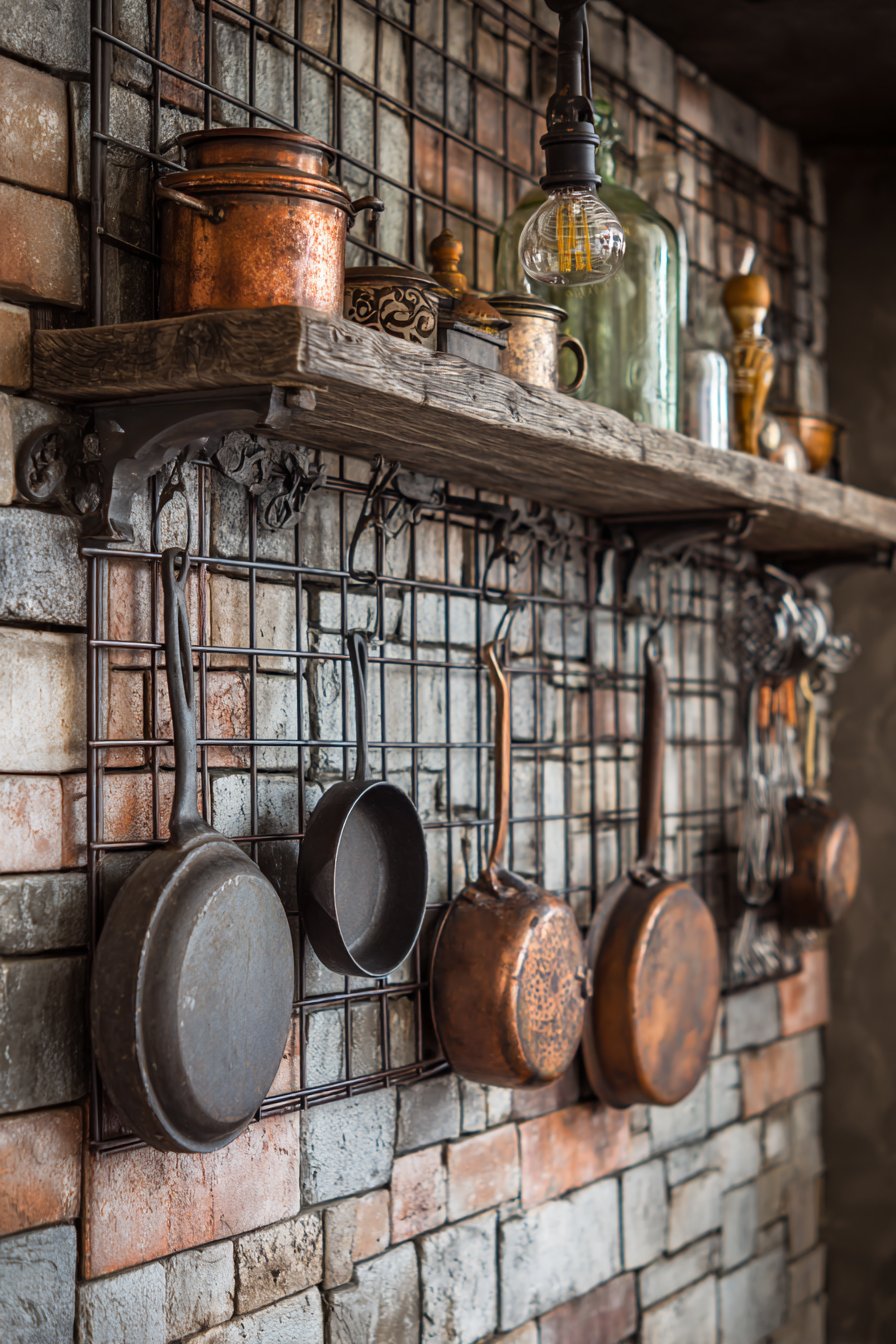
The exposed brick provides the perfect backdrop for this industrial aesthetic, its warm terracotta tones, varied texture, and authentic patina creating immediate character and visual interest. Whether existing brick that’s been uncovered or thin brick veneer installed for aesthetic purposes, this surface introduces architectural gravitas and historical reference that grounds the contemporary metal grid system. The interplay between the cool metal and warm brick creates material dialogue that defines industrial design’s appeal.
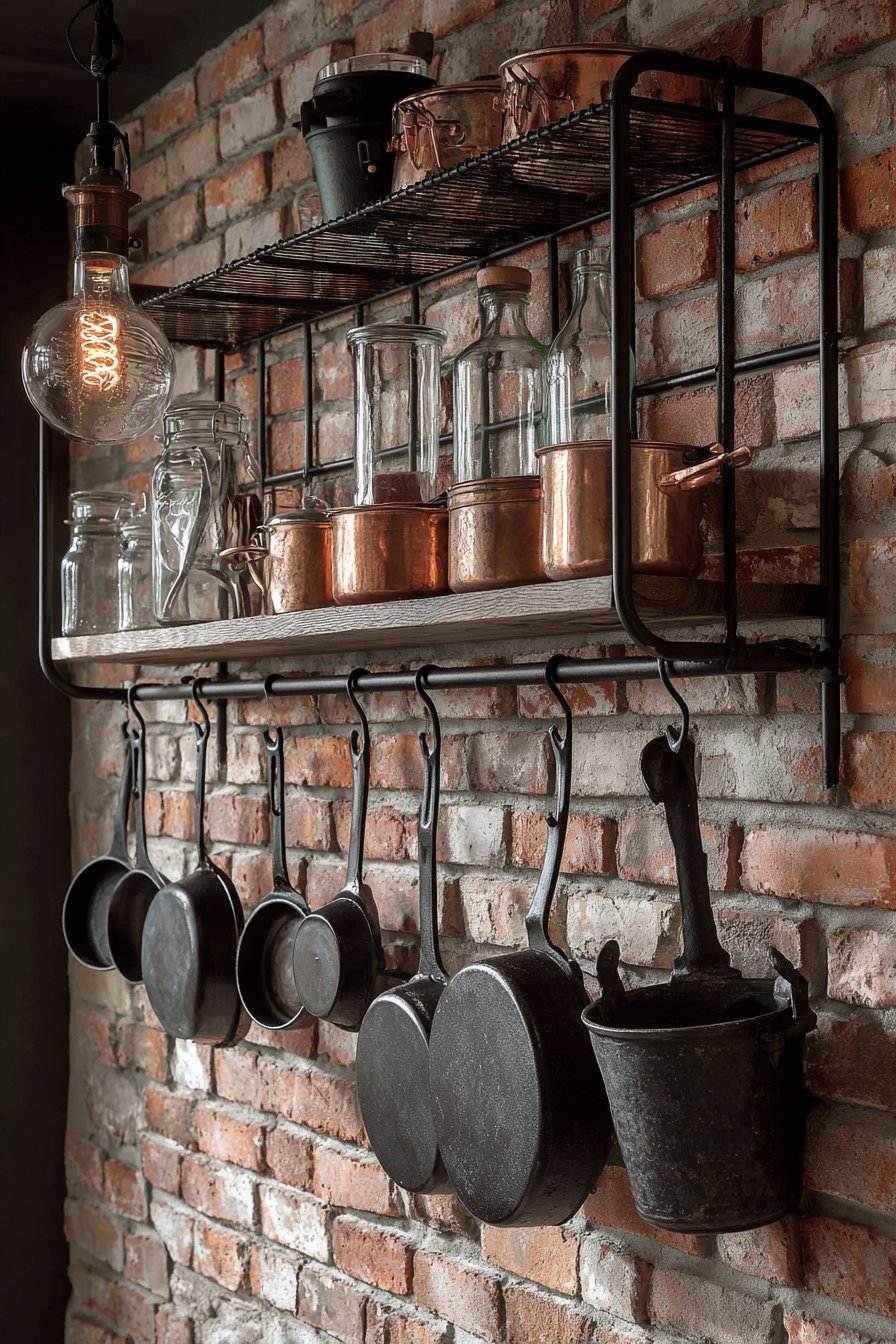
A reclaimed wood shelf integrated into the grid system introduces organic warmth that softens the harder edges of metal and brick. This shelf displays vintage glass bottles—perhaps old milk bottles, apothecary containers, or colored glass pieces—that catch and refract light beautifully. The mixed materials—metal, brick, wood, glass, copper, and iron—create rich textural layers without feeling chaotic, as the consistently industrial aesthetic provides unifying cohesion.
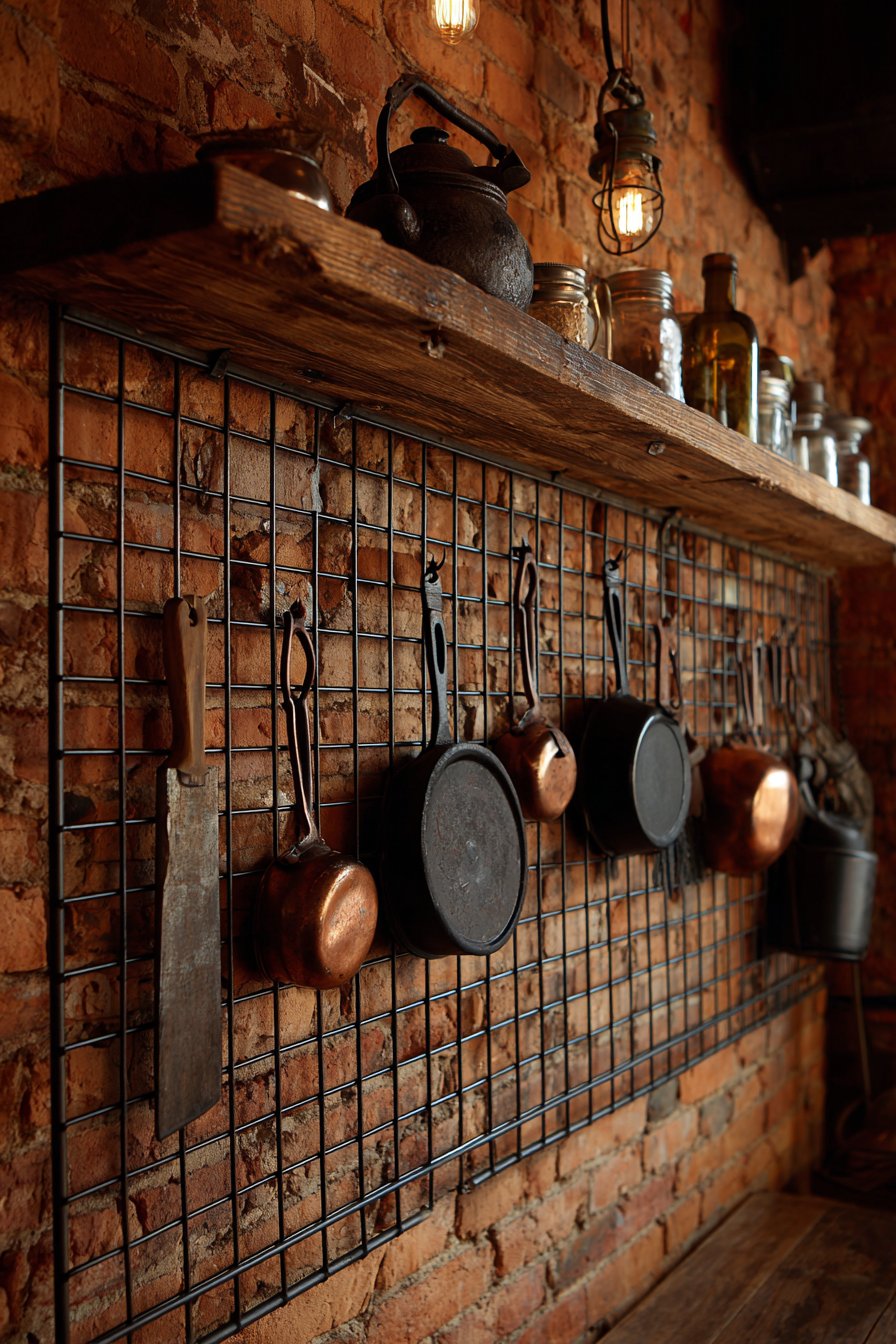
A small Edison bulb pendant adds ambient lighting that emphasizes the urban industrial character while providing practical illumination for the cooking area. The exposed filament visible through clear glass creates nostalgic reference to early industrial lighting while the warm glow enhances the brick’s terracotta tones. Natural shadows cast by the hanging pots and utensils create additional visual interest, emphasizing the three-dimensional quality and functional nature of the storage system.
Key Design Tips:
- Secure metal grid panel with substantial wall anchors capable of supporting significant weight from heavy cast iron and copper cookware
- Arrange pots and pans with the largest pieces at bottom and smaller items toward top to create visual stability and prevent top-heavy appearance
- Mix copper and cast iron rather than using exclusively one metal to introduce tonal variety and prevent visual monotony
- Position Edison bulb pendant 18-24 inches from the wall to cast effective light across the grid while creating dramatic shadows
- Seal exposed brick with clear penetrating sealer to protect the surface and facilitate cleaning in the kitchen environment, where grease and moisture are present
Why These Kitchen Wall Decor Ideas Represent the Best Design Solutions
The ten kitchen wall decor concepts presented in this comprehensive guide represent the pinnacle of contemporary interior design thinking, balancing aesthetic appeal with practical functionality while accommodating diverse style preferences and spatial requirements. These designs excel because they recognize a fundamental truth about modern kitchen design: the most successful spaces seamlessly integrate beauty and utility, creating environments that inspire creativity while supporting efficient meal preparation and comfortable daily living.
Material Authenticity and Quality
Each design concept prioritizes authentic, high-quality materials that bring inherent beauty and lasting durability to kitchen spaces. From genuine reclaimed wood showing decades of authentic patina to hand-forged wrought iron brackets with substantial construction, these designs reject cheap imitations in favor of materials that improve with age and use. The emphasis on natural elements—solid oak shelving, ceramic vessels, living plants, copper cookware, exposed brick—creates warmth and organic texture that prevents kitchens from feeling sterile or overly clinical. These material choices reflect the growing consumer desire for authenticity and sustainability in home design, favoring pieces with history and character over mass-produced items lacking soul.
Functional Integration and Smart Storage
The brilliance of these kitchen wall decor ideas lies in their refusal to sacrifice function for form. Rather than treating wall decoration as purely aesthetic exercise, each concept integrates practical storage, organizational systems, or interactive elements that enhance kitchen usability. Open shelving displays beautiful dishware while keeping it accessible for daily meals. Pegboard systems organize cooking tools in plain sight where they’re immediately grabbable during meal preparation. Chalkboard walls provide surfaces for recipe reference and meal planning. This functional integration addresses the primary challenge of kitchen design: creating beautiful spaces within rooms that must accommodate significant storage needs and support complex daily activities.
Versatile Style Adaptability
The diverse aesthetic approaches—from farmhouse vintage charm to sleek Scandinavian minimalism, from rustic reclaimed wood to contemporary geometric tiles, from industrial urban edge to cottage botanical warmth—ensure that homeowners with varied preferences can find inspiration suited to their existing kitchen style and personal taste. This stylistic range demonstrates that effective kitchen wall decor isn’t limited to one particular aesthetic but rather succeeds through thoughtful execution within any design framework. Whether your kitchen features modern stainless appliances or vintage enamel ranges, white shaker cabinets or dark contemporary panels, natural wood flooring or industrial concrete, you’ll find wall decor approaches that enhance and complement your existing design elements.
Scalability and Budget Flexibility
These kitchen wall decor ideas accommodate various budget levels and implementation scales. A botanical gallery wall with floating shelves might be achieved with modest investment in ready-made frames and simple wood boards, while an exposed brick accent wall with integrated metal grid requires more substantial renovation and material costs. Similarly, a minimalist approach featuring a single large-scale art print and few carefully chosen objects can be executed quickly and affordably, while vintage open shelving with wrought iron brackets demands both higher investment and more installation time. This scalability ensures that homeowners at any budget level and any stage of kitchen renovation can implement ideas from this guide.
Light Interaction and Dynamic Appeal
Exceptional kitchen wall decor changes throughout the day as natural light shifts and ambient lighting conditions evolve. The designs featured here specifically consider how various materials, textures, and surface treatments interact with light—how copper cookware glows during golden hour, how geometric tiles reflect and bounce light to brighten spaces, how the dimensional quality of floating shelves creates subtle shadows, how living plants introduce movement as air circulation causes leaves to shift. This attention to light interaction prevents wall decor from becoming static and ensures that spaces remain visually engaging throughout all hours of daily use.
Personalization Opportunities and Individual Expression
While each design provides specific guidance regarding materials, colors, arrangements, and styling, they simultaneously offer abundant opportunities for personal customization and individual expression. The specific botanical prints chosen for a gallery wall, the particular copper pieces displayed on sage green walls, the unique vintage seed packets selected for framing, the exact tools hung on a pegboard system—all these choices allow homeowners to infuse spaces with personal history, preferences, and character. This balance between structured design guidance and creative freedom ensures that implemented projects feel uniquely personal rather than cookie-cutter reproductions.
Spatial Enhancement and Architectural Integration
Strategic kitchen wall decor can significantly impact spatial perception and architectural integration. Horizontal reclaimed wood planks visually expand narrow kitchens, while vertical arrangements draw the eye upward to emphasize ceiling height. Gallery walls with carefully composed arrangements create focal points that anchor entire rooms, while minimalist approaches with substantial negative space enhance feelings of openness and calm. These designs consider how wall treatments interact with existing architectural features—complementing subway tile backsplashes, echoing countertop materials, harmonizing with cabinet finishes, responding to window locations and natural light sources.
Maintenance Practicality and Cleaning Considerations
The best kitchen wall decor acknowledges the reality of kitchen environments where cooking activities generate heat, moisture, grease, and various food particles. Each design concept considers maintenance requirements and cleaning practicality. Sealed reclaimed wood resists moisture while remaining wipe-clean. Pegboard systems keep tools accessible and visible while simplifying cleaning around them. Floating shelves mounted with proper clearance from walls prevent dust accumulation in hard-to-reach crevices. These practical considerations ensure that beautiful wall decor remains beautiful long-term rather than deteriorating quickly or becoming cleaning nightmares that homeowners eventually remove in frustration.
Trend Longevity and Timeless Appeal
While these designs reflect contemporary sensibilities and current design trends, they’re rooted in timeless principles that transcend momentary fashion. Natural materials, quality craftsmanship, functional beauty, honest material expression, thoughtful composition, appropriate scale—these enduring design fundamentals ensure that implemented projects won’t appear dated within a few years. The farmhouse aesthetic with open shelving has remained popular for decades because it celebrates practical beauty. Scandinavian minimalism endures because it addresses fundamental human desires for calm, uncluttered environments. Industrial design persists because it honors authentic materials and functional honesty. This combination of contemporary expression and timeless foundation creates kitchen wall decor that offers lasting satisfaction.
Environmental Consciousness and Sustainable Choices
Many featured designs emphasize sustainable material choices and environmental responsibility. Reclaimed wood gives new life to materials that might otherwise become landfill waste. Living herb gardens introduce small-scale food production into kitchen spaces. Quality vintage pieces—copper cookware, wrought iron brackets, antique seed packet prints—represent consumption of existing items rather than new manufacturing. Open shelving and pegboard systems reduce need for new cabinetry and maximize use of existing tools. This environmental consideration reflects growing consumer awareness of sustainability issues and the desire to make home design choices that minimize ecological impact.
Professional Finish and Installation Quality
The designs presented here achieve professional-looking results when executed with attention to detail and proper installation techniques. Specific guidance regarding measurements, spacing, mounting methods, material preparation, and finishing ensures that DIY implementations avoid common mistakes that compromise visual appeal. Whether hiring professional installers or completing projects independently, homeowners benefit from understanding the critical details that separate amateur attempts from professionally executed installations—proper shelf depth for stability, appropriate hook spacing for visual balance, correct grout color selection for tile work, adequate wall anchors for heavy items, and proper surface preparation before painting.
The diversity, functionality, material quality, aesthetic appeal, and practical wisdom embodied in these ten kitchen wall decor concepts establish them as outstanding examples of contemporary interior design thinking. They demonstrate that transforming kitchen walls from blank canvases into engaging design features requires neither enormous budgets nor professional design credentials—merely thoughtful consideration of materials, honest assessment of spatial requirements, clear understanding of personal aesthetic preferences, and willingness to prioritize both beauty and function in equal measure.
Conclusion
The kitchen has rightfully earned its designation as the heart of the modern home, serving as the stage for daily nourishment, family gathering, creative expression, and comfortable living. Given this central importance, the opportunity to transform kitchen walls into engaging design features that enhance both aesthetic appeal and practical functionality represents an investment in daily quality of life that extends far beyond mere decoration. The ten diverse kitchen wall decor concepts explored throughout this comprehensive guide demonstrate the remarkable versatility available to homeowners regardless of design preference, budget constraints, or spatial limitations.
From the sophisticated botanical gallery wall that combines art with living plants, to the vintage charm of open farmhouse shelving, from the interactive practicality of chalkboard surfaces to the warm elegance of copper cookware displays against sage green walls, from the serene restraint of Scandinavian minimalism to the clever organization of navy pegboard systems, from the authentic character of reclaimed wood accent walls to the contemporary sophistication of geometric tile features, from the cottage charm of vintage seed packet collections to the urban edge of industrial metal grids against exposed brick—each approach offers unique possibilities for elevating kitchen spaces beyond purely utilitarian status into inspiring environments that reflect personal style while supporting daily activities.
As you contemplate implementing these ideas in your own culinary space, remember that the most successful kitchen wall decor balances multiple considerations simultaneously: aesthetic appeal that brings joy and inspiration, practical functionality that enhances daily cooking and organization, material quality that ensures lasting durability and timeless beauty, personal expression that reflects your unique taste and lifestyle, and thoughtful integration with existing architectural features and design elements. Don’t feel constrained to replicate these concepts exactly as presented—instead, use them as springboards for your own creative interpretation, adapting materials, colors, scales, and arrangements to suit your specific space and preferences.
Begin your kitchen wall transformation by carefully assessing your current space. Consider which walls offer the greatest visual impact and practical utility for enhancement. Evaluate existing architectural features, natural light sources, traffic patterns, and functional requirements that should inform your design decisions. Take accurate measurements and photograph your space from multiple angles to reference during planning. This foundational assessment prevents costly mistakes and ensures that your chosen wall decor approach harmonizes with rather than conflicts against existing elements.
