


The kitchen has evolved from a purely utilitarian space into the heart of the home—a gathering place where families connect, meals are lovingly prepared, and memories are created. As such, every design element within this vital room deserves careful consideration, and window treatments are no exception. Kitchen curtains serve a dual purpose: they provide essential privacy and light control while contributing significantly to the overall aesthetic and ambiance of the space. The right curtain choice can transform a mundane kitchen into an inspiring culinary haven, reflecting your personal style while addressing practical needs like moisture resistance, easy maintenance, and appropriate light filtration.
From breezy coastal-inspired linens to elegant traditional treatments, the world of kitchen curtain ideas offers endless possibilities for enhancing your cooking space. Whether you’re working with expansive windows that flood your kitchen with natural light or modest openings in a compact galley layout, there’s a curtain solution perfectly suited to your needs. The beauty of kitchen window treatments lies in their versatility—they can be as simple as understated sheers that whisper sophistication or as bold as patterned fabrics that make a definitive style statement. Understanding the interplay between fabric choice, mounting style, and overall design aesthetic empowers you to create a kitchen that’s not only functional but also visually captivating.
In this comprehensive guide, we’ll explore ten distinctive kitchen curtain ideas that span a range of design styles, from modern minimalism to rustic charm and everything in between. Each concept has been carefully curated to demonstrate how thoughtful window treatment selection can elevate your kitchen’s design while addressing practical considerations. You’ll discover actionable design tips, material recommendations, and styling insights that will help you make informed decisions about the perfect curtains for your culinary sanctuary. Whether you’re planning a complete kitchen renovation or simply seeking a refreshing update, these ideas will inspire you to reimagine your kitchen windows as design opportunities waiting to be realized.
1. Modern Elegance with Sheer White Linen
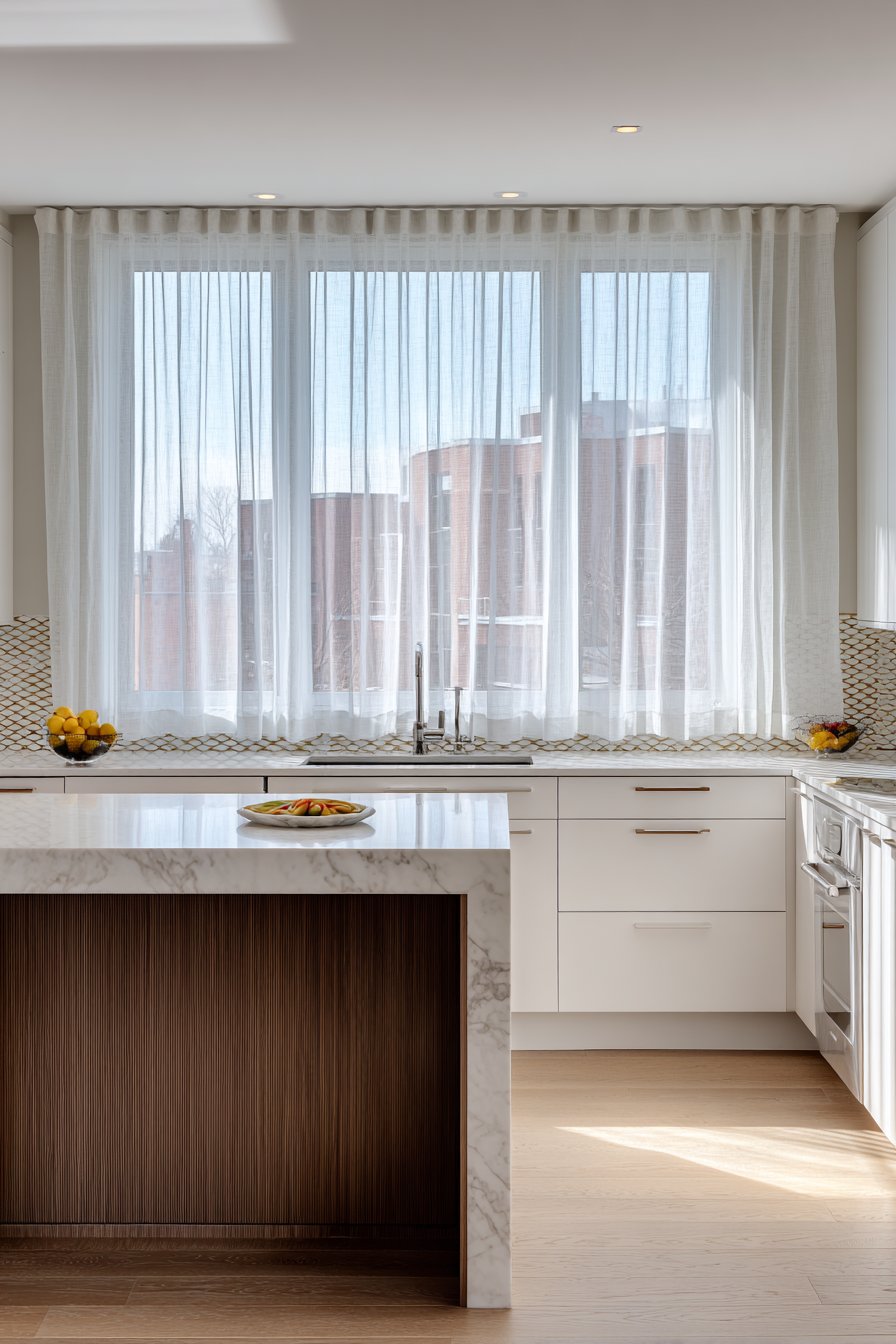
Step into a kitchen where contemporary sophistication meets effortless functionality through the artful use of sheer white linen curtains. This design concept centers on lightweight fabric with subtle texture variations that create visual interest without overwhelming the space’s clean aesthetic.
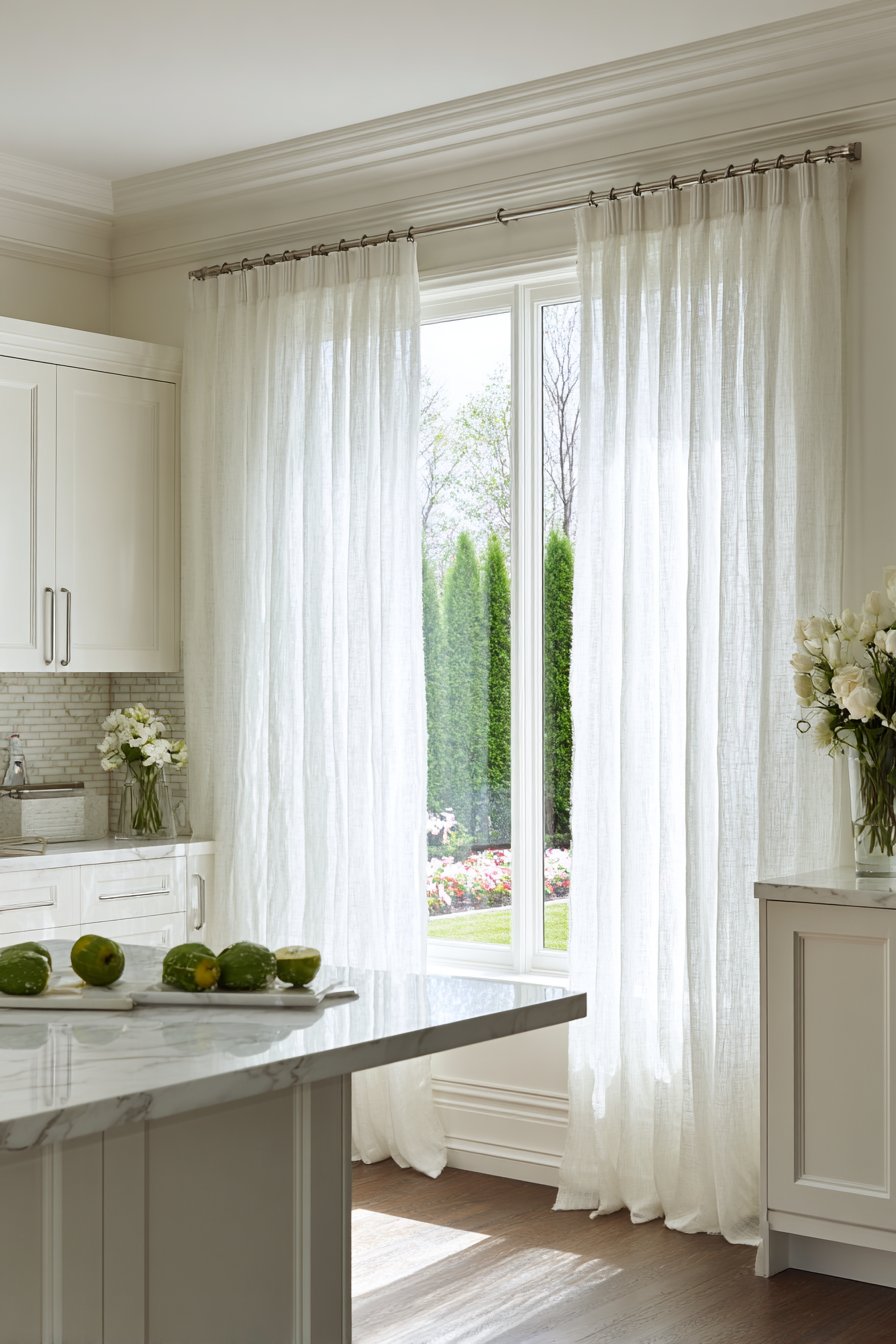
The curtains hang gracefully from brushed nickel rods positioned above wide windows, their delicate weave allowing natural daylight to filter through while maintaining an appropriate level of privacy for the cooking area. The slight pooling of fabric at the windowsill introduces an element of luxurious casualness, creating soft, organic folds that contrast beautifully with the kitchen’s structured architectural elements.
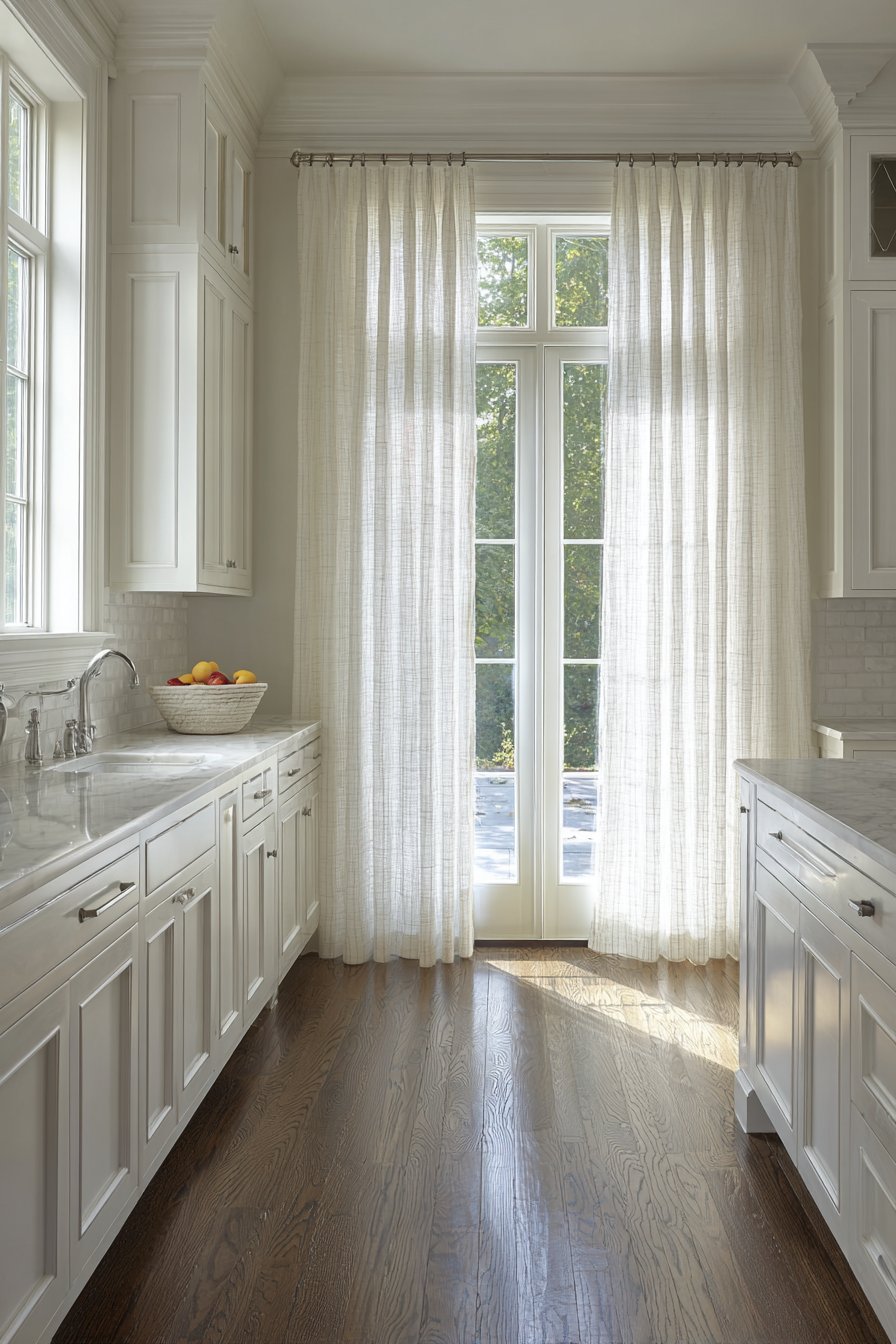
The interplay between the sheer curtains and the surrounding design elements creates a harmonious visual symphony. Sleek white subway tile backsplash reflects light throughout the space, amplifying the brightness introduced by the translucent window treatments.
Marble countertops with their characteristic veining provide subtle pattern and organic movement that complements the natural texture of the linen fabric. This combination of materials creates a sophisticated palette built on varying tones of white and cream, with the brushed nickel hardware providing just enough metallic contrast to define the window as a focal point without disrupting the serene color scheme.
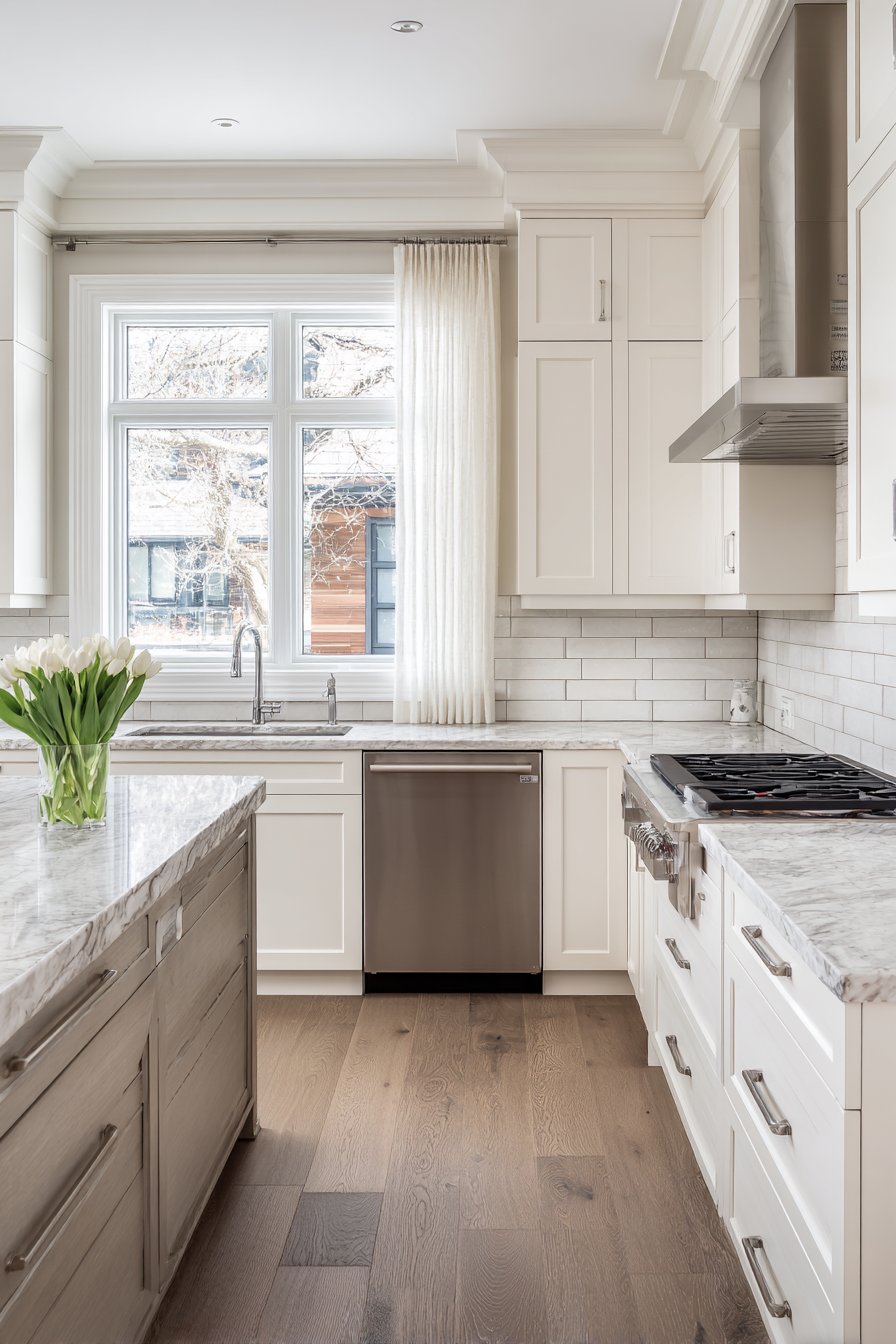
The beauty of this approach lies in its versatility and timelessness. Sheer white linen curtains adapt to changing light conditions throughout the day, creating an ever-evolving ambiance within the kitchen. Morning light becomes softly diffused, creating a gentle awakening atmosphere perfect for coffee preparation, while afternoon sun is tempered to prevent glare on work surfaces.
The lightweight nature of the fabric allows for easy adjustment—simply draw the curtains aside when maximum light is desired, or close them when privacy becomes necessary. The natural wrinkle-prone characteristic of linen adds to the relaxed elegance rather than detracting from it, embracing the beauty of imperfection that defines truly livable design.
Key Design Tips:
- Select linen with a loose weave to maximize light filtration while maintaining the fabric’s natural texture and breathability, ensuring adequate privacy without completely blocking natural illumination.
- Mount curtain rods several inches above the window frame to create the illusion of taller ceilings and more expansive windows, a particularly effective technique in kitchens with standard ceiling heights.
- Allow curtains to pool slightly at the sill for a custom, designer appearance, but ensure the fabric remains above floor level to prevent dirt accumulation and facilitate cleaning.
- Choose brushed or satin nickel hardware rather than polished finishes to maintain the understated, modern aesthetic and complement stainless steel appliances commonly found in contemporary kitchens.
- Consider the maintenance requirements of natural linen, which may require periodic professional cleaning or gentle machine washing to maintain its fresh appearance and soft drape.
2. Farmhouse Charm with Gingham Cafe Curtains
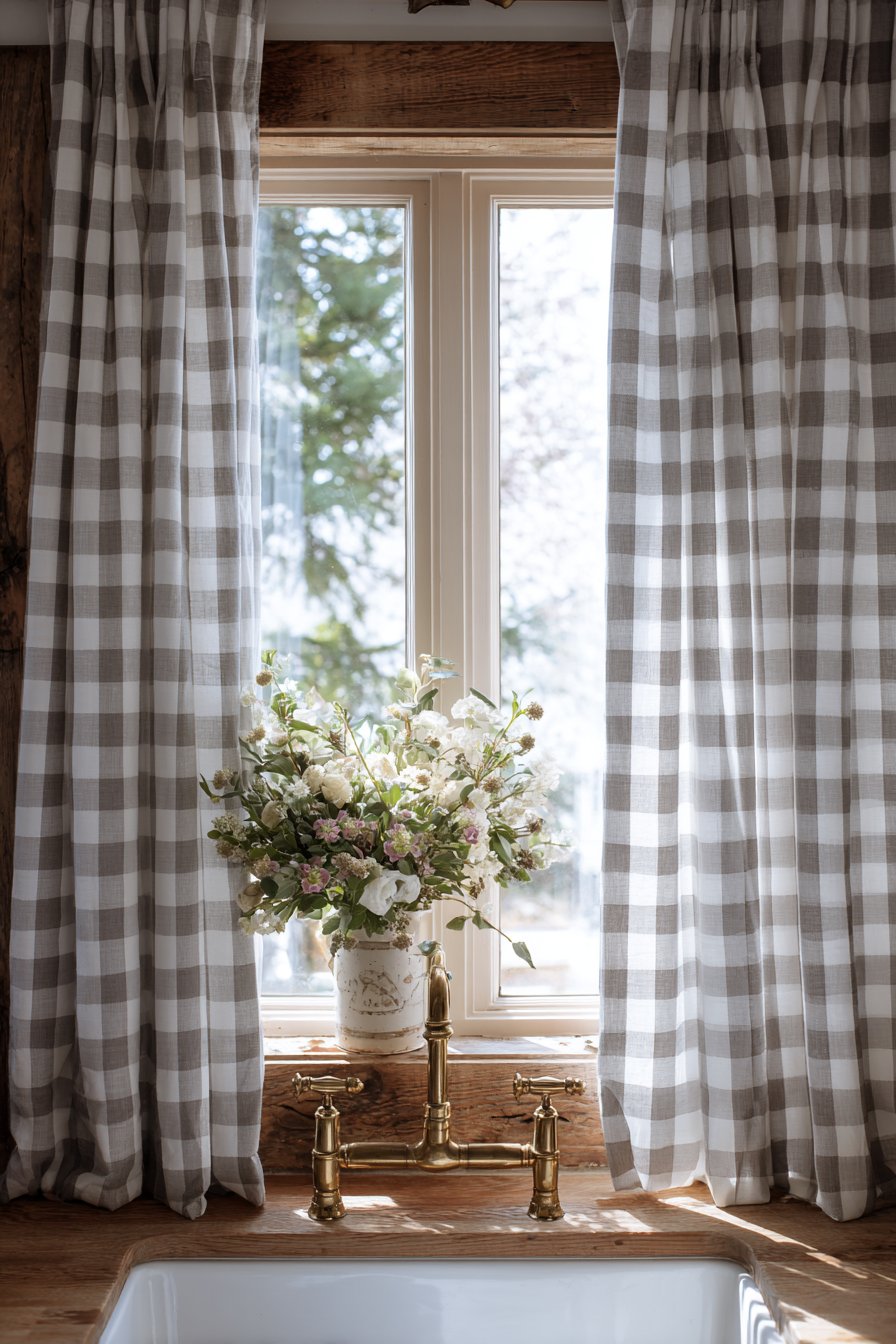
The enduring appeal of farmhouse design finds perfect expression in practical cafe-style curtains that honor tradition while serving modern needs. This kitchen curtain idea features natural cotton fabric adorned with a delicate gingham pattern in soft grey and white, creating a nostalgic yet fresh aesthetic that captures the essence of country living.
The half-curtain configuration represents a brilliant solution for kitchens where maximum natural light is desired while maintaining privacy at eye level. Mounted on a simple wooden rod, these curtains cover only the lower portion of the window, allowing abundant sunshine to stream through the upper panes while concealing the view from outside at the most critical sightlines.
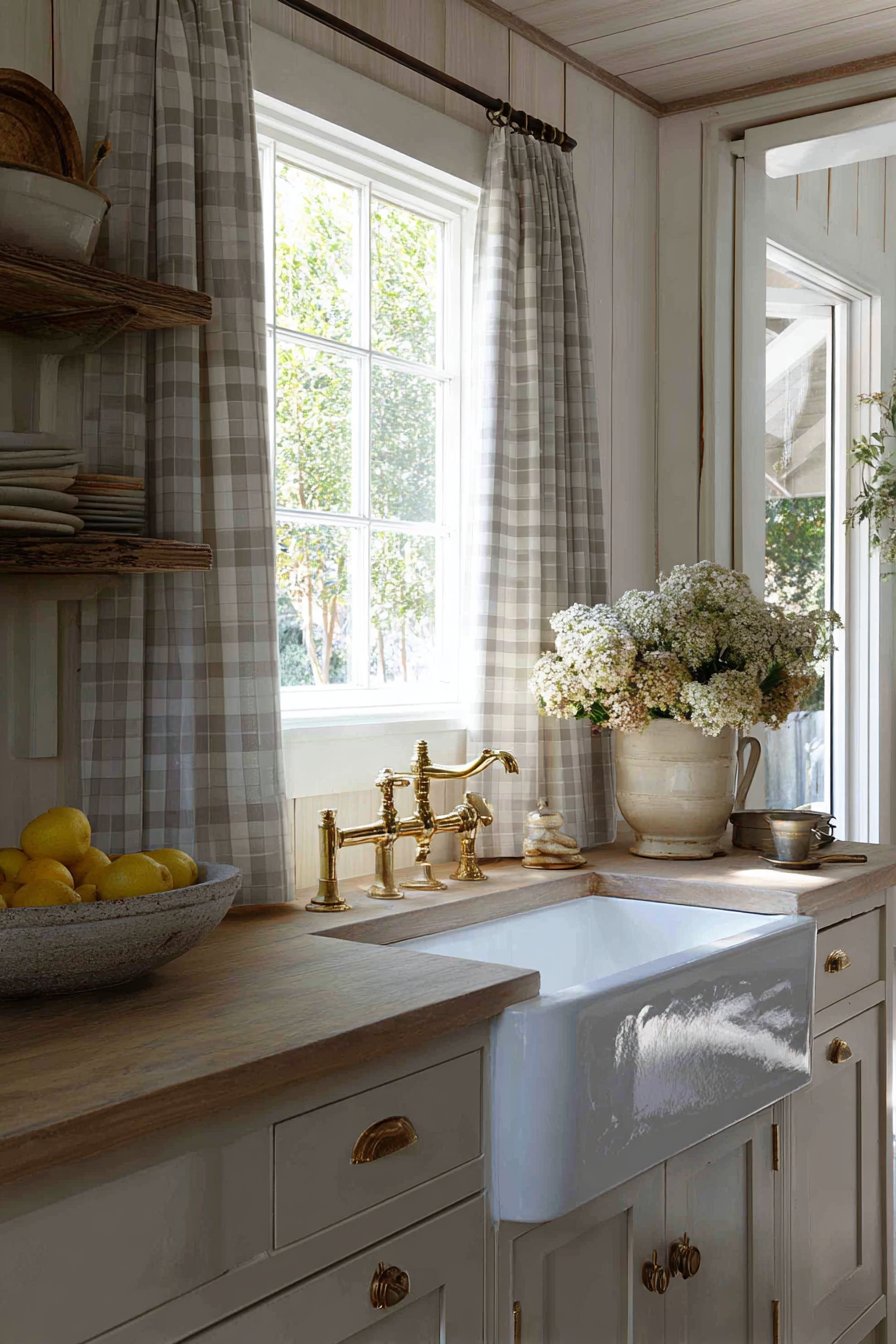
The charm of cafe curtains lies in their unpretentious functionality and their ability to frame rather than dominate the window. In this design, the gingham pattern provides just enough visual interest to draw the eye without competing with other kitchen elements.
The soft grey and white colorway offers a contemporary update to traditional red or blue gingham, making this treatment suitable for both vintage-inspired and modern farmhouse kitchens. Below the window, a classic farmhouse sink with vintage brass fixtures creates a focal point that celebrates the beauty of practical design, while the cafe curtains provide a soft backdrop that enhances rather than overshadows this architectural feature.
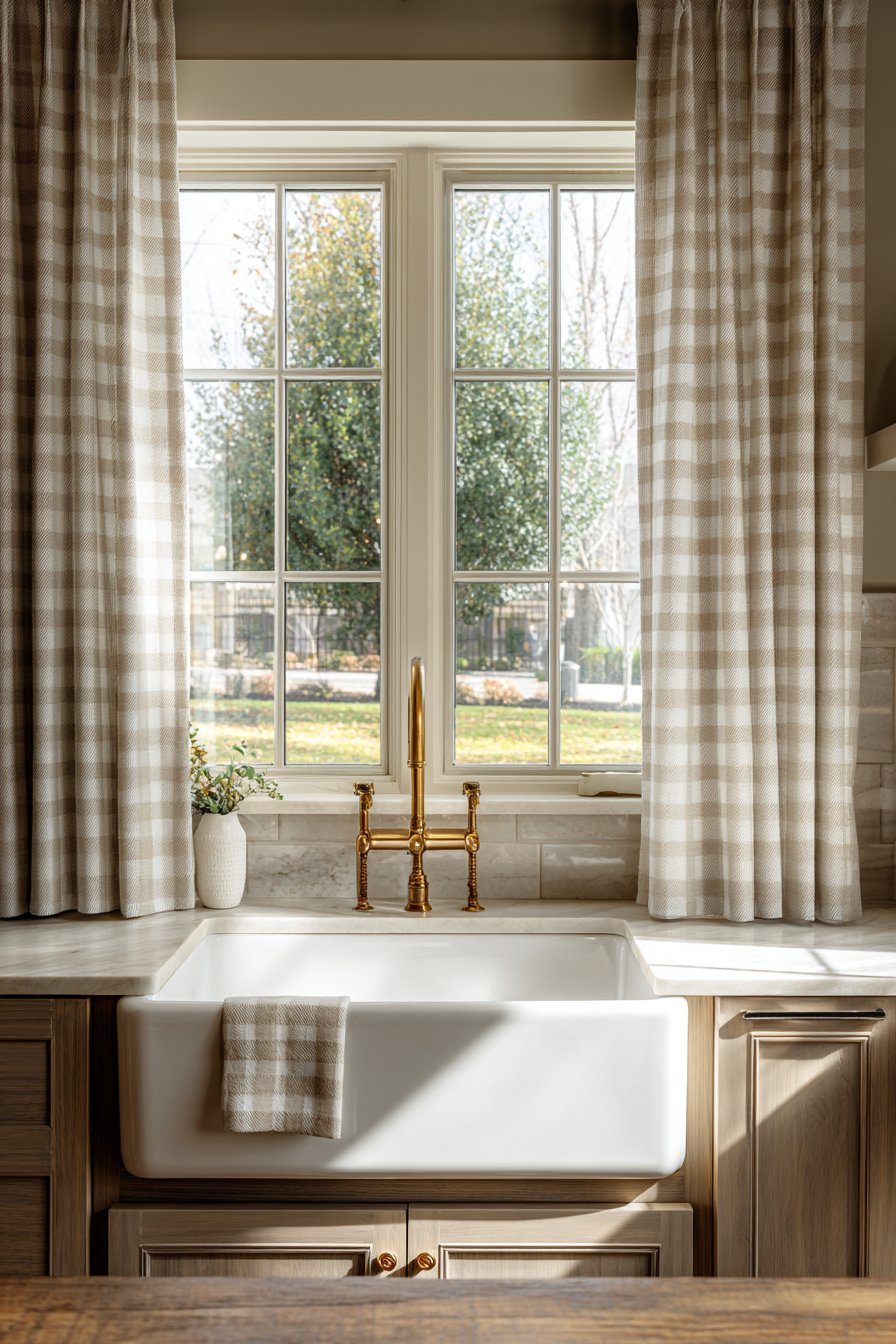
The natural cotton fabric selection is particularly well-suited to kitchen environments where washability and durability are paramount concerns. Cotton withstands frequent laundering without losing its shape or softness, an essential quality for curtains positioned near a sink where splashing and moisture are inevitable.
The fabric’s natural weave texture adds tactile depth to the space, creating subtle shadow play when light passes through the gingham check pattern. This treatment evokes memories of grandmother’s kitchen while remaining thoroughly relevant to contemporary design sensibilities, proving that some ideas remain popular precisely because they solve problems so effectively.
Key Design Tips:
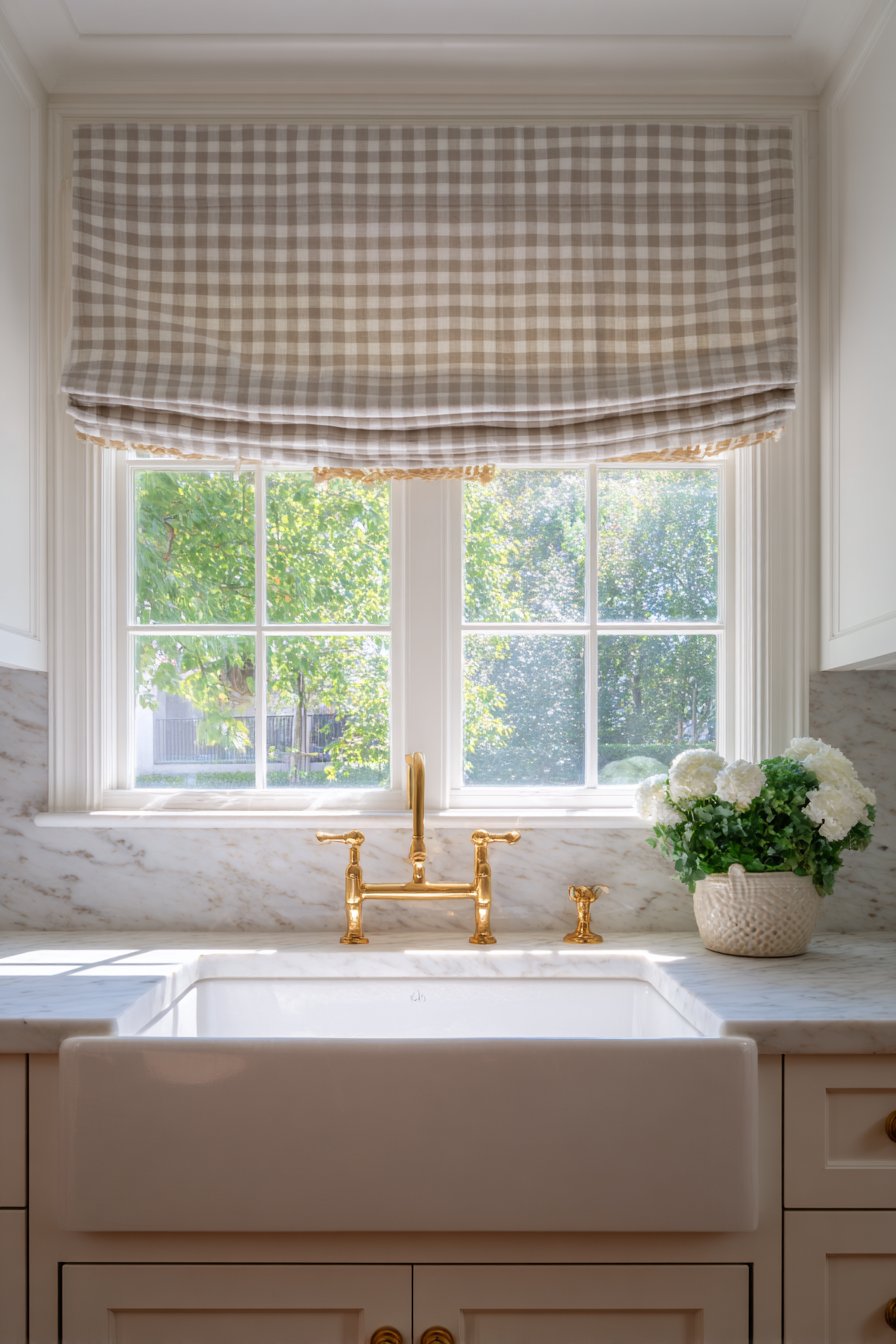
- Choose cafe curtains for sink windows where privacy is needed at counter level but overhead light should remain unobstructed for tasks like food preparation and dishwashing.
- Opt for cotton fabrics in kitchen applications due to their exceptional washability and resistance to fading, making maintenance simple and cost-effective over time.
- Install wooden rods in natural or painted finishes that complement your cabinetry for a cohesive look that ties the window treatment into the overall kitchen design scheme.
- Select neutral gingham patterns in grey, taupe, or soft blue rather than primary colors for a more sophisticated interpretation of this classic country motif.
- Measure carefully to ensure cafe curtains cover approximately one-third to one-half of the window height for proper proportions and optimal light distribution.
3. Scandinavian Simplicity with Floor-to-Ceiling Sheers
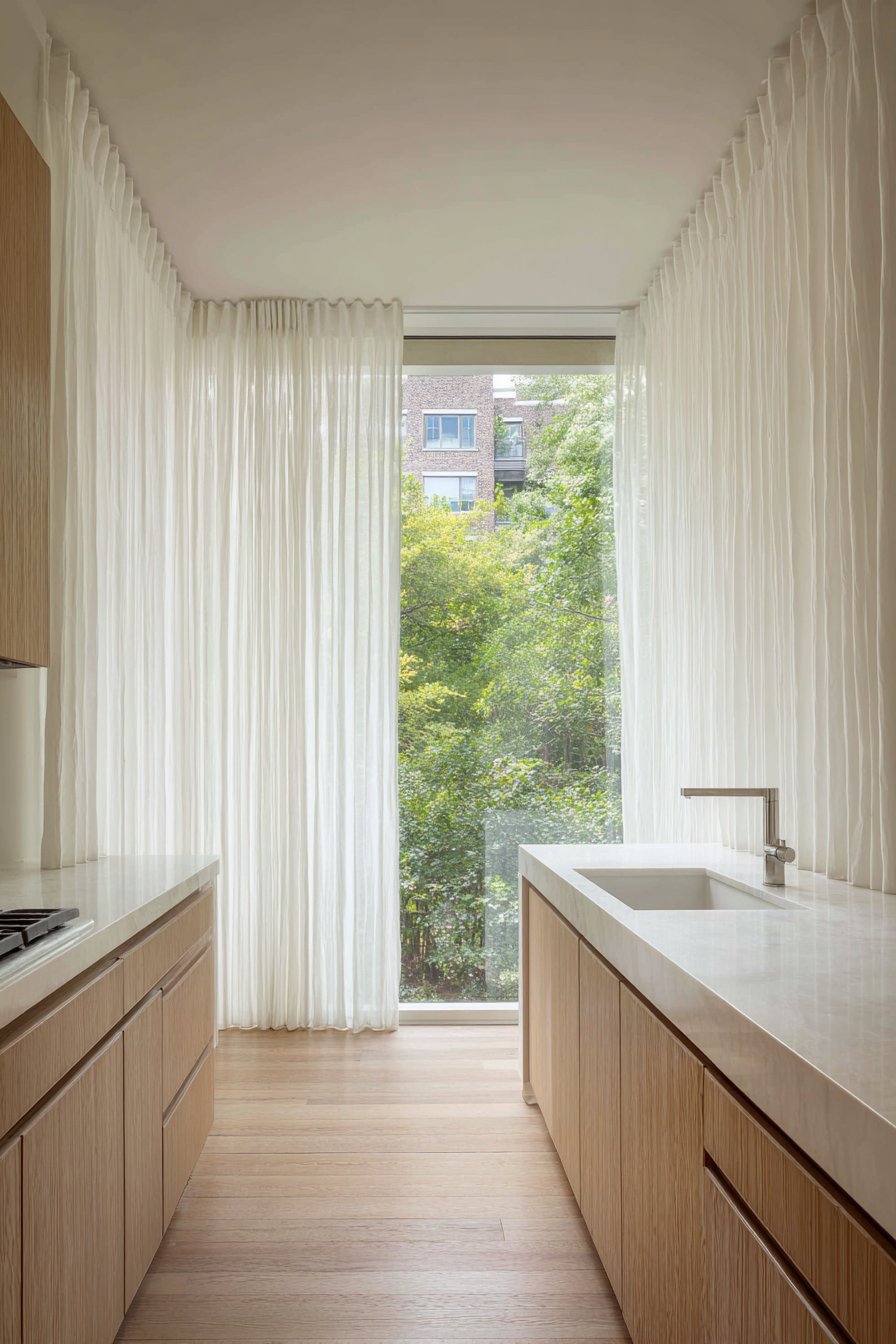
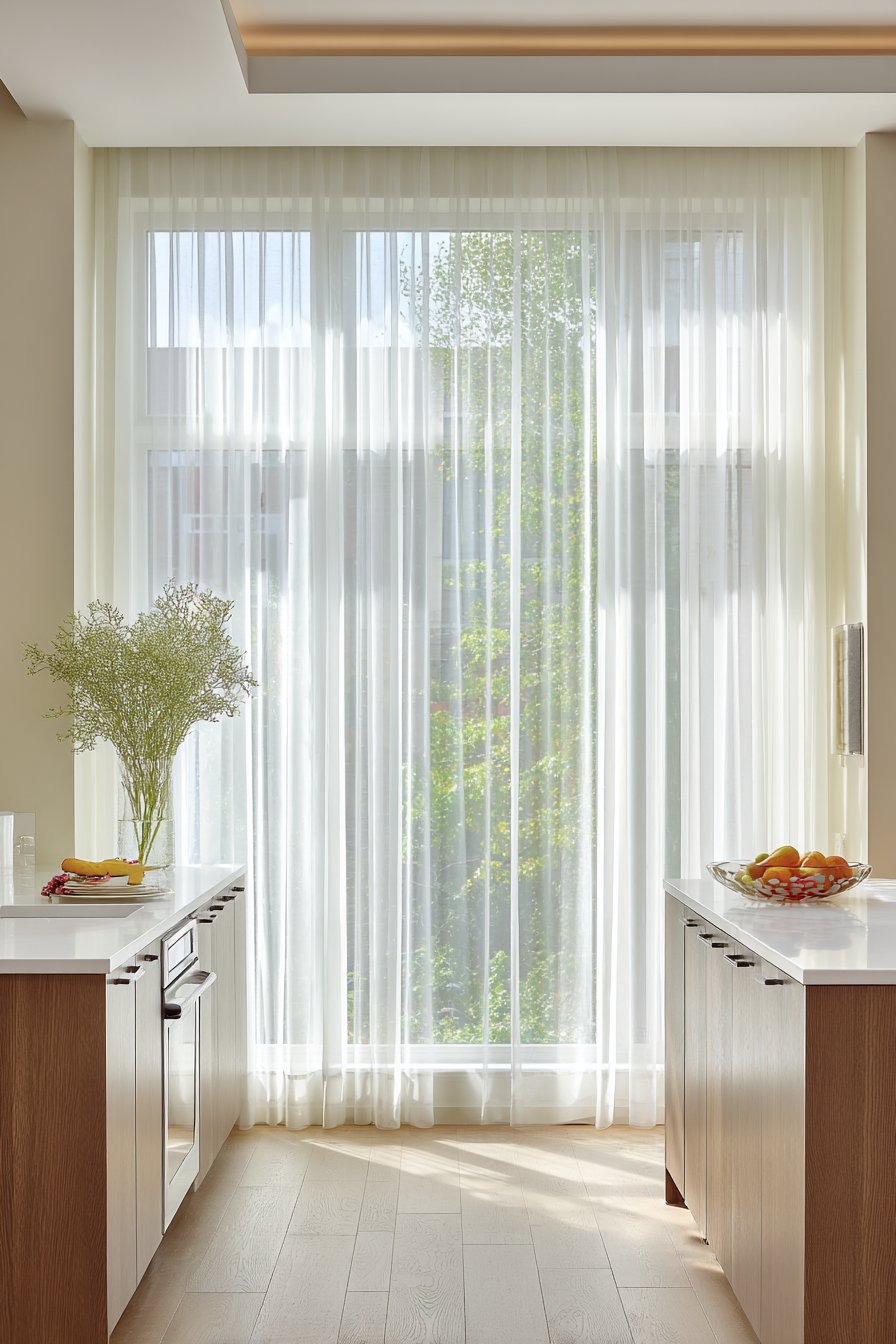
Embrace the Nordic design philosophy of “lagom”—not too much, not too little, but just right—with floor-to-ceiling sheer curtains in organic cotton that epitomize Scandinavian minimalism. This kitchen curtain idea showcases the power of restraint, featuring simple curtain panels that hang from discreet ceiling-mounted tracks to create clean, uninterrupted vertical lines.
The absence of bulky hardware or fussy details allows the curtains themselves to become subtle architectural elements that define the space through their elegant simplicity. The sheer white fabric filters light beautifully while maintaining a connection to the outdoors, particularly effective when the kitchen overlooks greenery or natural landscapes.
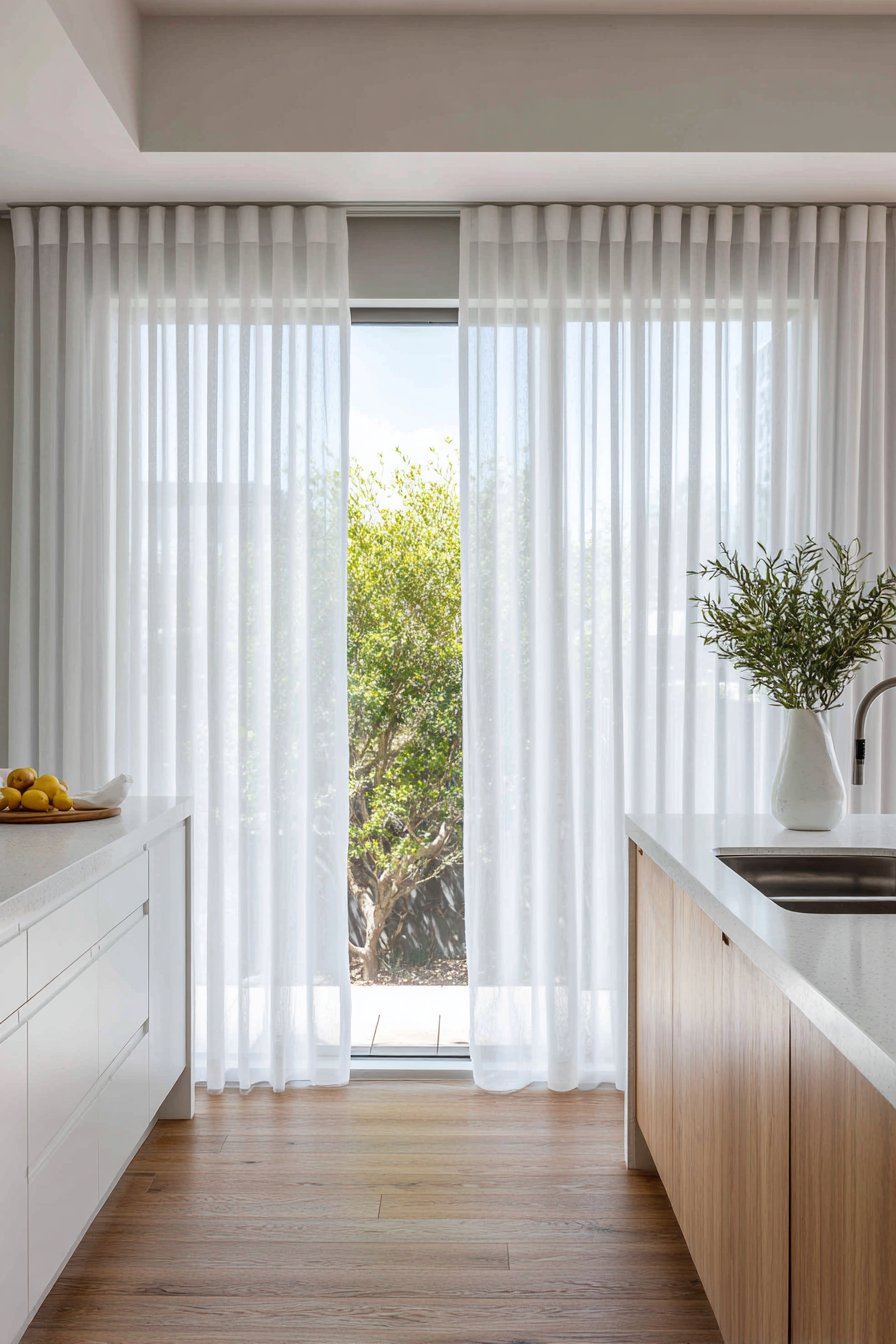
The genius of this approach reveals itself in how the curtains interact with the surrounding Scandinavian design elements. Natural oak cabinetry brings warmth and organic texture to the space, its honey tones creating gentle contrast against the crisp white curtains and countertops.
The wood grain patterns provide all the visual interest needed, making elaborate window treatments unnecessary and even counterproductive to the aesthetic goals. White countertops maintain the bright, airy atmosphere that defines Scandinavian interiors, reflecting light throughout the space and creating a sense of openness that makes even modest kitchens feel spacious and inviting.
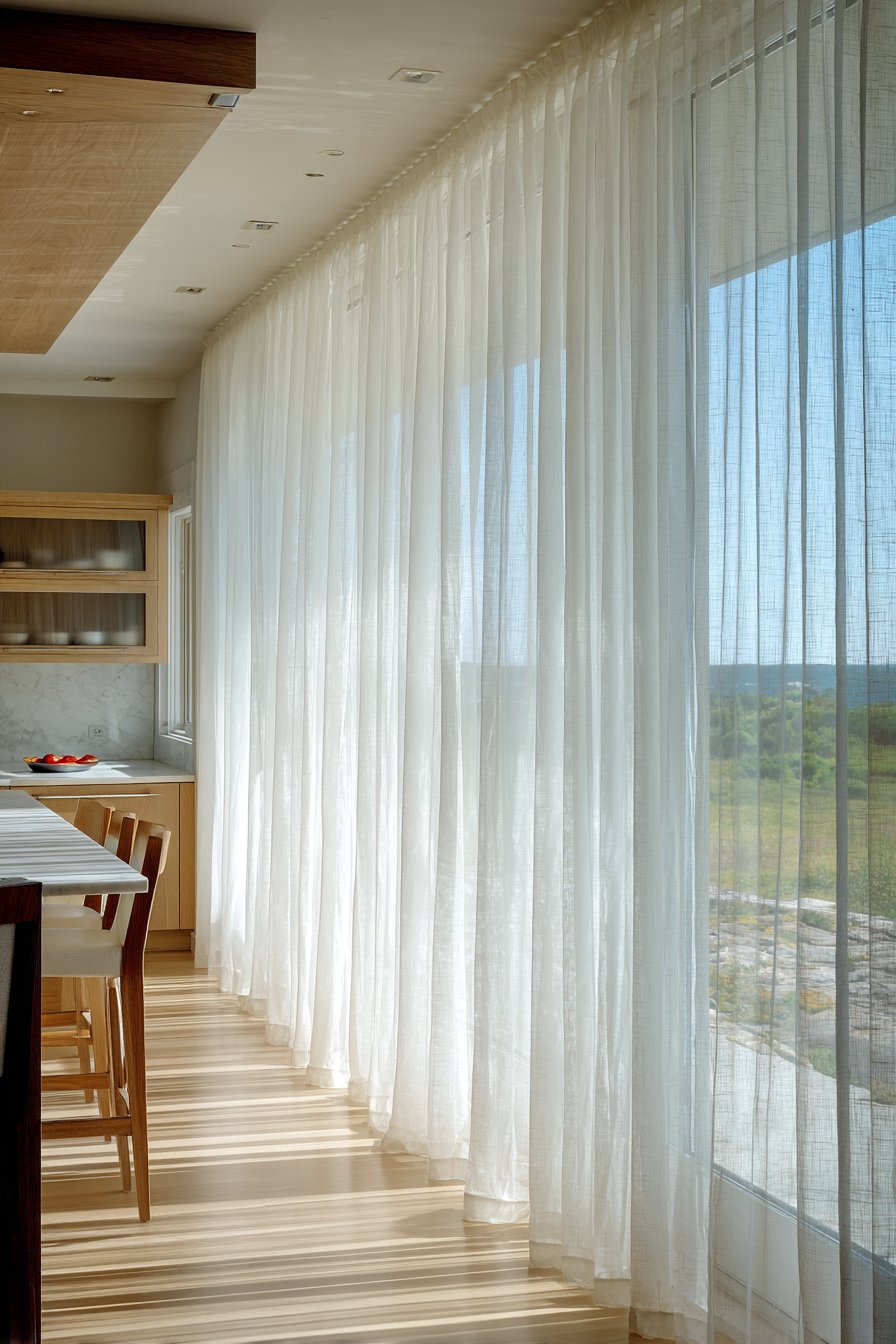
The ceiling-mounted installation represents a key design strategy for maximizing perceived space and ceiling height. By eliminating visible hardware and allowing the curtains to fall from ceiling to floor, the eye travels vertically without interruption, making the room feel taller and more generous in proportion.
The organic cotton fabric choice aligns with Scandinavian values of sustainability and natural materials, while its lightweight construction ensures the curtains can be easily adjusted throughout the day. This treatment works particularly well in climates with long, dark winters where maximizing natural light becomes essential to creating comfortable, livable spaces that support well-being.
Key Design Tips:
- Install ceiling-mounted tracks rather than traditional rods to eliminate visual clutter and create seamless vertical lines that enhance the perception of ceiling height.
- Choose organic or natural cotton fabrics to align with Scandinavian sustainability values while ensuring proper light filtration and a soft, natural drape.
- Keep the color palette strictly neutral with whites, off-whites, or very pale greys to maintain the characteristic bright, airy atmosphere of Nordic design.
- Pair minimal window treatments with natural wood elements to provide warmth and texture without introducing unnecessary pattern or decorative complexity.
- Ensure curtains just kiss the floor rather than pooling or hanging short, as precision in measurements reflects the Scandinavian appreciation for thoughtful, intentional design.
4. Coastal Freshness with Blue and White Striped Linen
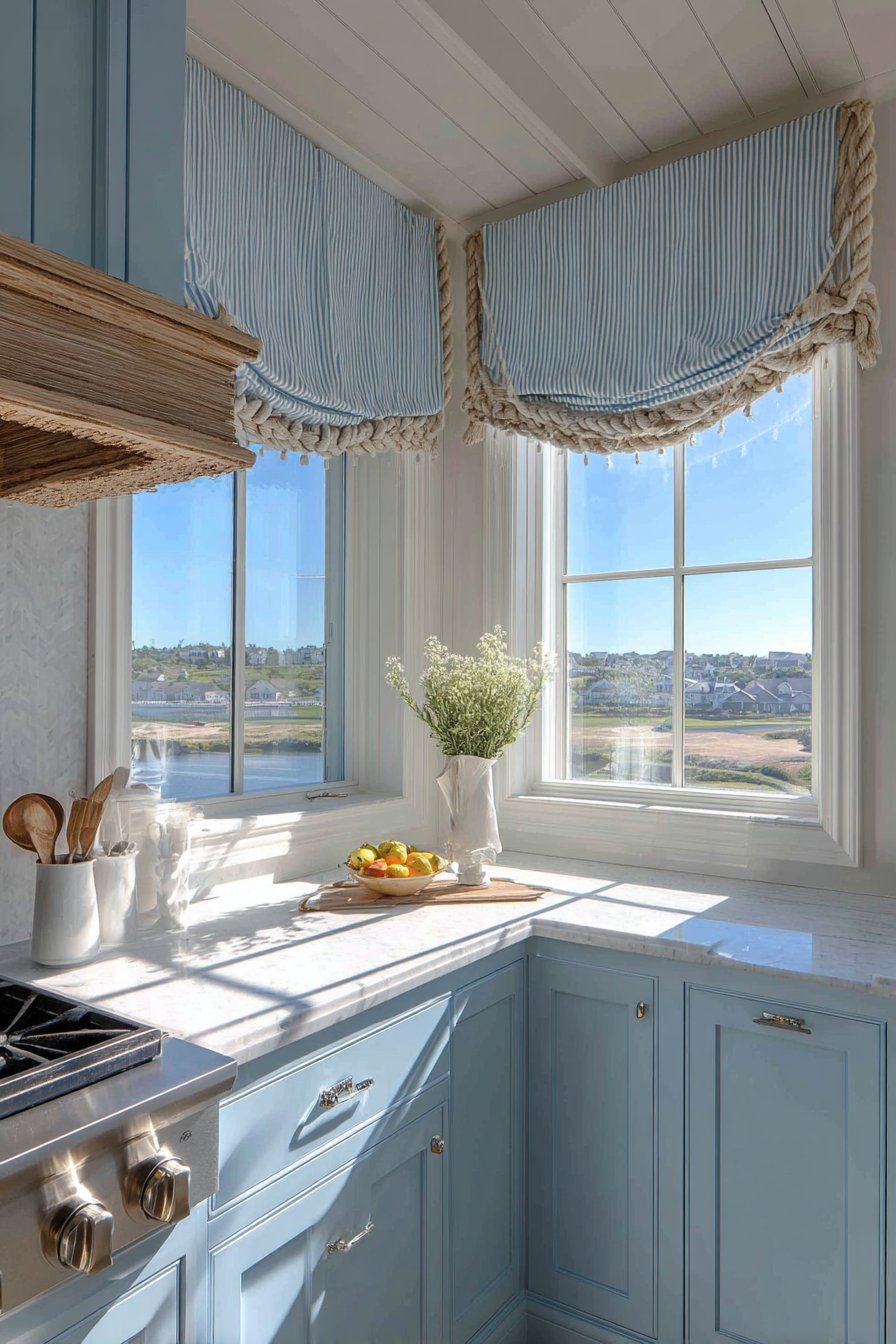
Transport your kitchen to a seaside retreat with light blue and white striped linen curtains that capture the essence of coastal living. This kitchen curtain idea brings nautical charm without resorting to cliché maritime motifs, instead relying on the timeless appeal of classic stripes to evoke memories of beach umbrellas, sailing vessels, and lazy summer days by the ocean.
The curtains feature a relaxed, unlined construction that allows soft light filtration, creating the luminous quality characteristic of beach cottages where sun-bleached interiors glow with natural radiance. Mounted on white wooden rods with rope-detail finials, these window treatments celebrate coastal aesthetic through both fabric choice and hardware details.
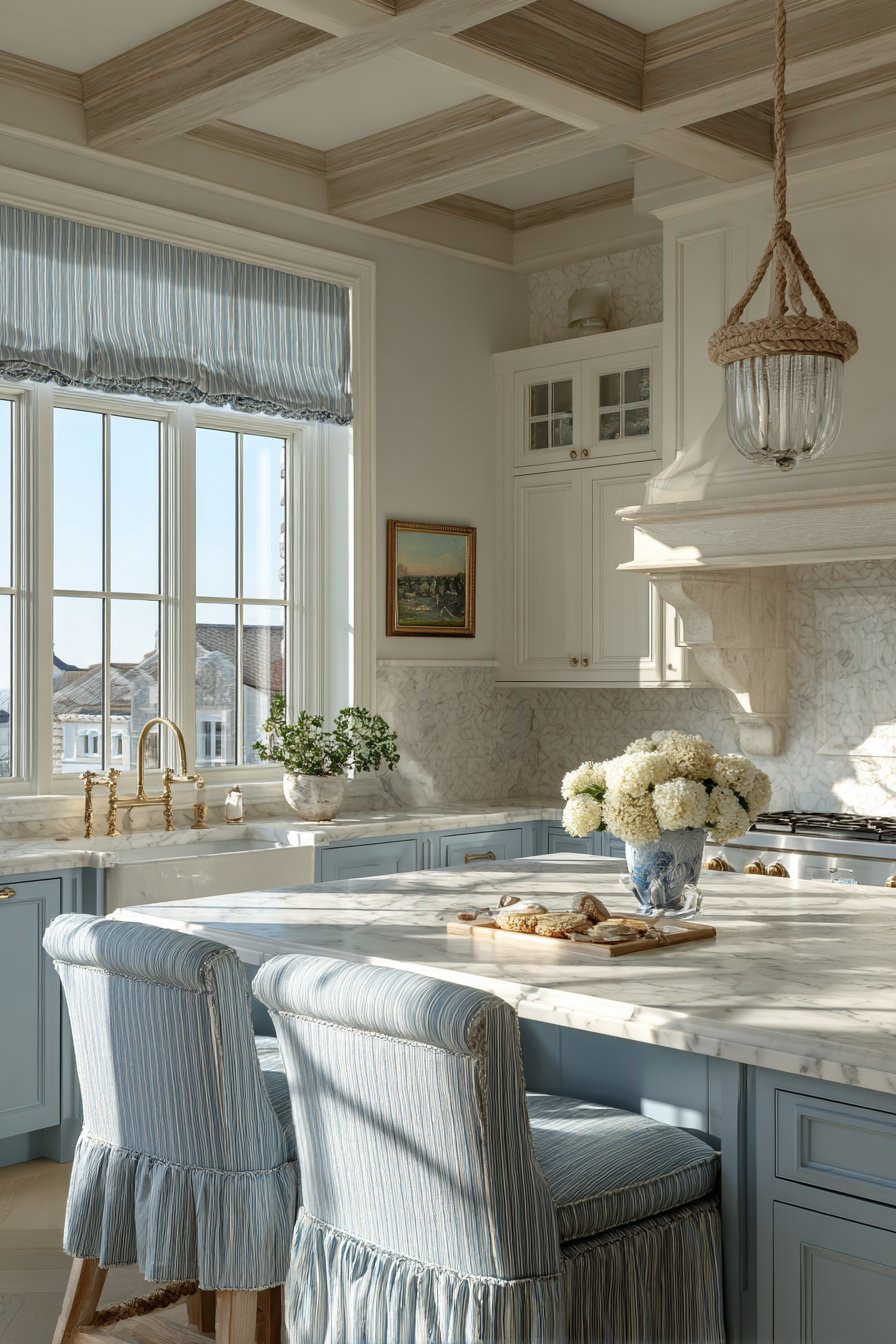
The magic of this design lies in how the striped curtains establish the color palette and theme for the entire kitchen. White beadboard backsplash introduces subtle vertical texture that complements without competing with the horizontal lines of the curtain stripes.
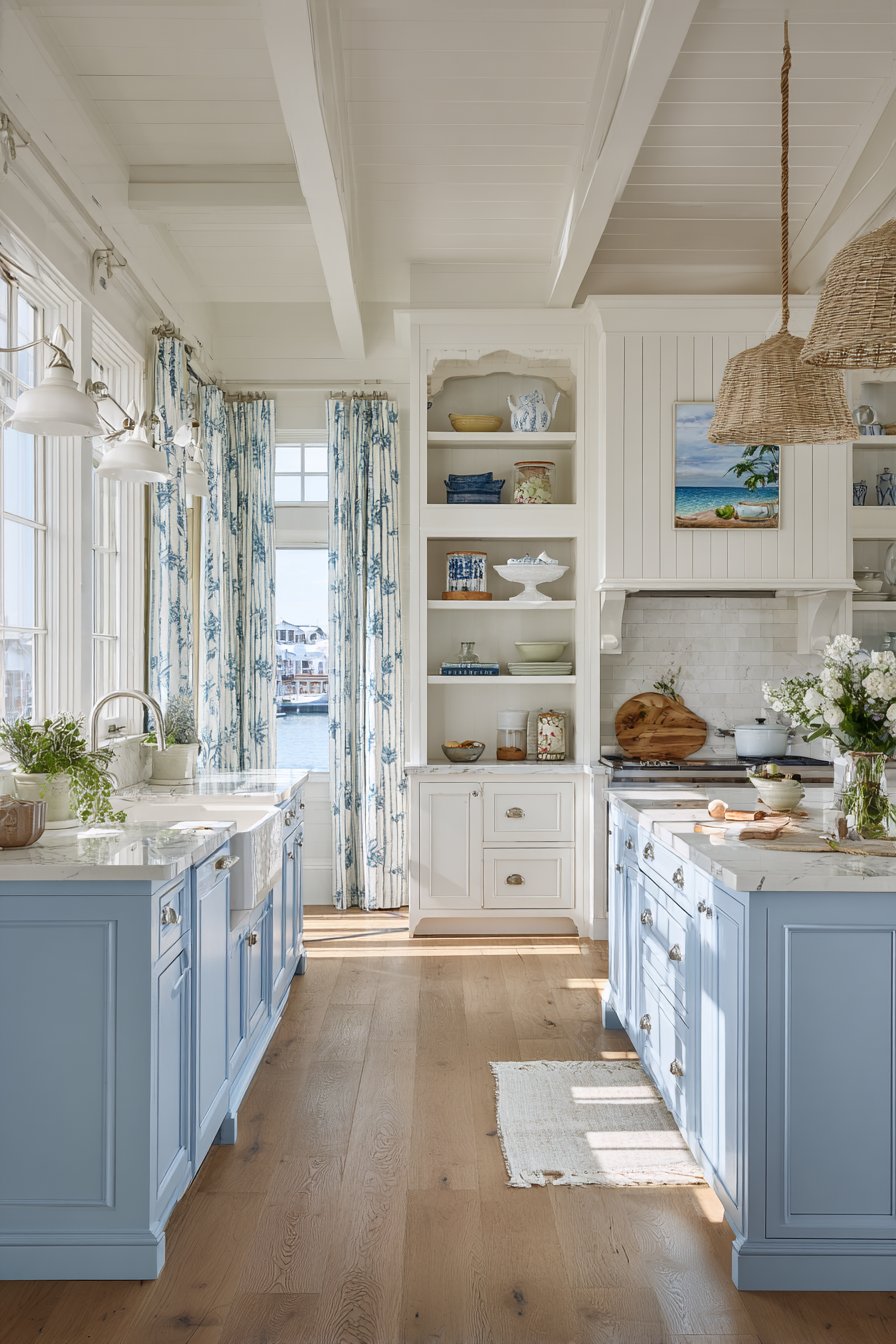
Pale blue cabinets echo the curtain color, creating a cohesive scheme that feels intentional yet effortless, as though the room evolved naturally over time rather than being decorated all at once. This color coordination demonstrates sophisticated design thinking—when window treatments successfully anchor the room’s palette, all other elements can relate back to them, creating visual harmony through repetition and variation.
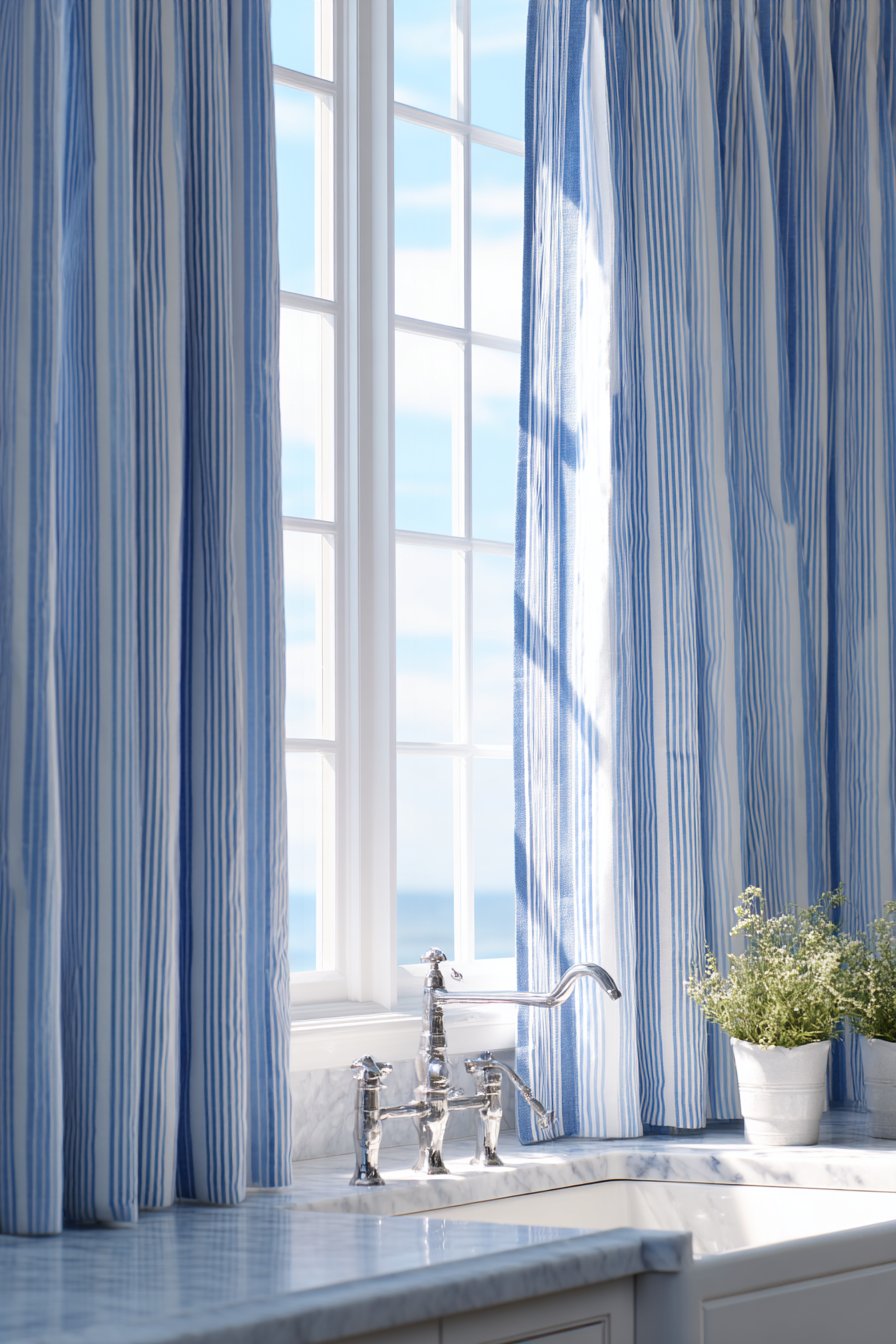
The unlined construction of these linen curtains serves both aesthetic and practical purposes in a coastal-inspired kitchen. Functionally, the breathable fabric allows air circulation, important in kitchens where cooking heat and steam need to dissipate. Aesthetically, natural light passes through the linen fibers, creating a soft, diffused glow that changes throughout the day as the sun moves across the sky.
Morning light produces gentle shadows from the stripe pattern, while afternoon sun creates a luminous backdrop for kitchen activities. The casual texture of linen—with its characteristic slubs and slight irregularities—reinforces the relaxed, informal atmosphere that makes coastal design so appealing and livable.
Key Design Tips:
- Select medium-weight linen for coastal curtains to achieve the perfect balance between light filtration and privacy while maintaining the casual drape that defines seaside style.
- Choose stripes in varying widths rather than uniform patterns for added visual interest and a more custom, less mass-produced appearance.
- Coordinate curtain colors with one or two other elements in the kitchen, such as cabinetry or accessories, to create cohesion without overwhelming the space with pattern.
- Install rope-detail finials or other nautical hardware to subtly reinforce the coastal theme without resorting to obvious beach-themed decorations.
- Leave curtains unlined to maximize light transmission and maintain the airy, bright atmosphere essential to successful coastal design aesthetics.
5. Traditional Sophistication with Layered Treatments
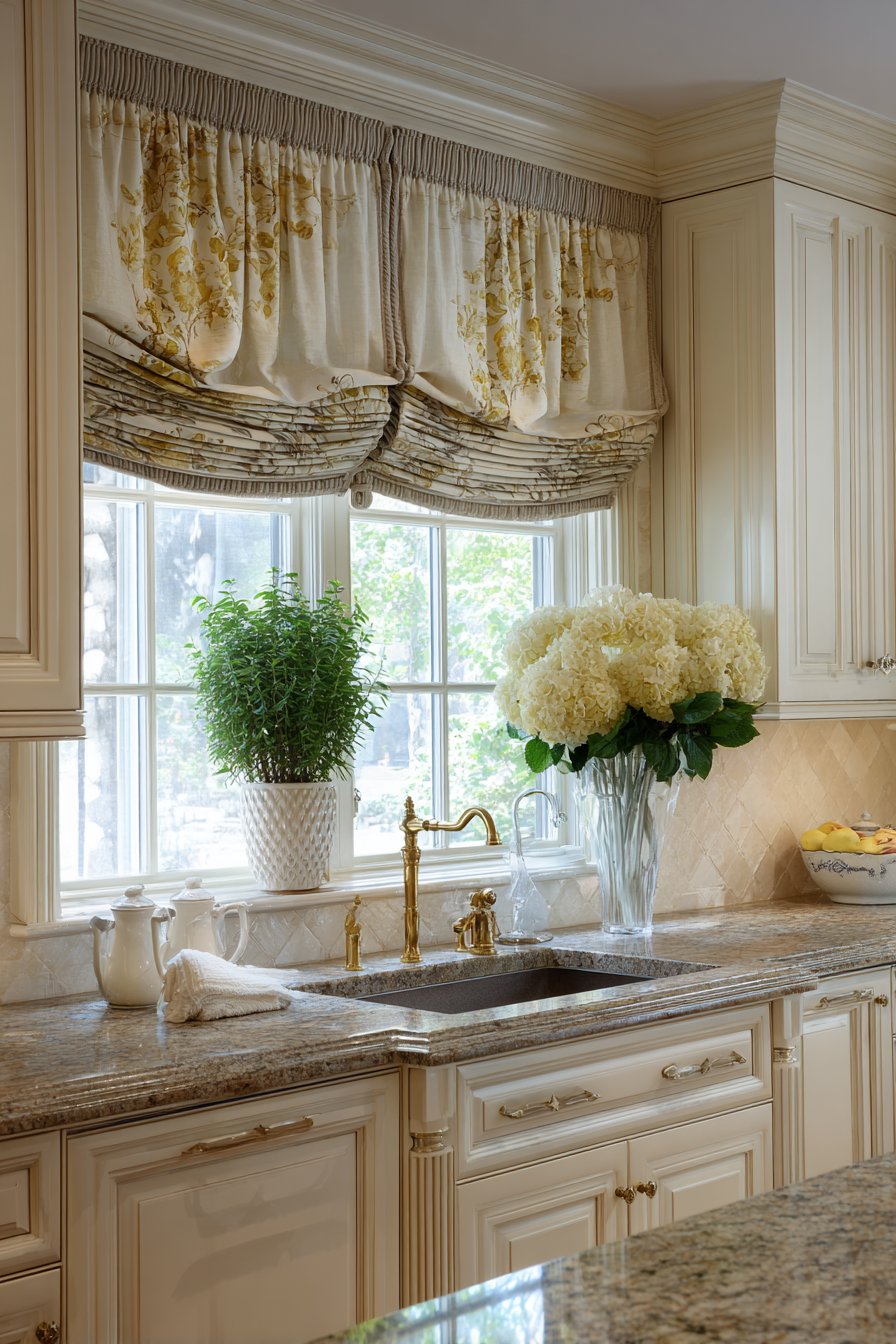
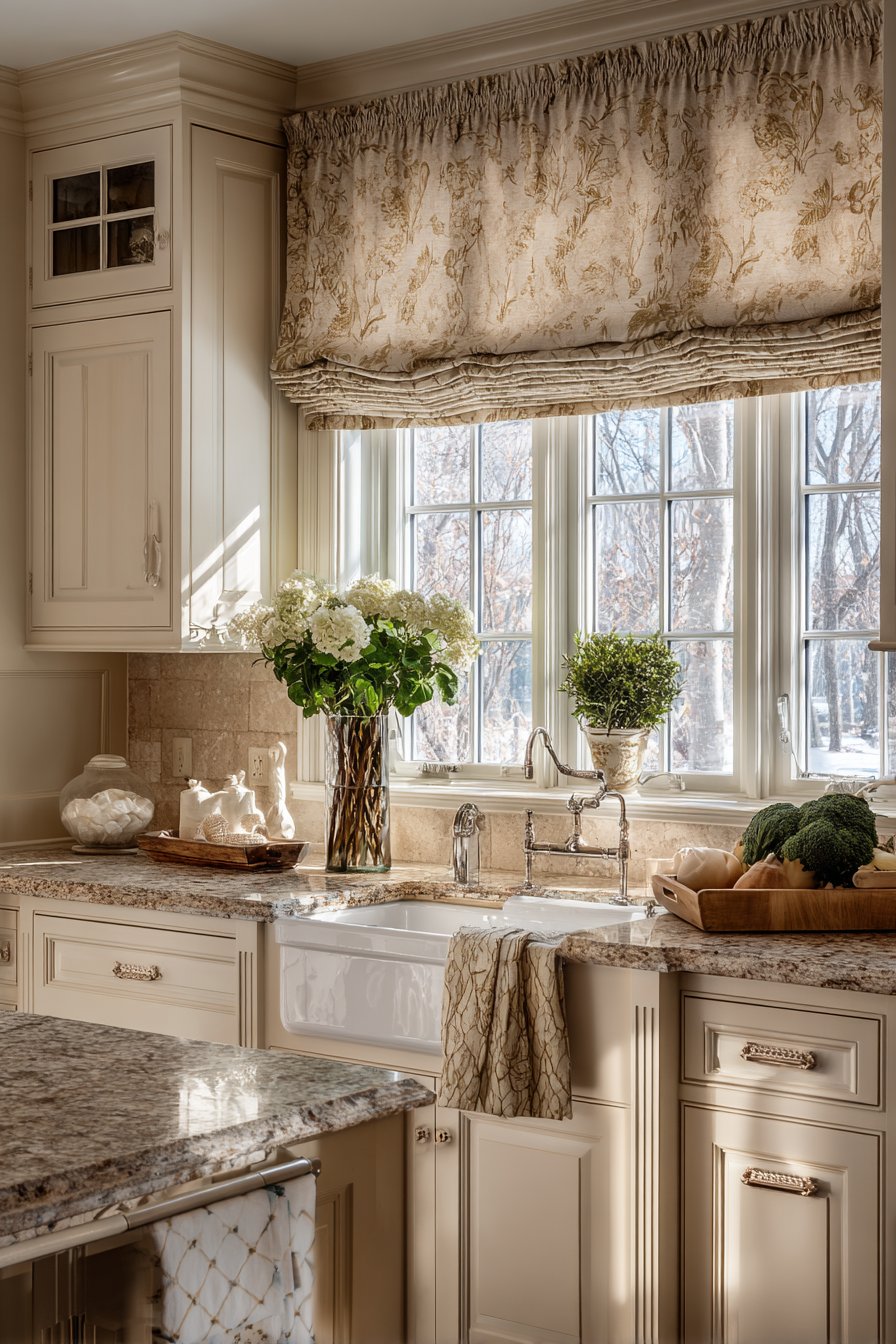
For those who appreciate the refined elegance of traditional design, layered window treatments offer unparalleled sophistication and versatility. This kitchen curtain idea combines Roman shades in neutral linen with pinch-pleat valances in a coordinating floral pattern, creating a layered approach that provides both practical light control and decorative impact.
The Roman shades serve as the functional foundation, offering adjustable coverage that can be raised to welcome natural light or lowered for privacy and sun protection. The pinch-pleat valances add a decorative top treatment that conceals the shade mechanism while introducing pattern and visual interest at the upper portion of the window.
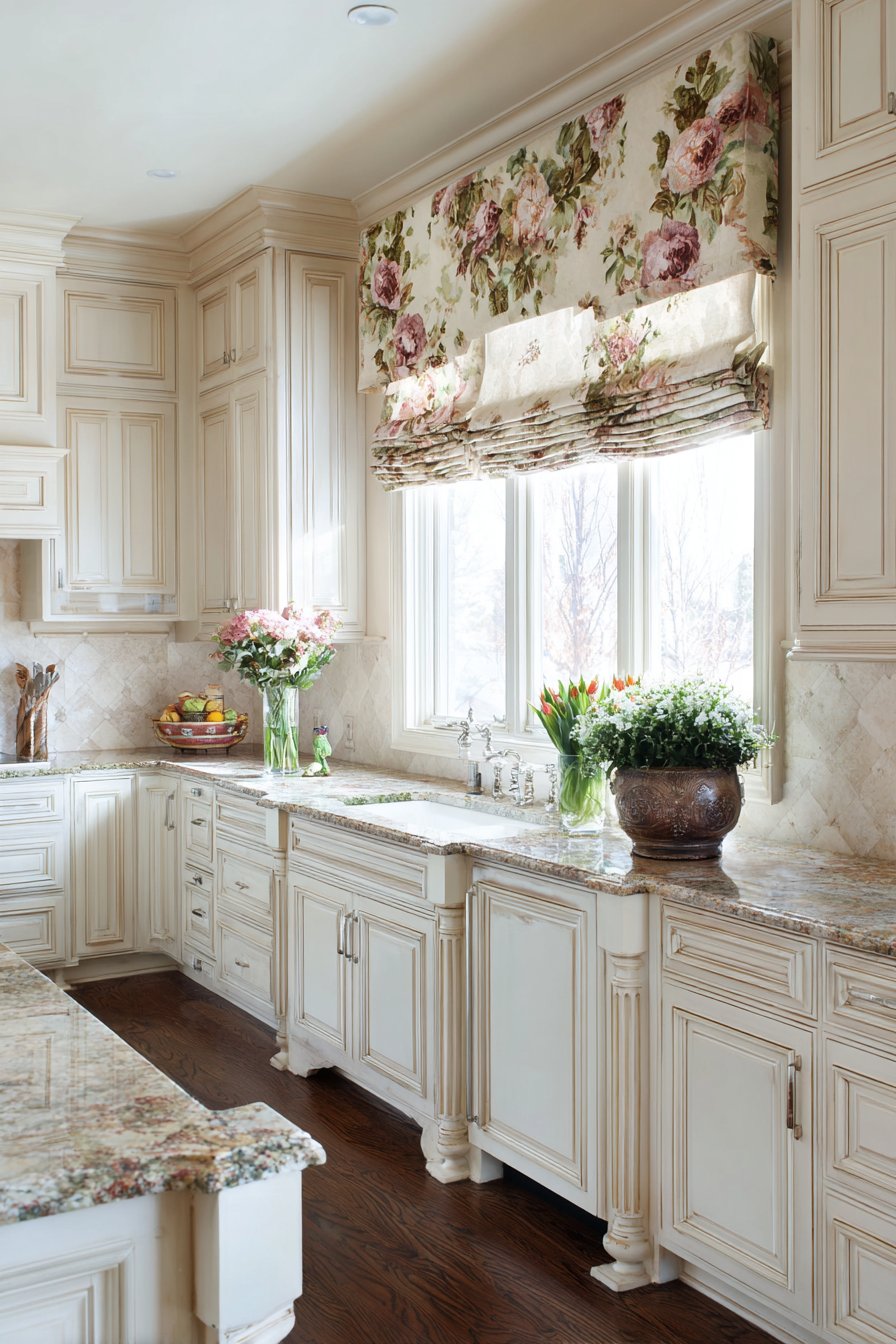
This sophisticated treatment particularly shines when framing a garden window above the kitchen sink, transforming a utilitarian workspace into a view-worthy focal point. The polished nickel hardware adds refined detail that coordinates beautifully with kitchen faucets and cabinet pulls, demonstrating the importance of considering all metal finishes when designing a cohesive space.
Cream-colored cabinetry provides a classic backdrop that allows the window treatment to command attention without competing with busy cabinet doors or bold wall colors. Granite countertops in complementary neutral tones ground the design with natural stone’s inherent gravitas and permanence.
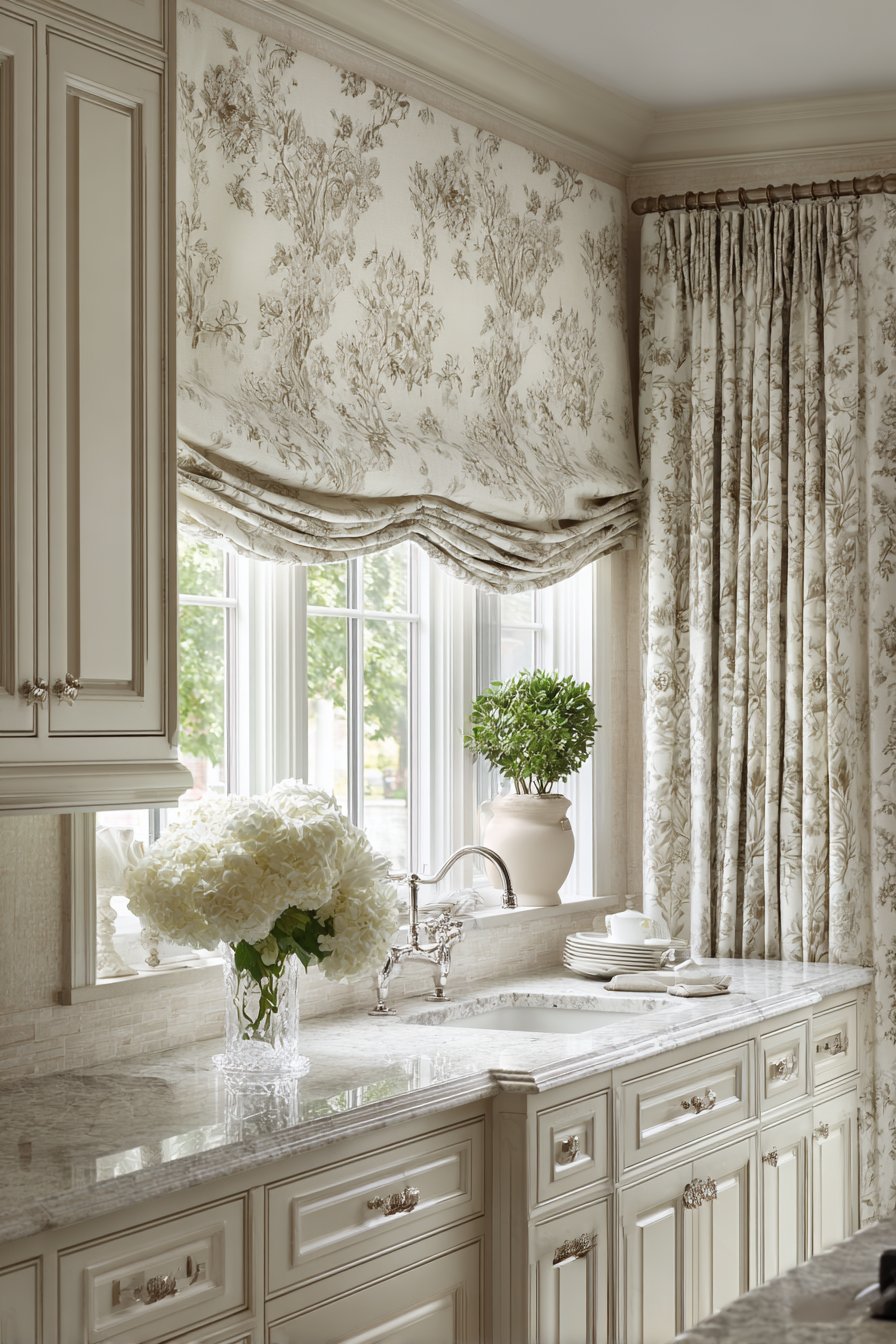
The genius of layered treatments lies in their versatility and the depth they create. The Roman shades offer precise light control—fully raised when natural illumination is desired, partially lowered to reduce glare during bright midday hours, or completely closed for evening privacy.
The valances remain stationary, providing consistent decorative interest regardless of the shade position. The floral pattern in the valance introduces organic shapes and multiple colors that can be pulled from and echoed in other kitchen elements like dish towels, pottery, or fresh flowers. This approach exemplifies traditional design thinking, where layering, pattern mixing, and attention to detail combine to create rooms of substance and sophistication.
Key Design Tips:
- Combine solid and patterned fabrics in the same color family to create visual interest while maintaining cohesion and preventing the treatment from appearing too busy or overwhelming.
- Choose Roman shades for their clean lines when raised and their effective light control when lowered, making them ideal functional components in layered treatments.
- Install valances on separate mounting boards positioned above the window frame to add architectural dimension and create the illusion of taller windows.
- Coordinate hardware finishes with kitchen fixtures such as faucets, cabinet pulls, and light fixtures for a polished, professionally designed appearance.
- Select washable or easily cleanable fabrics for valances positioned above cooking areas where grease and cooking odors may accumulate over time.
6. Contemporary Minimalism with Roller Shades
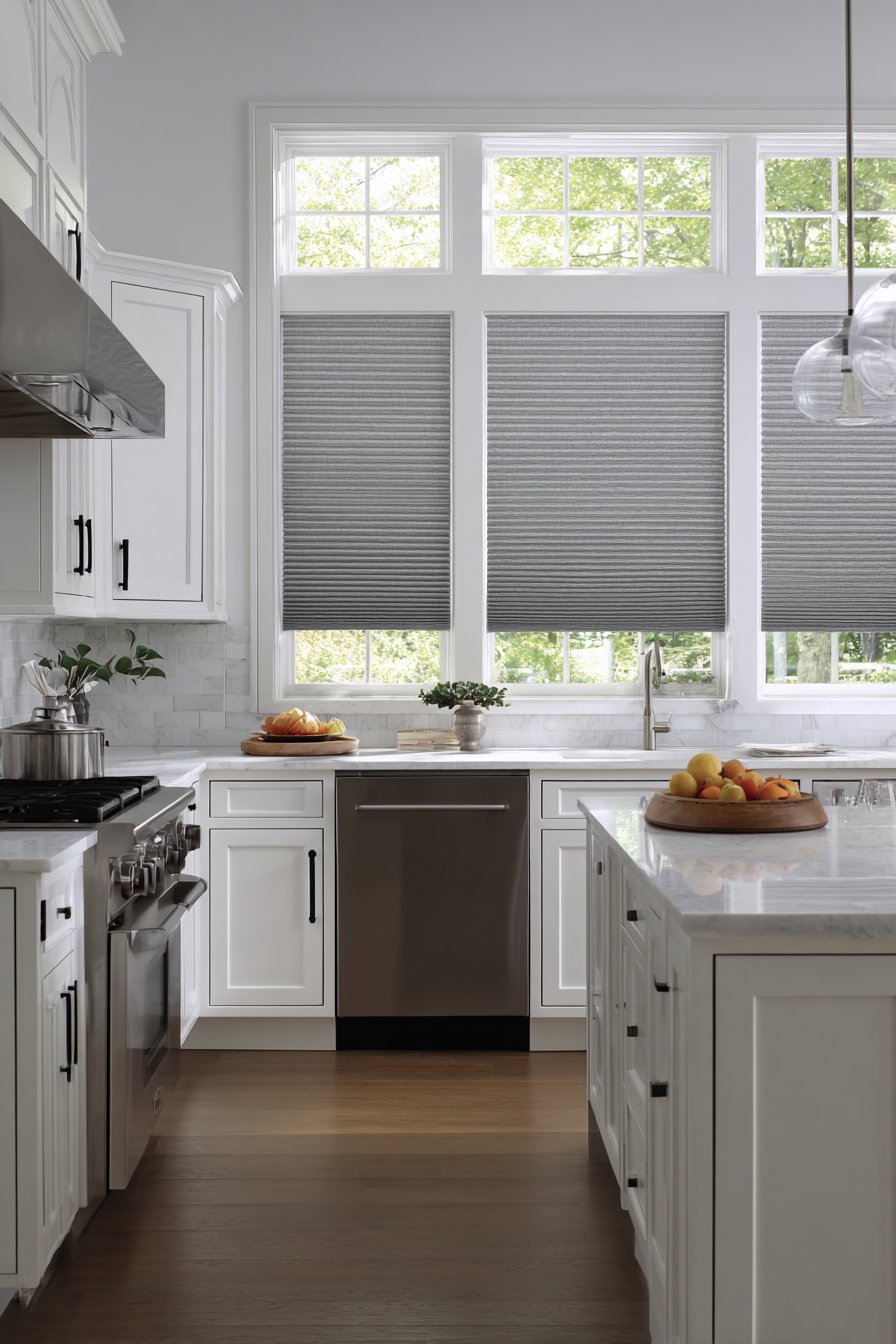
In contemporary kitchens where clean lines and uncluttered surfaces reign supreme, roller shades in textured light grey fabric provide the perfect window treatment solution. This kitchen curtain idea embraces minimalism through its streamlined appearance and functional simplicity.
The shades mount inside the window frame for a sleek, integrated look that appears almost architectural rather than decorative. When raised, the shades disappear almost entirely, maximizing window exposure and natural light. When lowered, they provide excellent light control and privacy without introducing visual complexity or softness that might conflict with the kitchen’s modern aesthetic.
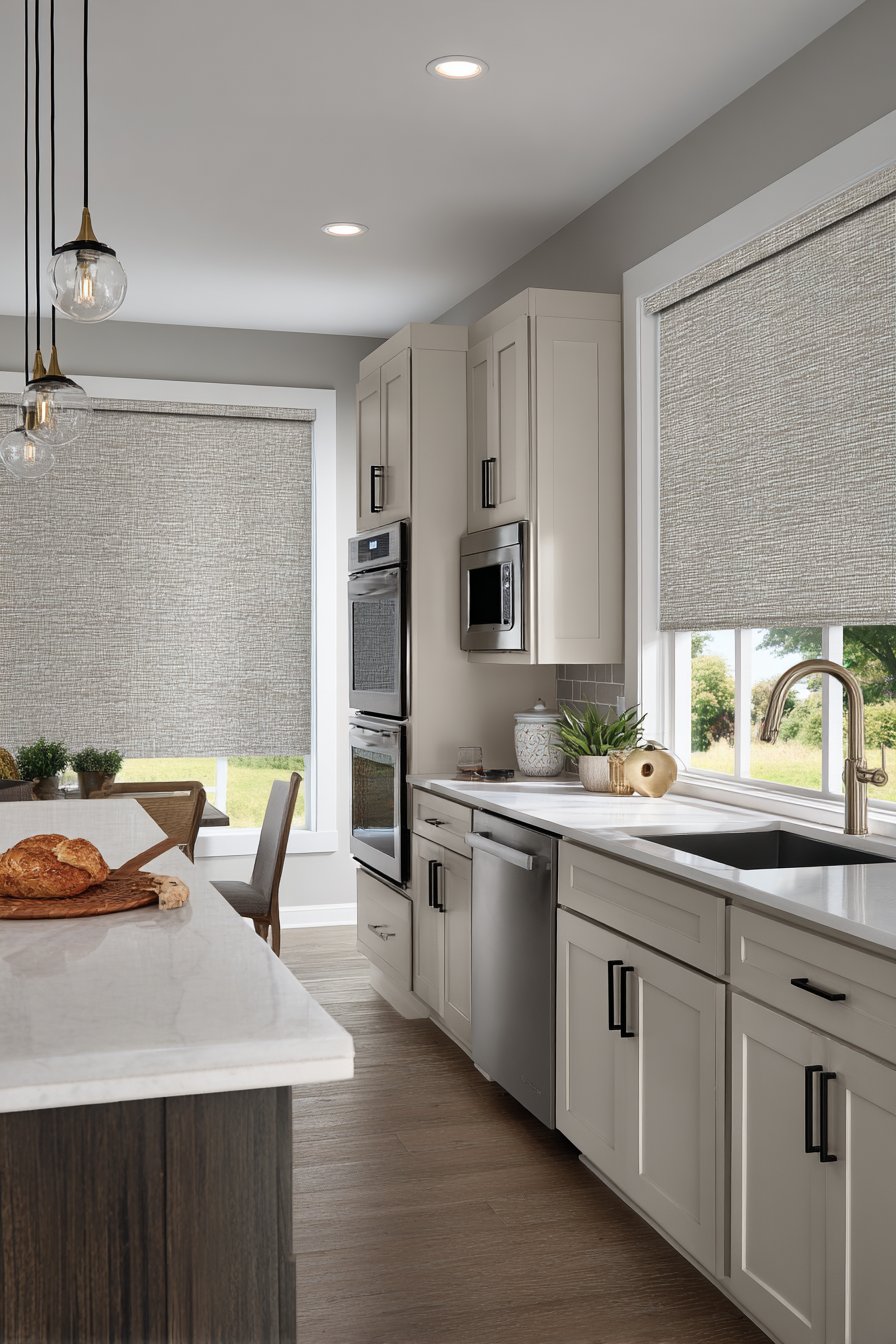
The textured grey fabric selection demonstrates sophisticated color thinking in contemporary design. Rather than stark white, which can appear clinical in some settings, the soft grey offers subtle warmth while maintaining the neutral palette essential to modern interiors.
The texture in the fabric prevents the shades from reading as flat or one-dimensional, instead catching and reflecting light to create subtle shadow play throughout the day. This nuanced approach to material selection separates thoughtful design from generic minimalism, proving that simplicity need not mean boring or devoid of visual interest.
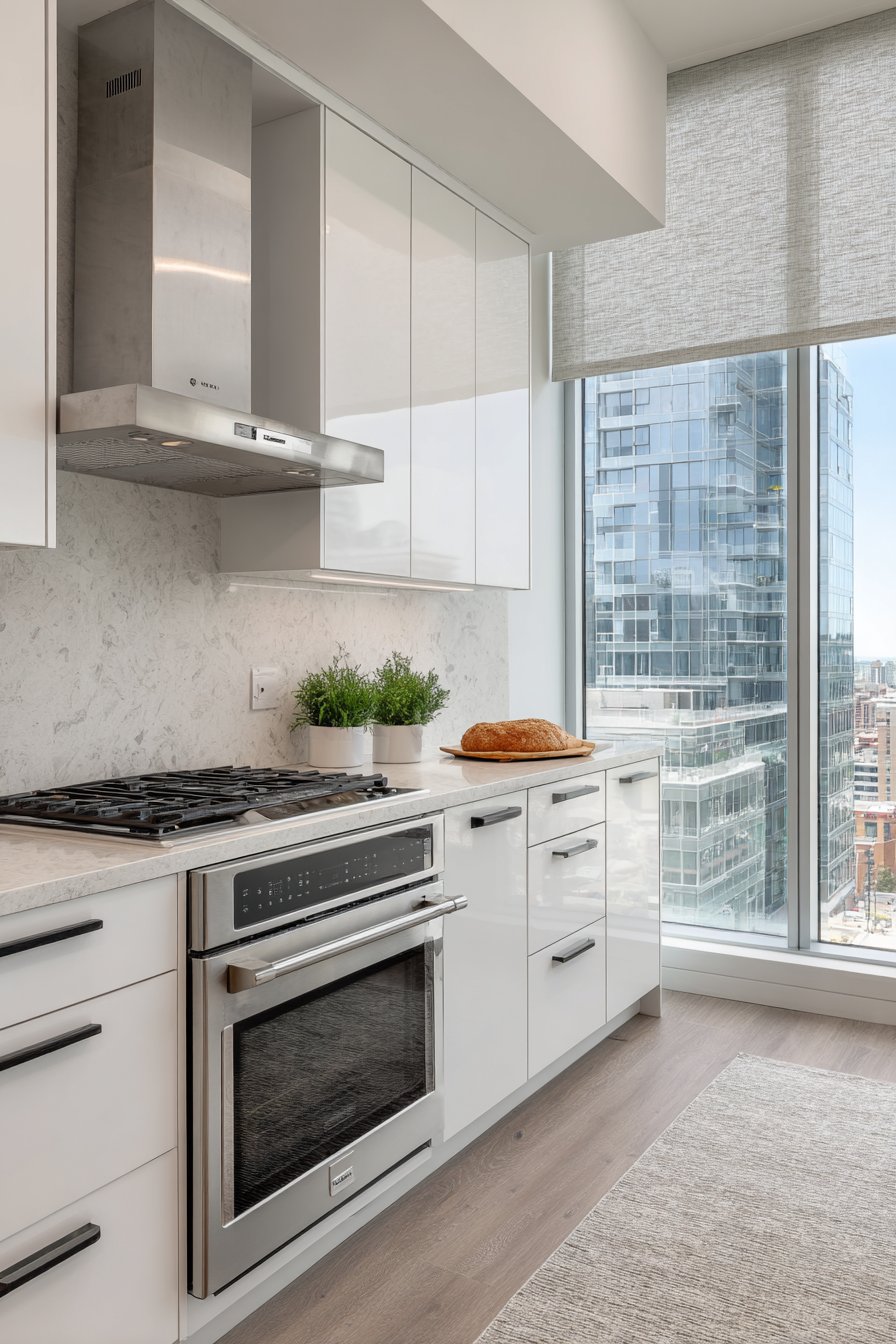
The roller shade treatment integrates seamlessly with surrounding contemporary design elements. Stainless steel appliances share the shade’s cool, neutral tones and clean-lined aesthetic. White quartz countertops provide a bright, non-porous surface that maintains the hygienic, easy-care priorities of modern kitchen design.
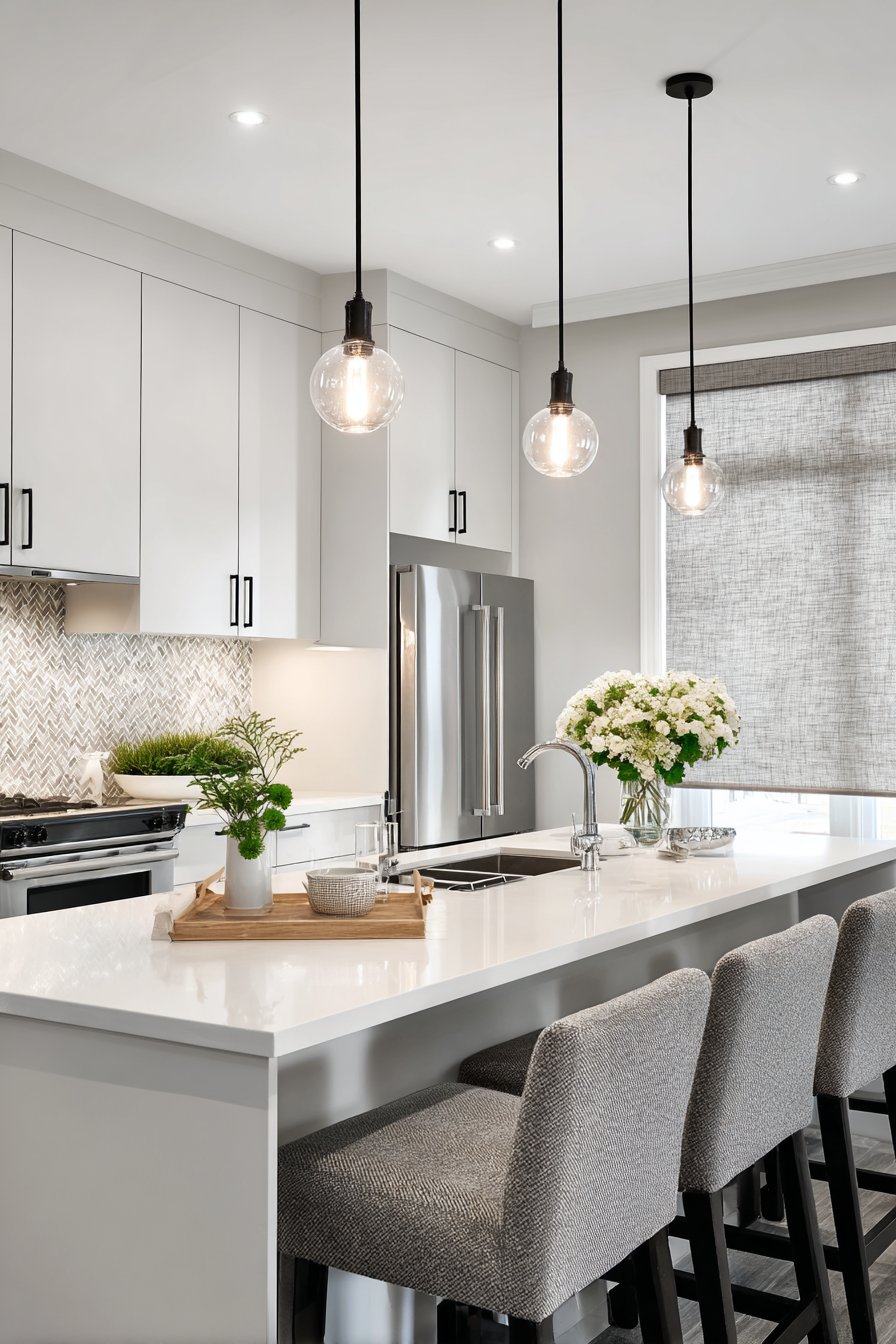
Minimalist black hardware accents introduce necessary contrast and definition without disrupting the calm, ordered atmosphere. This treatment works particularly well in kitchens with multiple windows, as the uniform appearance of matching roller shades creates visual cohesion across the space, unlike elaborate curtains that might appear repetitive or overwhelming when multiplied.
Key Design Tips:
- Mount roller shades inside the window frame for the cleanest, most contemporary appearance that emphasizes architecture over decoration.
- Choose textured fabrics over smooth ones to add subtle visual interest and dimension while maintaining the minimalist aesthetic essential to modern design.
- Select motorized shades for hard-to-reach windows or when seeking the ultimate in contemporary convenience and clean lines without visible cords or chains.
- Coordinate shade color with wall paint in similar neutral tones to create a seamless, integrated appearance where window treatments recede rather than demand attention.
- Consider light-filtering rather than blackout fabrics to maintain connection with the outdoors and allow soft natural light even when shades are lowered for privacy.
7. Rustic Character with Burlap Cafe Curtains
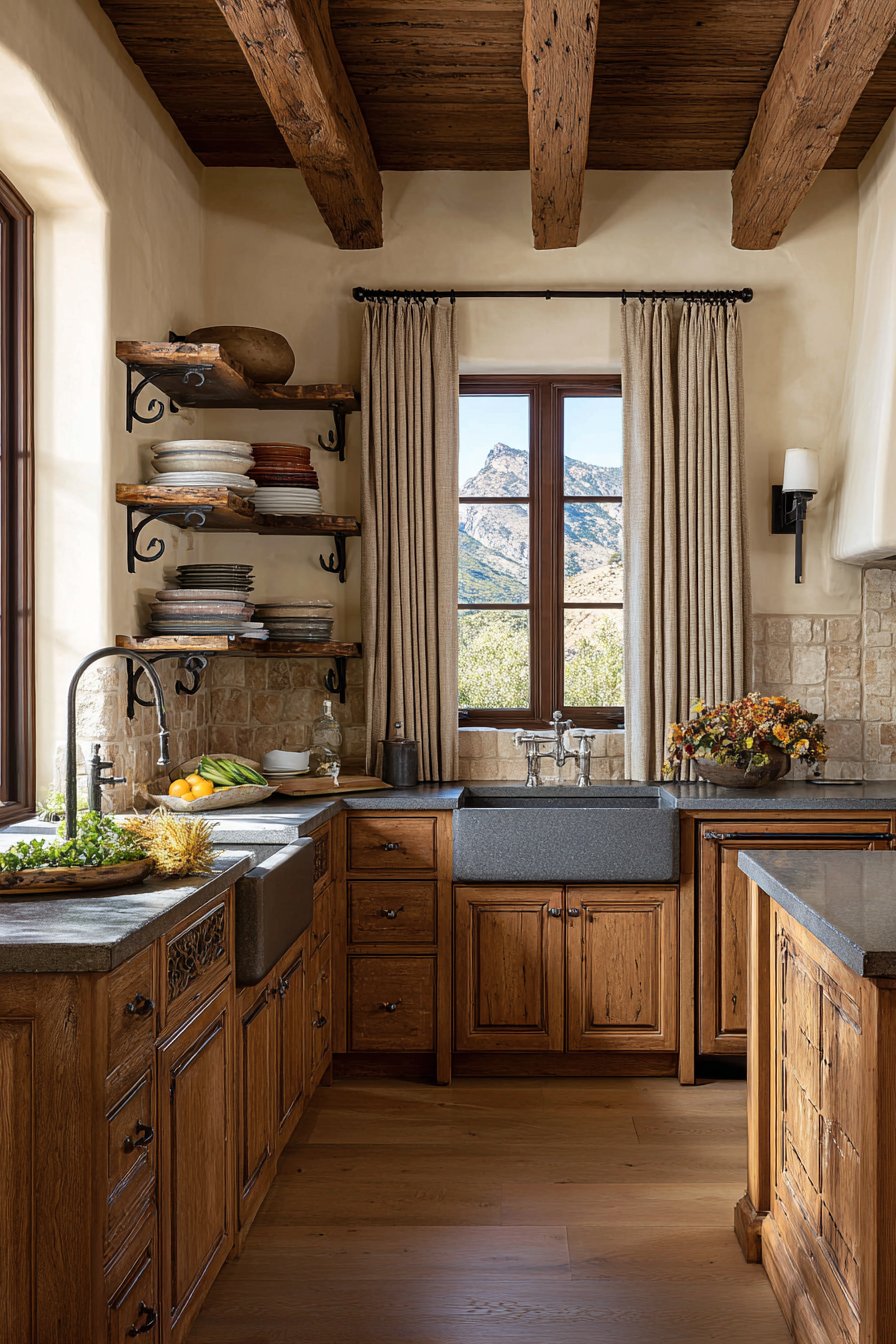
For kitchens embracing rustic or vintage farmhouse aesthetics, burlap cafe curtains offer authentic material character and charming simplicity. This kitchen curtain idea celebrates the beauty of natural, unrefined materials through burlap’s distinctive texture and raw edges. Hung from wrought iron rods with decorative scrollwork, these curtains honor traditional craftsmanship while providing practical half-window coverage.
The curtains shield the lower portion of vintage-style multi-pane windows, maintaining privacy at counter level while allowing light to flood through the upper panes. This approach maximizes natural illumination—crucial in rustic kitchens that often feature warmer, darker wood tones requiring ample light to prevent feeling cave-like.
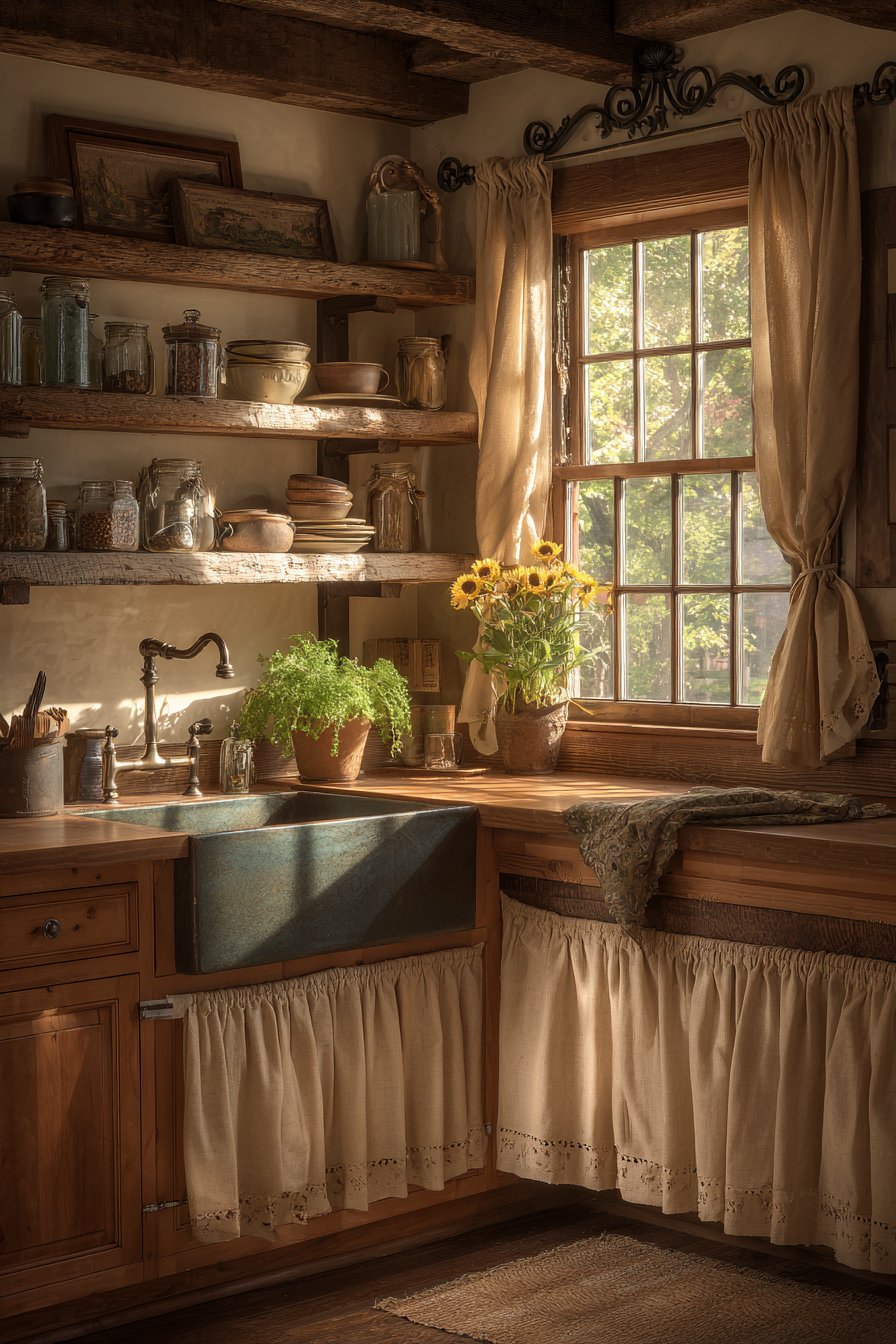
The authenticity of burlap as a curtain material cannot be overstated. Its coarse weave and natural fiber composition create textural depth that synthetic fabrics cannot replicate. The raw edges, rather than appearing unfinished, contribute to the intentionally rustic aesthetic, suggesting handcrafted simplicity and connection to agricultural heritage. The neutral tan color of natural burlap provides an earthy foundation that complements virtually any wood tone, from pale pine to rich walnut. When light passes through the loose weave, it creates a warm, filtered glow that enhances the cozy, welcoming atmosphere central to rustic design philosophy.
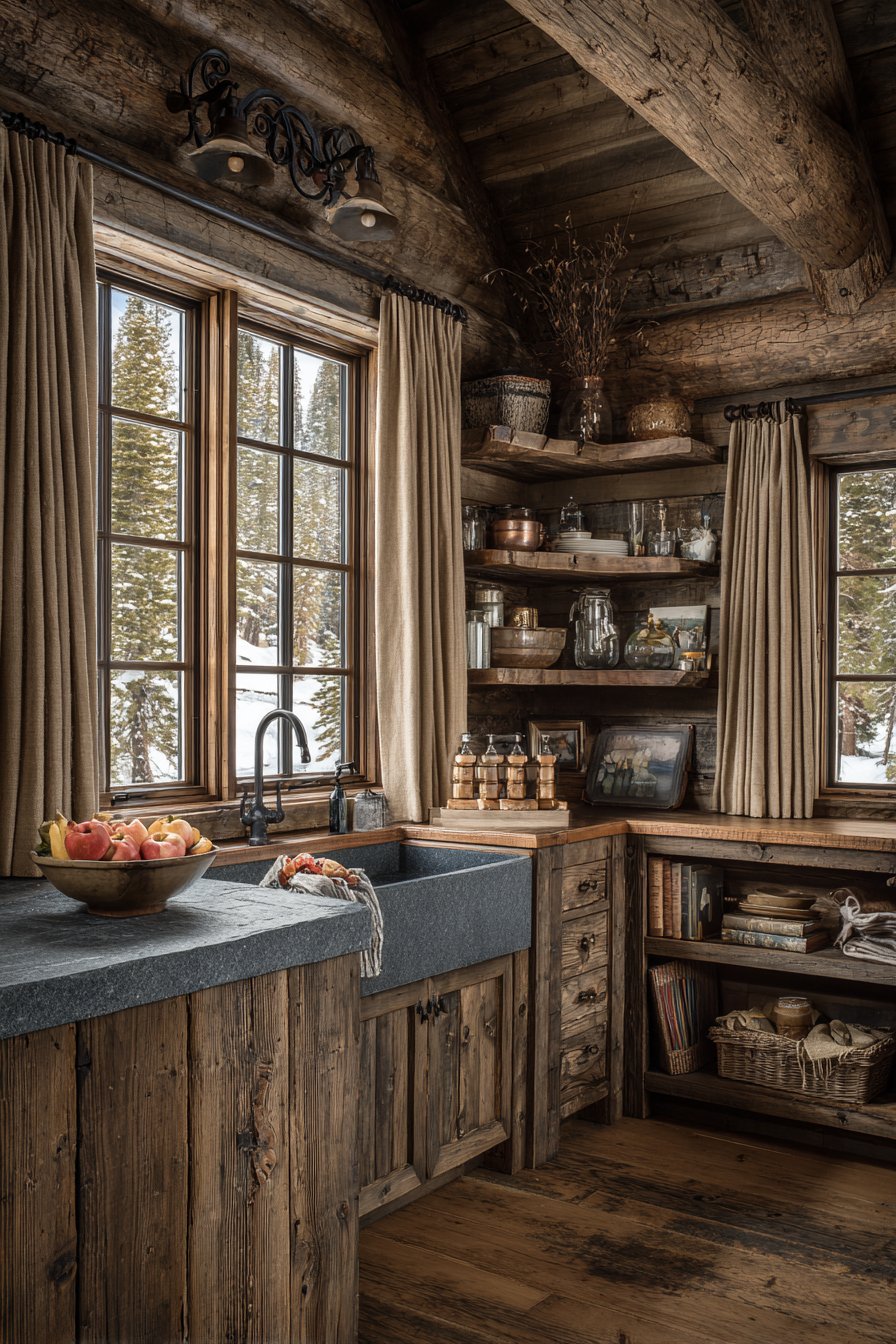
The surrounding design elements amplify the curtains’ rustic charm. Reclaimed wood open shelving displays pottery, glassware, and kitchen essentials while contributing significant textural interest through weathered surfaces and visible grain patterns.
A farmhouse apron sink in white porcelain creates striking contrast against the warm wood and burlap tones, its traditional form honoring the functional beauty of historical kitchen design. The wrought iron curtain hardware with its hand-forged appearance and decorative scrollwork provides an artisan-crafted quality that elevates the treatment from simple to special, demonstrating how hardware selection dramatically impacts overall design success.
Key Design Tips:
- Embrace burlap’s natural imperfections including slubs, color variations, and loose weave as authentic characteristics that enhance rather than detract from rustic appeal.
- Leave edges raw or minimally finished with a simple hem to maintain the casual, handcrafted aesthetic central to rustic farmhouse style.
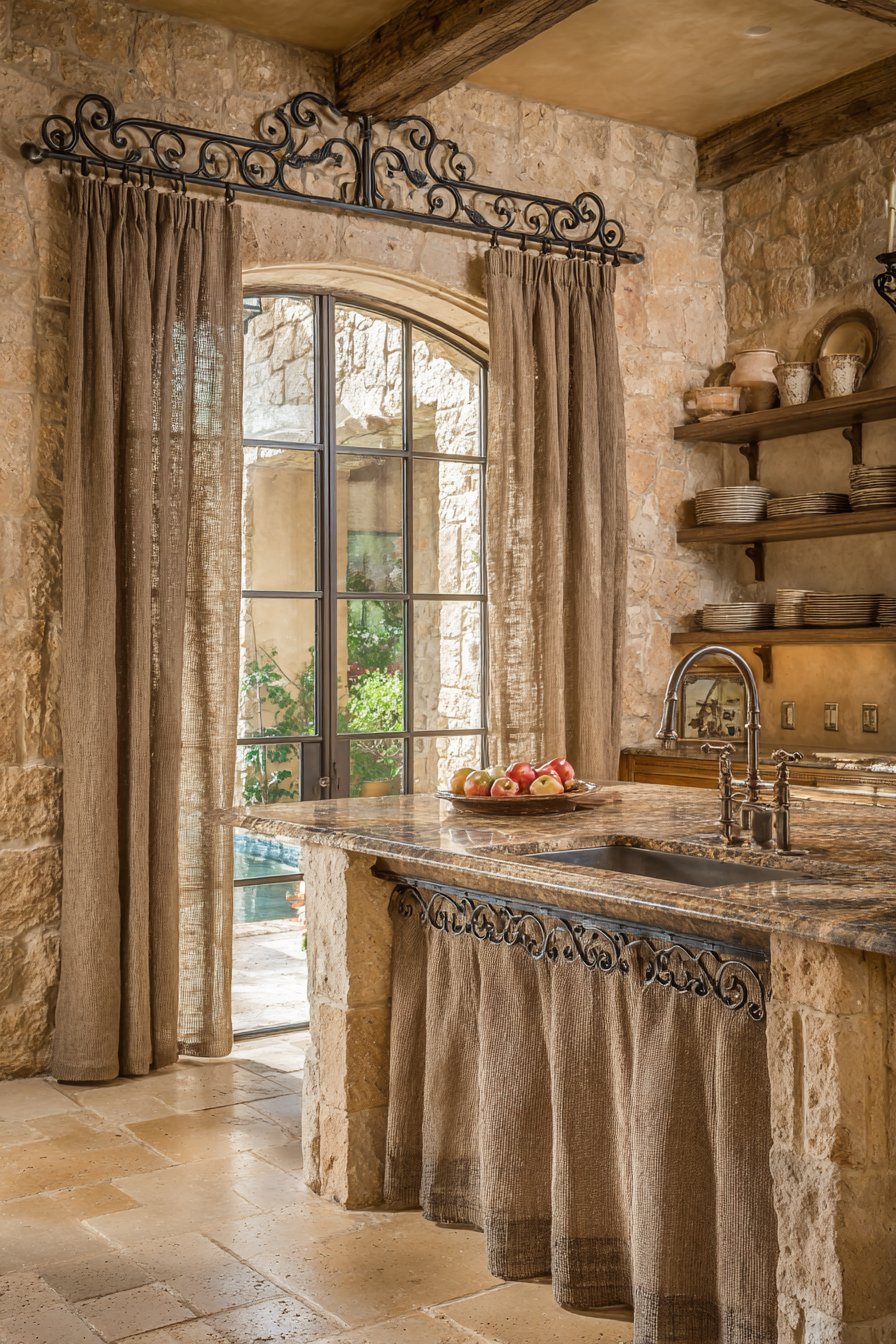
- Choose wrought iron or blackened steel hardware with hand-forged details and decorative elements that reference historical craftsmanship and traditional metalworking techniques.
- Layer burlap with linen or cotton if additional light control or privacy is needed, creating textural interest through material contrast.
- Consider maintenance requirements as burlap can be more challenging to clean than conventional curtain fabrics and may require gentle spot cleaning or dry cleaning.
8. Space-Smart Solutions for Compact Kitchens
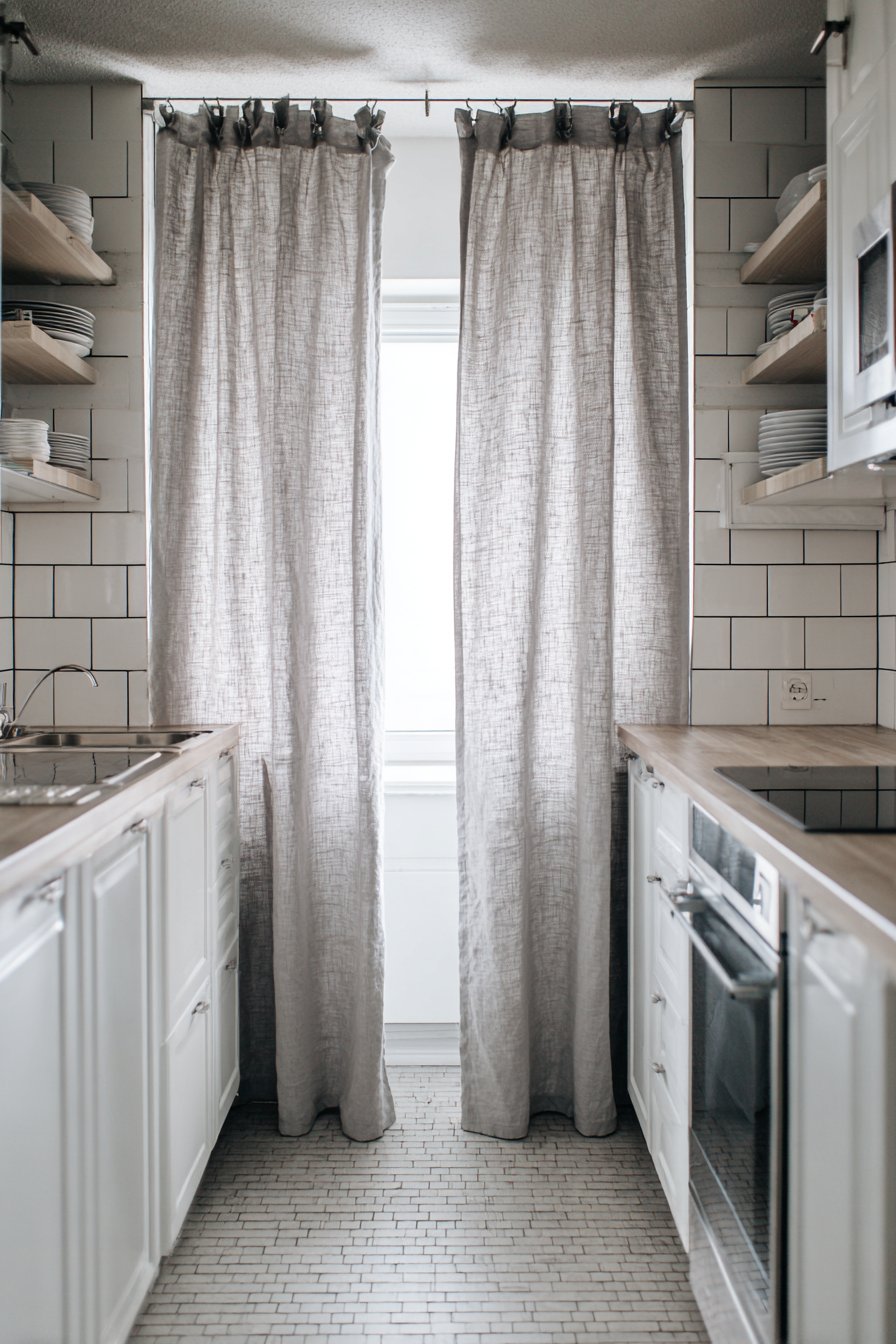
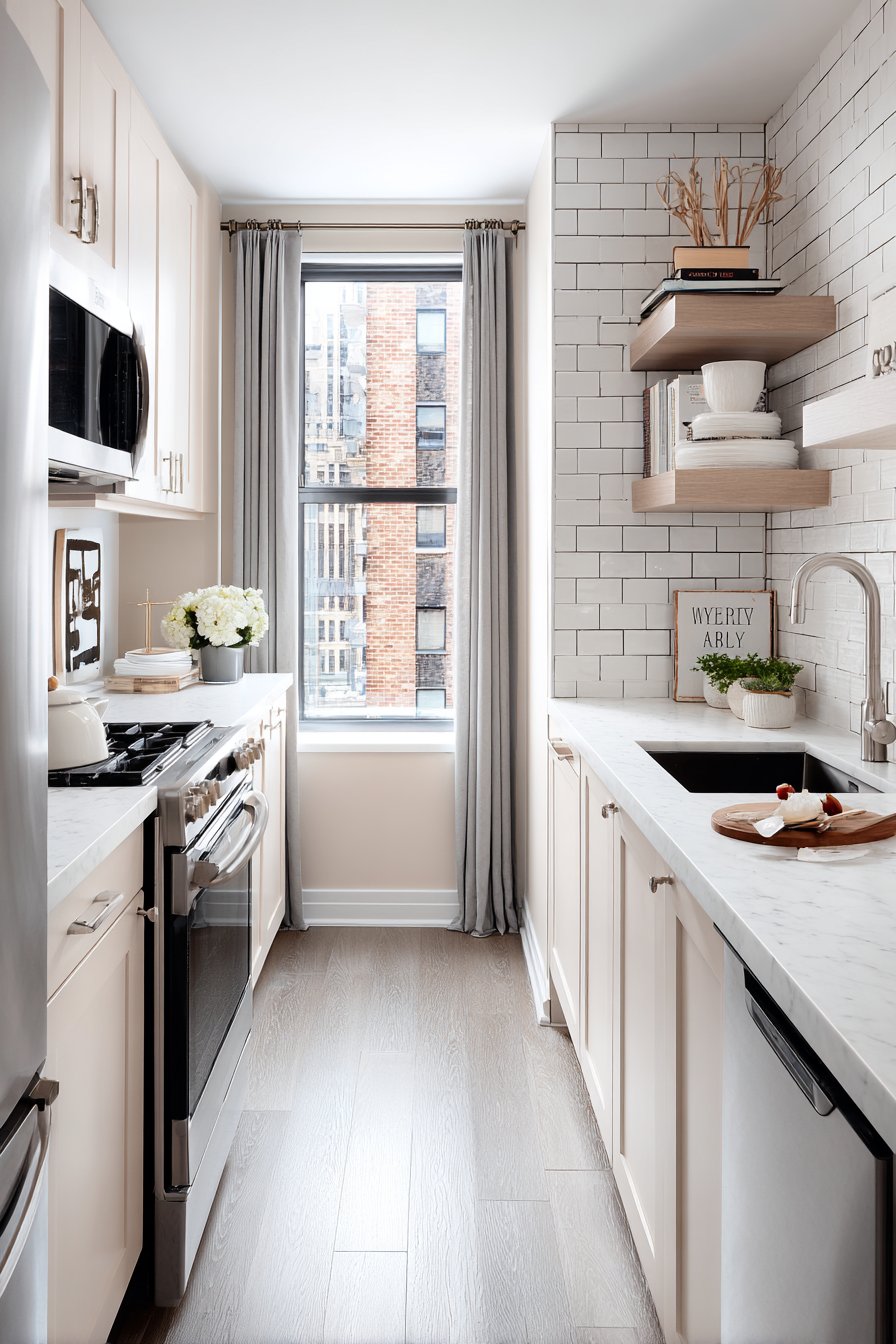
Small galley kitchens demand thoughtful window treatment solutions that maximize limited space while maintaining style and functionality. This kitchen curtain idea features simple tab-top curtain panels in soft grey linen that respect spatial constraints while adding warmth and texture.
The tab-top mounting style eliminates bulky hardware, creating a streamlined appearance particularly important in compact spaces where every visual element impacts the sense of openness. The curtains hang from slim brushed steel rods positioned just above the window frames, employing a key design strategy for small spaces—mounting hardware higher than the window creates the illusion of both taller windows and higher ceilings.
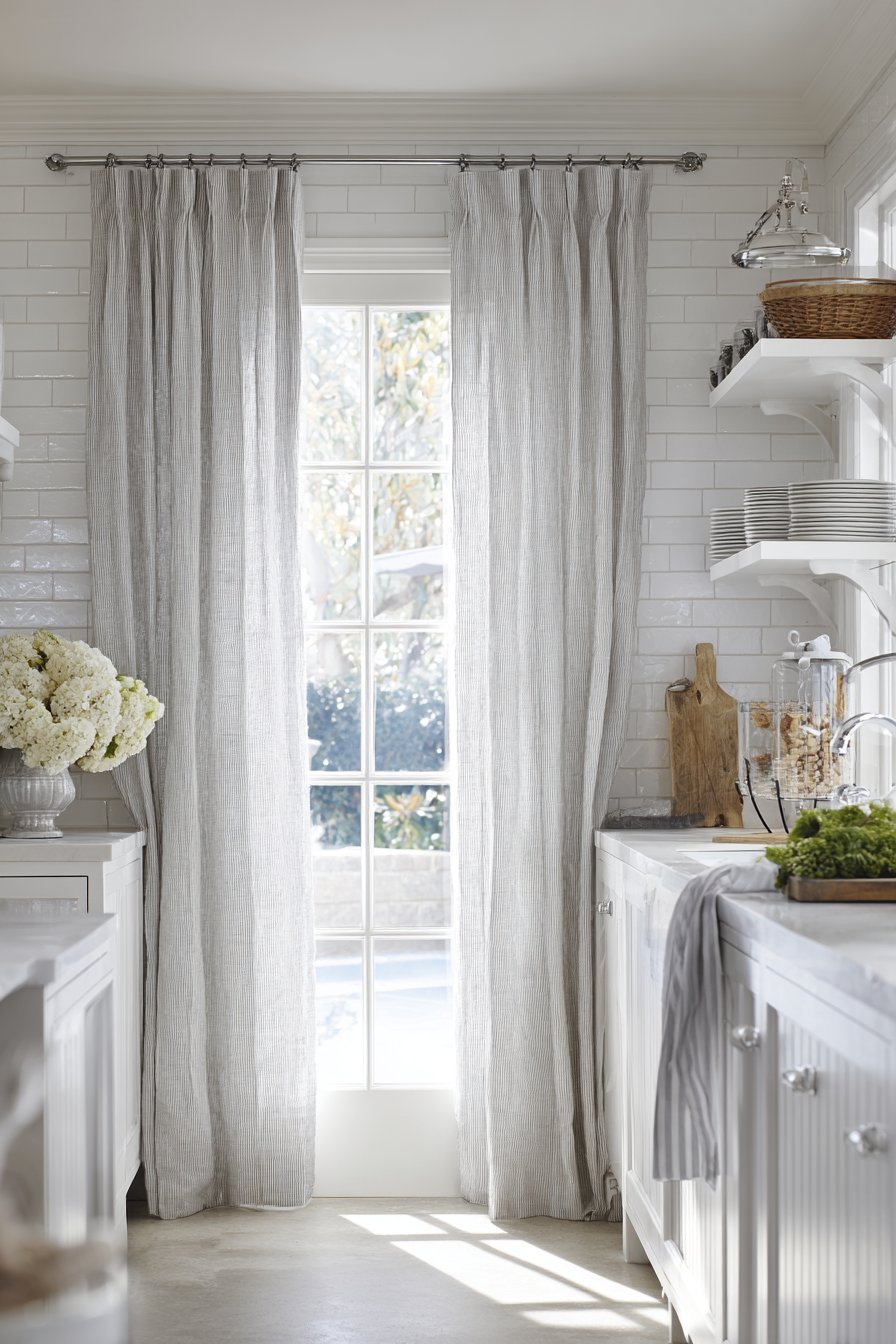
The soft grey linen fabric selection demonstrates intelligent color theory application in small-space design. Lighter colors reflect rather than absorb light, making spaces feel larger and more open. The grey tone provides subtle warmth and sophistication without the starkness of pure white, which can appear cold or institutional in compact kitchens with limited natural light.
The linen’s natural texture adds visual interest at a scale appropriate for small spaces—subtle enough not to overwhelm, yet present enough to prevent the room from feeling flat or one-dimensional. The tab-top construction allows the curtains to slide smoothly along the rod, enabling easy adjustment throughout the day as light conditions change.
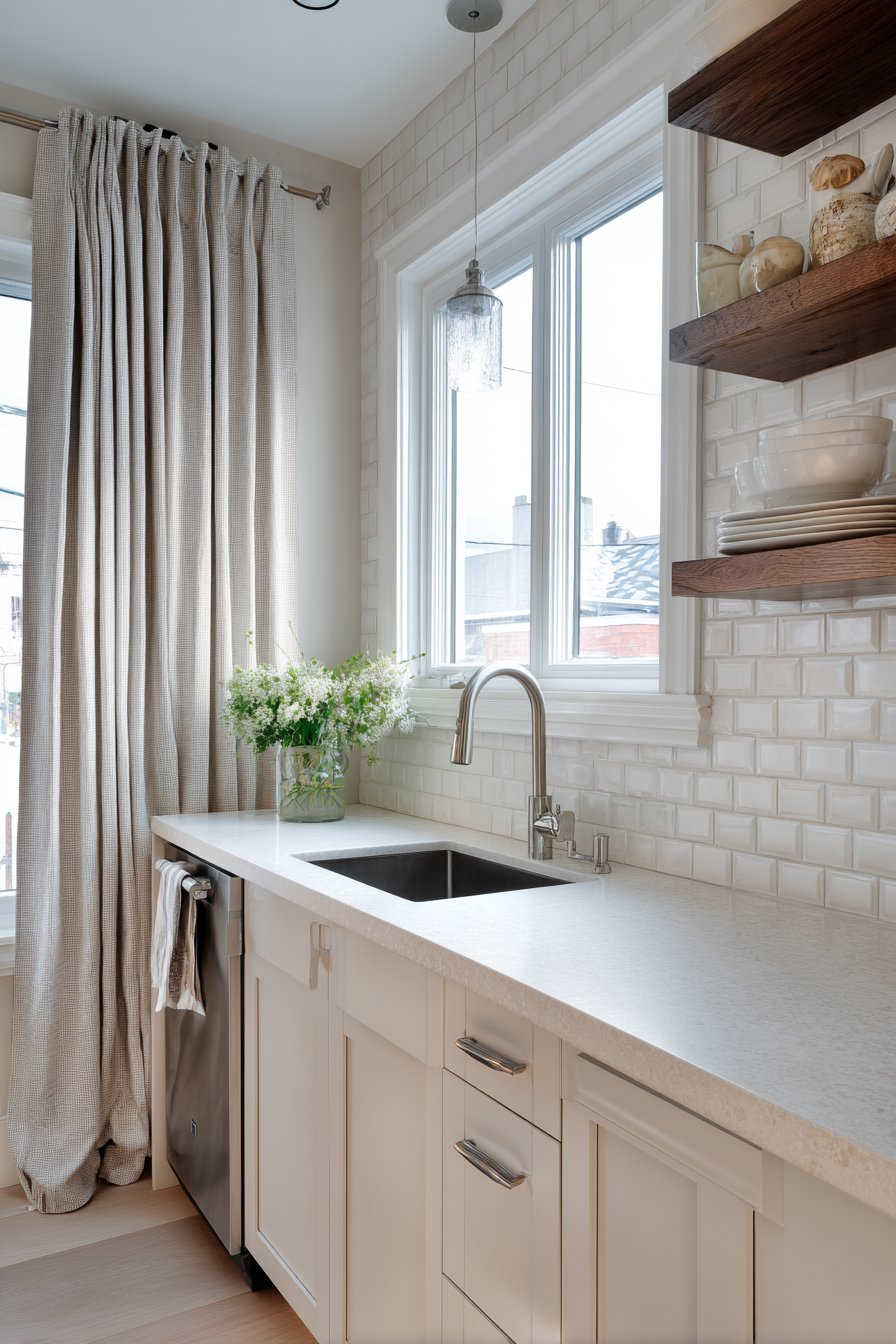
The surrounding design elements work in concert with the curtains to maximize the sense of space. White subway tile provides classic appeal while reflecting light to brighten the compact kitchen. Open shelving eliminates the visual weight of closed cabinets, creating airiness and making the room feel less enclosed.
The proportional window treatment complements rather than overwhelms the space—an essential consideration in small kitchens where oversized curtains can dominate and shrink the perceived room size. This design proves that space limitations need not mean sacrificing style or settling for utilitarian solutions; thoughtful design strategies allow even the smallest kitchens to feel intentional, attractive, and welcoming.
Key Design Tips:
- Mount curtain rods above the window frame rather than directly at the window’s edge to create the visual illusion of taller windows and higher ceilings in compact spaces.
- Choose light-colored fabrics that reflect natural light throughout the room, making small kitchens feel brighter, larger, and more open.
- Select simple mounting styles like tab-tops or rod pockets that minimize visual clutter from bulky rings or clips that can overwhelm in small spaces.
- Keep curtain panels proportional to window size, avoiding overly long or wide treatments that dominate the space and make rooms feel smaller.
- Coordinate curtain color with walls or cabinetry to create visual continuity that makes the space feel cohesive and intentionally designed despite size constraints.
9. Transitional Versatility with Linen Blend Curtains
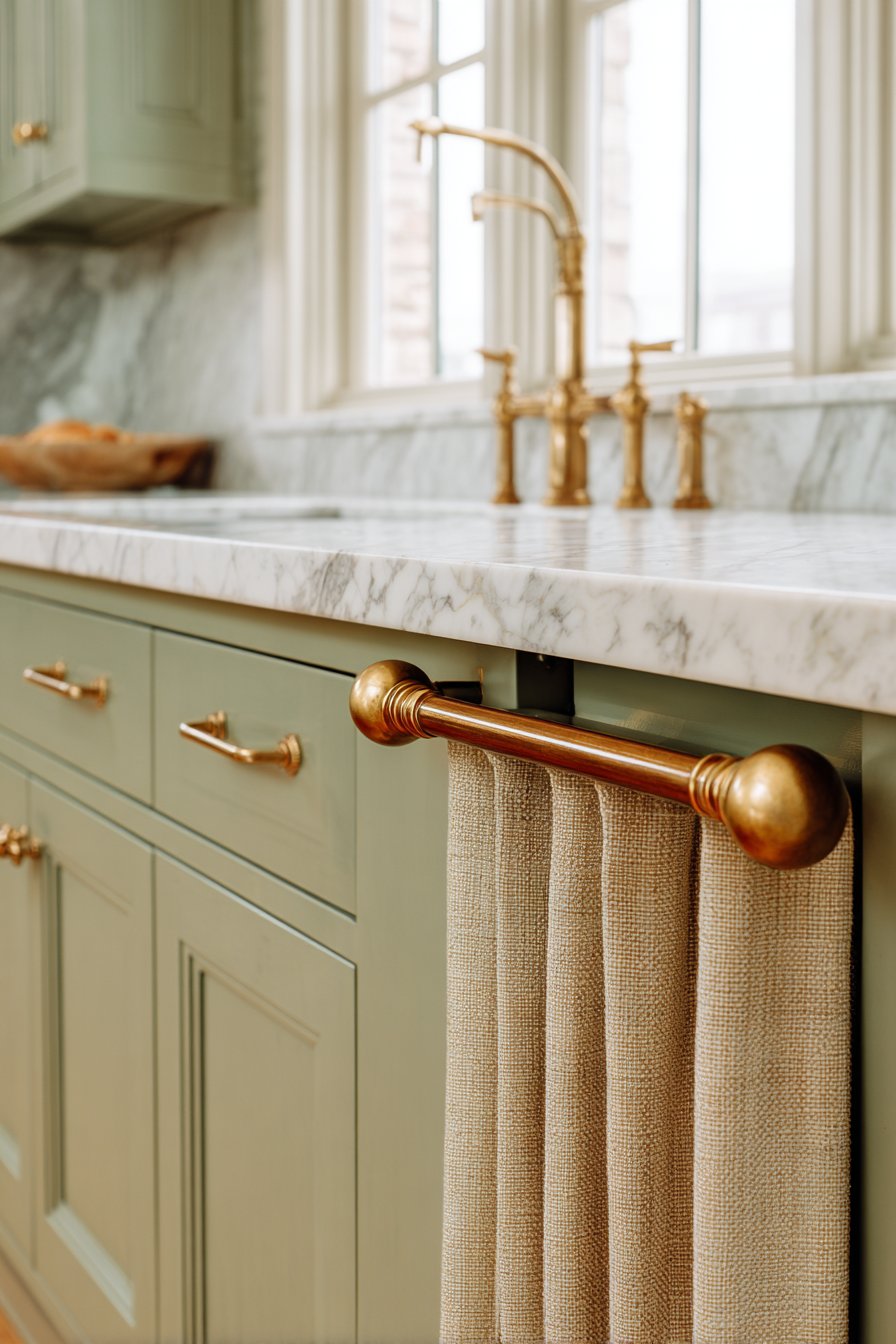
For homeowners seeking window treatments that bridge traditional and contemporary aesthetics, transitional design offers the perfect solution. This kitchen curtain idea features tailored linen blend curtains in warm beige tones that appeal to a wide range of design preferences.
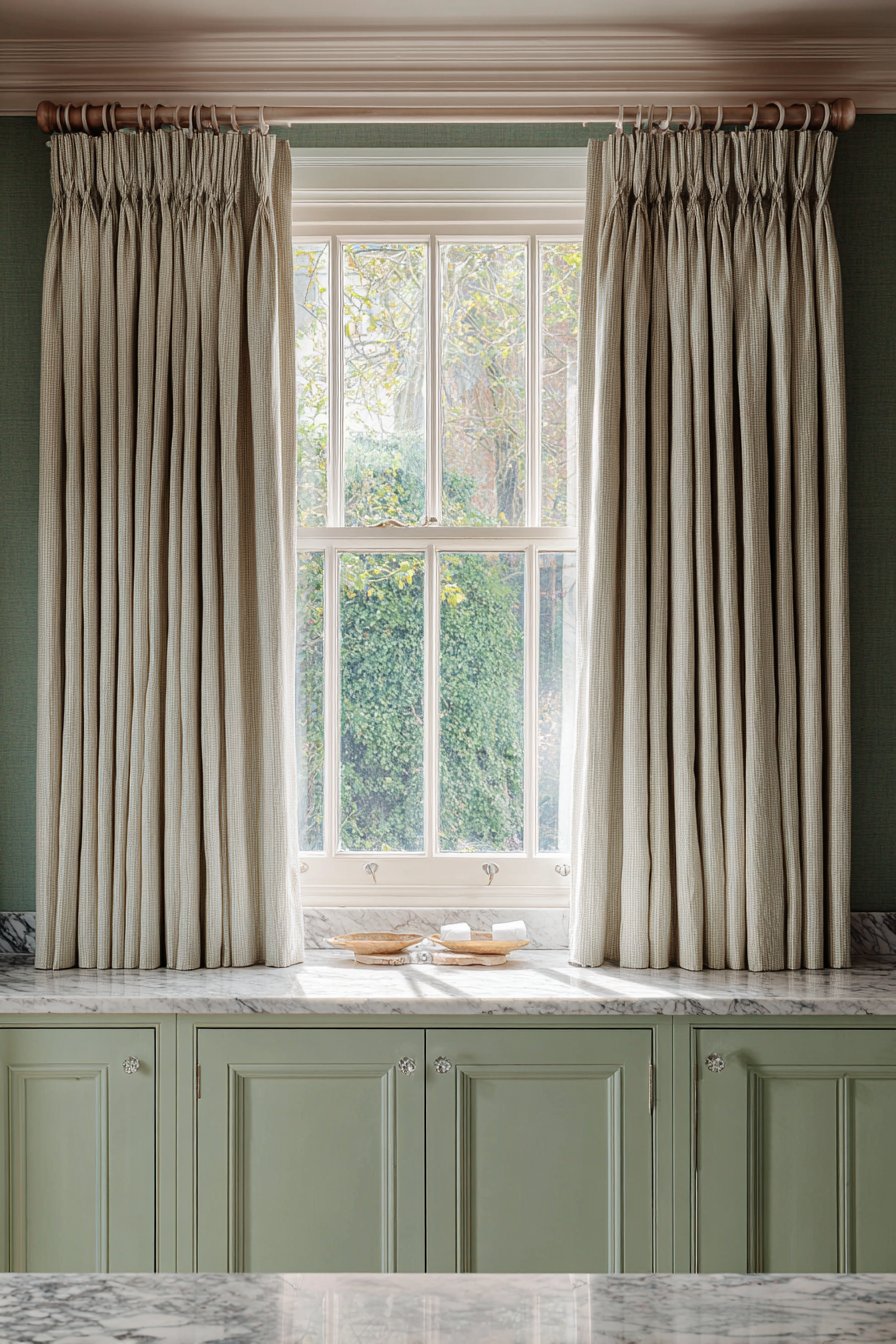
Mounted on decorative wooden rods with classic finials, these curtains frame a large kitchen window with soft pleats at the top, creating subtle structure without excessive formality. The treatment’s genius lies in its adaptability—depending on surrounding elements, these curtains can lean traditional with ornate hardware and patterned accessories, or contemporary with simplified styling and monochromatic palettes.
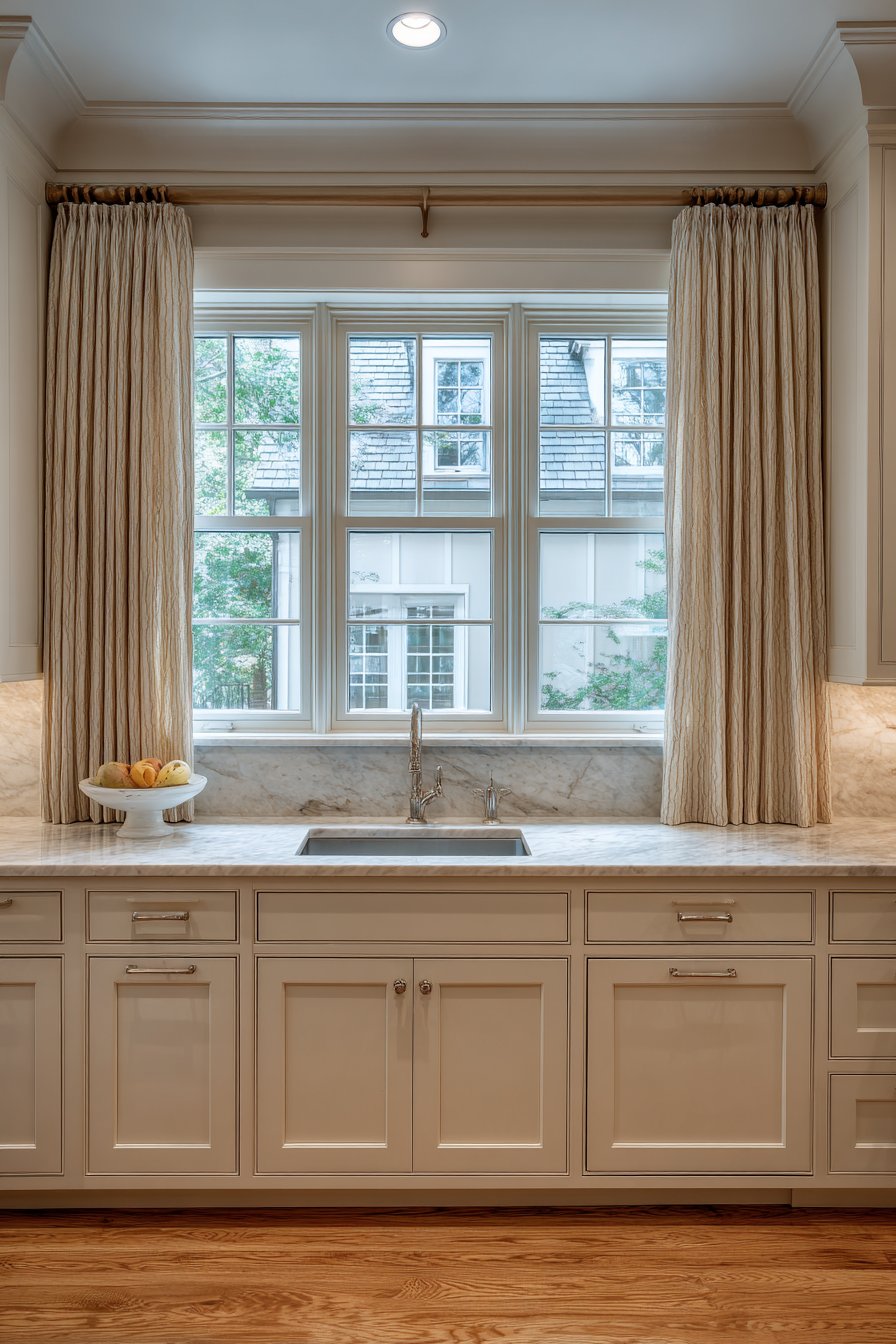
The linen blend fabric represents a practical upgrade over pure linen while maintaining much of its natural beauty. Blended with synthetic fibers, these curtains resist wrinkling more effectively than pure linen, require less maintenance, and typically cost less while offering similar visual appeal.
The warm beige tone provides neutral versatility that coordinates with virtually any color scheme, from cool greys to warm woods. The substantial texture of the fabric creates shadow depth and visual interest without pattern, allowing the curtains to provide presence without competition when other kitchen elements feature strong colors or patterns.
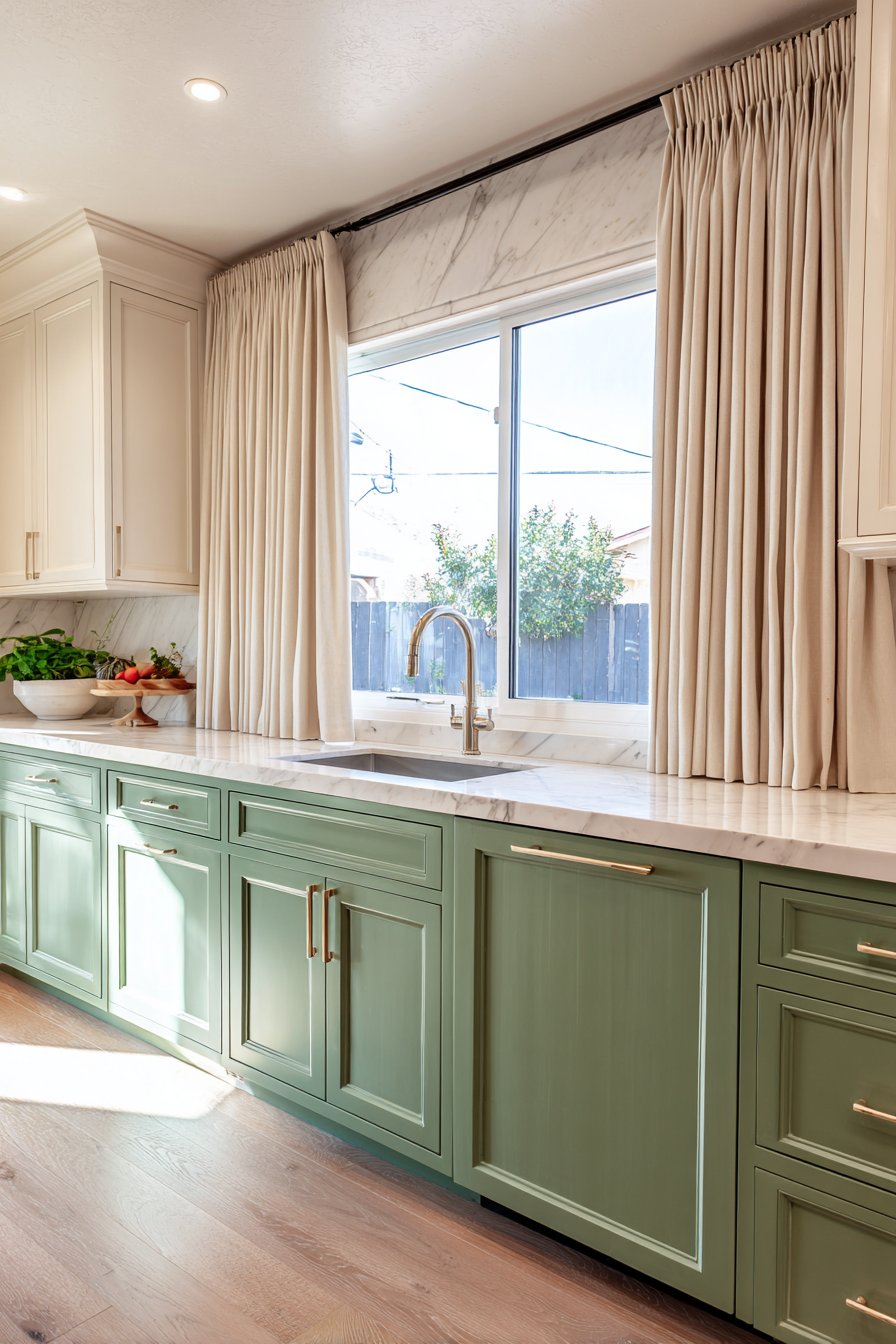
The pairing with painted shaker-style cabinets in sage green demonstrates the transitional approach to color and style. Shaker cabinets offer clean lines and functional simplicity that read as contemporary, while their frame-and-panel construction honors traditional craftsmanship.
The sage green color provides current relevance while maintaining the timeless quality of green’s association with nature and growth. Marble countertops add luxury and permanence while their natural veining introduces organic pattern. The wooden curtain rods with classic finials provide a traditional note that grounds the design, preventing it from skewing too contemporary or cold. This balanced approach creates kitchens with staying power—spaces that won’t feel dated as trends evolve.
Key Design Tips:
- Choose linen blend fabrics for easier maintenance and better wrinkle resistance than pure linen while maintaining the natural, textured appearance that makes linen appealing.
- Select neutral beige or taupe tones that provide warmth and versatility, coordinating effortlessly with both warm and cool color schemes throughout the kitchen.
- Install pleated heading styles that add subtle structure and polish without the formality of more elaborate treatments like pinch pleats or swags.
- Pair wooden rods with painted or stained cabinetry in complementary tones to create cohesion between the window treatment and surrounding architectural elements.
- Layer with Roman shades or cellular shades underneath for additional light control and insulation while maintaining the decorative appearance of the curtain panels.
10. Mediterranean Romance with Embroidered Sheers
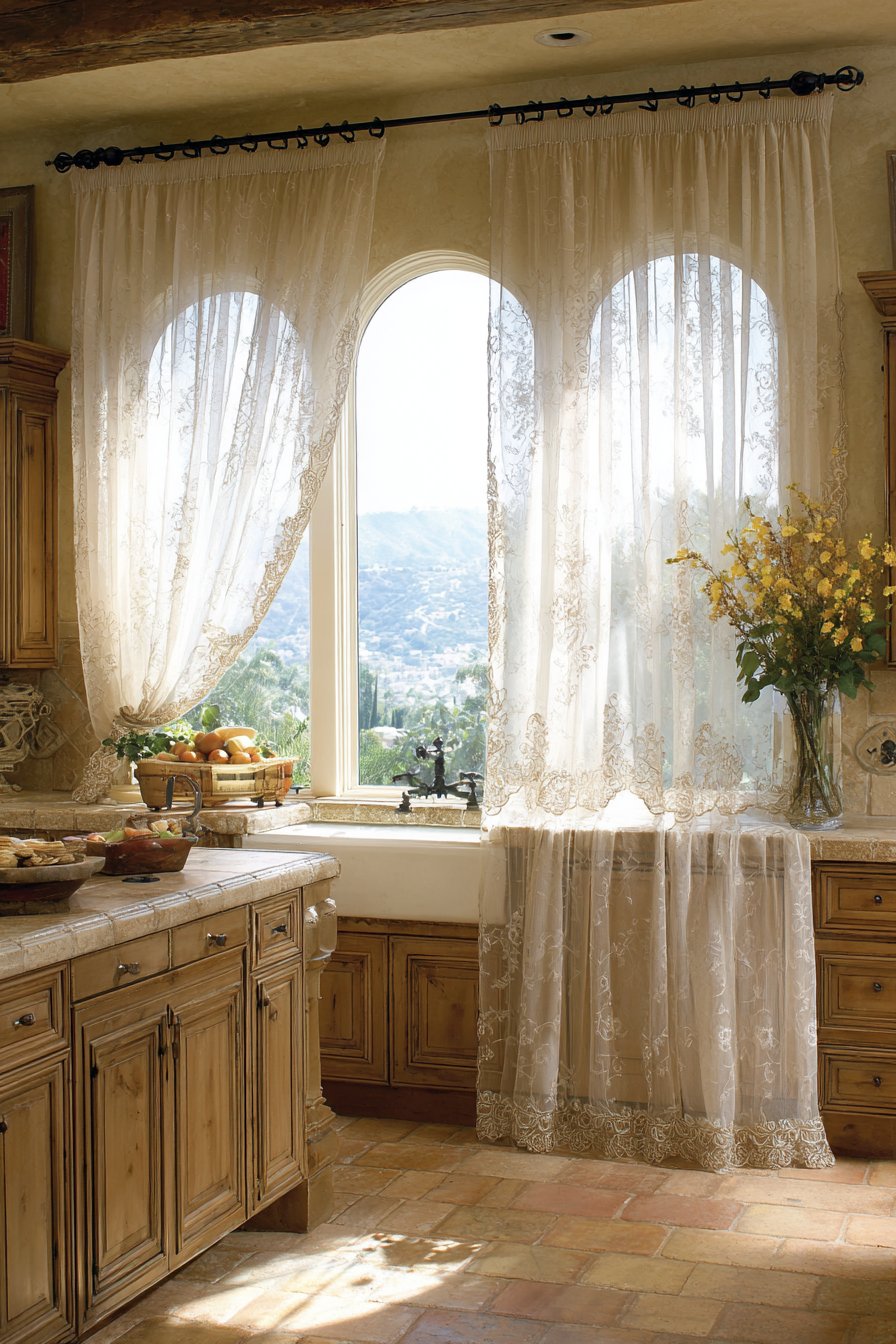
Immerse your kitchen in old-world charm with romantic sheer curtains in ivory featuring delicate embroidered trim along the edges. This kitchen curtain idea transports you to sun-drenched Mediterranean villas where architecture and nature blur through open windows and flowing fabrics.
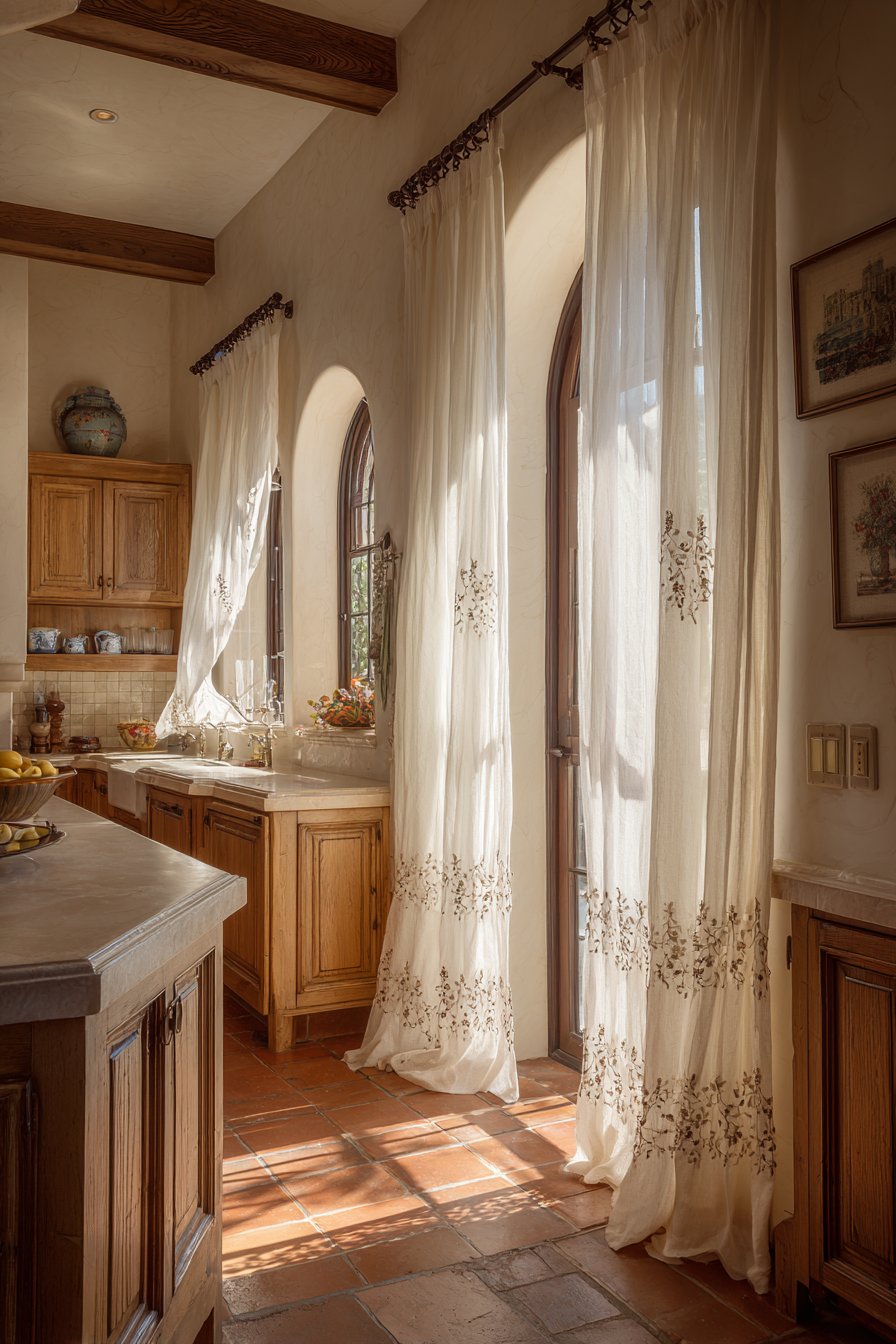
The lightweight panels hang from ornate oil-rubbed bronze curtain rods, creating an elegant frame for arched windows that characterize Mediterranean architecture. The curtains gently diffuse bright afternoon sunlight, creating a soft, luminous atmosphere that seems to glow from within. The handcrafted embroidery details provide artisanal quality and visual interest, demonstrating the Mediterranean appreciation for beauty in everyday objects.
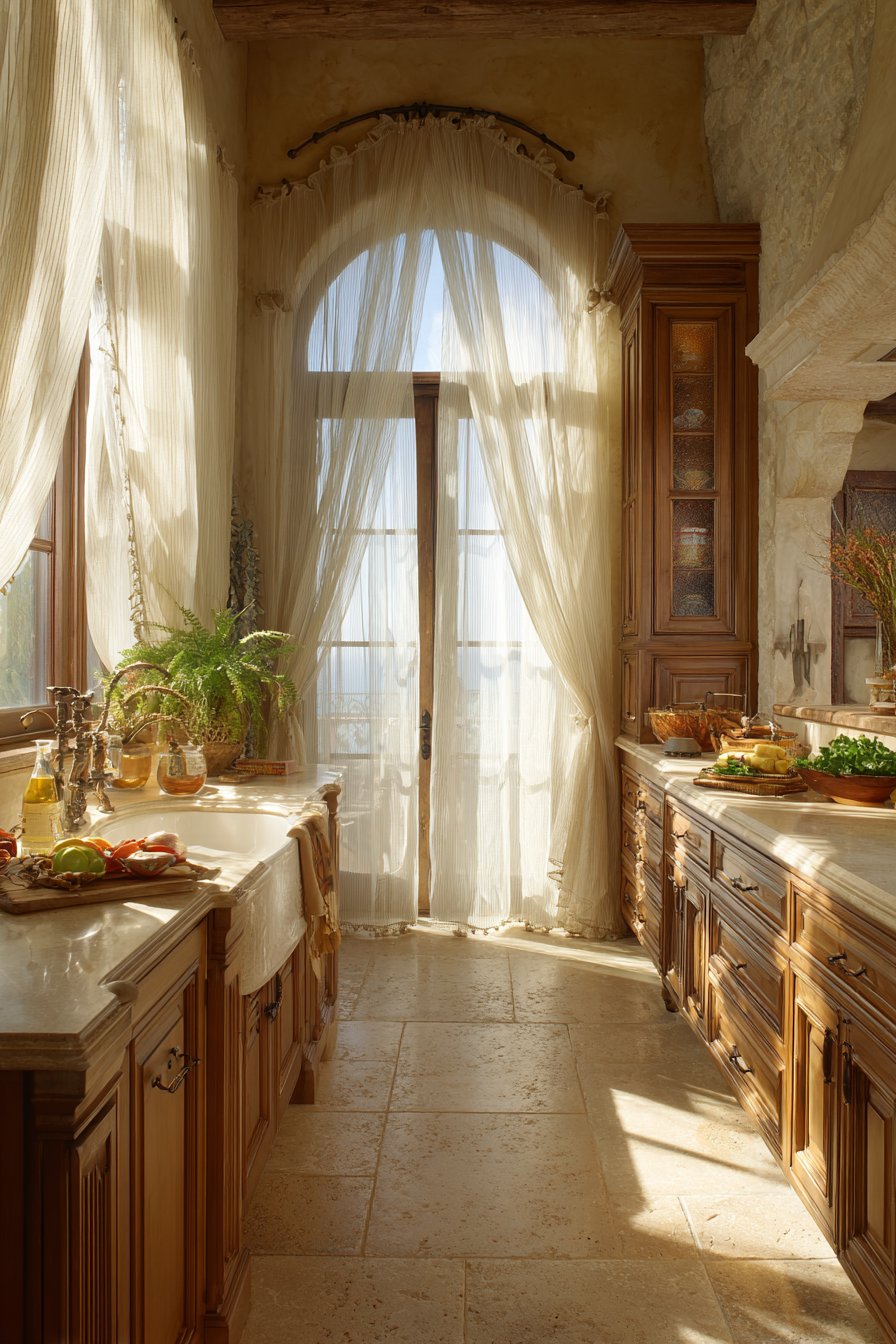
The ivory color choice reflects Mediterranean design’s connection to natural, sun-bleached materials found in coastal regions where strong sunlight gradually fades colors to soft, muted tones. This color provides warmth without heaviness, creating an inviting atmosphere that feels welcoming and comfortable rather than formal or stuffy.
The sheer fabric maintains transparency and connection to the outdoors—a fundamental principle in Mediterranean design where indoor and outdoor spaces flow seamlessly together. The delicate embroidered trim adds just enough decoration to feel special without overwhelming the fabric’s ethereal quality, striking the perfect balance between simplicity and ornamentation.
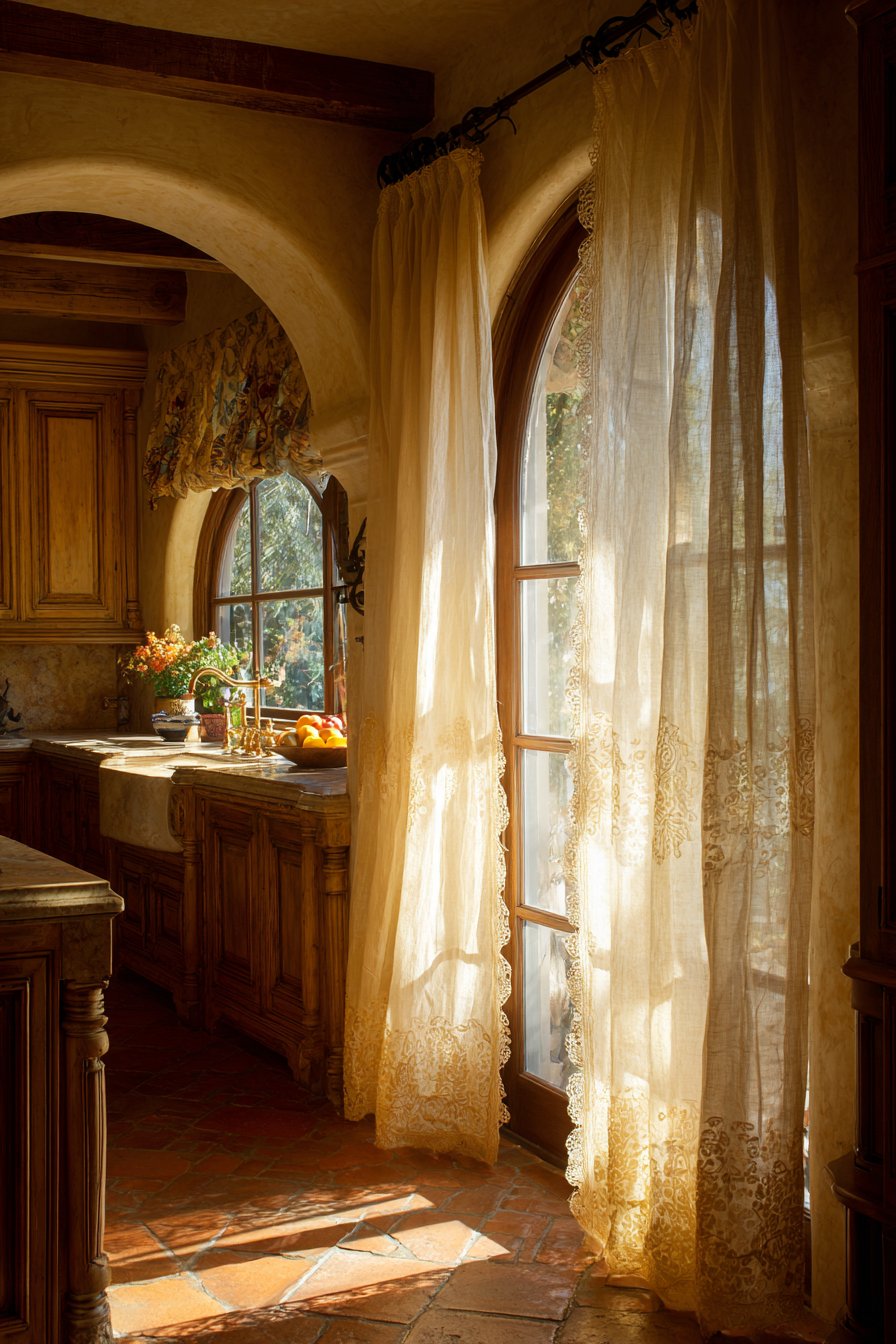
The surrounding design elements complete the Mediterranean aesthetic. Terra cotta tile flooring in warm russet tones grounds the space with earthy authenticity, its slightly irregular surface suggesting handcrafted origins. Warm wood cabinetry in honey or amber tones adds richness and depth, often featuring carved details or rustic hardware that references traditional craftsmanship.
The oil-rubbed bronze curtain rods provide dark metallic contrast against the ivory sheers, their ornate form and aged finish suggesting antique origins and historical continuity. Arched windows create architectural drama while improving natural light distribution and adding visual interest to what might otherwise be standard rectangular openings. Together, these elements create a kitchen that feels transported from a Tuscan hillside or Spanish coastal village.
Key Design Tips:
- Select sheer fabrics with embroidered details to add handcrafted character and artisan quality that distinguishes the treatment from standard purchased curtains.
- Choose oil-rubbed bronze or aged iron hardware with ornate details that reference historical metalworking and provide appropriate visual weight for Mediterranean style.
- Pair romantic curtains with terra cotta or stone flooring to ground the ethereal window treatments with earthy, substantial materials that prevent the space from feeling too delicate.
- Install curtains on arched or curved rods if windows feature rounded tops, allowing the fabric to follow architectural lines rather than fighting against them.
- Embrace natural light diffusion through sheer fabrics that create luminous, glowing atmospheres characteristic of sun-filled Mediterranean spaces.
Why These Kitchen Curtain Ideas Represent the Best Design Solutions
These ten kitchen curtain ideas represent the finest approaches to window treatments because they successfully balance aesthetic appeal with practical functionality—the dual mandate of all successful kitchen design. Each concept addresses specific style preferences while acknowledging the unique demands of kitchen environments including moisture resistance, easy maintenance, appropriate light control, and visual harmony with cabinetry, countertops, and appliances. The diversity of styles ensures that regardless of your kitchen’s architectural character or your personal design preferences, there’s an approach perfectly suited to your space.
The modern sheer linen curtains excel in contemporary kitchens where clean lines, neutral palettes, and sophisticated simplicity define the aesthetic. This treatment maximizes natural light while maintaining privacy, creates visual softness in spaces dominated by hard surfaces, and introduces subtle texture without pattern or color competition. The farmhouse gingham cafe curtains offer unmatched practicality for traditional or country kitchens, providing privacy at counter level while allowing maximum overhead light—essential for task performance at the sink. Their washable cotton construction and charming pattern bring nostalgia and warmth while remaining thoroughly functional for daily kitchen life.
The Scandinavian floor-to-ceiling sheers demonstrate how minimalist window treatments can maximize both natural light and perceived ceiling height—crucial in northern climates or rooms with limited windows. The coastal striped linen curtains transport kitchens to seaside retreats through color and pattern while maintaining the casual, relaxed atmosphere that makes coastal design perennially popular. The traditional layered treatments provide unparalleled versatility and sophistication, offering precise light control through Roman shades while adding decorative impact through patterned valances—ideal for formal or classic kitchens where elegance matters.
Contemporary roller shades represent the pinnacle of minimalist functionality, integrating seamlessly into modern kitchens with clean lines and unobtrusive presence. Their inside-mount installation and motorization options provide convenience and architectural emphasis impossible with traditional curtains. Rustic burlap cafe curtains celebrate authentic materials and handcrafted character, bringing warmth and texture to farmhouse or country kitchens while honoring historical design traditions. The space-smart solutions for compact kitchens prove that size limitations need not mean sacrificing style, demonstrating how thoughtful curtain selection and installation strategies can actually enhance small spaces rather than overwhelm them.
Transitional linen blend curtains offer remarkable versatility for homeowners who appreciate both traditional and contemporary design elements, creating window treatments that adapt to evolving tastes and coordinate with diverse furnishing styles. Finally, Mediterranean embroidered sheers transport kitchens to sun-drenched villas through romantic fabric, artisan details, and luminous light quality, creating spaces that feel exotic yet welcoming. Each of these approaches succeeds because it addresses both the practical demands of kitchen window treatments and the aesthetic desires of homeowners seeking beautiful, functional spaces.
The best kitchen curtain ideas share several common characteristics regardless of specific style. They provide appropriate light control for kitchen tasks while offering privacy when needed. They feature washable or easily cleanable fabrics suited to kitchen environments where cooking residue, moisture, and odors present challenges. They coordinate with existing kitchen elements including cabinetry finish, countertop material, hardware finishes, and overall color schemes. They respect the room’s proportions, neither overwhelming small spaces nor appearing insufficient in large, open kitchens with expansive windows.
These curtain ideas also demonstrate sophisticated understanding of how fabric weight, opacity, and texture impact both functionality and atmosphere. Sheer fabrics create luminous, airy spaces while providing daytime privacy through light diffusion rather than complete blockage. Heavier linens and blends offer more substantial light control and greater visual weight, appropriate for larger windows or rooms where curtains need to balance significant architectural elements. Textured fabrics add dimension and interest without pattern, allowing them to coordinate easily with varied design schemes. Unlined curtains maximize light transmission and create casual elegance, while lined treatments provide superior light blockage and create more formal, polished appearances.
The mounting and hardware selections in these ideas further demonstrate design sophistication. Ceiling-mounted tracks create clean, contemporary lines and maximize perceived ceiling height. Decorative rods with finials add traditional character and create opportunities to introduce metal finishes that coordinate with kitchen fixtures. Inside-mount installations create streamlined, architectural appearances ideal for modern spaces, while outside mounts make windows appear larger—valuable in rooms where window size feels inadequate for the space. The variety of hardware styles, from brushed nickel to oil-rubbed bronze to wrought iron, ensures compatibility with diverse kitchen aesthetics from industrial modern to vintage farmhouse to Mediterranean romantic.
Color selections across these curtain ideas reveal thoughtful understanding of how hue impacts both practical function and emotional atmosphere. White and ivory curtains maximize light reflection, making kitchens feel brighter, larger, and more open—especially valuable in spaces with limited natural light or northern exposures. Soft greys provide contemporary neutrality with subtle warmth, coordinating effortlessly with stainless steel appliances and cool-toned stone countertops. Warm beiges and natural linens introduce organic warmth that complements wood cabinetry and creates welcoming, comfortable atmospheres. Colored curtains like soft blues or sage greens introduce personality and establish color schemes that can be echoed in accessories, dishware, or small appliances throughout the kitchen.
Pattern usage in these kitchen curtain ideas demonstrates restraint and intentionality. Stripes in the coastal design provide directional interest and nautical reference without overwhelming the space. Gingham in the farmhouse cafe curtains offers nostalgic charm at a scale appropriate for half-curtain treatments. Floral patterns in the traditional layered treatment appear only in the stationary valance, preventing pattern fatigue while providing decorative impact. Embroidered details in the Mediterranean sheers add handcrafted character without the business of overall patterned fabric. This judicious approach to pattern prevents visual chaos in kitchens where cabinets, countertops, backsplashes, and flooring already compete for attention.
The length and fullness specifications implicit in these designs further reveal professional design thinking. Floor-to-ceiling treatments create drama and elegance while making rooms feel taller. Cafe curtains respect the practical reality that kitchen windows often sit above counters or sinks where floor-length treatments would be impractical or even hazardous near water sources. Curtains that slightly pool at windowsills introduce luxurious casualness appropriate for relaxed, comfortable design aesthetics. Treatments mounted inside window frames create neat, tailored appearances that don’t extend beyond the architectural opening, while those mounted outside and extending beyond the frame make windows appear larger—valuable techniques for manipulating perceived proportions.
These kitchen curtain ideas succeed because they’re rooted in fundamental design principles including balance, proportion, rhythm, emphasis, and unity. They balance soft textiles against hard surfaces, creating contrast that prevents kitchens from feeling cold or institutional. They respect proportional relationships between window size and treatment scale, avoiding curtains too small to provide adequate coverage or too large to overwhelm available wall space. They create visual rhythm through repeated elements like multiple windows treated identically, establishing pattern and predictability that reads as intentional design rather than random decoration.
Each treatment creates appropriate emphasis, drawing attention to windows as architectural features worth highlighting rather than hiding or ignoring. Whether through beautiful fabric, interesting hardware, or thoughtful color selection, these curtains announce that windows deserve design consideration equal to cabinetry, lighting, or flooring. Finally, these ideas create unity by coordinating curtain selections with surrounding elements including wall color, cabinet finish, countertop material, and decorative accessories, ensuring window treatments enhance rather than conflict with overall kitchen design.
The enduring appeal of these kitchen curtain ideas The enduring appeal of these kitchen curtain ideas lies in their ability to transcend temporary trends while remaining thoroughly contemporary. Unlike fleeting design fads that quickly become dated, these approaches draw from established design traditions—modern, farmhouse, Scandinavian, coastal, traditional, contemporary, rustic, transitional, and Mediterranean—that have proven their staying power across decades. Each style has evolved and adapted to contemporary lifestyles while maintaining core principles that resonate with homeowners seeking authenticity, beauty, and functionality in their kitchen spaces.
The versatility of these curtain concepts extends beyond style considerations to practical adaptability across diverse kitchen configurations. Whether your kitchen features a single large window overlooking a backyard, multiple small windows along one wall, a bay window creating an architectural focal point, or a window positioned above the sink, these ideas provide frameworks that can be adjusted to suit your specific circumstances. The cafe curtain approach works beautifully for sink windows regardless of kitchen style, while floor-to-ceiling treatments adapt to windows of various widths and heights. Roller shades suit kitchens with numerous windows requiring uniform treatment, while layered approaches excel in spaces where a single prominent window deserves special attention.
These kitchen curtain ideas also acknowledge the reality of varied budget constraints facing homeowners. Simple solutions like tab-top linen panels or basic cafe curtains can be executed affordably while still delivering significant aesthetic impact and functional performance. More elaborate treatments such as layered Roman shades with coordinating valances or custom embroidered sheers represent larger investments but provide corresponding returns in visual sophistication and design complexity. The range of options ensures that regardless of renovation budget, there’s an approach that delivers value and beauty without requiring compromise on either style or quality.
The environmental and health considerations increasingly important to modern homeowners find expression in several of these curtain ideas. Natural fiber fabrics including organic cotton, linen, and linen blends offer sustainability advantages over synthetic materials while providing superior breathability and timeless aesthetic appeal. These materials age gracefully, developing character rather than simply wearing out, and can often be composted at end-of-life rather than languishing in landfills. The preference for natural, minimally processed fabrics also aligns with growing awareness of indoor air quality and the desire to minimize off-gassing from synthetic treatments and chemical finishes in spaces where food is prepared and families gather.
Light quality represents another dimension where these kitchen curtain ideas demonstrate sophisticated understanding of design’s impact on daily living. Natural daylight affects mood, energy levels, and even circadian rhythms, making window treatment selection about more than mere decoration. Sheer fabrics that filter rather than block light maintain connection to natural day-night cycles while preventing harsh glare that causes eye strain during food preparation. Adjustable treatments like Roman shades or roller blinds allow precise light control throughout the day—raising them fully during darker morning hours, lowering partially to reduce midday glare, and adjusting again as afternoon light shifts direction and intensity.
The practical maintenance considerations inherent in kitchen environments receive appropriate attention in these curtain ideas. Kitchens generate cooking odors, grease particles, moisture from boiling water and dishwashing, and general accumulation of airborne particles that can soil window treatments over time. The emphasis on washable cotton fabrics, easily cleaned linen, and moisture-resistant materials acknowledges these realities without sacrificing aesthetic appeal. The recommendation for unlined treatments in some designs reflects understanding that heavily interlined curtains can trap odors and prove difficult to launder, while simpler constructions maintain freshness through regular washing.
Hardware selection across these kitchen curtain ideas demonstrates how seemingly minor details significantly impact overall design success. The finish and style of curtain rods, finials, rings, and mounting brackets provide opportunities to coordinate with other kitchen metals including faucet finish, cabinet hardware, light fixture metals, and appliance surfaces. Consistent metal finish throughout a kitchen creates visual cohesion and suggests intentional, professionally considered design. Conversely, mixed metals can create visual confusion unless carefully orchestrated using design principles like establishing one dominant finish with others serving as intentional accents.
The installation methods and mounting strategies implicit in these ideas reveal technical knowledge that separates amateur from professional results. Understanding when to mount curtains inside versus outside the window frame, how high above the window to position rods for optimal visual impact, whether to extend rods beyond the window frame to allow curtains to stack completely clear when opened, and how to accommodate architectural quirks like uneven walls or out-of-square windows—these technical considerations determine whether curtain treatments enhance or detract from kitchen aesthetics.
Color psychology plays a subtle but significant role in why these kitchen curtain ideas prove so effective. White and ivory curtains create feelings of cleanliness, freshness, and spaciousness—psychological associations particularly valuable in food preparation areas where hygiene matters. Soft blues evoke calm and serenity while referencing water and sky, creating peaceful atmospheres that make kitchen time more enjoyable. Warm beiges and natural linen tones feel welcoming and comfortable, encouraging family gathering and extended conversations around the kitchen island. Grey provides contemporary sophistication while maintaining the neutral restraint increasingly popular in modern design aesthetics.
The seasonal adaptability of these kitchen curtain ideas provides another layer of practical value. Sheer curtains welcome winter sunlight to warm spaces naturally while preventing heat loss through windows on cold nights. During summer months, the same sheers diffuse intense sunlight that might otherwise overheat kitchens and fade cabinetry finishes. Layered treatments offer ultimate flexibility—removing or replacing seasonal valances updates the look, while adjustable shades address changing light conditions and privacy needs throughout the year. Some homeowners maintain two sets of cafe curtains, alternating between lighter weights for summer and heavier fabrics for winter, refreshing the kitchen’s appearance while addressing seasonal practical requirements.
The integration of these curtain ideas with overall kitchen design philosophies demonstrates holistic thinking. In open-concept homes where kitchens flow into dining and living areas, window treatments must coordinate with adjacent spaces while maintaining distinct kitchen functionality. Curtain selections that echo colors, materials, or styles from nearby rooms create visual flow, while differences in weight, opacity, or mounting style acknowledge distinct functional requirements. This sophisticated approach prevents the visual jarring that occurs when adjacent spaces appear completely disconnected or when kitchen curtains seem to ignore surrounding design context.
Smart home technology integration represents an emerging consideration in kitchen curtain selection, particularly for motorized treatments like roller shades. Voice-activated or app-controlled operation provides convenience when hands are full with cooking tasks, while programmable schedules can automatically adjust window treatments based on time of day, sun position, or even weather conditions. Motion sensors might raise curtains when someone enters the kitchen in the morning, welcoming the day with natural light. These technological enhancements, while not essential, represent how traditional window treatment concepts adapt to contemporary lifestyle expectations and capabilities.
The acoustic properties of different curtain treatments, while rarely discussed, impact kitchen comfort levels. Soft textile treatments absorb sound, reducing echo and reverberation in kitchens featuring hard surfaces like tile, stone, and stainless steel. This proves particularly valuable in open-concept spaces where kitchen noise can disrupt adjacent living areas. Heavier, fuller curtains provide more acoustic dampening than minimal treatments, though the difference is subtle rather than dramatic. Nonetheless, the cumulative effect of multiple sound-absorbing elements including curtains, rugs, and upholstered seating creates noticeably more comfortable acoustic environments than spaces featuring only hard, reflective surfaces.
Privacy considerations vary dramatically based on home location and window placement, influencing appropriate curtain selection. Urban kitchens with windows facing neighboring buildings require treatments that maintain daytime privacy while maximizing light—sheers, cafe curtains, or top-down/bottom-up cellular shades excel in these circumstances. Rural or suburban homes with private backyard views might prioritize unobstructed sight lines and maximum light over privacy, suggesting minimal treatments or even forgoing curtains entirely on certain windows. Understanding these site-specific variables ensures curtain selections address actual functional requirements rather than following generic recommendations inappropriate for particular situations.
The resale value implications of kitchen design choices, including window treatments, deserve consideration for homeowners who may eventually sell their properties. Neutral, broadly appealing curtain selections increase potential buyer acceptance, while highly personalized or trend-driven choices might alienate some prospective purchasers. However, this consideration must be balanced against the reality that homeowners should enjoy their living spaces rather than designing purely for hypothetical future buyers. The kitchen curtain ideas presented here generally strike appropriate balances—offering personality and style while maintaining sufficient neutrality and timelessness to appeal broadly should resale become relevant.
The relationship between kitchen curtain treatments and energy efficiency represents another practical dimension worth considering. Window treatments can reduce heat loss during cold months and heat gain during warm periods, potentially lowering heating and cooling costs. Cellular or honeycomb shades provide the best insulation values, while heavy lined curtains also offer meaningful thermal performance. Even simple linen or cotton curtains provide modest insulation by creating dead air space between fabric and window glass. In climates with extreme temperatures or homes with poor window quality, energy-efficient window treatments can deliver utility cost savings that offset their initial investment over time.
Safety considerations, particularly in households with young children or pets, influence appropriate curtain selection. Corded window treatments pose strangulation hazards, prompting many manufacturers to redesign products and many homeowners to choose cordless alternatives like motorized shades, cordless cellular shades, or simple curtain panels that pull aside rather than raising and lowering on cord systems. Cafe curtains mounted on fixed rods eliminate dangling cords entirely while providing coverage at the window’s lower portion where children might access cords on full-length treatments. These safety considerations need not compromise aesthetic appeal, as modern cordless options include nearly every style and fabric available in traditional corded versions.
The historical and cultural contexts underlying these various curtain styles add depth and meaning to design choices. Understanding that cafe curtains originated in French bistros where privacy was needed at table level while allowing passersby to see into the establishment adds romantic context to their use. Knowing that Scandinavian design principles emerged from climatic necessity in regions with limited winter daylight explains the emphasis on white, light-maximizing interiors. Recognizing Mediterranean design’s connection to indoor-outdoor living in warm climates clarifies why sheer, flowing fabrics appear throughout the style. These cultural and historical connections transform curtain selection from purely functional decisions into opportunities to express values, interests, and aesthetic affinities.
The impact of architectural style on appropriate curtain selection cannot be overstated. Victorian or craftsman homes with period-appropriate details call for window treatments that honor historical character while incorporating modern functionality and easy-care materials. Mid-century modern homes demand clean-lined treatments that respect original minimalist intentions. Contemporary architecture with floor-to-ceiling windows requires different solutions than traditional homes with modest, punched window openings. The most successful kitchen curtain selections acknowledge and complement architectural context rather than fighting against it or ignoring it entirely, creating harmony between building and furnishings.
Conclusion:
As we’ve explored these ten distinctive kitchen curtain ideas, several key principles emerge that transcend specific styles and unite successful window treatments across all design aesthetics. First and foremost, kitchen curtains must balance aesthetic beauty with practical functionality—they should enhance your space visually while addressing real-world needs including light control, privacy, easy maintenance, and moisture resistance. The most satisfying window treatment solutions are those that you appreciate visually while also serving your daily routines effectively, never forcing you to choose between appearance and utility.
Second, successful kitchen curtains coordinate thoughtfully with surrounding design elements rather than existing in isolation. Consider your cabinet finish, countertop material, backsplash tile, wall color, and hardware finishes when selecting curtain fabric, color, and mounting hardware. Visual harmony created through color coordination, material compatibility, and stylistic consistency makes kitchens feel professionally designed and intentionally composed rather than randomly decorated. This doesn’t mean everything must match exactly—in fact, too-perfect matching can appear rigid and uninspired—but rather that conscious relationships should exist between various design elements.
Third, don’t underestimate the importance of proper measurement, quality hardware, and professional installation. Even the most beautiful fabric hung incorrectly will disappoint, while modest fabric installed with precision and appropriate hardware can exceed expectations. Take time to measure carefully, accounting for desired curtain length, fullness, and stacking space when drawn. Invest in quality rods, rings, and mounting brackets that support fabric weight and withstand daily use. If installation exceeds your skill level or available time, professional installation typically costs less than the mistakes resulting from improper DIY attempts.
Fourth, embrace the opportunity window treatments provide to refresh your kitchen’s appearance without major renovation investment. Changing curtains represents one of the most cost-effective ways to update kitchen aesthetics, modify light quality, or shift the overall mood and style of the space. Keep this in mind if you’re hesitant to commit to a bold color or pattern—window treatments are relatively easy and inexpensive to change compared to cabinetry, countertops, or flooring. This flexibility allows for more adventurous design choices than permanent fixtures might warrant.
Finally, trust your personal preferences and lifestyle requirements over rigid design rules or passing trends. While design principles provide valuable guidance, you’re the person living with these curtains daily. If you strongly prefer light-blocking curtains despite design advice favoring sheers, choose what makes you comfortable. If you love a particular fabric that requires special care, accept the maintenance commitment if the visual reward justifies it. The most successful kitchen designs are those that reflect inhabitants’ genuine preferences and support their actual lifestyles rather than striving to achieve magazine-perfect appearances that feel inauthentic or impractical.
Your kitchen curtains tell a story about who you are, how you live, and what you value in your home environment. Whether you choose modern minimalism that celebrates clean lines and uncluttered surfaces, romantic Mediterranean sheers that transport you to sun-drenched coastal villages, or practical farmhouse cafe curtains that honor tradition while serving contemporary needs, your window treatment selection contributes meaningfully to your kitchen’s overall character and your daily experience within the space.
As you consider implementing these kitchen curtain ideas in your own home, remember that the goal isn’t perfection but rather creating a space that welcomes you, supports your culinary activities, and brings you joy each time you enter. Start with the ideas that most resonate with your existing kitchen style and your personal aesthetic preferences. Visit fabric stores to touch materials and see colors in person rather than relying solely on online images. Order samples when possible to view fabrics in your actual kitchen lighting at different times of day. Take measurements carefully and consider how various curtain lengths and mounting heights will impact your space’s proportions.
Don’t hesitate to combine elements from different ideas to create a hybrid approach uniquely suited to your kitchen. Perhaps you love the fabric and color from the coastal striped curtains but prefer the cafe-style mounting of the farmhouse gingham treatment. Maybe the Mediterranean embroidered details appeal to you but in a more modern colorway than traditional ivory. Design rules exist to guide rather than constrain—thoughtful rule-breaking often produces the most interesting and personally meaningful results.
Finally, view your kitchen curtain project as an opportunity for creative expression and home improvement rather than an intimidating obligation. The process of selecting fabrics, choosing hardware, and installing treatments can be enjoyable when approached with curiosity and patience rather than anxiety about making wrong choices. Engage family members in the decision-making process, particularly if the kitchen serves as your home’s central gathering space. Their input might reveal preferences or functional requirements you hadn’t considered while building investment in the outcome.
Your kitchen awaits transformation through these thoughtful window treatment approaches. Whether you implement one of these ideas exactly as described or use them as inspiration for your own creative interpretation, you now possess the knowledge, principles, and practical guidance needed to select and install kitchen curtains that enhance your space’s beauty, functionality, and personal meaning. The perfect kitchen curtains are those that make you smile when you enter the room, support your daily activities effectively, and reflect your unique style and preferences. Begin your journey toward that ideal today, confident that thoughtful window treatment selection can transform your kitchen from merely functional to genuinely inspiring.
