


Creating a harmonious living space that accommodates both adults and children requires thoughtful planning and creative design solutions. Modern families increasingly seek ways to integrate kids’ play areas into their main living rooms without sacrificing style or functionality. The challenge lies in creating zones that encourage imaginative play and development while maintaining the sophisticated aesthetic adults desire. This balance is achievable through strategic furniture placement, smart storage solutions, and cohesive color palettes that unite both purposes seamlessly.
The living room serves as the heart of family life, where parents can supervise children while maintaining their own comfort and style preferences. Integrating a dedicated play area within this space promotes family togetherness and allows caregivers to engage in their activities while keeping watchful eyes on little ones. Rather than relegating children’s play to separate rooms, modern interior design embraces the concept of shared family spaces that evolve with daily needs.
This comprehensive guide explores ten distinct approaches to creating kids’ play areas within living rooms, each offering unique solutions for different home styles, spatial constraints, and family dynamics. From Scandinavian minimalism to farmhouse charm, contemporary built-ins to Montessori-inspired organization, these designs demonstrate how thoughtful integration of child-friendly elements can enhance rather than diminish your living space’s overall appeal. Each concept provides practical insights into materials, layout strategies, and design principles that make family living both beautiful and functional.
1. Neutral Geometric Comfort Zone
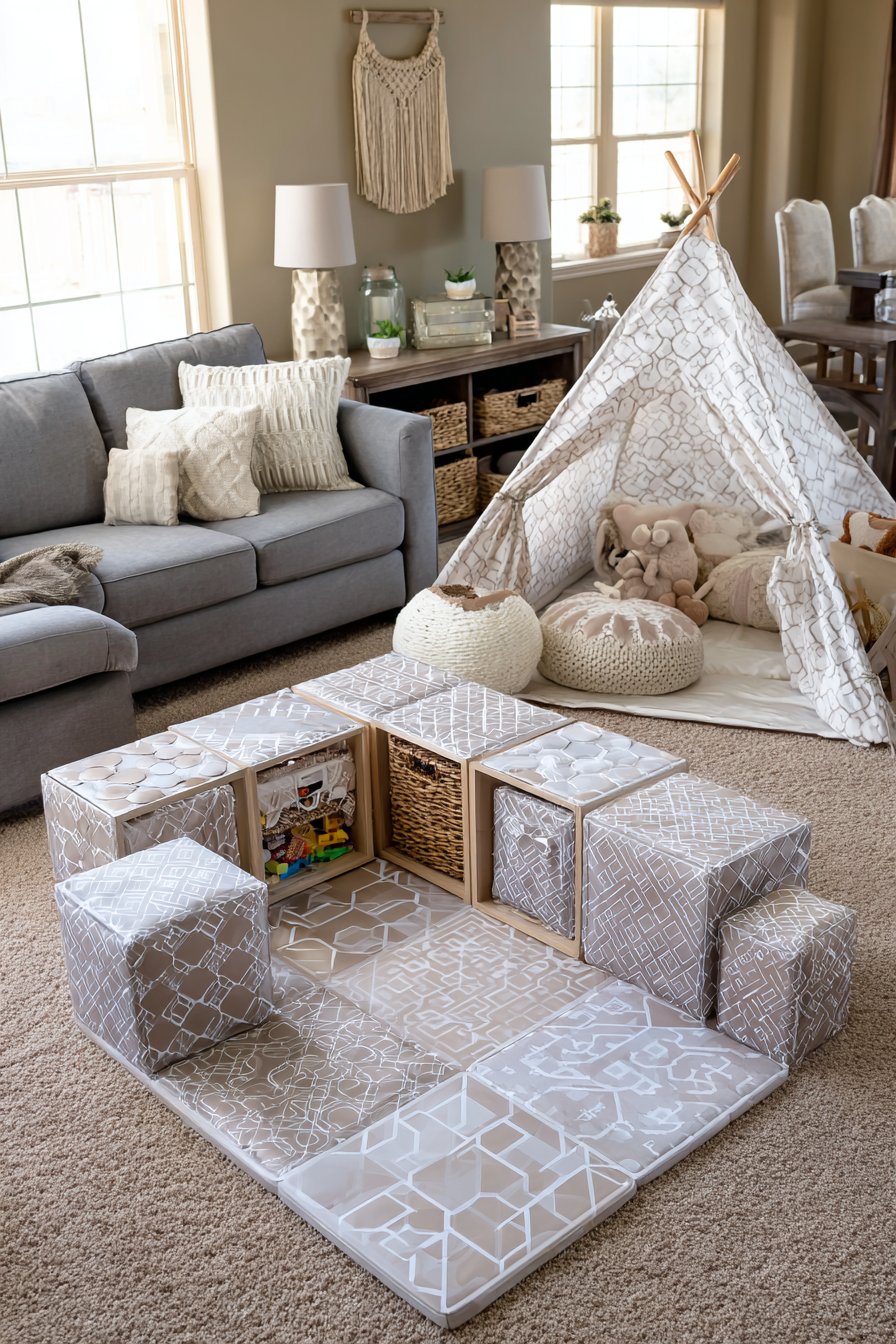
A thoughtfully designed play area featuring soft foam play mats in neutral tones brings safety and style together effortlessly. The geometric patterns on these protective surfaces add visual interest without overwhelming the space’s sophisticated palette.
Positioned strategically in a corner near windows, this setup maximizes natural light exposure, creating an inviting environment for children’s activities. The foam material provides cushioning for toddlers learning to walk while protecting hardwood floors from inevitable spills and impacts.
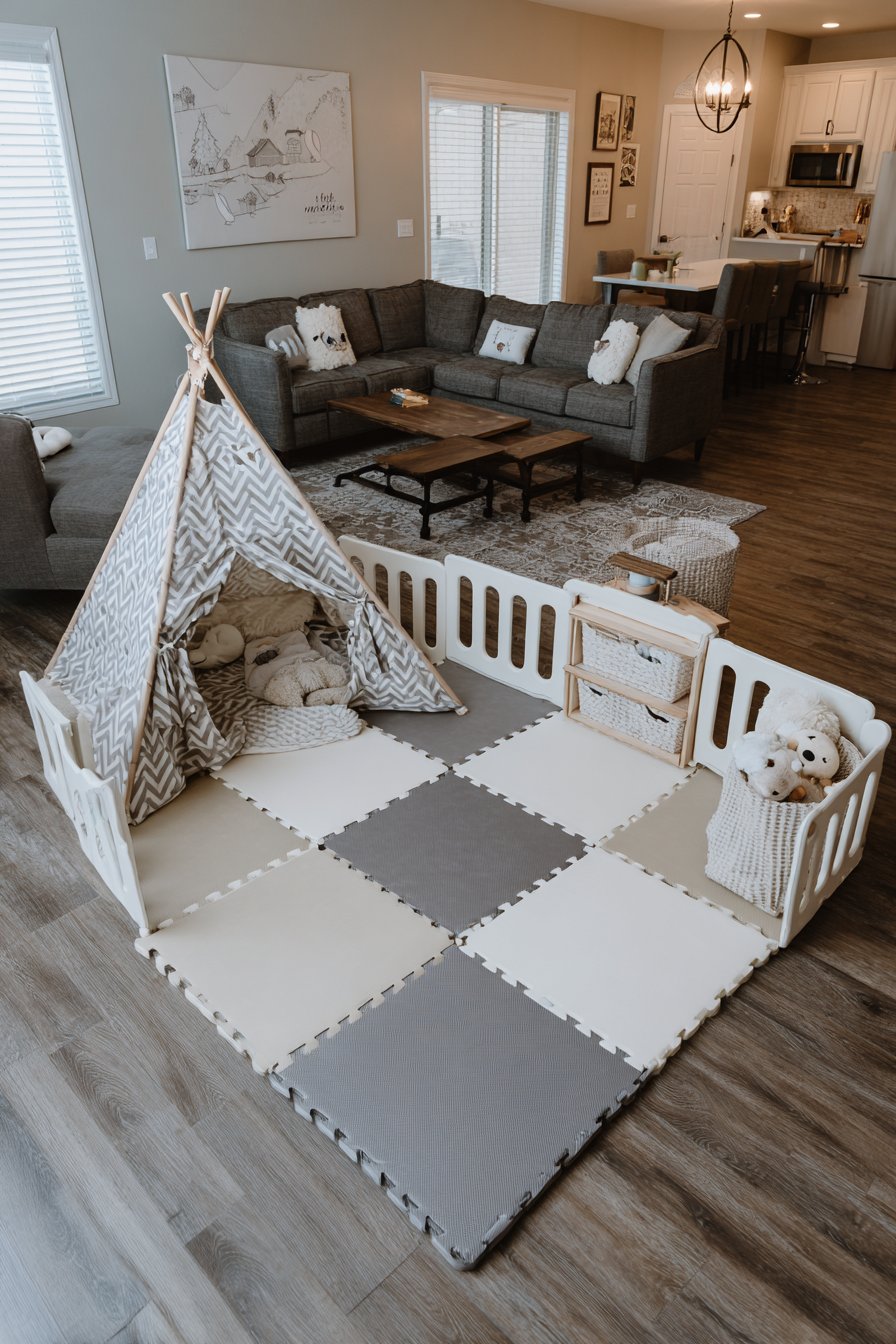
Low wooden storage cubes serve dual purposes as organizational tools and design elements that complement adult furniture aesthetics. These cubes, fitted with fabric bins in coordinating neutral shades, keep toys accessible yet contained.
Children can independently retrieve and return items, fostering organizational skills from an early age. The storage solution’s low profile maintains sightlines across the room, allowing parents to supervise from the grey sofa positioned nearby.
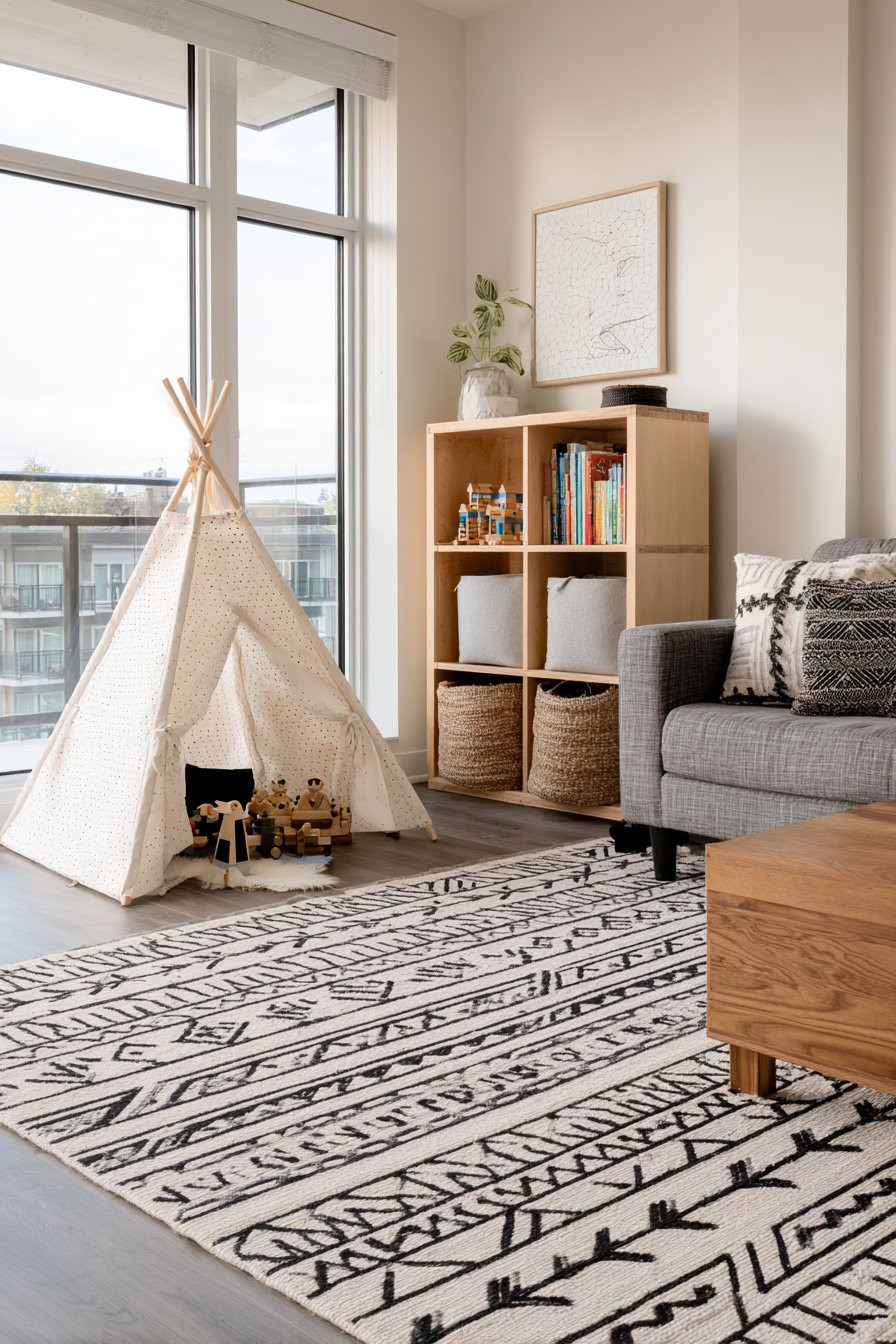
The small reading tent with plush cushions creates a cozy retreat within the larger play zone. This intimate space encourages quiet activities and provides children with a sense of ownership over their designated area. The tent’s neutral fabric harmonizes with the room’s color scheme, demonstrating how child-friendly elements need not clash with adult decor. Surrounding furniture maintains its sophisticated presence, with the coffee table and seating arrangement proving that family functionality and elegant design coexist beautifully.
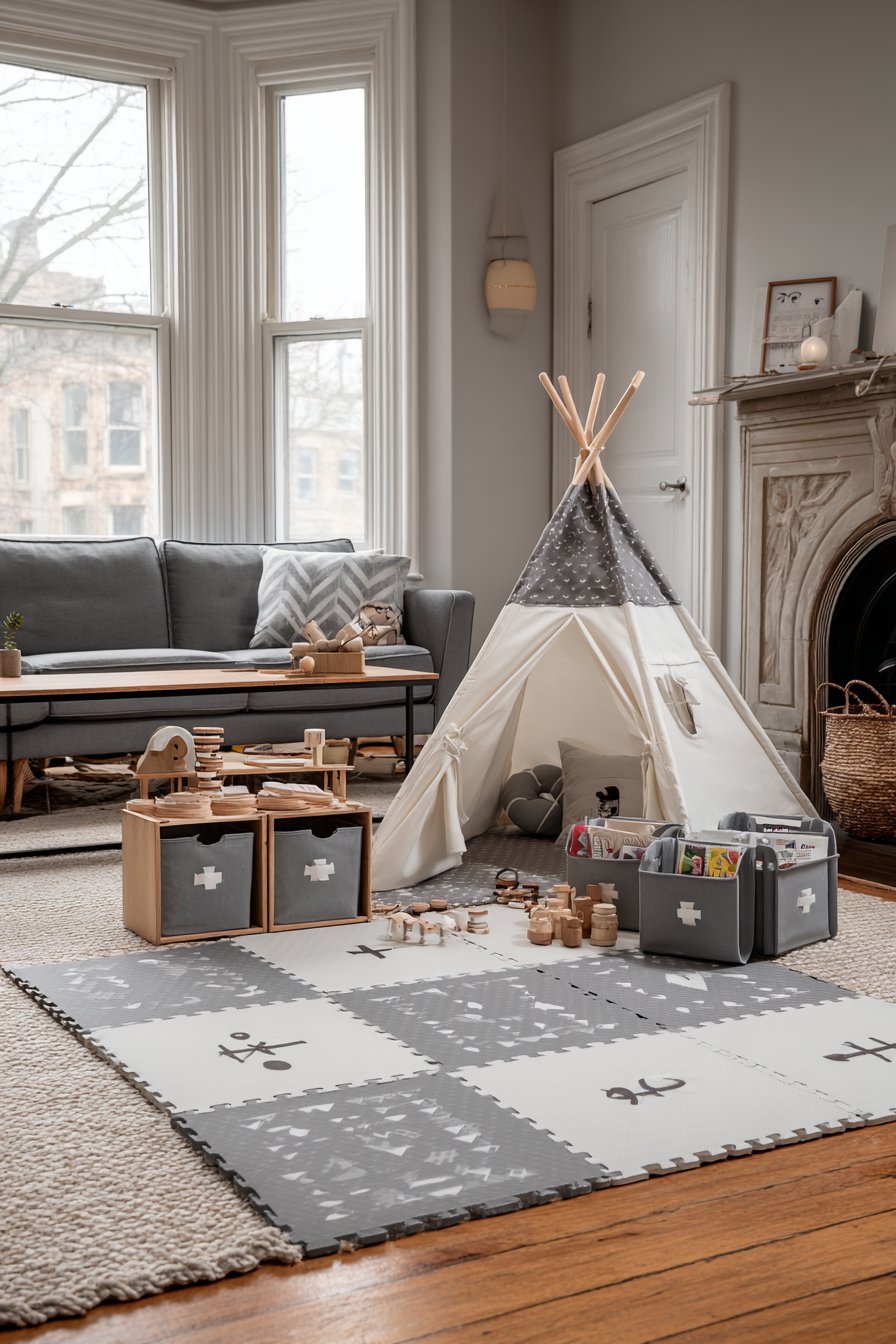
Key Design Tips:
- Position play mats near natural light sources to create bright, cheerful play zones
- Select foam materials with easy-clean surfaces to maintain hygiene with minimal effort
- Choose storage cubes at heights children can reach independently, typically 24-30 inches
- Use fabric bins in neutral colors to conceal visual clutter while maintaining accessibility
- Incorporate a small tent or canopy to define personal space within the larger room
- Maintain clear pathways between play area and adult furniture for easy supervision
2. Modern Minimalist Integration
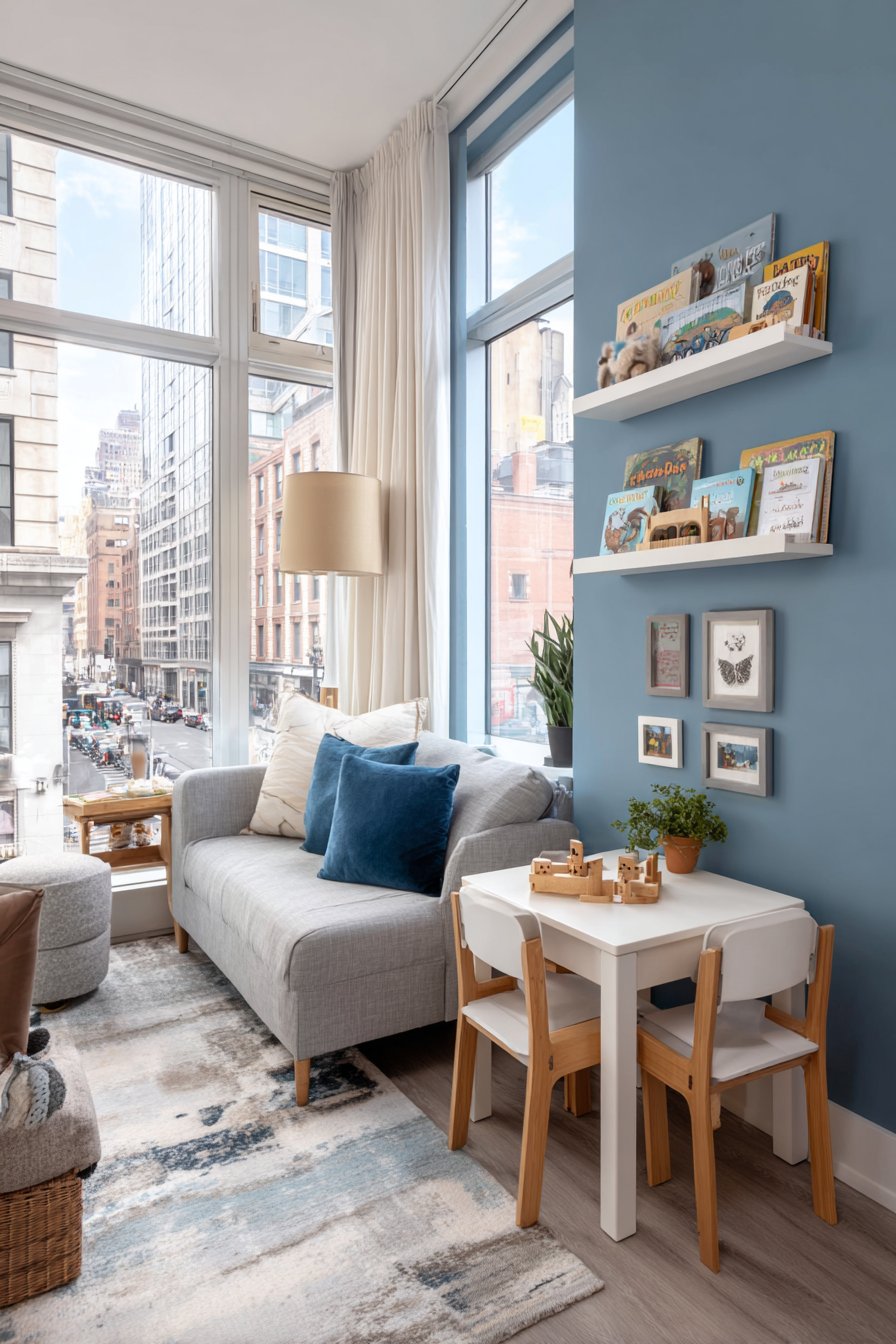
Wall-mounted floating shelves positioned at child height transform vertical space into functional storage that keeps floor areas open and uncluttered. These shelves display picture books with covers facing outward, turning educational materials into colorful wall art.
Educational toys arranged thoughtfully on accessible shelves encourage children to engage with learning materials independently. The mounting height considers toddler reach while preventing the need for climbing, addressing both accessibility and safety concerns.
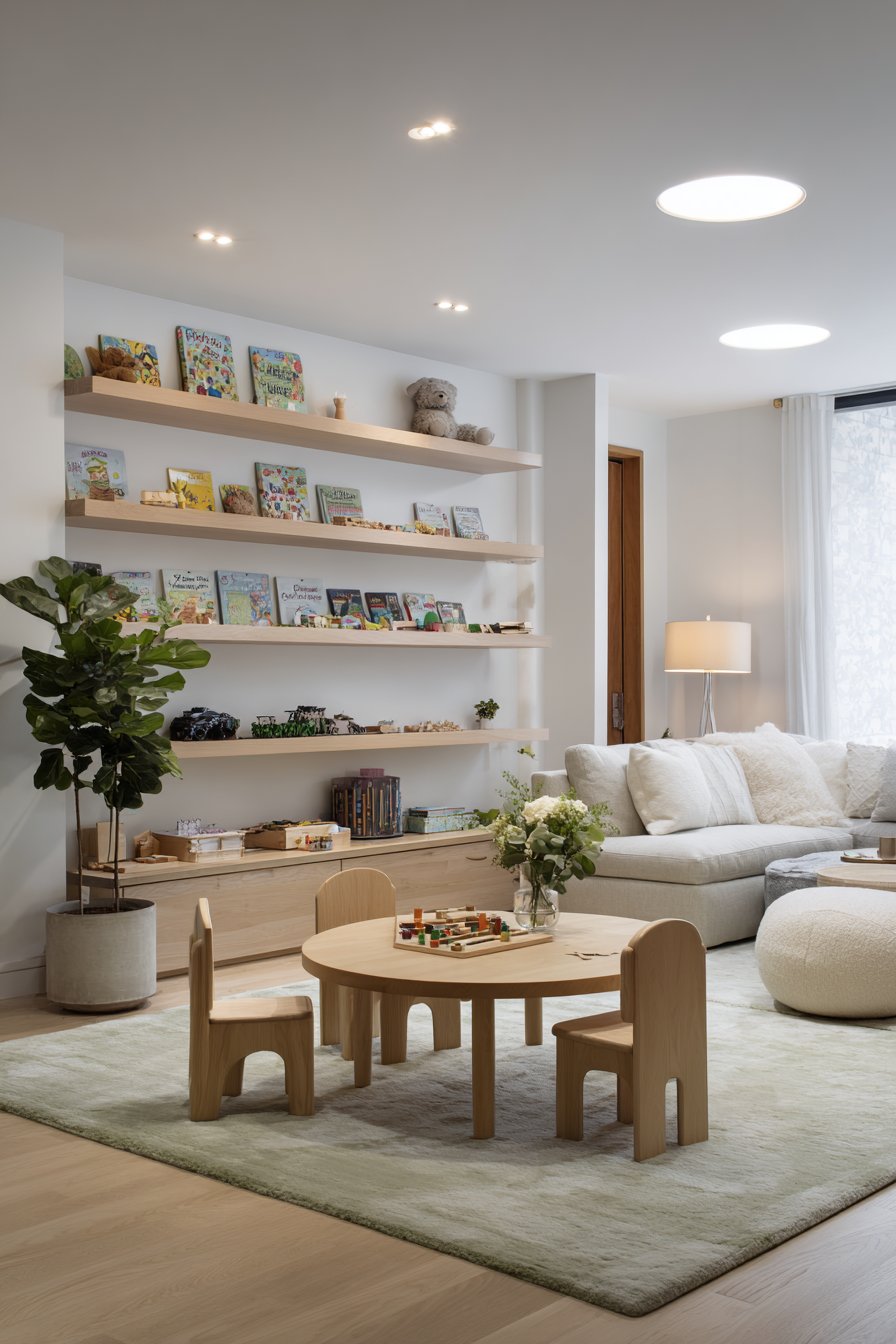
A plush area rug in muted colors creates visual boundaries that define the play zone without physical barriers. This soft surface provides comfort for floor-based activities while protecting children from hard flooring impacts.
The rug’s subdued tones coordinate with the living room’s contemporary furniture, creating visual continuity throughout the space. Small wooden activity tables paired with appropriately sized toddler chairs offer dedicated surfaces for puzzles, crafts, and snacks.
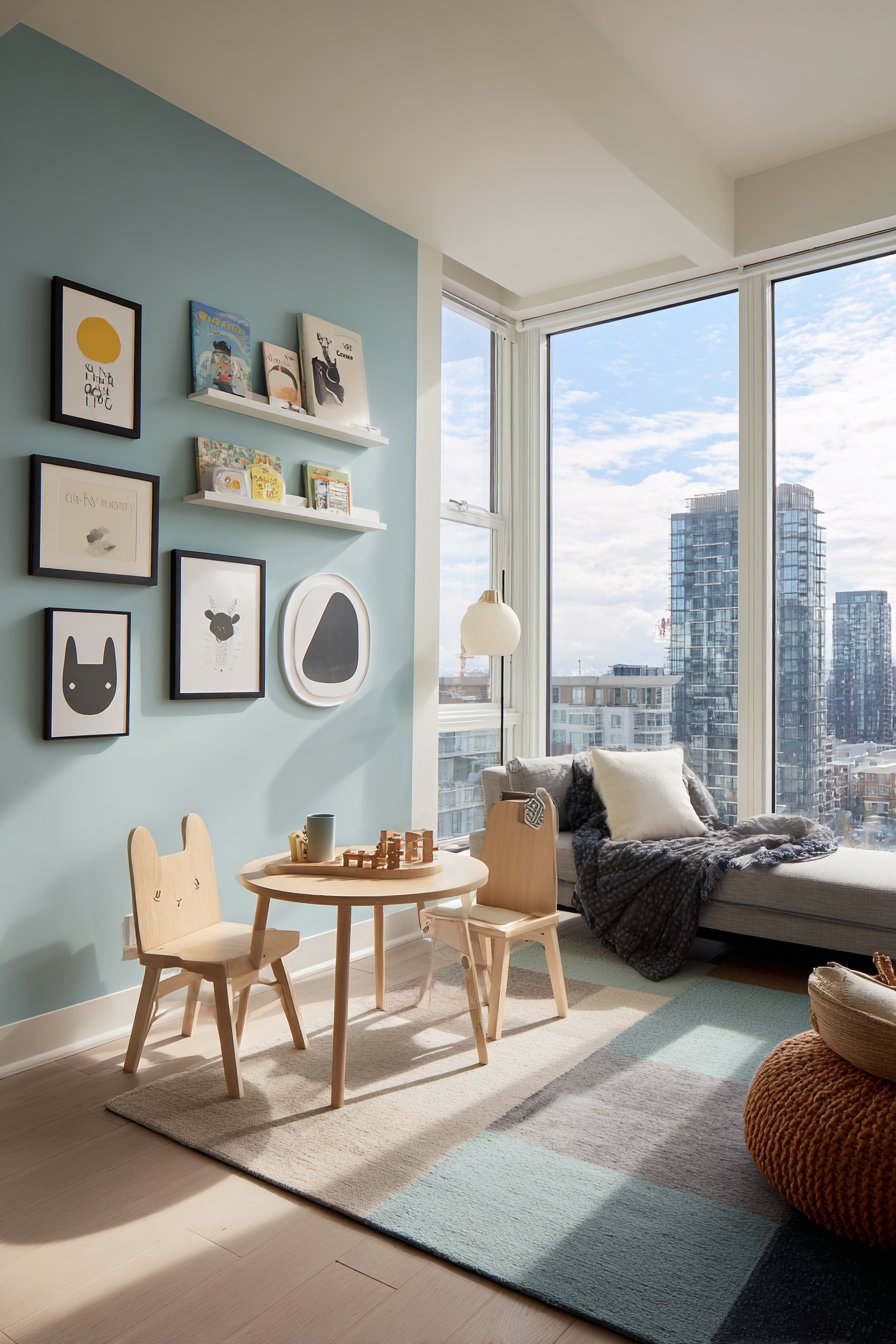
The cohesive design extends beyond the play area into the broader living room, where contemporary furniture and decor maintain stylistic consistency. Color palette coordination ensures the children’s zone feels intentional rather than afterthought.
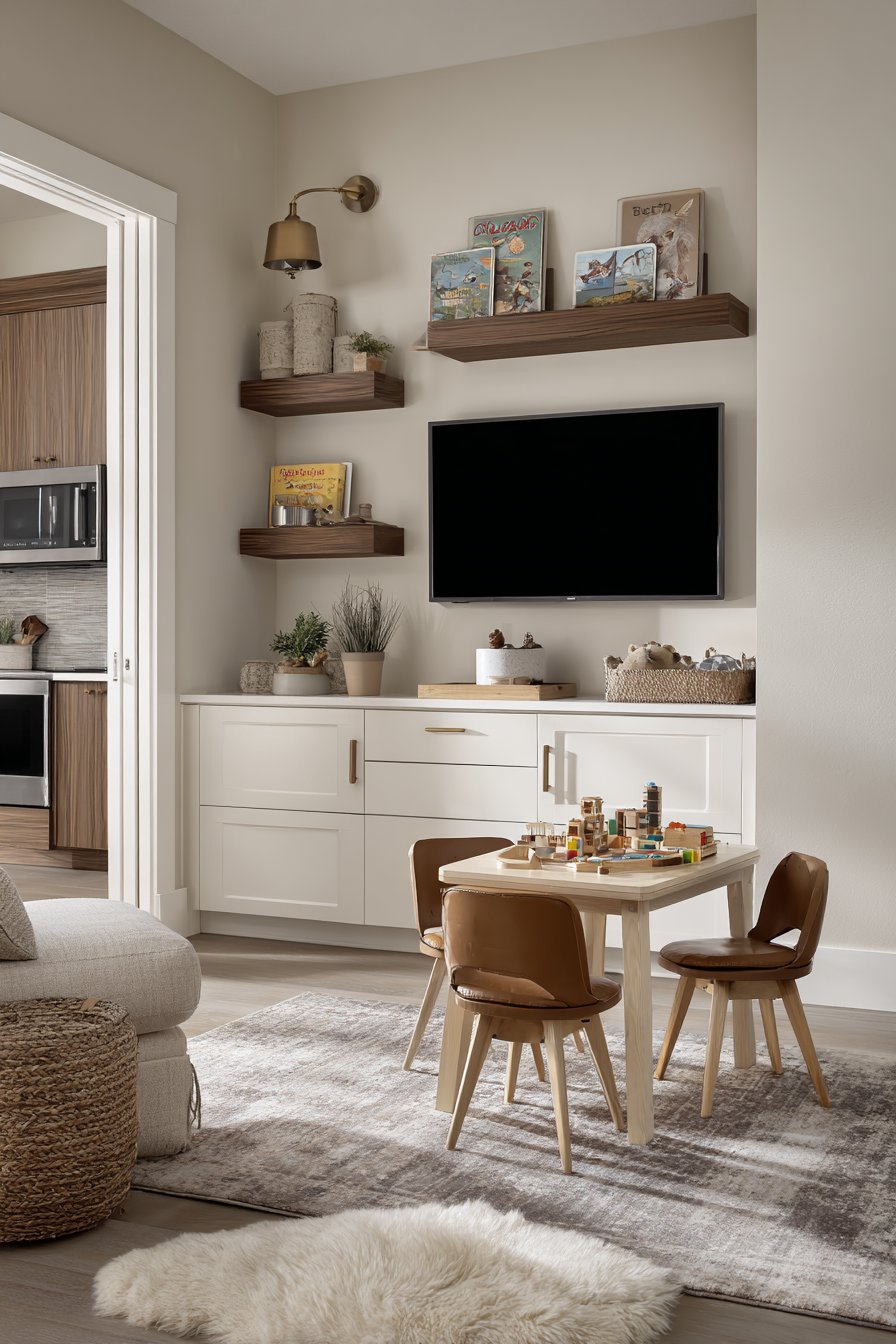
Modern lines and minimal ornamentation characterize both the adult and child-focused areas, proving that family-friendly design need not compromise aesthetic sophistication. Professional placement balances accessibility with visual harmony, creating spaces where all family members feel considered.
Key Design Tips:
- Mount shelves at 24-36 inches for optimal toddler accessibility without climbing risks
- Display books with covers forward to encourage selection and add visual interest
- Choose activity tables with rounded corners to prevent injury during active play
- Select area rugs with low pile height for stability and easy toy movement
- Coordinate play area colors with existing living room palette for cohesive appearance
- Use wall-mounted solutions to preserve valuable floor space in smaller rooms
3. Scandinavian Natural Simplicity
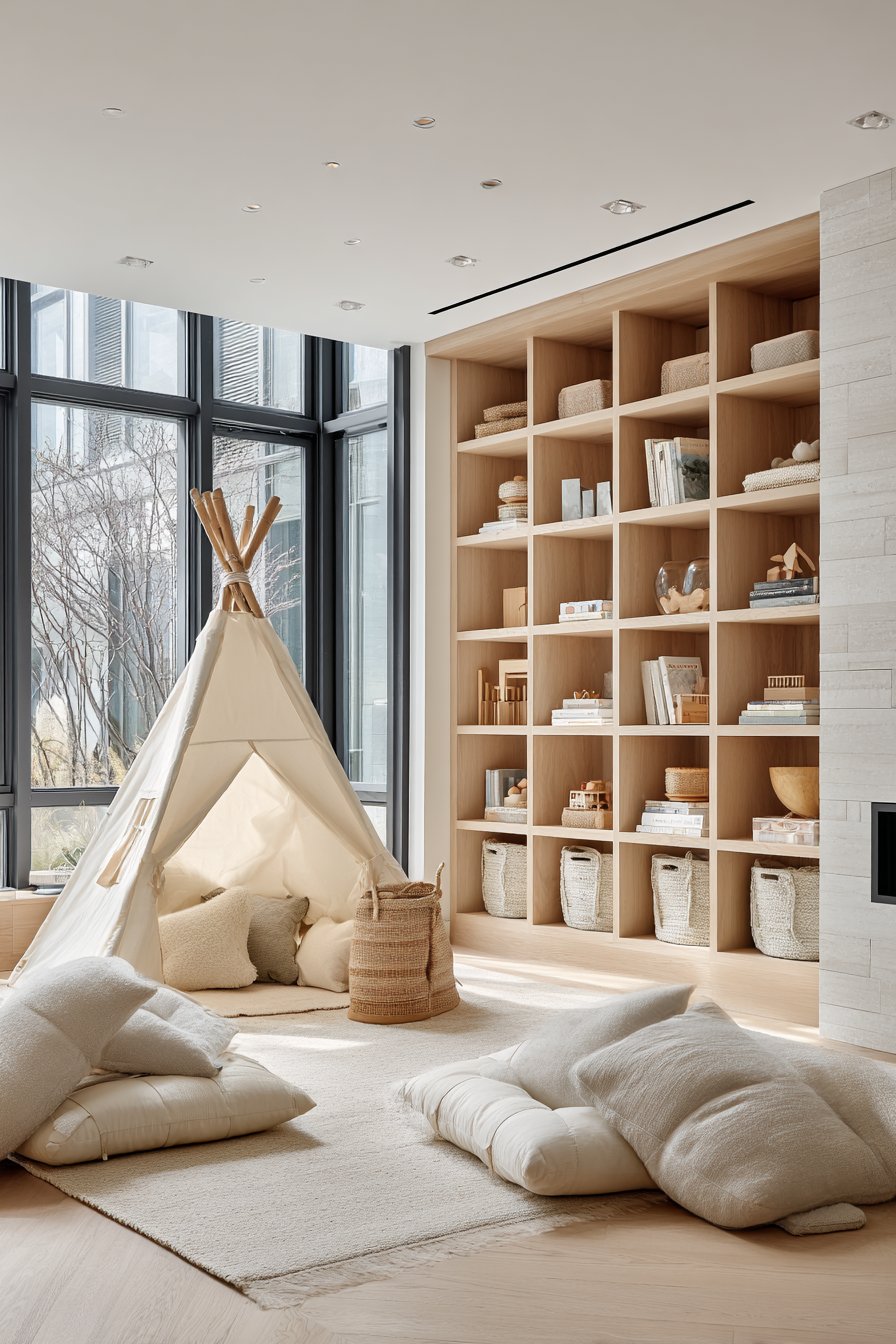
Scandinavian design principles emphasize natural materials, abundant light, and minimal clutter—ideal foundations for family-friendly living spaces. A low bookshelf constructed from light oak serves multiple purposes as storage, display, and subtle room divider.
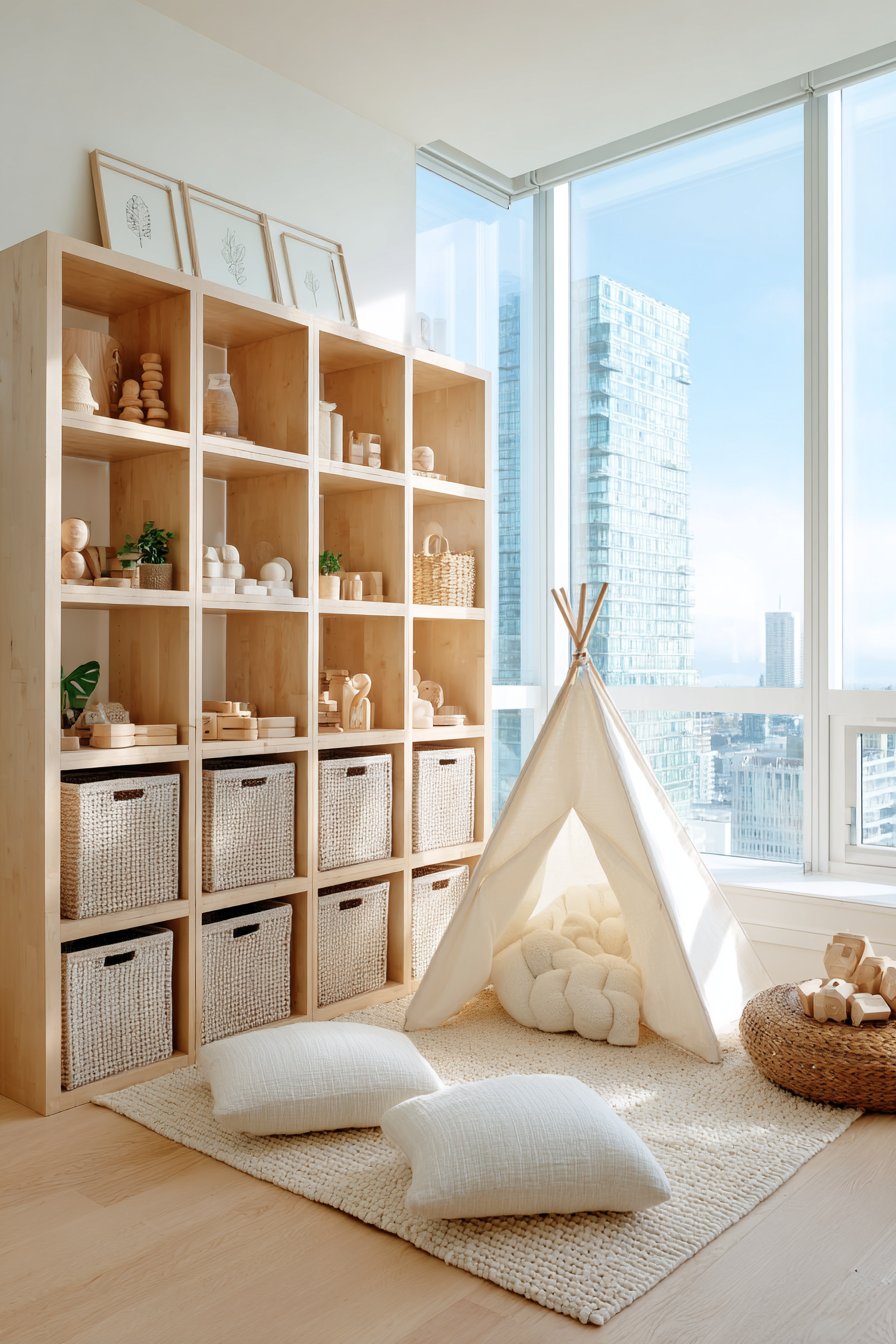
The natural wood grain adds warmth while maintaining the clean aesthetic characteristic of Nordic interiors. Organized toy baskets crafted from neutral fabric nestle within shelf compartments, providing concealed storage that reduces visual noise.
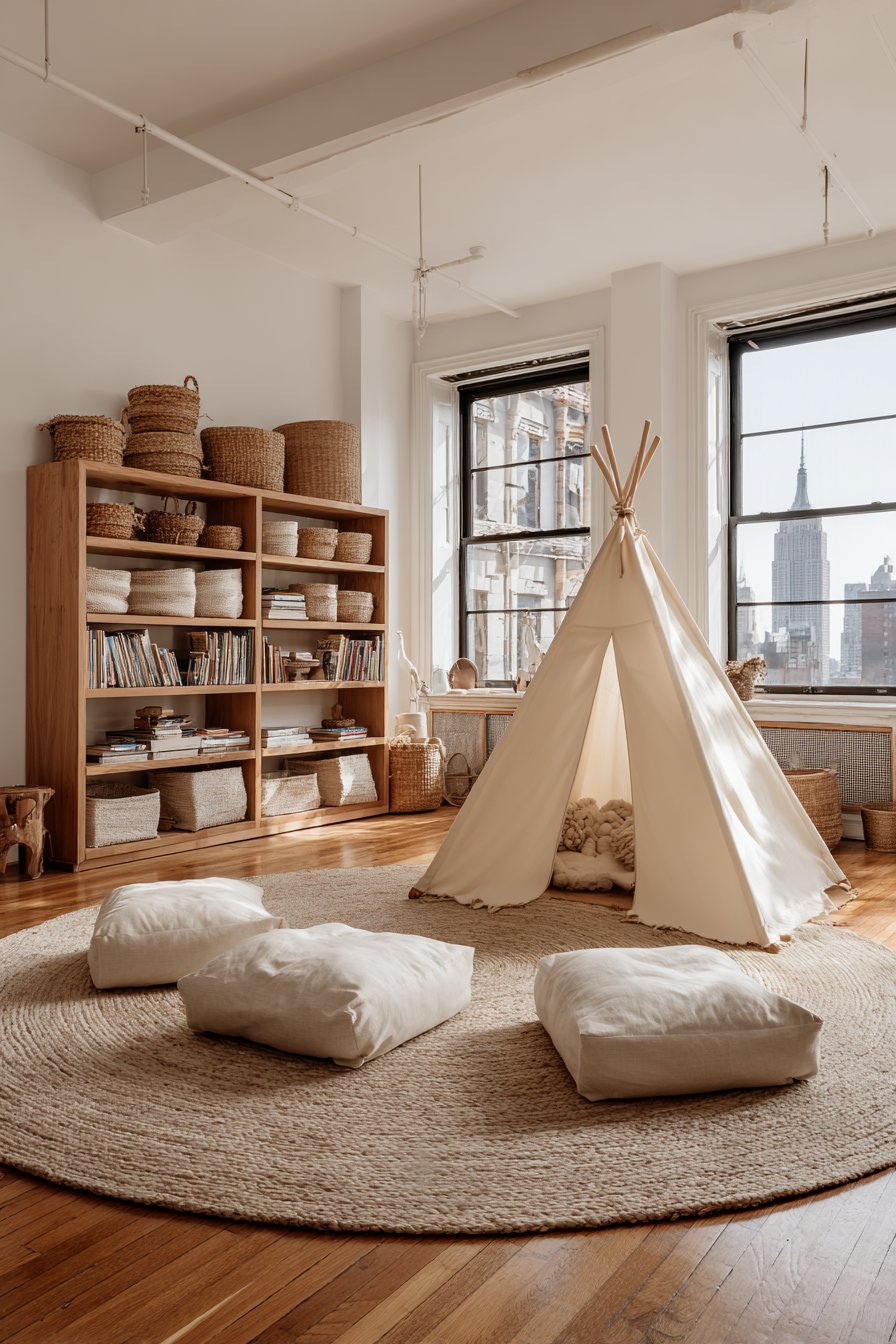
Soft floor cushions scattered throughout the play corner offer flexible seating that adapts to various activities and group sizes. These cushions, upholstered in washable natural fabrics, withstand frequent use while maintaining their fresh appearance.
A teepee play tent in cream canvas becomes an architectural focal point that encourages imaginative play. Its neutral tone and natural material align perfectly with Scandinavian design values, proving that children’s items can enhance rather than detract from intentional aesthetics.
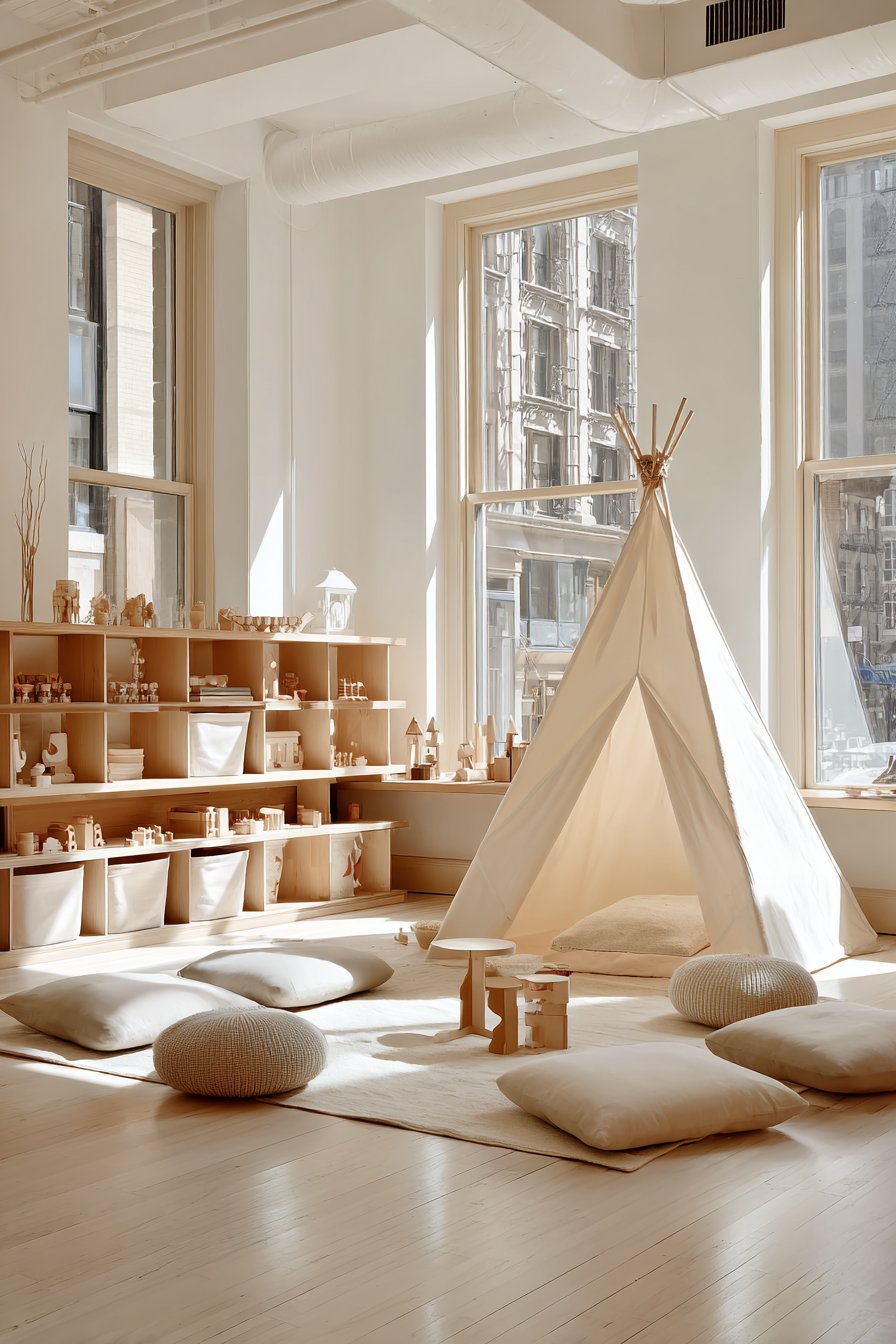
Large windows flood the space with natural daylight, eliminating the need for extensive artificial lighting during daytime hours. This abundance of natural illumination benefits children’s eye health and creates an energizing atmosphere for active play.
The minimalist approach extends to furniture selection, where each piece serves clear purposes without excess ornamentation. Clean lines throughout the space create visual calm that benefits both children’s focus and adults’ relaxation.
Key Design Tips:
- Select furniture in light woods like oak, birch, or ash for an authentic Scandinavian feel
- Use natural fabric baskets to maintain an organic material palette throughout the space
- Position play areas near windows to maximize natural light exposure
- Choose teepees or tents in undyed canvas for cohesive neutral aesthetics
- Limit color palette to whites, greys, and natural wood tones with minimal accent colors
- Embrace negative space to prevent visual clutter and maintain calm atmosphere
4. Space-Saving Vertical Solutions
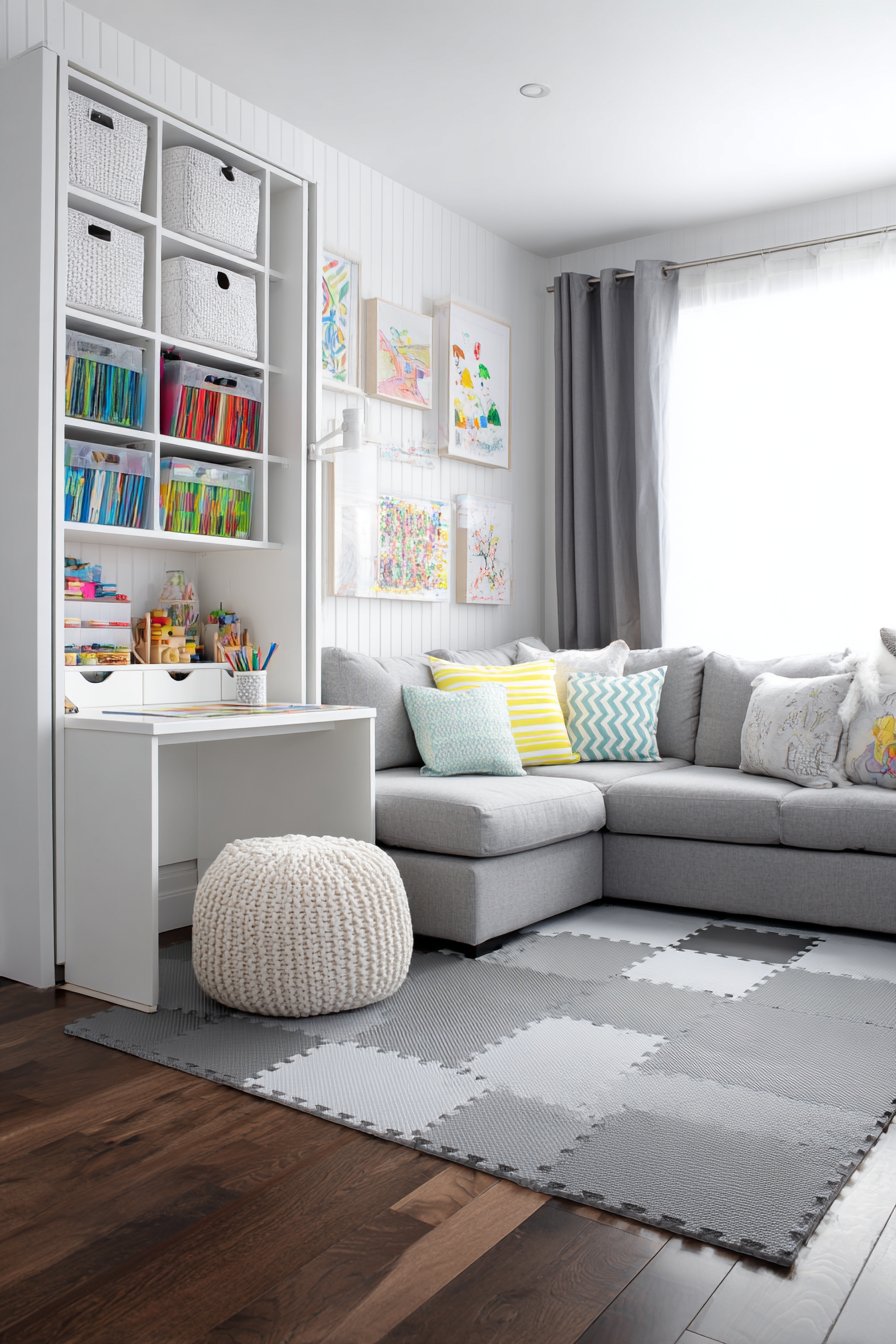
Compact living rooms require creative approaches to accommodate children’s play areas without overwhelming limited square footage. Vertical storage solutions maximize wall space while keeping floors clear for movement and activities.
Wall-mounted rails with labeled bins organize toys by category, teaching children organizational systems while maintaining easy access. Labels featuring both words and pictures support early literacy while helping young children identify correct storage locations independently.
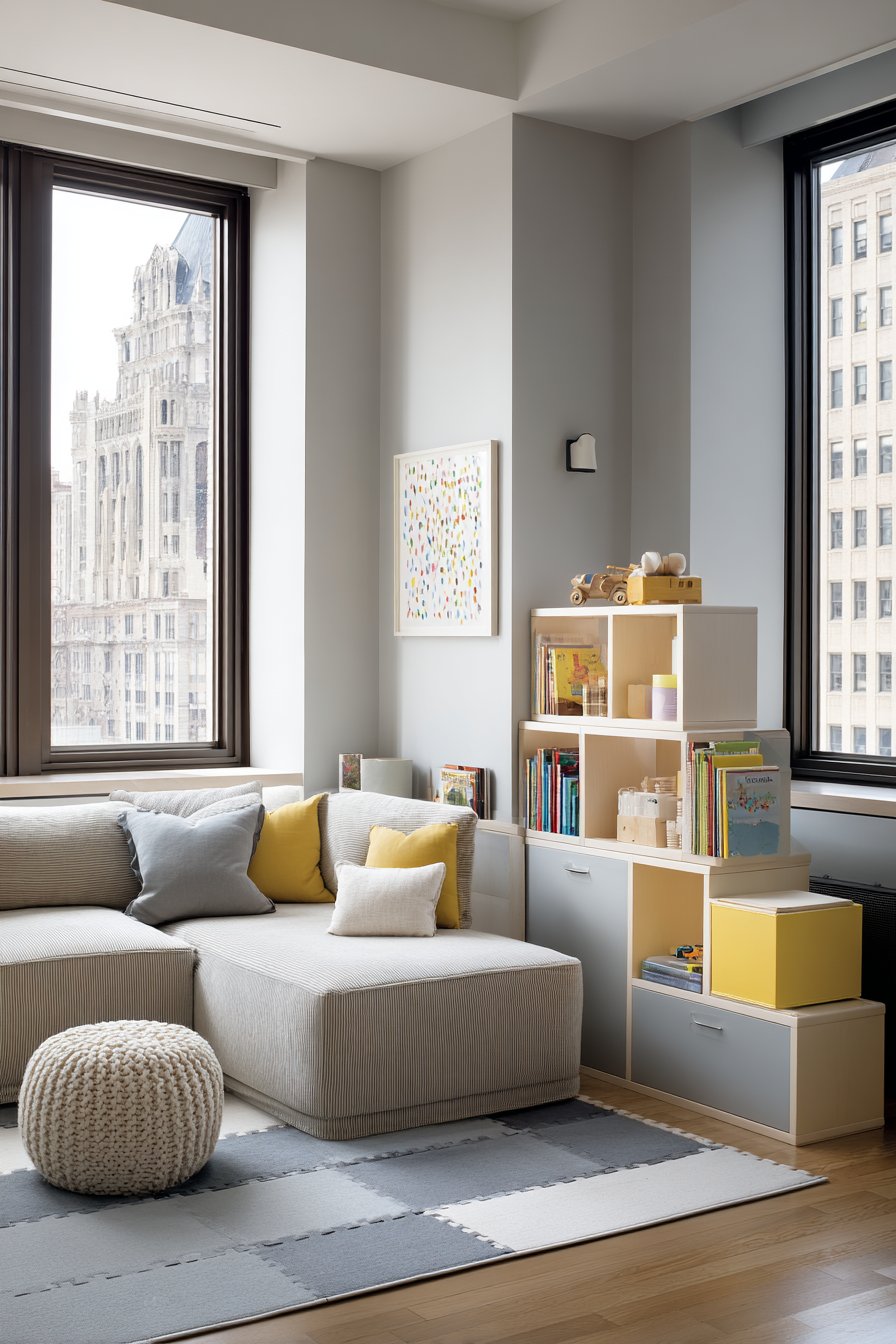
A fold-down wall desk provides dedicated art station functionality that disappears when not in use. This innovative solution addresses the common challenge of balancing multiple activities within constrained spaces. When closed, the desk presents a clean wall surface that maintains the room’s uncluttered appearance.
When opened, it offers stable workspace for drawing, painting, and craft projects. Soft interlocking foam tiles in subtle grey tones create safe play surfaces that complement existing hardwood flooring seamlessly.
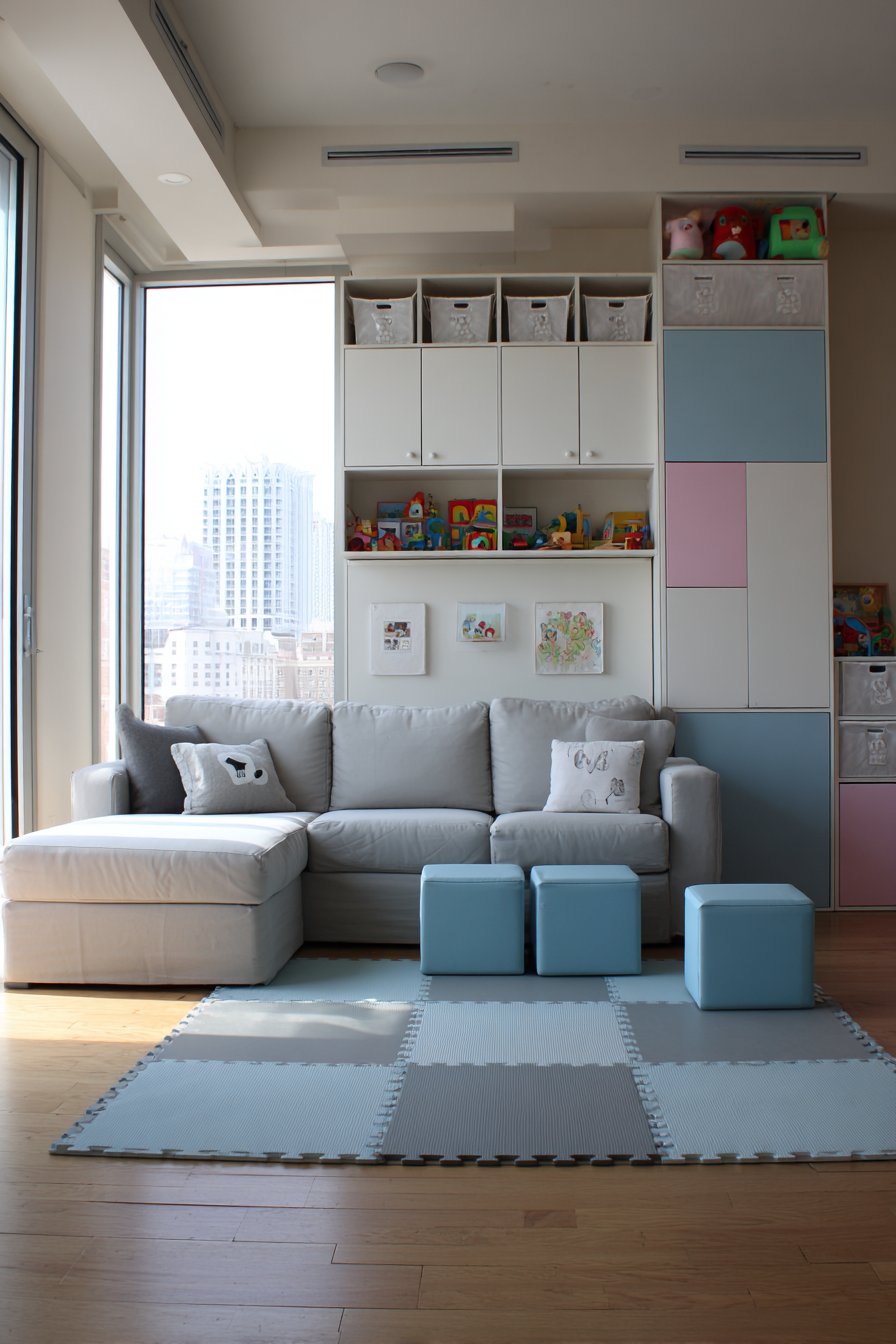
The sectional sofa arrangement facilitates adult supervision while maintaining comfortable seating for family gatherings and entertainment. Strategic furniture placement ensures clear sightlines from seating areas to play zones, allowing parents to monitor activities without constant movement.
The sectional’s configuration also helps define spatial boundaries between adult and child areas without physical barriers. Smart design choices prove that small living rooms can successfully accommodate family needs when vertical space receives equal consideration to floor area.
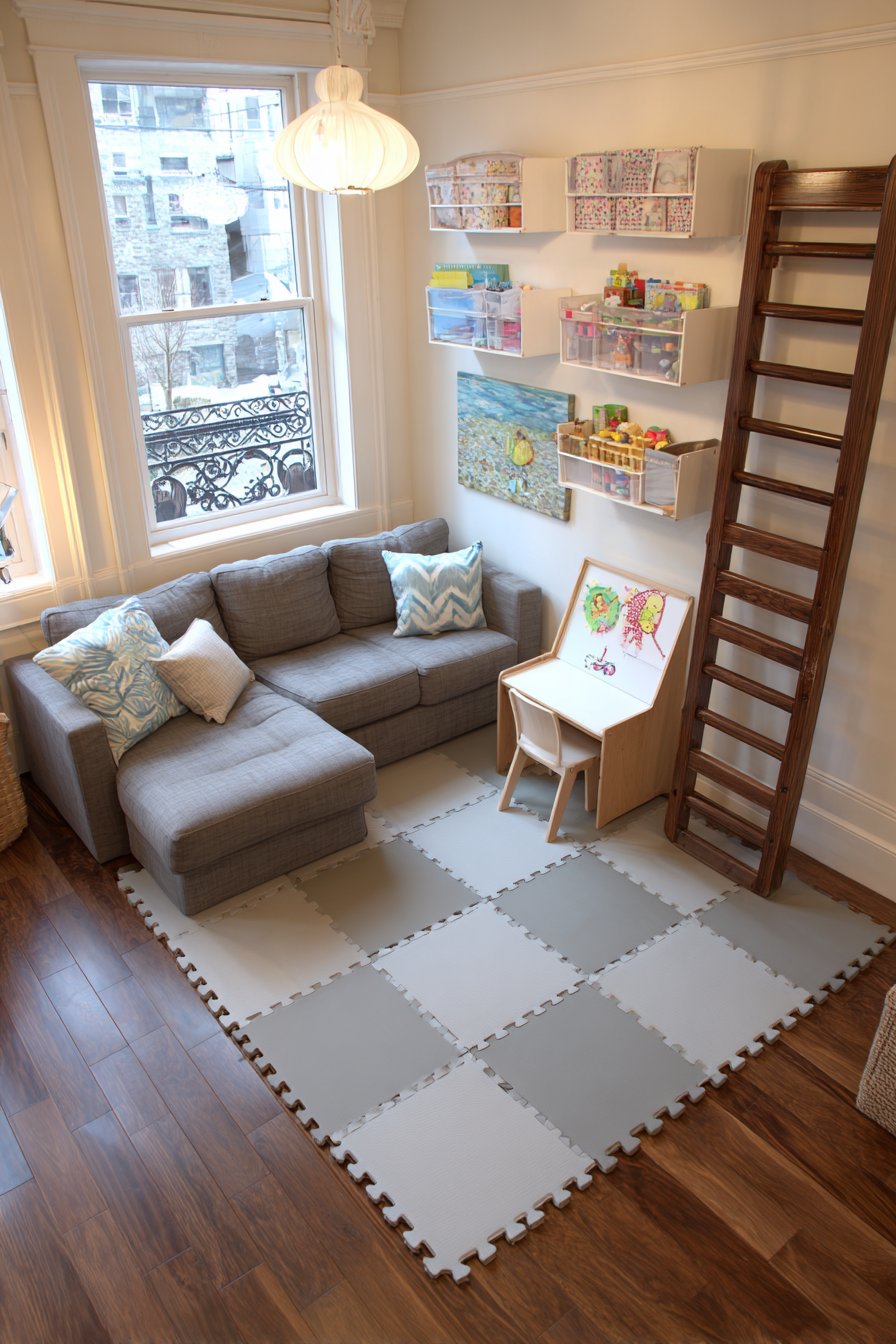
Key Design Tips:
- Utilize wall-mounted rails and bins to free floor space for active play
- Install fold-down furniture to create multi-functional zones that adapt throughout the day
- Choose interlocking foam tiles that can be reconfigured as needs change
- Label storage containers with pictures and words to support organization and literacy
- Arrange seating to create natural supervision points overlooking play areas
- Select furniture with hidden storage compartments to maximize every cubic foot
5. Farmhouse Warmth and Character
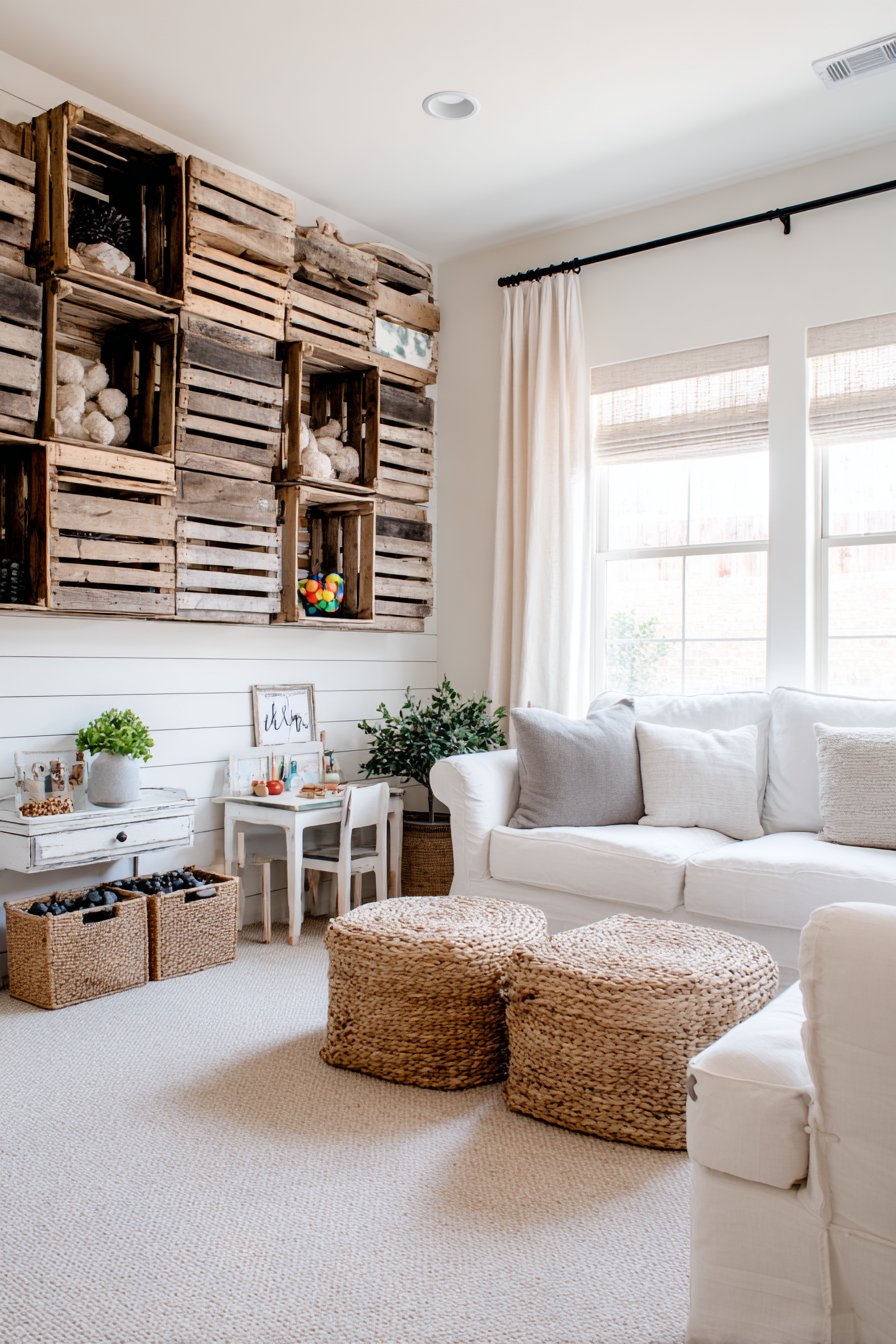
Farmhouse style brings rustic charm and practical functionality together through repurposed materials and vintage-inspired elements. Wooden crates, refinished and arranged against shiplap accent walls, provide toy storage with character and history.
These crates offer open accessibility while adding textural interest through visible wood grain and natural imperfections. The shiplap backdrop creates architectural interest that defines the play zone within the larger living space.
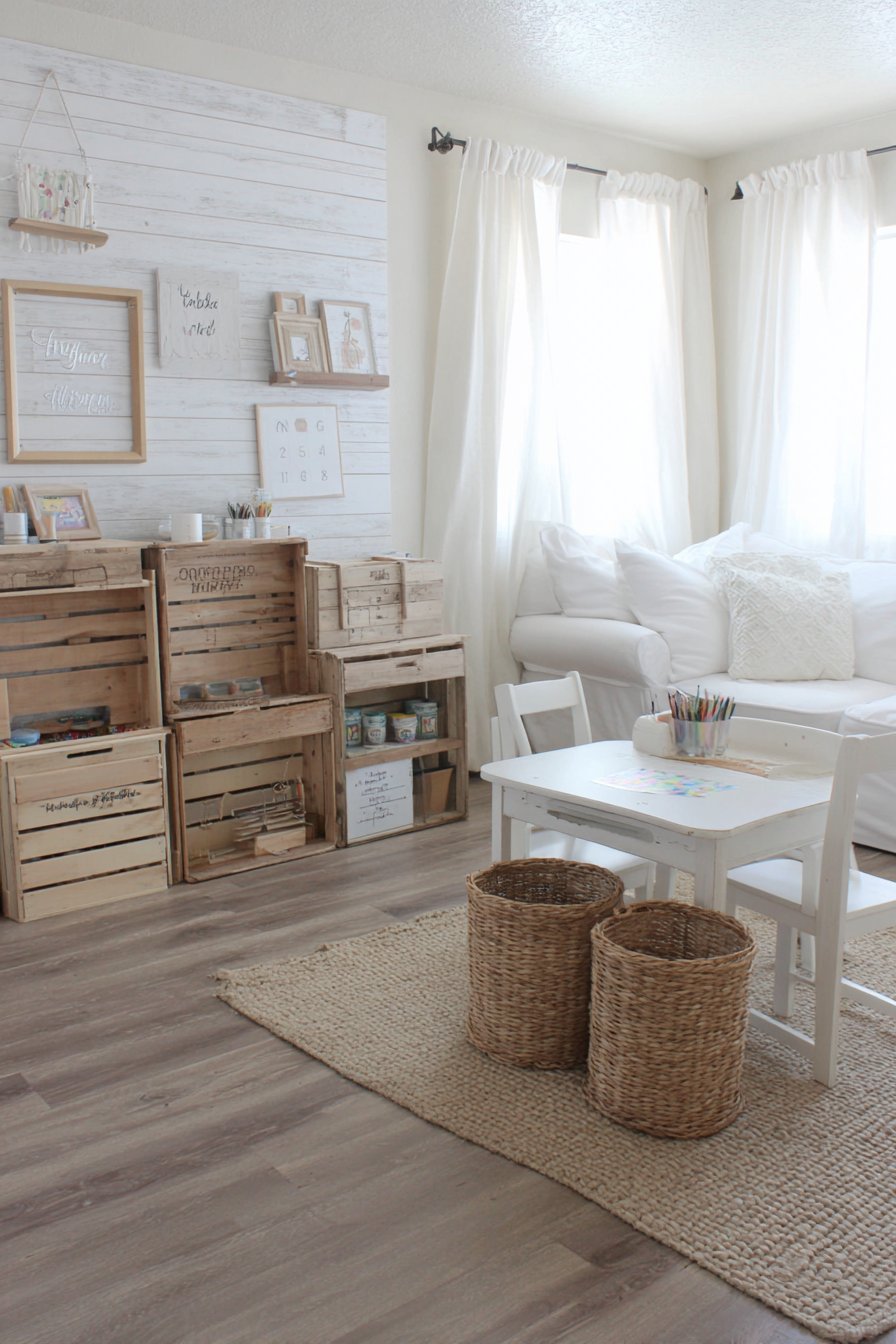
A vintage-inspired small table with chalk paint finish serves as dedicated craft station where creativity flourishes. The matte surface welcomes artistic expression without permanent damage, as chalk paint’s forgiving nature allows easy touch-ups when needed.
Woven baskets containing art supplies add organic texture while keeping materials organized and accessible. Natural fiber area rugs define play boundaries while introducing additional tactile elements that ground the space physically and visually.
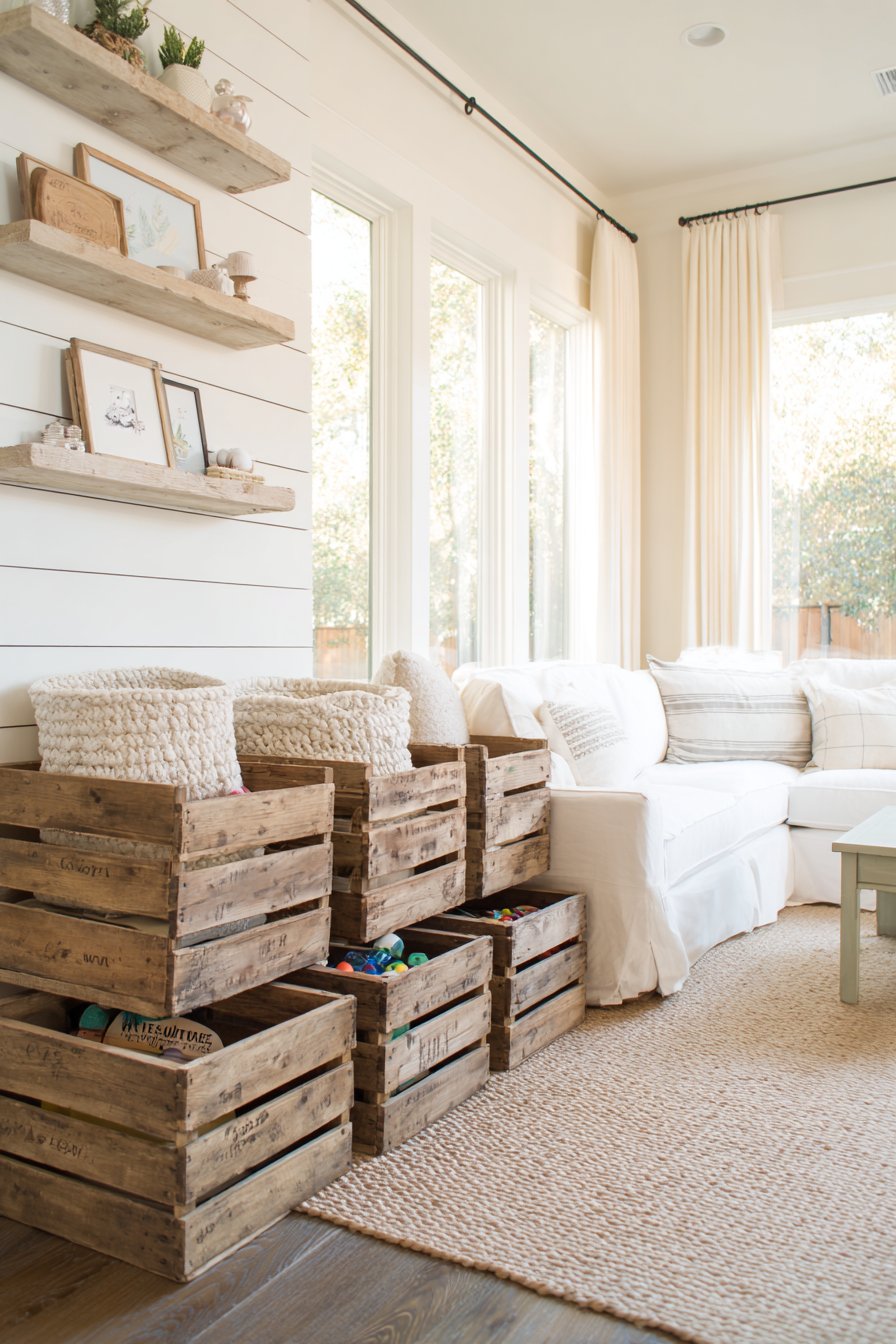
White slipcovered sofas anchor the adult seating area with fresh, cleanable surfaces ideal for family living. The slipcovers’ removability addresses practical concerns about spills and stains while maintaining sophisticated appearance.
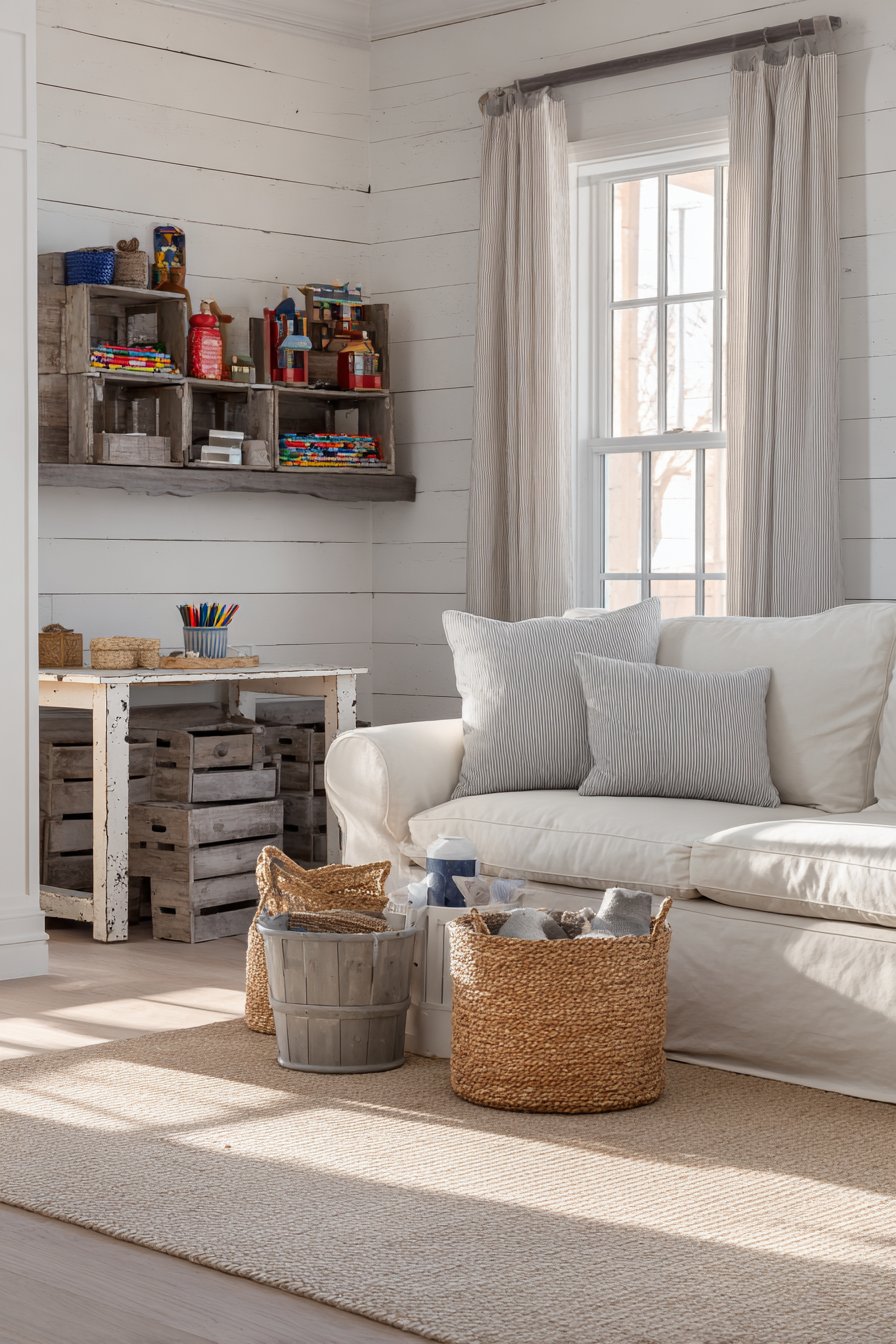
Soft afternoon light filtering through curtained windows casts gentle illumination that enhances the farmhouse aesthetic’s inherent warmth. Cohesive design throughout the space demonstrates how rustic elements and family functionality create inviting environments where memories accumulate naturally.
Key Design Tips:
- Source vintage wooden crates from flea markets or antique shops for authentic character
- Apply chalk paint to furniture for matte finish that accepts gentle wear gracefully
- Use woven baskets in various sizes to organize supplies while adding texture
- Install shiplap on accent walls to create architectural definition without major renovation
- Choose slipcover sofas for easy cleaning and seasonal style updates
- Incorporate natural fibers like jute and sisal through rugs and storage solutions
6. Multifunctional Modular Living
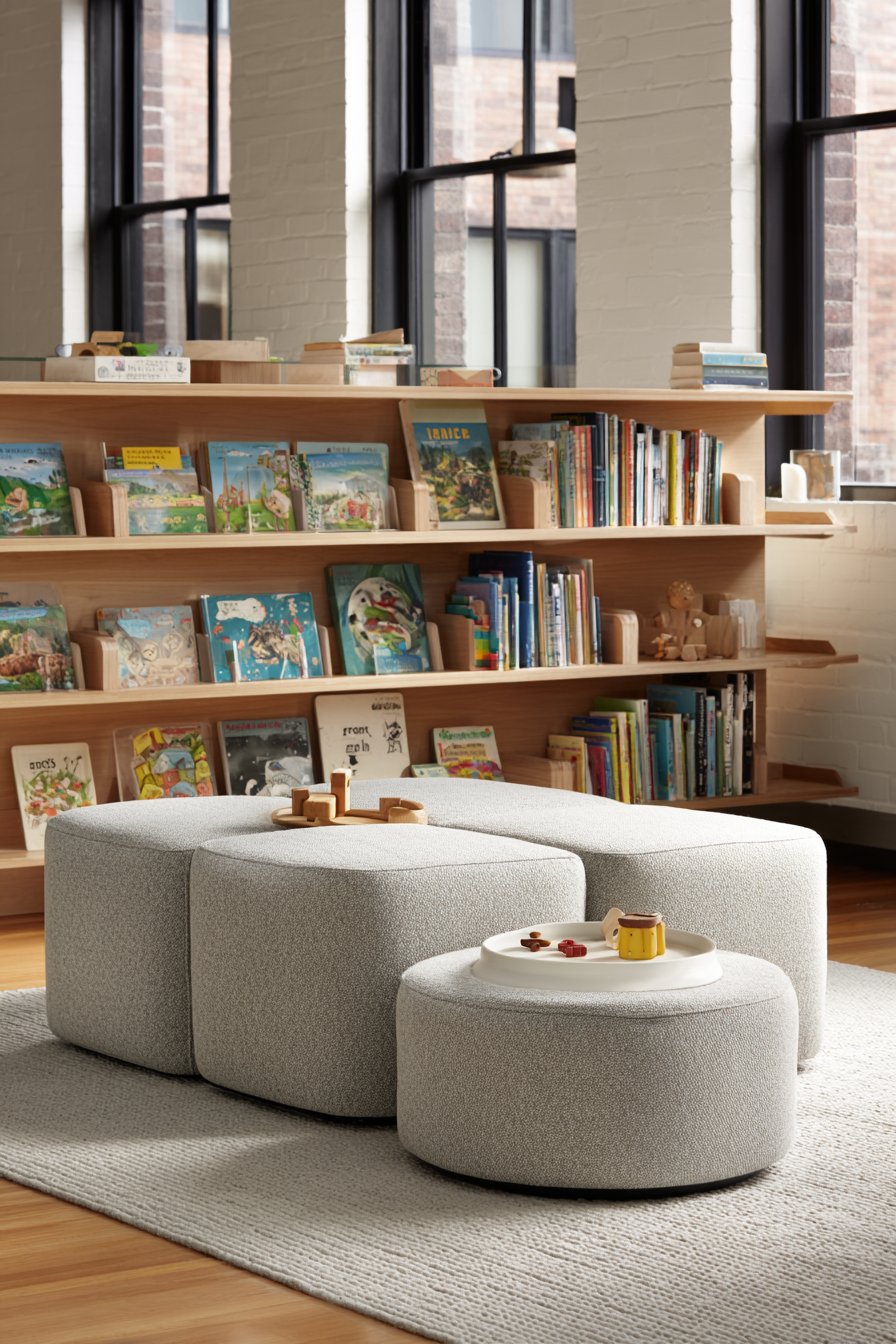
Modular furniture systems offer flexibility that adapts to changing family needs and daily routines. Storage ottomans serve triple duty as toy containers, additional seating, and impromptu play surfaces. Their soft tops provide safe seating for children while concealing toys within, maintaining tidy appearances when guests arrive. The modular nature allows reconfiguration as family dynamics evolve, making this investment adaptable to growth and changing preferences.
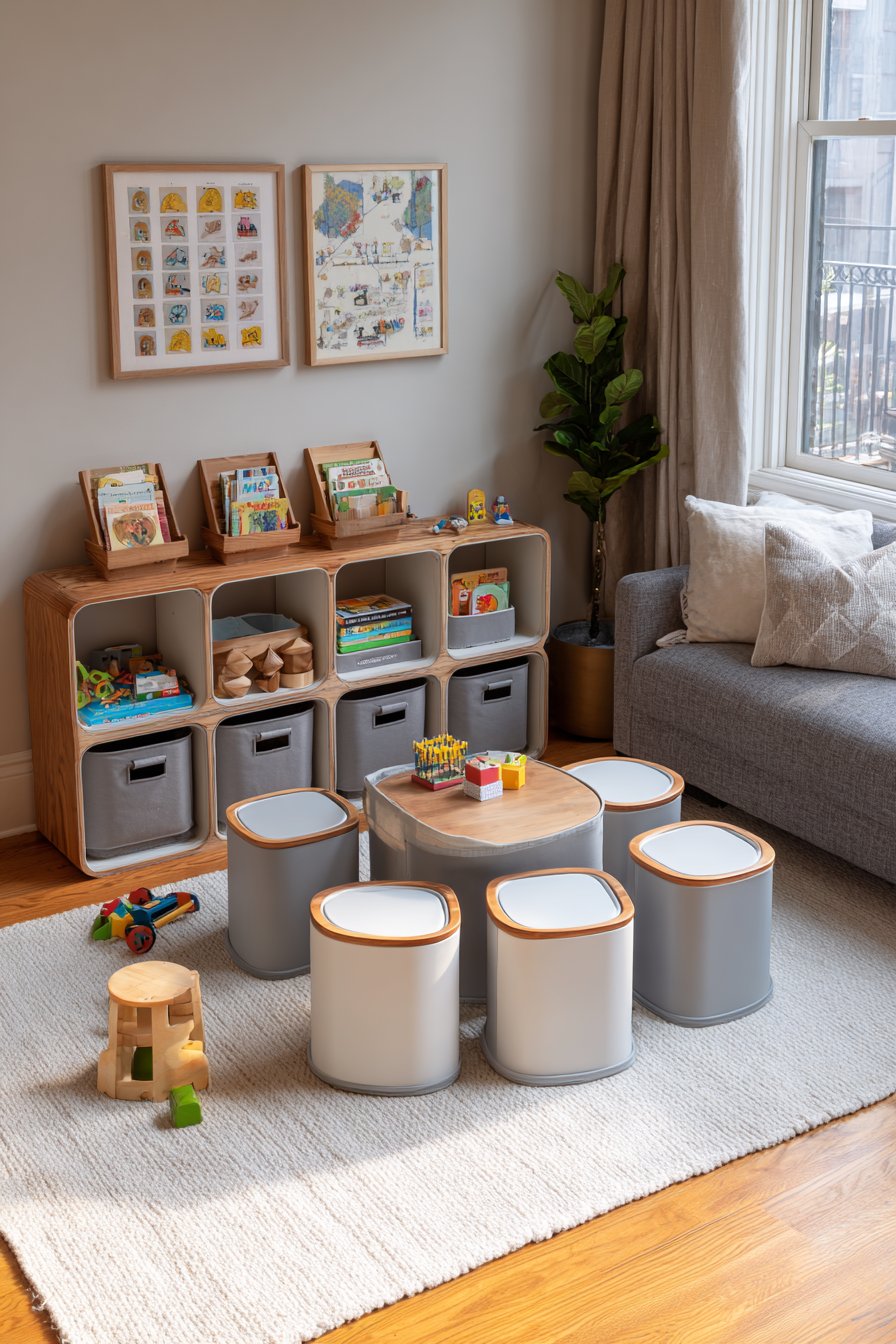
Low-profile shelving units with rounded edges prioritize safety while displaying educational toys and books within easy reach. The rounded corners eliminate sharp edges that pose injury risks during active play sessions. Thoughtful toy rotation on these shelves maintains children’s interest and prevents overwhelming visual clutter. The play area integrates seamlessly through matching color schemes of soft greys and warm whites that create cohesive visual flow.
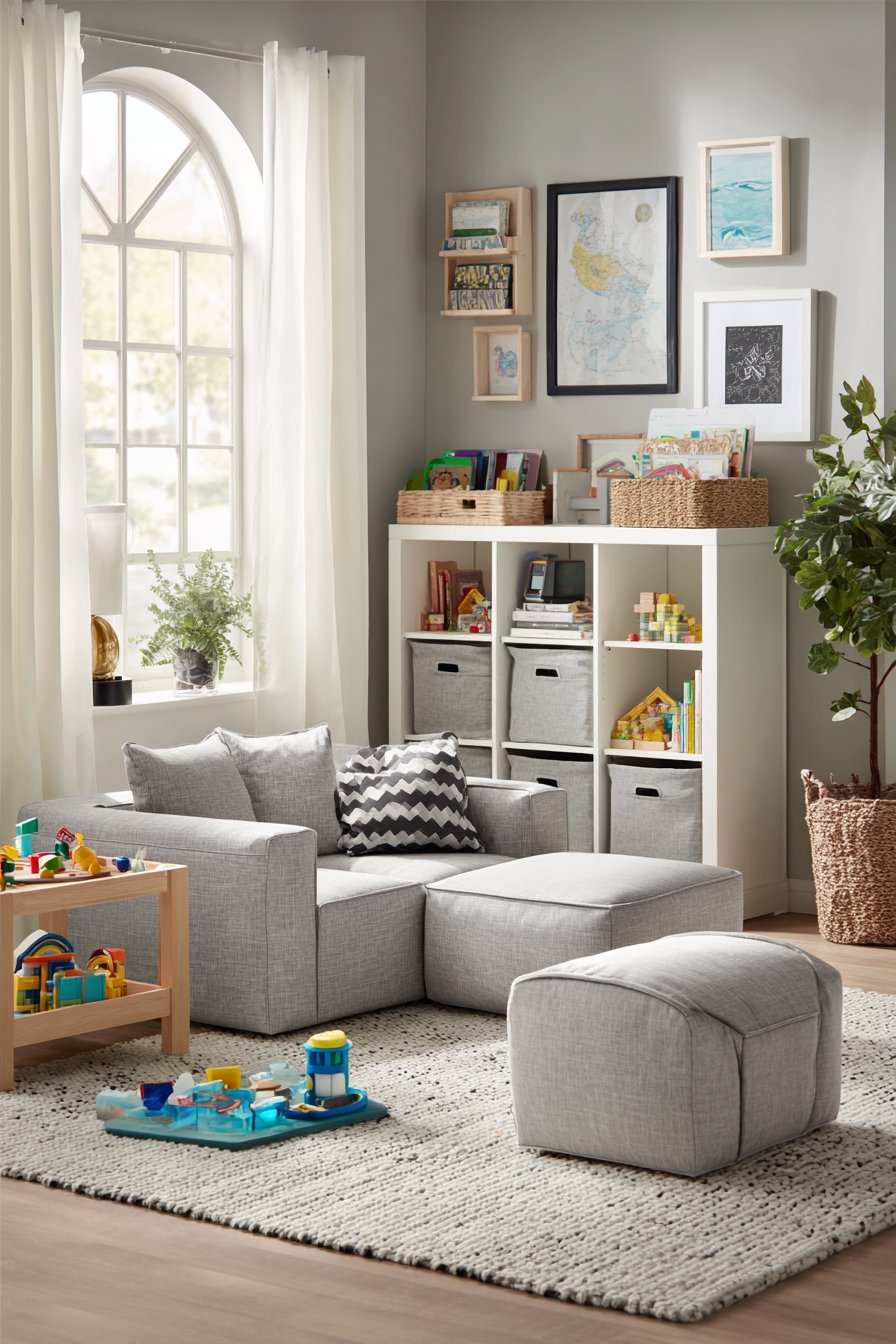
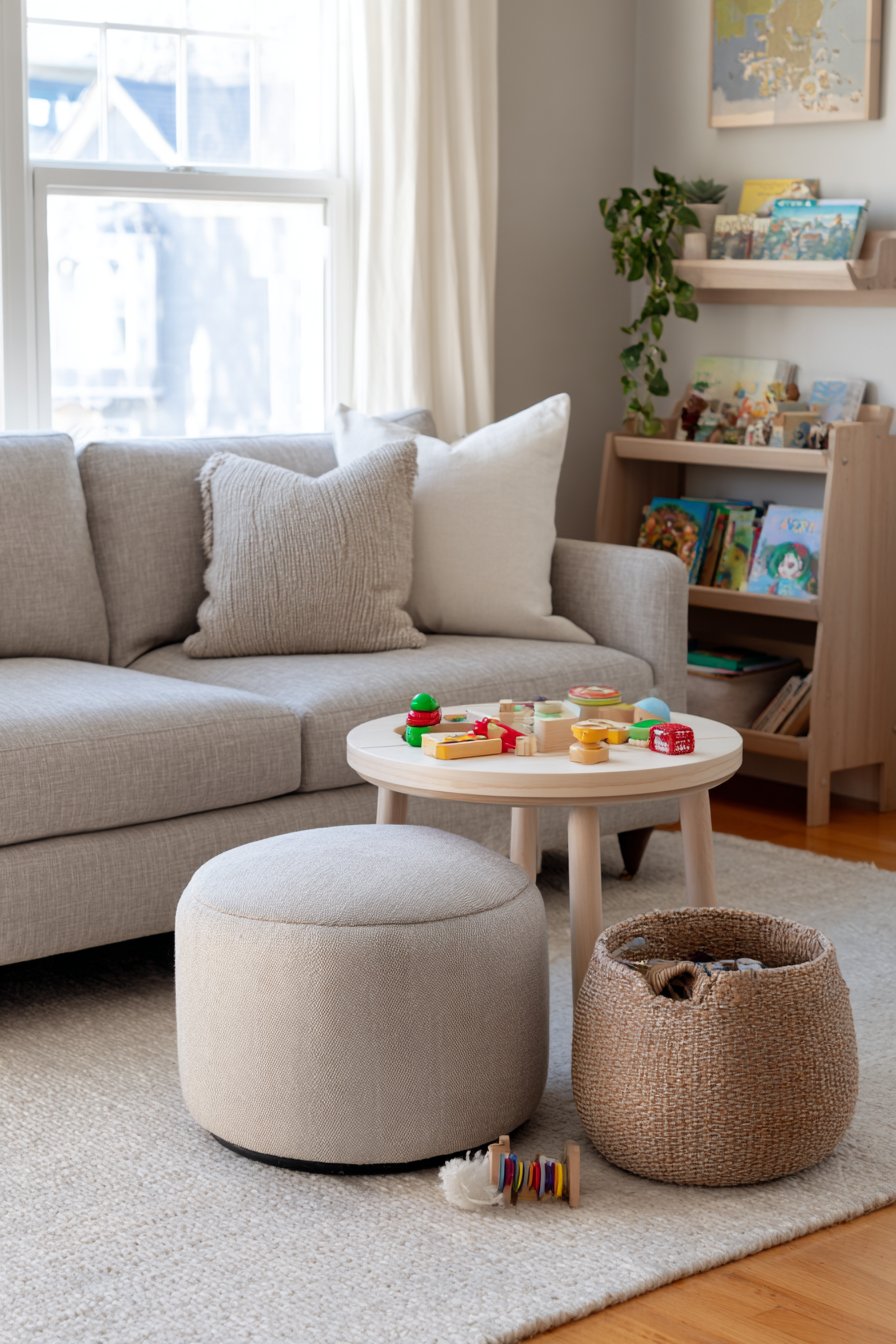
A small sensory play table positioned on washable cotton rugs provides dedicated space for hands-on exploration. Sensory activities support developmental growth while containing potential mess within defined boundaries.
The cotton rug’s washability addresses practical concerns about spills and accidents without compromising style. Realistic lived-in details, including scattered toys visible in the space, acknowledge that family homes balance idealized design with daily function.
Key Design Tips:
- Select modular ottomans with removable lids for quick toy access and easy cleaning
- Choose furniture with rounded edges to minimize injury risks during active play
- Use washable rugs under messy-play areas to simplify cleanup routines
- Rotate displayed toys weekly to maintain fresh interest and reduce clutter
- Coordinate play area colors with existing furniture for integrated appearance
- Embrace realistic styling that shows lived-in comfort rather than sterile perfection
7. Contemporary Built-In Elegance
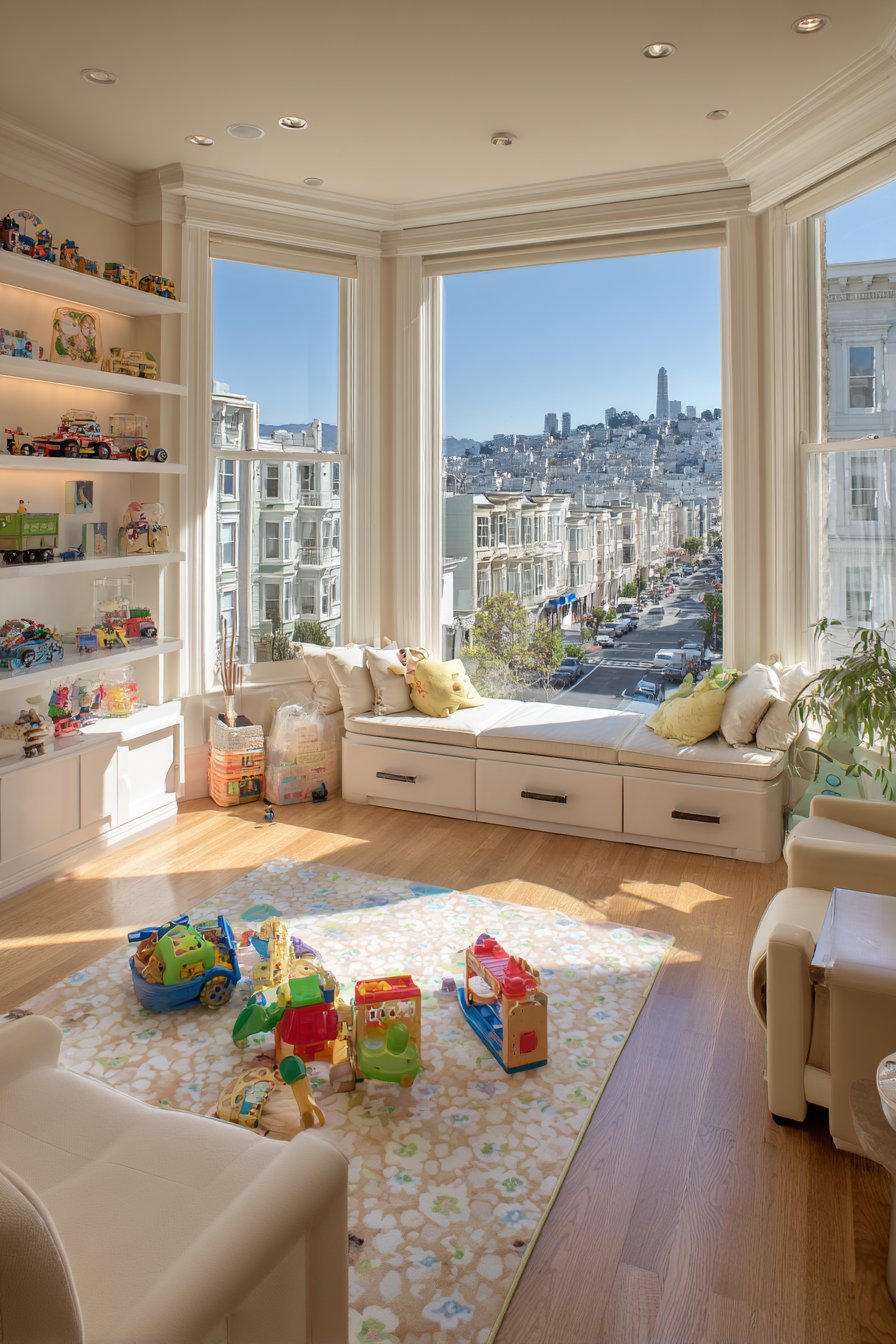
Built-in window seats capitalize on architectural features while creating multi-functional spaces that children and adults both enjoy. Storage drawers underneath provide concealed toy organization that maintains clean lines characteristic of contemporary design. The elevated seating position near windows offers natural light for reading while creating cozy retreat spaces. Cushioned surfaces invite extended periods of comfortable play, reading, or quiet contemplation.
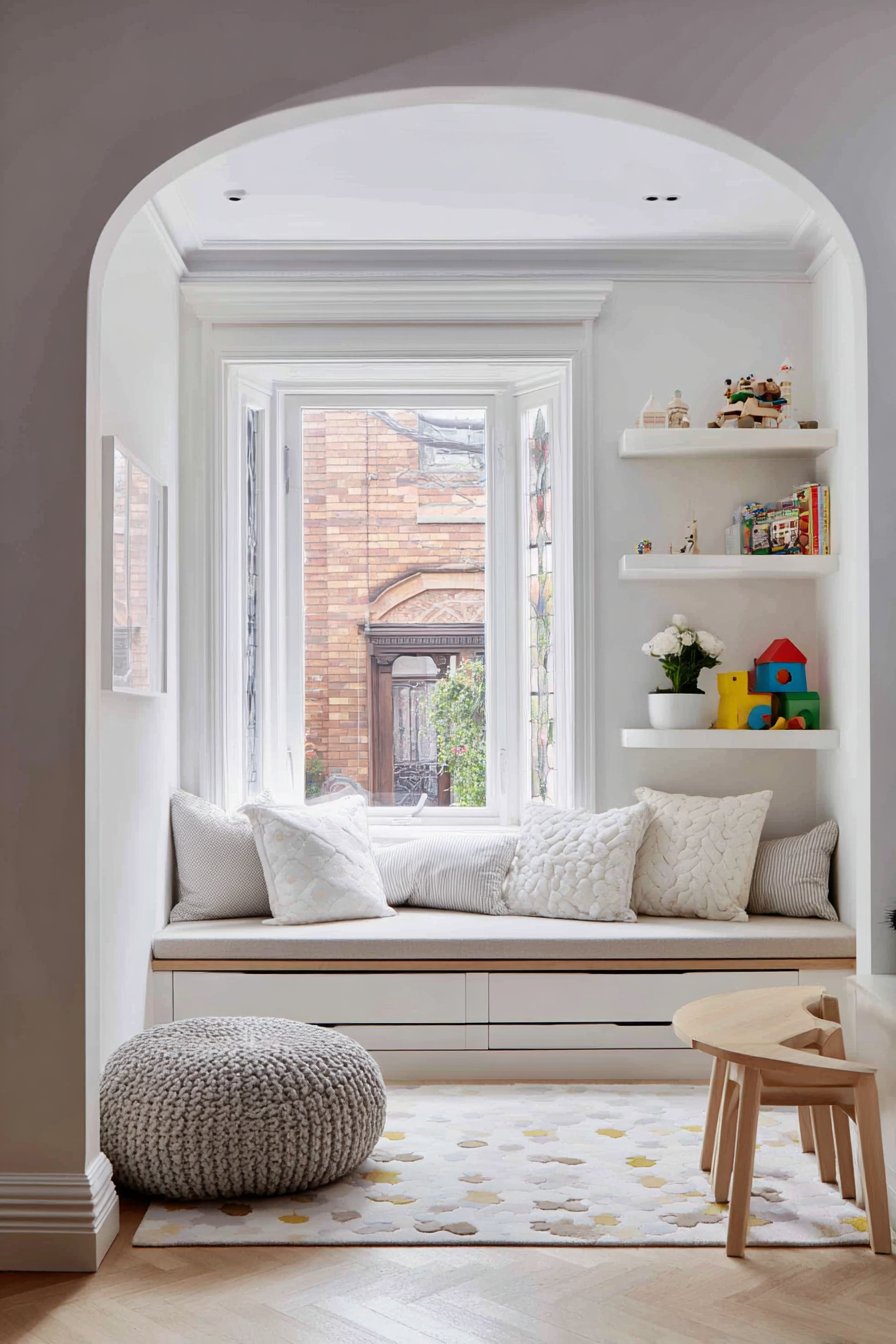
Floating wall shelves in crisp white display rotating toy collections that keep the play area fresh and engaging. The floating design maintains visual lightness while providing substantial storage capacity. Regular rotation prevents toy fatigue and allows seasonal or developmental appropriateness in available options. Soft play mats with subtle patterns provide comfortable floor spaces without overwhelming the room’s sophisticated neutral palette.
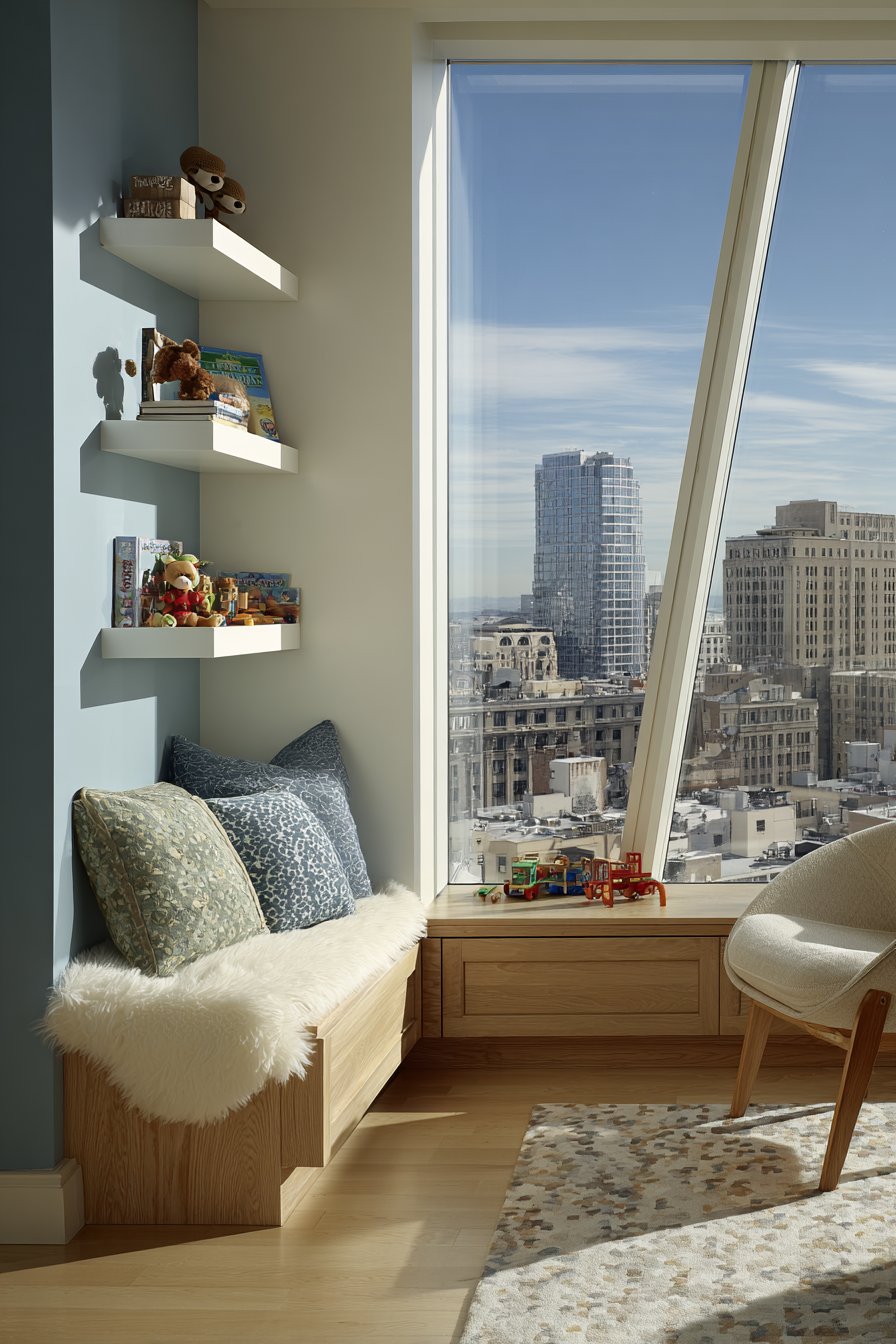
Adjacent living room areas maintain elegant styling through modern furniture selections and restrained color palettes. The thoughtful integration demonstrates that child-friendly elements can coexist with sophisticated adult aesthetics when design receives proper attention. Soft natural daylight streaming through windows illuminates both play and living zones, creating unified atmosphere throughout the space. This approach proves that contemporary design principles accommodate family needs without stylistic compromise.
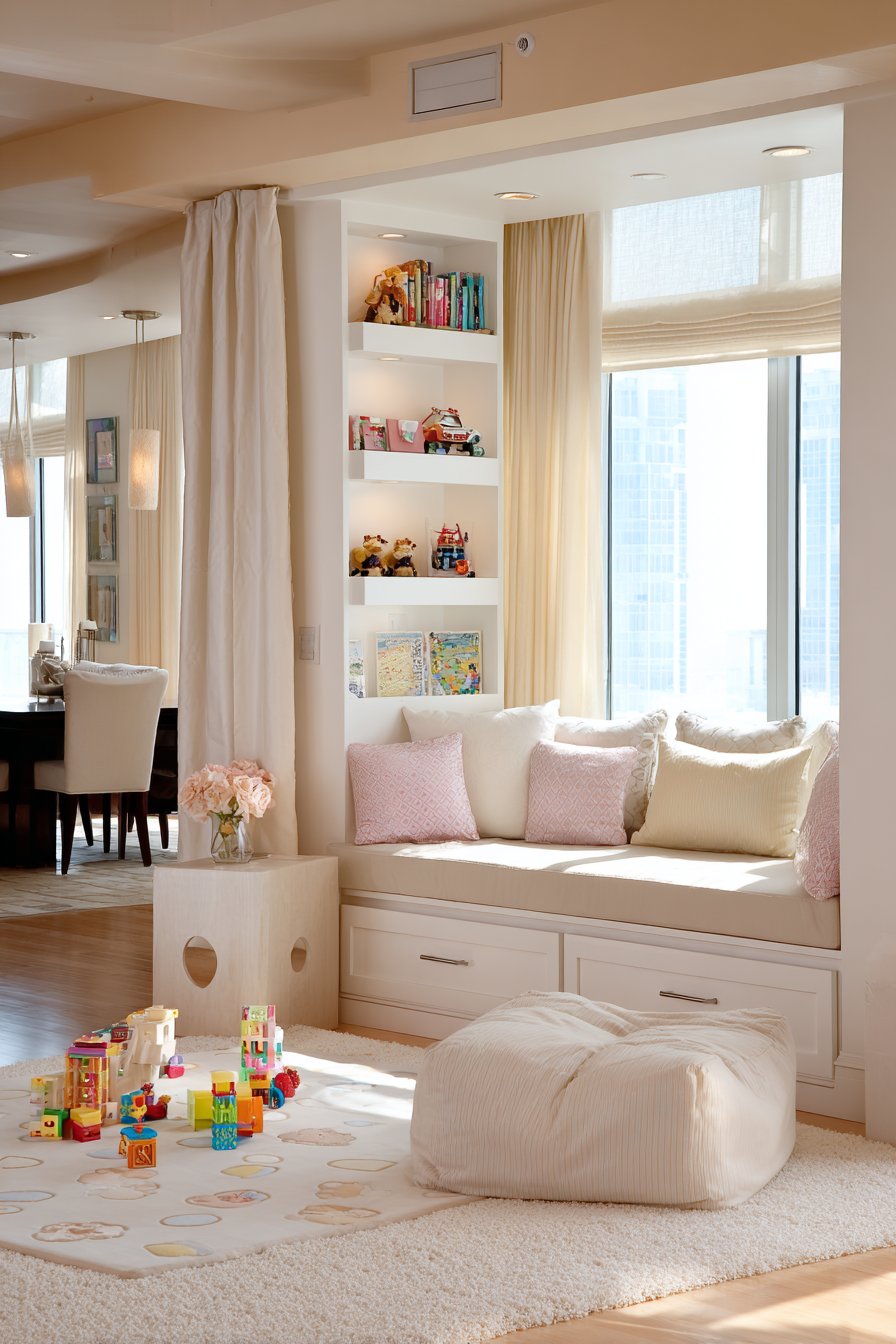
Key Design Tips:
- Incorporate window seats with built-in storage to maximize space efficiency
- Use floating shelves to maintain visual lightness while providing display capacity
- Rotate toy selections regularly to maintain engagement and manage clutter
- Choose play mats with subtle patterns that complement rather than dominate
- Paint built-ins in room-matching colors to create an integrated custom appearance
- Position seating near windows to maximize natural light benefits for reading activities
8. Montessori-Inspired Independence
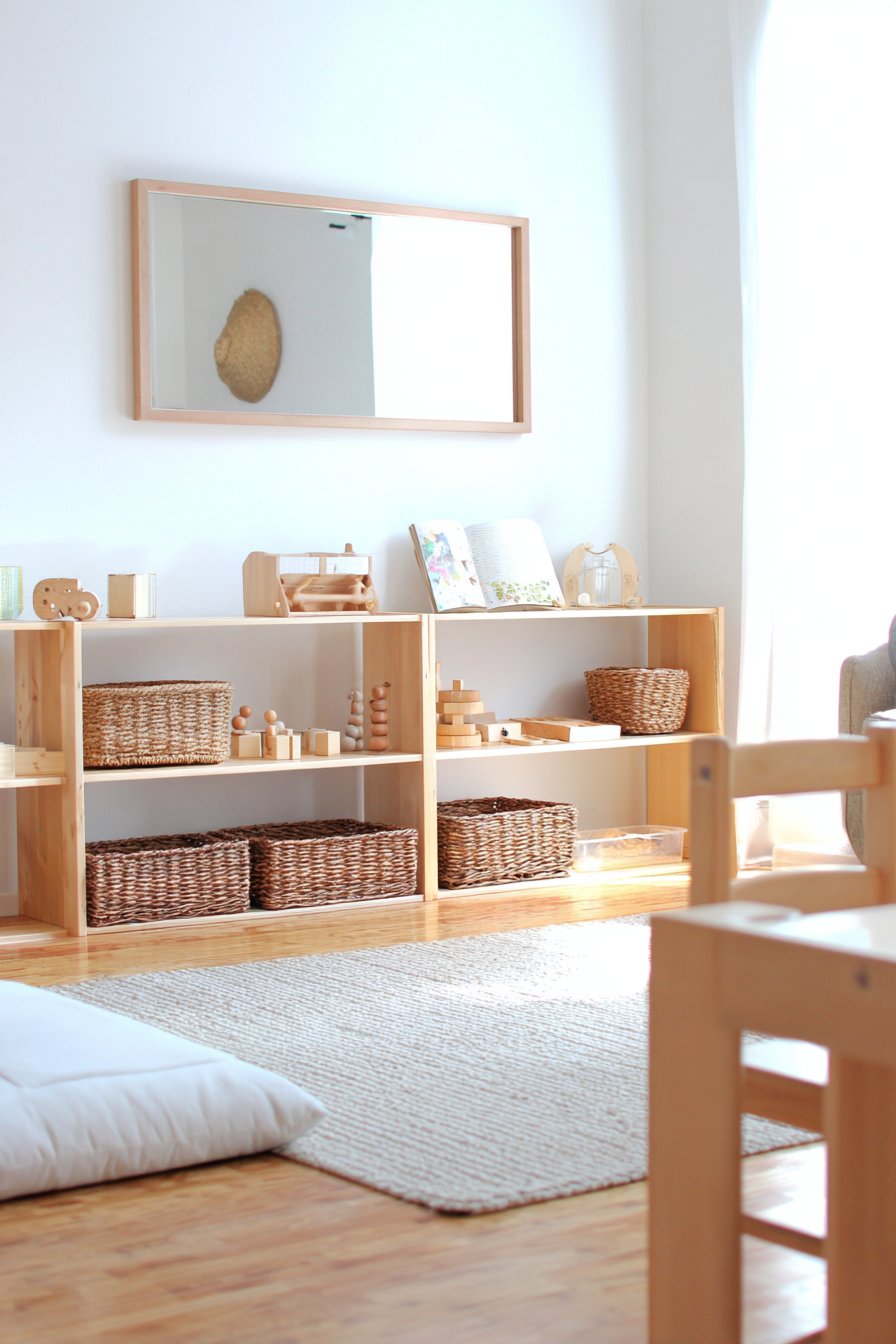
Montessori philosophy emphasizes child independence through accessible, organized environments that encourage self-directed learning and play. Open wooden shelving units display toys individually rather than jumbled together, allowing clear visual selection.
This arrangement supports decision-making skills and reduces frustration associated with digging through toy bins. Natural woven baskets contain smaller items while maintaining the organic material palette central to Montessori principles.
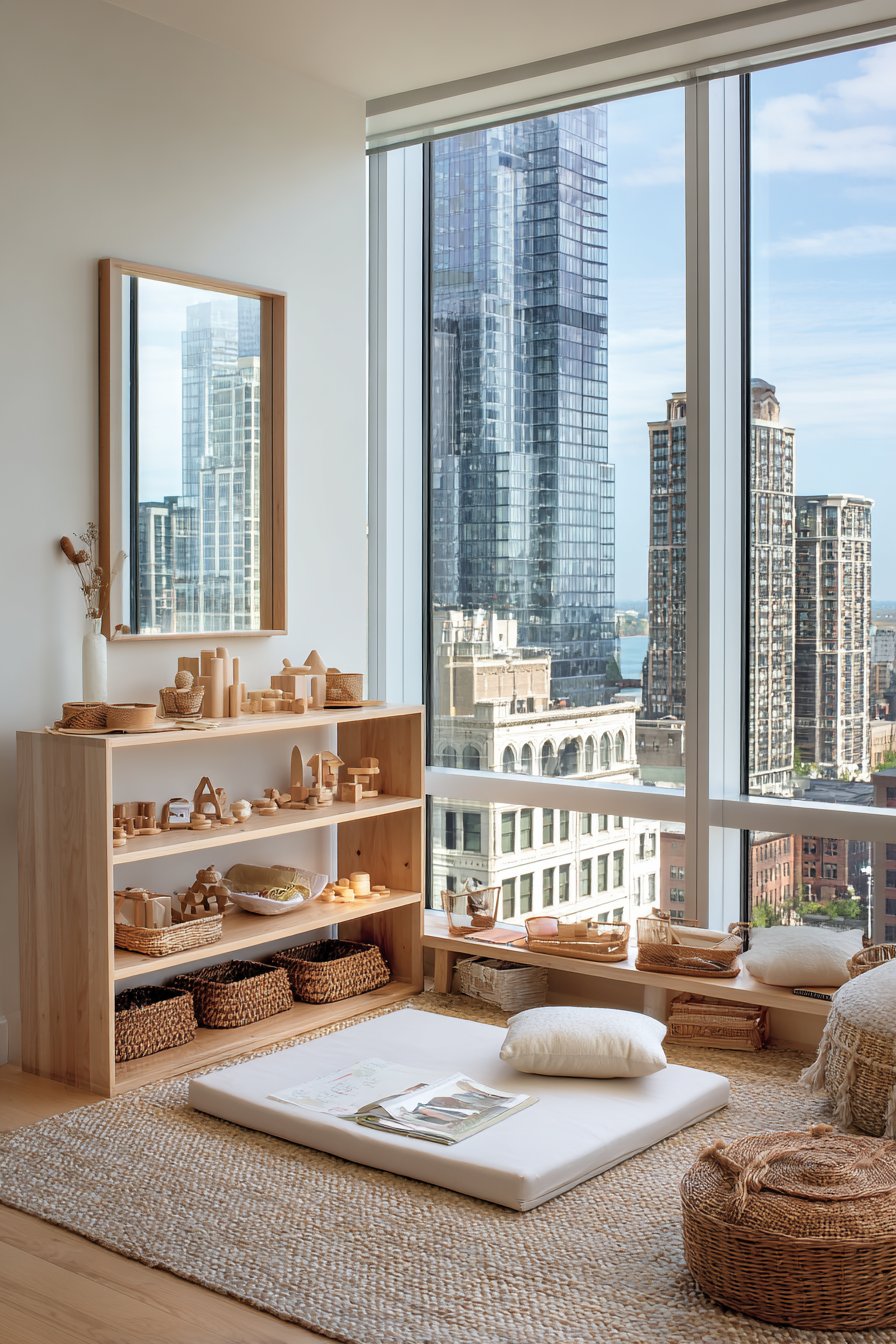
Low mirrors mounted at child height promote self-awareness and support various developmental activities from infant tummy time through toddler dress-up play. The mirror placement considers safety while providing valuable self-recognition opportunities.
Small floor mattresses nearby create comfortable reading spaces that children can access independently. The minimal, functional adult furniture maintains clear sightlines necessary for supervision while respecting children’s autonomous exploration.
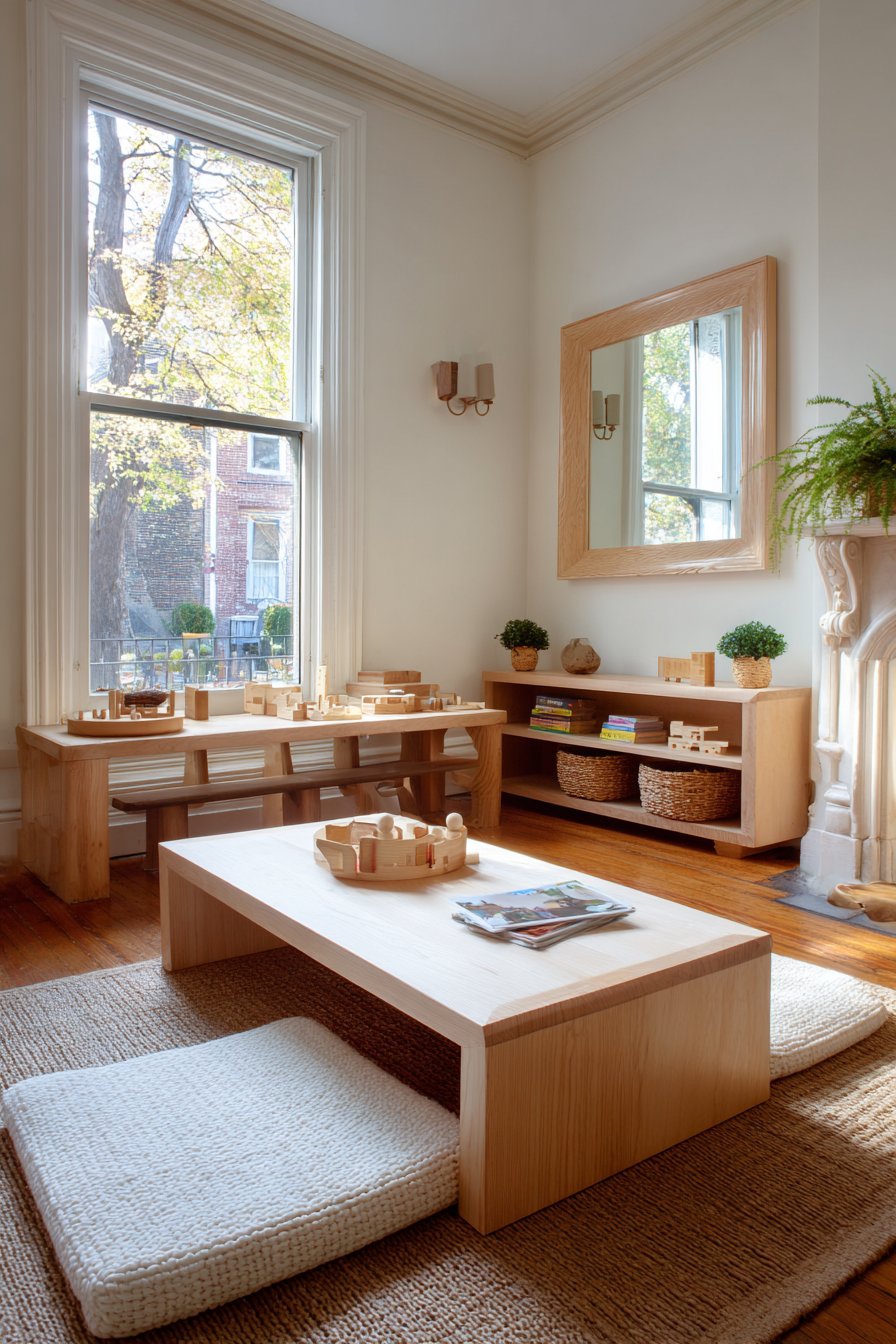
The intentional, uncluttered aesthetic characteristic of Montessori environments benefits entire families by reducing visual stress. Each item has designated placement, teaching organizational systems through environmental design.
Natural lighting highlights the child-centered philosophy where accessibility and independence receive priority. This approach creates calm spaces where children develop confidence through successful independent interactions with their environment.
Key Design Tips:
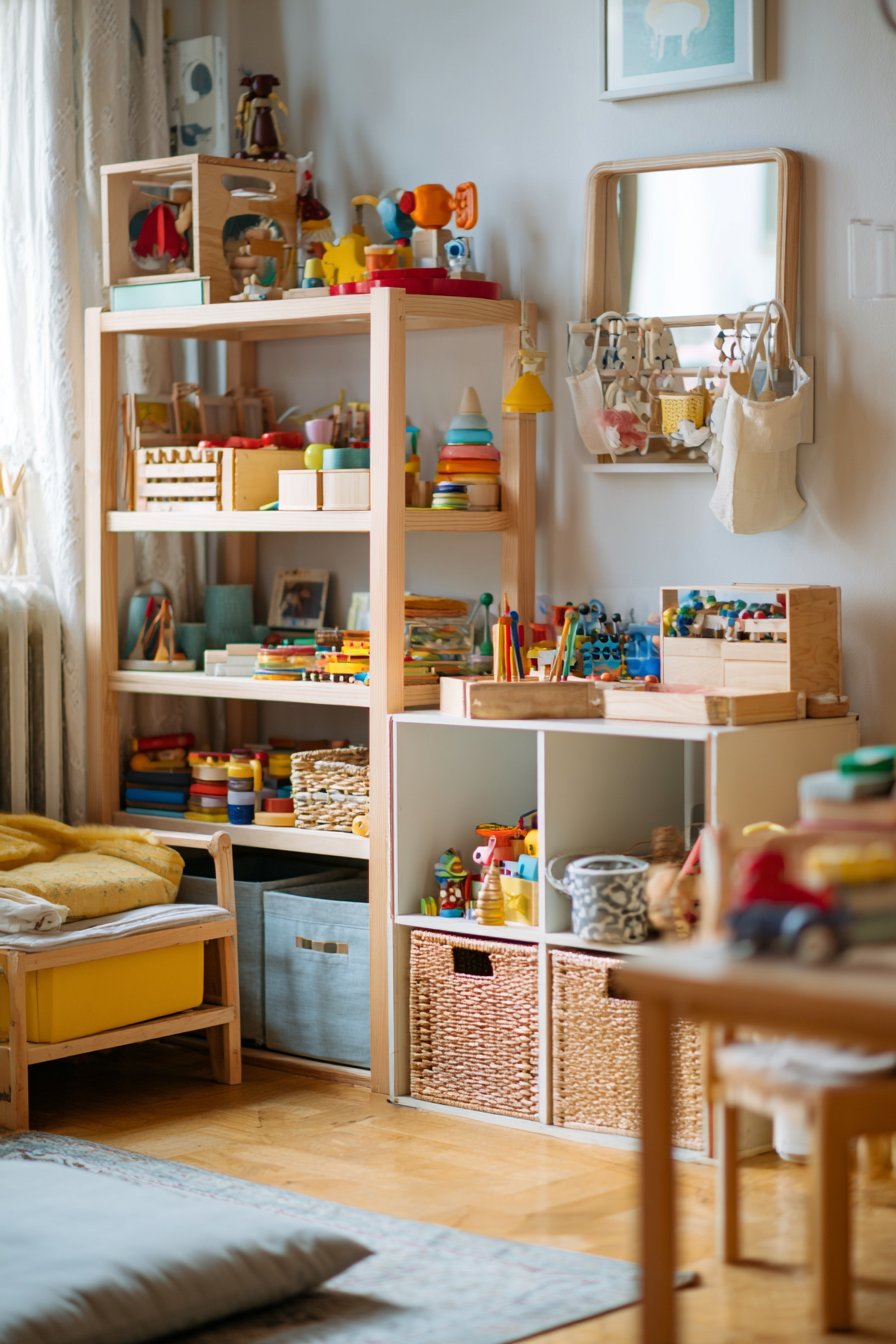
- Display toys individually on open shelves to support clear selection and decision-making
- Mount mirrors at child eye level, typically 12-24 inches from floor for toddlers
- Use natural materials exclusively for furniture and storage to maintain cohesive aesthetic
- Keep adult furniture minimal and functional to maintain open sightlines
- Organize materials by category with each item having a specific designated location
- Choose floor mattresses or cushions instead of restrictive seating to support movement freedom
9. Cozy Corner Reading Retreat
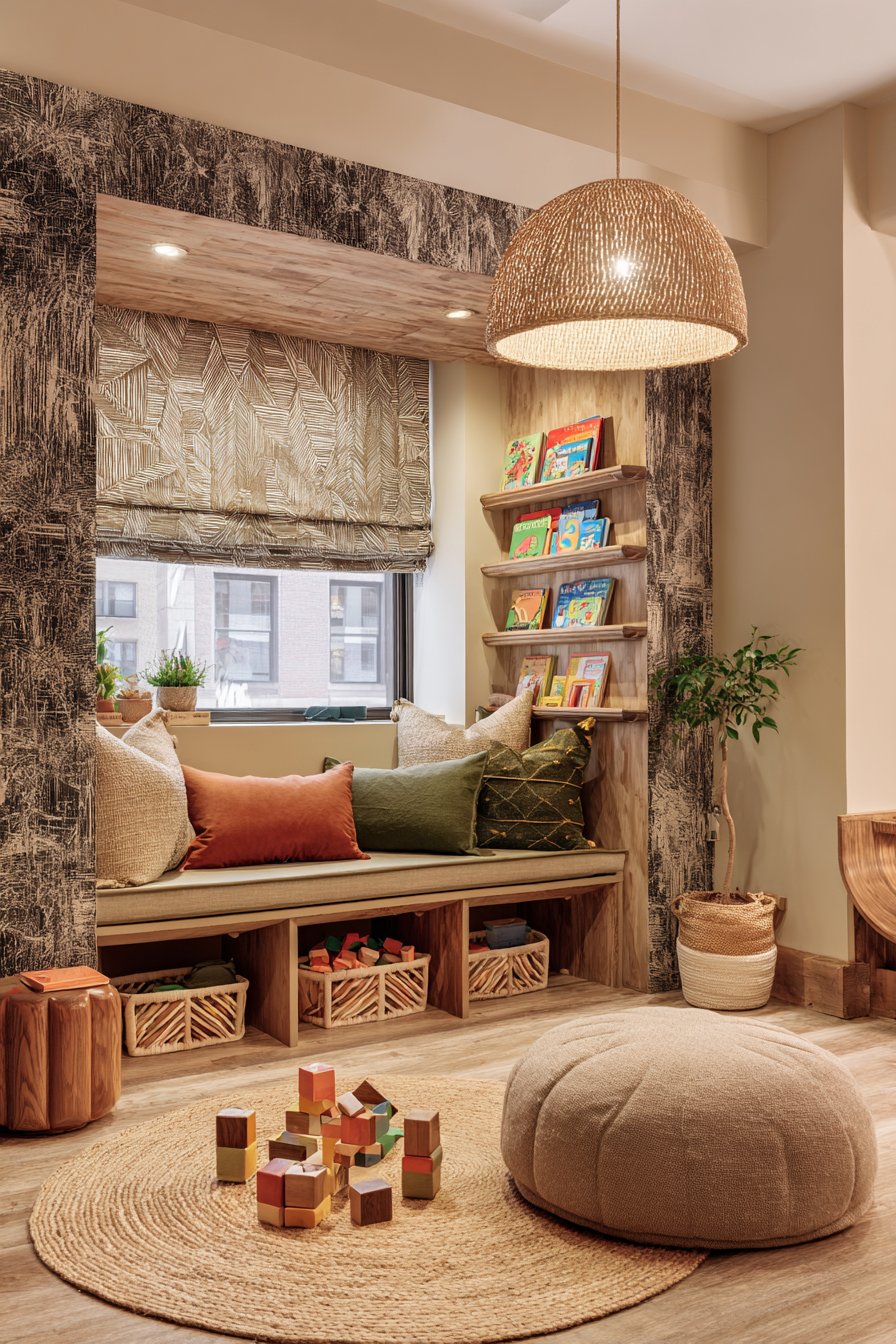
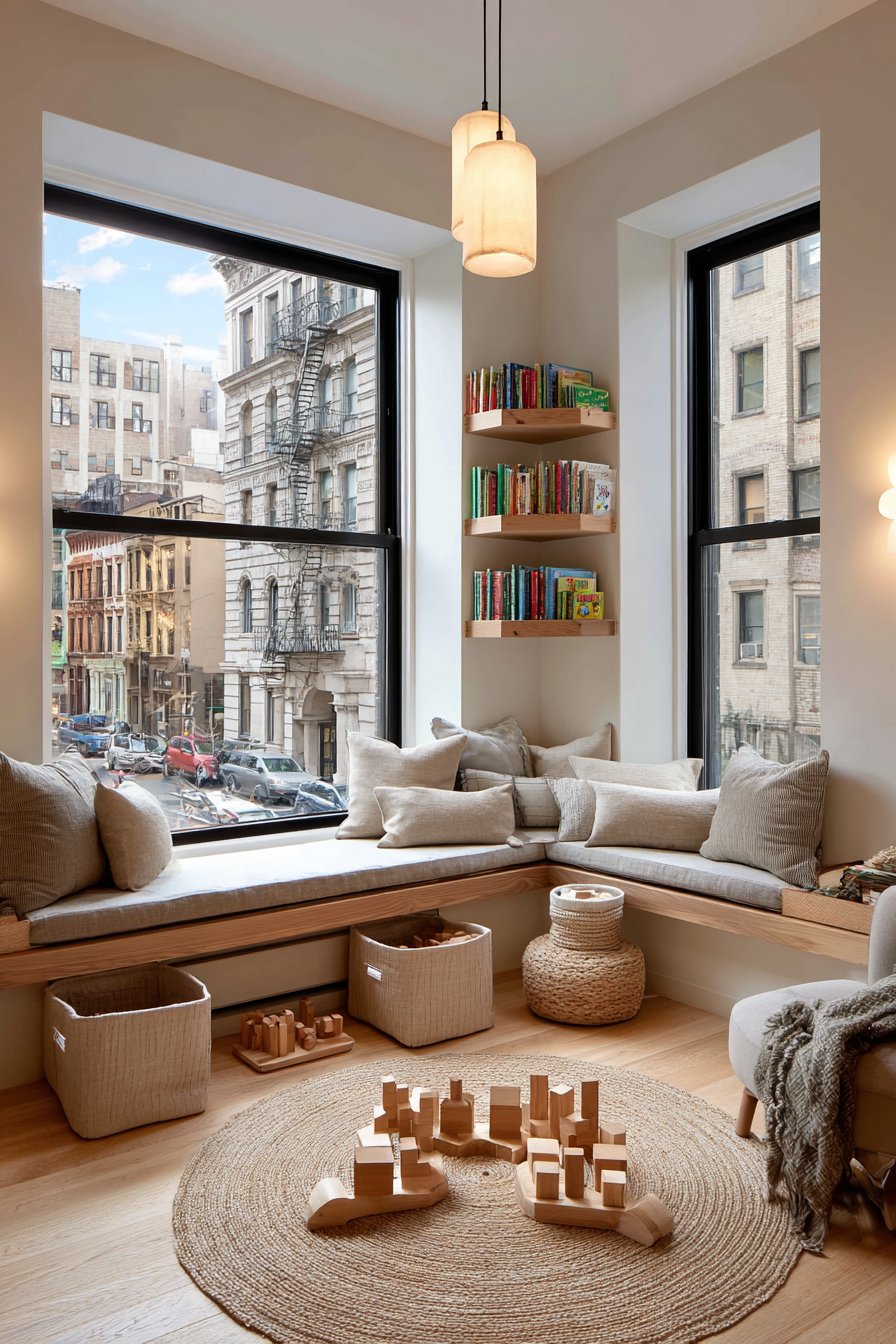
Built-in reading nooks transform underutilized corners into treasured spaces where literacy and imagination flourish. Cushioned bench seating provides comfortable perches for extended reading sessions while built-in storage below contains books and quiet toys.
Overhead book ledges display colorful spines that create vibrant visual interest while keeping literature accessible. This vertical display encourages browsing and selection, making books prominent rather than hidden away.
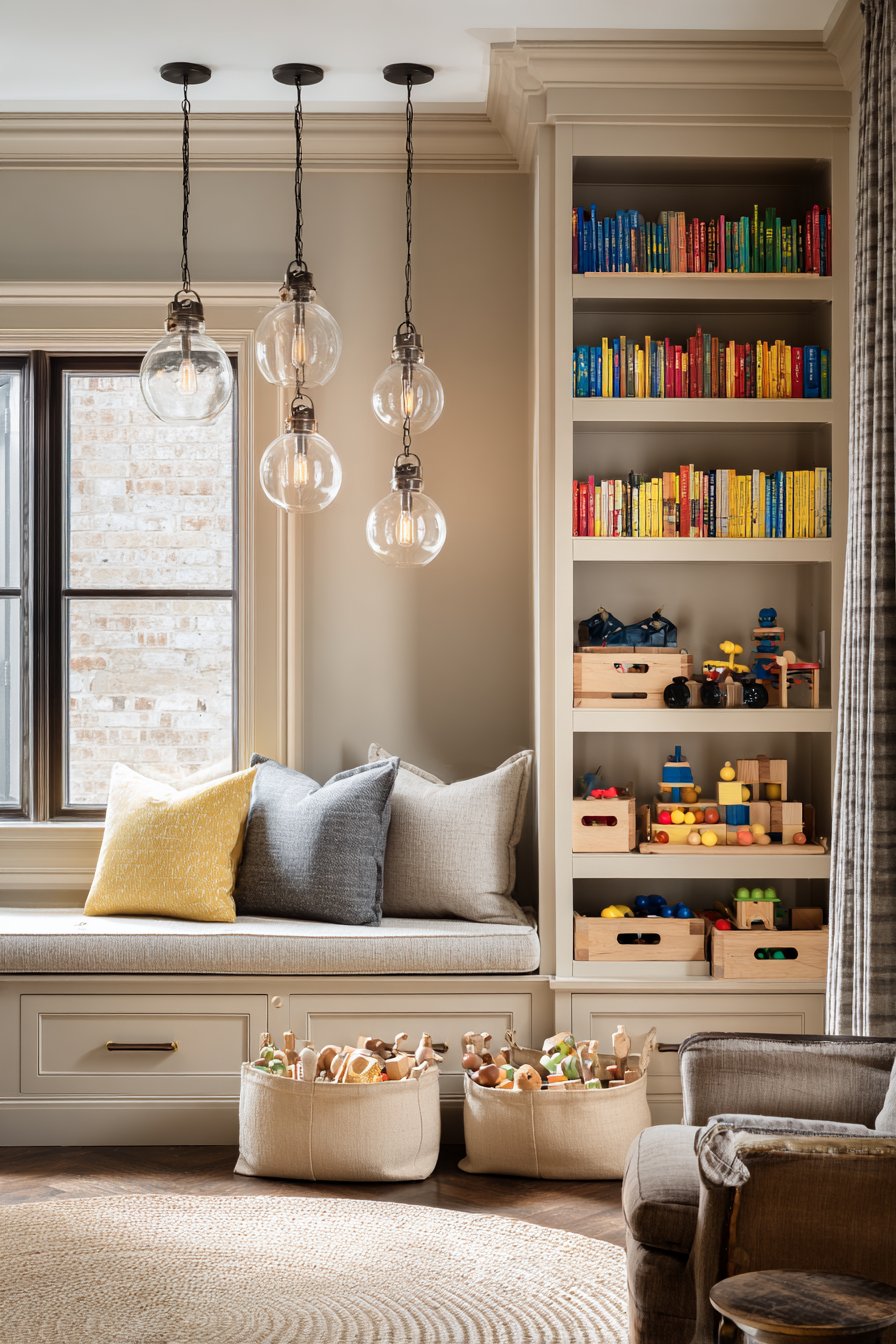
Soft pendant lighting provides focused task illumination specifically for the play zone without over-lighting the entire room. This targeted approach creates ambient differentiation that subtly defines the play area’s boundaries.
Round braided jute rugs anchor collections of wooden building blocks and educational toys stored in natural canvas bins. The organic materials and warm tones create inviting atmosphere that draws children naturally toward the space.
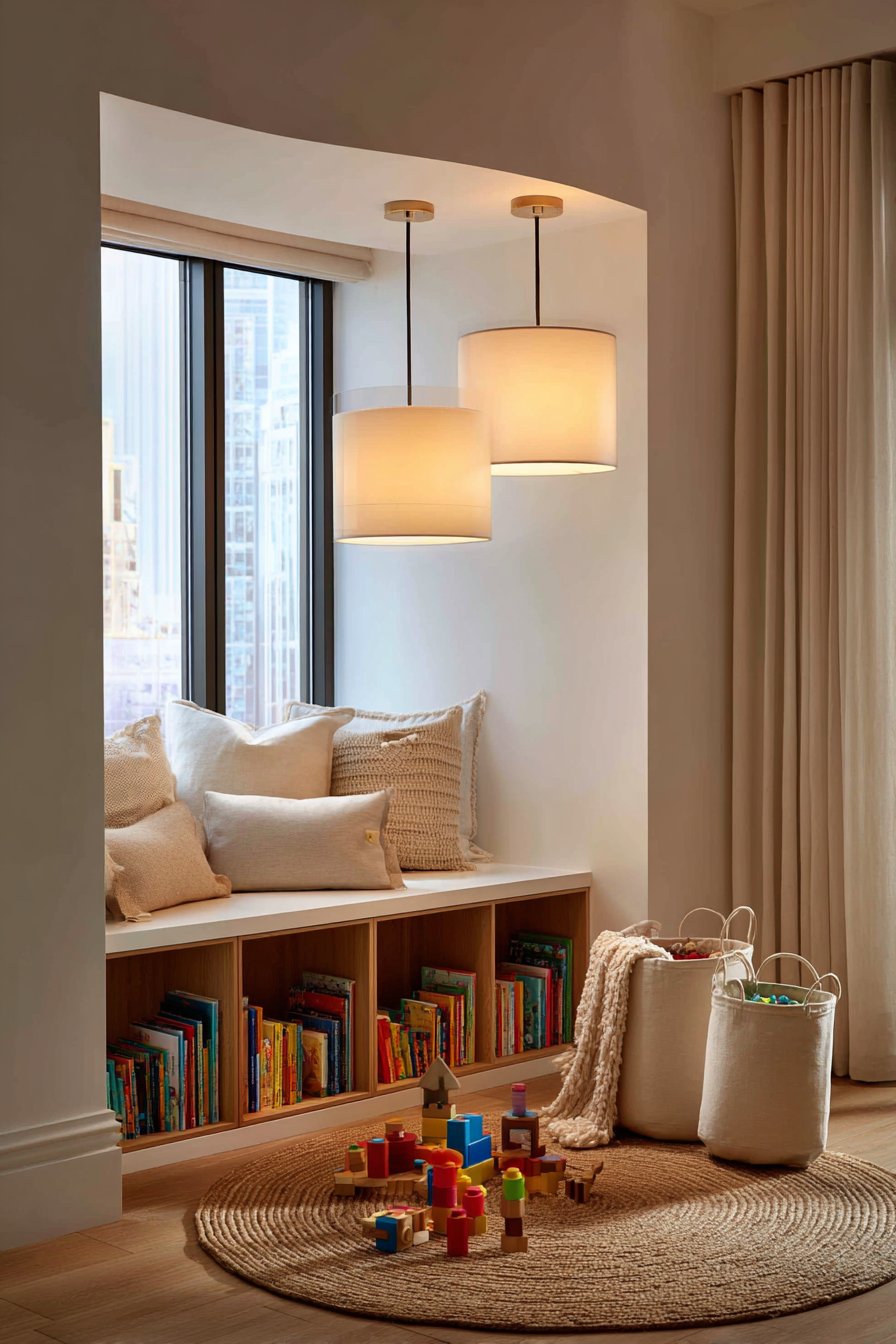
The main living room features complementary warm-toned furniture and throws that extend the cozy aesthetic beyond the designated play corner. Professional design captures inviting atmosphere through attention to realistic details including natural wear patterns. Practical toy placement shows how real families use spaces rather than presenting unattainable perfection. This honest approach helps readers envision similar solutions in their own homes.
Key Design Tips:
- Build reading nooks into corners to maximize unused space effectively
- Install book ledges to display covers forward, encouraging selection and adding color
- Use pendant lights on dimmers to adjust illumination for various activities
- Choose round rugs to soften corner angles and define circular play zones
- Select natural canvas bins that are lightweight enough for children to move independently
- Embrace realistic styling with some visible toys to show functional family living
10. Transitional Creative Celebration
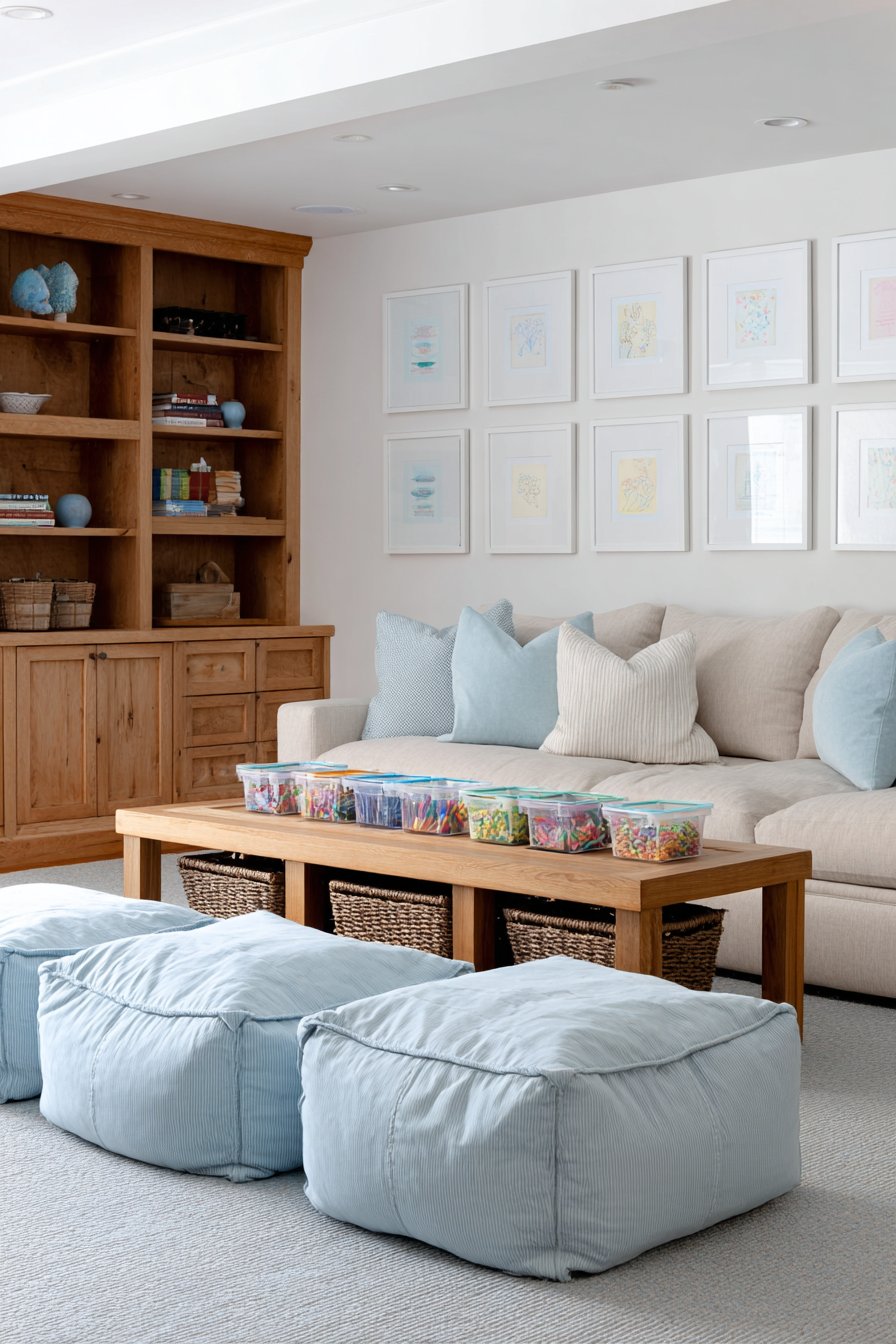
Transitional design bridges traditional and contemporary styles, creating timeless spaces that accommodate evolving tastes and needs. Low wooden console tables convert seamlessly into activity stations when equipped with organized craft supplies in clear containers.
The transparency of storage containers allows children to identify materials independently while maintaining visual organization. This setup encourages creative expression while containing potential mess within manageable boundaries.
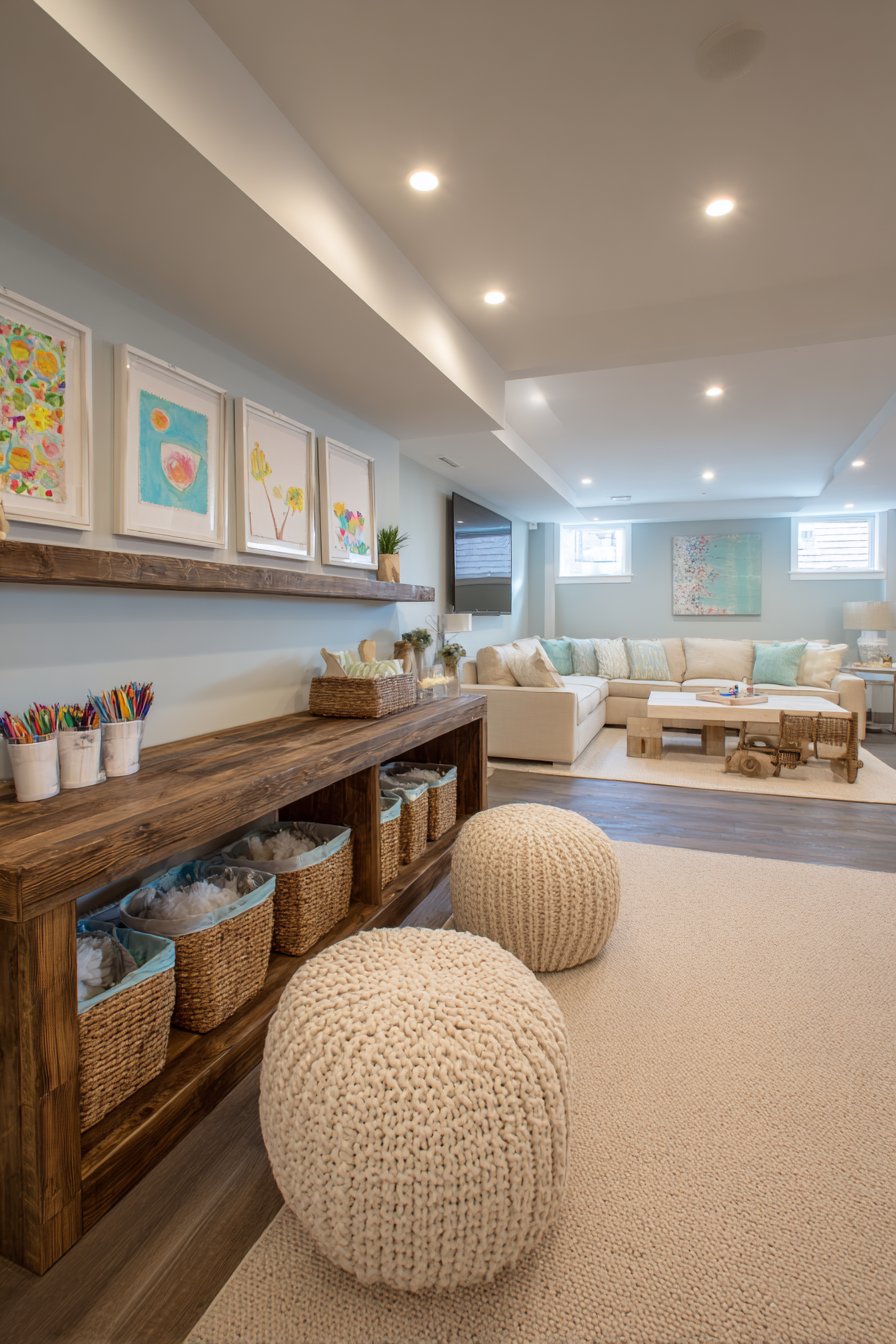
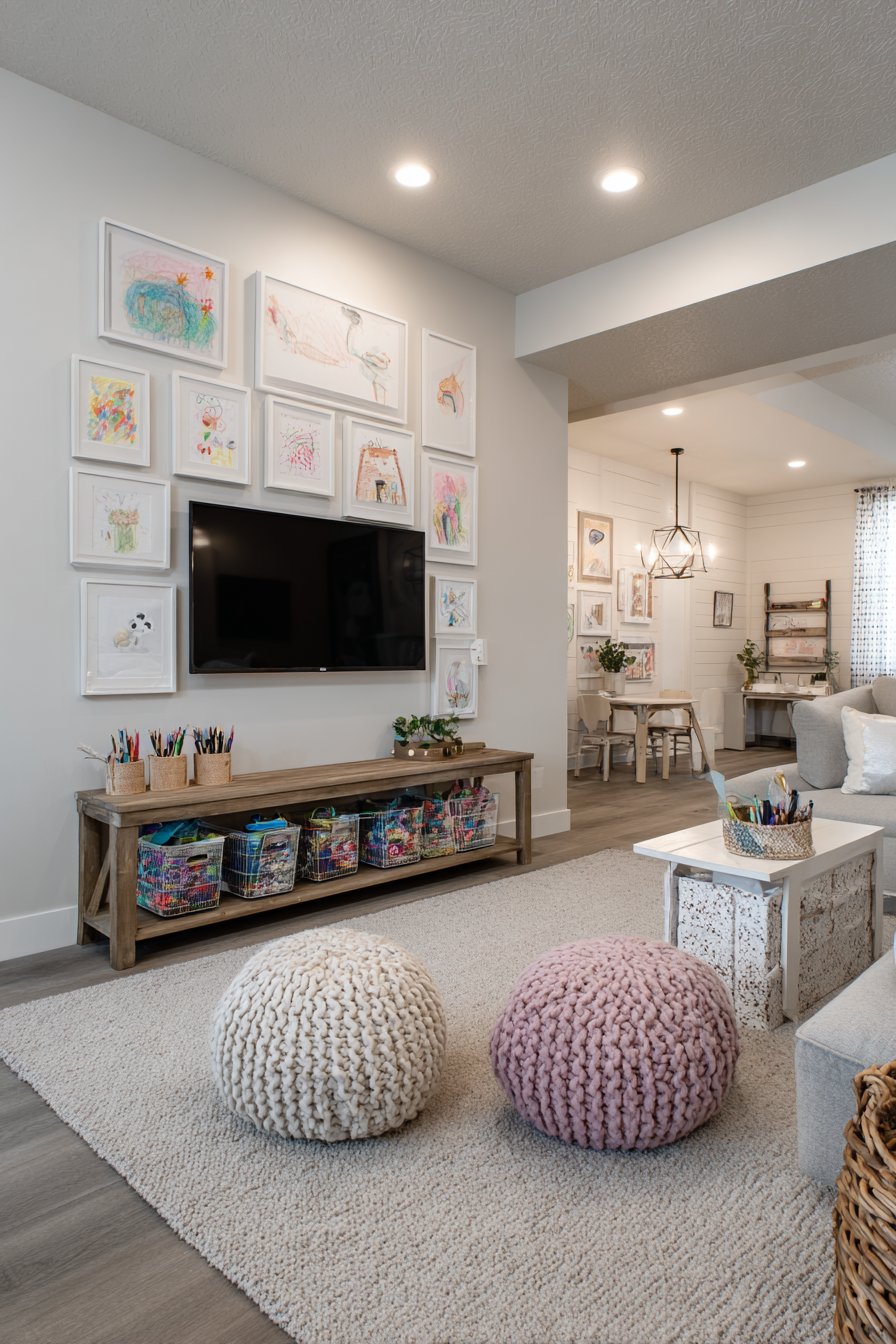
Gallery walls displaying children’s artwork in matching frames create dedicated zones celebrating creativity and accomplishment. This approach validates children’s efforts while contributing genuine artistic interest to adult spaces.
The consistent framing elevates children’s art to gallery-worthy status, demonstrating that family homes can showcase personal creativity alongside purchased artwork. Plush poufs in durable fabrics provide flexible seating that relocates easily for various activities and group configurations.
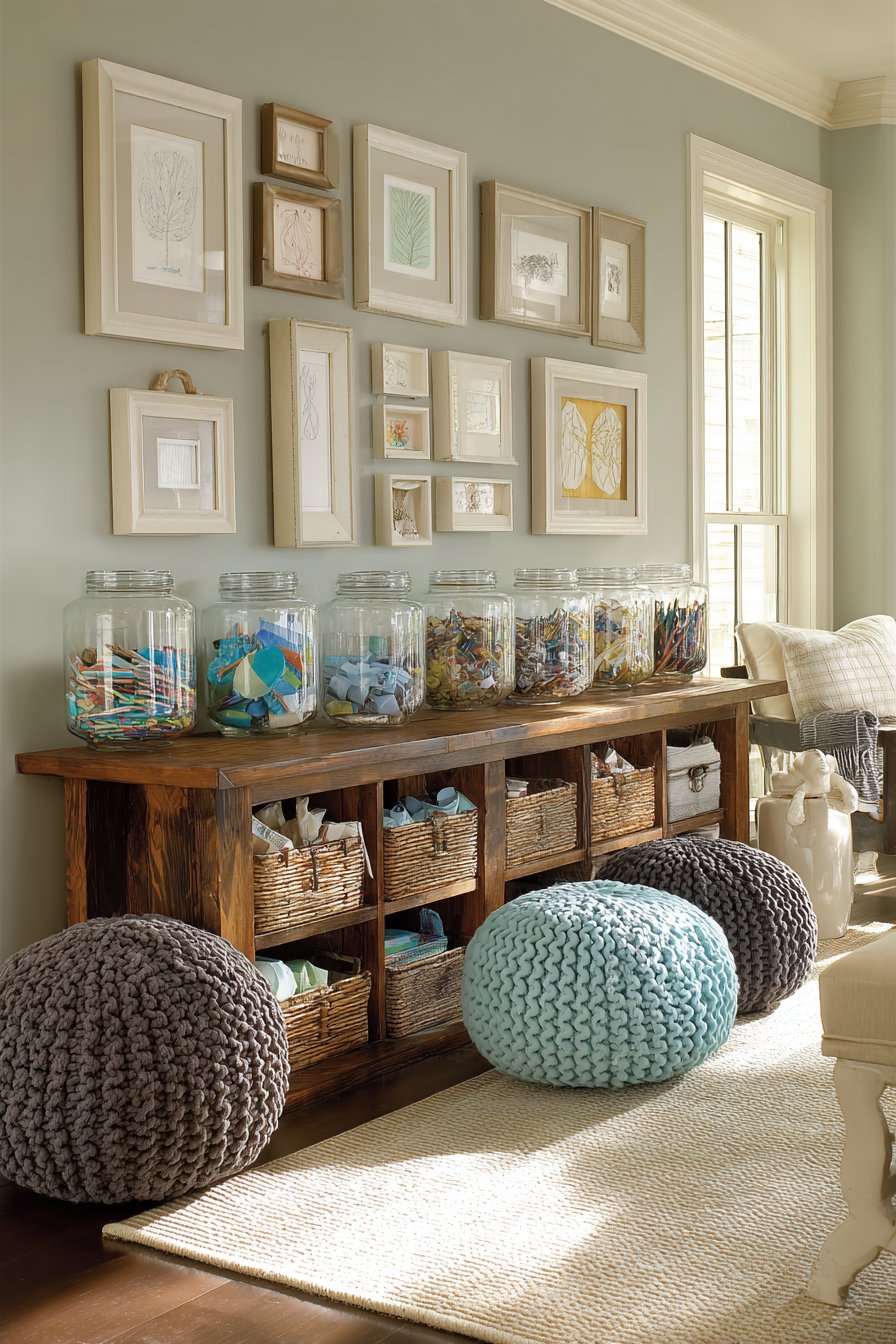
Stain-resistant area rugs address practical concerns about spills and accidents without sacrificing style or comfort. The living room maintains cohesive design through transitional furniture that balances traditional warmth with contemporary clean lines.
Balanced color palettes of warm neutrals and soft blues create calming atmosphere throughout the space. Soft diffused lighting highlights material textures and functional details, proving sophisticated style accommodates family-friendly design beautifully.
Key Design Tips:
- Repurpose console tables as activity stations by adding organized supply storage
- Frame children’s artwork in matching frames to create cohesive gallery walls
- Choose poufs for flexible seating that children can move independently
- Select stain-resistant rug materials like polypropylene or treated wool
- Use clear storage containers so children can identify supplies without adult assistance
- Maintain balanced color palettes that unite child and adult zones harmoniously
Why These Kids Play Area Designs Excel
These ten design approaches represent the best solutions for integrating children’s play spaces into living rooms because they address multiple critical factors simultaneously. Each design prioritizes safety through thoughtful material selection, rounded edges, and age-appropriate heights while maintaining aesthetic sophistication. The integration strategies demonstrated here prove that family-friendly living room design doesn’t require sacrificing style or adult comfort preferences.
Storage solutions featured across these designs emphasize accessibility and organization, teaching children valuable life skills while maintaining visual order. Low shelving units, labeled bins, and modular systems encourage independent play and cleanup. These organizational strategies reduce parental workload while fostering responsibility and decision-making capabilities in young children. The variety of storage approaches—from Montessori open shelving to farmhouse crates to contemporary built-ins—ensures solutions exist for every design preference and spatial constraint.
Natural lighting receives consistent emphasis throughout these designs, recognizing its importance for child development, energy efficiency, and creating inviting atmospheres. Positioning play areas near windows maximizes daylight exposure while providing visual connection to outdoor environments. This strategic placement benefits children’s circadian rhythms, vitamin D synthesis, and overall wellbeing. Adult supervision becomes easier when natural light illuminates play zones clearly throughout daytime hours.
Material selection demonstrates sophisticated understanding of durability, safety, and aesthetic harmony requirements. Natural woods, washable fabrics, stain-resistant rugs, and easy-clean surfaces address practical family living needs without compromising design integrity. These material choices acknowledge that children’s spaces must withstand heavy use while remaining attractive to adults sharing the living room. The emphasis on natural, non-toxic materials reflects contemporary awareness about indoor air quality and environmental health.
Color palette coordination represents another strength across these designs, with neutral foundations allowing flexibility as children grow and tastes evolve. Muted tones, warm neutrals, and soft accent colors create cohesive visual flow between child and adult zones. This approach avoids primary color overload while maintaining cheerful, inviting atmospheres. The sophisticated color strategies demonstrate that children’s spaces can stimulate imagination without overwhelming senses or clashing with adult aesthetics.
Flexibility and adaptability characterize these superior design solutions, acknowledging that children’s needs change rapidly as they develop. Modular furniture, adjustable shelving, rotating toy displays, and multi-functional pieces accommodate growth without requiring complete redesigns. This forward-thinking approach maximizes investment value while reducing environmental impact through reduced consumption. Families benefit from designs that evolve alongside their changing dynamics and spatial requirements.
Zoning strategies employed across these designs create psychological boundaries without physical barriers that obstruct supervision or visual connection. Area rugs, furniture arrangements, lighting variations, and material changes subtly define play areas while maintaining open floor plans. These gentle demarcations help children understand spatial organization while allowing adults to maintain cohesive living room aesthetics. The balance between definition and integration represents sophisticated design thinking applied to family living challenges.
Each design approach emphasizes developmentally appropriate features that support children’s growth across physical, cognitive, and social domains. Reading nooks encourage literacy development, sensory tables support tactile exploration, accessible storage fosters independence, and safe play surfaces enable confident physical activity. These designs recognize that thoughtful environments contribute significantly to childhood development and family wellbeing. The integration of educational elements within attractive designs proves that learning spaces need not resemble classrooms.
Conclusion
Creating kids’ play areas within living rooms represents one of contemporary family life’s most rewarding design challenges. The ten approaches detailed here demonstrate that thoughtful planning, strategic material selection, and creative spatial organization allow children’s needs and adult preferences to coexist harmoniously. From Scandinavian minimalism to farmhouse warmth, from space-saving vertical solutions to luxurious built-ins, options exist for every home style, budget, and square footage.
The key takeaway involves recognizing that family-friendly design doesn’t require aesthetic compromise when approached with intention and creativity. Neutral color palettes, natural materials, smart storage solutions, and flexible furniture create spaces where all family members feel considered and comfortable. These designs prove that children’s play areas can enhance rather than detract from living room beauty when integration receives proper attention.
Experiment with these concepts in your own home by starting with one element that resonates with your family’s needs and style preferences. Perhaps begin with accessible storage solutions, add natural lighting optimization, or incorporate flexible seating that serves multiple purposes. Small changes accumulate into significant improvements in both function and aesthetics. Remember that the best design solutions evolve with your family, adapting as children grow and needs transform. Create spaces that celebrate family togetherness while honoring everyone’s need for beauty, comfort, and personal expression in your shared home.
