


The kitchen has evolved from a purely functional space into the heart of the home—a place where culinary creativity meets social gathering, where morning coffee rituals blend with evening family dinners. In this transformation, the choice of color palette plays a pivotal role in establishing not just the aesthetic appeal but also the emotional resonance of the space. Among the countless color combinations available to homeowners and designers, the grey and white kitchen stands out as a timeless choice that effortlessly bridges traditional elegance with contemporary sophistication. This classic pairing offers remarkable versatility, allowing homeowners to create spaces that range from warmly inviting to sleekly modern, all while maintaining a sense of refined simplicity that never goes out of style.
The enduring popularity of grey and white kitchens stems from their inherent ability to adapt to various design preferences while providing a neutral foundation that welcomes personal touches and evolving trends. Grey brings depth, sophistication, and grounding warmth, while white contributes brightness, spaciousness, and a sense of cleanliness that’s essential in culinary spaces. Together, these hues create a balanced environment that feels both calm and energizing—a perfect backdrop for the daily activities that make a kitchen truly livable. Whether you’re drawn to minimalist contemporary designs, cozy farmhouse aesthetics, or something beautifully in between, the grey and white palette offers endless possibilities for personalization.
In this comprehensive guide, we’ll explore ten distinct approaches to grey and white kitchen design, each offering unique interpretations of this beloved color scheme. From sleek two-tone cabinetry to charming breakfast nooks, from space-maximizing compact designs to luxurious marble-topped islands, these designs demonstrate how thoughtful material selection, lighting considerations, and attention to detail can transform a simple color palette into extraordinary living spaces. Each concept provides actionable insights and design principles that you can adapt to your own home, regardless of your kitchen’s size, layout, or architectural style.
1. Sleek Two-Tone Cabinetry Excellence
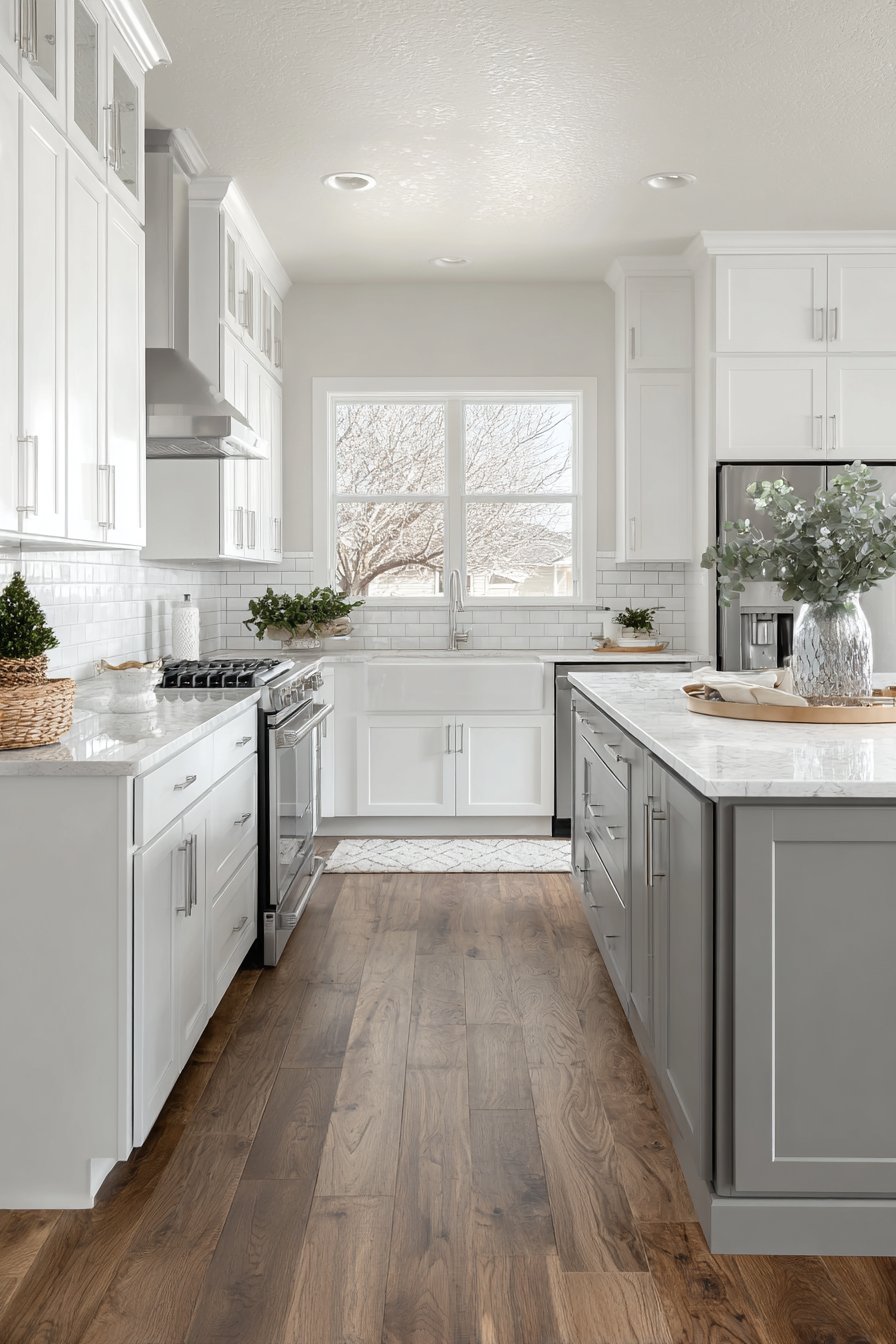
The foundation of exceptional kitchen design often begins with cabinetry, and the two-tone approach exemplifies how strategic color placement can create visual interest while maintaining cohesion. This design concept showcases flat-panel cabinetry that embraces clean lines and contemporary simplicity, with upper cabinets dressed in crisp white and lower cabinets in a sophisticated soft grey. The intentional division of color creates a grounding effect—the darker lower cabinets anchor the space visually while the white uppers lift the eye upward, making the room feel more spacious and airy than a single-color approach would achieve.
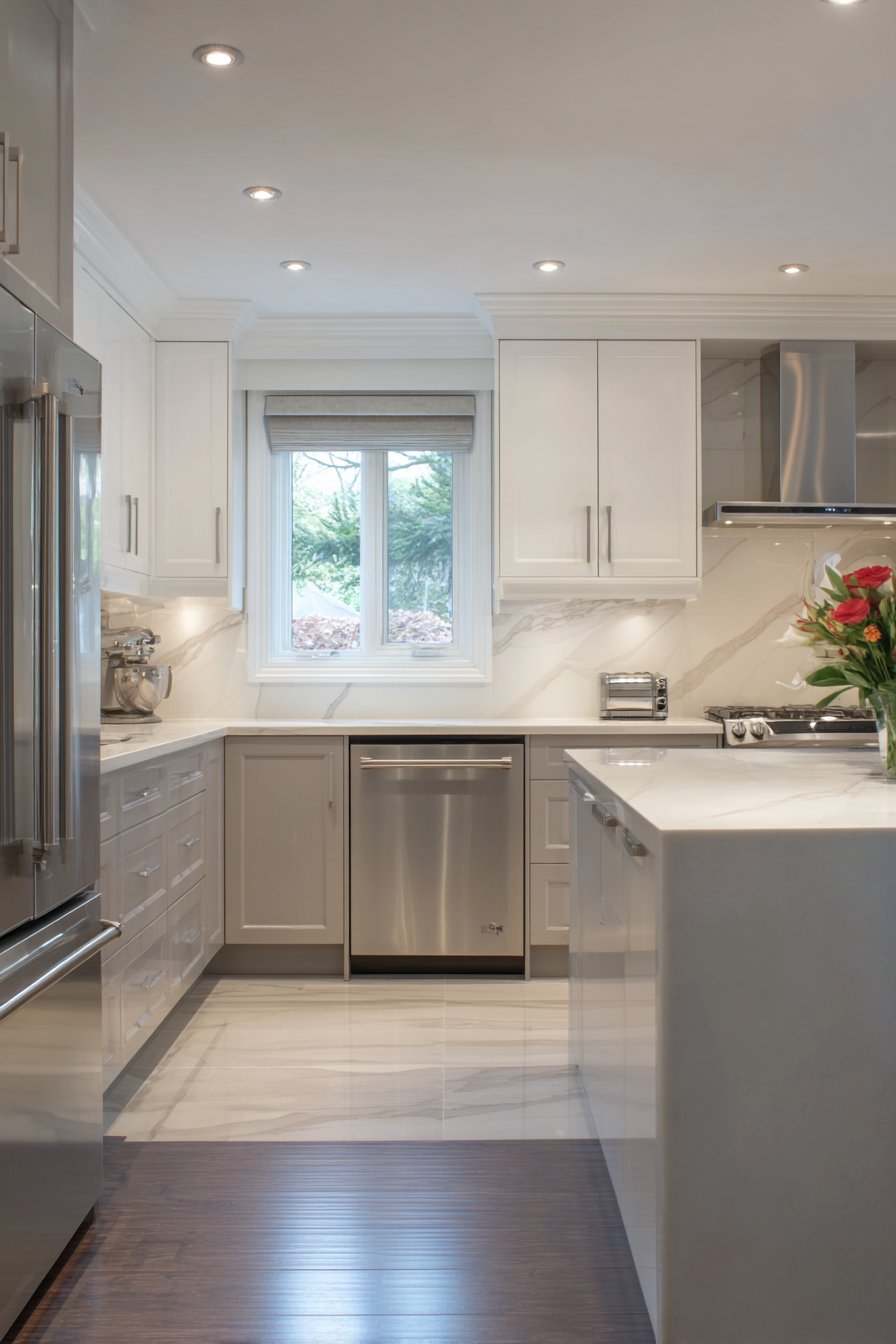
The choice of white quartz countertops with subtle grey veining serves as the perfect mediating element between the two cabinet colors. Quartz offers exceptional durability and low maintenance, making it ideal for busy kitchens, while the natural-looking veining introduces organic movement that softens the geometric precision of the flat-panel doors. The veining pattern creates a visual conversation between the grey and white elements, ensuring the color transition feels intentional rather than abrupt. Stainless steel appliances integrate seamlessly into this design, their reflective surfaces bouncing light throughout the space and contributing to the overall sense of openness.
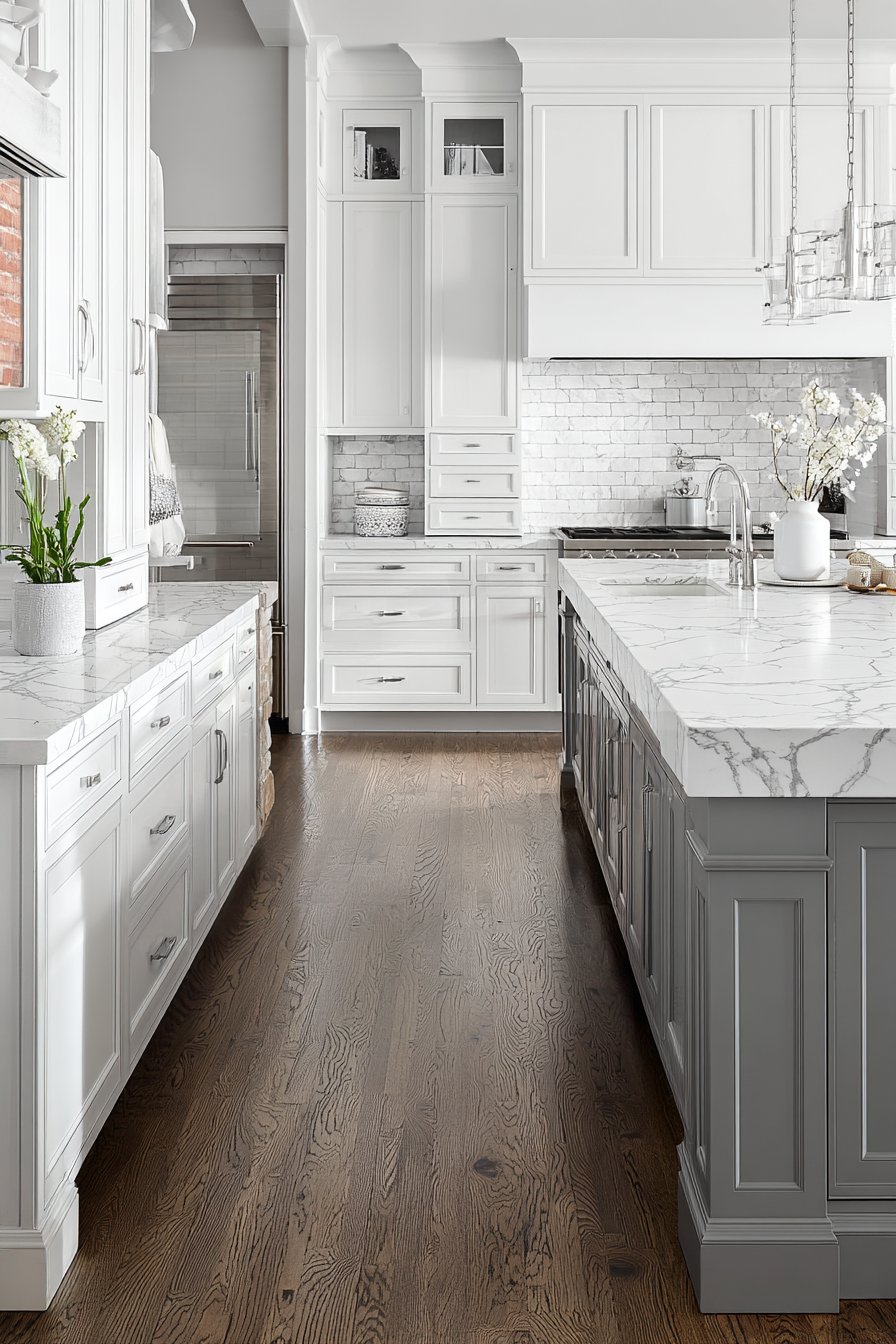
Brushed nickel hardware provides refined detail that enhances functionality without overwhelming the minimalist aesthetic. The slightly muted finish of brushed nickel offers more visual warmth than chrome while maintaining the cool, contemporary feel appropriate to this design style. Large format white subway tiles create a classic backsplash that honors kitchen design heritage while maintaining a fresh, updated appearance. The larger tile size reduces grout lines, contributing to the clean aesthetic and making maintenance simpler. Natural light from a window positioned above the sink becomes a crucial design element, highlighting the balanced color scheme and emphasizing the quality of materials throughout the space.
Key Design Tips:
- Use two-tone cabinetry to create visual depth by placing darker colors on lower cabinets and lighter tones above to enhance the sense of height and space.
- Select countertops with subtle veining that incorporates both your primary colors, creating a natural bridge between different cabinet tones.
- Maximize natural light sources by keeping window treatments minimal or absent in kitchen areas, allowing the grey and white palette to reflect and amplify available daylight.
- Choose hardware finishes thoughtfully to add warmth to cool color schemes—brushed nickel and brass work beautifully with grey and white combinations.
- Opt for large format tiles when possible to reduce visual clutter from grout lines and emphasize the clean, contemporary aesthetic.
2. Stunning Waterfall-Edge Kitchen Island
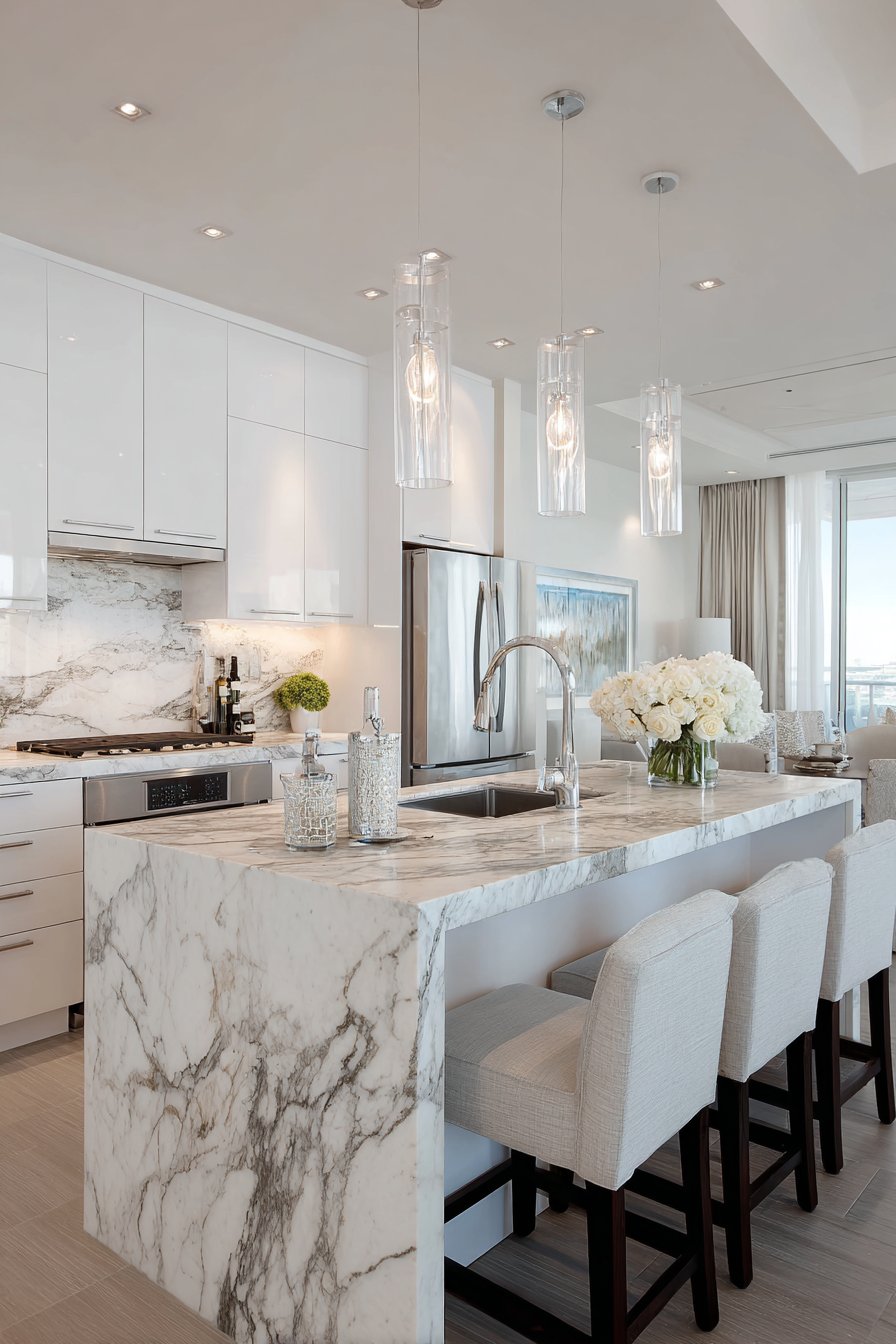
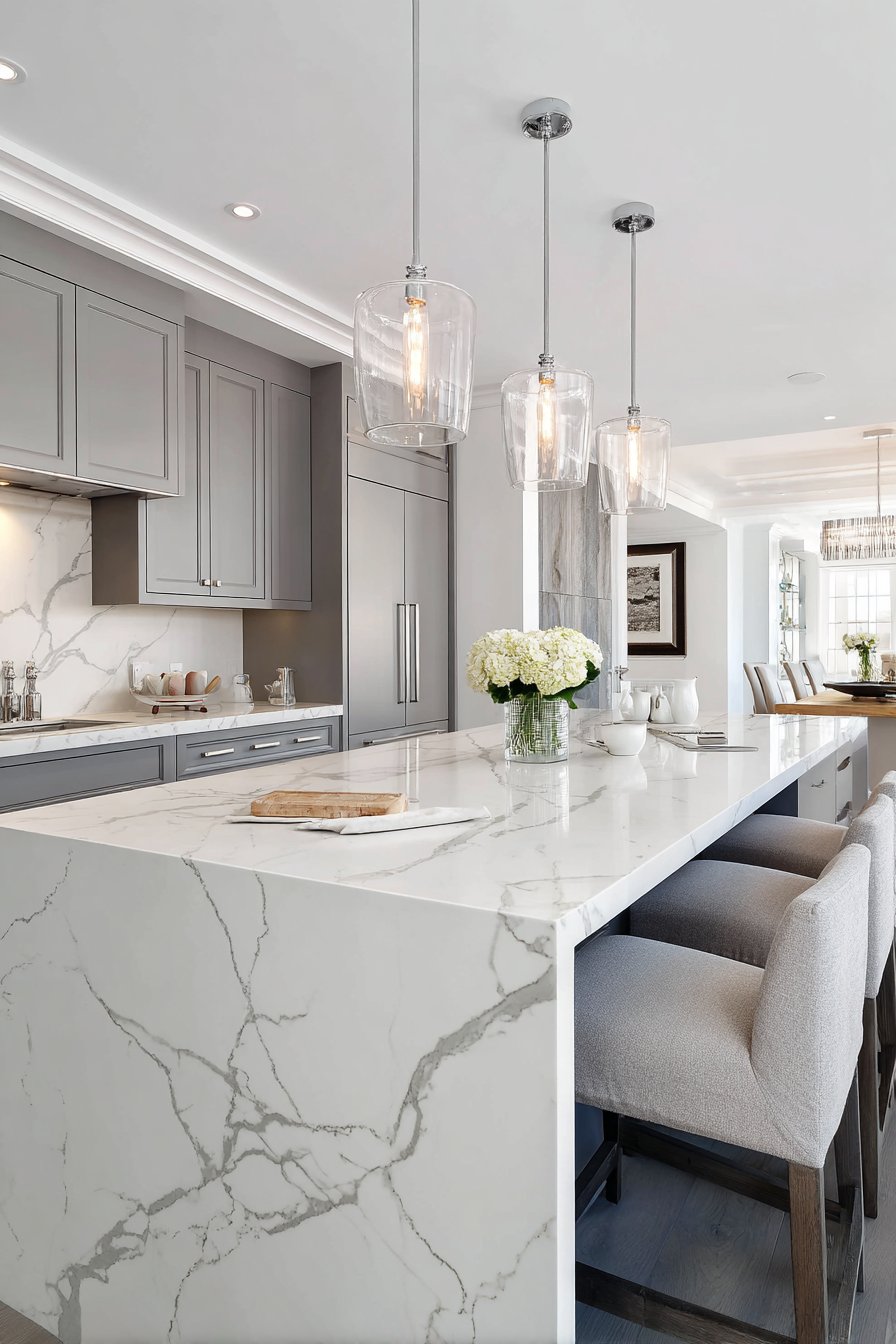
The kitchen island has become far more than additional counter space—it’s a statement piece, a gathering place, and often the defining feature of the entire room. This design elevates the island concept through the introduction of a waterfall-edge white marble countertop with delicate grey veining that cascades down both sides, creating a continuous flow of luxurious stone that captures attention immediately upon entering the space. The waterfall edge adds architectural drama while showcasing the natural beauty of the marble, with the veining patterns becoming a focal point that draws the eye and invites closer inspection of the stone’s unique characteristics.
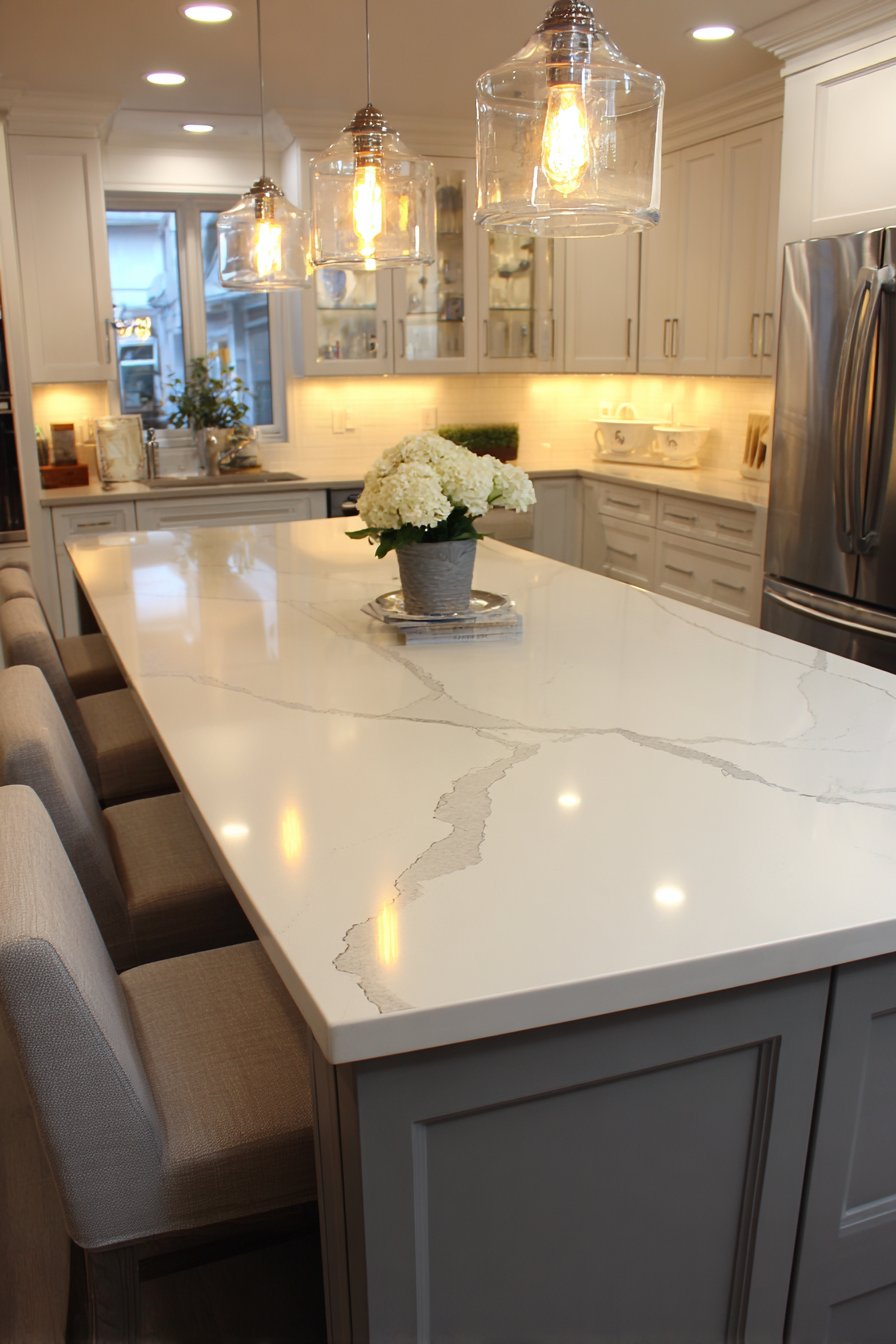
The island base, painted in a refined medium grey with shaker-style panel doors, provides substantial visual weight that grounds this centerpiece element. Shaker-style cabinetry brings a touch of traditional craftsmanship to the contemporary design, their recessed panels adding subtle dimension without competing with the dramatic countertop. Chrome cup pulls offer a bright metallic accent that catches light and provides easy functionality for accessing storage within the island. Three upholstered counter stools in light grey linen provide comfortable seating that invites lingering conversations over morning coffee or casual meals, their fabric texture introducing softness to balance the hard surfaces of stone and cabinetry.
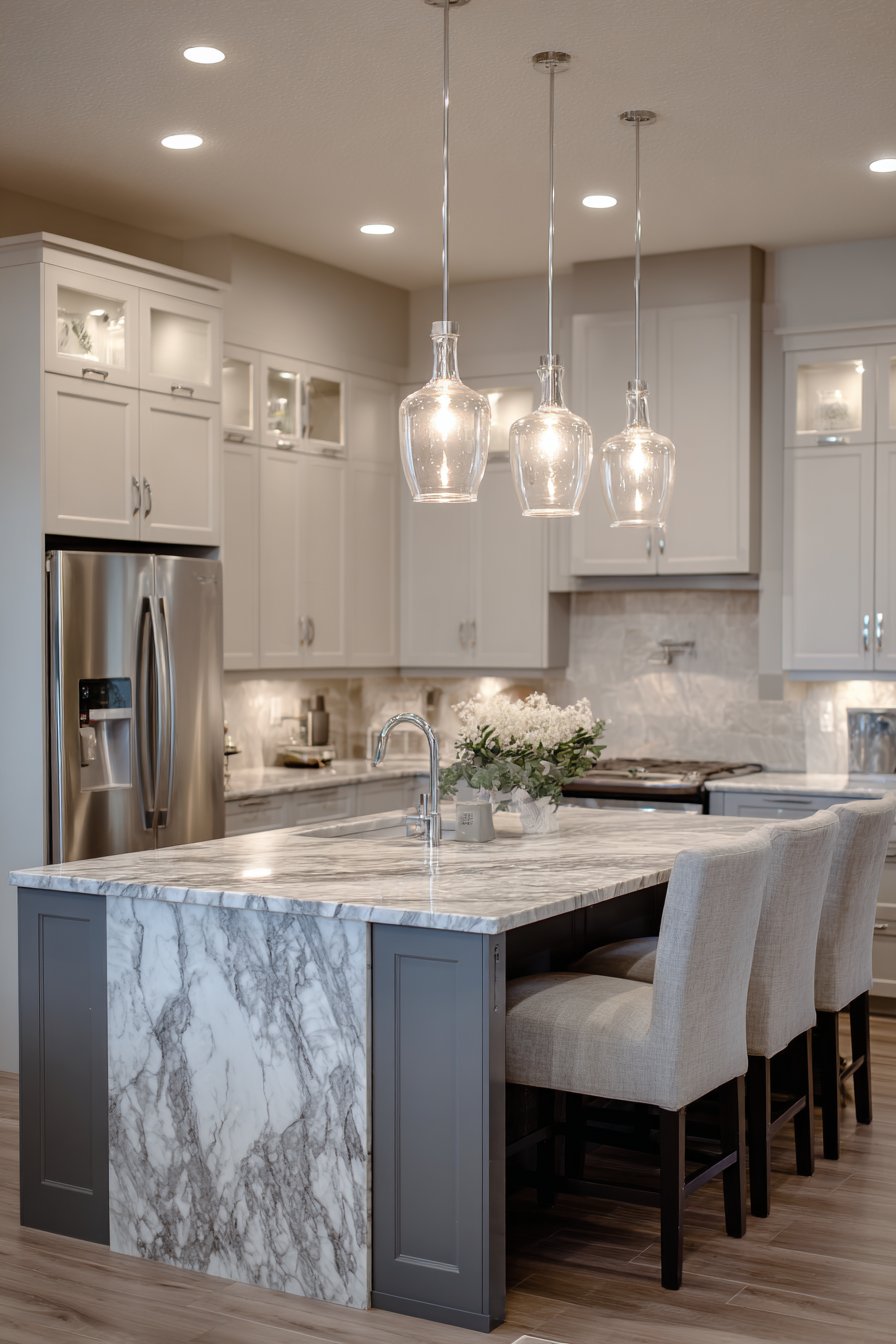
Pendant lights with clear glass shades hang above the island at carefully calculated heights, casting warm illumination on the marble surface while creating visual interest at eye level. The transparency of the glass allows the light source to remain visible, adding sparkle and dimension to the lighting scheme. The surrounding kitchen features white perimeter cabinets that recede visually, allowing the grey and marble island to maintain its position as the room’s star attraction. This design demonstrates how a focal point can be created through material luxury, thoughtful proportion, and strategic color placement within the grey and white palette.
Key Design Tips:
- Invest in a waterfall countertop edge for your island to create immediate visual impact and showcase premium stone materials to their fullest potential.
- Balance a statement island with simpler perimeter cabinetry to ensure the focal point remains prominent without overwhelming the space.
- Choose counter stool upholstery that complements your color scheme while introducing texture variation through fabric selections like linen, velvet, or leather.
- Hang pendant lights at proper heights—typically 30 to 36 inches above the counter surface—to provide adequate task lighting without obstructing sightlines across the kitchen.
- Select hardware that adds a contrasting metallic element to provide visual interest and enhance the sophisticated appeal of your design.
3. Airy Open Shelving Concept
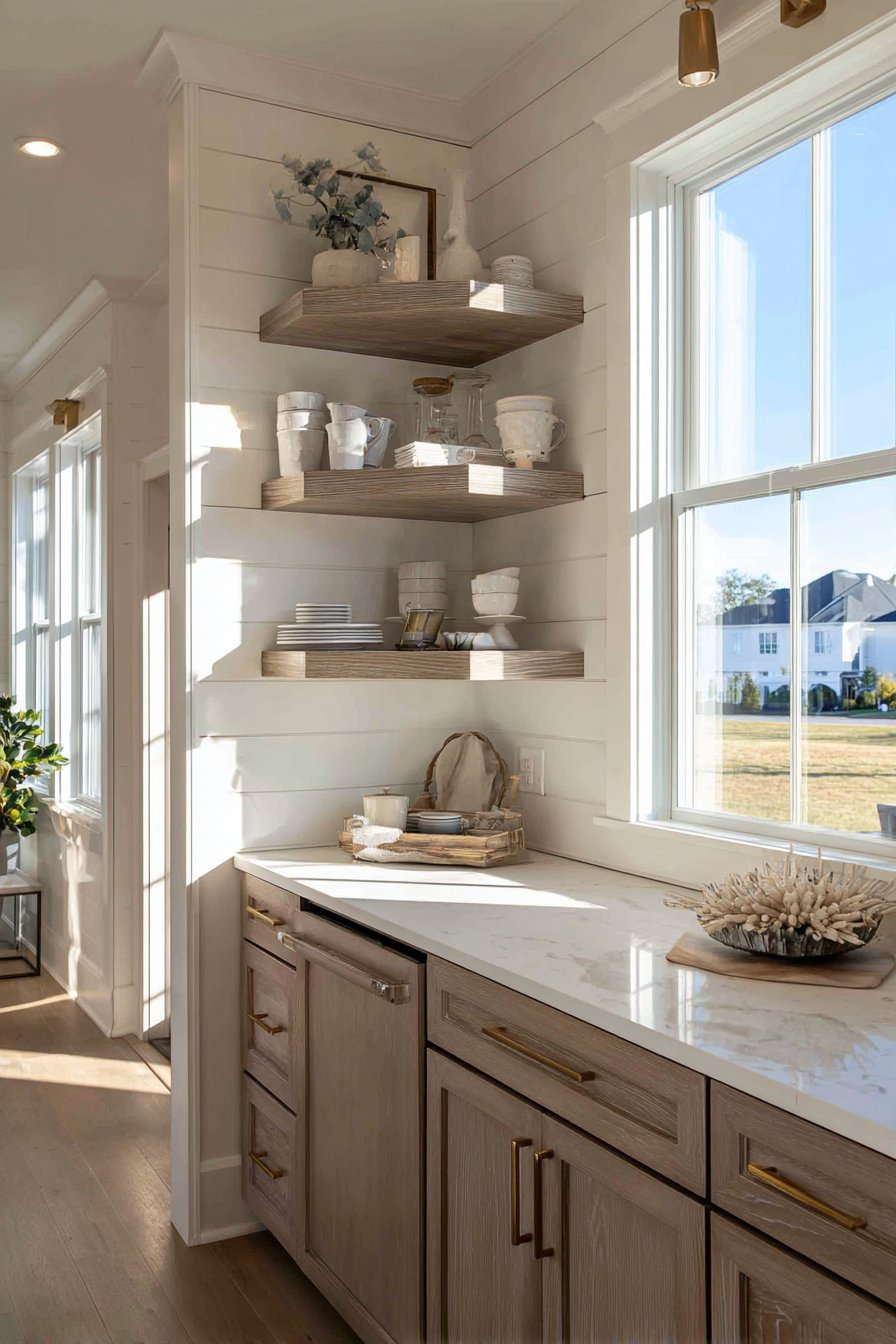
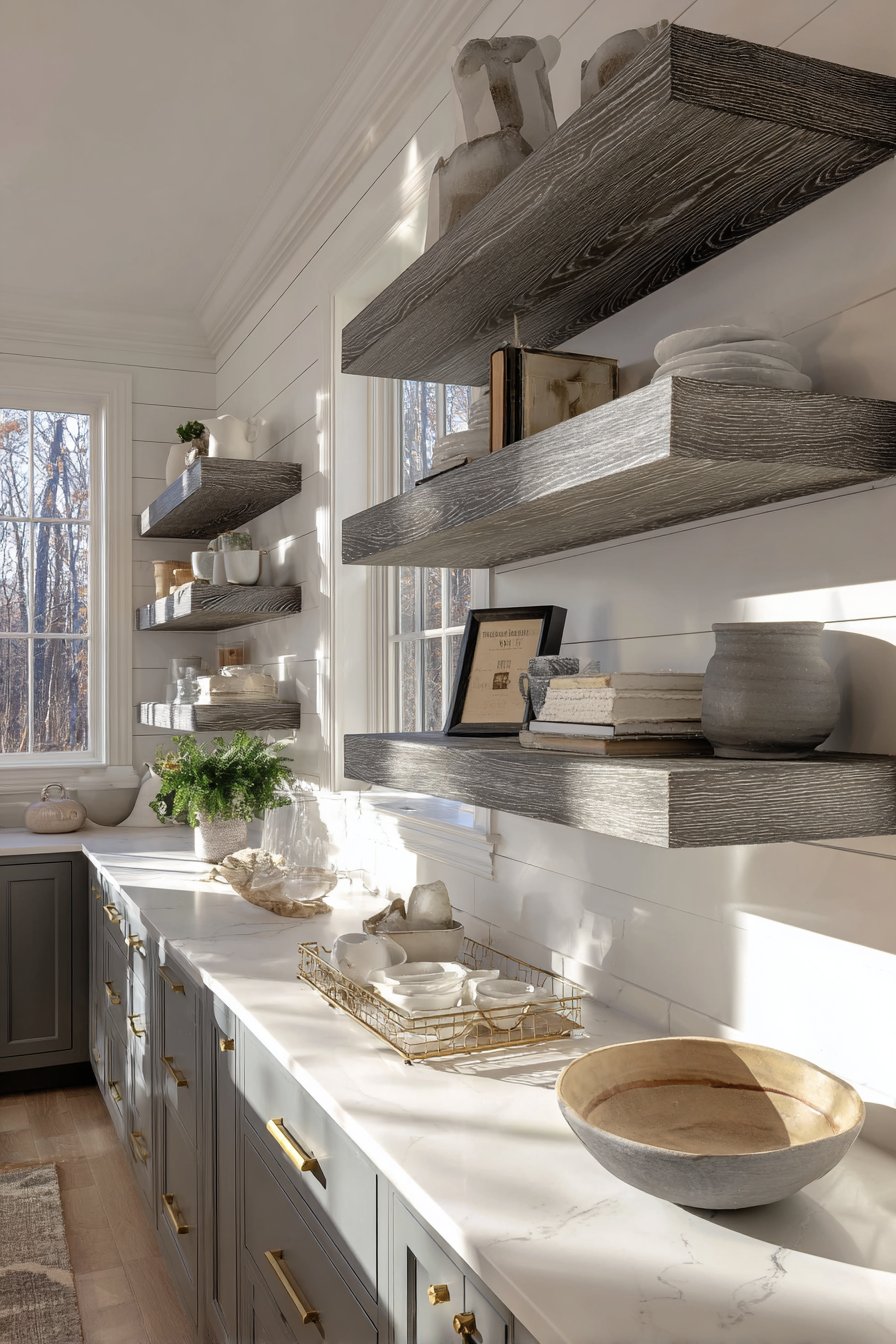
Open shelving represents a departure from traditional upper cabinetry, offering an opportunity to display curated collections while creating an airier, more accessible feel in the kitchen. This design features floating grey-stained oak shelves mounted against a white shiplap wall, the horizontal lines of the shiplap adding subtle texture and cottage-inspired charm to the backdrop. The grey stain on the oak allows the natural wood grain to remain visible, introducing organic warmth and tactile interest that softens the overall aesthetic while maintaining the grey and white color story.
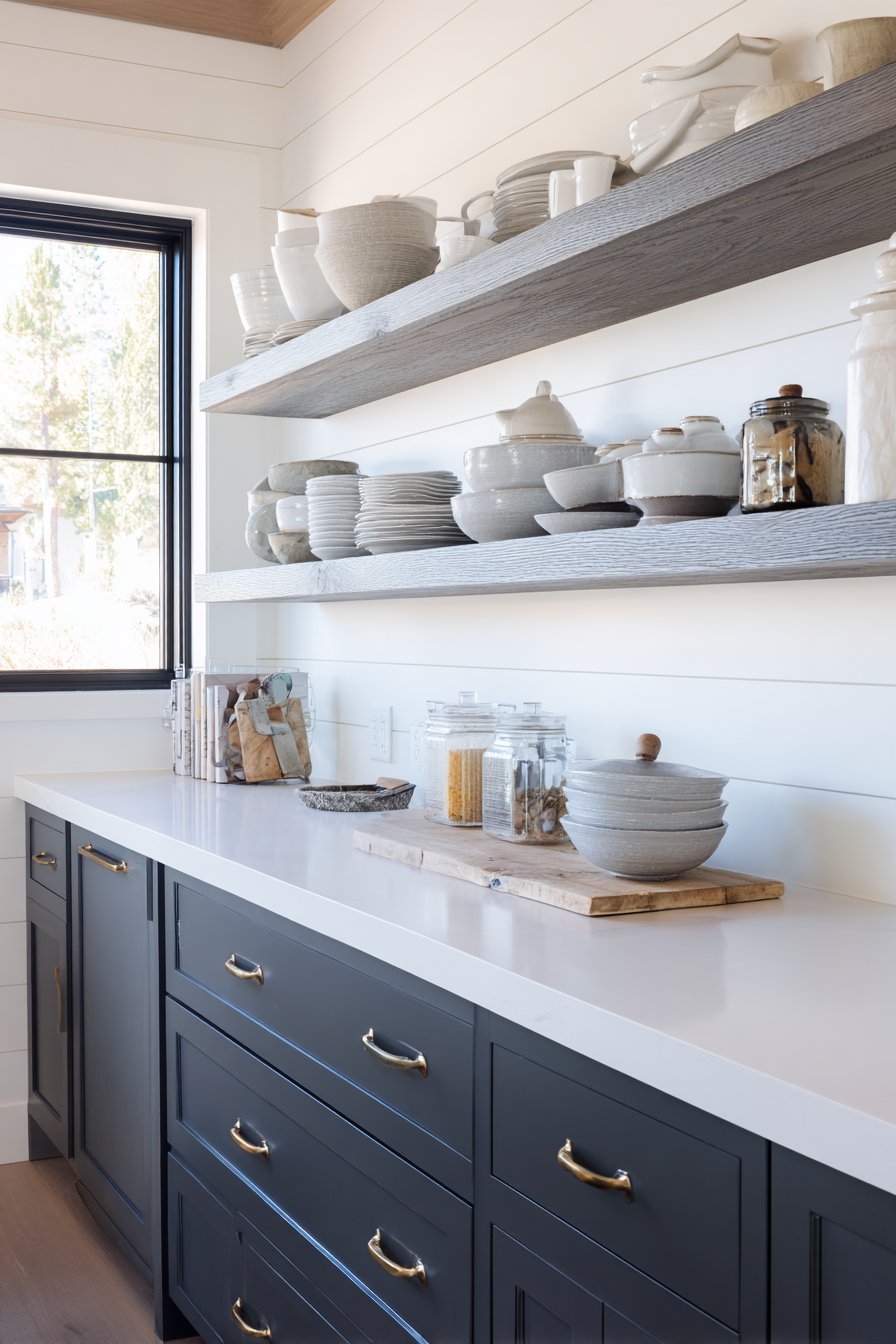
The shelves display white ceramic dishware, grey stoneware, and practical kitchen items in an organized arrangement that balances aesthetic appeal with functional accessibility. This carefully styled display demonstrates the importance of editing and curation in open shelving concepts—too many items create visual chaos, while too few can make the shelves feel sparse and underutilized. The combination of white and grey dishware creates rhythm and repetition that ties the shelving display to the overall kitchen design, while the varied heights and shapes of the items add visual interest that keeps the eye engaged.
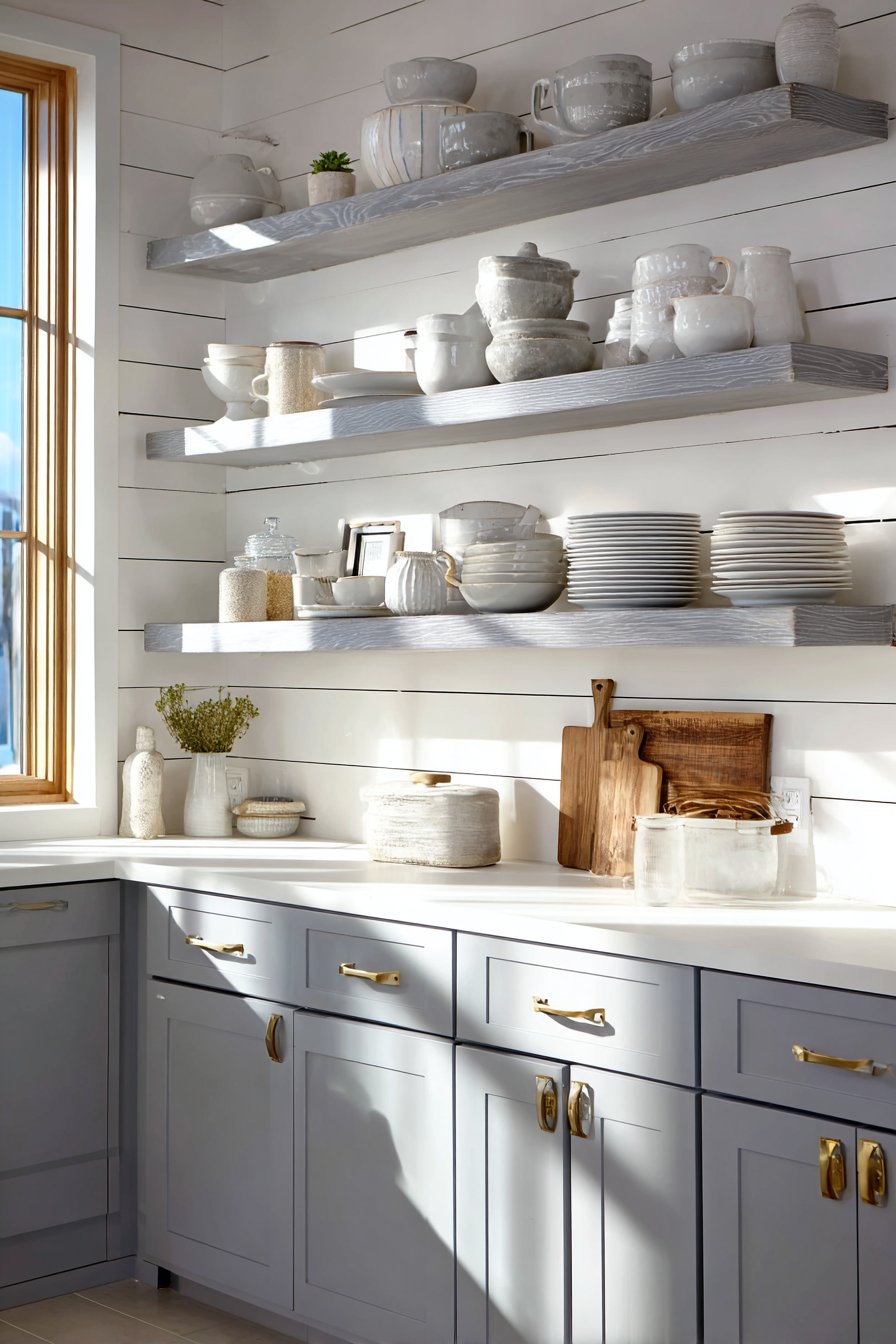
Below the floating shelves, grey base cabinets with white countertops provide essential storage and workspace. This lower storage conceals less attractive kitchen necessities, maintaining the clean visual aesthetic while ensuring the kitchen remains highly functional. Brass hardware adds warm metallic accents that introduce a sophisticated glow, creating beautiful contrast against the cool grey cabinet color. Natural morning light streams through a nearby window, creating soft shadows that highlight the texture of the wood grain and painted surfaces, making the space feel alive and dynamic throughout the day as light conditions shift.
Key Design Tips:
- Embrace open shelving in kitchens where you can commit to maintaining organized, aesthetically pleasing displays, as these shelves remain constantly visible.
- Create cohesion by limiting your displayed items to your primary color palette, with occasional accent colors introduced sparingly for visual interest.
- Mix matte and glossy finishes in your dishware and containers to add dimension and light reflection to open shelving arrangements.
- Install floating shelves with proper support and weight capacity, especially when displaying heavy items like stoneware and serving pieces.
- Incorporate warm metallic hardware like brass or copper to add inviting warmth to cool grey and white color schemes.
4. Compact Small-Space Solution
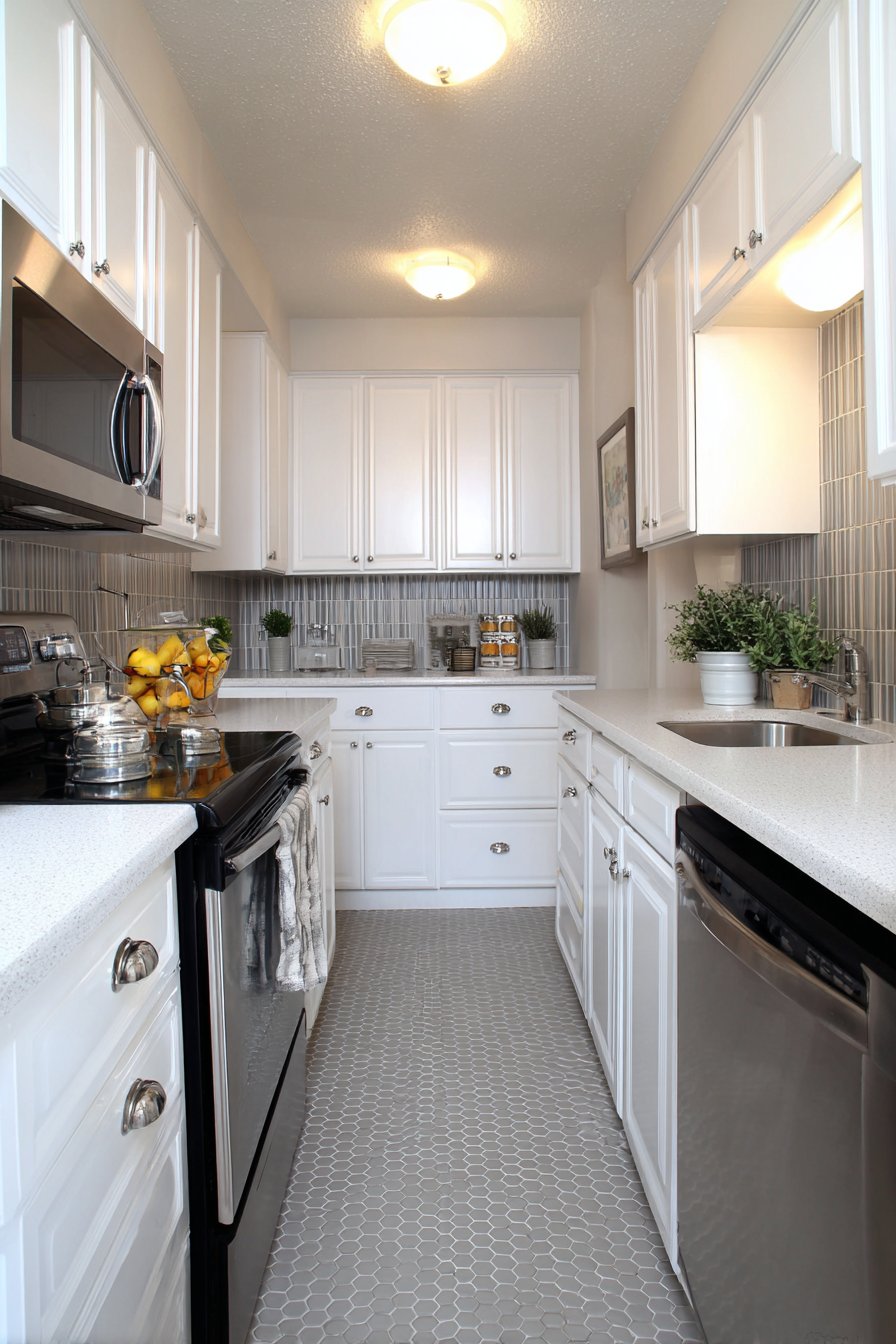
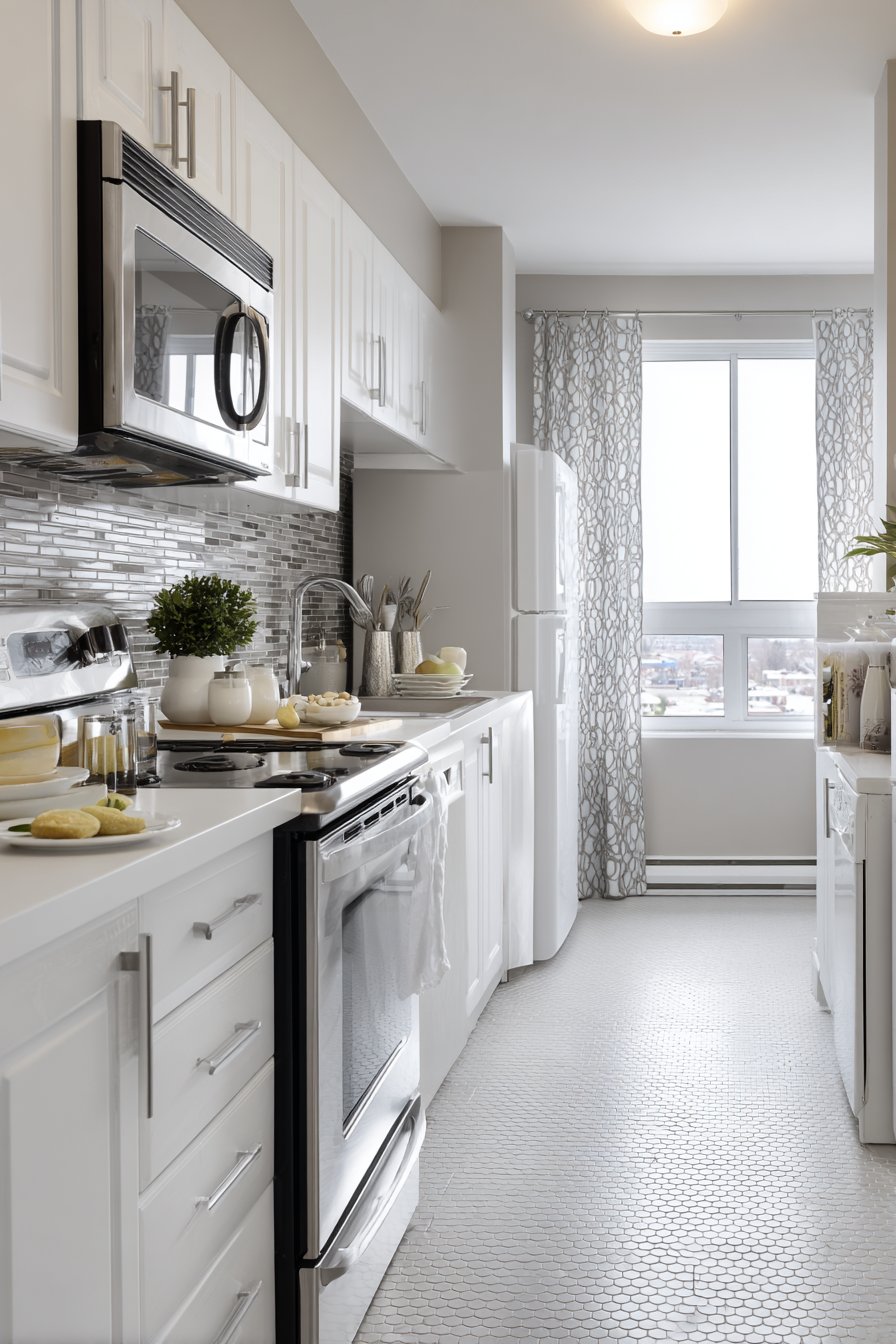
Small kitchens present unique design challenges that require creative solutions to maximize functionality without sacrificing style. This compact grey and white kitchen demonstrates how thoughtful planning and strategic design choices can transform limited square footage into an efficient, beautiful space. Floor-to-ceiling white cabinetry makes the most of vertical storage potential, drawing the eye upward and creating the illusion of greater height while providing ample room for kitchen essentials, rarely-used items, and everything in between.
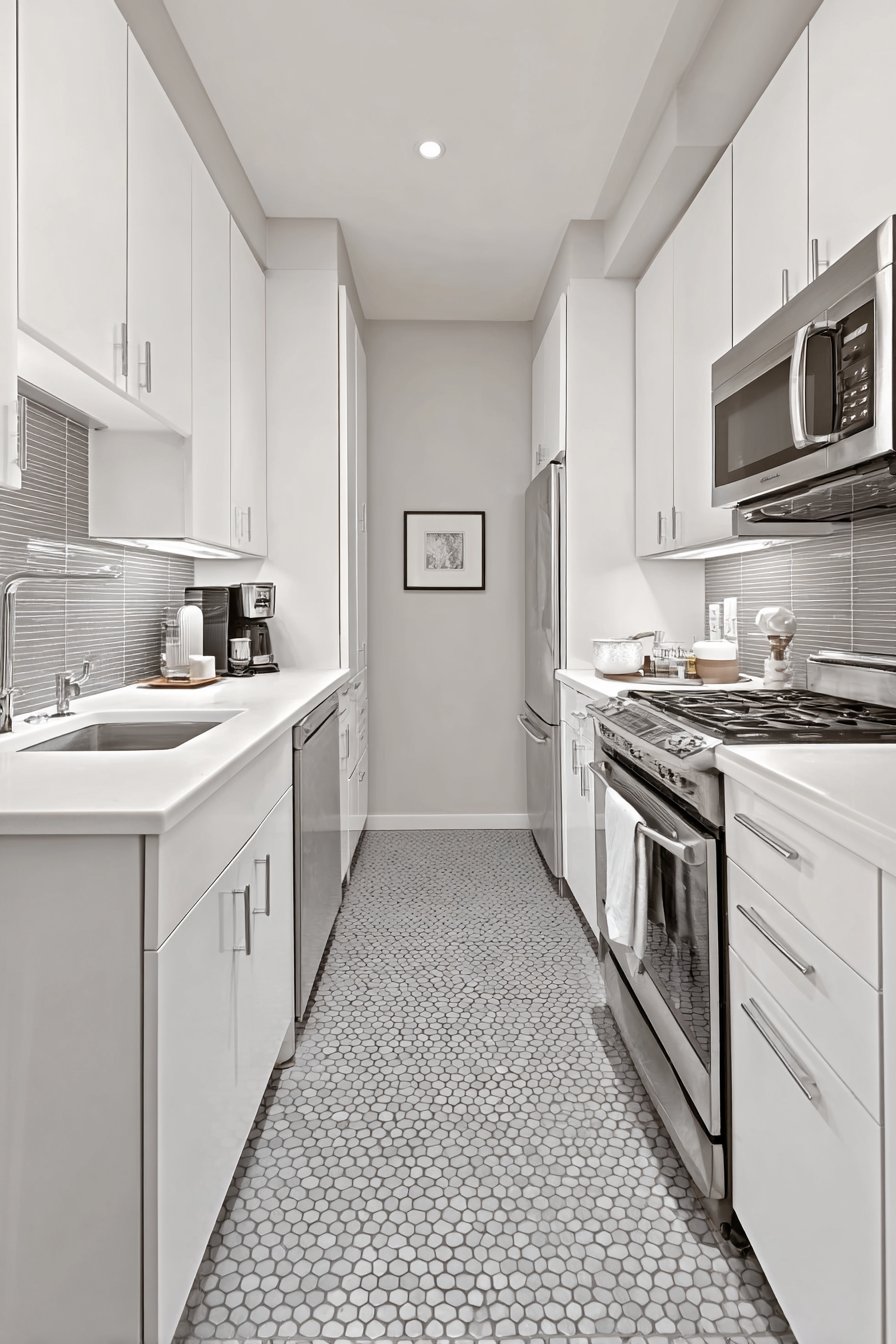
The grey ceramic tile floor in a subtle hexagon pattern grounds the space with geometric interest while the smaller scale of hexagon tiles suits the compact proportions better than large format flooring would. The pattern adds visual complexity without overwhelming the small footprint, and the grey color choice provides practical benefits by showing less dirt and wear than white flooring while maintaining the overall color scheme. The compact galley layout includes white laminate countertops that offer budget-friendly durability and easy maintenance, proving that beautiful design doesn’t always require luxury materials.
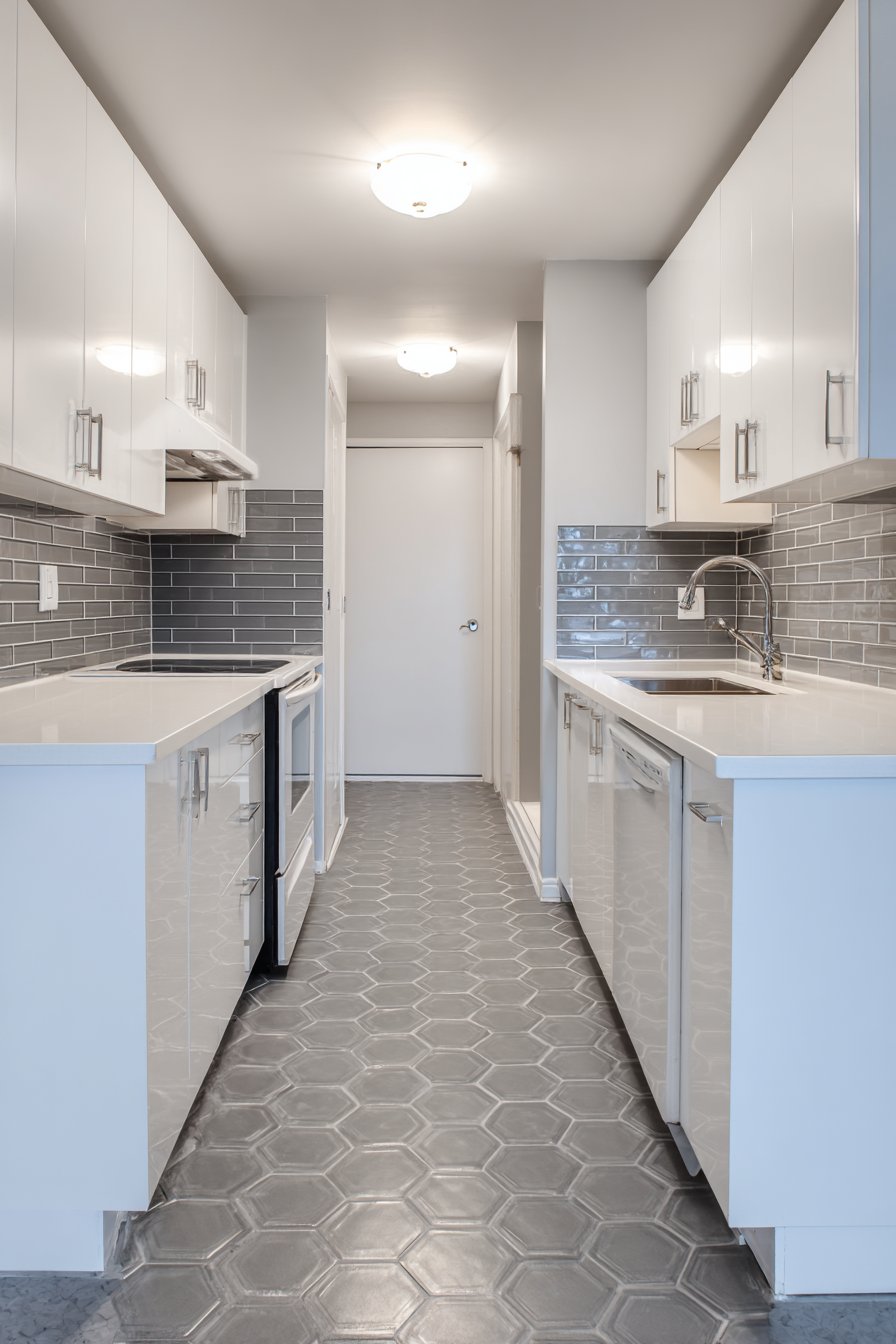
A grey tile backsplash with vertical orientation enhances height perception through the directional lines that guide the eye upward. This clever trick makes the ceiling feel higher and the space more expansive than its actual dimensions. Under-cabinet LED lighting illuminates the workspace effectively, eliminating shadows that could make the compact kitchen feel darker and more cramped. This lighting solution provides excellent task illumination for food preparation while adding ambient glow that makes the entire space feel welcoming and functional regardless of natural light availability.
Key Design Tips:
- Maximize vertical storage in small kitchens by extending cabinetry to the ceiling, using step stools or small ladders to access upper shelves for less frequently needed items.
- Use tile orientation strategically—vertical patterns make spaces feel taller while horizontal patterns can make narrow rooms feel wider.
- Install under-cabinet lighting to improve functionality and create the illusion of more space through the elimination of shadows in work areas.
- Choose reflective surfaces like glossy cabinet finishes or polished countertops to bounce light around compact kitchens and enhance the sense of openness.
- Consider the scale of patterns and tiles in small spaces, opting for smaller formats that better suit compact proportions without overwhelming the room.
5. Artisanal Backsplash Detail
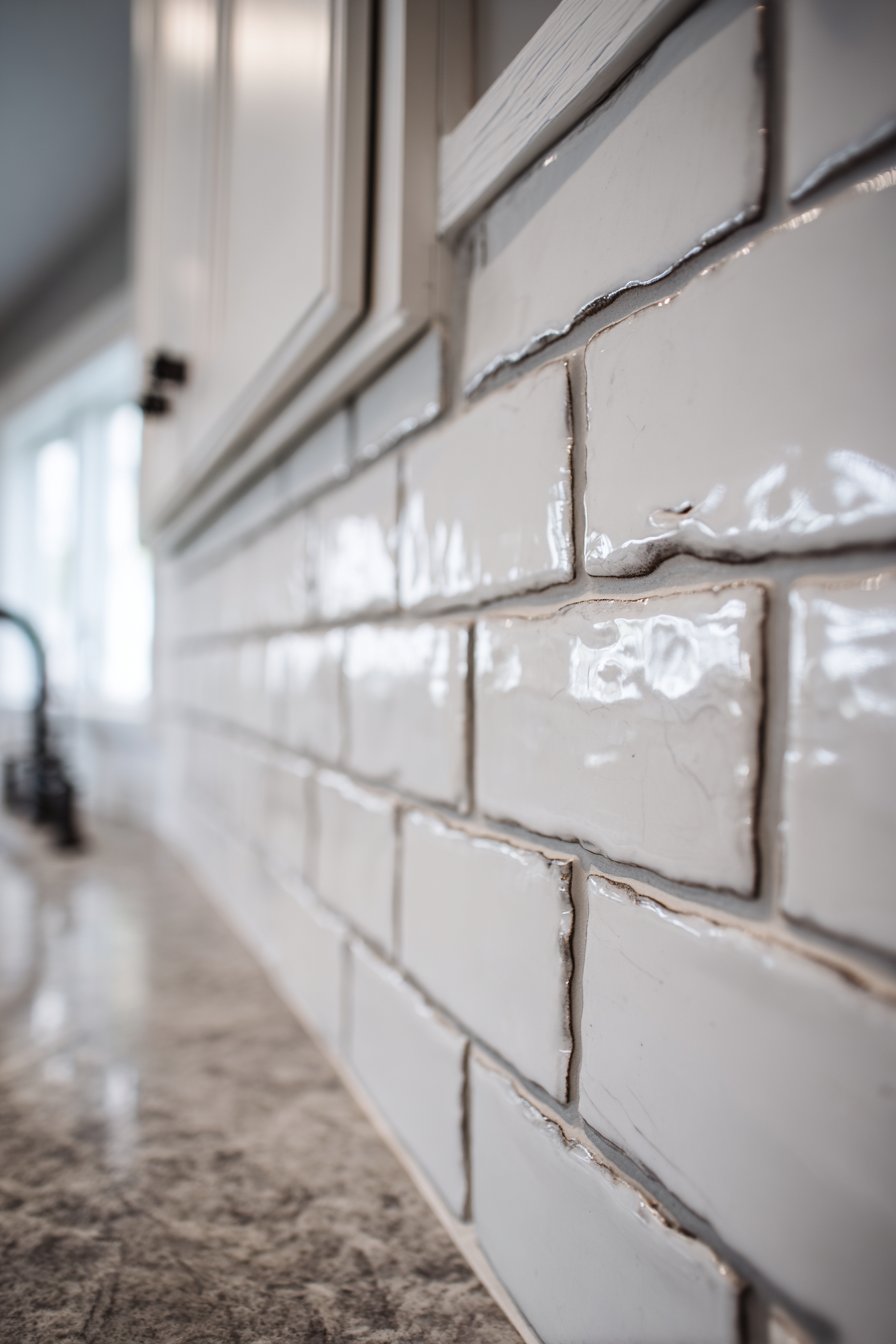
The backsplash serves as the kitchen’s jewelry—a place where personality can shine through careful material selection and installation craftsmanship. This design focuses on handmade white ceramic subway tiles with irregular edges that celebrate the artisan’s touch, arranged in a classic brick pattern that honors kitchen design tradition. The slight variations in each tile’s dimensions and the organic irregularity of the edges create visual texture and authentic character that machine-made tiles cannot replicate, making the backsplash a true focal point worth closer examination.
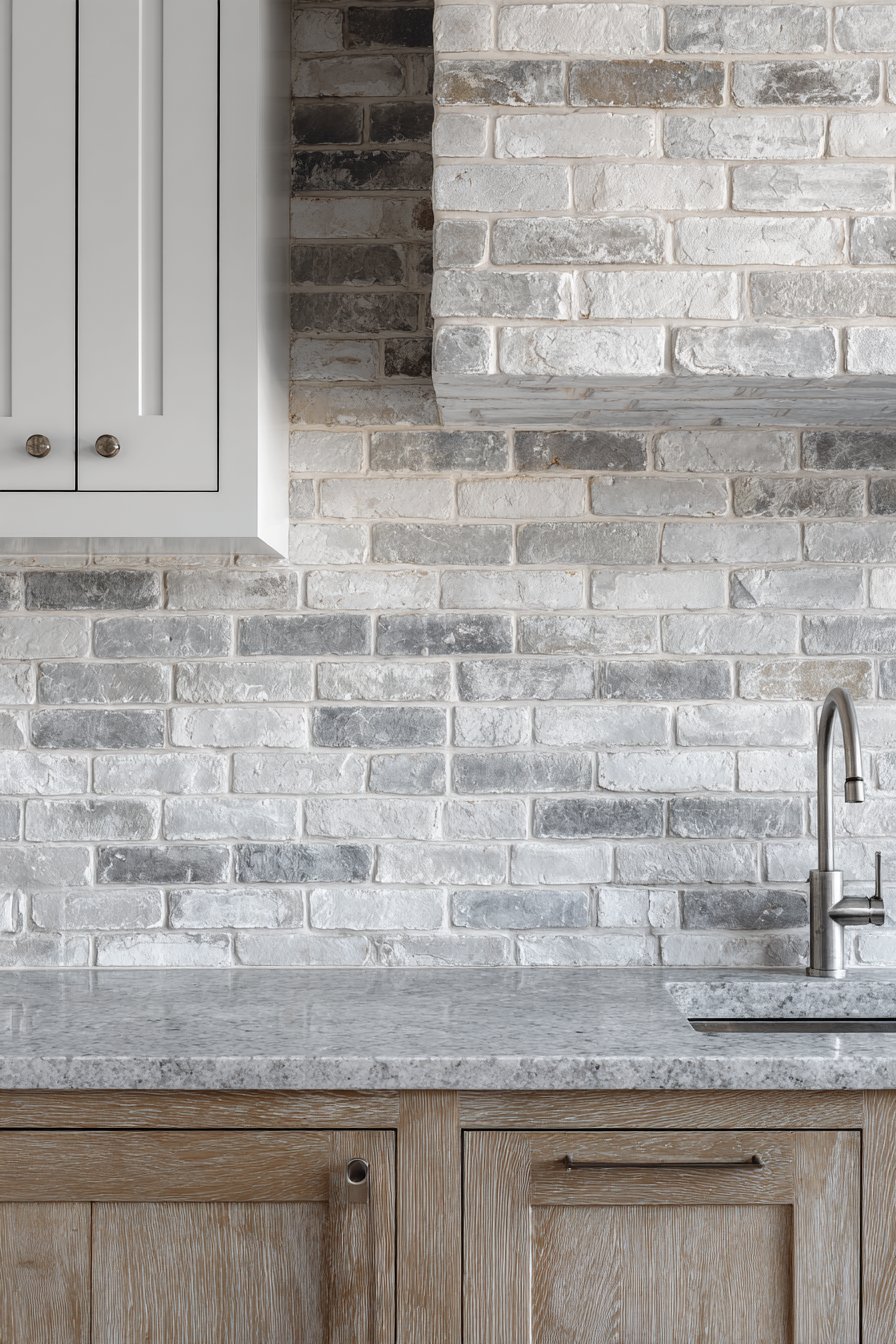
Light grey grout lines create subtle contrast and definition that emphasizes the individual tiles while maintaining overall cohesion within the grey and white color scheme. The grout color choice represents a practical consideration as well—light grey shows less staining than white grout while remaining significantly cleaner-looking than dark grout options. The backsplash extends from grey granite countertops to white upper cabinets with visible wood grain texture, creating a vertical color journey that guides the eye naturally through the space while showcasing different material textures and finishes.

Stainless steel outlets and a chrome faucet provide functional metallic accents that add contemporary sparkle without detracting from the artisanal quality of the handmade tiles. These utilitarian elements become integrated design features when chosen with attention to finish and placement. The dimensional quality of the handmade tiles becomes especially apparent when natural side lighting highlights the subtle shadows created by the irregular edges and the slight texture variations across the tile surface. This interplay between light and shadow brings the wall to life, creating depth and visual interest that evolves throughout the day.

Key Design Tips:
- Invest in handmade tiles for backsplashes where their artisanal quality will be appreciated at eye level and close viewing distances.
- Choose grout colors that provide subtle contrast rather than stark differentiation to maintain a cohesive look while defining individual tiles.
- Consider the practical aspects of grout color—medium grey tones hide staining and wear better than pure white or very dark options.
- Embrace the imperfections in handmade materials as character-building features rather than flaws, celebrating the human touch in your design.
- Plan lighting to highlight textured surfaces, using natural light from windows or strategically placed fixtures to create shadow play that emphasizes dimension.
6. Timeless Farmhouse Sink Focus
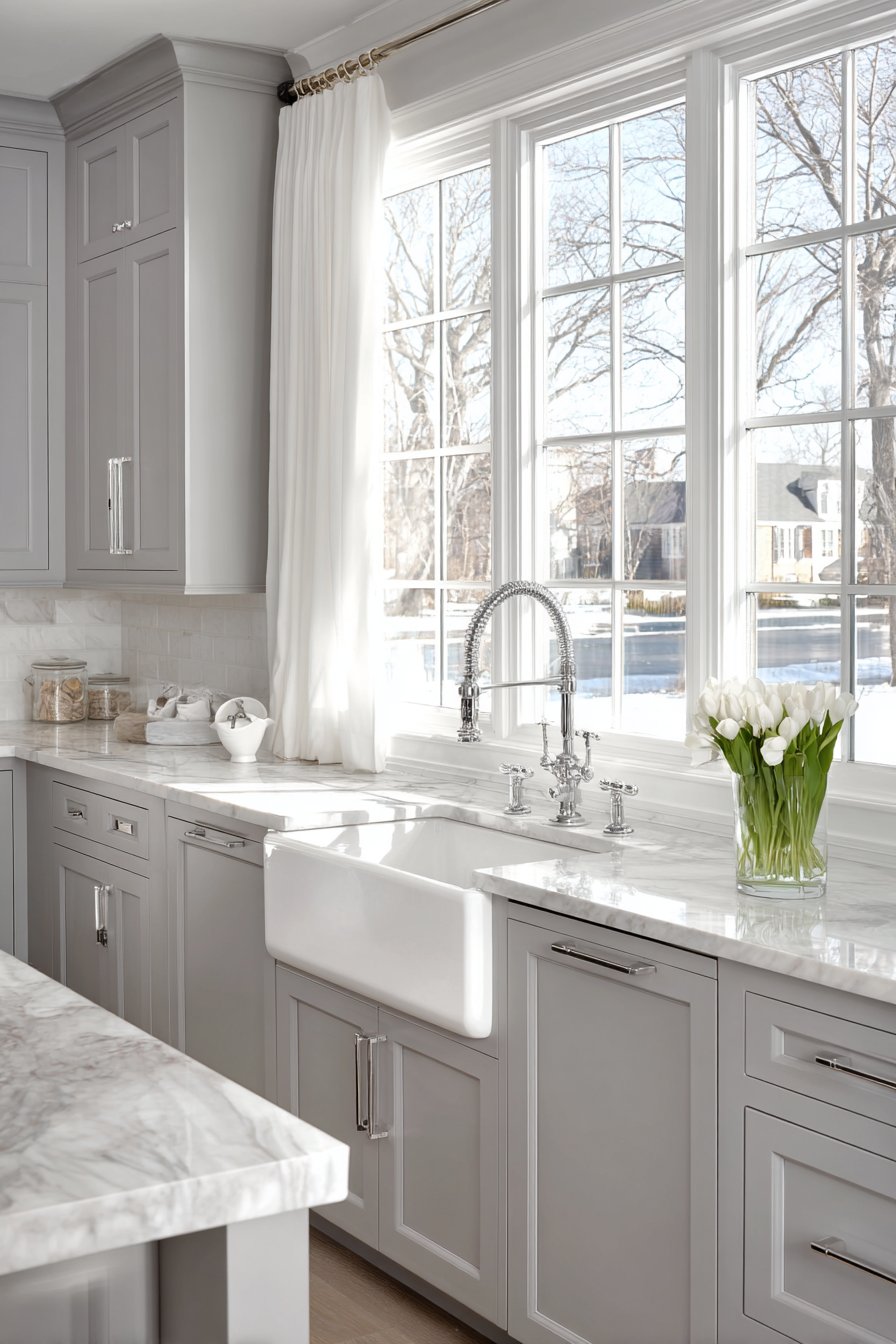
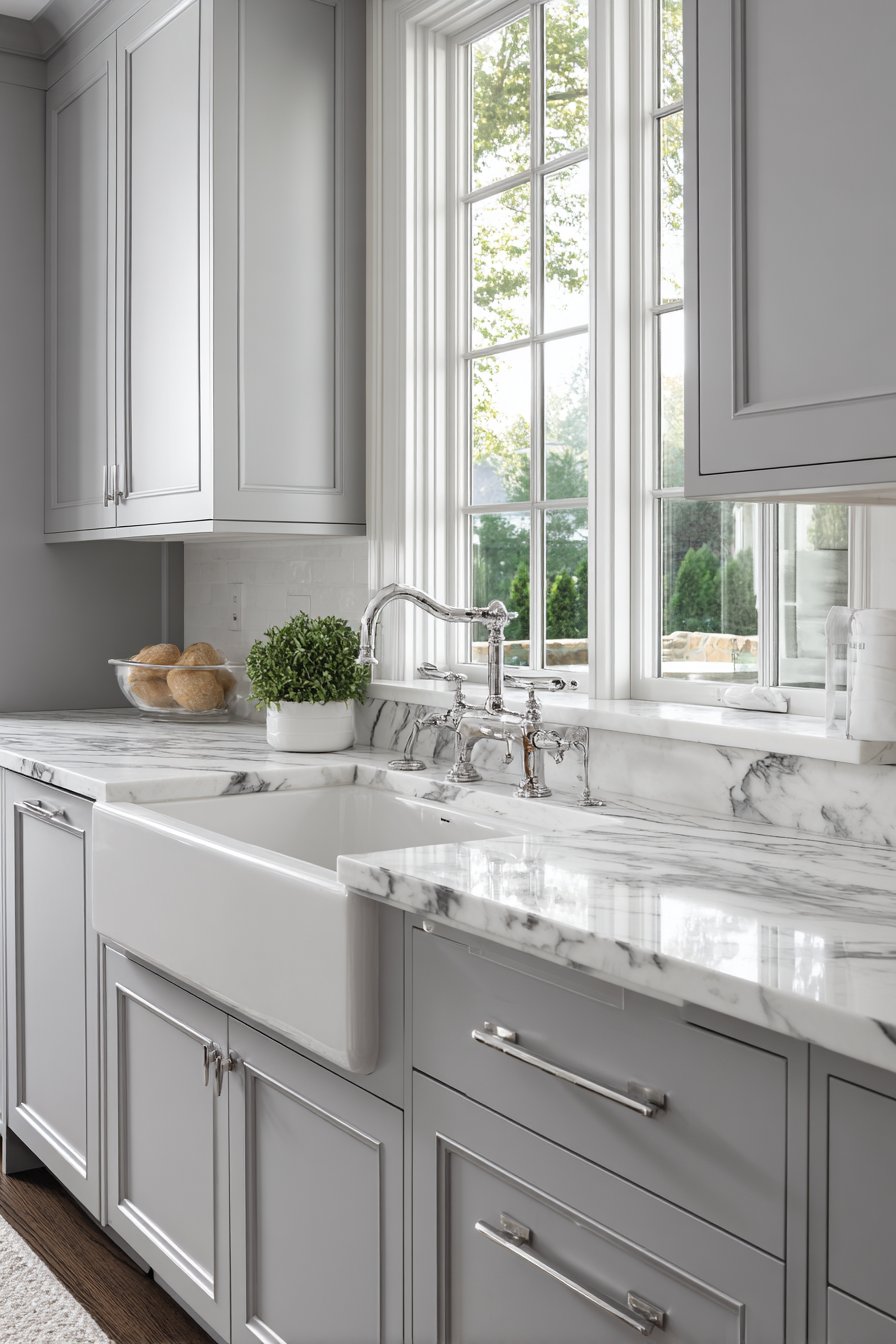
The farmhouse sink has experienced a remarkable resurgence in popularity, beloved for its generous proportions, practical apron-front design, and the nostalgic charm it brings to both traditional and contemporary kitchens. This transitional design features a large farmhouse sink in white fireclay positioned beneath a window with white frame, creating a classic kitchen vignette that celebrates both form and function. Fireclay offers exceptional durability and a beautiful, smooth surface that resists chipping and staining while maintaining its pristine appearance for decades with minimal care.
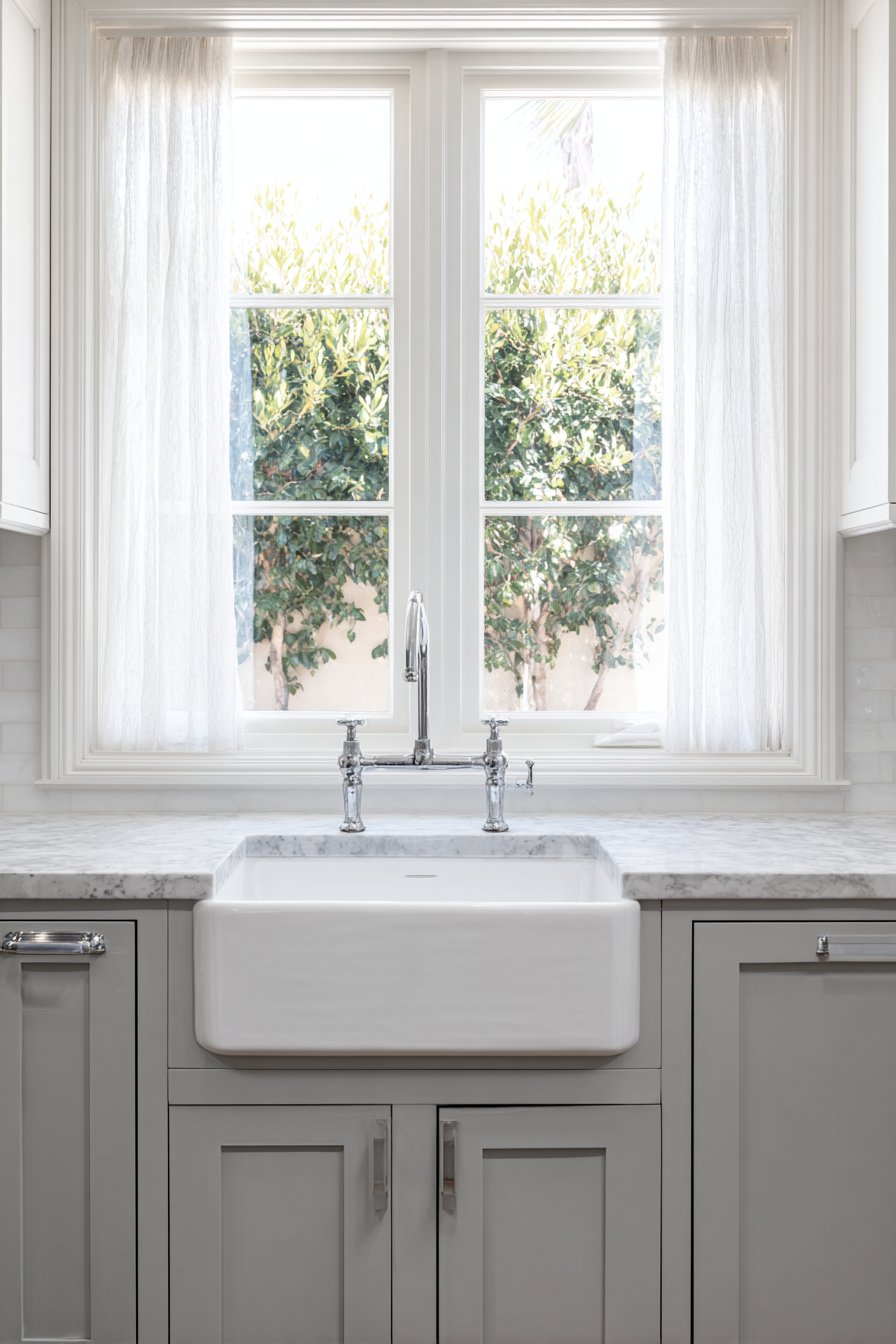
Grey shaker cabinets flank both sides of the sink with brushed nickel bin pulls that provide easy grip for wet hands while contributing to the transitional aesthetic that bridges traditional and modern design sensibilities. White marble countertops show natural grey veining that ties the color scheme together organically, the stone’s natural patterns creating visual interest and luxury while introducing variation that prevents the grey and white palette from feeling flat or monotonous. A vintage-style chrome bridge faucet adds traditional charm with its exposed pipe construction and cross handles, becoming a sculptural element that enhances the sink area’s visual appeal.
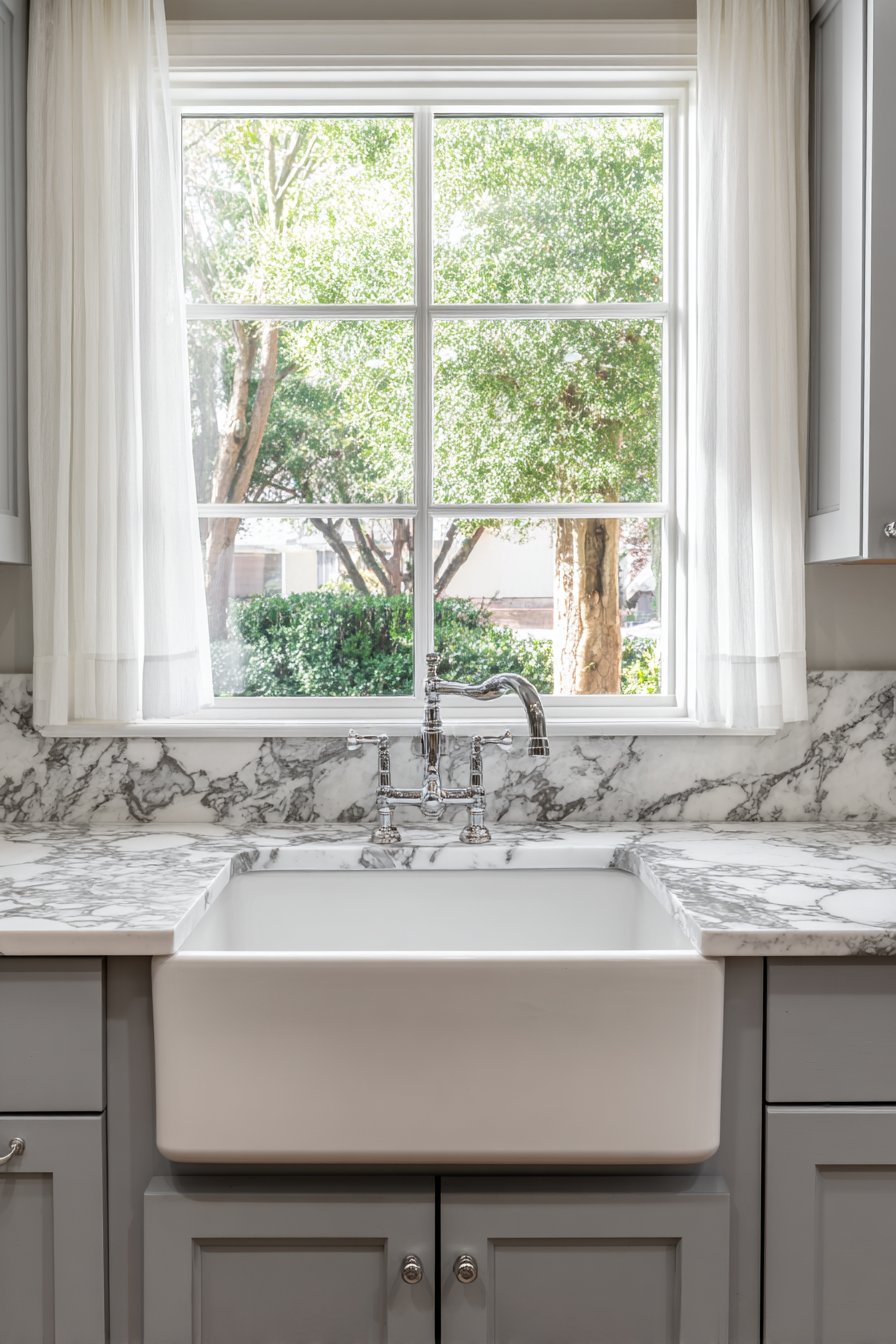
Sheer white cafe curtains filter natural daylight while maintaining privacy and softening the window opening. These curtains introduce subtle texture through their fabric weave while allowing light to penetrate and illuminate the sink area throughout the day. The window placement above the sink follows kitchen design tradition, providing natural light exactly where detailed tasks like food preparation and dish washing occur most frequently. This design demonstrates how a single area—the sink zone—can become a beautiful focal point through the thoughtful combination of quality materials, practical fixtures, and attention to natural light.
Key Design Tips:
- Choose fireclay over porcelain for farmhouse sinks when budget allows, as fireclay offers superior durability and a more authentic, handcrafted appearance.
- Position your sink beneath a window whenever possible to benefit from natural task lighting and create a pleasant view during kitchen chores.
- Select faucet styles that complement your overall kitchen aesthetic—bridge faucets suit traditional and transitional designs while single-handle options work well in contemporary spaces.
- Use natural stone countertops with visible veining to create organic connection between grey and white elements throughout your kitchen design.
- Install cafe curtains or roman shades at sink windows to filter light beautifully while maintaining privacy without completely blocking the view.
7. Contemporary Handleless Minimalism
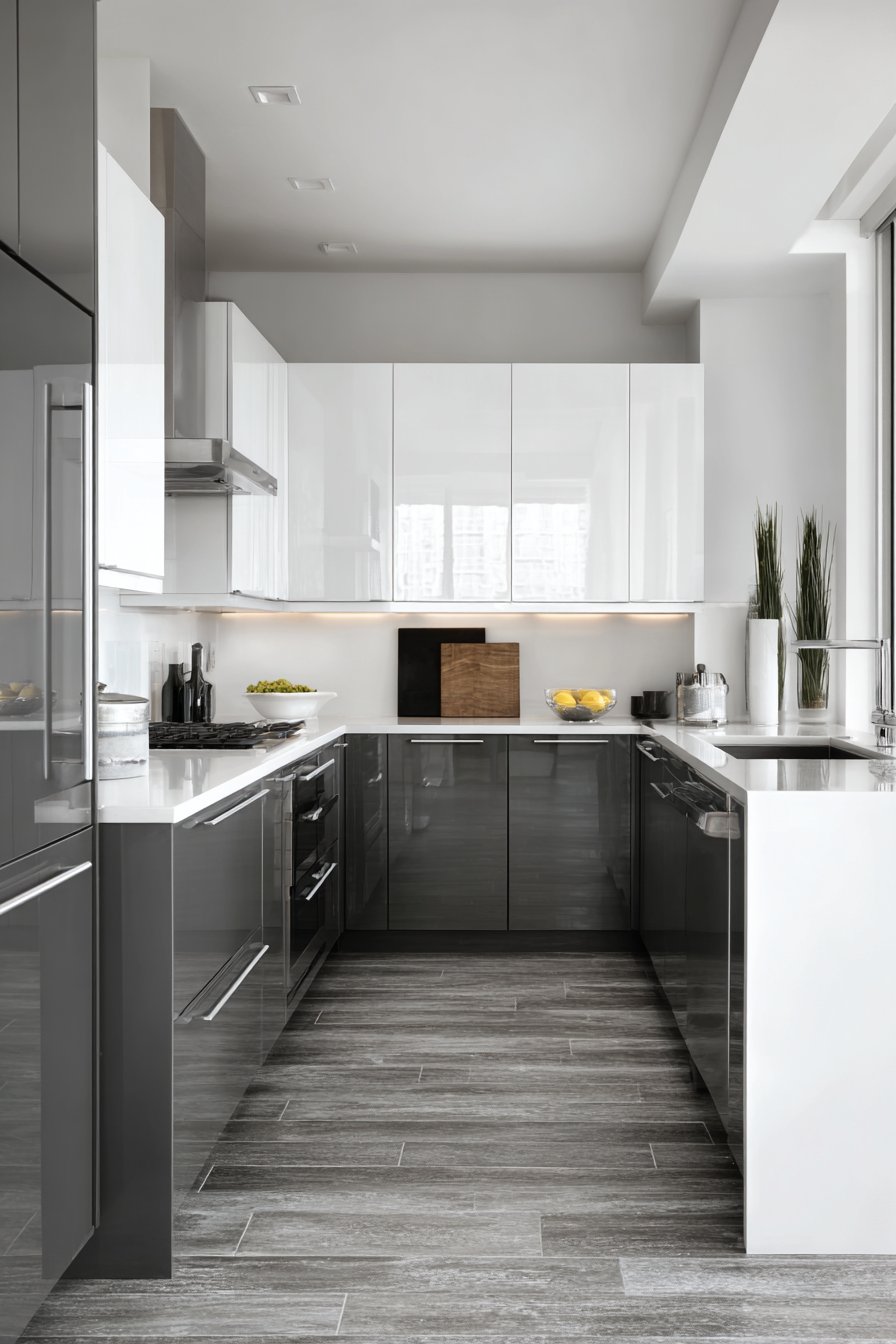
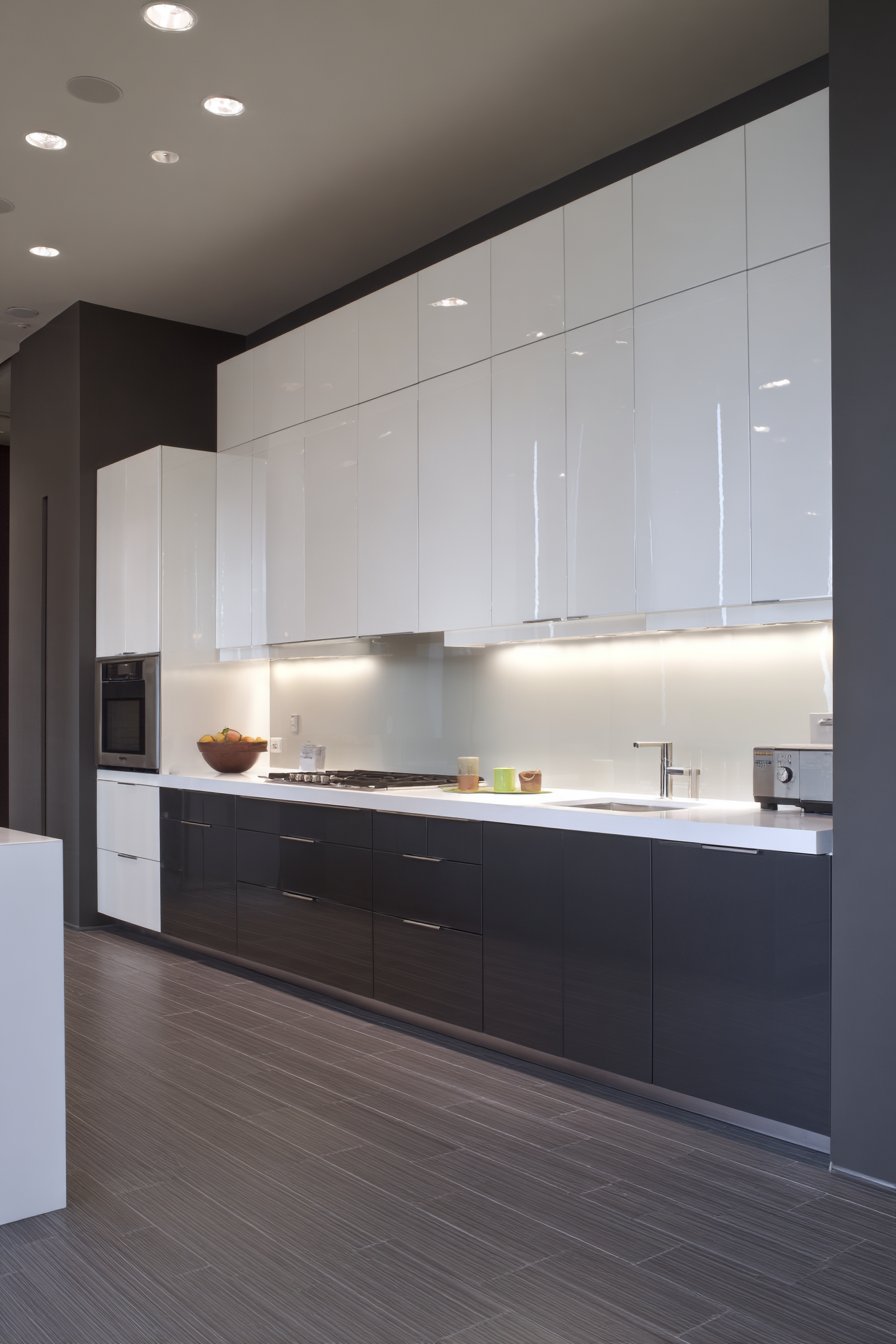
Minimalist design reaches its zenith in handleless cabinetry, where clean lines reign supreme and visual clutter is eliminated through innovative hardware solutions. This contemporary kitchen features push-to-open mechanisms that eliminate visible handles entirely, creating uninterrupted surfaces that emphasize the cabinet doors themselves rather than the hardware used to access them. Upper cabinets in glossy white lacquer reflect light brilliantly, their shiny finish bouncing illumination throughout the space and making the kitchen feel brighter and more expansive than matte finishes would achieve.
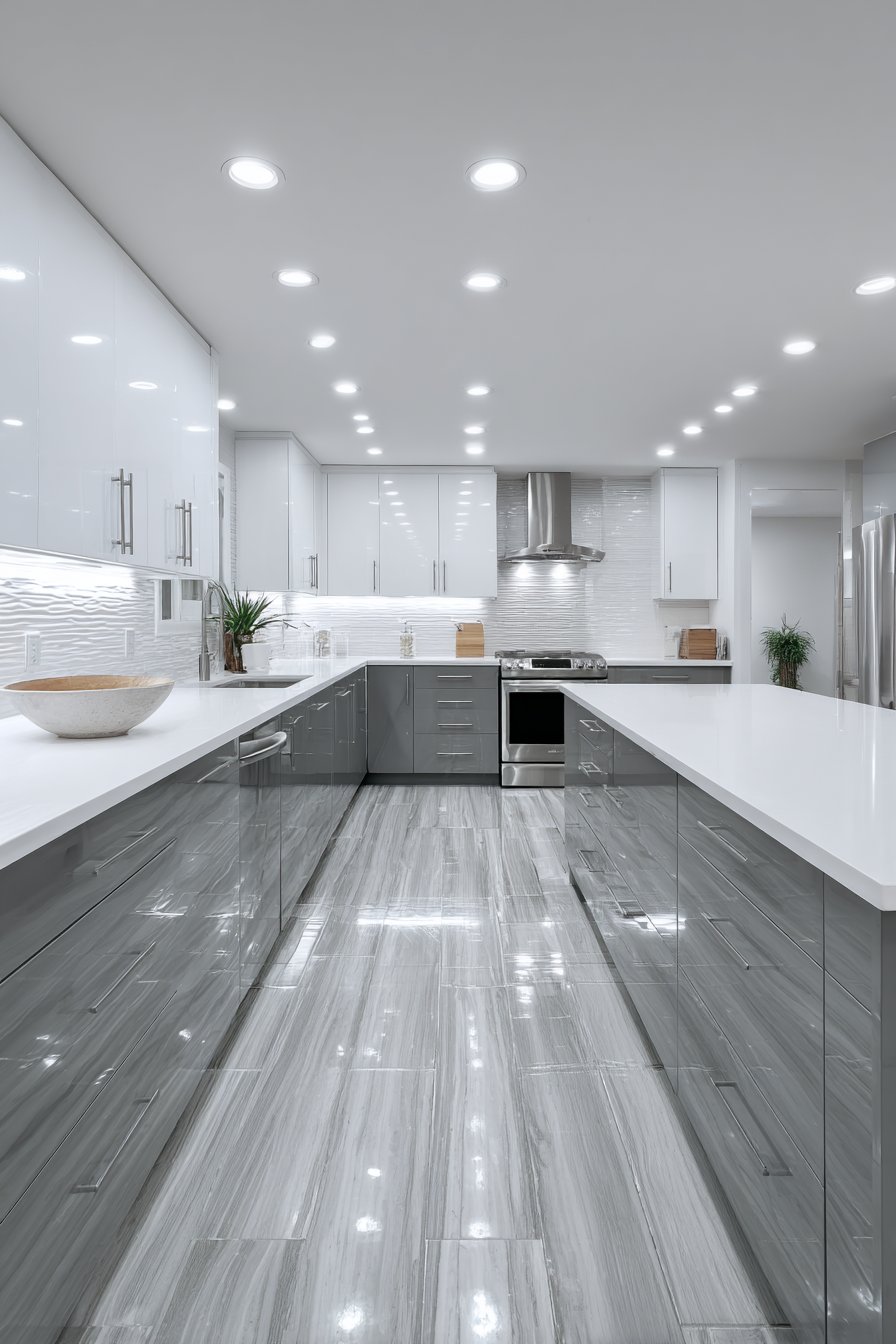
Lower cabinets in matte charcoal grey provide grounding contrast that prevents the glossy white uppers from feeling too stark or clinical. The combination of glossy and matte finishes adds sophisticated dimension through the interplay of light absorption and reflection, creating visual interest within a minimalist framework. White solid surface countertops create seamless integration with the backsplash through invisible seaming and the ability to thermoform the material into continuous surfaces without visible joints or transitions, enhancing the minimalist aesthetic through uninterrupted planes.
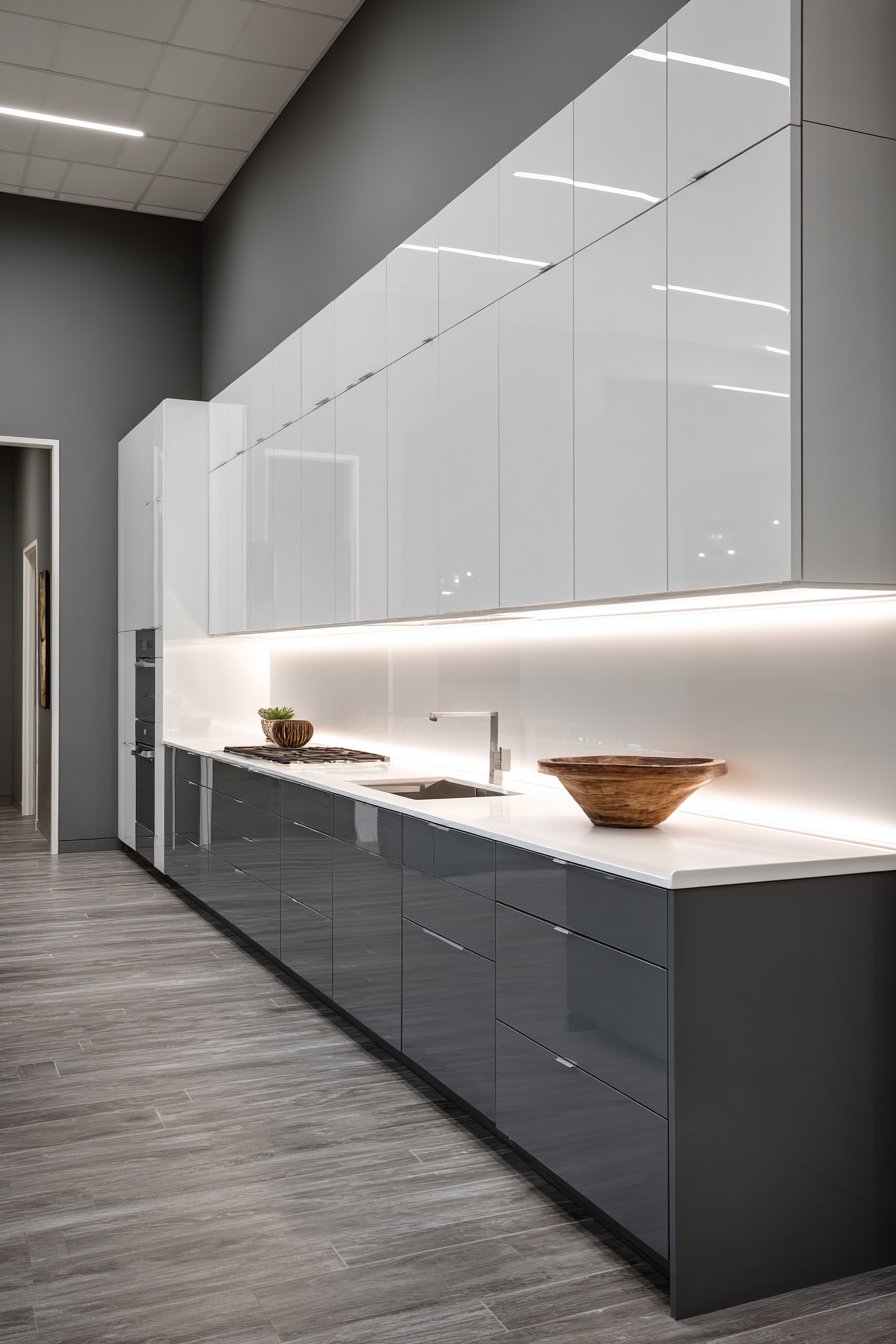
Integrated LED strip lighting under the upper cabinets illuminates the workspace with energy-efficient, long-lasting light that eliminates shadows on the countertop work surface. This lighting solution serves both functional and aesthetic purposes, providing excellent task illumination while adding a gentle glow that highlights the material quality and clean lines of the design. A grey porcelain tile floor with wood-look texture adds warmth and natural character while offering the practical benefits of porcelain—water resistance, durability, and easy maintenance. This floor selection demonstrates how contemporary materials can mimic natural wood while providing superior performance characteristics suited to kitchen environments.
Key Design Tips:
- Consider push-to-open mechanisms for handleless cabinets but ensure you have adequate open wall space beside each door or drawer for fingers to press the release.
- Mix glossy and matte finishes strategically to create dimension and visual interest within minimalist color palettes that could otherwise feel flat.
- Invest in quality LED strip lighting that offers consistent color temperature and adequate brightness for task lighting in food preparation areas.
- Choose porcelain wood-look tiles for kitchen floors when you want the warmth of wood appearance with the practical benefits of tile durability and water resistance.
- Maintain the minimalist aesthetic by concealing small appliances in appliance garages or dedicated cabinets rather than leaving them on countertops.
8. Inviting Breakfast Nook Integration
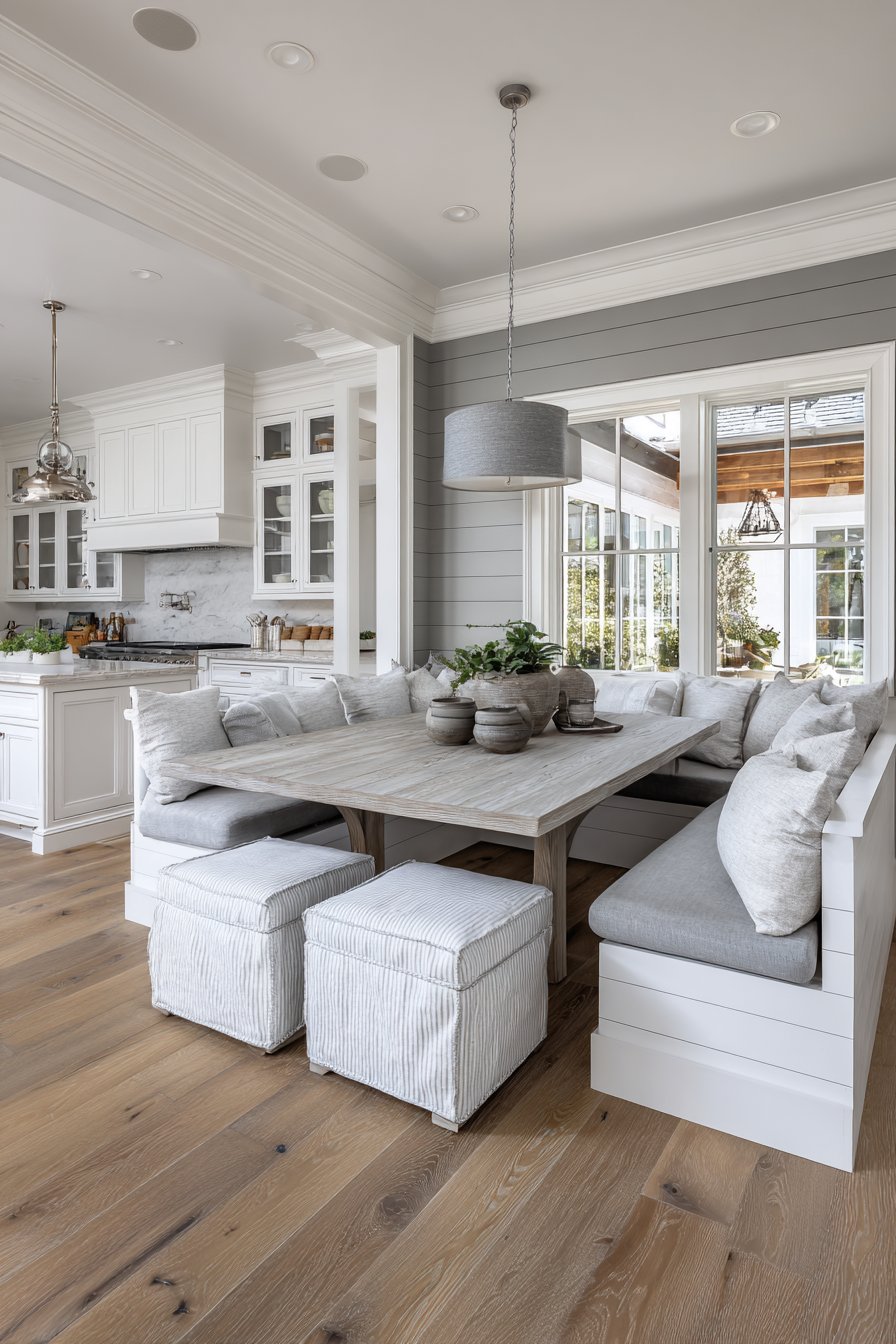
The kitchen dining area serves as a transitional zone between cooking and living spaces, and a thoughtfully designed breakfast nook can become the most beloved spot in the home. This design features a built-in breakfast nook with grey painted shiplap walls that add texture and cottage-inspired character to the eating area. The horizontal lines of shiplap create visual rhythm while providing a distinctive backdrop that defines the nook as its own zone within the larger kitchen space. White cushioned bench seating with visible linen texture offers comfortable, space-efficient seating that maximizes capacity without the footprint required by individual chairs.
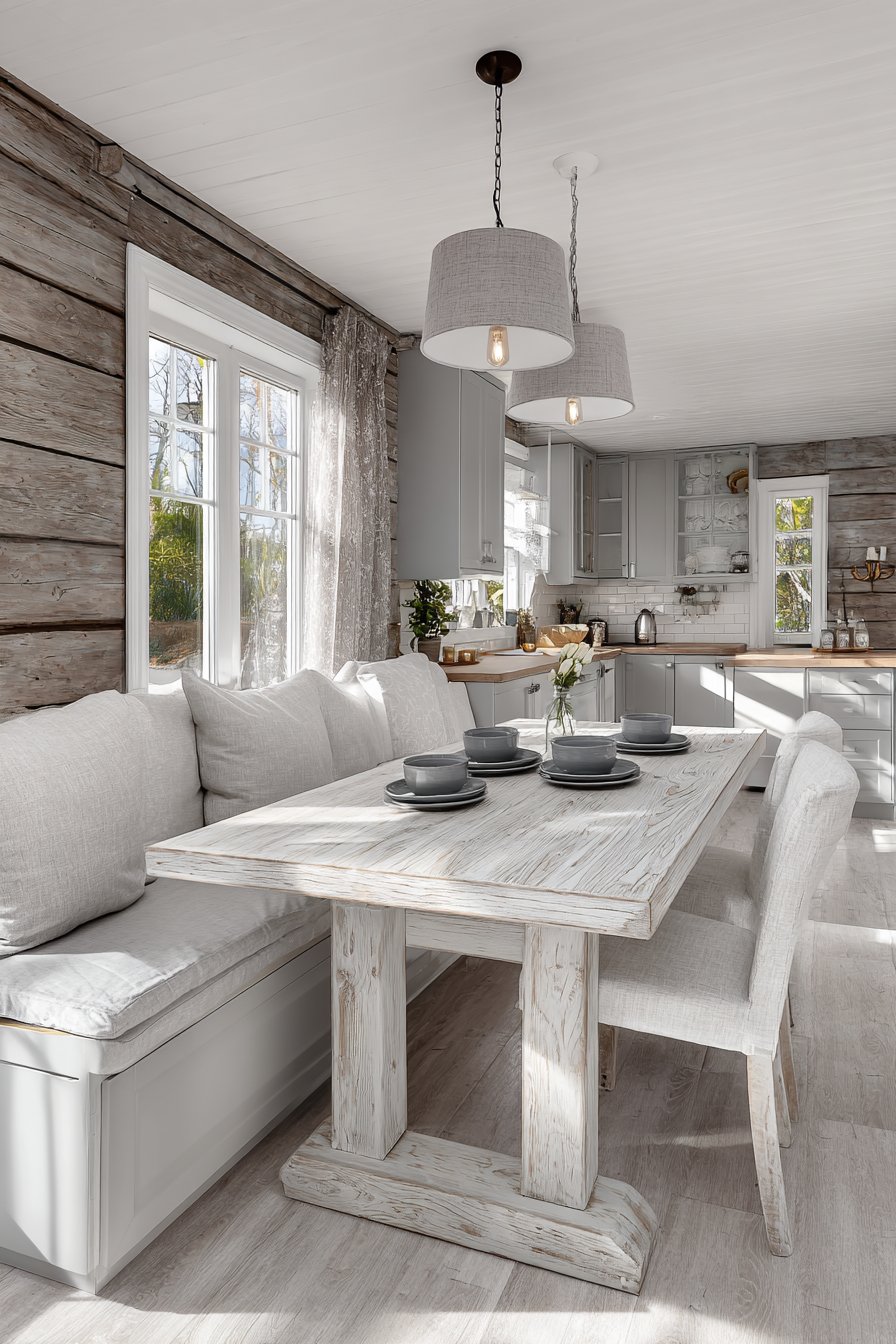
A white-washed wooden table centers the space with simple grey ceramic tableware styled naturally, creating an inviting tableau that suggests the space is ready for immediate use rather than being a staged, untouchable display. The casual styling communicates warmth and livability, essential qualities in a breakfast nook that should feel comfortable and welcoming rather than formal and precious. Pendant lighting with grey fabric shades hangs above the table at an appropriate height, providing intimate illumination that makes the nook feel cozy during evening hours while adding visual interest overhead.

Large windows with white trim flood the nook with natural light, creating a bright and inviting atmosphere that makes morning meals feel especially appealing. The generous window openings connect the indoor dining experience with outdoor views, making the space feel larger and more integrated with its surroundings. The adjacent kitchen shows white cabinetry and grey countertops that maintain color continuity between the cooking and dining zones, ensuring the breakfast nook feels like an intentional extension of the kitchen rather than an afterthought. Golden hour lighting creates especially magical moments in this space, with warm afternoon or evening sun transforming the grey and white palette into glowing, welcoming tones.

Key Design Tips:
- Build in bench seating when possible to maximize seating capacity in breakfast nooks while creating a custom, integrated appearance.
- Use shiplap or board and batten on nook walls to define the eating area as a distinct zone within the open kitchen space.
- Select pendant lights sized appropriately for your table—generally the fixture should be 12 to 20 inches narrower than the table width.
- Style your breakfast nook with everyday items rather than precious decorative objects to communicate that the space is meant for regular use and enjoyment.
- Position breakfast nooks near windows whenever possible to capitalize on natural light and outdoor views that enhance the dining experience.
9. Organized Pantry Perfection
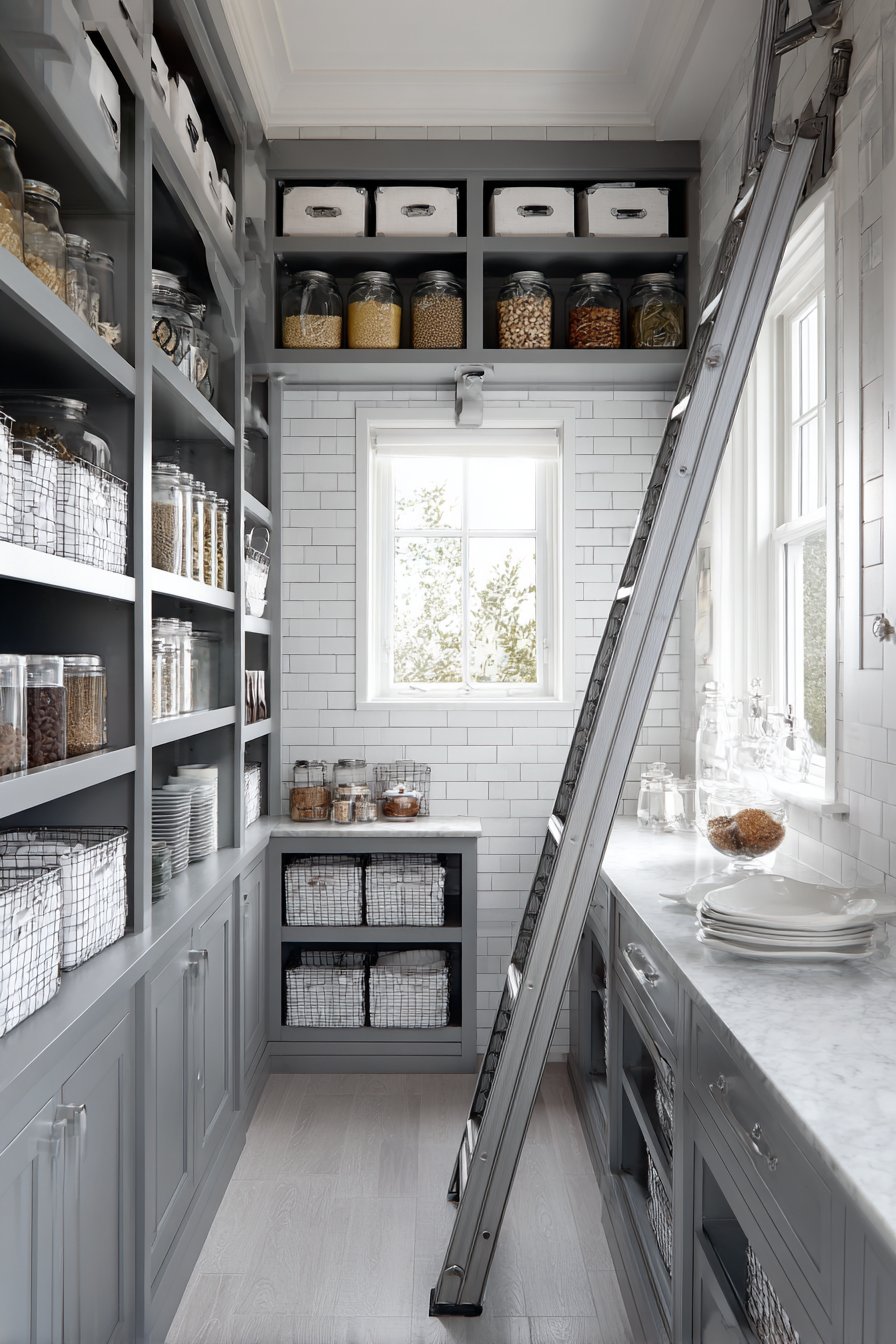
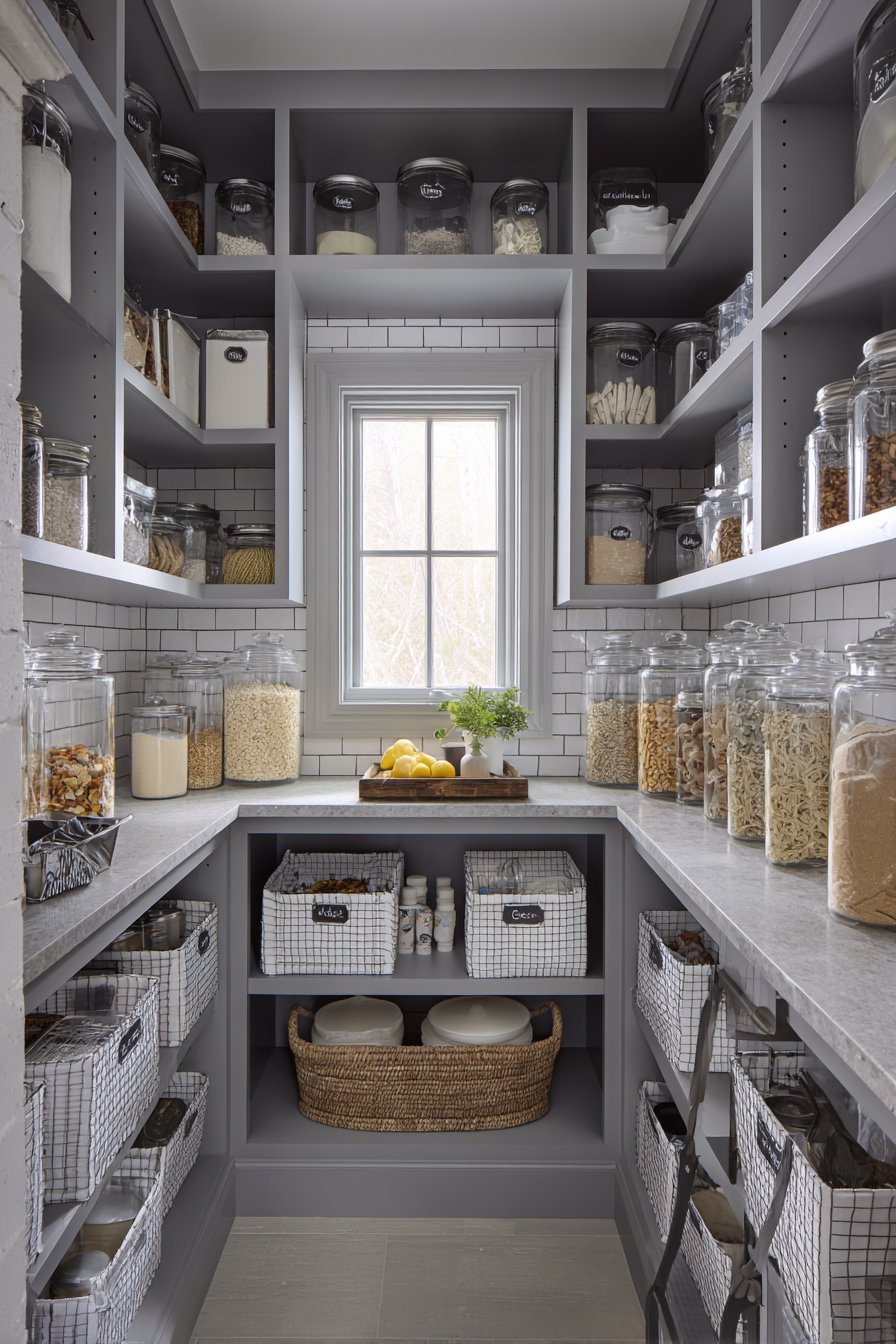
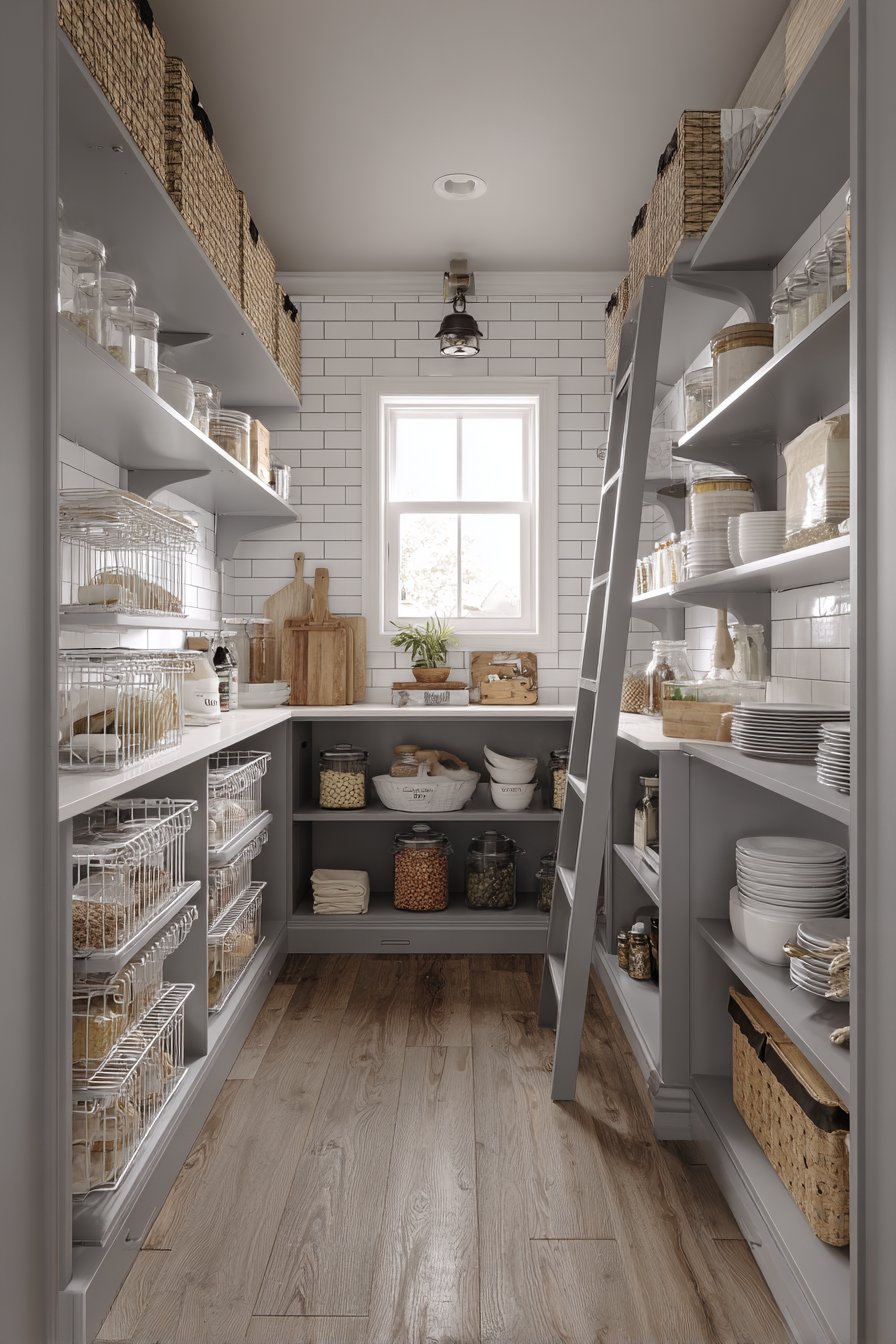
Kitchen organization reaches its highest expression in a well-designed pantry, where form meets function in beautiful harmony. This pantry organization system features custom grey-painted built-in shelving that maximizes storage capacity while maintaining aesthetic continuity with the kitchen’s color palette. White wire baskets and clear glass storage containers provide organized homes for dry goods and kitchen essentials while allowing contents to remain visible for easy inventory management. The transparency of these organizational tools prevents the pantry from feeling heavy or closed-in despite the density of stored items.

White subway tile lines the back wall, bringing a touch of kitchen backsplash elegance into the pantry space while providing a clean, wipeable surface that maintains hygiene standards in food storage areas. Grey shelves display neatly arranged items in categories—dry goods, dishes, and kitchen essentials—each with its designated zone that makes locating items intuitive and efficient. Brushed nickel label holders add practical detail while contributing to the overall aesthetic, their metallic finish catching light and adding refined sparkle to the utilitarian space.
A rolling grey ladder provides access to upper shelves, combining functionality with vintage charm. The ladder becomes a decorative element when not in use, its color-matched finish ensuring it enhances rather than detracts from the overall design. Natural light from a small window highlights the organized arrangement, proving that even utilitarian spaces benefit from daylighting that reduces the institutional feel often associated with storage areas. This pantry demonstrates that organization and beauty need not be mutually exclusive—thoughtful design elevates practical spaces into rooms worth showing off.
Key Design Tips:
- Invest in custom built-in shelving for pantries to maximize every inch of available space while creating a cohesive, intentional appearance.
- Use clear containers for dry goods storage to maintain visual openness and enable quick identification of contents and inventory levels.
- Incorporate tile or other wipeable surfaces in pantries to facilitate easy cleaning and maintain food-safe hygiene standards.
- Install adequate lighting in pantries, including natural light when possible, to make identifying and accessing items easy, regardless of time of day.
- Add a rolling ladder in pantries with high ceilings to make upper shelves accessible while introducing vintage character and practical functionality.
10. Architectural Character with Exposed Beams

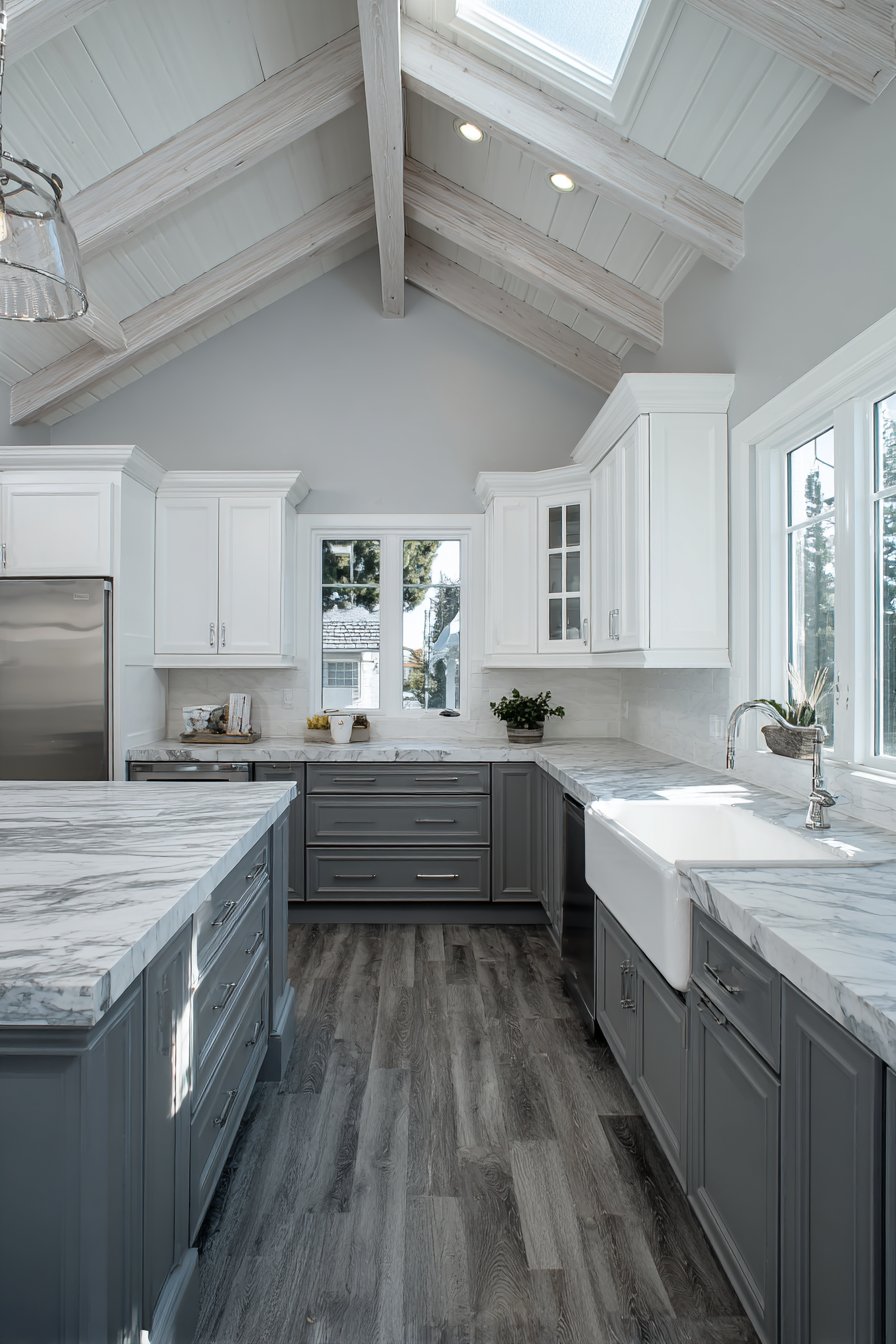
Architectural details elevate kitchen design from merely functional to truly memorable, and exposed ceiling beams provide exactly this kind of character-building feature. This design showcases exposed ceiling beams painted in soft white, contrasting beautifully with medium grey lower cabinetry and white upper cabinets that create visual balance through the strategic distribution of each color throughout the vertical space. The white beams draw the eye upward, emphasizing ceiling height while adding structural interest that gives the kitchen a distinctive personality and architectural gravitas.
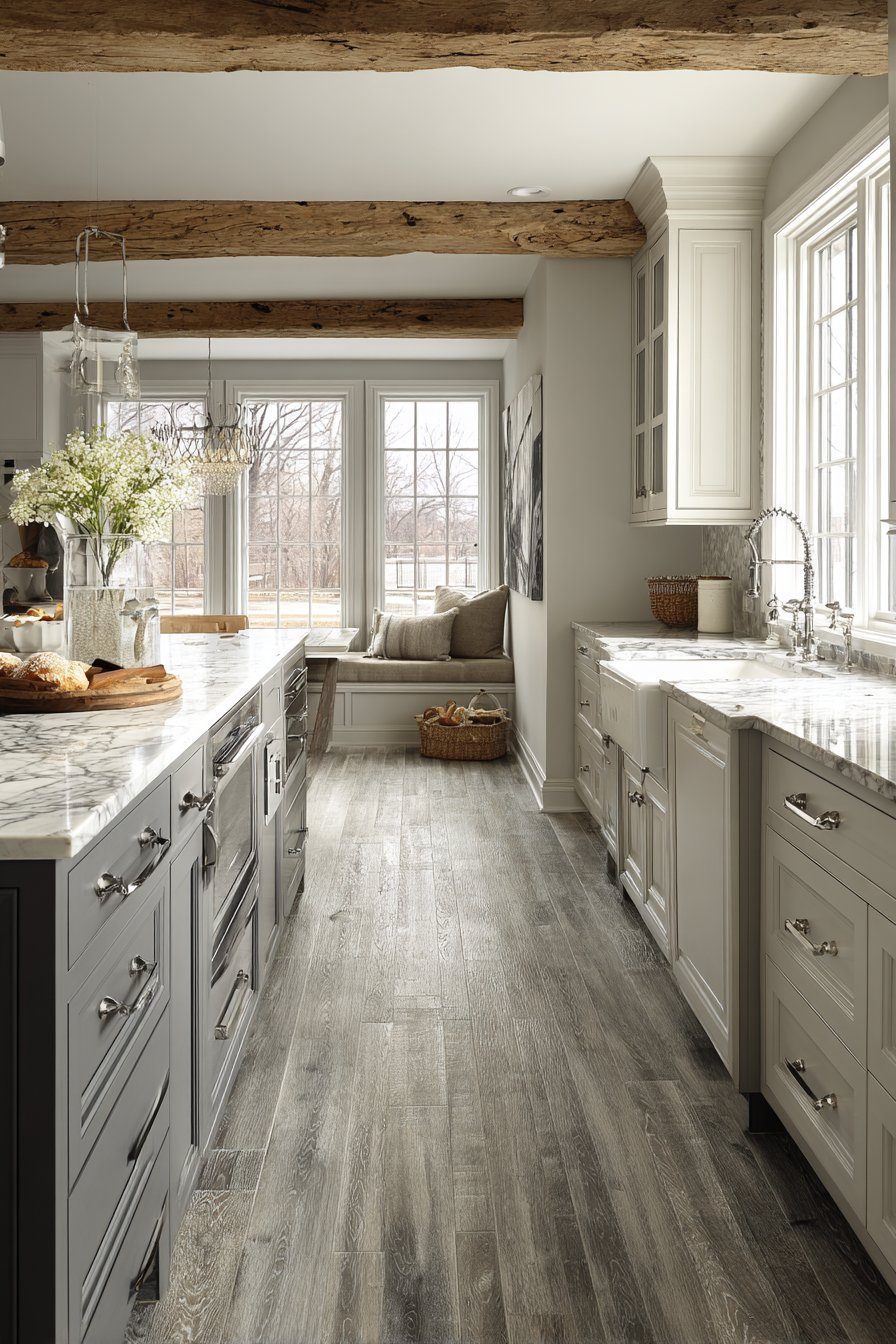
Carrara marble countertops with characteristic grey veining connect the color palette organically, the stone’s natural patterns creating movement and luxury while introducing subtle variation within the grey and white scheme. Carrara represents one of the most recognizable and beloved marble varieties, its distinctive veining patterns and creamy white background with grey striations creating timeless elegance that suits both traditional and contemporary kitchen designs. A white porcelain farmhouse sink and polished chrome fixtures add traditional elements that balance the contemporary clean lines of the cabinetry, creating a transitional aesthetic that feels current yet rooted in kitchen design tradition.
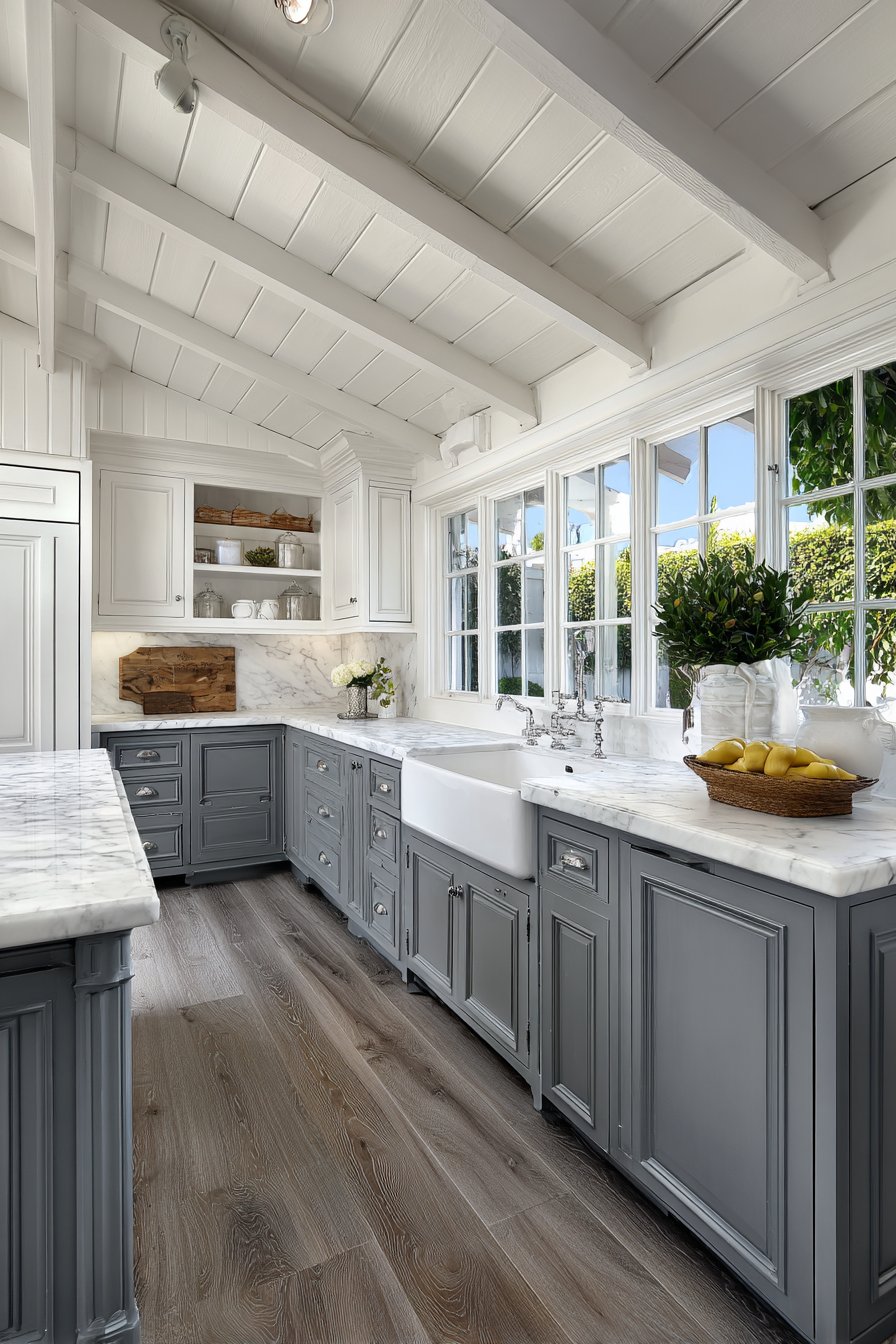
Grey wood-look vinyl plank flooring provides durability with authentic texture, offering the visual warmth of wood floors with the practical advantages of vinyl—water resistance, easy maintenance, and comfortable underfoot resilience. Modern vinyl plank flooring has evolved dramatically, now offering remarkably realistic wood grain textures and varied plank widths that mimic authentic hardwood installations. Windows with white casings allow natural afternoon light to highlight the architectural details, creating dynamic shadow play that emphasizes the three-dimensional quality of the beams and the depth they bring to the space. This design demonstrates how architectural features, when painted to integrate with the overall color scheme, can enhance rather than compete with the kitchen’s aesthetic.
Key Design Tips:
- Paint exposed beams to integrate them with your color scheme rather than leaving them in contrasting wood tones unless the wood quality justifies showcasing it.
- Use ceiling beams to draw attention upward in kitchens with good ceiling height, emphasizing the vertical volume of the space.
- Select Carrara marble for a classic look with characteristic veining, but seal it properly and maintain it carefully as marble requires more attention than quartz or granite.
- Choose vinyl plank flooring when you want wood appearance with superior water resistance and easy maintenance suited to kitchen environments.
- Position windows to capture specific light angles that will highlight your architectural features at times of day when you use the kitchen most.
Why These Grey and White Kitchen Designs Represent the Best Choices
The ten grey and white kitchen designs presented in this comprehensive guide represent the pinnacle of contemporary kitchen design thinking, each offering distinct advantages that make them exemplary choices for homeowners undertaking kitchen renovations or new construction projects. The grey and white color palette has achieved its status as a design favorite through its remarkable versatility, timeless appeal, and ability to adapt to evolving aesthetic preferences without requiring complete overhauls. Unlike trendy color schemes that date quickly, grey and white combinations maintain their relevance across decades, making them smart investments for long-term home value.
The two-tone cabinetry approach featured in the first design represents one of the most effective strategies for creating visual interest within a neutral palette. By strategically placing darker grey tones on lower cabinets and lighter white tones on upper cabinetry, designers create natural visual anchoring that makes kitchens feel properly grounded while maximizing the perception of space and height. This technique has become increasingly popular in modern kitchen design because it offers the perfect balance between bold statement-making and subtle sophistication. The approach works equally well in small kitchen layouts and expansive culinary spaces, demonstrating its universal applicability.
The kitchen island designs showcased, particularly the waterfall-edge marble concept, illustrate how focal points can transform kitchens from purely functional spaces into rooms with genuine architectural interest. Islands have evolved from simple work surfaces into multifunctional hubs that accommodate food preparation, casual dining, homework sessions, and social gathering. The grey and white palette allows these substantial elements to make strong visual statements without overwhelming the space with color intensity. Contemporary kitchen islands benefit especially from this color scheme, as the neutral background allows premium materials like marble, quartz, and custom cabinetry details to shine without competing color distractions.
Open shelving concepts represent a significant trend in modern kitchen design, moving away from the closed, fortress-like upper cabinetry that dominated previous generations toward more accessible, display-oriented storage solutions. The grey and white color scheme provides the perfect backdrop for open shelving because it creates visual continuity between the structural elements and the displayed items. White dishes on grey shelves or grey stoneware on white backgrounds create natural rhythm and repetition that unifies the overall design. This approach particularly suits farmhouse kitchen aesthetics, cottage-style kitchens, and Scandinavian-inspired designs where openness, light, and accessible storage align with core design principles.
The small space kitchen solutions demonstrated prove that limited square footage need not mean sacrificing style or functionality. Grey and white palettes excel in compact kitchens because they maximize light reflection, create the illusion of expanded space, and provide a clean backdrop that prevents visual clutter. The strategic use of vertical storage, thoughtful tile orientation, and comprehensive lighting solutions transforms challenging small kitchens into efficient, beautiful spaces. These space-saving kitchen designs offer particular value in urban apartments, small homes, and galley kitchen configurations where every square inch matters.
The emphasis on artisanal materials and handcrafted details, particularly in backsplash applications, reflects a growing appreciation for authentic craftsmanship in an increasingly mass-produced world. Handmade tiles, natural stone with inherent variation, and custom cabinetry details add soul and personality to kitchens that might otherwise feel generic despite their beauty. The grey and white palette provides the perfect canvas for showcasing these artisanal elements because the neutral background allows the craftsmanship itself to become the focal point. This approach aligns perfectly with transitional kitchen styles that bridge traditional craftsmanship with contemporary clean lines.
Farmhouse kitchen elements like apron-front sinks, shiplap walls, and vintage-inspired fixtures continue to dominate kitchen design preferences because they communicate warmth, authenticity, and timeless appeal. The grey and white color scheme brings these traditional elements into contemporary relevance, preventing them from feeling too rustic or dated. The farmhouse sink designs featured demonstrate how classic fixtures can anchor modern kitchens when surrounded by the right material palette and design details. This fusion of traditional elements with contemporary color sensibilities has created the immensely popular modern farmhouse style that defines much of current kitchen design.
The handleless contemporary kitchen represents the cutting edge of minimalist design, where technology enables cleaner aesthetics through innovative hardware solutions. Push-to-open mechanisms, integrated lighting, and seamless surfaces create kitchens that feel more like sophisticated art installations than utilitarian cooking spaces. Grey and white palettes excel in these minimalist kitchen designs because they align with the fundamental principle of reducing visual noise to its essential elements. The combination of glossy and matte finishes within this color scheme adds necessary dimension that prevents minimalism from feeling sterile or cold.
Breakfast nook integration demonstrates how kitchens have expanded beyond cooking functions to become complete living spaces where families gather, work, and connect throughout the day. The grey and white palette creates visual continuity between cooking and dining zones while allowing each area to maintain its distinct character through material choices, lighting, and architectural details. These built-in dining spaces add significant value to homes by creating cozy gathering spots that feel intentional and integrated rather than afterthought additions.
Pantry organization systems reflect the reality that beautiful kitchens require substantial storage infrastructure to maintain their clean, uncluttered appearance. The grey and white palette extends into these support spaces, ensuring design continuity throughout the entire kitchen ecosystem. Well-organized pantries enable the minimalist kitchen aesthetic by providing attractive storage for items that would otherwise create visual clutter on open counters. These custom storage solutions represent smart investments that improve daily functionality while contributing to overall aesthetic excellence.
Finally, architectural details like exposed beams demonstrate how grey and white kitchens can incorporate distinctive character without sacrificing their fundamental color scheme. By painting architectural elements to integrate with the palette, designers create cohesive spaces where every element contributes to the overall vision. These architectural kitchen features add the personality and uniqueness that prevent grey and white kitchens from feeling generic despite their popular color choice.
Conclusion
The enduring appeal of grey and white kitchens stems from their remarkable ability to adapt to countless design styles while maintaining a sense of timeless elegance that transcends fleeting trends. These ten design concepts demonstrate that within this seemingly simple color palette lies extraordinary potential for personalization, creativity, and sophisticated expression. From sleek contemporary minimalism to cozy farmhouse charm, from luxury marble surfaces to practical laminate solutions, the grey and white combination provides a versatile foundation that welcomes diverse aesthetic preferences and functional requirements.
As you consider implementing these ideas in your own home, remember that successful kitchen design balances aesthetic appeal with practical functionality, creating spaces that delight the eye while supporting the daily activities that make a kitchen truly livable. The grey and white palette offers the perfect starting point for this balance, providing a calm, cohesive background that allows quality materials, thoughtful details, and personal touches to shine. Whether you’re planning a complete kitchen renovation or simply seeking inspiration for smaller updates, these design principles offer actionable guidance for creating kitchens that you’ll love for years to come.
Don’t hesitate to experiment with different shades of grey—from soft dove grey to dramatic charcoal—paired with various whites ranging from warm cream-tinted tones to cool bright whites. Test material combinations, explore different hardware finishes, and consider how natural light interacts with your specific space throughout the day. The most successful kitchens emerge from thoughtful consideration of how design choices align with your lifestyle, aesthetic preferences, and practical needs. Let these ten designs inspire your own kitchen journey toward a space that beautifully balances style and substance in perfect grey and white harmony.
