


Green has emerged as one of the most versatile and psychologically beneficial colors in interior design. In bathroom spaces, green creates an immediate connection to nature, promoting relaxation and rejuvenation. Whether you’re drawn to soft sage tones or bold emerald statements, green bathroom decor offers endless possibilities for creating a personal sanctuary. The color’s natural association with growth, renewal, and tranquility makes it particularly well-suited for spaces dedicated to self-care and wellness.
Modern homeowners increasingly recognize that bathroom design extends far beyond mere functionality. These intimate spaces deserve the same thoughtful attention as any other room in the home. Green bathroom decor accommodates diverse design preferences, from minimalist contemporary aesthetics to richly layered traditional styles. The color works beautifully across various materials including tile, paint, natural stone, and textiles, allowing for creative expression while maintaining cohesion.
This comprehensive guide explores ten distinct approaches to green bathroom decor, each showcasing unique design strategies and material combinations. From serene sage sanctuaries to dramatic dark green statements, these carefully curated concepts demonstrate how thoughtful color application and material selection can transform ordinary bathrooms into extraordinary retreats. You’ll discover practical techniques for incorporating green through paint, tile, fixtures, and natural elements while learning how to balance these choices with complementary neutrals and metallic accents.
1. Serene Sage Green Subway Tile Sanctuary
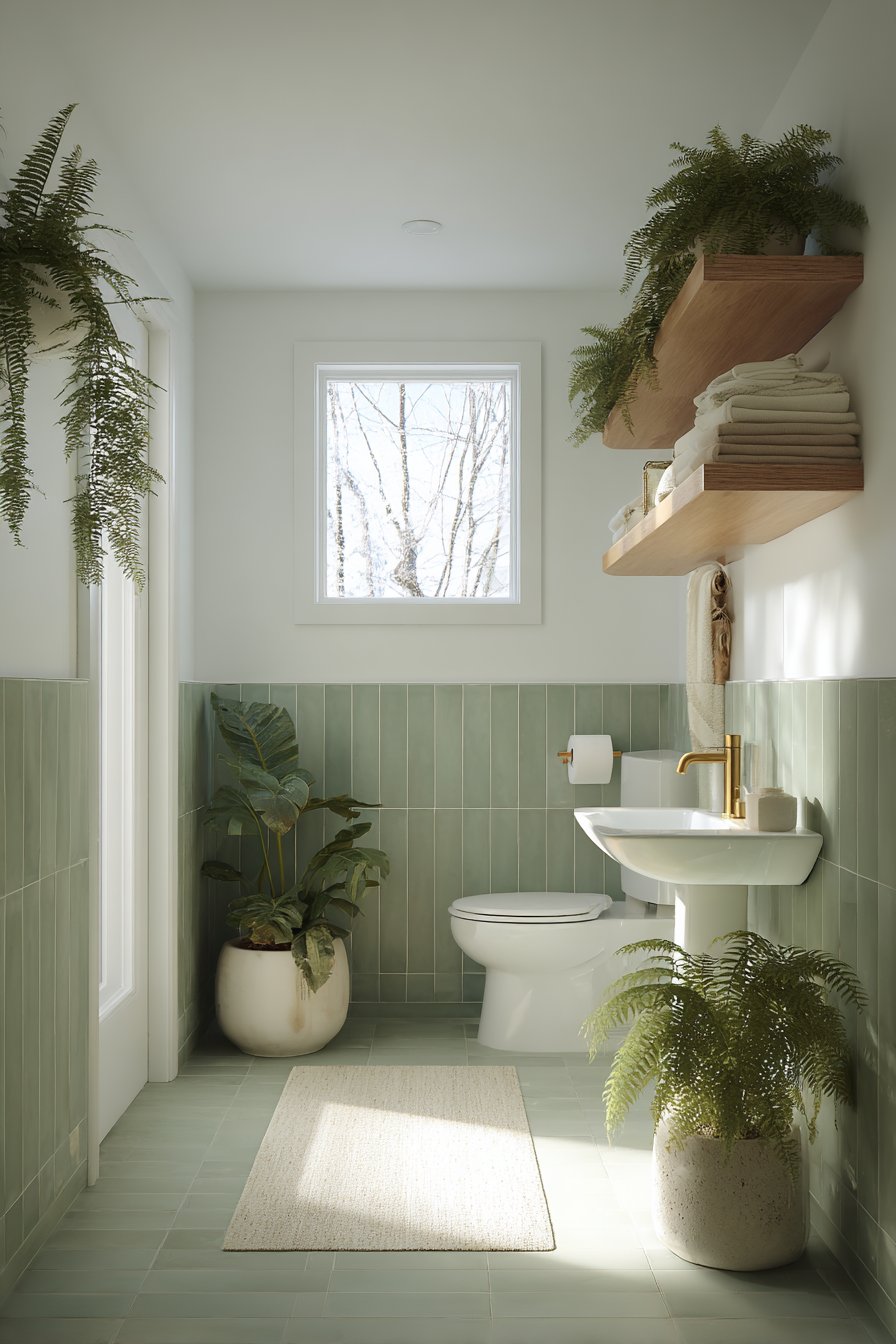
The timeless appeal of subway tiles reaches new heights when rendered in soft sage green. This classic configuration features sage green tiles covering the lower wall portions, creating a soothing foundation that grounds the entire space.
The upper walls remain crisp white, establishing a visual balance that prevents the room from feeling too enclosed. A white porcelain pedestal sink with brushed brass fixtures serves as the focal point, its traditional silhouette complementing the subway tile’s vintage charm.
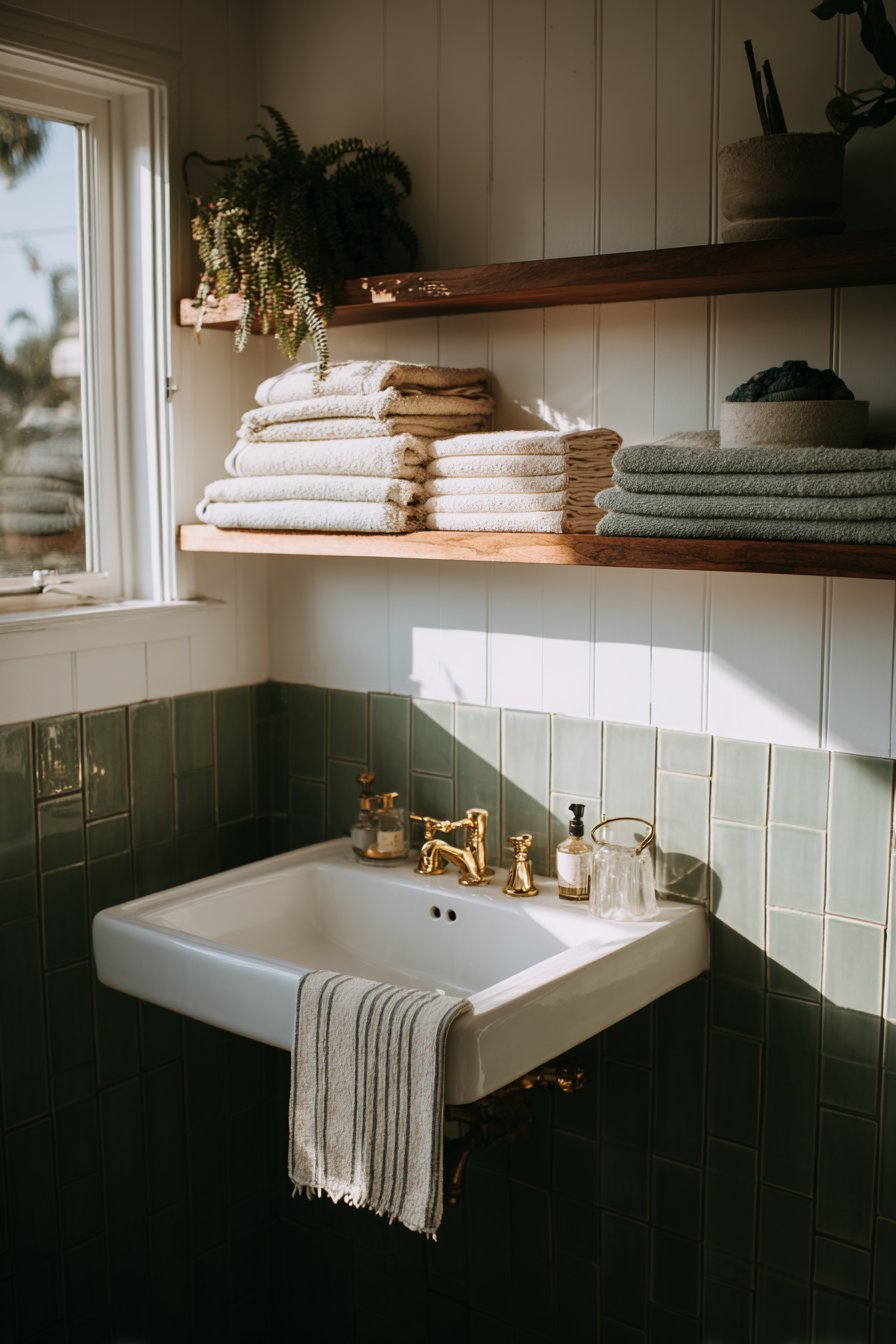
Natural oak floating shelves introduce warmth through their honey-toned grain patterns. These practical storage solutions display neatly folded towels in complementary cream and soft green shades, reinforcing the monochromatic color story.
The wooden elements provide essential contrast against the cooler ceramic surfaces, creating depth and preventing the space from feeling sterile. This material combination exemplifies how natural textures enhance color-focused design schemes.
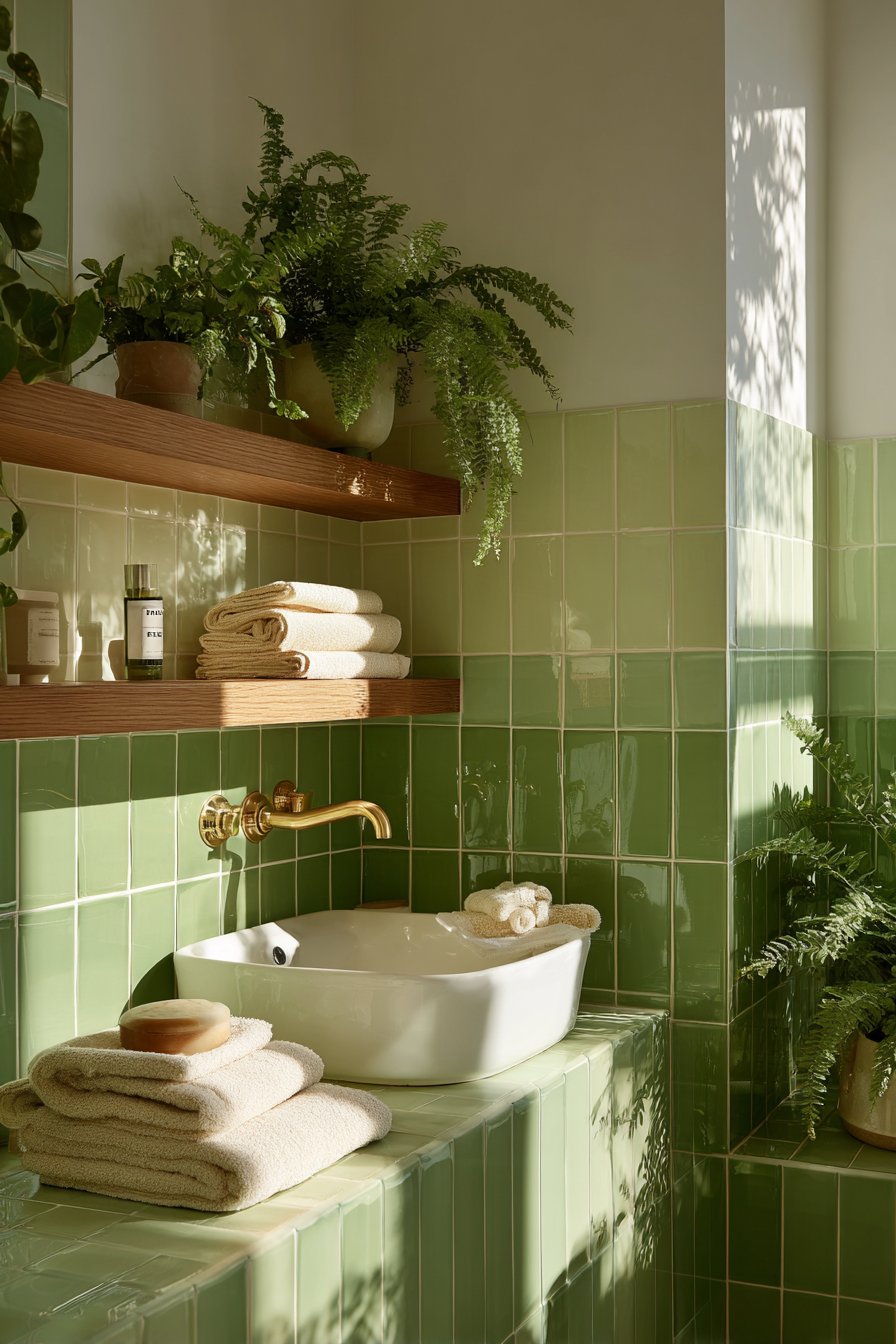
Living greenery transforms this bathroom from attractive to truly exceptional. Potted ferns thrive in bathroom humidity, their delicate fronds adding organic movement and texture. Trailing pothos plants cascade from the floating shelves, their heart-shaped leaves creating visual interest at multiple heights. These living elements purify the air while strengthening the connection to nature that makes green bathrooms so psychologically beneficial.

Soft natural daylight filtering through frosted windows creates gentle shadows that highlight the subway tile’s subtle texture variations. This diffused lighting approach maintains privacy while flooding the space with flattering illumination. The interplay between light and shadow emphasizes the tile’s dimensional quality, making the walls feel alive rather than flat.
Key Design Tips:
- Install sage green subway tiles with white grout for definition and classic appeal
- Position floating shelves at varying heights to create visual rhythm
- Select towels in cream, white, and soft green to maintain color harmony
- Choose low-maintenance plants like pothos and ferns that thrive in humid conditions
- Use brushed brass fixtures to add warmth without overwhelming the subtle palette
- Ensure adequate natural light through frosted or textured glass for privacy
- Keep pedestal sinks simple in form to let the tilework shine
2. Modern Emerald Hexagonal Floor Statement
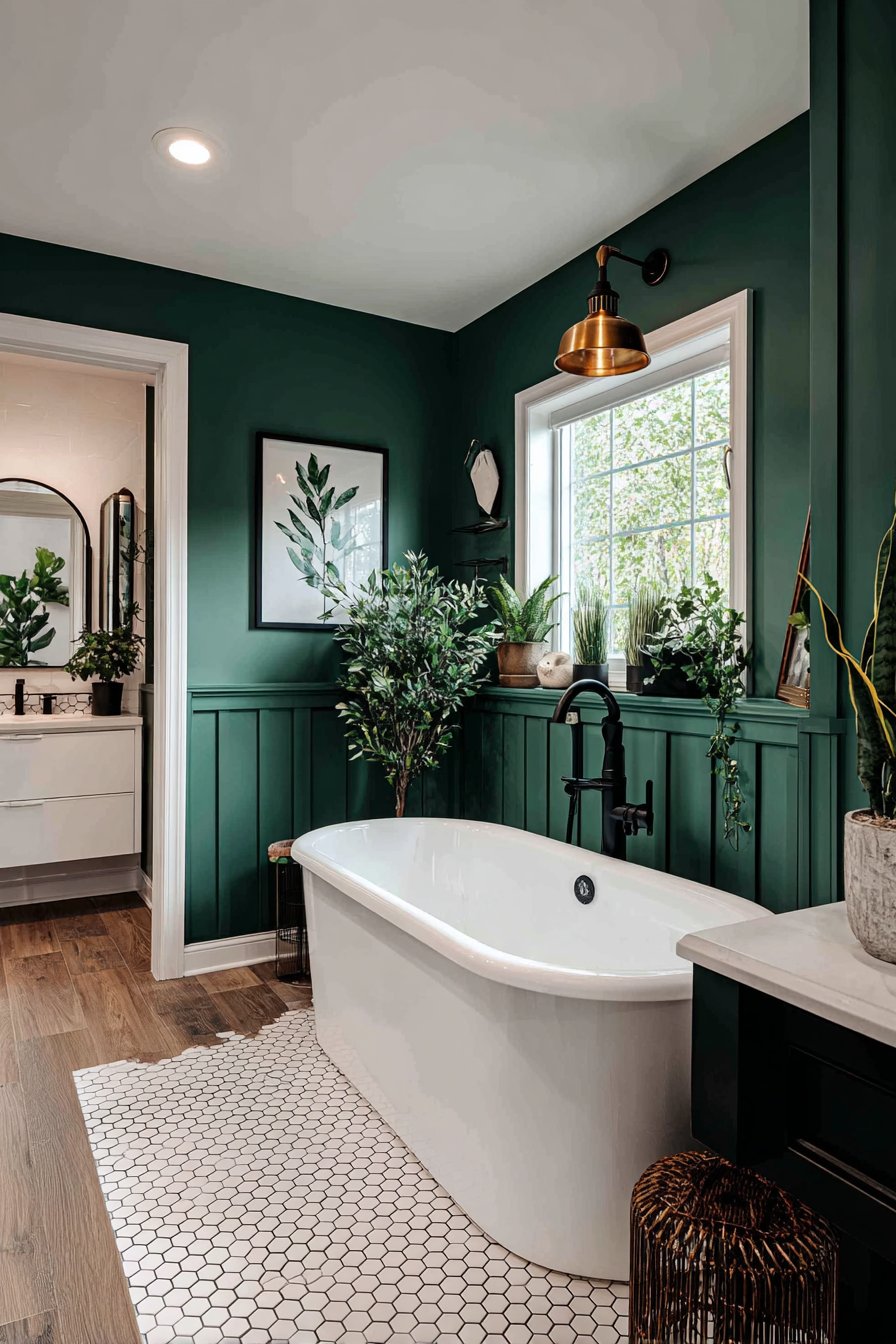
Emerald green hexagonal floor tiles create immediate visual drama in this contemporary bathroom design. The geometric pattern draws the eye downward, establishing a bold foundation that anchors the entire space. A freestanding white clawfoot bathtub appears to float above this verdant surface, its traditional form providing delightful contrast against the modern flooring. This juxtaposition of classic and contemporary elements creates sophisticated tension that elevates the design beyond single-style limitations.
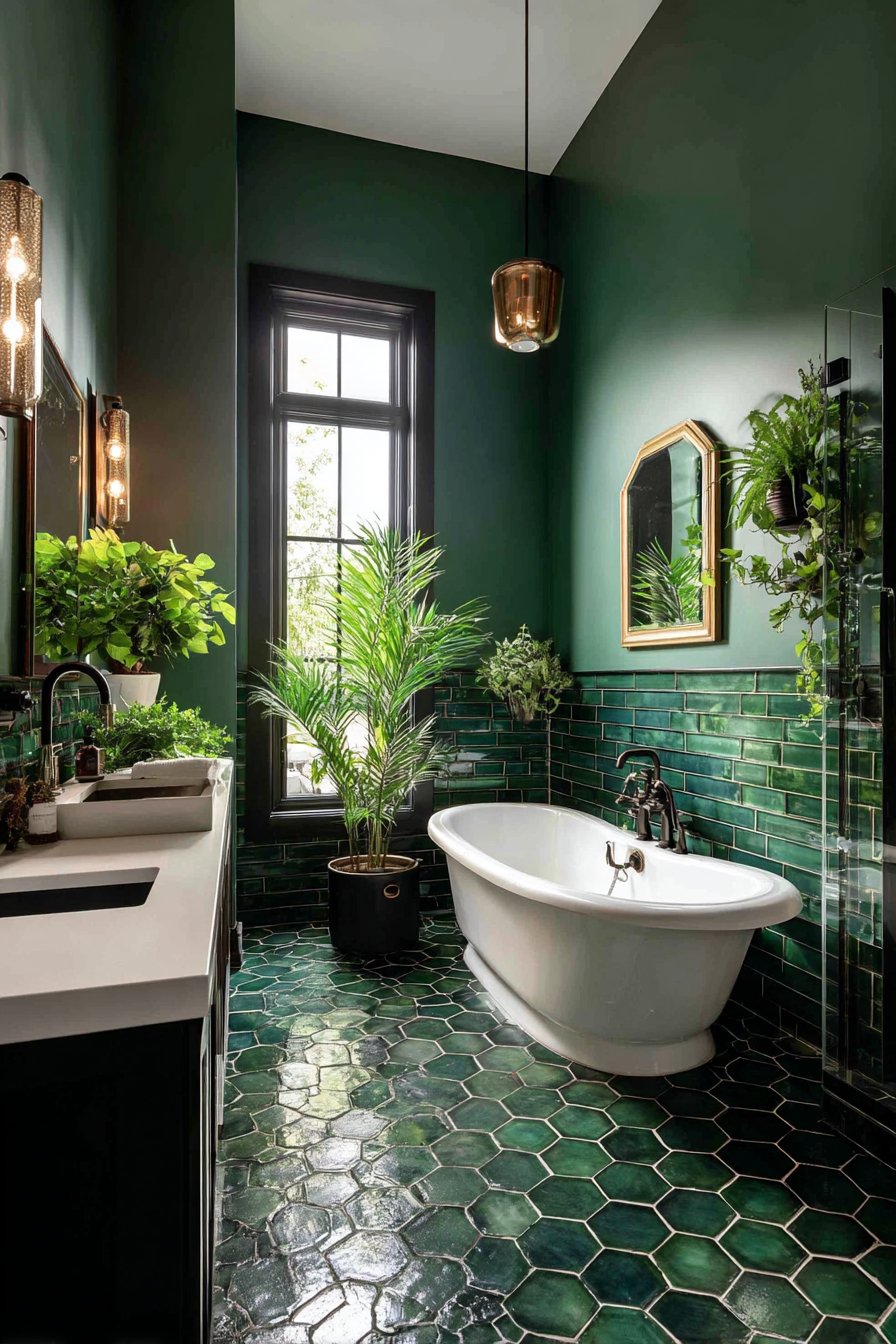
Deep forest green beadboard wainscoting wraps the lower walls, introducing vertical texture while complementing the floor’s rich tones. White trim provides crisp definition between surfaces, creating clean transitions that prevent the abundant green from overwhelming. The beadboard’s dimensional quality adds tactile interest, inviting touch and closer inspection. This traditional wall treatment gains fresh relevance through its unexpected color application and pairing with modern floor tiles.
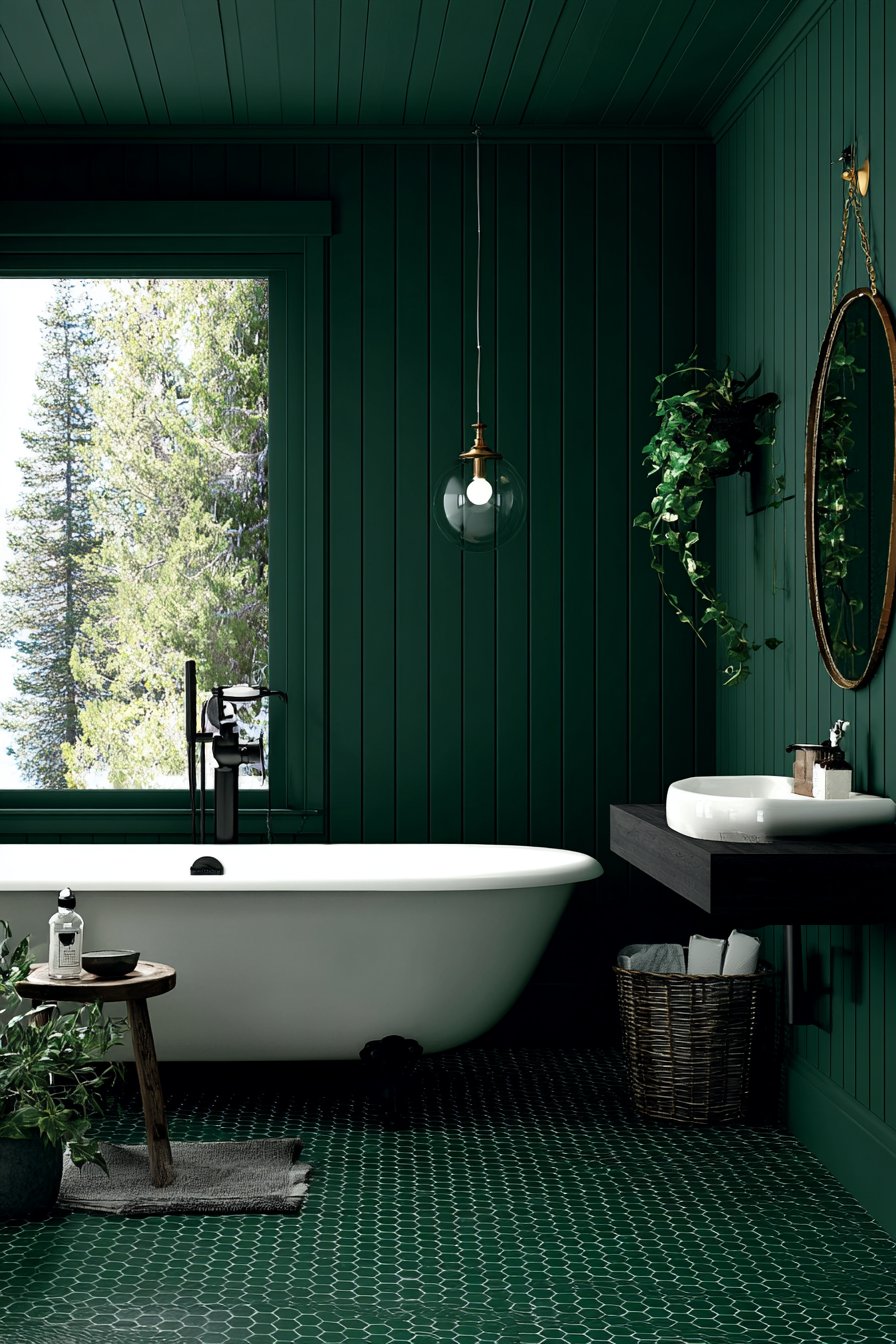
Matte black fixtures throughout the space provide striking contrast that reads as both contemporary and timeless. Against the green surfaces, black creates powerful definition without competing for attention. A vintage-style brass mirror introduces a third metallic finish, adding warmth and reflective dimension. The small wall-mounted sink keeps the footprint compact, allowing the floor pattern and freestanding tub to remain the compositional stars.
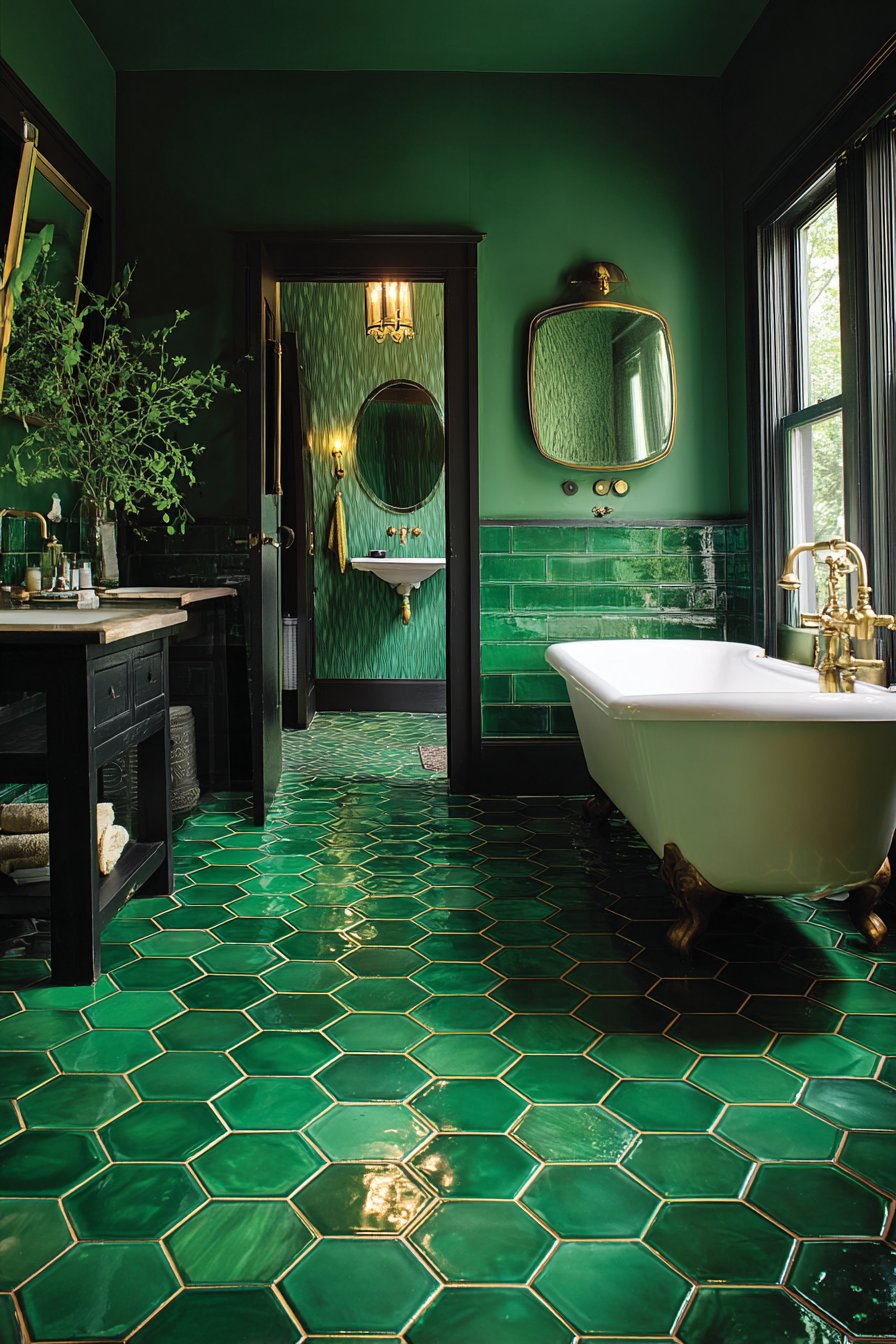
Natural light from nearby windows illuminates the rich green spectrum, revealing subtle variations in tone and sheen between different surfaces. Professional lighting placement ensures the deep colors remain inviting rather than dark or cave-like. The emerald and forest green combination creates surprising depth, proving that monochromatic schemes need not be boring when material variety and thoughtful lighting are employed.
Key Design Tips:
- Use hexagonal tiles in emerald green to add geometric visual interest
- Paint beadboard wainscoting in coordinating forest green for layered depth
- Install white trim between surfaces to create clean definition
- Choose matte black fixtures for contemporary contrast against green backgrounds
- Position freestanding tubs to showcase beautiful floor patterns beneath
- Add brass accents through mirrors or hardware for warmth
- Ensure adequate natural and artificial lighting to prevent dark tones from overwhelming
3. Spa-Like Seafoam Herringbone Shower Retreat
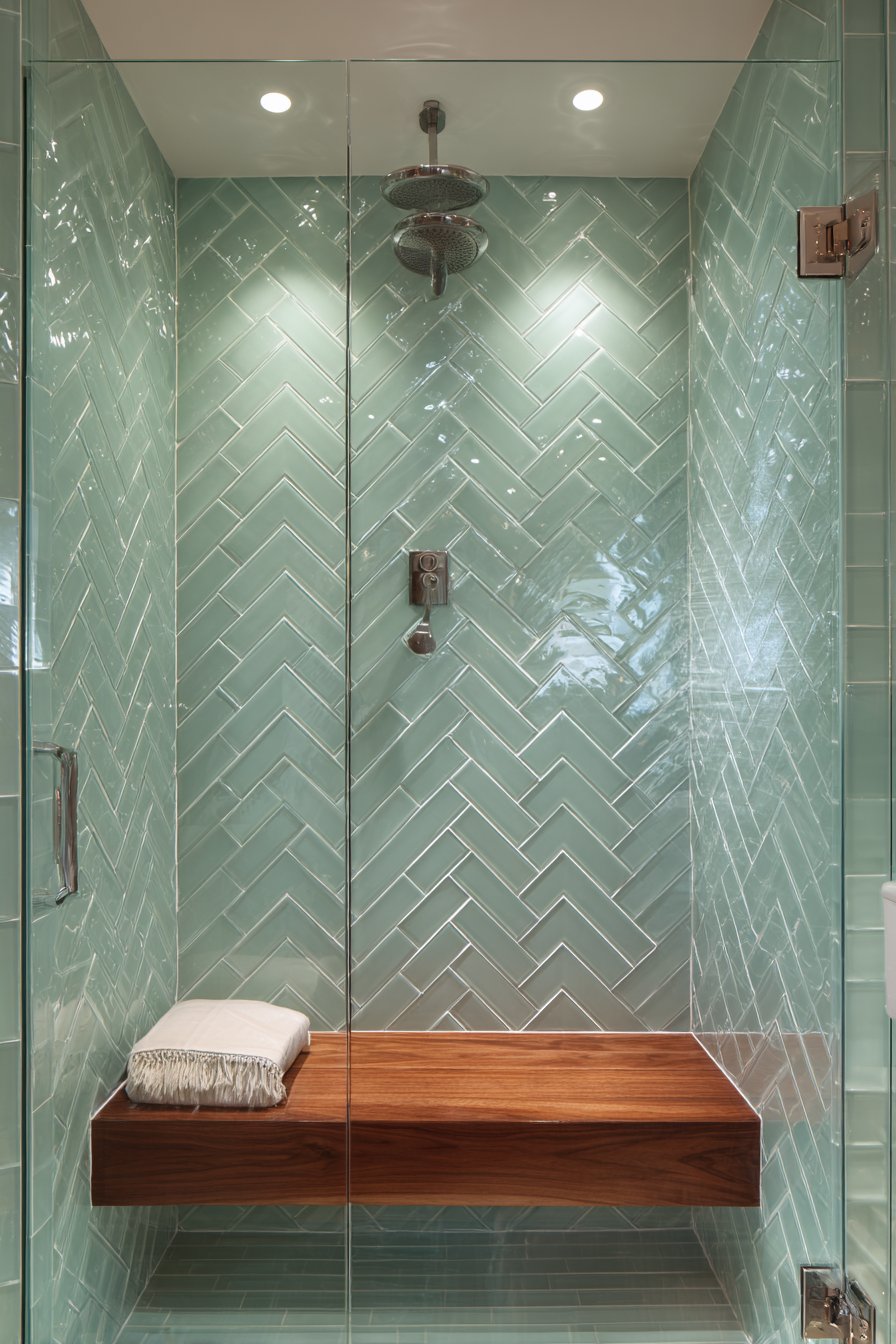
A walk-in shower featuring seafoam green glass subway tiles arranged in herringbone pattern becomes the bathroom’s crowning achievement. This installation technique transforms simple rectangular tiles into dynamic visual texture that rewards close inspection.
The frameless glass enclosure ensures the beautiful tilework remains fully visible while creating the seamless aesthetic associated with high-end spa environments. Brushed nickel rainfall showerhead and matching fixtures contribute to the luxurious bathing experience.
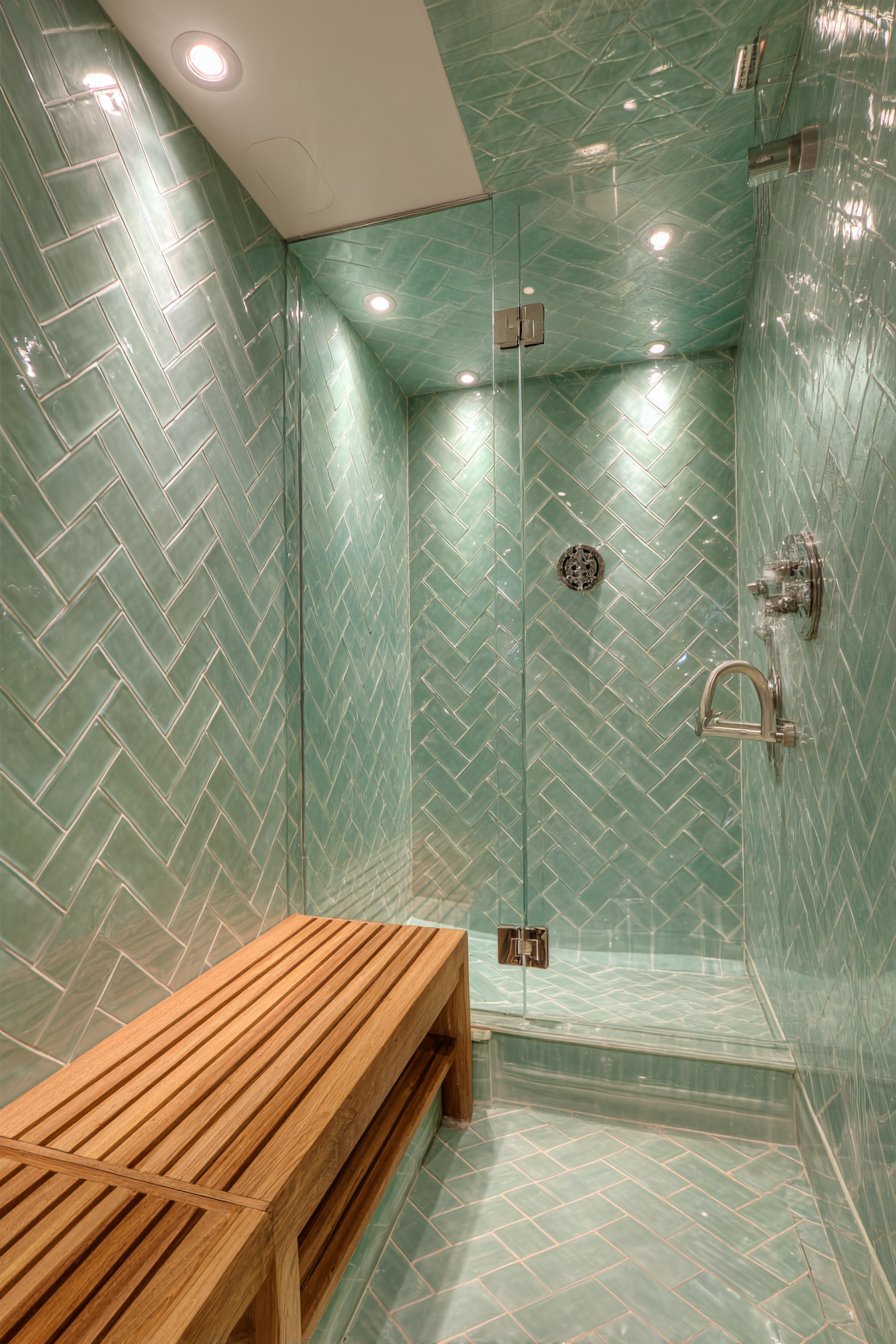
A floating teak wood bench provides practical seating while introducing essential warmth to balance the cool green tones. The wood’s natural oils make it inherently water-resistant, ideal for shower environments. Its honey-brown color creates beautiful contrast against the seafoam tiles, grounding the composition with organic earthiness. This functional element doubles as a design statement, proving that practical considerations can enhance rather than compromise aesthetics.
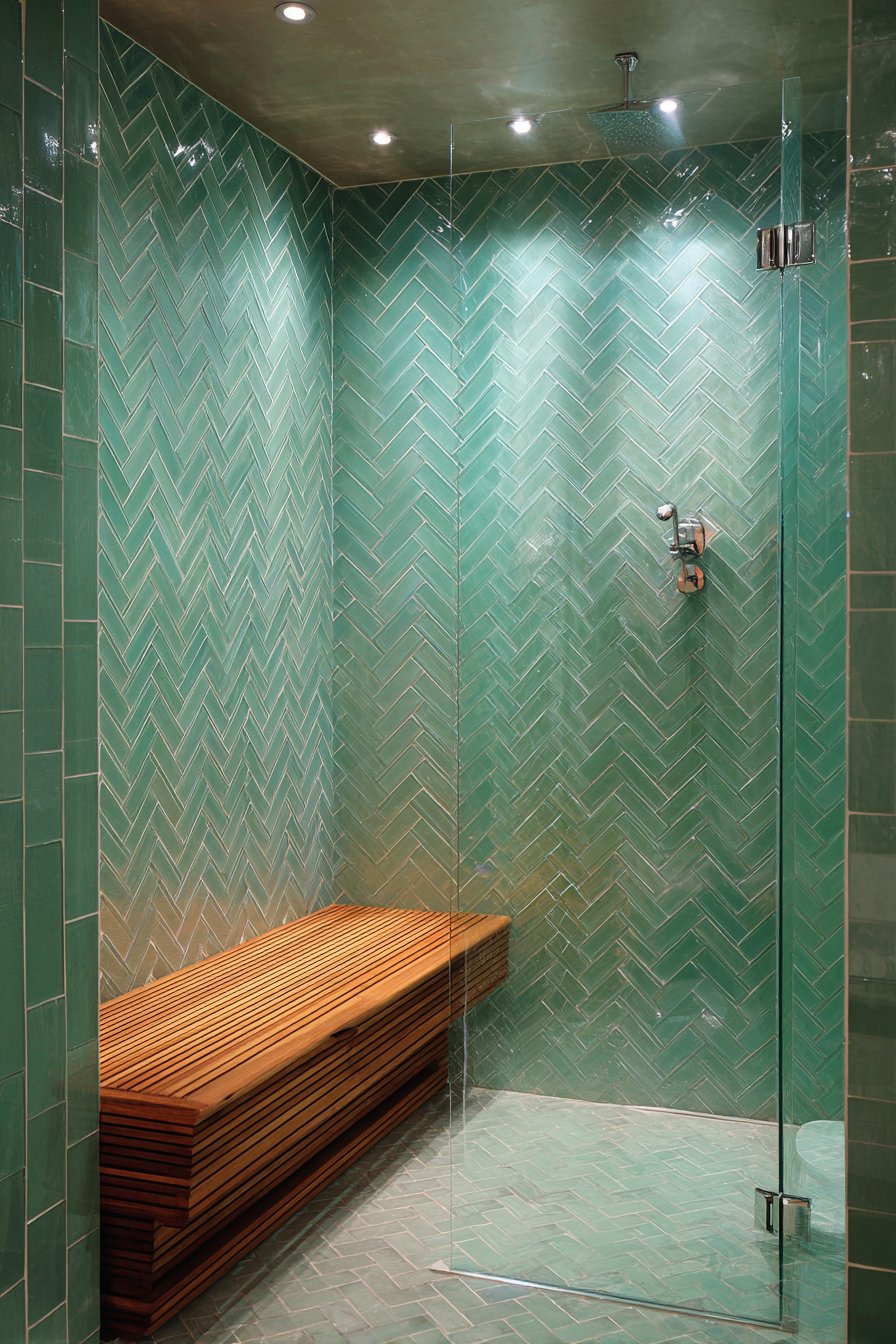
Recessed lighting creates subtle highlights across the glossy tile surfaces, emphasizing the herringbone pattern’s angular geometry. The lighting design avoids harsh shadows while providing adequate illumination for grooming tasks. Strategic placement creates gentle gradations that give the green tiles dimensional quality, making the walls appear to shift and shimmer as light plays across their surfaces throughout the day.
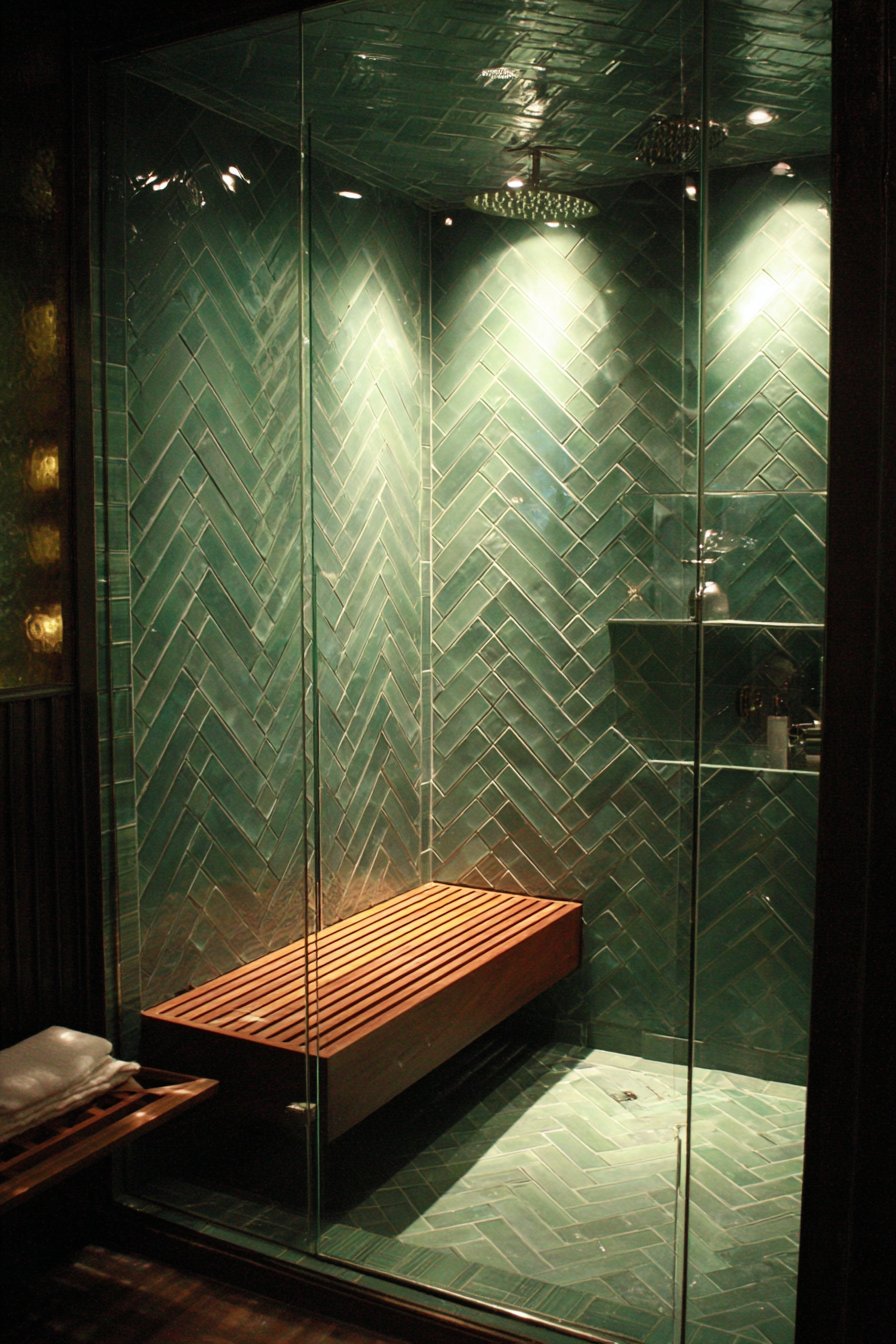
The overall effect evokes professional spa environments known for their restorative qualities. The seafoam green colorway promotes mental clarity and relaxation, while the herringbone pattern provides sufficient visual interest to prevent monotony. Material quality and installation precision communicate luxury, transforming a functional shower into a destination-worthy experience within your home.
Key Design Tips:
- Arrange seafoam green glass subway tiles in a herringbone pattern for maximum visual impact
- Install frameless glass enclosures to showcase beautiful tilework unobstructed
- Add floating teak benches for practical seating and warm color contrast
- Choose brushed nickel rainfall showerheads for spa-like experience
- Use recessed lighting to create highlights without harsh shadows
- Ensure tiles have glossy finish to reflect light and enhance color depth
- Consider professional installation for complex patterns like herringbone
4. Moss Green Vanity with Marble Elegance
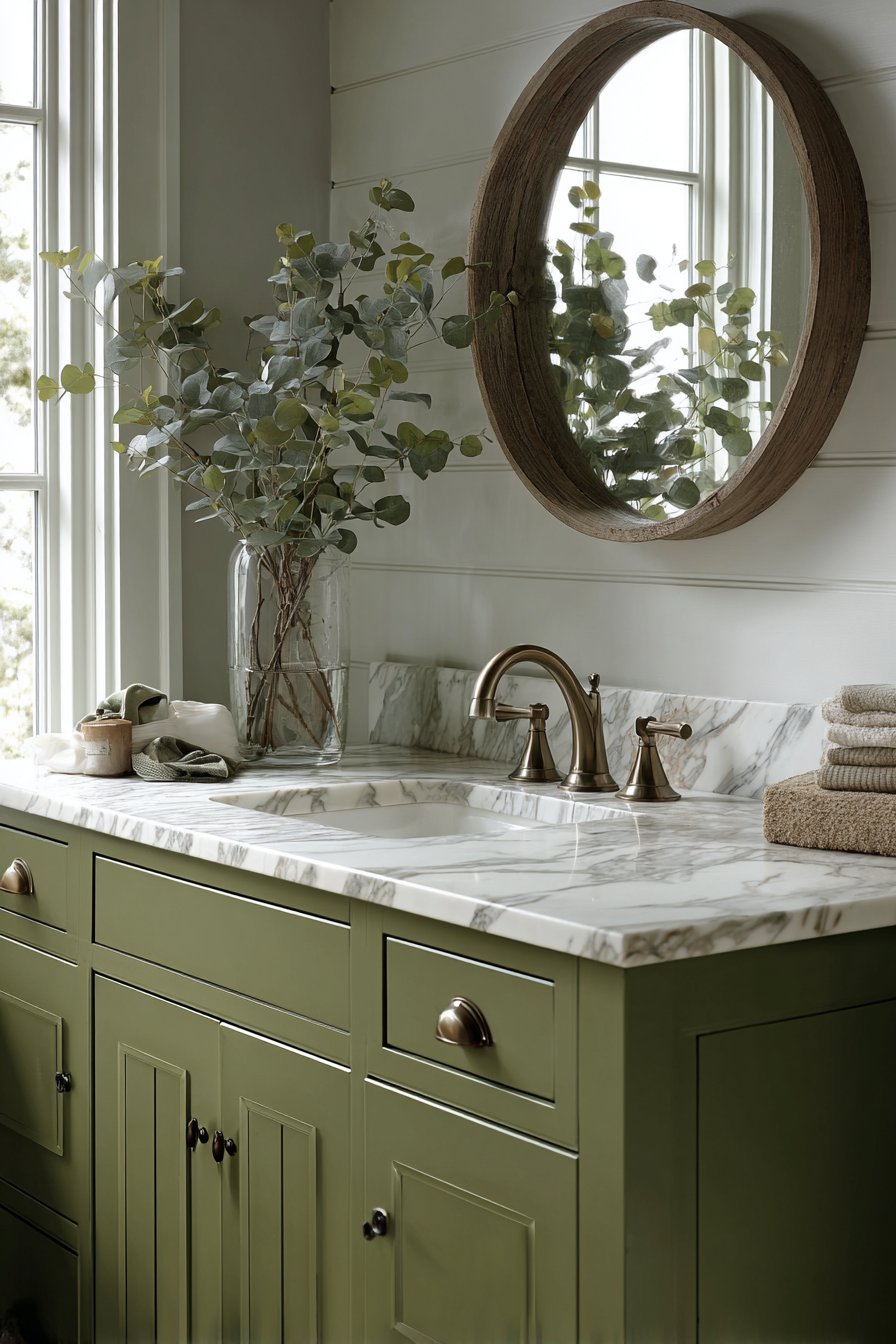
A compact bathroom gains outsized personality through a thoughtfully designed moss green painted vanity. The cabinet showcases visible wood grain texture beneath the painted finish, adding organic detail that elevates it beyond mass-produced alternatives.
Antique brass hardware provides warm metallic contrast while introducing subtle vintage character. The white marble countertop with integrated rectangular sink creates clean workspace, its cool neutral tone balancing the vanity’s earthy warmth.

White shiplap walls provide textural contrast while maintaining a bright, airy feel that prevents the small space from feeling cramped. The horizontal lines created by shiplap boards subtly widen the room visually, an important consideration in compact bathroom design. This neutral backdrop allows the moss green vanity to command attention as the room’s primary design statement without competing elements diluting its impact.
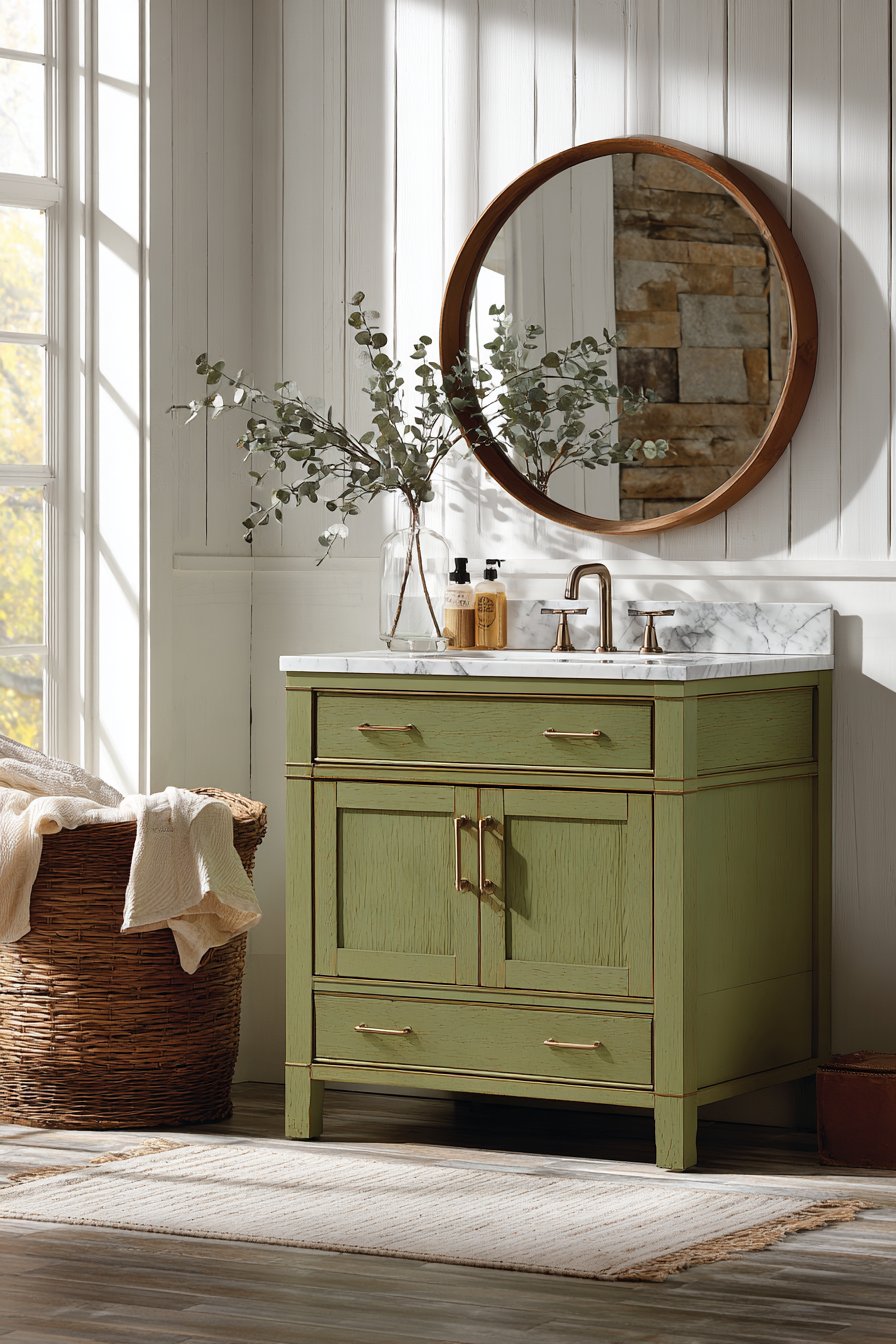
Small eucalyptus branches arranged in a simple glass vase introduce living green accents that complement the painted vanity. These botanical elements release pleasant aromatherapy benefits while reinforcing the natural theme.
Their silvery-green foliage creates tonal variation within the green family, adding sophistication to the color story. This simple styling gesture demonstrates how accessories can strengthen design concepts without requiring permanent installations.
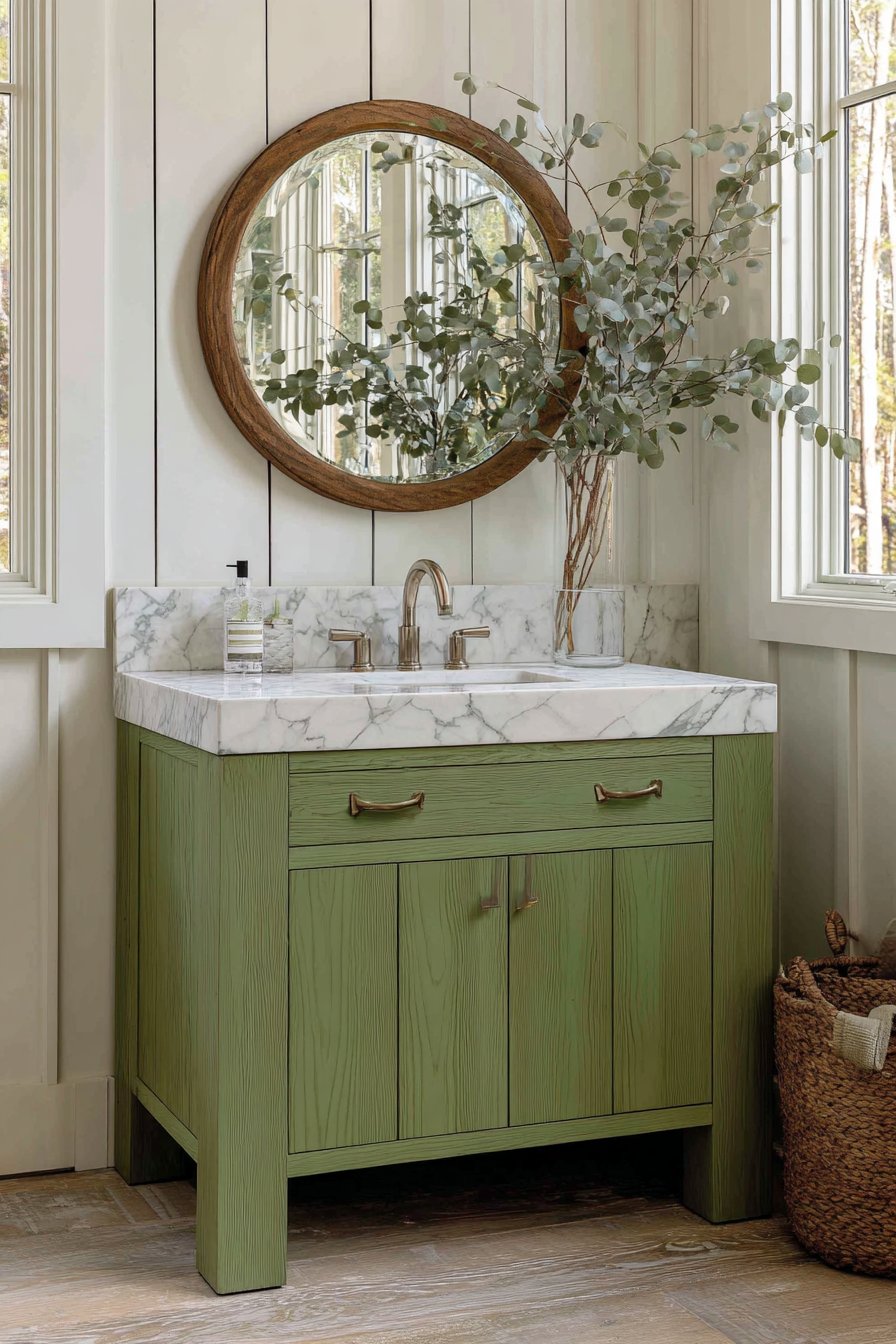
A round wooden-framed mirror hangs centered above the vanity, its circular form providing geometric contrast against the room’s rectangular elements. The wood frame connects visually to the vanity’s grain texture, creating material cohesion. Natural window lighting illuminates the space with a flattering quality that makes the moss green appear vibrant yet soothing, never muddy or dull.
Key Design Tips:
- Paint vanities in moss green to showcase wood grain beneath for added texture
- Install white marble countertops for luxurious contrast and timeless appeal
- Use antique brass hardware to add warmth and subtle vintage character
- Apply white shiplap to walls for textural interest and bright backgrounds
- Display eucalyptus branches for natural green accents and aromatherapy benefits
- Hang round mirrors above vanities for geometric variety and visual softness
- Maximize natural lighting to keep green tones vibrant and inviting
5. Luxurious Hunter Green Marble Statement
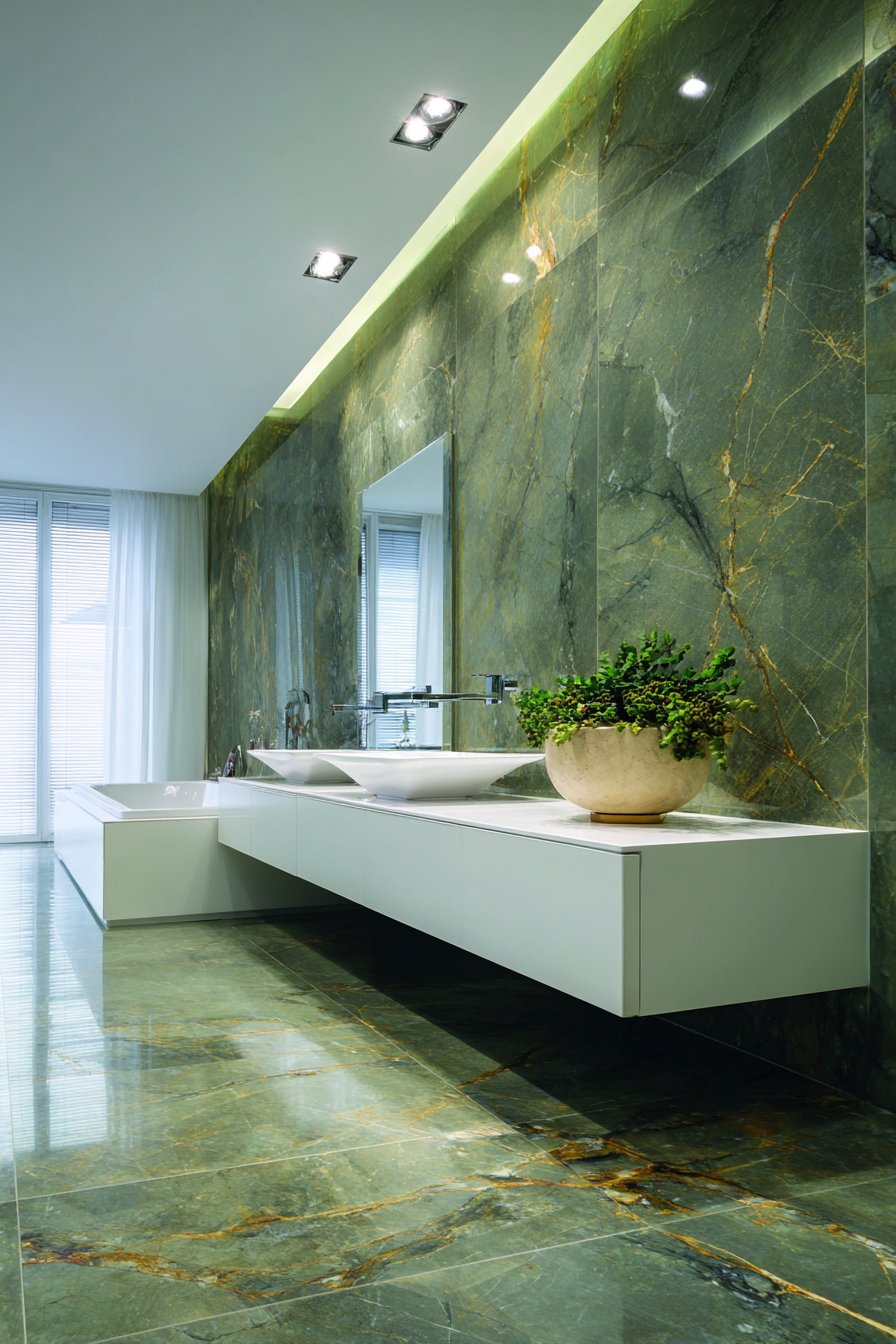
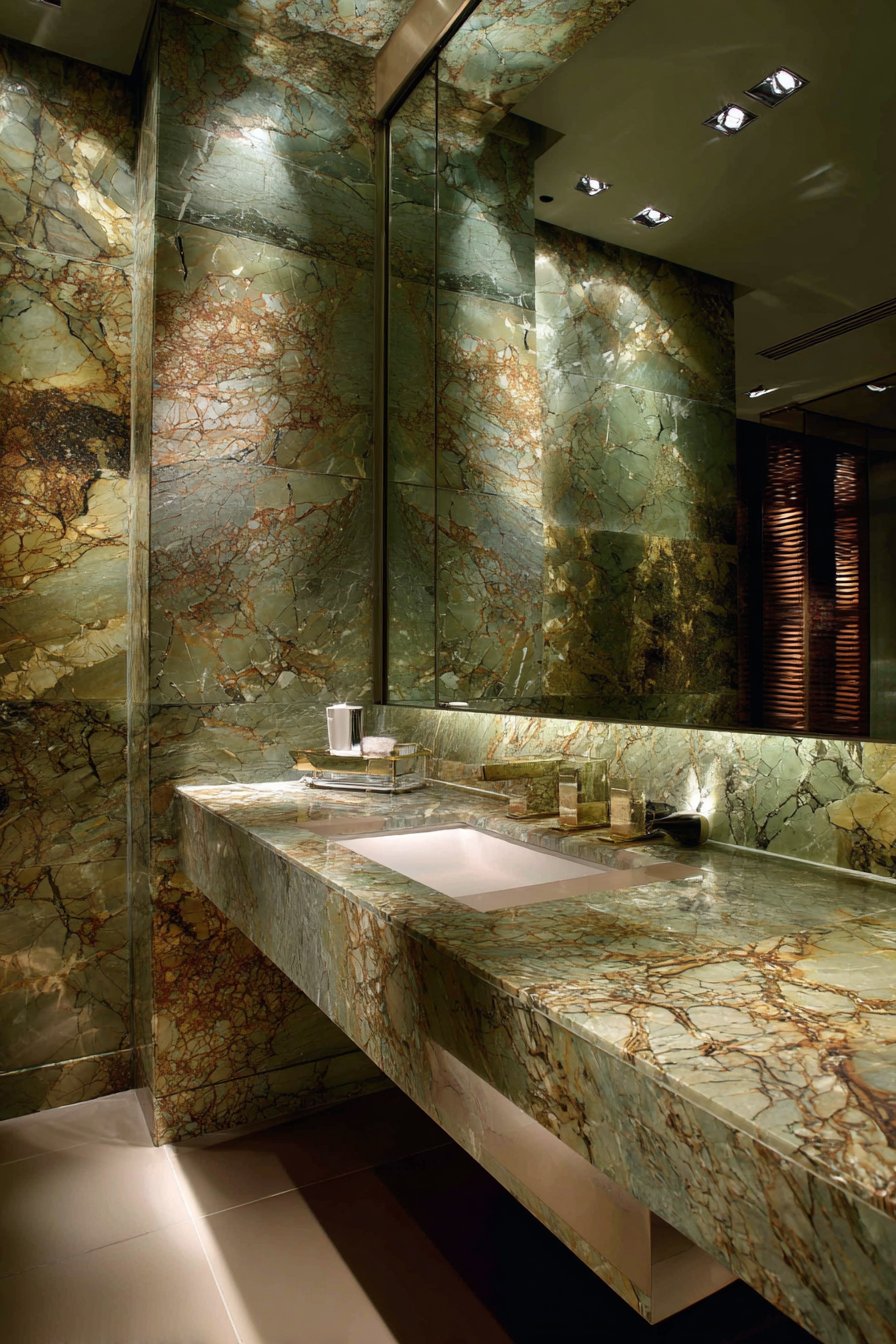
Dark hunter green marble walls displaying distinctive white and gold veining create an undeniably luxurious atmosphere. This natural stone brings inherent sophistication through its geological beauty, each panel unique in its veining patterns.
The material’s substantial presence establishes the bathroom as a high-end retreat worthy of five-star hotels. When backlit or properly illuminated, the marble reveals translucent qualities that add mystique and depth.
A modern floating vanity in white lacquer provides stark contrast against the dramatic walls, its clean lines preventing the rich marble from overwhelming. Integrated lighting beneath the vanity creates a floating effect while providing practical task illumination.
This contemporary element balances the marble’s traditional luxury with current design sensibilities. Gold-finished fixtures and hardware echo the marble’s natural veining, creating intentional material dialogue that feels curated rather than coincidental.
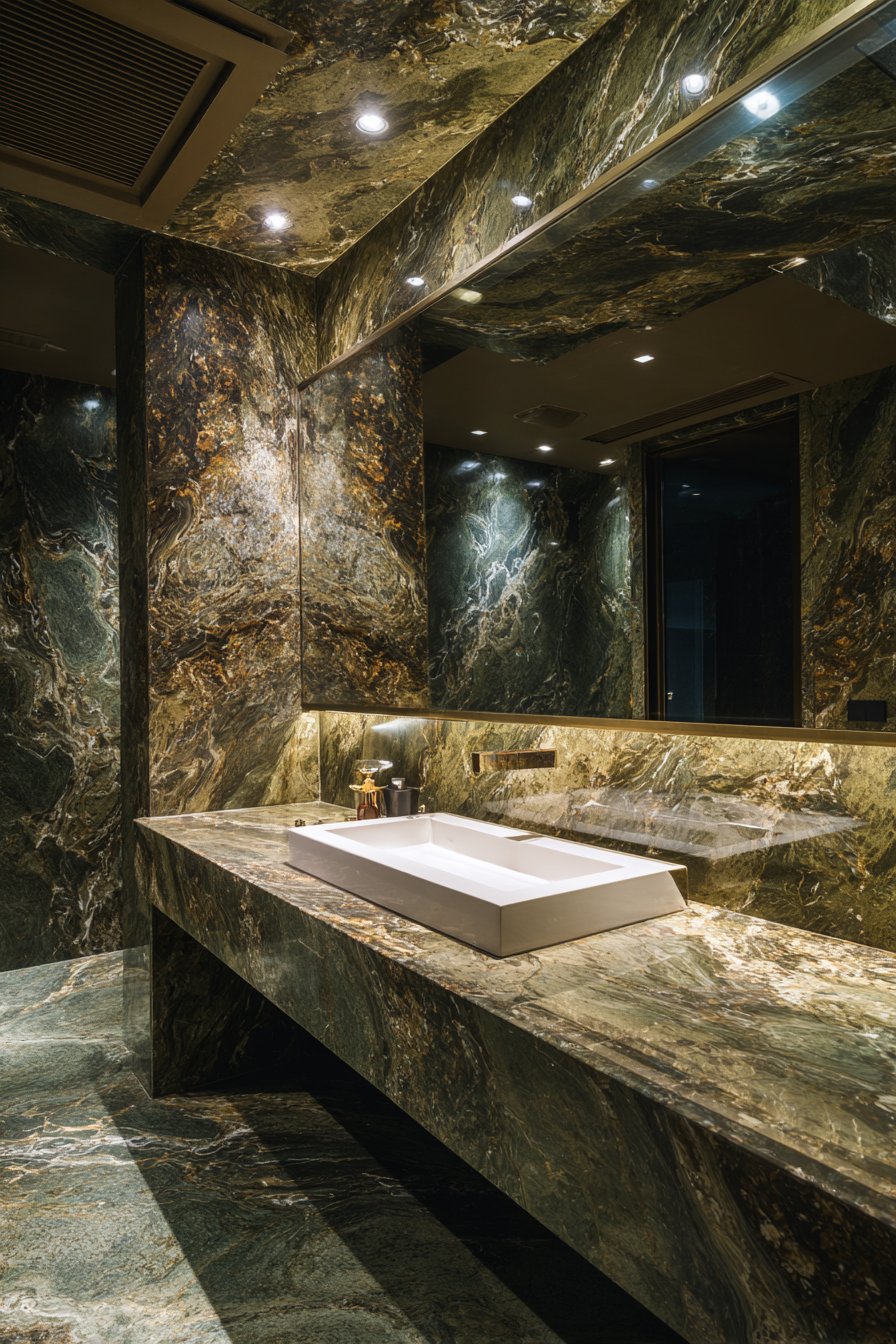
A large frameless mirror reflects and multiplies the sophisticated space, making the room feel larger while doubling the visual impact of the beautiful marble. The mirror’s lack of frame maintains the minimalist aesthetic while allowing the natural stone to remain the undisputed star. Its reflective surface bounces light throughout the room, preventing the dark walls from creating cave-like dimness.

Layered lighting from recessed fixtures and natural light sources ensures the rich textures remain visible and inviting throughout the day. Strategic lighting placement highlights the marble’s veining while preventing harsh shadows. The interplay between warm gold fixtures and cool green marble creates temperature balance that makes the space feel dynamic rather than monotonous.
Key Design Tips:
- Install hunter green marble with white and gold veining for natural luxury
- Choose floating white vanities to provide stark contrast and contemporary balance
- Add integrated lighting beneath vanities for floating effect and task illumination
- Select gold fixtures to complement marble’s natural veining patterns
- Hang large frameless mirrors to reflect and multiply sophisticated surfaces
- Layer recessed and natural lighting to showcase marble texture and prevent darkness
- Consider professional installation for heavy natural stone materials
6. Fresh Mint Green Airy Retreat
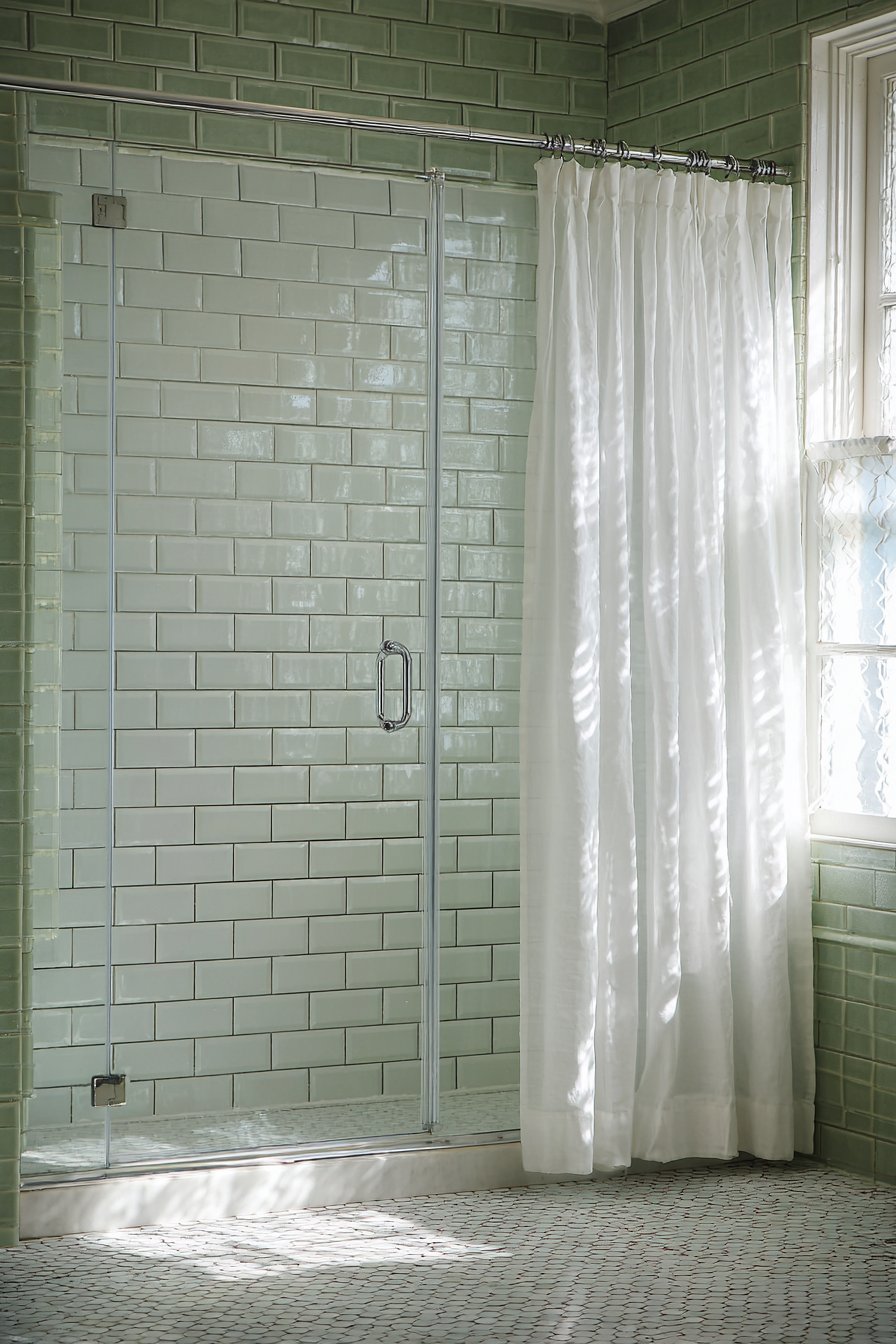
Mint green painted walls with subtle texture create an immediately bright and airy atmosphere perfect for morning routines. This fresh shade sits at the lighter end of the green spectrum, reflecting abundant light while maintaining definite color presence.
The wall texture adds tactile dimension that prevents flat appearance, creating subtle visual interest that rewards closer inspection. This approachable shade works beautifully in bathrooms of any size, particularly those with limited natural light.
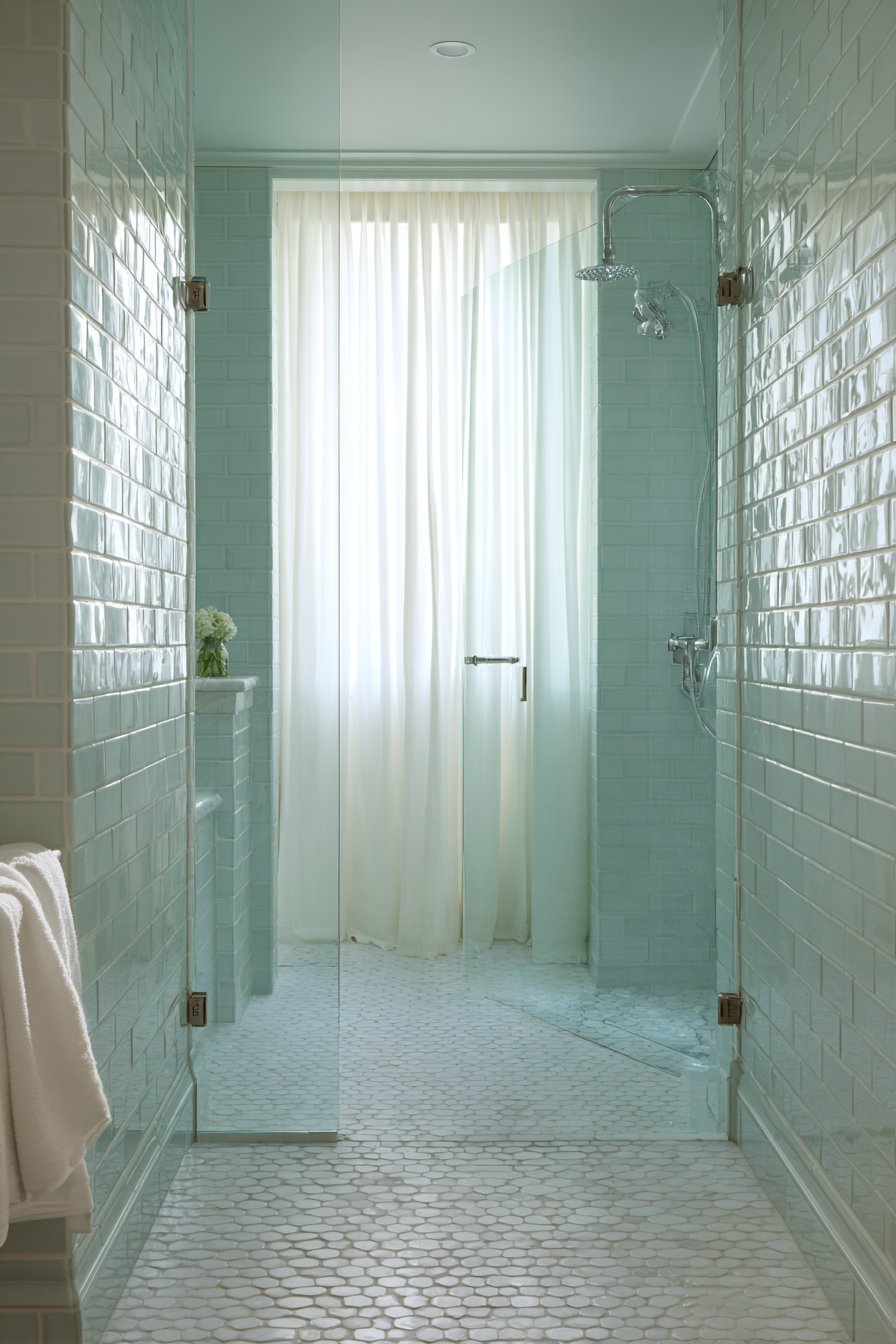
A white subway tile shower surround with white grout maintains clean lines and timeless appeal. The monochromatic white tilework creates a crisp backdrop that allows the mint walls to shine. Chrome fixtures and a simple glass shower door keep the space feeling open and uncluttered. These reflective elements bounce light throughout the room, enhancing the airy quality that makes this design so successful.
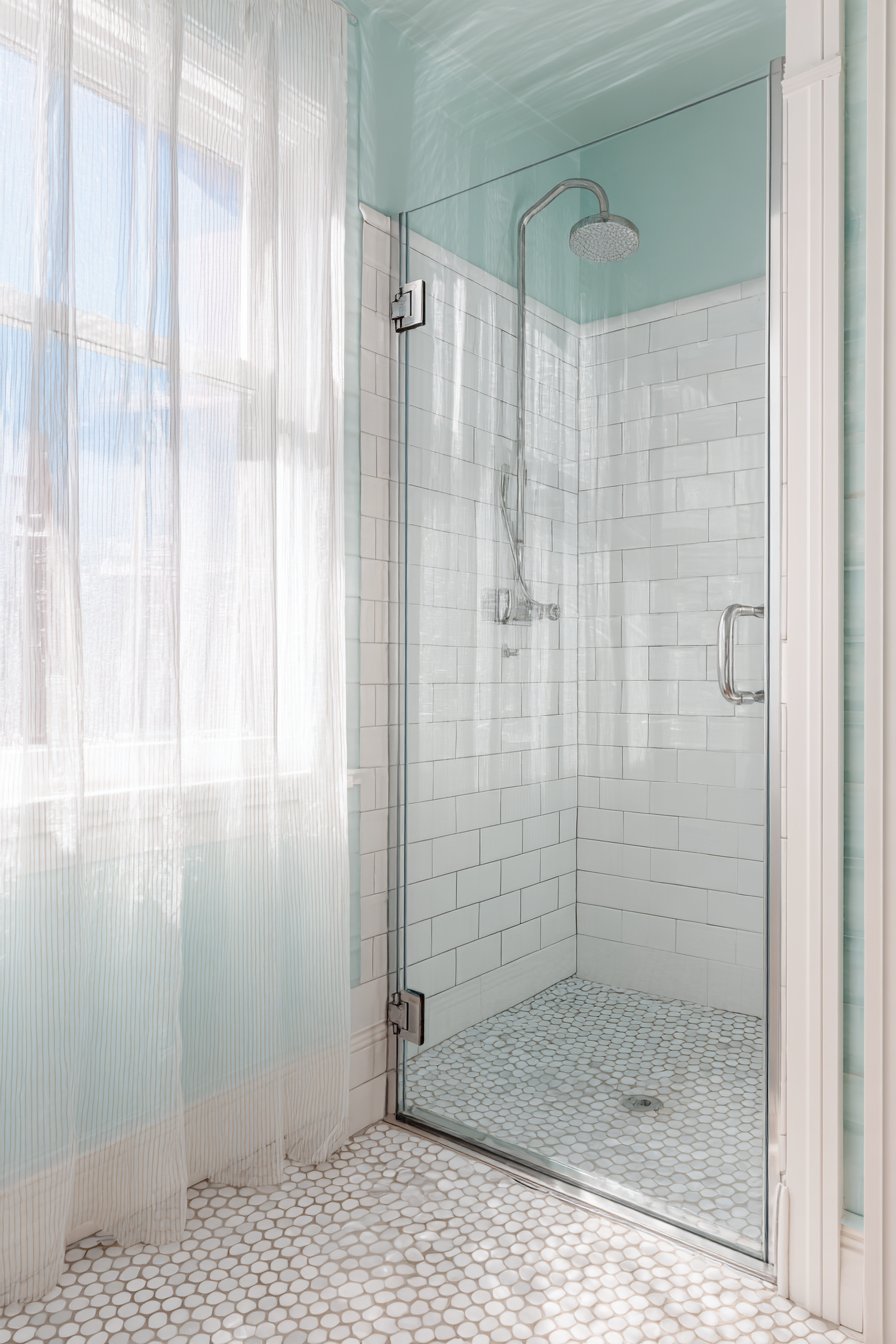
White hexagonal floor tiles with pale green grout tie the color scheme together in an unexpected detail that elevates the overall design. This subtle incorporation of green in the grout lines creates cohesion without overwhelming. The hexagonal pattern adds geometric interest underfoot while the predominantly white surface maintains the bright, clean aesthetic. This flooring choice demonstrates how thoughtful details strengthen design concepts.

Natural daylight floods through sheer white curtains, creating soft diffused illumination throughout the day. The curtains provide privacy while allowing maximum light transmission, crucial for maintaining the fresh quality this design achieves. The overall effect feels rejuvenating and clean, perfect for starting each day with positive energy.
Key Design Tips:
- Paint walls in mint green with textured finish for dimension and light reflection
- Install white subway tile with white grout for timeless clean backdrop
- Choose chrome fixtures to maintain bright, reflective quality throughout
- Use hexagonal floor tiles in white with pale green grout for subtle cohesion
- Hang sheer white curtains to maximize natural light while maintaining privacy
- Keep glass shower doors simple and frameless for open feeling
- Avoid heavy patterns or dark accents that would diminish airy atmosphere
7. Bohemian Olive Green Artisanal Charm
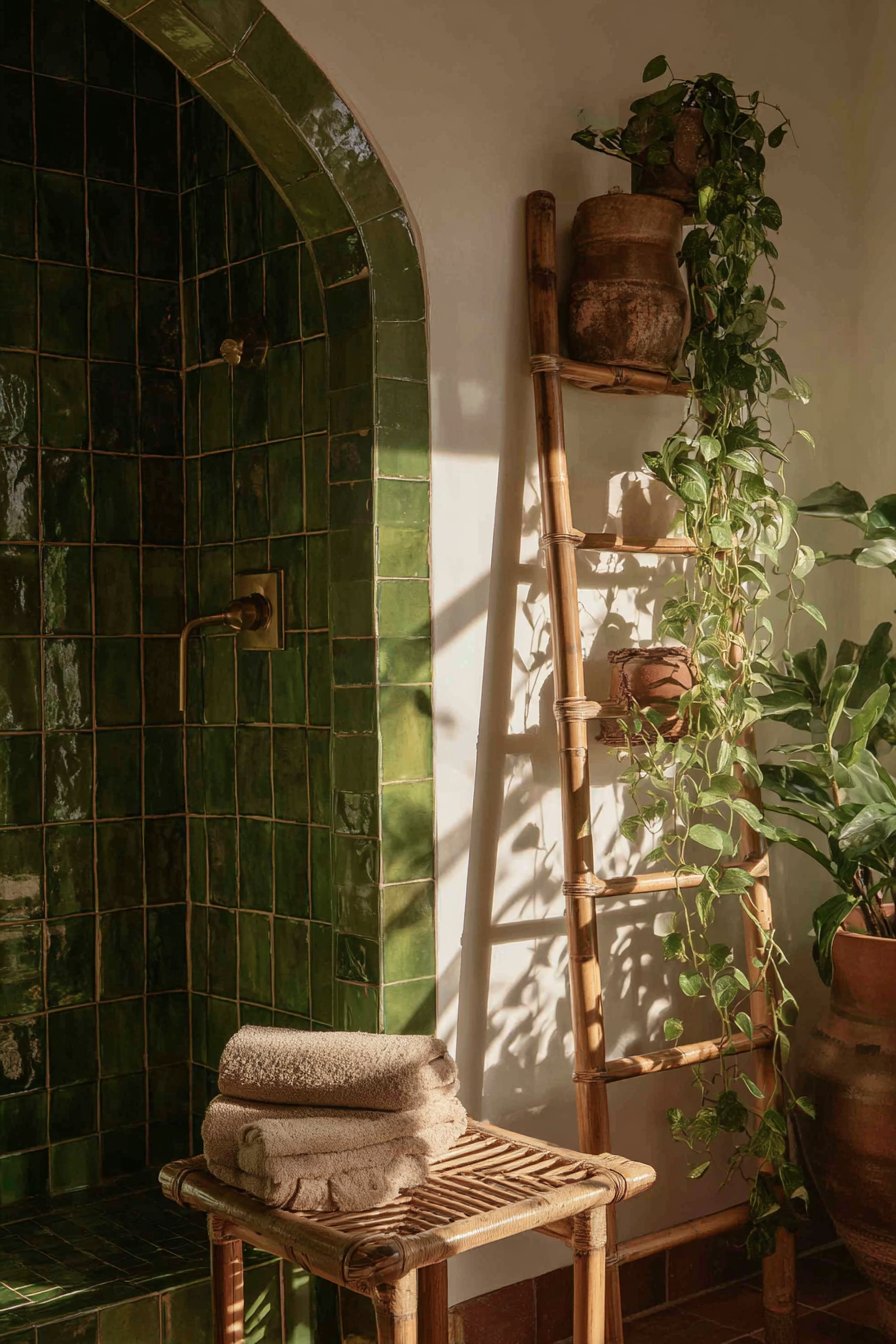
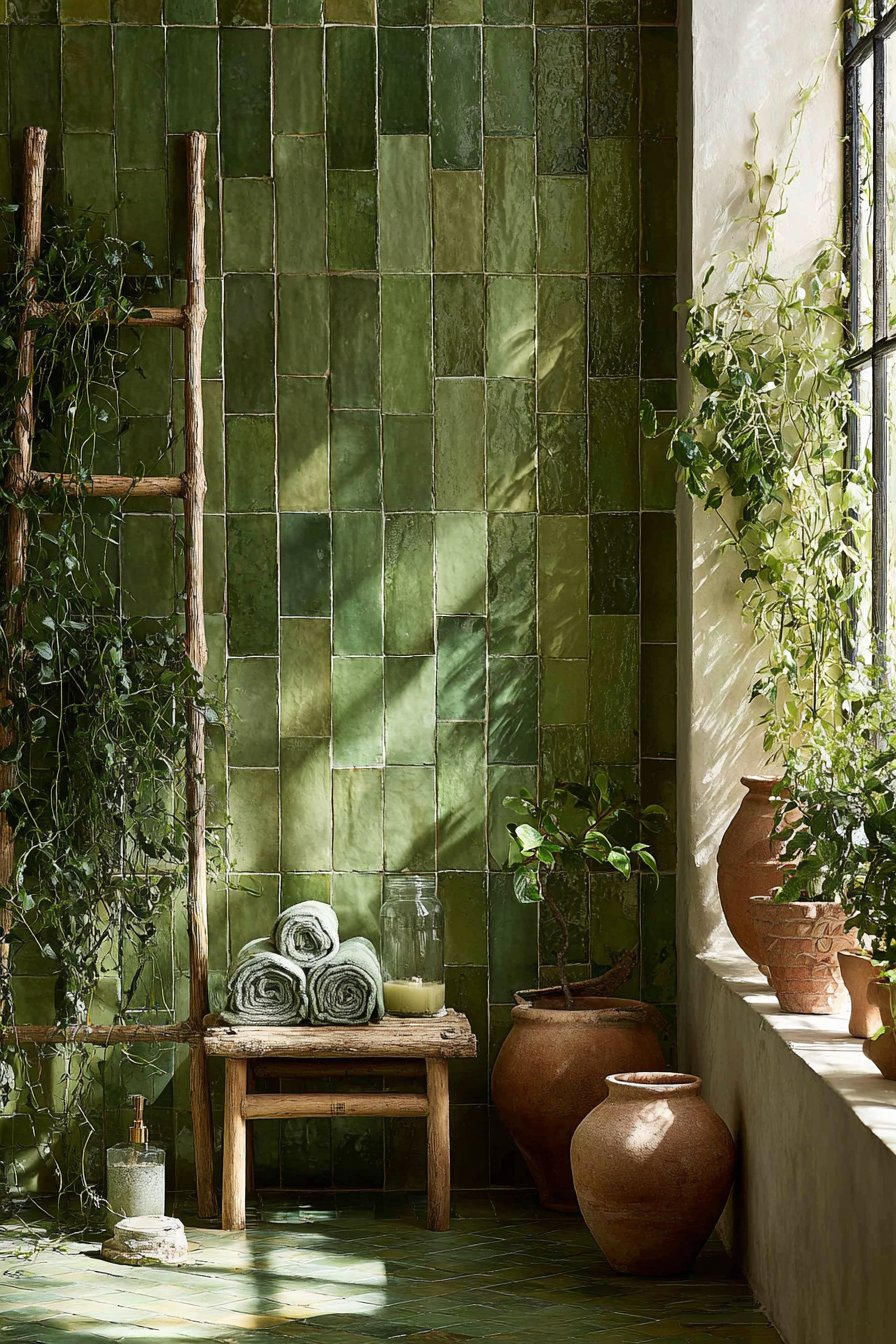
Olive green zellige tiles covering the shower wall introduce artisanal character through their handmade irregular patterns. Each tile displays slight variations in size, shape, and color intensity, creating organic visual texture impossible to achieve with machine-made materials.
This North African-inspired tilework brings global sophistication and craft tradition to contemporary bathroom design. The olive shade offers earthy depth while remaining versatile enough to complement various accent colors.
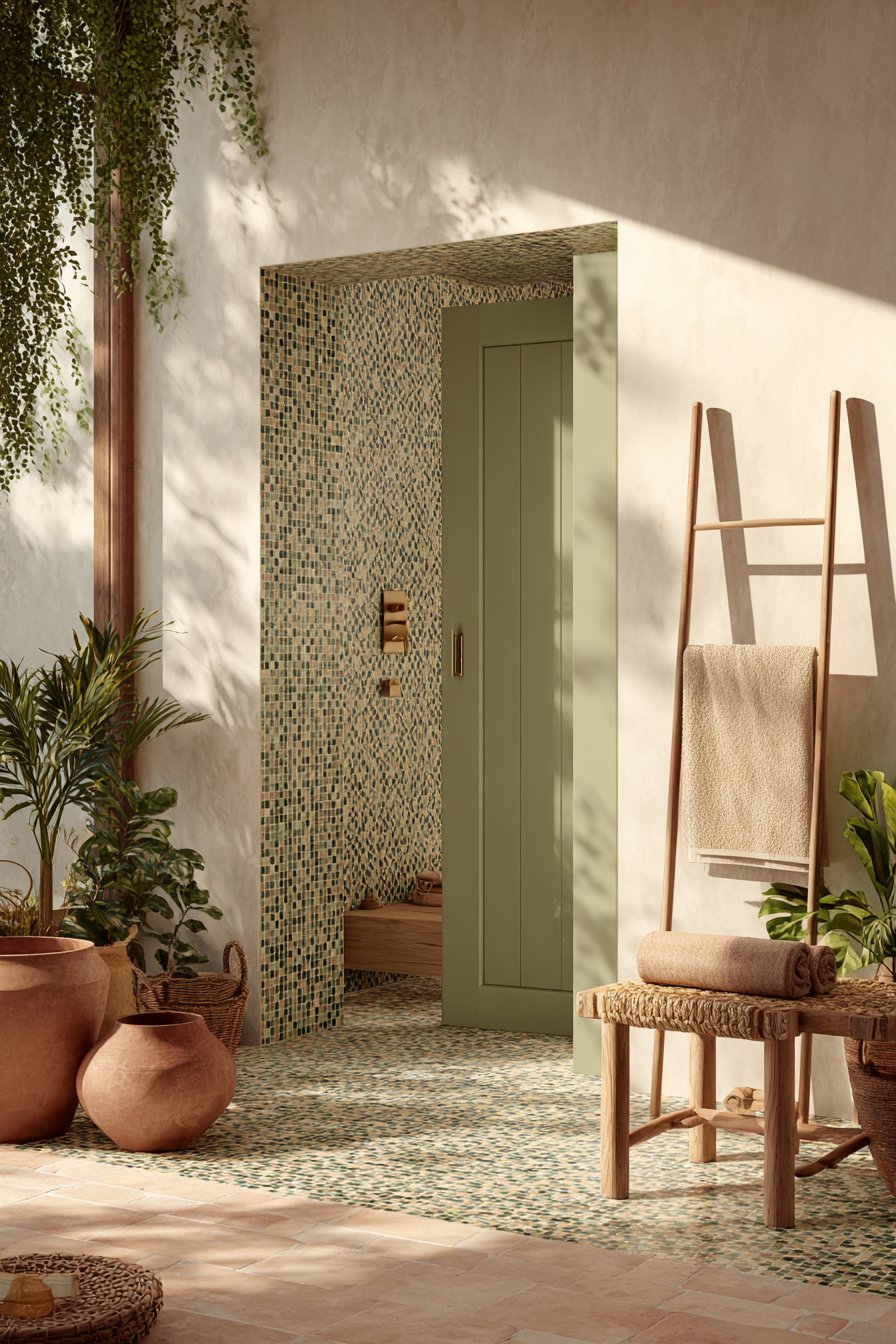
A rattan storage ladder leans casually against the wall, holding rolled towels in practical yet stylish fashion. This natural fiber element reinforces the bohemian aesthetic while solving storage challenges in a visually appealing way. The ladder’s vertical lines draw the eye upward, making the ceiling feel higher. Terracotta pots with trailing green plants sit on a wooden stool, layering additional natural textures and living elements into the composition.
The remaining walls are painted warm white, providing breathing room that prevents the patterned tiles and collected objects from creating visual chaos. This neutral backdrop allows the olive green zellige to command attention as the room’s primary feature.
Brass fixtures add warmth throughout, their golden tones complementing the earthy color palette. The metal’s patina develops character over time, aligning perfectly with the bohemian preference for materials that age beautifully.
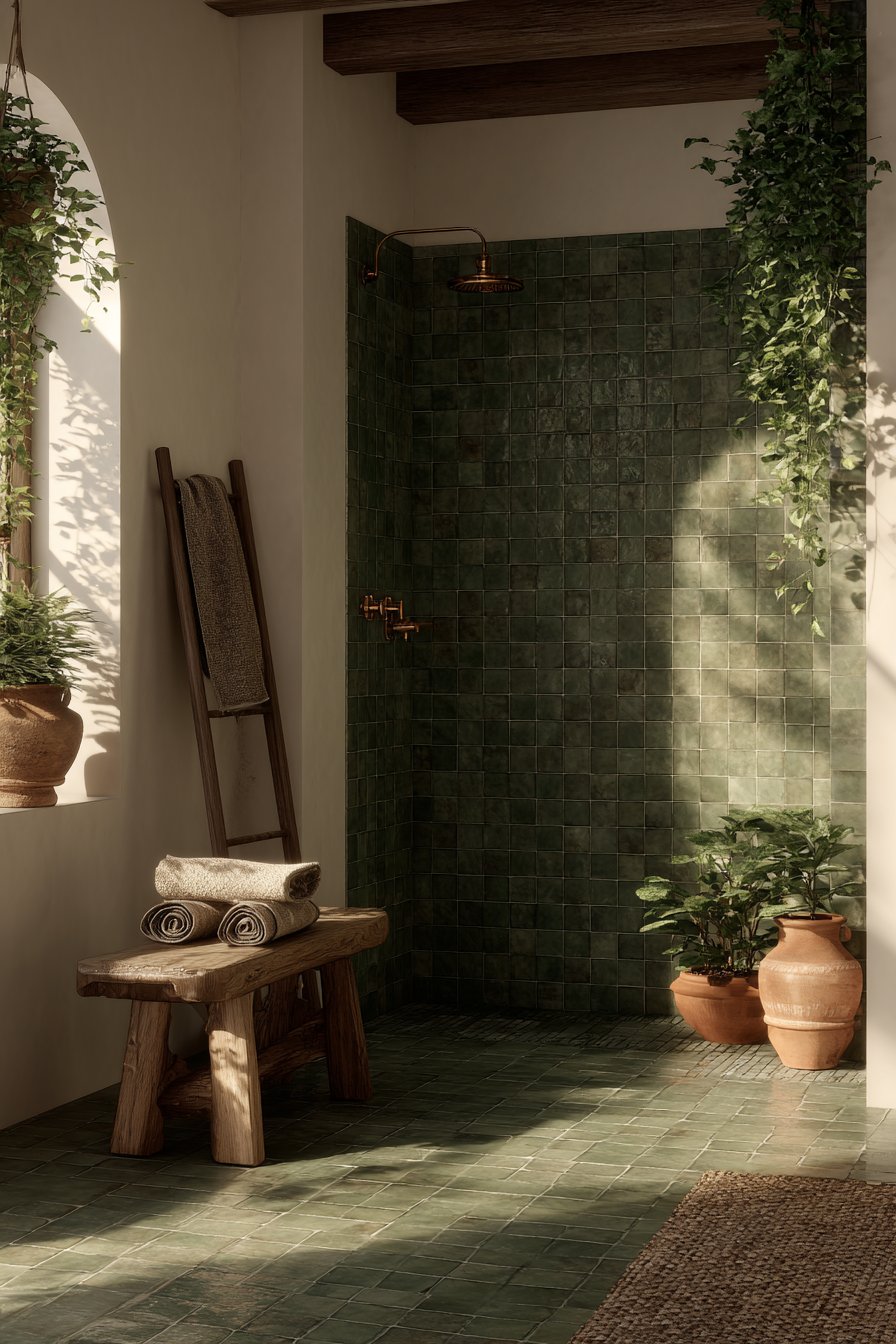
Natural light creates beautiful shadows across the textured tile surface, emphasizing the zellige’s dimensional irregularities. The interplay between light and shadow changes throughout the day, making the walls feel alive and dynamic. This organic quality embodies the bohemian spirit of celebrating natural imperfection and handcrafted artistry.
Key Design Tips:
- Install olive green zellige tiles for handmade artisanal character and texture
- Use rattan storage ladders for practical bohemian-style towel storage
- Display plants in terracotta pots to layer natural materials and textures
- Paint remaining walls warm white to prevent visual overwhelm
- Choose brass fixtures for warm metallic accents that develop patina
- Embrace slight variations in handmade tiles rather than seeking perfection
- Layer natural materials like wood, rattan, and ceramic for an authentic bohemian feel
8. Sophisticated Teal Green Double Vanity Solution
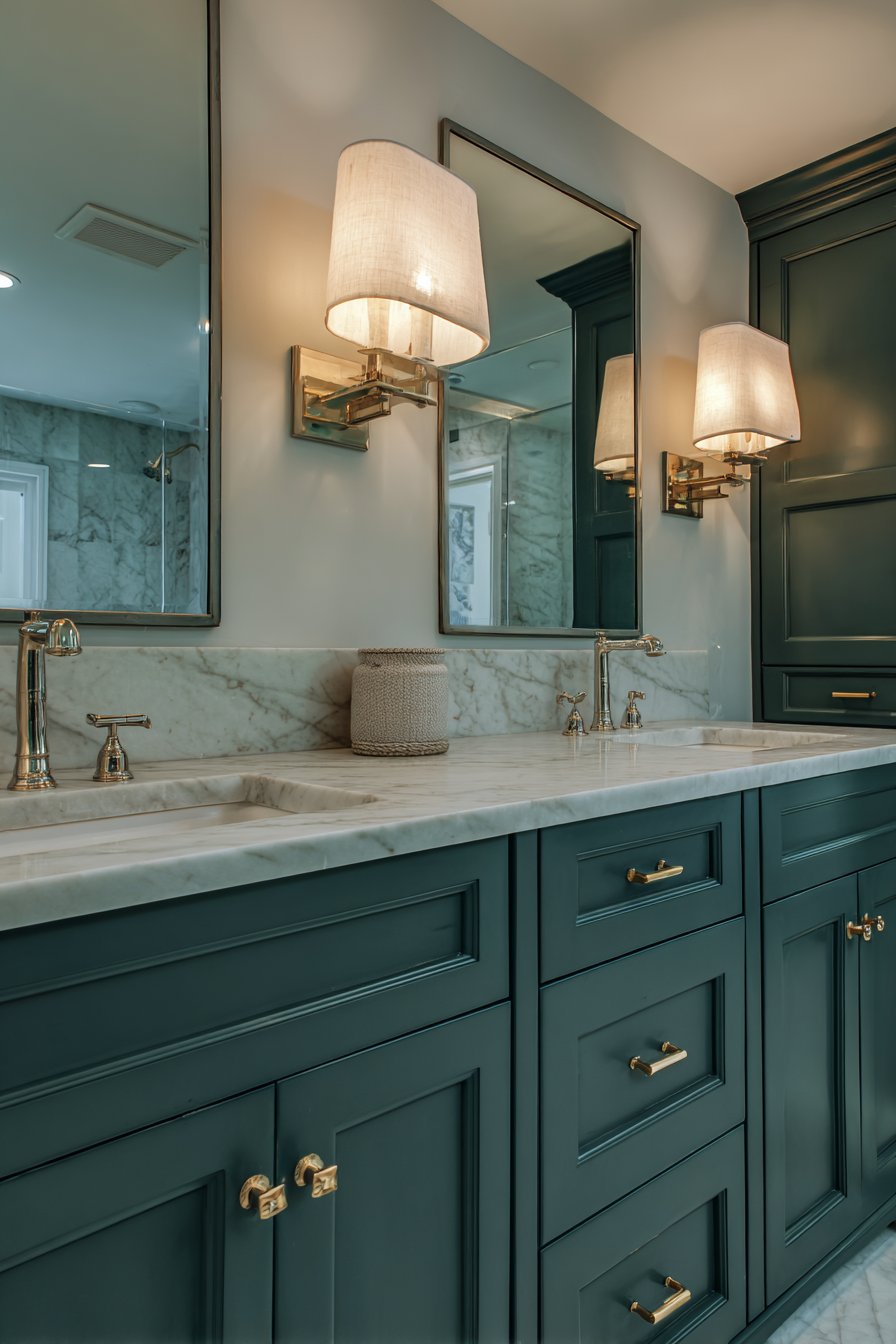
A custom double-sink vanity painted in deep teal green with shaker-style cabinet doors anchors this sophisticated bathroom. The vanity’s substantial presence creates immediate impact, its rich color establishing the room’s personality.
Shaker-style doors bring traditional craftsmanship details that communicate quality and attention to detail. The depth of the teal shade reads as both contemporary and classic, ensuring the design won’t feel dated as trends shift.
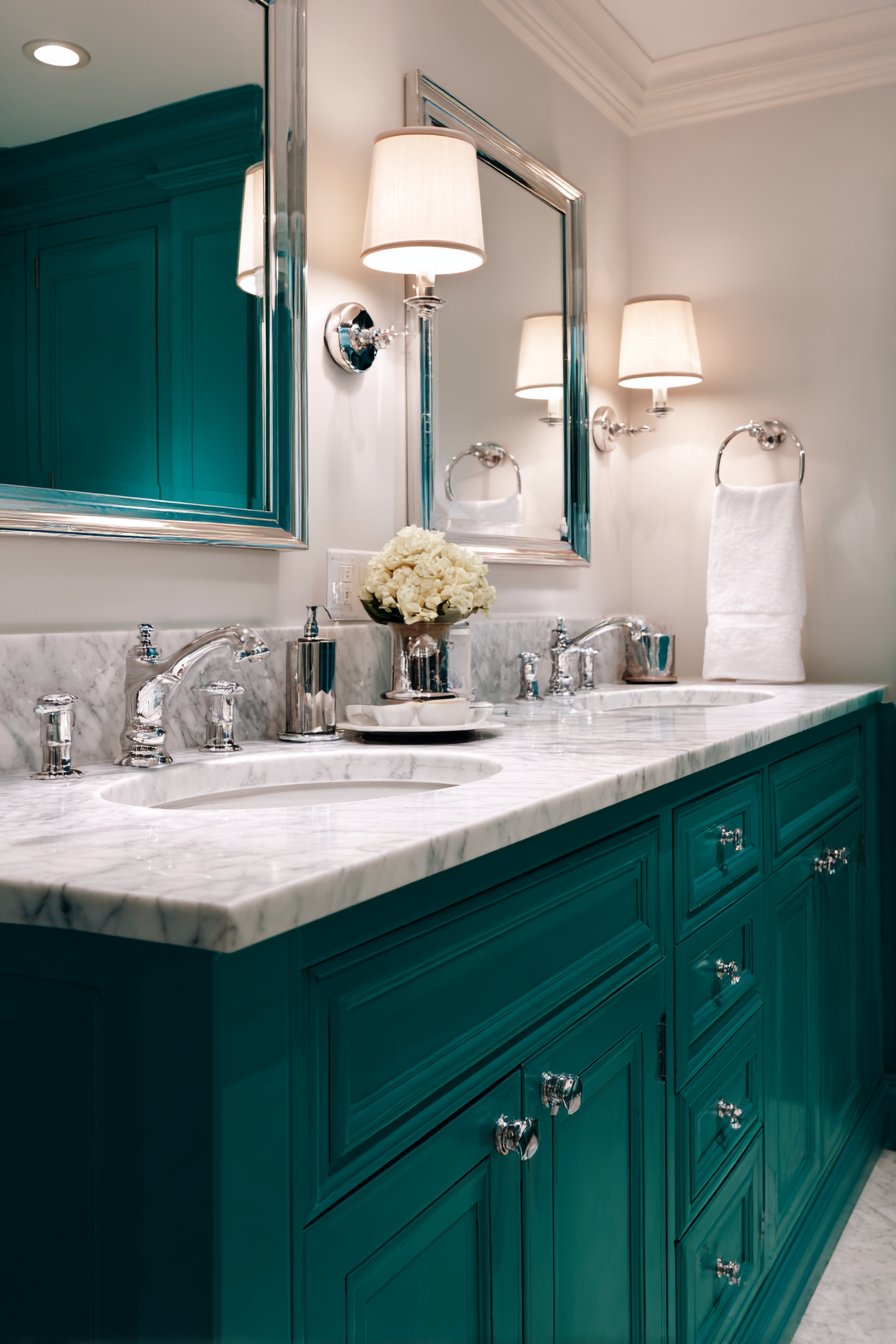
White quartz countertop with subtle grey veining provides clean workspace while maintaining visual interest through its delicate patterning. The cool neutral tone creates beautiful contrast against the teal cabinetry, highlighting both elements effectively.
Quartz offers practical advantages including stain resistance and durability, crucial for high-use bathroom surfaces. Polished nickel faucets and drawer pulls add refined detail, their silvery finish complementing the quartz’s grey veining.
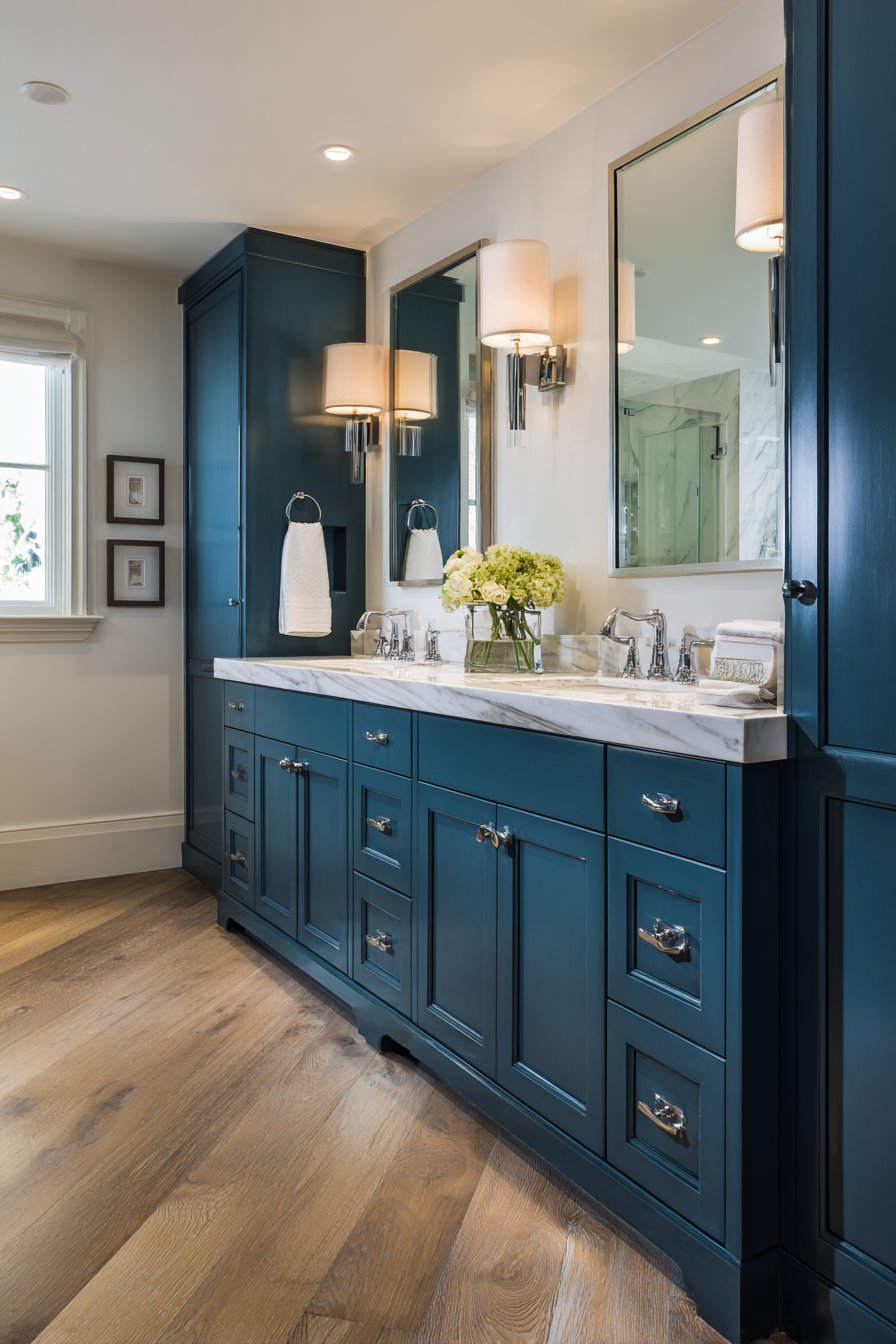
Two matching rectangular mirrors with simple frames hang above each sink, creating symmetrical balance that feels orderly and intentional. The frames’ minimal design prevents them from competing with the vanity’s statement-making color.
Wall sconces with white fabric shades positioned beside each mirror provide warm ambient lighting flattering for grooming tasks. This lighting approach eliminates harsh shadows while adding decorative architectural detail.
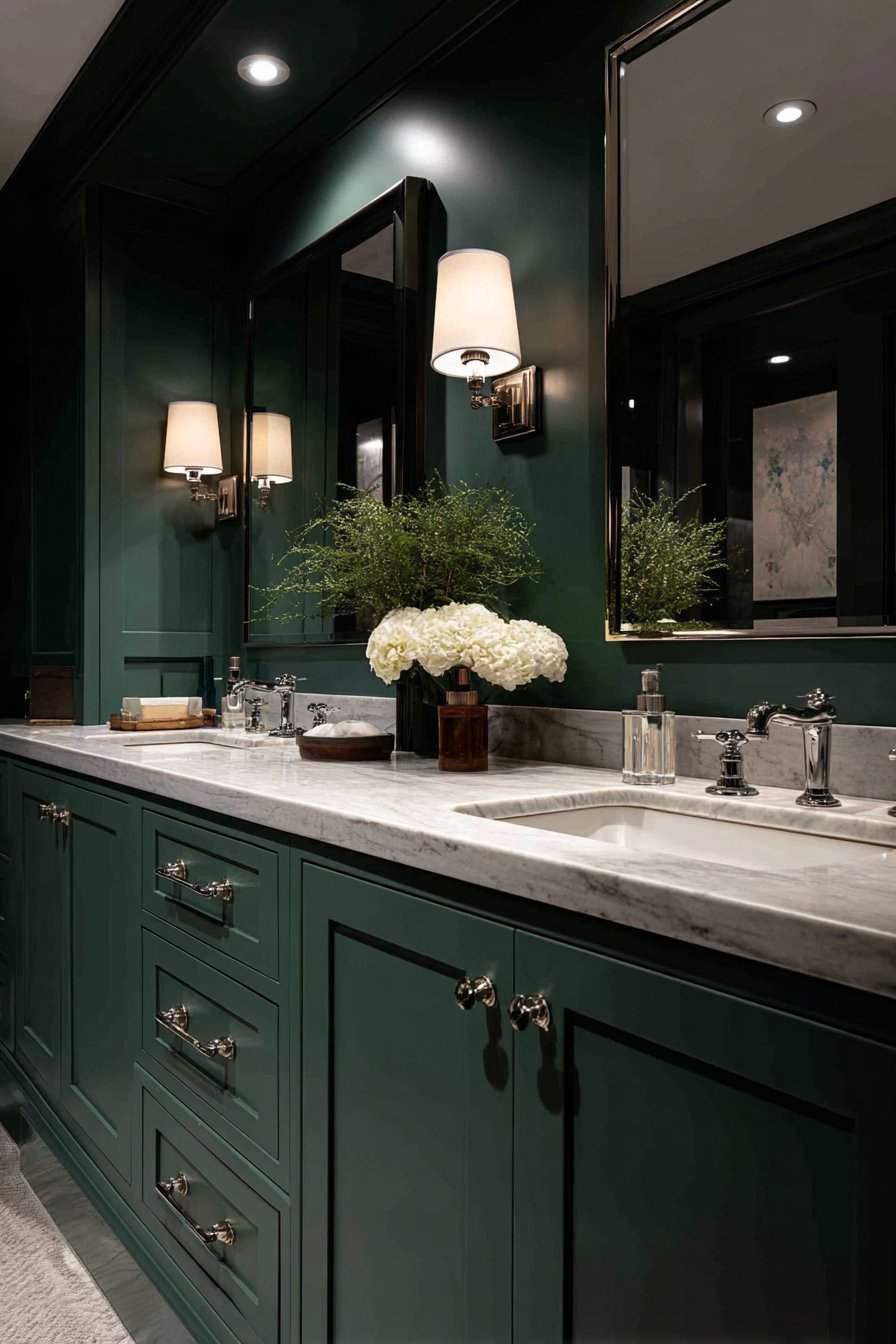
The overall composition demonstrates how traditional elements like shaker cabinetry and symmetrical layout can feel fresh through bold color application. The teal green choice transforms conventional bathroom furniture into contemporary design statement. This approach offers longevity since the basic elements remain classic while the painted finish can be updated if desired.
Key Design Tips:
- Paint custom vanities in deep teal green for sophisticated statement-making color
- Choose shaker-style cabinet doors for traditional craftsmanship detail
- Install white quartz countertops for practical durability and elegant contrast
- Use polished nickel fixtures to complement cool-toned materials
- Hang matching rectangular mirrors for symmetrical, intentional composition
- Add wall sconces with fabric shades for warm, flattering task lighting
- Consider custom vanities to maximize storage in double-sink configurations
9. Nature-Inspired Botanical Wallpaper Sanctuary
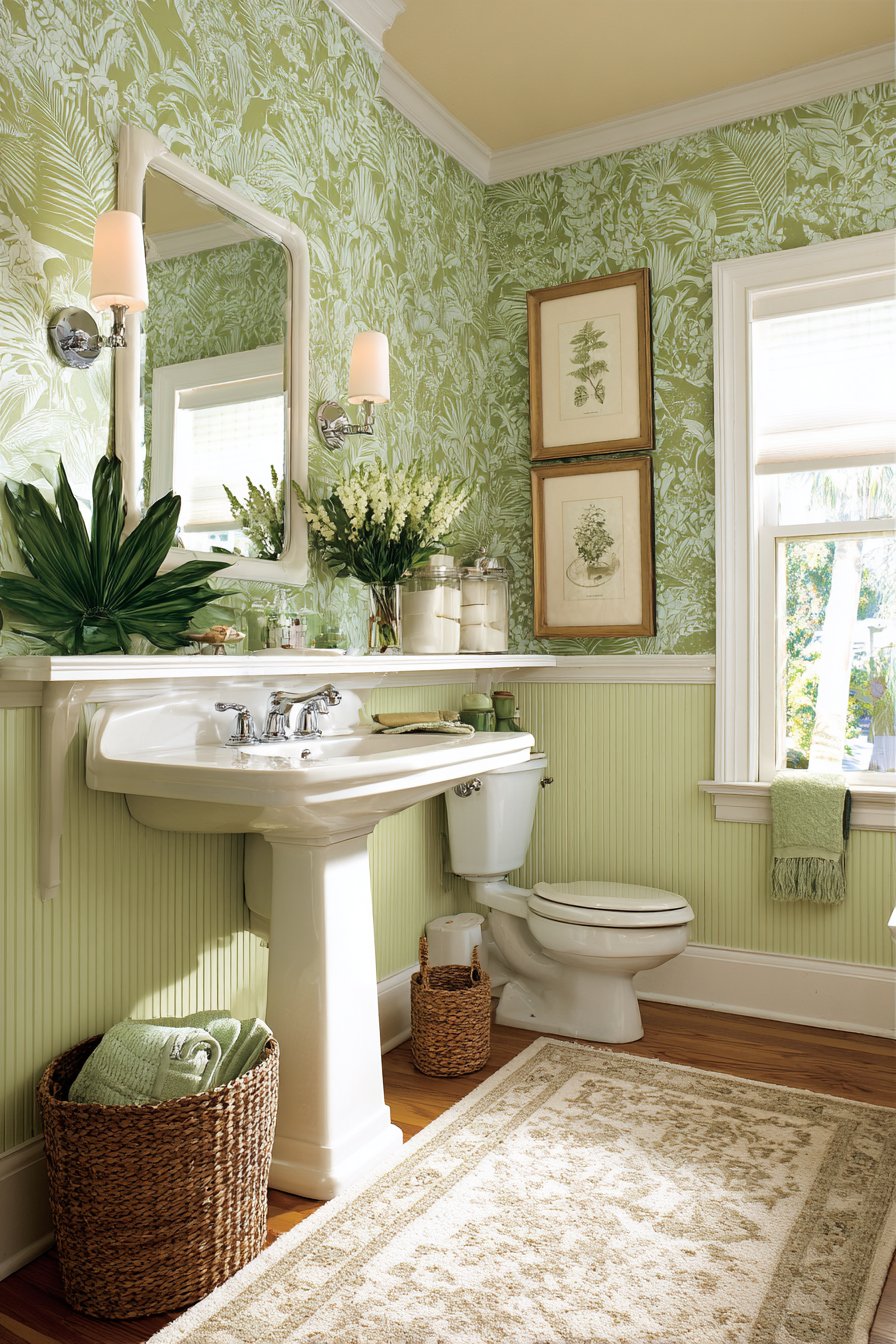
Botanical wallpaper featuring various shades of green leaves and ferns on cream background creates immersive natural atmosphere. This covering transforms plain upper walls into botanical garden scenery, bringing the outdoors inside.
The pattern’s varied greens create depth and visual richness while the cream background prevents overwhelming darkness. Wallpaper offers quick transformation potential, allowing dramatic design change without permanent structural modifications.
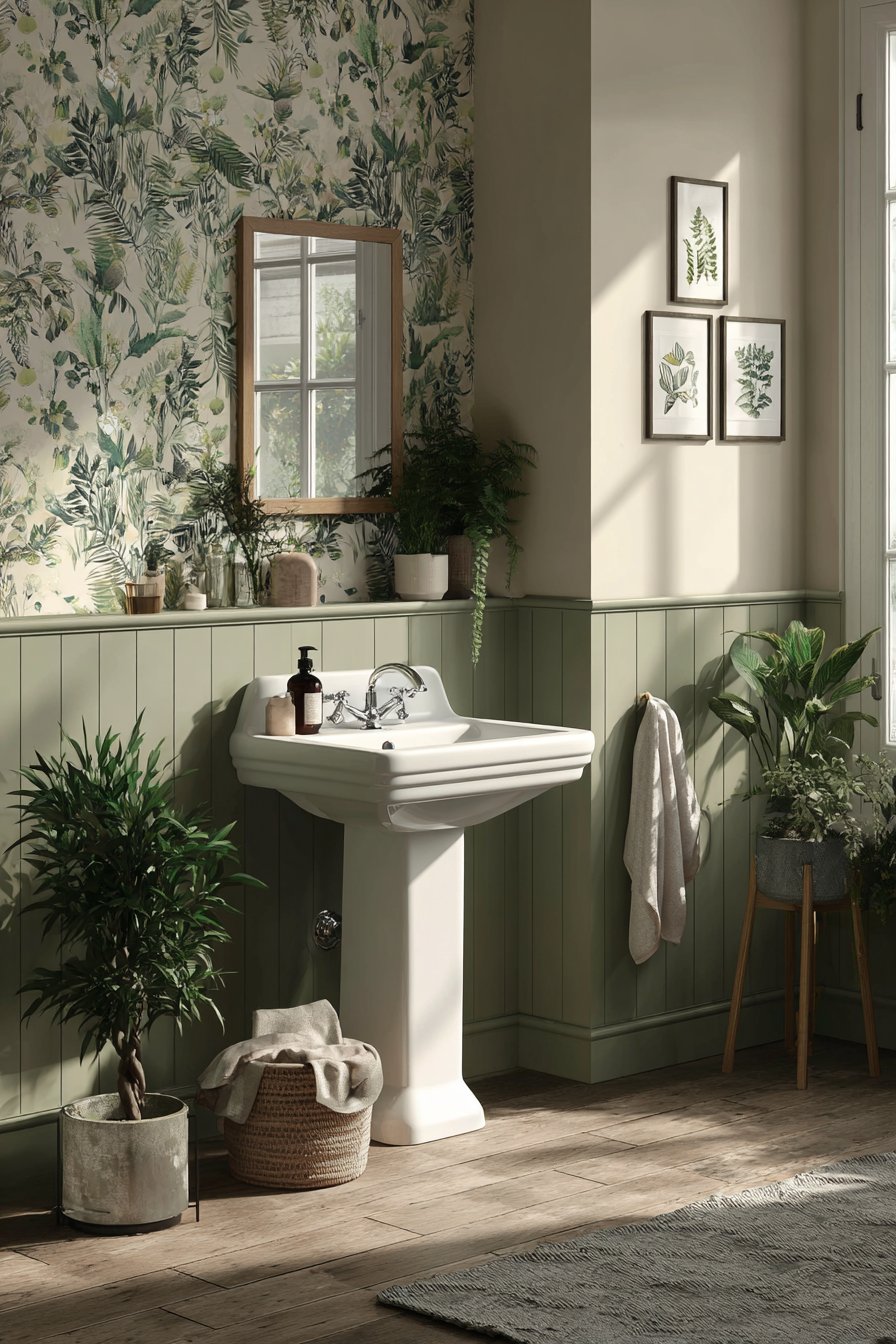
Pale green beadboard wainscoting protects the lower wall portion while echoing the wallpaper’s coloring. This practical element guards against water damage and daily wear while contributing to the layered green palette. The wainscoting’s vertical texture provides dimensional contrast against the wallpaper’s illustrated patterns. A vintage-style white pedestal sink with cross-handle chrome fixtures anchors the space with traditional charm.
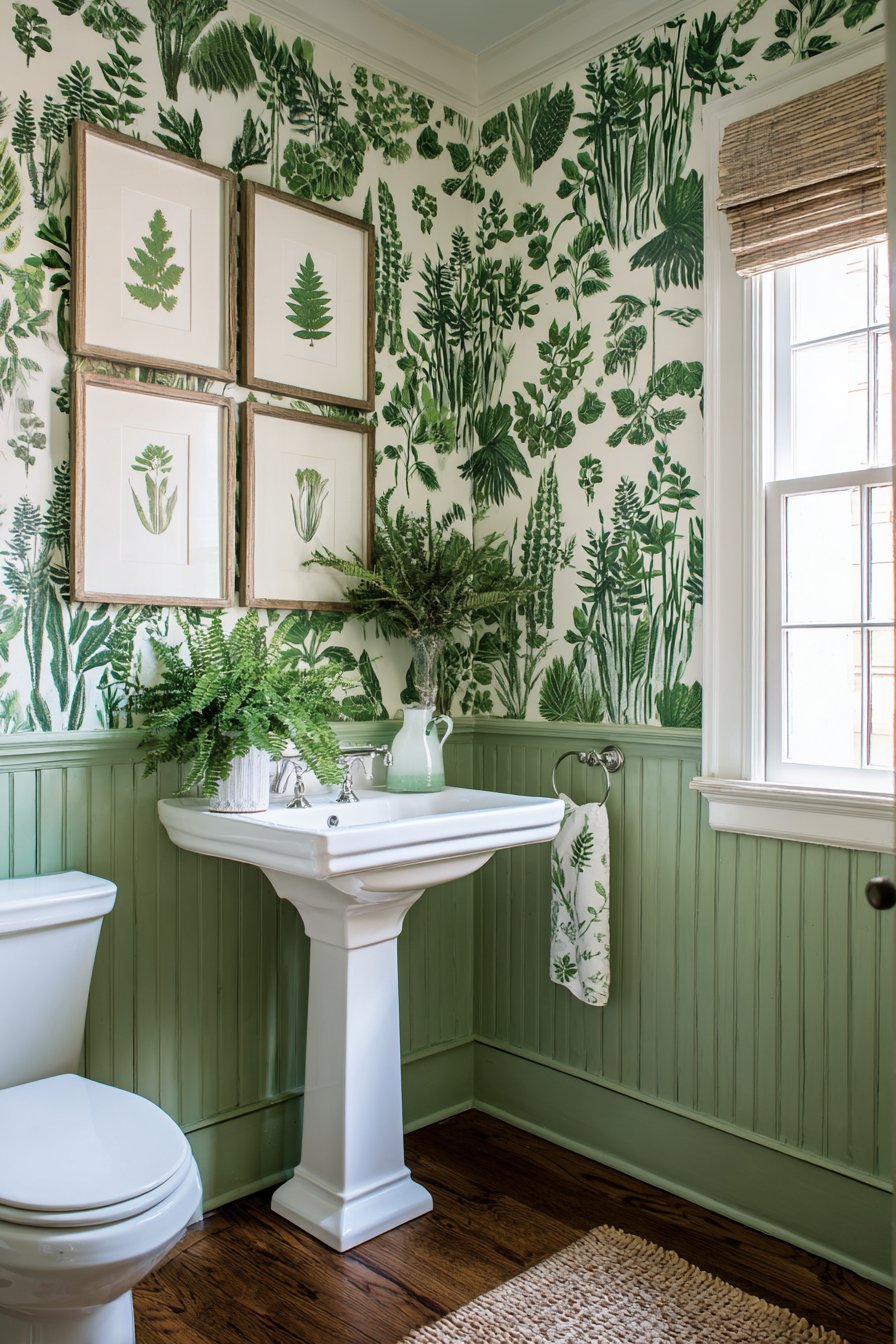
Natural wood picture frames display pressed botanical prints, reinforcing the nature theme through curated wall art. These framed specimens bring scientific precision and Victorian-era collecting aesthetic to the composition. The natural wood frames create material cohesion with any wooden elements while their simple profiles don’t compete with the busy wallpaper pattern.

Soft morning light through windows illuminates the layered green tones, revealing subtle variations throughout the day. The natural lighting makes the botanical patterns feel alive, their illustrated leaves appearing to rustle in imagined breezes. This nature-inspired approach creates a peaceful sanctuary perfect for relaxation and contemplation.
Key Design Tips:
- Install botanical wallpaper with varied green tones for immersive natural atmosphere
- Add pale green beadboard wainscoting for practical protection and color cohesion
- Choose vintage-style pedestal sinks for traditional charm and classic appeal
- Display pressed botanical prints in natural wood frames to reinforce theme
- Use chrome fixtures for crisp traditional detail that stays timeless
- Maximize natural lighting to bring wallpaper patterns to life
- Consider moisture-resistant wallpaper specifically designed for bathroom use
10. Minimalist Eucalyptus Green Seamless Design
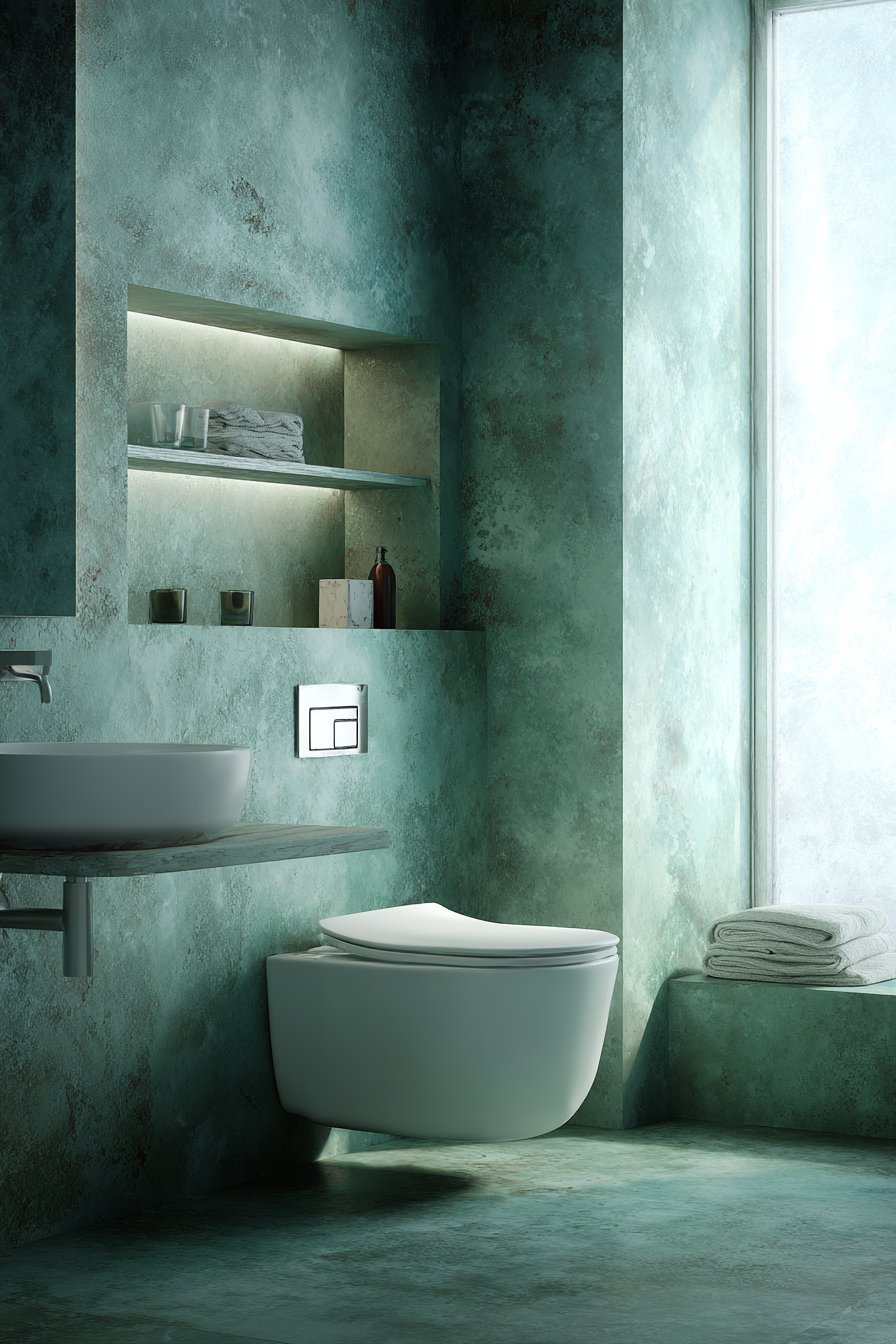
Large format matte green porcelain tiles in muted eucalyptus shade create seamless transitions between floor and walls. This contemporary approach eliminates visual breaks, making small bathrooms feel more expansive. The eucalyptus shade offers sophisticated grey-green tonality that reads as both organic and modern. Matte finish prevents harsh reflections while maintaining easy-clean surfaces essential in bathrooms.

A wall-mounted white floating toilet and sink maintain the clean minimalist aesthetic while providing functional necessity. These suspended fixtures create the illusion of more floor space by revealing continuous tile beneath. The white sanitary ware provides necessary contrast against the monochromatic green surfaces without disrupting the calm atmosphere. Built-in recessed shelving with LED strip lighting displays white towels and simple glass containers in organized fashion.

Brushed stainless steel fixtures complement the contemporary design through their industrial-modern aesthetic. The cool metallic finish harmonizes with the eucalyptus tile’s grey undertones, creating temperature cohesion throughout. These fixtures’ minimal profiles align with the overall reductive design philosophy where every element serves clear purpose without unnecessary ornamentation.
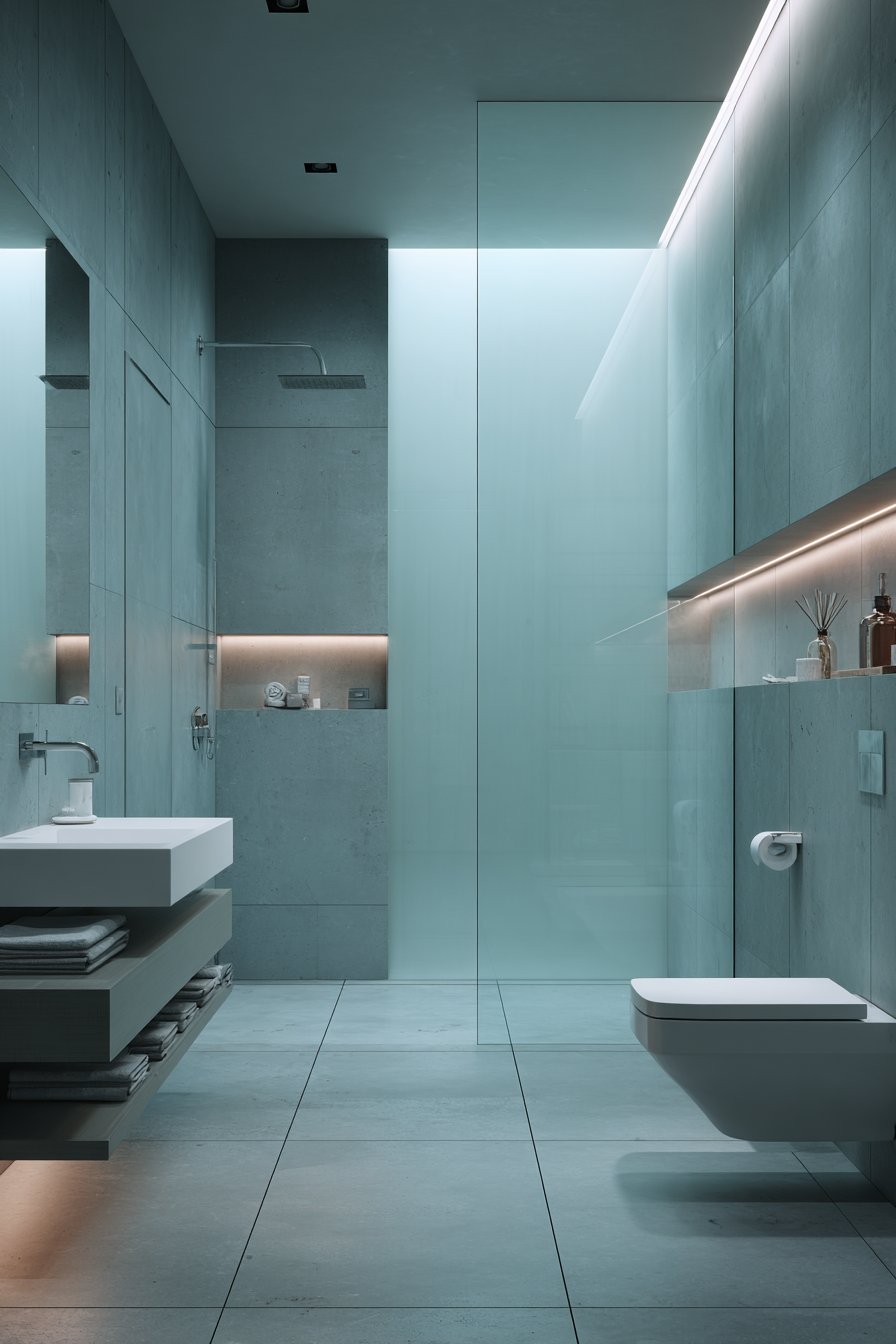
Indirect natural light creates subtle gradations across the monochromatic green surfaces, preventing the single-color approach from appearing flat. The lighting reveals slight variations in the tile’s matte finish, adding depth through shadow and highlight. This serene simplicity embodies modern design principles where thoughtful material selection and precise execution create impact through restraint rather than abundance.
Key Design Tips:
- Use large format tiles in eucalyptus green for seamless contemporary appearance
- Install wall-mounted toilets and sinks to maximize perceived floor space
- Choose matte finish tiles to prevent harsh reflections and maintain calm atmosphere
- Add built-in recessed shelving with LED lighting for an organized display
- Select brushed stainless steel fixtures for industrial-modern aesthetic
- Display white towels and minimal accessories to maintain clean design
- Maximize indirect natural lighting to create depth in monochromatic schemes
Why These Green Bathroom Decor Designs Excel
These ten green bathroom decor concepts represent the pinnacle of contemporary interior design thinking applied to personal wellness spaces. Each approach demonstrates how color psychology, material science, and spatial planning converge to create environments that transcend mere functionality. Green bathroom design has evolved beyond trendy color choice to become a recognized design strategy for creating restorative home environments. The scientific evidence supporting green’s calming properties makes these designs psychologically beneficial beyond their aesthetic appeal.
The variety demonstrated across these concepts proves green’s remarkable versatility in bathroom applications. From pale mint to deep hunter tones, the green spectrum accommodates diverse design preferences and practical requirements. Sage green subway tiles offer timeless appeal for traditional aesthetics, while eucalyptus minimalism serves contemporary tastes. Emerald hexagonal floors make bold geometric statements, and olive zellige brings artisanal global charm. This color family adapts seamlessly to multiple style vocabularies while maintaining its core benefit of natural connection.
Material combinations showcased throughout these designs illustrate sophisticated understanding of texture, finish, and durability requirements specific to bathroom environments. The pairing of cool green tiles with warm wood elements appears repeatedly because this combination achieves proven temperature balance. White marble, quartz, and porcelain provide a necessary neutral contrast that prevents green from overwhelming while maintaining cohesive color stories. Brass, brushed nickel, and matte black fixture choices demonstrate how metallic finishes can either complement or contrast green backgrounds for different aesthetic effects.
The incorporation of living plants throughout these designs creates multifaceted benefits including air purification, humidity regulation, and authentic natural connection. Bathrooms provide ideal growing conditions for many houseplant varieties, making this practical design choice rather than mere styling gesture. Ferns, pothos, and eucalyptus thrive in bathroom microclimates while strengthening the biophilic design principles that make green bathrooms psychologically restorative. These living elements introduce organic movement and seasonal change to static architectural spaces.
Lighting strategies employed across these concepts reveal deep understanding of how illumination affects color perception and spatial experience. Natural daylight through frosted windows maintains privacy while flooding spaces with flattering illumination that makes green tones appear vibrant. Recessed lighting creates ambient glow without harsh shadows, while integrated LED strips provide contemporary task lighting. Wall sconces add decorative architectural detail while serving functional grooming needs. Proper lighting transforms green from potentially dark or muddy to jewel-like and dimensional.
The scale variations represented from compact powder rooms to luxurious primary bathrooms demonstrate green’s effectiveness across different spatial contexts. Small bathrooms benefit from lighter mint or sage tones that reflect light and create airiness. Larger spaces can accommodate darker hunter or teal shades that create intimacy and drama. The hexagonal tile patterns, herringbone arrangements, and seamless large-format installations show how installation techniques contribute significantly to final aesthetic impact beyond mere color selection.
Storage solutions integrated throughout these designs prove that functional requirements enhance rather than compromise aesthetic goals. Floating shelves, rattan ladders, recessed niching, and custom cabinetry all solve practical challenges while contributing to overall design narratives. The careful curation of displayed items including towels, plants, and decorative objects demonstrates how styling completes design concepts. White and cream textiles maintain color harmony while providing necessary softness against hard tile and stone surfaces.
The historical design references woven throughout these concepts create layered meaning that prevents them from appearing trendy or disposable. Subway tiles reference early twentieth-century transit systems, beadboard recalls traditional cottage architecture, and zellige connects to centuries of North African craft tradition. These historical touchpoints ground contemporary applications in design continuity, ensuring longevity beyond current fashion cycles. The mixing of traditional elements like clawfoot tubs with modern materials demonstrates sophisticated design confidence.
Each concept prioritizes sustainability through durable material selection, timeless design choices, and the incorporation of natural elements. Quality natural stone, porcelain, and wood products outlast trendy alternatives while developing character through aging. The emphasis on classic layouts and proportions ensures these bathrooms won’t require complete renovation as trends shift. Low-maintenance plants and water-resistant materials acknowledge practical realities of bathroom environments while supporting long-term enjoyment.
The accessibility of these designs across various budget levels makes green bathroom decor achievable for diverse homeowners. Paint transformations offer most affordable entry points, while custom marble installations represent luxury investments. The concepts demonstrate how mixing investment pieces with budget-friendly elements creates high-end appearance without prohibitive costs. Strategic splurges on fixtures or statement tiles paired with economical choices for paint and accessories make sophisticated design accessible.
Conclusion
Green bathroom decor represents one of contemporary design’s most psychologically beneficial and aesthetically versatile trends. The ten concepts explored throughout this article demonstrate the remarkable range achievable within this color family, from serene sage retreats to dramatic emerald statements. Each approach offers unique material combinations, lighting strategies, and stylistic directions while maintaining green’s core benefit of natural connection and calming influence.
The success of these designs stems from thoughtful consideration of color psychology, material science, spatial planning, and practical functionality. Green’s proven ability to reduce stress and promote relaxation makes it particularly appropriate for bathroom environments dedicated to self-care and rejuvenation. Whether you’re drawn to minimalist contemporary aesthetics or richly layered bohemian approaches, green accommodates your vision while delivering restorative environmental qualities.
Consider which design resonates most strongly with your personal aesthetic preferences and practical requirements. Perhaps the fresh airiness of mint green appeals, or maybe the sophisticated luxury of hunter green marble calls to you. Start small with painted accents or plants before committing to permanent tile installations. Remember that successful bathroom design balances beauty with functionality, creating spaces that serve daily needs while nurturing wellbeing. Let these concepts inspire your own green bathroom transformation, creating a personal sanctuary that welcomes you home every day.
