


The bathroom is more than just a functional space in your home. It’s a personal sanctuary where you begin and end each day. Thoughtful interior design transforms this essential room into an inspiring retreat that reflects your style and enhances your daily rituals. The right combination of colors, materials, and fixtures creates an atmosphere that balances beauty with practicality, turning routine activities into moments of calm and rejuvenation.
Green and white bathrooms represent one of the most versatile and timeless color schemes in interior design. This classic pairing brings the freshness of nature indoors while maintaining a clean, crisp aesthetic. Green evokes feelings of tranquility and renewal, while white provides brightness and a sense of spaciousness. Together, they create environments that feel both energizing and peaceful, sophisticated yet welcoming.
This comprehensive guide explores ten distinct approaches to green and white bathroom design. From luxurious spa-like retreats to compact, efficient spaces, each concept demonstrates how this color combination adapts to different styles and functional needs. Whether you prefer bold emerald accents, soft sage tones, or vibrant botanical patterns, you’ll discover inspiring ideas and practical tips to help you create your perfect bathroom sanctuary.
1. Emerald Elegance with Freestanding Luxury
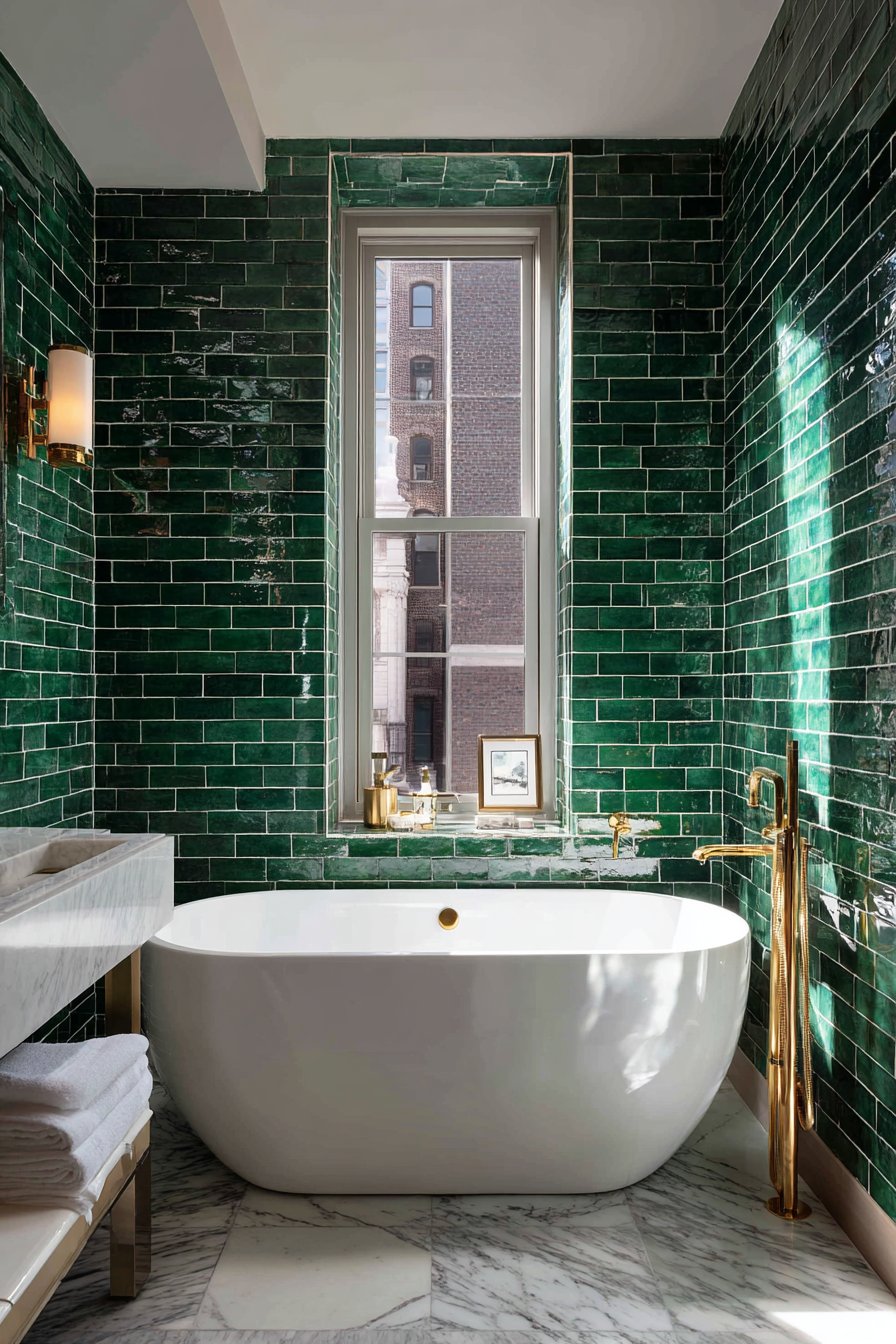
Step into a bathroom where emerald green subway tiles create a stunning backdrop for a pristine white porcelain bathtub. The classic brick pattern arrangement adds visual interest while maintaining timeless appeal. Crisp white grout lines define each tile, creating geometric precision that enhances the overall design. This combination of rich green and pure white establishes a sophisticated foundation for the entire space.
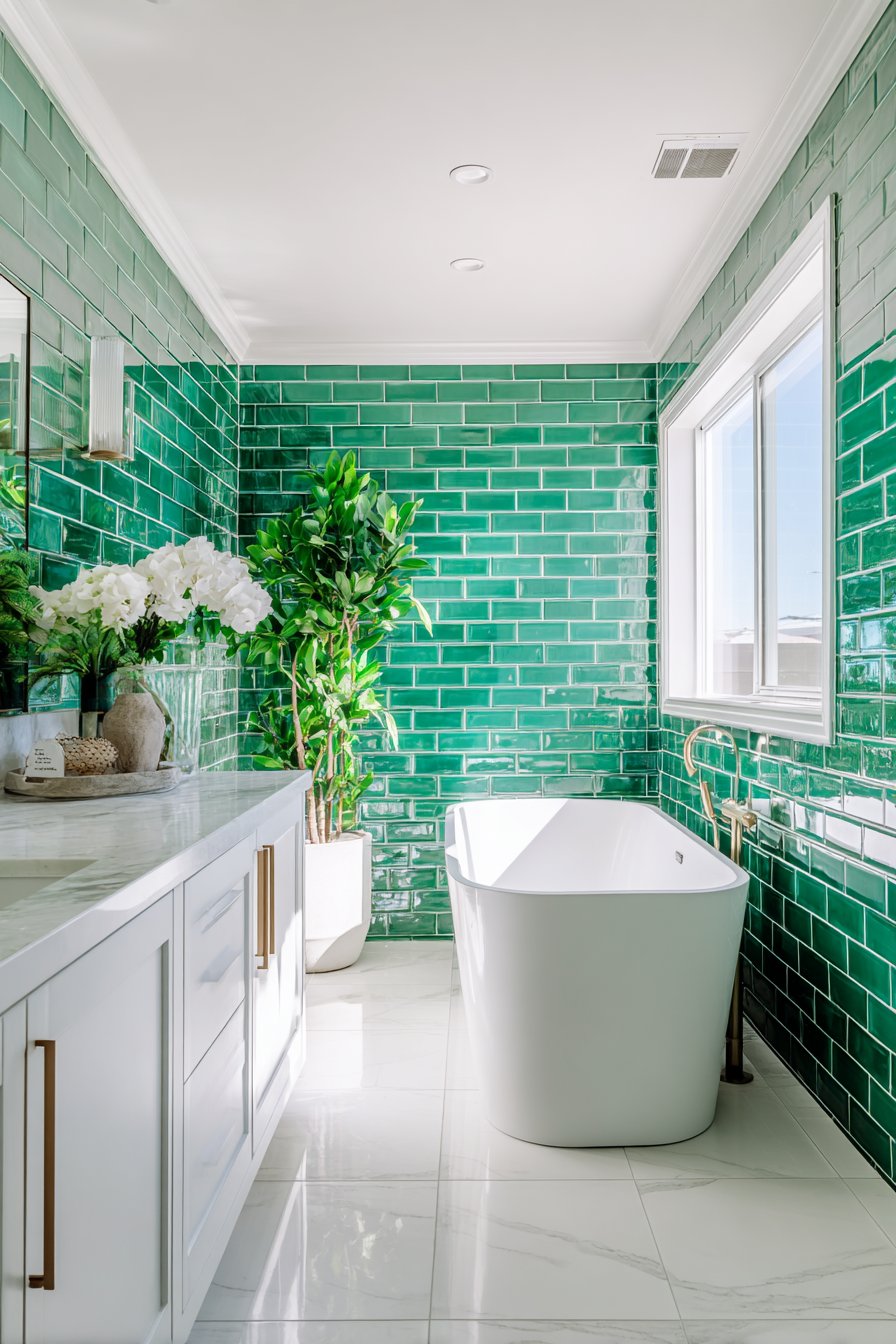
The freestanding bathtub becomes the room’s centerpiece, its smooth curves contrasting beautifully against the angular tile work. Matte gold fixtures introduce warmth to the cool color palette, creating a luxurious touch that elevates the design. These metallic accents catch natural light streaming through frosted windows, producing subtle highlights that dance across glossy surfaces. The interplay between reflective tiles and matte finishes adds depth and dimension to the space.
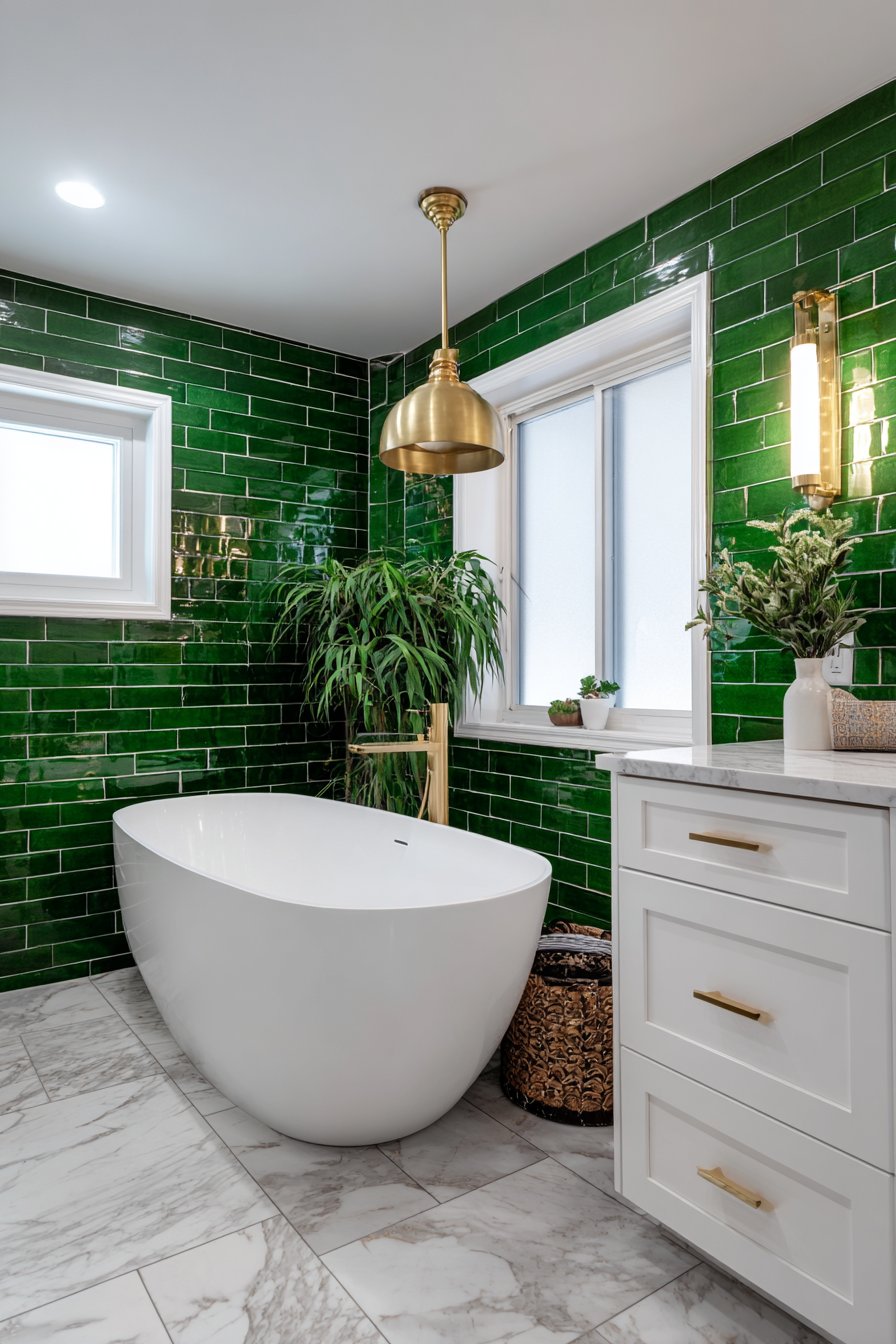
A white floating vanity anchors the opposite wall, its marble countertop echoing the bathtub’s elegance. The suspended design creates an illusion of more floor space, making the room feel larger and more open. Natural daylight filters through frosted glass, maintaining privacy while bathing the room in soft, diffused illumination. This lighting strategy enhances the vibrant green tiles without creating harsh glares or uncomfortable brightness.
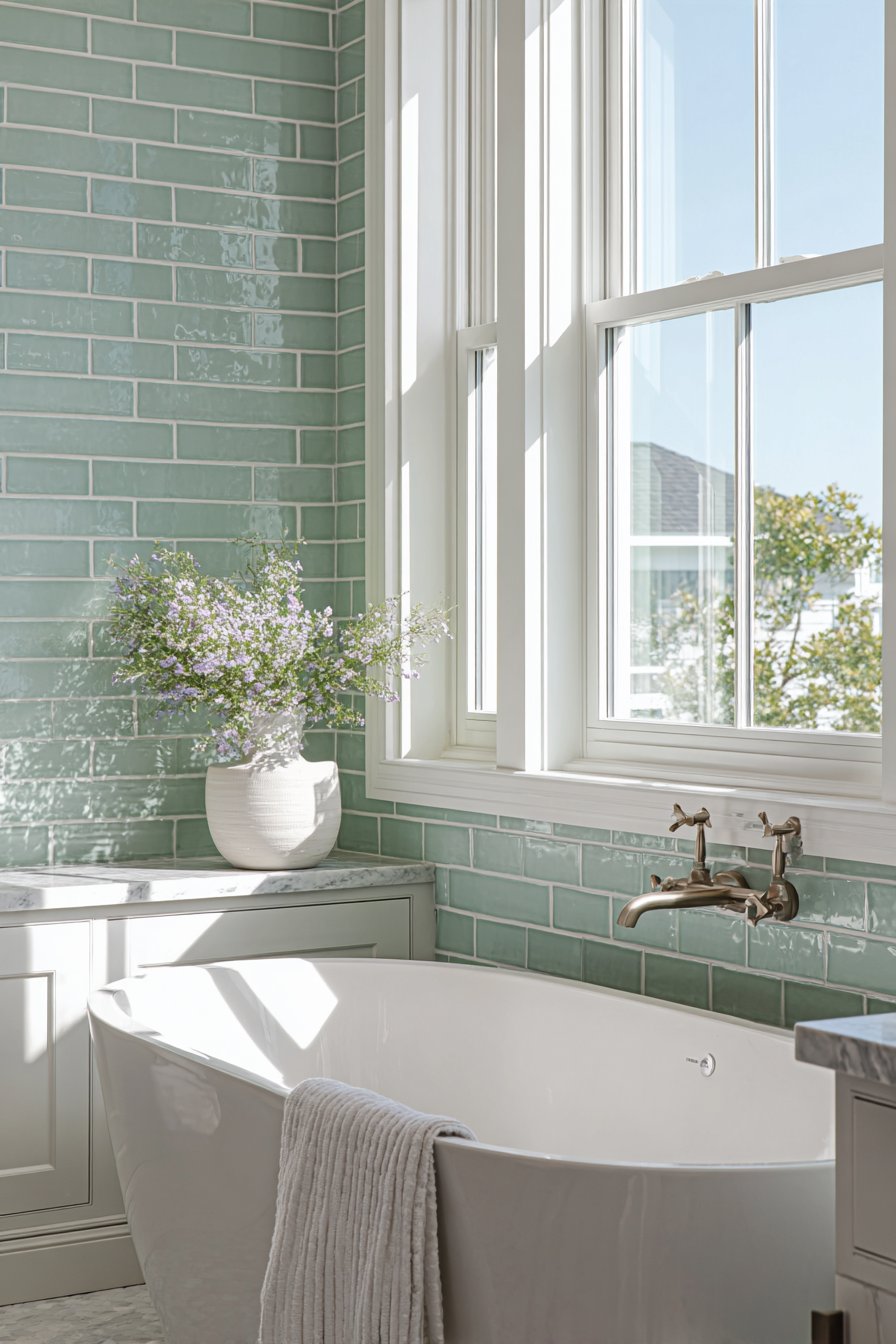
Key Design Tips:
- Select emerald green tiles with a glossy finish to maximize light reflection and create visual depth
- Position the freestanding tub to serve as a focal point visible upon entering the room
- Choose matte gold fixtures to add warmth and prevent the green-white scheme from feeling too cool
- Install frosted windows to balance natural light with privacy needs in bathroom spaces
- Use floating vanities to create a sense of spaciousness, especially in smaller bathrooms
2. Sage Serenity in a Walk-In Shower Retreat
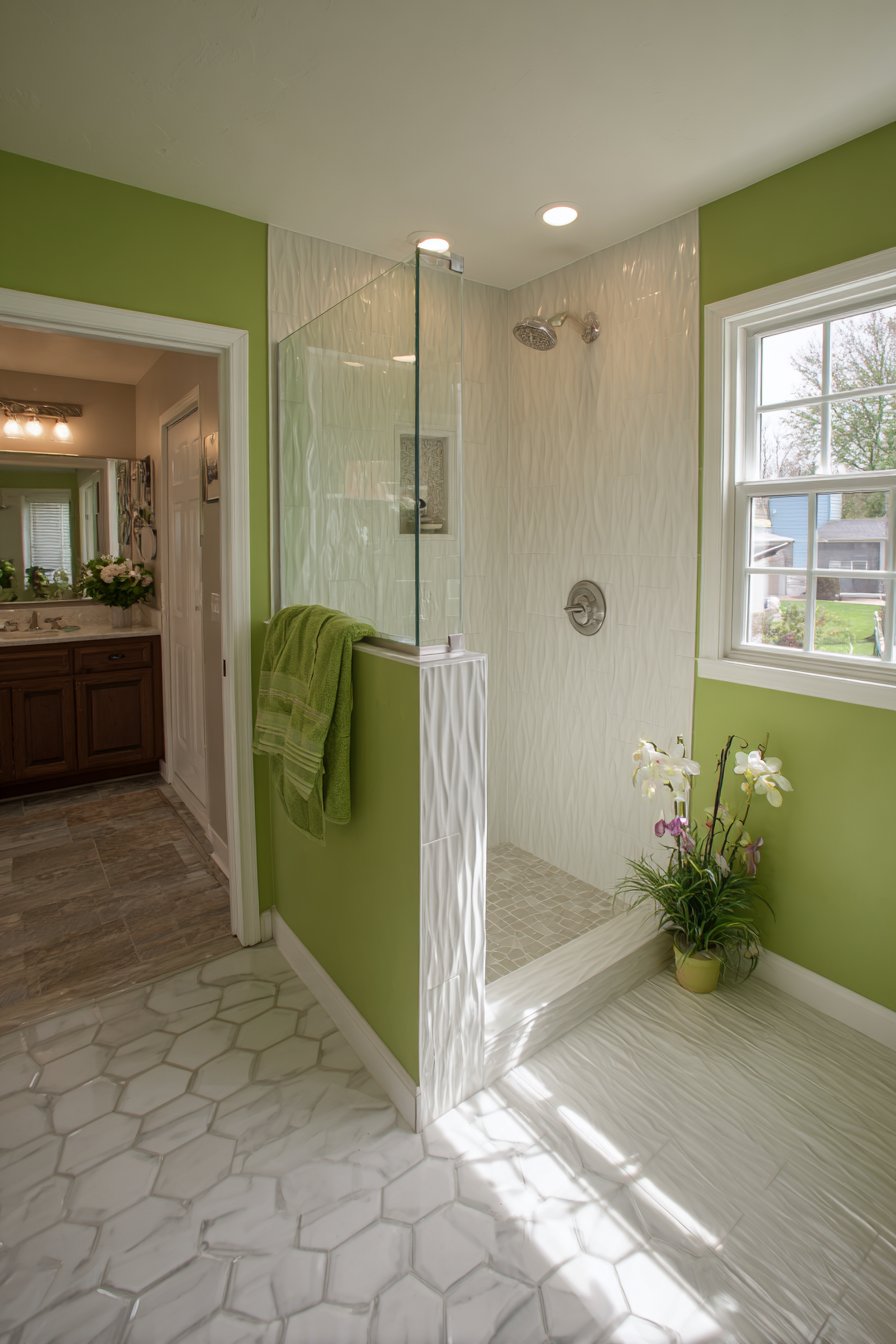
A walk-in shower design showcases the perfect balance between practicality and beauty. Floor-to-ceiling white ceramic tiles cover three walls, creating a clean canvas that makes the space feel bright and open. The fourth wall features sage green textured porcelain tiles that introduce organic depth to the design. This strategic placement creates a striking feature wall that draws the eye without overwhelming the senses.
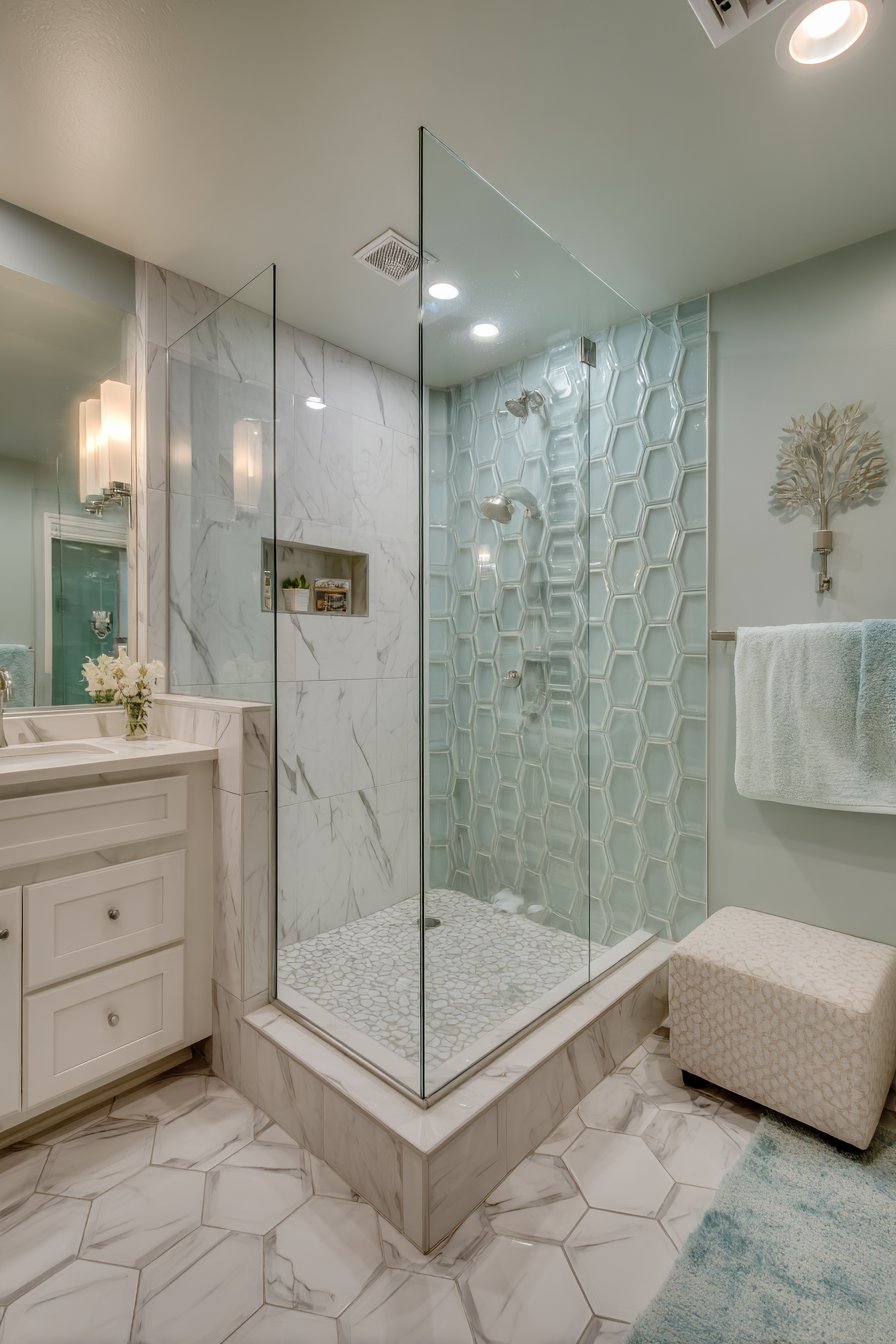
The frameless glass partition maintains visual continuity throughout the bathroom. This transparent barrier allows light to flow freely, preventing the shower area from feeling enclosed or separated. White hexagonal floor tiles with subtle grey veining add geometric interest underfoot while complementing the overall color scheme. The honeycomb pattern creates visual texture that contrasts beautifully with the linear wall tiles.
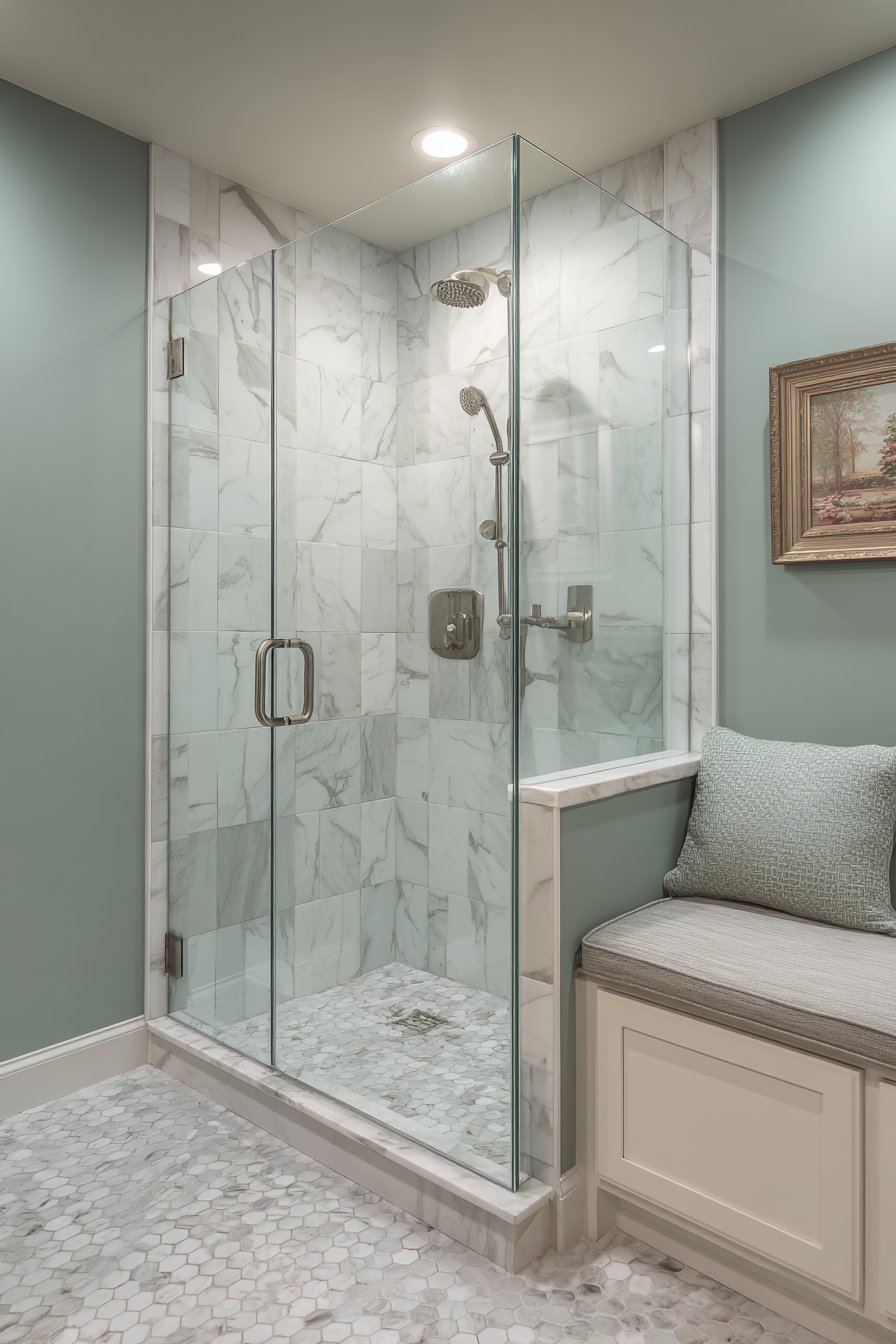
Brushed nickel fixtures provide functional elegance with their understated metallic finish. A rainfall showerhead delivers spa-like luxury, transforming daily showers into relaxing experiences. The combination of textured green tiles and smooth white surfaces creates tactile variety that engages multiple senses. Soft natural lighting highlights these material differences, casting gentle shadows that add dimensional quality to the space.
Key Design Tips:
- Use textured tiles on the feature wall to add depth without introducing additional colors
- Install frameless glass partitions to maintain an open, flowing bathroom layout
- Select hexagonal floor tiles to introduce geometric interest while maintaining the color palette
- Choose brushed nickel for a contemporary look that doesn’t compete with the green-white scheme
- Position the rainfall showerhead centrally for optimal water coverage and visual balance
3. Forest Green Sophistication at the Double Vanity
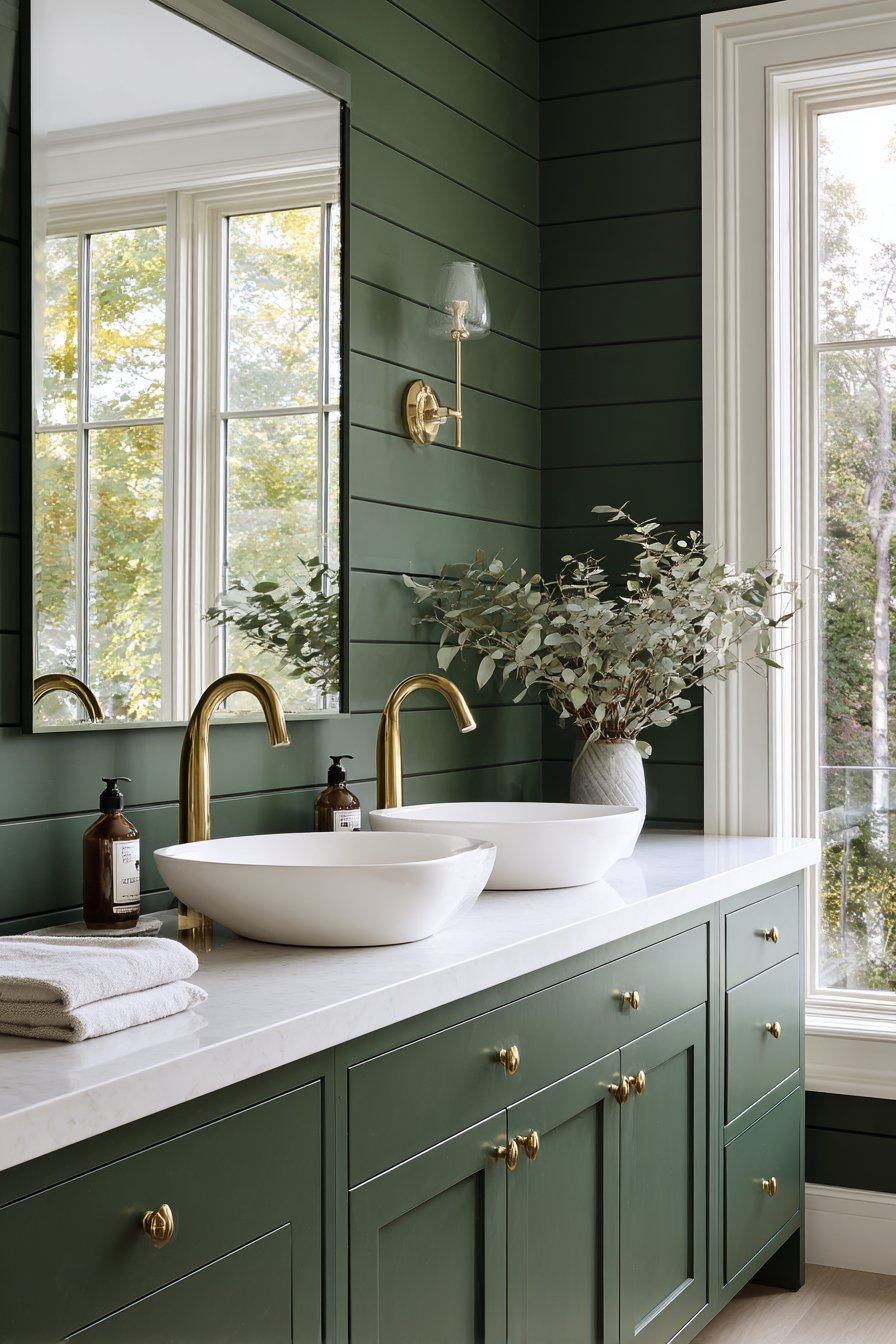
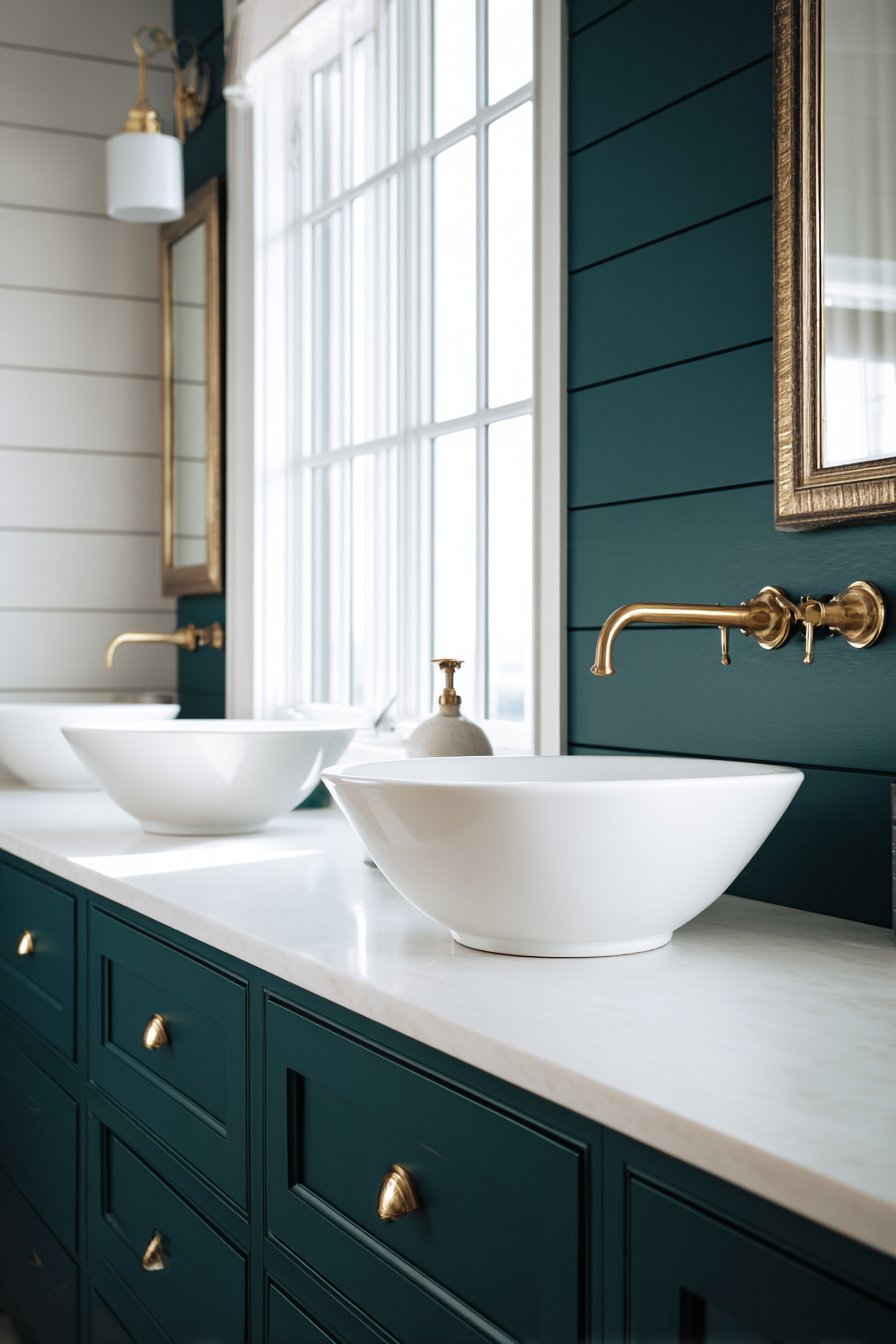
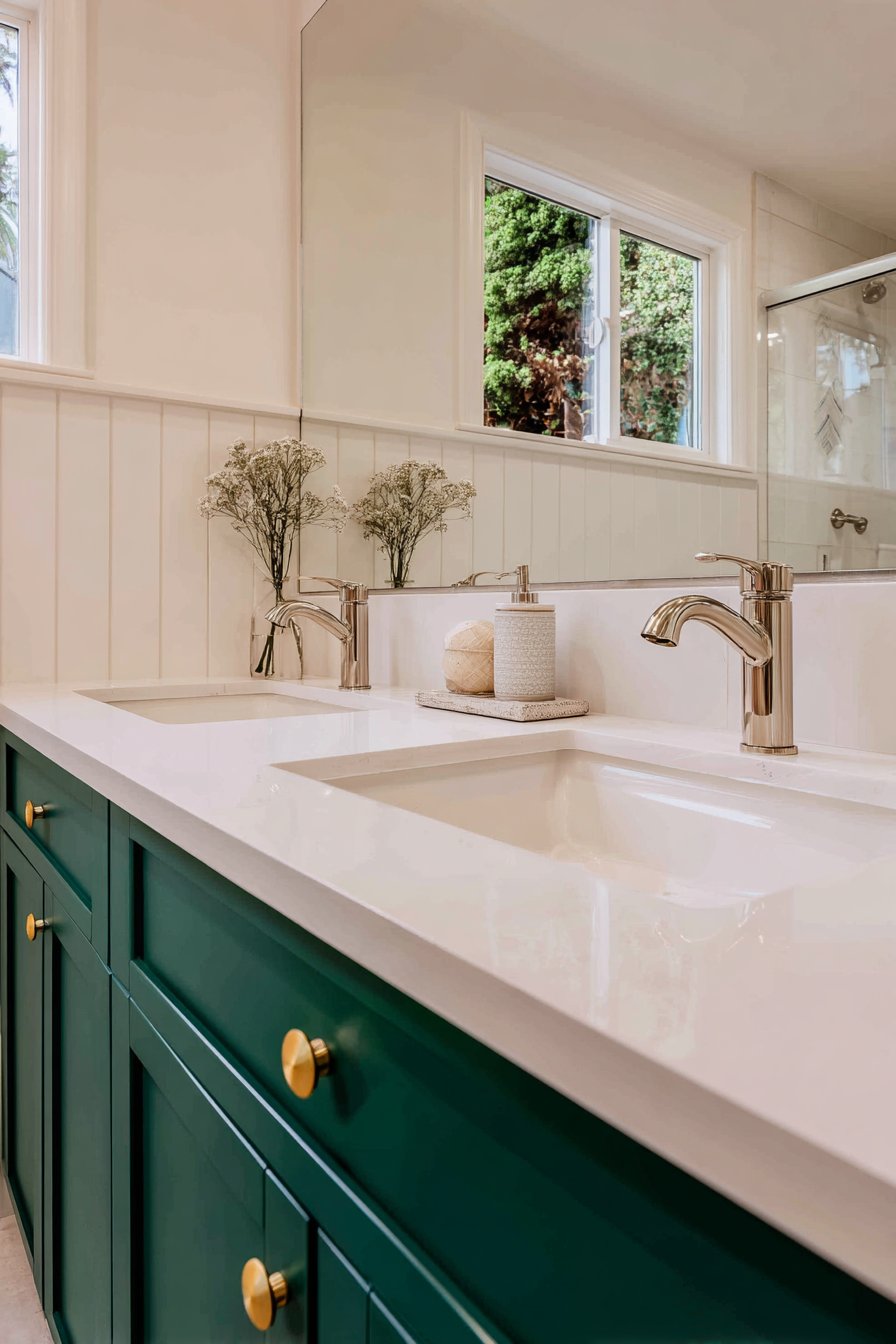
A double vanity area demonstrates how deep forest green cabinetry can anchor a bathroom design. Custom-painted cabinets in this rich hue provide substantial visual weight while maintaining elegance. Simple brass knobs offer subtle metallic accents that catch light without appearing ostentatious. The deep green finish creates a grounding element that balances the brightness of white countertops and sinks.
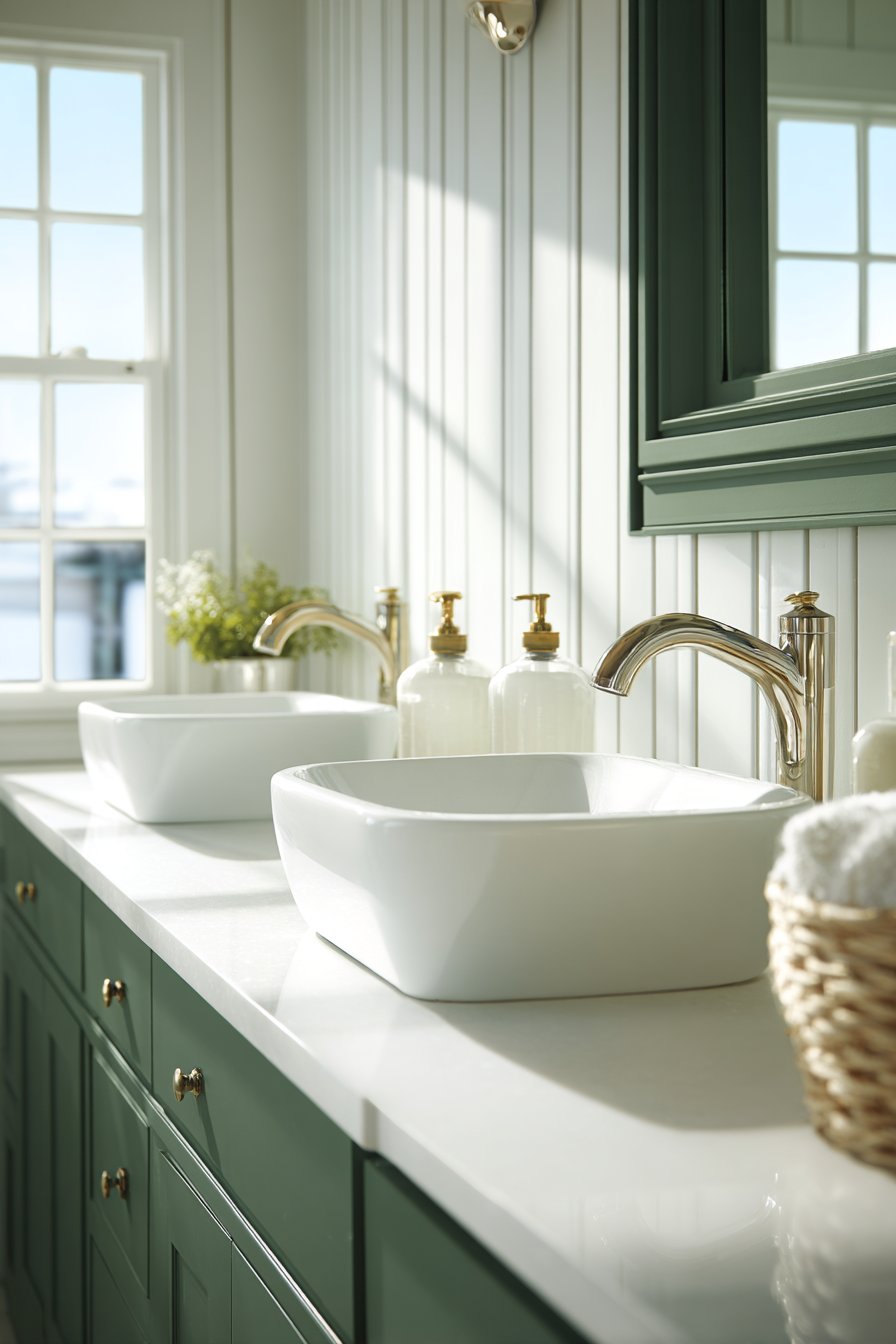
White quartz countertops extend seamlessly across the vanity, their pristine surface reflecting light throughout the room. Two undermount ceramic sinks nestle into the countertop, their white finish creating clean lines and smooth transitions. Behind the vanity, white shiplap paneling adds architectural character and textural dimension. The horizontal lines create visual movement while maintaining the room’s fresh, clean aesthetic.
A large frameless mirror spans the length of the vanity, reflecting natural light from an adjacent window. This strategic placement multiplies available light, making the bathroom feel more spacious and welcoming. The mirror’s simple design allows the green cabinetry and white paneling to remain the focal points. Clean lines throughout the design create a sophisticated look that feels both current and enduringly stylish.
Key Design Tips:
- Paint custom cabinetry in deep forest green for a bold statement that remains sophisticated
- Choose undermount sinks for seamless countertop integration and easier cleaning
- Install shiplap paneling to add texture without introducing competing colors or patterns
- Use frameless mirrors to maximize light reflection and create visual spaciousness
- Select brass hardware in a simple design to add warmth without overwhelming the space
4. Compact Charm with Mint and White Magic
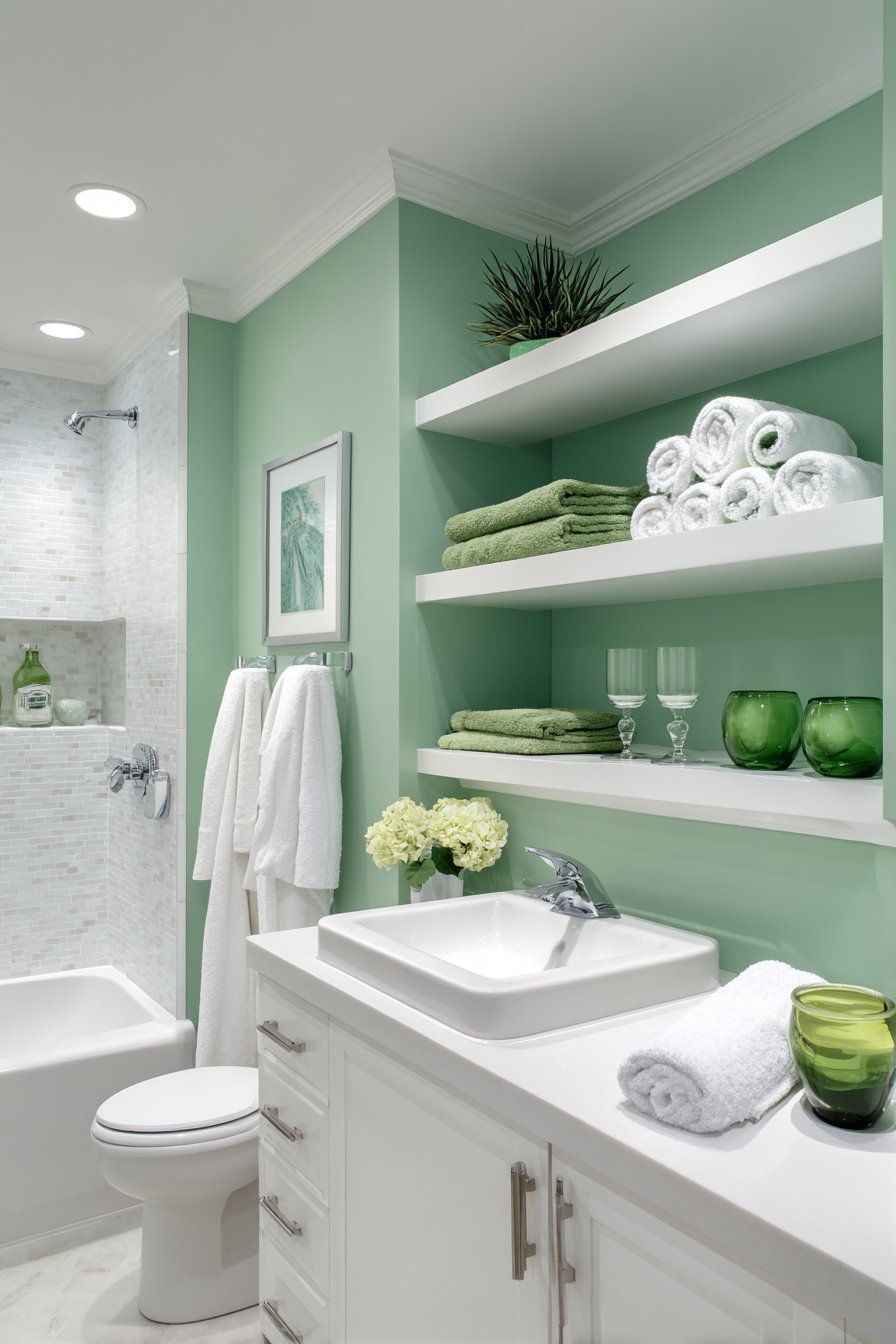
Small bathrooms require clever design solutions that maximize every inch. White subway tiles on the lower walls create a classic foundation that reflects light effectively. Above the chair rail molding, pale mint green painted plaster introduces soft color that draws the eye upward. This vertical color division makes ceilings appear higher while adding visual interest to compact spaces.
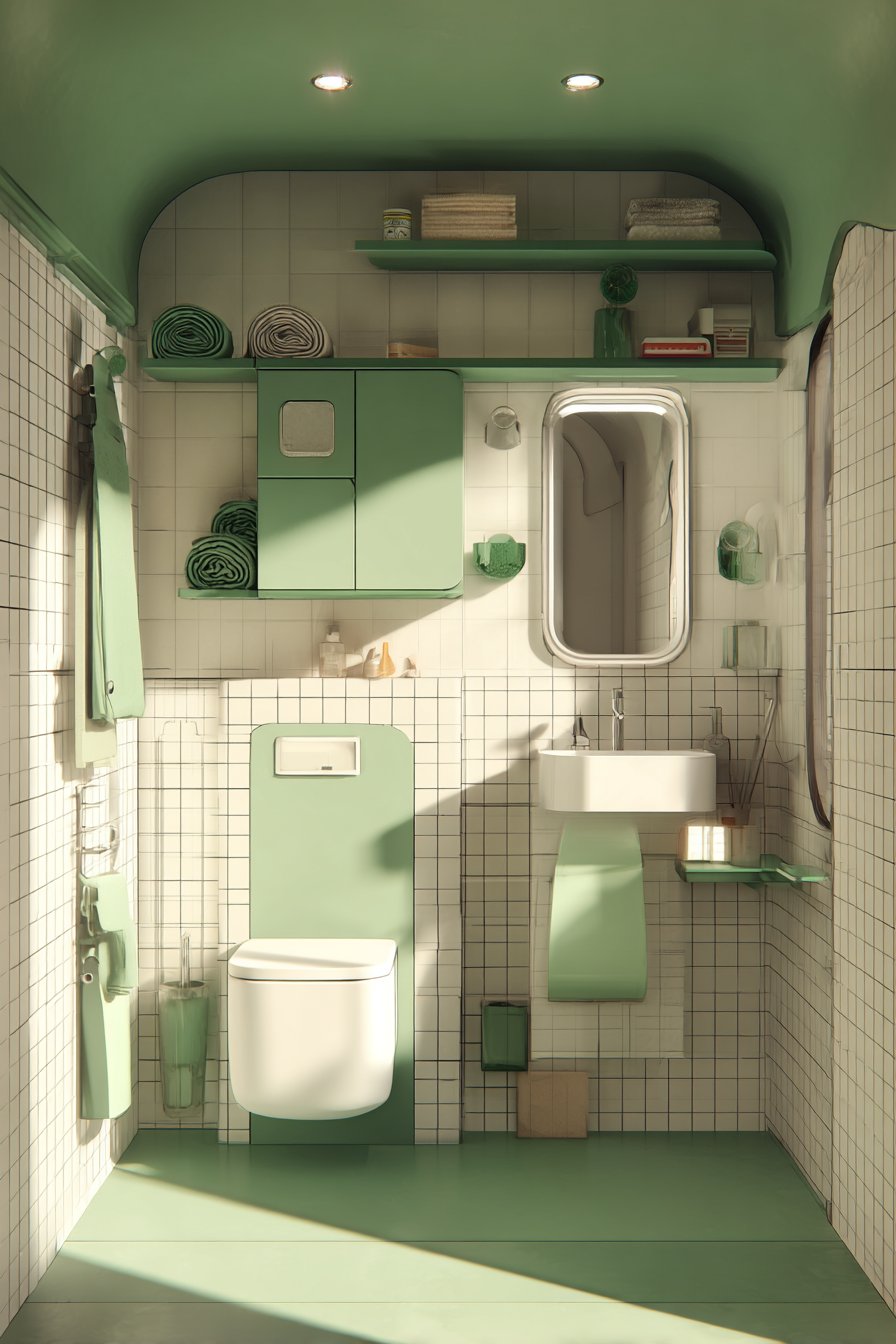
White floating shelves provide practical storage without consuming precious floor space. Rolled towels in white and green tones become decorative elements that reinforce the color scheme. Green glass accessories add sparkle and personality while maintaining cohesion with the overall design. These thoughtful details prove that small spaces can be both functional and beautiful.
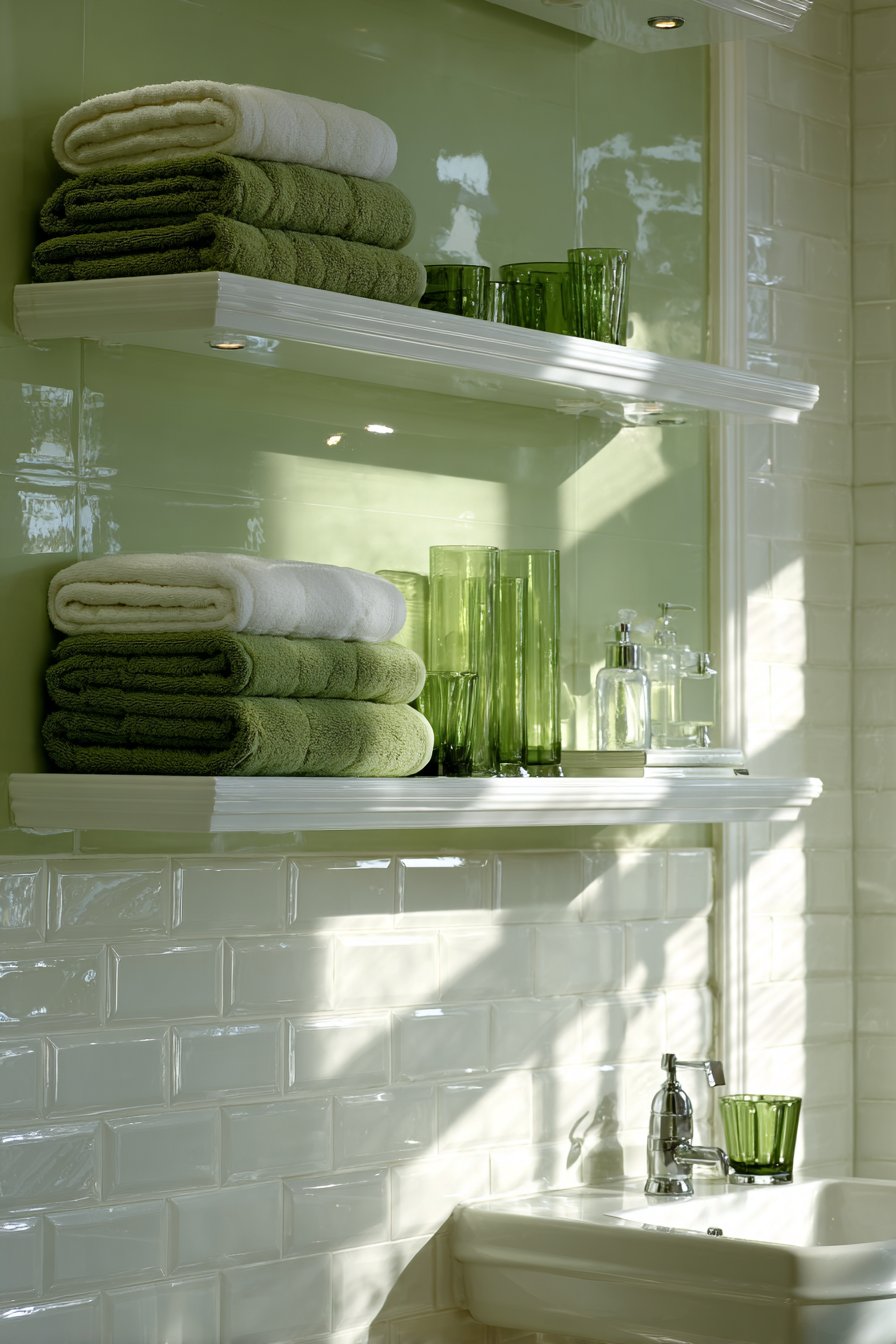
A white pedestal sink maximizes floor space while maintaining classic style. Its slender profile creates an open feeling despite the room’s compact dimensions. Recessed lighting creates gentle highlights across crisp surfaces, eliminating shadows that could make the space feel smaller. The strategic use of white as the dominant color keeps the room feeling bright and airy.
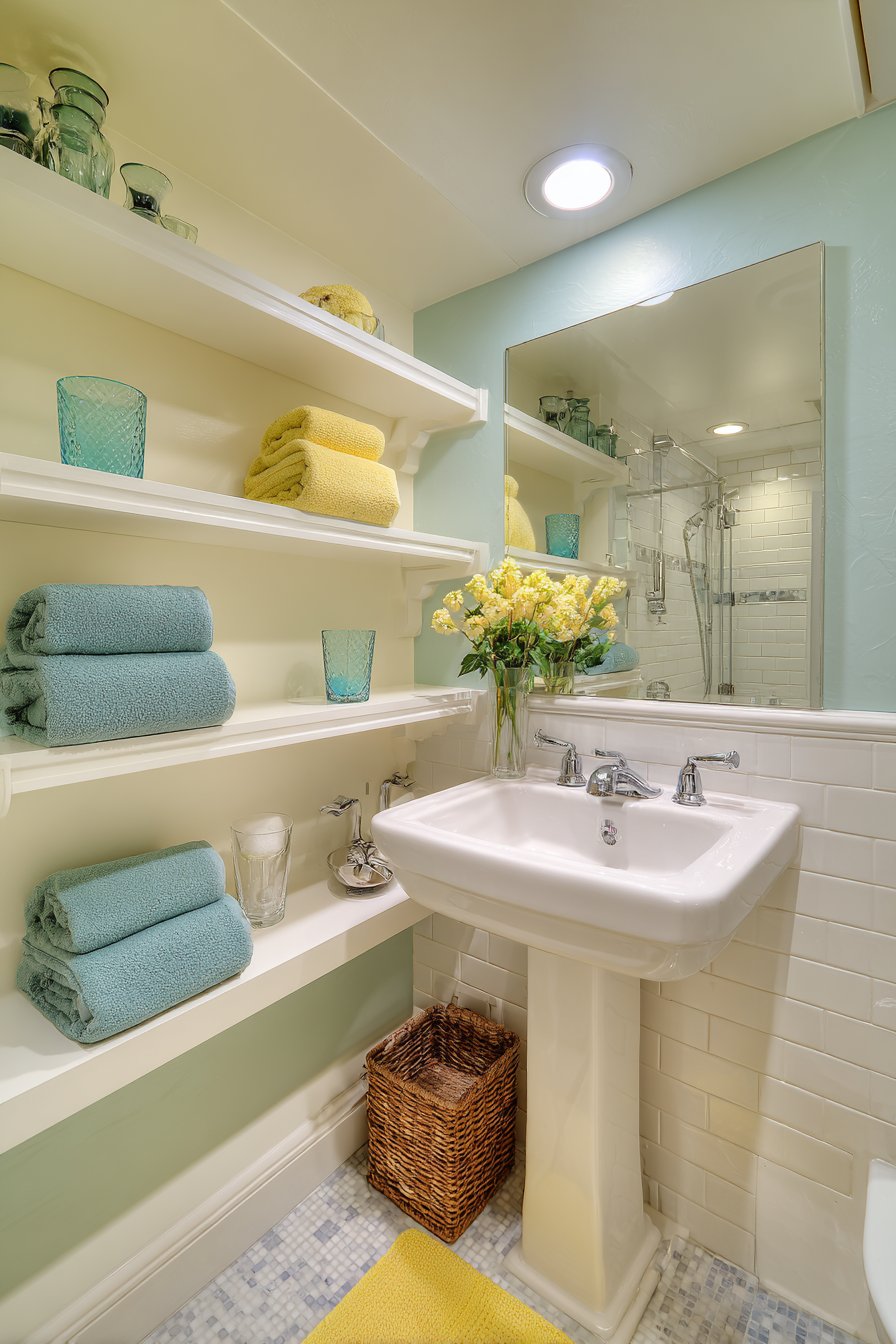
Key Design Tips:
- Use vertical color division to make low ceilings appear higher in compact bathrooms
- Install floating shelves for storage that doesn’t encroach on limited floor space
- Choose pedestal sinks in small bathrooms to maintain an open, uncluttered feeling
- Add recessed lighting to illuminate the space evenly without requiring surface-mounted fixtures
- Display rolled towels and accessories to combine function with decorative appeal
5. Marble-Inspired Luxury with Vintage Character
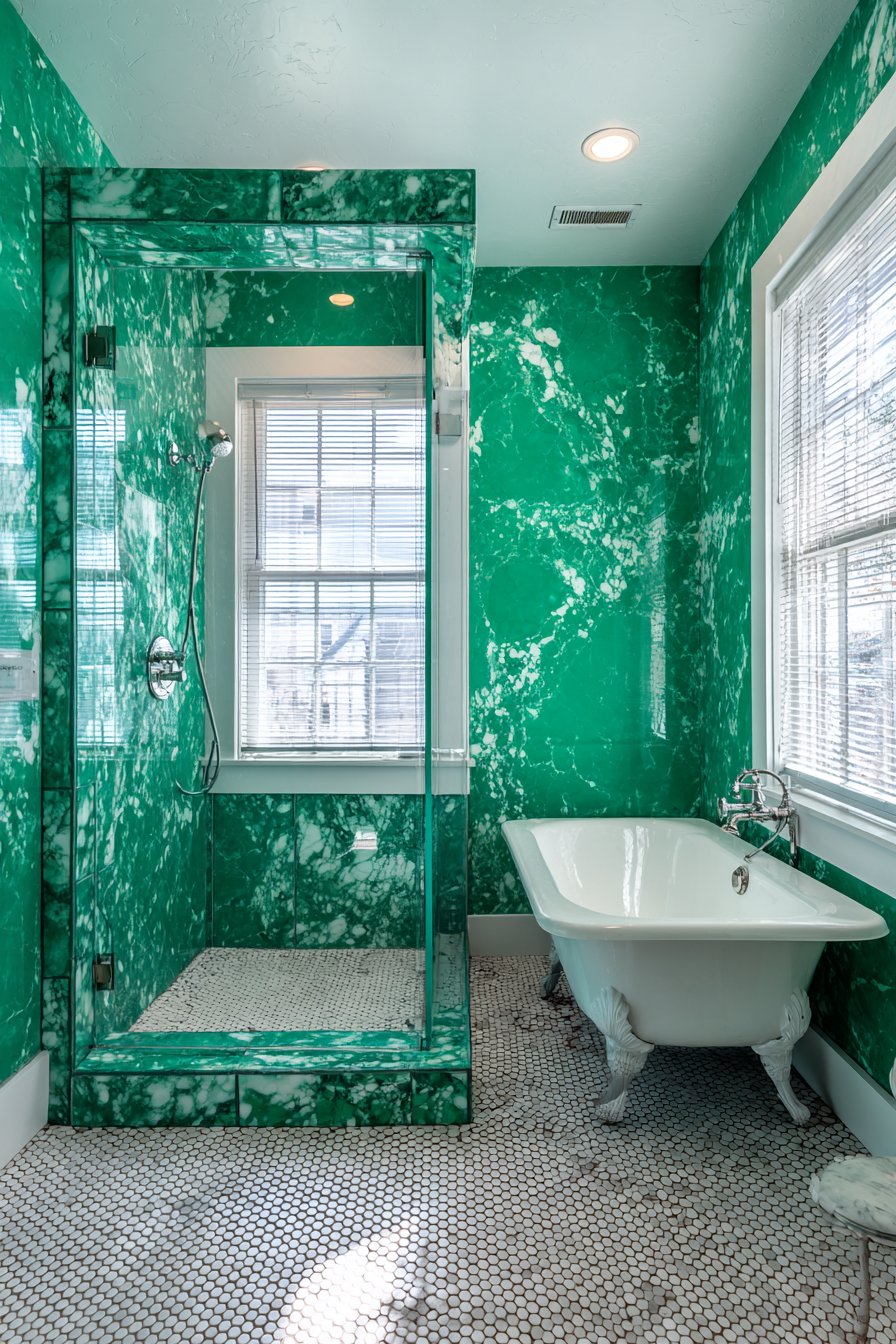
Luxurious green porcelain tiles with marble-look veining transform a shower surround into a statement feature. Natural white veining patterns flow across the green surface, creating organic movement and visual interest. This sophisticated tile choice brings the beauty of natural stone without the maintenance requirements. The combination of green and white within each tile creates inherent cohesion throughout the design.
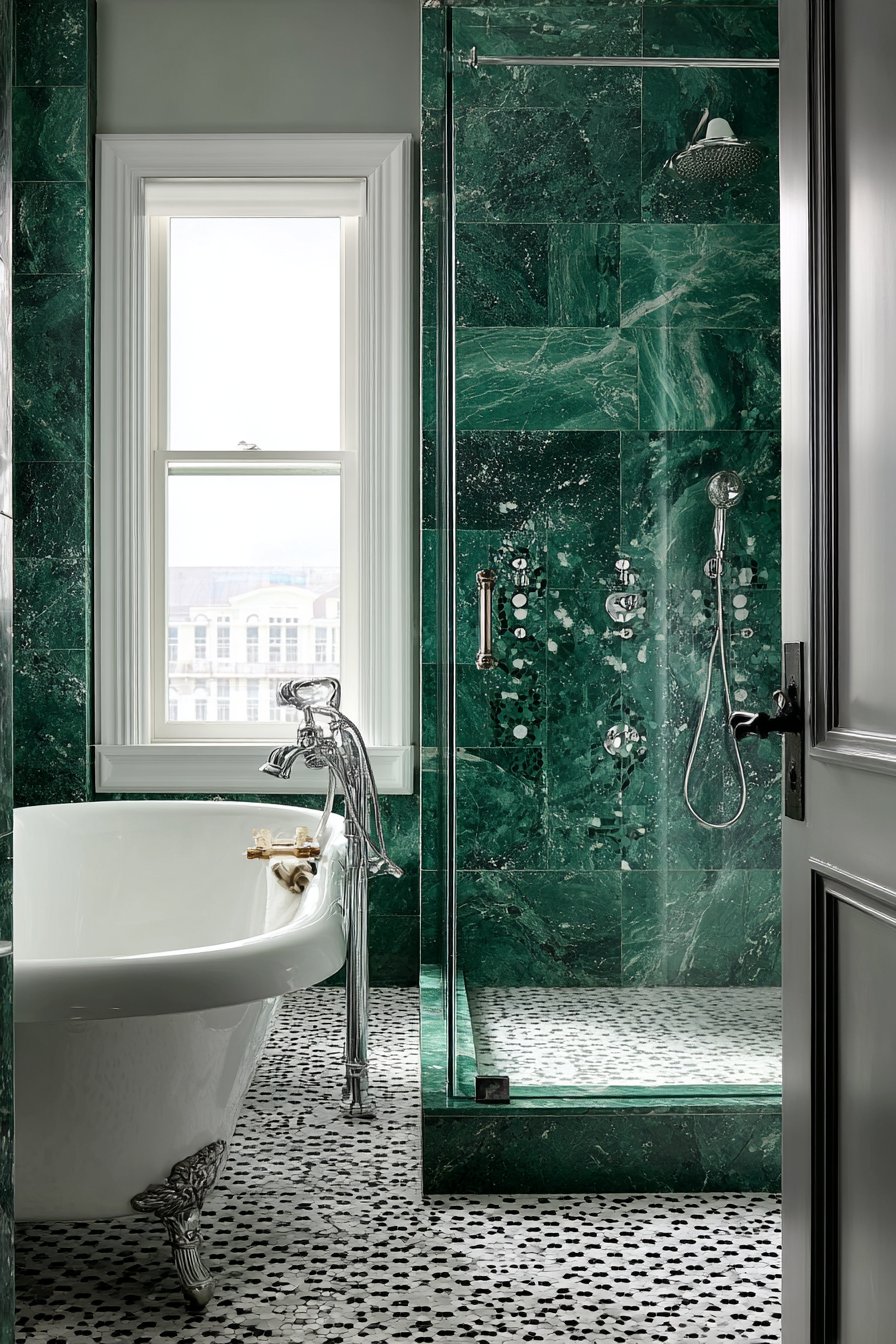
White penny tiles cover the floor in a vintage-inspired pattern. Dark grey grout between the circular tiles provides contrast that defines each element while adding visual texture. This classic flooring choice complements the marble-look walls while maintaining its own distinct character. Adjacent to the shower, a white clawfoot tub evokes traditional elegance and timeless appeal.
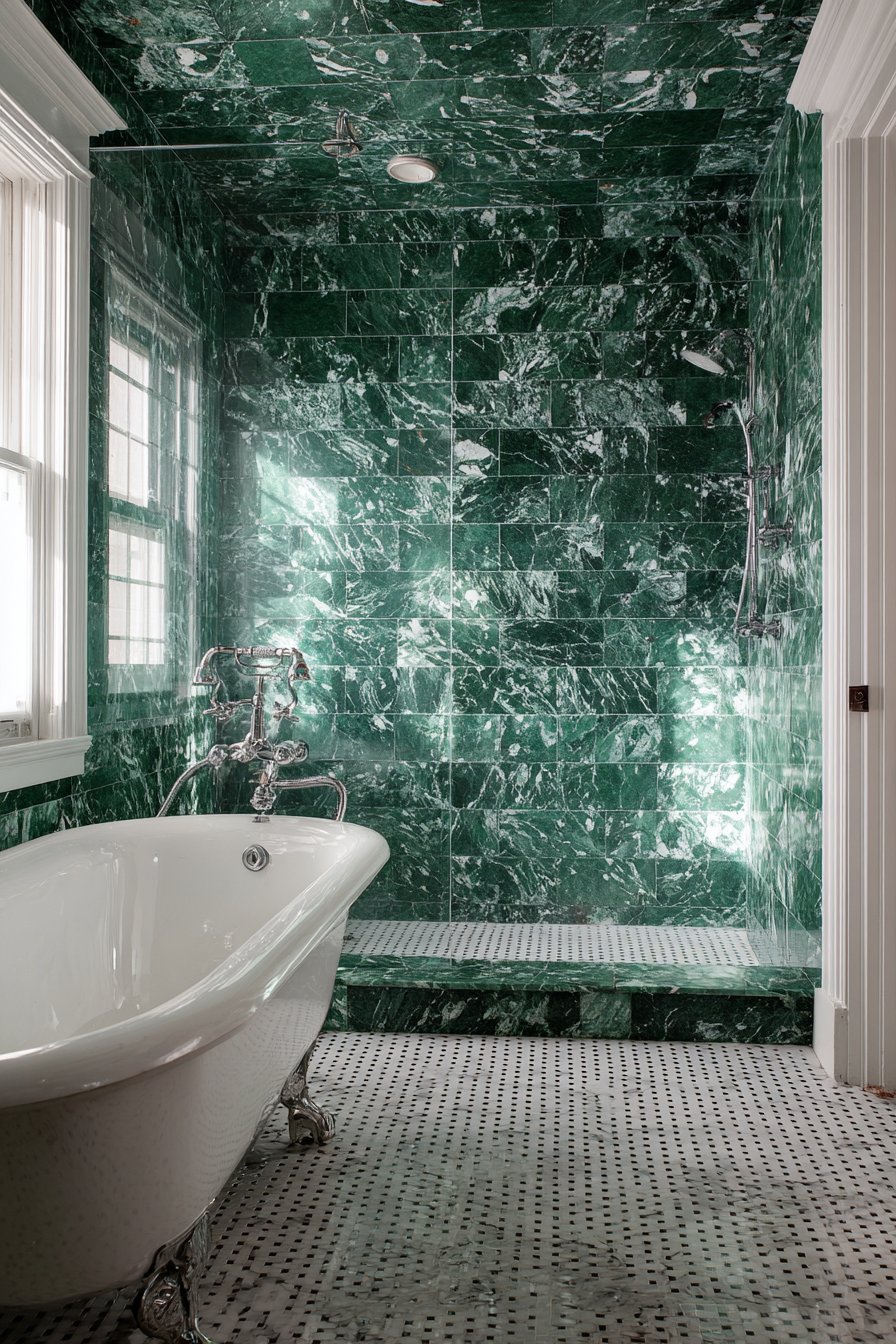
Chrome fixtures and a vintage-style handheld shower attachment maintain period authenticity. These carefully selected details honor traditional bathroom design while providing modern functionality. Soft diffused natural lighting filters through a window, illuminating the space with gentle, flattering light. This illumination strategy highlights the marble veining and creates depth within the green tiles.
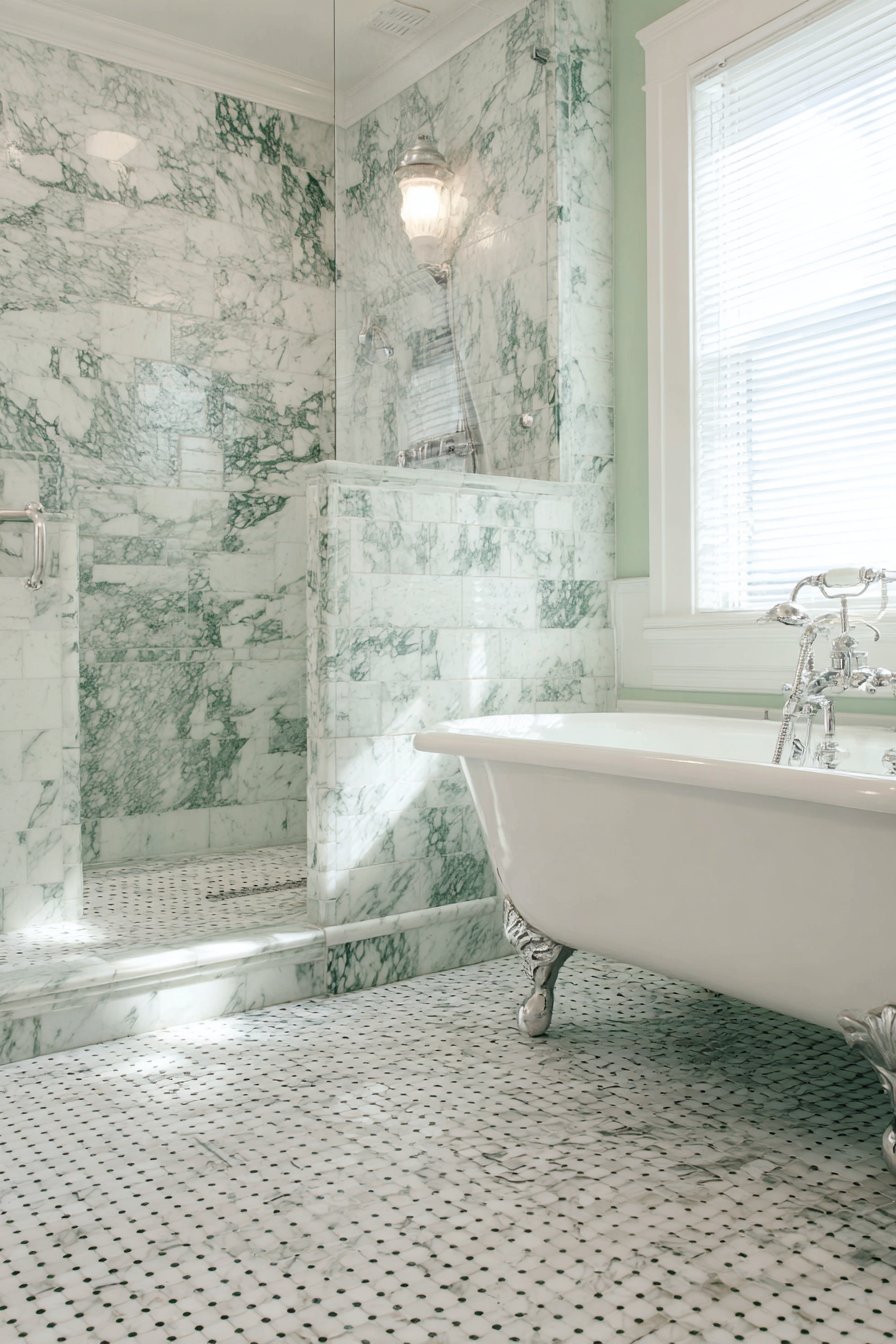
Key Design Tips:
- Select porcelain tiles with marble-look veining for the beauty of stone with easier maintenance
- Use penny tiles with dark grout to create vintage character and visual definition
- Install a clawfoot tub to add traditional elegance and create a luxurious focal point
- Choose chrome fixtures for an authentic vintage appeal that complements both green and white
- Position windows to provide natural light that enhances tile patterns and material textures
6. Bold Geometric Statements in Modern Minimalism
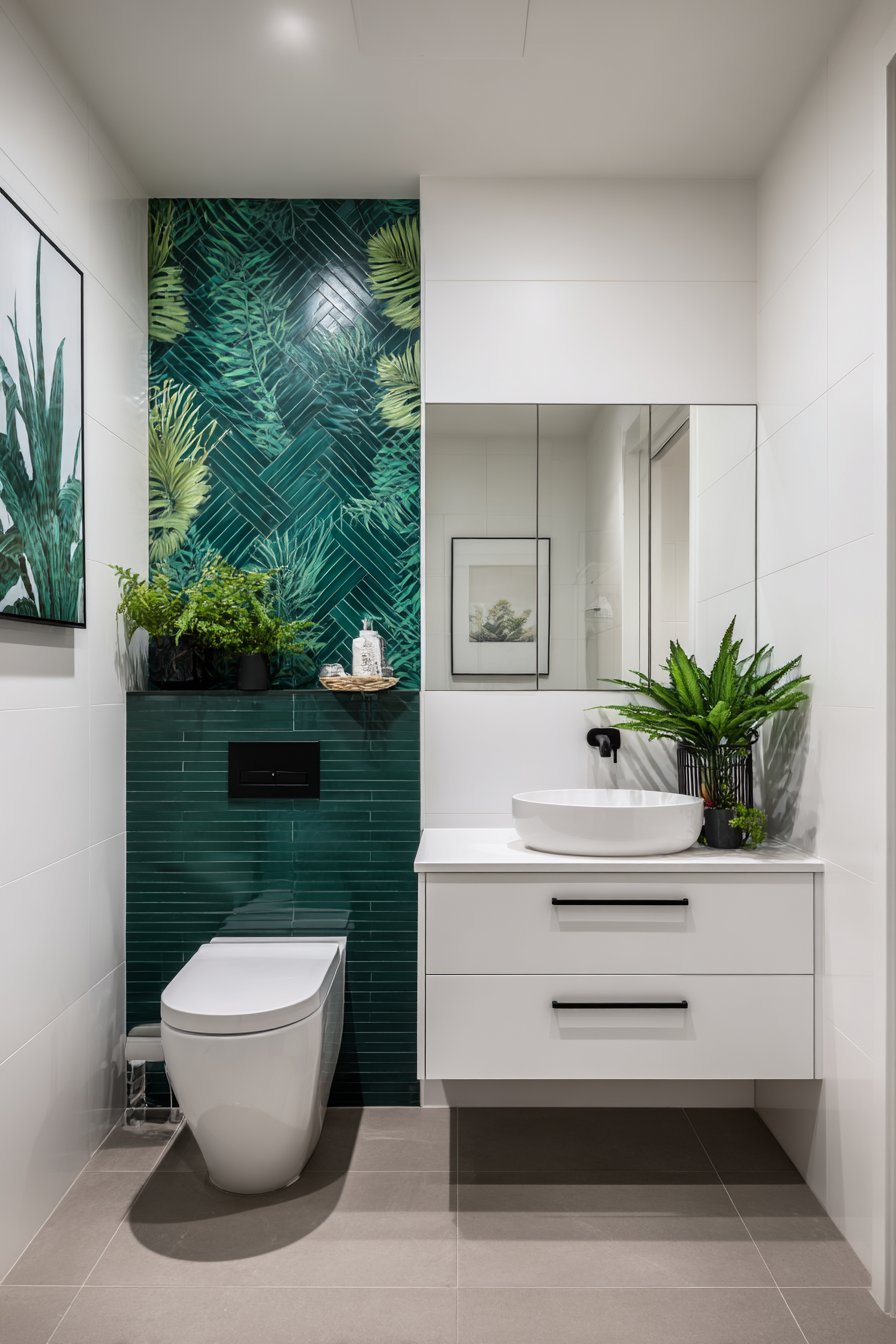
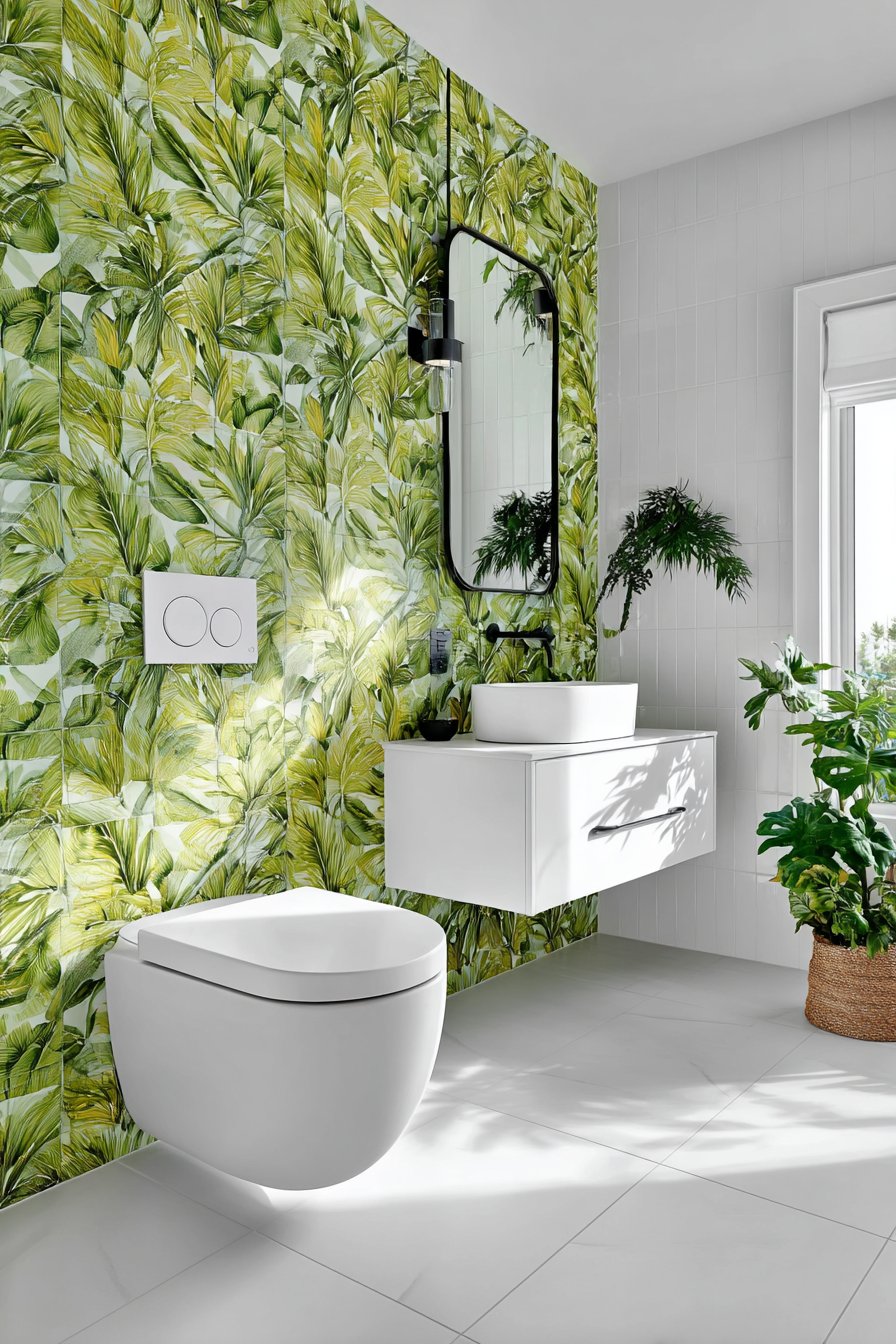
Contemporary design embraces bold choices that create immediate visual impact. A statement wall of botanical green geometric tiles behind the toilet area establishes a striking focal point. The intricate pattern draws the eye while the cohesive green color maintains harmony with the overall scheme. Remaining walls feature bright white large-format porcelain tiles with minimal grout lines, creating a clean, modern backdrop.
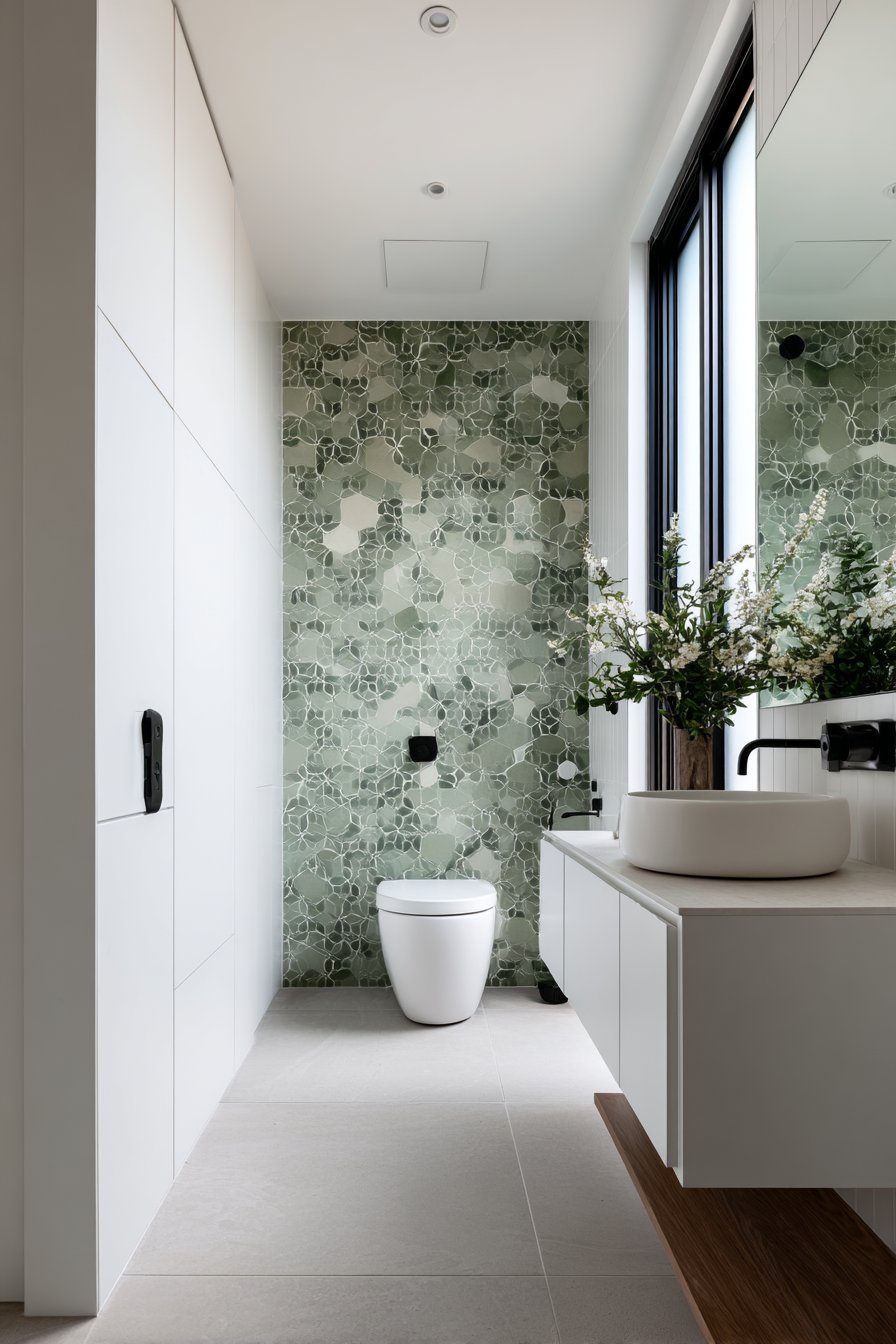
The minimalist aesthetic continues with a white wall-hung toilet and floating vanity. These suspended fixtures create clean floor lines that make cleaning easier while enhancing the sense of spaciousness. Matte black hardware provides contemporary contrast that defines edges and adds sophisticated punctuation to the design. This dark accent prevents the green-white scheme from appearing too soft or undefined.
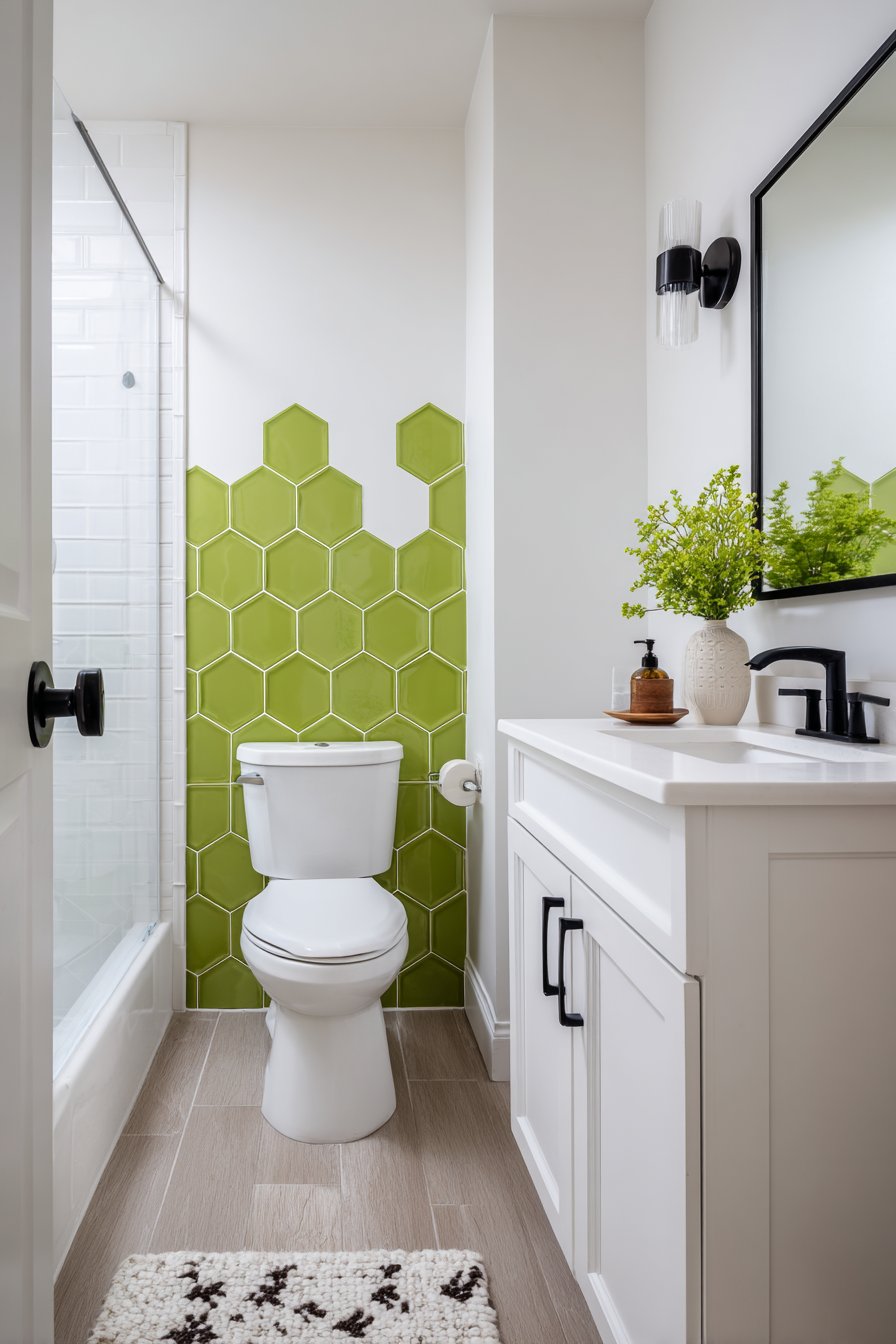
Large-format white tiles minimize grout lines, creating smooth surfaces that feel modern and refined. The contrast between the geometric feature wall and plain white surfaces creates balanced visual interest. Natural light enhances the vibrant tile pattern, making the green elements appear to glow. This strategic use of pattern on one wall demonstrates how bold design choices work best when balanced with restraint.
Key Design Tips:
- Create a single feature wall with bold geometric tiles rather than covering the entire bathroom
- Use large-format white tiles on remaining walls to balance pattern with visual calm
- Install wall-hung fixtures to create clean floor lines and enhance the minimalist aesthetic
- Add matte black hardware for contemporary contrast that defines the design
- Ensure adequate natural light to showcase vibrant tile patterns and geometric details
7. Spa-Like Serenity with Eucalyptus Accents
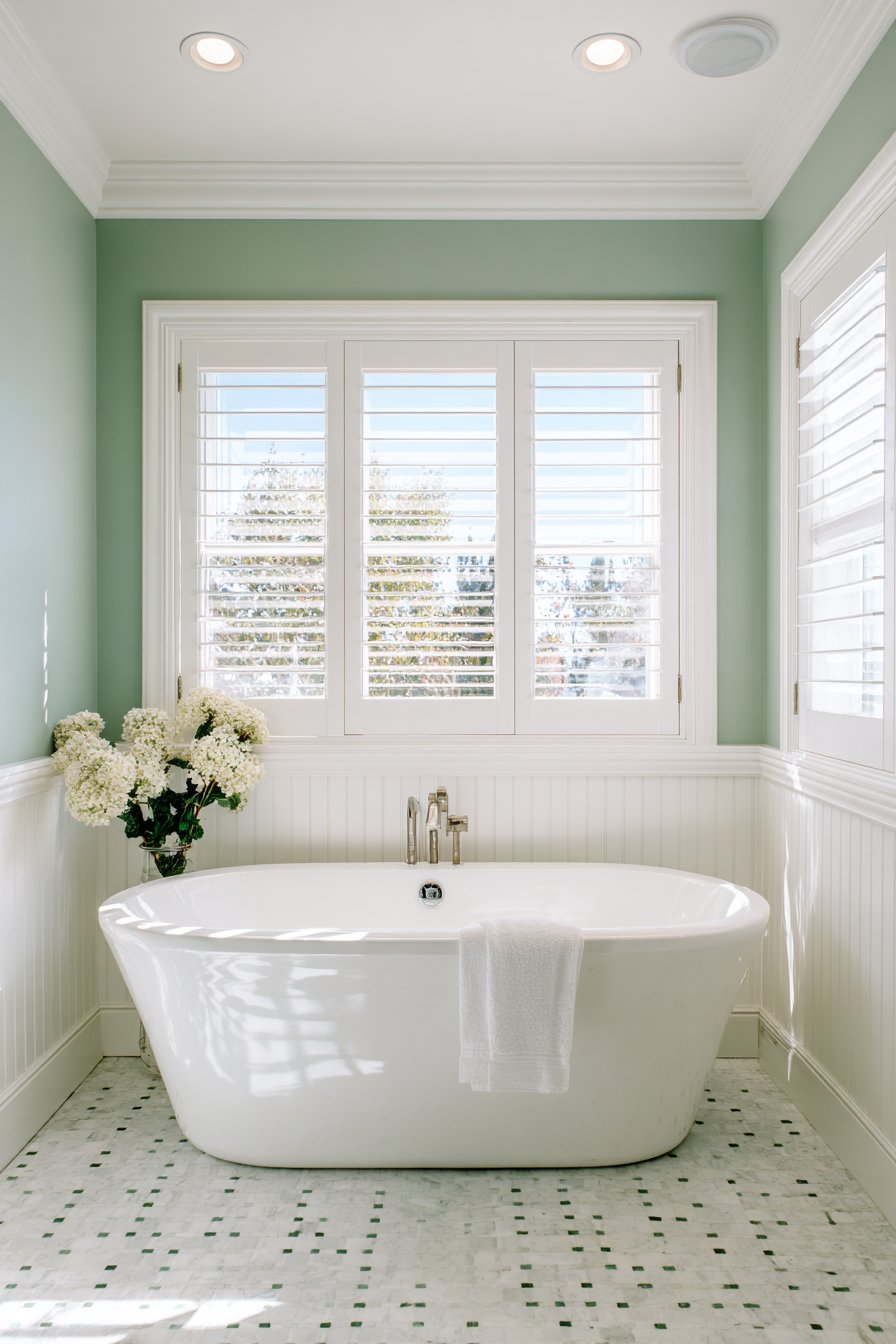
Transform your bathroom into a personal spa retreat with thoughtful color and material choices. White wainscoting on lower walls provides traditional architectural detail and visual grounding. Above this classic element, soft eucalyptus green painted plaster creates a calming atmosphere that promotes relaxation. This gentle green shade evokes the soothing qualities of spa environments and natural settings.
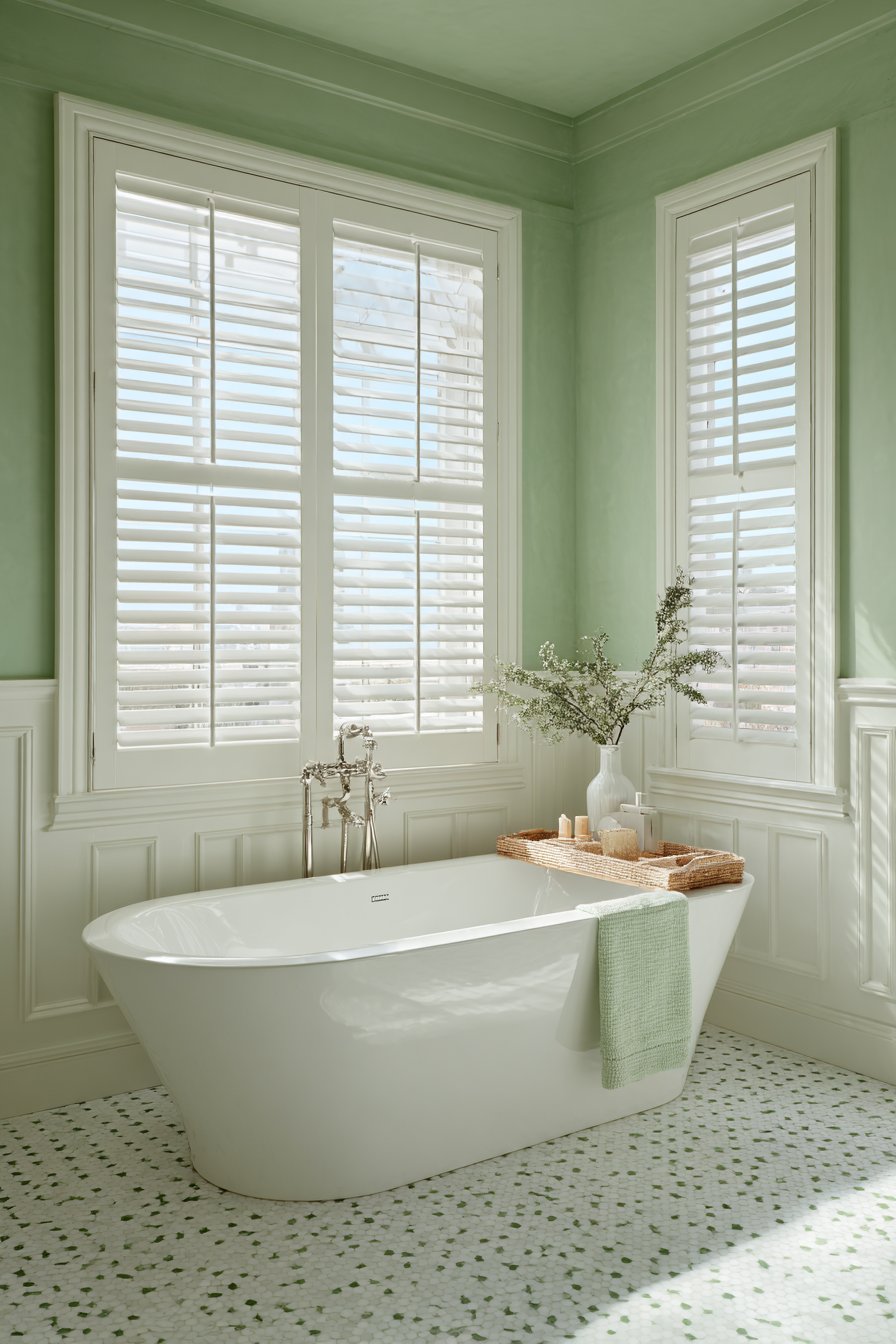
A white freestanding soaking tub positions near a window with white plantation shutters. These adjustable shutters filter natural light while maintaining privacy, creating soft, dappled illumination perfect for relaxation. The tub’s placement allows bathers to enjoy filtered daylight and outdoor views. White marble hexagon floor tiles create subtle pattern underfoot, with green glass accent tiles scattered throughout adding unexpected sparkle.
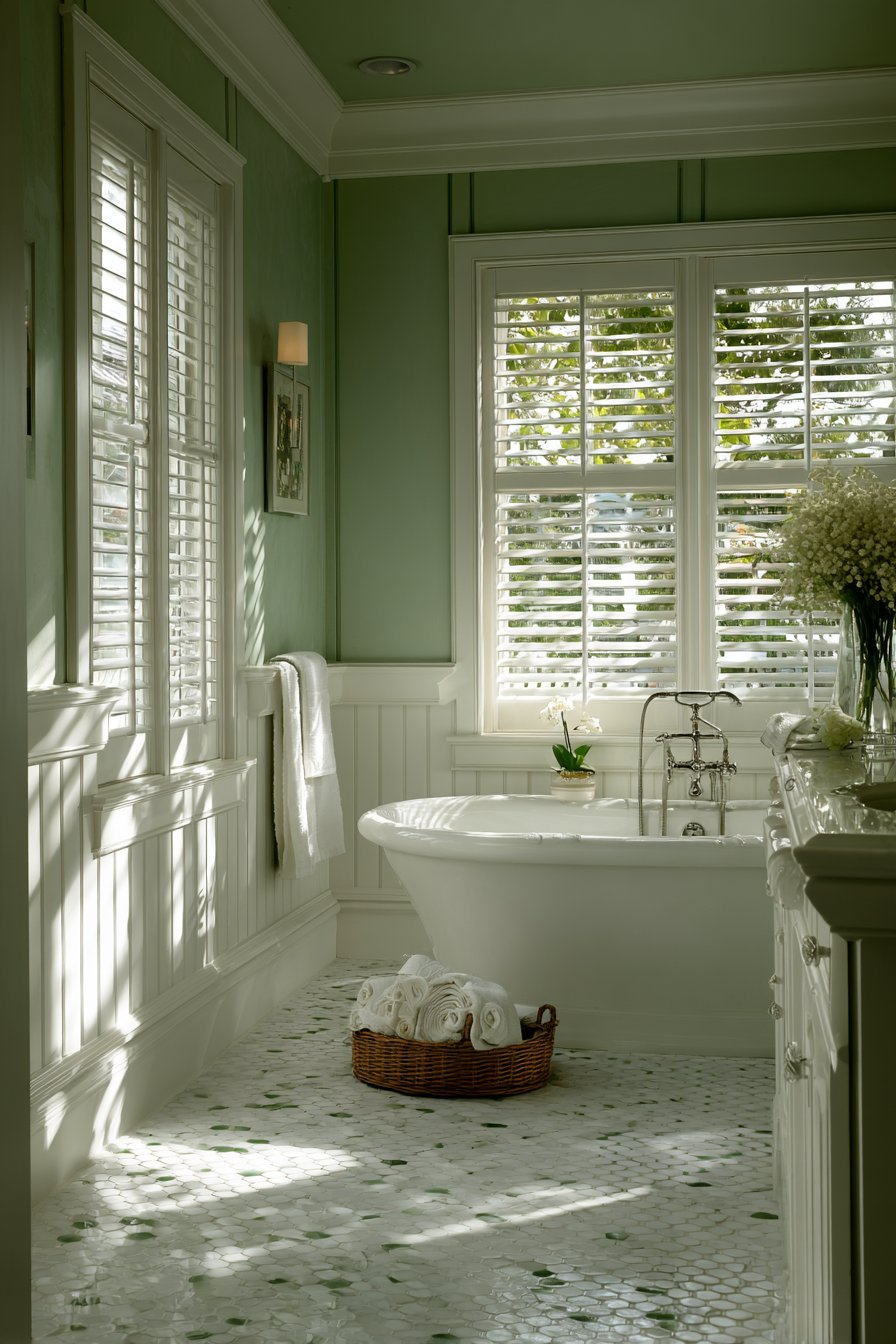
Polished nickel fixtures complement the serene palette with their soft metallic sheen. The warm tone of nickel adds subtle richness without competing with the peaceful green-white scheme. Golden hour lighting through the shutters creates amber warmth that enhances the spa-like ambiance. This bathroom demonstrates how softer green shades create tranquil spaces ideal for unwinding.
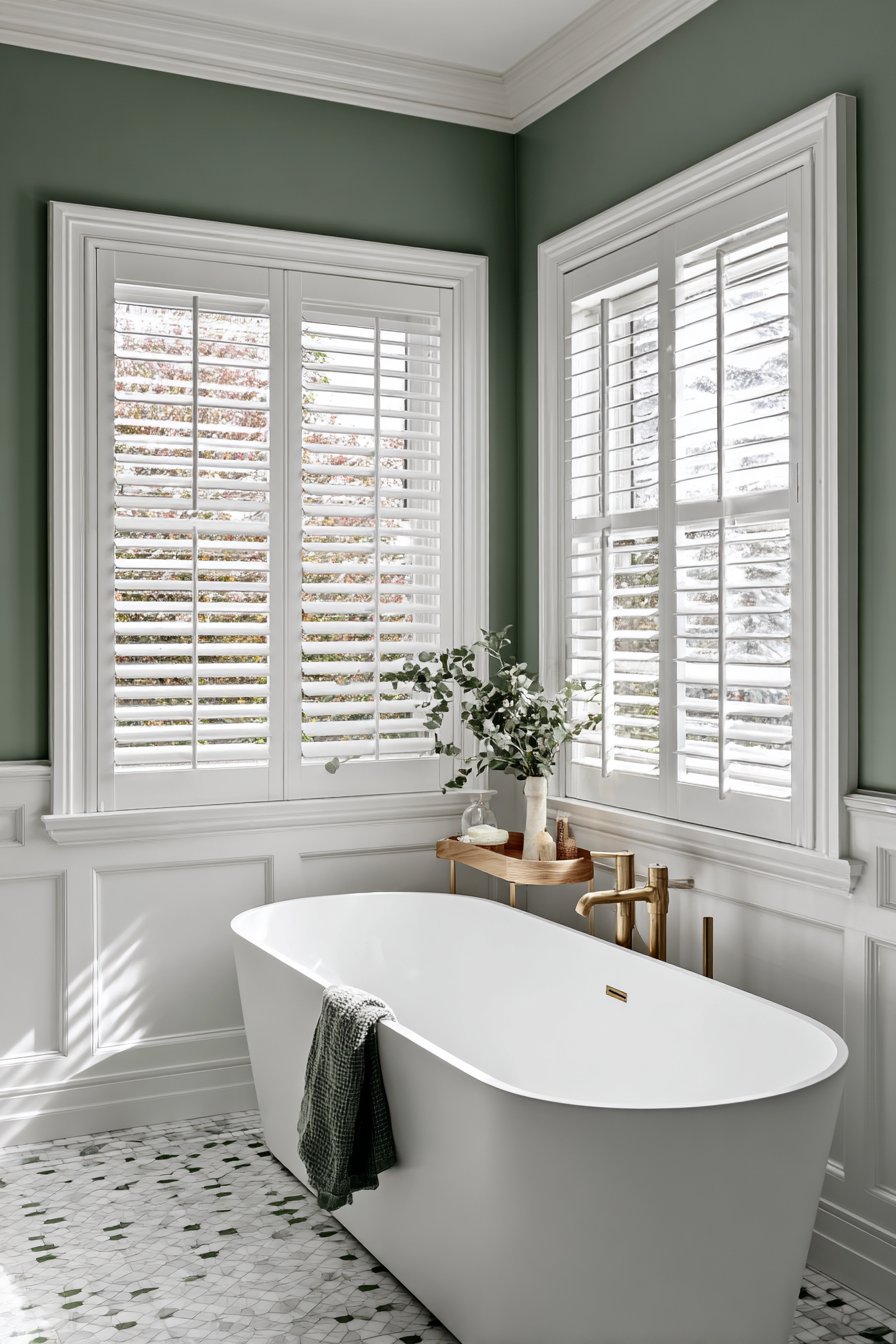
Key Design Tips:
- Paint upper walls in soft eucalyptus green to create a calming, spa-like atmosphere
- Install plantation shutters for adjustable natural light that maintains privacy
- Position freestanding tubs near windows to take advantage of natural light and views
- Add green glass accent tiles to hexagon patterns for subtle sparkle and color reinforcement
- Choose polished nickel fixtures for warmth that complements both green and white elements
8. Functional Elegance in Shower Storage Solutions
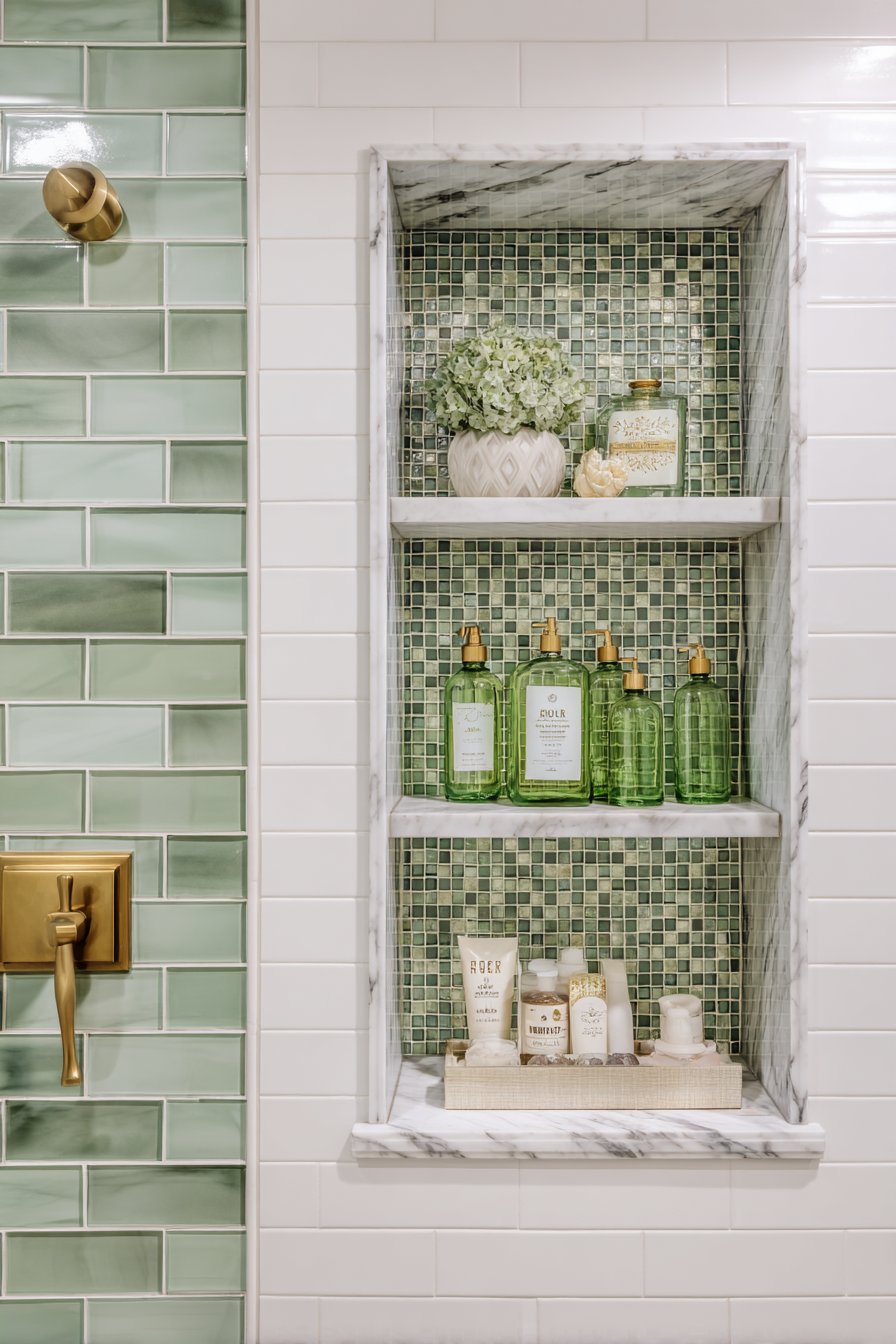
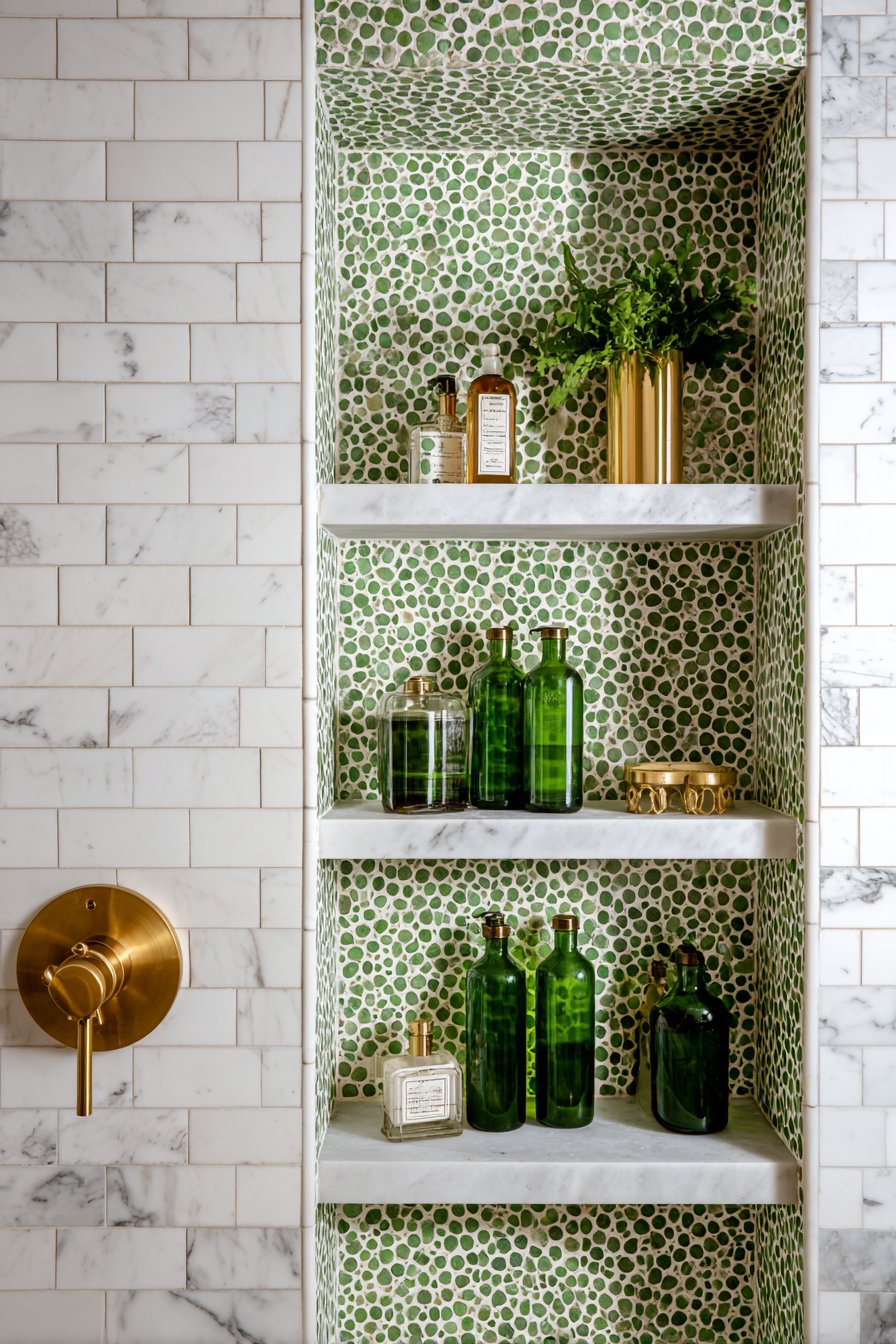
Thoughtful storage solutions elevate bathroom functionality while maintaining aesthetic appeal. A built-in niche within the shower wall provides organized display space for bathroom products. White marble shelving creates luxurious surfaces that resist moisture while adding natural beauty. Green glass bottles containing shower products become decorative elements that reinforce the color scheme.
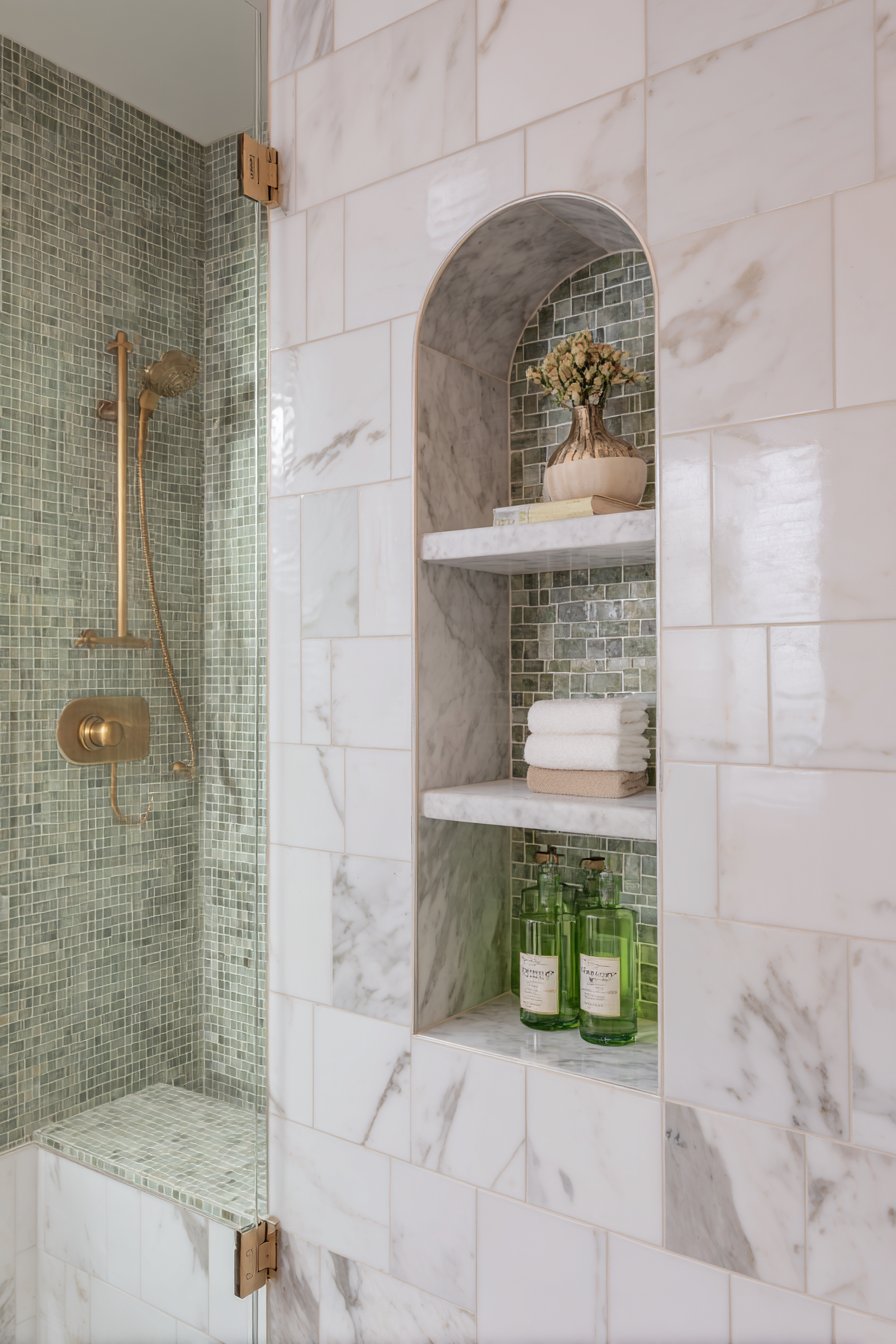
Surrounding shower walls feature glossy white subway tiles arranged in traditional patterns. The niche back wall showcases small-scale green mosaic tiles that create visual interest within the functional element. This strategic use of pattern draws attention to the storage feature while maintaining overall design cohesion. Brushed gold fixtures add warmth and luxury to the practical space.
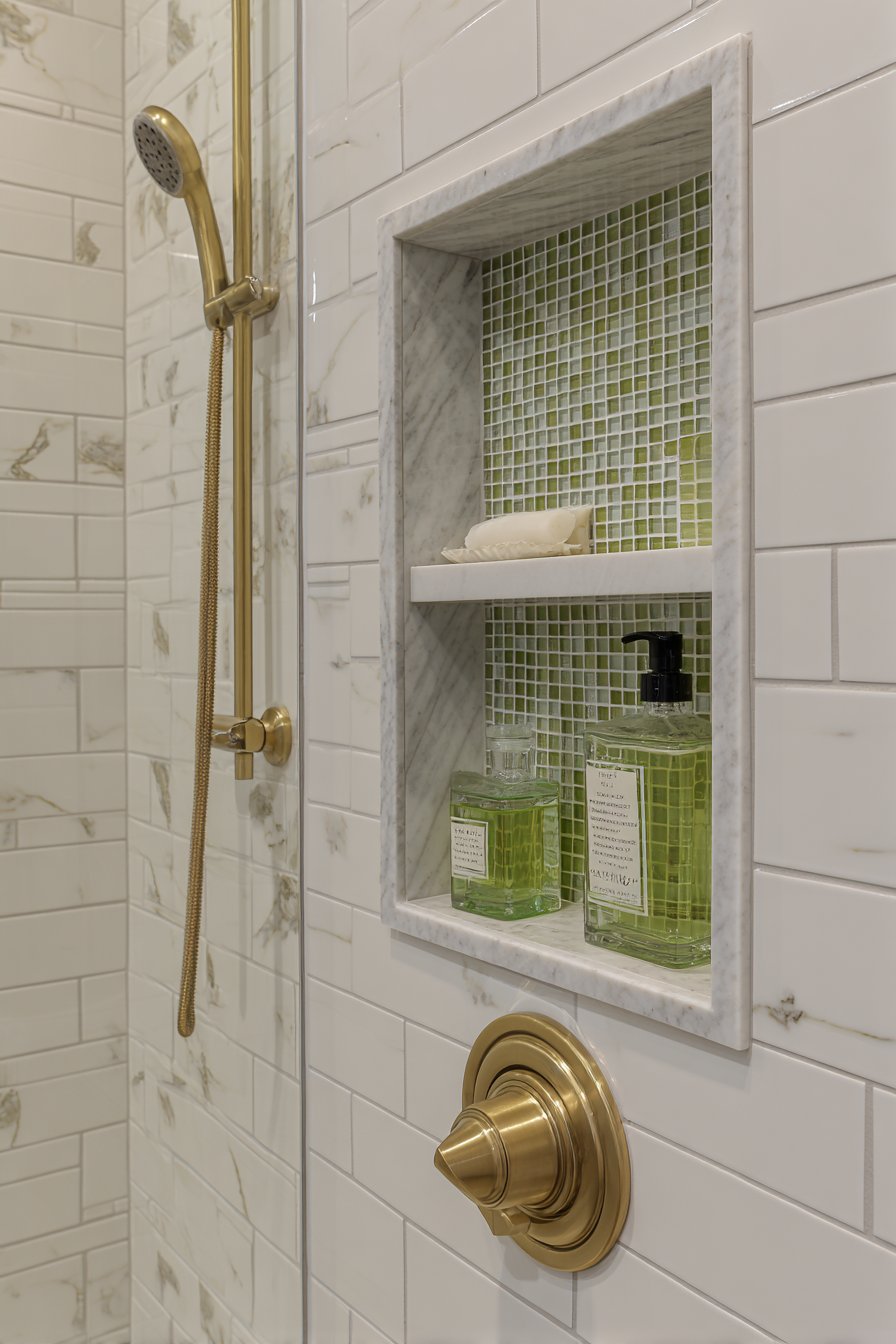
The detail-oriented design proves that functional elements can be beautiful. Organized products in coordinated bottles create visual calm rather than clutter. Soft natural lighting emphasizes material textures, highlighting the contrast between smooth marble and intricate mosaic work. This approach to shower storage demonstrates how planning creates spaces that are both practical and visually pleasing.
Key Design Tips:
- Build storage niches into shower walls during construction or renovation for seamless integration
- Use contrasting tile in niche backgrounds to create visual interest within functional elements
- Display products in coordinated green glass bottles to maintain the color scheme
- Install marble shelving within niches for moisture resistance and luxurious appearance
- Add brushed gold fixtures to warm the cool green-white palette and add richness
9. Vintage Charm with Traditional Elements
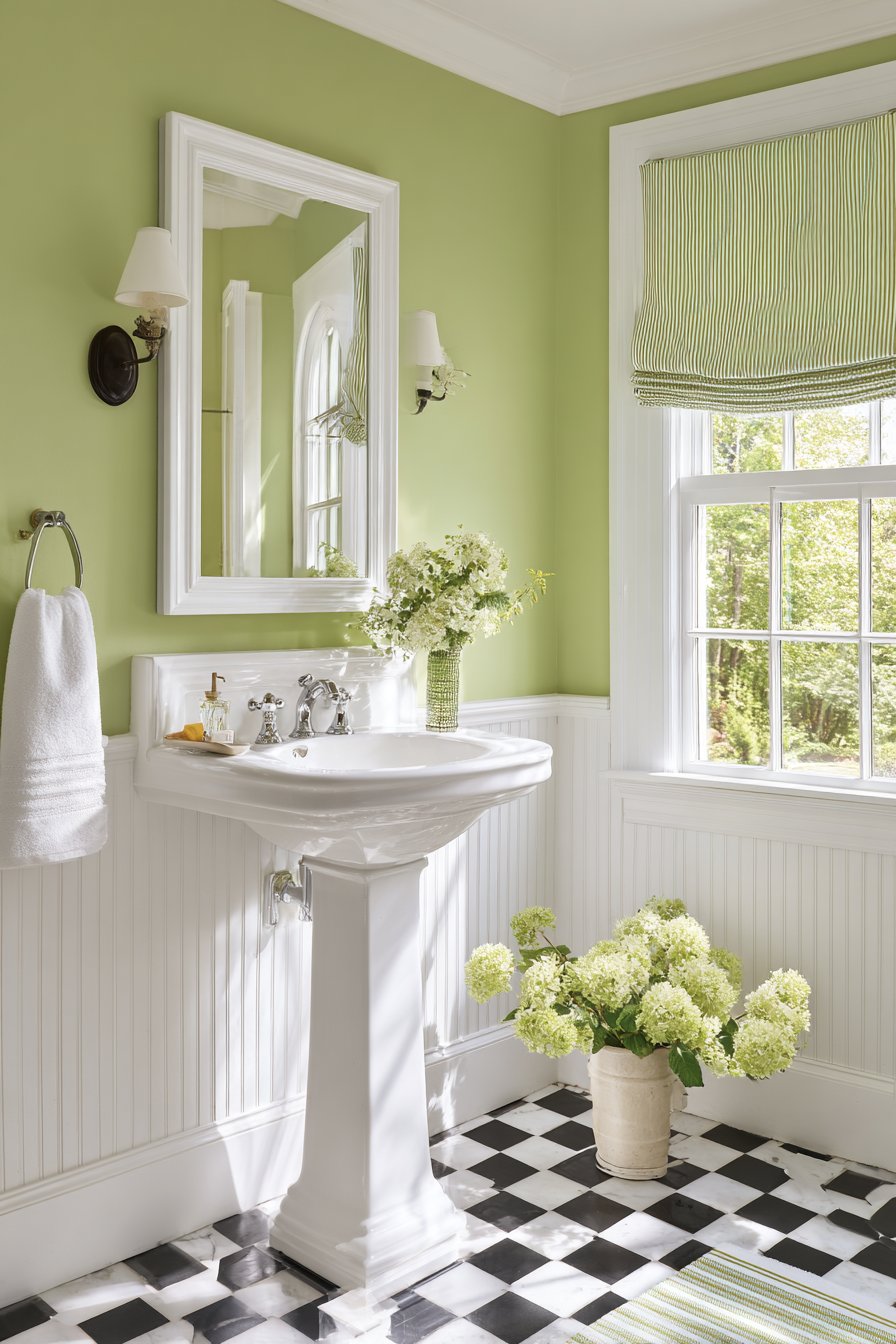
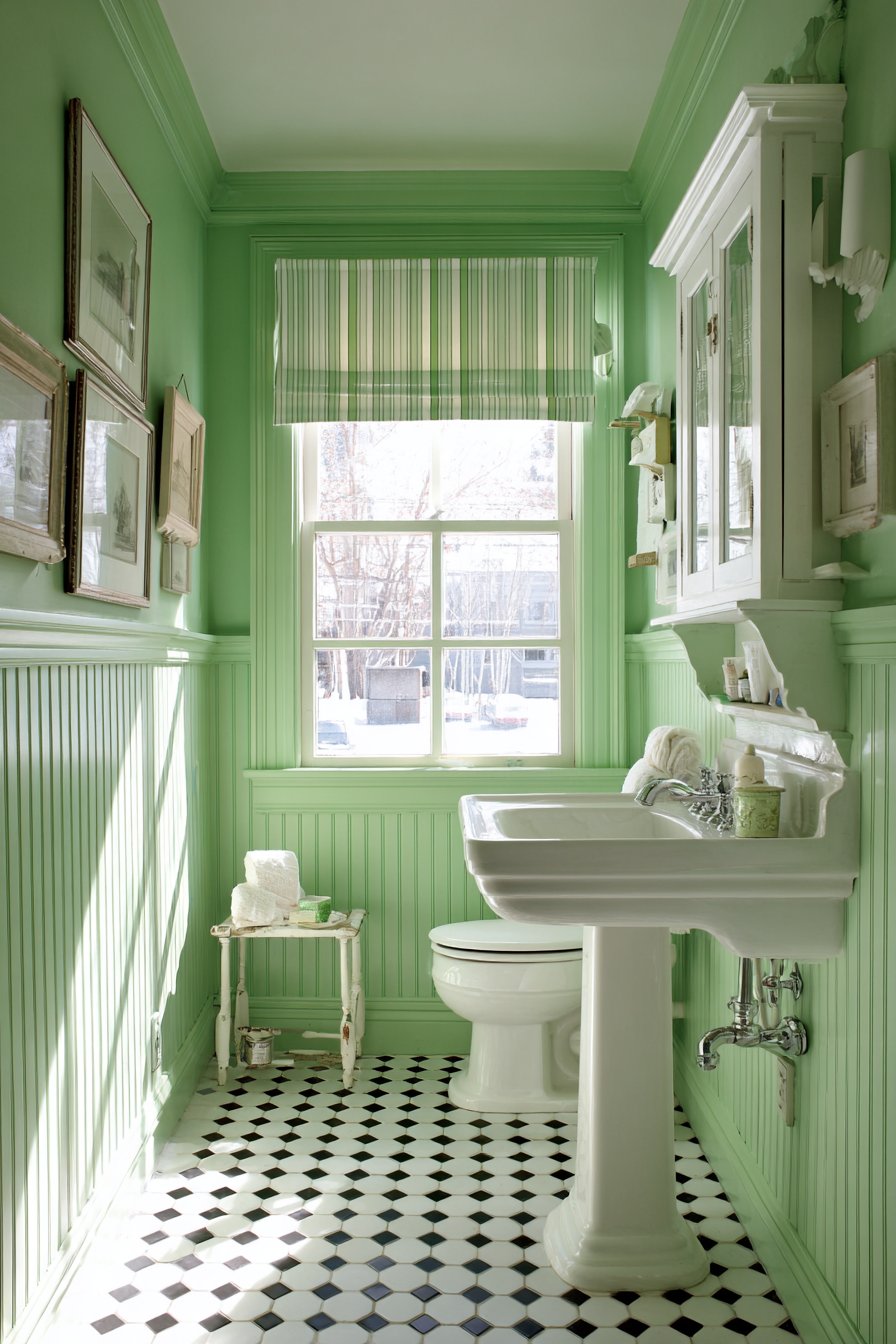
Classic bathroom design never goes out of style. A vintage-inspired pedestal sink in crisp white porcelain creates elegant simplicity. White beadboard wainscoting covers lower walls, providing traditional architectural character and visual texture. Above the wainscoting, fresh sage green paint introduces soft color that feels both vintage and contemporary.
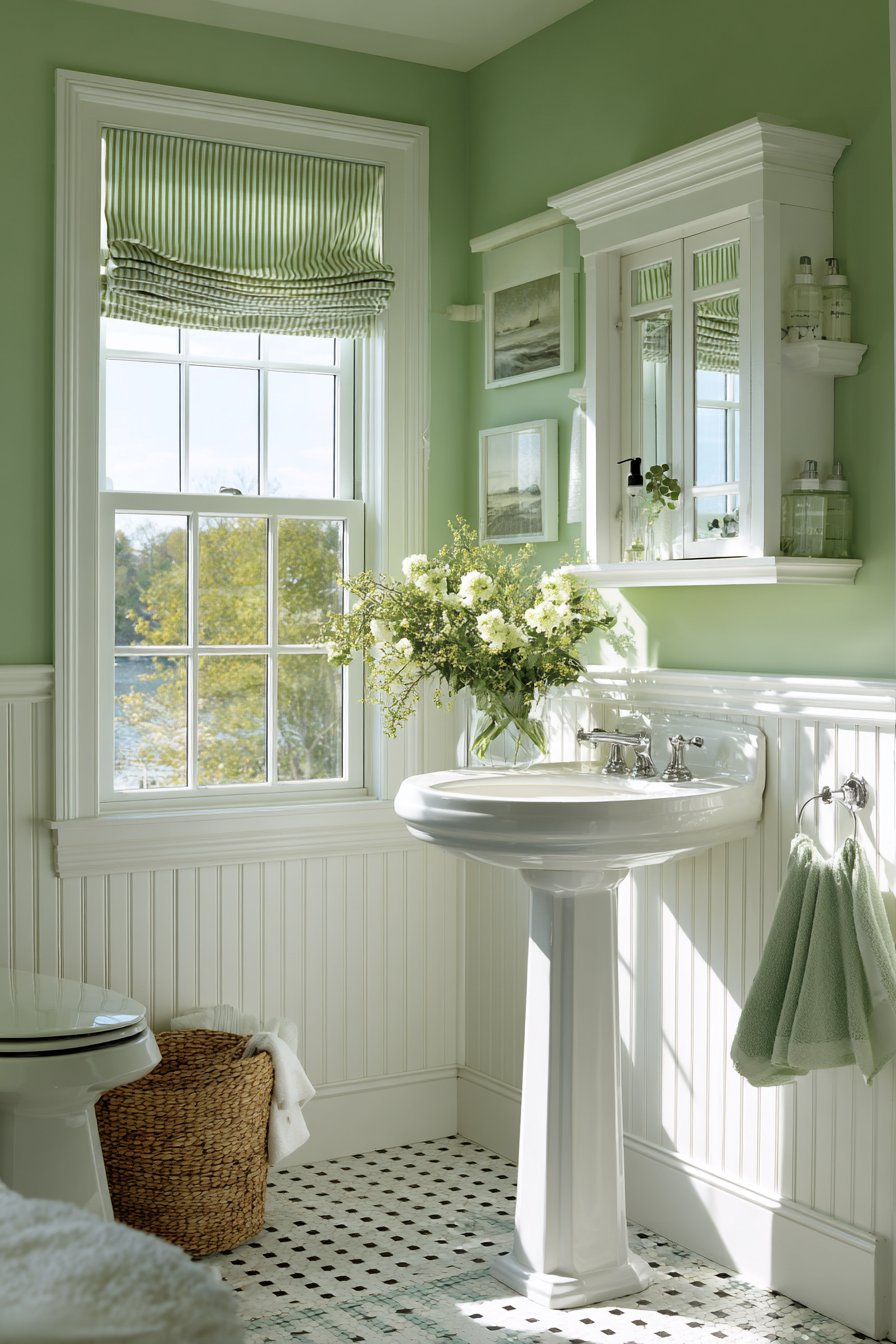
A white framed medicine cabinet provides essential storage while maintaining period-appropriate style. Simple hardware complements the traditional aesthetic without appearing overly ornate. A white and green striped cotton window valance adds pattern and softness to the space. Black and white checkered floor tiles ground the design with bold geometric contrast that enhances the vintage appeal.
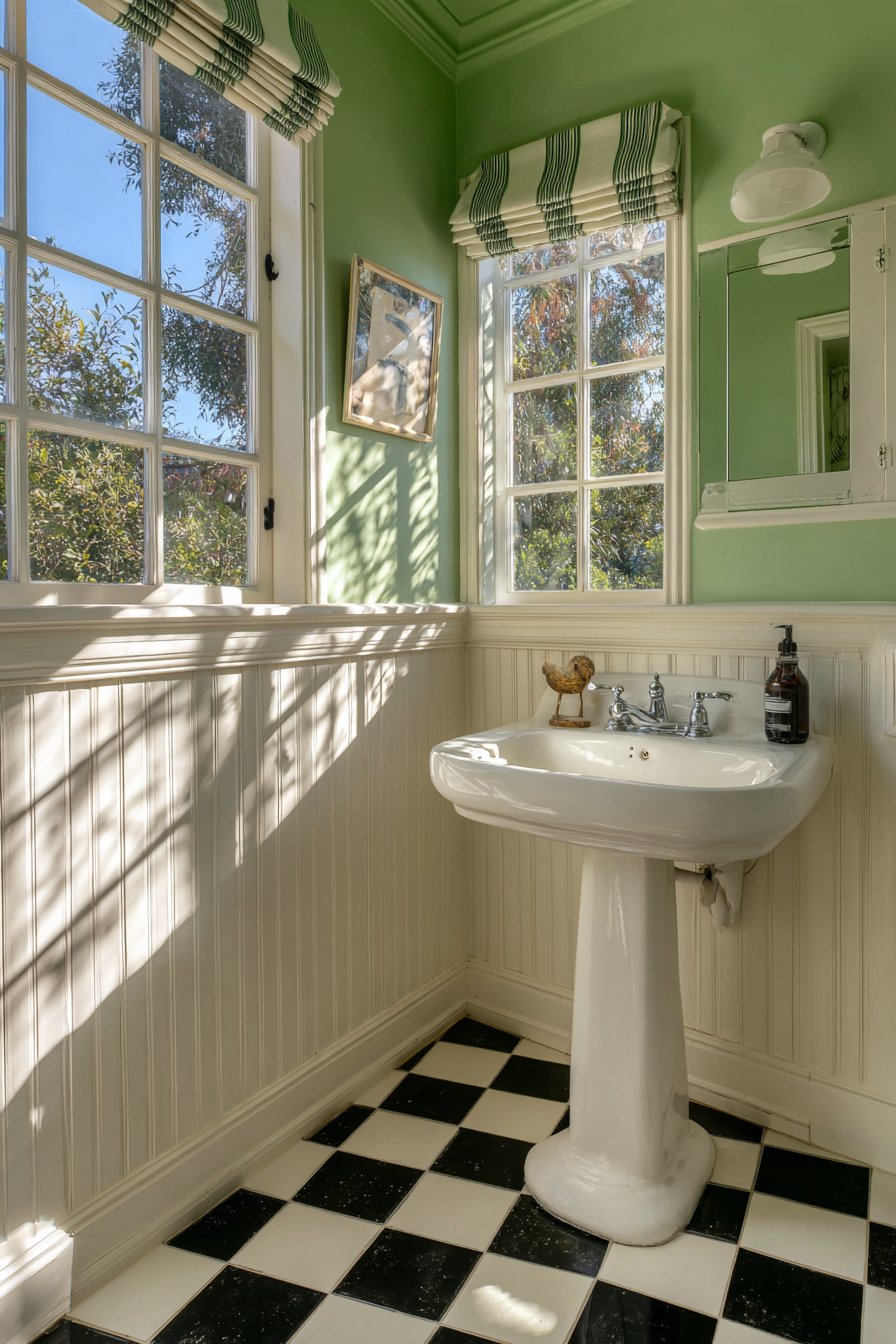
Natural daylight creates authentic shadows and highlights across varied surfaces. The interplay of light across beadboard texture, smooth painted walls, and glossy tiles adds dimensional quality throughout the day. This traditional approach demonstrates how classic design elements create timeless bathrooms that feel comfortable and welcoming across decades.
Key Design Tips:
- Install beadboard wainscoting for traditional character and visual texture on lower walls
- Choose pedestal sinks in vintage styles for authentic period appeal and space efficiency
- Use checkered floor tiles to add bold pattern that grounds traditional green-white schemes
- Add striped fabric elements like valances to introduce pattern softness and vintage charm
- Select sage green paint for walls to bridge traditional elements with fresh, current appeal
10. Custom Tile Artistry with Arabesque Elegance
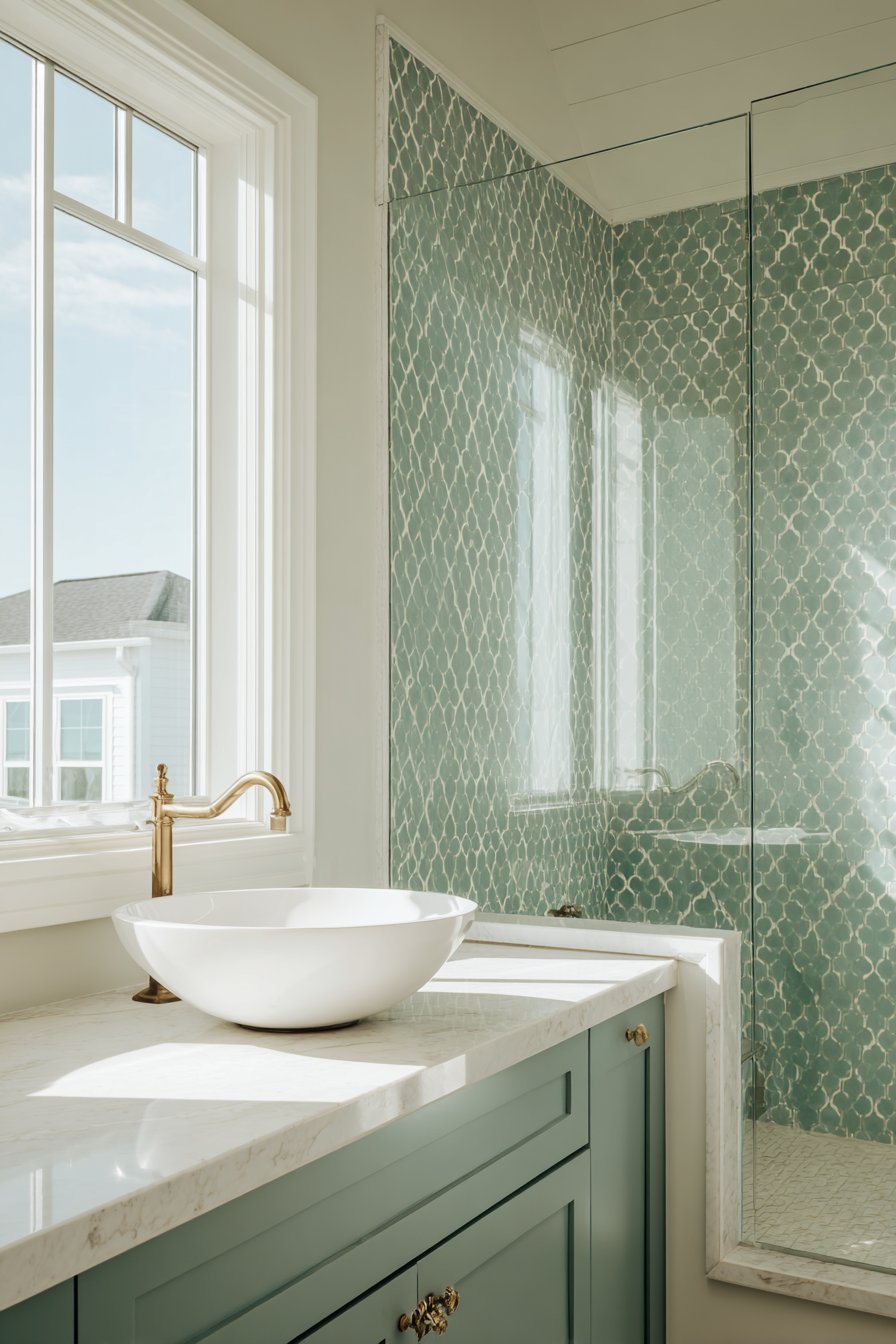
Intricate tilework creates bathroom designs that feel truly custom and special. White arabesque tiles form the primary surface with their distinctive curved shapes creating elegant pattern. Dark hunter green border tiles define the shower entrance and run along the ceiling line. This strategic placement draws the eye upward while creating architectural definition. White grout maintains clean definition throughout, ensuring each tile’s shape remains distinct.
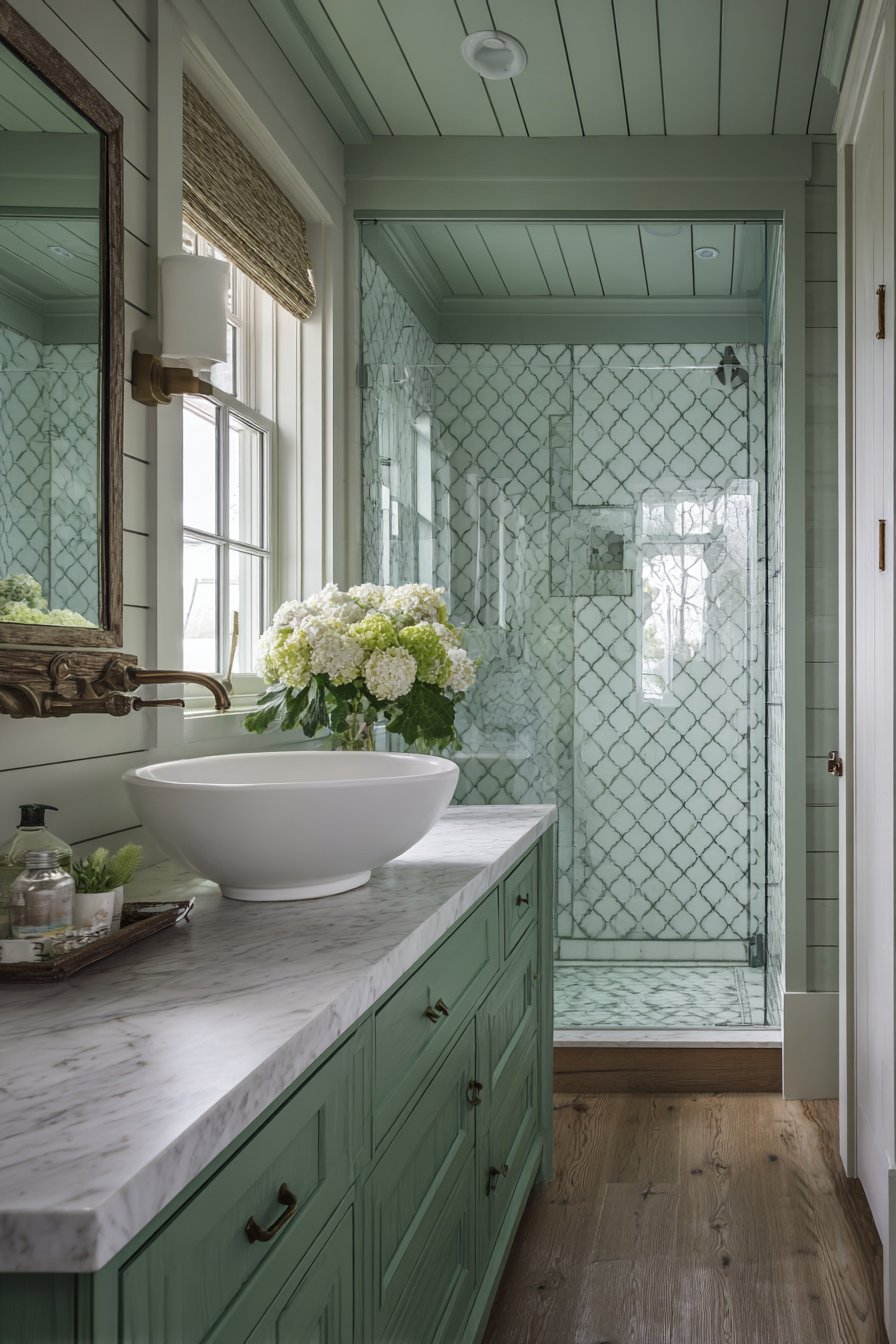
A white vessel sink sits atop a white marble countertop, creating layered elegance. Below, a green-painted vanity base features visible brush strokes that add textural interest and artisanal quality. This hand-painted appearance brings personality to manufactured cabinetry. An antique brass faucet provides vintage character that complements the arabesque tile pattern.
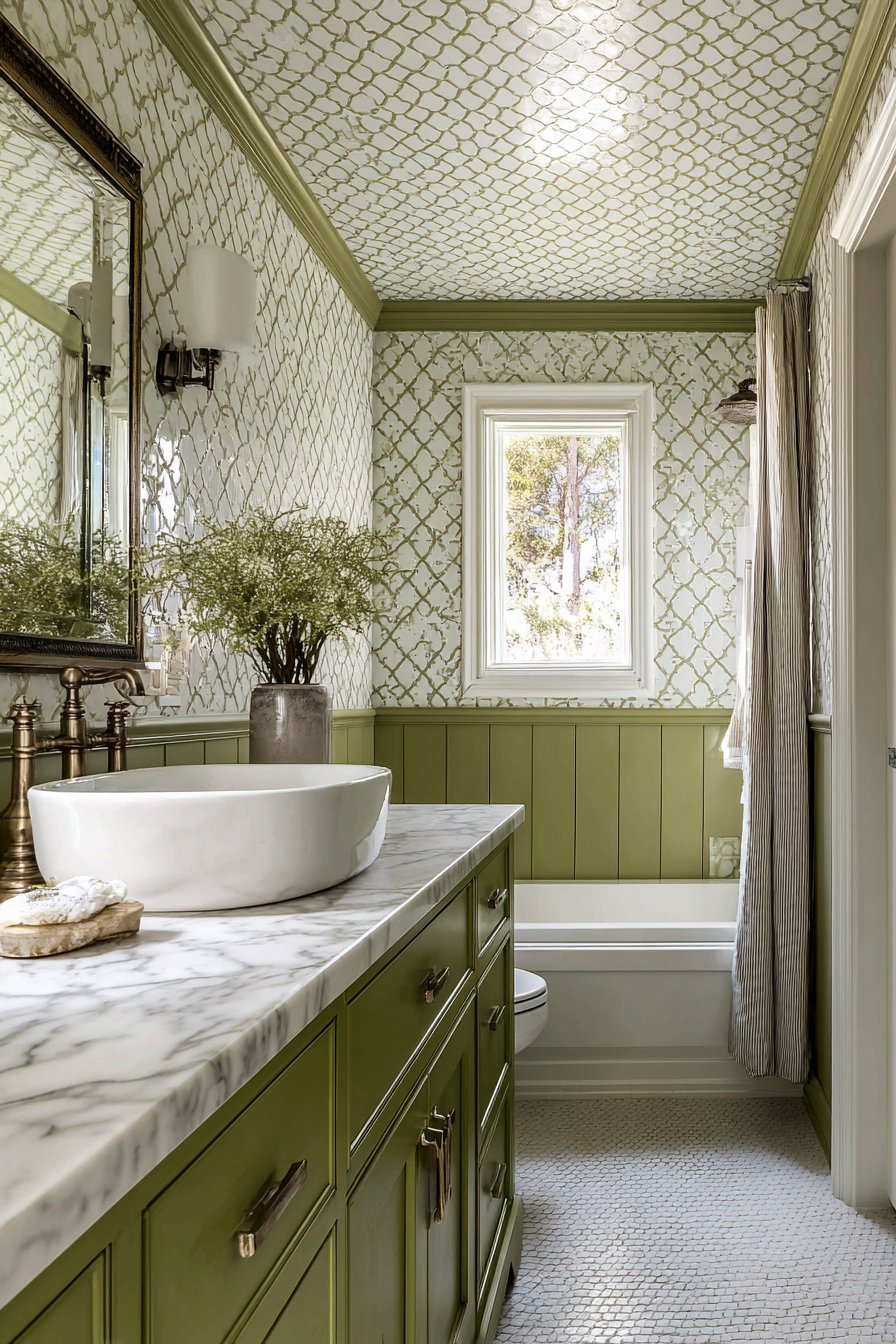
The cohesive design demonstrates how mixing tile shapes and placements creates custom looks. Border tiles function like picture frames, defining important areas and creating visual structure. Natural lighting highlights the intricate tilework, casting small shadows that emphasize each curve and edge. This bathroom proves that investing in quality tile design creates lasting beauty and distinctive character.
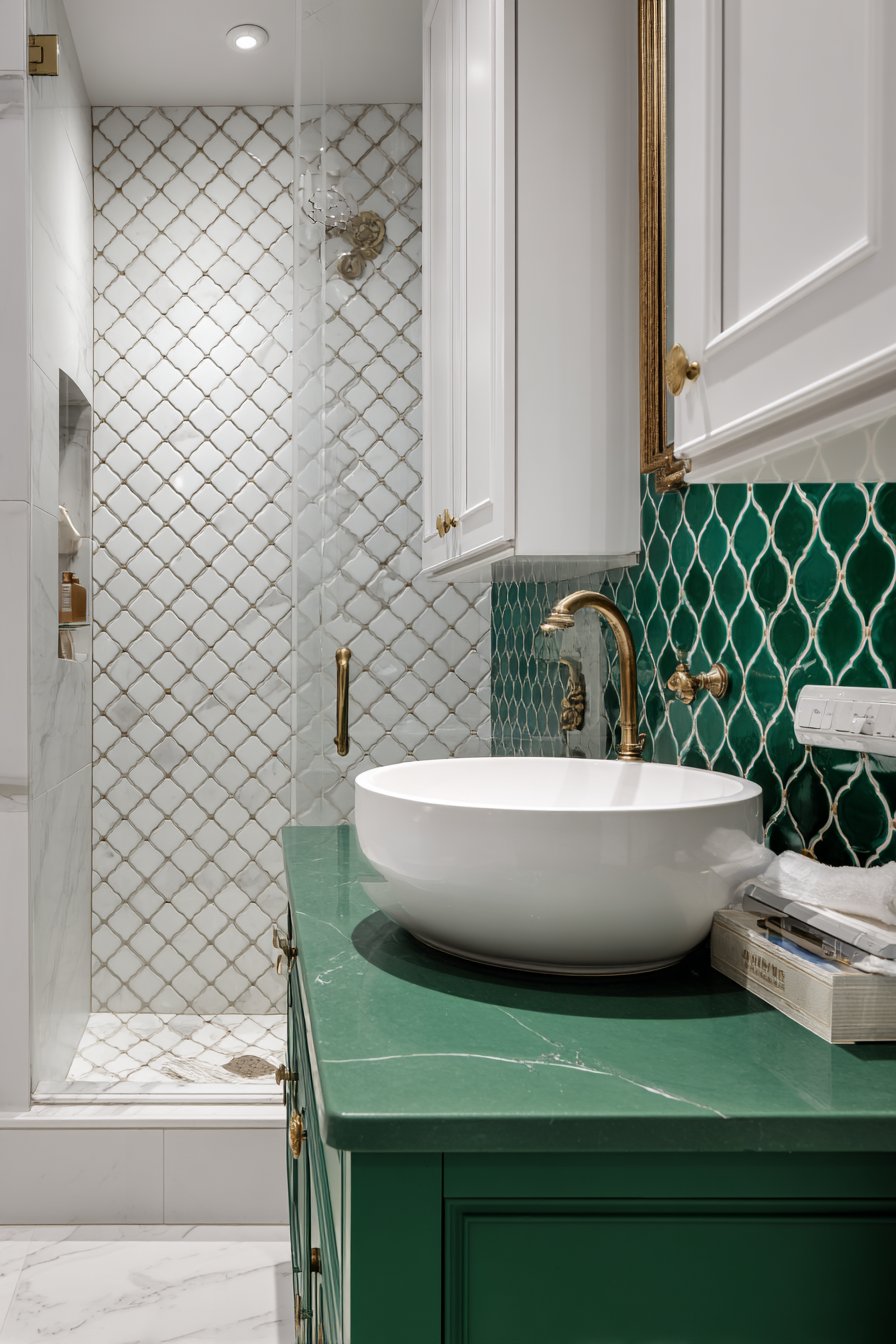
Key Design Tips:
- Use arabesque tiles for elegant curves that add sophistication to bathroom walls
- Install border tiles in contrasting green to define architectural features and create structure
- Paint vanity bases by hand to add artisanal texture and visible brush stroke character
- Choose vessel sinks for sculptural appeal that elevates standard vanity designs
- Select antique brass faucets to add vintage warmth that complements intricate tile patterns
Why These Green and White Bathroom Designs Are the Best
Green and white bathroom designs consistently rank among the most popular and enduring color schemes for compelling reasons. This combination offers remarkable versatility, adapting seamlessly from traditional to contemporary styles. The pairing creates fresh, clean spaces that feel both energizing and calming. These bathrooms demonstrate universal appeal that transcends temporary trends.
The psychological benefits of green in bathroom spaces cannot be overstated. Green represents nature, growth, and renewal. It reduces stress and promotes relaxation. Combined with white’s association with cleanliness and purity, these bathrooms become true sanctuaries. The color combination works equally well in small powder rooms and expansive master bathrooms.
Material variety within green and white schemes offers endless creative possibilities. Emerald tiles create bold drama. Sage paint delivers gentle serenity. Mint accents add playful freshness. Forest green cabinetry provides grounding sophistication. Each shade brings distinct personality while maintaining cohesion with white elements. This flexibility allows homeowners to express individual style.
White serves as the perfect partner for any green shade. It brightens dark greens and softens bright ones. White fixtures, tiles, and surfaces reflect light, making bathrooms feel larger and more welcoming. The crisp contrast between green and white creates visual clarity that prevents spaces from feeling muddy or undefined. This clarity contributes to the timeless quality of these designs.
Practical considerations also favor green and white bathrooms. Both colors hide water spots and soap residue better than darker schemes. Green tiles and painted surfaces maintain their appearance with basic cleaning. White fixtures and surfaces show dirt, encouraging regular maintenance that keeps bathrooms hygienic. These practical advantages complement the aesthetic appeal.
Current design trends embrace biophilic design principles that connect interiors with nature. Green and white bathrooms naturally incorporate these principles. Green evokes outdoor environments. Natural light, plants, and organic materials enhance this connection. White provides the clean backdrop that allows green elements to shine. This trend alignment ensures these bathrooms feel current and relevant.
Investment value represents another important consideration for bathroom design. Green and white schemes appeal to broad audiences, making homes more marketable. The classic combination doesn’t require expensive updates to remain stylish. Quality materials in these timeless colors provide lasting value. Homeowners can confidently invest in green and white bathrooms knowing they’ll enjoy enduring appeal.
The ten designs presented demonstrate the remarkable range within green and white bathroom aesthetics. Emerald subway tiles create different effects than sage feature walls. Geometric patterns offer distinct character from marble-look veining. Vintage pedestal sinks evoke different feelings than modern floating vanities. This variety means every homeowner can find a green and white approach that resonates personally.
Lighting plays a crucial role in green and white bathroom success. Natural light enhances both colors, making greens vibrant and whites crisp. Artificial lighting requires careful selection to maintain true colors. Warm lighting complements deep greens. Cool lighting enhances mint and sage shades. The white surfaces reflect and distribute light effectively, reducing dark corners.
Hardware and fixture finishes significantly impact the overall design. Matte gold adds warmth and luxury. Brushed nickel provides contemporary sophistication. Chrome offers vintage authenticity. Matte black creates modern contrast. Antique brass brings vintage character. Each metal finish interacts differently with green and white, allowing fine-tuning of the final aesthetic.
Storage solutions within green and white bathrooms balance function with beauty. White shelving maintains the bright, open feeling. Green cabinetry provides visual weight and grounding. Glass accessories in green tones reinforce the color scheme while providing practical organization. Built-in niches eliminate clutter while creating opportunities for decorative tile applications.
Pattern integration offers another avenue for personalization. Geometric tiles create contemporary edge. Arabesque shapes add elegant curves. Hexagons introduce vintage charm. Subway tiles provide classic simplicity. Checkerboard floors deliver bold contrast. These patterns work within the green and white framework, adding visual interest without introducing additional colors.
Texture variation prevents green and white bathrooms from appearing flat or one-dimensional. Glossy tiles create light reflection. Matte paint absorbs light for subtle depth. Textured porcelain adds tactile interest. Smooth marble provides luxury. Beadboard introduces linear pattern. Shiplap creates horizontal movement. These textural choices add complexity while maintaining color cohesion.
The enduring popularity of green and white bathrooms stems from their ability to feel simultaneously fresh and familiar. The combination recalls classic design traditions while adapting to contemporary preferences. This duality creates comfortable spaces that feel both grounded and current. Homeowners appreciate designs that honor tradition while embracing modern convenience and style.
Maintenance considerations make green and white bathrooms practical long-term choices. Quality tiles in these colors resist fading and staining. Painted surfaces accept touch-ups easily. White grout requires regular cleaning but shows when maintenance is needed. Green and white hide minor imperfections better than stark white schemes. These practical benefits enhance the aesthetic appeal.
Conclusion
Green and white bathrooms represent one of interior design’s most successful and enduring color combinations. These ten distinct approaches demonstrate the remarkable versatility within this classic pairing. From bold emerald drama to gentle sage serenity, the range of possibilities ensures every homeowner can create a bathroom that reflects personal style while delivering functional excellence.
The key to successful green and white bathroom design lies in thoughtful material selection and balanced proportion. Consider which green shade resonates with your aesthetic preferences. Decide whether you want green as the dominant color or as strategic accents. Choose fixtures and hardware that complement your specific green-white combination. Pay attention to lighting, both natural and artificial, to ensure colors appear true and spaces feel welcoming.
Don’t hesitate to experiment with these ideas in your own home. Start with small changes like green accessories or painted accent walls. Gradually expand into tile selections and cabinetry choices as your vision develops. Remember that successful bathroom design balances beauty with practicality. The most stunning bathroom remains impractical if it doesn’t meet your daily needs.
Green and white bathrooms offer timeless appeal that will serve you well for years to come. Whether you’re planning a complete renovation or simple updates, this color combination provides a reliable foundation for creating spaces that energize your mornings and soothe your evenings. Trust your instincts, gather inspiration from these examples, and create a bathroom sanctuary that truly feels like home.
