


When it comes to modern interior design, few elements offer the perfect blend of functionality and aesthetic appeal quite like floating shelves. These versatile fixtures have revolutionized how we approach storage and display in our living spaces, creating visual interest while maximizing every square inch of wall space. The beauty of floating shelves lies in their ability to appear suspended in mid-air, lending an ethereal quality to any room while providing practical storage solutions.
Thoughtful interior design transforms a house into a home, and floating shelves serve as both art and architecture. They allow homeowners to curate personal galleries that reflect individual tastes, from minimalist sanctuaries to bohemian havens bursting with personality. Whether you’re working with a compact apartment or a spacious family room, these design elements adapt seamlessly to your needs while maintaining their sophisticated appeal.
This comprehensive guide explores ten distinctive approaches to incorporating floating shelves into your living room design. Each style speaks to different personalities and lifestyles, from the warmth of natural walnut to the industrial edge of matte black metal. You’ll discover how materials, placement, and styling can completely transform your space, creating rooms that are both beautiful and remarkably functional. Let’s dive into these inspiring designs that prove floating shelves are far more than simple storage solutions.
1. Modern Minimalist Walnut Sophistication
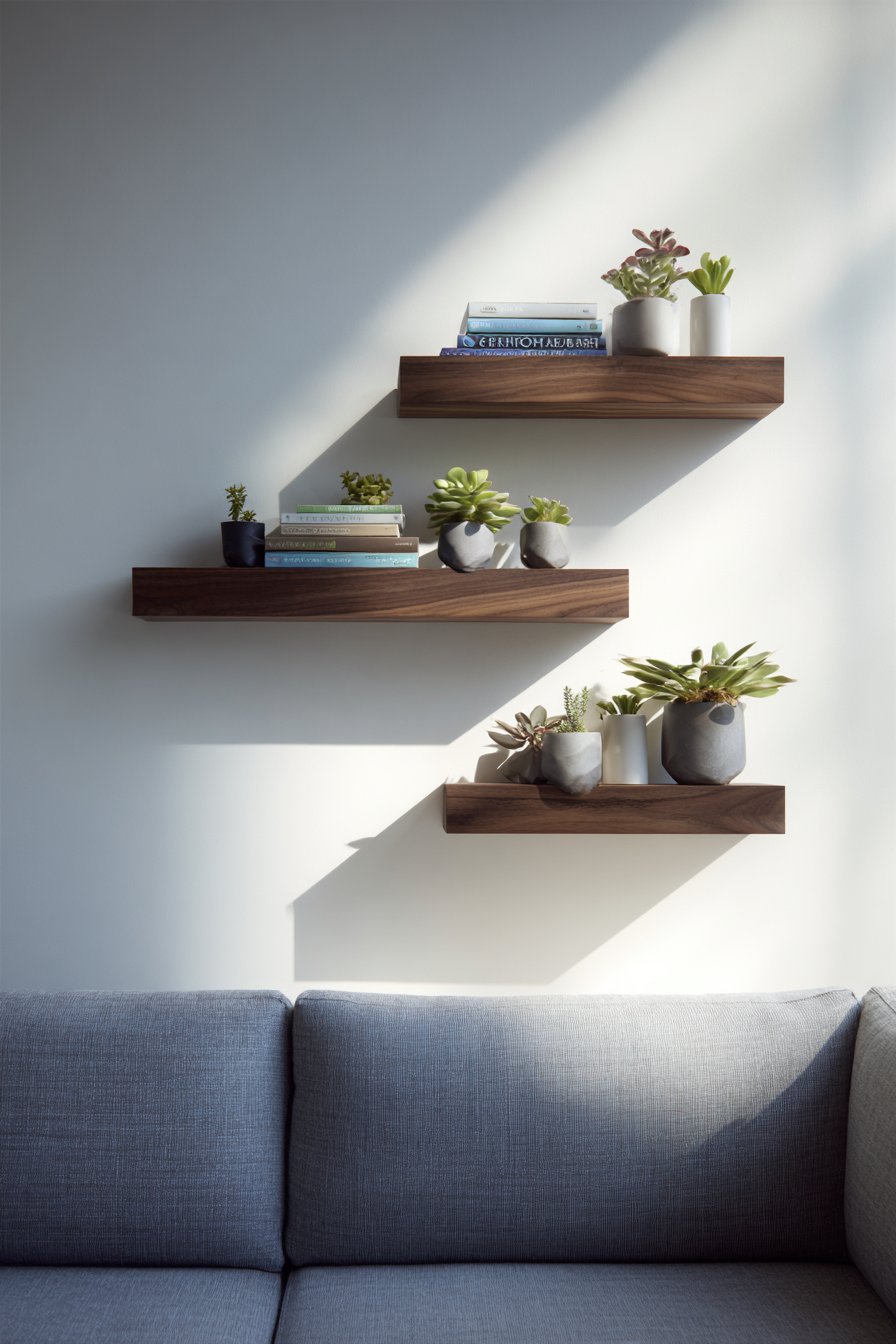
The marriage of natural walnut wood against pristine white walls creates an instantly recognizable modern aesthetic that never goes out of style. Three floating shelves mounted in perfect horizontal alignment above a minimalist grey sofa establish clean lines while introducing organic warmth. The rich, chocolate-brown tones of walnut bring depth to neutral spaces, and the visible grain patterns add subtle texture that catches the eye without overwhelming the senses.
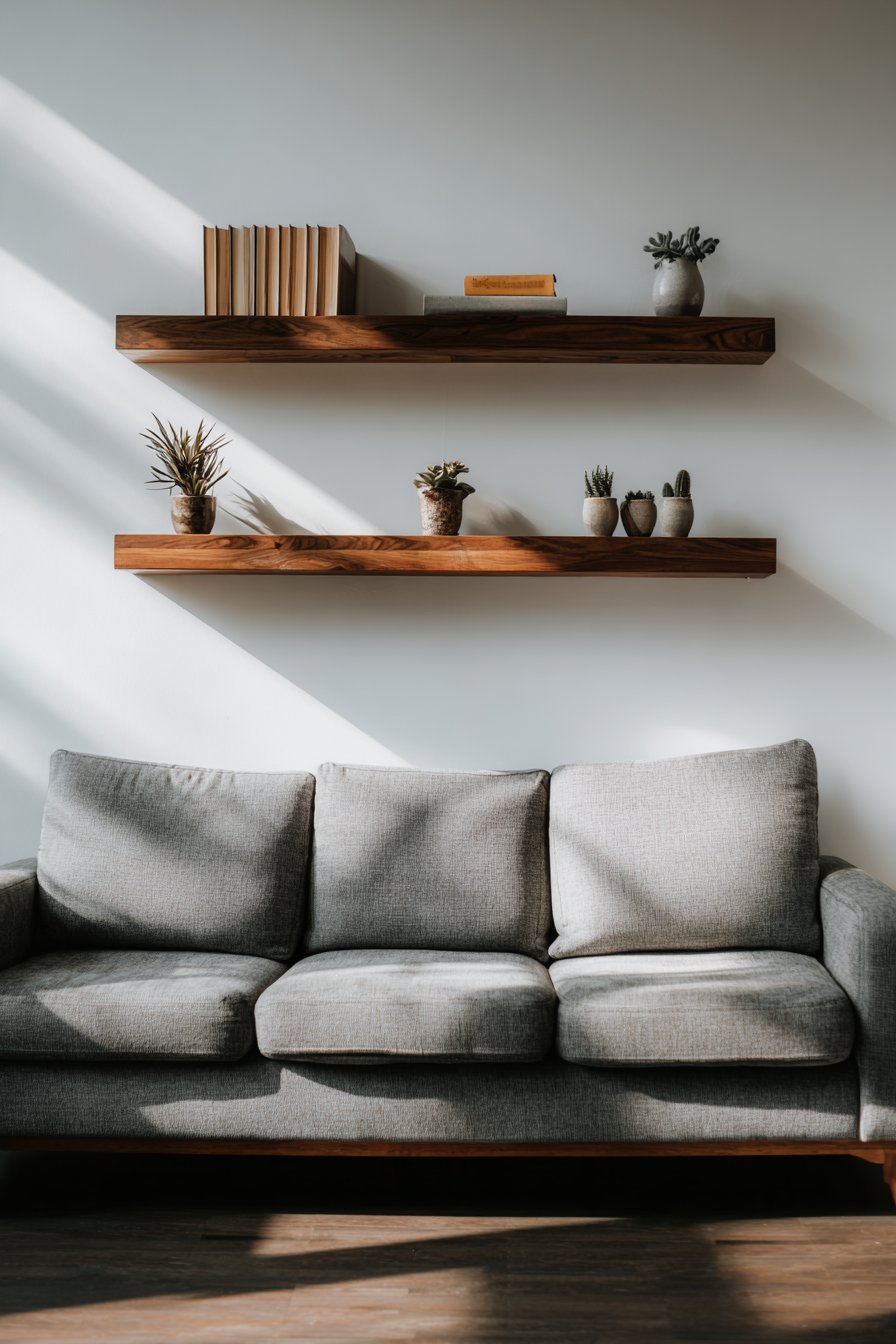
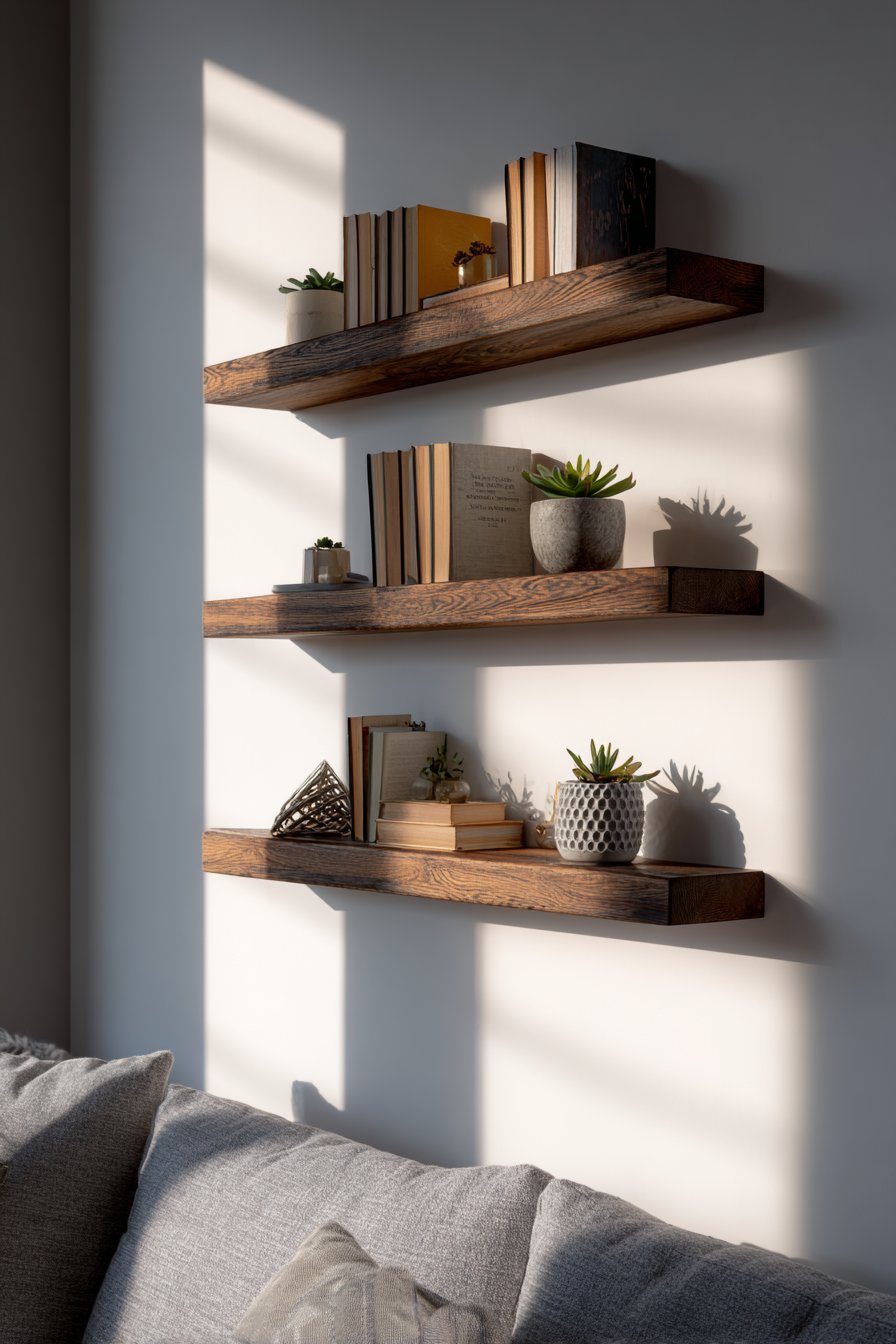
Natural afternoon light plays a crucial role in this design’s success. As sunlight streams through nearby windows, it casts delicate shadows beneath each shelf, emphasizing their floating appearance and creating dimensional interest throughout the day. The interplay between light and shadow transforms these functional pieces into dynamic architectural features that shift and change with the sun’s movement.
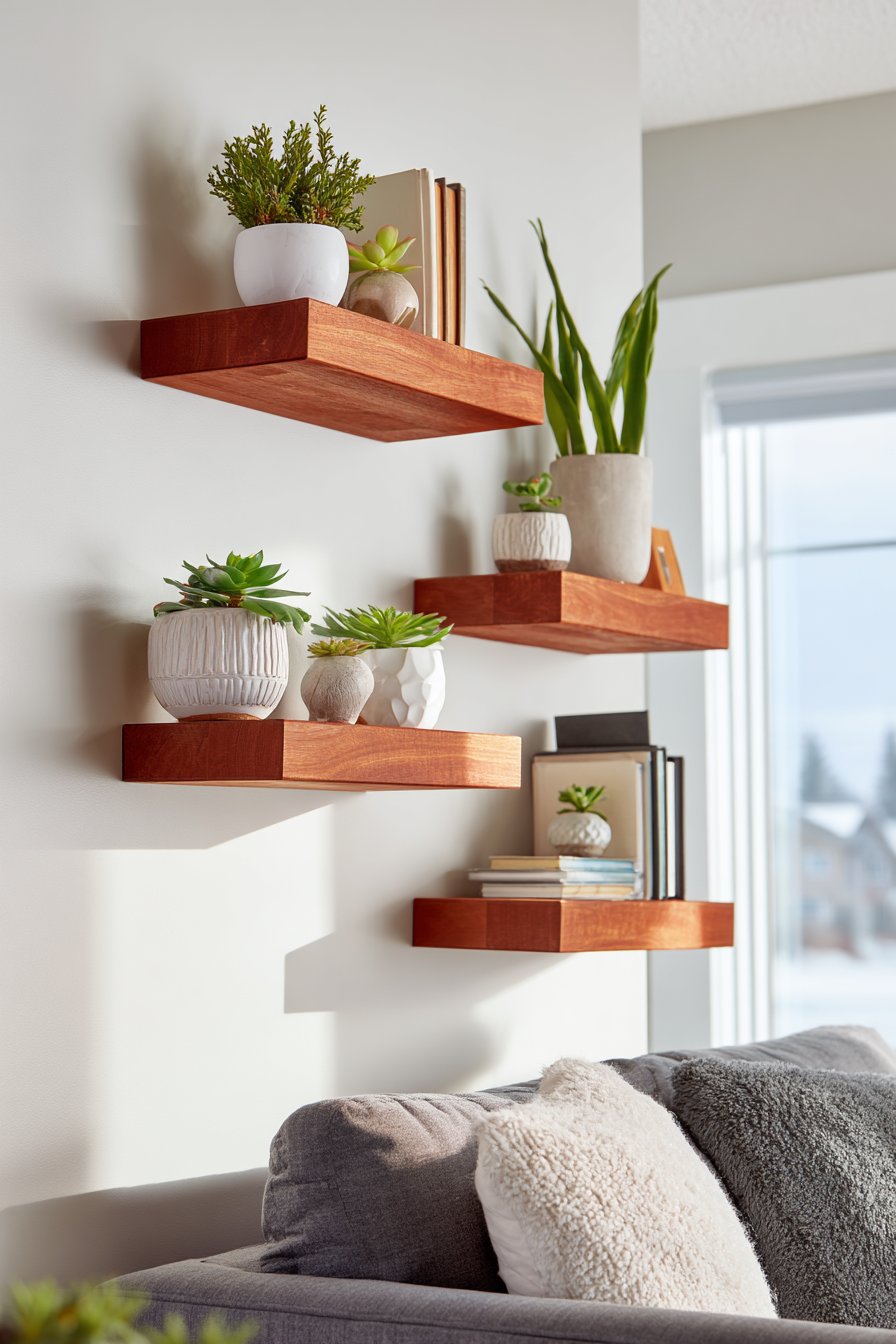
The curated display on these shelves demonstrates restraint and intentionality. Books stand vertically with their spines creating a color-blocked pattern, while small potted succulents introduce living elements that purify the air and add vibrant green accents. Ceramic decorative objects of varying heights create visual rhythm, drawing the eye across the composition in a satisfying horizontal flow. This careful arrangement proves that less truly can be more when each piece is chosen with purpose.
Key Design Tips:
- Select walnut wood with prominent grain patterns for maximum visual impact
- Space shelves 12-15 inches apart for optimal display flexibility
- Group objects in odd numbers (three or five) for balanced composition
- Allow breathing room between items to prevent cluttered appearance
- Choose low-profile succulents like echeveria or jade plants for minimal maintenance
- Position shelves at eye level for comfortable viewing and easy access
2. Scandinavian Asymmetry in Light Oak
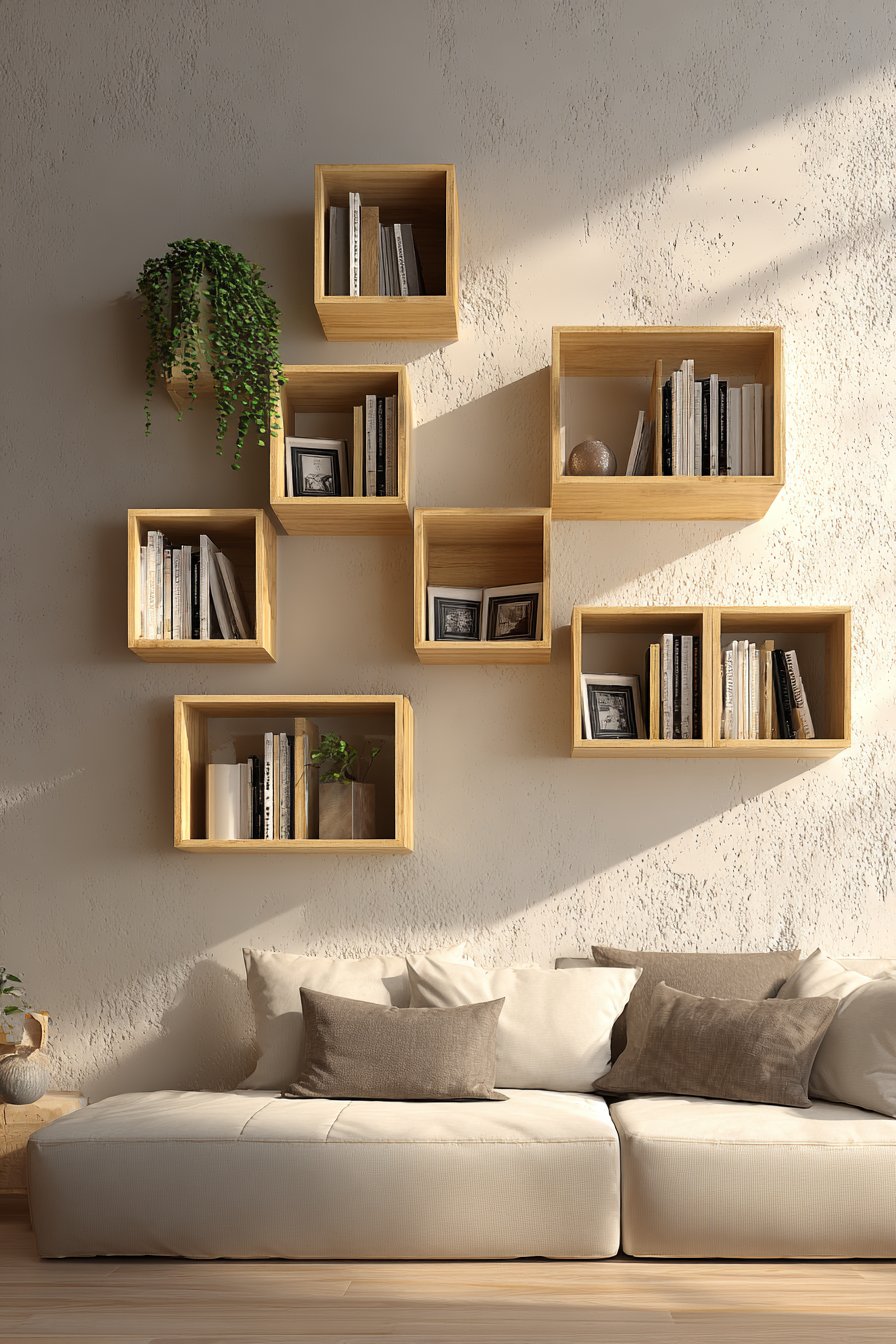
Scandinavian design philosophy celebrates simplicity, functionality, and connection to nature—principles beautifully embodied in this asymmetrical floating shelf arrangement. Light oak shelves break free from traditional symmetry, creating an artistic installation on textured cream walls that feels both intentional and organic. This departure from conventional shelf placement adds playful energy to the room while maintaining the clean aesthetic Scandinavian style is known for.
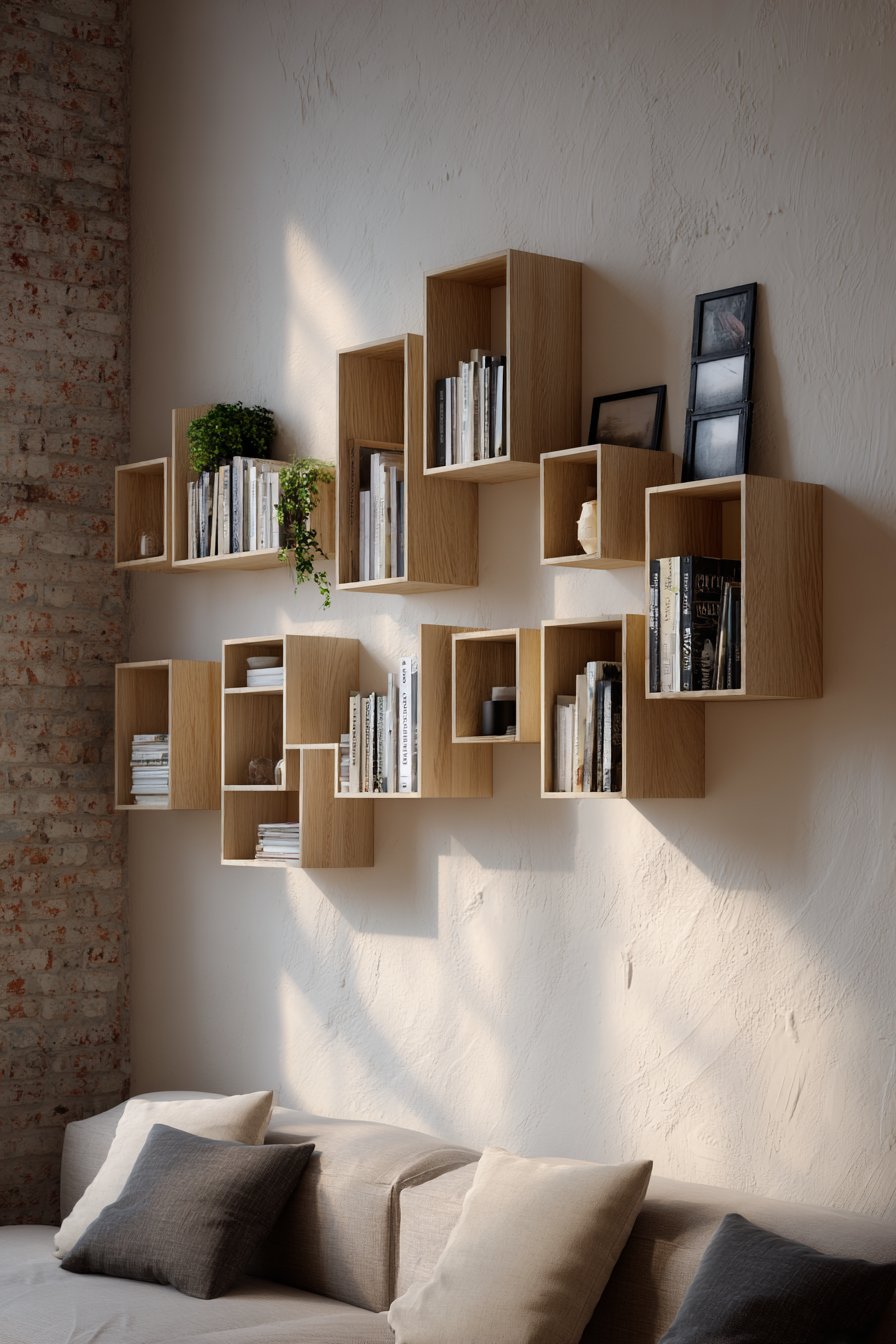
The light oak material choice reinforces the Nordic connection to pale woods and natural materials. Its honey-colored tones complement the cream wall without creating harsh contrast, resulting in a cohesive, calming environment. The comfortable linen sectional below provides a soft landing spot for relaxation, its neutral throw pillows echoing the room’s serene color palette and creating visual harmony throughout the space.
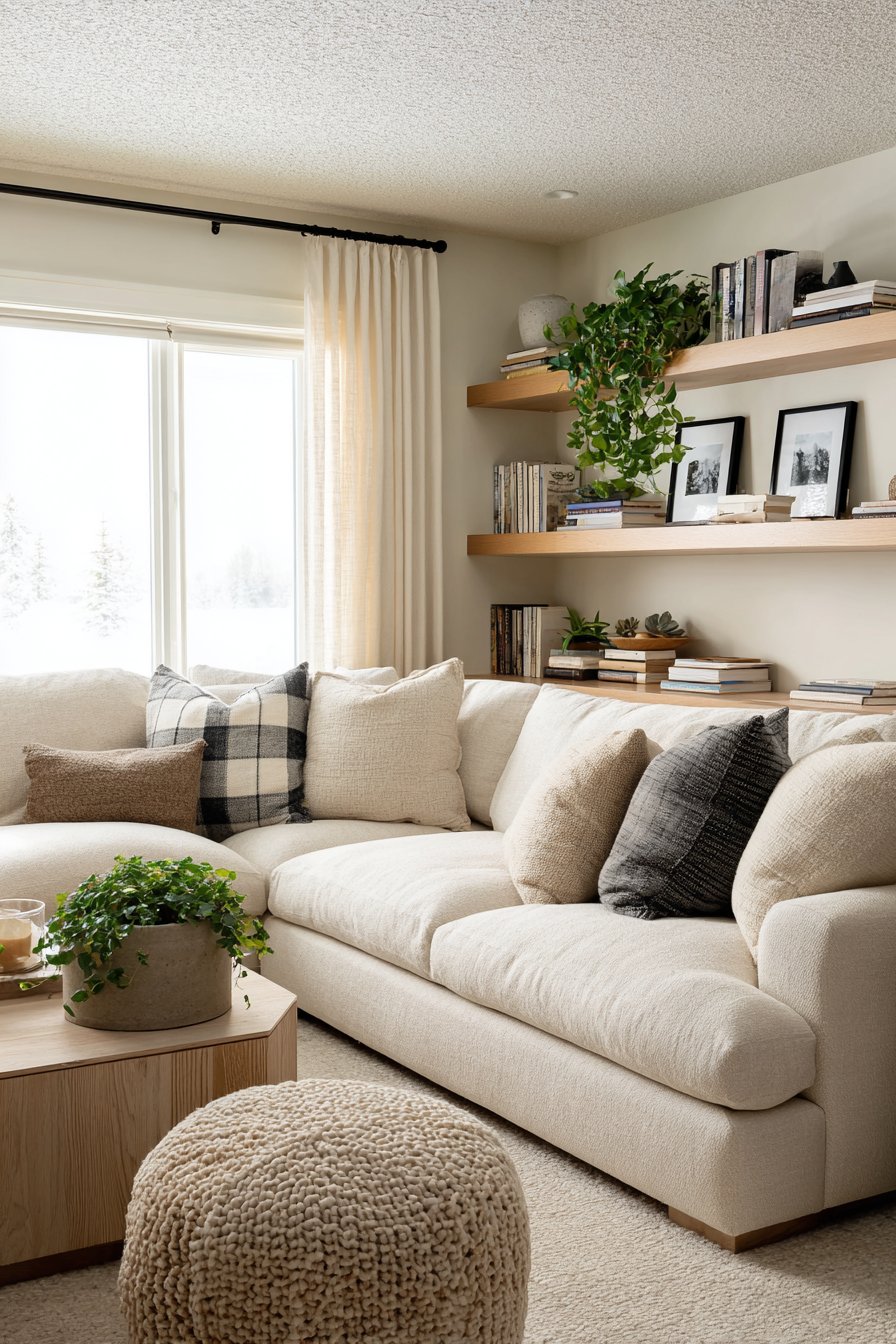
Styling these shelves embraces the Scandinavian concept of “lagom”—not too much, not too little, but just right. Hardcover books lean casually rather than standing rigidly at attention, creating a lived-in feel that invites interaction. A small trailing pothos plant introduces organic curves that soften the angular shelf lines, while minimalist black-framed family photos add personal meaning without cluttering the visual field. Soft diffused daylight illuminates everything with gentle, even light that eliminates harsh shadows.
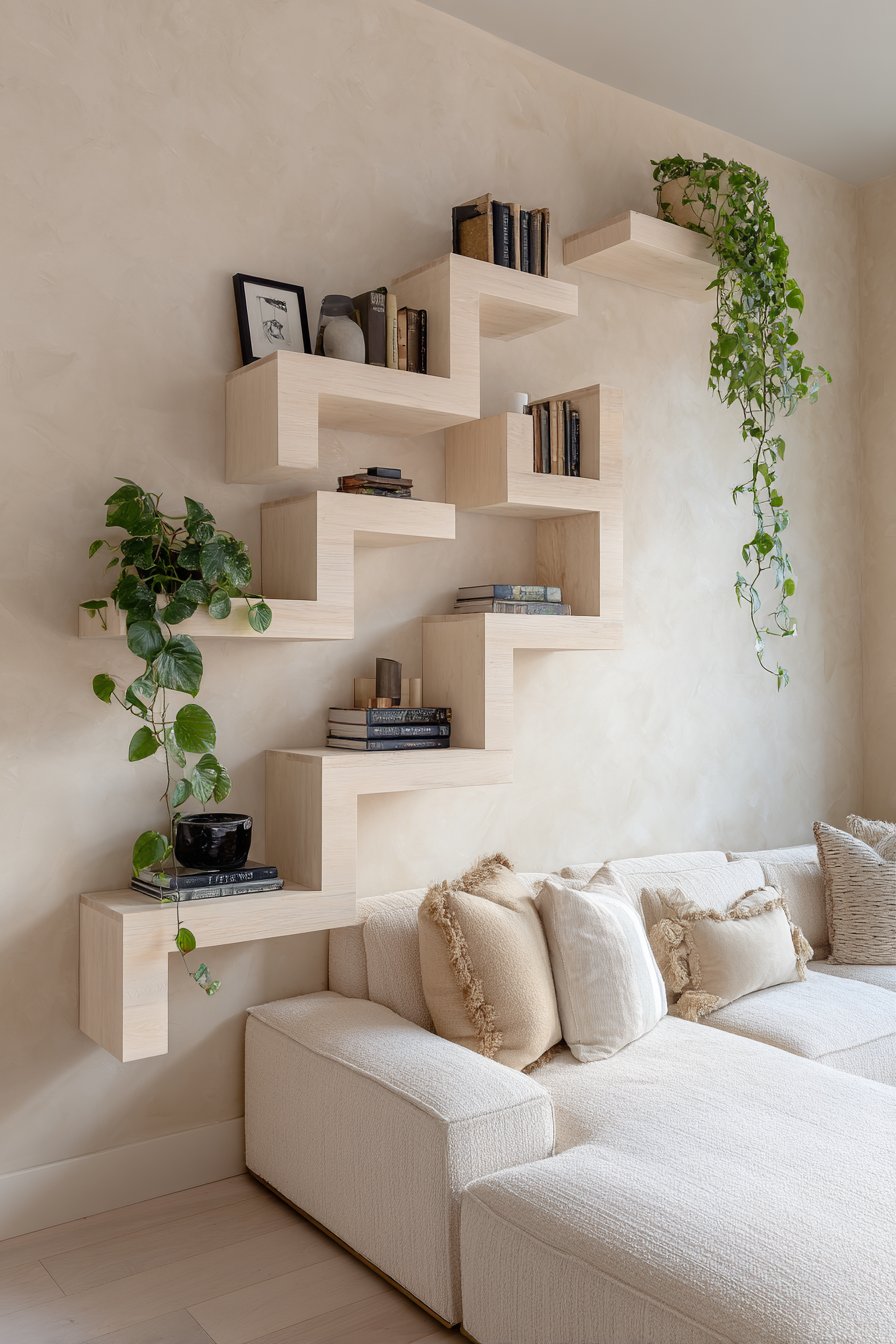
Key Design Tips:
- Vary shelf lengths to create interesting asymmetrical patterns
- Keep wood finishes light to maintain the airy Scandinavian aesthetic
- Incorporate at least one trailing plant for softness and movement
- Use black accents sparingly for subtle contrast and definition
- Choose linen or cotton textiles in neutral tones for authenticity
- Embrace negative space as an essential design element
3. Rustic Reclaimed Wood Character
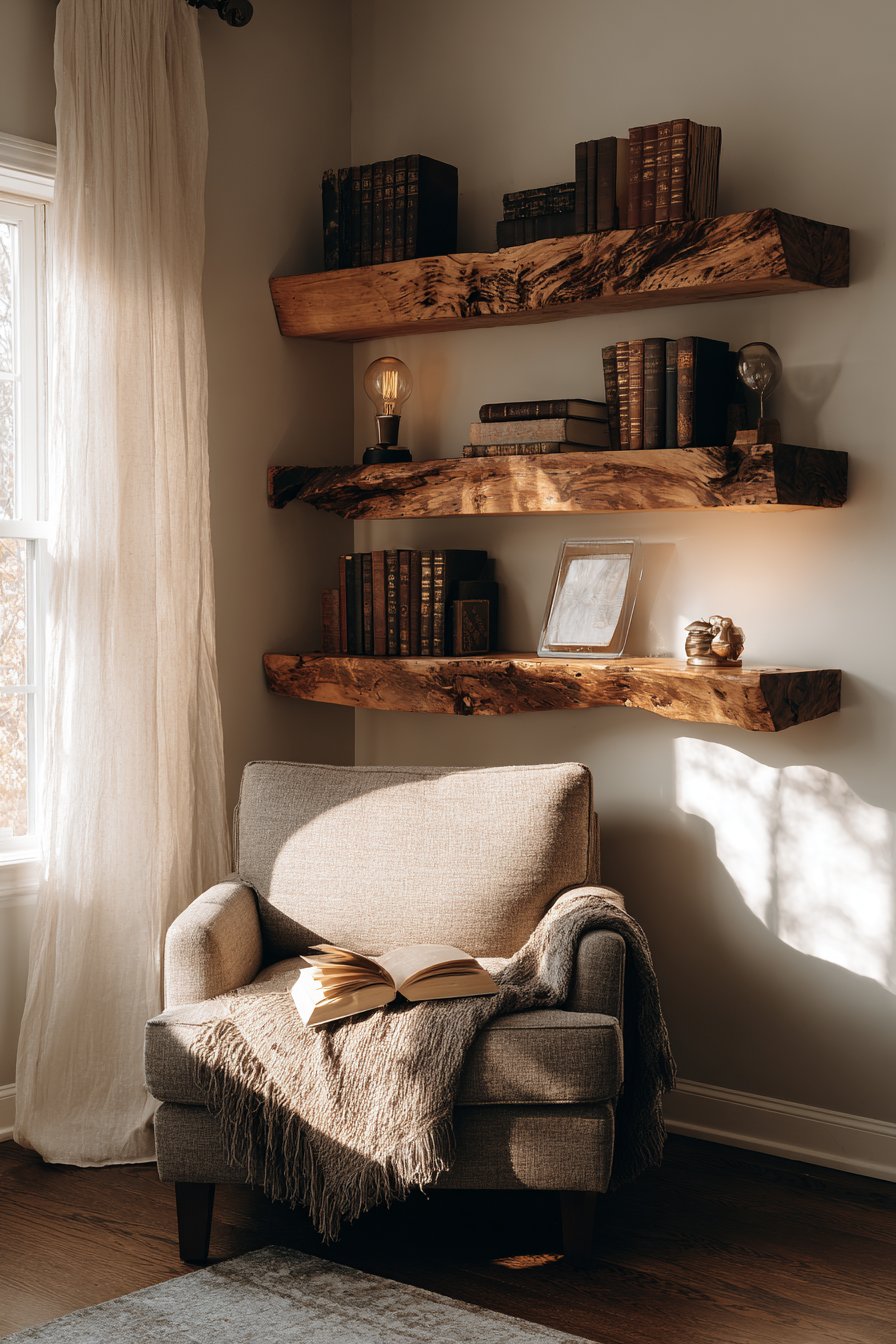
For those who appreciate history and authenticity, reclaimed barn wood floating shelves offer unparalleled character. Each plank tells a story through visible grain patterns, natural imperfections, nail holes, and weathered edges that machine-made lumber simply cannot replicate. Mounted above a compact reading nook, these shelves transform a corner into a personal retreat that celebrates the beauty of age and imperfection.
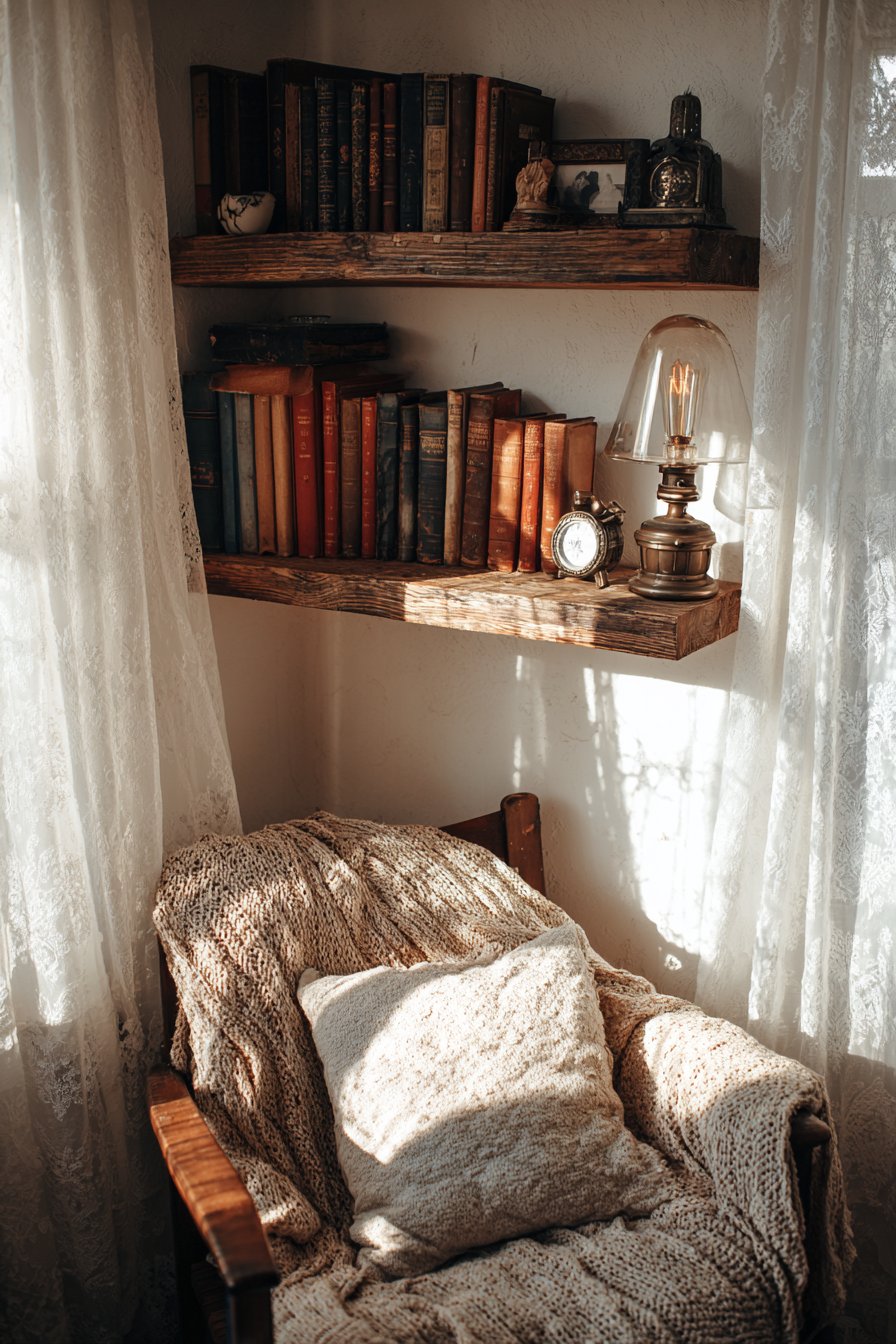
The warm, lived-in atmosphere intensifies during golden hour when natural lighting streams through sheer curtains. This magical light highlights every crack, knot, and texture variation in the wood, turning the shelves into glowing features that anchor the space. A comfortable armchair draped with a knitted throw blanket creates the perfect spot for losing yourself in a good book, while the shelves above hold your waiting library.
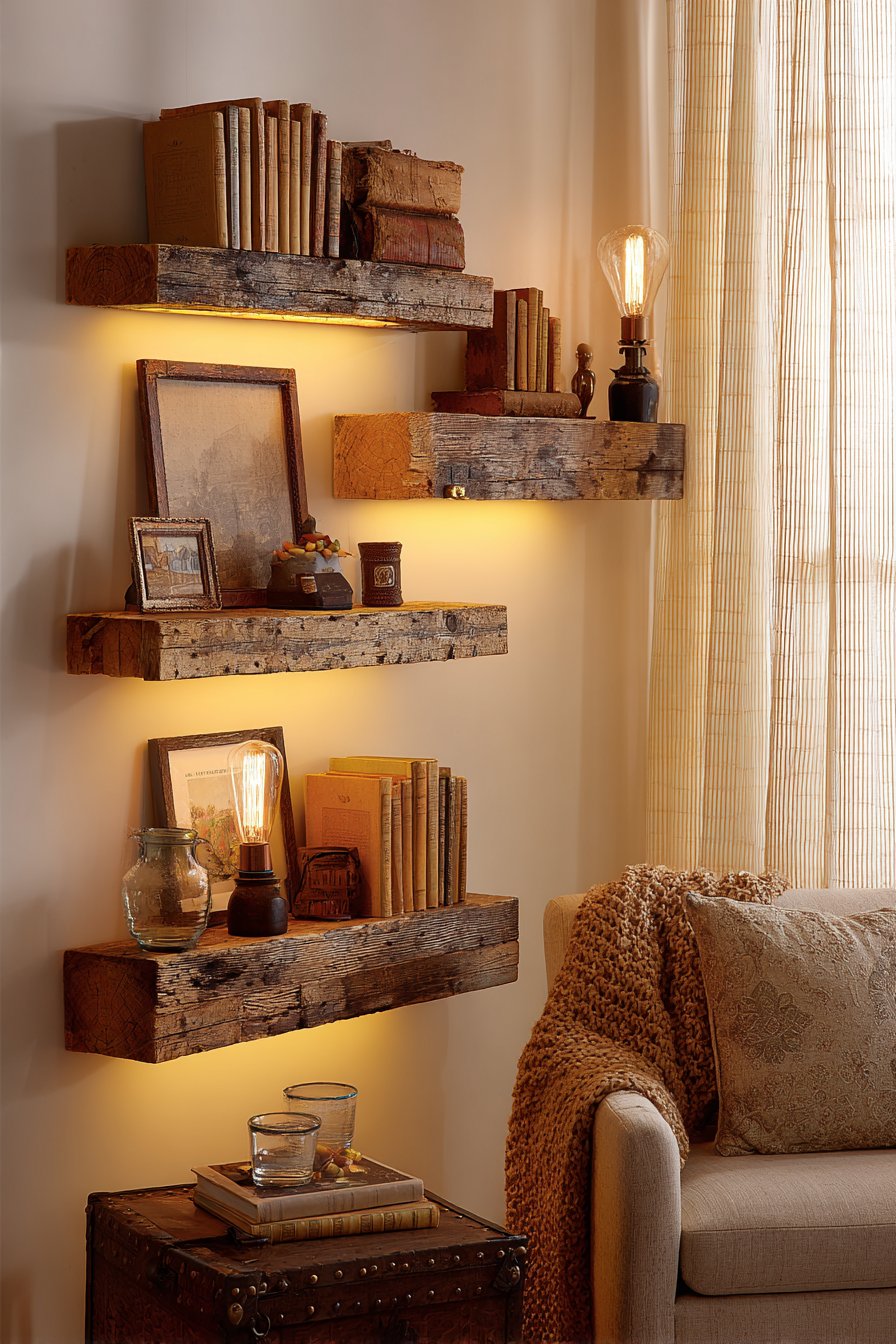
The styling embraces a collected-over-time aesthetic rather than a catalog-perfect look. Vintage books with worn spines and dog-eared pages stack horizontally and vertically, their varied heights creating an organic skyline. A small Edison bulb table lamp provides focused reading light with vintage charm, while travel mementos—a shell from a beach vacation, a small sculpture from a European market—add deeply personal touches that make the space uniquely yours.
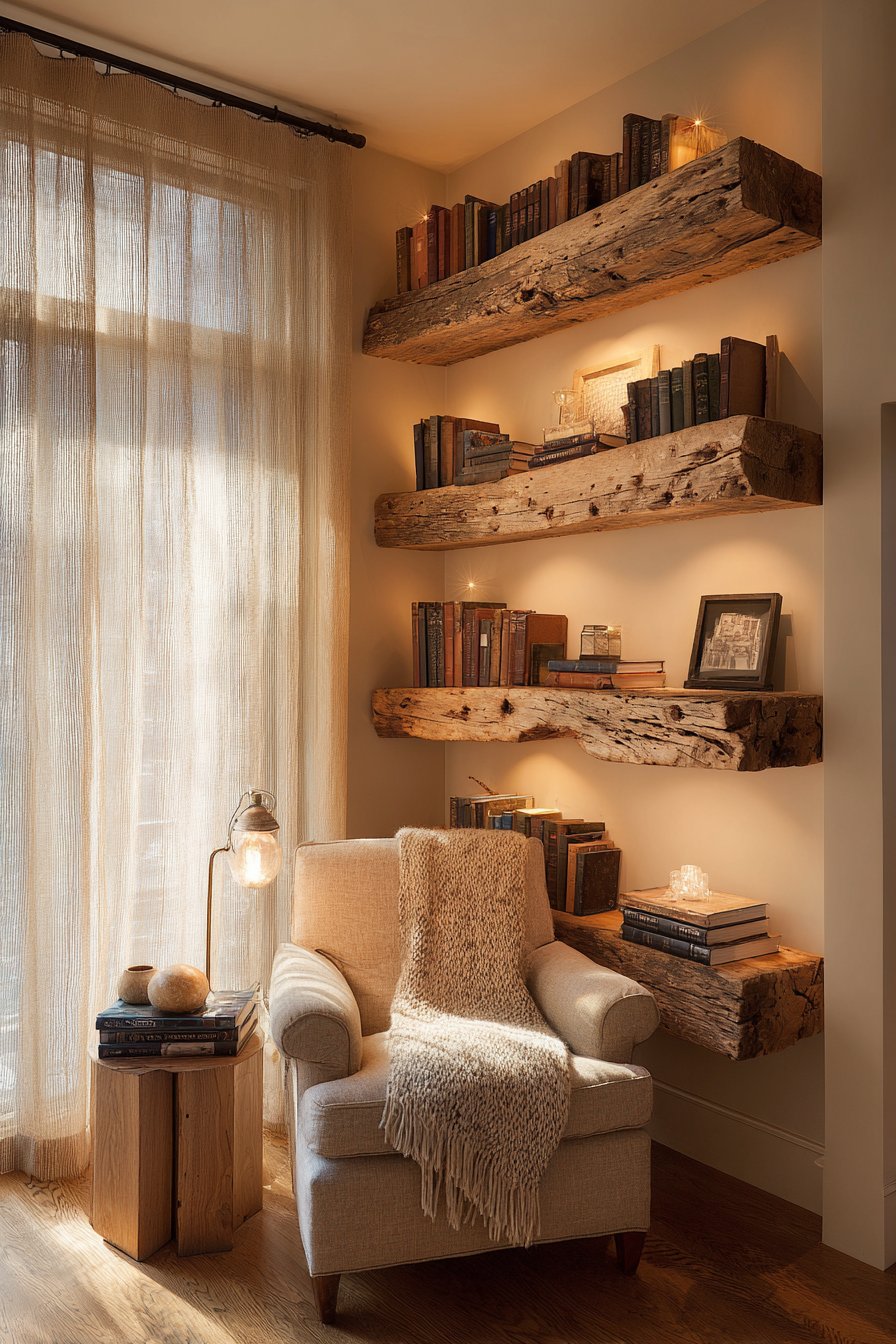
Key Design Tips:
- Source authentic reclaimed wood from architectural salvage yards for genuine character
- Embrace imperfections like nail holes and uneven edges as design features
- Install shelves with heavy-duty brackets to support the weight of vintage hardcover books
- Layer lighting with both ambient and task options for functionality
- Mix horizontal and vertical book stacking for visual interest
- Rotate displayed mementos seasonally to keep the space feeling fresh
4. Industrial-Modern Contrast
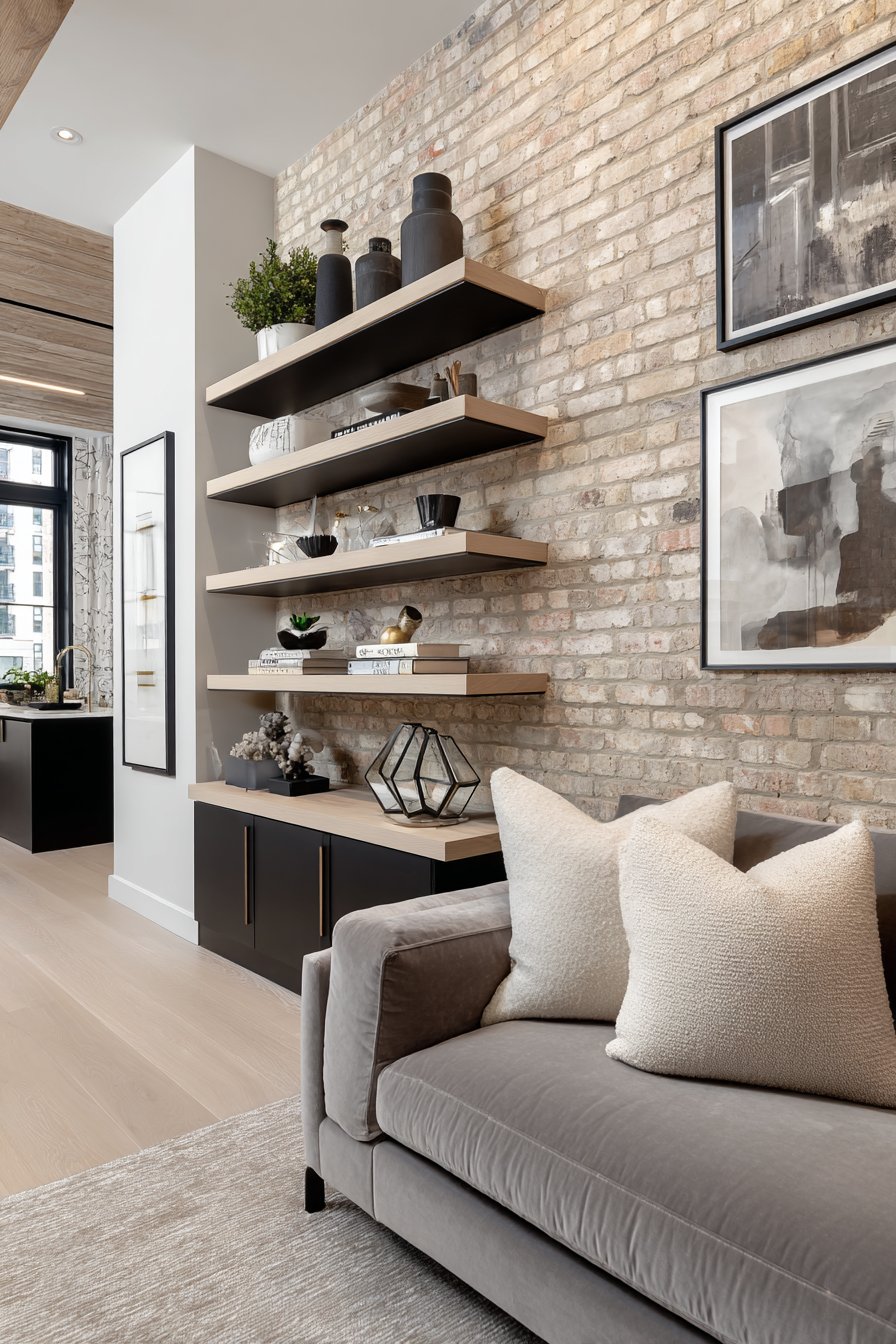
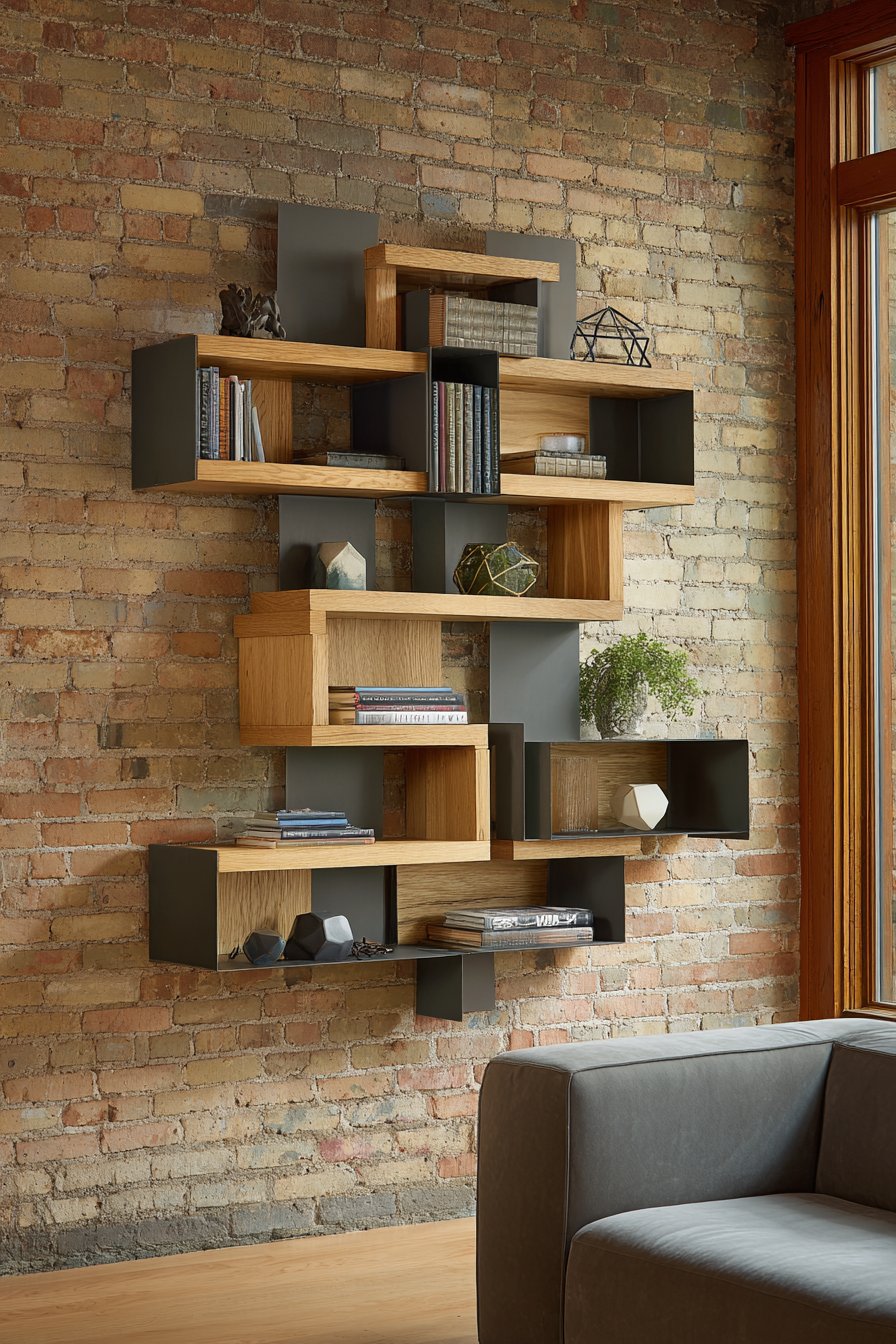
Bold contrast defines this contemporary approach where matte black metal brackets support light maple wood shelves against an exposed brick accent wall. The industrial aesthetic celebrates raw materials and honest construction, creating spaces that feel both sophisticated and slightly edgy. This combination of cool metal, warm wood, and textured brick delivers visual excitement while maintaining clean, modern lines.
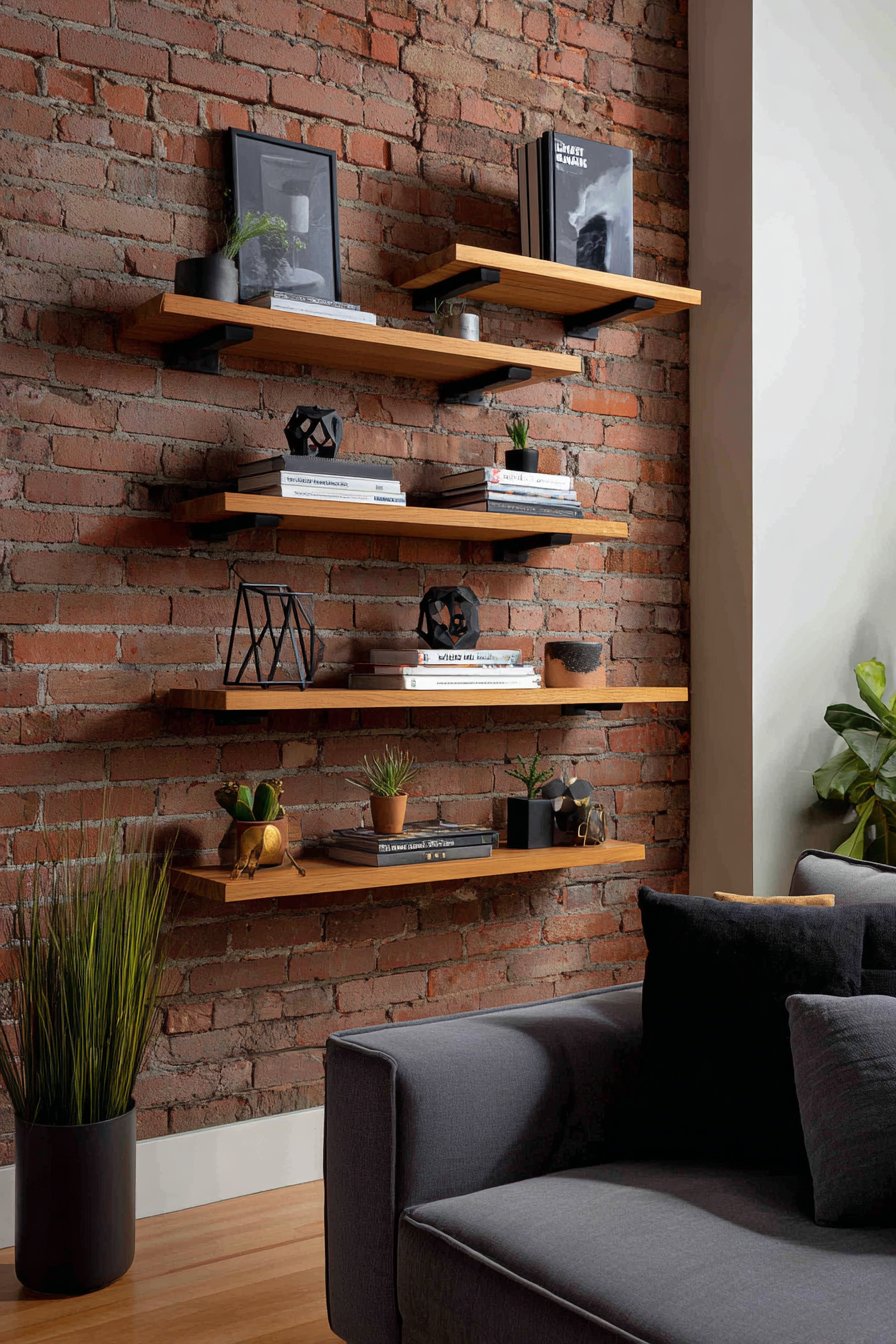
The exposed brick provides a textured backdrop that adds immediate character and depth. Its rough surface and color variations create interest without requiring additional wall decoration, allowing the floating shelves to shine as focal points. The modern grey velvet sofa below introduces luxurious softness that balances the harder industrial materials, its plush texture inviting you to sink in and stay awhile.
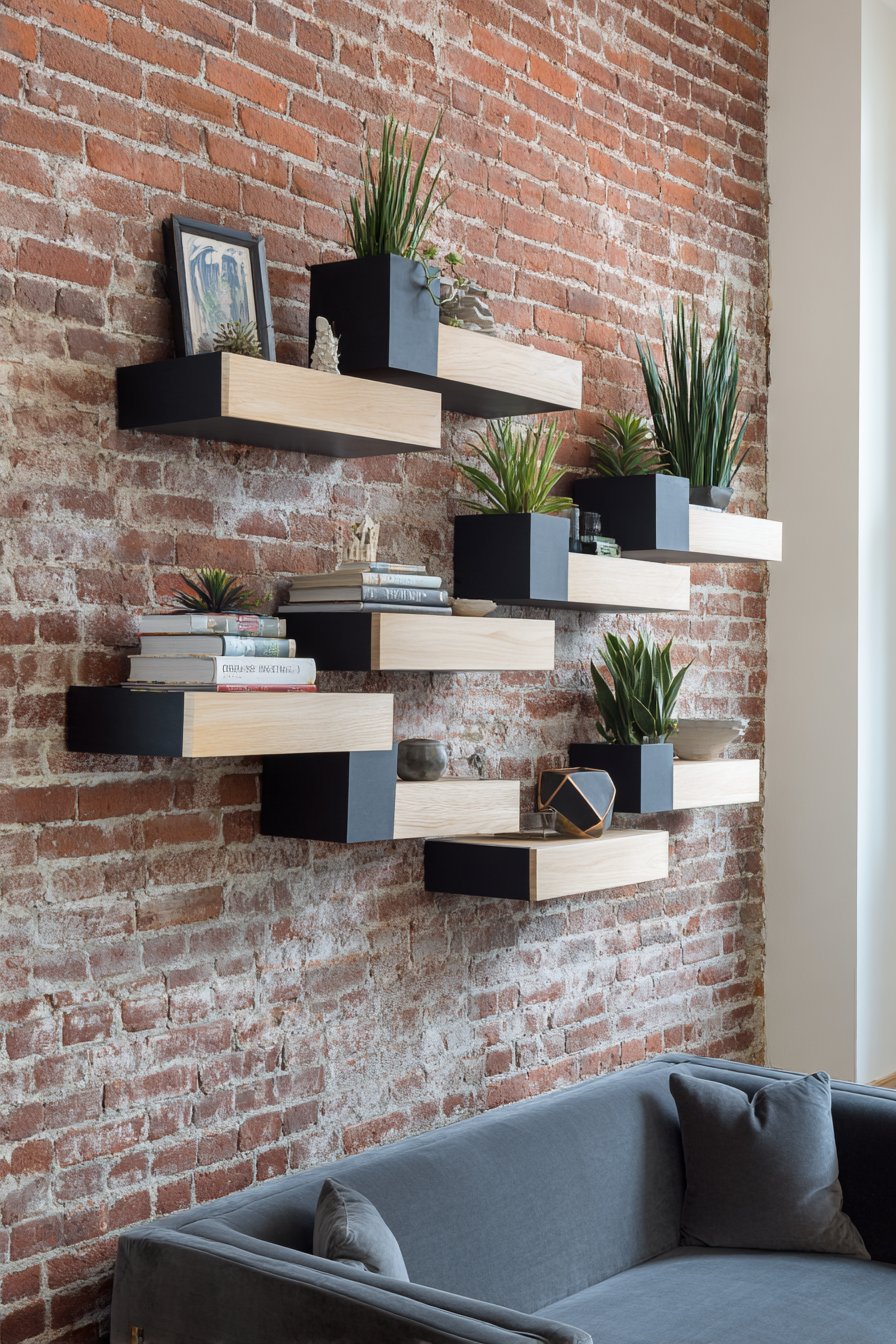
Styling these shelves leans toward the artistic and sculptural. Contemporary art books with striking covers become visual elements themselves, their spines creating a colorful library. Small sculptural objects—perhaps abstract ceramic pieces or metal figurines—add three-dimensional interest, while air plants in geometric holders maintain the modern aesthetic without requiring soil or traditional planters. This thoughtful curation creates a gallery-like atmosphere that elevates everyday living.
Key Design Tips:
- Use matte black finishes rather than glossy for authentic industrial appeal
- Ensure metal brackets are substantial enough to look intentional, not flimsy
- Limit color palette to maintain cohesive modern aesthetic
- Choose sculptural objects with clean lines and geometric shapes
- Install floating shelves at varying depths to create dimensional layering
- Balance hard materials with soft textiles like velvet or wool
5. Space-Maximizing Small Apartment Solution
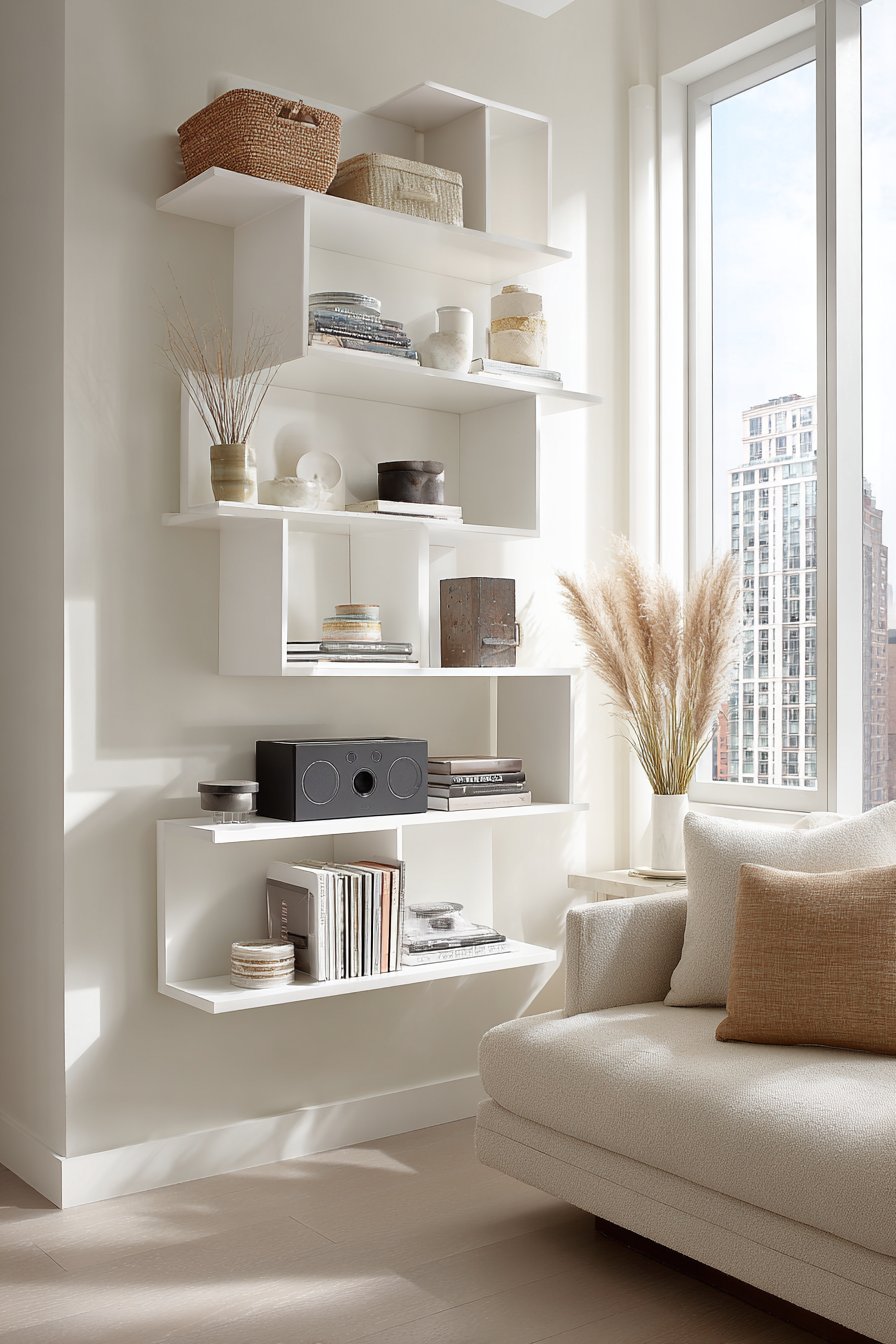
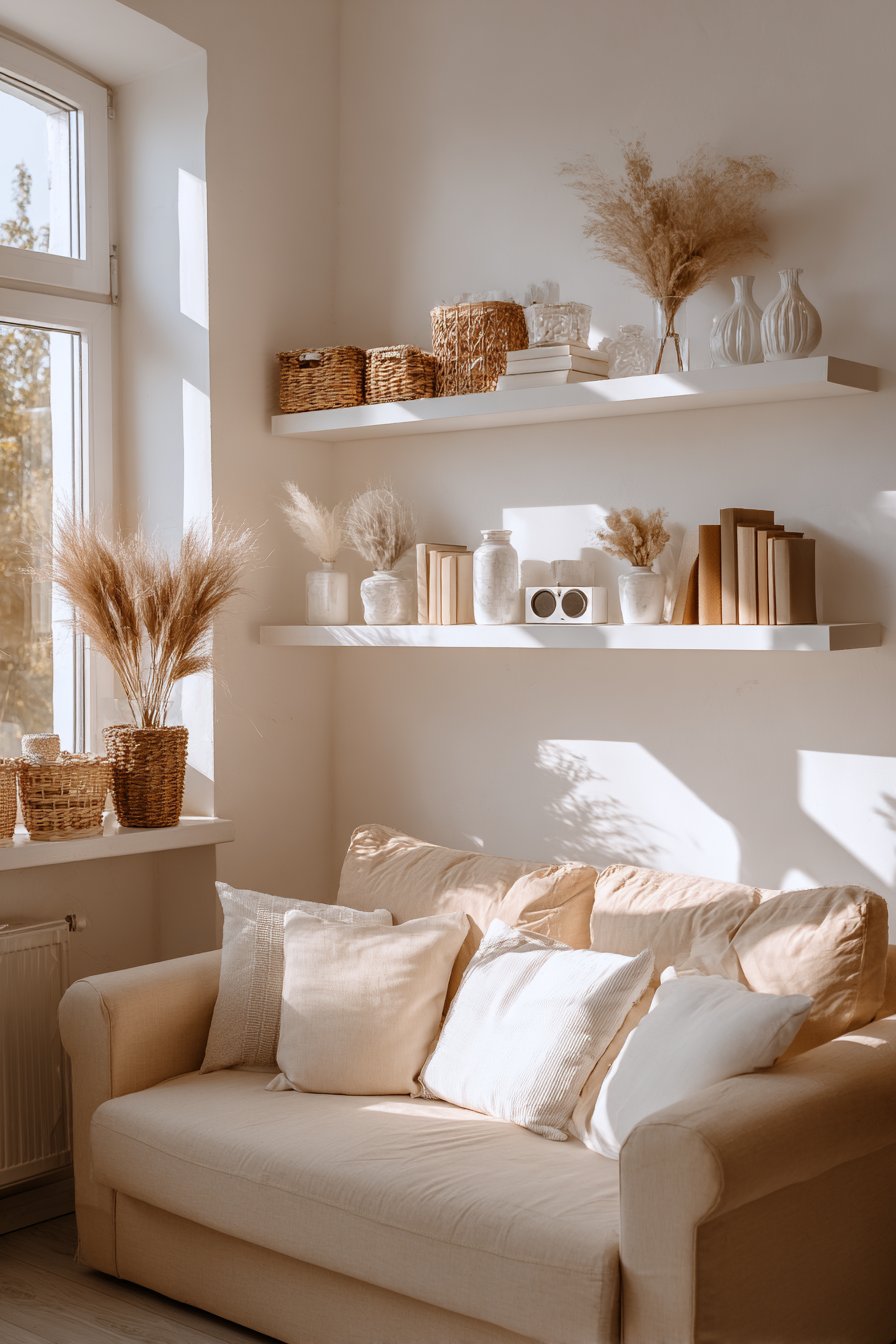
Small apartment living demands creative solutions, and staggered floating shelves in painted white finish deliver both function and style without consuming precious floor space. This vertical approach maximizes wall real estate that would otherwise go unused, transforming blank walls into practical storage that maintains an airy, open feeling crucial in compact spaces.
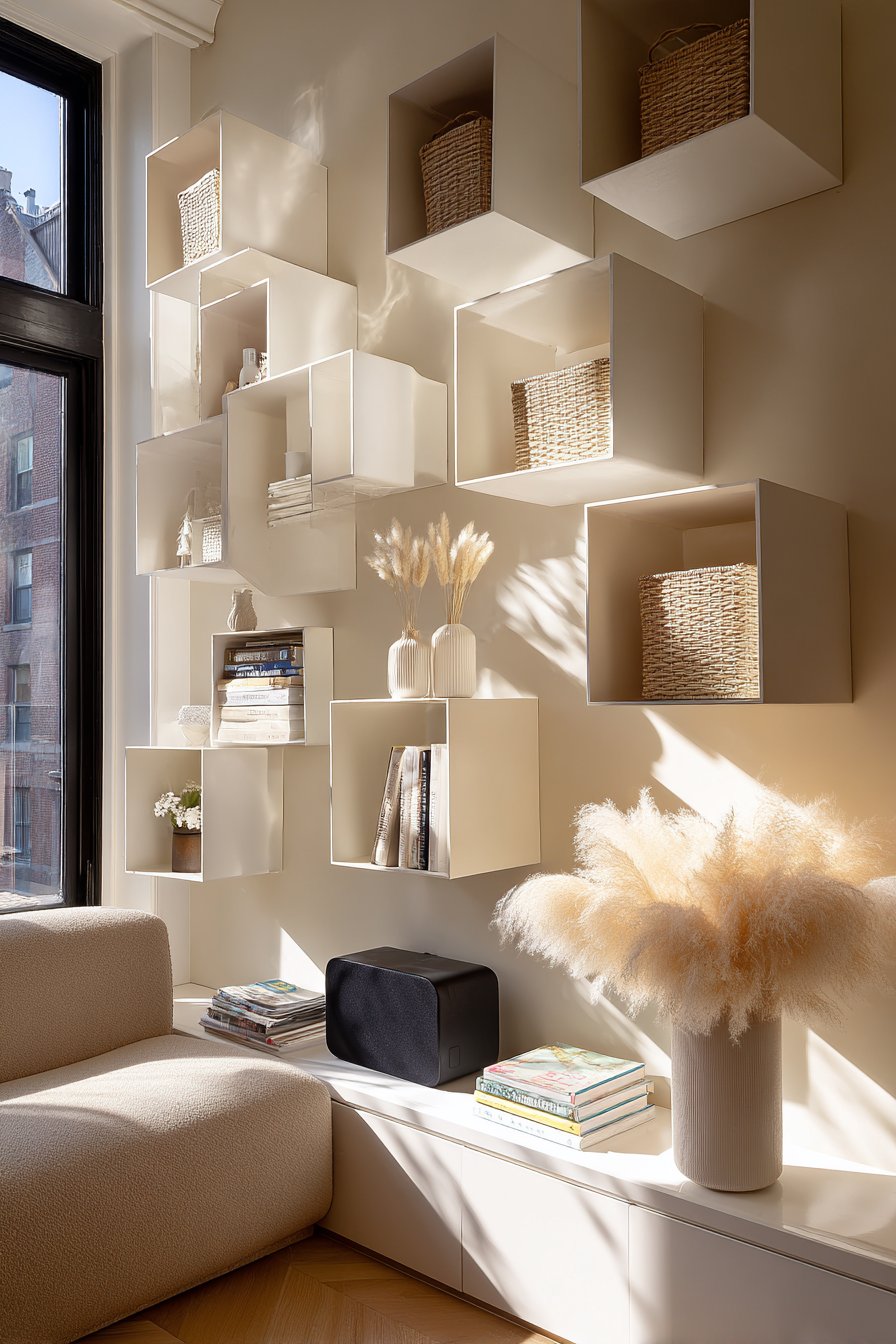
The staggered configuration creates visual movement up the wall while providing varied shelf depths for different storage needs. Natural lighting from a side window creates soft shadows that emphasize the floating effect, making the shelves appear lighter and less imposing than traditional bulky bookcases. The compact loveseat in warm beige below remains unencumbered by towering furniture, allowing the room to breathe and feel more spacious than its actual square footage.
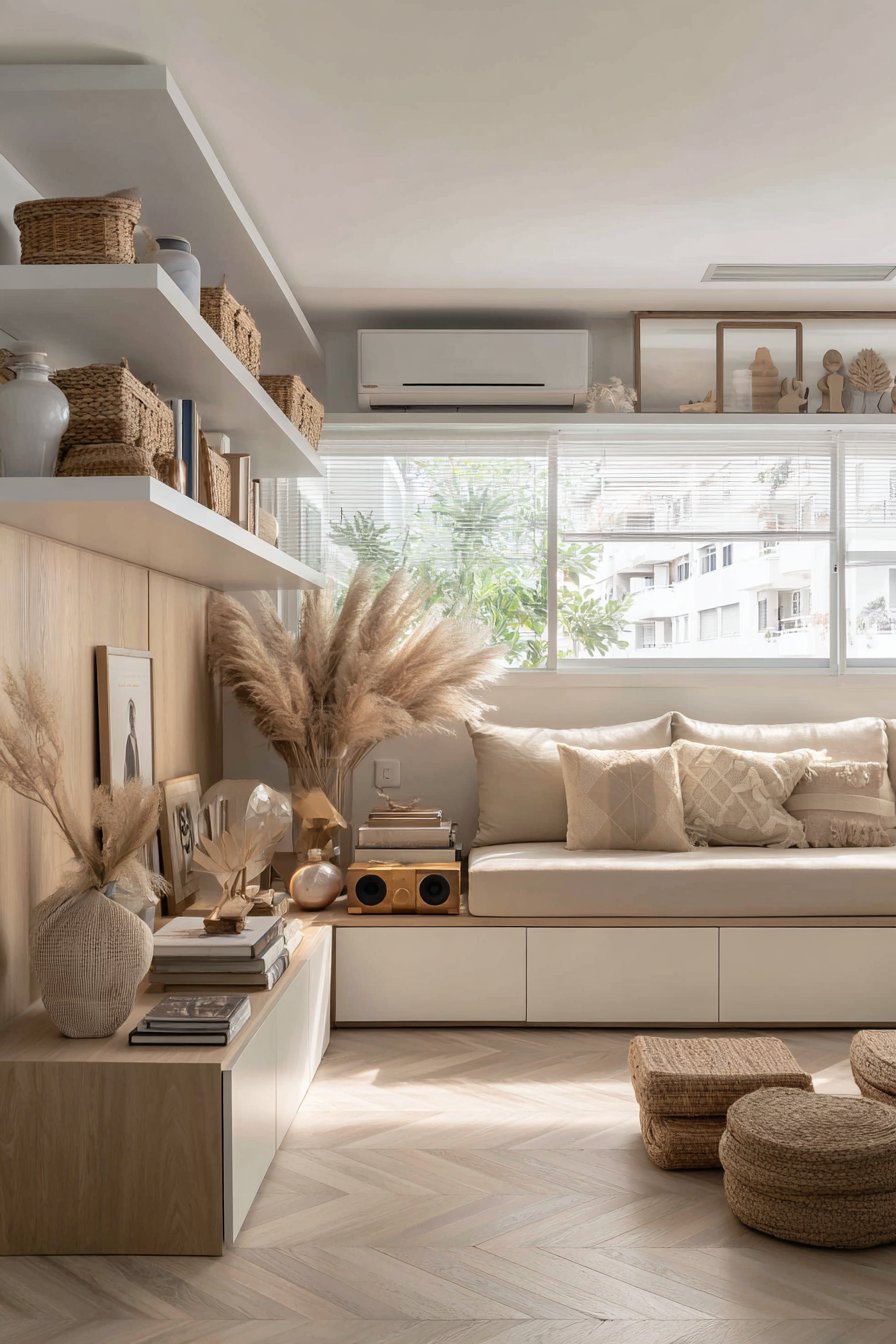
Smart styling balances practical storage with decorative appeal. Woven storage baskets corral smaller items while adding texture and warmth, preventing clutter from undermining the clean design. A small speaker system provides entertainment without dominating visual space, while decorative vases filled with dried pampas grass add height and movement. Organized book collections stand vertically, their varied spines creating color and pattern that personalizes the space without overwhelming it.
Key Design Tips:
- Paint shelves the same color as walls to create seamless integration
- Vary shelf lengths in staggered arrangements for dynamic visual flow
- Use decorative baskets to hide necessary clutter while maintaining aesthetics
- Choose dual-purpose items like decorative storage boxes
- Keep lower shelves for frequently accessed items, higher ones for display
- Maintain consistent spacing between staggered shelves for cohesive appearance
6. Mid-Century Modern Teak Warmth
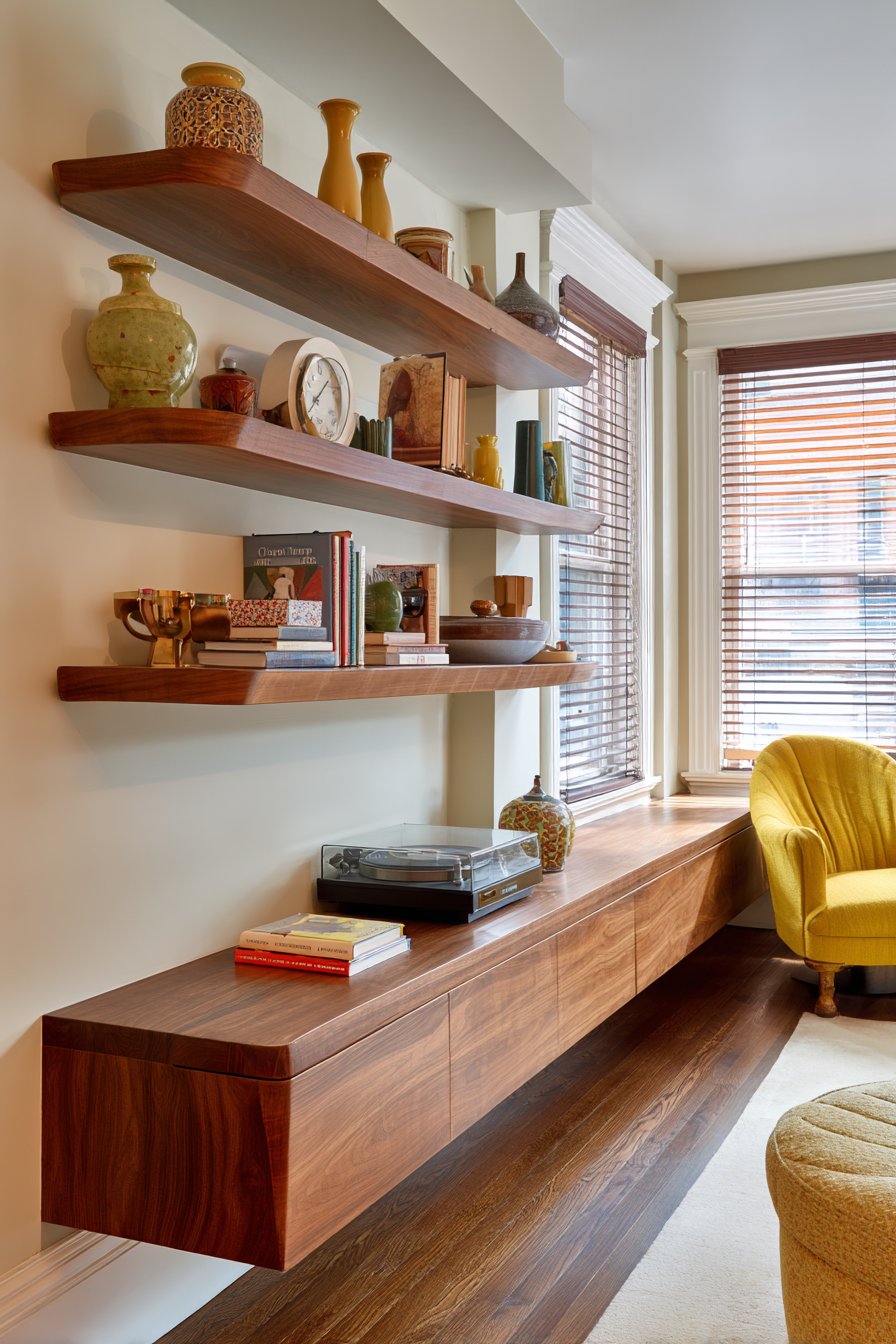
Rich teak wood with signature tapered edges transports us straight to the 1950s and 60s, when mid-century modern design revolutionized American interiors. These floating shelves mounted above a low-profile credenza embody the era’s emphasis on clean lines, organic materials, and functional beauty. The warm honey-brown tones of teak bring natural elegance that has proven timeless across decades.
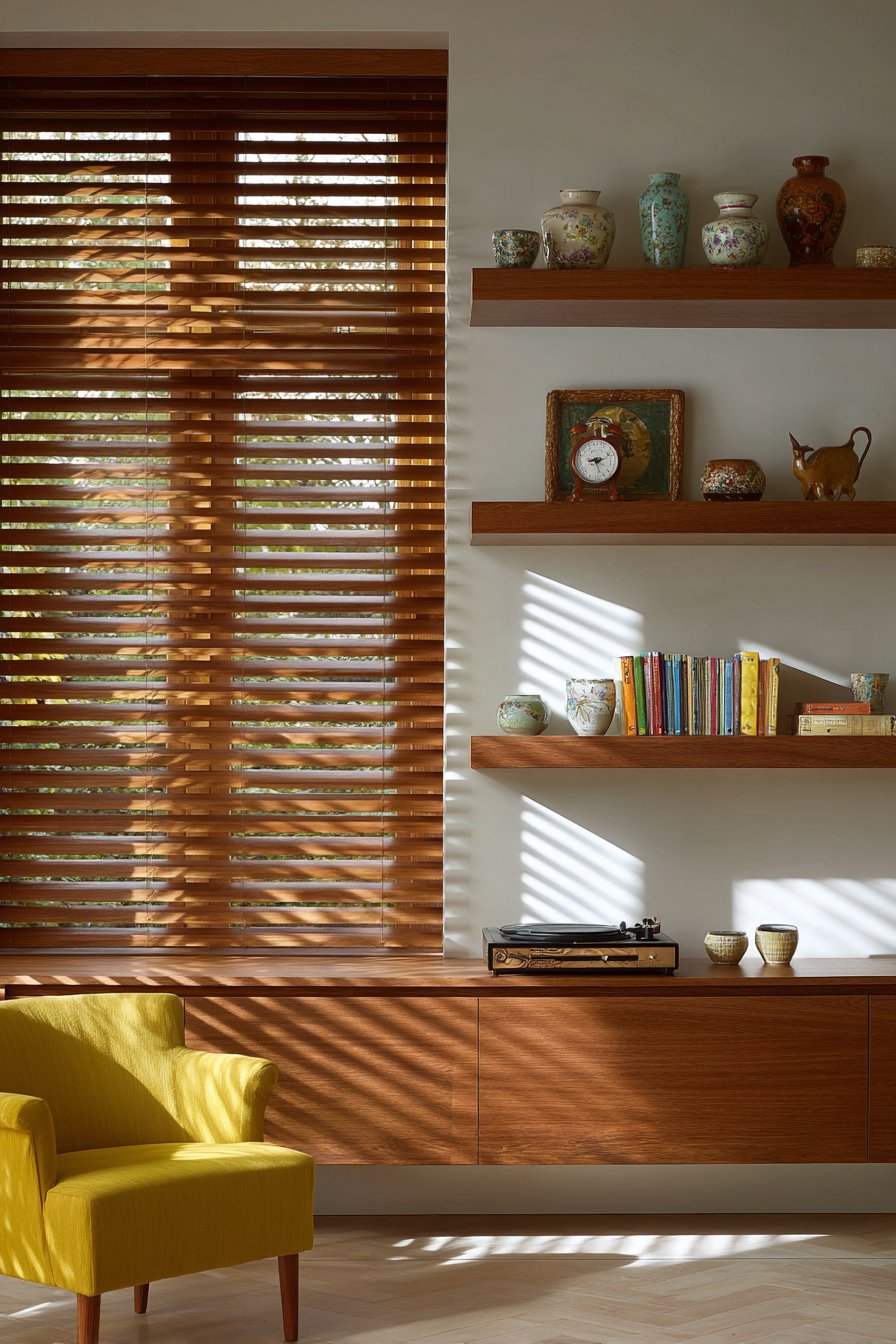
Soft natural daylight filtering through wooden blinds creates subtle striped shadow patterns that dance across the shelves throughout the day. This dynamic lighting adds unexpected visual interest while highlighting the teak’s warm tones and subtle grain patterns. A mustard yellow accent chair nearby provides that characteristic mid-century pop of color, demonstrating the era’s fearless approach to bold hues balanced against neutral foundations.
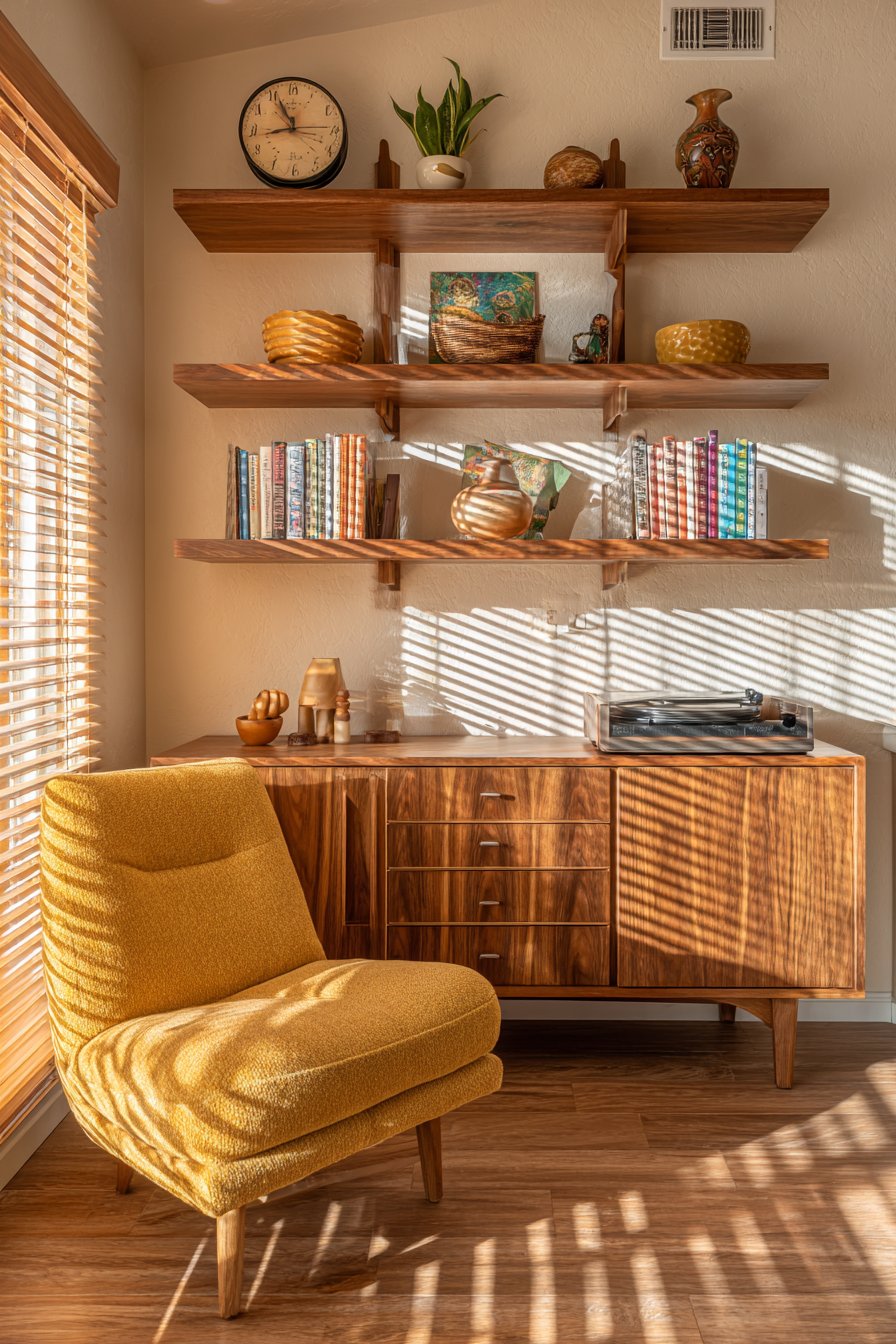
The curated display celebrates vintage finds and period-appropriate styling. Vintage ceramics in organic shapes and earth tones showcase the era’s fascination with craft and handmade quality. A retro clock with starburst design serves as functional art, while well-loved paperbacks with vintage covers add literary charm. A small record player nods to the analog pleasures of vinyl, creating a space that honors both form and function—the cornerstone of mid-century philosophy.
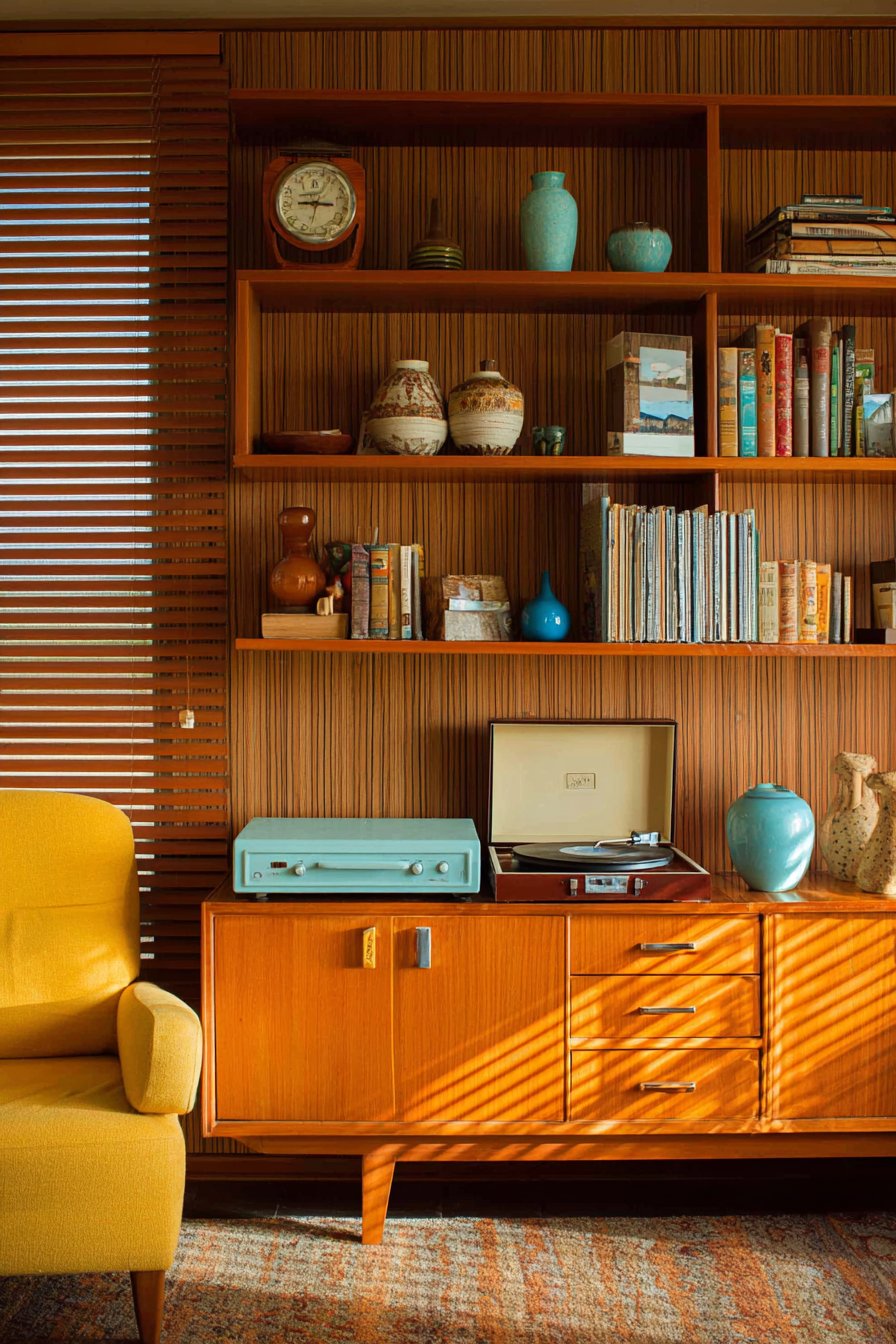
Key Design Tips:
- Seek authentic teak or quality reproductions with characteristic tapered edges
- Pair with low-profile furniture to maintain period-appropriate proportions
- Add one bold color accent through furniture or accessories
- Display vintage items from the actual era for authenticity
- Use warm-toned incandescent or warm LED lighting to enhance wood tones
- Keep lines clean and clutter minimal for true mid-century aesthetic
7. Transitional Gallery Wall Effect
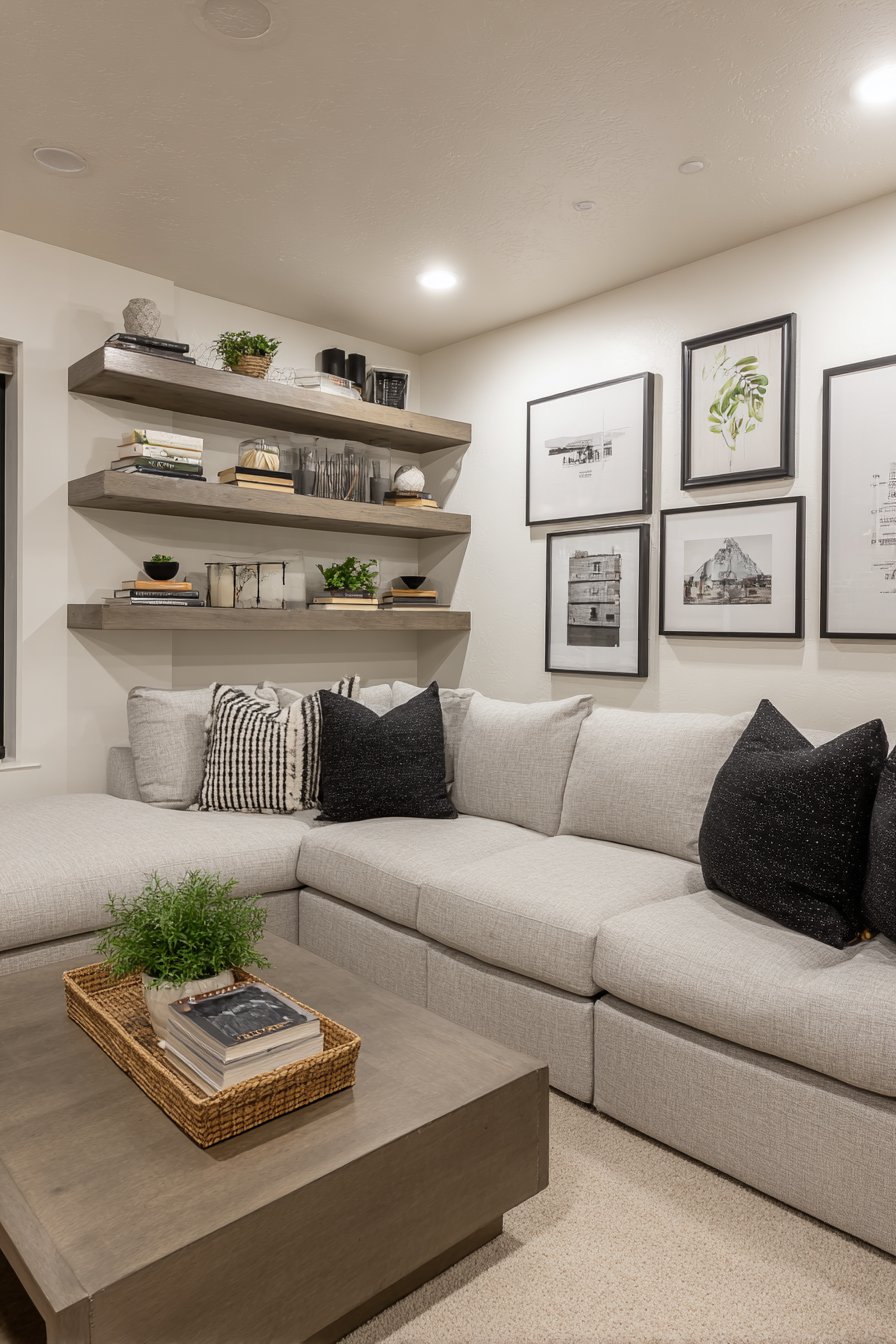
Transitional style bridges traditional and contemporary design, creating spaces that feel current yet timeless—exactly what these grey-washed oak floating shelves achieve. Arranged to create a gallery wall effect above a neutral sectional sofa, they offer flexibility that traditional framed art cannot match. The grey wash finish modernizes classic oak, softening its traditional associations while preserving the wood’s inherent warmth and character.
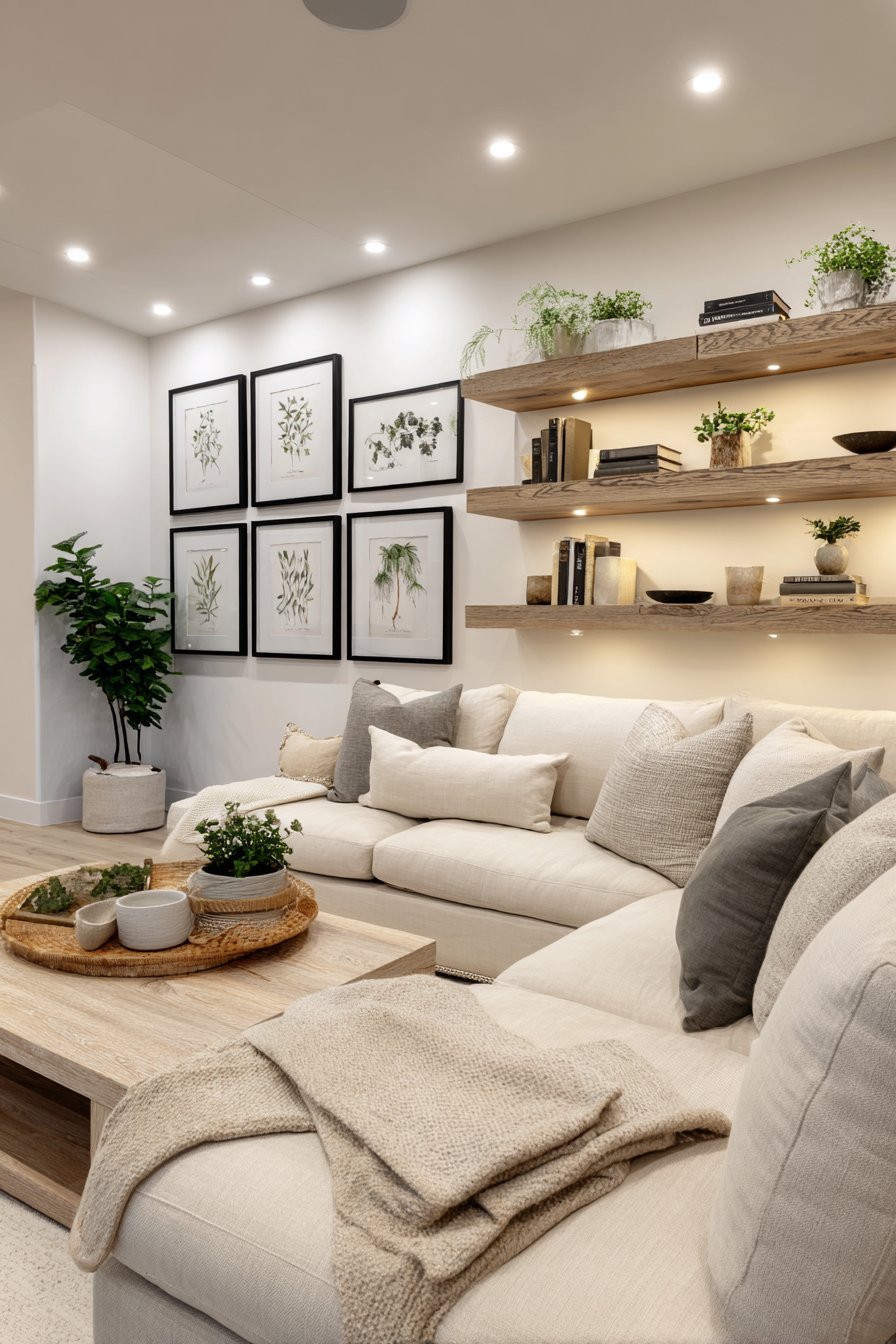
Recessed lighting installed above the shelves serves a dual purpose—illuminating displayed objects while creating intentional highlights that guide the eye across the arrangement. This controlled lighting elevates ordinary items into artful displays, creating depth and drama that changes dramatically from day to night. The professional installation ensures even light distribution without harsh shadows or hot spots.
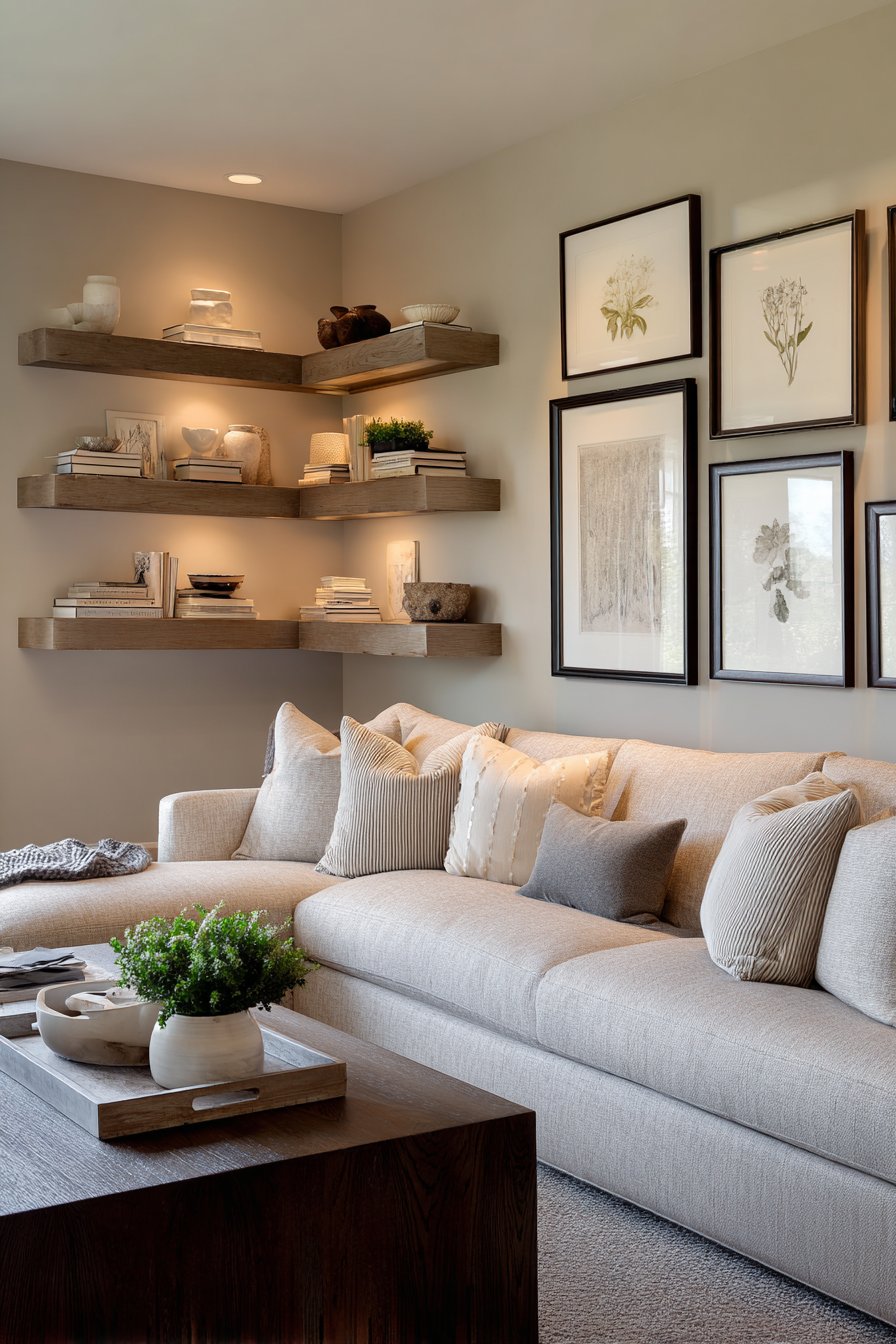
The layered styling approach exemplifies transitional versatility. Coffee table books stack horizontally, their varied heights creating dimensional interest, while framed botanical prints lean casually against the wall rather than hanging formally. Small potted herbs bring living greenery and subtle fragrance, their practical nature balanced by decorative bowls in complementary tones. This mix of structured and casual, functional and decorative, creates an approachable sophistication that defines successful transitional design.
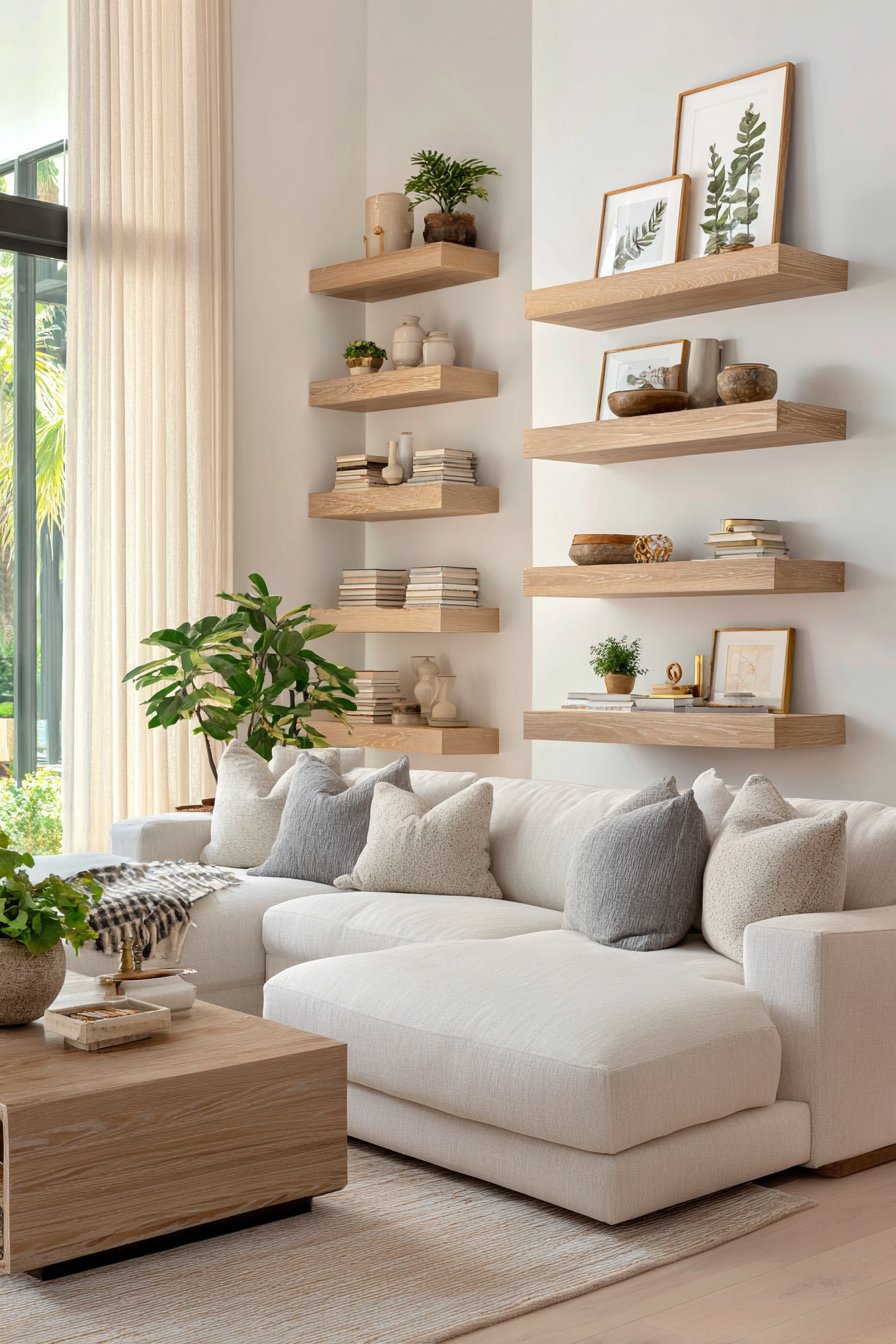
Key Design Tips:
- Choose wood stains in grey or greige tones for contemporary traditional balance
- Install recessed or track lighting to highlight shelf contents professionally
- Mix formal and casual elements for an authentic transitional aesthetic
- Layer items at varying depths to create dimensional displays
- Include both practical items and pure decoration for balanced styling
- Use neutral color palette as foundation with subtle color accents
8. Coastal-Inspired Breezy Beauty
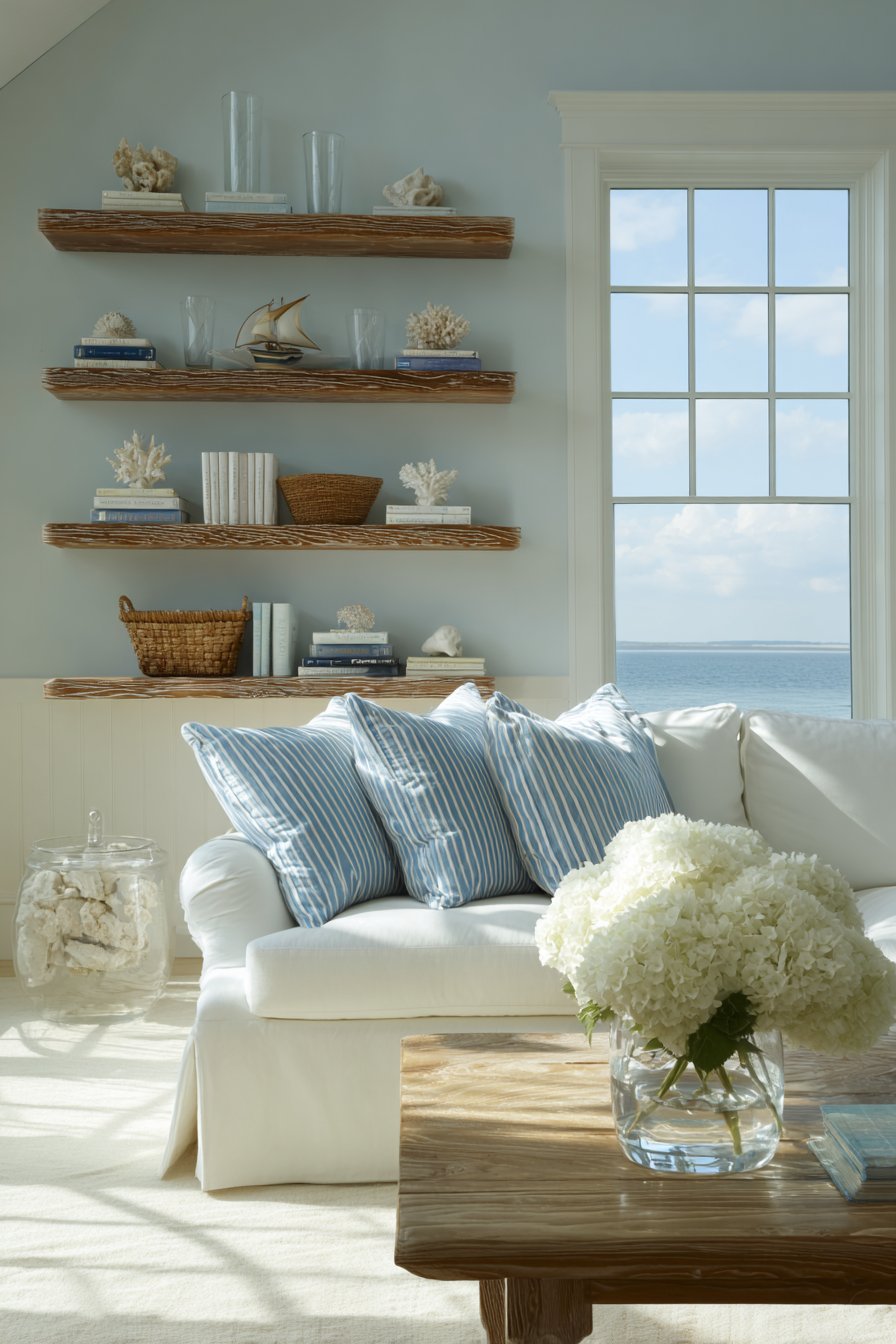
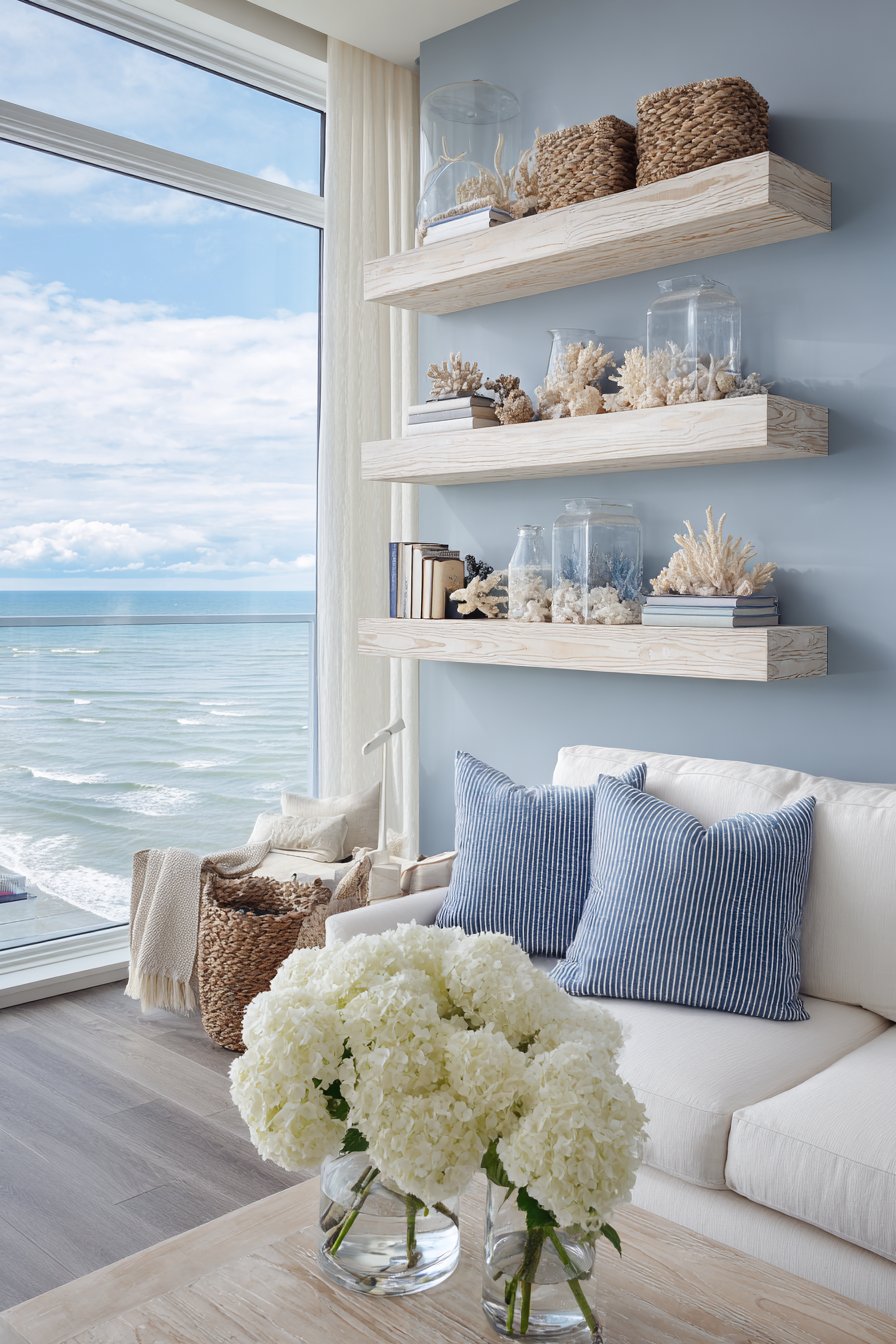
Whitewashed pine floating shelves mounted on soft blue-grey walls immediately evoke seaside serenity and relaxed coastal living. This design captures the essence of beachside cottages where natural light, ocean breezes, and casual elegance reign supreme. Large windows with ocean views beyond transform these shelves into frames for both curated collections and natural beauty, blurring the lines between interior and exterior spaces.
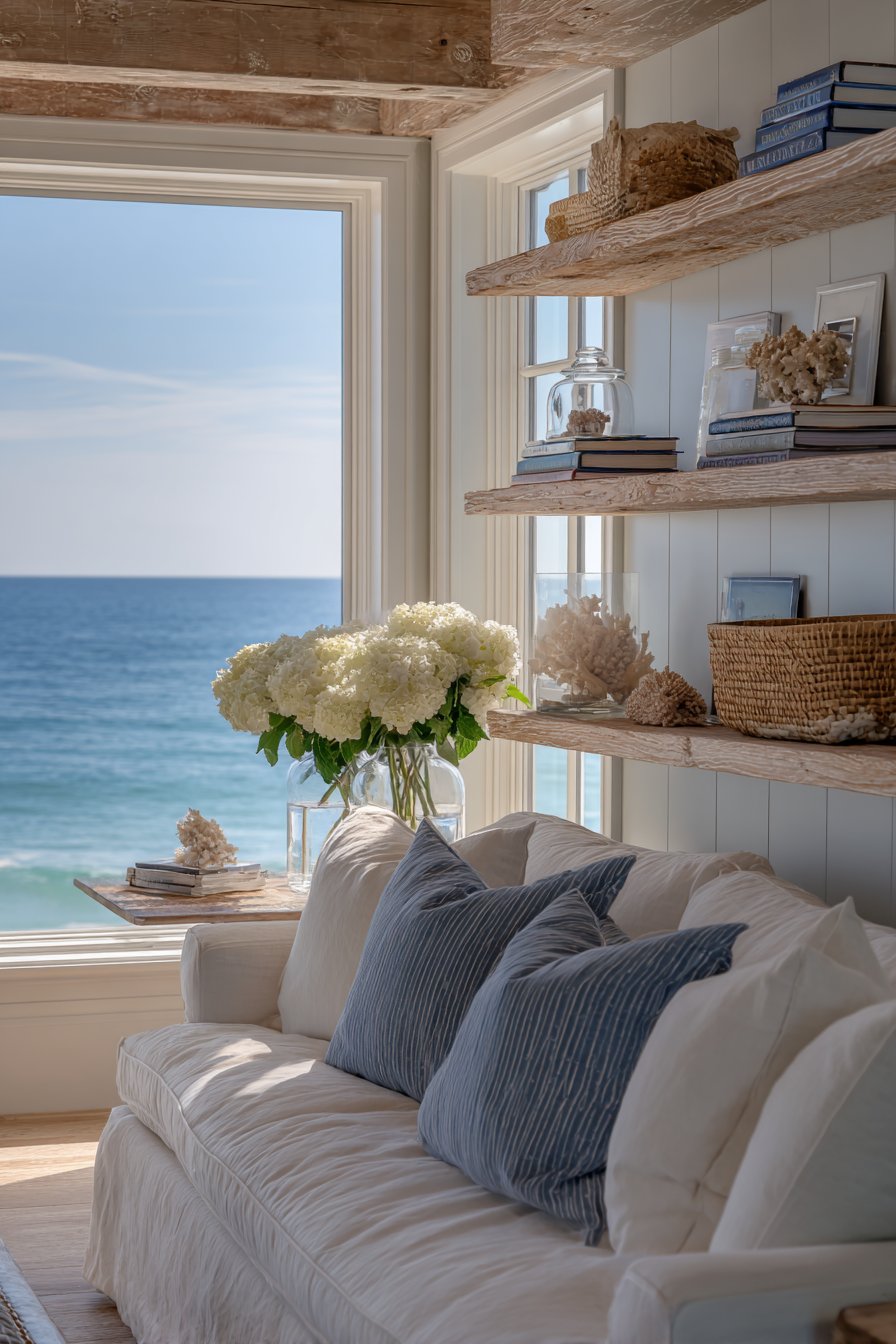
Natural bright daylight floods this coastal sanctuary, creating an airy atmosphere that makes the room feel larger and more open. The light-reflective qualities of whitewashed wood and pale blue walls amplify available sunlight, creating a luminous quality reminiscent of sun-drenched beach houses. The slipcovered white sofa below with blue striped pillows reinforces the nautical theme while maintaining easy-care practicality essential for coastal living.
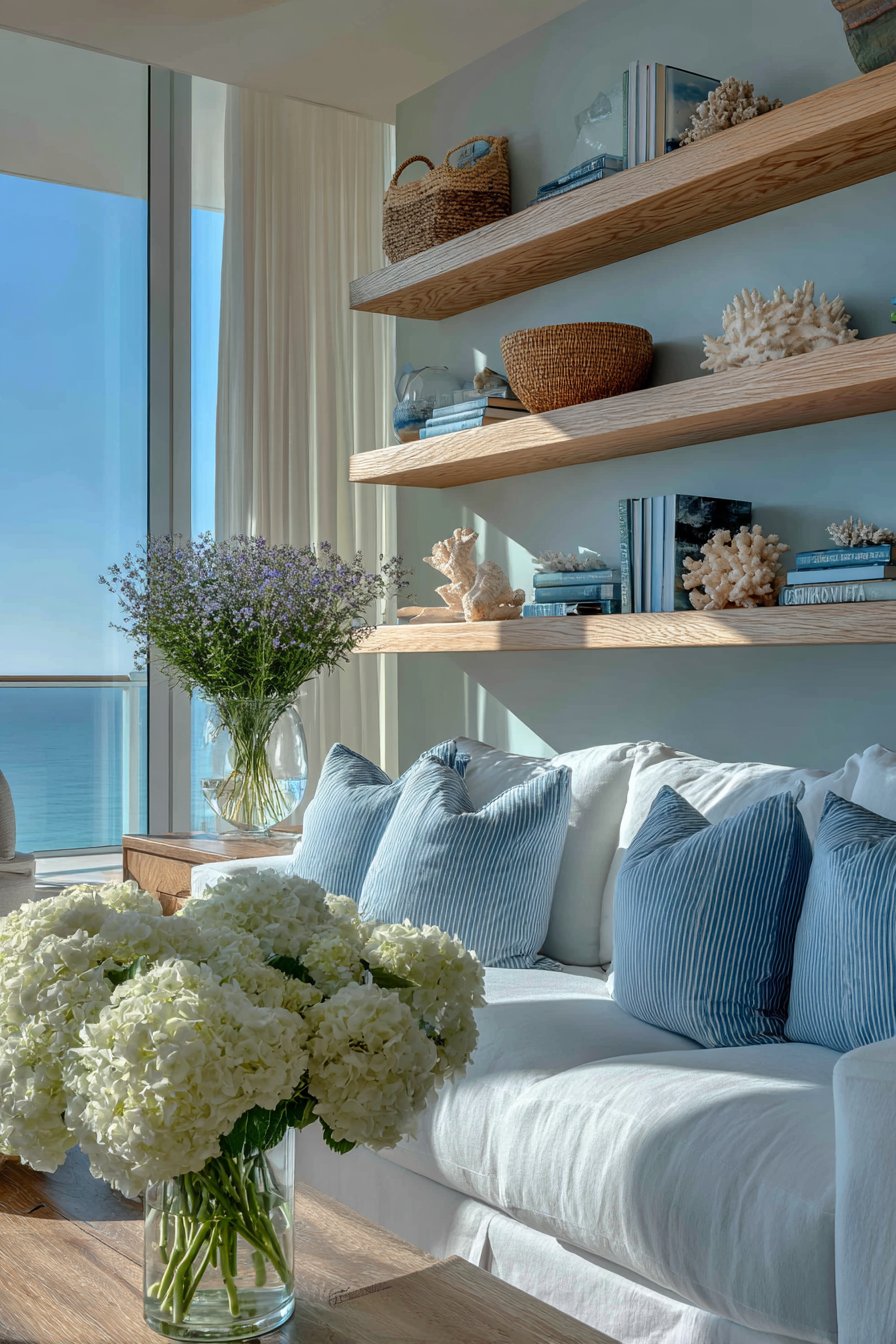
Styling embraces beach-collected treasures and ocean-inspired elements. Coral and shells gathered during long beach walks create personal connections to the sea, while nautical-themed books educate and inspire. Woven baskets in natural fibers add texture while providing practical storage, and glass vases filled with fresh white hydrangeas bring garden beauty indoors. This collected-over-time aesthetic creates authenticity that purchased coastal décor packages simply cannot replicate.
Key Design Tips:
- Choose whitewashed or pickled finishes for an authentic coastal appearance
- Paint walls in soft blues, greens, or sandy neutrals for an oceanic palette
- Display genuine found objects rather than artificial coral or shells
- Use natural fiber baskets and textiles for texture and warmth
- Keep window treatments minimal to maximize natural light
- Incorporate fresh or dried flowers in white or blue tones
9. Bohemian Live-Edge Organic Expression
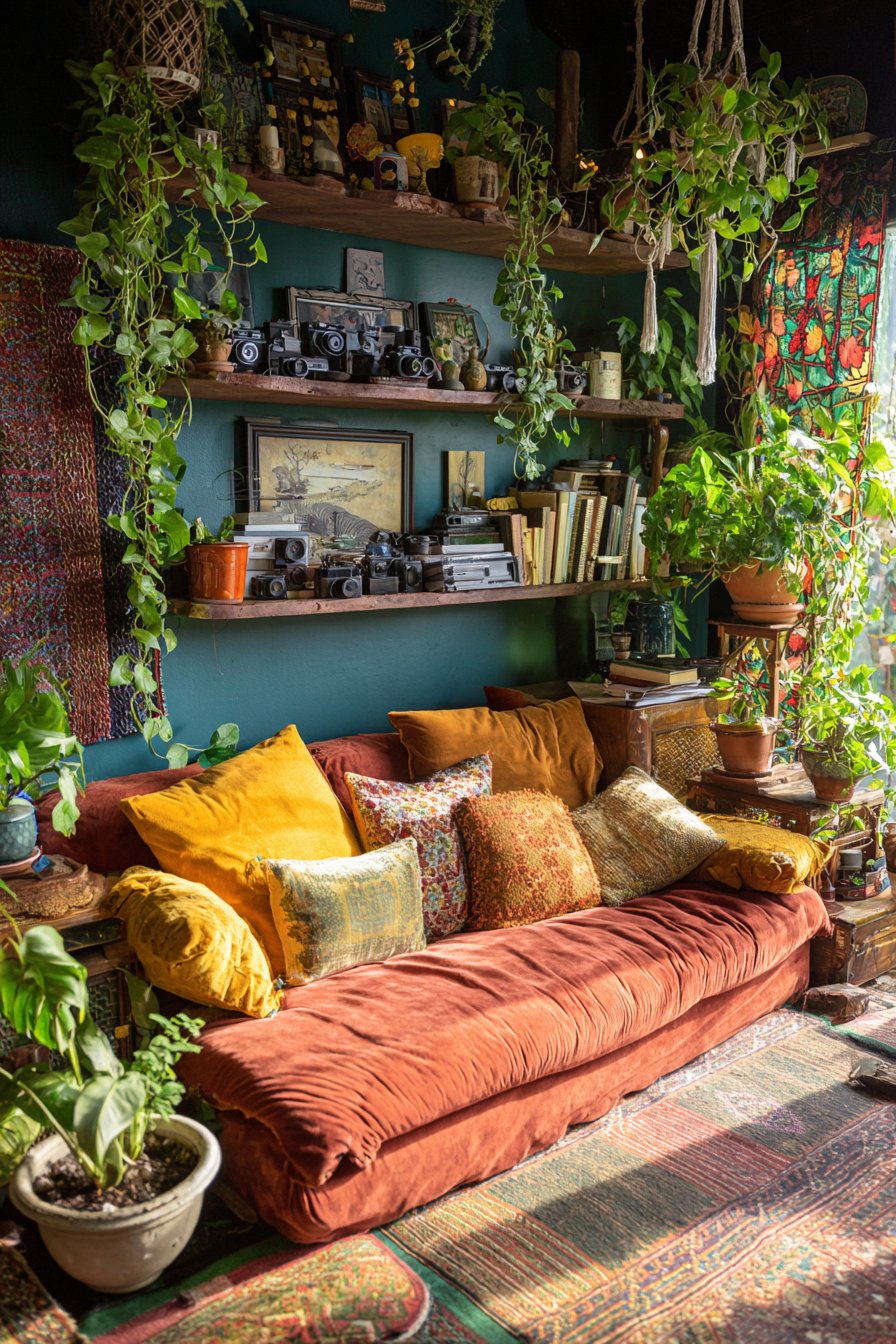
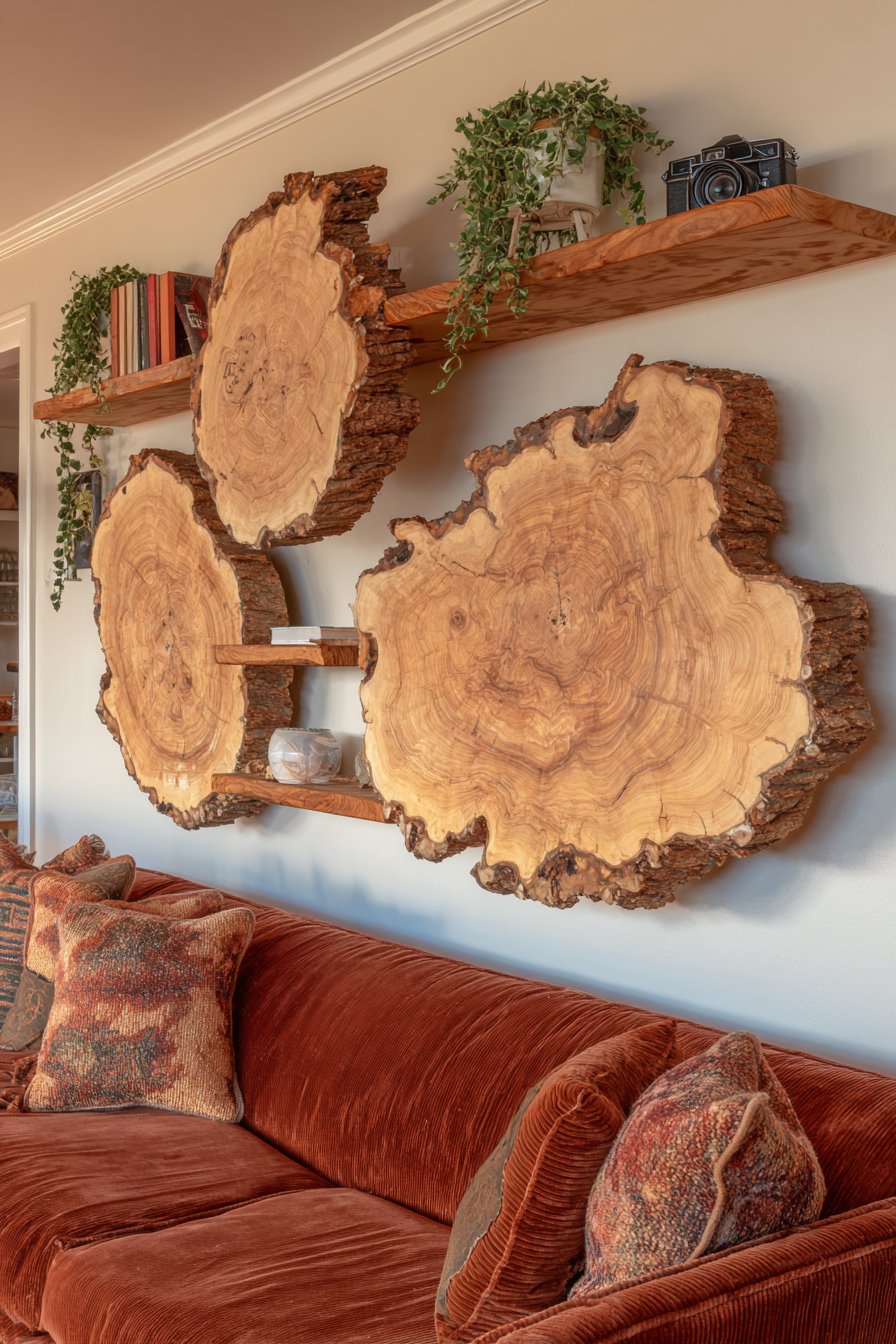
For free spirits and nature lovers, live-edge walnut floating shelves represent the ultimate in organic, one-of-a-kind design. These slabs retain their natural bark edges and follow the tree’s original contours, celebrating imperfection and natural beauty. Each shelf is genuinely unique, its curves and character marks telling the story of the tree it came from, creating furniture that feels alive and connected to the natural world.
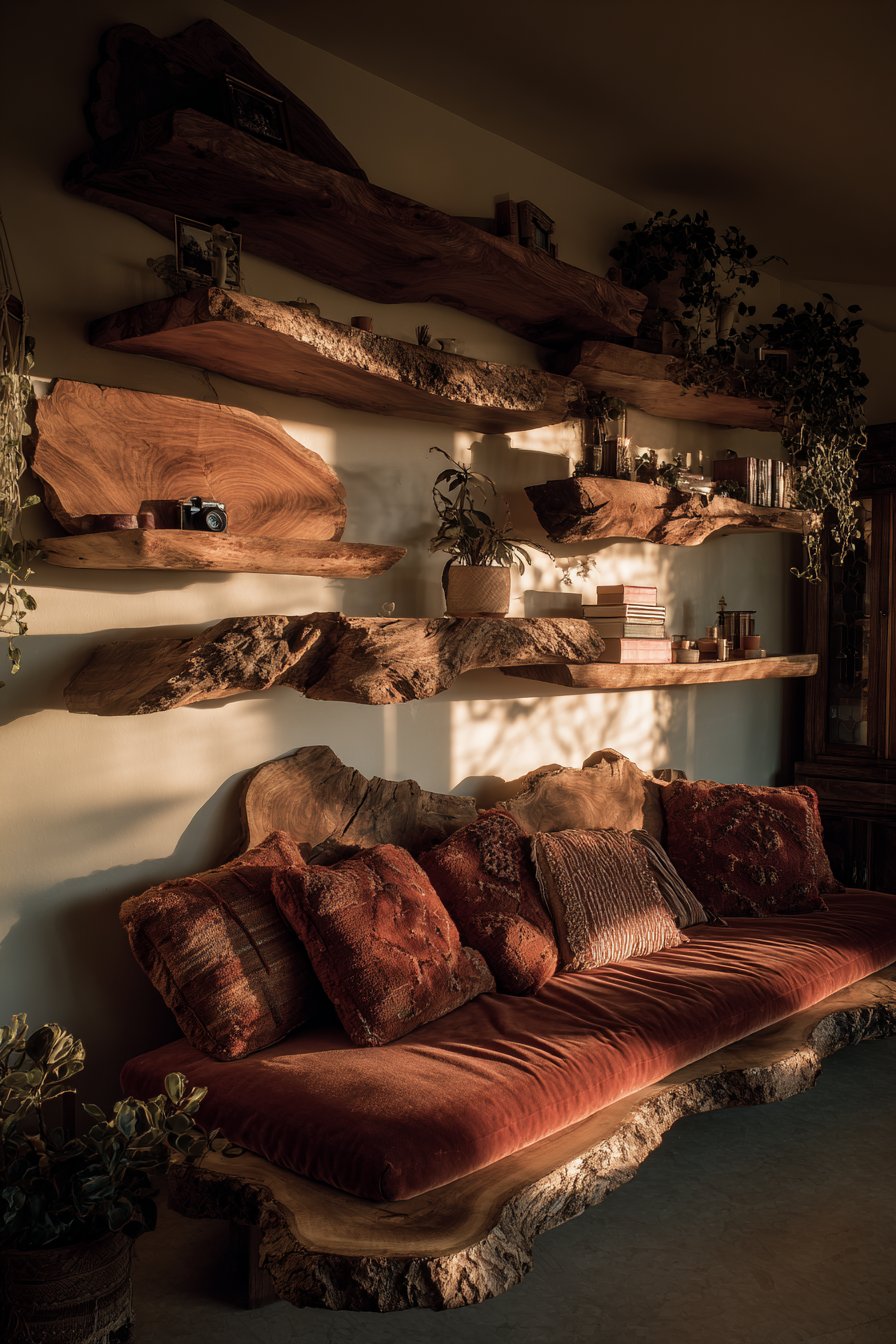
Warm golden hour lighting becomes transformational in this bohemian setting, emphasizing every texture, curve, and natural imperfection in the wood. The low-slung velvet sofa in terracotta provides rich color and luxurious texture, its earth tone grounding the eclectic energy above. Layered textured pillows in various patterns and materials create an inviting nest that beckons you to relax and stay awhile.
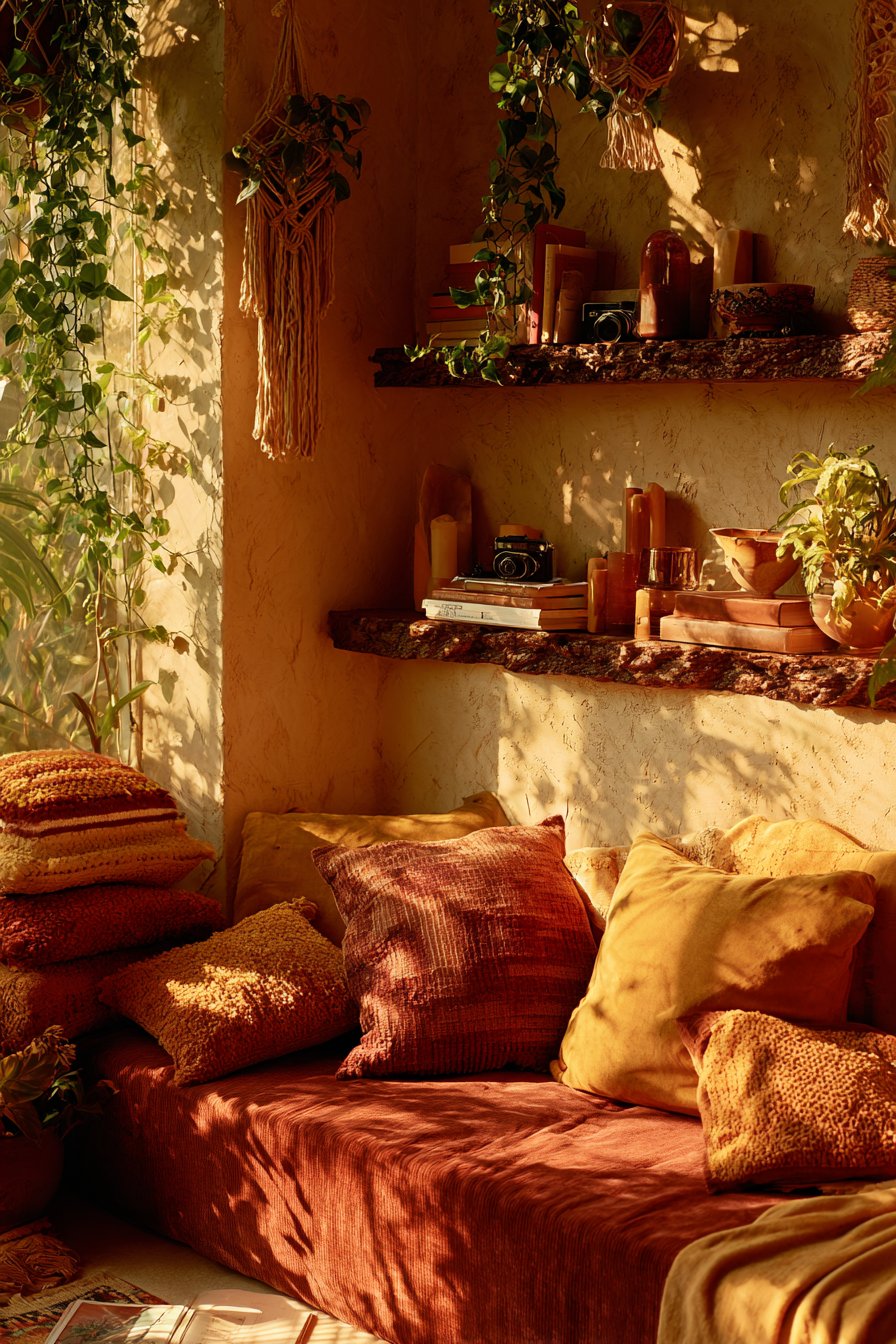
The eclectic display epitomizes bohemian philosophy—collect what you love without worrying about matching. Macramé plant hangers suspend trailing ivy that softens hard edges and brings life to every level. Colorful woven textiles from travels abroad add global flair and personal history. Vintage cameras represent artistic pursuits and nostalgia, while well-thumbed poetry books reveal intellectual and emotional depth. This collected aesthetic creates spaces that feel deeply personal and welcoming.
Key Design Tips:
- Source live-edge wood from local sawmills or specialty lumber yards
- Install extra-sturdy brackets to support the irregular weight distribution
- Embrace asymmetry as an essential element of the organic aesthetic
- Layer textures through textiles, plants, and varied materials
- Display collected items that tell your personal story
- Use warm lighting to enhance natural wood tones and create cozy ambiance
10. Ultra-Minimalist White Lacquer Precision
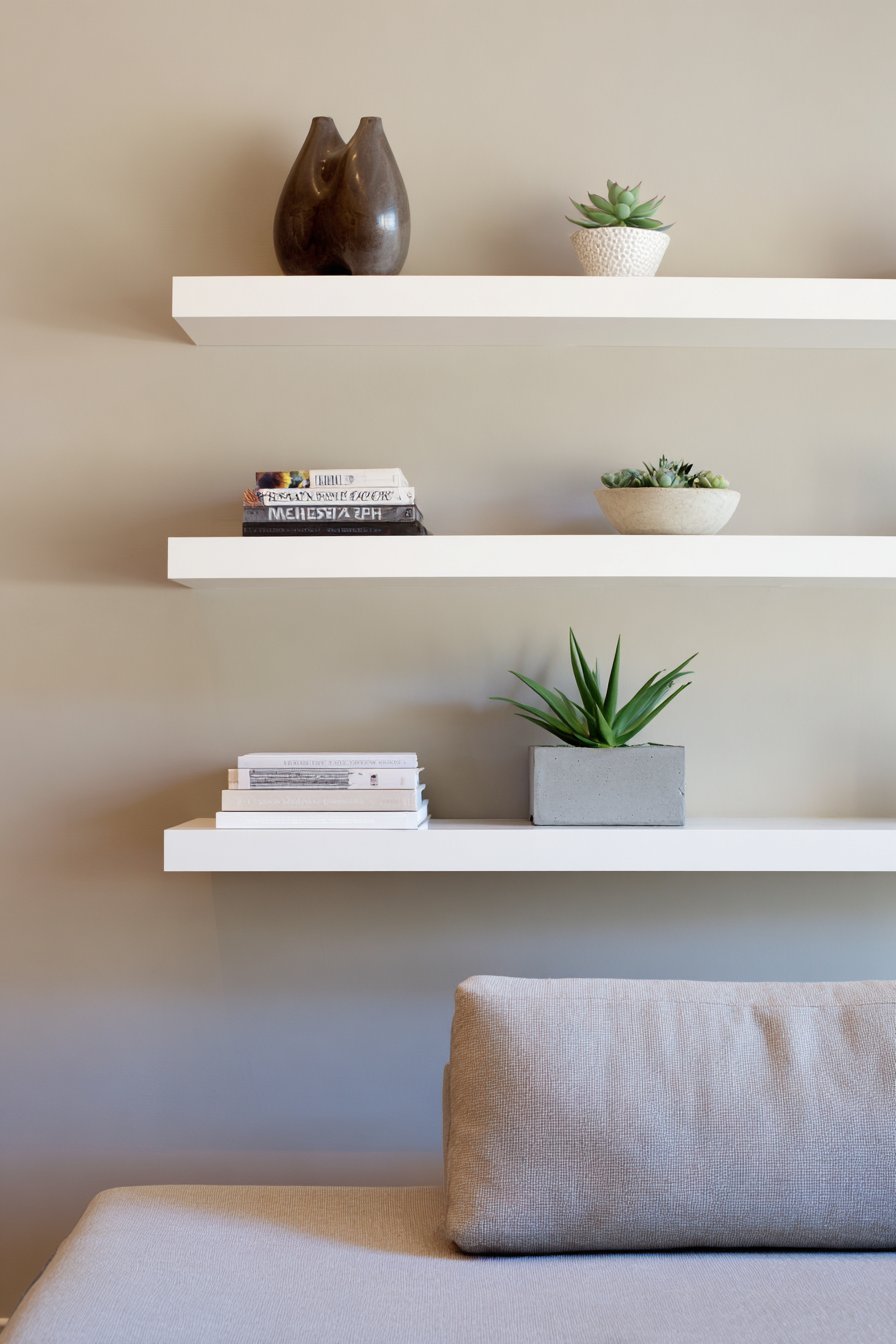
At the opposite end of the design spectrum, seamless white lacquer floating shelves create pristine horizontal lines that exemplify minimalist philosophy. Against pale grey walls, these shelves virtually disappear, becoming architecture rather than furniture. The high-gloss finish reflects light beautifully, creating subtle highlights that emphasize the shelves’ clean edges and precise installation.
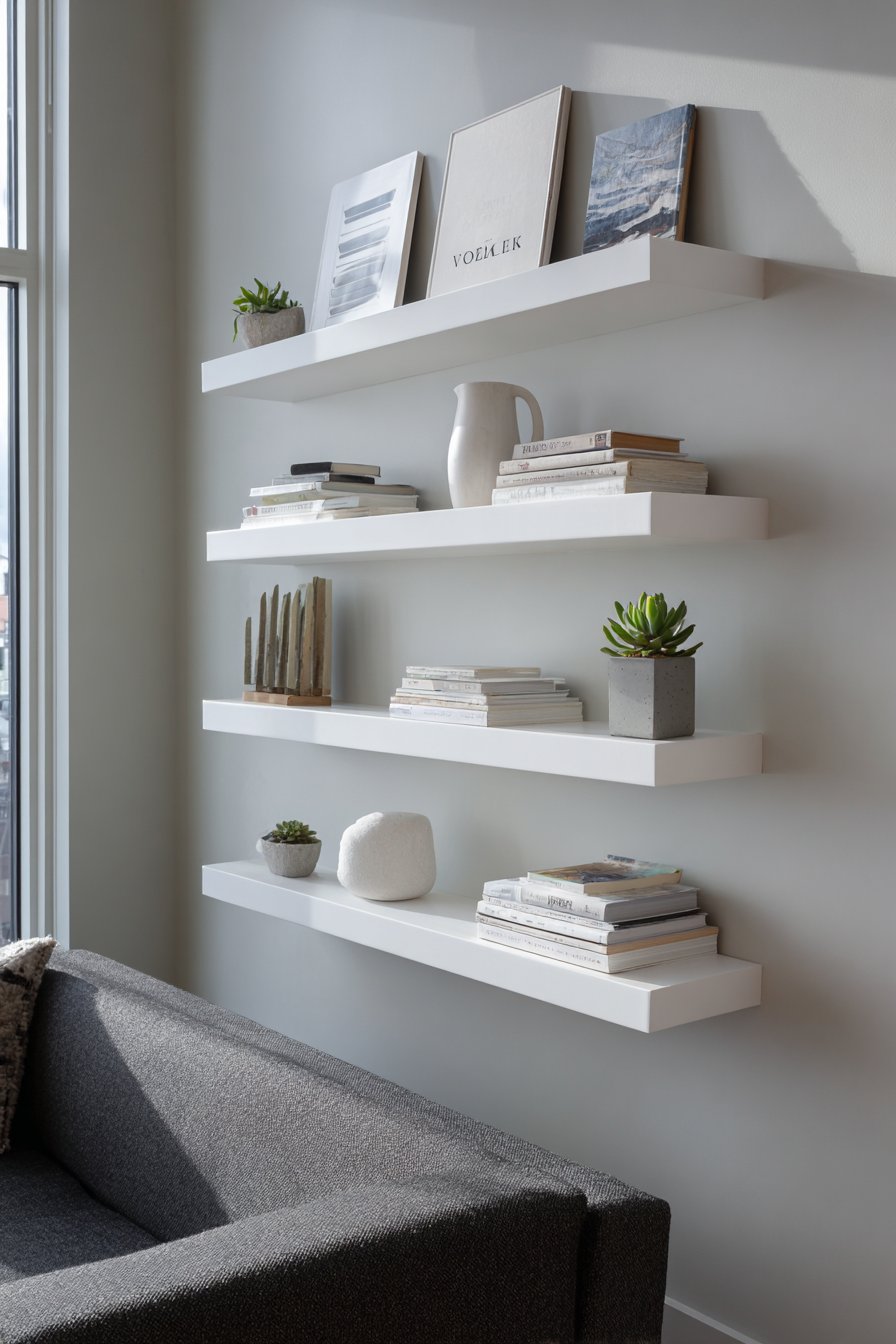
Diffused natural light creates gentle shadows that emphasize the floating effect without harsh contrasts or dramatic chiaroscuro. This soft illumination maintains the serene atmosphere essential to minimalist spaces, where peace and clarity take precedence over visual excitement. The low-profile grey sofa with simple lines anchors the space without competing for attention, demonstrating minimalism’s core belief that every element must earn its place.
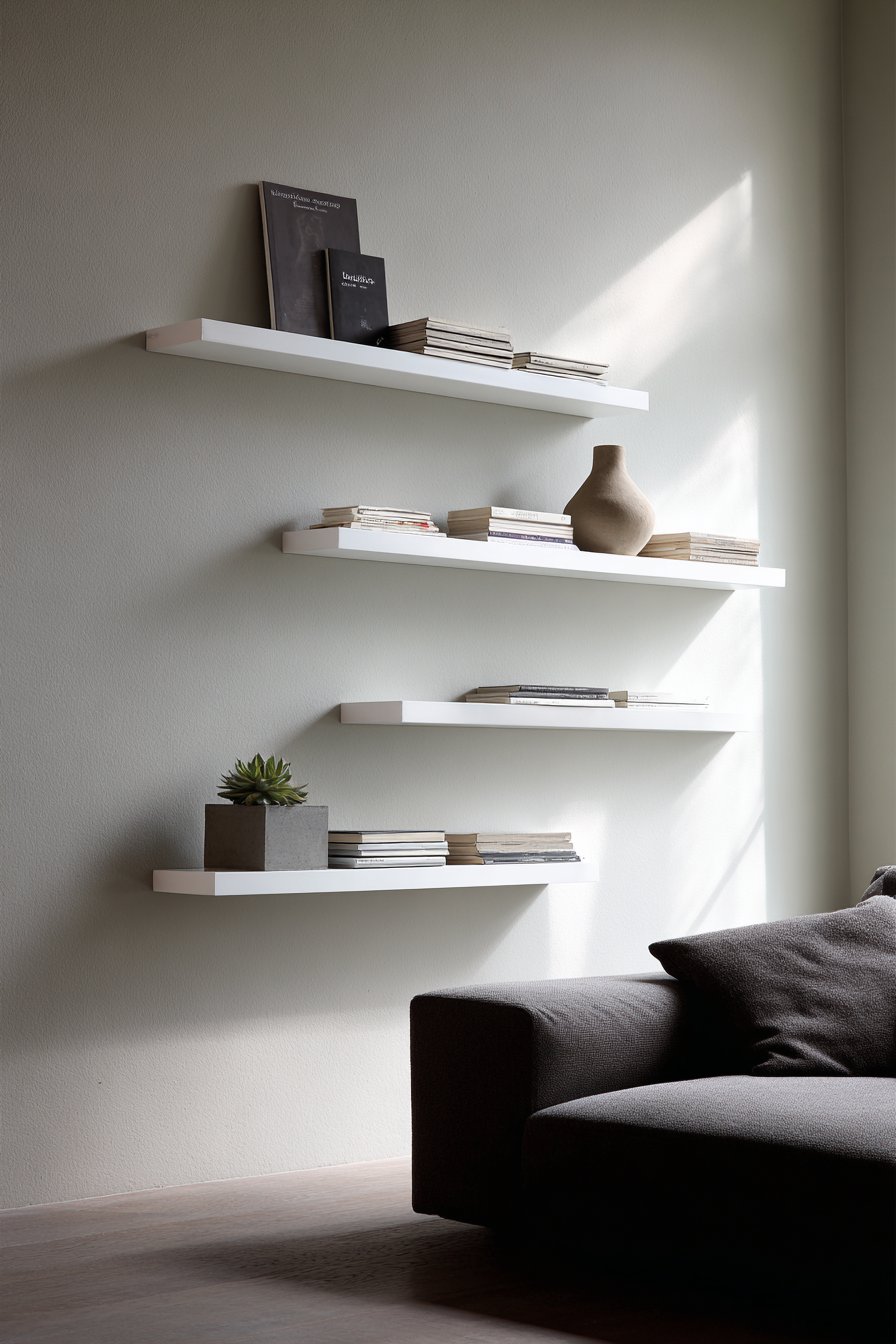
The carefully edited display demonstrates that minimalism doesn’t mean emptiness—it means intentionality. A few design monographs chosen for their beautiful covers create visual interest while revealing intellectual depth. A single sculptural ceramic piece serves as focal point, its form appreciated fully without competition from surrounding clutter. A small succulent in concrete planter adds life and organic softness, its simple form appropriate to the restrained aesthetic. Intentional negative space between objects allows each piece to breathe and be truly seen.
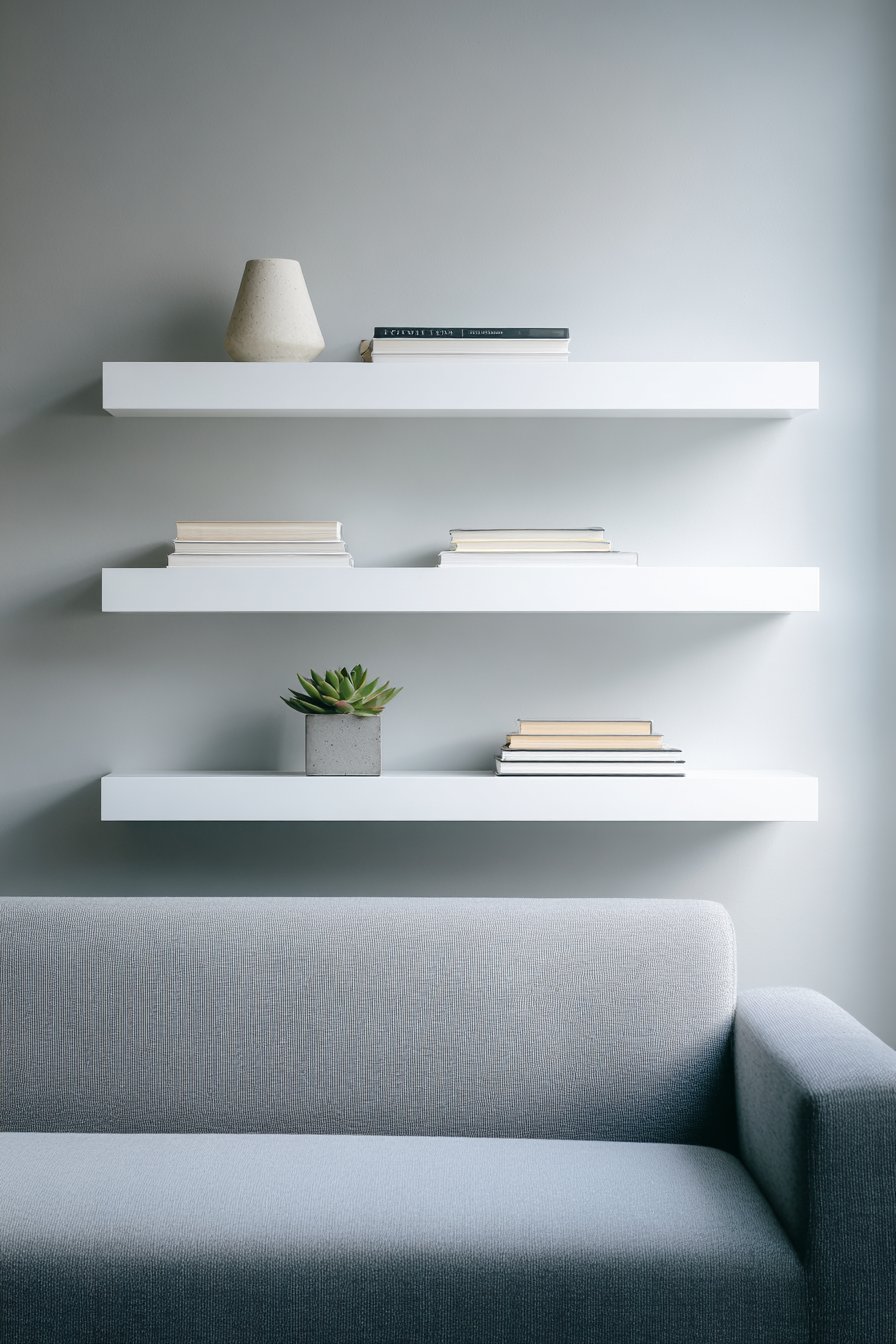
Key Design Tips:
- Choose seamless construction with hidden mounting hardware for clean appearance
- Limit displayed items to create impactful negative space
- Select each object with extreme care and intention
- Use neutral color palette with subtle tonal variations
- Maintain pristine condition through regular dusting and cleaning
- Embrace simplicity as the ultimate sophistication
Why These Floating Shelf Designs Stand Out
These ten distinctive approaches to floating shelf design represent the best options for transforming your living room because they address diverse aesthetic preferences, spatial challenges, and lifestyle needs. Modern minimalist walnut shelves appeal to those seeking timeless sophistication with organic warmth, while Scandinavian asymmetry attracts design-forward individuals who appreciate playful yet refined spaces. Rustic reclaimed wood speaks to homeowners valuing authenticity and environmental consciousness, turning salvaged materials into stunning focal points.
Industrial-modern contrast designs work exceptionally well in urban lofts and contemporary spaces where bold materials create architectural interest. Space-maximizing solutions prove invaluable for apartment dwellers and anyone struggling with limited square footage, demonstrating how vertical thinking solves horizontal constraints. Mid-century modern teak appeals to design history enthusiasts and those seeking proven aesthetics that transcend temporary trends.
Transitional gallery wall effects offer remarkable versatility, adapting easily as your tastes evolve and collections grow. Coastal-inspired designs create vacation-home serenity in everyday settings, perfect for beach lovers and those craving relaxed elegance. Bohemian live-edge shelves celebrate individuality and global perspectives, ideal for creative spirits and collectors. Ultra-minimalist white lacquer delivers peaceful simplicity for those overwhelmed by visual clutter and seeking calm, organized environments.
The materials featured across these designs—walnut, oak, reclaimed barn wood, teak, whitewashed pine, and live-edge slabs—each offer unique grain patterns, colors, and textures that dramatically impact room atmosphere. Wood choice affects durability, maintenance requirements, and long-term satisfaction. Metal components in industrial designs add contemporary edge and structural integrity, while painted finishes provide seamless integration or crisp contrast depending on your vision.
Lighting considerations prove crucial across all these designs, whether harnessing natural daylight, installing recessed illumination, or creating ambient golden hour effects. Proper lighting transforms floating shelves from simple storage into dramatic architectural features, creating shadows that emphasize their suspended appearance and highlighting displayed objects with museum-quality precision. Understanding how light interacts with materials and finishes ensures your shelves look spectacular throughout the day and evening.
Color theory principles underlie every successful design featured here. Neutral palettes create sophisticated foundations allowing collections to shine, while bold accent colors inject personality and energy. Coastal blues evoke oceanic calm, warm earth tones create cozy retreats, and monochromatic schemes deliver modern serenity. Understanding color psychology helps you select shelf finishes and styling that support your desired emotional atmosphere.
Spatial composition matters tremendously—symmetrical arrangements feel formal and traditional, asymmetrical layouts appear dynamic and contemporary, while staggered configurations maximize functional storage. The height, depth, and spacing between shelves affects both aesthetics and usability. Professional designers understand these proportional relationships instinctively, but homeowners can achieve similar success by studying these examples and understanding the principles underlying each arrangement.
Styling approaches range from curated minimalism to abundant eclecticism, demonstrating that floating shelves accommodate virtually any personal aesthetic. Books provide color, texture, and intellectual depth. Plants introduce life, improve air quality, and soften hard architectural edges. Decorative objects express personality and create conversation starters. Storage baskets combine form and function, hiding necessary clutter while contributing texture and warmth.
The versatility of floating shelves makes them exceptional investments for evolving homes. Unlike built-in cabinetry, they relocate easily when you move or redesign. Their open nature keeps spaces feeling lighter than closed storage, crucial for smaller rooms or basement spaces lacking natural light. Installation requires minimal expertise compared to traditional bookcases, and quality brackets support substantial weight when properly anchored to wall studs.
Maintenance considerations vary by material but generally remain manageable. Wood finishes develop patina over time, adding character to rustic and mid-century styles while potentially requiring refinishing for minimalist aesthetics. Painted surfaces need occasional touch-ups, especially in high-traffic areas. Regular dusting prevents buildup that dulls displays, and periodic rearranging refreshes the look without financial investment.
These designs succeed because they balance beauty and function, accommodate personal collections, adapt to various architectural styles, and create visual interest without overwhelming spaces. They demonstrate how thoughtful design choices—material selection, placement, lighting, and styling—transform simple wall-mounted shelves into defining features that elevate entire rooms. Whether you’re drawn to rustic warmth, modern simplicity, coastal breeziness, or bohemian eclecticism, floating shelves offer customizable solutions that grow and change with you.
Conclusion
Floating shelves represent one of interior design’s most versatile and impactful elements, offering endless possibilities for personal expression and practical storage. These ten distinct approaches demonstrate how material choices, placement strategies, and styling decisions create dramatically different atmospheres—from serene minimalist sanctuaries to vibrant bohemian havens. The key lies in understanding your personal aesthetic, spatial constraints, and functional needs before selecting your design direction.
Experiment fearlessly with these ideas in your own home. Start with one shelf arrangement to test your vision before committing to full installations. Mix elements from different styles to create hybrid designs reflecting your unique personality. Remember that successful interior design evolves over time, growing and changing as your life circumstances and tastes develop.
The beauty of floating shelves lies not just in their suspended appearance but in their ability to transform ordinary walls into extraordinary displays of your life’s treasures, interests, and memories. Whether showcasing beloved books, collected mementos, living plants, or carefully chosen art objects, these designs prove that functional storage can simultaneously serve as stunning focal points. Your living room awaits its transformation—choose your favorite approach and begin creating the beautiful, organized space you deserve.
