


The bedroom serves as more than just a place to sleep—it’s a sanctuary where families begin and end their days, where children dream and parents find moments of peace, and where memories are woven into the very fabric of daily life. Thoughtful interior design in family bedrooms goes beyond mere aesthetics; it creates functional, inspiring spaces that accommodate the dynamic needs of modern family living. From master bedrooms that welcome early morning visits from little ones to shared children’s rooms that foster sibling bonds, every design choice contributes to the comfort and well-being of your household.
Creating the perfect family bedroom requires balancing style with practicality, beauty with durability, and personal expression with timeless appeal. Today’s families need spaces that evolve with their changing needs, accommodate various activities beyond sleeping, and provide adequate storage without sacrificing style. Whether you’re designing a master retreat that doubles as a family gathering spot or a shared children’s room that promotes harmony and independence, the key lies in selecting materials, colors, and layouts that serve multiple purposes while maintaining visual coherence.
This comprehensive guide explores twenty distinct family bedroom ideas, each offering unique solutions to common design challenges. From coastal-inspired master suites to space-saving shared bedrooms, from rustic farmhouse charm to minimalist Japandi aesthetics, you’ll discover a wealth of inspiration to transform your family’s private spaces into havens of comfort, functionality, and style. These carefully curated designs demonstrate how thoughtful planning, smart storage solutions, and child-friendly features can coexist beautifully with sophisticated design elements that parents will love for years to come.
1. Spacious Master Retreat with Reading Corner
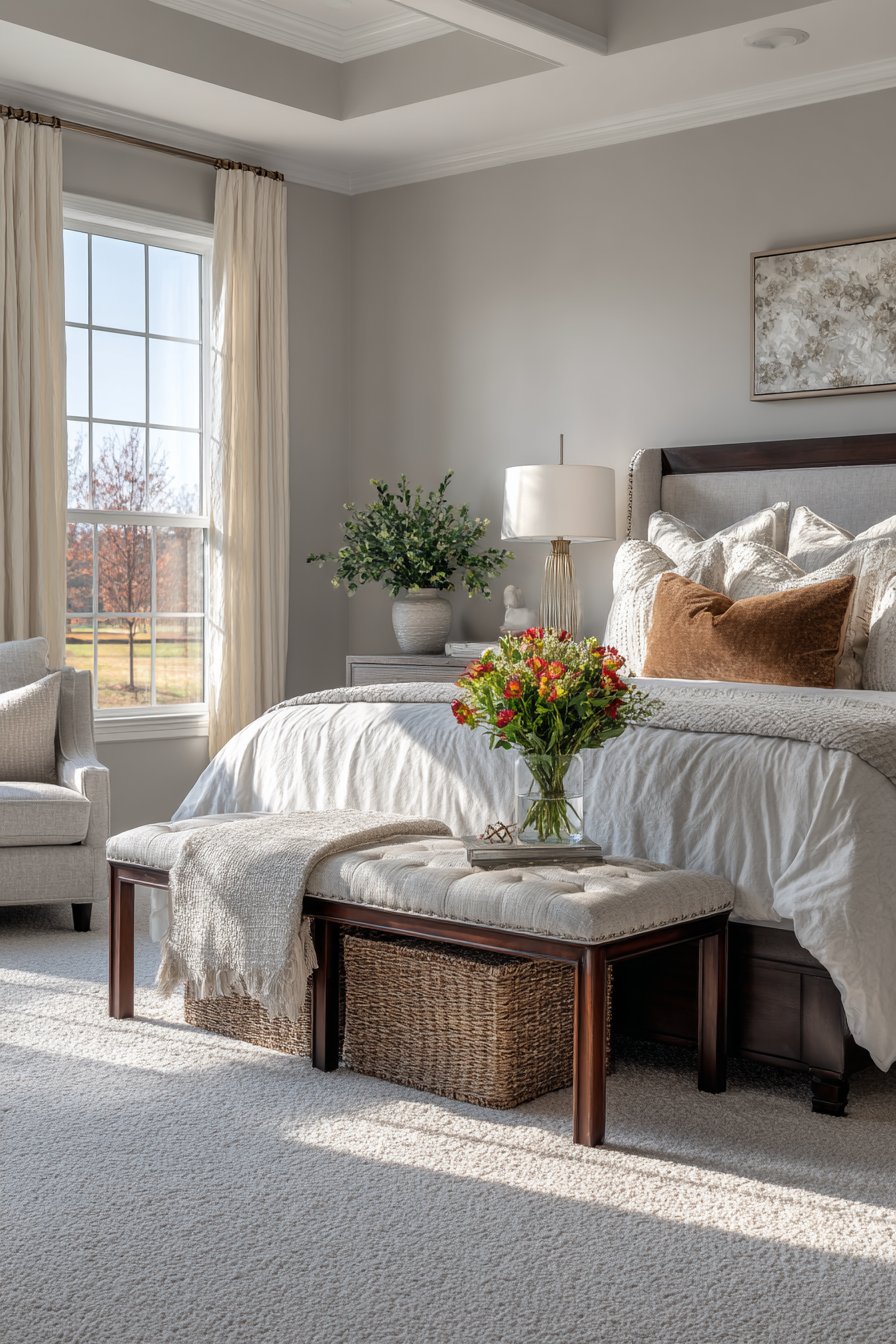
Imagine stepping into a master bedroom that seamlessly blends parental comfort with family functionality, where a cozy reading corner beckons for bedtime story sessions with children. The spacious layout features soft grey walls that create a calming atmosphere, perfectly complemented by warm oak flooring that adds natural warmth and durability to withstand family life.
At the foot of the bed, a plush upholstered bench serves dual purposes—providing comfortable seating while concealing generous storage underneath for extra blankets, pillows, and seasonal bedding.
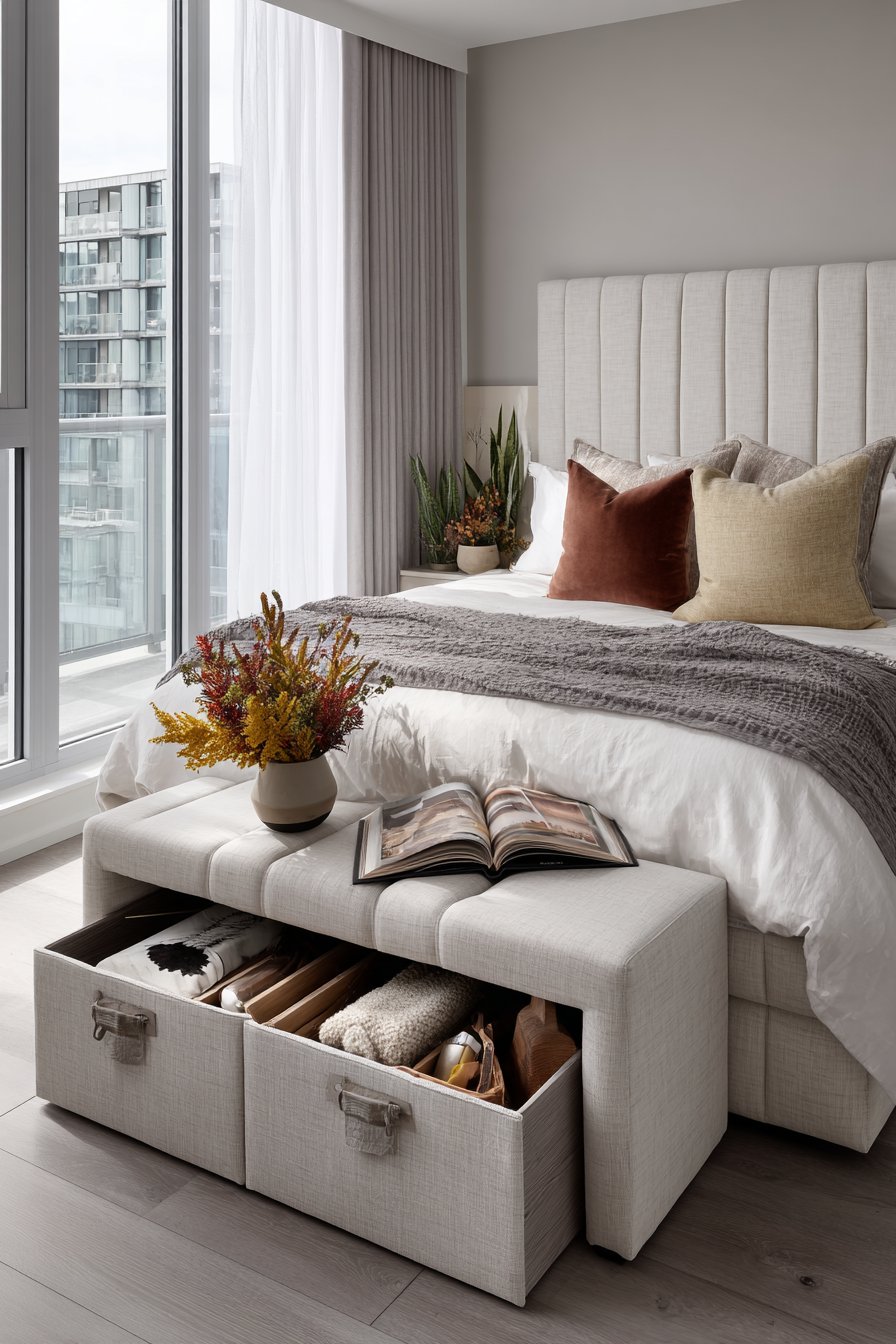
Natural morning light streams through sheer linen curtains, casting gentle shadows that dance across the room’s surfaces, creating an ever-changing interplay of light and texture. The reading corner, thoughtfully positioned near the window, invites parents and children to curl up together with favorite books, fostering those precious moments of connection that become cherished family memories. The neutral color palette ensures the space remains serene and restful, while the practical elements address the real needs of family living.
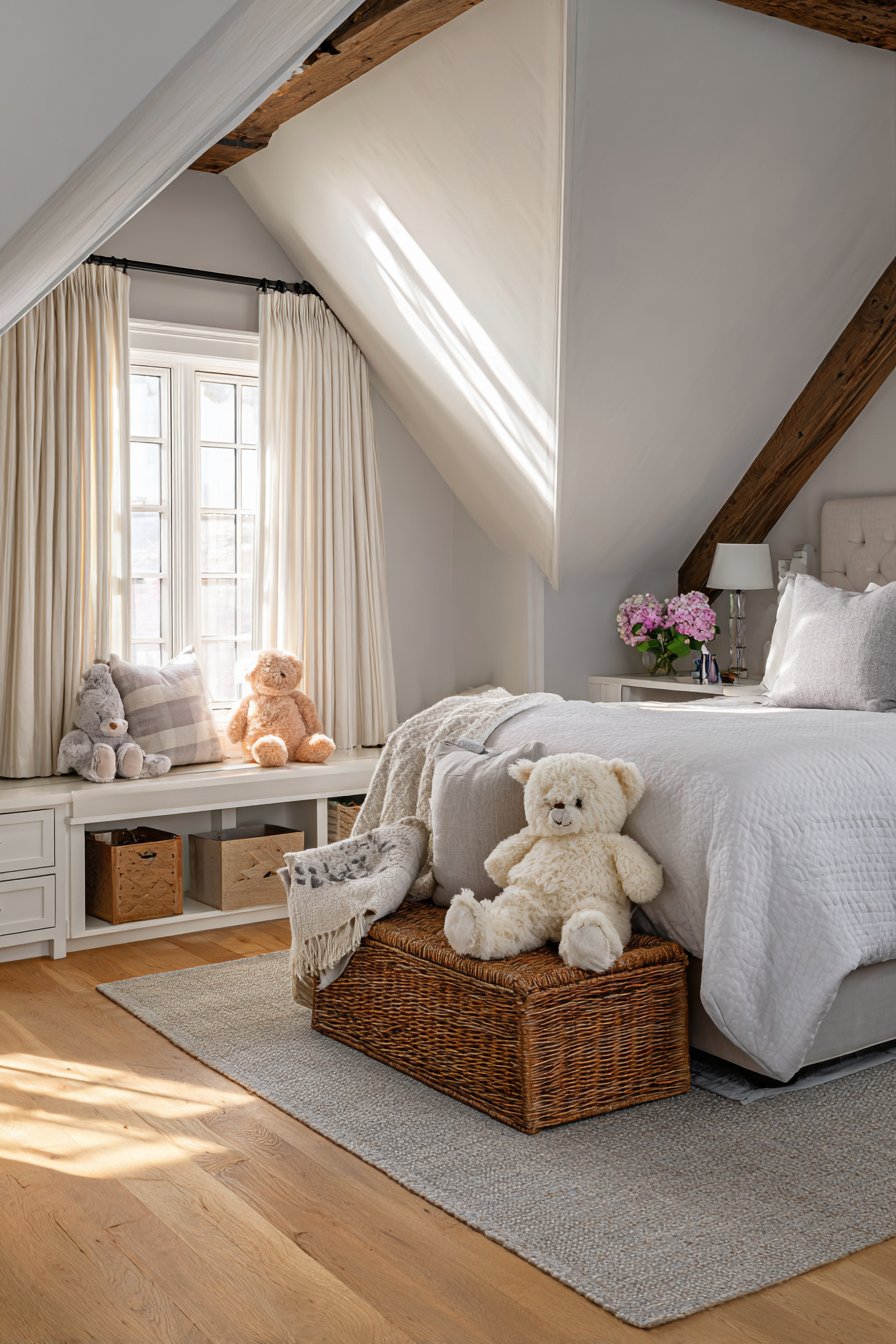
The beauty of this design lies in its ability to transition effortlessly from adult sanctuary to family gathering space. The oak flooring provides the perfect foundation for little feet padding across the room during early morning visits, while the storage bench keeps the space organized and clutter-free.
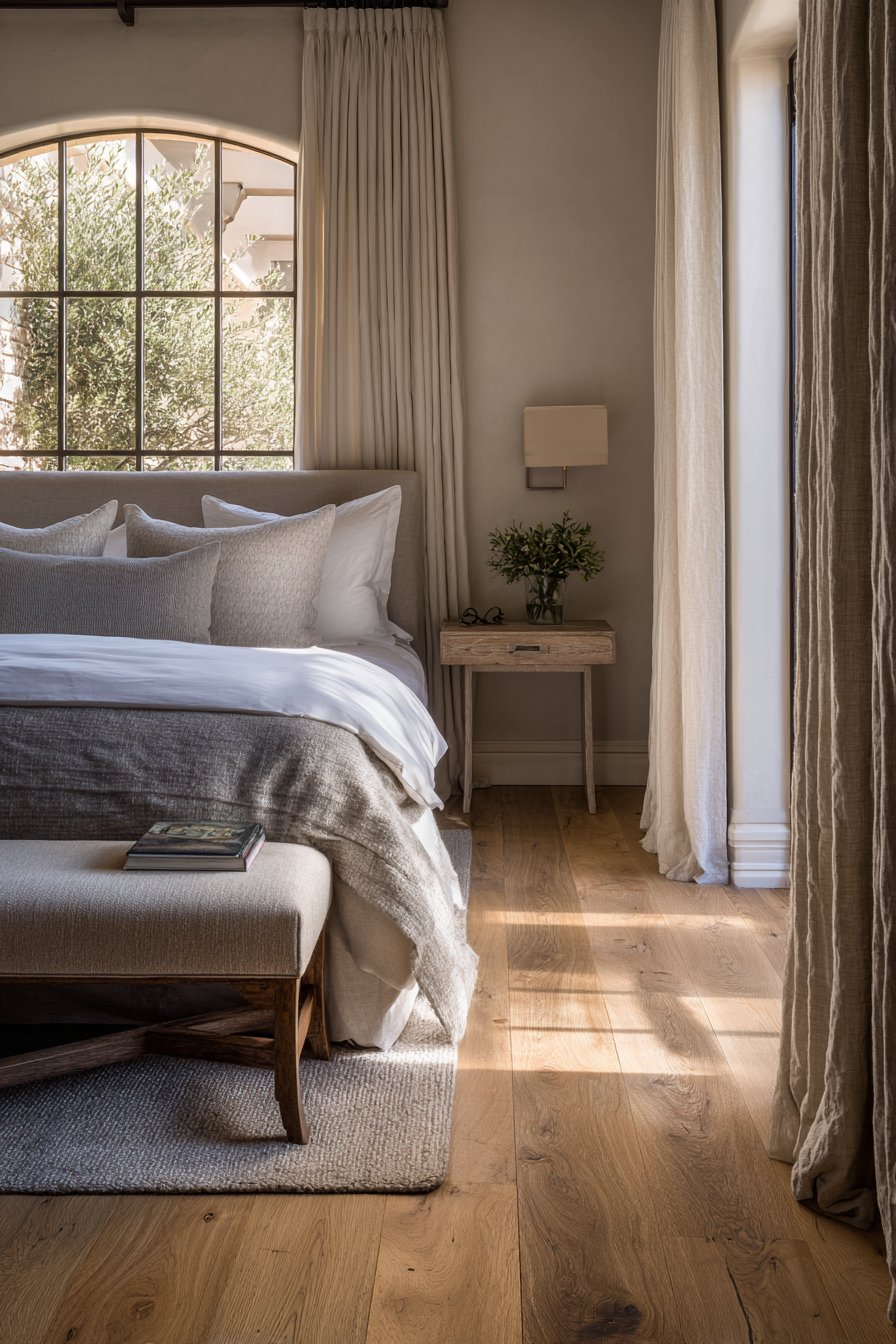
The soft grey walls serve as a versatile backdrop that works with changing decor preferences and can easily incorporate pops of color through accessories and artwork as your family’s style evolves.
Key Design Tips:
- Select upholstered furniture with performance fabrics that resist stains and wear from daily family use
- Install dimmable lighting to create an appropriate ambiance for different activities throughout the day
- Choose storage solutions that are accessible yet maintain the room’s sophisticated aesthetic
- Layer window treatments to control natural light while maintaining privacy and energy efficiency
- Incorporate washable area rugs to define spaces and add warmth without permanent commitment
2. Harmonious Shared Children’s Room
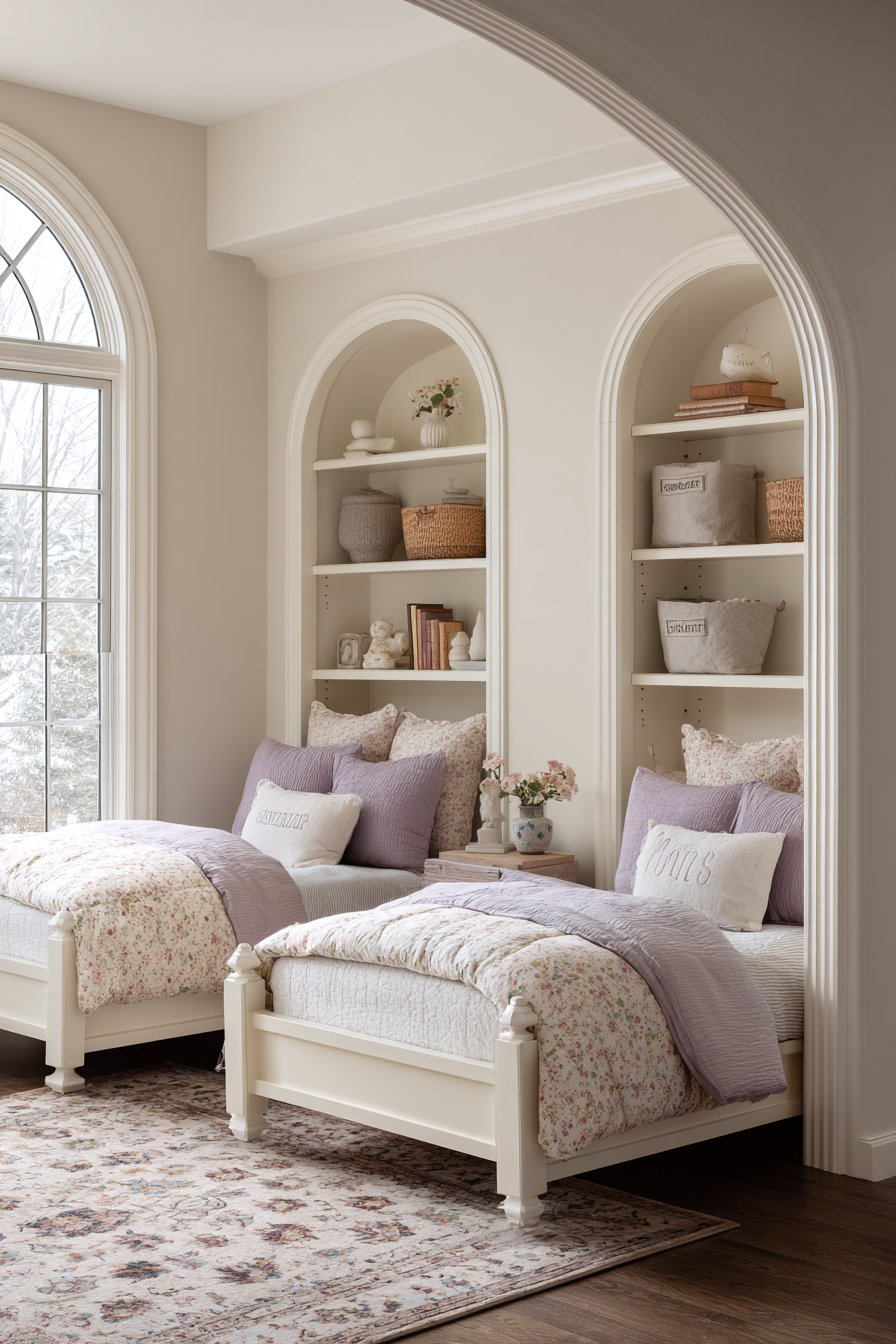
A thoughtfully designed shared children’s room celebrates individuality while promoting sibling harmony through clever spatial planning and personalized touches. Two twin beds positioned along opposite walls create symmetry and fairness, each dressed in complementary soft colors that allow siblings to express their unique personalities while maintaining visual cohesion. The central area rug defines a small play space between the beds, establishing neutral territory where collaboration and imagination flourish.
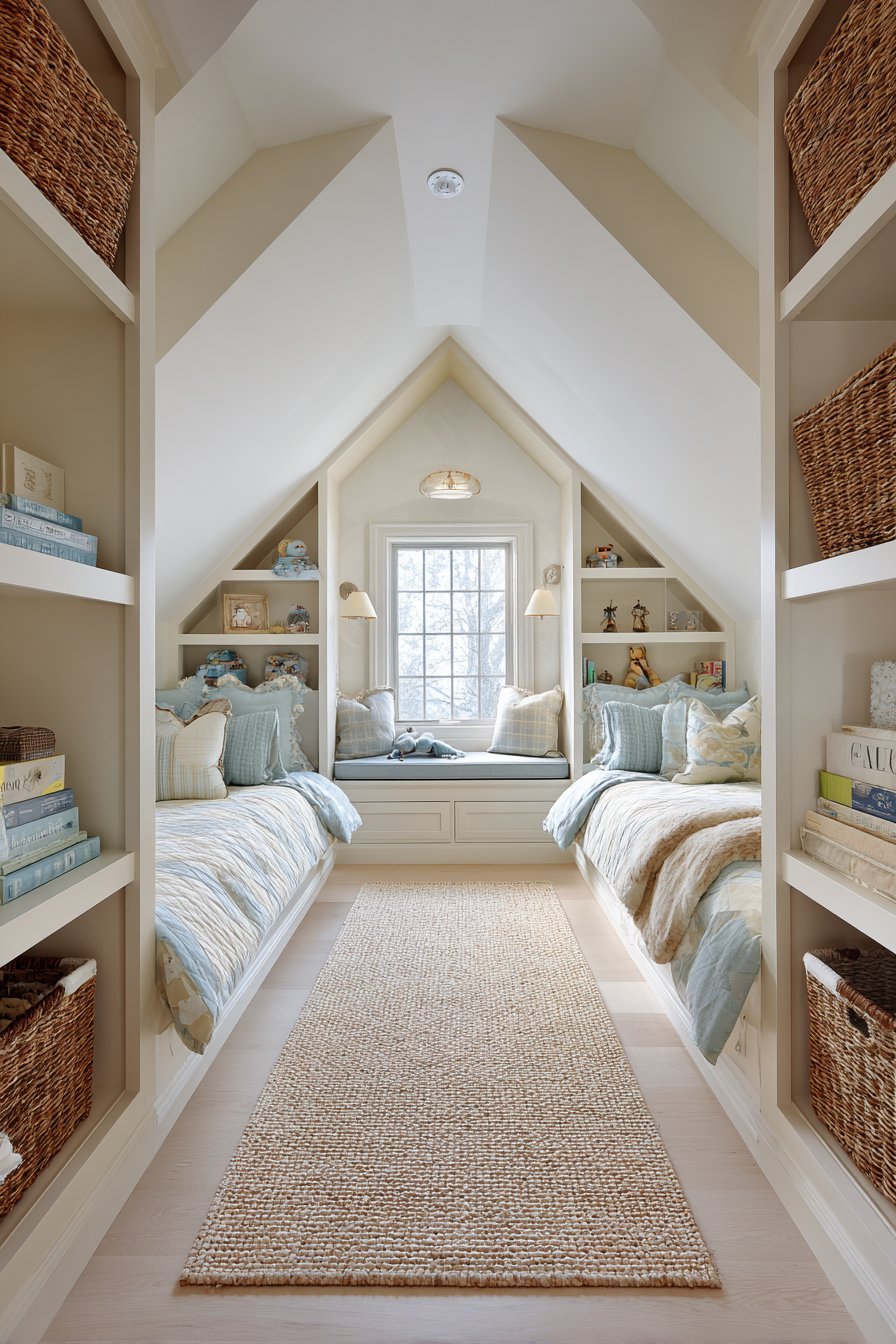
Built-in shelving units flank each bed, providing individual storage solutions with fabric bins in coordinating neutral tones that keep toys, books, and personal treasures organized yet easily accessible. Natural daylight floods the room through a large window, illuminating the functional layout and creating an inviting atmosphere that encourages both play and rest. The strategic placement of beds maximizes floor space while ensuring each child has their own defined territory within the shared environment.
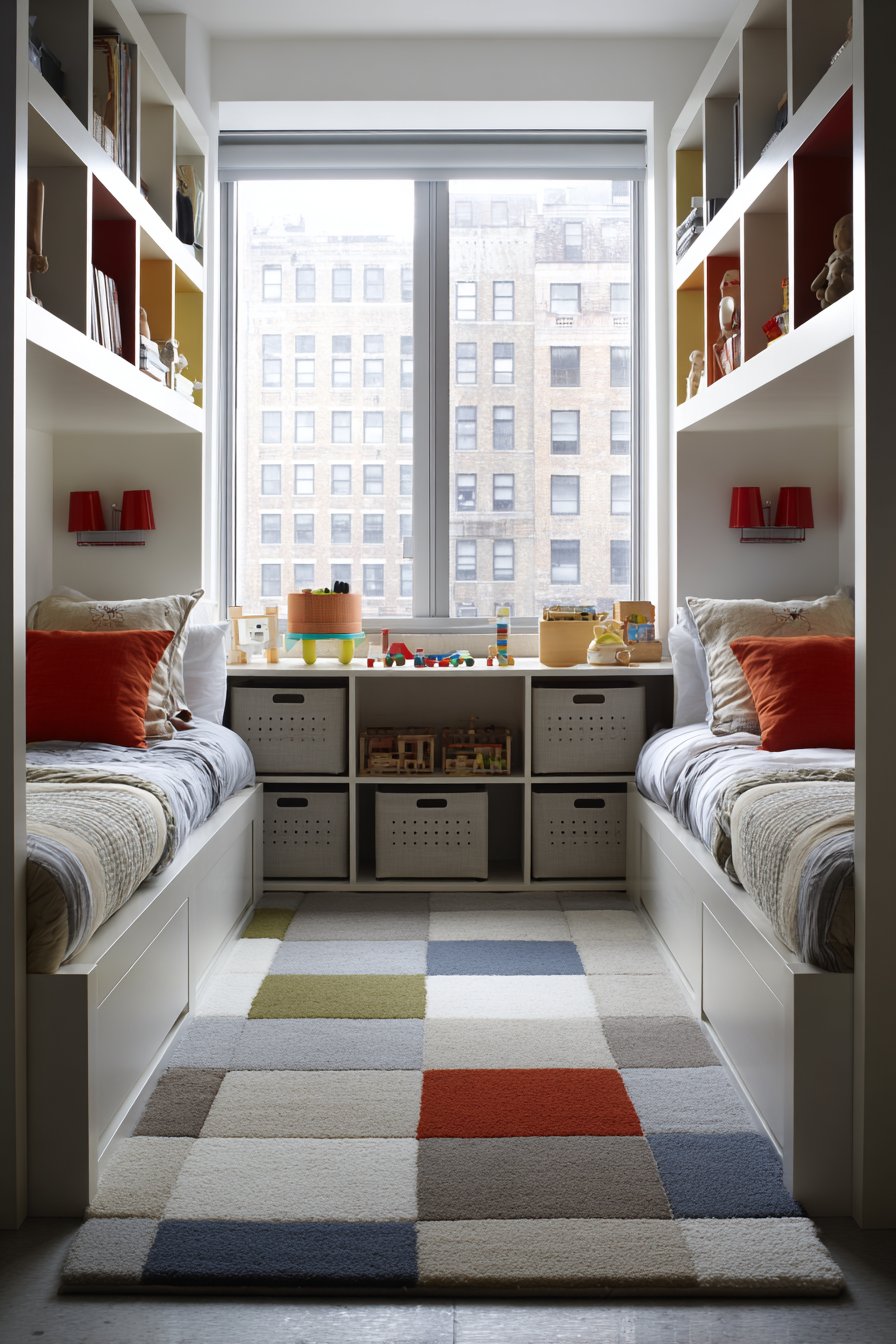
This design approach recognizes that shared bedrooms can actually strengthen sibling relationships when executed thoughtfully. By providing equal space, storage, and personalization opportunities, the room promotes fairness and reduces potential conflicts over territory. The neutral foundation allows for easy updates as children grow and their preferences evolve, making this a long-term solution that adapts to changing family needs.
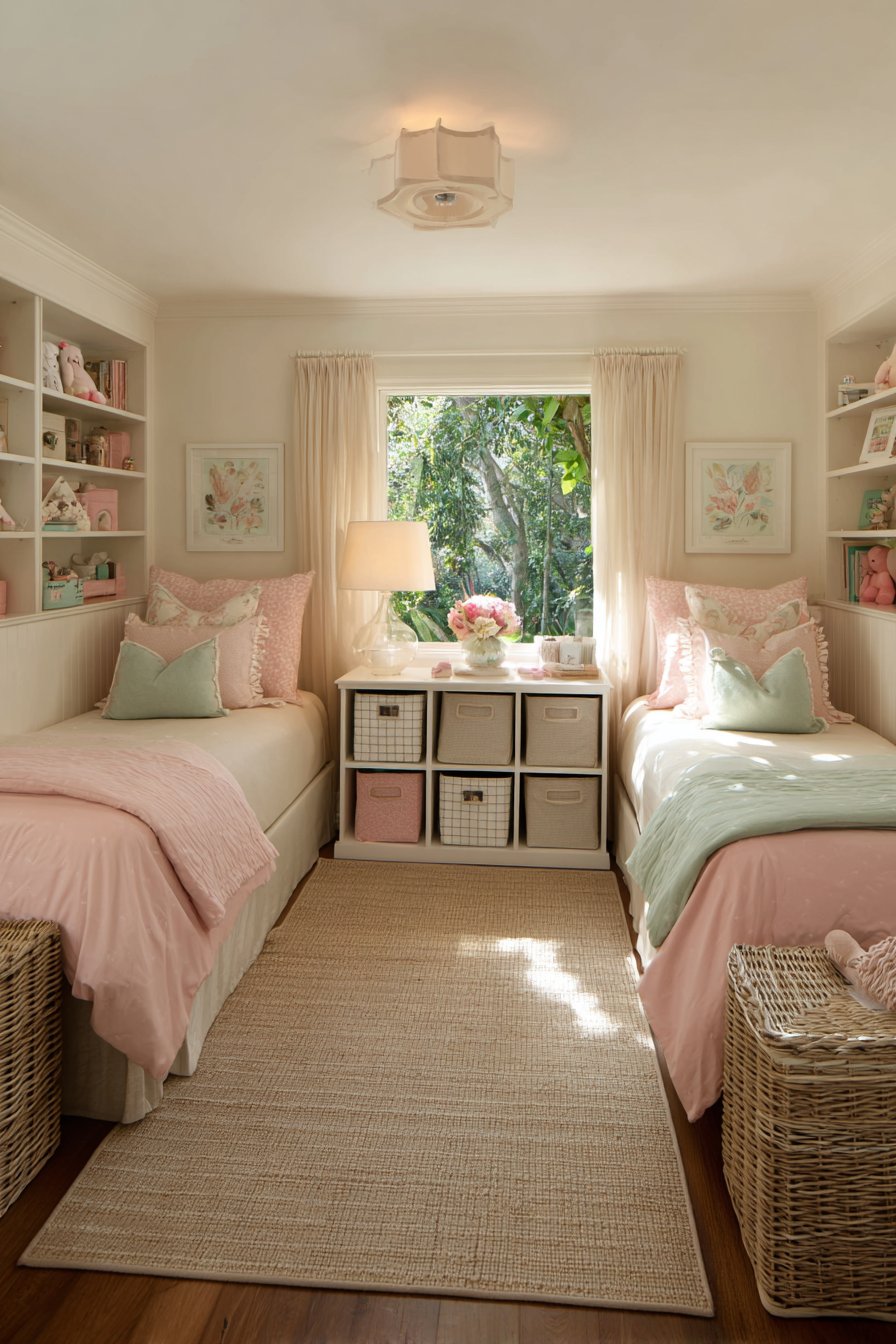
The soft color palette creates a calming environment conducive to both energetic play and restful sleep, while the practical storage solutions teach children organizational skills from an early age. The open floor plan encourages interaction and shared activities, transforming the bedroom into more than just a sleeping space—it becomes a backdrop for childhood adventures and lasting sibling bonds.
Key Design Tips:
- Create visual balance by giving each child equal space, storage, and personalization opportunities
- Choose adjustable shelving systems that grow with your children’s changing needs and heights
- Use coordinating but distinct color schemes to honor individual preferences within a unified design
- Incorporate task lighting at each bed for independent reading and homework sessions
- Select durable, easy-to-clean materials that withstand the wear and tear of childhood activities
3. Modern Farmhouse Safety-Conscious Master Bedroom
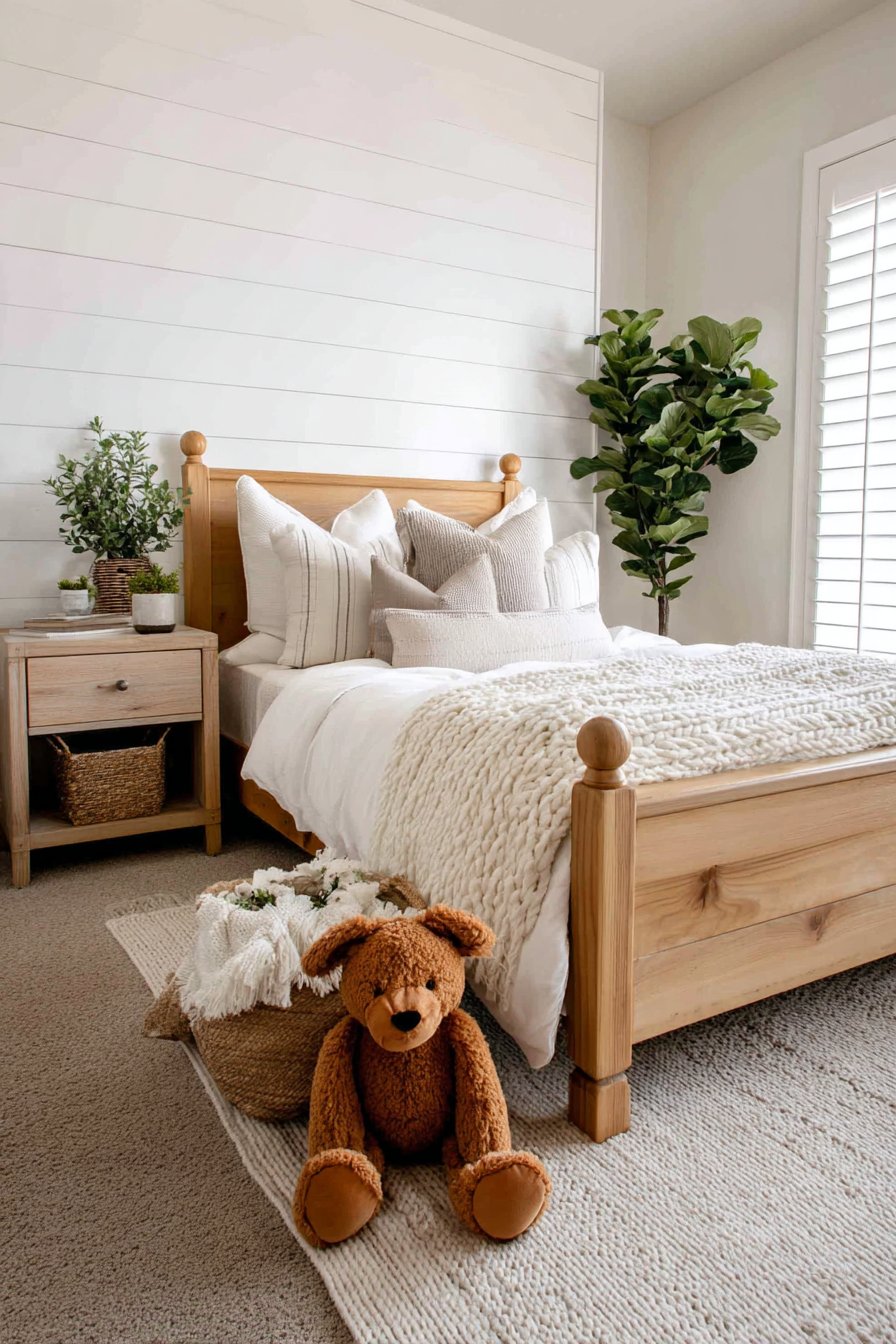
The modern farmhouse aesthetic brings rustic charm and contemporary comfort together in a master bedroom designed with family safety at its heart. A striking shiplap accent wall in soft white creates the perfect focal point, adding architectural interest without overwhelming the space.
The sturdy wooden bed frame features thoughtfully rounded edges, ensuring that early morning visits from excited children don’t result in bumped heads or bruised shins.
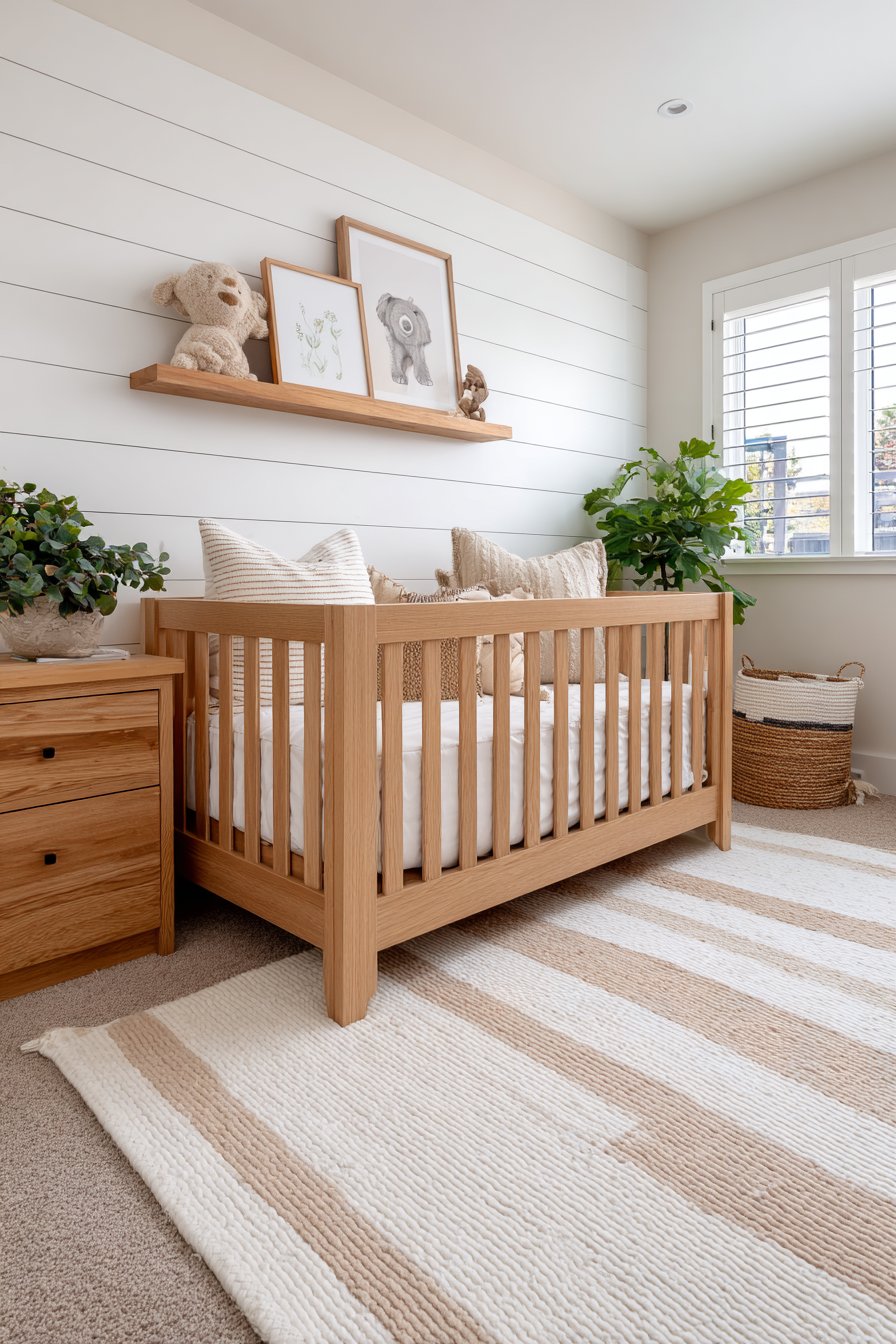
Every detail in this room considers the intersection of style and family practicality. Nightstands equipped with soft-close drawers prevent pinched fingers during rushed morning routines or bedtime preparations. The washable area rug in neutral tones anchors the space while providing easy maintenance—crucial when sippy cups spill or muddy feet track across the floor. Natural light filters through plantation shutters, creating beautiful striped patterns while offering excellent light control and privacy.
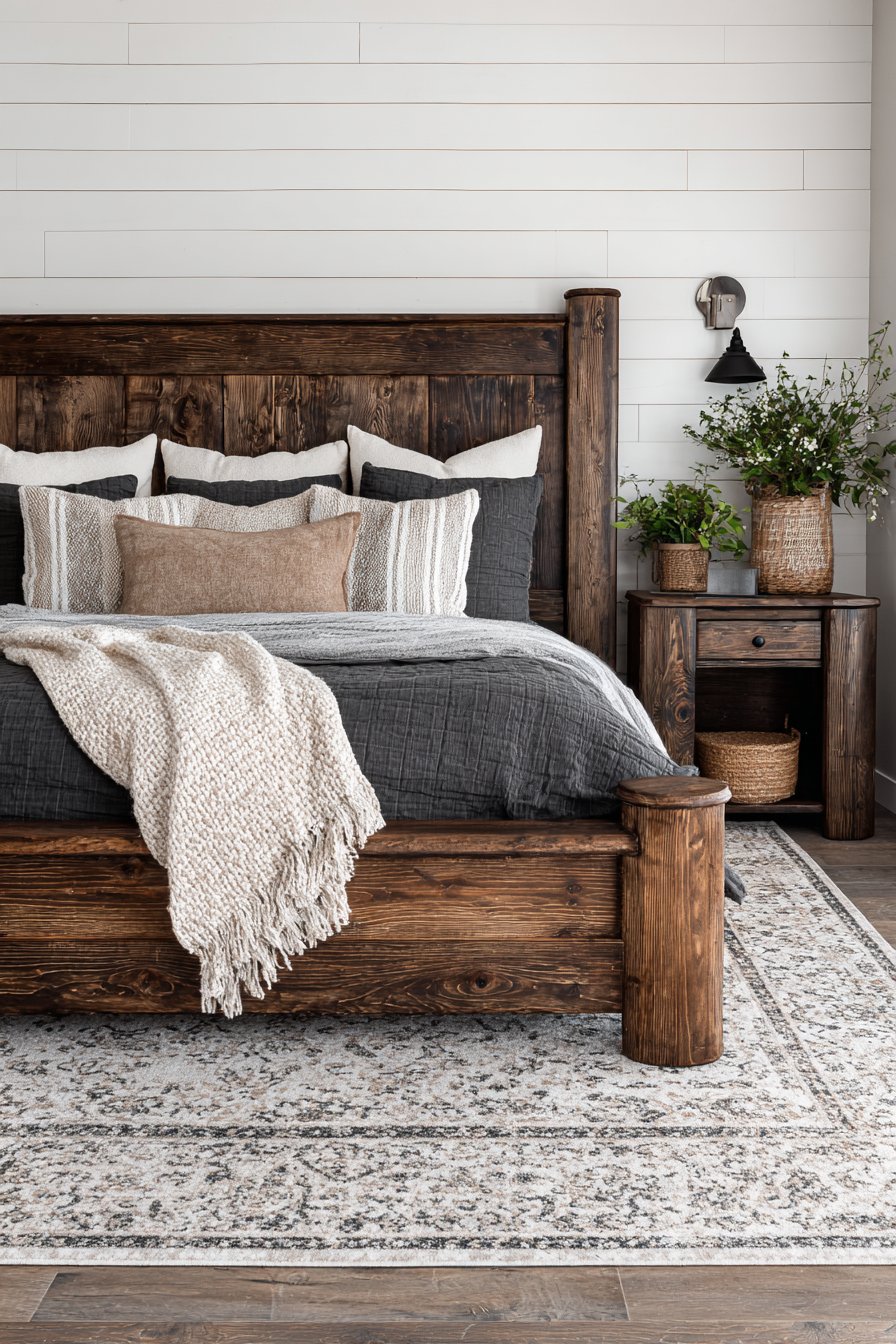
The farmhouse style’s inherent warmth and approachability make it ideal for family-oriented spaces. The white shiplap brings brightness and airiness to the room, visually expanding the space while creating a serene backdrop for daily life.
The wooden elements introduce natural texture and organic warmth, connecting the interior space to nature’s calming influence. This design proves that child-friendly features don’t require sacrificing sophisticated style—they can enhance it when thoughtfully integrated.
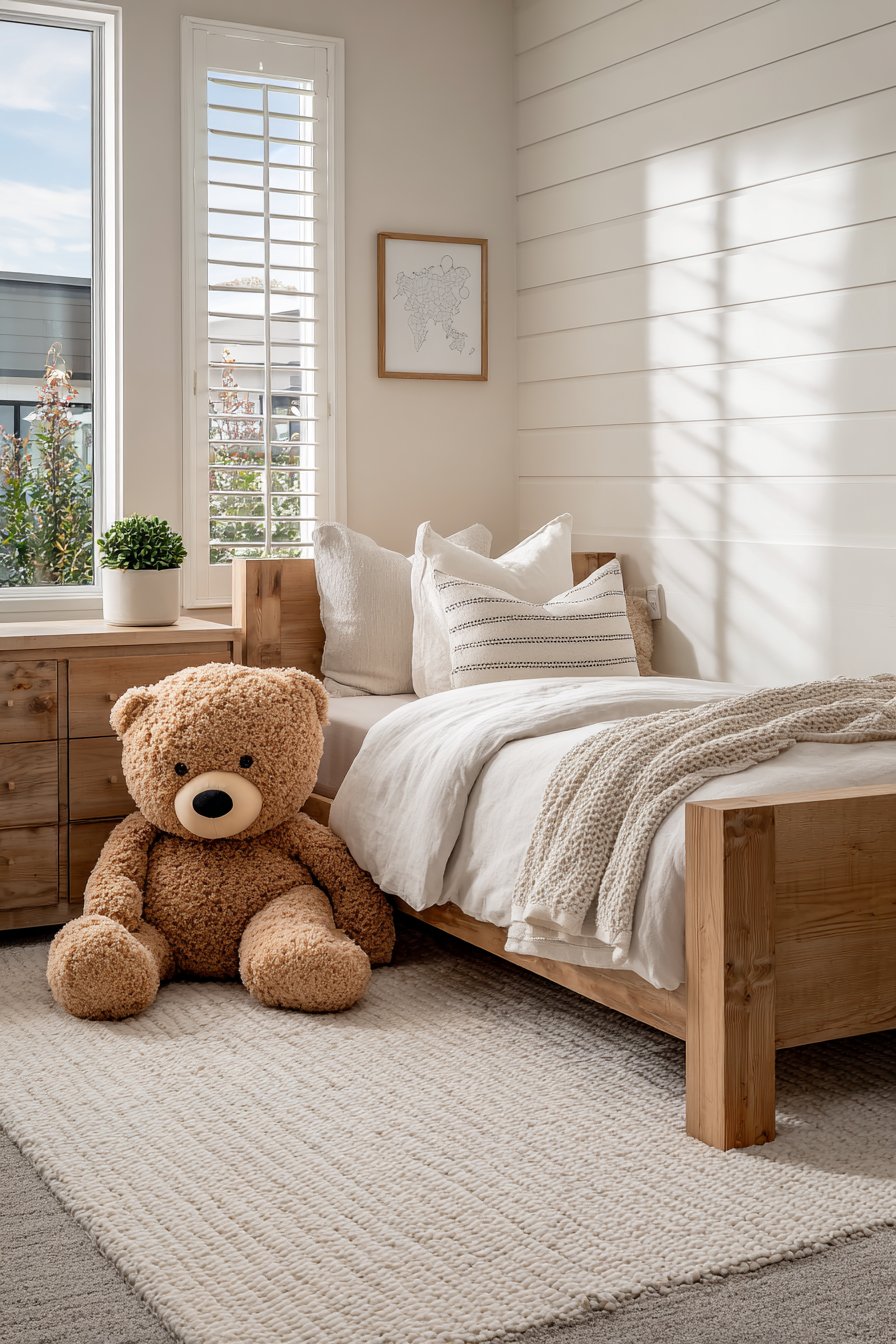
The durability of farmhouse materials stands up beautifully to family life’s demands. Wood develops character over time rather than showing wear, while the simple, honest materials create an unpretentious environment where perfection isn’t required. This forgiving quality makes the space more livable and less stressful for parents who want beauty without constant maintenance anxiety.
Key Design Tips:
- Prioritize rounded corners and soft edges on all furniture pieces to prevent injuries
- Install soft-close mechanisms on drawers and doors throughout the bedroom
- Choose white or light-colored walls to maximize natural light and create spacious feel
- Select washable, stain-resistant textiles for all soft furnishings and window treatments
- Incorporate natural wood tones to add warmth and organic texture to the clean palette
4. Organized Master Bedroom with Custom Storage
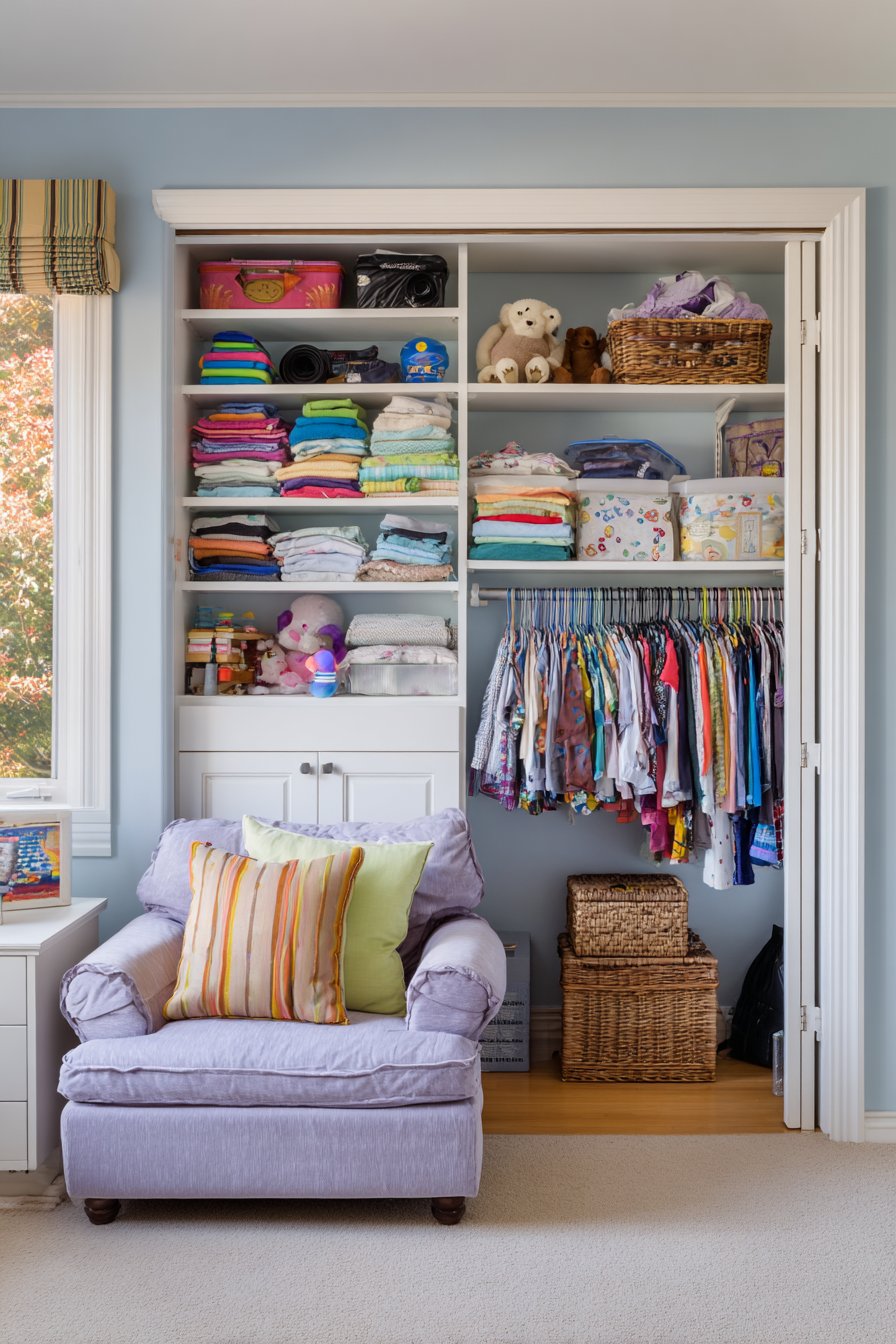
Storage solutions take center stage in this master bedroom where a custom closet system transforms chaos into calm, showcasing organized sections for both adult and children’s items within easy reach. The visible organizational systems demonstrate that practical functionality can be aesthetically pleasing when executed with attention to detail and quality materials. The main bedroom extends beyond sleeping quarters to include a comfortable seating area featuring a small loveseat—the perfect spot for family cuddle time, quiet conversations, or simply watching children play.
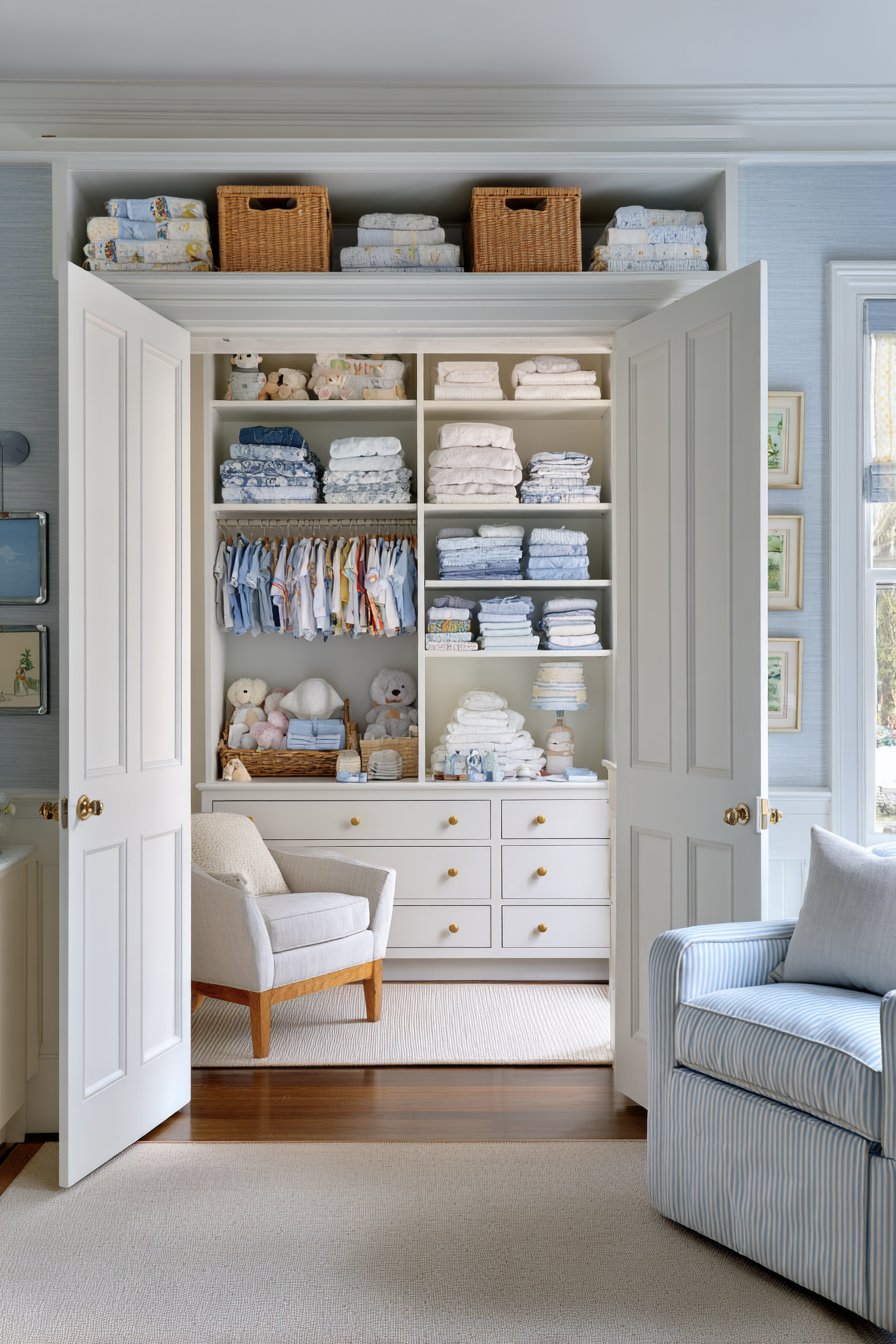
Soft blue-grey walls create a tranquil foundation that complements light wood furniture pieces, establishing a cohesive color story that feels both contemporary and timeless. The thoughtful layout maximizes every square foot, proving that good design isn’t about size but about smart space utilization.
Natural lighting from bedside lamps creates warm ambiance during evening hours, while the room’s organization systems ensure that everything has its place, reducing daily stress and creating visual harmony.
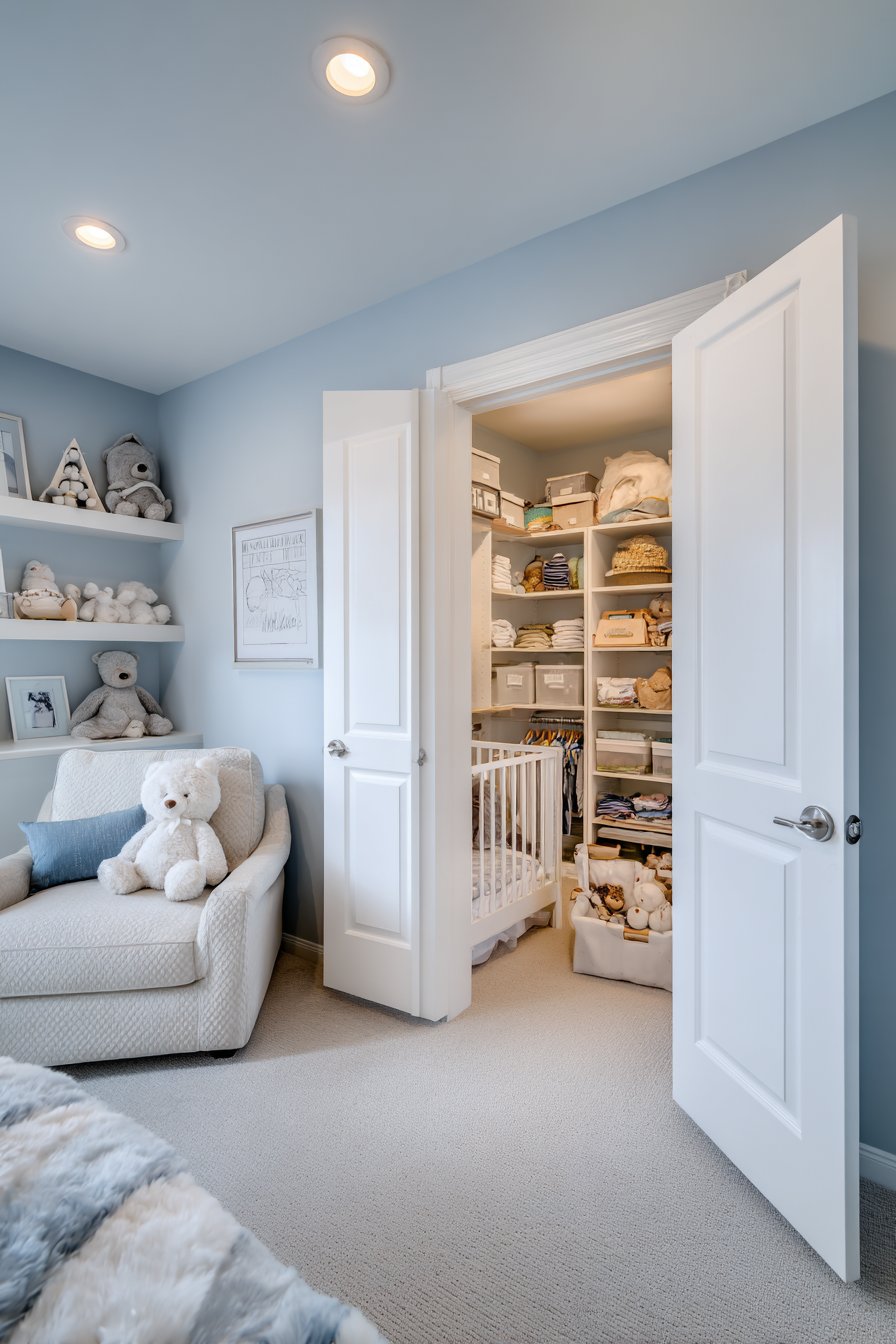
The genius of this design lies in its recognition that modern family bedrooms serve multiple functions simultaneously. They’re sleeping quarters, certainly, but also storage hubs, family gathering spots, and quiet retreats from household activity. By openly embracing these varied purposes rather than hiding them, the design creates an honest, livable space that truly serves family needs.
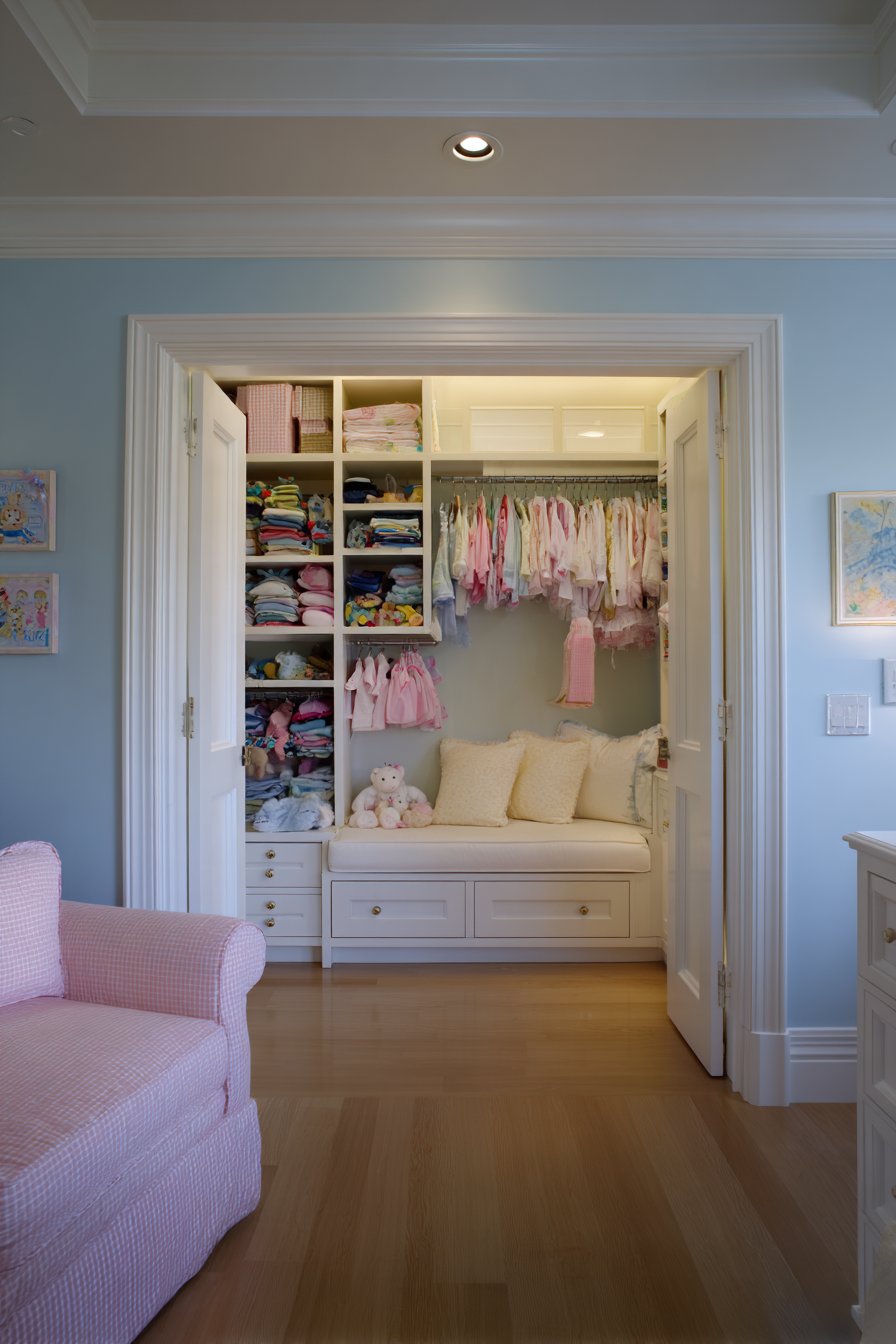
The custom closet system, far from being merely utilitarian, becomes a design feature in itself. Well-lit and beautifully organized, it demonstrates that storage can be showcased rather than concealed when executed with care. The inclusion of children’s storage within the master bedroom acknowledges the reality of family life—sometimes kids’ items need to be accessible in parental spaces for morning routines, bedtime preparations, or simply keeping frequently used items within reach.
Key Design Tips:
- Invest in custom closet systems that maximize vertical space and organize items by category
- Include dedicated children’s storage in master bedrooms for morning routine essentials
- Create multi-functional seating areas that accommodate various family activities
- Use calming colors like blue-grey to promote relaxation and reduce visual stimulation
- Install adequate lighting throughout, including task lighting for specific activities and ambient lighting for overall atmosphere
5. Scandinavian-Inspired Shared Children’s Space
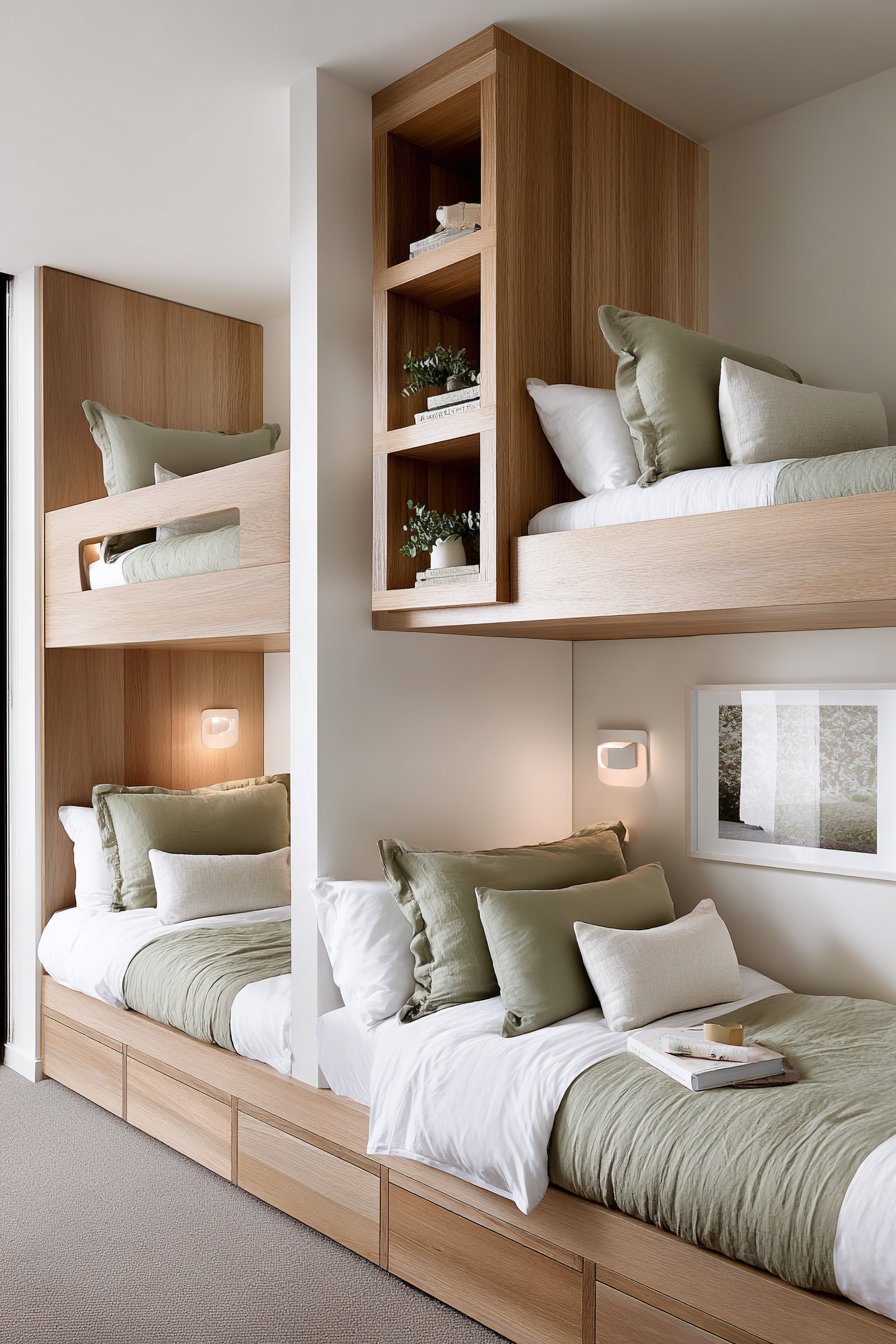
Clean lines, functional beauty, and child-friendly design converge in this Scandinavian-inspired shared bedroom where bunk beds crafted from blonde wood maximize floor space while maintaining an airy, uncluttered aesthetic.
Safety rails provide essential protection without appearing bulky or institutional, seamlessly integrating into the bed’s elegant design. A compact desk area nestled between the beds serves homework needs while teaching children the importance of dedicated workspace within their personal environment.
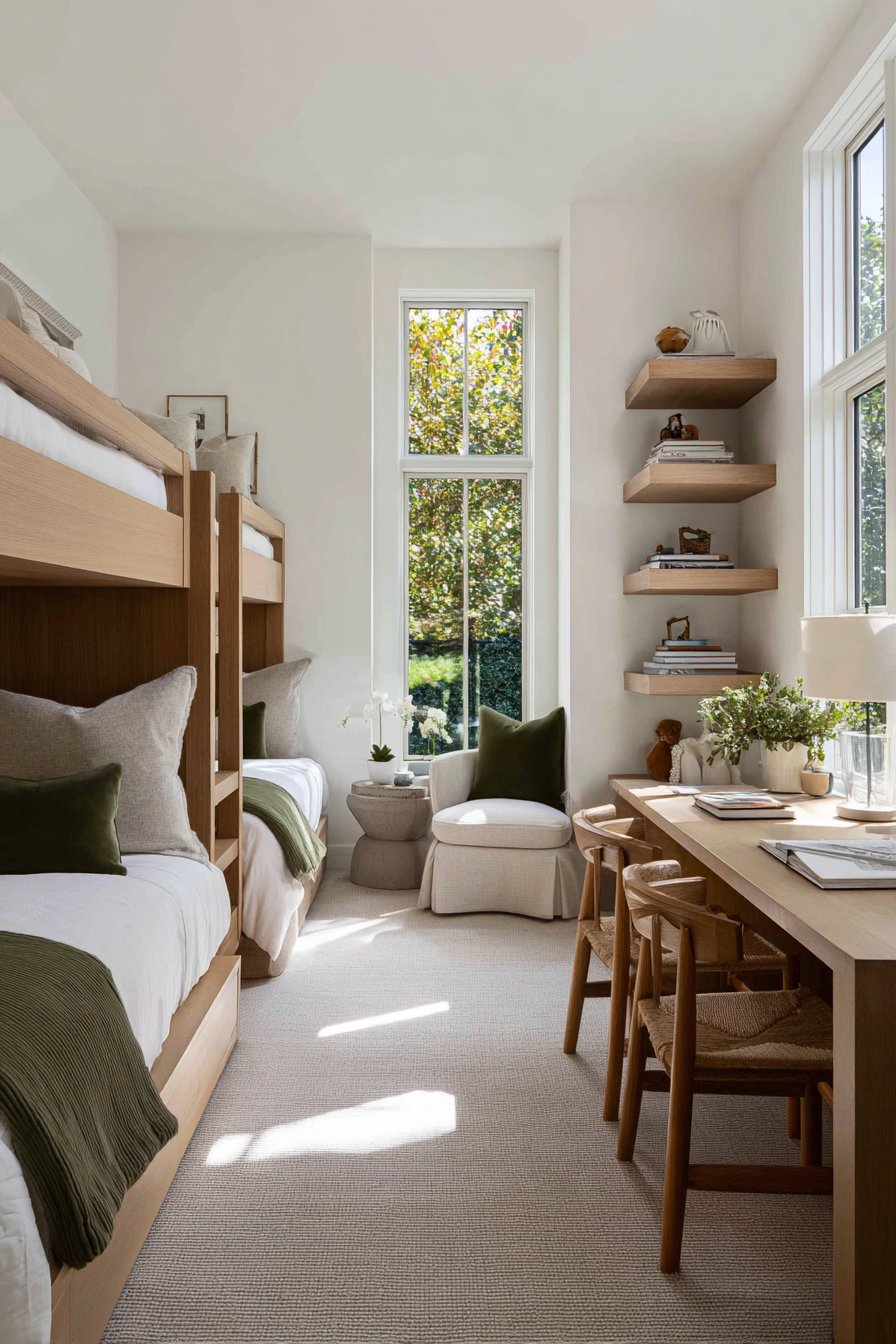
Floating shelves display books and small decorative items within easy reach, encouraging children to access their belongings independently while keeping the floor clear for play and movement. White walls create a bright, expansive backdrop, while pops of sage green in bedding introduce color without overwhelming the serene atmosphere. This thoughtful use of accent color demonstrates the Scandinavian principle of finding beauty in simplicity and restraint.

The Scandinavian design philosophy—emphasizing functionality, natural materials, and minimalism—proves particularly well-suited to family spaces. The uncluttered environment reduces visual chaos, creating a calm atmosphere conducive to both focus and rest.
The blonde wood introduces warmth and organic texture without the heaviness of darker woods, maintaining the room’s light, airy quality that makes even compact spaces feel generous.
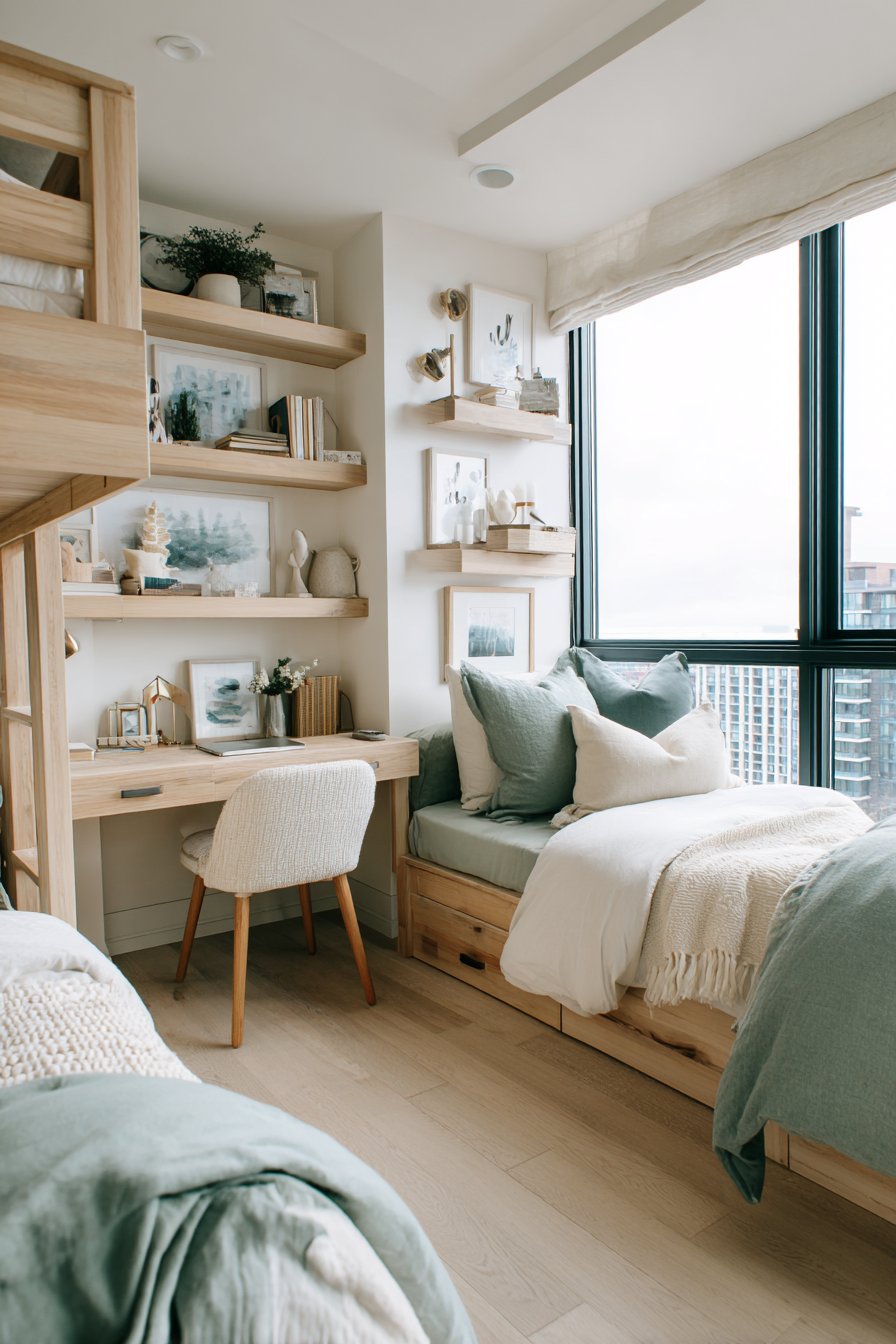
This design approach teaches children valuable lessons about organization, simplicity, and appreciating quality over quantity. The floating shelves encourage thoughtful display of favorite items rather than accumulation of clutter, while the integrated desk promotes good study habits from an early age. The result is a space that grows with children, remaining relevant and functional through various developmental stages.
Key Design Tips:
- Choose multifunctional furniture pieces that serve multiple purposes within limited space
- Maximize vertical storage to keep floor areas clear for play and movement
- Incorporate natural wood in light finishes to add warmth without visual weight
- Use white as the primary color with restrained accent colors for pops of interest
- Select streamlined furniture with clean lines that won’t overwhelm smaller rooms
6. Transitional Style Family-Friendly Master Suite
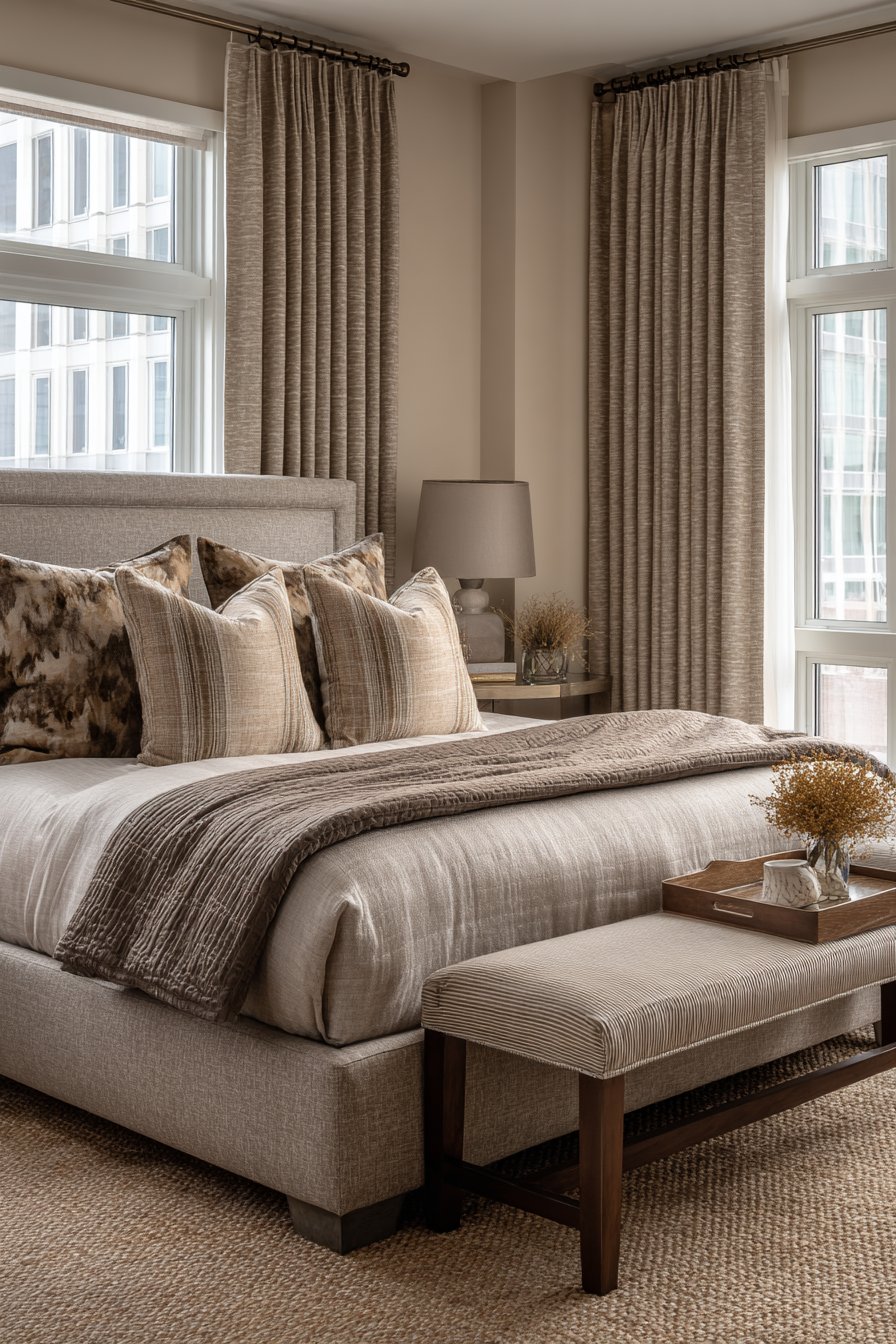
Performance meets elegance in this transitional master bedroom where every design decision balances aesthetic appeal with the practical demands of family life. The low-profile upholstered bed frame, covered in durable performance fabric, withstands the inevitable jumping, climbing, and general wear that comes with children who view parent’s bed as prime real estate for morning cuddles and evening storytelling. A bench positioned at the foot of the bed provides versatile seating for putting on shoes, folding laundry, or simply perching during conversations.
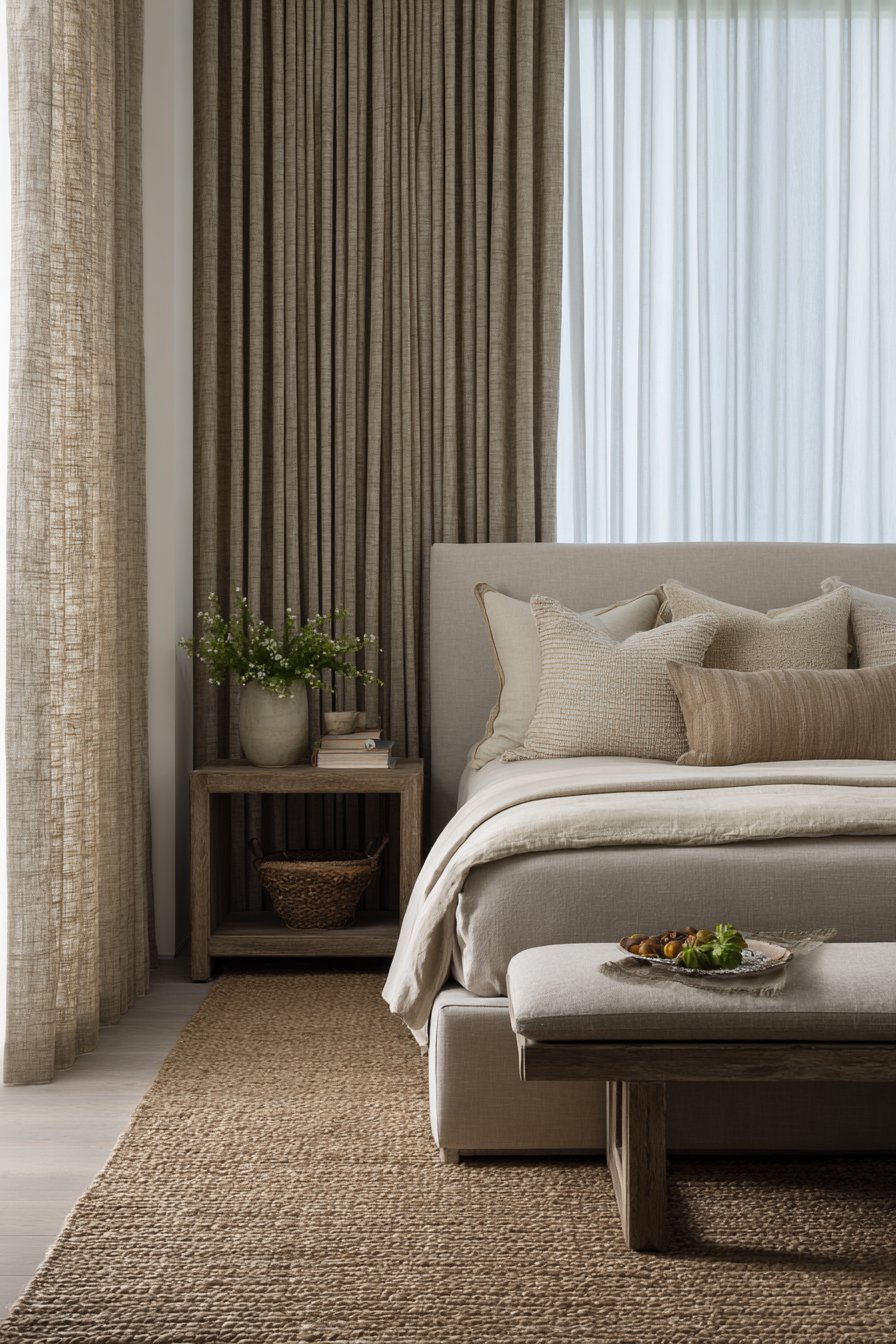
Warm beige tones throughout create a serene, enveloping environment that feels like a welcoming embrace at day’s end. The transitional style—bridging traditional comfort and contemporary clean lines—offers timeless appeal that won’t feel dated as years pass and family needs evolve.
Textured linen curtains add subtle pattern and visual interest while diffusing natural light, creating gentle illumination that flatters and soothes. The natural jute rug introduces organic texture underfoot while providing practical benefits—it’s durable, hides dirt well, and adds warmth without the maintenance challenges of plush carpeting.
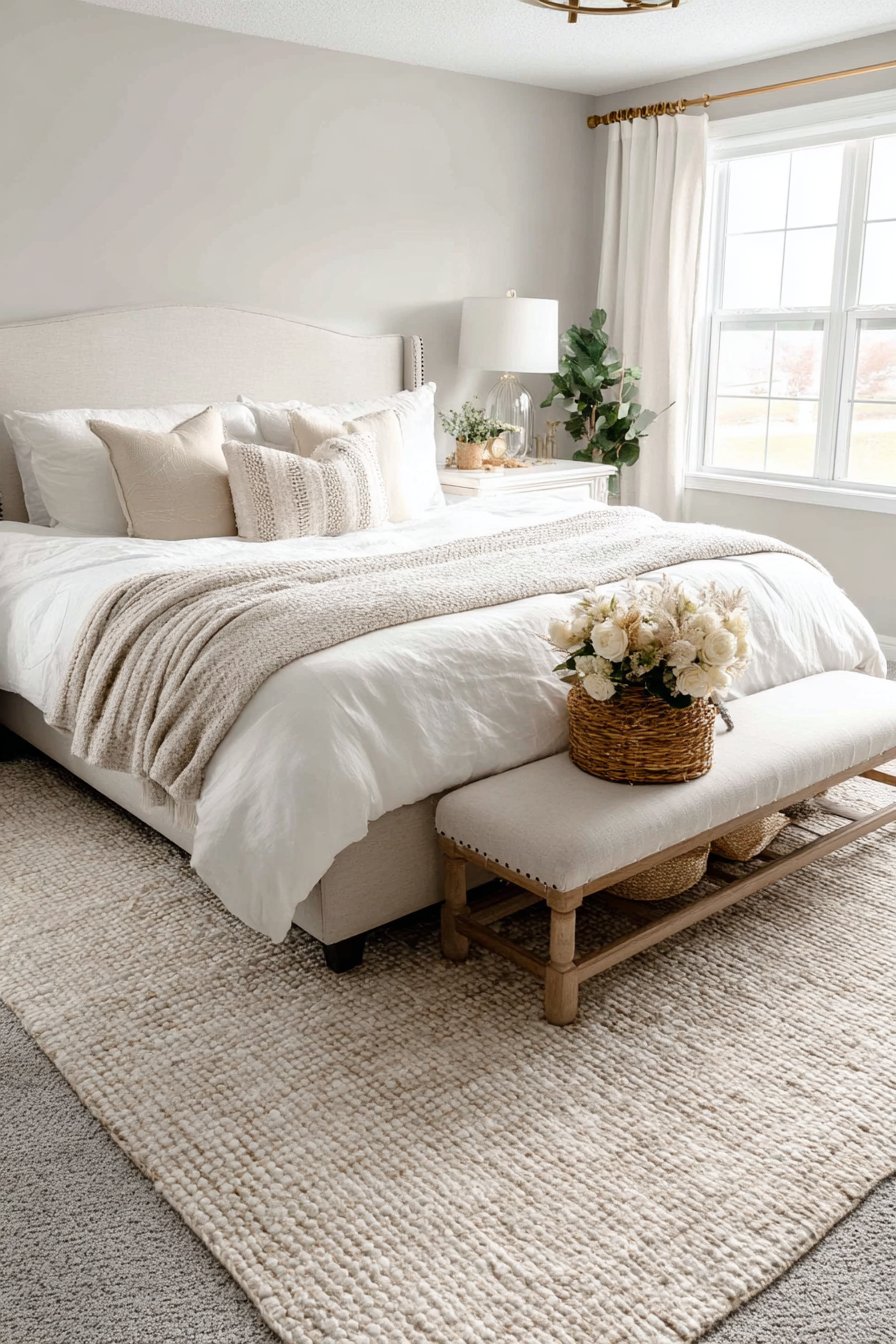
This design exemplifies how luxury and livability can coexist when materials are chosen wisely. Performance fabrics have evolved far beyond their utilitarian origins, now offering sophisticated textures and rich colors that rival traditional upholstery while providing stain resistance and durability essential for family homes. The transitional aesthetic’s flexibility allows for easy updates through accessories, ensuring the room evolves gracefully with changing tastes.

The neutral color palette creates a restful retreat from the colorful chaos often present in other areas of family homes. This doesn’t mean boring—the layers of beige, cream, and warm grey create depth and sophistication through varied textures and subtle tonal shifts. The room becomes a study in how restraint can create impact, proving that family-friendly design need not sacrifice style for substance.
Key Design Tips:
- Invest in performance fabrics that offer both beauty and practical stain resistance
- Layer neutral tones in various textures to create depth without relying on color
- Include versatile seating pieces that serve multiple functions throughout the day
- Choose window treatments that balance light control, privacy, and aesthetic appeal
- Select natural fiber rugs that combine durability with organic warmth and texture
7. Gender-Neutral Symmetrical Shared Bedroom
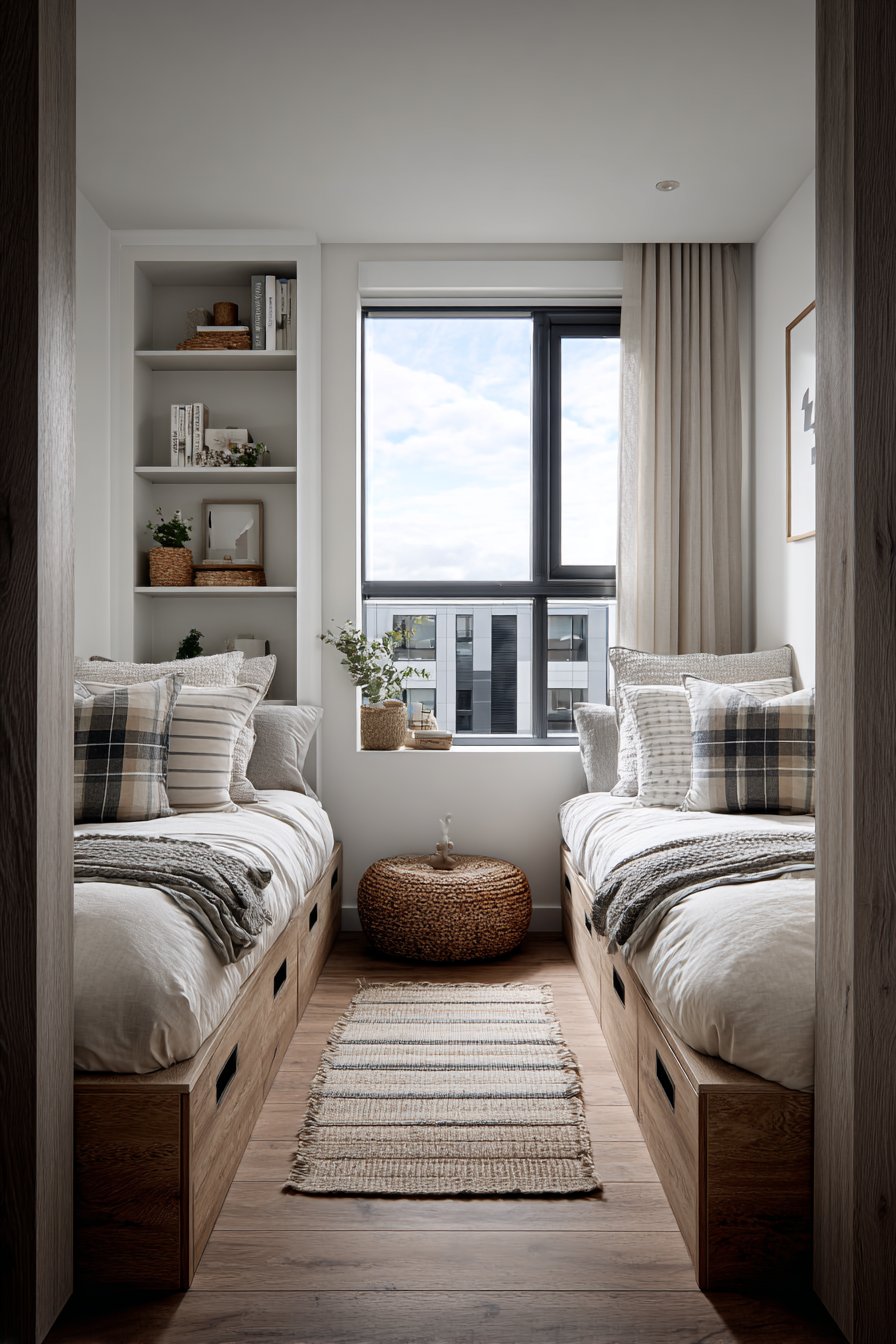
Symmetry and smart storage solutions define this gender-neutral shared bedroom where matching storage beds create perfect balance while maximizing every inch of available space. Drawers built into the bed frames eliminate the need for additional dressers, keeping the room open and navigable while providing ample storage for each child’s clothing and personal items. The calming palette of soft greys and warm whites creates a peaceful environment that transcends gender stereotypes and grows gracefully with children as they mature.
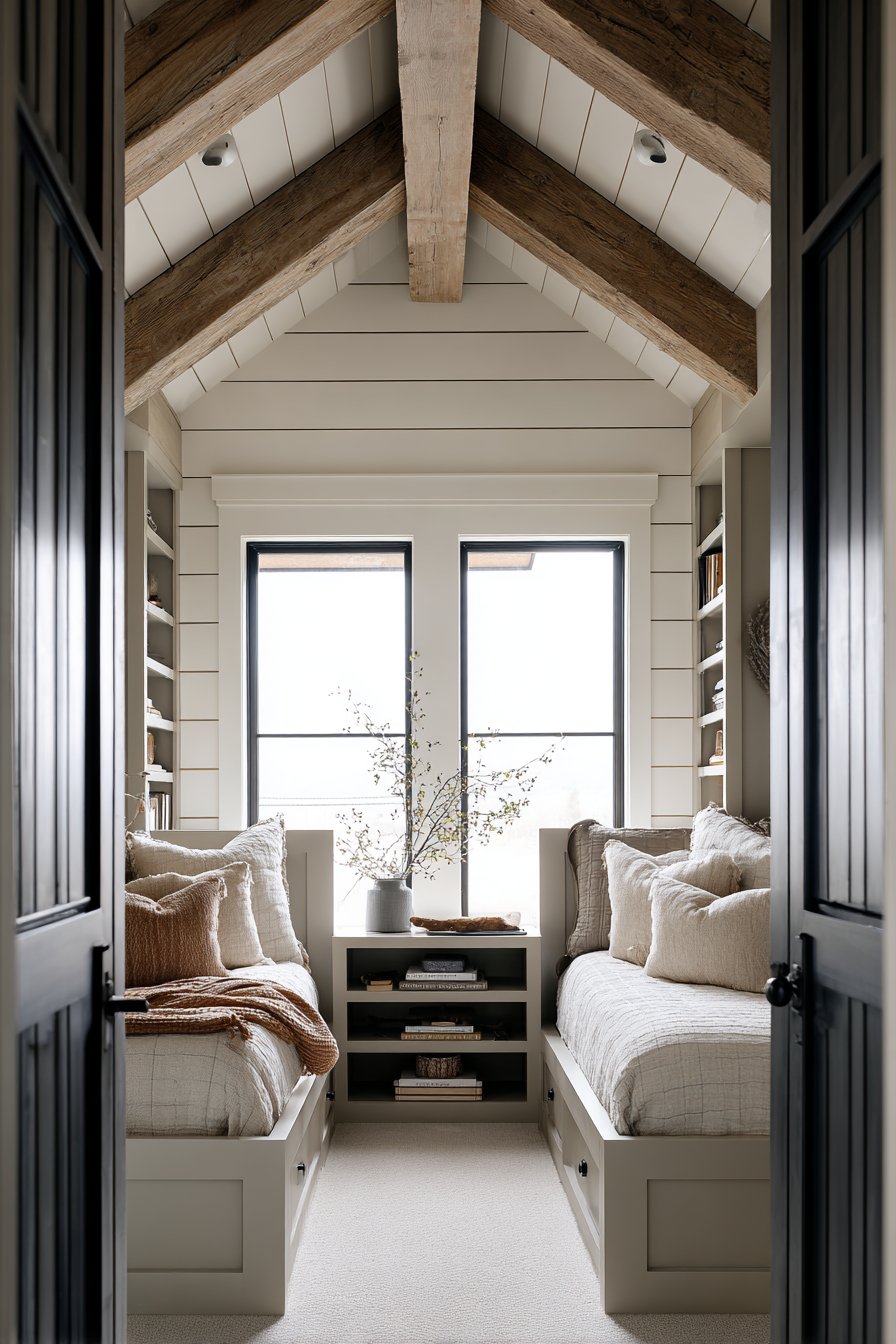
A central bookshelf divider serves as a brilliant compromise between privacy and openness, allowing siblings to maintain individual territories while preserving the room’s sense of spaciousness and connection. Natural light from dual windows creates balanced illumination throughout the space, ensuring neither side feels darker or less desirable. This thoughtful approach to fairness prevents the common sibling rivalry over who gets the “better” side of a shared room.
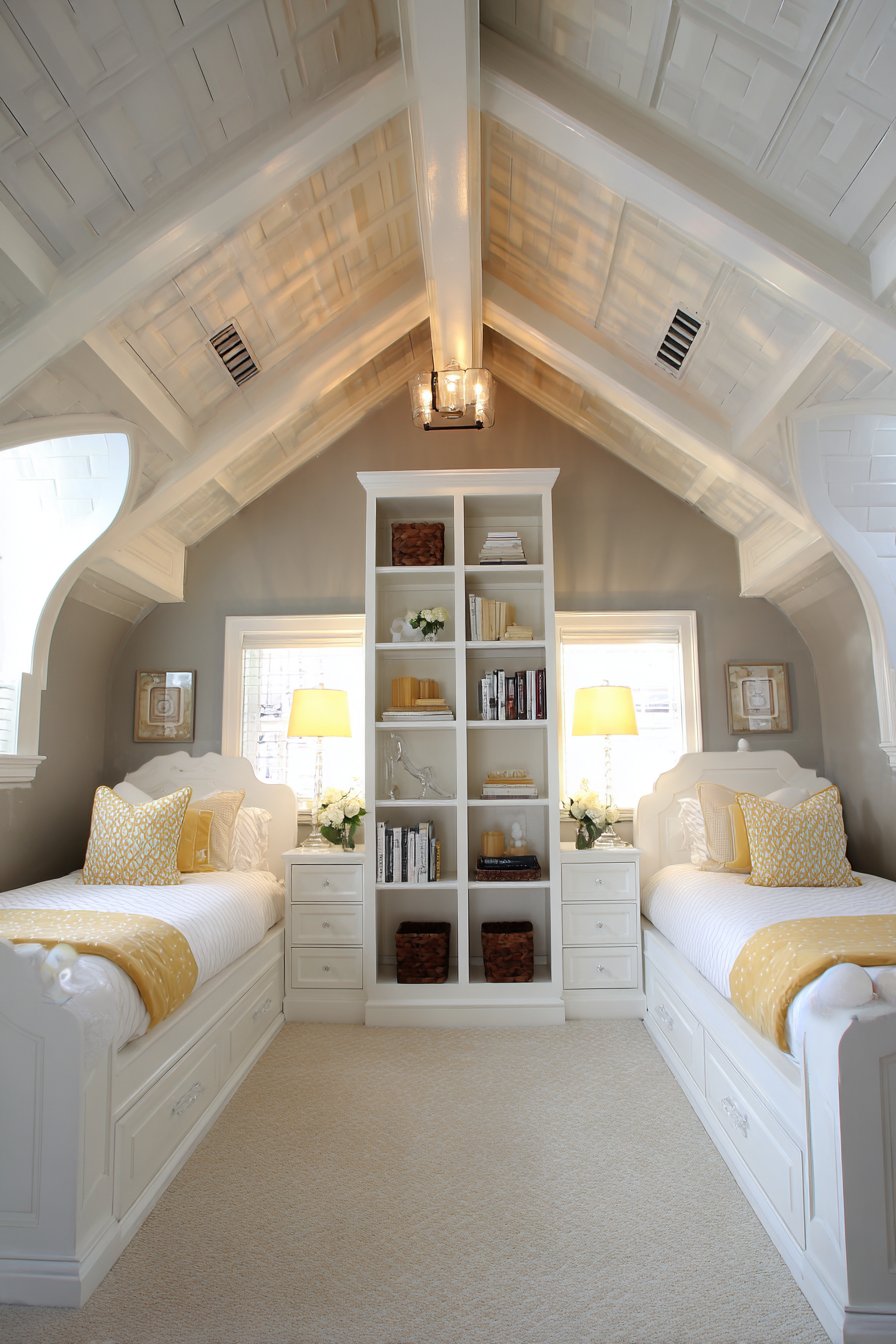
The genius of this design lies in its long-term vision. Gender-neutral doesn’t mean personality-free; rather, it creates a versatile foundation that accommodates individual expression through changeable elements like bedding, artwork, and accessories.
As children grow and their interests evolve, the neutral backdrop remains relevant, requiring only minor updates rather than complete redesigns. This approach proves both economically wise and environmentally conscious.
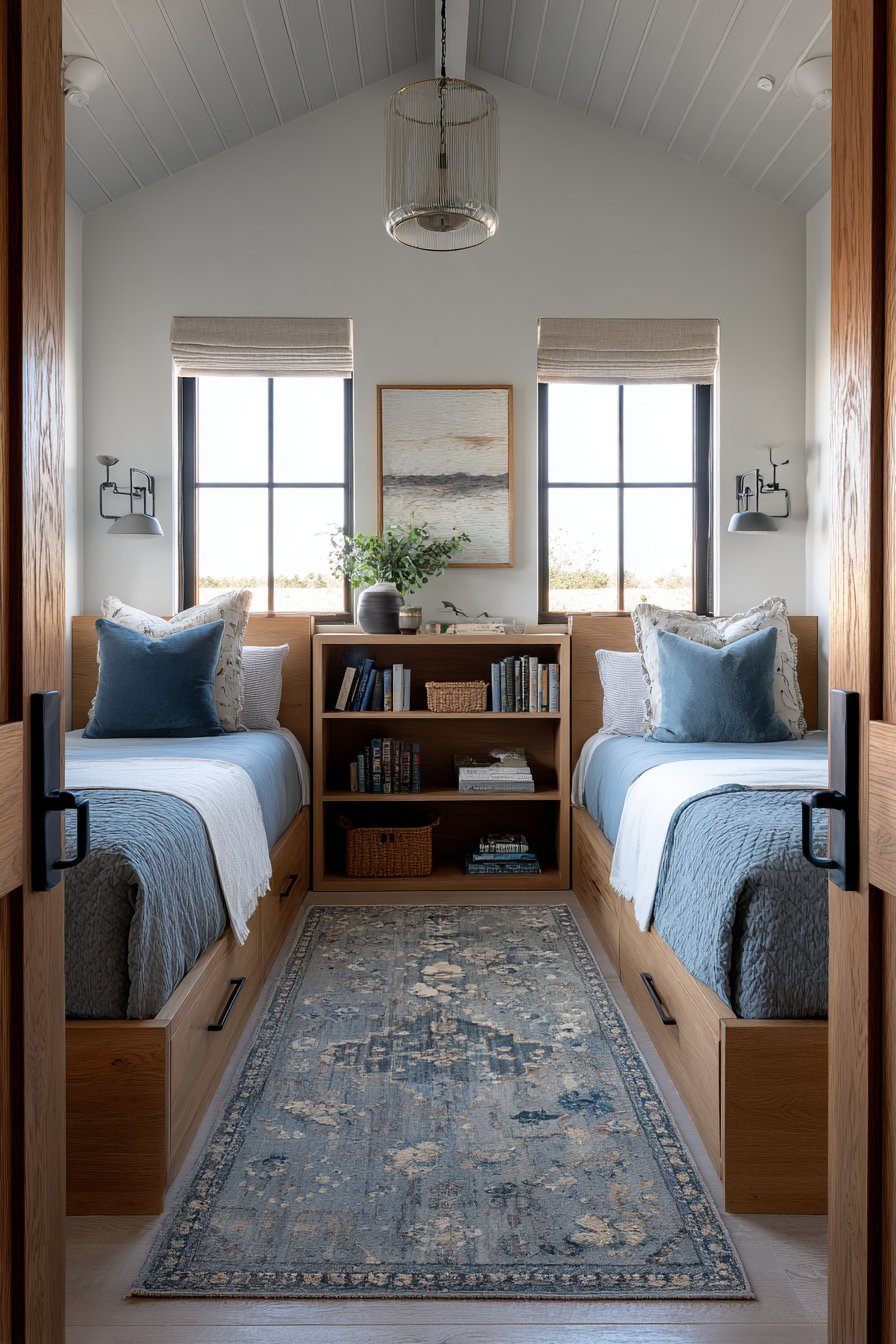
The storage beds represent a quantum leap in space efficiency, particularly valuable in homes where bedroom square footage comes at a premium. By incorporating storage directly into furniture pieces, the design maintains open floor space essential for play, homework, and simply moving comfortably through the room. The symmetrical layout eliminates potential arguments over fairness, with each child receiving identical space, storage, and access to natural light.
Key Design Tips:
- Use symmetrical layouts to create visual balance and ensure fairness between siblings
- Incorporate storage directly into furniture to maximize floor space
- Choose neutral color palettes that provide longevity and flexibility for personalization
- Install adequate lighting on both sides of the room for equity and functionality
- Select room dividers that maintain connection while providing privacy options
8. Coastal-Inspired Serene Master Retreat
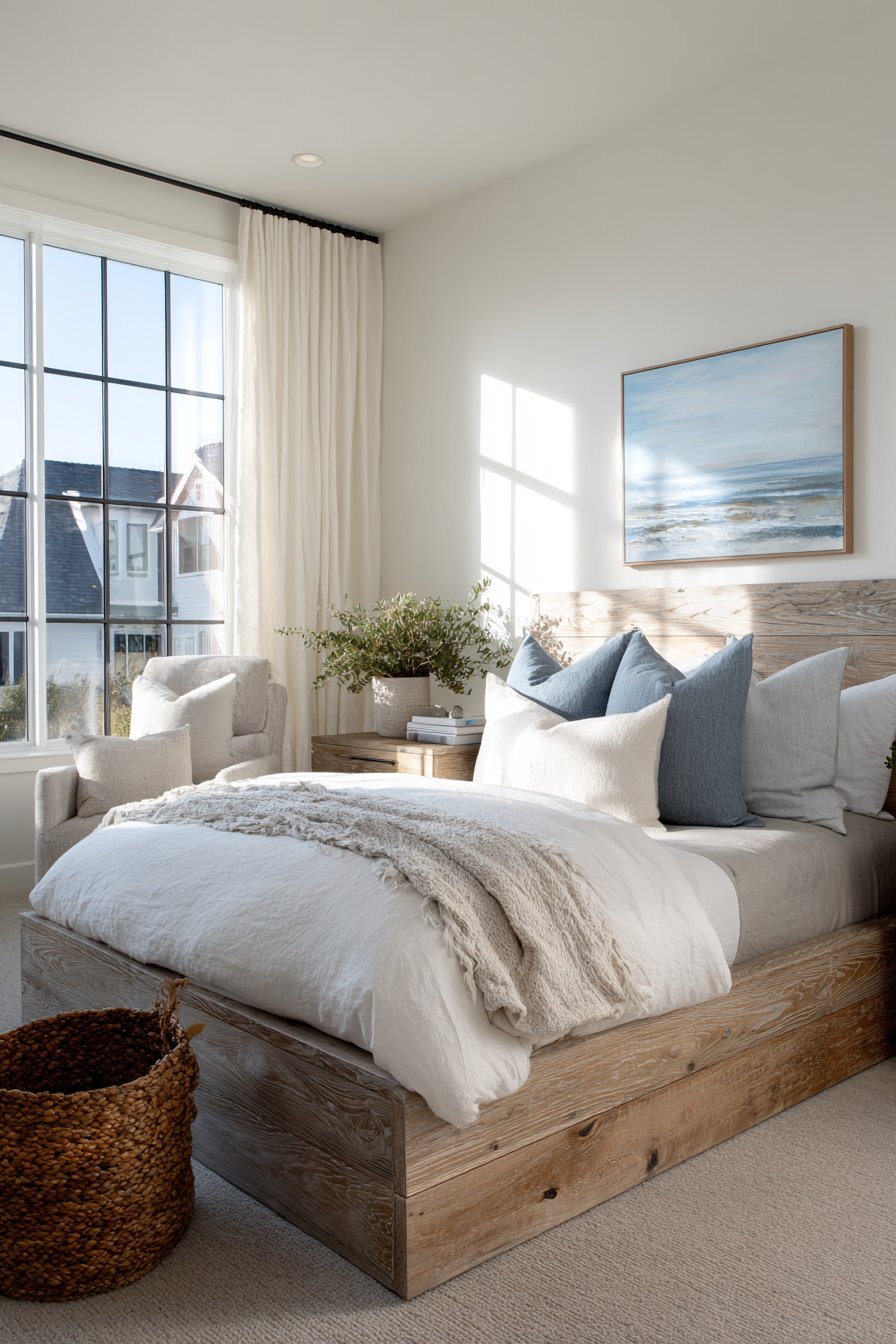
Ocean breezes and seaside tranquility inspire this coastal master bedroom where a whitewashed wood platform bed with integrated side tables creates a seamless, streamlined foundation for relaxed living. A cozy corner features a comfortable armchair positioned perfectly for reading with children, those precious moments when stories transport families to faraway places and bedtime becomes an adventure. Soft blue accents in throw pillows and artwork evoke the calming rhythm of waves and endless skies, bringing nature’s most soothing palette indoors.
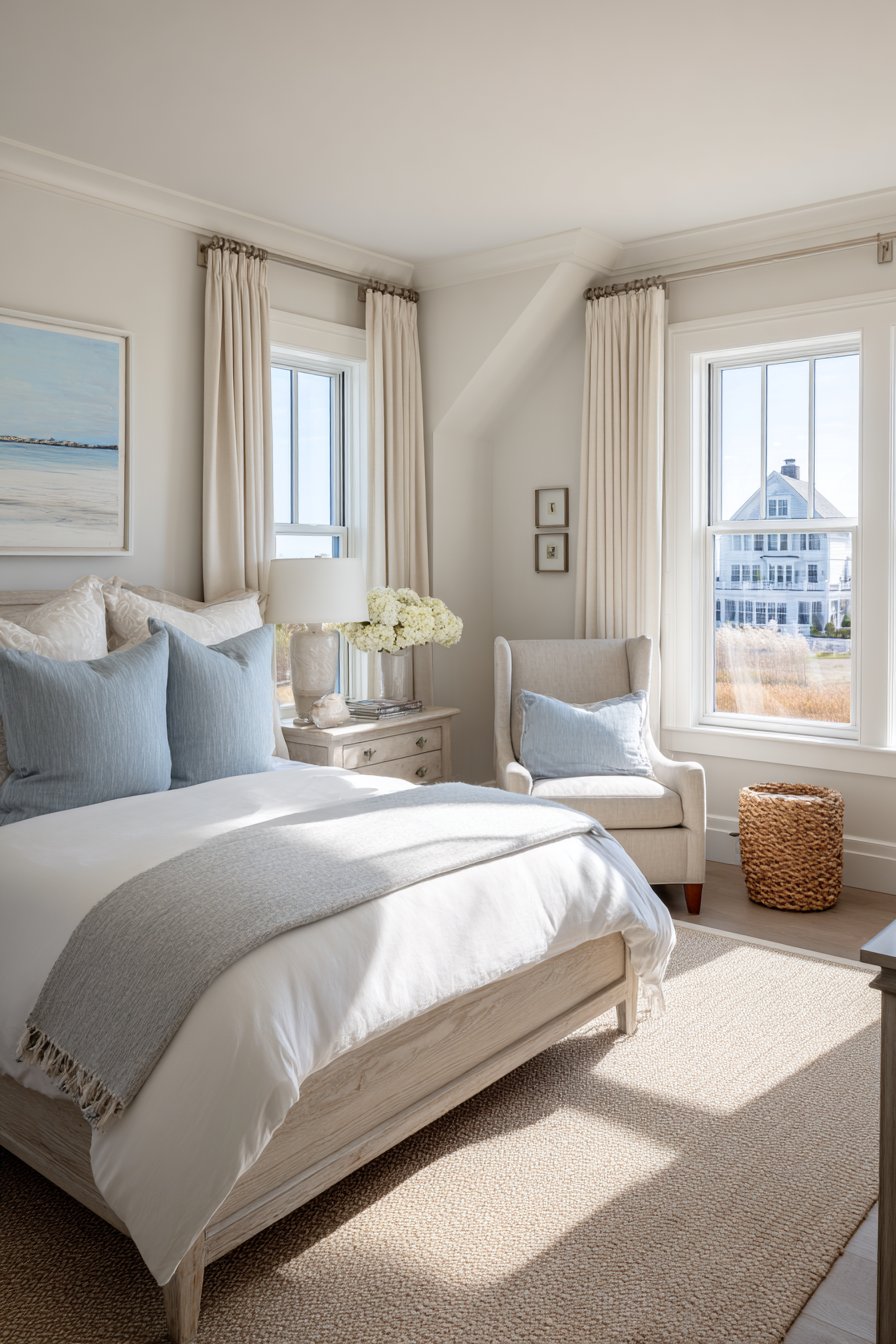
Sheer white curtains diffuse natural sunlight, creating gentle shadows on textured white walls that seem to shift and breathe with the changing light throughout the day. The coastal aesthetic’s inherent lightness and airiness makes even modestly sized bedrooms feel expansive and welcoming.
The whitewashed wood introduces organic texture without visual weight, maintaining the room’s breezy, effortless atmosphere that encourages relaxation and peace.
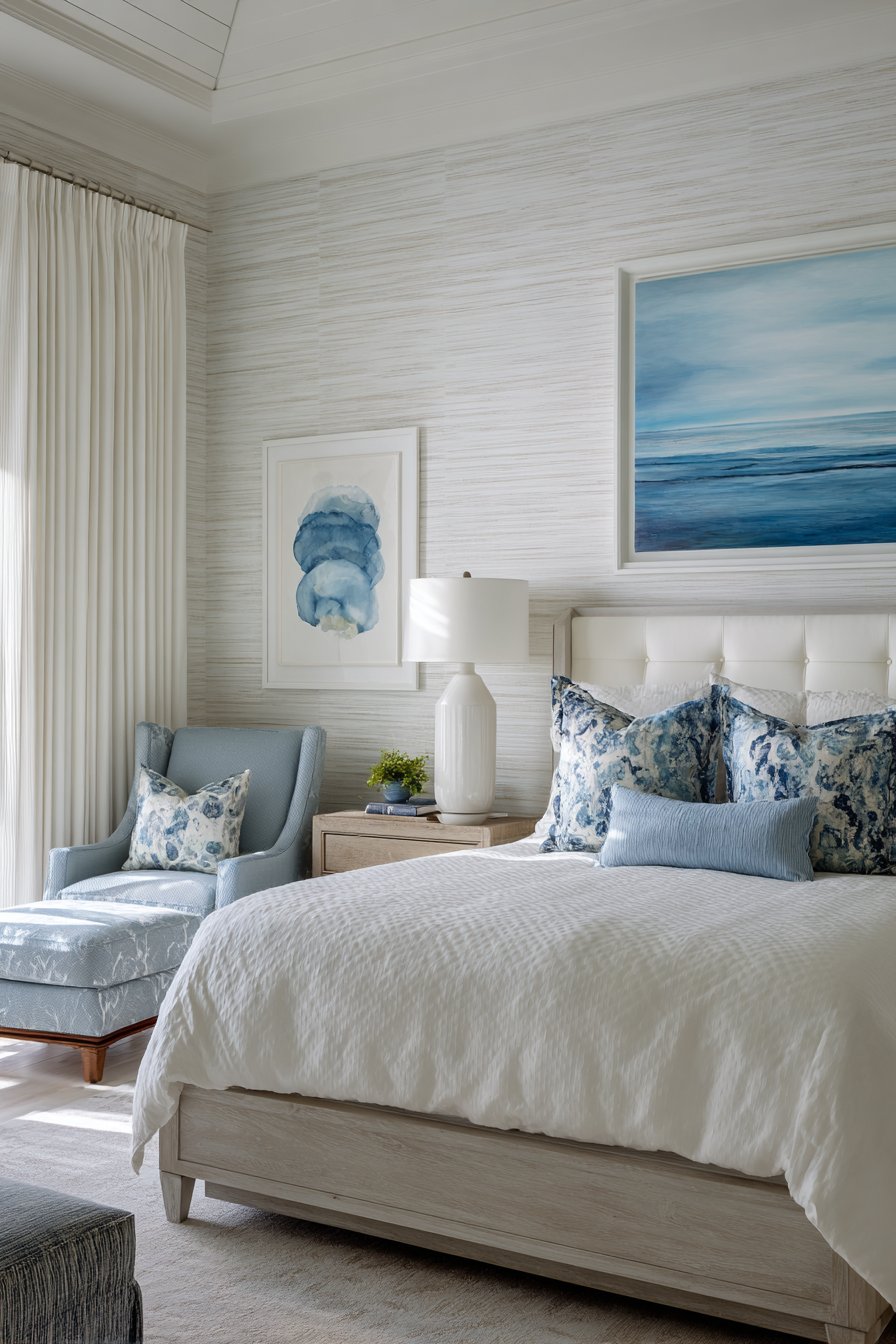
This design approach proves that themed rooms needn’t feel kitschy or overly literal. Rather than relying on seashells and nautical clichés, this coastal bedroom captures the essence of seaside living through color, texture, and mood.
The result feels authentic and sophisticated, creating a timeless retreat that won’t feel dated or childish as years pass. The family-friendly elements integrate seamlessly—the reading corner becomes a natural extension of the room’s relaxed atmosphere rather than an afterthought.
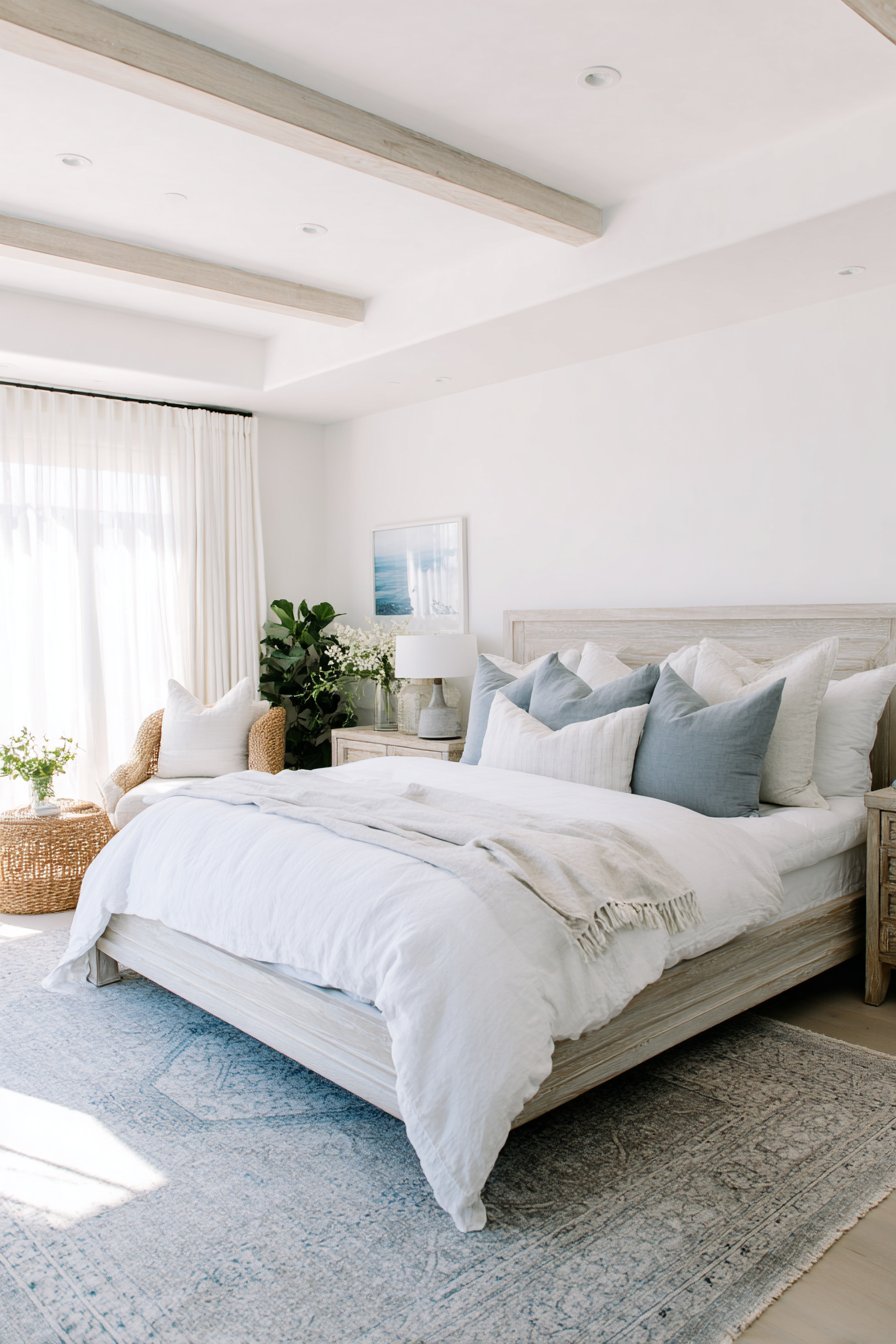
The materials selection reflects coastal living’s practical wisdom. Light colors reflect available light, making spaces feel larger and more open. Textured fabrics and natural materials introduce visual interest without relying on pattern or color. The platform bed’s low profile creates an open, airy feel while the integrated nightstands eliminate visual clutter from additional furniture pieces. Every element works together to create a cohesive, calming environment perfect for family rest and rejuvenation.
Key Design Tips:
- Use soft blue and white color schemes to evoke coastal calm without literal beach themes
- Select whitewashed or light-finished woods that add texture without darkening the space
- Layer different textures in similar colors to create depth and visual interest
- Position comfortable seating near natural light for reading and quiet activities
- Keep window treatments light and airy to maximize natural illumination
9. Multi-Functional Space-Saving Family Bedroom
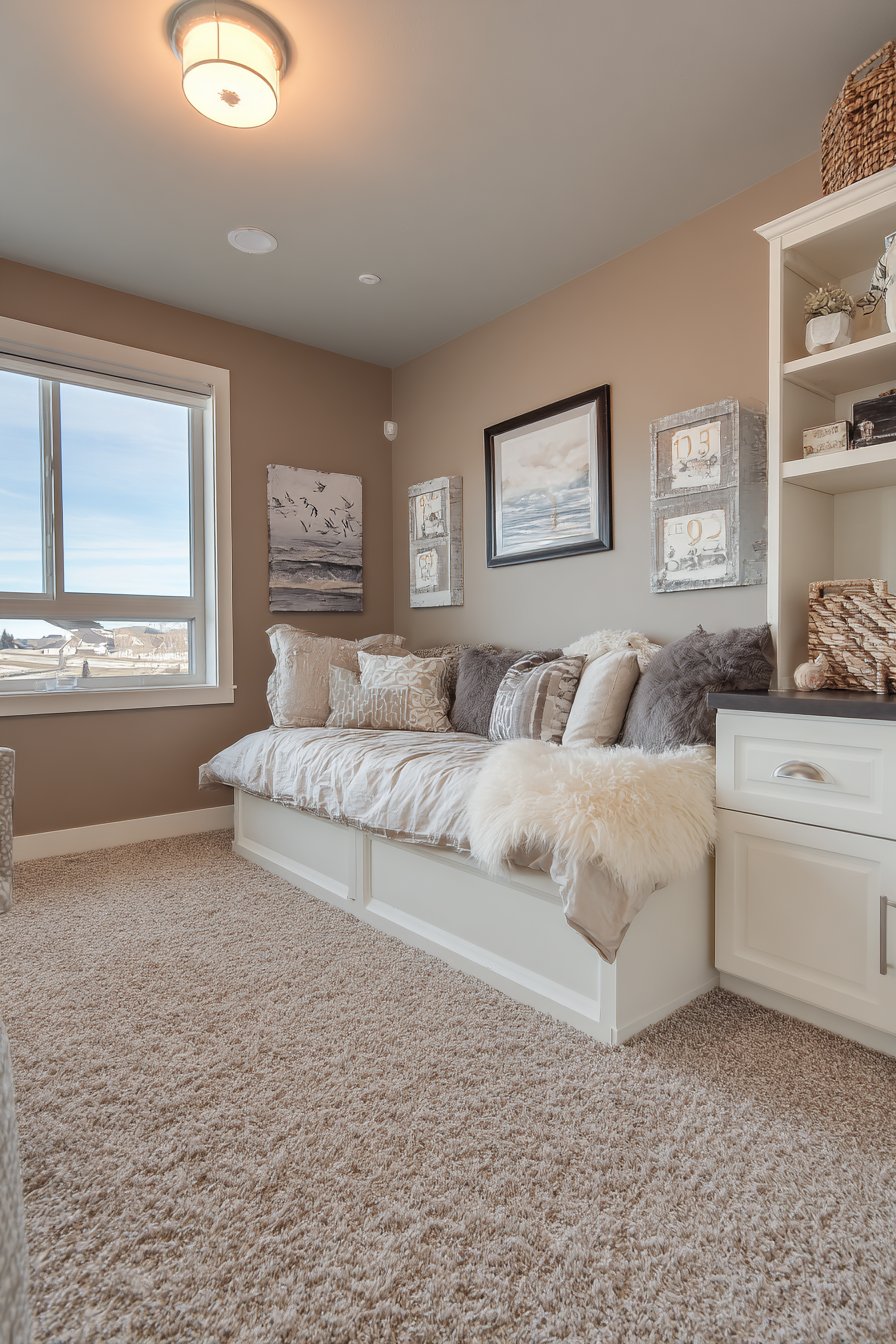
Clever design transforms limited square footage into highly functional family space in this bedroom where a daybed serves dual purposes—comfortable seating during daytime hours and sleeping accommodation at night.
Built-in wall units provide extensive storage without sacrificing precious floor space, proving that organization and openness can coexist when vertical space is fully utilized. Neutral taupe walls with crisp white trim create a versatile backdrop that adapts to changing needs and preferences as families grow and evolve.
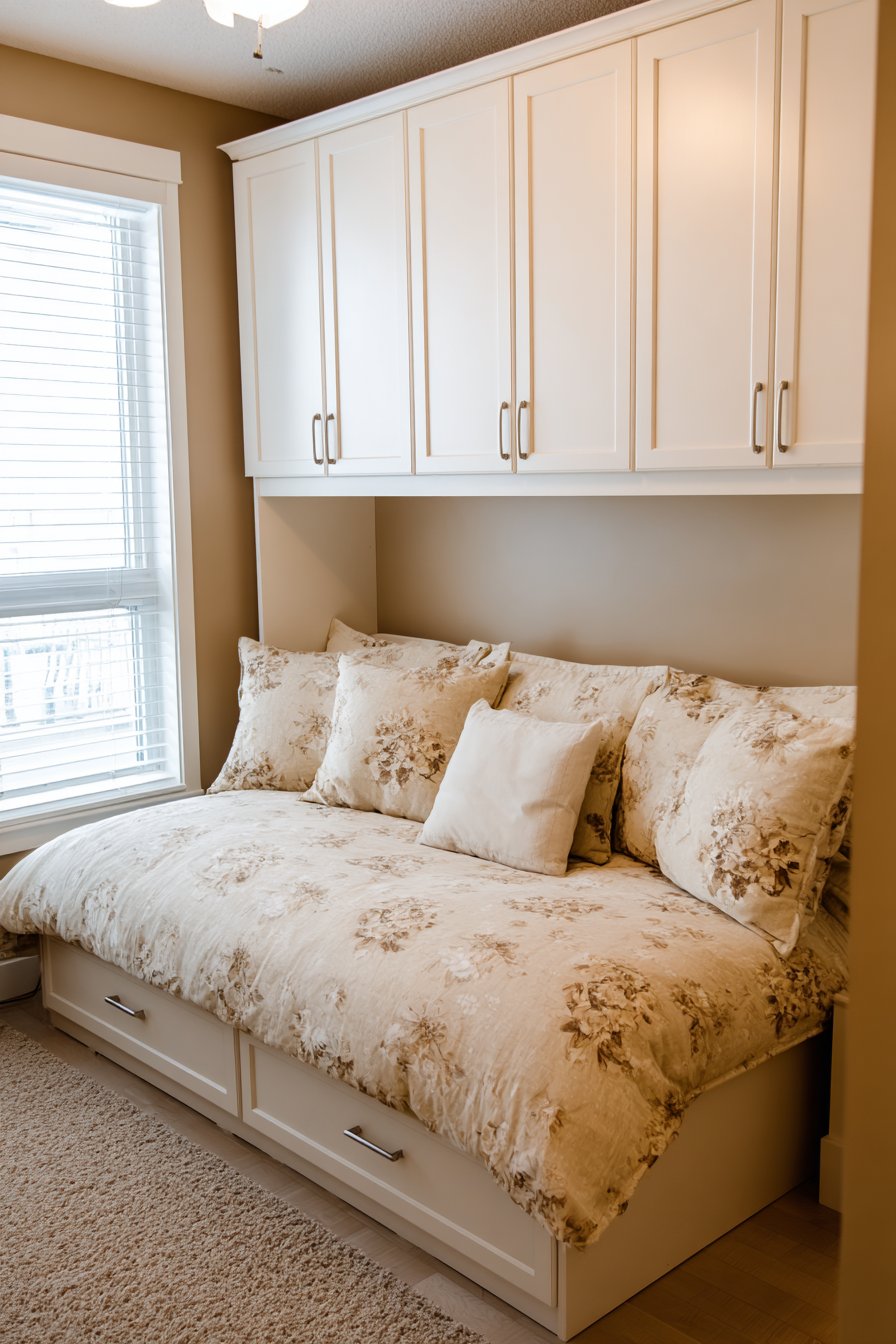
The space-saving solutions demonstrate how constraint often breeds creativity. Rather than viewing the room’s compact dimensions as a limitation, the design embraces them as an opportunity for innovation. Every surface serves multiple purposes, and every piece of furniture earns its place through functionality rather than merely filling space. Natural lighting from a side window illuminates the carefully planned layout, highlighting how thoughtful design makes even modest rooms feel generous and welcoming.
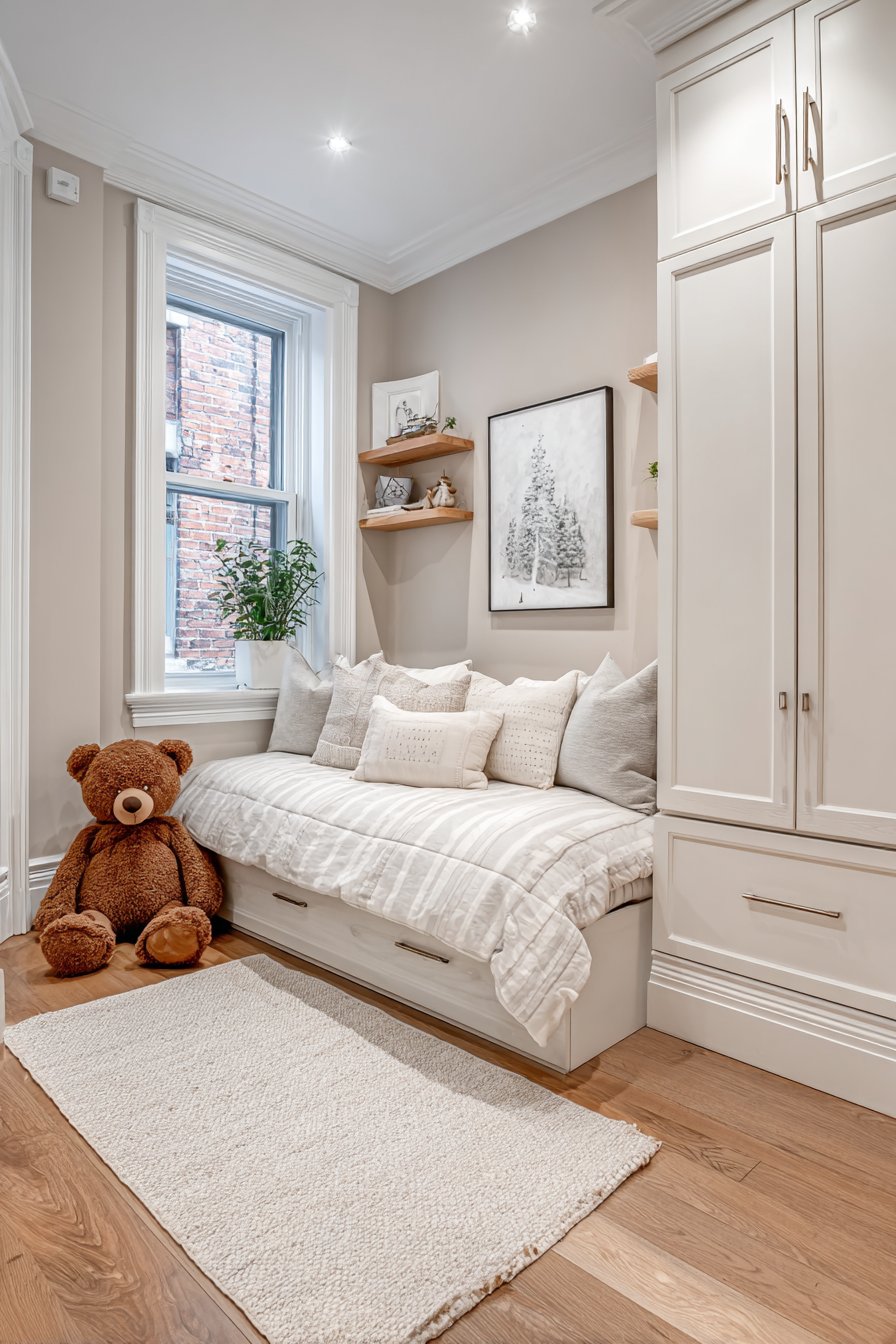
This approach particularly benefits growing families in urban environments where space comes at premium. The daybed provides flexibility for various scenarios—guest accommodation, reading nook, temporary office space, or simply comfortable seating for family activities.
The built-in wall units customize the space to family needs while maintaining clean lines and visual coherence. This type of integrated storage proves far more effective than freestanding furniture pieces that consume floor space and create visual clutter.
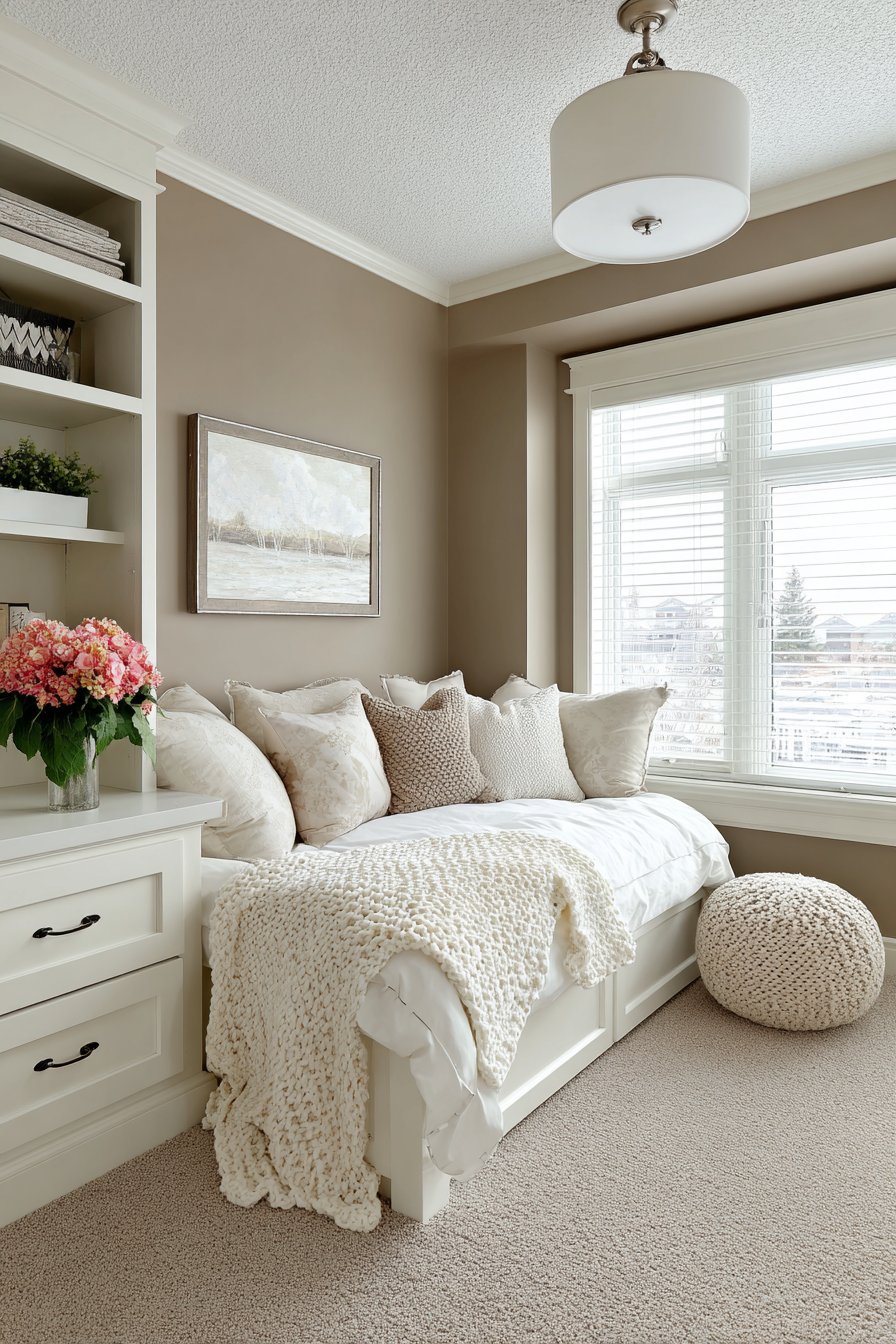
The neutral color scheme ensures the room remains serene despite its multi-functional nature. Taupe provides warmth and sophistication while maintaining the same calming qualities as more traditional neutrals like beige or grey. The white trim adds crispness and definition, creating architectural interest without additional cost or complexity. The result is a room that feels deliberately designed rather than compromised, proving that smart planning triumphs over sheer square footage.
Key Design Tips:
- Maximize vertical storage with floor-to-ceiling built-in units
- Choose multi-functional furniture pieces that adapt to various uses throughout the day
- Maintain neutral color palettes to create calm in compact, hard-working spaces
- Prioritize floor space by selecting furniture with integrated storage and dual purposes
- Use architectural details like trim work to add visual interest without consuming space
10. Traditional Timeless Shared Children’s Room
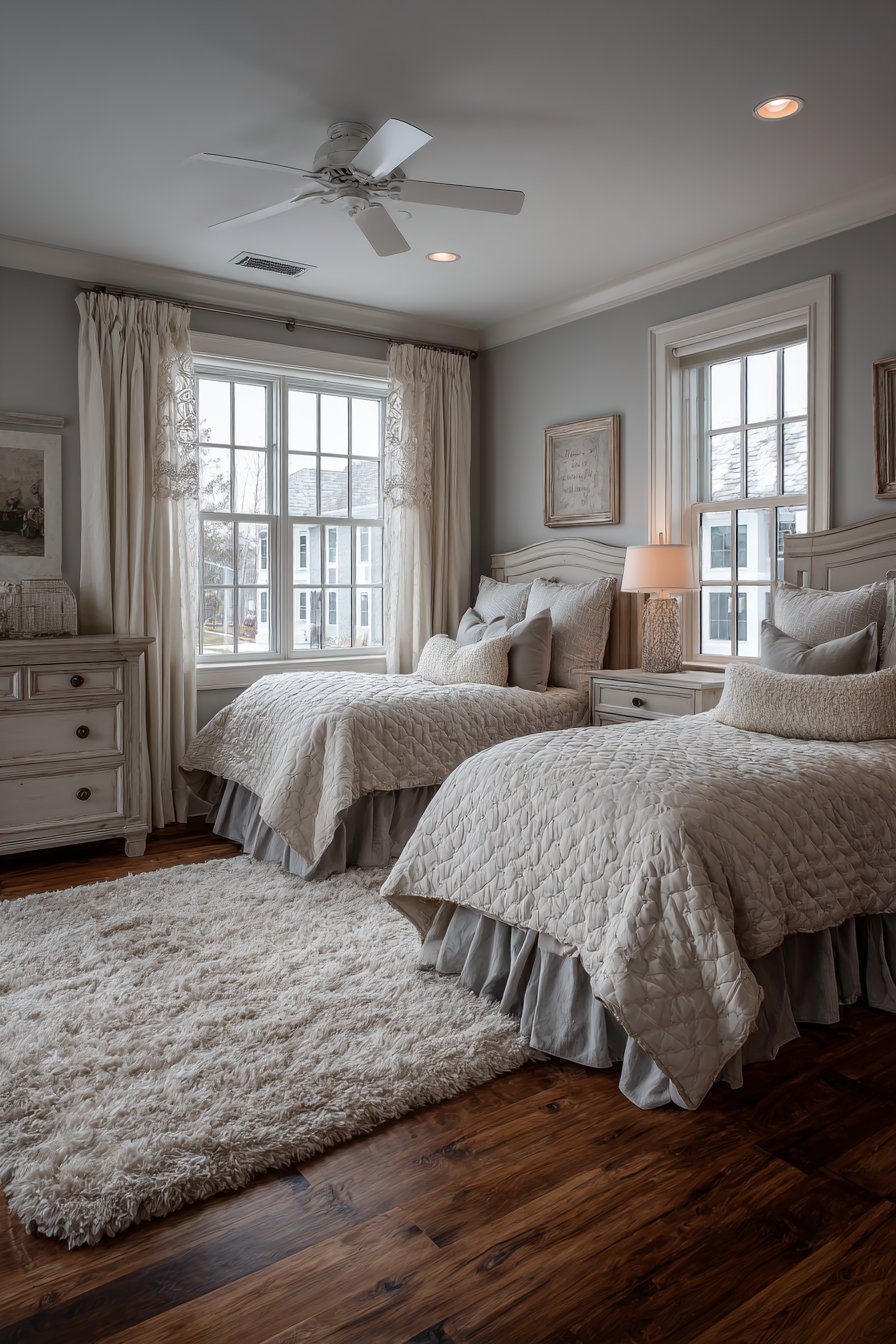
Classic beauty and enduring style converge in this traditional shared bedroom where twin beds dressed in matching quilted coverlets create a sense of harmony and permanence. Soft lavender and cream color palette introduces gentle color without overwhelming the senses, creating a restful environment that promotes good sleep and peaceful mornings. A vintage-inspired dresser positioned between the beds serves both children equally, eliminating potential conflicts while adding functional storage and classic visual appeal.
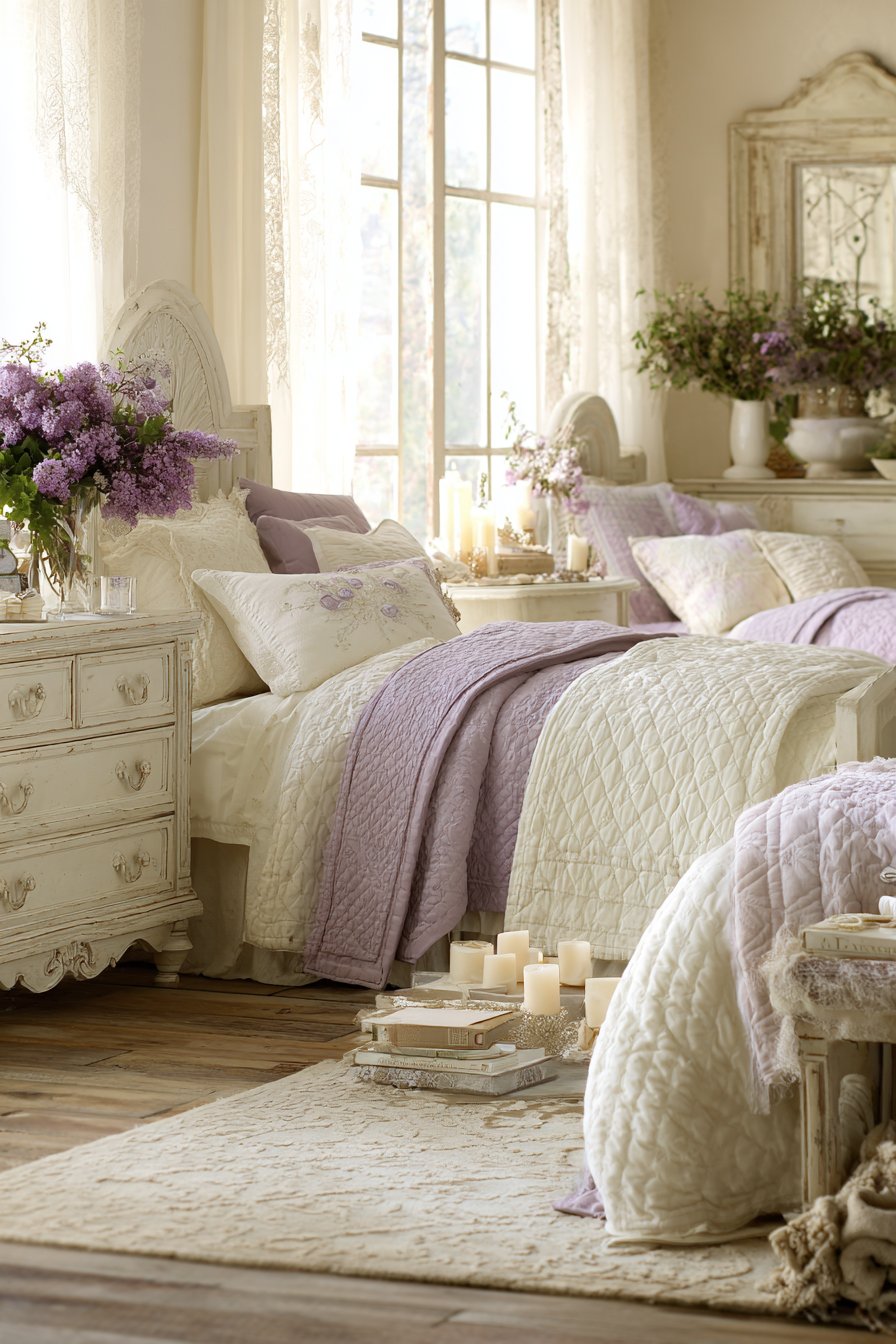
Hardwood floors provide durability and timeless beauty that improves with age rather than showing wear, while a plush area rug adds warmth, comfort, and sound absorption—important considerations in shared spaces where quiet time matters.
Soft natural light filters through lace-trimmed curtains, creating a nostalgic ambiance that recalls simpler times and cherished memories. This design proves that traditional doesn’t mean stuffy or outdated; rather, it offers quality craftsmanship and proven design principles that stand the test of time.
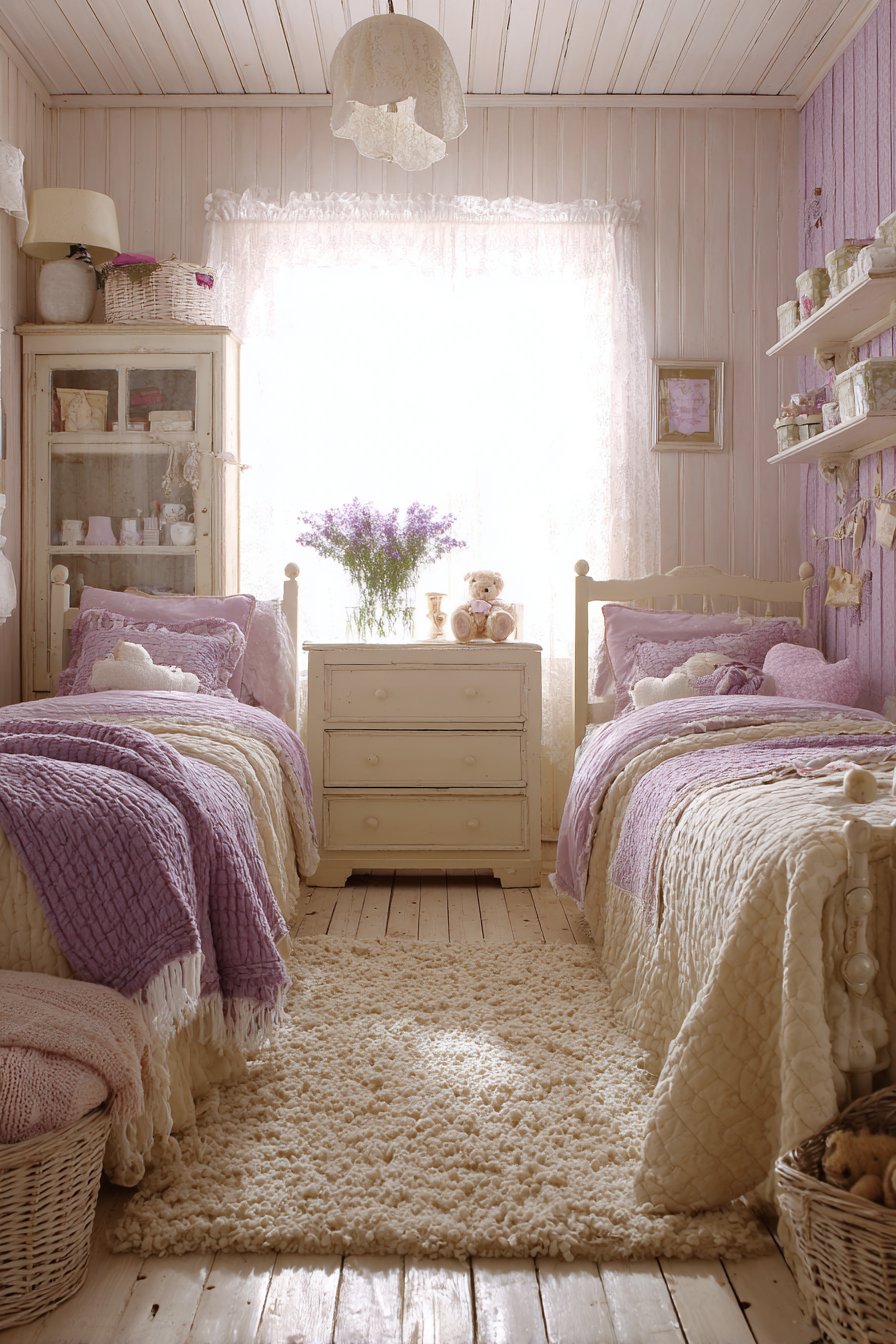
The traditional aesthetic’s greatest strength lies in its ability to create rooms that feel established and permanent rather than trendy or temporary. Children raised in thoughtfully designed traditional spaces often develop an appreciation for quality, craftsmanship, and timeless beauty. The matching beds and coverlets create visual harmony while teaching children about symmetry, balance, and the beauty of cohesive design.
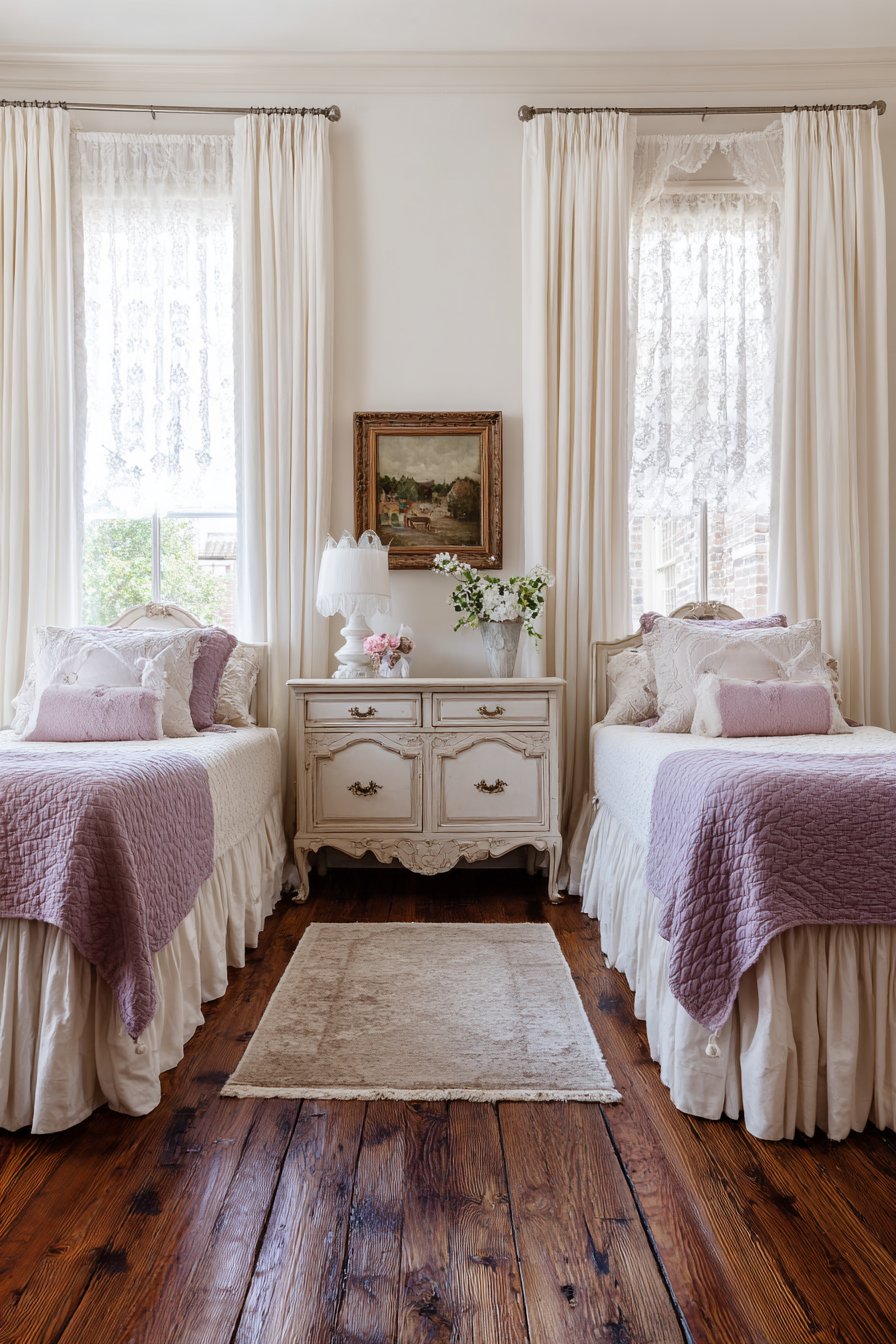
The vintage-inspired furniture pieces introduce character and charm while providing the durability necessary for children’s rooms. Well-constructed traditional furniture often outlasts its contemporary counterparts, making it both an economically wise and environmentally responsible choice. The hardwood floors and quality textiles will serve the family for decades, potentially passing from generation to generation as cherished heirlooms carrying family memories.
Key Design Tips:
- Select classic furniture pieces with proven durability and timeless appeal
- Use soft, restful color palettes that promote calm and good sleep
- Invest in quality hardwood flooring that improves with age
- Choose window treatments that diffuse light while adding traditional charm
- Create visual harmony through matching or coordinating bed linens and coverlets
11. Minimalist Zen-Like Master Bedroom
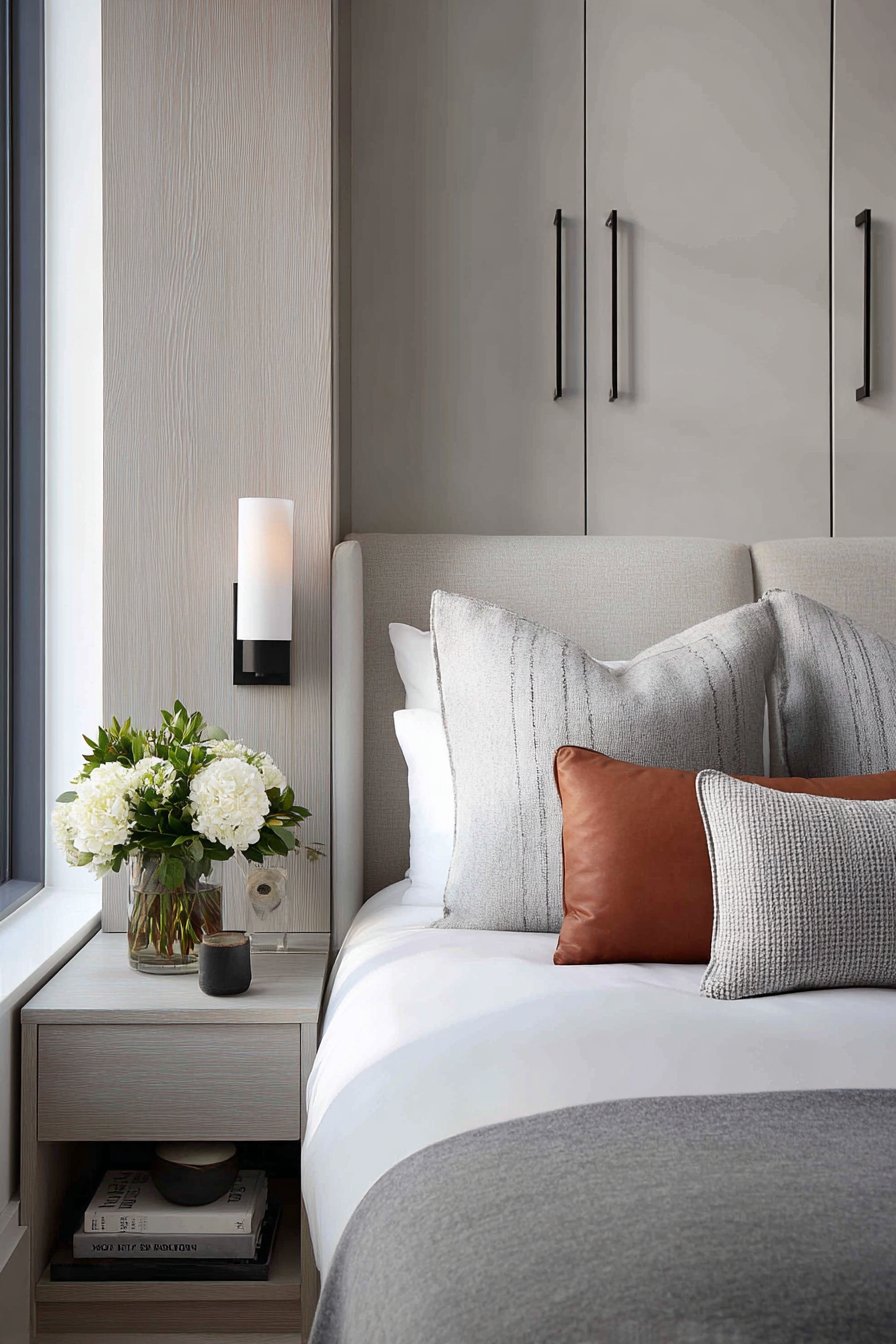
Simplicity becomes sophistication in this minimalist master bedroom where a platform bed featuring rounded corners creates a safe, serene sleeping space that welcomes family members without worry of injury. The design emphasizes open floor space, providing room for morning stretches, family yoga sessions, or simply the freedom to move without obstacle or clutter. Floating nightstands keep the floor clear for easy cleaning—a practical consideration that also contributes to the room’s uncluttered, peaceful aesthetic.

Monochromatic grey tones with warm wood accents create zen-like serenity, demonstrating that minimalism needn’t feel cold or unwelcoming. The careful balance between cool greys and warm wood creates temperature balance, ensuring the room feels inviting rather than austere. Natural lighting illuminates the thoughtful layout, highlighting how empty space itself becomes a design element when intentionally preserved.
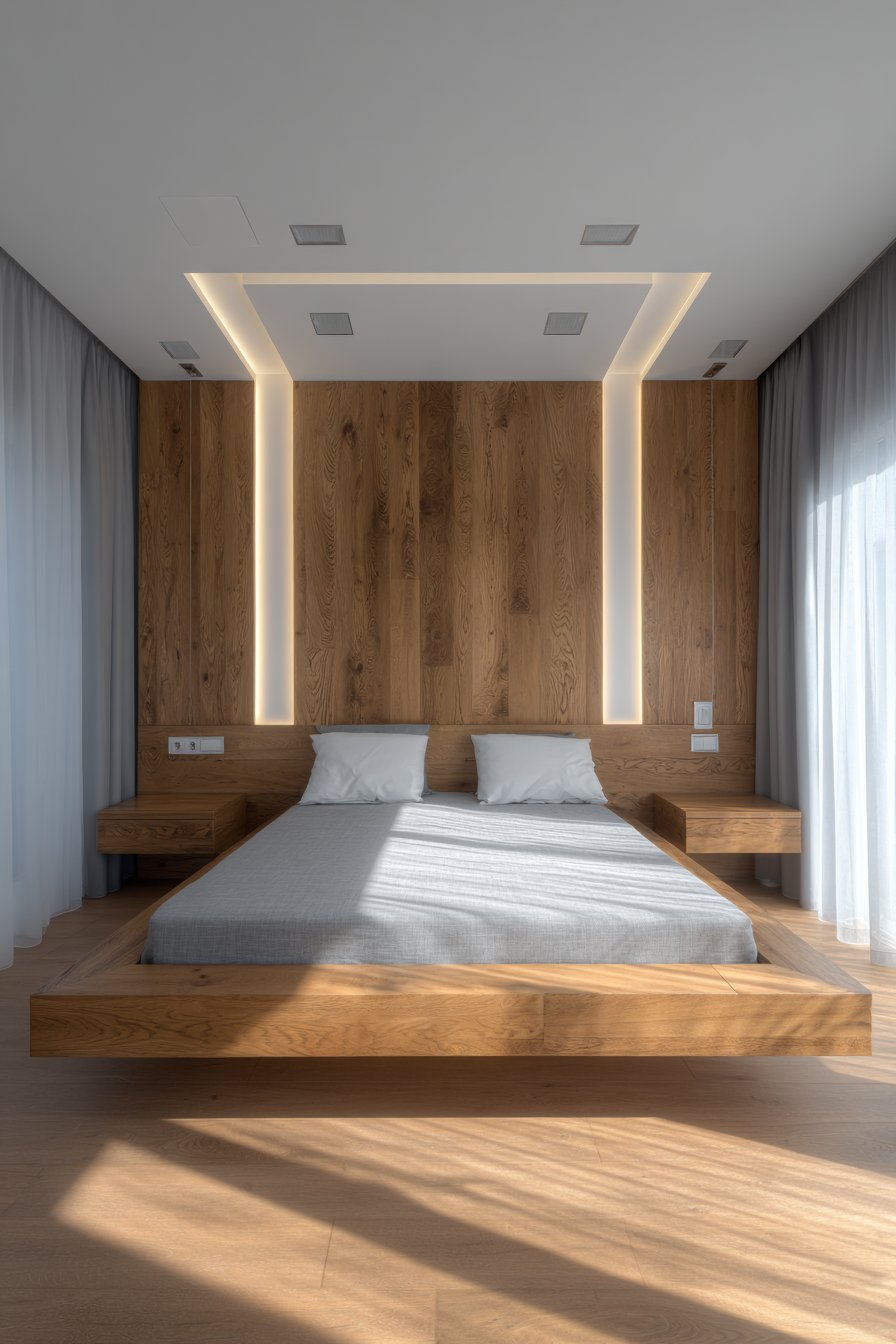
This minimalist approach offers particular benefits for family life. The uncluttered environment reduces visual stress and promotes calm—valuable qualities in busy households where chaos often reigns in other areas. The easy-maintenance materials and simplified cleaning routines free up time and mental energy for family activities and connection. The open floor space provides flexibility for various activities, transforming the bedroom from merely sleeping space to multi-purpose family room.
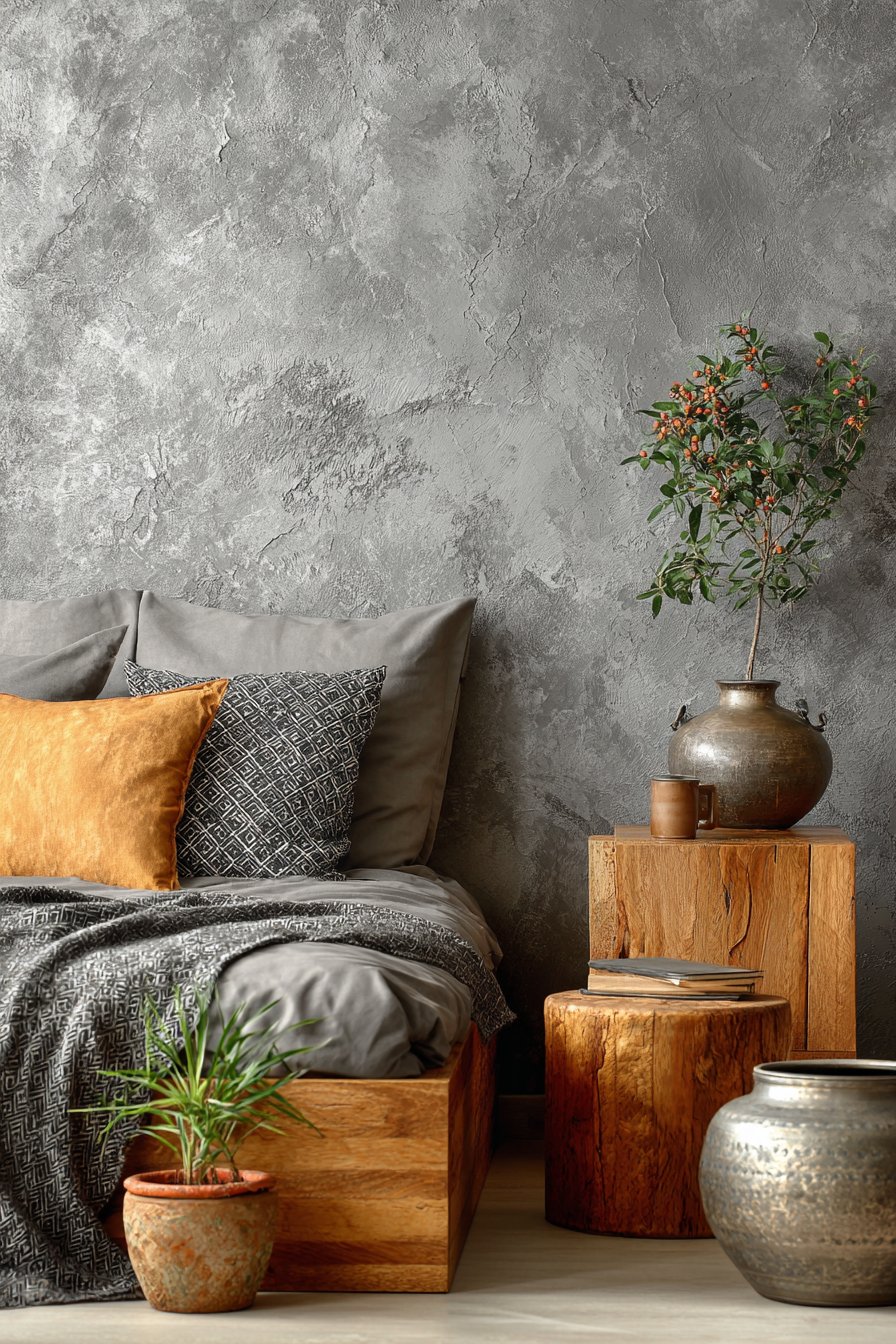
The durability of minimalist materials—sealed wood, quality fabrics in neutral colors, simple hardware—ensures the room maintains its pristine appearance with minimal effort. Every element serves a clear purpose without excess or decoration for decoration’s sake. This honest, functional approach creates a restful environment where the eye finds peace in clean lines and thoughtful proportions rather than visual distraction.
Key Design Tips:
- Prioritize open floor space by limiting furniture to essential pieces only
- Choose platform beds with rounded corners for safety and modern aesthetic
- Use monochromatic color schemes to create visual calm and coherence
- Select floating furniture to ease cleaning and maintain an uncluttered appearance
- Incorporate warm wood accents to prevent minimalist spaces from feeling cold
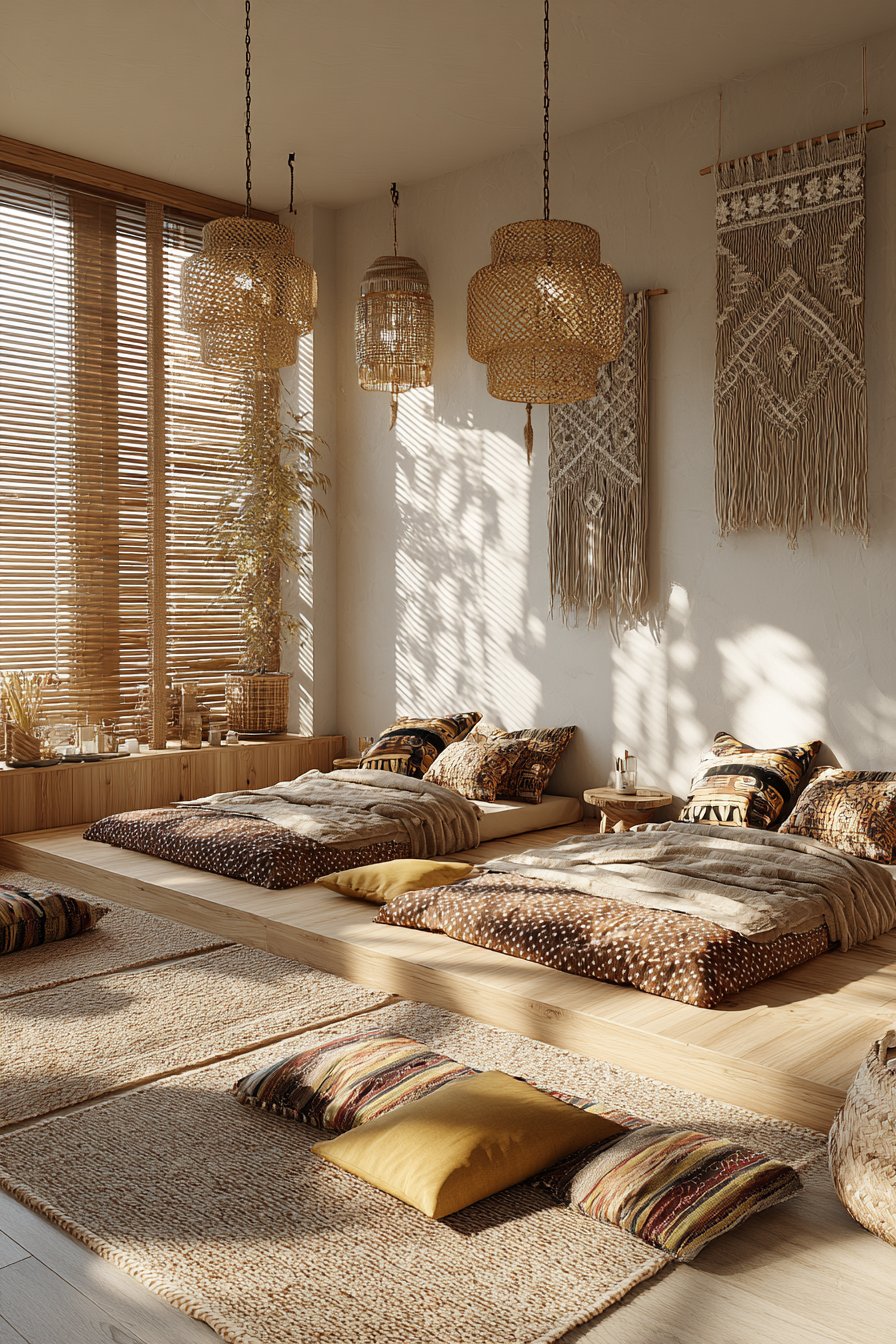
12. Bohemian Eclectic Shared Children’s Room
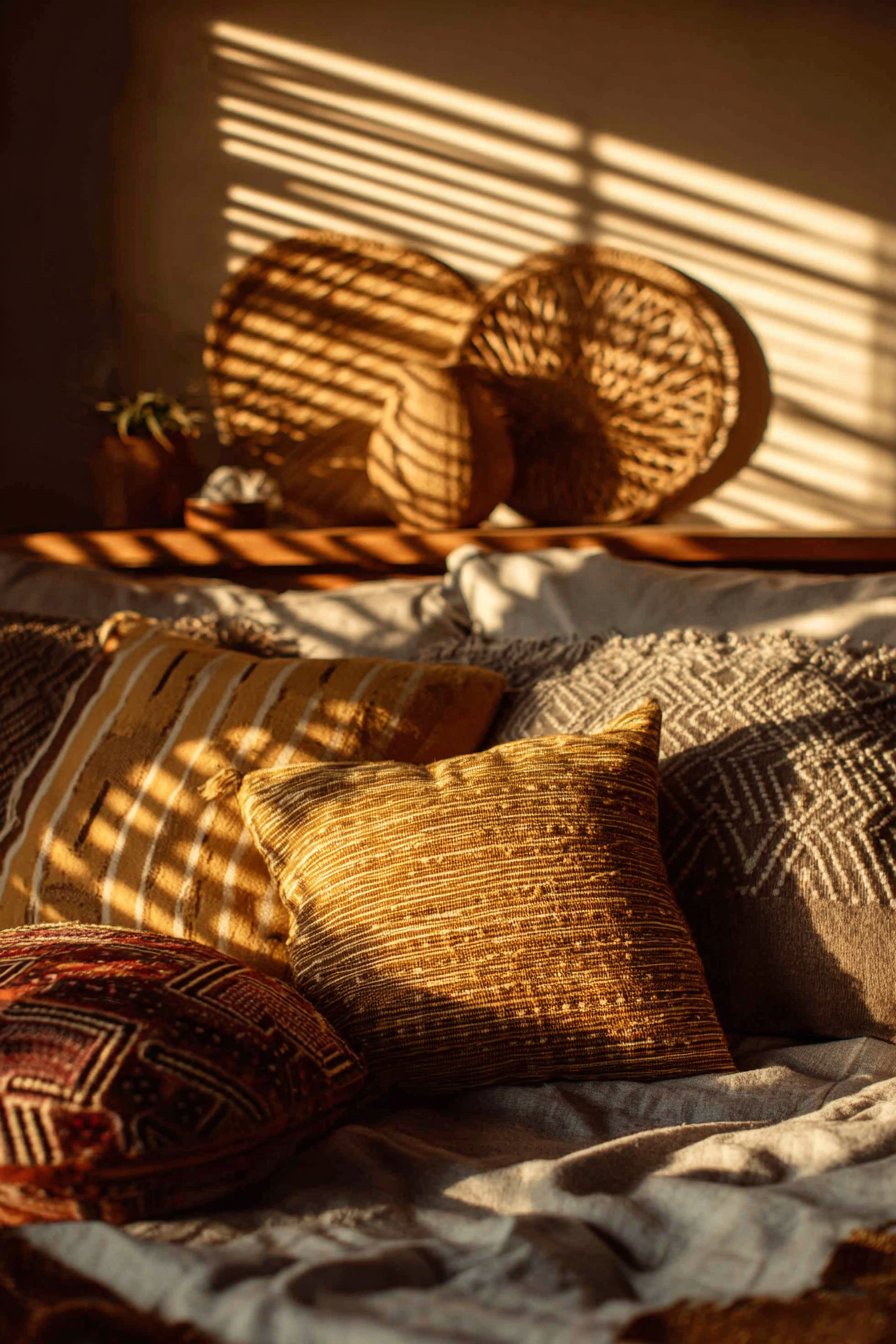
Free-spirited creativity and practical comfort merge in this bohemian shared bedroom where low floor beds provide young children with independence and safety, eliminating dangerous falls while encouraging self-reliance.
Layered textured throws and patterned pillows in earthy tones create cozy, inviting sleeping spaces that feel like nests of comfort and security. Macramé wall hangings and woven baskets provide decorative storage solutions that double as artistic elements, proving that organization can be beautiful.
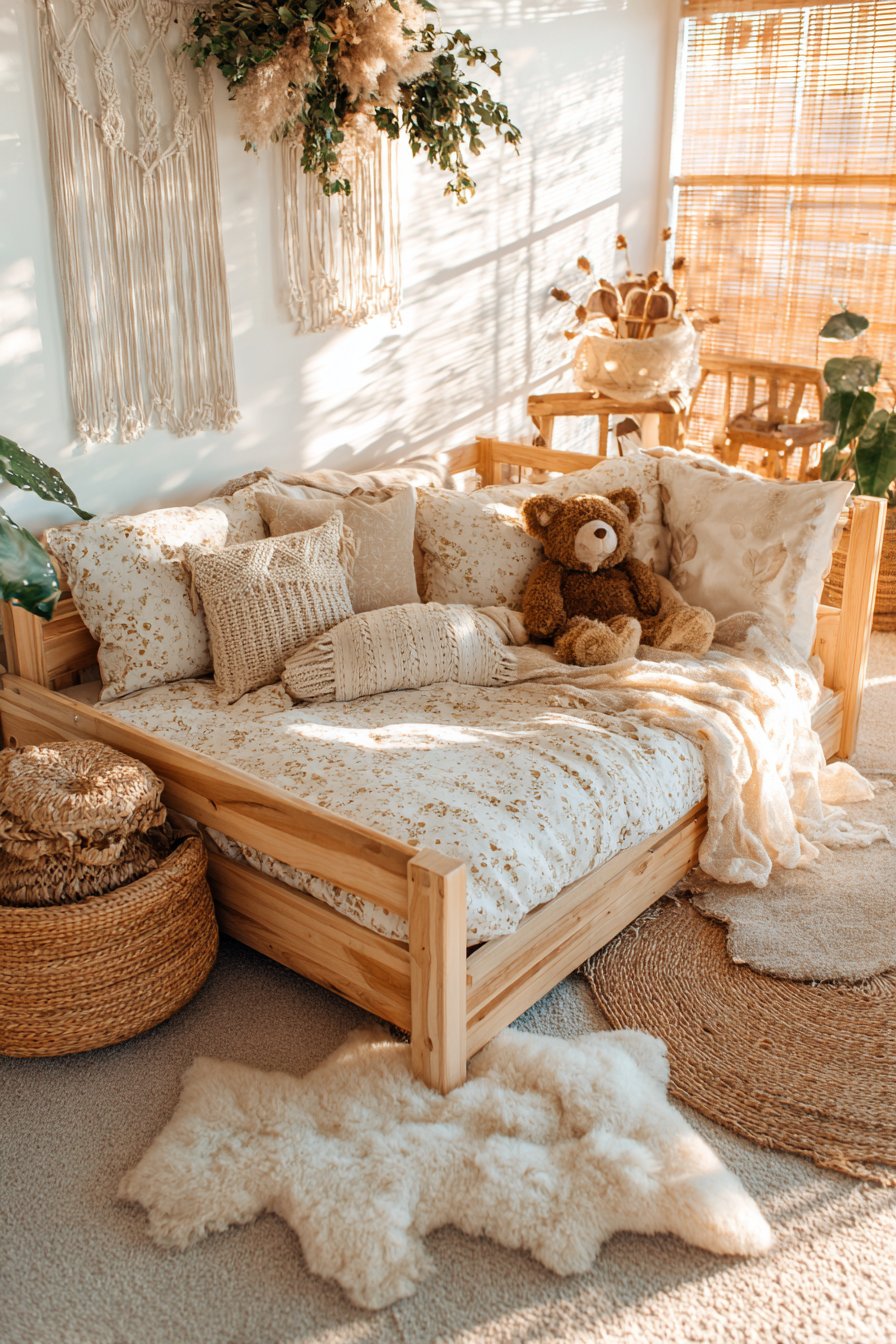
Natural fiber rugs define individual sleeping areas, creating subtle boundaries while maintaining the room’s open, flowing quality. Golden hour sunlight streams through bamboo blinds, casting warm, inviting shadows that dance across walls and create ever-changing patterns. The bohemian aesthetic celebrates imperfection, eclecticism, and global influences, creating rich, layered environments that stimulate creativity and imagination.
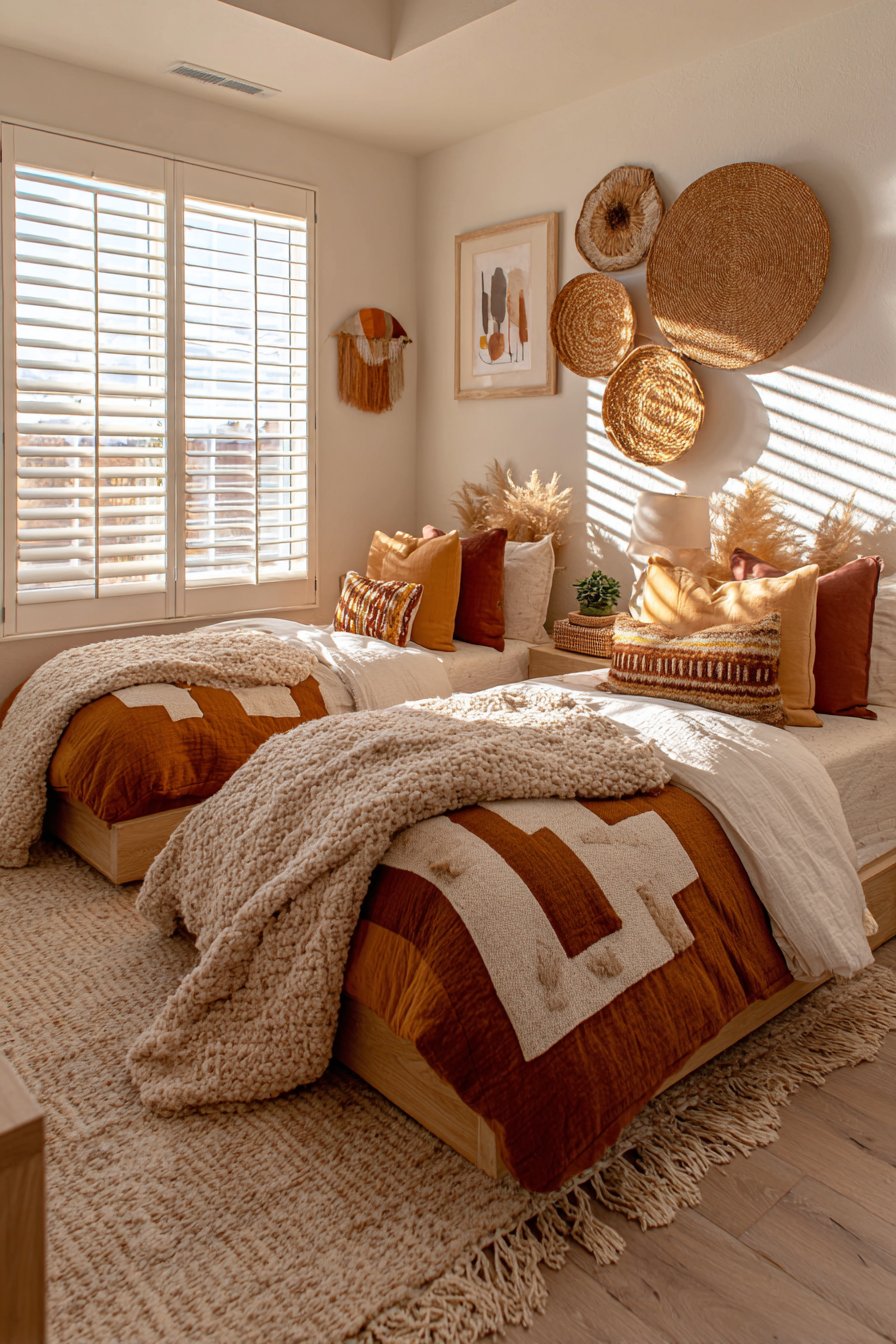
This design approach particularly suits young children’s natural inclinations toward collecting, creating, and personalizing their spaces. The low beds provide security and independence, allowing even very young children to get in and out of bed safely without assistance.
The varied textures and patterns offer sensory richness that engages developing minds, while the earthy color palette prevents overstimulation.
The accessibility of the bohemian style makes it ideal for family-friendly spaces. Items can be added gradually as found or gifted, creating rooms that evolve organically rather than requiring complete purchases. The forgiving aesthetic accommodates handmade artwork, collected treasures, and the beautiful imperfections that characterize family life. The result feels personal, lived-in, and authentically reflective of family character.
Key Design Tips:
- Use low floor beds for young children to promote independence and safety
- Layer various textures and patterns in cohesive color palette for depth
- Incorporate natural materials like macramé, woven baskets, and bamboo for organic warmth
- Create flexible, evolving spaces that accommodate collections and growing interests
- Choose earthy, muted tones that provide richness without overstimulation
13. Industrial-Modern Master Bedroom with Character
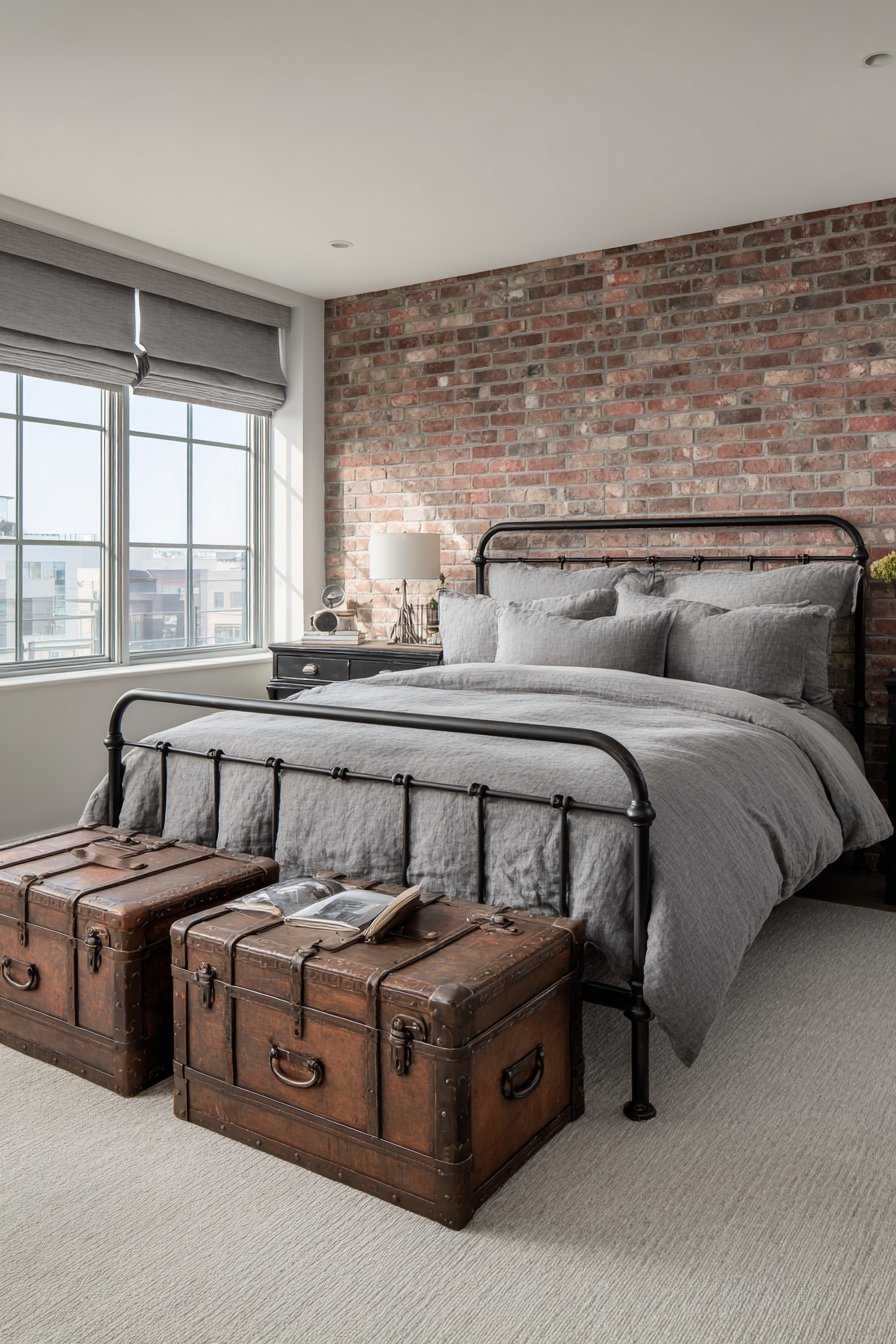
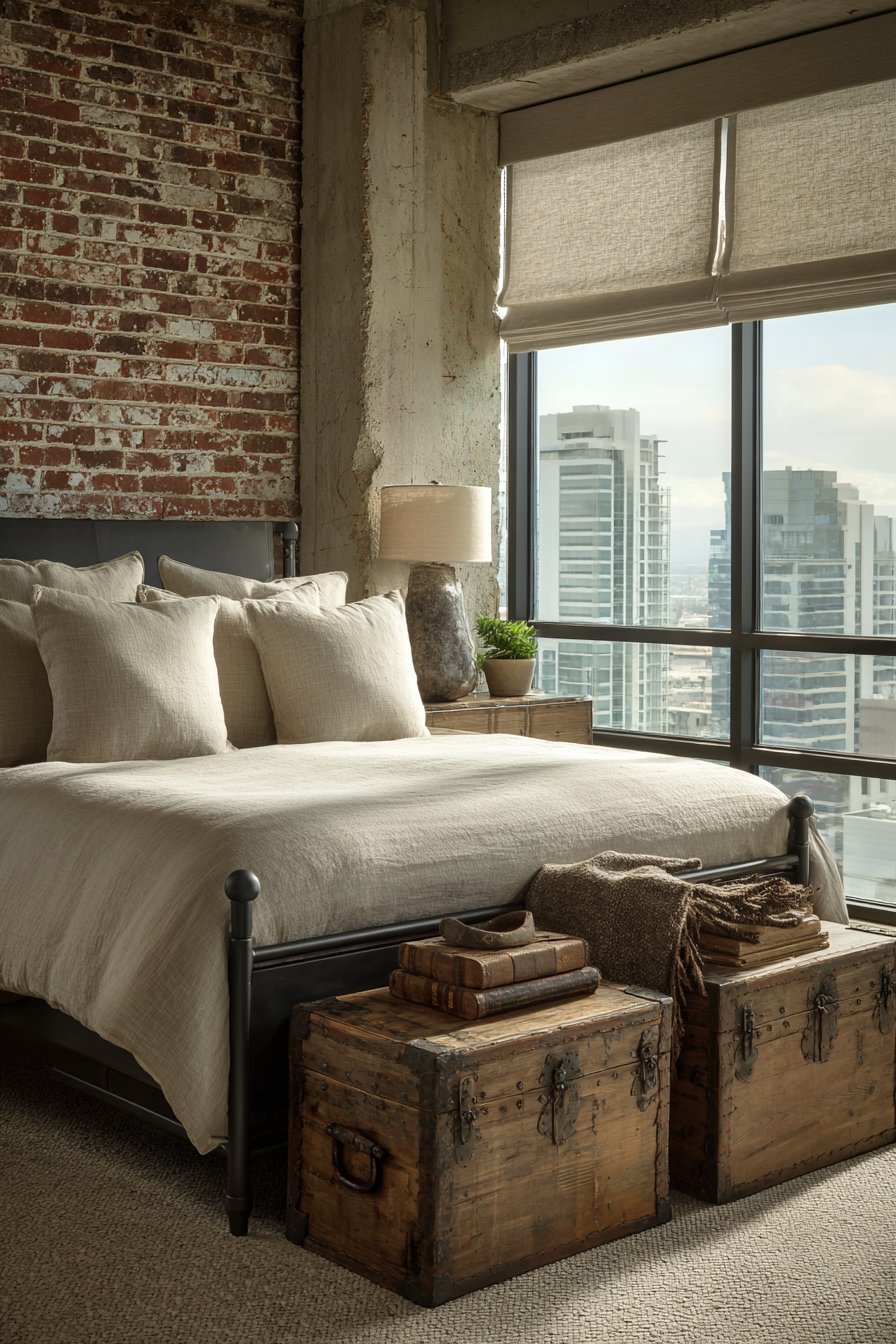
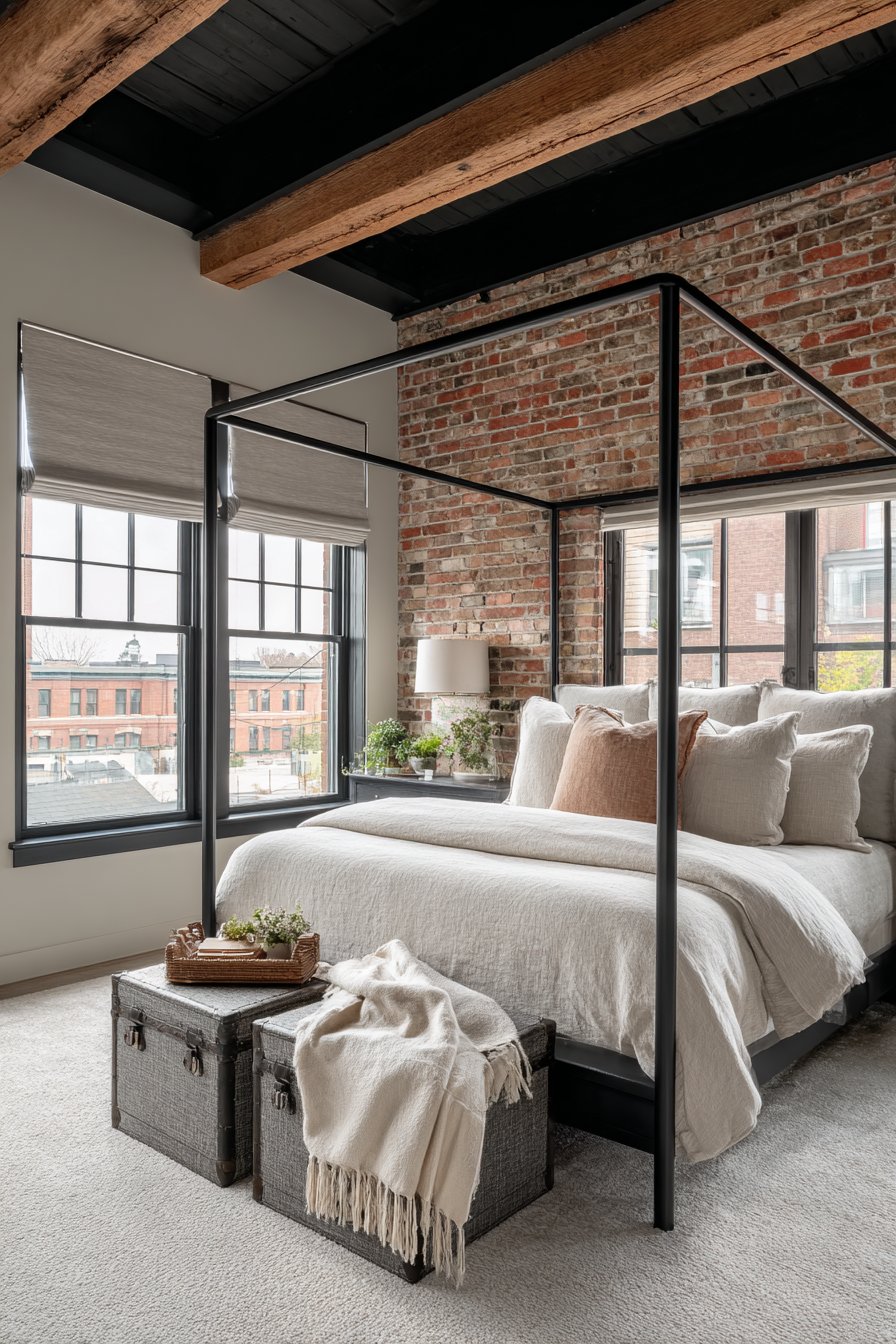
Raw materials meet refined comfort in this industrial-modern master bedroom where a metal bed frame in matte black finish provides striking contrast against soft linen bedding. The exposed brick accent wall adds instant character and visual interest while remaining child-safe thanks to properly sealed surface that prevents dust and crumbling. Vintage-style storage trunks positioned at the foot of the bed provide practical organization while contributing to the room’s collected-over-time aesthetic that feels authentic and personal.

Natural light floods through large windows dressed with simple roller shades, offering excellent light control without fussy treatments that would compete with the room’s architectural features.
The industrial aesthetic’s emphasis on honest materials and functional beauty creates spaces that improve with age and use rather than showing wear. The combination of rugged materials and soft textiles demonstrates how contrasts create visual interest and livable comfort.
This design approach appeals to families seeking personality and edge without sacrificing comfort or practicality. The metal bed frame provides durability that withstands years of family use while making bold design statement.
The exposed brick introduces warmth, texture, and sound absorption—practical benefits wrapped in aesthetic appeal. The vintage storage trunks offer generous capacity while serving as conversation pieces and family heirlooms in the making.
The industrial style’s inherent flexibility allows for easy updates and personalization. New bedding, artwork, or accessories can dramatically shift the room’s mood while the strong architectural bones remain constant. This adaptability proves valuable as family needs and preferences evolve over time, ensuring the room remains relevant and beloved through various life stages.
Key Design Tips:
- Balance raw industrial materials with soft textiles for comfort and warmth
- Seal exposed brick to prevent dust while maintaining an authentic appearance
- Choose metal fixtures and furniture in matte finishes to avoid harsh reflections
- Incorporate vintage pieces for character and practical storage solutions
- Use simple window treatments that don’t compete with architectural features
14. Cottage-Style Nurturing Shared Bedroom
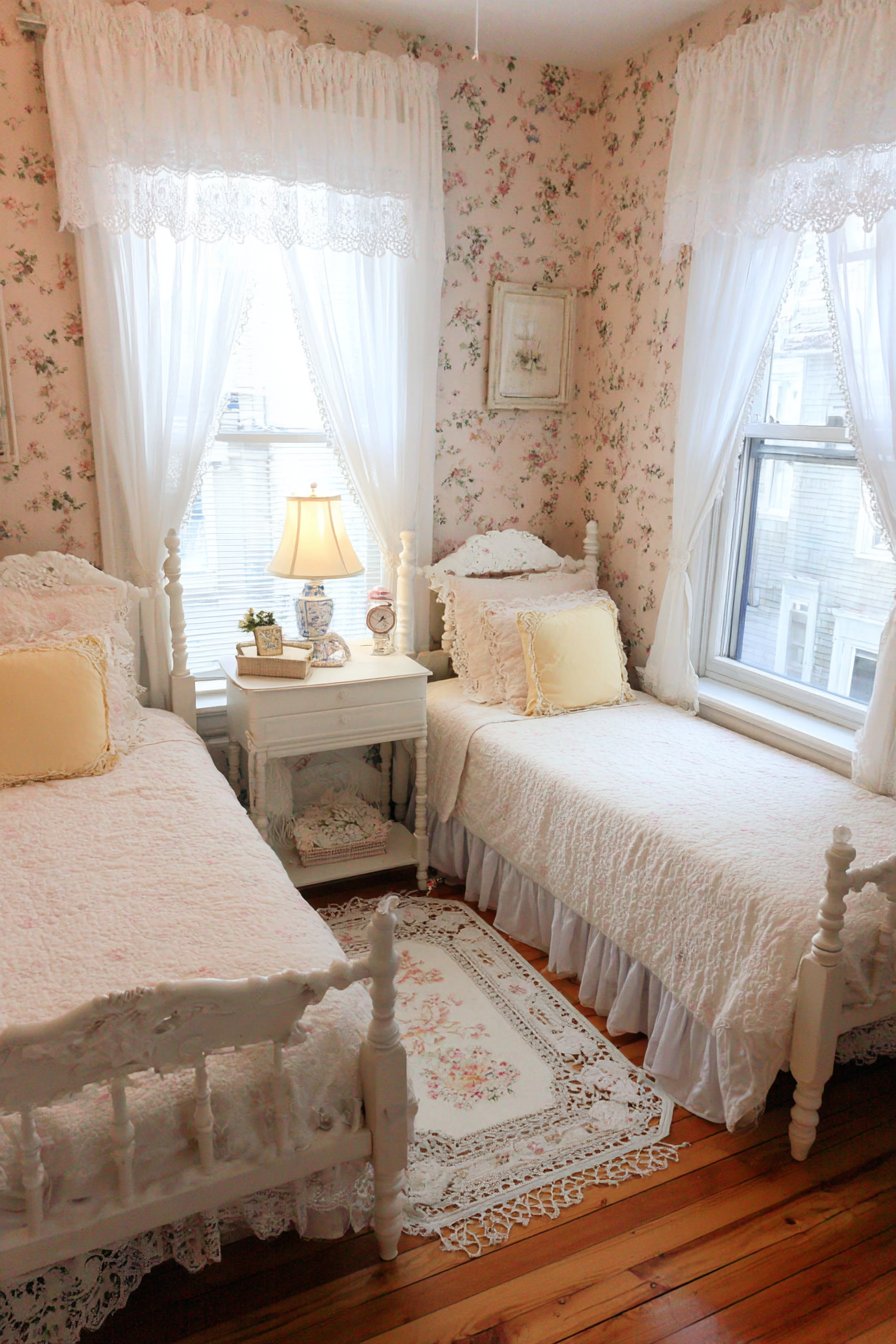
Gentle charm and timeless appeal define this cottage-style bedroom where twin beds featuring spindle headboards painted soft white create classic focal points that anchor the room’s traditional design. A shared nightstand positioned between beds holds essential items like reading lamp and an alarm clock, fostering cooperation and teaching children to share space gracefully. Floral wallpaper in muted tones adds charm without overwhelming the senses, creating subtle pattern that adds interest while maintaining a tranquil atmosphere.
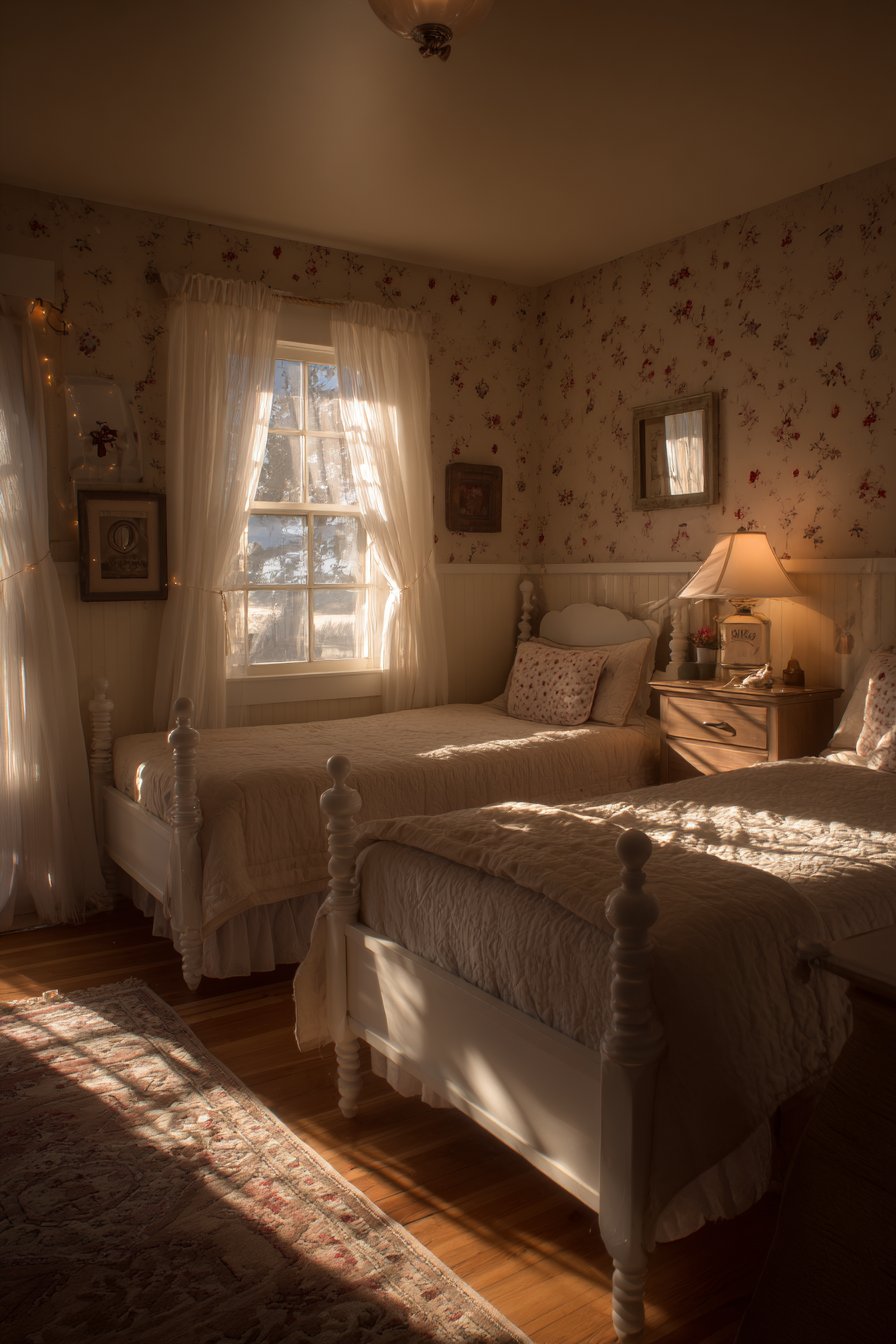
Natural pine flooring provides warmth and durability, developing rich patina over years that tells the story of childhood memories and family life. Area rugs in coordinating colors add softness underfoot while defining individual sleeping areas and reducing sound transmission—important in shared spaces. Soft morning light filters through eyelet curtains, creating dappled patterns that dance across walls and bedding, evoking lazy summer mornings and peaceful afternoons.
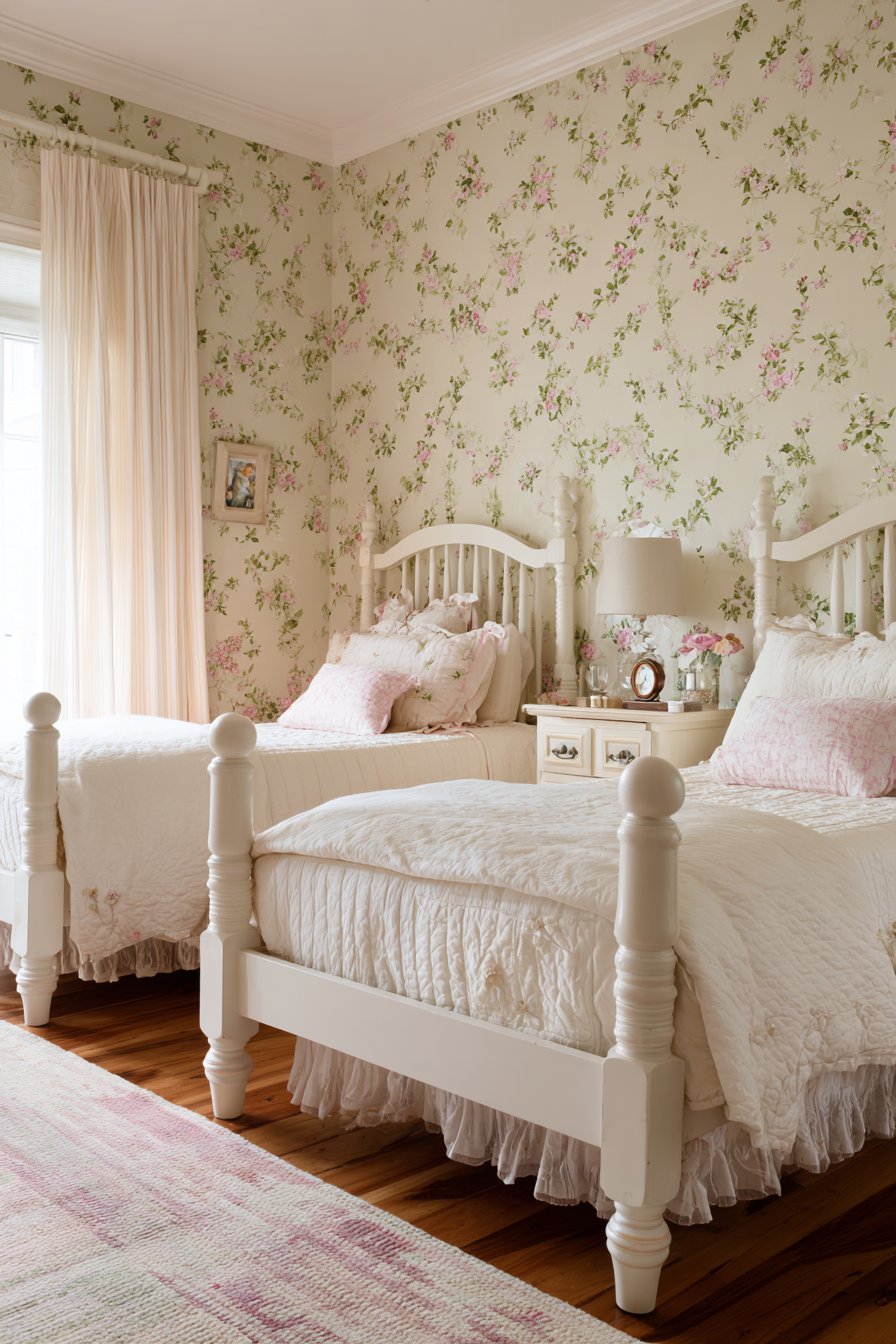
The cottage aesthetic’s inherent warmth and approachability creates nurturing environment perfect for childhood development. The traditional elements provide stability and permanence that help children feel secure and grounded. The soft colors and gentle patterns create visually soothing space that promotes rest and calm, essential for growing bodies and minds.
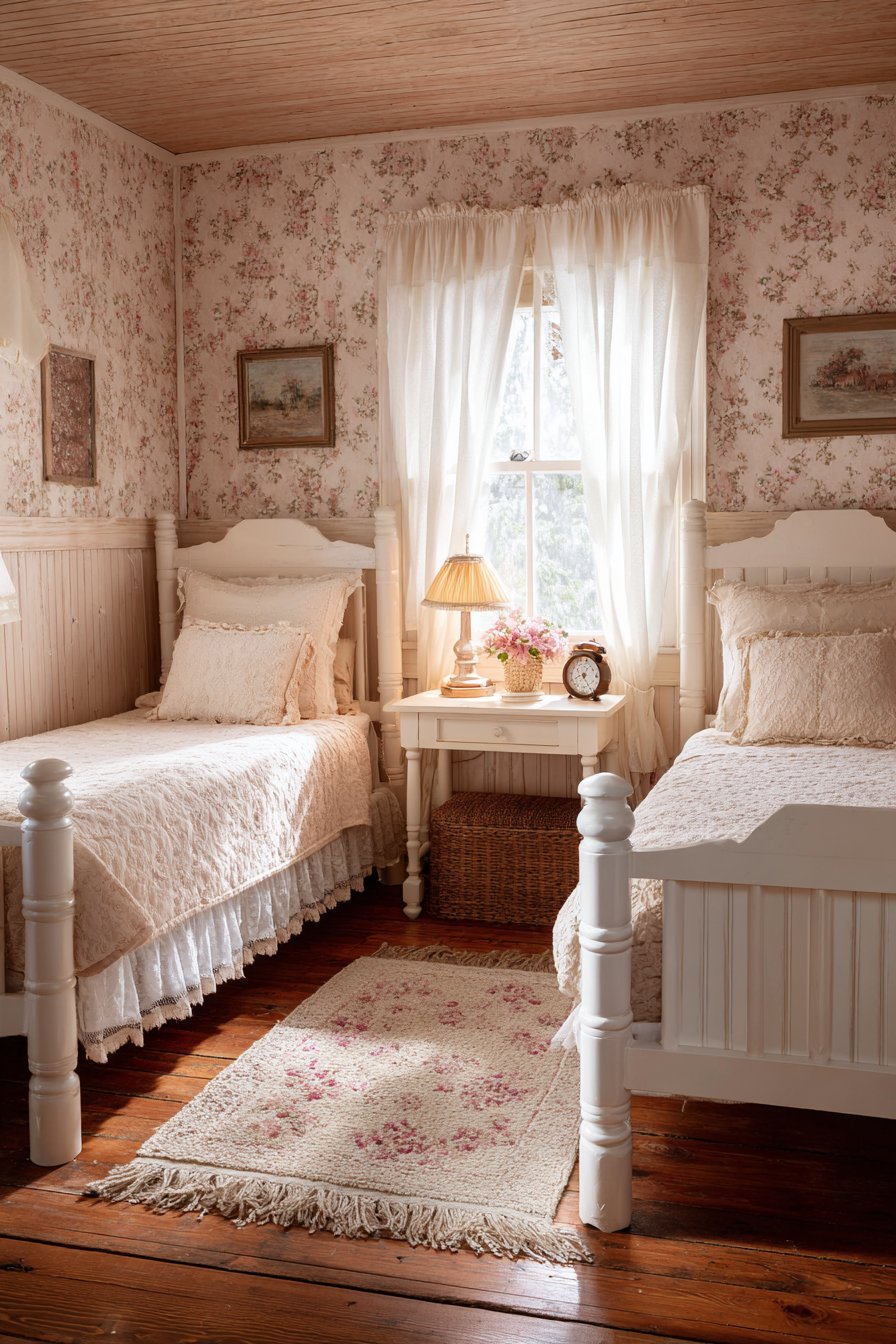
This design proves that cottage style adapts beautifully to contemporary family needs when executed with restraint and quality materials. The painted spindle beds provide classic beauty with practical durability, while the pine flooring offers timeless appeal that transcends passing trends. The shared nightstand teaches valuable lessons about cooperation and compromise while maintaining the room’s symmetrical, balanced design.
Key Design Tips:
- Choose painted wood furniture in soft whites for classic cottage appeal
- Use wallpaper in muted, small-scale patterns to add interest without overwhelming
- Install natural wood flooring that develops character and warmth over time
- Select eyelet or lace-trimmed curtains for traditional charm and light diffusion
- Create symmetrical layouts that promote fairness and visual harmony
15. Sophisticated Modern Master Suite
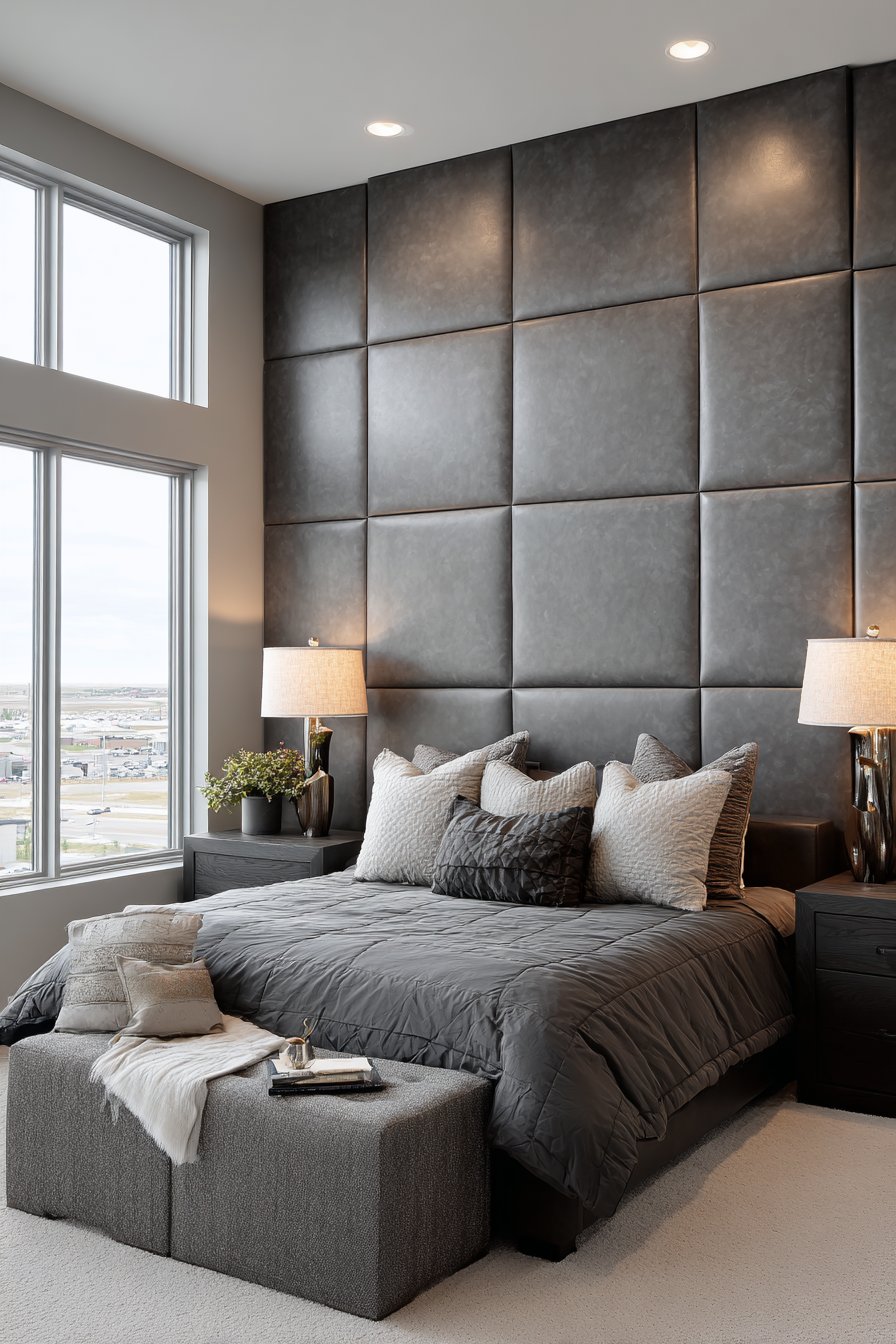
Contemporary elegance meets family practicality in this modern master bedroom where an upholstered headboard wall extending full width creates dramatic focal point that’s both visually striking and safely soft for children climbing into bed. Built-in recessed lighting provides adjustable ambiance, allowing the room to transition from energetic morning space to peaceful evening retreat with simple dimmer control. Streamlined furniture in warm walnut finish offers ample storage while maintaining clean lines and sophisticated aesthetic.
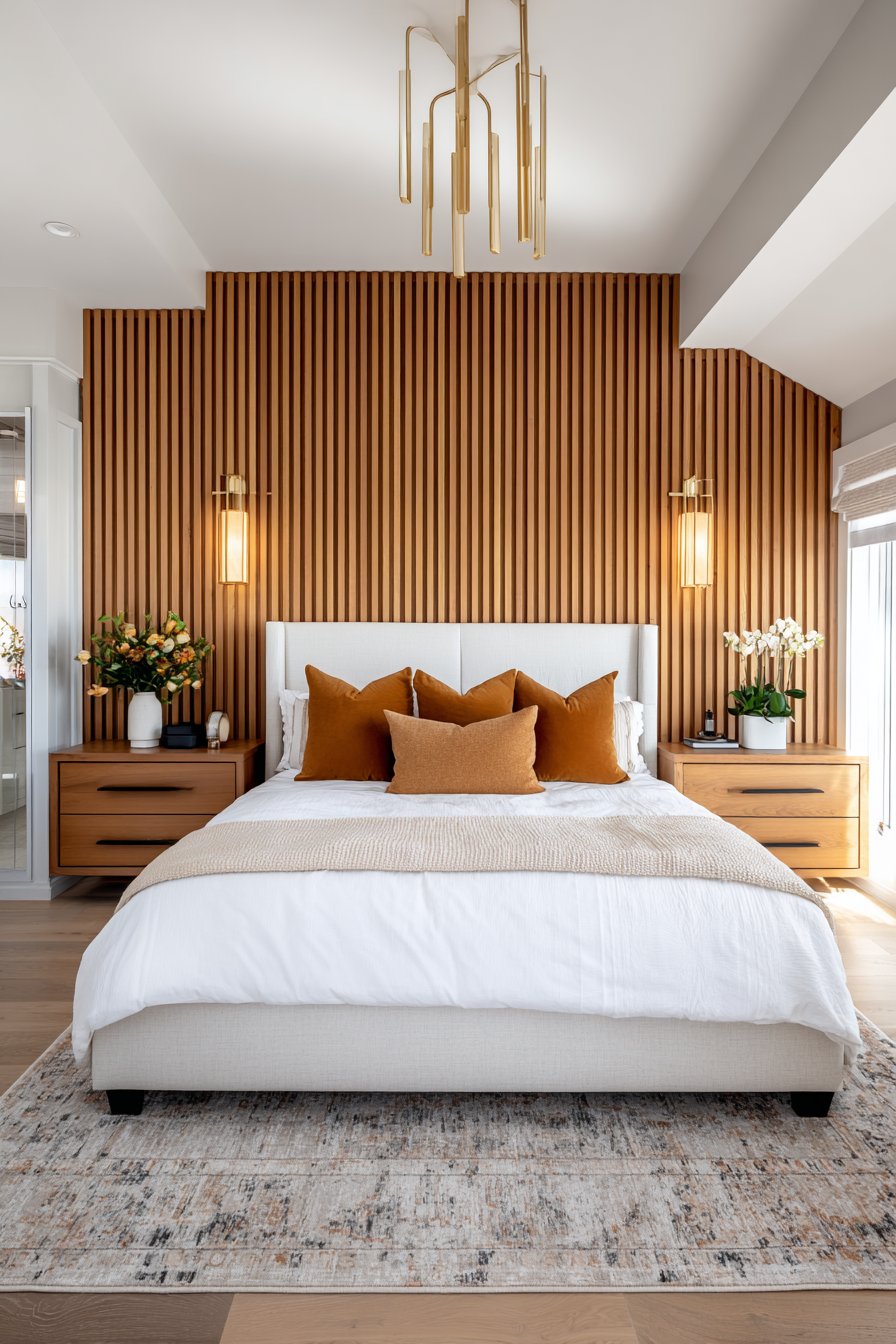
Large windows with motorized blackout shades provide flexibility for light control without cumbersome cords or chains—a safety feature that also adds contemporary convenience. The professional design demonstrates how modern family bedrooms can achieve gallery-worthy sophistication while incorporating child-friendly features that protect and accommodate. Natural daylight illuminates quality materials and thoughtful details, revealing the craftsmanship and care invested in every design decision.
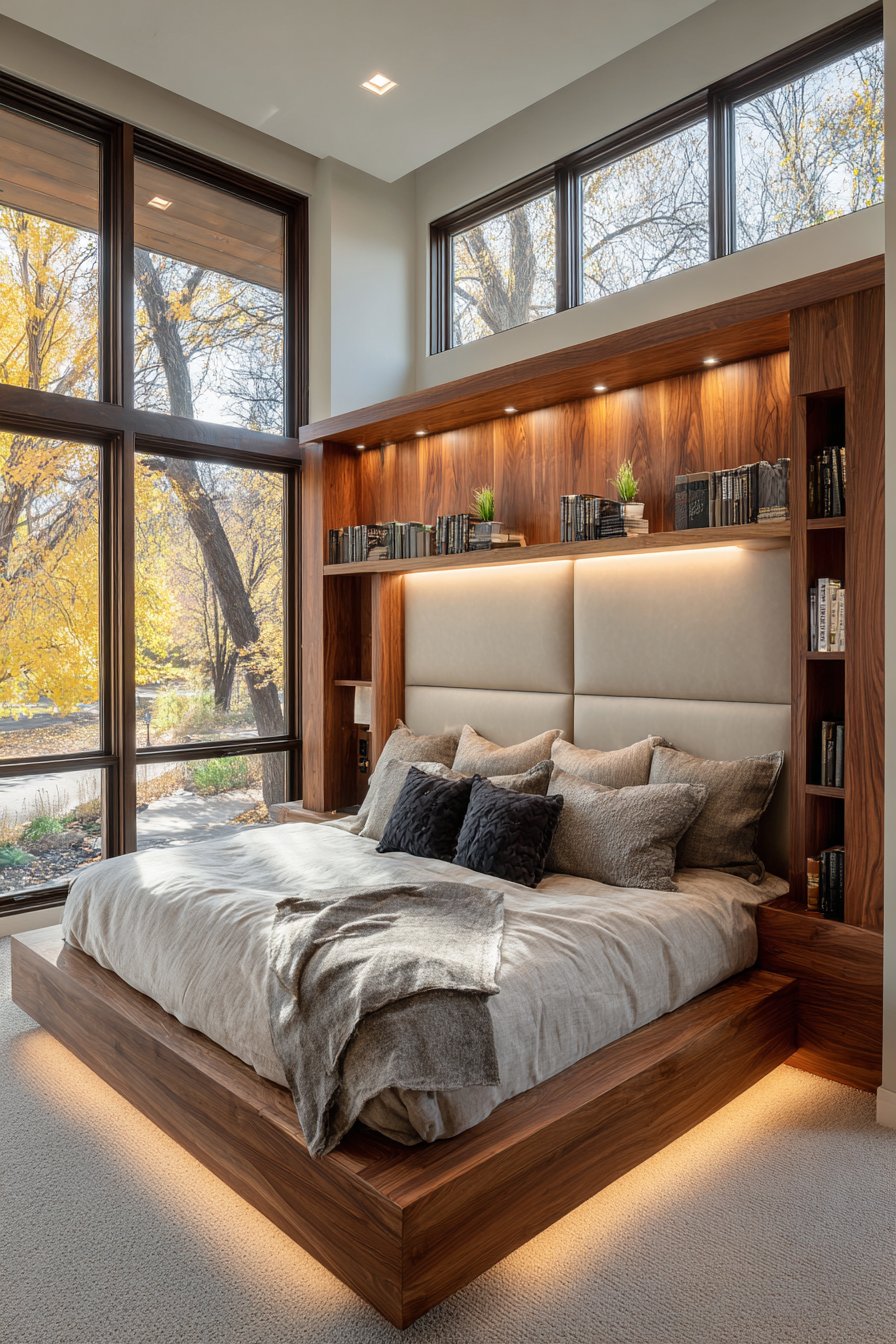
The extended upholstered headboard represents innovative thinking about family bedroom design. Rather than simply padding the bed itself, the wall-to-wall approach creates safe landing zone while making bold architectural statement.
The warm walnut furniture introduces organic warmth essential for preventing modern spaces from feeling cold or sterile. The motorized shades represent the intersection of safety, convenience, and technology—modern solutions to age-old challenges.
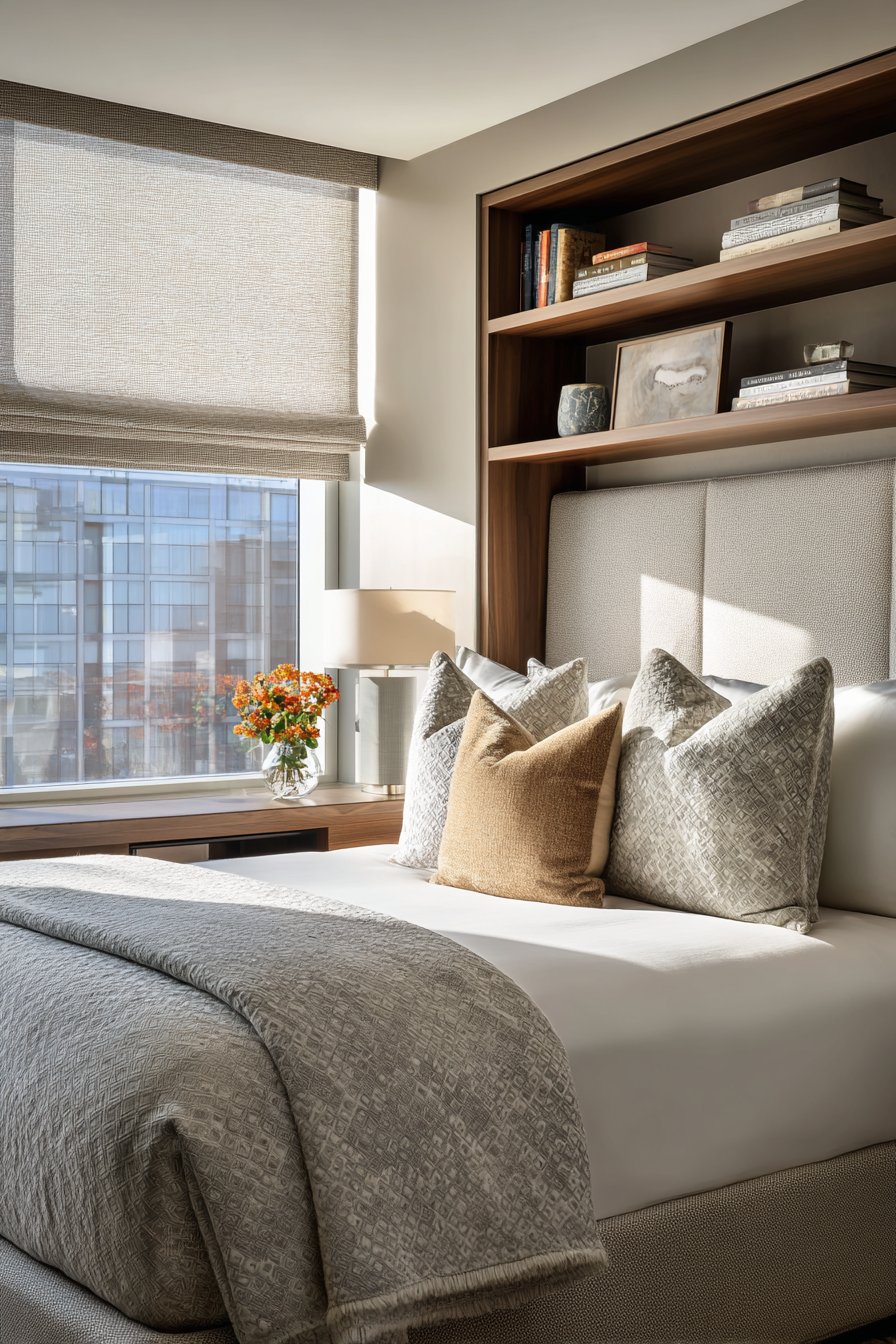
This sophisticated approach proves that family-friendly design has evolved far beyond sacrifice and compromise. Today’s parents refuse to choose between safety and style, demanding spaces that serve their families while reflecting their design sensibilities. This bedroom delivers both, creating an environment that works beautifully for current family needs while maintaining investment-worthy quality that endures.
Key Design Tips:
- Create full-width upholstered headboard walls for drama and safety
- Install dimmable, recessed lighting for flexible ambiance control
- Choose warm wood finishes in contemporary profiles for modern warmth
- Select motorized window treatments for safety and convenience
- Invest in quality materials and craftsmanship for long-term satisfaction
16. Vertical Storage Maximizing Small Space
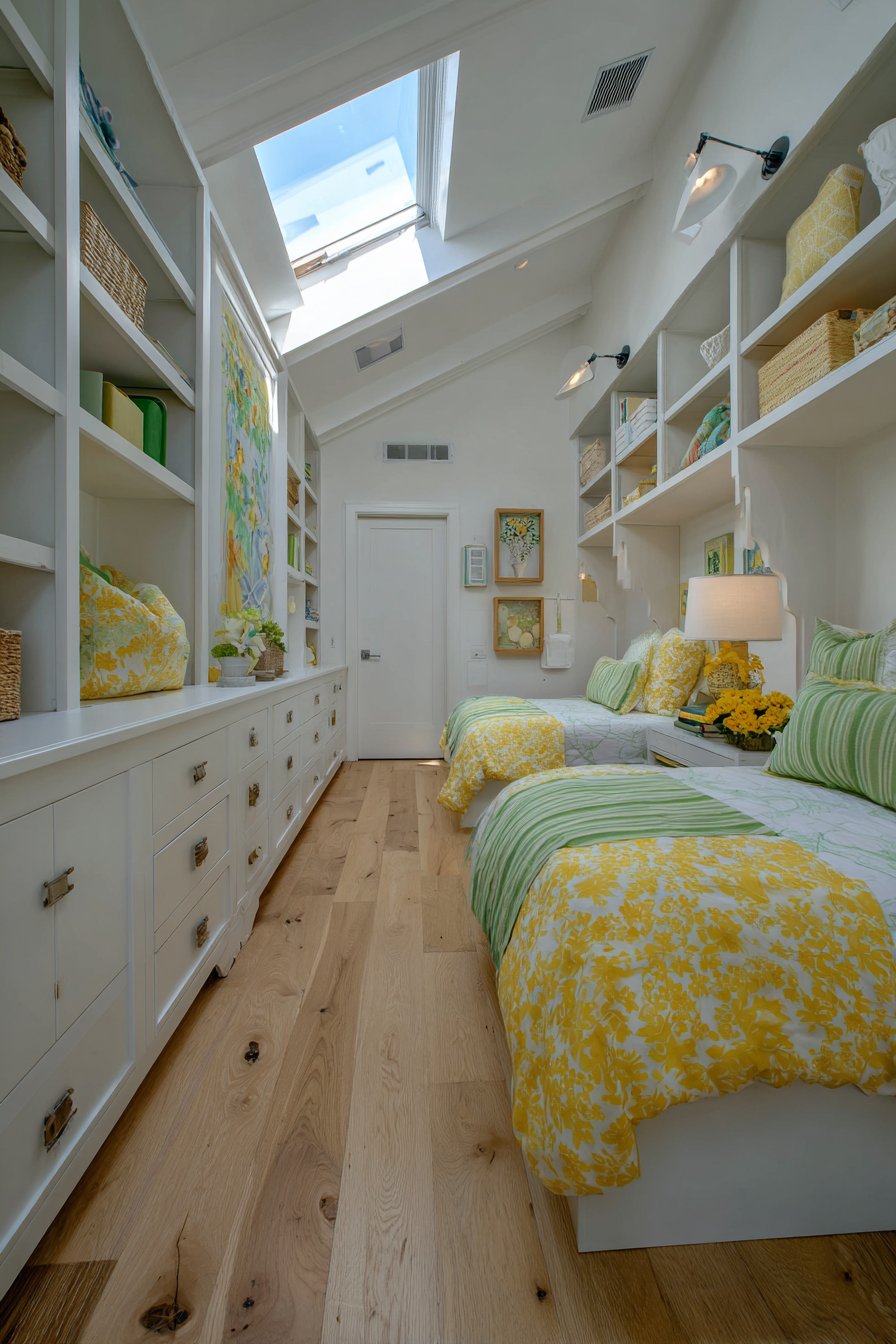
Urban living inspires ingenious solutions in this small-space shared bedroom where floor-to-ceiling shelving units maximize vertical storage without consuming precious floor area. Loft-style beds with desks underneath create individual zones for two children, transforming single room into two distinct territories complete with sleeping, study, and storage areas. Cheerful accent colors in bedding and accessories add personality and joy without permanent commitment, allowing easy updates as children’s preferences evolve.
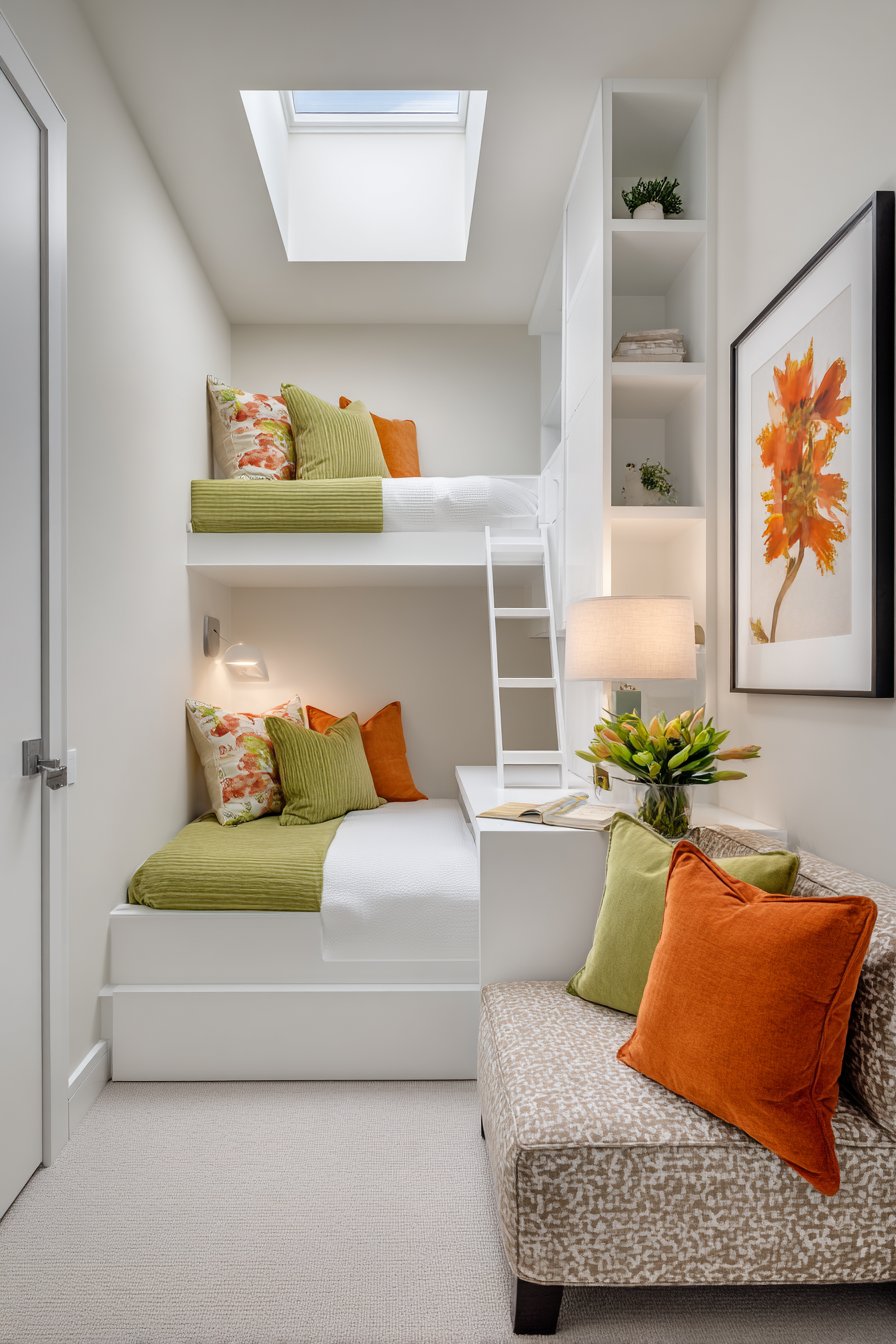
The compact but highly functional layout demonstrates how constraint often produces the most creative design solutions. Wide-angle perspective reveals how every cubic foot serves multiple purposes, with storage tucked into every available nook. Natural light from a skylight provides bright, even illumination throughout the space, eliminating dark corners and making the room feel significantly larger than its actual dimensions. This efficient use of space proves ideal for urban family living where square footage commands premium prices.
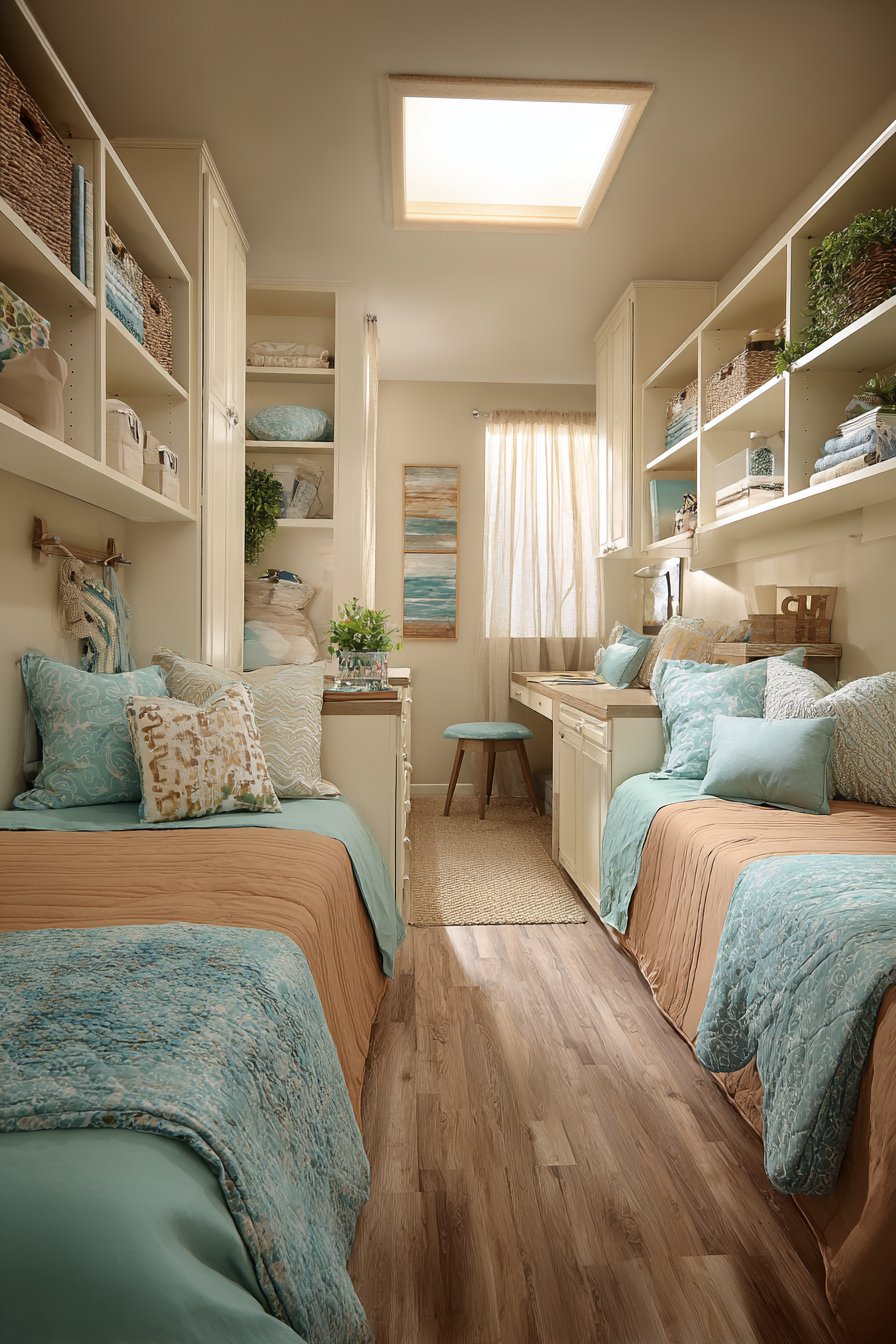
The loft bed concept revolutionizes small bedroom design by thinking three-dimensionally rather than merely in floor plan terms. By elevating sleeping areas, the design creates functional space underneath for desks, storage, or play areas. Each child enjoys a complete personal zone within shared room, reducing conflicts and providing necessary privacy for homework, hobbies, and quiet time.
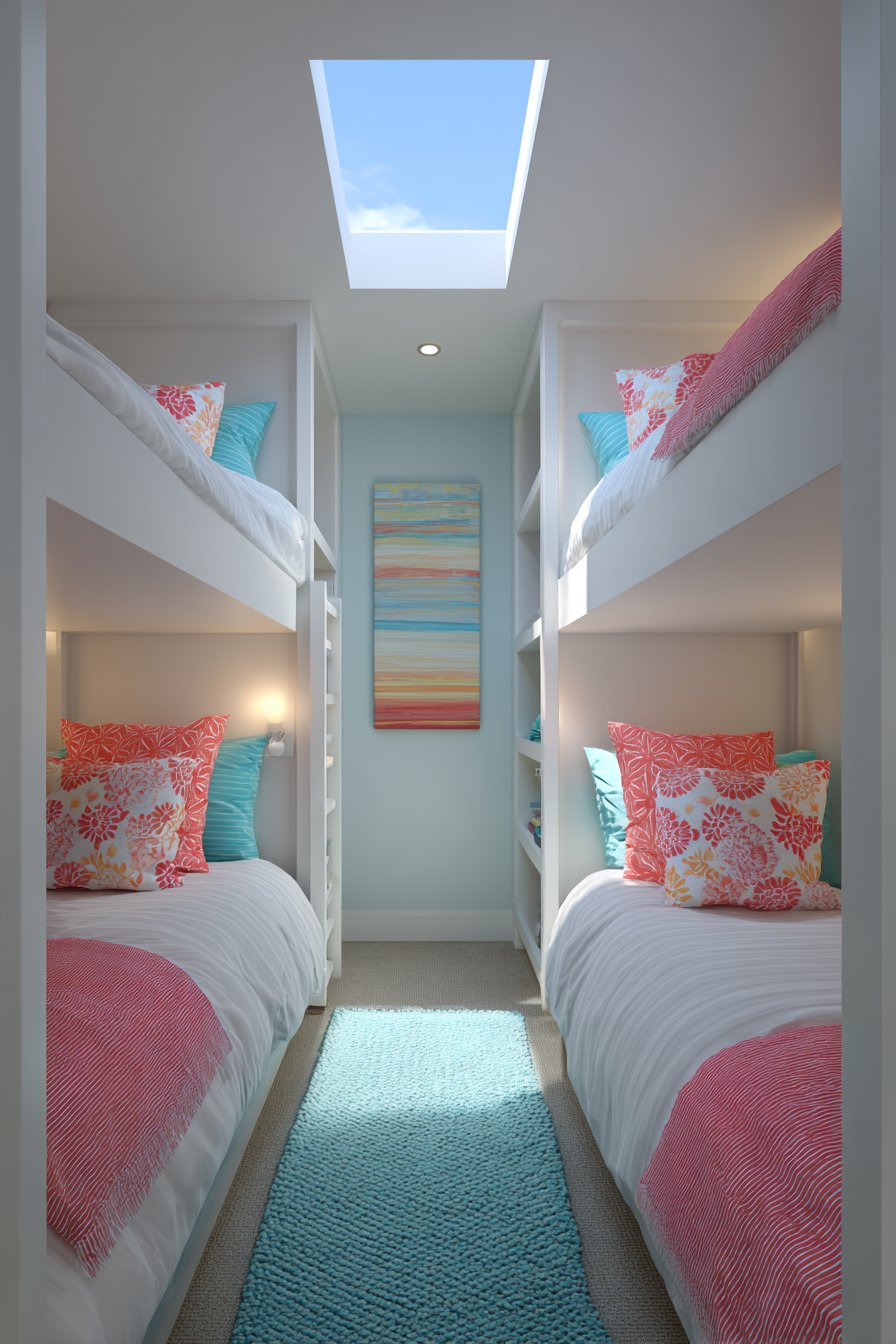
The floor-to-ceiling storage approach capitalizes on often-wasted vertical space, providing generous capacity while maintaining open floor area essential for movement and activities. The white finish keeps the substantial storage units from overwhelming the room visually, while the organized systems teach children valuable lessons about maintaining order in limited space—skills that serve them throughout life.
Key Design Tips:
- Utilize vertical space with floor-to-ceiling storage solutions
- Choose loft beds to create functional areas underneath for desks or play
- Keep large furniture pieces in white or light colors to prevent visual overwhelm
- Add personality through easily changeable elements like bedding and accessories
- Install skylights where possible to maximize natural light in compact spaces
17. Rustic Farmhouse Character-Rich Master Bedroom
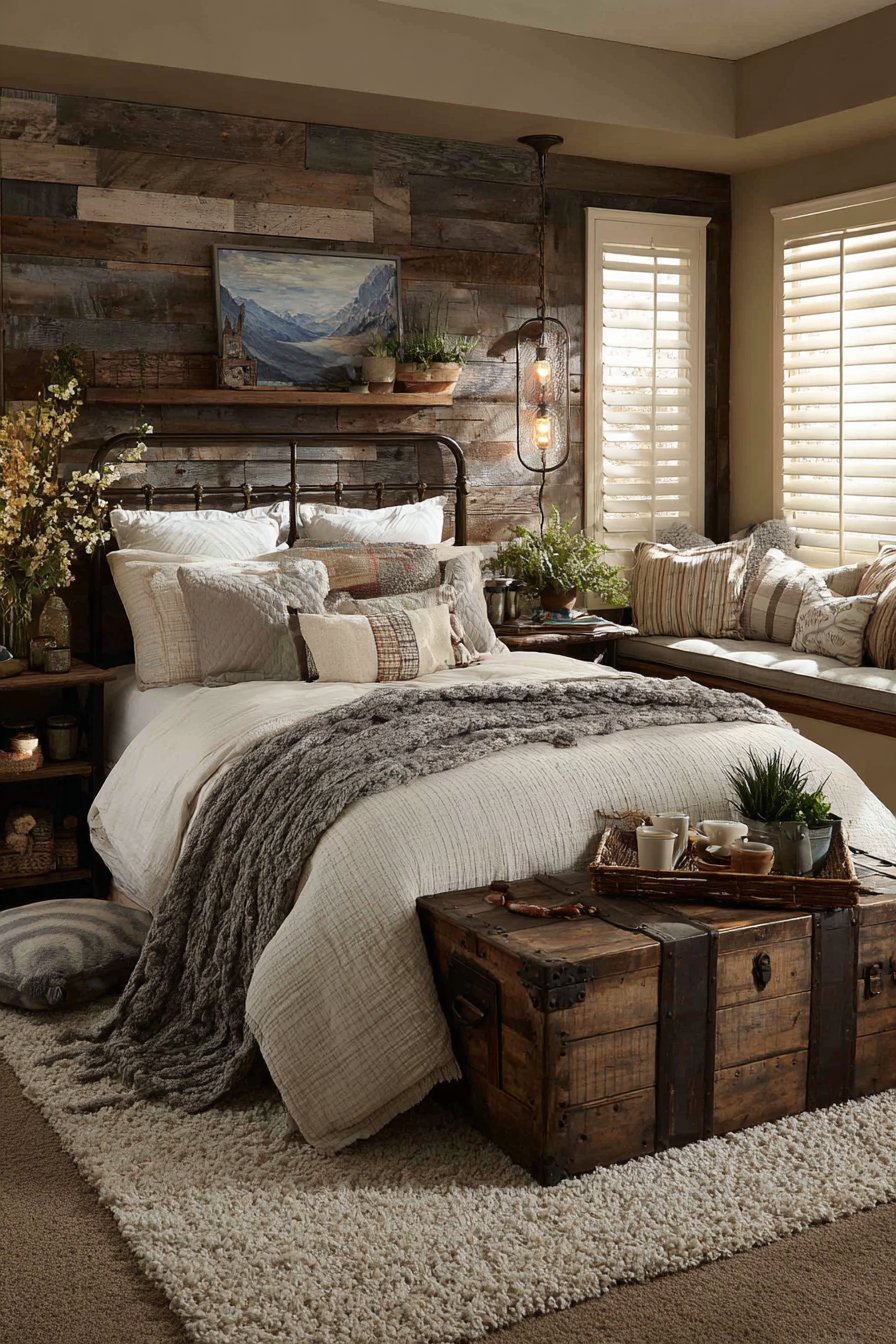
Authentic charm and lived-in comfort define this rustic farmhouse master bedroom, where reclaimed wood accent wall introduces instant character, warmth, and textural interest. The wrought iron bed frame provides substantial presence while maintaining an airy quality through its open metalwork design. Vintage wooden trunks offer practical storage for extra linens and seasonal items while contributing to the room’s collected-over-time aesthetic that feels genuine rather than contrived.
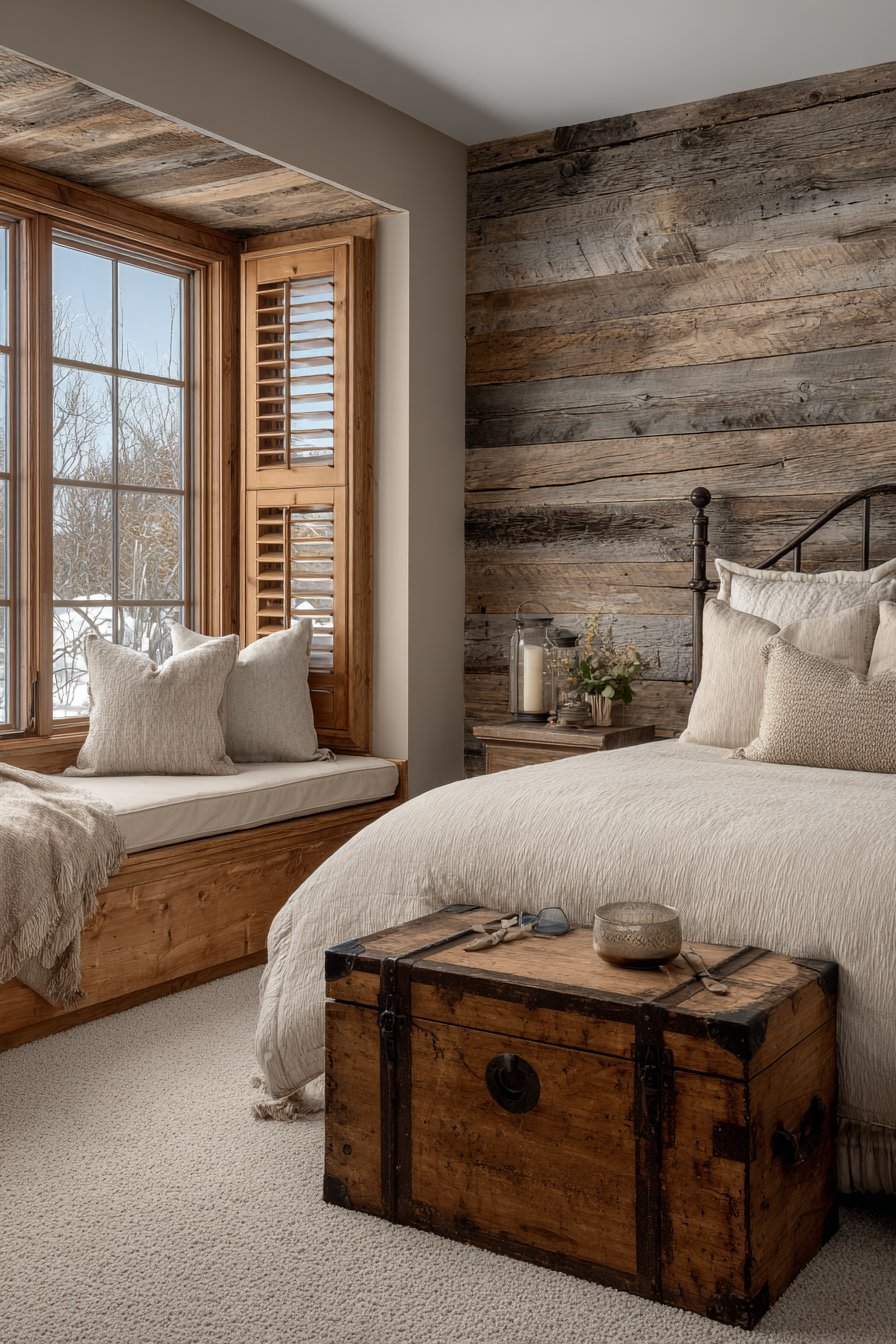
Neutral linens in cream and grey tones create a restful palette that allows the room’s architectural features and furniture pieces to take center stage. A window seat with plump cushions offers cozy spot for family reading time, transforming a functional window area into cherished gathering place. Natural light filters through wooden shutters, creating authentic farmhouse ambiance with beautiful light-and-shadow play throughout the day.
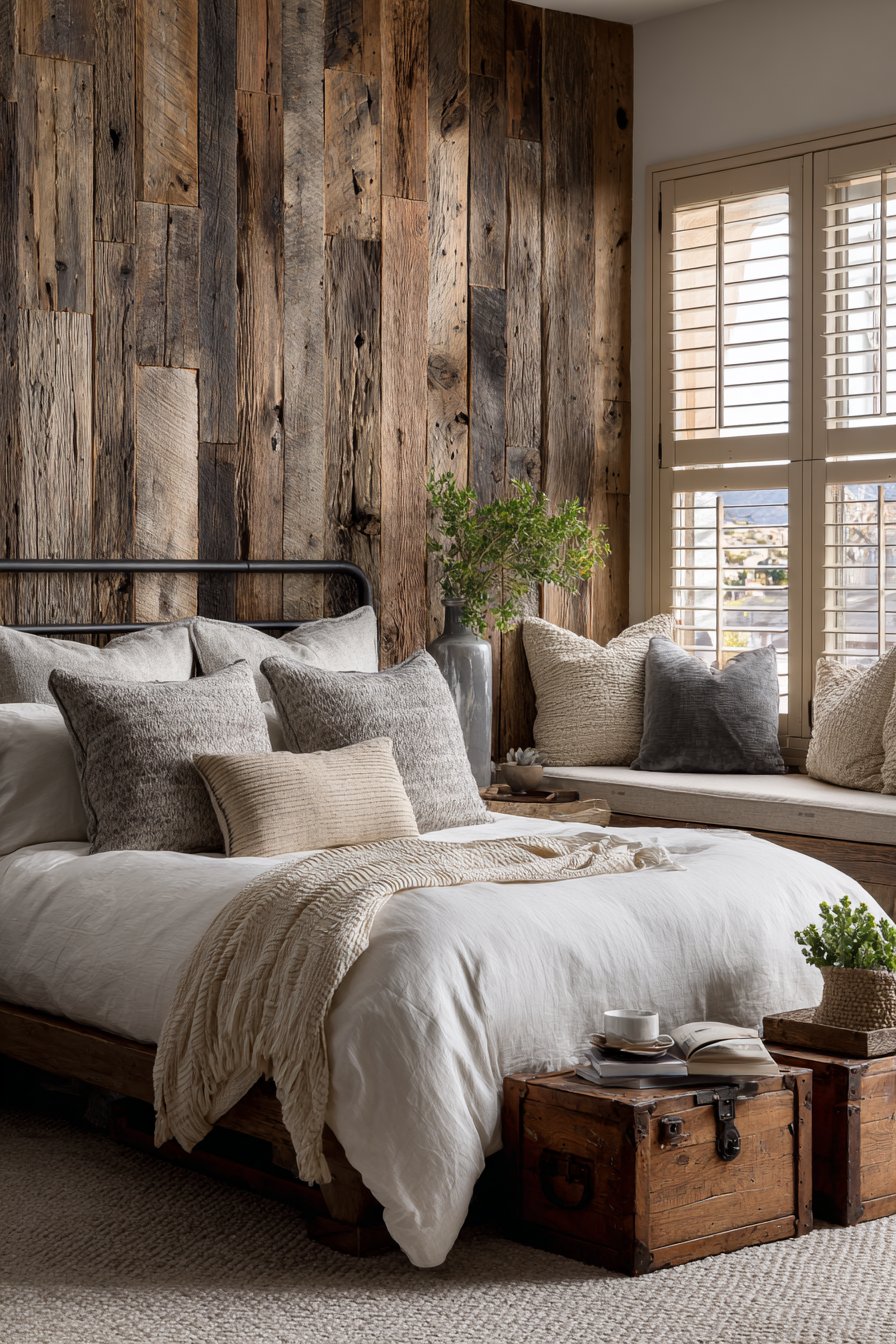
The farmhouse aesthetic’s enduring appeal lies in its honesty and unpretentiousness. Materials show their origins and age gracefully, developing patina and character rather than looking worn. The reclaimed wood wall tells stories through its weathered surface, grain patterns, and nail holes—each imperfection adding to its beauty. This appreciation for authentic materials and honest construction creates spaces that feel grounded, comfortable, and real.
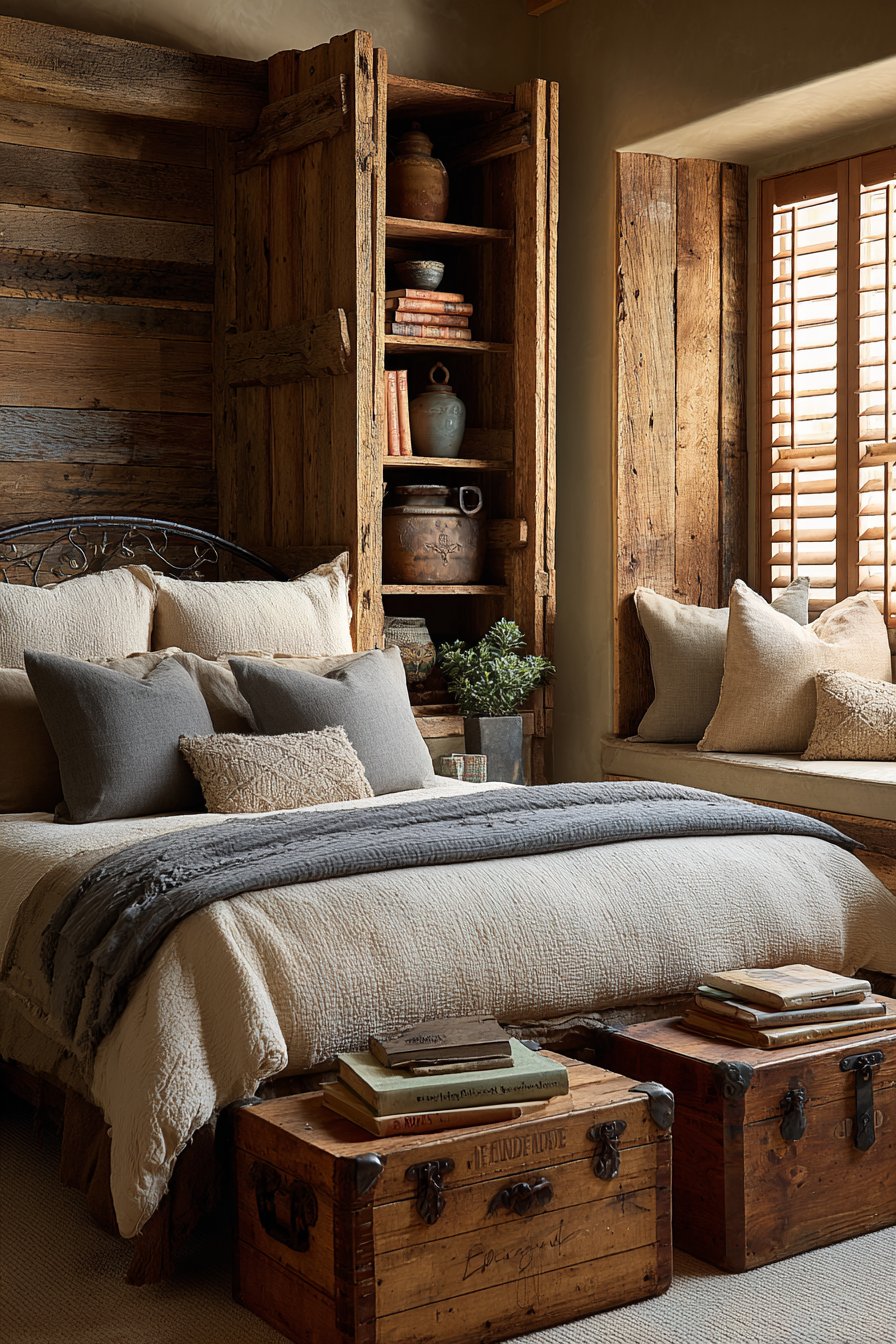
The window seat exemplifies farmhouse practicality—using every available space while creating opportunity for connection and comfort. The vintage trunks provide generous storage while serving as furniture pieces with history and character. Every element contributes to the room’s sense of permanence and authenticity, creating environment where families can imagine generations of memories being made.
Key Design Tips:
- Incorporate reclaimed wood for instant character and sustainable design
- Choose wrought iron for durability and traditional farmhouse authenticity
- Create window seats to maximize space utilization and family gathering spots
- Use neutral, natural linens that complement rather than compete with architectural features
- Select vintage storage pieces that provide function and character
18. Contemporary Adaptable Growth-Friendly Bedroom
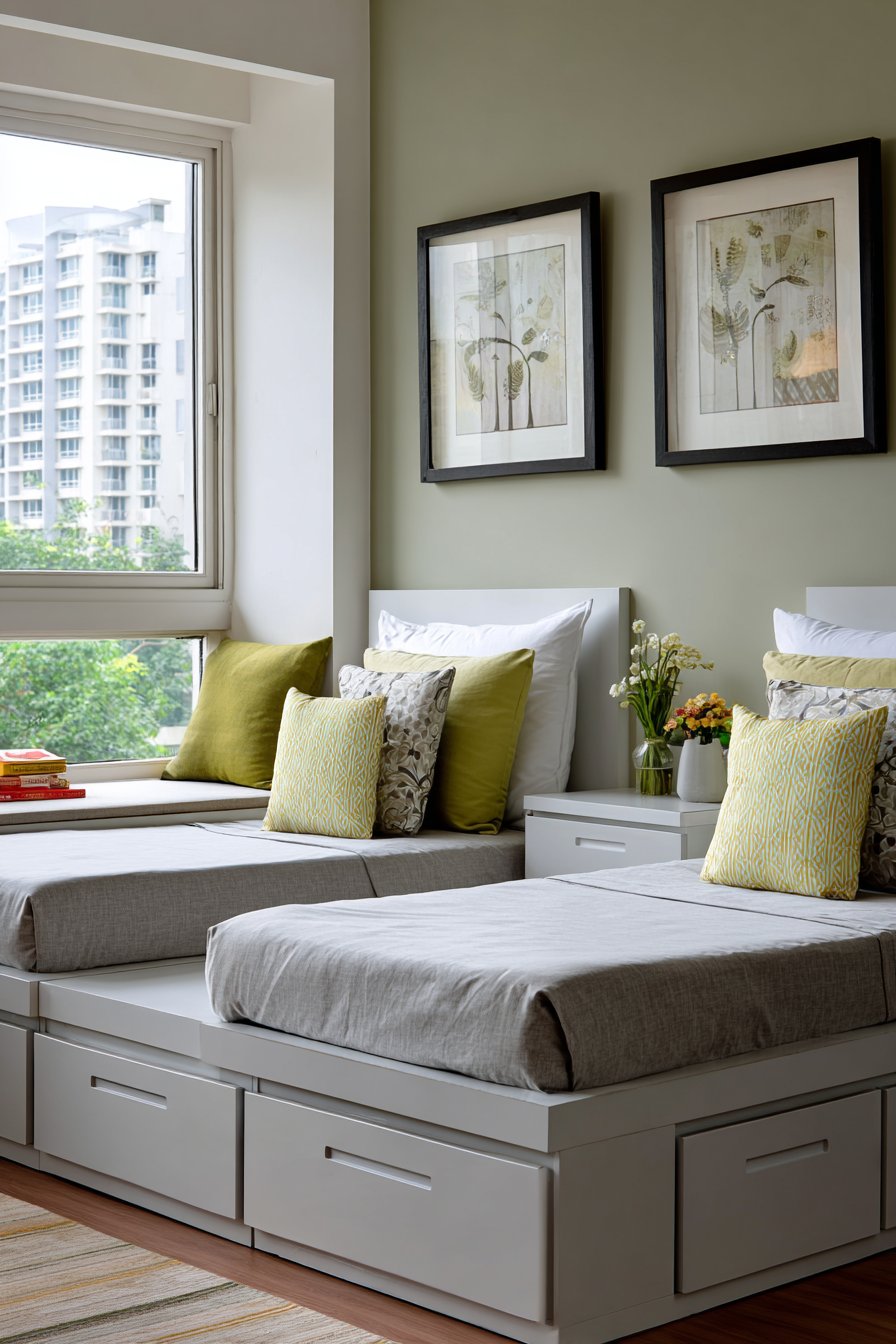
Forward-thinking design creates lasting value in this contemporary shared bedroom featuring modular furniture that adapts as children grow from toddlers to teenagers. Twin platform beds with integrated storage drawers in light grey finish provide clean-lined functionality that remains stylish through all developmental stages. A central study desk can be shared during younger years or separated into individual workstations as children’s needs for privacy and focused study time increase.
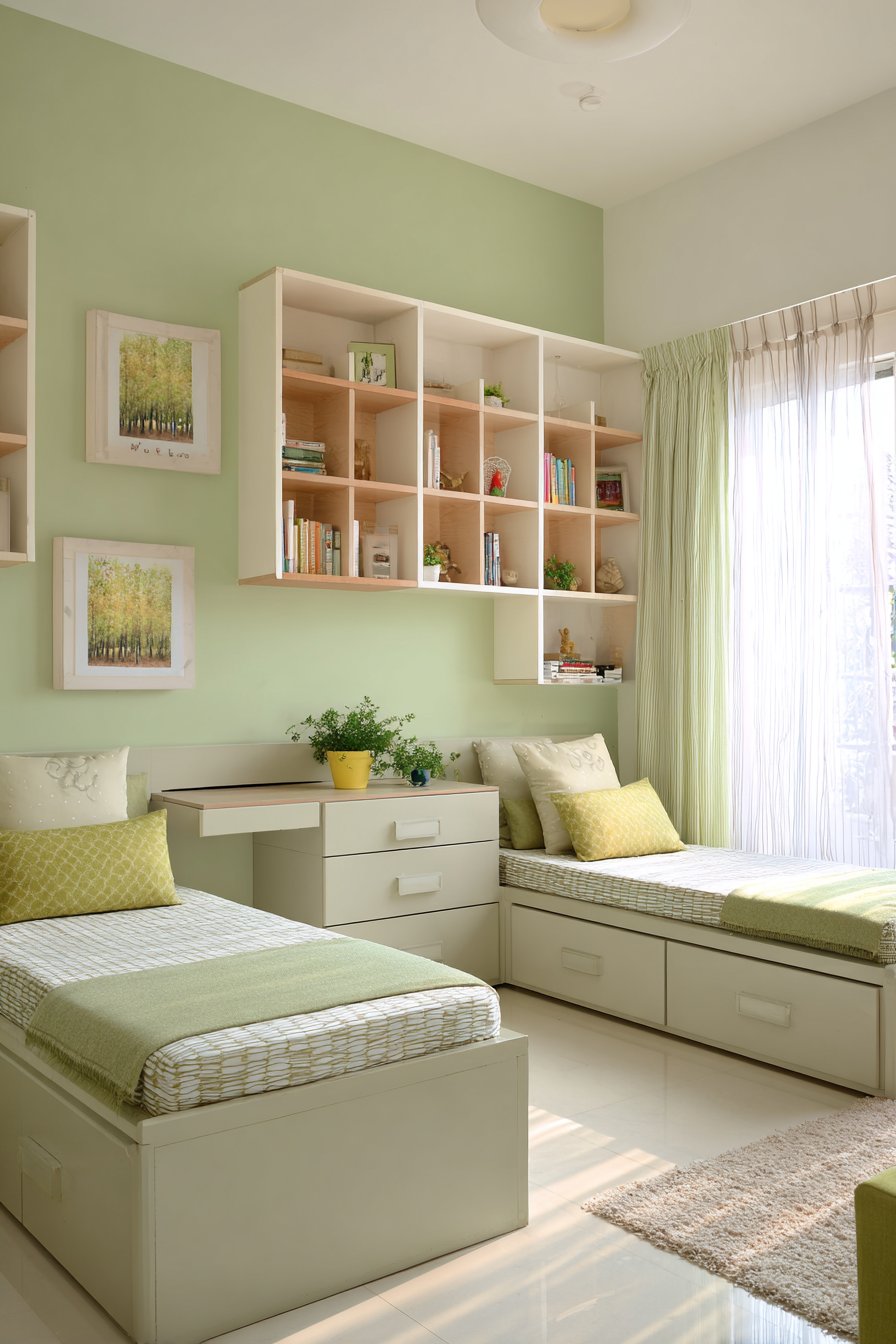
Soft green walls promote calm and concentration, creating backdrop that supports both restful sleep and productive homework sessions. The professional design demonstrates how thinking long-term saves money and resources while reducing the environmental impact of constantly replacing furniture as children age. Natural window light and balanced exposure showcase the flexible bedroom solution that grows and changes with family needs rather than requiring complete redesigns every few years.
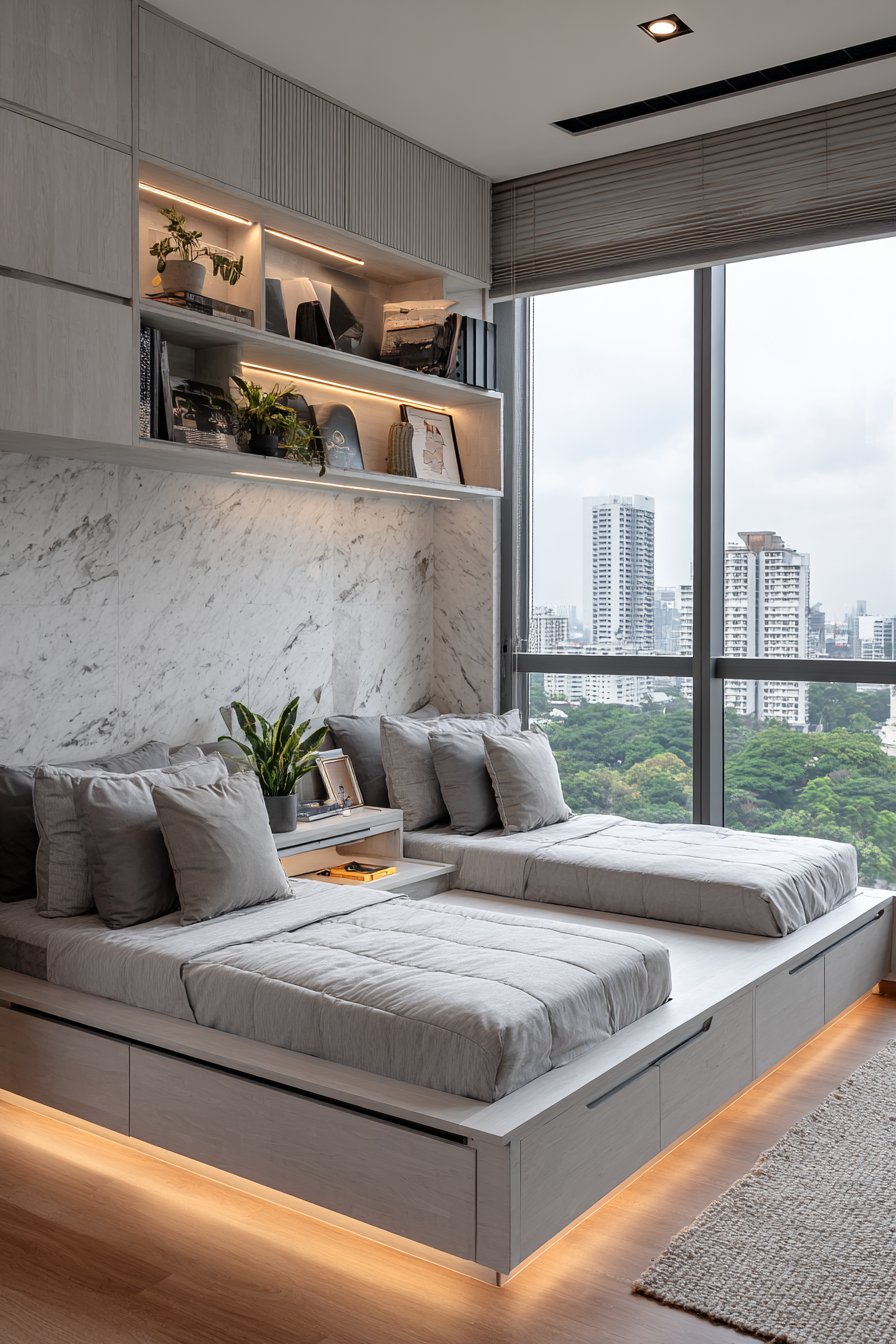
The modular approach represents intelligent investment in family spaces. Rather than purchasing furniture that children will outgrow in style or function, these adaptable pieces provide decade-long service. The platform beds work equally well for toddlers, school-age children, and teenagers, while the storage drawers accommodate changing needs from toy storage to clothing organization. The separable desk system provides flexibility for various scenarios—collaborative homework, individual study, or even dual workstations for remote learning.
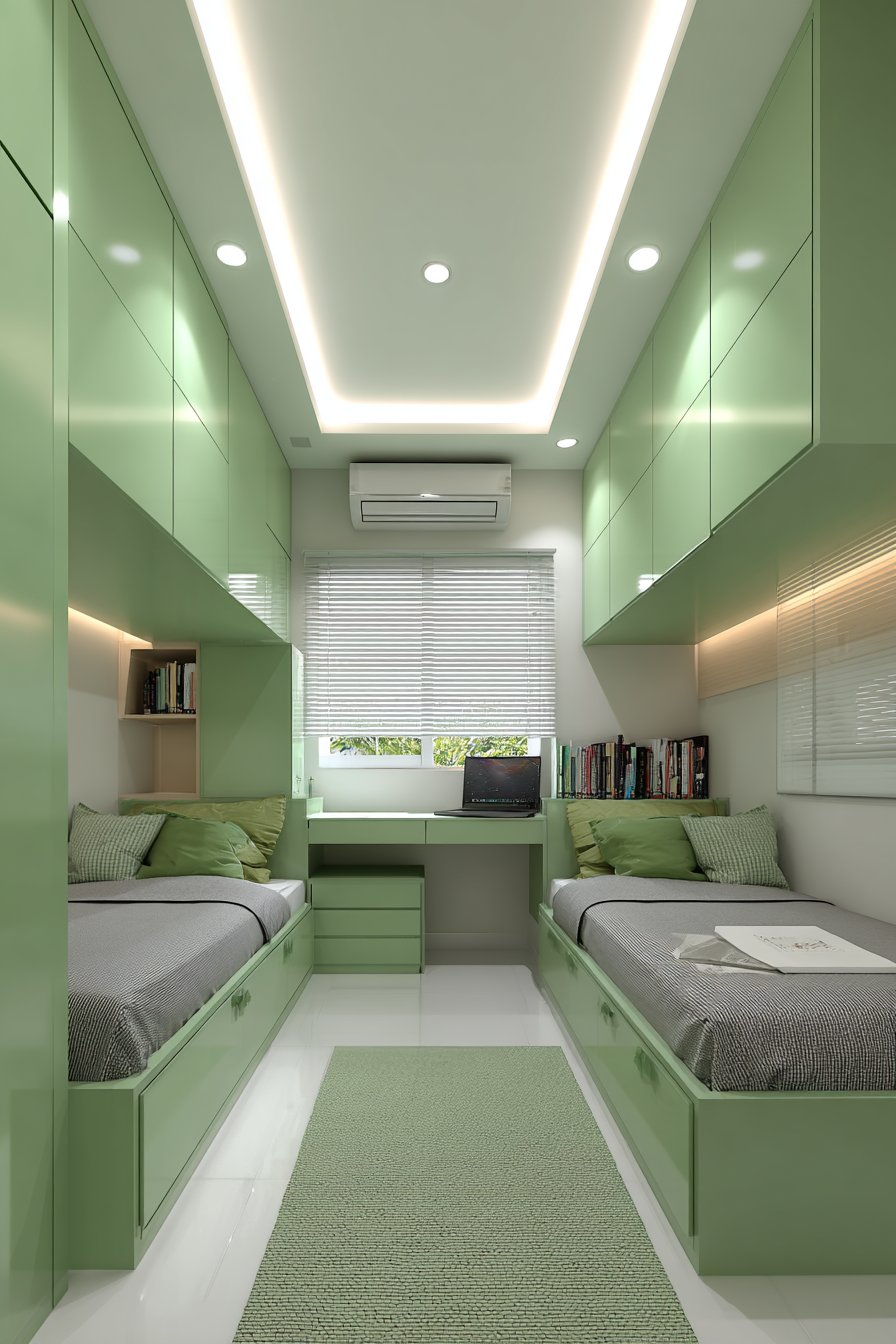
The contemporary aesthetic’s clean lines and simple forms ensure the room never appears childish or dated, allowing children to feel their space grows with them rather than keeping them trapped in designs that no longer reflect their maturing identities. The soft green walls strike perfect balance—calming without being boring, colorful without being overwhelming. This thoughtful color choice supports various activities while maintaining serene atmosphere essential for family bedrooms.
Key Design Tips:
- Choose modular, adaptable furniture that serves children from early childhood through teenage years
- Select neutral contemporary pieces that won’t appear childish as kids mature
- Incorporate soft, calming colors that support both rest and concentration
- Plan for changing needs by selecting furniture with flexible configurations
- Invest in quality pieces that provide decade-long service rather than frequent replacement
19. Arts and Crafts Warmth and Craftsmanship
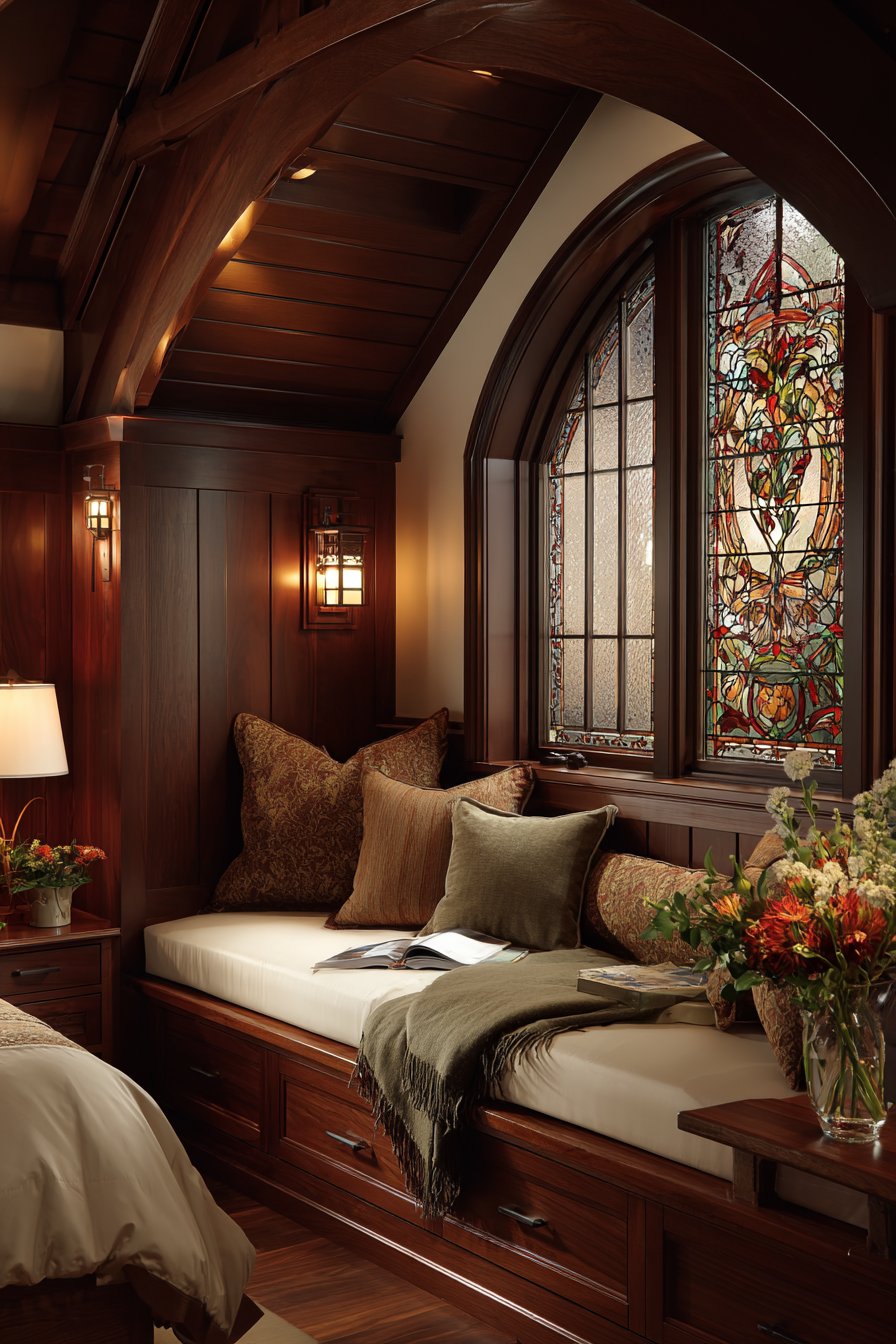
Rich craftsmanship and enduring quality define this arts and crafts style master bedroom where mission-style furniture in rich cherry wood creates warm, inviting atmosphere steeped in tradition. The substantial bed frame includes storage footboard providing practical space for extra linens while showcasing the joinery and woodworking expertise characteristic of the style. Built-in window seats with cushions create perfect reading nooks for bedtime stories, transforming architectural features into functional family gathering spots.
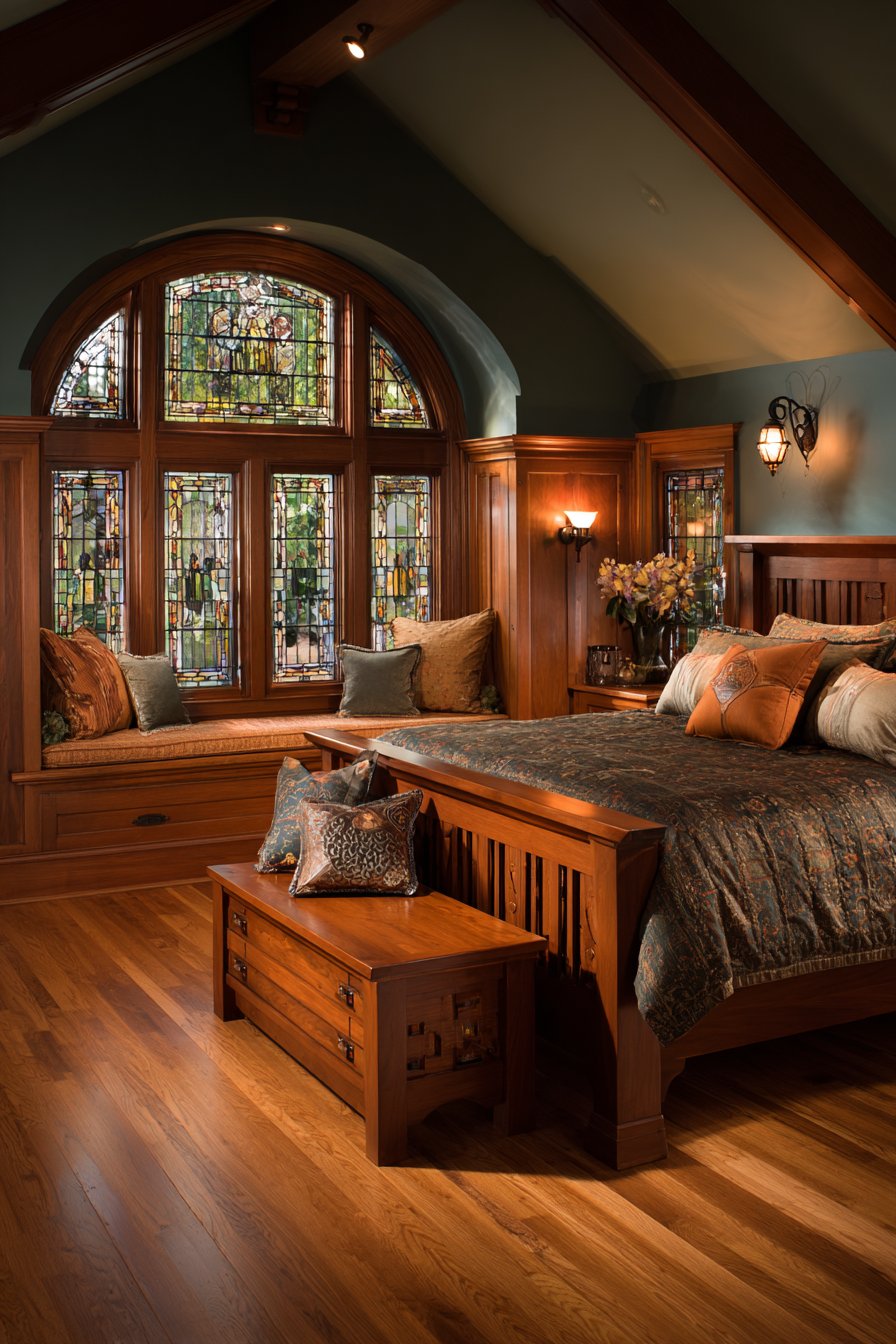
Warm amber lighting from period-appropriate fixtures bathes the room in golden glow that enhances the cherry wood’s natural beauty and depth. Natural light filtered through stained glass accent window creates jewel-toned patterns that shift throughout the day, adding ever-changing artistic element to the space. The emphasis on craftsmanship and quality materials creates room that feels substantial, permanent, and worthy of the family memories it will house.
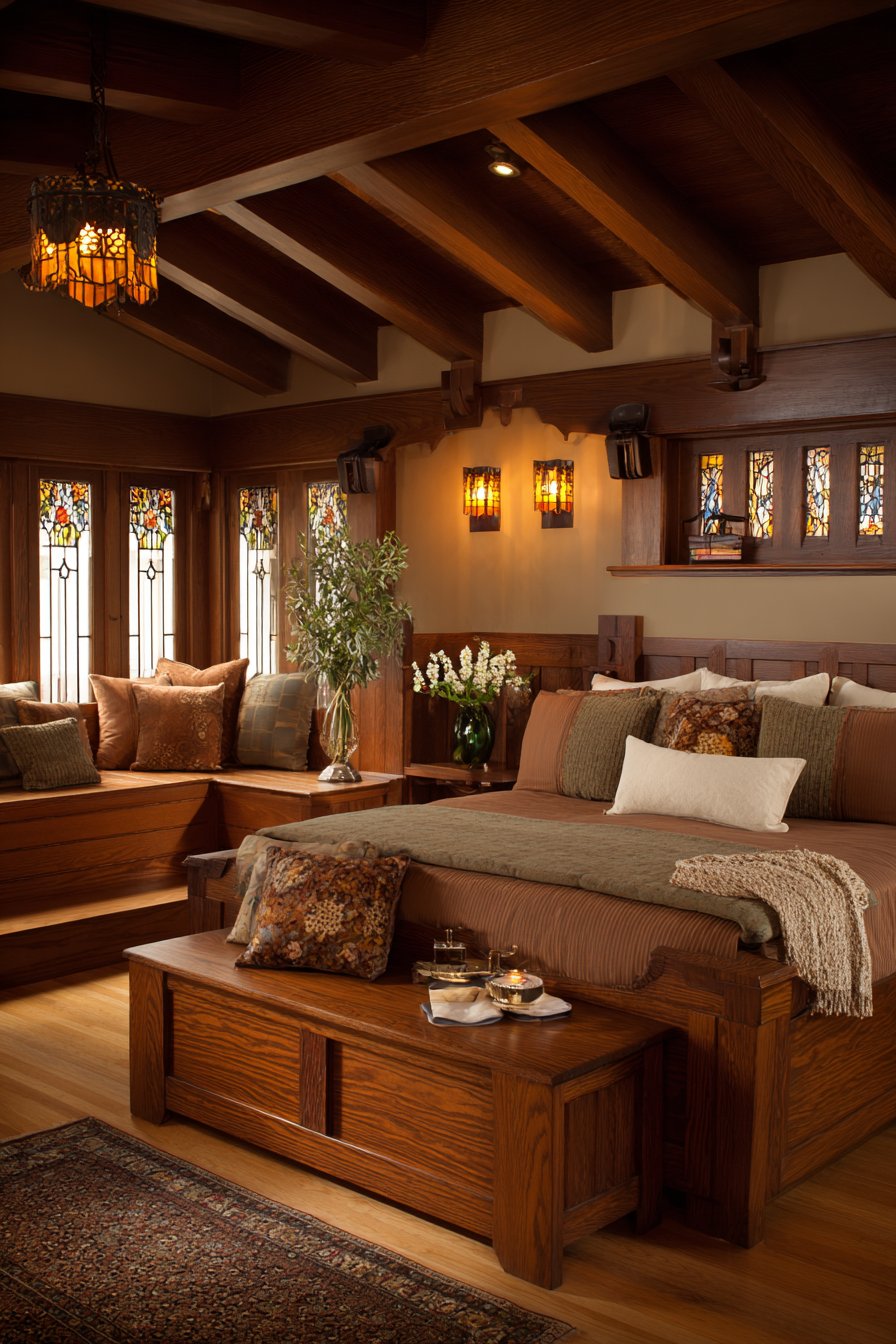
The arts and crafts movement’s philosophy—celebrating handcraftsmanship, honest materials, and functional beauty—creates particularly meaningful family spaces. The visible joinery and quality construction teach children to value skill, patience, and excellence. The substantial furniture pieces promise to serve the family for generations, potentially becoming heirlooms that carry forward family stories and traditions.
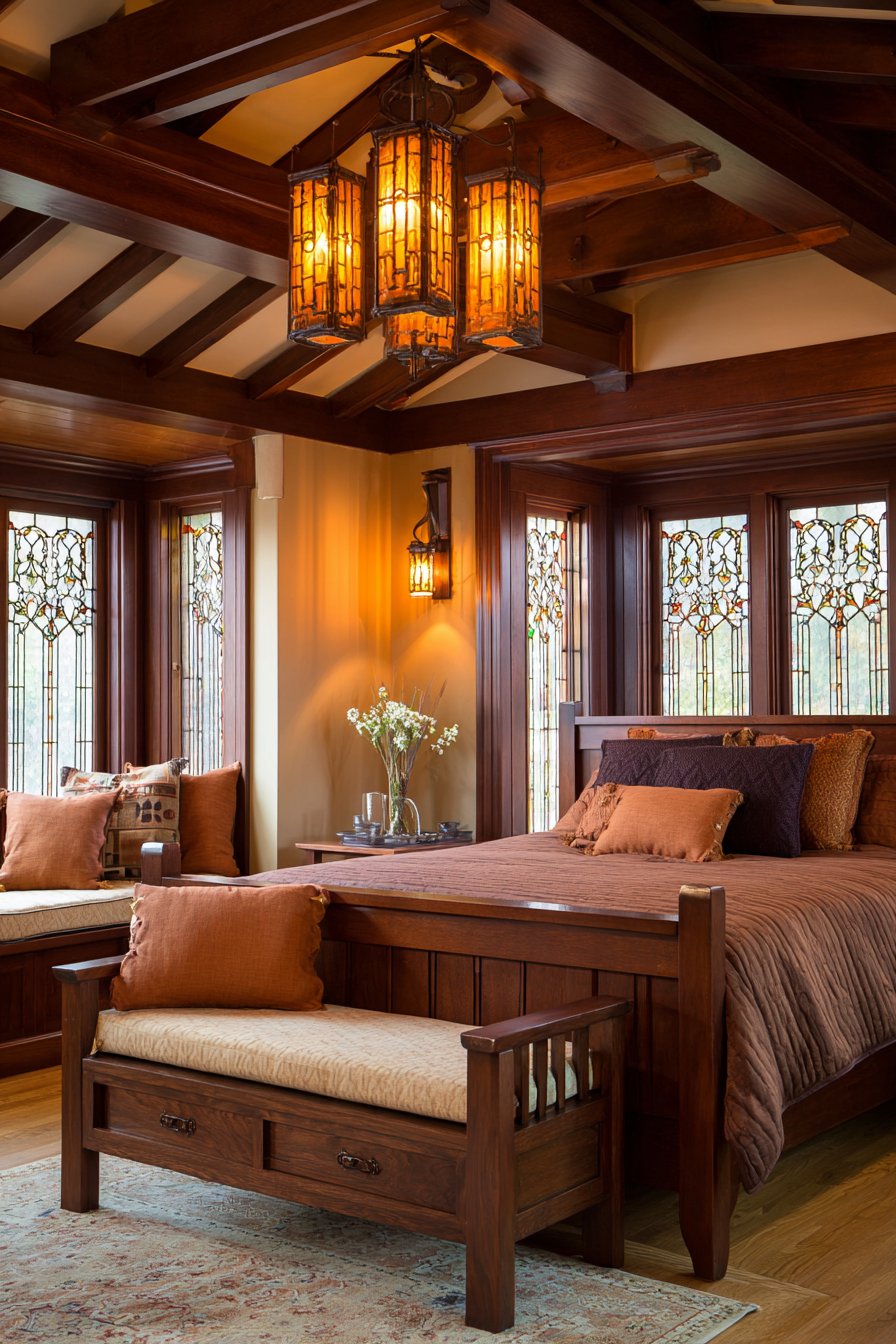
The built-in window seats exemplify the movement’s integration of architecture and furniture, creating custom features that maximize space utilization while providing beauty and comfort. The stained glass introduction adds artistry without pretension, filtering light in ways that transform ordinary moments into special experiences. The overall effect creates room that honors tradition while serving contemporary family needs with grace and warmth.
Key Design Tips:
- Select substantial, well-crafted furniture in rich wood tones for lasting beauty
- Incorporate built-in features like window seats to maximize space and comfort
- Use period-appropriate lighting fixtures to enhance authentic character
- Add stained glass elements for artistic light filtration and visual interest
- Emphasize quality craftsmanship that provides generational service
20. Japandi Serene Harmony
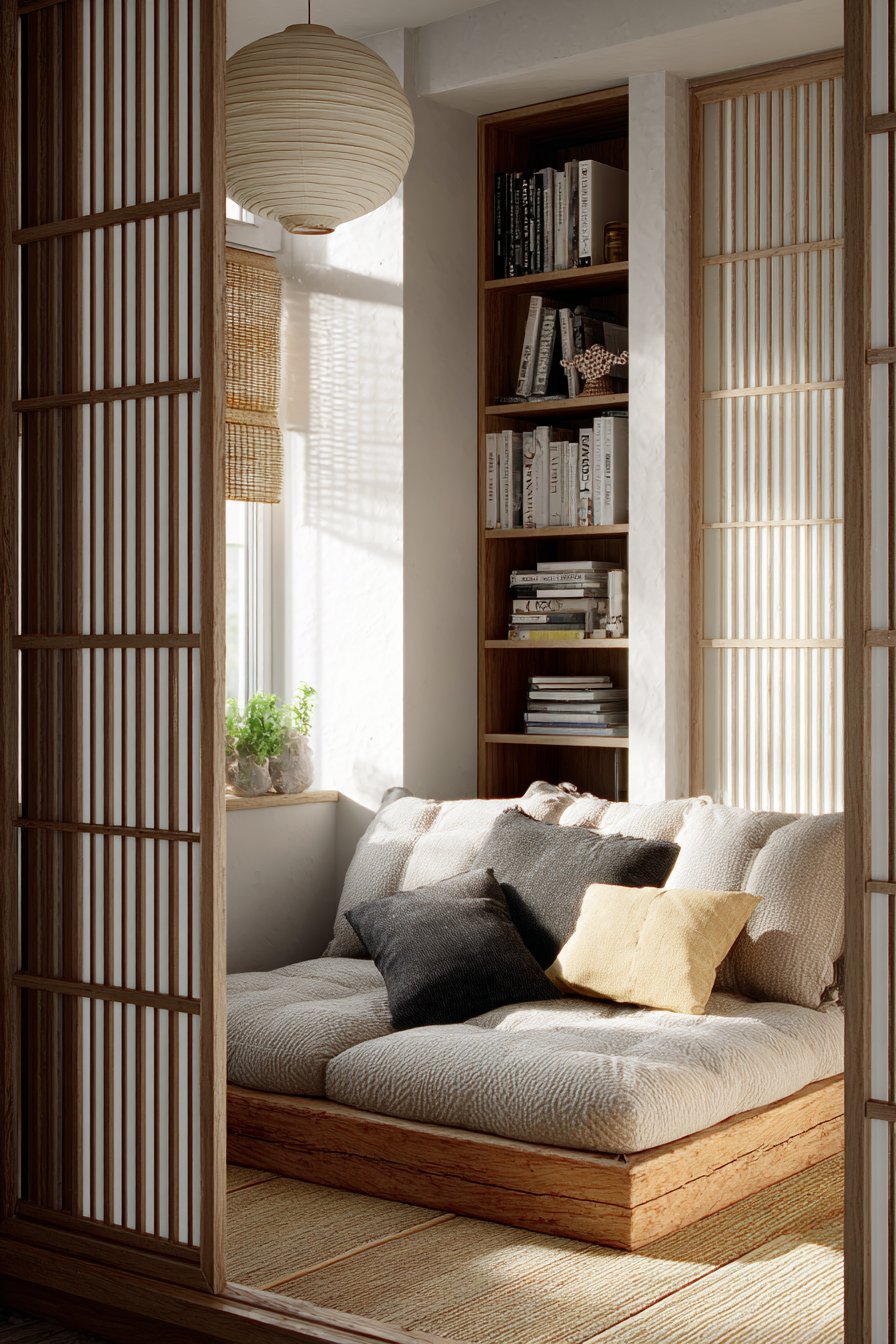
Eastern minimalism and Scandinavian warmth unite in this Japandi-inspired shared bedroom where low platform beds with natural wood frames sit on tatami-style mats, creating grounding connection to traditional Japanese design principles. Simple shoji screen-inspired room divider offers privacy when needed while maintaining the room’s open, flowing quality—a perfect balance between connection and independence. The neutral palette of black, white, and natural wood creates sophisticated backdrop that feels both contemporary and timeless.
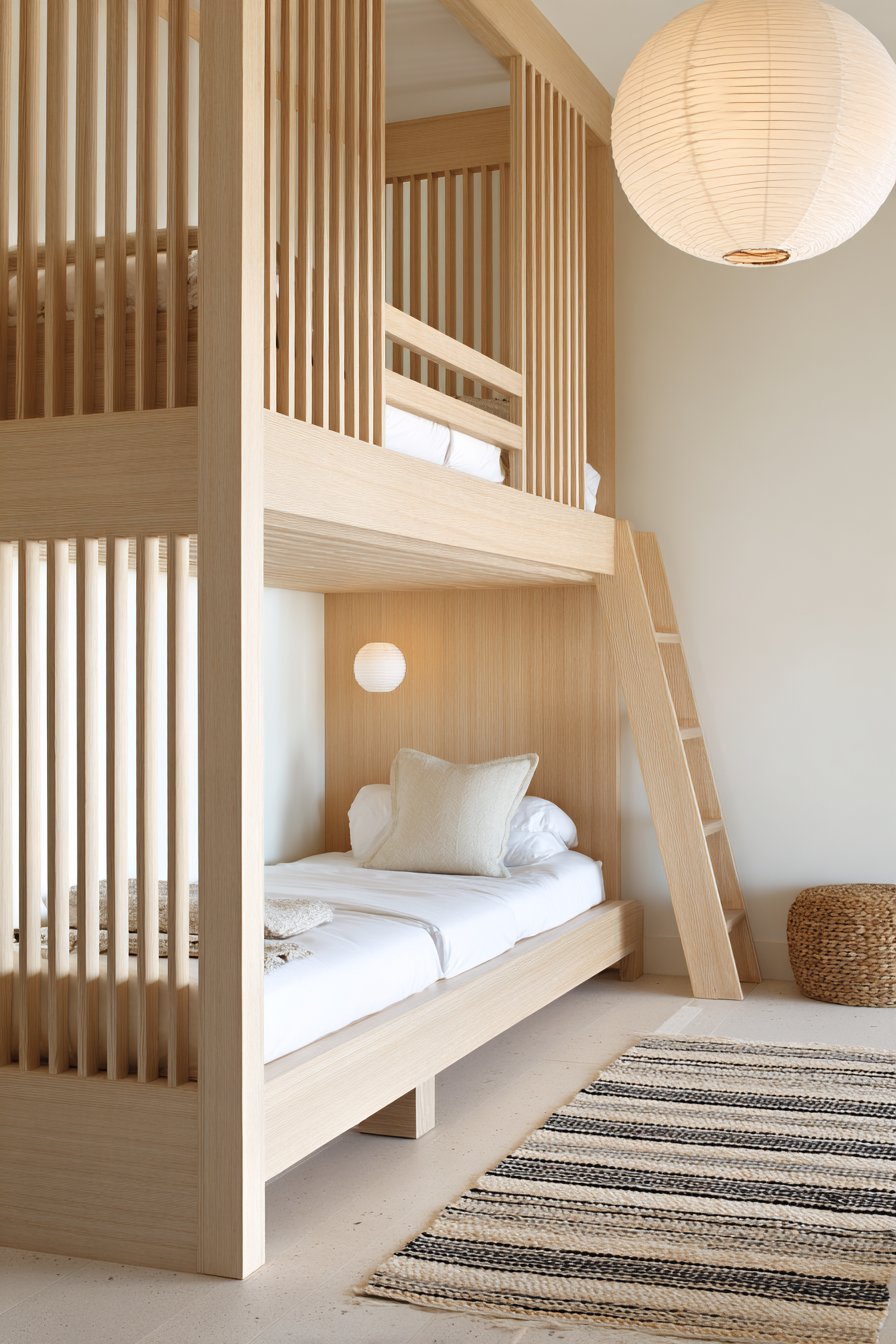
Paper lantern lighting creates soft ambient glow that promotes tranquility and restful sleep, while natural daylight emphasizes the serene, uncluttered space designed to promote rest and harmony. The Japandi aesthetic’s emphasis on intentionality—every item earning its place through beauty or function—creates particularly beneficial environment for children, teaching mindfulness and appreciation for simplicity from early age.
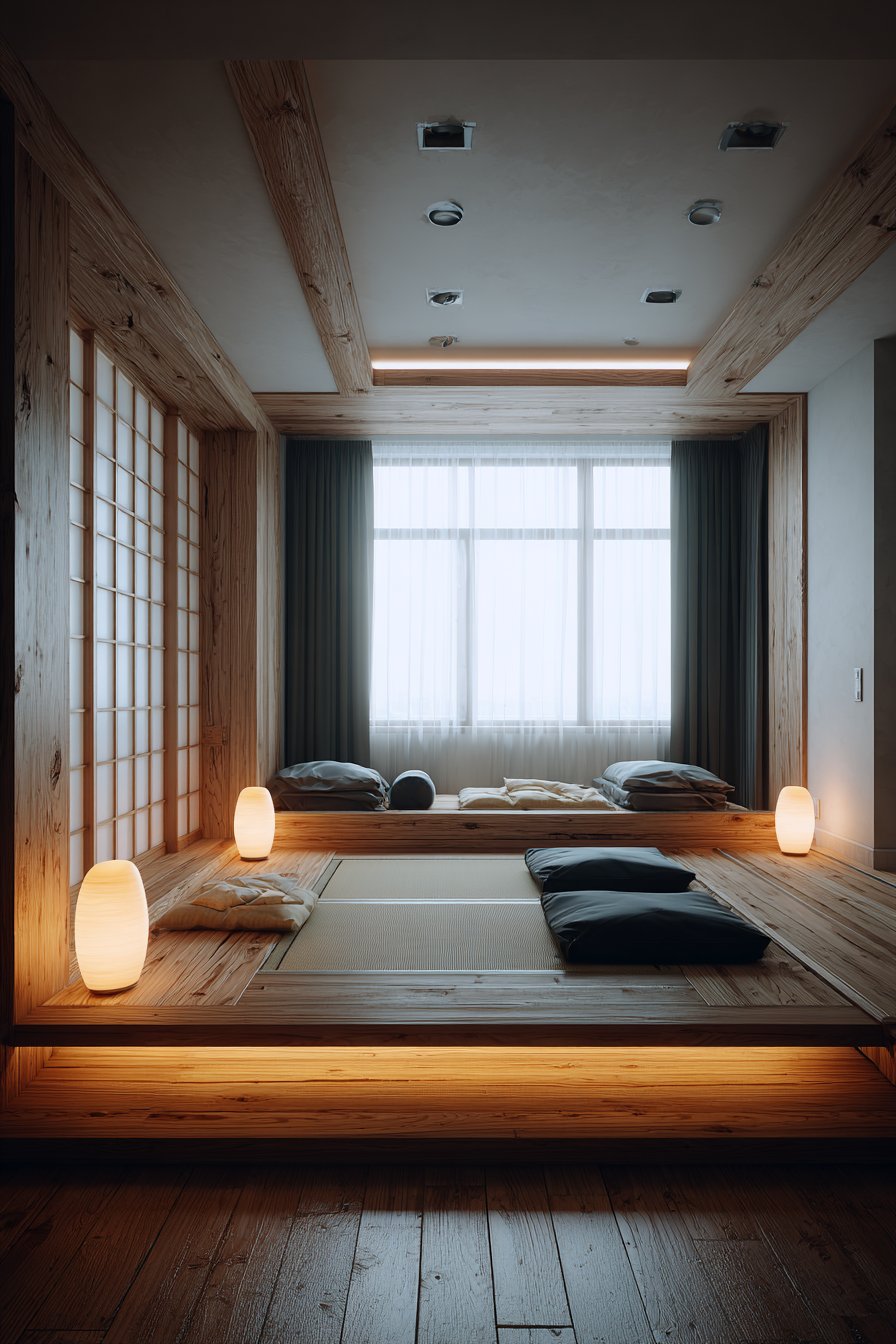
This fusion style represents the best of two design philosophies: Japanese emphasis on negative space, natural materials, and meditative calm combined with Scandinavian functionality, warmth, and livability. The result feels neither austere nor cold despite its minimalism. The natural wood introduces essential warmth, while the low-profile furniture creates sense of groundedness and security, particularly appropriate for children’s spaces.
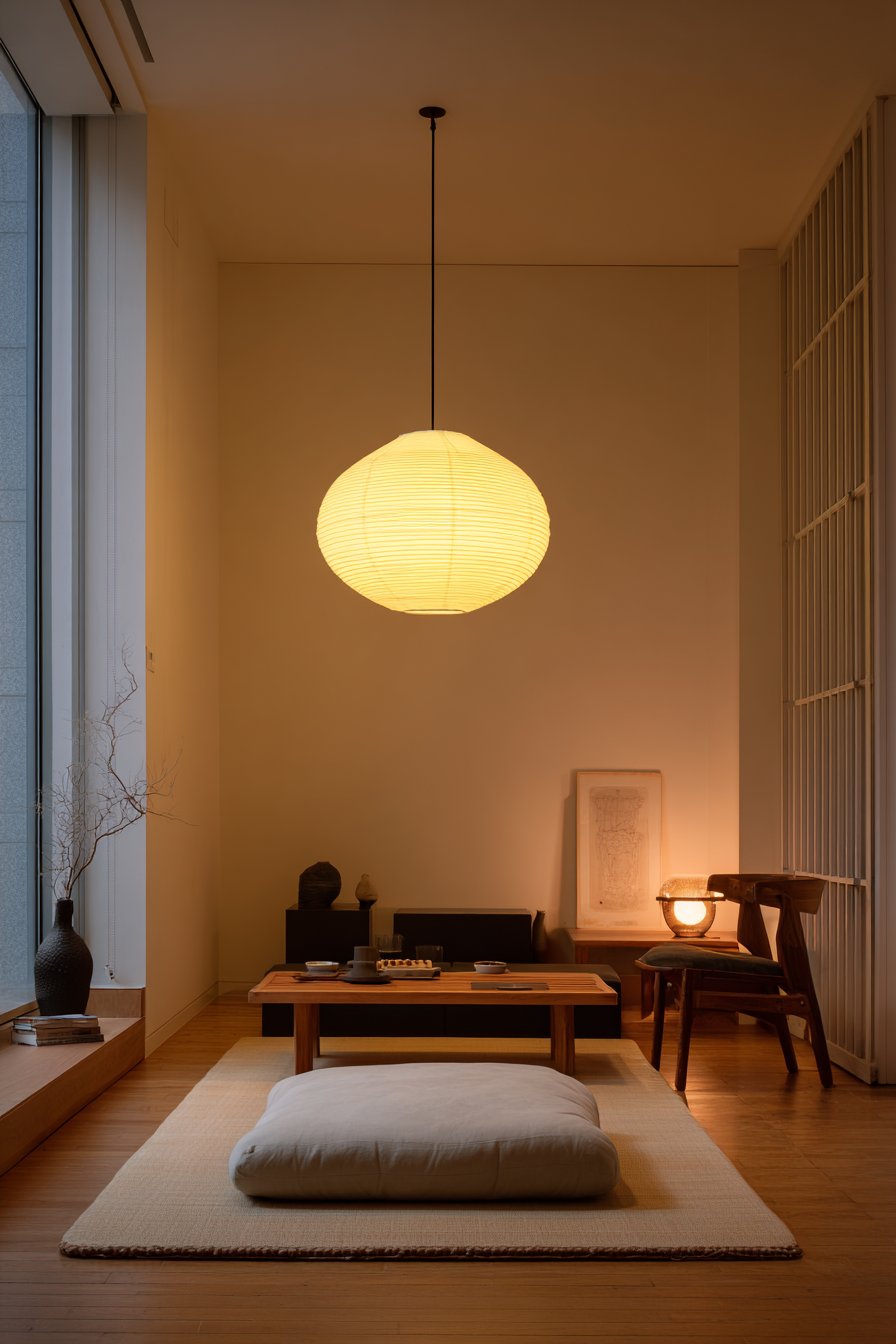
The shoji screen divider demonstrates how traditional elements can be adapted for contemporary family needs. It provides visual privacy without complete separation, allowing siblings to have independence while maintaining connection. The tatami-style mats introduce traditional Japanese element while providing comfortable, natural surface that defines individual sleeping areas. The overall design creates space that feels peaceful, purposeful, and profoundly restful—qualities increasingly valuable in our overstimulated world.
Key Design Tips:
- Combine Japanese minimalism with Scandinavian warmth for balanced, livable simplicity
- Use low platform beds to create grounding, secure sleeping environments
- Incorporate natural materials like wood and paper for organic warmth
- Select simple room dividers that provide privacy while maintaining openness
- Embrace negative space as design element that promotes calm and clarity
Why These Family Bedroom Ideas Represent the Best in Contemporary Design
These twenty family bedroom ideas showcase the evolution of residential design toward spaces that honor both family functionality and aesthetic excellence. Modern families refuse to compromise between beauty and practicality, demanding rooms that serve their complex needs while reflecting their design sensibilities and values. These bedrooms demonstrate how thoughtful planning, quality materials, and innovative thinking create spaces that truly support family life in all its messy, beautiful complexity.
The diversity of styles represented—from coastal calm to industrial edge, from farmhouse warmth to Japandi serenity—proves that family-friendly design transcends any single aesthetic. Whether your family gravitates toward traditional comfort or contemporary minimalism, rustic authenticity or sophisticated modernism, these ideas provide frameworks adaptable to your unique situation, space constraints, and budget considerations. The common thread connecting these varied approaches is their commitment to creating spaces that work for real families living real lives.
Storage solutions emerge as central concern across all these designs, reflecting the reality that family bedrooms must accommodate far more than sleeping. From built-in wall units to storage beds, custom closets to vintage trunks, each approach addresses the challenge of keeping family spaces organized without sacrificing style or consuming precious floor space. These innovative storage solutions demonstrate how necessity drives creativity, producing designs that are both beautiful and brilliantly functional.
Safety considerations woven throughout these designs reflect growing awareness that child-friendly features need not compromise aesthetic appeal. Rounded corners, soft-close mechanisms, cordless window treatments, and low-profile beds show how protective design enhances rather than detracts from visual impact. Modern families expect furniture and finishes that protect their children while maintaining the sophisticated style they deserve in their own homes.
The emphasis on adaptability and longevity represents significant shift from disposable design culture toward more sustainable, thoughtful approach. Modular furniture, neutral palettes, and quality construction ensure these bedrooms remain relevant and functional as children grow and family needs evolve. This long-term thinking saves money, reduces environmental impact, and creates spaces that genuinely grow with families rather than requiring constant replacement and redesign.
Multi-functional spaces feature prominently in these designs, acknowledging that modern bedrooms serve as reading rooms, play areas, study spaces, and family gathering spots in addition to their primary sleeping function. Window seats, cozy corners, versatile seating, and flexible layouts transform bedrooms from simple sleeping quarters into multi-purpose family hubs that accommodate the varied activities of daily life.
The material selections across these designs favor durability, ease of maintenance, and honest beauty—qualities essential for family spaces that must withstand daily use while maintaining their appeal. Performance fabrics, sealed wood, washable rugs, and quality construction ensure these rooms remain beautiful through the inevitable spills, scuffs, and wear that characterize family living. This practical elegance proves that family-friendly design has matured beyond simply child-proofing spaces toward creating environments that genuinely work for everyone.
Conclusion:
The journey toward creating ideal family bedroom begins with an honest assessment of your specific needs, space constraints, and design preferences. These twenty ideas provide inspiration and frameworks, but the most successful family bedrooms ultimately reflect the unique personalities, priorities, and daily rhythms of the families who inhabit them. Consider how your family actually uses bedroom spaces—do you gather for bedtime stories, does homework happen there, do morning routines unfold in the bedroom, do siblings share or have individual rooms?
Start by identifying which elements from these designs resonate most strongly with your family’s lifestyle and aesthetic preferences. Perhaps you’re drawn to the coastal bedroom’s serene palette but need the storage solutions shown in the Scandinavian design. Maybe you love the farmhouse aesthetic but require the space-saving strategies of the urban small-space solution. The beauty of these ideas lies in their adaptability—elements can be mixed and matched to create custom solutions perfectly suited to your family’s unique situation.
Focus on quality over quantity when selecting furniture and finishes for family bedrooms. Well-constructed pieces in timeless designs provide better long-term value than trendy items that quickly date or wear. Invest in essential elements like beds, storage systems, and lighting, then add personality through easily changeable accessories like bedding, artwork, and decorative items. This approach allows your family bedrooms to evolve gracefully with changing needs and preferences without requiring complete redesigns.
Remember that a perfect family bedroom balances multiple, sometimes competing priorities—beauty and practicality, individual expression and cohesive design, current needs and future flexibility. Give yourself permission to prioritize what matters most to your family while being realistic about constraints like budget, space, and time. The most successful family bedrooms aren’t necessarily the most expensive or elaborate; they’re the ones that genuinely serve their families while bringing daily joy and comfort.
Embrace the imperfection inherent in family spaces. The best family bedrooms show signs of life—they’re used, loved, and slightly imperfect. They accommodate the chaos of daily routines while providing a retreat from household activity. They grow and change with families, accumulating memories along with minor wear. They prove that thoughtful design enhances rather than restricts family life, creating beautiful backdrops for the ordinary moments that become extraordinary memories.
Take inspiration from these ideas, adapt them to your circumstances, and create family bedrooms that truly serve as sanctuaries for rest, connection, and growth. Whether you’re designing master retreat that welcomes early morning visitors or shared children’s room that promotes sibling harmony, whether you’re working with generous space or compact quarters, the principles remain constant: prioritize function without sacrificing beauty, invest in quality that endures, create flexibility for changing needs, and above all, design spaces that honor and support your family’s unique story.
