


The bathroom has evolved from a purely functional space into a personal sanctuary where we begin and end each day. Modern homeowners increasingly seek refuge from the artificial and synthetic, craving authentic connections to nature within their homes. This growing desire has sparked a revolution in bathroom design, where natural materials, organic textures, and earth-toned palettes transform utilitarian spaces into grounding retreats. The earthy bathroom aesthetic celebrates raw beauty, embracing imperfections that tell stories of natural formation and time.
An earthy bathroom transcends simple decoration. It represents a thoughtful design philosophy rooted in biophilic principles and sustainable living. By incorporating stone, wood, clay, and natural fibers, these spaces create sensory experiences that engage touch, sight, and even smell. The color palette draws directly from nature’s own canvas: warm terracottas, soft ochres, honey beiges, and gentle taupes. These hues work harmoniously to establish calming environments that reduce stress and promote well-being.
This comprehensive guide explores ten distinctive approaches to earthy bathroom design. Each concept demonstrates how natural materials can be combined in unique ways to create spaces that feel both grounded and luxurious. From freestanding stone bathtubs to river rock shower floors, these designs prove that organic aesthetics and modern functionality can coexist beautifully. Whether you’re planning a complete renovation or seeking inspiration for smaller updates, these earth-inspired bathrooms offer valuable insights into creating your own natural sanctuary.
1. Natural Stone Bathtub with Clay Plaster Walls
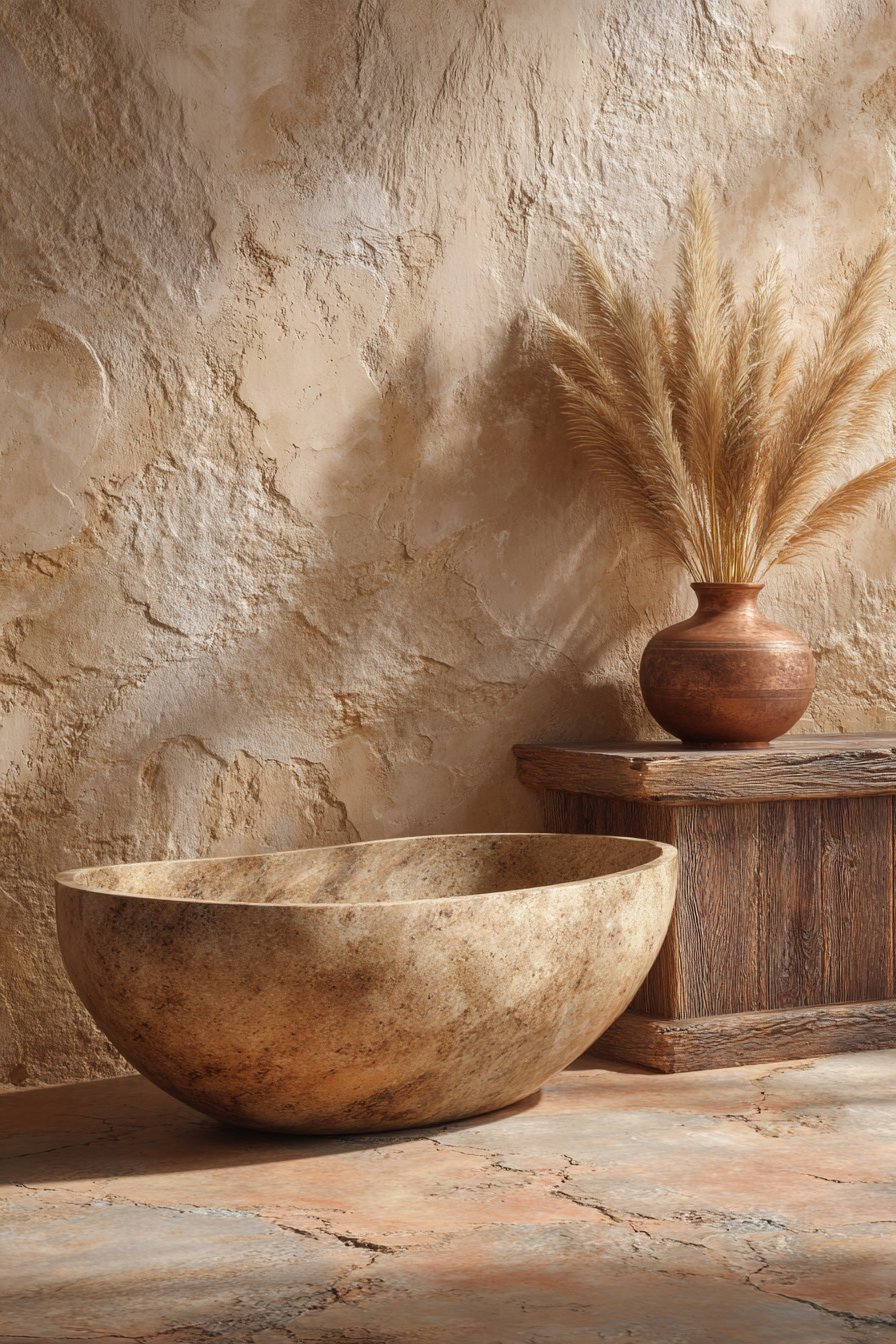
A freestanding natural stone bathtub in warm beige tones creates an immediate focal point that speaks to timeless elegance. Positioned thoughtfully on terracotta floor tiles, the bathtub becomes a sculptural element that grounds the entire space. The natural color variations in both the stone and flooring add visual interest without overwhelming the senses. This combination establishes a foundation of authentic materials that set the tone for the room.
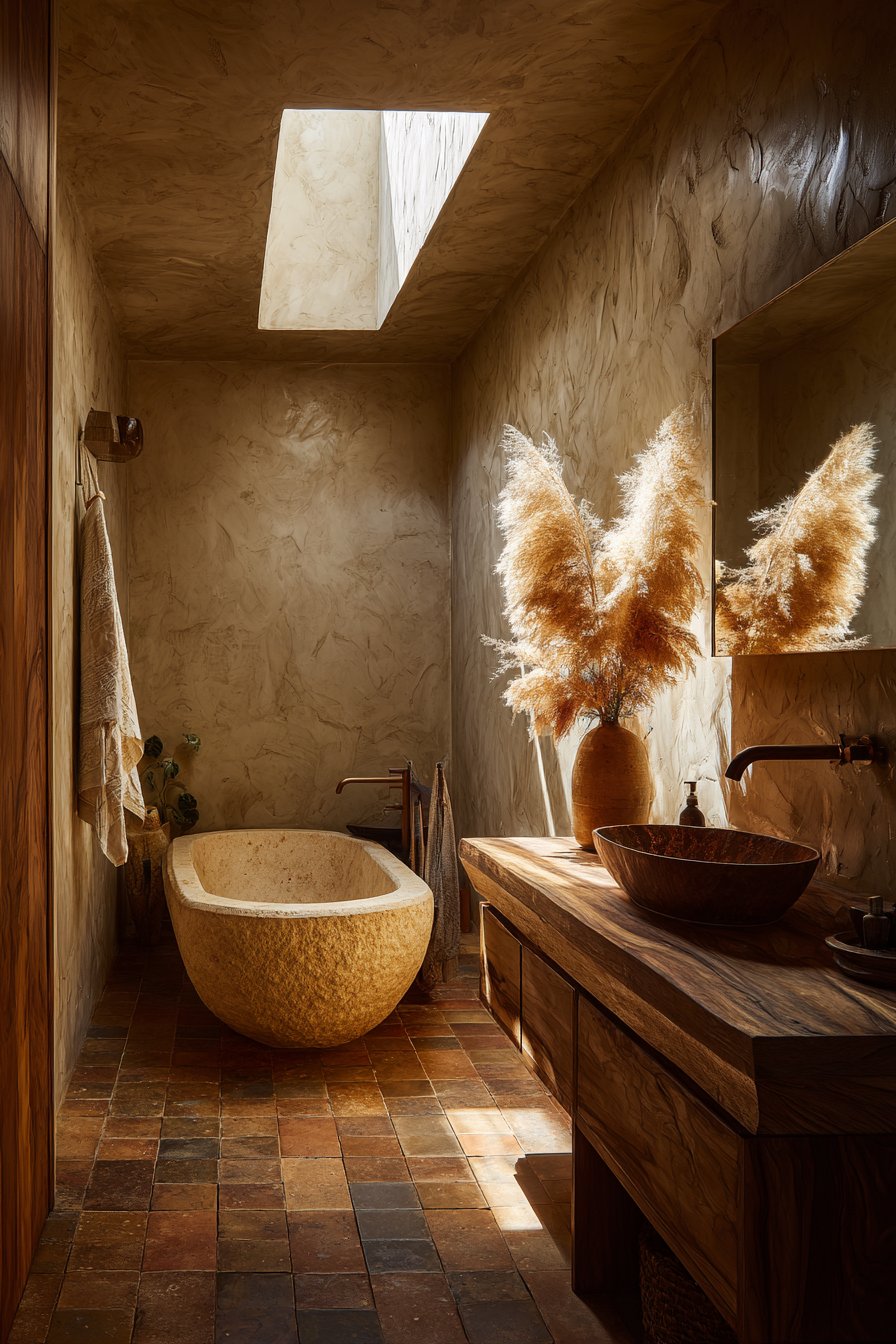
The textured clay plaster walls in soft ochre provide a perfect backdrop for this organic sanctuary. Subtle trowel marks visible in the plaster add depth and character, celebrating the handcrafted nature of the finish. These imperfections become features rather than flaws, creating surfaces that change appearance throughout the day as light shifts. The warm ochre hue complements the beige stone beautifully while adding warmth to the space.
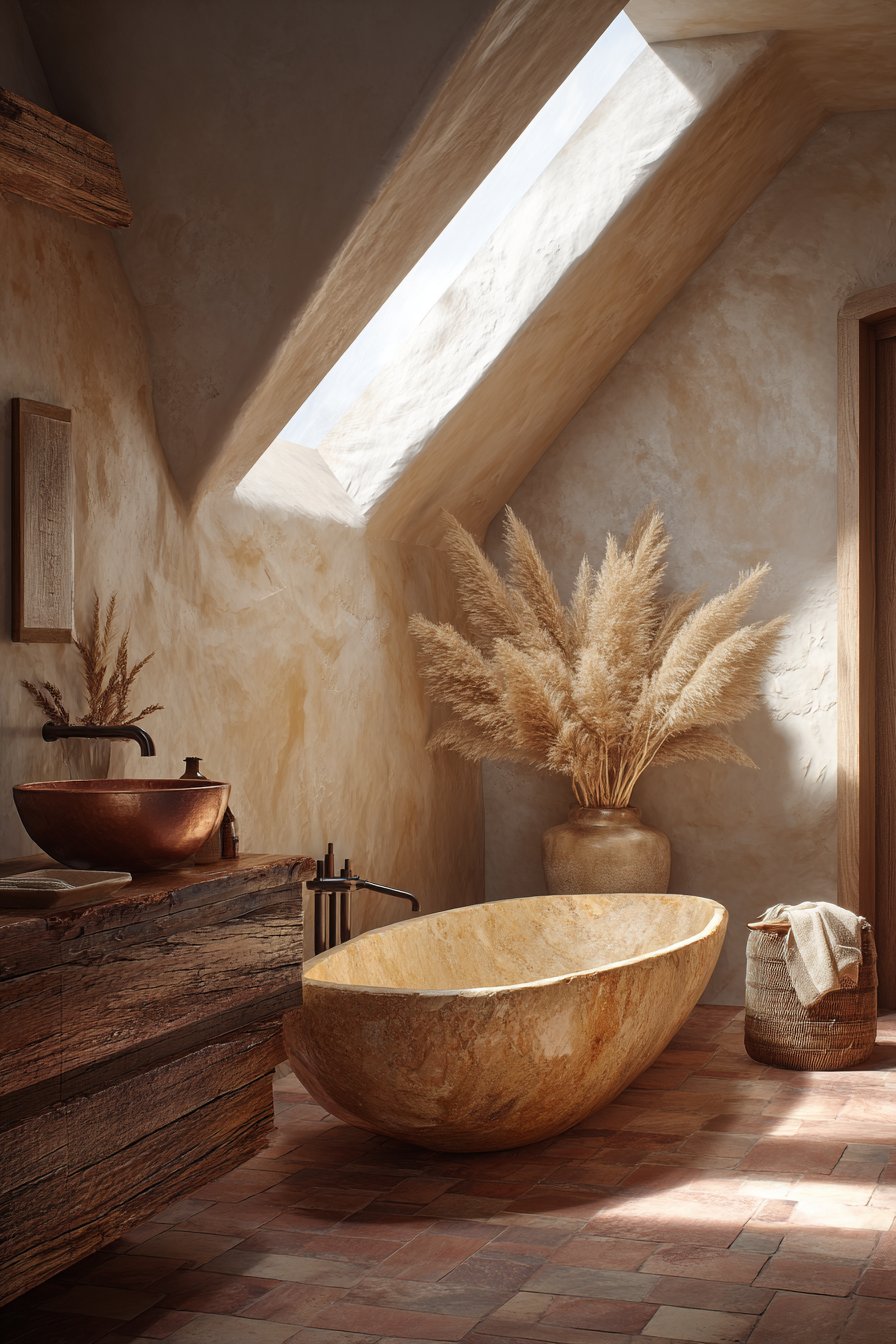
A live-edge wooden vanity introduces another natural element with its visible grain patterns and irregular edges. The wood’s organic shape contrasts beautifully with the smooth curves of the copper vessel sink. The gentle patina on the copper adds another layer of authenticity, showing how metals age gracefully over time. Dried pampas grass arranged in a ceramic vase brings soft, organic texture that moves subtly with air currents.
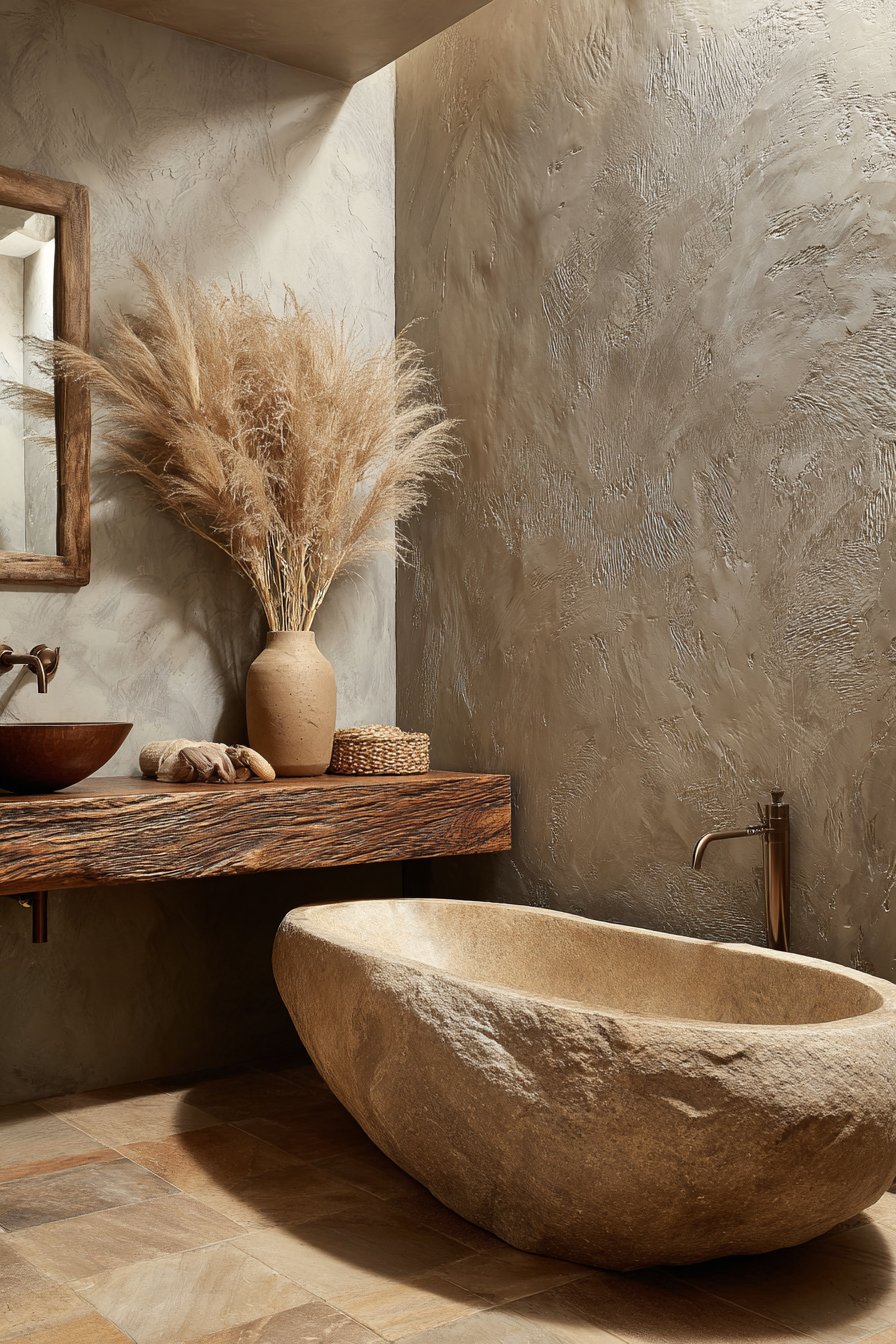
Natural daylight streaming through a skylight becomes a design element itself. The overhead lighting creates soft shadows that emphasize the raw beauty of natural materials throughout the space. These shifting shadows add dynamic visual interest, ensuring the bathroom never feels static or boring. The interplay of light and shadow highlights texture variations in the stone, plaster, and wood.
Key Design Tips:
- Select stone with warm undertones to create an inviting atmosphere rather than cold sterility.
- Apply clay plaster in irregular patterns to embrace authentic handcrafted appearance.
- Position the bathtub where natural light can highlight its sculptural qualities throughout the day.
- Choose copper fixtures that will develop patina naturally for evolving character over time.
- Install skylights for overhead natural lighting that flatters organic materials and reduces energy consumption.
- Use terracotta tiles with natural variations rather than perfectly uniform manufactured versions.
2. Travertine Sanctuary with Bronze Rainfall Shower
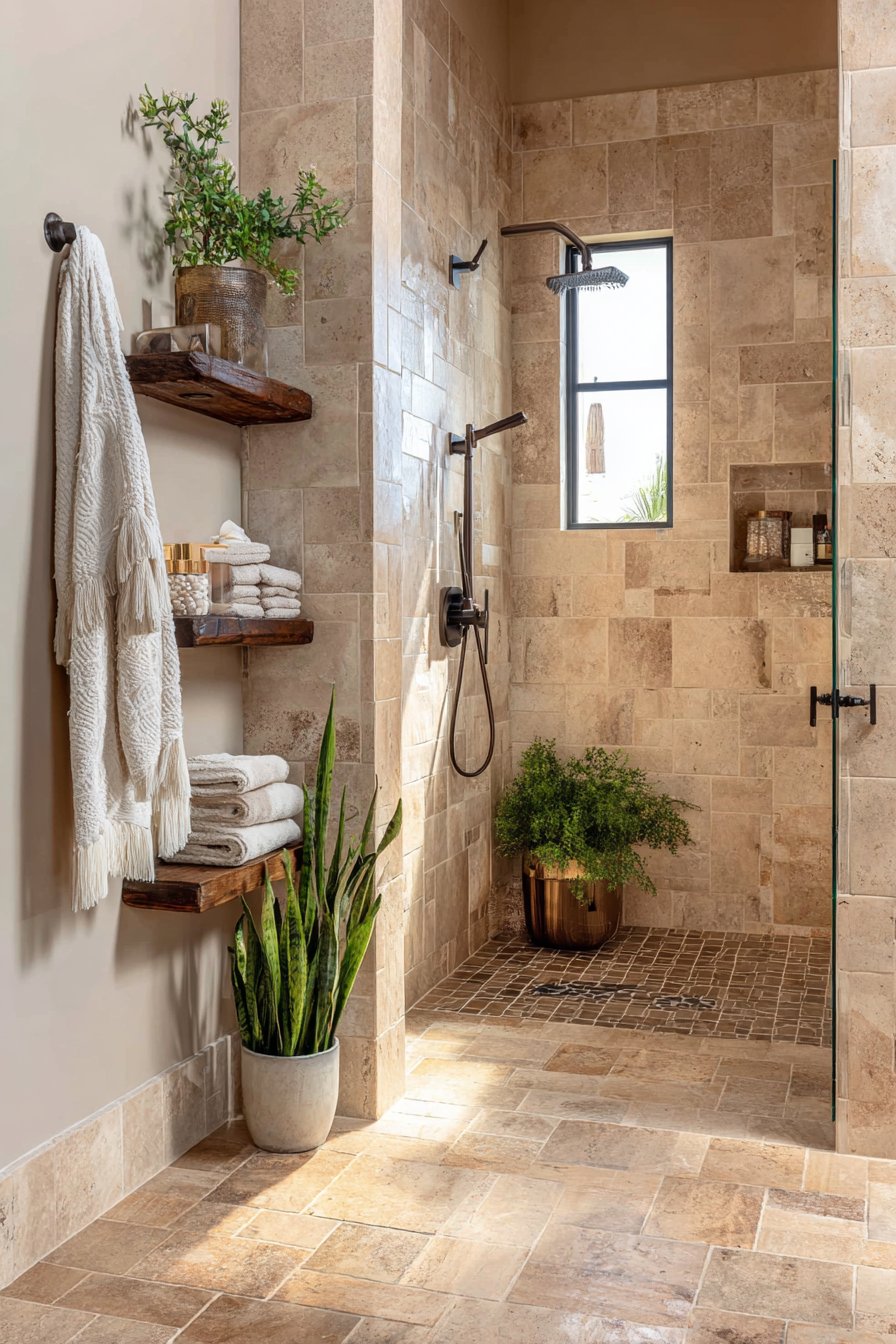
Floor-to-ceiling natural travertine tiles create a luxurious envelope that feels both ancient and contemporary. The organic pitting characteristic of travertine adds textural depth that machine-made tiles cannot replicate. Warm honey tones in the stone bring sunshine into the space regardless of weather outside. This comprehensive coverage with a single natural material creates cohesion and visual calm.
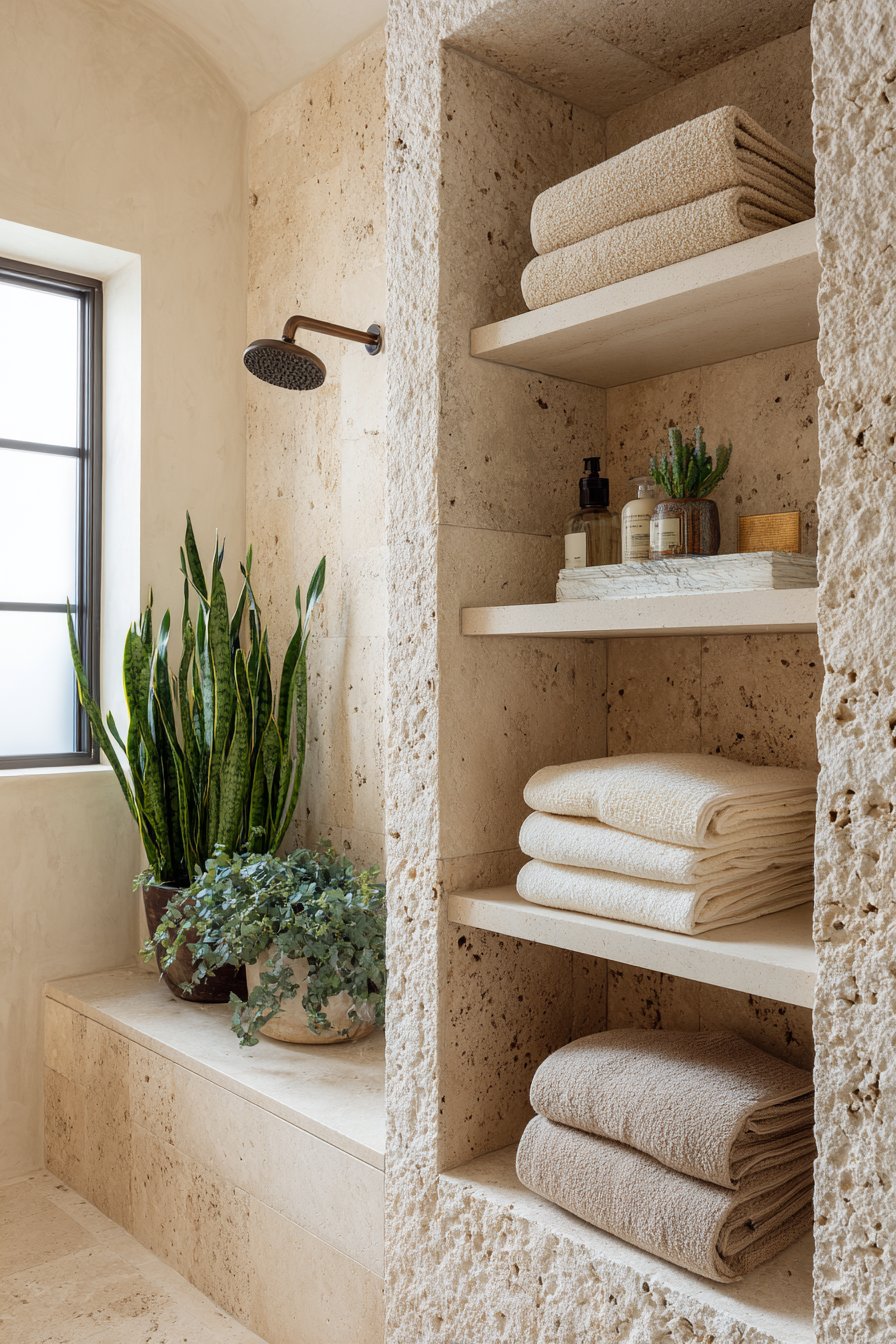
The walk-in rainfall shower becomes a spa-like experience enhanced by aged bronze fixtures. The authentic weathering on the bronze adds character that new, shiny fixtures cannot match. This weathered finish feels earned and authentic rather than artificially aged. The rainfall showerhead provides a gentle, enveloping water experience that enhances the natural sanctuary feeling.
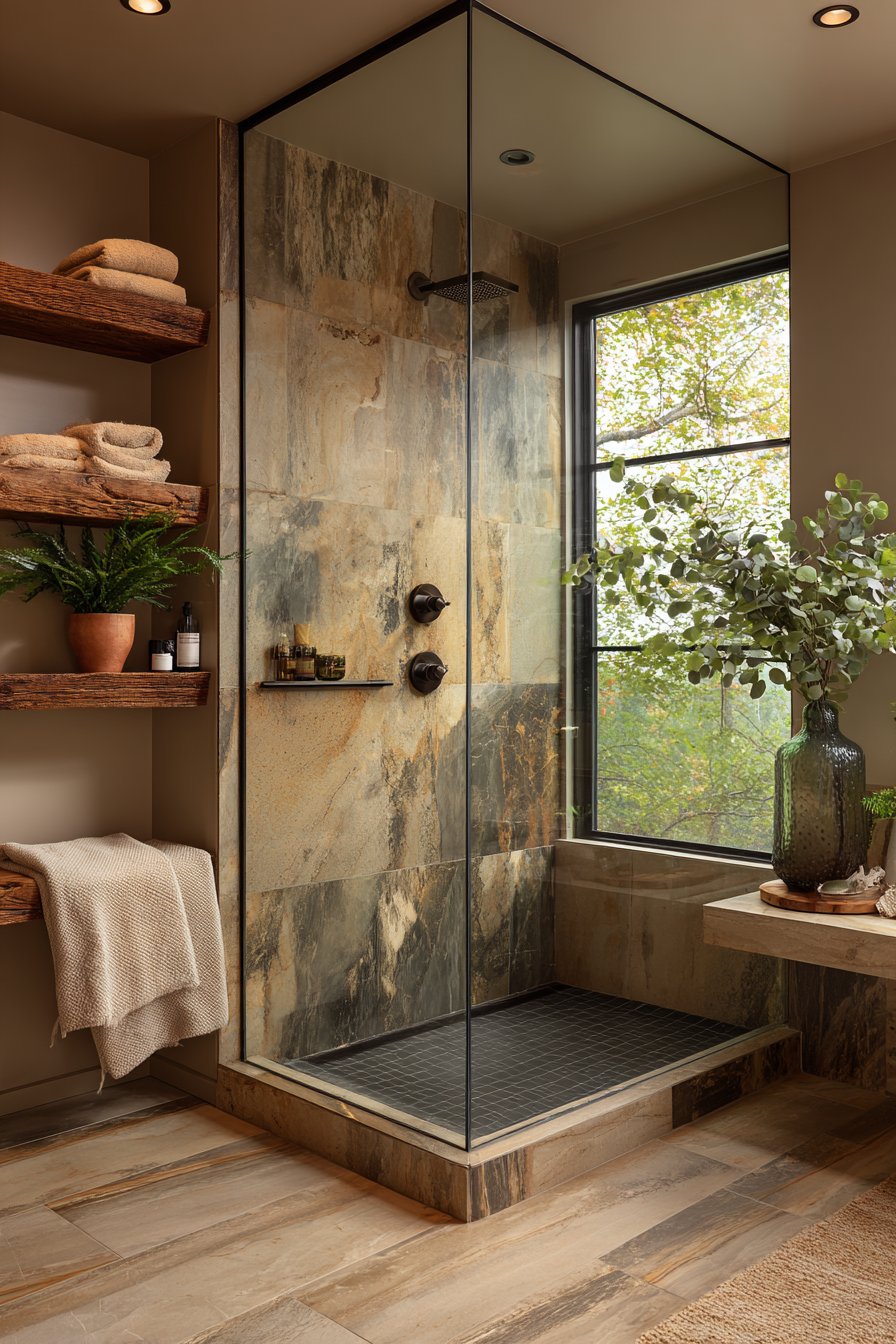
Floating shelves made from reclaimed wood introduce horizontal lines and warmth against the stone walls. The wood’s history shows in its grain patterns and subtle imperfections from previous lives. Folded organic cotton towels in cream and sand tones continue the natural color story. These soft textiles provide contrast against the hard stone surfaces while maintaining the earthy palette.
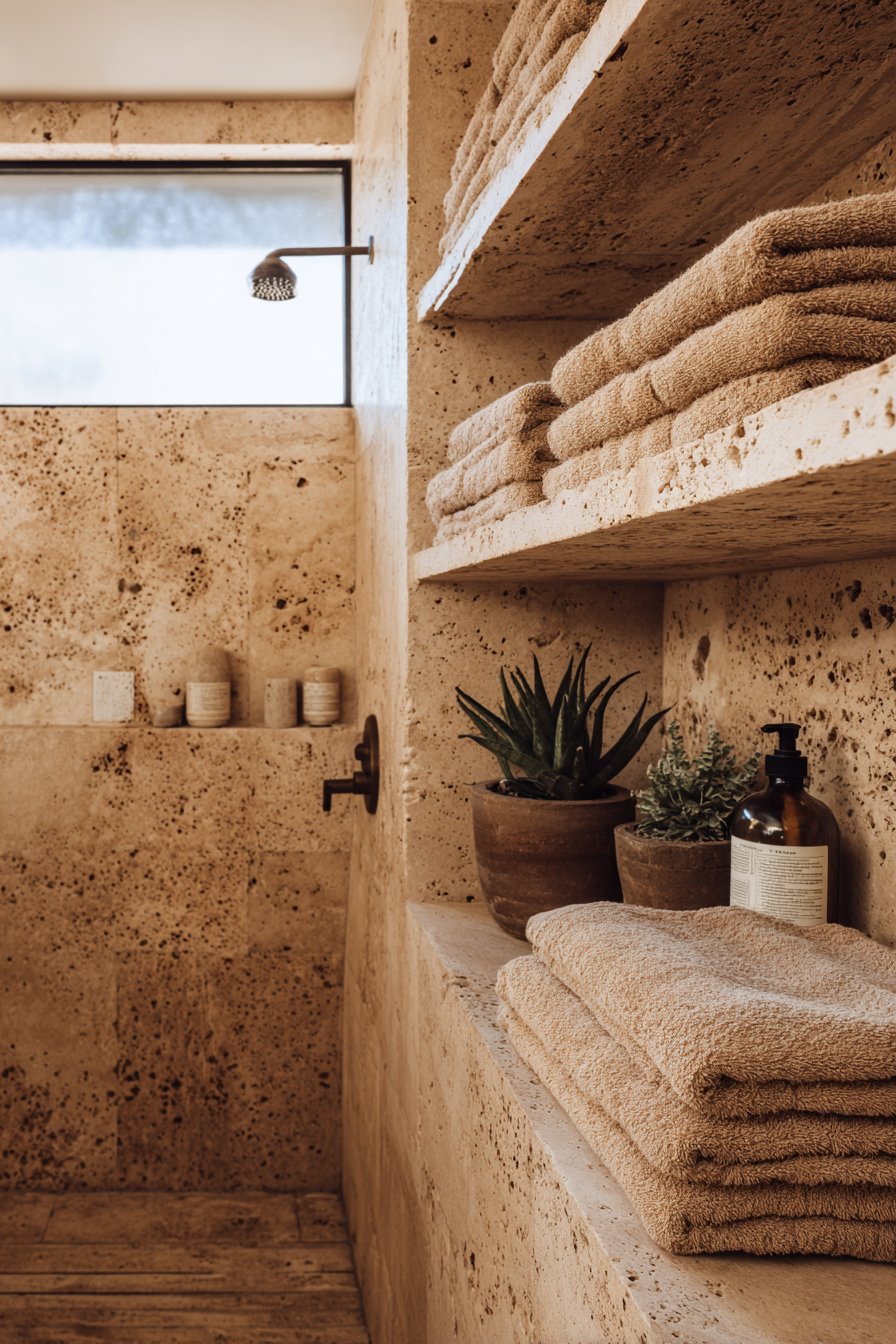
Potted snake plants and eucalyptus branches bring living greenery into the space. The plants purify air while adding vertical elements that break up the horizontal tile lines. Eucalyptus provides gentle aromatherapy benefits that enhance the spa-like atmosphere. Soft diffused natural lighting through a frosted window illuminates the varied earth-toned textures without creating harsh shadows.
Key Design Tips:
- Choose travertine tiles with pronounced pitting for maximum texture and authentic appearance.
- Select aged bronze fixtures rather than new ones for instant character and warmth.
- Install floating shelves at varied heights to create visual interest and practical storage.
- Use organic cotton towels that complement rather than contrast with your stone palette.
- Incorporate living plants that thrive in bathroom humidity for ongoing natural beauty.
- Position frosted windows to provide privacy while maximizing natural light diffusion.
3. Whitewashed Oak Vanity with Marble Countertop
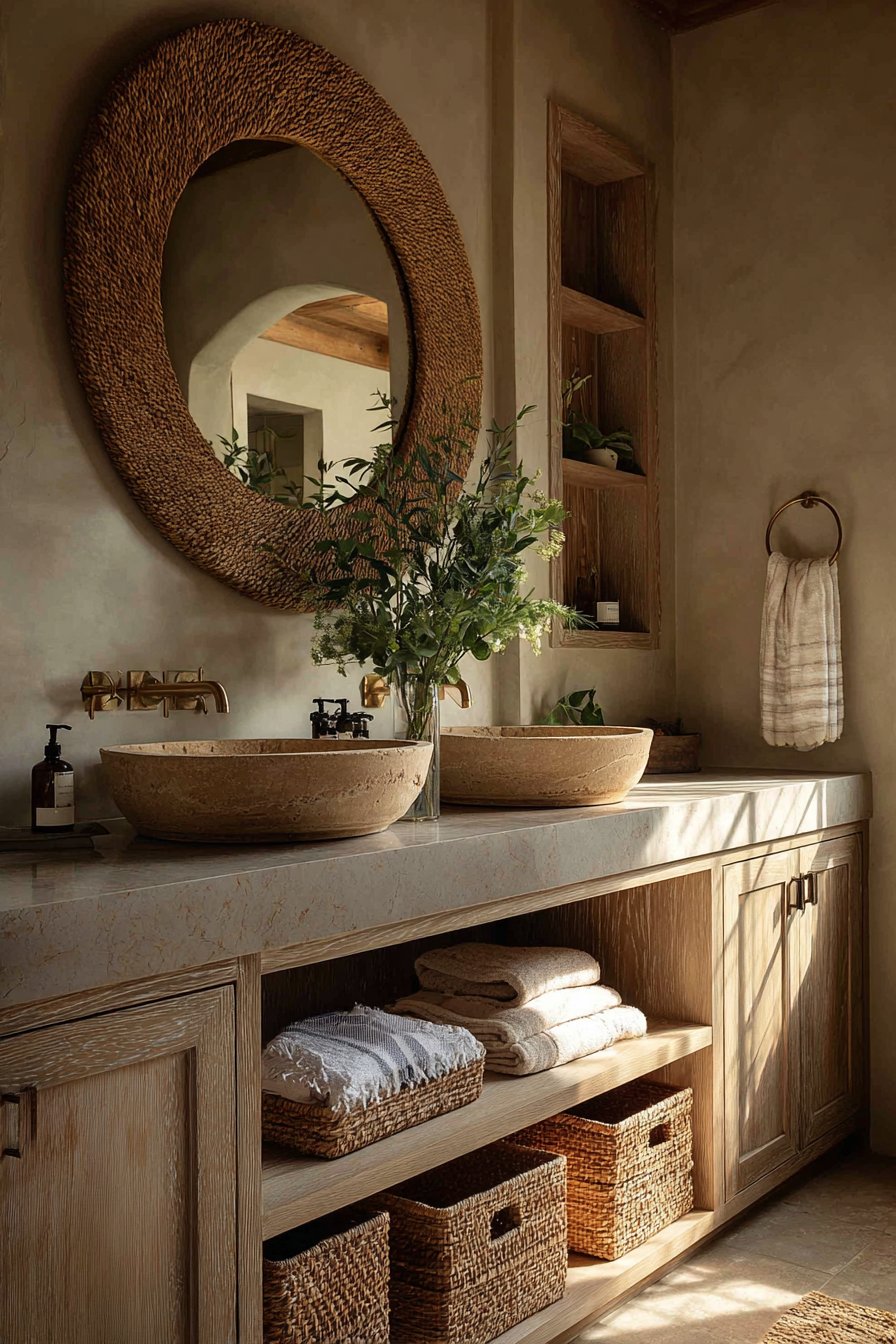
A double sink vanity with honed marble countertop in warm taupe establishes sophisticated functionality. The natural veining in the marble creates organic artwork that differs across every inch of surface. Honed finish provides subtle matte appearance that feels more organic than polished marble. This substantial countertop anchors the vanity area with natural stone’s weight and presence.
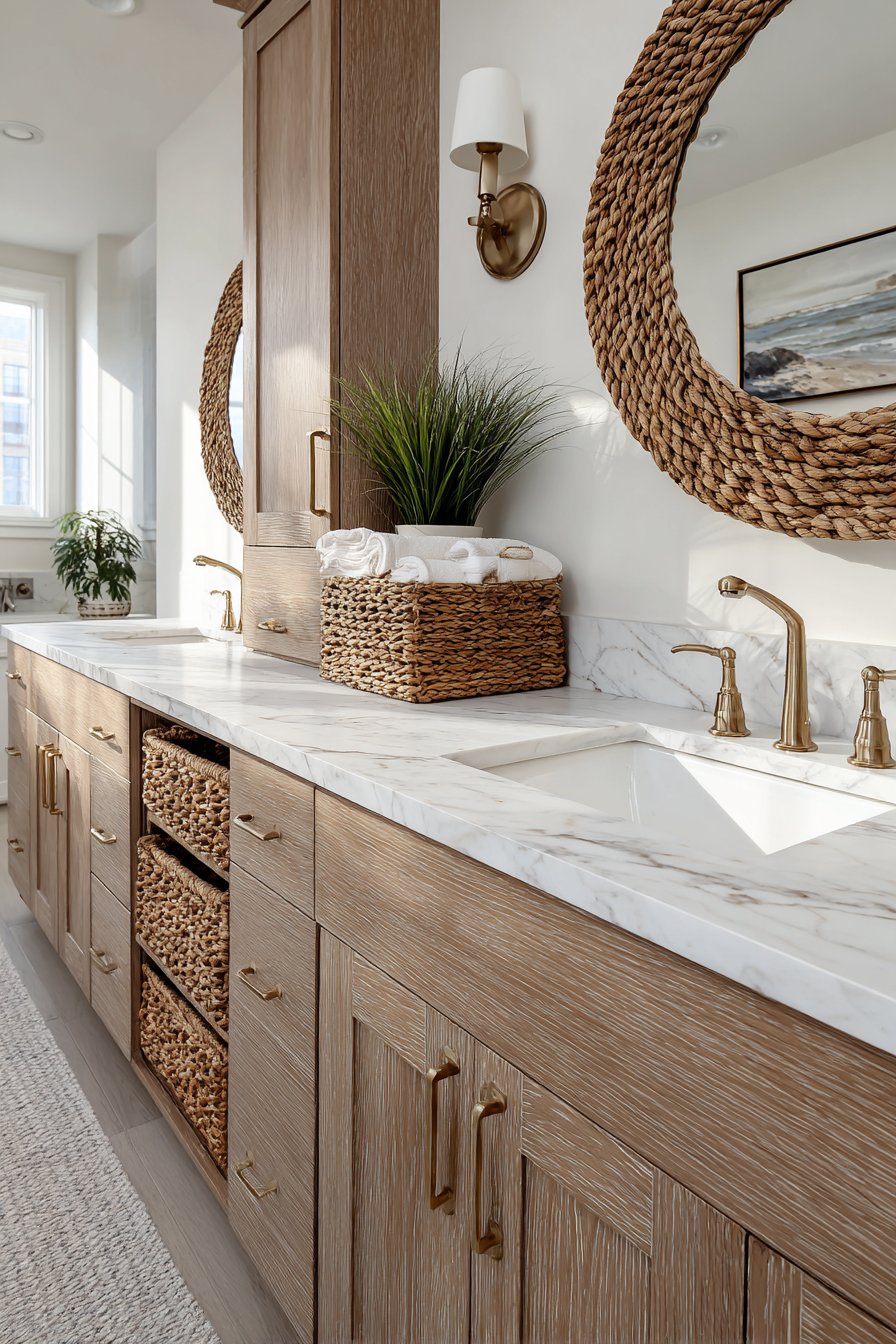
Custom cabinetry in whitewashed oak features visible wood grain that celebrates the material’s natural origins. The whitewash technique allows the grain to show through while lightening the overall tone. Simple matte brass hardware provides warm metallic accents without overwhelming the organic aesthetic. The cabinet design balances storage needs with visual lightness through thoughtful proportions.
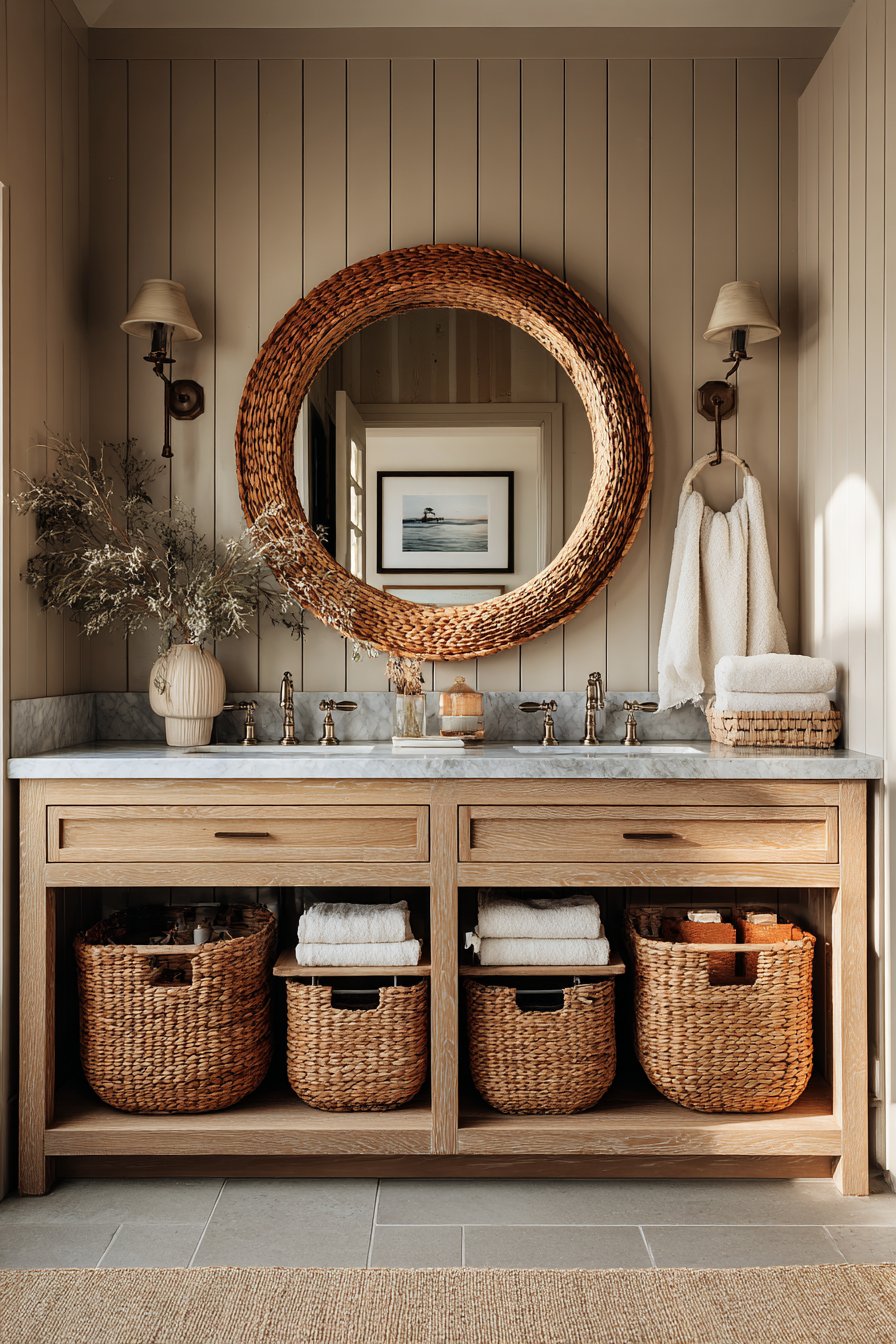
Woven seagrass baskets underneath provide natural storage that adds texture at floor level. These baskets bring organic patterns and warm tones while serving practical purposes. The natural fiber construction allows air circulation, making them ideal for bathroom storage. A large round mirror with natural rope frame hangs above, its circular shape softening the rectangular lines below.
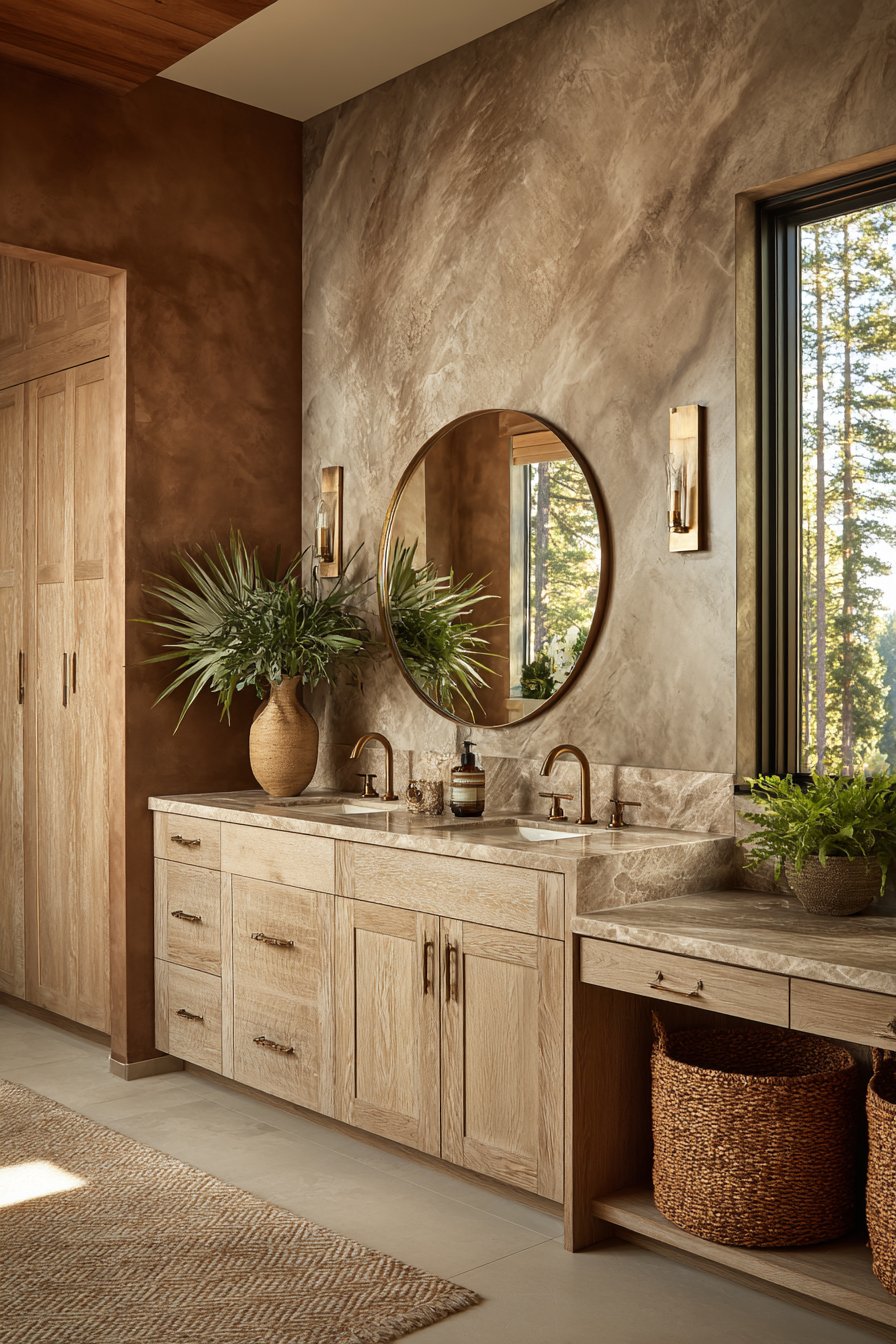
The terra cotta accent wall behind the vanity adds depth and creates a warm backdrop. This colored surface prevents the whitewashed cabinetry from appearing washed out or cold. The terra cotta hue ties together the various warm tones throughout the space. Wide-angle perspective captures how these elements work together to create cohesive organic design.
Key Design Tips:
- Select honed marble over polished for softer, more organic appearance in earthy bathrooms.
- Apply whitewash technique that allows natural wood grain to remain visible and celebrated.
- Choose matte brass hardware for warm metallic accents that don’t dominate organic materials.
- Use seagrass baskets for storage that adds texture while maintaining practical functionality.
- Install round mirrors to soften angular lines and create better balance in rectangular spaces.
- Paint one accent wall in terra cotta to anchor lighter elements and add warmth.
4. Concrete-Look Porcelain with River Stone Accents
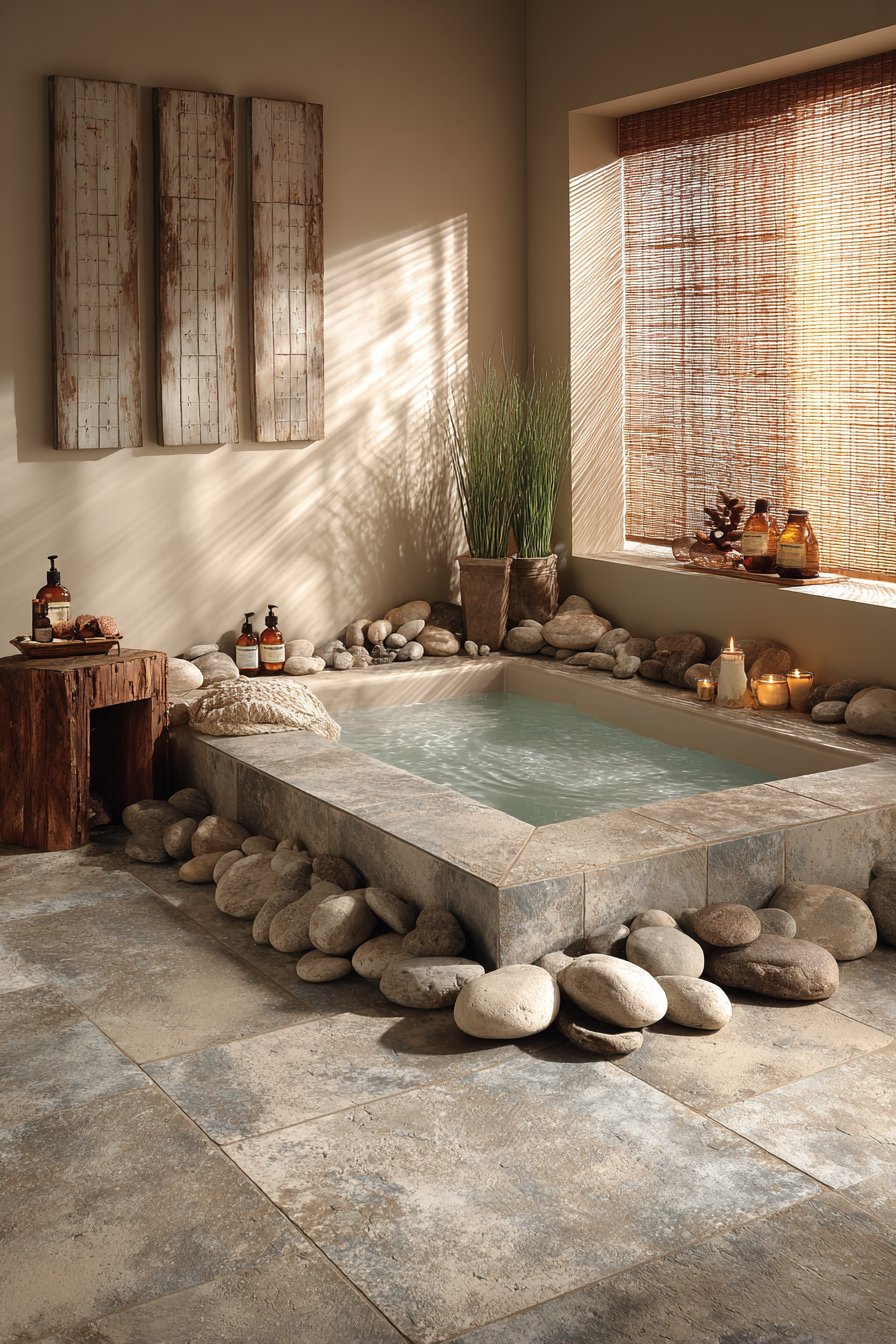
A built-in soaking tub surrounded by large format concrete-look porcelain tiles creates modern organic appeal. The warm grey-brown tones bridge the gap between industrial and natural aesthetics. Porcelain durability makes it practical for wet areas while mimicking concrete’s textured appearance. The large format tiles minimize grout lines for cleaner, more seamless visual flow.
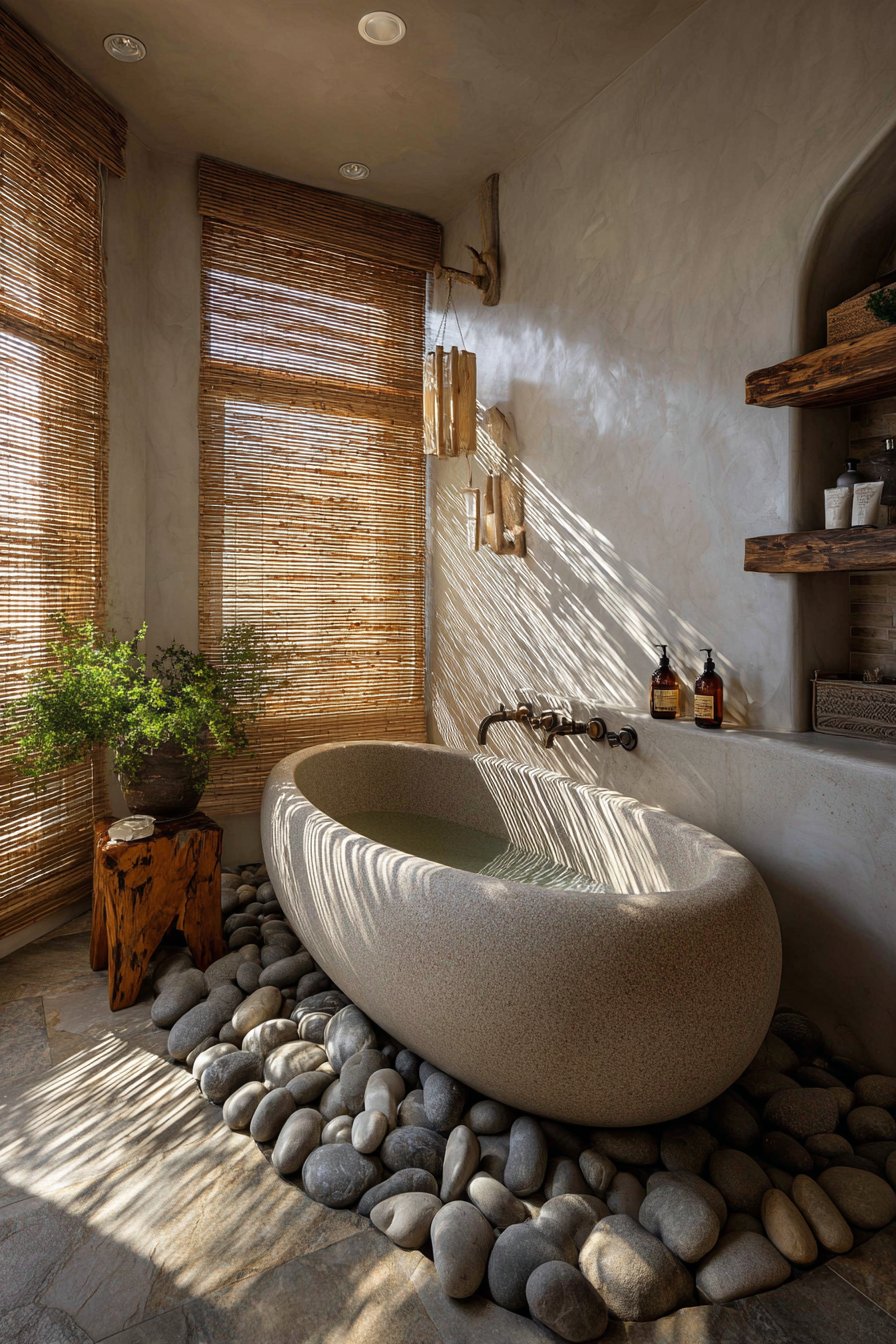
The tub deck features smooth river stones creating a spa-like natural element you can feel. These stones provide tactile interest and massage-like texture underfoot when getting in or out. The varied sizes and natural colors of river stones add organic randomness to the geometric tile. This juxtaposition of manufactured and natural elements creates compelling visual tension.
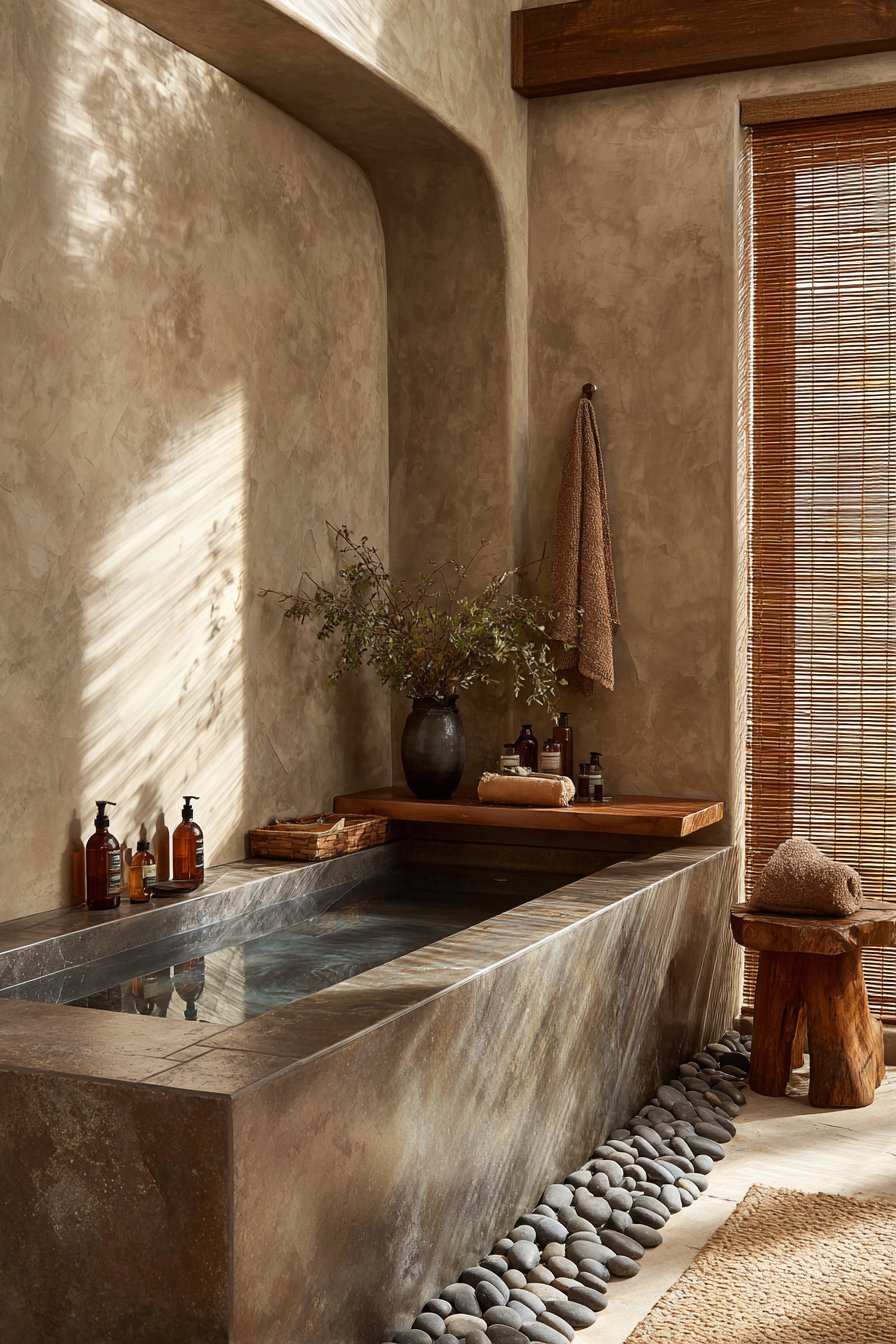
Walls finished in textured limewash paint bring soft sand color with subtle variations. The limewash technique creates depth that flat paint cannot achieve, with color shifting across the surface. This finish feels historical and handcrafted while being completely contemporary. A wooden stool holds organic bath products in amber glass bottles, adding functional decoration.
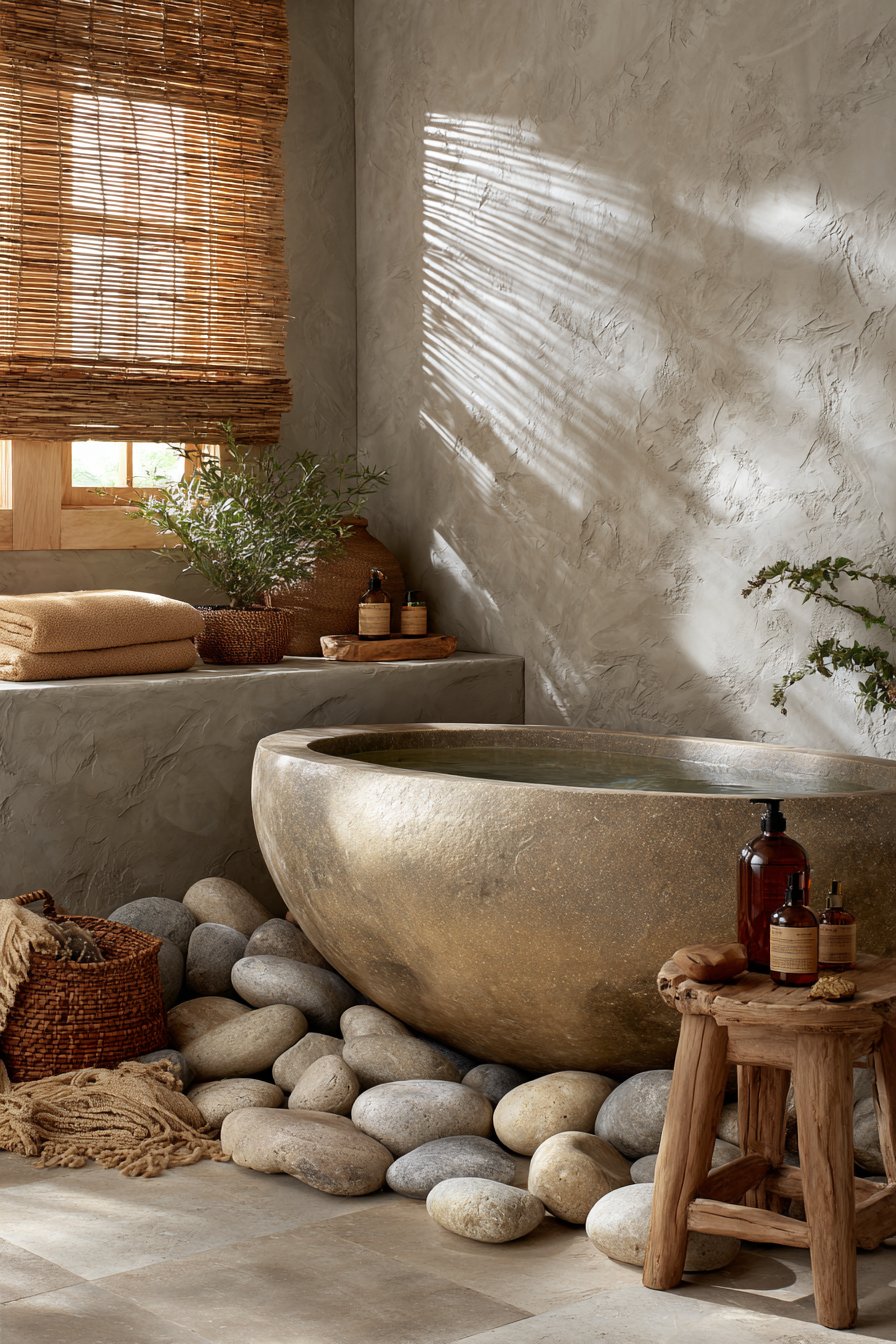
Natural light streams through bamboo blinds creating striped shadows that dance across surfaces. These moving shadows add temporal dimension, ensuring the space feels alive throughout the day. The bamboo material continues the natural theme while providing adjustable light control. Professional photography captures balanced exposure highlighting the interplay between organic textures and manufactured materials.
Key Design Tips:
- Choose concrete-look porcelain tiles for durability, combined with organic industrial aesthetic.
- Create river stone tub deck for tactile experience and visual connection to nature.
- Apply limewash paint for textured walls with subtle color variations and depth.
- Select wooden accessories like stools to introduce warm natural elements throughout.
- Install bamboo blinds for natural material that provides functional light control.
- Display bath products in amber glass to add warm color while maintaining organized appearance.
5. Pebble Floor Shower with Slate Walls

A walk-in shower featuring pebble floor tiles in mixed natural brown and grey tones provides massage-like underfoot experience. Each step engages foot muscles differently as you navigate the varied stone surfaces. The mixed colors create organic visual interest that feels found rather than designed. This natural variation ensures the floor never appears monotonous or predictable.
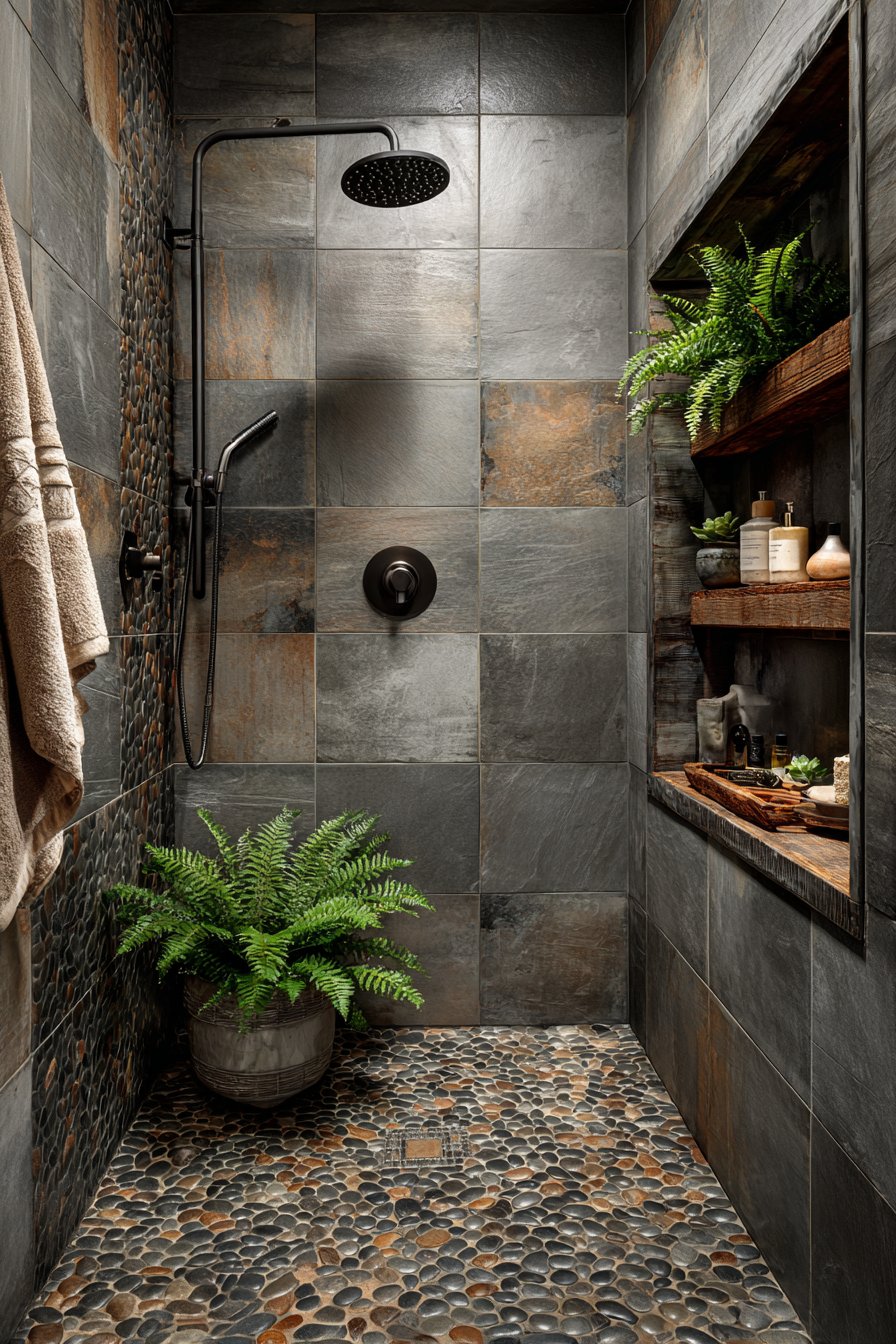
Slate wall tiles with rough-hewn edges create dramatic vertical surfaces that celebrate stone’s raw beauty. The edges left unfinished show how the stone naturally cleaves and breaks. These authentic edges contrast with the smooth pebble surfaces below. Natural stratification visible in the slate adds linear patterns that draw the eye upward.
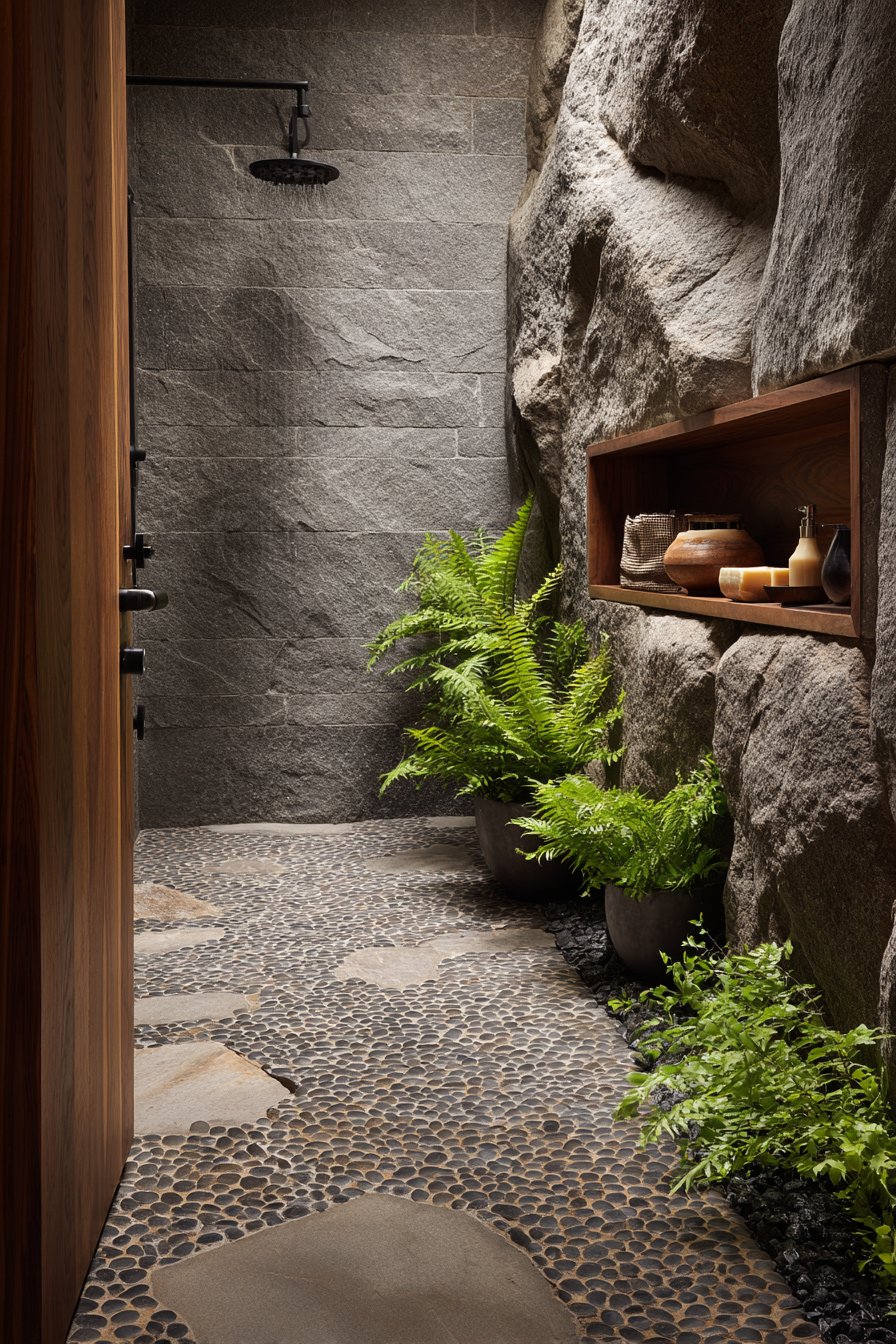
A matte black rainfall showerhead provides bold contrast against the organic stone surfaces. The dark fixture becomes a sculptural element that anchors the shower design. This contemporary choice prevents the natural materials from feeling too rustic or dated. The contrast emphasizes both the fixture and the stone surfaces more effectively than matching tones would.
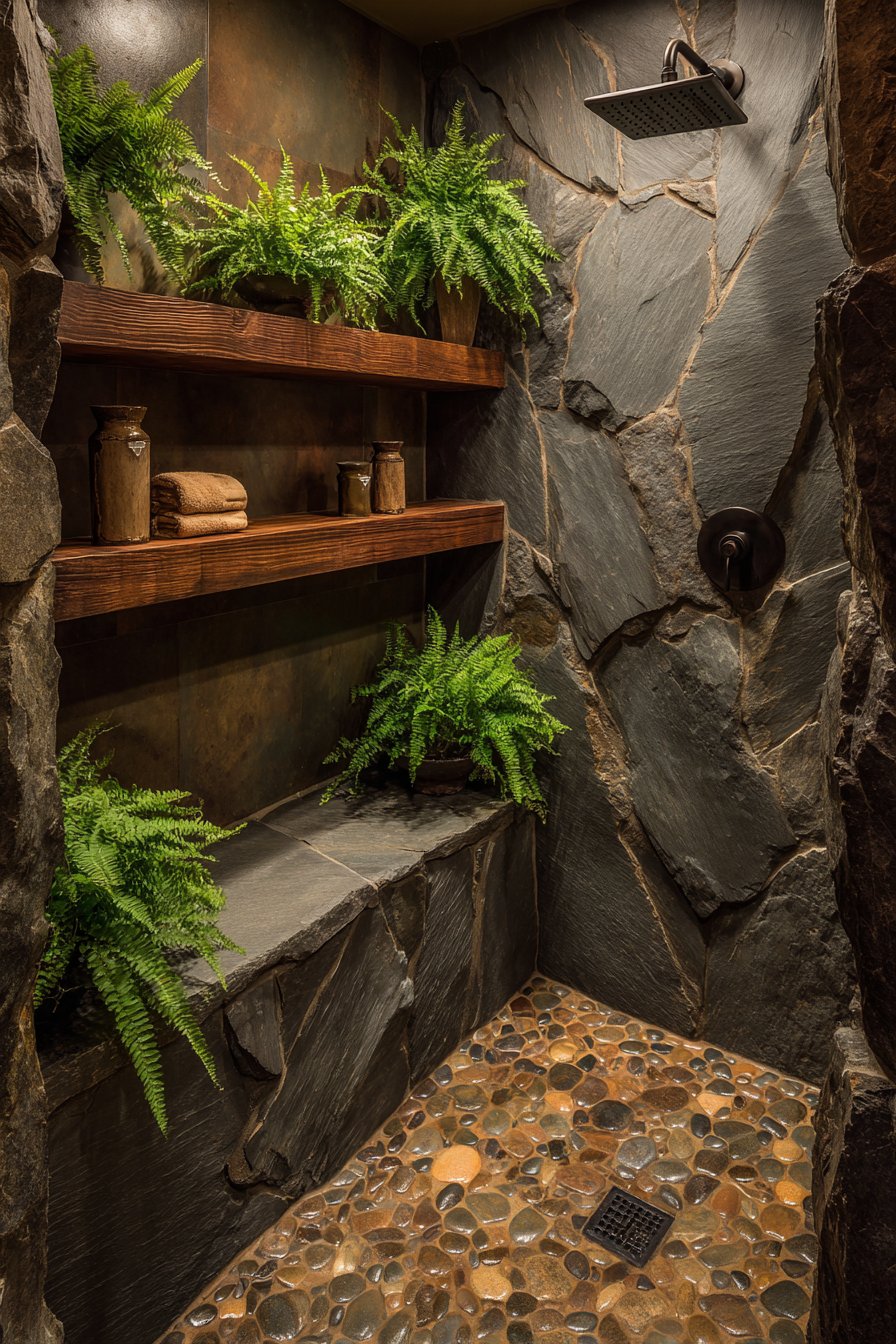
A built-in niche with natural wood trim holds artisan soap bars and ceramic containers. The wood trim warms the stone surroundings while framing practical storage. Handmade ceramic containers continue the artisan aesthetic throughout the shower. Living ferns in handmade pottery add fresh greenery that thrives in the humid shower environment.
Key Design Tips:
- Install pebble tile flooring for unique tactile experience and natural drainage properties.
- Select slate tiles with rough-hewn edges that celebrate the stone’s natural characteristics.
- Choose matte black fixtures to create bold contrast against neutral organic stone surfaces.
- Build recessed niches with wood trim for storage that adds warmth to stone surrounds.
- Display artisan bath products that continue the handcrafted aesthetic throughout the space.
- Incorporate ferns and moisture-loving plants that flourish in humid shower environments naturally.
6. Weathered Wood Planks with Copper Freestanding Tub
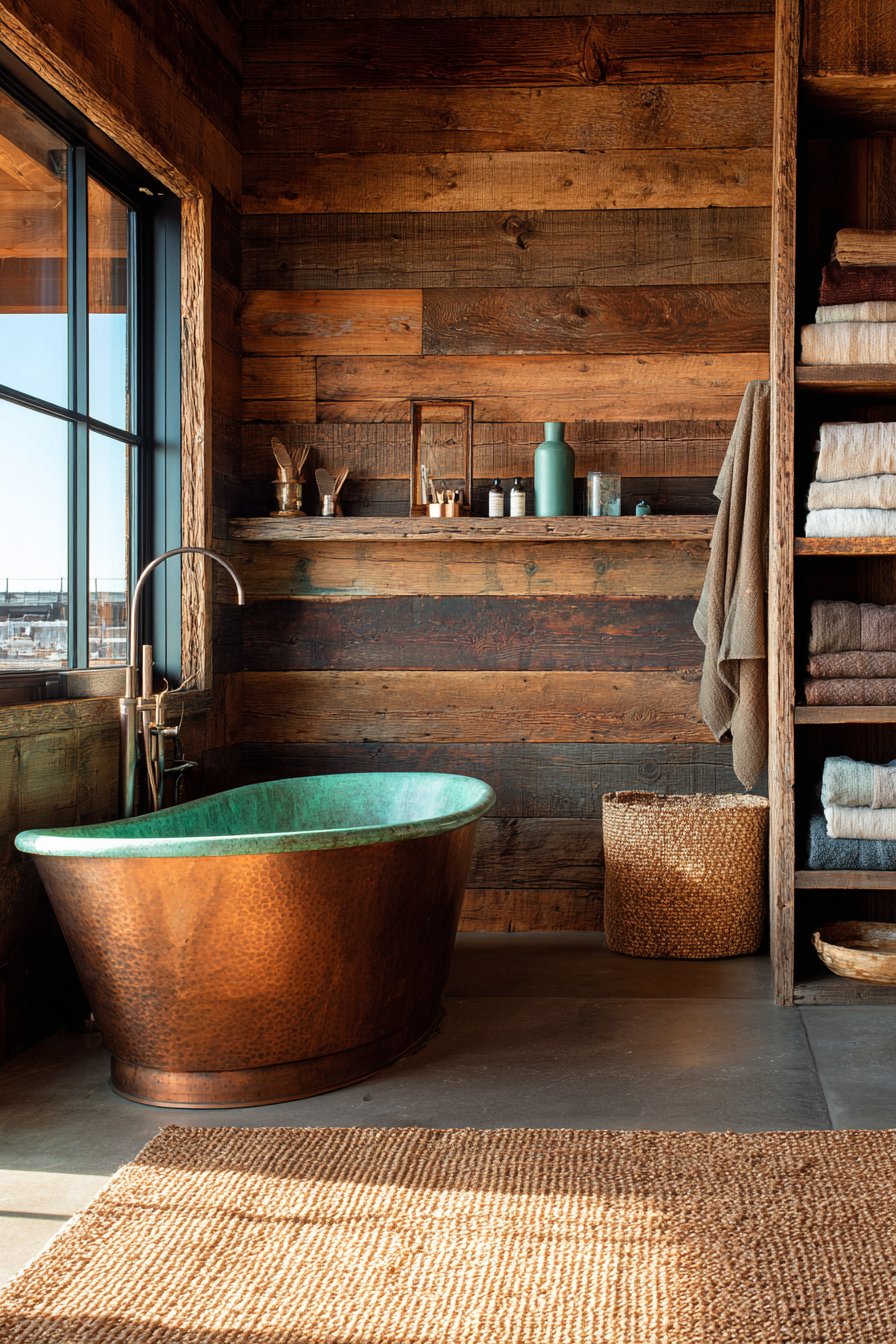
Walls clad in horizontal wood planks with natural weathered finish create an enveloping warmth. The authentic grain patterns and knots tell stories of the tree’s growth and life. This weathered finish appears earned through time rather than artificially distressed. The horizontal orientation makes the bathroom feel wider while adding rhythmic linear elements.

A copper freestanding tub with developing verdigris patina serves as the stunning focal point. The blue-green patina develops naturally where copper oxidizes, creating unique patterning. This living finish means the tub continues evolving and changing over time. The warm copper tones complement the weathered wood beautifully while adding metallic richness.
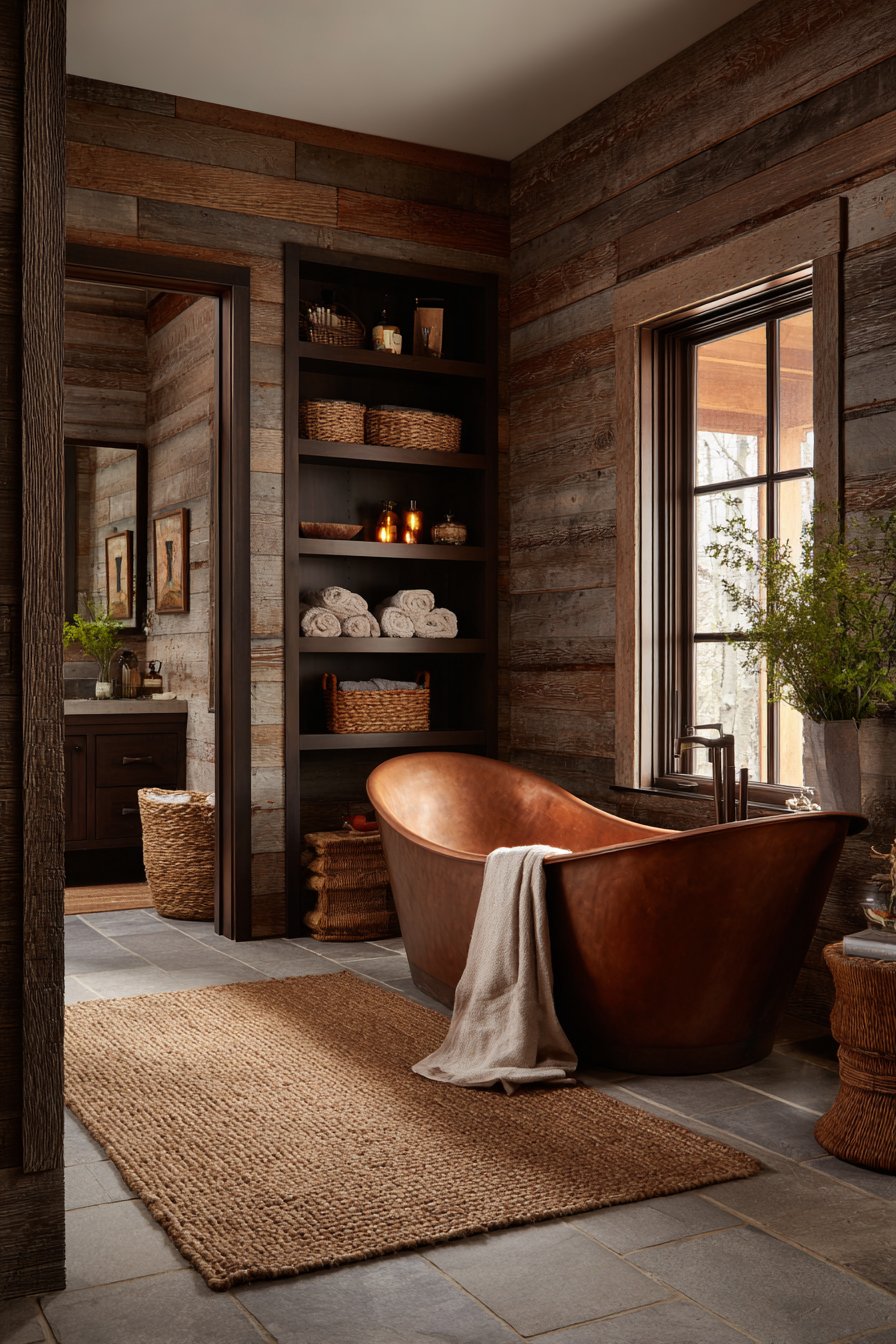
A jute area rug provides warmth underfoot on natural limestone flooring. The natural fiber adds another texture layer while defining the bathing zone. Jute’s neutral tone bridges the wood walls and stone floor seamlessly. Open shelving made from live-edge wood displays organic cotton towels and handwoven baskets.
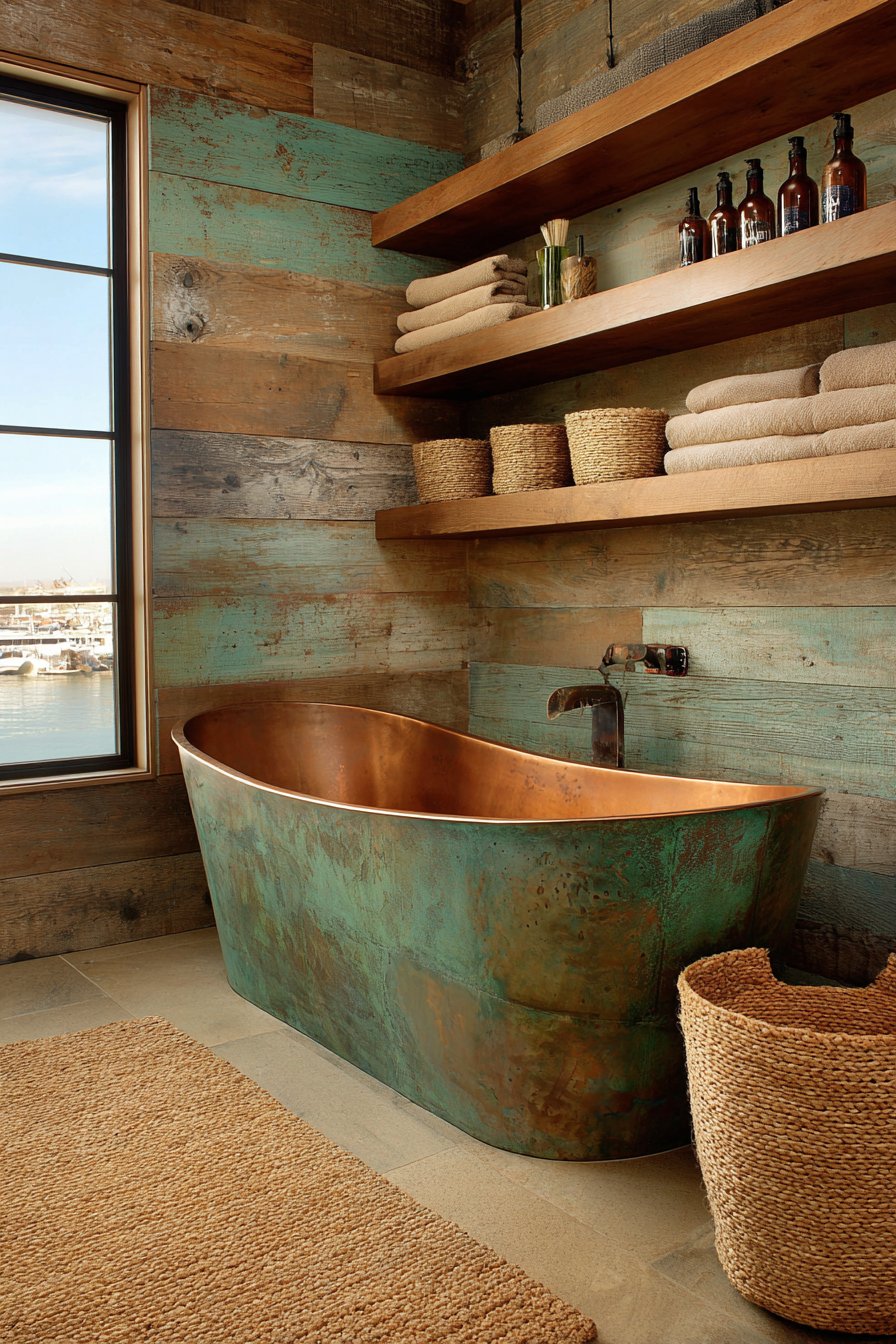
Golden hour natural light through a window creates a warm ambient glow that enhances all materials. This quality of light makes the copper gleam and brings out warmth in the wood. The limestone floor reflects this light gently throughout the space. Wide-angle interior photography captures the cohesive natural material palette working in harmony.
Key Design Tips:
- Install weathered wood planks horizontally to add width and create rhythm in narrow bathrooms.
- Choose copper tubs that will develop natural patina rather than maintain polished appearance.
- Layer jute rugs over hard flooring for warmth and texture in bathing areas.
- Use live-edge shelving that celebrates wood’s natural irregular edges and authentic character.
- Position windows to capture golden hour light that enhances warm-toned natural materials.
- Display towels and baskets openly to add soft texture and maintain accessible storage.
7. Reclaimed Wood Base with Concrete Countertop
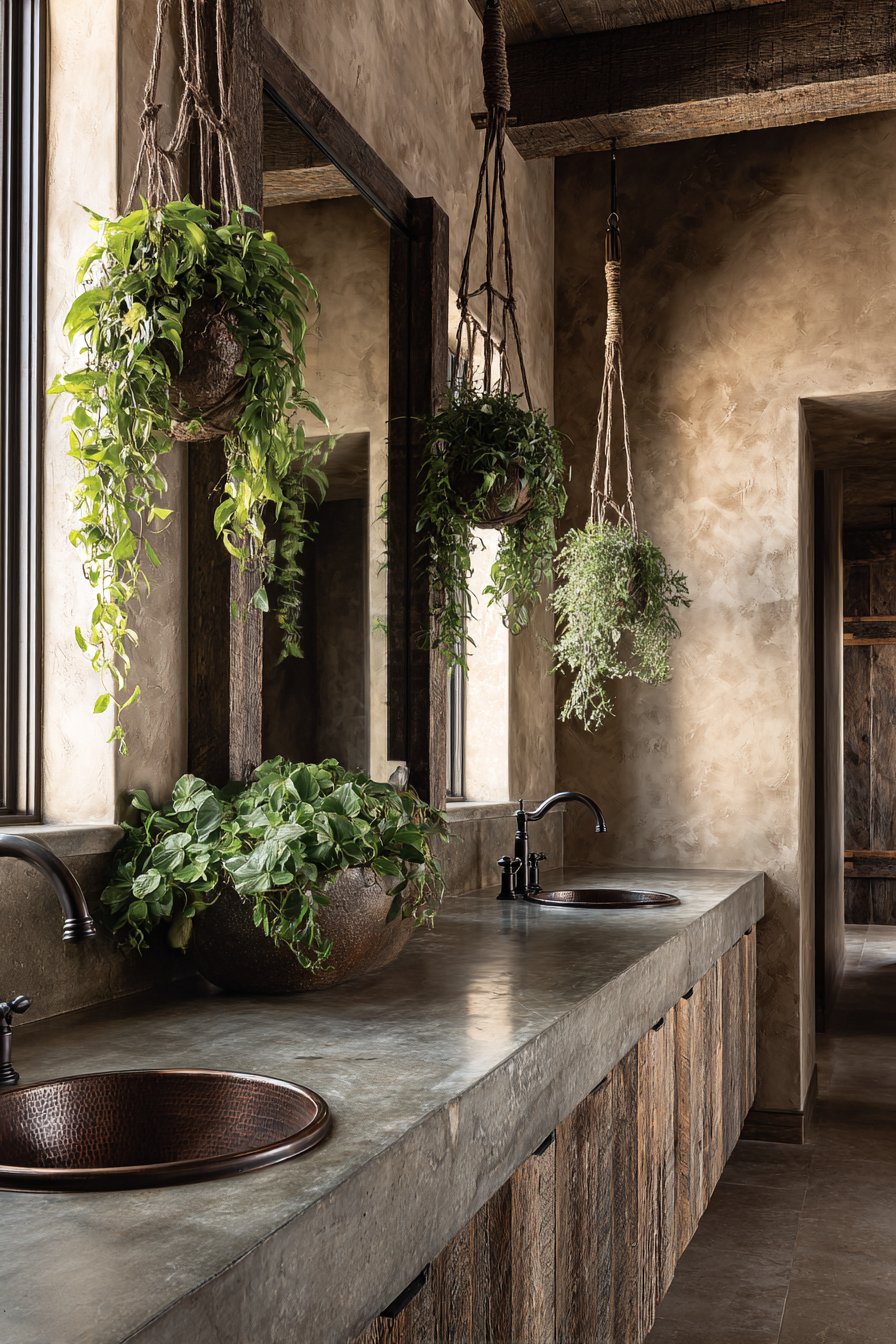
A double vanity featuring a rough-sawn reclaimed wood base brings historical character to contemporary design. The wood’s previous life shows in weathering patterns and nail holes. Rough-sawn texture provides dimensional surface quality that refined wood cannot match. This substantial base grounds the vanity with visual weight and authentic presence.
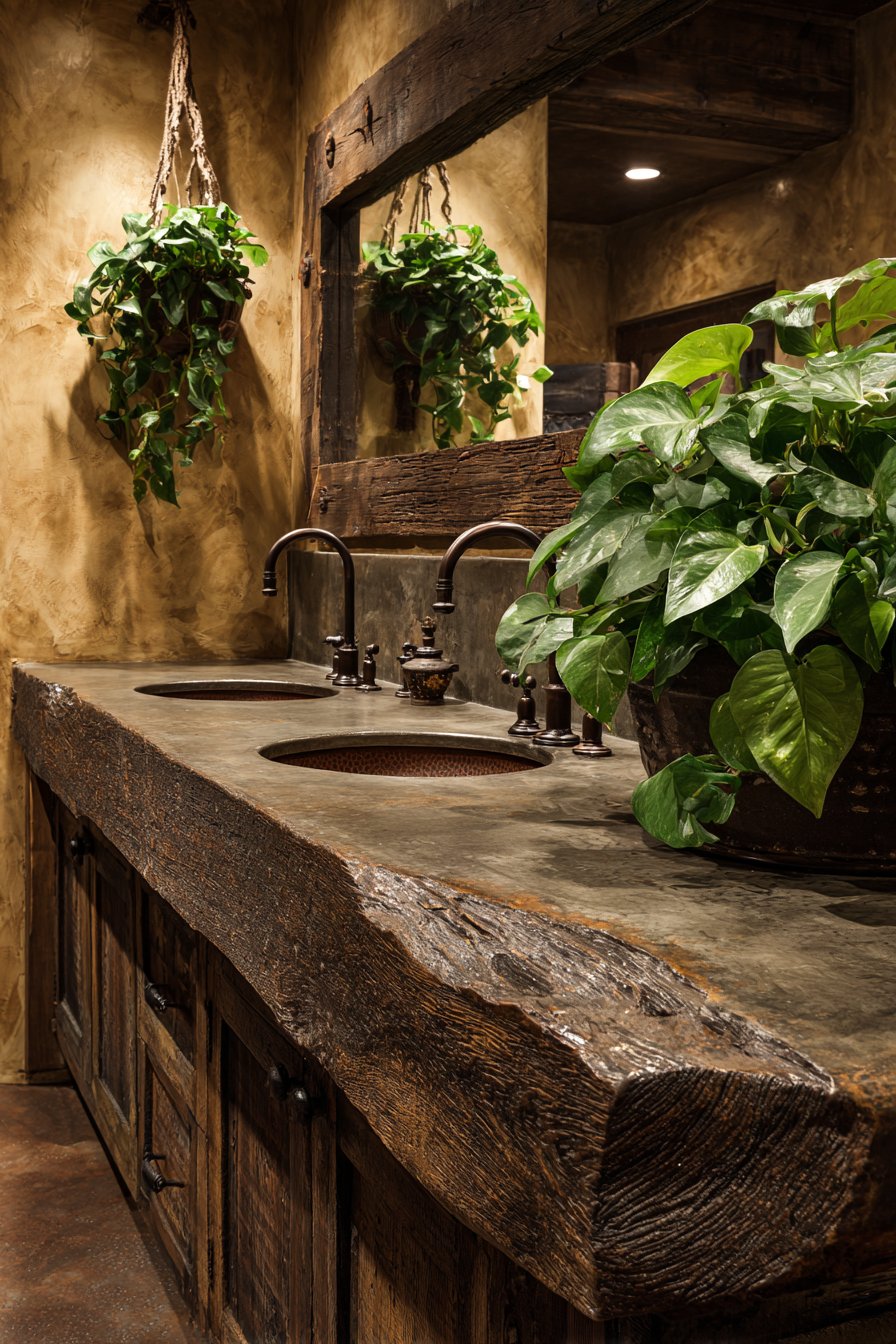
The concrete countertop in natural grey showcases visible aggregate adding organic speckled pattern. The raw concrete appearance feels industrial yet natural with its stone-derived composition. This material pairing of wood and concrete creates compelling textural contrast. Hammered copper undermount sinks provide warm metallic elements that soften the grey concrete.
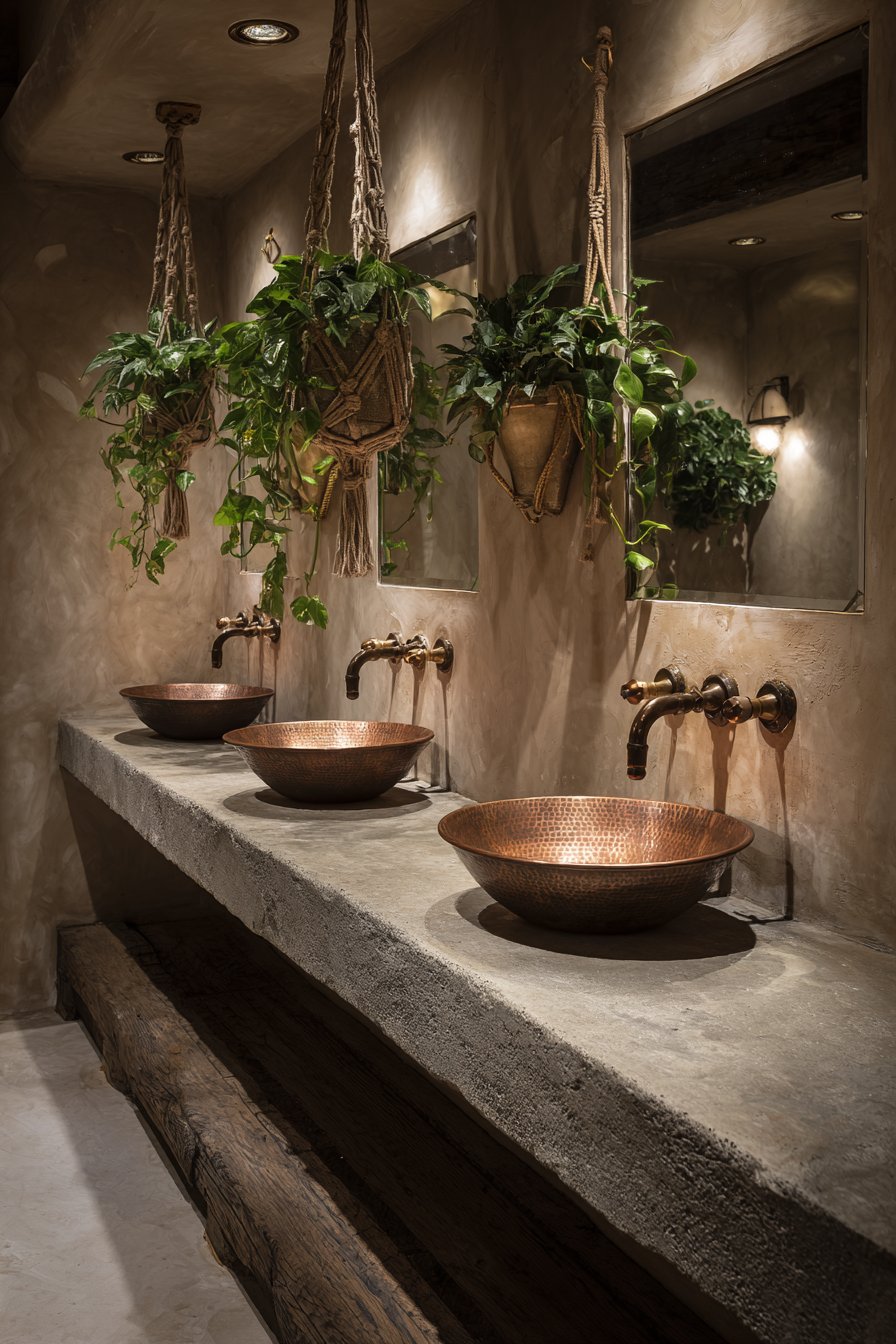
Oil-rubbed bronze faucets add another layer of authentic metallic character. The dark finish creates subtle contrast against the copper sinks while maintaining warmth. Walls finished in Venetian plaster technique display warm beige undertones with subtle texture variations. This plastering method creates depth and luminosity that standard paint cannot achieve.
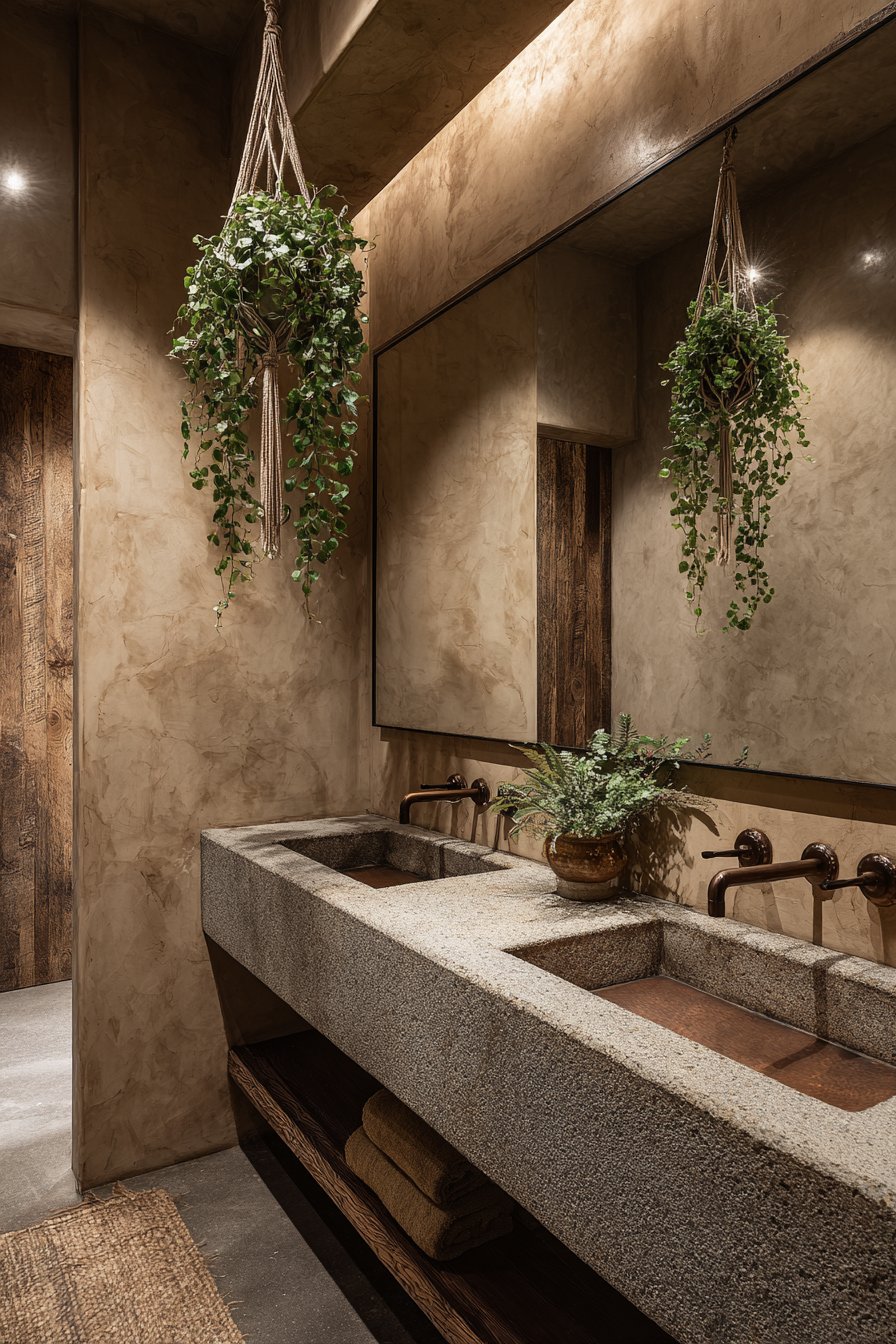
Macramé plant hangers with trailing pothos add organic life cascading from above. The handcrafted macramé continues the artisan aesthetic established by other material choices. Trailing plants soften hard surfaces while purifying air naturally. Recessed lighting creates gentle highlights on varied natural surfaces without creating harsh shadows.
Key Design Tips:
- Source rough-sawn reclaimed wood that shows authentic use history and weathering patterns.
- Pour concrete countertops with exposed aggregate for organic speckled visual interest.
- Install hammered copper sinks for handcrafted appearance and warm metallic contrast.
- Apply Venetian plaster to walls for luminous depth and subtle texture variations.
- Hang macramé plant holders to add handcrafted elements and living greenery overhead.
- Use recessed lighting to create gentle highlights that emphasize texture without harsh shadows.
8. Terracotta Hexagonal Tiles with Stacked Stone Shower

Terracotta hexagonal floor tiles showcase natural color gradations and slight surface irregularities. The hexagonal shape adds geometric interest while feeling more organic than standard squares. Natural color variations mean no two tiles appear exactly identical. Slight surface irregularities prove these are authentic clay tiles rather than synthetic alternatives.

The walk-in shower features stacked natural stone wall tiles in warm browns and taupes. Visible stratification in the stone creates horizontal banding that adds movement to vertical surfaces. The stacked installation method emphasizes the stone’s natural layering and geological formation. These textured walls create dramatic backdrop for daily showering rituals.
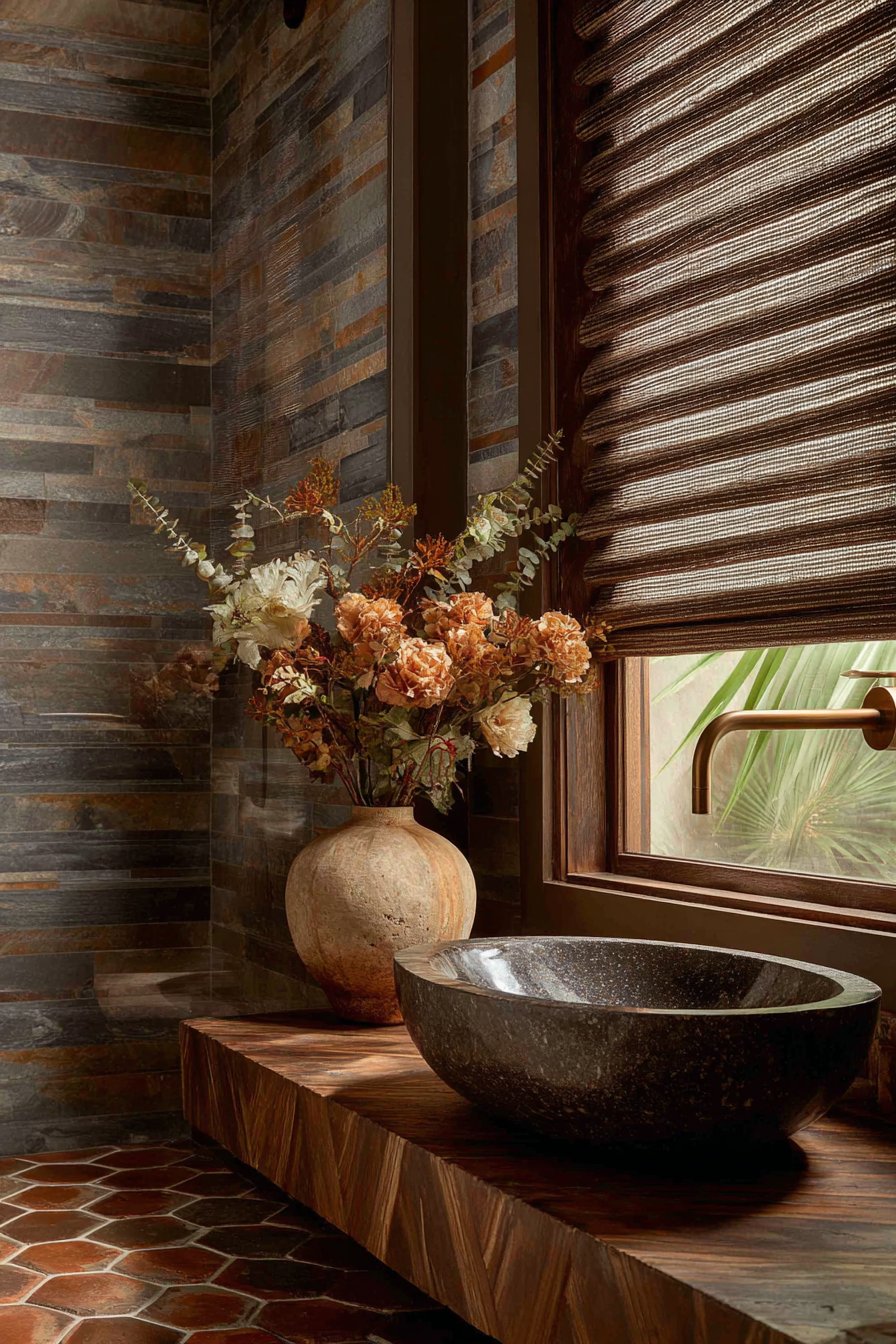
A floating teak vanity with waterfall edge brings warm wood tones and contemporary design. The waterfall edge where countertop material flows down the side creates seamless organic form. Teak’s natural oils make it ideal for humid bathroom environments without special treatment. A vessel sink in natural stone sits atop the wood, adding sculptural presence.
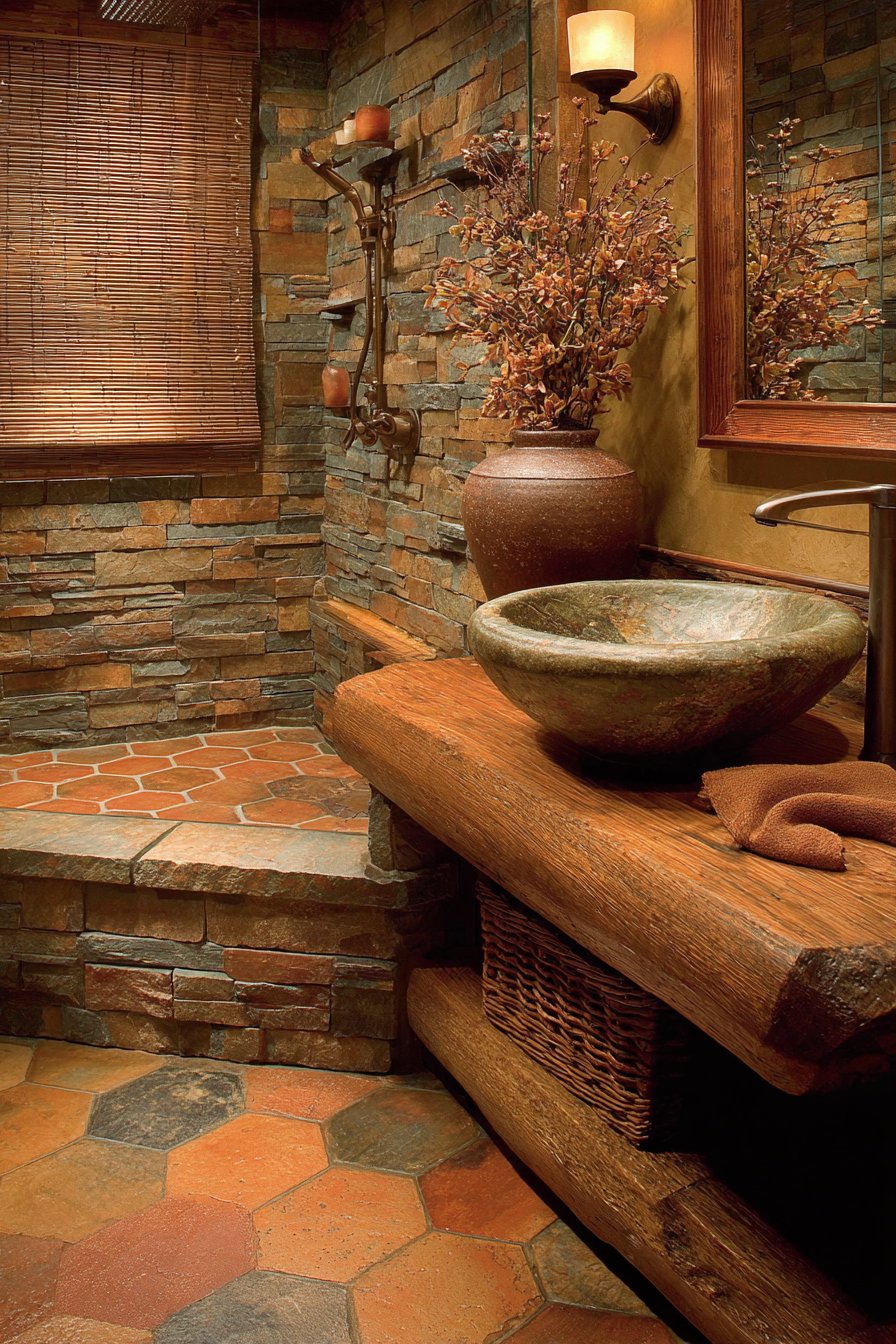
Woven window shades filter soft natural light while maintaining privacy. The woven material adds another natural texture layer to the space. Dried botanical arrangements in earthenware vases complete the organic aesthetic. Interior design photography captures balanced exposure highlighting the layered earth-tone palette throughout.
Key Design Tips:
- Choose hexagonal terracotta tiles for geometric interest combined with authentic clay character.
- Install stacked stone tiles to emphasize natural stratification and geological beauty.
- Select teak for bathroom vanities due to natural water resistance and warm coloring.
- Design waterfall edge countertops for seamless contemporary form using organic materials.
- Use woven window treatments that filter light while adding natural texture layers.
- Display dried botanicals in earthenware to maintain organic aesthetic year-round without maintenance.
9. Clawfoot Tub with Sandstone-Look Tiles
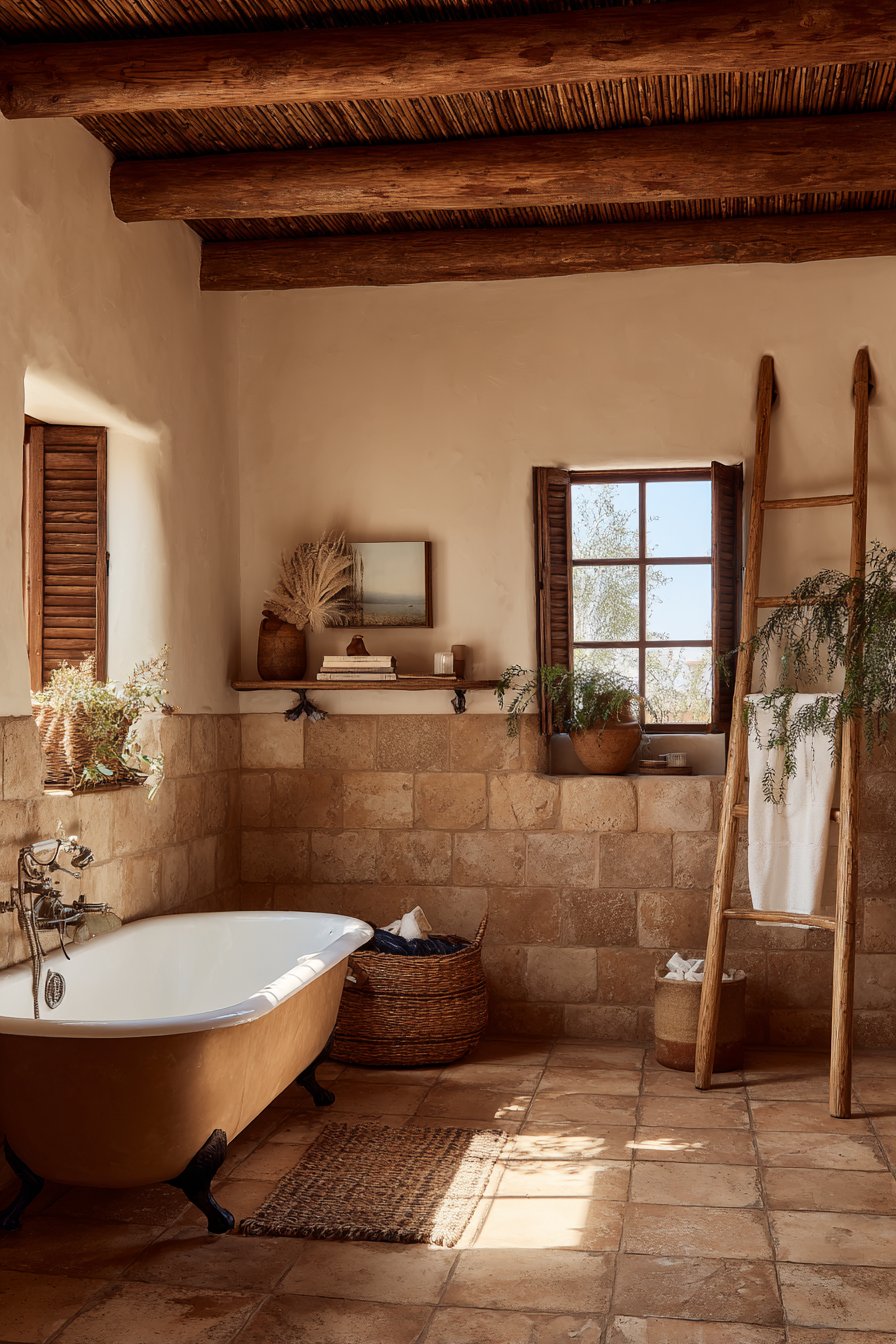
A clawfoot tub refinished in matte clay color creates vintage charm with earthy contemporary twist. The matte finish feels more organic than traditional glossy porcelain. This unexpected color choice transforms a classic fixture into something fresh. The tub’s elevated position on claw feet creates visual lightness despite substantial presence.

Large format sandstone-look tiles with natural fossil impressions cover walls in warm buff tones. These fossil details add storytelling elements that spark imagination about ancient seas. The buff color provides neutral warmth that makes the space feel sunny. Large format tiles minimize grout lines for cleaner aesthetic that emphasizes the stone appearance.
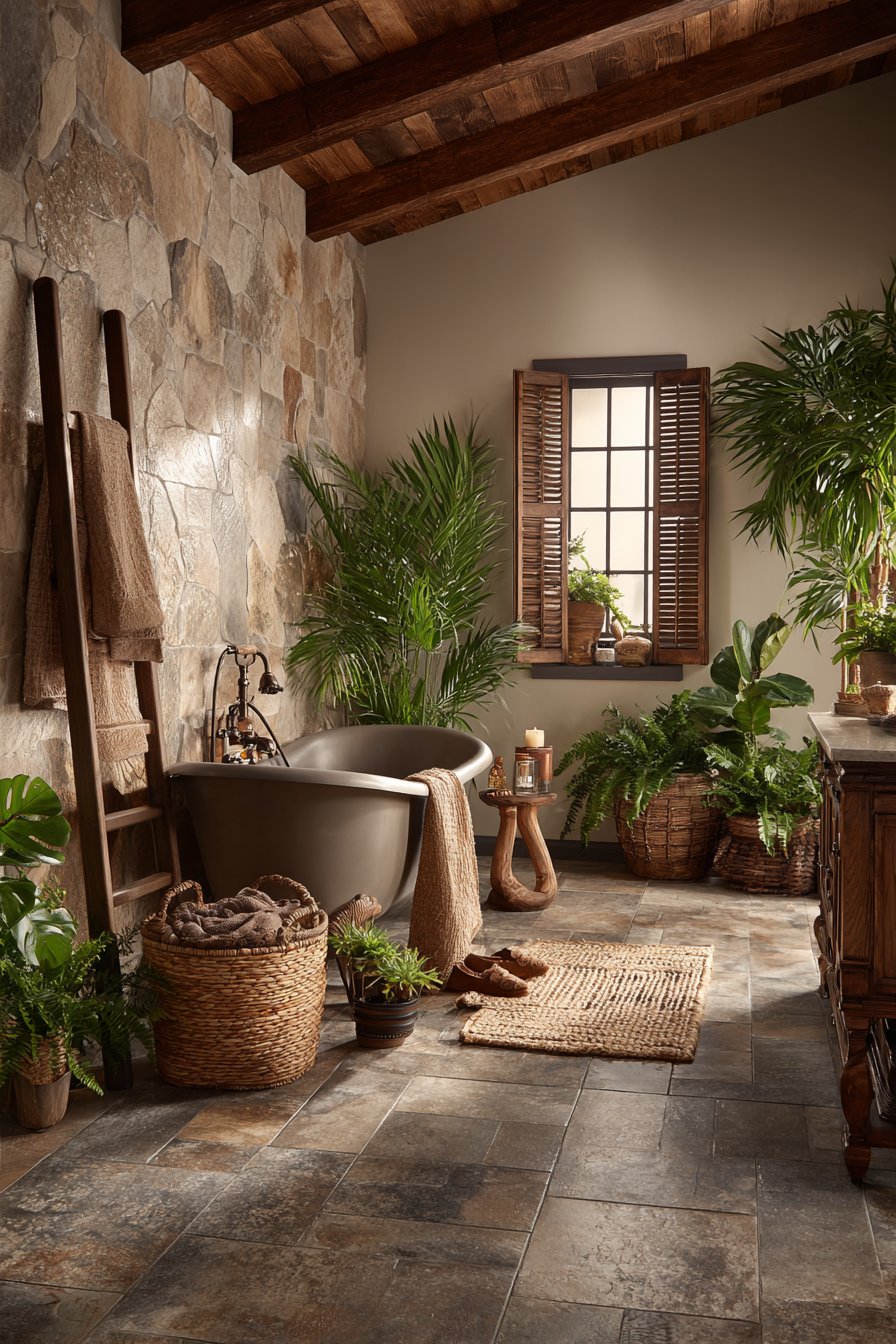
A vintage wooden ladder serves as towel storage bringing vertical interest and rustic charm. The ladder’s aged appearance adds authenticity and character. Natural fiber baskets hold bath essentials while adding woven texture. A small window with wooden shutters allows dappled natural light to enter.
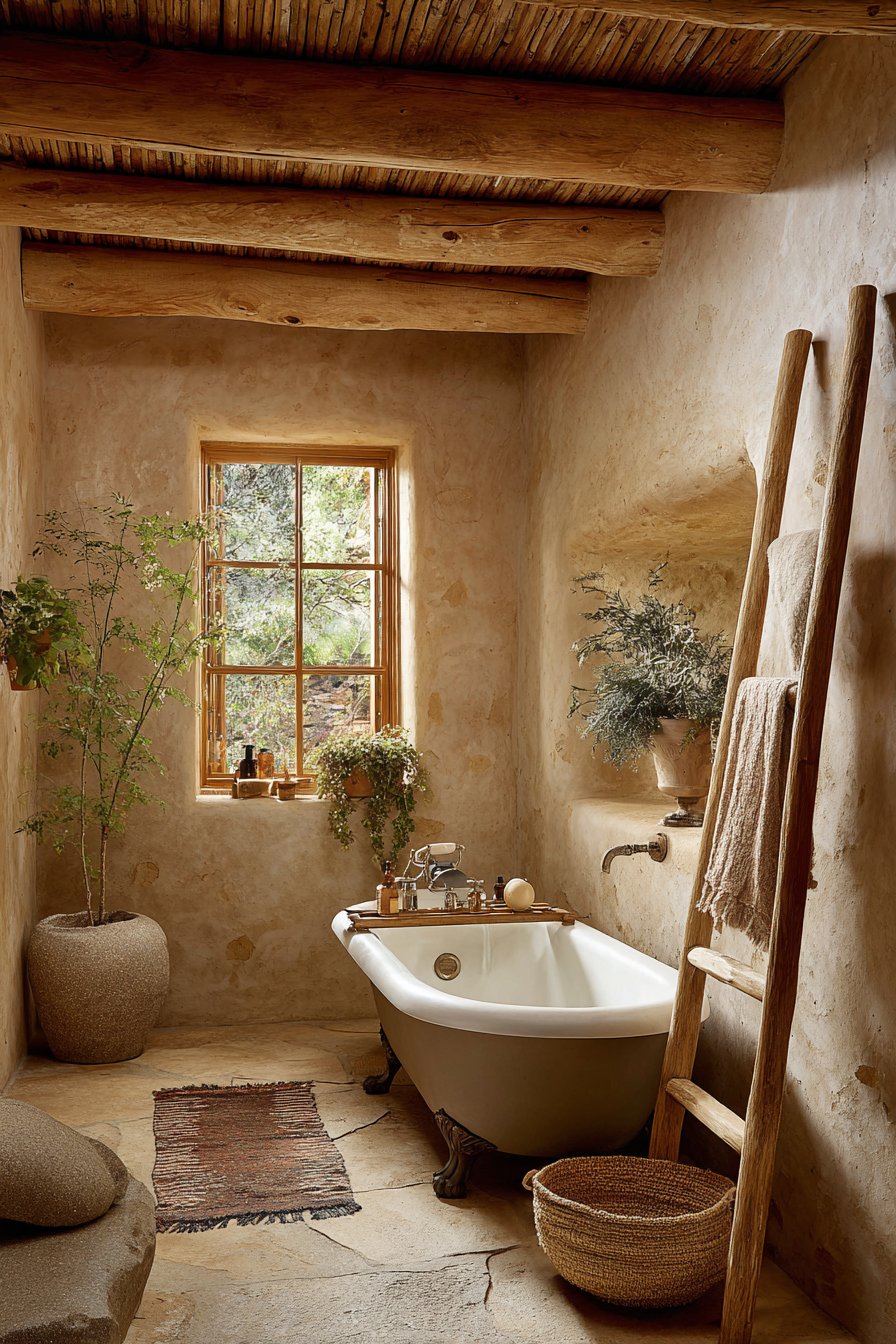
Exposed wooden ceiling beams add architectural warmth and draw eyes upward. These structural elements become decorative features that ground the space. The wood overhead balances the stone surfaces below. Wide-angle professional photography captures the rustic organic character while showing practical livable design.
Key Design Tips:
- Refinish vintage tubs in matte clay colors for organic update on classic fixtures.
- Select large format tiles with fossil impressions for storytelling elements and visual interest.
- Repurpose wooden ladders as towel storage for vertical storage and rustic character.
- Install wooden shutters for light control that adds architectural detail and warmth.
- Expose ceiling beams when possible to add architectural interest and natural material overhead.
- Use natural fiber baskets throughout for practical storage that enhances organic aesthetic.
10. Mixed Natural Materials Custom Shower
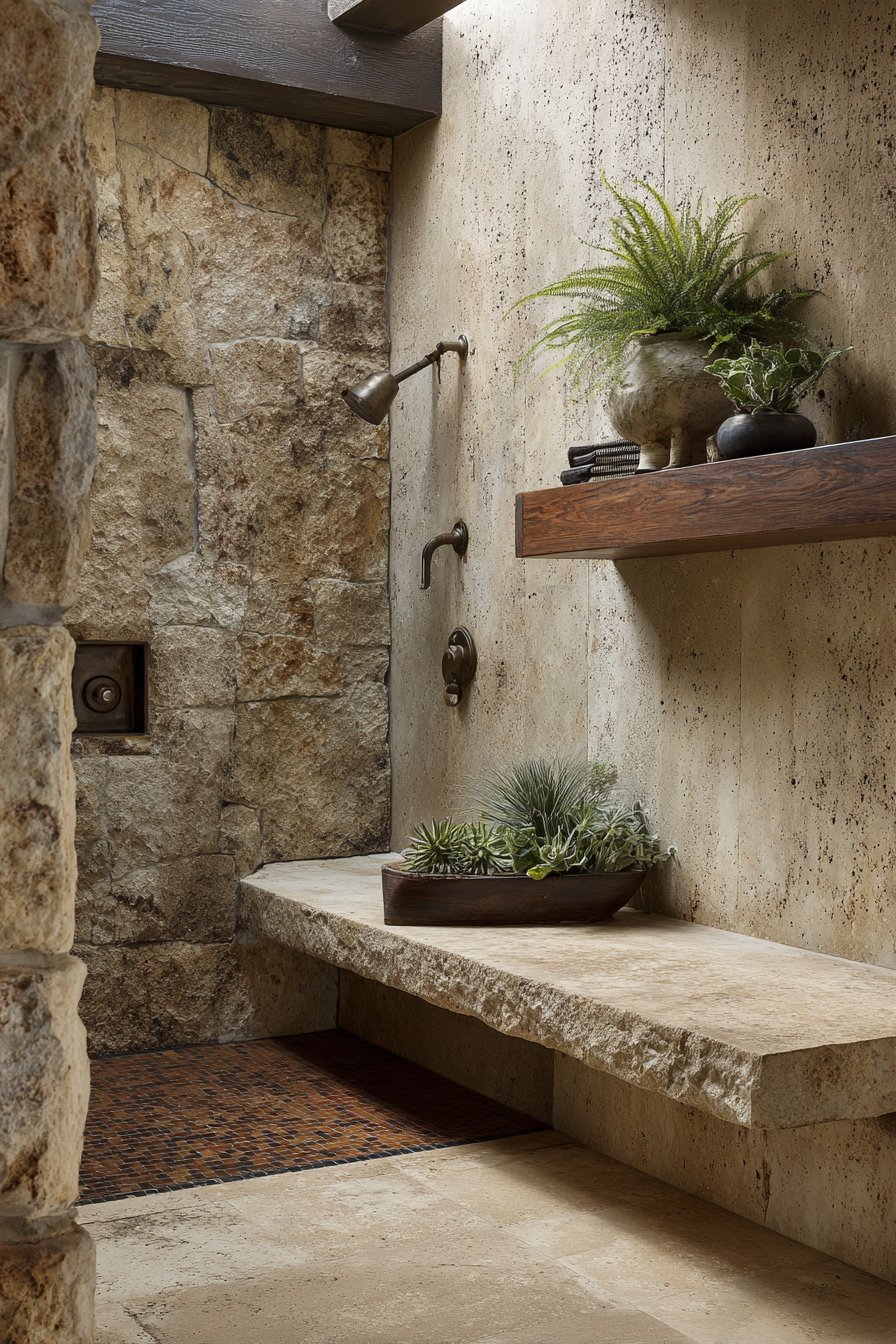
A custom shower featuring mixed natural materials creates layered textural experience. A river rock accent wall provides three-dimensional surface that engages multiple senses. Each stone’s unique shape and color contributes to organic mosaic effect. Teak shower floor grating allows water drainage while providing warm wood underfoot.
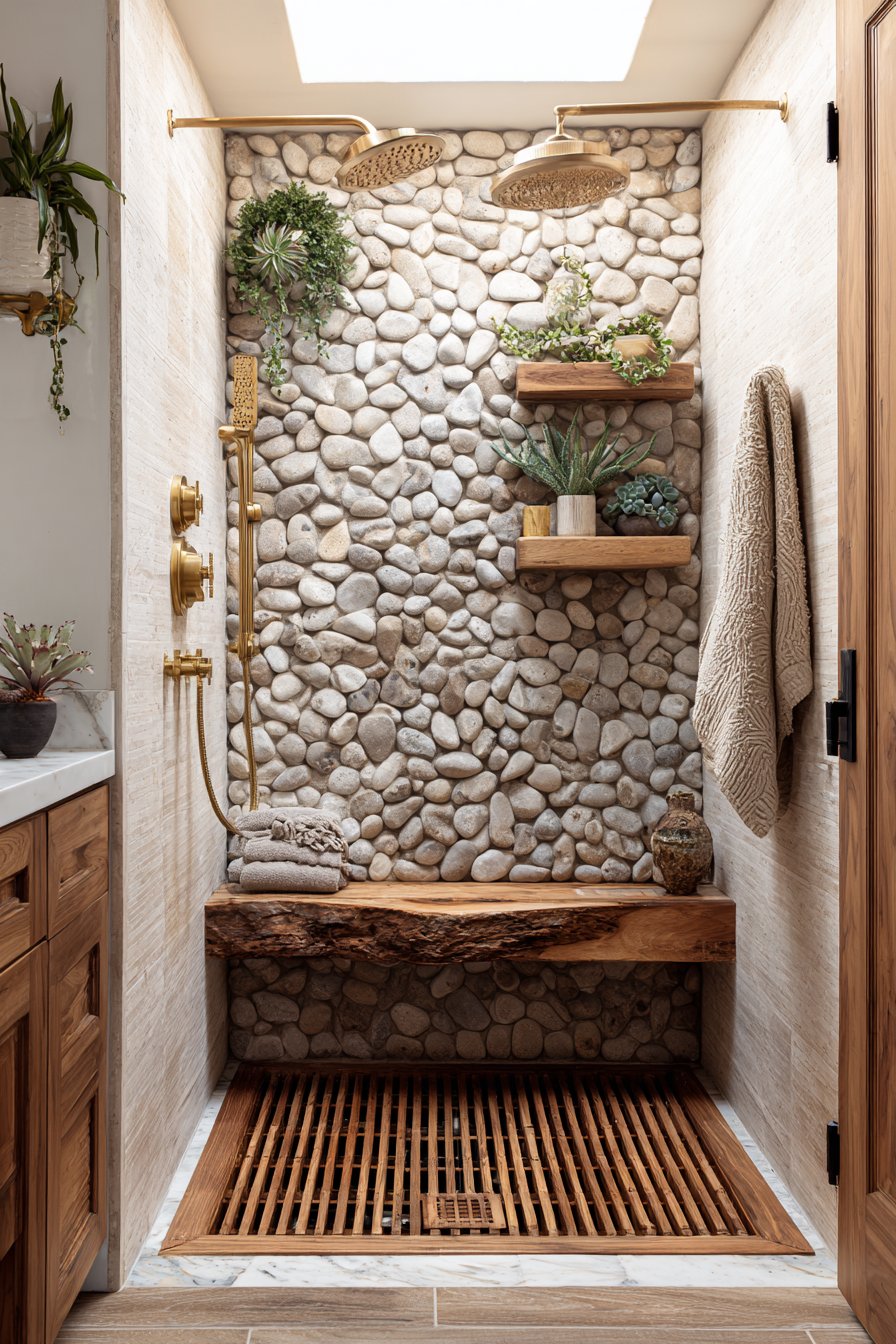
Surrounding walls in honed travertine with natural pitting create elegant neutral backdrop. The honed finish prevents slippery surfaces while maintaining sophisticated appearance. Natural pitting adds textural interest at eye level. Aged brass shower fixtures show authentic patina development that cannot be artificially replicated convincingly.
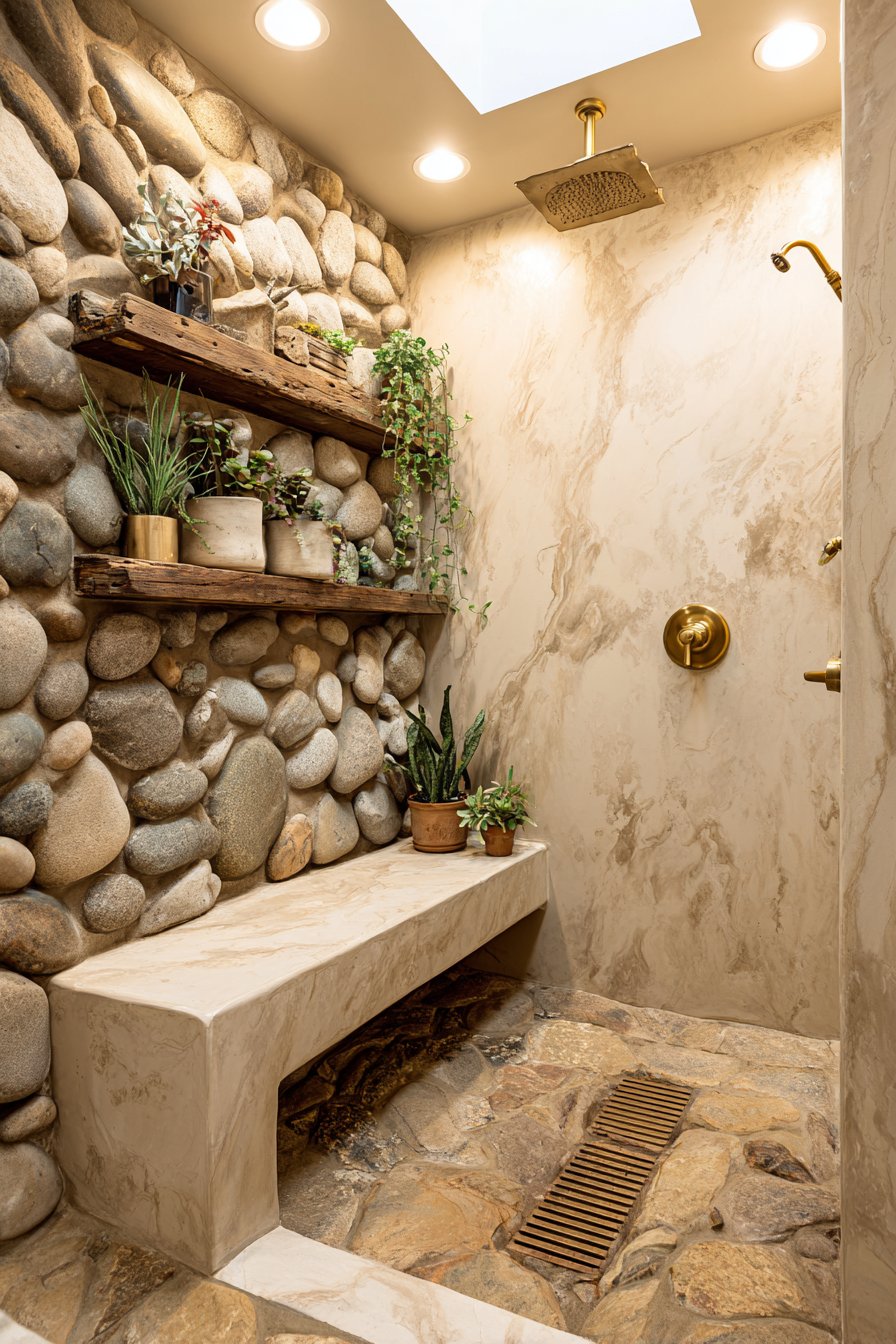
A built-in shower bench made from natural stone slab provides practical seating. The solid stone bench feels permanent and substantial within the shower. Its natural variations and veining make it sculptural element even while serving function. Potted air plants and small succulents on a wooden shelf add living greenery.
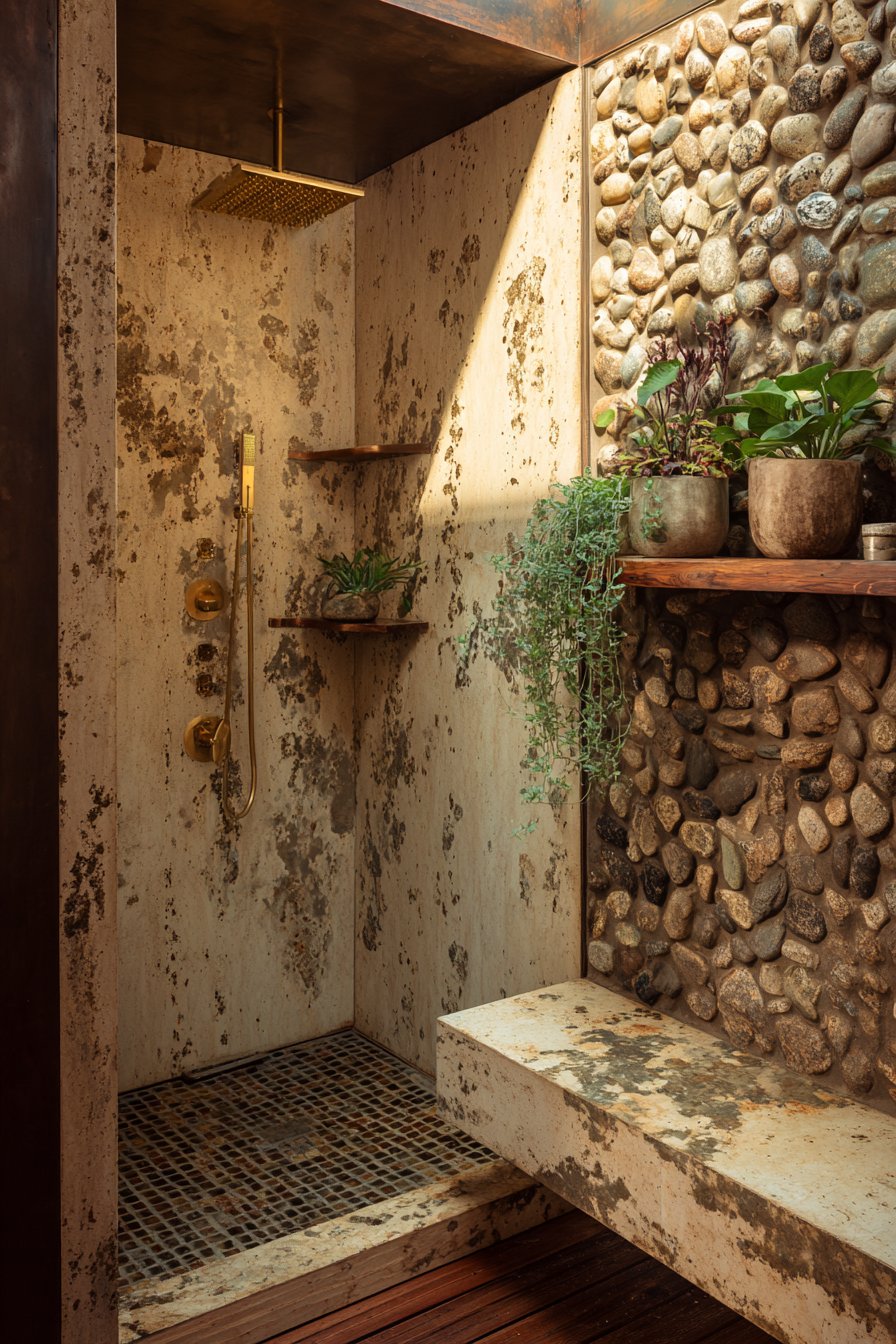
Skylight provides soft natural illumination highlighting the varied organic textures throughout the shower. This overhead natural light eliminates need for bright artificial lighting during daytime. The skylight also improves ventilation naturally. Interior design photography emphasizes material authenticity, natural wear patterns, and realistic integration of diverse elements.
Key Design Tips:
- Combine multiple natural materials like river rock, teak, and travertine for rich layering.
- Install teak grating over shower floor for warm wood experience with proper drainage.
- Choose aged brass fixtures with authentic patina rather than artificially aged alternatives.
- Build stone slab benches for substantial seating that doubles as sculptural element.
- Install skylights in showers for natural illumination and improved ventilation without windows.
- Display air plants and succulents that require minimal maintenance in humid environments.
Why These Earthy Bathroom Designs Excel
These ten earthy bathroom designs represent the pinnacle of biophilic interior design that connects inhabitants with nature. Each approach demonstrates how authentic natural materials create sensory-rich environments that promote wellbeing and relaxation. The designs succeed because they prioritize genuine materials over artificial substitutes, celebrating imperfections that machine-made products eliminate. Stone, wood, clay, and natural fibers bring inherent beauty that requires minimal enhancement.
The color palettes across all designs draw from earth’s own spectrum: terracotta, ochre, beige, taupe, sand, and honey tones. These warm hues create psychologically comforting spaces that reduce stress and promote calm. Research consistently shows earth tones lower blood pressure and heart rate compared to stark whites or bold colors. The natural color variations within materials add visual interest without requiring pattern or decoration.
Texture plays crucial role in these designs’ effectiveness. Rough stone against smooth copper, weathered wood beside polished brass, and soft textiles near hard tile create contrast that engages tactile senses. This textural diversity prevents monotony while maintaining cohesive organic aesthetic. Every surface invites touch and interaction, transforming bathrooms from purely visual spaces into multisensory experiences.
Natural lighting proves essential to these designs’ success. Skylights, windows, and strategic fixture placement ensure materials display their full beauty throughout the day. Natural light shifts constantly, creating dynamic spaces that never appear static. This changing illumination highlights different textures and colors as sun moves, ensuring fresh perspectives with each bathroom visit.
Sustainability naturally emerges from these material choices. Stone, wood, and clay represent renewable or abundantly available resources. Reclaimed wood gives new life to previously used materials. Natural fibers like jute and seagrass biodegrade at end of life. These choices align with growing environmental consciousness among homeowners seeking to reduce their ecological footprint.
The designs balance rustic organic elements with contemporary conveniences. Rainfall showerheads, floating vanities, and modern fixtures prevent spaces from feeling dated despite natural materials. This fusion proves that environmental consciousness and contemporary lifestyle can coexist beautifully. Clean lines and thoughtful organization maintain functionality within organic aesthetic frameworks.
Maintenance considerations enhance these designs’ practicality. Stone tiles and concrete countertops withstand daily use for decades. Teak naturally resists moisture without treatment. Travertine and slate develop character as they age rather than appearing worn. These materials improve with time, developing patinas and surface changes that add rather than detract from beauty.
The artisan quality throughout these designs elevates them beyond standard renovations. Handcrafted elements like hammered copper sinks, macramé plant hangers, and custom woodwork add unique character. These pieces show maker’s hand, creating connection to human craftsmanship increasingly absent in mass-produced environments. This human element makes spaces feel personal and intentional.
Plant integration brings literal life into these bathrooms. Ferns, pothos, air plants, and succulents purify air while adding vibrant green against neutral backgrounds. Living plants introduce organic shapes and colors that evolve naturally. They require care, creating ongoing relationship between inhabitant and space that builds connection over time.
Each design demonstrates scalability allowing adaptation to various budgets and spaces. River rock accents or wooden shelving can update existing bathrooms without complete renovation. Those planning full remodels can incorporate multiple elements for comprehensive transformation. This flexibility ensures earthy bathroom principles apply to apartments and mansions equally.
The emphasis on authentic materials creates investment in quality over quantity. Natural stone, solid wood, and handcrafted elements cost more initially but outlast cheaper alternatives many times over. This approach aligns with sustainable consumption patterns prioritizing durability and timeless design. These bathrooms won’t require trendy updates because natural materials never go out of style.
Personal wellbeing benefits make these designs particularly relevant in our high-stress modern world. Bathrooms serve as private retreats for daily self-care rituals. Surrounding ourselves with natural materials during vulnerable moments of bathing and grooming provides grounding effect. The sensory experience of warm wood, cool stone, and living plants reduces anxiety and promotes mindfulness.
Conclusion
Creating an earthy bathroom transforms daily routines into grounding rituals that reconnect us with nature. These ten distinctive approaches demonstrate that organic design principles adapt to various aesthetics, from rustic traditional to sleek contemporary. The common thread connecting all these spaces remains authentic materials, warm earth-toned palettes, and respect for natural imperfections. Stone, wood, clay, natural fibers, and living plants combine to create environments that feel both luxurious and humble.
The key takeaways center on material authenticity, textural diversity, and natural lighting. Choose genuine stone over synthetic alternatives whenever possible. Layer multiple textures to create sensory richness that engages sight and touch. Maximize natural light through skylights and windows to showcase materials’ inherent beauty throughout the day. Remember that imperfections tell stories and add character rather than diminishing value.
Start your earthy bathroom journey with one element that resonates most deeply. Perhaps a copper vessel sink, reclaimed wood shelving, or river rock shower floor. Build gradually, adding complementary natural materials and earth-toned colors. Trust in nature’s palette and patterns rather than fighting them. Allow materials to age naturally, developing patinas and character marks that prove authenticity.
These designs prove that sustainable, biophilic spaces serve both environmental and personal wellbeing. By bringing nature’s beauty indoors through thoughtful material selection, we create sanctuaries that nurture us daily. Whether undertaking complete renovation or simple updates, earthy bathroom principles offer paths to more grounded, peaceful spaces. Your bathroom can become a natural sanctuary where you begin each day rooted and end each evening restored.
