


The kitchen has long been considered the heart of the home, a gathering place where families come together to share meals, conversations, and create lasting memories. In today’s fast-paced world, the desire for a cozy kitchen space has become more important than ever. A truly cozy kitchen transcends mere functionality—it becomes a sanctuary that welcomes you with warmth, comfort, and a sense of belonging. Through thoughtful interior design, careful material selection, and attention to the smallest details, any kitchen can be transformed into a space that not only serves practical needs but also nourishes the soul.
Creating a cozy kitchen involves balancing aesthetic appeal with practical functionality. The warmth of natural wood, the softness of textured fabrics, the gentle glow of well-placed lighting, and the comfort of thoughtfully arranged spaces all contribute to an atmosphere that invites lingering conversations over morning coffee or evening meals. Whether you’re working with a sprawling culinary workspace or a compact galley kitchen, the principles of cozy design remain the same: embrace natural materials, prioritize comfort, celebrate imperfection, and create spaces that reflect your personal story.
In this comprehensive guide, we explore ten distinct approaches to creating the ultimate cozy kitchen. From farmhouse-inspired spaces featuring reclaimed wood and vintage touches to intimate breakfast nooks and specialized corners designed for specific activities, each design concept offers unique insights into how different elements work together to create warmth and comfort. These designs cater to various lifestyles, spatial constraints, and aesthetic preferences, proving that coziness in the kitchen is not a one-size-fits-all concept but rather a personal journey toward creating a space that truly feels like home.
1. Honey-Toned Warmth with Farmhouse Elegance
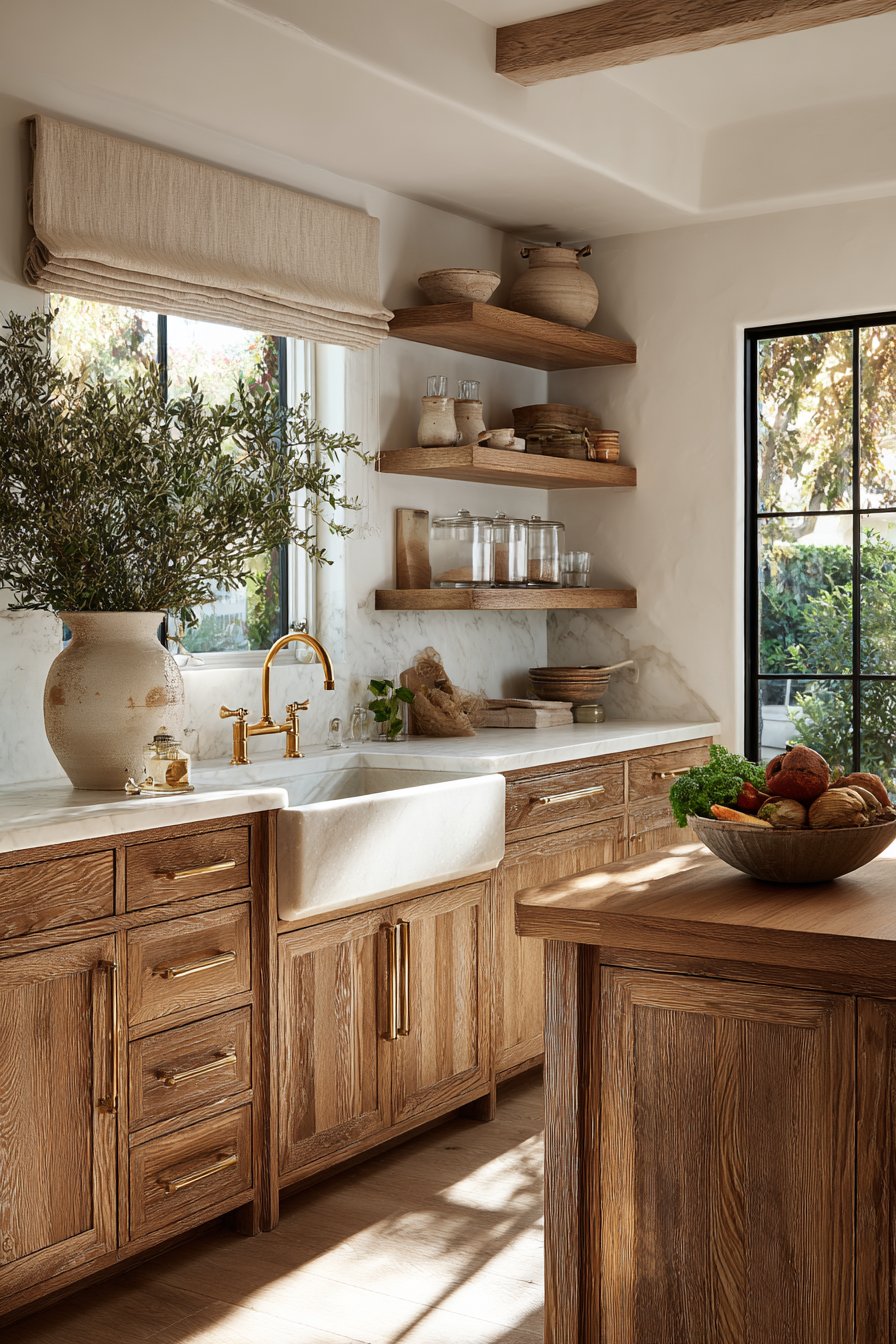
Stepping into a kitchen adorned with warm honey-toned wooden cabinets immediately evokes a sense of comfort and timeless beauty. The visible grain texture of the wood tells a story of natural origins, while brushed brass hardware adds subtle sophistication without overwhelming the organic warmth.
This design philosophy centers on celebrating natural materials in their most authentic forms, allowing the inherent beauty of wood to take center stage. The golden undertones of honey-finished wood create an enveloping warmth that makes the space feel instantly welcoming, especially when bathed in natural morning light.
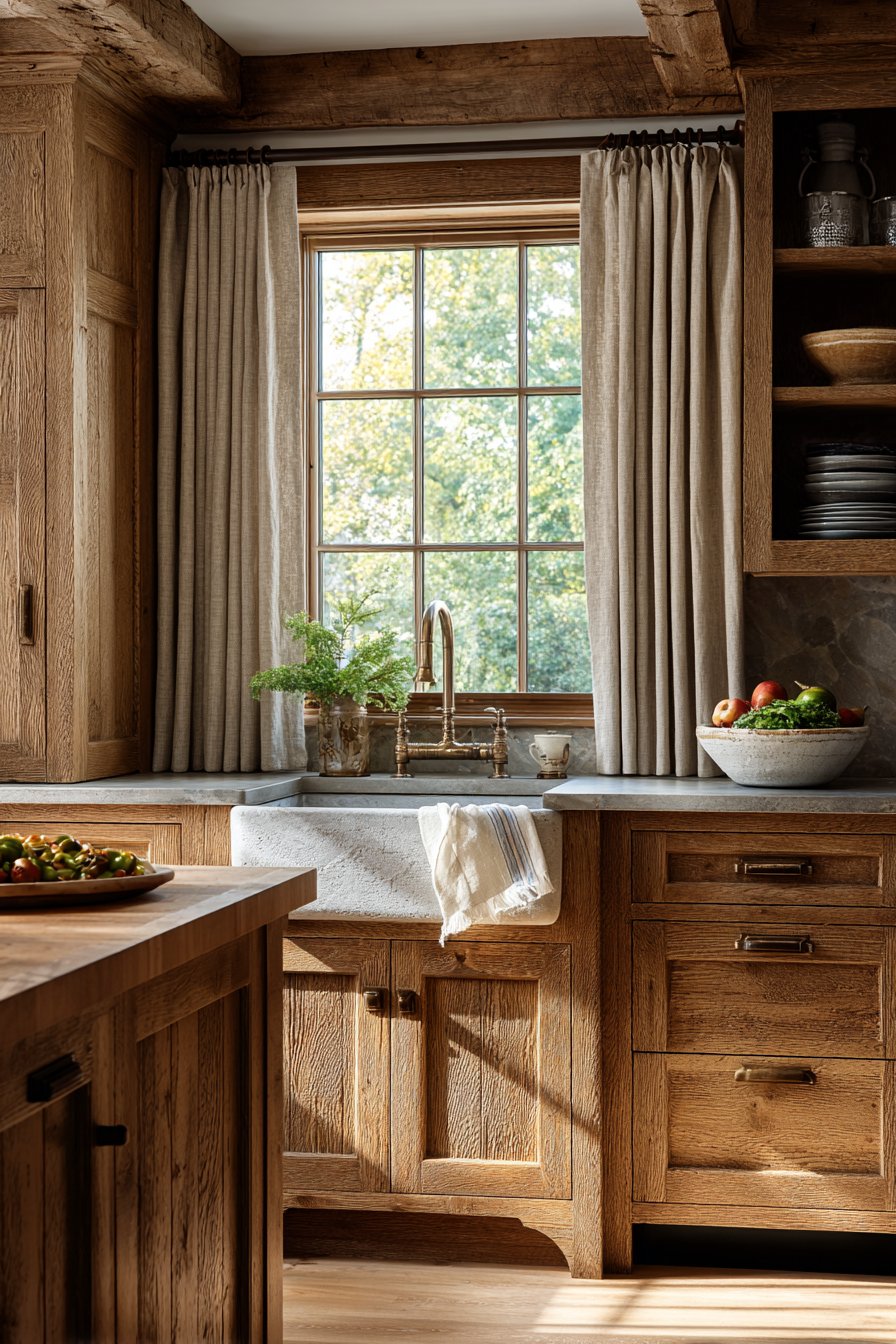
The farmhouse-style apron sink serves as a practical focal point beneath a window dressed with natural linen cafe curtains. These curtains perform the dual function of providing privacy while allowing soft, diffused light to filter through, creating a gentle ambiance that changes throughout the day.
The fabric’s natural texture adds another layer of tactile interest to the space, contributing to the overall sense of coziness. Open shelving displays earthenware dishes and glass storage jars, transforming everyday items into decorative elements that reinforce the kitchen’s warm, lived-in character.
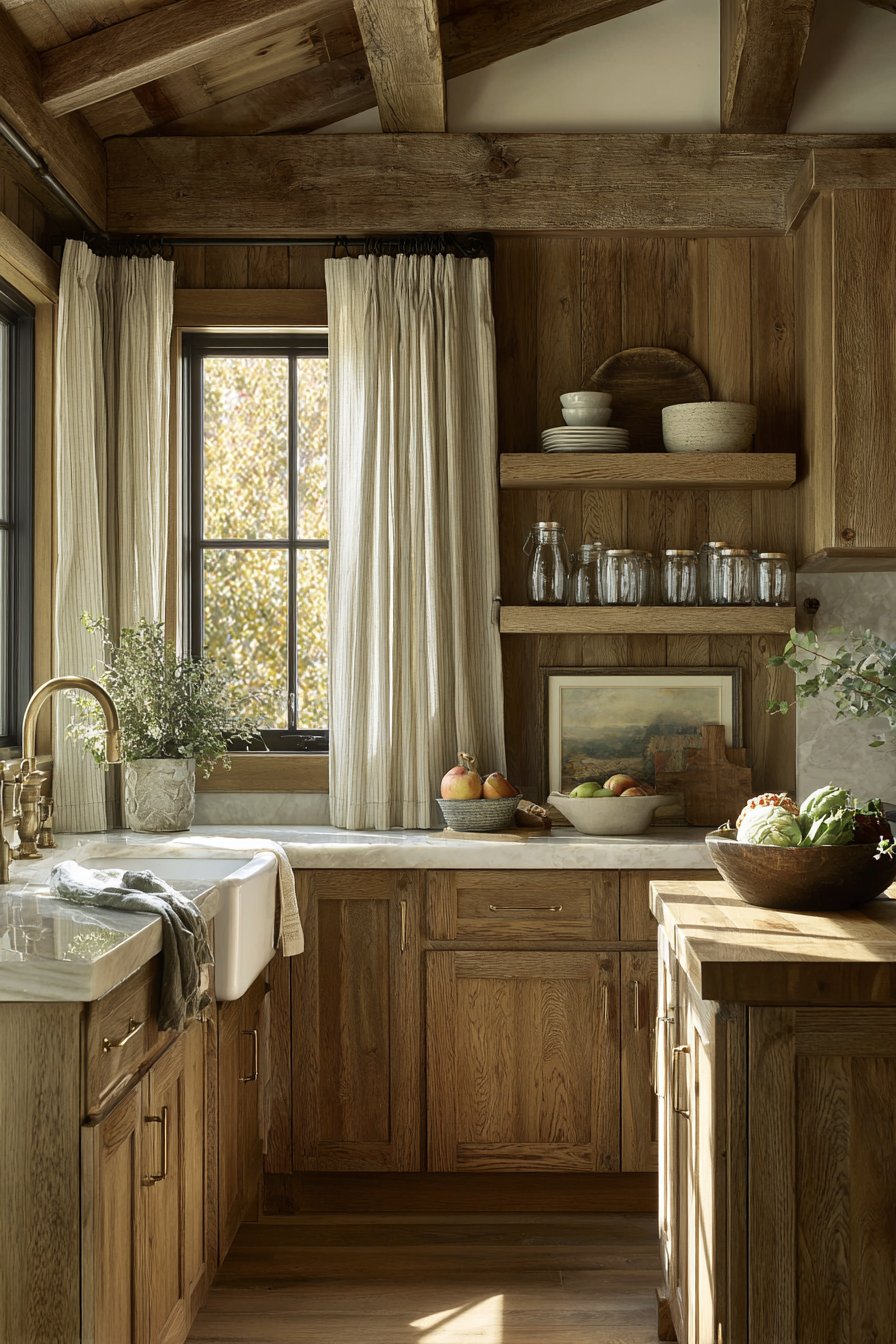
At the center of this kitchen, a small island topped with butcher block countertop provides both workspace and visual anchor. The butcher block surface brings additional warmth through its rich wood tones and natural variations in grain pattern.
A ceramic bowl filled with fresh produce adds color and life to the composition, suggesting the kitchen’s role as a place where fresh, wholesome food is prepared with care. The wide-angle composition captures how natural lighting creates gentle shadows and highlights throughout the space, emphasizing the dimensional quality of the wood and the interplay between light and material.
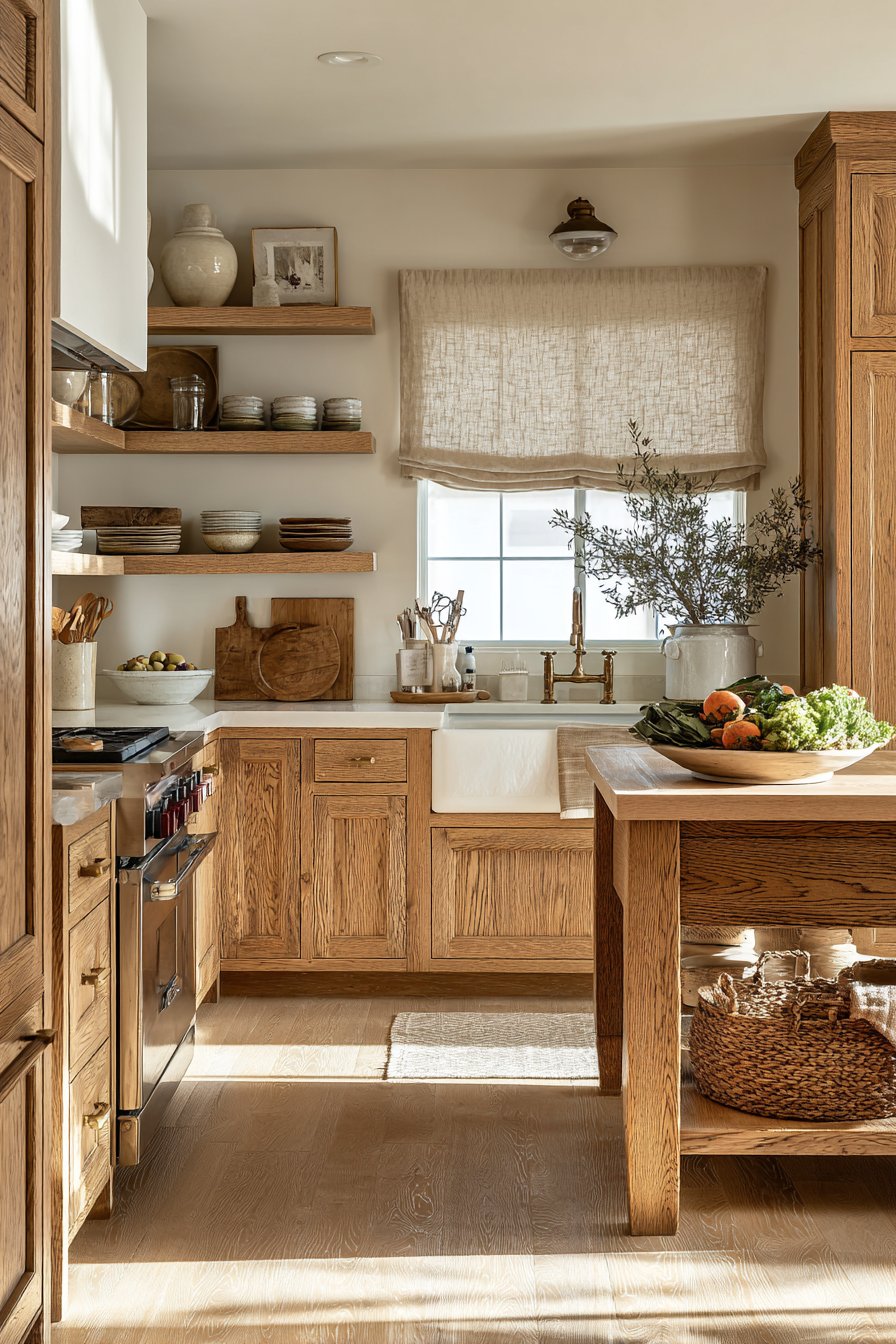
Key Design Tips:
- Select honey-toned wood with visible grain patterns to add character and natural warmth to your cabinetry
- Install brushed brass hardware for a subtle touch of elegance that complements warm wood tones without competing for attention
- Choose natural linen window treatments that filter light softly while adding textural interest to the space
- Incorporate open shelving to display earthenware and glass storage, turning functional items into decorative elements
- Add a butcher block island or countertop to provide workspace while reinforcing the warm, natural material palette
- Display fresh produce in ceramic bowls to bring color, life, and a sense of abundance to the kitchen
2. Intimate Breakfast Nook Haven
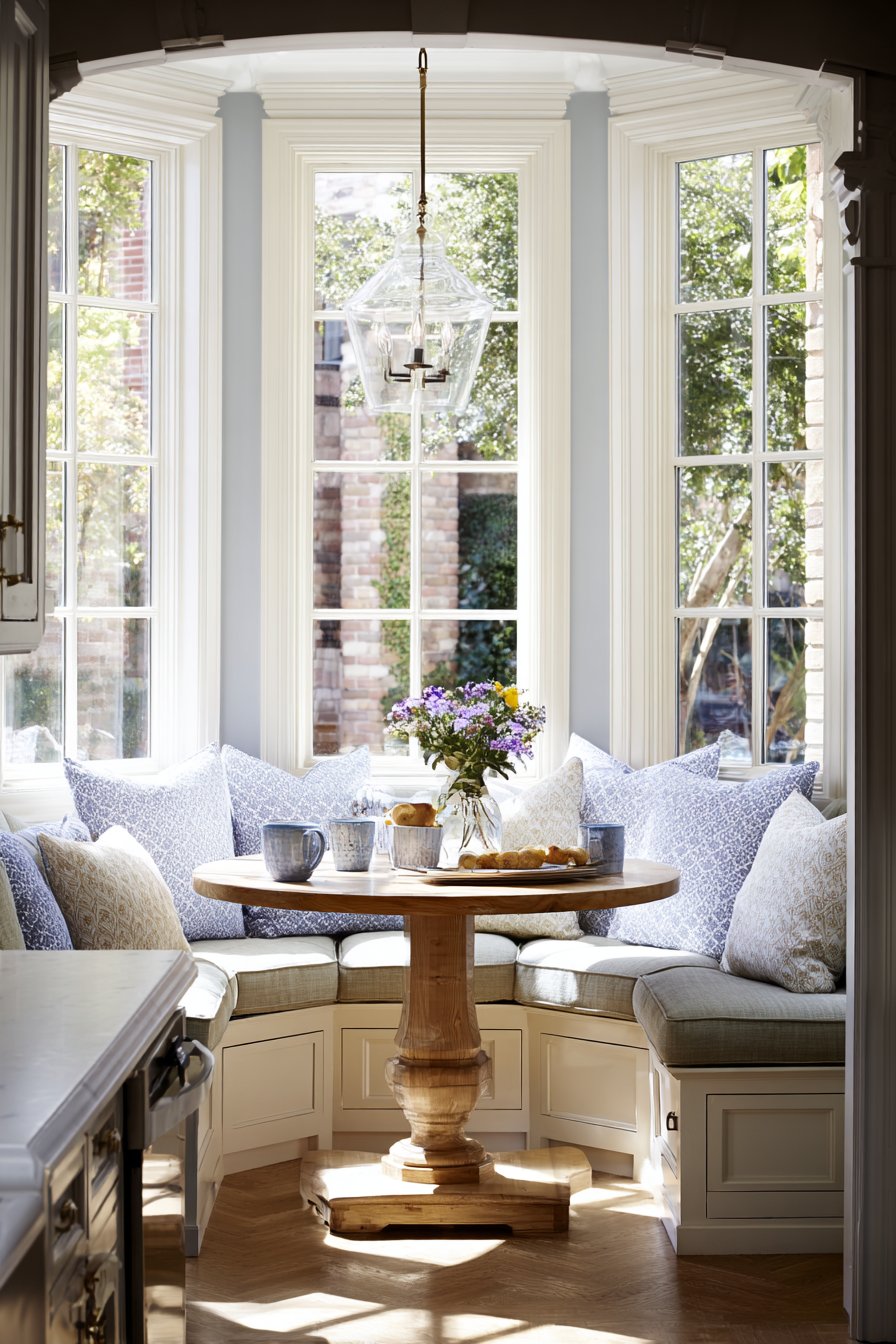
The breakfast nook represents one of the most cherished spaces in a cozy kitchen, offering a dedicated area for morning rituals and intimate gatherings. A built-in banquette with deep cushions upholstered in soft sage green linen creates an inviting retreat within the larger kitchen space.
The sage green hue brings a connection to nature, evoking the calming quality of garden herbs and fresh foliage, while the linen fabric contributes softness and breathability. Textured throw pillows layered along the banquette add visual interest and extra comfort, encouraging family members to settle in for leisurely breakfasts or afternoon reading sessions.
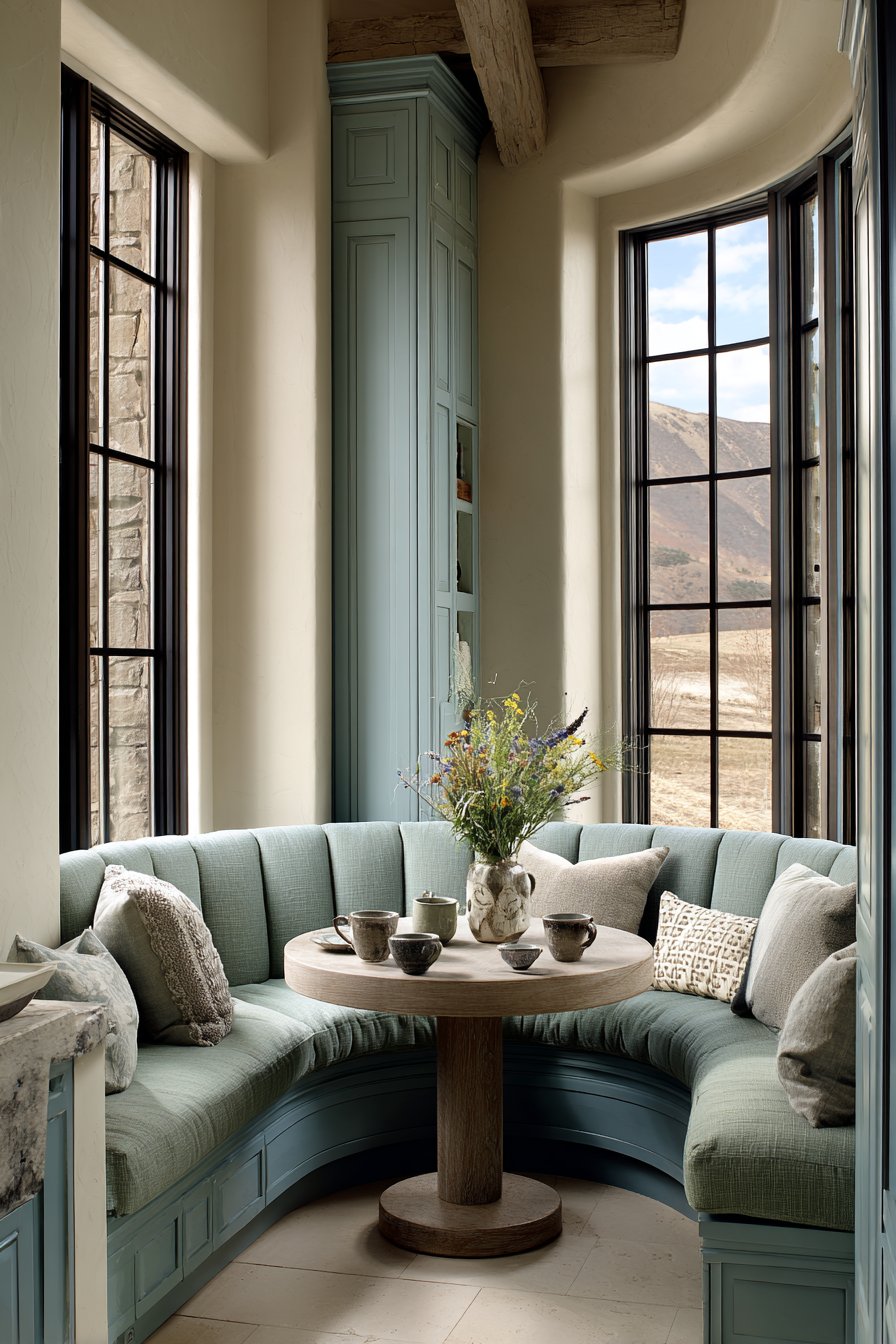
A round wooden pedestal table centers the nook, its circular form promoting conversation and creating a sense of equality among those gathered around it. The table’s wooden construction echoes the warmth found throughout the cozy kitchen, while its pedestal base maximizes legroom and makes seating more flexible.
Handmade ceramic mugs rest on the table surface alongside a small vase of wildflowers; these simple touches transform an everyday breakfast into a special occasion. The handcrafted quality of the ceramics adds authenticity and character, suggesting a home where beauty is found in artisanal details rather than mass-produced perfection.
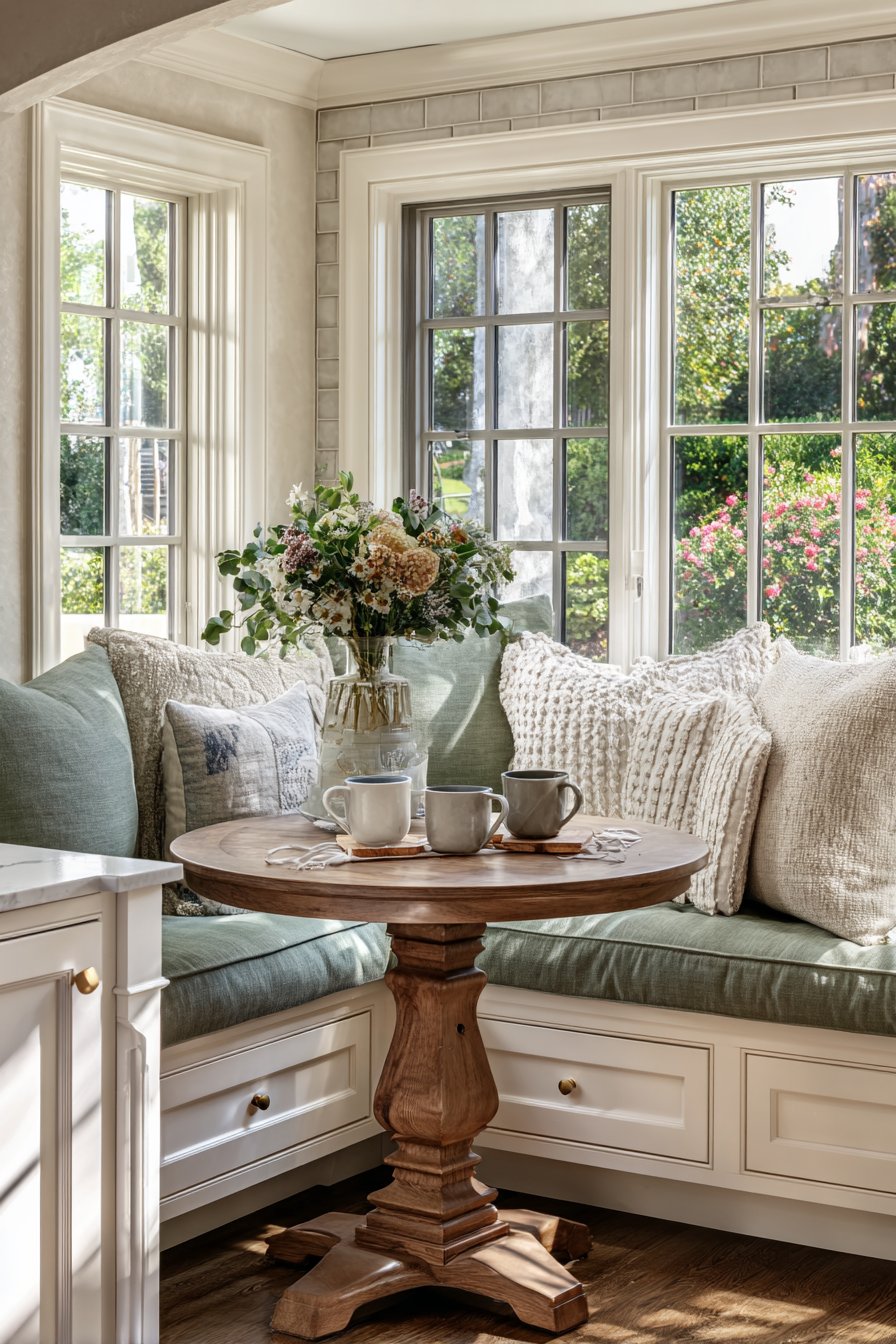
Large windows frame the breakfast nook, flooding the intimate space with natural daylight that changes quality throughout the day. The surrounding walls painted in warm cream create a soft backdrop that reflects and diffuses the natural light, while subway tile backsplash visible in the background connects the nook to the working kitchen area.
This design demonstrates how a cozy kitchen can incorporate distinct zones for different activities while maintaining visual cohesion. The balanced exposure captures the comfortable, lived-in quality of the space, highlighting how thoughtful furnishing choices transform a simple corner into a beloved gathering spot.
Key Design Tips:
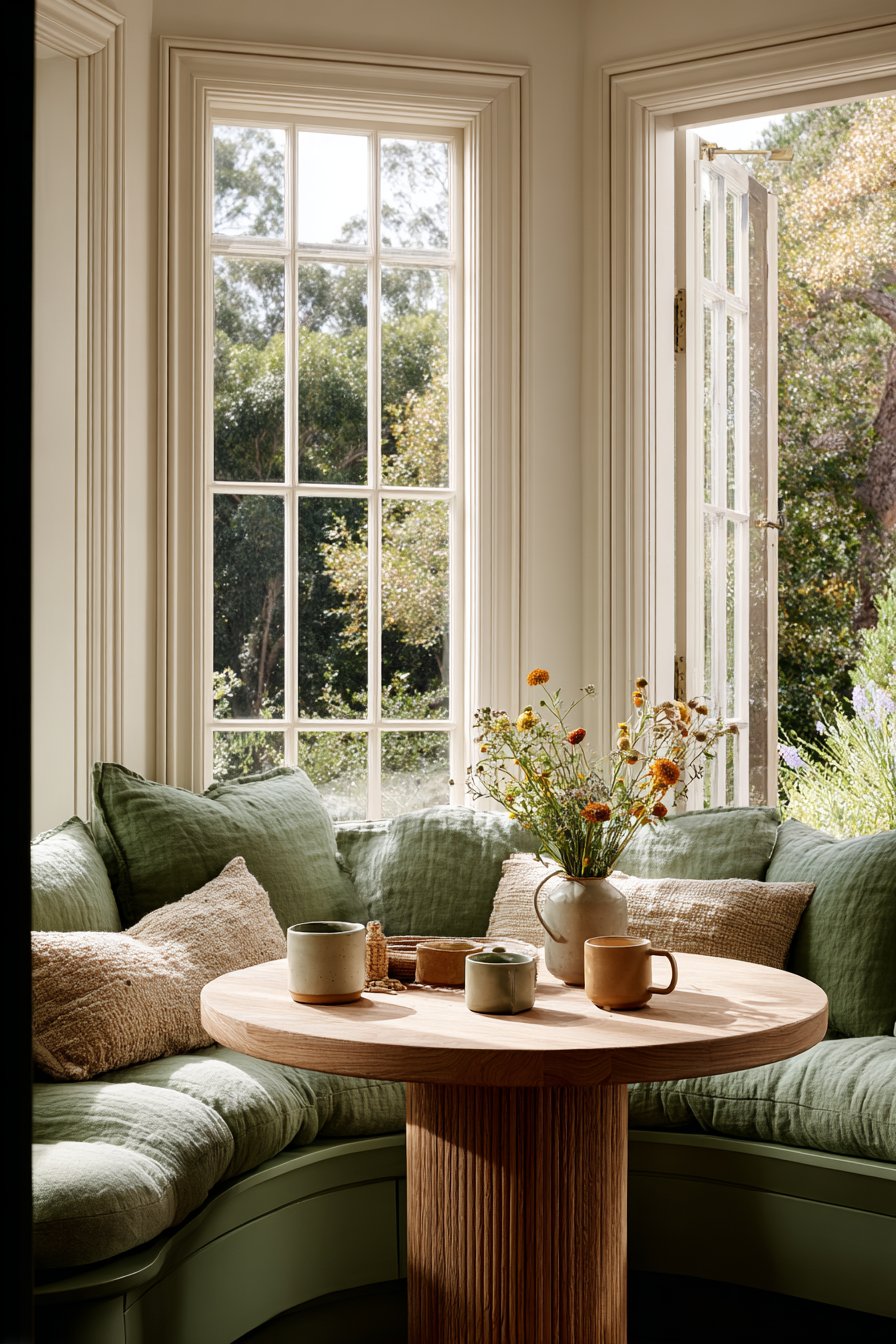
- Build in banquette seating with deep cushions to maximize comfort and create an intimate dining atmosphere
- Choose sage green or other nature-inspired hues for upholstery to bring calming, organic tones into the space
- Select a round pedestal table to encourage conversation and optimize space in compact nook areas
- Layer textured throw pillows for added comfort and visual interest
- Position the nook near large windows to take advantage of natural light throughout the day
- Add handmade ceramics and fresh flowers to personalize the space and create daily moments of beauty
- Paint surrounding walls in warm neutral tones that reflect and enhance natural lighting
3. Rustic Charm with Vintage-Inspired Character
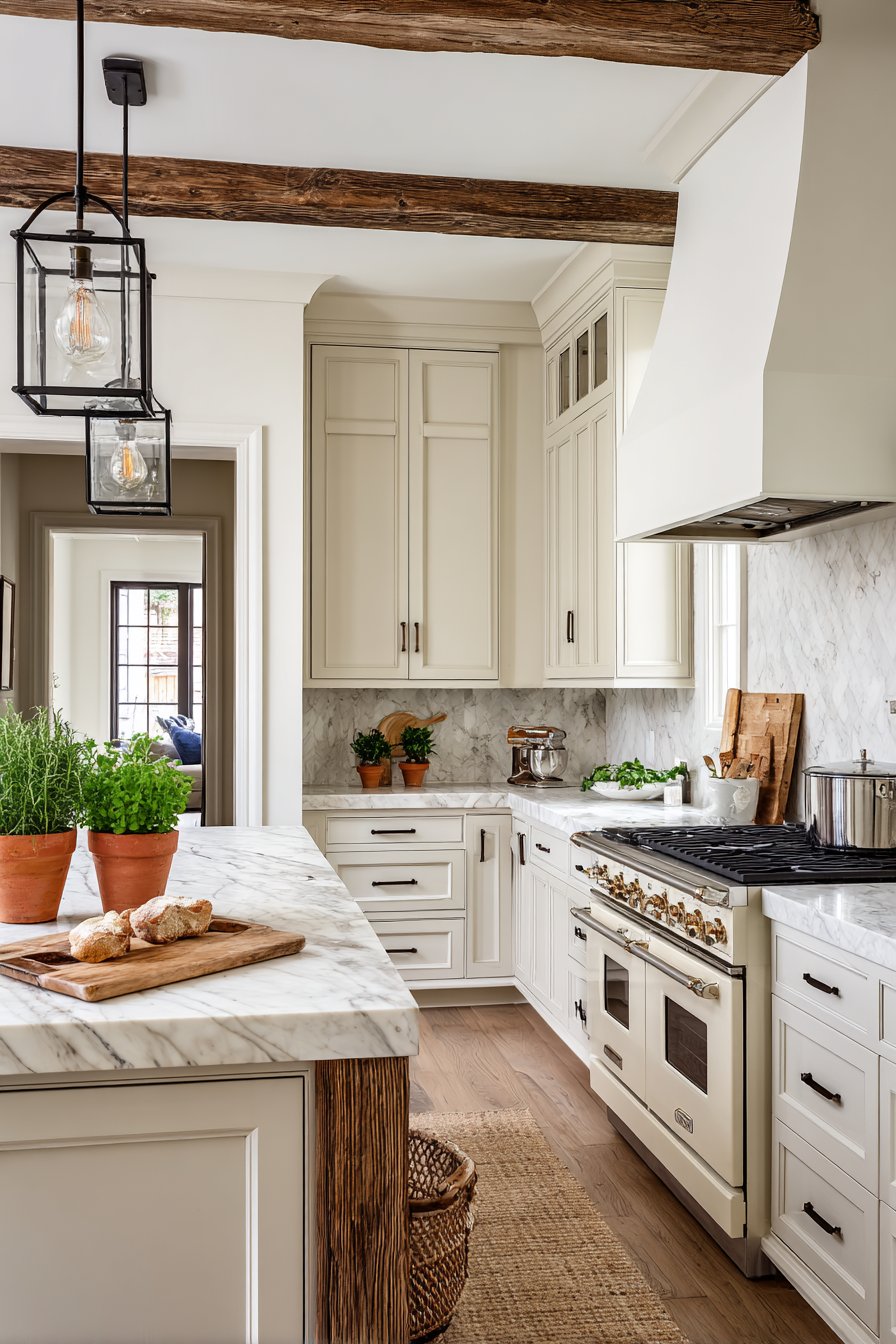
A cozy kitchen that embraces rustic charm begins with cream-colored shaker-style cabinetry that provides a classic, versatile foundation. The shaker style’s clean lines and recessed panel doors offer timeless appeal without unnecessary ornamentation, allowing other design elements to shine.
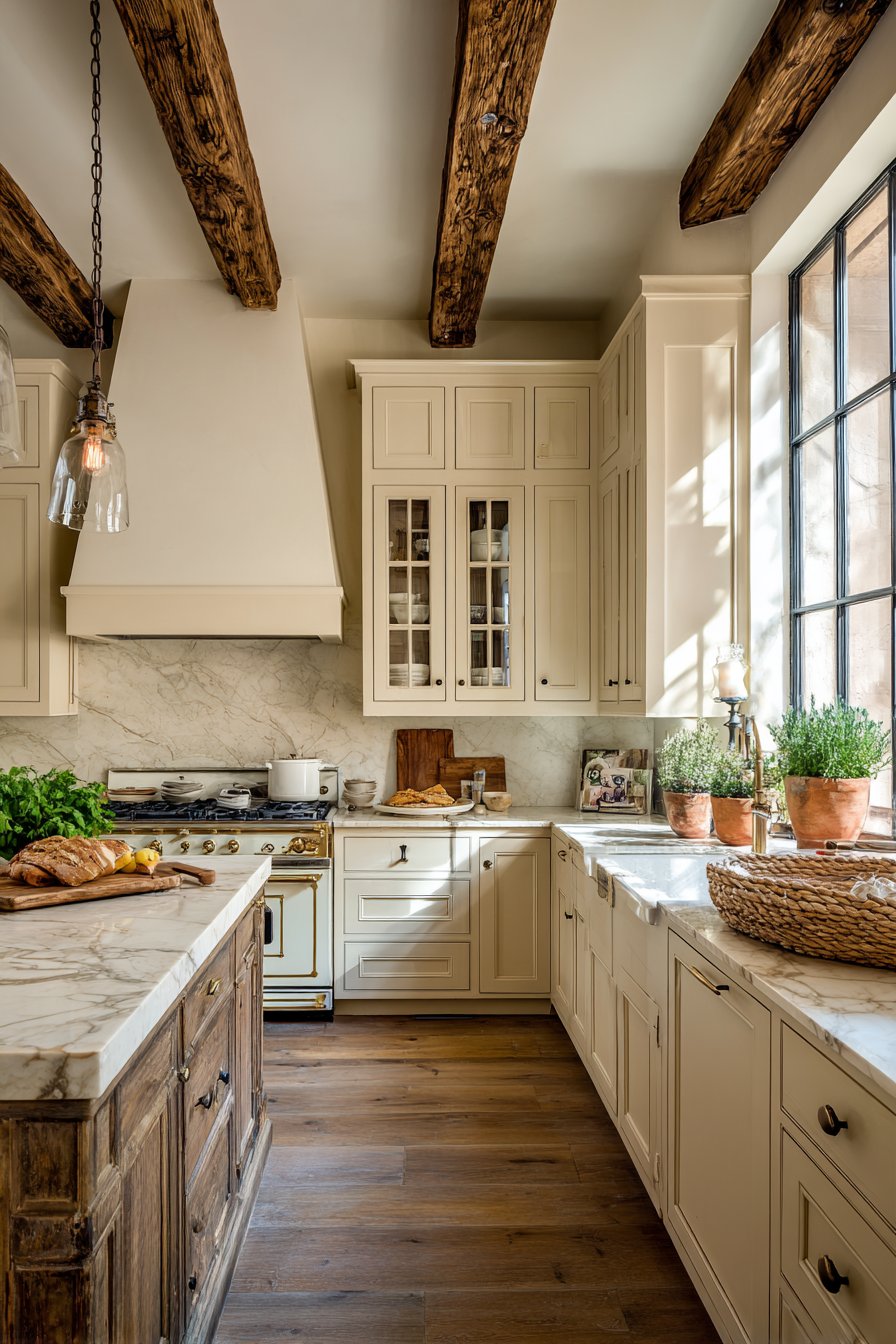
A vintage-inspired range serves as the kitchen’s focal point, its substantial presence and period details adding authenticity and gravitas to the space. Exposed wooden ceiling beams introduce architectural character and draw the eye upward, emphasizing the room’s vertical dimensions while adding warmth through their natural wood tones.
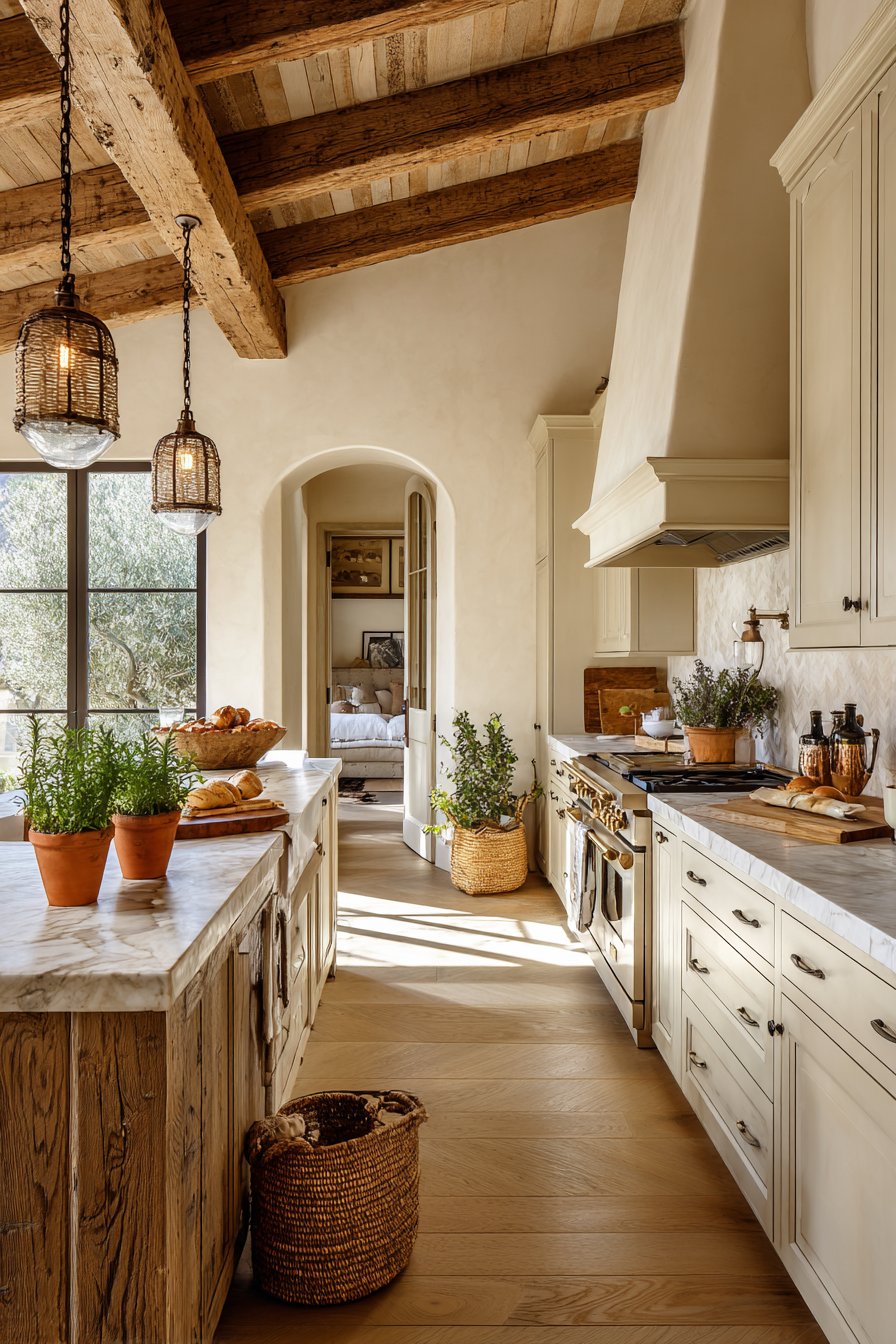
Pendant lights fitted with Edison bulbs hang above a reclaimed wood kitchen island, their visible filaments casting a warm, amber glow that enhances the cozy atmosphere. The Edison bulbs represent a perfect marriage of form and function, providing illumination while serving as decorative elements in their own right.
The reclaimed wood island brings history and character into the kitchen, its weathered surface and natural imperfections telling stories of previous lives and adding authenticity that new materials cannot replicate. Honed marble countertops with natural veining provide a sophisticated contrast to the rustic elements, their matte finish offering subtle elegance without the high shine that might feel too formal for a cozy kitchen.
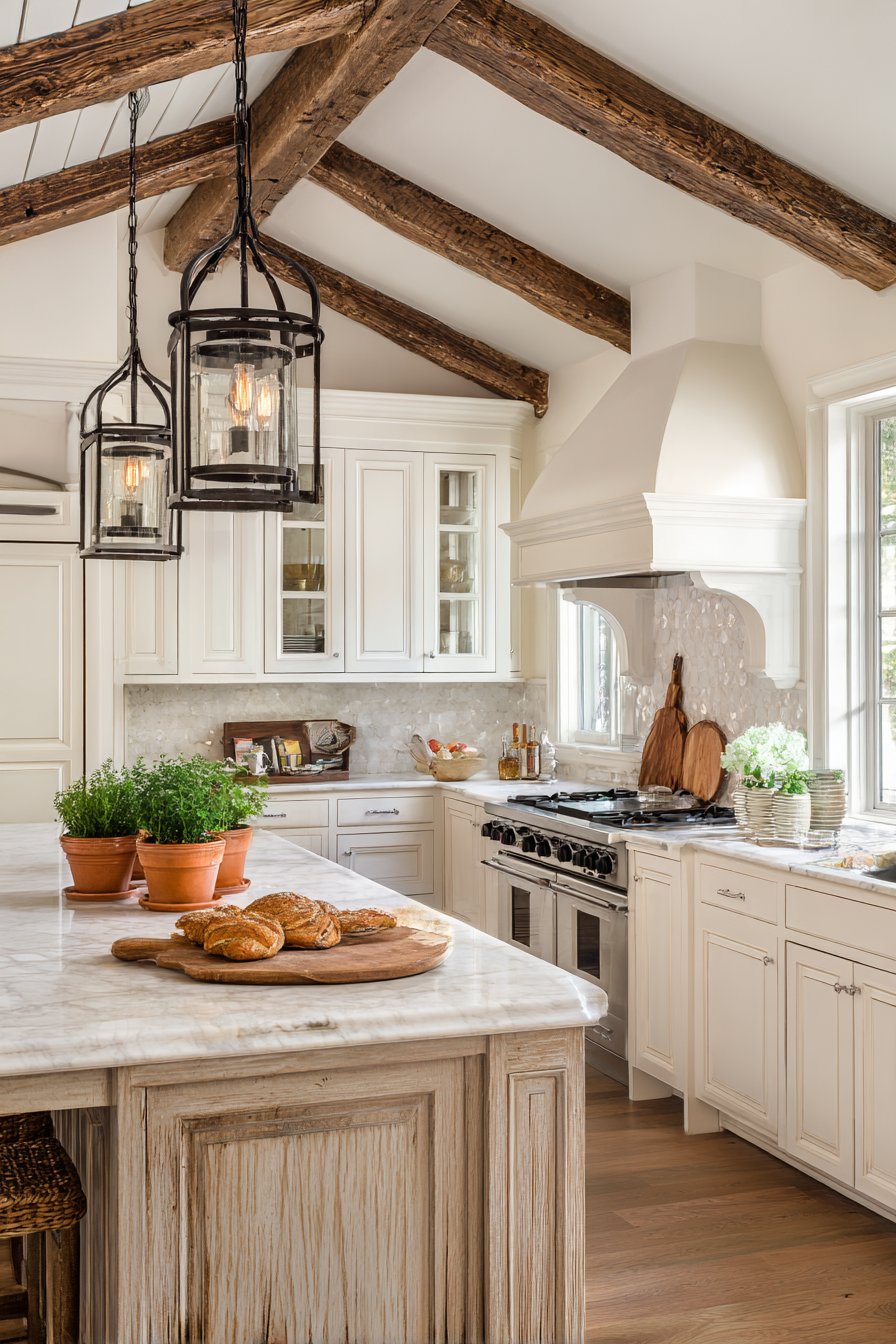
Thoughtful styling completes this kitchen’s warm ambiance. A woven basket sits on the counter beside a wooden cutting board and fresh herbs planted in terracotta pots; these elements reinforce the connection to natural materials and suggest a kitchen where cooking from scratch is a daily pleasure.
The terracotta pots add earthy color and texture while bringing the vitality of living plants into the space. Soft diffused lighting from a nearby window creates warm shadows that enhance the welcoming ambiance, highlighting the textural variety of materials throughout the kitchen and creating depth through the interplay of light and shadow.
Key Design Tips:
- Choose cream-colored shaker-style cabinets for a timeless foundation that works with various design styles
- Make a vintage-inspired range the focal point to add authenticity and visual weight to the kitchen
- Install exposed wooden ceiling beams to add architectural interest and enhance the sense of warmth
- Hang Edison bulb pendant lights above islands or dining areas for both functional and decorative lighting
- Select reclaimed wood for islands or countertops to introduce character and environmental consciousness
- Use honed marble countertops for sophisticated contrast with rustic elements
- Display fresh herbs in terracotta pots to bring life, fragrance, and connection to nature into the kitchen
- Position windows strategically to create soft, diffused natural lighting that enhances warm material tones
4. Dedicated Coffee Corner Sanctuary
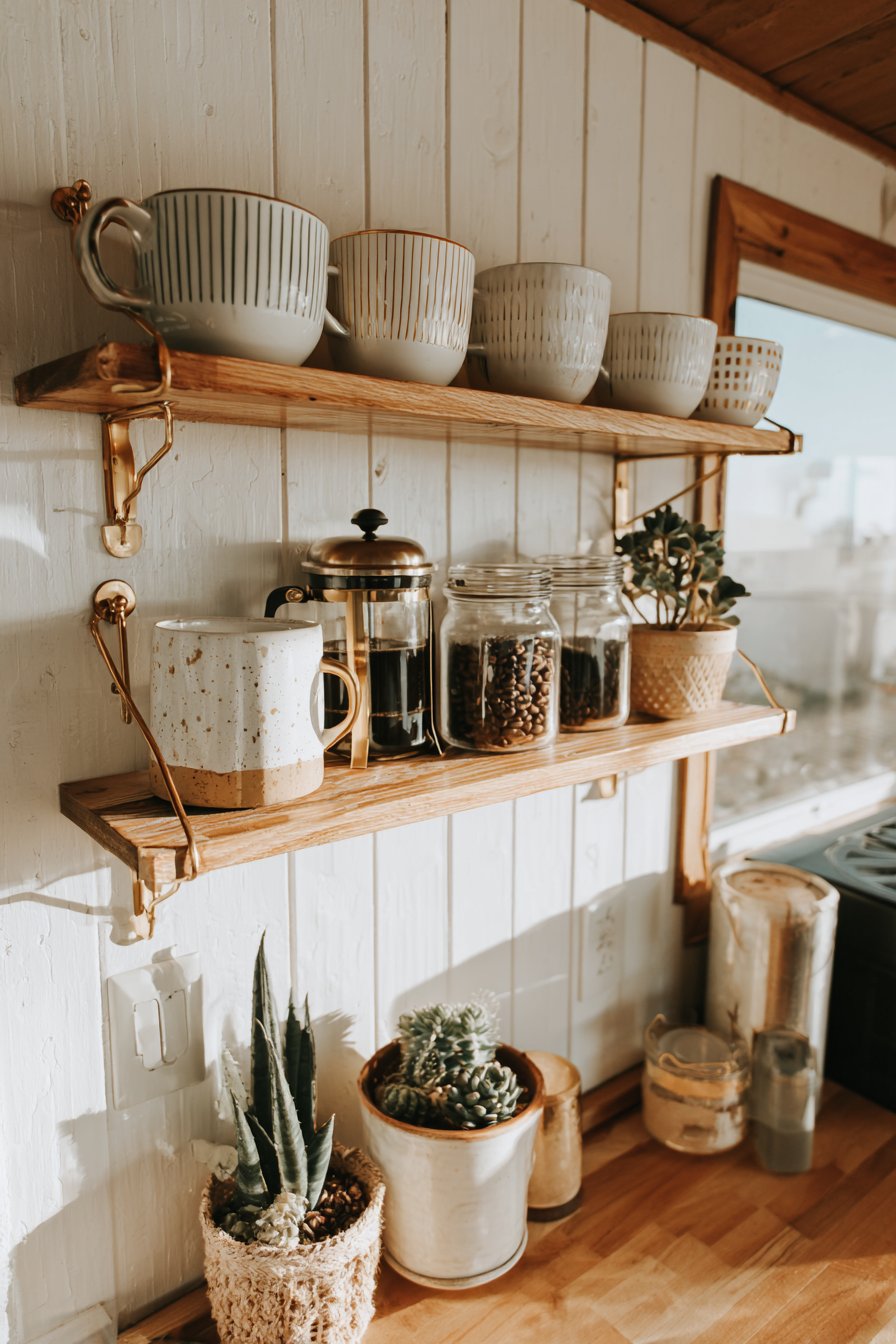
The compact coffee station represents a specialized approach to cozy kitchen design, creating a dedicated zone for one of life’s most cherished daily rituals. Open shelving crafted from natural oak wood provides both storage and display space, the wood’s grain patterns and warm tones adding organic beauty to this intimate corner.
Ceramic mugs hang from brass hooks beneath the shelves, turning functional storage into an attractive display that keeps favorite vessels within easy reach. The brass hooks echo the warm metallic tones found elsewhere in successful cozy kitchen designs, creating subtle visual connections throughout the space.
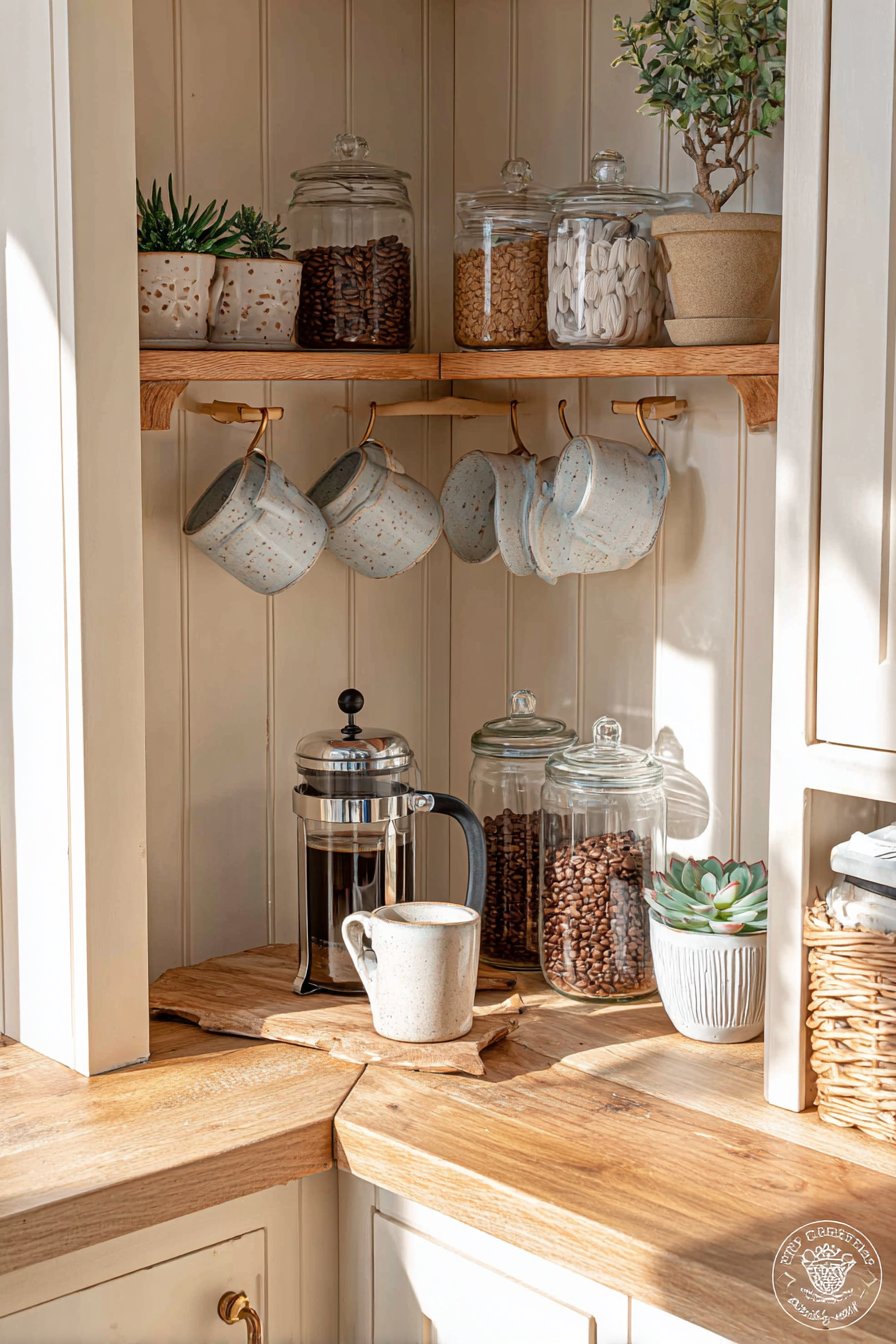
The shelves display a carefully curated collection of coffee essentials: a French press, glass canisters filled with coffee beans, and small potted succulents. This arrangement demonstrates how functional items become decorative when thoughtfully organized and displayed.
The glass canisters allow the rich brown tones of coffee beans to show through, adding color and visual interest while keeping ingredients fresh and accessible. The succulents introduce living greenery that requires minimal maintenance, their architectural forms providing textural contrast to the smooth ceramics and glass containers.
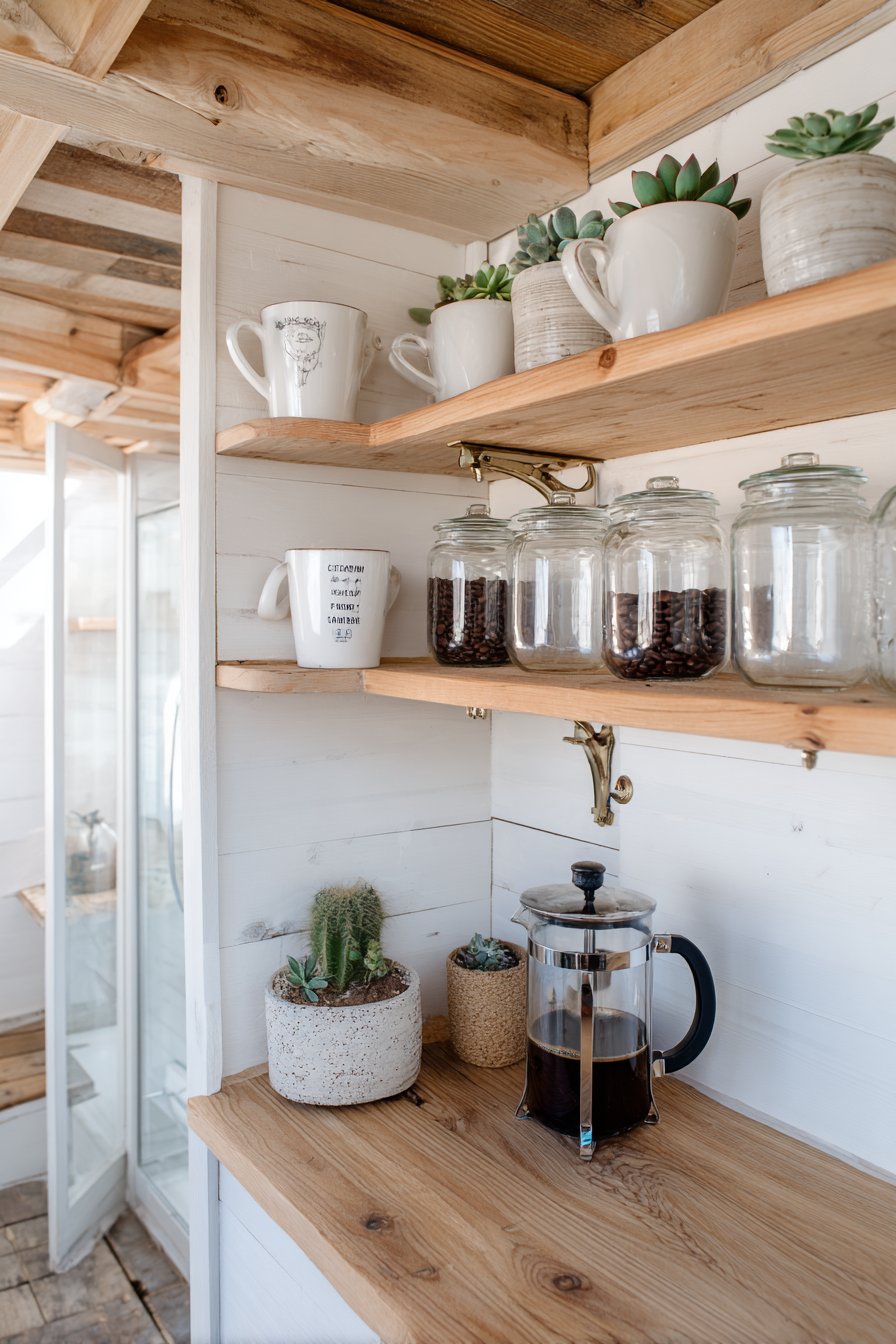
White beadboard paneling forms the backdrop for this coffee corner, adding cottage charm and textural dimension to the wall surface. The vertical lines of the beadboard draw the eye upward while contributing to the overall sense of coziness through their traditional appeal.
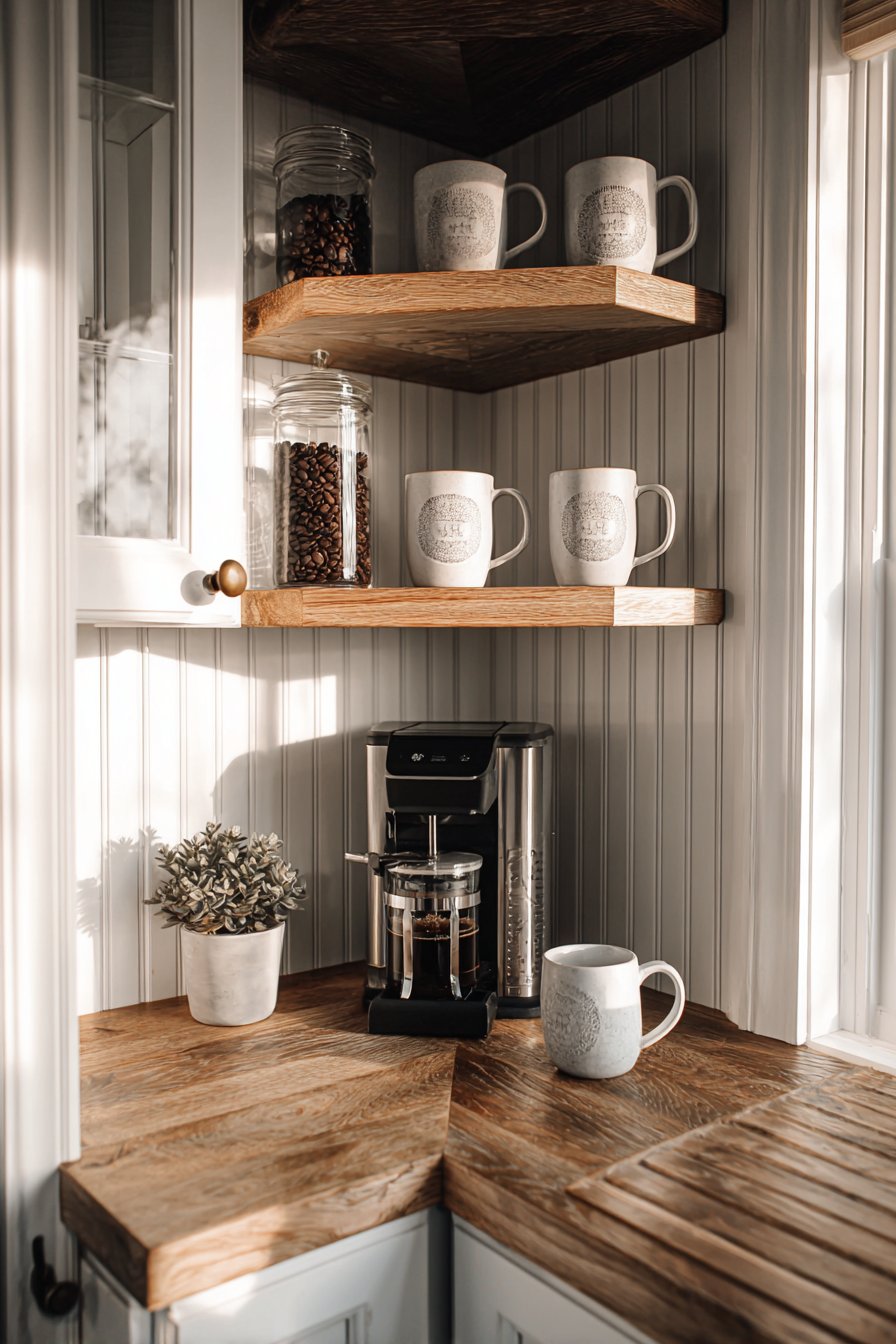
A small wooden countertop workspace provides adequate room for morning coffee preparation without requiring extensive square footage. Detail-focused composition with natural morning light streaming from the side highlights the textured materials and thoughtful organization, demonstrating how even the smallest corners of a cozy kitchen can be transformed into functional, beautiful spaces that enhance daily living.
Key Design Tips:
- Designate a specific corner or wall for coffee preparation to streamline morning routines
- Install open oak shelving to provide accessible storage while displaying coffee essentials attractively
- Hang ceramic mugs from brass hooks to combine practical storage with decorative display
- Use glass canisters to store coffee beans, allowing their rich color to contribute to the decor
- Add small potted succulents or herbs to bring living elements into the coffee station
- Install white beadboard paneling as a backdrop to add cottage charm and textural interest
- Ensure adequate countertop workspace for preparation without overwhelming the compact area
- Position the station to receive natural morning light for the most pleasant coffee-making experience
5. Family-Centered Farmhouse Table Island
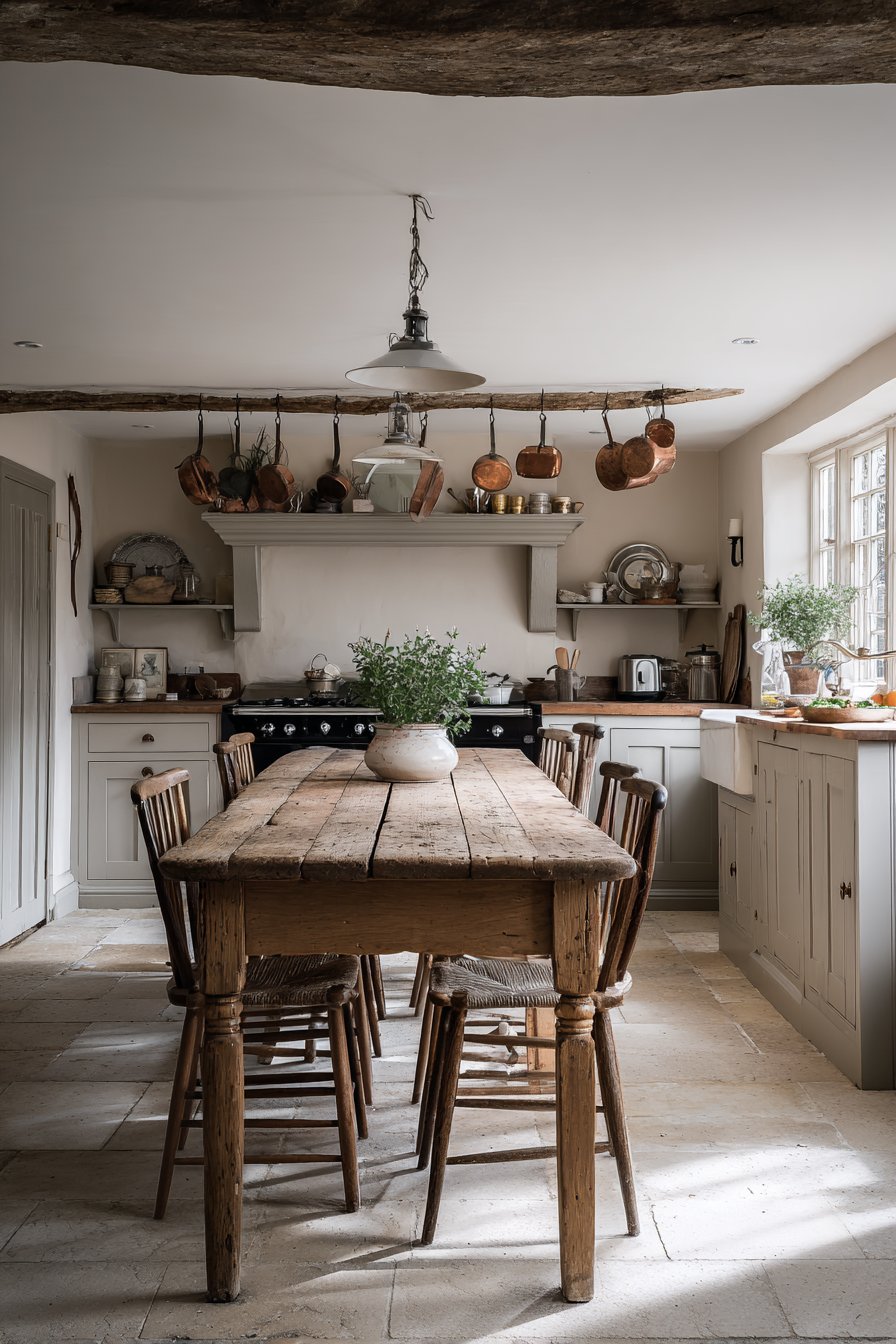
A large farmhouse table serving as the central island revolutionizes the traditional kitchen layout, transforming the space into a truly family-oriented gathering place. Constructed from distressed pine with natural wear patterns and visible wood grain, this substantial piece brings both functionality and character to the heart of the cozy kitchen.
The distressed finish celebrates imperfection, its weathered appearance suggesting years of family meals and shared experiences. The visible wood grain adds natural beauty and ensures that each table is unique, with its own distinctive pattern and personality.
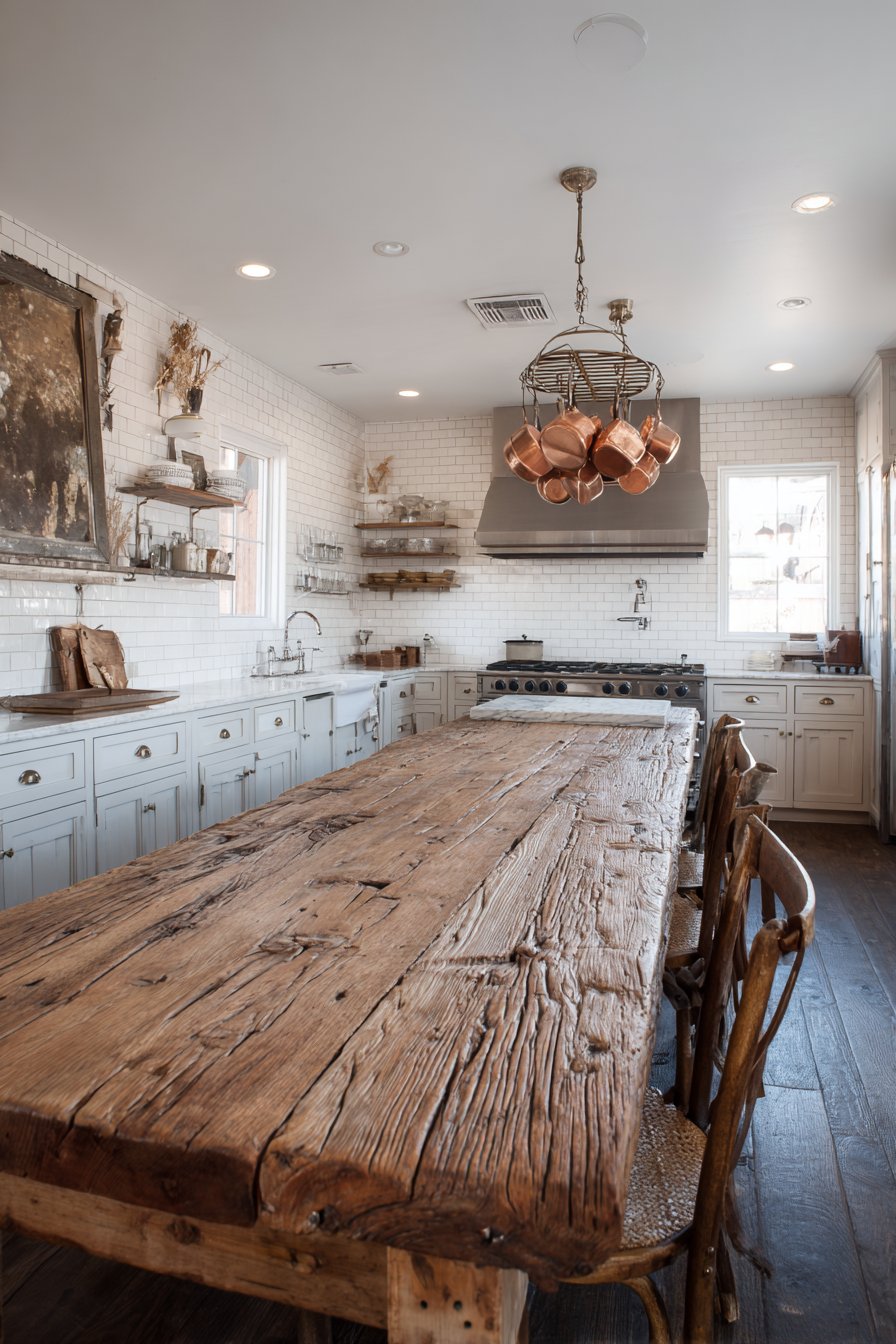
Mismatched vintage wooden chairs surround the table, reinforcing the eclectic, collected-over-time aesthetic that defines many cozy kitchens. Rather than striving for uniformity, this approach embraces diversity, with each chair contributing its own character and story to the overall composition.
The varied styles and finishes create visual interest while suggesting a home where furnishings have been gathered gradually, chosen for character rather than matching sets. White subway tiles extend to the ceiling behind the range, their classic pattern and clean appearance providing visual relief and balance to the rustic wooden elements.
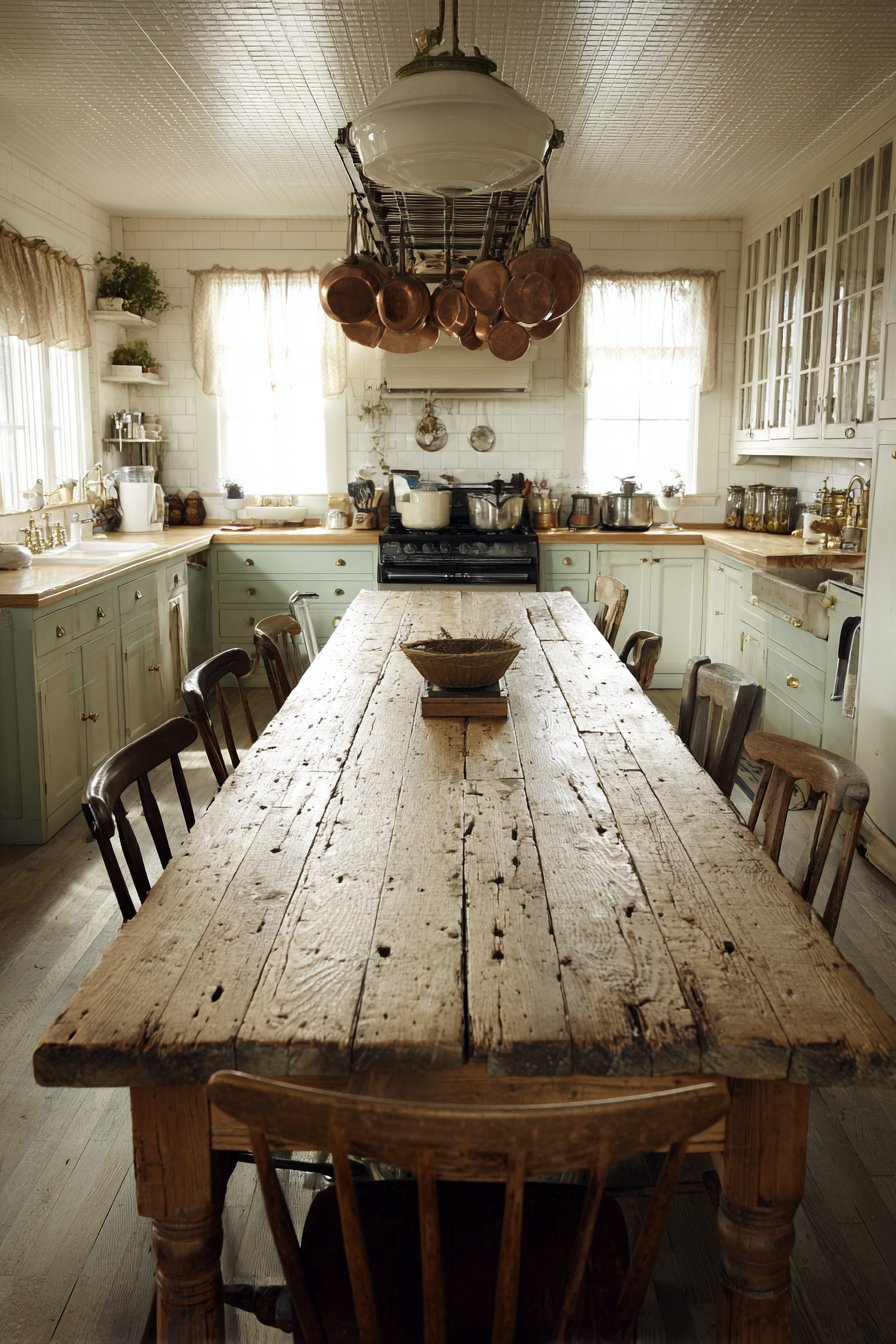
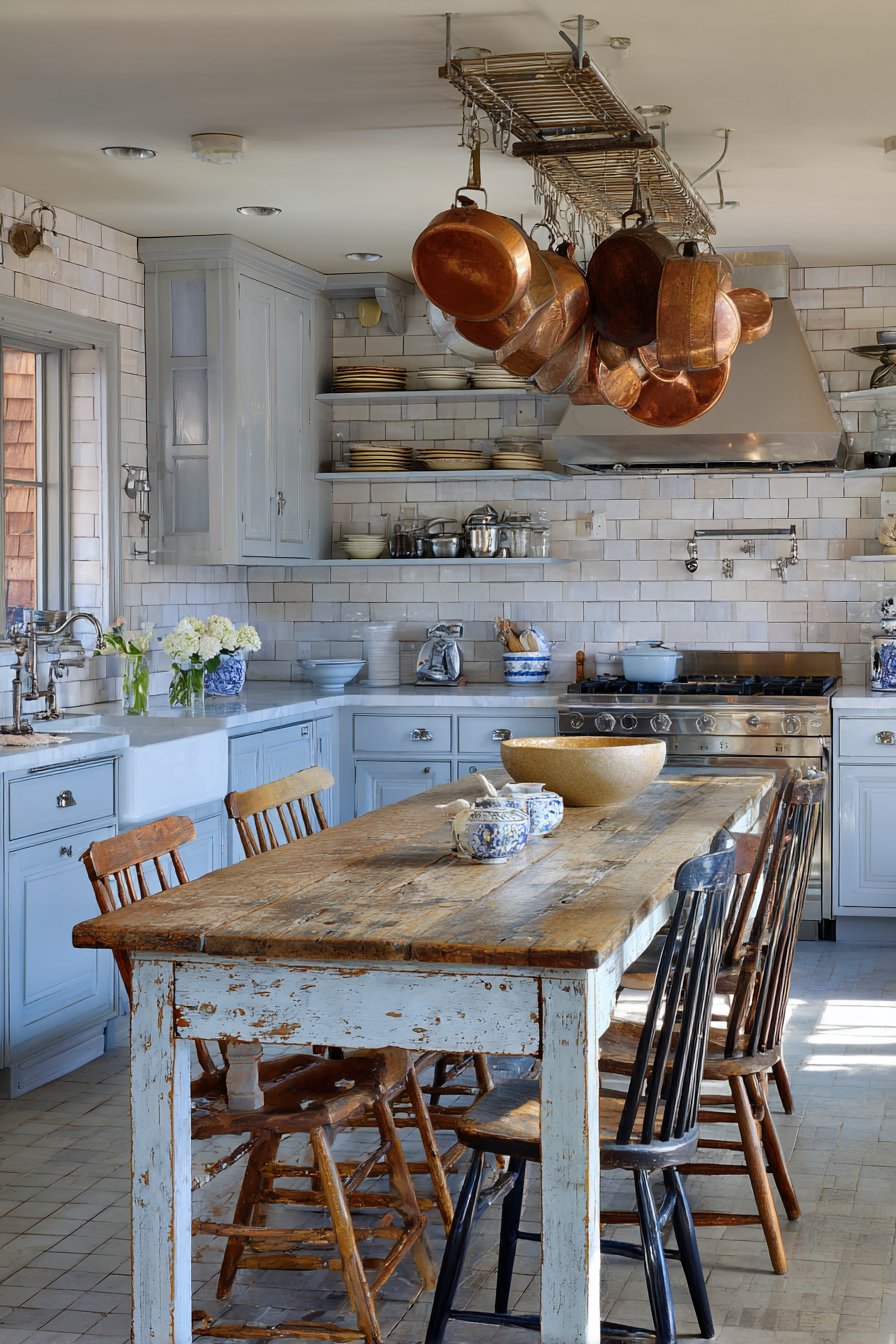
Lower cabinets feature a soft blue-grey paint finish with simple cup pulls, the muted color adding sophistication without coldness. This blue-grey hue bridges the gap between warm and cool tones, complementing the warm wood while introducing subtle color variation.
Copper cookware hangs from a ceiling-mounted pot rack, the copper’s warm metallic sheen adding another layer of color and catching and reflecting light throughout the space. The wide-angle composition captures the full layout with soft natural lighting that emphasizes the welcoming, family-oriented atmosphere, demonstrating how a large farmhouse table creates a kitchen that invites gathering, homework sessions, and long conversations as much as cooking and meal preparation.
Key Design Tips:
- Use a large farmhouse table as your kitchen island to create a multi-functional family gathering space
- Choose distressed pine or similar woods that show natural wear patterns and authentic character
- Embrace mismatched vintage chairs to add personality and avoid overly coordinated appearance
- Extend subway tile to the ceiling behind major appliances for classic visual appeal
- Paint lower cabinets in soft blue-grey or similar muted tones to add color while maintaining warmth
- Install a ceiling-mounted pot rack to display copper cookware as functional art
- Select simple cup pulls for cabinet hardware to maintain understated elegance
- Ensure adequate clearance around the table-island to accommodate chair movement and traffic flow
6. Peaceful Reading Nook Integration
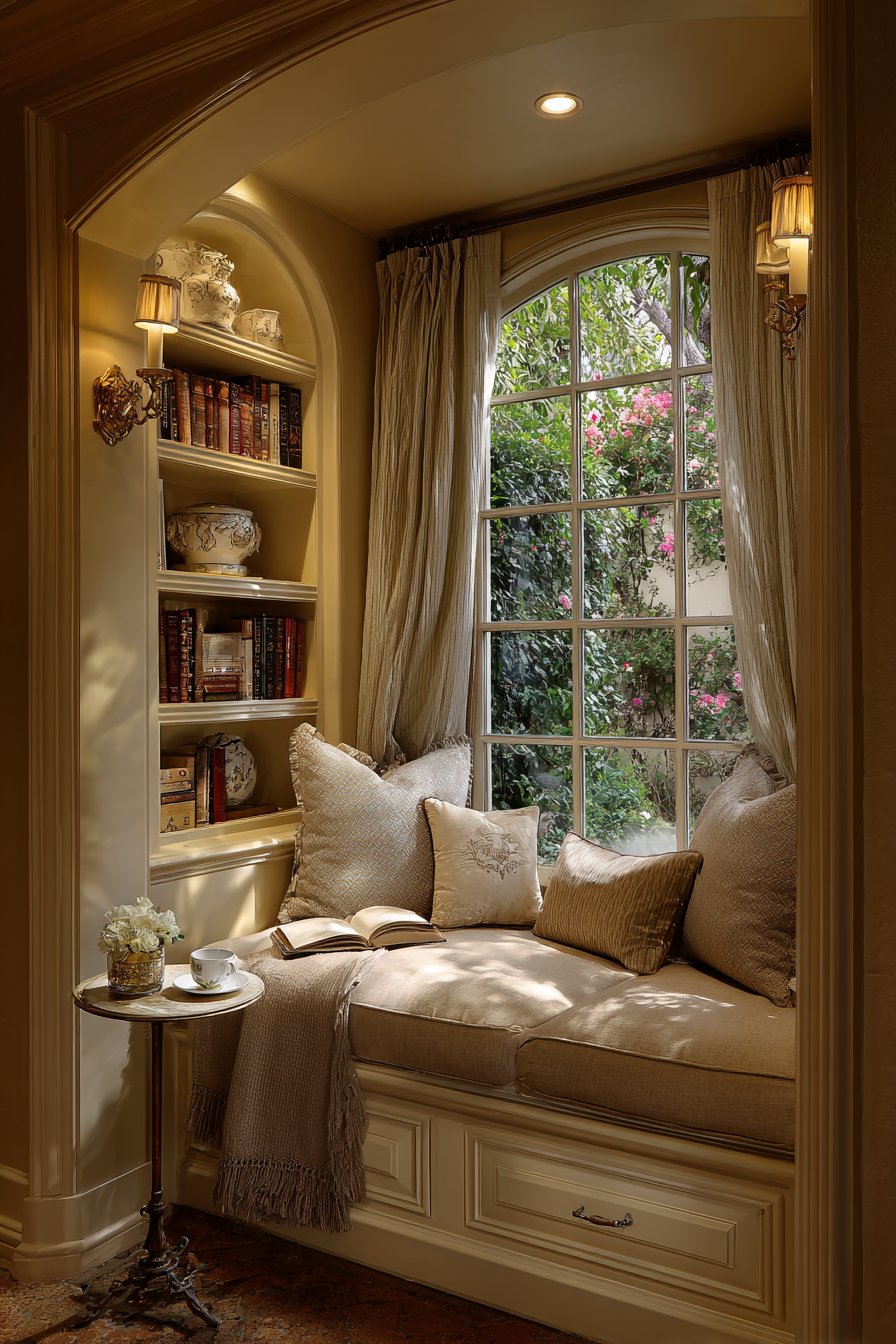
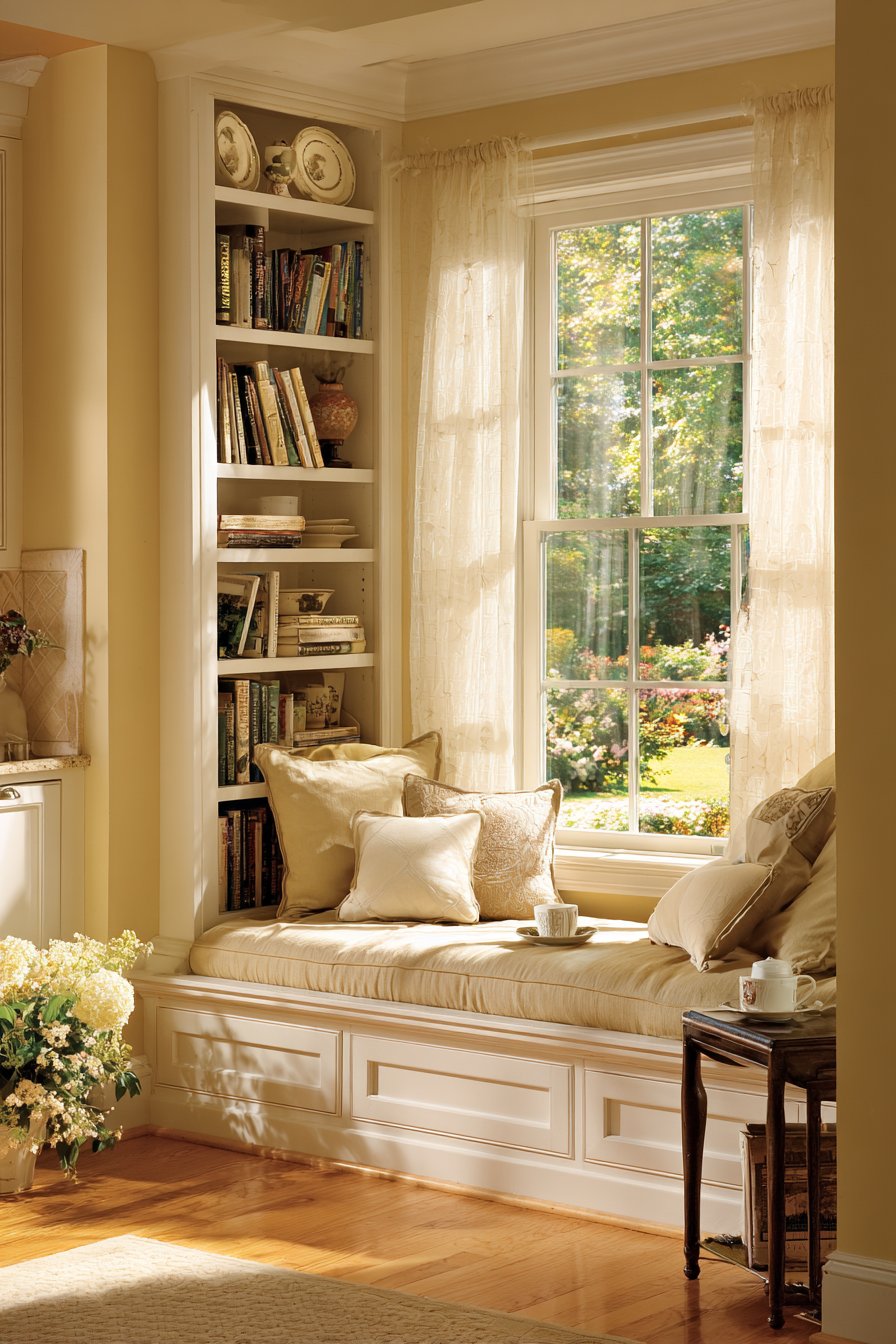
The integration of a reading nook into the kitchen space represents a sophisticated understanding of how cozy kitchens can support multiple activities beyond cooking and dining. Tucked into an alcove beside the pantry, this cushioned window seat with linen upholstery in warm oatmeal tones creates a peaceful retreat within the busier kitchen environment.
The oatmeal color provides neutral warmth that complements rather than competes with other kitchen elements, while the linen fabric’s natural texture adds tactile appeal. Layered throw pillows in complementary tones invite settling in with a cookbook or novel, their soft forms providing comfort and visual richness.
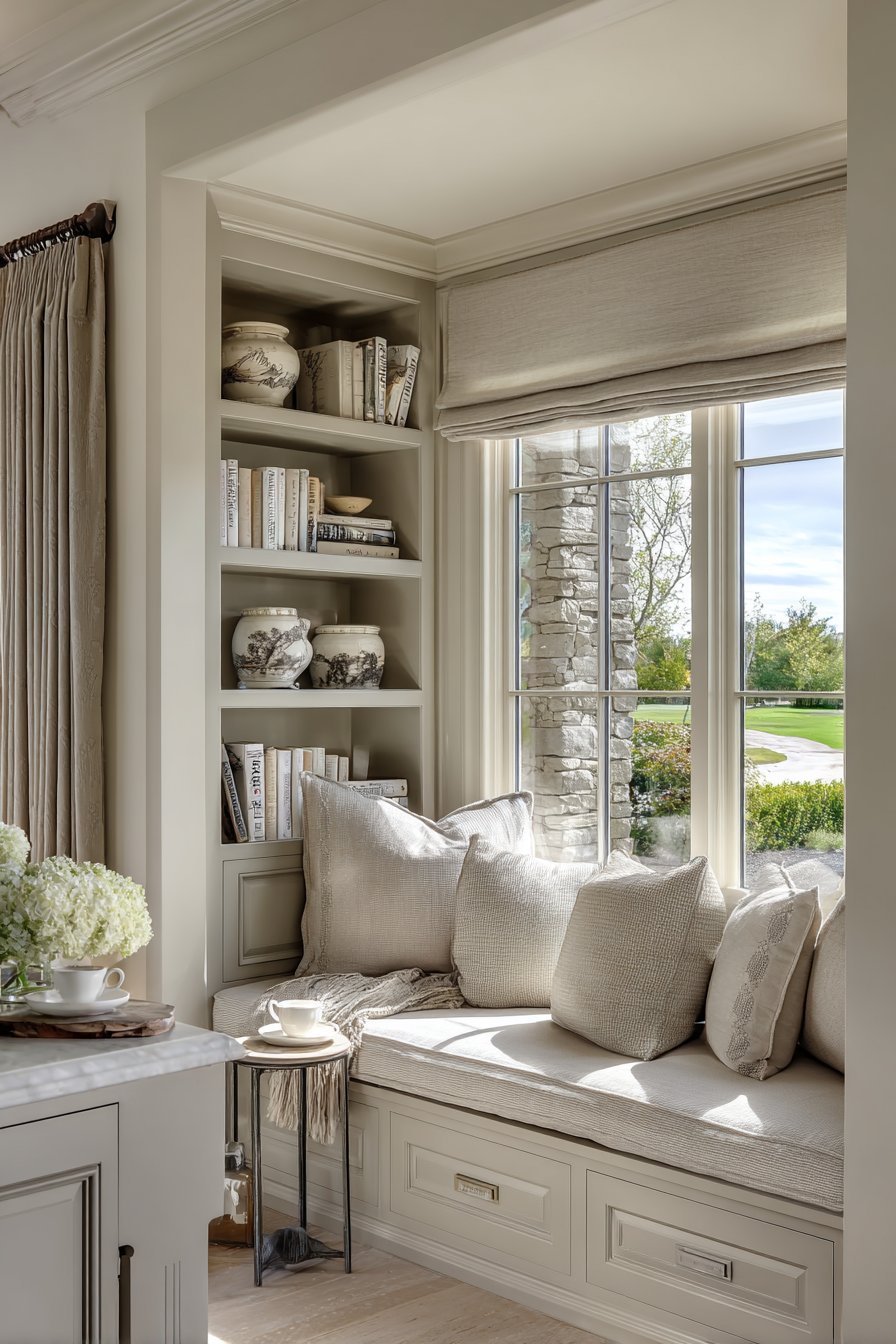
Built-in shelving on either side of the window seat holds cookbooks and decorative ceramic pieces, transforming the nook into a mini library that celebrates culinary knowledge and artisan craftsmanship. The built-in shelving makes efficient use of vertical space while maintaining the custom, integrated appearance that distinguishes thoughtfully designed cozy kitchens from merely functional ones.
The cookbooks become part of the decor, their varied spines adding color and suggesting a household where cooking is approached as both art and science. Decorative ceramic pieces interspersed among the books provide visual breathing room and showcase handcrafted beauty.
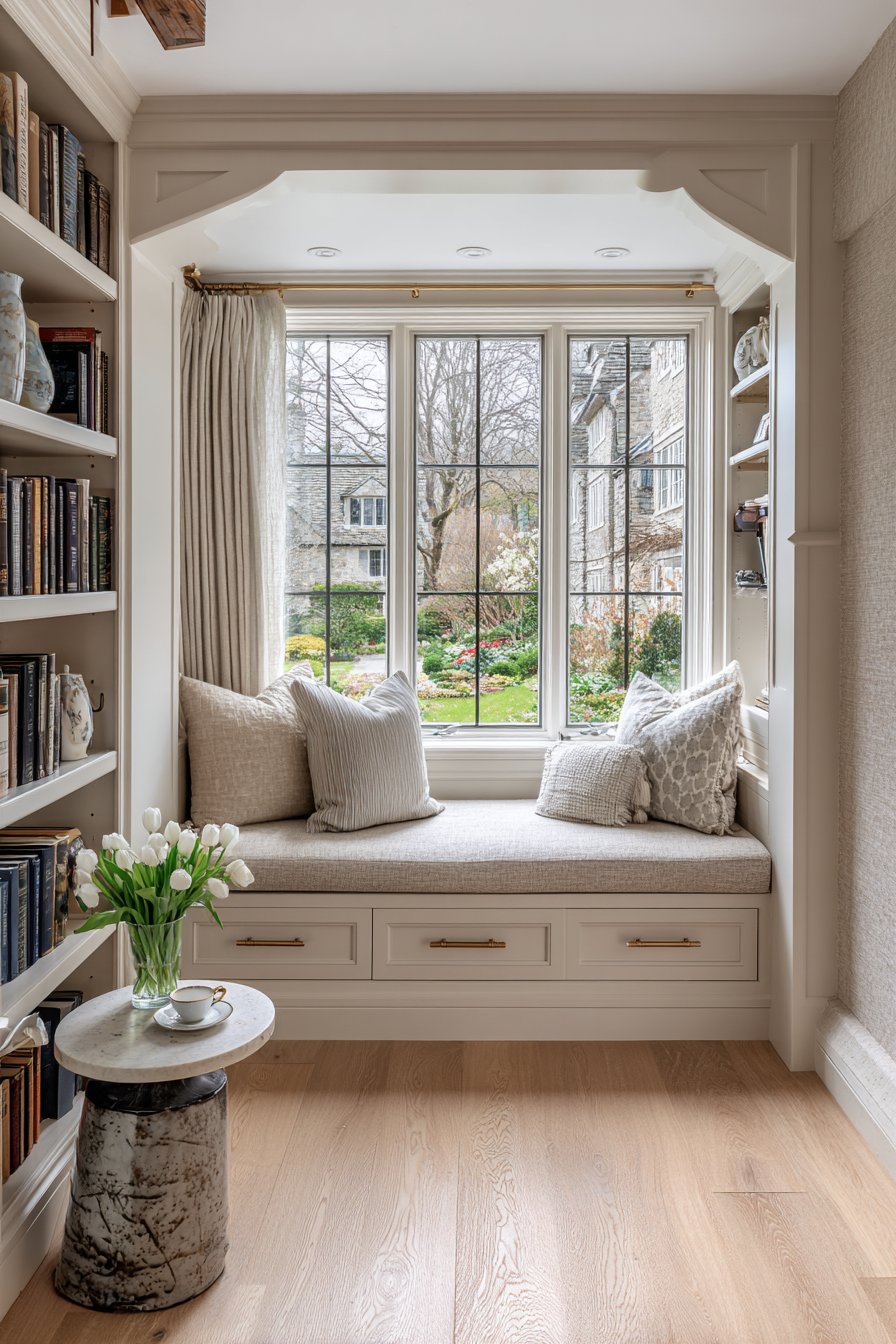
The window overlooks a garden view, with sheer curtains allowing filtered natural light to bathe the nook in gentle illumination. This connection to outdoor greenery enhances the sense of tranquility, bringing nature’s calming influence into the kitchen space.
A small side table holds a teacup and reading glasses, these props suggesting the nook’s intended use and adding lived-in authenticity to the composition. Professional composition with golden hour lighting captures the peaceful retreat quality of this cozy kitchen space, highlighting the soft fabric textures and lived-in comfort that make this more than just a kitchen—it’s a true home sanctuary.
Key Design Tips:
- Identify alcoves or underutilized corners that can be transformed into reading or relaxation nooks
- Install a cushioned window seat with linen or cotton upholstery in warm neutral tones
- Add built-in shelving on either side to store cookbooks and display decorative objects
- Layer throw pillows in complementary colors and textures for comfort and visual interest
- Choose sheer curtains that filter natural light softly while maintaining garden or outdoor views
- Include a small side table for beverages, reading materials, and personal items
- Position the nook to receive gentle, indirect natural light throughout the day
- Ensure the nook feels connected to yet distinct from the working kitchen areas
7. Textured Brick Accent Wall Drama
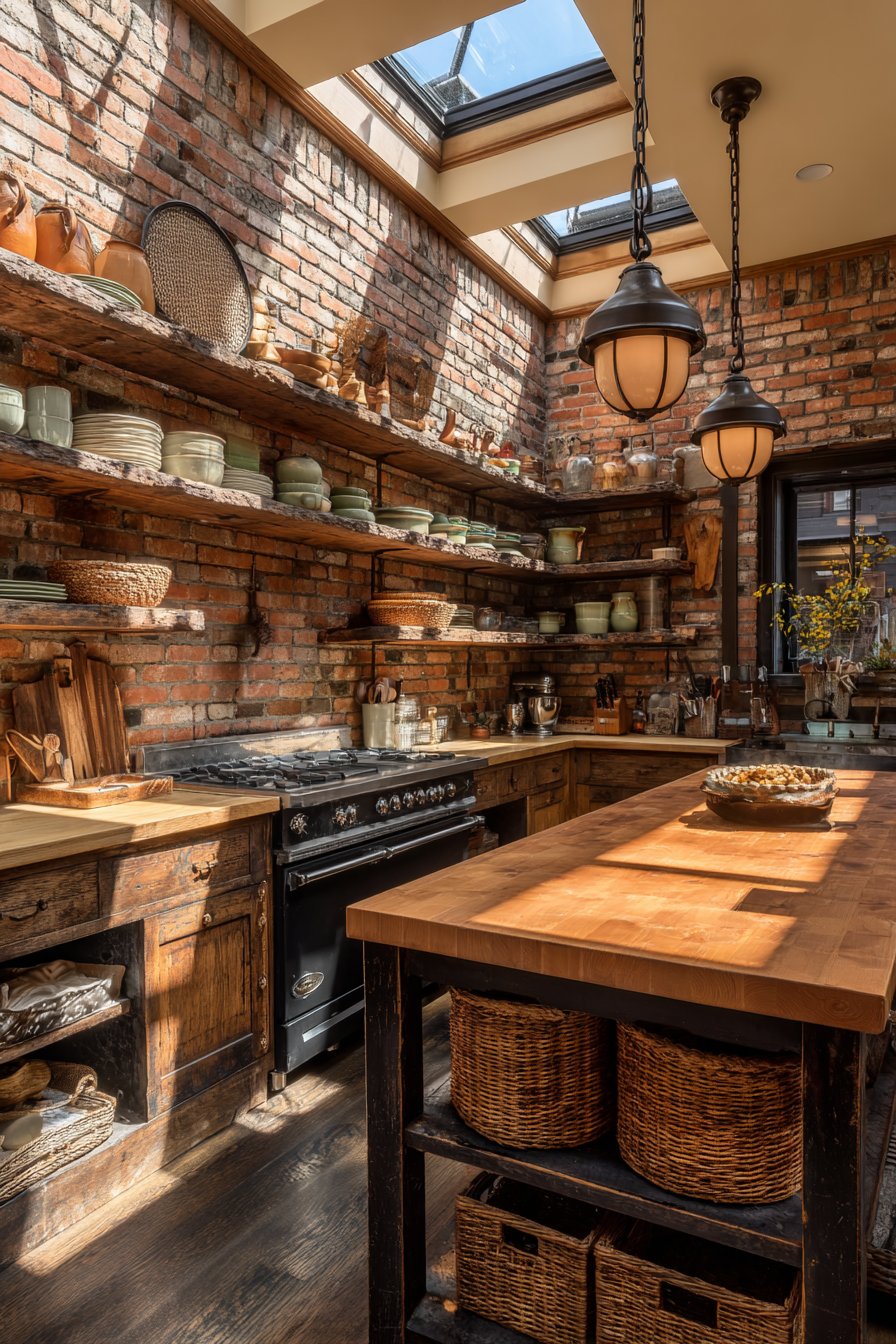
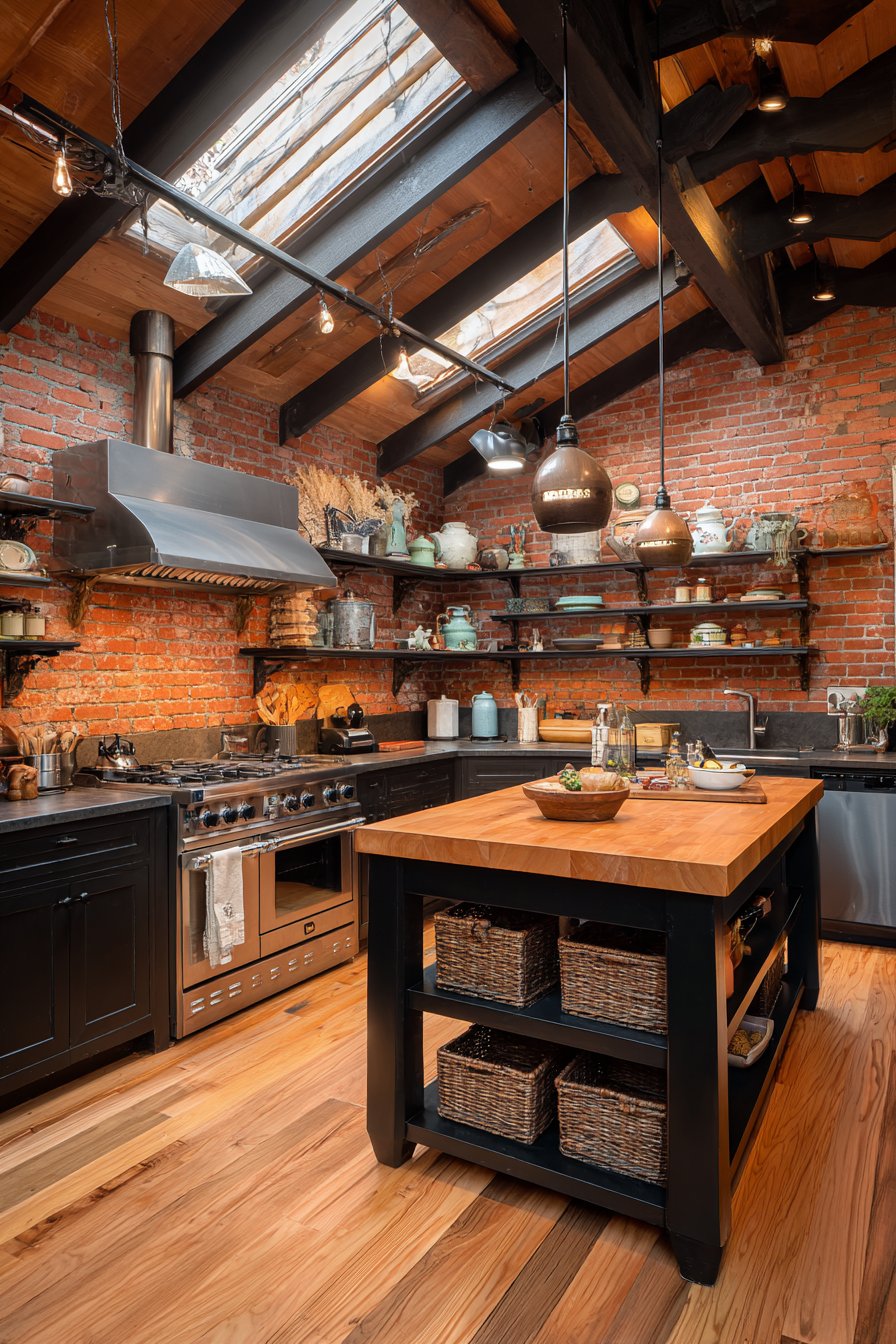
A brick accent wall in warm terracotta tones creates immediate visual impact and textural richness in a cozy kitchen, particularly when surrounding a professional-style range. The brick’s earthy color palette brings warmth and depth, while its dimensional surface catches and reflects light in constantly changing patterns throughout the day.
The terracotta hue evokes Mediterranean warmth and rustic European kitchen traditions, creating a sense of timelessness and connection to culinary heritage. The professional-style range positioned against this dramatic backdrop becomes a natural focal point, its substantial presence and serious cooking capabilities suggesting a kitchen where culinary creativity flourishes.
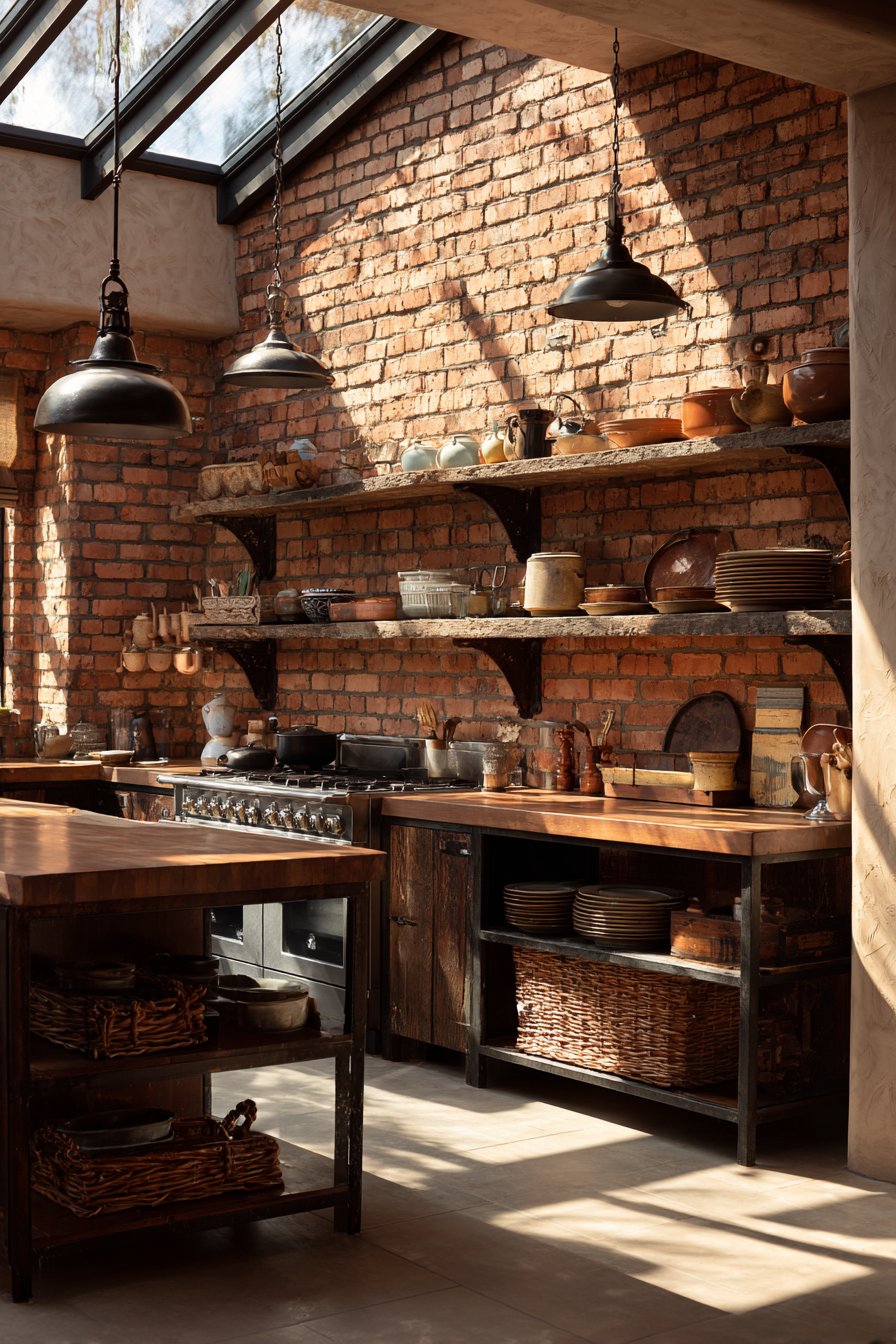
Floating shelves made from reclaimed barnwood display vintage enamelware and glass storage containers, the aged wood’s weathered character complementing the brick wall’s rustic appeal. The reclaimed barnwood introduces additional texture and organic warmth while providing practical storage that feels more like curated display.
Vintage enamelware with its characteristic patina and wear patterns adds authenticity and nostalgic charm, while glass storage containers reveal their colorful contents—dried beans, pasta, grains—turning pantry staples into decorative elements. The kitchen island features a butcher block top with dramatic waterfall edges, where the thick wooden surface cascades down the sides, creating visual continuity and showcasing the material’s beauty from multiple angles.
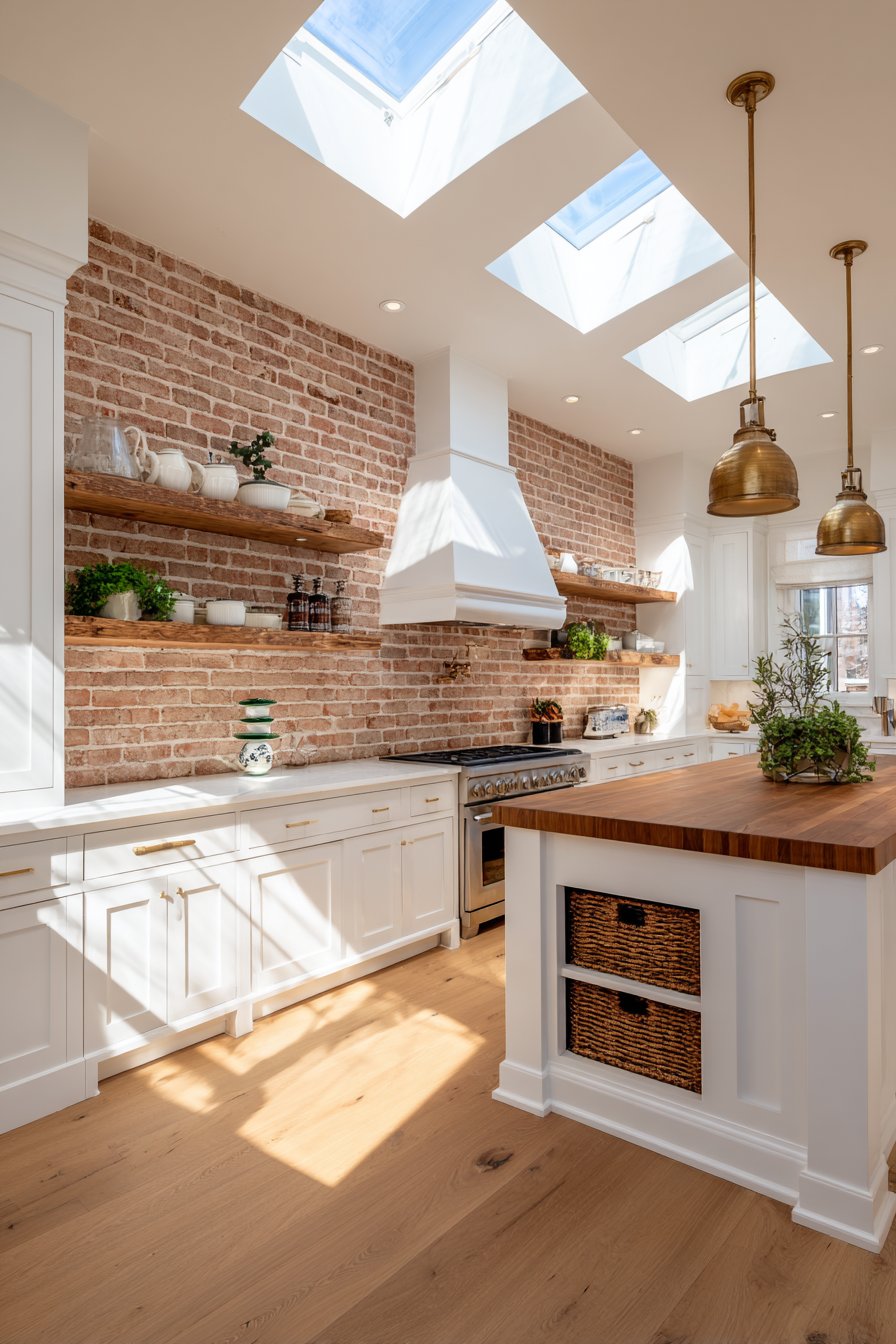
Lower island storage incorporates woven baskets that add yet another texture to the richly layered space while providing practical storage for produce, linens, or kitchen tools. Pendant lights with aged bronze finishes hang above the island, their warm metallic tones harmonizing with the terracotta brick and reclaimed wood.
Natural light pours in from skylights, creating dynamic shadows across the textured brick surface and illuminating the space from above. This top-down lighting approach reduces shadows in work areas while highlighting the dimensional quality of materials throughout the kitchen, demonstrating how thoughtful lighting design enhances the cozy atmosphere while maintaining excellent functionality.
Key Design Tips:
- Install a brick accent wall in warm terracotta tones to create dramatic focal point and textural interest
- Position your range or cooking area against the brick wall to emphasize it as the kitchen’s heart
- Use reclaimed barnwood for floating shelves to add character while providing display storage
- Display vintage enamelware and glass storage containers to combine function with decorative appeal
- Choose a butcher block island top with waterfall edges for dramatic visual impact
- Incorporate woven baskets in island storage to add natural texture and flexible organization
- Install pendant lights with aged bronze or similar warm metal finishes
- Add skylights where possible to bring natural light from above, creating dynamic shadows and reducing the need for artificial lighting during daylight hours
8. Integrated Kitchen Workspace Planning Station
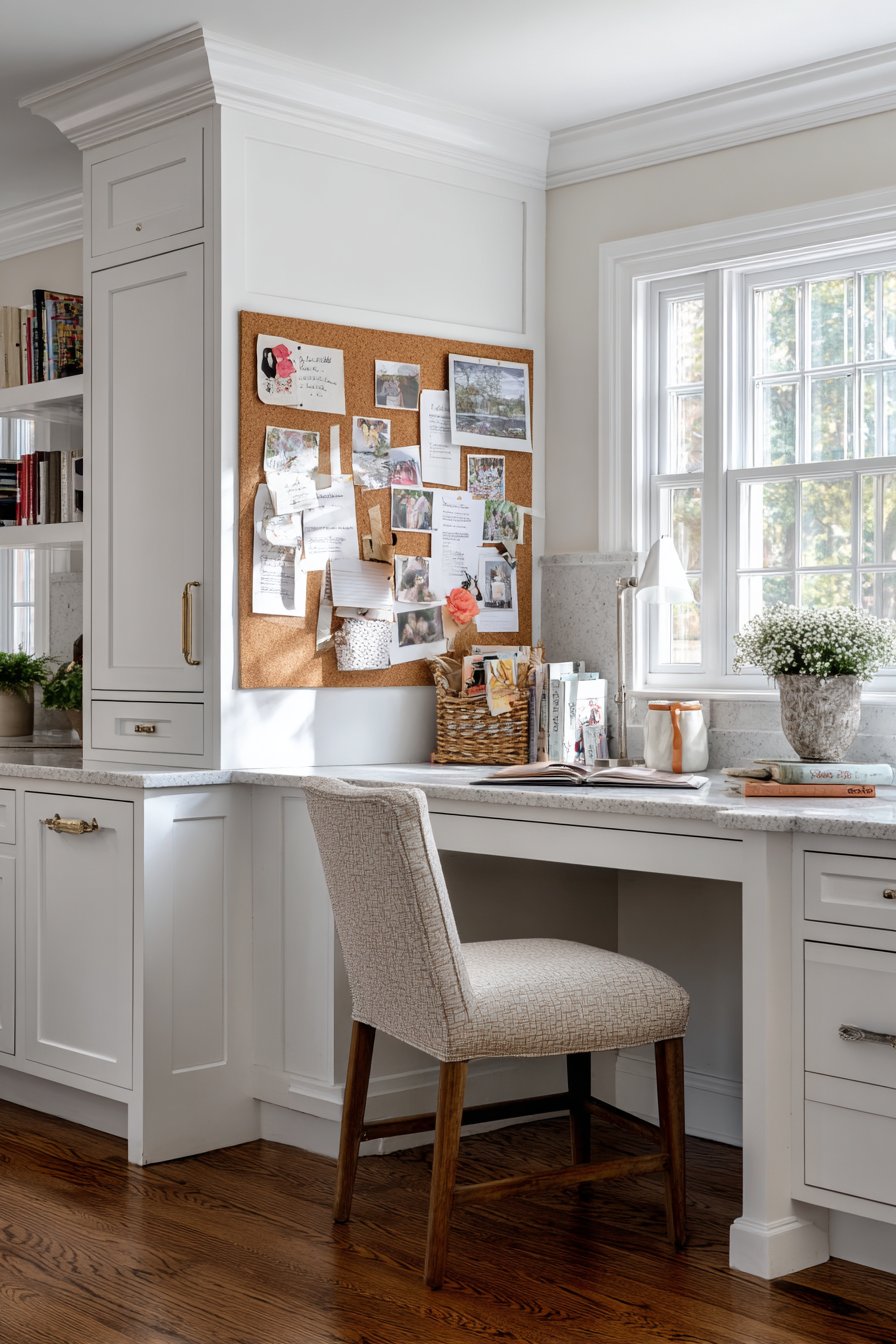
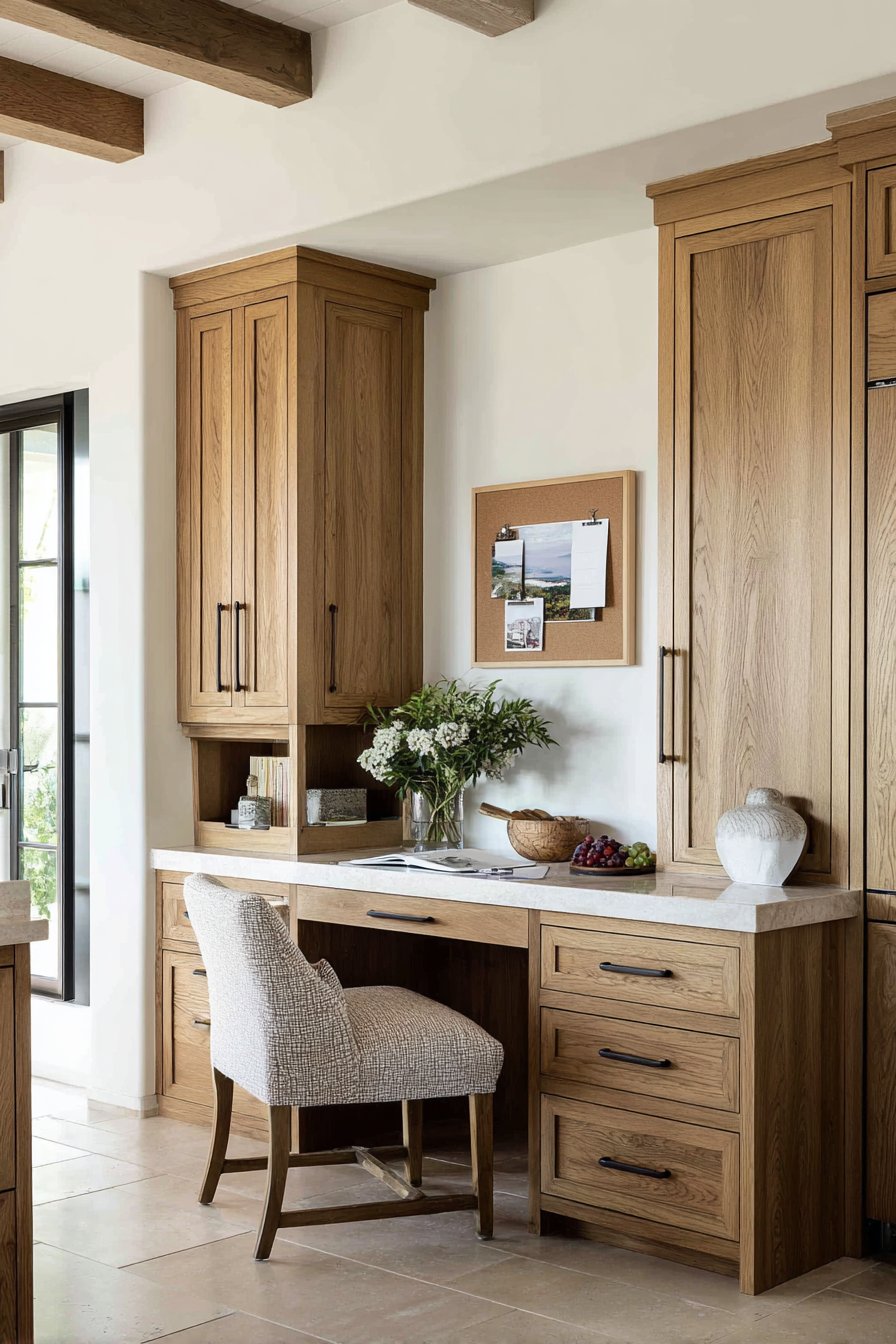
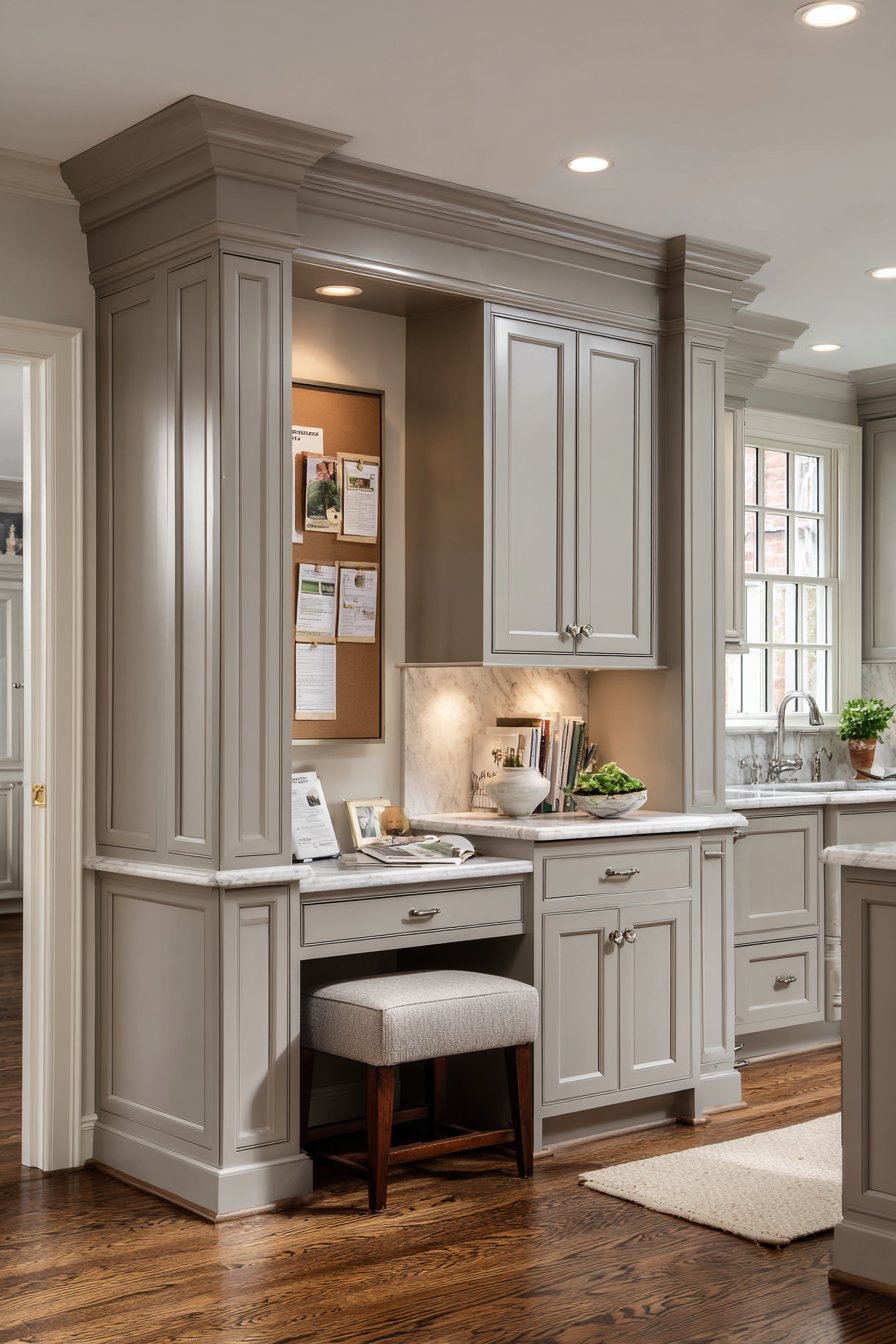
The integration of a dedicated workspace into the kitchen cabinetry layout demonstrates sophisticated space planning that acknowledges the kitchen’s evolving role in modern homes. This small desk area, perfectly suited for meal planning, recipe organization, and household management, transforms the kitchen into a true command center for domestic life.
The desk surface crafted from matching countertop material maintains visual continuity with the rest of the kitchen, creating a cohesive look that makes the workspace feel integrated rather than added as an afterthought. A comfortable upholstered stool tucks beneath the desk, its padding encouraging longer periods of seated work while its compact footprint ensures it doesn’t obstruct traffic flow when not in use.
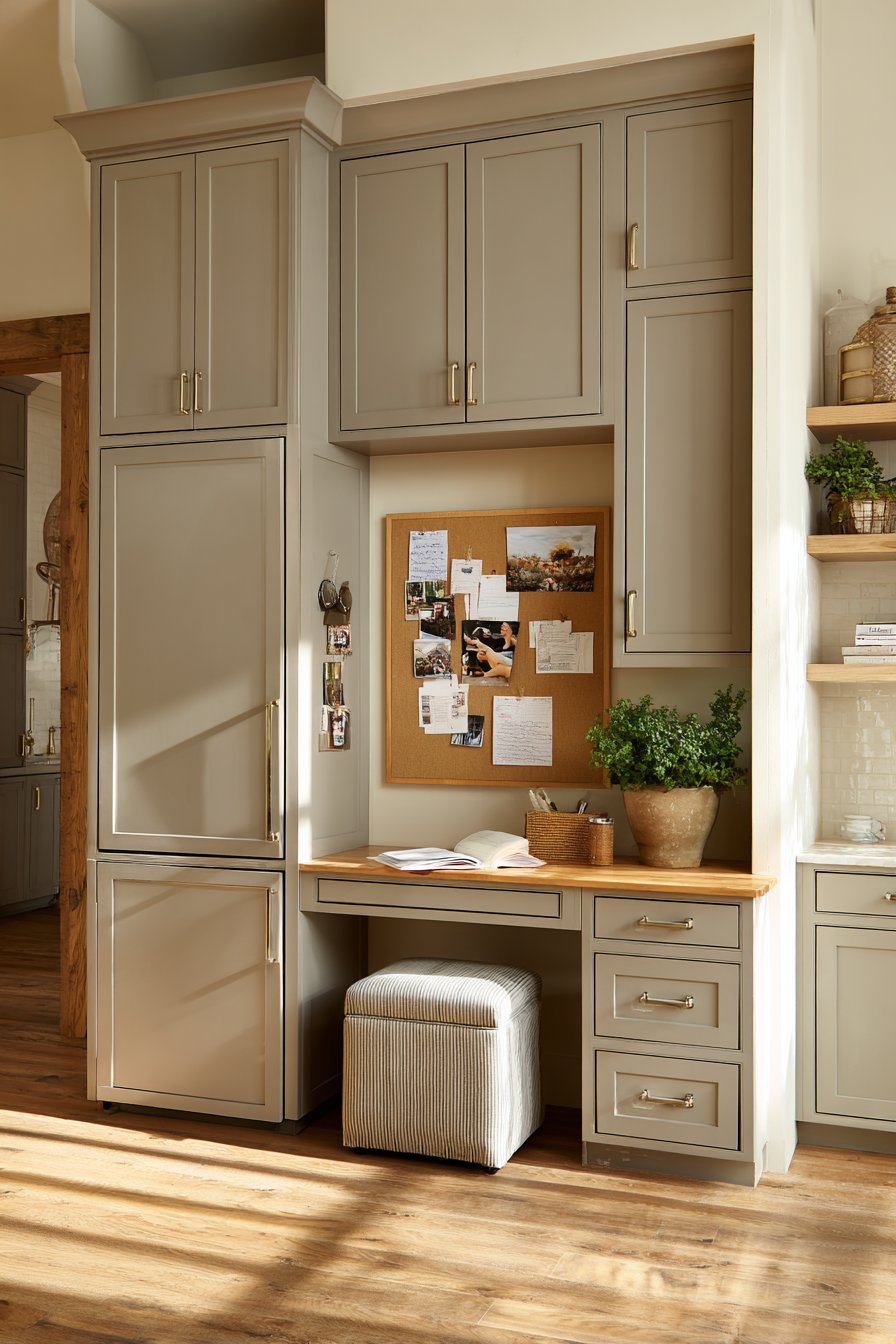
Above the workspace, a bulletin board with a natural wood frame provides vertical organization space for shopping lists, family photos, and inspirational recipe clippings. This personal touch transforms a purely functional element into a reflection of family life and priorities, displaying the visual evidence of plans, memories, and aspirations.
The natural wood frame echoes the warm wood tones found throughout the successful cozy kitchen, maintaining material consistency while serving practical organizational needs. Adjacent cabinets provide dedicated storage for cookbooks, binders of collected recipes, household files, and meal planning supplies, keeping these materials accessible yet organized.
Soft task lighting illuminates the workspace directly, ensuring adequate visibility for writing and reading without creating harsh shadows or glare. This focused lighting supplements the natural light from a nearby window, which provides ambient brightness and a connection to the outdoors that makes extended time at the desk more pleasant.
The professional composition captures this practical addition with attention to functional details and warm material textures, demonstrating how a cozy kitchen can incorporate modern needs for household organization and planning without sacrificing its warm, welcoming character. This workspace acknowledges that contemporary kitchens serve as much more than cooking spaces—they’re the operational centers of busy family lives.
Key Design Tips:
- Integrate a small desk area into your kitchen cabinetry layout for meal planning and household organization
- Use matching countertop material for the desk surface to maintain visual continuity
- Select a comfortable upholstered stool that provides seating support while remaining compact
- Install a bulletin board or magnetic board above the desk for organizing lists, photos, and reminders
- Dedicate adjacent cabinet space specifically to cookbook storage and household files
- Add focused task lighting directly above the desk to supplement natural ambient light
- Position the workspace near a window to provide natural light and outdoor views
- Ensure the desk is sized appropriately—large enough to be functional but not so large that it dominates the kitchen
9. Classic Farmhouse Sink as Kitchen Heart
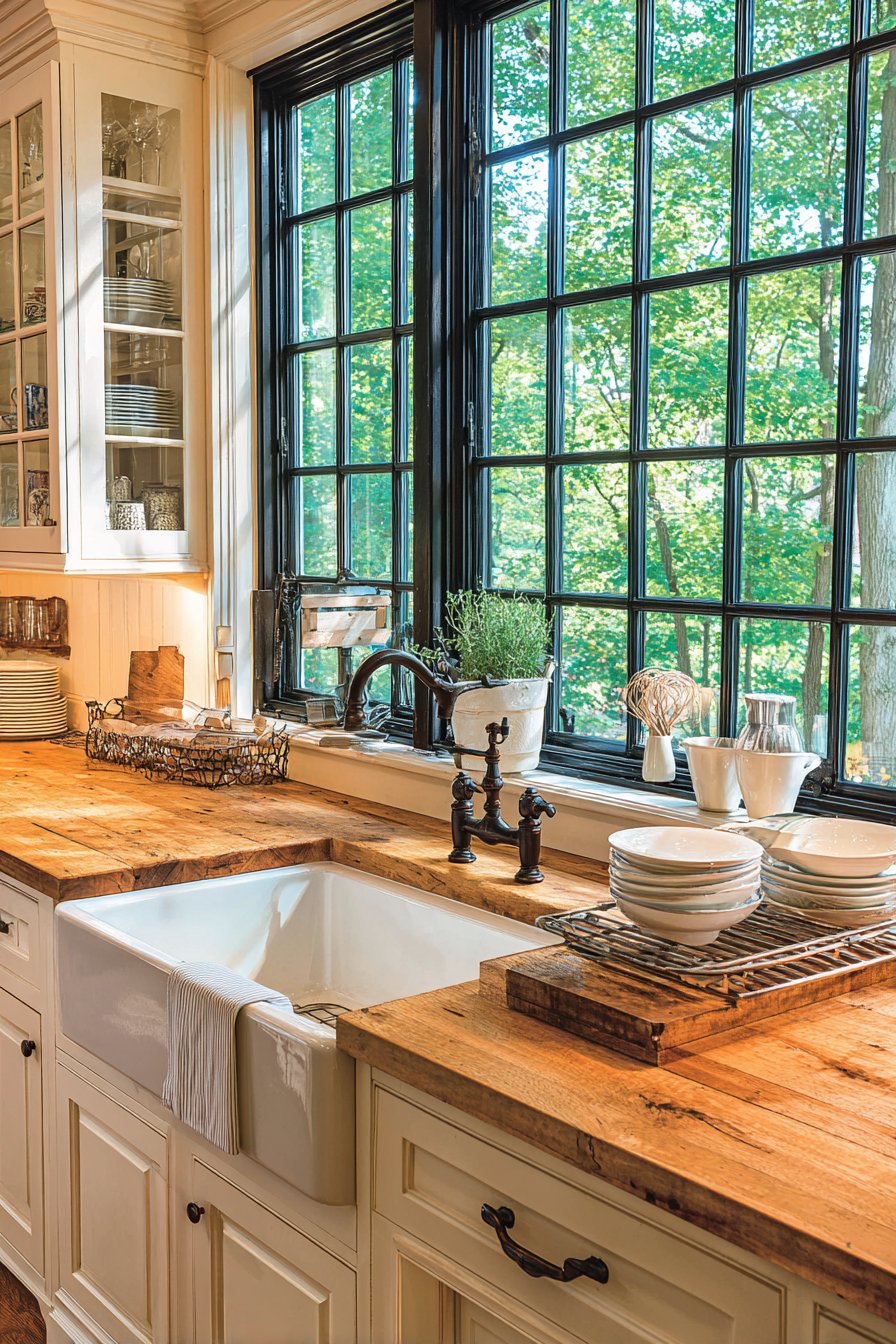
The classic white porcelain farmhouse sink positioned beneath a multi-pane window epitomizes the heart-of-the-home quality that defines the coziest kitchens. The sink’s substantial size and traditional apron-front design make a strong visual statement while providing practical workspace for food preparation and cleanup.
The white porcelain’s clean, bright surface reflects light beautifully, creating a luminous focal point that draws attention without overwhelming the space. The multi-pane window frames a view of herb gardens, bringing the beauty and vitality of growing things into constant view and creating a meaningful connection between the indoor cooking space and outdoor cultivation.
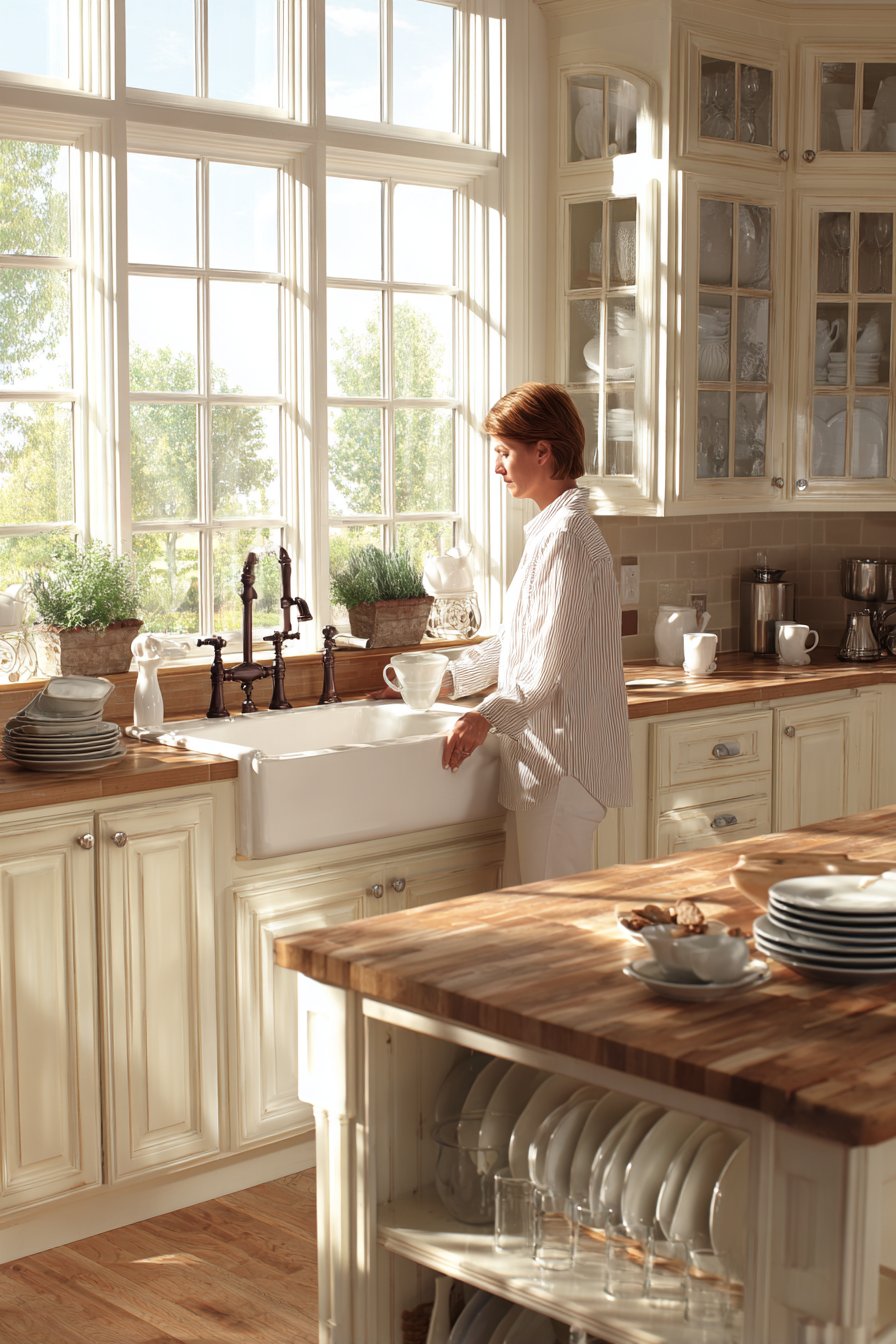
A vintage-style gooseneck faucet in oil-rubbed bronze adds character and functionality, its arching form providing clearance for large pots while its warm, darkened finish contrasts beautifully with the bright white sink.
The oil-rubbed bronze’s slightly aged appearance suggests quality that improves with time rather than diminishes, perfectly suited to the cozy kitchen aesthetic that values patina and character. The surrounding countertop made from warm butcher block features visible grain and natural color variation; the wood’s organic patterns ensuring that this working surface is as beautiful as it is practical.
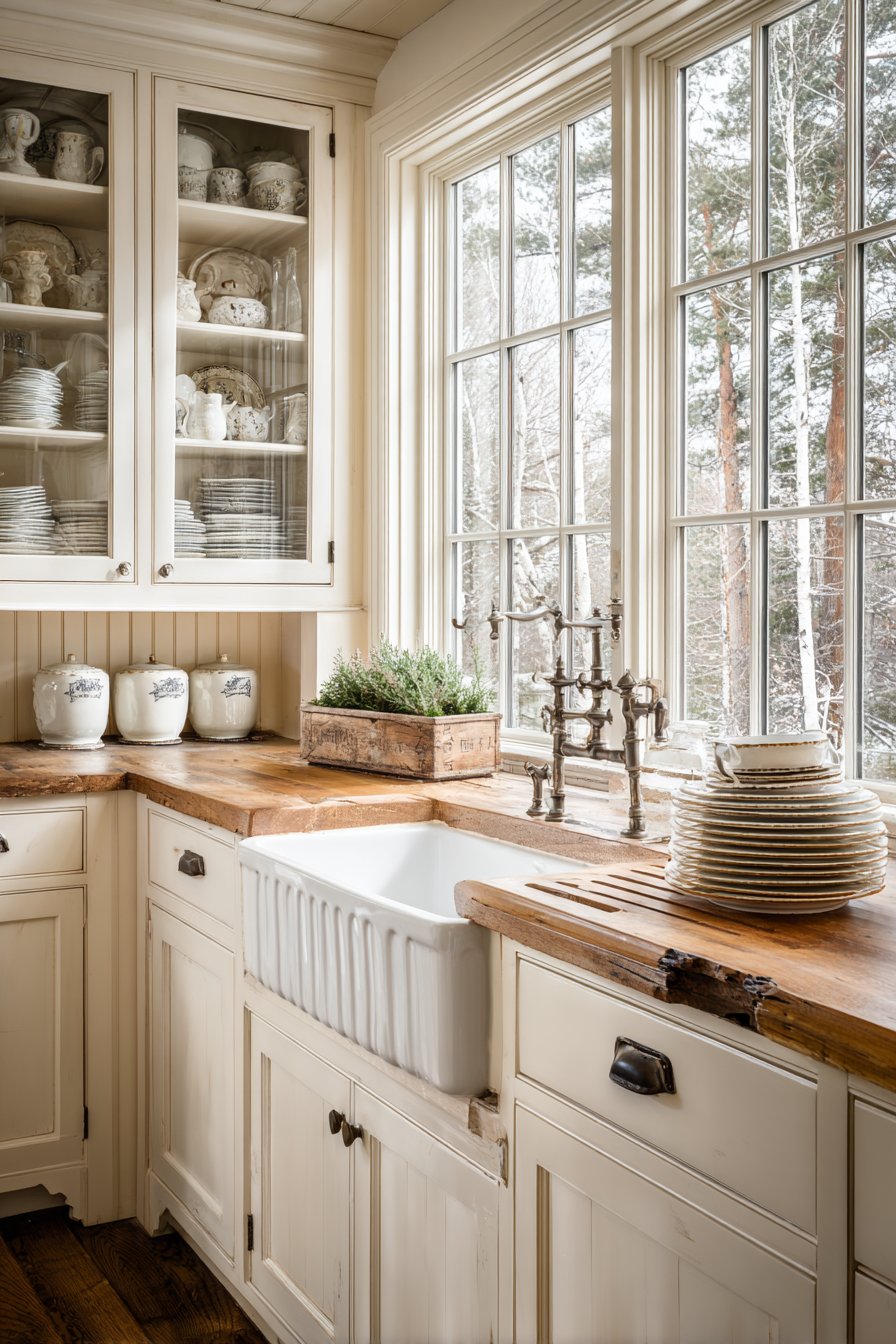
A dish rack with wooden slats sits beside the sink, holding handmade pottery dishes that dry naturally in the gentle breeze from the window. The wooden slats of the dish rack contribute to the kitchen’s emphasis on natural materials while allowing water to drain efficiently. Cream-colored cabinetry with glass-front uppers displays everyday dishware, turning practical storage into an opportunity for attractive display.
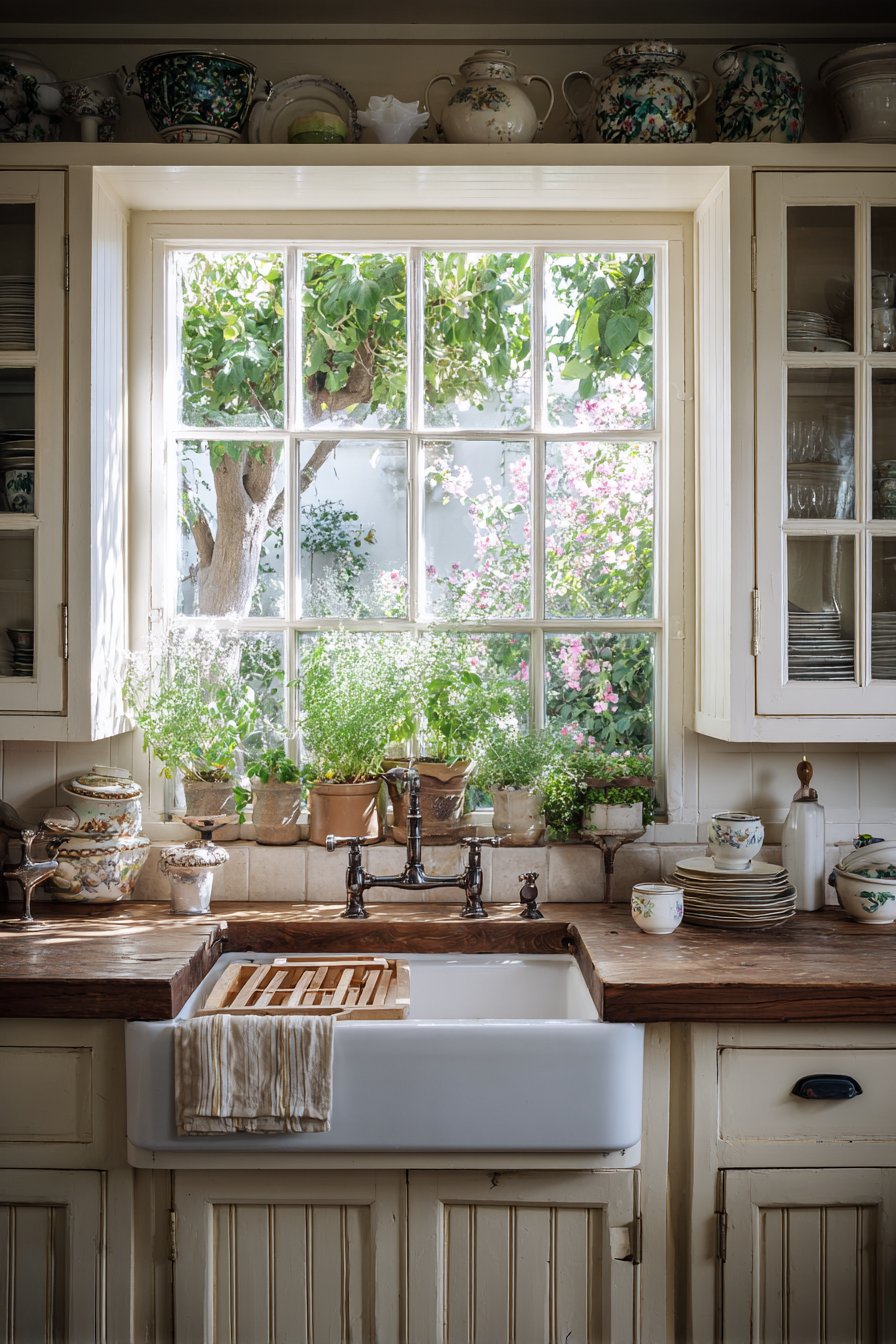
The glass fronts create visual lightness and allow favorite dishes to be admired even when stored away. Wide-angle composition with soft diffused morning light creates an inviting atmosphere that captures the heart-of-the-home quality, demonstrating how the sink area—where so much time is spent—can be transformed from purely utilitarian to genuinely inspiring.
Key Design Tips:
- Choose a white porcelain farmhouse sink with an apron front for classic appeal and practical workspace
- Position the sink beneath a multi-pane window to provide views and natural light during kitchen tasks
- Install a vintage-style gooseneck faucet in oil-rubbed bronze or similar warm metal finish
- Use butcher block countertops around the sink for warmth and natural beauty
- Add a wooden dish rack for functional drying that doubles as an attractive display
- Collect handmade pottery dishes that bring artisanal character to everyday use
- Install cream-colored cabinetry with glass-front uppers to display dishware attractively
- Frame window views of herb gardens or outdoor greenery to connect indoor and outdoor spaces
- Ensure adequate natural light falls on the sink area throughout the day
10. Organized Pantry with Artisan Craftsmanship
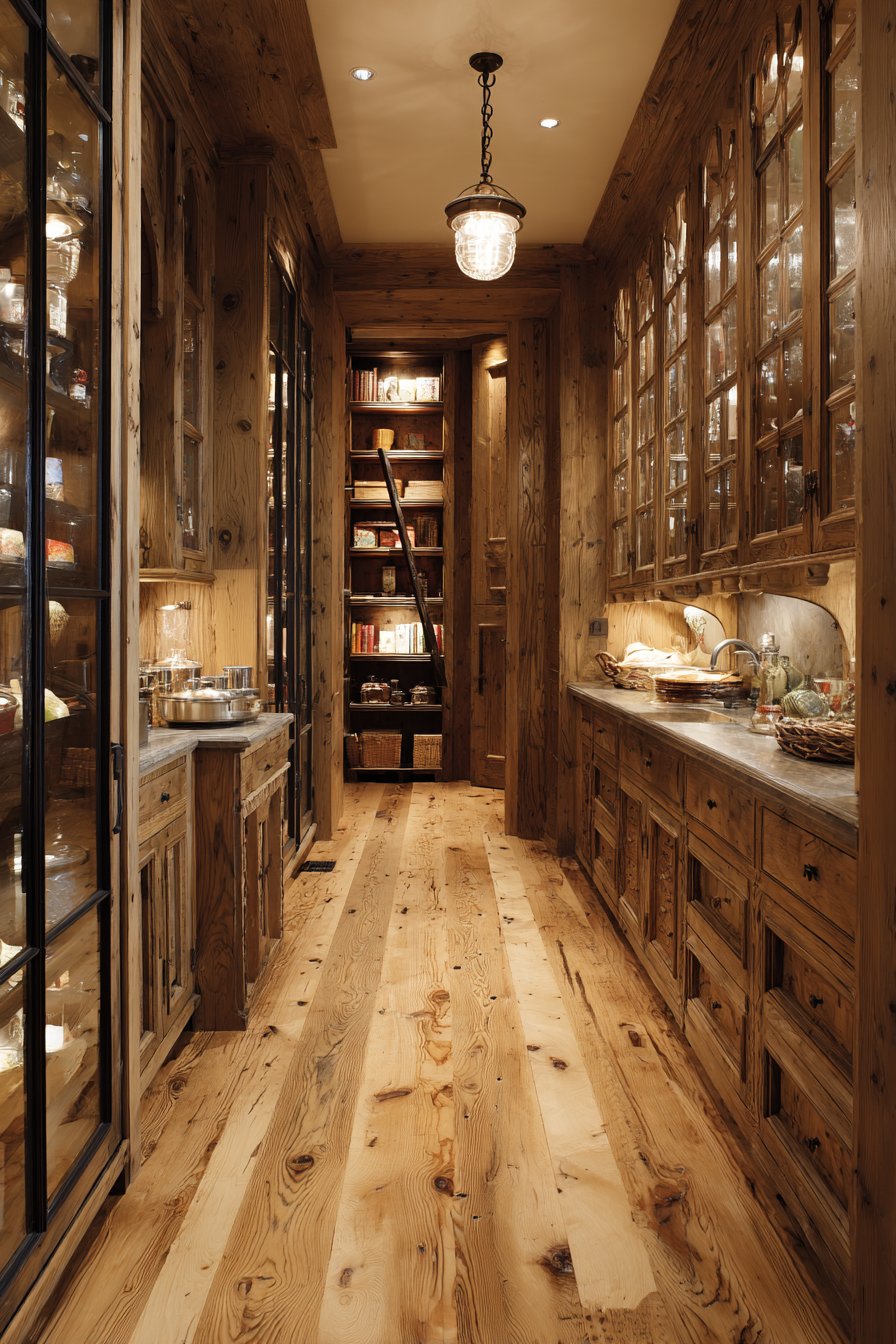
A thoughtfully designed pantry area with floor-to-ceiling custom cabinetry in warm walnut finish represents the pinnacle of cozy kitchen storage solutions, where beauty and functionality unite in perfect harmony. The warm walnut finish brings rich, sophisticated tones that add depth and visual weight to the space, while the wood’s natural grain patterns provide organic interest.
Glass-front upper sections reveal organized shelving, transforming pantry storage into an attractive display that encourages maintaining order and makes locating items effortless. The transparency of glass fronts creates visual lightness despite the substantial floor-to-ceiling scale, preventing the cabinetry from feeling heavy or oppressive.
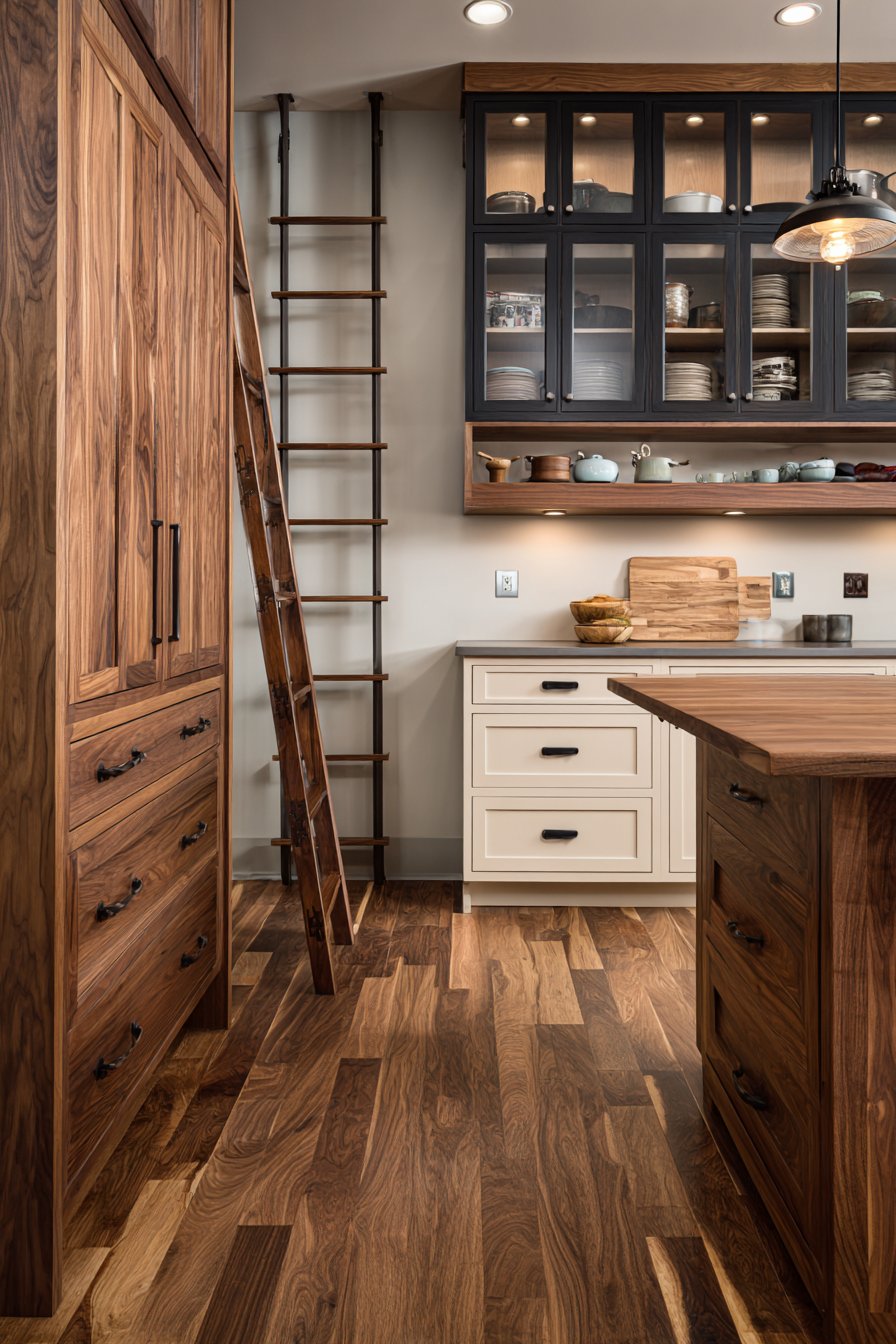
Lower cabinets feature deep drawers with dovetail joinery, a detail that speaks to quality craftsmanship and ensures durability for years of daily use. The dovetail joinery, visible when drawers are opened, demonstrates commitment to traditional woodworking techniques and superior construction standards.
These deep drawers provide ideal storage for pots, serving pieces, and larger kitchen equipment, maximizing accessibility and organization. A rolling library ladder provides charming access to higher shelves, its presence adding architectural interest and nostalgic appeal while solving the practical challenge of reaching elevated storage. The ladder transforms accessing upper shelves from a chore into a delightful experience.
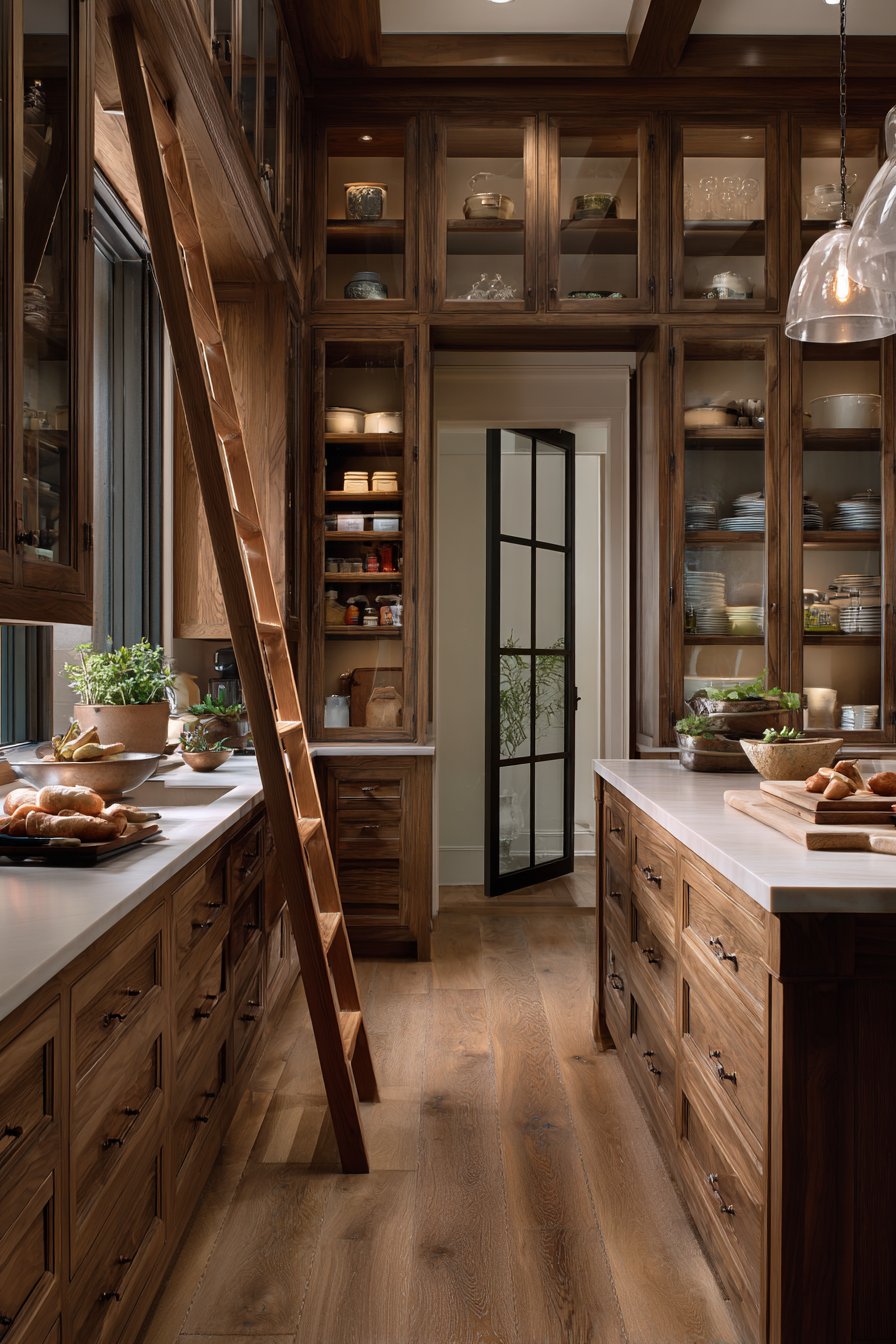
The space includes a small countertop workspace dedicated to food preparation, particularly useful for tasks like assembling ingredients before cooking or preparing school lunches. Pendant lighting overhead ensures adequate illumination for detailed tasks, while natural wood flooring with subtle wear patterns extends throughout, creating visual continuity with the rest of the kitchen.
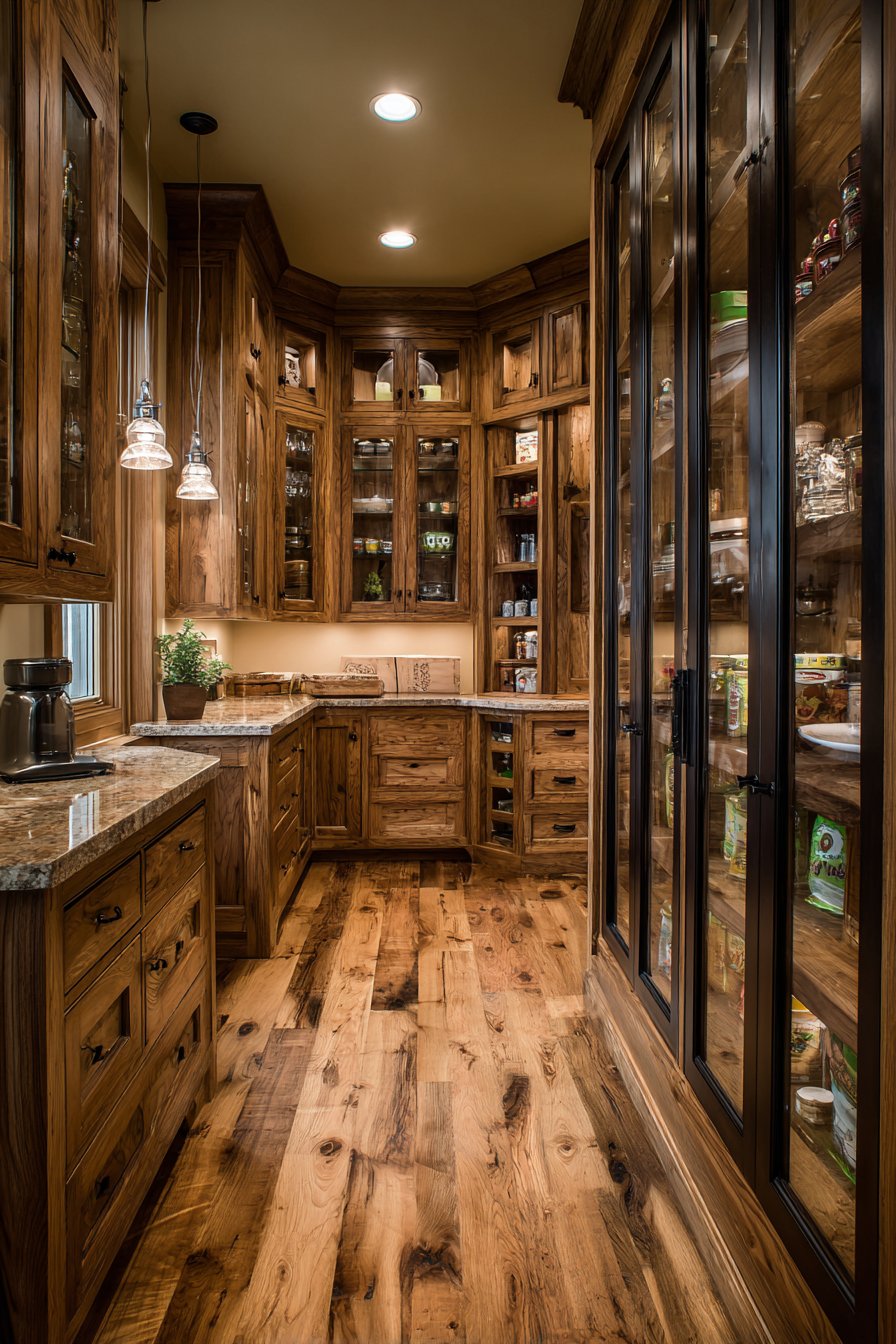
The balanced composition showcasing natural and artificial lighting demonstrates the thoughtful storage solutions and craftsmanship that make this cozy kitchen both beautiful and highly functional. This pantry design proves that storage areas need not be hidden away but can instead be celebrated as integral parts of a kitchen’s beauty and efficiency.
Key Design Tips:
- Install floor-to-ceiling custom cabinetry in warm walnut or similar rich wood finish
- Incorporate glass-front upper sections to display organized pantry items attractively
- Specify deep drawers with dovetail joinery for quality construction and practical storage
- Add a rolling library ladder for charming access to higher shelves
- Include a small countertop workspace within the pantry for food preparation tasks
- Install pendant lighting overhead to illuminate work surfaces and storage areas
- Extend natural wood flooring throughout to create visual continuity
- Balance natural light from windows with well-placed artificial lighting for consistent illumination
- Organize pantry contents in attractive containers that look good displayed behind glass
Why These Cozy Kitchen Designs Excel
These ten cozy kitchen designs represent the pinnacle of residential interior design because they successfully balance competing demands: beauty and function, traditional and contemporary, intimate and practical. Each design demonstrates mastery of fundamental principles that create genuinely cozy spaces—the strategic use of natural materials, thoughtful lighting design, appropriate scale and proportion, and attention to how spaces will actually be used and lived in. The honey-toned wooden cabinets, farmhouse sinks, reclaimed wood elements, and butcher block surfaces that appear throughout these designs share a common thread: they’re materials that age gracefully, developing character and patina rather than showing wear.
The emphasis on natural materials throughout these cozy kitchen concepts reflects both environmental consciousness and timeless aesthetic wisdom. Wood, stone, linen, ceramic, and brass all improve with age and use, unlike synthetic materials that deteriorate or date quickly. These natural materials also connect kitchen spaces to the broader natural world, bringing organic warmth and texture that synthetic alternatives cannot replicate. The visible wood grain, natural stone veining, and handcrafted ceramic pieces featured in these designs celebrate imperfection and authenticity, qualities that resonate deeply in our increasingly digital, mass-produced world.
Lighting design plays a crucial role in establishing coziness across all these kitchen concepts. The careful layering of natural light from windows and skylights, ambient lighting from pendant fixtures and chandeliers, and task lighting for work surfaces creates spaces that feel welcoming at any time of day. The emphasis on natural light—achieved through strategically placed windows, sheer curtains that filter rather than block daylight, and skylights that bring illumination from above—connects these spaces to natural circadian rhythms and the changing qualities of daylight throughout seasons. Edison bulb pendants, aged bronze fixtures, and brass accents provide warm-toned artificial lighting that complements rather than contradicts the natural light, maintaining the cozy atmosphere after sunset.
The successful cozy kitchen designs featured here also excel at creating distinct zones for different activities without fragmenting the space or requiring extensive square footage. The breakfast nook, coffee corner, reading alcove, and integrated workspace demonstrate how thoughtful planning can accommodate multiple functions within a single room. These specialized zones acknowledge that modern kitchens serve as command centers for household life, accommodating not just cooking and dining but also homework, bill paying, recipe planning, casual reading, and family conversation. By designating specific areas for these activities, these designs prevent the kitchen from feeling chaotic or cluttered while ensuring that each function receives appropriate attention.
Texture plays an often-underestimated role in creating genuine coziness, and these kitchen designs demonstrate sophisticated understanding of how varied textures work together. The smooth coolness of marble countertops contrasts with rough reclaimed wood, soft linen upholstery balances hard brick walls, and glossy ceramic tiles complement matte painted cabinetry. This textural variety creates visual and tactile interest that makes spaces feel rich and layered rather than flat or monotonous. The woven baskets, beadboard paneling, visible wood grain, and fabric cushions featured throughout these designs invite touch and interaction, making the kitchens feel lived-in and welcoming rather than untouchable or overly precious.
Color palettes across these cozy kitchen designs favor warm neutrals—cream, oatmeal, honey, terracotta, soft grey-blue—that create enveloping warmth without overwhelming the senses. These sophisticated neutral palettes provide versatile backgrounds that accommodate seasonal decorating changes and evolving personal tastes without requiring major renovations. The warm undertones in these neutral colors prevent them from feeling cold or institutional, while their subtlety allows natural materials and carefully chosen accent pieces to take center stage. When bolder colors appear—the sage green of breakfast nook cushions, the blue-grey of painted cabinets—they’re always nature-inspired hues that maintain the organic, grounded feeling essential to cozy kitchen design.
The farmhouse aesthetic that influences many of these designs brings together several cozy kitchen essentials: appreciation for rustic materials, celebration of handcrafted objects, emphasis on gathering and hospitality, and rejection of unnecessary formality. The farmhouse table serving as a kitchen island, vintage-inspired appliances, apron-front sinks, and mismatched chairs all reference agricultural and rural design traditions where kitchens were truly the heart of the home and the center of family life. This aesthetic resonates across different regions and cultures because it taps into universal human desires for authenticity, connection, and spaces that feel welcoming rather than intimidating.
Storage solutions featured in these cozy kitchens—from the organized pantry with custom cabinetry to open shelving displaying earthenware and glass jars—demonstrate that practical considerations can enhance rather than detract from aesthetic appeal. When storage is thoughtful and beautiful, the act of organizing becomes pleasurable, and maintaining order feels less like a chore. The glass-front cabinets, open shelving, and attractive storage containers encourage keeping only items worth displaying, naturally editing possessions and preventing the accumulation of clutter. The rolling library ladder, deep dovetailed drawers, and built-in shelving flanking the reading nook show how custom solutions can maximize every inch of available space while adding distinctive character.
These cozy kitchen designs succeed because they understand that true coziness comes from thoughtful details rather than expensive materials or extensive square footage. The fresh herbs in terracotta pots, handmade ceramic mugs, wildflowers in simple vases, and family photos on bulletin boards cost little but contribute enormously to creating spaces that feel personal and welcoming. These small touches transform generic kitchens into unique homes, reflecting the personalities, interests, and daily rhythms of the people who live there. The emphasis on handmade and artisanal items—from pottery to wooden cutting boards to vintage enamelware—celebrates human craftsmanship and the unique character that comes from objects made with care rather than mass-produced.
Finally, these designs excel because they acknowledge that cozy kitchens must function beautifully for daily life, not just photograph well. The practical considerations woven throughout—adequate workspace, efficient storage, proper lighting for tasks, comfortable seating, easy-to-clean materials—ensure that these kitchens support real cooking, real family life, and real daily routines. A kitchen can feature the most beautiful materials and perfect styling, but if it doesn’t function well for its users’ needs, it will never feel truly cozy. The integration of workhorse elements like professional-style ranges, deep farmhouse sinks, and substantial butcher block islands demonstrates that practicality and beauty can coexist, creating spaces that work as hard as they look good.
Conclusion
Creating a cozy kitchen is ultimately about crafting a space that nurtures both body and spirit—a place where nourishing meals are prepared, where families gather to share their days, where friends linger over coffee, and where the rituals of daily life unfold with comfort and grace. The ten designs explored in this article demonstrate that coziness in the kitchen comes not from following rigid rules but from thoughtfully applying principles of natural materials, layered lighting, comfortable furnishings, and personal touches that reflect your unique story.
Whether you’re drawn to the warm honey tones of natural wood cabinetry, the intimate charm of a breakfast nook, the rustic appeal of exposed brick and reclaimed materials, or the organized beauty of a well-appointed pantry, remember that the best cozy kitchen is one that serves your specific needs and lifestyle. Start with quality natural materials that will age gracefully, layer different light sources to create warmth at any hour, incorporate comfortable seating that invites lingering, and add personal touches that make the space uniquely yours.
The journey to creating your ideal cozy kitchen need not happen overnight. Begin with one element that resonates with you—perhaps a farmhouse sink, a coffee corner, or simply a bowl of fresh produce on the counter—and build from there. Each thoughtful addition, each carefully chosen material, and each personal touch will contribute to creating a kitchen that welcomes you home, supports your daily rhythms, and becomes the warm, inviting heart of your home where countless memories will be made for years to come.
