


The country kitchen stands as a testament to the enduring appeal of comfortable, unpretentious design that prioritizes both beauty and practicality. These spaces evoke a sense of warmth and nostalgia while remaining remarkably functional for contemporary living. A well-designed country kitchen becomes the heart of the home—a gathering place where families create memories, share meals, and find comfort in the simple pleasures of daily life. The beauty of country kitchen design lies in its authenticity; it embraces natural materials, celebrates craftsmanship, and honors the passage of time through carefully curated vintage elements and handcrafted details.
In today’s fast-paced world, the country kitchen aesthetic offers a refreshing retreat from minimalist austerity and industrial coldness. This design approach celebrates texture, warmth, and the natural imperfections that give spaces character and soul. Whether you’re drawn to soft sage greens and marble countertops, the rugged appeal of reclaimed barn wood, or the classic elegance of an apron-front farmhouse sink, country kitchen design offers remarkable versatility. These spaces seamlessly blend traditional elements with modern conveniences, creating environments that feel both timeless and thoroughly livable.
This comprehensive guide explores ten distinct country kitchen designs, each showcasing unique interpretations of this beloved aesthetic. From breakfast nooks filled with vintage charm to organized pantries that combine beauty with function, these designs demonstrate how thoughtful attention to materials, colors, and architectural details can transform an ordinary kitchen into an extraordinary space. Whether you’re planning a complete kitchen renovation or simply seeking inspiration to refresh your existing space, these examples will guide you toward creating a country kitchen that reflects your personal style while honoring the authentic character of this timeless design tradition.
1. Vintage-Inspired Farmhouse Sink Sanctuary
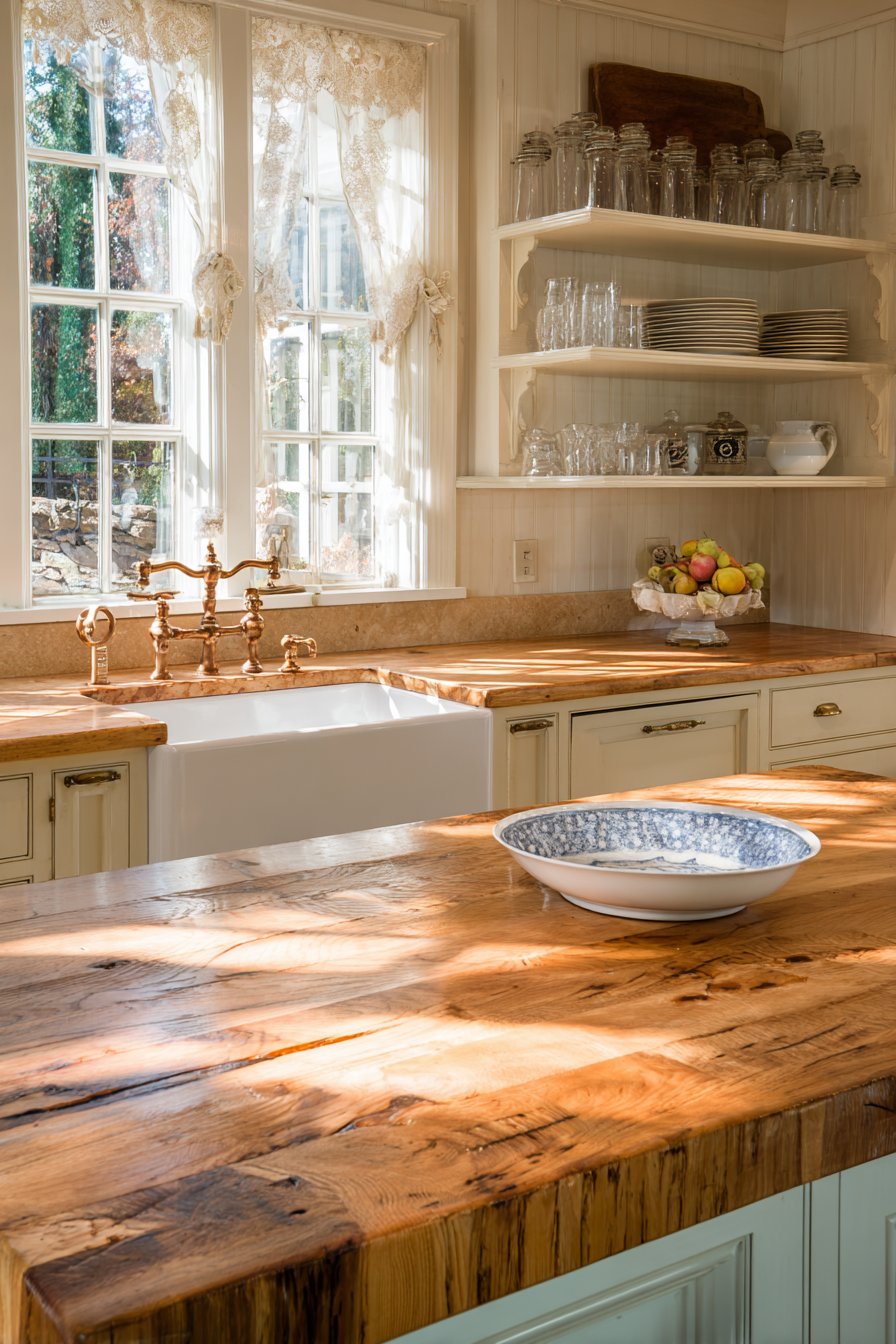
The cornerstone of authentic country kitchen design begins with the farmhouse sink—a deep, generous basin that combines old-world charm with remarkable practicality. This kitchen features a substantial farmhouse sink complemented by a vintage-style bridge faucet in brushed bronze, creating a focal point that immediately establishes the space’s character.
The sink is set against soft cream shaker-style cabinetry, where visible wood grain texture adds subtle depth and natural beauty. These cabinets represent the perfect marriage of form and function, with their clean lines and quality construction speaking to enduring craftsmanship.
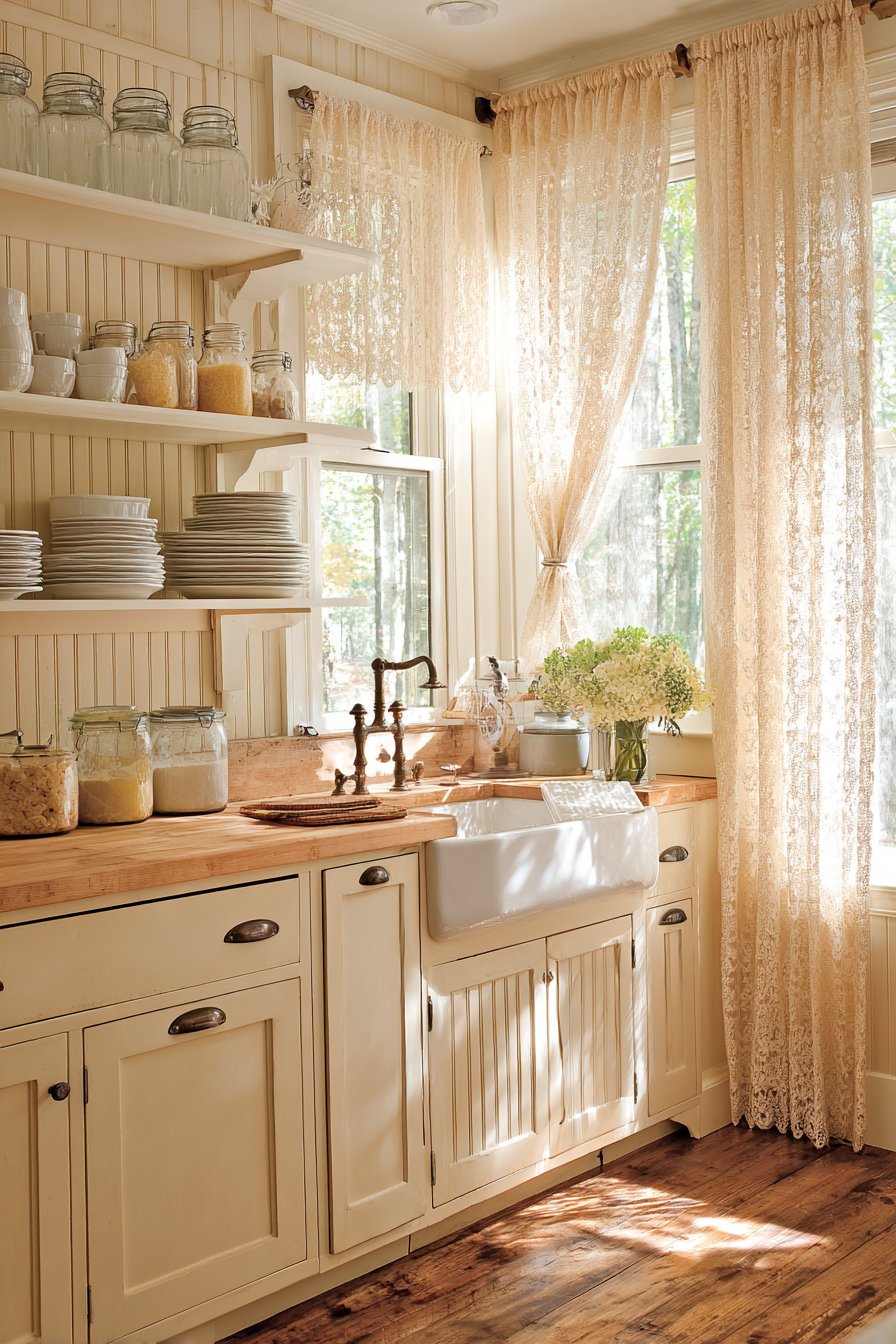
Open shelving displays become both functional storage and decorative elements, showcasing collections of stoneware dishes and vintage glass jars filled with pantry staples. This approach to storage invites you to curate your kitchenware thoughtfully, displaying only the most beautiful and frequently used items.
The butcher block countertops introduce warm honey tones throughout the space, their natural wear patterns telling the story of countless meal preparations and family gatherings. These working surfaces develop a rich patina over time, becoming more beautiful with age and use.
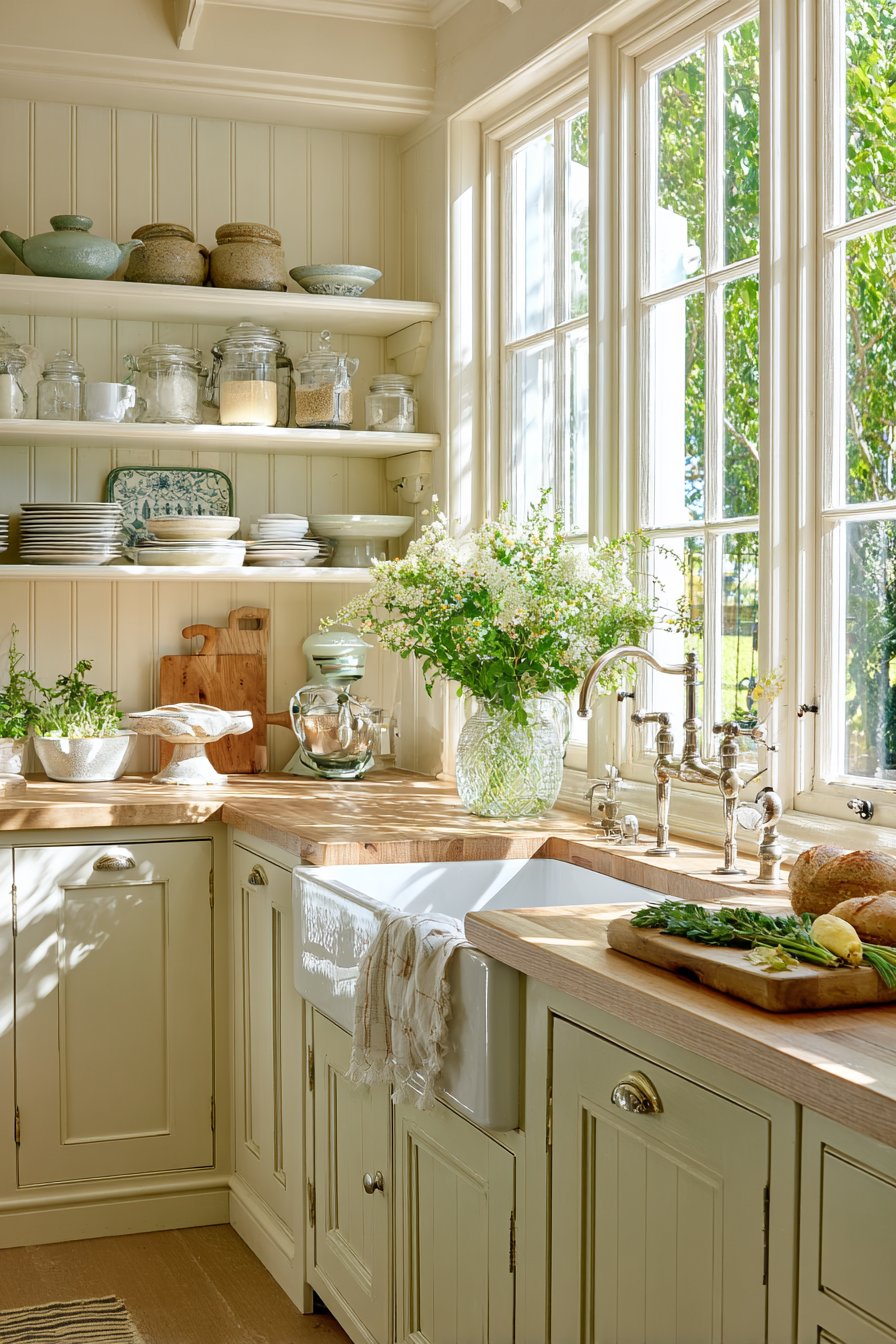
Morning light streams through delicate lace curtains, casting soft shadows that dance across the work surfaces and emphasizing the room’s rustic charm. The quality of natural light in a country kitchen cannot be overstated—it brings the space to life, highlighting textures and creating an atmosphere of lived-in comfort. The interplay between light and shadow enhances every design element, from the grain in the butcher block to the gentle sheen of the bronze faucet. This kitchen achieves what every successful country design aspires to: a space that feels both meticulously designed and effortlessly natural.
Key Design Tips:
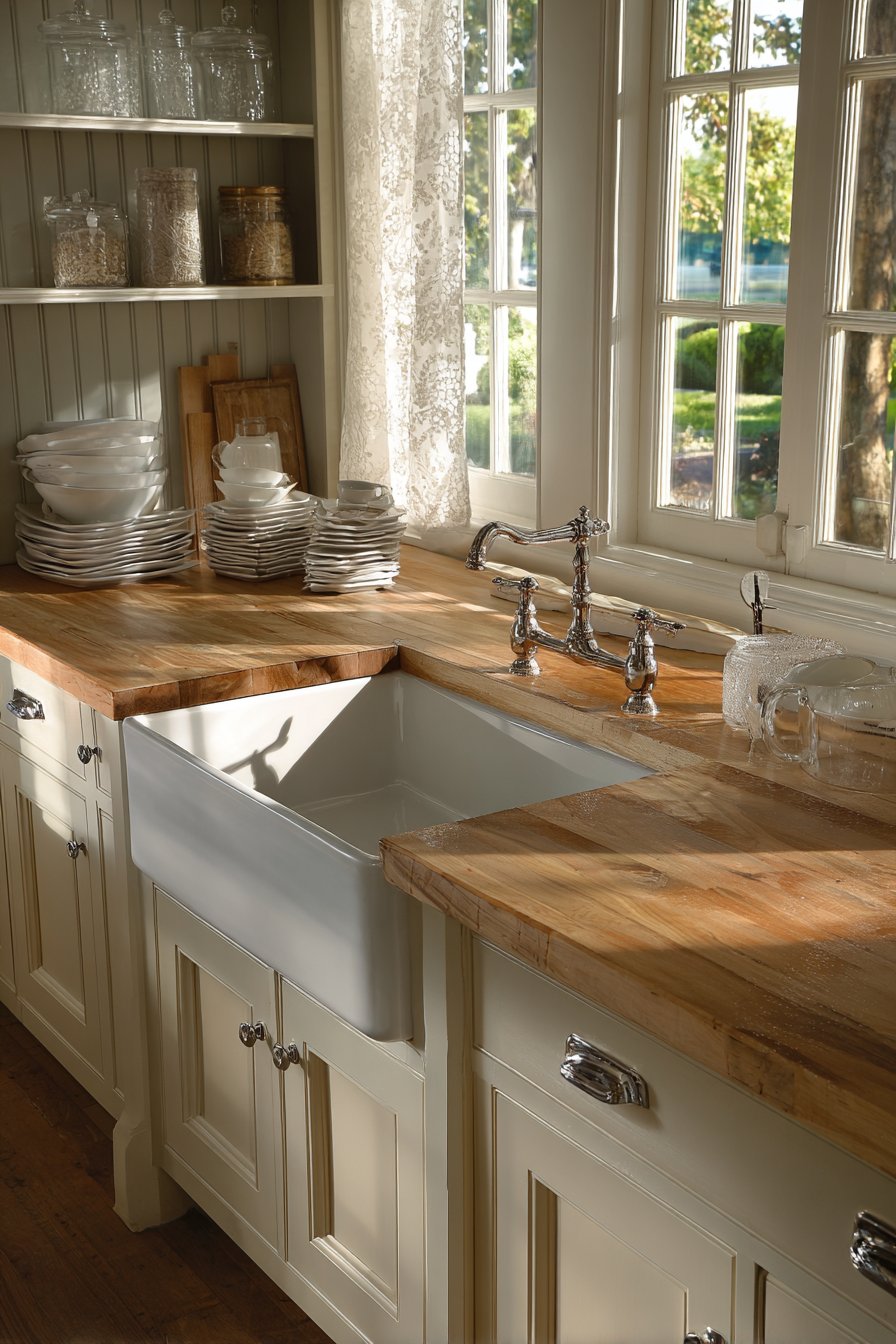
- Select a deep farmhouse sink in fireclay or cast iron for authentic durability and timeless appeal that improves with age
- Choose brushed bronze or aged brass fixtures to avoid the cold appearance of chrome while adding warmth to the overall palette
- Install open shelving strategically near the sink area for frequently used dishes, creating convenience while displaying beautiful kitchenware
- Invest in quality butcher block countertops and maintain them properly with mineral oil to develop a beautiful patina over decades of use
- Embrace visible wood grain in painted cabinetry by choosing thinner paint applications that allow texture to show through
- Hang lightweight lace or muslin curtains to filter natural light while maintaining privacy and adding softness to window treatments
2. Reclaimed Barn Wood Island Masterpiece
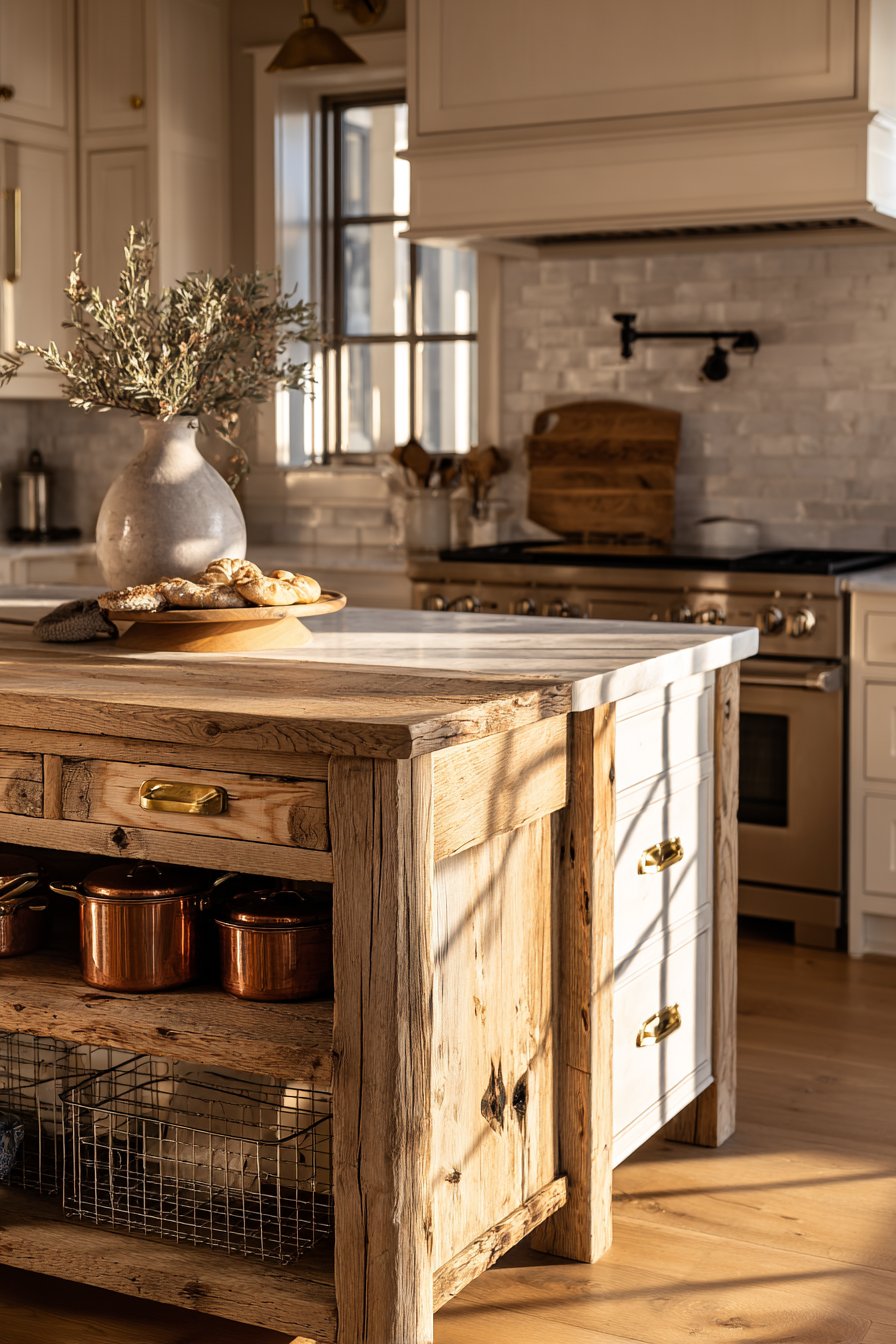
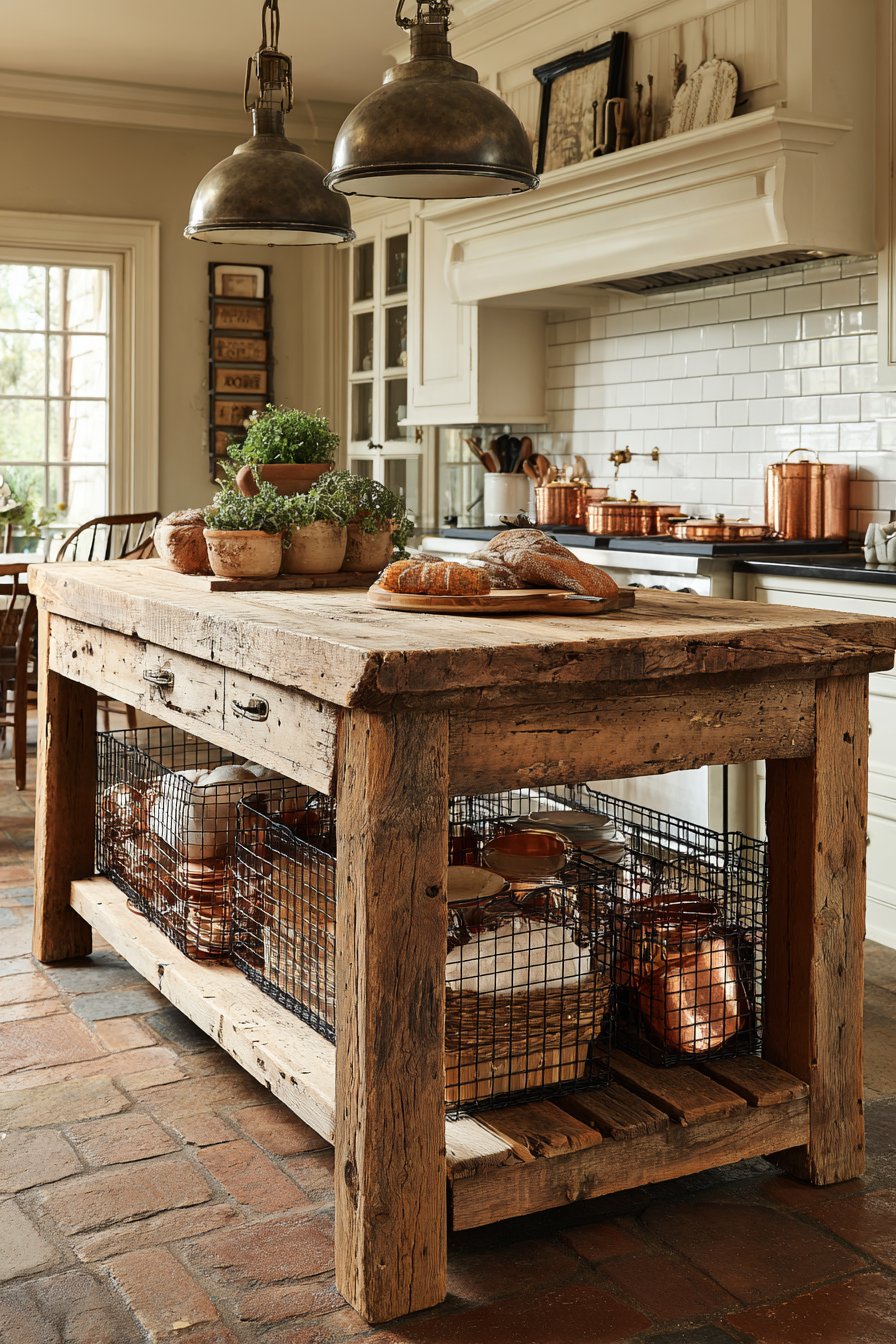
At the center of this country kitchen stands a magnificent island crafted entirely from reclaimed barn wood, its weathered finish and visible knots telling stories of decades past. This substantial piece serves as both a functional workspace and a sculptural element that anchors the entire room. The natural patina of aged wood creates visual interest that cannot be replicated with new materials, making each island truly one-of-a-kind. The wood’s gray and brown tones blend harmoniously with the overall color scheme while providing striking textural contrast against painted cabinetry.

Practical storage solutions are seamlessly integrated into the island’s design through wire basket drawers that slide smoothly beneath the work surface. These baskets offer the perfect balance between accessibility and organization, allowing you to see contents at a glance while maintaining the space’s rustic aesthetic.
The lower shelf displays copper cookware in various patinas—from bright penny-new pieces to deeply aged verdigris—creating a warm metallic accent that catches and reflects light throughout the day. This display transforms functional tools into decorative elements that enhance the kitchen’s authentic country character.

White subway tile creates a classic backsplash behind the range, its clean lines providing visual relief and practical wipeable surfaces in the cooking zone. The simplicity of subway tile allows other design elements to shine while contributing its own subtle texture through the shadows cast along grout lines.
Aged brass hardware adorns every cabinet and drawer, its warm golden tone unifying the various materials and finishes throughout the space. During golden hour, natural light floods through windows, illuminating the reclaimed wood’s complex grain patterns and highlighting every authentic detail.
Key Design Tips:
- Source reclaimed barn wood from reputable salvage yards that can verify the wood’s origin and ensure proper treatment for indoor use
- Incorporate wire baskets for storage to maintain visual lightness while providing practical organization for root vegetables, linens, and dry goods
- Display copper cookware openly to add warmth and create a lived-in feeling that celebrates tools as objects of beauty
- Choose subway tile in a matte finish rather than glossy to maintain the understated elegance appropriate for country design
- Install aged brass hardware consistently throughout to create cohesion and avoid the distraction of mixed metal finishes
- Position the island to create a natural workflow between the sink, stove, and refrigerator while allowing adequate clearance for movement
3. Sage Green Elegance with Marble Sophistication
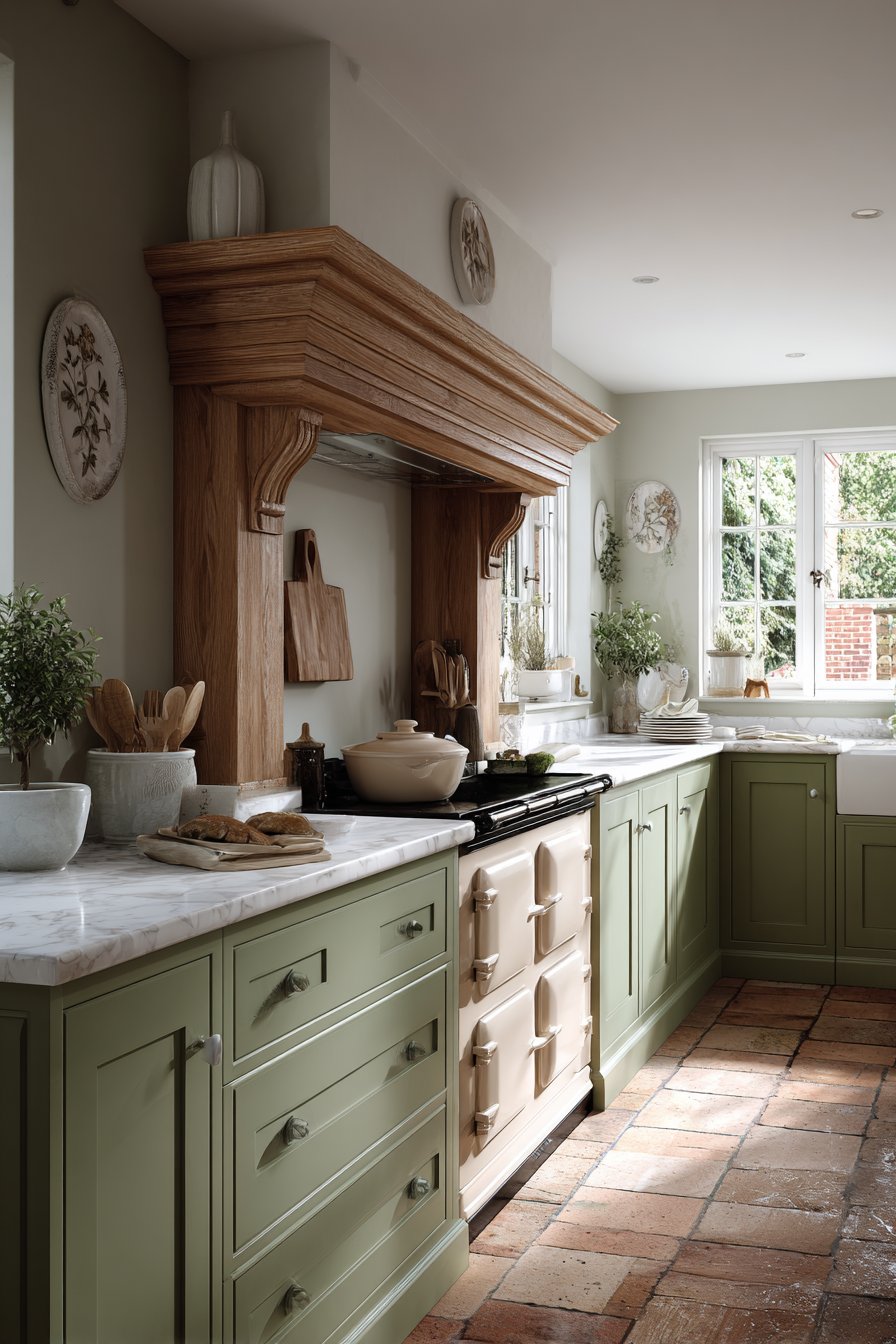
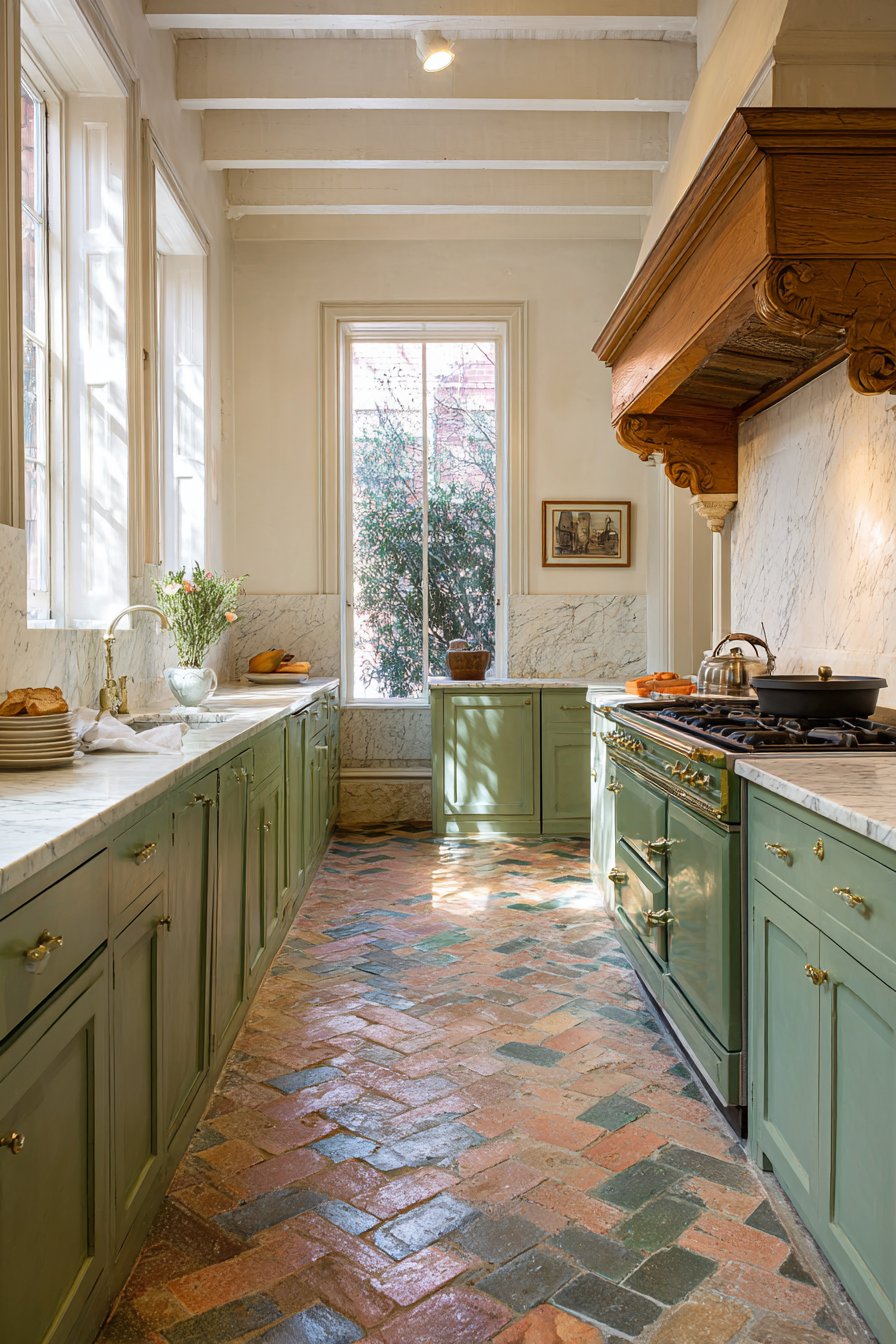
Soft sage green shaker cabinetry extends from floor to ceiling in this refined interpretation of country kitchen design, creating a serene backdrop that feels both fresh and timeless. This particular shade of green—neither too gray nor too blue—evokes the gentle colors found in nature, bringing a sense of tranquility to the bustling kitchen environment.
The floor-to-ceiling cabinet configuration maximizes storage while emphasizing the room’s vertical dimensions, making the space feel more expansive and architecturally significant. White marble countertops with subtle gray veining provide luminous work surfaces that contrast beautifully with the muted green cabinetry.

A vintage-inspired cast iron range commands attention as the kitchen’s centerpiece, its substantial presence and professional capabilities making it equally suited to serious cooking and aesthetic appeal. Above the range, a custom wooden range hood with decorative corbels adds architectural interest while concealing necessary ventilation equipment.
The corbels’ carved details reference classical architecture, elevating the space beyond simple country style into something more refined and sophisticated. This hood becomes a focal point that draws the eye upward, emphasizing the room’s generous ceiling height.
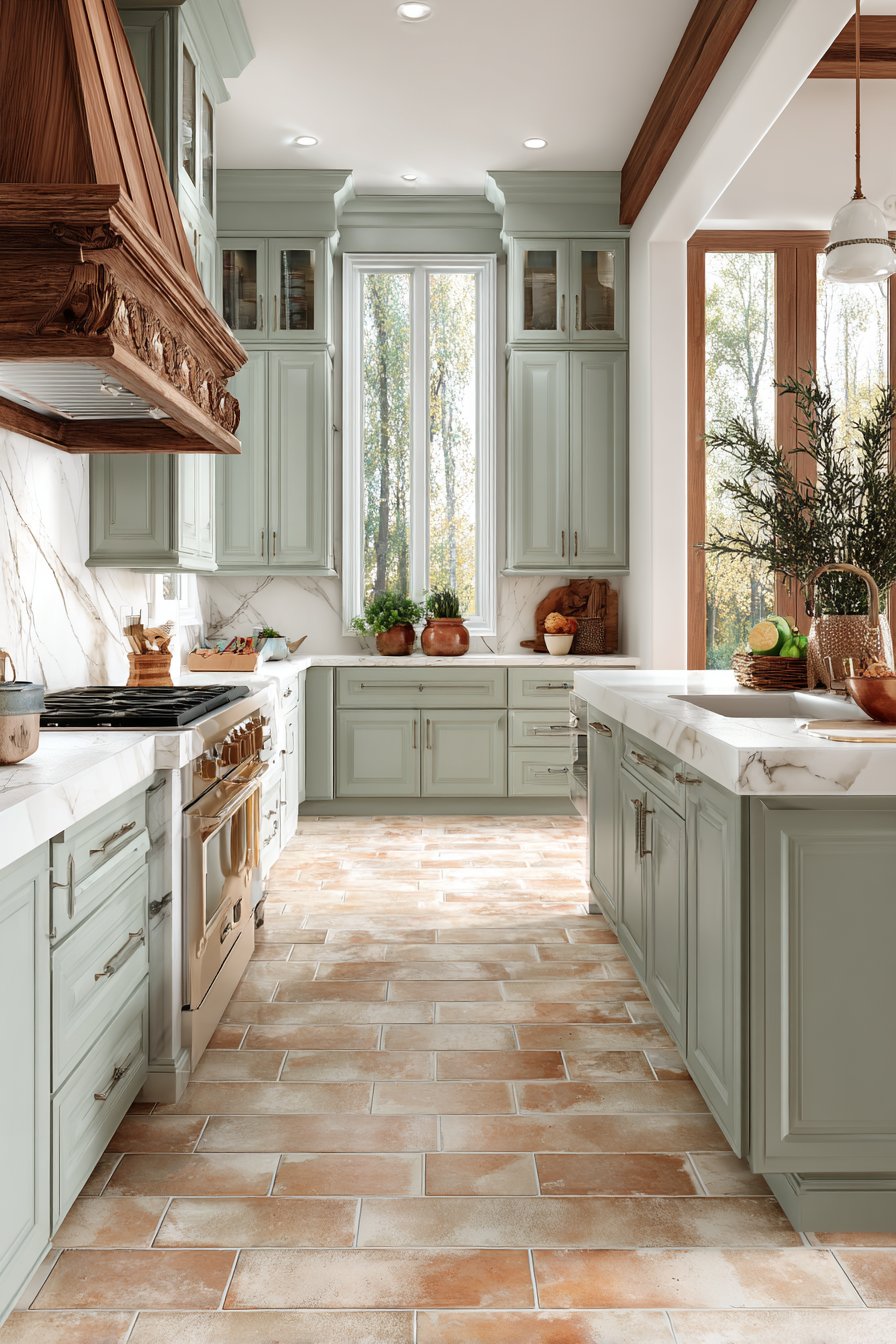
Terracotta floor tiles introduce warmth underfoot, their natural variation in color and texture creating visual interest that prevents the space from feeling too uniform or controlled. These tiles age beautifully, developing a soft patina that enhances their rustic appeal over time.
The combination of terracotta floors with sage green cabinetry and white marble creates a harmonious color palette inspired by Mediterranean farmhouses and English country estates. Soft diffused daylight from multiple windows illuminates the space evenly throughout the day, eliminating harsh shadows and creating an inviting atmosphere where traditional elements and practical functionality exist in perfect balance.
Key Design Tips:
- Select sage green paint with warm undertones to avoid a cold, institutional appearance, testing samples in various lighting conditions before committing
- Invest in honed marble rather than polished for countertops, as the matte finish hides water spots better and feels more appropriate for country design
- Choose a cast iron range with brass or bronze details rather than all stainless steel to maintain warmth in the overall aesthetic
- Design a custom range hood in wood to create architectural interest and avoid the sterile appearance of stainless steel ventilation
- Install terracotta tiles with natural variation rather than uniform pieces to celebrate the handcrafted quality inherent in country design
- Paint ceiling and trim in warm white rather than stark white to create cohesion with the sage green cabinetry and maintain the space’s gentle atmosphere
4. Cozy Breakfast Nook with Vintage Character
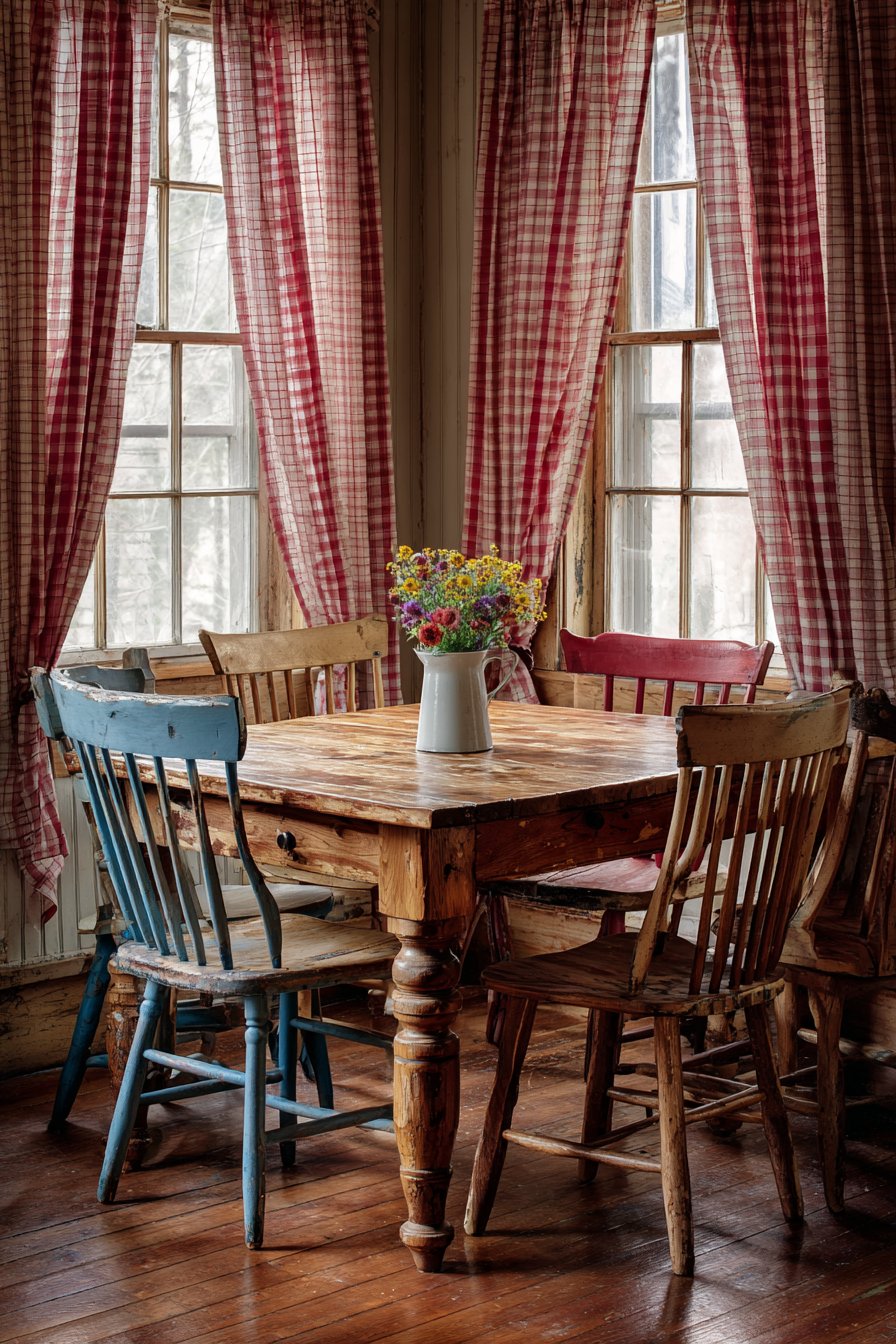
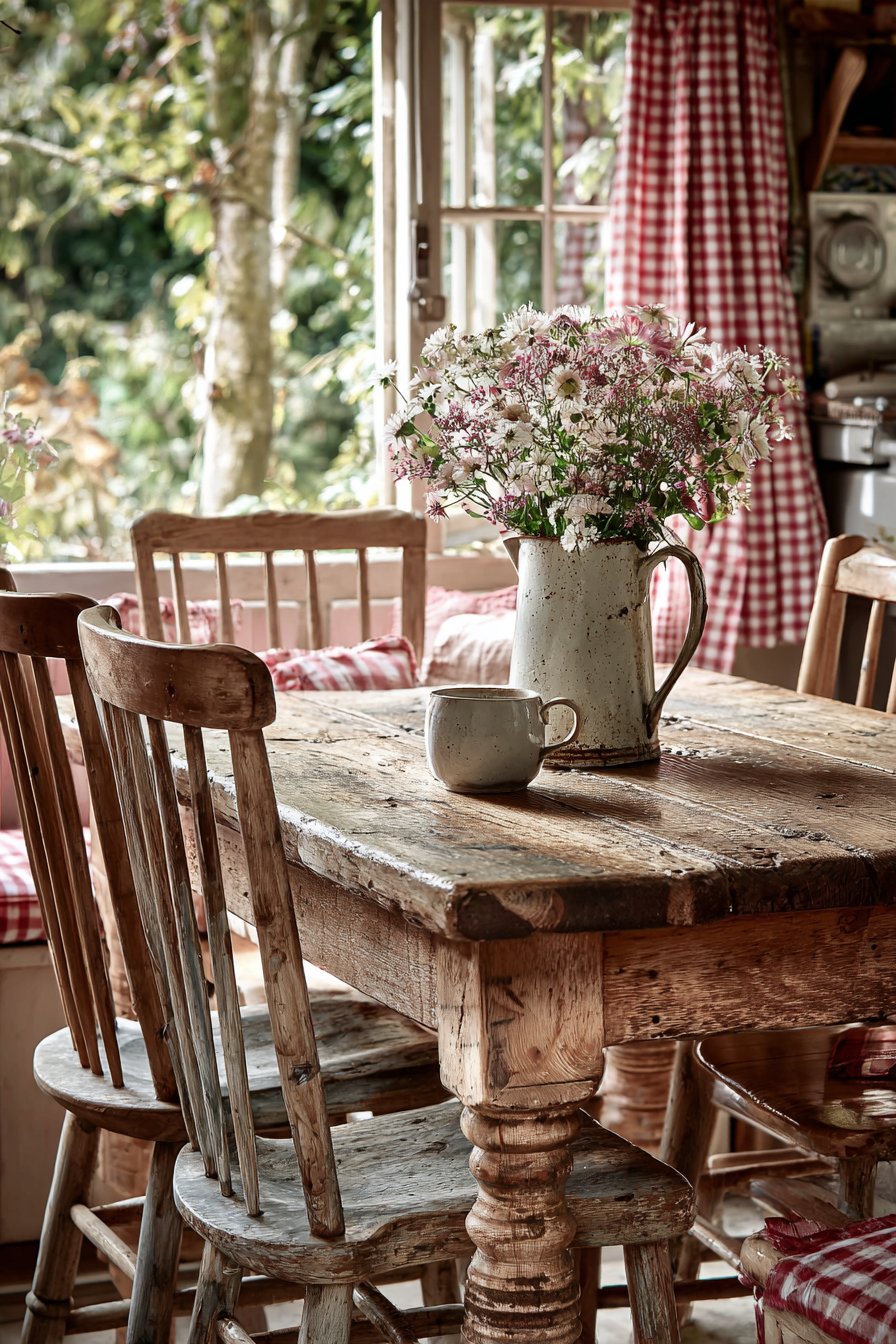
A charming breakfast nook transforms a simple window alcove into a beloved gathering spot where morning coffee and family conversations create daily rituals. The centerpiece is a rustic pine farmhouse table with natural distressing that reveals layers of history in every scratch and wear mark.
Hand-turned legs showcase traditional woodworking techniques, their graceful curves adding elegance to the table’s otherwise sturdy, utilitarian form. The natural pine develops a rich honey color over time, deepening in tone as it absorbs years of natural light and daily use.
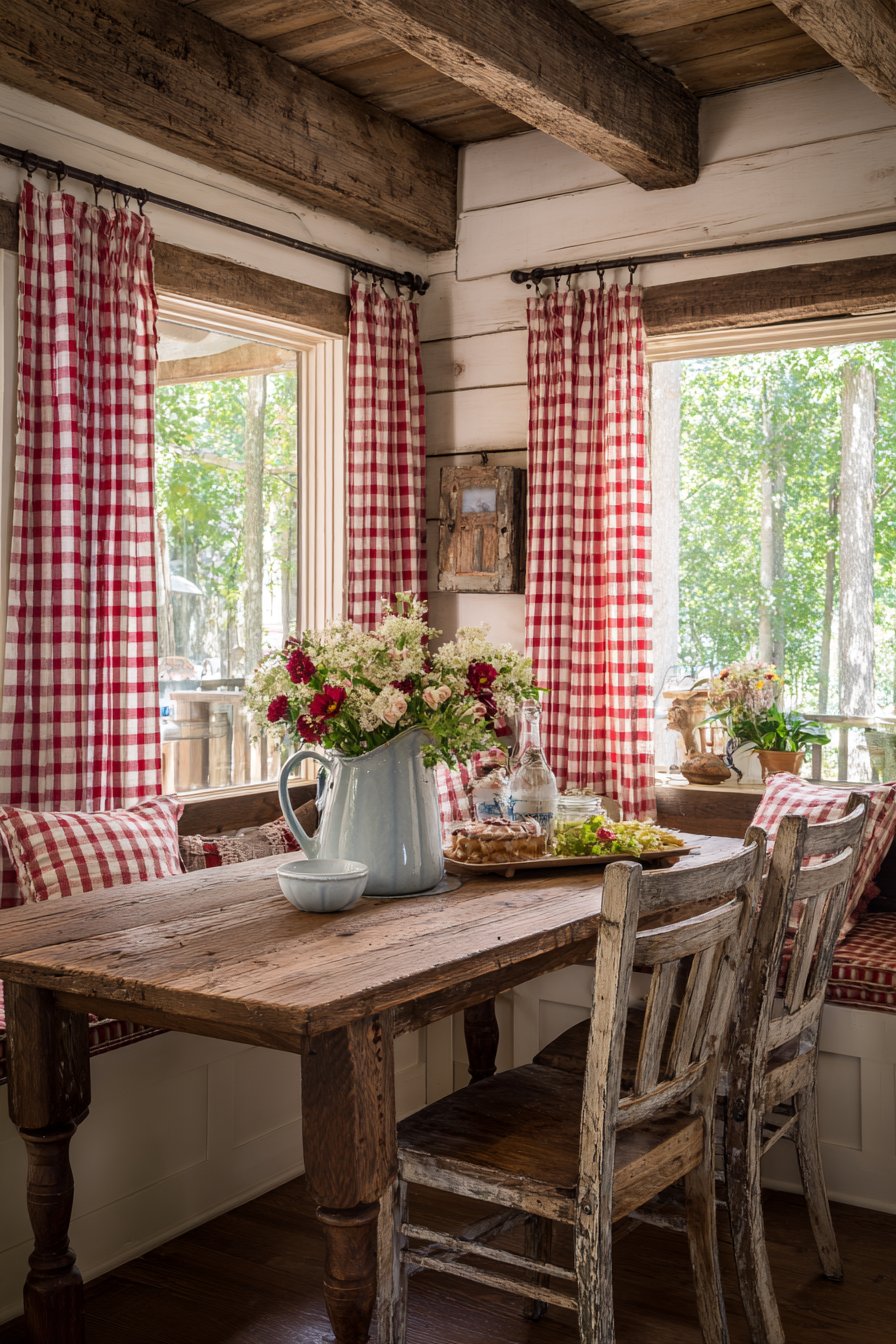
Mismatched vintage wooden chairs surround the table, each with its own history reflected in worn paint finishes that range from creamy white to soft blue-gray. This eclectic approach to seating prevents the space from feeling too coordinated or staged, instead creating an authentic, collected-over-time appearance that is the hallmark of genuine country style.
The various chair styles and finishes create visual interest while remaining harmonious through their shared vintage character and weathered patinas. Red and white gingham curtains frame the window alcove, their cheerful pattern adding a traditional country touch that never goes out of style.
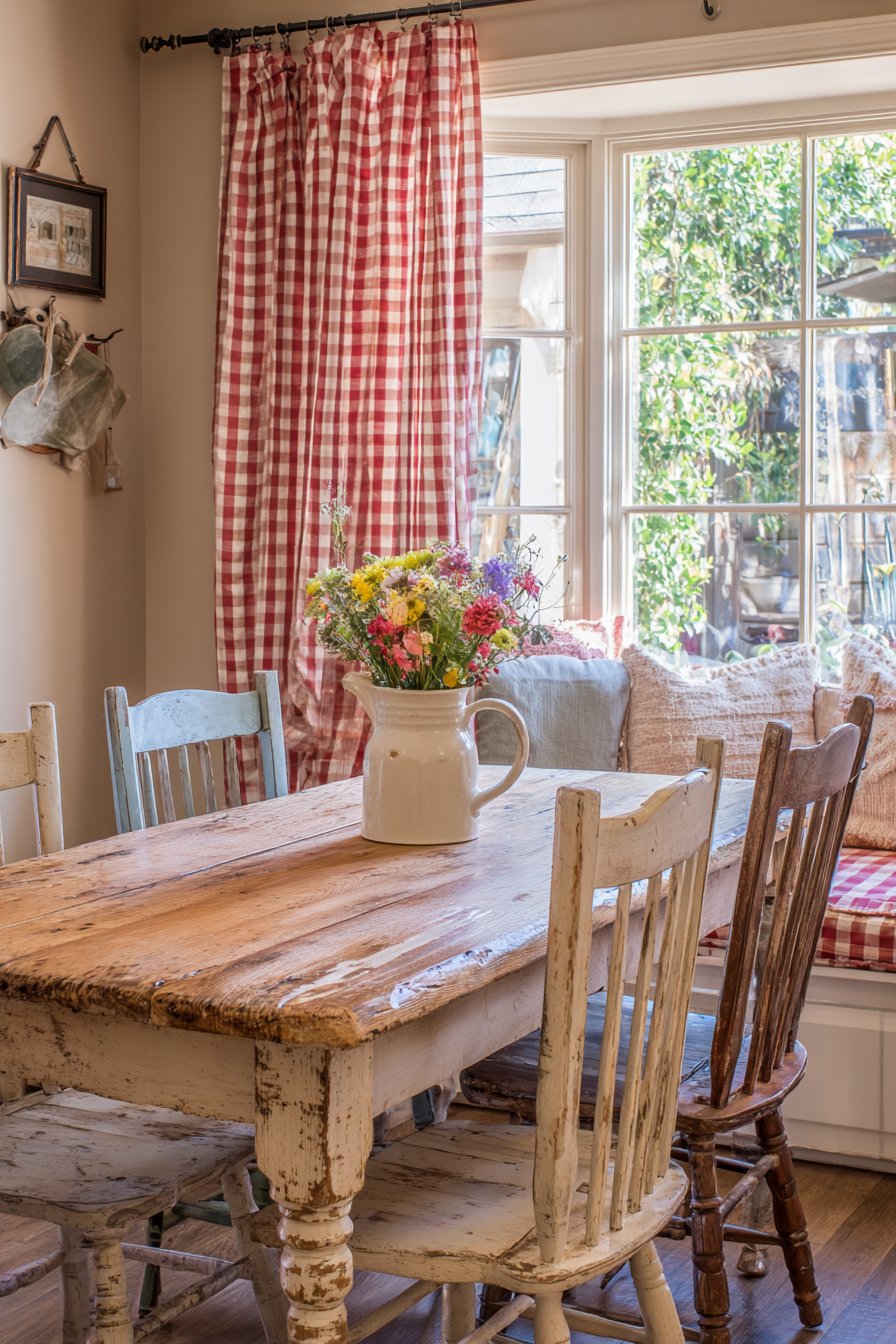
A vintage ceramic pitcher filled with fresh wildflowers sits casually on the table, bringing nature indoors and adding living color to the composition. The flowers change with the seasons—perhaps black-eyed Susans in summer, golden rod in autumn, or simple greenery in winter—keeping the display fresh and connected to the natural world outside.
Natural side lighting from the window emphasizes the authentic aged wood textures throughout the space, creating highlights and shadows that give depth to every surface. This breakfast nook exemplifies the comfortable, lived-in character that makes country kitchens so enduringly popular.
Key Design Tips:
- Search antique stores and estate sales for genuine vintage chairs rather than reproduction pieces to ensure authentic character and patina
- Leave natural distressing intact on farmhouse tables rather than refinishing, as these wear patterns add irreplaceable character and history
- Choose gingham curtains in classic color combinations like red and white or blue and white for timeless appeal that won’t date quickly
- Display flowers in vintage vessels like ceramic pitchers or enamelware containers rather than formal vases to maintain the casual, unpretentious aesthetic
- Position the breakfast nook near a window to maximize natural light and create a connection with outdoor views
- Layer textiles through seat cushions or a table runner to add comfort and softness while introducing additional pattern and color
5. Organized Pantry with Country Charm
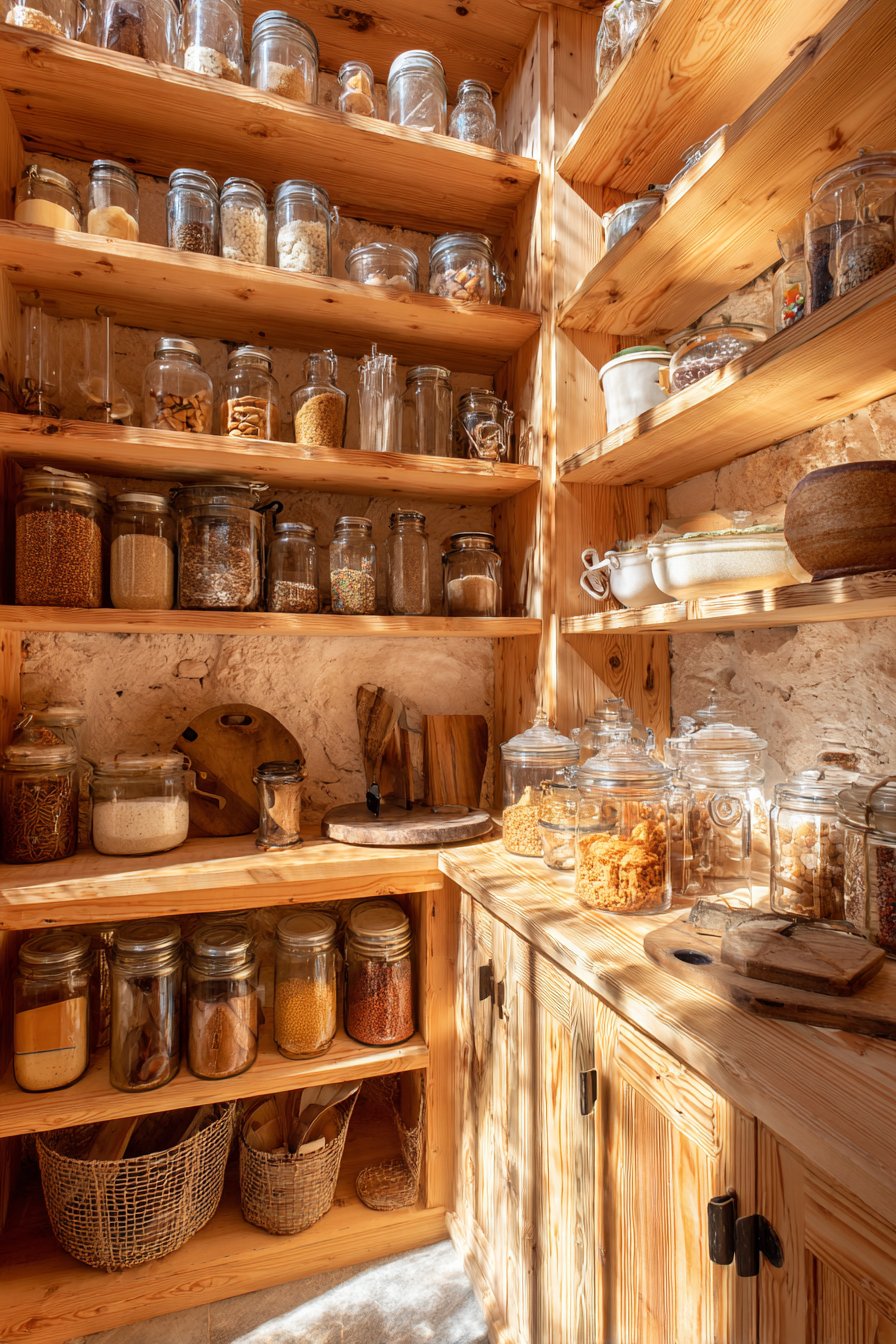
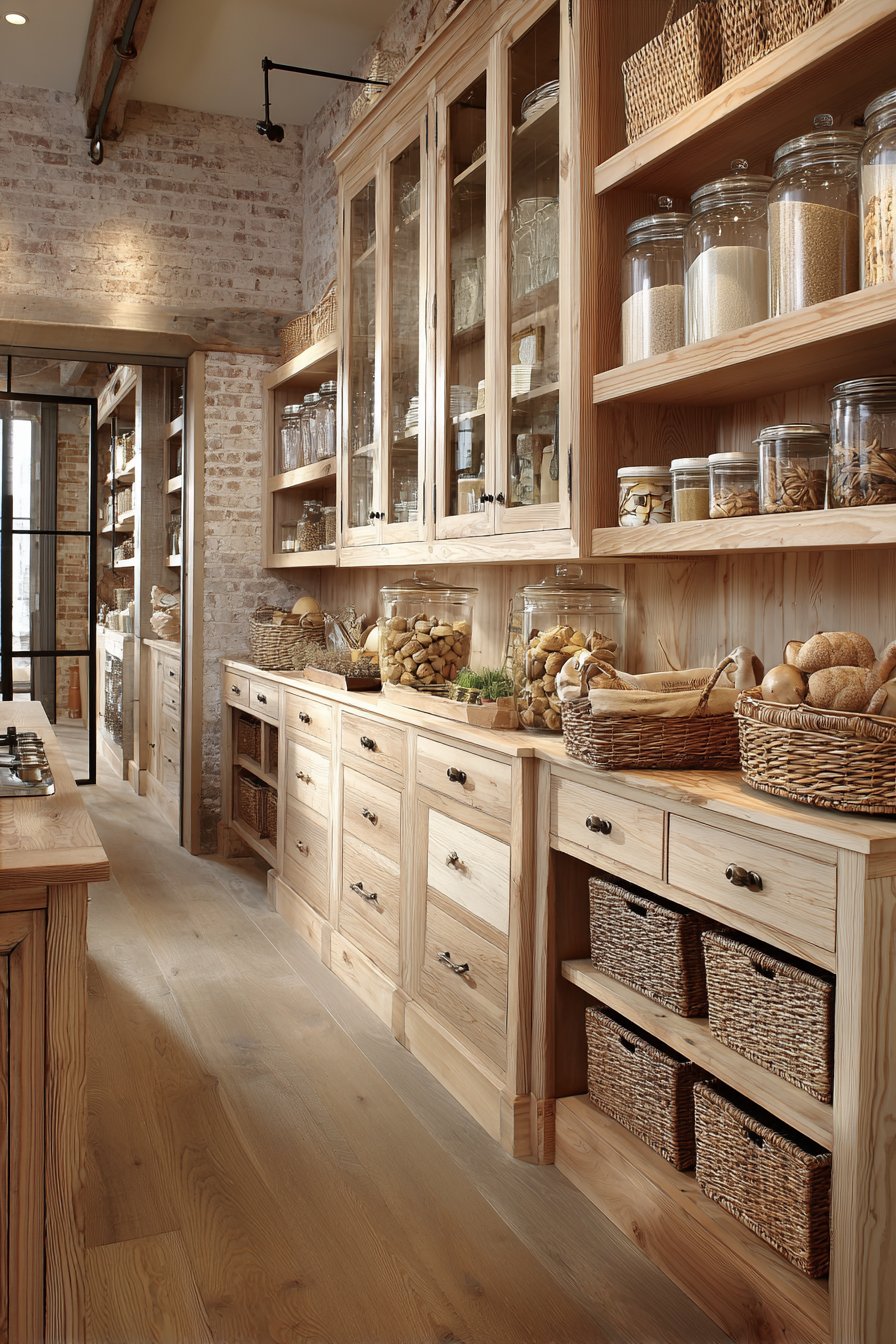
A thoughtfully designed pantry organization system transforms practical storage into a beautiful display that celebrates the abundance and variety of a well-stocked kitchen. Floor-to-ceiling open shelving constructed from natural pine with pronounced wood grain creates the architectural framework for this functional space.
The warm tones of pine add instant coziness while providing sturdy support for heavy storage items. Each shelf edge shows the authentic grain patterns and natural knots that make wood such an appealing material in country design, turning simple storage into an artful composition.
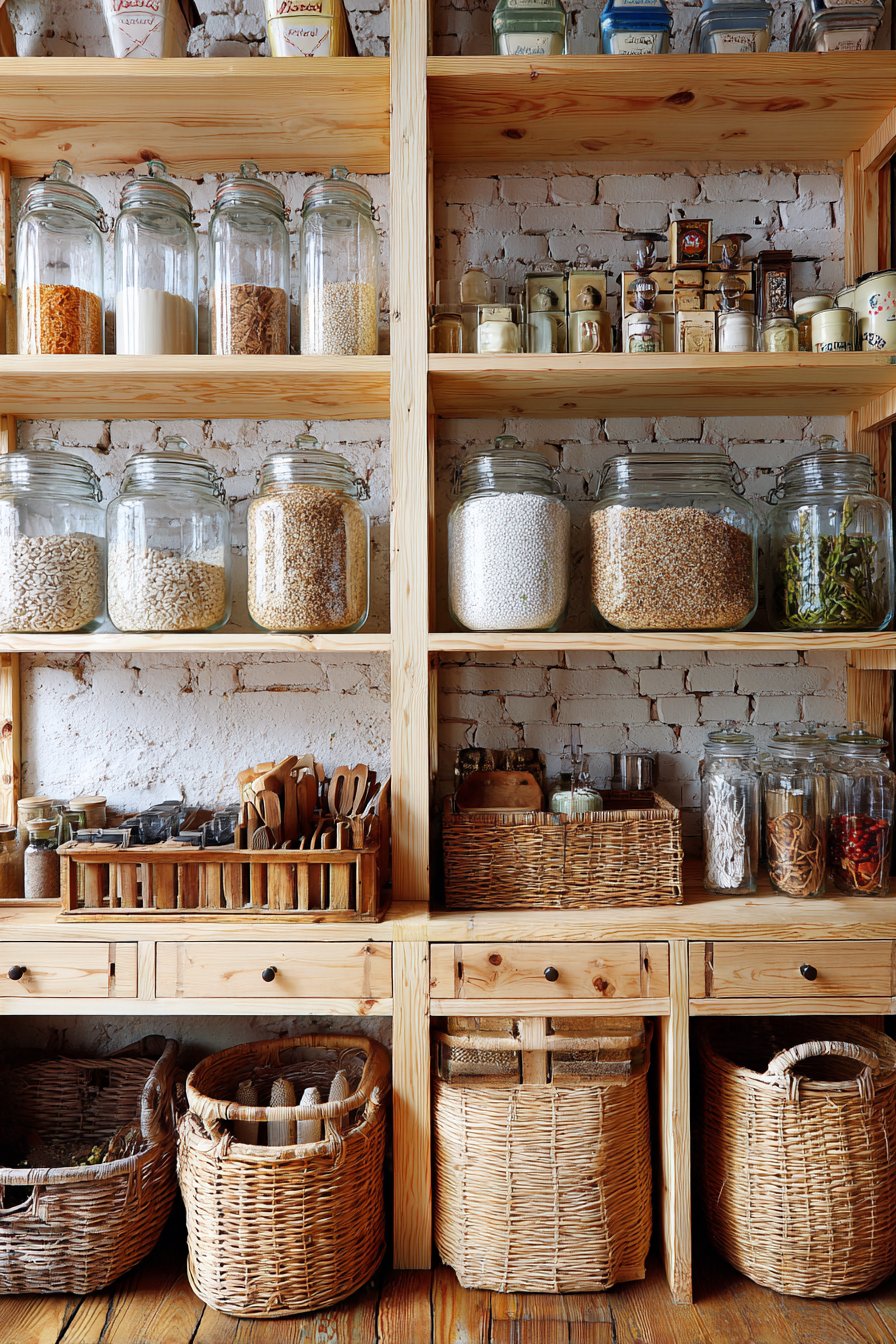
Wire baskets in various sizes provide practical storage solutions for items that benefit from air circulation—potatoes, onions, garlic, and other root vegetables that form the foundation of country cooking. Glass canisters with airtight seals protect dry goods like flour, sugar, pasta, and grains while allowing you to see contents at a glance, making meal preparation more efficient.
Vintage enamelware containers in cream with colored rims add nostalgic charm while storing everything from baking supplies to coffee and tea. The variety of storage vessels creates visual interest while maintaining the organized functionality essential in a working pantry.
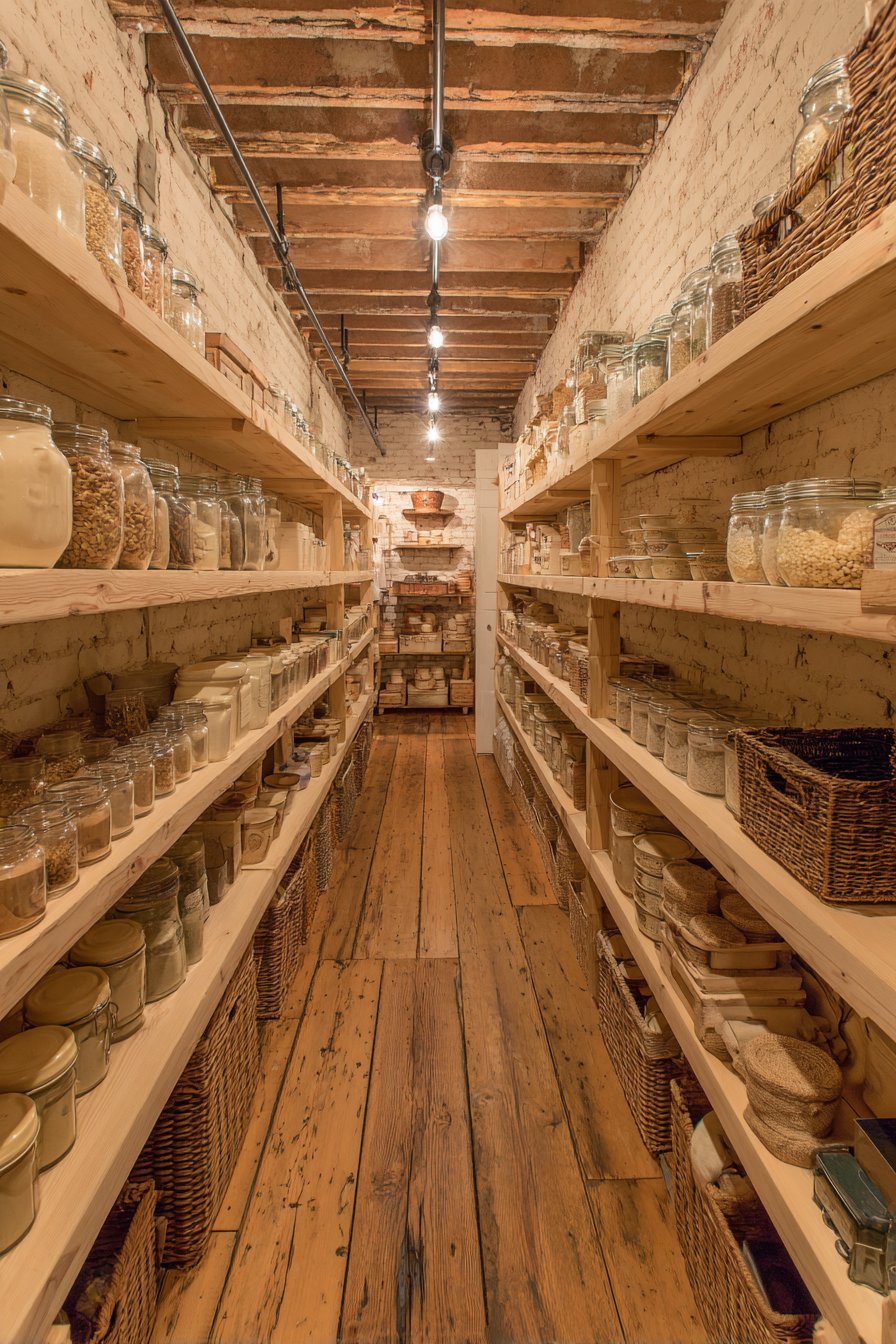
Whitewashed brick walls provide rustic texture behind the organized displays, their irregular surface and varied tones preventing the space from feeling too slick or modern. The whitewash technique allows the brick’s natural character to show through while brightening the space and creating a neutral backdrop for the colorful array of stored goods.
Natural overhead lighting creates gentle shadows that highlight the thoughtful arrangement and country charm of this functional storage space. This pantry proves that organization and beauty are not mutually exclusive—instead, they enhance each other when approached with attention to materials, color, and display.
Key Design Tips:
- Install adjustable shelving to accommodate items of various heights, from tall olive oil bottles to short spice jars, maximizing vertical space efficiency
- Group items by category using wire baskets and glass canisters to create visual order while making ingredients easy to locate during cooking
- Choose uniform glass canisters with matching lids to create cohesion despite the variety of contents, maintaining visual calm in a busy space
- Incorporate vintage enamelware pieces for character and nostalgic appeal, mixing old and new storage solutions throughout the pantry
- Apply whitewash to brick walls rather than solid paint to preserve texture and maintain the rustic quality appropriate for country design
- Label containers clearly using vintage-style tags or chalkboard labels to maintain organization while adding another layer of authentic detail
6. Soapstone and Beadboard Timeless Appeal
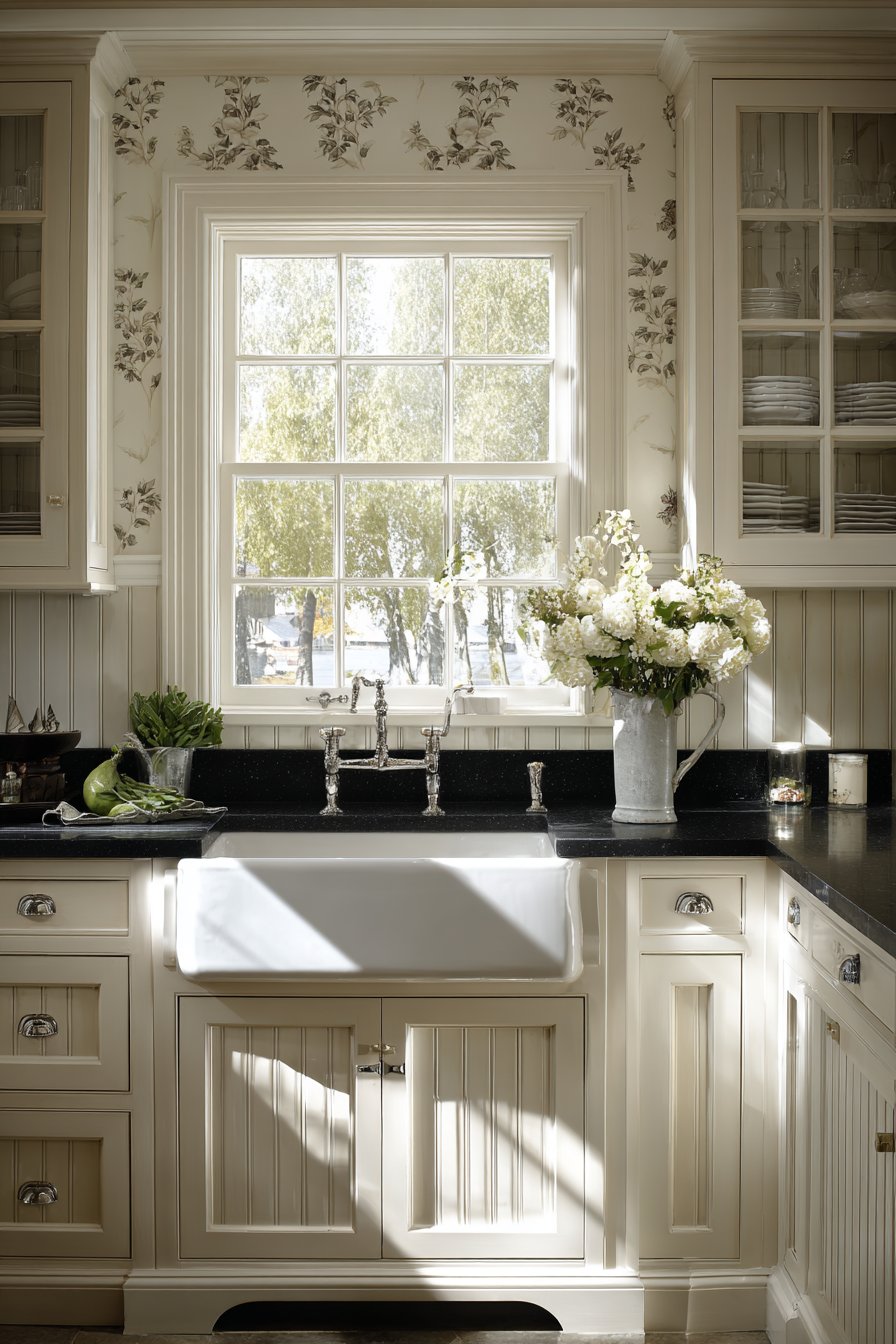
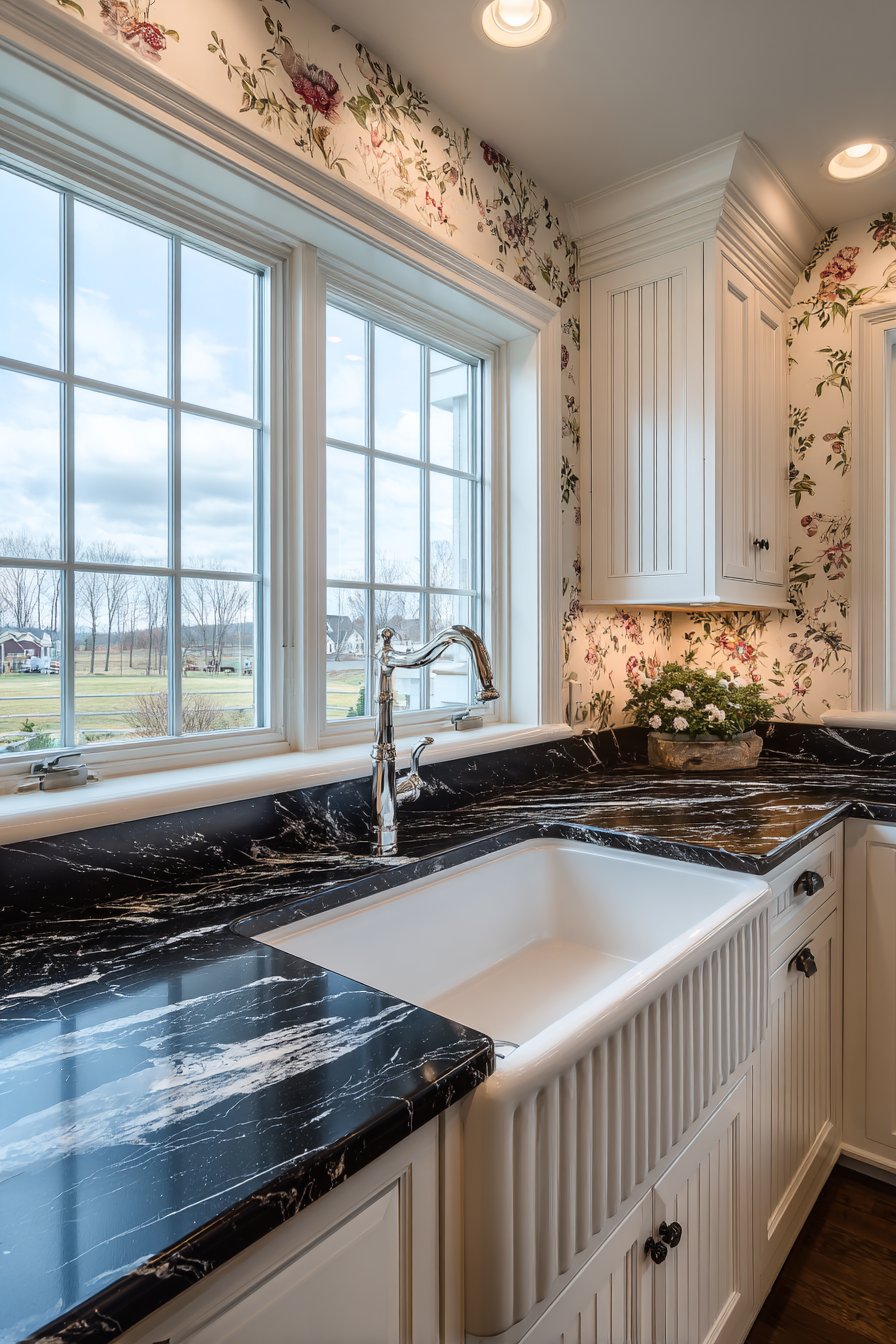
The kitchen sink area becomes a study in timeless elegance through the careful combination of classic materials and traditional architectural details. An apron-front farmhouse sink in generous proportions sits beneath a large window with simple white trim, creating a bright workspace where natural light makes dishwashing and food preparation more pleasant.
The surrounding countertop of honed black soapstone provides a dramatic yet practical work surface, its soft matte finish and subtle natural veining creating sophisticated beauty that improves with age and use. Soapstone develops a rich patina over time as oils from hands and cooking gradually darken its surface, making each countertop unique.
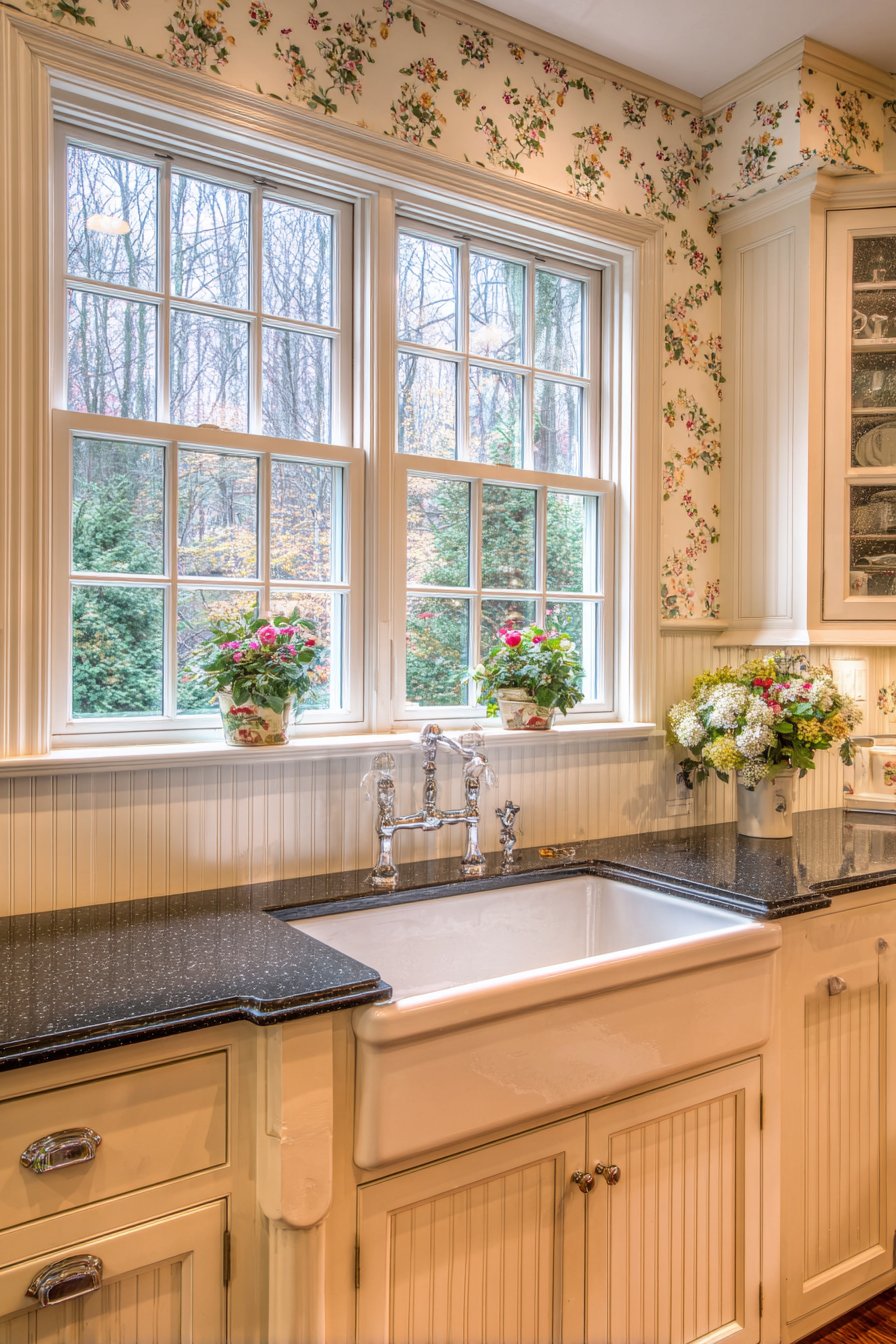
Beadboard wainscoting painted in warm white extends along the walls below the countertop level, its vertical grooves adding subtle texture and traditional architectural character. This practical wall treatment protects surfaces from splashes and scuffs while introducing a cottage-style detail that softens the overall appearance.
Above the beadboard, wallpaper featuring small floral sprigs introduces pattern and color without overwhelming the space. The delicate scale of the print maintains the room’s gentle, unpretentious character while adding visual interest that draws the eye upward and makes the space feel more complete.
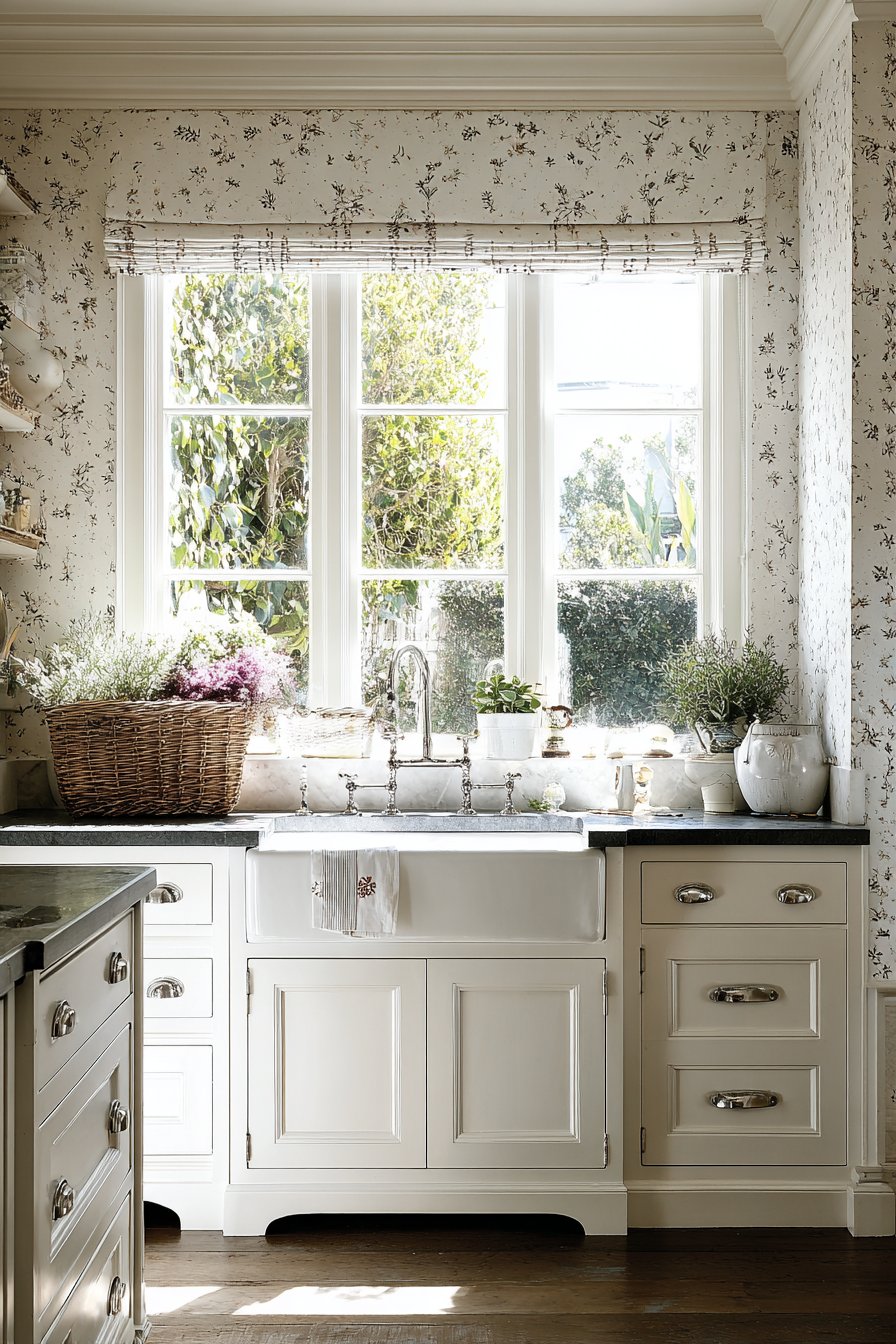
The combination of black soapstone with white beadboard creates a classic contrast that feels both traditional and surprisingly contemporary. Natural lighting from the window above the sink illuminates these materials throughout the day, highlighting the soapstone’s subtle veining and the crisp definition between wall treatments. This sink area demonstrates how traditional materials and timeless design elements create practical elegance that transcends passing trends, resulting in a kitchen that will remain beautiful and functional for generations.
Key Design Tips:
- Choose honed soapstone rather than polished to embrace the soft, matte finish that is most appropriate for country kitchen design
- Allow soapstone to develop its natural patina rather than fighting the darkening process with mineral oil treatments that accelerate the aging
- Install beadboard wainscoting to standard chair-rail height, typically thirty-two to thirty-six inches, for proper proportion and traditional appearance
- Select wallpaper with small-scale patterns rather than large, bold designs to maintain the gentle, understated quality of country style
- Position the sink beneath a window whenever possible to maximize natural light in this frequently used workspace
- Paint beadboard in warm white or cream rather than stark white to create harmony with other warm elements in the space
7. Cathedral Ceiling with Rustic Beams
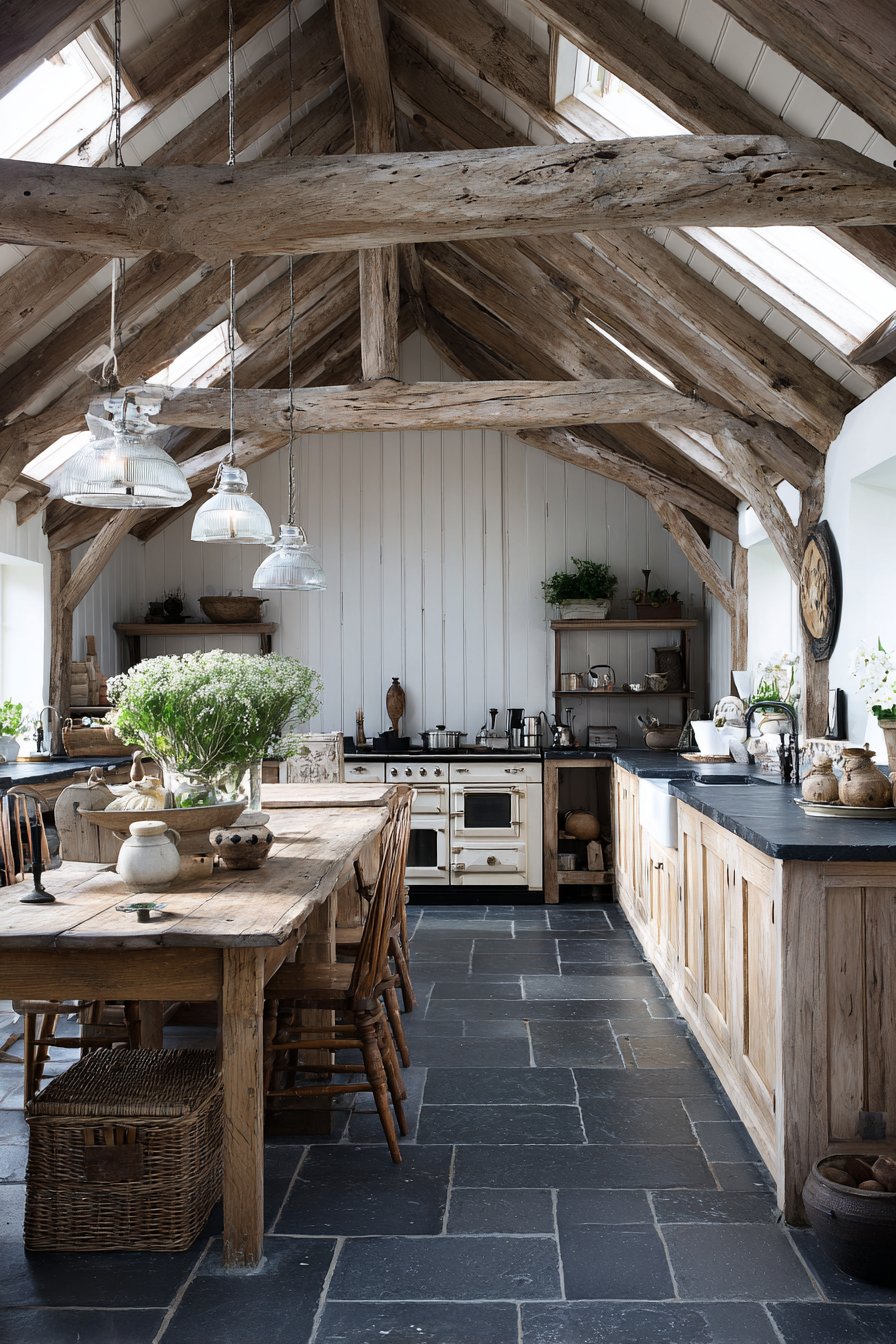
Exposed ceiling beams in natural oak draw the eye upward, their authentic age marks and varied grain patterns adding architectural character that transforms an ordinary kitchen into something extraordinary. These substantial beams showcase the natural beauty of aged wood, including the checking, slight warping, and color variations that develop over decades.
Rather than viewing these characteristics as flaws, country kitchen design celebrates them as evidence of authenticity and history. The beams create visual rhythm across the ceiling plane while providing structural interest that makes the space feel more established and architecturally significant.
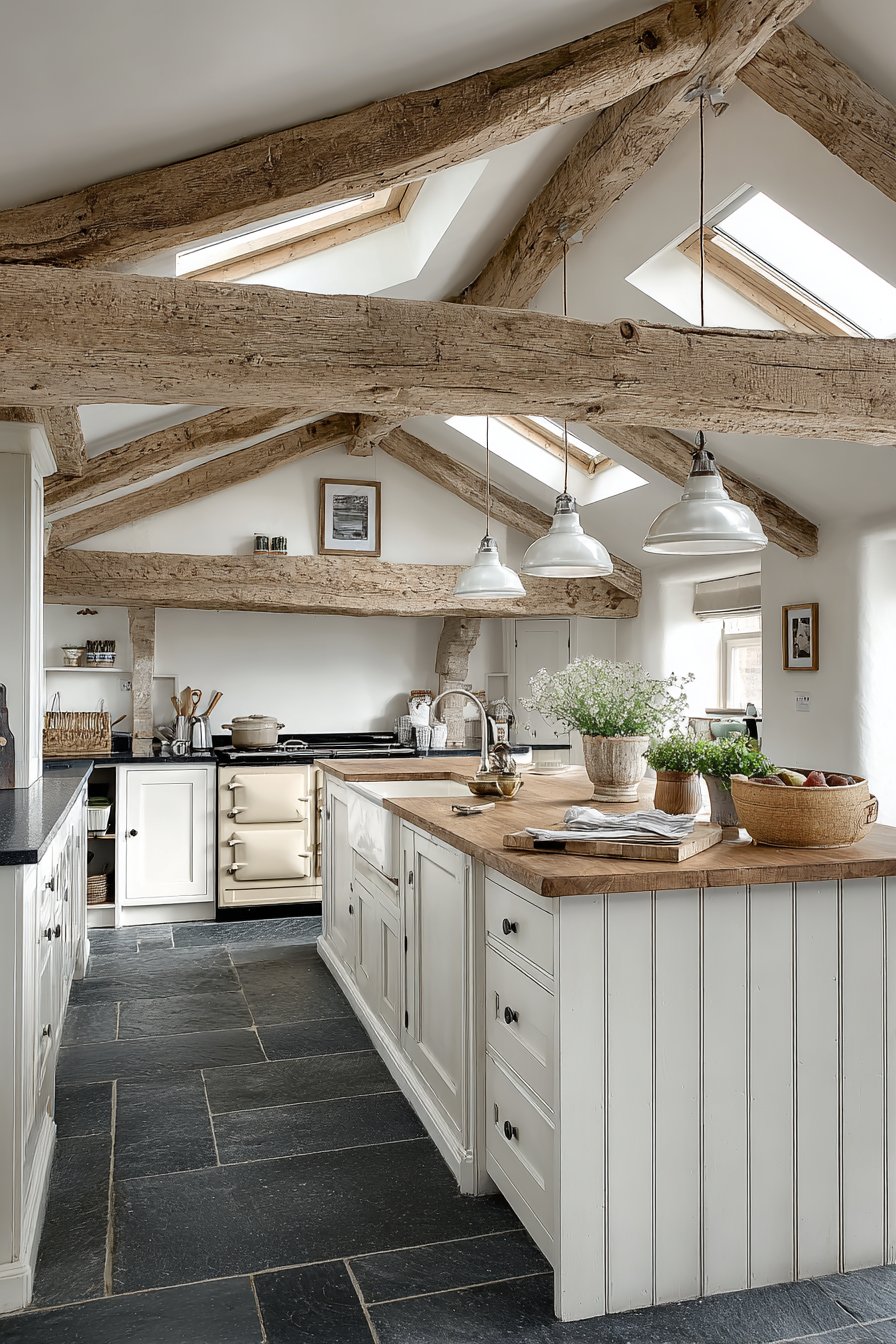
Pendant lights with seeded glass shades hang at varying heights above the workspace, their bubbled glass diffusing light while adding vintage character. The seeded glass creates interesting light patterns on surrounding surfaces, with tiny bubbles catching and refracting illumination in constantly changing ways as you move through the space.
These pendants provide essential task lighting while serving as decorative elements that reinforce the kitchen’s country aesthetic. White-painted tongue-and-groove paneling covers the walls, creating classic cottage charm through its horizontal lines and subtle texture.
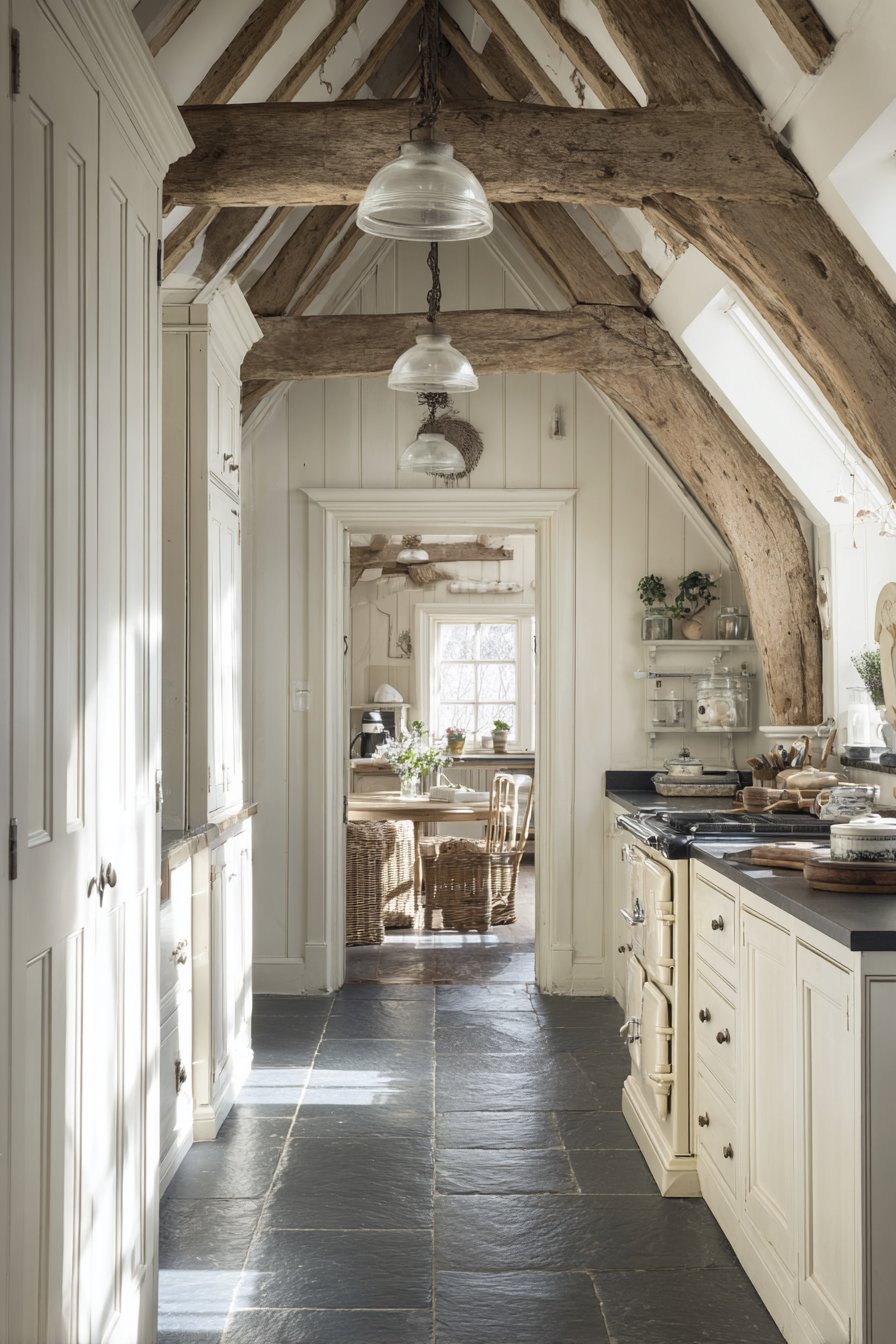
Dark slate floor tiles provide durable contrast to the lighter walls and ceiling, grounding the space and offering practical benefits for a high-traffic kitchen. Slate’s natural cleft surface provides slip resistance while hiding the inevitable spills and crumbs that occur during cooking and meal preparation.
The stone’s dark gray-black tones create visual weight at the floor level, preventing the white walls and natural wood beams from feeling too light or insubstantial. Soft natural lighting from skylights creates atmospheric depth, illuminating the architectural character of the country kitchen design and emphasizing the beautiful interplay between structural elements and decorative details.

Key Design Tips:
- Source authentic aged beams from architectural salvage rather than new wood with artificial distressing to ensure genuine character and patina
- Install beams that are structurally appropriate for the span and space, consulting with an engineer if necessary to maintain safety
- Choose pendant lights with seeded or wavy glass rather than clear glass for vintage authenticity and more interesting light diffusion
- Paint tongue-and-groove paneling in white or warm white to brighten the space while maintaining the textural interest of the boards
- Select slate tiles with natural cleft surface rather than a honed finish to maximize slip resistance and maintain rustic character
- Add skylights if possible to bring natural light from above, creating dramatic illumination of ceiling beams and vertical dimension
8. Vintage Hoosier Cabinet Focal Point
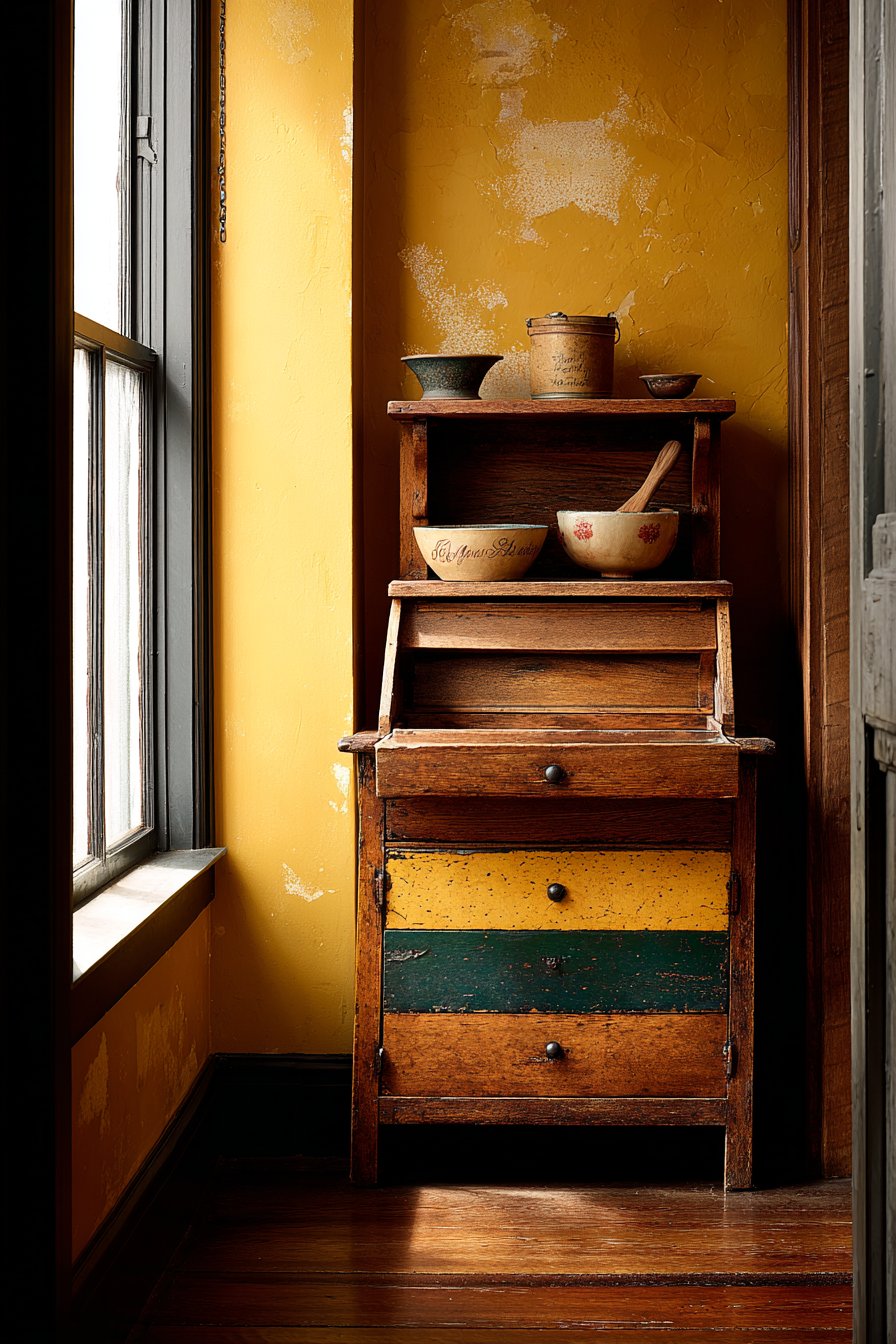
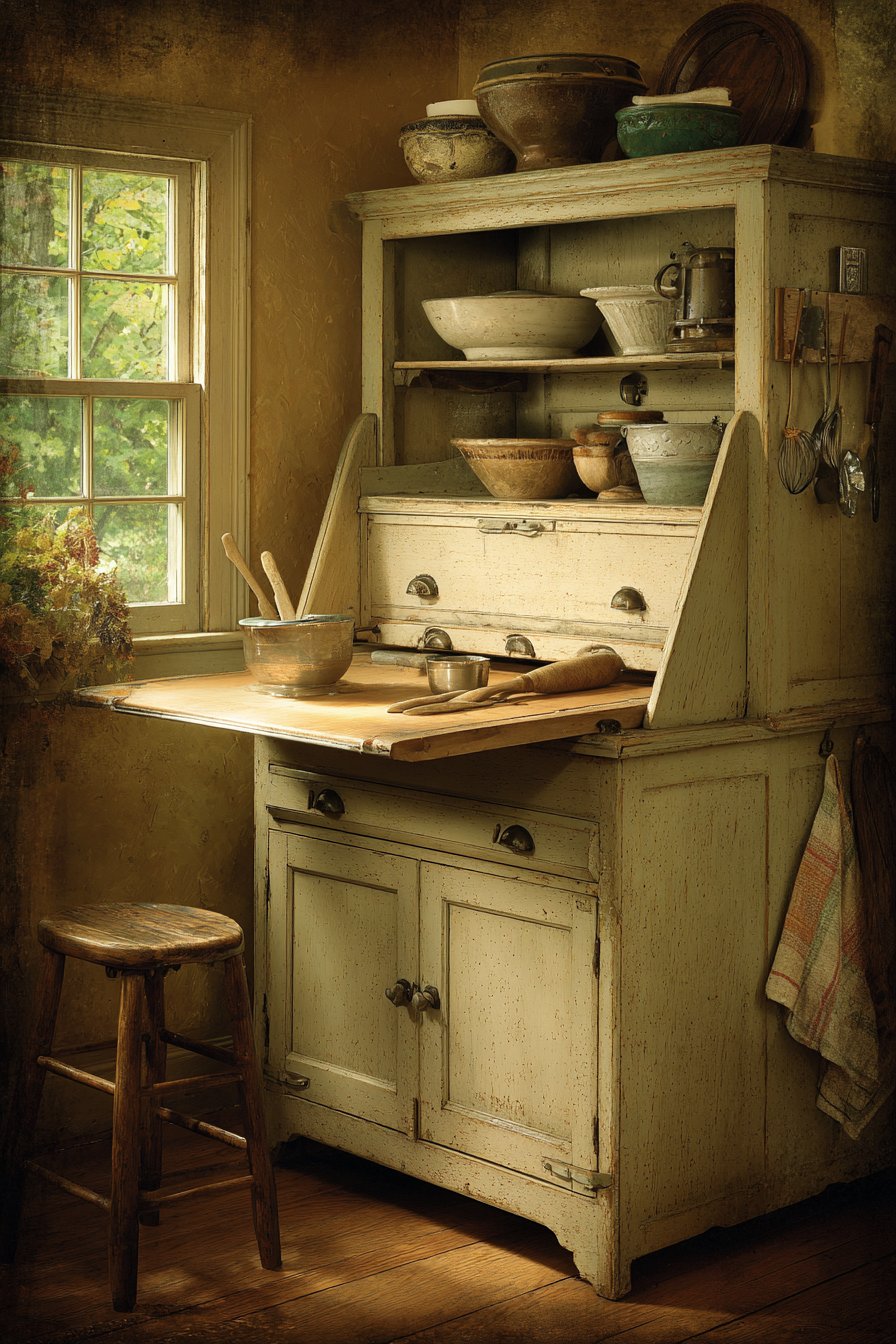
A vintage-style Hoosier cabinet commands attention in one corner of the kitchen, its original two-tone finish of natural wood base and painted upper section representing authentic early twentieth-century design. This iconic piece of Americana combines ingenious storage solutions with compact efficiency, featuring a flour bin with built-in sifter, a pull-out work surface that extends the workspace when needed, and an array of drawers and compartments designed for specific purposes. The cabinet displays antique mixing bowls in yellowware and stoneware along with period-appropriate kitchen tools that transform functional items into decorative elements celebrating culinary history.
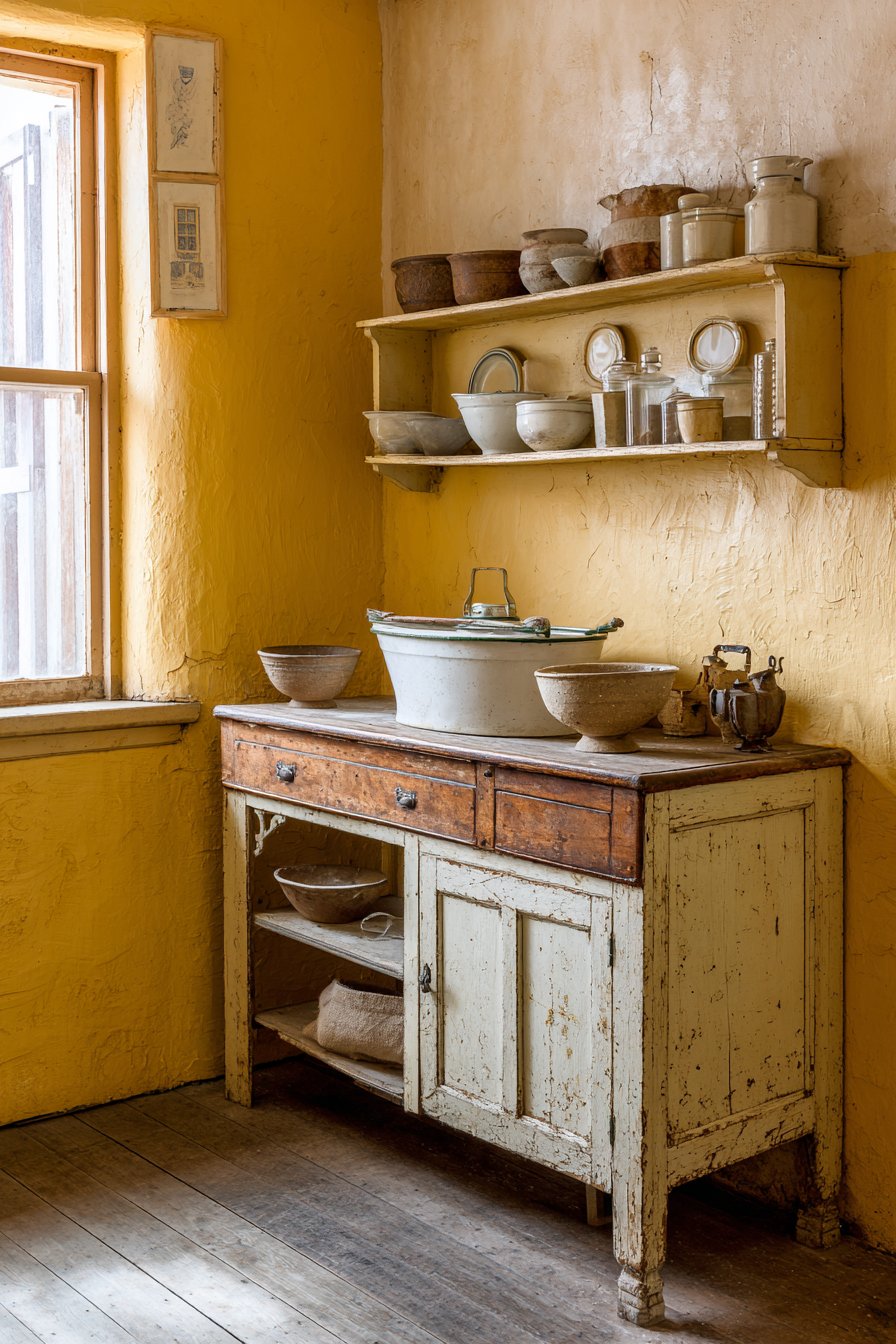
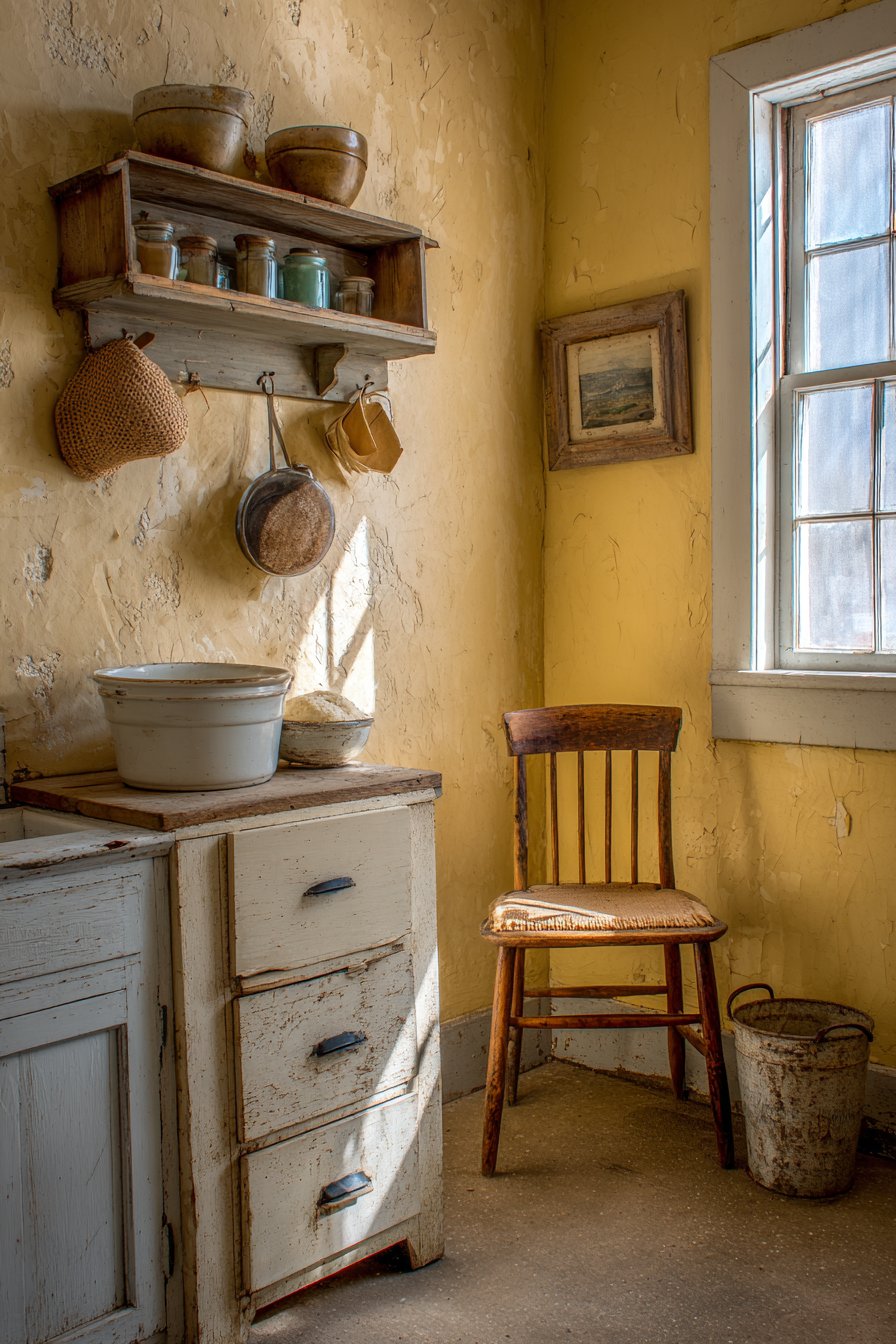
The walls surrounding the cabinet feature butter yellow paint with slight color variation that suggests hand application rather than the uniform coverage of modern painting techniques. This subtle irregularity in color creates depth and interest while evoking the handcrafted quality that characterizes authentic country interiors.
The warm yellow tone brightens the corner while complementing the cabinet’s original finish and creating a cheerful backdrop for food preparation activities. Natural light from a nearby window creates warm highlights on the aged wood surfaces, emphasizing every scratch, wear mark, and patina detail that contributes to the cabinet’s authentic character.
This corner arrangement demonstrates how a single significant vintage piece can anchor an entire kitchen design, providing both practical storage and substantial visual impact. The Hoosier cabinet represents a time when kitchen furniture was freestanding rather than built-in, offering flexibility and portability that modern cabinetry lacks.
Its presence in a contemporary country kitchen creates a tangible connection to culinary history while providing surprisingly functional storage that remains relevant despite changing cooking methods and technologies.
Key Design Tips:
- Invest in an authentic vintage Hoosier cabinet rather than a reproduction to ensure genuine construction quality and authentic hardware
- Maintain the original finish whenever possible rather than refinishing, as the aged patina represents irreplaceable character accumulated over decades
- Display period-appropriate items in the cabinet to maintain historical integrity, choosing mixing bowls, utensils, and tools from the appropriate era
- Position the cabinet near a window to maximize natural light that will enhance the wood’s warm tones and highlight details
- Choose wall colors that complement the cabinet’s original finish, testing paint samples against the wood before committing
- Keep the surrounding area relatively simple to allow the Hoosier cabinet to remain the focal point without visual competition
9. Brick Accent Wall Cooking Zone
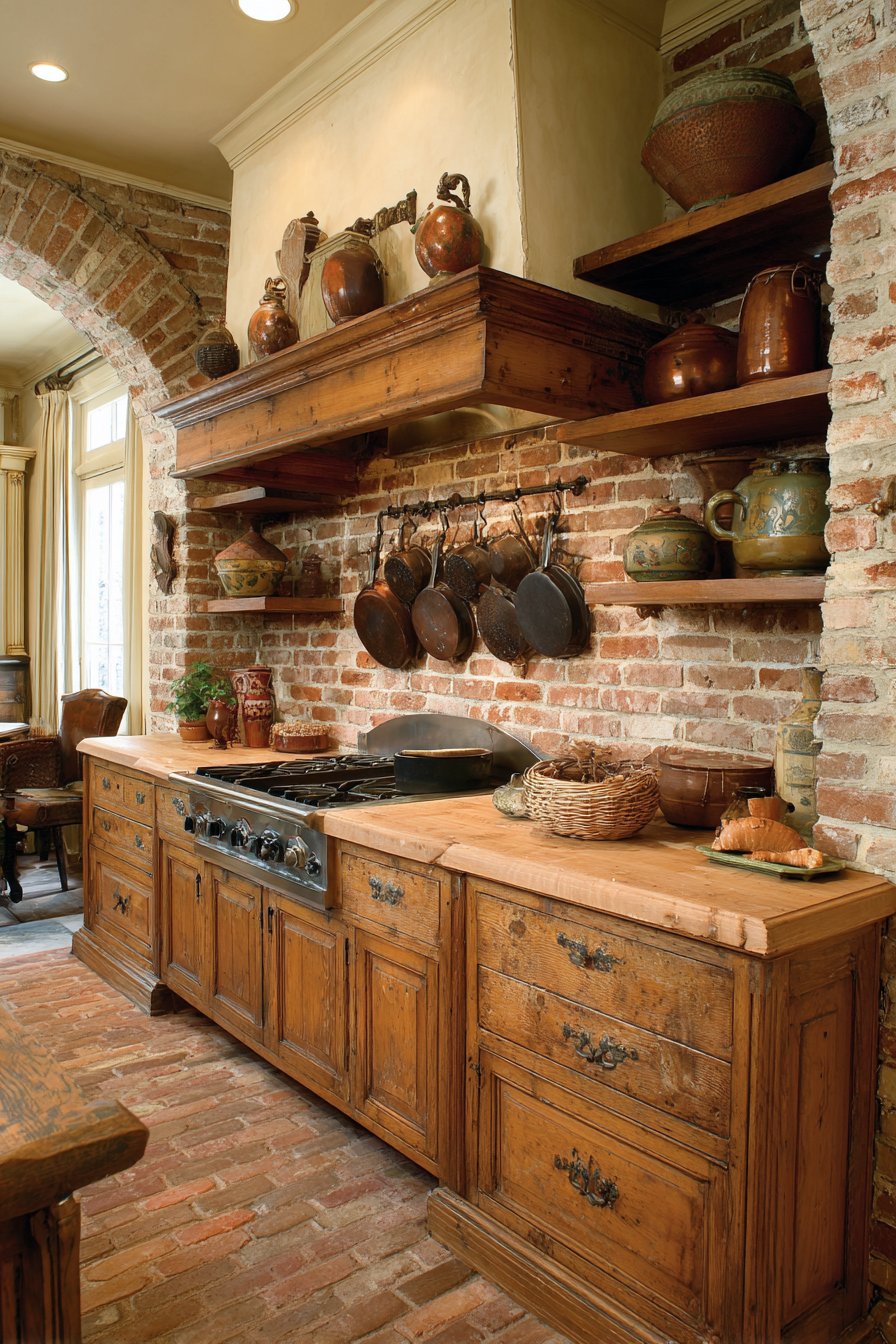
A brick accent wall in warm red tones creates a stunning backdrop for the cooking area, its natural size and color variations introducing substantial texture and rustic warmth. The brick’s irregular surface creates endless visual interest through the play of light and shadow across its uneven face, with individual bricks displaying subtle differences in hue from deep burgundy to soft terra cotta.
This authentic material choice references traditional hearth walls and outdoor cooking areas, bringing historical resonance to the modern kitchen. The brick requires no maintenance beyond occasional cleaning while developing an increasingly beautiful patina as it absorbs cooking aromas and ages gracefully.
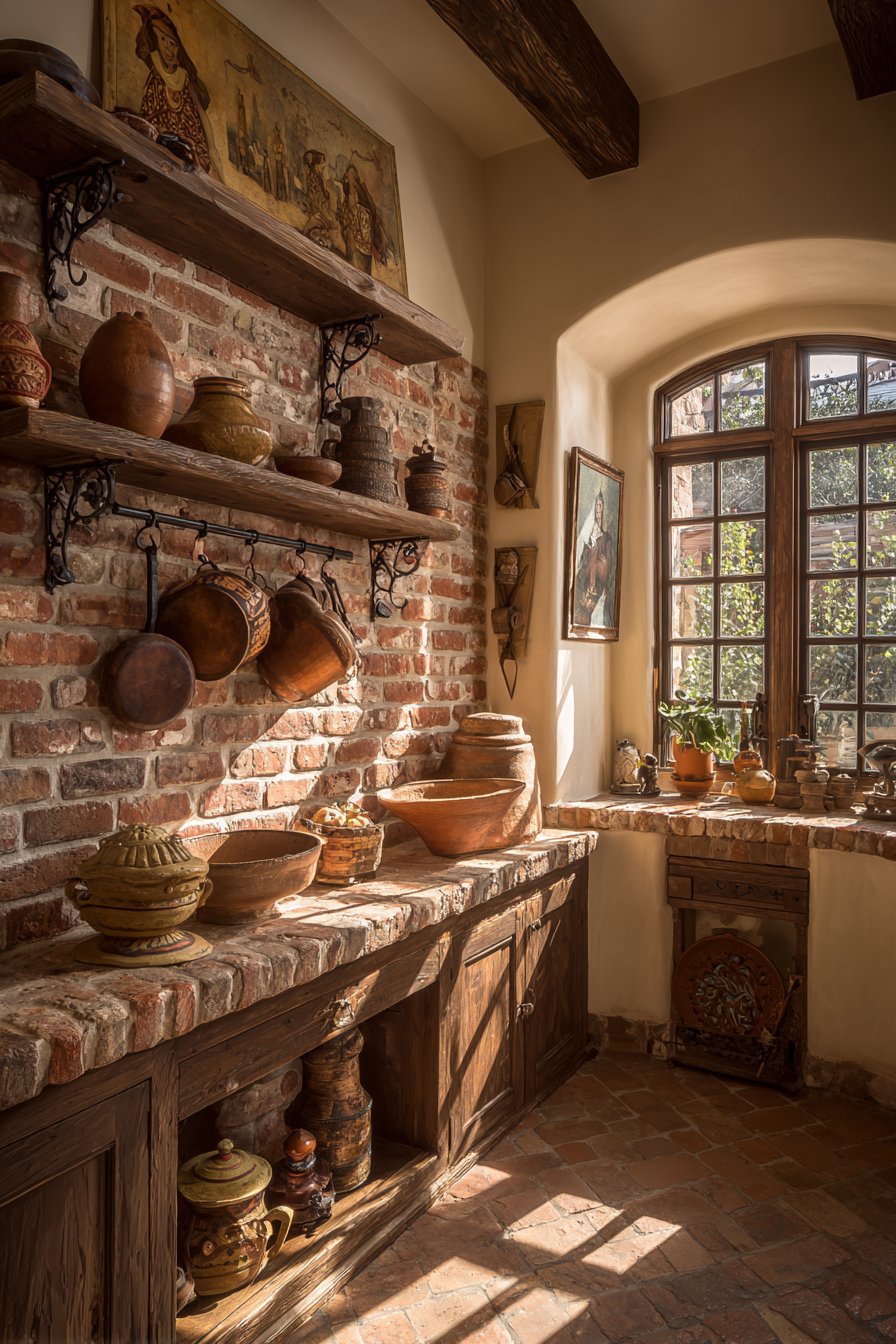
Wooden open shelving supported by wrought iron brackets extends across the brick wall, creating practical storage that displays pottery and vintage copper molds. The thick pine shelves provide substantial support for heavy cookware while introducing warm wood tones that complement the red brick beautifully.
Displayed pottery in earth tones and hand-thrown ceramics creates an artful composition that celebrates handcrafted objects, while copper molds in various shapes add metallic warmth and reflect light throughout the cooking zone. A substantial pot rack hangs from the ceiling above the range, displaying cast iron skillets and enamel cookware that remain readily accessible while adding visual interest at eye level.
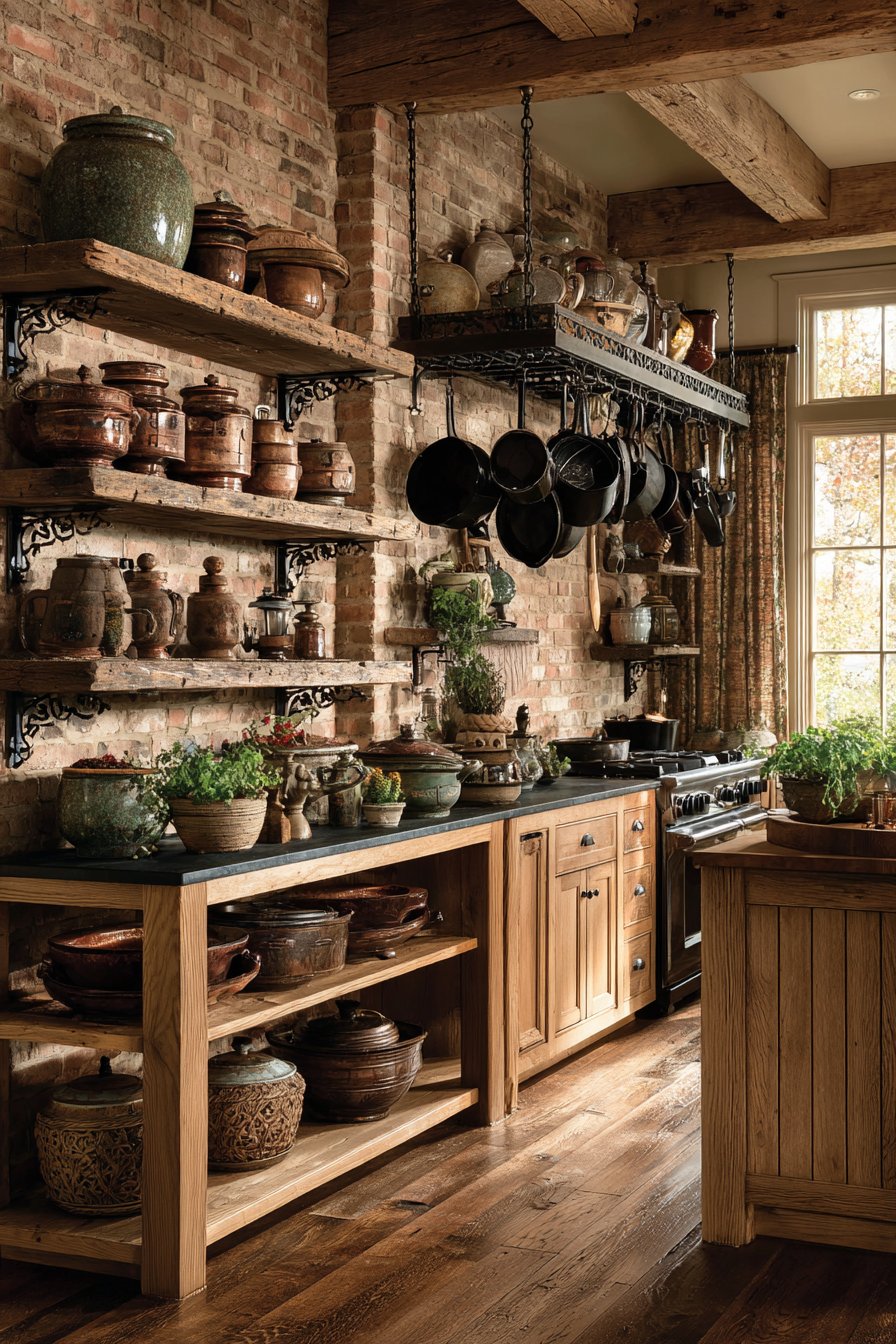
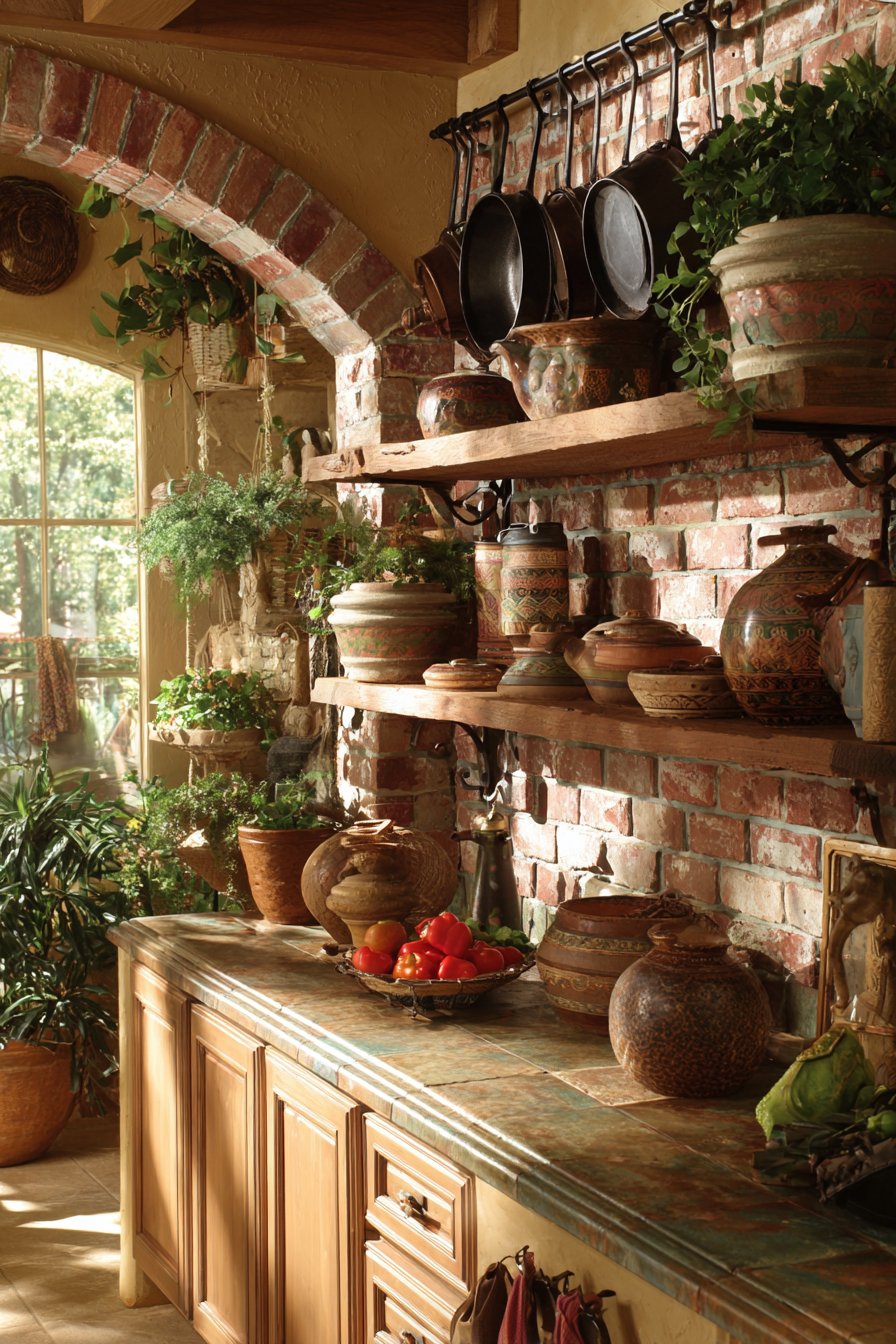
The functional cooking zone arrangement places everything needed for meal preparation within easy reach while creating a layered, textured composition that is as beautiful as it is practical. Afternoon light streaming through nearby windows emphasizes the textural richness of brick, wood, iron, and copper, creating warm highlights and deep shadows that give the space dimensional depth. This design approach transforms the utilitarian cooking area into the kitchen’s most visually compelling zone, celebrating the tools and materials of cooking as objects worthy of display and appreciation.
Key Design Tips:
- Choose brick with natural color variation rather than uniform manufactured brick to ensure authentic rustic character and visual interest
- Install wrought iron brackets with adequate weight capacity to support heavy cookware and pottery safely over time
- Select thick pine shelves, at least two inches, to provide visual substance and practical support for displayed items
- Display items that you actually use rather than purely decorative pieces, maintaining the authentic working kitchen atmosphere
- Hang pot racks at an appropriate height to avoid head bumps while keeping frequently used cookware easily accessible
- Position the brick accent wall behind the range where heat resistance is beneficial and cooking activities create natural focal point
10. Harvest Table Dining and Gathering Space
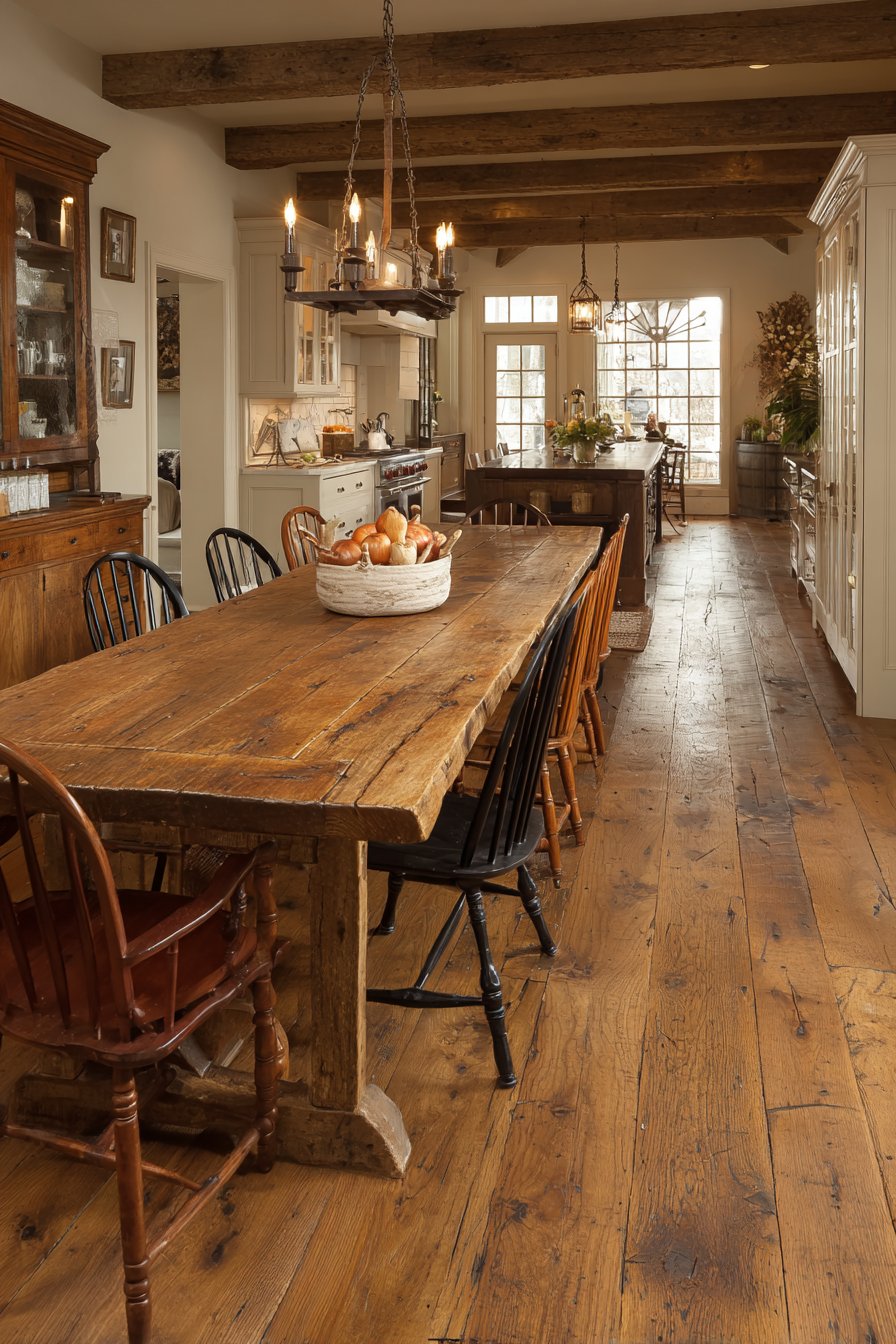
The kitchen’s dining area features a magnificent harvest table crafted from reclaimed heart pine, its lengthy surface capable of accommodating large family gatherings and festive celebrations. Visible nail holes and natural patina tell the story of the wood’s previous life, likely as flooring or structural beams in a historic building before being carefully salvaged and transformed into this stunning table.
The heart pine’s rich color—deeper and more saturated than new pine—creates warm amber tones that glow beautifully in natural light. The substantial thickness of the tabletop and its solid construction ensure this piece will serve multiple generations.
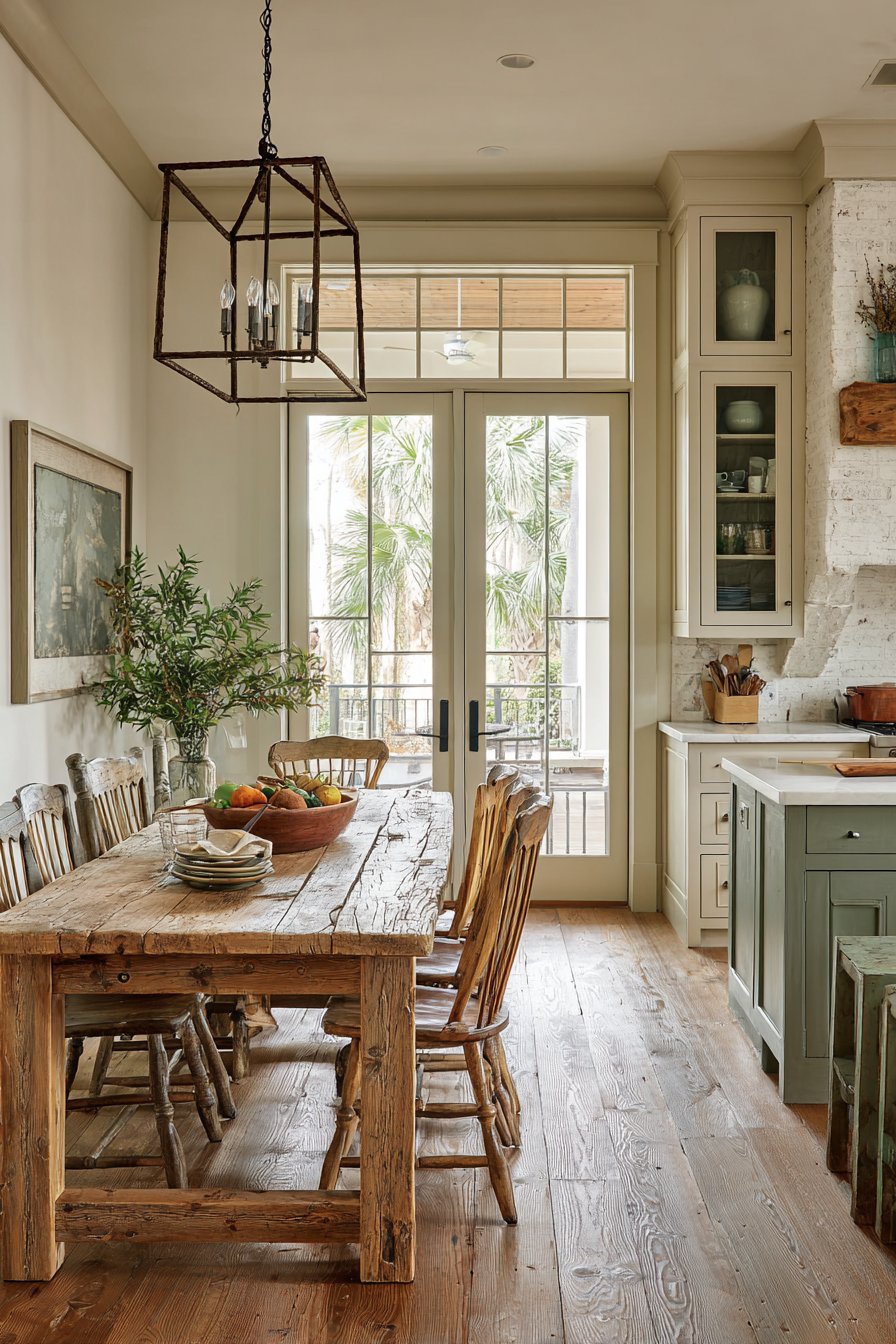
Windsor-style wooden chairs in various finishes create eclectic seating that prevents the space from feeling too matched or formal. Some chairs retain original dark stains while others have been painted and distressed, revealing layers of color beneath worn surfaces.
This collected appearance suggests chairs accumulated gradually over time rather than purchased as a set, creating an authentic country character that cannot be achieved through coordinated furniture suites. A simple iron chandelier with candle-style bulbs hangs above the table, its understated design providing essential illumination without competing for attention with the magnificent table below.
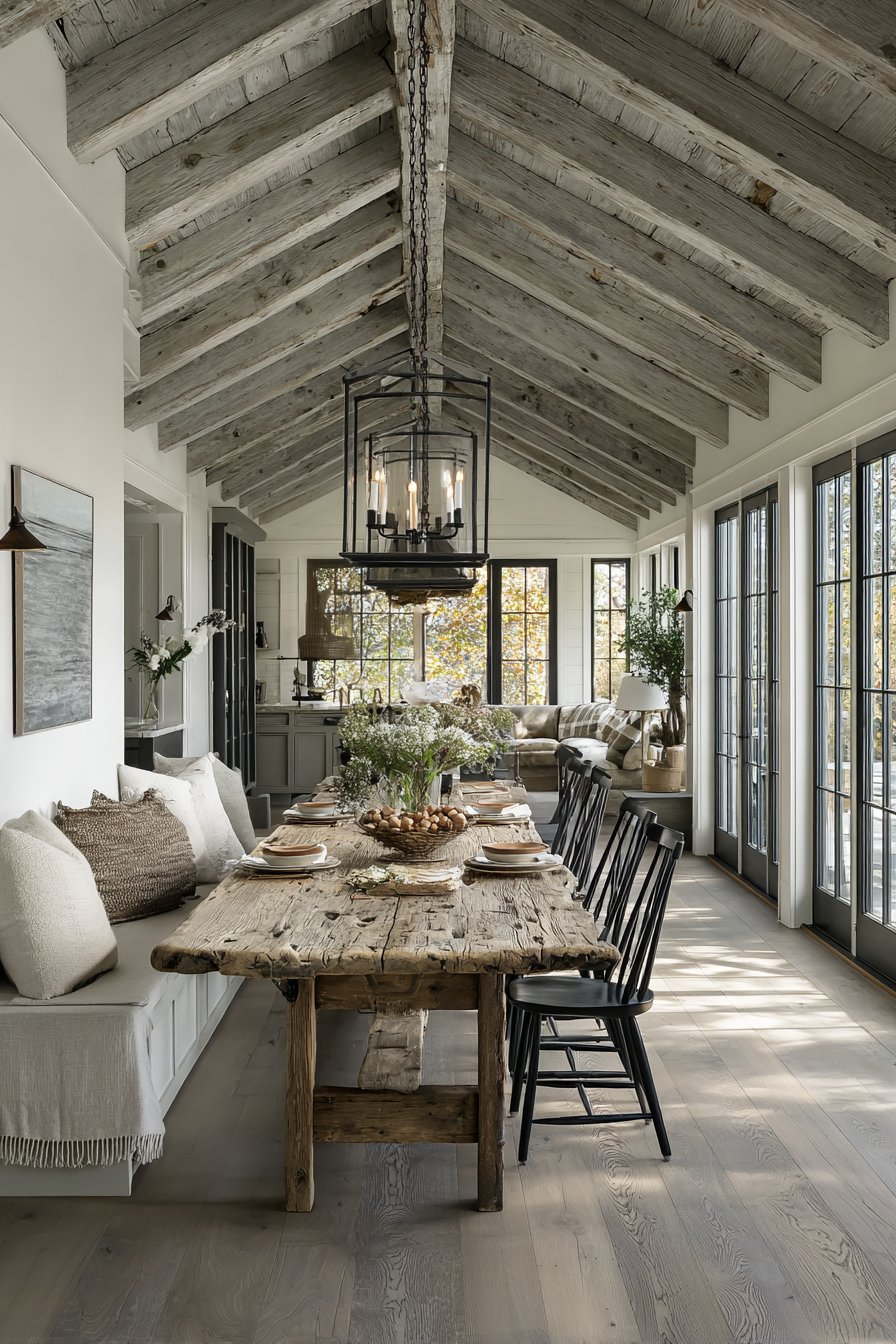
Wide plank oak flooring shows natural wear patterns and color variation that add character beneath the dining area, its mellow tones complementing the harvest table’s warmer pine. The wood floor’s surface reveals the passage of countless footsteps and the daily life of the home, with darker patches in high-traffic areas and lighter tones where sunlight has naturally bleached the wood over time.
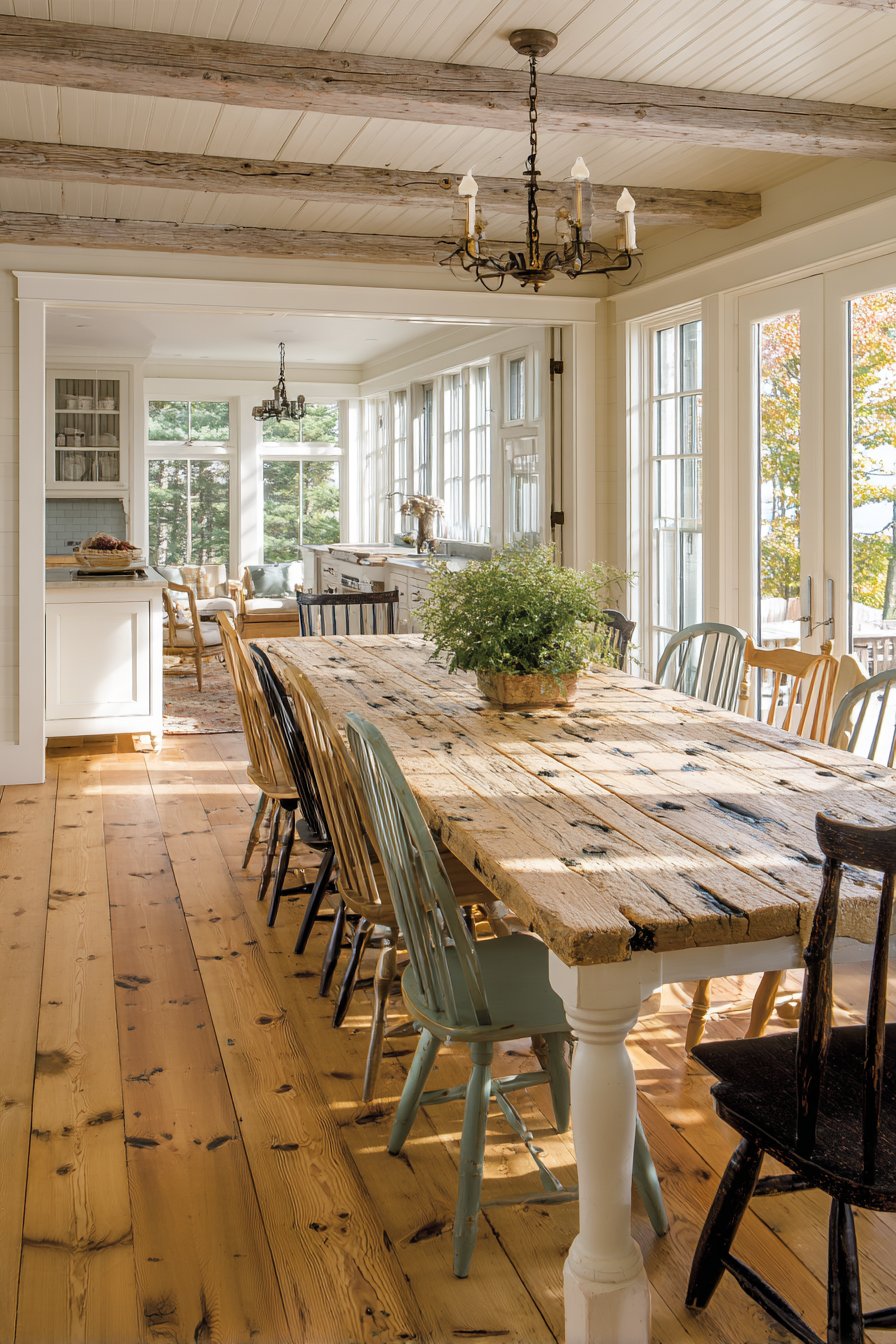
Natural lighting from French doors captures the entire gathering space, emphasizing the welcoming, practical nature of authentic country kitchen design and the beautiful aged wood materials throughout. This dining area represents the ultimate expression of country kitchen values: gathering, sharing, and celebrating life’s simple pleasures in a space that honors quality materials and timeless craftsmanship.
Key Design Tips:
- Invest in a reclaimed wood harvest table long enough to accommodate your largest gatherings comfortably, allowing twenty-four inches of table width per person
- Embrace mismatched chairs for authentic country character, unifying diverse pieces through similar scale and complementary finishes
- Choose a simple chandelier that provides adequate illumination without overwhelming the space or competing with the table’s impressive presence
- Position the harvest table near French doors or large windows to maximize natural light during meals and create connection with outdoor spaces
- Maintain wide plank flooring’s natural wear patterns rather than refinishing, as these marks represent authentic history and character
- Add comfort through cushions on Windsor chairs while maintaining their authentic appearance, choosing fabrics in muted tones and simple patterns
Why These Country Kitchen Designs Represent the Best in Timeless Style
The ten country kitchen designs explored in this article represent the pinnacle of authentic farmhouse style, cottage charm, and rustic elegance. Each space demonstrates the fundamental principles that make country kitchen design so enduringly popular: the celebration of natural materials, appreciation for craftsmanship, embrace of vintage elements, and commitment to creating warm, welcoming environments where families naturally gather. These kitchens succeed because they prioritize substance over trends, quality over convenience, and authenticity over artifice.
The farmhouse sink designs featured throughout these spaces—from the vintage bridge faucet arrangement to the soapstone-surrounded apron-front basin—represent the cornerstone of country kitchen style. These substantial sinks combine exceptional practicality with undeniable charm, offering deep basins that accommodate large pots and roasting pans while making a bold design statement. The various interpretations show how this single element can be adapted to different aesthetic approaches, from refined elegance with marble surrounds to rustic simplicity with butcher block counters. Farmhouse sinks remain the most requested feature in country kitchens because they deliver both beauty and function in equal measure.
Reclaimed wood elements—particularly the barn wood island and heart pine harvest table—exemplify the country kitchen commitment to sustainability and historical preservation. These materials carry stories in their grain patterns, nail holes, and weathered surfaces, providing instant character that new materials simply cannot match. Reclaimed wood also offers superior quality, as old-growth timber harvested decades or centuries ago exhibits tighter grain patterns and greater density than today’s quickly grown lumber. By incorporating salvaged materials, these kitchens connect past and present while reducing environmental impact through thoughtful reuse.
The shaker-style cabinetry appearing in multiple designs—from soft cream to sage green—demonstrates the enduring appeal of simple, well-proportioned design. Shaker cabinets originated with religious communities valuing functionality and honesty in construction, principles that resonate deeply with country kitchen aesthetics. The clean lines and quality joinery of shaker cabinets provide timeless beauty that never appears dated, while the flat-panel doors offer perfect canvases for beautiful paint colors. Whether floor-to-ceiling or traditional height, shaker cabinetry brings order and calm to busy kitchens.
Open shelving and thoughtful display, seen in the pantry organization and various kitchen storage solutions, represent a deliberate choice to celebrate beautiful objects rather than hiding everything behind closed doors. This approach requires curation and maintenance but rewards with visual interest and easy accessibility. Country kitchens embrace open storage because it allows homeowners to display cherished collections—whether vintage dishware, copper cookware, or pottery—transforming functional items into decorative elements. The key is editing carefully, displaying only the most beautiful and frequently used items while storing everyday necessities in closed cabinetry.
Natural materials featured throughout these designs—butcher block, marble, soapstone, terracotta, slate, brick—bring inherent beauty and practical benefits that synthetic materials cannot replicate. Each of these materials ages gracefully, developing patinas and wear patterns that enhance rather than diminish their appeal. Butcher block counters become more beautiful with every knife mark and water stain, telling the story of meals prepared. Soapstone darkens to a rich charcoal gray, its soft surface acquiring the marks of daily use. Terracotta and slate floors wear smooth in traffic patterns, their natural variations hiding inevitable spills and scuffs. These materials represent long-term investments that improve over decades rather than requiring replacement.
Vintage and antique elements—from Hoosier cabinets to mismatched Windsor chairs—provide authenticity that reproduction pieces simply cannot achieve. The worn paint finishes, original hardware, and construction techniques visible in genuine vintage furniture tell stories of craftsmanship and durability that resonate with country kitchen values. While sourcing authentic pieces requires patience and effort—searching antique stores, estate sales, and salvage yards—the rewards include one-of-a-kind elements that make your kitchen truly unique. Even a single significant vintage piece, like the featured Hoosier cabinet, can anchor an entire design and provide a tangible connection to culinary history.
The color palettes throughout these kitchens—soft creams, sage greens, butter yellows, warm whites—create serene backdrops that feel both fresh and timeless. Country kitchen color theory favors muted, nature-inspired tones over bold, saturated hues, creating calming environments where families want to linger. These gentle colors allow natural materials and vintage elements to shine while providing visual rest in spaces dedicated to focused work. The subtle variations within each color—the way sage green shifts between blue and gray depending on light, or how cream contains hints of yellow warmth—create depth that prevents flatness. These sophisticated neutrals form the foundation for successful country kitchen design.
Architectural details like exposed ceiling beams, beadboard wainscoting, tongue-and-groove paneling, and decorative corbels elevate these kitchens beyond simple rooms into architecturally significant spaces. These elements reference traditional building techniques and historical construction methods, adding character and visual interest that flat walls and ceilings cannot provide. The vertical lines of beadboard, the shadow patterns created by ceiling beams, and the graceful curves of corbels introduce rhythm and dimension that make kitchens feel more complete and considered. While these details require additional investment during construction or renovation, they provide lasting value through their timeless appeal and architectural substance.
The lighting approaches throughout these designs—from seeded glass pendants to iron chandeliers—prioritize natural illumination while adding vintage character through carefully chosen fixtures. Country kitchens celebrate daylight streaming through windows, creating the warm, welcoming atmosphere that defines this style. Supplemental artificial lighting comes from fixtures with authentic vintage character rather than modern task lights and recessed cans. The warm glow from Edison-style bulbs in period-appropriate fixtures enhances rather than overpowers the space’s natural beauty. This thoughtful approach to illumination ensures kitchens remain functional for cooking while maintaining their authentic character.
The breakfast nooks, dining areas, and gathering spaces featured throughout these designs emphasize the country kitchen’s role as the home’s social center. Unlike formal dining rooms reserved for special occasions, country kitchen dining areas invite daily use and casual gathering. The mismatched chairs around the harvest table, the cozy window nook with gingham curtains, and the generous island with seating all encourage people to linger over coffee, help with meal preparation, and connect with family members. This emphasis on gathering and community represents the heart of country kitchen design—creating spaces where people naturally come together.
These country kitchen designs succeed because they embrace imperfection, celebrate authenticity, and prioritize lasting quality over trendy finishes. They represent intentional choices to value craftsmanship, honor history, and create spaces that improve with age rather than requiring constant updates. From the reclaimed barn wood island to the vintage Hoosier cabinet, from butcher block counters to terracotta floors, every element serves both practical and aesthetic purposes while contributing to a cohesive vision of timeless country style. These are kitchens built to last generations, spaces that will never appear dated because they draw inspiration from enduring traditions rather than passing fads.
Conclusion
Country kitchen design offers a refreshing alternative to contemporary minimalism and industrial aesthetics, providing warmth, character, and timeless appeal that resonates across generations. The ten designs explored in this article demonstrate the remarkable versatility within country style, from refined sage green elegance to rustic reclaimed wood charm, from organized pantry beauty to vintage Hoosier cabinet nostalgia. Each space showcases the fundamental principles that make country kitchens so beloved: authentic materials, quality craftsmanship, vintage character, and unwavering commitment to creating welcoming environments where families naturally gather.
Whether you’re planning a complete kitchen renovation or simply seeking inspiration to refresh your existing space, these examples provide actionable ideas that can be adapted to various budgets and skill levels. Start with one signature element—perhaps a farmhouse sink, an island of reclaimed wood, or shaker-style cabinetry in a beautiful muted tone—and build your design around that anchor piece. Gradually incorporate vintage finds, natural materials, and thoughtful details that reflect your personal style while honoring country design traditions. Remember that authentic country kitchens develop over time rather than being completed all at once, so embrace the process of collecting, curating, and slowly transforming your space.
The beauty of country kitchen design lies in its accessibility and authenticity. You don’t need unlimited budgets or professional design services to create a space with genuine country charm. What you need is appreciation for quality materials, patience to source vintage elements, willingness to embrace imperfection, and commitment to creating a kitchen that serves your family’s practical needs while feeding your soul. These timeless spaces remind us that the best kitchens aren’t those following the latest trends but those reflecting enduring values of craftsmanship, community, and comfortable beauty. Let these designs inspire you to create your own country kitchen—a space where every meal becomes a celebration, every gathering creates memories, and the simple act of coming home brings genuine comfort and joy.
