


The kitchen has always been the heart of the home, but nowhere is this sentiment more beautifully realized than in the cottage kitchen. These enchanting spaces blend practicality with nostalgia, creating environments that feel simultaneously functional and deeply personal. A cottage kitchen isn’t merely a place to prepare meals—it’s a sanctuary where time seems to slow down, where the patina of well-loved surfaces tells stories, and where every element works together to create an atmosphere of welcoming warmth. The beauty of cottage kitchen design lies in its ability to embrace imperfection, celebrate authenticity, and prioritize comfort over formality, making it an increasingly popular choice for homeowners seeking refuge from the sleek minimalism that has dominated contemporary design.
What sets cottage kitchens apart is their remarkable versatility and timeless appeal. Whether you’re working with a sprawling country home or a compact urban apartment, cottage kitchen principles can transform any space into a cozy retreat. These designs draw inspiration from English countryside cottages, American farmhouses, and European rural traditions, yet they adapt beautifully to modern lifestyles. The key elements—natural materials, vintage accents, soft color palettes, and thoughtful organization—combine to create kitchens that feel both lived-in and lovingly maintained. In this comprehensive guide, we’ll explore ten distinct cottage kitchen designs, each offering unique insights into how you can incorporate this beloved aesthetic into your own home.
From charming open shelving displays to carefully curated vintage details, from practical workspace solutions to inviting dining nooks, cottage kitchens prove that style and substance can coexist harmoniously. These spaces celebrate the beauty of natural materials like wood, ceramic, and stone while incorporating modern conveniences that make daily cooking and entertaining effortless. Whether you’re drawn to soft sage greens, classic creamy whites, or the warm tones of reclaimed wood, there’s a cottage kitchen style waiting to inspire your next renovation or refresh.
1. Open Shelving Elegance with Vintage Charm
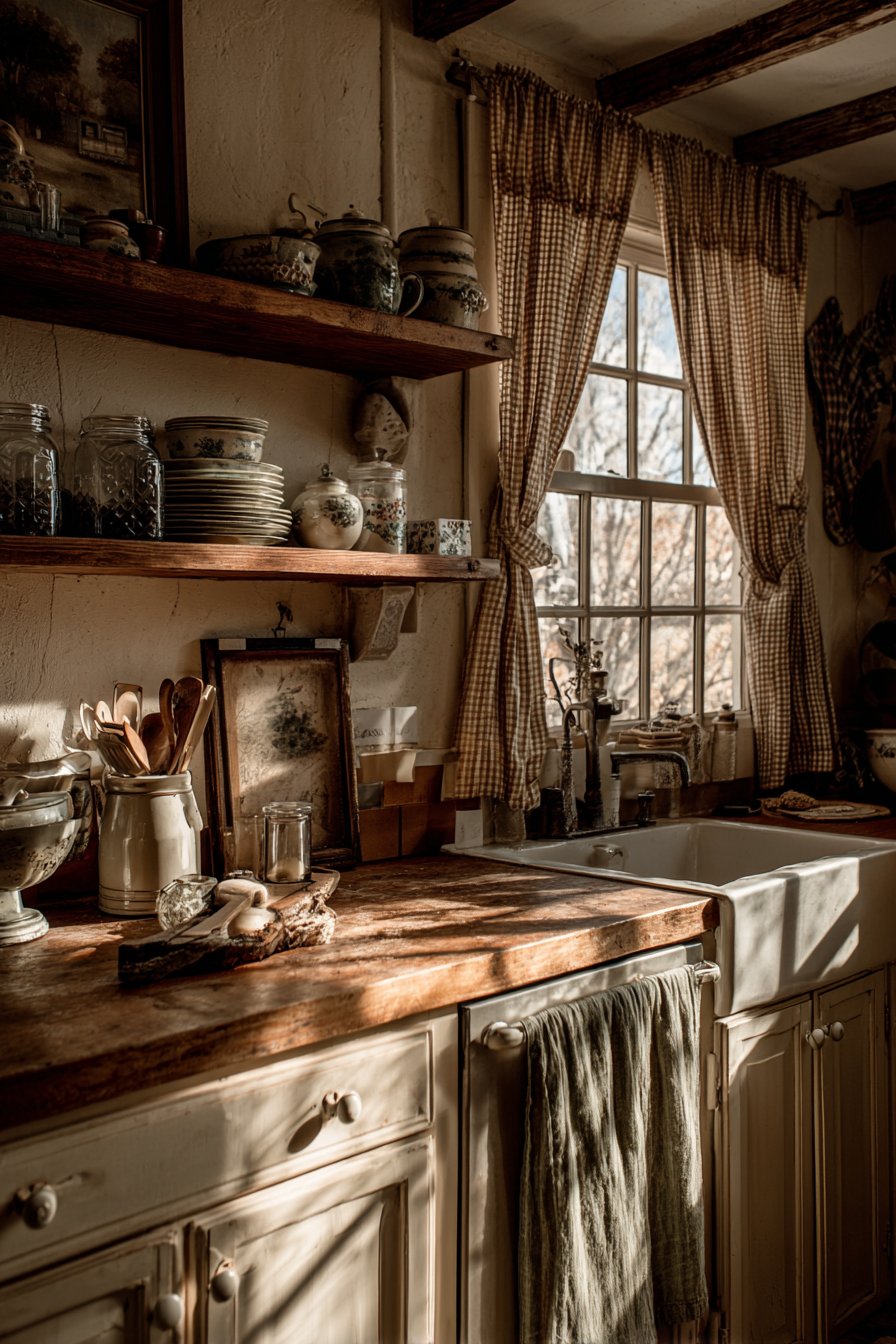
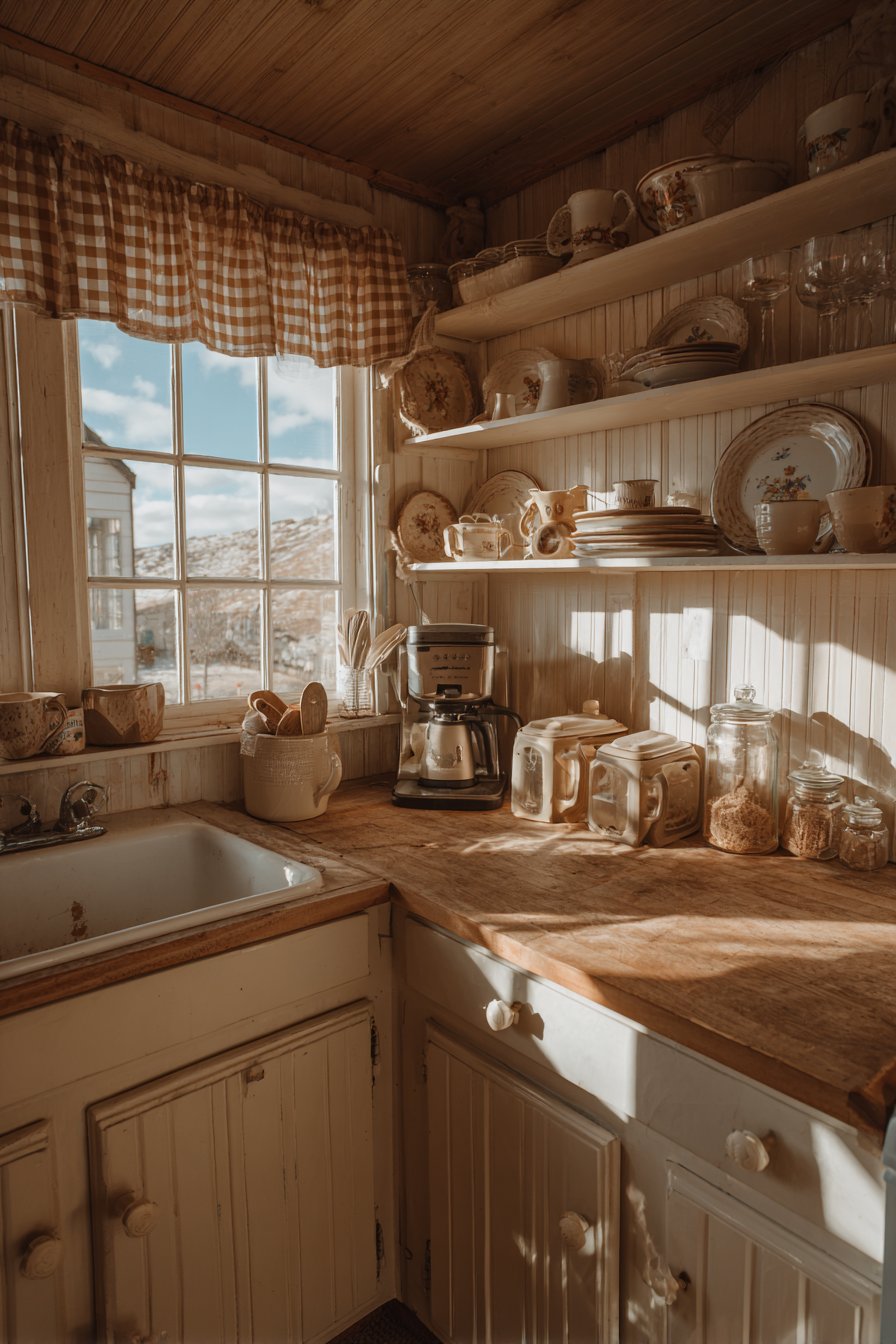
The foundation of authentic cottage kitchen design begins with thoughtful storage solutions that double as beautiful displays. Imagine wooden shelves, perhaps crafted from reclaimed pine or oak, mounted directly against cream-colored beadboard walls.
These open shelves become living galleries where vintage ceramic dishes in soft blues and whites nestle beside practical mason jars filled with pantry staples. The beauty lies not in perfect symmetry but in the organic arrangement that develops over time—a stack of transferware plates here, a collection of vintage milk glass there, each piece contributing to the overall narrative of a well-loved kitchen.
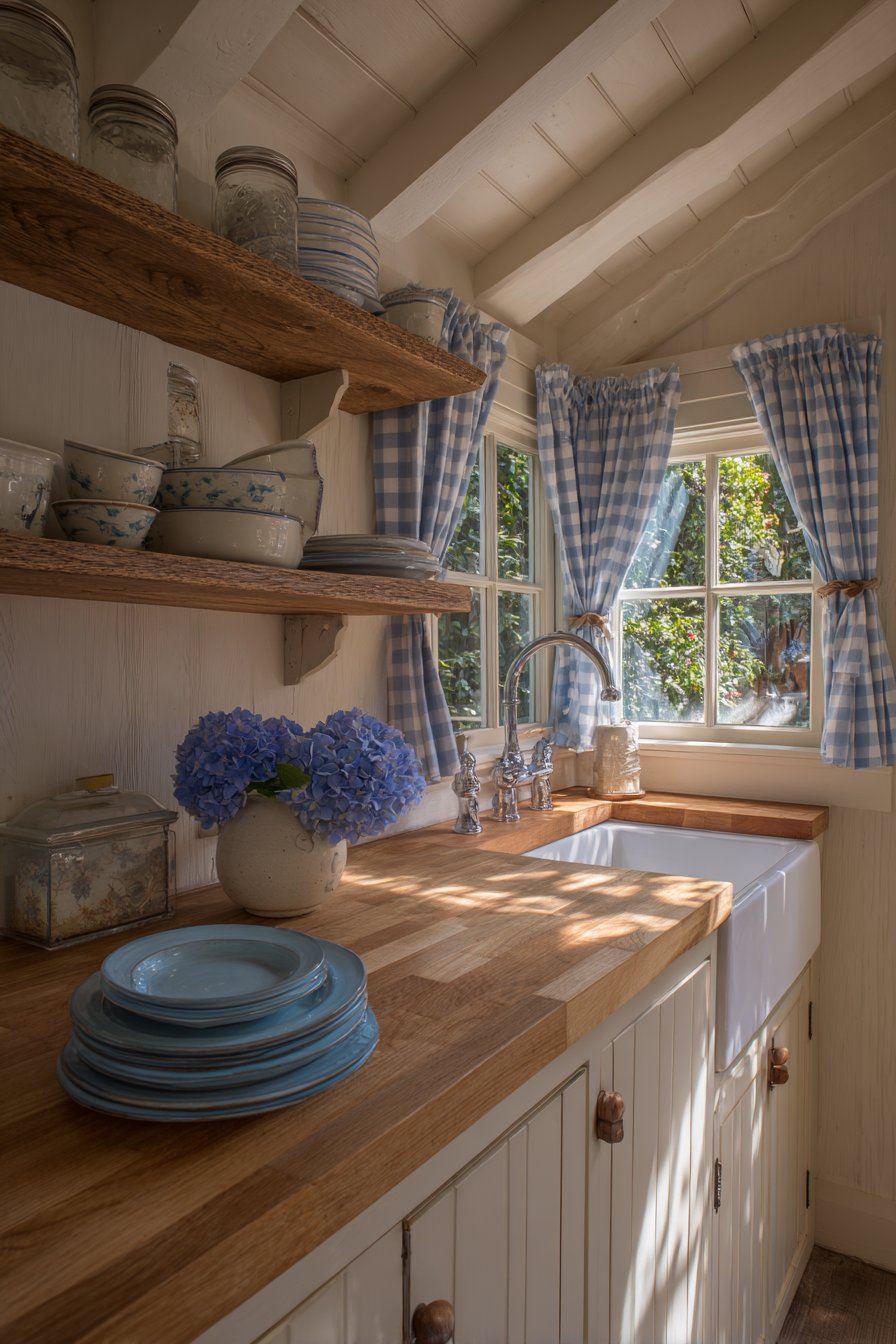
The beadboard cabinets below feature simple ceramic knobs in white or soft cream, their unpretentious design speaking to the cottage aesthetic’s preference for understated elegance over ornate decoration. These cabinets, when painted in warm cream or soft white, provide the perfect backdrop for the farmhouse sink that serves as the room’s functional centerpiece.
The sink itself, deep and generous, sits beneath a window dressed with cheerful gingham curtains in red and white or blue and white checks. This window becomes a focal point, framing views of the garden beyond while flooding the workspace with natural light that dances across butcher block countertops.
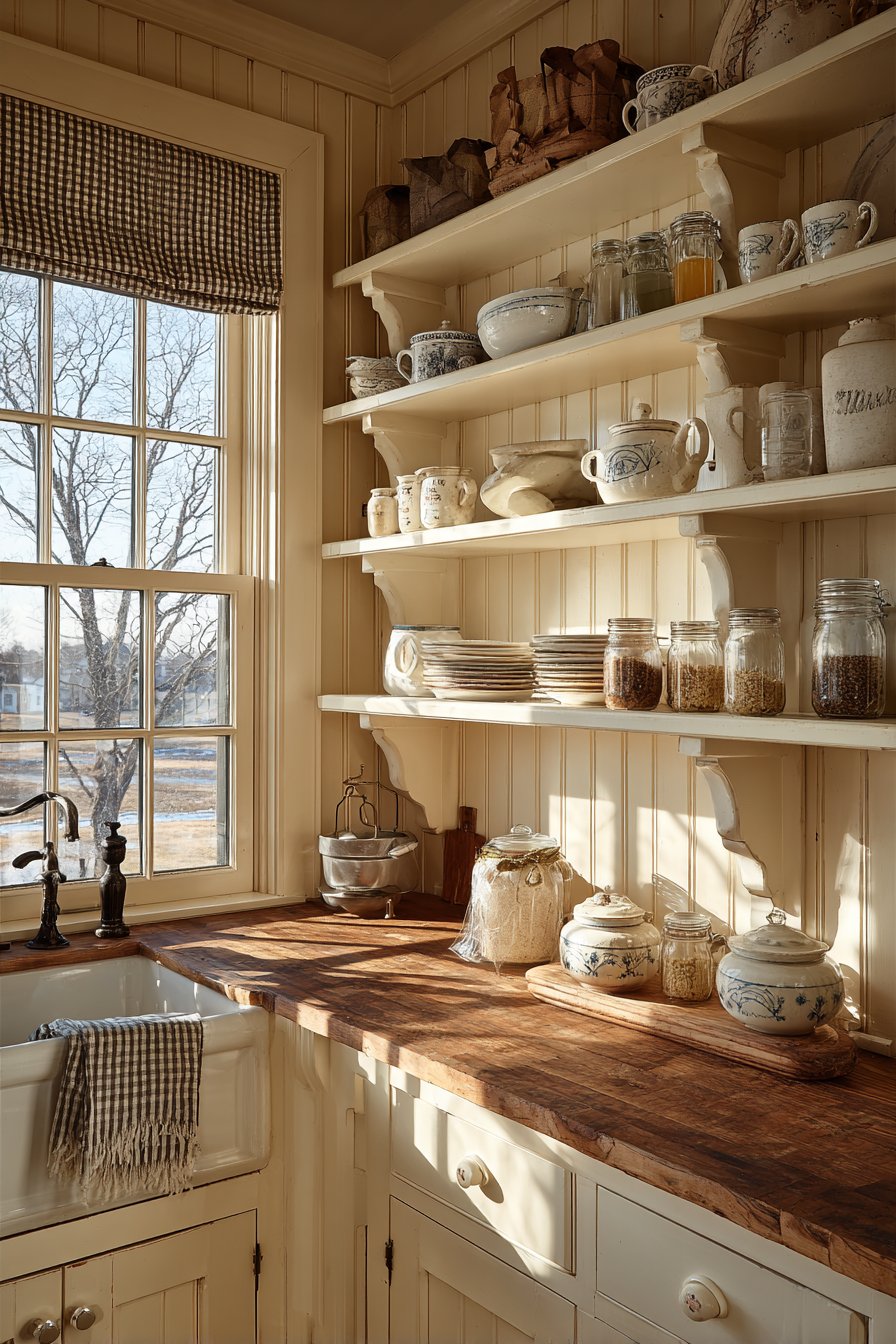
The butcher block surfaces deserve special attention—their visible wood grain, showing variations in honey and amber tones, adds warmth and texture that laminate or solid surface materials simply cannot replicate. Over time, these surfaces develop character marks from daily use: slight knife marks, gentle water stains, and the soft patina that comes from regular oiling. This lived-in quality is precisely what makes cottage kitchens so appealing. The space feels genuine rather than staged, comfortable rather than intimidating.
Key Design Tips:
- Display only your most beautiful or frequently used items on open shelves to avoid visual clutter while maintaining the curated cottage aesthetic.
- Mix old and new ceramics freely—vintage flea market finds pair beautifully with contemporary white dishes, creating layers of interest.
- Choose butcher block countertops with prominent grain patterns and commit to regular maintenance with food-safe mineral oil to preserve their beauty.
- Install beadboard at least 36 inches high to create proper visual weight and authentic cottage proportions.
- Select gingham curtains in classic color combinations that complement your overall palette while adding that quintessential cottage touch.
2. Vintage Gas Range Focal Point with Sage Green Cabinets
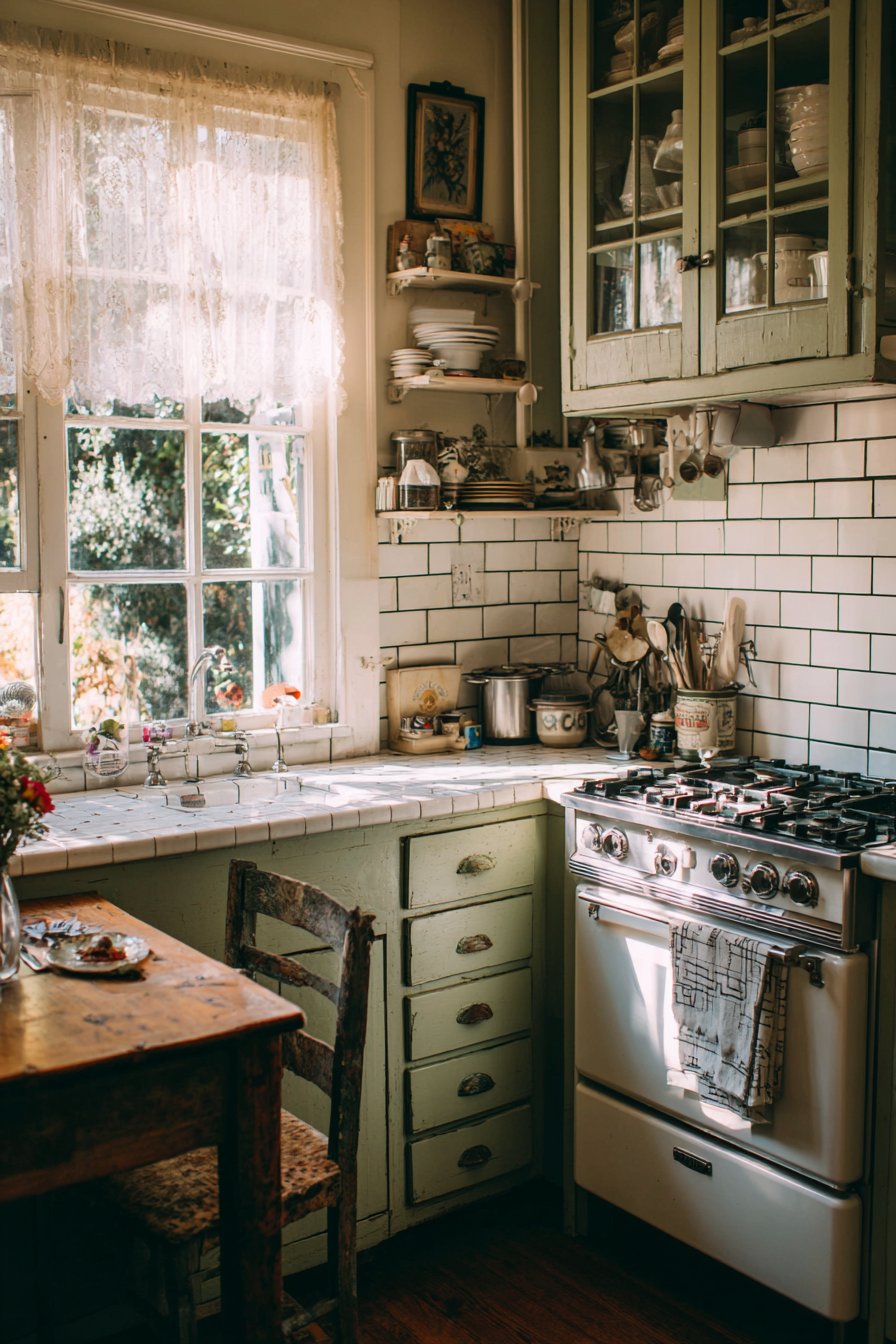
Creating a stunning focal point in a cottage kitchen often begins with the cooking area itself. A vintage-inspired gas range, whether an authentic refurbished model or a modern reproduction, commands attention and sets the tone for the entire space. Against a backdrop of white subway tiles laid in traditional running bond pattern, the range becomes a statement piece that marries form and function. The subway tiles, enhanced with contrasting dark grout—perhaps charcoal or deep grey—add definition and visual interest while nodding to early twentieth-century design sensibilities that continue to influence cottage aesthetics today.
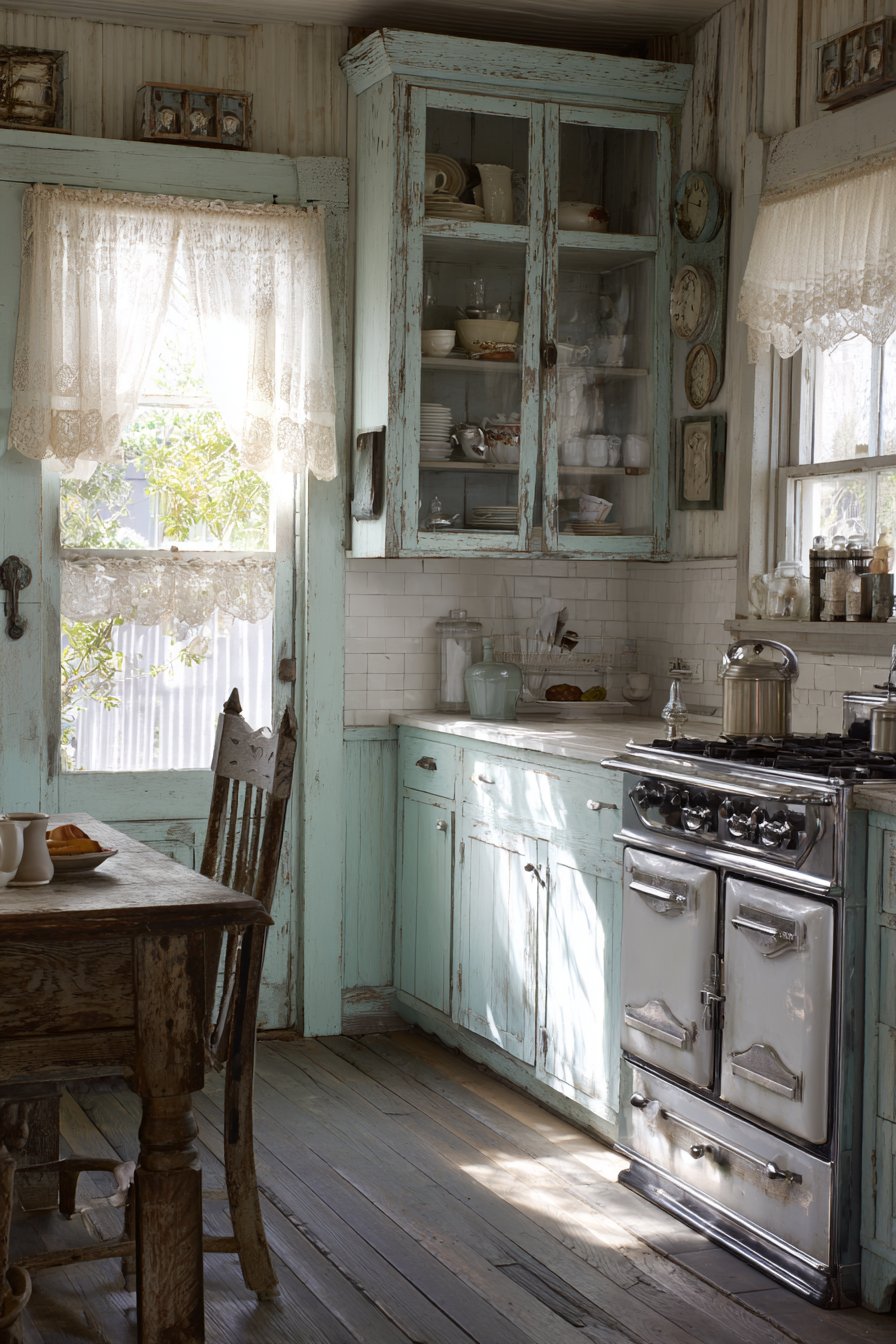
Flanking this cooking centerpiece are distressed painted cabinets in soft sage green, a color choice that brings nature indoors while maintaining the gentle, restful quality essential to cottage design. The distressing technique reveals hints of underlying wood or primer at edges and corners, suggesting years of use and creating that coveted “found in a French countryside estate” appearance.
Glass-front upper cabinets break up the solid cabinetry, offering glimpses of everyday dishware—white plates, colored glasses, vintage serving pieces—that become part of the room’s decorative scheme while remaining entirely functional.
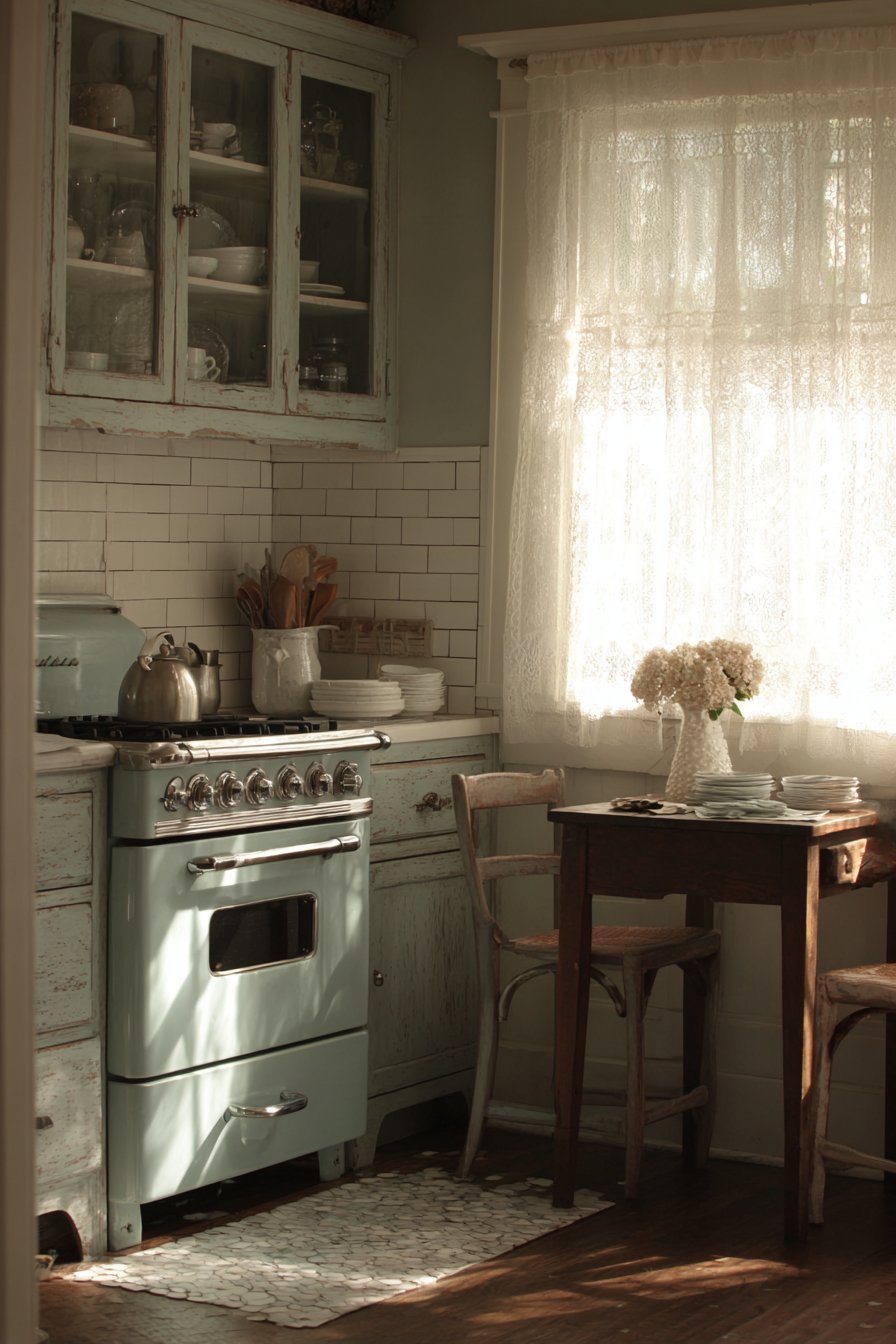
Near the window, a small wooden kitchen table with mismatched chairs creates an intimate dining spot that epitomizes cottage informality. Perhaps one chair is a Windsor style, another a simple ladder-back, and a third a painted wooden chair from a different era entirely.
This intentional mismatch feels collected rather than careless, suggesting a home where comfort and character trump rigid adherence to matching sets. Lace curtains at the window filter light softly, casting delicate patterns across the table surface during morning coffee or afternoon tea.
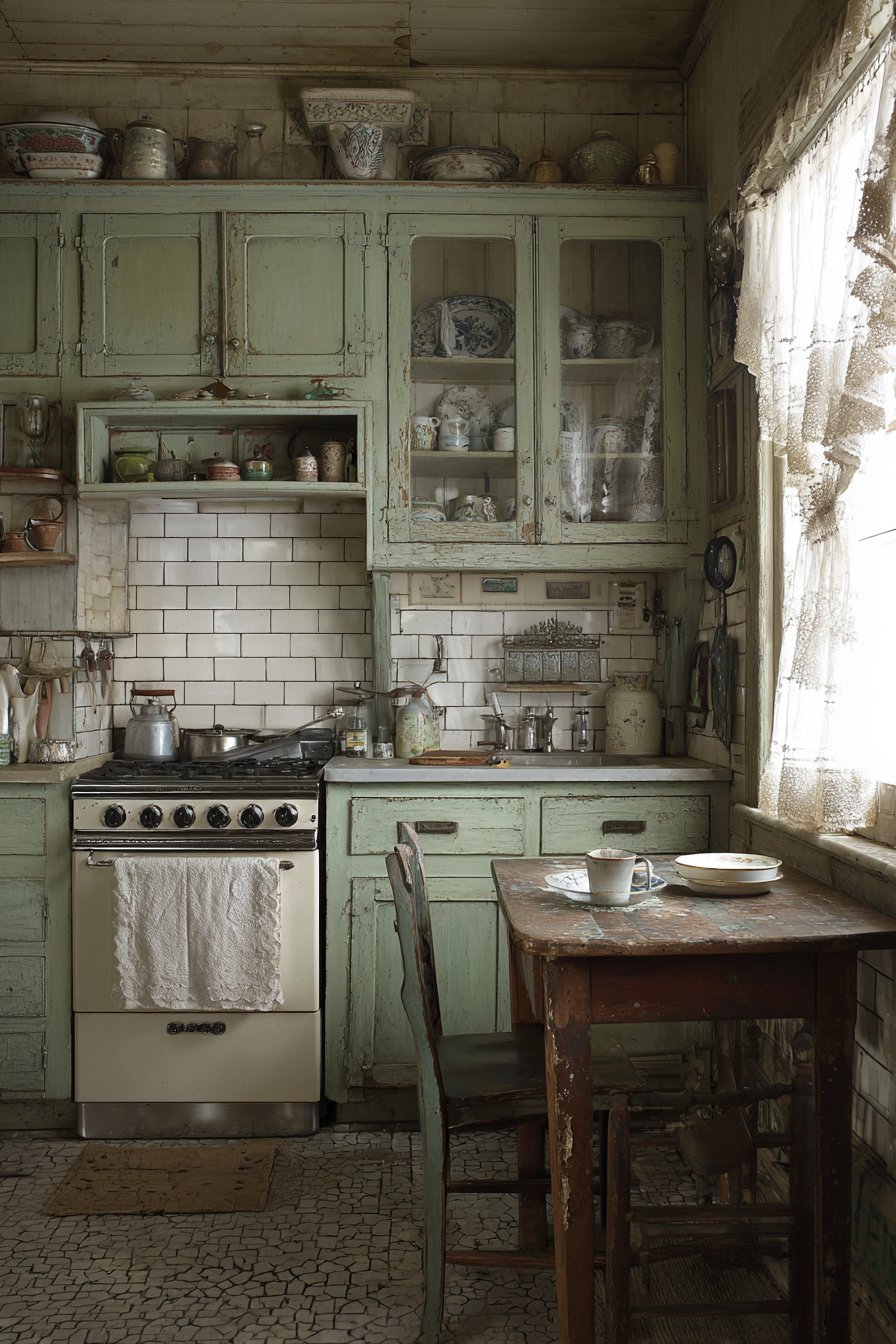
The hardware throughout this kitchen tells its own story—knobs and pulls with gentle patina, perhaps in oil-rubbed bronze or antique brass, show the subtle wear patterns of daily use. These authentic details, from the slightly uneven paint finish on the cabinets to the variations in the handmade-look subway tiles, create a kitchen that feels like it has evolved over time rather than being installed all at once.
Key Design Tips:
- When choosing sage green paint for cabinets, test multiple shades in your actual lighting conditions—the color should read as soft and muted rather than bright or minty.
- Apply distressing techniques strategically at high-touch areas like cabinet edges and around hardware for the most authentic appearance.
- Use dark grout with white subway tile to prevent the grout lines from disappearing and to add architectural definition that suits the cottage style.
- Collect mismatched chairs gradually from antique shops and estate sales, choosing pieces that share a similar scale and seat height even if their styles differ.
- Consider a vintage-style range with professional features if you cook frequently—many modern reproductions offer contemporary performance with period-appropriate aesthetics.
3. Reclaimed Wood Island with Practical Storage Solutions
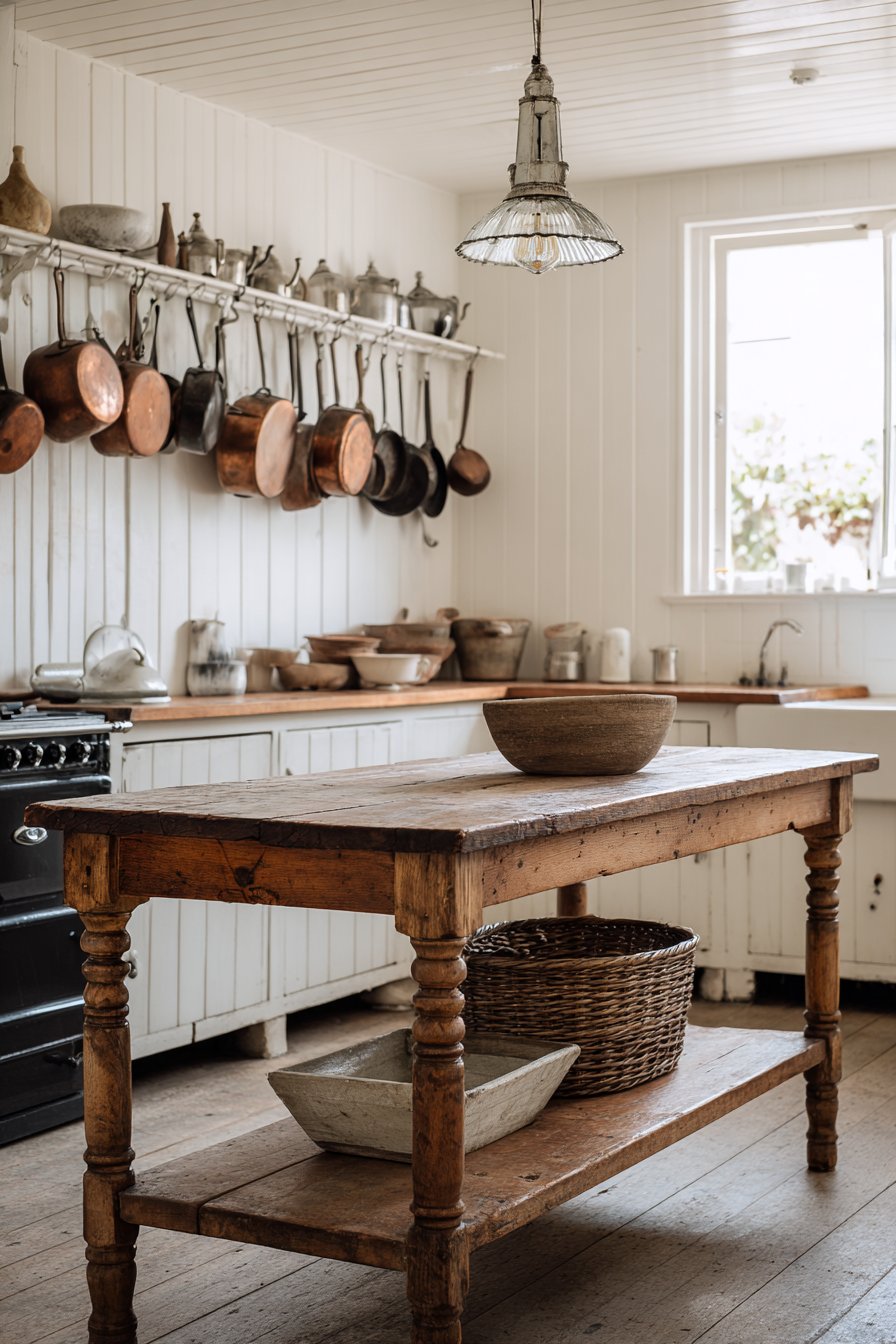
The kitchen island has become central to contemporary cooking and entertaining, and in cottage kitchens, this essential feature takes on distinctly charming characteristics. Picture a substantial island constructed from reclaimed wood, its surface showing the honest marks of its previous life—perhaps nail holes, subtle color variations, or the gentle undulations that come from decades of weathering. The island stands on turned legs, their graceful curves adding a furniture-like quality that distinguishes this piece from built-in cabinetry. These architectural details transform a practical workspace into a beautiful focal point that anchors the entire room.
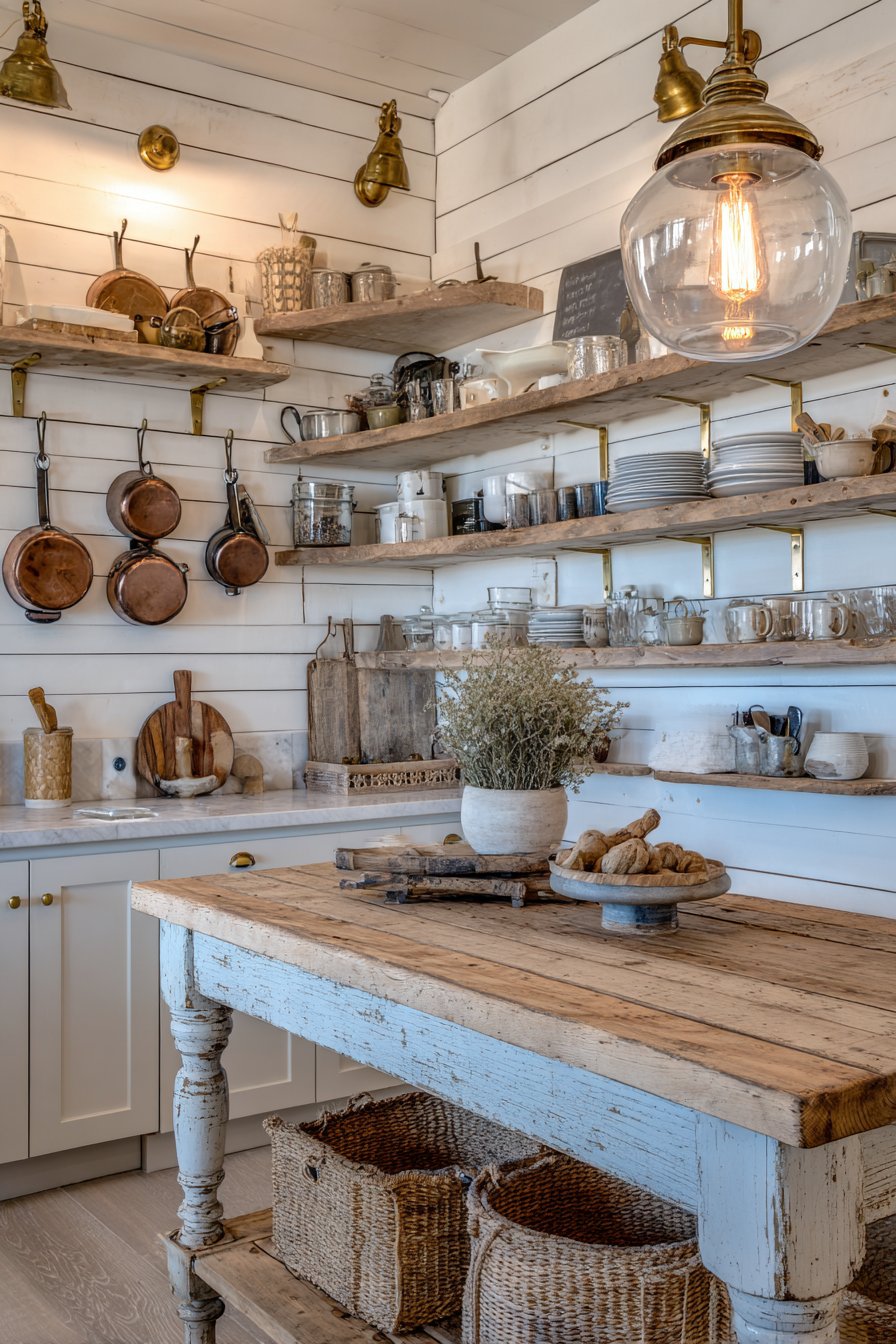
Below the work surface, open shelving provides accessible storage for woven baskets in varying sizes. These baskets, whether made from wicker, seagrass, or wire, hold everything from root vegetables to kitchen linens, keeping essentials organized while maintaining the room’s visual openness.
This approach to storage reflects cottage kitchen philosophy—practical solutions that enhance rather than hide the room’s character. The baskets’ natural textures add warmth and dimension, creating visual interest at ground level while remaining entirely functional.
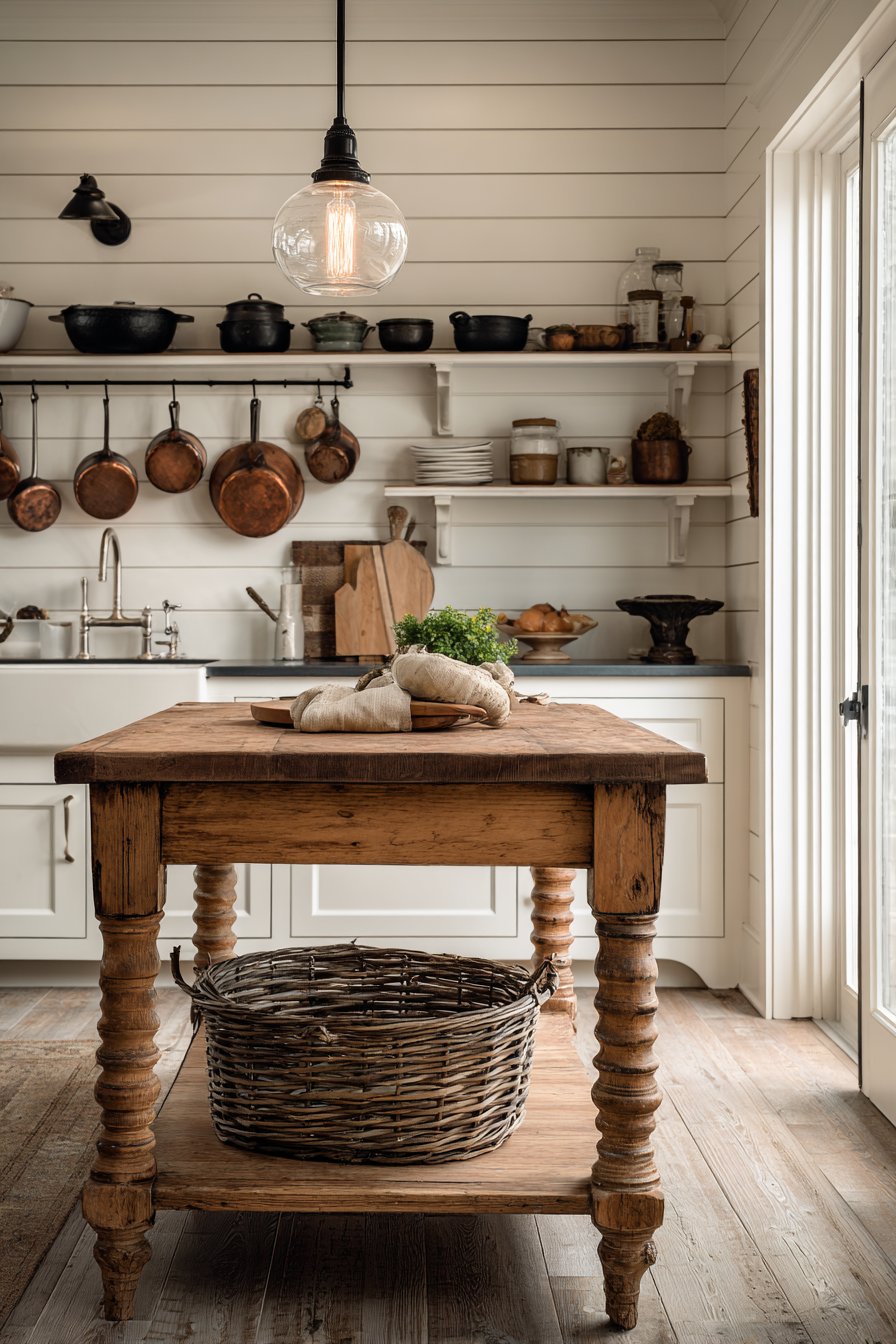
White shiplap walls surrounding this workspace provide a clean, bright backdrop that allows the rich tones of reclaimed wood to shine. Against these walls, copper pots and cast iron skillets hang from sturdy hooks or a pot rack, their burnished surfaces and well-seasoned patinas serving as functional art. These aren’t display pieces purchased purely for decoration—they’re working tools that happen to be beautiful, embodying the cottage kitchen principle that everyday objects can and should contribute to the room’s aesthetic appeal.
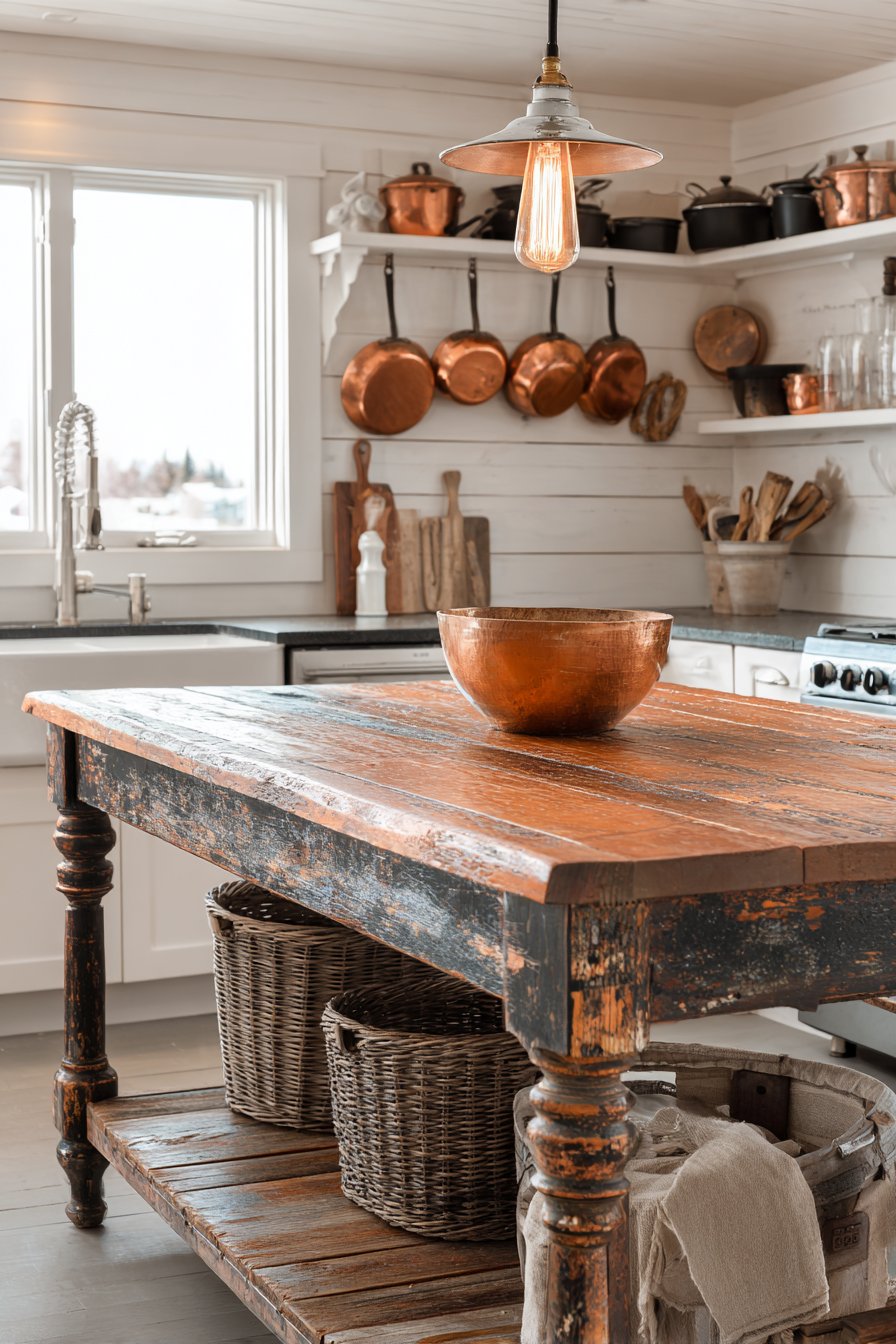
Above the island, a vintage-style pendant light with an Edison bulb casts warm, amber-toned illumination that enhances the natural wood tones below. The fixture itself might feature a metal cage, a glass globe, or a simple socket with exposed bulb, depending on your specific cottage style preferences. During evening meal preparation, this lighting creates an intimate atmosphere, while natural daylight streaming through nearby windows provides ample task lighting during daytime hours.
Key Design Tips:
- Source reclaimed wood from reputable suppliers who can verify the wood’s origin and ensure it’s been properly cleaned, dried, and treated for indoor use.
- Choose turned legs with proportions appropriate to your island’s size—larger islands need more substantial legs to maintain visual balance.
- Install shiplap with slight gaps between boards for authentic texture, and use semi-gloss or satin paint finishes that can withstand kitchen moisture.
- Hang frequently used pots and pans within easy reach but arrange them with visual balance in mind, treating the display as a composition.
- Select baskets in complementary natural tones and consistent materials for a cohesive look despite varying sizes.
4. Apron-Front Sink Showcase with Natural Materials
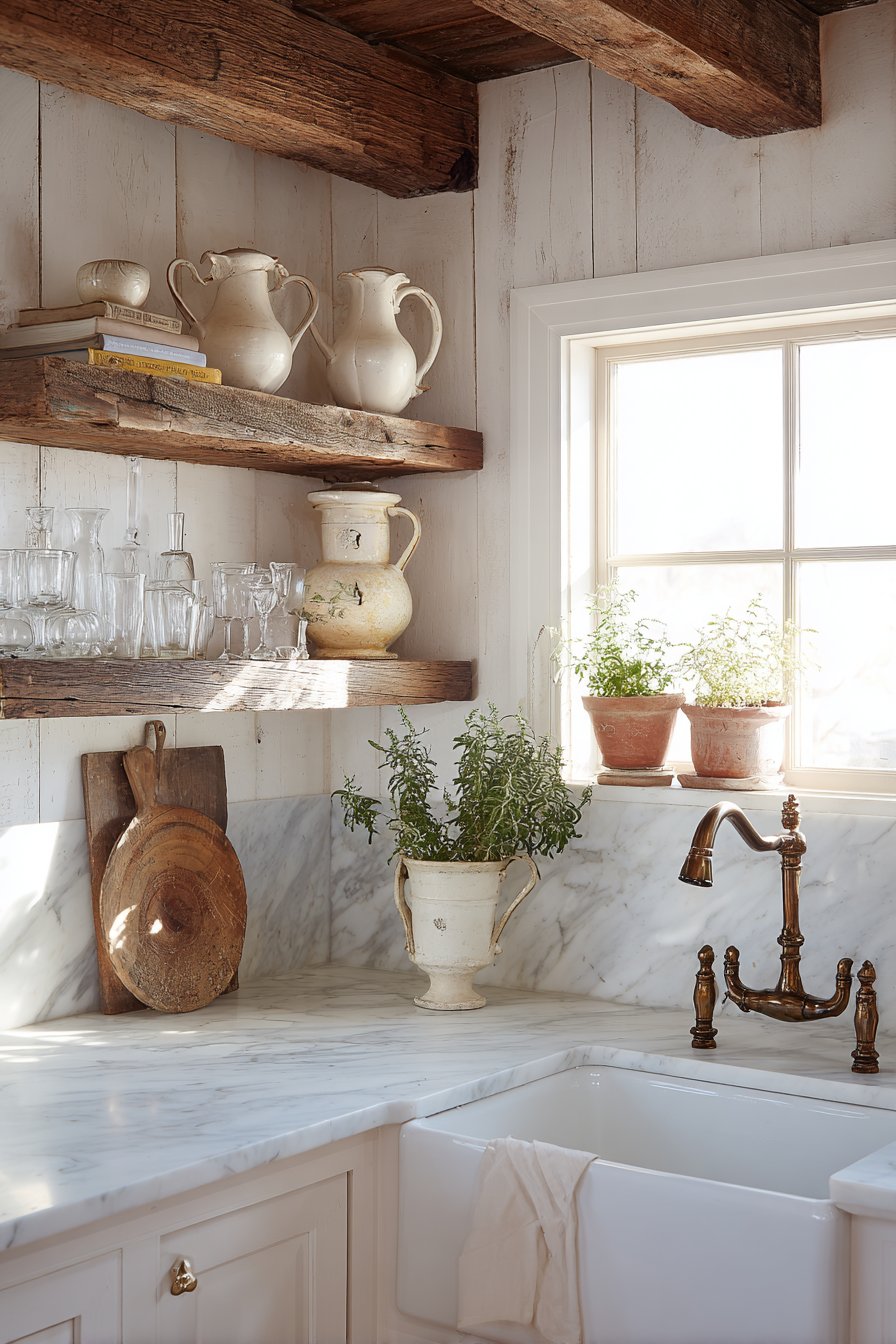
The sink area in a cottage kitchen deserves thoughtful design attention, as it’s where considerable time is spent during meal preparation and cleanup. A deep porcelain apron-front sink, also known as a farmhouse sink, makes a powerful design statement while offering exceptional practicality. These sinks, with their exposed front panels and generous basins, recall the utilitarian fixtures found in working farmhouses and country estates. Paired with a bridge faucet in oil-rubbed bronze finish—its two handles and high spout offering both vintage charm and modern functionality—the sink becomes a beautiful focal point that elevates everyday tasks.
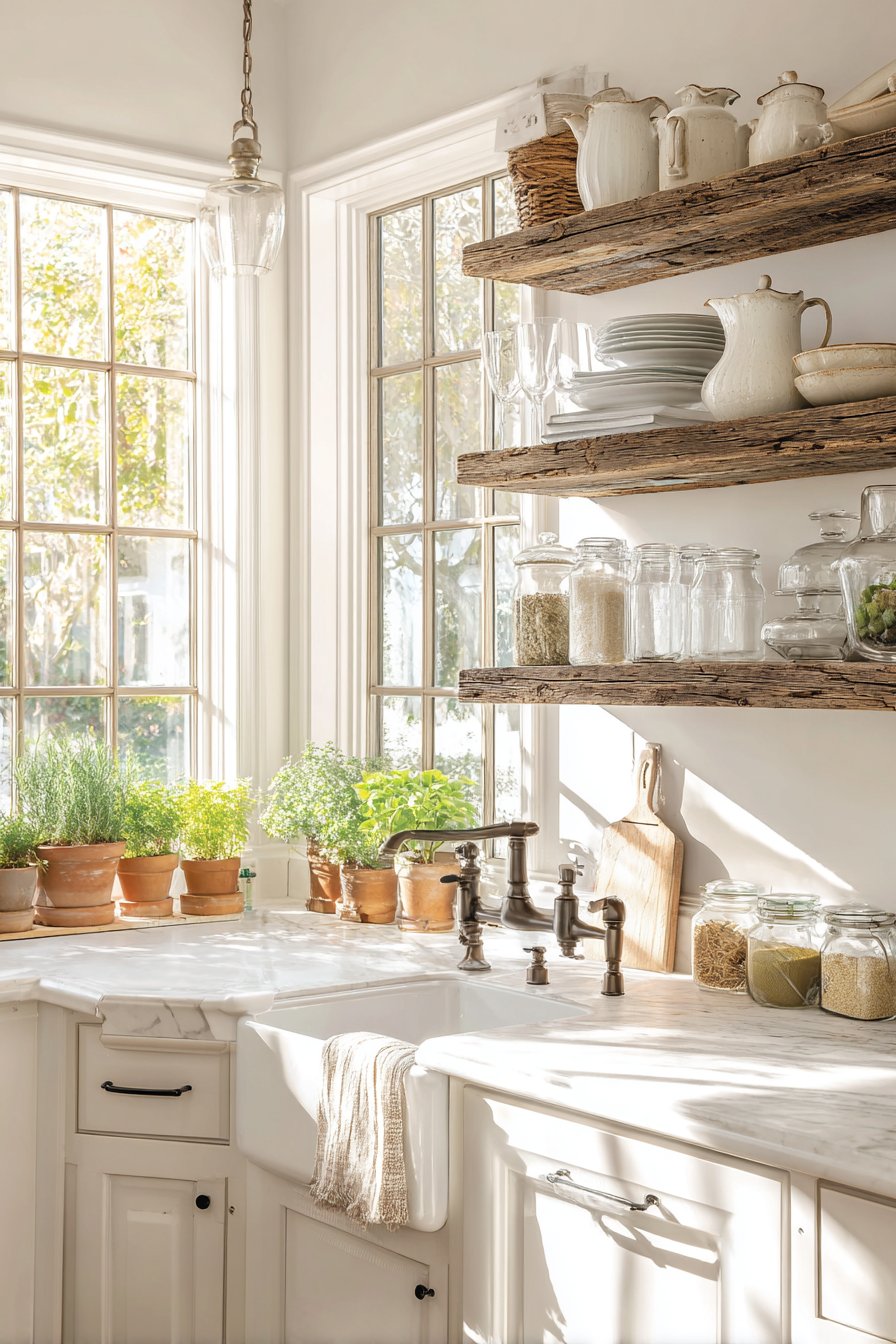
Surrounding this centerpiece, countertops of white marble with subtle grey veining provide an elegant yet approachable work surface. Unlike the pristine perfection of engineered stone, natural marble accepts the gentle wear of daily use, developing a soft patina over time that enhances rather than detracts from its beauty. The subtle variations in the stone’s veining ensure that no two installations look identical, adding to the sense that this kitchen is truly one-of-a-kind. The cool, smooth surface of marble proves ideal for rolling pastry and preparing delicate dishes, making it both beautiful and highly functional.
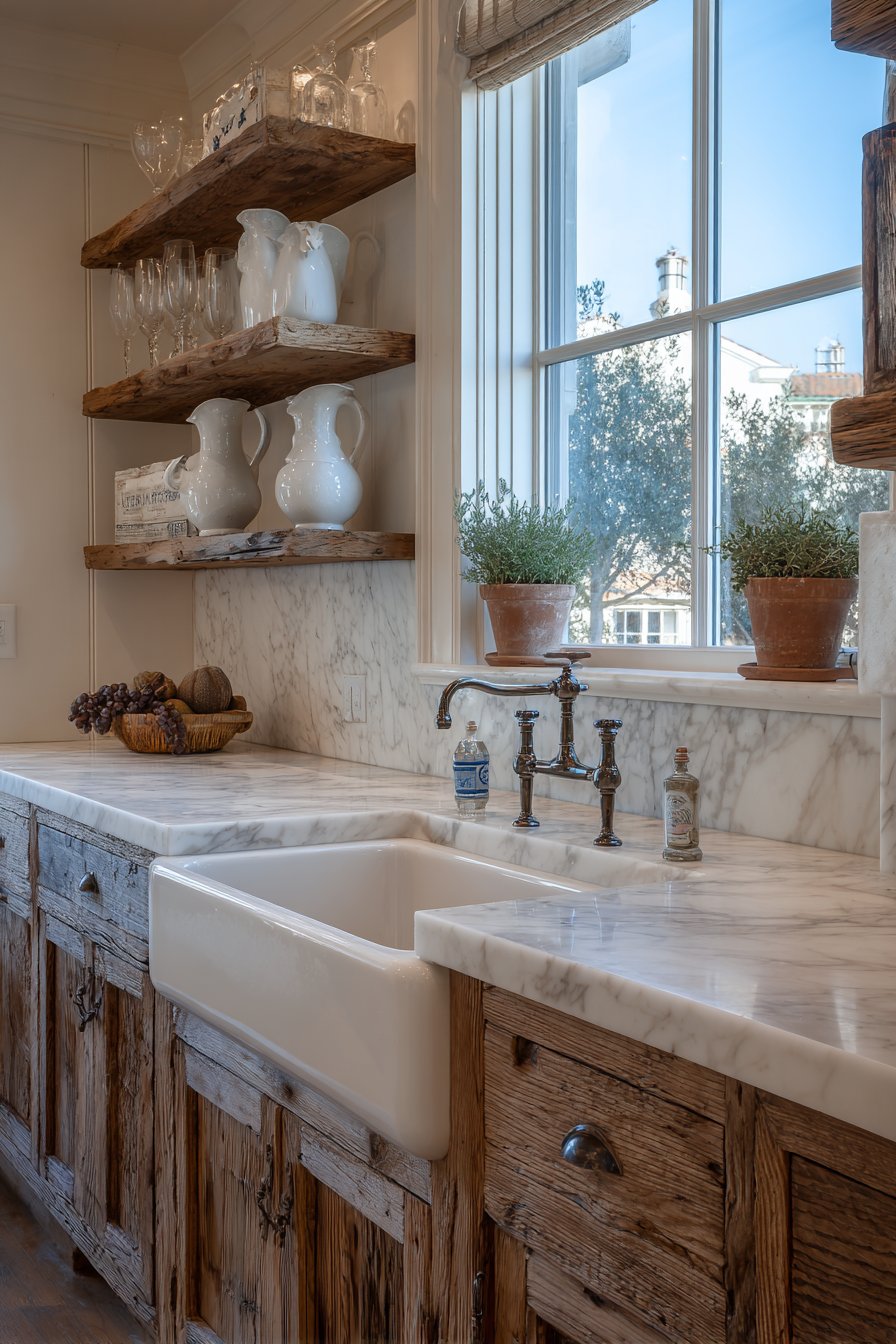
Open shelving constructed from reclaimed barn wood flanks the sink area, providing display space for white ironstone pitchers and vintage glassware collections. The contrast between the refined marble below and the rustic wood shelves above creates visual interest while maintaining the cottage kitchen’s signature blend of humble and refined elements. Each pitcher and glass tells a story—perhaps found at a flea market, inherited from a grandmother, or discovered at an estate sale—and their display transforms everyday objects into cherished collections.
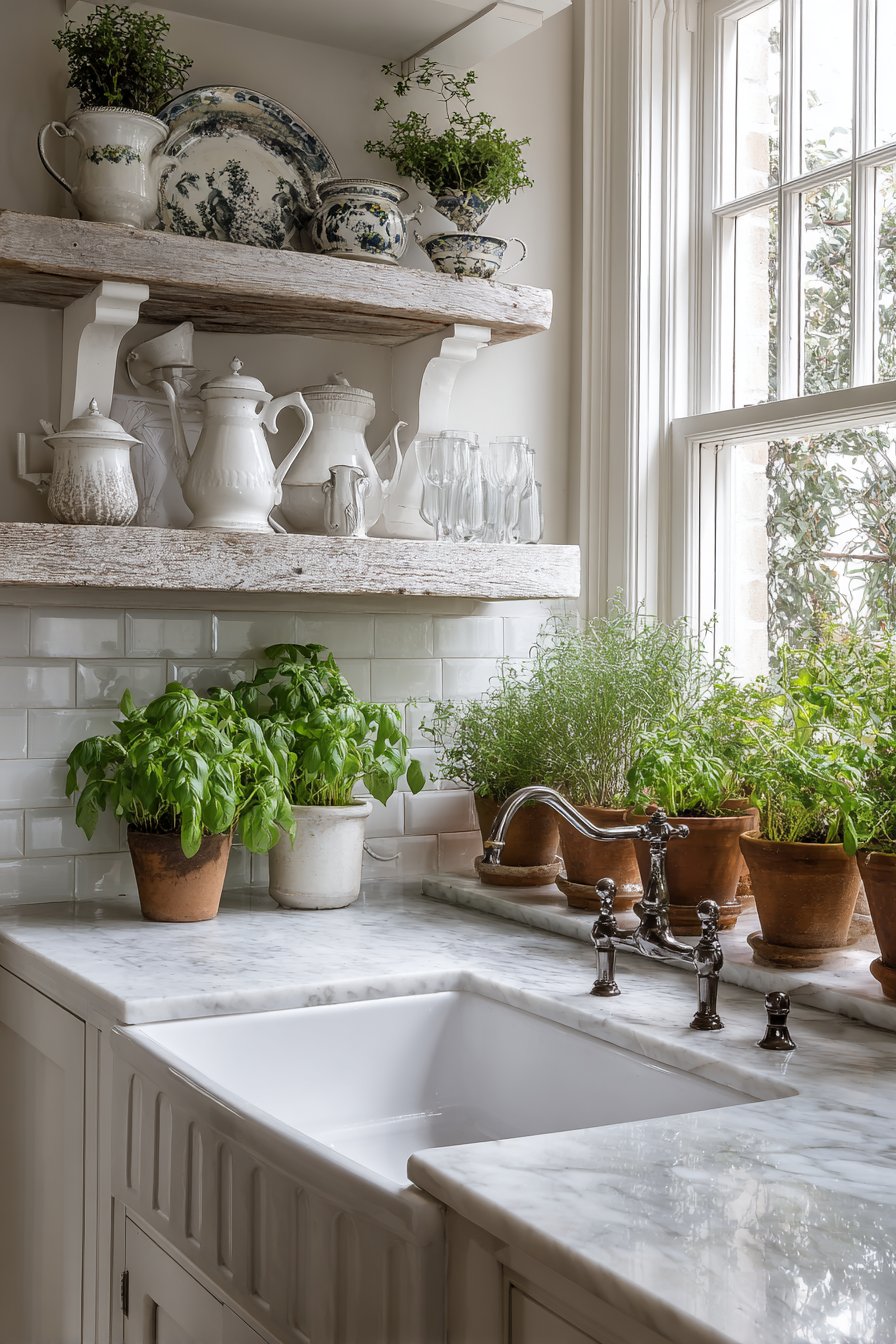
Along the windowsill above the sink, a small herb garden thrives in terracotta pots of varying sizes. Basil, rosemary, thyme, and parsley catch the natural light, their fresh scents mingling with cooking aromas while providing easy access to fresh ingredients. The warm terra cotta tones complement the oil-rubbed bronze fixtures and reclaimed wood shelving, creating a cohesive color palette built around earth tones and natural materials.
Key Design Tips:
- Ensure proper support for heavy apron-front sinks by installing additional framing beneath the cabinet—these fixtures can weigh 100-150 pounds before adding water.
- Choose marble countertops with honed or leathered finishes rather than high polish for a more casual, cottage-appropriate appearance that also hides etching better.
- Treat marble countertops with quality sealers and embrace the natural patina that develops—this living surface becomes more beautiful with age.
- Display collections of white or neutral-toned pottery and glassware for maximum visual impact against dark wood shelving.
- Plant herbs in proper drainage holes and group pots on a watertight tray to protect windowsills from moisture damage.
5. Cozy Dining Nook with Built-In Seating
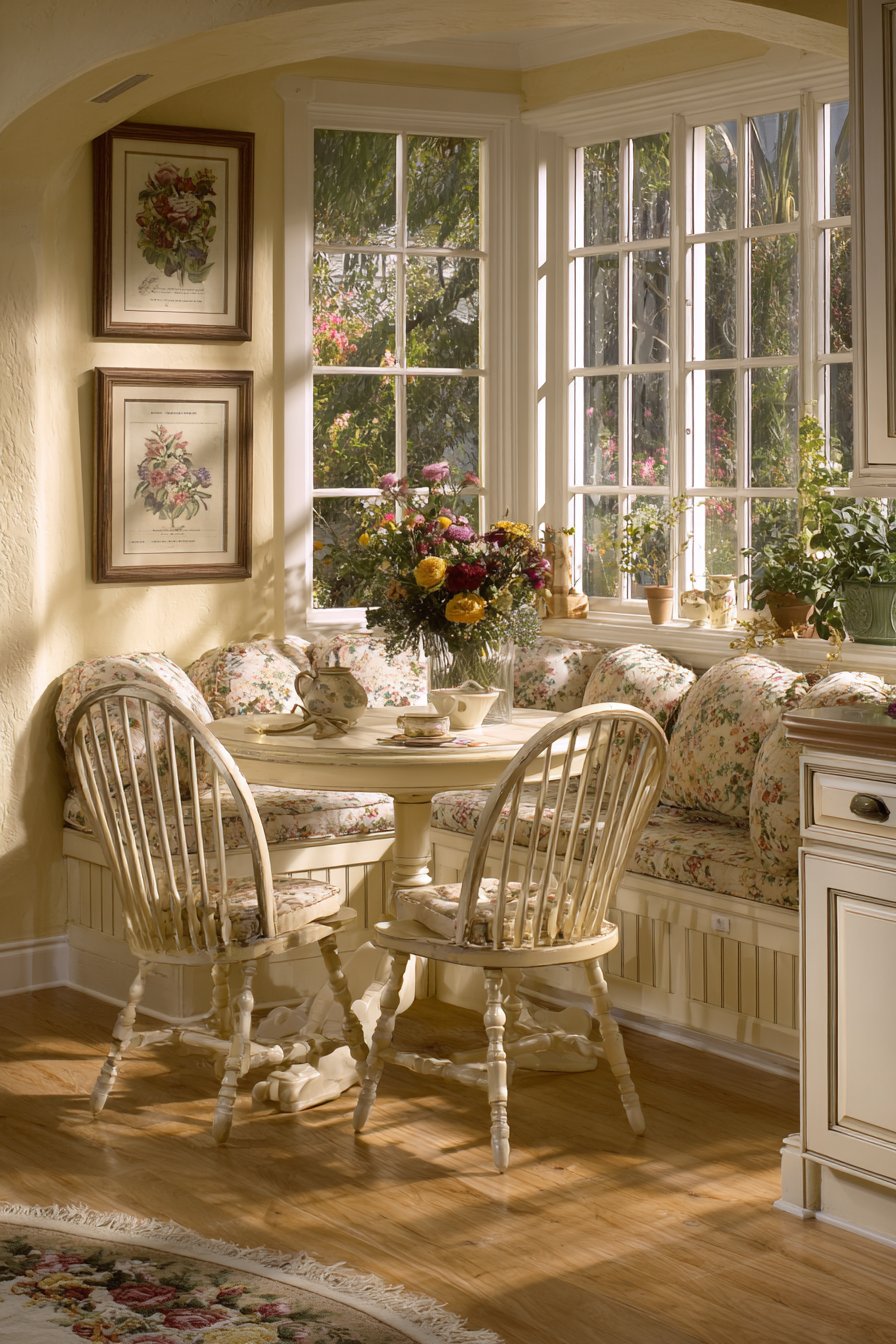
Every cottage kitchen benefits from a dedicated dining area, and few configurations prove more charming than a corner nook with built-in seating. Picture a round pedestal table, its base and top finished in distressed white paint that reveals hints of wood grain and darker underlayers at edges and high-wear spots. This table becomes the gathering place for morning coffee, afternoon homework sessions, and casual meals, its round shape facilitating conversation and creating a sense of intimacy that rectangular tables cannot match.
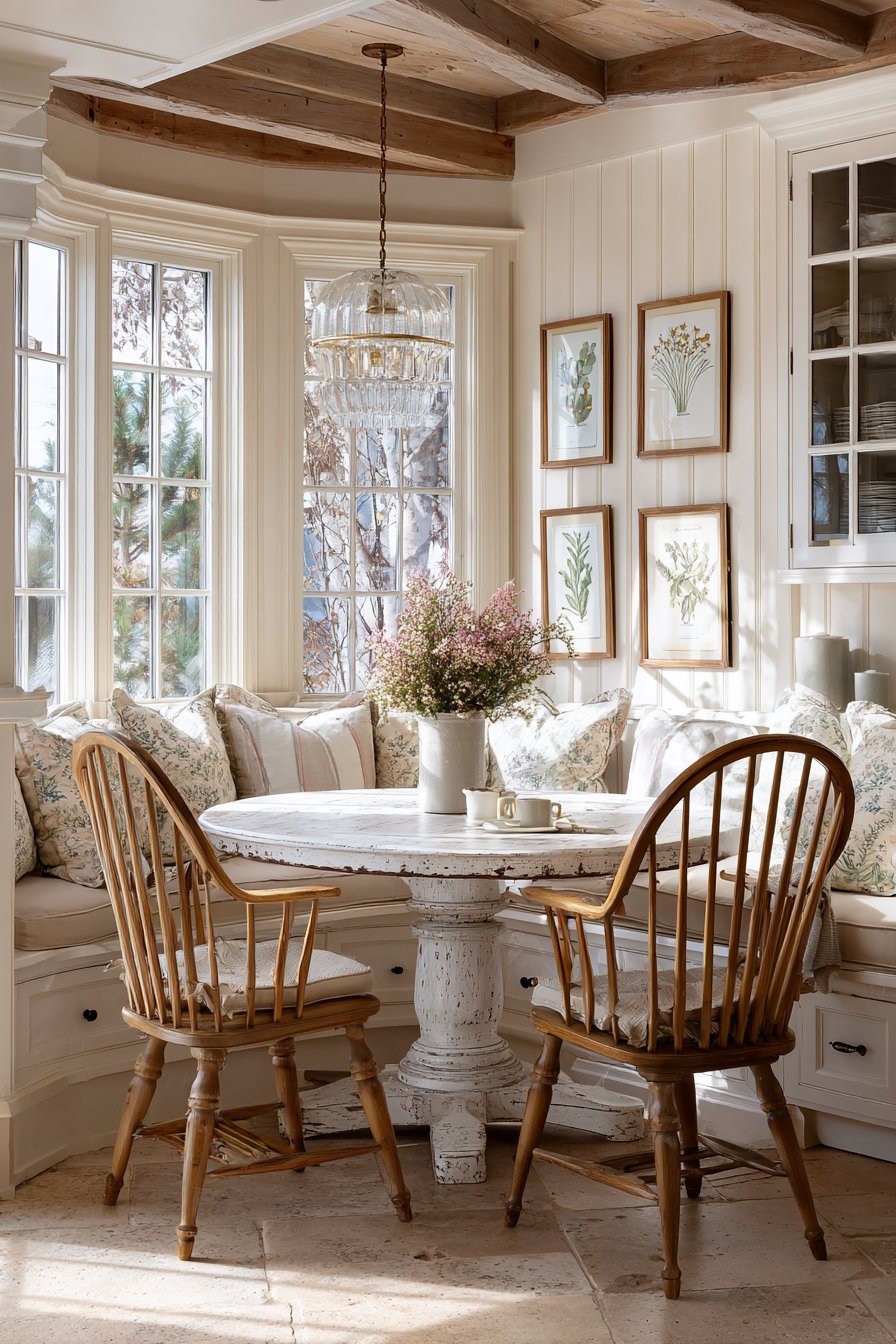
Windsor-style wooden chairs, perhaps in natural wood finish or painted to complement the cabinetry, surround the accessible sides of the table. These classic chairs, with their spindle backs and sculpted seats, have graced American homes for centuries and remain remarkably comfortable despite their traditional simplicity. Against the wall, built-in bench seating maximizes the nook’s space efficiency while adding architectural interest. The bench features floral cushions in soft, faded patterns—perhaps roses, lavender sprigs, or delicate wildflowers—that introduce gentle color and inviting softness to the hard surfaces of wood and wall.
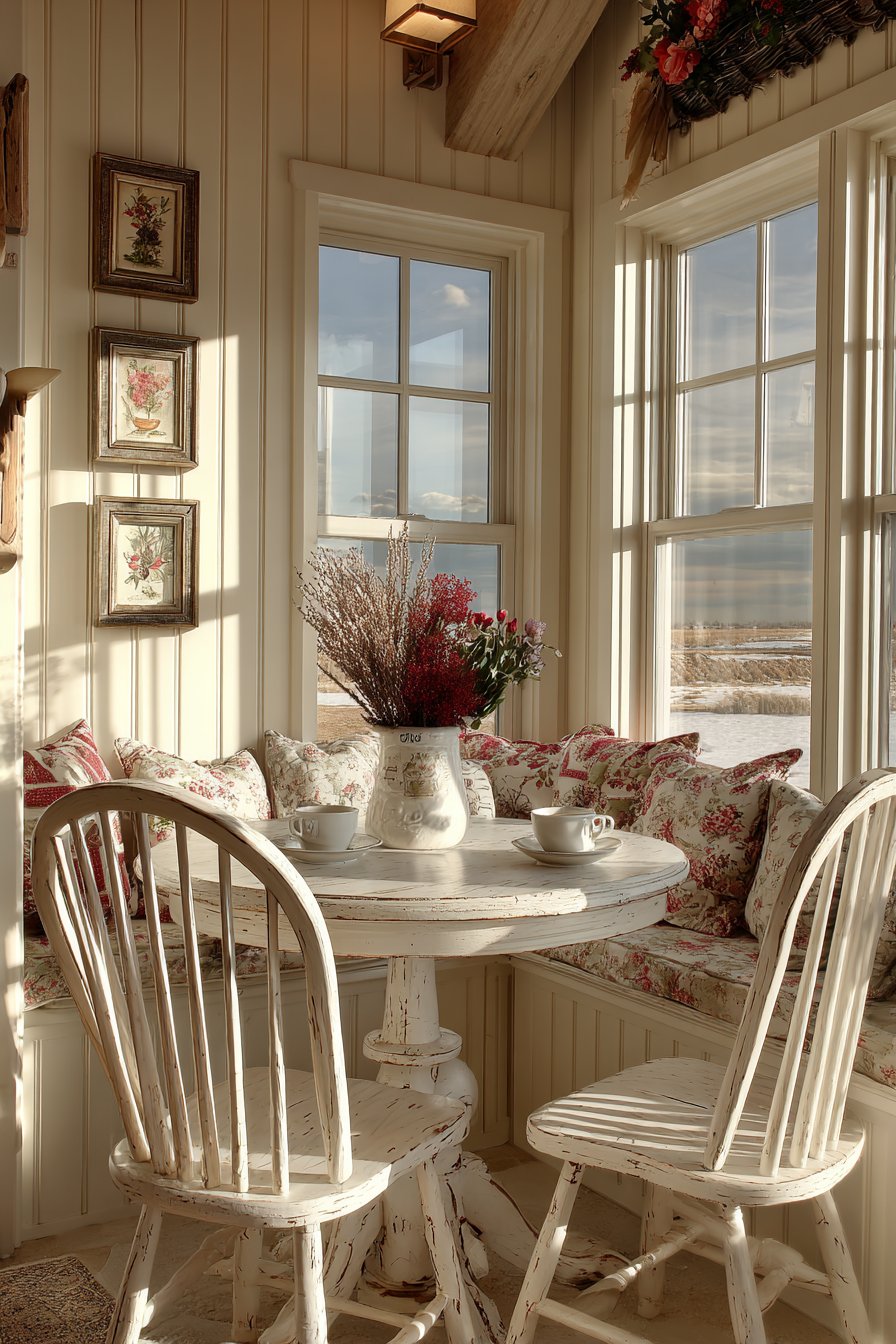
Cream-colored wainscoting rises behind the bench seating, its horizontal boards and cap rail adding architectural detail that grounds the nook and protects walls from chair backs and daily wear. Above the wainscoting, vintage botanical prints in simple frames create a gallery wall that brings nature’s beauty indoors. These prints might feature herbs, vegetables, garden flowers, or wild plants, their scientific illustrations or watercolor renderings adding an educational element alongside their decorative function.
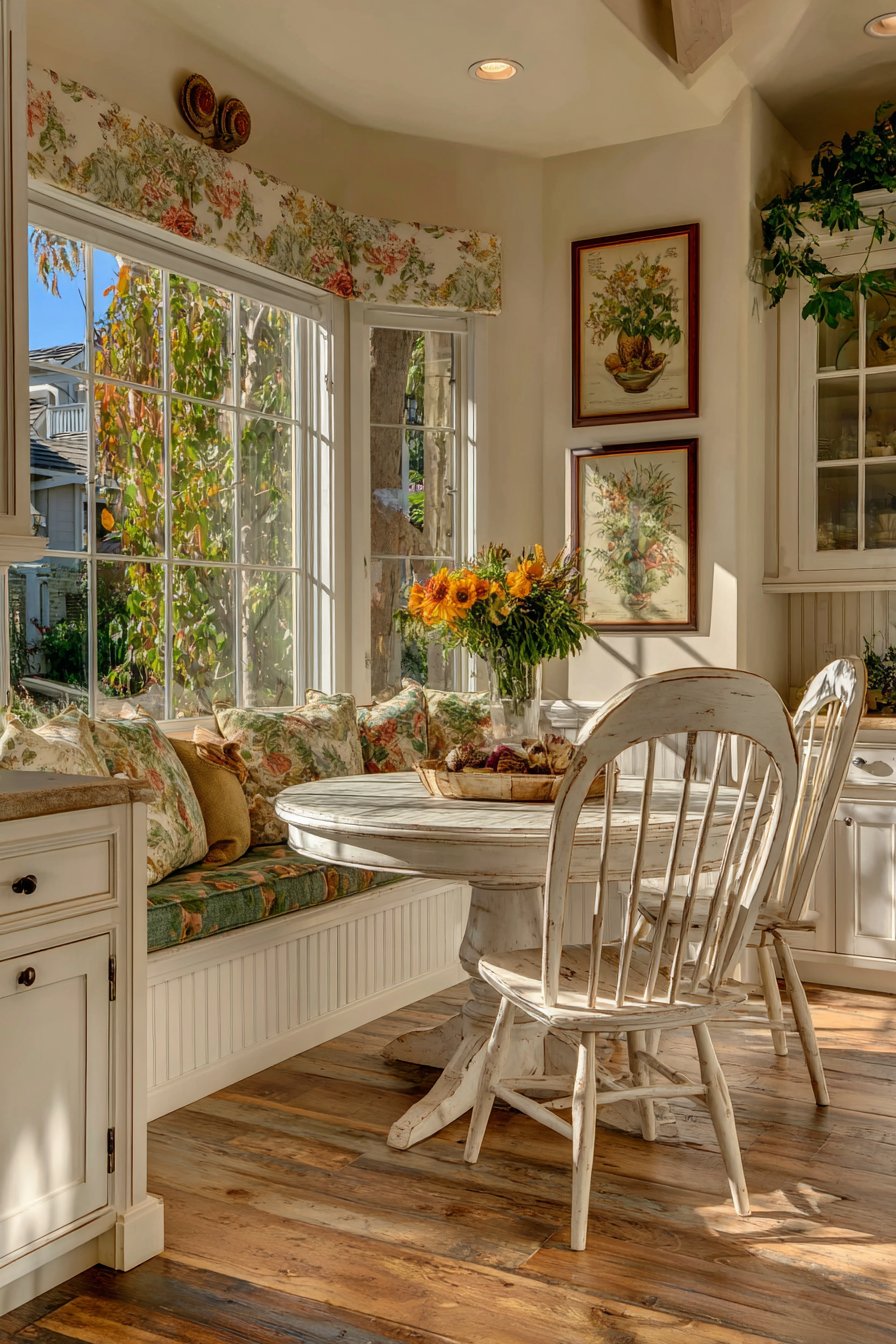
The multipane window above the bench floods this cozy corner with natural morning light, making it the ideal spot for breakfast while reading the paper or starting the day with quiet contemplation. The window’s divided lights add architectural interest while their proportions suit the cottage style perfectly. Simple curtains or perhaps a Roman shade in neutral linen can be added for privacy or light control without compromising the airy, welcoming feel.
Key Design Tips:
- Size the round table appropriately for your nook—42 to 48 inches in diameter typically accommodates four people comfortably without overwhelming small spaces.
- Build bench seating at standard dining height (18 inches) with adequate depth (18-20 inches) for comfortable seated meals.
- Choose cushion fabrics with durable, cleanable finishes suitable for dining areas—indoor/outdoor fabrics work beautifully in cottage settings.
- Install wainscoting at 32-36 inches high for proper proportion and practical wall protection in dining areas.
- Frame botanical prints consistently or in complementary frames for a cohesive gallery wall effect.
6. Organized Pantry with Cottage Character
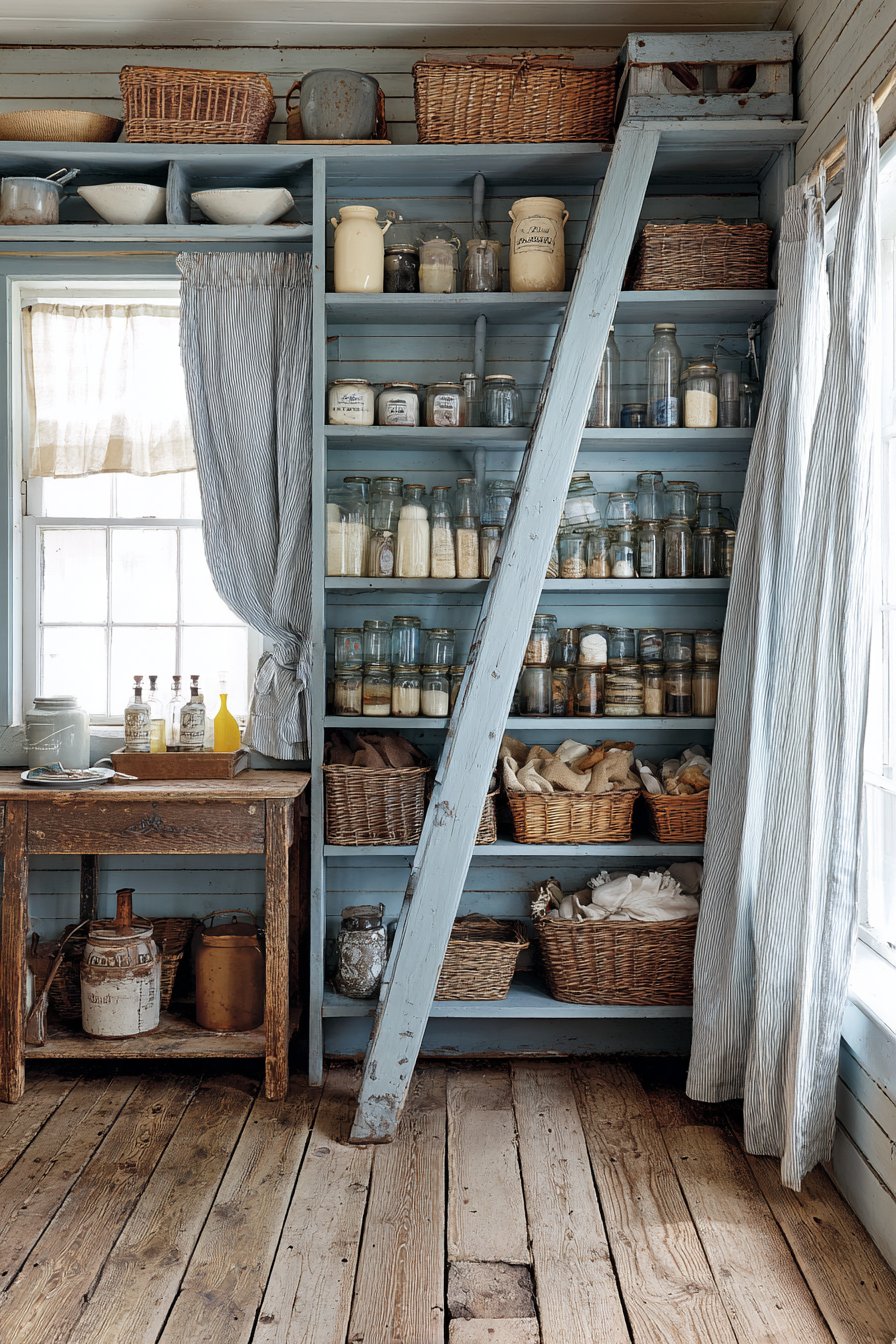
Even practical storage spaces deserve attention in cottage kitchen design, and a well-appointed pantry can become a beautiful, functional asset. Floor-to-ceiling painted wooden shelving in soft blue-grey creates an organized system that’s both pretty and practical. This color choice—somewhere between dusty blue and silvery grey—provides a sophisticated alternative to stark white while maintaining the light, airy quality essential to cottage aesthetics. The shelving itself might be simple painted pine boards or more elaborate with decorative brackets and trim details, depending on your space and budget.
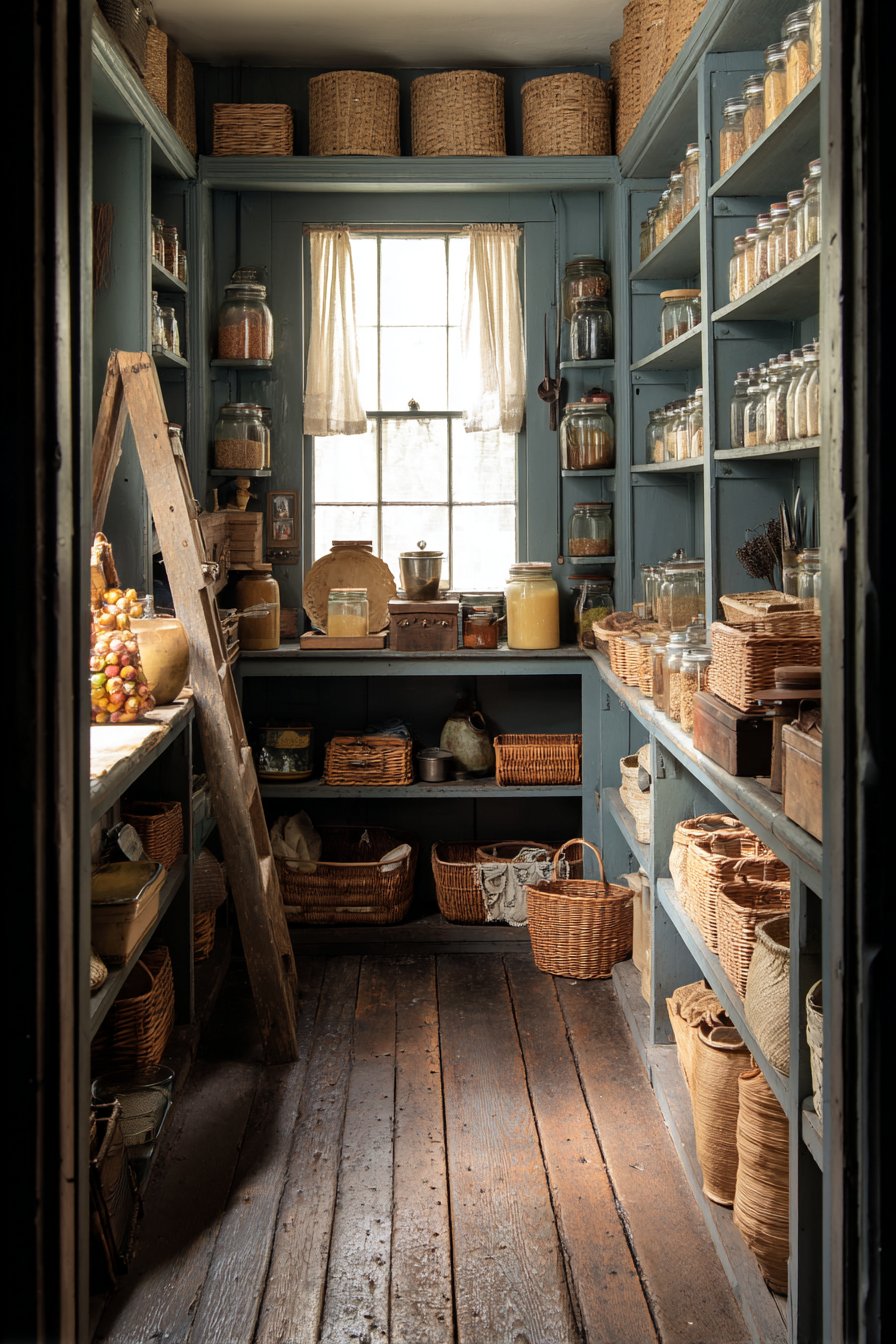
These shelves hold a carefully curated collection of storage solutions: wicker baskets for potatoes and onions, glass storage jars displaying colorful dried beans and grains, and vintage canisters labeled for flour, sugar, and other baking essentials. This combination of storage vessels creates visual interest through varied textures, shapes, and materials while keeping pantry contents visible and accessible. The organization system is both practical and beautiful—a hallmark of successful cottage design where form follows function without sacrificing aesthetic appeal.
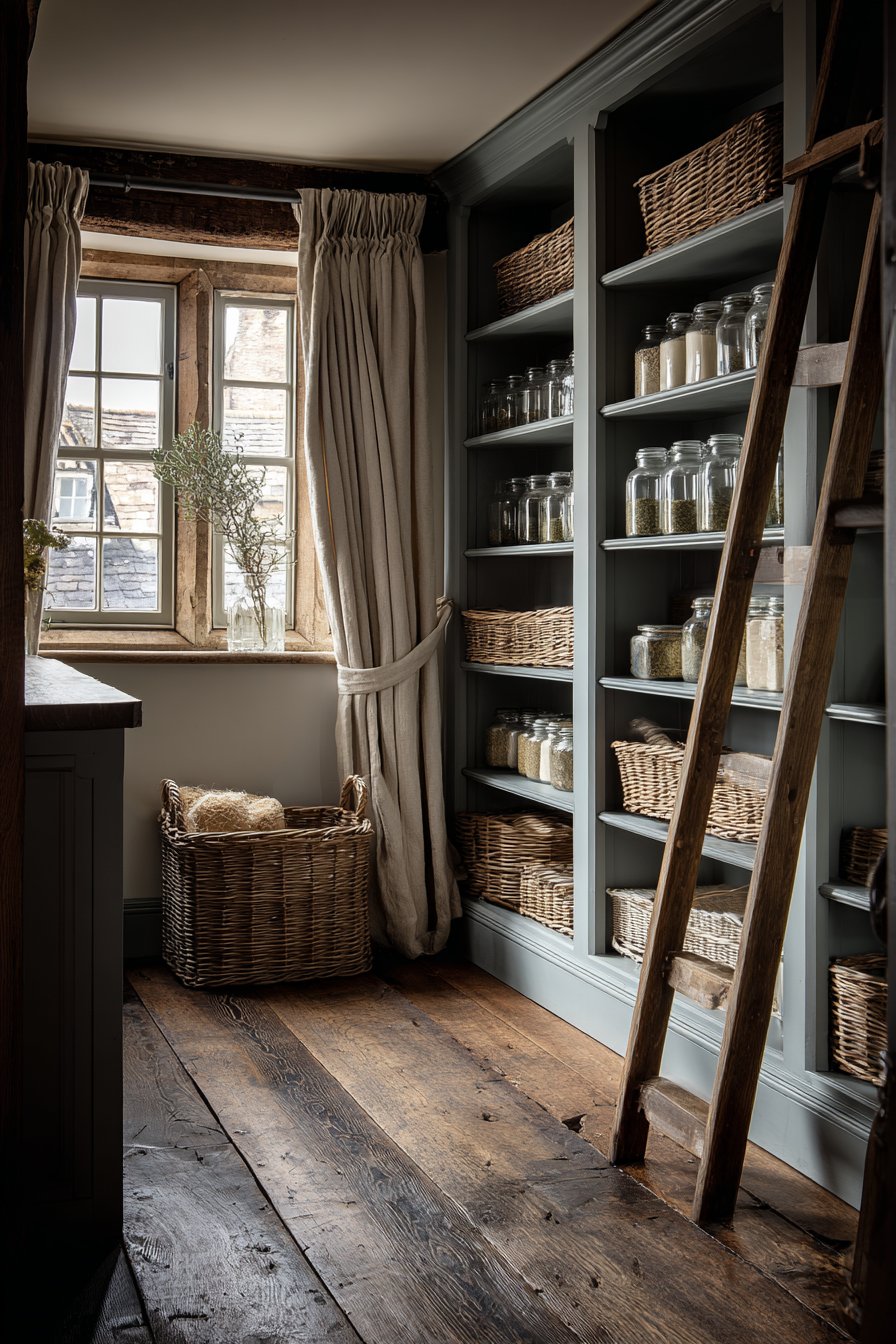
A small wooden stepladder, perhaps painted to match the shelving or left in natural wood finish, leans casually against the shelves. This isn’t merely a practical tool for accessing upper storage—it becomes part of the pantry’s charm, suggesting a space that’s actively used and genuinely functional. The stepladder might be a vintage find or a new purchase aged with distressing techniques, but either way, it adds authentic character that makes the pantry feel lived-in rather than merely staged.
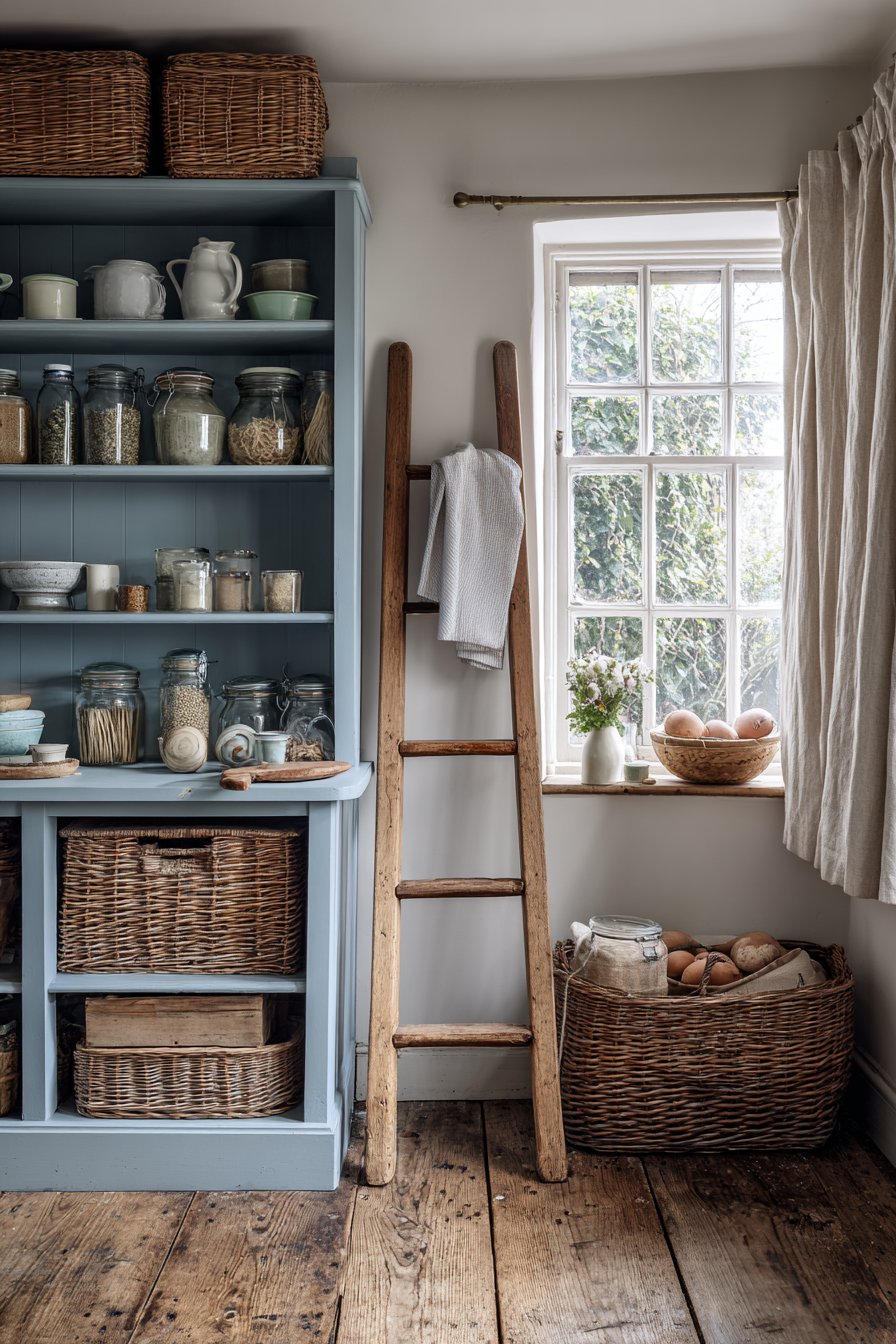
Wide plank wooden floors throughout the pantry show natural wear patterns—slight lightening where foot traffic is heaviest, gentle color variations between boards, and the honest marks of daily use. A window with simple muslin curtains provides natural light, eliminating the closed-in feeling that many pantries suffer from. The curtains, hung on a simple tension rod or cafe rod, can be easily opened for maximum light or drawn for a softer, filtered glow.
Key Design Tips:
- Paint pantry shelving in colors one or two shades darker than your kitchen walls to create subtle definition while maintaining visual flow.
- Invest in quality glass storage jars with airtight seals for dry goods—the visual appeal justifies the expense, and they preserve food quality better than plastic.
- Group pantry items by category (baking supplies, breakfast items, snacks) and assign each category to specific shelves for easier maintenance.
- Choose wicker baskets with similar weaves and tones for cohesion, even if they’re different sizes and shapes.
- Ensure adequate lighting with overhead fixtures or battery-operated LED strips if no window is available—a dark pantry undermines even the best organization.
7. Handmade Tile Backsplash with Artisanal Details
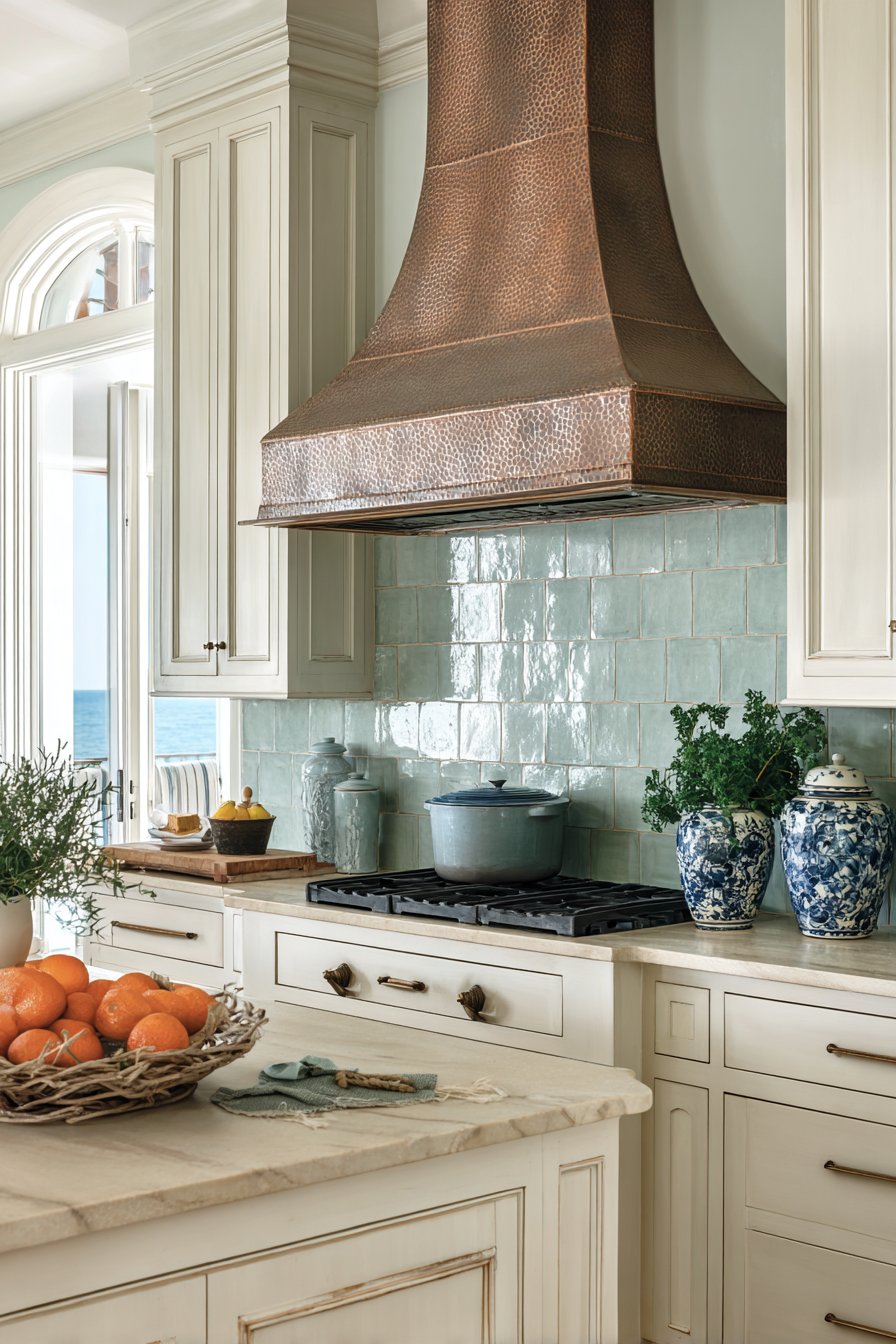
The backsplash area offers wonderful opportunities for introducing artisanal elements that elevate cottage kitchen design beyond the ordinary. Handmade ceramic tiles in soft cream, each showing subtle glaze variations and gentle imperfections that machine-made tiles cannot replicate, create a backdrop rich with character and texture. These tiles might feature slight color differences, hand-beveled edges, or the subtle undulations that come from handcrafting, and these “imperfections” are precisely what makes them so appealing. They speak to craftsmanship and attention to detail, values deeply embedded in cottage aesthetics.
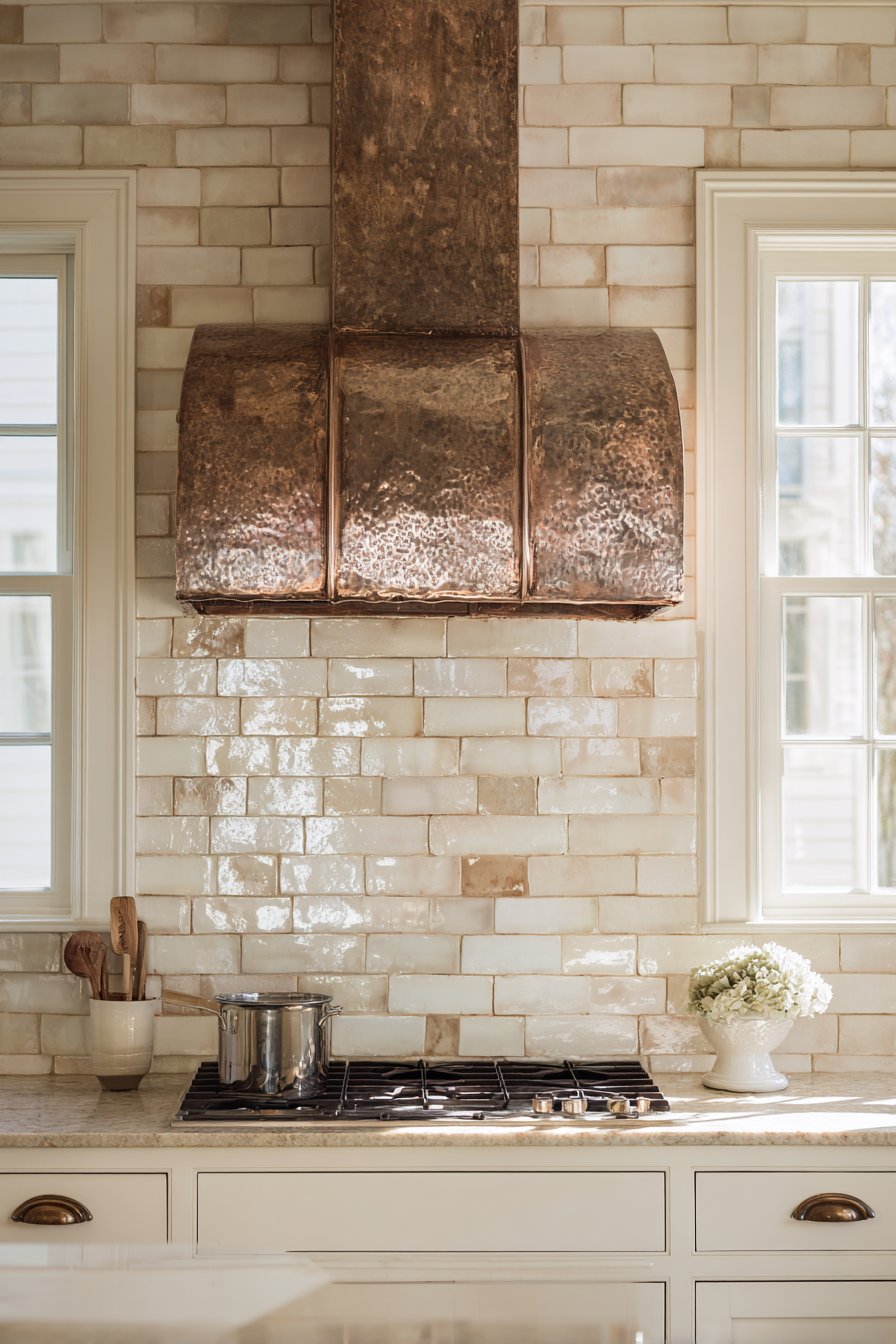
White painted cabinets flanking this tiled area feature cup pulls in antique brass finish rather than knobs, their horizontal orientation and warm metallic tones adding subtle elegance without overwhelming the design. Cup pulls, with their practical grab-and-pull functionality, suit cottage kitchens beautifully—they’re reminiscent of library card catalogs, apothecary cabinets, and other vintage storage pieces. The antique brass finish, showing variation and depth rather than uniform shine, complements the cream tiles while tying into other metallic elements throughout the kitchen.
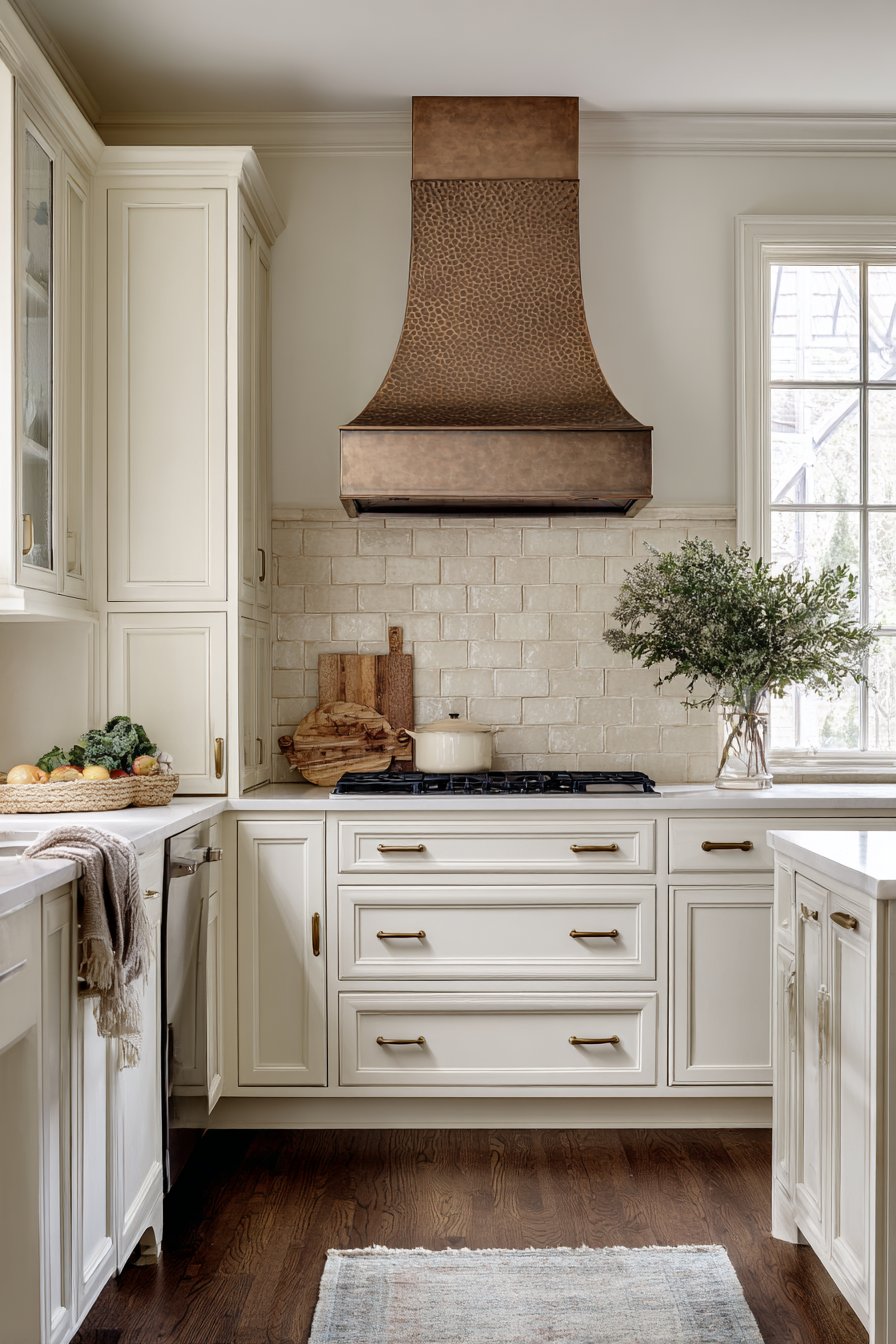
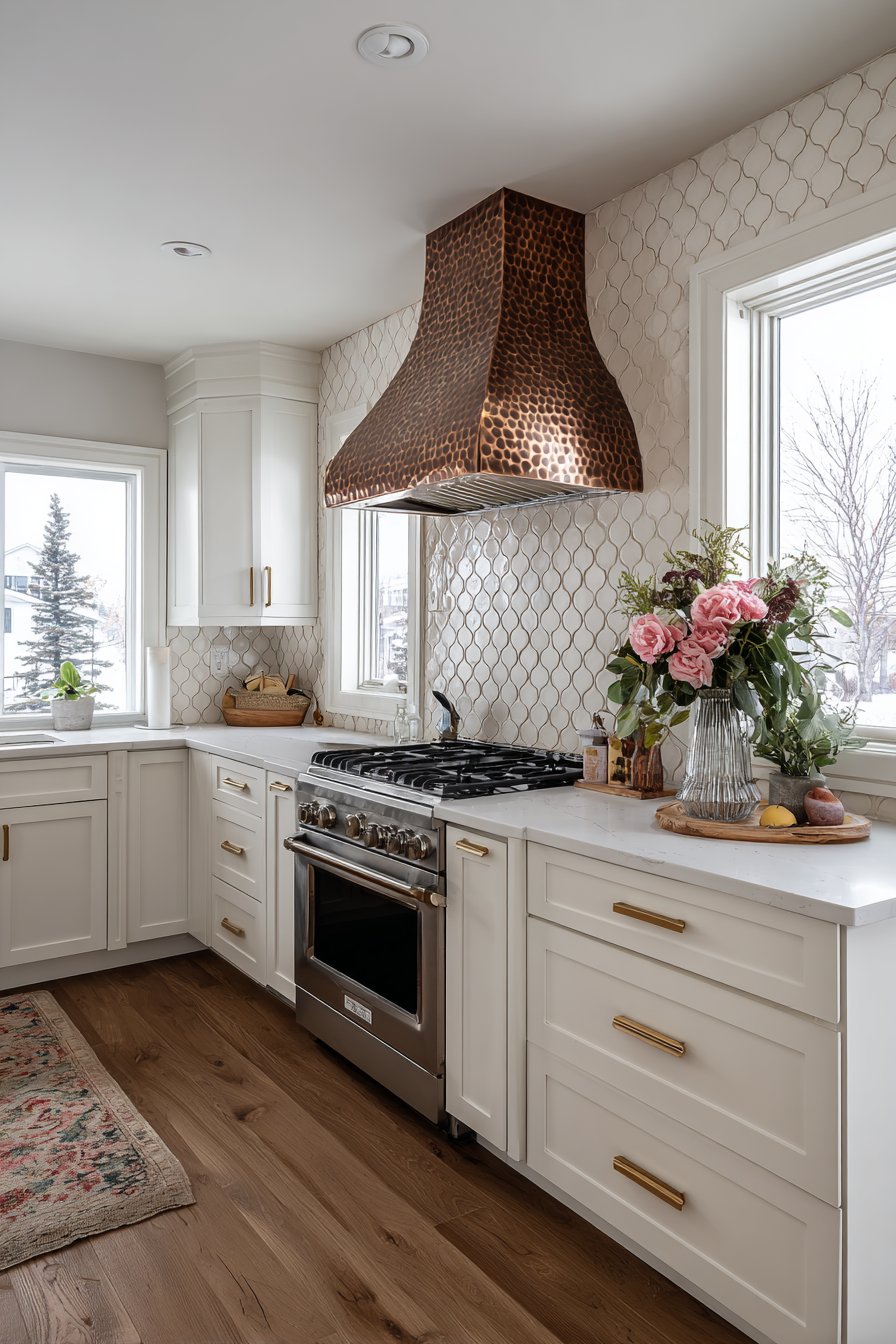
A vintage-style range hood in hammered copper serves as the backsplash area’s crowning glory. Copper, with its living finish that develops deeper patina over time, brings warmth and visual weight to the cooking zone. The hammered texture adds another layer of artisanal detail, its hand-worked surface catching and reflecting light in constantly changing ways. This isn’t the shiny, lacquered copper seen in some contemporary kitchens but rather copper allowed to age naturally, developing the rich bronze and brown tones that make it increasingly beautiful over time.
Natural light from a nearby window creates soft reflections on the tile surface, highlighting the subtle texture and glaze variations that make handmade tiles so special. These reflections shift throughout the day as the angle of light changes, ensuring the backsplash never looks quite the same way twice. This dynamic quality—light playing across textured surfaces, creating depth and shadow—brings life to the kitchen in ways that flat, uniform surfaces simply cannot achieve.
Key Design Tips:
- Order 15-20% extra handmade tiles beyond your calculated needs to account for natural variations and ensure you have matching replacements for future repairs.
- Install handmade tiles with slightly wider grout joints (3/16 inch rather than 1/8 inch) to accommodate their size variations while making them easier to install.
- Choose grout colors that complement rather than match your tiles—soft grey or putty-colored grout suits cream tiles beautifully.
- Consider unsealed copper for range hoods if you appreciate developing patina, or apply clear lacquer if you prefer to preserve the brighter, newer appearance.
- Place task lighting thoughtfully to highlight your artisanal backsplash without creating harsh glare on reflective surfaces.
8. Exposed Beam Ceiling with Farmhouse Table Centerpiece
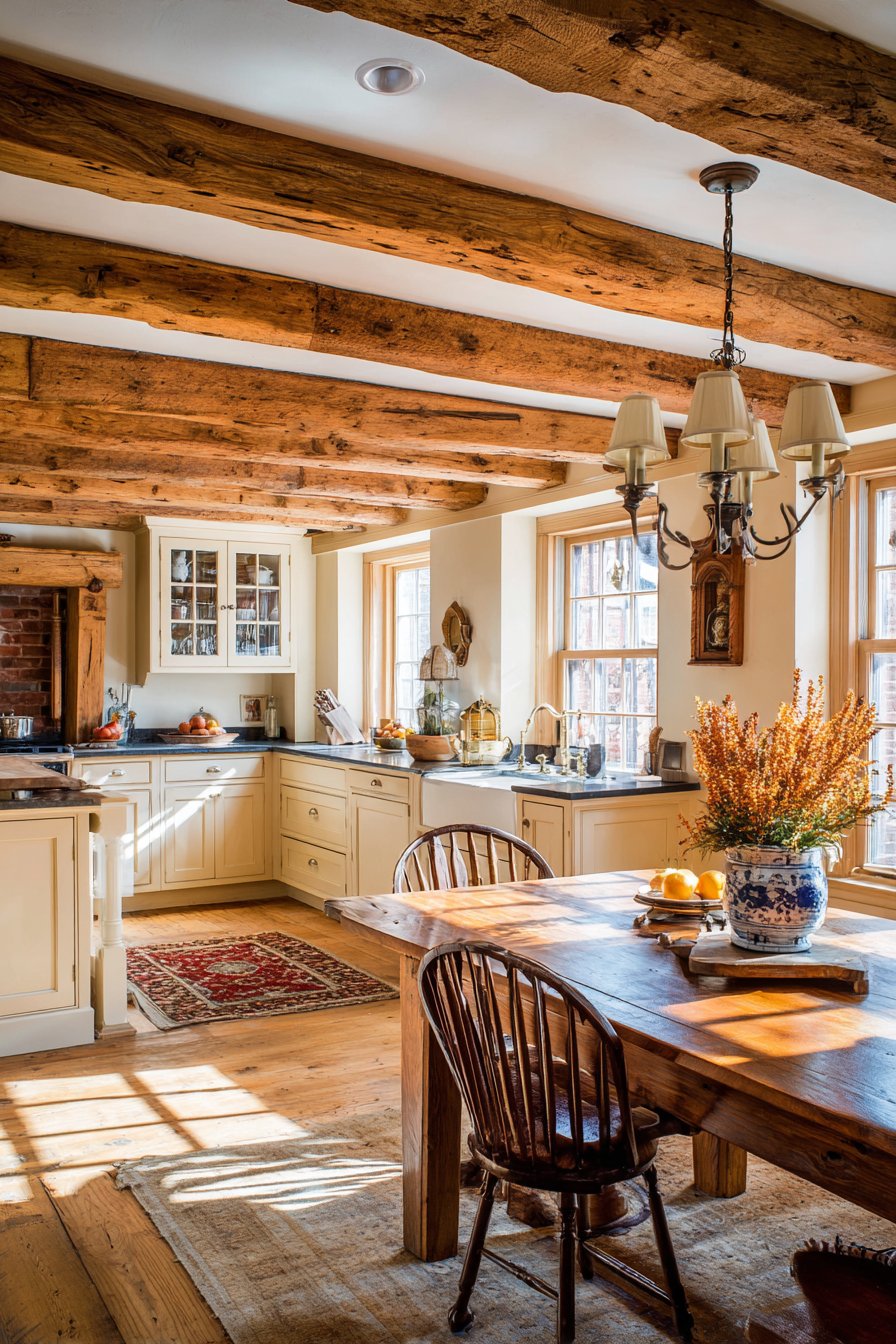
Looking upward in a cottage kitchen reveals opportunities for architectural drama that grounds the entire space. Exposed ceiling beams in natural wood finish—perhaps reclaimed oak, pine, or fir showing their original saw marks and weathering—add structural presence and visual weight to the room. These beams, whether authentically structural or decoratively applied, create horizontal lines that guide the eye across the ceiling while providing warm contrast to white painted tongue-and-groove ceiling boards. This combination of natural wood and painted surfaces exemplifies the cottage aesthetic’s ability to balance rustic and refined elements.
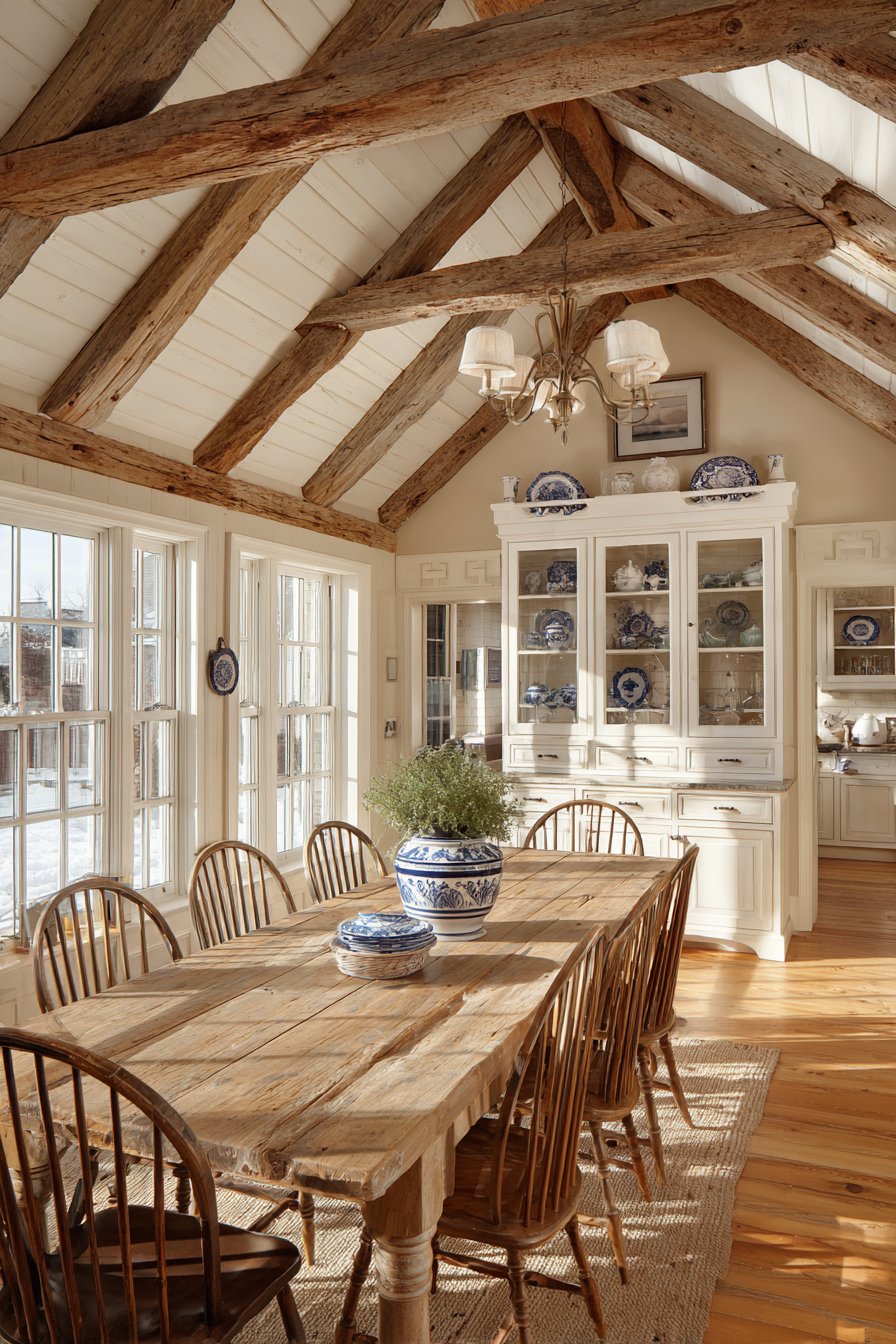
Below this architectural ceiling treatment, a large wooden farmhouse table serves dual purposes as food preparation surface and casual dining area. This isn’t delicate furniture but rather a substantial piece built for daily use—its thick top showing character marks from years of meal preparation, its sturdy legs capable of supporting heavy mixing bowls and stacks of dishes. The table becomes the kitchen’s beating heart, where vegetables are chopped, dough is kneaded, homework is completed, and family gathers for meals. Its central placement facilitates workflow while creating a natural gathering spot.
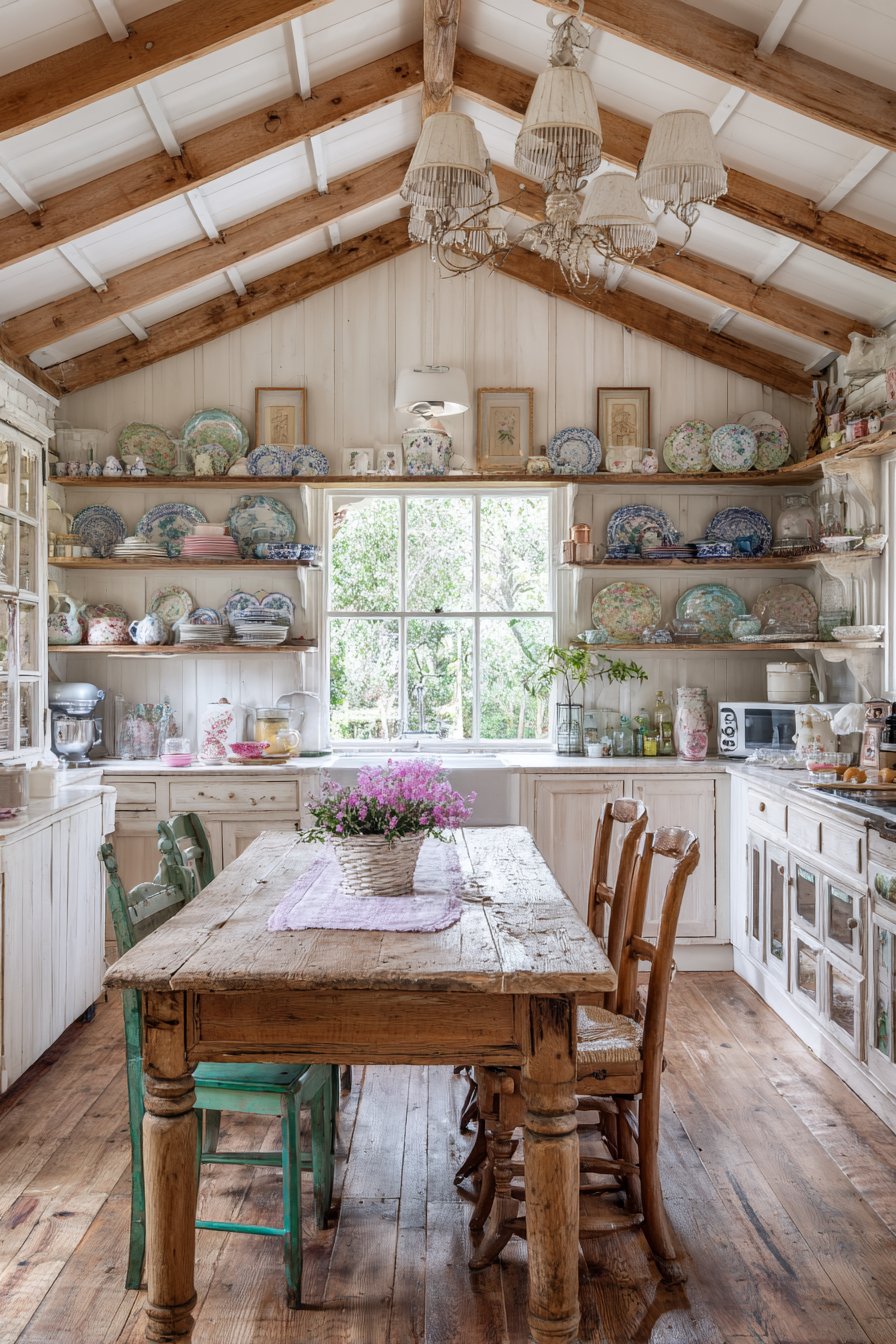
Surrounding this workhorse table are mismatched vintage chairs, each with its own personality and history. Perhaps one chair features a woven rush seat, another a curved spindle back, and a third a simple painted finish in faded blue. This collected look appears intentional rather than haphazard when chairs share similar scales and heights, even if their styles span different eras and origins. The variety adds visual interest while supporting the cottage principle that homes should evolve organically over time.
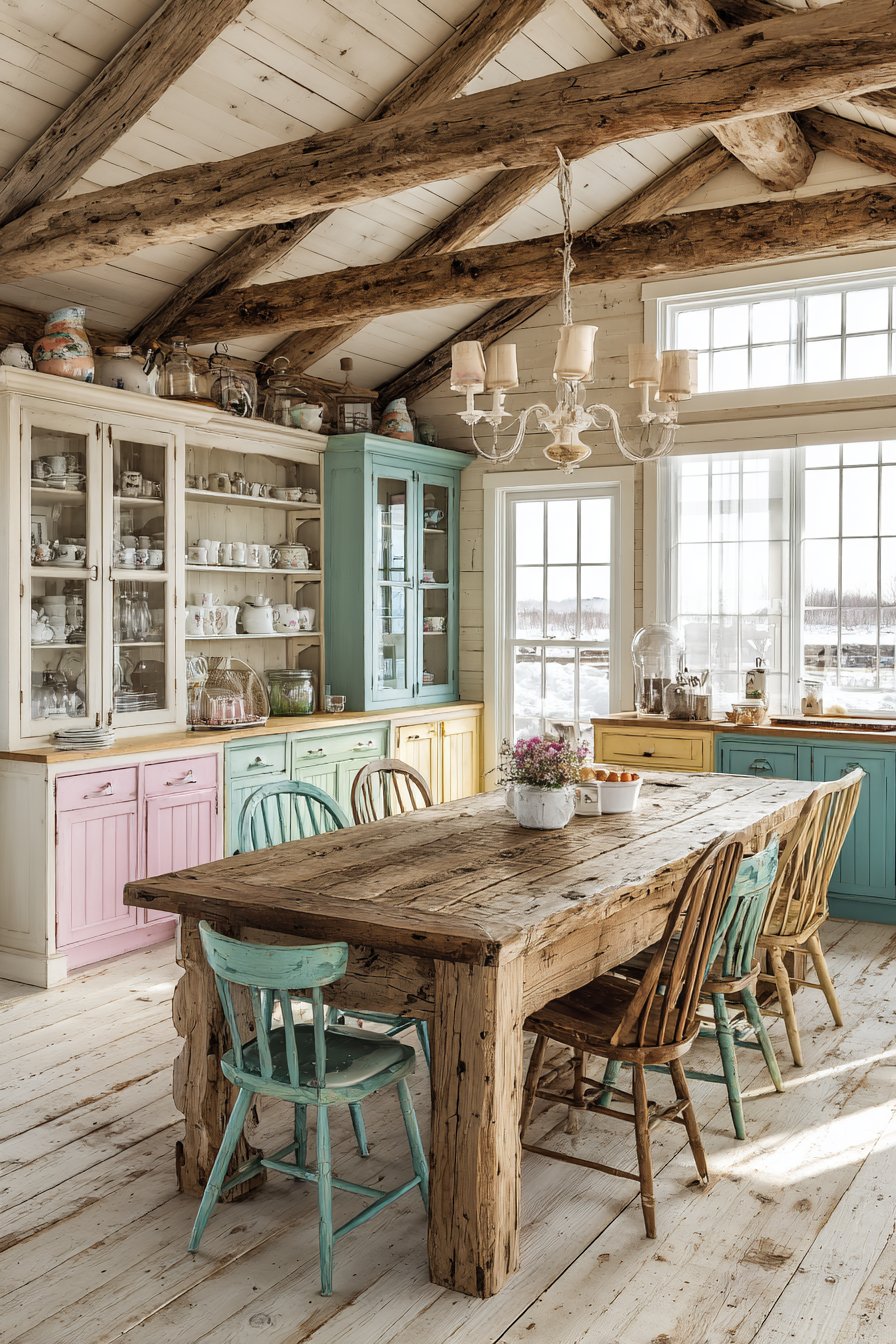
Glass-front cabinets lining the walls display colorful cottage-style dishes and serving pieces—perhaps transferware in blues and browns, vintage Fire-King jadeite, or cheerful Fiestaware in rainbow hues. These cabinets make practical sense, keeping dishes accessible while protecting them from dust, but they also create opportunities for personal expression through the dishes displayed. A vintage chandelier with fabric shades provides ambient lighting, its soft glow creating intimate atmosphere during evening meals while multiple windows ensure bright, natural illumination during daylight hours.
Key Design Tips:
- Install faux beams with proper proportions—they should be substantial enough to read as structural elements, typically 6×6 inches minimum in standard ceiling heights.
- Select tongue-and-groove ceiling boards in manageable widths (3-6 inches) for easier installation and appropriate scale.
- Choose a farmhouse table with proper height for both food prep (36 inches) and dining comfort, ensuring adequate knee clearance.
- Create visual cohesion among mismatched chairs by painting several in the same color or refinishing seats in matching wood tones.
- Arrange displayed dishes with intention—group by color, alternate patterns and solids, or create seasonal displays that rotate throughout the year.
9. Compact Kitchen with Vertical Storage Solutions
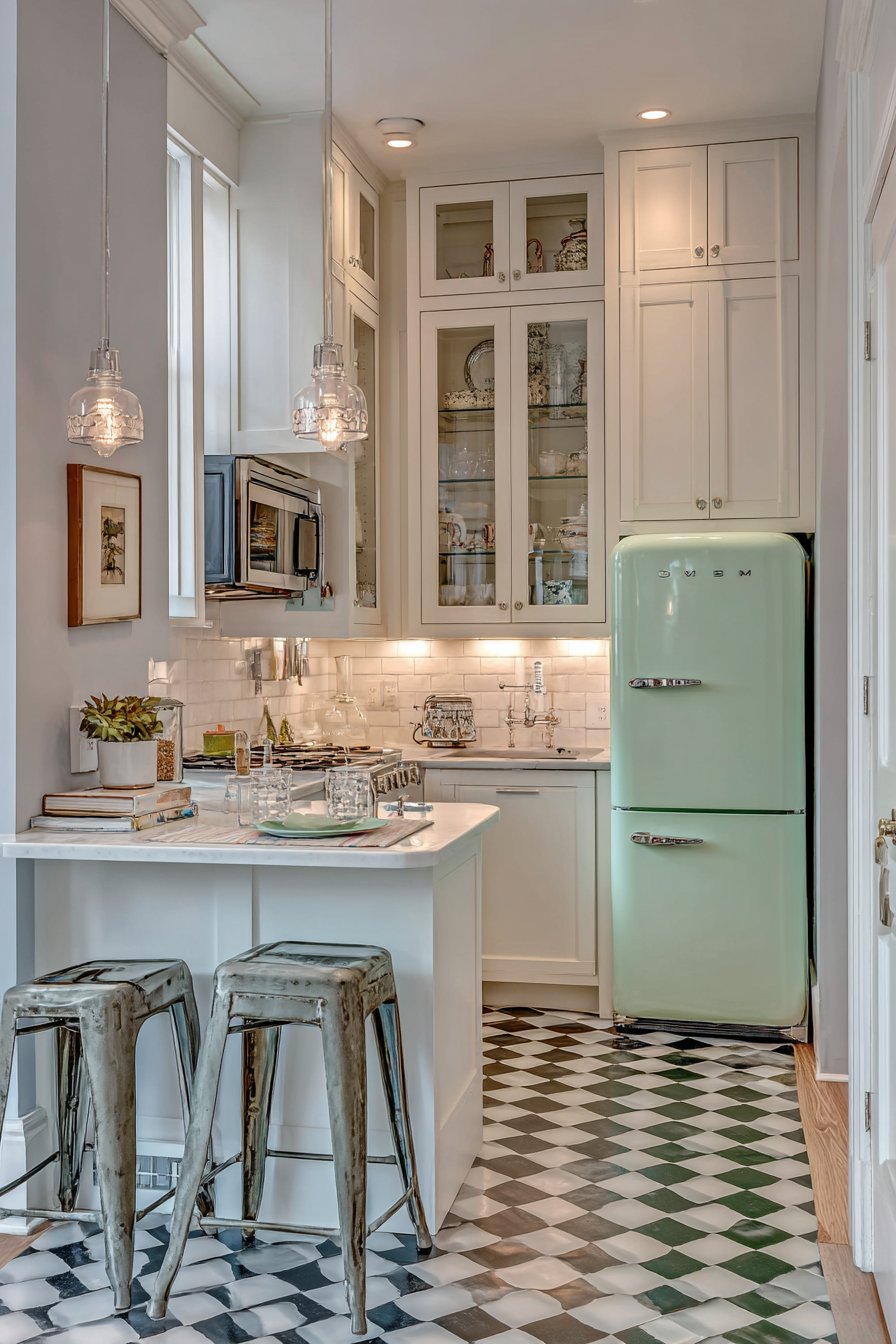
Even modest-sized kitchens can embrace cottage style when designed thoughtfully. Floor-to-ceiling cabinets in creamy white maximize vertical storage in compact spaces, their glass upper doors preventing the tall units from feeling heavy or oppressive.
These cabinets stretch from countertop to ceiling, eliminating dust-collecting soffits while providing generous storage for everything from everyday dishes to special occasion serving pieces. The glass doors allow light to flow through while creating opportunities for display—a crucial consideration in smaller kitchens where every design choice must work overtime.
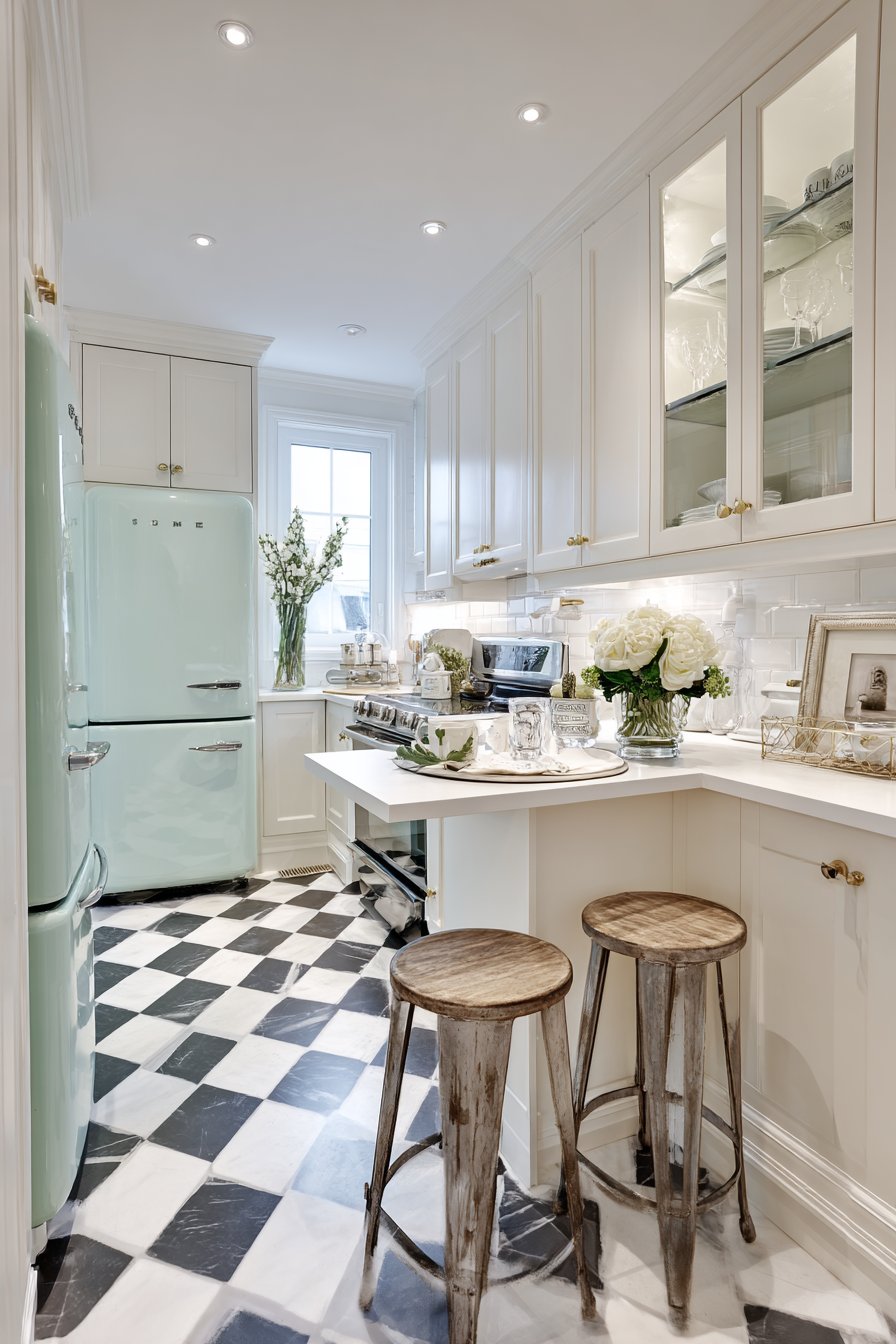
A small breakfast bar with two vintage metal stools provides casual seating without requiring dedicated floor space for a table and chairs. These stools, perhaps salvaged industrial seats with weathered paint or retro diner stools with chrome details, tuck completely under the counter when not in use. Their compact footprint makes them ideal for tight spaces, while their vintage character ensures they enhance rather than compromise the cottage aesthetic. The breakfast bar itself might be a peninsula extending from the main counter or a wall-mounted drop-leaf that folds flat when not needed.
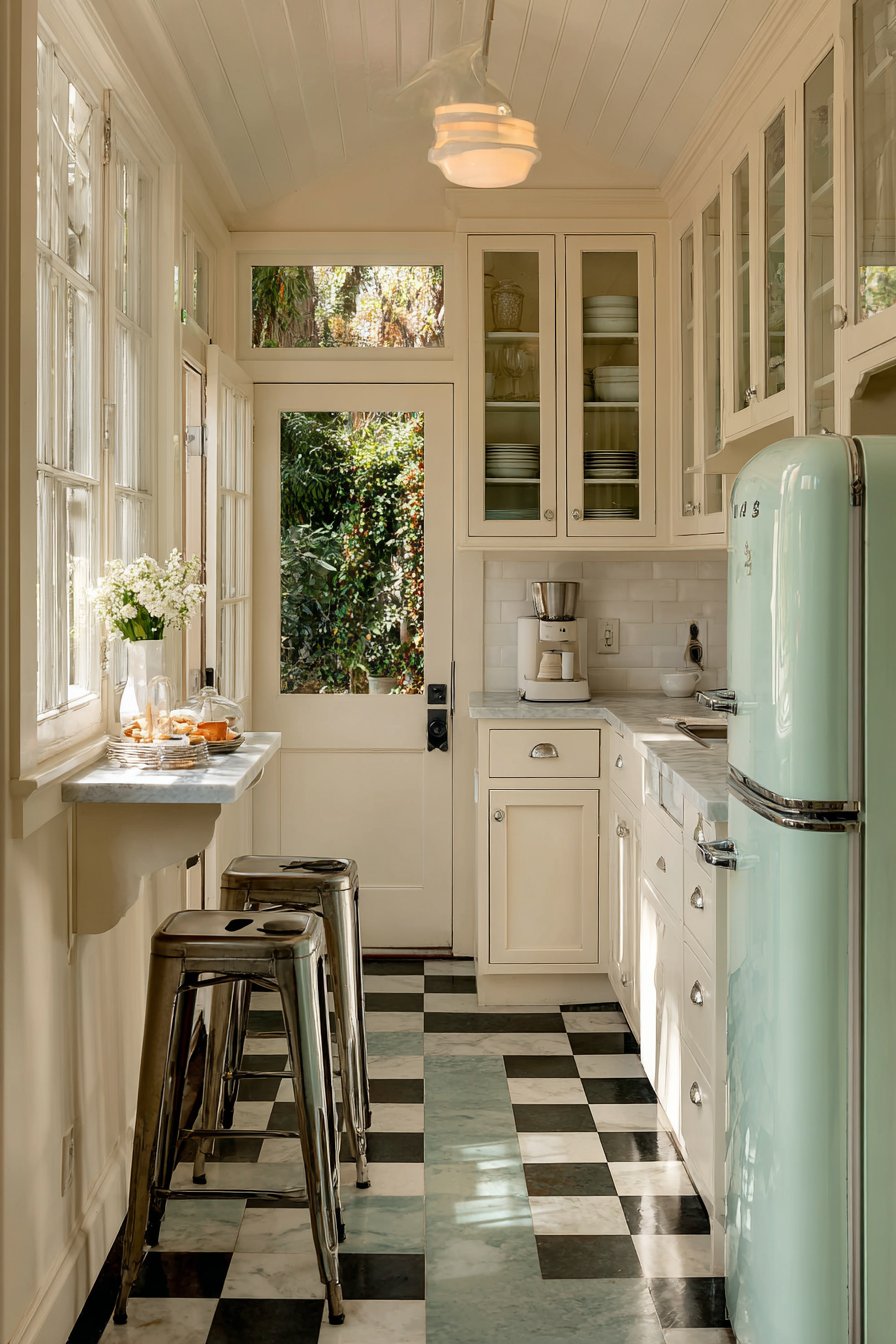
Checkerboard pattern floor tiles in classic black and white add timeless cottage charm while creating visual interest at ground level. This bold pattern actually benefits small kitchens by drawing the eye downward and creating a sense of movement that makes spaces feel larger. The high contrast between black and white tiles adds crisp definition, while the pattern itself—whether classic straight-set or dynamic diagonal installation—creates energy and personality that prevents a small kitchen from feeling bland or cramped.
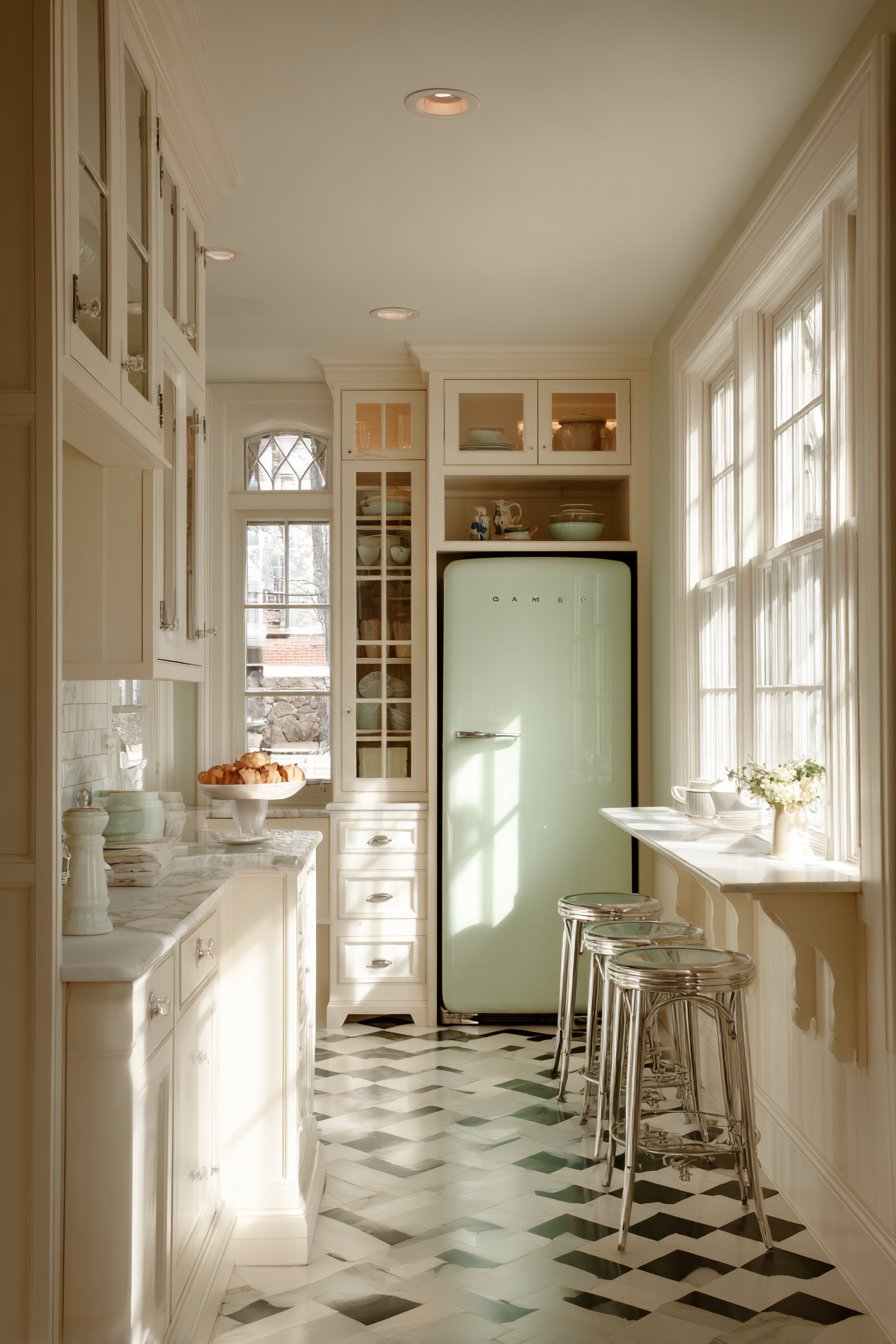
A vintage-inspired refrigerator in soft mint green serves as an unexpected accent piece that injects color and personality into the otherwise neutral palette. These retro-styled appliances, now manufactured by several companies, offer modern energy efficiency and features while maintaining authentic mid-century proportions and details. The soft mint color—reminiscent of 1950s appliances—adds a fresh, cheerful note without overwhelming the compact space. This playful touch demonstrates that cottage kitchens can embrace color and whimsy while maintaining their characteristic warmth and charm.
Key Design Tips:
- Extend upper cabinets to the ceiling even if you need a step stool for the highest shelves—the storage and visual height are worth the minor inconvenience.
- Limit glass-front cabinets to upper sections where displayed items catch light and create visual interest without feeling cluttered at eye level.
- Choose checkerboard tiles in 12-inch squares for classic proportions, or use smaller 6-inch squares for more visual movement in very compact spaces.
- Balance colorful appliances carefully—one statement piece like a mint refrigerator works beautifully, but multiple colorful appliances can overwhelm small spaces.
- Install adequate lighting in tall cabinets with interior lights or under-cabinet fixtures that illuminate upper shelves for practical access.
10. Window-Side Work Zone with Herb Garden Display
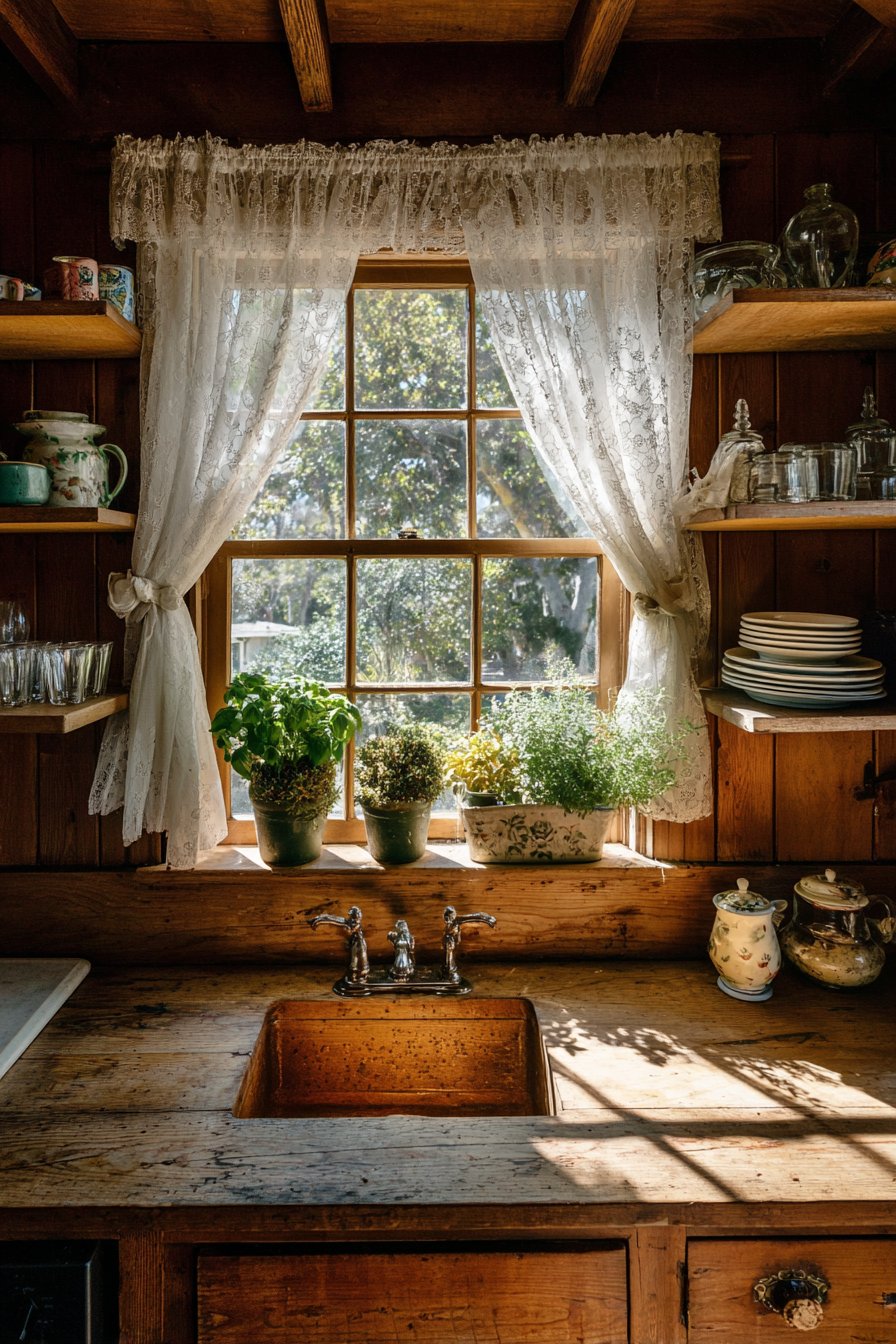
The area surrounding a kitchen window presents special opportunities for creating charming, functional vignettes that capture cottage style perfectly. A deep wooden windowsill becomes a display space for potted herbs in mismatched vintage containers—perhaps an old enamelware cup holding thyme, a small ironstone creamer sprouting basil, and a chipped terracotta pot cradling rosemary. These containers, united by their vintage character despite their varied origins, create a collected look that feels authentic rather than contrived. The herbs themselves bring life, color, and fragrance to the workspace while providing fresh ingredients literally at arm’s reach.
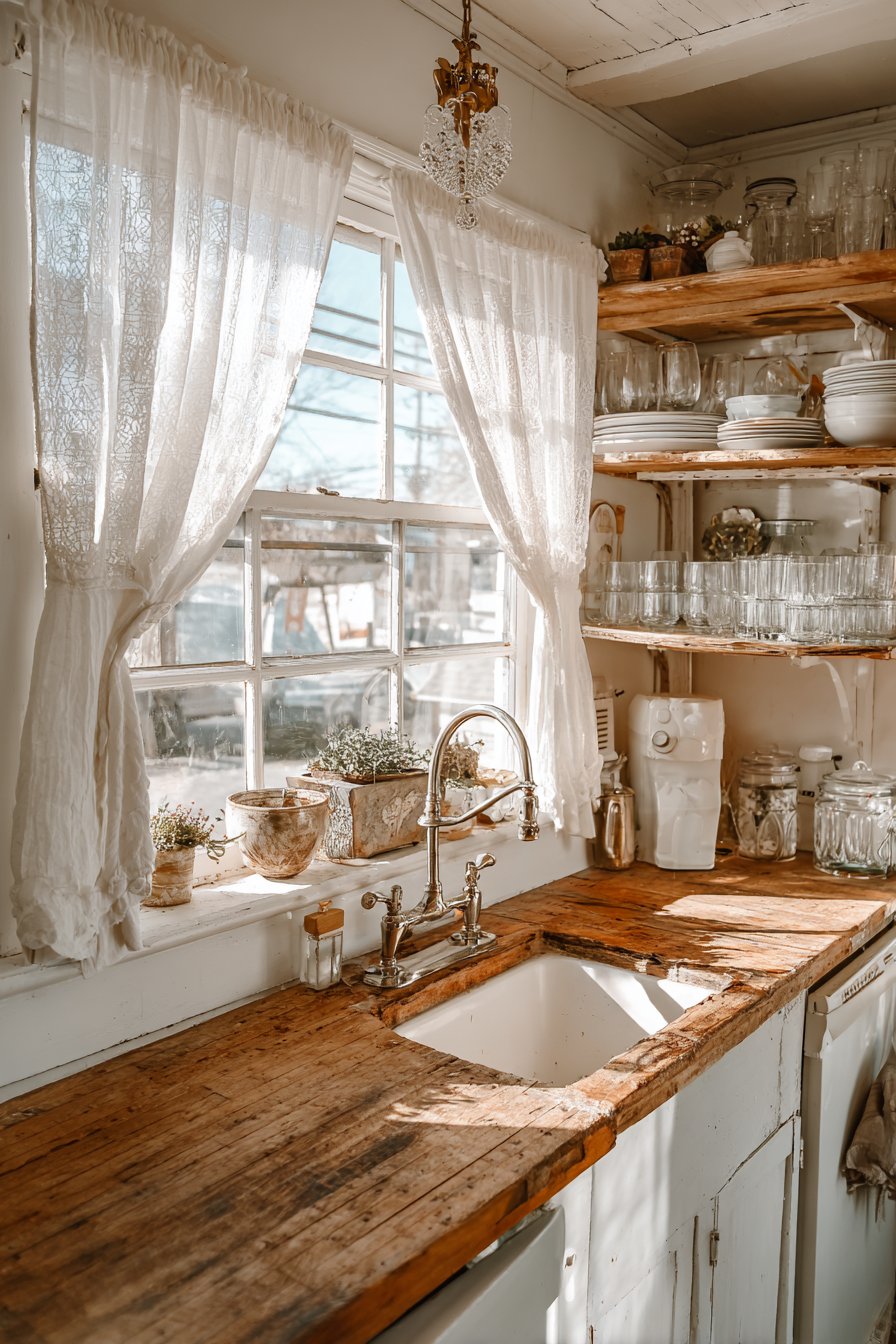
White cafe curtains with eyelet trim frame the lower half of the window, providing privacy for ground-floor kitchens while maintaining connection to outdoor views above. These curtains—crisp, fresh, and utterly cottage in their simplicity—can be easily removed for washing, maintaining the pristine appearance essential to light-filled cottage kitchens. The eyelet detail adds subtle decoration without fussiness, while the cafe length allows morning light to flood the workspace without sacrificing privacy from passing neighbors or pedestrians.
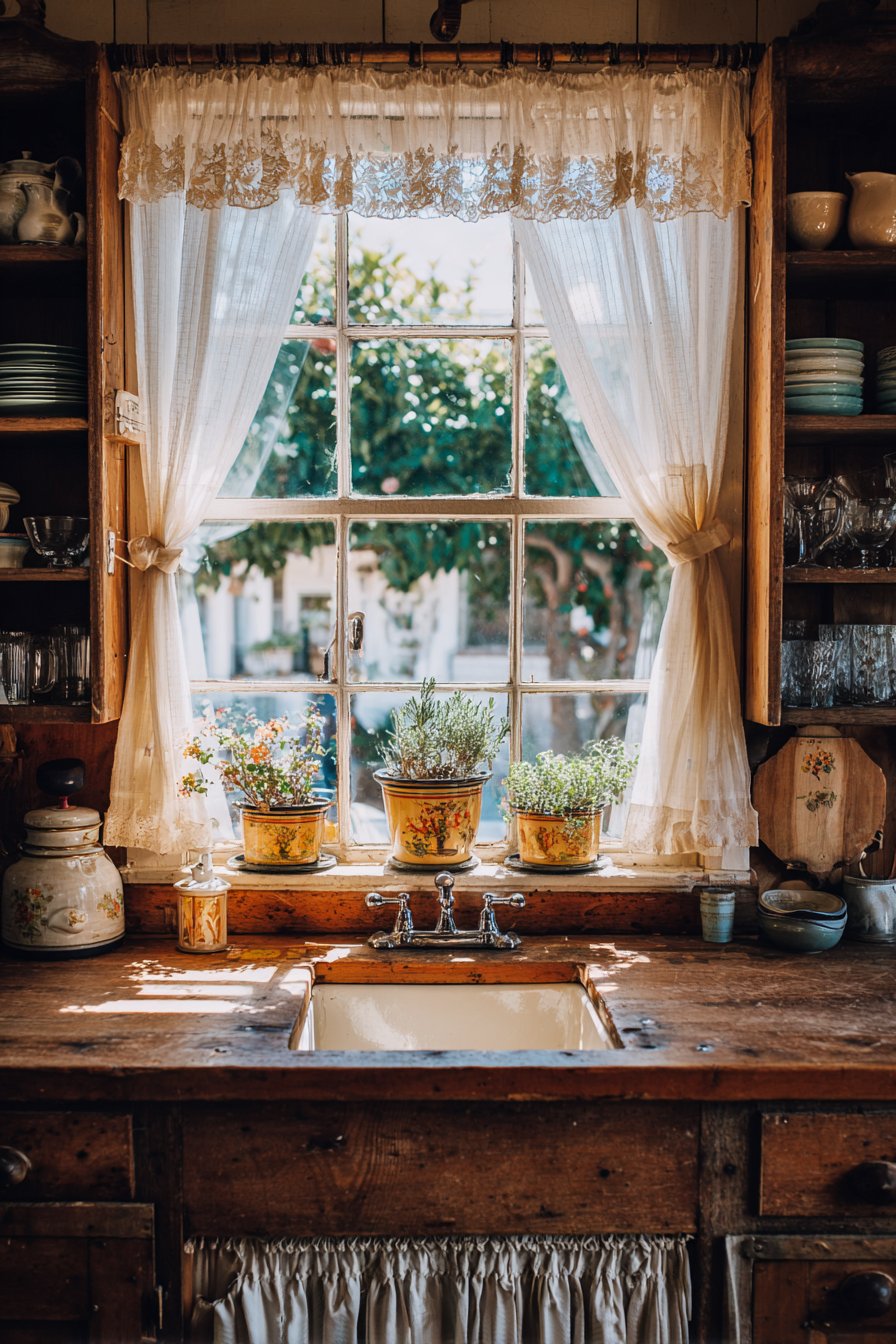
Below the window, a small farmhouse sink with gooseneck faucet sits set into butcher block countertop showing natural grain and gentle wear. This compact sink—smaller than the large apron-front models but maintaining similar styling—proves perfectly scaled for limited counter space. The gooseneck faucet, with its high-arc spout and single handle, provides practical functionality while maintaining period-appropriate styling. The butcher block surrounding it, showing honest use marks and the warm patina of regular oiling, creates a workspace that feels welcoming and well-loved.
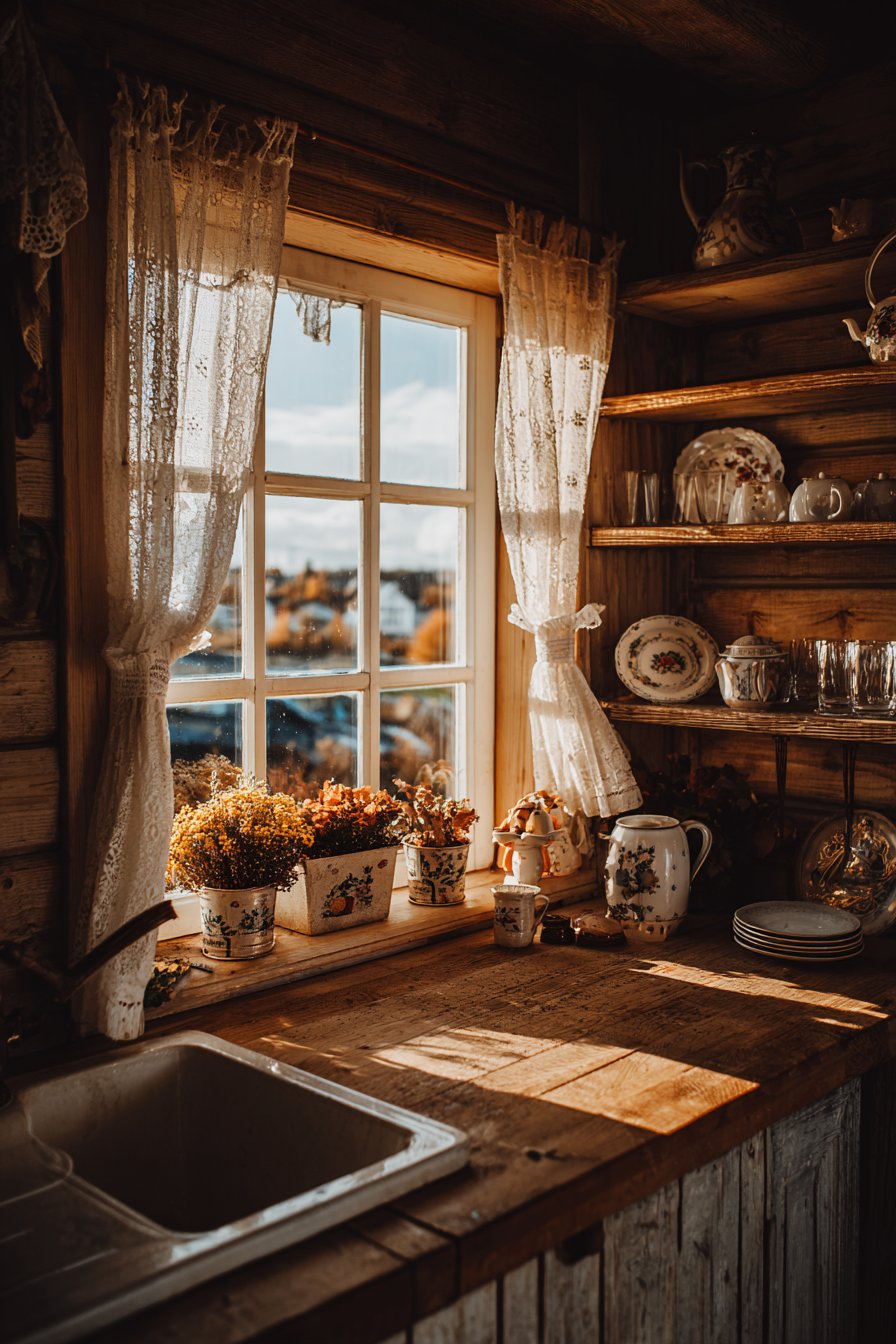
Open shelving on either side of the window holds everyday white dishes and vintage glassware, creating symmetry while maintaining the cottage preference for accessible, displayed storage. These shelves might be simple painted wood brackets supporting thick wooden planks, or more elaborate with decorative iron brackets and reclaimed barn wood. Either way, they keep frequently used items close at hand while contributing to the room’s visual appeal. During golden hour, when late afternoon sunlight streams through the window, it creates warm highlights on the wood surfaces, catching dust motes in its beams and transforming everyday tasks into moments of simple beauty.
Key Design Tips:
- Choose window-facing sinks carefully—the view becomes part of your daily experience, so ensure you enjoy what you’ll be looking at during dish washing and food prep.
- Plant herbs with similar light and water requirements together, and rotate pots occasionally for even growth since they’ll naturally lean toward the window.
- Select vintage containers with proper drainage or add pebbles at the bottom to prevent root rot from excess moisture.
- Install cafe curtains at exactly mid-window height for best proportions and maximum effectiveness.
- Maintain butcher block countertops around sinks with extra diligence—these areas require more frequent oiling and attention to prevent water damage.
Why These Cottage Kitchen Designs Represent the Best in Interior Style
The ten cottage kitchen designs explored throughout this article represent the pinnacle of what makes this aesthetic so enduringly popular and practically successful. Each design demonstrates the fundamental principles that distinguish cottage kitchens from other interior design approaches: authentic materials that age beautifully, thoughtful organization that reduces clutter while displaying cherished items, color palettes drawn from nature and history, and layouts that prioritize comfort and functionality alongside visual appeal.
What makes these cottage kitchen ideas particularly valuable is their adaptability across different home types, budgets, and lifestyle needs. The open shelving approach works equally well in period homes and contemporary spaces, bringing cottage warmth to any architecture. The sage green cabinets and vintage range focal point demonstrate how specific color choices and statement pieces can transform ordinary kitchens into spaces with personality and character. Meanwhile, practical solutions like the reclaimed wood island and organized pantry prove that cottage style never sacrifices functionality for aesthetics—instead, these designs integrate both seamlessly.
The emphasis on natural materials throughout these designs—butcher block countertops, marble work surfaces, reclaimed wood shelving, handmade ceramic tiles, and exposed wood beams—connects cottage kitchens to broader movements toward sustainable, authentic living. These materials don’t just look beautiful; they perform exceptionally well over time, developing patinas and character marks that enhance rather than diminish their appeal. This stands in stark contrast to synthetic materials that show wear as damage rather than development. For homeowners seeking kitchen designs that improve with age, cottage aesthetics offer unparalleled advantages.
The cottage kitchen’s approach to color deserves special recognition. Soft sage greens, creamy whites, warm wood tones, and gentle blue-greys create palettes that feel restful and welcoming rather than stark or overwhelming. These colors work together harmoniously, allowing for personal expression through accent pieces like mint green appliances or colorful dishware displays without risking the dated appearance that can plague trendy color choices. The cottage palette draws from historical precedent and natural inspiration, ensuring it remains appealing across decades rather than just seasons.
Storage solutions featured in these designs—from floor-to-ceiling pantry shelving to open displays of dishes and glassware to basket-filled island storage—address the practical realities of kitchen use while contributing to overall aesthetics. This integration of storage into design rather than attempting to hide it away reflects cottage philosophy beautifully. Items used daily deserve accessible storage, and when these items are themselves beautiful—vintage ceramics, copper cookware, woven baskets—displaying them enhances rather than clutters the space.
The various window treatments and natural light considerations throughout these cottage kitchens highlight another crucial success factor: these designs work with and enhance natural light rather than blocking it. Gingham curtains, lace panels, cafe curtains with eyelet trim, and simple muslin drapes all filter light gently while maintaining connection to the outdoors. The strategic placement of windows near work zones, particularly sinks, transforms routine tasks into more pleasant experiences. This understanding of how natural light affects mood and functionality demonstrates the thoughtful planning underlying successful cottage kitchen design.
Architectural details like beadboard walls, tongue-and-groove ceilings, wainscoting, and exposed beams add structural interest that prevents cottage kitchens from feeling flat or generic. These elements provide texture and shadow lines that change throughout the day as light shifts, keeping spaces visually dynamic. They also offer historical authenticity when renovating period homes while adding character to new construction. The vertical lines of beadboard, horizontal emphasis of shiplap, and dimensional interest of ceiling beams create layered complexity that rewards sustained attention.
The furniture-like qualities present throughout these designs—turned legs on islands, pedestal dining tables, Windsor chairs, and vintage stools—blur boundaries between kitchen and living spaces. This approach makes kitchens feel less like utilitarian workrooms and more like comfortable living areas where families naturally gather. By choosing pieces with individual character and visible craftsmanship rather than uniform built-ins, cottage kitchens avoid the impersonal feeling that can afflict modern designs.
Perhaps most importantly, these cottage kitchen designs demonstrate remarkable flexibility regarding budget and timeline. Elements can be implemented gradually rather than requiring complete renovations. Start with paint color changes and new curtains, add open shelving next season, introduce vintage accessories over time, and eventually tackle larger investments like butcher block countertops or handmade tile backsplashes. This approach allows homeowners to develop their cottage kitchens organically, making thoughtful choices rather than rushed decisions driven by renovation deadlines.
The vintage and antique elements featured throughout—from mismatched chairs to reclaimed wood to vintage-inspired appliances—also offer budget-friendly paths to distinctive style. Shopping secondhand markets, estate sales, and architectural salvage yards yields one-of-a-kind pieces at fractions of retail costs while supporting sustainable consumption practices. The patina and imperfections of genuinely old items add authenticity that new purchases cannot replicate, making the treasure hunt part of the cottage kitchen creation process rather than just the end result.
Conclusion
The cottage kitchen aesthetic offers something increasingly rare in contemporary interior design: timeless appeal that transcends fleeting trends while remaining entirely practical for modern living. The ten designs explored in this comprehensive guide demonstrate the remarkable versatility of cottage principles, showing how open shelving, vintage focal points, reclaimed materials, artisanal details, and thoughtful organization can transform kitchens of any size into welcoming sanctuaries. Whether you’re drawn to soft sage greens and distressed painted cabinets, the warmth of butcher block and reclaimed wood, the elegance of apron-front sinks and marble countertops, or the efficiency of compact vertical storage, cottage kitchen design provides frameworks for creating spaces that feel both deeply personal and universally appealing.
What distinguishes exceptional cottage kitchens from merely adequate ones is attention to authentic details, commitment to quality natural materials, and willingness to embrace the imperfect beauty of genuine use and age. These aren’t showroom kitchens designed for photography alone but rather working spaces meant to support daily life while nurturing spirits with their warmth and character. The best cottage kitchens develop over time, accumulating meaningful objects, comfortable patinas, and personal histories that transform houses into homes.
As you consider implementing cottage kitchen ideas in your own space, remember that this aesthetic rewards patience and thoughtfulness. Start with foundational elements like paint colors, window treatments, and basic organizational systems, then layer in vintage finds, artisanal pieces, and personal collections gradually. Allow your cottage kitchen to evolve naturally rather than forcing instant transformation. Trust that authentic materials will age beautifully, that handmade details will provide lasting satisfaction, and that comfort and functionality will always trump rigid adherence to any design rules. Most importantly, create a kitchen that serves your specific needs while reflecting your personal story—that’s the true essence of cottage style.
