


Coffee tables often serve as the centerpiece of living spaces, yet many homeowners struggle to style them effectively. This seemingly simple piece of furniture holds immense potential to transform your room’s aesthetic while maintaining functionality. The way you arrange items on your coffee table speaks volumes about your design sensibility and attention to detail.
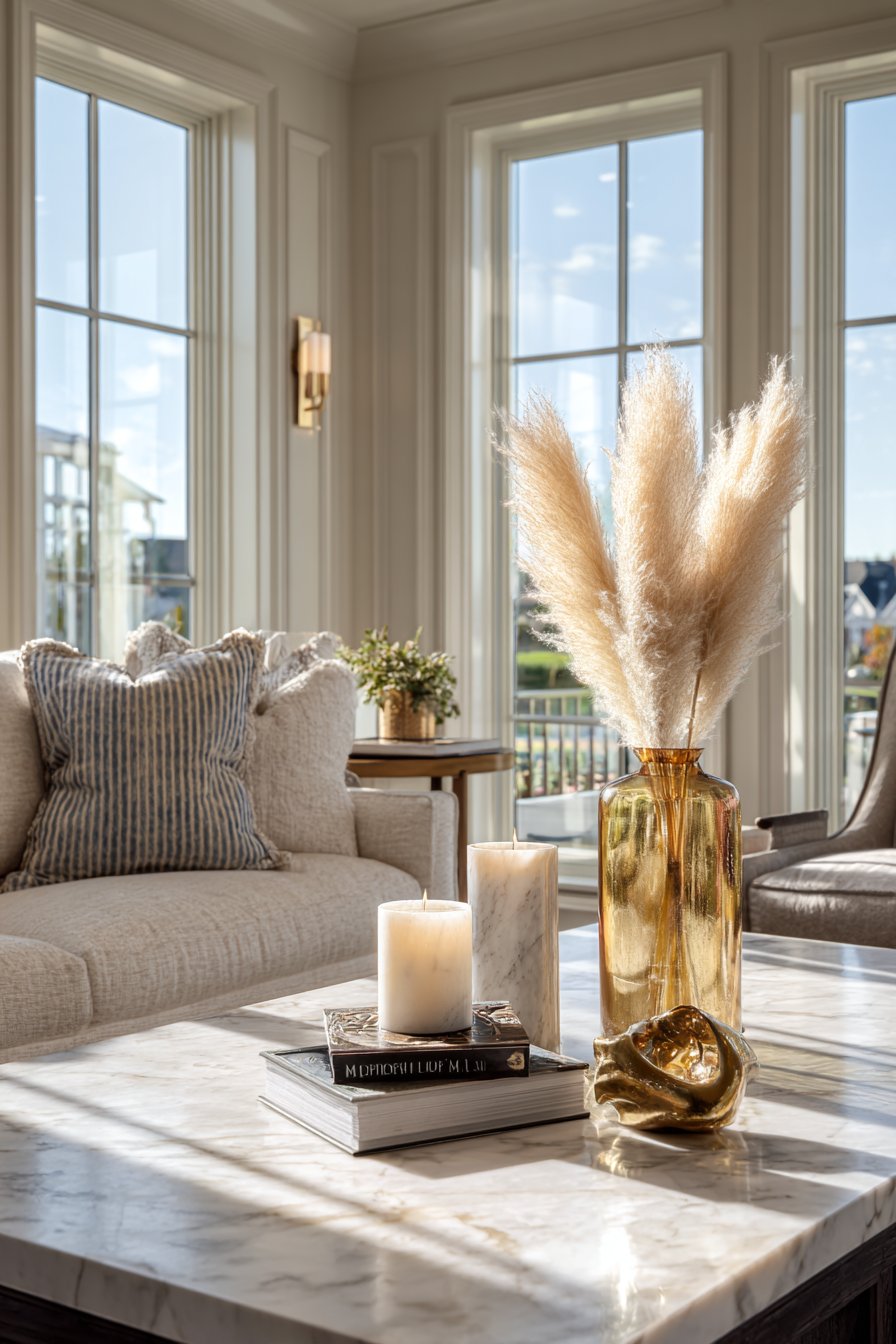
Mastering coffee table styling requires understanding balance, proportion, and purposeful arrangement. Professional interior designers know that a well-styled coffee table can elevate an entire room, creating visual interest and reflecting your personality. Whether you embrace minimalist aesthetics, bohemian charm, or classic elegance, these styling principles adapt to any design preference.
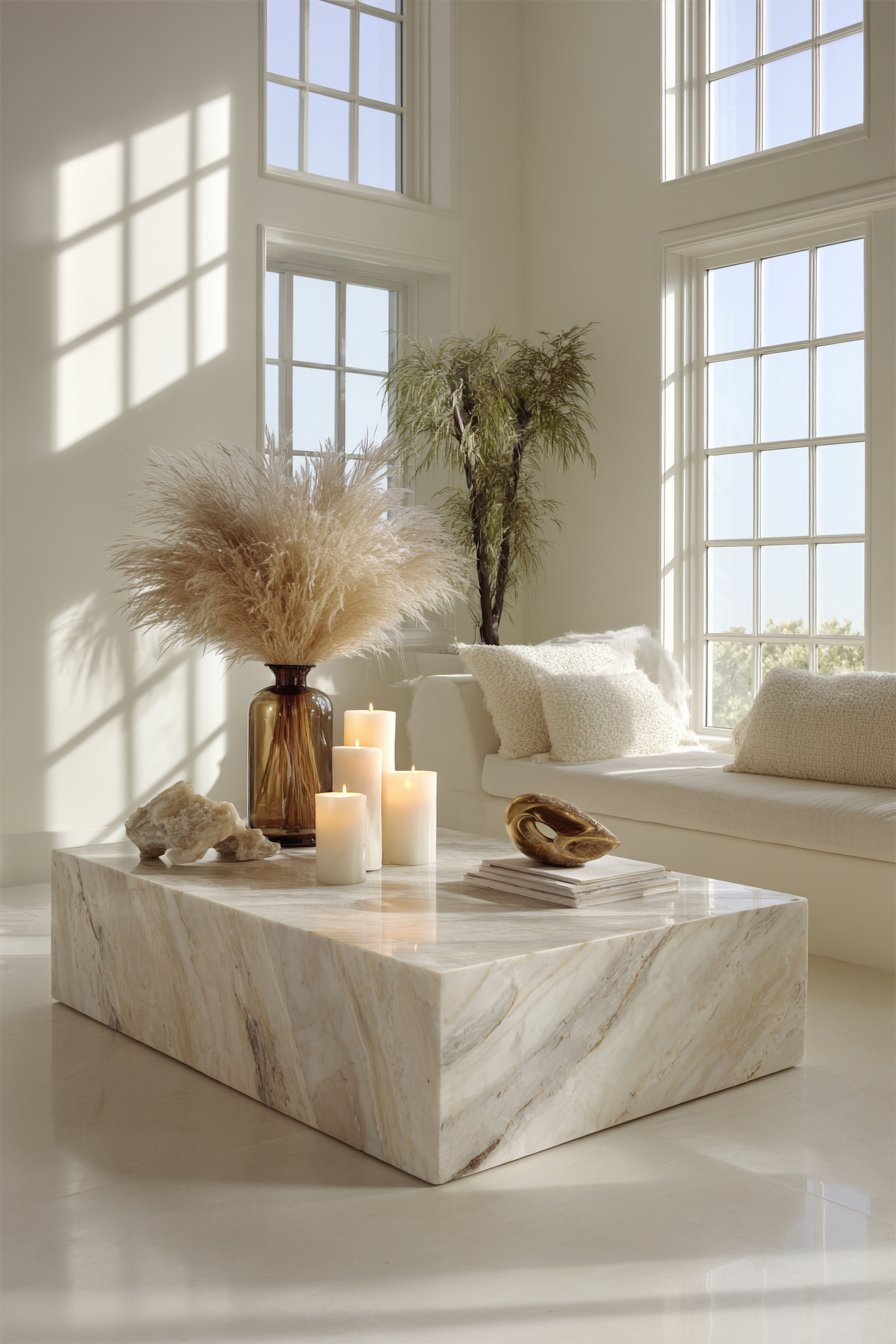
This guide unveils seven professional secrets that transform ordinary coffee tables into extraordinary focal points. These techniques combine aesthetic appeal with practical function, ensuring your coffee table looks stunning while serving your daily needs. From selecting the perfect accessories to creating layered vignettes, you’ll discover insider knowledge that makes professional styling accessible for everyone.
1. The Rule of Three Creates Visual Harmony
The rule of three stands as one of interior design’s most powerful principles. Odd-numbered groupings naturally attract the eye and create balanced compositions without appearing too symmetrical. This technique works because our brains find odd numbers more dynamic and memorable than even arrangements.

When styling your coffee table, arrange items in clusters of three or five. Consider varying heights, textures, and shapes within each grouping. A tall vase paired with a medium-height candle and a low sculptural object creates natural visual rhythm that feels intentional yet effortless.
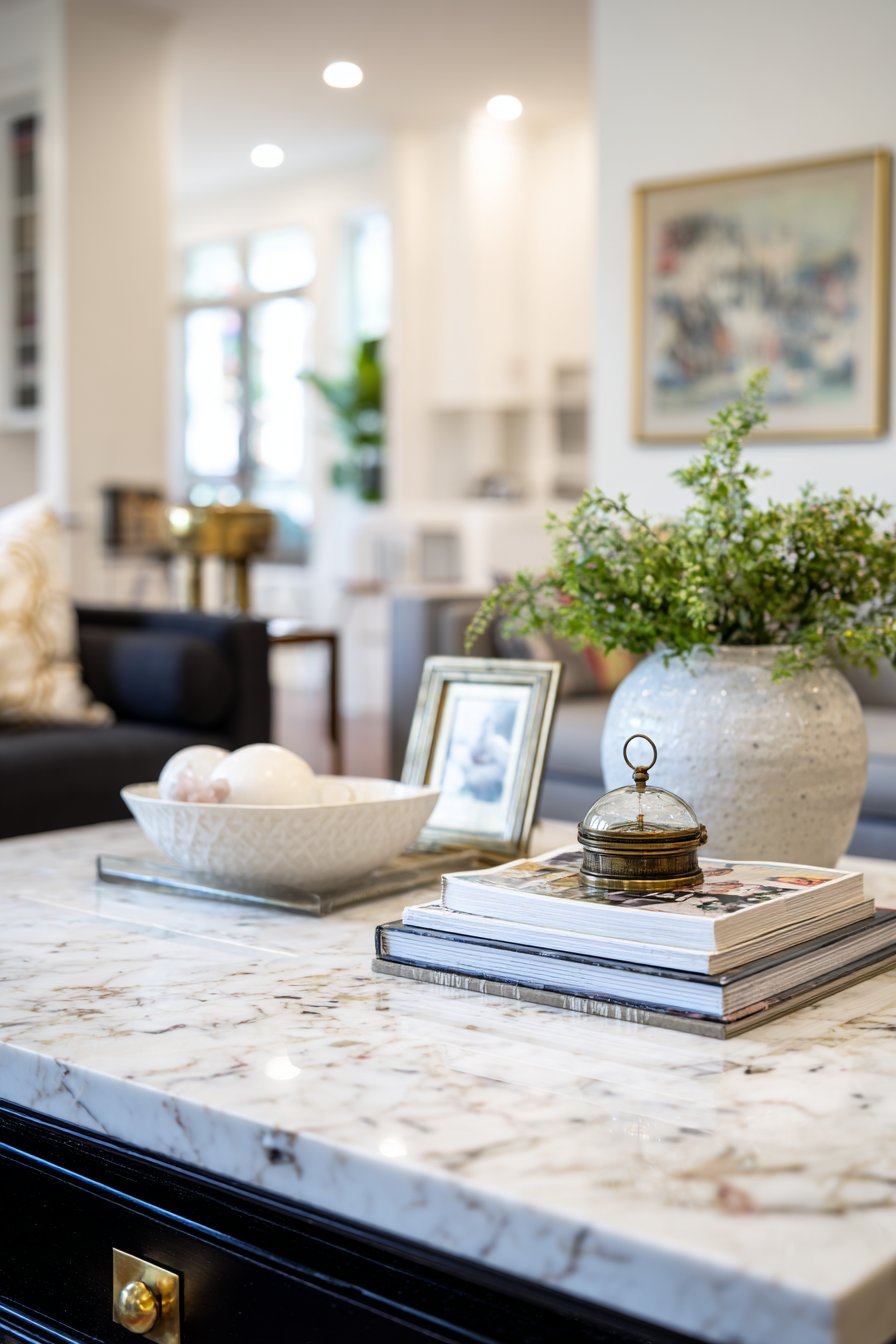
This principle extends beyond individual objects to the overall table composition. Divide your coffee table into three invisible zones, placing different groupings in each area. This approach prevents overcrowding while maintaining visual interest across the entire surface. Leave negative space to let each grouping breathe and shine.
- Group decorative objects in odd numbers (three, five, or seven items)
- Vary heights within each grouping for dimensional interest
- Use different textures and materials to add depth
- Position clusters in triangular arrangements for stability
- Maintain breathing room between groupings
- Rotate seasonal items while keeping core groupings consistent
2. Layer Textures for Dimensional Depth
Textural contrast transforms flat surfaces into captivating displays that invite touch and closer inspection. Professional designers layer smooth, rough, glossy, and matte finishes to create rich visual experiences. This technique adds sophistication without requiring expensive accessories or extensive collections.
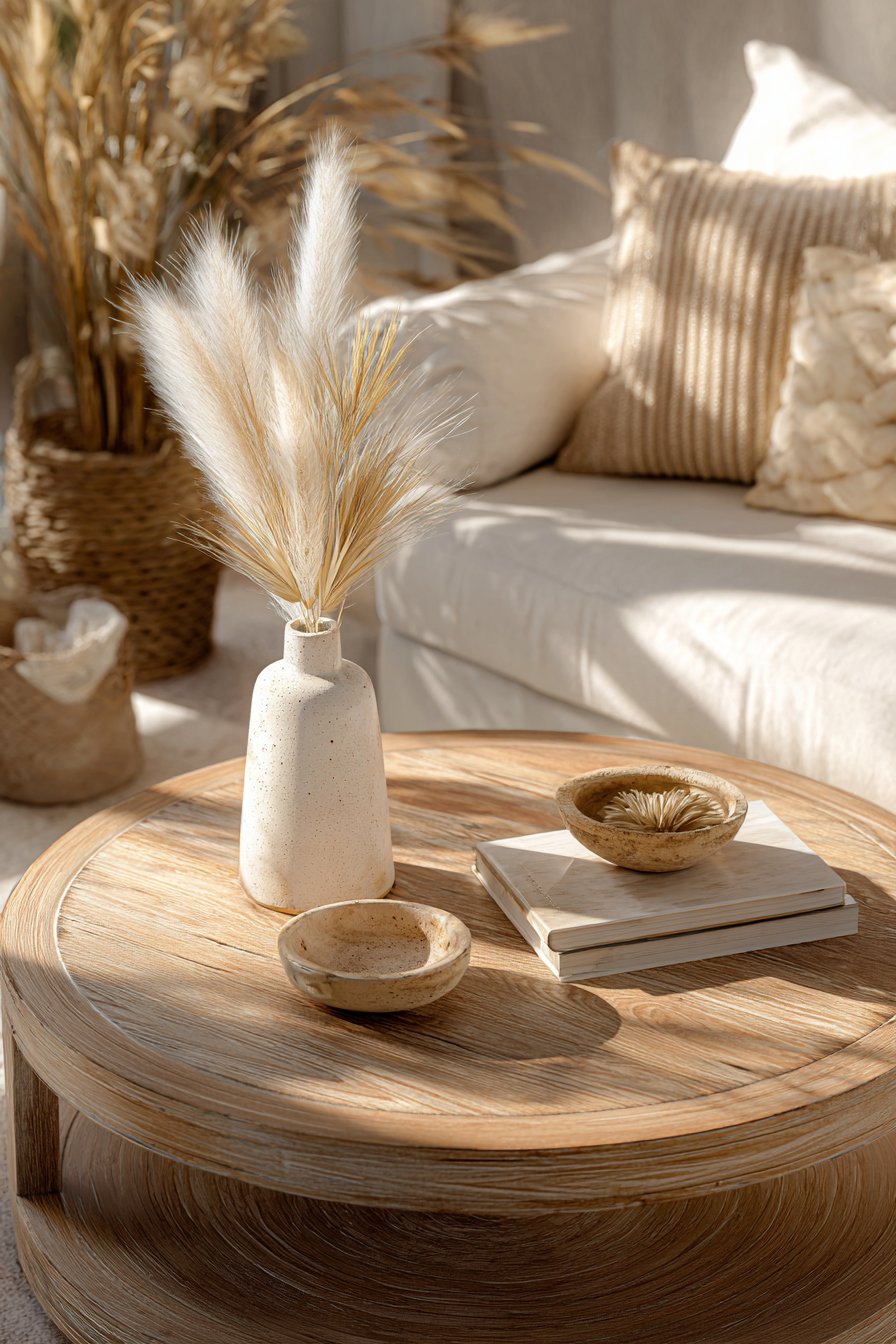
Start with a textured foundation like a woven tray, marble slab, or wooden board. This base anchors your arrangement and defines boundaries for your styling. Layer books with varied cover textures, add ceramic or glass vessels, and incorporate natural elements like coral or geodes.
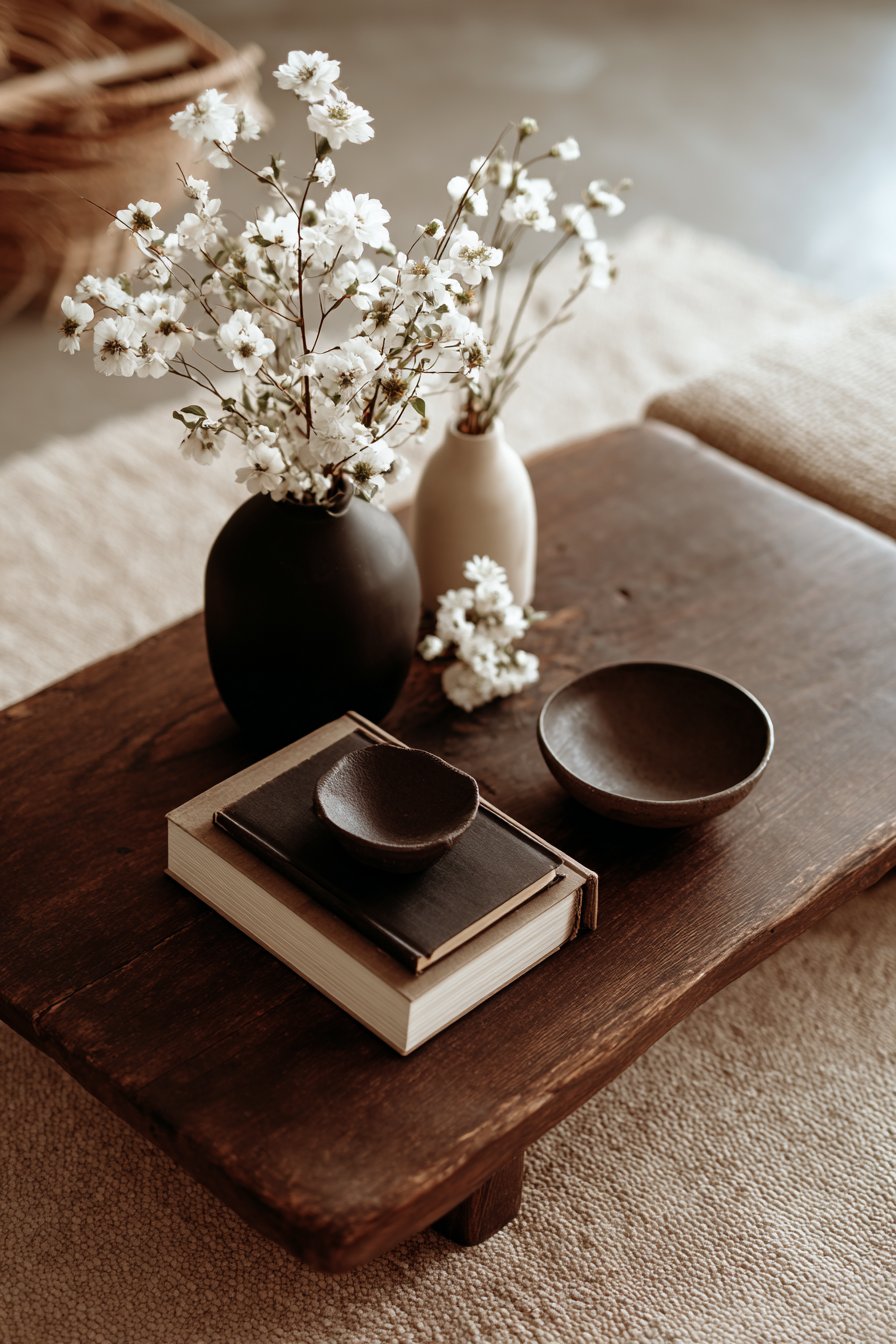
Mixing organic and manufactured materials creates compelling juxtaposition that feels curated and intentional. Pair a sleek metallic tray with rough-hewn wood pieces, or combine smooth glassware with nubby textured books. Each material choice should contribute unique tactile quality to the overall composition.
- Combine at least three different textures per arrangement
- Include one natural element for organic warmth
- Mix matte and glossy surfaces for visual contrast
- Add a fabric element through coasters or small textiles
- Use metallic accents sparingly for sophisticated shine
- Incorporate one unexpected texture as a conversation starter
3. Strategic Height Variation Guides the Eye
Varying vertical dimensions creates dynamic compositions that feel professionally designed. Flat arrangements bore the eye, while thoughtfully staggered heights encourage visual exploration. This technique mimics natural landscapes, which our brains find inherently pleasing and harmonious.
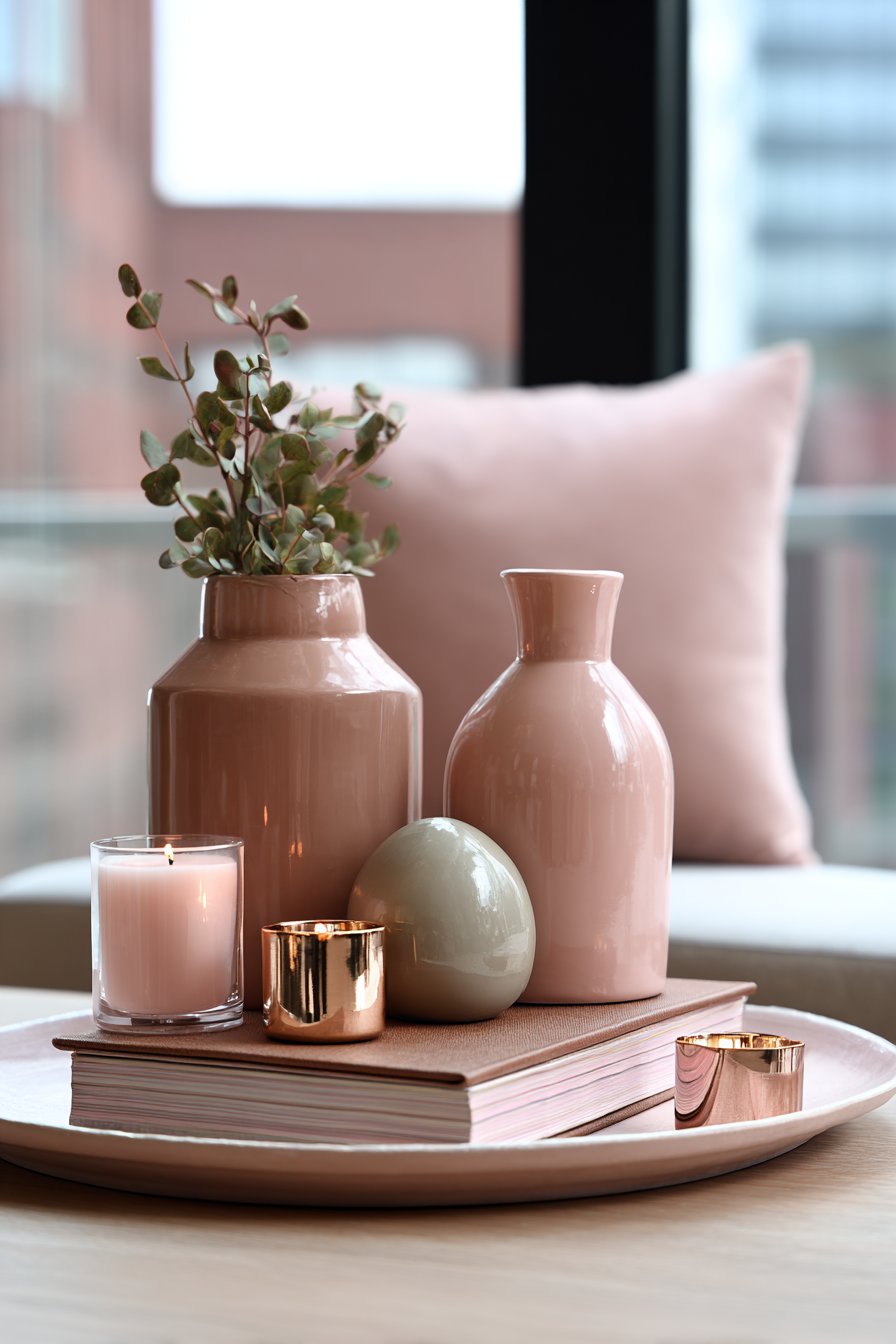
Professional designers use the tallest element as an anchor, typically placing it off-center for asymmetrical balance. This could be a statement vase, sculptural piece, or stack of oversized books. Medium-height items fill the middle ground, while low objects ground the arrangement.
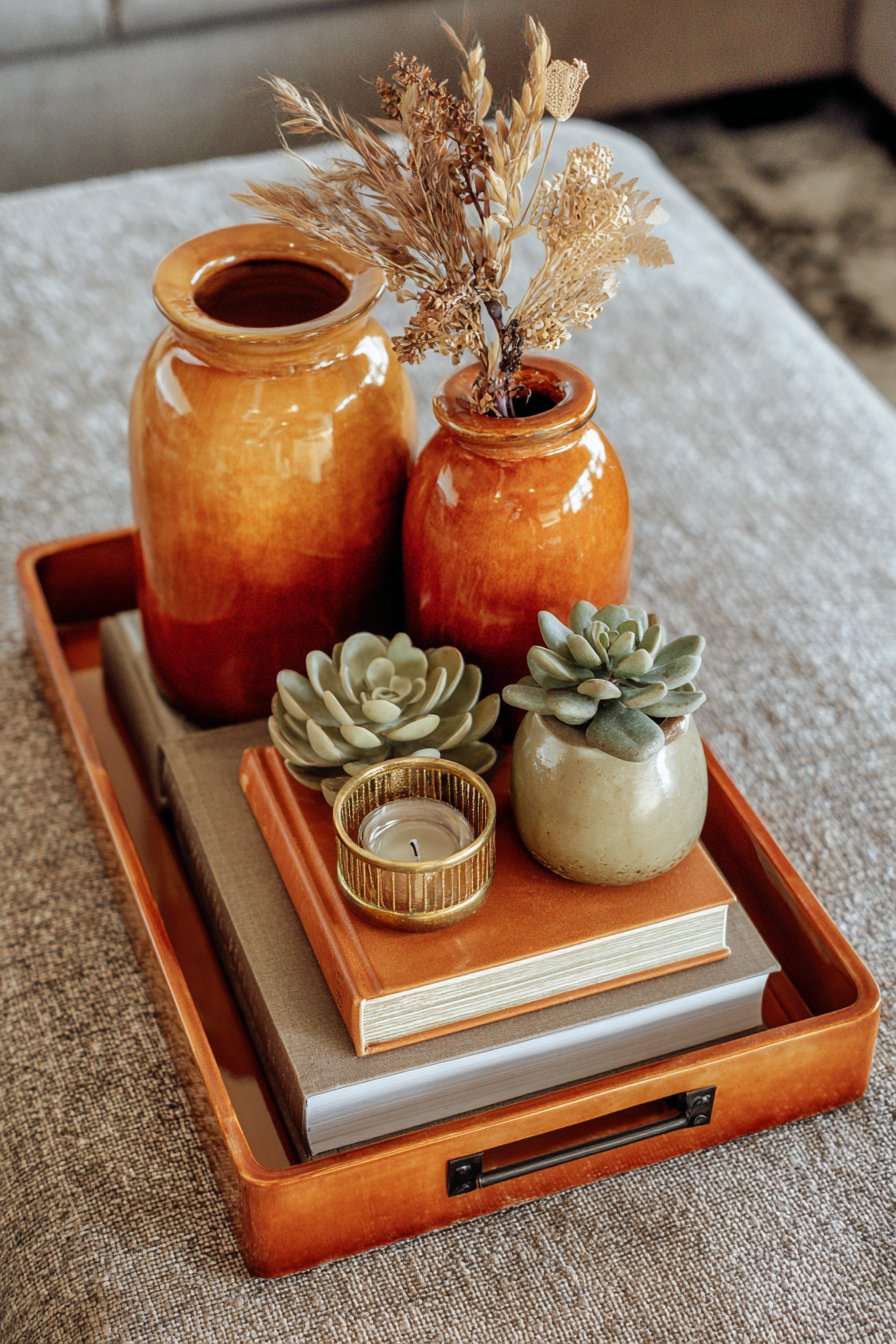
Aim for three distinct height levels across your coffee table surface. Tall items should not exceed one-third the distance to your ceiling or dominant wall art. Medium objects work best at about half the height of your tallest piece, creating gentle stepping stones for the eye.
- Position the tallest item slightly off-center for visual interest
- Create height with stacked books or tiered trays
- Use pedestals or small boxes to elevate shorter objects
- Ensure the tallest element doesn’t obstruct conversation sight lines
- Balance height distribution across the entire table surface
- Adjust heights seasonally by swapping out key pieces
4. Functional Beauty Serves Dual Purposes
The most successful coffee table styling merges aesthetics with utility. Professional designers never sacrifice function for beauty, instead seeking accessories that serve practical purposes while looking stunning. This approach ensures your coffee table remains livable rather than becoming an untouchable display.
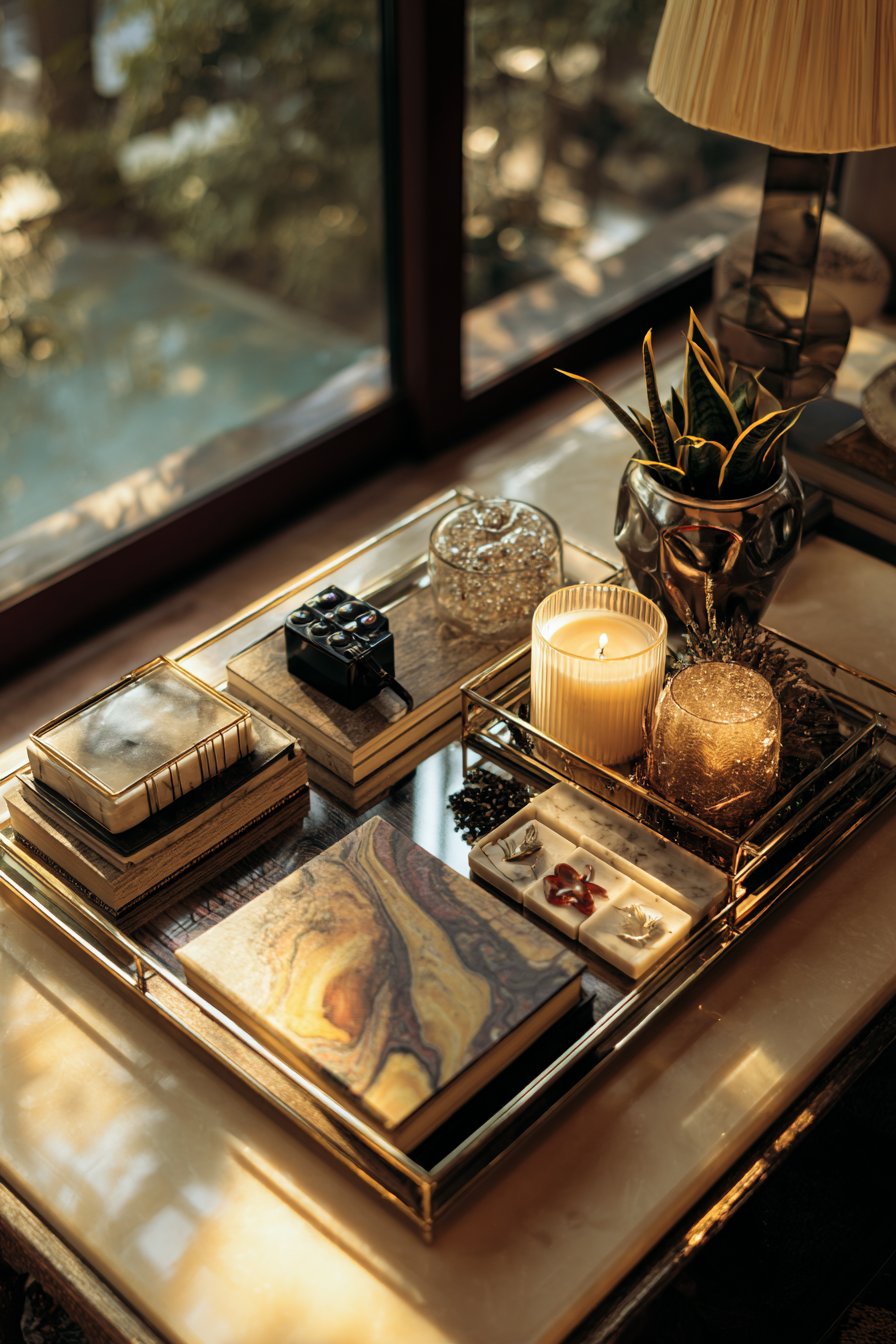
Incorporate beautiful storage solutions like decorative boxes for remotes, coasters within reach, and elegant trays that corral smaller items. These functional pieces prevent clutter while contributing to your overall design scheme. Choose items in materials and colors that complement your existing decor.
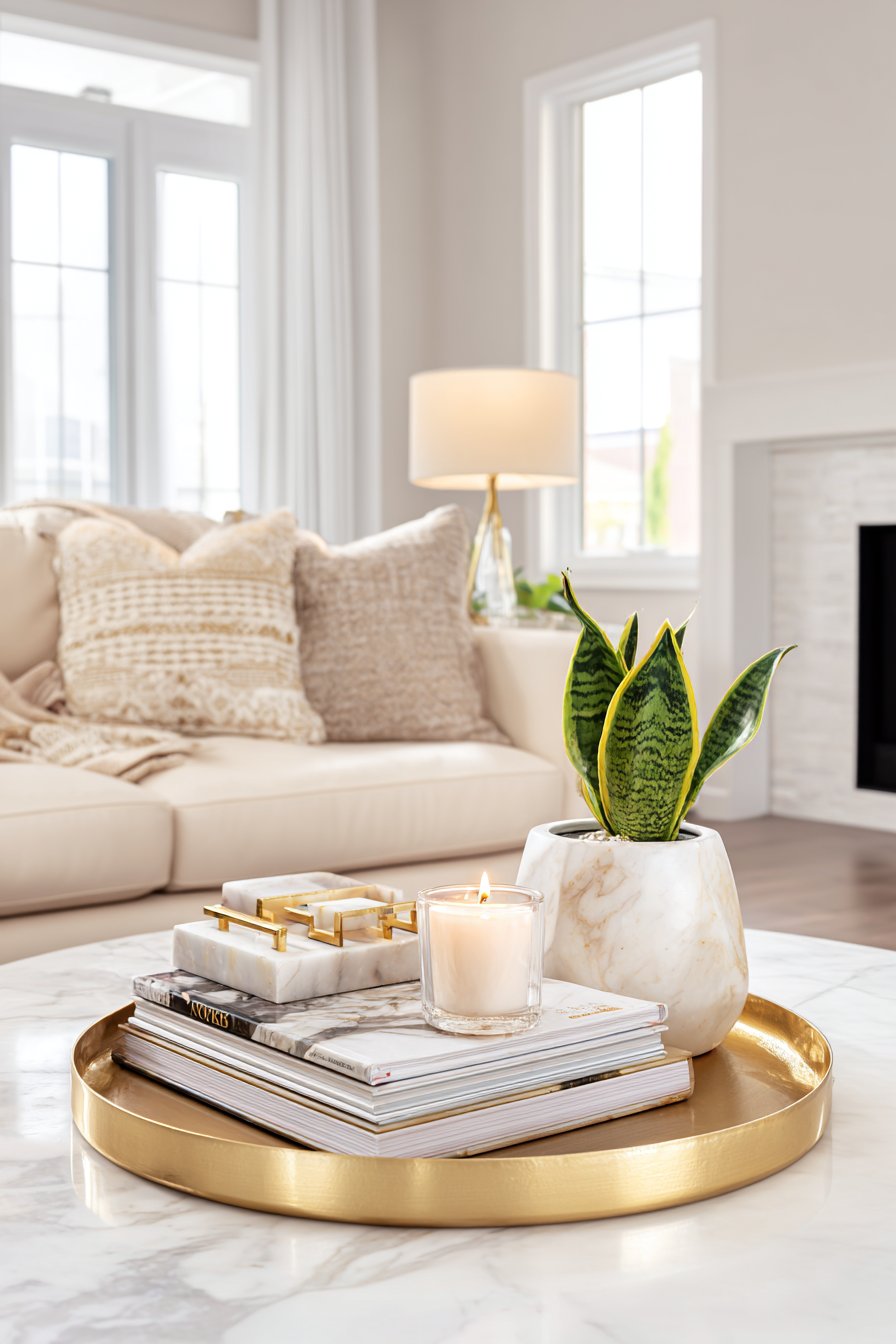
Consider your lifestyle when selecting functional pieces. Families need durable, washable surfaces, while entertainers benefit from elegant serving pieces that double as decor. Every item should justify its presence through either visual appeal or practical use, preferably both.
- Use decorative trays to contain and organize small items
- Keep coasters accessible in stylish holders
- Include a beautiful box for remote controls and small electronics
- Add a scented candle that serves as both decor and ambiance
- Place a coffee table book that guests actually want to browse
- Incorporate a small plant that thrives in your lighting conditions
5. Color Coordination Creates Cohesive Schemes
Intentional color choices distinguish amateur styling from professional arrangements. Rather than randomly placing colorful objects, designers work within defined palettes that complement the room’s overall scheme. This creates visual harmony that feels sophisticated and pulled together.
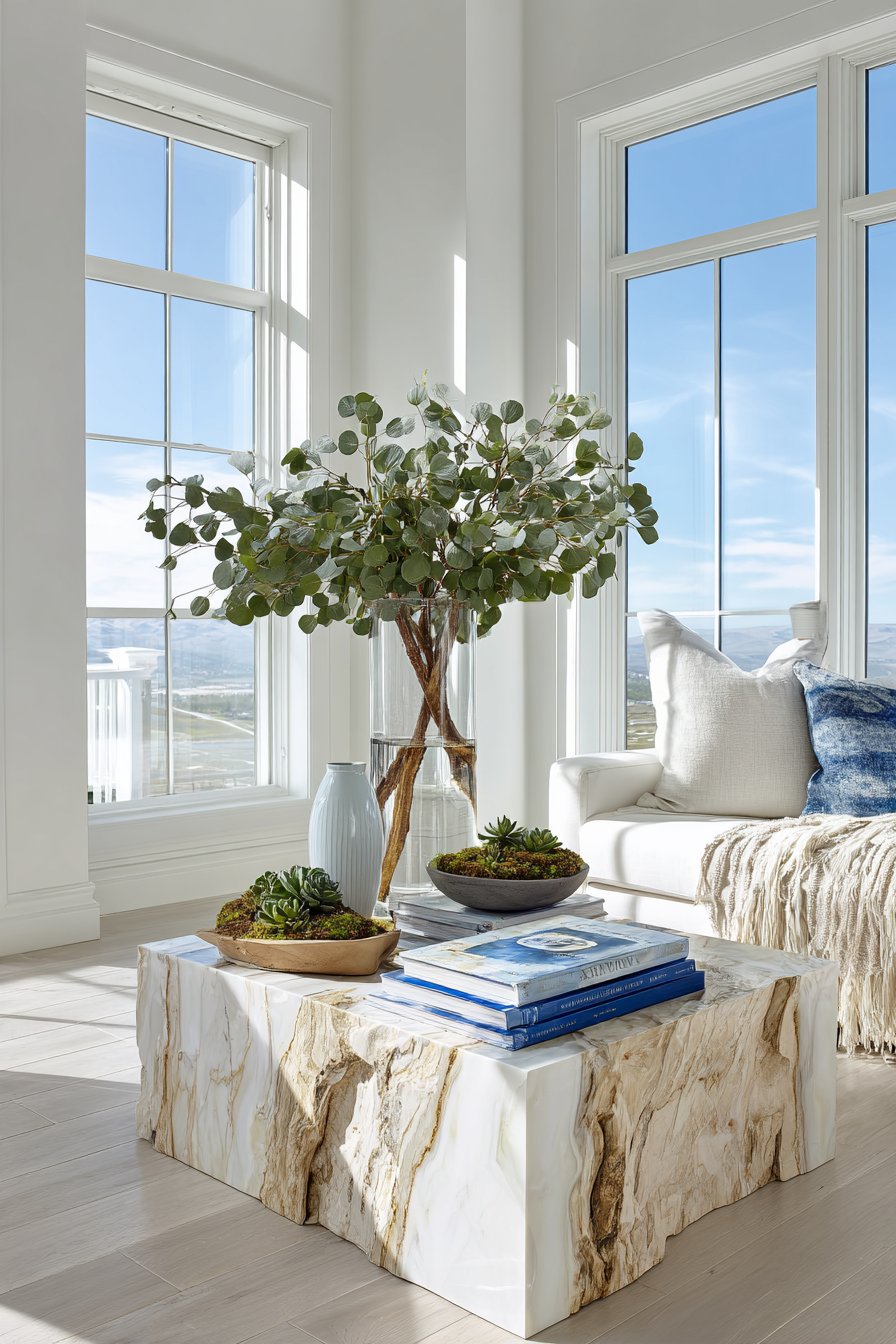
Select a dominant color from your room’s palette and echo it in coffee table accessories. Add one or two accent colors for interest without creating chaos. Metallics function as neutrals, working with virtually any color scheme while adding luxurious touches.
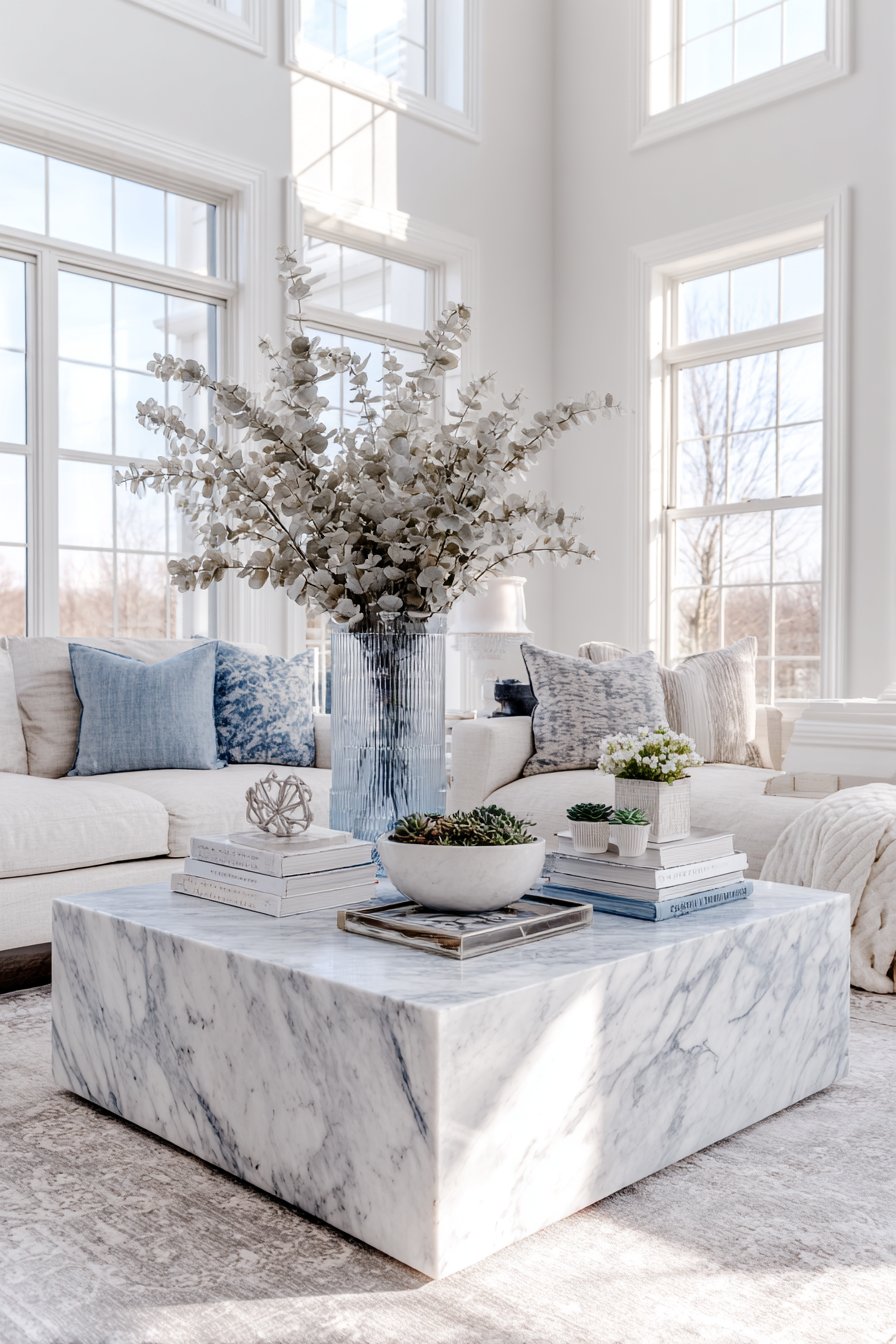
Limit your coffee table to three main colors plus metallics for cohesive impact. This restraint allows each item to shine while maintaining visual unity. Vary the shades within your chosen colors, using lighter and darker tones to add depth without introducing new hues.
- Pull colors from existing room elements like pillows or artwork
- Use the 60-30-10 color rule (dominant, secondary, accent)
- Incorporate neutral tones to balance bolder colors
- Add metallic elements in either warm or cool tones, not both
- Consider seasonal color swaps for fresh looks
- Use monochromatic schemes for sophisticated simplicity
6. Negative Space Prevents Visual Clutter
Professional designers understand that empty space holds equal importance to filled areas. Overcrowded coffee tables feel chaotic and make rooms appear smaller and more cluttered. Strategic negative space allows individual pieces to make statements while maintaining visual calm.
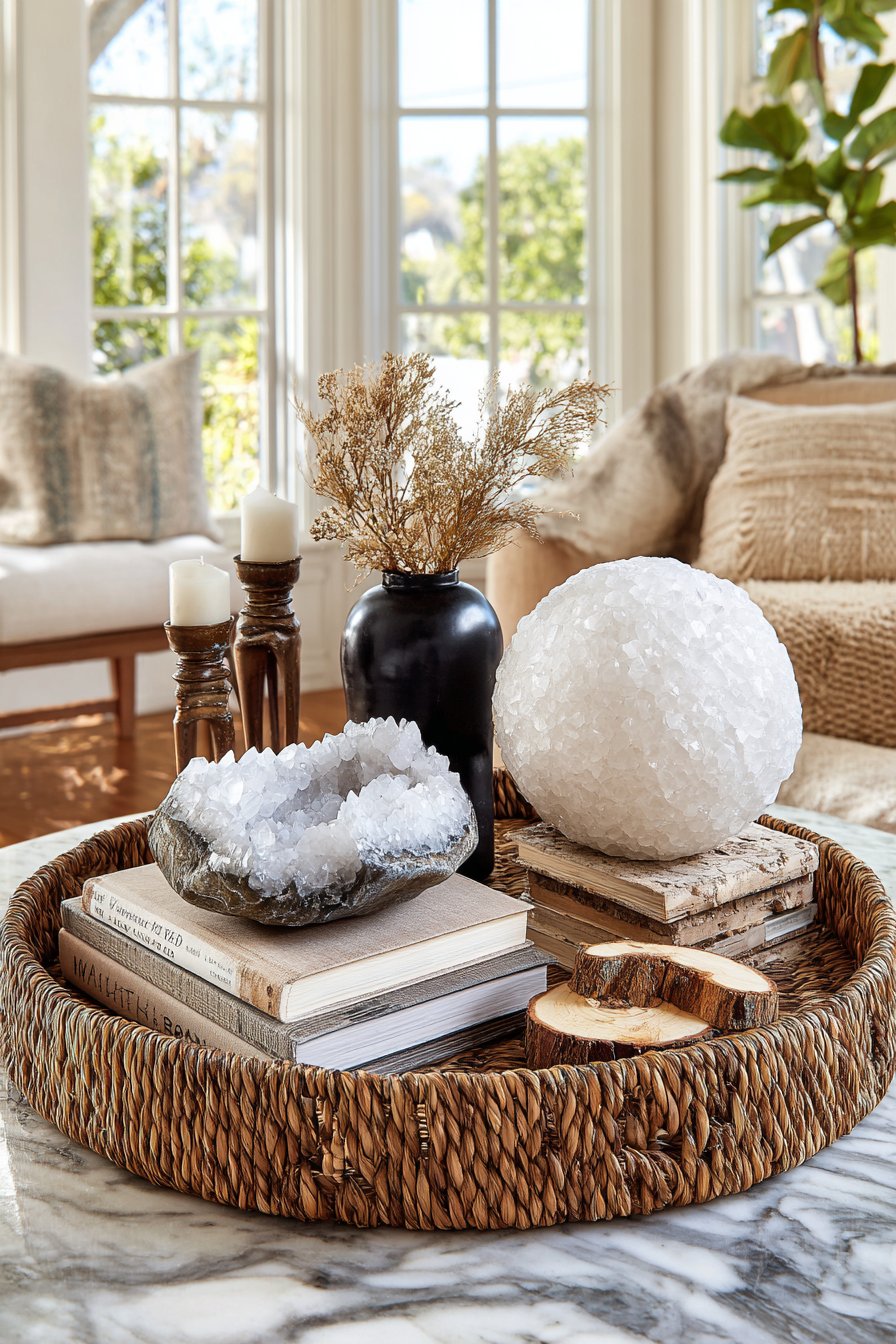
Follow the two-thirds rule: style only two-thirds of your coffee table surface, leaving one-third completely clear. This functional space accommodates drinks, books, or daily use without disturbing your carefully arranged vignettes. Empty space also provides visual rest for the eye.
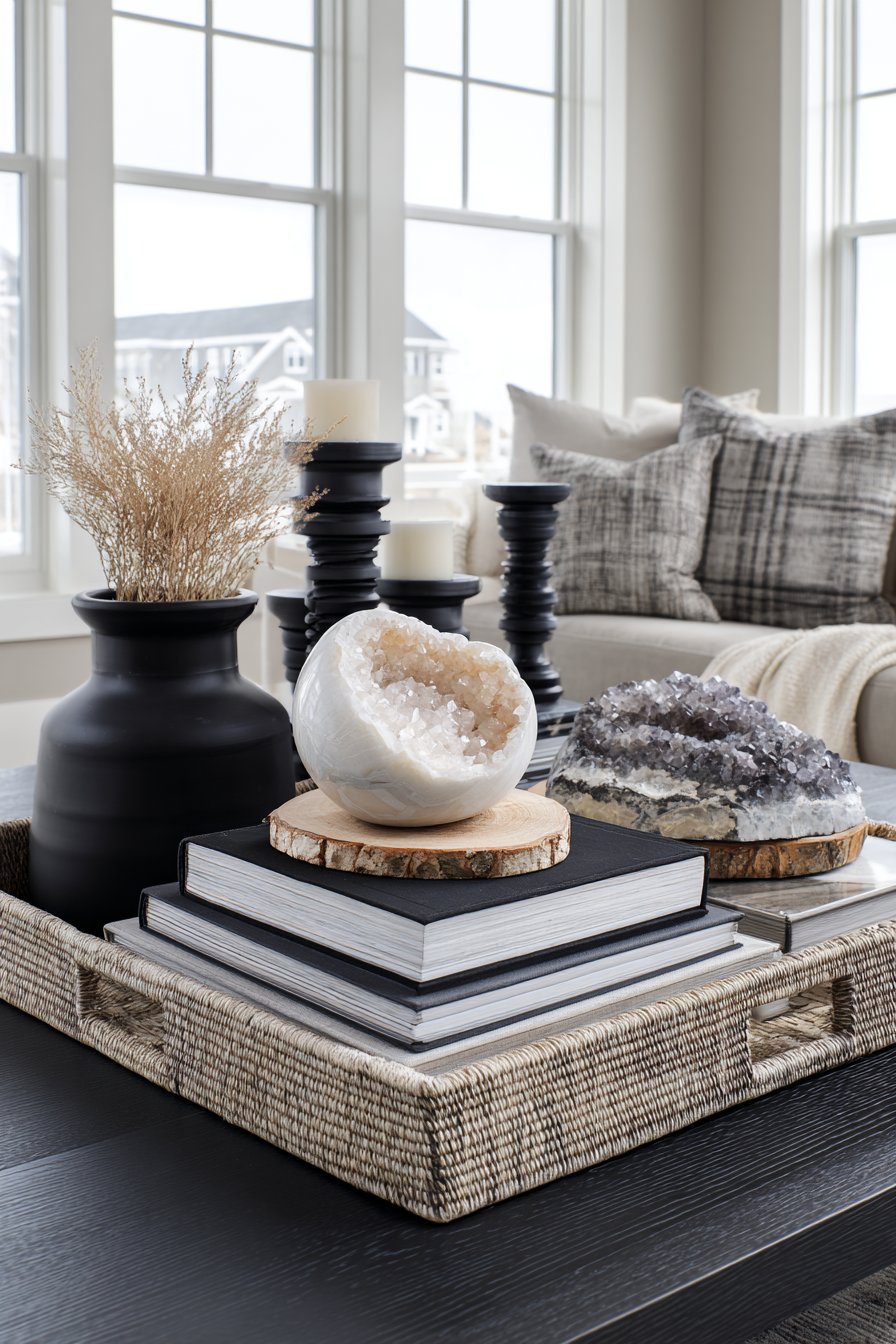
Breathing room between objects prevents compositions from feeling jumbled. Maintain at least two inches between separate groupings, allowing each arrangement to exist as its own entity. This separation creates intentional styling rather than accidental accumulation.
- Leave one-third of the table surface completely empty
- Maintain clear space for setting down drinks or books
- Avoid pushing items against all table edges
- Group items together rather than scattering them evenly
- Use trays to define styled areas and preserve open space
- Edit ruthlessly, removing items that don’t serve the composition
7. Personal Touches Tell Your Story
The most memorable coffee table styling includes meaningful personal elements that reflect your unique story and interests. Professional designers know that perfectly curated impersonal displays lack soul, while thoughtful personal touches create conversation and connection. This approach transforms your coffee table from styled surface to personal expression.
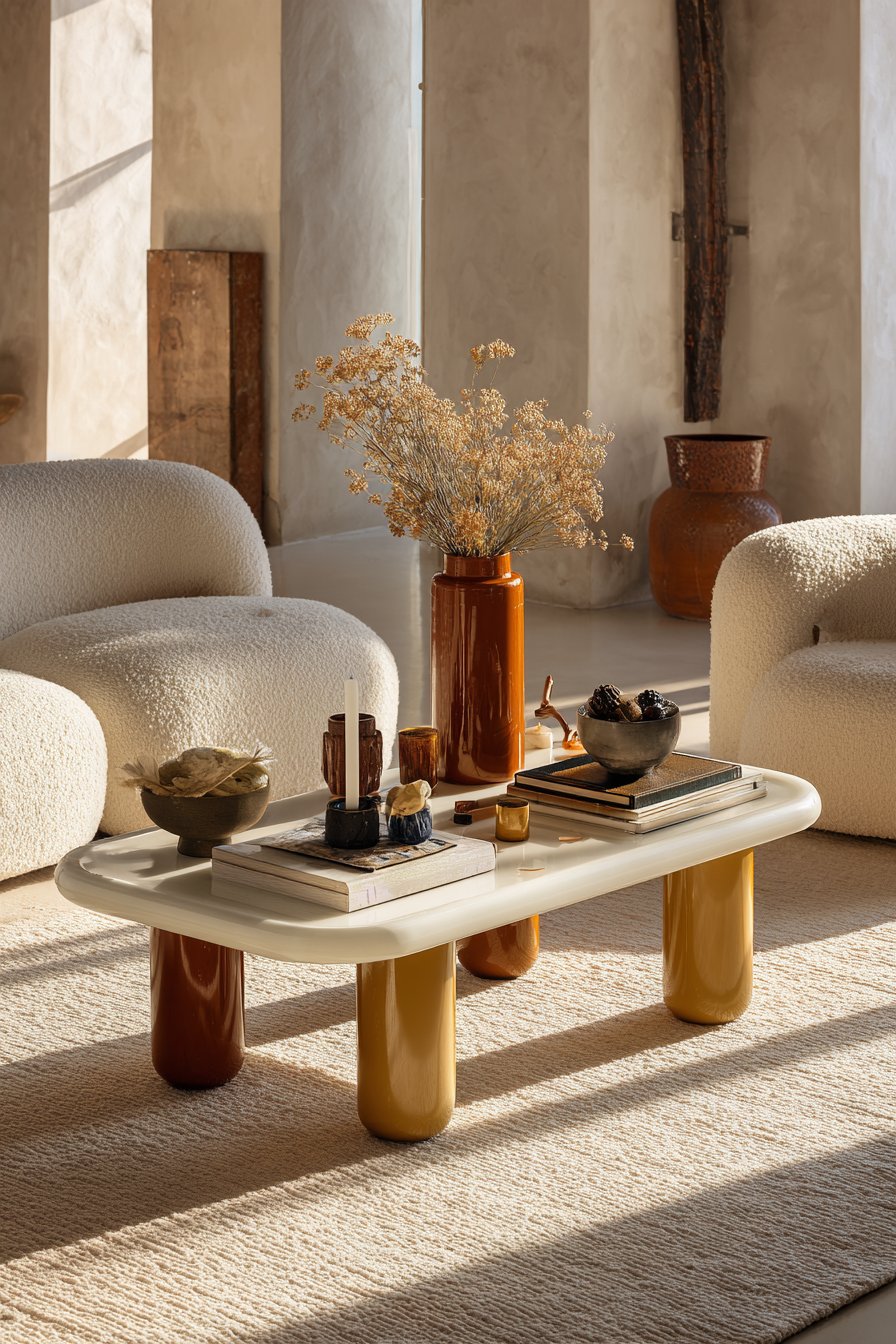
Incorporate collected treasures from travels, family heirlooms, or handmade pieces that hold significance. These items add authenticity and depth that mass-produced accessories cannot replicate. Display them with the same care you’d give expensive designer pieces.
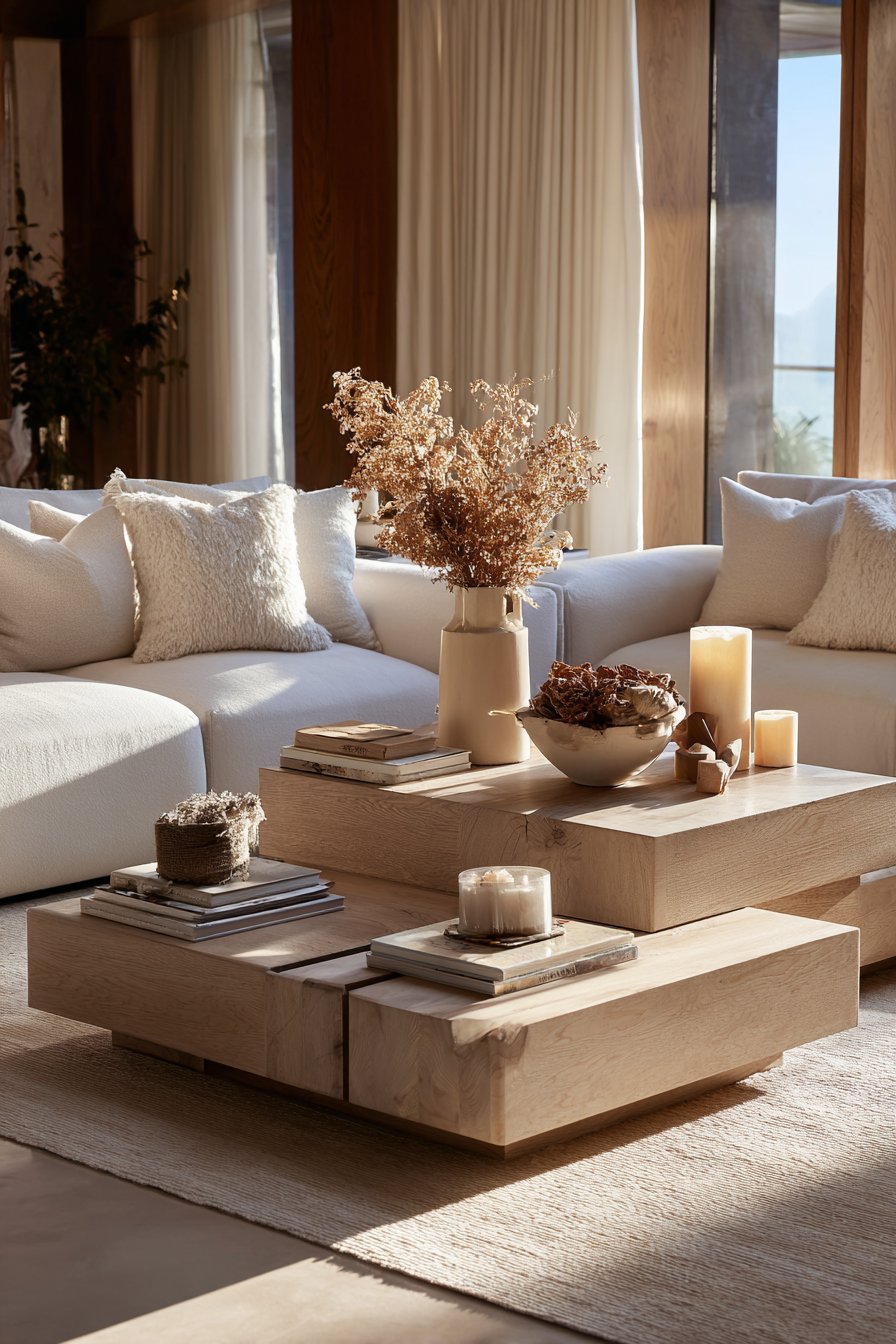
Balance personal items with edited restraint to avoid cluttered sentimentality. Choose one or two meaningful pieces per arrangement, allowing them prominence rather than competing for attention. Rotate personal items seasonally to keep displays fresh while honoring different memories throughout the year.
- Display one treasured travel souvenir or collected item
- Include a family photograph in an elegant frame
- Showcase handmade pottery or artisan crafts
- Add books that genuinely reflect your interests
- Incorporate items with interesting backstories for guests
- Rotate personal pieces quarterly to refresh your display
Conclusion
Mastering coffee table styling transforms everyday living spaces into professionally designed environments. These seven secrets provide the framework for creating balanced, beautiful, and functional arrangements that reflect your personal style. Remember that successful styling balances aesthetic appeal with practical living, ensuring your coffee table serves both visual and functional purposes.
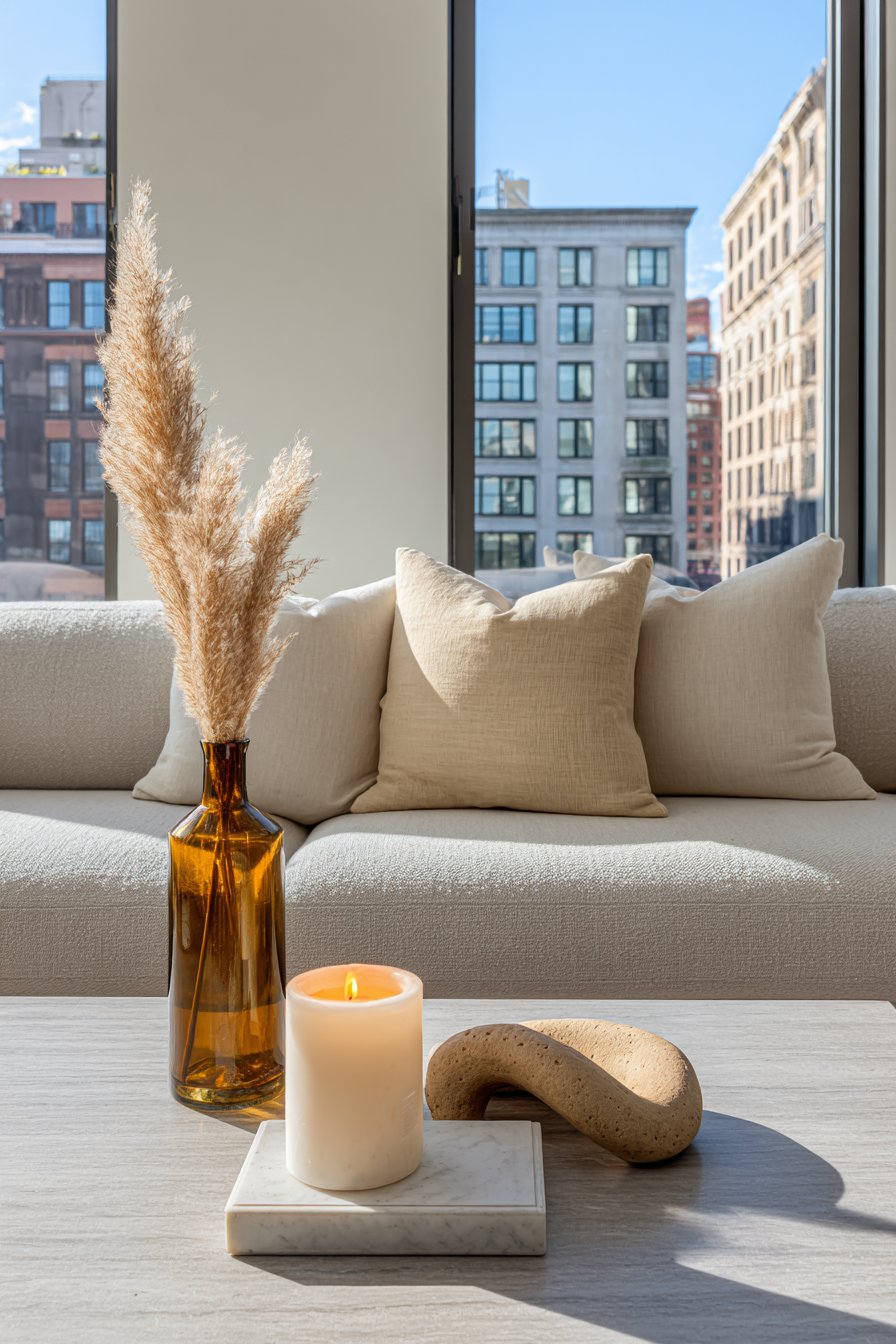
Experiment with these techniques, adapting them to your unique space and preferences. Start with one or two principles, gradually incorporating others as you develop confidence. The beauty of coffee table styling lies in its flexibility and personal expression—there’s no single correct approach, only what works for your lifestyle and aesthetic vision.
Let your coffee table tell your story while anchoring your living space with intentional design. With these professional secrets, you’ll create stunning focal points that elevate your entire room and impress guests with your designer eye.
