


Creating the perfect children’s bedroom goes far beyond simply placing a bed and dresser in a room. As an experienced interior designer, I understand that a child’s bedroom serves as their personal sanctuary, creative playground, and learning environment all rolled into one. The space must balance functionality with imagination, safety with style, and organization with the freedom for creative expression. A thoughtfully designed children’s bedroom can foster independence, creativity, and a sense of security while reflecting the unique personality of its young inhabitant.
The modern approach to children’s bedroom design has evolved significantly, embracing everything from minimalist Scandinavian aesthetics to elaborate themed environments. Today’s parents and designers recognize that children’s spaces should be both beautiful and practical, incorporating smart storage solutions, flexible furniture, and design elements that can adapt as children grow. The key lies in creating environments that stimulate without overwhelming, organize without restricting, and inspire while maintaining the peaceful atmosphere necessary for rest and reflection.
In this comprehensive guide, we’ll explore twenty innovative children’s bedroom concepts that demonstrate the incredible versatility and creativity possible in young people’s spaces. From whimsical fairy tale retreats to practical Montessori-inspired rooms, each design approach offers unique benefits and can be adapted to suit different ages, interests, and spatial constraints. These ideas showcase how thoughtful design can transform any bedroom into a space that nurtures development, encourages creativity, and provides the comfort every child deserves.
1. Whimsical Reading Nook Adventure
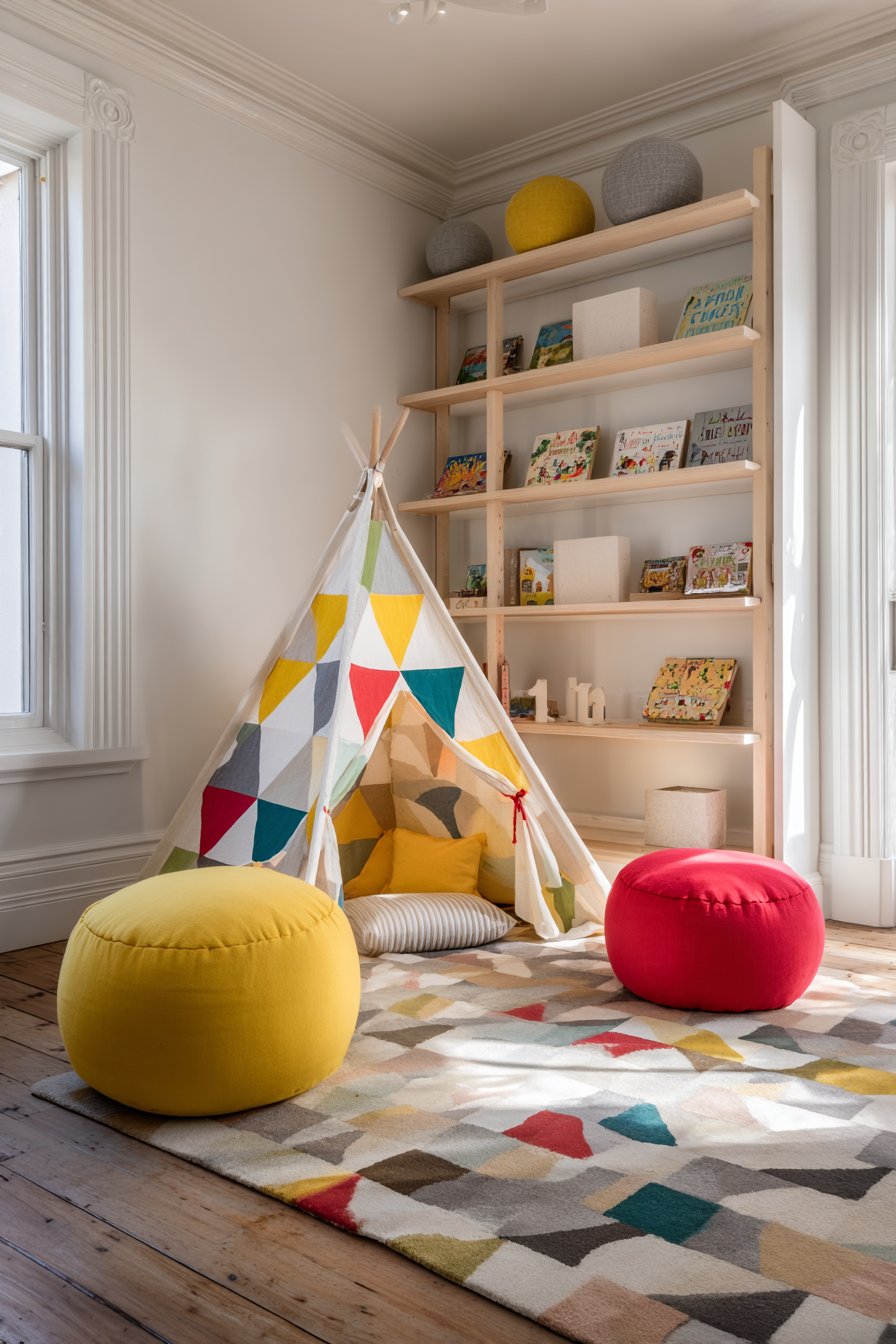
The foundation of a truly inspiring children’s bedroom often begins with creating dedicated spaces for different activities, and few elements are as magical as a well-designed reading corner. This concept centers around a charming teepee tent crafted from natural canvas, adorned with colorful geometric patterns that immediately capture a child’s imagination. The tent serves as both a cozy retreat and an architectural element that defines the reading space without requiring permanent structural changes to the room.
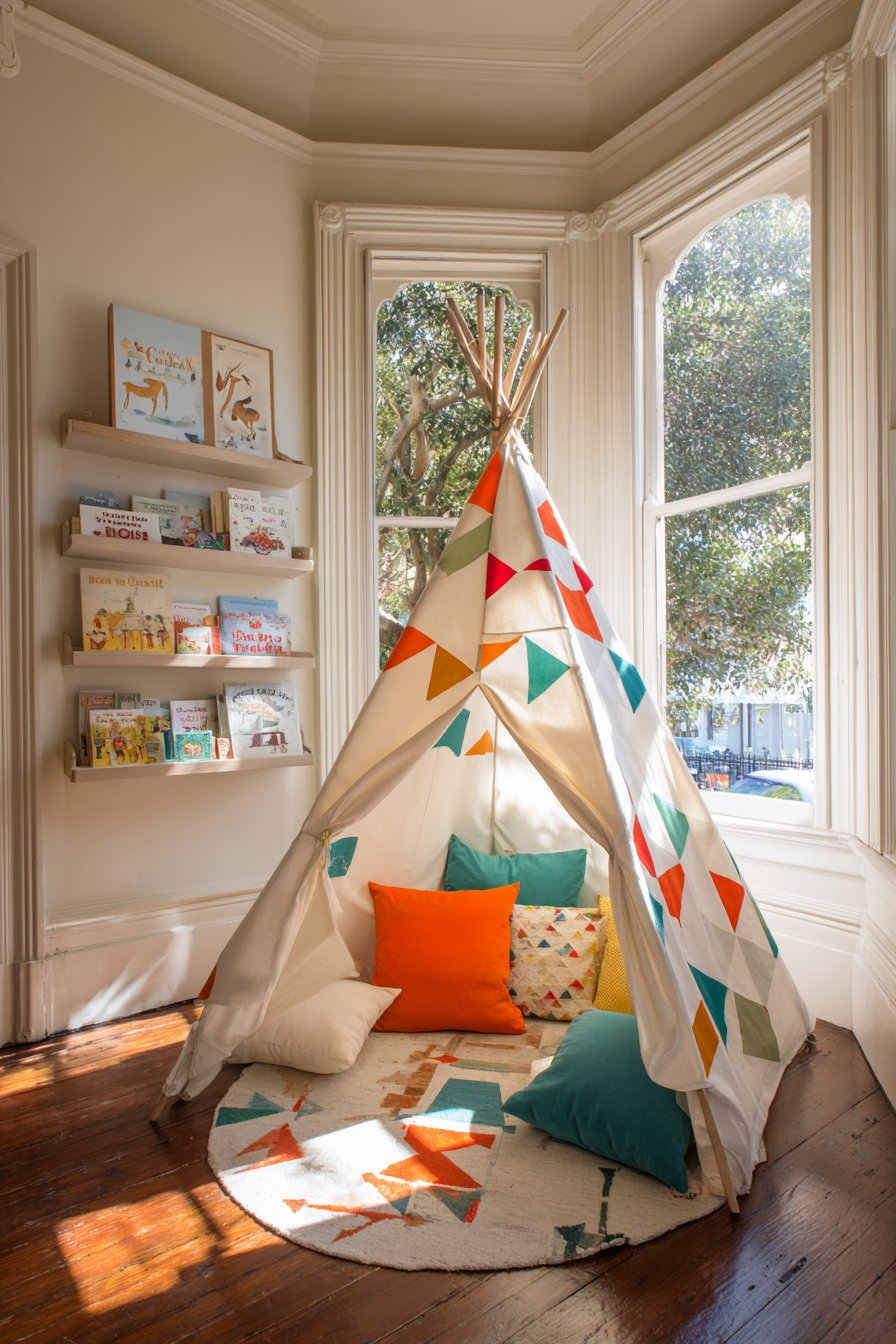
The supporting elements of this design work harmoniously to create an environment that celebrates literacy and imagination. Low built-in shelving positioned at child height ensures that favorite picture books are always within reach, encouraging independent book selection and fostering a sense of ownership over the reading experience. The shelving design incorporates both practical storage and display opportunities, allowing children to showcase their favorite titles while keeping the collection organized and accessible.
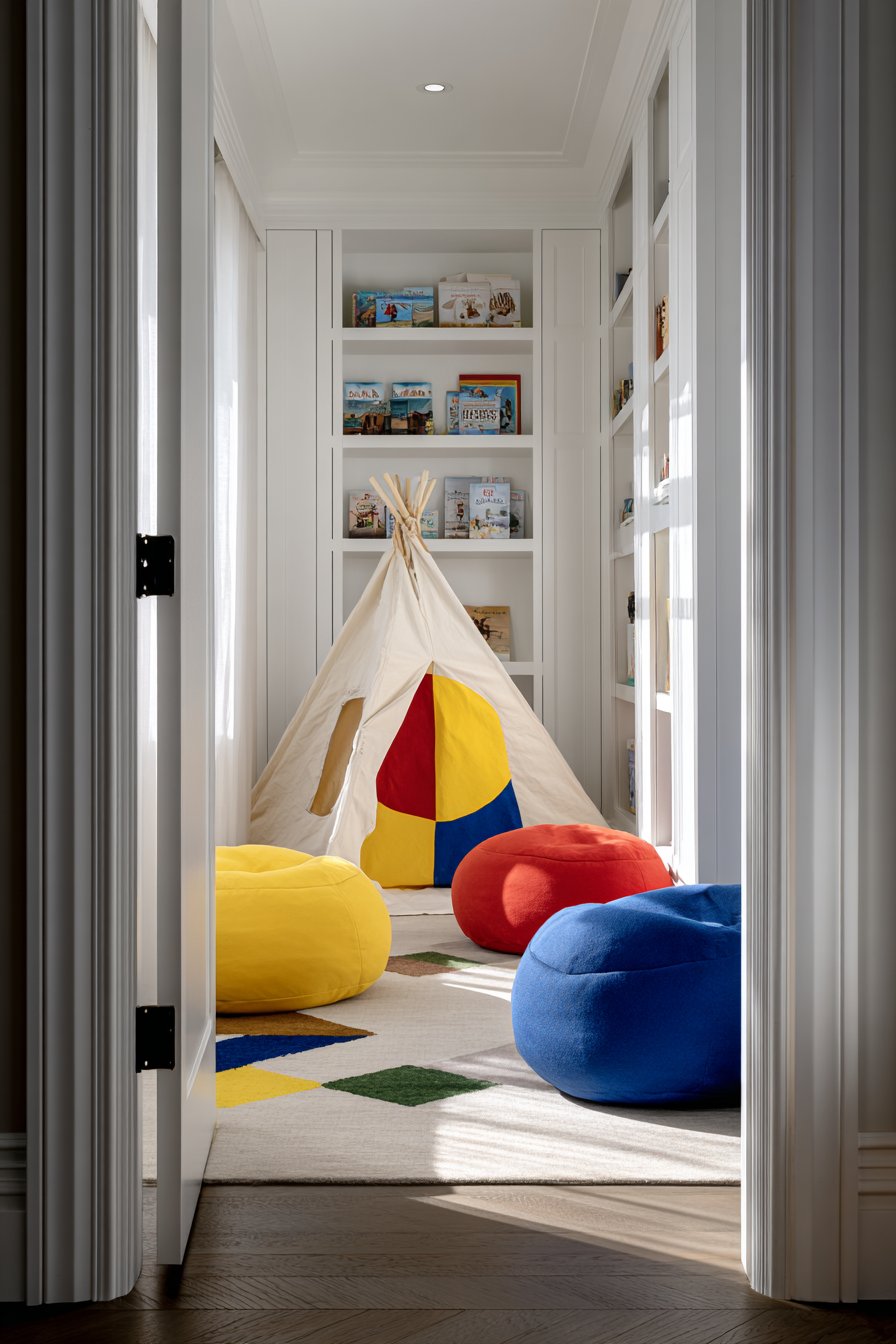
Soft floor cushions in bright primary colors create an inviting foundation for reading adventures, offering flexibility that traditional seating cannot match. These cushions can be rearranged for different activities, accommodated varying numbers of children during story time, and easily cleaned or replaced as needed. The natural wood flooring provides a warm, organic foundation that complements the canvas teepee while ensuring easy maintenance in this high-traffic area.
The lighting strategy for this reading nook capitalizes on natural illumination from nearby windows, creating an ever-changing ambiance throughout the day. Morning reading sessions benefit from gentle, energizing light, while afternoon story time enjoys the warm, golden tones that make any tale more enchanting. Strategic placement of the reading area near windows also connects children with the outdoors, providing natural visual breaks and inspiring imagination through changing weather and seasonal views.
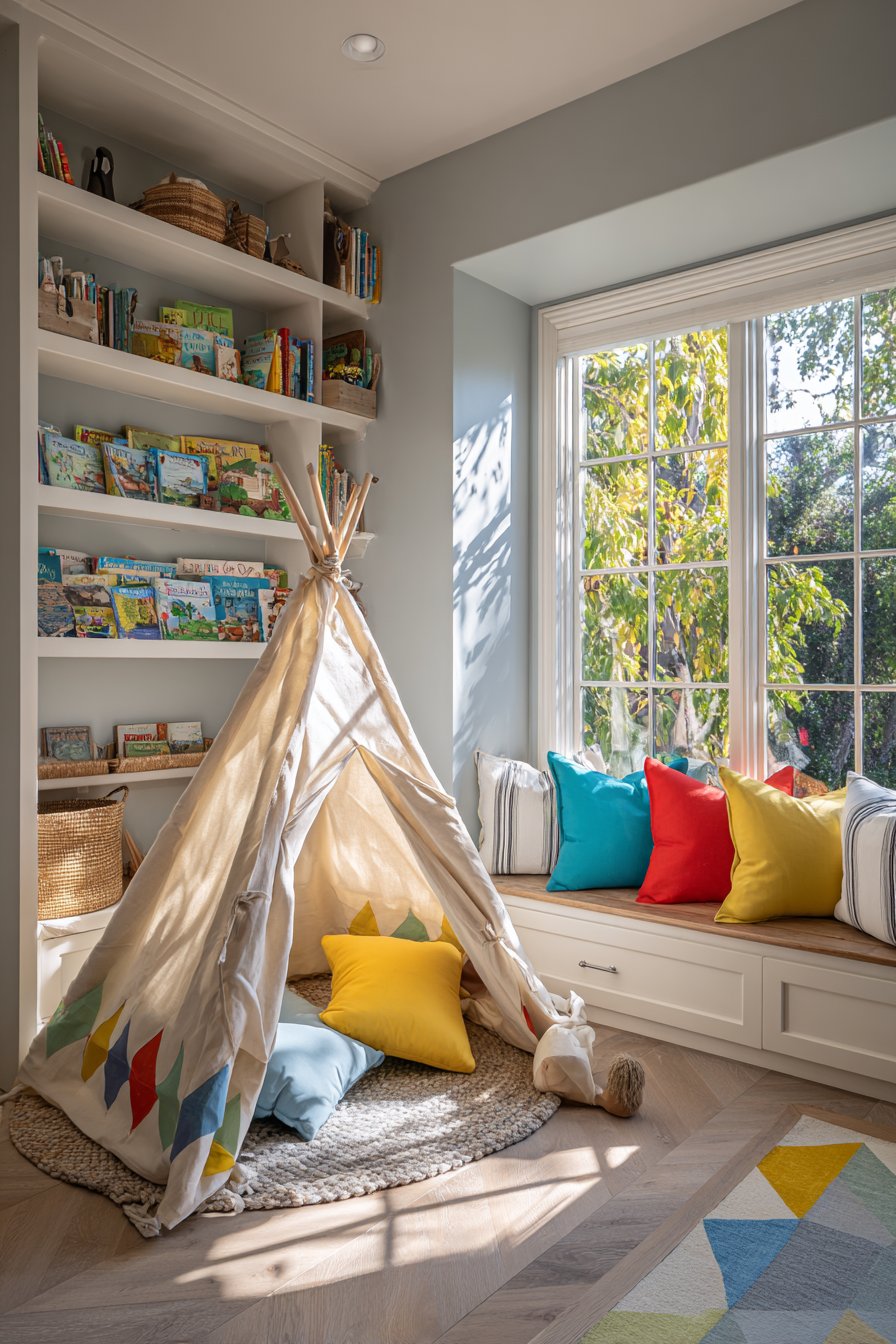
Key design tips for creating the perfect reading nook include choosing a teepee with removable covers for easy washing, ensuring adequate ventilation within the enclosed space, incorporating battery-operated LED string lights for evening reading sessions, positioning cushions on a washable area rug for added comfort and easier cleaning, and selecting books with colorful spines that contribute to the overall room aesthetic while remaining functional storage solutions.
2. Space-Saving Loft Bed Innovation
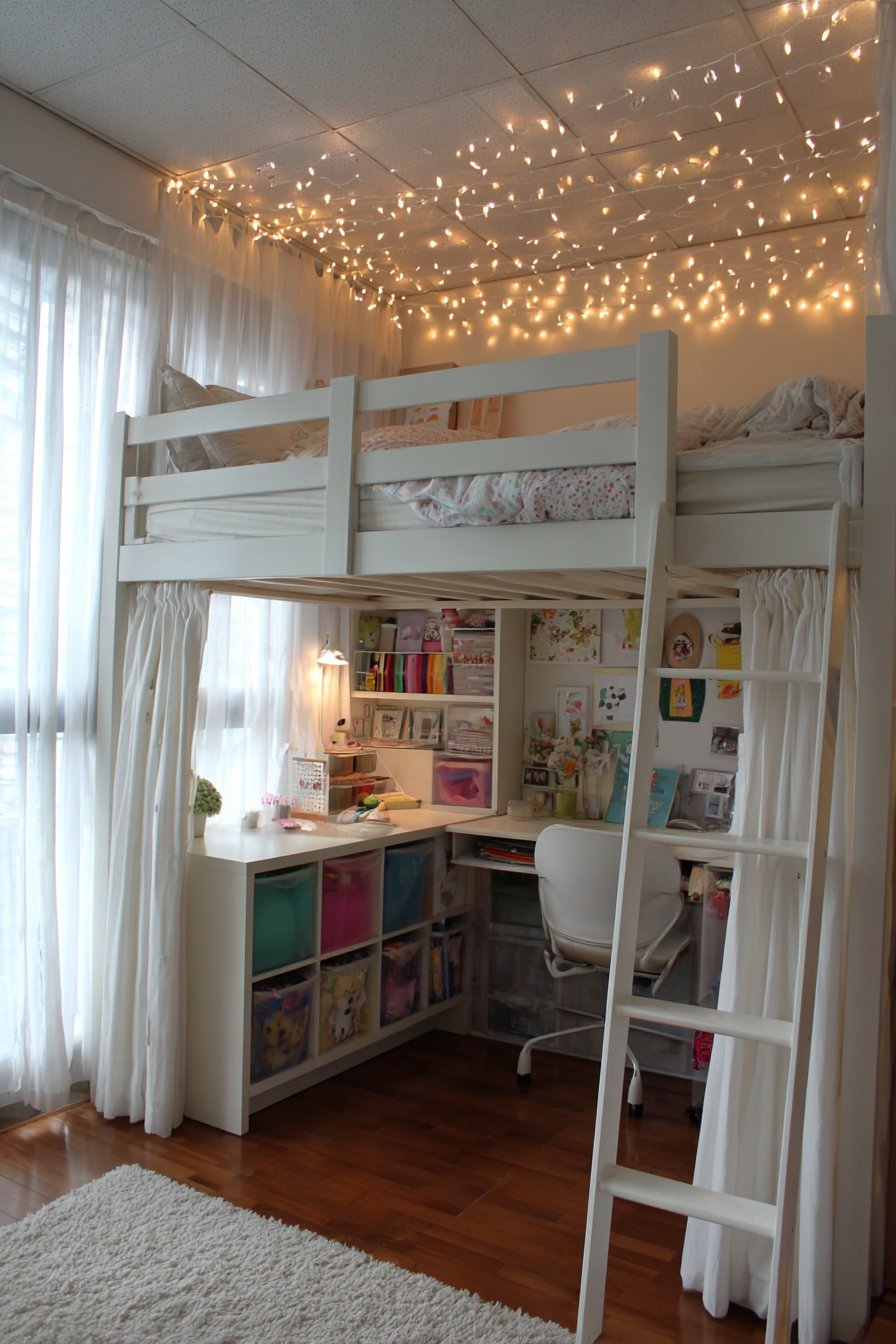
Vertical space utilization represents one of the most effective strategies in children’s bedroom design, and the loft bed concept perfectly demonstrates this principle in action. This innovative approach features a white painted wood frame with essential safety rails supporting a comfortable twin mattress, while the valuable floor space underneath transforms into a productive study area. The design successfully addresses two critical needs in children’s rooms: comfortable sleeping space and dedicated homework areas.
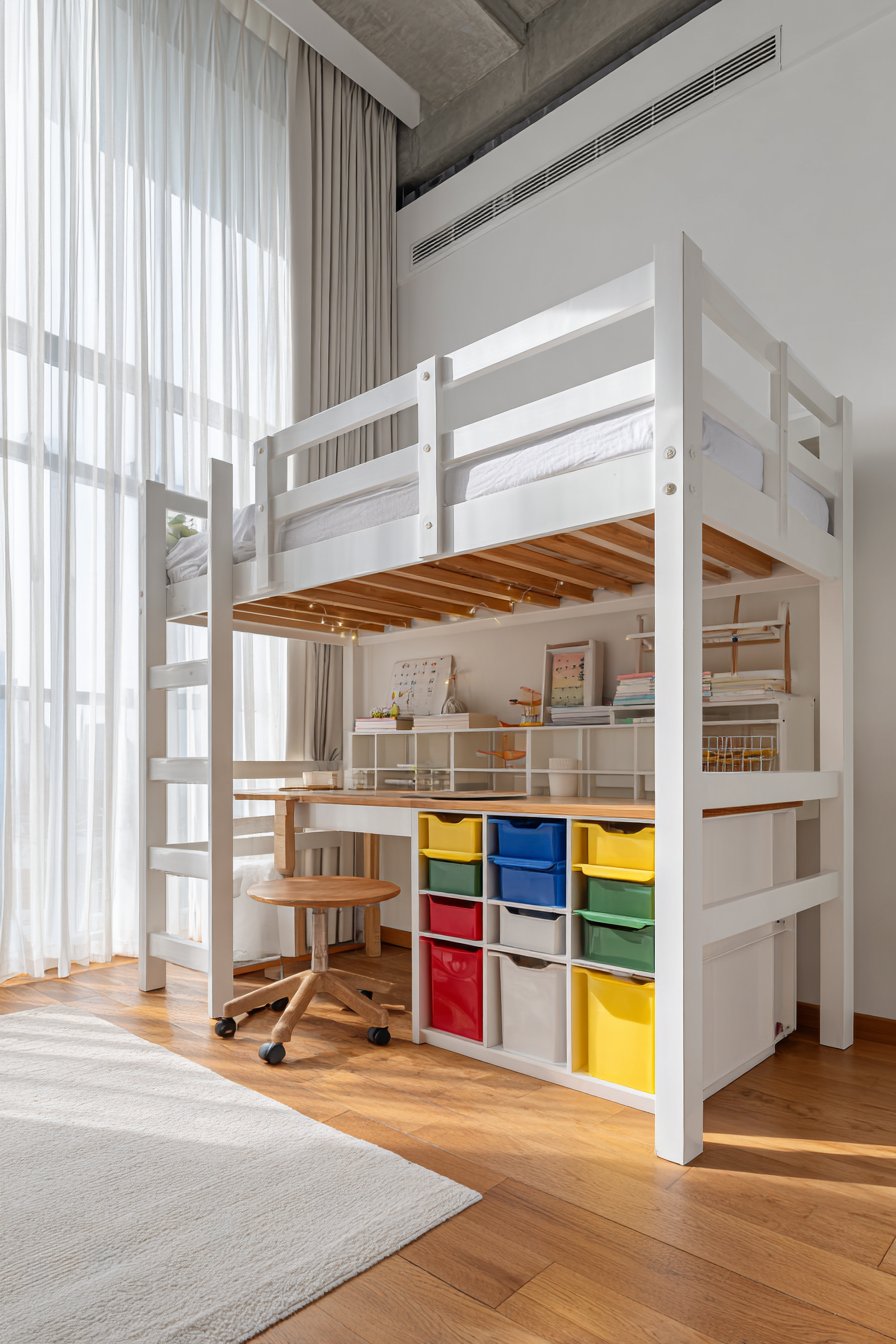
The integrated study station beneath the loft bed maximizes functionality without sacrificing style or comfort. A compact desk provides adequate workspace for homework, art projects, and creative activities, while colorful storage bins offer organized solutions for school supplies, craft materials, and personal treasures. The rolling chair, specifically sized for children, ensures proper ergonomics during study sessions while allowing easy movement around the workspace.
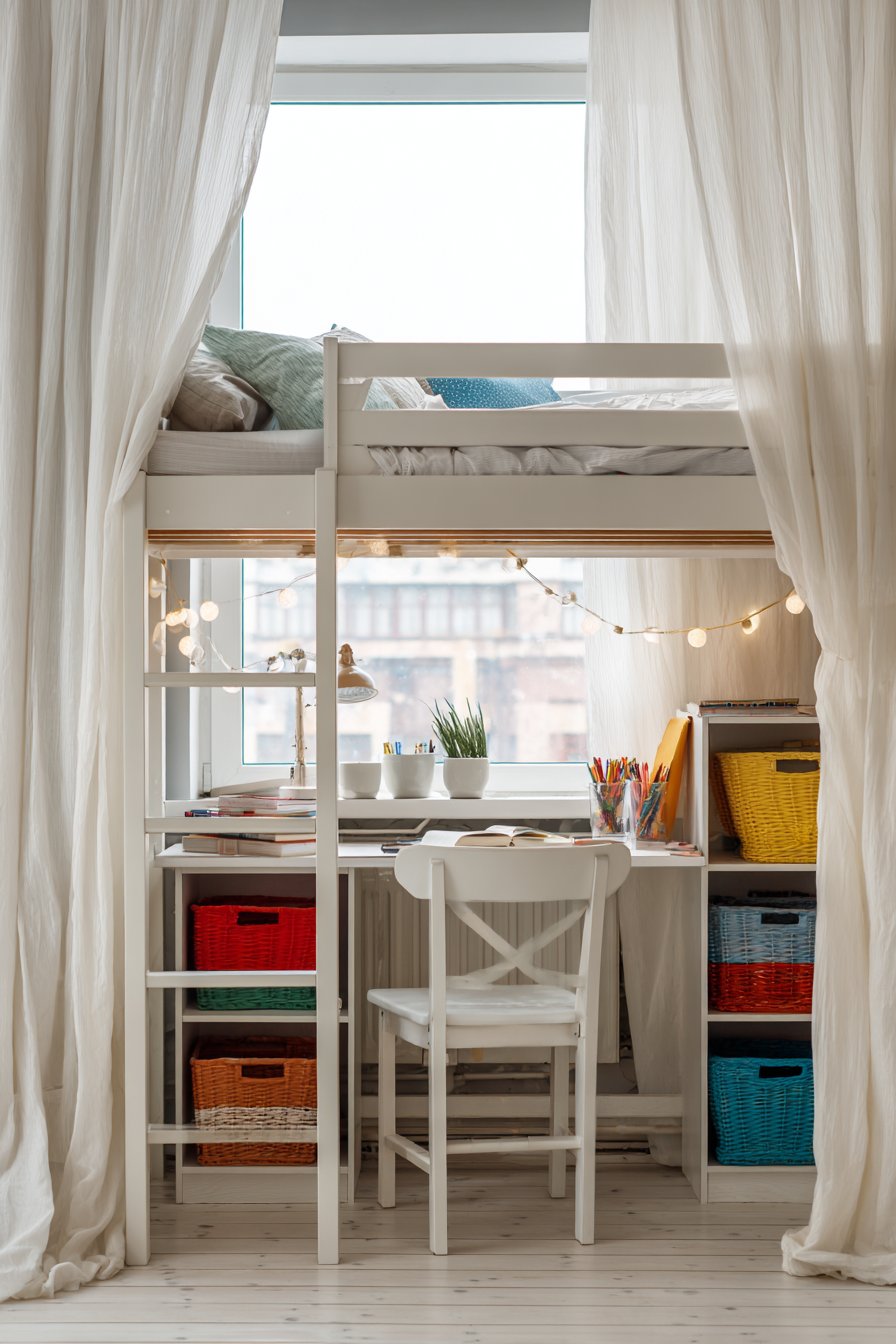
String lights woven along the bed frame add a magical quality that transforms the sleeping area into a special retreat. These lights serve both aesthetic and practical purposes, providing gentle illumination for bedtime reading while creating a cozy atmosphere that makes sleep time more appealing. The warm glow also helps ease nighttime fears, offering comfort without the harshness of overhead lighting.
Natural daylight filtering through sheer curtains ensures that the study area receives adequate illumination during daytime hours while maintaining privacy and controlling glare. The sheer fabric diffuses harsh sunlight, creating an ideal environment for concentration and detailed work. This thoughtful window treatment also adds softness to the room’s overall aesthetic while allowing parents to monitor the changing light conditions throughout the day.
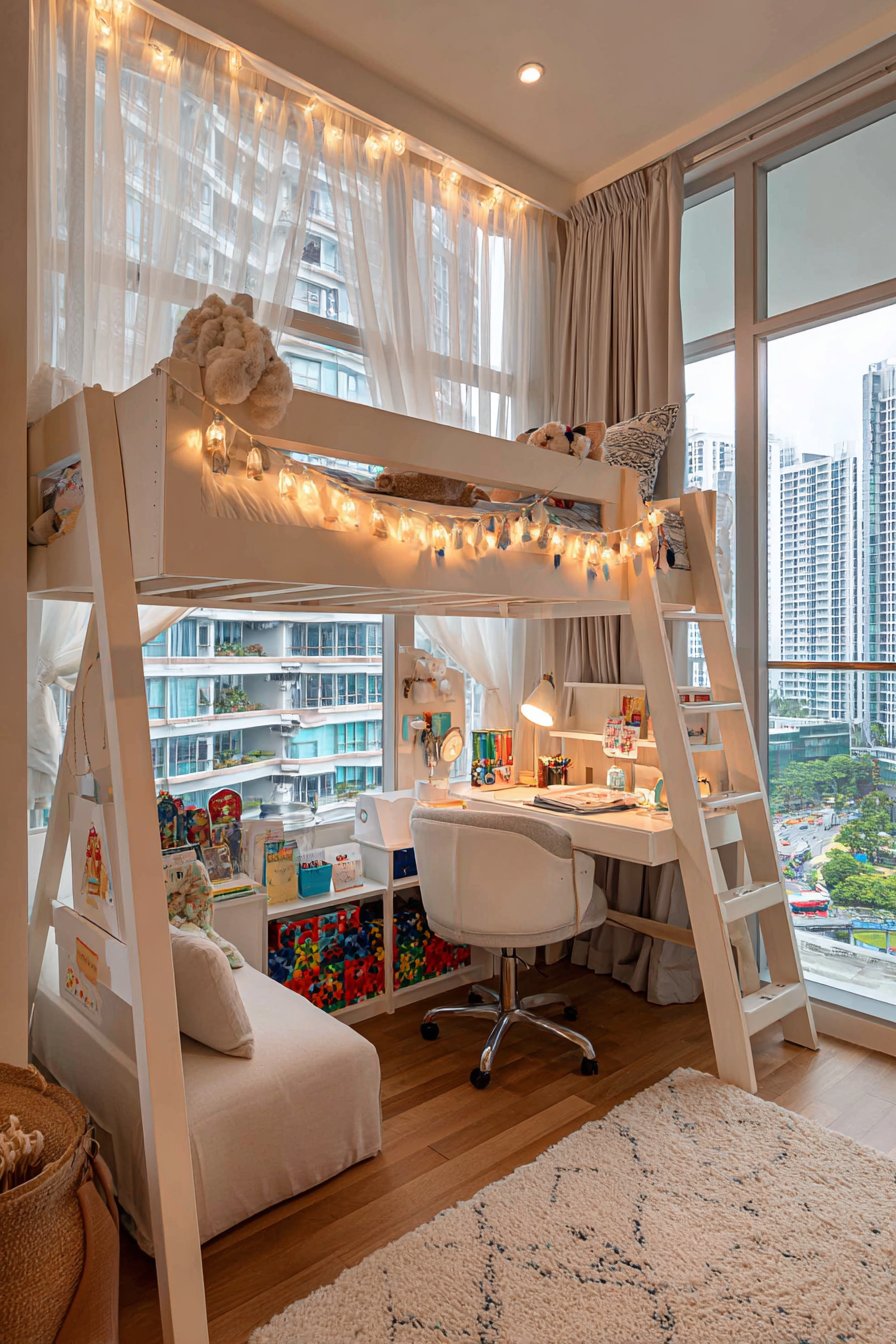
Essential design considerations for loft bed installations include verifying adequate ceiling height for comfortable sitting on the upper level, ensuring sturdy construction that meets safety standards and weight requirements, incorporating adequate ventilation around the sleeping area to prevent stuffiness, planning electrical outlets and lighting for both levels, and choosing a ladder design that children can navigate safely and independently. Storage solutions should be integrated thoughtfully to maintain organization without creating clutter in the compact lower space.
3. Scandinavian Serenity and Simplicity
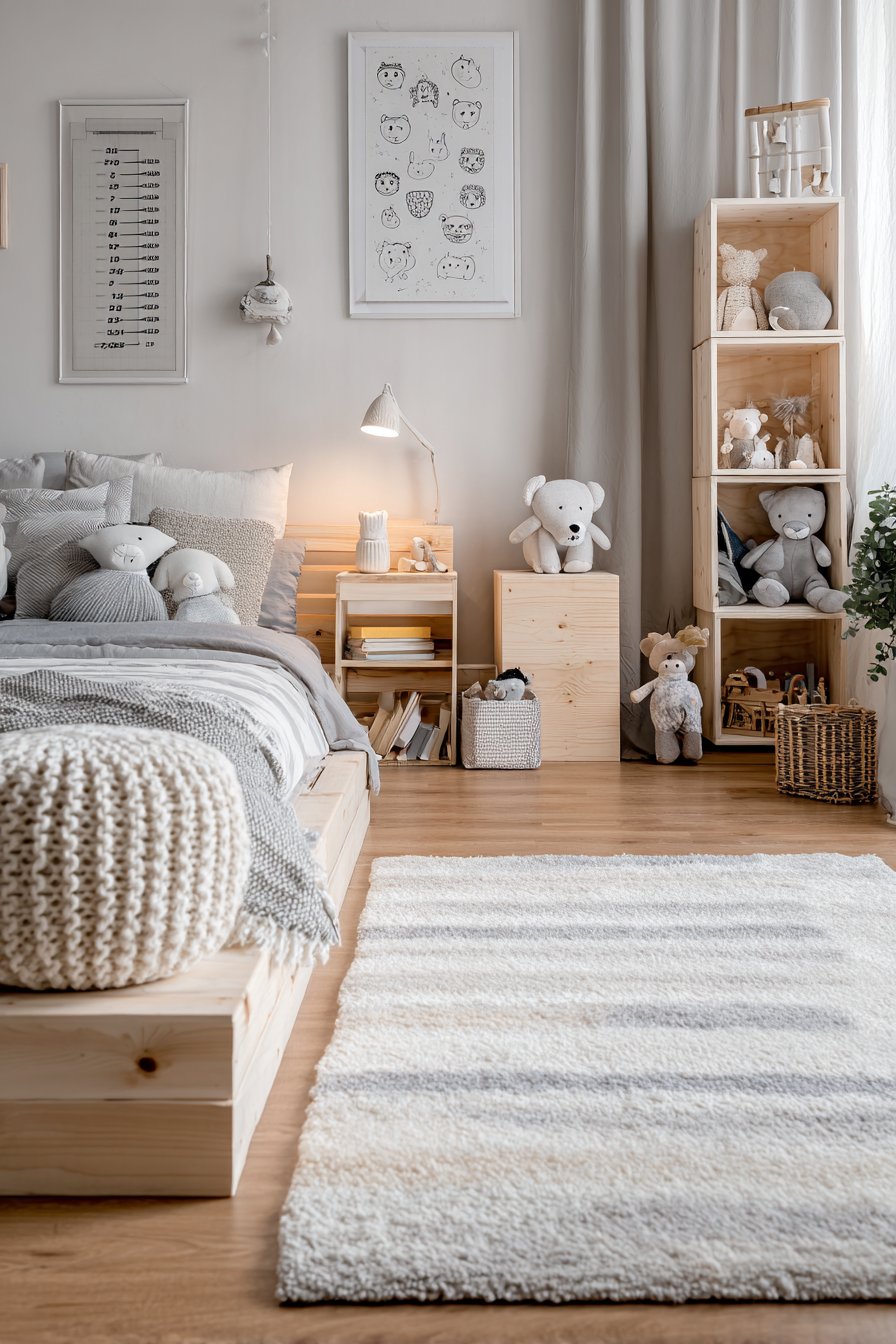
The Scandinavian design philosophy brings a sense of calm sophistication to children’s bedrooms through its emphasis on natural materials, clean lines, and functional beauty. This approach features a low platform bed crafted from light oak wood, creating a sleeping surface that feels grounded and secure while maintaining the minimalist aesthetic that characterizes Nordic design. The platform style eliminates the need for a box spring while providing subtle built-in storage opportunities around the bed’s perimeter.

Neutral bedding in soft greys and whites establishes a calming foundation that promotes restful sleep while creating a versatile backdrop for colorful accessories and toys. This palette choice demonstrates the Scandinavian principle that children’s rooms need not be overwhelmingly colorful to be engaging and child-friendly. The neutral tones also ensure that the room will remain aesthetically pleasing as children grow and their preferences evolve.
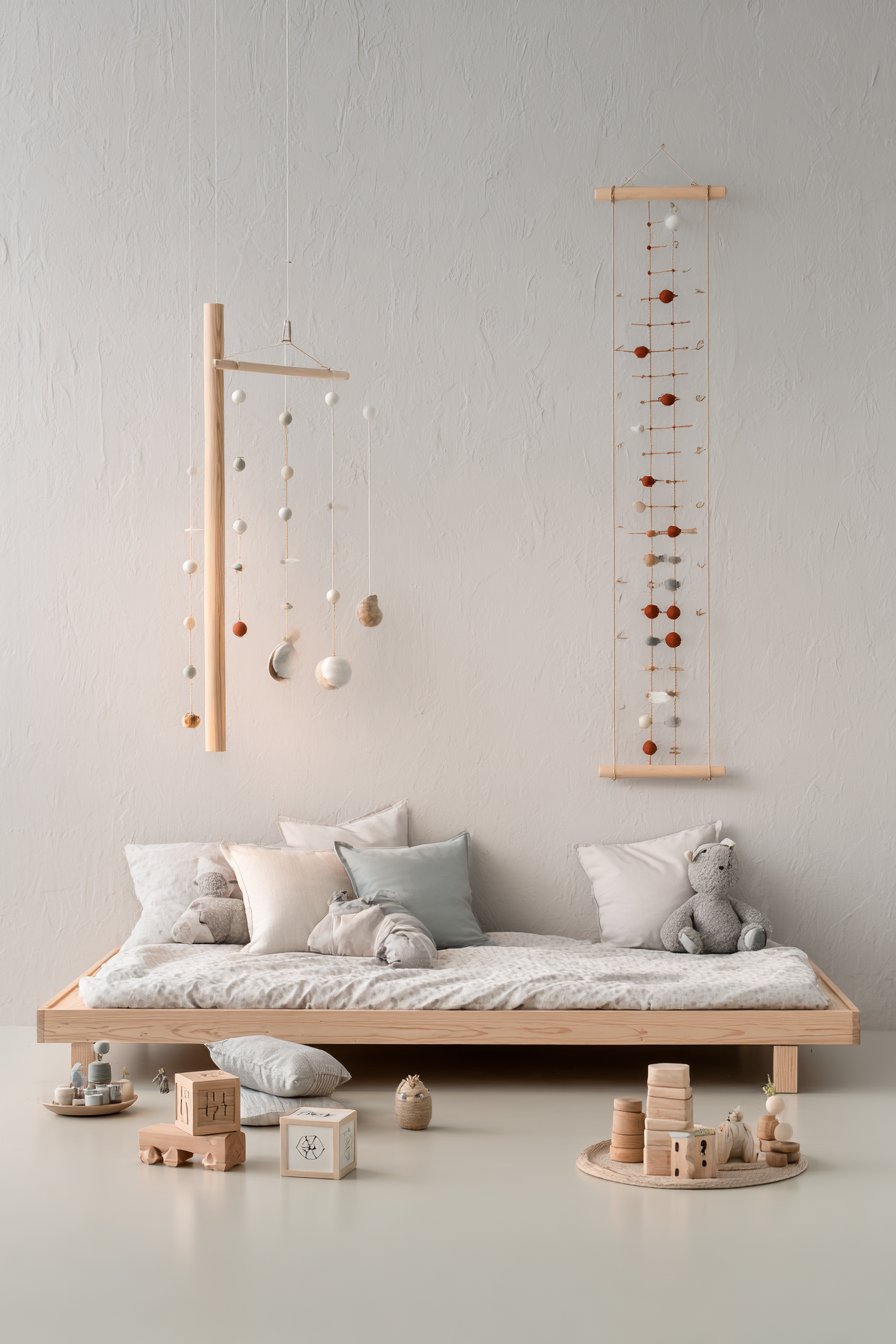
Strategic pops of color emerge through carefully chosen wooden toy storage cubes that serve dual purposes as both organizational tools and play surfaces. These cubes can be rearranged to create different play configurations, stacked to form towers and obstacles courses, or used as seating during activities. The mobile featuring felt animals adds whimsical movement to the space while incorporating natural materials that align with the Scandinavian aesthetic.
The growth chart decal on the white painted wall provides a personal touch that celebrates the child’s development while maintaining the clean, uncluttered appearance essential to this design style. This functional decoration serves as both a practical tool and a meaningful keepsake, documenting precious milestones without requiring permanent alterations to the room’s structure.
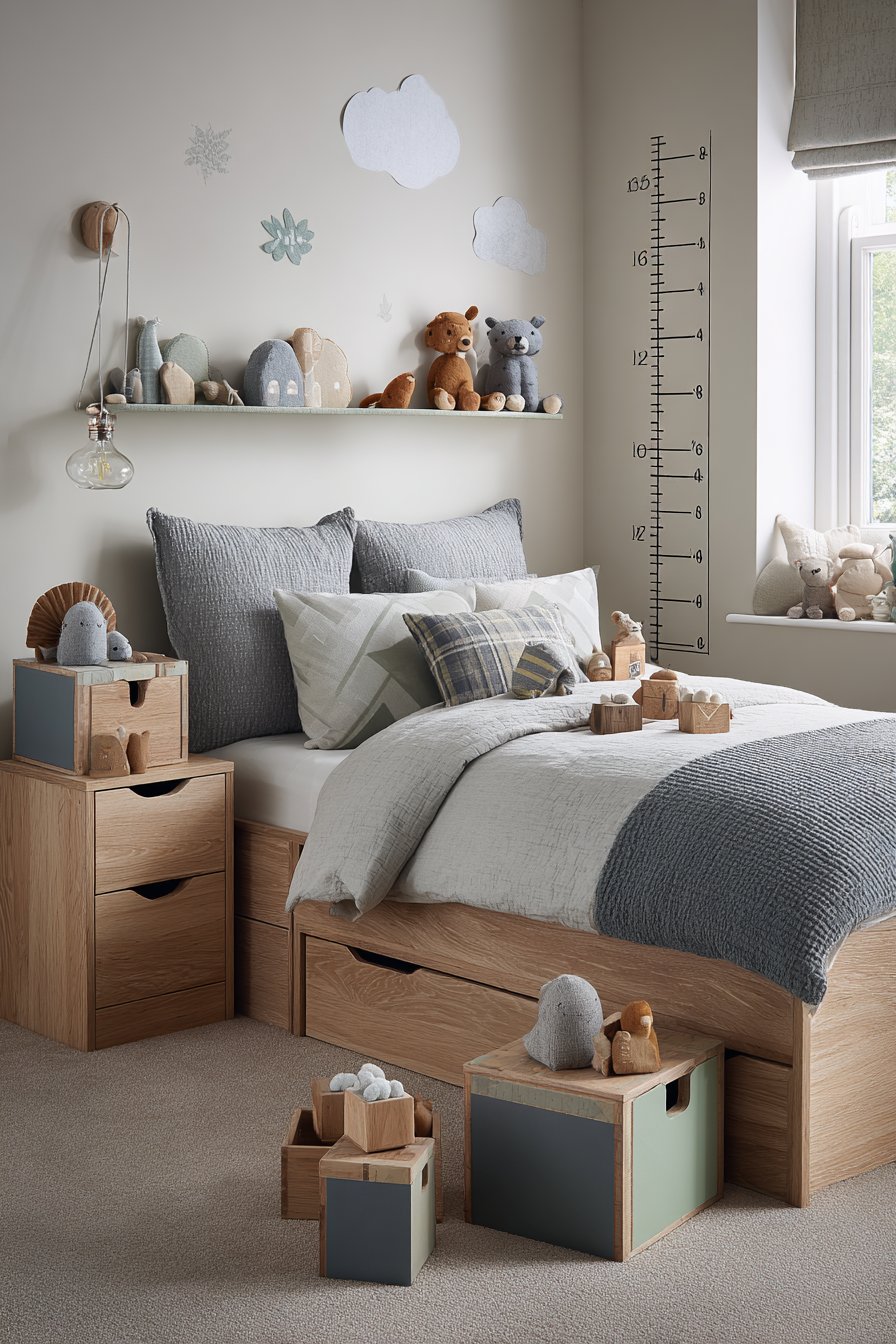
Implementing Scandinavian design principles requires attention to material quality and functionality, choosing furniture pieces that will grow with the child and maintain their appeal over time, incorporating storage solutions that maintain visual simplicity while providing adequate organization, selecting a limited color palette with natural variations in tone and texture, emphasizing natural lighting through appropriate window treatments and strategic mirror placement, and investing in well-crafted pieces that demonstrate the Scandinavian value of sustainability and longevity over disposable furniture options.
4. Montessori Method and Independence
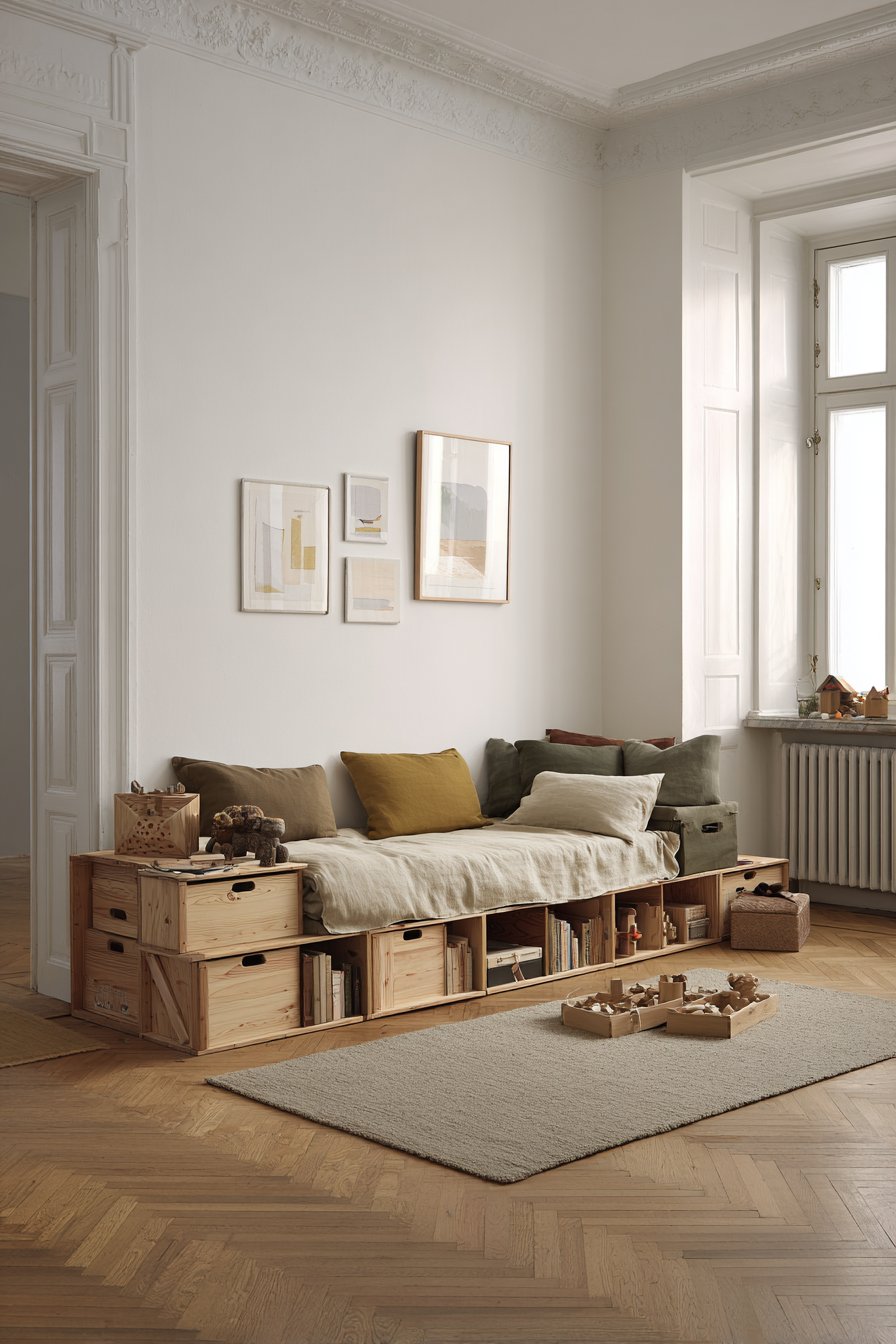
The Montessori approach to children’s bedroom design prioritizes independence, accessibility, and child-directed learning through thoughtful spatial organization and furniture selection. This concept features child-accessible storage positioned at floor level, ensuring that toys, books, and personal items remain within easy reach for independent selection and cleanup. Open wooden shelving displays these items clearly, allowing children to make informed choices about their activities while developing organizational skills through daily practice.
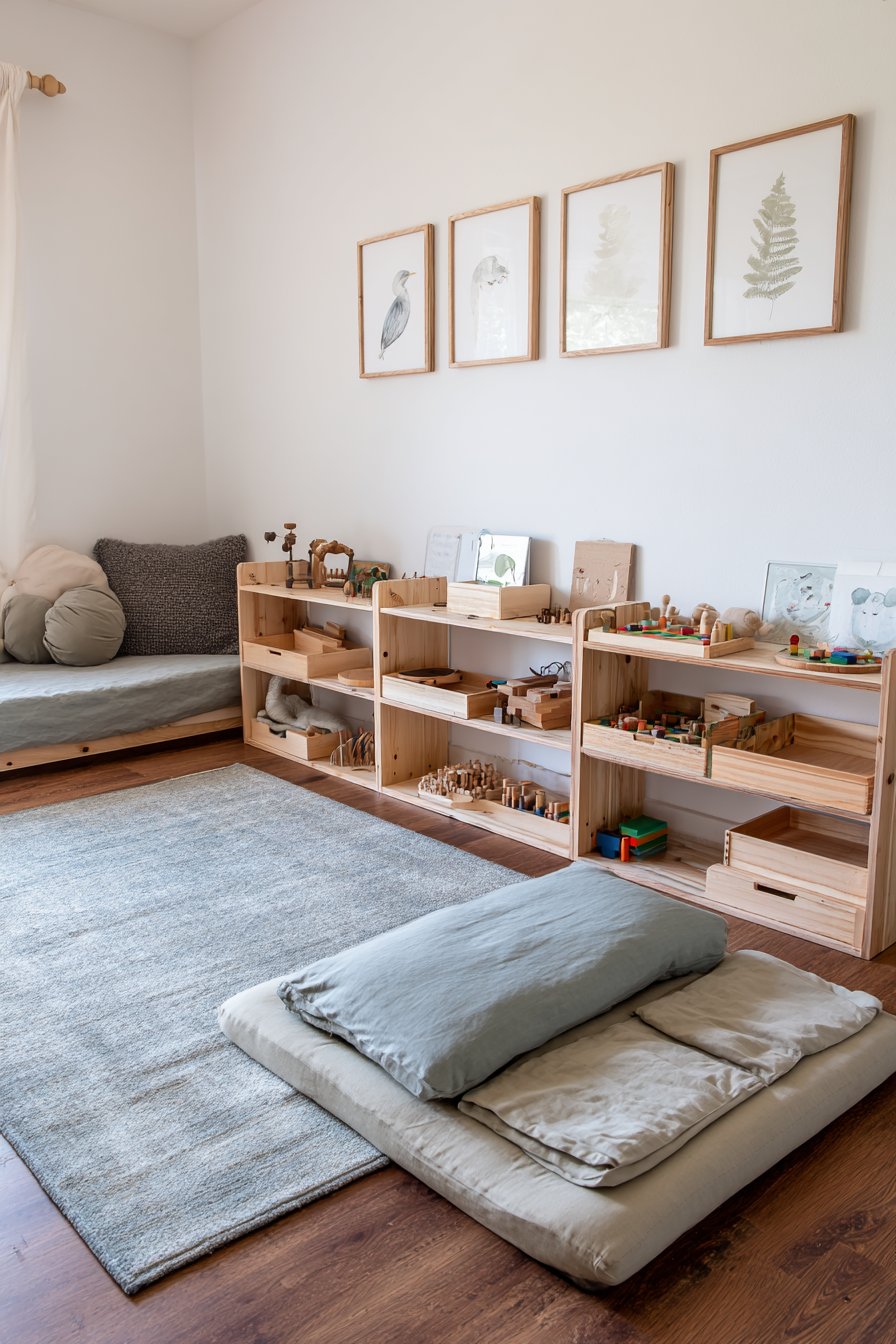
The floor bed concept, featuring natural linen bedding, represents a fundamental Montessori principle that children should have unrestricted access to their sleeping space. This approach eliminates the potential falls associated with elevated beds while encouraging children to listen to their own sleep needs and develop healthy rest patterns. The natural linen bedding provides breathable comfort while maintaining the aesthetic simplicity that supports focus and calm.
A soft wool area rug in muted earth tones defines the sleeping area while providing comfortable flooring for play activities. The natural fiber choice aligns with Montessori preferences for organic materials while offering practical benefits including durability, sound absorption, and easy maintenance. The earth tone palette supports the calm, focused atmosphere that facilitates learning and development.
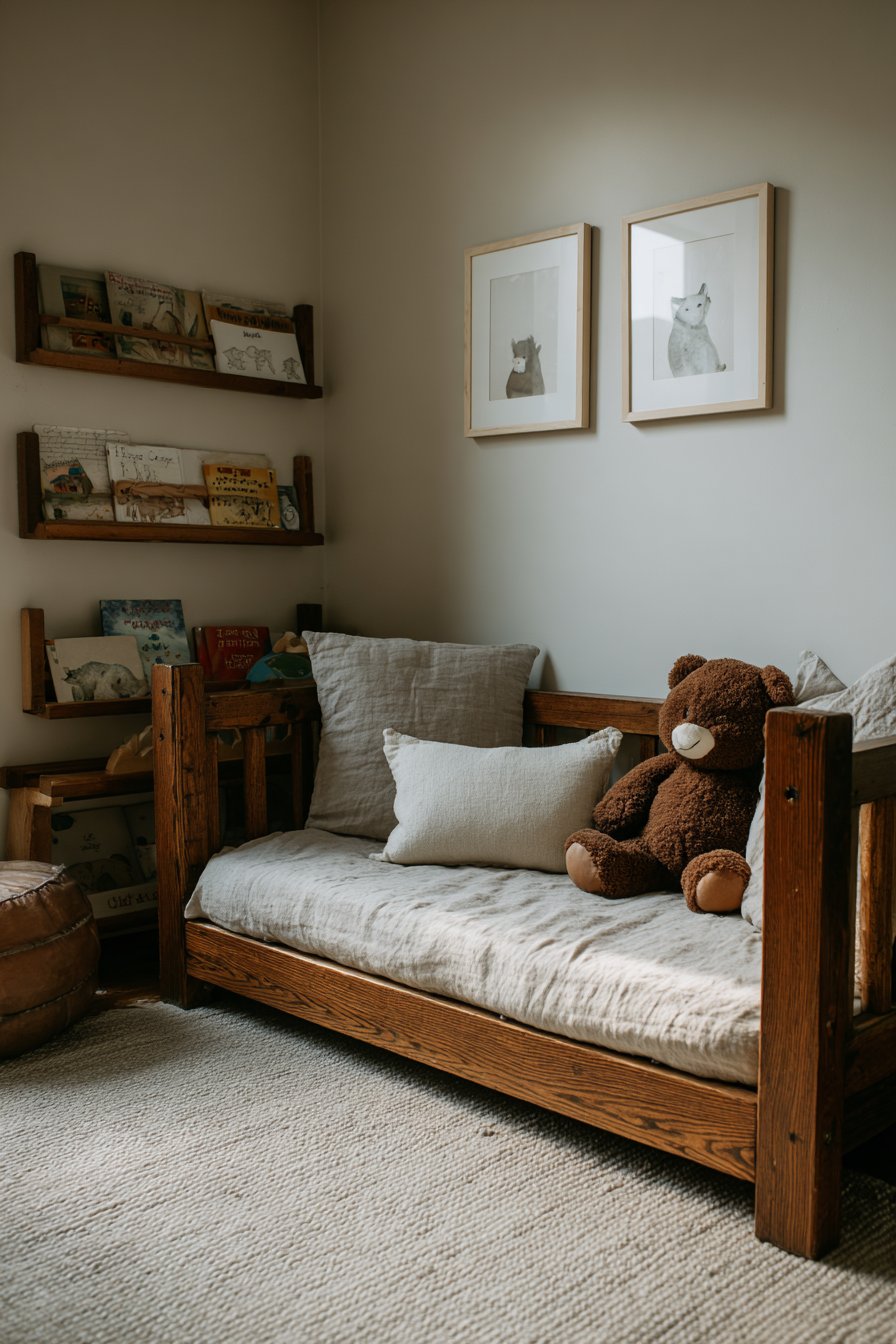
Simple artwork positioned at child eye-level respects the child’s perspective while providing visual interest and cultural exposure. This placement ensures that decorative elements remain accessible and relevant to the room’s primary user, rather than being positioned for adult viewing preferences. The artwork selection should reflect quality, beauty, and cultural diversity to support the Montessori emphasis on exposing children to excellent examples of human creativity.
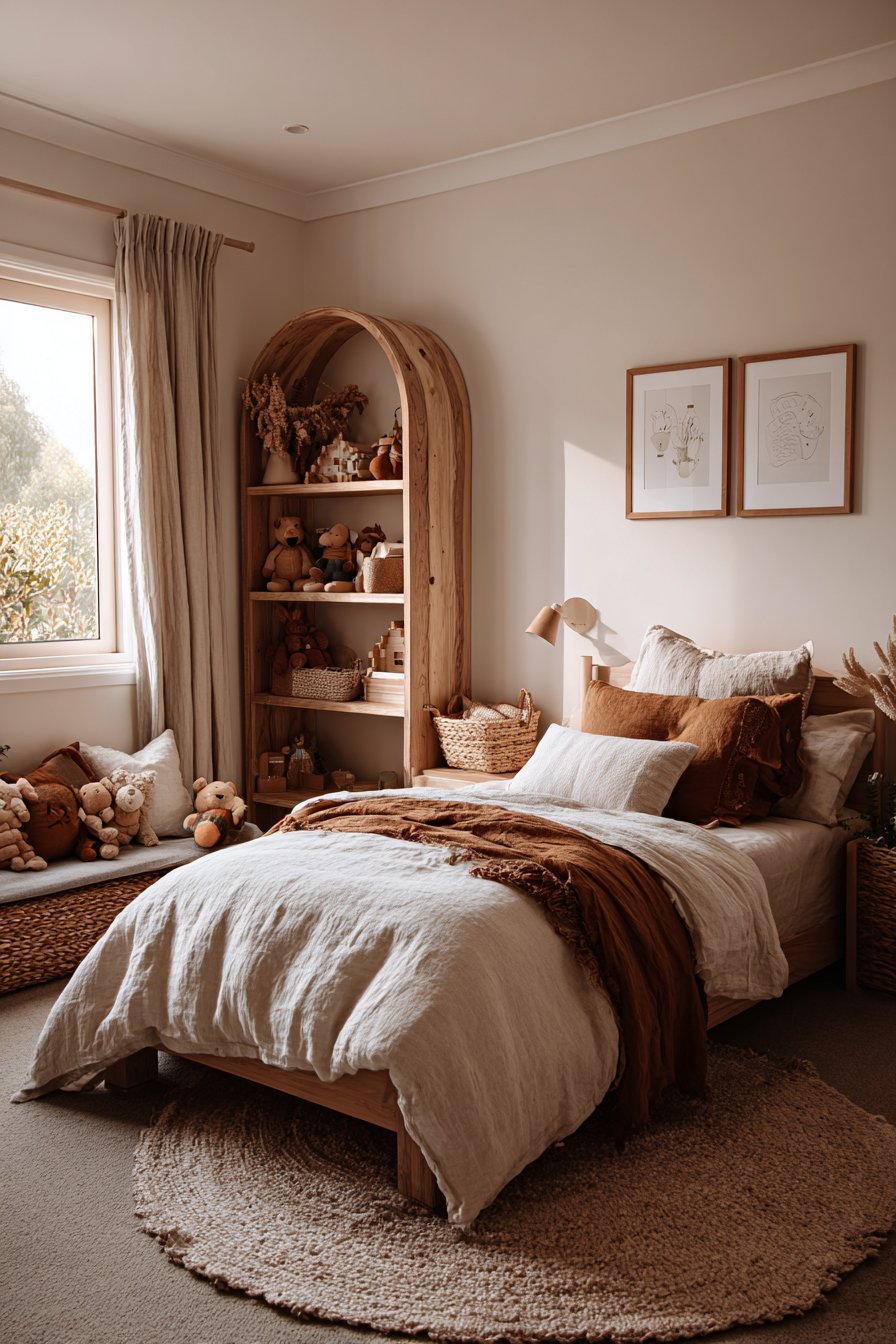
Montessori design implementation focuses on creating environments that support natural development through freedom of movement and choice, selecting furniture and storage that children can operate independently, maintaining visual simplicity to support concentration and focus, incorporating natural materials that provide sensory richness without overwhelming stimulation, organizing toys and materials to encourage exploration and learning, and regularly rotating displayed items to maintain interest while preventing overstimulation from excessive choices.
5. Cosmic Adventures and Space Exploration

Space-themed children’s bedrooms offer unlimited opportunities for imagination while incorporating educational elements that spark curiosity about science and exploration. The centerpiece of this design is a stunning galaxy wall mural featuring deep blues and purples dotted with glow-in-the-dark stars that transform the room into a cosmic wonderland. This immersive backdrop creates the feeling of sleeping among the stars while providing educational opportunities to discuss constellations, planets, and space exploration.
The rocket ship bookshelf serves as both a practical storage solution and a decorative focal point that reinforces the space theme while encouraging reading. This creative furniture piece demonstrates how functional items can contribute to the room’s narrative while providing essential organization. The bookshelf’s design should incorporate multiple compartments for books of various sizes while maintaining the rocket’s recognizable silhouette.
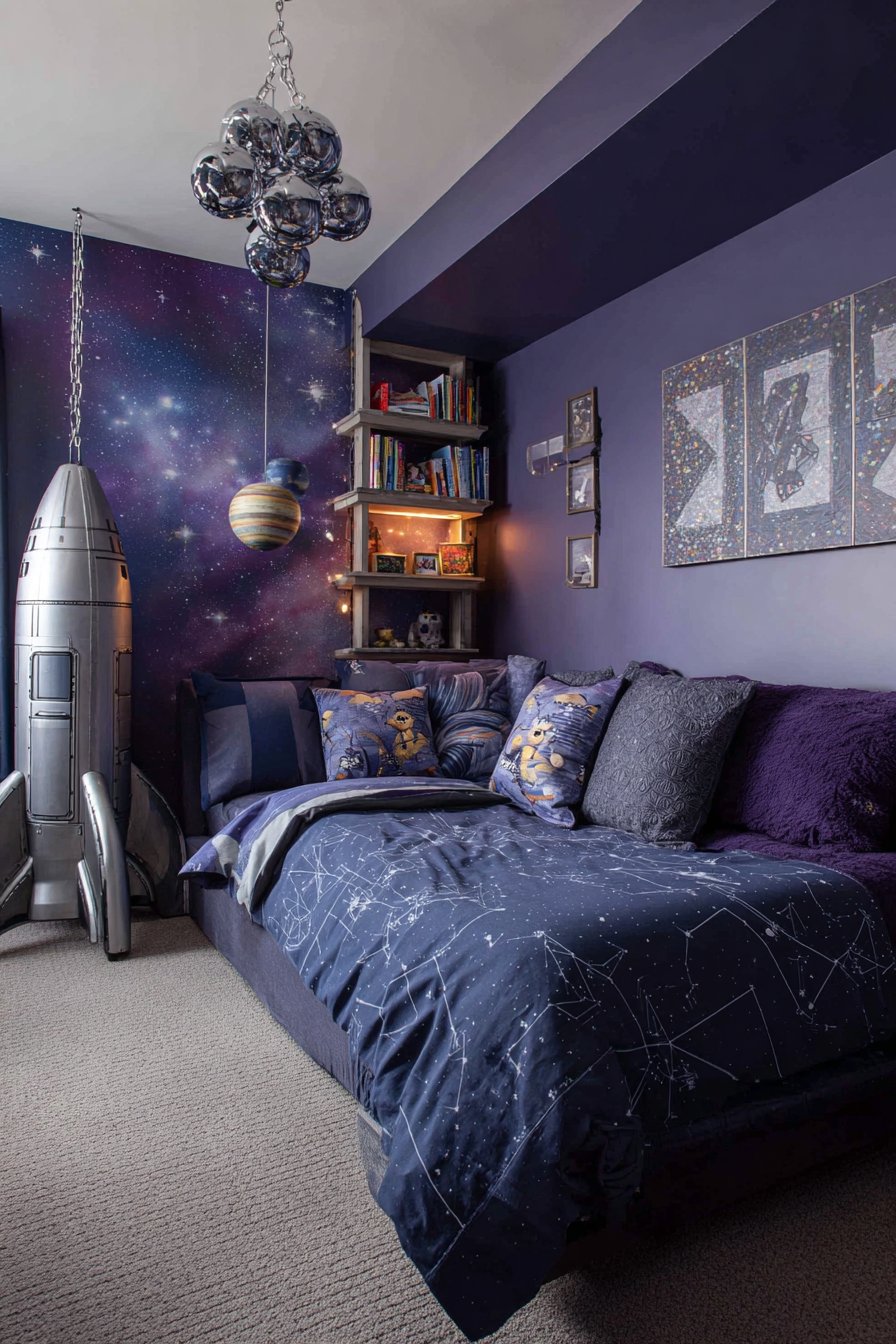
A hanging planet mobile adds three-dimensional interest and movement to the space while providing educational opportunities to learn about the solar system. The mobile’s gentle motion creates visual interest and can serve as a calming focal point during quiet times. Choosing a scientifically accurate representation helps reinforce learning while maintaining the room’s imaginative appeal.
Dark blue bedding featuring constellation patterns complements the cosmic theme while providing comfort and warmth. The pattern choice offers opportunities for bedtime discussions about star patterns and space navigation, extending the room’s educational potential into daily routines. The darker color palette also supports healthy sleep patterns by creating a sense of nighttime even during daylight hours.
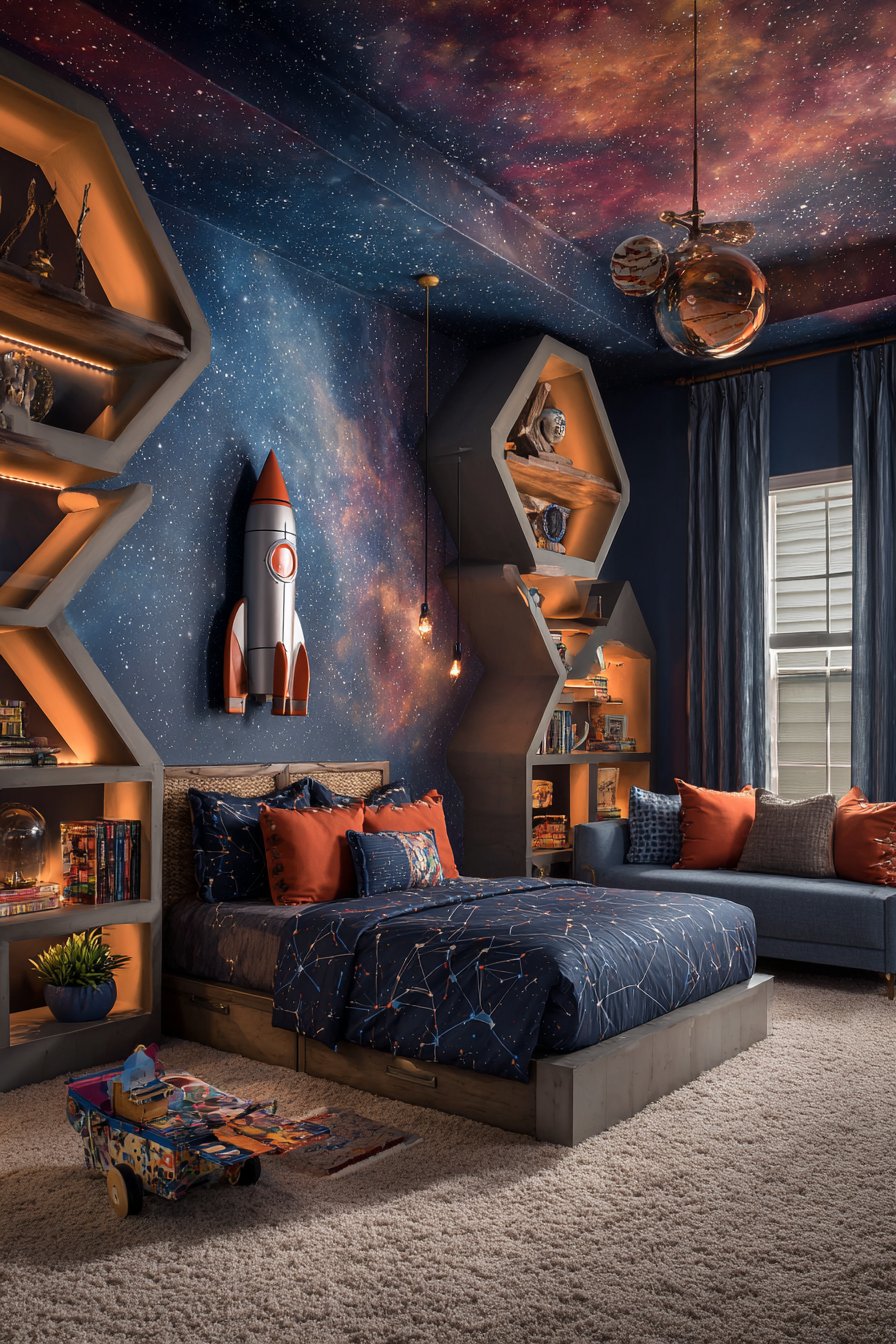
Subtle LED strip lighting creates an otherworldly ambiance during evening hours, transforming the room’s atmosphere as daylight fades. This lighting system can be programmed to dim gradually, supporting healthy sleep routines while maintaining the magical cosmic atmosphere. The LED technology ensures energy efficiency and safety while providing the dramatic lighting effects that make the space theme come alive.
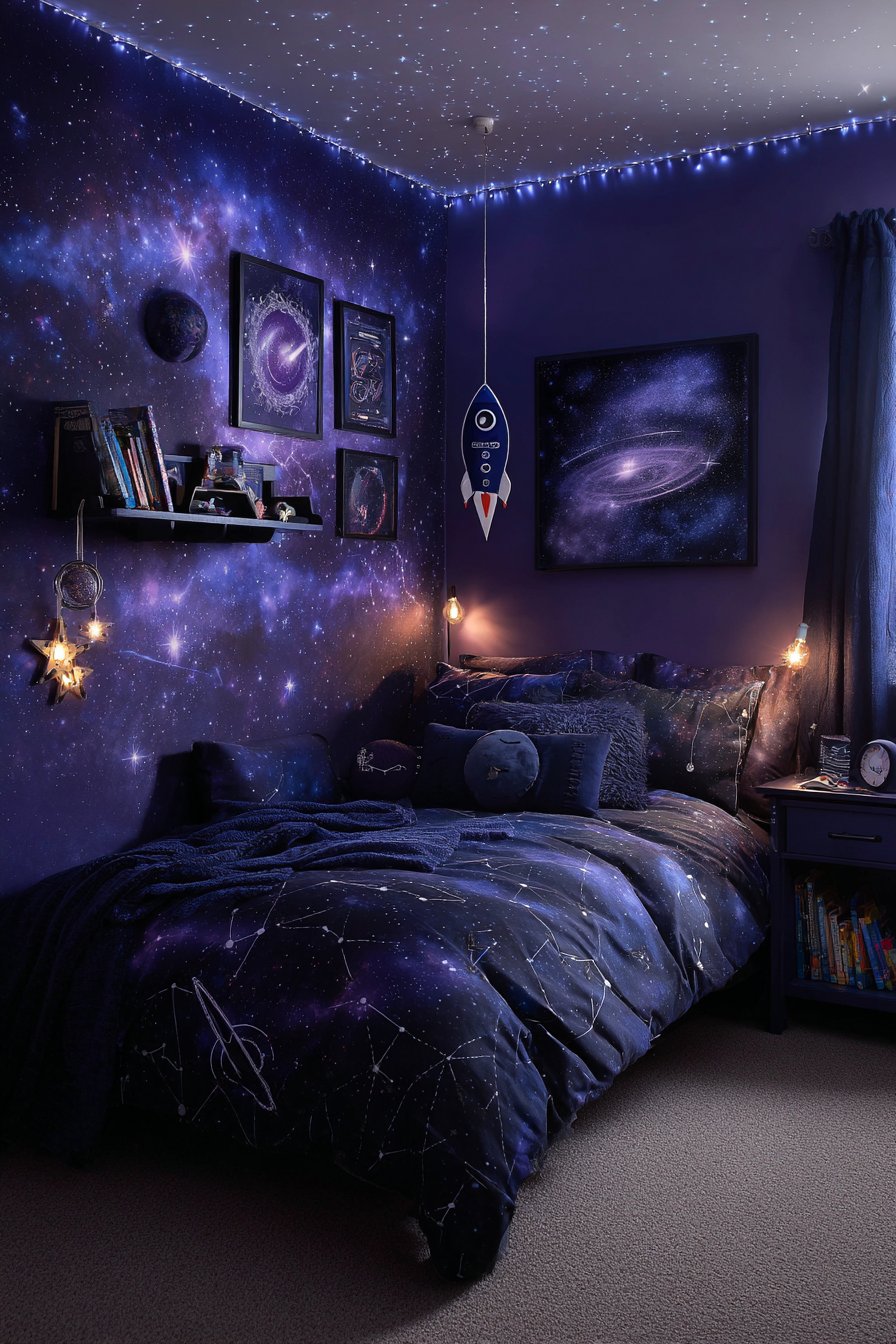
Creating an effective space-themed bedroom requires balancing educational accuracy with imaginative appeal, incorporating lighting that supports both daytime activities and evening ambiance, choosing furniture pieces that serve practical needs while reinforcing the theme, ensuring that decorative elements are securely installed and child-safe, and planning for theme evolution as the child’s interests develop and mature over time.
6. Small Space Solutions and Storage Mastery
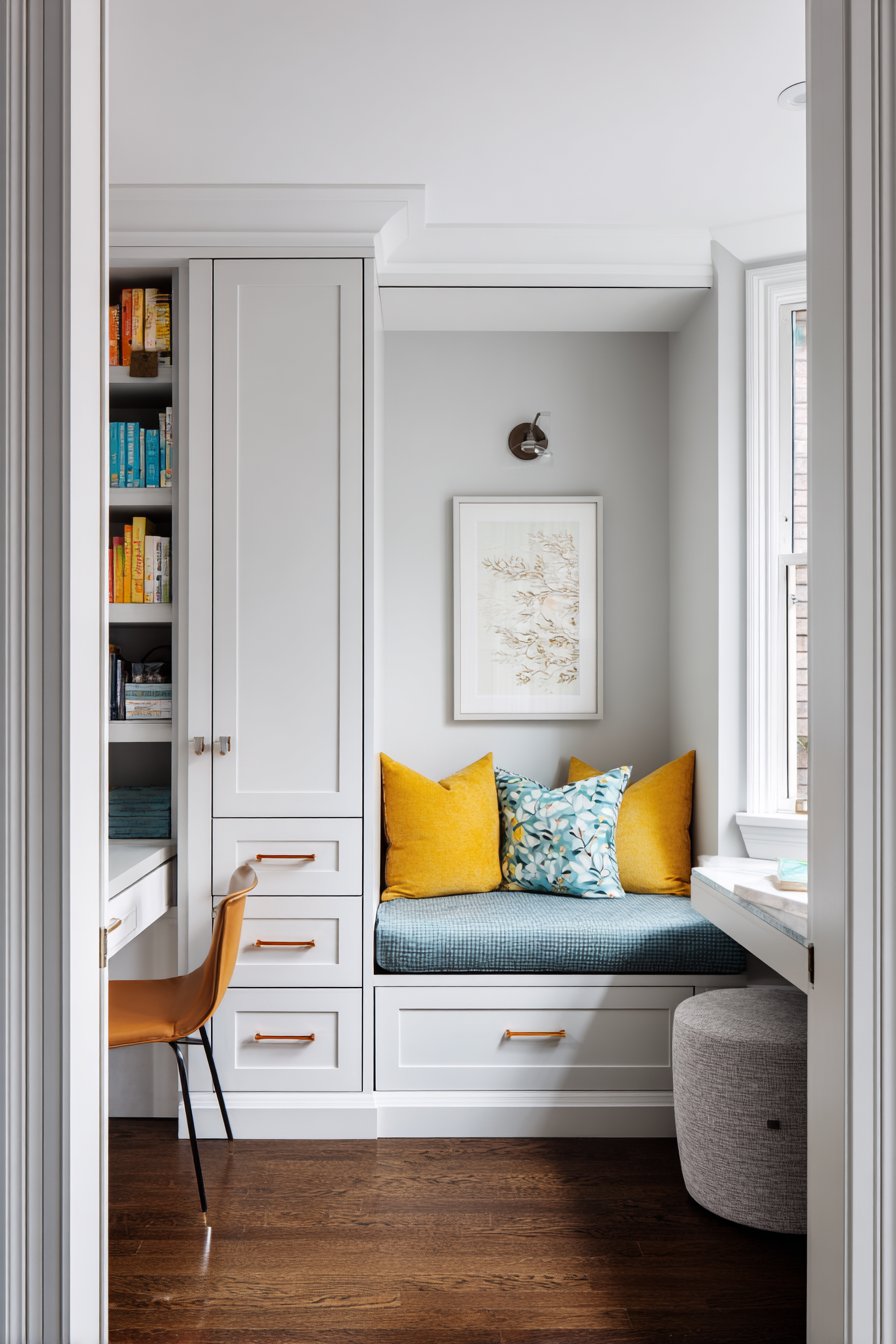
Small children’s bedrooms present unique challenges that require creative solutions to maximize functionality without sacrificing style or play space. This concept demonstrates how built-in wardrobes with child-height hanging rods and pull-out drawers can provide comprehensive storage while maintaining accessibility for independent dressing. The colorful drawer handles add visual interest while helping children identify their personal storage areas.
The murphy-style fold-down desk represents an ingenious approach to dual-purpose furniture, creating a dedicated study area when needed while preserving precious floor space for play when homework time ends. This solution acknowledges that children’s rooms must serve multiple functions throughout the day while maintaining flexibility for changing activities and growing needs.
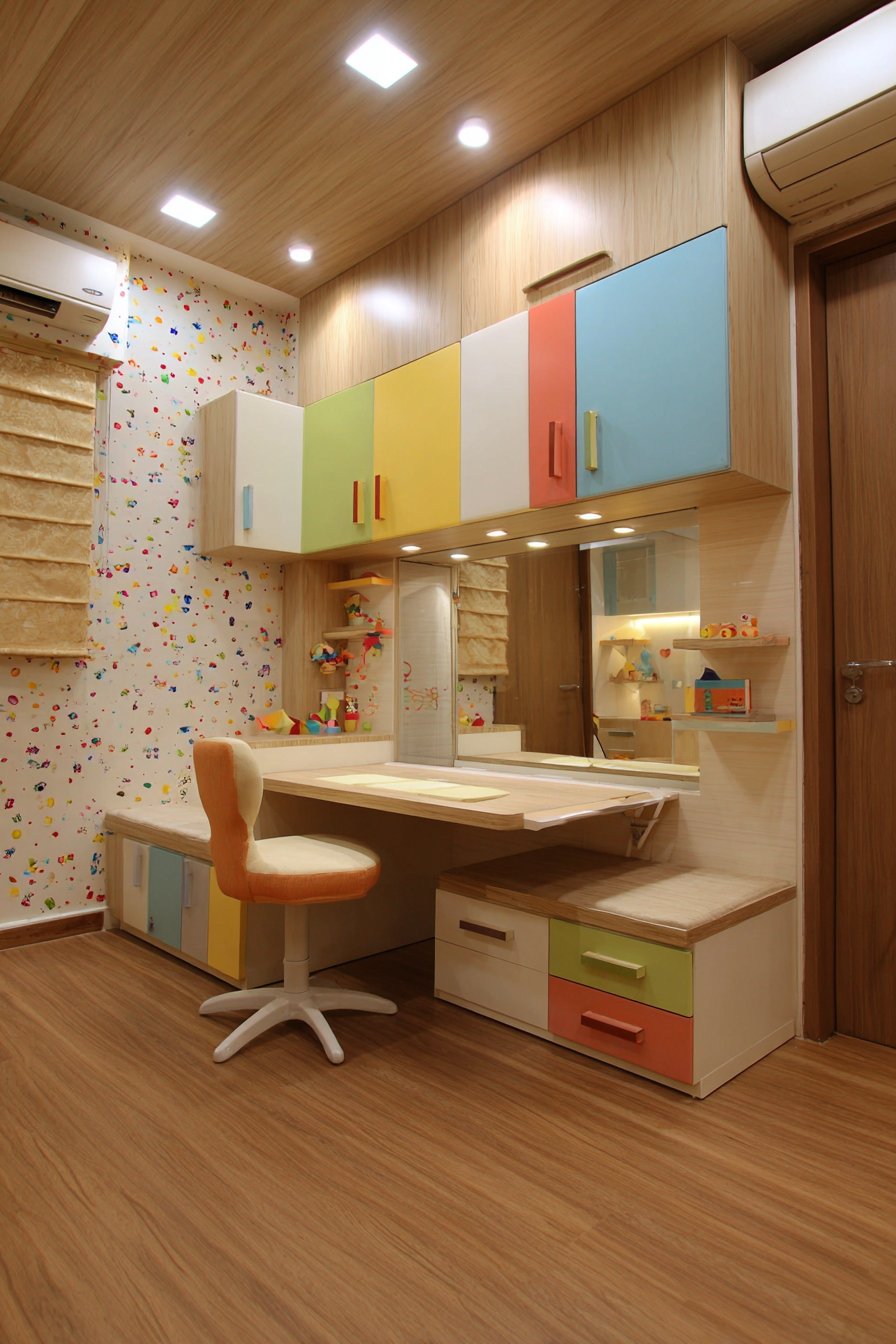
Vertical wall-mounted storage maximizes the room’s height while keeping floor areas clear for movement and play. This approach includes shelving, hooks, and compartments positioned at various heights to accommodate different types of belongings while ensuring that frequently used items remain within child reach. The vertical emphasis also draws the eye upward, creating the illusion of greater space.
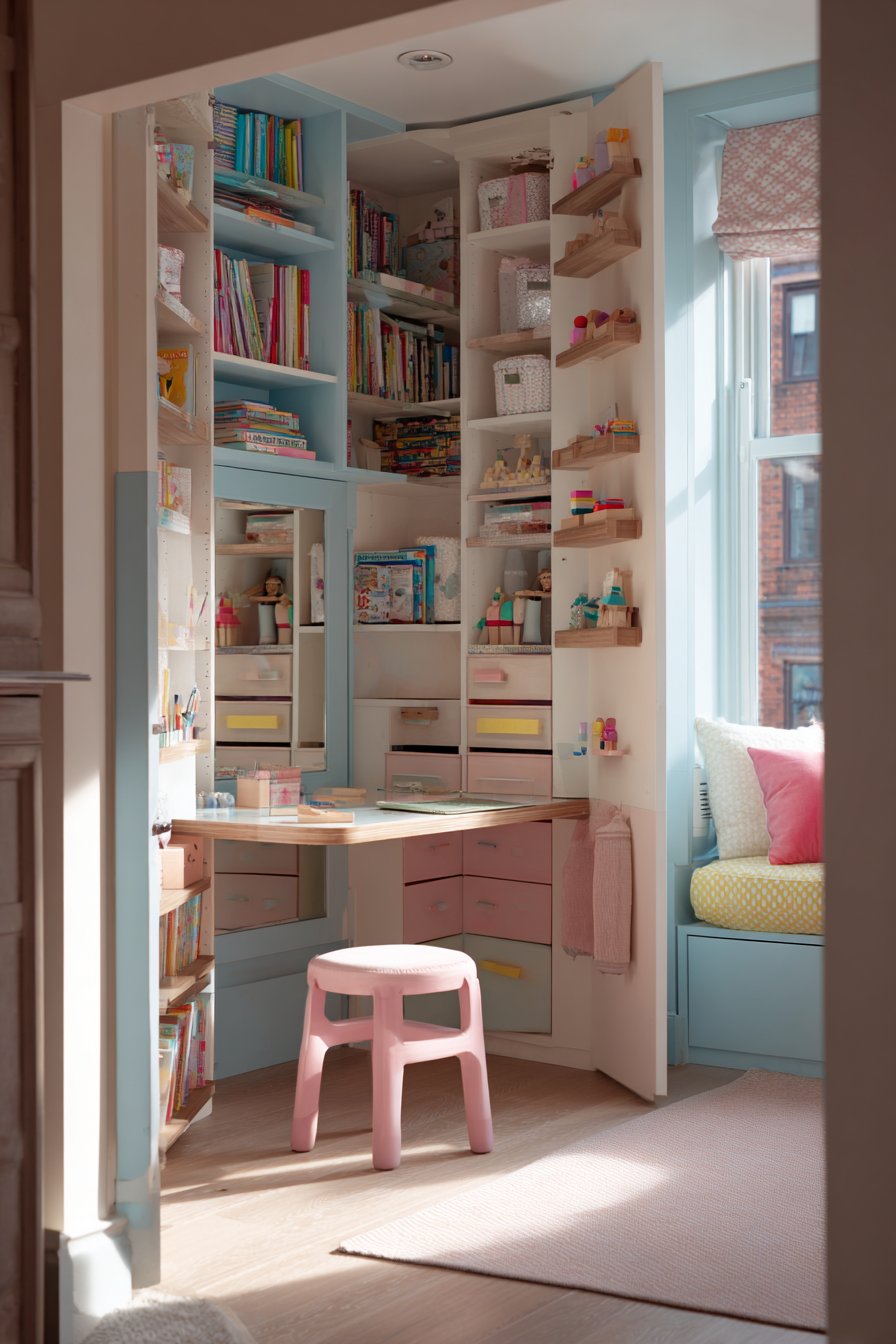
Light color schemes throughout the room create an airy, spacious feeling that counteracts the potentially cramped atmosphere of small spaces. White and pale tones reflect available light while providing a neutral backdrop that won’t compete with toys, artwork, and personal belongings for visual attention. This palette choice also ensures that the room remains fresh and appealing as children grow.
Strategic mirror placement amplifies natural lighting while creating the illusion of expanded space. Properly positioned mirrors can reflect windows, artwork, or interesting architectural details while serving practical purposes for dressing and grooming. Safety considerations require selecting appropriate mirror types and installation methods for children’s rooms.
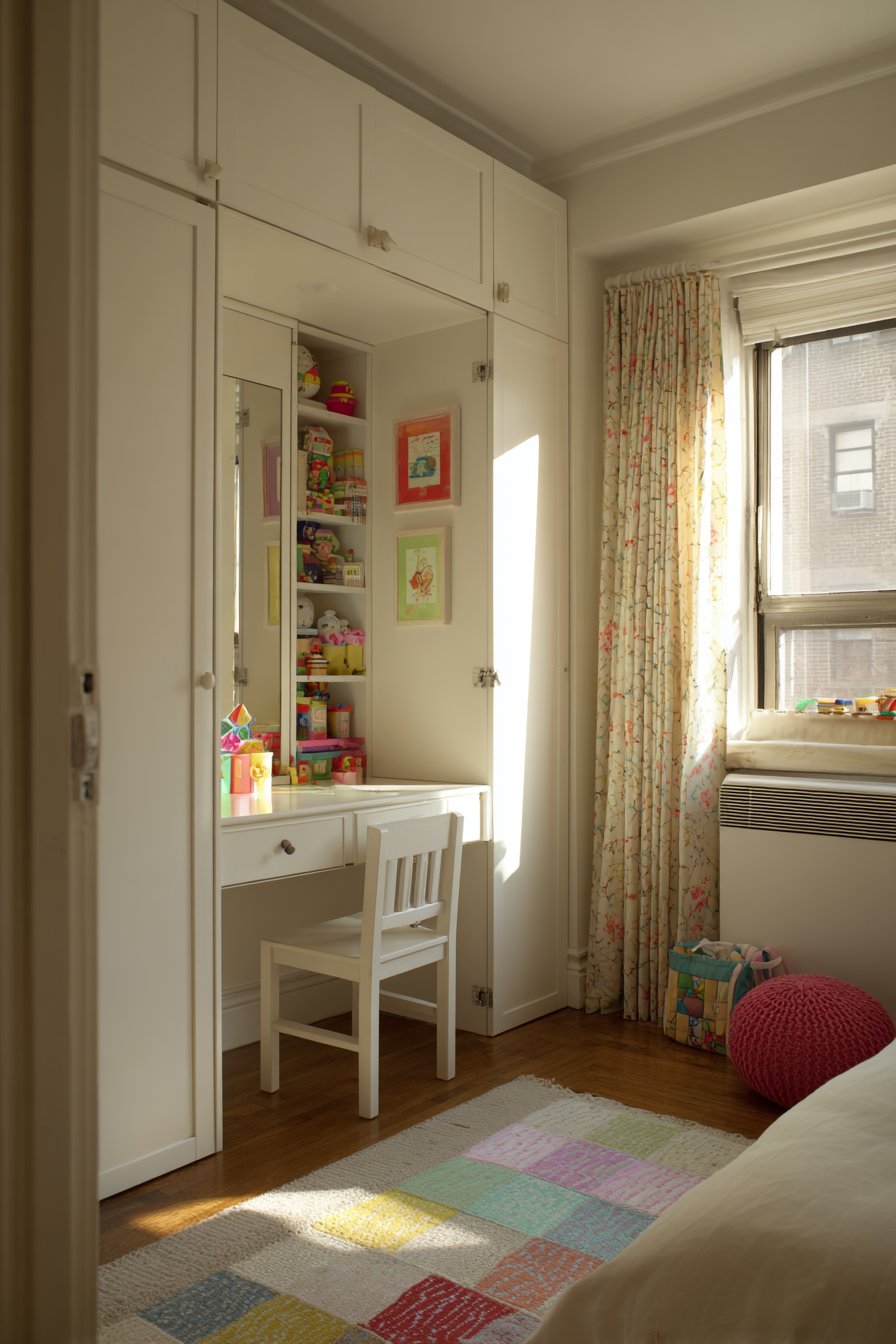
Small space optimization strategies include choosing furniture pieces that serve multiple functions, utilizing every available vertical surface for storage opportunities, maintaining clear pathways for safe movement throughout the room, selecting light colors and reflective surfaces to enhance spaciousness, incorporating fold-away or rolling storage solutions that can be moved as needed, and regularly reassessing storage needs to prevent accumulation of outgrown items that consume valuable space.
7. Natural Wonder and Forest Fantasy
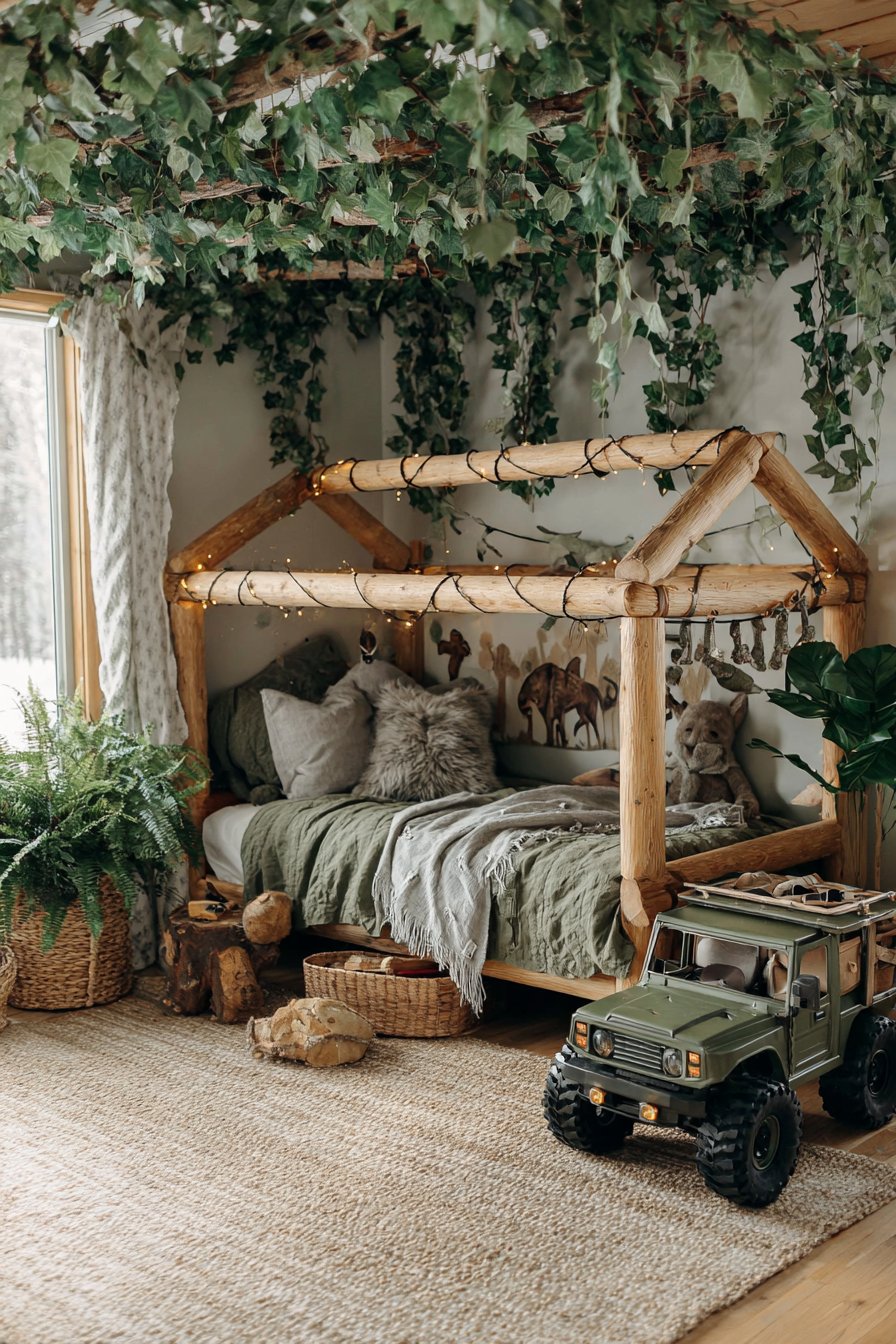
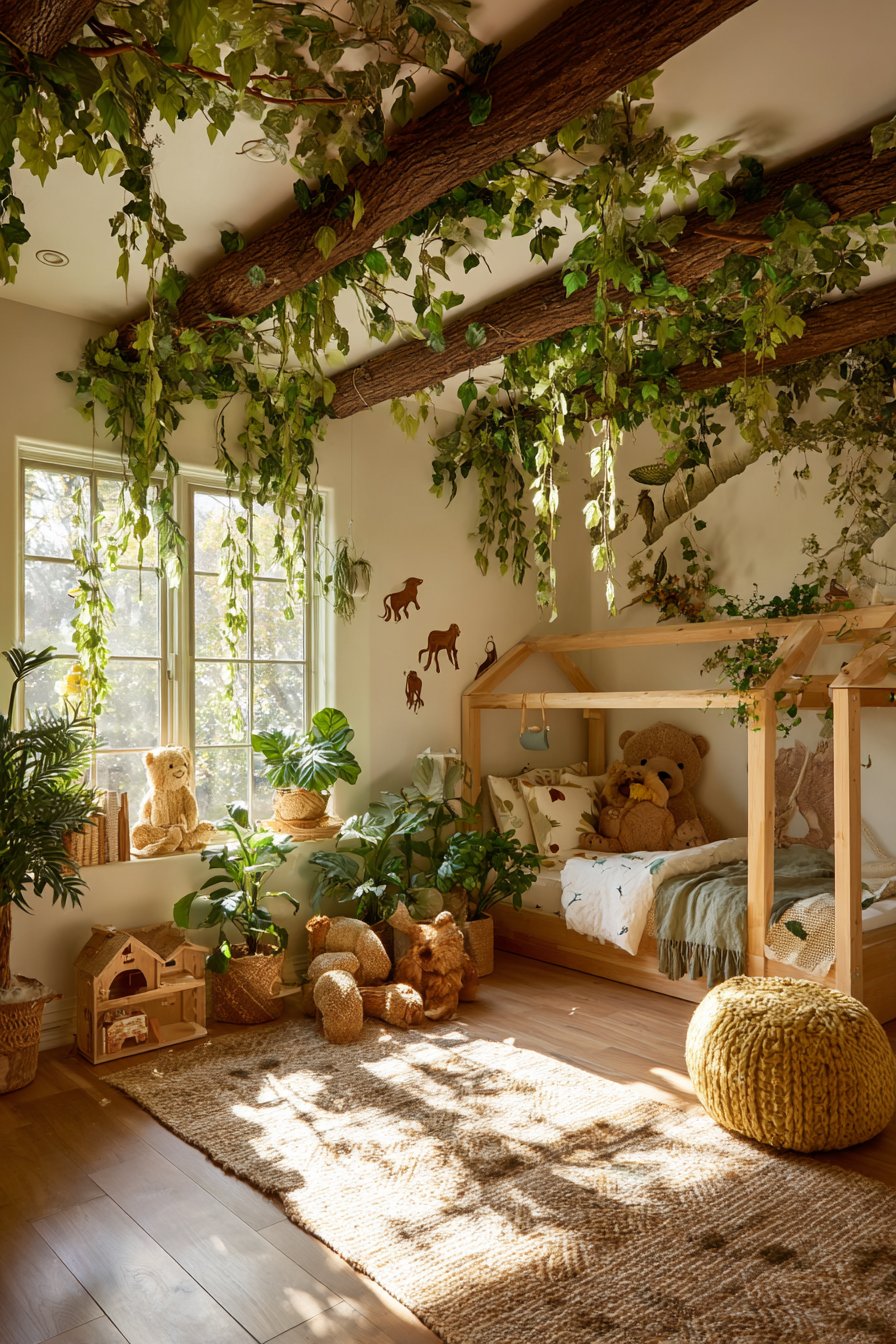
Nature-inspired children’s bedrooms connect young occupants with the natural world while creating calming environments that support rest and imagination. The dramatic tree branch ceiling installation with hanging fabric leaves in various shades of green transforms the room into an indoor forest canopy. This overhead feature creates a sense of enclosure and security while adding dynamic visual interest that changes with air circulation.
The wooden cabin-style bed frame reinforces the outdoor adventure theme while providing a cozy sleeping environment that feels like a treehouse retreat. This furniture choice should incorporate natural wood finishes and rustic details that suggest outdoor construction while maintaining the safety standards and comfort features necessary for daily use. The bed design can include built-in storage compartments disguised as camping gear or natural elements.
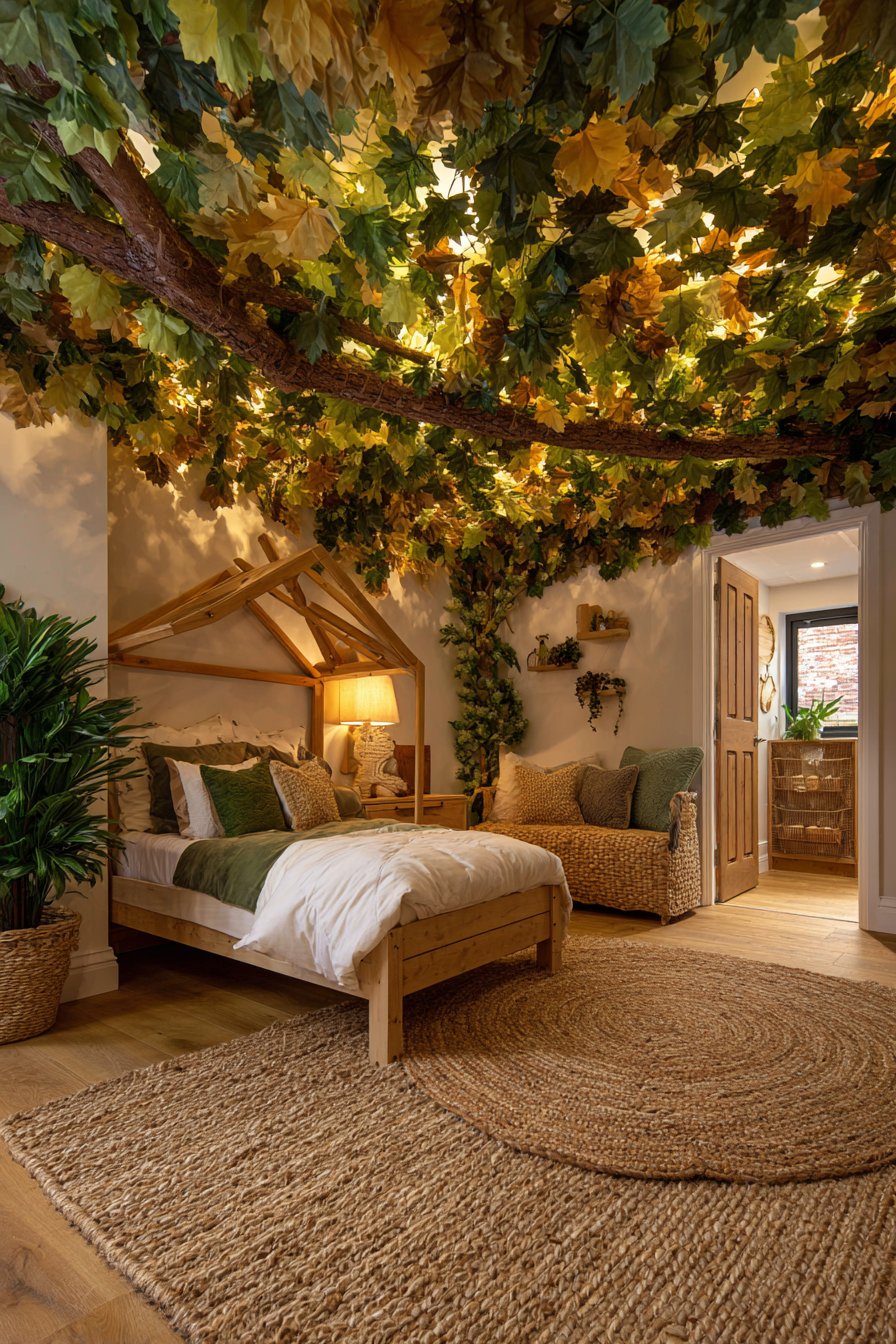
Forest animal wall decals populate the room with friendly woodland creatures that spark imagination and storytelling opportunities. These removable decorations allow for theme customization and easy updates as interests evolve. Choosing realistic animal representations supports learning about wildlife and natural habitats while maintaining the playful atmosphere essential to children’s spaces.
Natural fiber rugs in earth tones ground the design while providing comfortable flooring for play activities. Materials like jute, wool, or cotton in brown, green, and tan tones reinforce the natural theme while offering practical benefits including durability, comfort, and easy maintenance. Multiple smaller rugs can define different activity areas within the larger space.
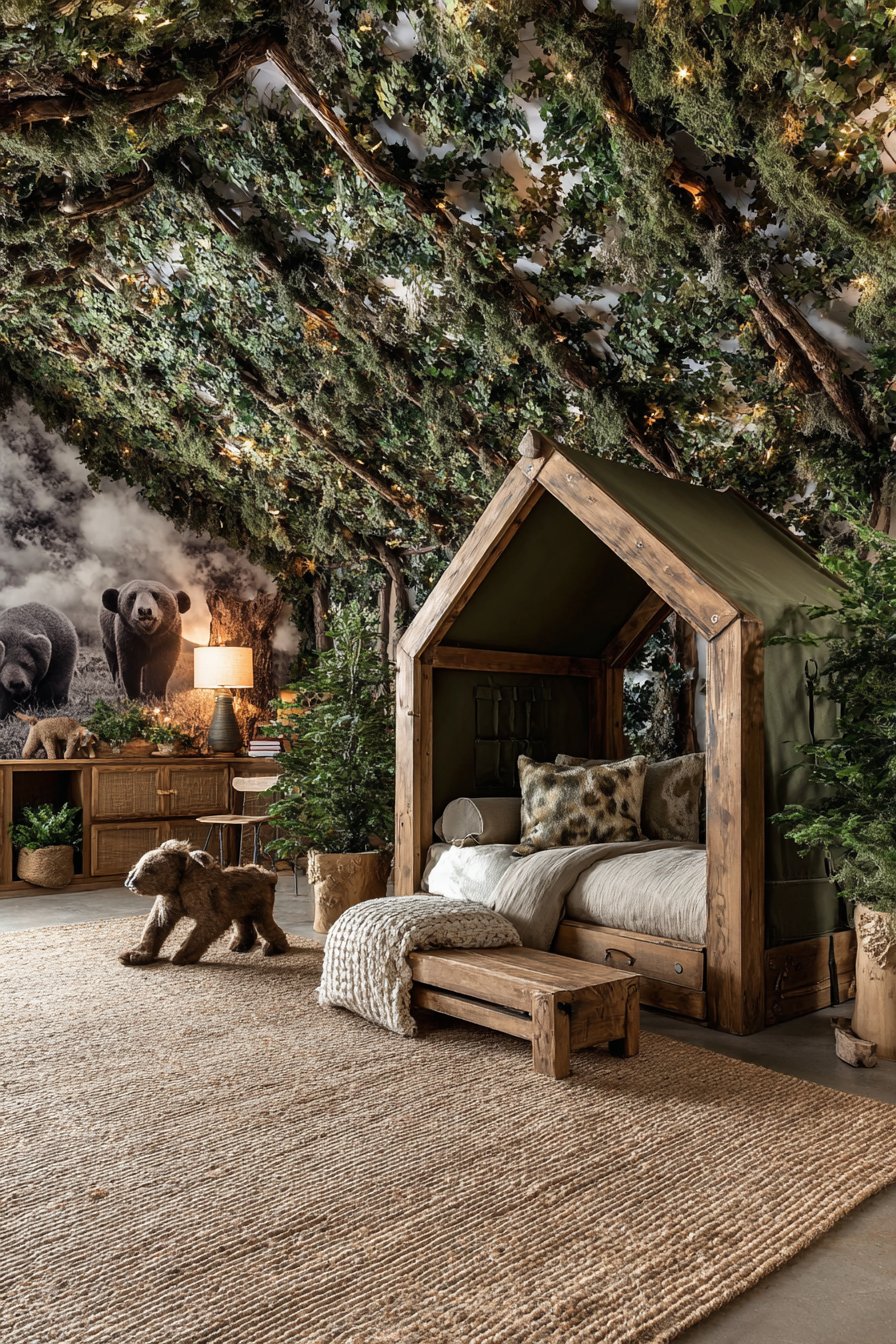
Potted plants add authentic natural elements while teaching children about plant care and environmental responsibility. Selecting child-safe, low-maintenance plants ensures success while providing opportunities for hands-on learning about growth, seasons, and natural cycles. Plants also improve air quality and add the changing elements that make spaces feel alive and dynamic.
Warm ambient lighting mimics dappled forest sunlight filtering through leaves, creating an ever-changing light pattern that adds movement and interest to the room. This lighting approach can incorporate multiple sources including string lights woven through the ceiling branches, table lamps with natural material shades, and strategically placed spotlights that create shadow patterns on walls and surfaces.
Nature-themed design implementation involves selecting materials and colors that reflect outdoor environments, incorporating living plants that children can help care for and learn from, ensuring that decorative elements are safe and securely installed, planning lighting that mimics natural outdoor conditions throughout the day, choosing furniture pieces that suggest outdoor adventures while maintaining indoor comfort, and creating opportunities for hands-on interaction with natural materials and textures.
8. Shared Space Harmony and Individual Expression
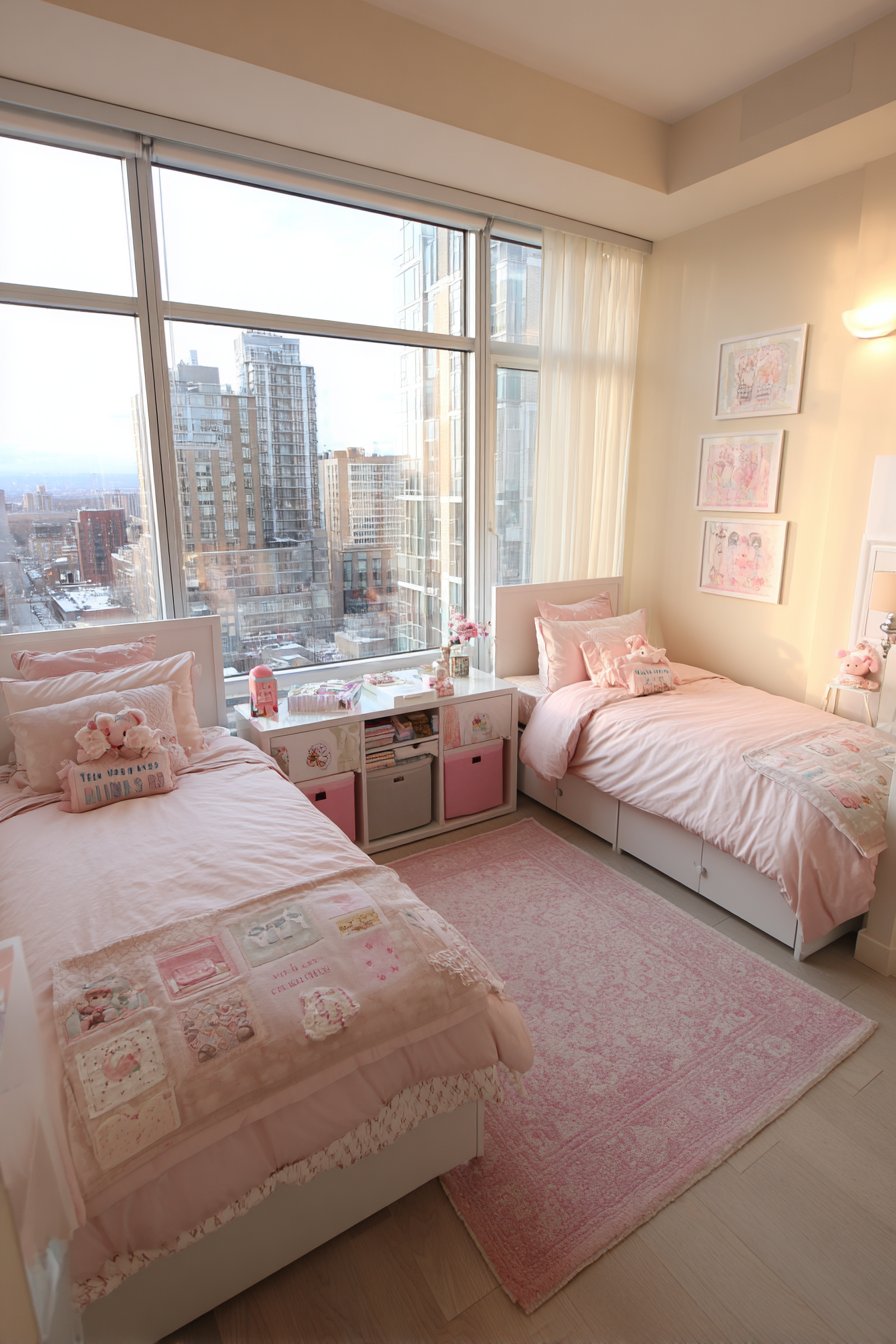
Designing bedrooms for multiple children requires balancing individual needs with shared space functionality, creating environments where siblings can coexist comfortably while expressing their unique personalities. The L-shaped twin bed configuration maximizes floor space for play while providing each child with a defined personal sleeping area. This layout also facilitates conversation and connection while maintaining individual boundaries.
Each bed features personalized bedding that reflects individual interests and preferences while maintaining a cohesive color scheme of soft pastels that unifies the overall design. This approach allows children to express their personalities without creating visual chaos or competition between different themes. The pastel palette also promotes calm and rest while remaining flexible enough to accommodate changing interests.
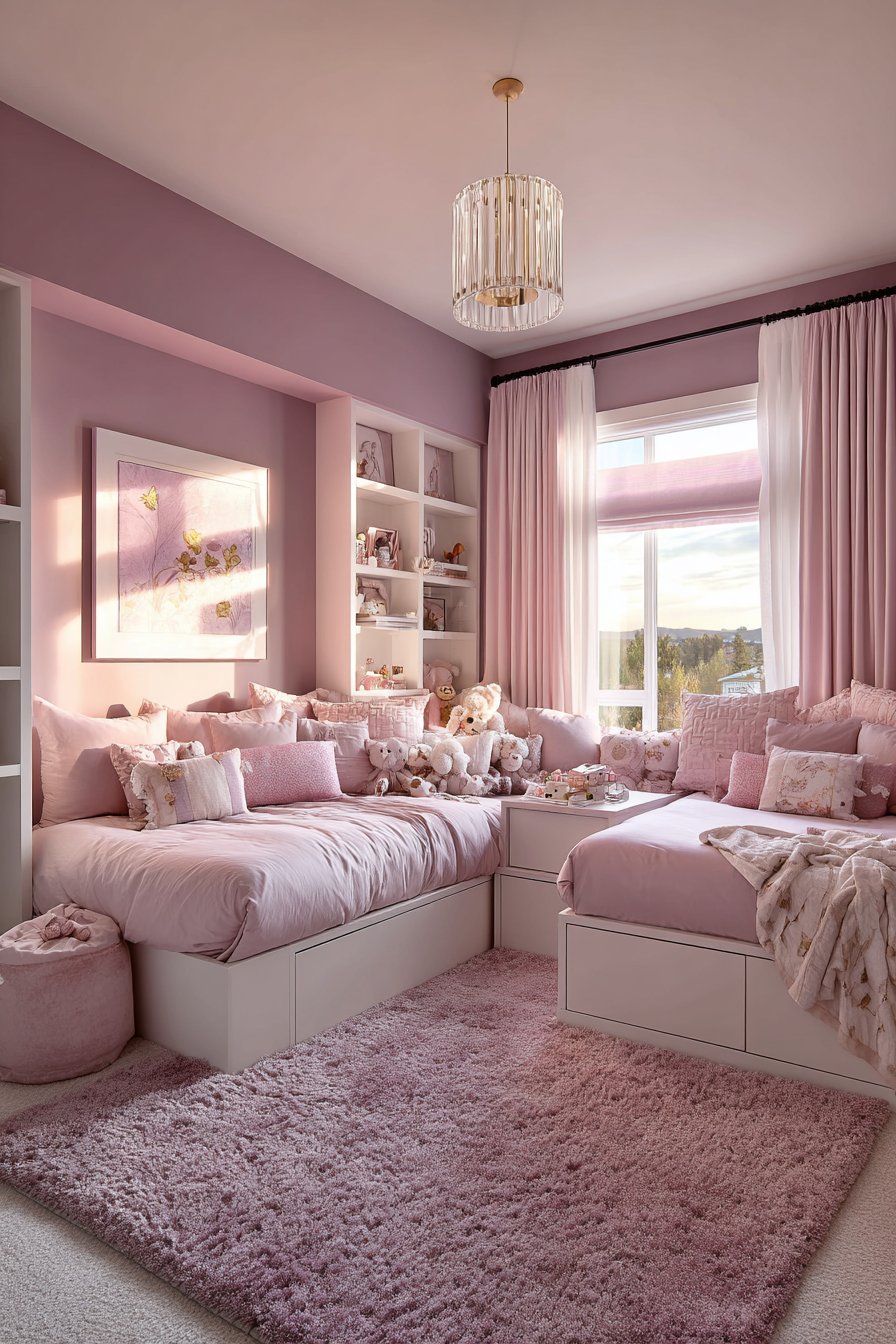
Individual bedside storage cubes provide personal space for treasures, books, and nighttime necessities while reinforcing each child’s sense of ownership within the shared environment. These storage solutions should be identical in size and function but allow for personalization through color, decoration, or organization methods that reflect individual preferences and needs.
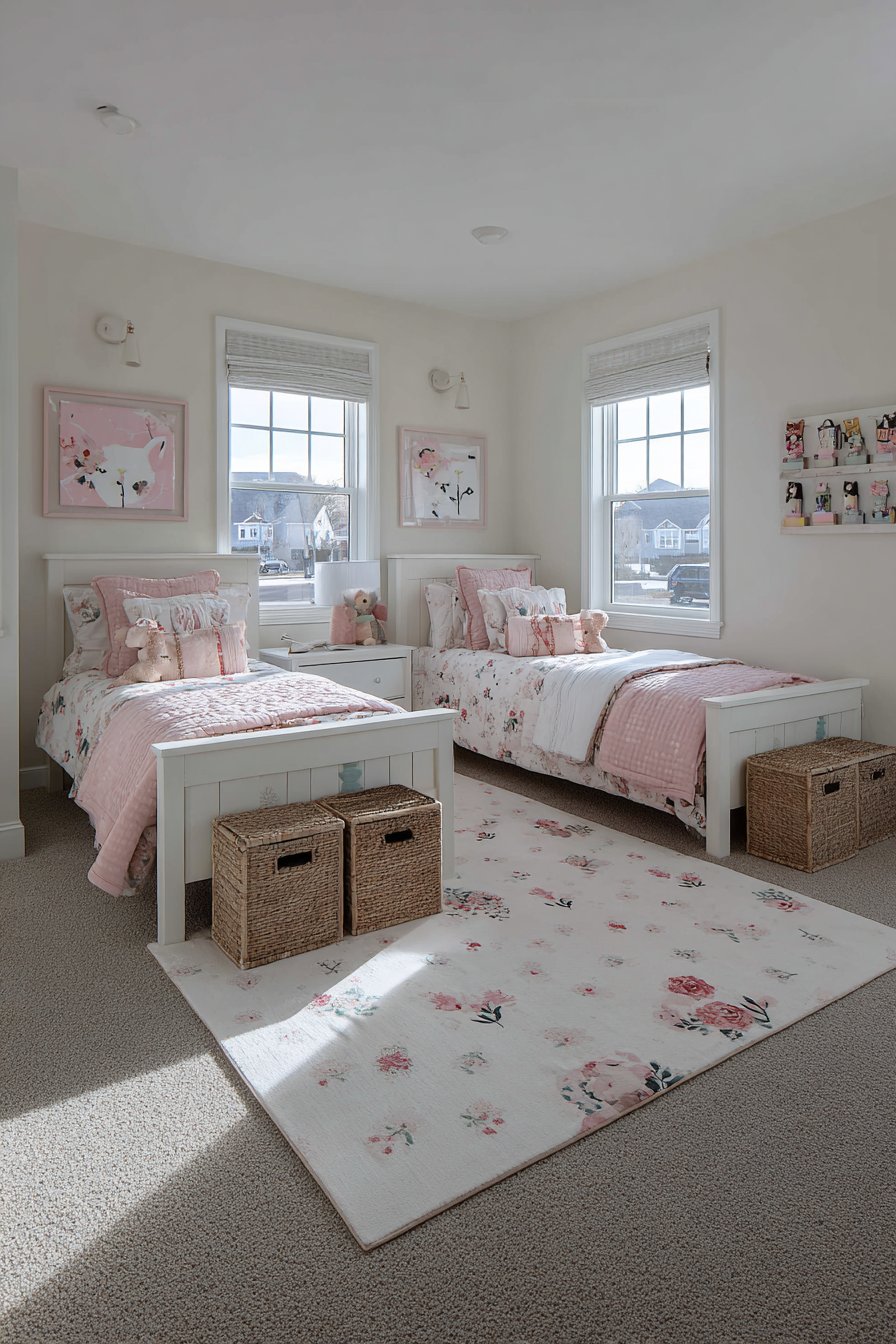
A large central area rug defines the shared play zone where siblings can engage in cooperative activities, games, and imaginative play. This designated space encourages interaction and sharing while providing a comfortable surface for floor-based activities. The rug selection should be durable enough to withstand active play while complementing the room’s overall color scheme.
Natural light from dual windows ensures that both sleeping areas receive adequate illumination while supporting healthy circadian rhythms for both children. Window placement and treatment should consider privacy needs, light control for different sleep schedules, and safety requirements for young children.
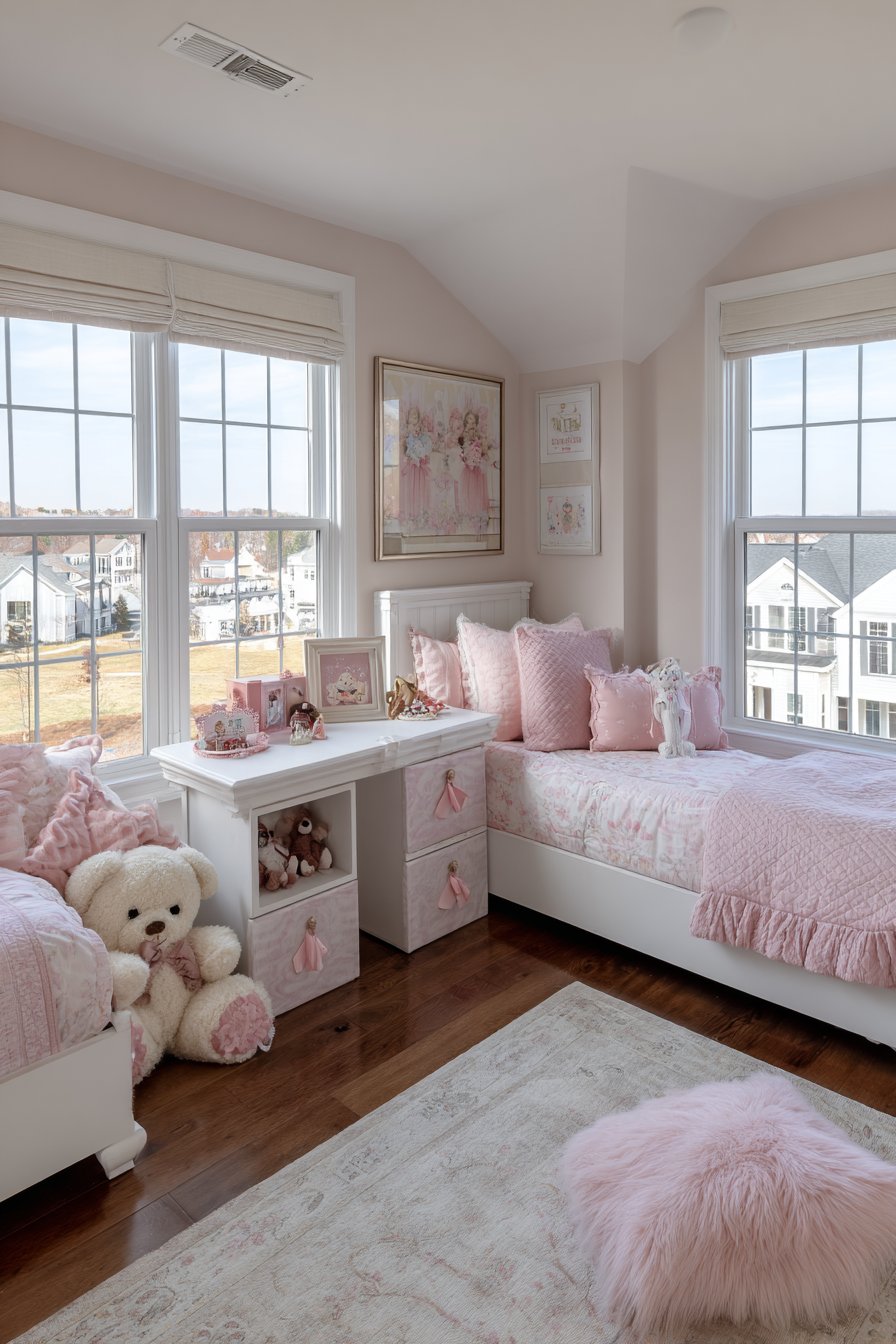
Successful shared bedroom design requires establishing clear personal territories within the shared space, selecting color schemes and themes that appeal to all occupants, providing adequate storage for multiple children’s belongings, ensuring equal access to natural light and desirable room features, planning furniture layouts that facilitate both privacy and interaction, and establishing systems for maintaining organization and cleanliness in higher-traffic environments.
9. Creative Expression and Artistic Development

Art-focused children’s bedrooms nurture creativity while providing practical spaces for artistic expression and skill development. The dedicated art station featuring a child-sized easel creates a proper workspace that encourages painting, drawing, and other visual arts. The easel should be adjustable to accommodate growth while providing stable support for various media and paper sizes.
Supply storage in colorful rolling carts keeps art materials organized and accessible while allowing easy cleanup and flexible room arrangements. These mobile storage solutions can move to different areas of the room or house as projects require, supporting art activities beyond the designated station. Color-coding different supply types helps children develop organizational skills while maintaining the vibrant atmosphere that stimulates creativity.
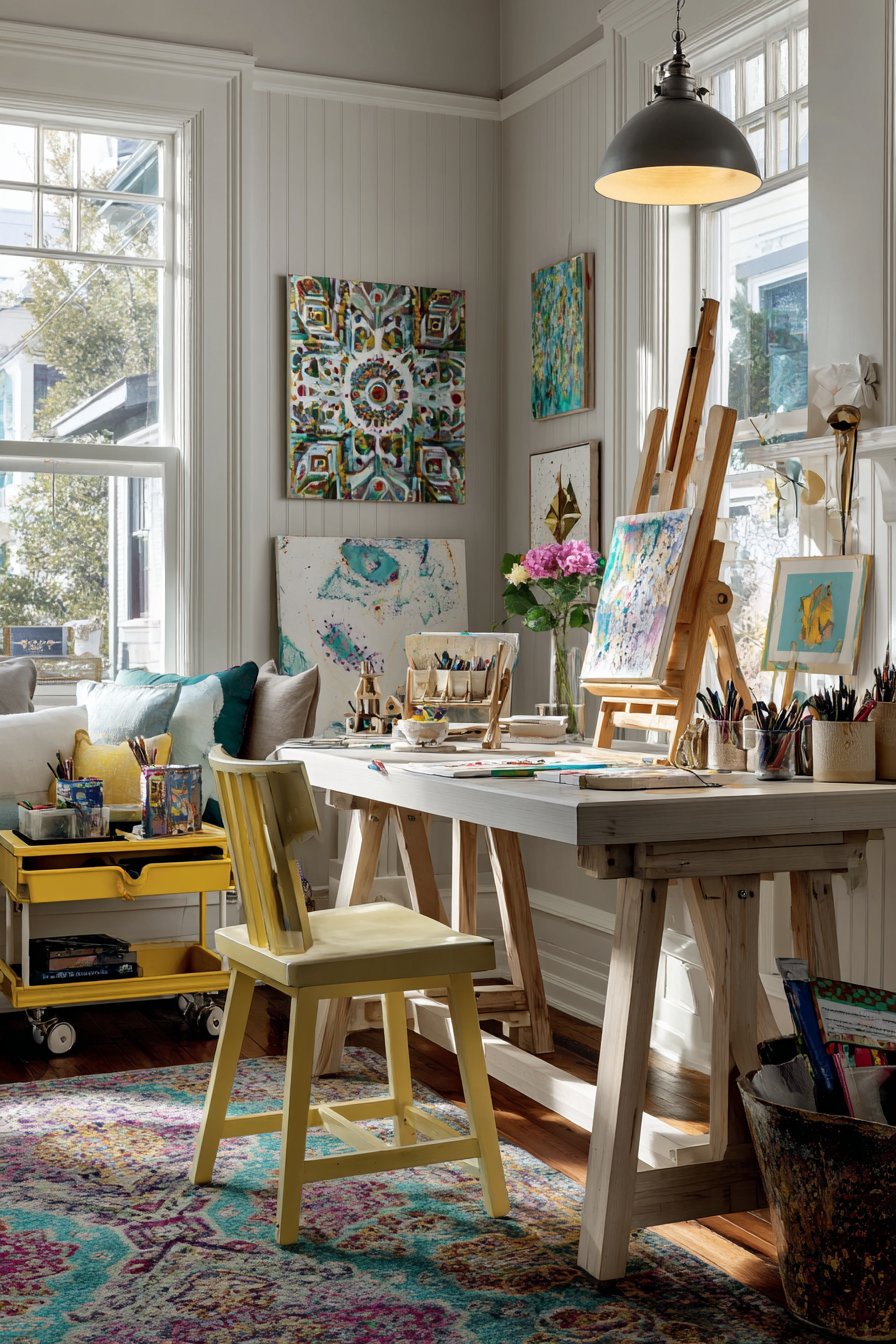
The gallery wall displaying rotating artwork at child eye-level celebrates creative achievements while providing motivation for continued artistic exploration. This display area should be easily accessible for changing exhibitions while protecting finished pieces from damage. Including work from various time periods helps children see their artistic development and progress.
Washable wall panels allow for creative expression without permanent damage to room surfaces, giving children freedom to experiment with different media and techniques. These panels can be designed to blend seamlessly with the room’s decor while providing practical surfaces for temporary artwork, practice exercises, and collaborative projects.
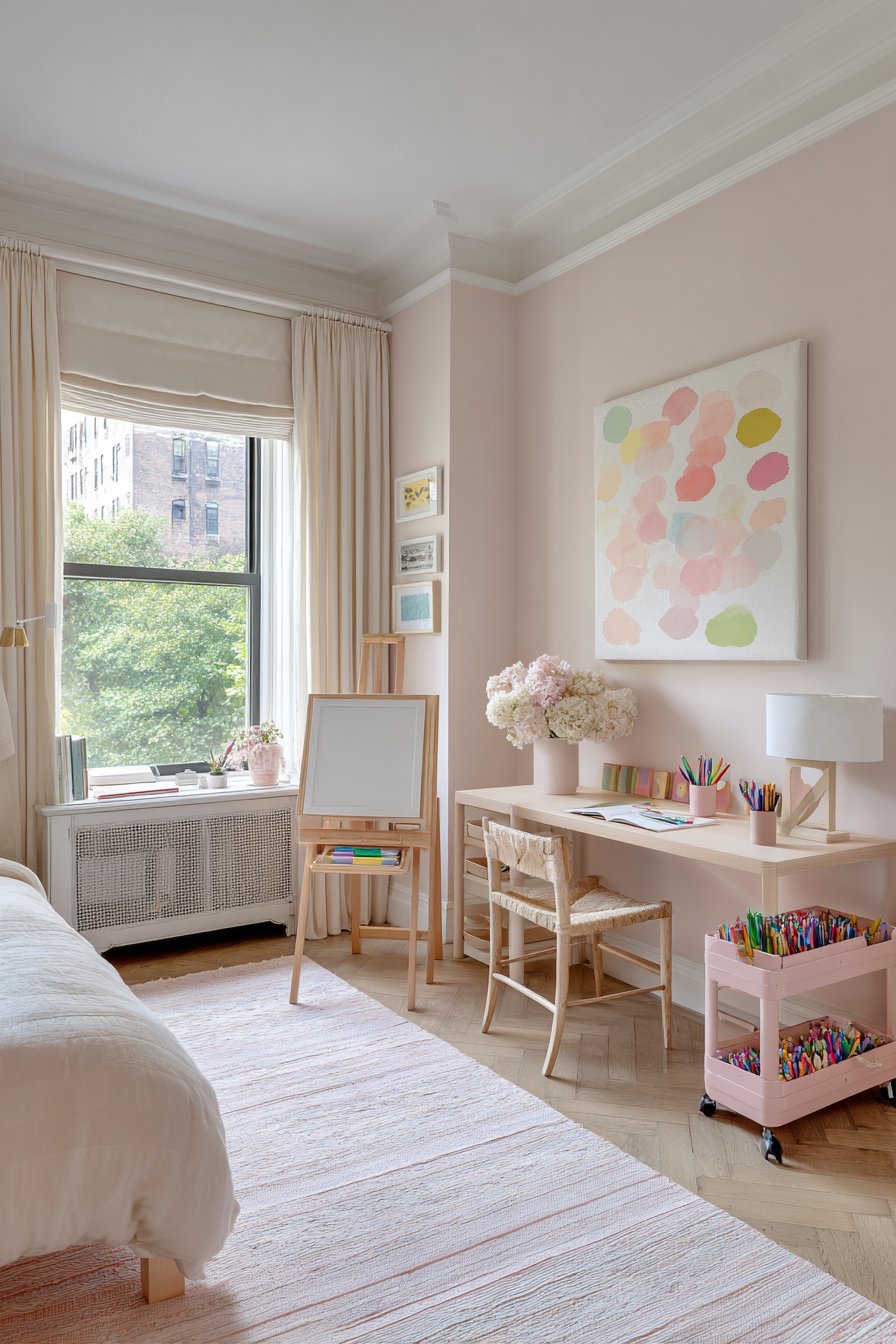
A comfortable reading chair provides a quiet space for creative thinking, inspiration, and reflection between active art sessions. This seating should offer proper support while creating a cozy retreat where children can plan projects, study art books, or simply daydream about their next creative endeavor.
Natural north-facing light provides ideal conditions for art activities by offering consistent, even illumination without harsh shadows or color distortion. Supplemental task lighting should be available for detailed work and evening activities while maintaining the quality of light necessary for accurate color perception and detailed work.

Artistic bedroom design focuses on providing proper work surfaces and seating for various art activities, ensuring adequate storage for supplies while maintaining organization and accessibility, incorporating display opportunities that celebrate and preserve children’s creative work, selecting surfaces and materials that can withstand art-making mess while remaining beautiful, planning lighting that supports detailed creative work throughout the day, and creating quiet spaces for inspiration and reflection between active creative periods.
10. Gender-Neutral Tranquility and Universal Appeal
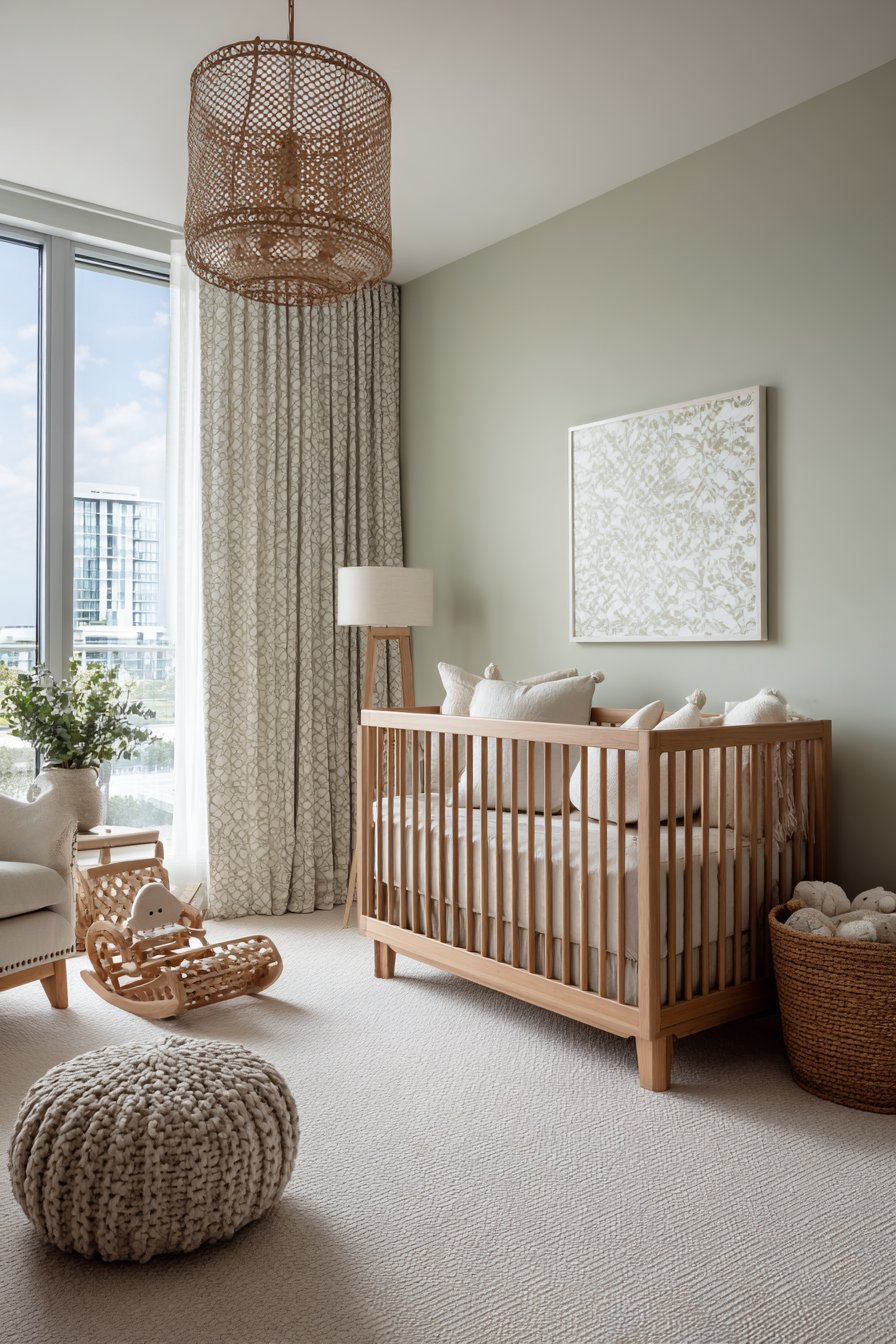
Contemporary children’s bedroom design increasingly embraces gender-neutral palettes that create calming environments suitable for any child while avoiding stereotypical color associations. The sage green, warm beige, and cream palette provides a sophisticated foundation that feels both nurturing and timeless. These colors support rest and concentration while creating a backdrop that highlights toys, books, and artwork without competing for visual attention.
The convertible crib that transitions to a toddler bed demonstrates the practical benefits of furniture that grows with the child, providing excellent value while maintaining design consistency over time. This adaptable approach reduces the need for furniture replacement while ensuring that the room’s aesthetic remains cohesive as the child develops new needs and capabilities.
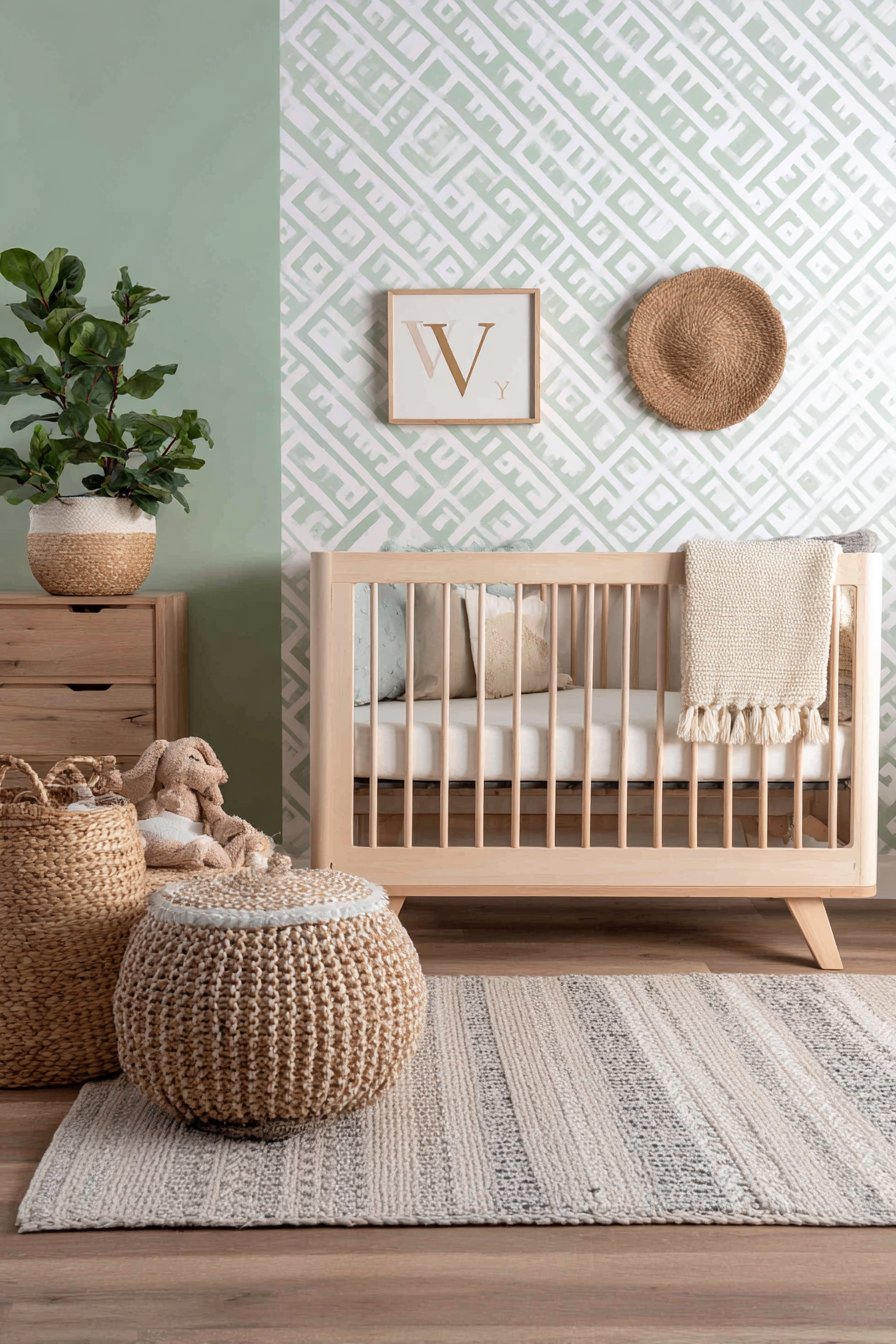
Matching furniture pieces in natural wood finishes reinforce the organic aesthetic while providing consistency and quality that will endure years of use. Natural wood variations add visual interest and texture while maintaining the calm, unified appearance that characterizes successful neutral design approaches.
Soft geometric patterns in wall decals and textiles add visual interest without overwhelming the peaceful atmosphere or competing with the room’s natural beauty. These patterns can incorporate educational elements like shapes and numbers while maintaining the sophisticated aesthetic that appeals to both children and parents.

Storage baskets in natural materials like seagrass, bamboo, or cotton maintain the organic aesthetic while providing practical organization solutions that look beautiful even when visible. These natural storage options teach children to appreciate quality materials while providing functional benefits including durability, breathability, and easy maintenance.
Soft natural lighting creates a peaceful, nurturing environment that supports healthy sleep patterns and calm daily routines. Window treatments should allow for light control while maintaining the room’s connection to outdoor natural rhythms and seasonal changes.

Gender-neutral design success depends on selecting colors and patterns that feel timeless rather than trendy, choosing furniture pieces that will remain appropriate and appealing as children grow, incorporating natural materials and textures that provide sensory richness, avoiding decorative themes that might become limiting as interests evolve, planning storage solutions that can adapt to changing toy and clothing needs, and creating environments that support both active play and quiet reflection.
11. Adventure Sports and Active Play
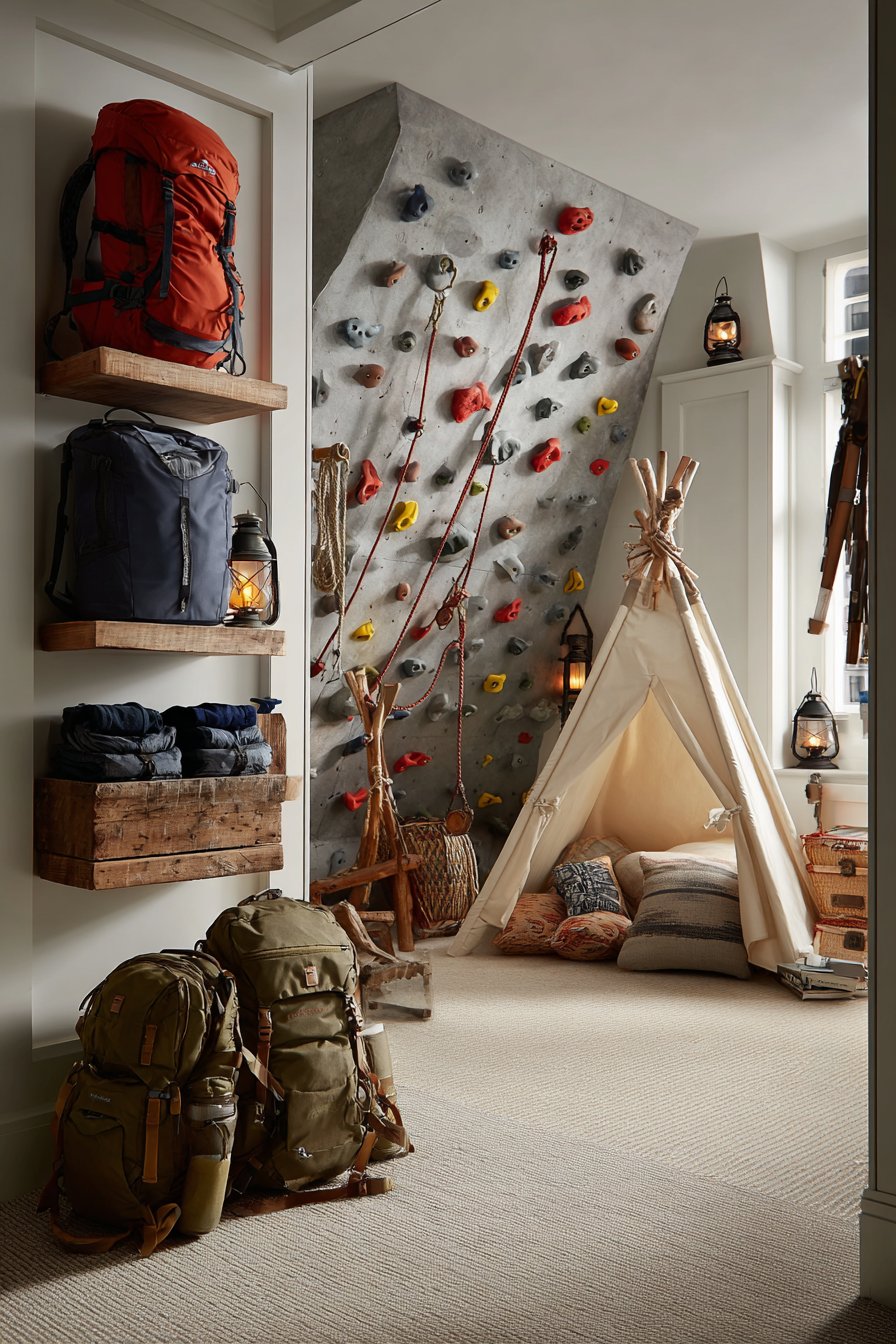
Adventure-themed bedrooms inspire active lifestyles while providing safe opportunities for physical activity within the home environment. The integrated climbing wall with colorful holds and safety mats creates an engaging fitness opportunity that can be used daily regardless of weather conditions. This feature should be professionally installed with appropriate safety measures while providing varying difficulty levels to accommodate skill development.
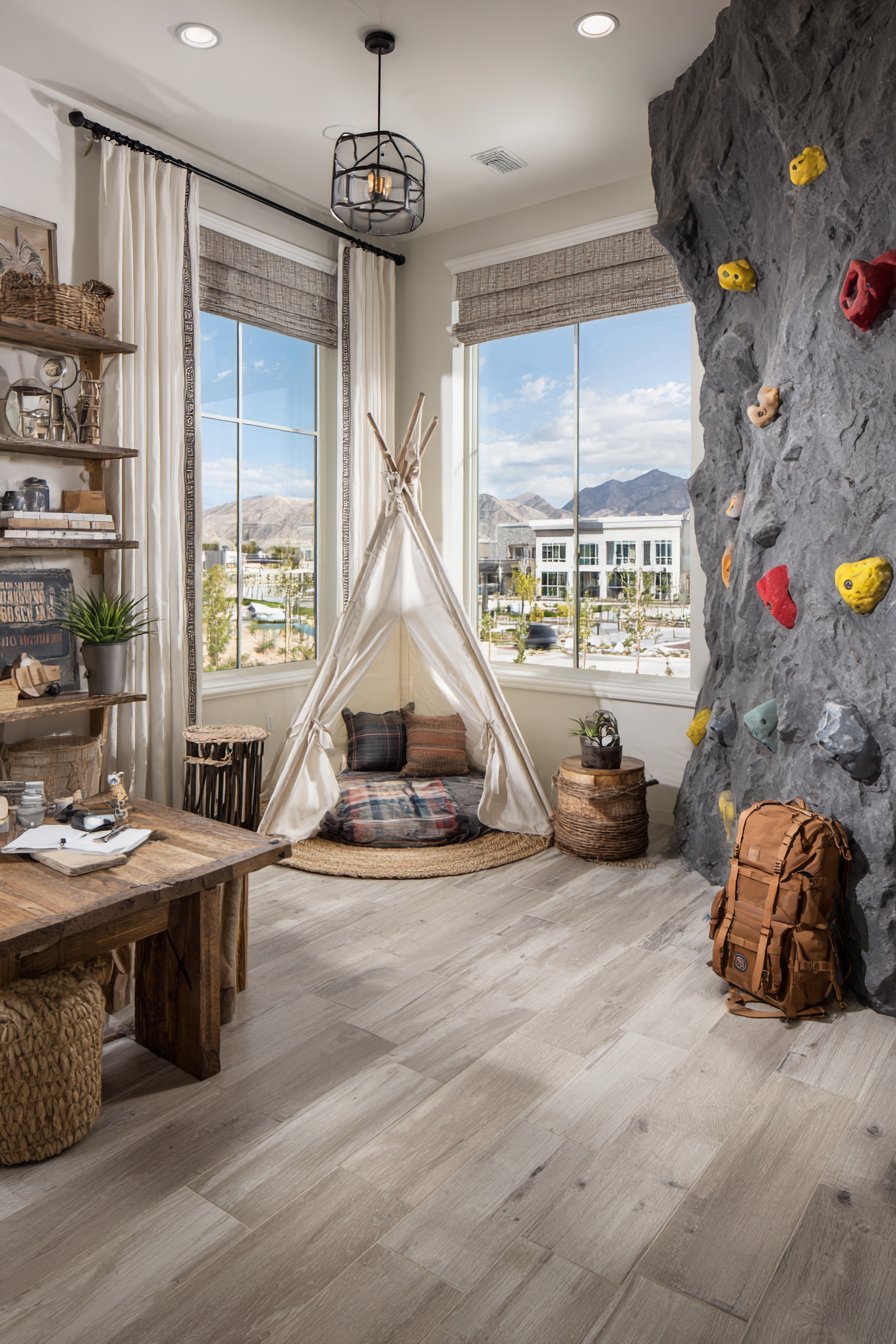
The tent-style reading nook offers a quiet retreat space that balances the room’s active elements with opportunities for rest and reflection. This cozy hideaway can serve as a base camp for imaginary adventures while providing a comfortable space for reading, quiet play, or decompression after active periods.
Outdoor-inspired storage solutions including hiking backpack organizers and wooden crate shelving reinforce the adventure theme while providing practical organization for sports equipment, outdoor gear, and adventure-related toys. These storage options should be sturdy enough to handle heavy items while maintaining the rugged aesthetic that characterizes outdoor adventure.
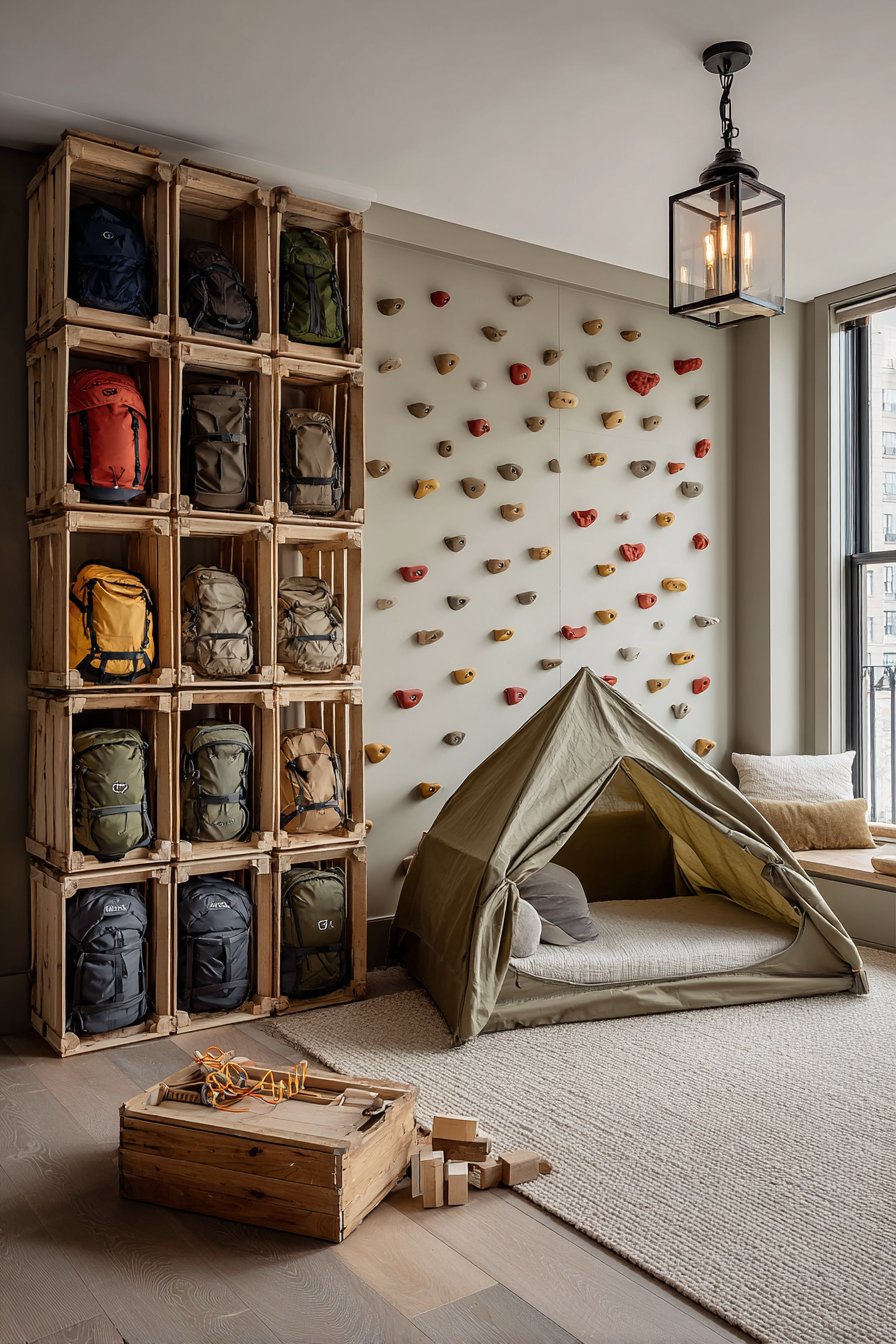
The earth tone color palette with pops of outdoor gear colors creates a natural foundation that won’t compete with colorful equipment while providing energy and excitement appropriate for active children. Colors inspired by natural environments support the adventure theme while creating a calming base that promotes rest after active play.
Natural lighting supplemented by adventure-style lantern fixtures provides practical illumination while reinforcing the outdoor theme. These lighting elements can include battery-powered options for tent activities and adjustable fixtures that support both active play and quiet activities throughout the day.
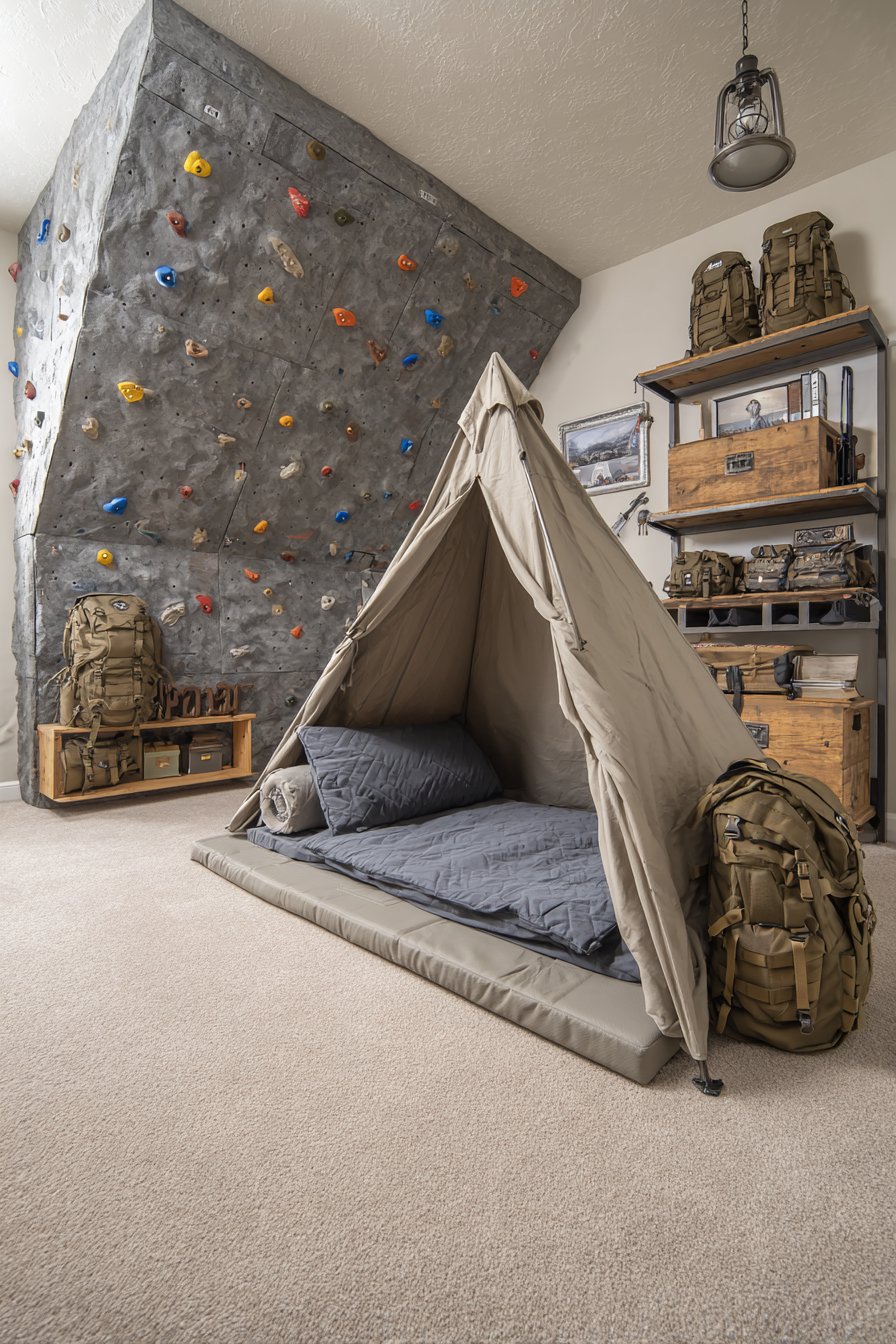
Adventure bedroom design requires ensuring all active play equipment meets safety standards and is professionally installed, providing storage solutions that accommodate bulky outdoor and sports equipment, balancing active elements with quiet spaces for rest and recovery, selecting durable materials that can withstand active play and equipment storage, planning adequate lighting for both active and quiet activities, and creating flexible spaces that can accommodate various adventure-themed activities and equipment changes over time.
12. Minimalist Zen and Peaceful Simplicity
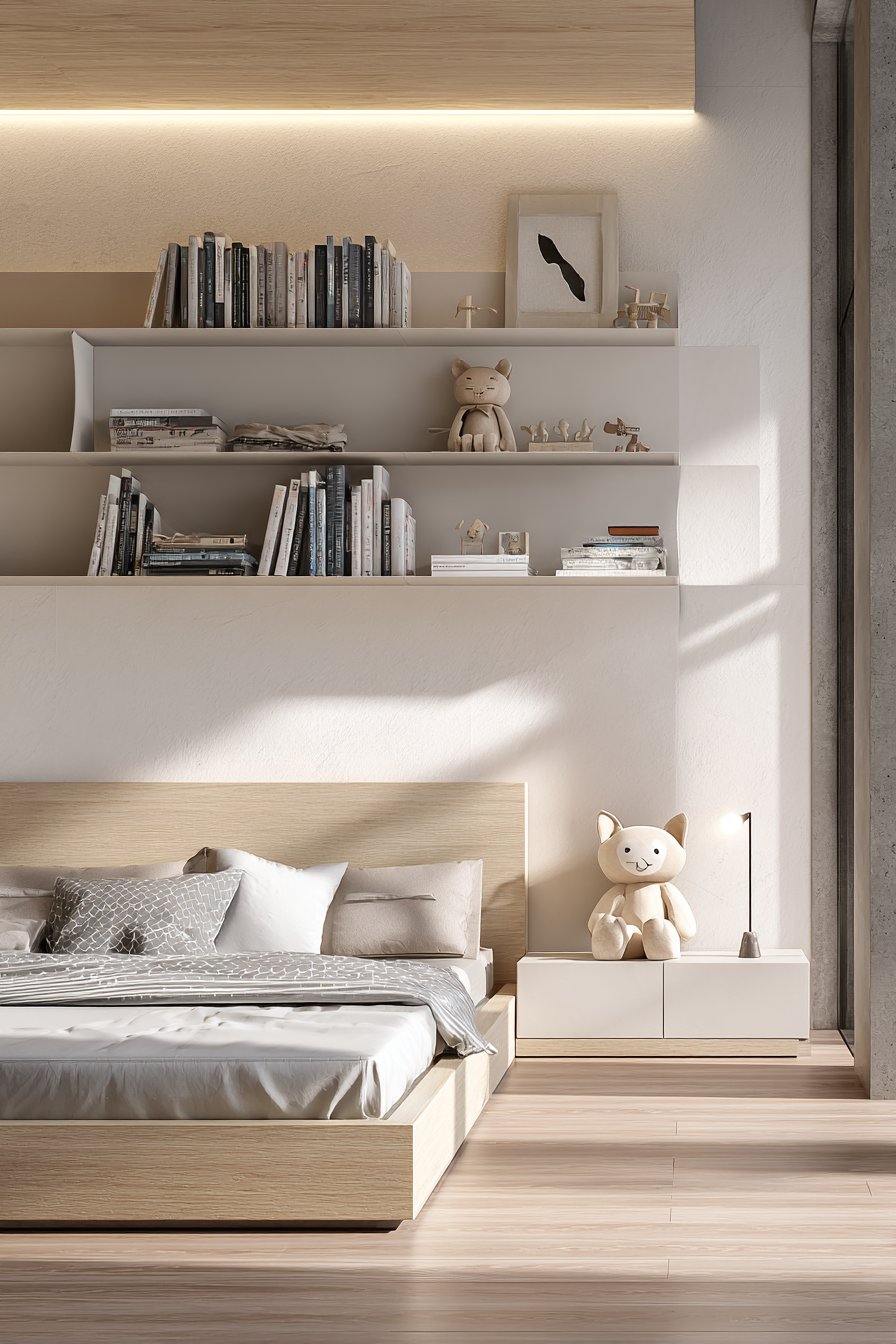
Minimalist design principles in children’s bedrooms create peaceful environments that promote focus, calm, and appreciation for quality over quantity. The low Japanese-style platform bed with simple geometric bedding in white and soft grey establishes a serene foundation that supports restful sleep while maintaining the clean aesthetic essential to minimalist design.
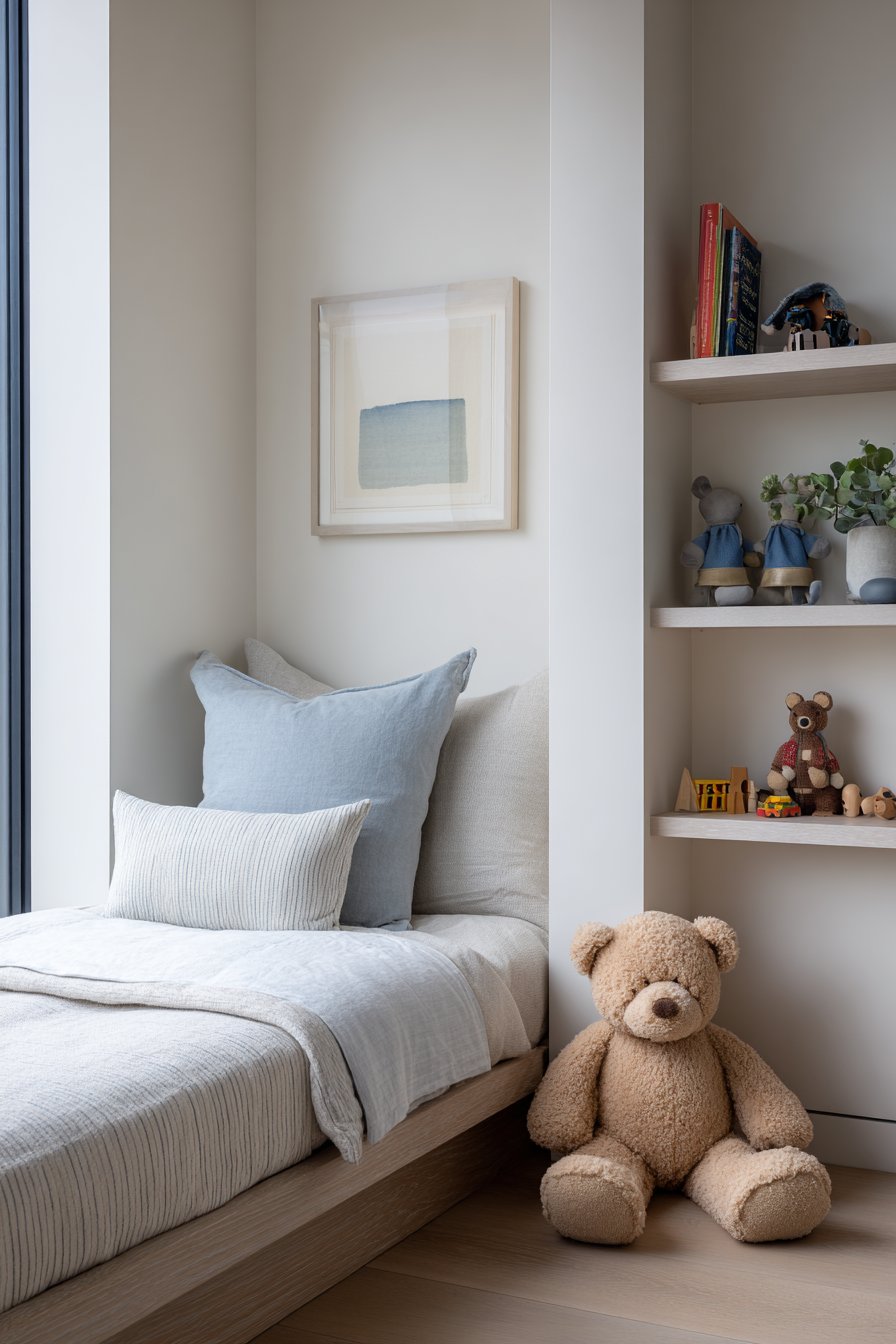
Limited but carefully chosen toys displayed on floating shelves demonstrate the minimalist principle of curating possessions to include only items that provide genuine value and joy. This approach teaches children to appreciate quality while reducing visual clutter that can be overwhelming and distracting in living spaces.
A single statement piece of artwork anchors the space while providing a focal point that demonstrates the power of thoughtful selection over abundant decoration. This artwork should reflect quality, beauty, and meaning while remaining appropriate for child viewing and appreciation.
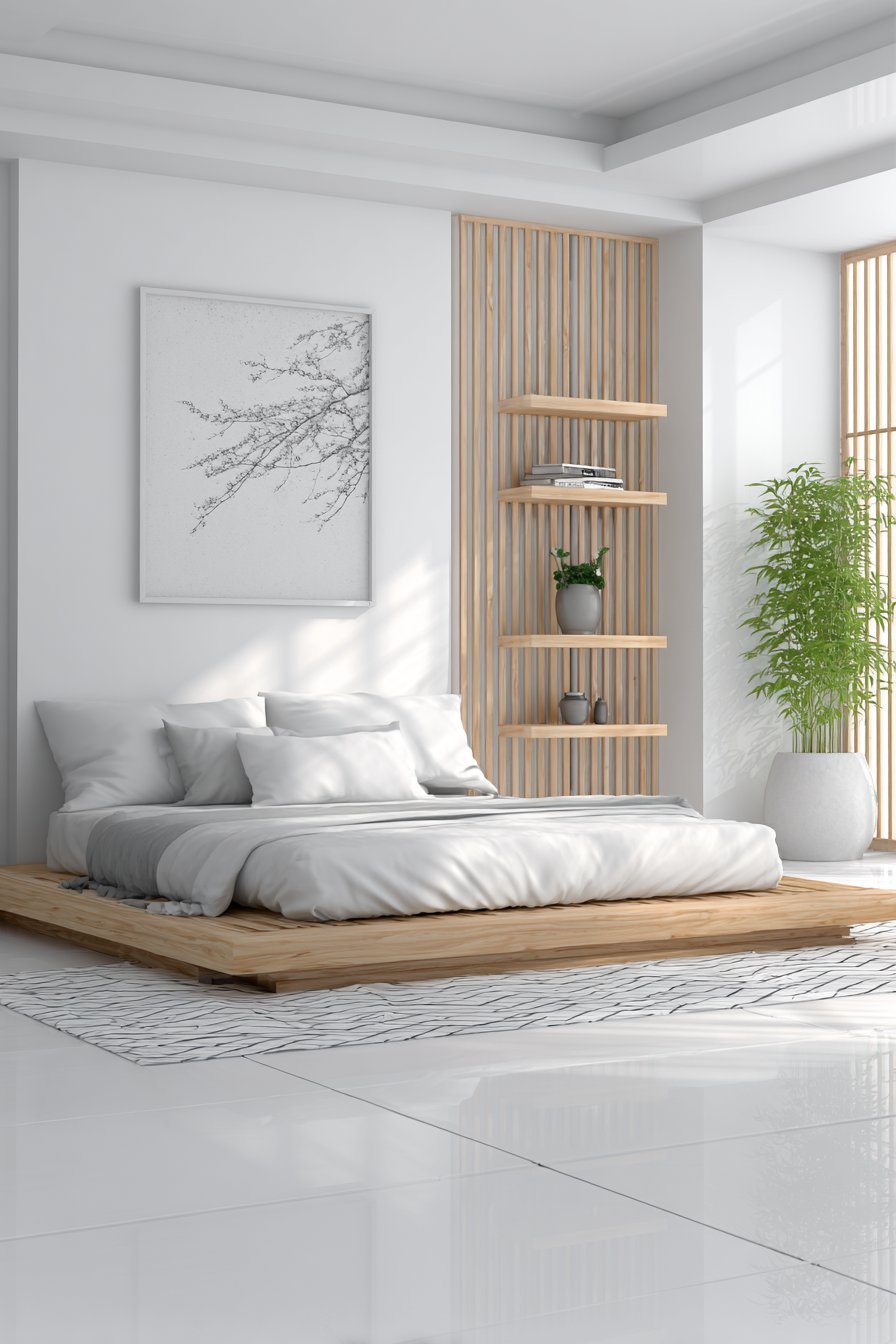
Natural wood elements add warmth to the predominantly white palette while maintaining the simple, unadorned aesthetic that characterizes successful minimalist design. These organic touches prevent the space from feeling sterile while introducing texture and natural variation that makes the room feel welcoming.
Soft natural lighting emphasizes the calm, zen-like atmosphere while supporting the minimalist preference for unadorned windows and simple window treatments. Lighting solutions should be subtle and integrated rather than decorative, focusing on function while maintaining the room’s serene appearance.

Minimalist children’s bedroom design focuses on selecting fewer, higher-quality items rather than filling space with numerous decorations, maintaining clear surfaces and organized storage to prevent visual clutter, choosing furniture pieces with clean lines and simple forms that won’t compete for attention, incorporating natural materials and textures that add warmth without complexity, ensuring that every item in the room serves a clear purpose and provides genuine value, and teaching children to appreciate simplicity, quality, and mindful consumption through daily environmental exposure.
13. Vintage Charm and Timeless Appeal
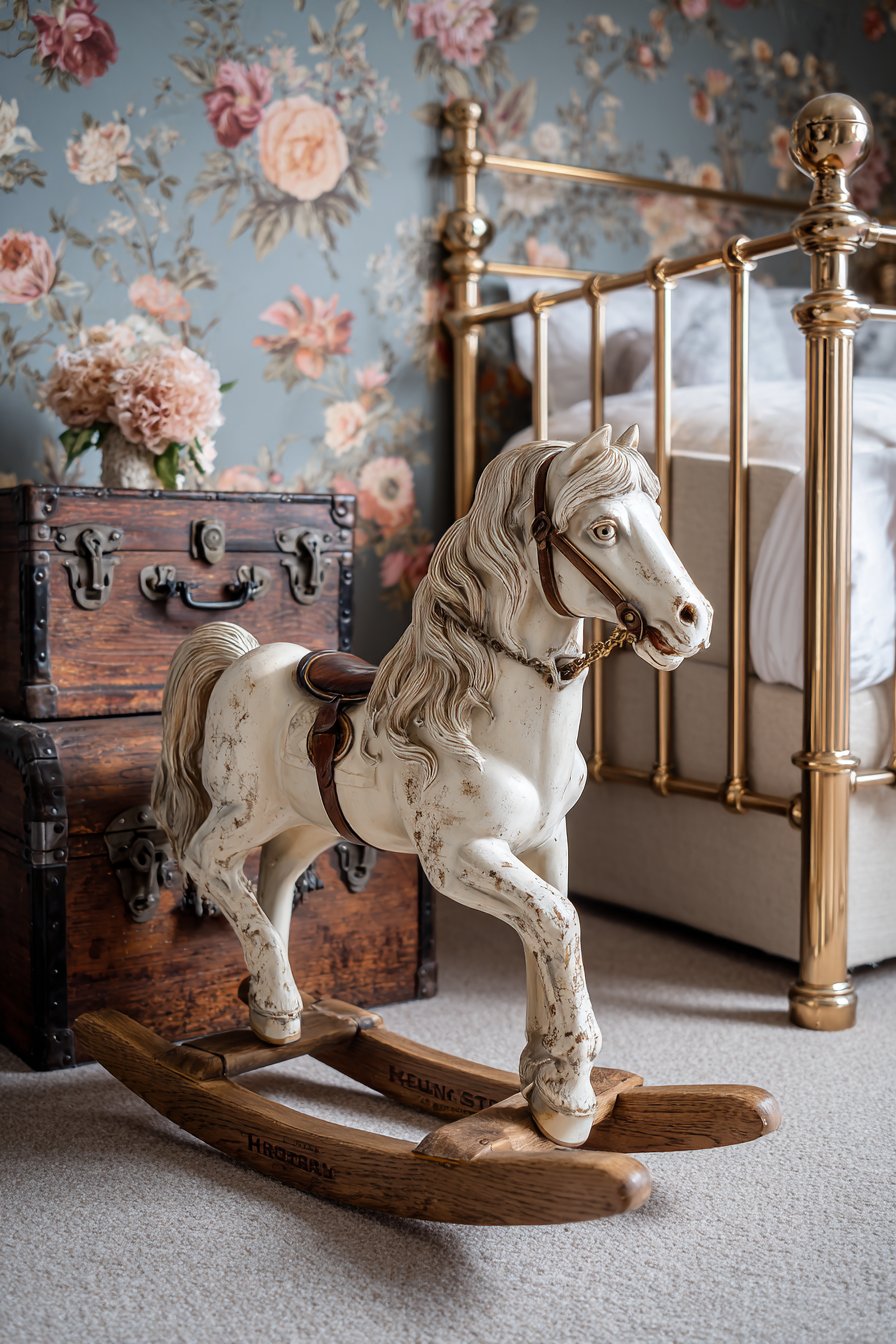
Vintage-inspired children’s bedrooms combine nostalgic charm with modern safety standards, creating spaces that feel connected to family history while meeting contemporary needs. Restored antique furniture pieces like a wooden rocking horse and vintage toy chest provide authentic character while teaching children to appreciate quality craftsmanship and the value of preserving beautiful objects.
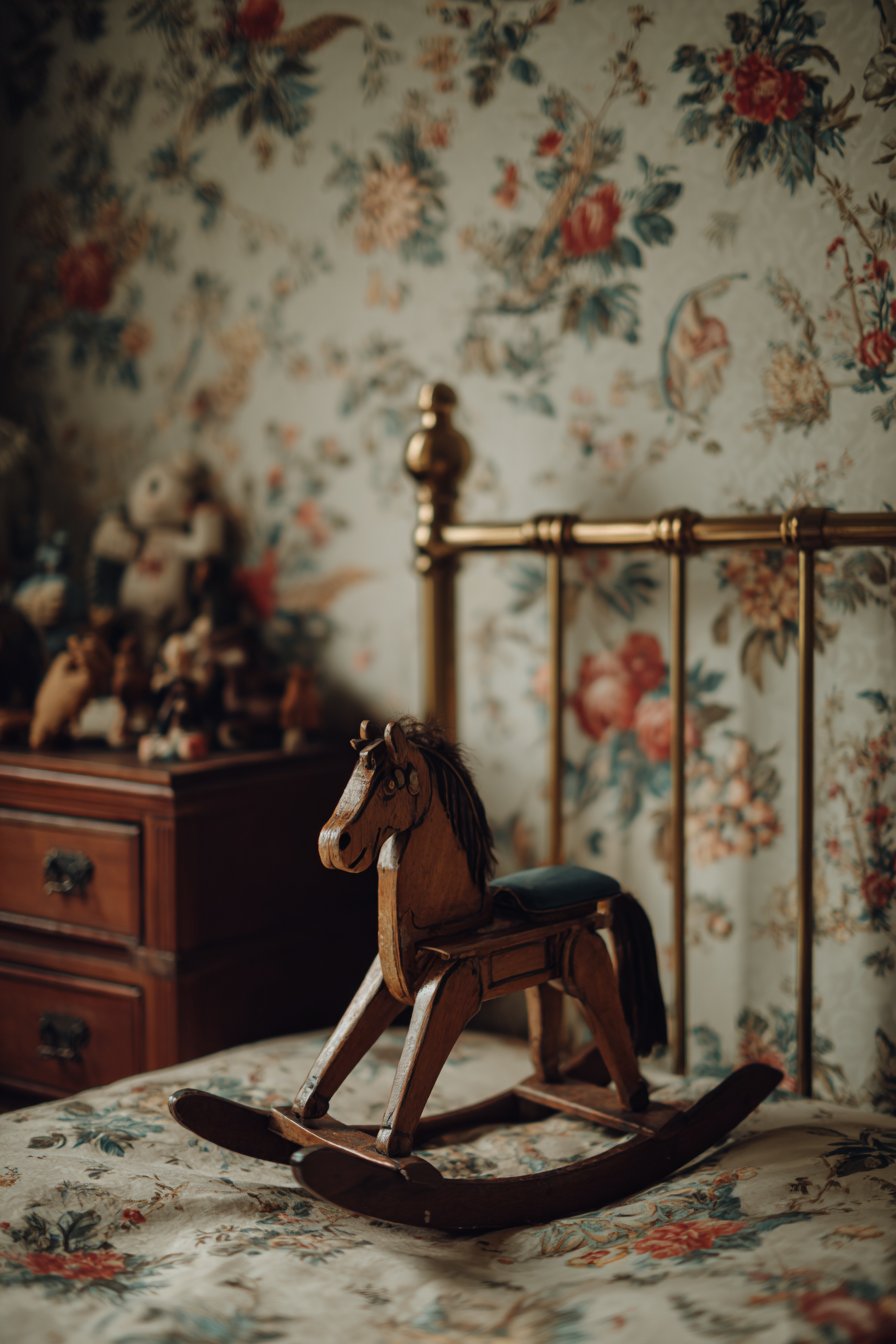
Soft vintage florals in muted colors create a nostalgic atmosphere that feels romantic and timeless without being overly feminine or limiting. These patterns can be incorporated through bedding, window treatments, or wall coverings while maintaining appropriate scale and color intensity for children’s environments.
Practical modern storage solutions blend seamlessly with vintage elements, ensuring that the room functions efficiently while maintaining its nostalgic charm. Contemporary organizational systems can be disguised or integrated to provide necessary functionality without disrupting the vintage aesthetic.

The classic brass bed frame anchors the space with authentic period character while providing the durability and safety features necessary for daily use. This centerpiece should be properly restored and treated to ensure safety while maintaining the patina and character that make vintage pieces special.
Warm incandescent lighting creates the cozy, timeless ambiance that makes vintage spaces feel inviting and comfortable. Period-appropriate fixtures or reproduction pieces can provide necessary illumination while reinforcing the room’s historical character.

Vintage bedroom design requires balancing authentic period elements with necessary modern safety and functional features, ensuring that restored furniture meets current safety standards for children’s use, selecting reproduction fabrics and materials that capture vintage character while providing contemporary durability, incorporating modern storage and organizational systems that complement rather than compete with vintage elements, maintaining appropriate color palettes that feel authentic to historical periods while appealing to contemporary sensibilities, and teaching children to appreciate quality, craftsmanship, and the value of preserving beautiful objects from previous generations.
14. Sports Excellence and Athletic Achievement
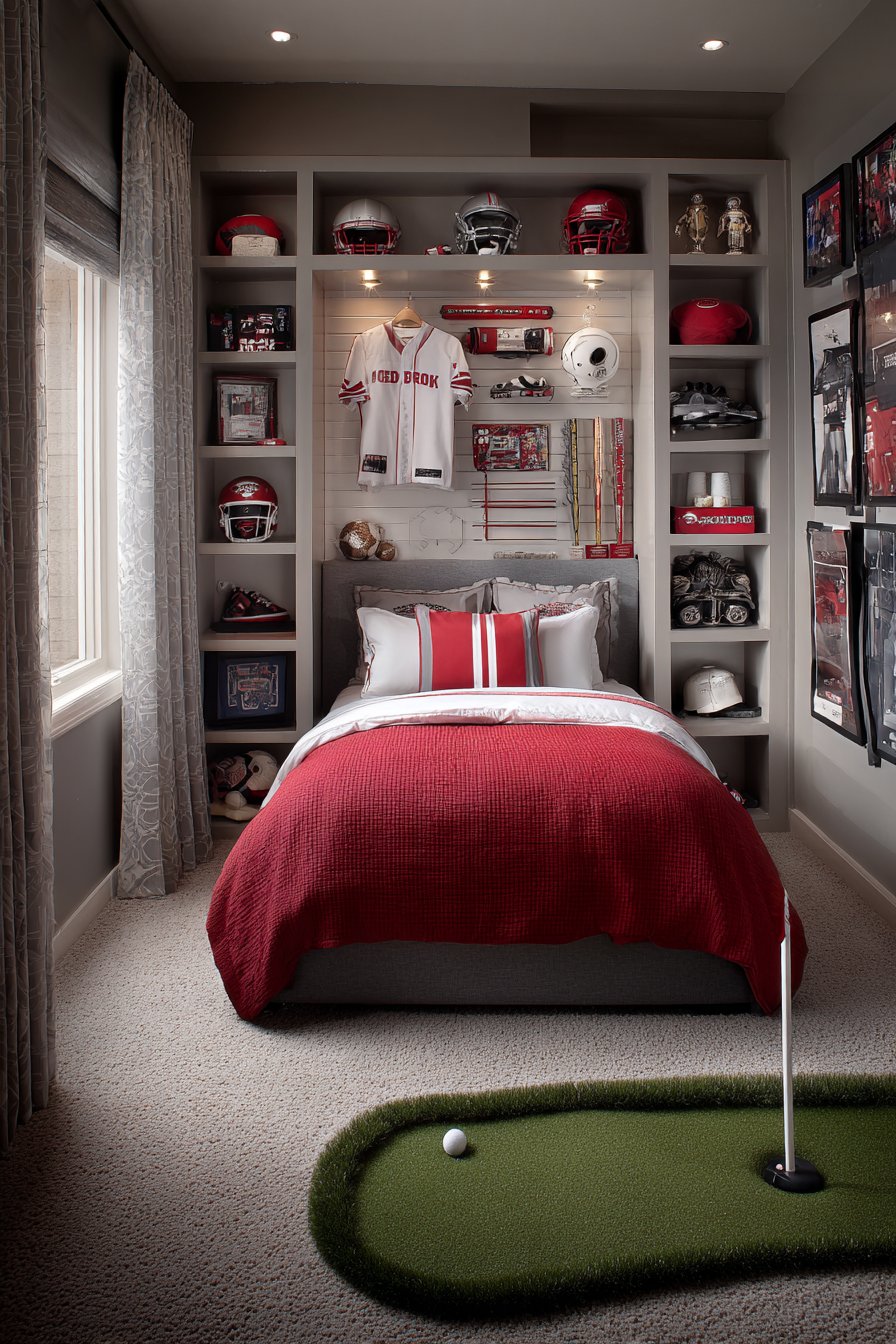
Sports-themed bedrooms inspire athletic pursuits while providing organized storage and display opportunities for equipment and achievements. Equipment storage solutions with hooks for jerseys, cubbies for balls and gear, and designated areas for trophies create an organized system that makes sports participation easier while celebrating athletic accomplishments.
Team colors incorporated through bedding and accent pieces allow for personal expression while maintaining design balance that won’t overwhelm the space or limit future team affiliations. This approach provides flexibility for changing interests while maintaining the energetic atmosphere that motivates athletic activity.
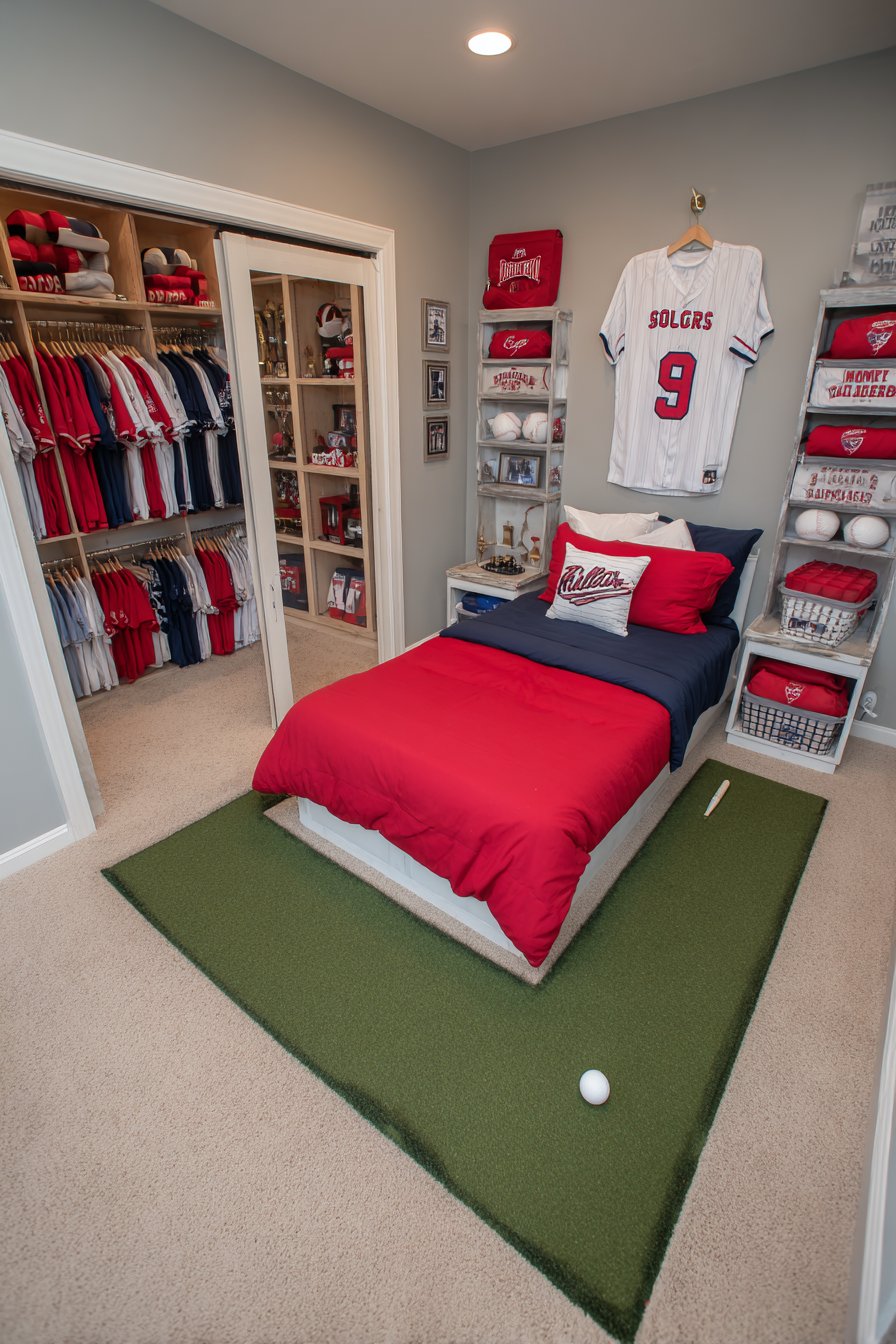
Small practice areas like basketball hoops or putting greens add functionality that supports skill development while providing active play opportunities regardless of weather conditions. These features should be appropriately scaled for indoor use while providing genuine practice value.
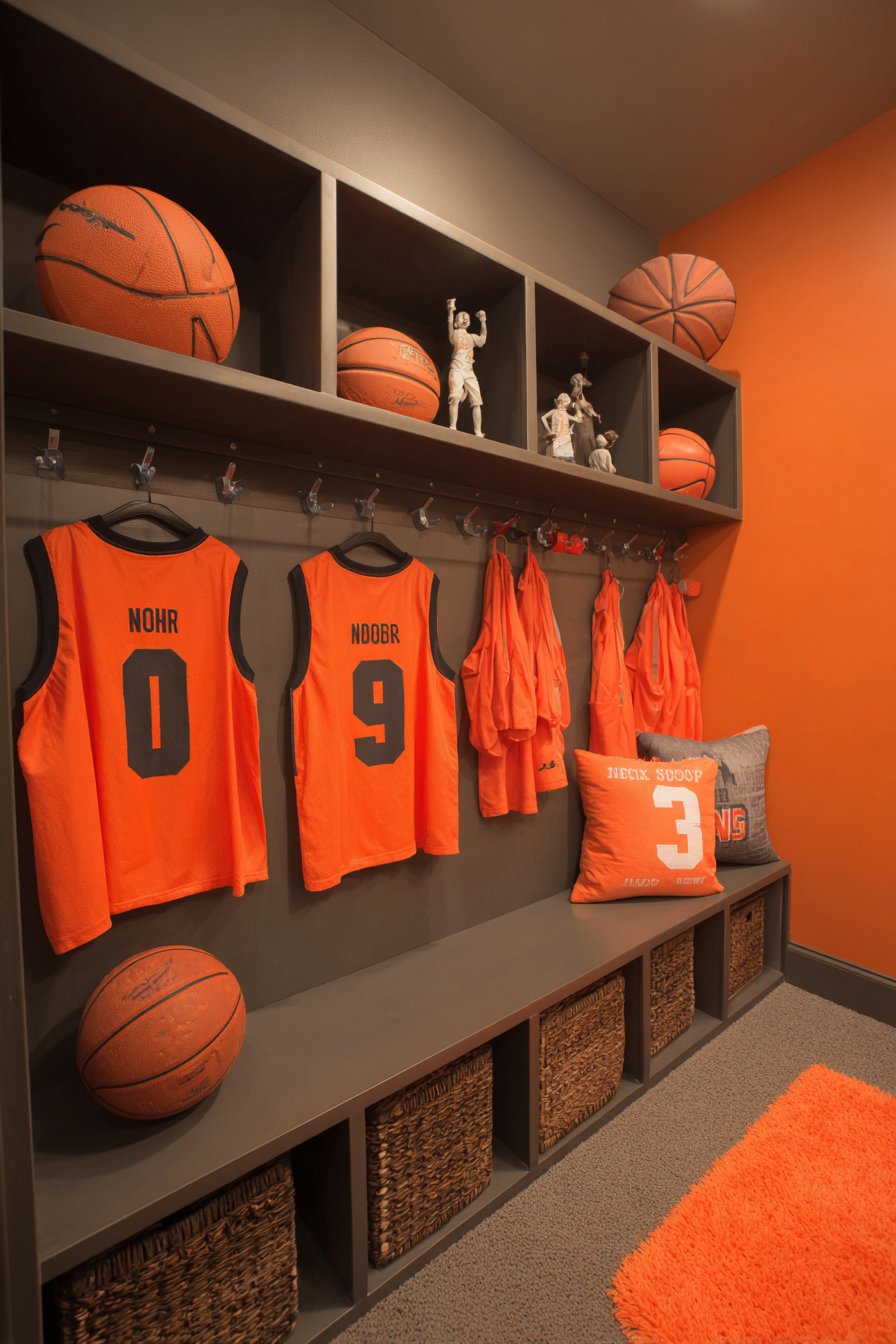
Bright, energetic lighting supports active play while creating an atmosphere that motivates movement and activity. Lighting design should accommodate both active play periods and homework time while maintaining the vibrant energy that characterizes successful sports-themed spaces.
Display areas for trophies, medals, and sports memorabilia celebrate achievements while providing motivation for continued athletic pursuits. These displays should be easily updated to accommodate new accomplishments while protecting awards from damage.
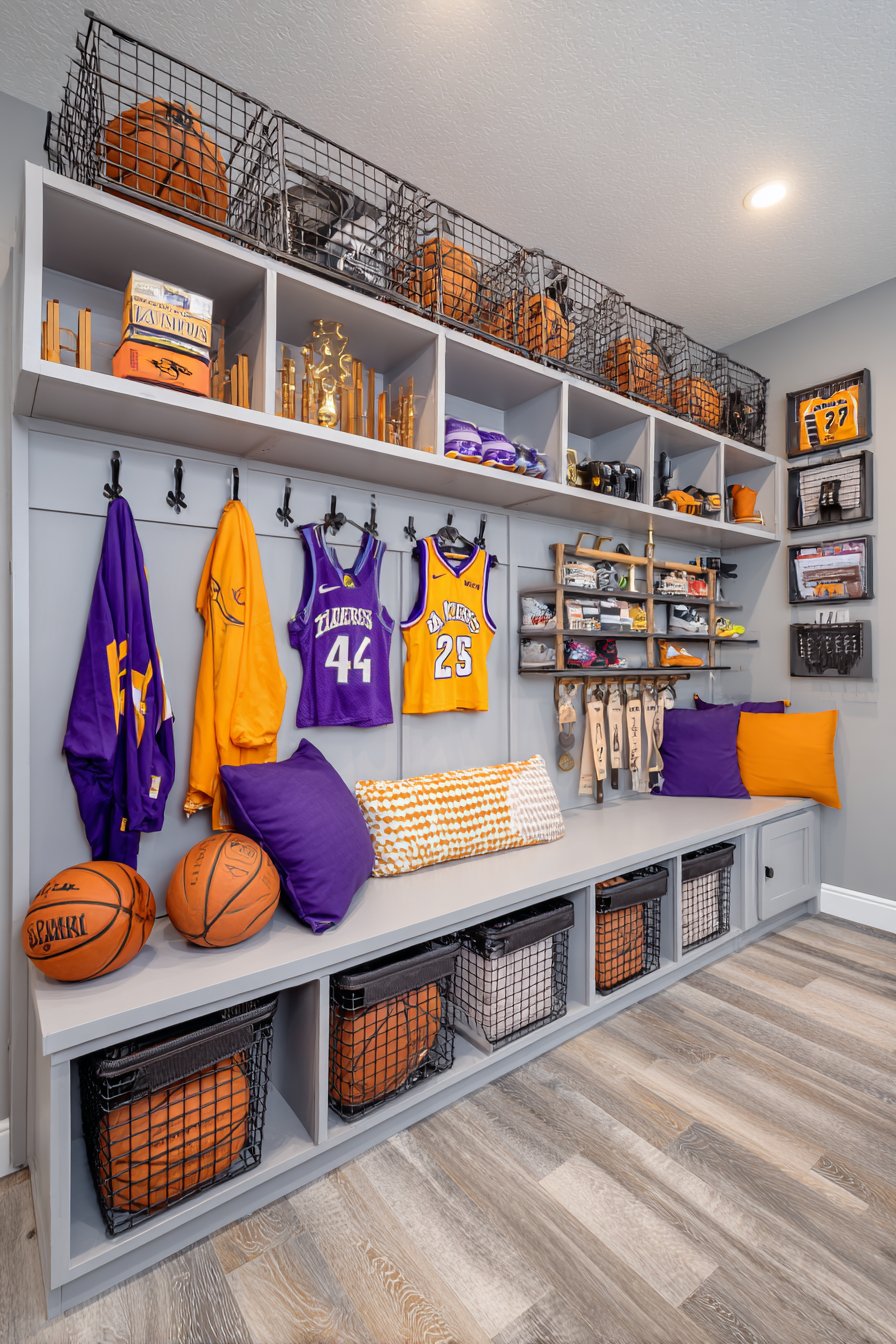
Sports bedroom design involves creating organized storage systems that accommodate bulky sports equipment while maintaining room functionality, incorporating team colors and themes in ways that can adapt to changing sports interests, providing space for skills practice and active play within appropriate indoor parameters, ensuring adequate lighting for both active and quiet activities throughout the day, celebrating athletic achievements while maintaining motivation for continued participation and improvement, and balancing sports themes with other interests and academic needs for well-rounded development.
15. Fairy Tale Magic and Enchanted Dreams
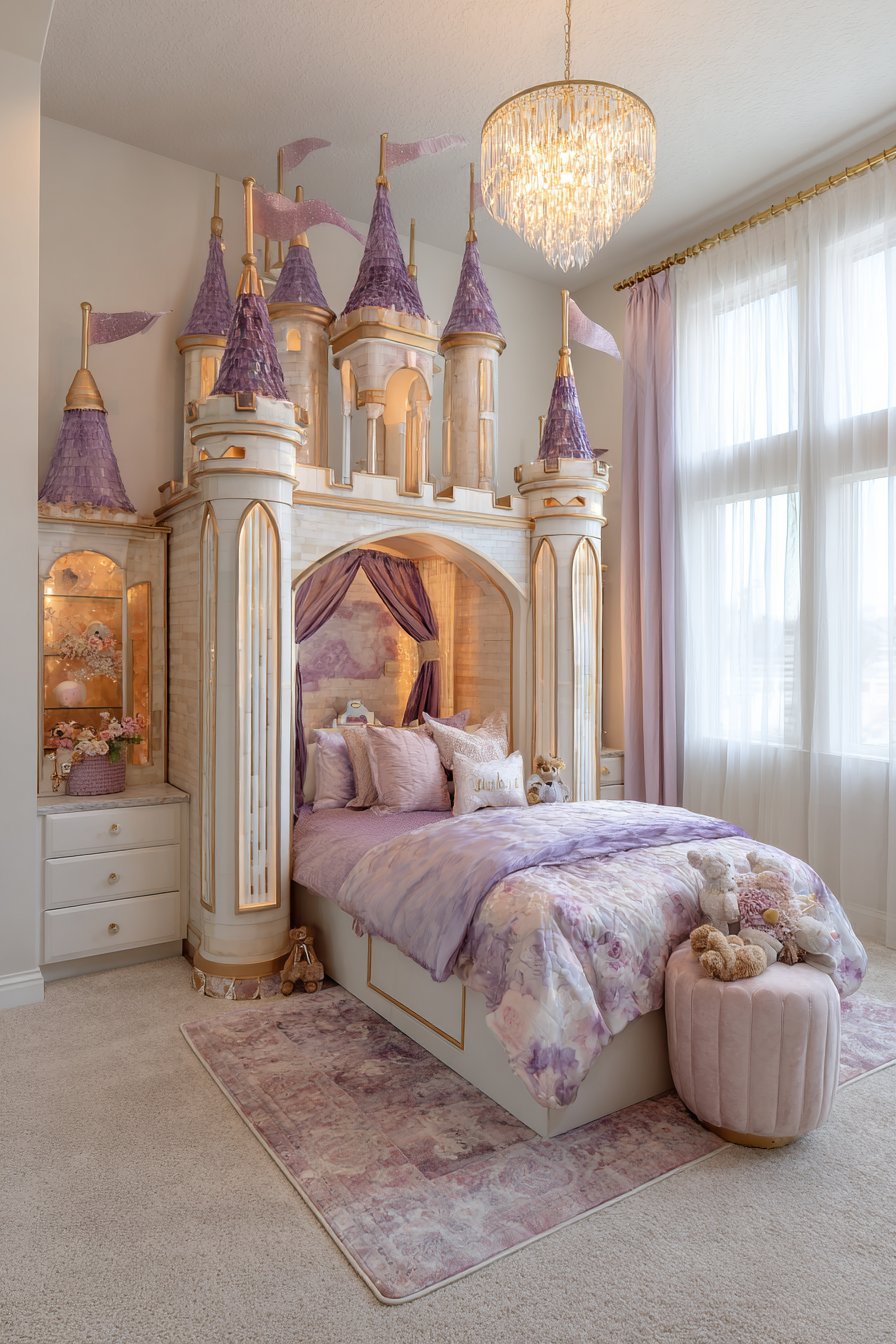
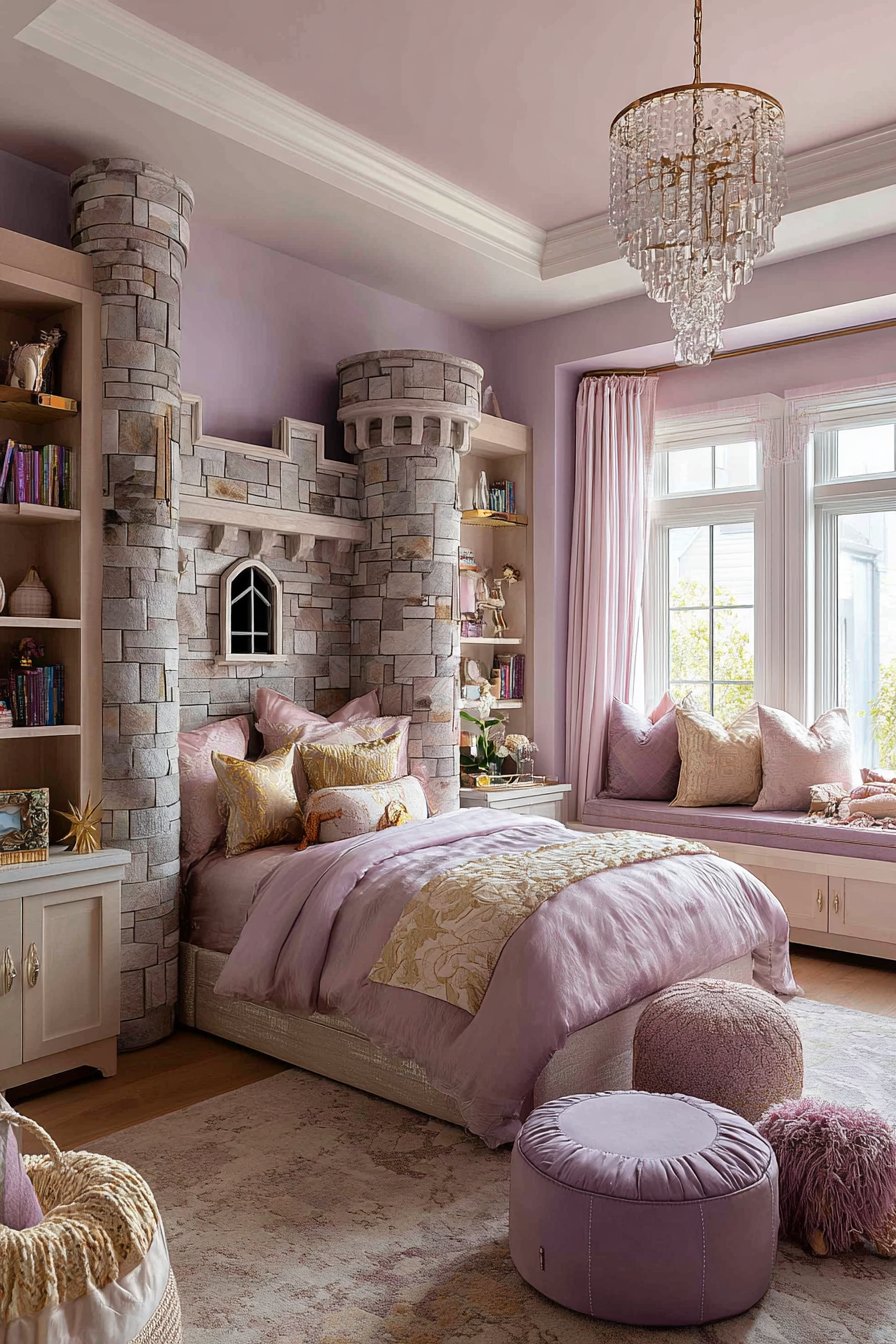
Fairy tale bedrooms create magical environments that spark imagination while providing the comfort and functionality children need for daily life. The castle-inspired bed featuring turrets and flags serves as both sleeping space and imaginative play structure, transforming bedtime into an adventure while maintaining the comfort necessary for restful sleep.
The whimsical color palette of soft purples, pinks, and golds creates a dreamy atmosphere that feels magical without being overwhelming or garish. These colors should be balanced to maintain sophistication while providing the fantastical feeling that makes fairy tale themes so appealing to children.
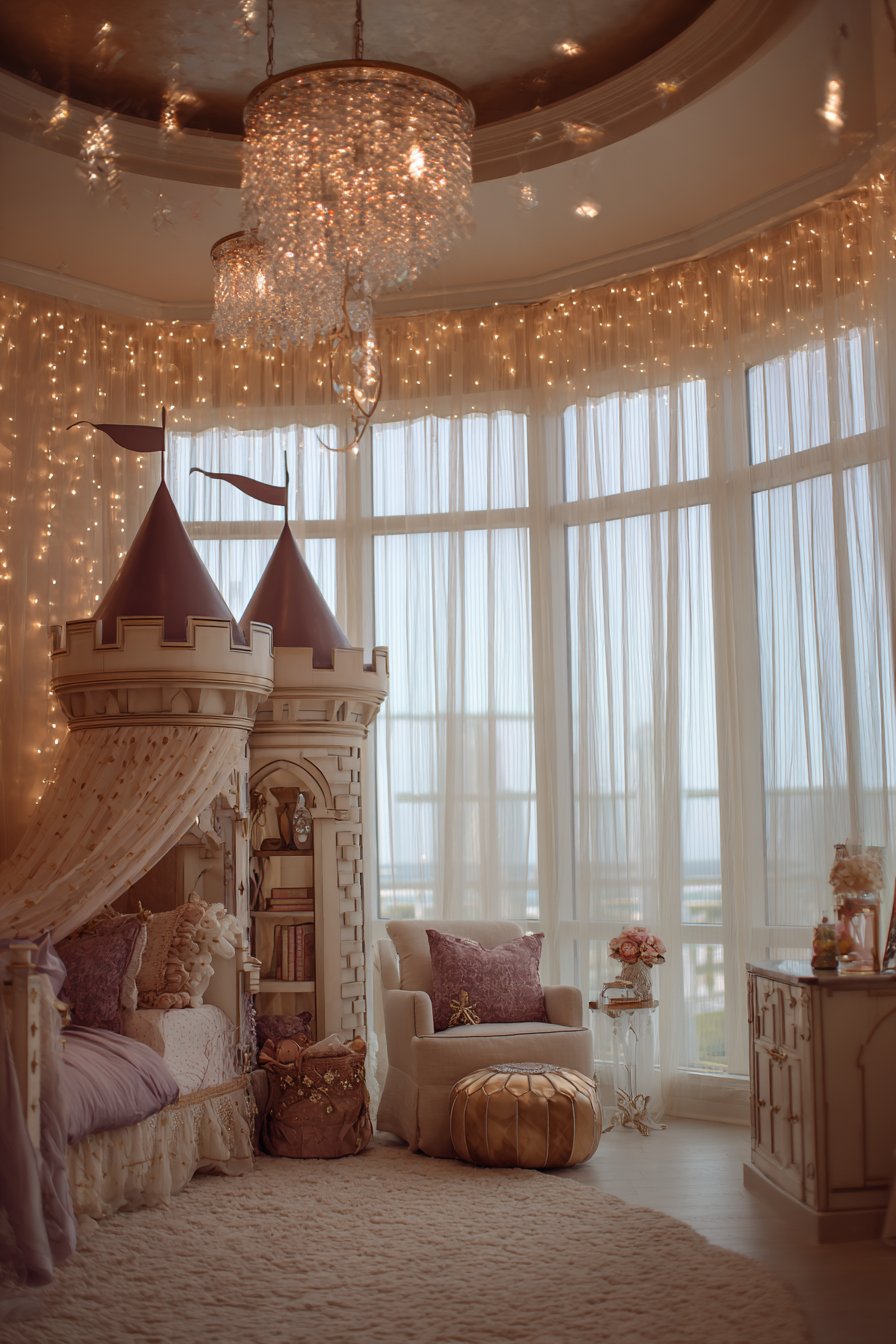
Sheer curtains create dreamy window treatments that filter natural light beautifully while adding movement and softness to the room’s overall aesthetic. These treatments can incorporate sparkles or subtle patterns that enhance the magical atmosphere while providing practical light control and privacy.
Story book storage integrated into castle-themed furniture provides organization while reinforcing the literary connections that make fairy tales educational as well as entertaining. This storage should accommodate both picture books and chapter books while remaining accessible for independent use.
A dress-up station with costume storage encourages imaginative play while providing organized solutions for the accessories that make fairy tale role-playing possible. This area should include mirrors, seating, and storage that makes dressing up easy and enjoyable.
Magical lighting with fairy lights and appropriately scaled crystal chandeliers creates an enchanted atmosphere while providing necessary illumination for daily activities. Lighting design should balance magical effects with practical needs for reading, homework, and other activities.
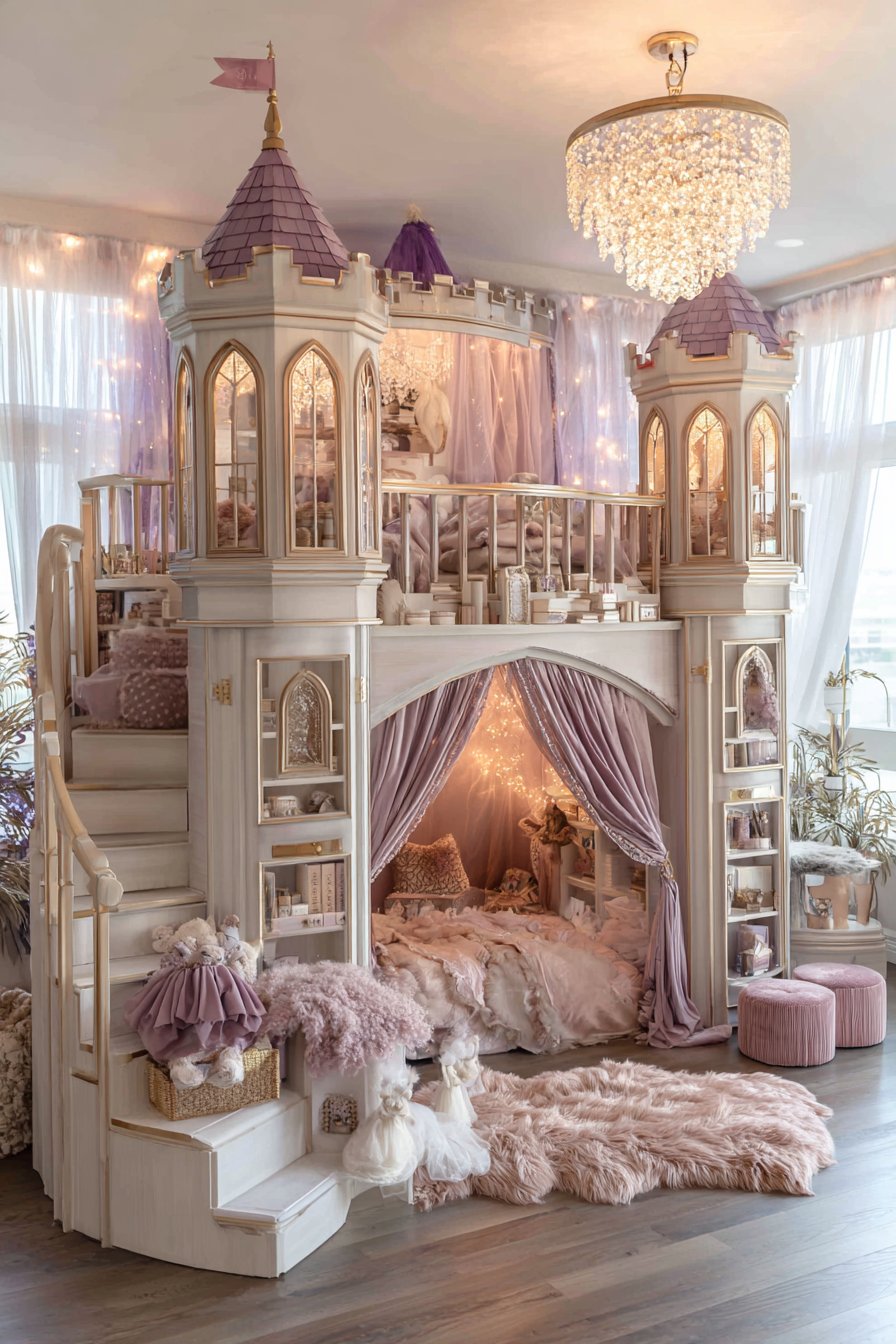
Fairy tale design implementation requires balancing magical elements with practical daily functionality, ensuring that themed furniture provides genuine comfort and safety for sleeping and daily use, selecting color palettes that feel magical while remaining sophisticated and livable, incorporating storage solutions that maintain the theme while providing adequate organization, planning lighting that creates magical ambiance while supporting all necessary room activities, and designing spaces that encourage imaginative play while maintaining the peaceful atmosphere necessary for rest and reflection.
16. Musical Harmony and Creative Expression
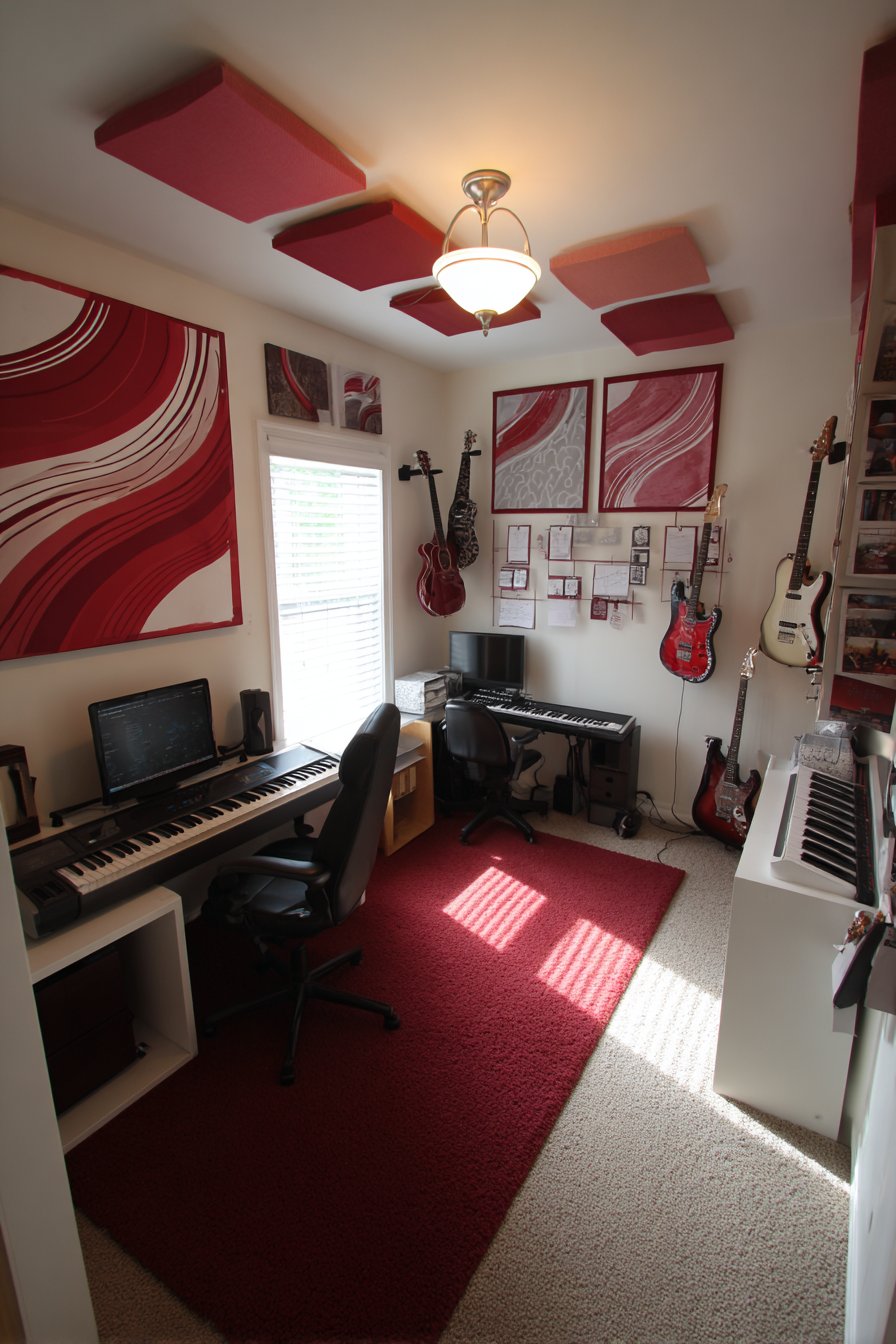
Music-themed bedrooms nurture artistic development while providing practical spaces for practice and creative expression. Instrument storage with wall-mounted holders for guitars, keyboard stations with proper seating, and sound-absorbing panels designed as decorative elements create a comprehensive practice environment that supports musical education.
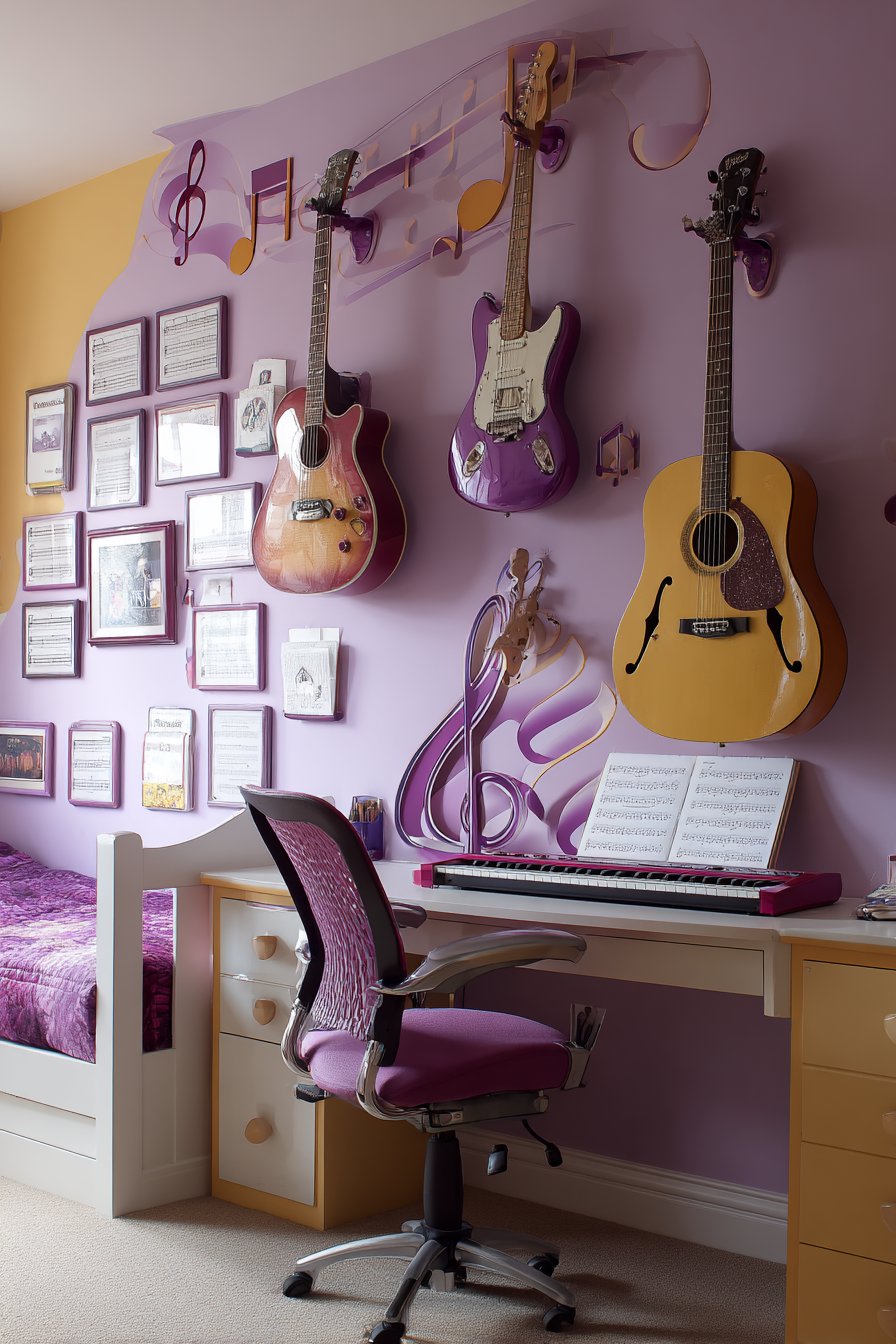
Sheet music organization and practice areas with good lighting support learning while maintaining the organization necessary for productive practice sessions. These areas should accommodate various instruments and music styles while providing proper seating and music stand positioning.
Color schemes using sound wave patterns and musical note motifs reinforce the theme while creating visual interest that educates and inspires. These patterns can be incorporated subtly through bedding, wall treatments, or accessories that maintain sophistication while celebrating musical creativity.

Natural lighting combined with task lighting for practice sessions ensures that music reading and instrument practice can occur comfortably throughout the day. Lighting design should minimize glare while providing adequate illumination for detailed musical work.
Sound-absorbing panels serve dual purposes by improving room acoustics while providing decorative elements that can incorporate musical themes or colors. These panels help contain practice noise while creating better listening environments for music appreciation and learning.
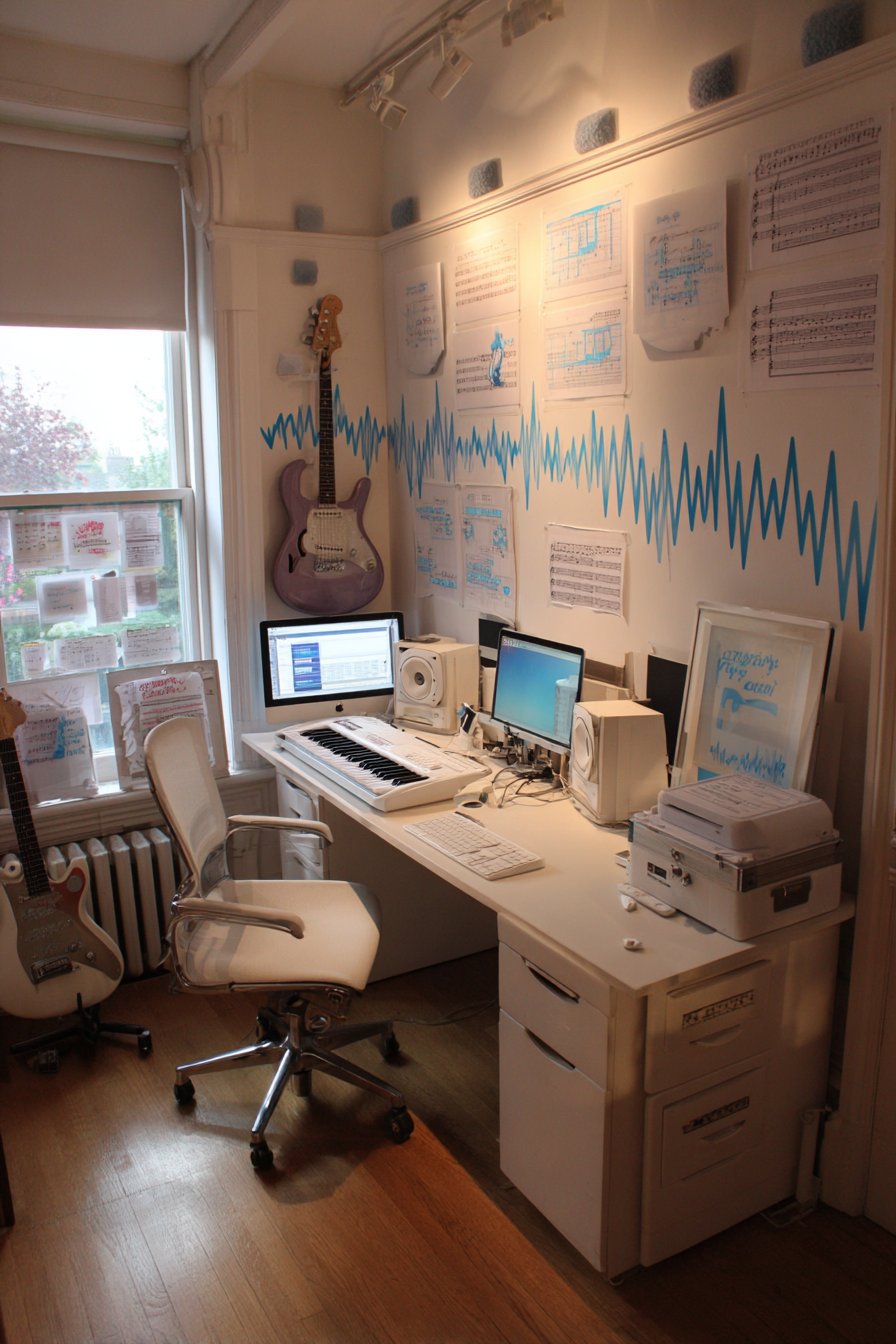
Musical bedroom design focuses on providing proper storage and display for various instruments while maintaining room functionality, ensuring adequate acoustic treatment to support practice while controlling noise transmission, incorporating task lighting that supports music reading and detailed practice work, organizing sheet music and musical accessories for easy access and proper preservation, creating practice spaces with appropriate seating and equipment positioning, and celebrating musical achievement while providing motivation for continued learning and development.
17. Bohemian Richness and Global Inspiration
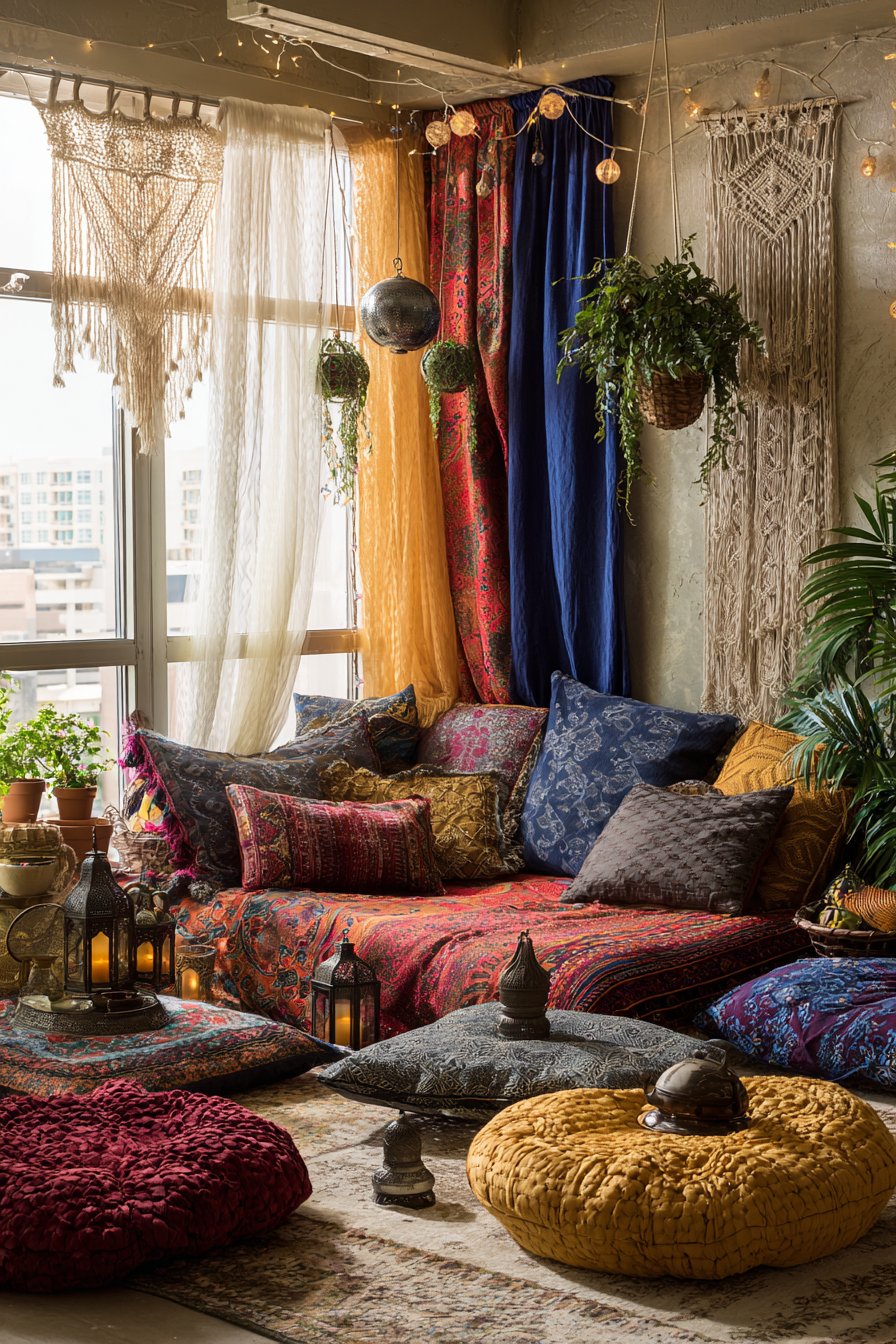
Bohemian children’s bedrooms celebrate cultural diversity while creating rich, layered environments that stimulate creativity and global awareness. Layered textiles with colorful tapestries, macrame wall hangings, and floor cushions in rich jewel tones create a globally-inspired aesthetic that feels traveled and worldly while maintaining comfort and functionality.
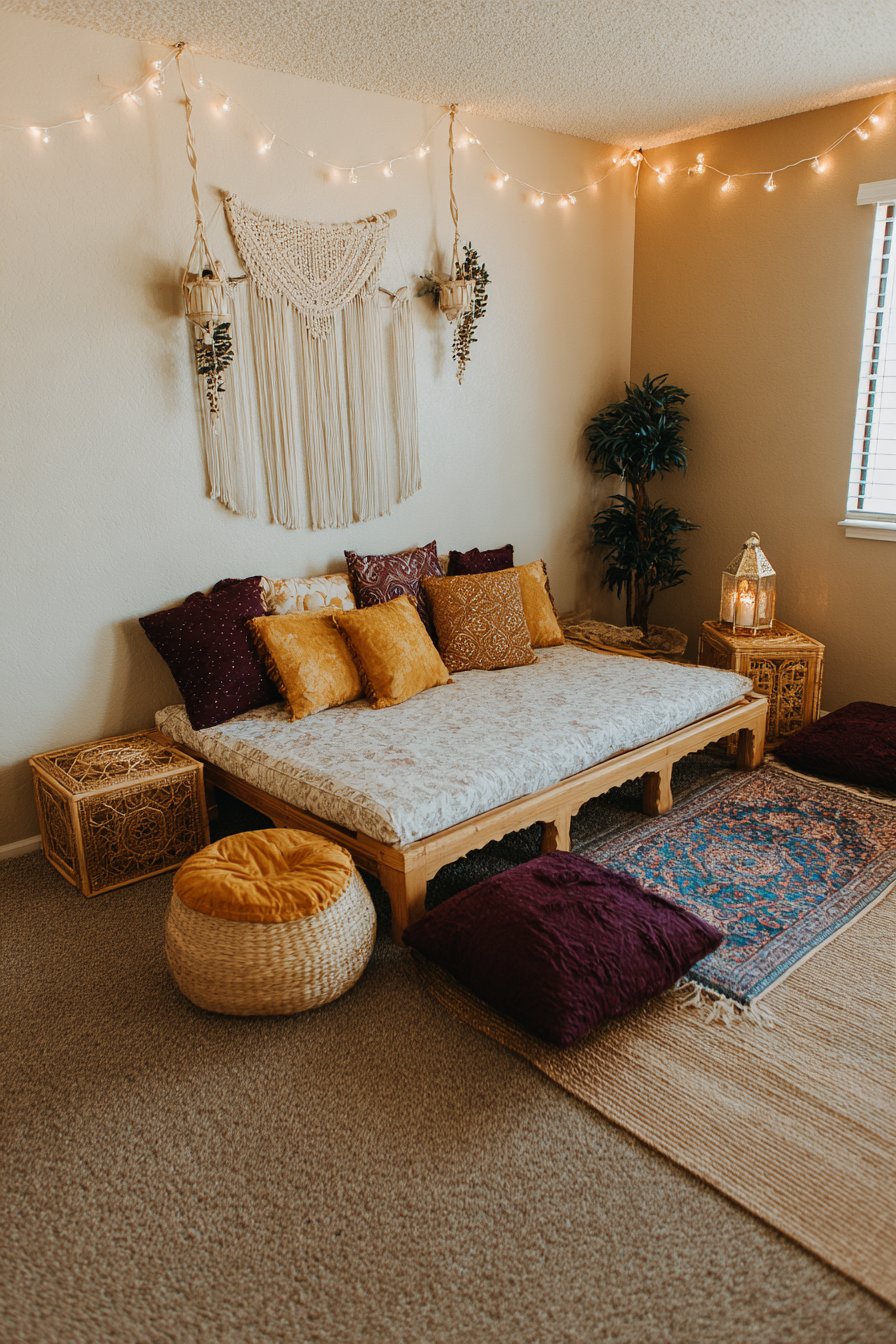
Natural materials like rattan and jute provide texture and authenticity while introducing children to traditional crafts and sustainable materials. These organic elements ground the colorful textiles while providing durability and natural beauty that improves with age and use.
Plants in hanging planters add life and natural elements while teaching environmental responsibility and plant care. These living elements also improve air quality while providing the changing, growing elements that keep bohemian spaces feeling alive and dynamic.
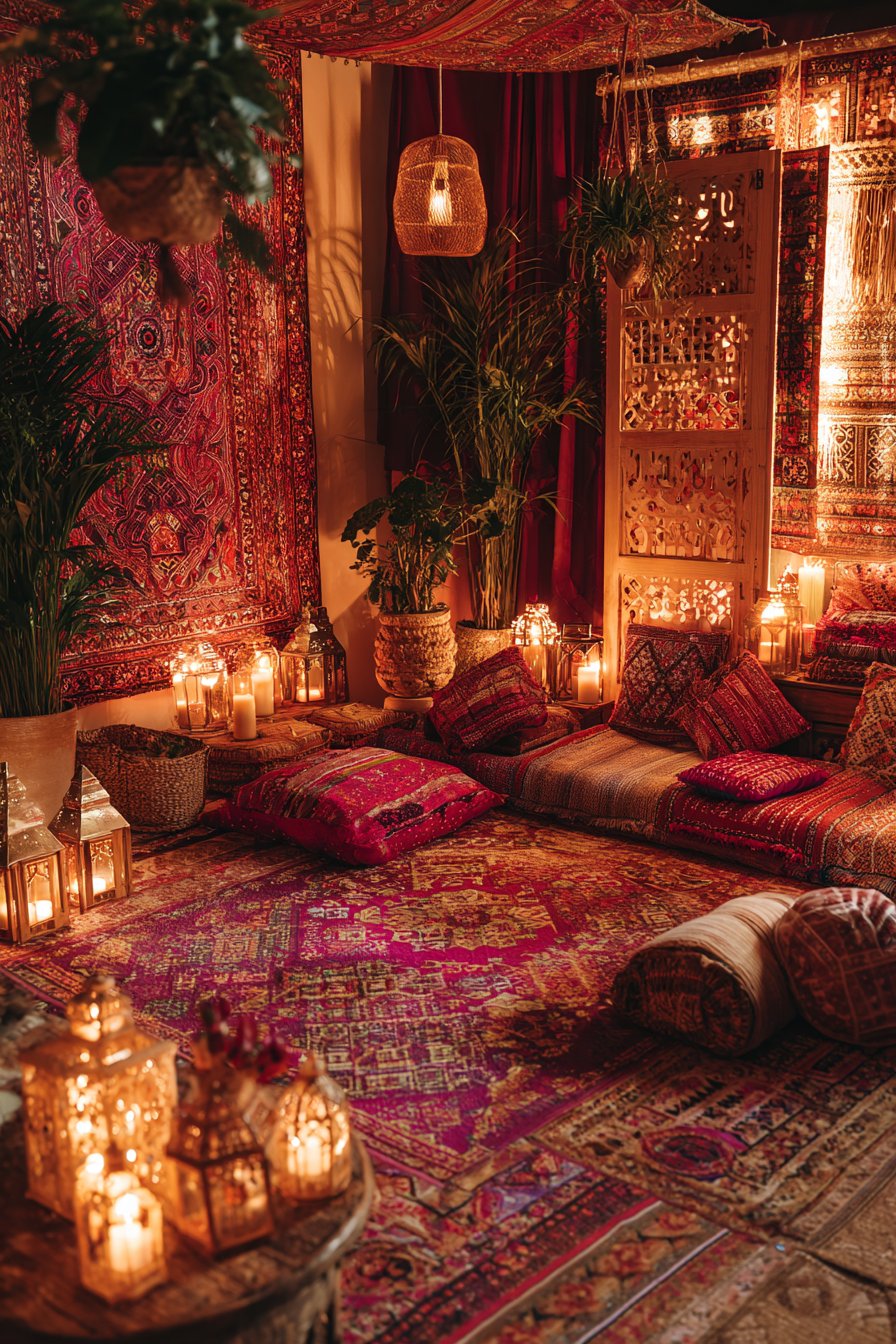
A low daybed with abundant pillows creates a cozy lounging area that supports reading, socializing, and relaxation while maintaining the casual, floor-focused approach that characterizes bohemian design. This seating arrangement encourages informal gathering and creative activities.
Warm, golden lighting from string lights and lanterns enhances the global-inspired aesthetic while creating intimate, cozy atmosphere that makes the space feel welcoming and special. This lighting approach can incorporate fixtures and techniques from various cultural traditions.

Bohemian design implementation involves layering textiles and patterns in ways that feel rich rather than chaotic, incorporating authentic cultural elements respectfully while avoiding stereotypes or appropriation, selecting natural materials that provide texture and authenticity while maintaining durability, ensuring adequate lighting that enhances the warm, inviting atmosphere throughout the day, teaching children about global cultures and traditions through thoughtful decorative choices, and creating flexible seating arrangements that support various activities and social configurations.
18. Ocean Adventures and Marine Discovery
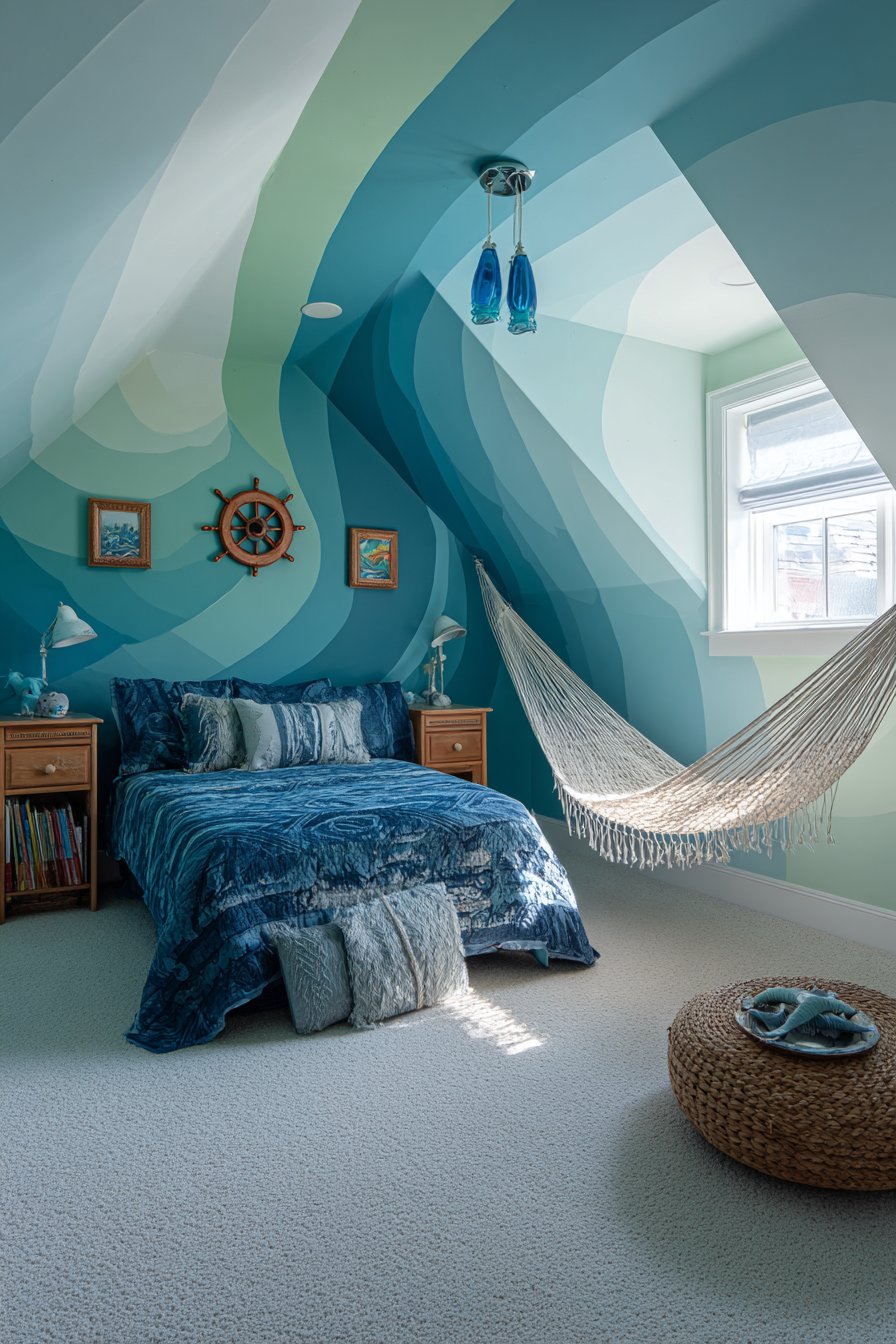
Ocean-themed bedrooms create immersive aquatic environments while teaching children about marine life and environmental conservation. The wave-patterned accent wall in varying shades of blue and seafoam green establishes the oceanic atmosphere while providing dynamic visual interest that suggests water movement and depth.
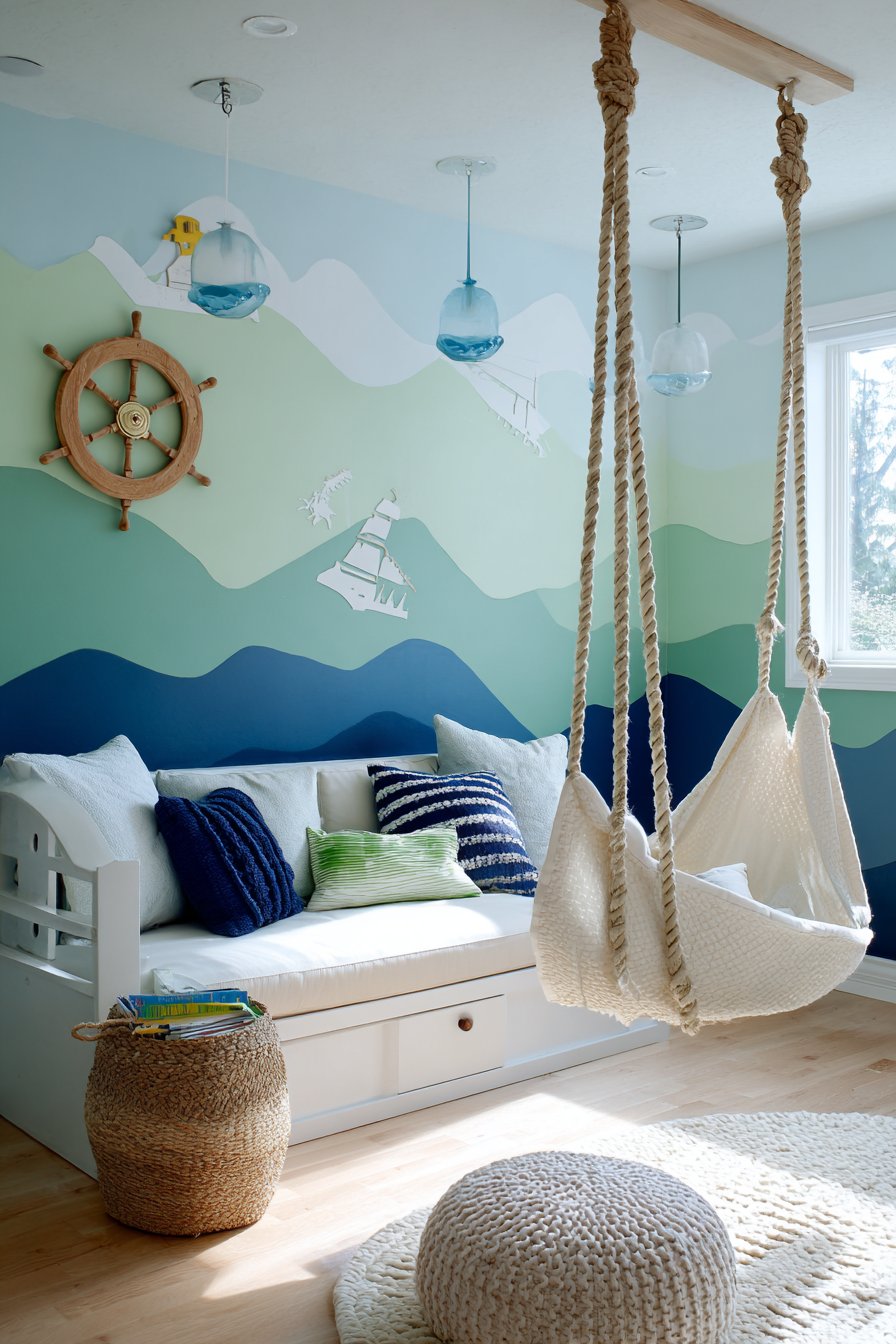
Marine life wall decals and nautical elements like ship wheel mirrors create educational opportunities while reinforcing the aquatic theme. These decorative elements should represent accurate marine life while maintaining appropriate scale and child-friendly appeal.
Rope details on furniture and storage add authentic maritime texture while providing hands-on experience with traditional nautical materials. These elements should be properly secured and safe for children while maintaining authentic appearance and feel.

A hammock reading corner provides unique seating that reinforces the maritime theme while offering a special spot for quiet activities and relaxation. This feature should be properly installed with appropriate safety measures while providing genuine comfort and support.
Lighting that mimics underwater effects with blue-tinted fixtures creates immersive ambiance while maintaining practical illumination for daily activities. This lighting design can include color-changing options that simulate different oceanic conditions throughout the day.
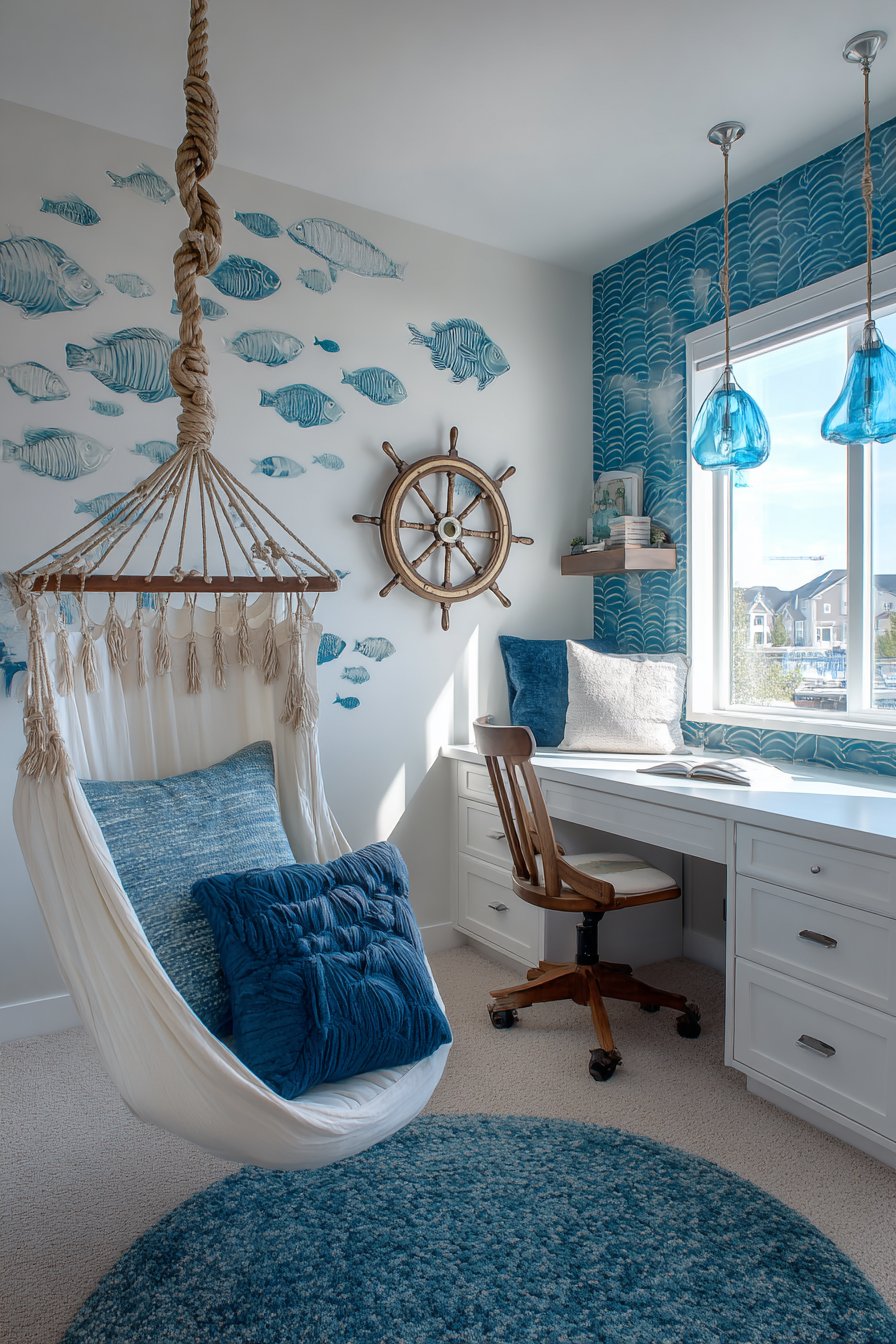
Ocean bedroom design requires creating immersive aquatic environments while maintaining practical room functionality, incorporating educational elements about marine life and ocean conservation, ensuring that nautical elements are properly secured and safe for children’s use, planning lighting that creates oceanic atmosphere while supporting all necessary room activities, balancing themed elements with storage and organizational needs, and teaching environmental awareness through ocean conservation themes and sustainable design choices.
19. Eco-Friendly Values and Sustainable Living
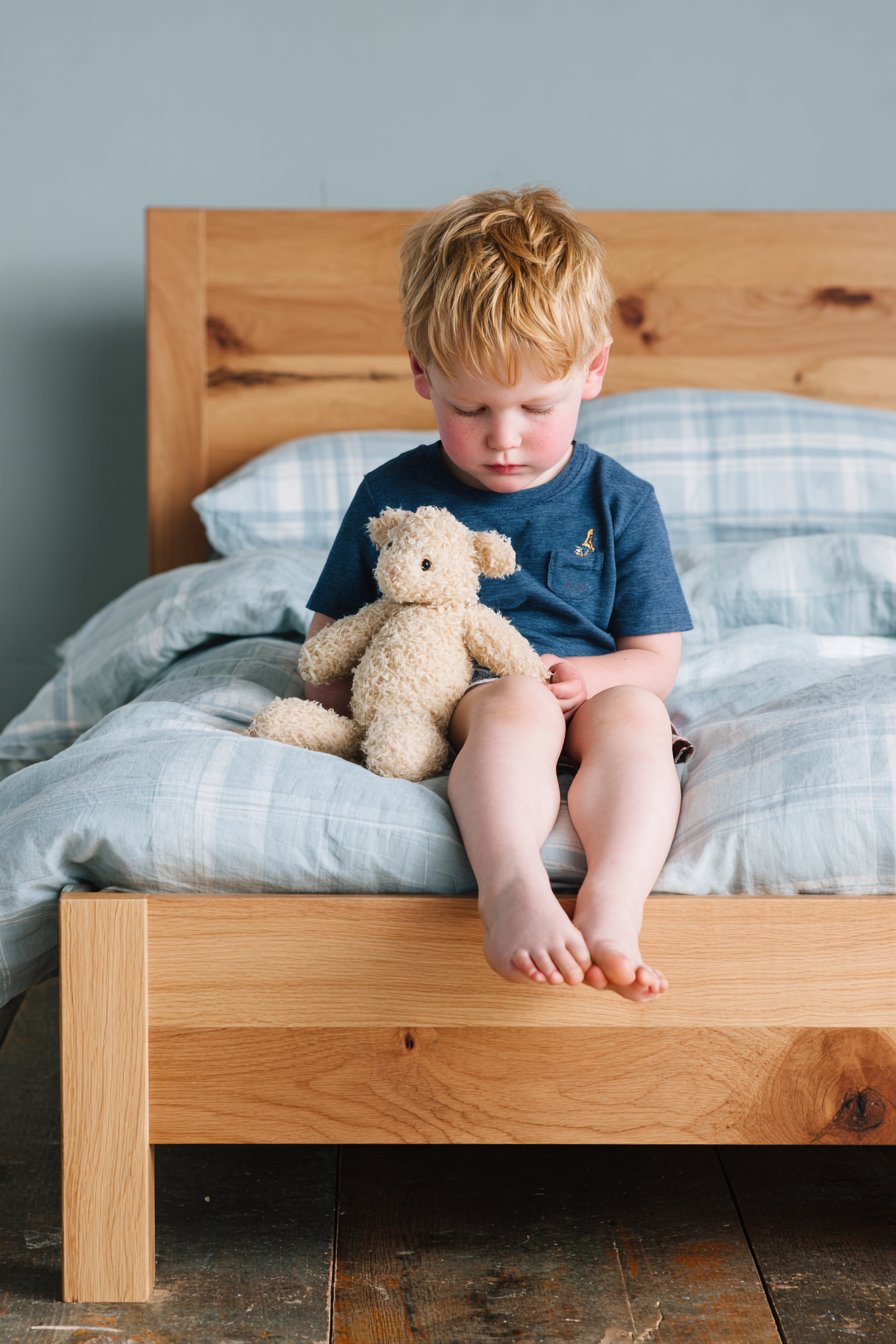
Eco-friendly children’s bedrooms demonstrate environmental responsibility while creating healthy living environments that teach sustainability values. Sustainable furniture made from reclaimed wood and non-toxic finishes provides durability while minimizing environmental impact and exposure to harmful chemicals.
Organic cotton bedding in natural colors promotes healthy sleep while supporting sustainable agriculture and manufacturing practices. These textile choices ensure that children sleep in chemical-free environments while learning about responsible consumption and environmental stewardship.
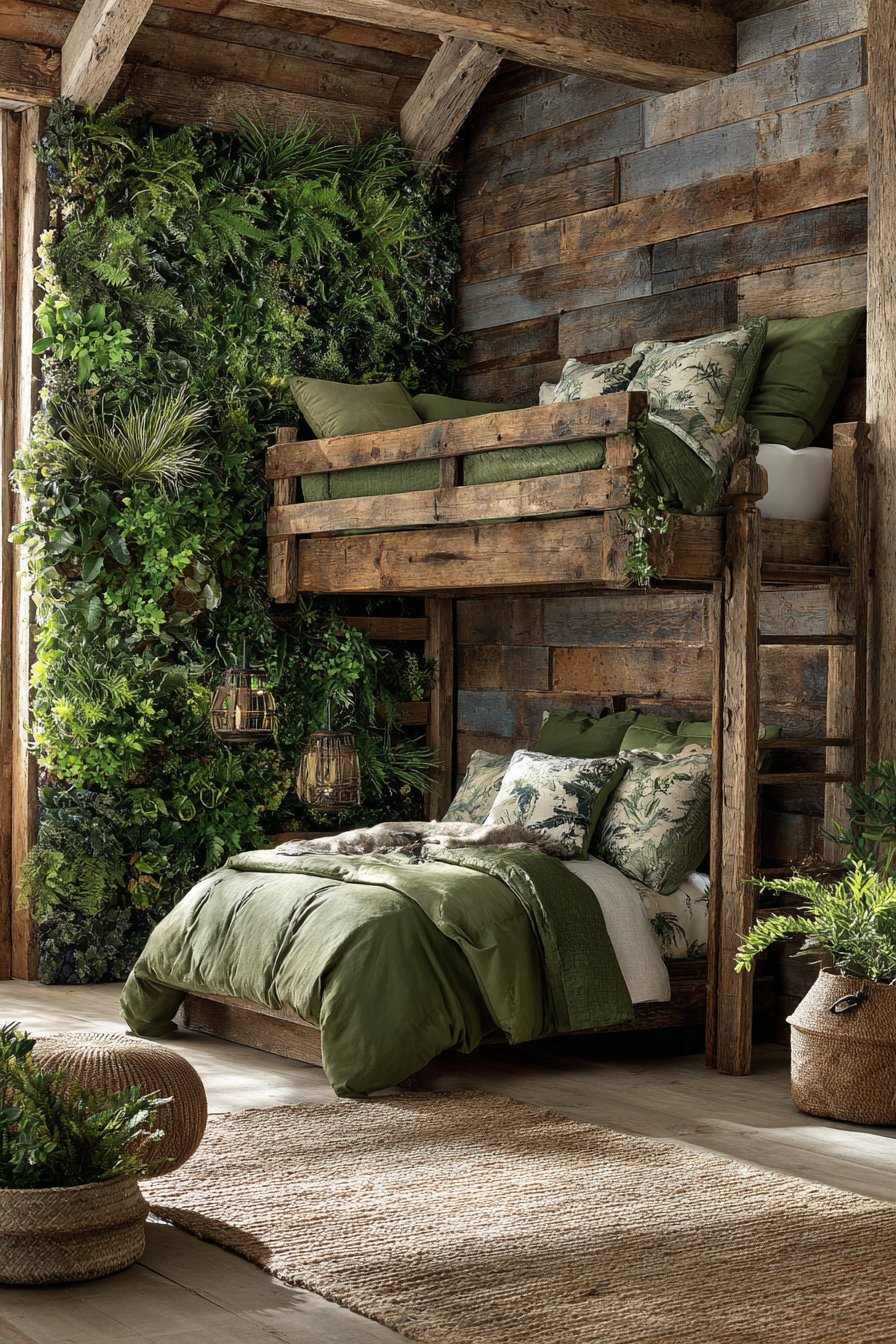
Living walls with child-safe plants teach environmental responsibility while improving indoor air quality and providing hands-on learning about plant growth and natural cycles. These installations should include easy-care plants that children can help maintain and learn from.
Solar-powered nightlights and energy-efficient fixtures demonstrate green technology while providing practical illumination that teaches children about renewable energy and conservation. These features can include displays that show energy generation and consumption.

Natural materials like bamboo and cork create connections to nature while demonstrating sustainable material choices that provide durability and beauty. These materials also offer interesting textures and natural variation that make spaces feel organic and alive.
Soft natural lighting emphasizes organic textures while supporting healthy circadian rhythms and connection to natural daily cycles. Window treatments should maximize natural light while providing necessary privacy and light control.

Eco-friendly design implementation focuses on selecting furniture and materials that minimize environmental impact while providing durability and safety, incorporating living plants that children can care for while learning about natural cycles, demonstrating green technology through age-appropriate energy systems and conservation features, teaching environmental values through daily exposure to sustainable design choices, ensuring that all materials and finishes are safe and non-toxic
for children’s health and development, and creating connections to nature through material choices and living elements that foster environmental stewardship from an early age.
20. Princess Dreams and Royal Elegance
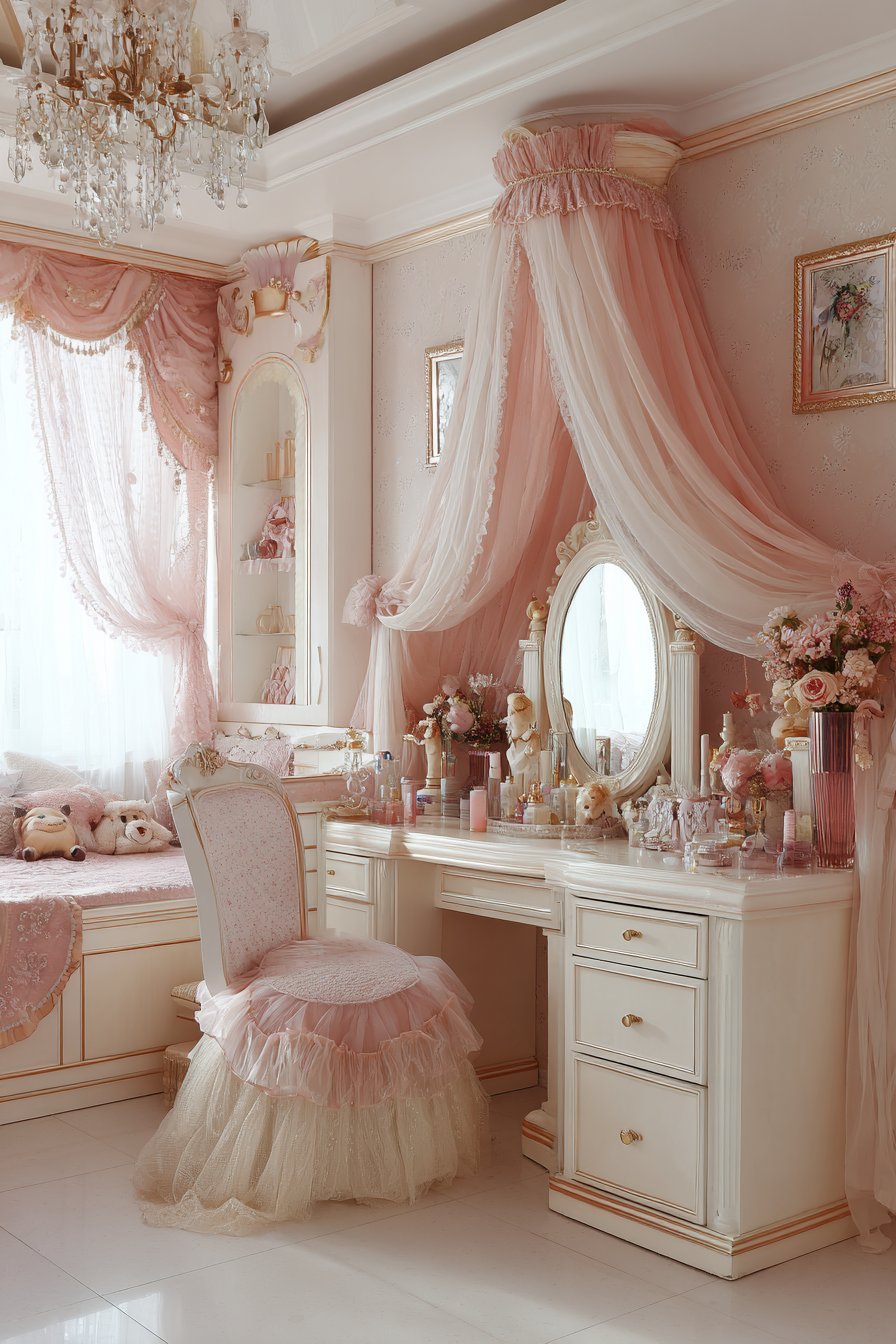
Princess-themed bedrooms create regal environments that celebrate imagination while maintaining livable functionality and age-appropriate sophistication. The canopy bed with flowing curtains in soft pastels serves as the room’s centerpiece, transforming sleep time into a royal experience while providing the comfort and safety necessary for restful nights. The canopy design should incorporate quality fabrics that can be easily cleaned and maintained while creating the dramatic visual impact that makes the theme magical.
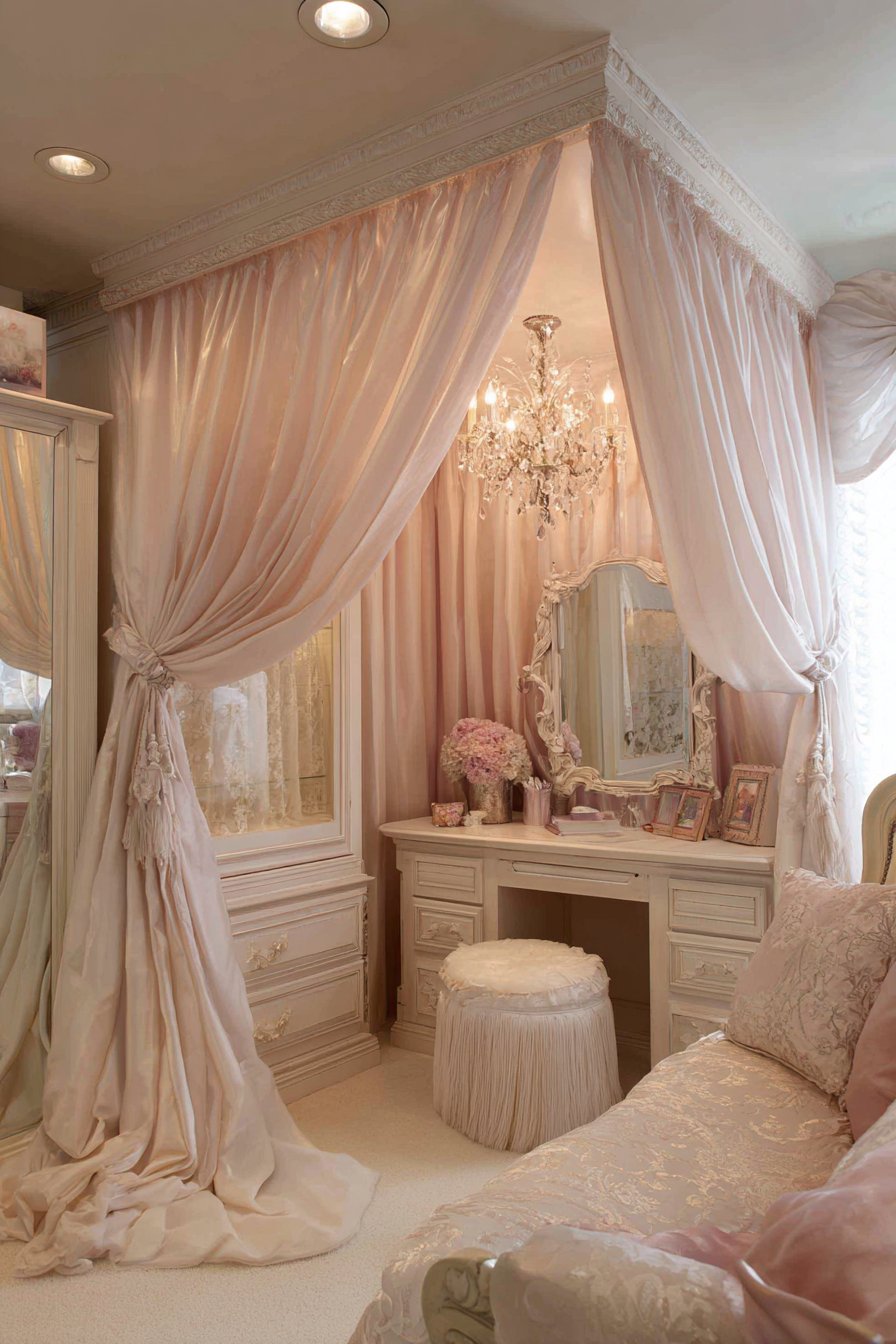
The vintage-style vanity with child-safe mirror and storage for dress-up accessories provides a dedicated space for imaginative play while teaching grooming habits and self-care routines. This furniture piece should be appropriately scaled for children while incorporating elegant details that reinforce the royal theme without compromising safety or functionality.
Crown molding and elegant furniture details create a regal atmosphere without overwhelming the space or making it feel too formal for daily life. These architectural elements should enhance the room’s sophistication while maintaining the warmth and comfort essential to successful children’s spaces.

A reading throne chair provides a special spot for stories while reinforcing the royal theme through both function and form. This seating should offer proper support for extended reading sessions while making story time feel like a royal ceremony that celebrates literature and learning.
Chandelier lighting adds sparkle and elegance while maintaining appropriate scale for children’s rooms. The fixture should provide adequate illumination for all room activities while creating the glamorous atmosphere that makes princess themes so appealing to young imaginations.

Princess bedroom design requires balancing elegant, regal elements with practical daily functionality, ensuring that themed furniture provides genuine comfort and safety while maintaining royal aesthetic appeal, selecting color palettes that feel sophisticated and princess-like while remaining livable and calming, incorporating storage solutions that maintain the elegant theme while providing adequate organization for toys and clothing, planning lighting that creates magical, sparkling effects while supporting all necessary room activities, and designing spaces that encourage imaginative royal play while maintaining the peaceful atmosphere necessary for rest and daily routines.
Why These Children’s Bedroom Ideas Represent the Best in Contemporary Design
Each of these twenty children’s bedroom concepts demonstrates excellence in contemporary interior design by successfully balancing multiple critical factors that define superior children’s spaces. These designs prioritize child development needs while maintaining aesthetic appeal, incorporate practical storage solutions without sacrificing style, and create environments that can adapt as children grow and change. The versatility displayed across these concepts shows how thoughtful design can address diverse interests, spatial constraints, and family needs while maintaining high standards of beauty and functionality.
The emphasis on natural materials throughout many of these designs reflects growing awareness of environmental health impacts and the importance of creating chemical-free environments for developing children. From Scandinavian oak to reclaimed wood, organic cotton bedding to wool rugs, these material choices demonstrate how sustainability and health consciousness can enhance rather than limit design possibilities. This commitment to natural materials also teaches children to appreciate quality and environmental responsibility through daily exposure to thoughtfully chosen elements.
Safety considerations are seamlessly integrated into each design concept without compromising visual appeal or functionality. Climbing walls include proper safety mats, loft beds incorporate sturdy construction and safety rails, and furniture pieces are scaled appropriately for child use while maintaining adult aesthetic standards. This integration of safety features demonstrates how protective measures can enhance rather than detract from beautiful design when properly planned and executed.
The storage solutions featured across these concepts address one of the most challenging aspects of children’s room design: maintaining organization while providing easy access to toys, clothing, and personal items. From built-in wardrobes with child-height hanging rods to creative wall-mounted storage systems, these solutions recognize that successful children’s rooms must facilitate independence and responsibility while maintaining visual appeal and spatial functionality.
Educational elements are woven throughout many designs, from space-themed rooms that teach astronomy to music rooms that support artistic development. These learning opportunities demonstrate how children’s bedrooms can serve as extensions of formal education while remaining primarily focused on comfort, play, and rest. The integration of educational elements shows sophisticated understanding of child development and the multiple roles that bedroom environments play in young people’s lives.
Flexibility and adaptability characterize the best of these design concepts, recognizing that children’s interests, needs, and physical requirements change rapidly during developmental years. Convertible furniture, neutral color palettes that accommodate changing preferences, and modular storage systems ensure that these rooms can evolve without requiring complete redesigns. This forward-thinking approach provides excellent value while reducing environmental impact through reduced furniture replacement needs.
The lighting strategies employed across these designs demonstrate sophisticated understanding of how illumination affects mood, circadian rhythms, and daily activities. From natural light optimization in Scandinavian spaces to magical fairy lights in themed rooms, each lighting plan supports both the room’s aesthetic goals and the child’s developmental needs. Task lighting for homework areas, ambient lighting for relaxation, and decorative lighting for play all work together to create comprehensive illumination systems.
Color psychology principles guide the palette choices throughout these designs, with calming neutrals supporting rest and concentration while strategic color pops provide energy and visual interest. The sophisticated use of color demonstrates how children’s rooms can be vibrant and engaging without being overwhelming or garish. These palette choices also ensure longevity, remaining appealing as children mature and develop more sophisticated aesthetic preferences.
Spatial planning excellence is evident in how each design maximizes functionality while maintaining clear circulation patterns and defined activity zones. From shared bedrooms that balance individual needs with collective space to small rooms that achieve multiple functions through clever furniture choices, these designs show how thoughtful planning can overcome spatial limitations while enhancing daily life quality.
The integration of technology, where appropriate, demonstrates understanding of contemporary children’s needs while maintaining balance with non-digital activities. From LED lighting systems to solar-powered features, technology serves functional purposes while teaching children about innovation and sustainability rather than dominating the space or encouraging excessive screen time.
Conclusion
Creating exceptional children’s bedrooms requires balancing numerous considerations including safety, functionality, aesthetic appeal, developmental appropriateness, and adaptability for changing needs. These twenty design concepts demonstrate how thoughtful planning and creative problem-solving can address all these requirements while producing spaces that inspire imagination, support learning, and provide the comfort every child deserves.
The diversity of approaches showcased here proves that there is no single formula for successful children’s bedroom design. Whether embracing minimalist principles, celebrating cultural richness through bohemian elements, or creating immersive themed environments, the key lies in understanding the individual child’s needs while maintaining the fundamental principles of good design. Each concept offers unique benefits while demonstrating how personal expression and practical functionality can coexist beautifully.
Parents and designers seeking to create exceptional children’s spaces should consider how these ideas might be adapted to suit specific circumstances, spatial constraints, and individual preferences. The best children’s bedrooms grow with their occupants, providing environments that support development while remaining flexible enough to accommodate changing interests and needs. By incorporating elements from multiple concepts or focusing deeply on one approach, it’s possible to create spaces that truly serve the children who call them home.
Remember that the most successful children’s bedroom designs prioritize the child’s daily experience while considering the practical needs of families. Storage, safety, comfort, and beauty all contribute to creating spaces that children will love spending time in while parents can maintain and afford. These designs offer inspiration for creating rooms that serve as foundations for healthy development, creative expression, and peaceful rest—the essential elements that make childhood bedrooms truly special places in the home.
