


In our fast-paced modern world, the bedroom has evolved from a simple sleeping space into a crucial sanctuary for rest and rejuvenation. Creating a calm bedroom environment is essential for quality sleep, mental well-being, and overall life balance. The right design choices can transform your bedroom into a peaceful retreat that promotes relaxation and restores your energy. Thoughtful interior design considers every element, from color palettes and lighting to textures and spatial flow.
A well-designed calm bedroom incorporates principles of minimalism, natural materials, and intentional styling. These spaces reject visual clutter in favor of curated simplicity. They embrace neutral color schemes that soothe the mind rather than stimulate it. The most successful calming bedroom designs balance functionality with beauty, creating environments that feel both practical and deeply restorative.
This comprehensive guide explores ten distinct approaches to creating calm bedroom spaces. From minimalist platforms to textile-rich havens, each design concept offers unique insights into tranquil interior design. Whether you’re working with a compact space or a spacious master suite, these ideas provide actionable inspiration. Discover how strategic use of natural materials, thoughtful lighting, and cohesive color palettes can revolutionize your sleeping environment.
1. Minimalist Platform Bed Sanctuary
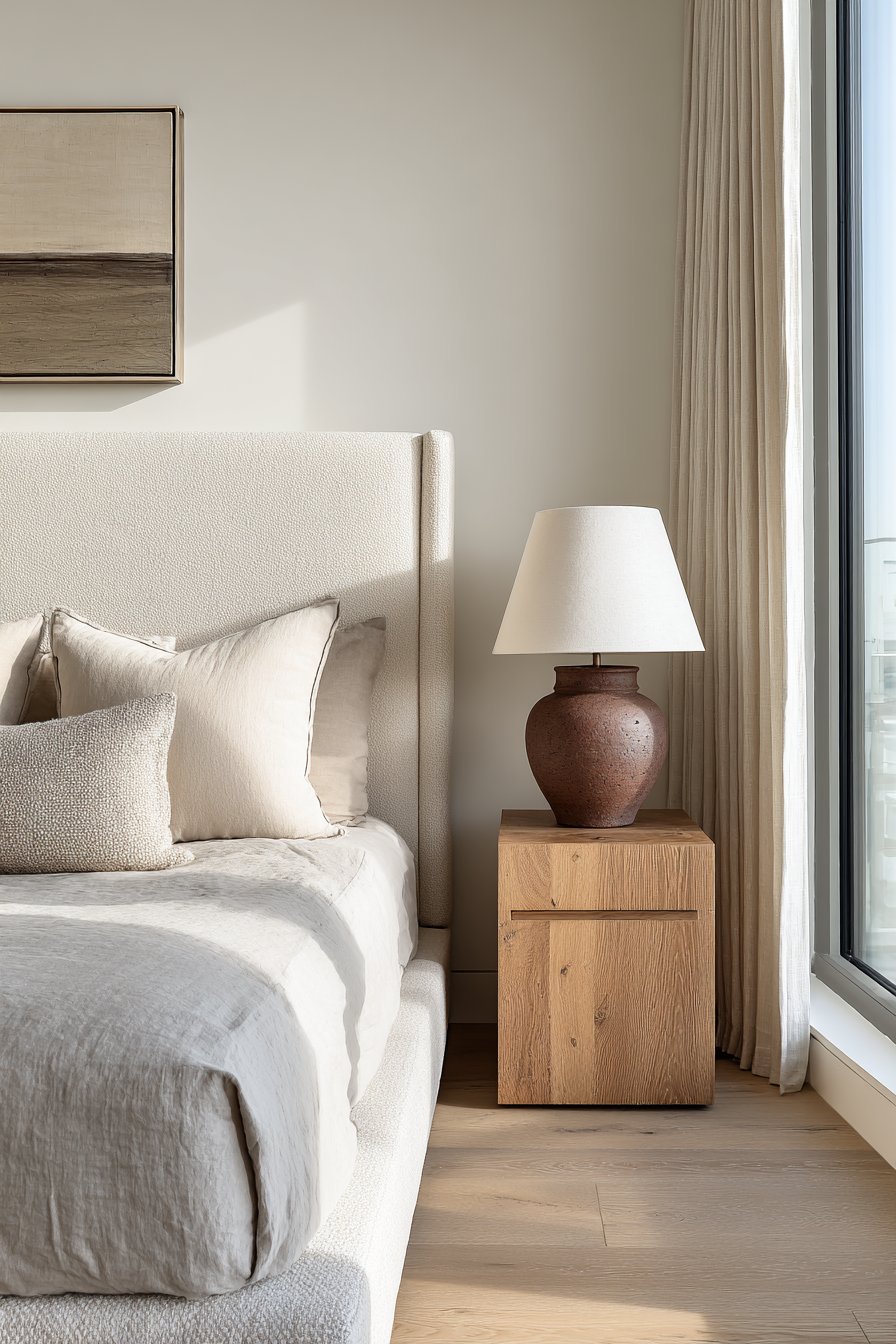
The foundation of this serene bedroom centers on a low-profile platform bed with a linen upholstered headboard in soft ivory. This piece embodies the essence of minimalist design philosophy.
The clean lines and neutral tones create a visual anchor without overwhelming the space. Organic cotton bedding in muted cream and pale grey layers beautifully across the mattress. Each textile choice contributes to an overall sense of calm sophistication.
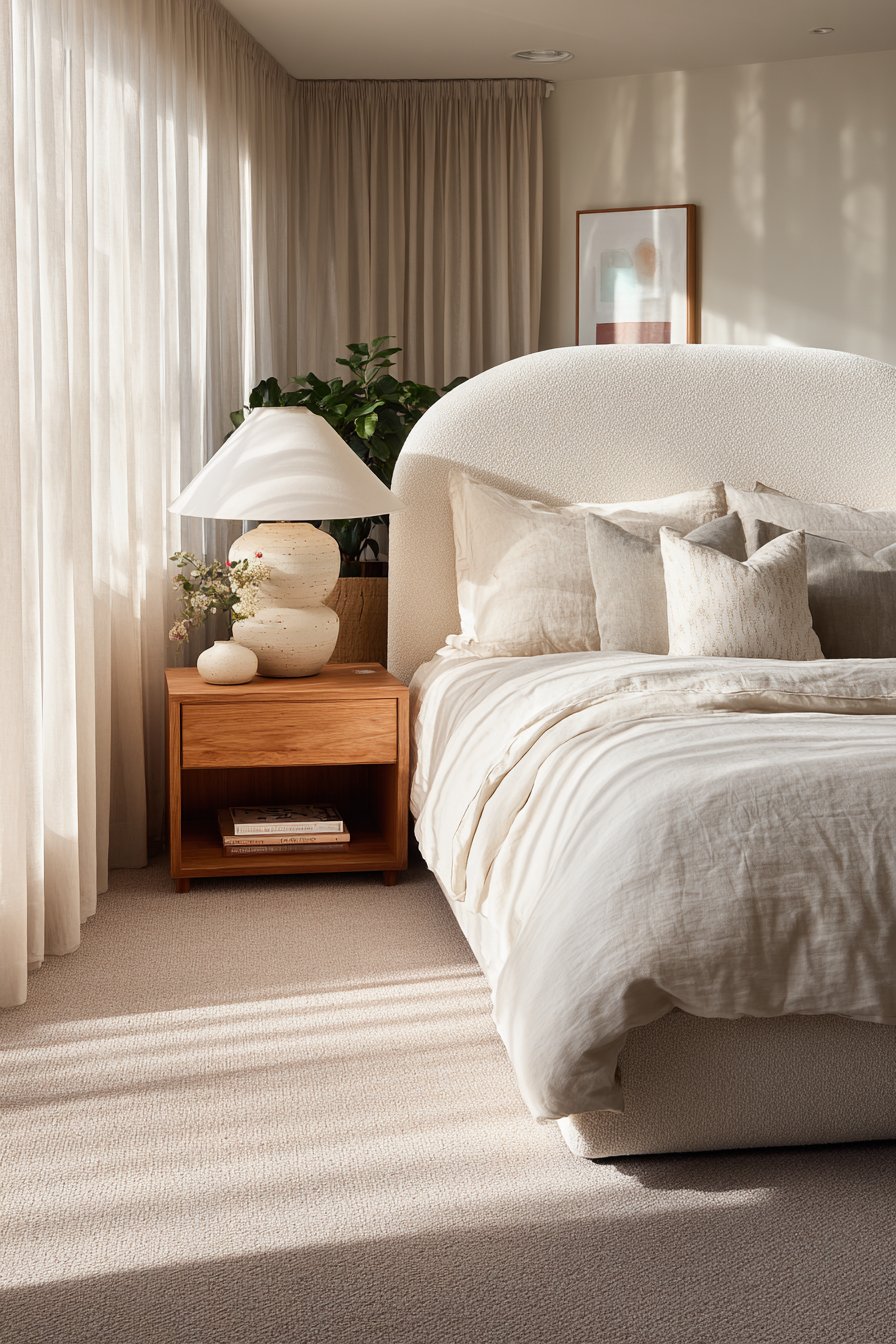
Natural morning light filters through sheer linen curtains, creating an ethereal quality throughout the room. The fabric’s subtle weave allows privacy while maintaining a connection to the outside world.
This delicate balance between openness and seclusion defines truly calming spaces. The curtains move gently with air currents, adding subtle movement that feels meditative rather than distracting.
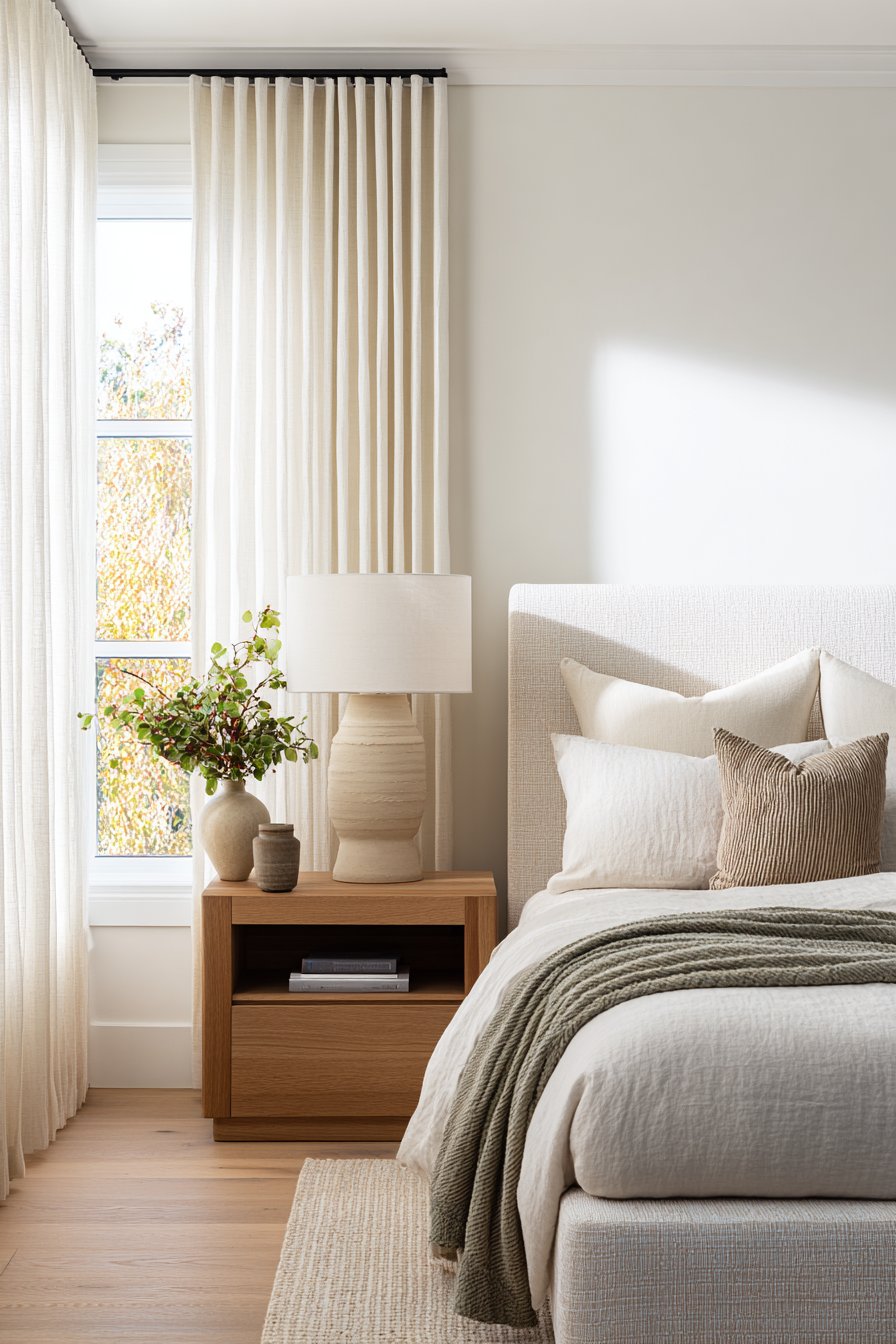
A simple wooden nightstand provides essential function without visual weight. Its clean construction and natural finish complement the room’s understated aesthetic perfectly. A ceramic table lamp with warm-toned bulb casts ambient light that feels welcoming and gentle. This thoughtful lighting choice supports evening relaxation rituals and peaceful morning awakenings.
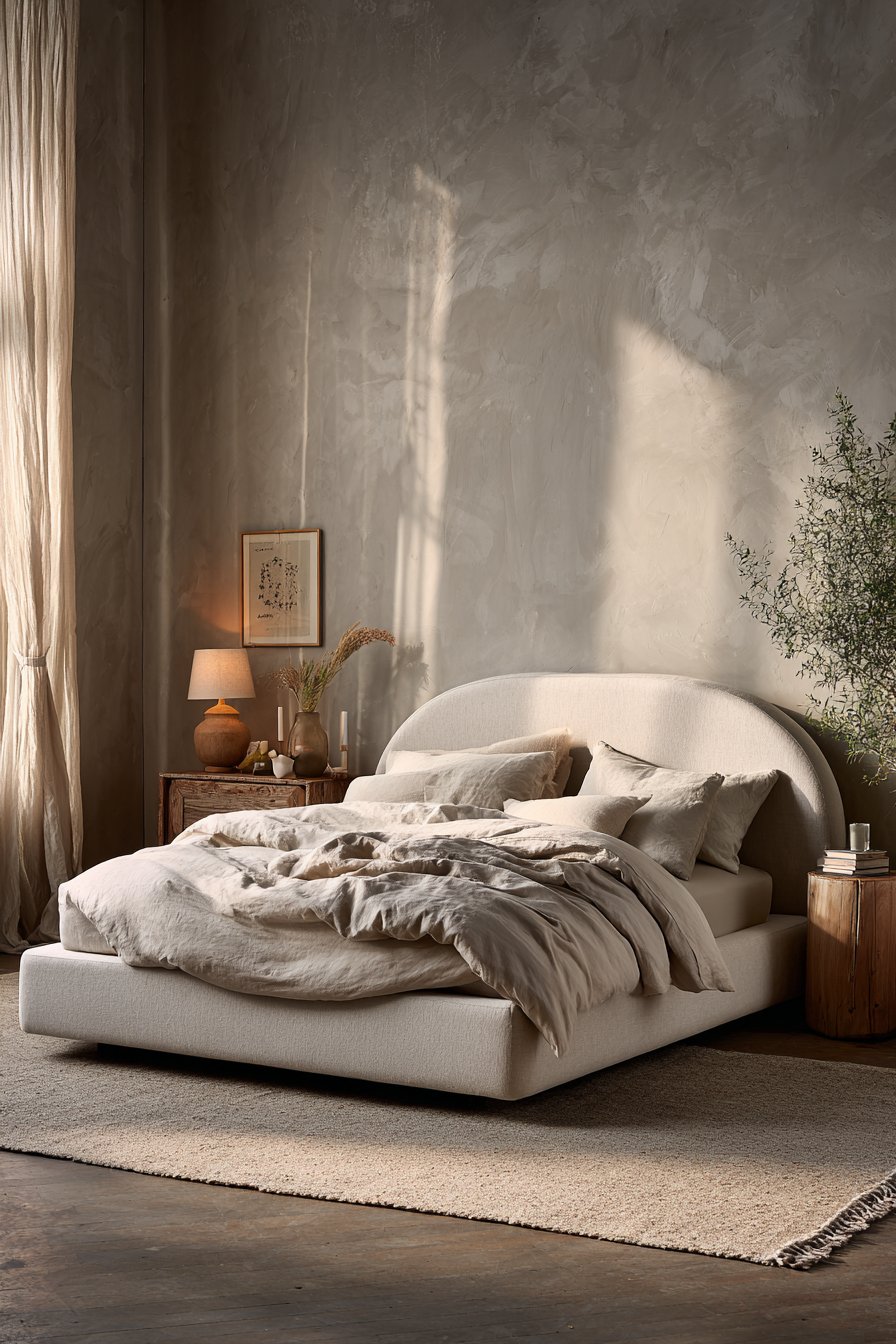
The subtle texture variations within the neutral palette create visual interest without complexity. Different weaves and finishes catch light differently throughout the day. This dynamic quality keeps the space feeling alive while maintaining its fundamental simplicity. Soft shadows add depth without creating harsh contrasts that might disrupt the peaceful atmosphere.
Key Design Tips:
- Choose a platform bed with clean lines to establish a minimalist foundation
- Layer organic cotton bedding in multiple neutral tones for visual depth
- Install sheer linen curtains to filter natural light softly
- Select one statement lamp with warm ambient lighting
- Maintain a strict neutral palette across all textiles and surfaces
- Eliminate unnecessary furniture to maximize open floor space
- Use texture variation rather than color to create interest
2. Tranquil Reading Nook Retreat
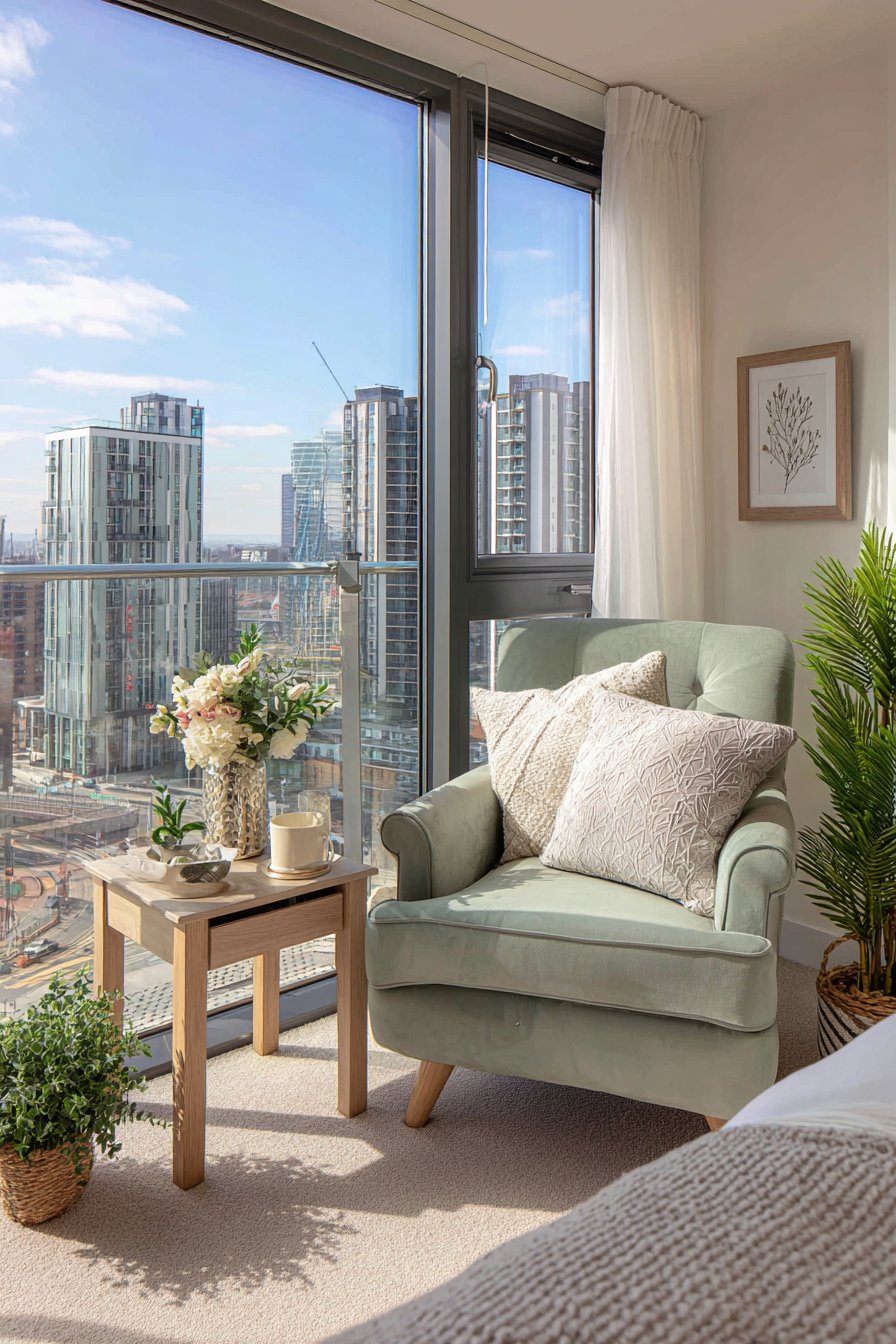
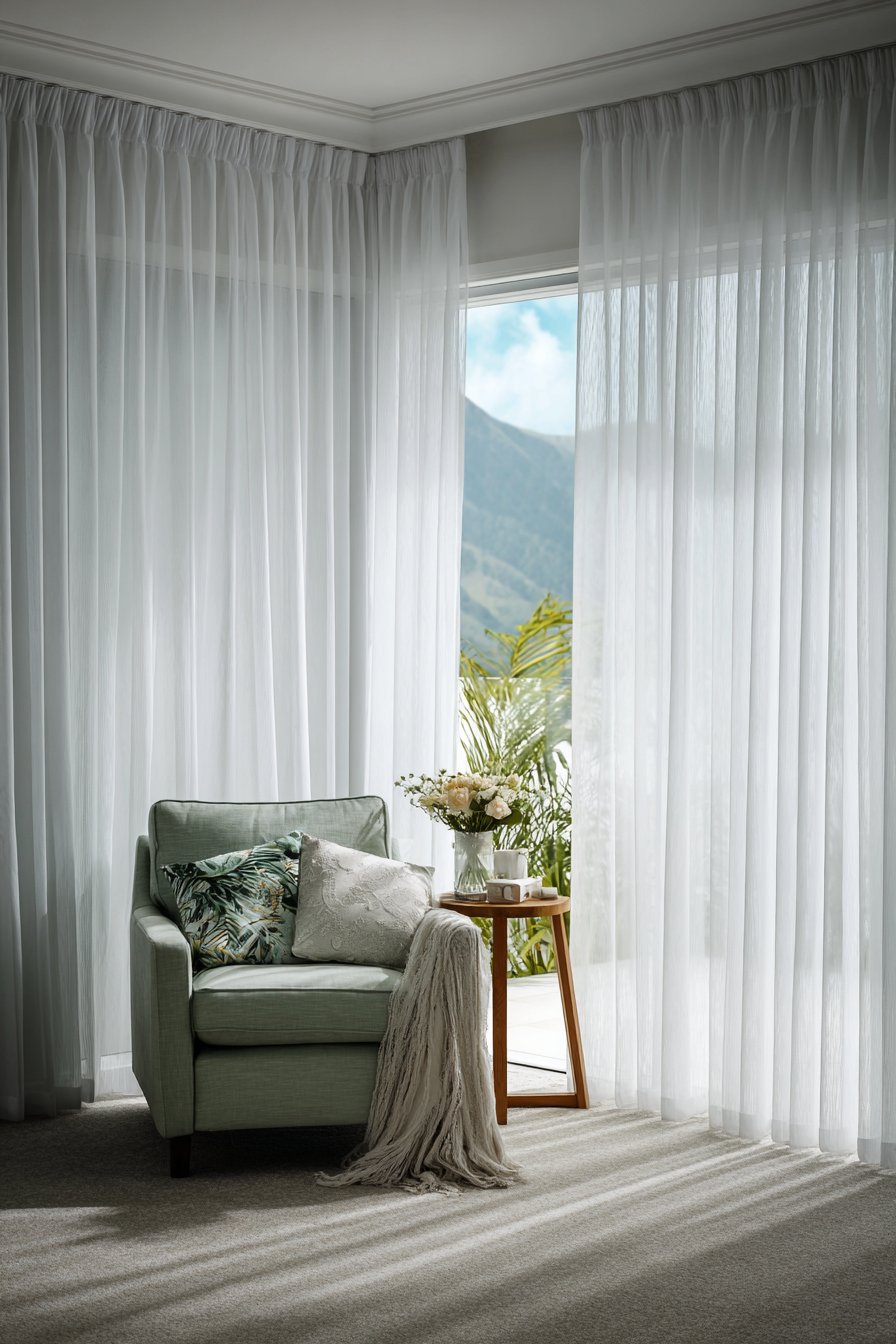
This bedroom design features a dedicated reading corner that transforms a simple window area into a personal sanctuary. A comfortable upholstered armchair in pale sage green anchors the nook beside floor-to-ceiling sheer white curtains.
The chair’s gentle color introduces just enough variation to feel intentional without disrupting tranquility. This small accent of muted green connects the interior space with nature beyond the window.
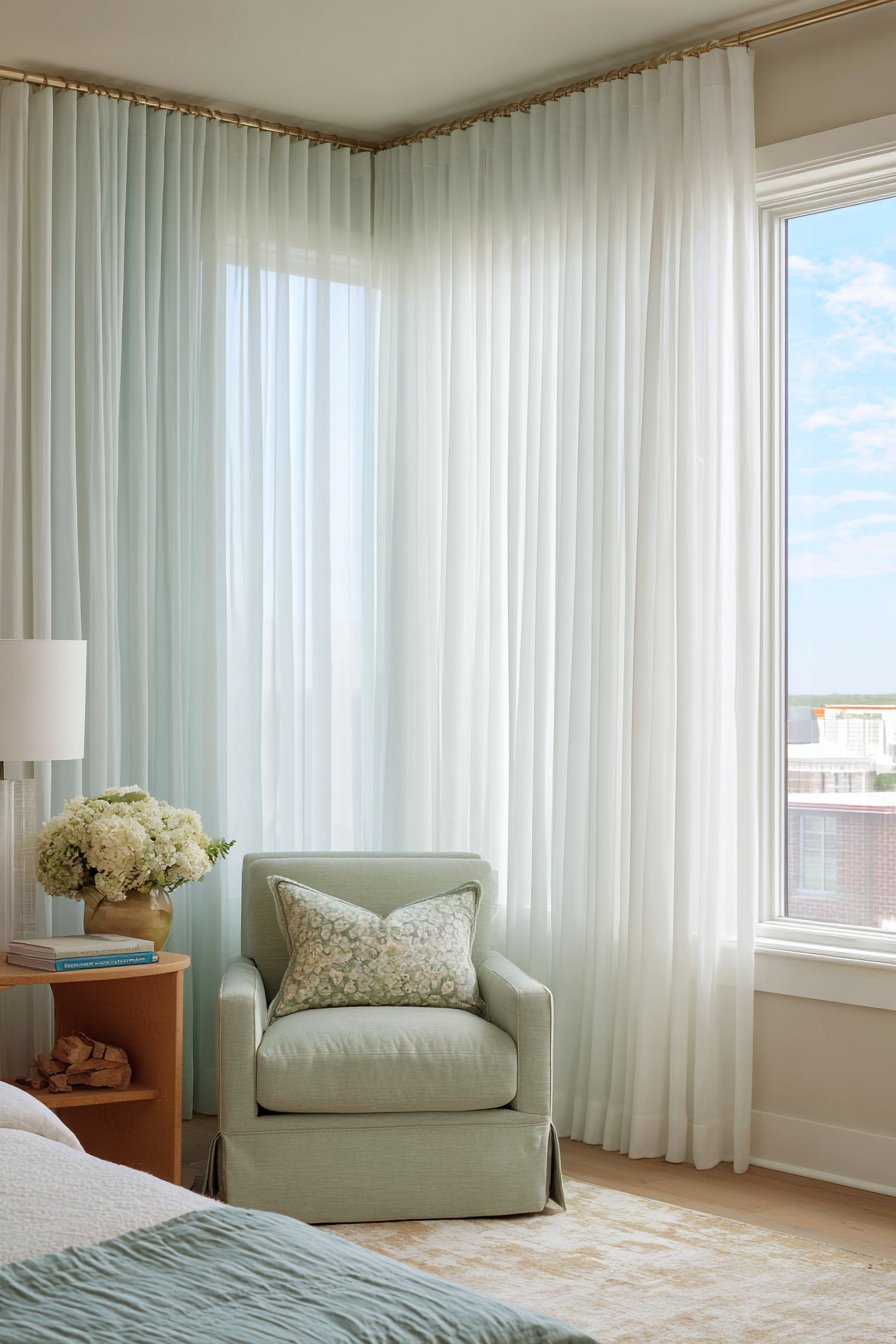
Natural light floods this corner throughout the day, creating an ever-changing atmosphere. Morning sun brings energizing brightness while afternoon light offers softer, more contemplative illumination.
The positioning near the window makes this the ideal spot for reading, meditation, or quiet reflection. A minimal oak side table provides surface space for books, tea, or a small potted plant.
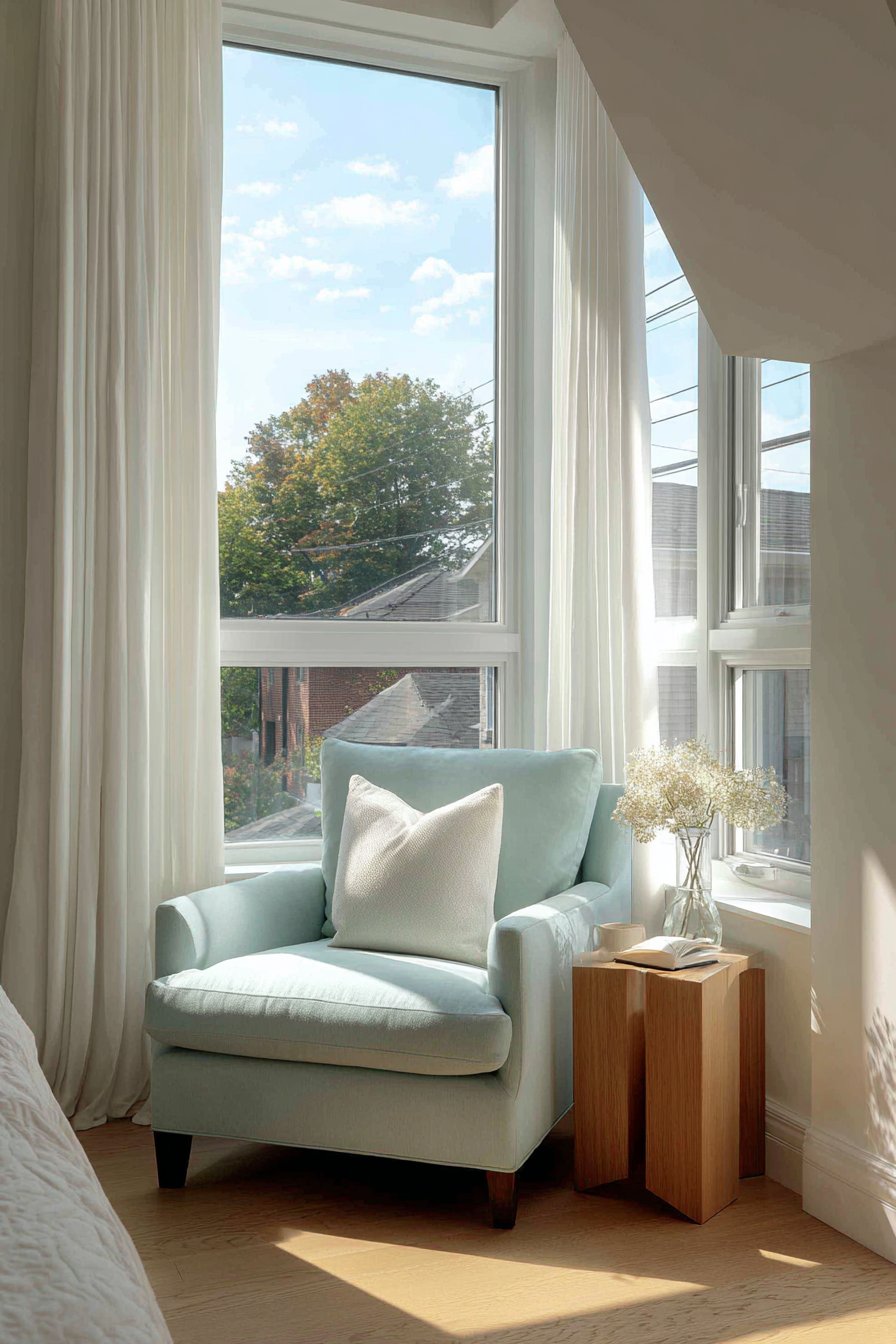
The reading nook functions as a transitional space within the larger bedroom. It offers a place to unwind before sleep or ease into the day upon waking. This dual-purpose area maximizes the bedroom’s functionality while maintaining its peaceful character. The thoughtful placement encourages mindful moments throughout your daily routine.
The pale sage green chair fabric introduces biophilic elements through color psychology. This soft green hue has proven calming effects on the nervous system. Combined with abundant natural light, the nook becomes a restorative micro-environment. The minimalist oak table keeps the area uncluttered and visually light.
Key Design Tips:
- Position seating near windows to maximize natural light exposure
- Choose upholstered furniture in soft sage or similar calming hues
- Install floor-to-ceiling curtains to enhance perceived room height
- Select minimal side tables that don’t interrupt sight lines
- Keep the nook uncluttered with only essential items
- Use this space for morning meditation or evening reading rituals
- Incorporate a small plant to strengthen the nature connection
3. Organized Serenity with Built-In Storage

Custom built-in storage solutions revolutionize bedroom tranquility by eliminating visual clutter at its source. This design features floor-to-ceiling closets with sliding frosted glass doors in a matte white finish.
The frosted glass conceals contents while allowing light to pass through, maintaining an airy feeling. This clever design choice provides complete organization without creating visual weight or darkness.

Open shelving displays neatly folded linens in calming neutral tones, creating an almost sculptural element. The organized stacks become part of the room’s aesthetic rather than hidden necessities.
This approach to visible storage requires discipline but rewards with ongoing visual peace. The neutral tones of displayed items reinforce the room’s cohesive color story.

A low-profile bed with a simple upholstered frame in light taupe anchors the sleeping area. Its minimal design complements rather than competes with the substantial built-in storage system. The bed’s low height maintains visual flow and prevents the space from feeling top-heavy. Soft diffused lighting highlights the clean lines throughout the room.
The functional organization system supports mental clarity and reduces daily decision fatigue. Everything has its designated place, making morning and evening routines effortless. This practical approach to bedroom design proves that functionality and serenity can coexist beautifully. The clutter-free environment directly supports better sleep quality and reduced stress.

Key Design Tips:
- Invest in custom built-ins that maximize vertical storage space
- Choose frosted glass doors to conceal contents while maintaining lightness
- Display only neatly folded items in neutral colors on open shelves
- Select a low-profile bed frame to balance substantial storage elements
- Install soft diffused lighting to highlight clean architectural lines
- Organize belongings by category for easier maintenance
- Use uniform hangers and storage containers for visual consistency
4. Natural Materials and Earthy Grounding

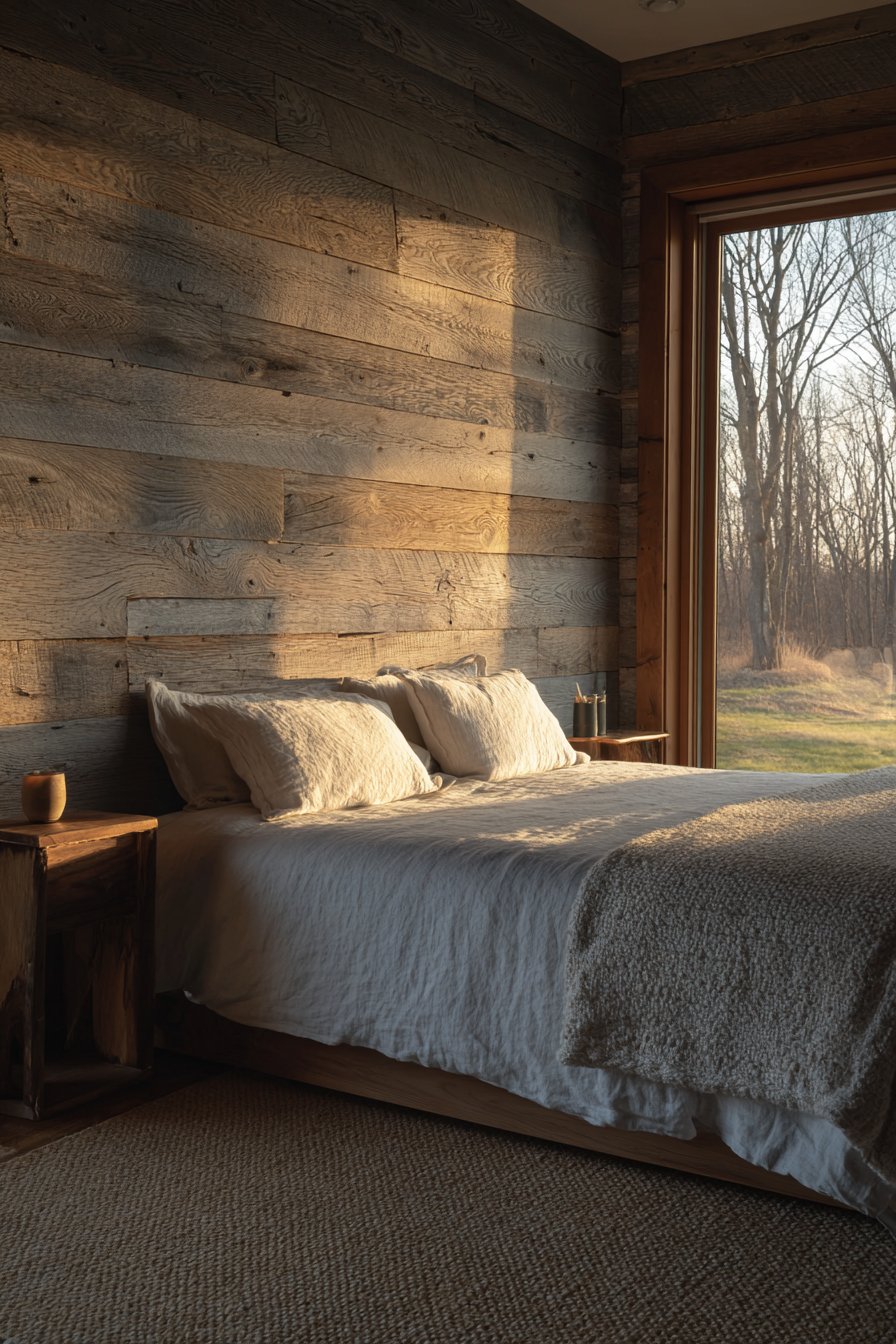
A reclaimed wood accent wall creates a stunning focal point behind the bed in this nature-inspired bedroom. The light weathered oak features visible grain patterns that tell stories of time and transformation.
This textural element adds organic warmth while maintaining the calm color palette. The natural imperfections in reclaimed wood bring authenticity and character to the space.

Belgian linen sheets in soft white dress the bed with effortless elegance and breathable comfort. A chunky knit throw in oatmeal drapes across the foot, adding tactile richness.
These natural fiber textiles regulate temperature while providing sensory pleasure. The combination of smooth linen and textured knit creates an appealing contrast.

A jute area rug grounds the space literally and figuratively, adding organic texture underfoot. The neutral color and natural material reinforce the earthy aesthetic throughout the room. Walking barefoot on natural fibers creates a grounding sensory experience. This connection to natural materials has documented stress-reducing benefits.
Golden hour natural light streams through windows, creating warm highlights on wood textures and fabric weaves. The interplay between natural light and natural materials generates an almost magical quality. Different times of day reveal new details in the wood grain and textile patterns. This dynamic relationship with natural light makes the space feel alive and connected to nature’s rhythms.
Key Design Tips:
- Install a reclaimed wood accent wall for organic warmth and texture
- Choose Belgian linen bedding for breathable luxury and effortless style
- Layer different natural fiber textiles for tactile variety
- Add a jute or sisal area rug to ground the space
- Position the bed to maximize natural light exposure
- Select light-toned woods to maintain airiness while adding warmth
- Embrace natural imperfections as design features rather than flaws
5. Smart Small Space Serenity

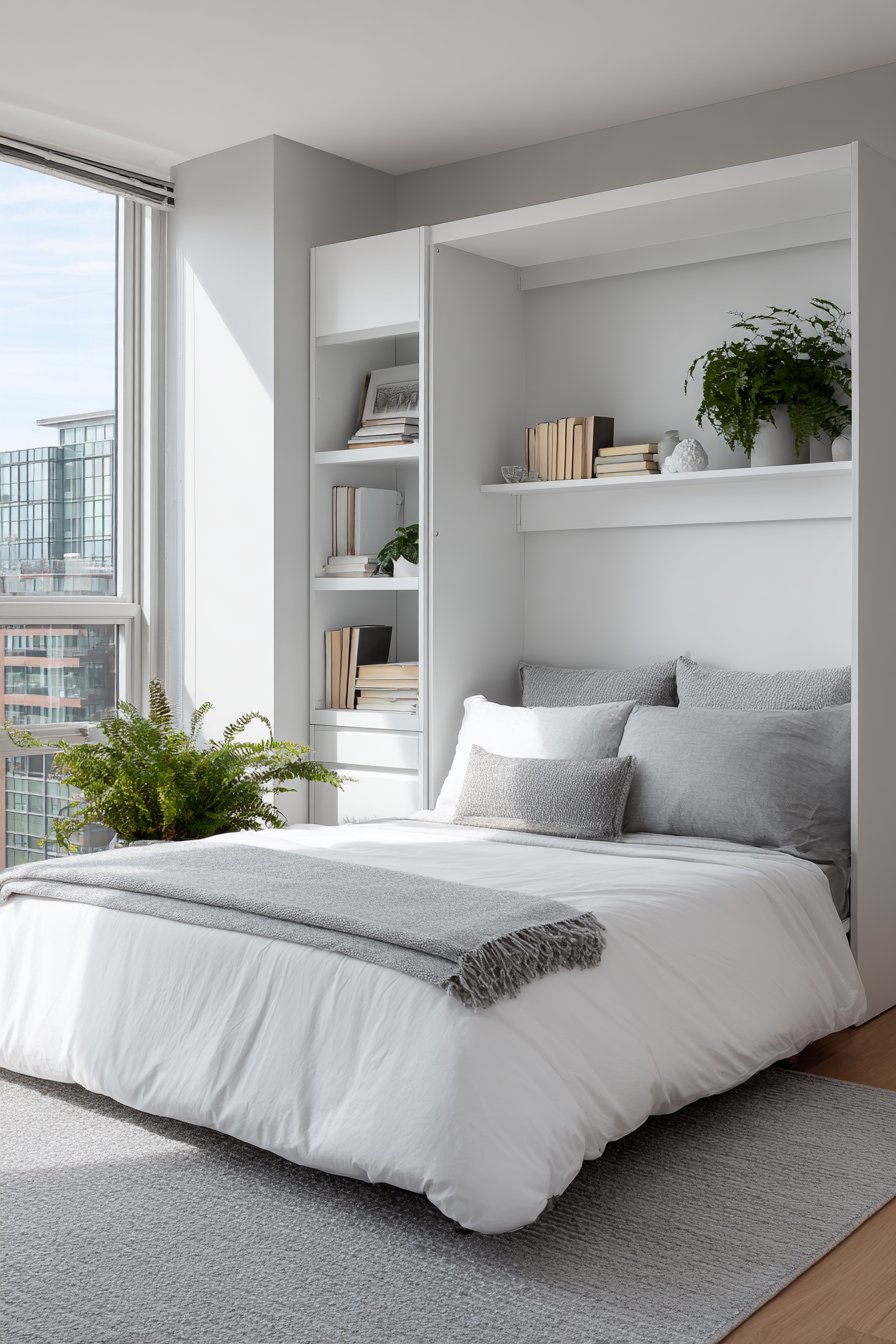
Compact bedrooms require intelligent design solutions that maximize functionality without sacrificing tranquility. A murphy bed with integrated nightstand shelving in light ash wood transforms this small space into a versatile sanctuary.
During the day, the bed folds away to create open floor space for yoga, meditation, or movement. This flexibility prevents the small room from feeling cramped or single-purpose.
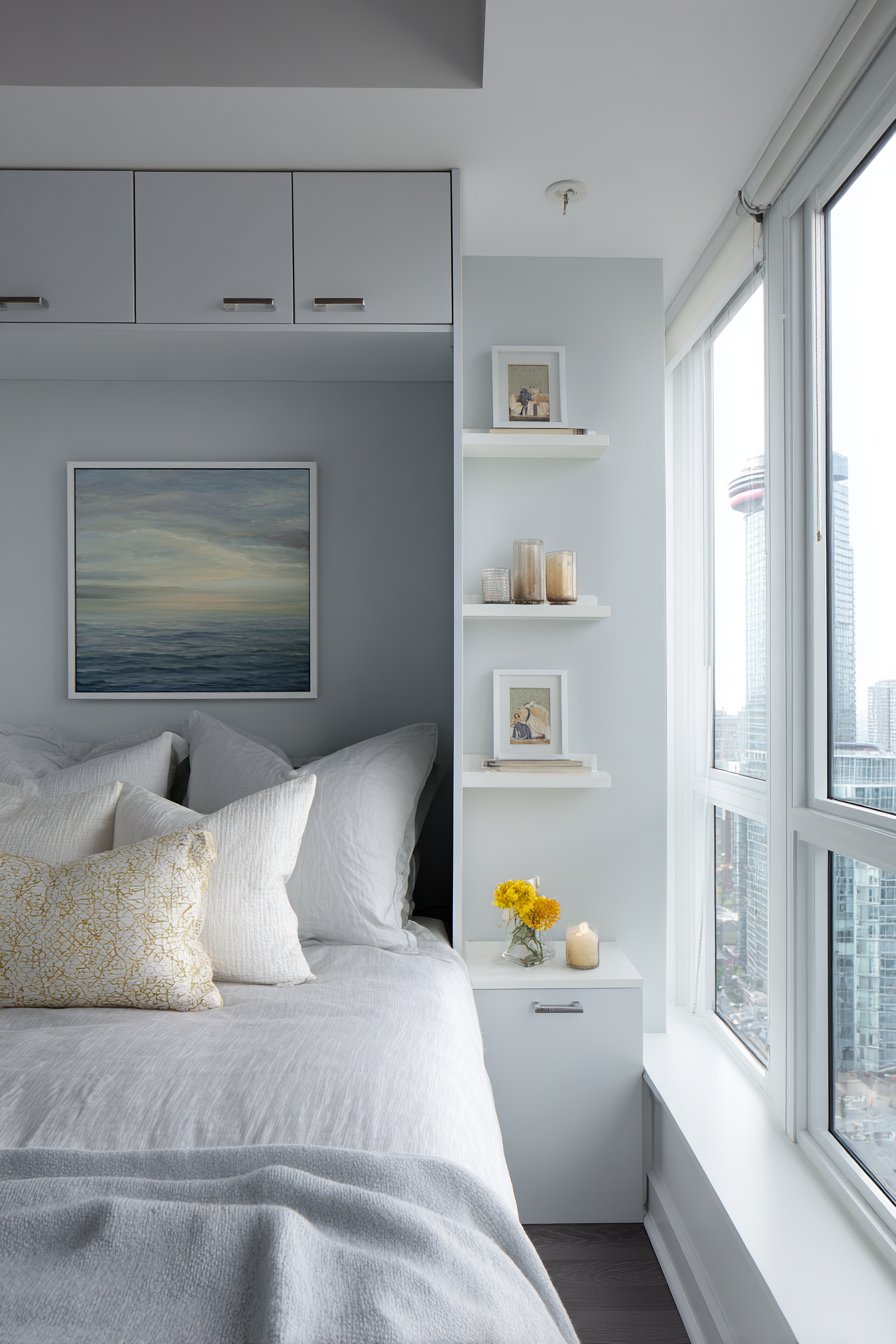
The monochromatic palette of soft whites and warm greys expands the perceived space through visual continuity. Limiting color variation reduces visual complexity, making the room feel larger and more peaceful.
Light colors reflect available light, maximizing brightness in the compact area. This strategic color choice proves essential for small bedroom success.
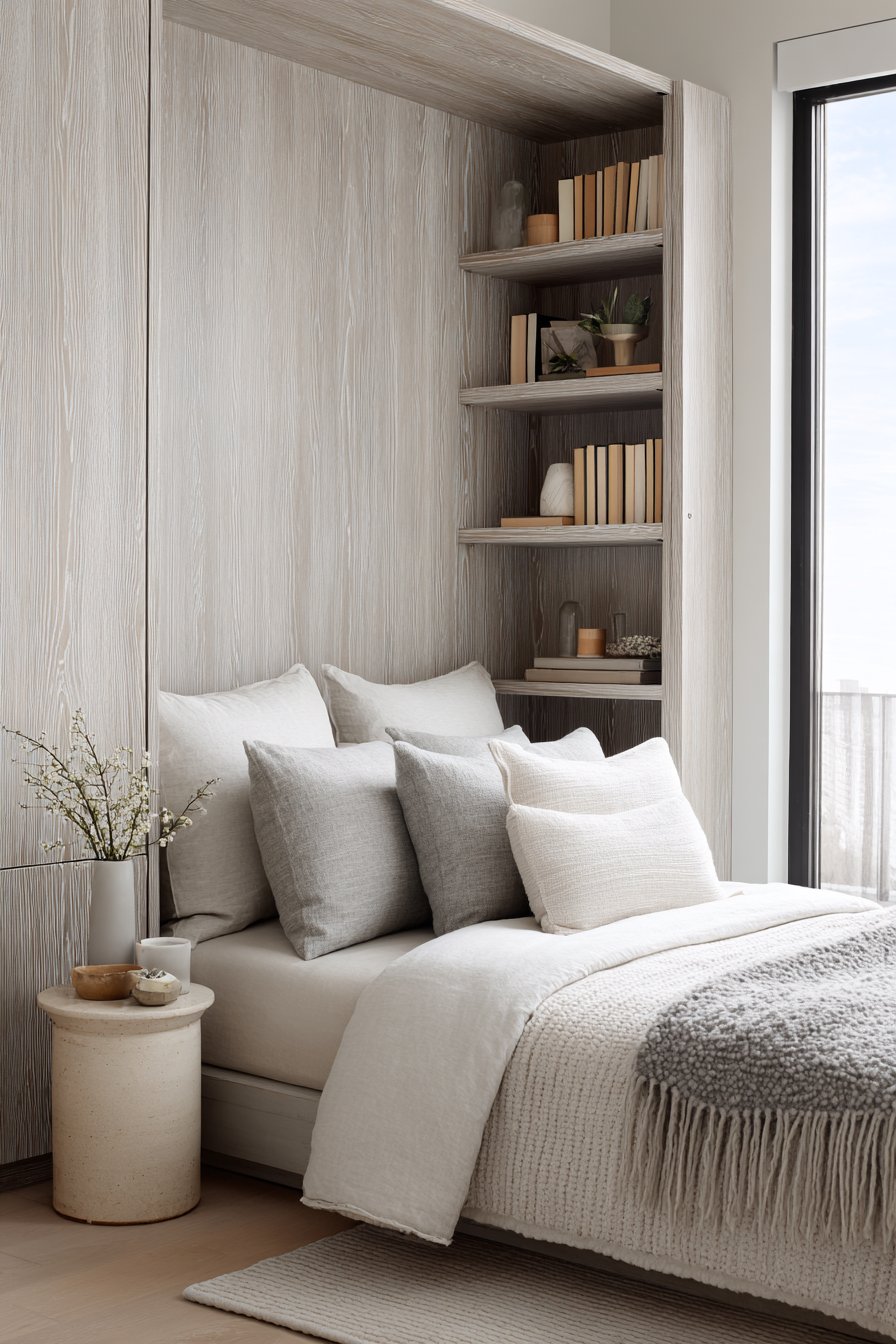
Floating wall-mounted storage keeps the floor completely clear, enhancing the sense of spaciousness. The visual trick of elevated storage creates the illusion of more square footage. This approach also simplifies cleaning and maintains the uncluttered aesthetic. Every design decision in this space prioritizes both function and serenity.
Natural daylight emphasizes the airy, uncluttered feeling essential for small bedroom tranquility. Large windows or light-colored window treatments maximize light penetration. The intelligent space planning proves that size doesn’t determine a bedroom’s capacity for calm. Thoughtful design creates serenity regardless of square footage.

Key Design Tips:
- Install a murphy bed to maximize daytime floor space
- Choose integrated furniture with multiple functions
- Maintain a strict monochromatic color palette to expand visual space
- Use floating wall-mounted storage to keep floors completely clear
- Maximize natural light with minimal window treatments
- Limit furniture to absolute essentials only
- Keep surfaces clear and uncluttered at all times
6. Layered Lighting for Evening Tranquility
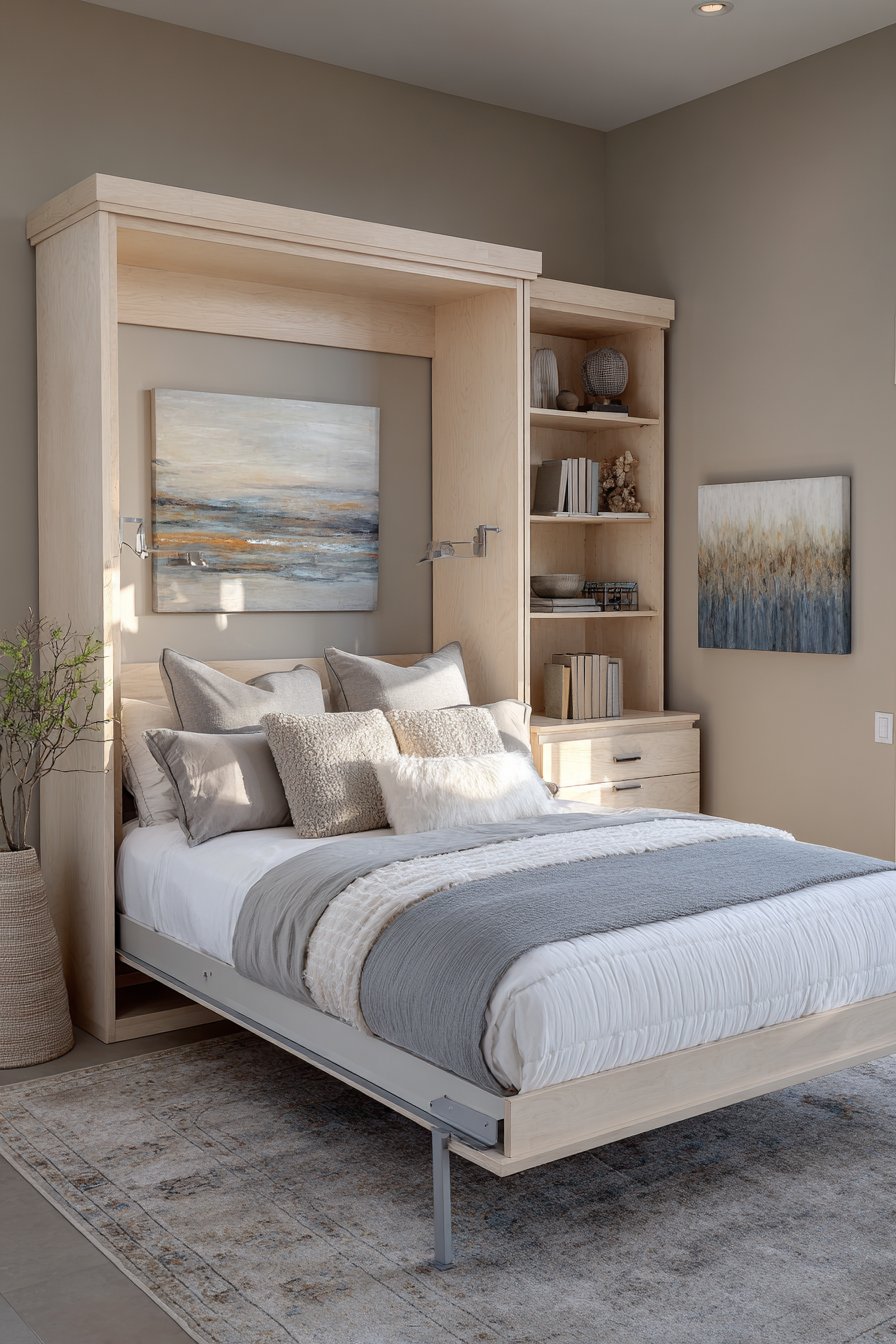
Sophisticated lighting design transforms this bedroom into a peaceful retreat that functions beautifully at any hour. Dimmable recessed ceiling lights provide adjustable ambient illumination for different activities and moods.
Wall-mounted reading sconces in brushed brass offer task lighting without requiring bedside table space. A statement pendant light with linen drum shade casts soft, diffused glow throughout the room.

The layered approach allows complete control over the evening atmosphere and energy level. Bright settings support activities like reading or organizing, while dimmed lights promote relaxation.
The ability to customize lighting throughout the evening supports healthy sleep preparation. This flexibility proves essential for creating a truly restorative bedroom environment.
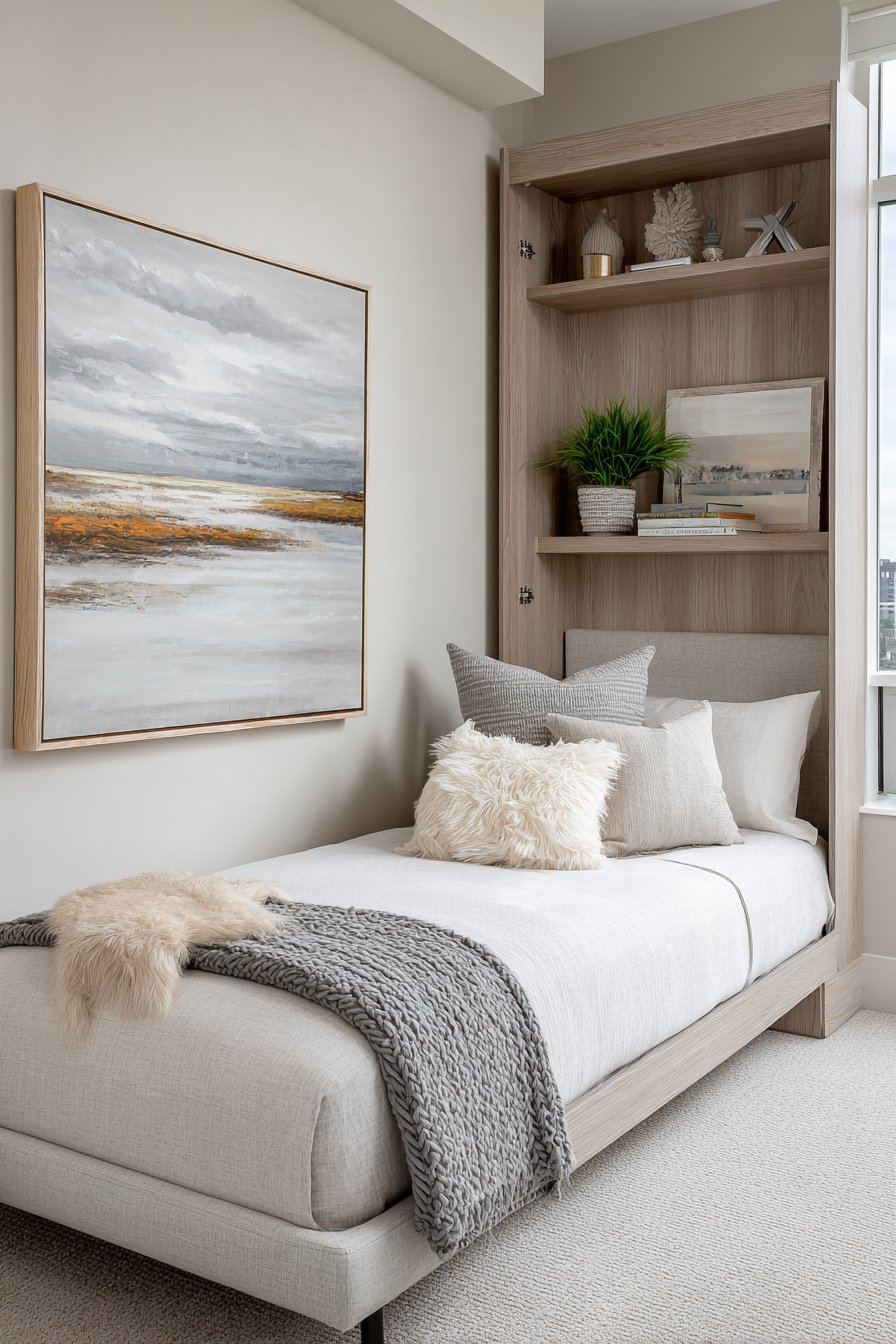
The neutral color scheme in warm whites and pale beige provides a perfect canvas for lighting effects. Light colors reflect and multiply illumination, reducing the need for excessive fixtures. The interplay between different light sources creates depth and visual interest. Gentle shadows add dimension without harsh contrasts.
Carefully balanced artificial lighting creates a peaceful, spa-like atmosphere during evening hours. Warm-toned bulbs prevent the harsh blue light that disrupts circadian rhythms. The thoughtful lighting design supports both practical needs and wellness goals. This bedroom demonstrates that technical considerations can enhance rather than compromise tranquility.
Key Design Tips:
- Install dimmable lights throughout for complete atmosphere control
- Layer three types of lighting: ambient, task, and accent
- Choose warm-toned LED bulbs to support natural circadian rhythms
- Position reading lights to eliminate the need for overhead lighting
- Select statement fixtures that function as sculptural elements
- Use linen or fabric shades to soften and diffuse light
- Create lighting scenes for different times and activities
7. Soothing Cool-Toned Color Palette
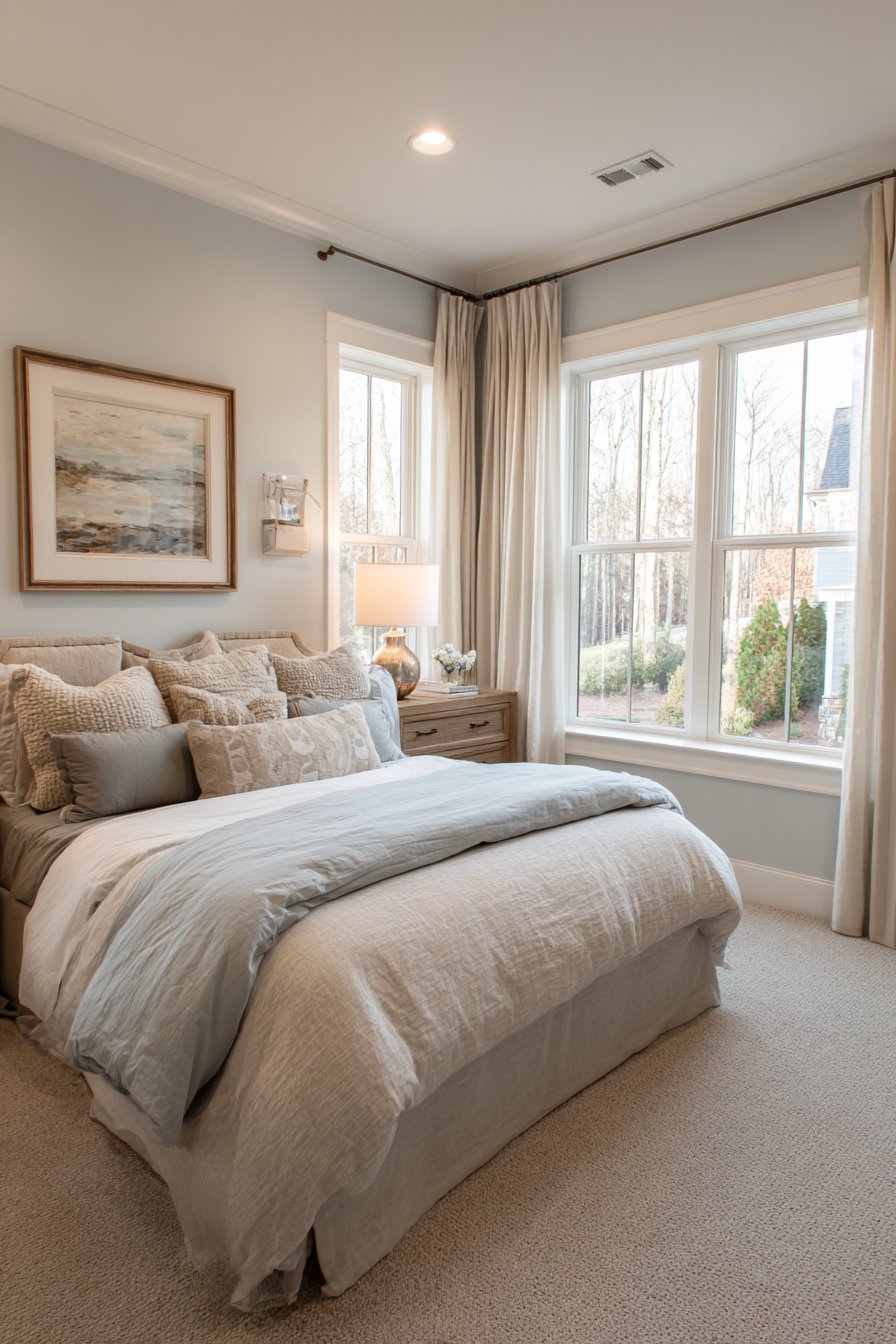
Pale blue-grey walls create the foundation for this restful bedroom design inspired by coastal and Scandinavian aesthetics. The cool-toned color has proven calming effects, reducing heart rate and promoting relaxation.
Crisp white trim and ceiling provide contrast while maintaining the light, airy feeling. This classic color combination feels timeless and universally appealing.

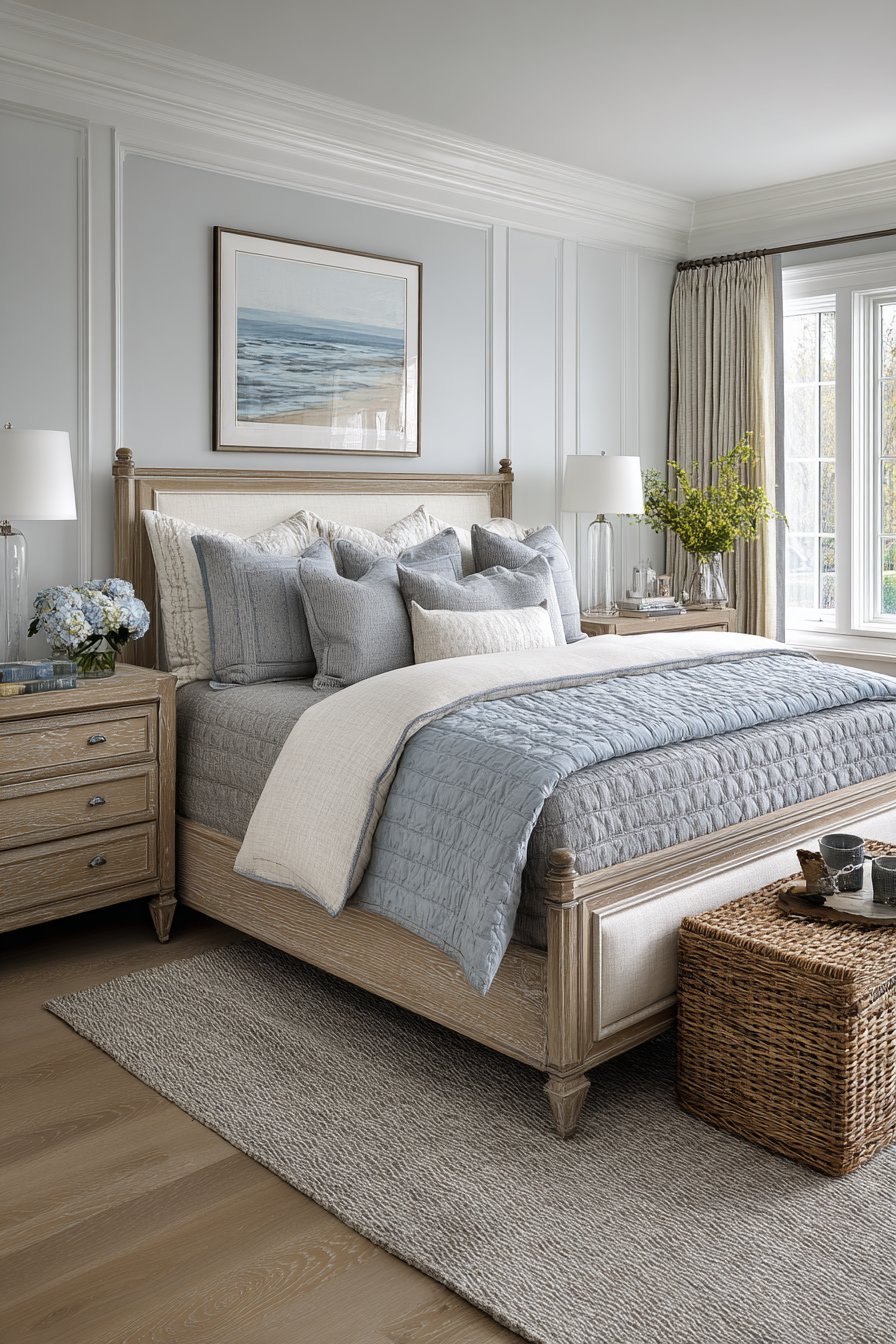
Layered bedding in complementary shades of slate blue, dove grey, and white adds depth through subtle variation. Each layer introduces textural interest through different fabric weaves and finishes.
The monochromatic approach prevents visual overstimulation while avoiding monotony. Subtle variations create a sophisticated, cohesive look that feels intentional.

Natural oak furniture introduces warmth that balances the cool wall color perfectly. The wood tones prevent the space from feeling cold or sterile. This strategic contrast demonstrates the importance of temperature balance in color schemes. The warm wood grounds the ethereal blue-grey in physical reality.
Soft natural lighting highlights the cohesive, restful color scheme throughout the day. Morning light enhances the blue undertones while evening sun brings out grey nuances. The interplay between cool and warm neutral tones creates visual interest through subtlety. This sophisticated approach to color proves that restraint often yields the most powerful results.
Key Design Tips:
- Choose pale blue-grey wall colors for proven calming effects
- Pair cool wall tones with crisp white trim for classic contrast
- Layer bedding in monochromatic variations of the wall color
- Introduce natural wood furniture to balance cool tones with warmth
- Use different fabric textures to create interest within a limited color palette
- Maintain consistency between the bedroom and connecting spaces
- Avoid introducing competing accent colors that disrupt cohesion
8. Biophilic Design with Natural Elements
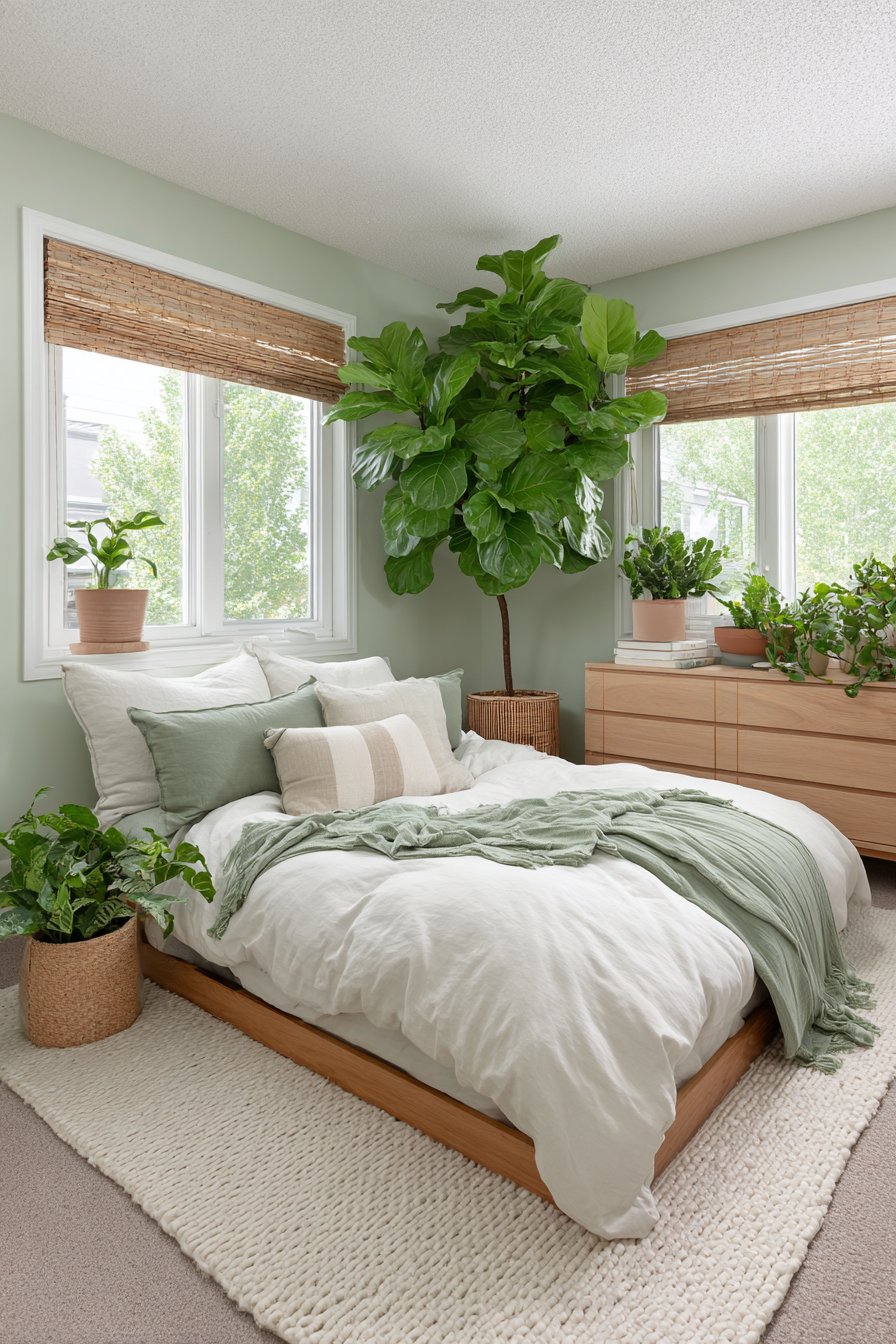
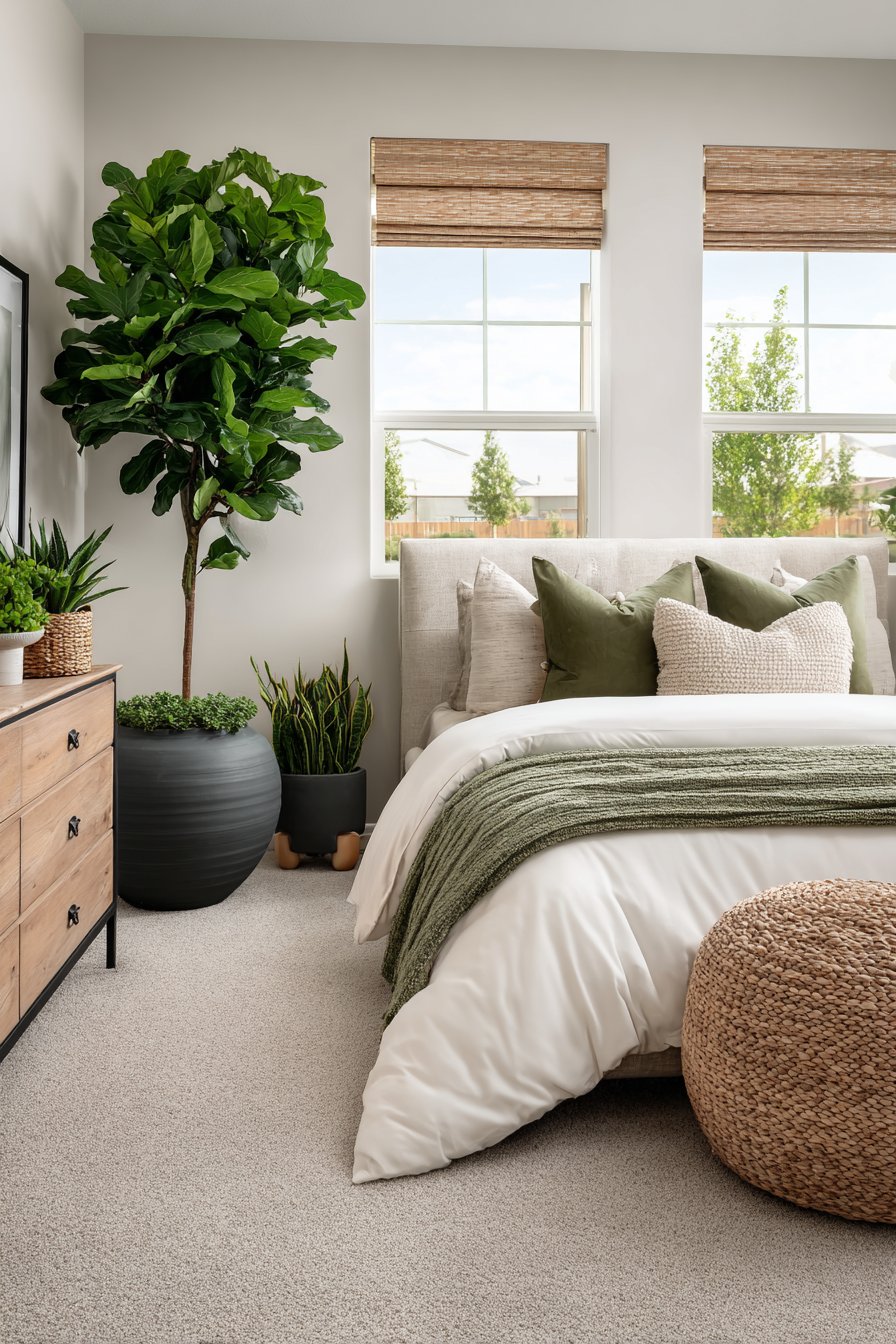
Indoor plants transform this bedroom into a living, breathing sanctuary connected to nature. A tall fiddle leaf fig in a ceramic planter commands attention while purifying the air.
Smaller potted succulents on the dresser add organic shapes at various heights. The strategic placement of greenery creates visual interest while supporting wellness through biophilic design principles.
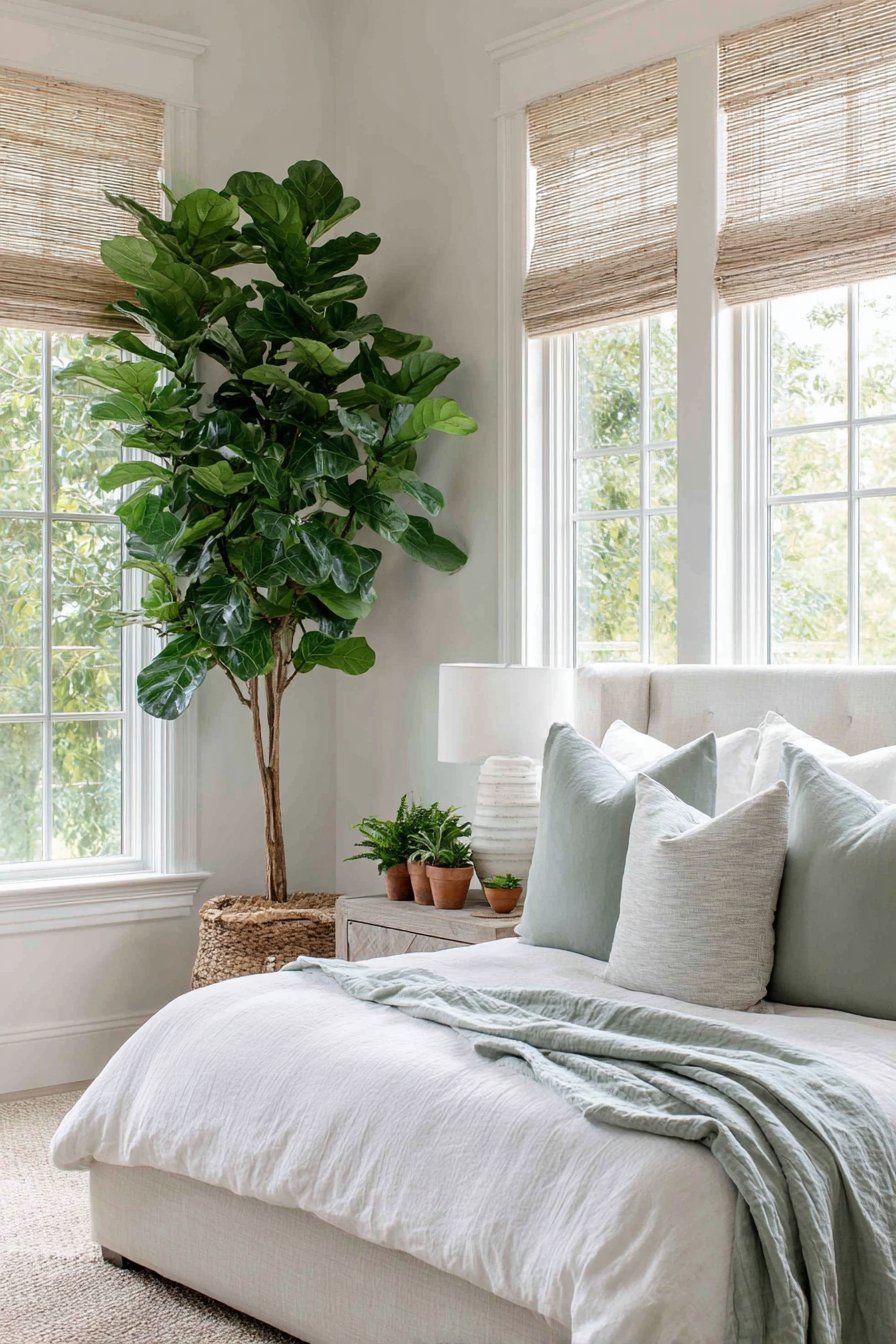
The low platform bed features organic cotton bedding in soft white with sage green accents. These natural fiber textiles complement the living plants while maintaining the calm aesthetic.
The sage green creates cohesion between the botanical elements and the sleeping area. This color connection helps integrate the plants into the overall design story.

Large windows with bamboo roman shades filter natural light while maintaining privacy when needed. The bamboo material reinforces the natural theme throughout the space. When raised, the shades allow maximum light for both human occupants and plant health. This consideration for plant needs demonstrates holistic design thinking.
The biophilic approach creates a peaceful, restorative environment that engages multiple senses. The sight of green leaves, the subtle earth scent, and even the gentle air movement all contribute to well-being. Research consistently shows that indoor plants reduce stress and improve air quality. This bedroom proves that wellness and beauty support each other naturally.
Key Design Tips:
- Select low-maintenance indoor plants suited to bedroom light conditions
- Position larger plants as sculptural focal points in corners
- Group smaller plants on surfaces for visual impact
- Choose planters in natural materials like ceramic or terracotta
- Ensure adequate natural light for plant health and human well-being
- Incorporate plant-inspired colors in textiles and accessories
- Research air-purifying plants to maximize health benefits
9. Luxurious Master Suite with Defined Zones
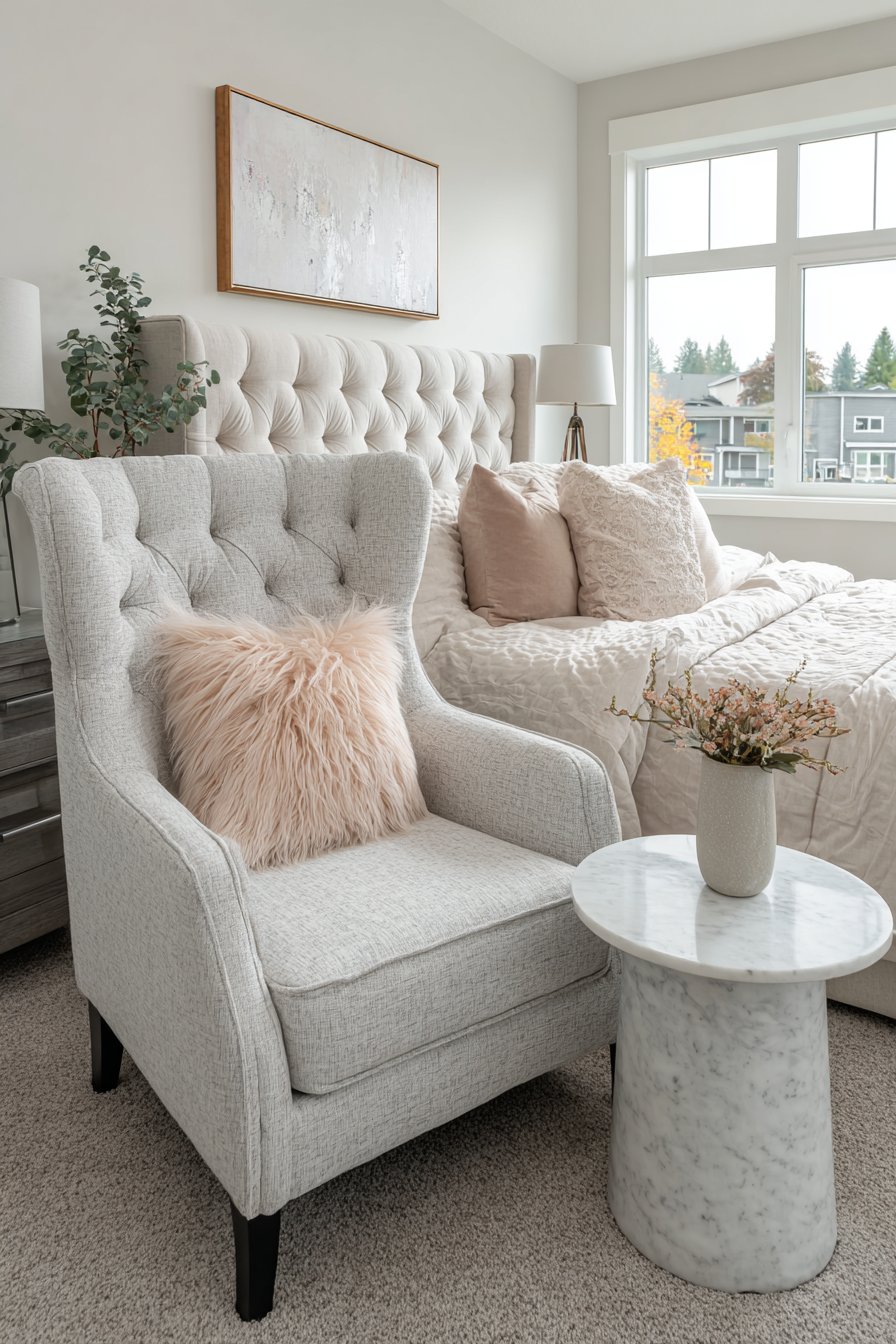
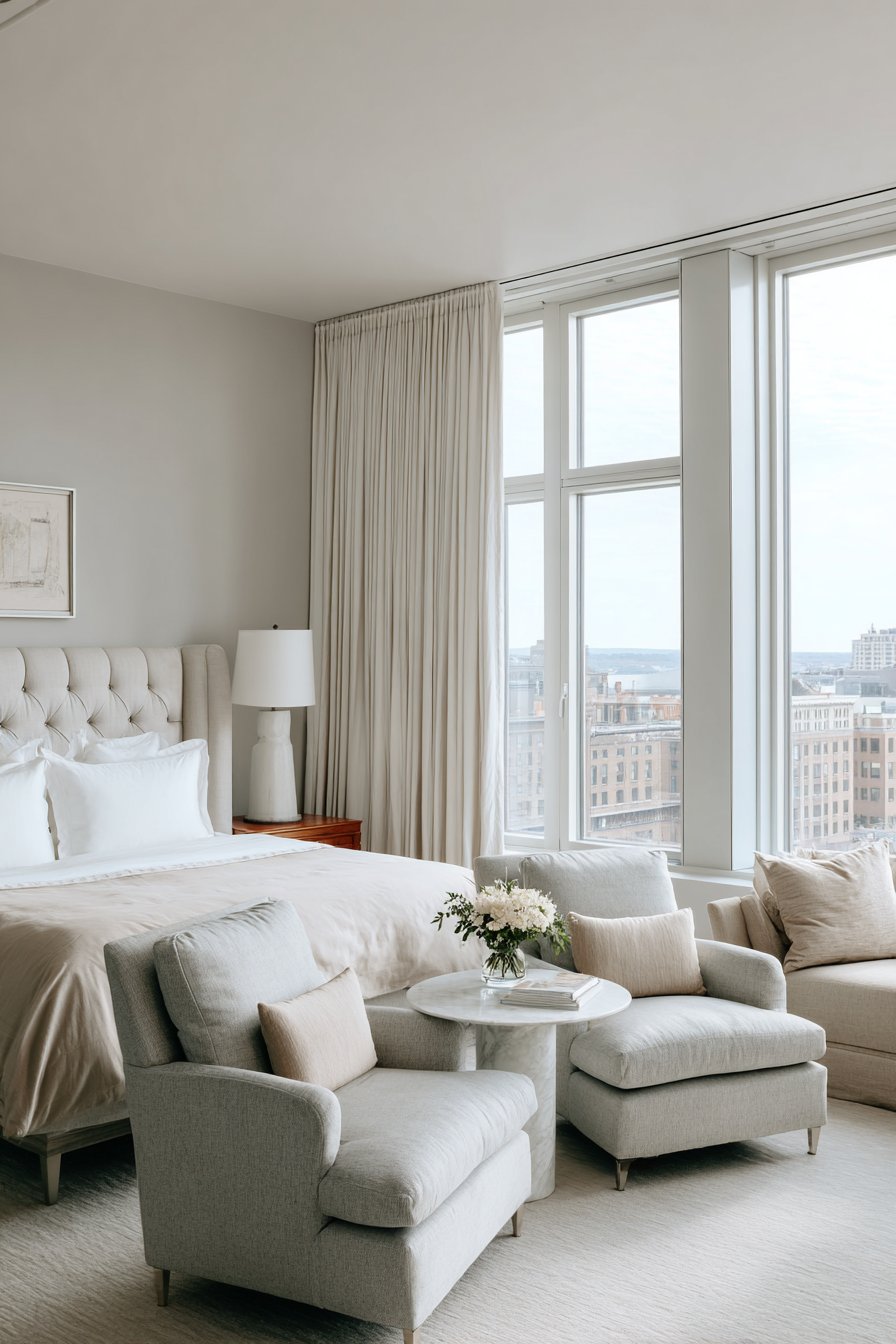
This spacious master bedroom creates distinct areas for sleeping and relaxation without sacrificing visual continuity. Two linen upholstered lounge chairs in pale grey flank a round marble side table, establishing an elegant sitting area.
This zone provides space for morning coffee, evening conversation, or quiet reading. The furniture’s refined materials and proportions create a hotel-inspired luxury feeling.
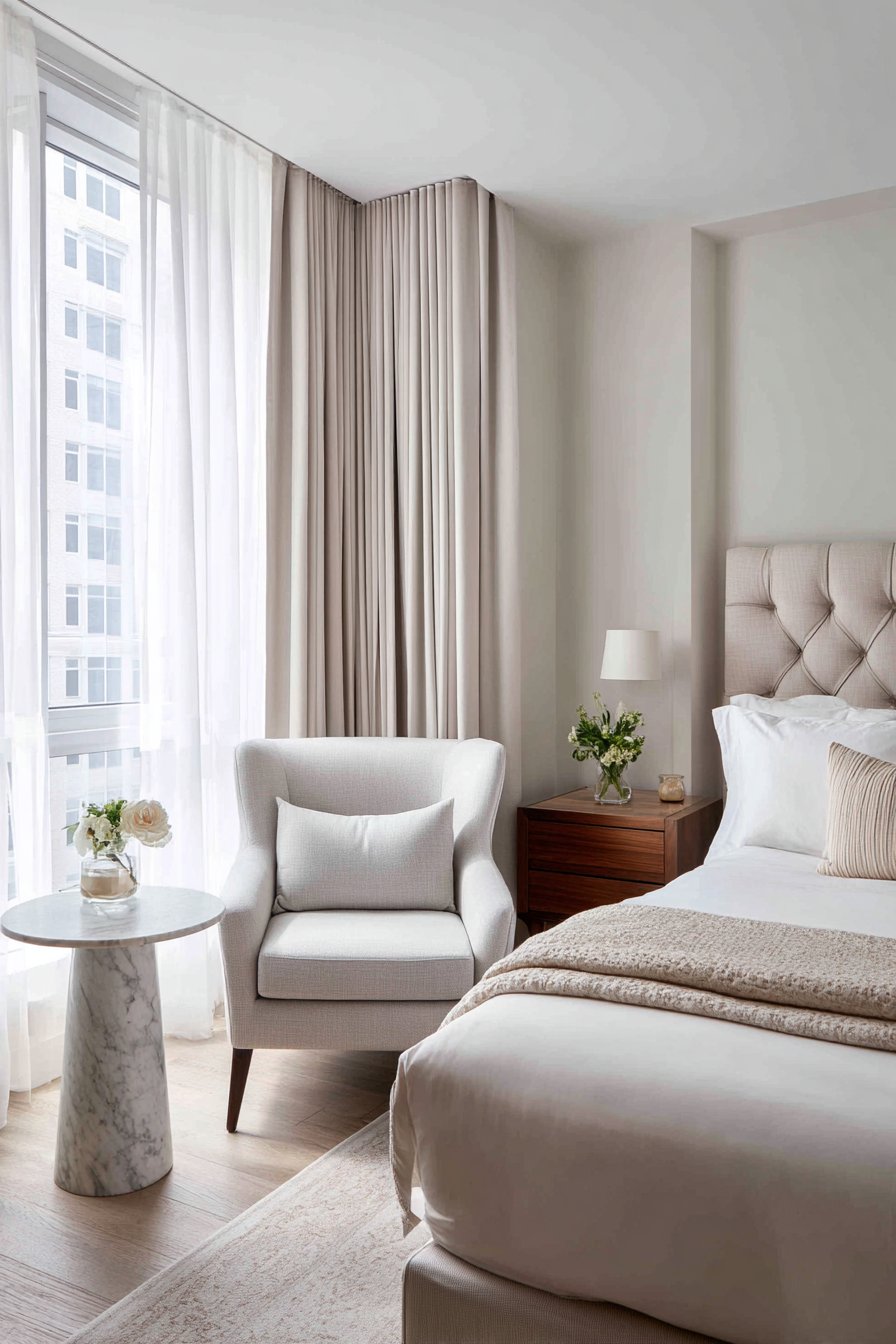
The sleeping area features a king bed with an elegant tufted headboard in natural linen. Luxurious bedding in muted champagne tones adds sophisticated warmth without disrupting the calm palette.
The larger scale of the king bed suits the generous room proportions. Careful attention to material textures prevents the neutral scheme from feeling flat.
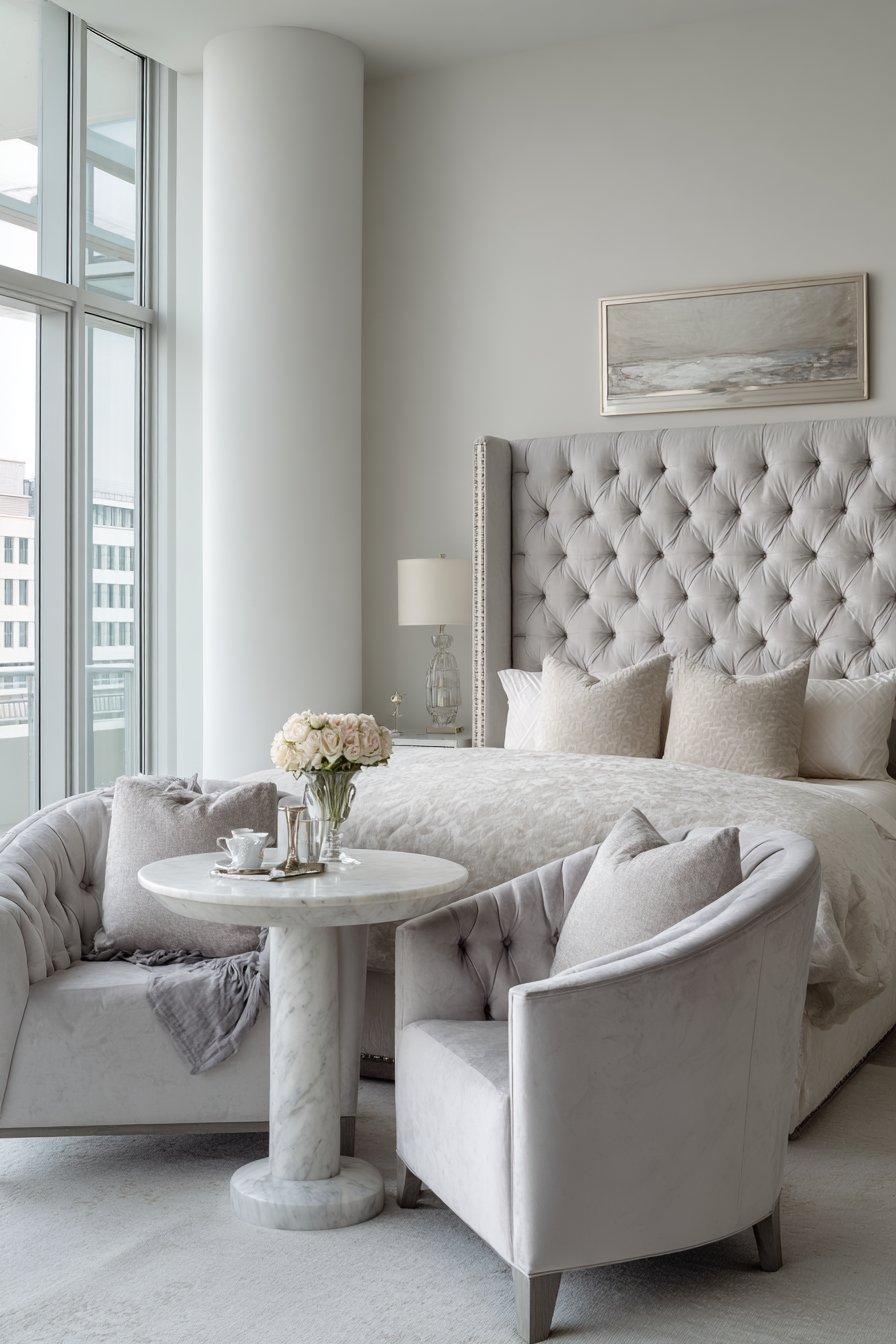
A soft area rug defines each functional zone while maintaining visual flow between them. The rug’s neutral tone and subtle pattern add grounding without creating visual boundaries. This approach to space definition feels sophisticated rather than segmented. The cohesive design allows easy movement between zones.
Abundant natural light creates a serene, sophisticated retreat with exceptional attention to detail. Multiple windows ensure even illumination throughout the day. The spacious layout allows natural light to penetrate deeply into the room. This master suite demonstrates how generous space can enhance rather than overwhelm tranquility.
Key Design Tips:
- Create distinct zones for sleeping and relaxation in larger bedrooms
- Use furniture placement rather than walls to define areas
- Choose upholstered pieces in coordinating neutral tones
- Incorporate luxurious materials like marble and linen strategically
- Define zones with area rugs while maintaining visual flow
- Scale furniture appropriately to room size
- Maximize natural light exposure throughout the space
10. Tactile Comfort Through Layered Textiles
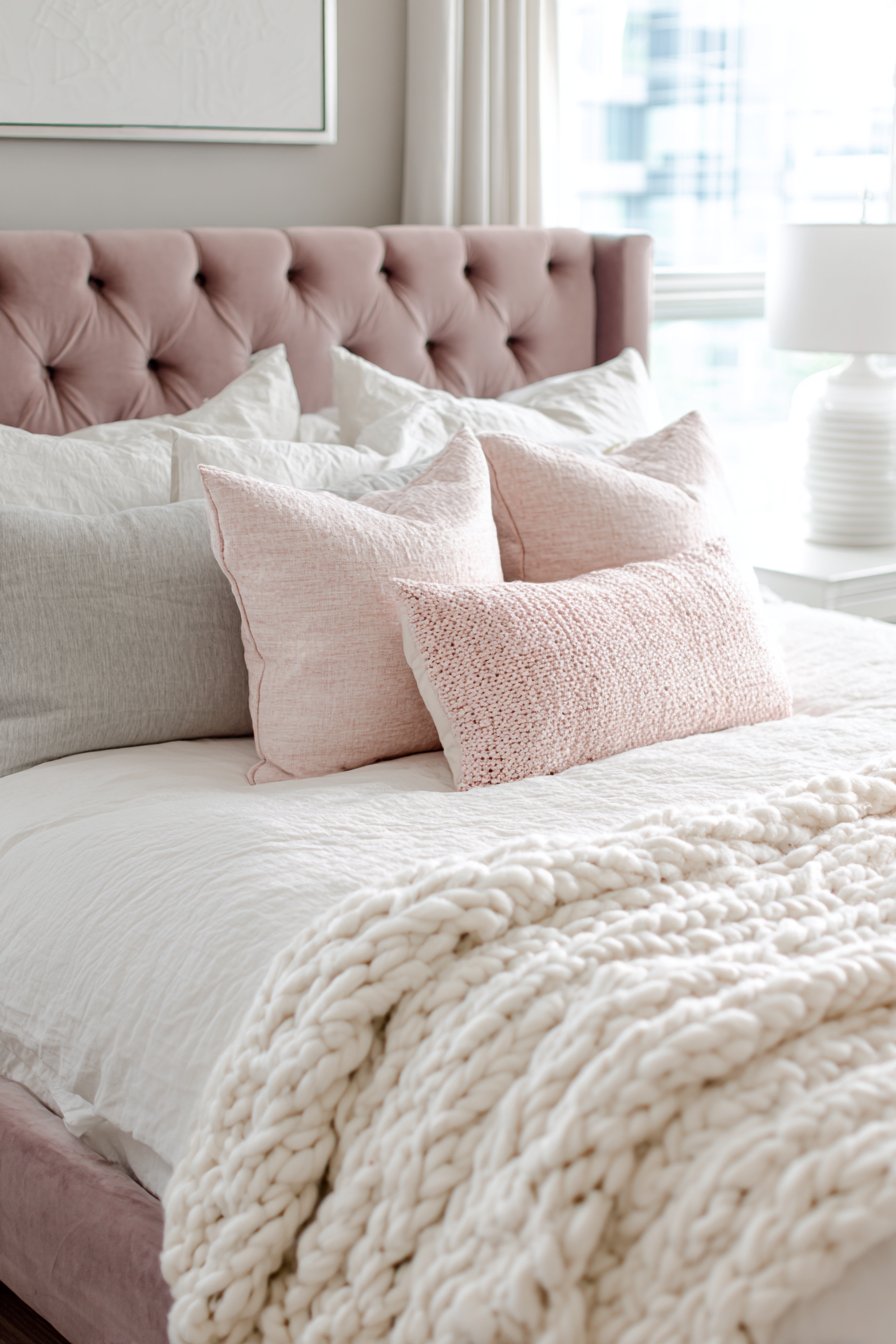
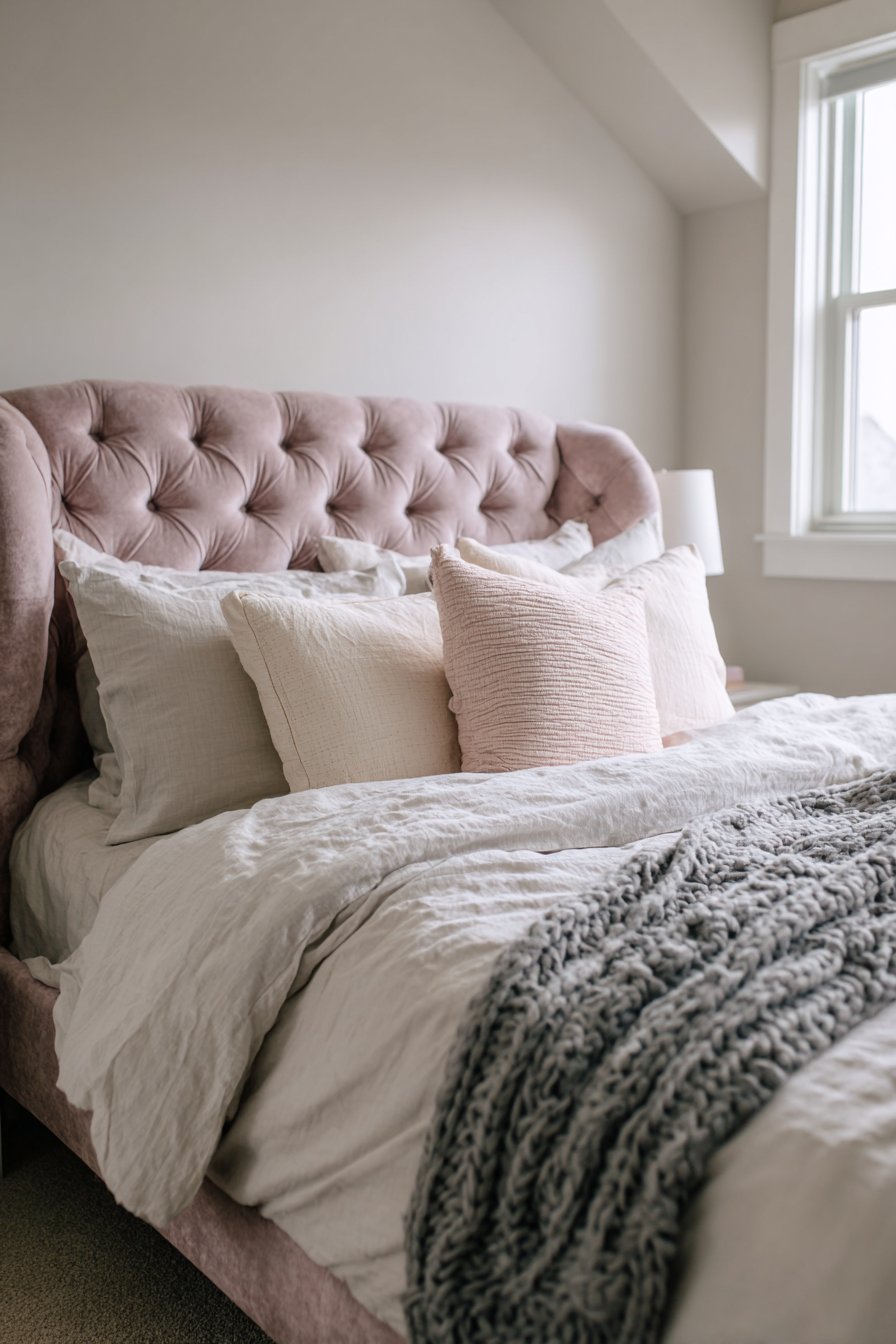
A plush velvet upholstered bed frame in dusty rose provides a stunning focal point that remains remarkably soothing. The muted pink tone reads as neutral rather than feminine or bold.
The velvet’s soft sheen catches light beautifully while offering luxurious comfort. This unexpected material choice proves that calm bedrooms can include rich, sensual elements.

Belgian linen sheets provide breathable comfort as the foundation layer. A lightweight cotton duvet adds versatile warmth without weight or bulk.
An assortment of throw pillows in complementary muted tones of blush, cream, and soft grey invites relaxation. Each pillow introduces different textures from smooth cotton to nubby linen weaves.
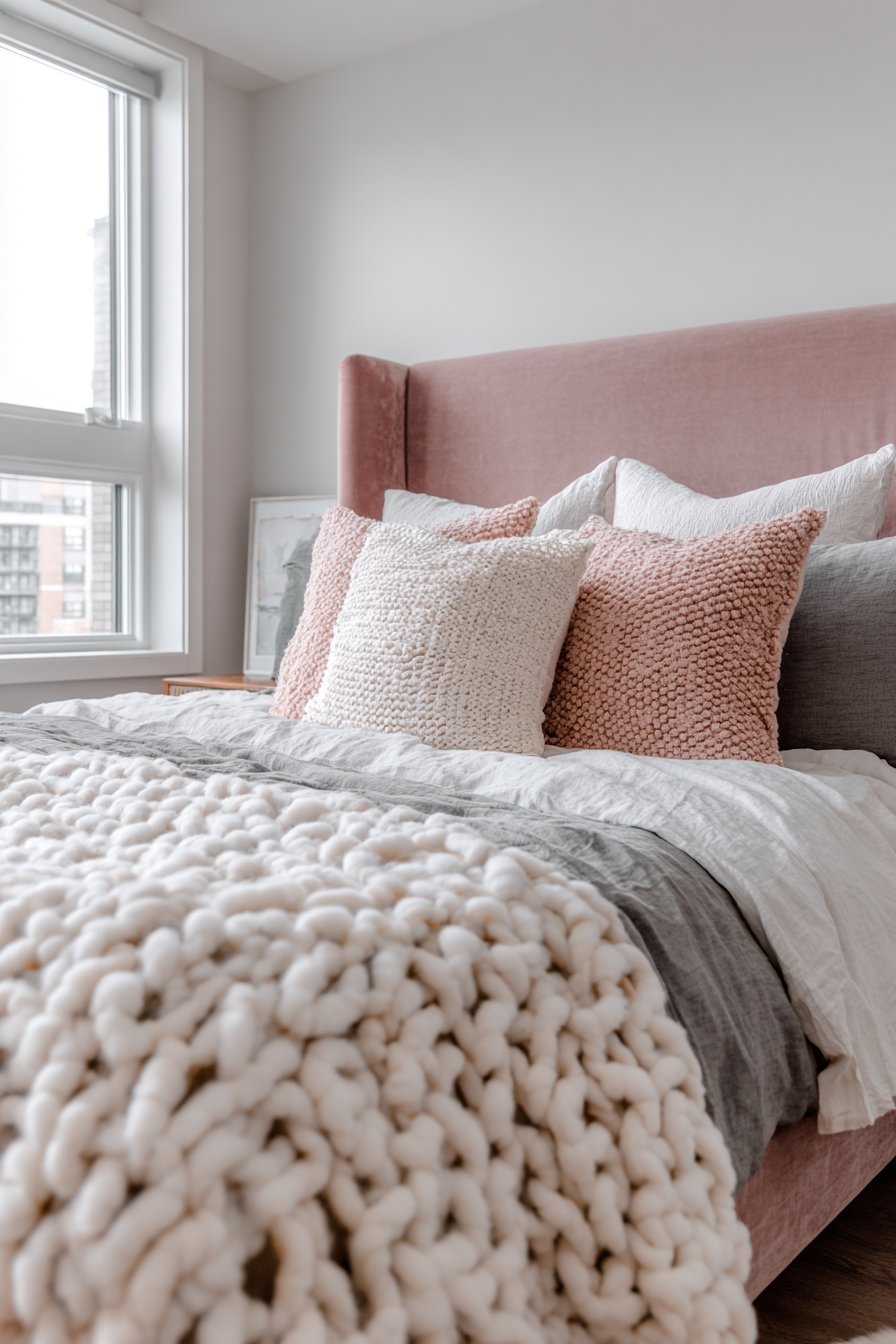
A chunky cable-knit throw drapes casually across the foot of the bed, adding sculptural texture. The handcrafted quality of the knit creates visual and tactile interest. The oatmeal color coordinates perfectly with the overall muted palette. This layering approach creates a bed that looks inviting and feels impossibly comfortable.
The emphasis on tactile quality and subtle color gradations creates a cozy, tranquil atmosphere. Different fabric weights and textures engage the sense of touch meaningfully. Gentle natural lighting creates soft shadows that enhance the dimensional quality of textiles. This bedroom celebrates the sensory pleasure of high-quality natural materials.
Key Design Tips:
- Choose an upholstered bed frame in rich fabric like velvet
- Layer multiple types of textiles for tactile variety
- Select muted versions of typically bold colors like dusty rose
- Include handcrafted elements like cable-knit throws
- Vary pillow sizes, shapes, and textures for visual interest
- Invest in high-quality natural fiber bedding for comfort and longevity
- Style the bed with casual elegance rather than rigid perfection
Why These Calm Bedroom Designs Work
These ten bedroom concepts represent the most effective approaches to creating peaceful sleeping spaces in contemporary homes. Each design addresses fundamental principles of calming interior design while offering distinct aesthetic directions. The emphasis on neutral color palettes across all concepts reflects research showing that soft, muted tones promote relaxation and better sleep quality. Colors like ivory, sage green, pale grey, and dusty rose create soothing environments without visual overstimulation.
The consistent use of natural materials throughout these designs connects to biophilic design principles. Wood, linen, cotton, jute, and other organic materials create environments that feel grounding and authentic. These materials also offer practical benefits, including temperature regulation, breathability, and durability. The tactile pleasure of natural fibers contributes significantly to the sensory experience of peaceful bedrooms.
Minimalist approaches featured in several designs eliminate visual clutter that creates mental stress. Clean lines, uncluttered surfaces, and thoughtful storage solutions allow the mind to rest. Research in environmental psychology confirms that organized, simplified spaces reduce cortisol levels and support better sleep. The platform beds, built-in storage, and murphy bed solutions demonstrate practical minimalism.
Lighting design emerges as a crucial element across multiple concepts. Natural light maximization through sheer curtains and strategic window placement supports circadian rhythm regulation. Layered artificial lighting with dimmable options allows atmosphere customization for different times and activities. The warm-toned ambient lighting in several designs prevents the sleep-disrupting blue light common in modern homes.
The incorporation of dedicated zones for activities beyond sleeping, particularly reading nooks and sitting areas, recognizes the bedroom’s evolving role. These multi-functional spaces support mindfulness practices, relaxation routines, and personal time. The thoughtful spatial planning prevents bedrooms from feeling single-purpose or confining. This approach particularly benefits those working from home who need clear boundaries between work and rest spaces.
Textile layering appears throughout these designs as both an aesthetic and a functional strategy. Multiple bedding layers in coordinating neutral tones create visual depth while providing comfort customization. The combination of different fabrics like linen sheets, cotton duvets, velvet upholstery, and knit throws engages the sense of touch meaningfully. This sensory richness contributes to the cocooning feeling essential for restorative rest.
The emphasis on organic shapes, natural textures, and biophilic elements reflects a growing understanding of nature’s role in wellbeing. Indoor plants, reclaimed wood, jute rugs, and nature-inspired colors all strengthen our connection to the natural world. This connection reduces stress hormones and promotes the parasympathetic nervous system activation necessary for quality sleep. Even urban dwellers can access these benefits through thoughtful bedroom design.
Space-efficient solutions in the murphy bed design address the reality of modern living, where bedrooms often serve multiple purposes. The intelligent storage and flexible furniture demonstrate that small spaces can achieve profound tranquility. This inclusive approach ensures that calm bedroom design remains accessible regardless of home size or budget constraints. The principles apply universally across different scales and circumstances.
Color psychology plays a significant role across all these bedroom concepts. The cool blue-grey palette offers proven calming effects, while warmer neutrals create cozy comfort. The dusty rose and sage green introduce subtle color without overstimulation. Understanding color temperature and psychological effects allows intentional atmosphere creation. These sophisticated neutral palettes feel current while remaining timeless.
The investment in quality over quantity appears throughout these designs. Fewer, better-chosen pieces create more impactful and lasting results than cluttered collections. The emphasis on craftsmanship, natural materials, and thoughtful curation reflects a sustainable approach to interior design. This philosophy aligns with broader movements toward conscious consumption and mindful living. Quality materials also perform better over time, maintaining their beauty and function through years of use.
Conclusion
Creating a calm bedroom involves much more than selecting pretty colors or comfortable furniture. It requires understanding the psychological, physiological, and practical elements that contribute to restorative rest. These ten design concepts demonstrate various pathways to achieving bedroom tranquility, from minimalist simplicity to textile-rich comfort. The common threads of neutral palettes, natural materials, thoughtful lighting, and uncluttered spaces provide a framework for any calming bedroom project.
Whether you’re drawn to the organized serenity of built-in storage or the luxurious comfort of layered textiles, these ideas offer actionable inspiration. Start by identifying which principles resonate most with your personal needs and existing space. Consider beginning with simple changes like introducing sheer curtains, adding natural fiber bedding, or creating a dedicated reading nook. Small adjustments often yield surprisingly powerful results in the bedroom atmosphere.
The investment in creating a calm bedroom pays dividends in sleep quality, stress reduction, and overall well-being. Your bedroom should function as a true sanctuary from daily demands, a space that supports both physical rest and mental restoration. Experiment with these design concepts, adapt them to your unique circumstances, and create the peaceful retreat you deserve. Remember that the most successful bedroom design reflects your personal definition of calm while incorporating proven principles of restorative environments.
