


The living room stands as the heart of every home—a space where families gather, conversations flow, and memories are created. Within this cherished environment, the bookshelf emerges as far more than a simple storage solution. It becomes a statement piece that reflects personal style, showcases treasured collections, and adds architectural interest to the room. A thoughtfully designed bookshelf in living room setting can transform an ordinary wall into a captivating focal point while providing essential functionality for organizing books, displaying art, and housing decorative objects that tell your unique story.
The beauty of incorporating a bookshelf into your living room lies in its remarkable versatility. Whether your aesthetic leans toward timeless traditional elegance, sleek contemporary minimalism, or eclectic bohemian charm, there exists a bookshelf solution perfectly suited to your vision. The right bookshelf doesn’t merely hold books—it creates visual rhythm, establishes zones within open floor plans, and introduces texture and dimension to previously underutilized wall spaces. From floor-to-ceiling built-ins that command attention to compact vertical solutions that maximize small spaces, the possibilities are as diverse as the homeowners who embrace them.
In this comprehensive guide, we’ll explore ten distinctive approaches to integrating a bookshelf in living room designs, each offering a unique perspective on how this functional furniture piece can elevate your interior aesthetic. From rustic reclaimed wood installations that whisper of history and craftsmanship to cutting-edge contemporary designs that double as sculptural art, these carefully curated concepts will inspire you to reimagine your own living space. Each design showcases different materials, styling techniques, and spatial considerations, providing actionable insights for creating a bookshelf that’s both beautiful and practical.
1. Traditional Floor-to-Ceiling Built-In Elegance
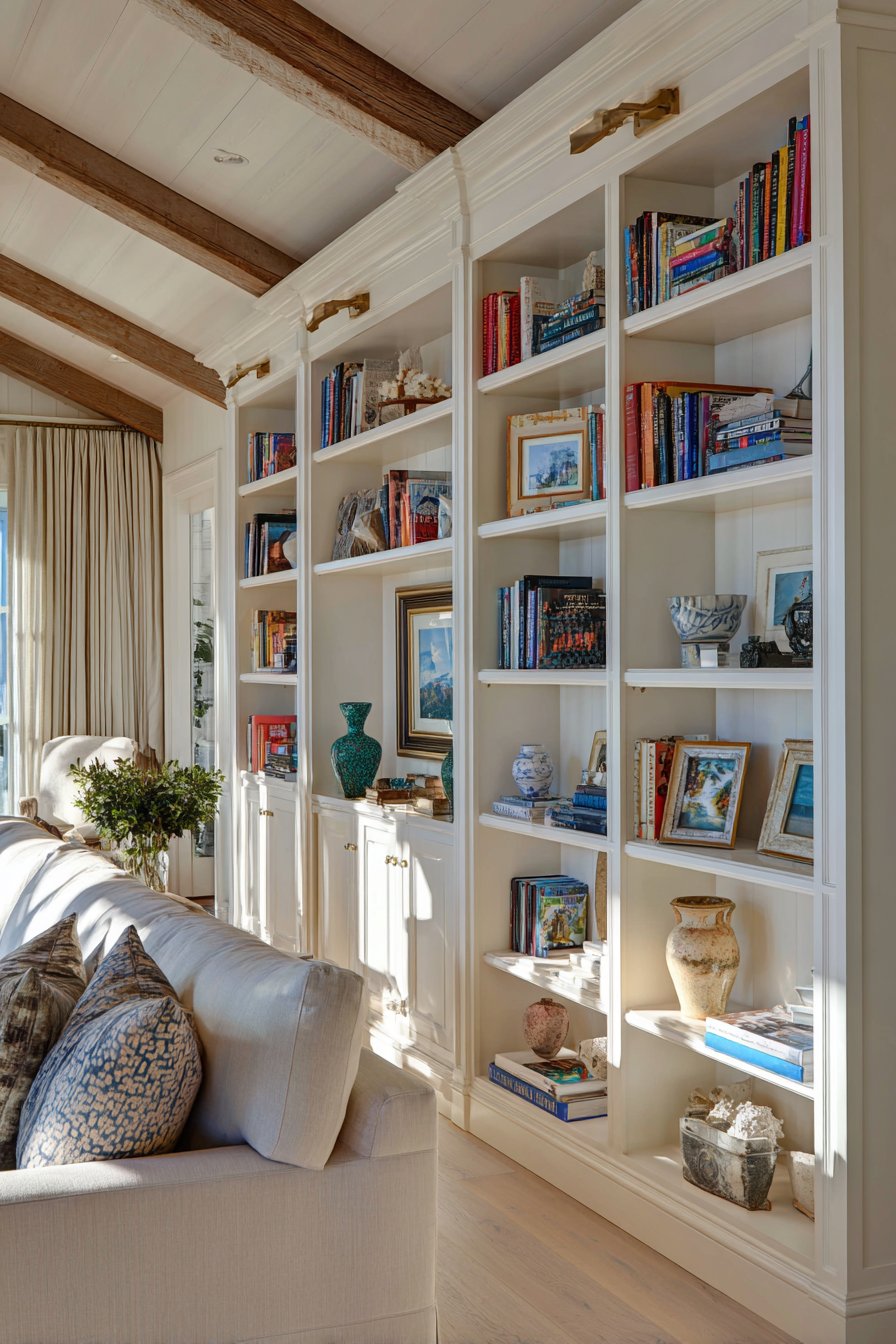
Imagine stepping into a living room where warm white painted wood stretches from floor to ceiling, creating an architectural masterpiece that frames your entire wall. This traditional bookshelf in living room design represents the pinnacle of classic sophistication, featuring built-in shelving units that appear custom-crafted for the space.
The beauty lies not just in the structure itself, but in the carefully curated collection it displays—hardcover books with their spines creating a tapestry of colors and titles, family photographs in varied frame styles that chronicle your journey, and decorative objects including ceramic vases and small sculptures that punctuate the visual narrative.
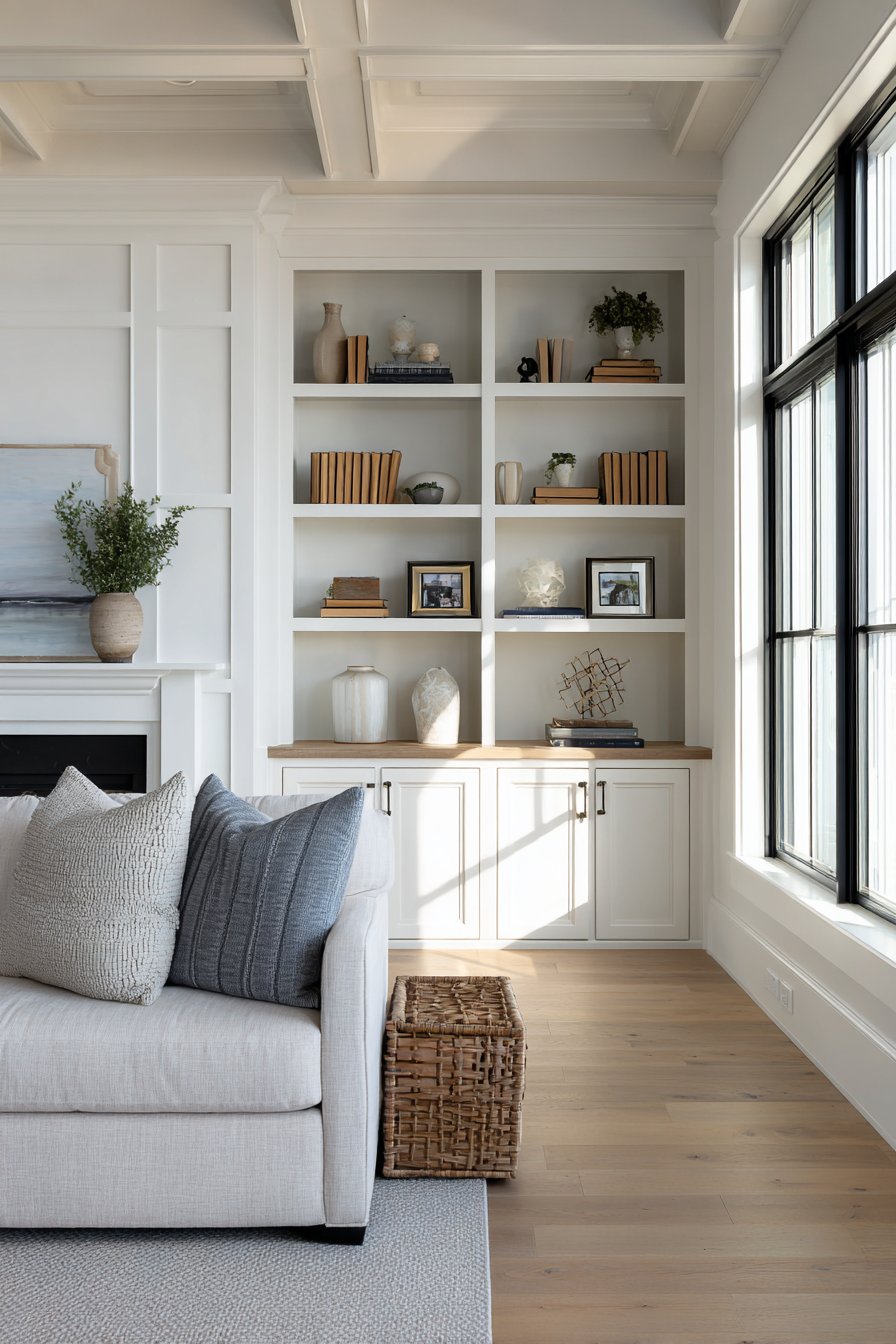
The genius of this design manifests in how it flanks a comfortable seating area, with a neutral linen sofa positioned to take full advantage of the literary surroundings. Natural afternoon light streams through nearby windows, creating soft shadows that dance across the shelving depth, highlighting the dimensional quality of the installation.
The lived-in arrangement feels authentic rather than staged, with books leaning naturally, photographs displayed at varying heights, and decorative pieces grouped in odd numbers for visual interest. This approach to the traditional bookshelf in living room spaces creates an environment that feels both refined and welcoming.
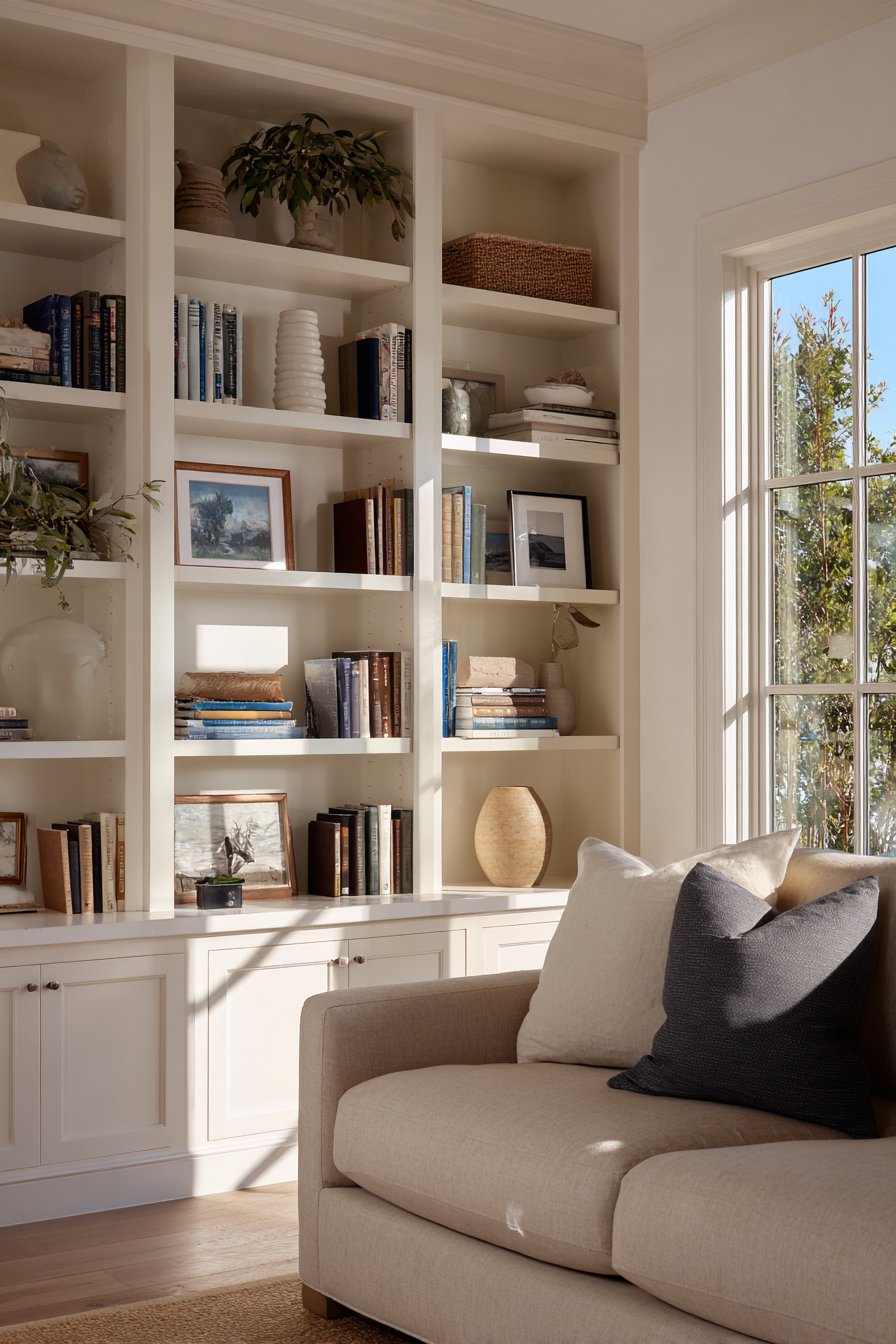
The warm white finish serves multiple purposes beyond aesthetics. It brightens the space, making even smaller living rooms feel more expansive and airy. The painted wood provides a neutral backdrop that allows your book collection and decorative items to truly shine without competing for attention.
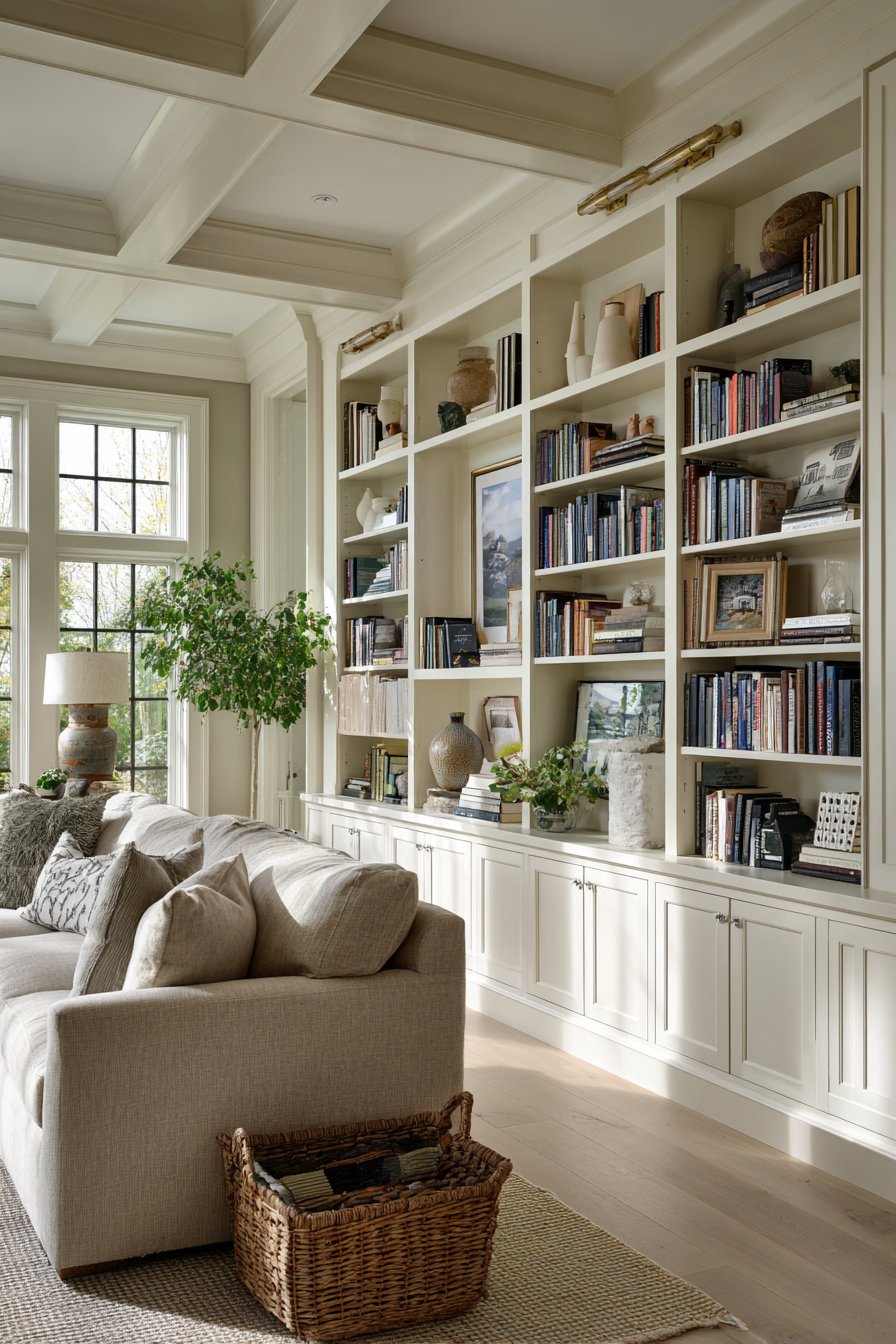
The floor-to-ceiling construction maximizes vertical storage potential while creating the impression of higher ceilings, a design trick that adds perceived square footage to any room. The built-in nature of these shelving units also provides structural integrity and a seamless, permanent quality that freestanding furniture simply cannot match.
Key Design Tips for Traditional Built-In Bookshelves:
- Install proper lighting within or above shelving units to illuminate book spines and decorative objects during evening hours
- Vary shelf heights to accommodate oversized art books, standard novels, and decorative objects of different scales
- Create visual interest by alternating between books displayed spine-out and decorative objects in a 70-30 ratio
- Include cabinet bases or doors on lower shelves to hide less attractive storage items while maintaining the refined appearance
- Paint shelving in warm white or soft cream tones to create a timeless backdrop that complements any book collection
- Position the seating area close enough to easily reach books but far enough to appreciate the full architectural impact
2. Modern Floating Oak Shelves with Asymmetric Arrangement
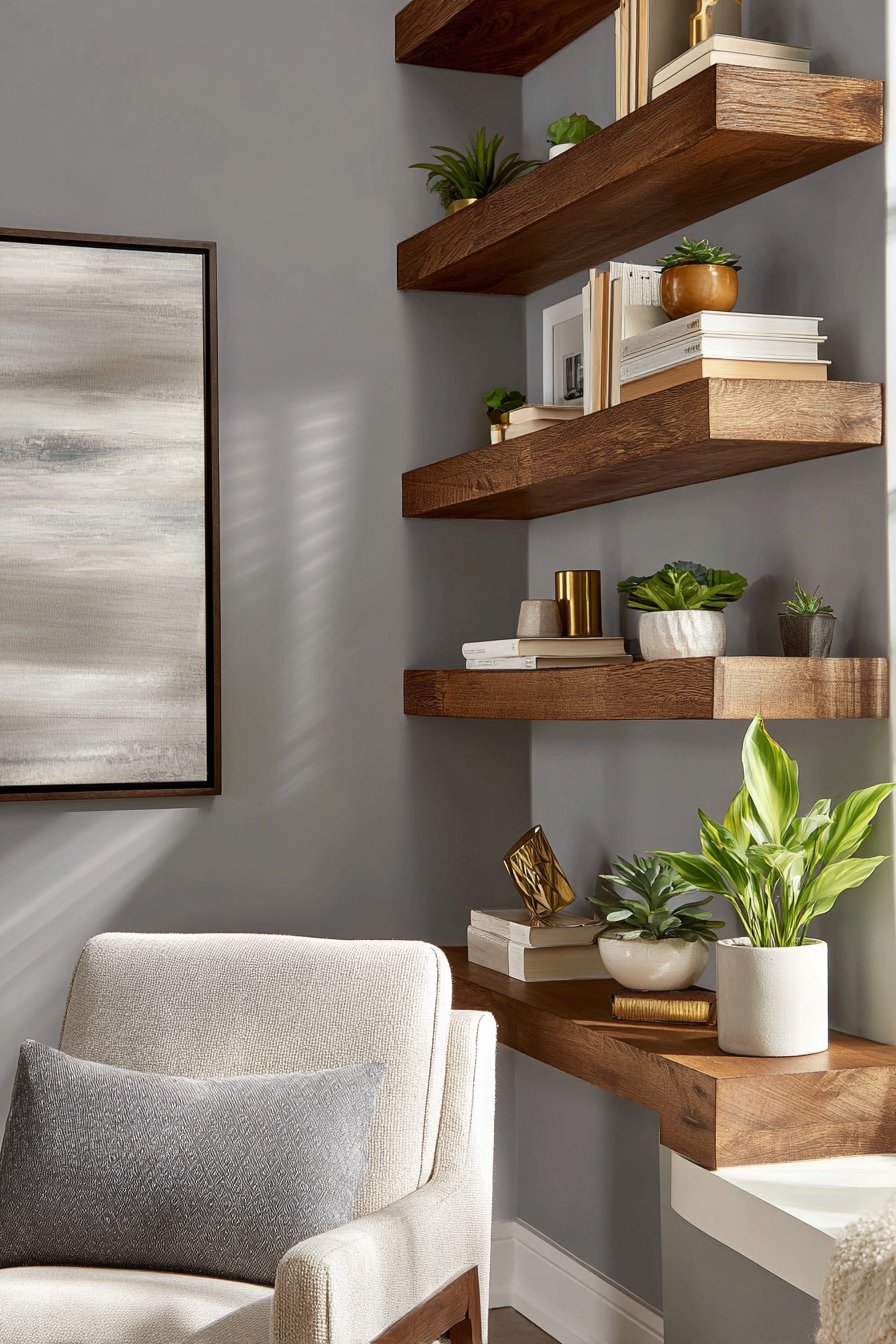
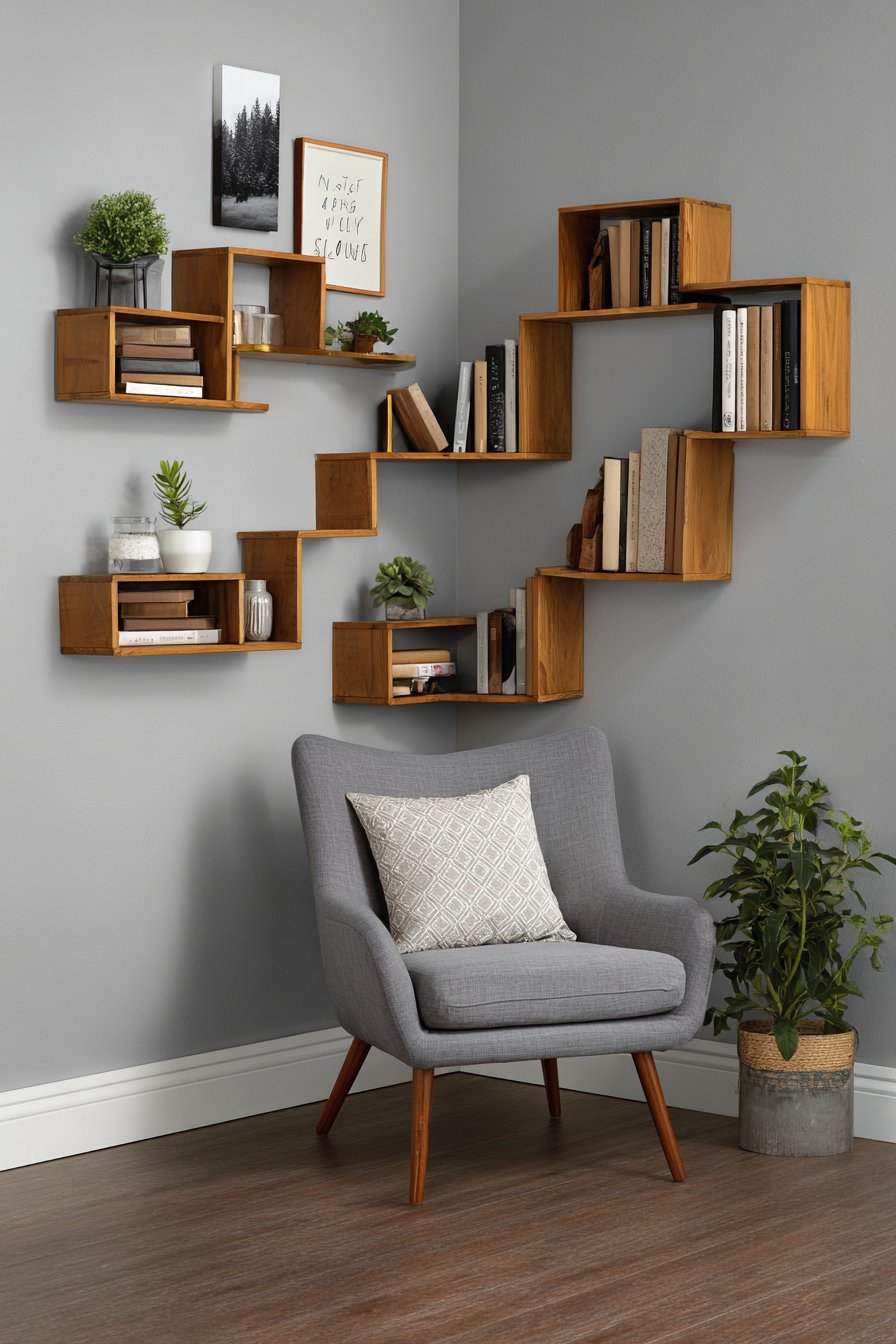
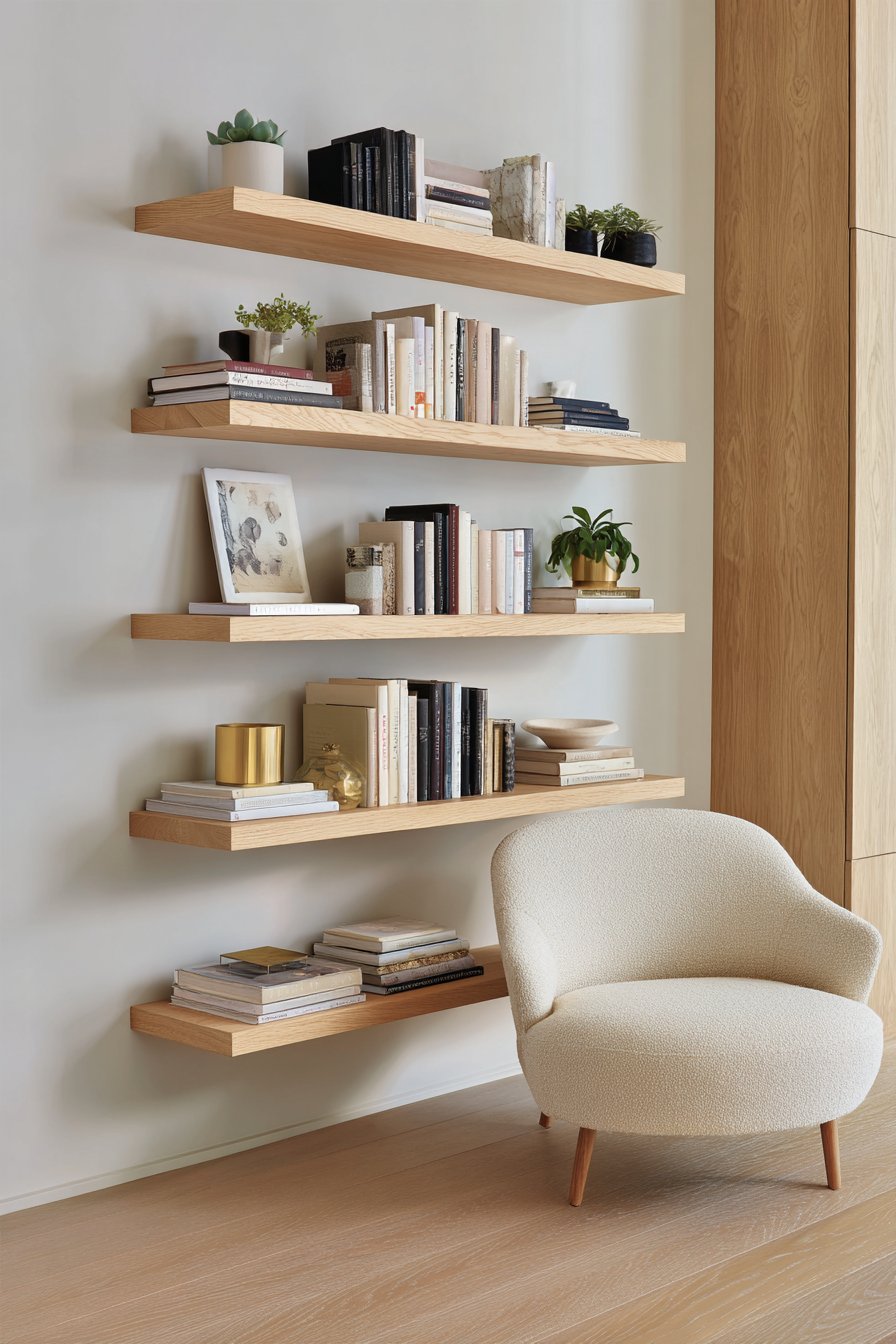
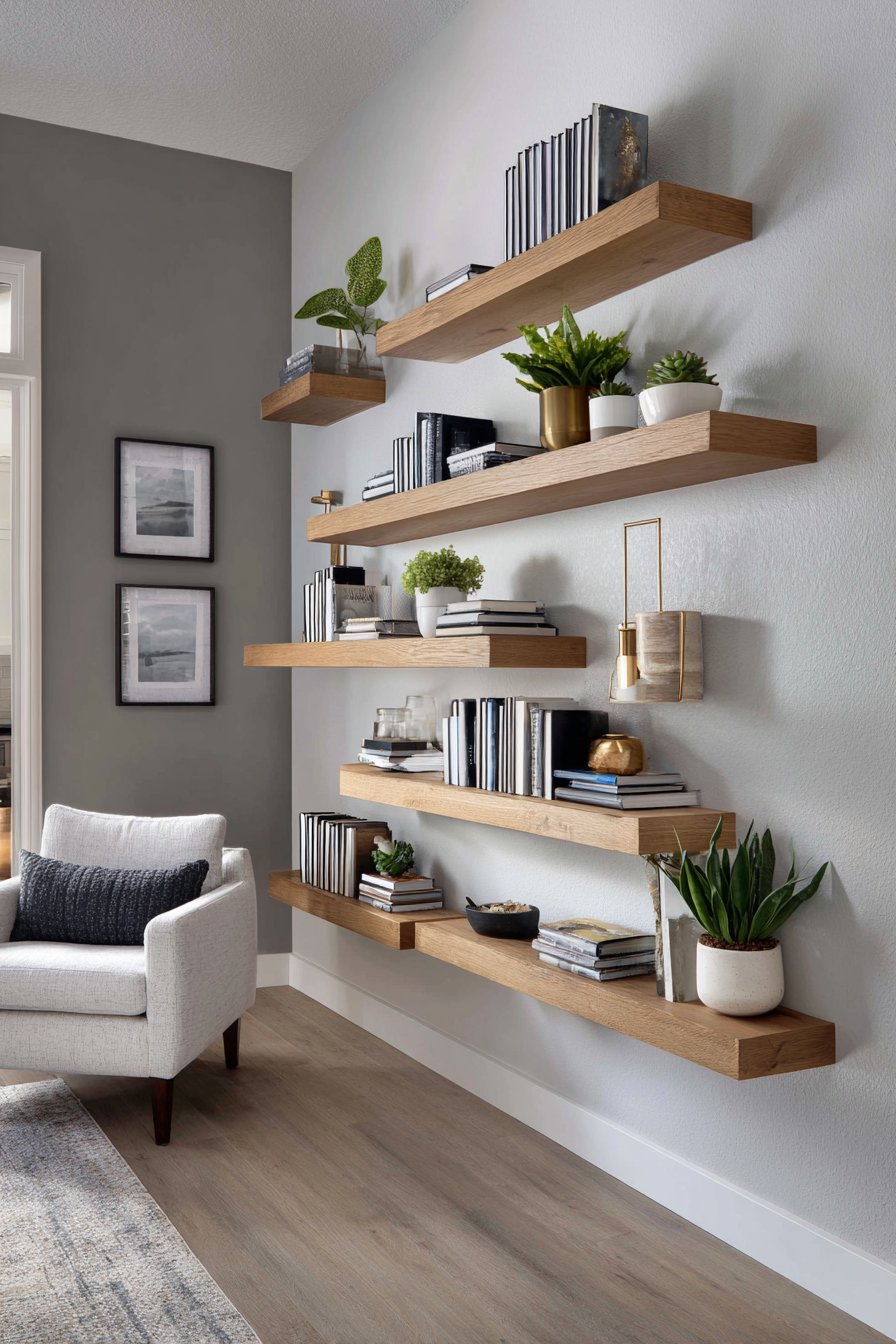
The modern bookshelf in living room design takes a dramatically different approach, embracing minimalism and geometric interest through sleek floating shelves in natural oak. These shelves appear to defy gravity, mounted invisibly against a light grey accent wall that provides subtle contrast to the warm wood tones.
The visible grain texture of the oak adds organic warmth to the contemporary aesthetic, creating a bridge between natural materials and modern design principles. The asymmetric arrangement breaks away from traditional symmetry, instead creating visual intrigue through intentionally varied shelf placement that guides the eye across the wall in an engaging pattern.
This contemporary approach to the bookshelf in living room settings celebrates restraint and curation. Rather than filling every available surface, this design showcases a carefully edited collection—some books stacked vertically in traditional fashion, others arranged horizontally to create varied visual rhythm, and minimal decor pieces, including brass bookends that add a metallic accent and small potted succulents that introduce living elements into the composition. Each item serves a purpose, whether functional or aesthetic, and nothing feels superfluous or arbitrary. The result is a space that breathes, where negative space becomes as important as the objects themselves.
Adjacent to this floating shelf arrangement sits a mid-century modern armchair, its clean lines and tapered legs echoing the minimalist aesthetic of the shelving system. This thoughtful furniture placement creates a dedicated reading zone within the larger living room, establishing a functional relationship between book storage and comfortable access.
The chair’s positioning suggests intentionality—this isn’t merely furniture arrangement but rather spatial planning that considers how people actually interact with their book collections. The light grey wall color extends beyond mere backdrop, actively participating in the design by providing a neutral canvas that allows the oak’s warm honey tones to take center stage.
Key Design Tips for Modern Floating Shelves:
- Install floating shelves with heavy-duty mounting systems capable of supporting substantial book weight without sagging
- Vary shelf lengths in the asymmetric arrangement to create visual interest while maintaining functional storage capacity
- Limit decorative objects to no more than 20-30% of shelf space to preserve the clean, uncluttered aesthetic
- Choose accent wall colors in cool neutrals like grey, sage, or soft blue-grey to complement warm oak tones
- Incorporate metallic accents through bookends, small sculptures, or picture frames to add subtle glamour
- Position shelves at varied heights to accommodate different book sizes while creating dynamic visual movement
- Maintain at least 10-12 inches between shelves for standard book storage and reading accessibility
3. Cozy Corner Ladder-Style Industrial Bookshelf
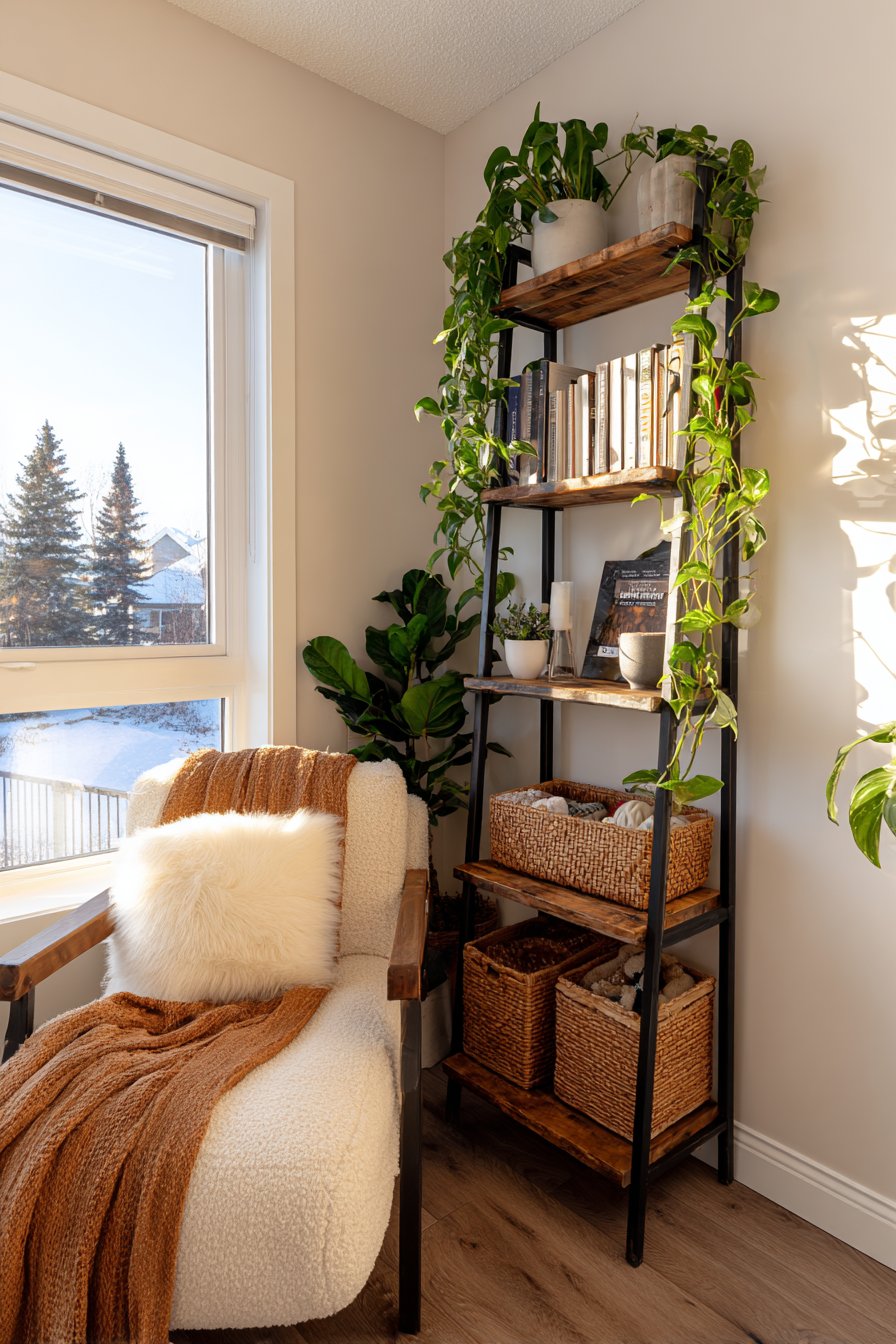
The cozy bookshelf in living room corners often gets overlooked, yet this often-wasted space holds tremendous potential for creating intimate reading nooks. Enter the tall ladder-style bookshelf in distressed black metal with reclaimed wood shelves—a design that transforms forgotten corners into functional, stylish focal points.
The metal frame provides an industrial edge while the reclaimed wood shelves, with their natural imperfections and color variations, introduce organic warmth and authentic character. Each plank tells a story through its knots, grain patterns, and subtle color shifts that range from honey amber to deeper tobacco brown.
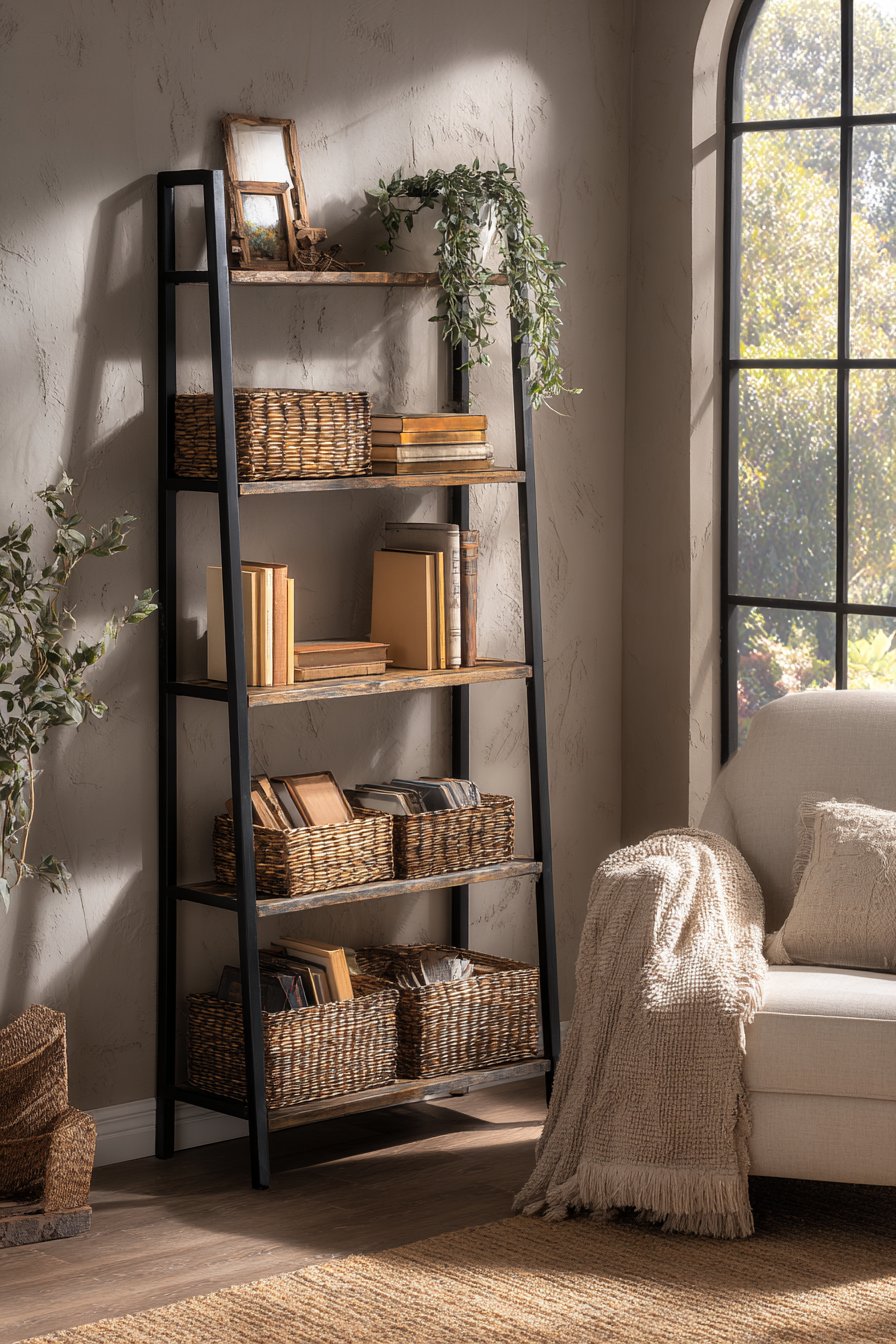
Books are arranged with casual confidence, spines facing outward in the traditional manner but without the rigid organization that can feel stuffy or overly formal. Interspersed throughout the collection, woven baskets provide hidden storage for items that don’t need to be on display—remote controls, charging cables, magazines, or children’s toys.
These natural fiber containers add textural variety while maintaining the casual, lived-in aesthetic. Trailing pothos plants cascade from upper shelves, their heart-shaped leaves creating organic movement and introducing the biophilic design element that connects indoor spaces with nature. The greenery softens the industrial metal framework and adds vitality to the book-filled composition.
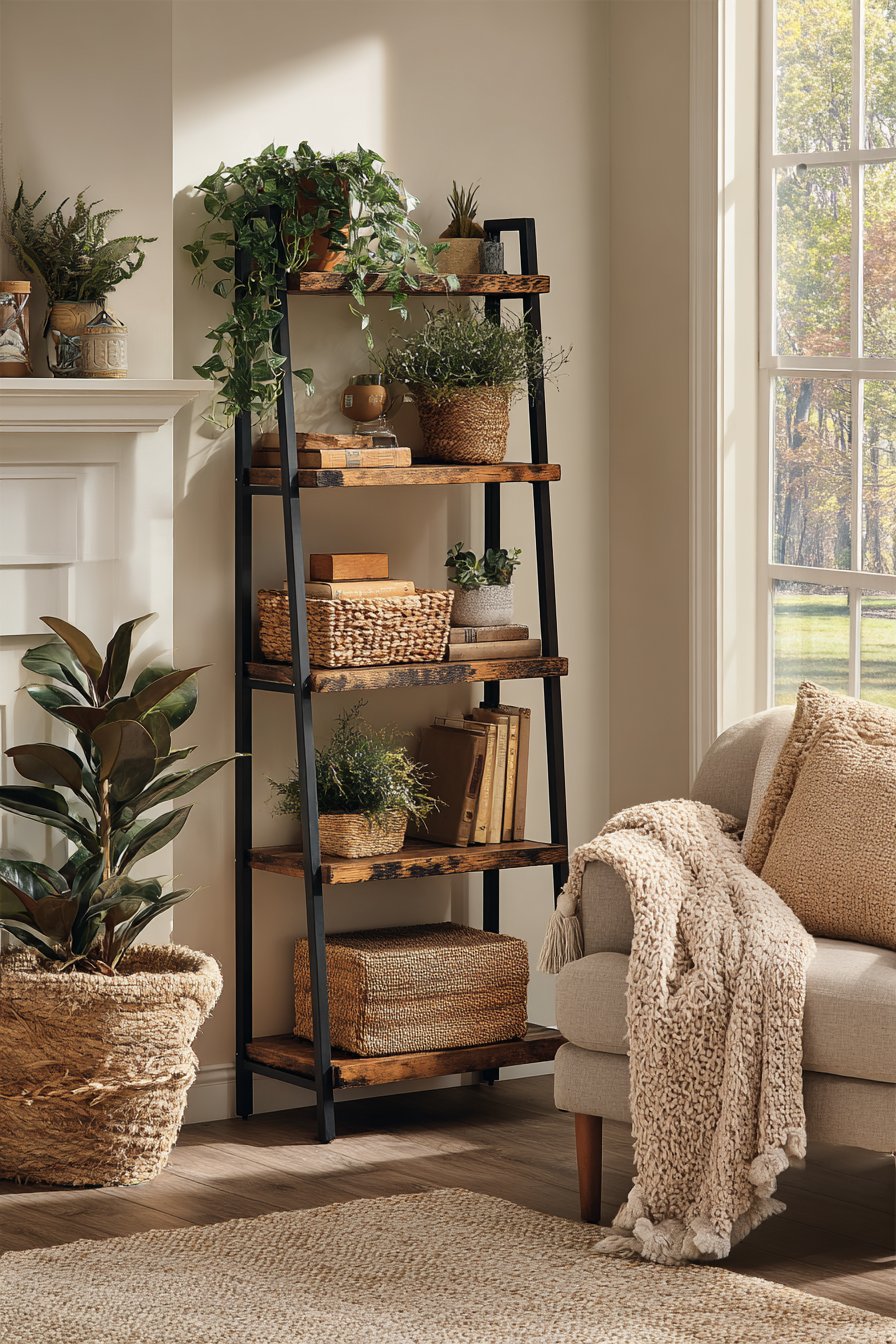
Beside this corner bookshelf sits a plush reading chair upholstered in textured fabric, draped with a chunky knit throw blanket that invites immediate coziness. Natural window light filters into this corner sanctuary, creating warm highlights on the reclaimed wood surfaces that emphasize their dimensional texture and varied coloration.
The ladder-style silhouette—wider at the base and narrowing slightly toward the top—provides stability while creating visual interest through its architectural form. This design proves that a bookshelf in living room corners can become destination spaces rather than afterthoughts, creating cozy retreats perfect for afternoon reading sessions or quiet contemplation.
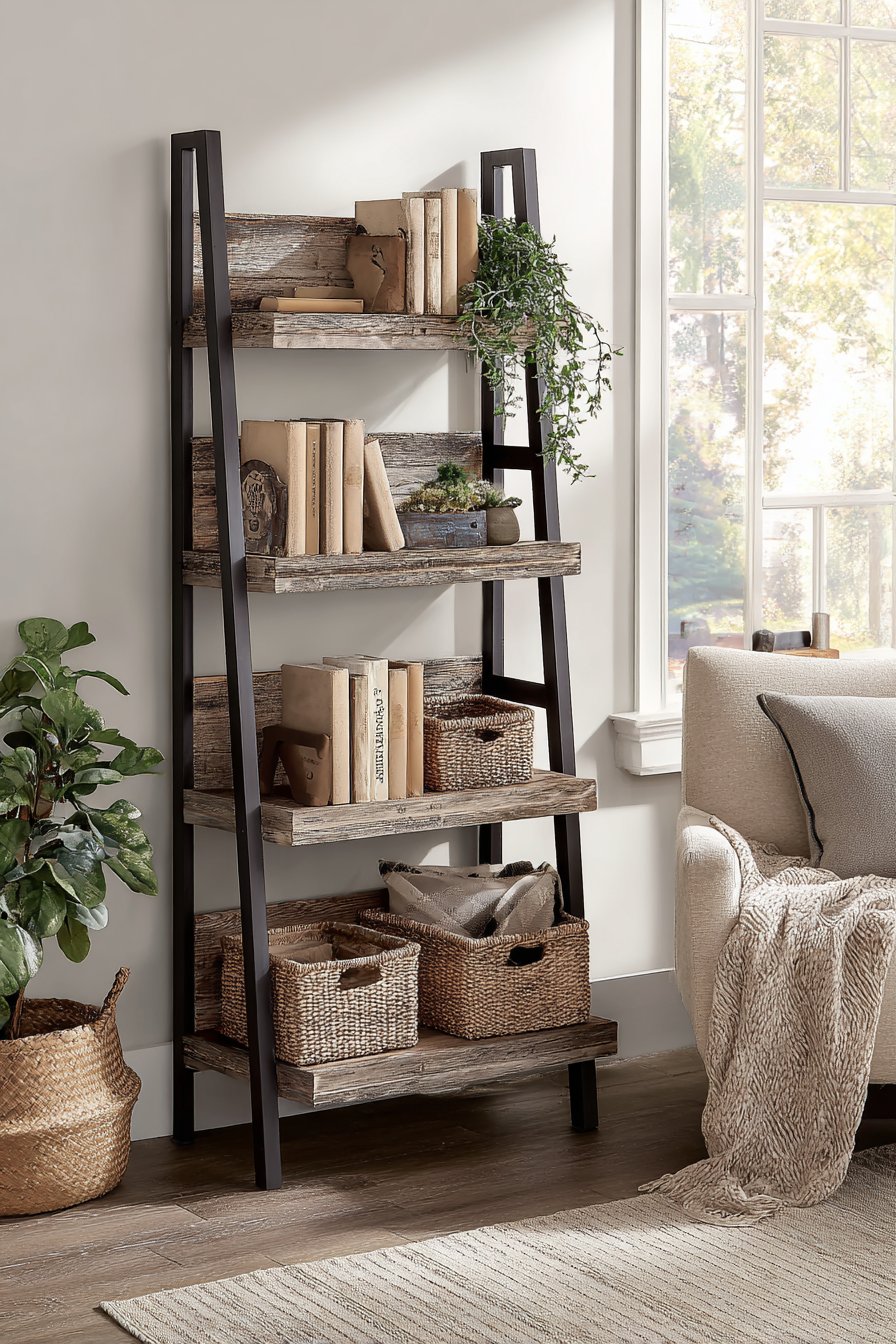
Key Design Tips for Corner Ladder-Style Bookshelves:
- Choose ladder-style units with a wider base for stability when fully loaded with books
- Position the bookshelf to take advantage of natural window light for comfortable daytime reading
- Incorporate trailing plants on upper shelves where they won’t interfere with book access but can cascade freely
- Use woven baskets in complementary natural tones on 2-3 shelves maximum to avoid a cluttered appearance
- Place the most frequently accessed books at eye level (third or fourth shelf) for comfortable browsing
- Add a small side table next to the reading chair for beverages, reading glasses, and current books
- Layer lighting with both overhead ambient light and a dedicated reading lamp for evening use
4. Minimalist Modular White Cube Shelving System
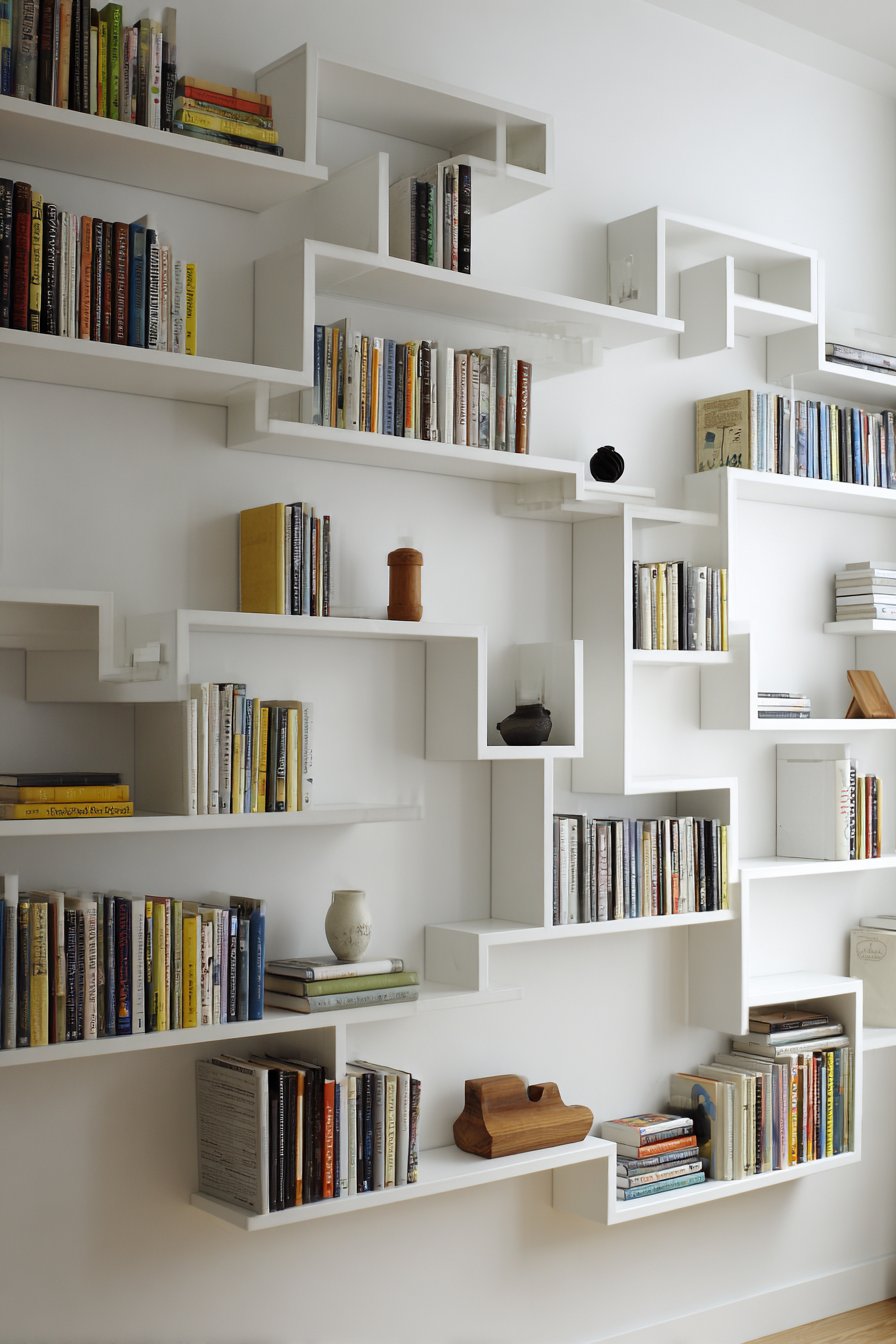
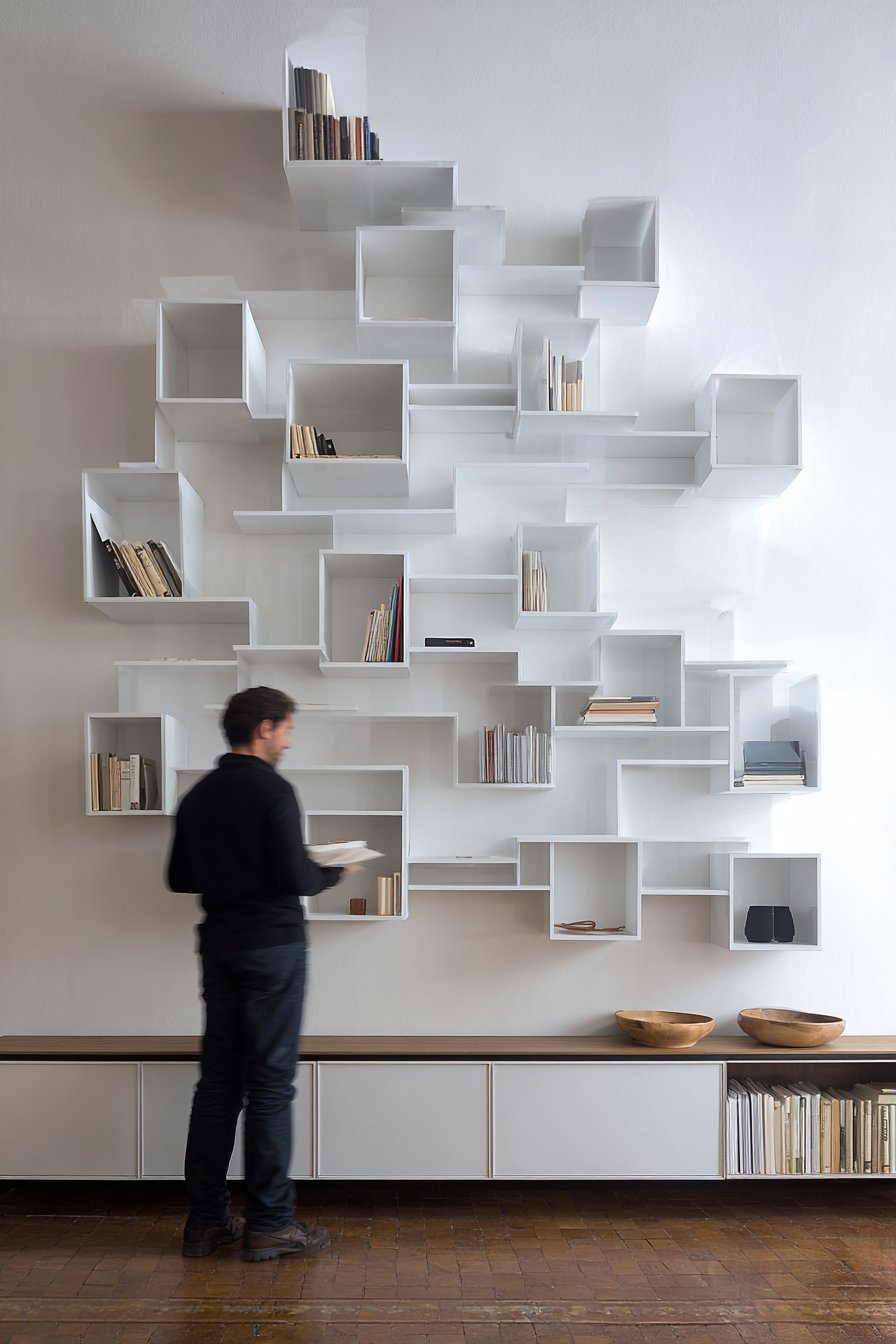
The minimalist bookshelf in living room designs strips away excess to reveal pure form and function. This approach utilizes a modular white cube shelving system that creates striking geometric visual interest against a pristine white wall.
Rather than disappearing into the background, these white-on-white cubes create subtle dimensional shadows and highlights that change throughout the day as natural light shifts position. The modular nature allows for customization—units can be stacked, arranged horizontally, or configured in asymmetric patterns that suit your specific space and storage needs.
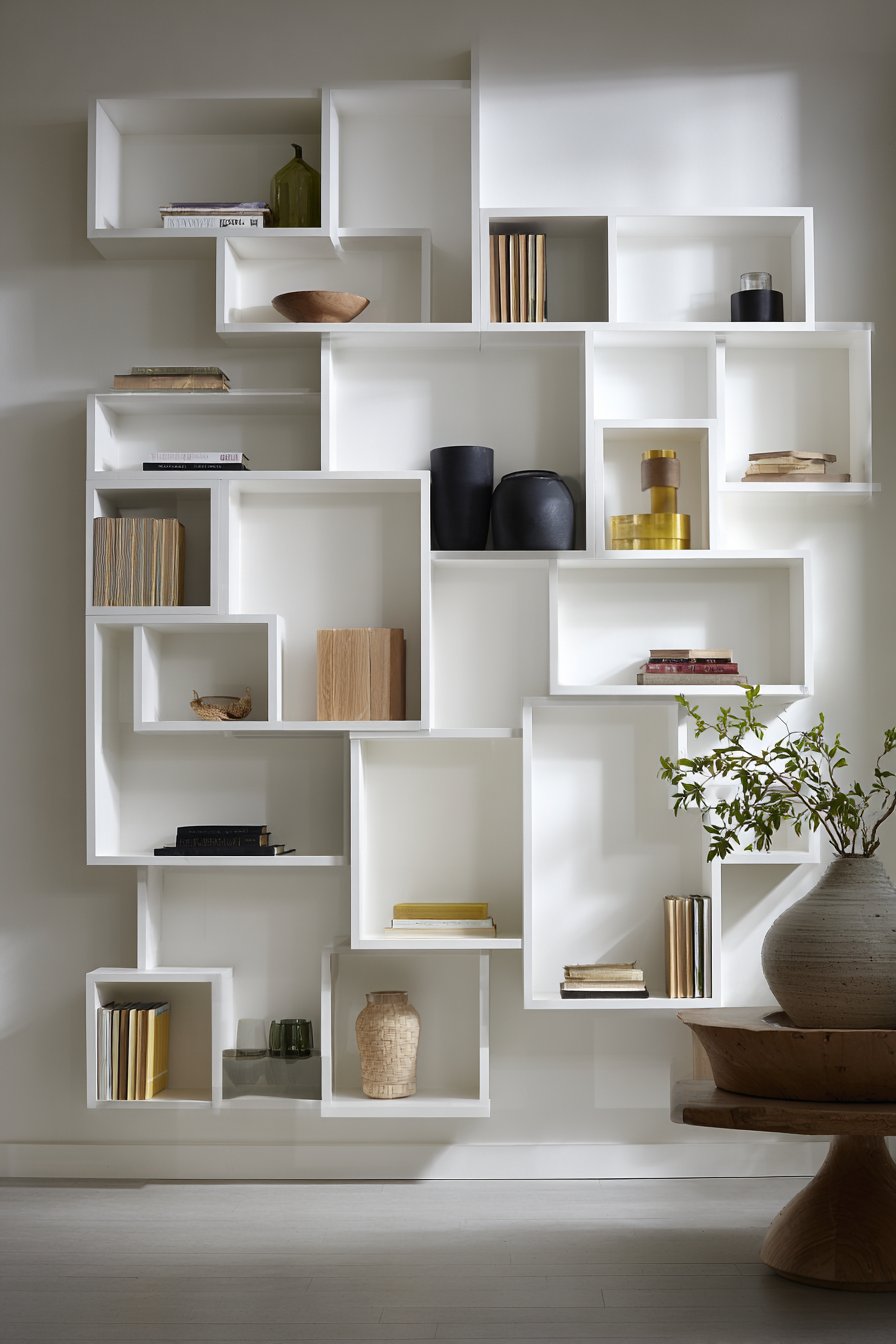
Within this pristine framework, books are organized by color to create a subtle rainbow effect that transforms functional storage into kinetic art. Starting with whites and creams, flowing through soft pastels, deepening into rich jewel tones, and ending with blacks and dark browns, this chromatic arrangement creates visual harmony while making it remarkably easy to locate specific volumes.
Strategic negative space—empty cubes or cubes containing only a single object—provides essential visual breathing room, preventing the installation from feeling overwhelming despite its substantial size. This restraint represents the essence of minimalist philosophy: less is more, and every element must justify its presence.
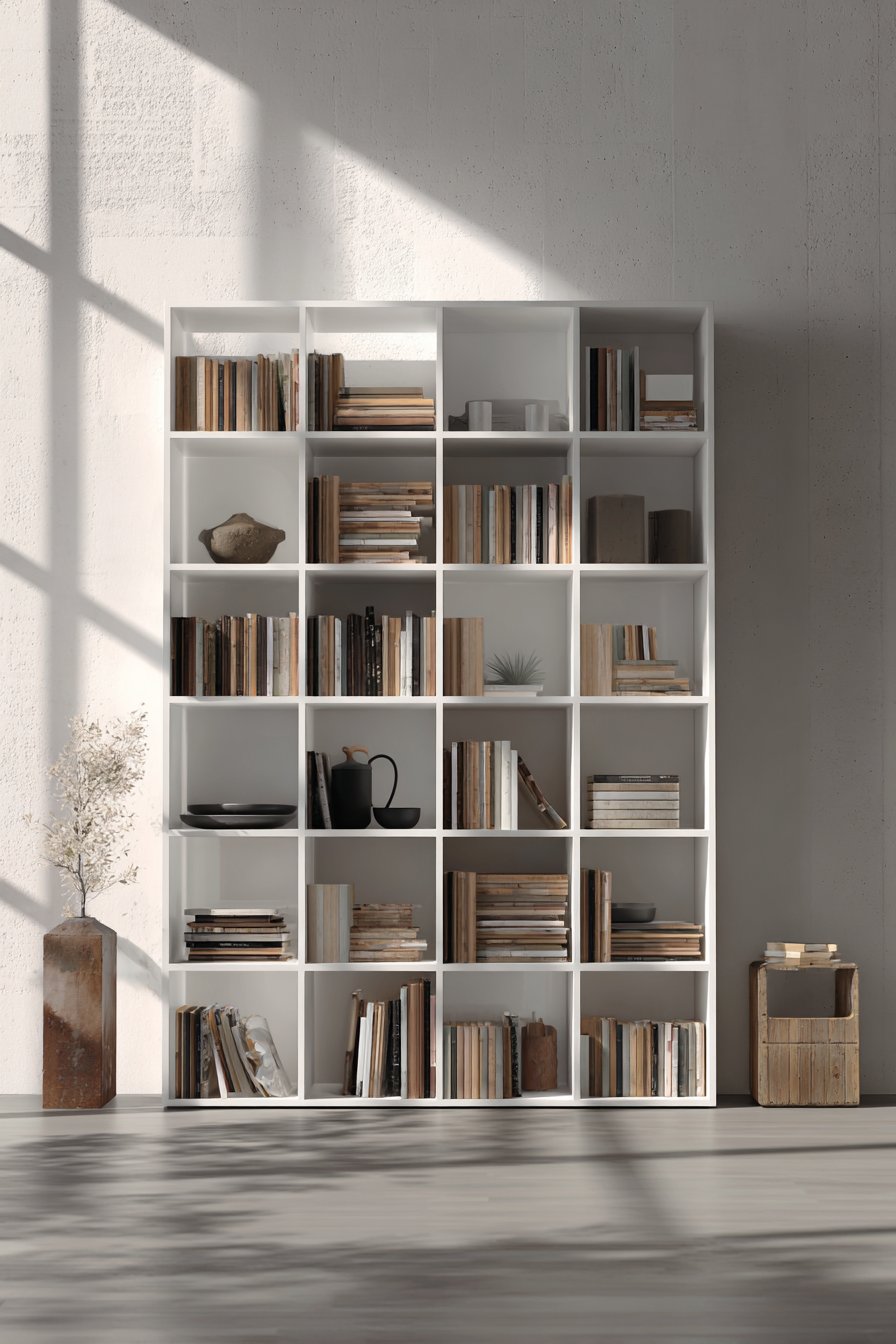
Select decorative objects in black and natural wood tones provide carefully considered accent points throughout the white cube system. A matte black ceramic vase here, a small wooden sculpture there—each piece chosen for its form and placed with intention.
These accents prevent the all-white installation from feeling sterile while maintaining the clean modernist aesthetic. The overall effect feels curated rather than collected, intentional rather than accumulated. This minimalist bookshelf in living room proves that simplicity requires neither sacrifice nor austerity—instead, it demands thoughtfulness and discipline in what you choose to display.
Key Design Tips for Minimalist Cube Shelving:
- Begin with a neutral white or off-white cube system that serves as a versatile foundation
- Organize books by color within cubes to create visual cohesion and artistic impact
- Maintain at least 20-30% negative space through empty cubes or single-object displays
- Limit decorative objects to monochromatic or neutral tones that complement rather than compete
- Use cube backs as consistent color fields—paint them all white or all accent color for unity
- Position the modular system slightly away from the wall to create shadow lines and dimensional depth
- Rotate displayed items seasonally to keep the minimalist aesthetic fresh without purchasing new furniture
5. Industrial Open Metal Frame with Raw Steel and Reclaimed Wood
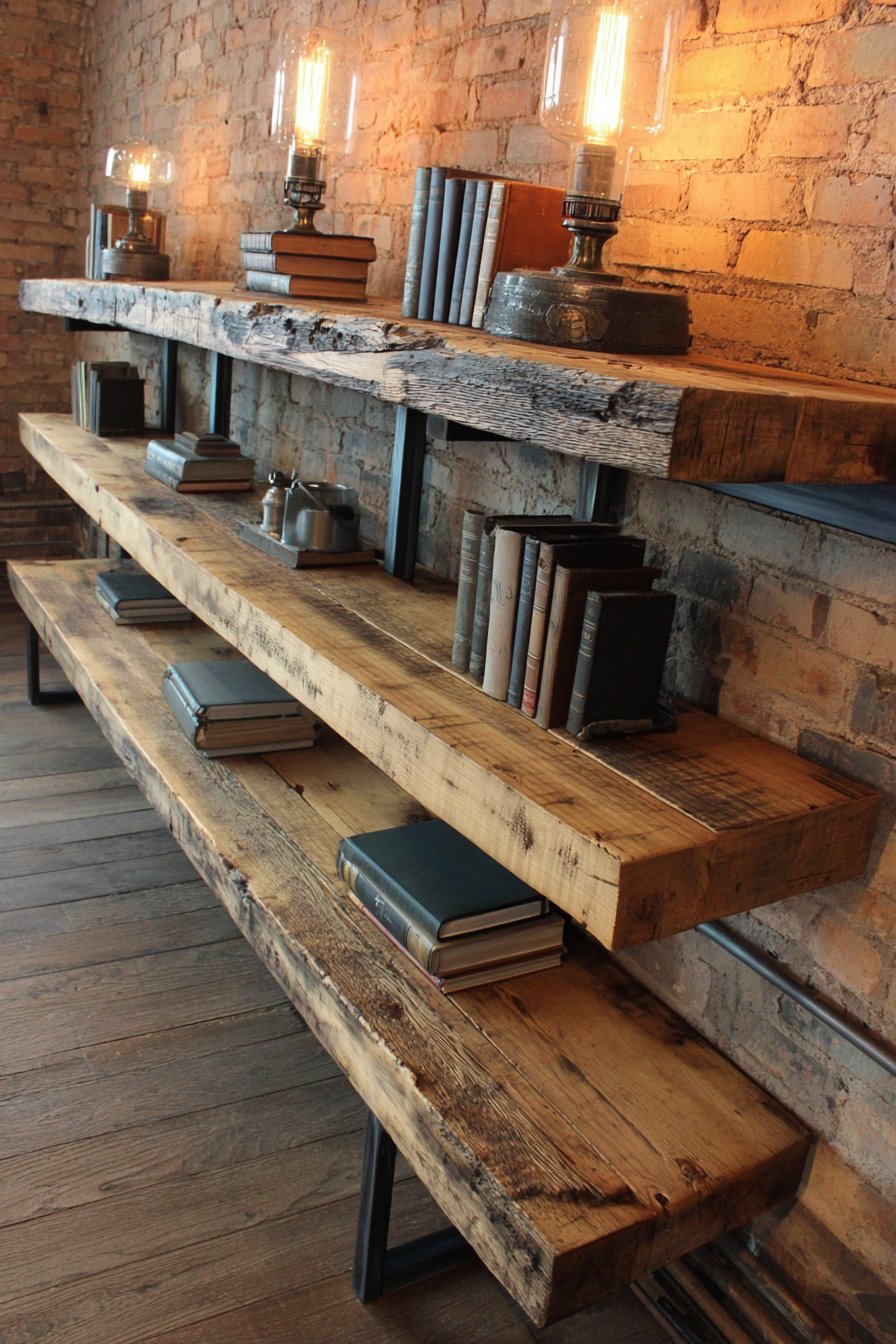
The industrial bookshelf in living room designs celebrates utilitarian beauty and honest materials. This approach features open metal frame shelving with raw steel supports that show authentic patina—not artificially distressed but genuinely aged, with surface oxidation that creates subtle color variations from charcoal grey to rust-touched brown.
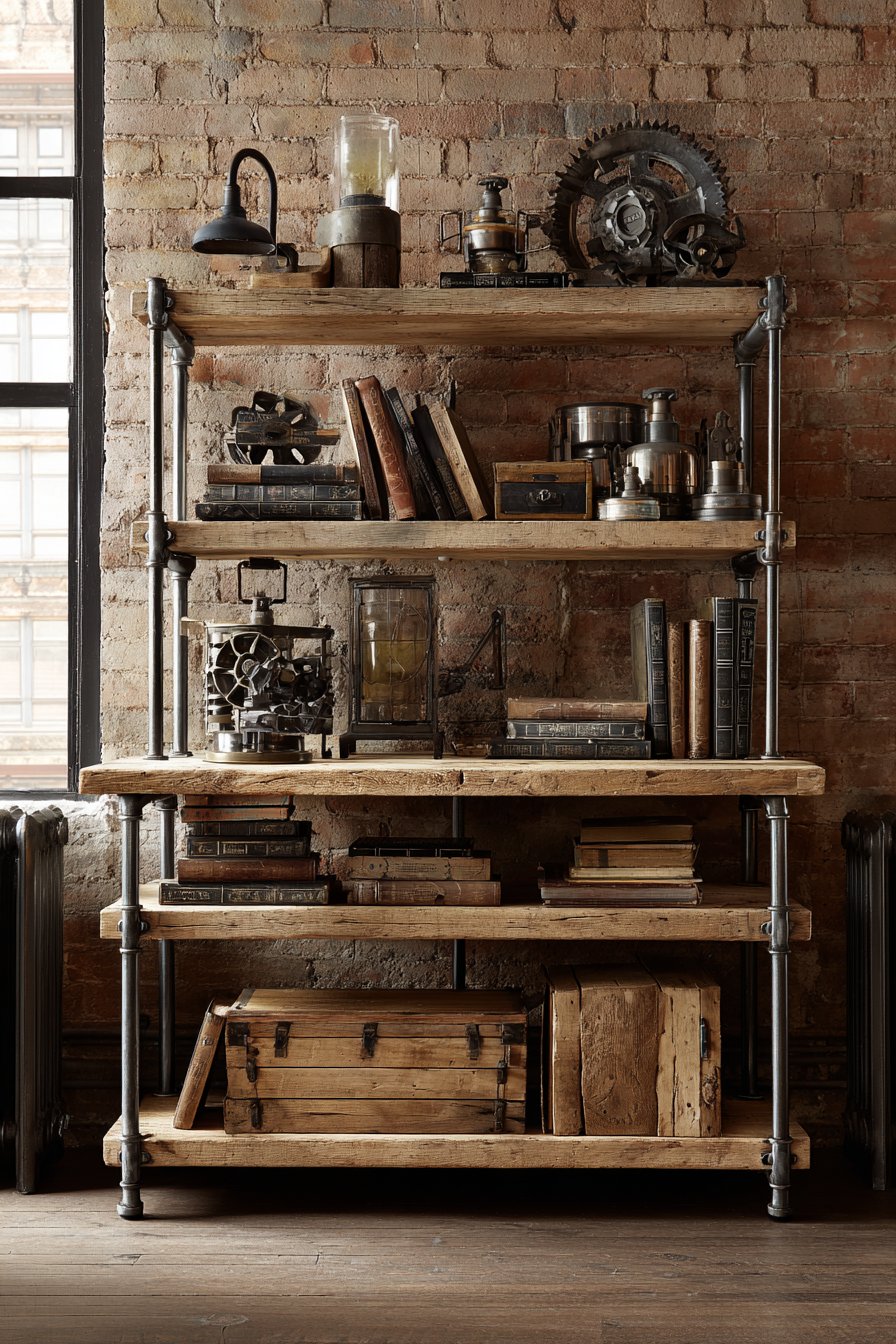
Thick reclaimed wood planks serve as shelving surfaces, their visible hardware—exposed bolt heads and metal brackets—becoming design features rather than elements to hide. This honest construction aesthetic reveals how the piece is built, celebrating craftsmanship and structural integrity as visual components.
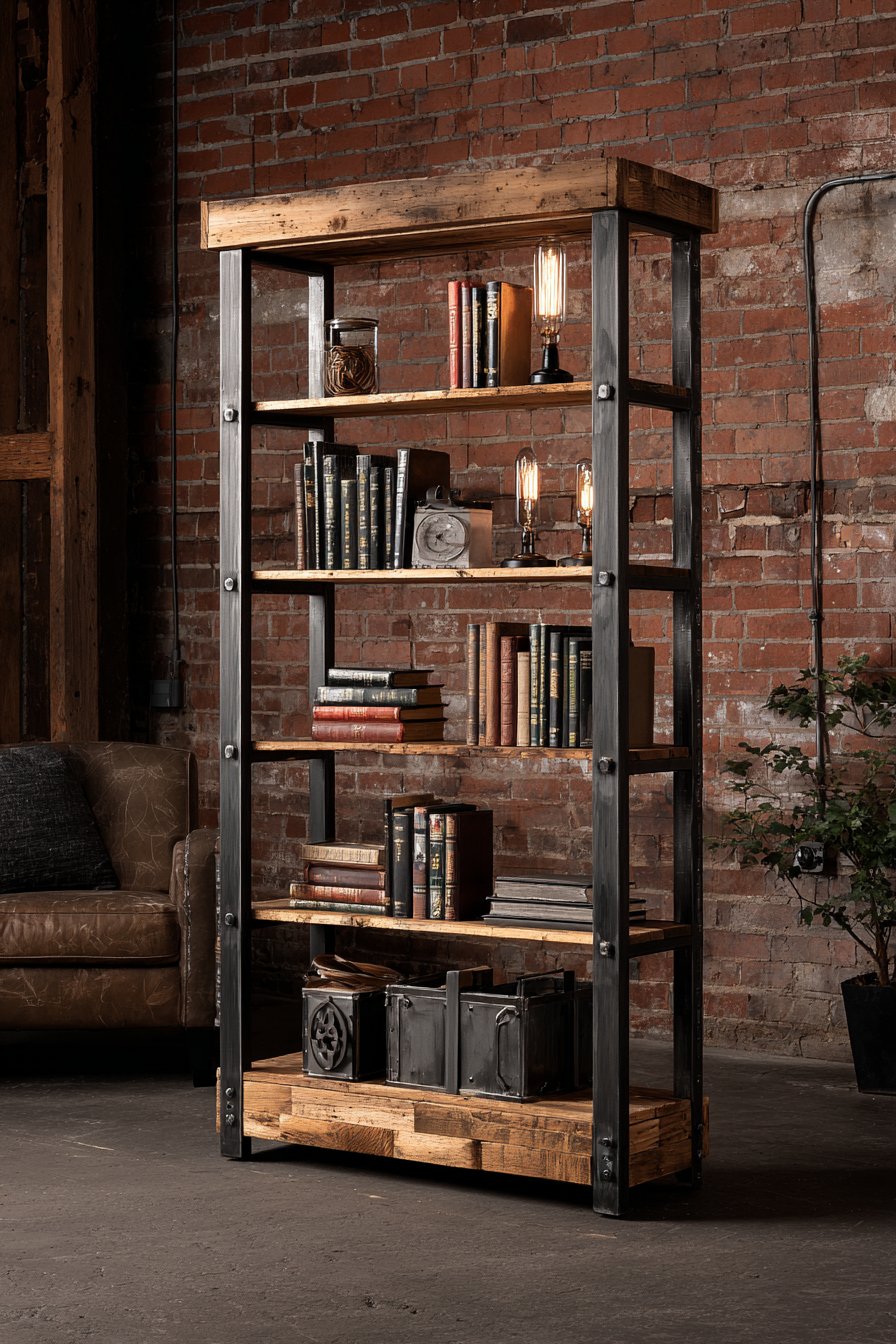
The bookshelf displays vintage hardcover books whose cloth bindings and aged pages complement the industrial aesthetic perfectly. Edison bulb table lamps with exposed filaments provide warm ambient lighting while reinforcing the vintage-industrial theme through their own historical design reference.
Industrial-style accessories, including metal containers with riveted construction, exposed-gear bookends, and small factory molds add authentic period details without feeling contrived or overly themed. Each element feels purposeful, as though salvaged from an actual workshop or factory rather than purchased to achieve a look.
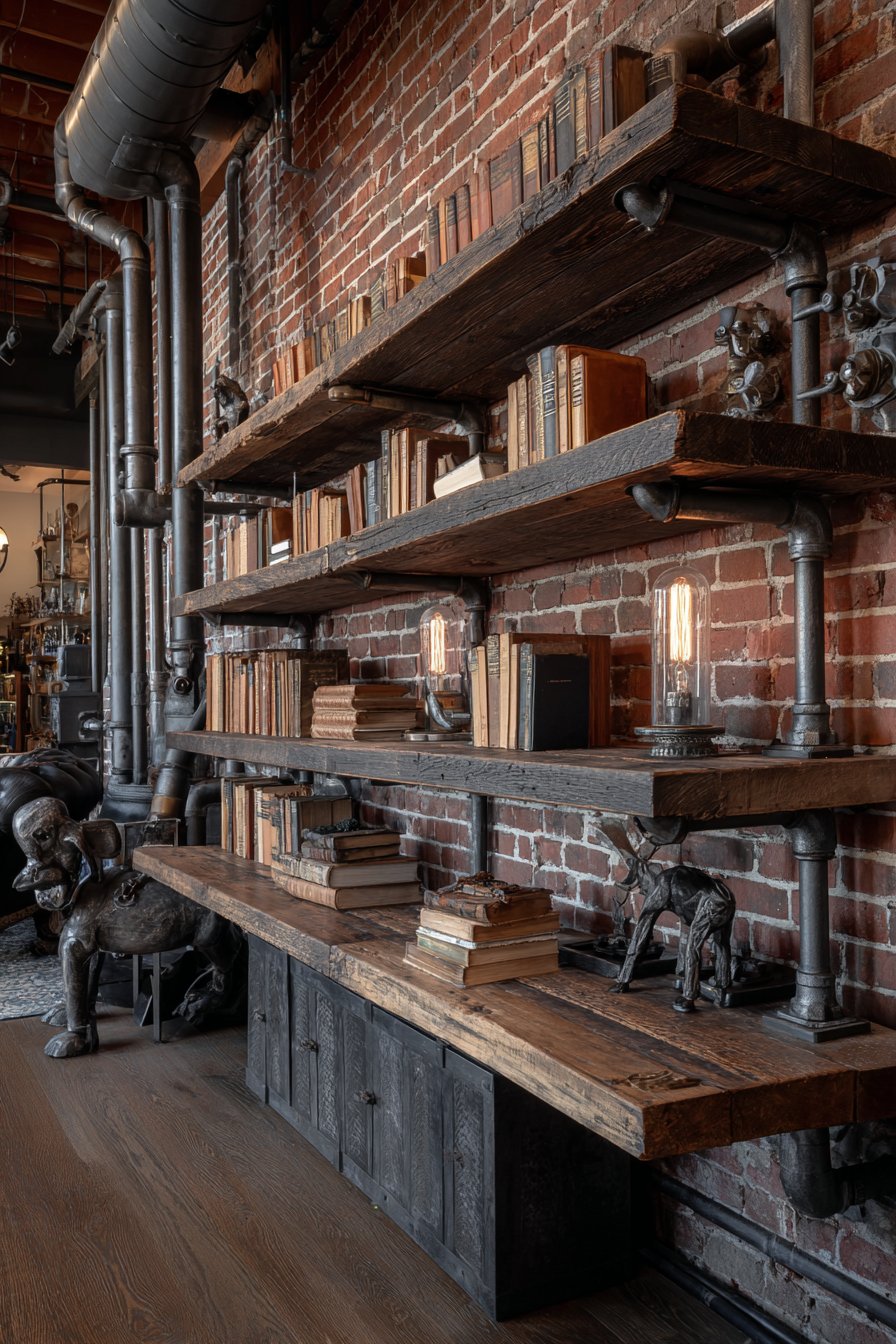
Behind this industrial installation, an exposed brick wall serves as the perfect backdrop, its rough texture and varied red-orange-brown tones providing complementary warmth to the cool steel frame. The brick’s irregular surface creates visual interest without competing for attention, instead supporting the industrial narrative through its own honest materiality.
Natural warehouse-style lighting—large windows or industrial pendant lights—highlights material textures, emphasizing the rough-sawn wood grain, the steel’s matte surface, and the brick’s dimensional masonry. This industrial bookshelf in living room applications works particularly well in loft spaces, converted warehouses, or homes seeking to incorporate urban edge into their interior design.
Key Design Tips for Industrial Metal Frame Bookshelves:
- Source authentic reclaimed wood rather than new distressed lumber for genuine character and sustainability
- Allow steel frames to develop natural patina rather than coating them with protective finishes that hide material authenticity
- Incorporate Edison bulbs or industrial-style lighting fixtures to reinforce the aesthetic cohesively
- Display vintage books, old tools, or factory artifacts that complement the industrial narrative
- Position the unit against brick, concrete, or other raw material backdrops when possible
- Use pipe fittings or exposed hardware as decorative elements that celebrate structural honesty
- Balance the hard industrial materials with soft textiles in seating areas—leather, canvas, or wool upholstery
6. Scandinavian Light Birch Wood Modular Design
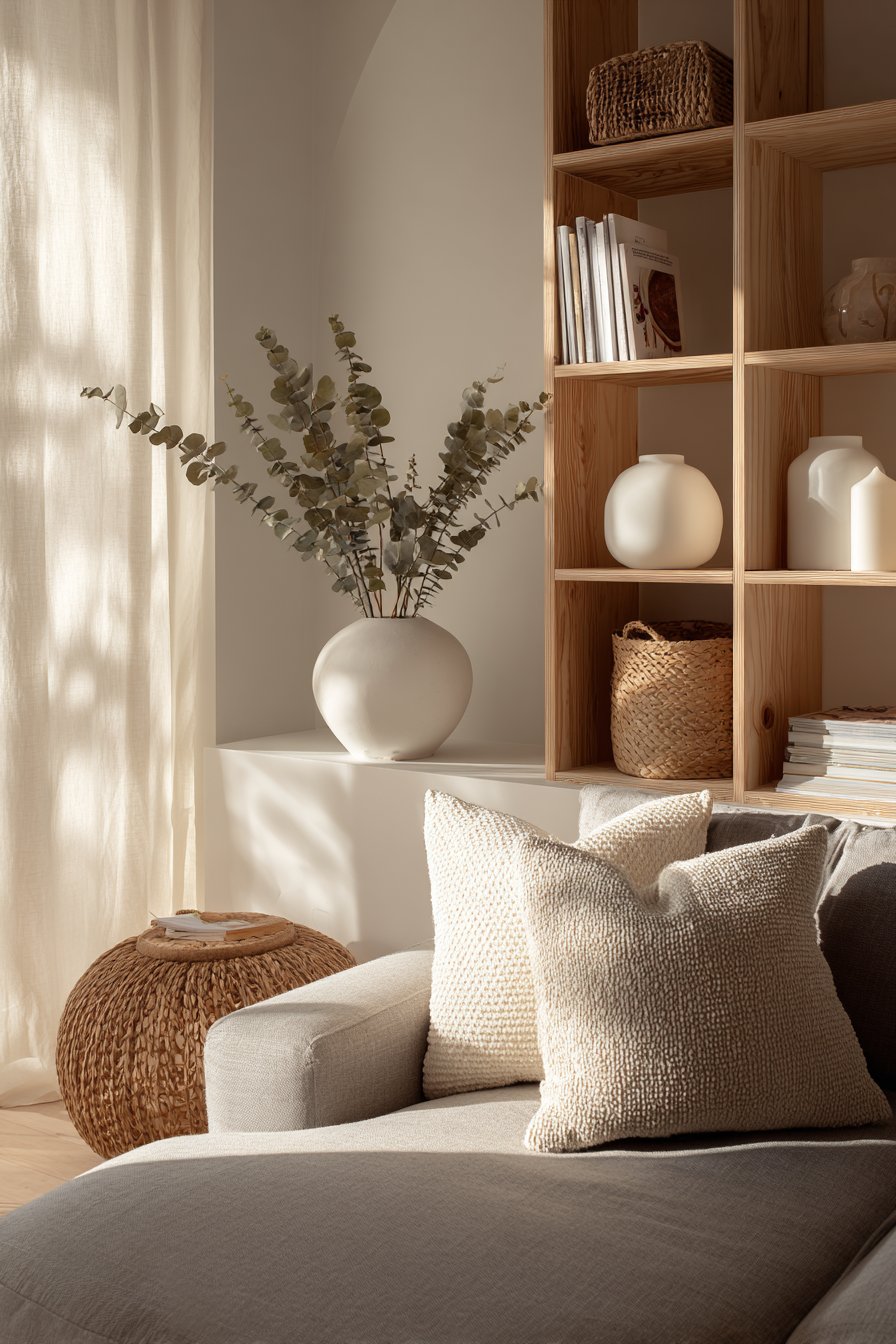
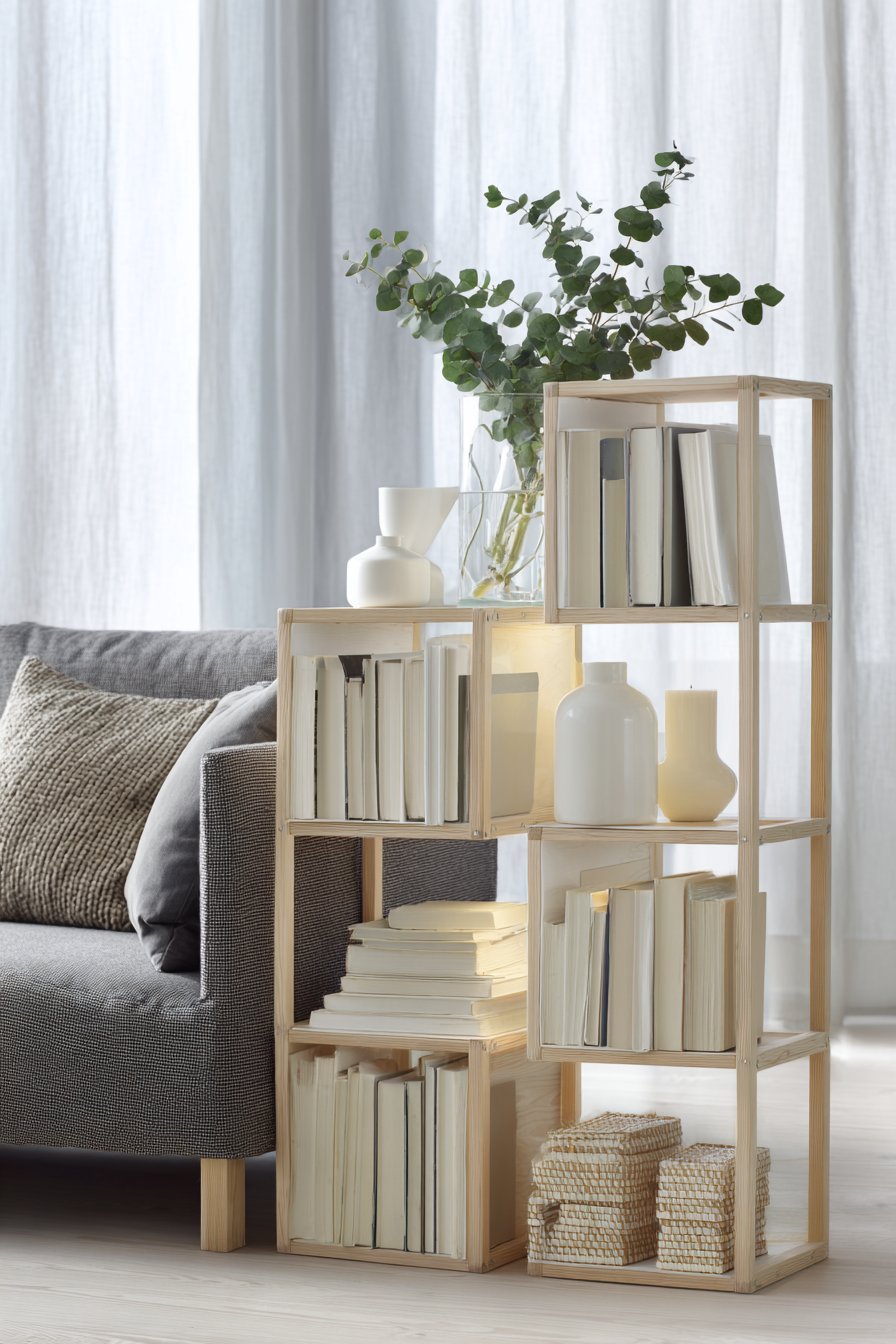
The Scandinavian bookshelf in living room interiors embodies the Nordic philosophy of functional beauty and uncluttered calm. This design features light birch wood modular shelving units with clean lines and exceptional craftsmanship.
The pale, almost blonde tone of birch wood introduces warmth without heaviness, creating an airy, open feeling even when the shelves are fully stocked with books and objects. The visible wood grain—fine and subtle rather than dramatic—adds organic texture while maintaining the serene aesthetic central to Scandinavian design principles.
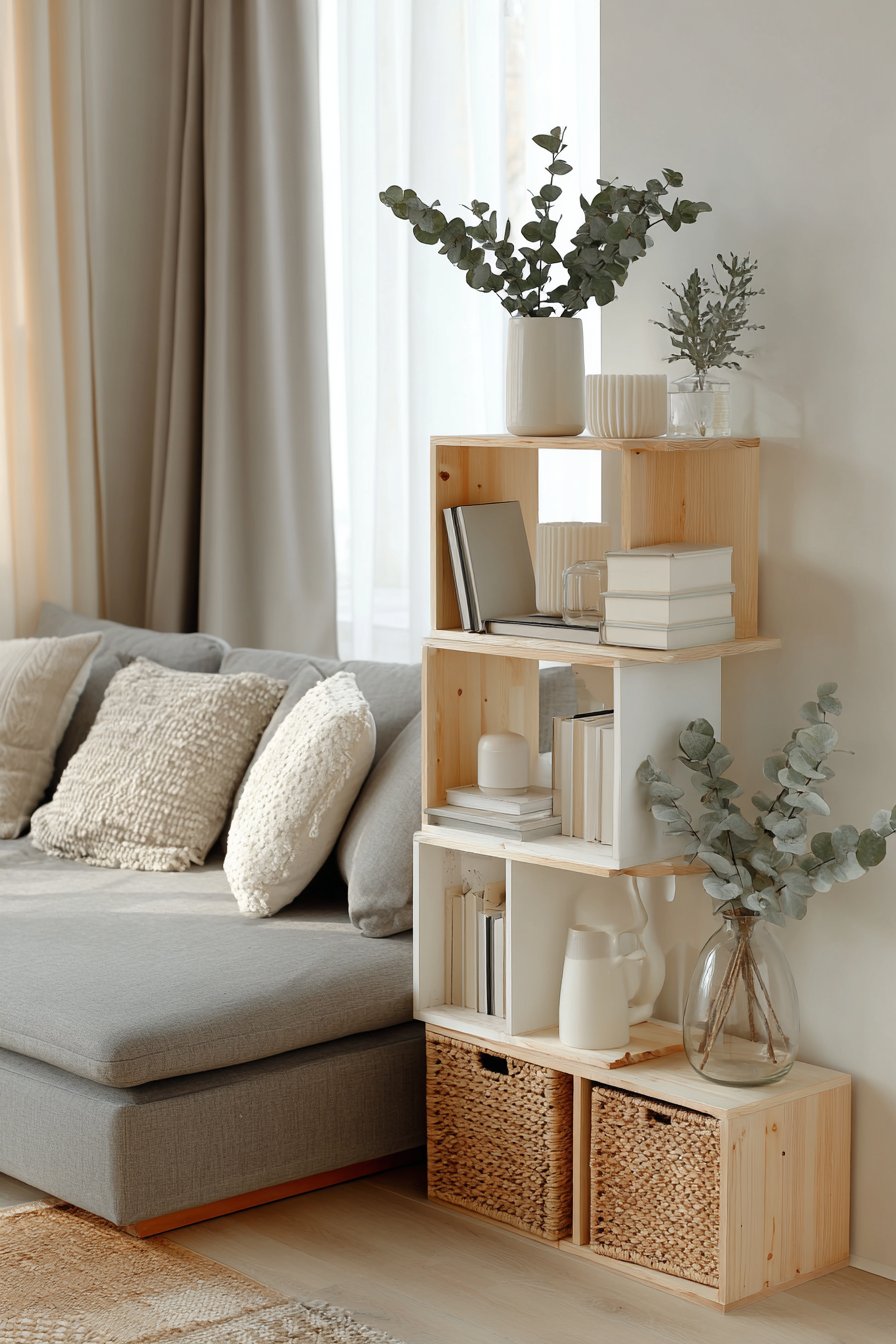
Books are neatly arranged with spines aligned and organized by size to create visual order, but this organization never feels rigid or cold. Alongside the literary collection sit white ceramic vessels with simple forms celebrating clay’s natural beauty, clear glass vases holding fresh eucalyptus stems that introduce subtle grey-green tones and gentle fragrance, and woven natural fiber storage boxes that hide smaller items while adding textural variety. Each decorative element serves a function—the ceramics might hold small items, the vases bring nature indoors, the boxes conceal clutter—demonstrating the Scandinavian principle that beauty and utility are inseparable.
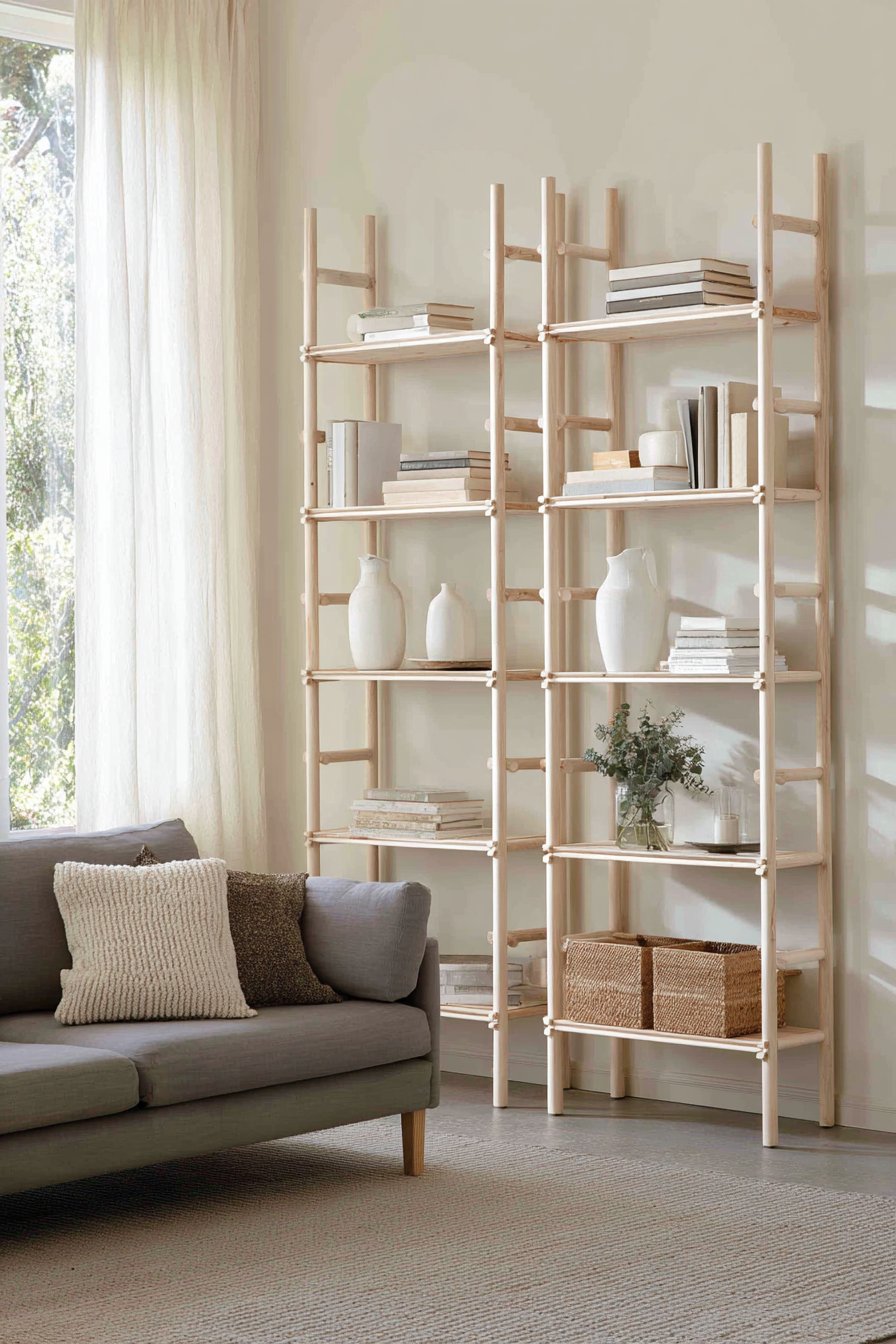
The surrounding living room space continues the Nordic theme with a neutral grey sofa upholstered in textured linen or wool, adorned with pillows in soft whites, warm greys, and perhaps a single accent in muted sage or dusty blue. Soft Nordic light, that particular quality of illumination that feels both bright and gentle, diffuses through sheer curtains, eliminating harsh shadows and creating an even, peaceful luminosity.
This Scandinavian bookshelf in living room settings creates environments that feel restful and uncluttered, spaces where the mind can relax and focus on what truly matters—whether that’s an engaging book, meaningful conversation, or simple quiet reflection.
Key Design Tips for Scandinavian Bookshelf Design:
- Choose light wood tones like birch, ash, or light oak that enhance brightness in Nordic-style interiors
- Organize books neatly by size and maintain aligned spines for visual order without rigidity
- Incorporate natural materials exclusively—wood, ceramics, glass, linen, wool, and natural fibers
- Maintain a neutral color palette with whites, greys, soft blues, and natural wood tones
- Use plants sparingly but intentionally, choosing simple greenery like eucalyptus, monstera, or pothos
- Prioritize quality over quantity, selecting fewer, better-made pieces rather than filling every surface
- Allow natural light to be the primary light source during daytime hours with sheer window treatments
7. Rustic Repurposed Barn Wood with Fireplace Integration
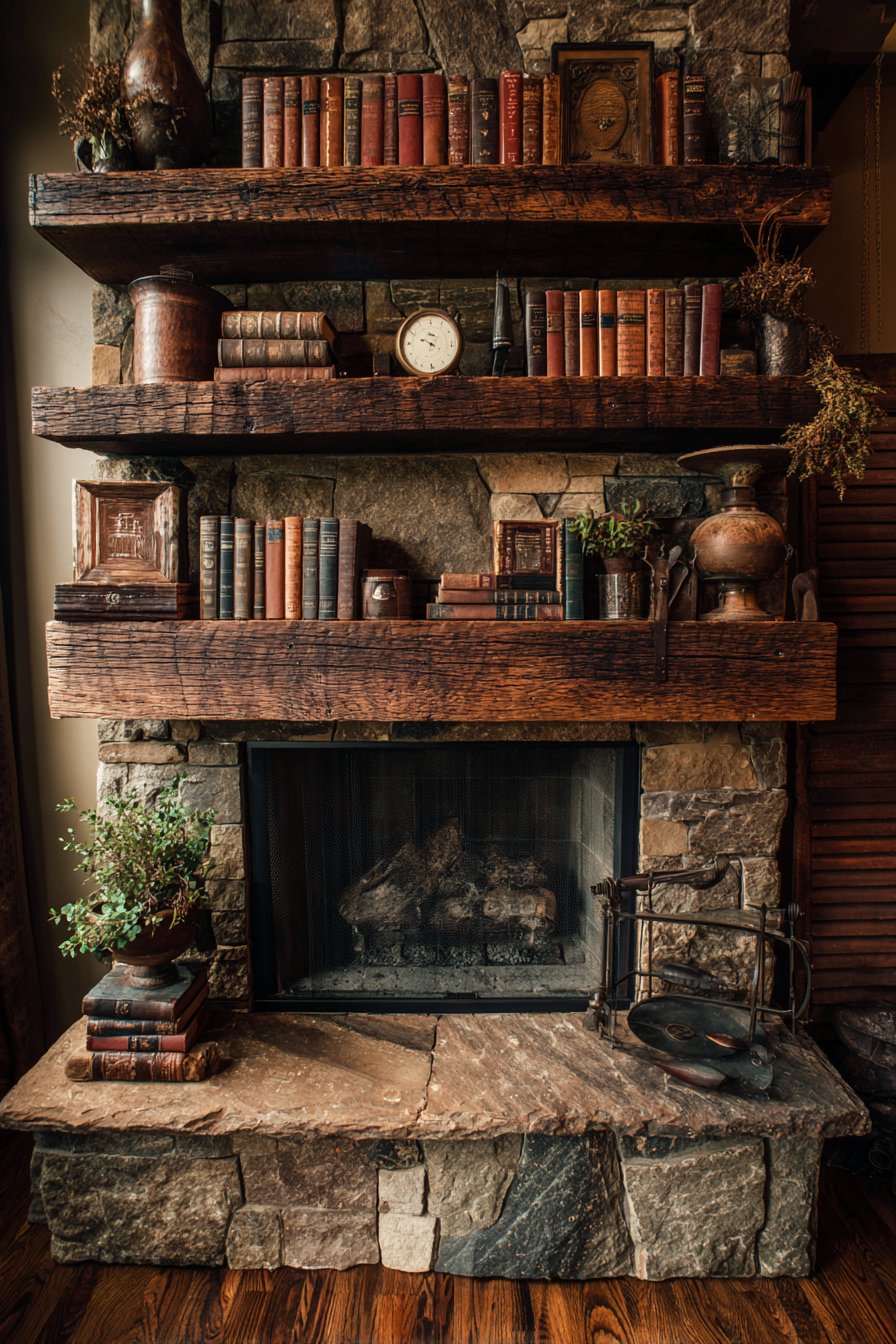
The rustic bookshelf in living room designs honors heritage, craftsmanship, and the beauty of aged materials. This approach utilizes repurposed barn wood with thick weathered planks showing every year of their history—natural knots that add character, cracks that tell stories of expansion and contraction through countless seasons, and an aged grey-brown patina that no artificial finishing process can replicate. These planks, salvaged from structures that may have stood for a century or more, bring authentic history and soul into contemporary living spaces.
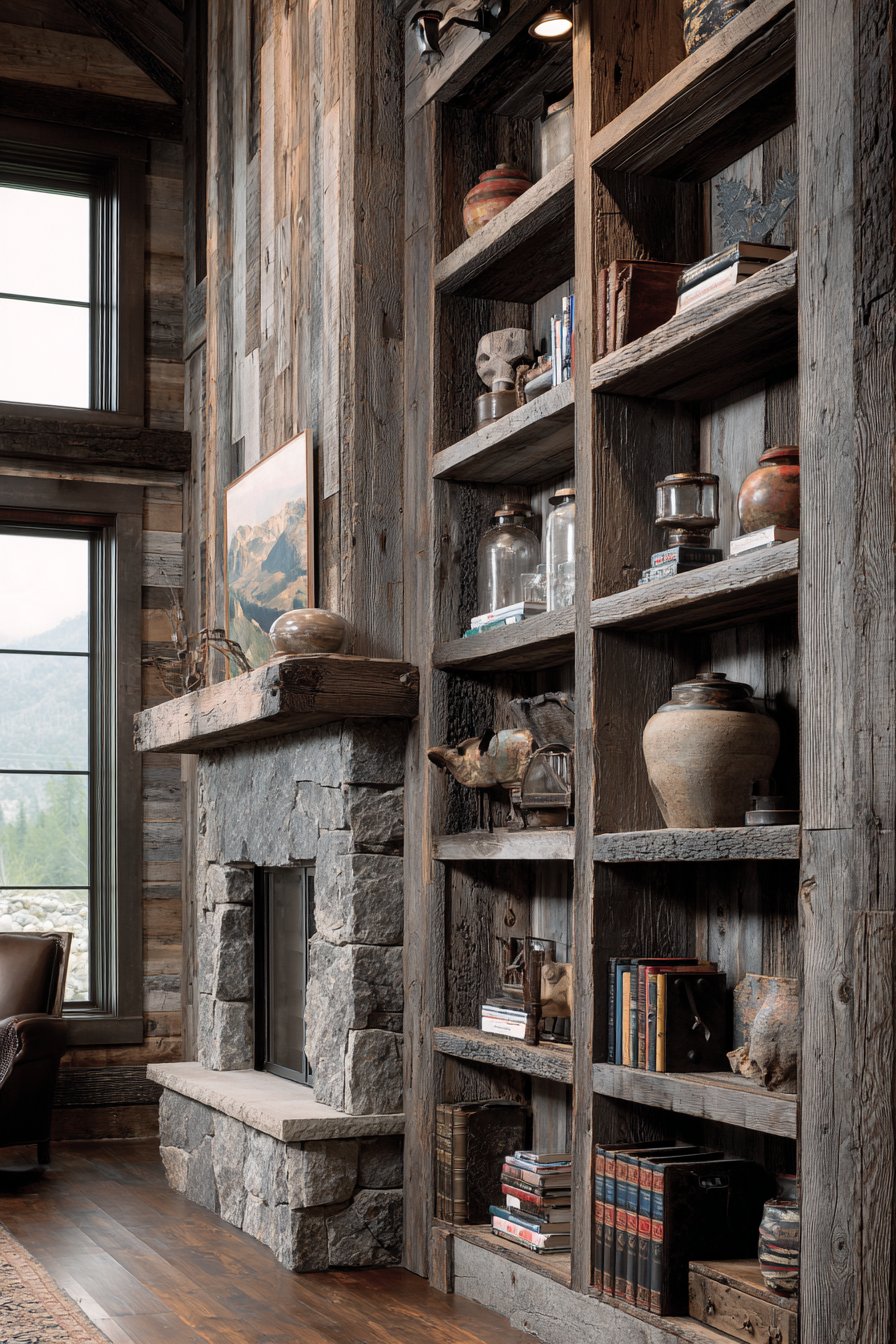
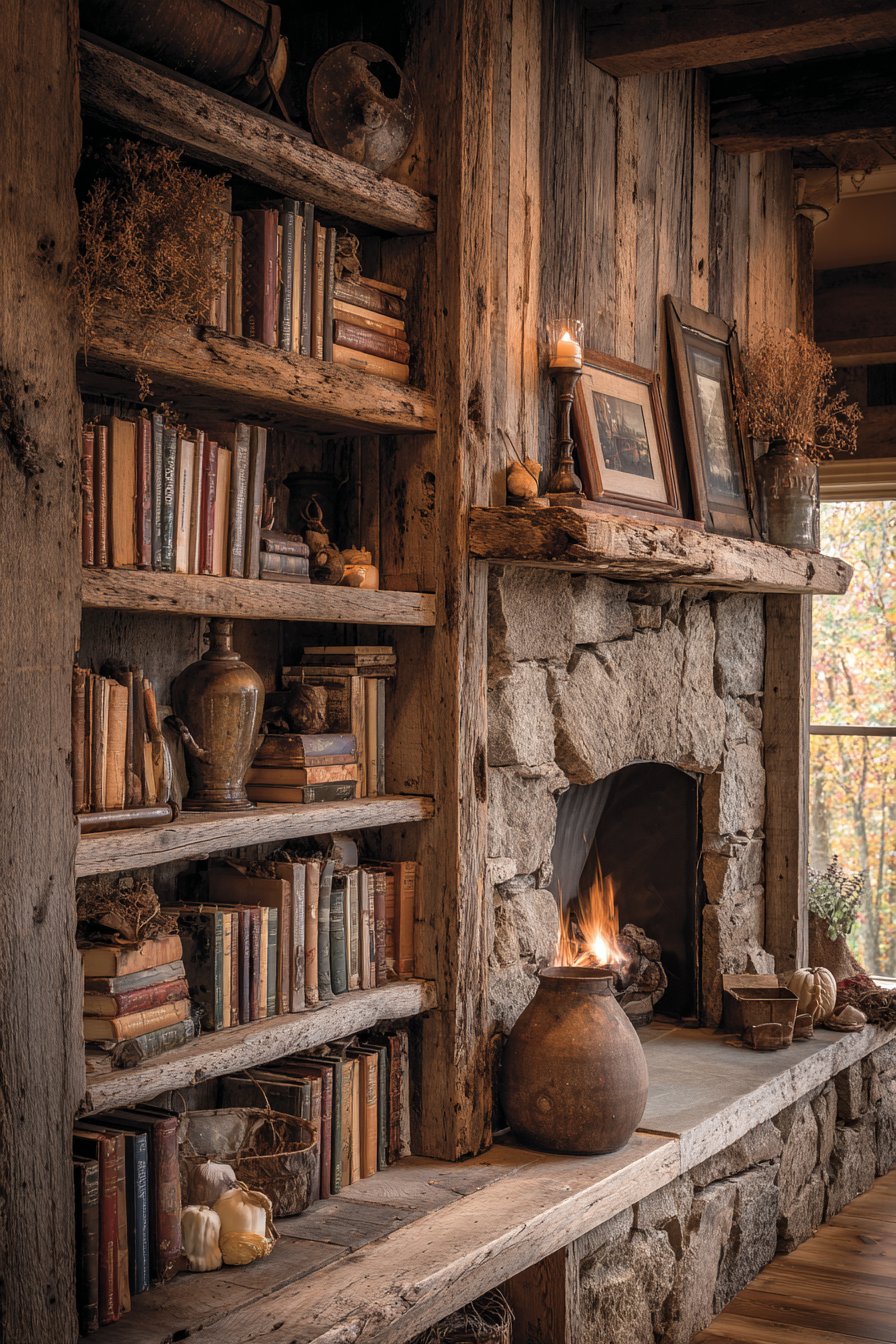
The genius of this design lies in its integration with a stone fireplace surround, creating a unified focal point that commands attention while serving dual functions—book storage and architectural drama. The bookshelf flanks the fireplace on both sides and possibly extends above the mantel, creating a cohesive composition where rustic wood and natural stone engage in textural dialogue.
Books share space with carefully curated vintage finds, including antique brass scales that might have weighed grain in their working life, pottery crocks with their characteristic salt-glaze finishes, and dried botanical arrangements—hydrangeas, wheat stalks, or cotton stems—that add organic sculptural elements without requiring ongoing maintenance.
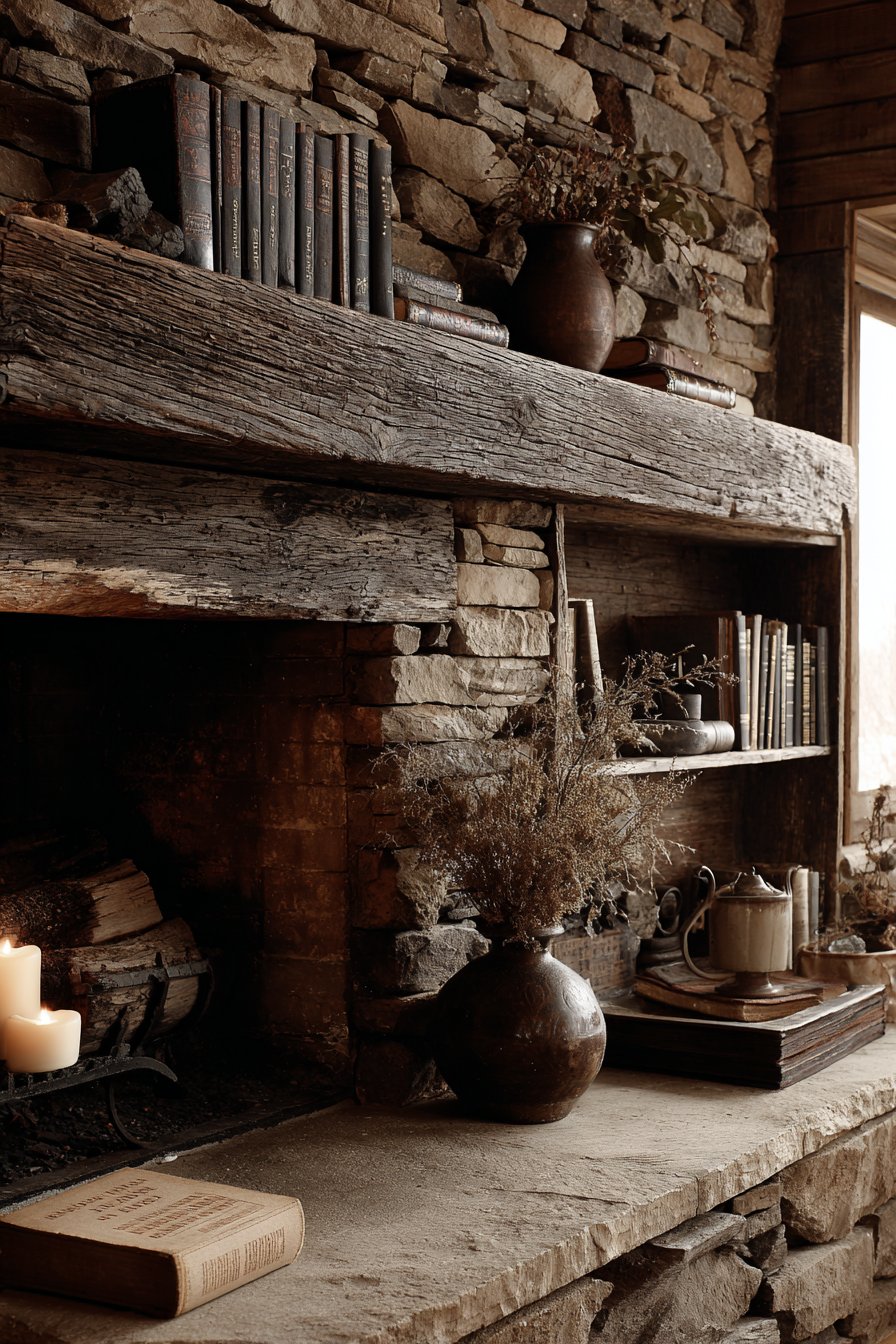
Natural materials dominate this rustic environment, with the weathered wood and stone textures creating a foundation that feels grounded and permanent. The stone’s irregular surface, whether stacked ledgestone or fieldstone, provides complementary roughness to the wood’s linear grain, while variations in stone color—greys, tans, russets, and creams—harmonize with the wood’s silvered brown tones.
Warm ambient lighting from nearby windows illuminates dust particles dancing in afternoon sunbeams, while the fireplace itself provides flickering golden light during evening hours, casting dancing shadows that animate the textured surfaces and creating an atmosphere of profound coziness.
Key Design Tips for Rustic Barn Wood Bookshelves:
- Source authentic barn wood from salvage yards or reclamation specialists rather than buying artificially weathered lumber
- Embrace imperfections like knots, nail holes, and color variations as design features rather than flaws
- Integrate shelving with existing architectural elements like fireplaces or exposed beams for cohesive design
- Display vintage or antique objects that share the wood’s historical sensibility and aged patina
- Use dried botanicals and natural elements that complement rather than compete with the wood’s organic beauty
- Install indirect lighting—wall sconces or LED strips—to illuminate book spines without harsh glare
- Balance the rustic elements with comfortable modern seating upholstered in leather, linen, or neutral fabrics
8. Compact Vertical Design for Small Space Efficiency
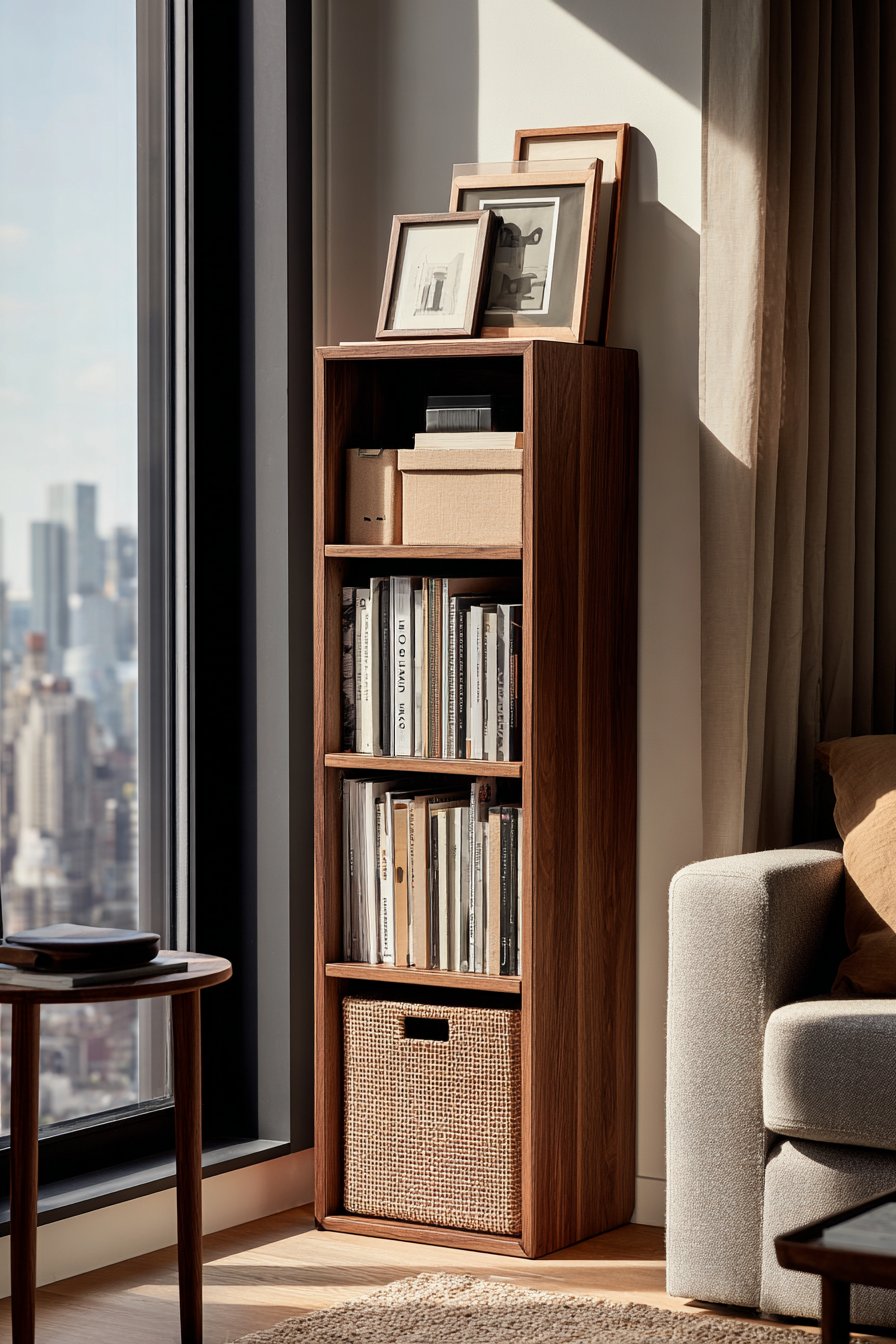
The compact bookshelf in living room settings proves that limited square footage need not mean limited style or function. This design features a narrow vertical bookshelf in rich walnut finish, strategically positioned between a window and doorway—those transitional spaces that often go unused but offer perfect opportunities for vertical storage.
The slender footprint, perhaps only 12-15 inches deep, allows the unit to fit where standard bookshelves cannot, while the vertical orientation maximizes storage capacity by reaching toward the ceiling rather than spreading across valuable wall space.
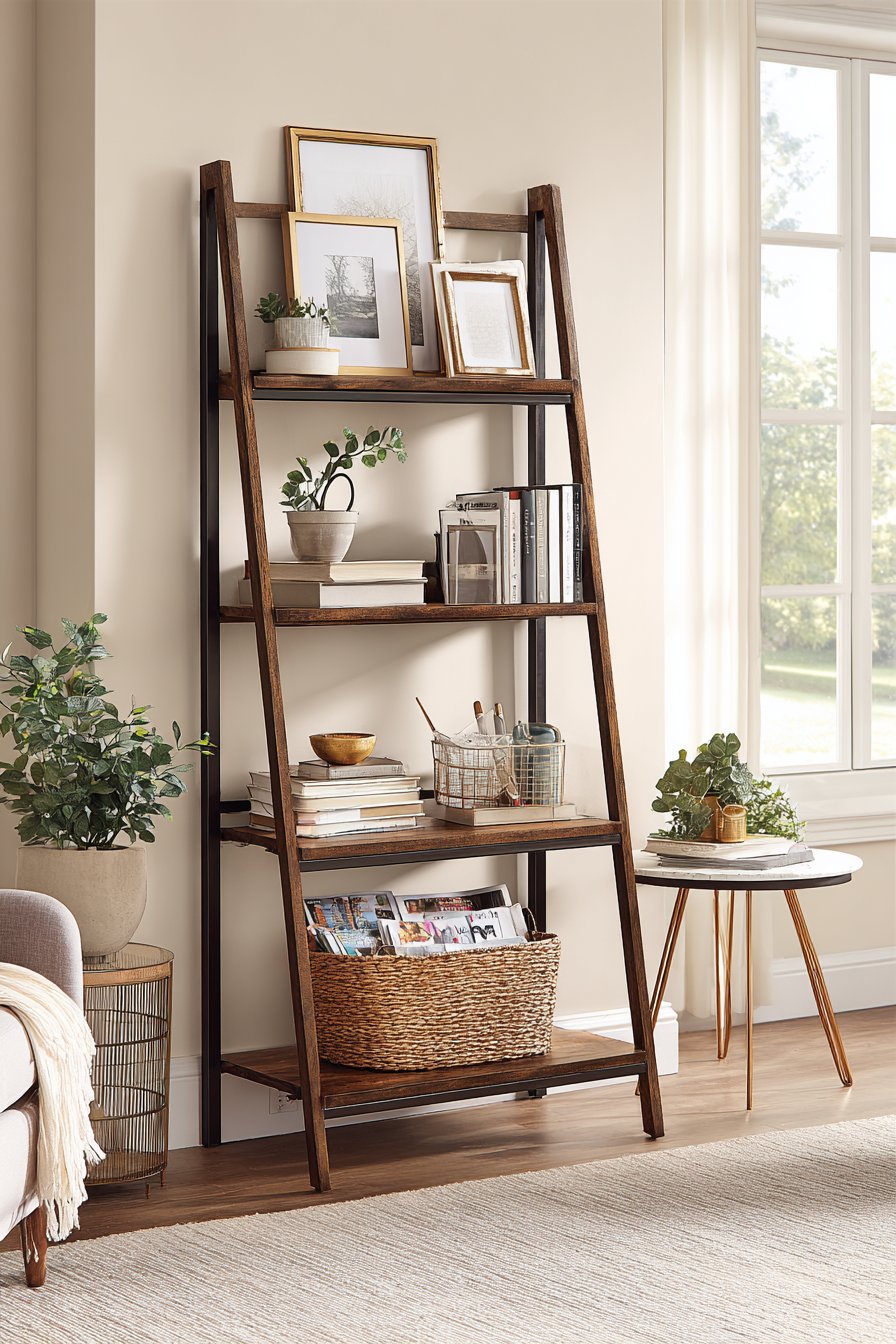
The five-tier configuration provides thoughtful organization opportunities. Upper shelves display books arranged spine-out in the conventional manner, their varied colors and titles creating visual interest at eye level and above. Middle shelves might feature small framed art pieces leaning casually against the back panel rather than hung, creating a layered, collected aesthetic that feels personal and curated.
The lower shelf dedicates itself to magazine storage, with a handsome woven basket containing current issues and recent publications that might otherwise create visual clutter. This strategic organization—books above, magazines below—reflects how people naturally interact with different reading materials.
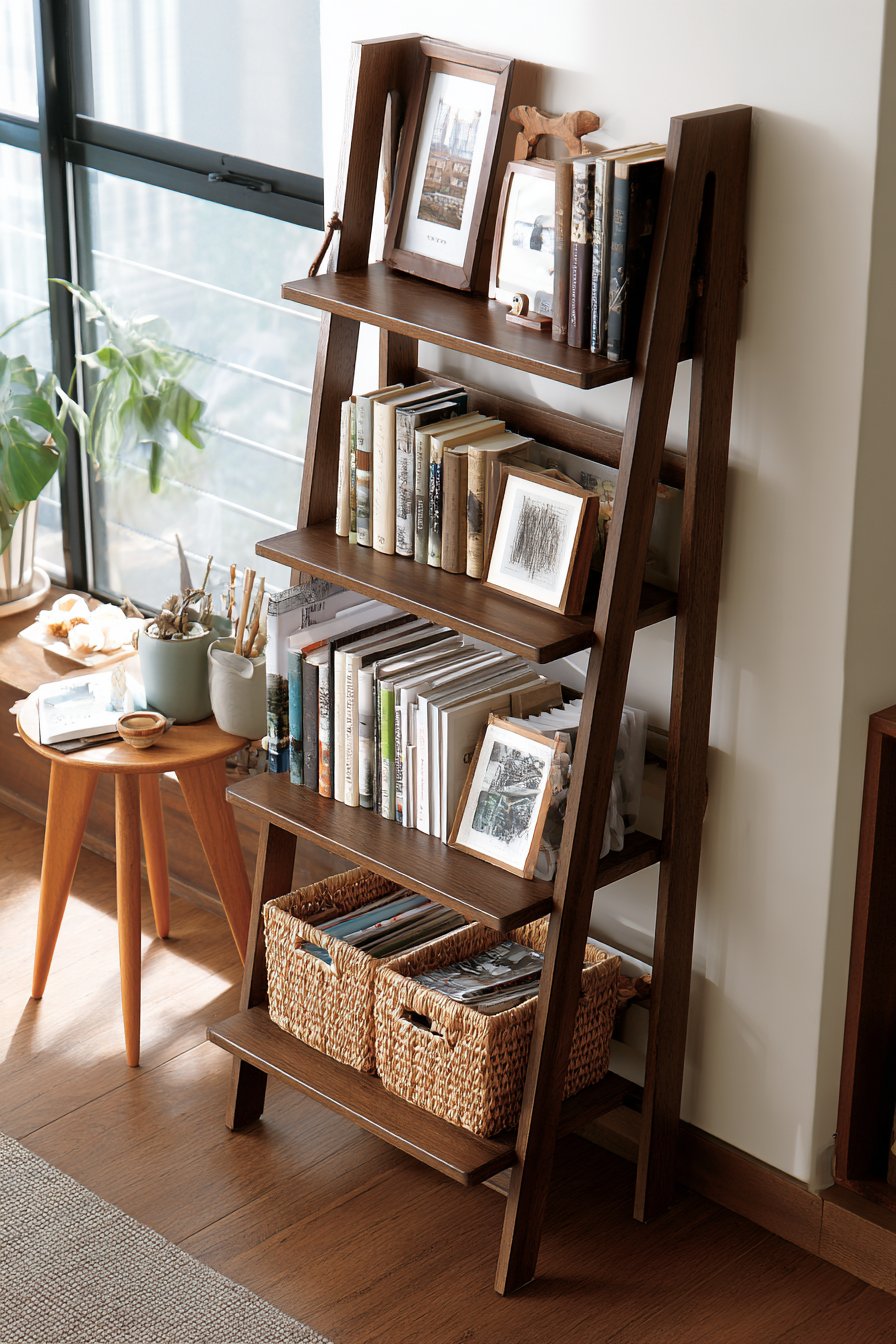
A small side table positioned adjacent to the bookshelf extends its functionality, providing surface space for a reading lamp, beverage, or the book currently in progress. The walnut finish introduces warm, chocolatey brown tones that add depth and richness even in small quantities, proving that dark wood can work beautifully in compact spaces when used judiciously.
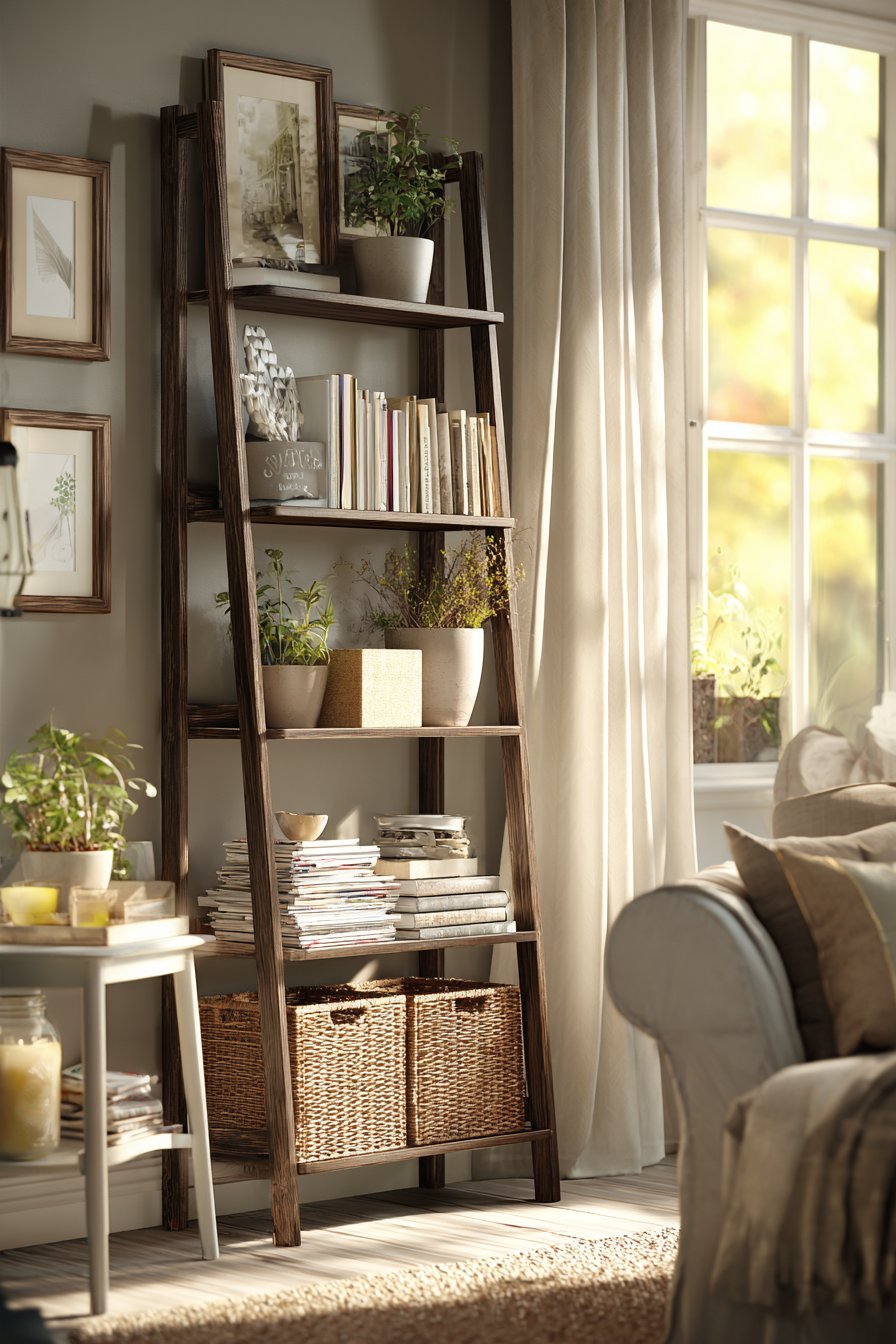
Natural daylight from the nearby window illuminates the practical organization during daytime hours, highlighting how smart spatial planning can transform even the smallest living room into a well-organized, attractive space that accommodates book lovers’ needs without overwhelming limited square footage.
Key Design Tips for Compact Vertical Bookshelves:
- Measure transition spaces between windows and doorways for narrow vertical bookshelf opportunities
- Choose darker wood finishes like walnut or espresso to add visual weight and sophistication
- Organize books by size on individual shelves to maximize storage efficiency in limited space
- Use the lowest shelf for basket storage of magazines, throw blankets, or other items needing quick access
- Position a small side table or floor lamp adjacent to extend functionality without requiring additional floor space
- Install the bookshelf securely to the walls using furniture anchors, especially important for tall, narrow units
- Keep upper shelves lighter in visual weight than lower shelves for stability—both actual and perceived
9. Bohemian Eclectic with Globally-Inspired Decor
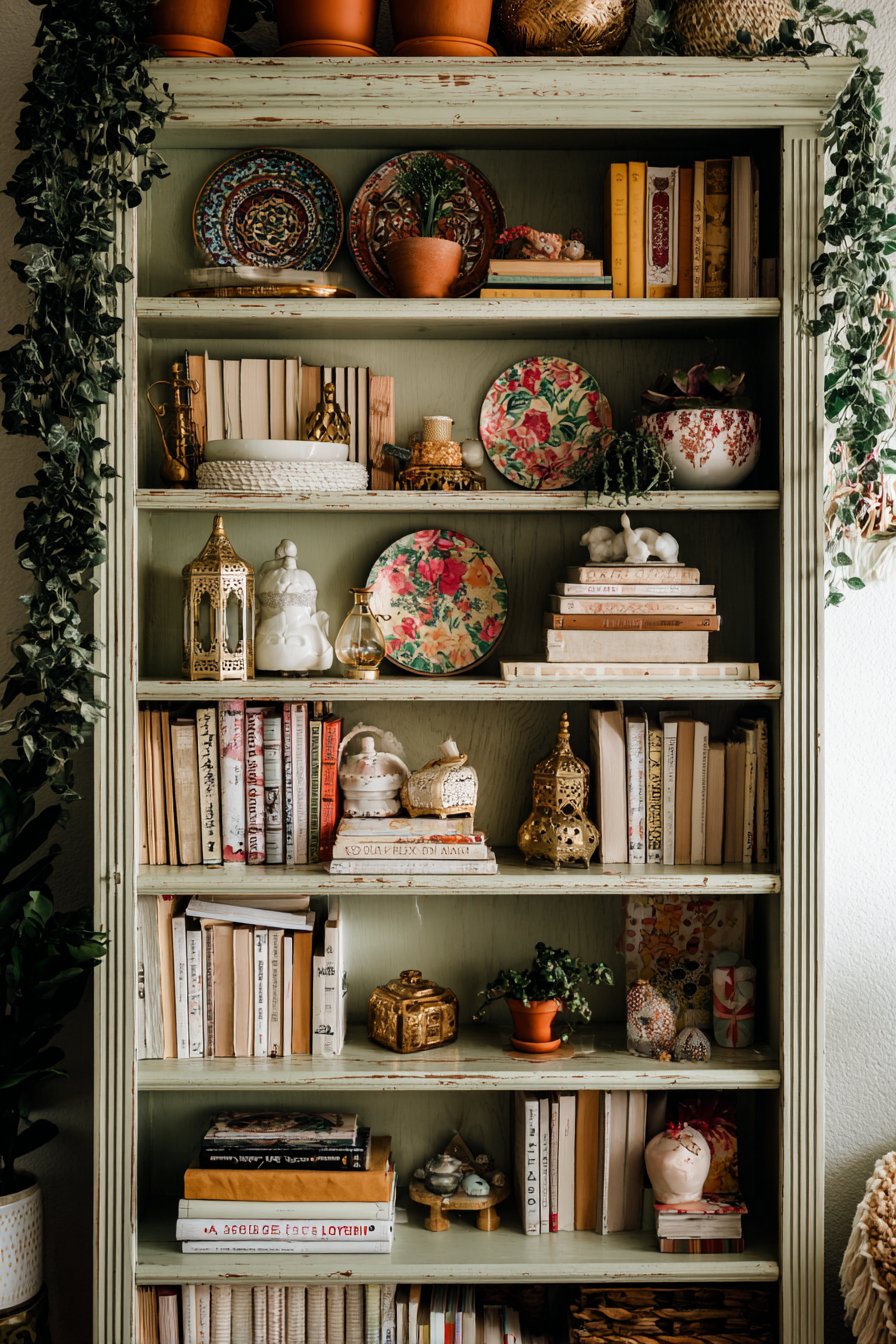
The bohemian bookshelf in living room designs celebrates individuality, global influences, and the beauty of collected treasures. This approach features eclectic vintage wooden shelving painted in soft sage green with a deliberately distressed finish that reveals underlying wood tones through areas of wear.
The sage green—that perfect balance between blue and grey with earthy undertones—provides a colored backdrop that feels both calming and distinctive, setting the stage for the layered, richly decorated display that defines bohemian style.
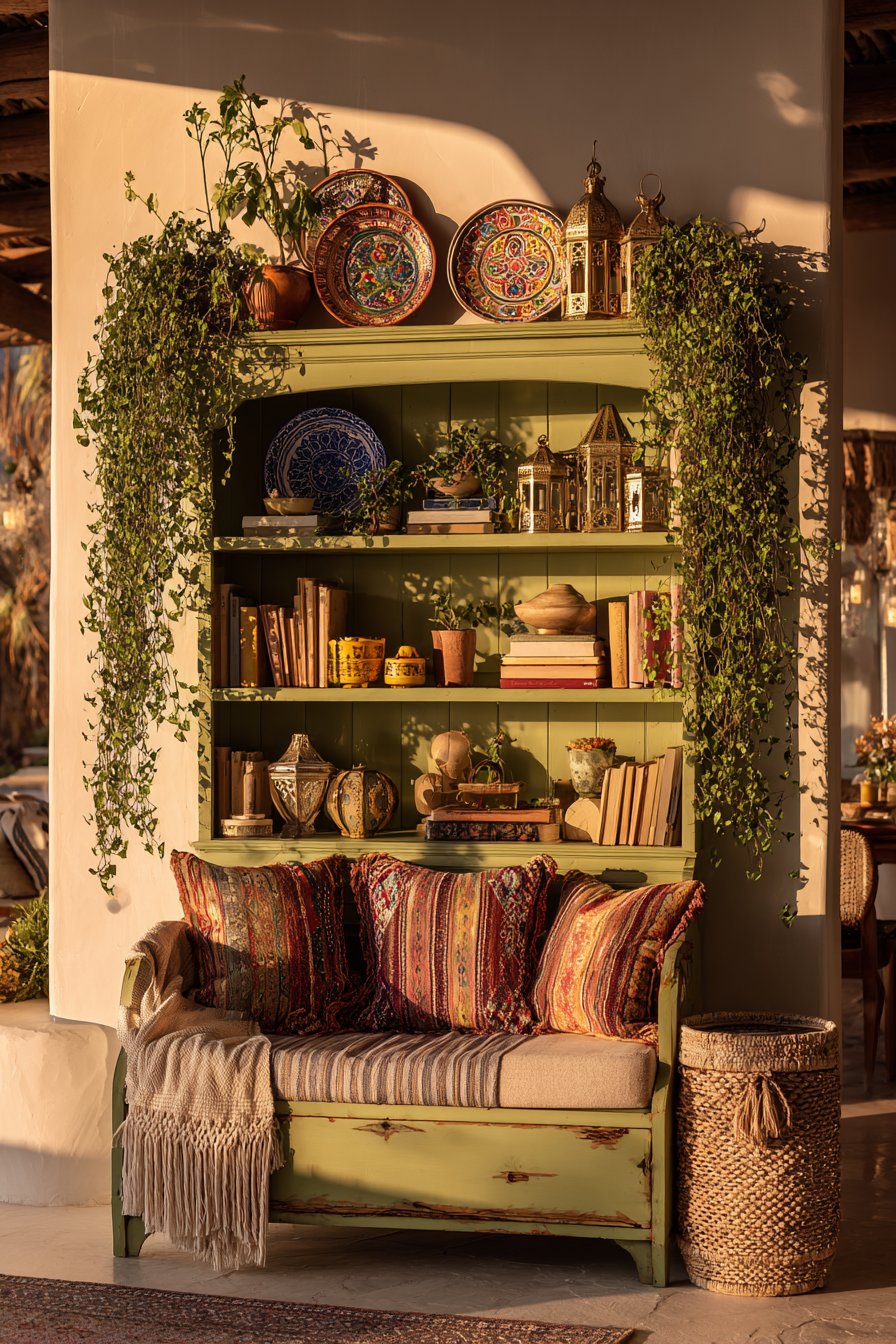
Books share space democratically with globally-inspired decor pieces that tell stories of travel, culture, and artistic appreciation. Macramé wall hangings with their intricate knotwork patterns hang from shelf edges or the wall behind, adding textural dimension and handcrafted authenticity.
Colorful ceramic plates from Moroccan souks or Portuguese markets lean against the back of shelves, their vibrant blues, greens, and golden yellows creating focal points among the book spines. Brass Moroccan lanterns with their characteristic perforated patterns cast intricate shadows when lit, while abundant trailing plants—pothos, string of pearls, or philodendron—create organic cascades that soften the geometric structure of the shelving itself.
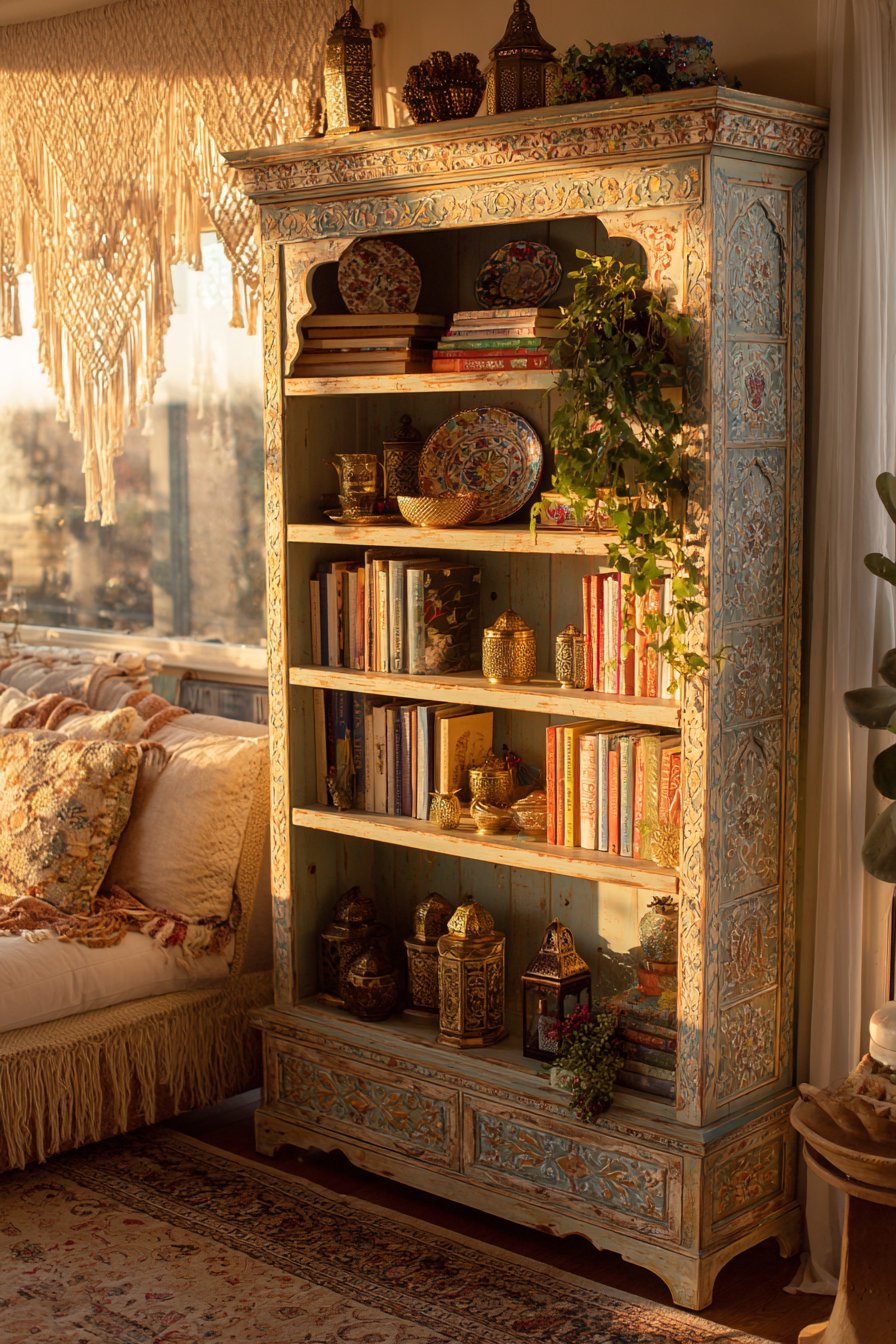
The layered textiles and patterns visible in surrounding furniture—kilim pillows, suzani throws, printed upholstery—continue the bohemian narrative beyond the bookshelf, creating a cohesive environment that feels collected over time rather than purchased all at once.
Natural golden hour lighting streams through windows, creating warm ambiance that makes the space glow with welcoming energy. This bohemian bookshelf in living room works beautifully for those who embrace maximalism, color, pattern, and the idea that more can indeed be more when curated with confidence and artistic sensibility.
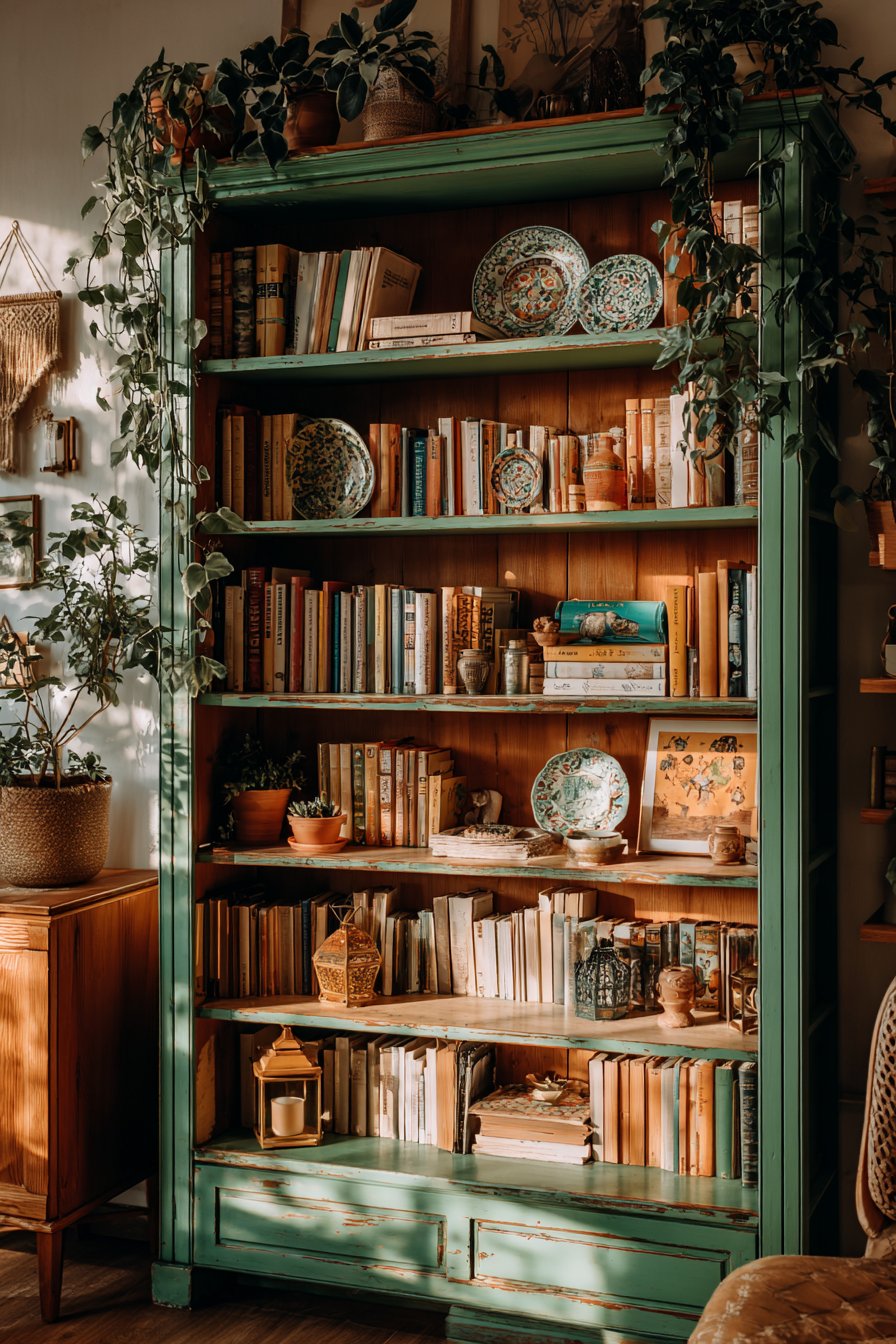
Key Design Tips for Bohemian Bookshelf Styling:
- Paint vintage shelving in soft, earthy tones like sage, terracotta, or dusty blue rather than stark colors
- Distress painted finishes by sanding edges and high-wear areas to reveal underlying wood tones
- Display decorative plates and artwork by leaning them against the back rather than hanging them
- Incorporate global textiles like macramé, woven wall hangings, or small rugs as decorative elements
- Use abundant plants to add life, color, and organic movement throughout the shelving
- Mix book arrangements—some spine-out, some stacked horizontally, some with covers showing
- Layer items at varying depths on shelves to create a dimensional, collected-over-time appearance
10. Contemporary Geometric Statement with Integrated Lighting
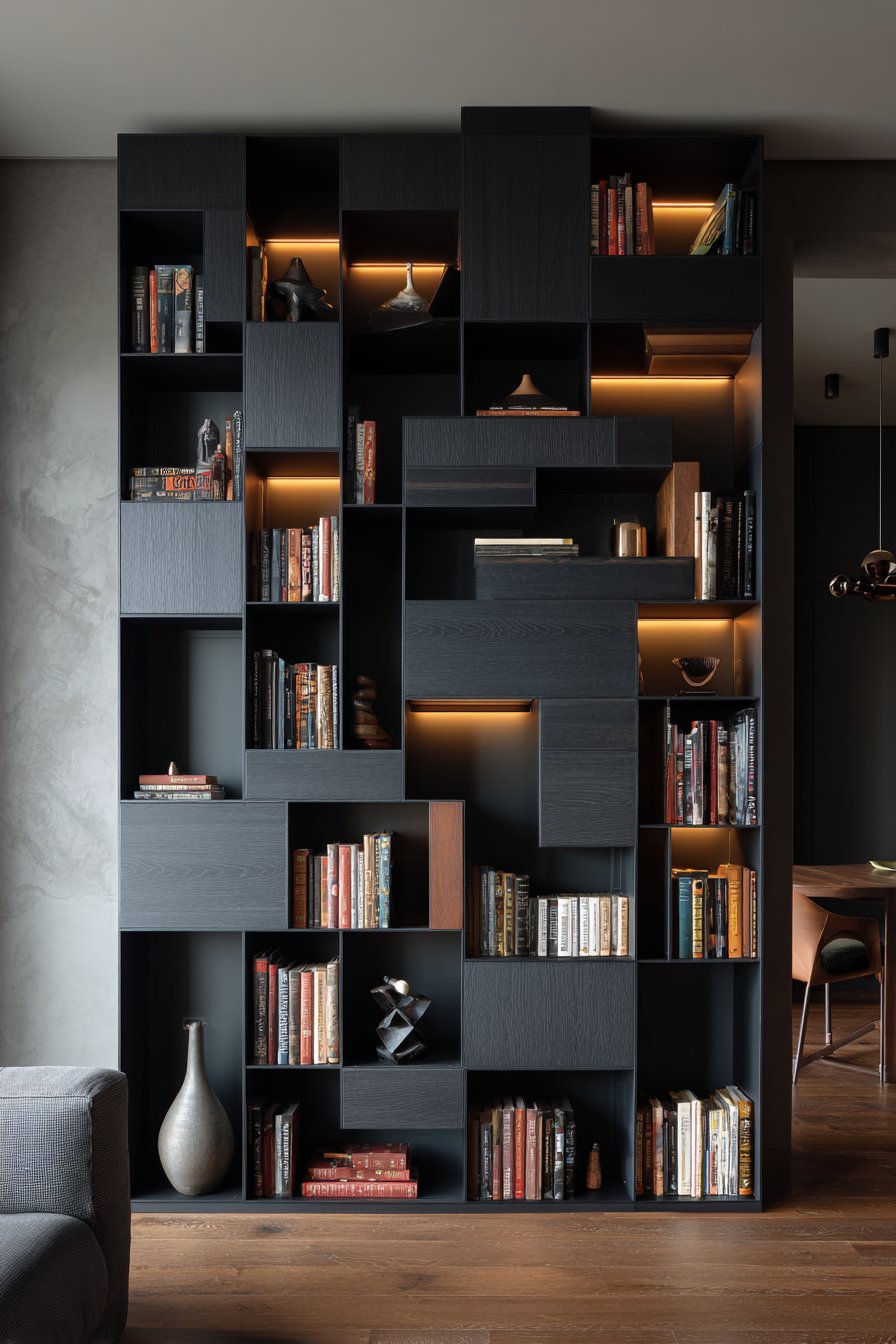
The contemporary bookshelf in living room spaces makes a bold architectural statement, functioning as both storage solution and a sculptural art installation. This design features a geometric shelving unit in matte black powder-coated steel with alternating open and closed compartments.
The black finish—sophisticated and dramatic—creates strong visual impact against light-colored walls, while the geometric arrangement of squares, rectangles, and asymmetric shapes transforms functional storage into kinetic sculpture. Open compartments reveal carefully curated contents, while closed compartments hide everyday clutter, providing the perfect balance between display and practical storage.
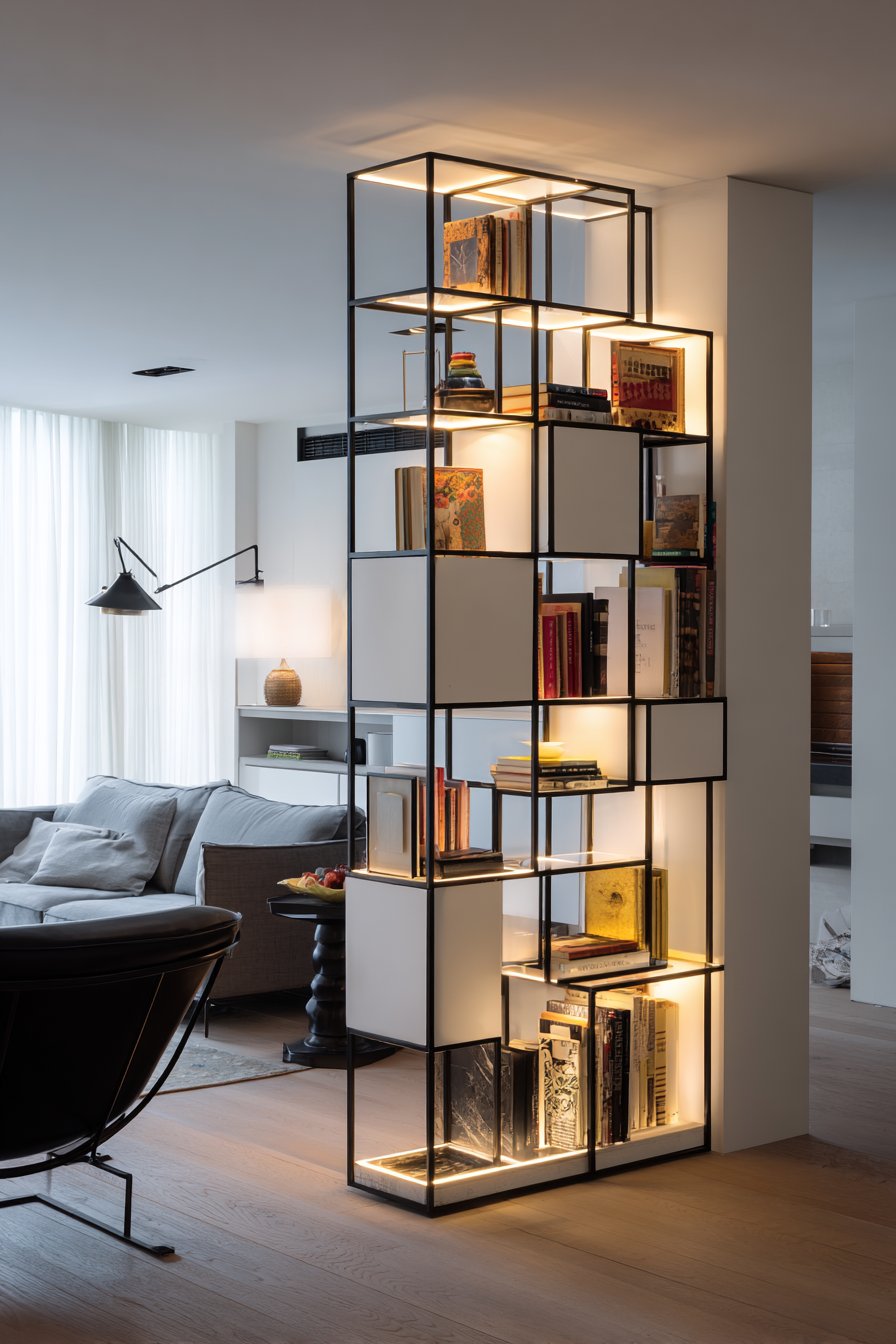
Books are displayed with intentional artistry rather than conventional organization. On select shelves, books face forward with their covers visible, transforming literature into graphic art. Hardcover books with striking cover designs—bold typography, dramatic photography, or artistic illustrations—become visual focal points that add color and personality to the black framework.
Other shelves display books in traditional spine-out fashion, their varied heights and colors creating textural interest within the geometric compartments. Closed storage compartments, some with push-to-open mechanisms for seamless integration, conceal items that serve function without contributing to aesthetics—paperwork, electronics, personal items that need accessibility without visibility.
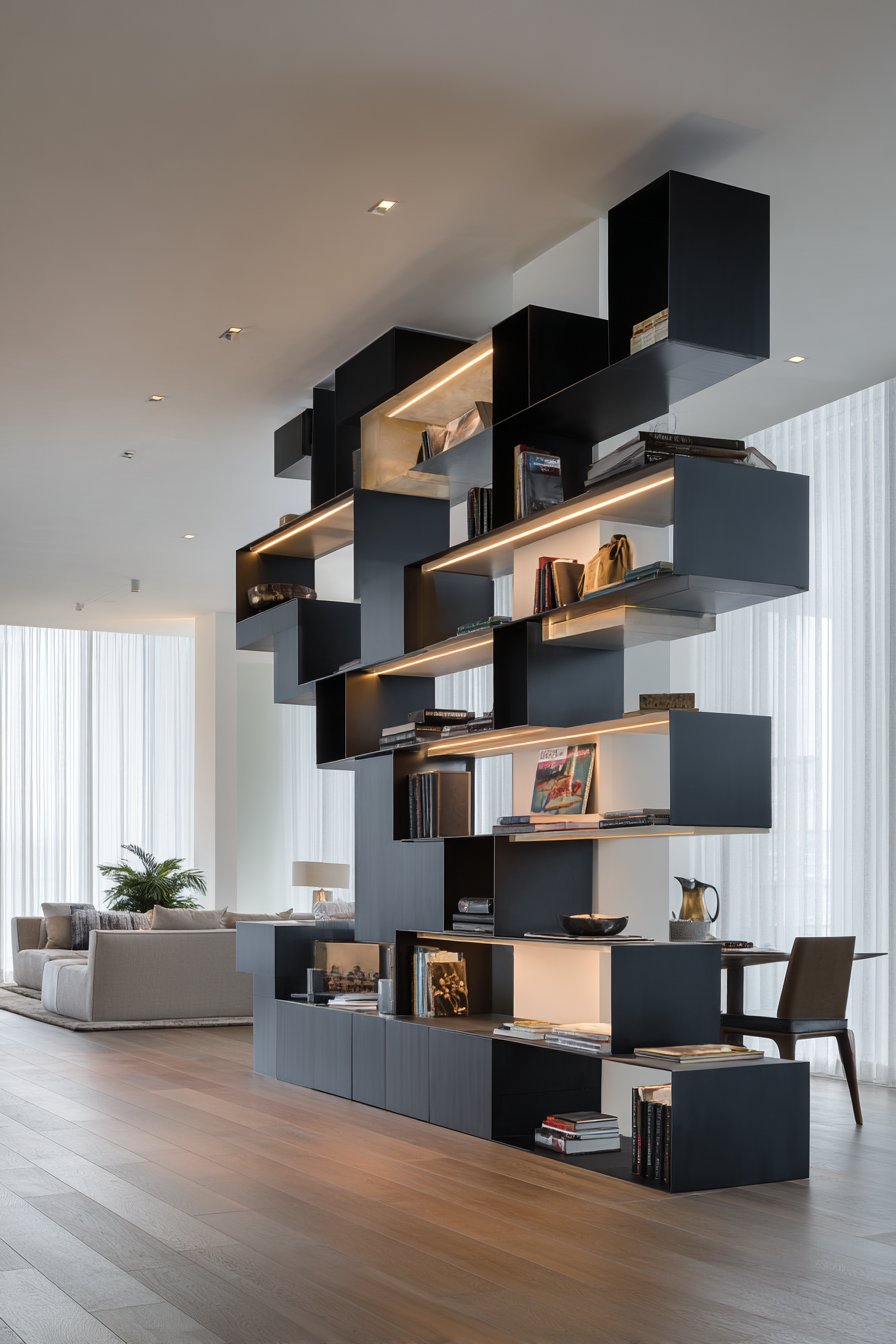
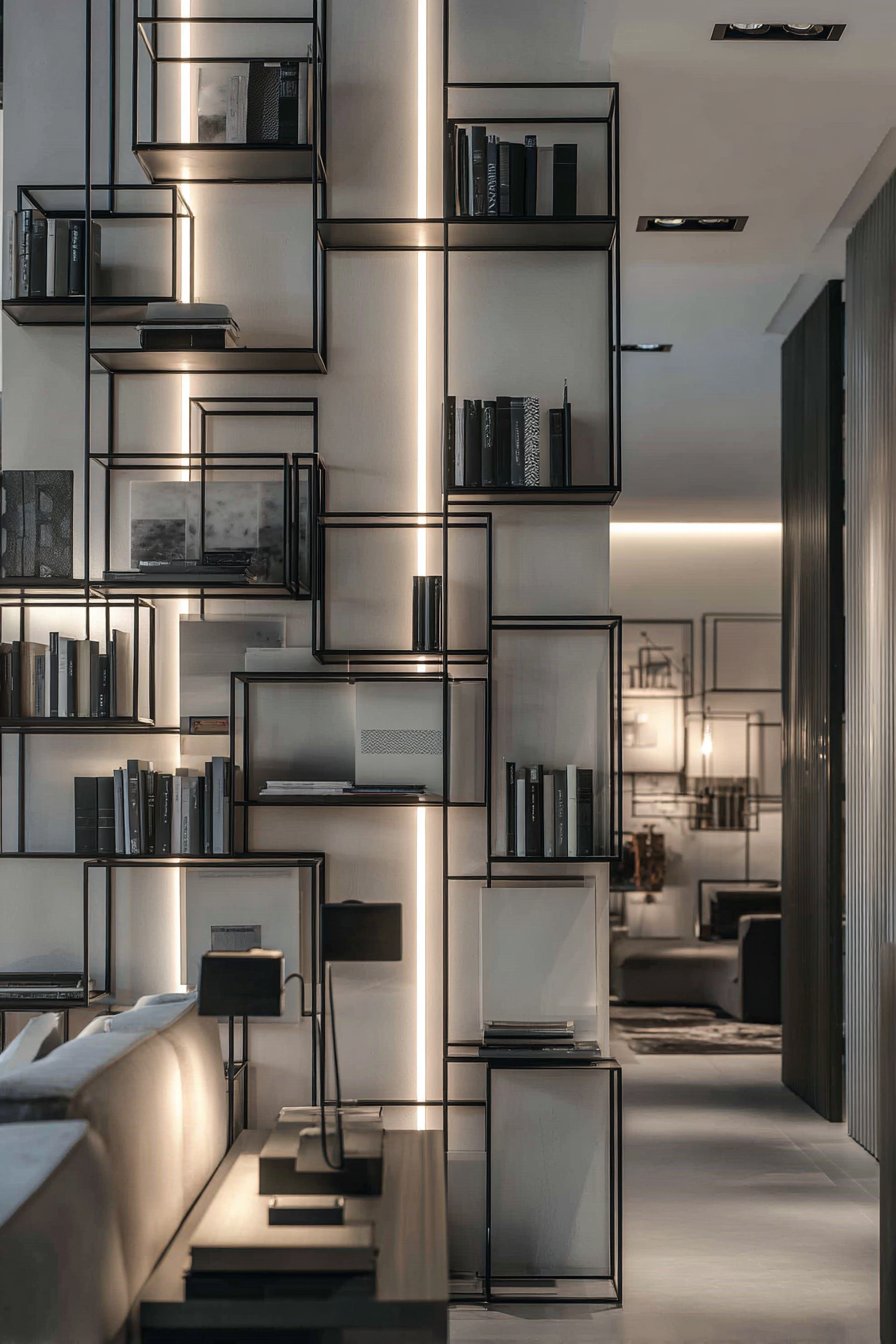
Integrated LED strip lighting within shelves provides the pièce de résistance, creating dramatic highlighting that emphasizes select books or objects while adding ambient illumination to the living room after dark. These concealed LED strips, installed along the bottom edge of upper shelves or recessed within compartment interiors, create a floating, illuminated effect that transforms the bookshelf into an evening focal point.
The surrounding space continues the contemporary aesthetic with modern furniture featuring clean silhouettes, minimal ornamentation, and quality materials—perhaps a leather sofa with streamlined arms, a glass and steel coffee table, or sculptural accent chairs. Professional architectural photography captures how this contemporary bookshelf functions as both highly practical storage and conversation-starting art piece.
Key Design Tips for Contemporary Geometric Bookshelves:
- Choose bold colors like matte black, navy blue, or charcoal grey for maximum architectural impact
- Mix open and closed compartments in roughly 60-40 ratio, favoring open display
- Display select books cover-forward to showcase striking cover designs as graphic art
- Install LED strip lighting with dimmer controls for adjustable ambient lighting levels
- Position the bookshelf as a focal point rather than against peripheral walls
- Maintain strict editing of displayed items—every visible object should contribute aesthetically
- Coordinate surrounding furniture in contemporary style with clean lines and quality materials
Why These Bookshelf Designs Are Among the Best
These ten approaches to integrating a bookshelf in living room interiors represent the finest examples of how functional furniture can transcend utility to become design statements that define and elevate entire spaces. Each design solution addresses different aesthetic preferences, spatial constraints, and lifestyle needs while maintaining exceptional quality in both form and function. The traditional built-in bookshelf offers timeless elegance and architectural permanence that increases home value while providing maximum storage capacity. The modern floating shelf system delivers contemporary sophistication perfect for minimalist lifestyles that prioritize clean lines and curated simplicity.
The cozy corner ladder-style bookshelf transforms overlooked spaces into intimate reading retreats, proving that even small living rooms can accommodate book storage without sacrifice. The minimalist cube shelving demonstrates how restraint and thoughtful editing create visual impact through simplicity rather than complexity. The industrial metal frame design celebrates honest materials and utilitarian beauty, particularly relevant in urban lofts and converted spaces. The Scandinavian birch wood modular system embodies functional beauty and uncluttered calm, creating serene environments that promote wellbeing and mental clarity.
The rustic barn wood integration with fireplace elements brings authentic history and soul into contemporary homes, honoring craftsmanship and heritage materials. The compact vertical solution proves that limited space need not limit style or storage capacity, offering smart solutions for urban apartments and smaller homes. The bohemian eclectic approach celebrates individuality and global influences, perfect for creative spirits who embrace color, pattern, and collected treasures. Finally, the contemporary geometric statement with integrated lighting functions as both storage and sculpture, ideal for design-forward homeowners who appreciate innovation and dramatic visual impact.
What makes these bookshelf in living room designs truly exceptional is their versatility and adaptability. Whether you’re working with a grand formal living room or a cozy apartment space, whether your budget allows for custom built-ins or requires creative repurposing of vintage pieces, whether your aesthetic preference leans toward minimalism or maximalism, you’ll find inspiration within these ten approaches. Each design considers not only how the bookshelf looks but how it functions, how people interact with it, how it relates to surrounding furniture and architectural elements, and how it contributes to the overall atmosphere of the living space.
These designs also recognize that a bookshelf serves multiple purposes beyond simple book storage. It displays family photographs that chronicle your personal history, showcases decorative objects that reflect your travels and interests, incorporates living plants that connect indoor spaces with nature, provides hidden storage for items needing accessibility without visibility, and creates architectural interest on otherwise blank walls. The best bookshelf in living room installations acknowledge these varied functions while maintaining cohesive design that feels intentional rather than cluttered.
From a practical standpoint, these designs address real-world considerations, including proper lighting for comfortable reading, organization systems that make finding specific books intuitive, storage solutions that hide necessary but unattractive items, and construction methods that ensure stability and longevity. They consider how natural light changes throughout the day and seasons, how artificial lighting can highlight specific features during evening hours, and how the bookshelf relates to seating arrangements to create functional reading zones within the larger living room layout.
The material choices across these ten designs—from warm painted wood to natural oak, from reclaimed barn planks to sleek powder-coated steel, from light birch to rich walnut—demonstrate how material selection profoundly impacts both aesthetic and atmosphere. Warm woods create inviting, comfortable environments. Cool metals introduce contemporary edge. Painted finishes offer versatility and the ability to coordinate with existing decor. Reclaimed materials bring history and sustainability. Each material choice tells a story and sets a tone that reverberates throughout the entire living room.
These bookshelf in living room designs also excel in their styling approaches, demonstrating varied techniques for arranging books and decorative objects. The color-organized approach creates visual harmony and makes locating specific volumes surprisingly easy. The mixed-orientation method—some books vertical, others horizontal, some cover-forward—adds visual interest and breaks monotony. The curated display strategy, where books share space with carefully selected decorative objects in thoughtful proportions, prevents the bookshelf from reading as pure storage and instead positions it as designed furniture. The integrated plant styling brings life, color, and organic movement that softens geometric structures and connects interiors with nature.
Furthermore, these designs acknowledge different lifestyle needs and personal habits. The closed cabinet storage within several designs accommodates those who need to hide clutter while maintaining attractive displays. The basket integration provides quick-access storage for items in constant use. The adjacent seating considerations recognize that book storage should relate functionally to comfortable reading spaces. The lighting integration—both natural and artificial—ensures that books can be browsed and read comfortably at any time of day.
Conclusion
The journey through these ten distinctive approaches to the bookshelf in living room design reveals a fundamental truth: the right bookshelf transcends its utilitarian function to become a defining element that shapes how we experience and enjoy our living spaces. Whether you’re drawn to the architectural grandeur of floor-to-ceiling built-ins, the clean sophistication of floating modern shelves, the cozy intimacy of corner ladder units, the serene simplicity of Scandinavian designs, or the dramatic impact of contemporary geometric statements, there exists a bookshelf solution perfectly suited to your unique vision, space constraints, and lifestyle needs.
As you consider which approach resonates most strongly with your personal aesthetic and practical requirements, remember that the best bookshelf in living room installations balance beauty with function, storage capacity with visual breathing room, and personal expression with cohesive design. Don’t hesitate to mix elements from different styles—perhaps combining the material warmth of rustic reclaimed wood with the clean lines of modern design, or blending the organizational clarity of minimalist approaches with the personality-rich displays of bohemian styling. Your living room should reflect your authentic self, and your bookshelf provides the perfect canvas for that self-expression.
Start by assessing your available space, existing architectural features, and the overall aesthetic of your living room. Consider how much storage you truly need, how you prefer to organize and display your books, and what additional functions your bookshelf might serve—family photo gallery, plant display, hidden storage, or architectural focal point. Take accurate measurements, research materials and finishes that complement your existing furniture, and don’t rush the styling process. The most successful bookshelf in living room installations evolve over time as you discover what works best for your specific needs and preferences.
Remember that proper installation, especially for heavy built-in units or tall vertical shelves, requires professional assistance to ensure safety and longevity. Invest in quality materials and construction methods that will serve you well for years to come. Consider lighting carefully, incorporating both natural light access and artificial illumination that makes browsing your collection comfortable and displays your treasured objects beautifully. And most importantly, allow your bookshelf to grow and evolve with you—adding new volumes, rotating decorative displays seasonally, and adjusting arrangements as your tastes and needs change over time.
The bookshelf in living room design represents one of the most rewarding furniture investments you can make, providing daily utility while creating lasting visual impact. These ten approaches offer proven strategies for success, but your personal interpretation will make the design truly exceptional. Embrace the process, trust your instincts, and create a bookshelf that not only stores your beloved book collection but also tells your unique story and transforms your living room into a space you’ll love for years to come.
