


The allure of French country design lies in its perfect balance between elegance and rustic authenticity, creating spaces that feel both refined and welcoming. When it comes to kitchen design, few styles capture the essence of timeless beauty quite like the blue French country kitchen. This beloved aesthetic transports us to the sun-drenched provinces of rural France, where centuries-old farmhouses feature weathered cabinetry, hand-painted tiles, and the unmistakable patina of well-loved materials. The incorporation of blue—from soft periwinkle to deep cobalt—adds a layer of sophistication while maintaining the warm, lived-in quality that makes French country style so enduringly popular.
A blue French country kitchen represents more than just a design choice; it embodies a lifestyle that values craftsmanship, natural materials, and the art of gathering. These kitchens seamlessly blend functionality with aesthetic appeal, featuring practical elements like farmhouse sinks, butcher block countertops, and open shelving that displays cherished collections. The varying shades of blue—reminiscent of lavender fields, Mediterranean skies, and aged pottery—create visual interest while grounding the space in a sense of history and authenticity. Whether you’re drawn to the ornate details of traditional French provincial style or prefer a more understated approach with subtle distressed finishes, the blue French country kitchen offers endless possibilities for creating a space that feels both personal and timeless.
Throughout this comprehensive guide, we’ll explore ten distinctive interpretations of the blue French country kitchen, each showcasing unique approaches to incorporating this beloved color palette while maintaining the essential characteristics that define French countryside charm. From statement range hoods and custom cabinetry to charming breakfast nooks and artisanal tile work, these designs demonstrate how blue can transform an ordinary kitchen into an extraordinary space that celebrates both beauty and practicality. You’ll discover how different shades of blue interact with natural materials like wood, stone, and copper, and learn actionable design strategies for bringing authentic French country style into your own home.
1. Distressed Cobalt Elegance with Provincial Details
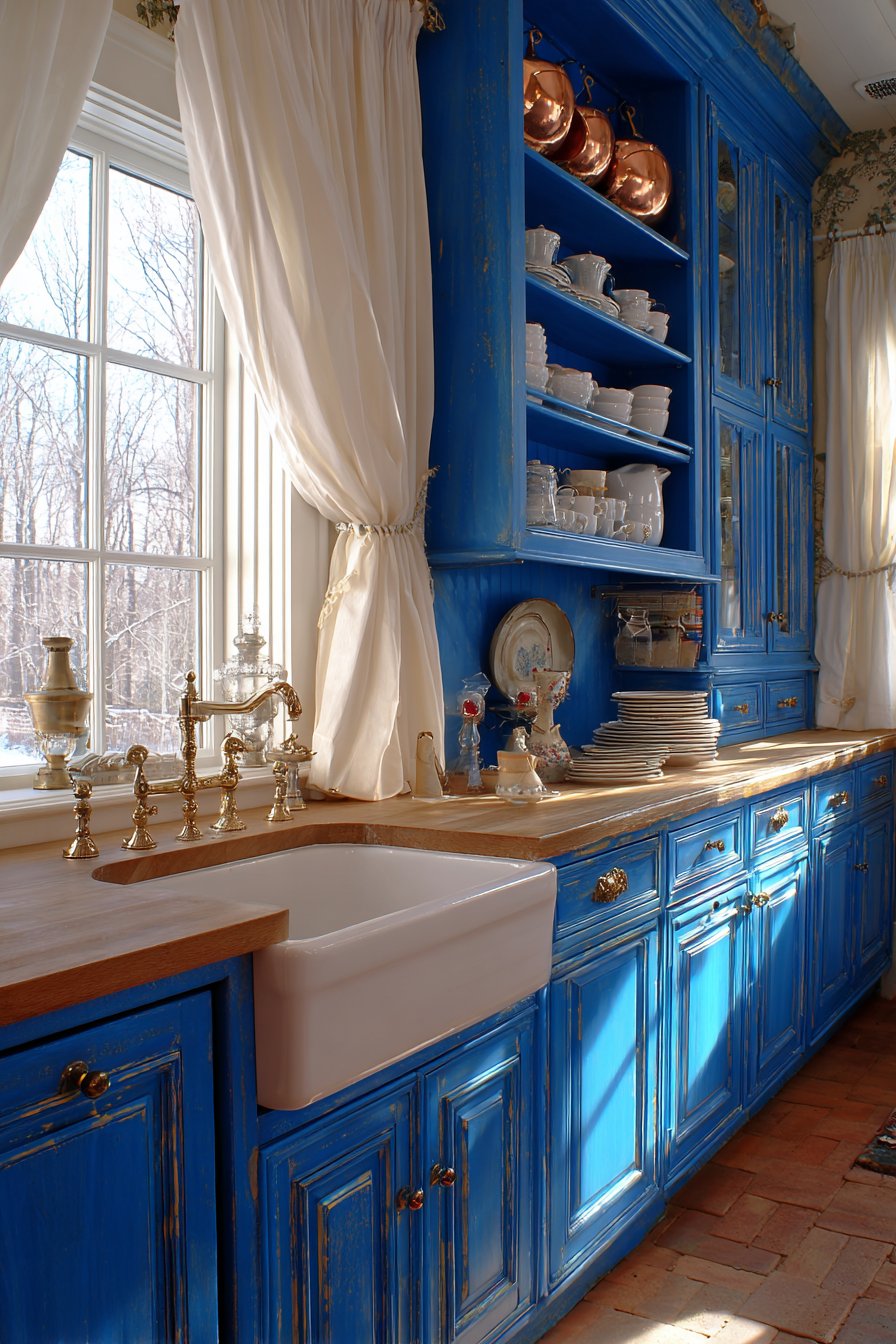
The foundation of this stunning blue French country kitchen rests upon beautifully distressed cobalt blue cabinetry that immediately commands attention while maintaining an approachable warmth. The cabinets feature ornate curved molding that speaks to traditional French craftsmanship, with each decorative detail highlighting the skill of old-world artisans.
Vintage brass hardware adds golden accents that catch the light and provide tactile interest, their aged patina suggesting generations of use. The hand-painted finish reveals subtle variations in color depth, creating a sense of authenticity that mass-produced cabinetry simply cannot replicate.

At the heart of this design sits a classic farmhouse apron-front sink positioned beneath a window dressed with simple white linen cafe curtains that flutter gently with the breeze. This positioning not only provides natural light for meal preparation but also creates a pleasant view for daily kitchen tasks.
The butcher block countertops introduce rustic warmth through their honey-toned wood grain, offering a practical work surface that develops character over time. These natural wood surfaces provide a beautiful contrast against the cobalt cabinetry while maintaining the kitchen’s connection to organic materials and traditional craftsmanship.
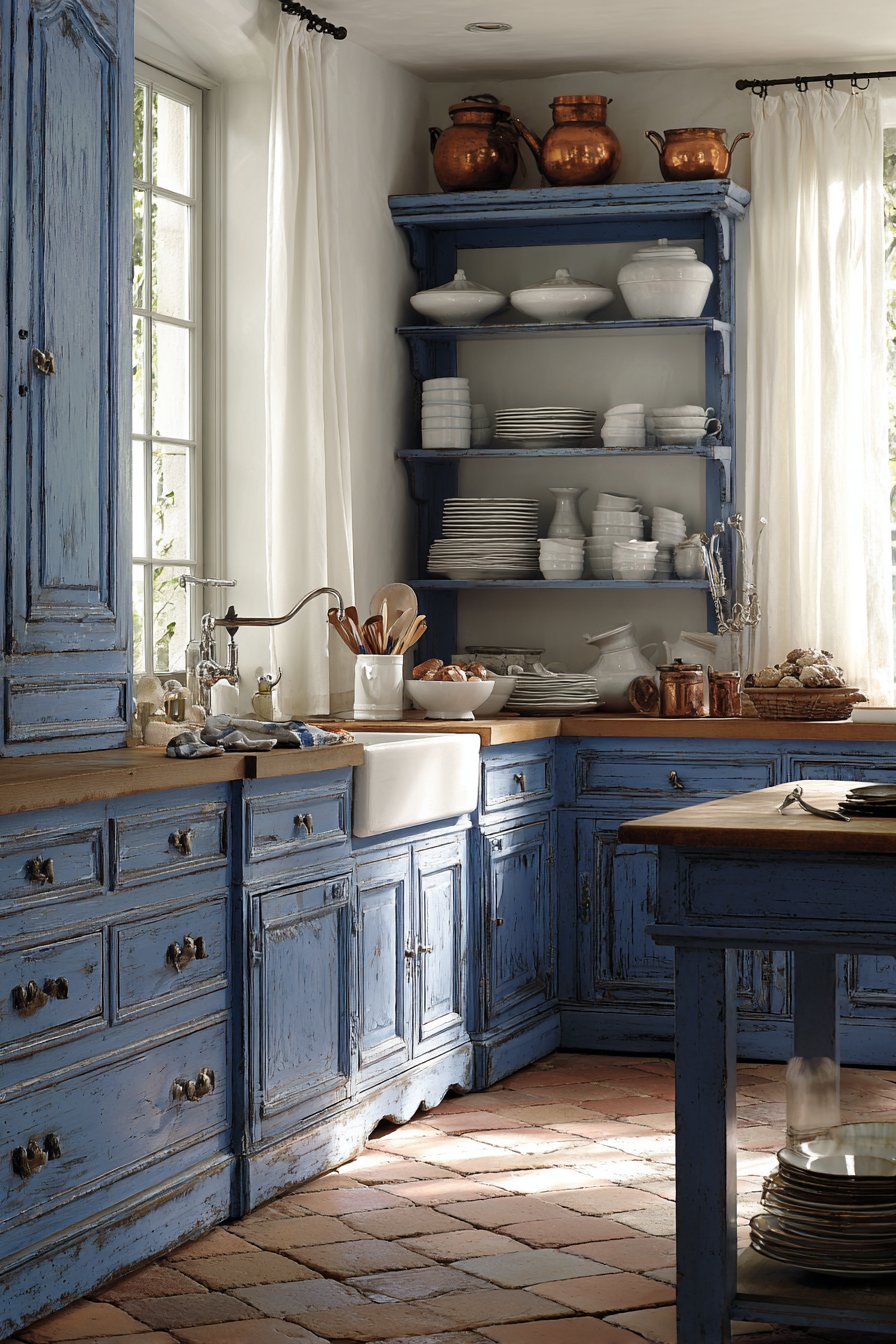
Open shelving proves both functional and decorative, displaying collections of white ceramic dishware that creates striking visual contrast against the blue background. Copper cookware hangs readily accessible, its warm metallic tones complementing the brass hardware and adding another layer of authentic French country character.
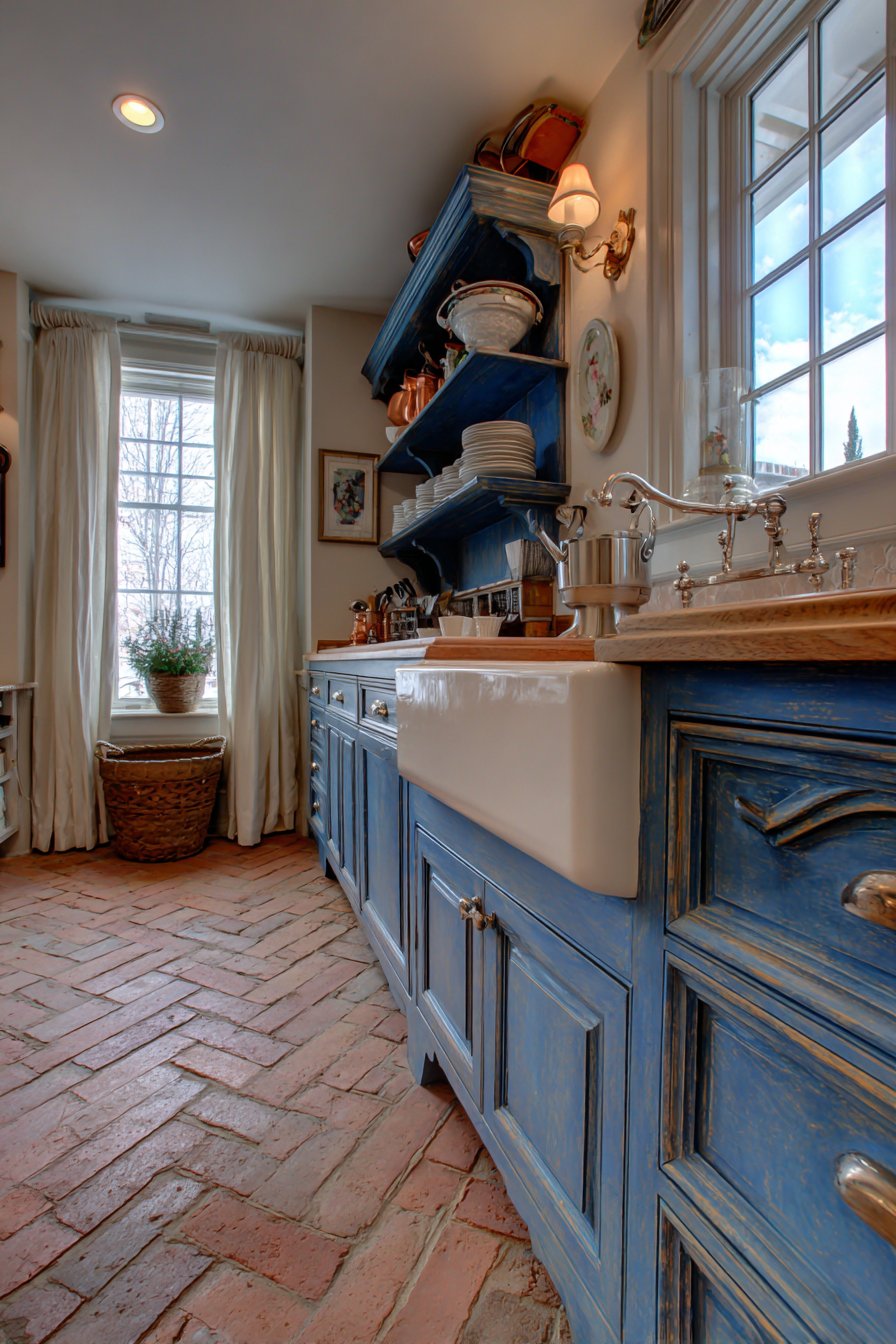
The terra cotta floor tiles laid in a classic herringbone pattern ground the entire space with earthy warmth, their natural color variations and slightly irregular surfaces adding to the room’s authentic provincial aesthetic. Natural daylight streaming through the windows highlights every texture and finish, from the brushstrokes visible in the cabinet paint to the grain patterns in the butcher block surfaces.
Key Design Tips:
- Embrace imperfection in painted finishes—distressing should look naturally worn rather than artificially aged, focusing on areas that would experience genuine wear, like cabinet edges and hardware surrounds.
- Layer metallic finishes thoughtfully by combining brass hardware with copper cookware and perhaps wrought iron accents to create visual richness without overwhelming the space.
- Balance bold blue cabinetry with neutral elements like white dishware, natural wood surfaces, and cream-colored walls to prevent the space from feeling too dark or heavy.
- Select terra cotta flooring in varied tones and irregular shapes to enhance the authentic European countryside feel while providing durable, easy-to-maintain surfaces.
- Position the farmhouse sink beneath a window whenever possible to take advantage of natural light and create a pleasant focal point for daily kitchen activities.
2. Provence Blue Island Centerpiece

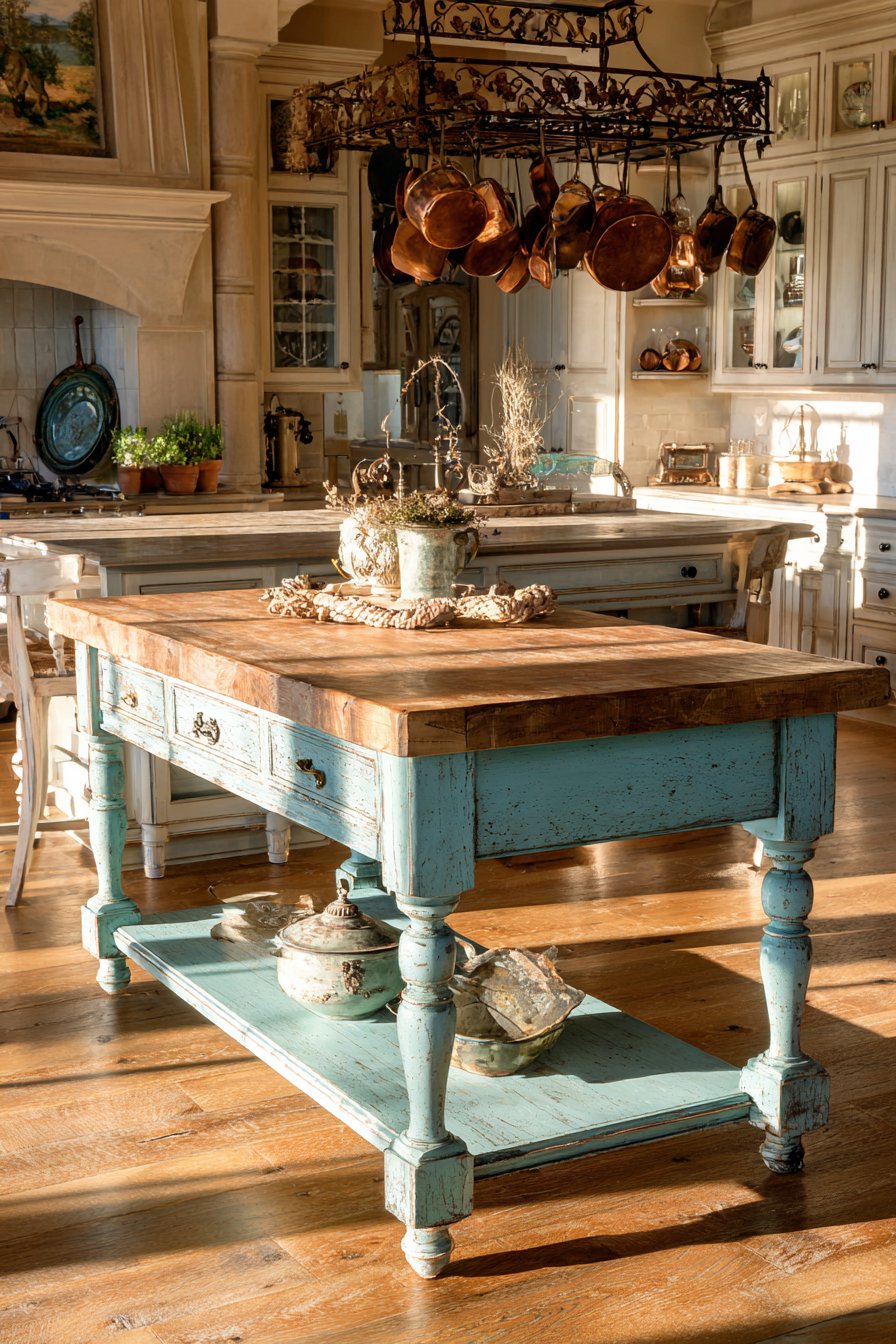
The kitchen island serves as the commanding focal point in this interpretation of blue French country design, painted in a soft Provence blue that evokes the tranquil skies and fragrant lavender fields of southern France.
The distressed finish has been expertly applied to reveal subtle wood undertones beneath the painted surface, creating depth and visual interest that suggests years of loving use. This weathered appearance celebrates the beauty of age rather than attempting to conceal it, embodying the French country philosophy of valuing character over perfection.
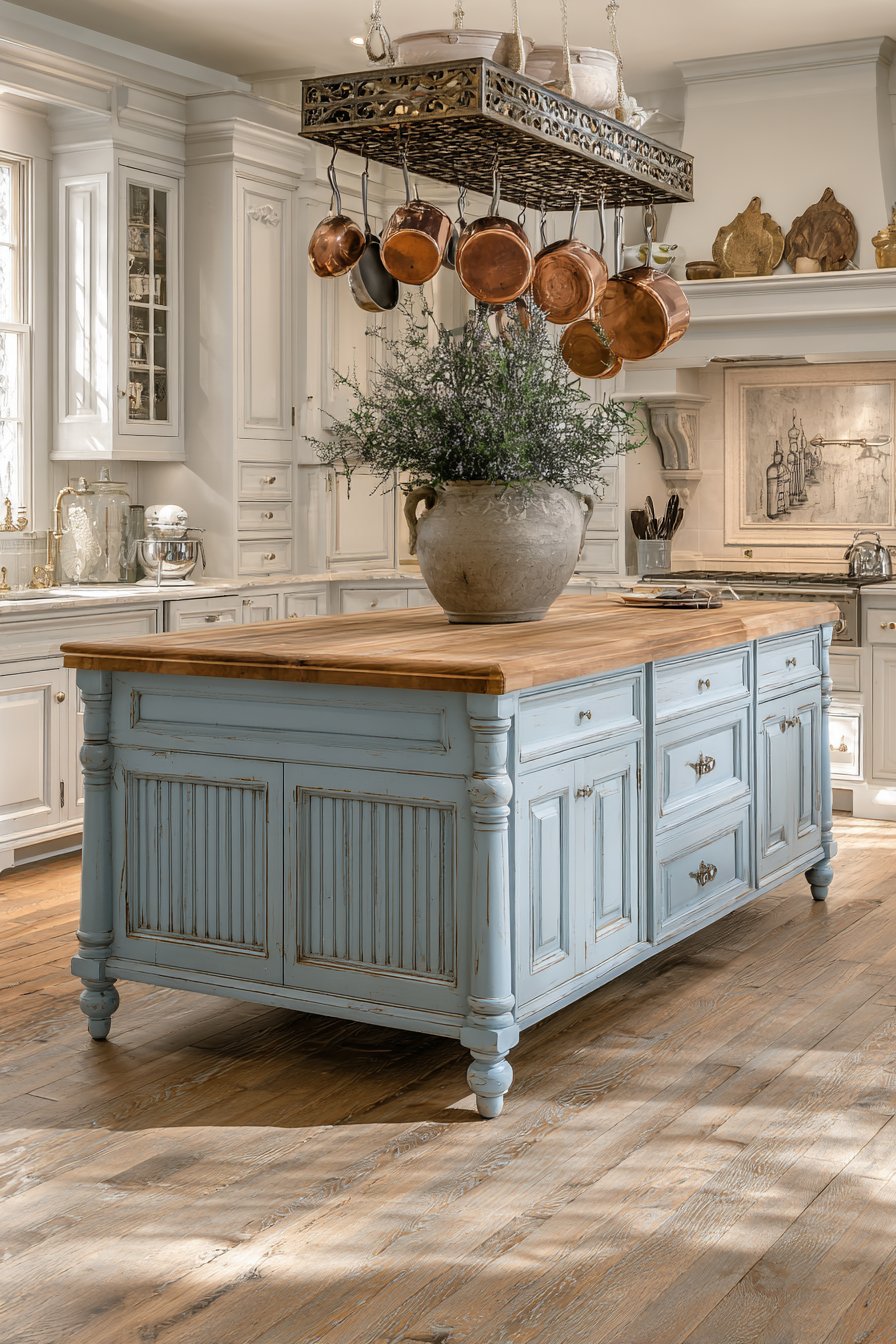
Architectural details elevate this island beyond simple functionality, with turned legs that reference classical furniture design and beadboard paneling that adds vertical texture to the piece. The thick butcher block countertop showcases natural wear patterns—slight variations in color, minor knife marks, and the gentle patina that develops from daily use—all contributing to the island’s authentic, lived-in quality.
Above this central workspace, a wrought iron pot rack hangs suspended from the ceiling, displaying an impressive collection of copper pots and pans that remain both decorative and immediately accessible for cooking.
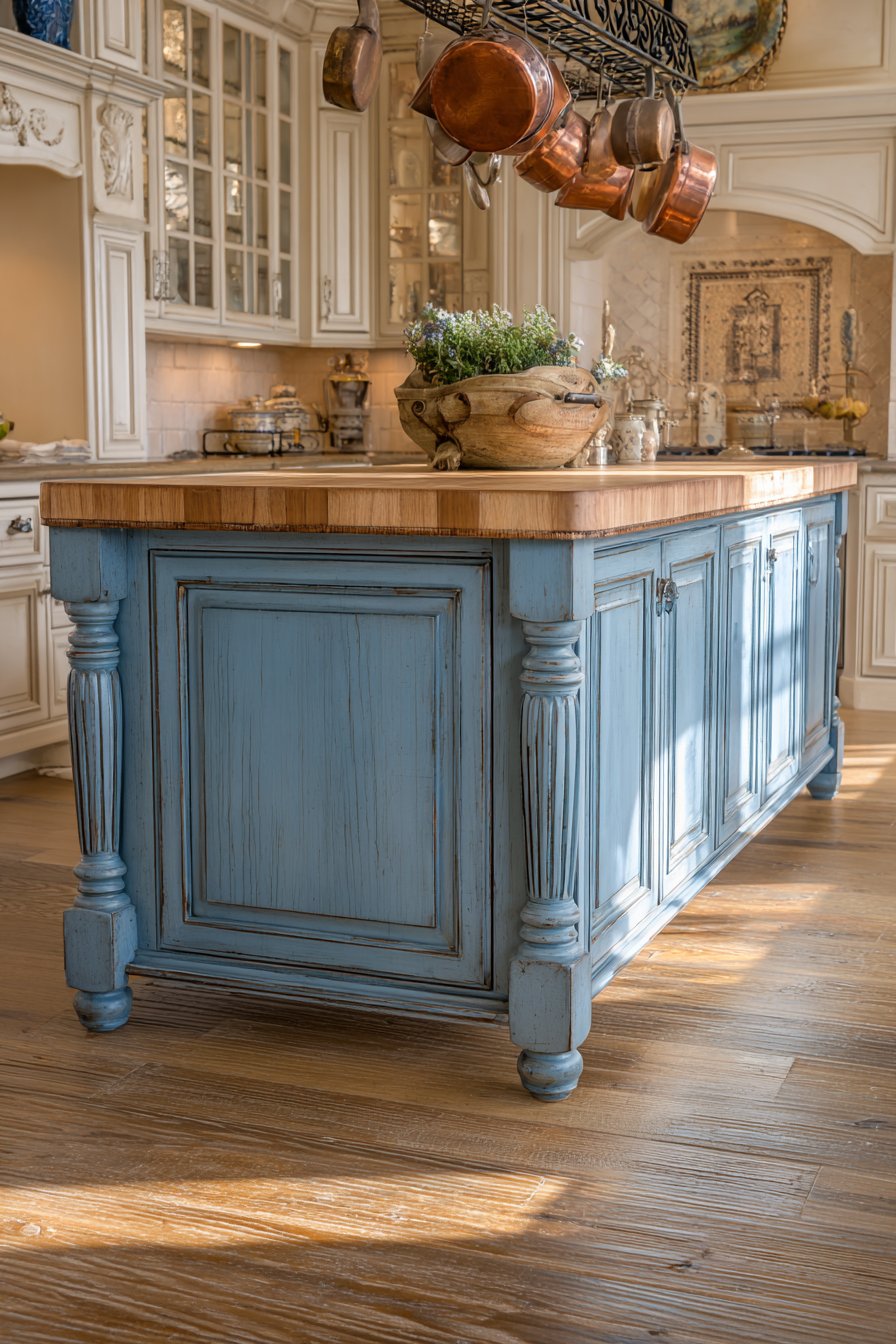
The surrounding cabinetry in creamy white provides essential contrast that allows the blue island to truly shine as the room’s star attraction. This two-toned approach creates visual hierarchy while maintaining the light, airy quality that characterizes the best French country kitchens.
The interplay between the soft blue and warm cream generates a sophisticated color palette that feels both timeless and fresh. Golden hour lighting casts warm shadows across the textured painted surface, emphasizing every brushstroke and revealing the careful craftsmanship that went into creating this distressed finish.
Key Design Tips:
- Make the island substantial in both size and visual weight to truly anchor the space and provide adequate workspace for meal preparation and casual dining.
- Choose turned legs rather than plain square legs to add architectural interest and reinforce the furniture-like quality that distinguishes French country from standard cabinetry.
- Install a pot rack directly above the island to maximize storage efficiency while keeping frequently used cookware within easy reach and adding vertical visual interest.
- Apply distressing techniques strategically, concentrating on edges, corners, and high-touch areas where natural wear would authentically occur over time.
- Contrast the island color with the surrounding cabinetry in a complementary neutral shade to create visual balance and prevent the blue from overwhelming the space.
- Select butcher block with visible grain patterns and natural color variations rather than a uniform appearance to enhance the rustic, organic aesthetic.
3. Traditional Elegance with Delft-Inspired Tiles
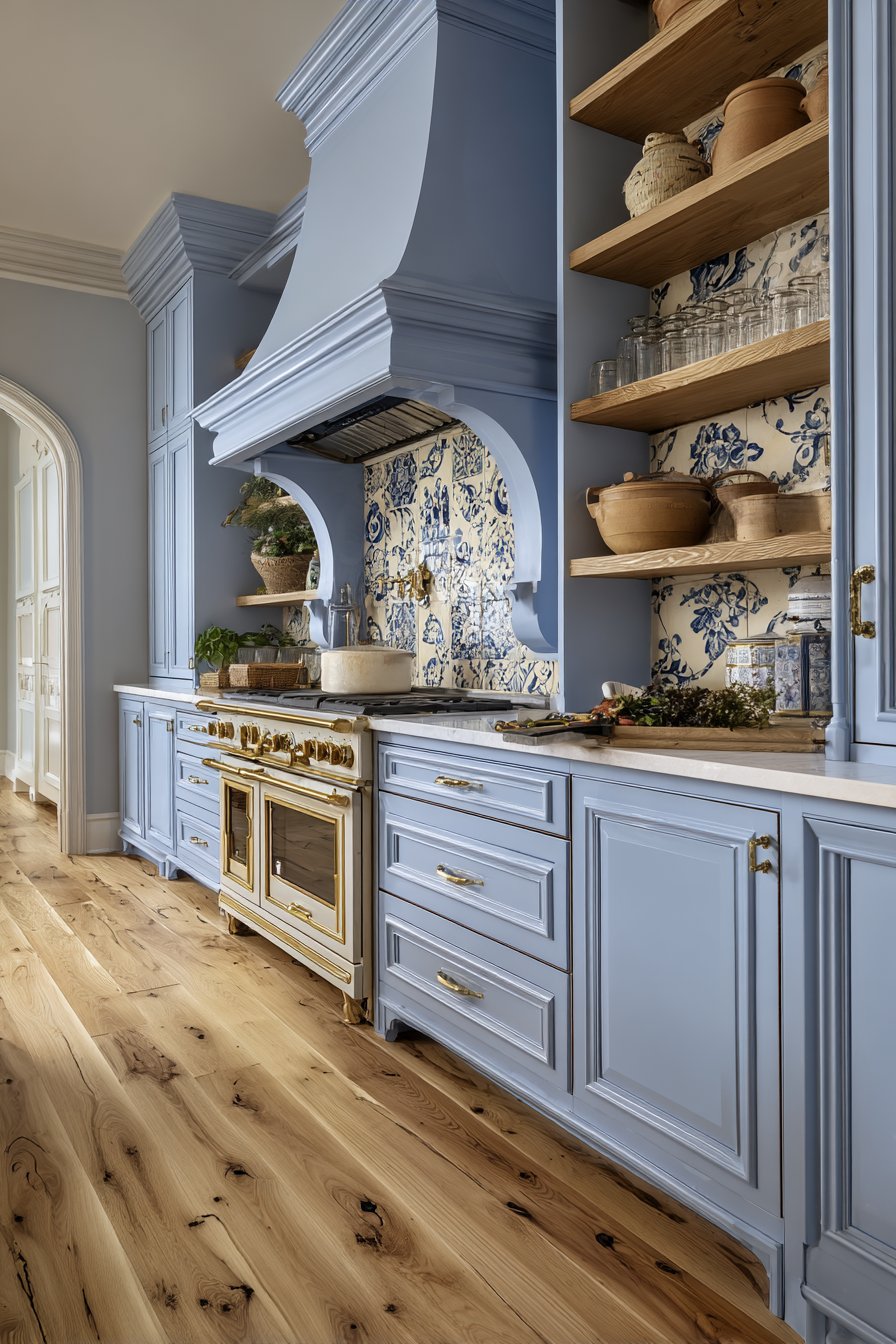
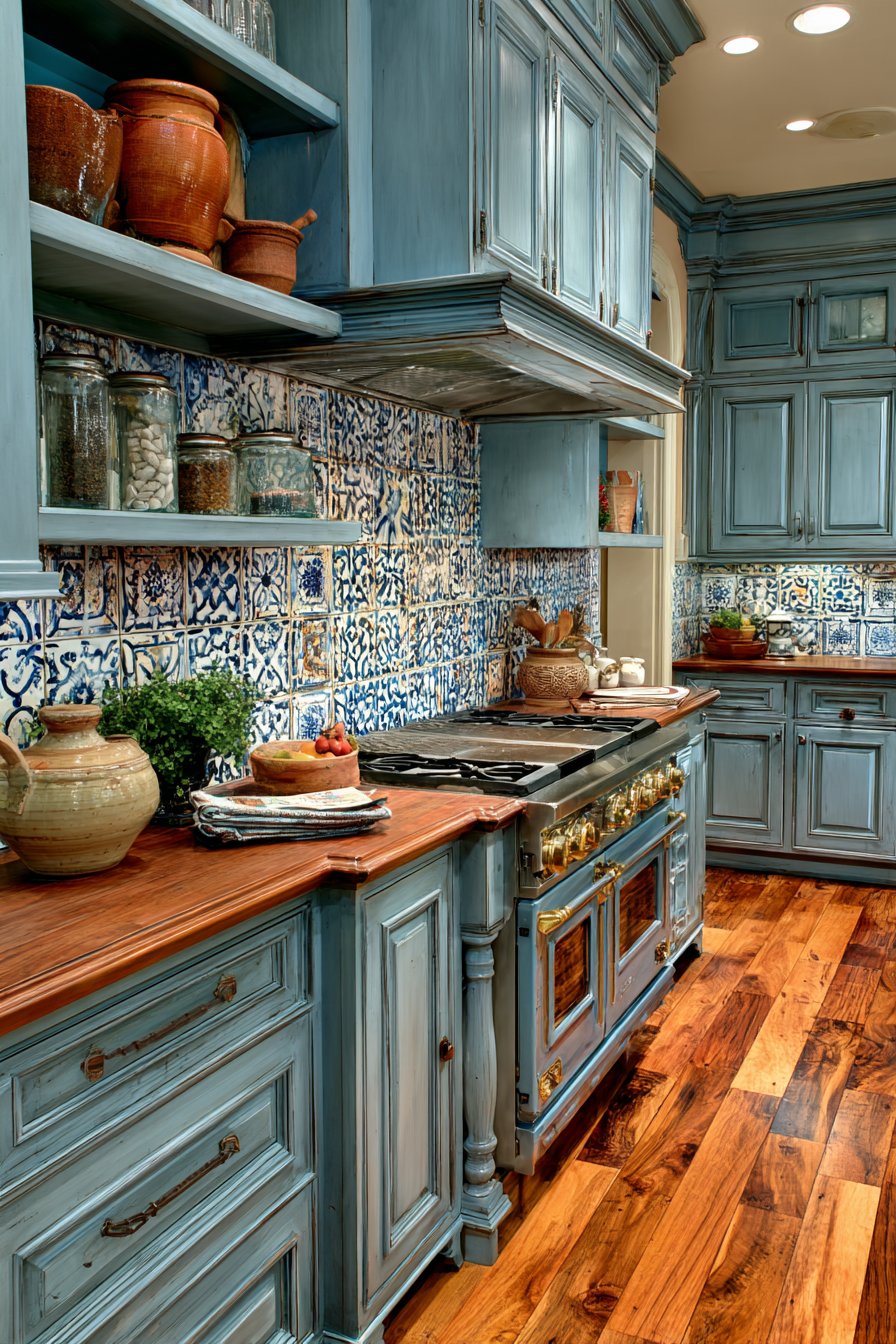
This blue French country kitchen embraces traditional raised-panel cabinetry painted in a muted French blue that sits comfortably between grey and periwinkle, offering sophisticated restraint while maintaining warmth.
The cabinet doors feature classic raised-panel construction that creates dimensional interest through shadow and light, with each panel framed by simple yet refined molding. This cabinet style has remained popular for centuries precisely because it achieves timeless elegance without excessive ornamentation, allowing the beautiful blue color to take center stage.
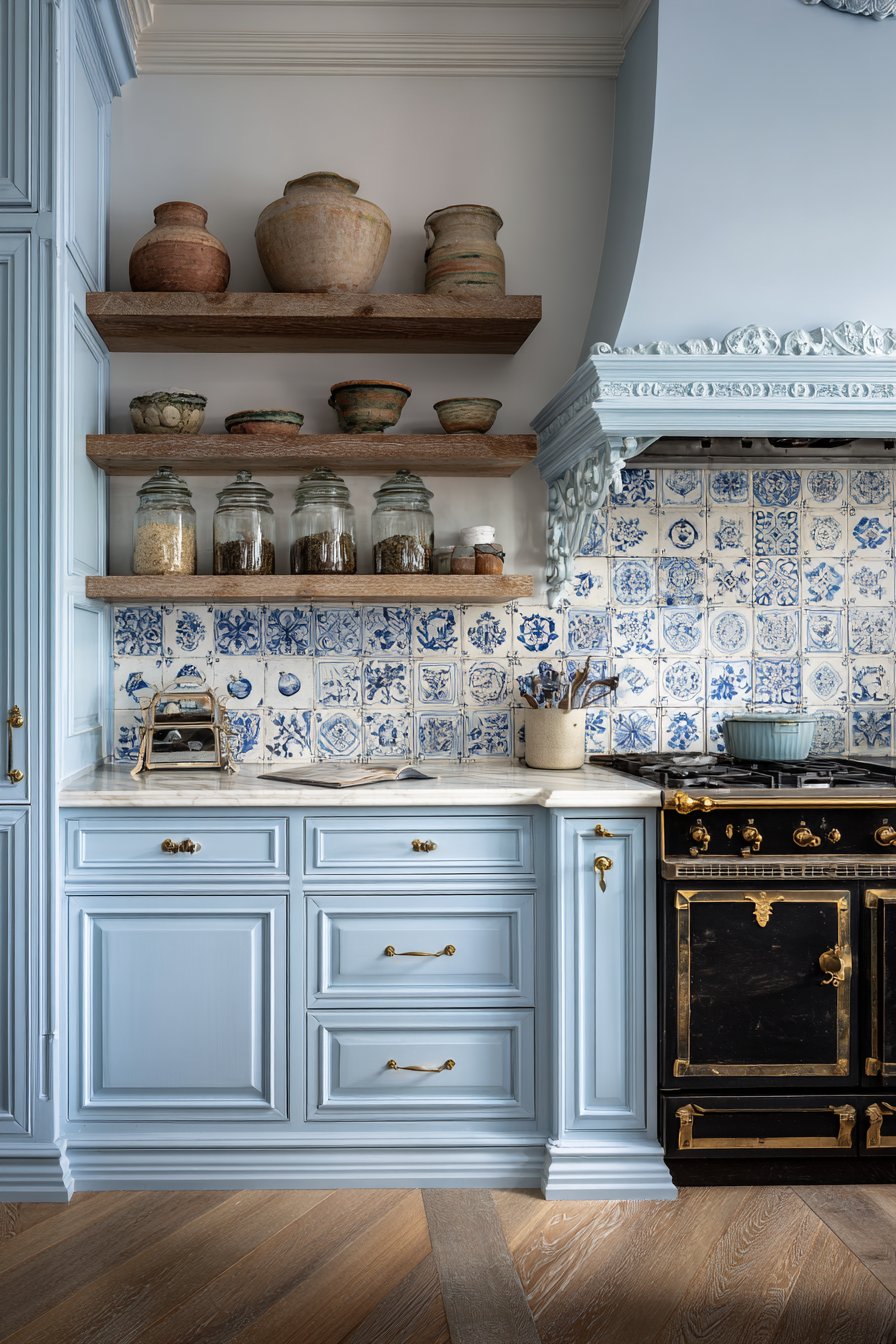
The decorative tile backsplash transforms the cooking area into a work of art, featuring hand-painted ceramic tiles that draw inspiration from traditional Delft pottery patterns. Each tile showcases intricate blue and white designs—perhaps depicting flowers, birds, or geometric motifs—that create a captivating visual narrative across the backsplash surface.
The hand-painted quality means no two tiles are exactly identical, introducing subtle variations that enhance authenticity and artisanal character. These tiles connect the kitchen to centuries of European ceramic tradition while providing a practical, easy-to-clean surface behind the cooking area.
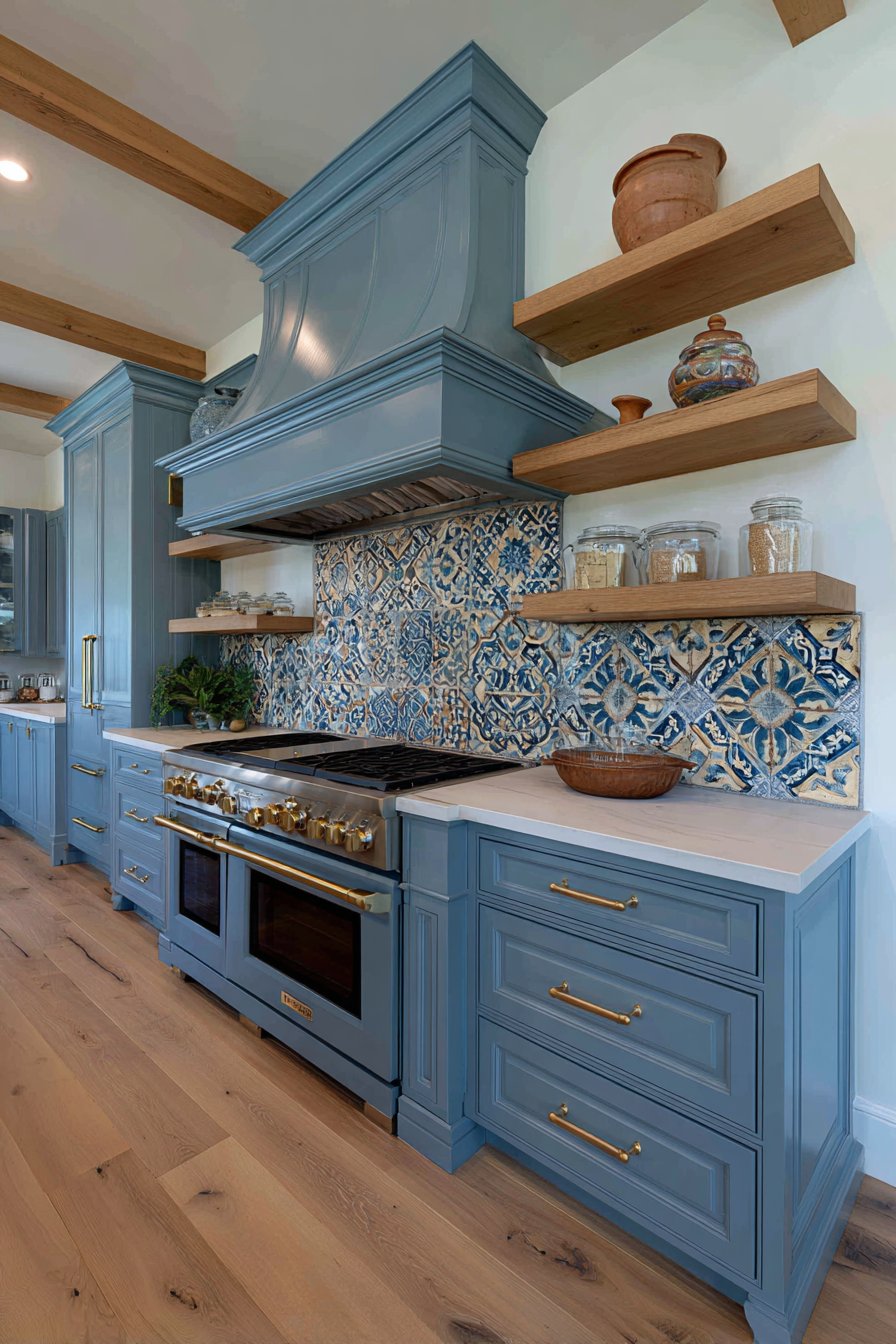
A vintage-style range with brass accents anchors the cooking zone, its substantial presence and quality construction suggesting professional capability within a residential setting. The brass details on the range echo the warm metallic tones found throughout the space, creating cohesion across different elements.
Open upper shelving breaks up the expanse of cabinetry, displaying rustic earthenware crocks, glass storage jars filled with pantry staples, and perhaps vintage kitchen implements that serve as decorative objects. Natural oak flooring with prominent grain patterns adds warmth underfoot, its honey tones harmonizing beautifully with the cooler blue cabinetry above.
Key Design Tips:
- Invest in quality hand-painted tiles for the backsplash rather than printed reproductions to ensure authentic character and lasting beauty that justifies the focal point position.
- Coordinate the blue tones in cabinetry and tile work, ensuring they complement rather than clash—consider bringing tile samples home to view against cabinet paint colors in your actual lighting conditions.
- Choose raised-panel cabinet doors for their ability to add architectural dimension and traditional elegance without requiring ornate carved details or excessive decoration.
- Position open shelving strategically to break up solid cabinetry runs and provide display space for collections that enhance the French country aesthetic.
- Select a professional-style range with vintage detailing to combine modern cooking performance with period-appropriate visual appeal that anchors the cooking zone.
- Use natural oak flooring with visible grain rather than heavily stained or distressed wood to maintain connection to organic materials while providing neutral warmth.
4. Periwinkle Breakfast Nook Haven

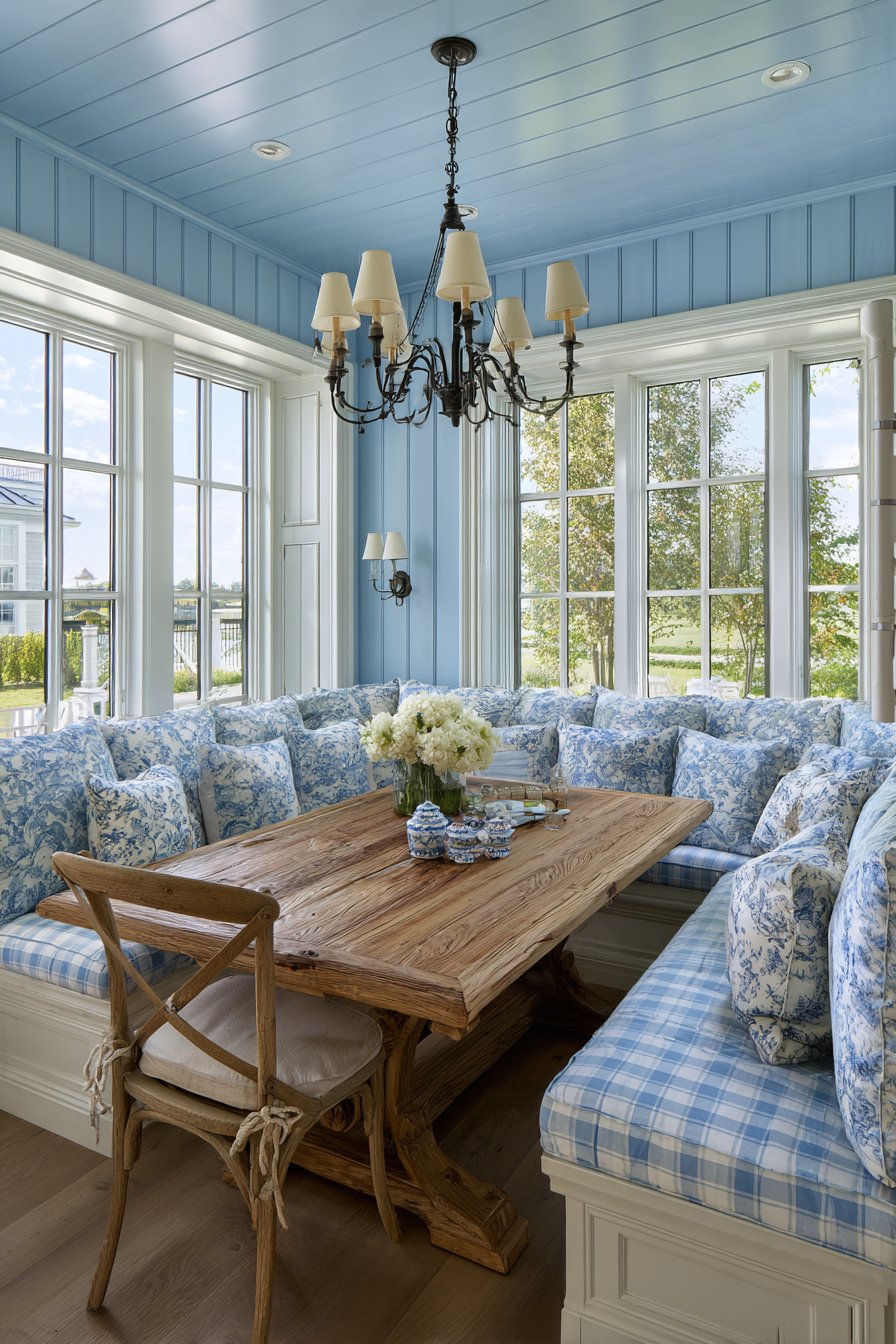
The integration of a dedicated breakfast nook elevates this blue French country kitchen from purely functional space to a genuine gathering place where family and friends naturally congregate. A built-in banquette curves along the wall, upholstered in classic blue and cream toile fabric that depicts pastoral scenes—shepherds, sheep, rustic cottages—in the traditional French manner.
The cushioned seating provides comfort for lingering over morning coffee or afternoon tea, encouraging the unhurried pace that defines French country living. This permanent seating solution maximizes space efficiency while creating an intimate, room-within-a-room feeling.
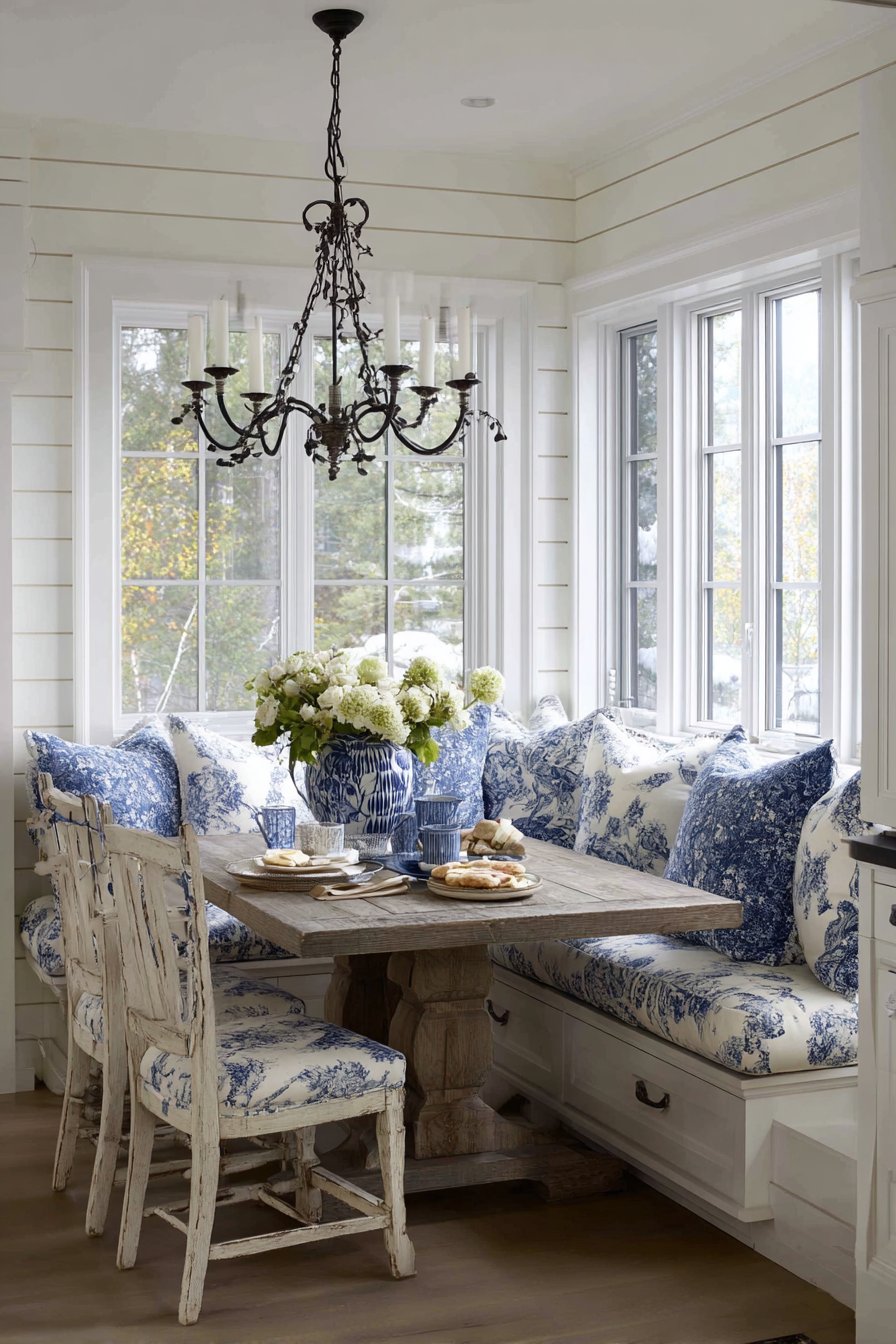
The surrounding walls showcase horizontal shiplap painted in a soft periwinkle blue that’s lighter and more ethereal than the cabinetry in the main kitchen area. This subtle shift in blue tone helps define the breakfast nook as a distinct zone while maintaining overall color harmony.
The shiplap’s linear pattern adds textural interest and reinforces the room’s casual, cottage-like atmosphere. At the center of the nook sits a rustic wooden farmhouse table, its substantial construction and visible wood grain providing organic warmth that grounds the space and offers contrast to the painted surfaces.
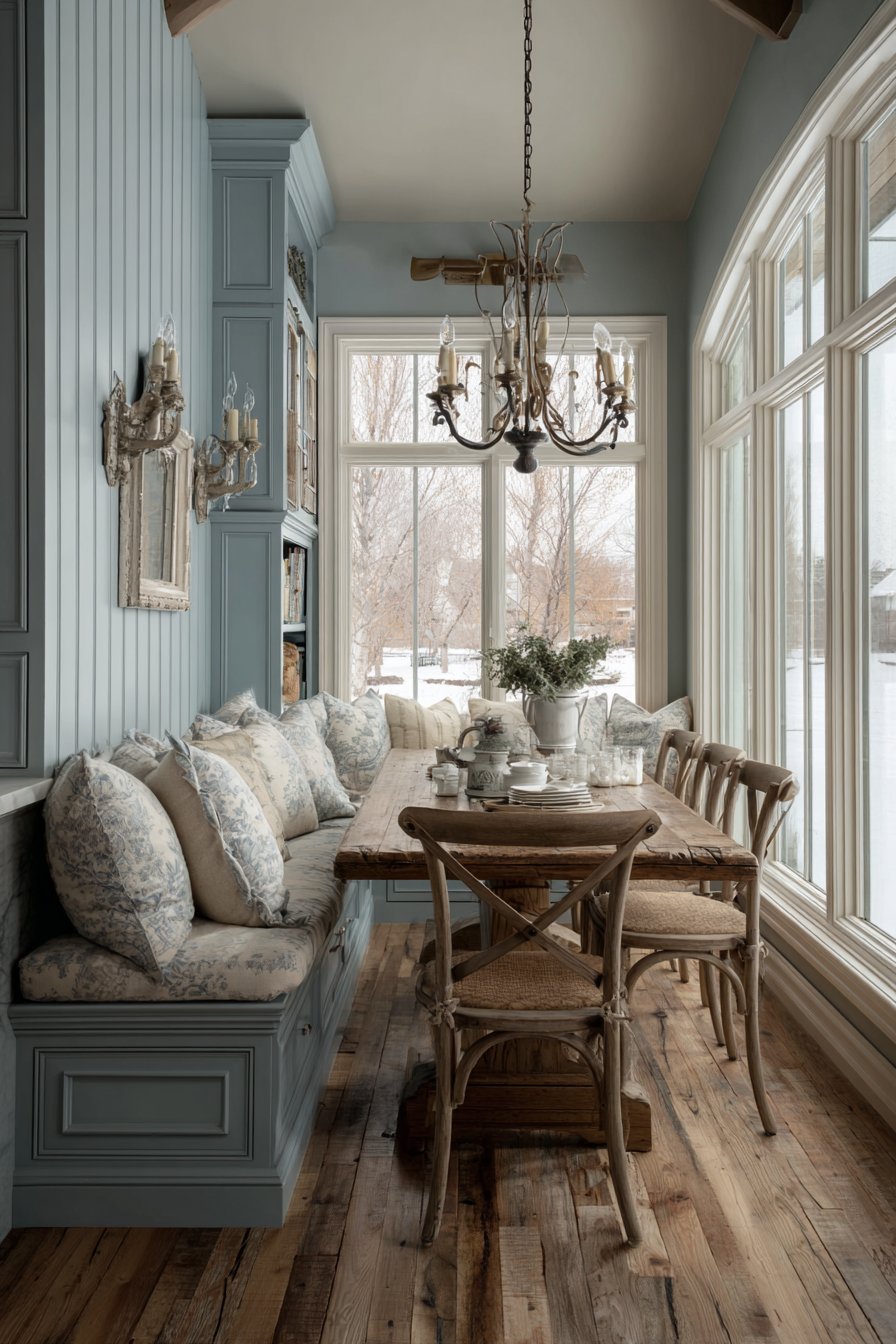
Ladder-back chairs pulled up to the table feature simple, honest construction that epitomizes French provincial furniture design—no unnecessary ornamentation, just well-proportioned elements assembled with traditional joinery techniques.
Above the dining arrangement, a wrought iron chandelier hangs at the perfect height, its cream candle-style lights casting soft, ambient illumination that enhances the nook’s cozy atmosphere during evening meals. Large windows with simple white trim flood the breakfast area with natural daylight, their generous proportions connecting the interior space to outdoor views while emphasizing the room’s airy, open quality.
Key Design Tips:
- Build in the banquette permanently rather than using freestanding furniture to maximize seating capacity and create a custom, finished appearance that feels intentional.
- Choose toile fabric in traditional blue and cream colorways for upholstery, selecting patterns that complement rather than overwhelm the space’s scale and other design elements.
- Paint the nook walls in a lighter shade of blue than the main kitchen cabinetry to create subtle zone differentiation while maintaining color harmony throughout the space.
- Select a farmhouse table with substantial proportions and visible wood grain to anchor the seating area and provide a beautiful contrast to painted surfaces.
- Install a wrought iron chandelier with appropriate scale for the nook’s dimensions, hanging it low enough to create intimacy without interfering with sightlines or conversation.
- Maximize natural light through generous window sizing and minimal window treatments that don’t block precious daylight from entering this gathering space.
5. Vibrant Giverny Blue Statement Hood

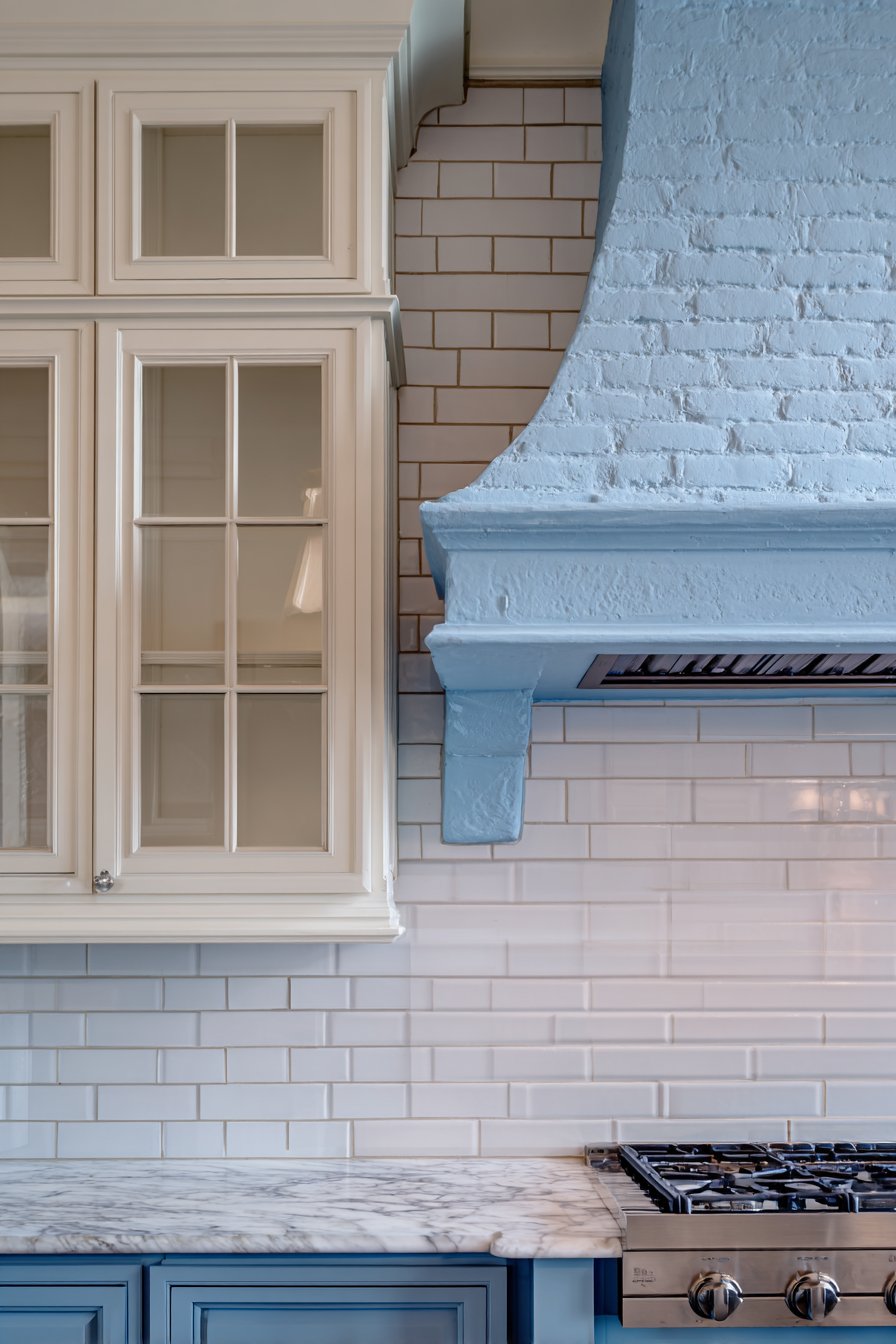
A dramatic focal point commands attention in this blue French country kitchen—a custom range hood covered in textured plaster and painted in a vibrant Giverny blue that references the intense hues found in Monet’s famous garden and paintings.
This bold color choice celebrates rather than shies away from saturated blue, creating a stunning architectural feature that draws the eye and establishes the room’s color story. The textured plaster surface adds dimensional interest, with subtle irregularities and variations that catch light and shadow differently throughout the day, emphasizing the hood’s handcrafted quality.
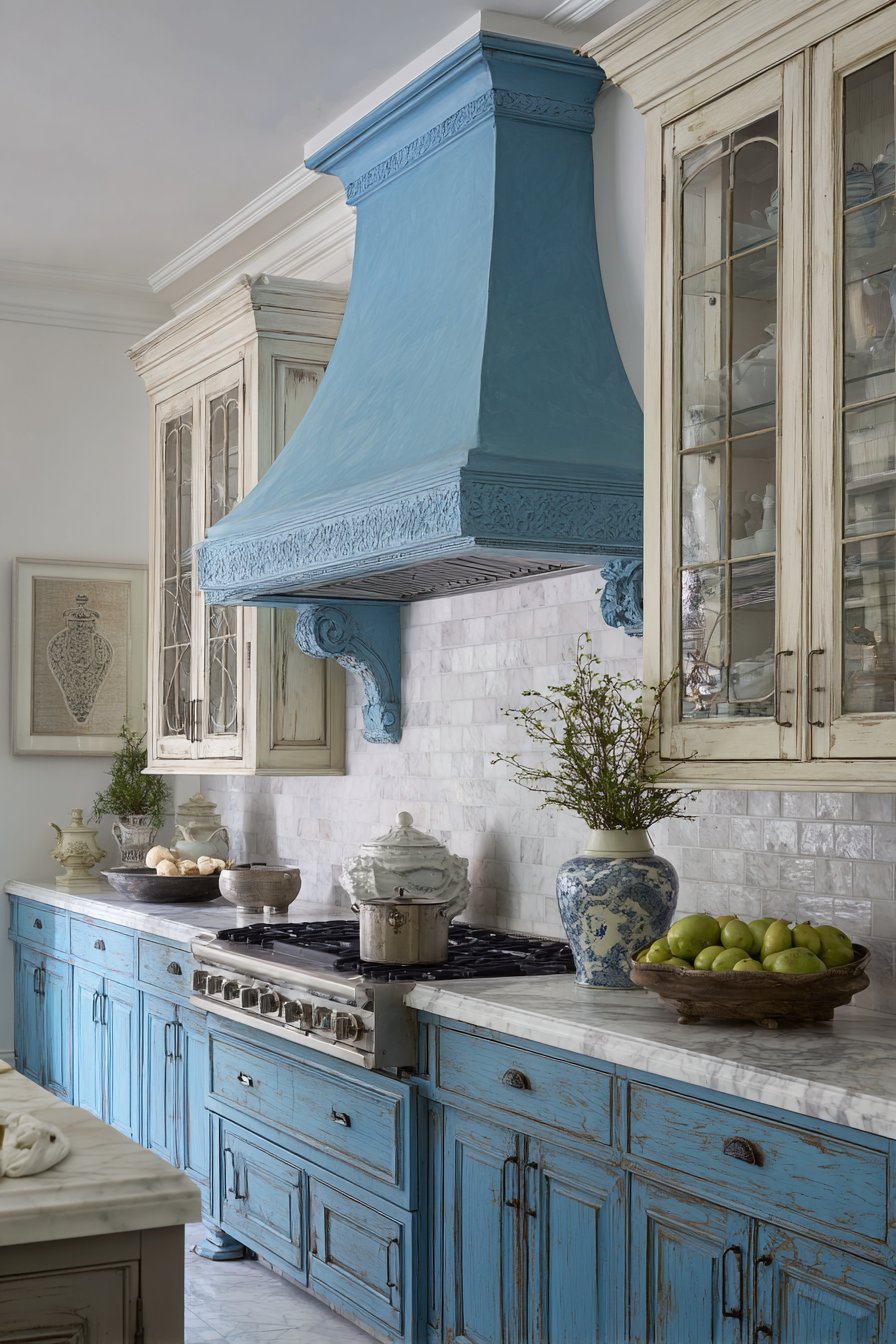
The cooking area surrounding this statement piece features white subway tiles installed in traditional running bond pattern with dark grout lines that define each tile’s rectangular shape. This classic combination provides clean, bright surfaces that make the blue hood appear even more vibrant by contrast while maintaining timeless appeal that won’t feel dated.
Below the range, distressed blue lower cabinets echo the hood’s color family while showing appropriate wear that suggests authentic age. These base cabinets ground the design with deeper tones, while creamy white upper cabinets featuring glass-front doors lighten the upper portion of the room and prevent the space from feeling bottom-heavy.

Marble countertops introduce elegant sophistication through their subtle grey veining and cool, luminous surface quality. The natural stone provides durable work surfaces that improve with age, developing a gentle patina that enhances rather than detracts from their beauty.
The grey tones in the marble veining create a visual bridge between the white and blue elements, harmonizing the color palette while adding luxurious materiality. Under carefully considered kitchen lighting, every element receives appropriate emphasis—the handcrafted plaster texture, the interplay of blue tones, and the natural beauty of marble and wood.
Key Design Tips:
- Create a statement hood using textured plaster application techniques that add dimensional interest and showcase artisanal craftsmanship rather than opting for smooth, flat surfaces.
- Choose a vibrant blue for the hood rather than muted tones to create a true focal point that anchors the design and expresses confident color use.
- Balance bold color on the hood with substantial areas of white or cream elsewhere in the kitchen to prevent color saturation from overwhelming the space.
- Use glass-front upper cabinets to reduce visual weight in the upper portion of the room while providing display opportunities for attractive dishware collections.
- Select marble countertops with subtle rather than dramatic veining to add elegance without competing with the hood for visual attention.
- Install dark grout with white subway tiles to define each tile’s shape and add graphic interest to what might otherwise be too neutral a backdrop.
6. Floor-to-Ceiling Blue Hutch Storage
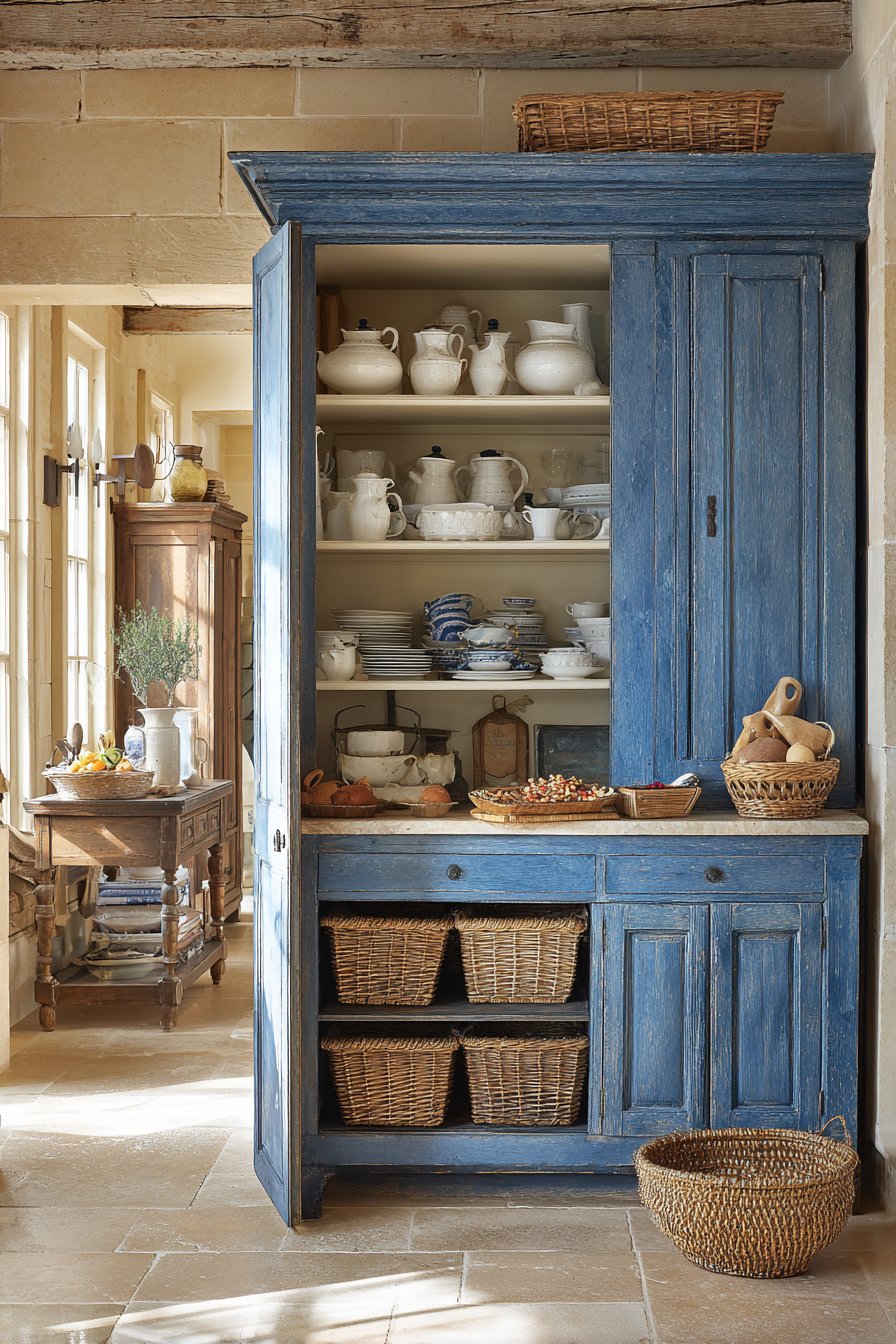
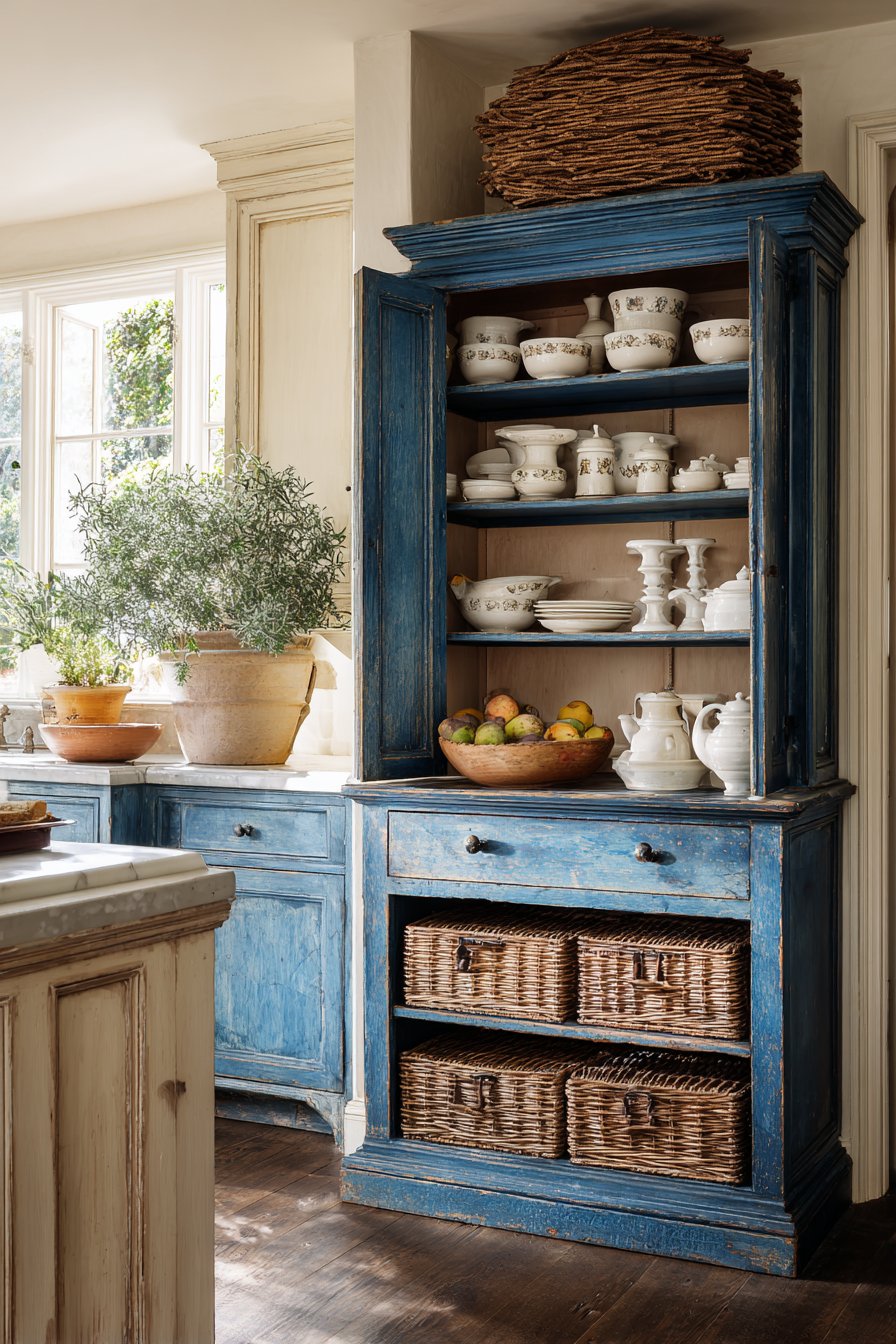
Practical storage solutions reach beautiful expression in this interpretation of the blue French country kitchen, where a magnificent floor-to-ceiling hutch painted in slate blue serves both functional and aesthetic purposes. The substantial piece features chicken wire cabinet doors that allow glimpses of the white ironstone collection displayed within—plates, pitchers, tureens, and serving pieces accumulated over time. This semi-transparent treatment provides visual interest while protecting contents from dust, striking the perfect balance between display and protection that characterizes thoughtful kitchen storage design.
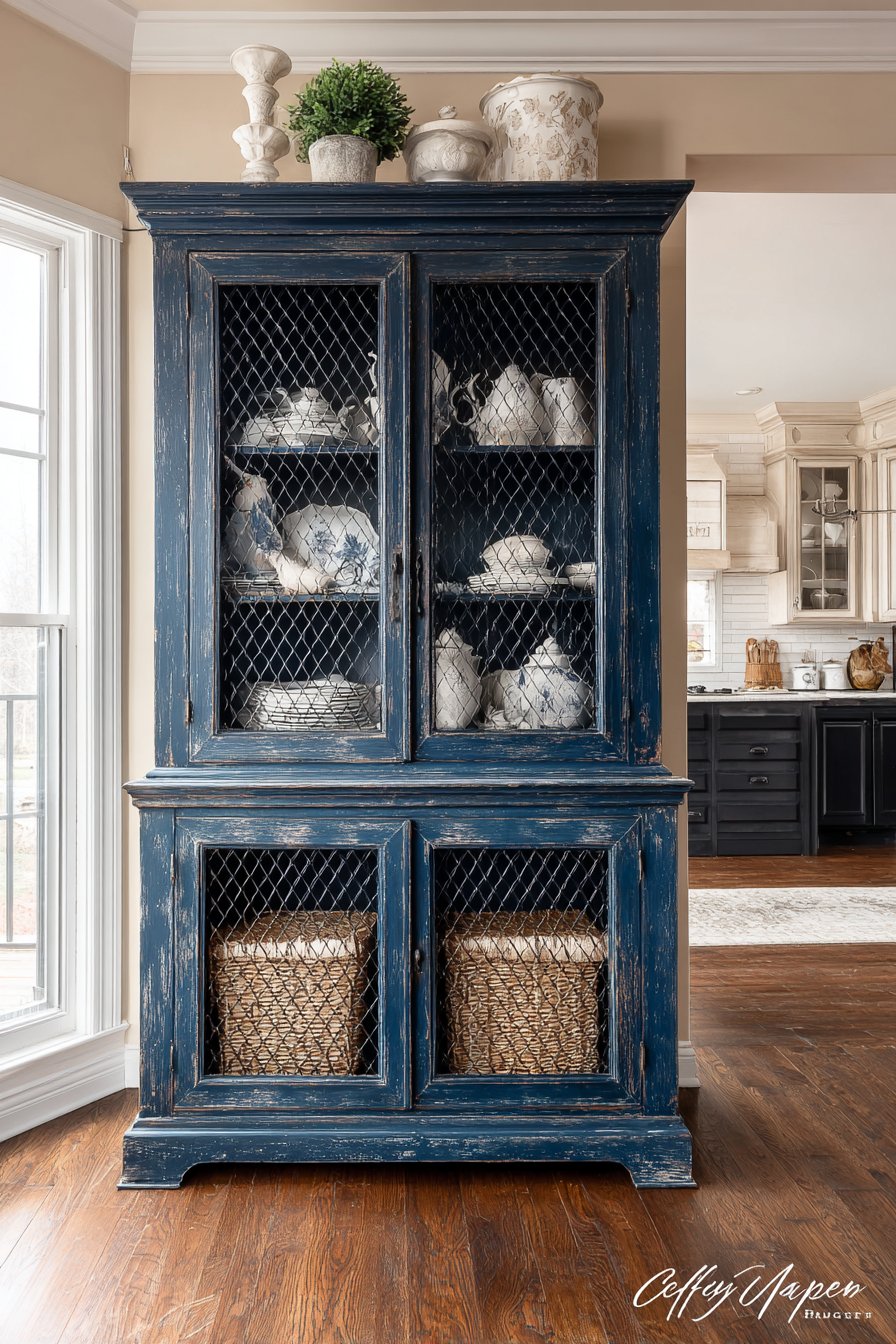
The authentic distressed finish shows visible brush strokes that reveal the hand-painted application process, with color variations that suggest layers of paint applied and worn away over many years. This patina cannot be rushed or faked convincingly—it requires either genuine age or the skilled hand of an artisan who understands how paint naturally wears over time.
Adjustable shelving within the hutch provides flexibility for displaying pieces of varying heights, from tall pitchers to low serving platters, ensuring every item can be properly showcased. The open lower shelves hold woven baskets in natural materials, their textural quality and earthy tones adding organic warmth while providing concealed storage for less attractive kitchen necessities.
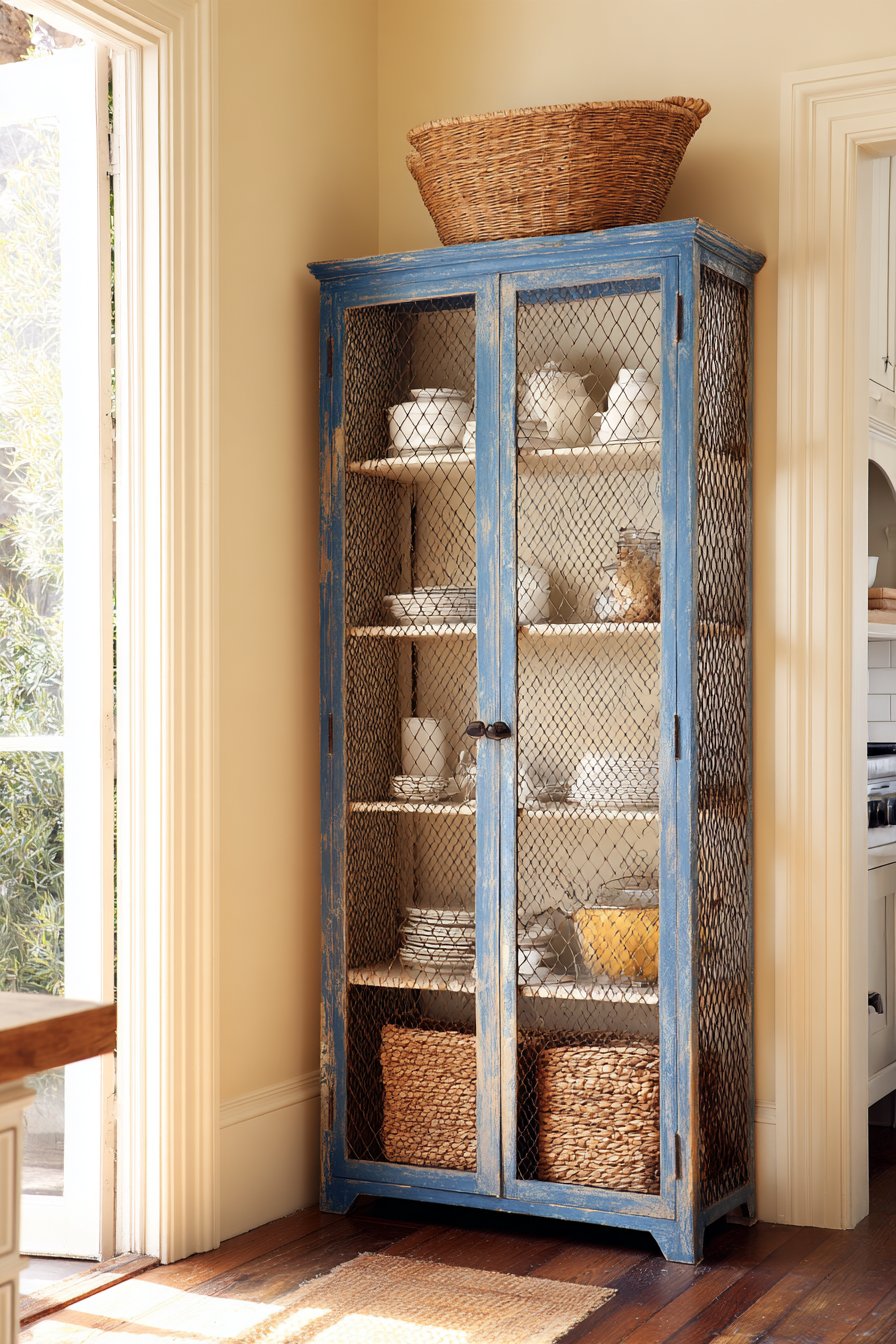
The surrounding walls painted in warm cream create an essential contrast that allows the blue hutch to function as a striking architectural feature rather than blending into its background. This neutral backdrop also enhances the brightness of the space, reflecting light from nearby windows back into the room.
Natural daylight streaming through adjacent windows highlights every detail of the cabinet’s construction—the architectural molding, the wire mesh pattern, the subtle color variations in the painted finish, and the gentle patina that makes this piece feel like a treasured heirloom. The careful positioning near natural light sources ensures that both the hutch itself and the collections displayed within receive flattering illumination throughout the day.
Key Design Tips:
- Choose chicken wire doors rather than solid panels to create visual lightness while allowing display of beautiful collections without excessive dust accumulation.
- Paint substantial storage pieces in deeper or more saturated blue tones than main cabinetry to create visual anchoring and hierarchy within the kitchen’s design.
- Display white ironstone collections against blue painted interiors to create maximum contrast and showcase the sculptural qualities of ceramic pieces.
- Include adjustable shelving in storage pieces to accommodate collections of varying heights and allow for flexibility as collections grow and change.
- Add woven baskets on open lower shelves to introduce textural variety and natural materials while providing concealed storage for items better kept out of sight.
- Position storage furniture near natural light sources to highlight architectural details and ensure displayed collections receive flattering illumination.
7. Antique Work Table Prep Station

The heart of kitchen functionality finds beautiful expression through an antique blue painted work table that serves as a dedicated prep station. This weathered piece features gracefully turned legs that elevate it beyond utilitarian furniture, their classical proportions and carefully shaped profiles speaking to traditional craftsmanship.
The well-worn marble top shows natural veining in grey and cream tones, along with subtle age marks—perhaps a small chip at one corner, faint etching from acidic foods, gentle discoloration from decades of use—that tell the story of countless meals prepared on this surface.
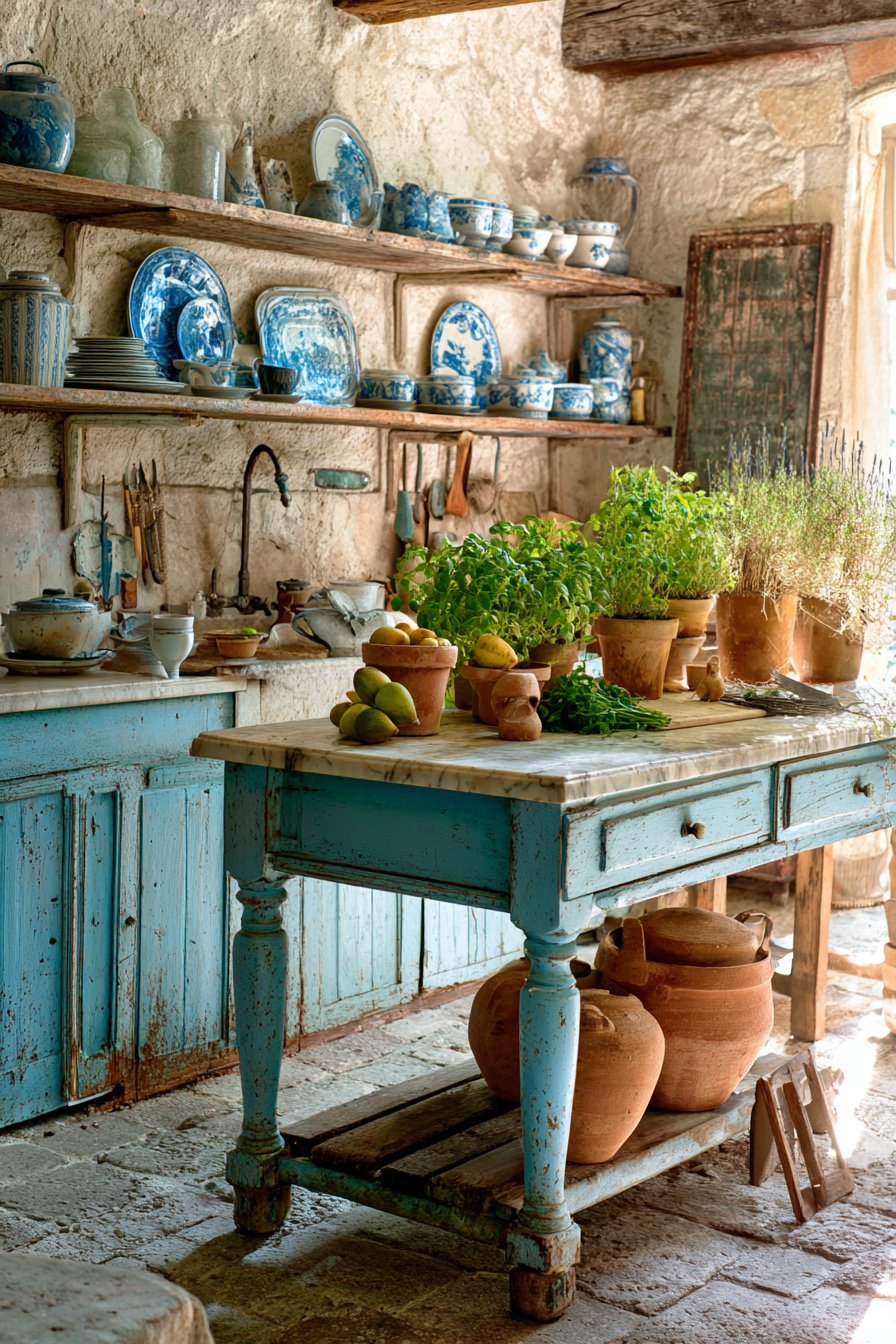
Behind this practical workspace, the walls come alive with blue and white French pottery displayed on floating wooden shelves that allow each piece to be appreciated individually while creating an engaging collection. Confit pots, storage crocks, decorative plates, and vintage pitchers arranged with careful attention to height variation and visual balance transform functional storage into an artistic display. On the work table’s surface, terra cotta pots hold fresh herbs—rosemary, thyme, basil, parsley—their green foliage adding living color while ensuring aromatic, fresh ingredients remain within arm’s reach during cooking.
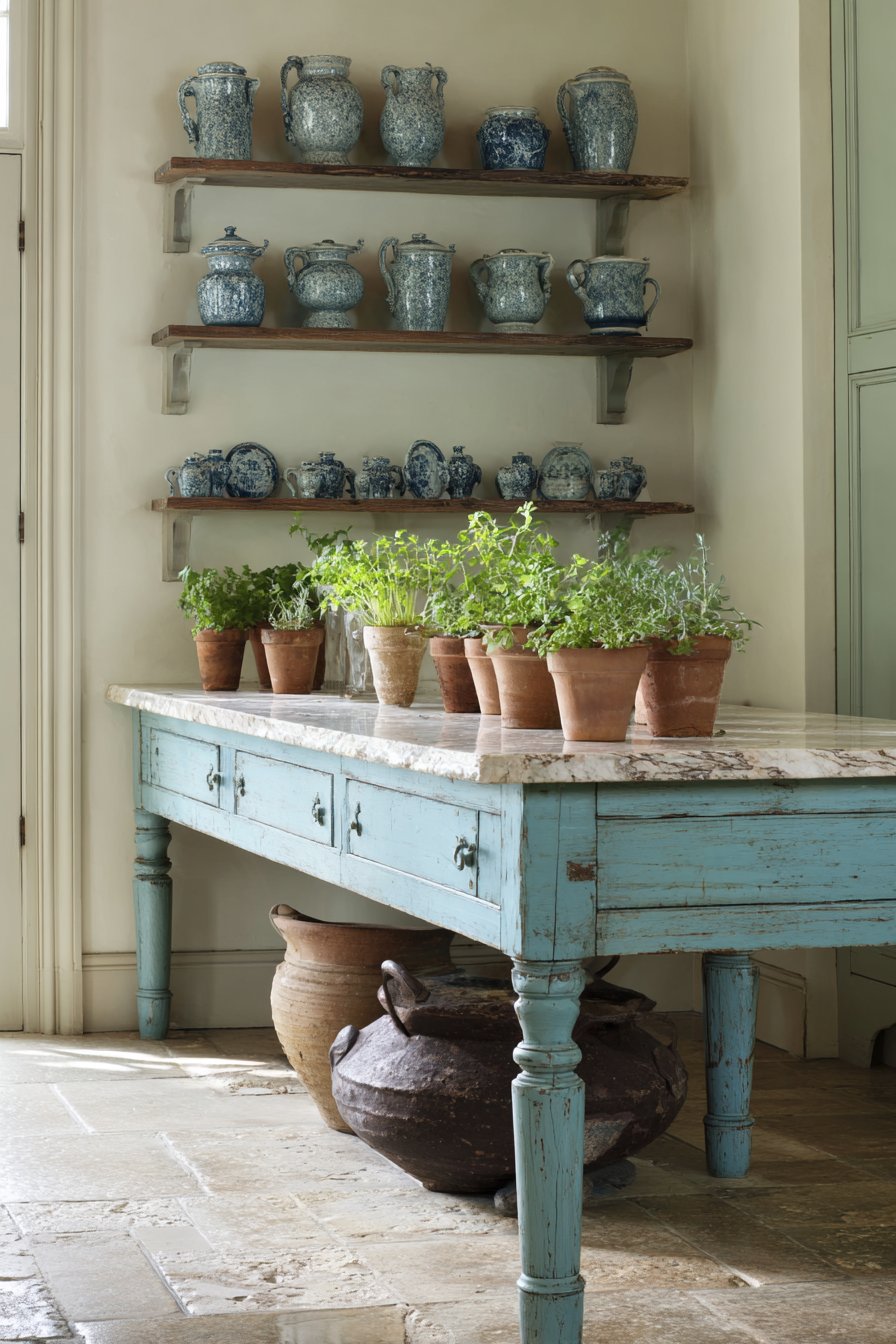
The flooring beneath this prep area consists of limestone or aged wood, both options providing authentic grounding that connects the space to traditional French farmhouse design. Limestone brings cool, neutral tones and the slight irregularity of natural stone, while aged wood introduces warmth and the character marks of decades of foot traffic.
Either choice supports the room’s authentic aesthetic while providing durable, practical flooring that ages gracefully. Natural daylight emphasizes the weathered blue paint finish on the work table, catching on the irregular surface where paint has worn away to reveal earlier layers or bare wood beneath, celebrating rather than concealing the marks of time and use.

Key Design Tips:
- Select an antique work table with genuine age and patina rather than new reproduction pieces to ensure authentic character that cannot be artificially replicated.
- Choose marble tops with natural veining and accept minor imperfections as evidence of authentic age rather than seeking pristine, perfect surfaces.
- Display pottery collections on open shelving behind prep areas to create visual interest while keeping decorative pieces safely away from active cooking zones.
- Incorporate fresh herbs in terra cotta pots on work surfaces to combine practical functionality with organic beauty and fresh fragrance.
- Use limestone or aged wood flooring in natural finishes that showcase material authenticity rather than heavily treated or artificially distressed surfaces.
- Position prep stations to receive natural light that highlights weathered paint finishes and celebrates the beauty of well-used, time-worn surfaces.
8. Sophisticated Wedgwood Blue Cabinetry
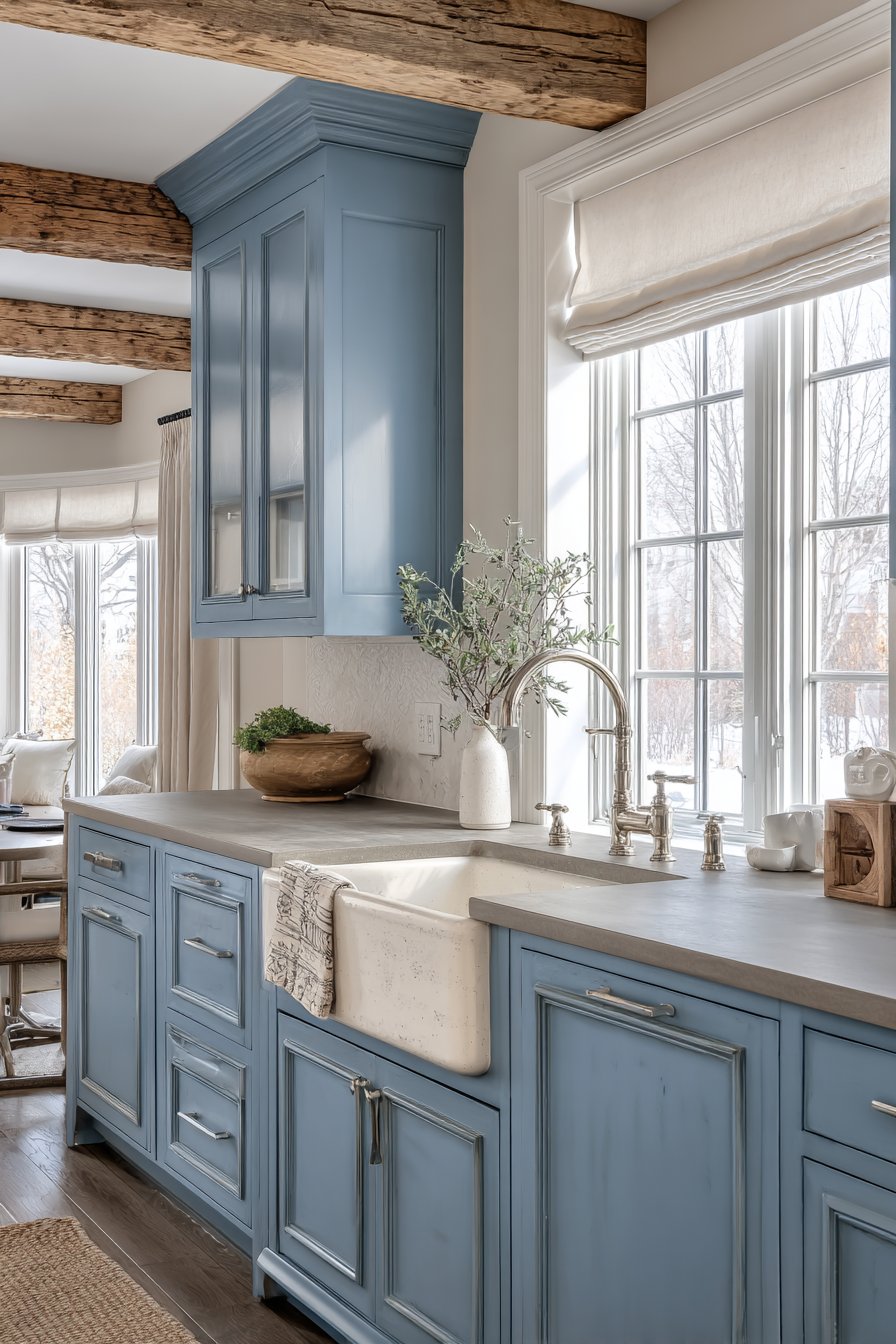
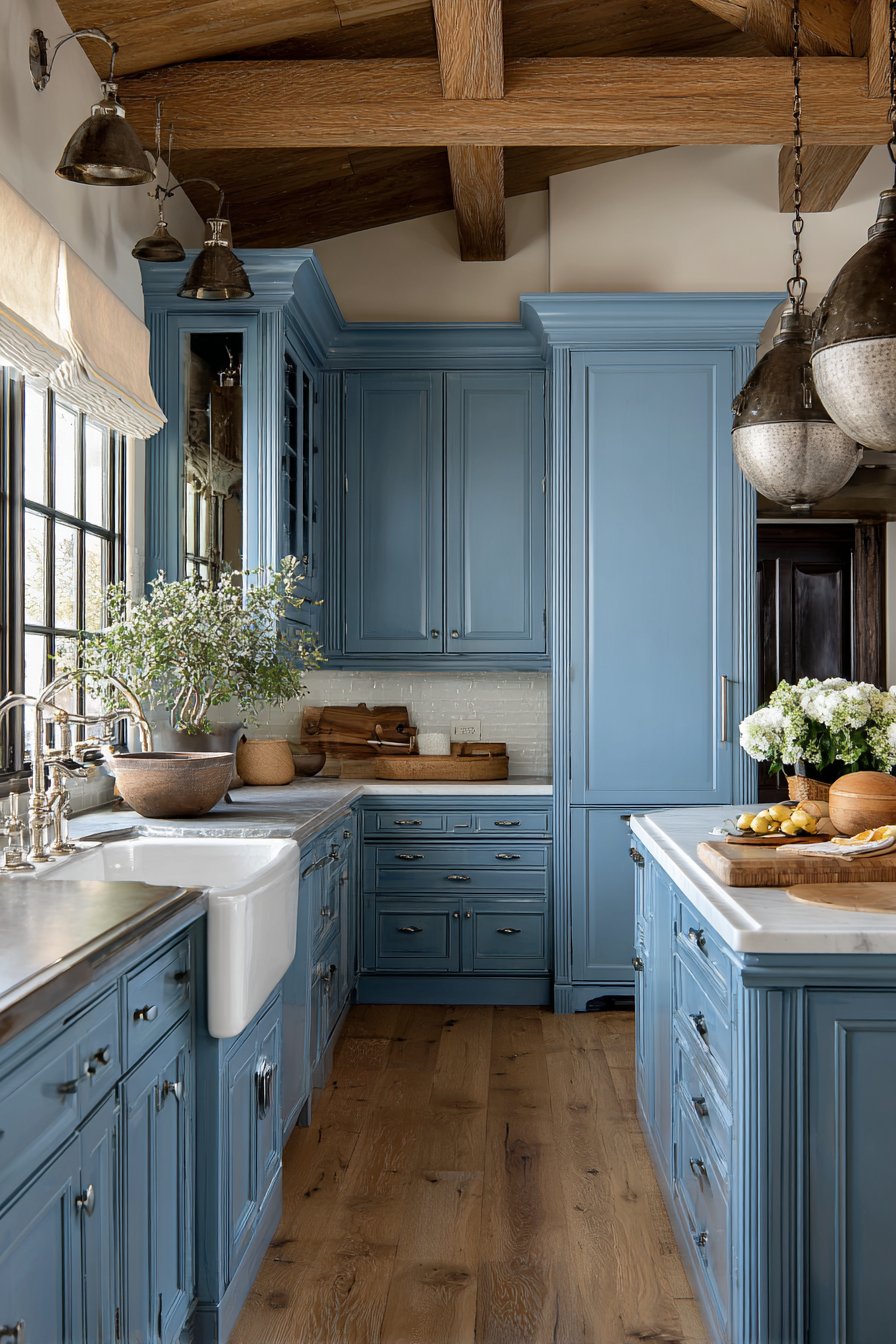
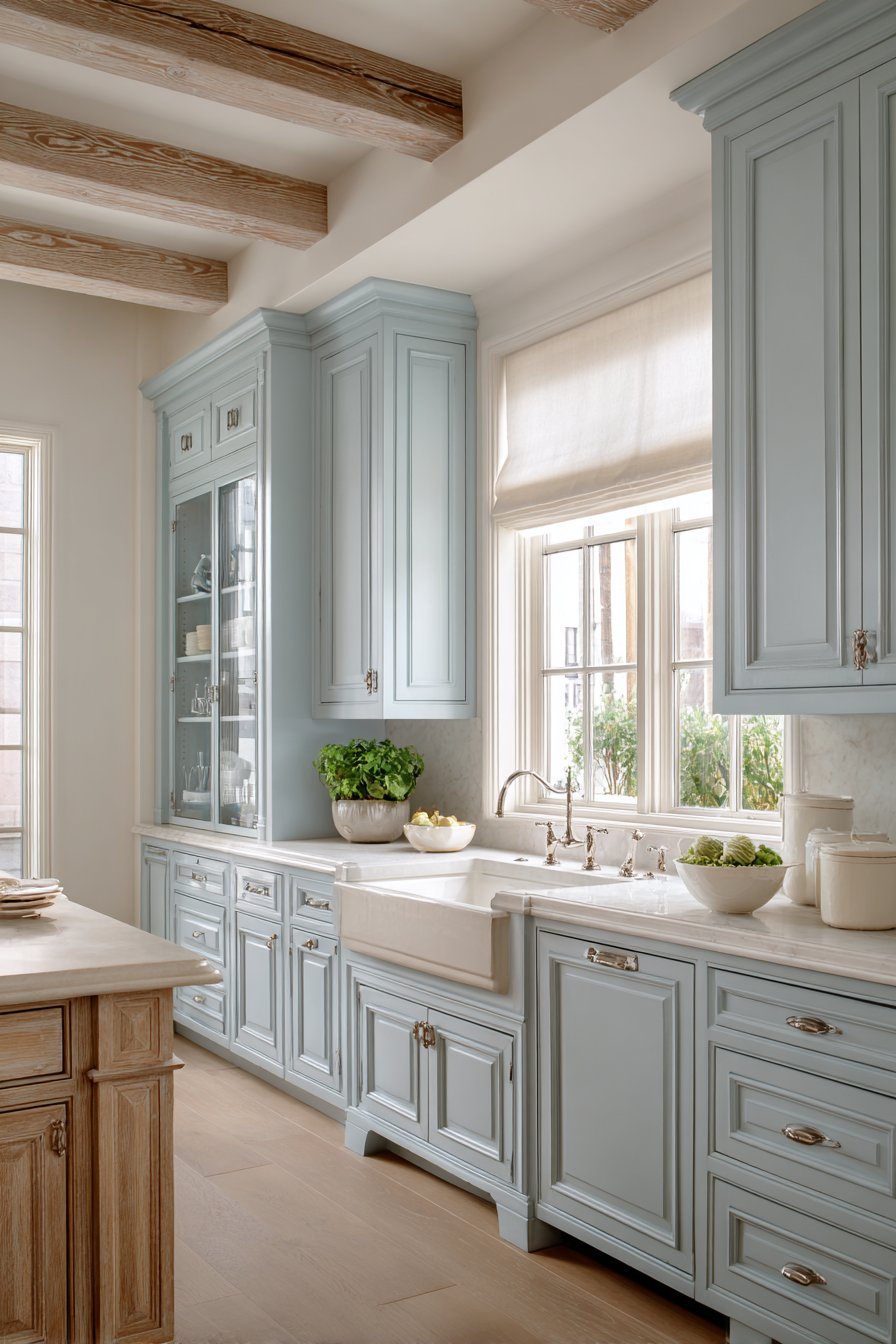
Refined elegance defines this interpretation of the blue French country kitchen, where custom cabinetry painted in sophisticated Wedgwood blue strikes the perfect balance between formal and welcoming. This particular shade references the famous English pottery manufacturer while fitting comfortably within French country aesthetics—a grey-toned blue that reads as both traditional and surprisingly contemporary.
The cabinets feature traditional beaded inset door construction, where each door sits flush within its frame rather than overlaying it, creating subtle shadow lines that add dimensional interest while maintaining the restrained elegance that characterizes the finest period cabinetry.
Polished nickel hardware provides cool metallic accents that complement rather than contrast with the Wedgwood blue, their refined finish suggests quality and attention to detail throughout the space. A large farmhouse sink with a bridge faucet in brushed nickel continues the sophisticated metallic theme; the faucet’s vintage-inspired design combines traditional aesthetics with modern functionality. The sink sits beneath a window dressed with simple white Roman shades that provide privacy and light control while maintaining the clean, uncluttered appearance that allows the cabinetry to command attention.
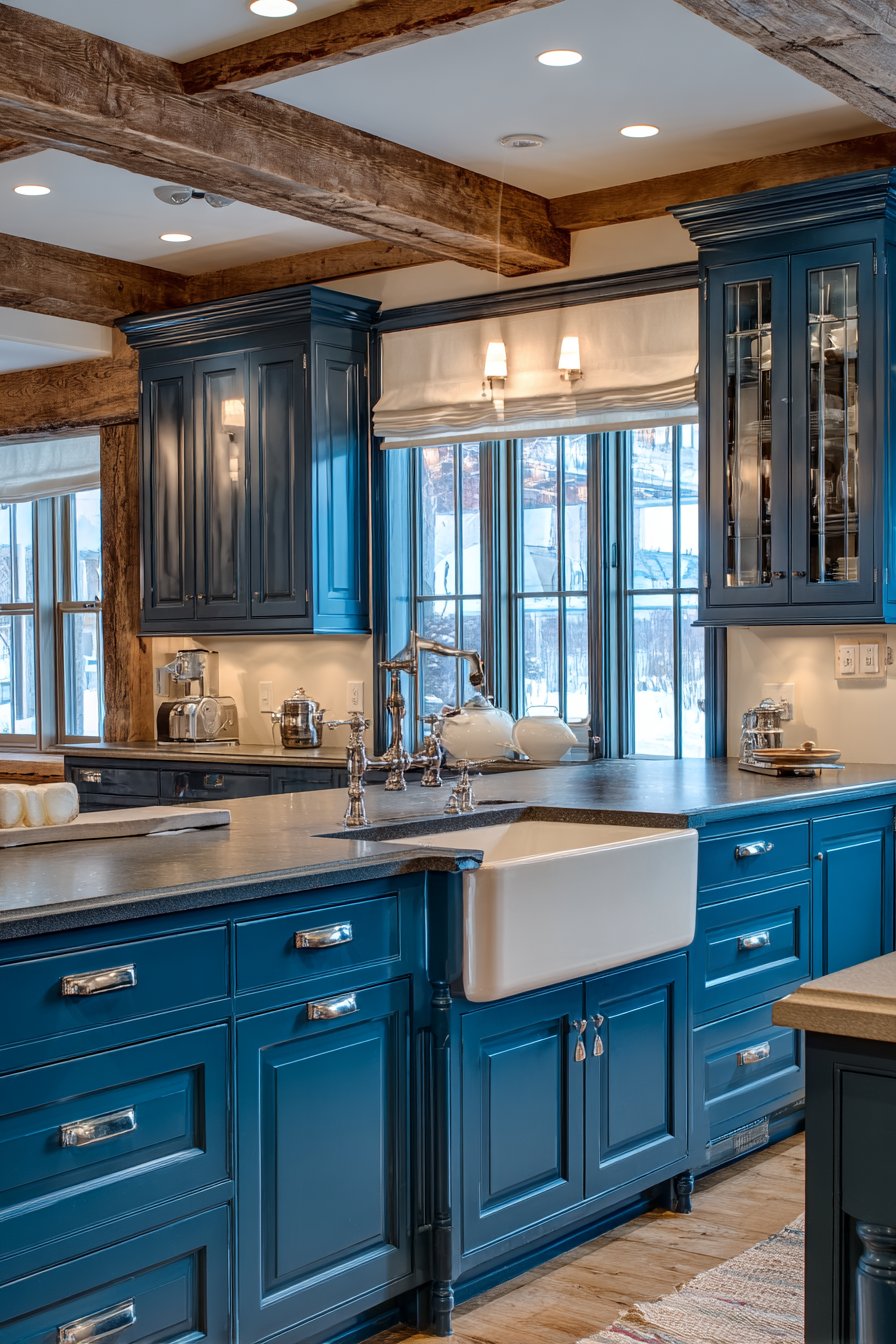
Soapstone countertops introduce another layer of sophisticated materiality, their dark grey-green color and smooth, matte surface providing beautiful contrast to the blue cabinetry while offering exceptional durability and heat resistance. Natural patina develops on soapstone over time as oils penetrate its surface, darkening and enriching the color in a process that enhances rather than diminishes its beauty.
Above, exposed ceiling beams in natural wood add architectural interest and vertical dimension, their substantial presence and honest materiality preventing the sophisticated color palette from feeling too precious or formal. These structural elements remind us that even refined spaces remain connected to authentic building traditions and natural materials.
Key Design Tips:
- Choose Wedgwood blue or similar grey-toned blues for sophisticated spaces where you want traditional color with contemporary sensibility and broad appeal.
- Invest in beaded inset construction for cabinet doors to achieve the authentic, high-quality appearance that distinguishes custom cabinetry from stock options.
- Select polished or brushed nickel hardware rather than brass or bronze when working with cooler blue tones to maintain color harmony and refined aesthetic.
- Install soapstone countertops for their exceptional durability, heat resistance, and beautiful aging characteristics that improve appearance over time.
- Expose ceiling beams in natural wood finishes to add architectural dimension and organic warmth that balances sophisticated painted cabinetry.
- Keep window treatments simple with Roman shades or cafe curtains in white or cream to frame views without competing with cabinetry for visual attention.
9. Gradient Blue Tile Artistry
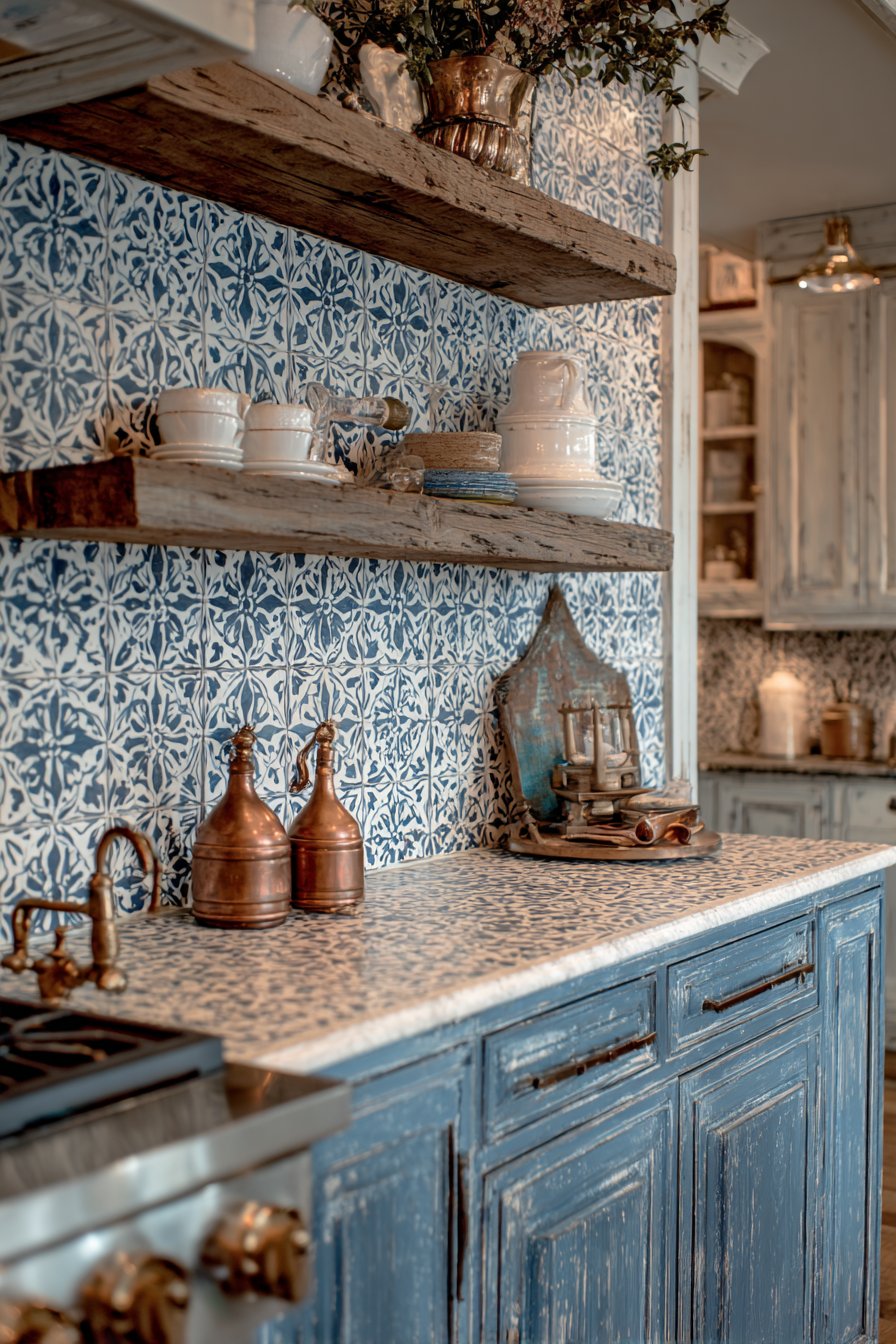
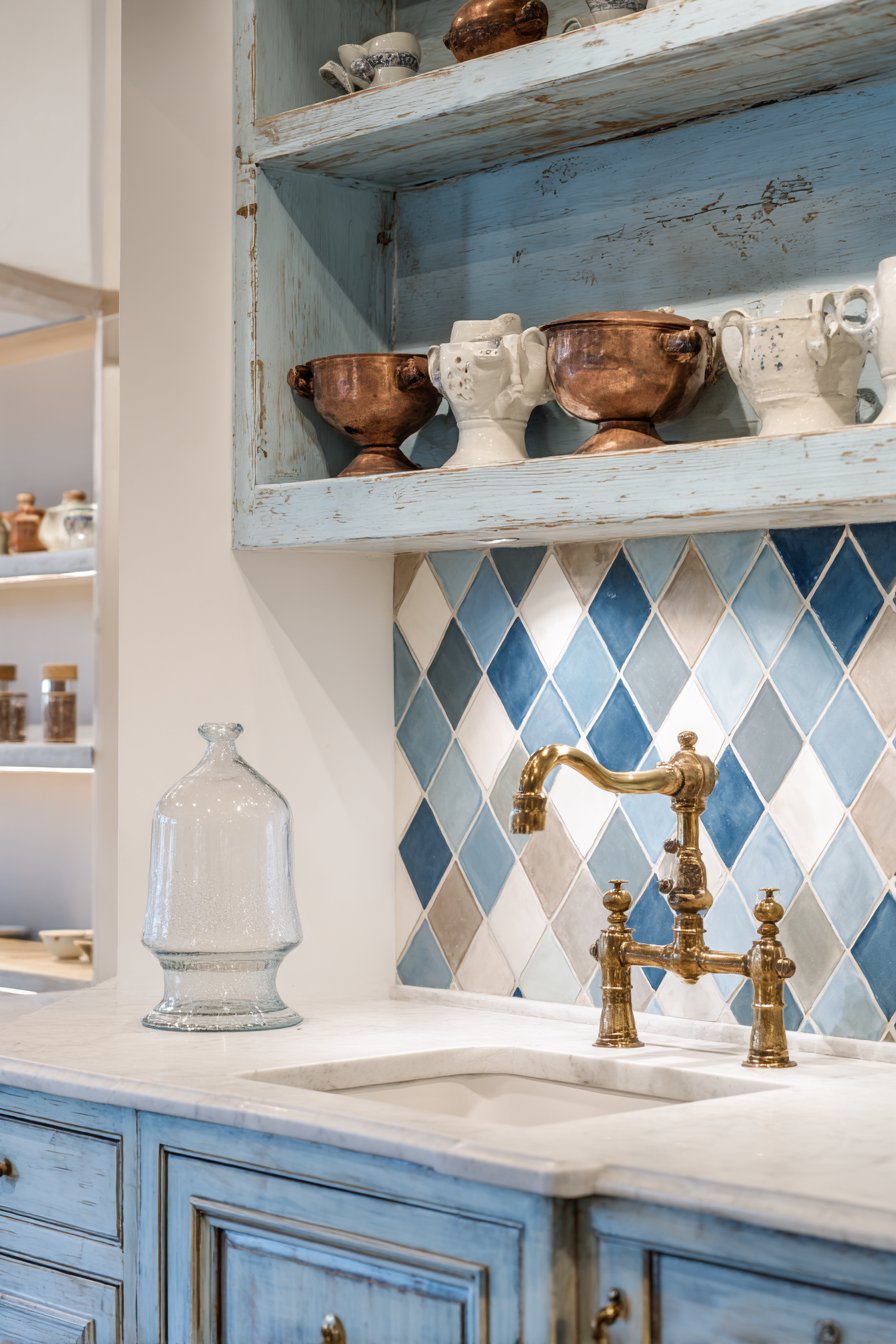
Artisanal craftsmanship takes center stage in this blue French country kitchen, where the backsplash area becomes a canvas for hand-painted ceramic tiles that create a stunning gradient effect. The tiles transition from deep navy at the bottom through medium blues in the center to soft sky blue near the top, creating visual movement that draws the eye upward while maintaining cohesion through the shared blue color family.
Each individual tile showcases slight variations in tone and brushwork that prove its hand-painted origin, with no two tiles exactly identical. This imperfection becomes a design asset, celebrating human craftsmanship in an age of machine precision.
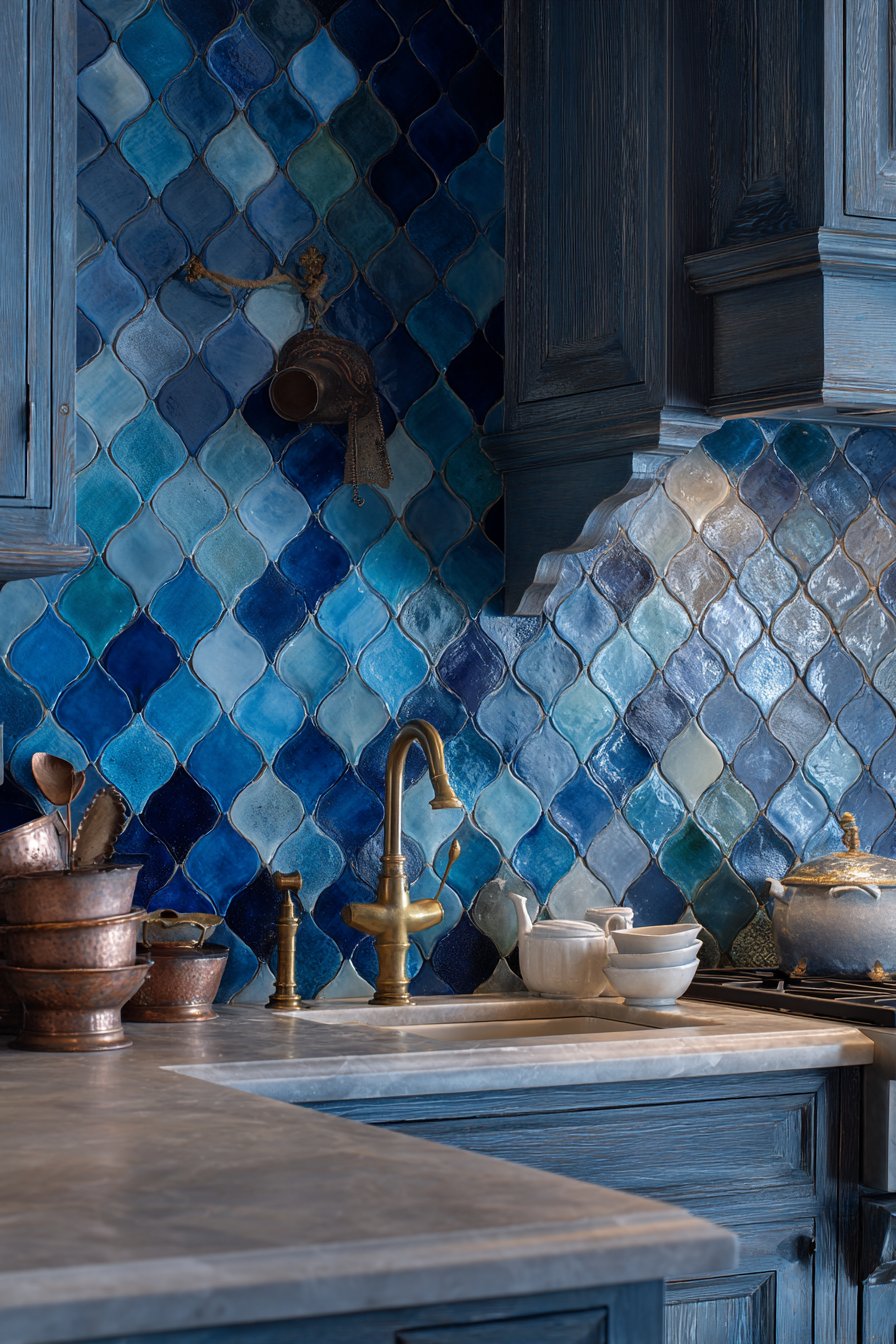
White grout lines define each tile’s rectangular shape, creating a grid pattern that organizes the gradient transition while providing visual clarity. The grout’s bright white color enhances the intensity of the blue tiles by contrast, making each shade appear more vibrant and distinct. Flanking the range, open shelving constructed from distressed blue wood continues the color story while providing practical storage for frequently used items.
Vintage copper molds—perhaps in fish, rabbit, or decorative shapes—hang from or stand upon these shelves, their warm metallic surfaces creating beautiful contrast with the cool blue tones. White ceramic serving pieces complete the display, their clean forms and bright surfaces providing visual rest among the more ornate copper pieces.
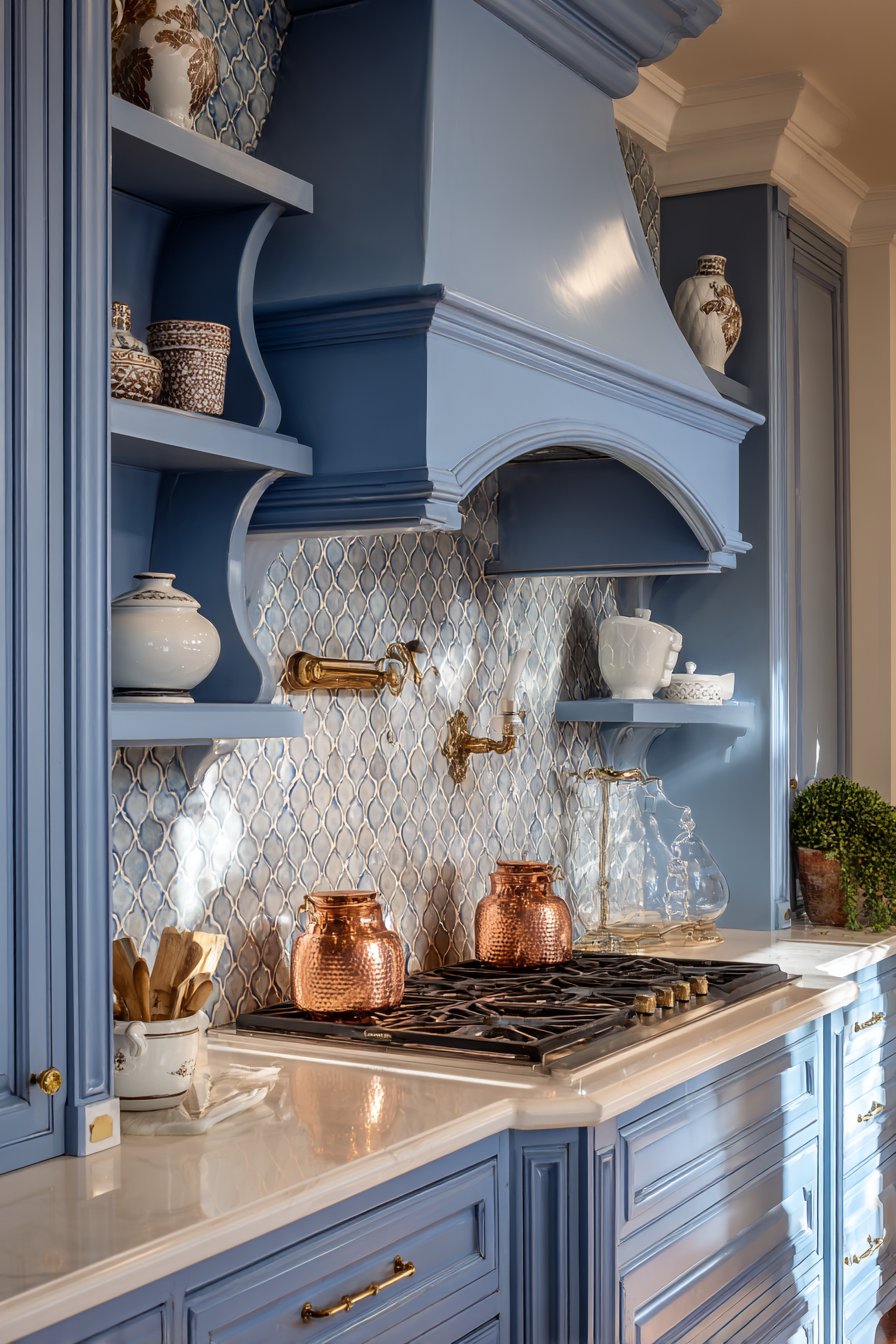
A brass pot filler faucet mounted on the backsplash above the range combines functional elegance with practical convenience, eliminating the need to carry heavy pots filled with water from the sink. Its warm brass finish bridges the color temperature between cool blue tiles and warm copper cookware, harmonizing the metallic elements throughout the space.
Warm ambient kitchen lighting casts gentle illumination across the tile work, emphasizing the gradient transition and highlighting the dimensional quality of the hand-painted surfaces. The careful layering of blue tones—from deep navy through sky blue, with touches of distressed wood shelving—creates sophisticated depth that elevates this backsplash from simple protective surface to genuine artistic focal point.
Key Design Tips:
- Commission hand-painted tiles from artisans rather than purchasing mass-produced options to ensure authentic character and unique artistry worthy of focal point status.
- Create gradient effects using multiple blue shades that share undertones to ensure a smooth visual transition rather than jarring color jumps.
- Use white grout with colored tiles to define each tile’s shape and enhance color intensity through contrast rather than attempting to make grout disappear.
- Install open shelving flanking the range in coordinating blue tones to extend the color story beyond the backsplash while providing practical storage.
- Display copper cookware against blue backgrounds to create warm-cool color contrast that makes both elements appear more vibrant and interesting.
- Add a pot filler faucet above the range for practical convenience while introducing another metallic finish that enriches the space’s layered material palette.
10. Coordinated Blue Dining Integration
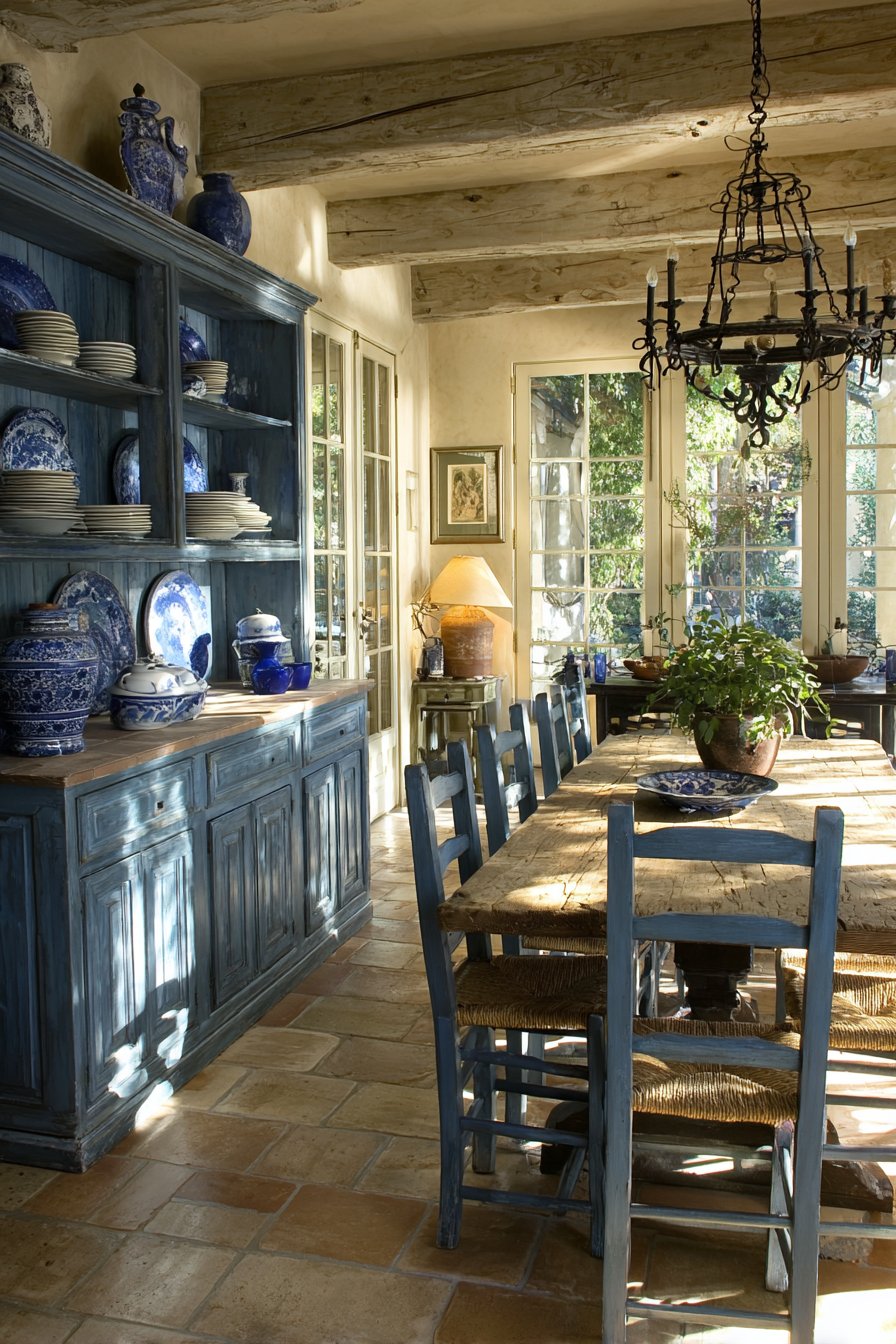
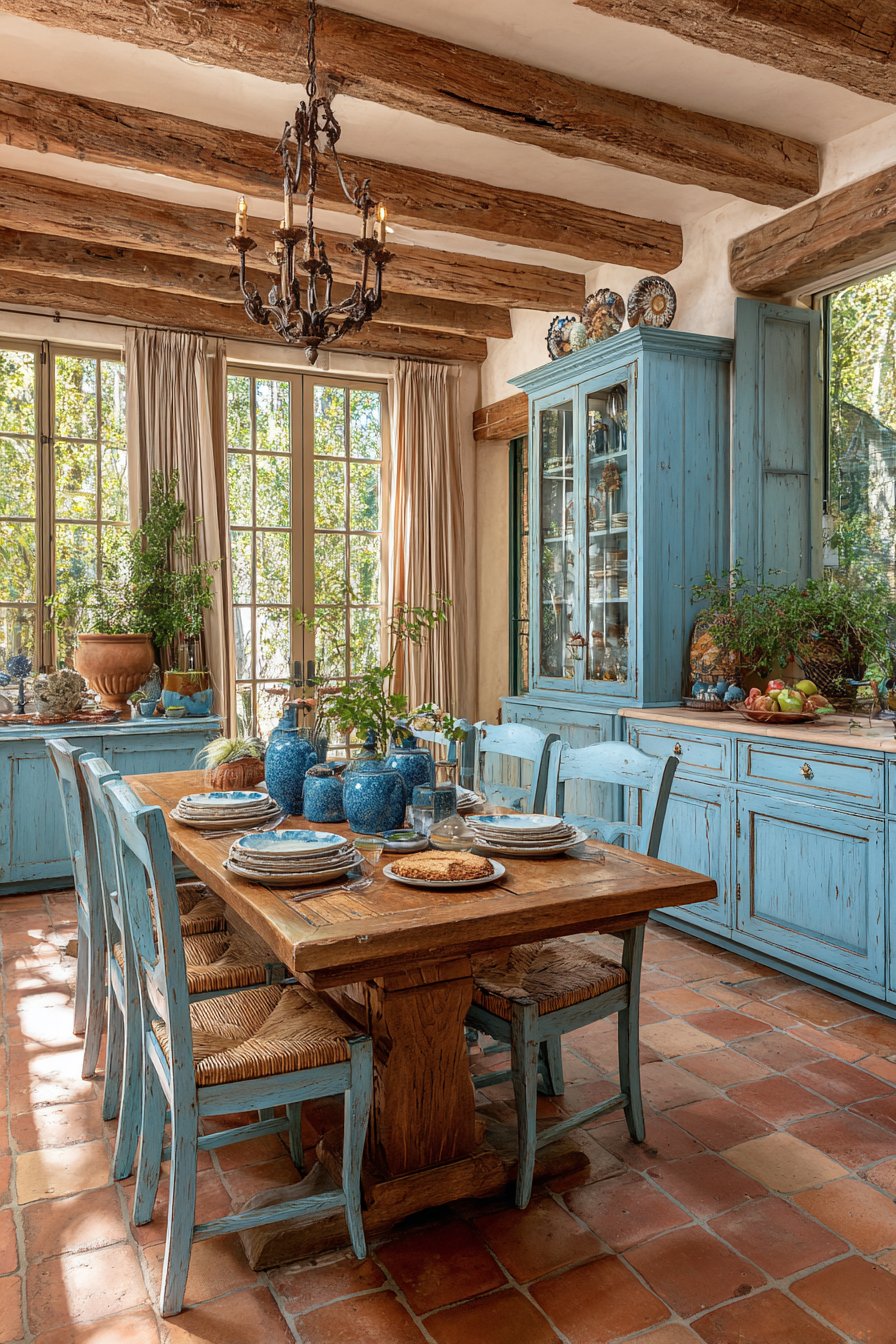
The seamless integration of a dining area within the kitchen proper demonstrates how blue French country design extends beyond cooking zones to create cohesive, multi-functional spaces. A rustic wooden trestle table with substantial proportions and visible joinery serves as the dining centerpiece, its honest construction and natural wood finish providing organic warmth that anchors the room.
Surrounding this table, ladder-back chairs painted in coordinating shades of French blue create visual interest through subtle tonal variation—perhaps one pair in periwinkle, another in slate blue, a third in pale powder blue—while rush seats add natural texture and traditional craftsmanship.
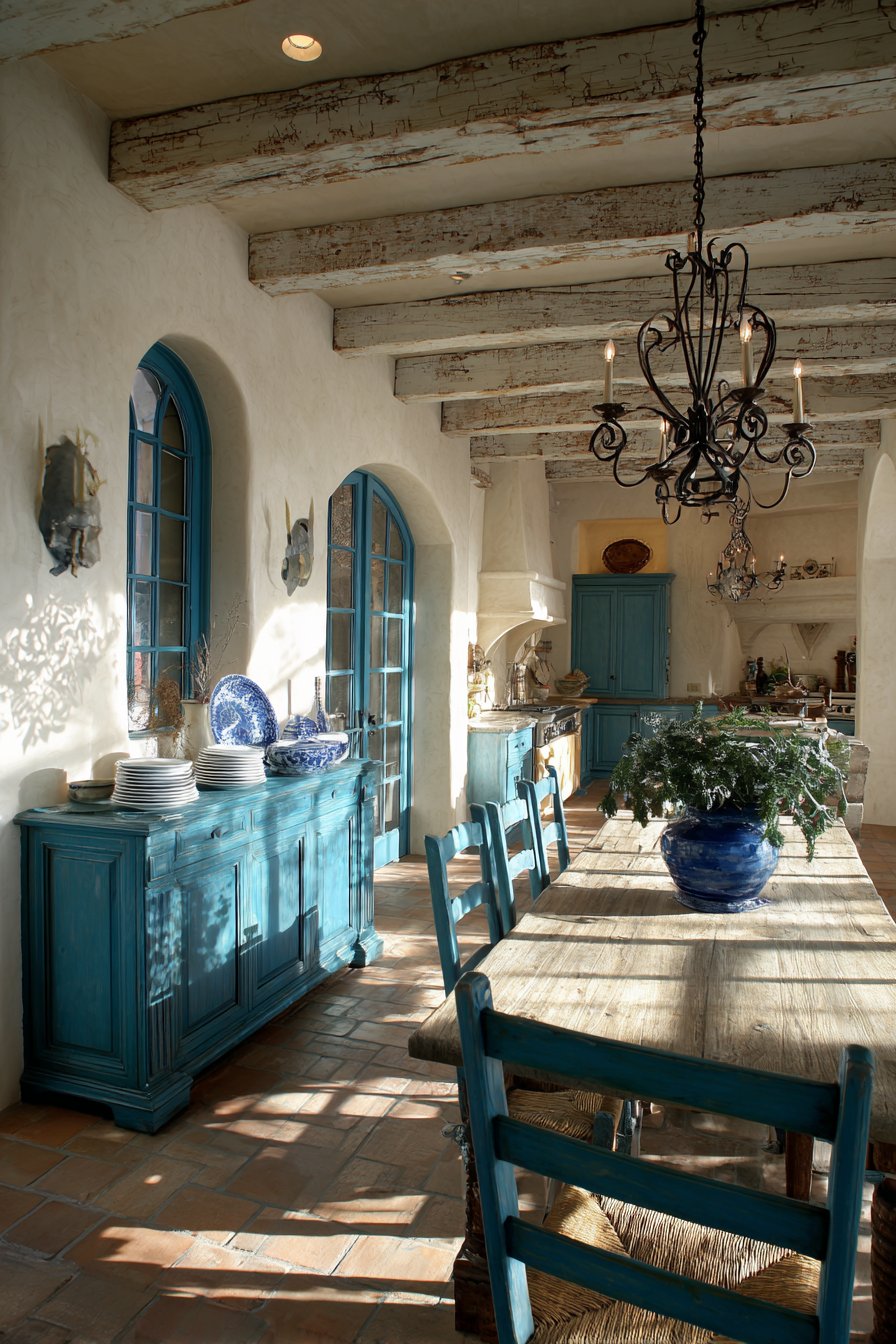
A painted sideboard in deeper colonial blue functions as both storage and serving surface, its more saturated color providing visual weight that grounds the dining area and creates hierarchy within the space. The sideboard’s surface displays white serving platters arranged vertically in display stands, along with blue pottery pieces that echo the chair colors while introducing pattern through decorative motifs. This combination of white and blue ceramics creates an engaging visual rhythm while maintaining the cohesive color story that unifies the entire kitchen-dining area.

Terracotta tile flooring extends throughout the space, its warm earthy tones and slight irregularities providing authentic provincial character while defining the floor plane that anchors all other elements. Above, the exposed wood beam ceiling adds architectural interest and dimensional depth, the natural wood’s warm tones creating visual continuity with the dining table and rush chair seats.
A wrought iron chandelier hangs at the perfect height above the table, its dark metal framework and candle-style lights providing ambient illumination that enhances the room’s welcoming atmosphere during evening meals. Tall windows with simple frames allow natural daylight to flood the space, creating soft shadows that emphasize the authentic French countryside aesthetic while connecting interior spaces to outdoor views.
Key Design Tips:
- Vary blue tones among dining chairs rather than matching them exactly to create visual interest and the collected-over-time quality that characterizes authentic French country spaces.
- Choose a trestle table with visible joinery and substantial proportions to anchor the dining area and showcase traditional woodworking craftsmanship.
- Paint the sideboard in a deeper or more saturated blue than the surrounding elements to create visual weight and establish clear hierarchy within the space.
- Select rush seats for chairs to introduce natural texture and traditional craftsmanship that reinforces the room’s connection to heritage building techniques.
- Extend terracotta flooring throughout both cooking and dining areas to create visual unity and authentic provincial character across the entire space.
- Hang a wrought iron chandelier at an appropriate height above the dining table to provide ambient lighting while adding architectural interest through dark metal detailing.
Why These Blue French Country Kitchen Designs Represent the Best in Interior Style
The ten blue French country kitchen designs explored throughout this comprehensive guide represent the pinnacle of this beloved aesthetic for numerous compelling reasons that extend far beyond surface-level beauty. Each interpretation demonstrates how thoughtful design choices—from paint color selection and cabinet construction to hardware finishes and flooring materials—combine to create spaces that feel both timeless and relevant to contemporary living. These kitchens succeed because they honor authentic French provincial traditions while adapting them for modern functionality and lifestyle requirements.
The strategic use of blue throughout these designs proves particularly significant, as this color family offers remarkable versatility within French country aesthetics. From the bold cobalt cabinetry that makes an immediate visual impact to the soft periwinkle breakfast nook that creates a serene gathering space, blue demonstrates its ability to work across the spectrum from dramatic to subtle. The color references natural elements found throughout the French countryside—lavender fields in Provence, the Mediterranean sky, aged pottery and ceramics, weathered painted shutters—creating instant visual connections to authentic regional aesthetics. Unlike trendy colors that quickly feel dated, blue maintains enduring appeal precisely because it has been used in French country design for centuries, proving its staying power and timeless quality.
The emphasis on authentic materials and traditional construction techniques throughout these designs contributes significantly to their success and appeal. Butcher block countertops, marble surfaces, soapstone work areas, terra cotta flooring, and natural wood beams all improve with age rather than deteriorating, developing patina and character that enhance rather than diminish their beauty. This stands in stark contrast to synthetic materials or artificial finishes that show wear as damage requiring replacement. The distressed finishes on cabinetry and furniture celebrate rather than conceal the marks of time and use, embodying the French country philosophy that values authenticity and history over pristine perfection.
Functional considerations receive equal attention to aesthetic concerns in these exemplary designs, demonstrating that beautiful spaces must also work efficiently for daily living. Farmhouse sinks provide deep basins perfect for washing large pots and sheet pans. Open shelving keeps frequently used items easily accessible while creating display opportunities for beautiful collections. Kitchen islands with substantial work surfaces and integrated seating facilitate both meal preparation and casual dining. Pot racks suspend cookware within easy reach while adding vertical visual interest. These practical elements integrate seamlessly into the overall design rather than appearing as afterthoughts, proving that French country style supports rather than sacrifices functionality.
The layering of textures throughout these kitchen designs creates sensory richness that engages multiple senses and prevents visual monotony. Smooth painted cabinetry contrasts with rough terra cotta tiles underfoot. Polished marble countertops juxtapose against weathered wood tables. Glossy ceramic dishware contrasts with matte soapstone surfaces. Soft fabric cushions on banquette seating contrast with hard wrought iron light fixtures. This careful attention to textural variety ensures visual interest from every angle while creating spaces that invite touch and interaction.
The integration of collections and personal items throughout these kitchens demonstrates how French country design accommodates and celebrates individual personality rather than imposing rigid aesthetic rules. White ironstone collections, copper cookware, blue pottery, vintage kitchen implements, and fresh herbs all find appropriate places within these designs, adding character and personal meaning without appearing cluttered or disorganized. This approach recognizes that the most successful kitchens reflect the people who use them, incorporating treasured objects and practical tools into the overall aesthetic.
Color relationships throughout these designs reveal sophisticated understanding of how different shades interact and complement each other. The pairing of various blue tones with warm neutrals like cream, beige, and natural wood creates balance between cool and warm color temperatures. The introduction of metallic finishes in brass, copper, and nickel adds sparkle and visual interest while maintaining overall harmony. The strategic use of white in dishware, walls, and countertops prevents blue from overwhelming spaces while creating fresh, bright surfaces that enhance light reflection. These carefully considered color relationships ensure spaces feel cohesive and intentional rather than haphazard or accidentally assembled.
The architectural details present throughout these kitchen designs—from exposed ceiling beams and ornate molding to beaded inset cabinet construction and turned furniture legs—elevate spaces beyond simple surface decoration to genuine architectural environments. These elements connect kitchens to broader building traditions and craftsmanship heritage, grounding contemporary spaces in historical context while adding dimensional interest and visual sophistication. The investment in quality architectural details pays dividends through timeless appeal that transcends passing trends.
Lighting design receives appropriate attention throughout these exemplary kitchens, with natural daylight prioritized through generous windows while thoughtfully selected artificial lighting—wrought iron chandeliers, vintage-style pendants, understated fixtures—provides ambient illumination during evening hours. The emphasis on natural light connects interior spaces to outdoor environments and changing conditions throughout the day, while carefully positioned artificial lighting ensures functionality without compromising the warm, welcoming atmosphere that defines French country aesthetics.
Finally, these blue French country kitchen designs succeed because they create spaces that genuinely invite use and gathering rather than functioning as pristine showrooms too precious for actual living. The distressed finishes, durable materials, and practical layouts all communicate that these kitchens are meant to be used, enjoyed, and lived in. They accommodate the messiness of actual cooking, the gathering of family and friends, the display of personal collections, and the daily rituals that make a house feel like home. This livability, combined with undeniable beauty explains why French country kitchens—particularly those incorporating the timeless appeal of blue—continue to captivate homeowners and designers alike, proving that well-executed traditional design remains perpetually relevant regardless of changing trends.
Conclusion
The enduring appeal of blue French country kitchens lies in their remarkable ability to combine aesthetic beauty with practical functionality, creating spaces that feel both elegant and approachable. Throughout this exploration of ten distinctive design interpretations, we’ve discovered how varying shades of blue—from bold cobalt and vibrant Giverny blue to soft periwinkle and sophisticated Wedgwood—can transform ordinary kitchens into extraordinary spaces that celebrate craftsmanship, natural materials, and authentic provincial charm. Each design demonstrates that successful French country style requires careful attention to architectural details, thoughtful material selection, and genuine appreciation for the patina and character that develop through time and use.
The key takeaways from these exemplary designs center on embracing imperfection, investing in quality materials that age gracefully, layering textures for sensory richness, and creating spaces that accommodate both daily functionality and personal expression. Whether you’re planning a complete kitchen renovation or simply seeking inspiration for refreshing your current space, the principles demonstrated throughout these designs offer valuable guidance. Consider incorporating distressed painted finishes on cabinetry, displaying cherished collections on open shelving, adding architectural interest through exposed beams or decorative molding, selecting natural materials like butcher block and stone, and most importantly, choosing shades of blue that resonate with your personal aesthetic and connect to the authentic French provincial tradition.
We encourage you to experiment with these ideas in your own home, adapting them to suit your specific space, budget, and lifestyle requirements. Remember that authentic French country style develops over time through the thoughtful accumulation of quality pieces rather than instantaneous transformation. Start with foundational elements like paint color and major materials, then gradually layer in decorative details, collections, and personal touches that make the space uniquely yours. The result will be a blue French country kitchen that not only looks beautiful but genuinely supports and enhances your daily life, creating a welcoming heart of the home where family and friends naturally gather to share meals, conversation, and the timeless pleasures of good food and good company.
