


When it comes to interior design, few challenges are as exciting—and potentially daunting—as decorating a big living room. While many homeowners struggle with making small spaces feel larger, those blessed with generous square footage face the opposite dilemma: how to create warmth, intimacy, and cohesion in an expansive area without it feeling empty or impersonal. A large living room offers incredible opportunities for creativity, multiple functional zones, and impressive design statements that simply aren’t possible in more compact spaces. The key lies in understanding how to balance scale, proportion, and intentional furniture placement to transform vast square footage into an inviting, functional, and aesthetically stunning environment.
Thoughtful interior design becomes absolutely crucial when working with substantial room dimensions. The wrong approach can leave your space feeling like a cold, echoing warehouse, while the right strategy creates distinct zones that serve multiple purposes while maintaining visual flow and architectural harmony. Large living rooms allow you to experiment with bold furniture pieces, dramatic lighting fixtures, and layered design elements that would overwhelm smaller spaces. Whether you’re drawn to contemporary minimalism, traditional elegance, rustic farmhouse charm, or transitional sophistication, a big living room provides the perfect canvas for bringing your vision to life.
In this comprehensive guide, we’ll explore ten exceptional approaches to big living room decor, each offering unique solutions to common large-space challenges. From open-concept layouts that flow seamlessly into adjacent areas to two-story ceiling heights that demand vertical design thinking, these concepts demonstrate how different styles, furniture arrangements, and decorative strategies can transform expansive square footage into warm, welcoming, and beautifully functional gathering spaces.
Each design approach addresses the specific considerations that come with decorating large rooms—from maintaining intimacy to preventing emptiness, from creating conversation areas to establishing focal points that anchor the space. Let’s dive into these inspiring big living room decor ideas that prove size doesn’t have to sacrifice coziness or style.
1. Spacious Open-Concept Sanctuary with Natural Light
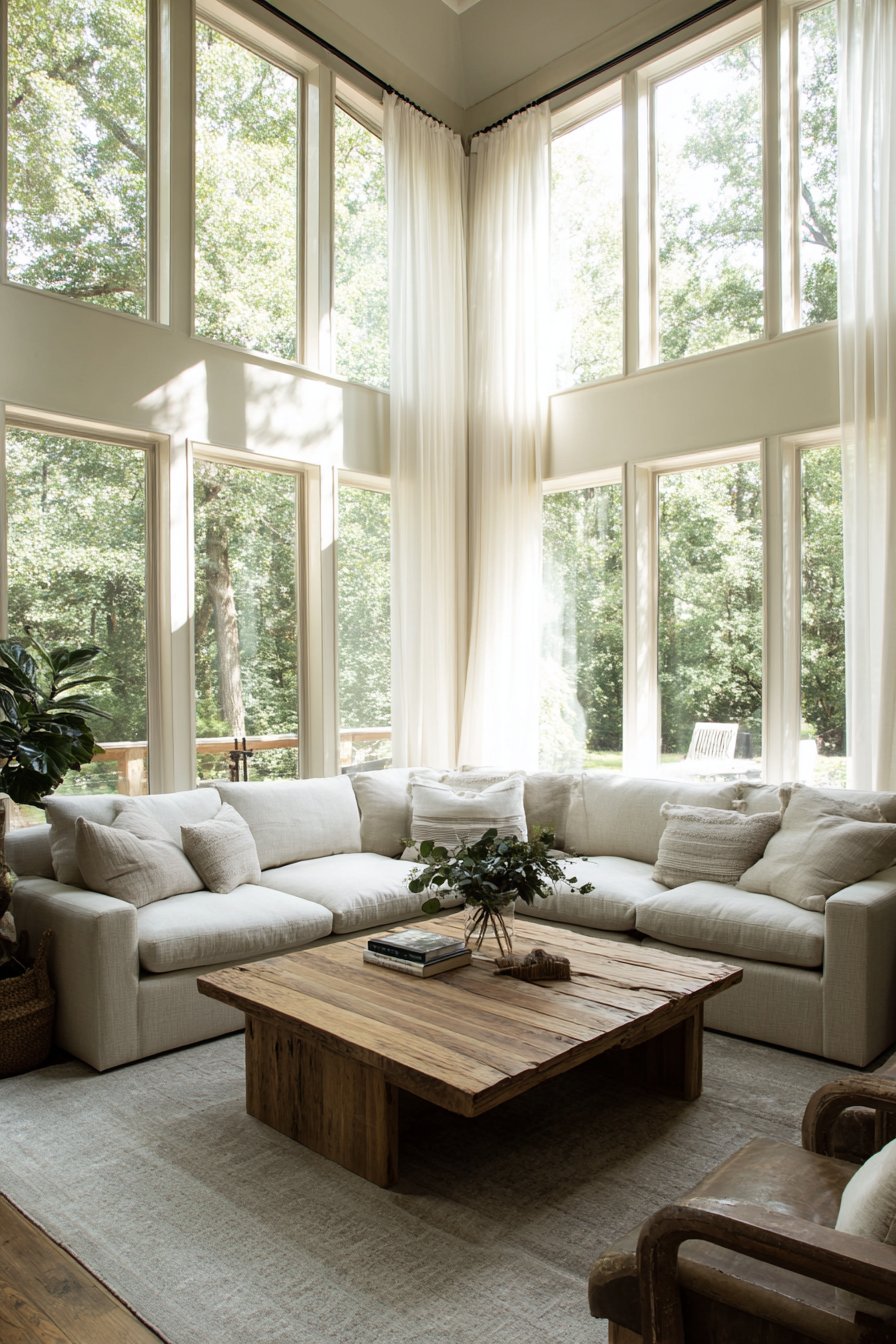
The foundation of exceptional big living room decor often begins with embracing an open-concept layout that celebrates rather than fights against generous proportions. Picture an expansive living space anchored by a large sectional sofa upholstered in neutral linen—a choice that provides both substantial seating and a calming aesthetic foundation.
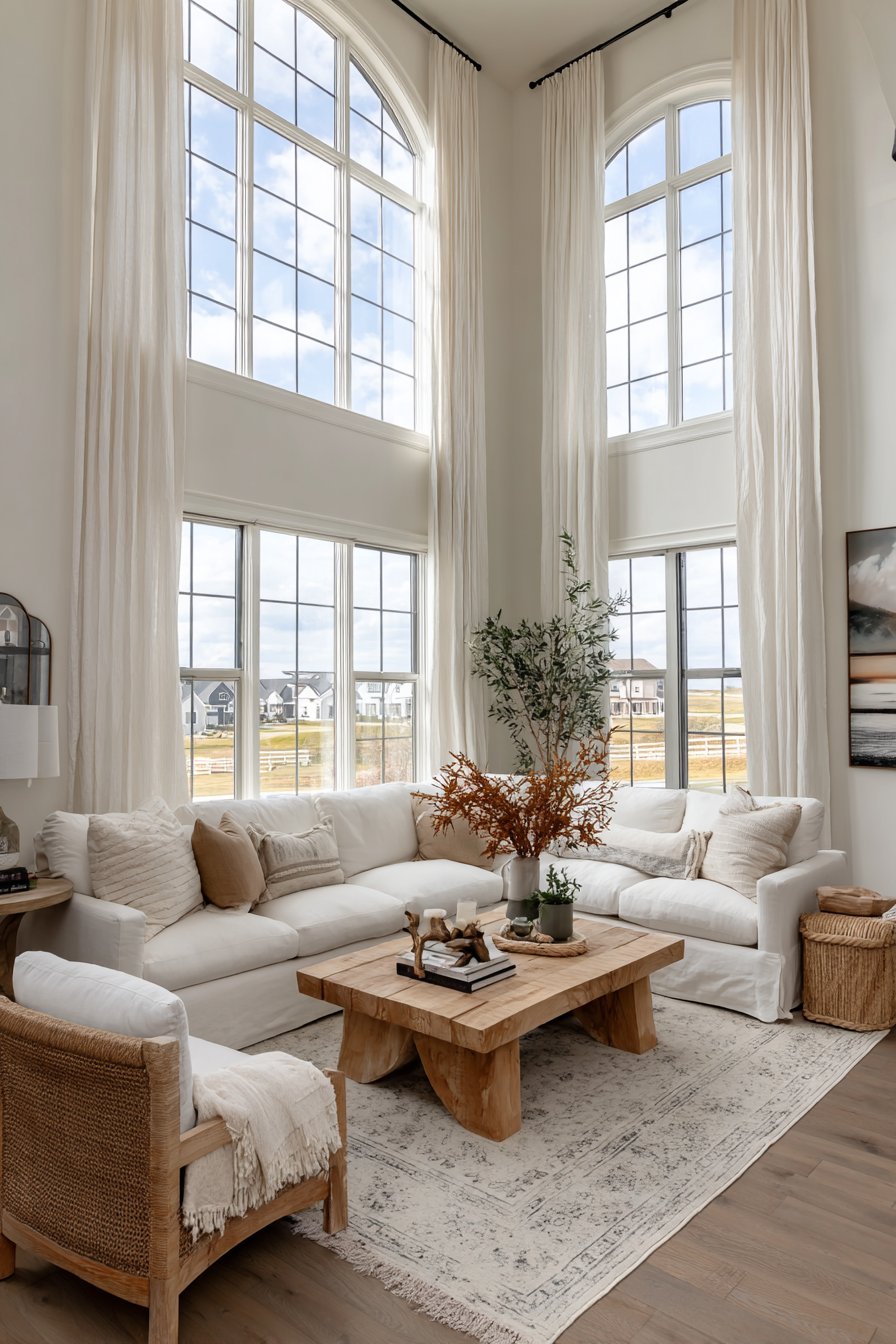
This isn’t just any sofa arrangement; it’s strategically positioned to define the seating area within the larger floor plan, creating an invisible boundary that helps organize the space without walls or dividers. The oversized area rug beneath the furniture grouping serves a critical function beyond mere decoration—it visually anchors the conversation area and provides textural warmth underfoot while psychologically defining where the living zone begins and ends.
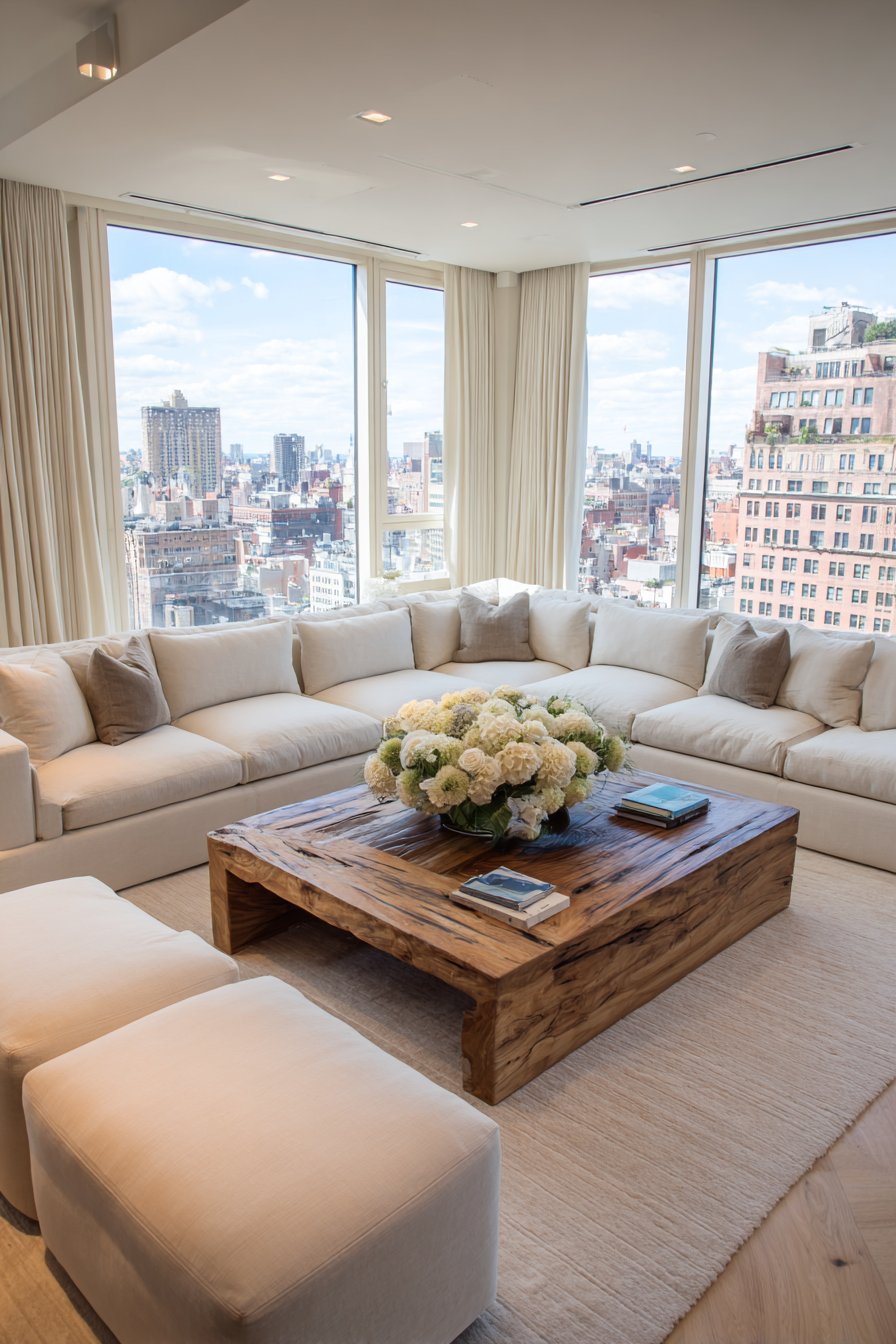
The centerpiece coffee table deserves special consideration in rooms of this scale. A substantial piece with natural wood finish doesn’t just provide a surface for drinks and books; it grounds the seating arrangement and offers visual weight proportionate to the room’s dimensions. Too small a coffee table would look lost and ineffective, while this appropriately-scaled piece maintains balance.
The natural wood grain introduces organic warmth that prevents the neutral palette from feeling sterile, connecting the interior design to nature and adding tactile interest that invites closer inspection. This material choice becomes even more important when working with expansive square footage, as natural elements help humanize large spaces.
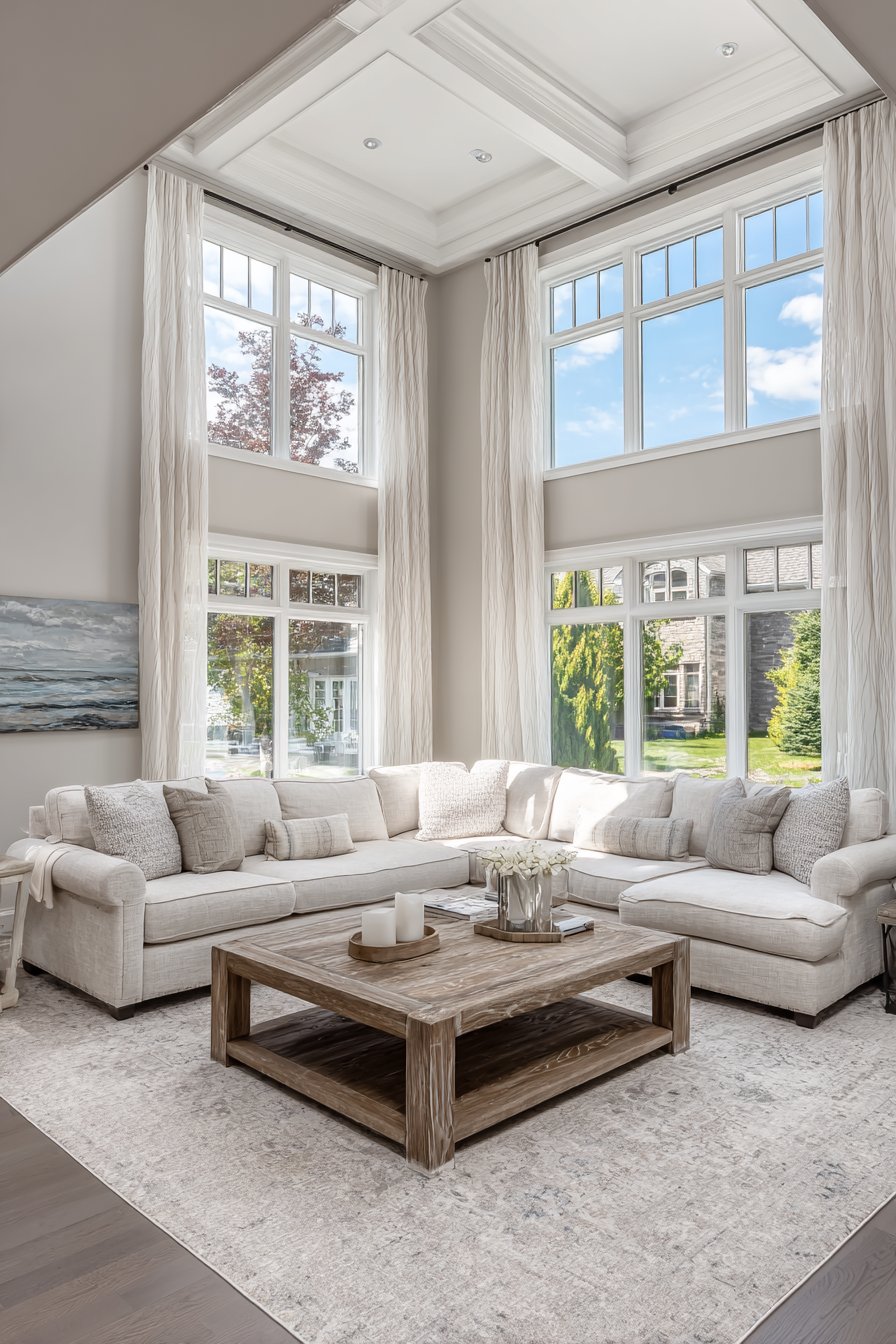
Floor-to-ceiling windows transform this big living room from merely large to genuinely spectacular. These architectural features accomplish multiple design objectives simultaneously: they flood the space with abundant natural light that prevents the room from feeling cavernous or dark, they create a strong visual connection to the outdoors that expands the perceived space even further, and they provide dynamic lighting that changes throughout the day, ensuring the room never feels static.
The flowing sheer curtains soften the hard edges of the window frames while maintaining the light-filled quality. When capturing this type of space photographically, wide-angle lenses reveal how thoughtful furniture placement maintains intimacy within the large footprint—a crucial consideration that many overlook when decorating big living rooms.
Key Design Tips:
- Scale your area rug appropriately—it should be large enough that all front furniture legs rest on it, creating a cohesive seating group even in an expansive room.
- Choose a substantial coffee table with dimensions proportionate to your sofa size; in big living rooms, err on the side of larger rather than smaller.
- Install floor-to-ceiling window treatments to emphasize vertical lines and make even tall spaces feel intentionally designed rather than incomplete.
- Position sectional sofas strategically to create defined zones while maintaining clear pathways through the room for natural traffic flow.
- Layer your neutral palette with varied textures in similar tones to create visual interest without color chaos in large open spaces.
2. Dramatic Two-Story Living Room with Vertical Design Elements
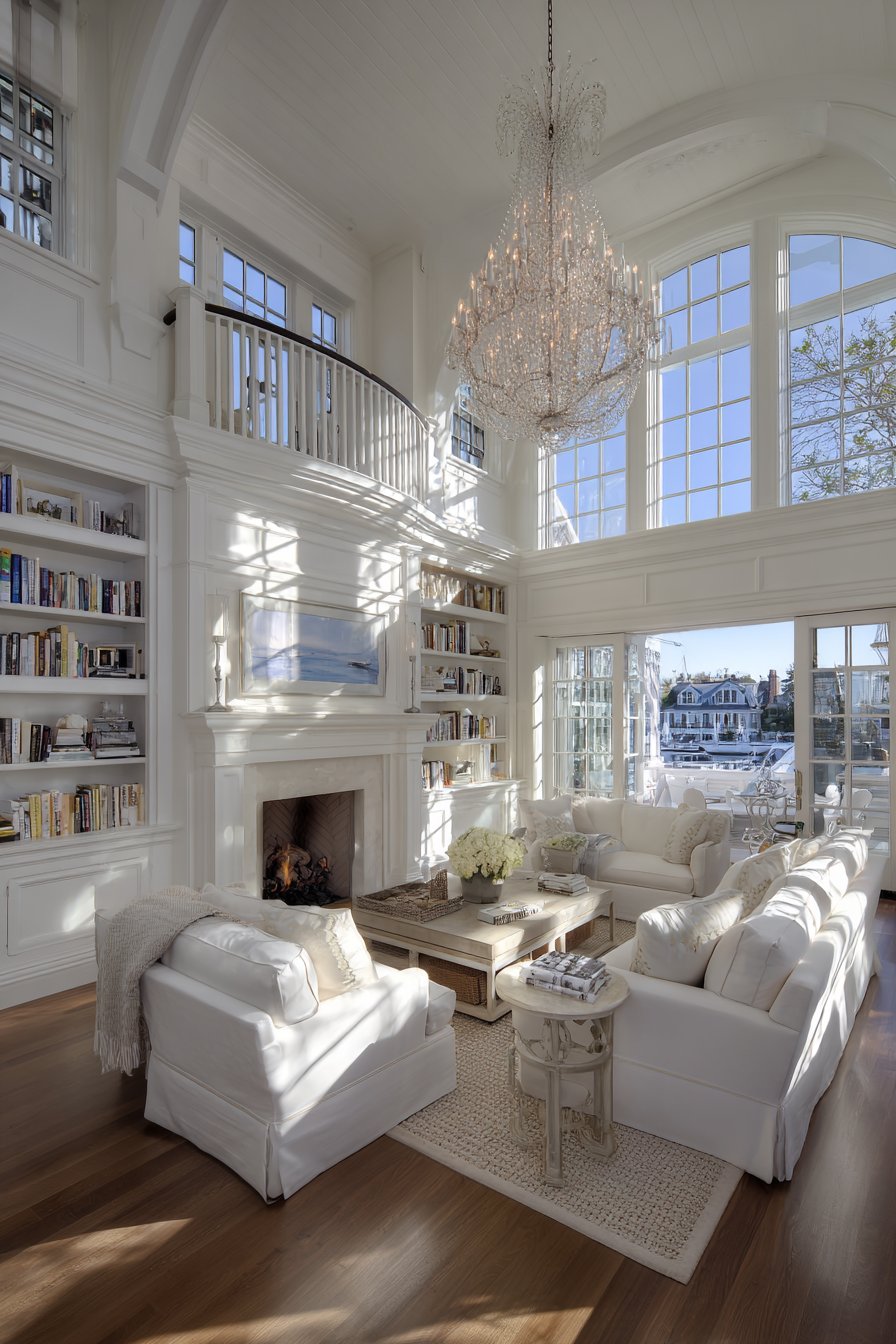
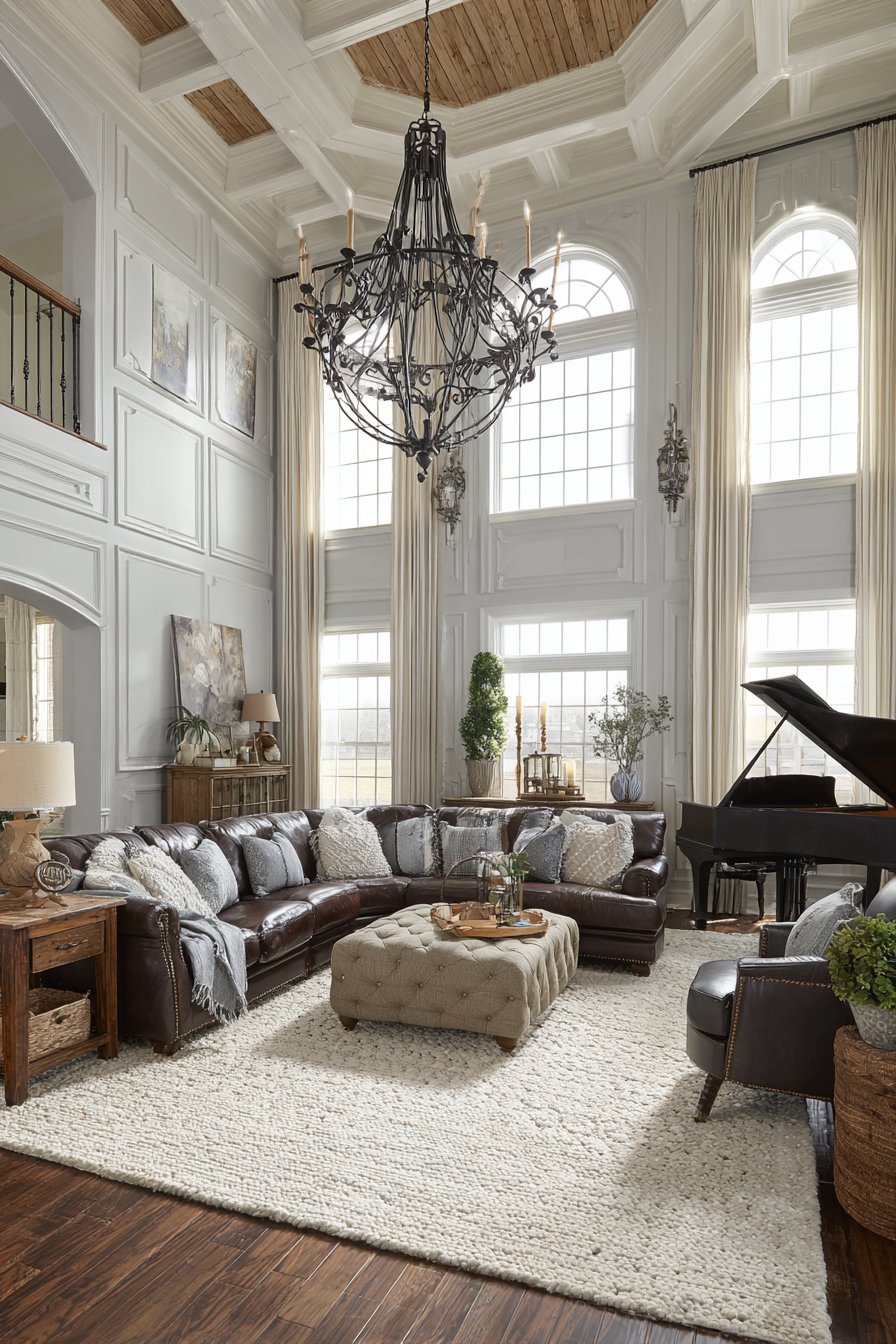
When your big living room boasts two-story ceiling heights, the design challenge shifts from horizontal square footage to vertical volume management. This spectacular configuration demands a completely different approach to decorating, one that draws the eye upward while maintaining human-scale comfort at ground level.
The statement chandelier suspended over the conversation area becomes far more than a light source—it’s an architectural sculpture that bridges the gap between floor and ceiling, creating a visual anchor point that helps the soaring space feel intentional and complete. The choice of chandelier matters enormously here; it must be substantial enough to hold its own against the dramatic ceiling height without appearing oversized or threatening to those seated below.
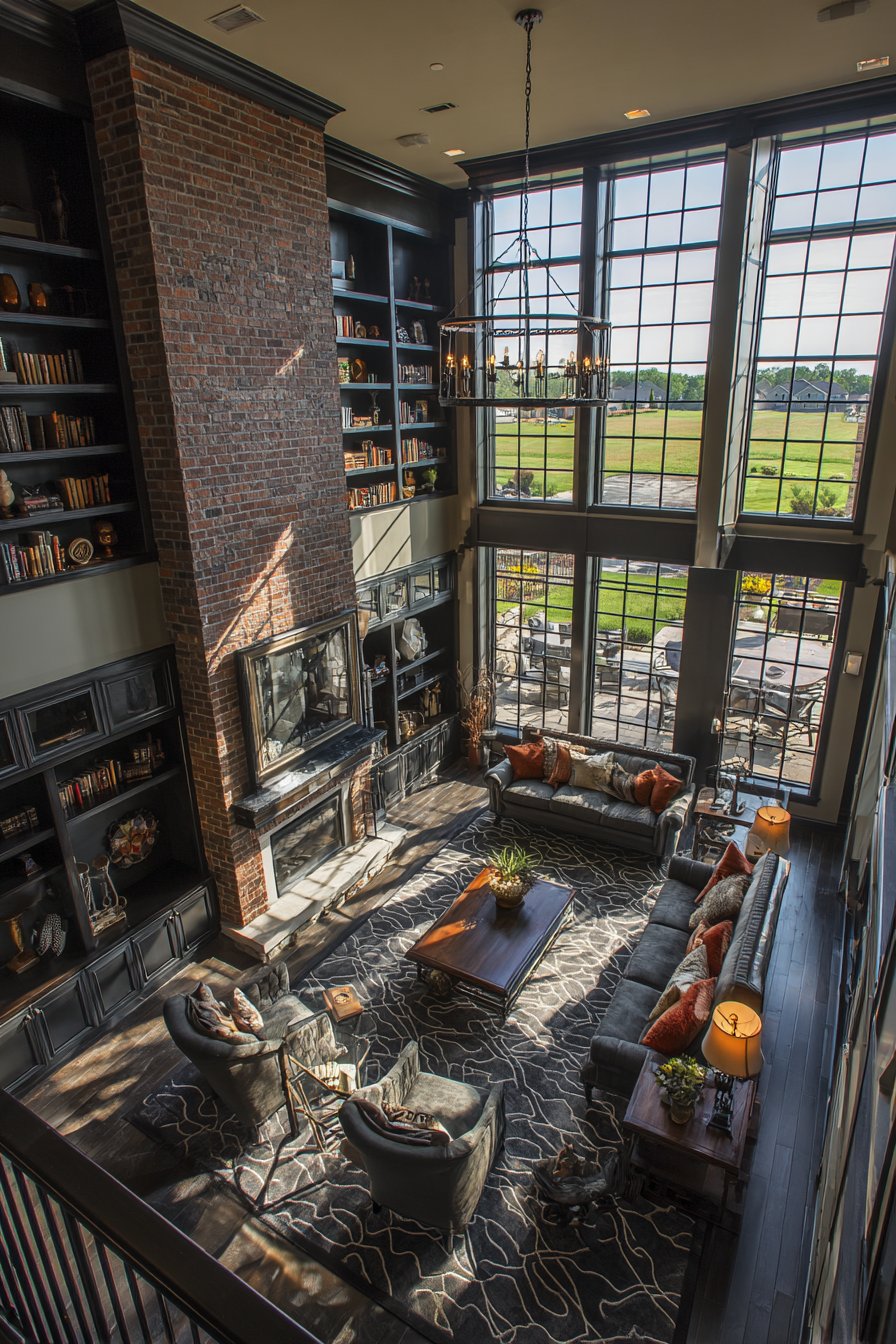
The genius of this big living room decor approach lies in its creation of multiple seating zones rather than one massive furniture grouping. The primary sofa arrangement establishes the main conversation area, while a secondary reading nook positioned near tall windows offers an intimate retreat within the larger space. This multi-zone strategy prevents the common pitfall of big living rooms—that uncomfortable feeling of being lost in too much space.
Each zone serves a distinct purpose: one for entertaining groups, another for quiet reading or contemplation. The built-in shelving flanking a centered fireplace adds crucial architectural interest to walls that would otherwise stretch upward in unbroken expanses. These vertical elements help break up the height while providing practical storage and display opportunities.
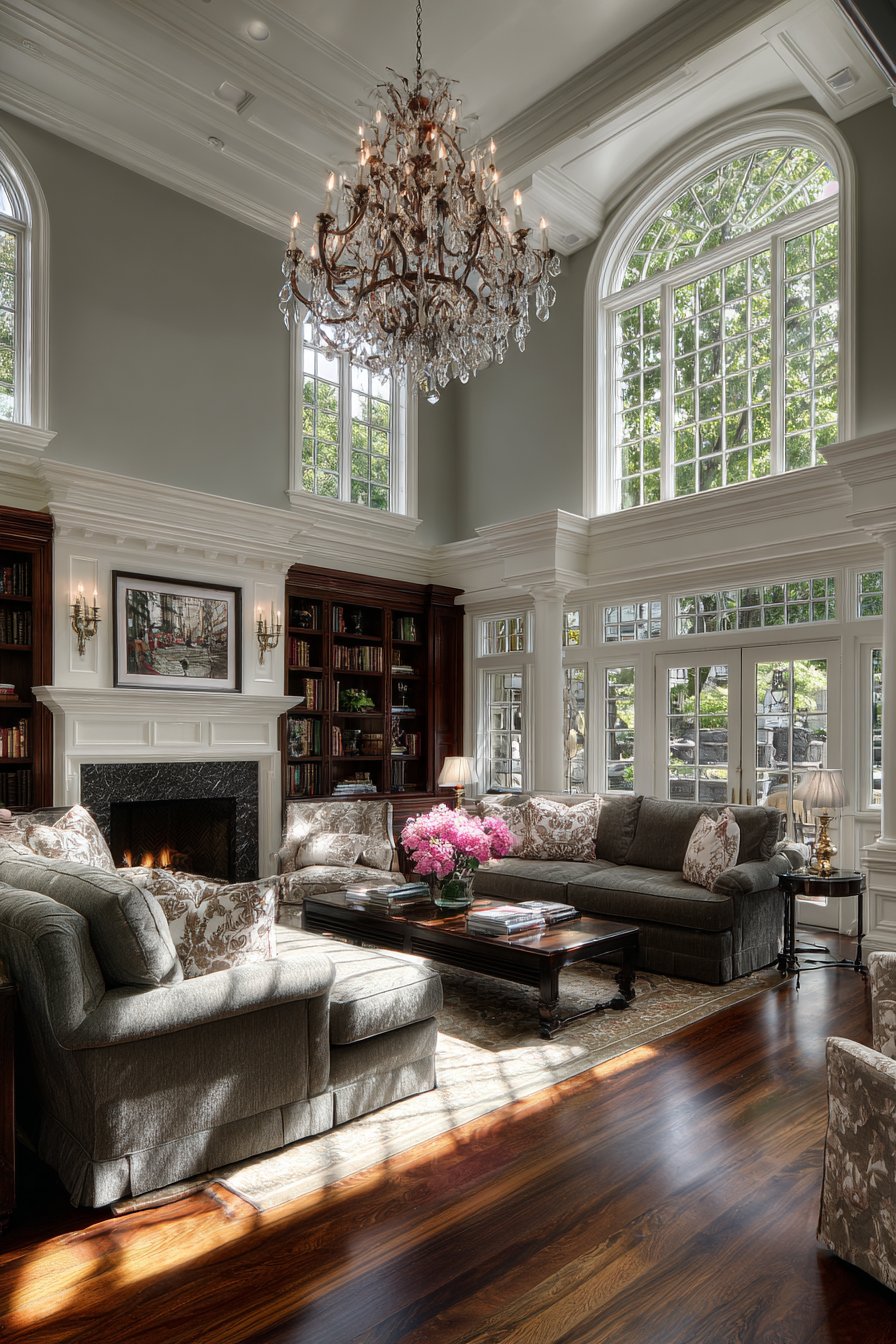
Natural daylight streaming through expansive windows creates constantly shifting patterns of light and shadow throughout the day, adding drama and visual interest that static artificial lighting alone could never achieve. The interplay between the tall windows and the two-story volume transforms the room into a dynamic space where morning light feels entirely different from golden afternoon rays or dusky evening ambiance.
Professional interior photography capturing this type of space requires careful attention to perspective—wide-angle lenses can emphasize the vertical drama while maintaining realistic proportions that help viewers understand the true scale and appreciate the layered lighting design that combines ambient, task, and accent illumination.
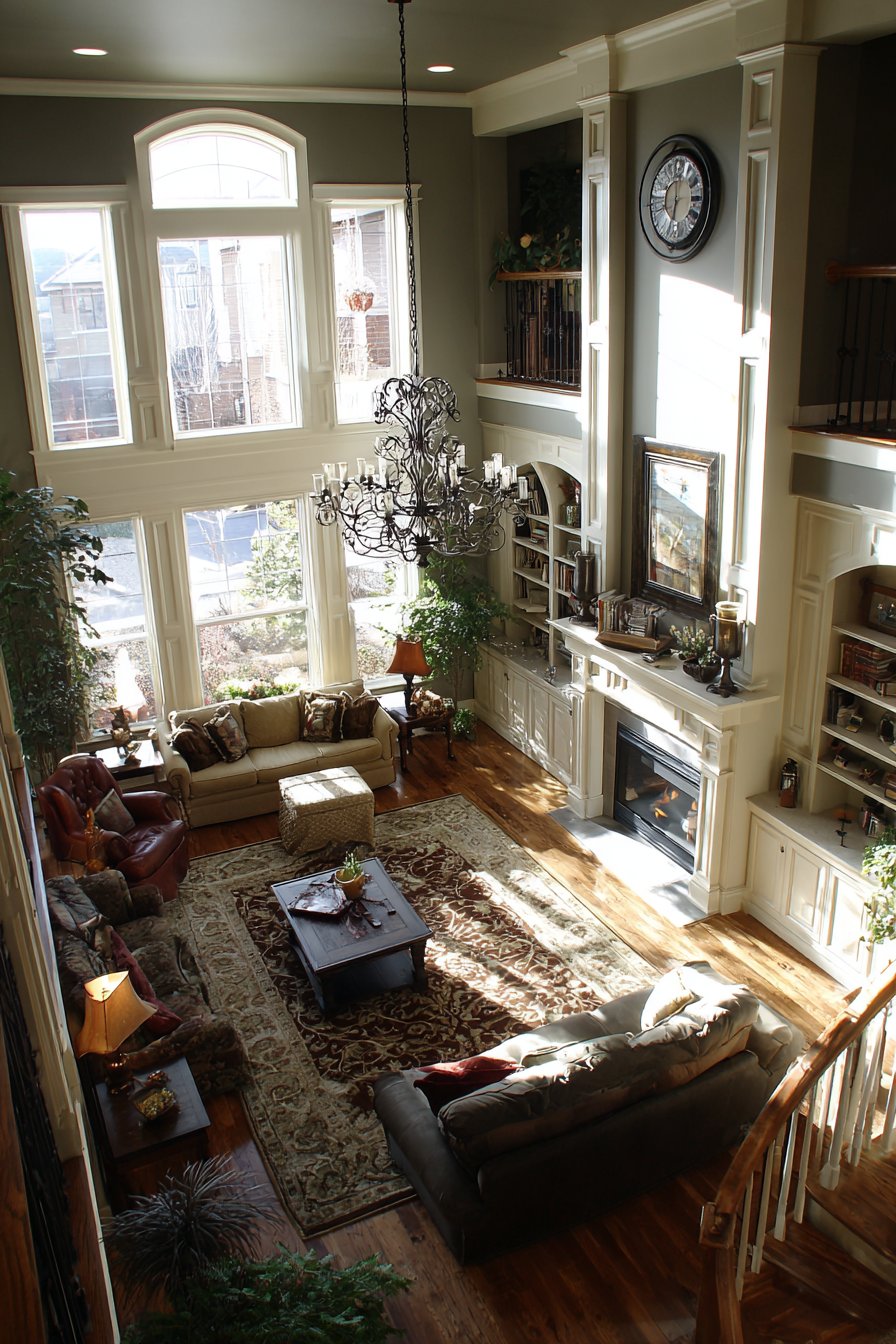
The layered lighting strategy deserves particular attention in rooms with such dramatic ceiling heights. Recessed fixtures provide overall ambient light, the statement chandelier offers mid-level illumination and visual drama, while table lamps and floor lamps in the individual seating zones create intimate pools of warm light at human scale. This multi-level approach ensures the room feels welcoming at any hour, preventing the common problem of cathedral ceilings that create dramatic shadows and leave ground-level spaces feeling dim and unwelcoming after dark.
Key Design Tips:
- Select a statement chandelier with dimensions that relate to the room’s total cubic volume, not just floor space—calculate based on room width plus length in feet, with that number in inches being appropriate diameter.
- Create distinct furniture zones rather than one large seating arrangement to prevent the vast space from feeling like an impersonal hotel lobby.
- Incorporate built-in shelving or tall bookcases to add architectural interest and break up expansive wall surfaces that would otherwise feel blank and overwhelming.
- Layer your lighting at multiple heights—ceiling, mid-level, and table height—to create warmth and prevent the soaring space from feeling cavernous after sunset.
- Position secondary seating near windows to take advantage of natural light and create cozy retreats within the larger room.
3. Sophisticated L-Shaped Sectional with Statement Piano

For those seeking big living room decor that balances entertainment functionality with refined sophistication, an L-shaped sectional arrangement offers remarkable versatility within large square footage. This furniture configuration naturally creates defined zones while accommodating substantial seating capacity—essential for those who love hosting gatherings.
The sectional doesn’t hug the walls as it might in a smaller space; instead, it floats within the room, its generous proportions perfectly suited to the ample dimensions. This floating arrangement actually helps define the living zone while maintaining open pathways around the perimeter, creating better flow and preventing that pushed-against-the-walls look that can make furniture appear apologetic rather than intentional.
The grand piano occupying one corner elevates this space beyond typical living room functionality into something more cultured and distinctive. This isn’t merely decorative—it’s a statement piece that speaks to the homeowner’s interests and adds sophisticated entertainment possibilities.
The piano’s substantial presence requires careful balance, which the media console along the opposite wall provides. This symmetry prevents the room from feeling lopsided while ensuring both musical entertainment and modern media needs are addressed. The distance between these major pieces—piano and media console—demonstrates how big living rooms allow for proper spacing that would be impossible in more compact spaces.
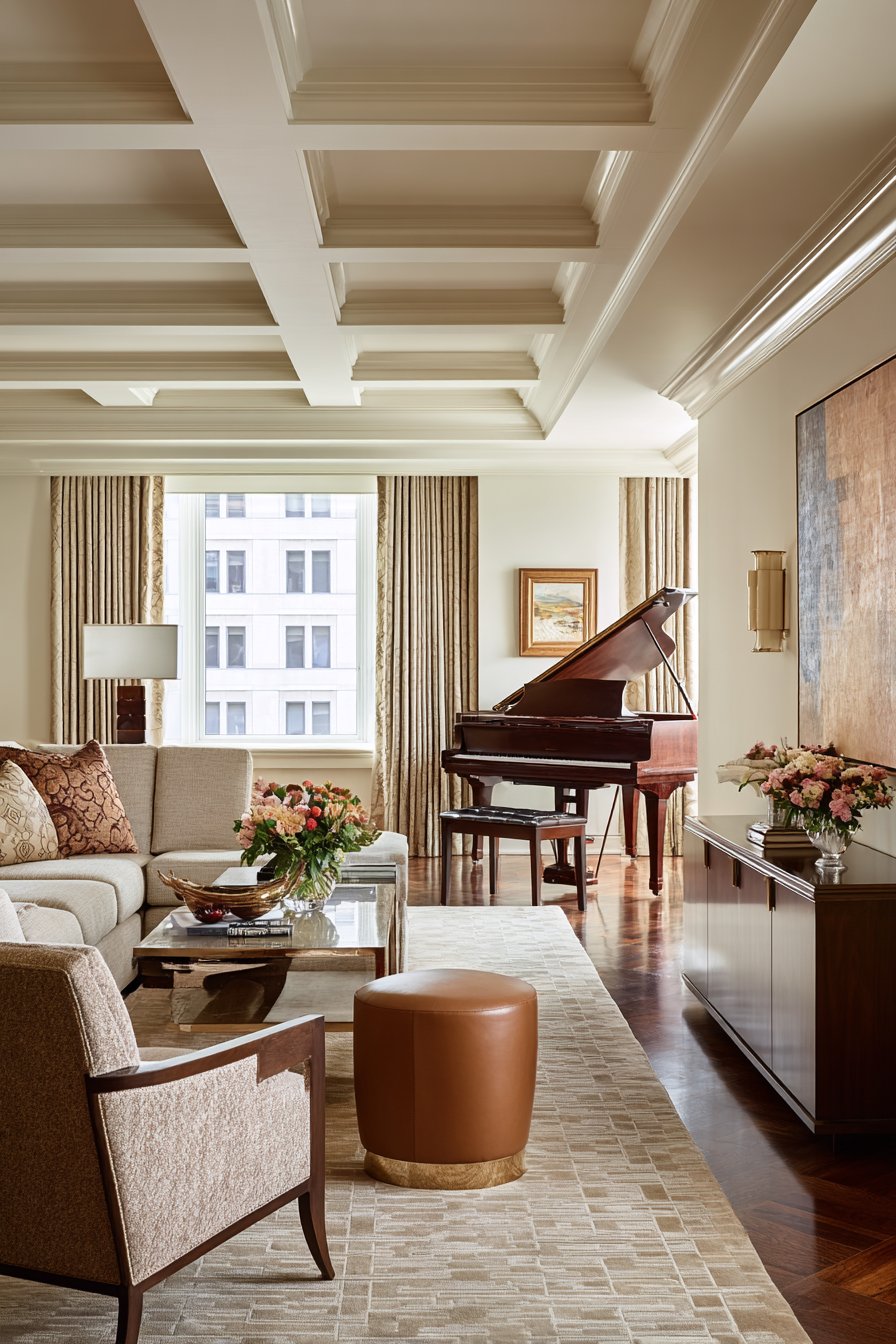
Multiple texture layers transform this potentially vast space into a tactile wonderland that engages more than just visual senses. The substantial wool area rug provides plush comfort underfoot while absorbing sound—an important consideration in rooms with high ceilings or hard flooring that might otherwise echo.
Linen draperies at the windows introduce soft, flowing movement and natural fiber texture, while leather accent chairs add a contrasting smooth, supple material that brings richness and masculine balance to the otherwise soft textiles. This thoughtful mixing of materials—wool, linen, leather, polished piano wood, and media console finishes—creates depth and interest that prevents the sophisticated neutral palette from feeling monotonous.

The Architectural Digest photography style that best captures this type of space emphasizes the impressive scale while showcasing material richness through carefully controlled lighting. Soft, diffused illumination highlights the varied textures without creating harsh shadows, while revealing how the sophisticated neutral palette—creams, taupes, warm grays, and natural wood tones—creates a cohesive, elegant atmosphere throughout the generous space. This color strategy allows the architectural elements and quality materials to take center stage rather than competing with bold color statements.
Key Design Tips:
- Float your sectional within the room rather than pushing it against walls to better define the living zone and create more sophisticated spatial relationships in large rooms.
- Balance substantial statement pieces like pianos or large entertainment centers by positioning them on opposite walls to create visual equilibrium.
- Layer at least three different textures within your big living room—consider mixing wool, linen, leather, wood, and metal to create depth and tactile interest.
- Choose a sophisticated neutral palette that allows quality materials and architectural features to become the focal points rather than competing with bold colors.
- Ensure your area rug is substantial enough to ground the entire seating arrangement—in large rooms, this often means custom or oversized rug dimensions.
4. Strategic Furniture Placement for Filled, Not Empty Spaces
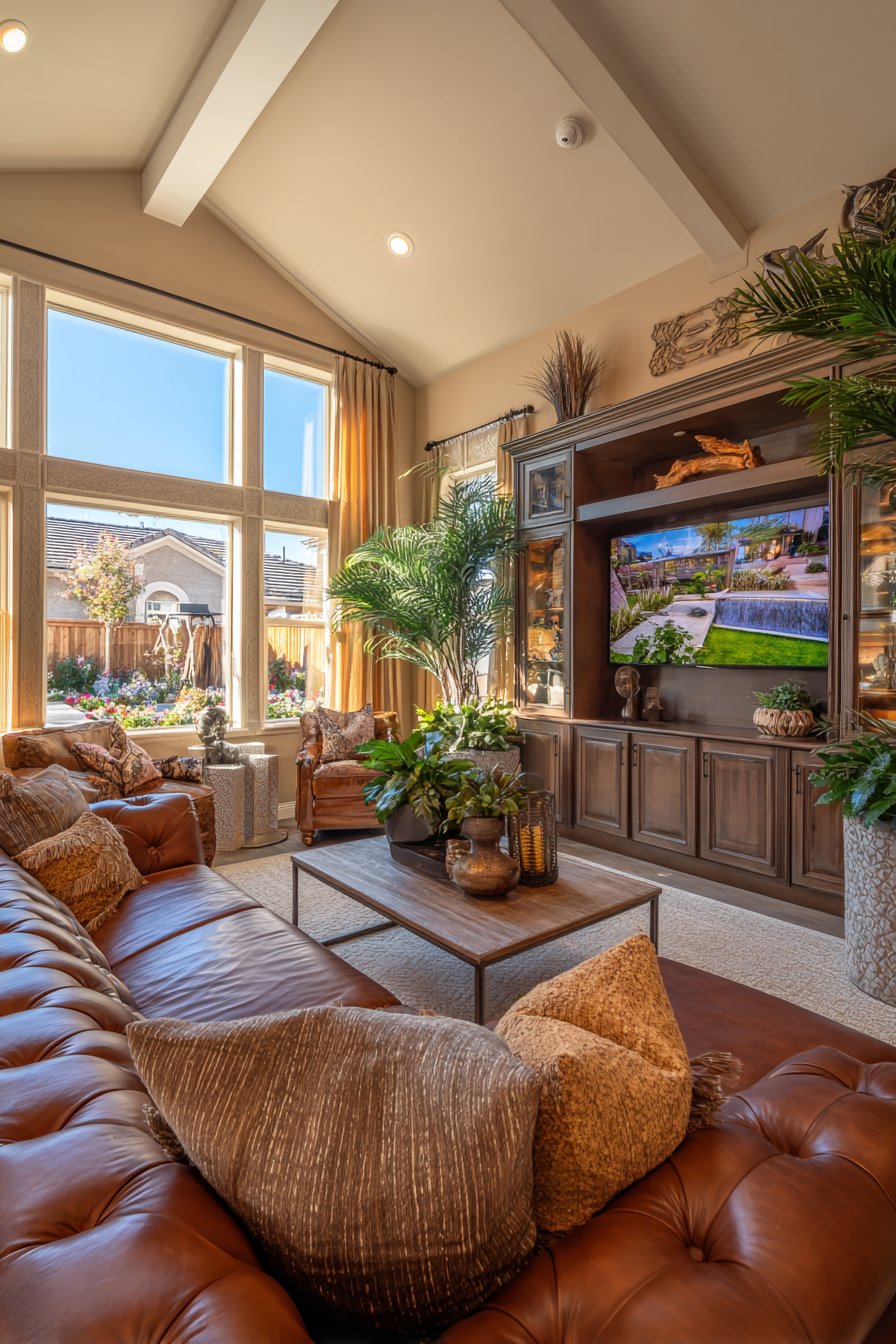
One of the most common mistakes in big living room decor is under-furnishing, which leaves expansive spaces feeling sparse, echoing, and uncomfortable rather than airy and open. The solution lies in strategic furniture placement that thoughtfully fills the space without cluttering it.
An oversized tufted sofa facing a large entertainment center with integrated storage establishes the primary function zone while providing substantial visual weight that holds its own against the room’s dimensions. The tufted detailing adds texture and traditional elegance while the generous proportions ensure the piece doesn’t look lost within the space—a critical consideration that many overlook when selecting furniture for large rooms.
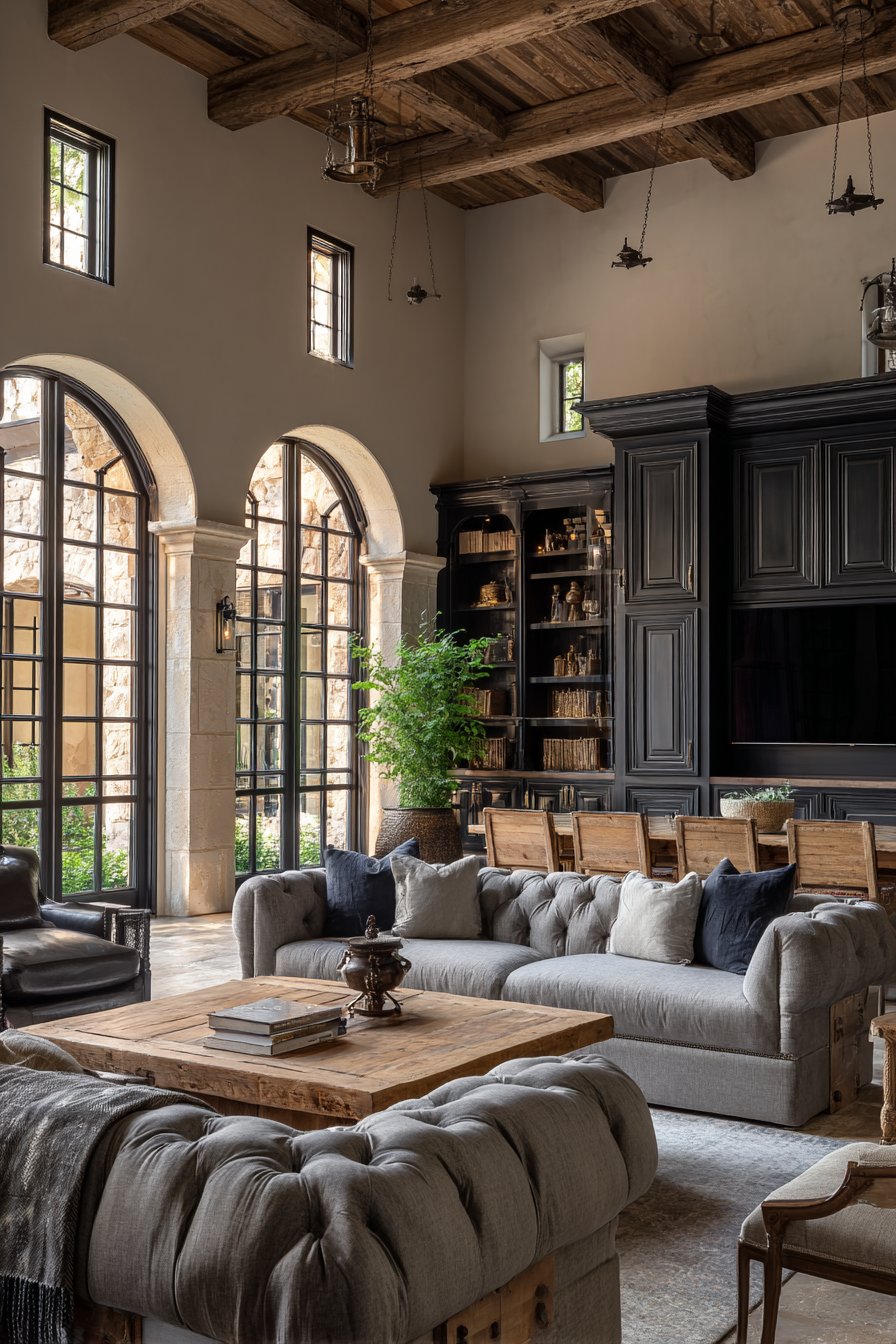
The console table positioned behind the sofa represents brilliant spatial strategy that novice decorators often miss. This piece serves multiple functions: it adds depth to the furniture arrangement by creating layers rather than everything lining up against the walls, it provides valuable display surface for lamps, books, and decorative objects, and it defines the back boundary of the seating zone while offering storage or display opportunities visible from other areas of the room. This layering technique prevents the flat, one-dimensional feeling that occurs when all furniture sits against perimeter walls, instead creating visual depth that makes the space more interesting from every angle.
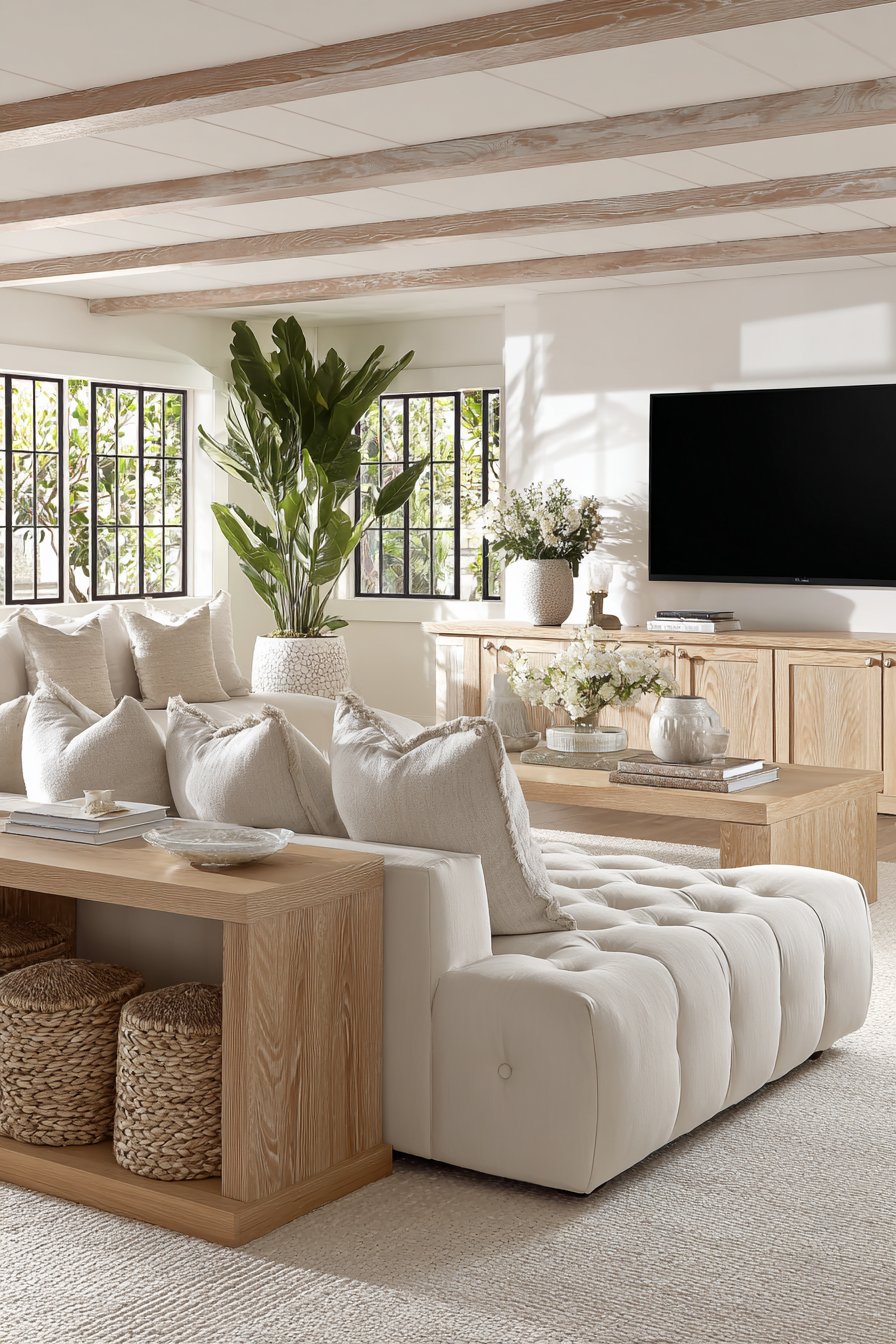
Tall potted plants in textured ceramic planters become architectural elements in their own right when used in big living rooms. Strategically placed in corners and flanking doorways or windows, these vertical elements draw the eye upward and add organic life to spaces that might otherwise feel too constructed or designed.
The textured ceramic planters introduce yet another material into the mix—perhaps rough stoneware or glazed terracotta—that complements the varied textures of throws, pillows, and natural materials scattered throughout the seating area. Plants also serve the practical function of softening hard architectural lines and adding air-purifying benefits to larger volume spaces.

The photographic approach to capturing this type of big living room decor requires both wide-angle shots that reveal the full strategic layout and detailed close-ups that showcase the layered textures. Natural lighting from multiple windows creates warm ambiance and highlights the varied materials—the tufting detail on the sofa, the grain in wooden furniture pieces, the weave of throw blankets, and the botanical beauty of the living plants. This combination of overview and detail helps viewers understand both the macro-level space planning and the micro-level material choices that together prevent the expansive space from feeling empty.
Key Design Tips:
- Add a console table behind your sofa to create depth, provide display surface, and define the back edge of your seating zone without blocking flow.
- Choose oversized furniture pieces with substantial visual weight rather than standard-sized pieces that will appear lost in a large room.
- Position tall potted plants strategically in corners and along walls to add vertical elements that draw the eye upward and fill empty-feeling spaces.
- Layer multiple textures through throws, pillows, rugs, and varied furniture materials to create visual and tactile richness throughout the expansive space.
- Integrate storage solutions like entertainment centers with built-in cabinetry to reduce clutter while adding architectural presence to large wall expanses.
5. Grand Fireplace Focal Point with Symmetrical Design
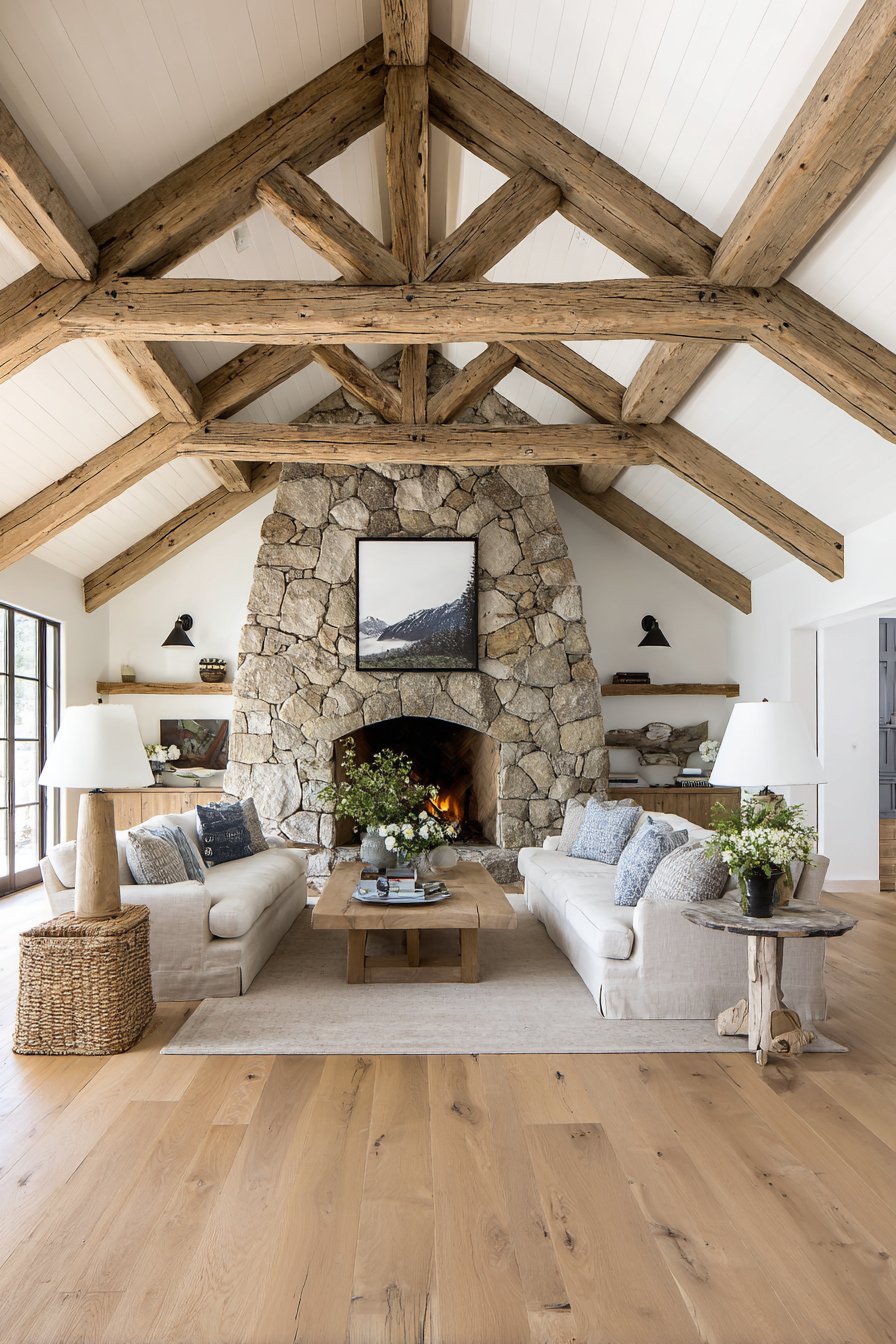
Few design elements command attention in a big living room quite like a grand fireplace with a floor-to-ceiling stone surround. This architectural feature solves one of the biggest challenges of large spaces—creating an unmistakable focal point that anchors the entire room and gives the eye somewhere specific to land.
The vertical stone surround draws attention upward, emphasizing ceiling height while adding textural richness through natural material variations in the stone. Whether you choose stacked ledgestone, smooth marble, rustic fieldstone, or contemporary concrete, this substantial vertical element provides the visual weight necessary to balance the room’s impressive dimensions and prevent it from feeling directionless.
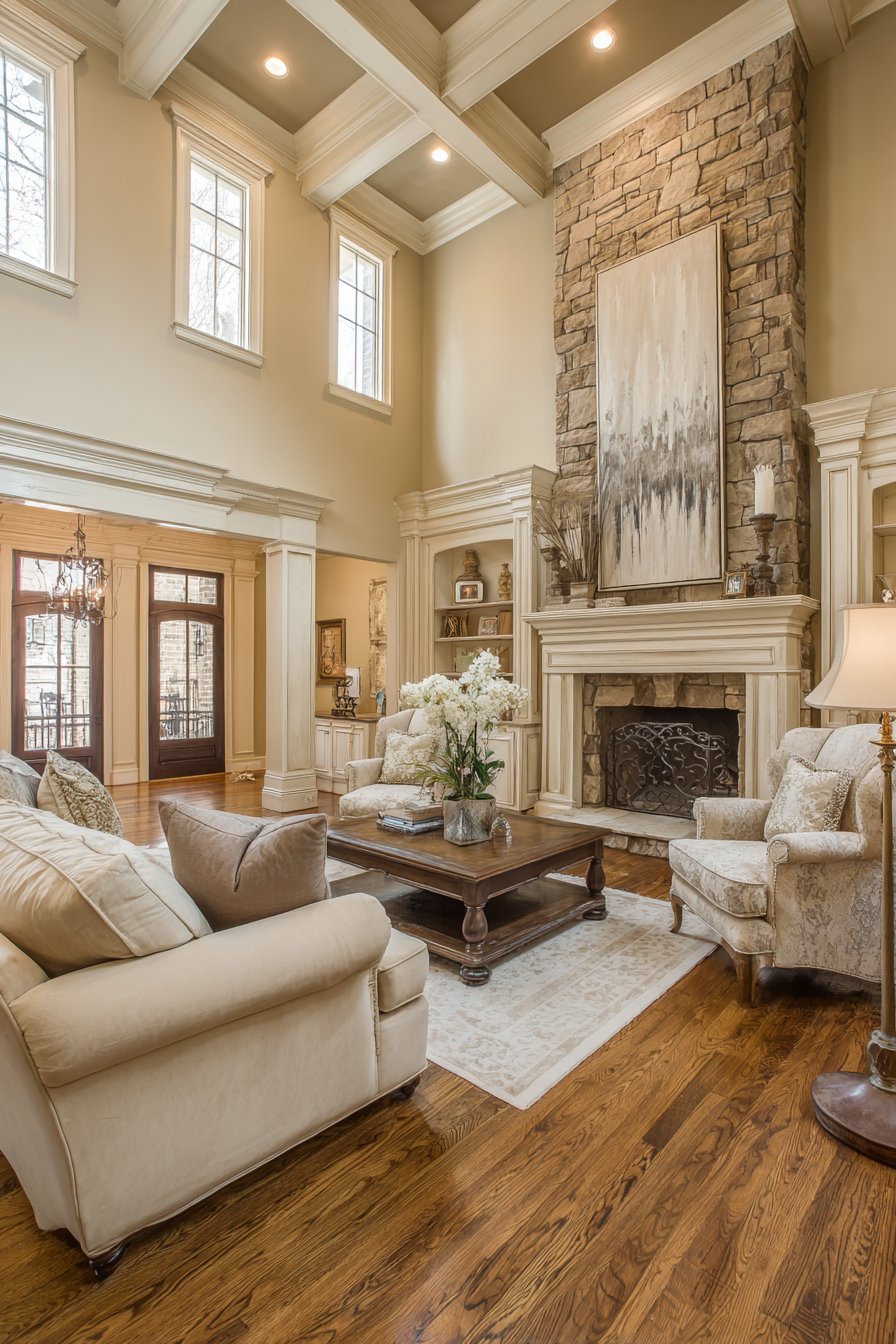
The symmetrical built-in bookcases flanking the fireplace add both practical storage and architectural gravitas to what might otherwise be blank expanses of wall. This symmetry creates a sense of order and intentionality that’s particularly important in large spaces where asymmetry can read as accidental rather than deliberate.
The bookcases offer opportunities for displaying cherished books, decorative objects, family photos, and art pieces at various heights, creating visual interest that breaks up the vertical wall space. The large-scale artwork above the mantel must be proportionate to the fireplace’s impressive dimensions—too small a piece would look lost and ineffective, while an appropriately sized artwork complements and enhances the focal point.
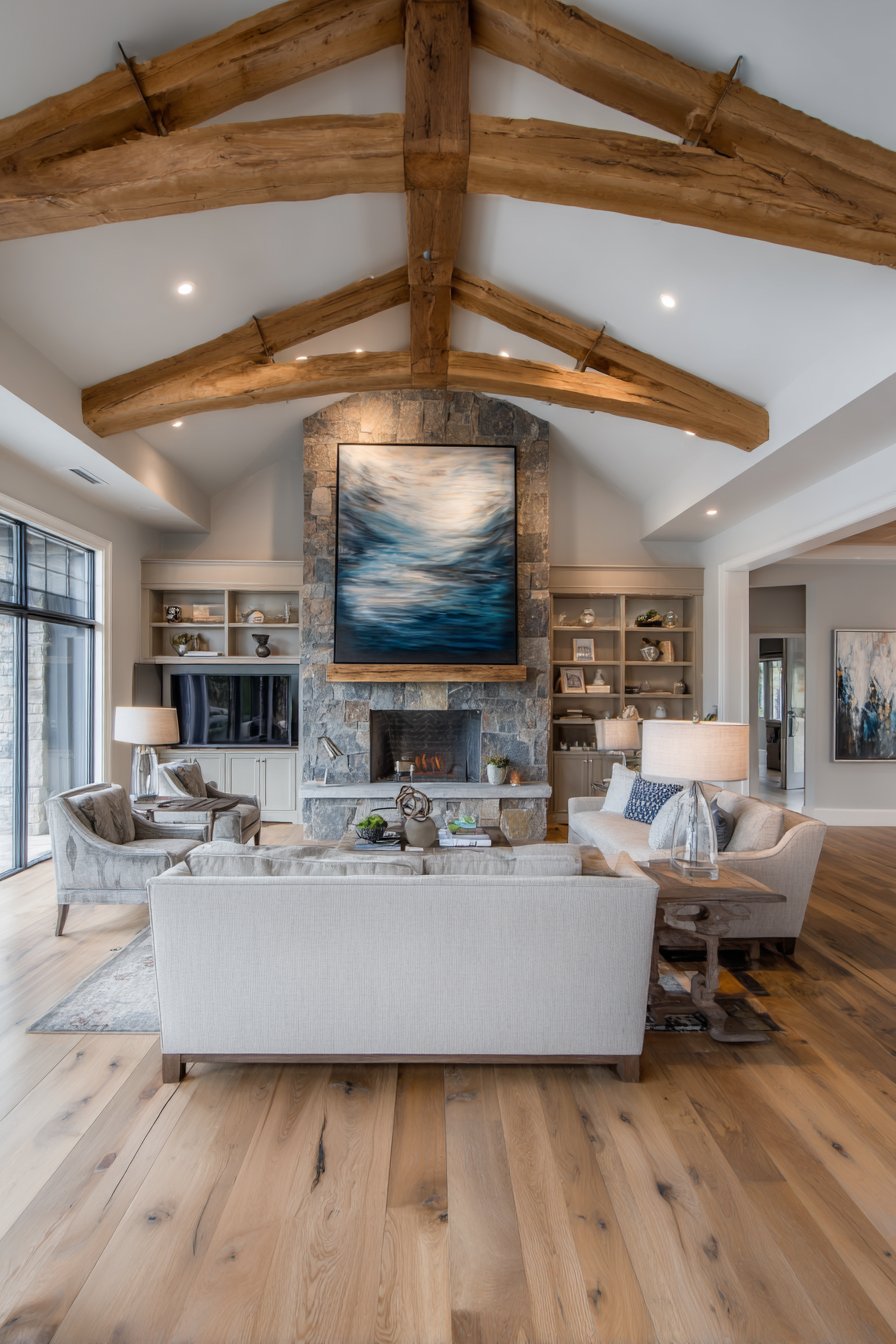
The comfortable seating arrangement demonstrates how traditional furniture placement principles adapt to larger scale. A substantial sofa provides the anchor, while four coordinating armchairs arranged to facilitate conversation create a cohesive grouping that encourages interaction.
This configuration works particularly well for entertaining, as it allows multiple conversation participants to see each other comfortably without anyone feeling excluded or having to crane their neck. The natural oak hardwood flooring extending throughout the expansive space provides warm, organic beauty underfoot while offering durability that stands up to high traffic—an important practical consideration in gathering spaces.
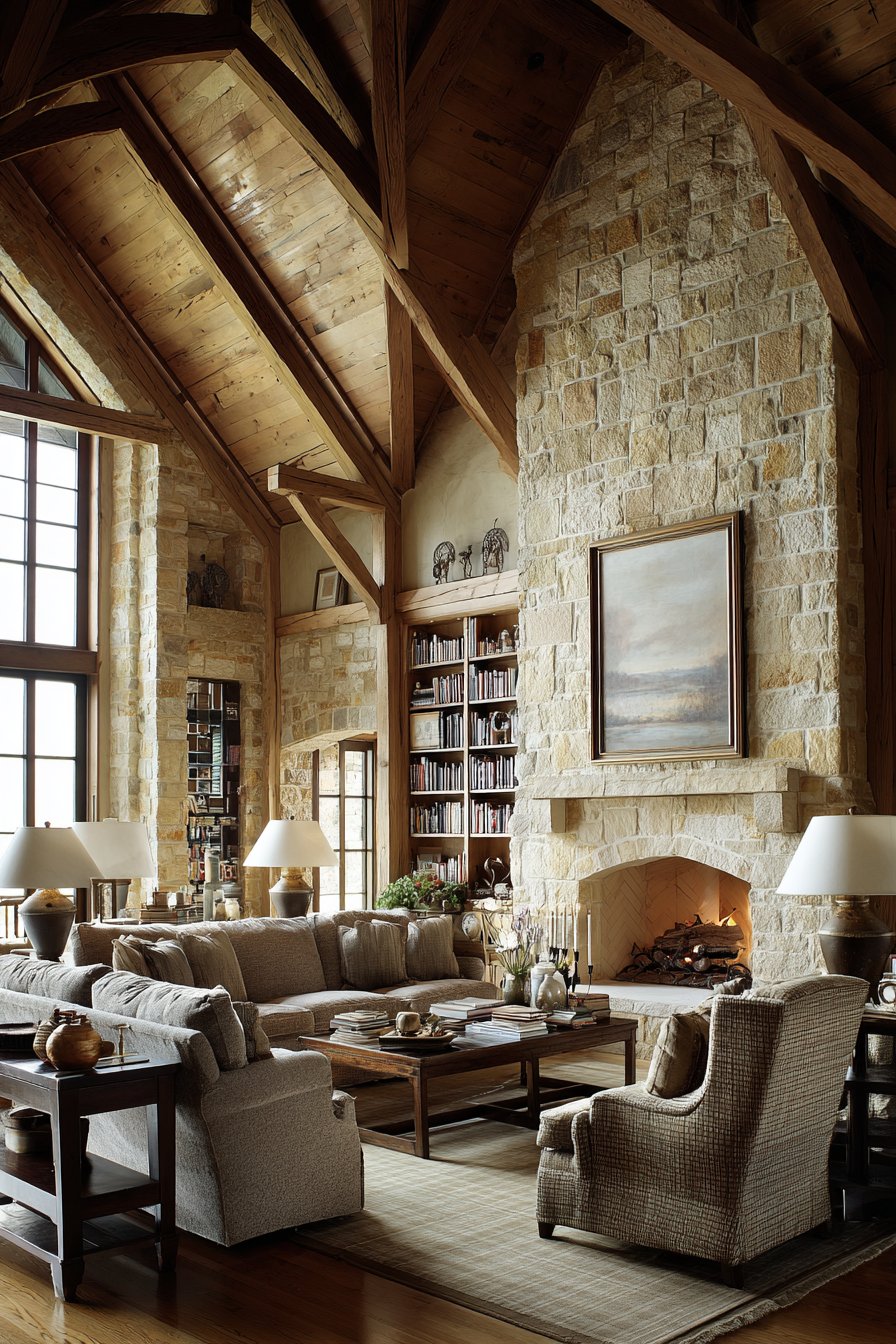
Professional interior photography of this type of big living room decor requires balanced exposure that captures both the bright firelight and the natural illumination from windows without losing detail in shadows. The generous proportions are humanized through thoughtful furniture groupings that create intimacy within the larger space, while layered lighting from recessed fixtures, table lamps, and the fireplace itself ensures the room feels welcoming at any time of day. The combination of ambient lighting from recessed fixtures, task lighting from table lamps positioned near reading chairs, and accent lighting highlighting the artwork and architectural features creates depth and dimension that flat, even lighting could never achieve.
Key Design Tips:
- Create a commanding focal point with a floor-to-ceiling fireplace surround using natural stone or brick to anchor your big living room’s design.
- Flank fireplaces with symmetrical built-in shelving or cabinetry to add architectural interest and valuable storage without overwhelming the space.
- Choose artwork above the mantel that’s proportionate to the fireplace width—typically two-thirds to three-quarters of the mantel width for balanced visual weight.
- Arrange multiple seating pieces in a conversational grouping rather than all facing one direction to encourage interaction and create intimacy.
- Install natural hardwood flooring throughout to provide warmth, durability, and organic beauty that grounds the expansive space.
6. Open Floor Plan with Seamless Zone Transitions
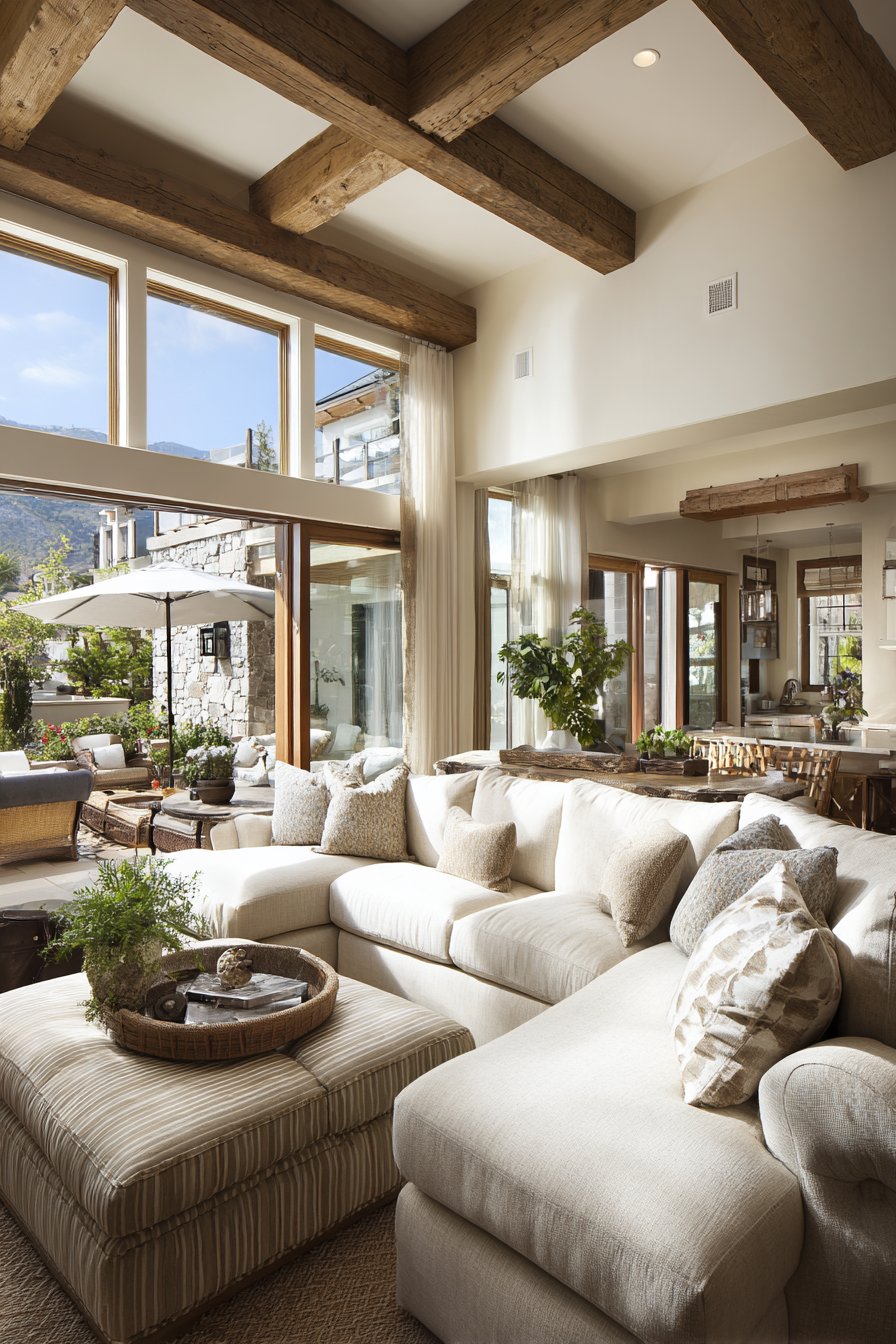
The open floor plan concept reaches its full potential in big living room decor scenarios where the living area flows seamlessly into an adjacent dining space without the interruption of walls. This design philosophy requires sophisticated furniture arrangement to define distinct zones while maintaining visual flow and connection between spaces.
A massive sectional with a chaise creates the primary living territory, its substantial size and configuration clearly establishing where the living function begins. The oversized ottoman serving dual purposes as coffee table and extra seating demonstrates the kind of flexible, multi-functional thinking that makes large open spaces work efficiently without feeling cluttered.
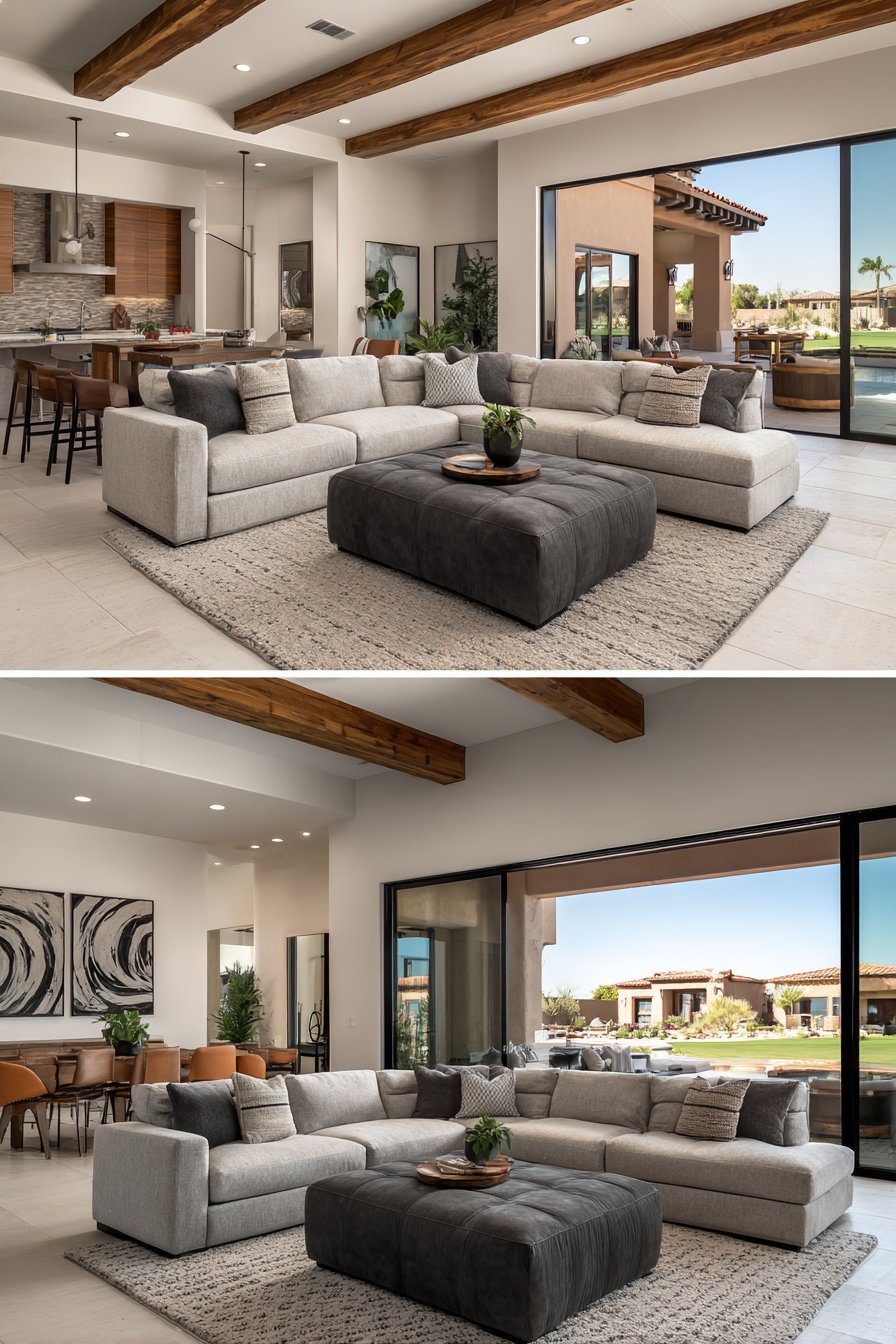
Exposed wooden beams spanning the high ceiling add architectural warmth and visual interest to what could otherwise be an overwhelming expanse of plain ceiling. These structural elements draw the eye horizontally across the space, helping connect the different zones while adding rustic character that prevents contemporary open concepts from feeling too sterile or commercial.
The beams also help define the scale, providing regular visual intervals that make the ceiling height feel intentional and designed rather than simply tall. The natural wood tones introduce organic warmth that complements flooring and furniture woods while softening the overall aesthetic.
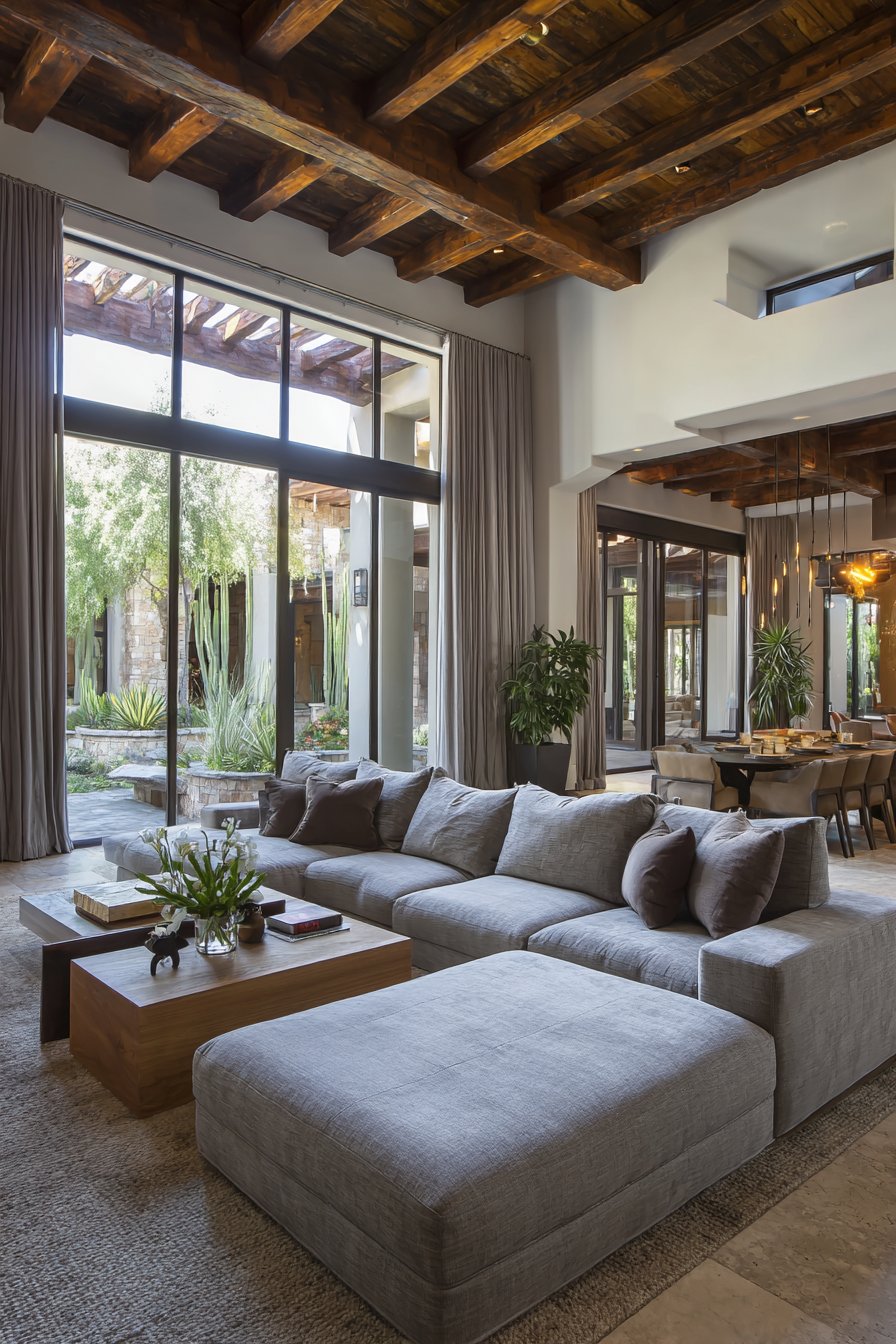
The large sliding glass doors leading to an outdoor patio represent brilliant integration of indoor and outdoor living—a hallmark of successful big living room design. These doors accomplish multiple objectives: they flood the interior with natural light, create visual expansion by connecting to exterior spaces, provide convenient access to outdoor entertaining areas, and blur the boundaries between inside and outside living.
When open, they effectively extend the living space beyond the walls, making even a large room feel more expansive. The ability to control this connection with sliding mechanisms offers flexibility that traditional hinged doors cannot match.
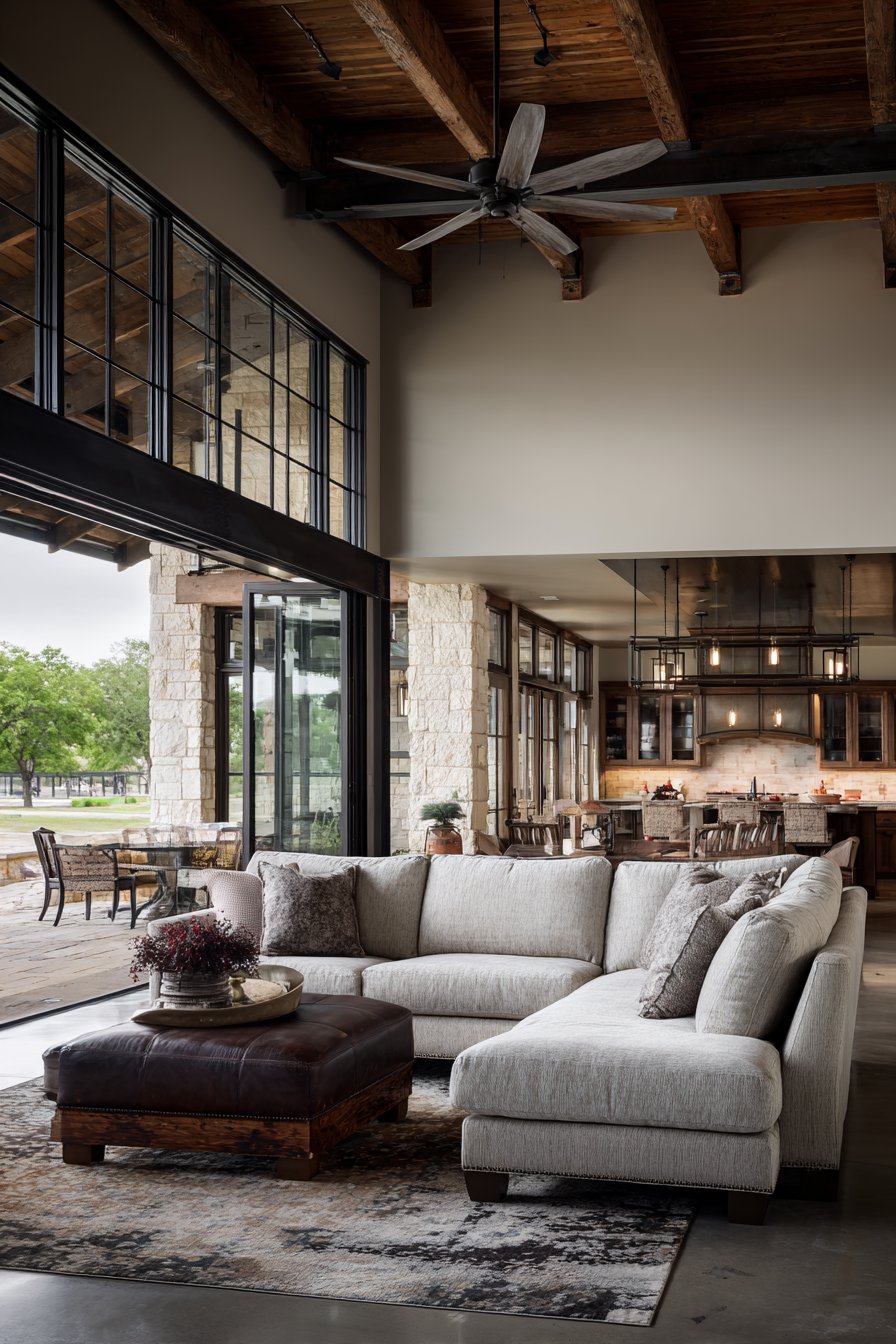
Wide-angle lens interior photography proves essential for capturing the seamless flow between spaces that makes this open floor plan successful. Natural light pouring through those sliding glass doors creates dynamic illumination that changes throughout the day, highlighting different areas and creating shadow play that adds visual interest.
The photographic challenge lies in showing both the distinct zoning—clearly defined living and dining areas—and the unified flow that makes the entire space feel cohesive rather than fragmented. This balance between definition and connection represents the essential challenge of successful open-concept big living room decor.
Key Design Tips:
- Use substantial furniture pieces like oversized sectionals to define distinct zones in open floor plans without requiring walls or partitions.
- Incorporate architectural elements like exposed beams to add visual interest to high ceilings while helping define the space horizontally.
- Position furniture perpendicular to sight lines between zones rather than parallel to create natural visual breaks that define separate areas.
- Install large glass doors or windows that connect to outdoor spaces to expand the perceived size and bring abundant natural light into the interior.
- Choose multi-functional furniture like ottomans that serve as both coffee tables and extra seating to maximize flexibility in large open spaces.
7. Multiple Furniture Groupings for Intimate Gatherings
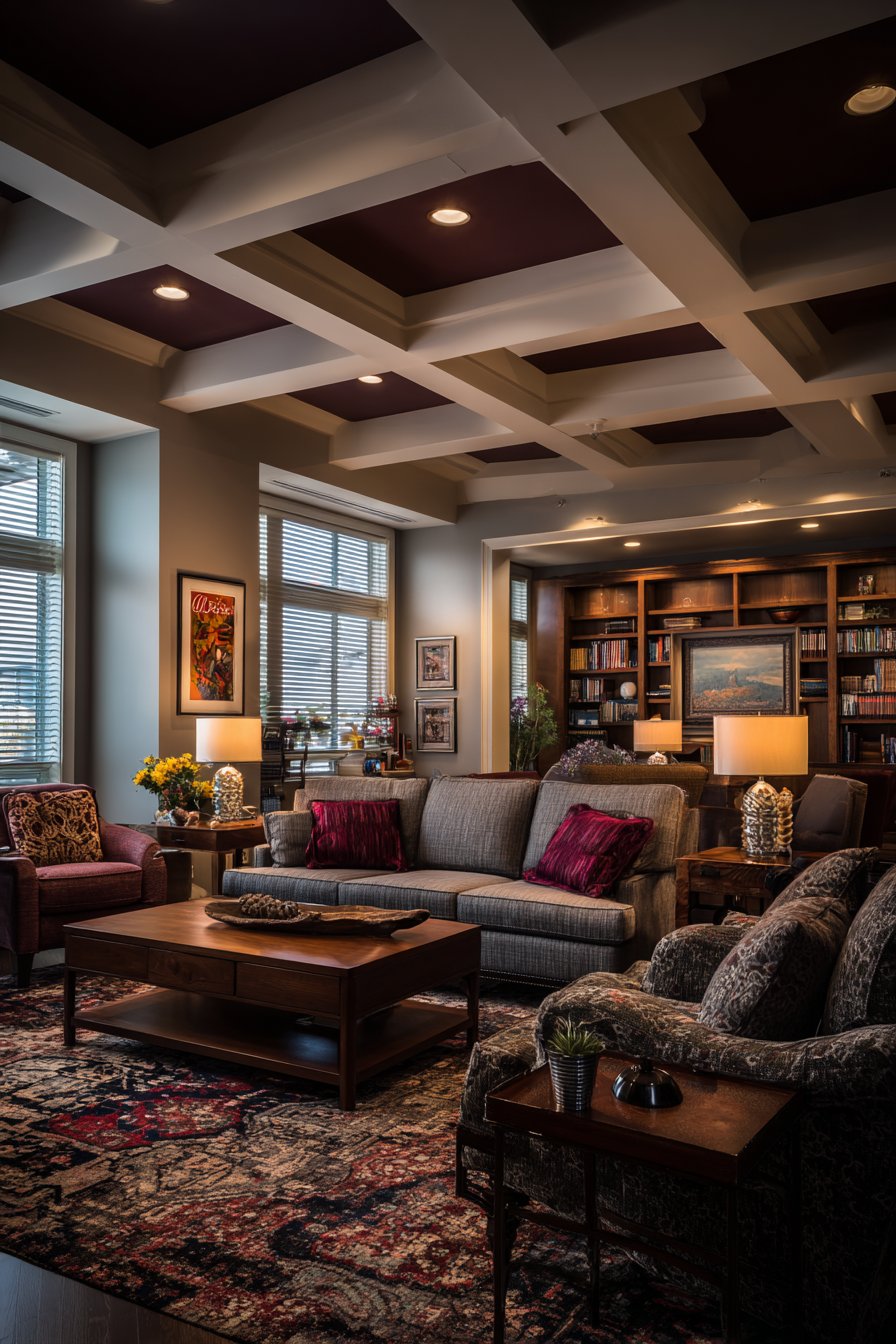
Creating cozy intimacy within a large footprint requires rethinking traditional single-grouping furniture arrangements. The most successful big living room decor embraces multiple distinct furniture groupings that serve different functions while remaining visually coordinated.
The main seating area features a plush sofa and loveseat arrangement around a substantial coffee table—perfect for family movie nights or entertaining groups. Meanwhile, a secondary zone includes a pair of reading chairs with a shared side table positioned near built-in bookshelves, creating a quiet retreat for reading, conversation, or afternoon tea that doesn’t interfere with activities in the main seating area.
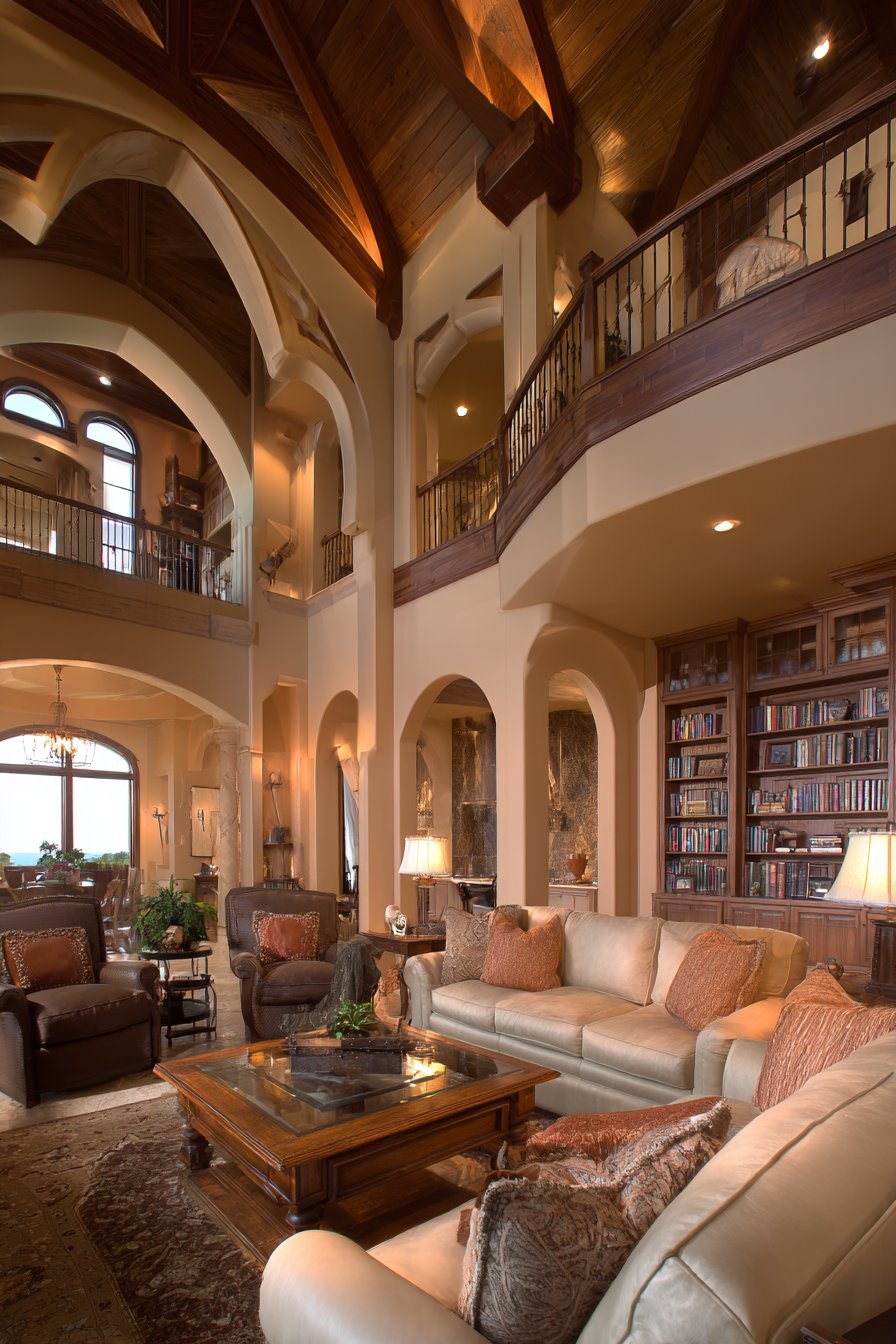
This multi-zone approach solves one of the biggest challenges of large living spaces: accommodating both large gatherings and intimate conversations without the room feeling either empty during quiet times or cramped during parties. Each furniture grouping operates semi-independently, allowing simultaneous activities without conflict.
Someone can watch television in the main seating area while others enjoy quiet reading in the secondary zone. This flexibility proves invaluable for families with varied interests or those who entertain frequently with diverse guest preferences.
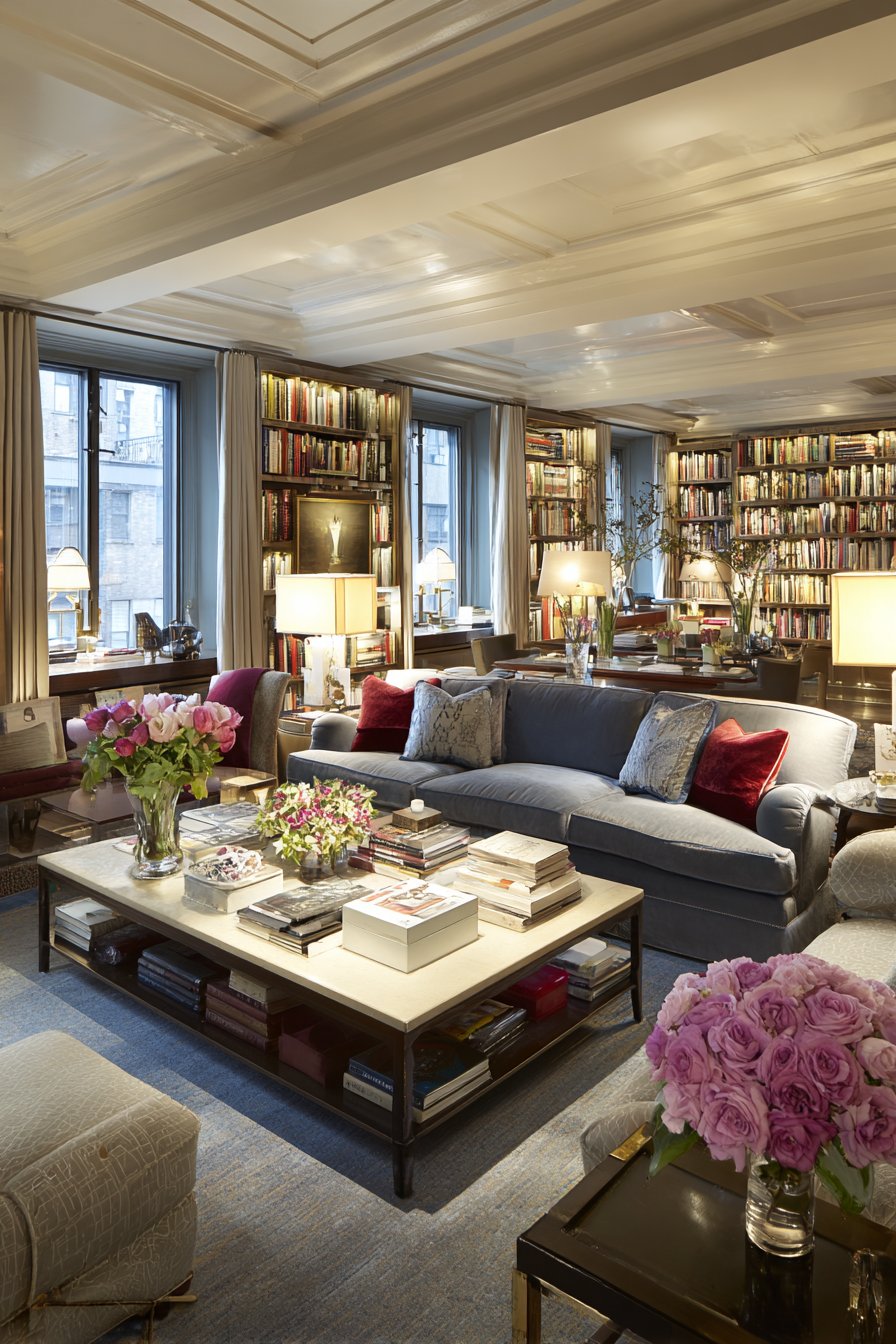
Layered lighting becomes absolutely crucial in multi-zone big living room layouts. The combination of recessed ceiling lights provides overall ambient illumination that prevents any area from feeling too dark. Floor lamps positioned strategically near seating areas offer adjustable task lighting perfect for reading or needlework.
Table lamps on side tables and console surfaces create warm pools of light at a human scale that make individual zones feel cozy and inviting even within the larger space. This multi-level lighting strategy ensures the room functions beautifully at any time of day and for any activity, from bright morning coffee to cozy evening conversations.

Interior design photography capturing this type of space benefits from soft shadows that highlight the varied seating options rather than harsh, flat lighting that homogenizes everything. The photographs should showcase how someone might move between zones for different activities throughout the day, demonstrating the room’s versatility and its ability to accommodate both large gatherings where all zones fill with guests and intimate conversations where just one small grouping suffices. This visual storytelling helps viewers understand the thoughtful planning behind the seemingly effortless layout.
Key Design Tips:
- Create at least two distinct furniture groupings in very large living rooms to offer activity options and prevent wasted space.
- Position secondary seating zones near natural features like windows or built-in bookcases to give them clear purpose and appeal.
- Ensure each furniture grouping has its own light source—floor lamp, table lamp, or reading light—to function independently.
- Coordinate but don’t match furniture pieces across different zones; choose complementary styles and colors rather than identical pieces.
- Place shared elements like side tables between paired chairs to create intimate conversation areas within the larger space.
8. Contemporary Minimalism with Intentional Negative Space
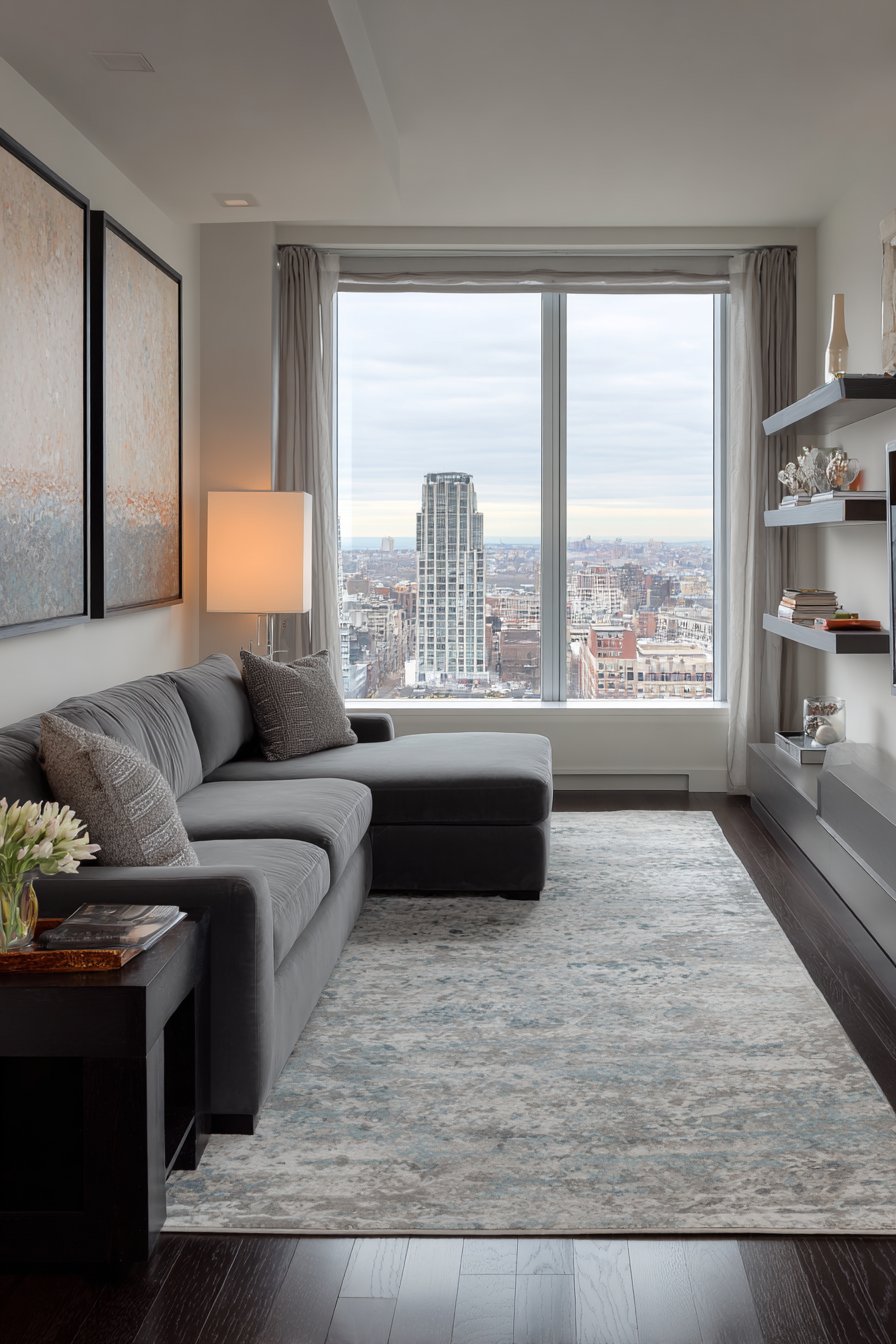
Big living room decor needn’t mean filling every square foot with furniture and accessories. The contemporary minimalist approach demonstrates how intentional negative space becomes a design element in itself when working with generous dimensions.
A long, low-profile sectional in charcoal fabric anchors one side of the room, its clean lines and substantial length providing necessary visual weight without fussy details or overwhelming ornamentation. This piece offers ample seating while maintaining the sleek aesthetic that defines contemporary design, proving that minimalism doesn’t mean sacrificing comfort or function.

Floating shelving units provide display and storage without overwhelming the walls—a critical distinction in large rooms where traditional heavy furniture could create a closed-in feeling that contradicts the spacious architecture.
These floating elements appear to hover against the wall, maintaining visual lightness while offering practical surfaces for books, art objects, plants, and personal mementos. The key lies in restraint: not every wall needs shelving, and not every shelf needs to be filled. Strategic placement and thoughtful curation prevent the contemporary aesthetic from feeling either too stark or too cluttered.
Large abstract artwork in muted tones adds color interest proportionate to the substantial wall space without competing with the room’s architectural features or creating visual chaos. In contemporary minimalist big living room decor, each element must earn its place through either function or significant visual impact.
A small painting would disappear on a large wall; this appropriately scaled artwork commands attention while maintaining the sophisticated, calm palette. The muted tones—perhaps soft grays, warm taupes, dusty blues, or subtle earth tones—complement rather than shout, adding sophisticated color without overwhelming the serene atmosphere.
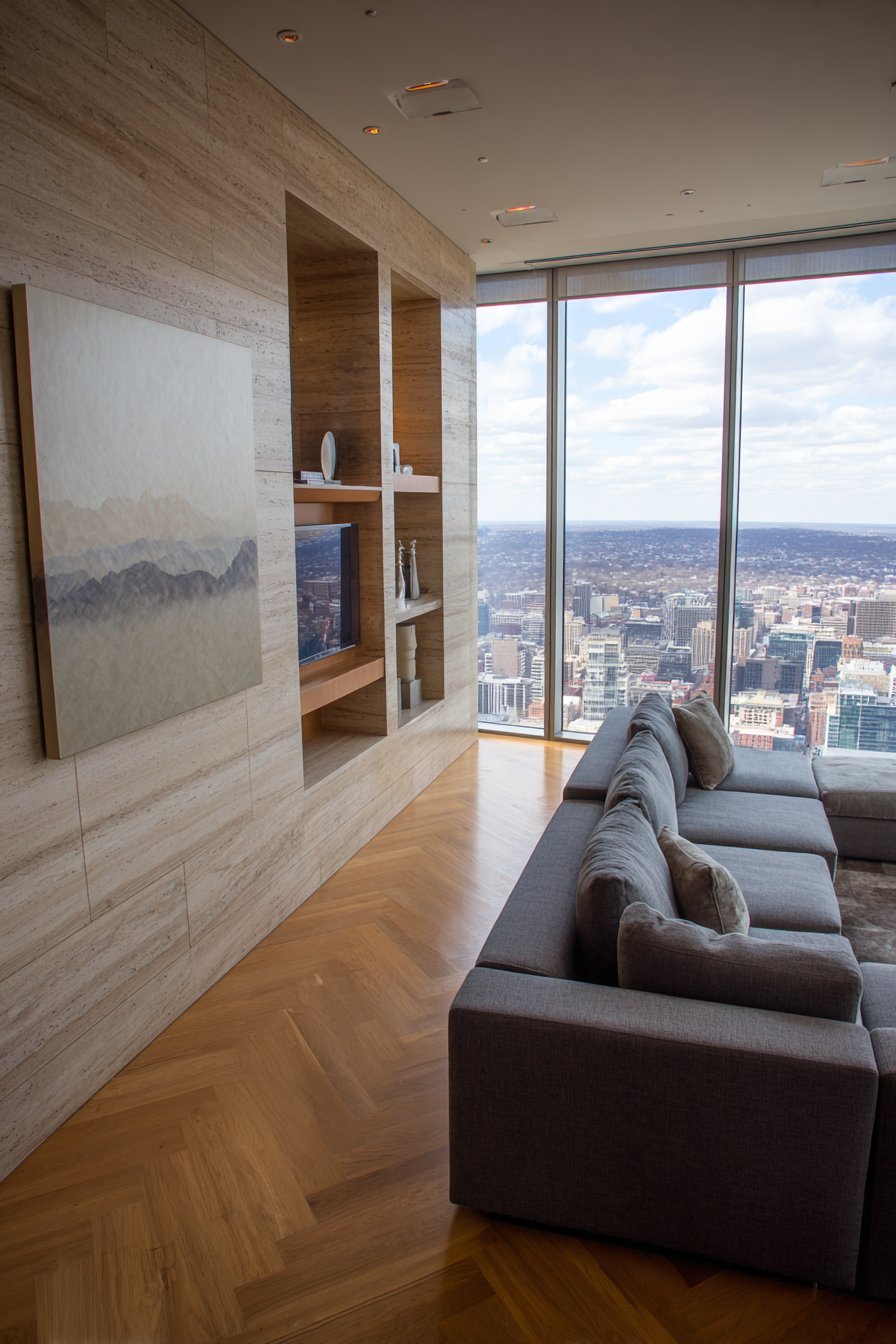
Floor-to-ceiling windows with motorized shades offer both practical light control and sleek contemporary aesthetics. The motorized function eliminates unsightly cords and chains while providing convenience perfectly aligned with modern living. These windows become architectural features themselves, their clean lines and substantial size emphasizing the room’s impressive proportions. Professional interior photography captures the modern aesthetic with balanced exposure, showing how negative space is used intentionally rather than accidentally, demonstrating how restraint and careful editing prevent the large room from feeling cluttered or busy despite its generous dimensions.
Key Design Tips:
- Embrace negative space as a design element rather than viewing empty areas as problems requiring solutions.
- Choose low-profile contemporary furniture with clean lines that provide necessary function without visual bulk or ornate detailing.
- Install floating shelves rather than heavy bookcases to maintain visual lightness while providing display and storage solutions.
- Select large-scale artwork proportionate to your wall space—a single large piece often works better than multiple small pieces in contemporary design.
- Invest in motorized window treatments for sleek functionality that aligns with contemporary minimalist aesthetics.
9. Traditional Elegance with Formal Furniture Arrangement
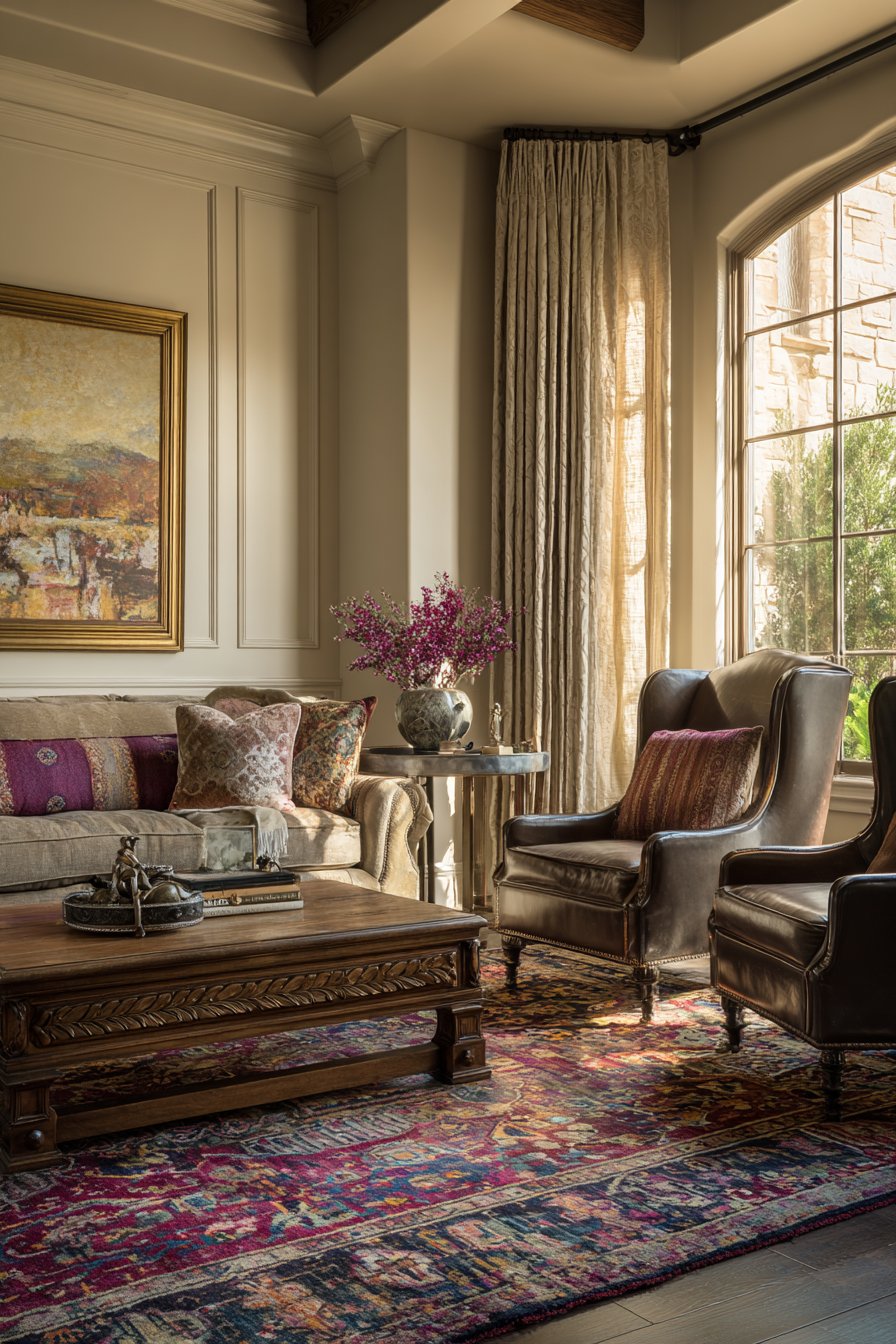
For those drawn to timeless sophistication, big living room decor executed in traditional style offers enduring elegance that never goes out of fashion. The formal furniture arrangement begins with a camelback sofa—its distinctive curved back adding graceful lines that soften the room’s angular architecture.
Paired wingback chairs flank the seating area, their high backs and curved wings providing both visual interest and comfortable, enveloping support. The substantial wooden coffee table with decorative carved details serves as the centerpiece, its craftsmanship and ornamentation reflecting the attention to detail that defines traditional design excellence.
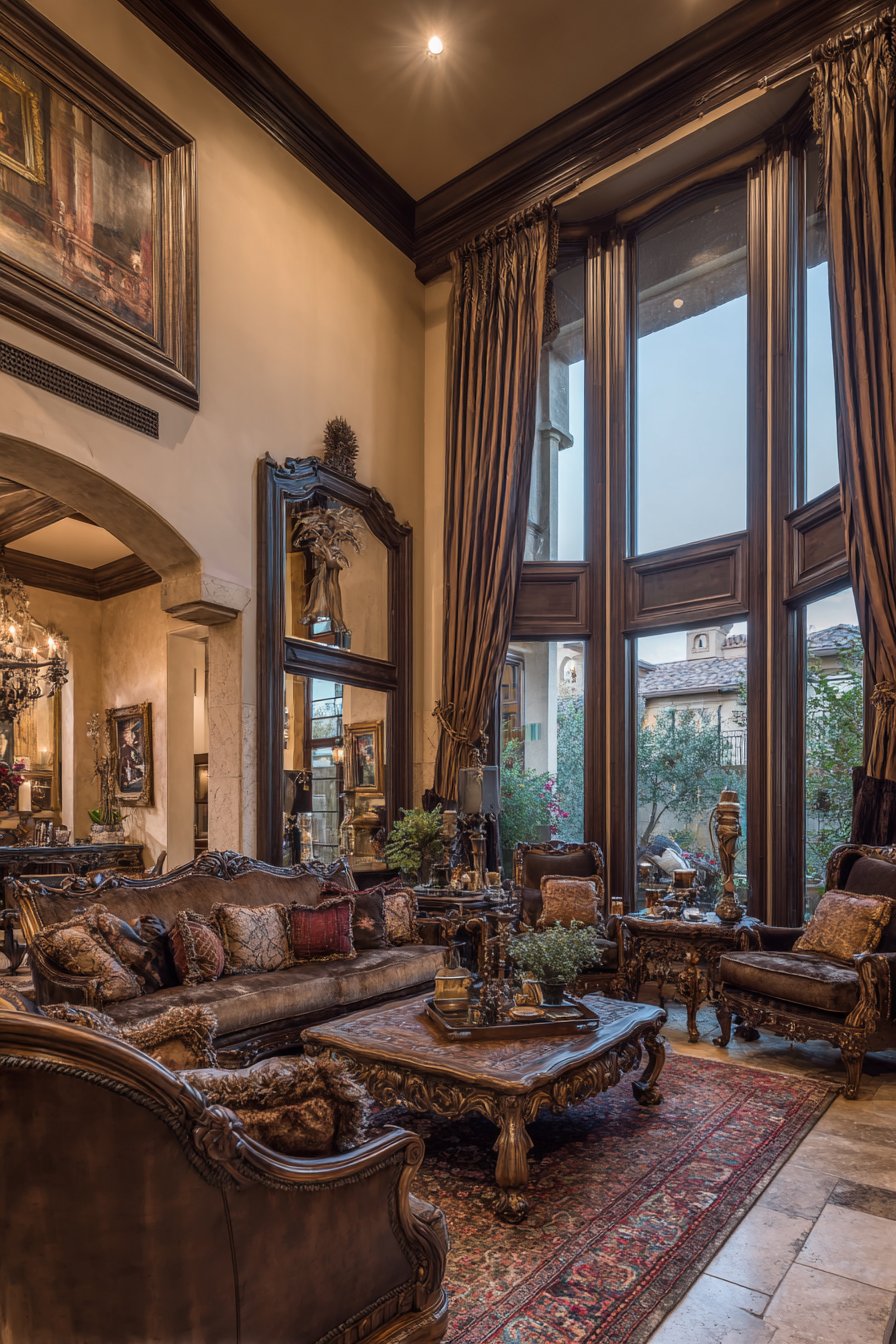
The Persian-style area rug in rich jewel tones—deep rubies, sapphire blues, emerald greens, and golden ambers—defines the seating area within the spacious room while introducing luxurious color and intricate pattern. This type of rug elevates the entire space, its quality and craftsmanship evident in every knotted detail.
The jewel tones warm the room while providing sophisticated color that feels rich without being overpowering. In traditional big living room decor, the rug often drives the color palette, with upholstery, draperies, and accessories pulling accent colors from the rug’s intricate pattern.

Crown molding and wainscoting add essential architectural detail to tall walls that might otherwise feel plain or unfinished. These classical elements bring refinement and craftsmanship that modern construction often lacks, creating visual interest at multiple heights while providing clear horizontal definition that breaks up expansive wall surfaces.
The crown molding draws the eye upward, emphasizing ceiling height, while wainscoting creates a distinguished lower wall treatment that adds depth and traditional character. These architectural enhancements represent investments that significantly impact the room’s overall elegance and finished appearance.
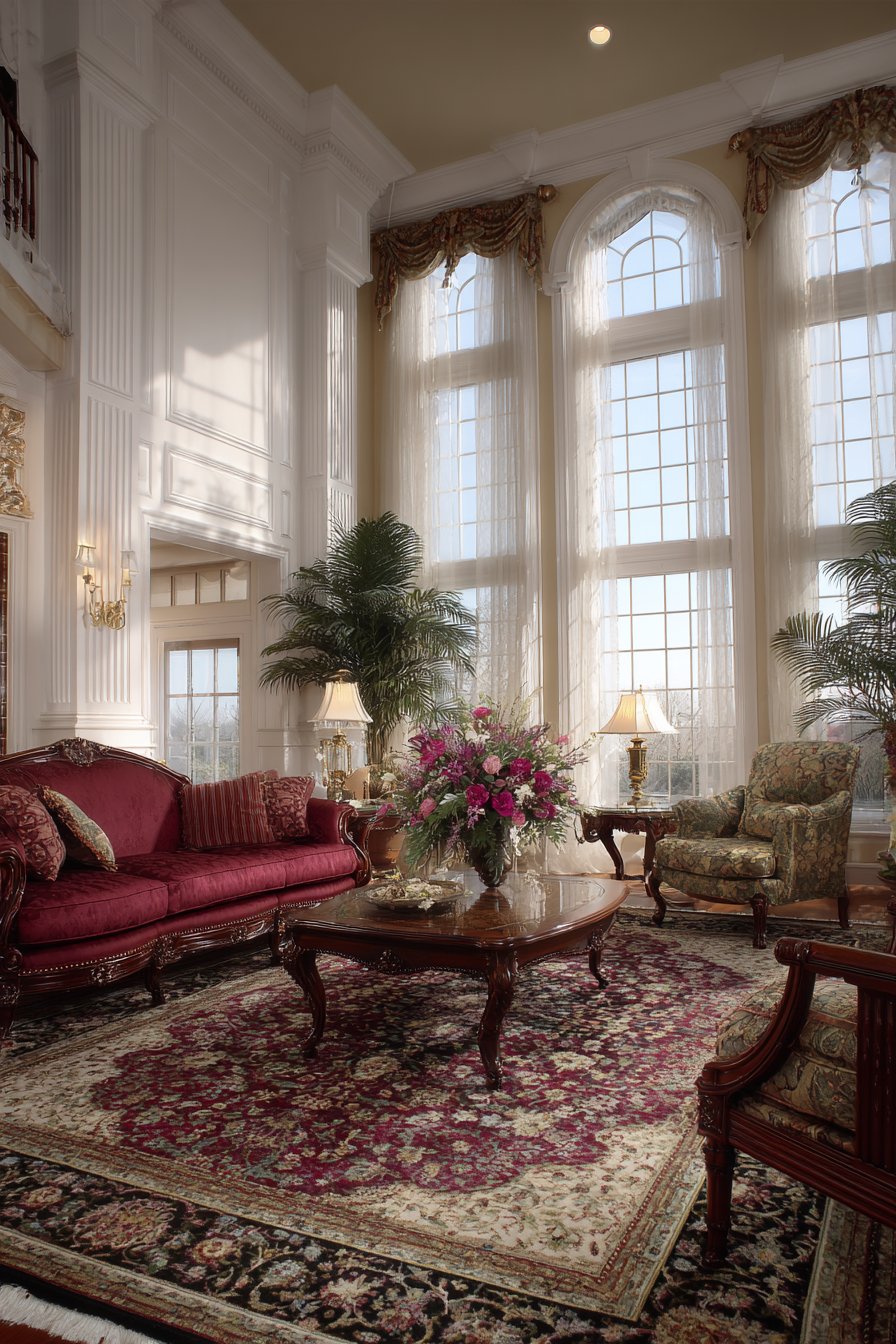
Multiple windows dressed with layered treatments, including sheers and silk draperies demonstrate the luxurious, detailed approach that traditional style demands. The sheers provide privacy while allowing filtered natural light, while the silk draperies offer rich texture, elegant draping, and the ability to block light completely when desired. This layering creates depth and visual interest while providing practical light control options. Architectural Digest style photography captures this space during golden hour, when natural light streaming through windows highlights the classic design elements, luxurious materials, and careful attention to proportion throughout the expansive traditional living space.
Key Design Tips:
- Invest in quality traditional furniture pieces like camelback sofas and wingback chairs that showcase classic silhouettes and superior craftsmanship.
- Choose a substantial Persian or Oriental rug in rich jewel tones to anchor your seating area and establish your color palette.
- Add architectural details like crown molding and wainscoting to bring refinement and visual interest to tall walls in large rooms.
- Layer window treatments with sheers for daytime privacy and heavier draperies for light control and luxurious texture.
- Select a substantial coffee table with carved details or other decorative elements that reflect traditional craftsmanship.
10. Farmhouse Aesthetic Scaled for Spacious Comfort
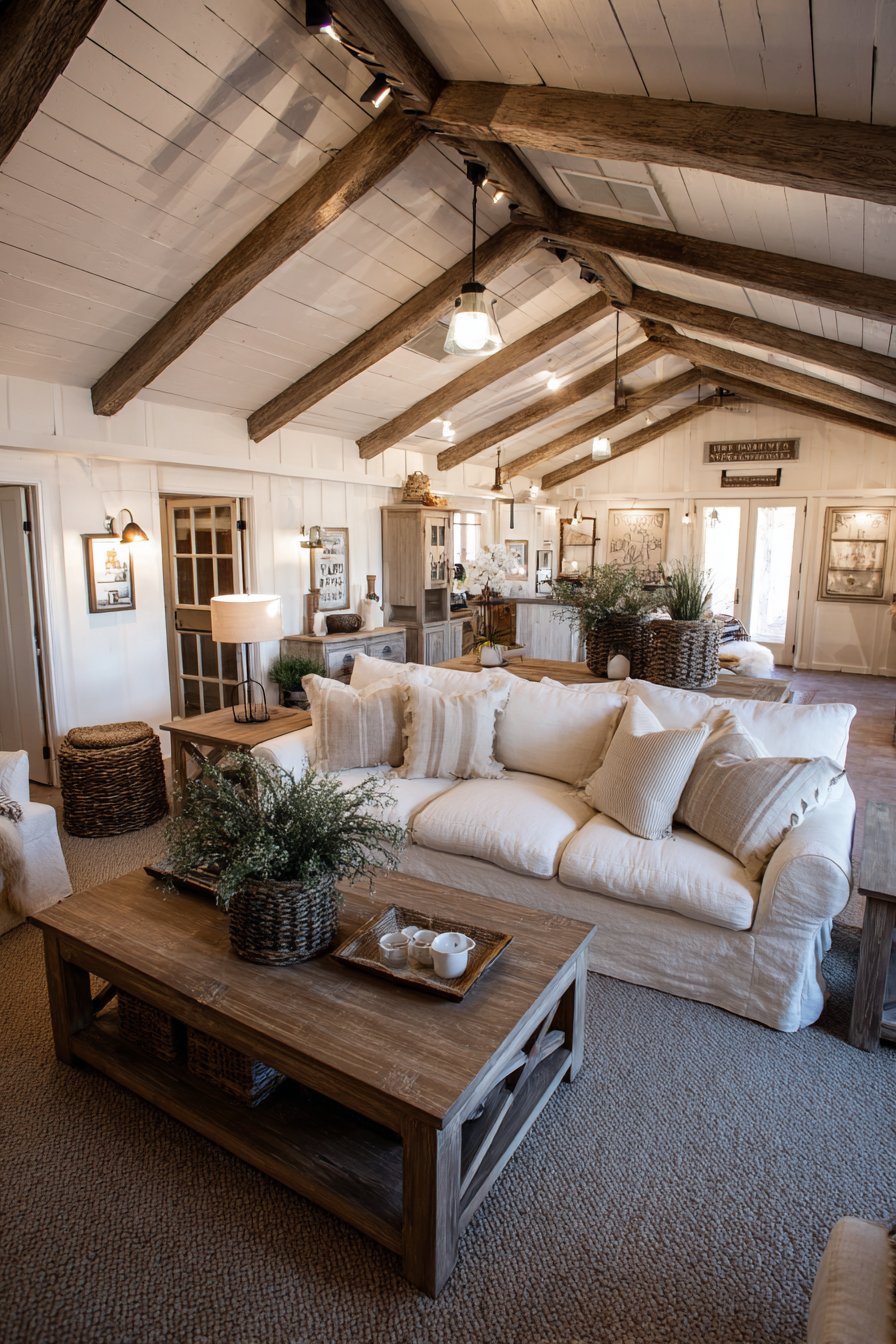
The farmhouse aesthetic has captured hearts for its ability to create warm, welcoming spaces that feel both timeless and fresh. When applied to big living room decor, farmhouse elements must be scaled appropriately to prevent the generous square footage from appearing sparse or underdone.
A whitewashed shiplap accent wall provides textural interest and distinctive character behind a comfortable slipcovered sofa in natural linen. This combination embodies farmhouse style perfectly: the shiplap adds architectural personality and casual cottage charm, while the slipcovered sofa offers relaxed comfort and practical washability that families appreciate.
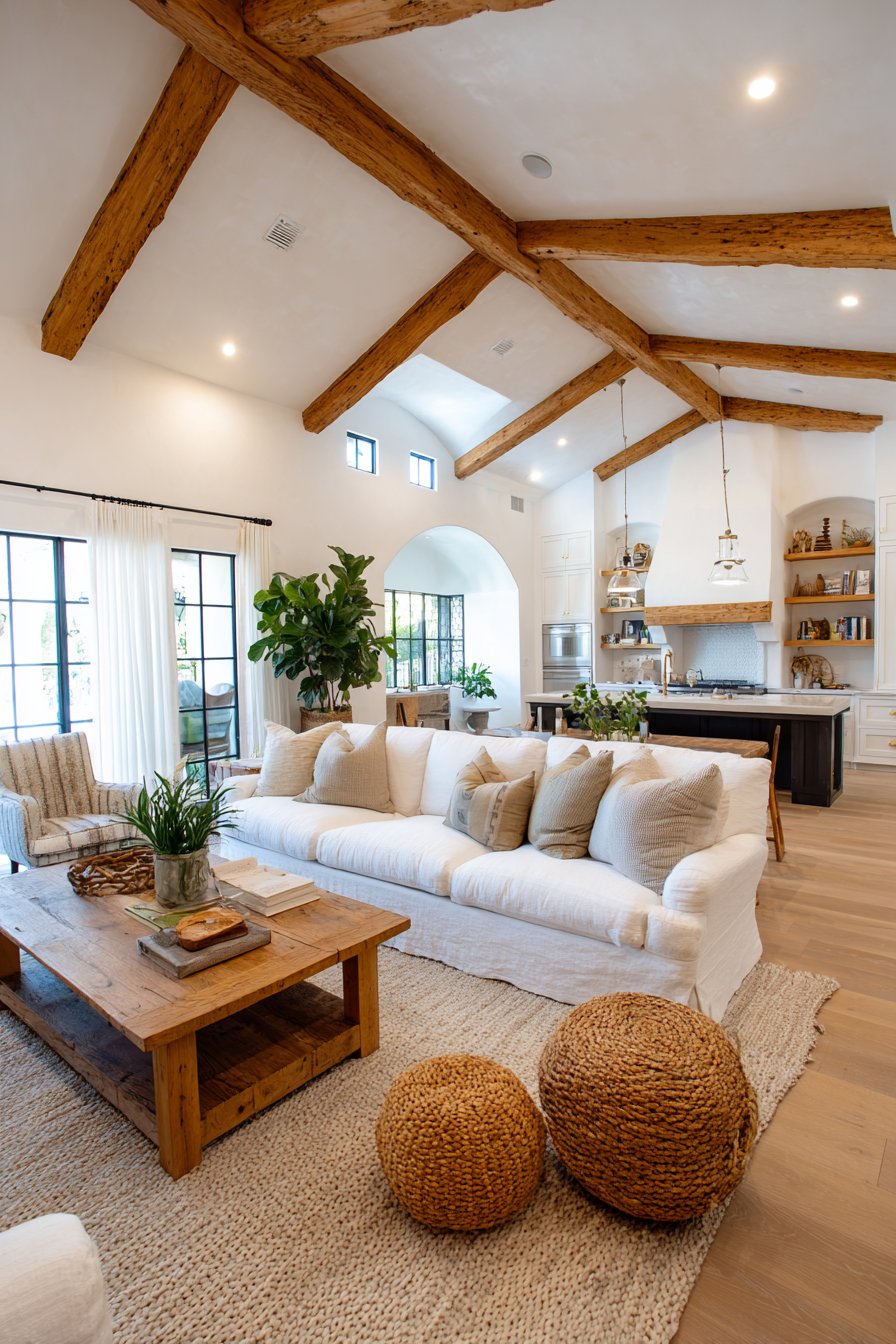
The reclaimed wood coffee table and side tables introduce rustic warmth that grounds the otherwise light palette. These pieces bring history and character through their weathered surfaces, nail holes, and varied grain patterns—each imperfection tells a story and adds authenticity.
Despite their rustic character, these pieces maintain the airy feel essential to preventing farmhouse style from feeling heavy or dark in large spaces. The warm wood tones complement rather than darken the room, striking that perfect balance between cozy and spacious that makes farmhouse big living room decor so appealing.
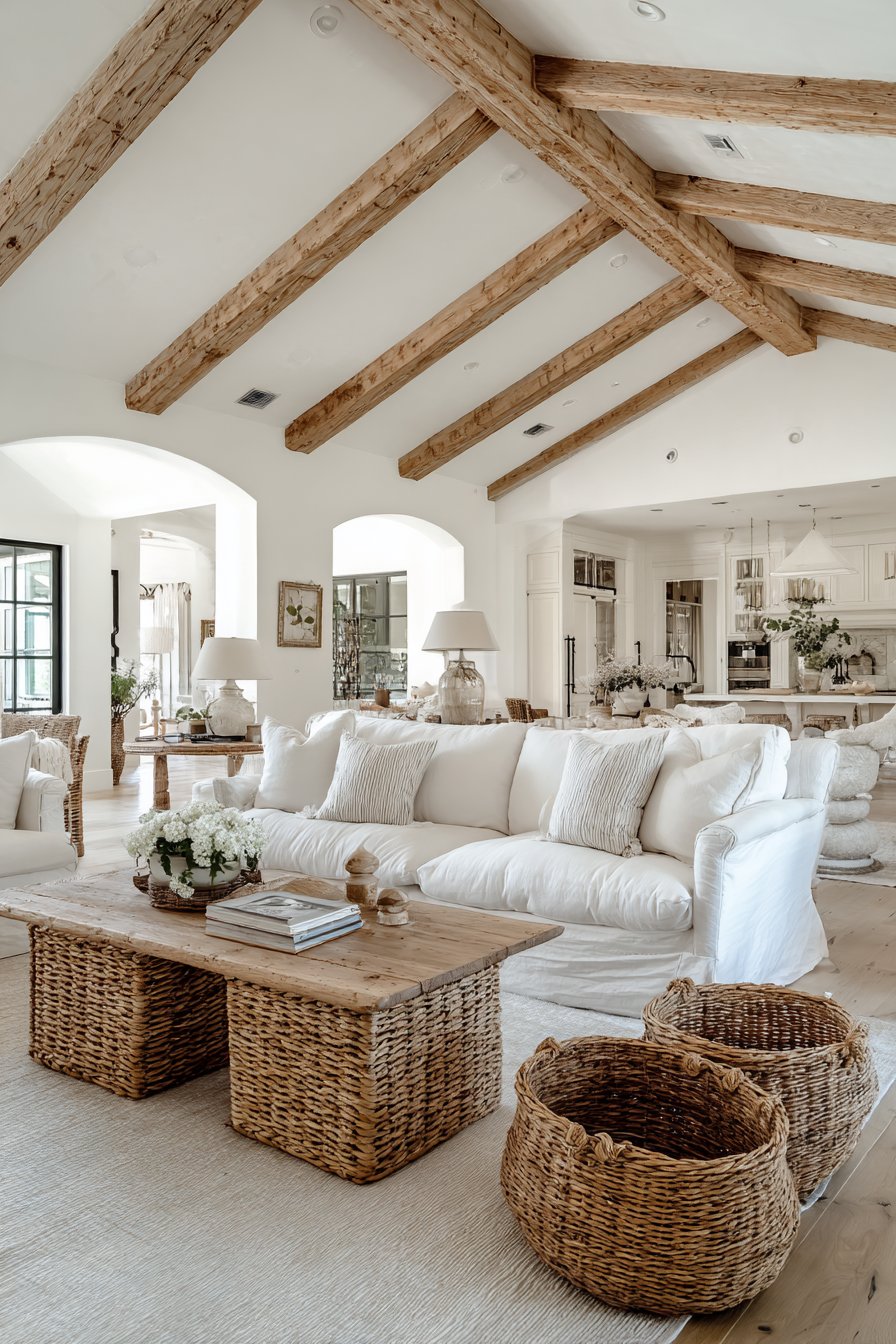
Large woven baskets provide practical storage solutions that double as decorative elements—pure farmhouse genius. These natural fiber accessories can hold throw blankets, magazines, toys, or firewood while adding textural variety and organic warmth.
Positioned strategically around the room, they provide visual weight at floor level that helps anchor the space without requiring substantial furniture pieces. The natural fibers—perhaps seagrass, rattan, or water hyacinth—introduce yet another organic texture that reinforces the farmhouse connection to natural materials and simpler times.
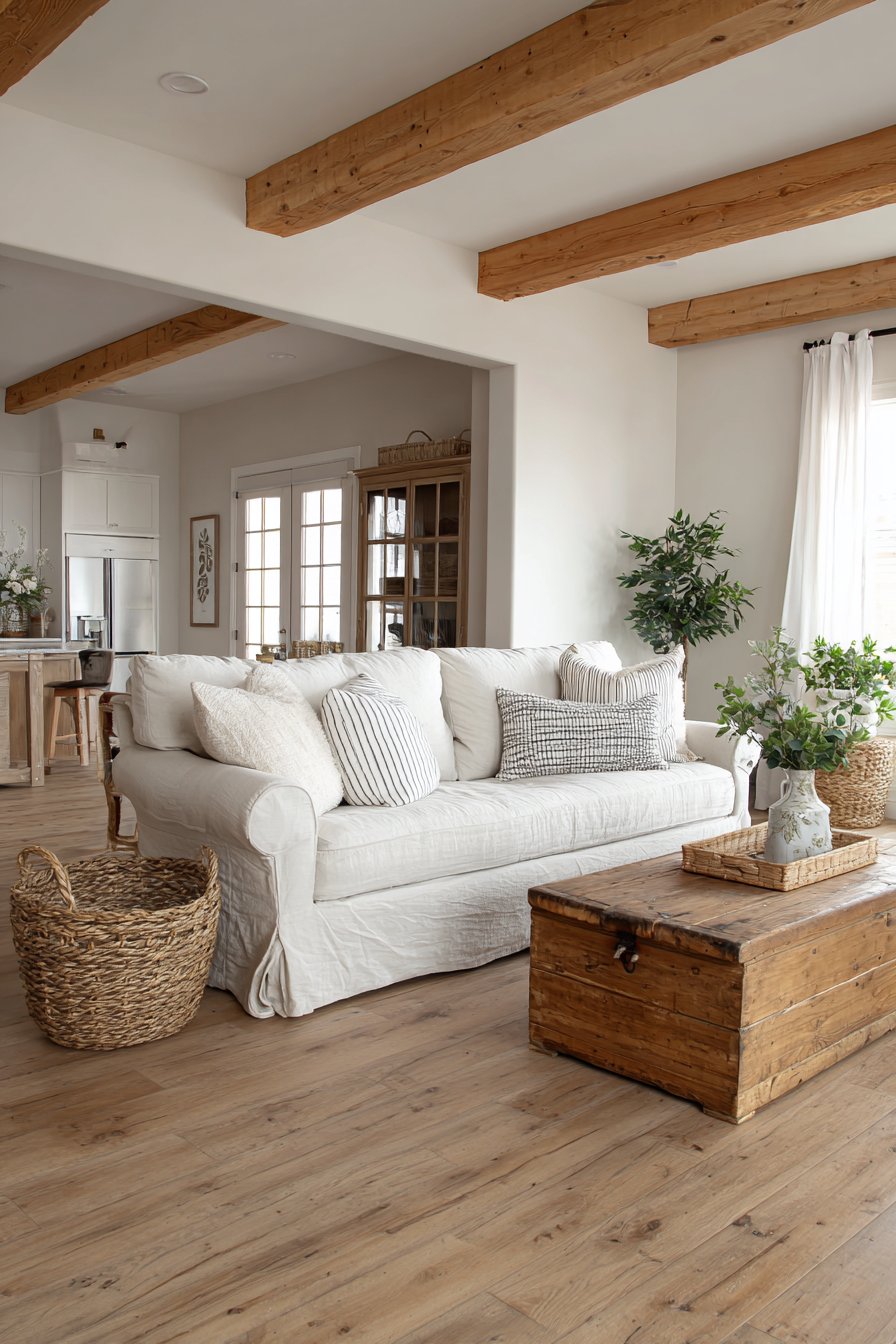
Exposed wooden ceiling beams spanning the room’s height add essential architectural character that ties the entire aesthetic together. These beams draw the eye horizontally across the ceiling, creating rhythm and pattern that makes the vertical space feel intentional rather than accidentally tall.
The natural wood adds warmth overhead that balances the lighter colors used throughout the rest of the space. Wide-angle interior design photography captures the full scope with soft, diffused natural lighting from multiple sources, emphasizing how farmhouse elements create warmth and character in generous square footage without appearing sparse or underdone.
Key Design Tips:
- Install a shiplap accent wall to add texture and farmhouse character without overwhelming the space with too much wood.
- Choose slipcovered furniture in natural linen or cotton for the relaxed, comfortable, and practical aesthetic that defines farmhouse style.
- Incorporate reclaimed wood tables and furniture pieces that bring authentic age and character while maintaining an airy feel.
- Use large woven baskets for decorative storage that adds texture while providing practical solutions for blankets, magazines, and other items.
- Expose or add ceiling beams to create horizontal visual interest and architectural character appropriate to the farmhouse aesthetic.
Why These Big Living Room Decor Designs Excel
Each of these ten approaches to big living room decor succeeds because it addresses the fundamental challenges of decorating expansive spaces while embracing distinct aesthetic directions that appeal to varied tastes and lifestyles. The spacious open-concept sanctuary demonstrates how neutral palettes combined with substantial furniture and natural light can create serene, welcoming environments perfect for modern living. The dramatic two-story design tackles vertical volume with confidence, showing how statement lighting and multiple seating zones humanize soaring spaces that might otherwise feel impersonal or intimidating.
The sophisticated L-shaped sectional approach proves that large living rooms can accommodate both substantial seating and impressive statement pieces like grand pianos without feeling cluttered, while the strategic furniture placement design shows how console tables, oversized sofas, and tall plants work together to fill space without overwhelming it. The grand fireplace focal point design excels at creating clear visual anchors that give large rooms direction and purpose, while the open floor plan concept demonstrates seamless zone transitions that make expansive spaces feel cohesive rather than fragmented.
The multiple furniture groupings design stands out for its flexibility, allowing big living rooms to accommodate both intimate conversations and large gatherings with equal grace. The contemporary minimalist approach challenges the assumption that large spaces require abundant furniture, instead showing how intentional negative space and carefully curated pieces create sophisticated modern environments. The traditional elegance design proves that classic style translates beautifully to generous proportions when architectural details and formal furniture arrangements are executed with confidence and quality materials.
Finally, the farmhouse aesthetic scaled appropriately demonstrates how casual, comfortable styles can fill large spaces with warmth and character without appearing sparse or incomplete. Each design strategy offers solutions to common big living room challenges: preventing emptiness, maintaining intimacy, creating focal points, establishing zones, managing lighting, selecting appropriate scale, and developing cohesive aesthetics that suit the architecture and the inhabitants’ lifestyles.
These designs represent the best approaches to big living room decor because they balance practical functionality with aesthetic beauty, they scale appropriately to generous dimensions, they create warmth and intimacy within expansive footprints, they offer flexibility for varied uses and activities, and they demonstrate how different design styles—from contemporary minimalism to traditional elegance, from farmhouse casual to sophisticated transitional—can successfully address the unique opportunities and challenges that large living spaces present. Whether you’re drawn to clean-lined contemporary design, warm rustic farmhouse aesthetics, formal traditional elegance, or anything in between, these approaches provide proven frameworks for transforming big living rooms into spaces that feel as welcoming and comfortable as they are impressive and beautiful.
Conclusion
Decorating a big living room presents unique opportunities that smaller spaces simply cannot offer. Throughout this comprehensive guide, we’ve explored ten distinct approaches that demonstrate how generous proportions can be transformed into functional, beautiful, and inviting environments through thoughtful design choices. The key takeaways center on several fundamental principles: scale your furniture appropriately to the room’s dimensions rather than using standard-sized pieces that will appear lost, create multiple zones or functional areas to prevent vast expanses from feeling empty or purposeless, establish clear focal points that anchor the space and give the eye somewhere to land, layer your lighting at multiple heights to create warmth and prevent cavernous feelings after dark, and embrace your particular aesthetic direction with confidence whether that’s contemporary minimalism, traditional elegance, farmhouse casual, or sophisticated transitional style.
Remember that successful big living room decor isn’t about filling every square foot with furniture and accessories—it’s about strategic placement, appropriate scale, and intentional design decisions that create harmony between space and furnishings. Don’t be afraid to float furniture away from walls, invest in statement pieces that command attention proportionate to your room’s size, or embrace negative space as a design element in contemporary settings. Pay attention to texture layers, incorporate architectural elements like built-ins or ceiling beams, and ensure your window treatments emphasize rather than apologize for impressive ceiling heights.
We encourage you to experiment with these ideas in your own home, adapting them to suit your personal style, functional needs, and existing architecture. Start with one area—perhaps creating a well-defined seating zone with an appropriately scaled rug and substantial furniture—and build from there. Consider which of these ten approaches resonates most strongly with your aesthetic preferences and lifestyle requirements, then use those principles as a foundation for developing your unique big living room design. With thoughtful planning, appropriate scale, and confidence in your vision, your expansive living space can become the warm, welcoming, and beautifully functional heart of your home that you’ve always imagined. The generous square footage that once seemed daunting can transform into your home’s greatest asset—a canvas for creating the exact environment where you and your loved ones will make countless memories in comfort and style.
