


The bathroom has evolved from a purely functional space into a personal sanctuary where we begin and end our days. In modern interior design, the bathroom represents an opportunity to create a calming retreat that reflects our aesthetic preferences while maintaining practicality. Among the countless color palettes available, beige has emerged as a sophisticated choice that transcends fleeting trends, offering warmth, versatility, and timeless appeal.
Beige bathrooms have gained renewed popularity in contemporary design for compelling reasons. This neutral palette creates a serene atmosphere that promotes relaxation while providing an elegant backdrop for various design styles. From minimalist modern to classic traditional, beige adapts seamlessly to different aesthetics. The color’s inherent warmth prevents the sterile feeling that sometimes accompanies all-white bathrooms, while its neutrality allows for easy updates through accessories and textiles.
This comprehensive guide explores ten distinctive beige bathroom designs, each showcasing unique approaches to materials, textures, and spatial planning. Whether you’re renovating a powder room or designing a luxurious master bath, these concepts demonstrate how beige can be layered and elevated. The designs range from spa-like retreats to practical family bathrooms, proving that beige is far from boring when thoughtfully executed with attention to material quality and textural contrast.
1. Serene Spa-Like Sanctuary with Freestanding Soaking Tub
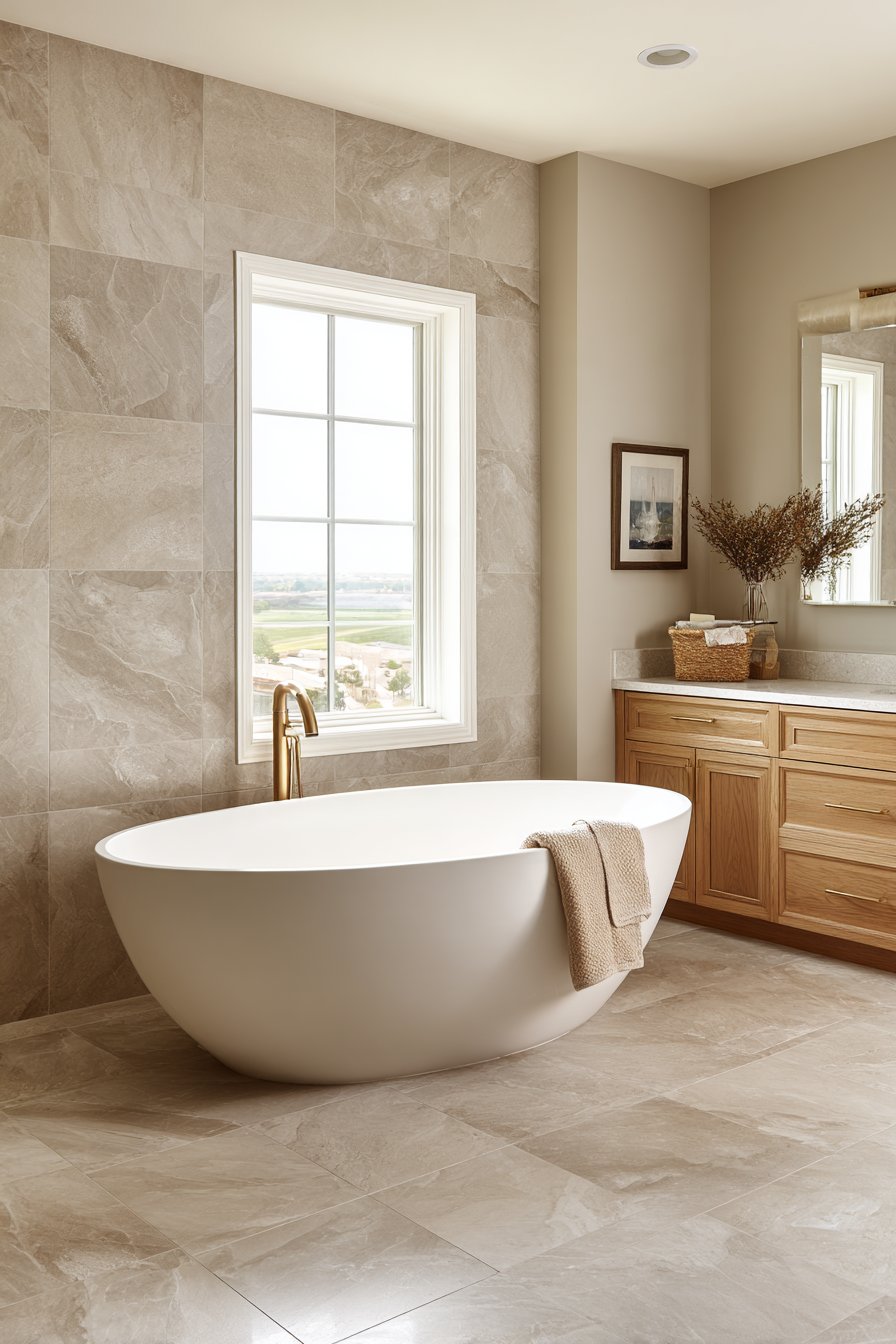
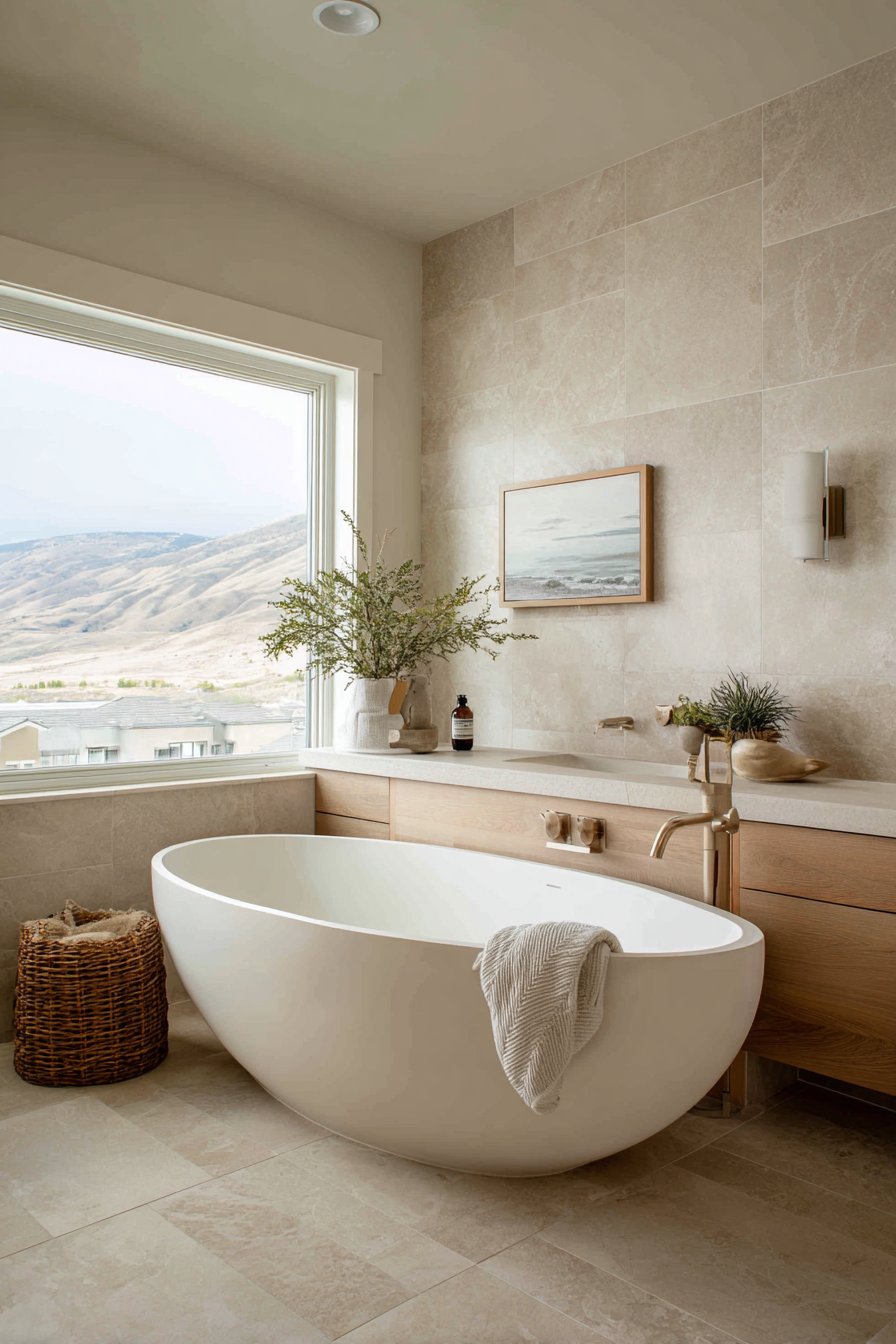
The centerpiece of this tranquil bathroom is a freestanding oval soaking tub that commands attention while maintaining elegant simplicity. Positioned on large-format beige porcelain tiles with subtle natural stone texture, the tub becomes a sculptural element. The tiles’ understated pattern adds visual interest without overwhelming the peaceful atmosphere. Warm beige walls in a matte finish envelope the space, creating a cohesive monochromatic environment that feels both expansive and intimate.
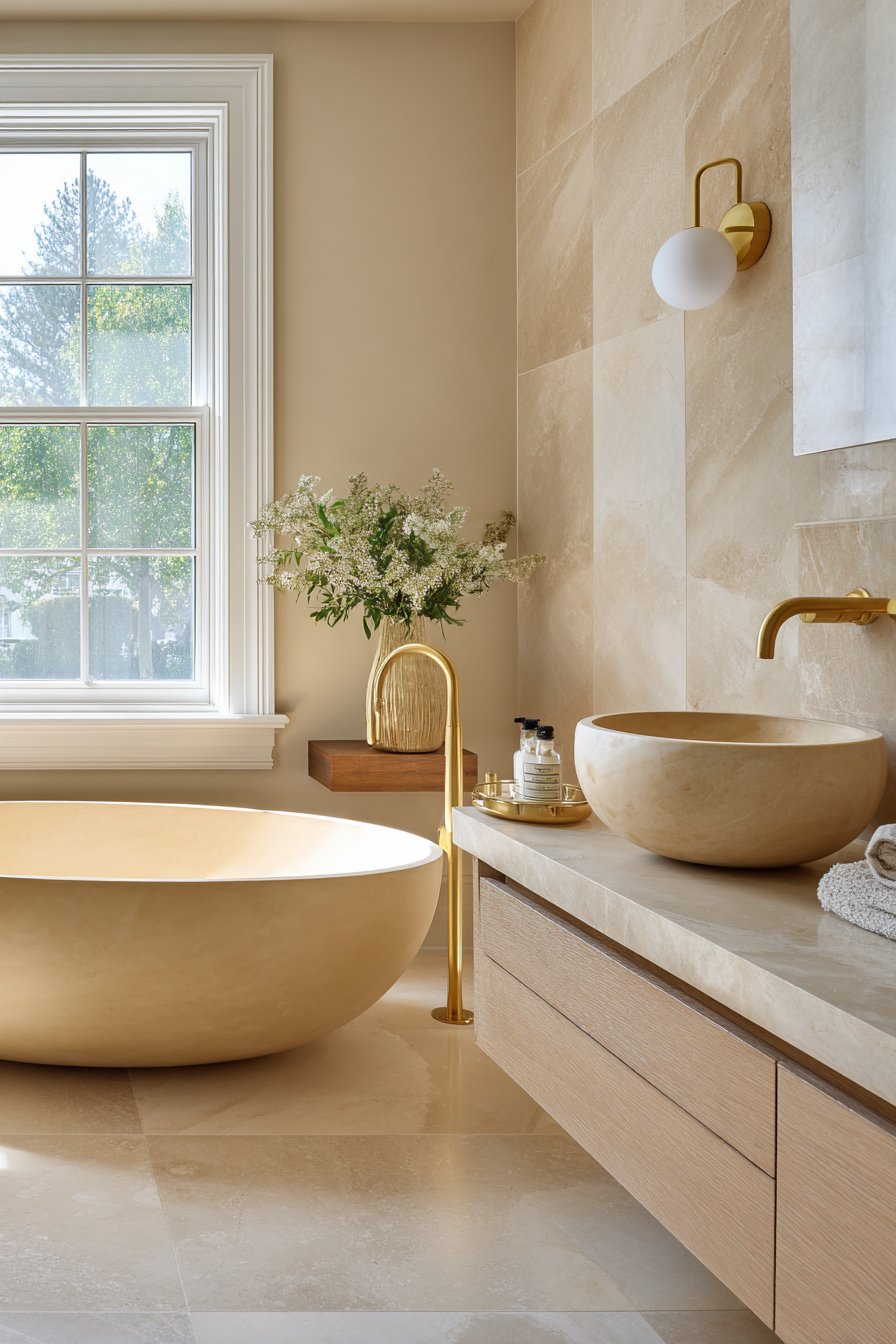
Brushed gold fixtures introduce gentle metallic warmth throughout the space, catching light and creating subtle focal points. These fixtures elevate the design from simple to sophisticated, demonstrating how hardware choices significantly impact overall aesthetics. The metallic accents complement rather than compete with the dominant beige palette. A floating wooden vanity in light oak provides natural contrast and introduces organic warmth. The beige quartz countertop maintains color continuity while offering practical durability.
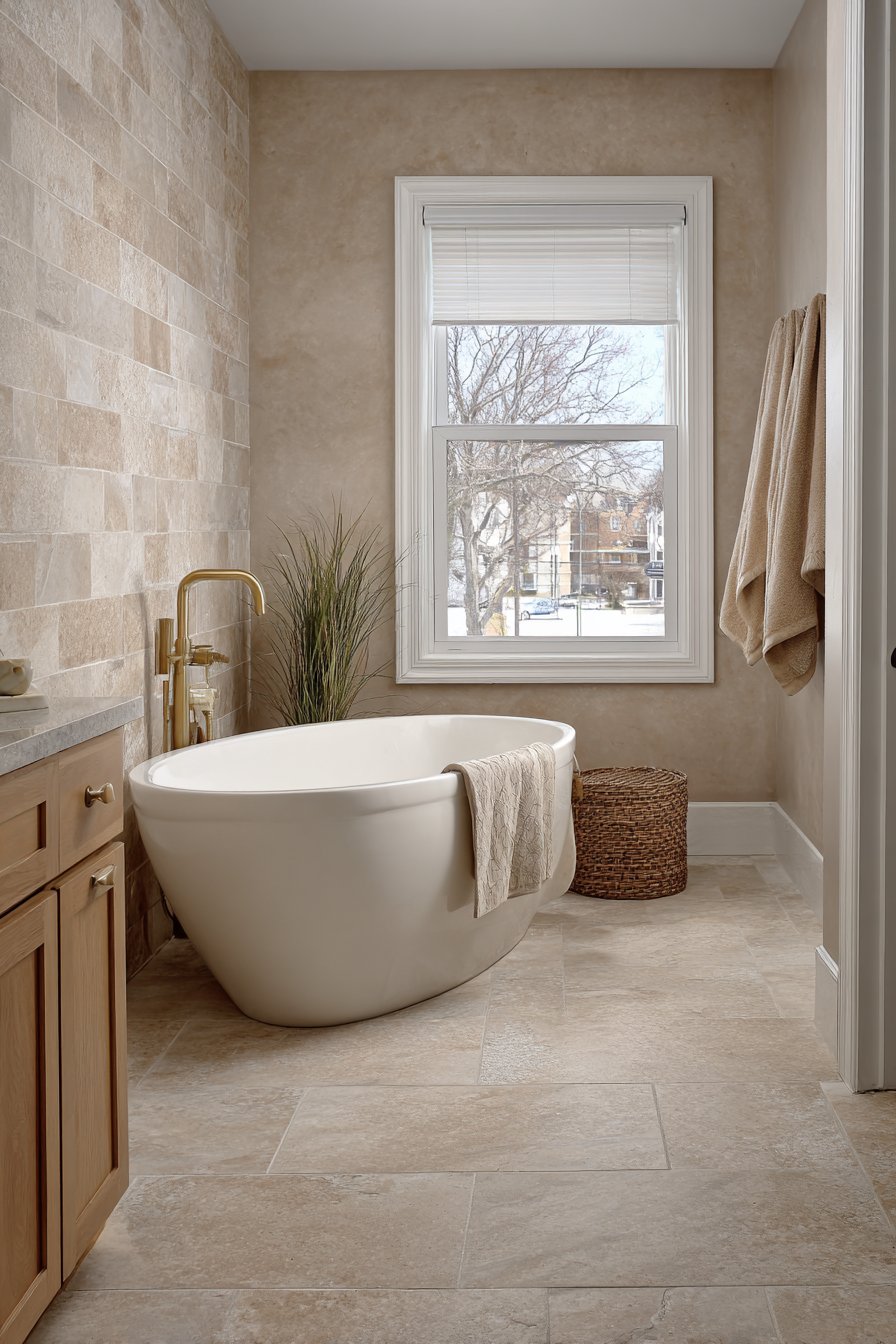
Soft diffused natural light from a frosted window illuminates the space without harsh glare. This lighting approach highlights the layered beige tones and reveals the subtle variations in material textures. The interplay between natural and artificial lighting creates depth and dimension. The spa-like atmosphere encourages relaxation and self-care, transforming daily routines into restorative rituals.
Key Design Tips:
- Select large-format tiles to minimize grout lines and create a seamless, expansive feel
- Layer multiple beige tones from warm to cool for dimensional depth
- Choose brushed or matte metallic finishes rather than polished chrome for warmth
- Install a frosted or textured window treatment to maximize natural light while maintaining privacy
- Position the freestanding tub as a focal point with adequate surrounding space
- Incorporate natural wood elements to prevent the palette from feeling too sterile
2. Practical Storage-Focused Family Bathroom
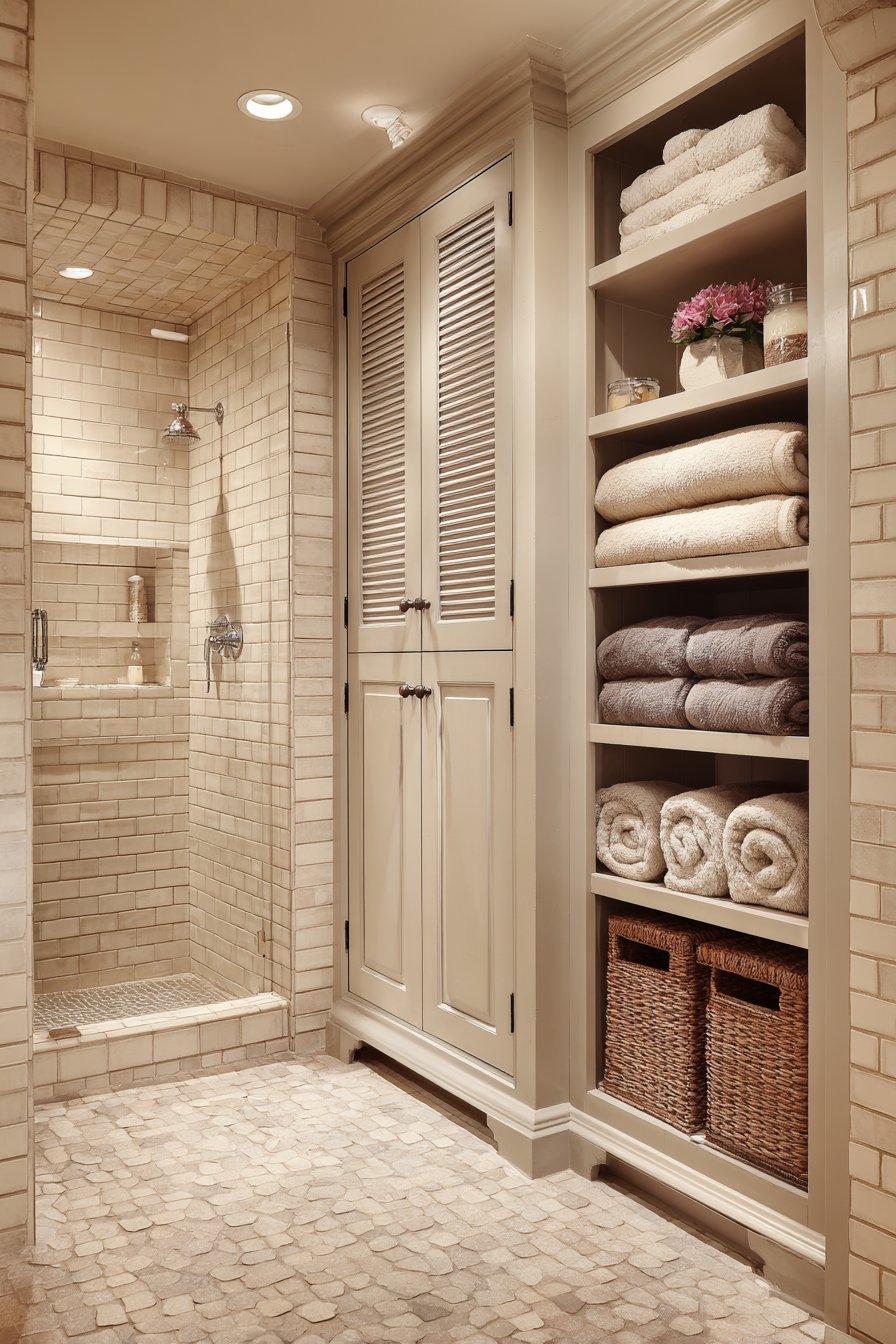
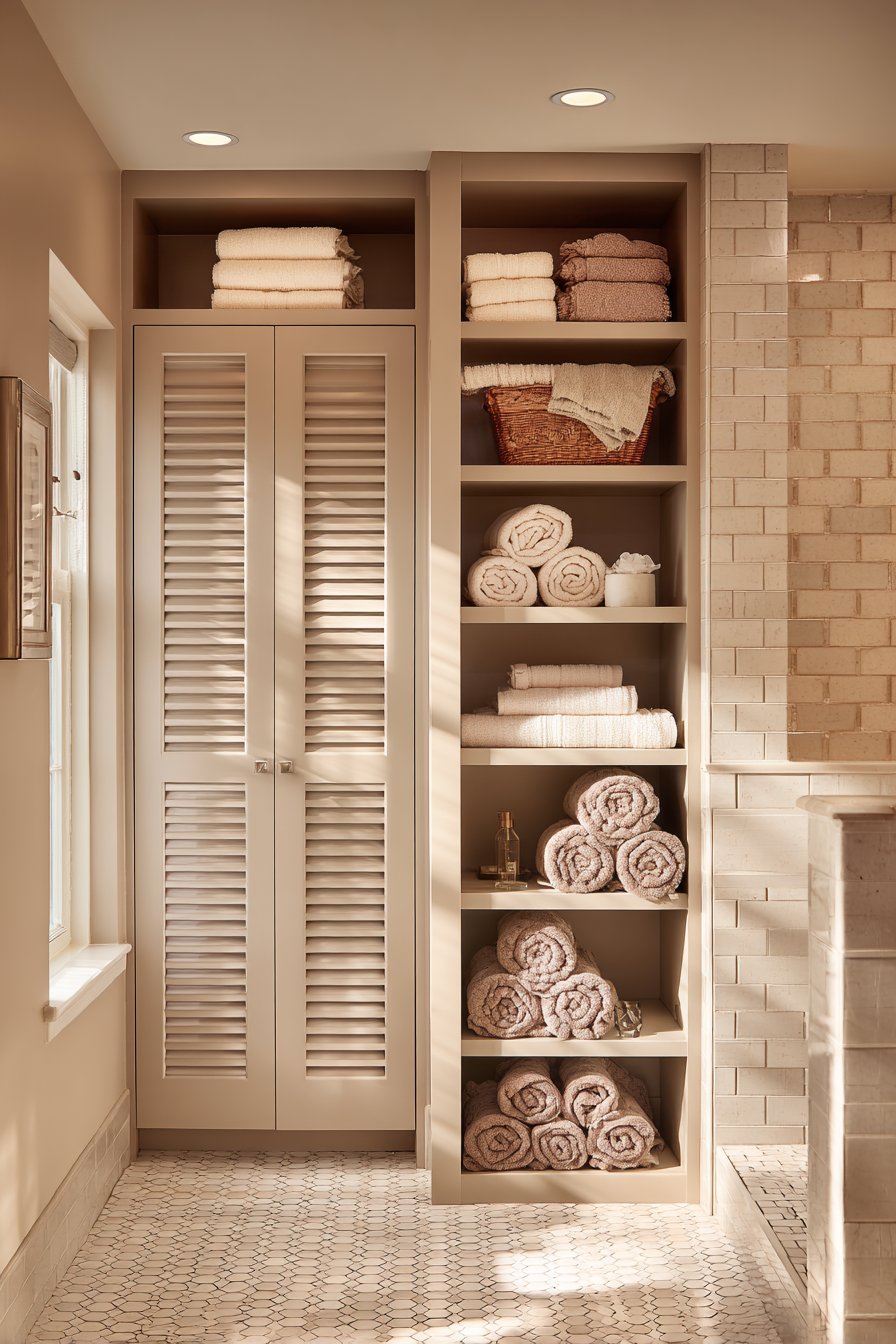
This highly functional bathroom addresses the universal challenge of storage without sacrificing aesthetic appeal. Floor-to-ceiling built-in linen closets with louvered beige doors provide ample concealed storage while maintaining design consistency. Open shelving displays neatly rolled towels in coordinating cream and taupe tones, creating visual interest through organized display. This combination of closed and open storage accommodates various needs while preventing visual clutter.
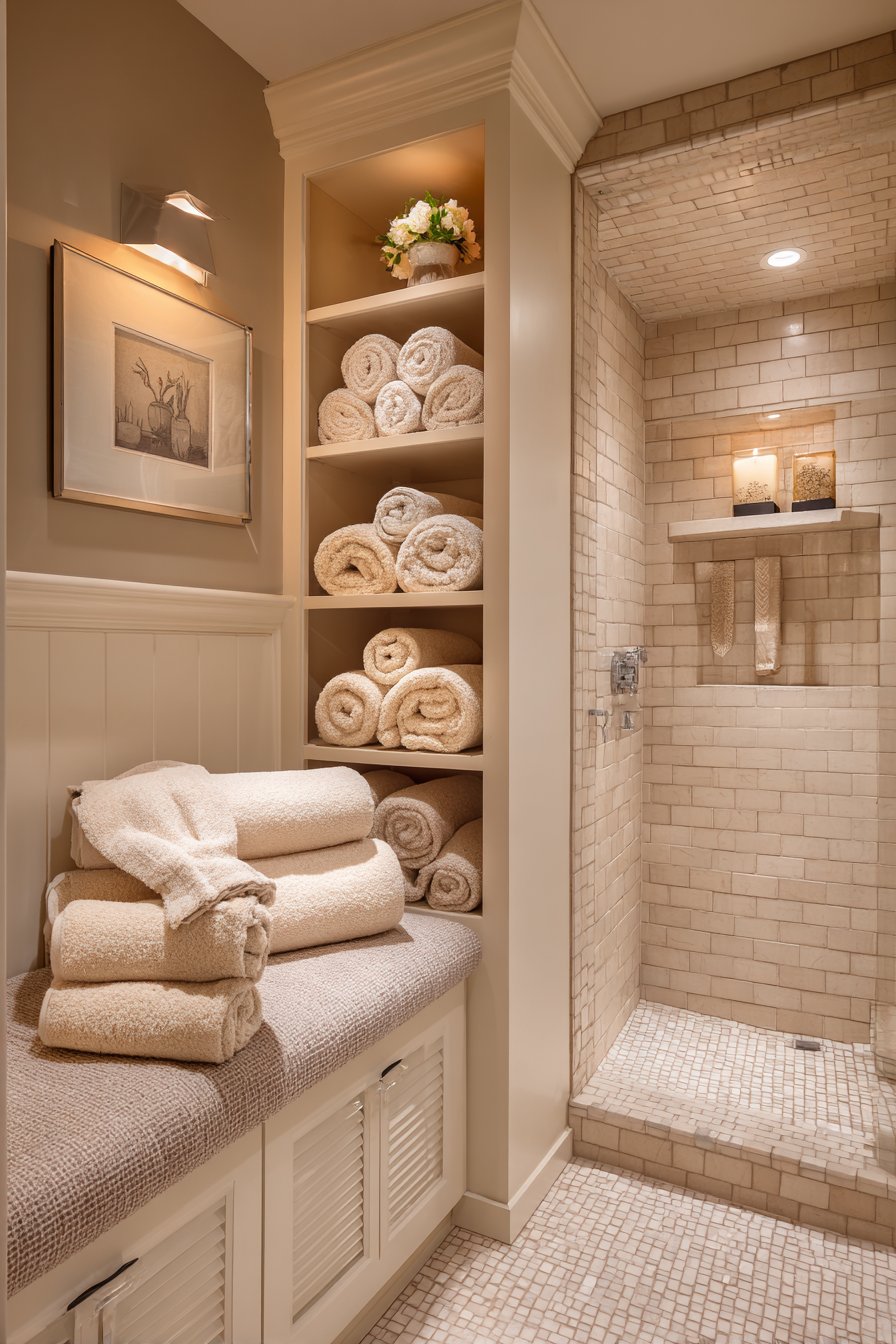
Beige subway tiles with warm undertones cover the shower walls, offering timeless appeal and easy maintenance. These classic tiles create a backdrop that won’t feel dated in years to come. Beige hexagonal floor tiles introduce geometric interest and show subtle variation in shade, adding complexity to the monochromatic scheme. The different tile shapes and sizes create visual rhythm while maintaining color harmony.
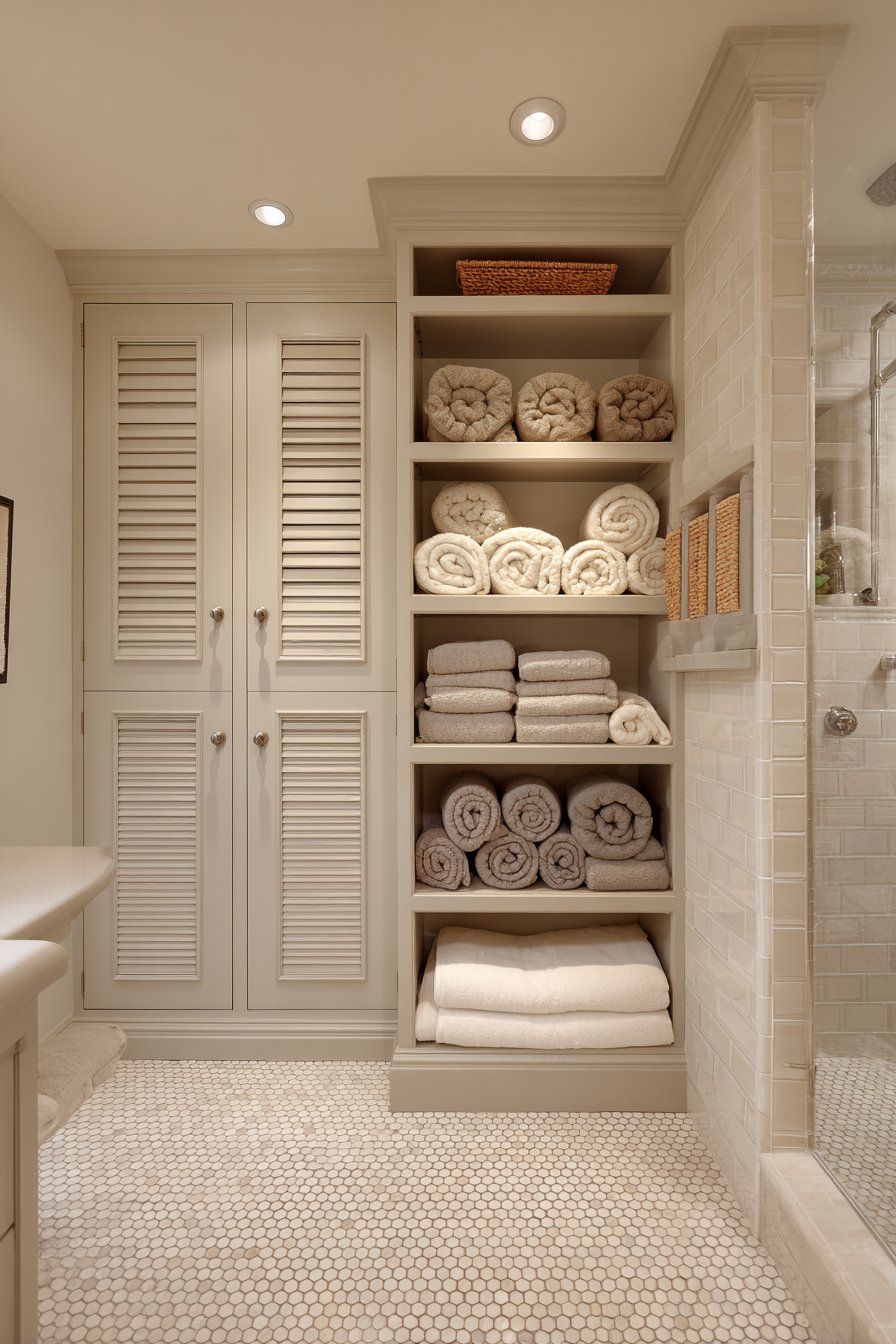
Recessed lighting creates soft shadows that emphasize the textural depth of the beige palette. Strategic lighting placement ensures functionality while contributing to the overall ambiance. The warm golden hour lighting quality makes the space feel inviting rather than clinical. This practical design proves that family bathrooms can be both beautiful and highly functional.
Key Design Tips:
- Maximize vertical space with floor-to-ceiling storage solutions
- Mix closed and open storage to balance concealment with display
- Choose warm-toned beige tiles to prevent the space from feeling cold
- Use hexagonal or patterned floor tiles to add visual interest underfoot
- Install adequate recessed lighting to eliminate shadows in work areas
- Coordinate towel colors within the beige family for cohesive styling
- Select louvered doors for ventilation in linen storage areas
3. Sophisticated Double Vanity with Natural Materials
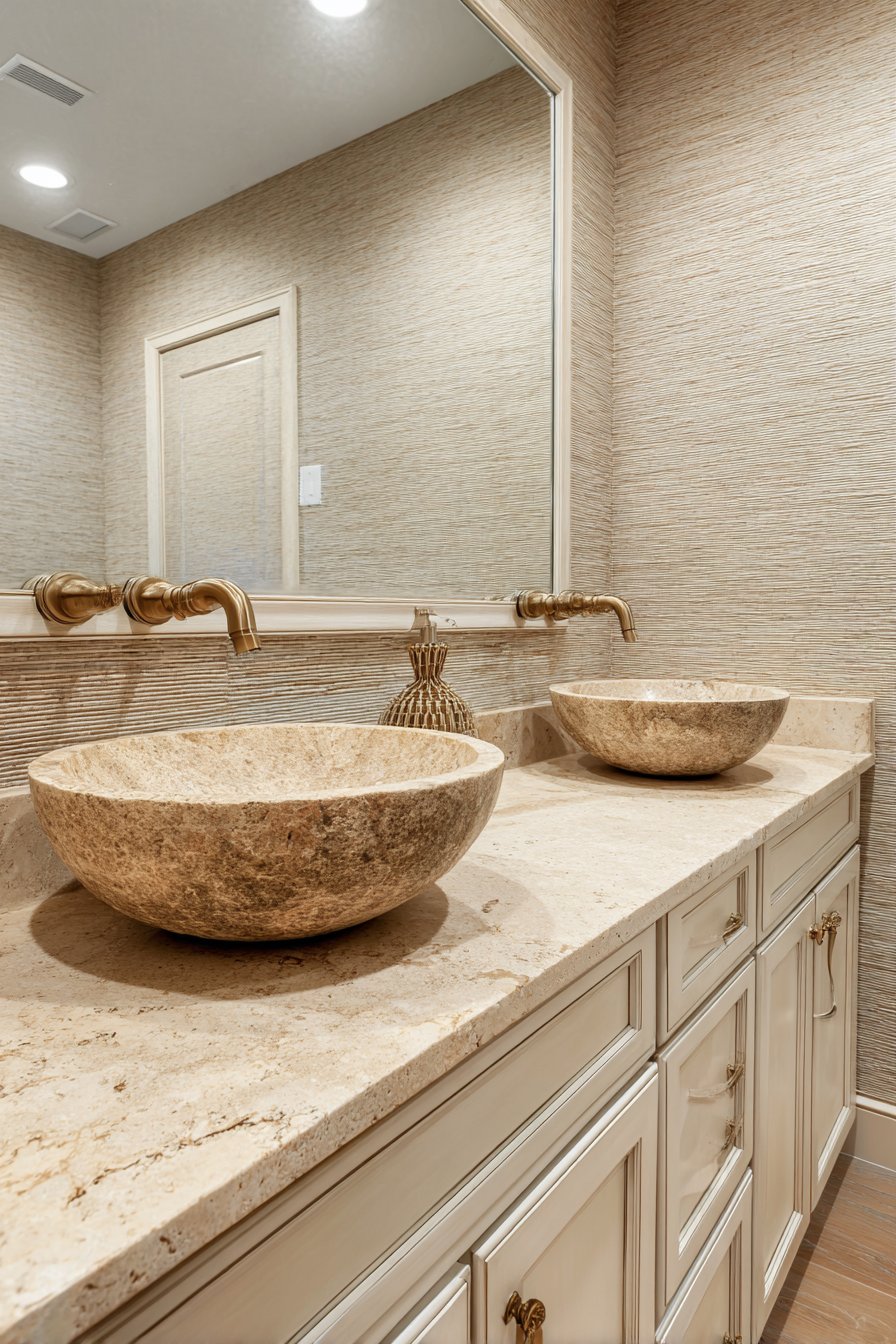
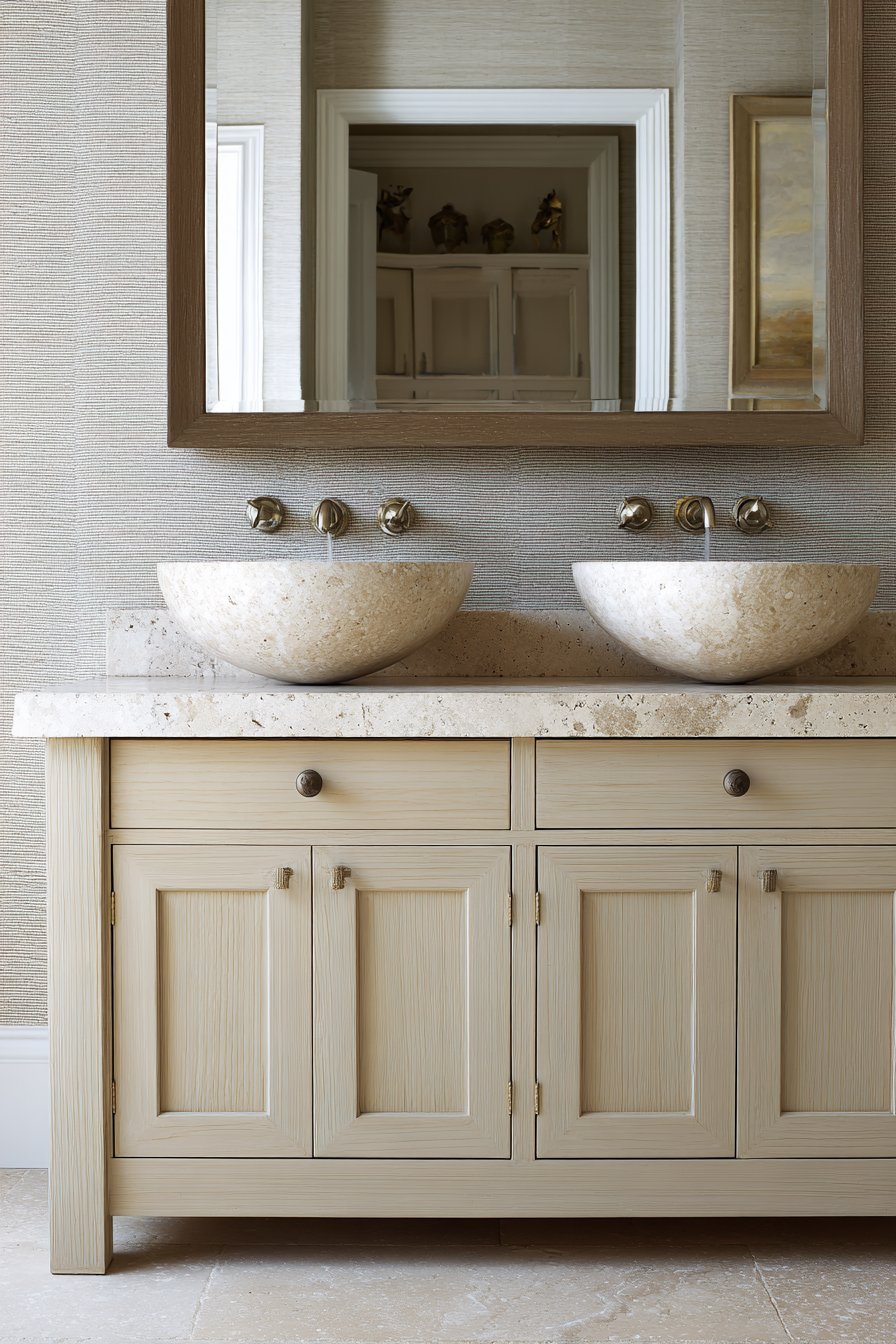
The focal point of this modern bathroom is a stunning double vanity featuring vessel sinks set on a honed beige travertine countertop. The travertine displays natural pitting and subtle color variations that celebrate authentic stone characteristics. Each imperfection tells a story, adding character that manufactured materials cannot replicate. Custom cabinetry in warm beige with shaker-style doors provides timeless appeal with clean lines.
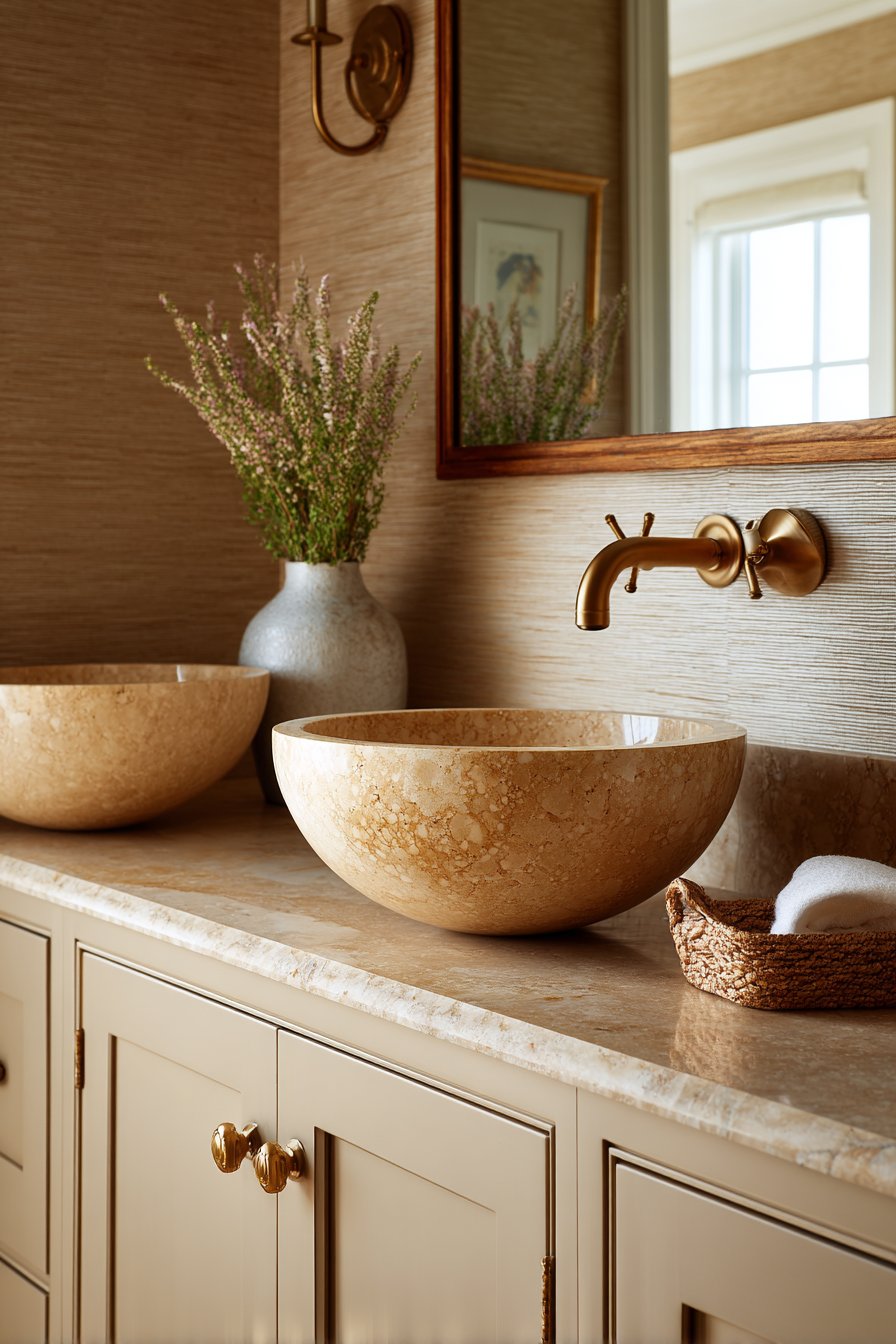
Antique brass hardware introduces vintage-inspired accents that anchor the space with traditional elegance. These hardware choices demonstrate how small details significantly impact the overall design narrative. A large frameless mirror reflects the beige textured wallpaper with a grasscloth weave pattern, doubling the visual impact of this natural material. The grasscloth adds organic texture that engages the sense of touch as well as sight.
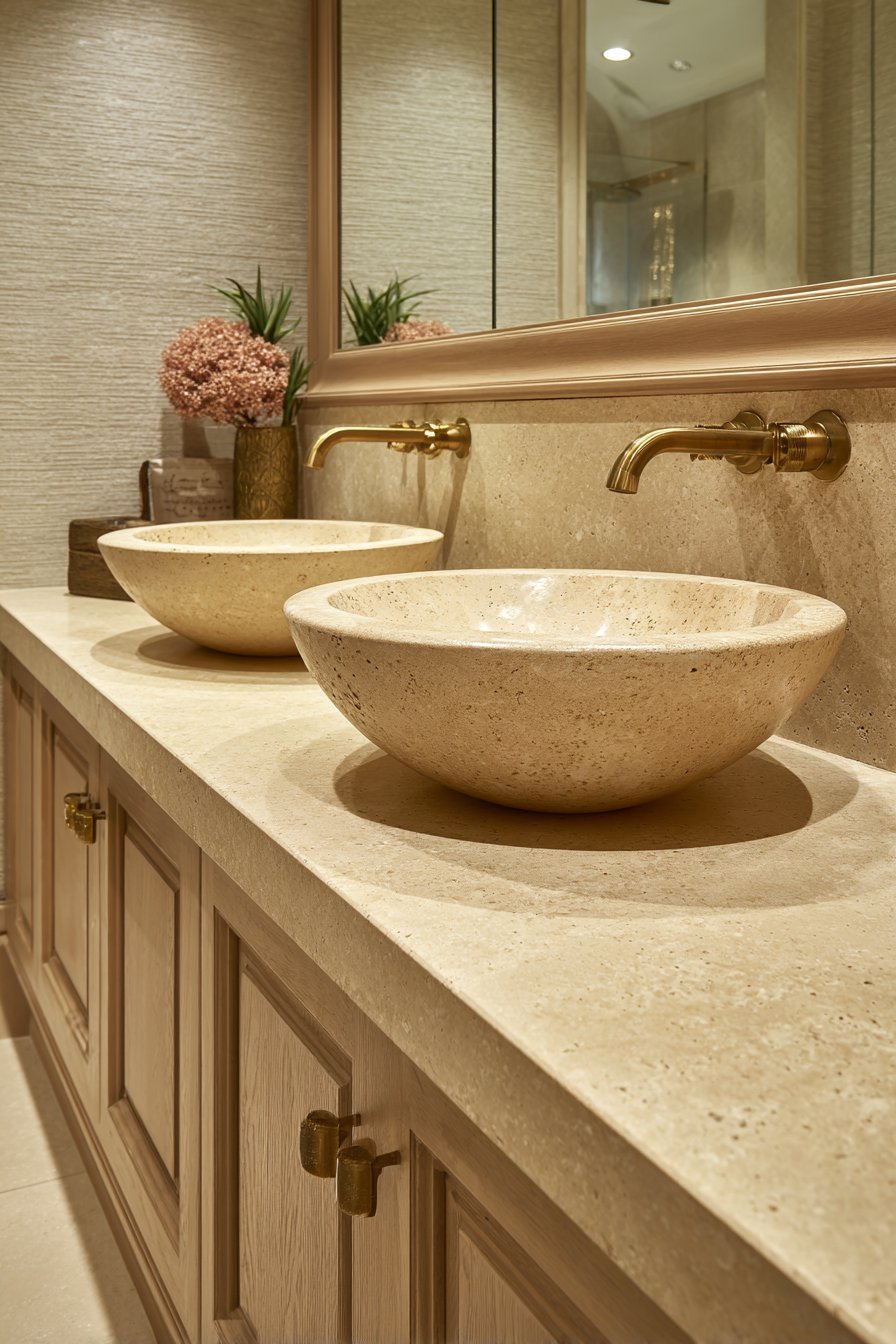
The sophisticated layering of beige tones creates depth despite the monochromatic approach. Different materials each contribute their unique texture and light-reflecting properties. The functional elegance of this design accommodates busy morning routines while maintaining spa-like serenity. The double vanity configuration provides personal space for couples sharing the bathroom.
Key Design Tips:
- Choose natural stone countertops to embrace authentic material character
- Install vessel sinks to create sculptural interest at the vanity
- Select grasscloth or natural fiber wallcoverings for textural depth
- Use frameless mirrors to maximize reflection and light distribution
- Incorporate antique brass hardware for warm metallic accents
- Opt for shaker-style cabinetry for transitional appeal
- Ensure adequate spacing between double sinks for functional comfort
4. Compact Marble-Inspired Shower Enclosure
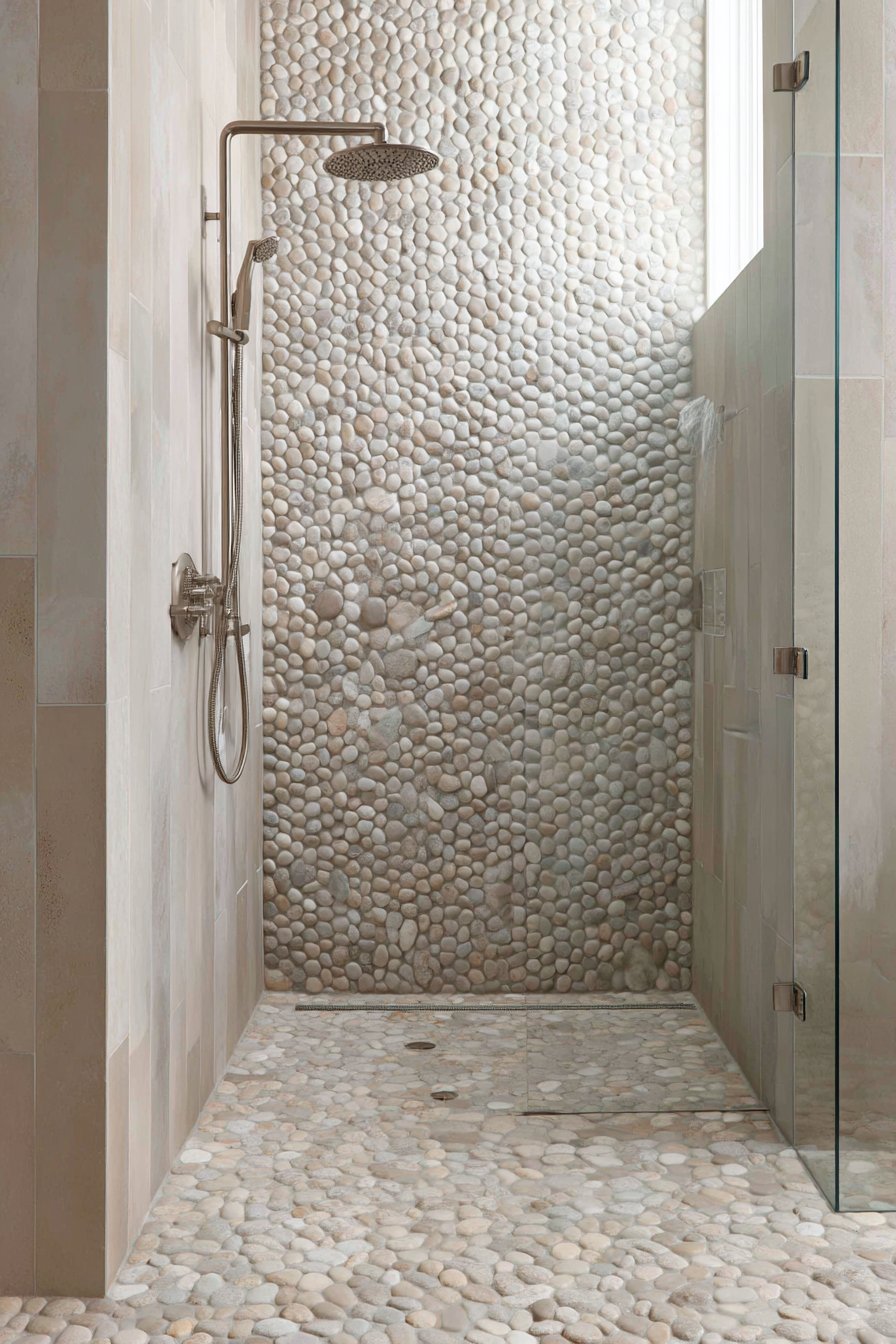
This efficient bathroom design maximizes a compact footprint through smart material selection and layout planning. A seamless glass partition defines the shower enclosure without visual barriers, maintaining an open feel. Beige marble-look porcelain tiles arranged in a vertical stack pattern on walls create the illusion of height. The vertical orientation draws the eye upward, making the space feel more expansive than its actual dimensions.
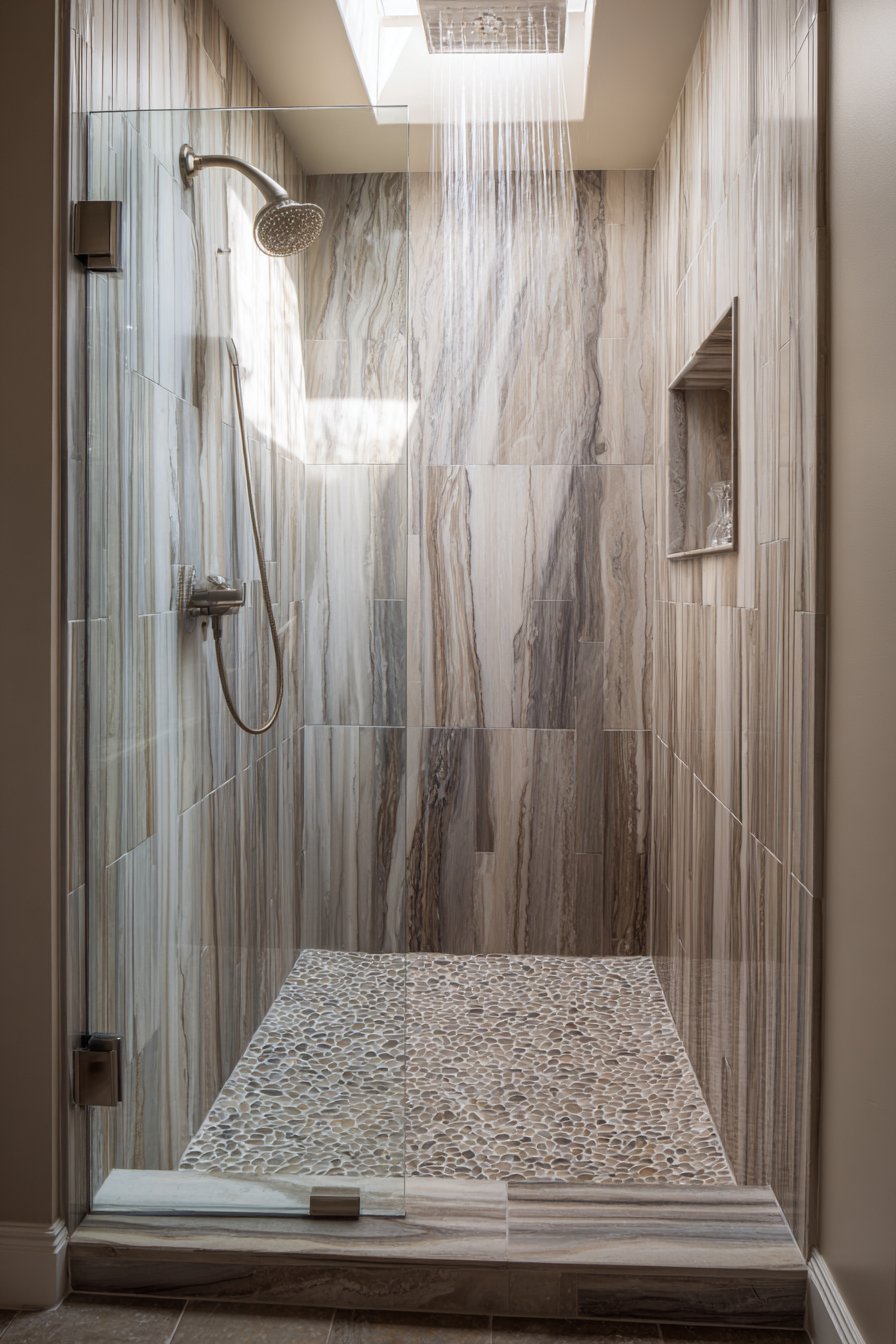
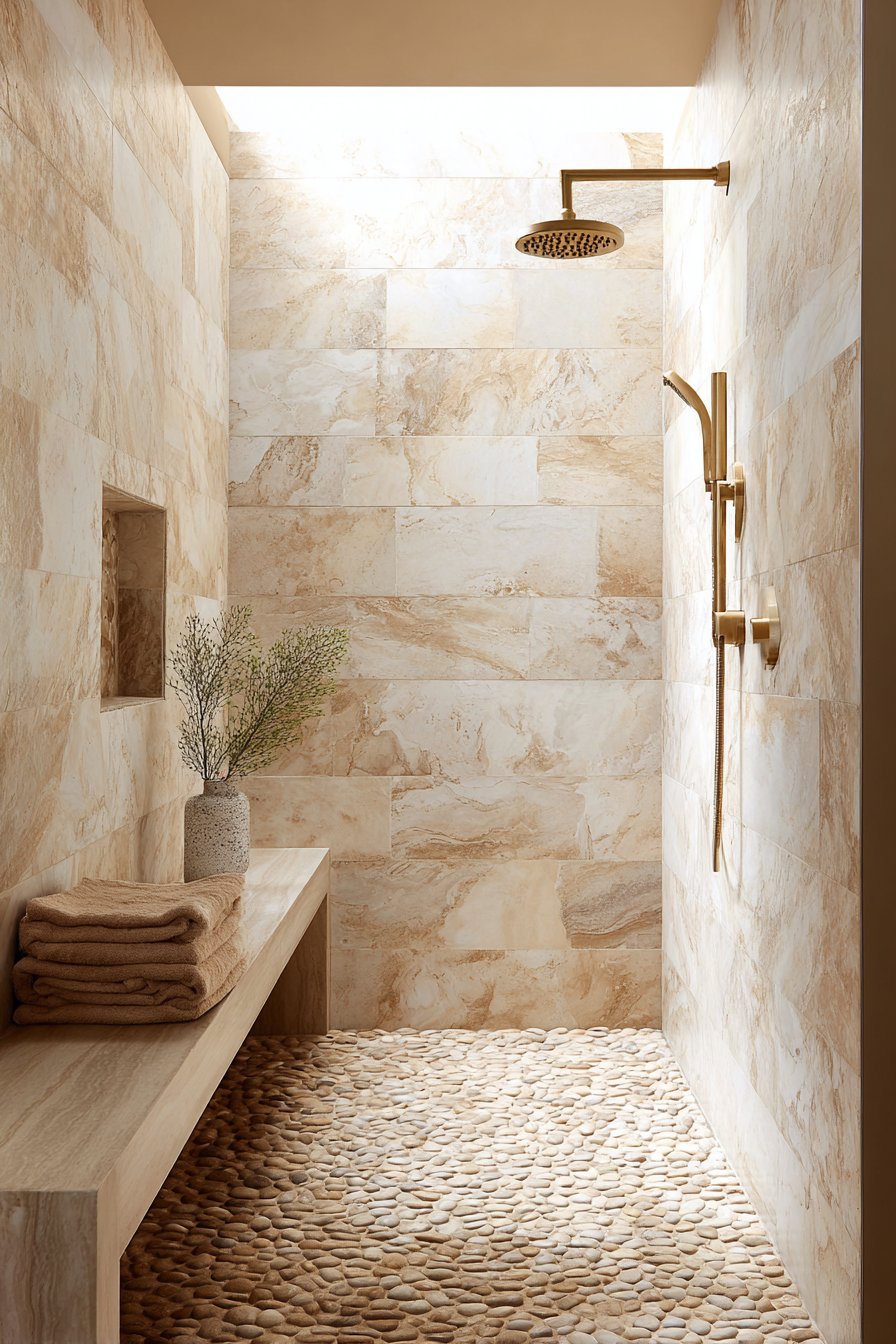
Beige pebble tile flooring provides textural contrast and essential slip resistance in the wet environment. The organic shapes and varied surface create visual interest while serving a practical safety function. Matte champagne bronze rainfall showerhead and hand shower create cohesive metallic accents that feel contemporary yet warm. The dual shower heads offer functional flexibility for different users and preferences.
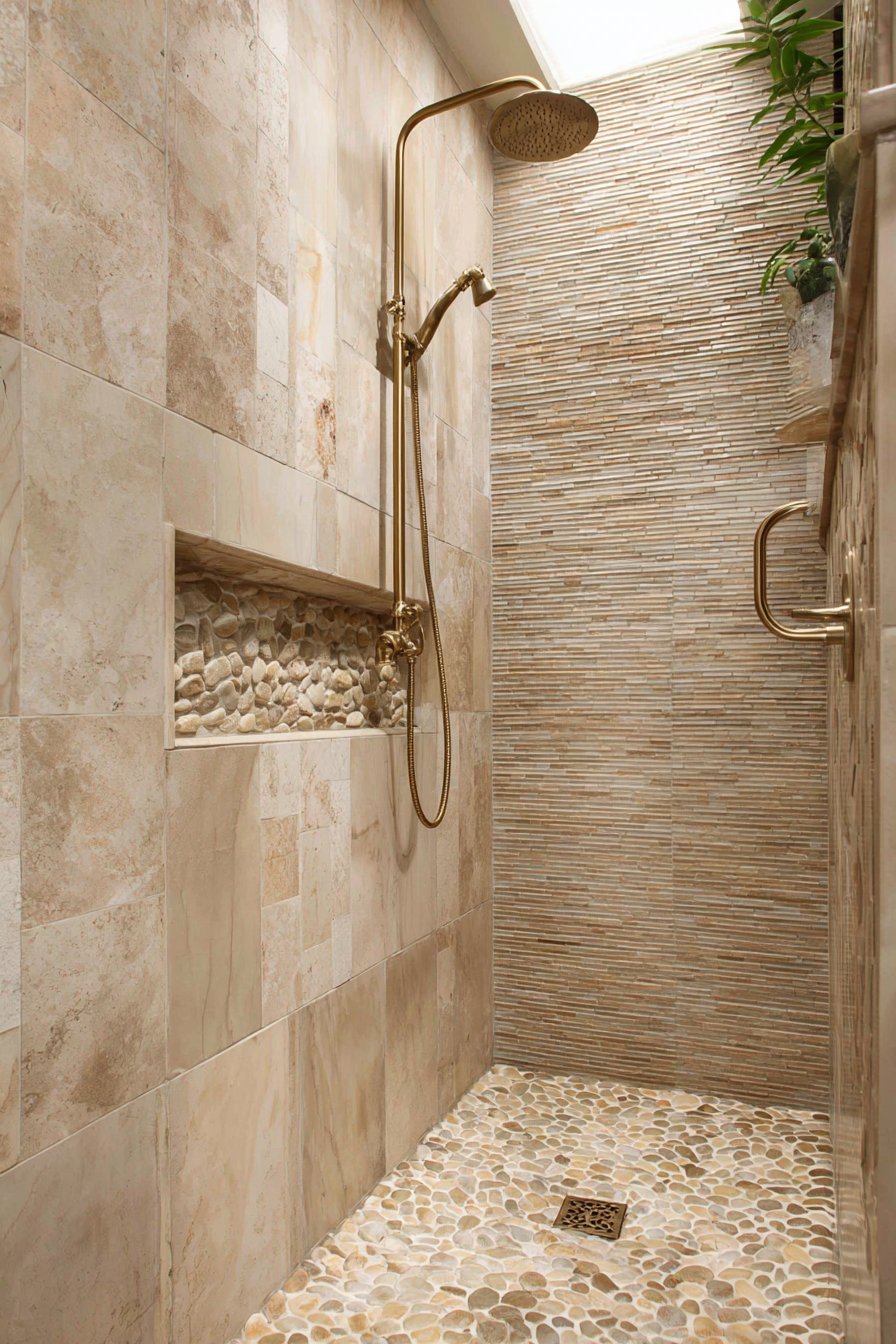
Natural light from a skylight above illuminates the varied beige surfaces, eliminating the dark feeling that sometimes plagues small bathrooms. Strategic lighting transforms a potentially cramped space into an airy retreat. The interplay between smooth wall tiles and textured floor creates dimensional interest. This design proves that compact bathrooms can feel luxurious through thoughtful material choices.
Key Design Tips:
- Use glass partitions instead of shower curtains to maintain visual openness
- Arrange tiles vertically to create height illusion in compact spaces
- Install pebble tile flooring for natural texture and slip resistance
- Choose champagne bronze or brass fixtures for warmth in beige palettes
- Incorporate a skylight if possible to maximize natural light
- Select large-format tiles to minimize grout lines and maintenance
- Consider a rainfall showerhead for spa-like luxury
5. Luxurious Walk-In Wet Room with Natural Stone
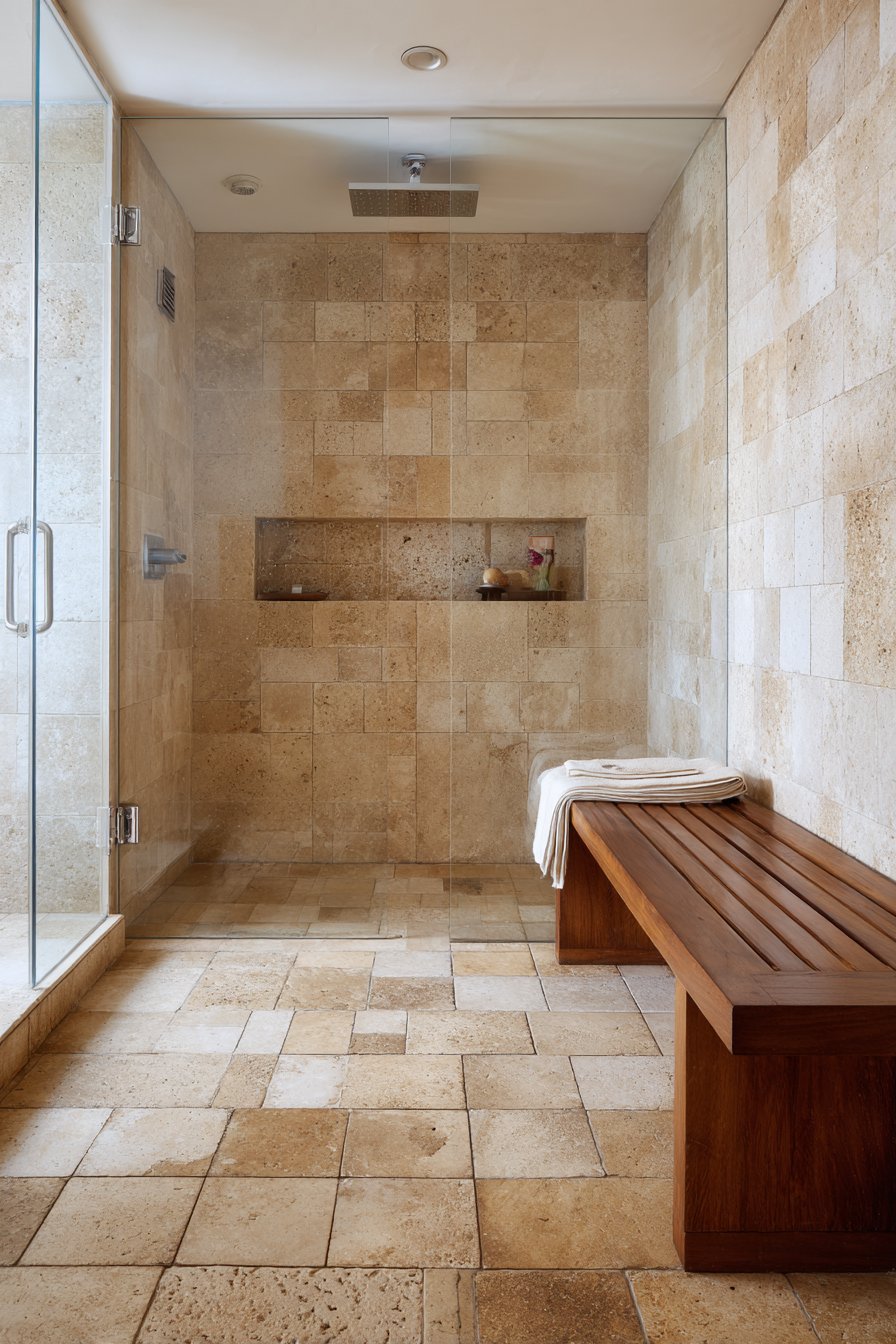
This luxurious bathroom embraces the European wet room concept, eliminating traditional shower enclosures entirely. Beige limestone tiles showing natural fossil details and warm color variation cover all surfaces, creating seamless continuity. The limestone’s organic patterns tell ancient stories, connecting the space to natural history. Each tile displays unique characteristics that manufactured materials cannot duplicate.
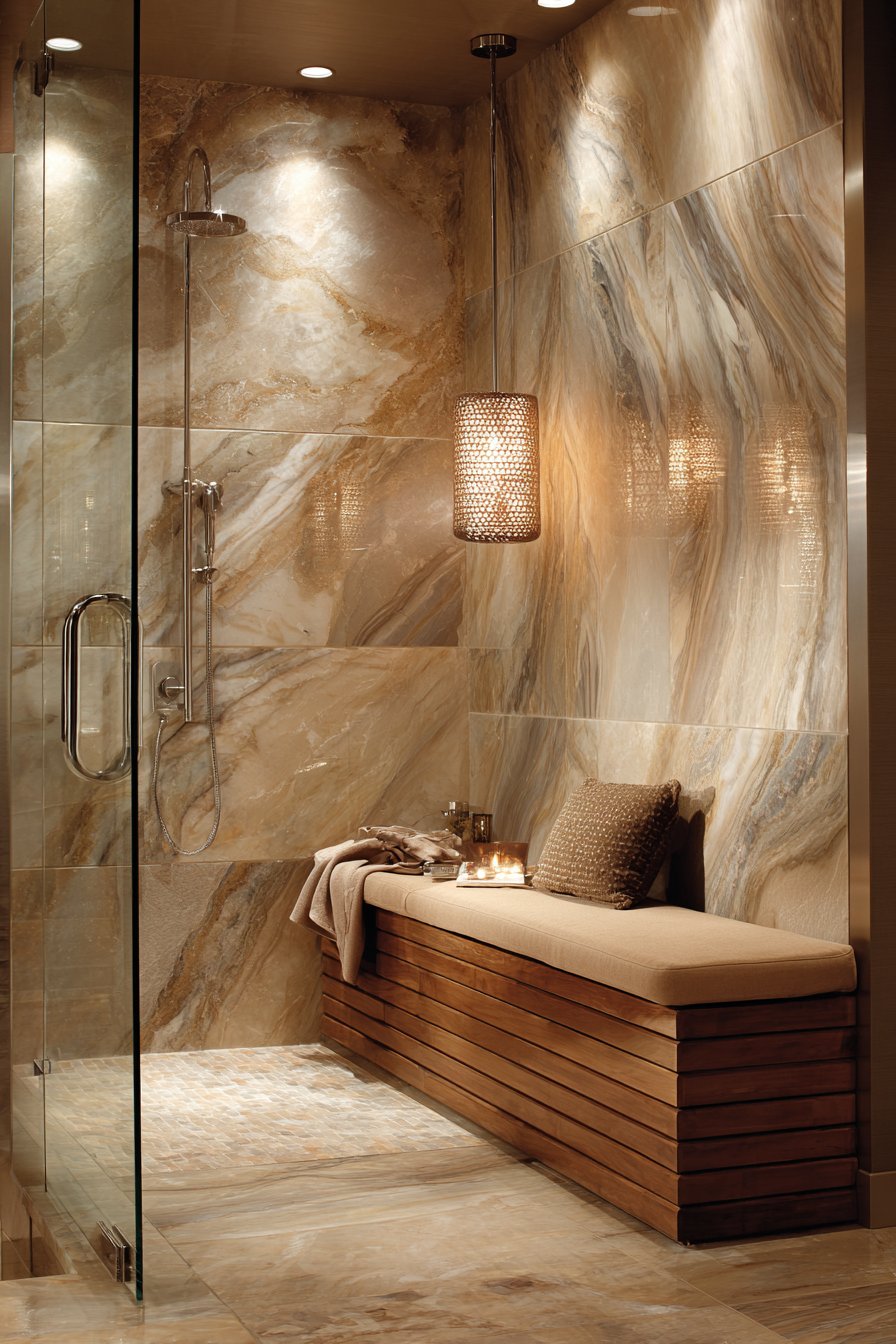
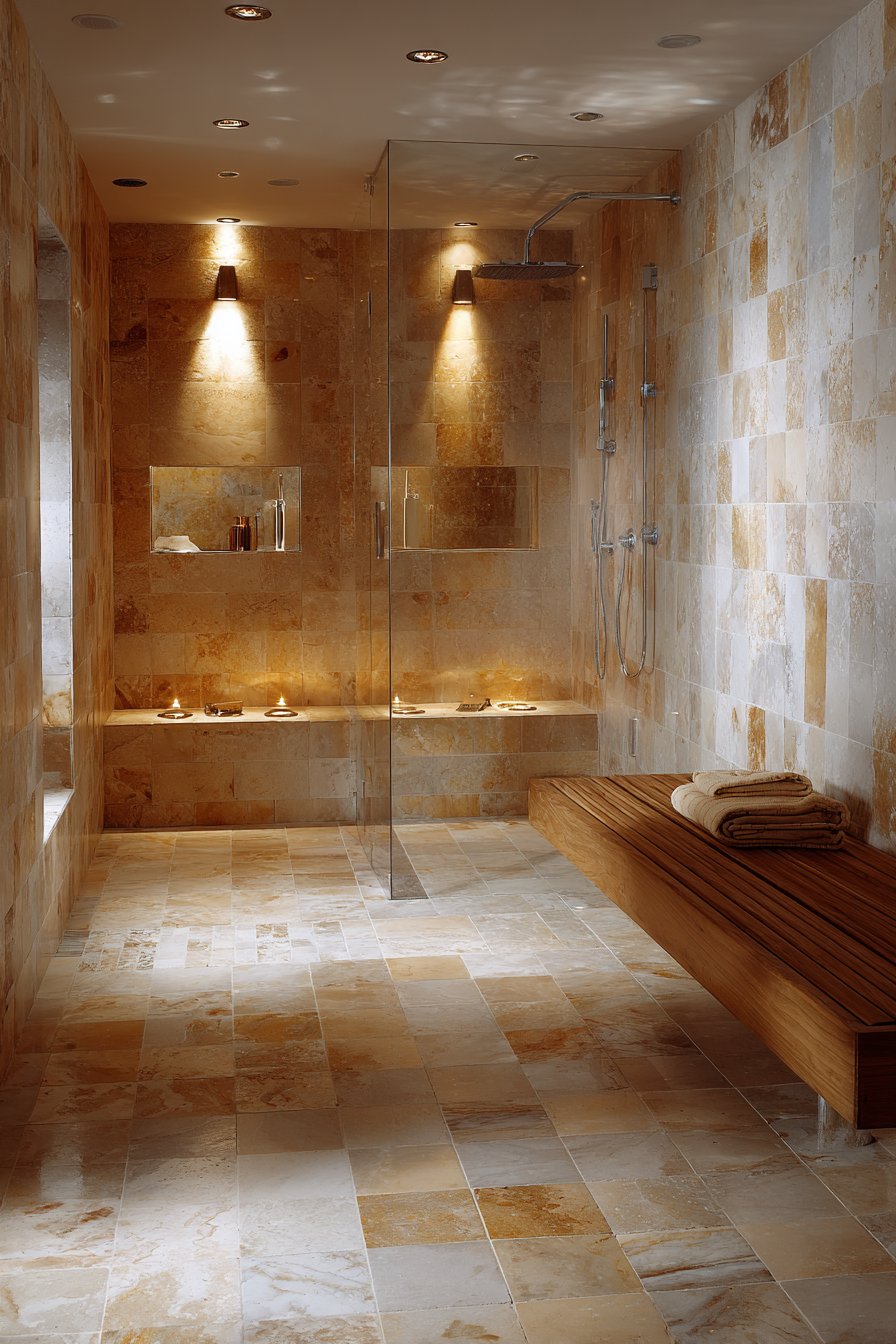
A teak wooden bench provides practical seating within the shower area, its honey tone complementing the beige stone beautifully. The warm wood introduces organic contrast and serves multiple functions from shaving to relaxation. Floor-to-ceiling beige tiles with matte finish create a cocoon-like environment that feels both expansive and intimate. The consistent surface treatment eliminates visual interruption.
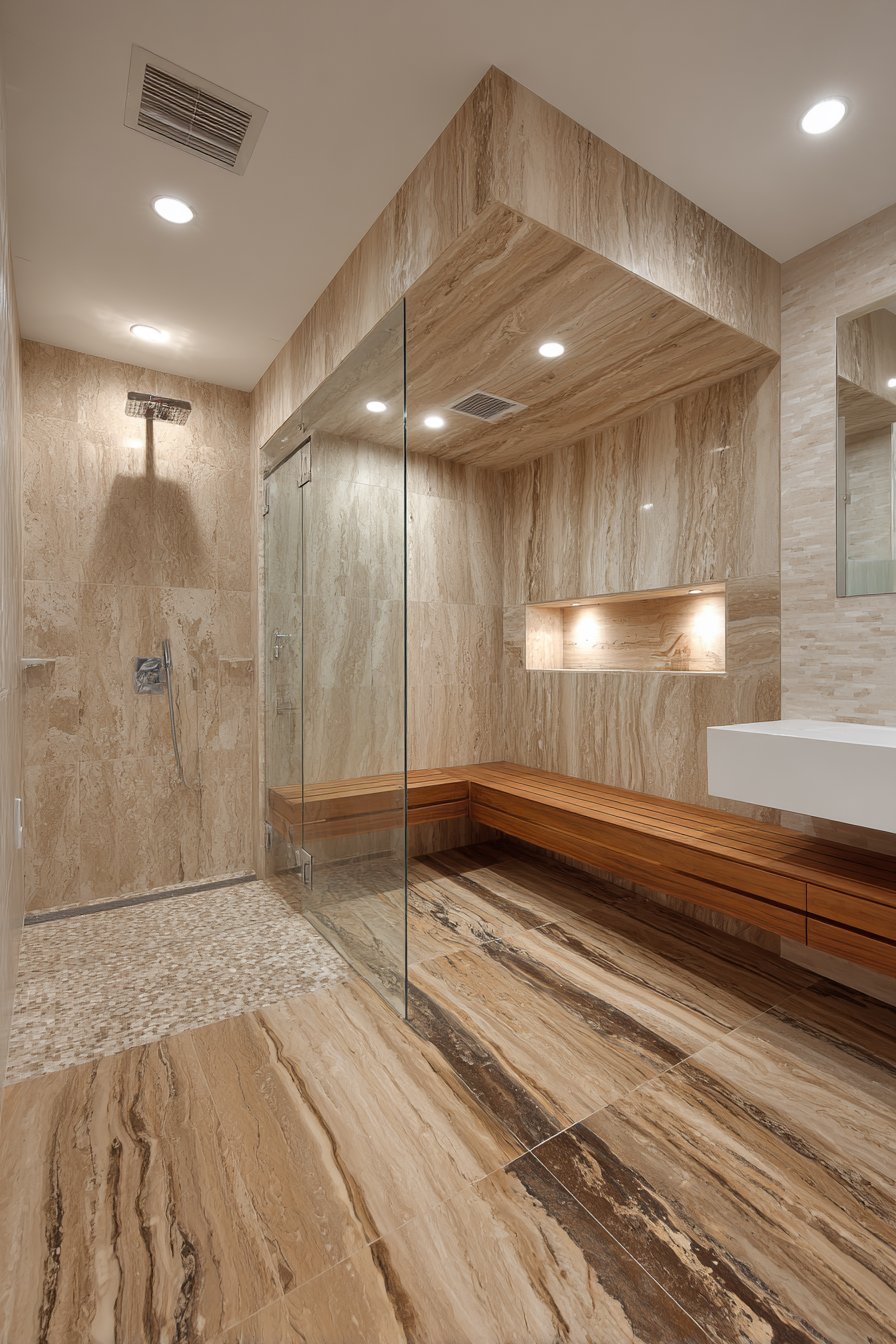
Chrome fixtures add contemporary sparkle, creating bright focal points against the earthy stone backdrop. The polished metal reflects light throughout the space, enhancing the overall brightness. The spa-inspired atmosphere transforms daily showers into restorative experiences. This design demonstrates how investing in quality natural materials creates lasting beauty and value.
Key Design Tips:
- Consider wet room design for ultimate luxury and accessibility
- Choose limestone or travertine with visible fossil details for character
- Install proper drainage and waterproofing throughout the entire space
- Incorporate a teak bench for both function and natural warmth
- Use floor-to-ceiling tiles to create seamless surfaces
- Select matte finish tiles to prevent excessive water spotting
- Add chrome fixtures for contemporary contrast against warm stone
6. Textured Powder Room with Architectural Character
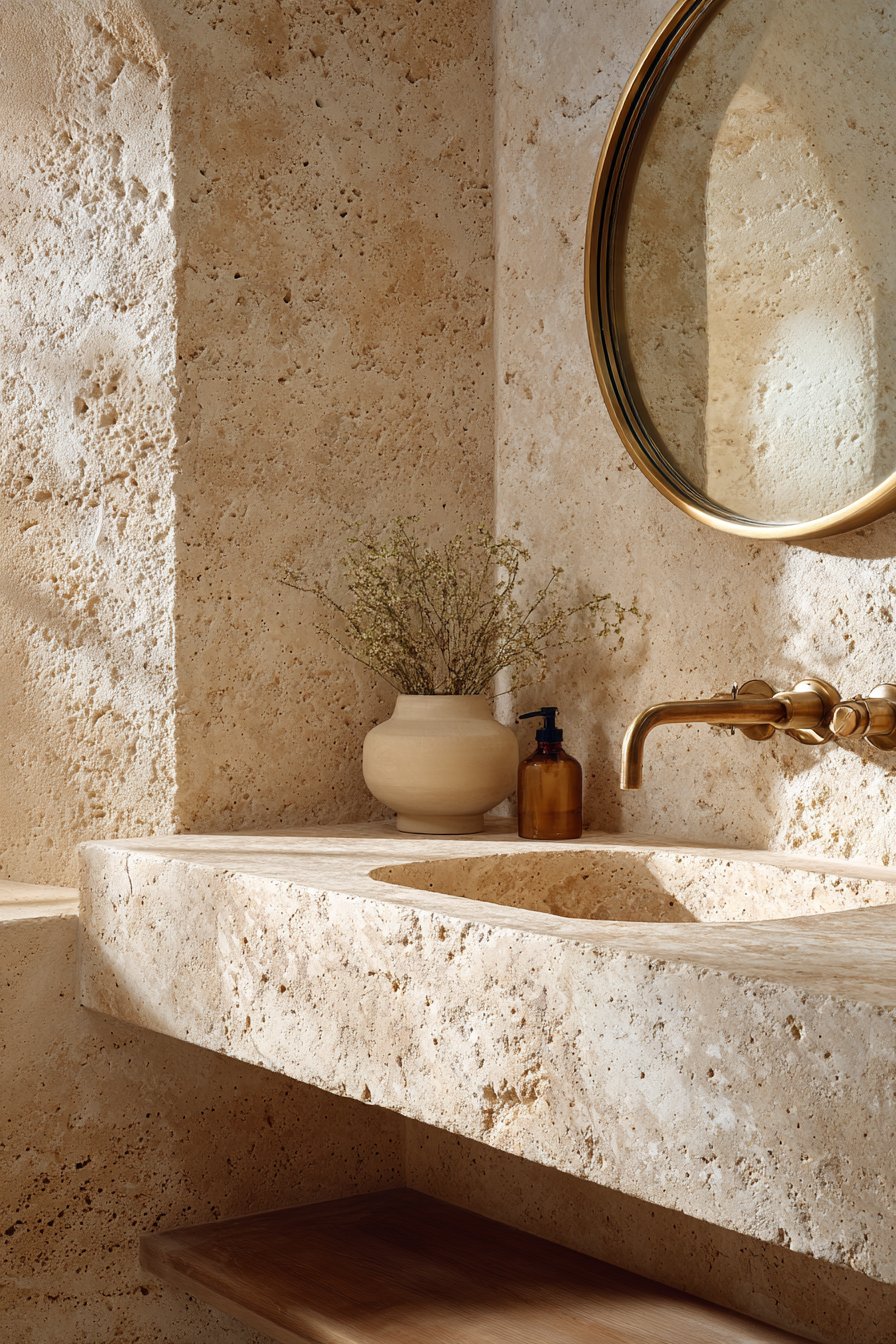
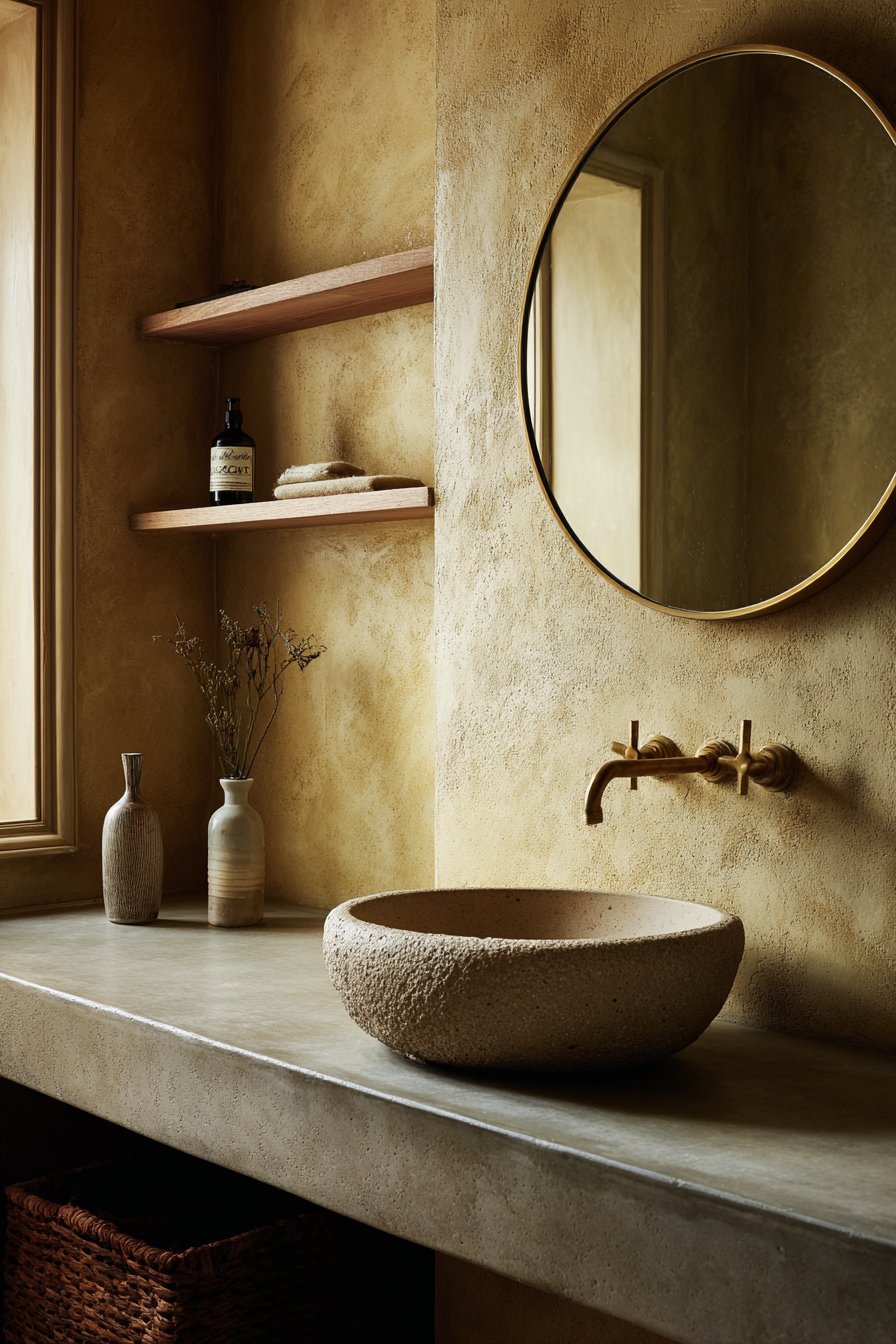
This compact powder room maximizes impact through dramatic textural elements and architectural details. Textured beige plaster walls showing subtle hand-troweled imperfections catch light beautifully throughout the day. The artisanal finish adds handcrafted warmth that machine-made materials lack. These intentional imperfections create shadow play that changes with natural light movement.
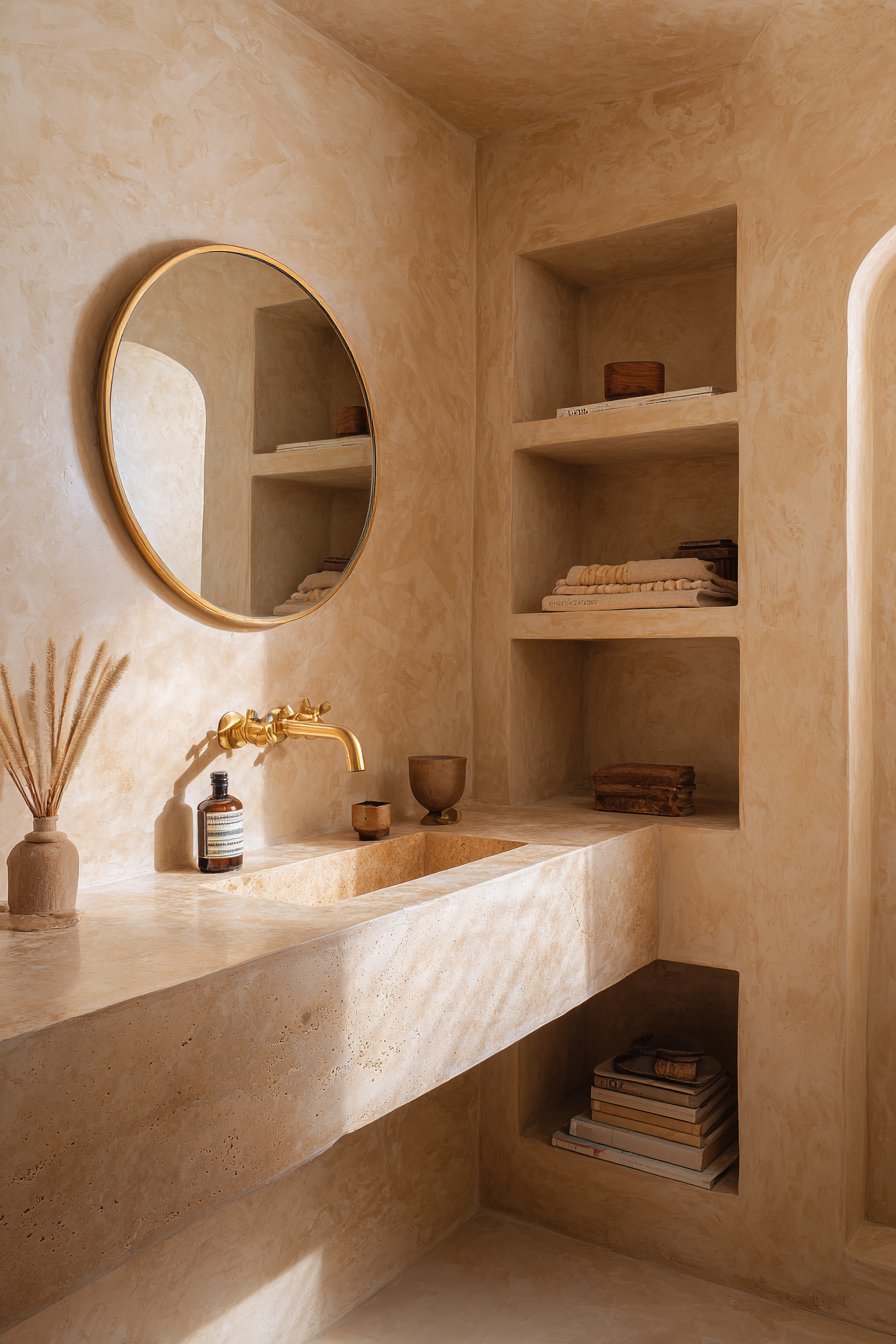
A wall-mounted beige concrete sink with integrated basin creates striking architectural interest. The concrete’s industrial character contrasts beautifully with the soft plaster walls, creating design tension. A vintage-style brass faucet adds traditional elegance to the contemporary materials. Open beige wooden shelving displays minimalist accessories in neutral tones, providing functional storage without visual weight.
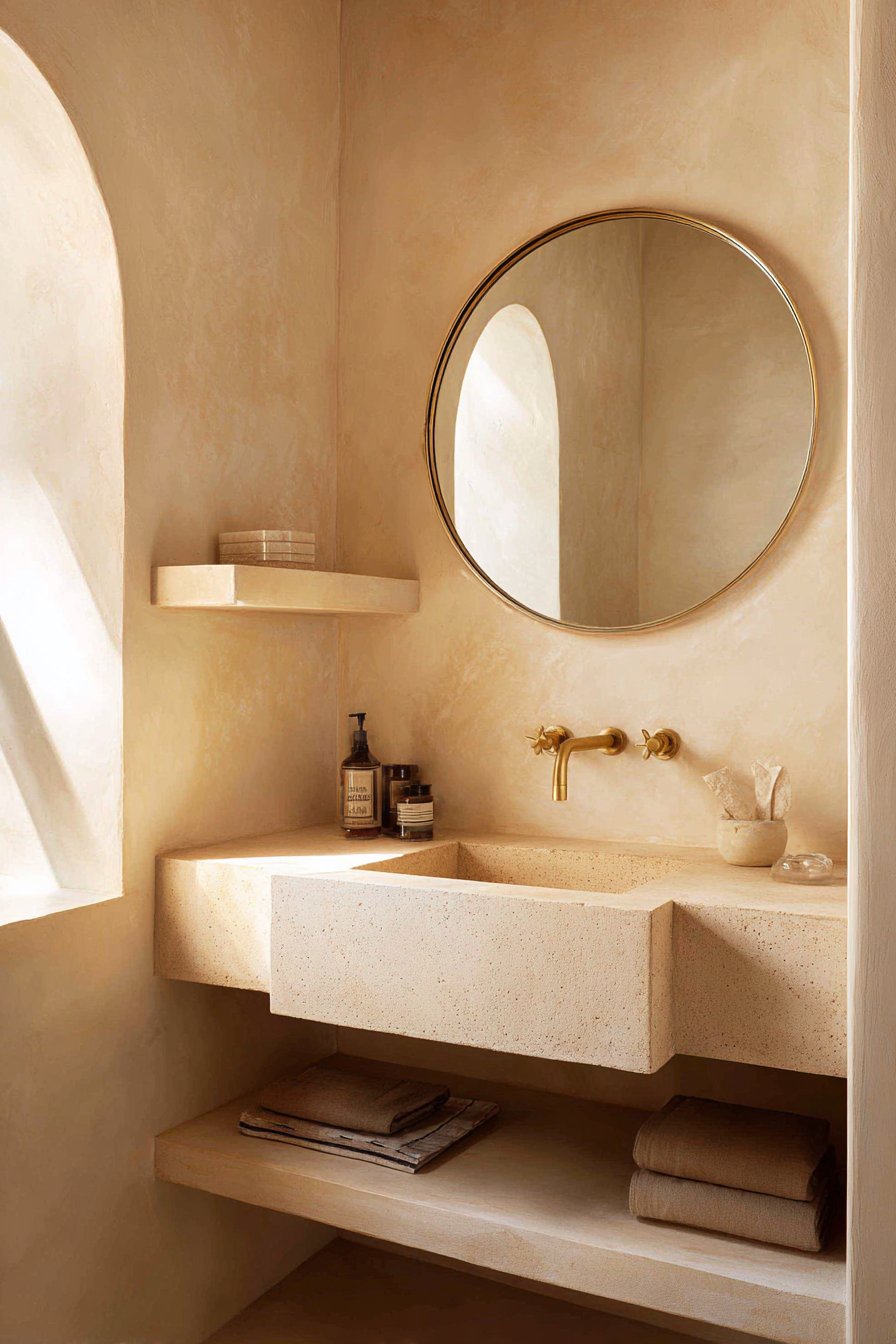
A round mirror with thin brass frame centers the composition, its circular form softening the space’s angular elements. The mirror’s reflective surface amplifies light and creates depth perception in the compact room. Natural side lighting emphasizes wall texture details and the warm, inviting beige color scheme. This powder room proves that small spaces can make big design statements.
Key Design Tips:
- Apply textured plaster finishes to create artisanal wall character
- Choose wall-mounted fixtures to maximize floor space visually
- Select integrated concrete sinks for modern architectural appeal
- Incorporate vintage-style faucets to bridge contemporary and traditional styles
- Use round mirrors to soften angular bathroom layouts
- Install side lighting to emphasize textural wall treatments
- Display minimal accessories in coordinating neutral tones
7. Transitional Clawfoot Tub Bathroom with Classic Elements
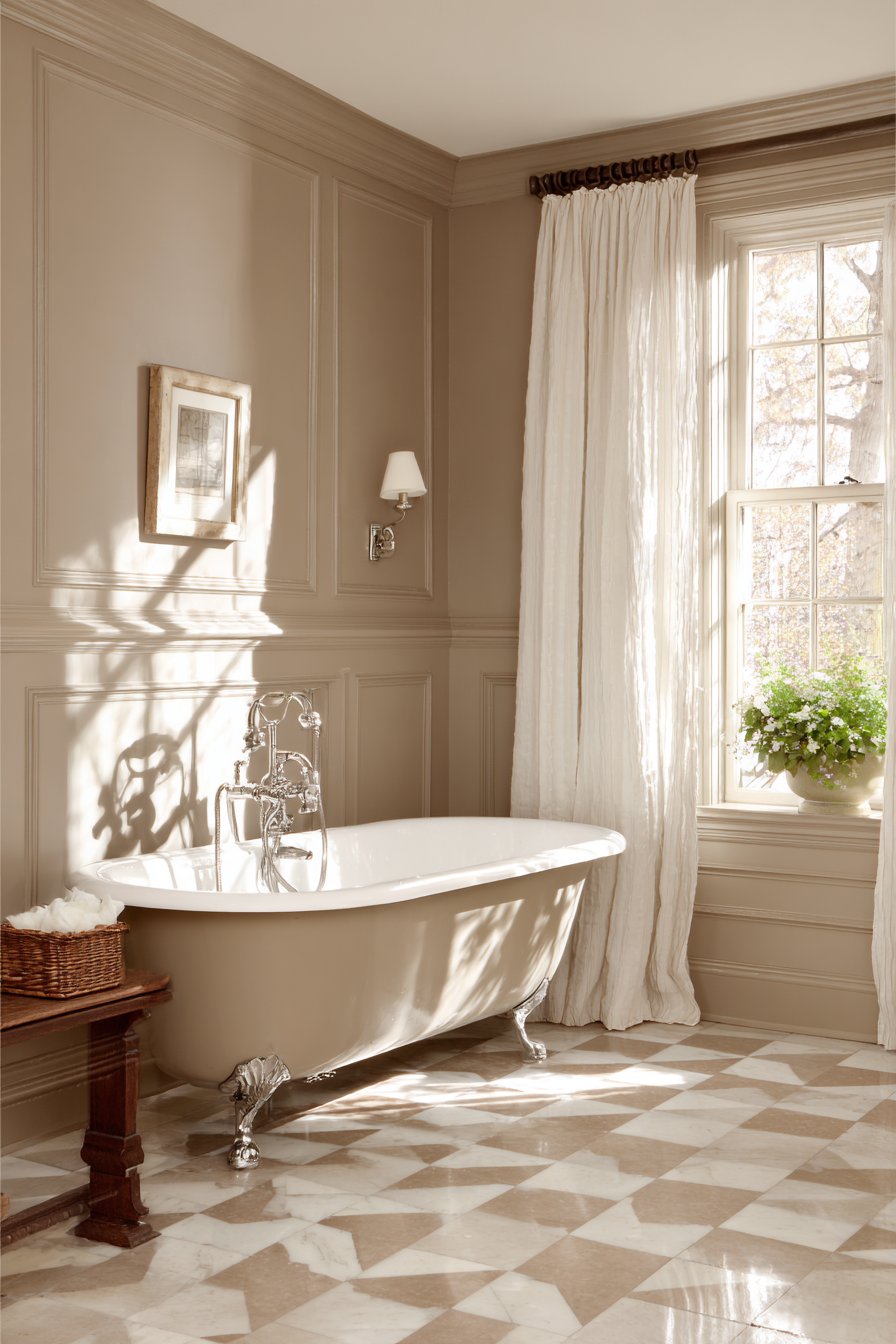
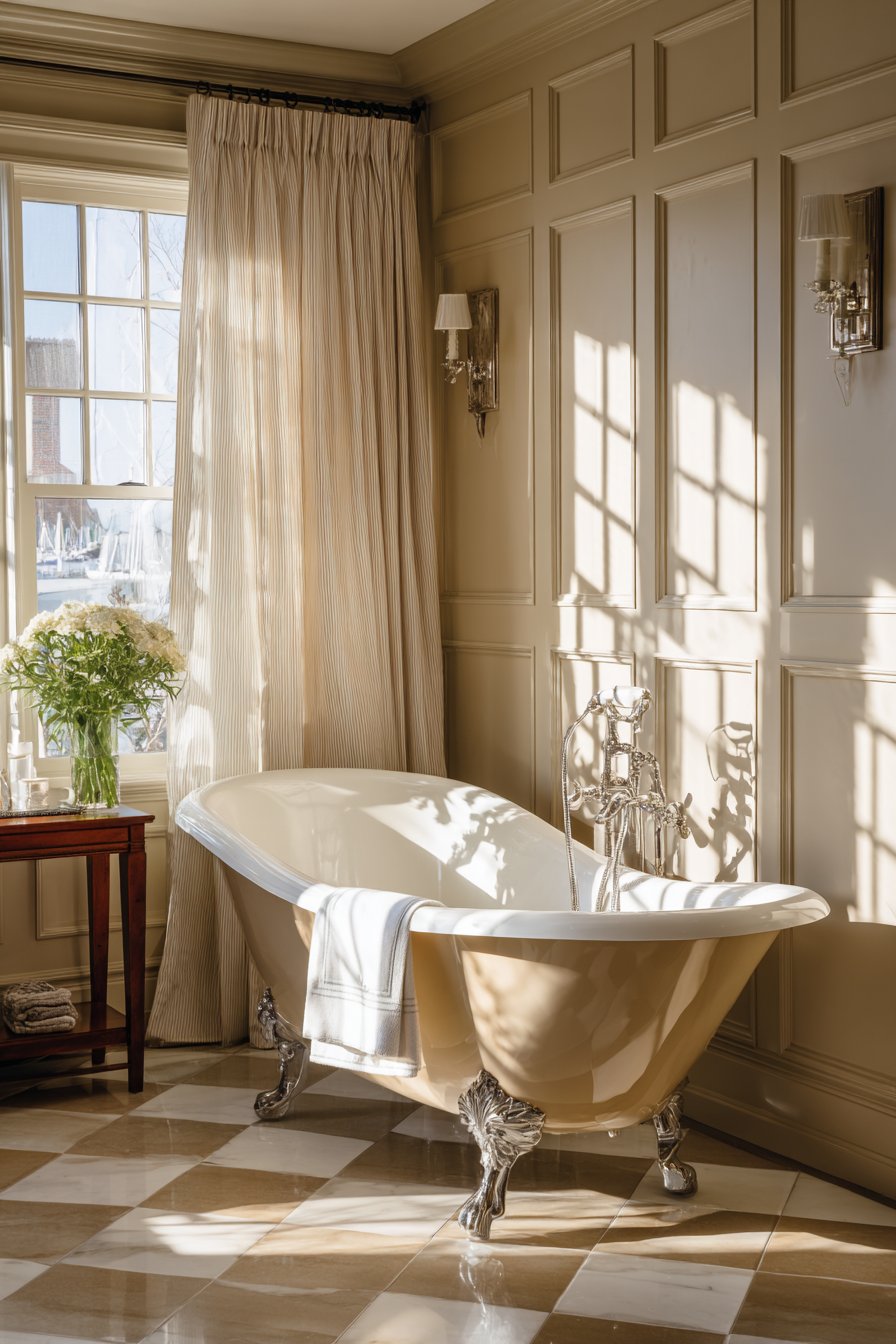
This bathroom beautifully bridges traditional and contemporary design through thoughtful material selection and spatial planning. A clawfoot tub refinished in warm beige serves as the room’s statement piece. Positioned on classic beige and white checkerboard floor tiles, the tub honors traditional bathroom design while feeling fresh and updated. The geometric floor pattern adds visual energy to the serene color palette.
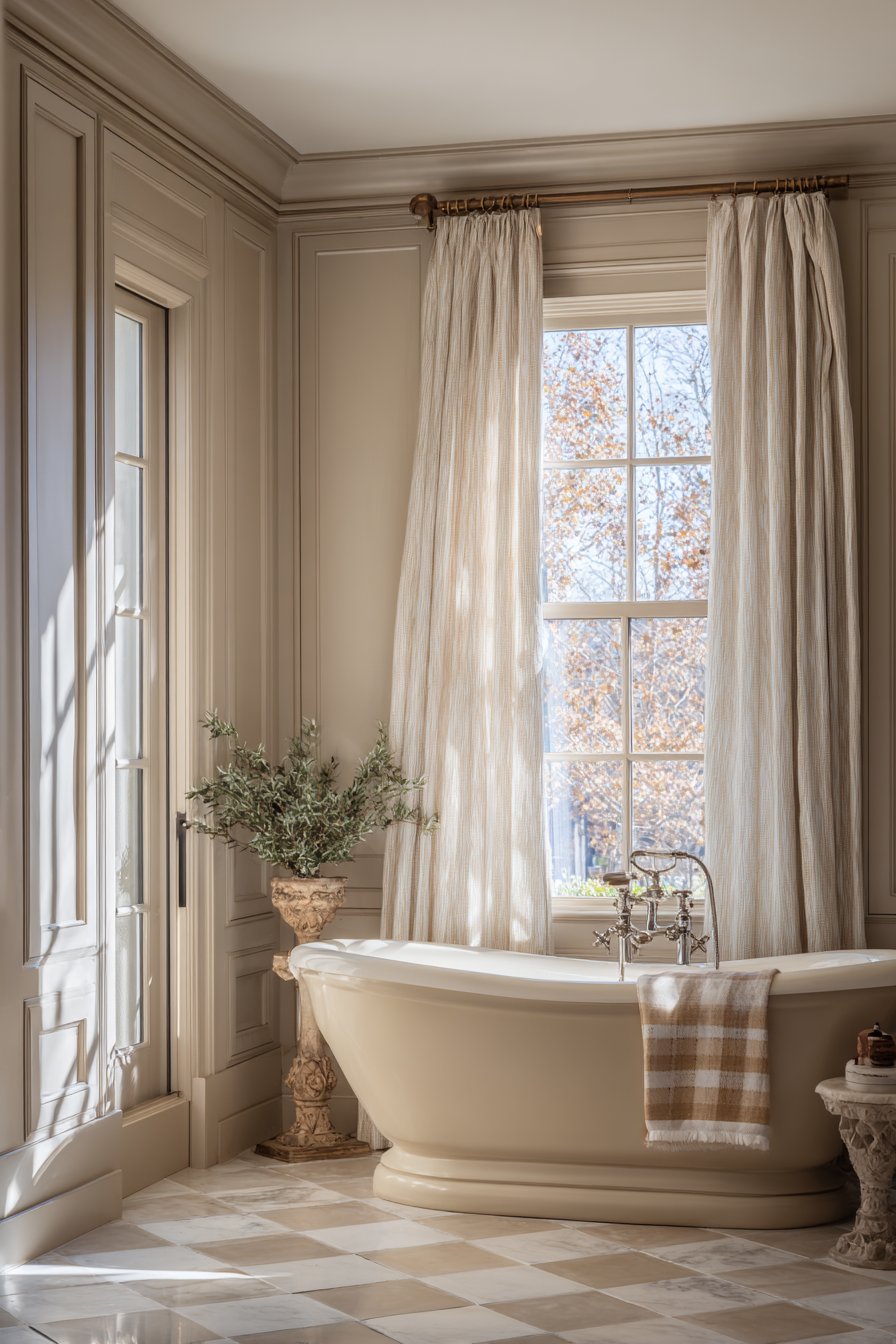
Beige wainscoting with subtle wood grain covers the lower walls, providing traditional architectural detail and visual weight. The wainscoting is topped with beige painted upper walls that lighten the space and draw the eye upward. Polished nickel vintage-style fixtures complement the timeless design aesthetic, offering durability with period-appropriate appearance. The fixtures’ traditional silhouettes feel authentic rather than trendy.
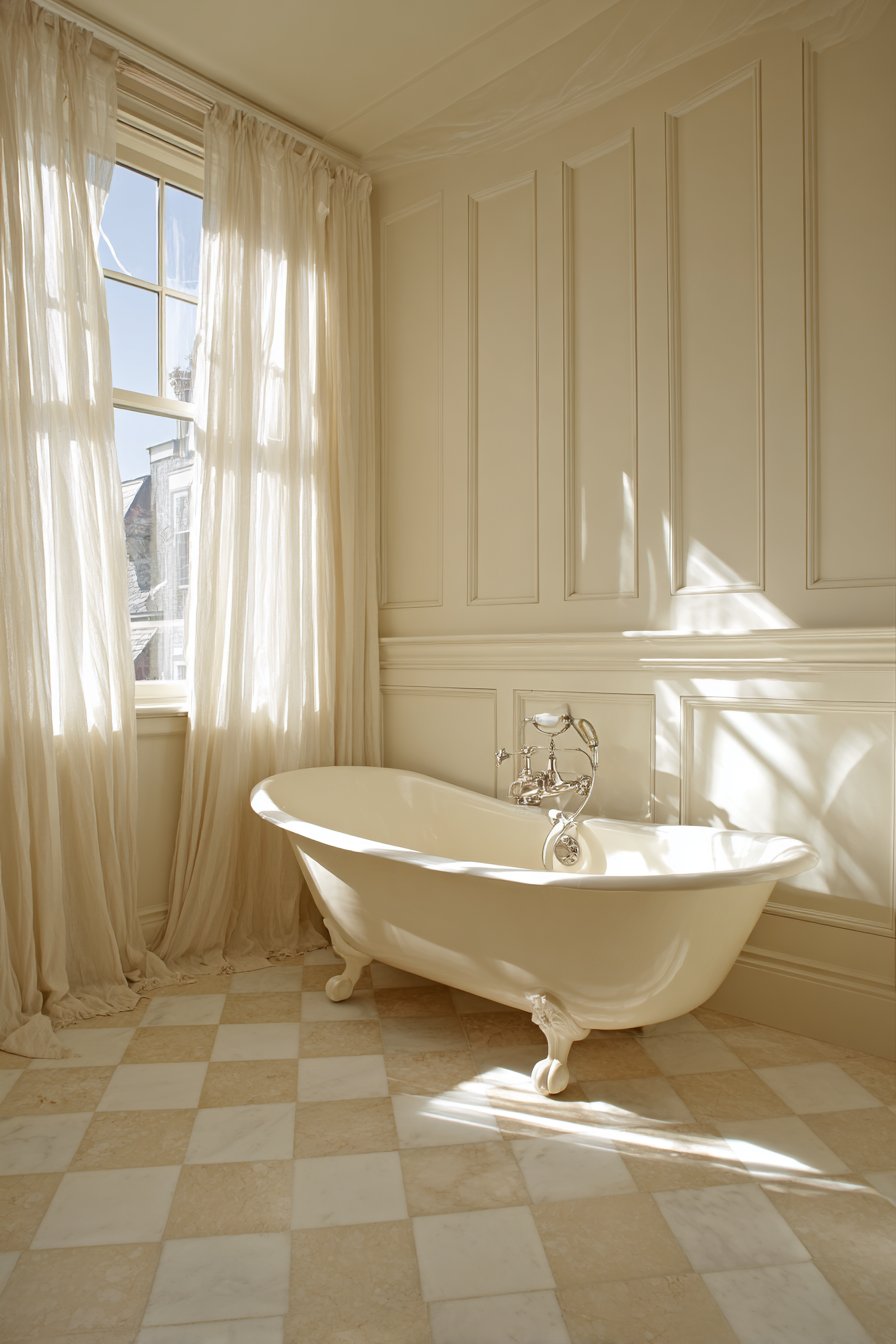
Sheer linen curtains in ivory filter natural window light, creating soft shadows that enhance the room’s peaceful atmosphere. The natural fabric adds organic softness to the hard surfaces. This design successfully blends traditional elements with a neutral beige palette for enduring appeal. The transitional approach ensures the bathroom won’t feel dated as design trends evolve.
Key Design Tips:
- Refinish existing clawfoot tubs in beige for updated traditional style
- Use checkerboard floor patterns for classic visual interest
- Install wainscoting at traditional chair rail height for architectural detail
- Paint upper and lower walls in coordinating beige tones
- Choose polished nickel fixtures for traditional authenticity
- Hang sheer linen curtains to filter light while maintaining privacy
- Balance hard tile surfaces with soft textile elements
8. Minimalist Wall-Mounted Fixture Design
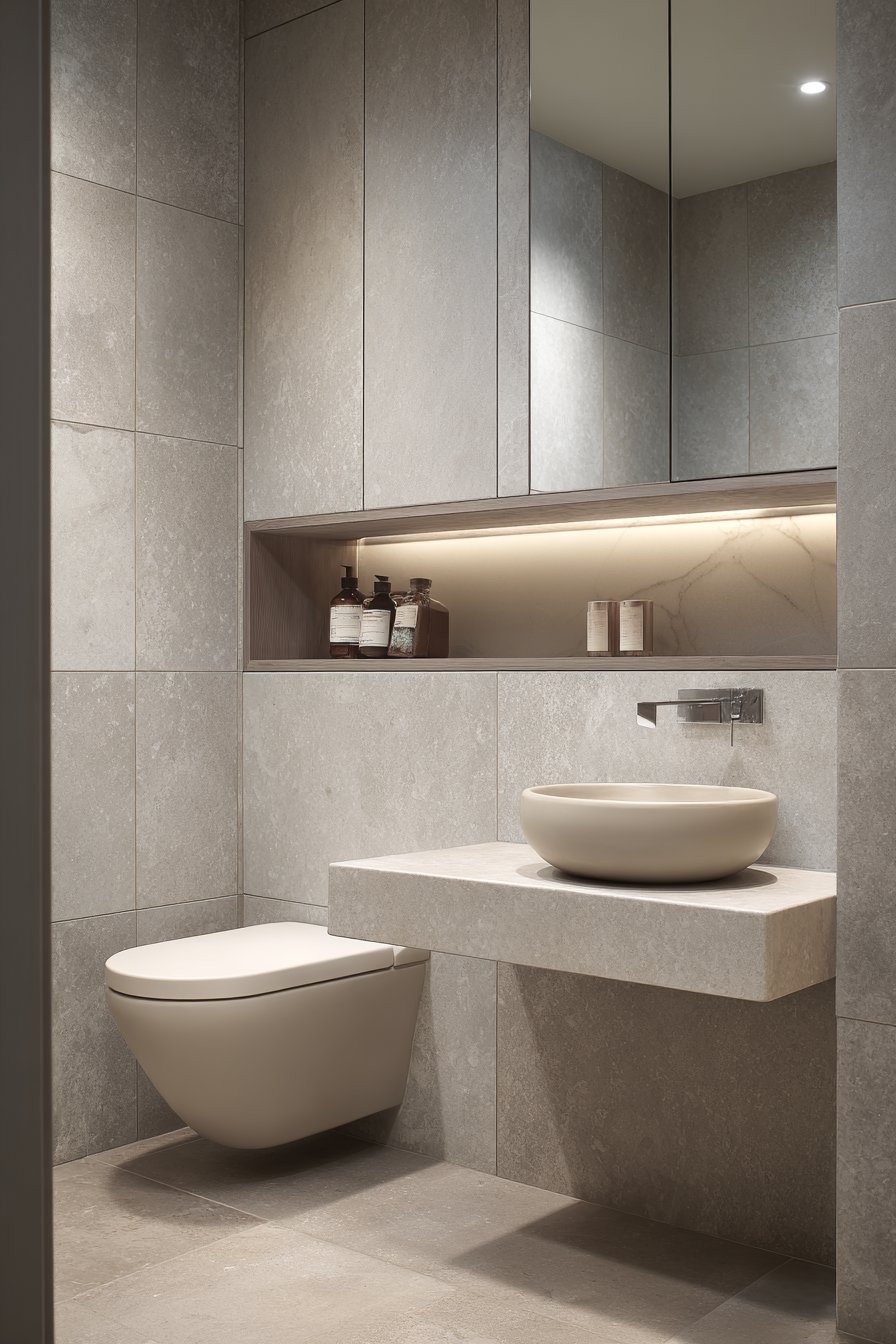
This minimalist bathroom demonstrates how restraint and careful editing create serene sophistication. A wall-mounted toilet and floating beige ceramic sink create clean lines and facilitate easy floor cleaning. The suspended fixtures contribute to the space’s airy quality and modern aesthetic. Large-format beige concrete-look tiles with minimal grout lines cover walls and floor, creating a seamless monolithic appearance.
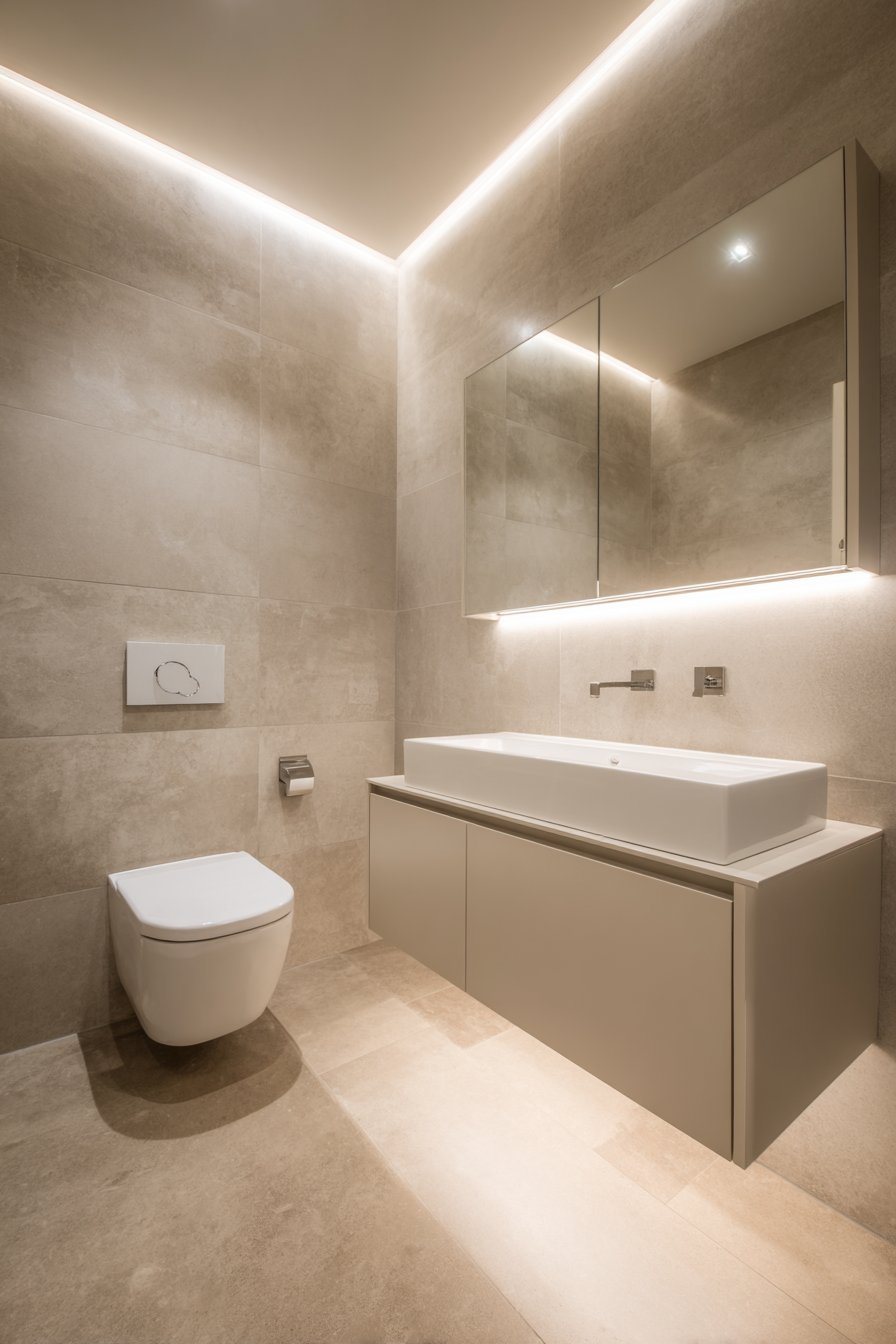
The continuous surface treatment eliminates visual clutter and emphasizes the room’s geometric purity. A recessed medicine cabinet with beige interior maintains the streamlined aesthetic while providing essential storage. The concealed storage prevents daily necessities from disrupting the minimal design. LED strip lighting under the vanity provides ambient glow that appears to float the fixture, enhancing the weightless quality.
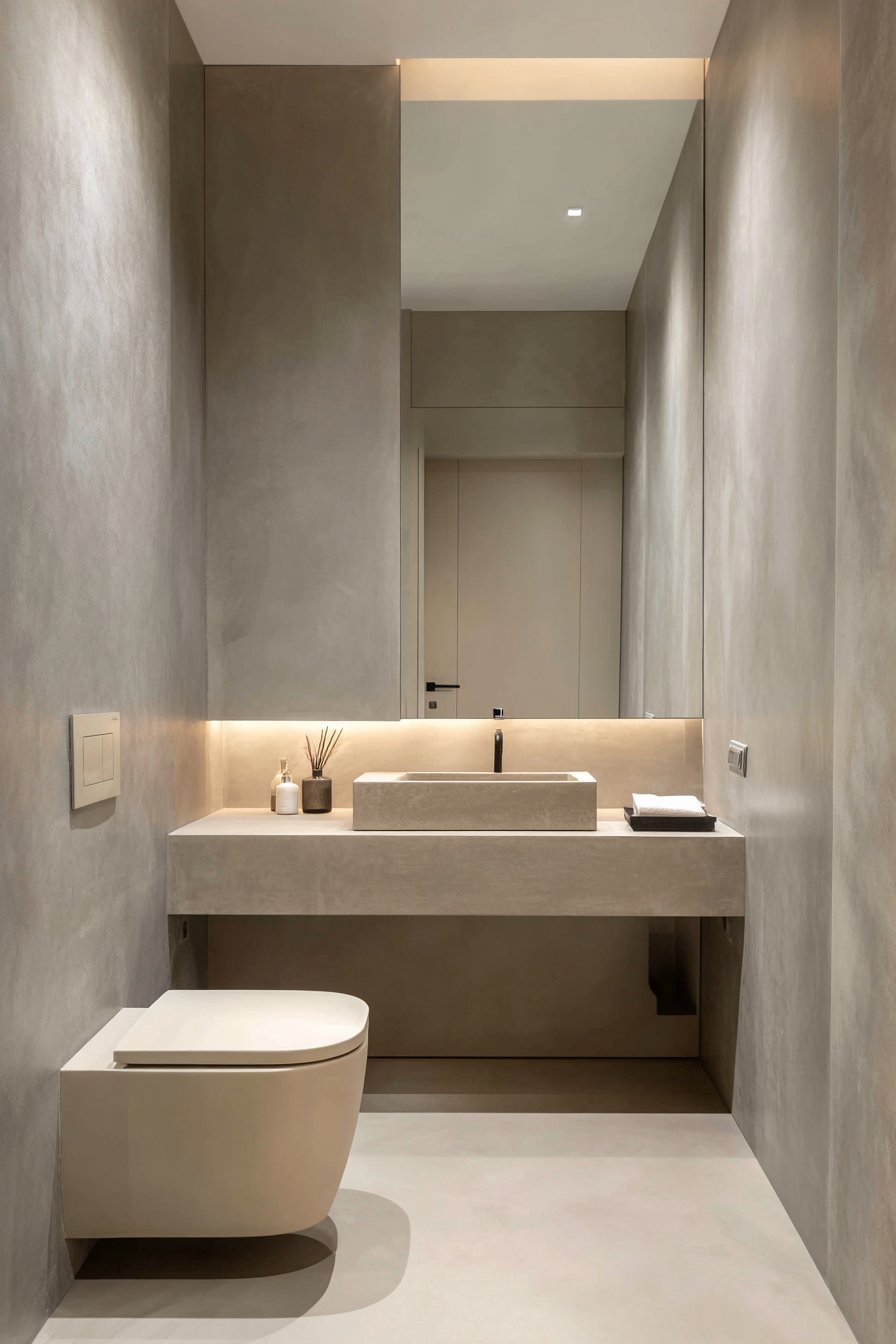
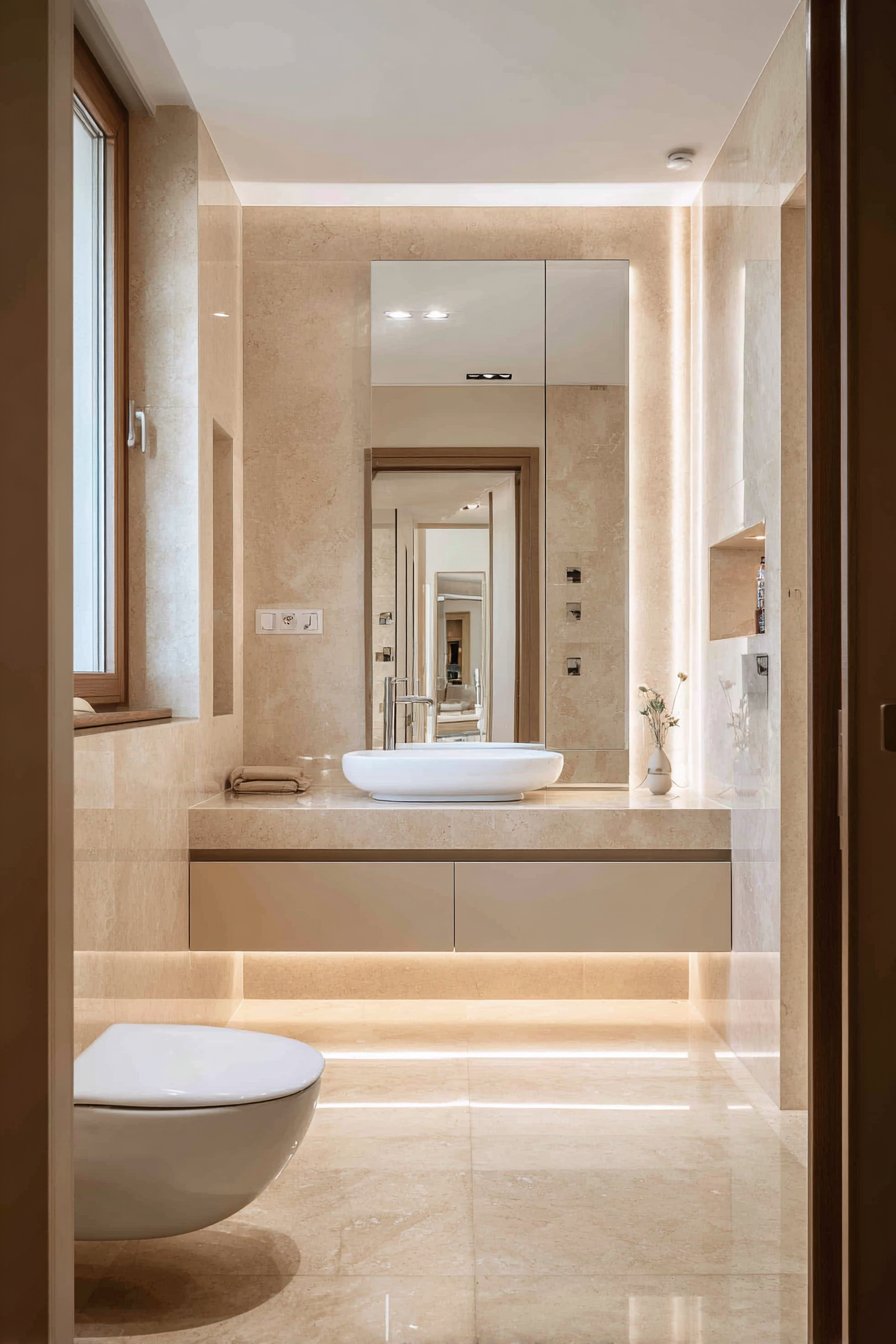
The wide-angle perspective reveals how minimalist beige design and smart spatial planning create a spacious feel even in modest square footage. Every element serves multiple purposes, demonstrating functional efficiency. This bathroom proves that minimalism isn’t cold when executed in warm beige tones with quality materials.
Key Design Tips:
- Select wall-mounted fixtures to maximize floor space and ease cleaning
- Use large-format tiles to minimize grout lines and maintenance
- Choose concrete-look tiles for contemporary industrial character
- Install recessed medicine cabinets to maintain clean wall planes
- Add LED strip lighting under vanities for ambient floating effect
- Maintain monochromatic palette for cohesive minimalist aesthetic
- Prioritize quality materials over decorative elements
9. Cozy Corner Tub Bathroom with Earthy Textures
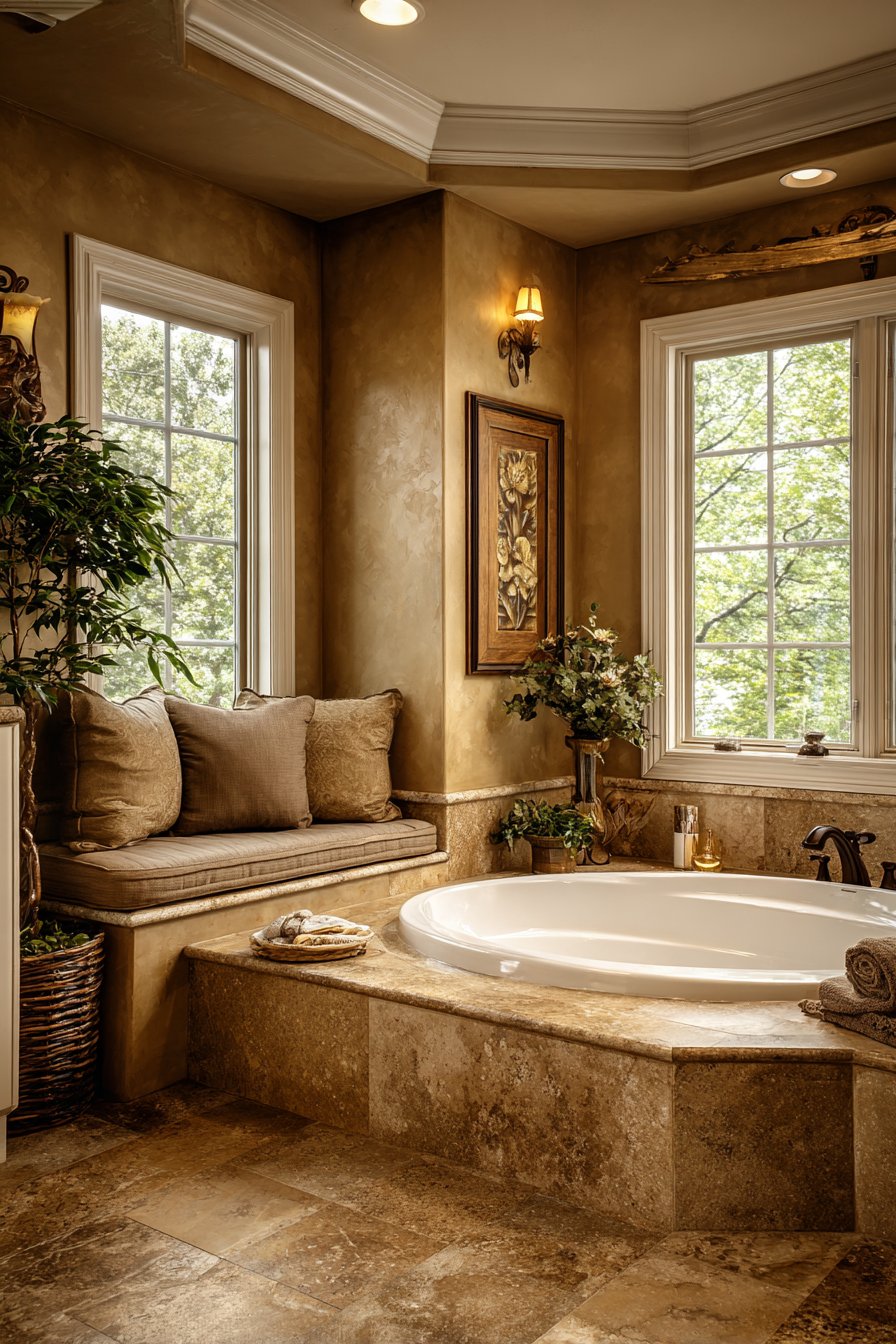
This warm bathroom design embraces natural materials and thoughtful comfort features. A corner bathtub surrounded by beige tumbled travertine tiles showing natural edge variations and earthy texture maximizes space efficiency. The tumbled finish softens the stone’s appearance, creating an aged, weathered quality. The irregular edges add organic character that polished stone lacks.
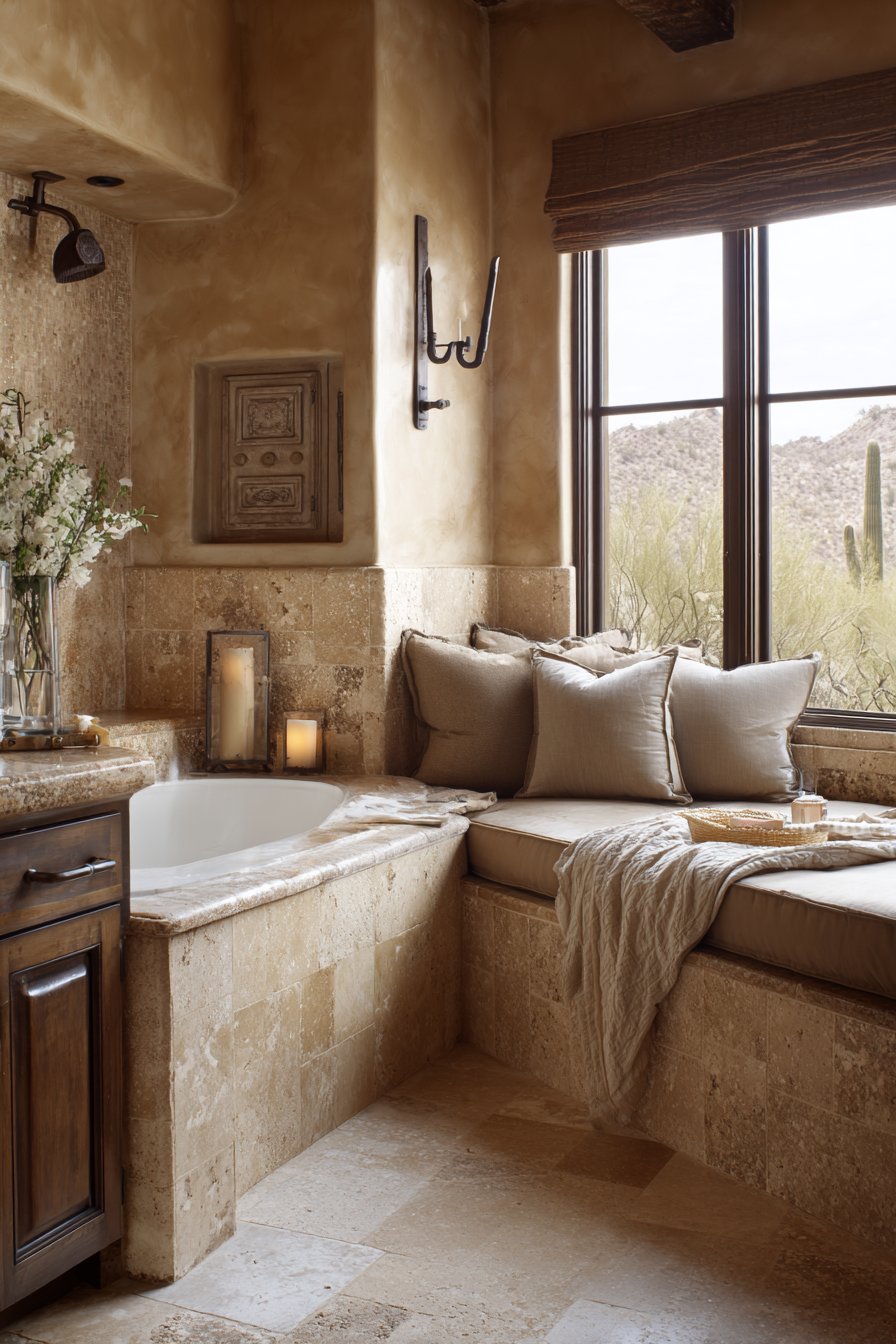
A built-in beige tiled bench with cushioned seating in taupe linen provides a practical lounging spot within the bathroom. This thoughtful addition transforms the space into a true relaxation zone. Beige Venetian plaster on remaining walls adds depth with subtle sheen variations that change throughout the day. The traditional plaster technique creates timeless elegance with artisanal appeal.
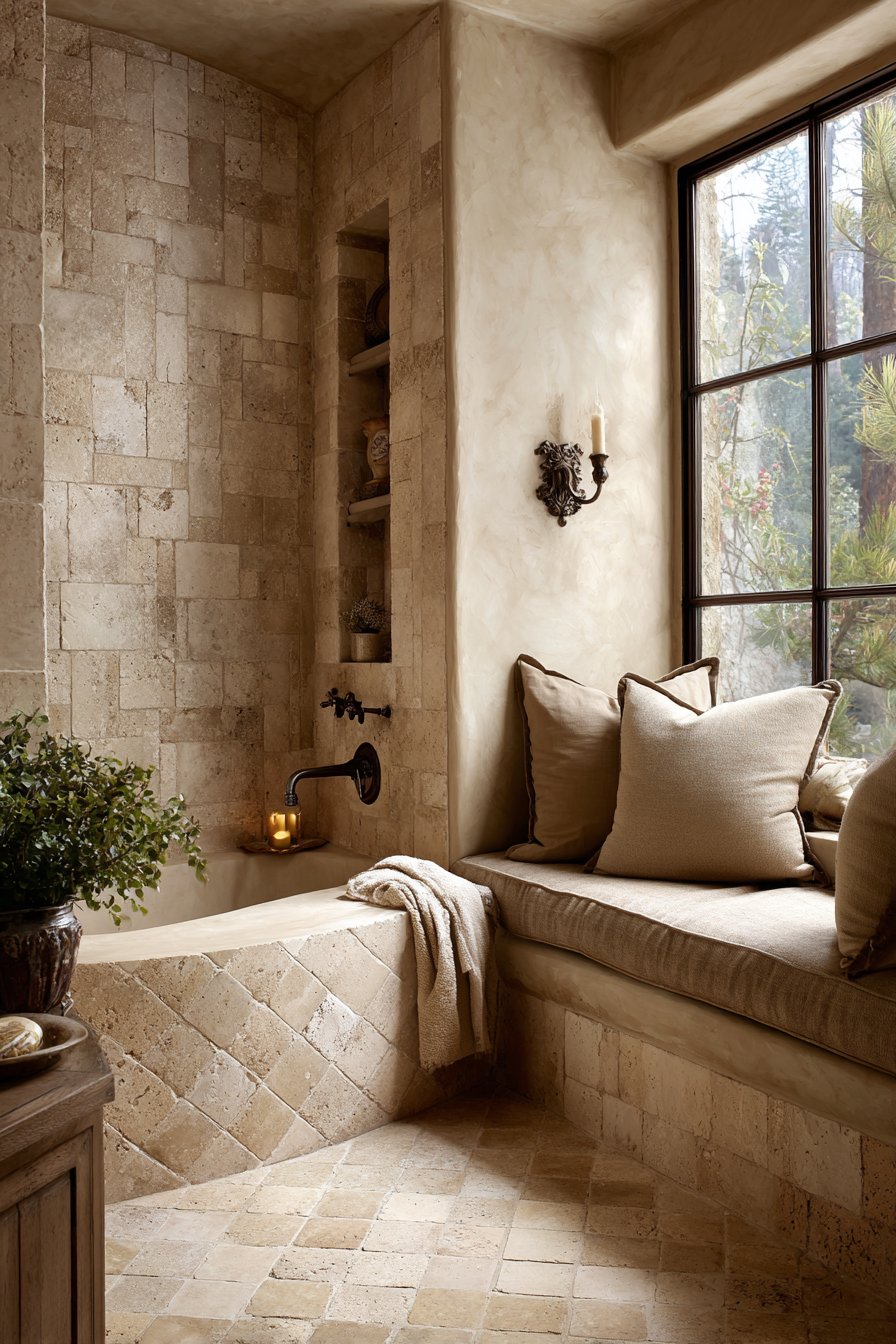
Oil-rubbed bronze fixtures create rich contrast against the light beige palette, introducing darker metallic notes. The fixtures’ dark finish adds visual weight and traditional character. Natural daylight from a large window highlights the textural diversity within the beige palette. This design creates cozy, lived-in elegance that feels authentic and inviting.
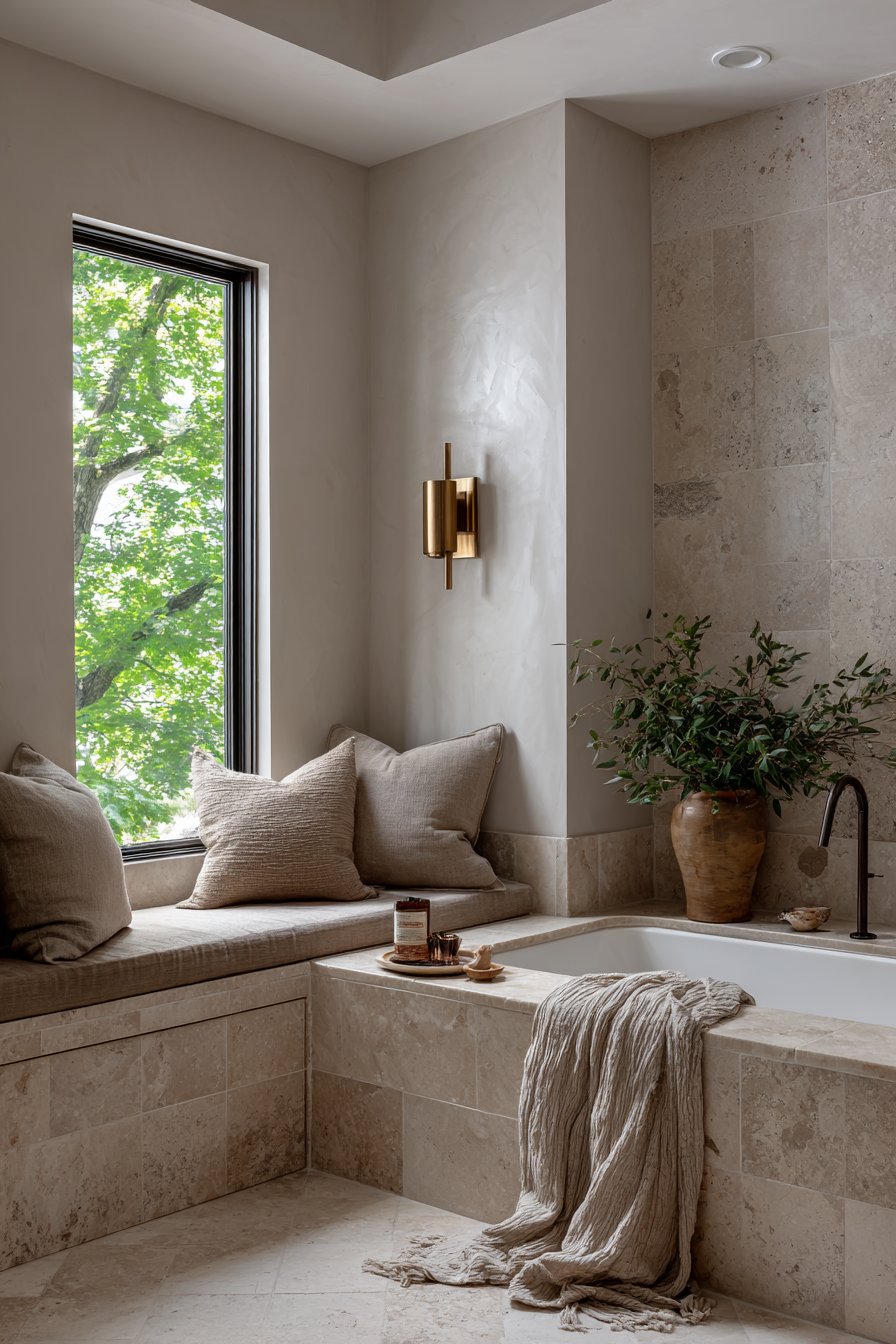
Key Design Tips:
- Install corner tubs to maximize space in modest bathroom footprints
- Choose tumbled travertine for aged, organic character
- Build in tiled benches for practical seating and storage
- Add cushioned elements in coordinating fabrics for softness
- Apply Venetian plaster for traditional wall texture with depth
- Select oil-rubbed bronze fixtures for rich, dark metallic contrast
- Maximize natural light to showcase textural material variations
10. Contemporary Backlit Vanity with Statement Wall
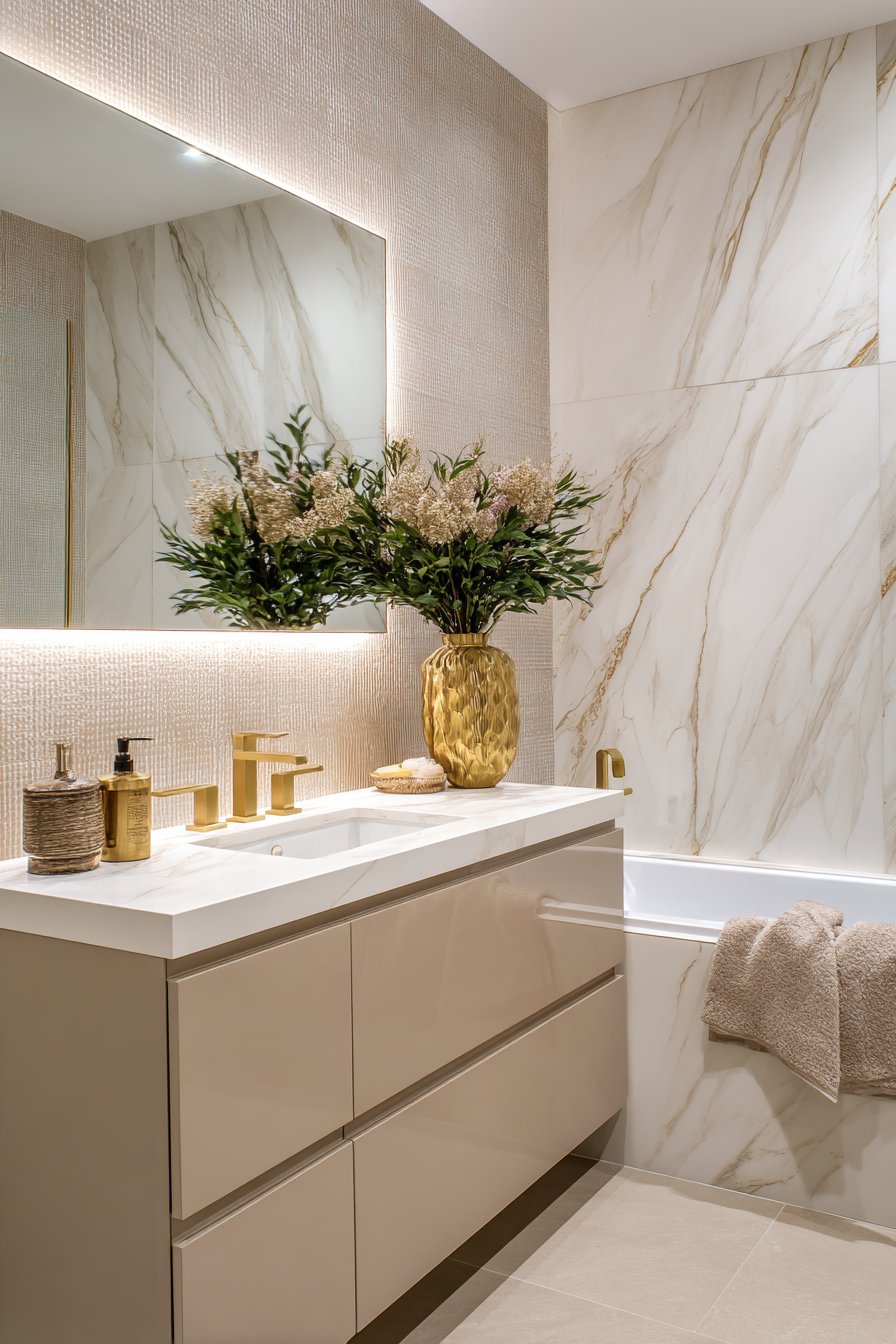
This contemporary bathroom showcases how modern materials and integrated lighting create sophisticated luxury. A backlit vanity mirror above a sleek beige lacquered vanity with integrated sink commands attention. The integrated lighting eliminates shadows for optimal functionality while creating dramatic ambiance. Soft-close drawers in matte finish provide quiet operation and premium quality.
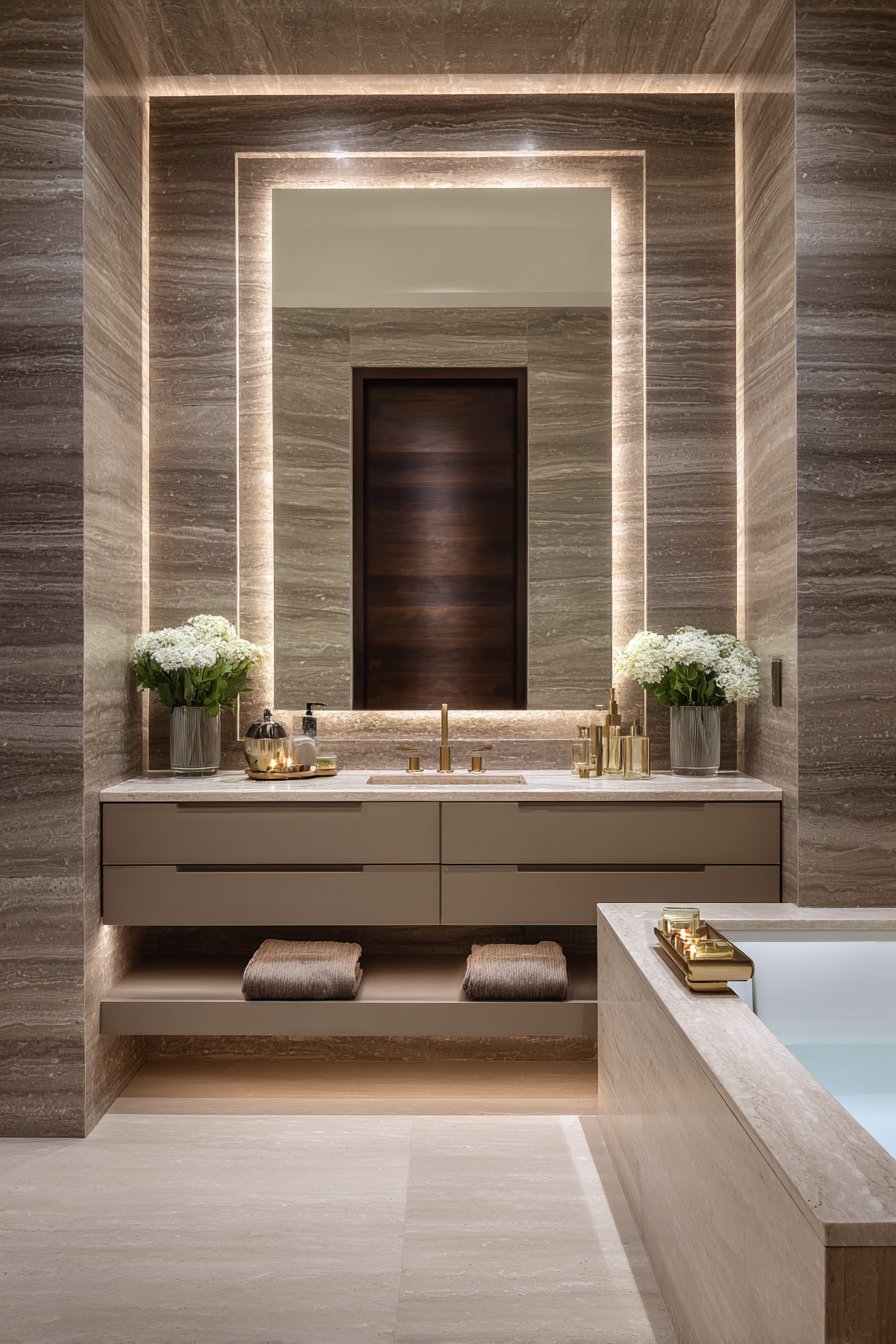
Beige large-format porcelain slabs with book-matched veining create a stunning statement wall behind the bathtub. The book-matched pattern creates mirror-image symmetry that draws the eye and provides visual drama. The large slabs minimize seams, creating an almost seamless appearance. Beige resin flooring provides a waterproof surface with slight texture for safety, eliminating grout lines entirely.
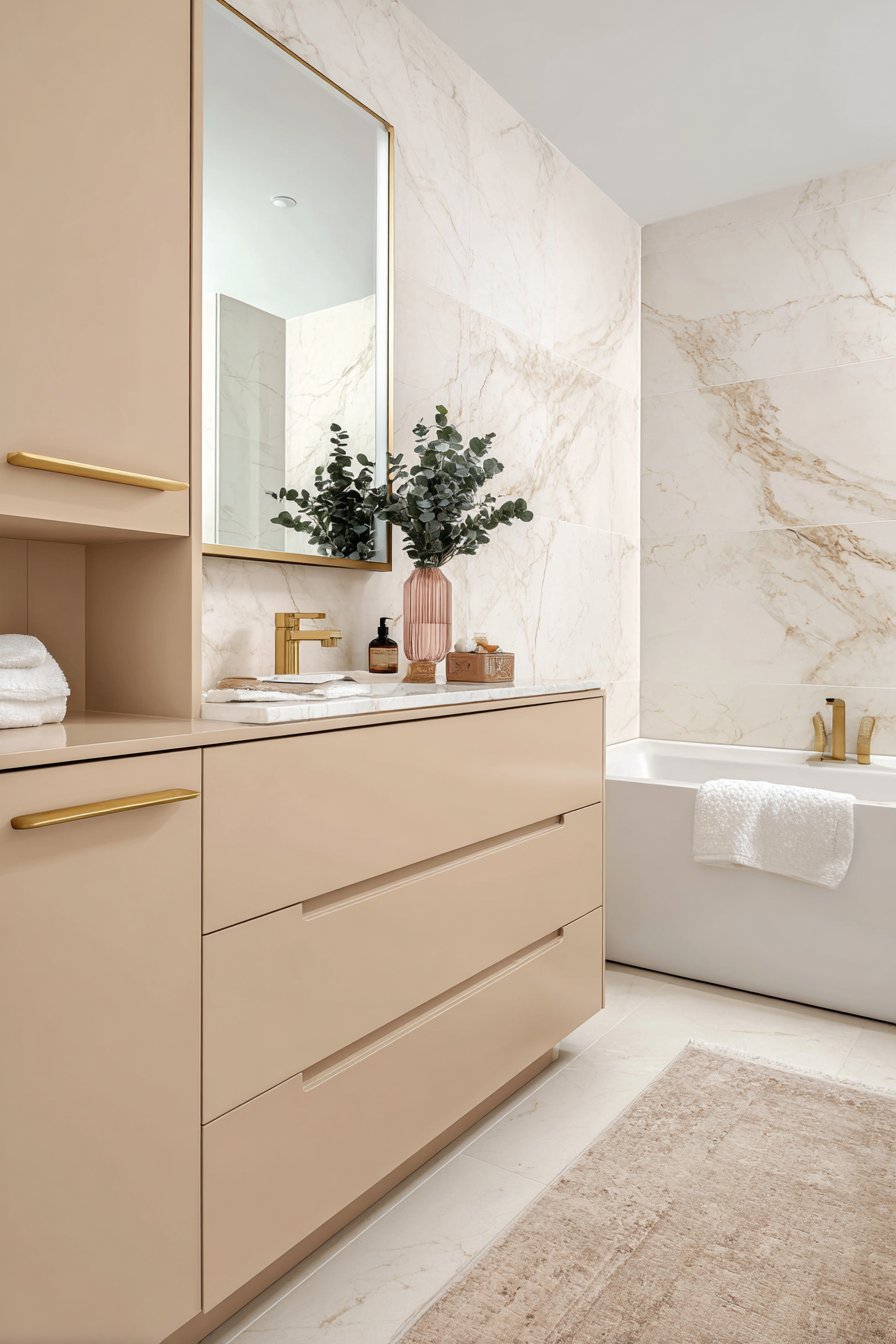
Brushed brass fixtures and hardware add refined metallic accents throughout the space, creating cohesion between different zones. The warm metal tone complements the beige palette perfectly. Balanced artificial and natural lighting showcases the sophisticated modern aesthetic and cohesive beige material palette. Subtle variations in tone and finish prevent monotony within the monochromatic scheme.
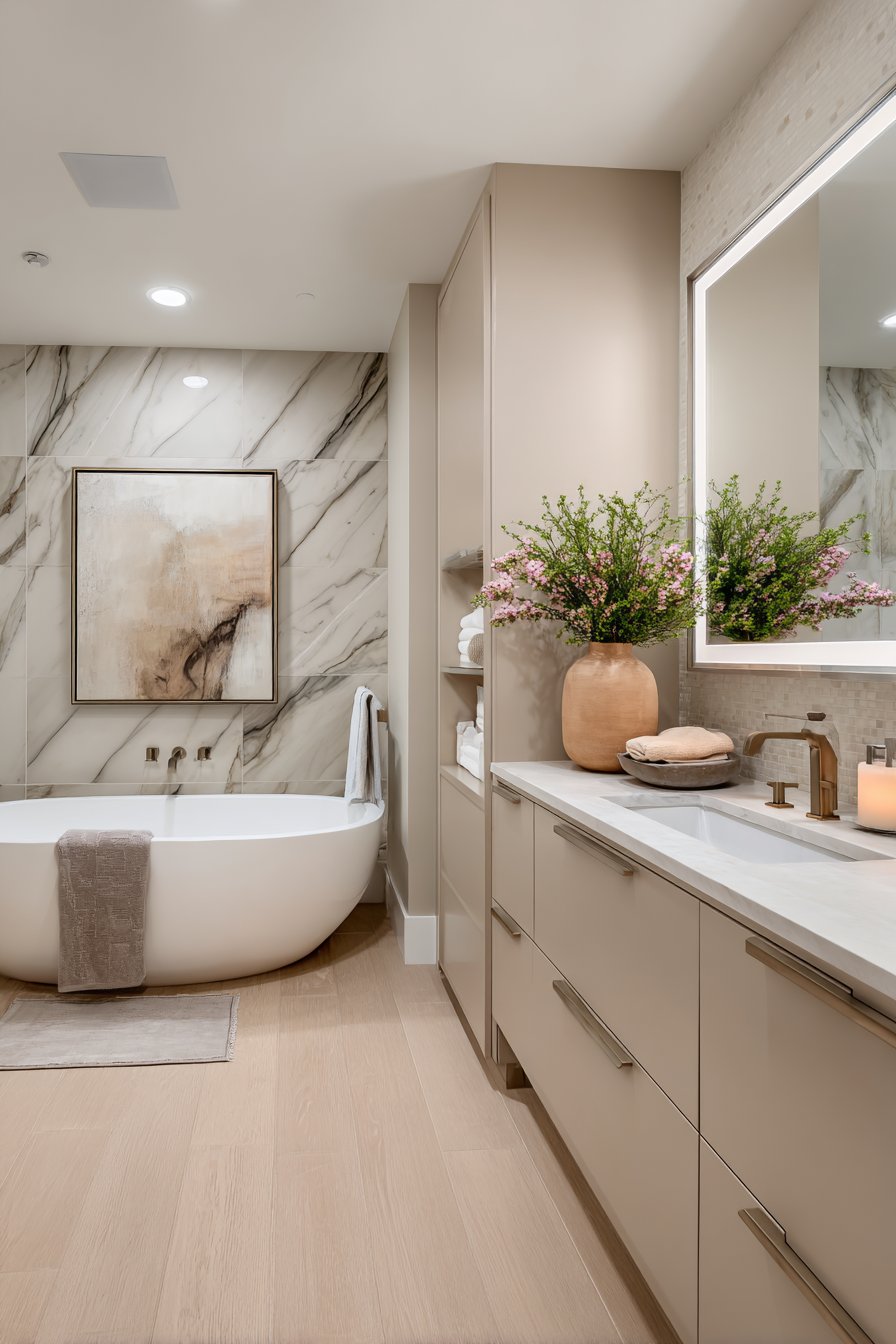
Key Design Tips:
- Install backlit mirrors for functional task lighting and atmospheric ambiance
- Choose lacquered vanities for sleek, contemporary high-gloss surfaces
- Create statement walls with book-matched stone or porcelain slabs
- Use resin flooring for seamless waterproof surfaces
- Select brushed brass hardware for warm contemporary metallic accents
- Layer artificial and natural lighting for optimal flexibility
- Vary finishes within beige palette from matte to glossy for dimension
Why These Beige Bathroom Designs Excel
These ten beige bathroom designs represent the pinnacle of contemporary bathroom design, each demonstrating why beige remains a sophisticated choice for modern homes. The beige color palette offers unparalleled versatility, adapting seamlessly to various design styles from minimalist modern to classic traditional. Unlike stark white bathrooms that can feel clinical or dark colored bathrooms that may feel heavy, beige creates a balanced, calming atmosphere that promotes relaxation and wellbeing.
The designs showcase how layering different beige tones creates depth and visual interest within a monochromatic palette. From warm honey beiges to cool taupe tones, the subtle variations prevent the space from feeling flat or monotonous. Professional interior designers recognize that successful beige bathrooms rely on textural diversity – combining smooth porcelain tiles, rough natural stone, soft textiles, and polished metal fixtures creates dimensional richness that engages multiple senses.
Natural materials feature prominently throughout these designs, demonstrating the inherent connection between beige palettes and organic elements. Travertine, limestone, wood, and natural fiber wallcoverings introduce authentic character that manufactured materials cannot replicate. These natural materials age gracefully, developing patina and character over time rather than showing wear. The beige color family complements these materials perfectly, enhancing their natural beauty without competition.
Lighting plays a crucial role in successful beige bathroom design, as evidenced throughout these examples. Natural daylight reveals the subtle undertones and textural variations within beige materials, while strategic artificial lighting creates ambiance and functionality. Layered lighting approaches including recessed ceiling fixtures, backlit mirrors, and accent lighting provide flexibility for different times of day and activities. The beige palette reflects light beautifully, maximizing brightness without harsh glare.
These designs demonstrate exceptional space planning that maximizes functionality without sacrificing aesthetics. From compact powder rooms to spacious master bathrooms, each layout considers user needs and daily routines. Storage solutions integrate seamlessly into the design, maintaining clean lines while providing practical organization. The beige palette unifies different elements and zones, creating visual cohesion even in complex multi-functional spaces.
Hardware and fixture selections throughout these bathrooms show how metallic accents elevate beige palettes from simple to sophisticated. Brushed gold, antique brass, champagne bronze, and oil-rubbed bronze finishes add warmth that complements beige beautifully. These warm metals create focal points and visual interest without overwhelming the serene color scheme. The quality of fixtures and hardware signals overall design excellence and attention to detail.
Contemporary bathroom trends favor sustainability and timeless design over disposable fashion, making beige bathrooms an intelligent long-term investment. The neutral palette won’t feel dated in five or ten years, unlike trendy color schemes. Homeowners can easily refresh the space through updated accessories, textiles, and hardware without expensive material replacement. This longevity makes beige bathrooms both environmentally responsible and financially sensible.
The spa-like quality achieved in these beige bathrooms addresses the growing desire for home wellness spaces. Modern homeowners increasingly view bathrooms as personal sanctuaries for self-care and relaxation rather than purely functional rooms. The calming beige palette supports this wellness focus, creating environments that reduce stress and promote tranquility. Features like freestanding soaking tubs, rainfall showerheads, and natural materials enhance the restorative atmosphere.
These designs prove that beige bathrooms accommodate various budget levels through smart material selection and prioritization. While luxury natural stone creates stunning impact, quality porcelain alternatives offer similar aesthetics at lower cost. The key lies in investing in foundational elements like tile and fixtures while keeping flexibility for future updates through paint, accessories, and textiles. The beige palette makes mixing high and low investment pieces seamless.
The architectural photography quality specified throughout these prompts reflects how beige bathrooms photograph beautifully, an important consideration in our social media age. The neutral palette provides an ideal canvas for capturing stunning images without color correction challenges. Natural materials and textural diversity create visual interest that translates well to photographs. Homeowners increasingly consider how spaces will appear in photos when making design decisions.
Conclusion
Beige bathrooms represent timeless sophistication that transcends fleeting design trends. These ten distinctive designs demonstrate the remarkable versatility of the beige palette, from serene spa-like sanctuaries to practical family bathrooms and minimalist modern spaces. The key to successful beige bathroom design lies in layering different tones, incorporating diverse textures, and selecting quality natural materials that bring depth and character to the monochromatic scheme.
Whether renovating an existing bathroom or designing new construction, these concepts provide inspiration and practical guidance. Consider which design elements resonate with your personal style and functional needs. Perhaps the natural stone luxury of the walk-in wet room appeals to you, or maybe the practical storage solutions of the family bathroom better suit your household. The beauty of working within a beige palette is its adaptability to individual preferences while maintaining cohesive elegance.
Don’t fear the monochromatic approach – embrace it as an opportunity to explore material quality, textural contrast, and spatial composition. Invest in foundational elements like tile and fixtures that will provide lasting beauty and functionality. Layer your beige tones intentionally, incorporating both warm and cool undertones for dimensional depth. Mix smooth and rough textures, matte and glossy finishes, to create visual interest without color contrast.
Remember that successful bathroom design balances aesthetics with functionality. Consider your daily routines, storage needs, and maintenance preferences when selecting materials and layouts. A beautiful bathroom that doesn’t serve your practical needs will ultimately disappoint. Conversely, a purely functional space without aesthetic consideration won’t provide the sanctuary quality that modern homeowners desire. These beige bathroom designs achieve that crucial balance.
We encourage you to experiment with these ideas in your own home, adapting elements to suit your specific space and style. Consult with interior design professionals who can help you navigate material selection, spatial planning, and technical requirements. Take inspiration from these concepts while making them your own through personal touches and meaningful details. Your bathroom should reflect your unique aesthetic while providing the functionality and serenity you deserve.
