


The art of interior design lies in creating spaces that not only look beautiful but also feel like home. A well-designed living room serves as the heart of any residence, where families gather, conversations flow, and memories are made. The choice of color palette plays a pivotal role in establishing the mood and atmosphere of this essential space. Among the countless combinations available to homeowners and designers, the pairing of beige and green stands out as a timeless choice that brings together the warmth of neutrals with the refreshing vitality of nature-inspired hues.
Beige and green living rooms offer a sophisticated yet approachable aesthetic that works beautifully across various design styles, from contemporary minimalism to classic traditional interiors. The neutral foundation of beige provides a calming, versatile backdrop that allows green accents to shine without overwhelming the senses. Whether you prefer the subtle whisper of sage green or the bold statement of emerald, this color combination creates a harmonious balance between earthiness and elegance. The psychological benefits are equally compelling—beige evokes feelings of comfort and stability, while green connects us to the natural world, promoting relaxation and well-being.
In this comprehensive guide, we explore ten distinct approaches to designing a beige and green living room, each showcasing unique materials, textures, furniture arrangements, and styling techniques. From cozy reading nooks to spacious entertainment areas, these design concepts demonstrate the remarkable versatility of this color palette. Whether you’re planning a complete room makeover or simply seeking inspiration for refreshing your current space, these carefully curated ideas will help you create a living room that feels both tranquil and stylish, proving that sophistication and comfort can coexist beautifully in the modern home.
1. Plush Comfort with Natural Organic Elements
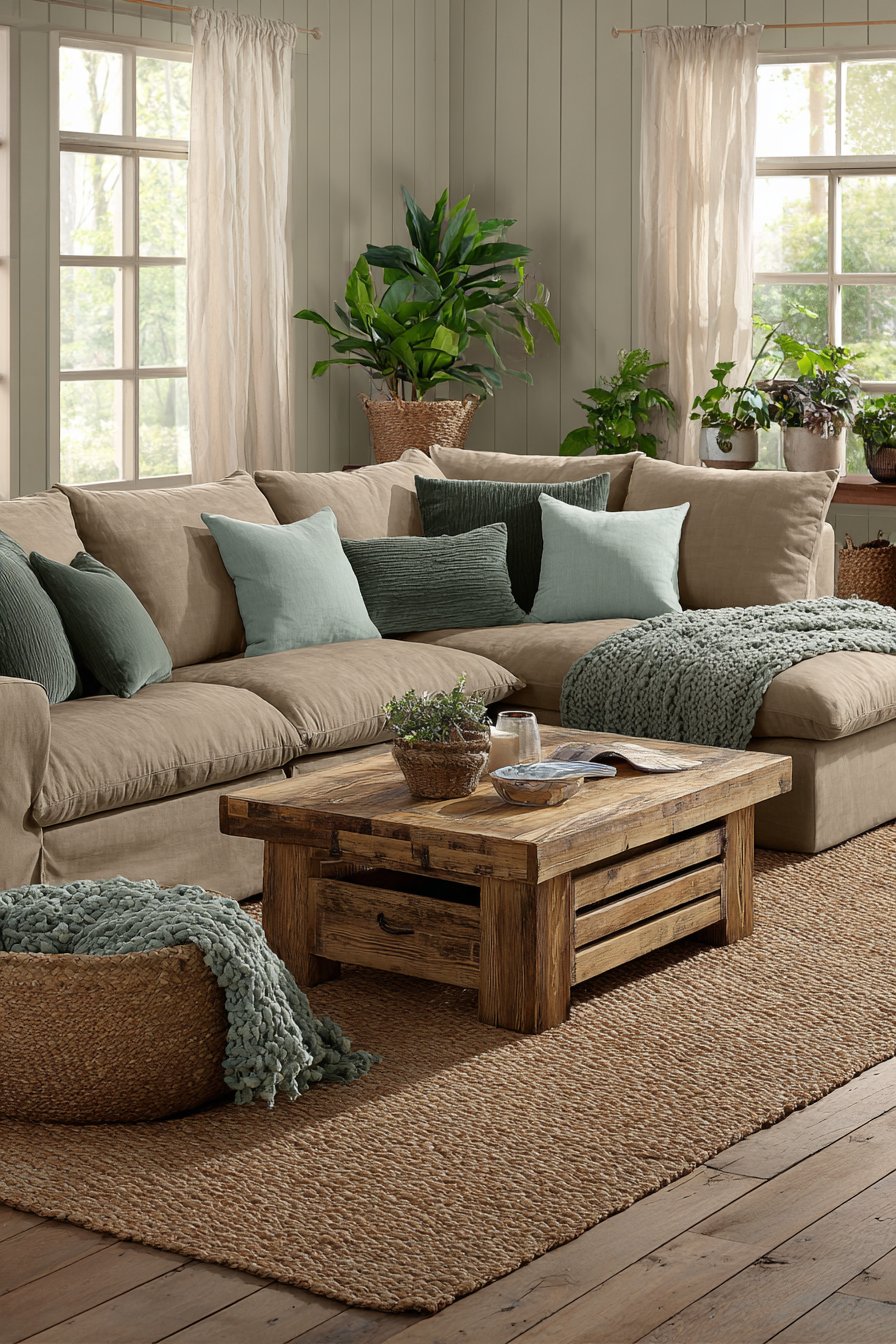
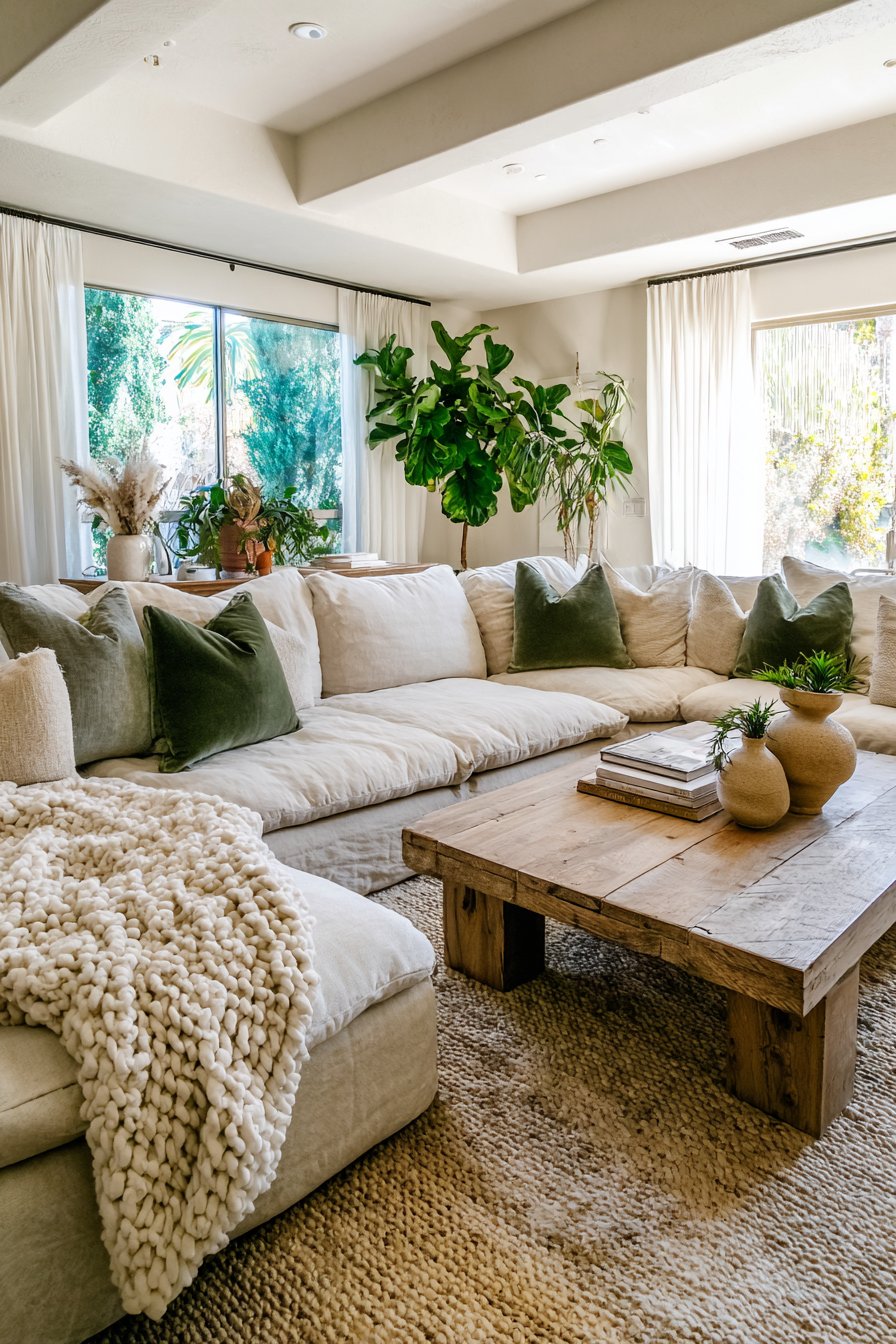
Picture a living room where comfort meets natural sophistication through the thoughtful integration of luxurious textiles and living greenery. At the center of this design concept sits a generous beige linen sectional sofa, its plush cushions inviting you to sink in and stay awhile. The beauty of linen lies in its natural, slightly textured appearance that adds depth and visual interest while maintaining an effortlessly elegant aesthetic. Draped across the sofa, sage green velvet throw pillows introduce a rich, tactile contrast—their lustrous surface catching light in a way that creates subtle movement and dimension throughout the space.

The foundation of this room is established by a natural jute area rug, its organic fibers bringing an earthy, grounded quality that perfectly complements both the beige and green elements above. This natural fiber choice not only adds textural variety but also reinforces the room’s connection to nature.
A reclaimed wood coffee table serves as the functional centerpiece, its weathered patina and unique grain patterns telling a story of character and authenticity. The irregular surface and natural imperfections of reclaimed wood add warmth and personality that mass-produced furniture simply cannot replicate.
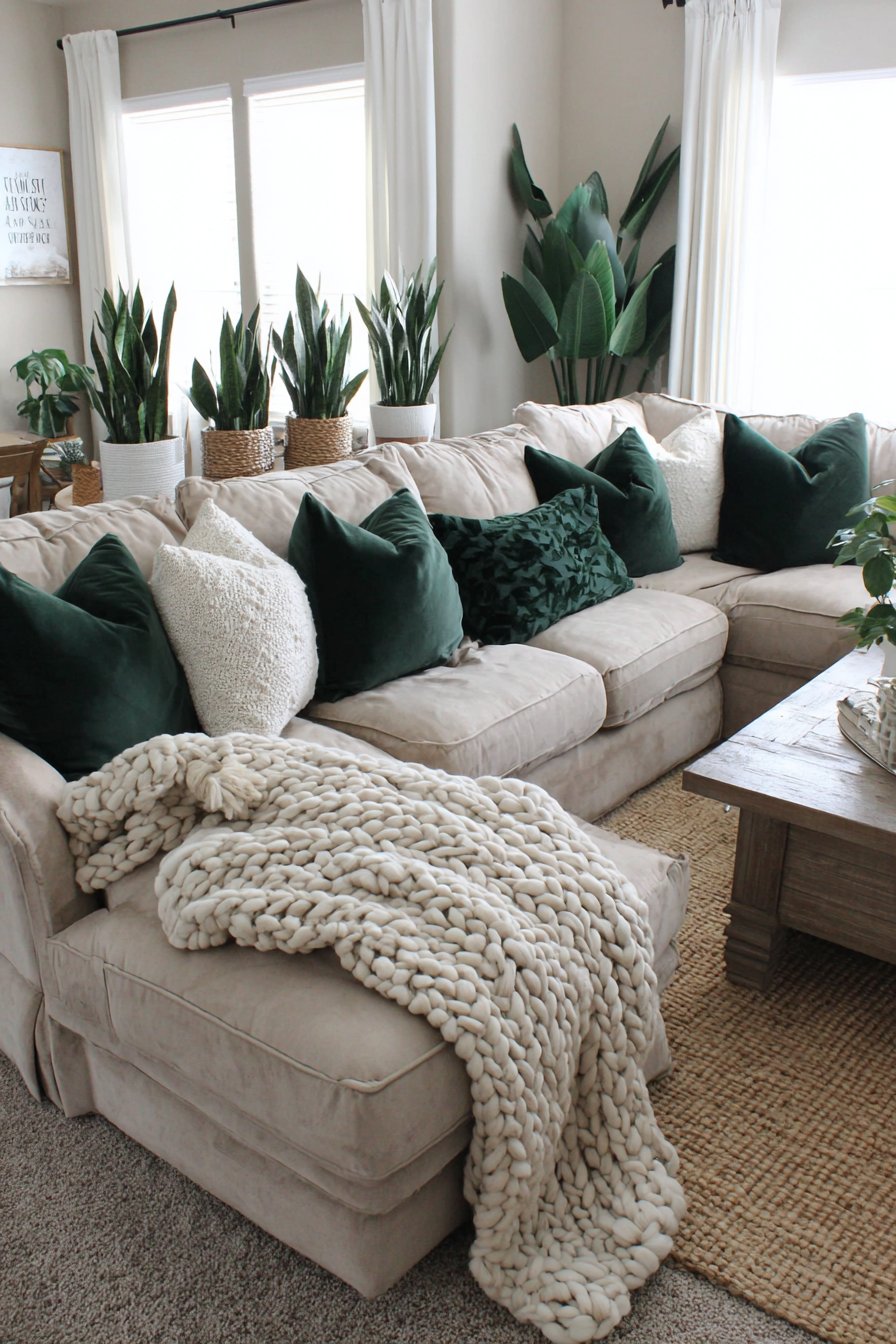
What truly brings this living room to life is the strategic placement of potted plants throughout the space. Fiddle leaf fig trees, with their large, sculptural leaves, make bold architectural statements in ceramic planters that echo the room’s neutral tones. Snake plants, known for their vertical, sword-like foliage, add height and structure while requiring minimal maintenance. These green companions do more than beautify—they purify the air and create a living, breathing quality that makes the space feel fresh and vital. The cream-colored walls provide a soft, neutral backdrop that allows both the beige furniture and green accents to shine, while forest green accent pillows create visual depth and richness.
The magic of this design lies in how natural daylight streams through sheer curtains, creating a soft, diffused glow that highlights the harmonious relationship between warm beige tones and refreshing green accents. This interplay of light transforms throughout the day, casting gentle shadows and illuminating textures in ways that keep the space feeling dynamic yet peaceful.
Key Design Tips:
- Layer multiple shades of green from sage to forest to create visual depth and prevent the palette from feeling flat or one-dimensional
- Incorporate various textures such as linen, velvet, jute, and reclaimed wood to add tactile interest and sophistication to the neutral color scheme
- Position plants strategically near seating areas and in corners to bring life to the space while maintaining clear traffic flow
- Choose a quality jute or sisal rug that can withstand high traffic while adding organic texture that grounds the entire design
- Use sheer curtains to filter natural light softly, creating an ambient glow that enhances both beige and green tones throughout the day
2. Textured Elegance with Sage Green Feature Wall
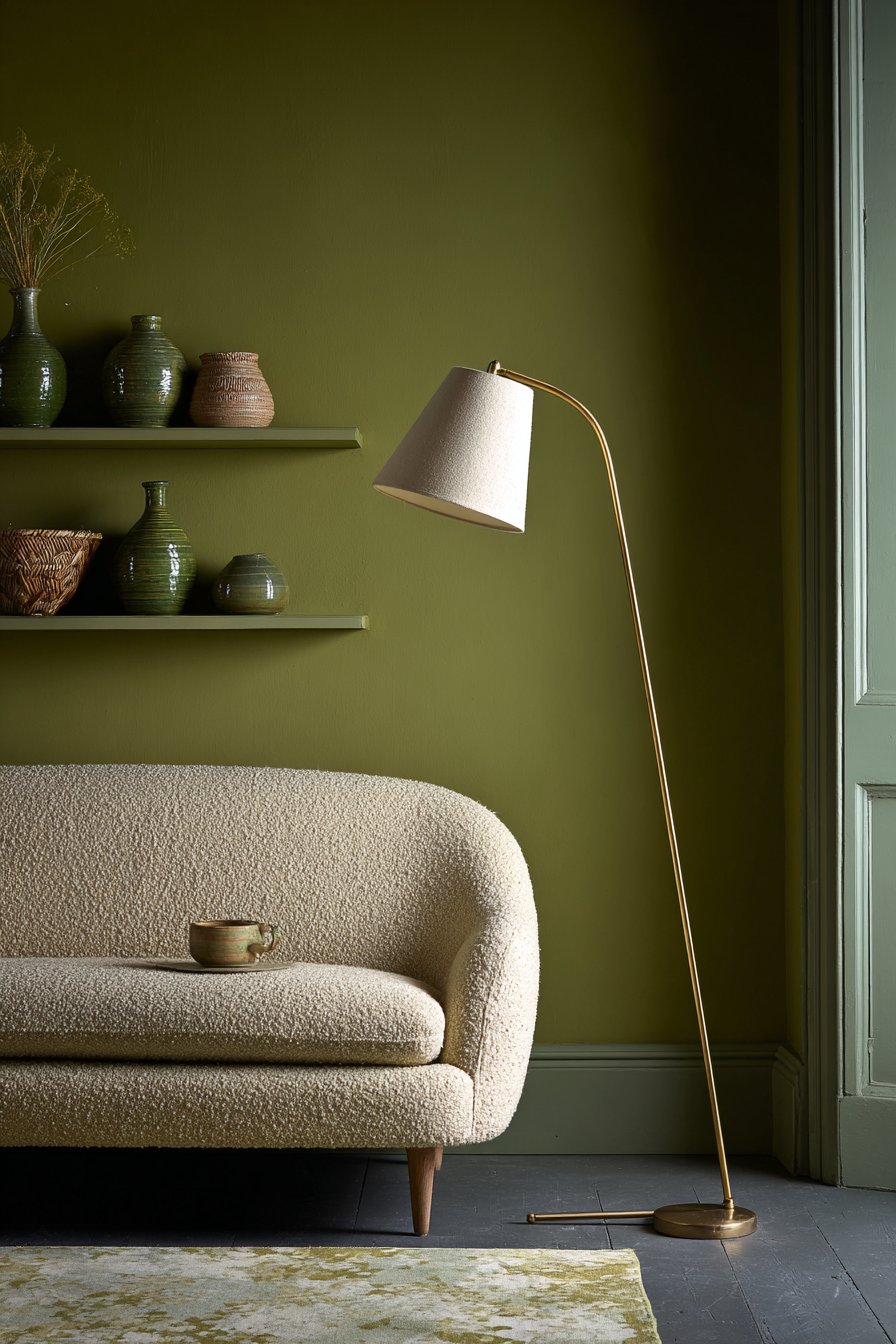
Transform your living room into a sanctuary of textural sophistication by anchoring the space with a muted sage green feature wall that serves as both backdrop and statement piece. This design approach celebrates the beauty of texture through the selection of a beige boucle sofa—a fabric choice that has surged in popularity for its cloudlike appearance and irresistibly soft, looped texture. The boucle weave creates a dimensional surface that plays beautifully with light, casting subtle shadows that add movement and life to the neutral upholstery.
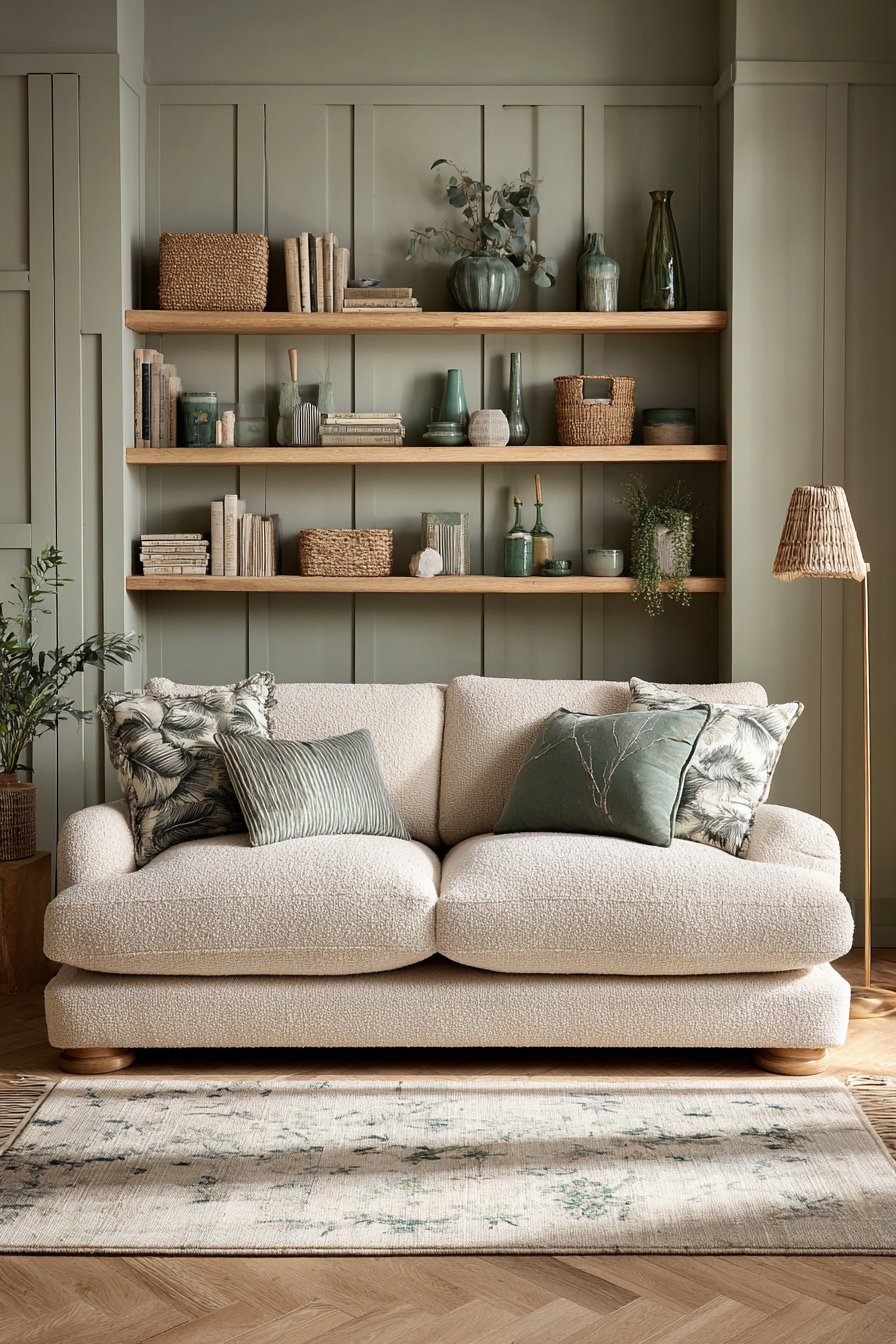
Against the sage green feature wall, natural oak floating shelves create horizontal lines that draw the eye while providing functional display space. These shelves showcase a curated collection of green ceramic vases in varying heights and shapes, each piece chosen for its artisanal quality and unique glazing.
Woven baskets in neutral tones sit alongside the vases, offering both aesthetic appeal and practical storage solutions. The combination of smooth ceramics and textured basketry creates visual rhythm and demonstrates how functional items can double as decorative elements.

The vintage-inspired area rug grounds the seating area with its beige foundation and subtle green botanical patterns. This piece serves as a bridge between the neutral sofa and the green accent wall, pulling the color palette together in a cohesive manner. The botanical motifs echo the room’s nature-inspired theme without overwhelming the space with literal plant imagery. A brass floor lamp with a linen shade stands as a sculptural element, its warm metallic finish adding a touch of glamour while the natural fabric shade maintains the room’s organic aesthetic.
Professional lighting design plays a crucial role in this space, with the brass lamp providing warm ambient lighting that enhances the beige tones during evening hours. The interplay between the textured boucle fabric, smooth ceramic surfaces, woven baskets, and the matte finish of the sage green wall creates a sophisticated layering effect that rewards close observation. This room demonstrates how a carefully balanced color palette combined with diverse textures can create depth and interest without relying on bold colors or busy patterns.

Key Design Tips:
- Select a feature wall color in the sage or muted green family to create a focal point without overwhelming the space with intense color
- Invest in a boucle sofa for its luxurious texture and timeless appeal that elevates the entire room’s aesthetic
- Use floating shelves to display collected objects and create visual interest on the feature wall while maintaining an open, airy feeling
- Choose a vintage-inspired rug with subtle patterns that complement rather than compete with other design elements
- Incorporate brass or warm metallic accents through lighting fixtures to add warmth and sophistication to the beige and green palette
3. Cozy Reading Nook with Window-Side Serenity
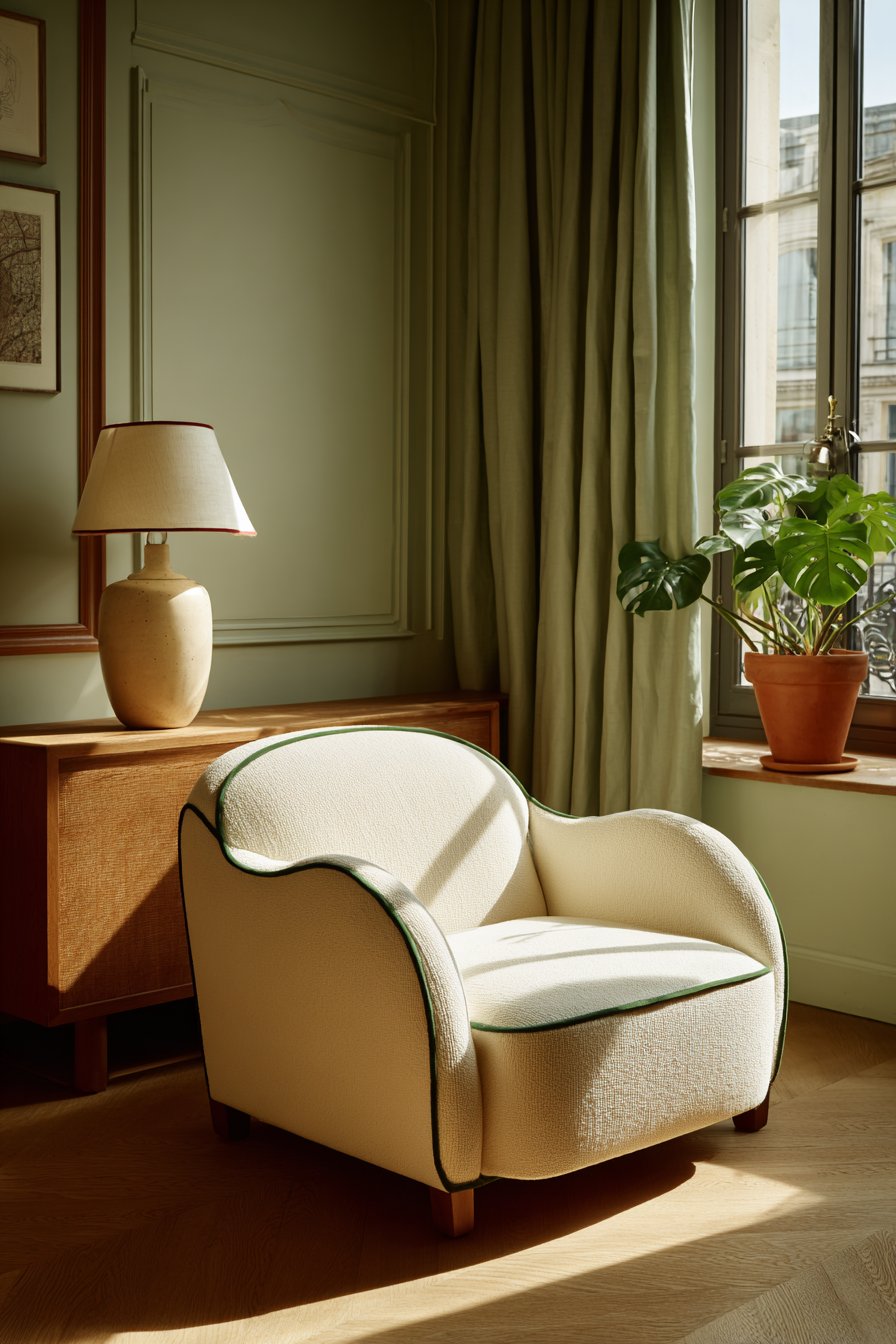
Create an intimate sanctuary within your living room by designing a dedicated reading nook that capitalizes on natural light and the peaceful combination of beige and green tones. This design concept centers around a comfortable beige upholstered armchair positioned strategically near a large window, where sunlight pours in throughout the day.
The armchair features olive green piping details along its edges—a subtle yet effective way to incorporate the secondary color while maintaining the neutral foundation. This piping technique adds definition to the chair’s silhouette and creates a refined, tailored appearance that speaks to attention to detail.

Adjacent to the armchair sits a small side table crafted from natural wood, its organic grain patterns and warm honey tones bridging the gap between the beige upholstery and green accents. Upon this table rests a ceramic lamp with a beige shade, providing focused task lighting for reading while contributing to the room’s cohesive color story. The lamp’s ceramic base offers additional textural interest, and its neutral tone ensures it blends seamlessly with the overall design rather than demanding attention.
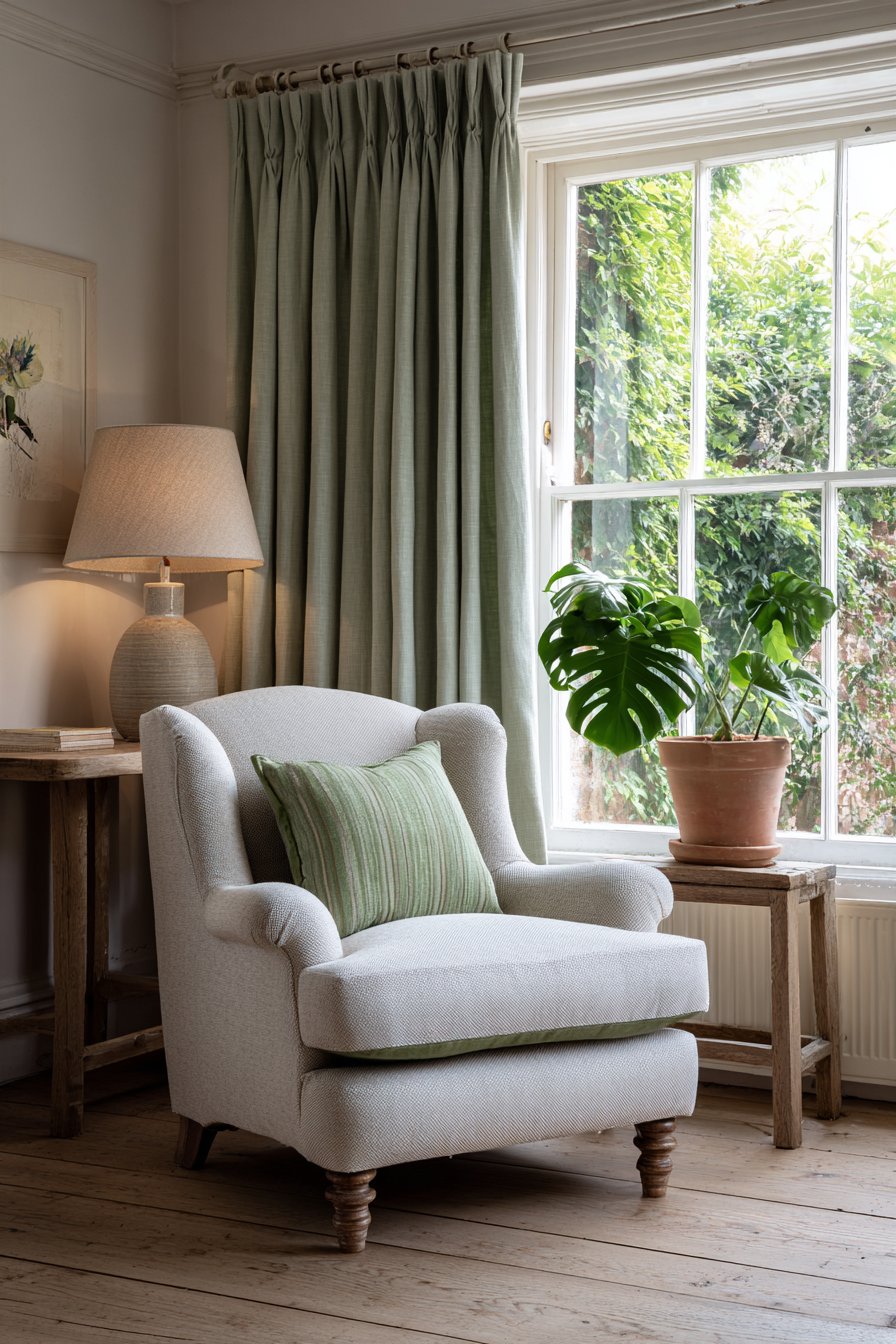
The true drama of this reading nook comes from the floor-to-ceiling curtains in soft sage green linen that frame the window. These curtains serve multiple purposes: they filter the golden hour sunlight into a warm, diffused glow that flatters the entire space; they provide privacy when drawn; and they make a strong vertical statement that draws the eye upward, emphasizing the room’s height. The natural drape and slight texture of linen fabric adds an element of casual elegance that feels both sophisticated and approachable.
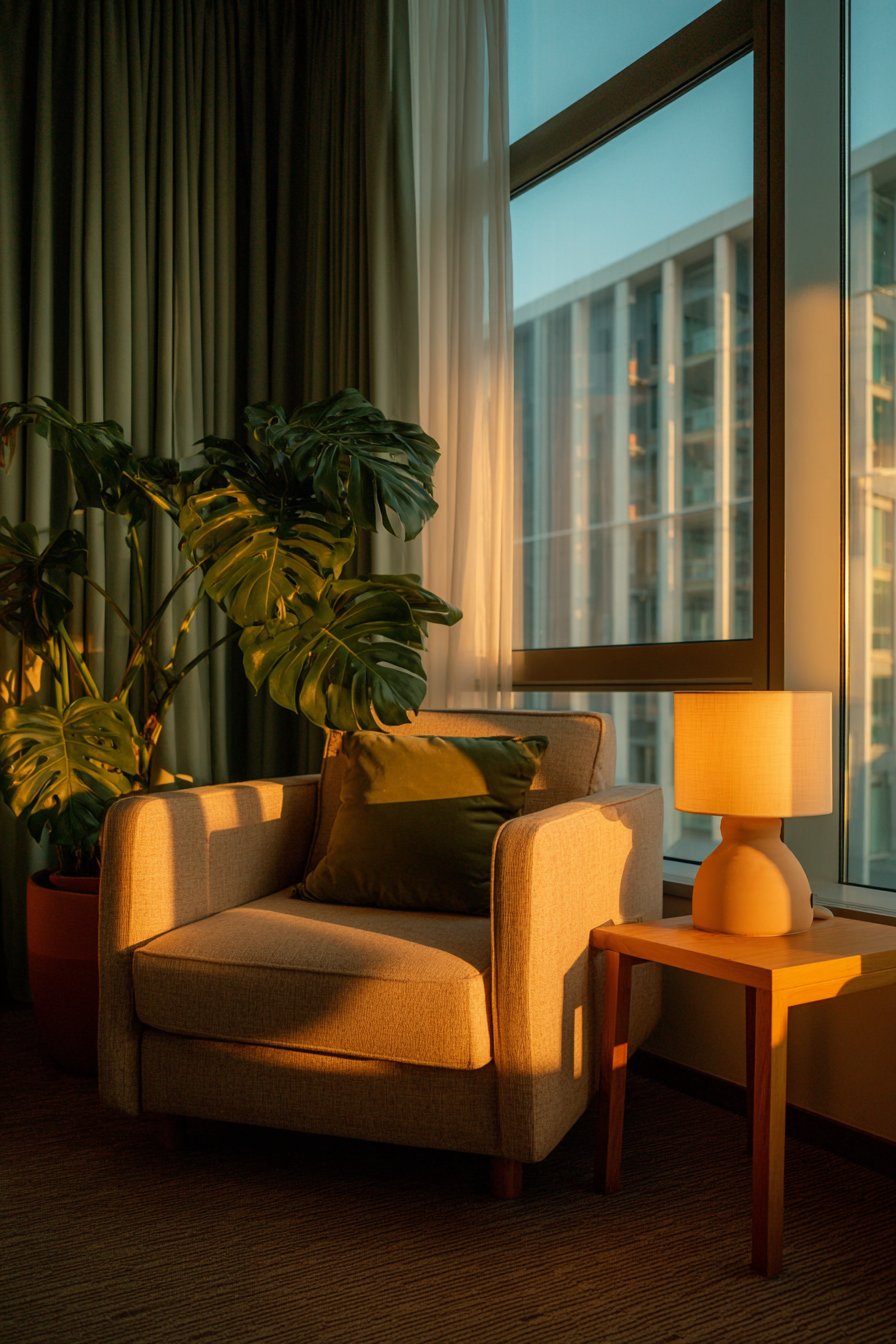
Completing this tranquil corner is a monstera plant in a terracotta pot, its distinctive split leaves adding vibrant green life and architectural interest to the arrangement. The terracotta planter introduces an earthy, reddish-brown tone that complements both the beige and green palette while connecting to natural, organic design principles. This carefully composed reading nook demonstrates how a small corner of a living room can be transformed into a destination within the home—a place where one naturally gravitates for quiet moments of reflection, reading, or simply watching the world outside the window.
Key Design Tips:
- Position seating near windows to maximize natural light for reading and create a connection to the outdoors
- Use piping or welting in a contrasting color to add subtle detail and definition to neutral upholstered furniture
- Select floor-to-ceiling curtains to create the illusion of height and make windows appear larger than their actual dimensions
- Choose linen curtain fabric for its natural texture, light-filtering properties, and ability to create a relaxed yet refined atmosphere
- Incorporate a statement plant like monstera to add living greenery and architectural form to the reading nook
4. Dramatic Depth with Forest Green Accent Wall

Embrace bold sophistication by incorporating a deep forest green accent wall that creates dramatic contrast and serves as a stunning backdrop for built-in shelving. This design concept pushes beyond the safer sage and olive tones to explore the richer, more saturated end of the green spectrum.
The forest green hue adds gravitas and depth to the living room, creating a jewel-box effect that feels both cozy and luxurious. This darker tone works particularly well in rooms with ample natural light, where it can shift throughout the day from deep and moody to vibrant and energizing.

The layered neutral textures throughout the rest of the space provide essential balance to the bold accent wall. A beige wool sofa anchors the seating area with its substantial presence and inviting texture. Wool fabric offers exceptional durability while providing a soft, naturally stain-resistant surface that improves with age.
Linen curtains in a soft beige tone frame the windows with their characteristic relaxed drape and subtle texture, while a sisal rug underfoot adds another layer of natural fiber texture that grounds the entire composition.
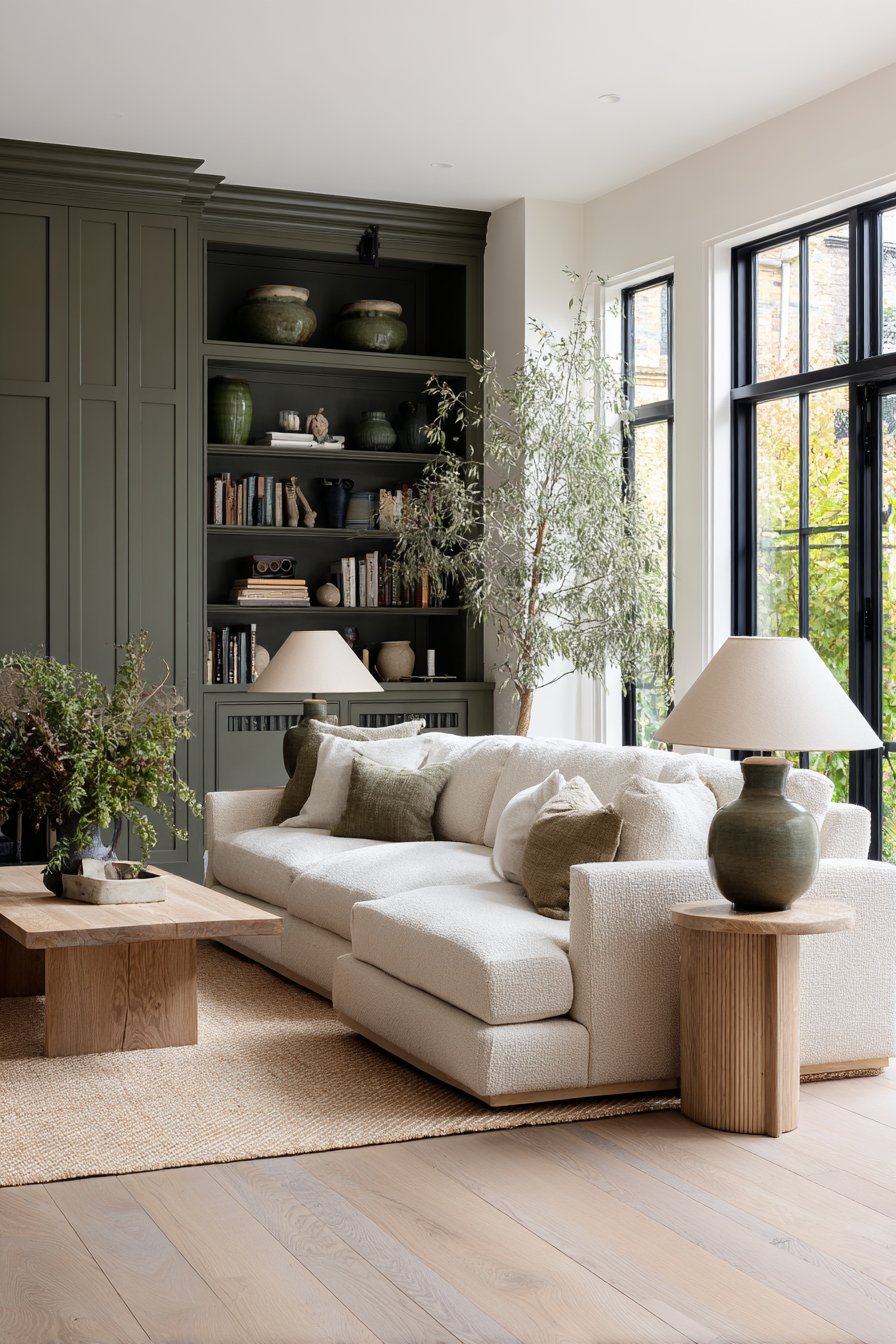
The built-in shelving integrated into the forest green wall becomes a functional art installation, displaying a carefully curated collection of books with neutral-toned spines alongside green pottery pieces that echo the wall color. This repetition of green in decorative objects helps the bold wall color feel intentional and integrated rather than jarring. Beige ceramic table lamps with pleated shades sit atop natural wood side tables, their warm glow creating pools of light that enhance the room’s intimate atmosphere during evening hours.
Fresh eucalyptus stems arranged in clear glass vases add organic movement and a lighter shade of green that prevents the palette from feeling too heavy. The silvery-green tones of eucalyptus provide visual relief and introduce a botanical element that reinforces the nature-inspired theme. The architectural photography perspective of this space reveals how the sophisticated interplay of warm beige foundations and rich green accents creates a living room that feels both grounded and elevated—a space where comfort and style exist in perfect harmony.

Key Design Tips:
- Don’t shy away from deeper green tones like forest or hunter green when you want to create drama and sophistication
- Layer multiple neutral textures, including wool, linen, and sisal to prevent the space from feeling flat despite the limited color palette
- Use built-in shelving on accent walls to maximize both storage and display opportunities while creating architectural interest
- Select pottery and decorative objects that echo your accent wall color to create cohesion and intentionality throughout the design
- Incorporate fresh greenery like eucalyptus to add movement and lighter green tones that prevent darker colors from overwhelming the space
5. Mid-Century Modern Sophistication
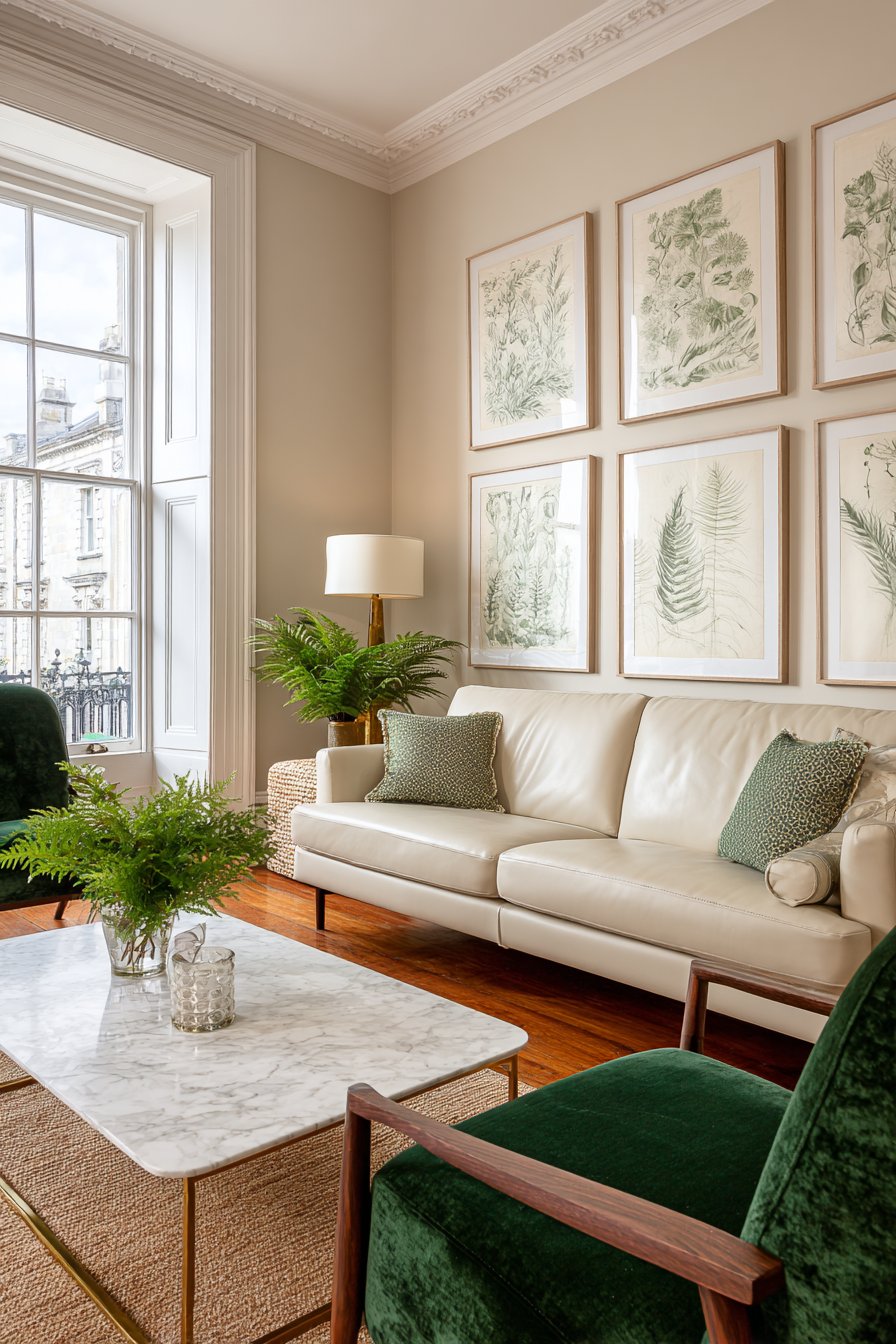
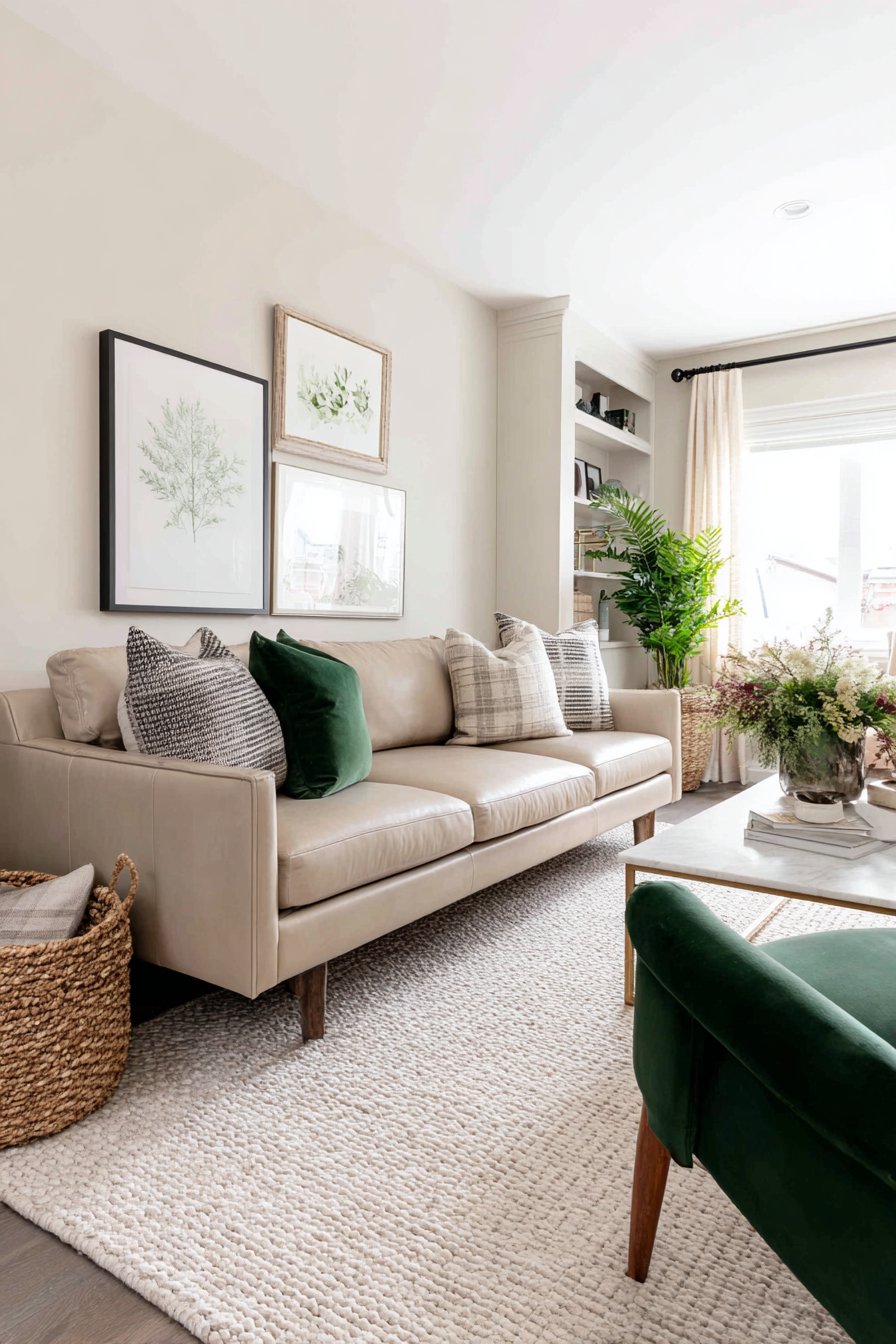
Step into a living room that celebrates the timeless appeal of mid-century modern design while embracing the elegant simplicity of a beige and green color palette. This concept centers around a beige leather sofa with clean lines and tapered wooden legs—hallmarks of mid-century design that remain as relevant today as they were in the 1950s and 60s. The leather upholstery develops a beautiful patina over time, gaining character and depth that only enhances its appeal. The natural material ages gracefully, making it an investment piece that can anchor your living room for decades.

Flanking a marble coffee table with brass legs are emerald green velvet accent chairs that provide jewel-tone pops of color and luxurious texture. The emerald green represents a bolder, more saturated take on the green spectrum, bringing energy and sophistication to the space.
Velvet fabric, with its directional pile and light-catching properties, adds depth and richness that elevates the entire room. The marble coffee table introduces natural veining and cool grey tones that complement both the warm beige leather and the rich emerald velvet, while the brass legs tie into the warm metallic accents found throughout mid-century design.
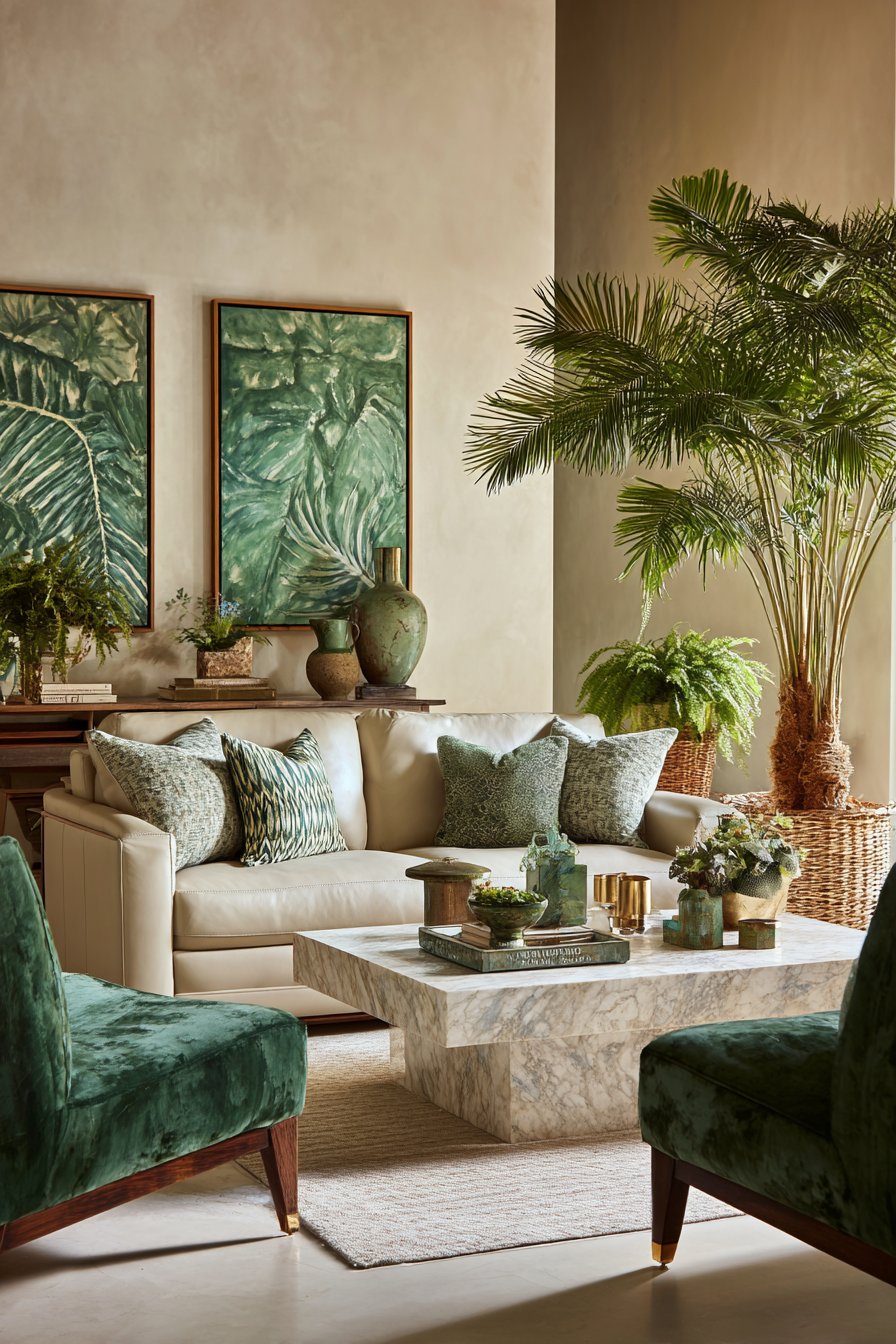
The walls are painted in a warm sand beige that evokes the sun-drenched interiors of California modernism. This neutral backdrop allows the furniture to take center stage while creating an inviting, cocooning atmosphere. Above the sofa, botanical artwork in green tones creates visual interest and reinforces the nature-inspired elements of the design. These artistic pieces might feature abstract representations of leaves, ferns, or other plant forms, rendered in shades that complement the emerald chairs and provide a visual link between the furniture and the walls.
Potted palms and ferns in woven baskets bring additional natural green elements into the space, their organic forms softening the clean lines of the mid-century furniture. The woven baskets add texture and a handcrafted quality that balances the sophistication of the leather, velvet, and marble. Interior design photography capturing this space with soft diffused lighting reveals the material details and subtle shadows that give the room its character—the way light plays across the leather, catches the velvet pile, and highlights the natural veining in the marble creates a dynamic, ever-changing visual experience.
Key Design Tips:
- Invest in a quality leather sofa with mid-century lines for a timeless piece that improves with age and serves as a versatile foundation
- Use emerald or jewel-tone green for accent chairs to add richness and personality without overwhelming the neutral base
- Select a marble coffee table to introduce natural stone patterns and a touch of luxury that complements both beige and green tones
- Incorporate brass or warm metallic finishes in furniture legs and accessories to add warmth and tie into mid-century design principles
- Balance clean-lined furniture with organic elements like palms and ferns to soften the space and connect to nature
6. Functional Storage with Sage Green Cabinetry
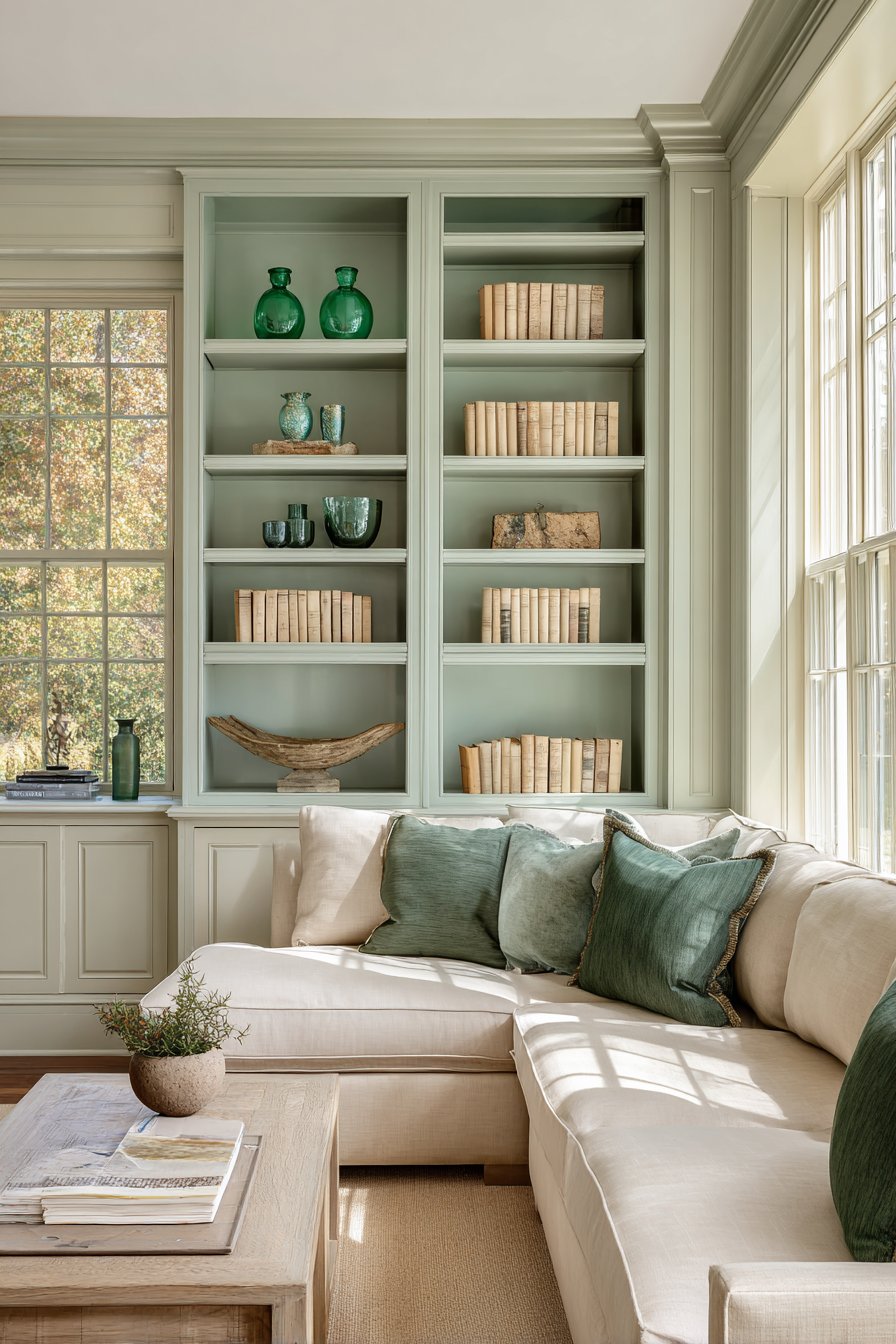
Reimagine your living room storage with floor-to-ceiling built-in cabinetry painted in soft sage green that combines functionality with aesthetic beauty. This design concept addresses a common challenge in living rooms—the need for substantial storage without sacrificing style or creating a cluttered appearance.
The soft sage green color choice transforms what could be merely utilitarian cabinetry into a beautiful architectural feature that defines the character of the entire room.

The built-in system alternates between closed lower cabinets and open shelving sections, creating visual interest through rhythm and variation. The open shelving displays beige linen-bound books arranged both vertically and horizontally, creating compositional variety that’s pleasing to the eye.
Green glass decorative objects catch and refract light, adding sparkle and reinforcing the green color story throughout the space. Natural wood accessories—perhaps bowls, boxes, or sculptural objects—introduce organic warmth and textural contrast against the painted cabinetry.
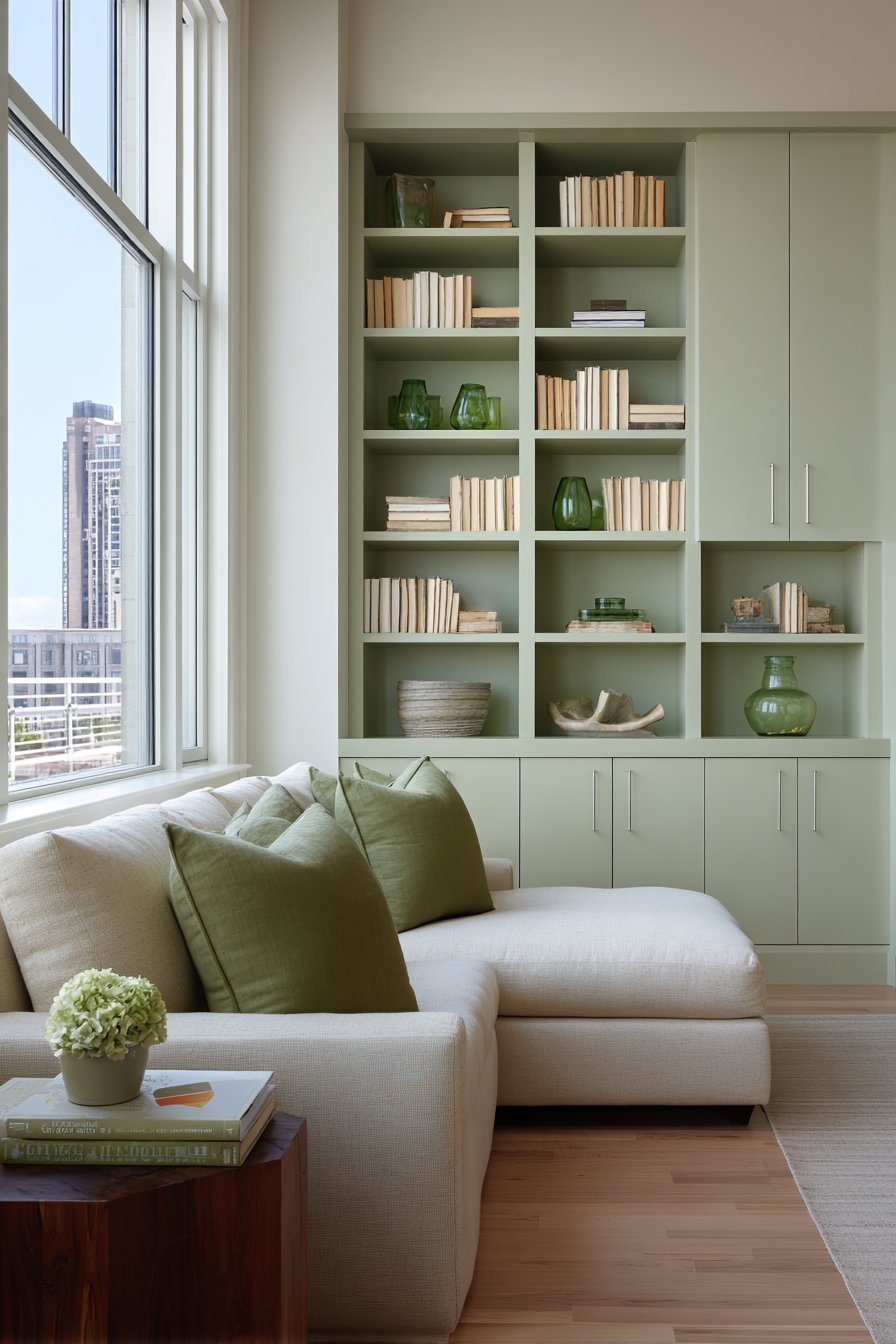
The lower cabinets provide concealed storage for less attractive necessities like electronics, cables, games, and miscellaneous items that need to be accessible but not visible. This hidden storage maintains the clean aesthetic of the room while ensuring everything has its place. The cabinet doors feature simple, streamlined hardware in a complementary finish that doesn’t distract from the overall design. The sage green paint color unifies the entire wall of cabinetry, making it feel like an intentional architectural feature rather than an afterthought.
A beige sectional sofa faces the storage wall, positioned to take advantage of the room’s layout and create a comfortable viewing angle whether you’re watching television, enjoying displayed collections, or simply appreciating the beauty of the cabinetry itself. Olive green cushions scattered across the sectional add pops of deeper green that tie the seating area to the cabinetry. Natural window light highlights the cabinetry details—the depth of the open shelves, the shadow lines created by the cabinet frames, and the way the sage green paint color shifts subtly depending on the time of day and quality of light.
Key Design Tips:
- Choose floor-to-ceiling cabinetry to maximize storage capacity and create an impressive architectural impact in your living room
- Paint built-ins in your accent color rather than a neutral to transform functional storage into a beautiful design feature
- Alternate between open and closed storage to display treasured items while concealing everyday clutter
- Curate open shelving displays thoughtfully, mixing books with decorative objects and incorporating your color palette throughout
- Position seating to face or complement your storage wall, integrating it into the room’s social layout rather than treating it as purely functional
7. Bohemian Texture and Natural Fibers
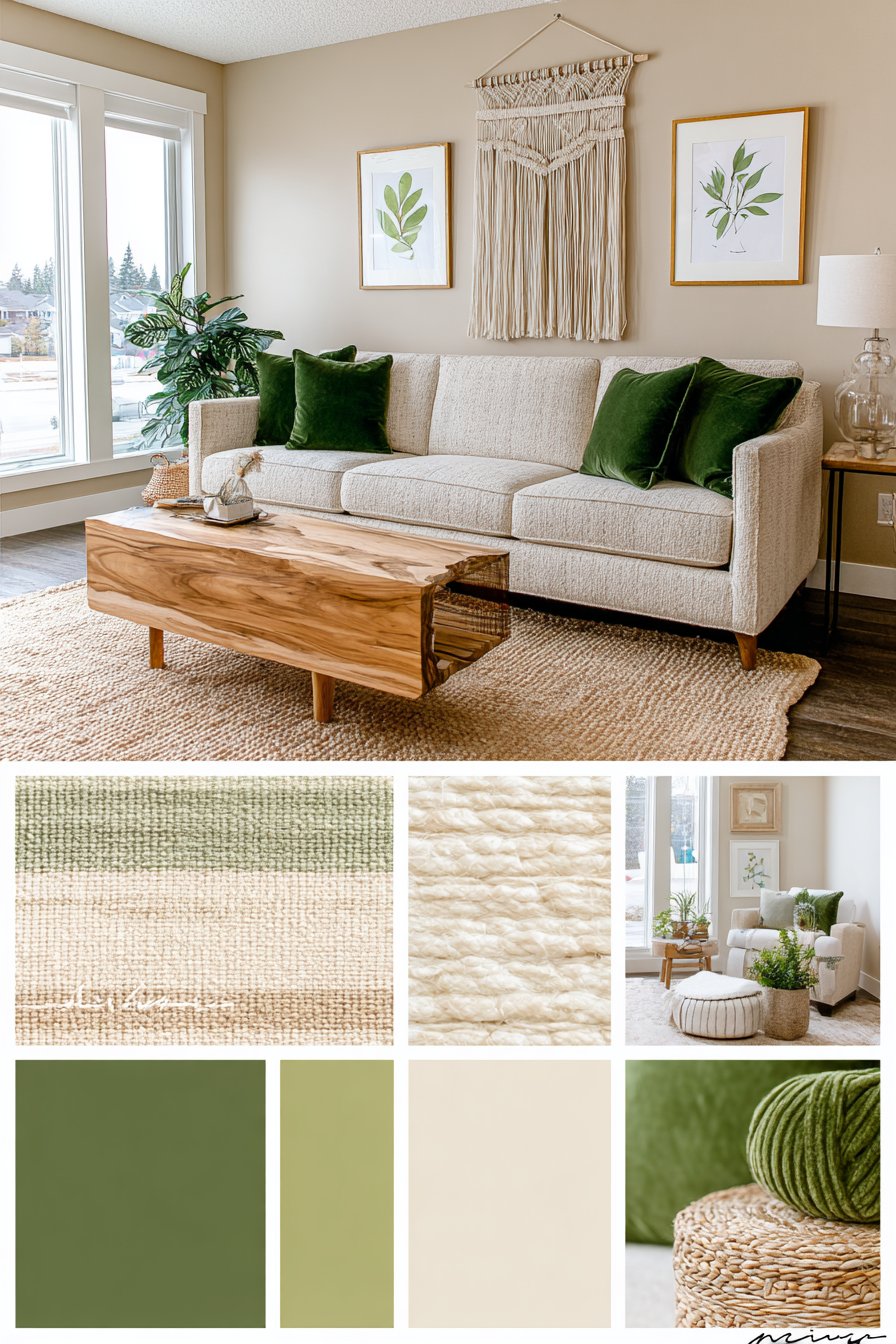
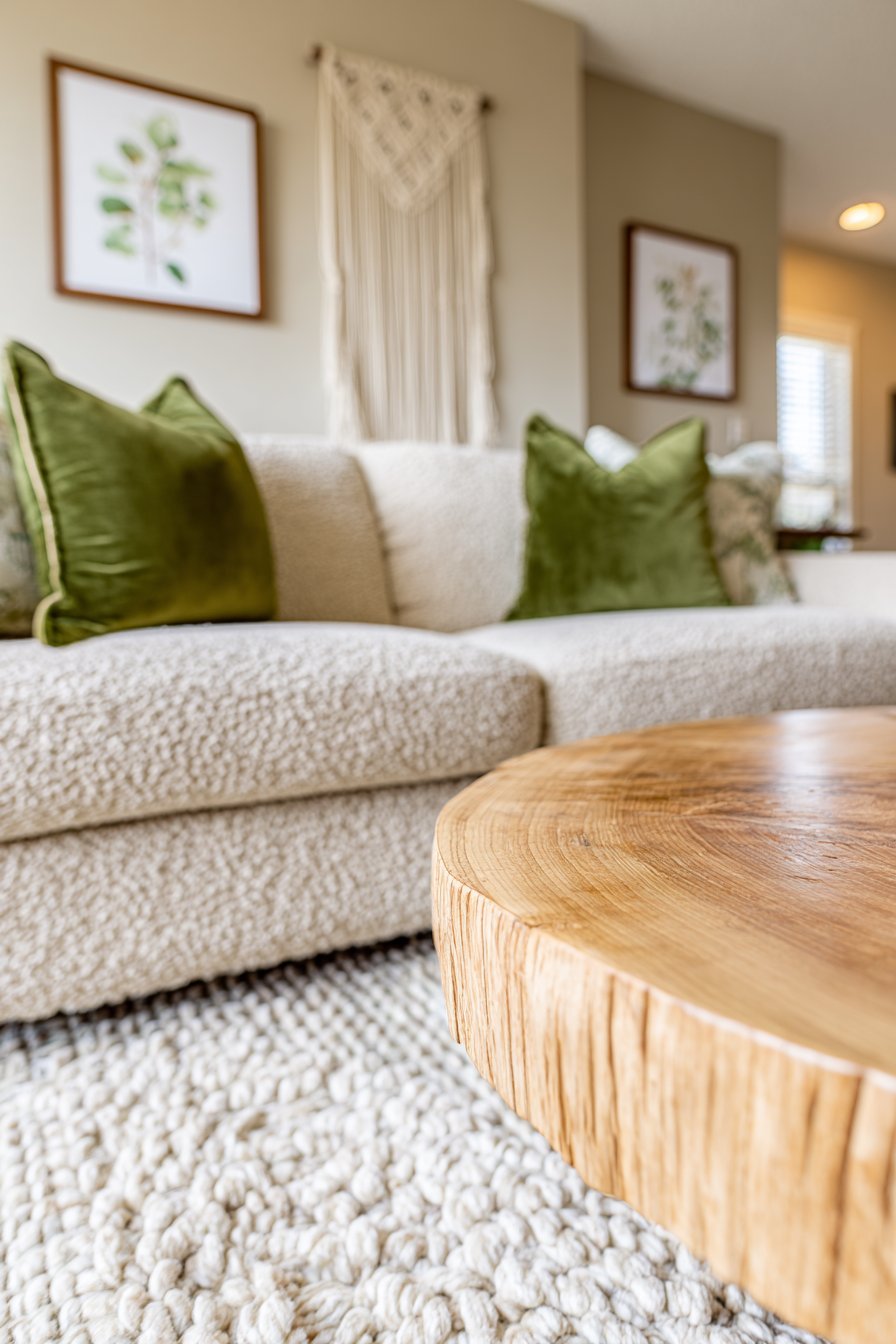
Embrace the relaxed, layered aesthetic of bohemian design through a living room that celebrates texture, natural materials, and the organic interplay of beige and green. This design concept begins with a beige chenille sofa, its visible weave patterns creating a rich, dimensional surface that invites touch. Chenille fabric, known for its velvety softness and subtle sheen, adds warmth and comfort while maintaining visual interest through its distinctive construction. The sofa serves as a neutral foundation that supports the room’s eclectic layering of textiles and accessories.

Complementing the chenille sofa are hunter green velvet throw pillows that provide color saturation and luxurious contrast. The hunter green shade represents a darker, more earthy interpretation of green that feels grounded and natural rather than bright or artificial.
The velvet’s subtle sheen catches light differently than the chenille, creating visual variety and depth. These pillows are generously sized and abundantly placed, embracing the more-is-more philosophy that characterizes bohemian style.

Underfoot, a natural seagrass rug adds organic texture and reinforces the room’s connection to natural materials and sustainable design. Seagrass fibers bring a slightly coarser texture that contrasts beautifully with the soft upholstery above while remaining comfortable for bare feet. The rug grounds the seating area and defines the space within the larger room. A live-edge wood coffee table continues the natural materials theme, its irregular organic edge and visible grain patterns celebrating the tree from which it was crafted rather than hiding its origins.
The walls, painted in warm taupe beige, feature botanical prints in muted green frames that add visual interest without overwhelming the layered textures throughout the space. A macrame wall hanging in natural beige fibers adds bohemian charm and introduces another handcrafted textile element. The intricate knotwork casts subtle shadows on the wall, adding dimension and movement to the vertical surfaces. This design demonstrates how thoughtful attention to texture can create a rich, inviting space even within a limited color palette, proving that visual interest comes not just from color but from the interplay of materials and surfaces.
Key Design Tips:
- Layer multiple textures including chenille, velvet, seagrass, and live-edge wood to create depth and visual richness in a bohemian space
- Choose hunter or darker green tones for a more earthy, grounded bohemian aesthetic rather than brighter greens
- Incorporate handcrafted elements like macrame wall hangings to add artisanal character and support the bohemian style
- Select natural fiber rugs such as seagrass, jute, or sisal for their organic texture and sustainable properties
- Embrace asymmetry and organic forms through live-edge furniture and irregularly shaped decorative elements
8. Contemporary Minimalism with Geometric Patterns
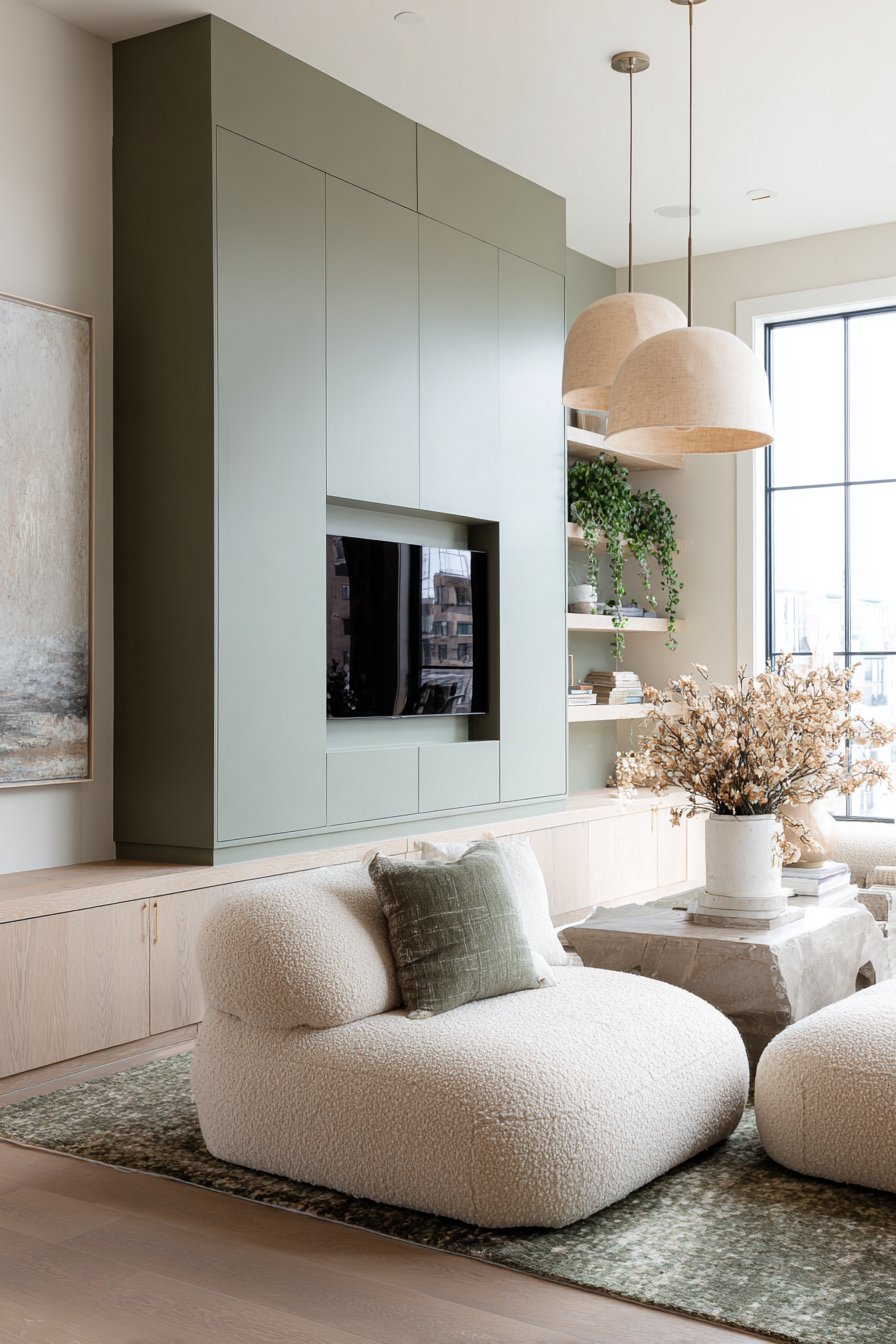
Discover how contemporary minimalist design embraces the beige and green palette through clean lines, thoughtful restraint, and strategic pattern use. This living room concept features a low-profile beige bouclé sofa with rounded edges that embodies the current trend toward softer, more organic shapes in modern furniture.
The bouclé fabric provides texture and visual interest while the rounded edges create a gentle, approachable silhouette that contrasts with the sharp angles traditionally associated with modernism.

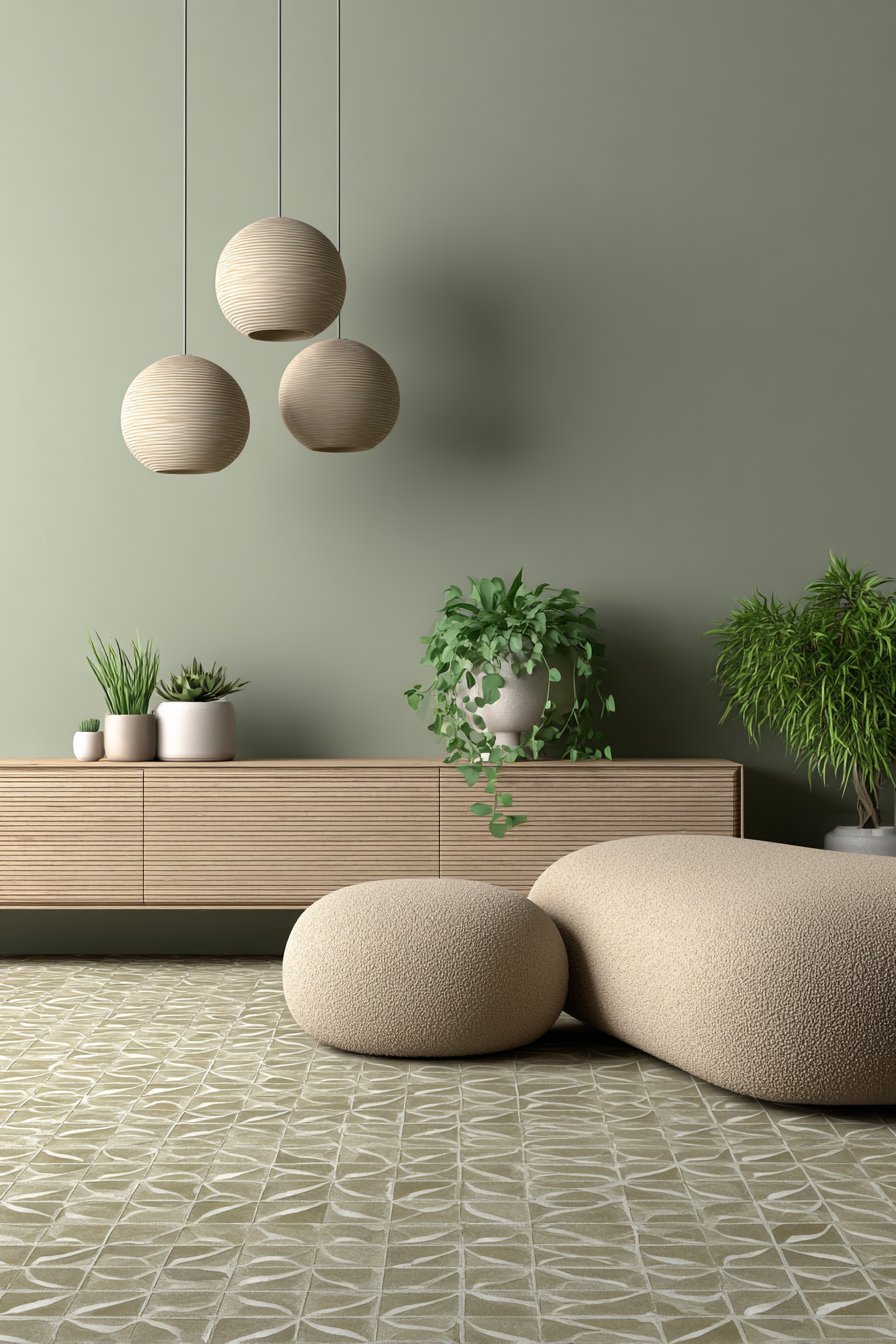
The sofa rests upon a geometric patterned rug in beige and moss green tones that introduces visual rhythm and energy to the minimalist space. Geometric patterns bring order and intentionality while maintaining the clean aesthetic that defines contemporary design.
The moss green shade represents a yellow-toned, muted green that feels fresh and modern without being overly bright. The pattern is substantial enough to anchor the room and define the seating area while remaining subdued enough not to overwhelm the minimalist aesthetic.
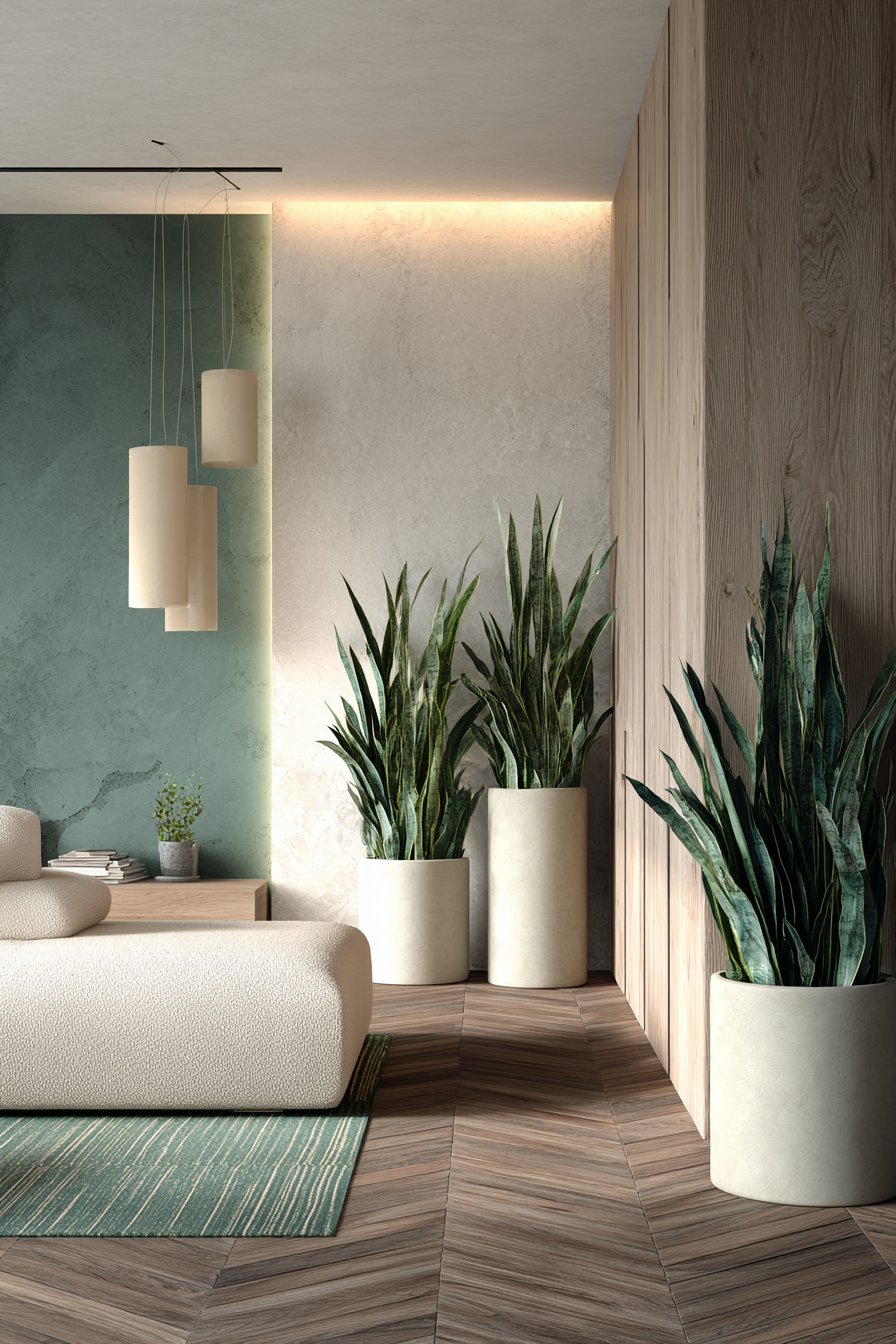
A sleek media console in light oak displays potted snake plants and trailing pothos in ceramic planters, demonstrating how even the most functional furniture can contribute to the room’s beauty. The light oak finish brings warmth without heaviness, and its linear form maintains the clean horizontal lines that characterize contemporary design. The snake plants provide vertical elements with their upright, sword-like leaves, while the pothos cascade gracefully over the edge of the console, softening the geometry with organic movement.
The accent wall behind the television is painted in muted eucalyptus green, creating a subtle contrast without disrupting the room’s serene atmosphere. This soft green tone contains grey undertones that make it feel sophisticated and contemporary rather than juvenile or overly cheerful. Minimalist pendant lights with beige fabric shades provide ambient illumination while maintaining the room’s commitment to simple forms and natural materials. The contemporary aesthetic captured through wide-angle interior photography reveals how careful editing and thoughtful restraint create a harmonious space where every element serves both functional and aesthetic purposes.
Key Design Tips:
- Choose furniture with rounded edges and soft curves to add warmth and approachability to contemporary minimalist spaces
- Use geometric patterns sparingly and in muted colorways to add visual interest without disrupting the minimalist aesthetic
- Select low-profile furniture to maintain open sightlines and create a sense of spaciousness in contemporary living rooms
- Incorporate plants in clean-lined ceramic planters to bring life and organic form to minimalist environments
- Paint accent walls in muted, grey-toned greens for subtle contrast that feels sophisticated rather than bold
9. Intimate Conversation Area with Botanical Art
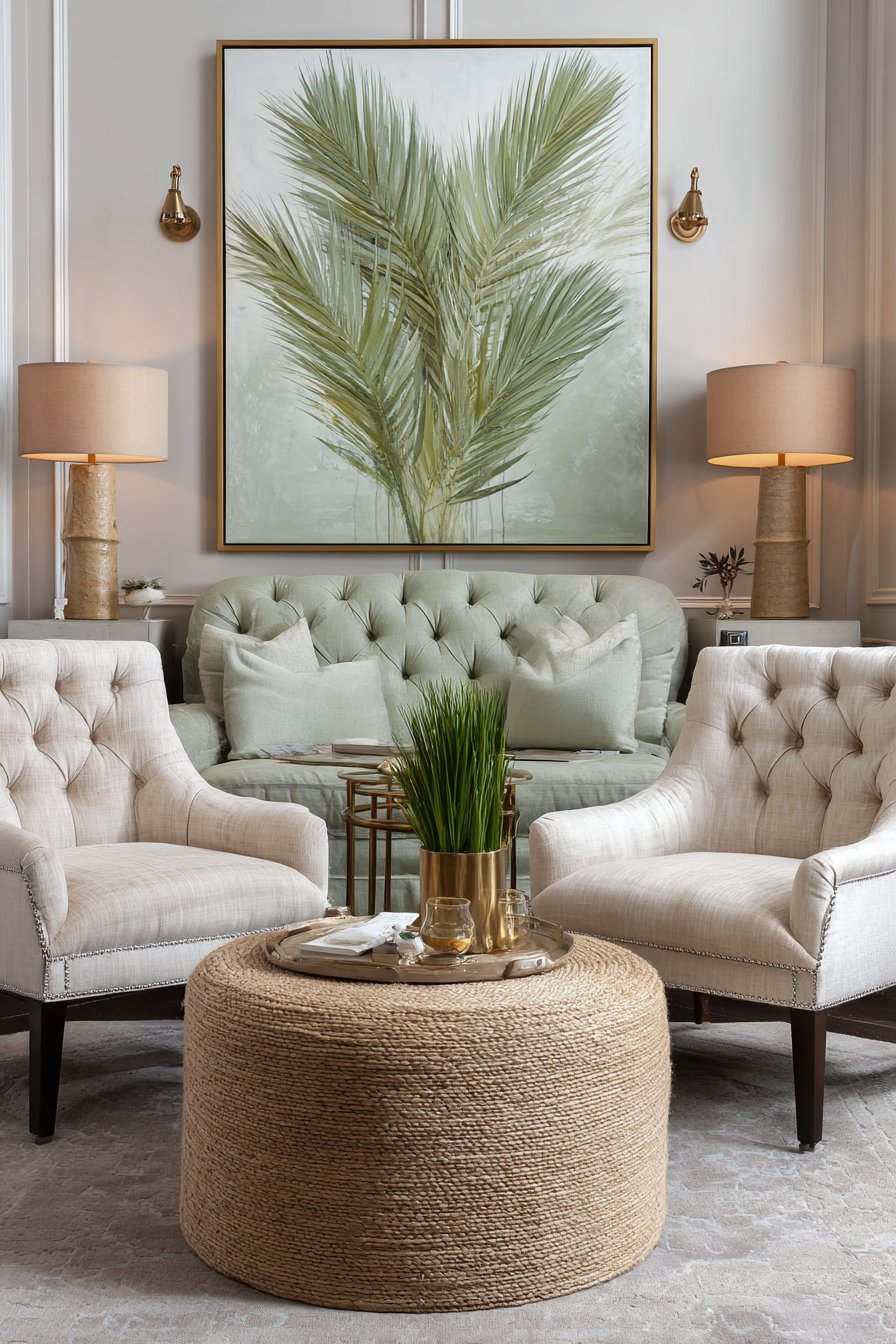
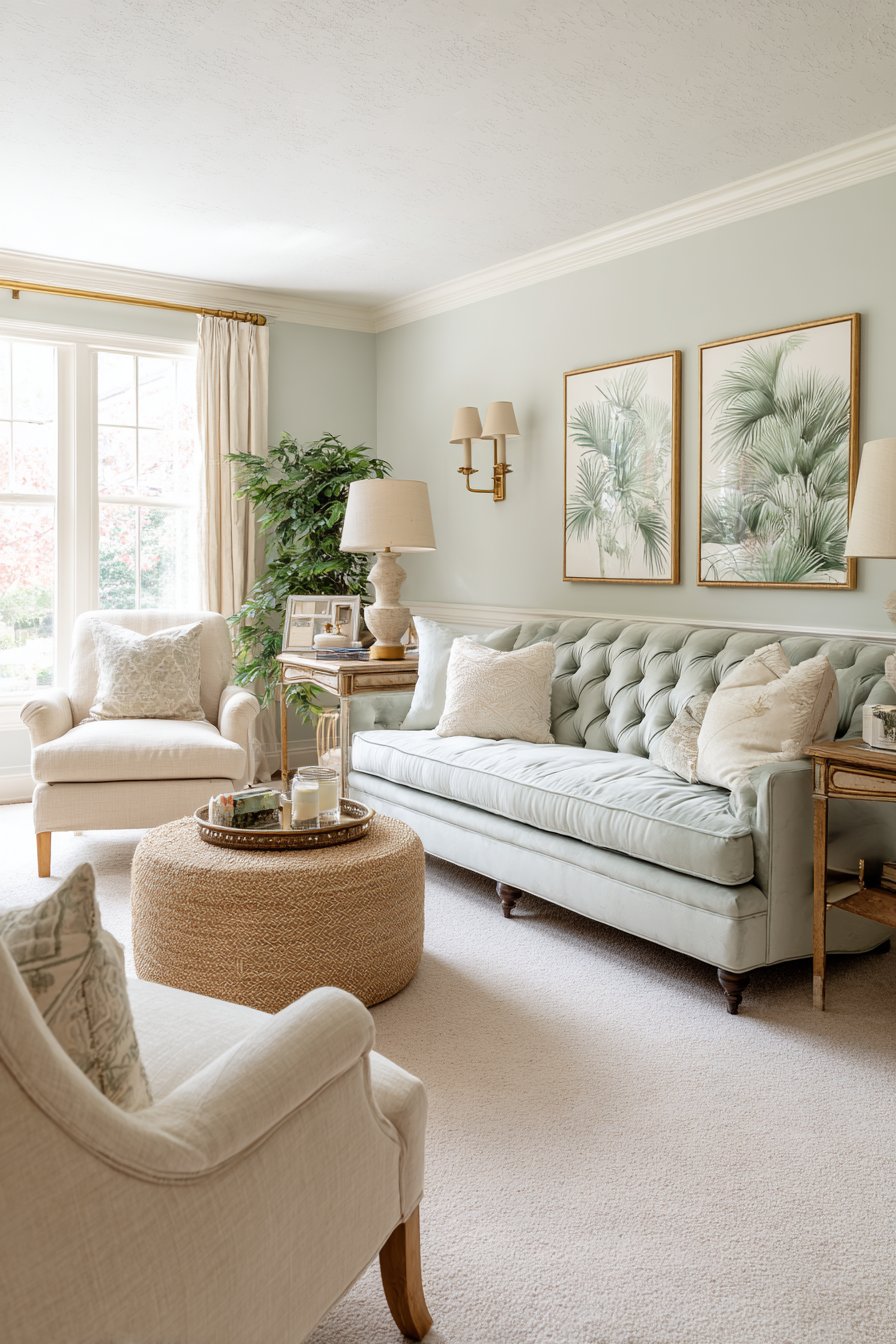
Design a living room conversation area that prioritizes face-to-face interaction and meaningful connection through thoughtful furniture arrangement and the elegant combination of beige and green elements. This concept features two beige linen club chairs positioned to face a tufted sofa in pale sage green fabric, creating an arrangement that naturally encourages conversation rather than focusing attention on a television or other distraction. The club chairs, with their substantial arms and comfortable proportions, invite guests to settle in for extended conversations.

The pale sage green tufted sofa introduces color while maintaining the soft, peaceful quality that defines this space. Button tufting adds traditional detailing and creates subtle shadows across the sofa’s surface, giving it dimension and visual interest. The pale sage shade represents a very light, almost neutral interpretation of green that reads as calming and serene—perfect for a space designed to put people at ease and encourage open communication.
Between the chairs and sofa sits a round ottoman in natural jute serving double duty as a coffee table surface. The round shape softens the arrangement and eliminates sharp corners that might create barriers in the conversation circle. The natural jute material adds organic texture while remaining neutral enough not to compete with the surrounding furniture. This ottoman can accommodate trays for drinks and snacks while maintaining an open, accessible feeling that a traditional coffee table might disrupt.
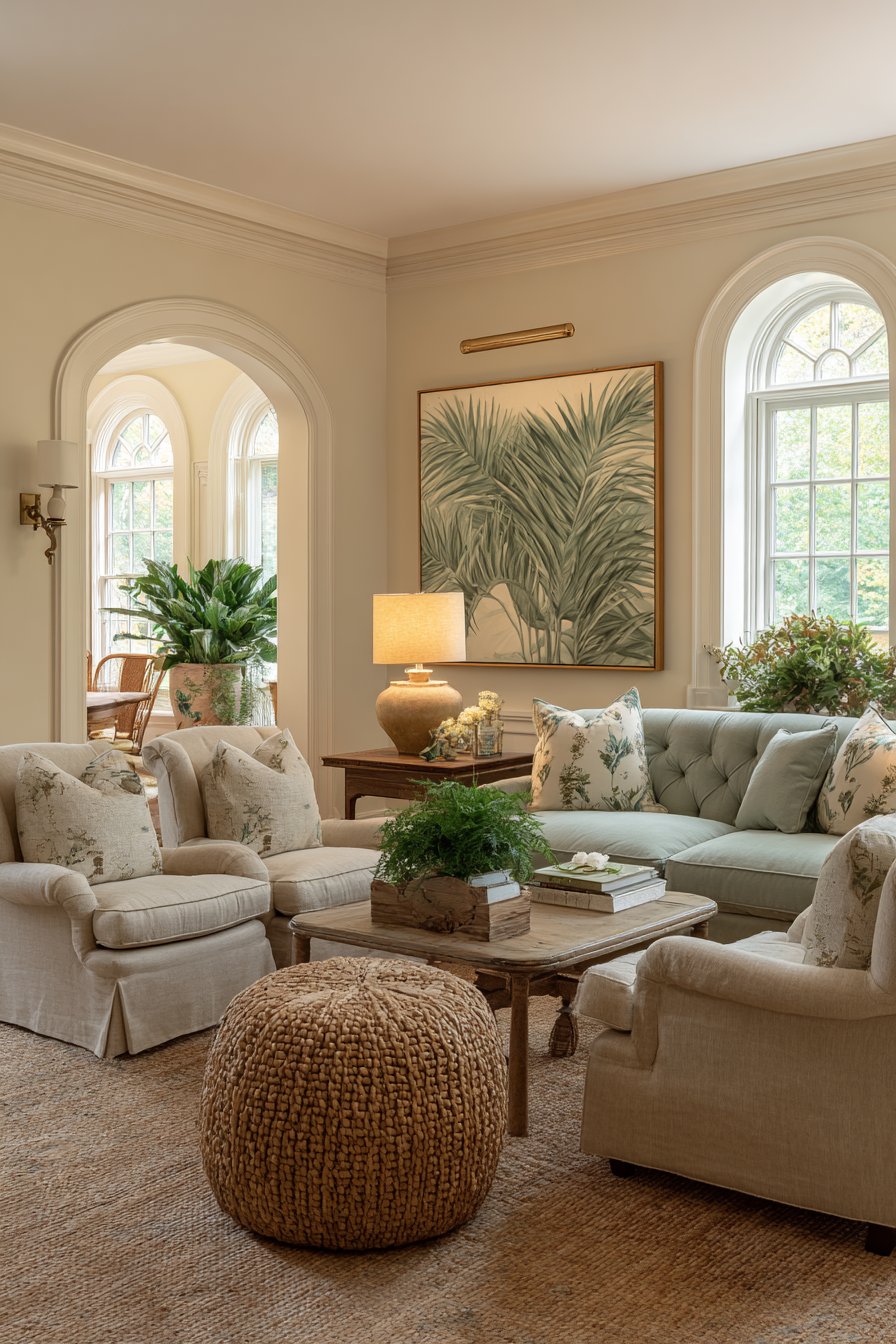
Cream walls provide a backdrop for large-scale botanical artwork featuring green palm fronds in natural wood frames. These oversized art pieces make a strong visual statement and reinforce the nature-inspired theme without introducing additional colors that might complicate the serene palette.
Brass picture lights illuminate the artwork, adding task lighting that highlights the botanical details while contributing to the room’s ambient illumination. Table lamps with beige ceramic bases sit on side tables within easy reach of the seating, providing warm task lighting for reading or other activities. The architectural digest style photography captures how natural daylight enhances this peaceful beige and green color story, revealing how the arrangement prioritizes human connection and comfortable conversation.
Key Design Tips:
- Arrange seating in a conversation circle facing each other rather than focusing on a television, to encourage interaction
- Use a round ottoman as a coffee table to soften the arrangement and create an accessible centerpiece without sharp corners
- Select large-scale botanical artwork to make a strong visual statement while maintaining the nature-inspired theme
- Layer multiple light sources including picture lights and table lamps to create flexible lighting for different times of day and activities
- Choose pale, nearly neutral shades of green for upholstered pieces when you want color without overwhelming the peaceful atmosphere
10. Integrated Entertainment Wall with Living Elements
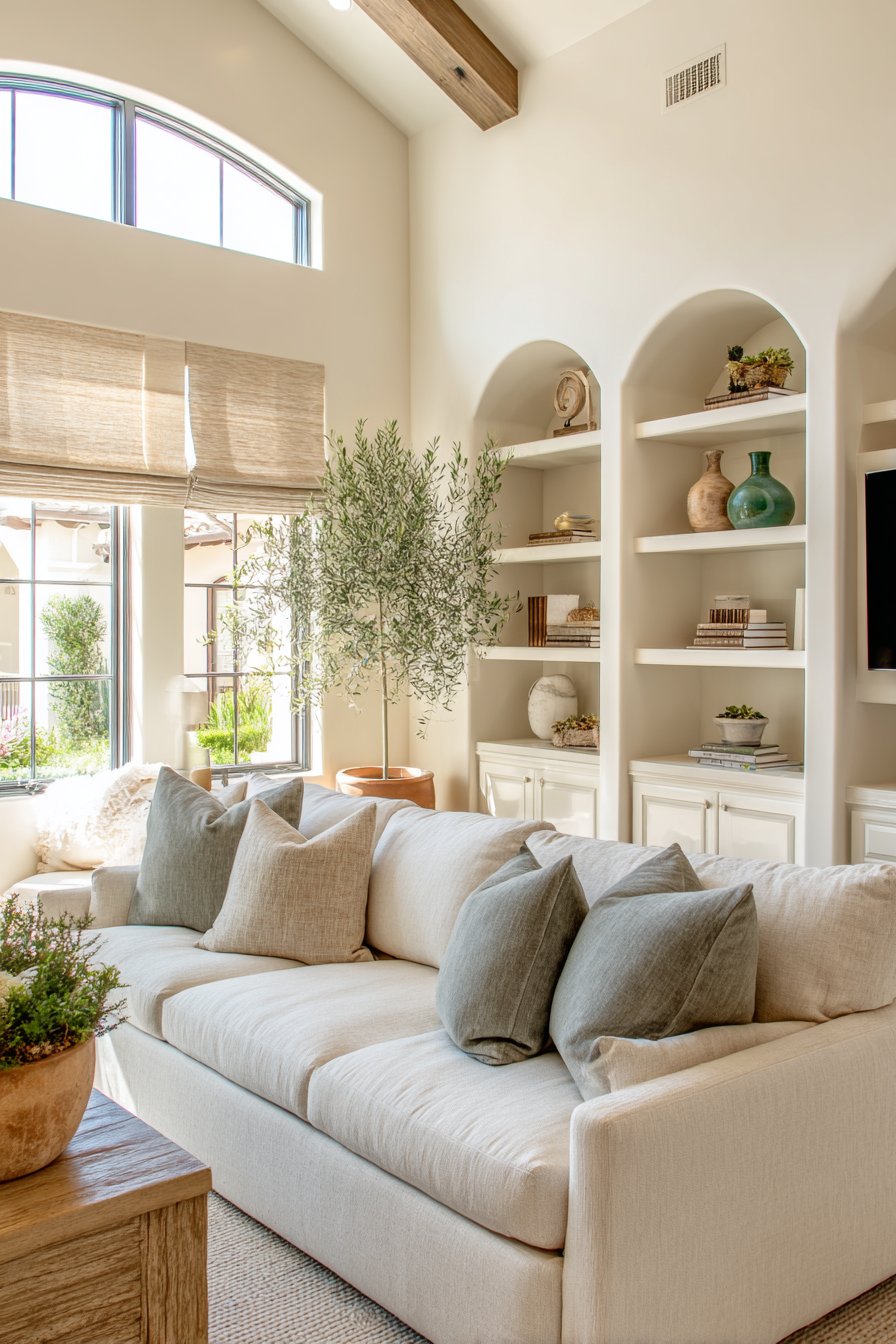
Create a living room that seamlessly integrates entertainment technology with beautiful design through an entertainment wall featuring integrated shelving in warm beige tones. This comprehensive design concept addresses the modern need for media storage and display while maintaining aesthetic sophistication.
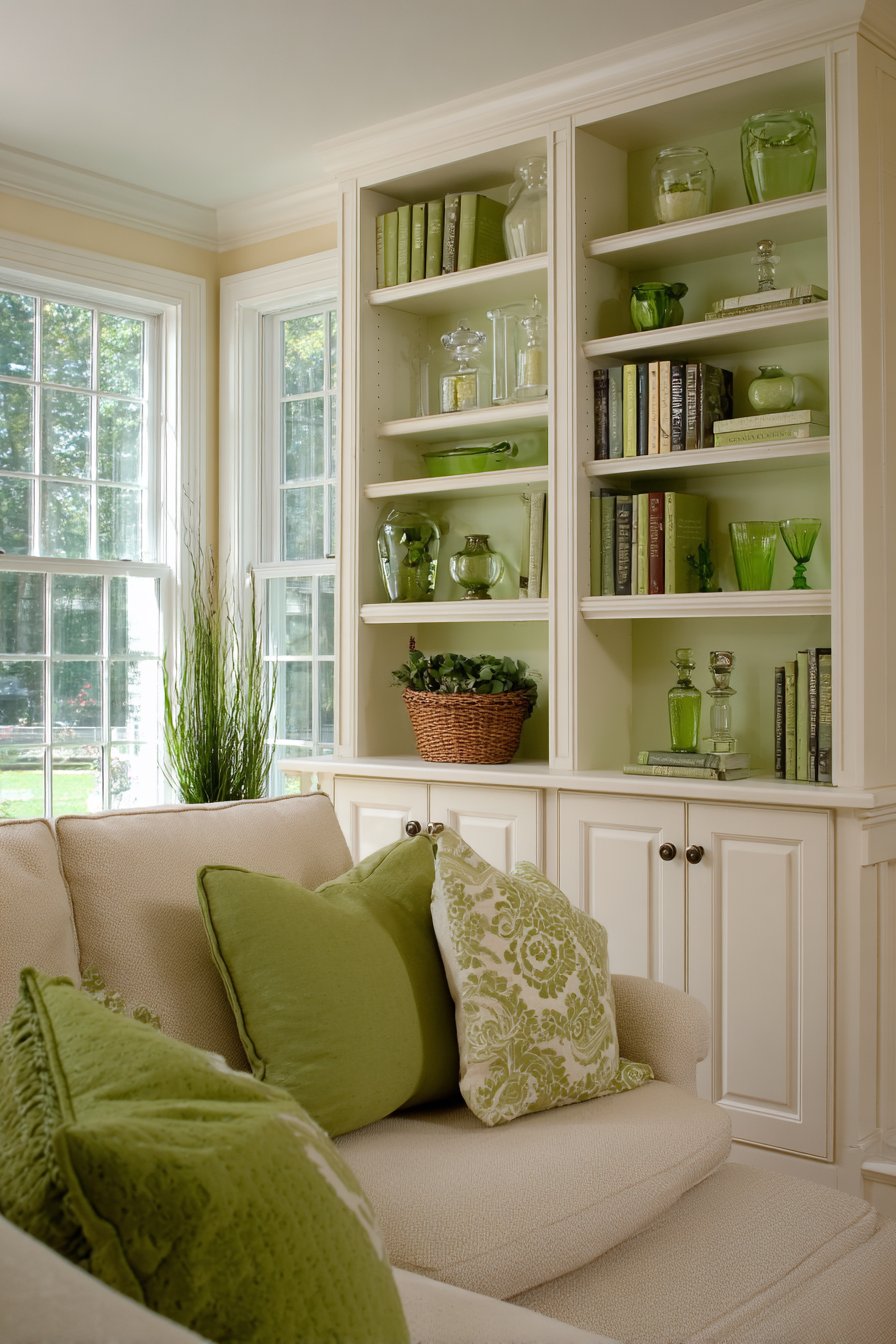
The shelving system displays a thoughtfully curated mix of books, green ceramic vessels, and natural wood decorative objects that create visual interest and demonstrate how functional storage can double as artistic display.
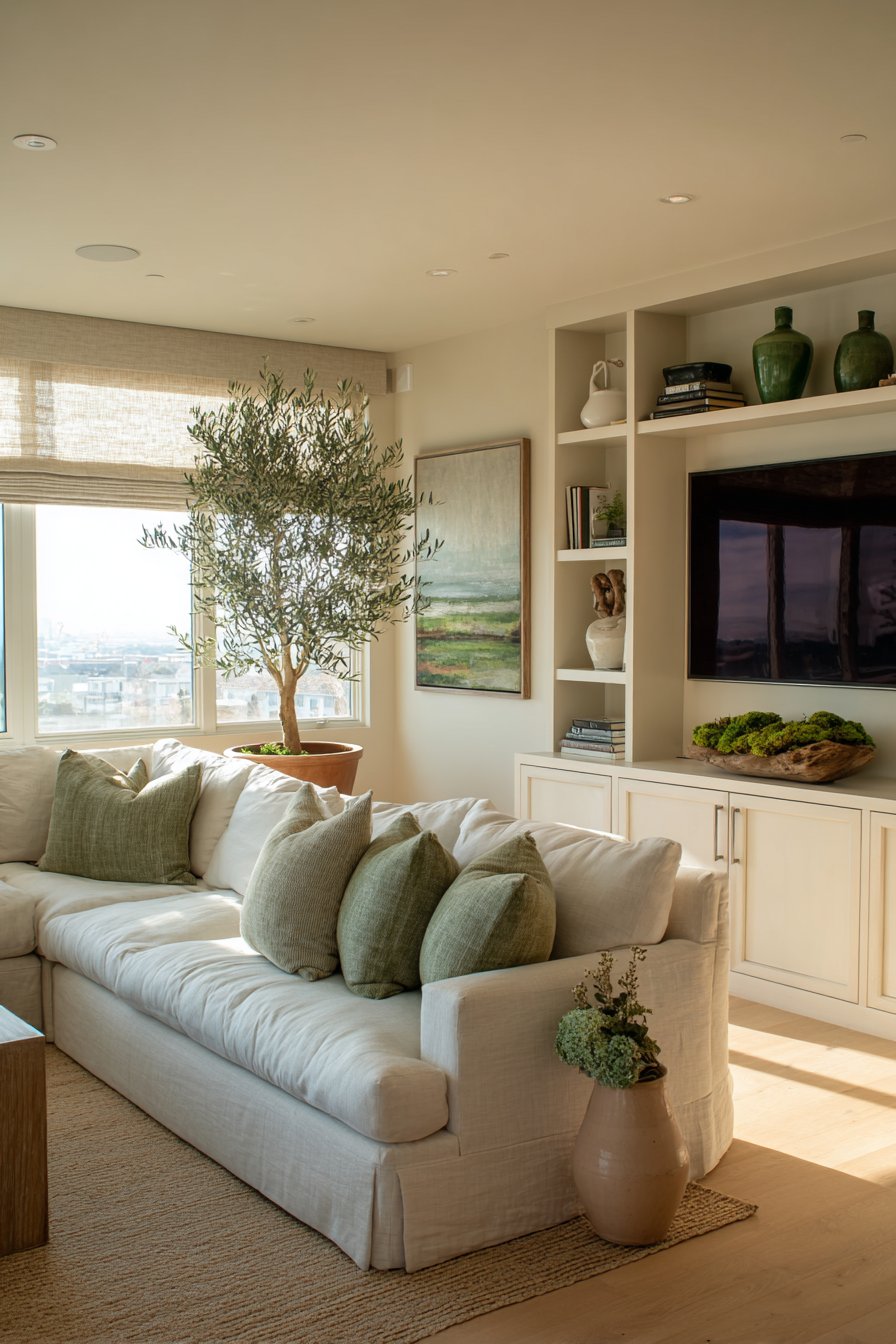
The arrangement of objects on the shelves follows design principles of balance, rhythm, and negative space. Books are grouped by color and size, creating cohesive blocks rather than random disorder. Green ceramic vessels in varying heights and shapes add pops of color while their smooth, glazed surfaces contrast beautifully with the rough texture of natural wood objects. This variety prevents the shelving from feeling monotonous while maintaining an overall sense of cohesion and intentionality.
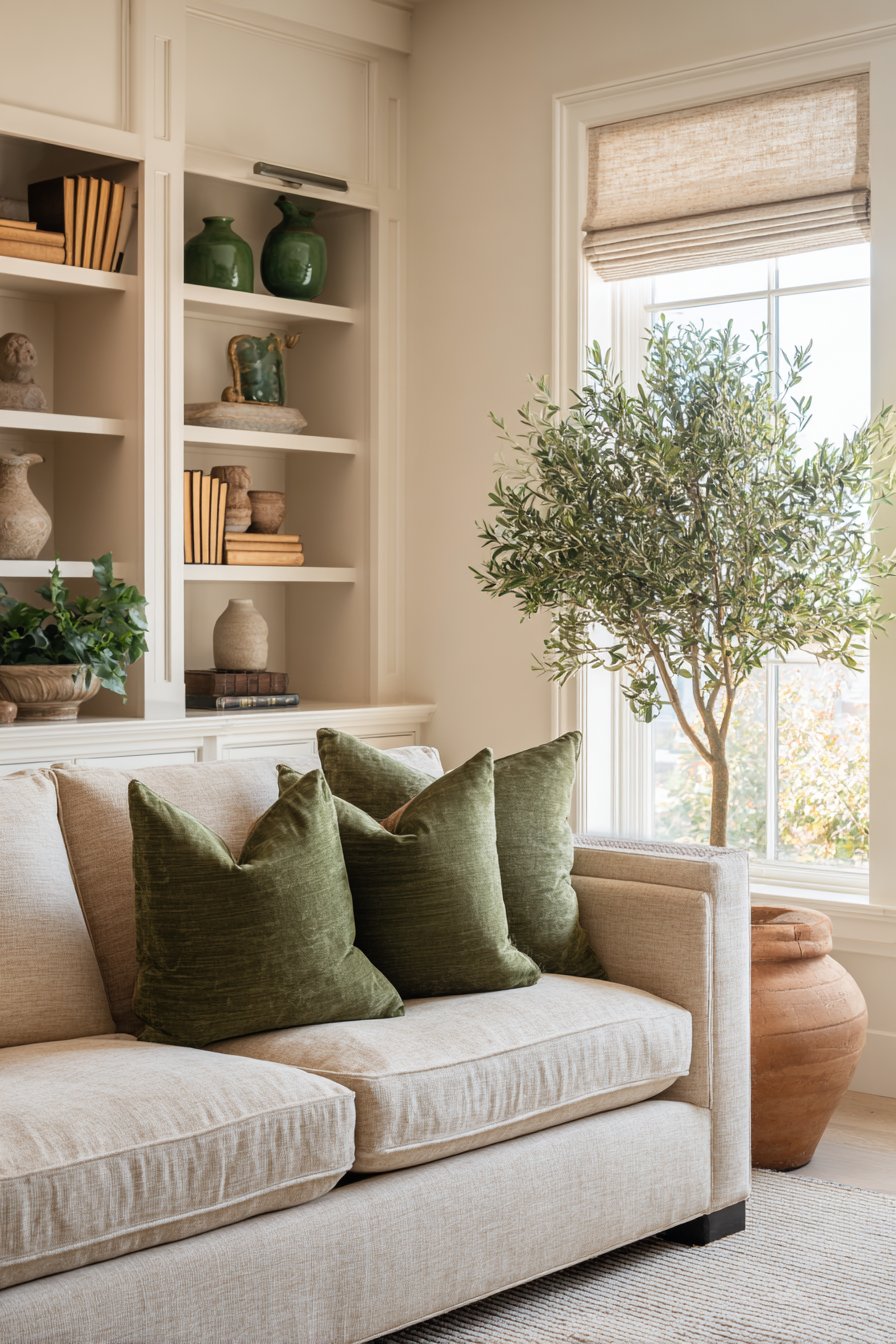
The main seating includes a deep beige sofa positioned for optimal television viewing while remaining inviting for general relaxation and conversation. Multiple green accent pillows in varying shades from olive to mint create a gradient effect and demonstrate how using a range of green tones adds complexity and depth to the color palette. The olive represents a warm, brownish green while the mint brings a cooler, more refreshing quality, showing how different undertones within the same color family can coexist harmoniously.
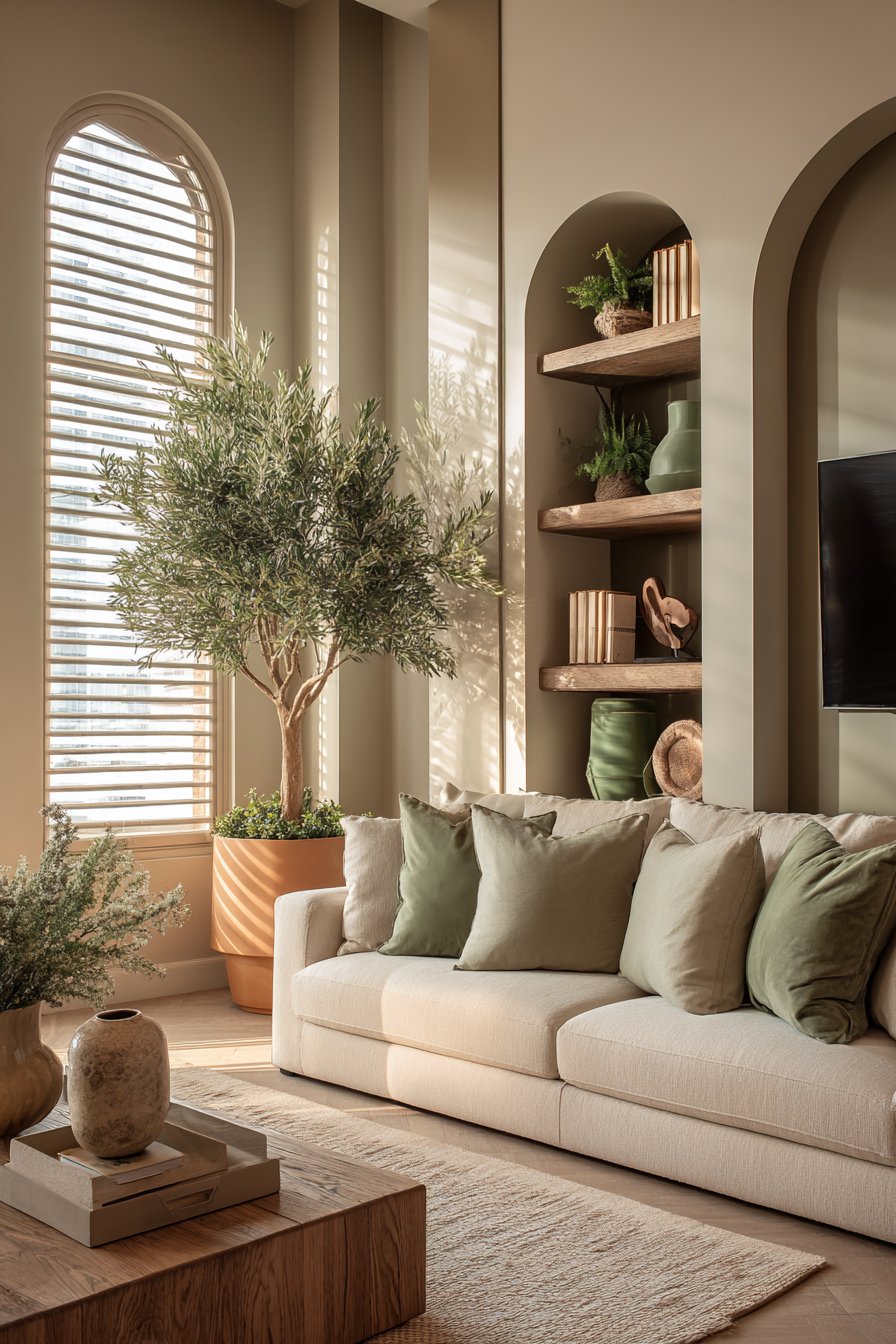
A large potted olive tree in a terracotta planter serves as a living sculpture beside the sofa, making a bold statement and bringing significant height and drama to the space. The olive tree’s silvery-green foliage introduces yet another shade of green while its sculptural branches create beautiful silhouettes against the wall. The terracotta planter adds an earthy, Mediterranean quality that complements both the beige and green palette. Sheer Roman shades in natural beige linen filter afternoon light, creating a soft, diffused glow that enhances the livable yet stylish integration of beige and green throughout the entire space. This design proves that entertainment-focused living rooms don’t have to sacrifice beauty for functionality—thoughtful design allows both to coexist seamlessly.
Key Design Tips:
- Use integrated shelving systems to display curated collections that reflect your personality while keeping clutter contained
- Vary the shades of your accent color from light to dark to create visual depth and prevent the palette from feeling one-dimensional
- Position a statement plant like an olive tree as a living sculpture that adds height, drama, and architectural interest
- Choose Roman shades over curtains when you want light filtering capabilities with a cleaner, more tailored appearance
- Arrange shelving displays with attention to balance, grouping similar items together and leaving adequate negative space
Why These Beige and Green Living Room Designs Work
The ten living room designs presented in this article demonstrate why the beige and green color combination has endured as a favorite among interior designers and homeowners alike. This timeless palette succeeds because it strikes an ideal balance between neutrality and personality, warmth and freshness, sophistication and approachability. Each design showcases different aspects of what makes this color pairing so versatile and universally appealing.
From a color theory perspective, beige and green are naturally harmonious. Beige contains warm undertones that create feelings of comfort, stability, and welcome—essential qualities for a living room where people gather and relax. Green, as nature’s dominant color, brings associations with growth, renewal, tranquility, and life itself. When combined, these colors create spaces that feel both grounded and uplifting, restful and energizing. The psychological impact of this palette supports well-being and reduces stress, making it particularly valuable in our increasingly hectic world.
The versatility of beige and green living rooms becomes apparent when examining how these designs span multiple style categories. The mid-century modern room demonstrates how this palette works beautifully with clean lines and retro aesthetics. The bohemian design shows its compatibility with layered textures and eclectic collections. The contemporary minimalist space proves it can support even the most edited, restrained approaches to design. From traditional to transitional, from casual to formal, beige and green adapt seamlessly to different design philosophies while maintaining their essential character.
Material diversity plays a crucial role in the success of these beige and green living rooms. Natural materials like linen, wool, jute, sisal, leather, and wood all exist within the beige spectrum, each bringing unique textural qualities. Green appears through velvet, ceramic, glass, painted surfaces, and most importantly, living plants. This variety of materials prevents the limited color palette from feeling restrictive or boring. Instead, the focus shifts from color variety to textural richness, creating sophisticated spaces that reward close observation and tactile exploration.
The inclusion of plants throughout these designs deserves special attention. Living greenery serves multiple purposes beyond aesthetics—plants improve air quality, increase humidity, reduce stress, and create connections to the natural world that enhance human well-being. From the dramatic olive tree to the trailing pothos, from fiddle leaf figs to simple eucalyptus stems, plants bring authenticity and life to beige and green living rooms. They’re the element that keeps the palette from feeling static or artificial, introducing organic movement and seasonal change to interior spaces.
Lighting emerges as another critical factor in these successful beige and green living rooms. Natural daylight reveals the true beauty of both colors, showing how beige warms in morning sun and how green shifts from cool to vibrant as light conditions change. The designs emphasize windows, sheer curtains, and strategic furniture placement to maximize natural light. Artificial lighting through lamps, pendants, and picture lights creates warmth during evening hours, ensuring the space remains inviting at all times. The interplay between light and shadow across textured surfaces adds dimension and visual interest throughout the day.
These living room designs also showcase the importance of proportion and scale when working with a limited color palette. Large-scale elements like sectional sofas, feature walls, and floor-to-ceiling curtains make strong statements without requiring multiple colors. Smaller accents through pillows, vases, and decorative objects add detail and refinement. The variety in scale—from monumental olive trees to delicate eucalyptus stems—creates visual hierarchy and guides the eye through the space in a logical, pleasing manner.
The functional success of these beige and green living rooms cannot be overlooked. Each design addresses real-world needs: comfortable seating, adequate storage, proper lighting, entertainment integration, and conversation facilitation. Beautiful design means nothing if a space doesn’t support the activities and lifestyle of its occupants. These rooms prove that aesthetic sophistication and practical functionality work together rather than competing for priority. The neutral beige foundation provides flexibility for changing needs, while green accents add personality without limiting future design evolution.
For homeowners considering a beige and green living room, these designs offer valuable lessons in restraint and editing. Rather than introducing multiple competing colors, they demonstrate how depth and interest come from varying the shades, tones, and saturation within the chosen palette. From pale sage to deep forest, from cream to taupe, the range within beige and green proves surprisingly broad. This approach simplifies decorating decisions—when shopping for new accessories or furniture, the question becomes not “what color?” but rather “which shade of our existing colors?”
The sustainability aspect of beige and green living rooms deserves recognition as well. Natural materials, living plants, reclaimed wood, and timeless design choices all contribute to environmentally conscious interior design. These spaces avoid trendy colors or styles that quickly date, instead embracing classic approaches that remain beautiful for decades. The emphasis on quality over quantity—investing in substantial pieces like leather sofas and built-in cabinetry rather than disposable furniture—aligns with sustainable living principles. When design is done thoughtfully, it doesn’t require constant updating and replacement.
Finally, these beige and green living rooms succeed because they create emotional resonance. They feel like home rather than like showrooms or magazine spreads. The warmth of beige invites you in, the green refreshes your spirit, and the combination creates spaces where life happens—where children play, where friends gather, where quiet evenings are spent reading, where celebrations unfold. The best interior design serves human needs and enhances human experience, and these ten living rooms demonstrate how the simple pairing of beige and green achieves exactly that.
Conclusion
The journey through these ten beige and green living room designs reveals the remarkable versatility and enduring appeal of this classic color combination. From the plush comfort of linen sectionals adorned with velvet pillows to the dramatic impact of forest green feature walls, from cozy reading nooks bathed in filtered sunlight to contemporary spaces featuring geometric patterns and clean lines, the beige and green palette adapts beautifully to diverse design aesthetics and functional needs.
The key takeaways from these inspiring spaces center on several fundamental principles. First, texture becomes paramount when working within a limited color palette—layering materials like linen, velvet, jute, leather, and natural wood creates visual richness that color variety might otherwise provide. Second, incorporating living plants throughout the space reinforces the nature-inspired theme while bringing authentic life and seasonal change to your interior. Third, lighting—both natural and artificial—plays a crucial role in revealing the beauty of beige and green tones and creating atmosphere appropriate for different times of day and activities.
These designs also demonstrate the importance of choosing quality over quantity, investing in substantial pieces that will serve you well for years rather than following fleeting trends. The timeless nature of beige and green means your choices today will remain beautiful tomorrow, making this palette particularly wise for those seeking longevity in their design investments. Whether you prefer the bold statement of emerald velvet chairs or the subtle sophistication of sage green walls, whether you gravitate toward bohemian layers or minimalist restraint, the beige and green palette offers endless possibilities for creating a living room that truly feels like home.
As you embark on your own design journey, remember that the most successful spaces reflect the personalities and lifestyles of their inhabitants. Use these ten designs as inspiration rather than instruction, adapting the ideas to suit your specific needs, preferences, and circumstances. Experiment with different shades of beige from cream to taupe, explore the full spectrum of green from pale sage to deep forest, and don’t be afraid to layer textures boldly. Your living room should be a space that welcomes you home, nurtures your well-being, and creates the perfect backdrop for the life you want to live. With the elegant simplicity of beige and the refreshing vitality of green, you have the perfect foundation for creating exactly that kind of space.
