


The art of interior design transcends mere aesthetics, weaving together culture, comfort, and functionality into spaces that tell compelling stories. An Arabic living room represents centuries of design wisdom, where every cushion, lantern, and carved detail serves both beauty and purpose. These spaces invite intimate gatherings, celebrate craftsmanship, and create environments where hospitality becomes an art form. The richness of Arabic design lies in its ability to transform ordinary rooms into extraordinary sanctuaries of warmth and elegance.
From traditional majlis arrangements to contemporary interpretations, Arabic living rooms offer endless possibilities for creating distinctive interiors. The design philosophy emphasizes low seating, layered textiles, intricate metalwork, and architectural elements that filter light beautifully. Whether you’re drawn to authentic historical styles or modern fusion approaches, these spaces demonstrate how cultural heritage can inform contemporary living. The interplay of jewel tones, geometric patterns, and handcrafted details creates rooms that feel both luxurious and welcoming.
This comprehensive guide explores ten distinctive Arabic living room designs, each showcasing unique approaches to this timeless aesthetic. You’ll discover how traditional elements like mashrabiya screens, brass lanterns, and Persian rugs can be incorporated into various design schemes. From intimate majlis seating to spacious rooms with architectural grandeur, these concepts demonstrate the versatility and enduring appeal of Arabic interior design. Let these ideas inspire your own journey toward creating a living space that honors tradition while embracing personal style.
1. Traditional Majlis with Burgundy and Gold Opulence
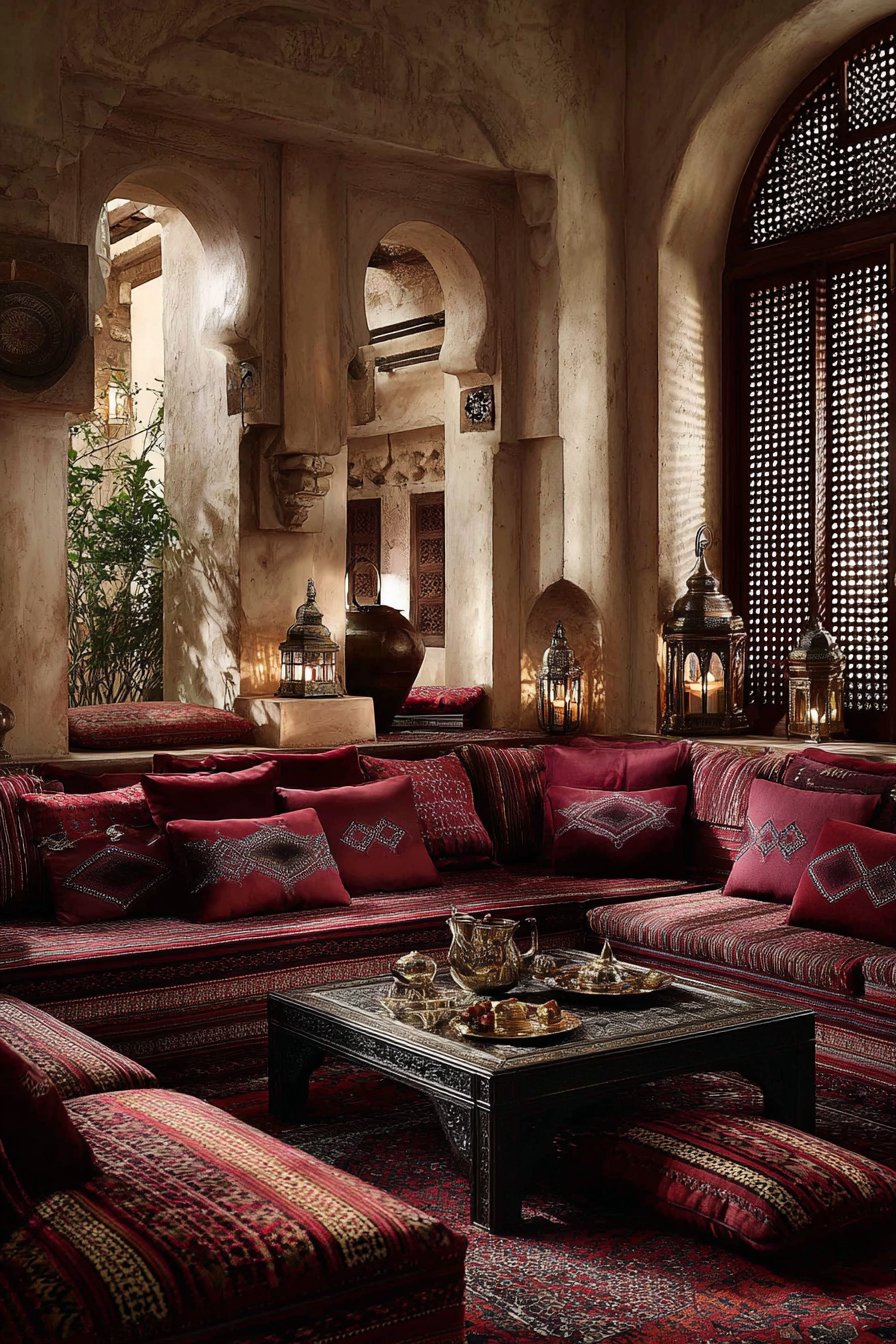
The traditional majlis arrangement represents the heart of Arabic hospitality, where built-in bench seating creates an intimate gathering space. Plush burgundy and gold velvet cushions line the perimeter, their rich jewel tones instantly establishing a sense of luxury.
The geometric patterns adorning these cushions showcase subtle embroidery that reveals its complexity upon closer inspection. This seating arrangement encourages face-to-face conversation and creates a democratic circle where all guests feel equally welcomed and valued.
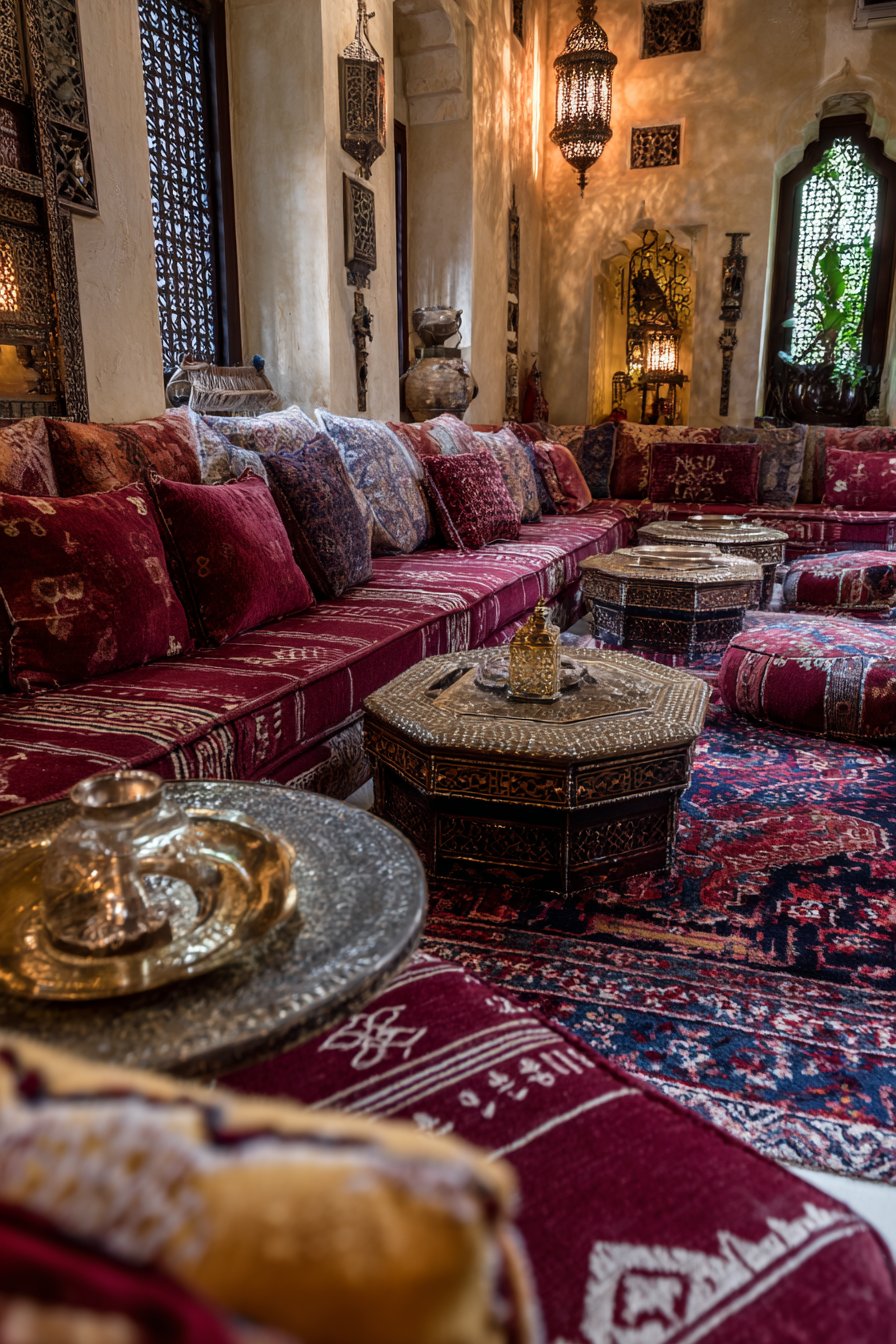
A hand-woven Persian rug in deep reds and navy anchors the entire composition beneath an exquisite carved wooden coffee table. The brass inlay work on this centerpiece catches light beautifully, creating subtle sparkles that animate the space.
The rug’s intricate patterns provide visual interest underfoot while defining the seating area’s boundaries. This layering of textures—from smooth brass to plush velvet to woven wool—creates sensory richness that makes the space feel complete.
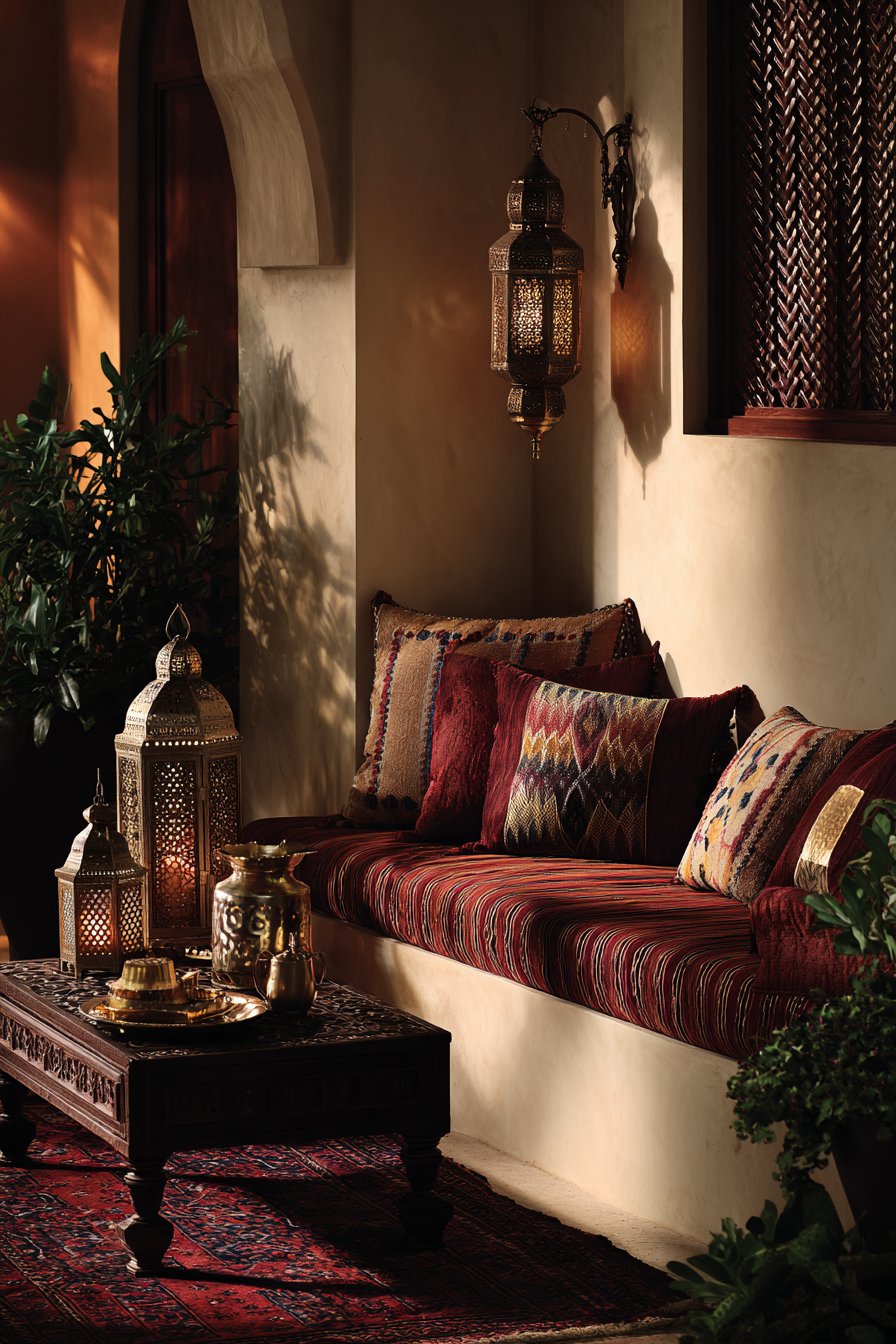
Ornate brass lanterns with pierced metalwork transform ordinary lighting into an art installation. These fixtures cast delicate shadow patterns across cream-colored walls, creating an ever-changing display throughout the day.
The mashrabiya screens filtering natural light add another dimension to this interplay of light and shadow. This careful attention to illumination ensures the space feels warm and inviting rather than dimly lit.
Key Design Tips:
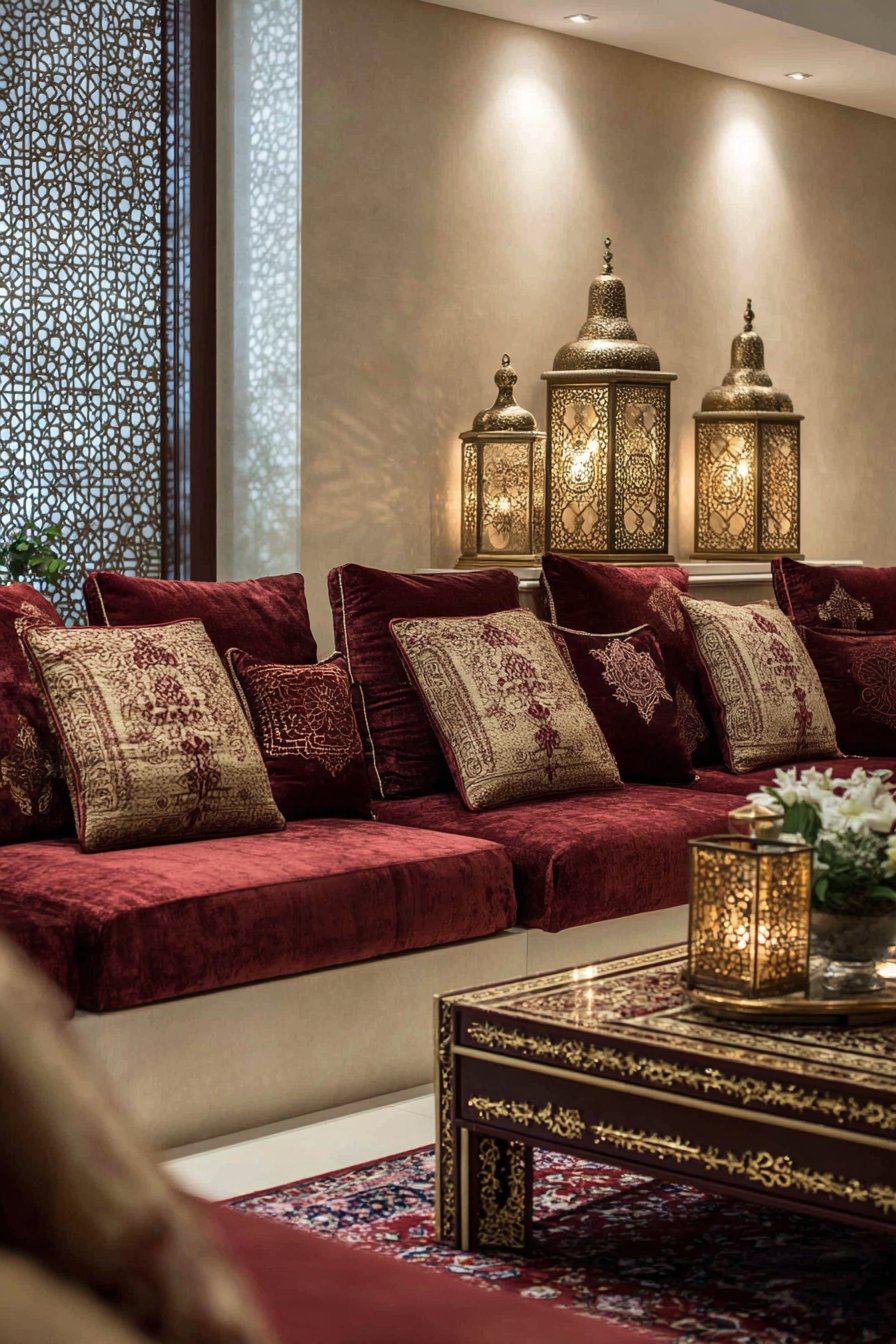
- Install built-in bench seating along walls to maximize floor space while creating an authentic majlis style
- Layer multiple cushions in varying sizes with complementary jewel tones for visual depth
- Choose hand-woven rugs with traditional patterns to add authenticity and ground the seating arrangement
- Incorporate pierced brass lanterns at different heights to create layered ambient lighting
- Use mashrabiya screens or latticed panels to filter natural light beautifully
2. Contemporary Arabic Living Room with Jewel-Toned Luxury
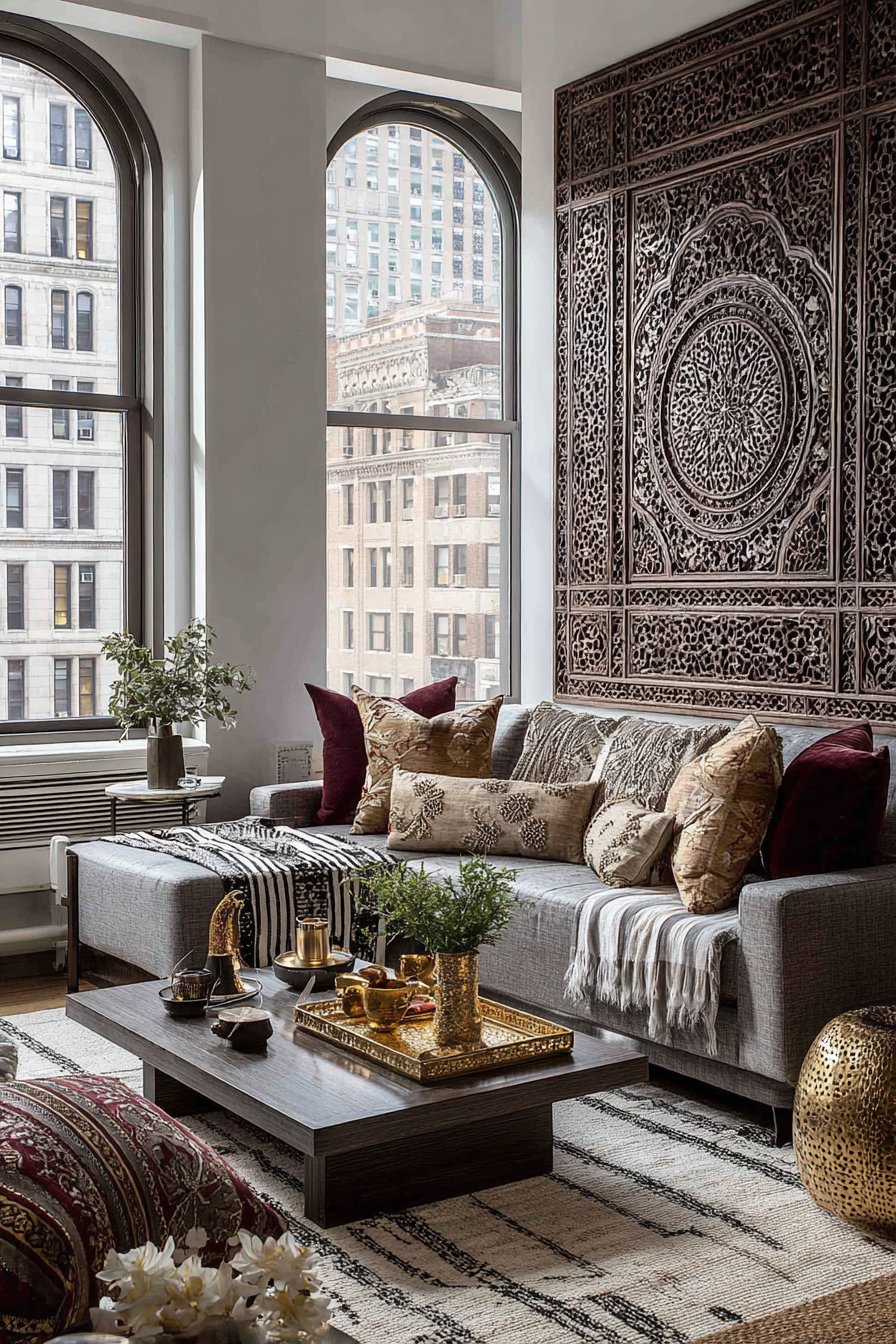
Modern comfort meets traditional elegance in this sophisticated interpretation of Arabic design. A low-profile sectional sofa in deep jewel tones provides the foundation, proving that contemporary furniture can honor cultural aesthetics.
The abundance of silk and velvet throw pillows in emerald, gold, and burgundy transforms this modern piece into something distinctly Arabic. This approach makes the style accessible to those who prefer standard furniture heights while maintaining authentic visual richness.
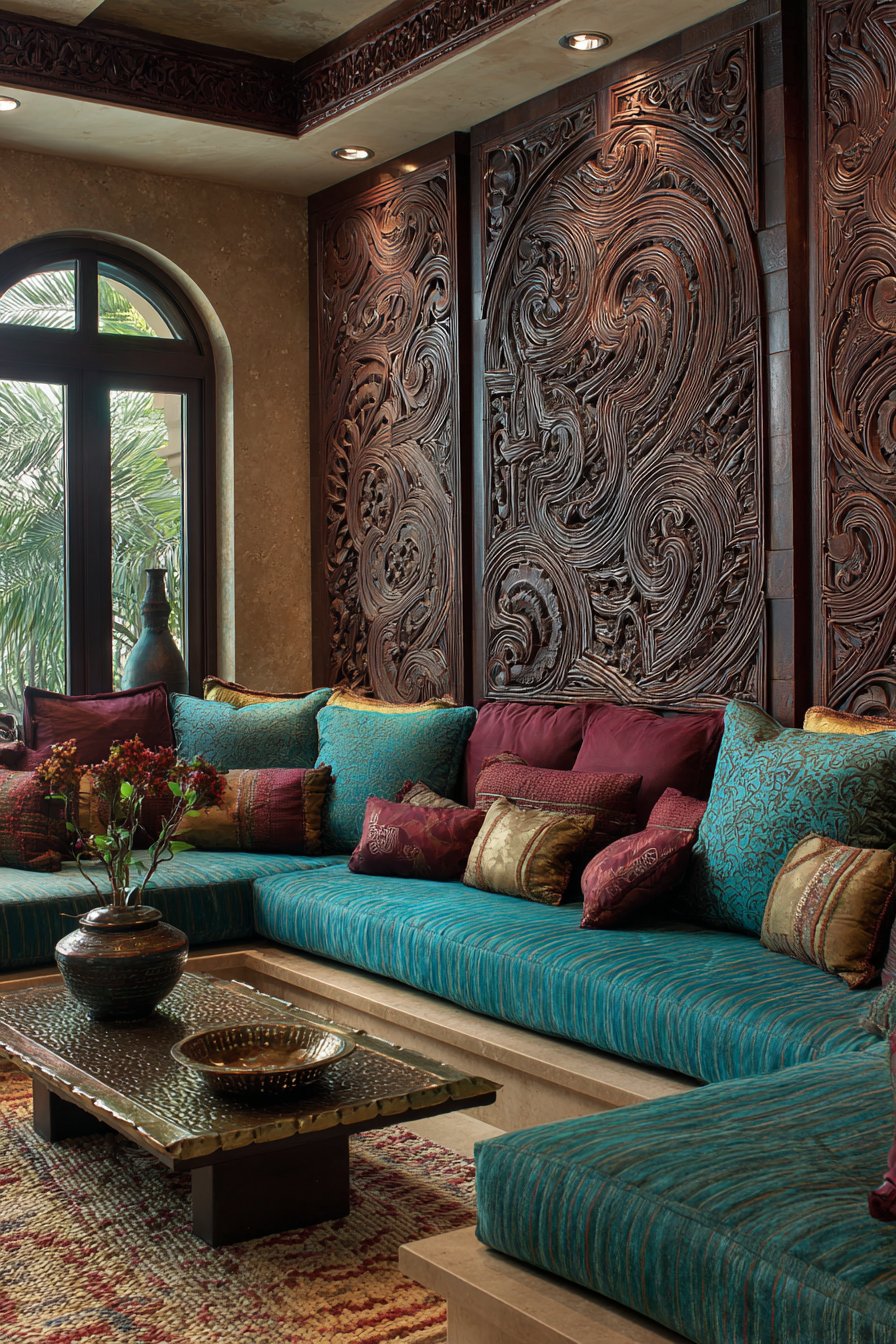
The carved wooden accent wall becomes an instant focal point with its intricate arabesque patterns in dark walnut finish. This architectural element brings three-dimensional interest and craftsmanship into the contemporary space.
The geometric designs create natural shadows that shift with changing light, adding dynamic visual interest throughout the day. Such feature walls demonstrate how traditional motifs can be scaled up for dramatic modern impact.
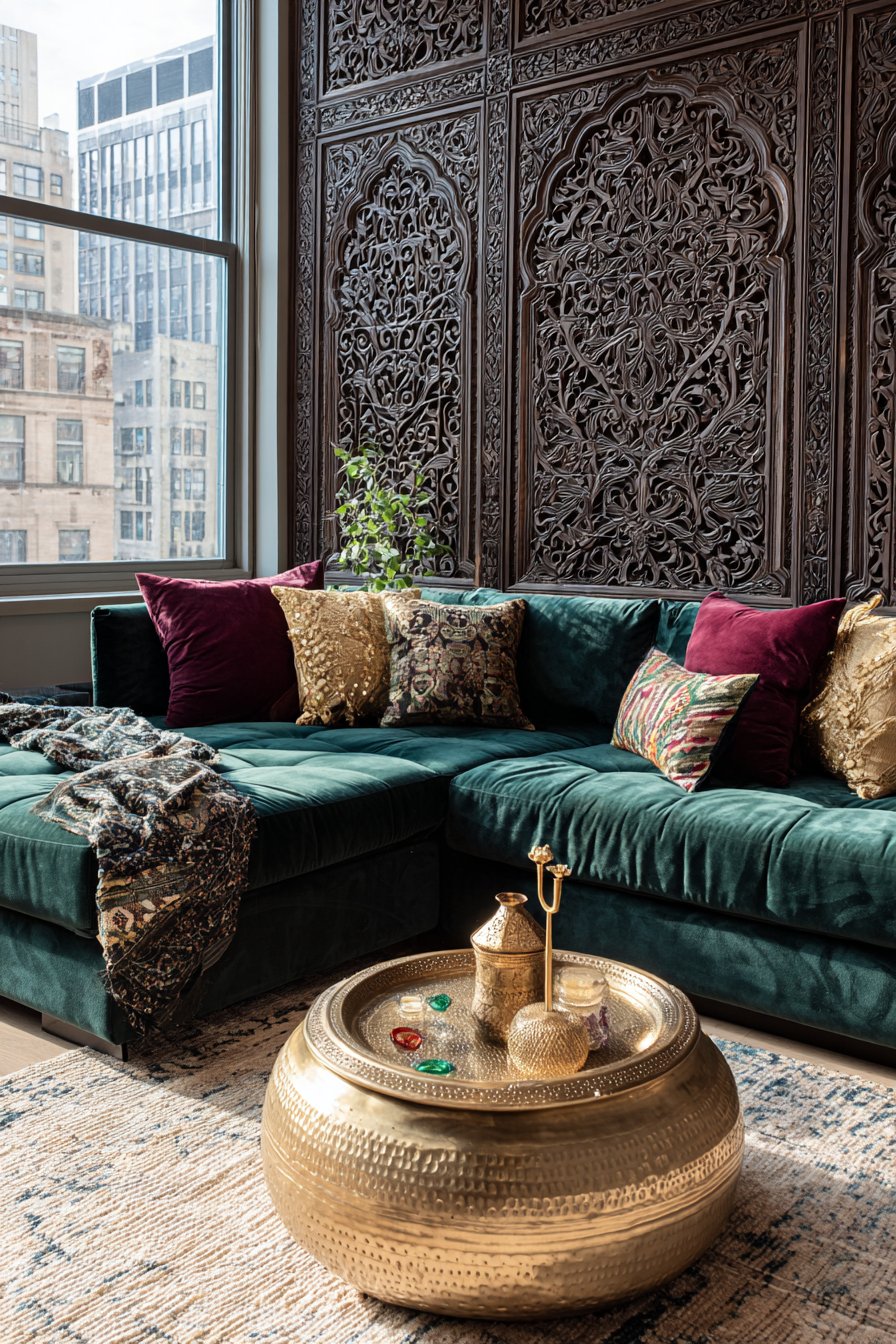
A handcrafted brass tray table sits elegantly atop a Moroccan wedding blanket used as textured floor covering. This layering technique adds warmth and authenticity without overwhelming the cleaner modern lines.
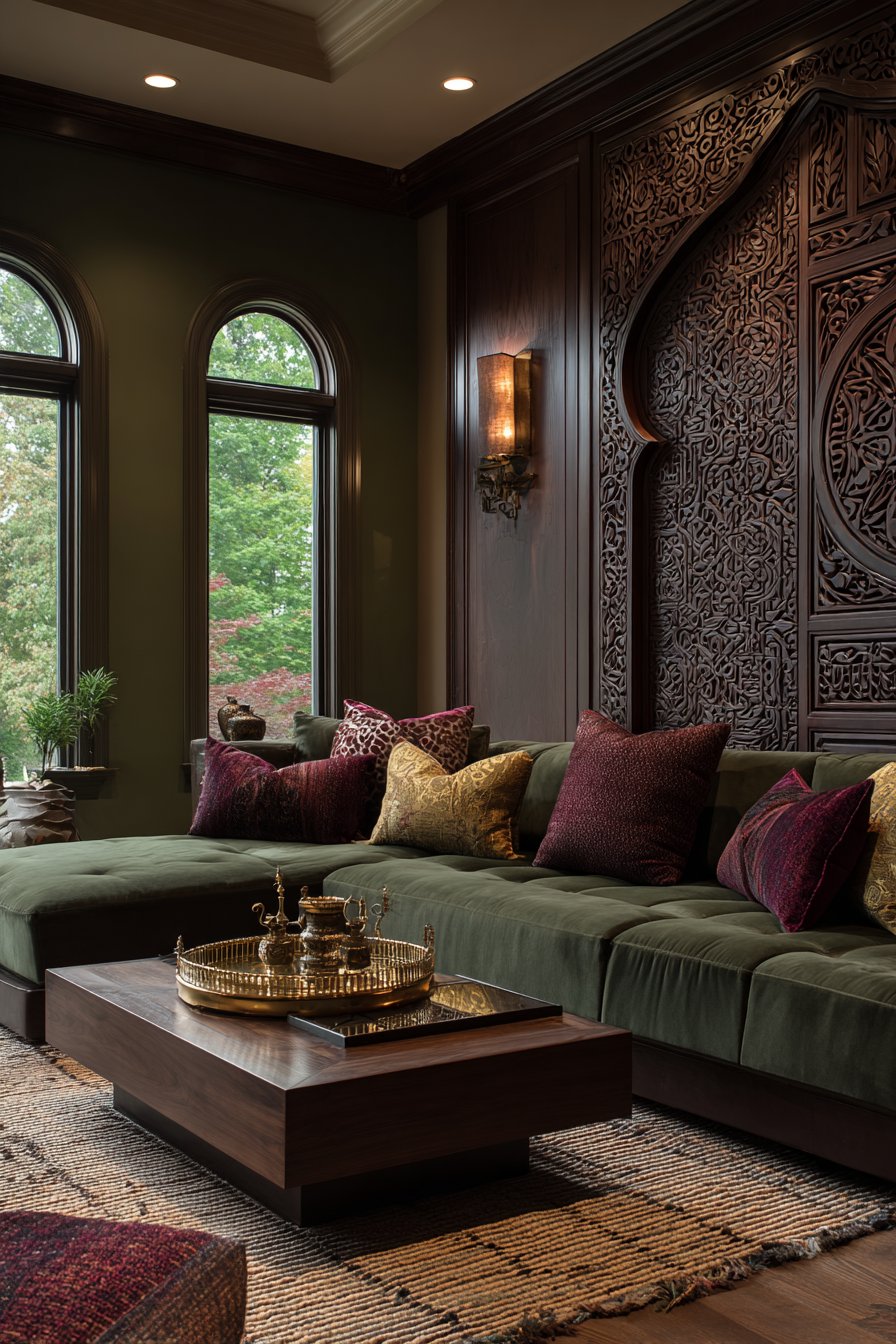
The arched windows maintain a connection to traditional Arabic architecture while flooding the space with balanced natural light. This design proves that blending eras creates spaces with both historical depth and contemporary livability.
Key Design Tips:
- Select low-profile furniture in rich jewel tones to bridge traditional and modern aesthetics
- Create an accent wall with carved arabesque patterns for dramatic architectural interest
- Layer Moroccan textiles on floors to add warmth without committing to wall-to-wall carpeting
- Mix brass and copper metallic accents throughout for cohesive traditional touches
- Maintain arched window shapes even in modern renovations to preserve architectural character
3. Brass Lantern Collection with Warm Ambient Lighting
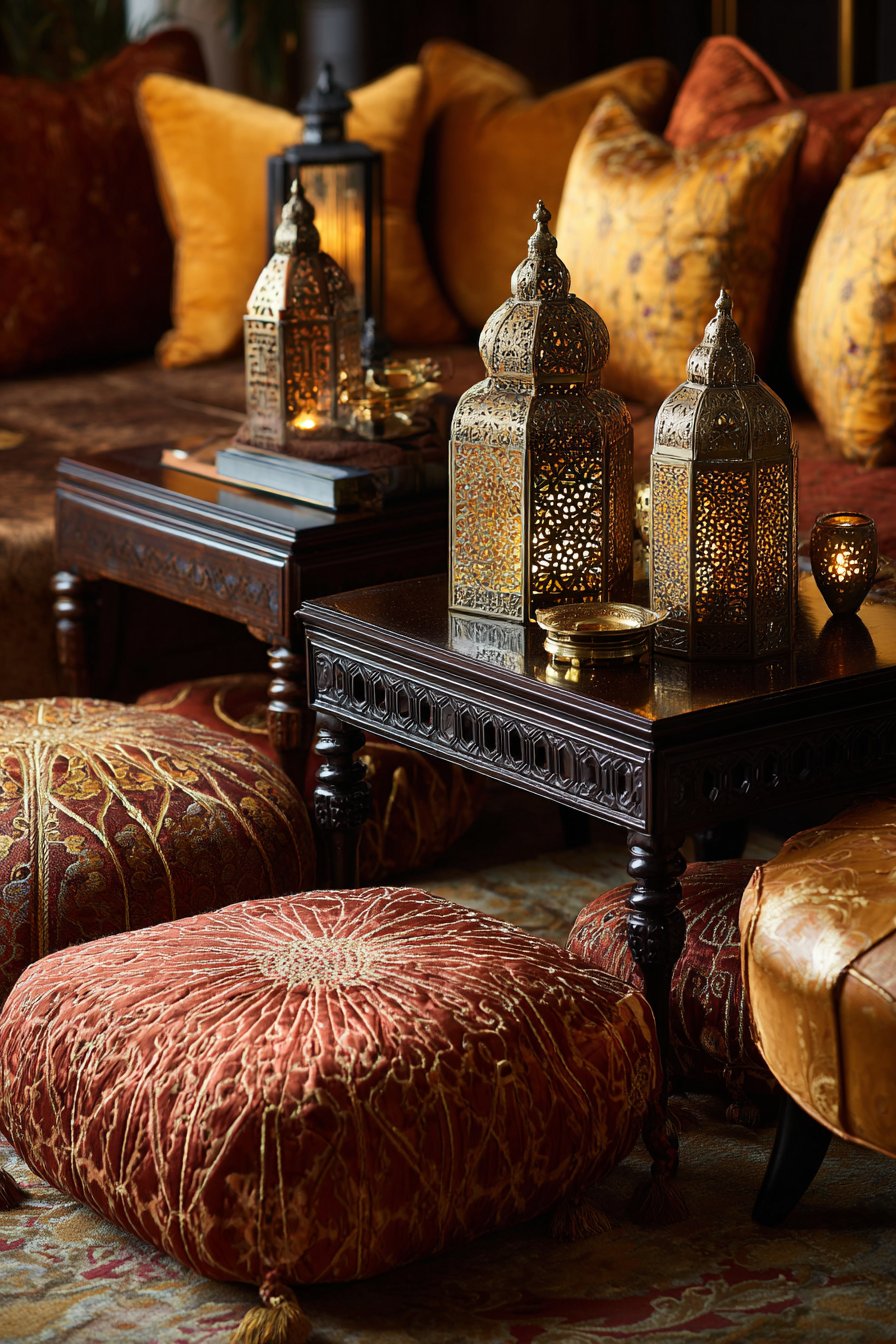
The art of display transforms functional objects into sculptural statements in this design approach. An ornate brass and copper lantern collection creates a stunning vignette on carved wooden side tables.
Each lantern features intricate pierced metalwork showcasing traditional Islamic geometric patterns. The varying sizes and styles create visual rhythm while maintaining cohesive cultural authenticity.

These lanterns serve dual purposes as both decorative objects and functional lighting sources. When illuminated, they cast decorative shadows on surrounding surfaces, creating an enchanting atmosphere. The interplay between solid metal and pierced openings produces patterns that seem to dance across walls and ceilings. This transformation from day to night adds theatrical quality to the living space.
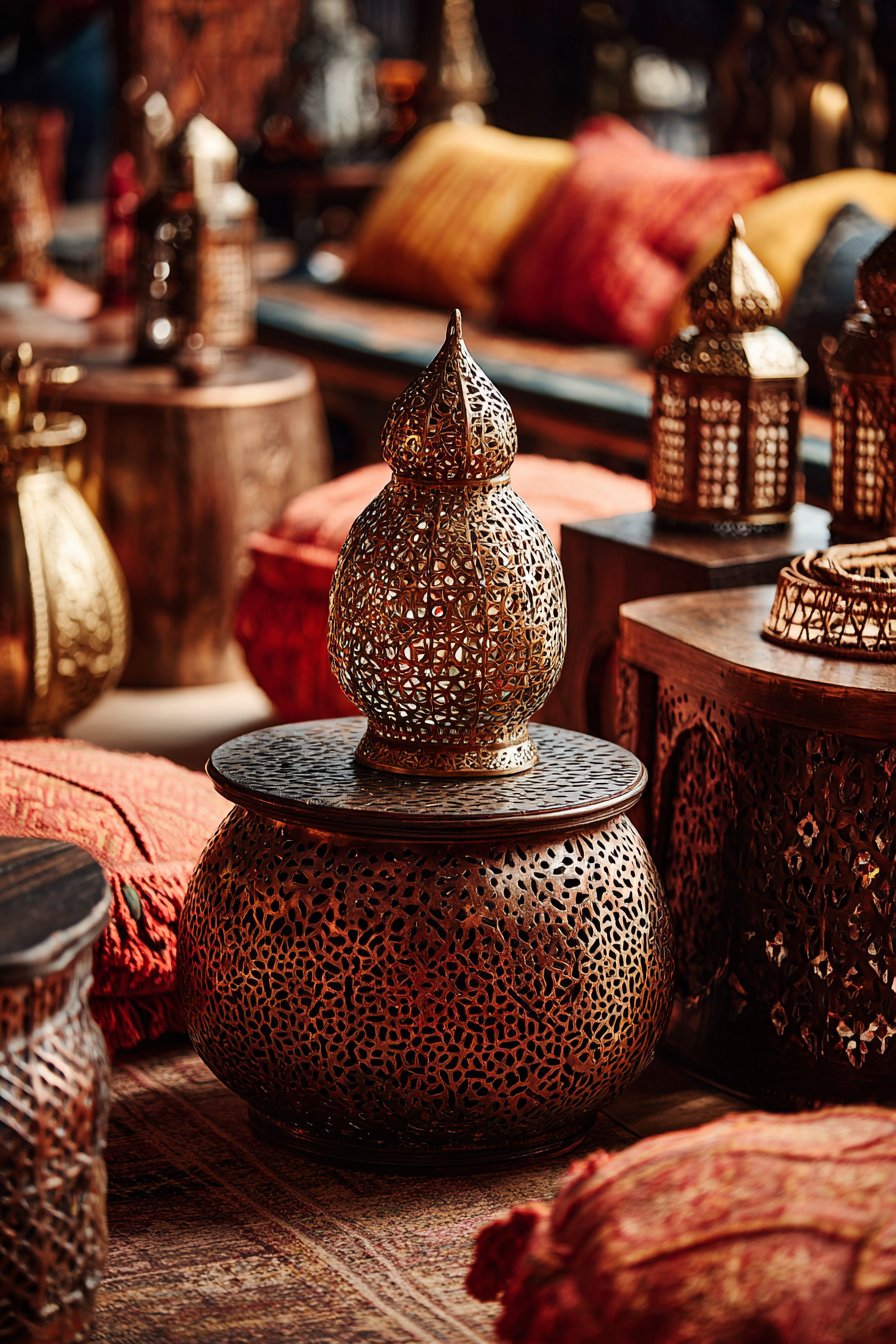
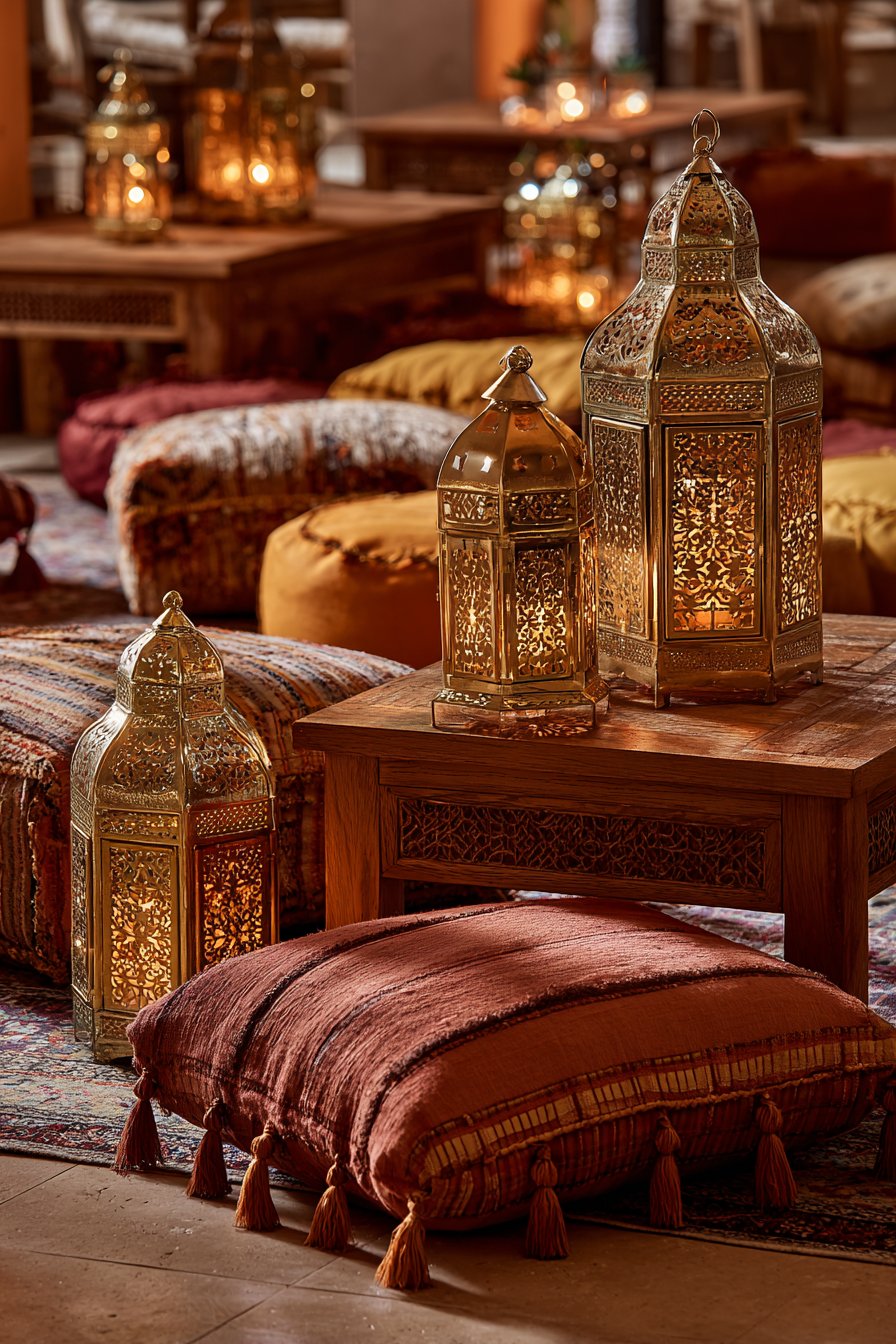
Plush floor cushions in rich terracotta and saffron tones with tasseled edges provide flexible additional seating. This arrangement honors the traditional practice of floor-level gathering while offering comfort and style.
The warm golden hour lighting highlights metallic finishes and handcrafted details beautifully. Together, these elements capture the authentic ambiance of traditional Arabic hospitality spaces where every detail receives thoughtful consideration.
Key Design Tips:
- Collect lanterns in various sizes and styles from the same metalwork tradition for cohesive variety
- Position lanterns at different heights using tables, floors, and hanging options
- Choose floor cushions with tassels and embellishments that coordinate with your lantern finishes
- Install dimmer switches to control ambient lighting and maximize the shadow-play effect
- Group lanterns in odd numbers for more visually appealing arrangements
4. Architectural Elements with Pointed Arches and Alcoves
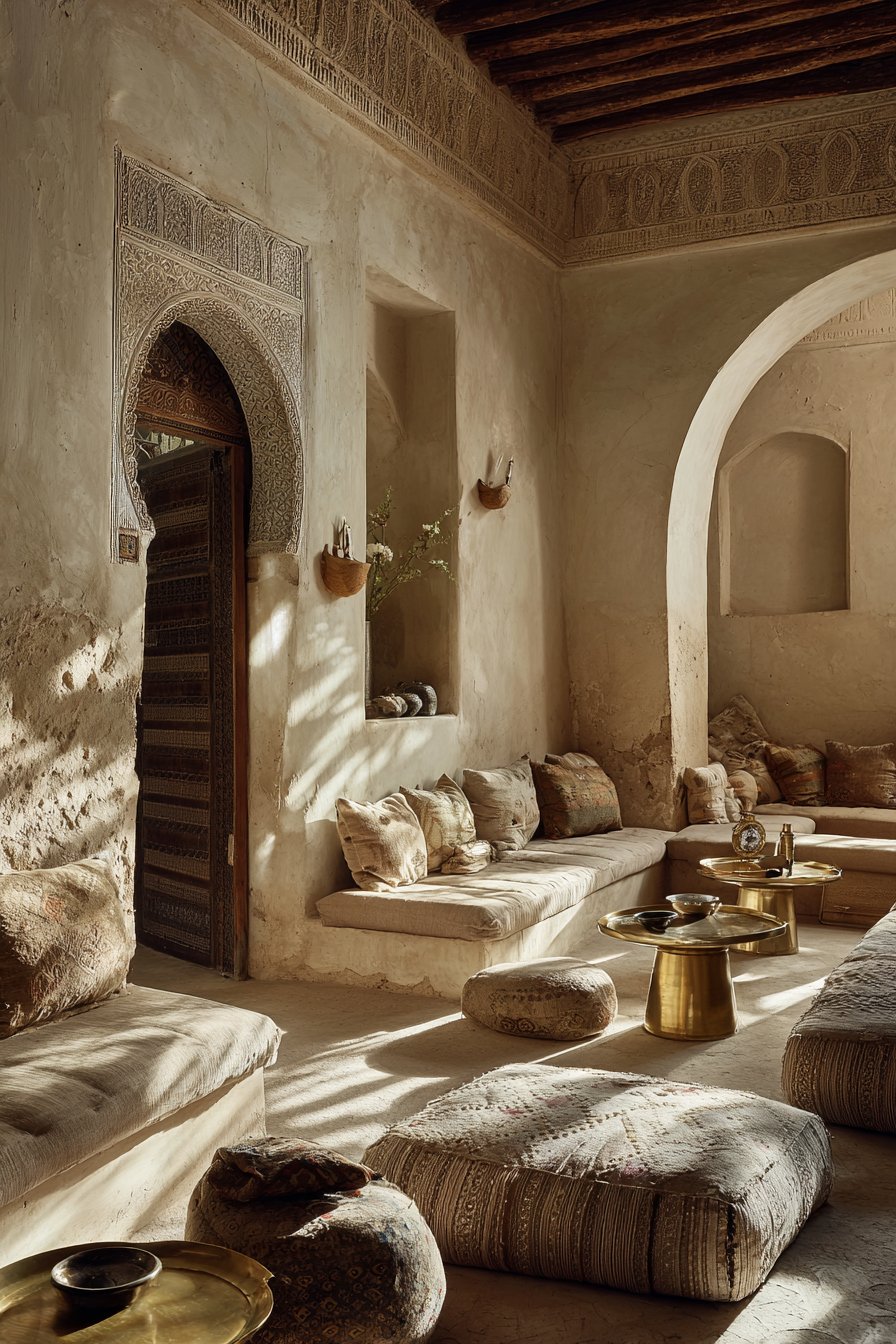
Traditional Arabic architecture provides the bones for this spacious and character-rich living room. The pointed arch doorway with carved wooden details immediately announces the space’s cultural identity.
This architectural element frames views between rooms while adding vertical drama. The craftsmanship visible in these carved details speaks to the value placed on artisanal work in Arabic design traditions.

A recessed seating alcove lined with built-in cushioned benches creates an intimate zone within the larger room. This architectural feature provides natural definition without walls, maintaining openness while offering privacy.
The walls feature hand-painted arabesque patterns in muted gold on cream plaster, adding elegance without overwhelming. These subtle patterns catch light differently throughout the day, revealing their complexity gradually.
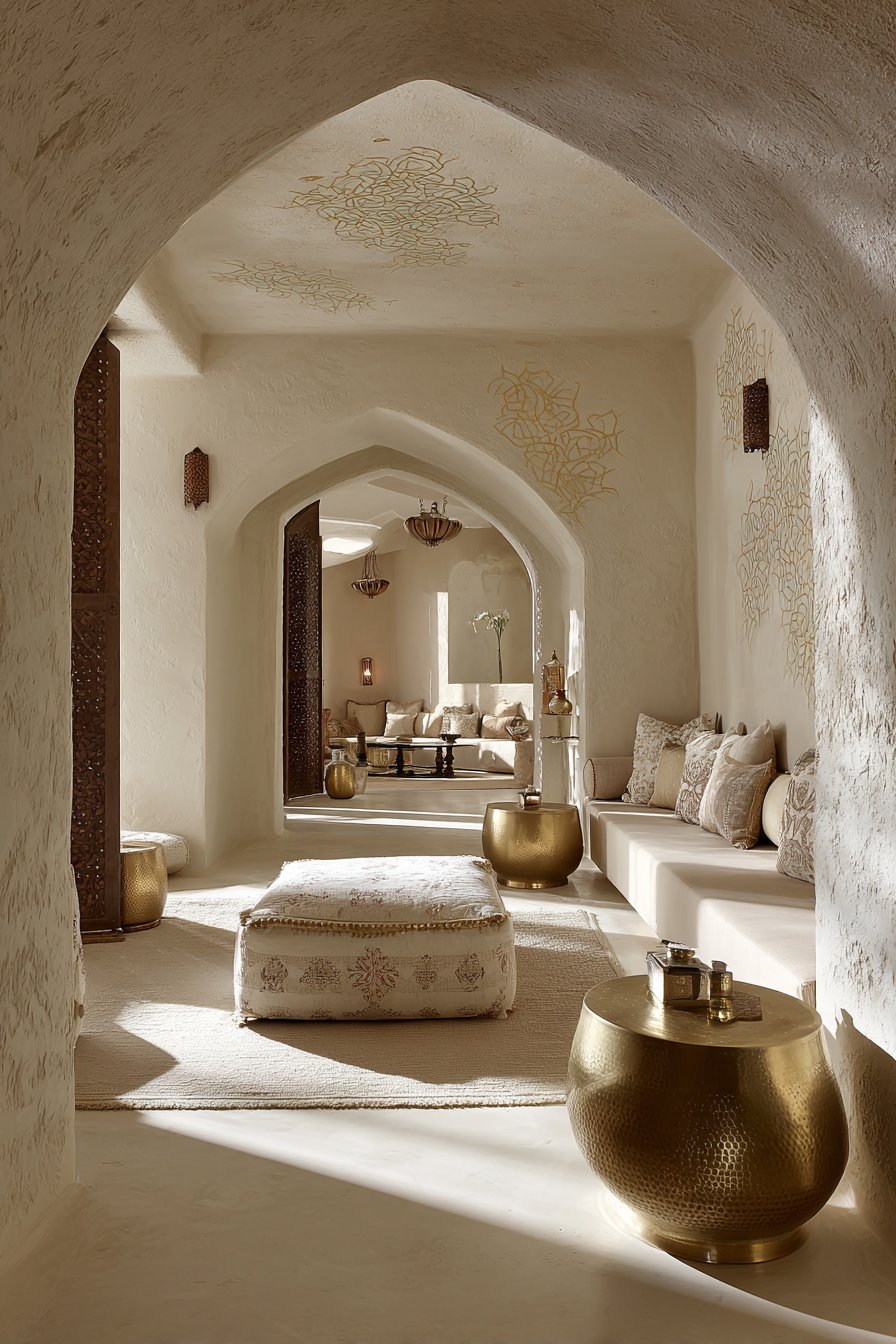
An oversized ottoman upholstered in embroidered fabric serves as the central gathering point, surrounded by low brass side tables. This arrangement encourages casual, communal interaction where guests can easily reach refreshments.
The soft diffused natural lighting emphasizes three-dimensional carved details and creates natural shadows. These shadows define the space’s traditional structure while highlighting its architectural character beautifully.

Key Design Tips:
- Incorporate architectural arches in doorways or as decorative wall niches for authentic character
- Create recessed alcoves for built-in seating that defines zones without closing off space
- Hand-paint or stencil arabesque patterns on walls using subtle metallic tones for sophisticated detail
- Choose an oversized ottoman as a flexible centerpiece that serves multiple functions
- Position furniture to take advantage of natural light that emphasizes architectural details
5. Rich Jewel Tones with Emerald and Ruby Color Palette
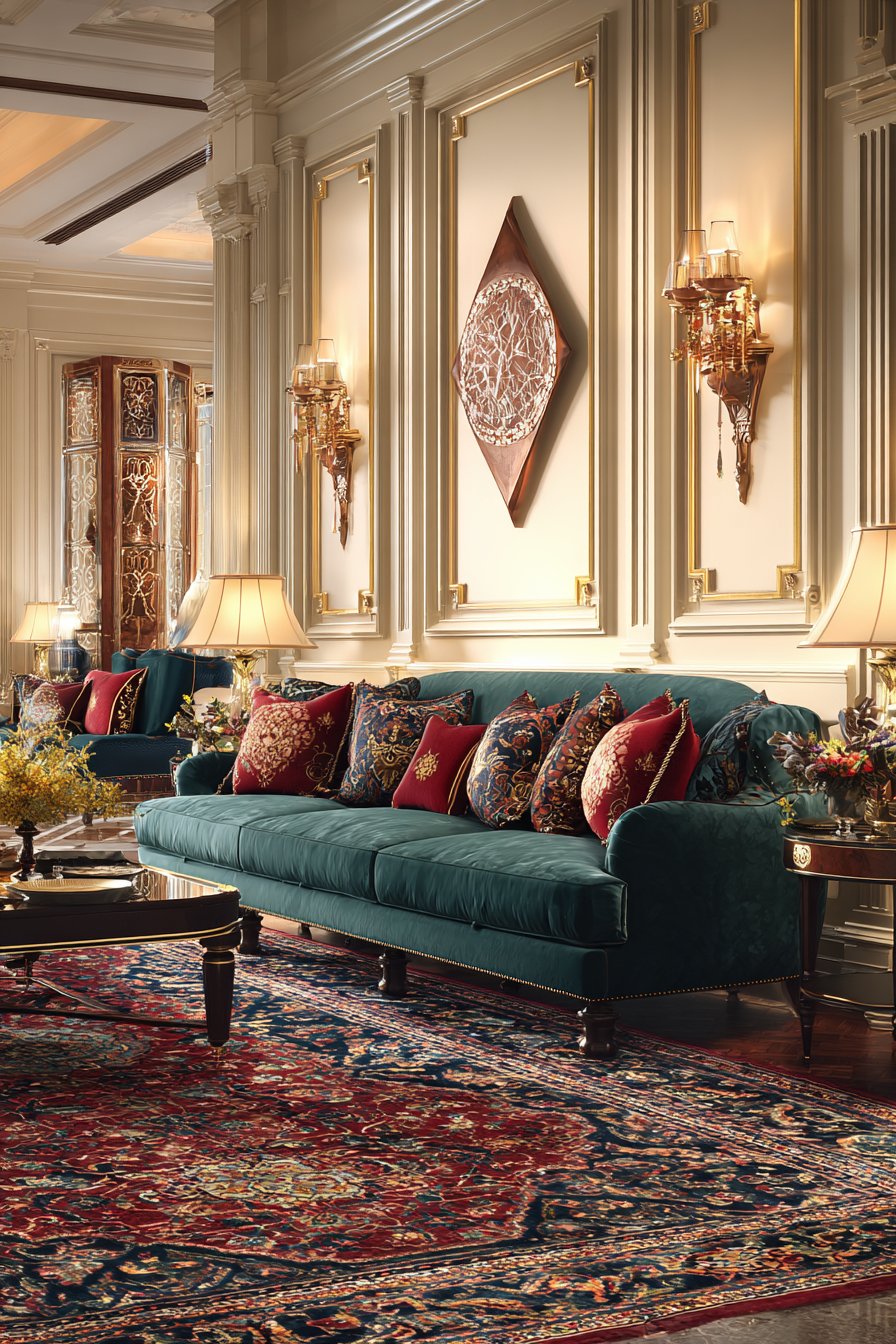
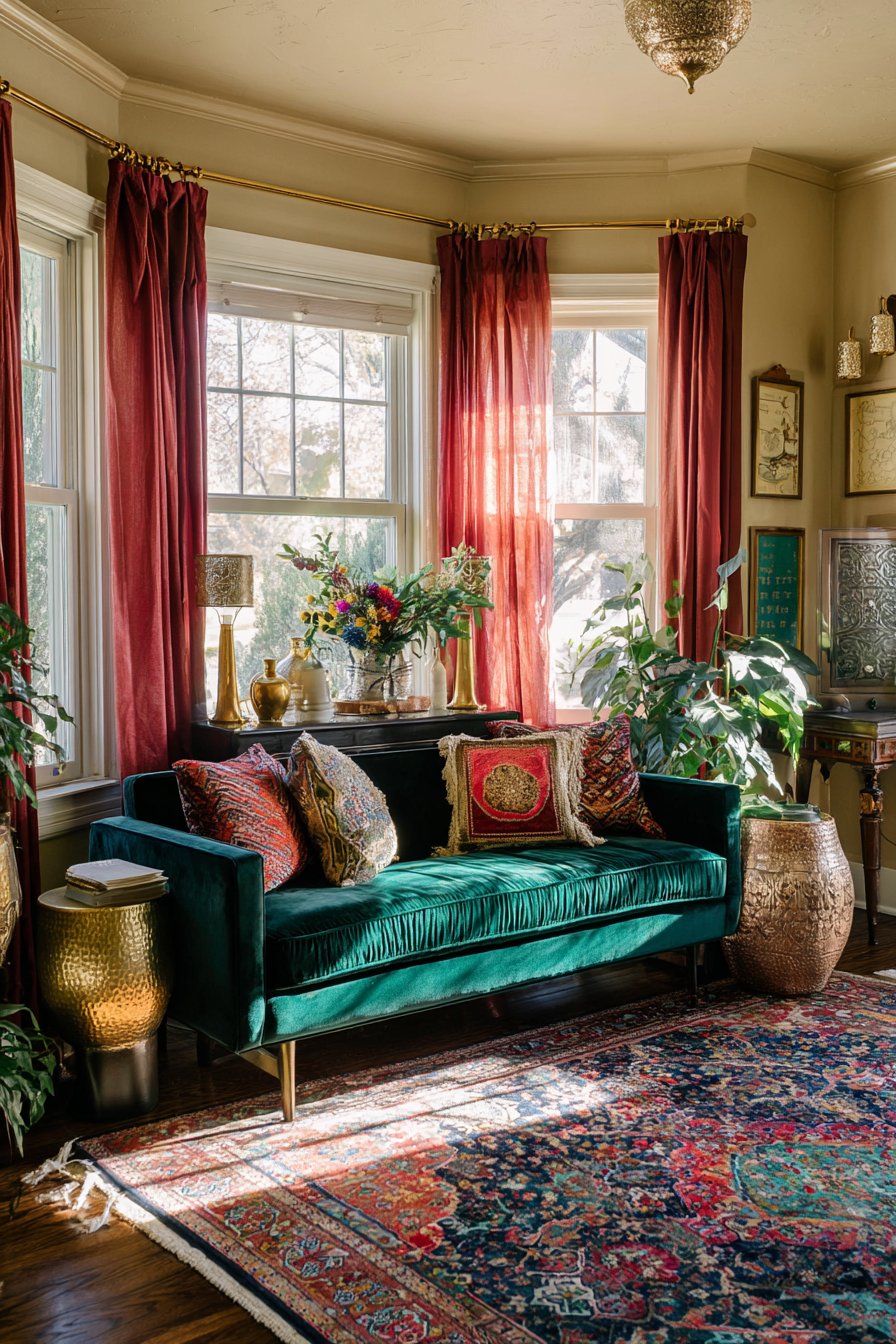
Color becomes the primary design statement in this luxuriously appointed Arabic living room. A deep emerald green velvet sofa commands attention as the room’s centerpiece, its sumptuous texture inviting touch. Gold and ruby red silk cushions featuring traditional embroidered medallion patterns provide jewel-box richness. This bold color palette demonstrates confidence while honoring the Arabic love for saturated, complex hues.
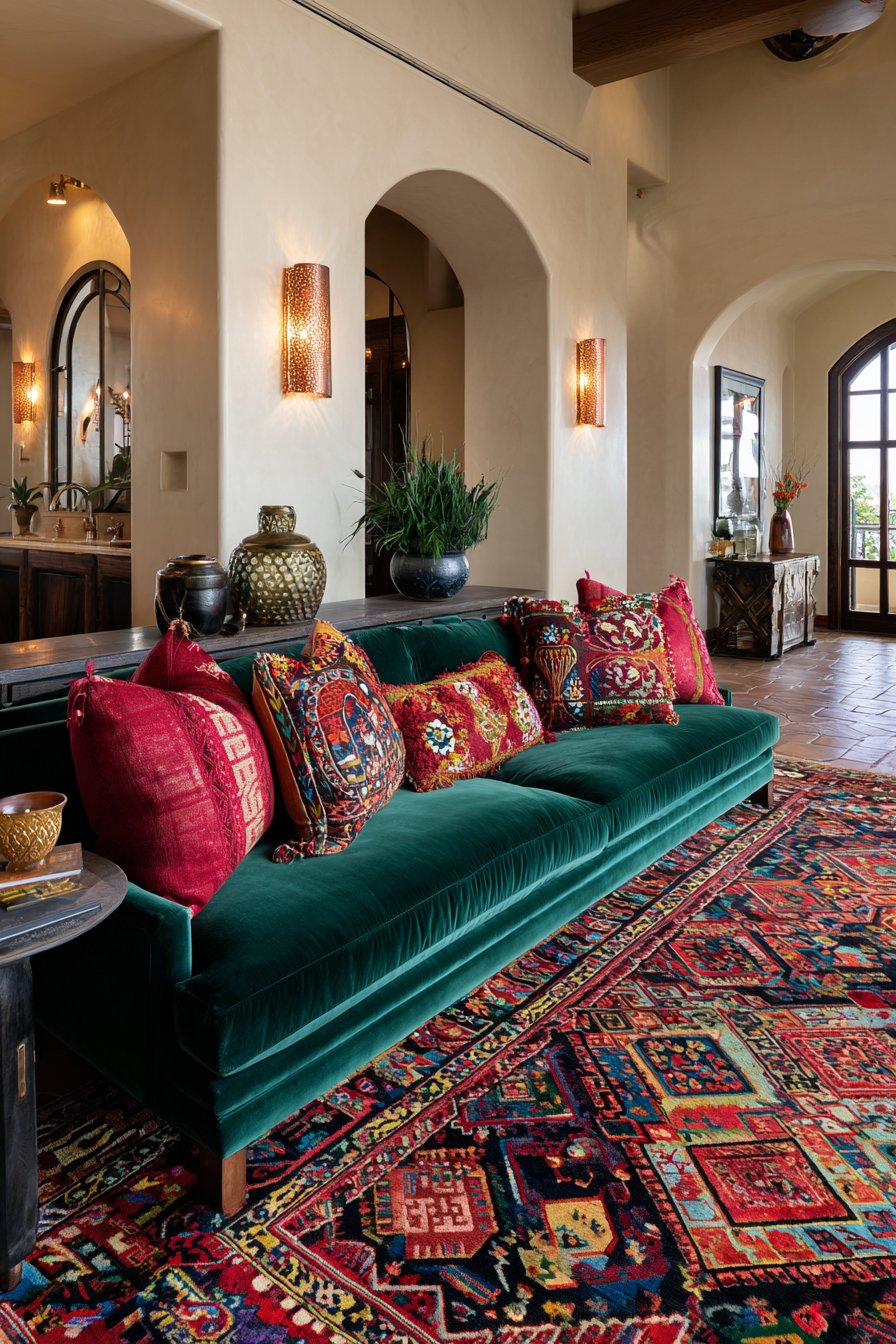
The authentic hand-knotted Persian rug in complementary burgundy and navy grounds the vivid furniture with intricate floral motifs. These traditional rug patterns provide visual complexity that balances the solid-colored upholstery. The craftsmanship visible in every knot adds value and authenticity to the space. Such investment pieces become family heirlooms that gain character over time.
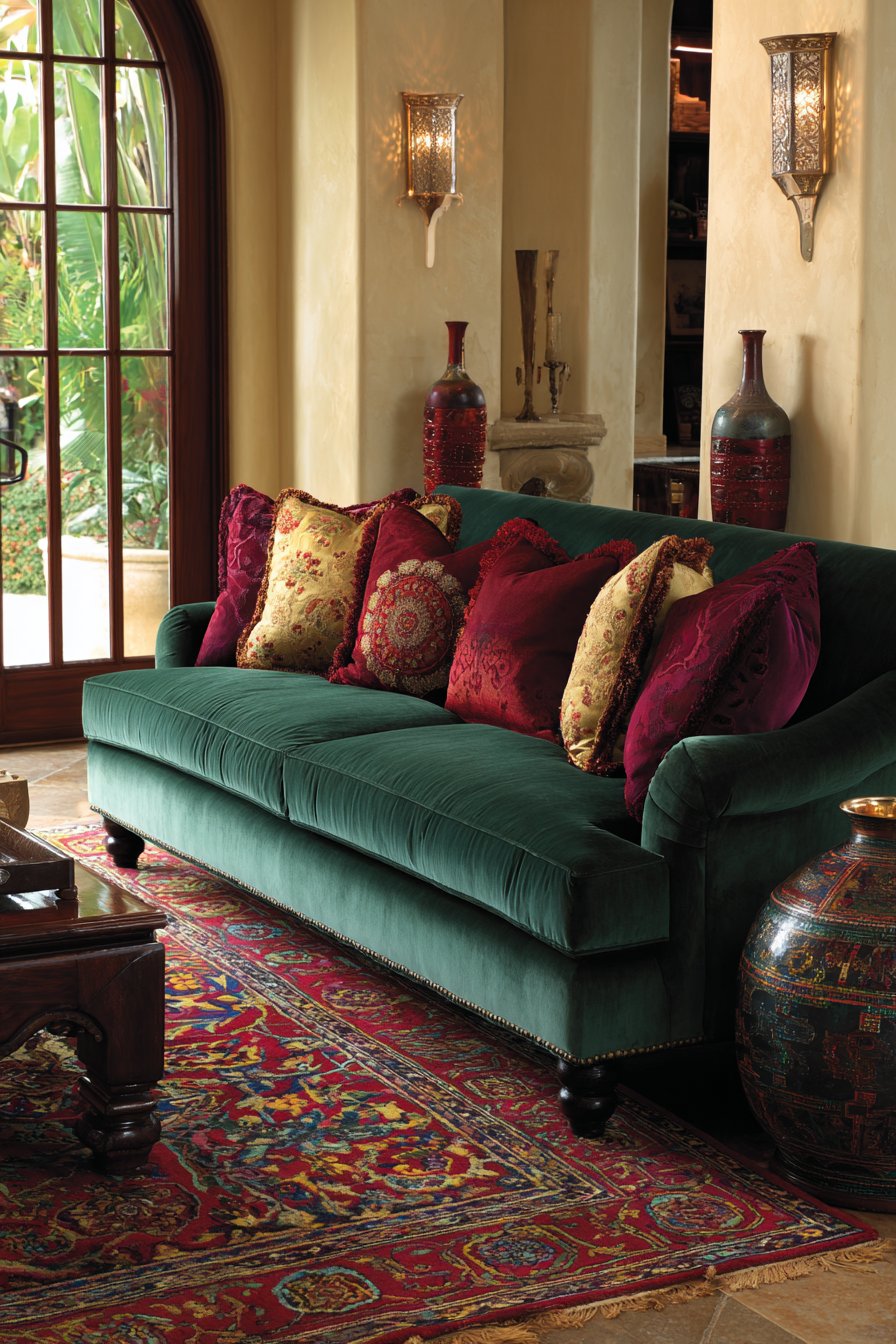
Warm cream walls provide necessary visual rest and allow the jewel tones to shine without competition. Copper-finished wall sconces with etched glass create pools of ambient lighting that enhance the cozy atmosphere. The balanced exposure throughout the space ensures colors appear true and rich without feeling dark. This careful attention to both natural and artificial lighting maintains the luxurious mood while preserving practical livability.
Key Design Tips:
- Build your palette around one dominant jewel tone and layer complementary rich colors
- Invest in quality hand-knotted rugs that feature traditional patterns and natural dyes
- Balance saturated colors with neutral walls to prevent overwhelming the senses
- Choose velvet and silk upholstery for authentic luxury and light-reflecting properties
- Layer lighting sources at various heights to illuminate colors beautifully throughout the day
6. Floor Cushion Collection with Layered Textile Artistry
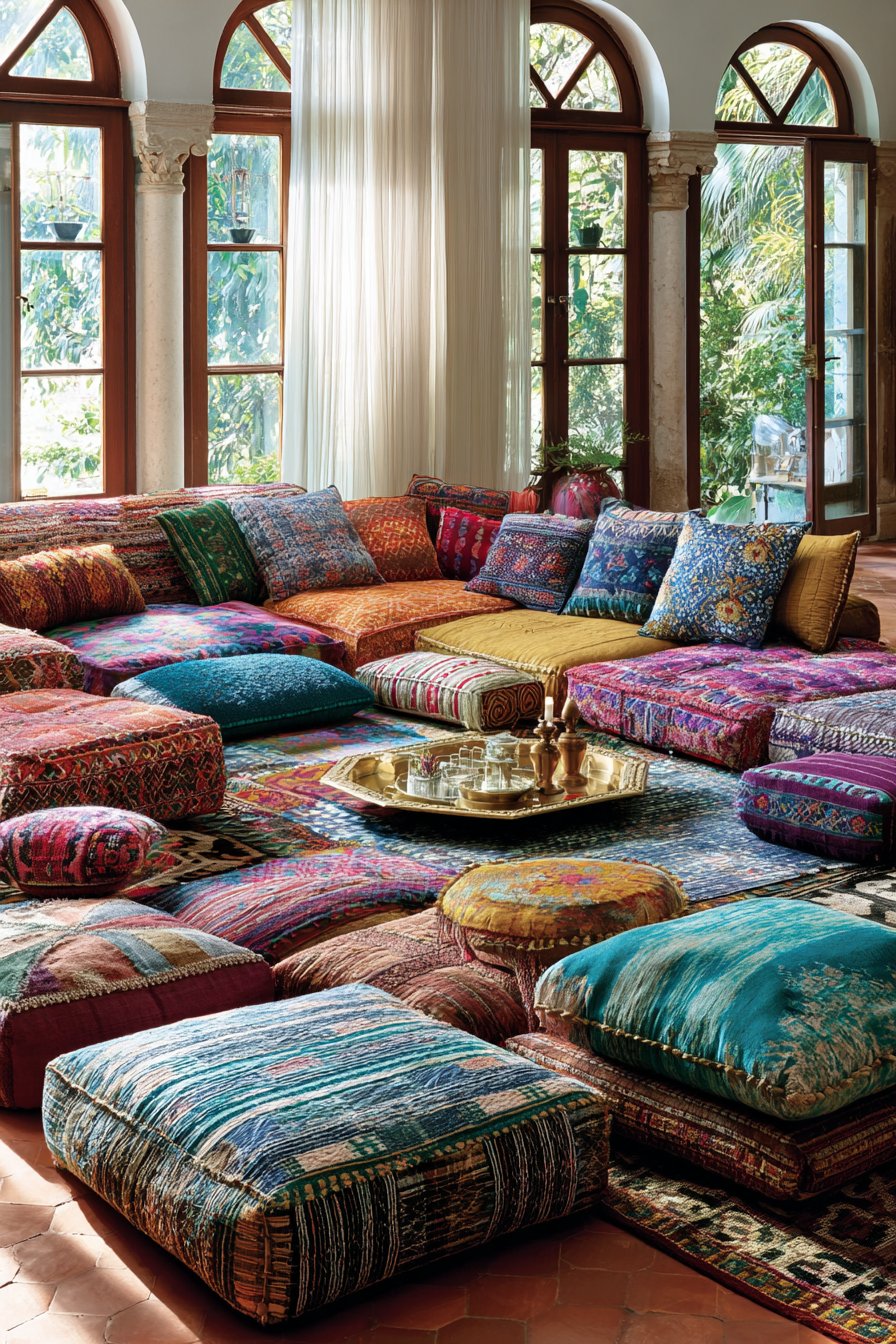
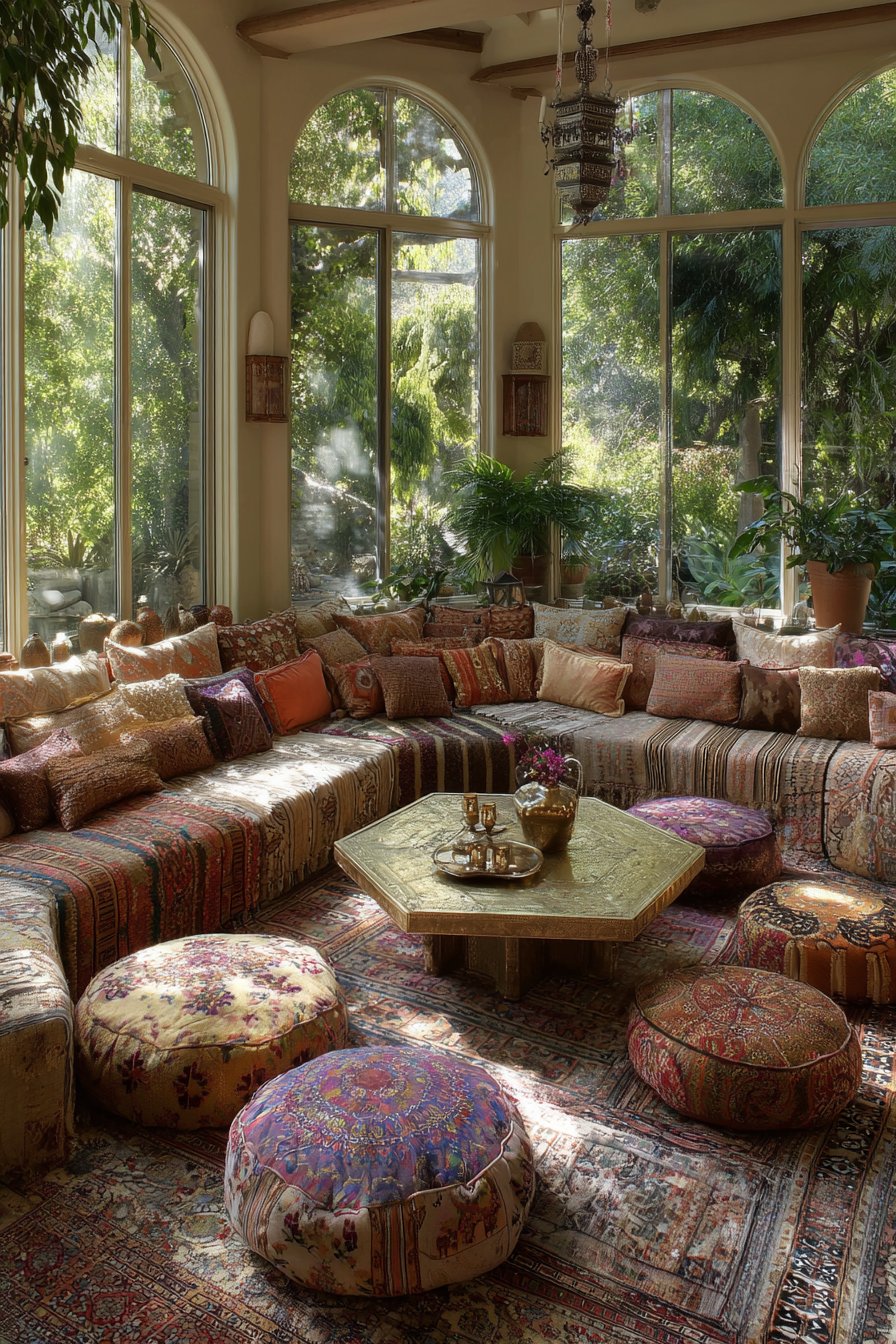
The floor becomes the primary seating area in this authentic interpretation of traditional Arabic gathering spaces. A stunning collection of floor cushions and poufs in various sizes creates flexible, informal seating. These pieces showcase authentic Middle Eastern fabrics including suzani embroidery, ikat patterns, and metallic threaded textiles. The diversity of patterns and textures demonstrates the region’s rich textile heritage.
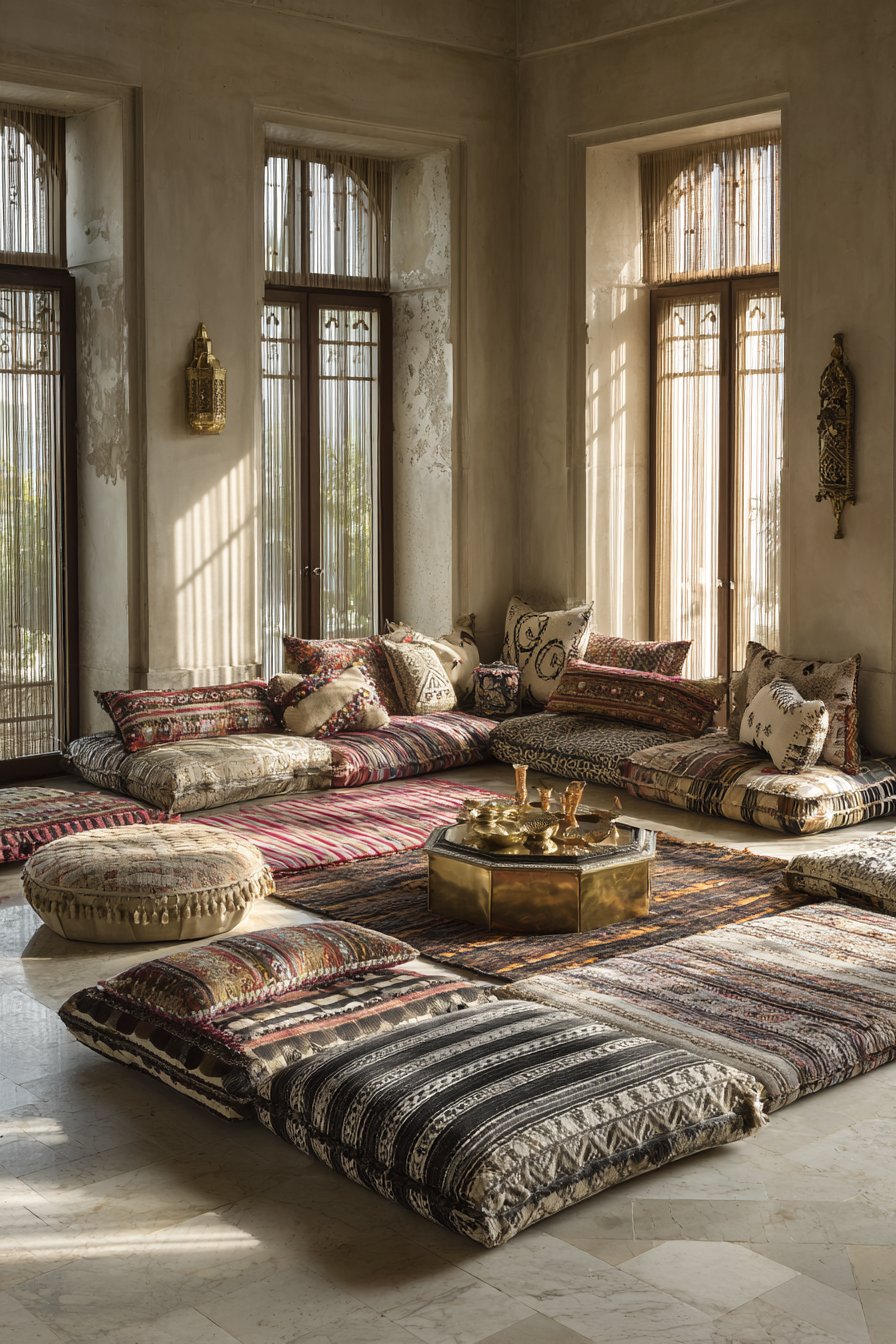
This seating arrangement creates an intimate conversation area on a layered foundation of kilim rugs and Persian carpets. The overlapping rugs add depth and visual interest while providing cushioning and warmth. A low octagonal brass tray table centers the grouping, offering a practical surface while maintaining the low-profile aesthetic. This setup encourages relaxed, informal interaction that differs from conventional Western seating arrangements.
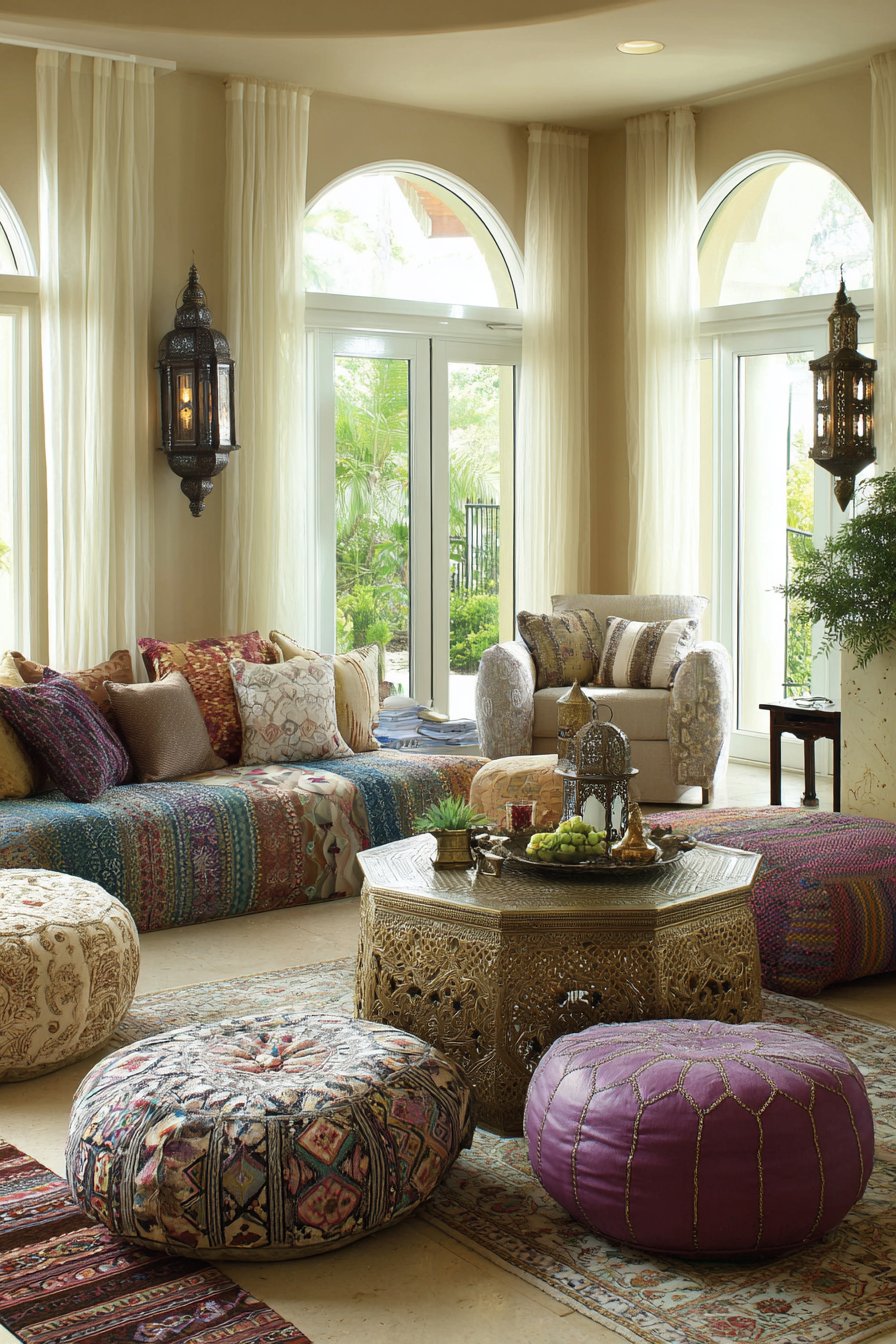
Natural light streams through tall arched windows dressed with sheer curtains that filter brightness gently. This diffused illumination highlights intricate needlework details and rich color variations in the textiles. The professional approach to lighting ensures all the handcrafted details receive proper appreciation. This space celebrates textile artistry while remaining functional for modern living.
Key Design Tips:
- Collect floor cushions in varying sizes and patterns that share a cohesive color story
- Layer multiple rugs to create visual depth and provide adequate cushioning for floor seating
- Choose an octagonal or round low table to eliminate sharp corners in floor-level seating areas
- Install sheer curtains to soften natural light while maintaining brightness and views
- Mix traditional textile techniques like suzani, ikat, and metallic embroidery for authentic variety
7. Modern Minimalist with Traditional Arabic Accents
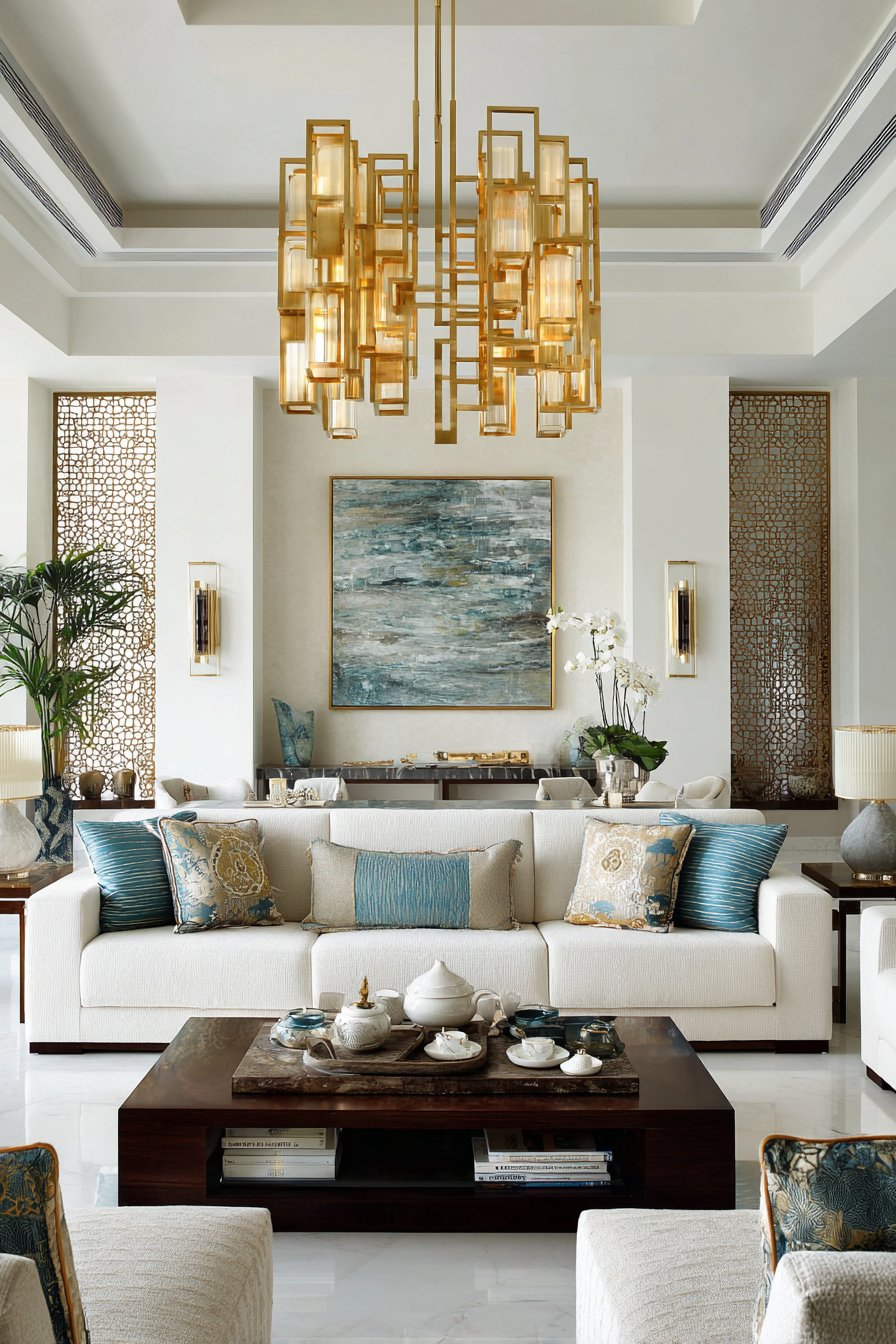
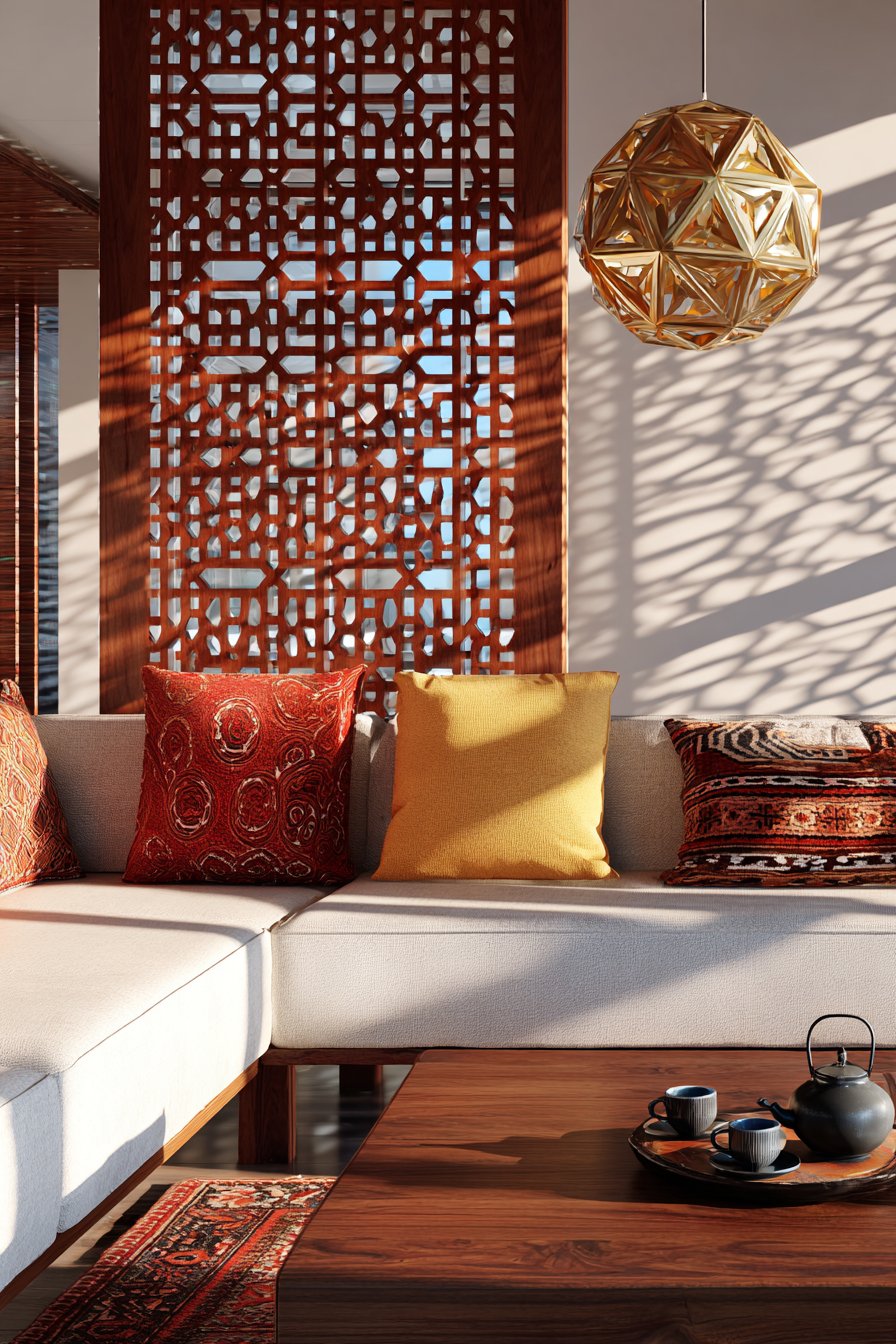
Clean architectural lines provide the framework for incorporating traditional elements in this sophisticated space. The carved mashrabiya screen partition creates visual interest while serving the practical purpose of filtering light. This traditional element becomes sculptural art in the minimalist context. The geometric patterns cast ever-changing shadows that animate otherwise simple walls.

Low-profile contemporary furniture in neutral linen establishes a calm, modern foundation. Jewel-toned cushions and throws featuring traditional Arabic patterns elevate these simple pieces with cultural richness. This restrained approach to pattern and color proves you don’t need overwhelming ornament to achieve authenticity. The selective use of traditional elements makes each piece more impactful.
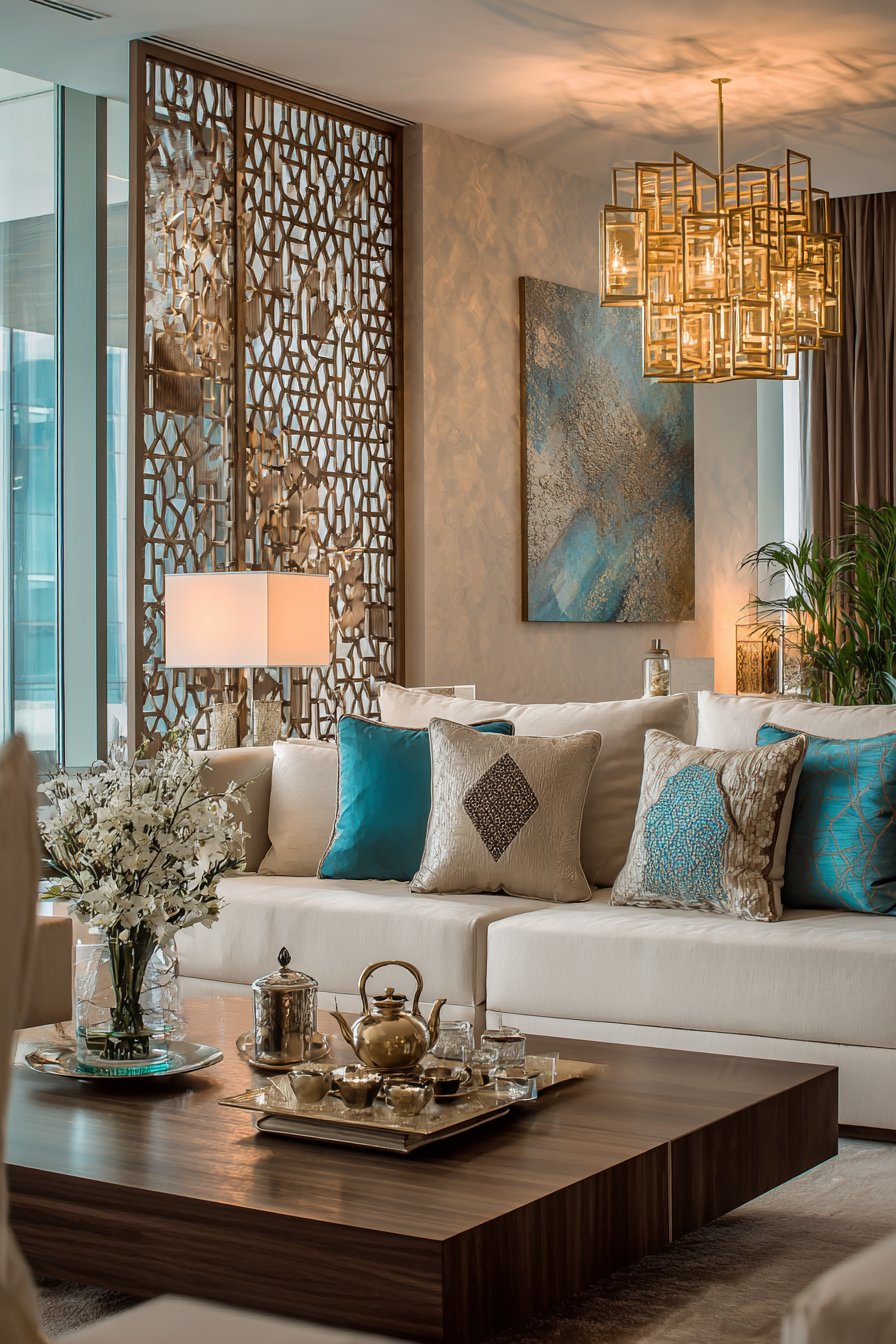
A statement brass chandelier with geometric design hangs above a sleek dark wood coffee table displaying a traditional tea service. This juxtaposition of minimal furniture with ornate lighting demonstrates the beauty of mixing design eras. The wide-angle view captures how sophisticated balance between minimalist design and Arabic decorative heritage creates timeless appeal. Soft natural shadows add depth without cluttering the clean aesthetic.
Key Design Tips:
- Use mashrabiya screens as room dividers or window treatments for filtered light effects
- Select neutral-colored contemporary furniture as a canvas for colorful traditional accessories
- Invest in one statement lighting fixture with traditional metalwork to anchor the design
- Display traditional objects like tea services as decorative art on minimal surfaces
- Maintain negative space to let each traditional element receive proper attention and appreciation
8. Wall Vignette with Hand-Painted Ceramics and Brass
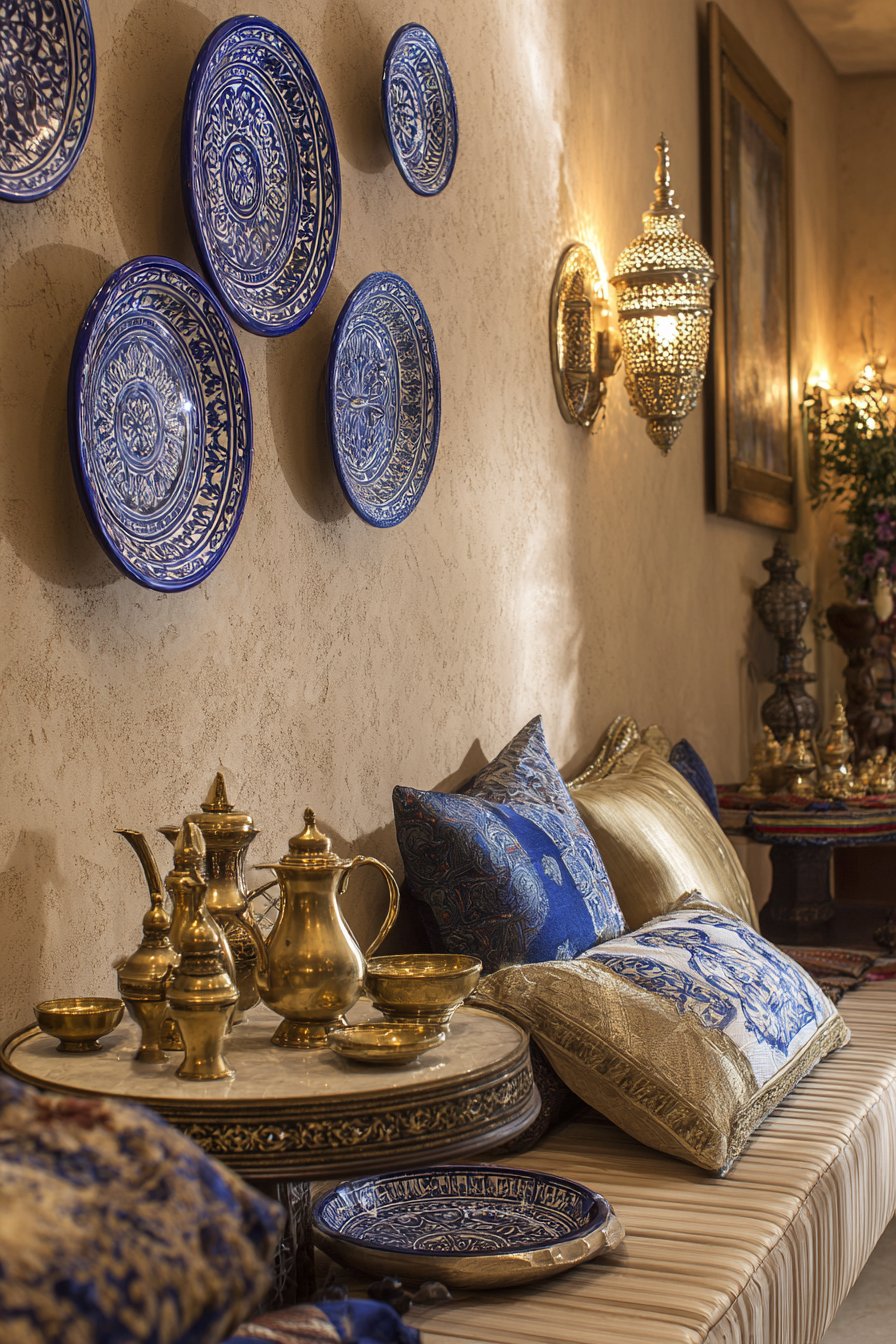
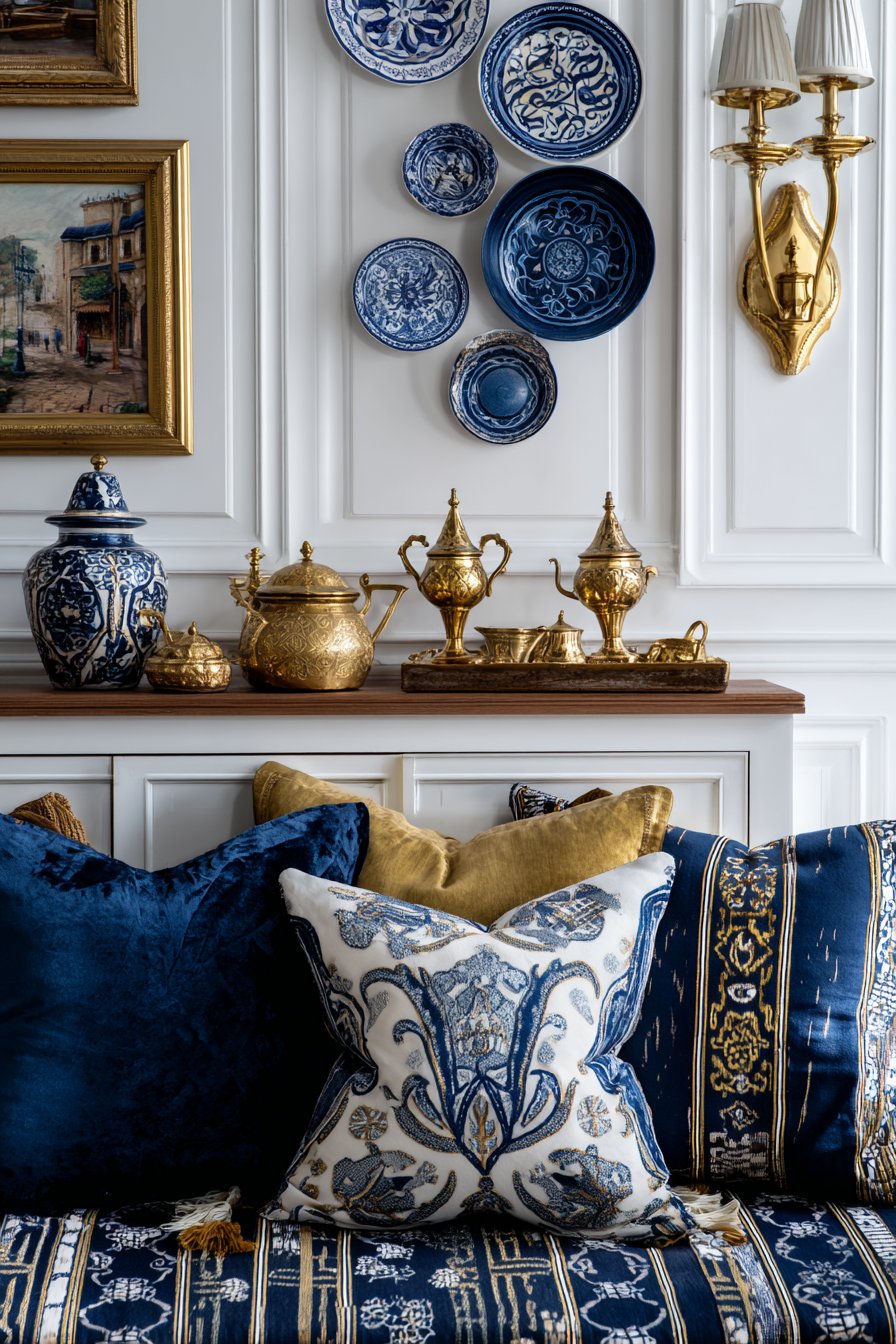
The vertical surfaces become gallery walls in this carefully curated approach to Arabic design. Hand-painted ceramic plates in cobalt blue and white arrange in an artistic cluster creating striking focal points. These traditional pieces demonstrate the region’s long history of ceramic artistry. The arrangement style transforms functional objects into wall art that tells cultural stories.
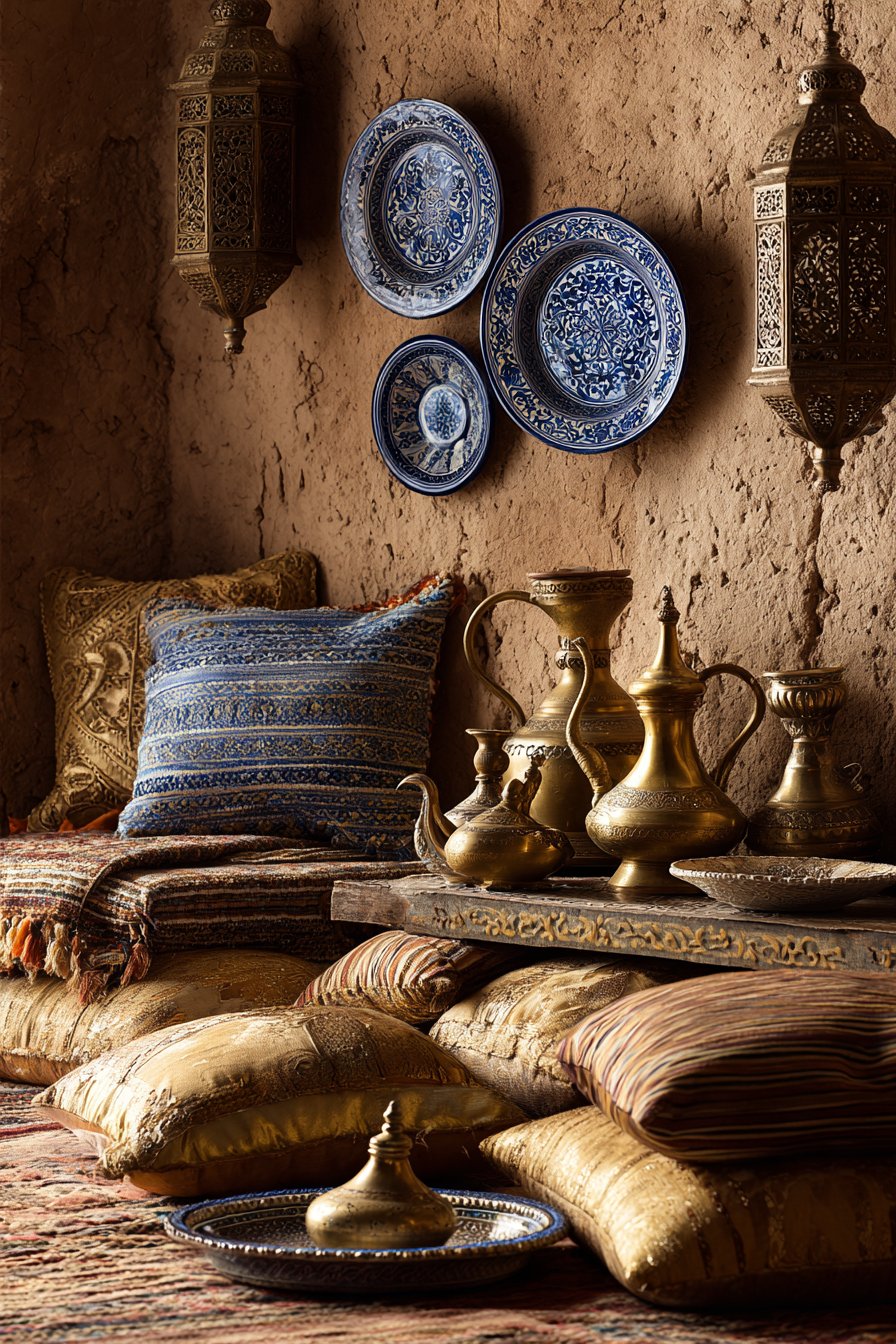
Ornate brass wall sconces flank the ceramic display, providing both symmetry and functional illumination. Below this composition, a low console table with mother-of-pearl inlay displays decorative brass coffee pots and hand-thrown pottery. Each piece represents hours of artisan work and centuries of craft traditions. This layered approach to display creates depth and visual interest on what could be plain walls.
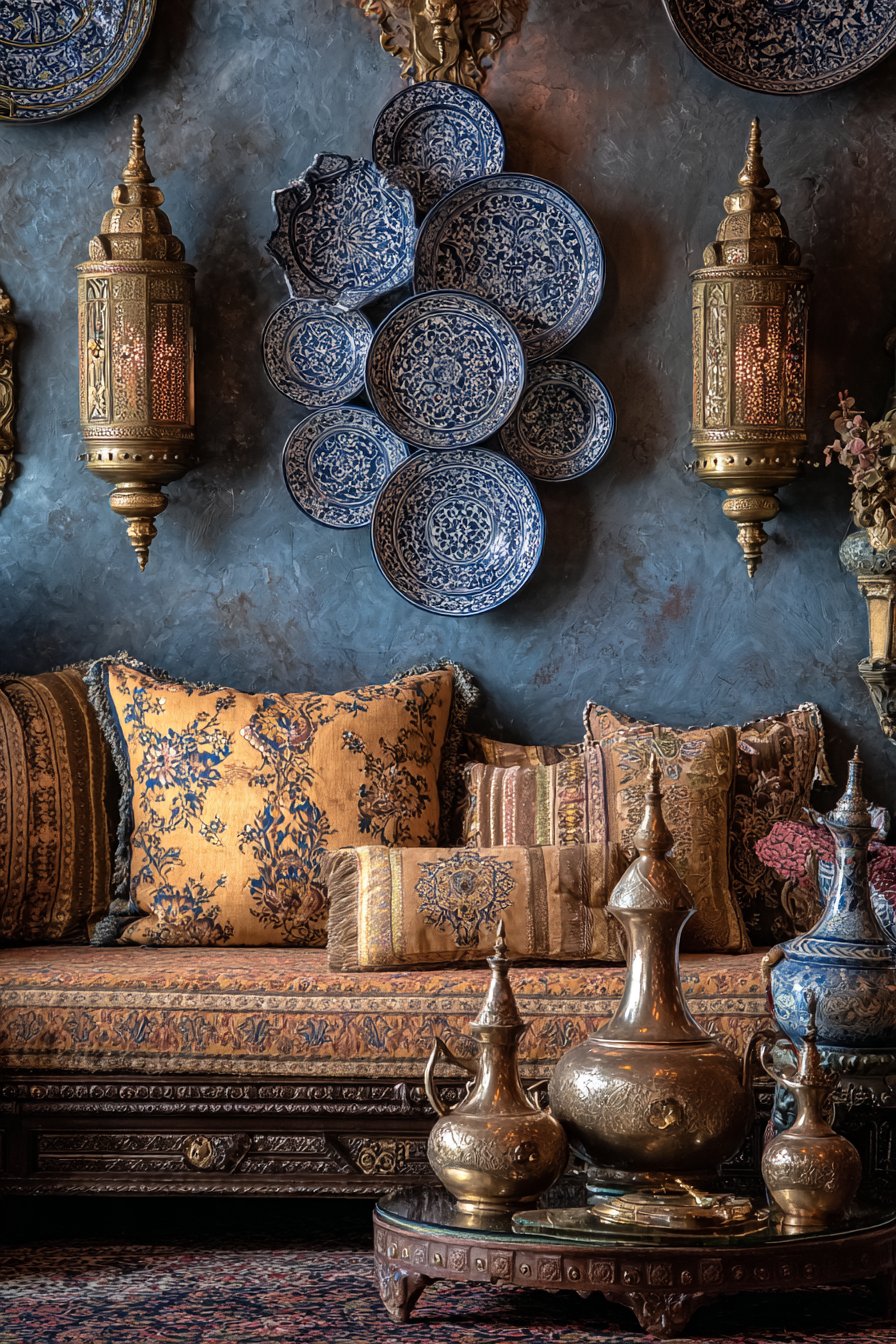
Silk cushions in coordinating blues and golds lean against the wall on the floor in traditional majlis style. This casual arrangement invites guests to sit while adding softness to the harder materials above. Side lighting emphasizes handcrafted textures, metallic sheens, and artisanal quality of authentic Arabic decorative objects. This vignette approach allows you to create Arabic ambiance in specific zones without full room commitments.
Key Design Tips:
- Arrange decorative plates in clusters rather than rigid rows for more artistic impact
- Pair ceramic collections with metalwork in complementary finishes for material variety
- Choose console tables with inlay work to add surface pattern and craftsmanship
- Lean cushions against walls in casual arrangements for authentic majlis styling
- Use directional lighting to emphasize textures and create dramatic shadows on displayed objects
9. Draped Tent Ceiling with Enveloping Warmth
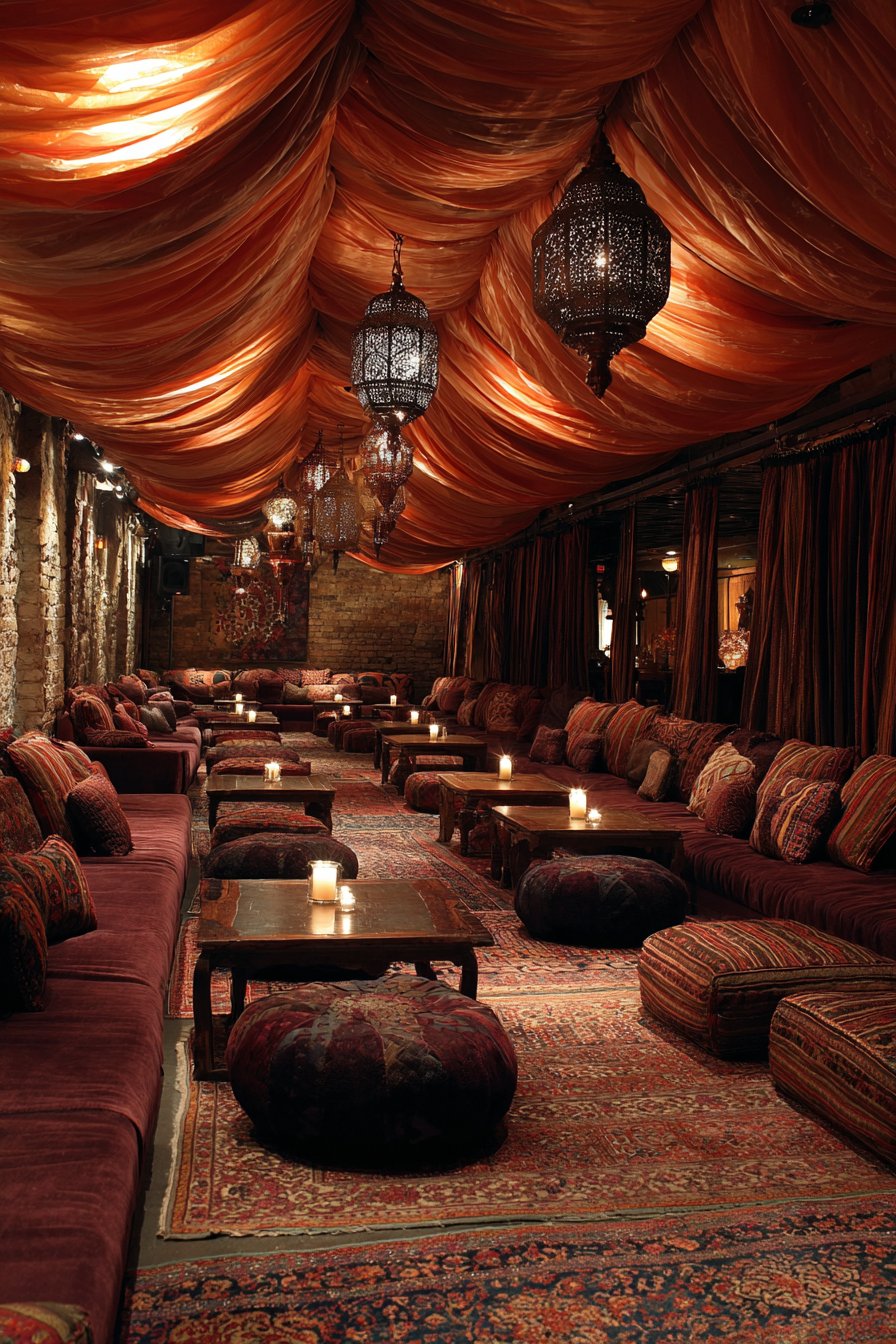
The tent ceiling treatment transforms an ordinary room into an exotic sanctuary of warmth. Draped fabric in warm saffron tones creates an intimate, enclosed atmosphere overhead. This technique softens harsh ceiling lines while adding unexpected visual interest. The enveloping quality makes large rooms feel more intimate and cozy.
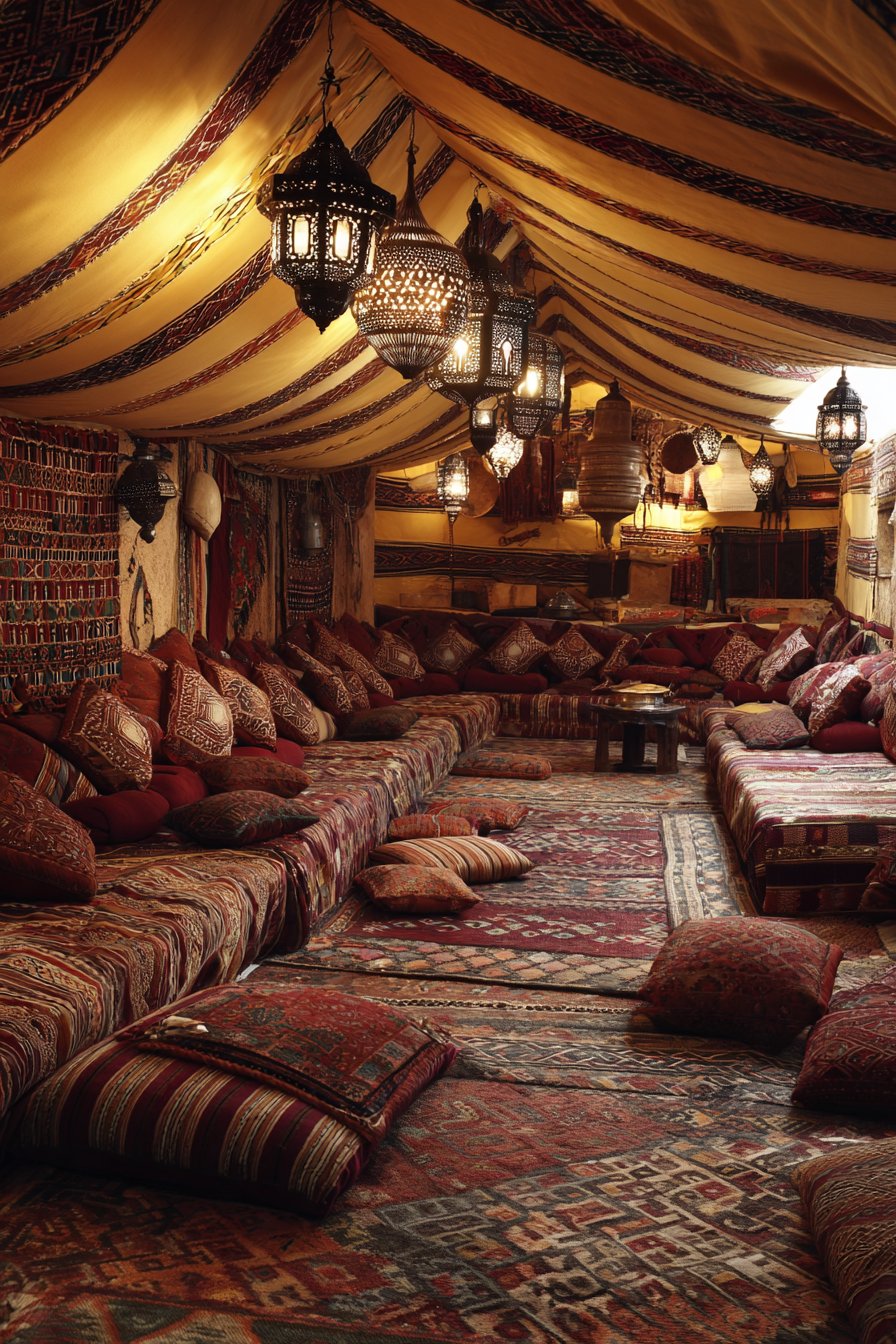
Built-in seating along the perimeter upholstered in deep burgundy establishes traditional majlis arrangement. An array of patterned cushions in traditional Arabic textiles provides both comfort and visual complexity. The floor disappears beneath overlapping Persian and Kilim rugs creating extraordinarily rich layers of pattern and texture. This maximalist approach to layering creates sensory richness that defines traditional Arabic interiors.
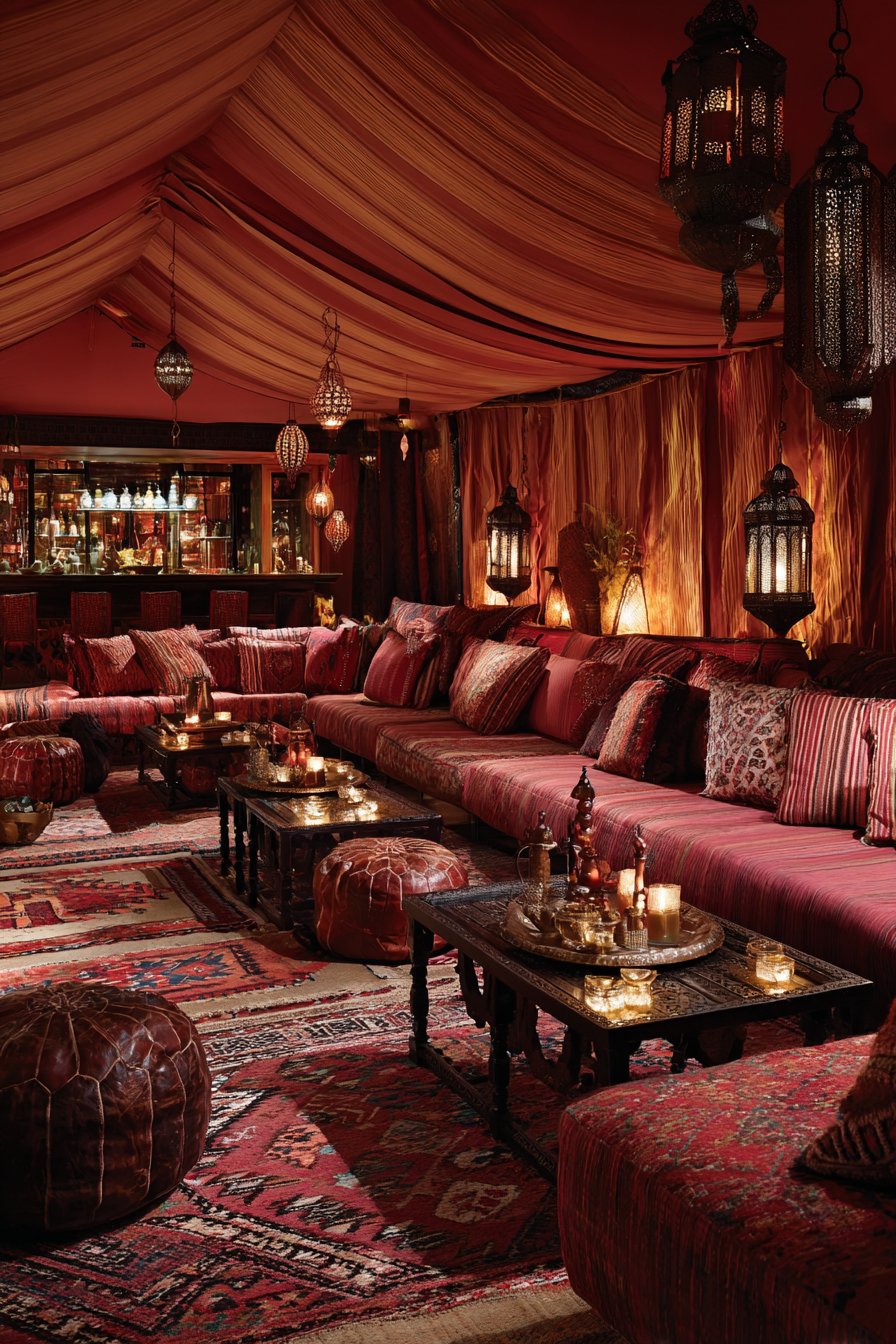
Hanging lanterns in various sizes provide ambient lighting that enhances the souk-inspired atmosphere. The soft lighting highlights fabric textures throughout the space, from the draped ceiling to the layered cushions. This professional approach captures the enveloping warmth that makes Arabic living rooms feel like luxurious refuges. Every surface receives decorative attention in this comprehensive design approach.
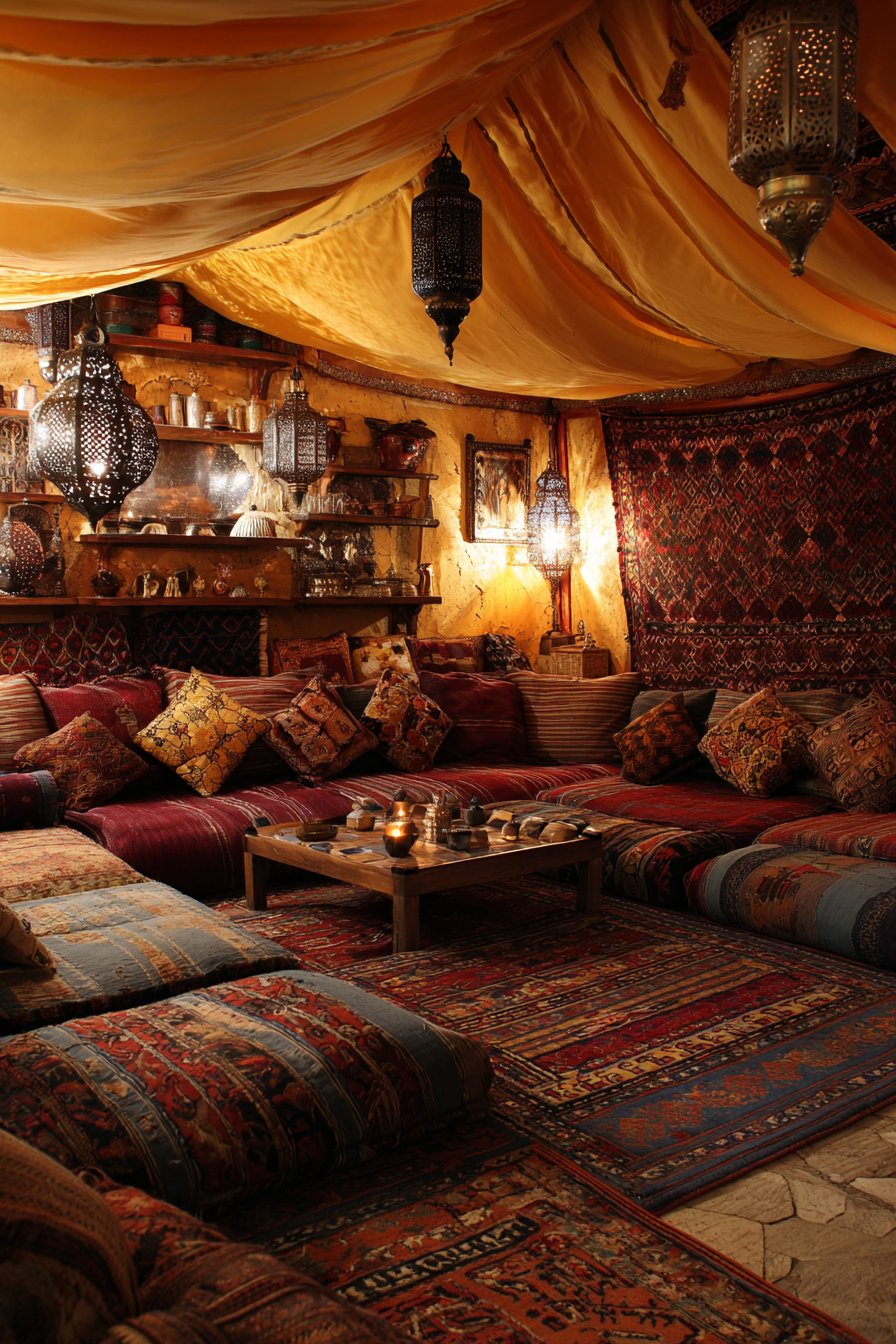
Key Design Tips:
- Drape fabric across ceilings using a center medallion or track system for authentic tent effects
- Build or install perimeter seating to maximize floor space while creating traditional arrangements
- Layer multiple rugs without worrying about perfect alignment for authentic, collected appearance
- Hang lanterns at varying heights to create visual interest and layered lighting effects
- Choose warm color palettes in saffron, burgundy, and gold for enveloping, cozy atmospheres
10. Carved Daybed with Luxurious Textile Layering
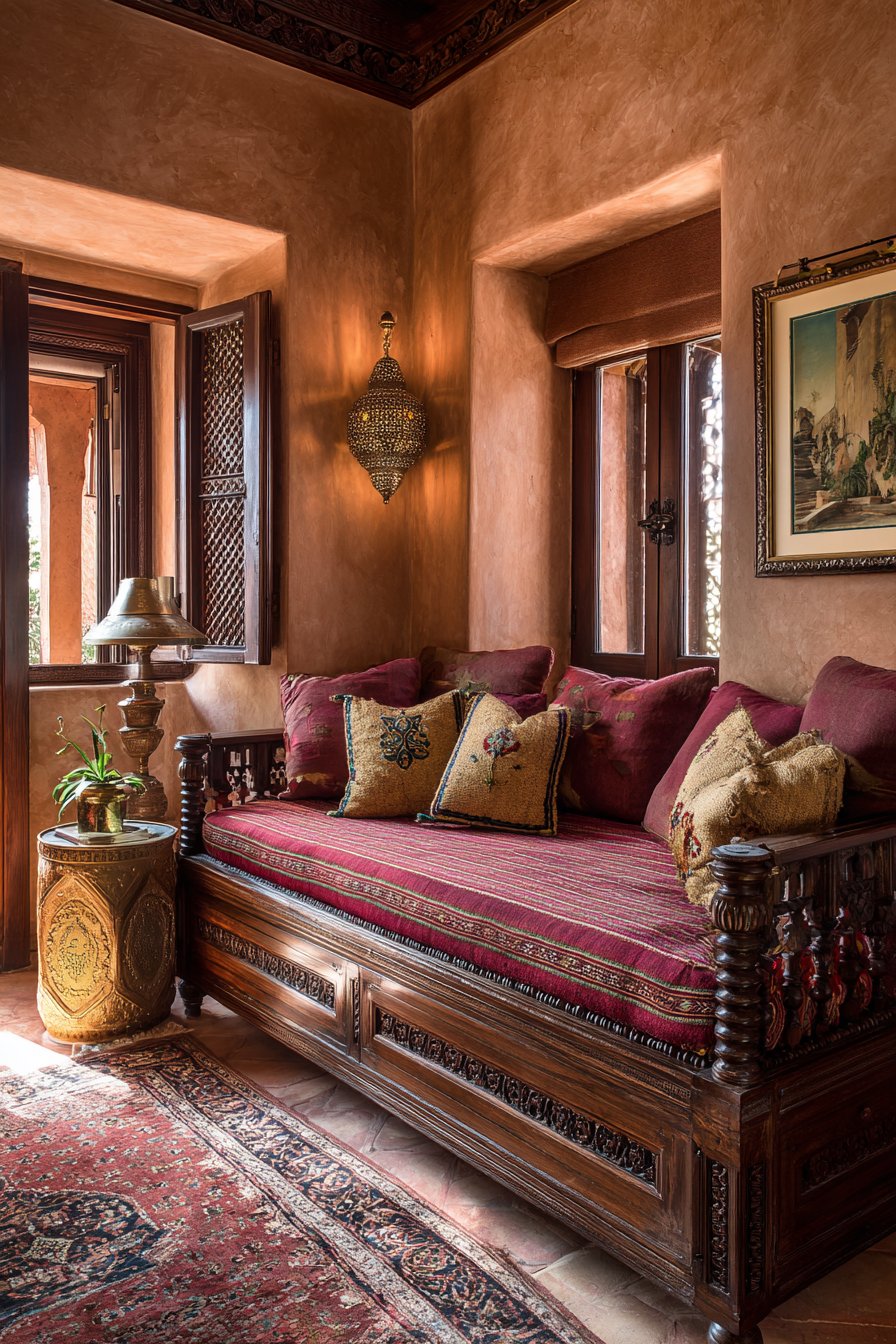
The daybed becomes a focal point of comfort and craftsmanship in this design approach. Carved wooden details with turned elements showcase traditional woodworking techniques. The cushioned mattress dressed with layers of embroidered bolsters and silk cushions creates an inviting resting place. Burgundy, gold, and peacock blue textiles combine for jewel-box richness.
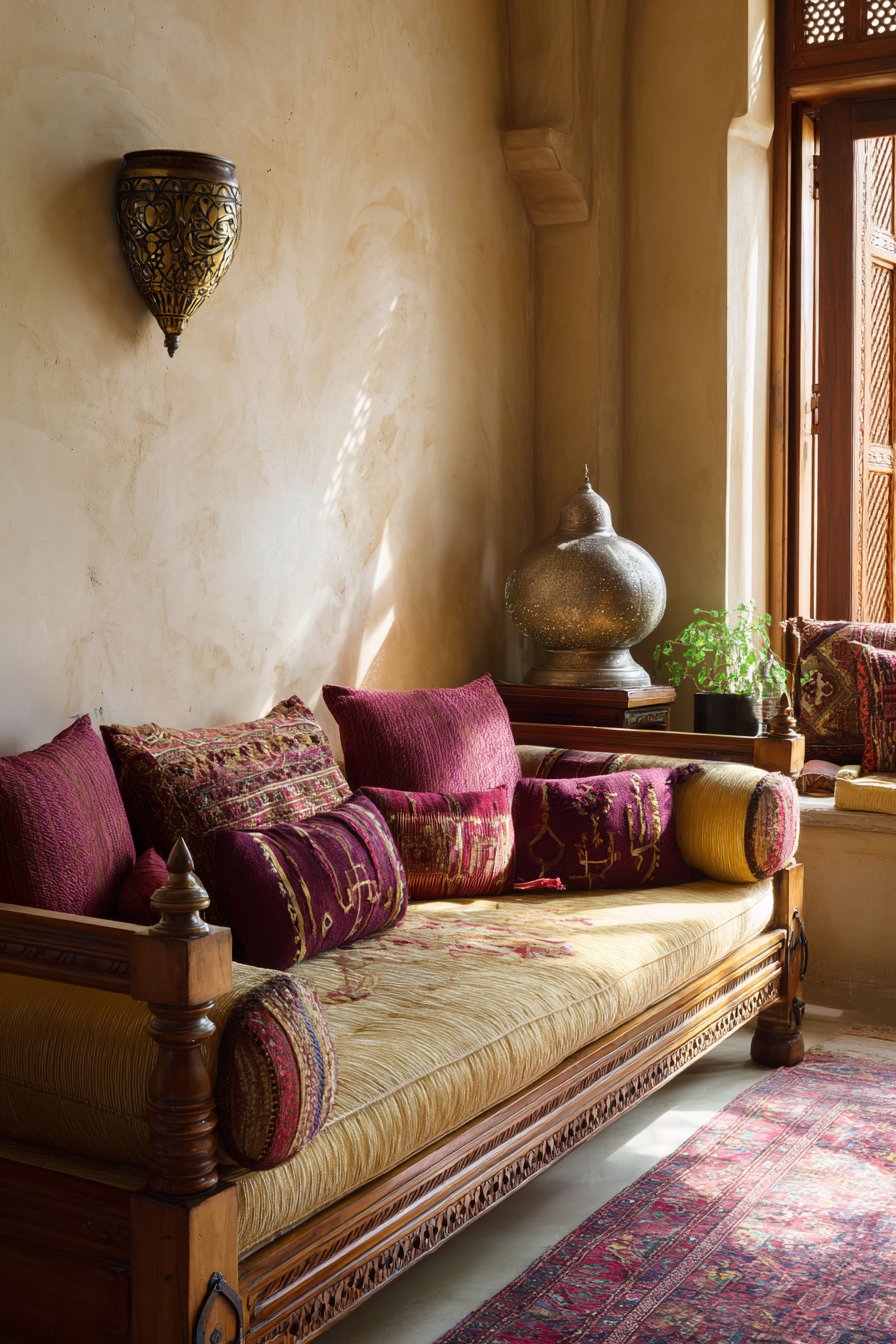
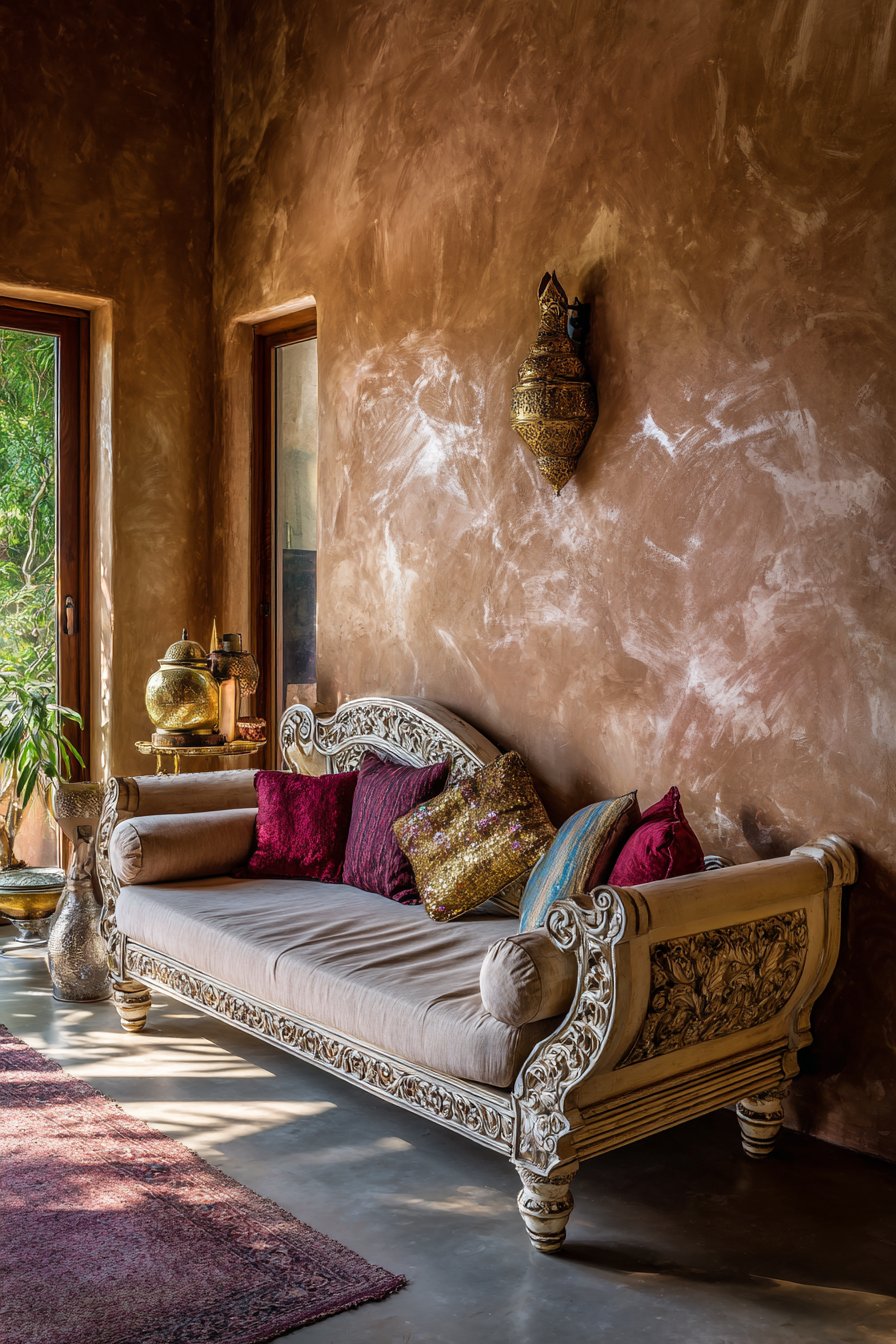
This substantial piece sits against a wall finished with hand-applied tadelakt plaster in warm terracotta. This traditional Moroccan plaster technique creates subtle texture and luminous quality unmatched by standard paint. The warm earth tone provides perfect backdrop for the richly colored textiles. An antique Persian rug in faded reds grounds the space with time-worn beauty and authenticity.
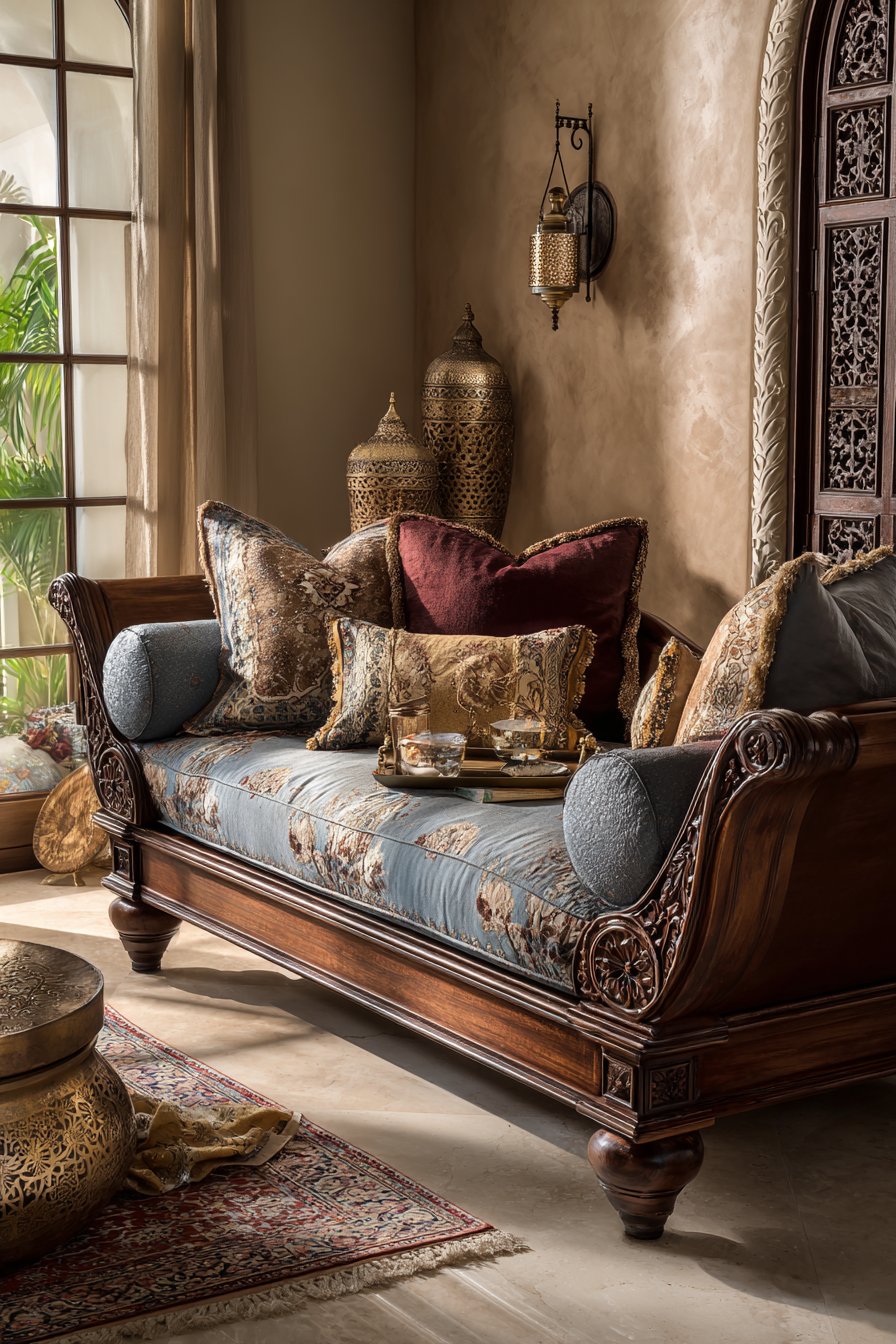
A pierced brass floor lamp provides task lighting while contributing decorative interest with its traditional metalwork. Natural window light creates soft highlights on wooden carved details, revealing the depth of craftsmanship. The shallow depth of field emphasizes intricate woodwork and luxurious textile layering. This composition captures everything characteristic of authentic Arabic living spaces in one powerful vignette.
Key Design Tips:
- Select carved wooden furniture pieces that showcase traditional craftsmanship and joinery techniques
- Layer multiple cushions and bolsters in coordinating jewel tones for luxurious, inviting seating
- Apply tadelakt or similar textured plaster finishes for authentic wall treatments with subtle sheen
- Incorporate antique or vintage rugs for instant character and authenticity
- Position daybeds near windows to take advantage of natural light for reading and relaxation
Why These Arabic Living Room Designs Represent the Best in Cultural Interior Aesthetics
These ten Arabic living room designs showcase the finest elements of Middle Eastern interior design traditions. Each concept demonstrates how authentic cultural aesthetics create spaces with timeless appeal and enduring beauty. The traditional majlis seating arrangement appears throughout multiple designs, proving its continued relevance in modern homes. This low-seating style encourages intimate conversation and communal gathering in ways conventional furniture cannot match.
The emphasis on handcrafted elements throughout these designs honors centuries of artisan traditions. Carved wooden furniture, hand-woven rugs, pierced brass metalwork, and embroidered textiles all showcase human skill and creativity. These handmade pieces bring warmth and character impossible to achieve with mass-produced furnishings. Investing in artisan-crafted items supports traditional crafts while creating interiors with genuine soul and authenticity.
The rich jewel-tone color palettes characteristic of Arabic design create visual warmth and luxury. Emerald greens, ruby reds, sapphire blues, and golden ambers combine to create spaces that feel both opulent and welcoming. These saturated colors draw inspiration from regional landscapes, textiles, and architectural traditions. The careful layering of complementary jewel tones demonstrates sophisticated color theory that transcends passing trends.
Architectural elements like pointed arches, recessed alcoves, and mashrabiya screens add structural interest to Arabic living rooms. These features transform ordinary spaces into rooms with distinctive character and cultural identity. The interplay of light through carved screens creates ever-changing shadow patterns that animate walls throughout the day. Such architectural details require initial investment but provide lasting beauty and authenticity.
The layering technique appears as a consistent theme across all these Arabic living room designs. Multiple rugs overlap on floors, cushions pile abundantly on seating, and lighting fixtures appear at various heights. This approach creates visual and textural richness that makes spaces feel complete and considered. The layering also allows for personal expression as collections grow and evolve over time.
Traditional Arabic hospitality informs every design decision in these living rooms. The emphasis on comfortable, flexible seating arrangements welcomes guests and encourages extended visits. Low tables make serving tea and refreshments easy and graceful. The warm, enveloping atmospheres created through color, lighting, and textile choices make everyone feel valued and comfortable.
The successful blending of traditional and contemporary elements in several designs proves Arabic aesthetics adapt beautifully to modern living. Clean-lined furniture can be elevated with traditional cushions and throws. Contemporary spaces gain warmth through carved screens and brass lighting. This fusion approach makes the style accessible to those in modern homes while maintaining cultural authenticity.
Material diversity creates sensory richness in Arabic living rooms. Smooth brass contrasts with rough-textured rugs. Cool tile meets warm wood. Crisp cotton pairs with luxurious silk. This variety of textures engages multiple senses and creates spaces that feel alive and dynamic. The careful selection of materials ensures visual interest from every angle.
Lighting design receives particular attention in authentic Arabic interiors. Pierced lanterns, wall sconces, and hanging fixtures create layered illumination at multiple levels. Natural light filtering through screens or sheer curtains adds softness. The interplay of direct and diffused lighting creates ambiance while remaining functional. This sophisticated lighting approach eliminates harsh shadows while creating warm, welcoming environments.
These designs demonstrate that Arabic living room style works beautifully in various space sizes and configurations. Intimate alcoves and sprawling open rooms both accommodate traditional elements successfully. The principles of low seating, rich color, handcrafted details, and layered textiles apply equally to modest and grand spaces. This versatility makes Arabic design accessible regardless of home size or budget.
The enduring appeal of these Arabic living room concepts lies in their ability to create spaces that nurture human connection. Every design element—from floor-level seating to communal tables to warm lighting—encourages people to gather, converse, and share experiences. In our increasingly digital world, these rooms offer analog refuges where relationships deepen and memories form. This human-centered approach to design explains why Arabic living rooms remain relevant and desired.
Conclusion
Arabic living room design offers remarkable versatility while maintaining strong cultural identity and timeless aesthetic appeal. From traditional majlis arrangements with built-in bench seating to contemporary interpretations featuring modern furniture with traditional accessories, these spaces demonstrate endless creative possibilities. The common threads of rich jewel tones, handcrafted details, layered textiles, and intimate seating arrangements create distinctly Arabic ambiance regardless of specific approach.
The ten designs explored here provide starting points for your own journey into this beautiful design tradition. Consider which elements resonate most strongly with your lifestyle and existing home architecture. Perhaps carved wooden screens will filter light beautifully in your space, or maybe a collection of brass lanterns will provide the perfect ambient lighting. Floor cushions might offer the flexibility you need for entertaining, while a carved daybed could become your favorite reading spot.
Remember that authentic Arabic design values quality craftsmanship and natural materials over trendy decorative objects. Invest in well-made pieces that will last for generations and gain character with age. Start with foundational elements like rugs and seating, then layer in metalwork, textiles, and decorative accessories gradually. This approach allows your space to evolve organically while maintaining cohesion.
Don’t feel constrained by perfect authenticity—the fusion of Arabic elements with your existing décor can create uniquely personal spaces. The key lies in understanding and respecting the underlying principles: warm hospitality, comfortable gathering, rich color, handcrafted beauty, and layered textures. Apply these concepts thoughtfully to create living rooms that honor tradition while serving your modern lifestyle needs.
Begin your Arabic living room transformation today by selecting one element that speaks to you most powerfully. Perhaps it’s a hand-knotted Persian rug, an ornate brass lantern, or a collection of embroidered cushions. Let that piece guide your design decisions moving forward, gradually building a cohesive space that reflects both cultural appreciation and personal style. Your living room can become a beautiful testament to centuries of design wisdom while remaining perfectly suited to contemporary life.
