


The kitchen has long been considered the heart of the home, a gathering place where meals are prepared, conversations flow, and memories are created. In the realm of interior design, few choices offer the enduring appeal and versatile elegance of an all white kitchen. This timeless aesthetic transcends fleeting trends, providing a canvas of pure sophistication that adapts to various design sensibilities while creating an atmosphere of spaciousness, cleanliness, and serenity. The beauty of an all white kitchen lies not in its simplicity, but in the intricate layering of textures, materials, and finishes that transform a monochromatic palette into a dynamic, visually captivating space.
As we explore the diverse interpretations of all white kitchen design, you’ll discover that “all white” doesn’t mean monotonous or sterile. Instead, it represents an opportunity to showcase the interplay of light and shadow, the contrast between matte and glossy surfaces, and the subtle variations in tone that create depth and dimension. From contemporary minimalist spaces to charming cottage-style kitchens, the all white aesthetic proves remarkably adaptable, accommodating different architectural styles and personal preferences while maintaining its signature bright, airy quality.
This comprehensive guide presents ten distinct approaches to all white kitchen design, each offering unique insights into how materials, textures, lighting, and spatial arrangement can transform the same color palette into dramatically different experiences. Whether you’re planning a complete kitchen renovation or simply seeking inspiration to refresh your current space, these thoughtfully curated designs demonstrate the remarkable versatility and enduring appeal of the all white kitchen aesthetic.
1. Marble Island Masterpiece with Waterfall Edges
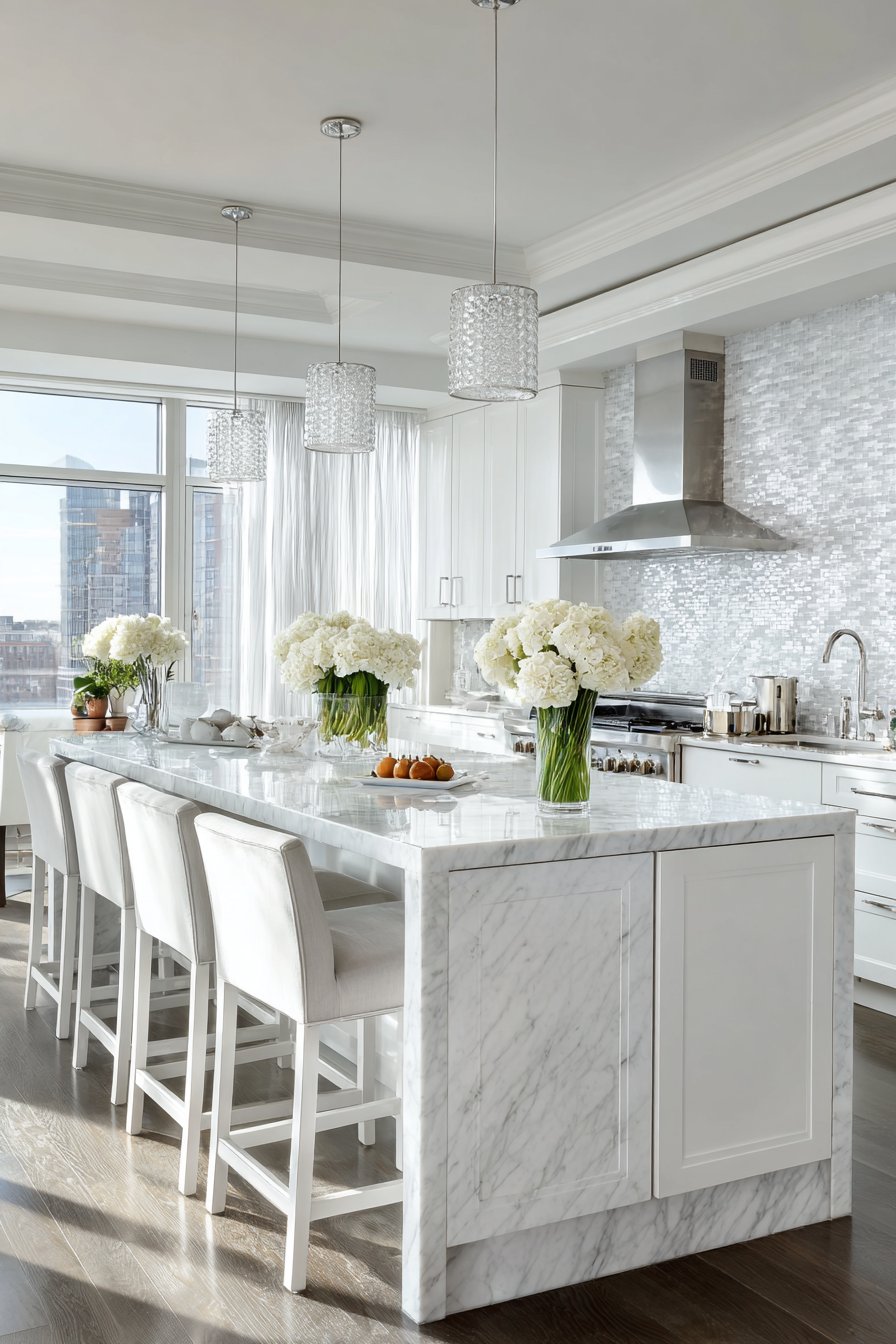
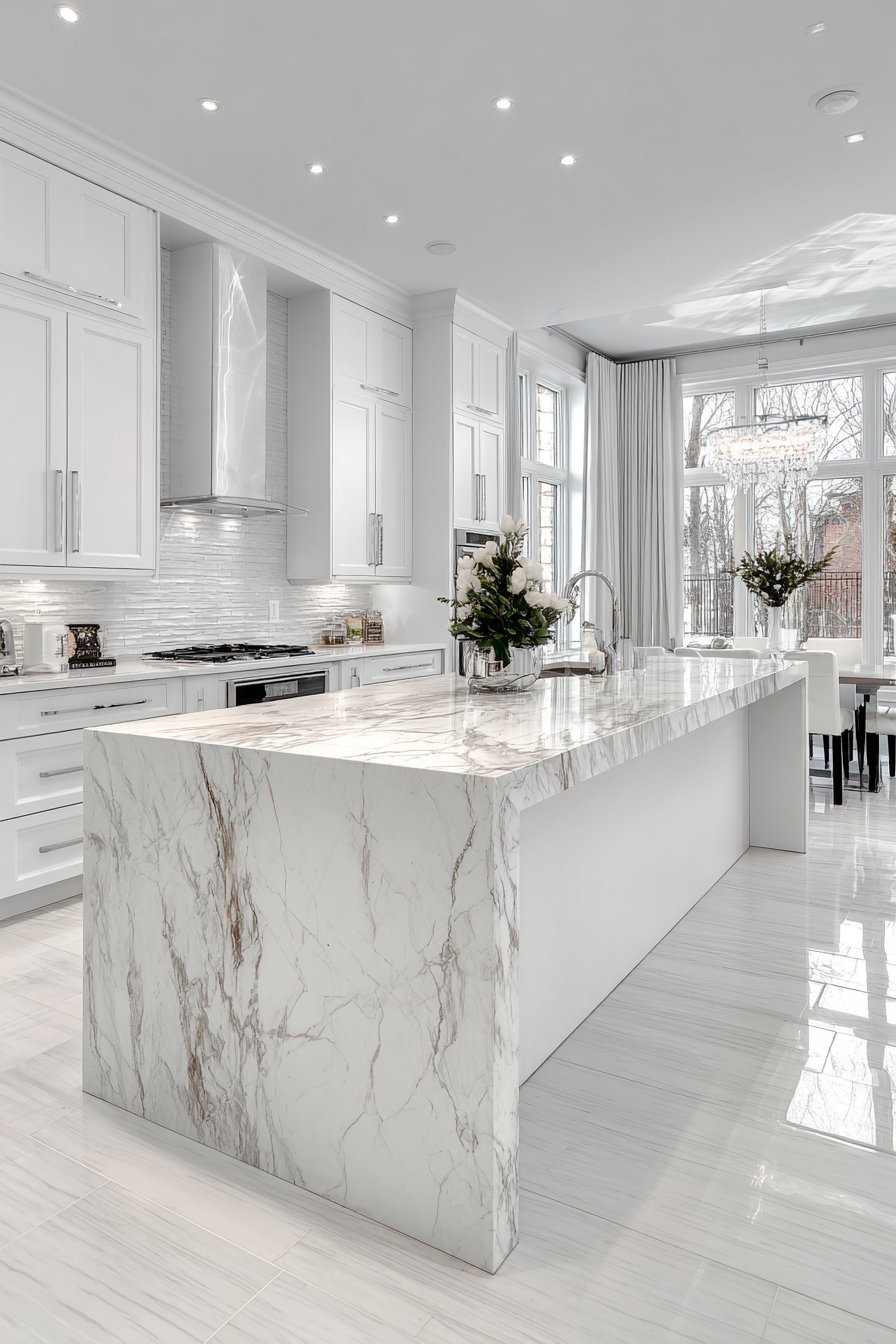
The pinnacle of luxury in all white kitchen design manifests in a spacious marble island featuring dramatic waterfall edges that cascade seamlessly from countertop to floor. This architectural statement piece becomes the undeniable focal point of the kitchen, its natural veining patterns creating organic visual interest within the pristine white palette. The surrounding shaker-style cabinetry, with its subtle texture variations and classic proportions, provides a refined backdrop that enhances rather than competes with the island’s grandeur. Polished chrome hardware punctuates the clean lines of each cabinet door and drawer, catching and reflecting light throughout the space with jewel-like precision.
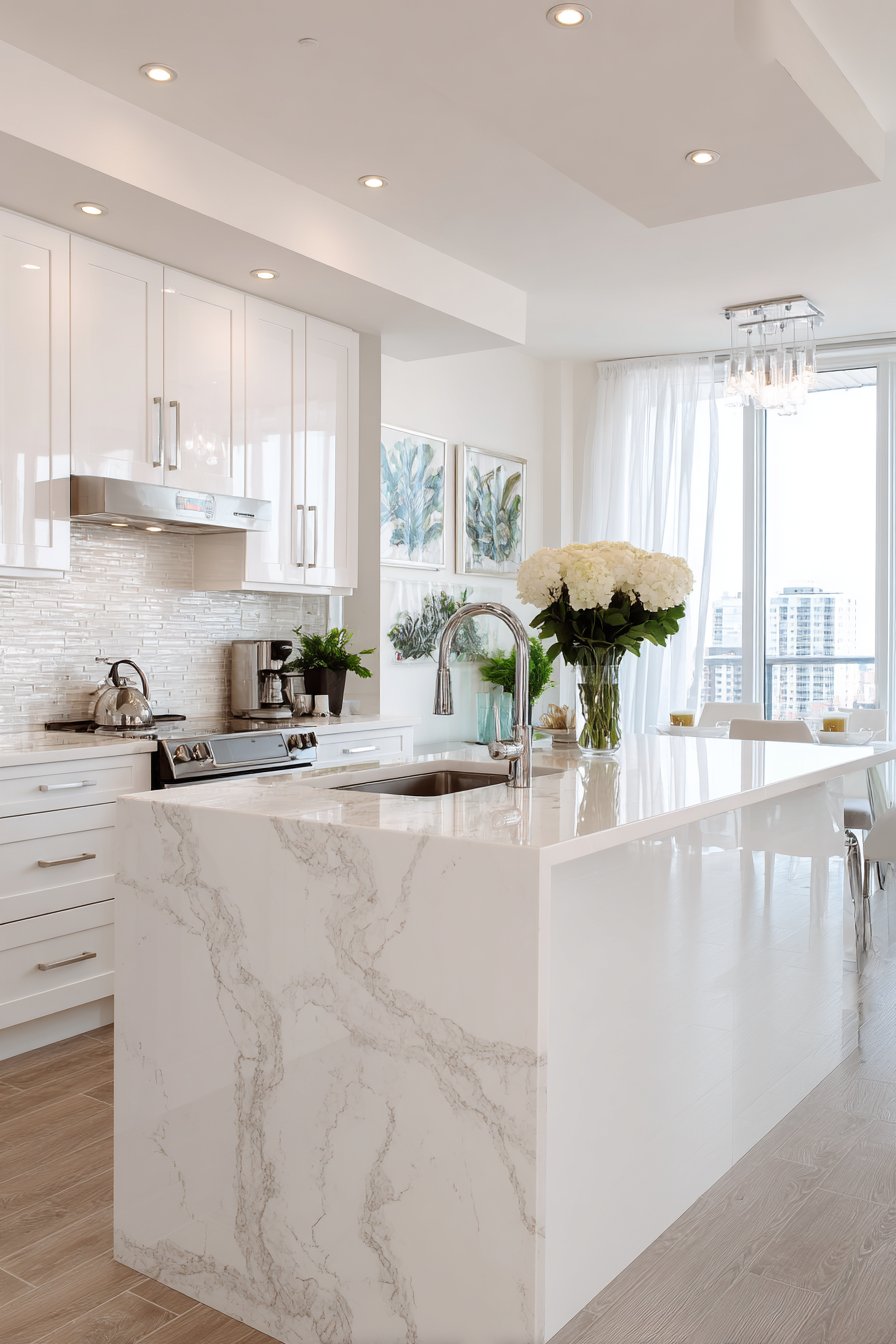
The white subway tile backsplash, installed with subtle beveled edges, introduces another layer of texture to this monochromatic masterpiece. As natural light floods through large windows dressed in sheer white curtains, the beveled tiles create a gentle play of light and shadow that changes throughout the day, ensuring the space never appears flat or one-dimensional. This dynamic quality is essential in all white design, where the absence of color makes texture and light manipulation paramount to creating visual interest.
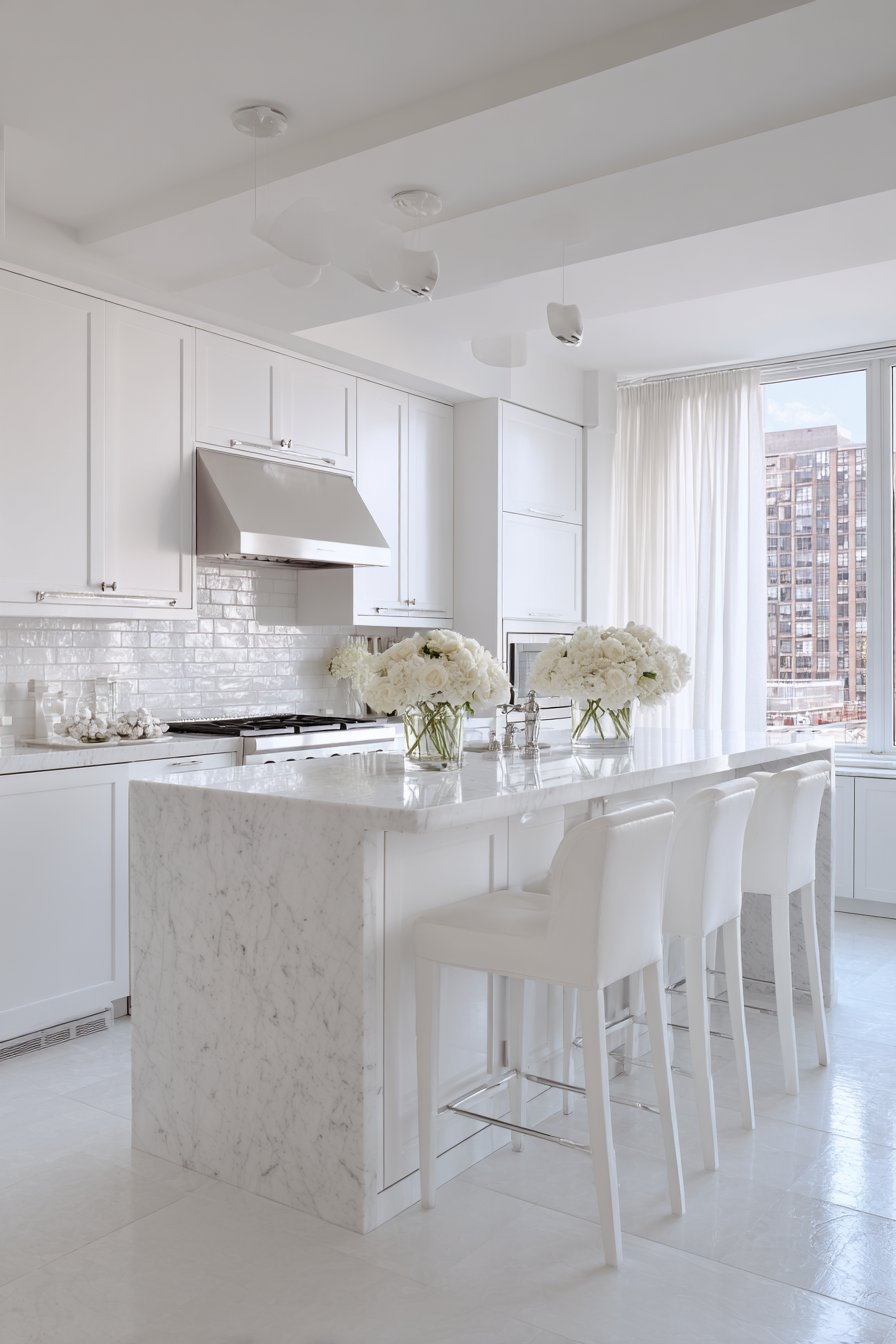
The genius of this design lies in its sophisticated layering of white tones and varied surface textures. The polished marble reflects light with a luminous quality, while the matte-finished cabinetry absorbs it, creating a balanced visual rhythm throughout the space. The sheer curtains filter harsh sunlight into a soft, diffused glow that bathes every surface in flattering illumination, emphasizing the craftsmanship of each element from the cabinet construction to the precise tile installation. This kitchen demonstrates that luxury in white spaces comes not from embellishment, but from the quality of materials and the thoughtful consideration of how light interacts with different surfaces throughout the day.
Key Design Tips:
- Select marble with subtle grey veining to add organic patterns without disrupting the monochromatic scheme
- Install waterfall edges on islands to create a contemporary architectural statement that elevates the entire design
- Use beveled subway tiles instead of flat tiles to maximize light reflection and add dimensional interest
- Incorporate sheer window treatments to diffuse natural light while maintaining privacy and the airy aesthetic
- Choose polished chrome hardware for its reflective quality and ability to complement various white tones
- Layer different white finishes including matte cabinetry and glossy tiles to prevent visual monotony
2. Functional Elegance with Floor-to-Ceiling Storage
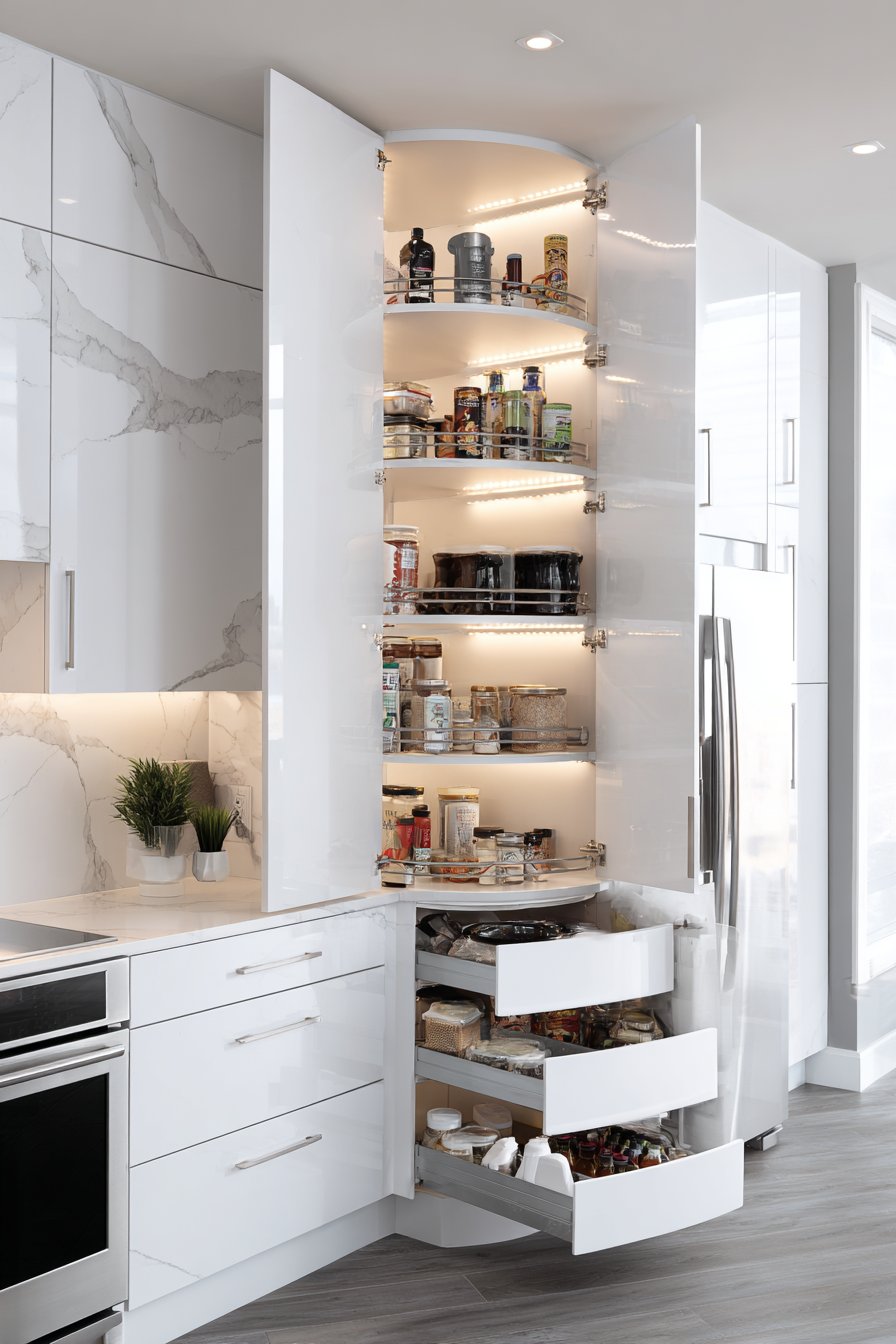
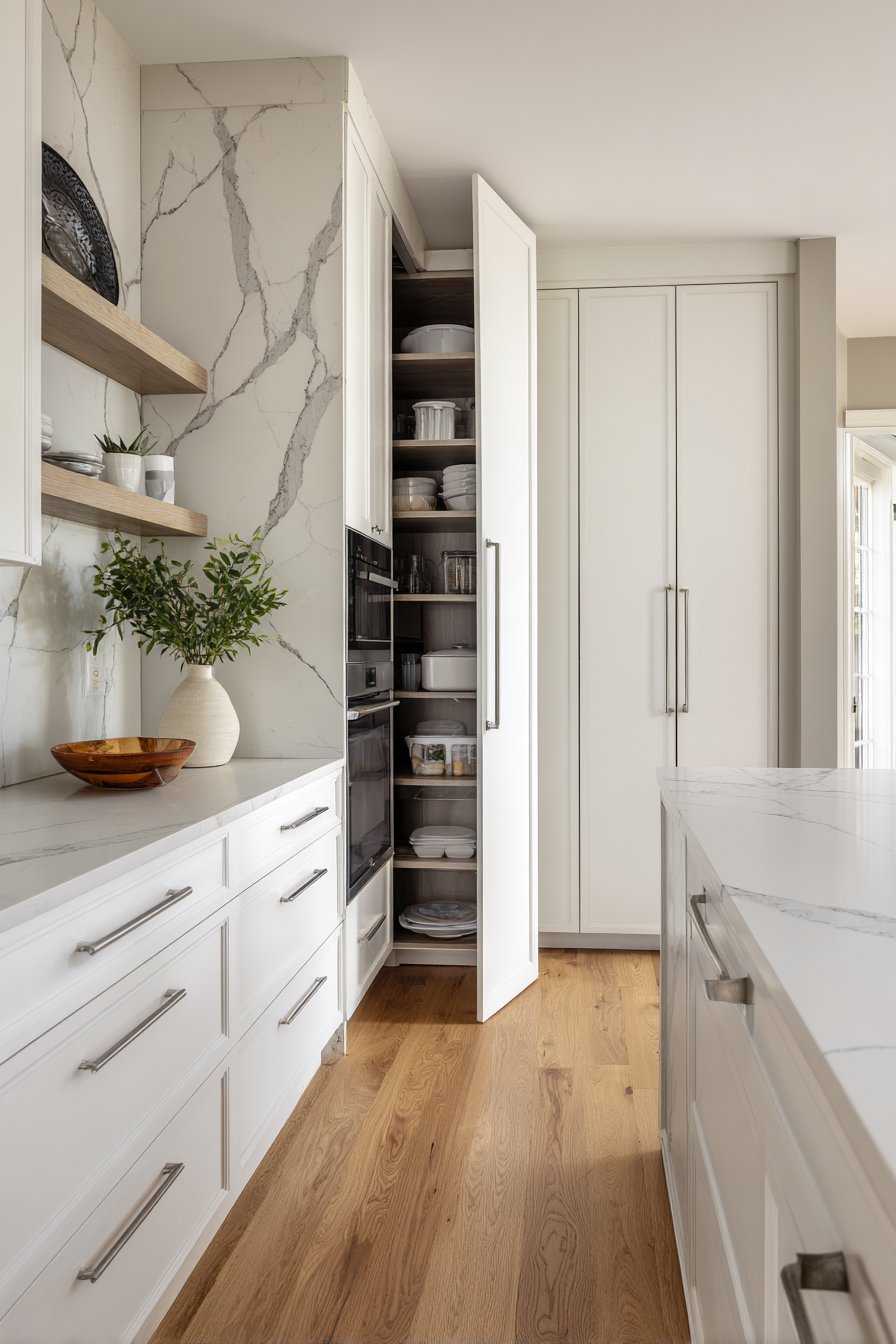
The marriage of practicality and beauty reaches its zenith in an all white kitchen that maximizes vertical space with floor-to-ceiling cabinetry designed to accommodate modern storage needs. This approach transforms the kitchen into an organizational masterpiece where every item has its designated place, from pull-out pantry organizers that glide smoothly on quality hardware to corner carousel systems that make previously inaccessible spaces highly functional. The white quartz countertops, featuring delicate grey veining that echoes natural stone without the maintenance requirements, provide durable work surfaces that maintain the monochromatic palette while offering subtle visual interest.
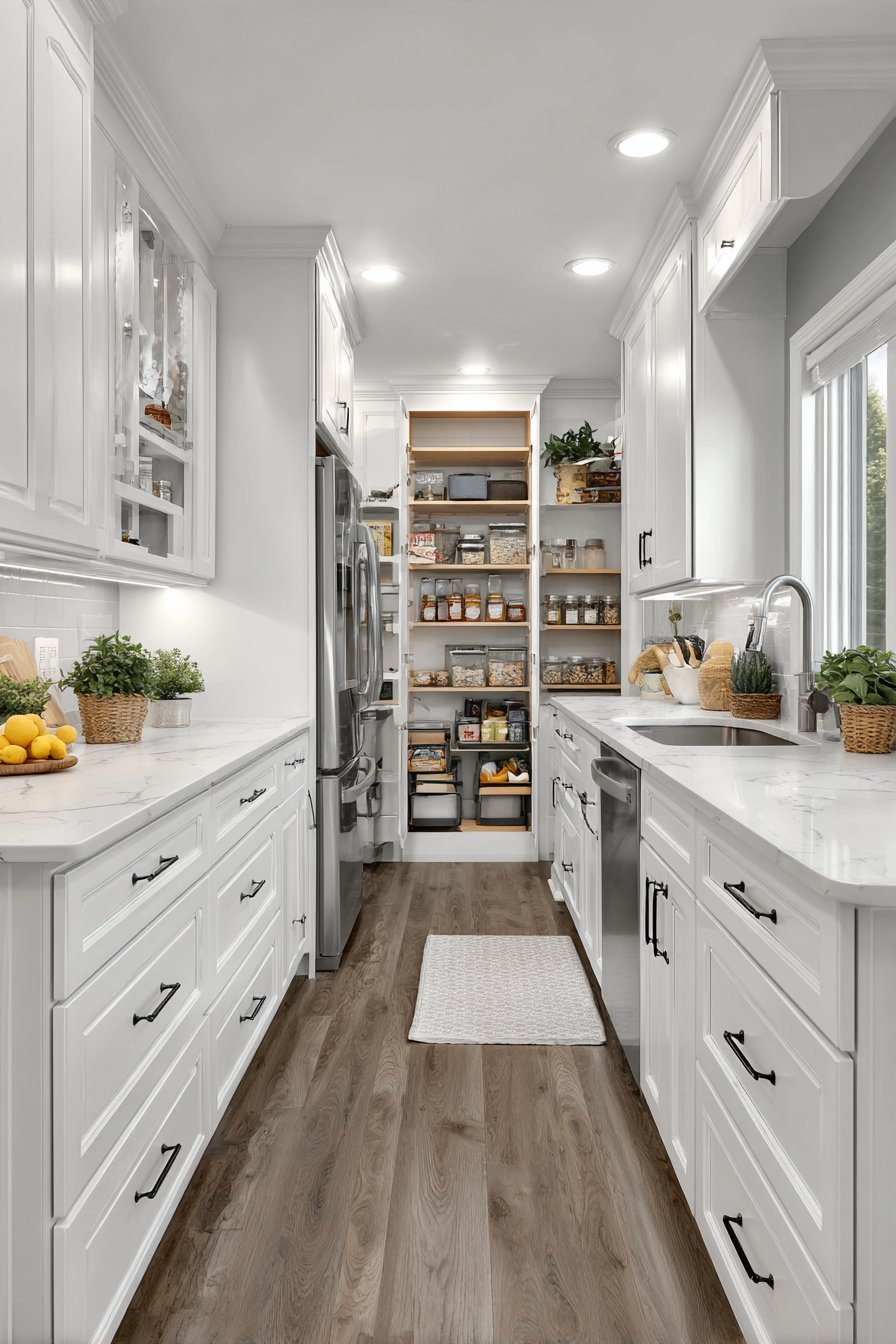
The lighting strategy in this kitchen deserves particular attention, as it employs multiple layers to ensure functionality never compromises aesthetics. Recessed lighting fixtures installed throughout the ceiling provide ambient illumination, while under-cabinet LED strips create task lighting that eliminates shadows on work surfaces. This thoughtful approach to illumination serves dual purposes: it enhances the kitchen’s functionality during food preparation while highlighting the architectural details of the cabinetry and the subtle variations in the quartz countertop patterns.
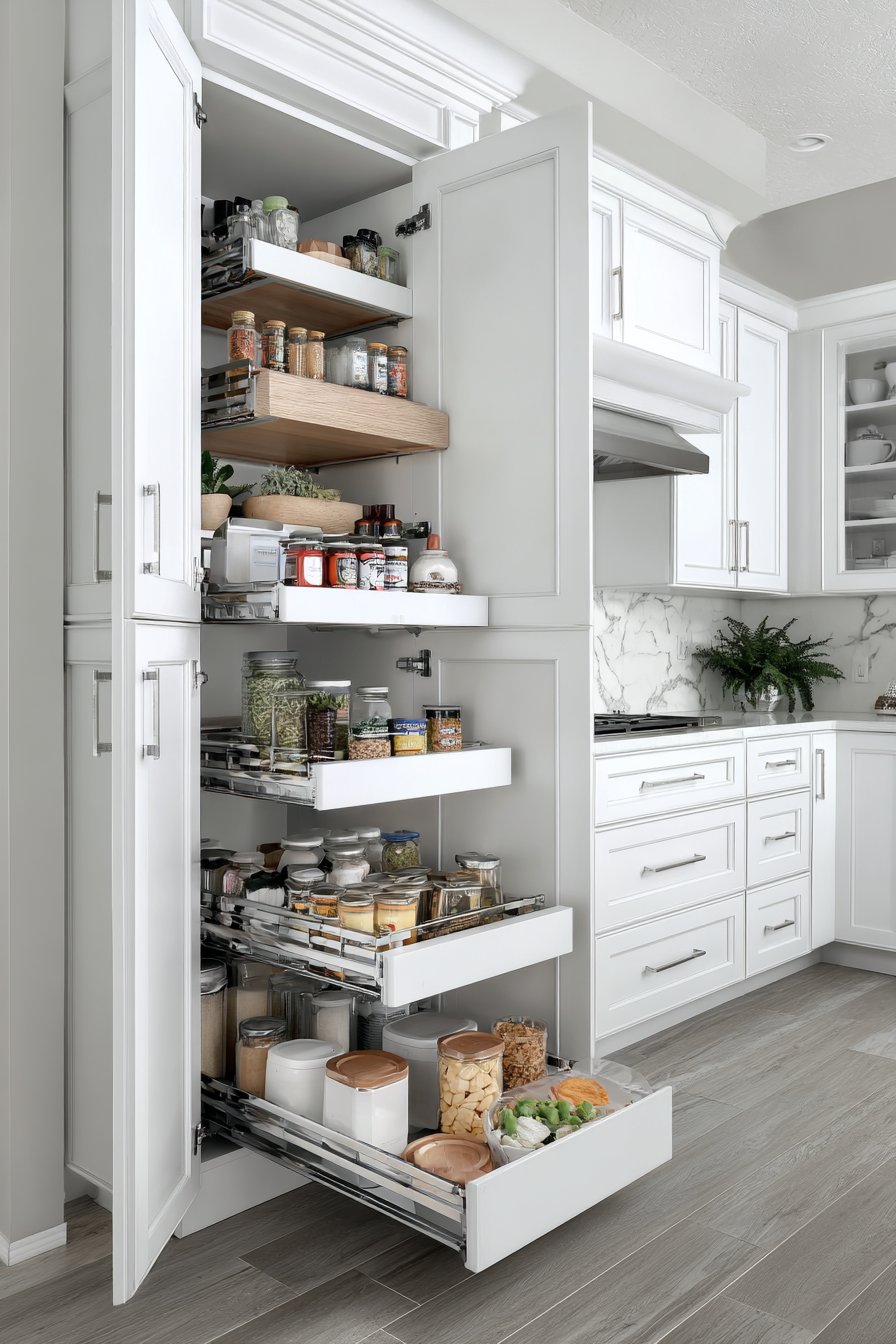
What distinguishes this design is its demonstration that an all white kitchen can be both beautiful and supremely practical. The interplay between matte and glossy white finishes adds visual texture without requiring additional colors or materials. Matte-finished cabinet doors on the perimeter create a soft, sophisticated backdrop, while glossy finishes on certain elements reflect light and add a touch of contemporary elegance. The cabinet door details, from the precision of the joinery to the quality of the hinges and soft-close mechanisms, become focal points in their own right when executed with excellence.
Key Design Tips:
- Maximize vertical storage with floor-to-ceiling cabinetry to reduce clutter and maintain the clean aesthetic
- Install pull-out organizers in pantry spaces to improve accessibility and organization
- Incorporate corner carousel systems to transform awkward corner cabinets into highly functional storage
- Choose quartz with subtle veining for countertops that offer natural stone beauty with minimal maintenance
- Layer lighting types combining ambient, task, and accent lighting for both function and atmosphere
- Mix matte and glossy finishes strategically to add depth and prevent the space from feeling flat
- Invest in quality hardware including soft-close hinges and smooth-gliding drawer systems for long-term satisfaction
3. Farmhouse Charm with Classic Details
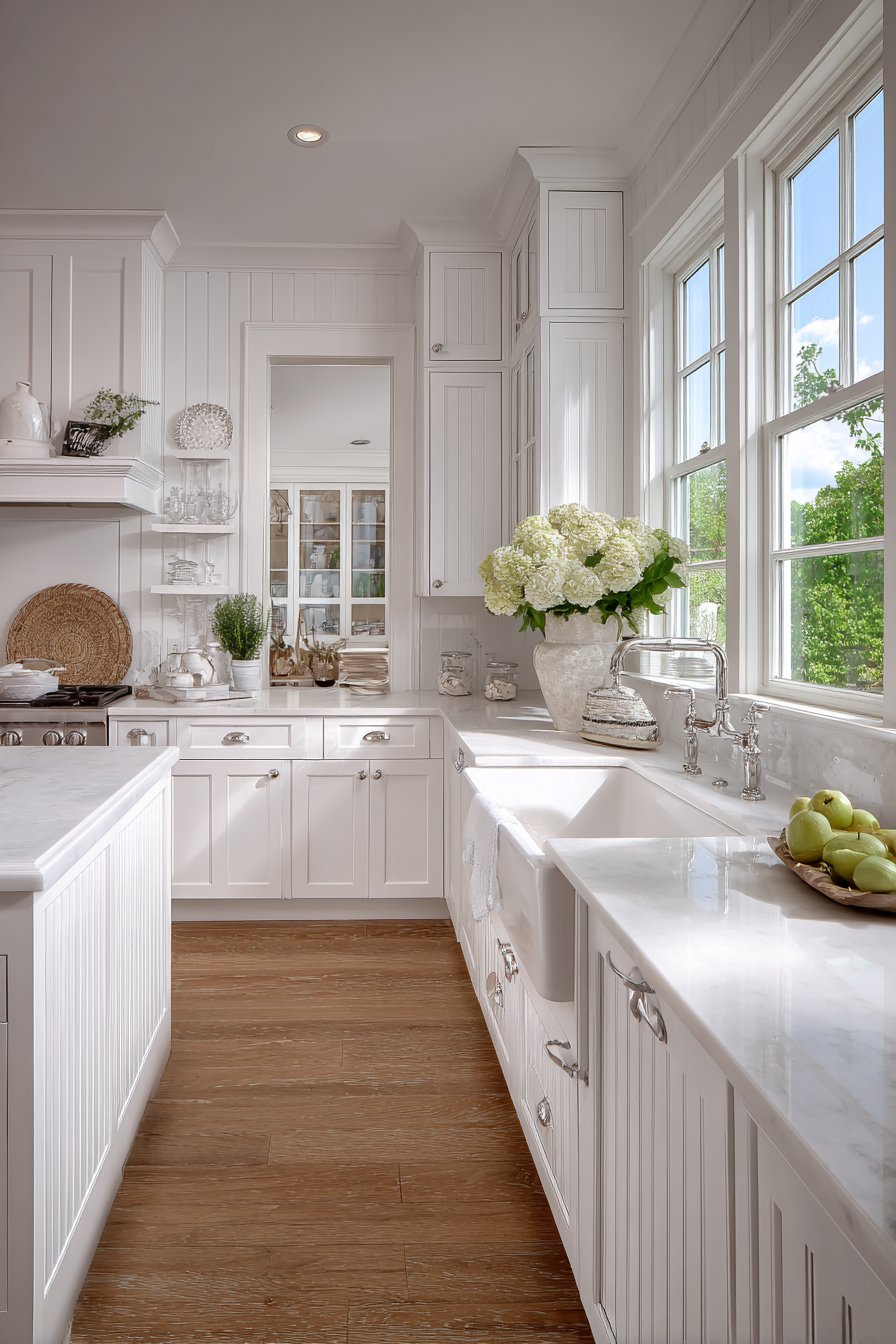
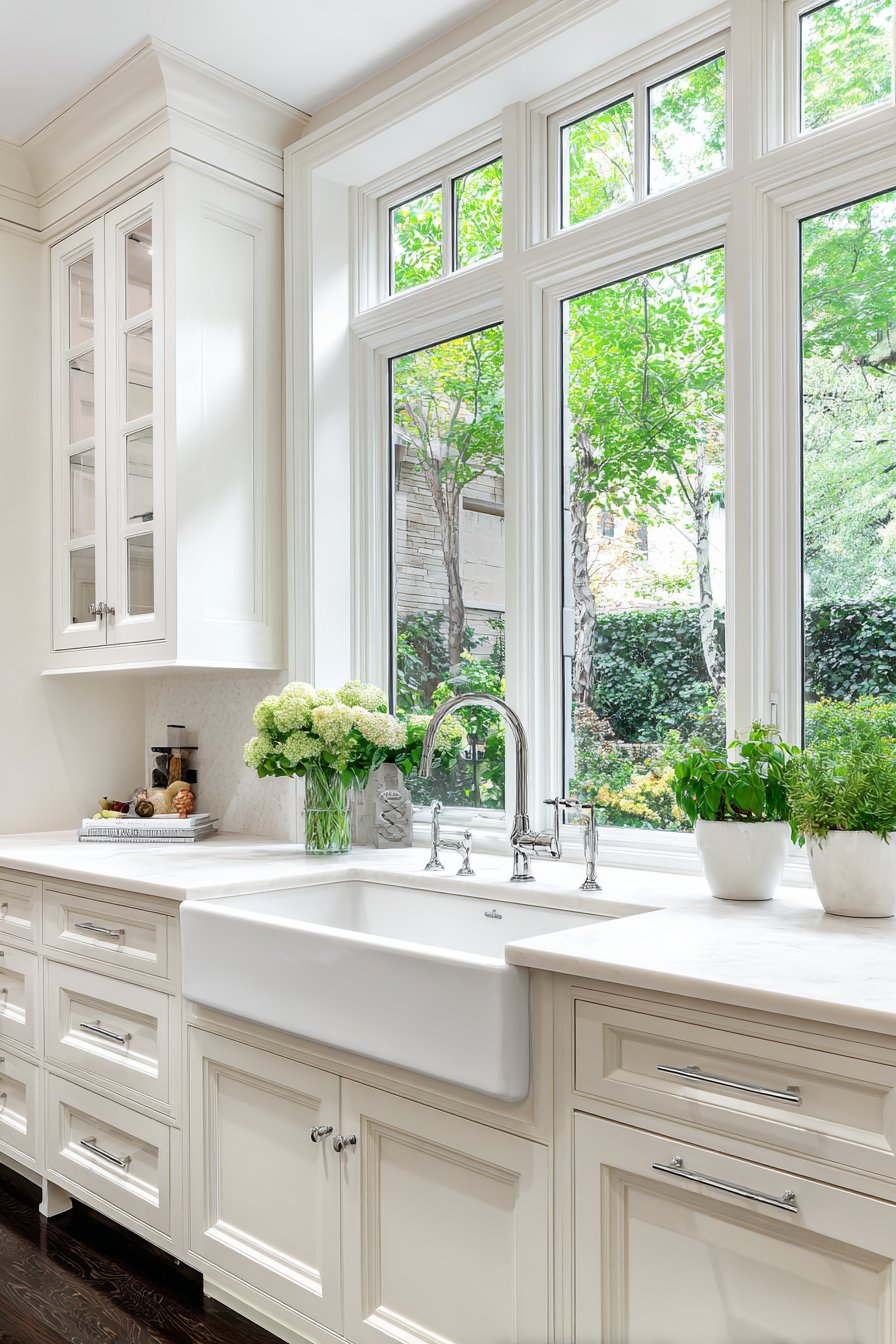
The enduring appeal of farmhouse design finds perfect expression in an all white kitchen centered around a classic apron-front sink that evokes nostalgic charm while offering practical benefits. This statement fixture, set within white solid surface countertops that provide seamless, easy-to-clean work areas, becomes a focal point that anchors the entire design in traditional American kitchen aesthetics. The surrounding white inset cabinetry, with its flush-mounted doors and drawers, showcases superior craftsmanship and attention to detail, while classic cup pull hardware in polished nickel adds authentic period detail without overwhelming the clean lines.
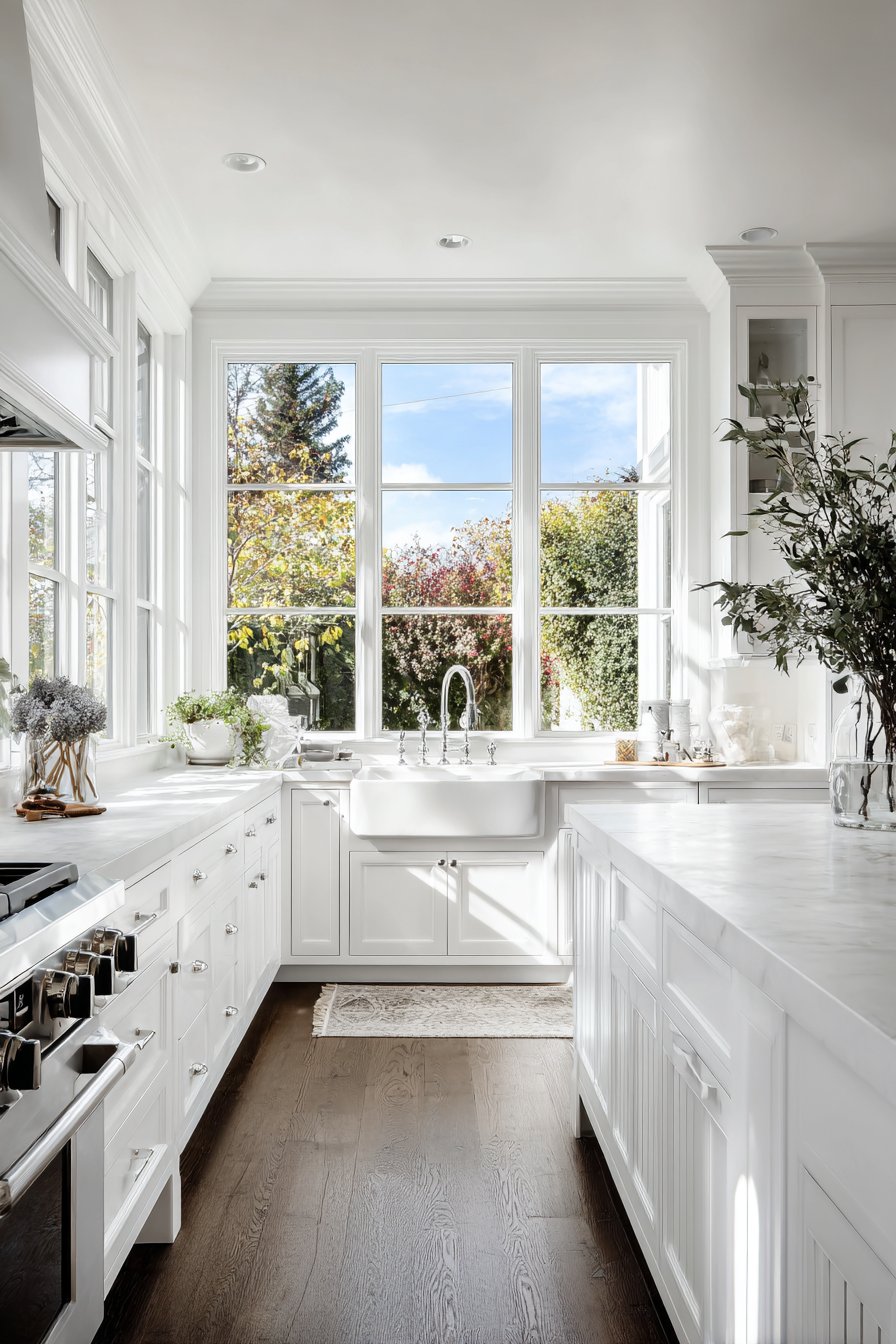
The island, featuring white beadboard paneling, introduces textural dimension that prevents the monochromatic scheme from feeling sterile or institutional. This vertical paneling catches light differently than smooth painted surfaces, creating subtle shadow lines that change throughout the day as natural light moves through the space. The large casement windows, framed with white trim that matches the cabinetry, serve as transparent portals connecting the kitchen to outdoor greenery, creating a visual link between interior and exterior spaces while flooding the room with abundant natural daylight.
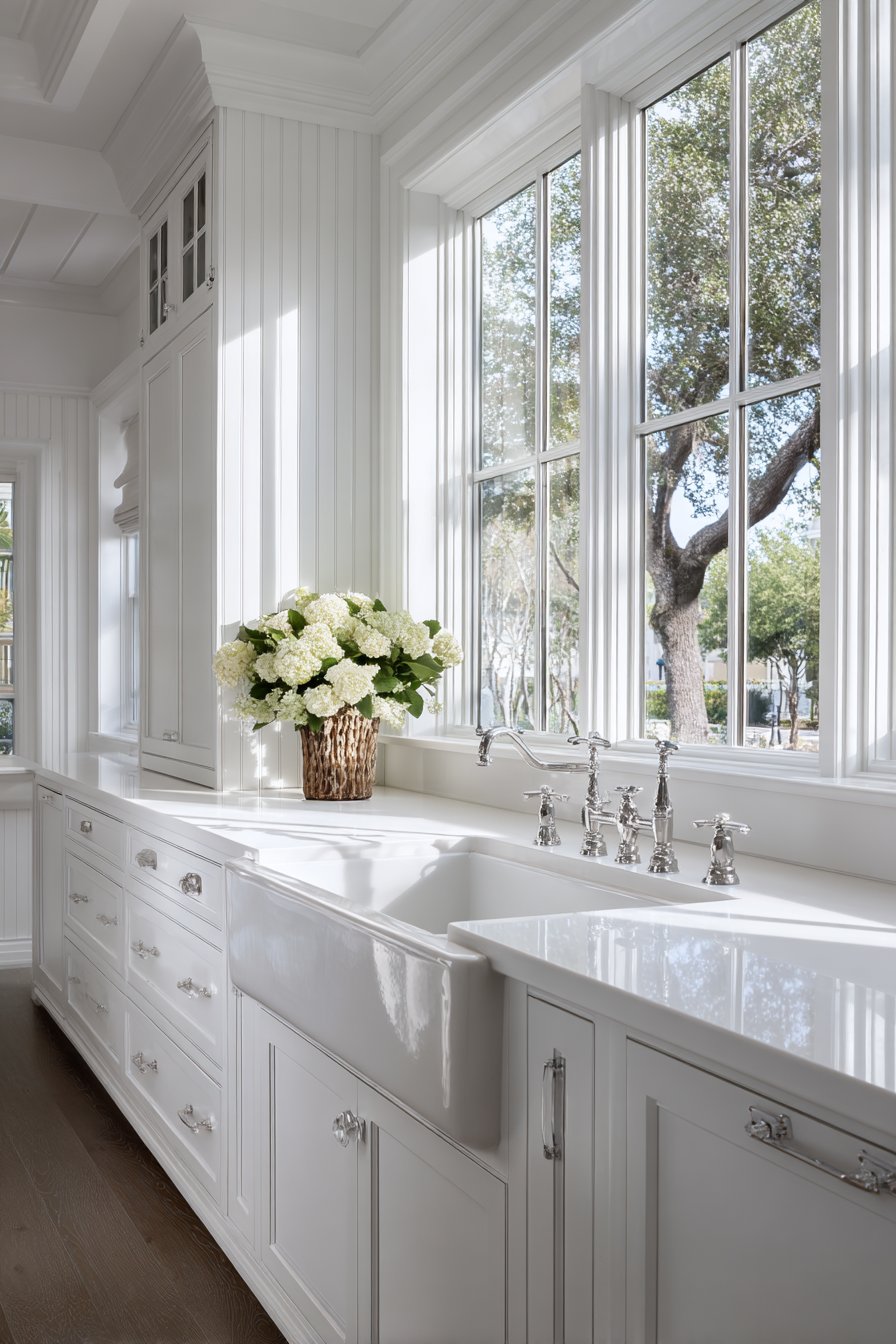
This design celebrates the farmhouse aesthetic’s emphasis on honest materials and functional beauty. The various white textures, from smooth painted cabinet surfaces to the natural material variations in the solid surface countertops and the dimensional quality of the beadboard paneling, work together to create a space that feels collected over time rather than designed all at once. The polished nickel hardware provides just enough contrast to define each cabinet and drawer without disrupting the cohesive white palette, demonstrating how small metallic accents can enhance rather than compete with an all white design.
Key Design Tips:
- Select an apron-front sink as a focal point that combines farmhouse charm with modern functionality
- Use inset cabinetry for a traditional look that showcases quality craftsmanship
- Add beadboard paneling to islands or walls to introduce texture within the white palette
- Choose cup pull hardware in polished nickel for authentic farmhouse character
- Install casement windows to maximize natural light and create visual connections to outdoor spaces
- Use solid surface countertops for seamless, low-maintenance work areas
- Frame windows with white trim that matches cabinetry to create architectural continuity
4. Contemporary Minimalism with High-Gloss Surfaces
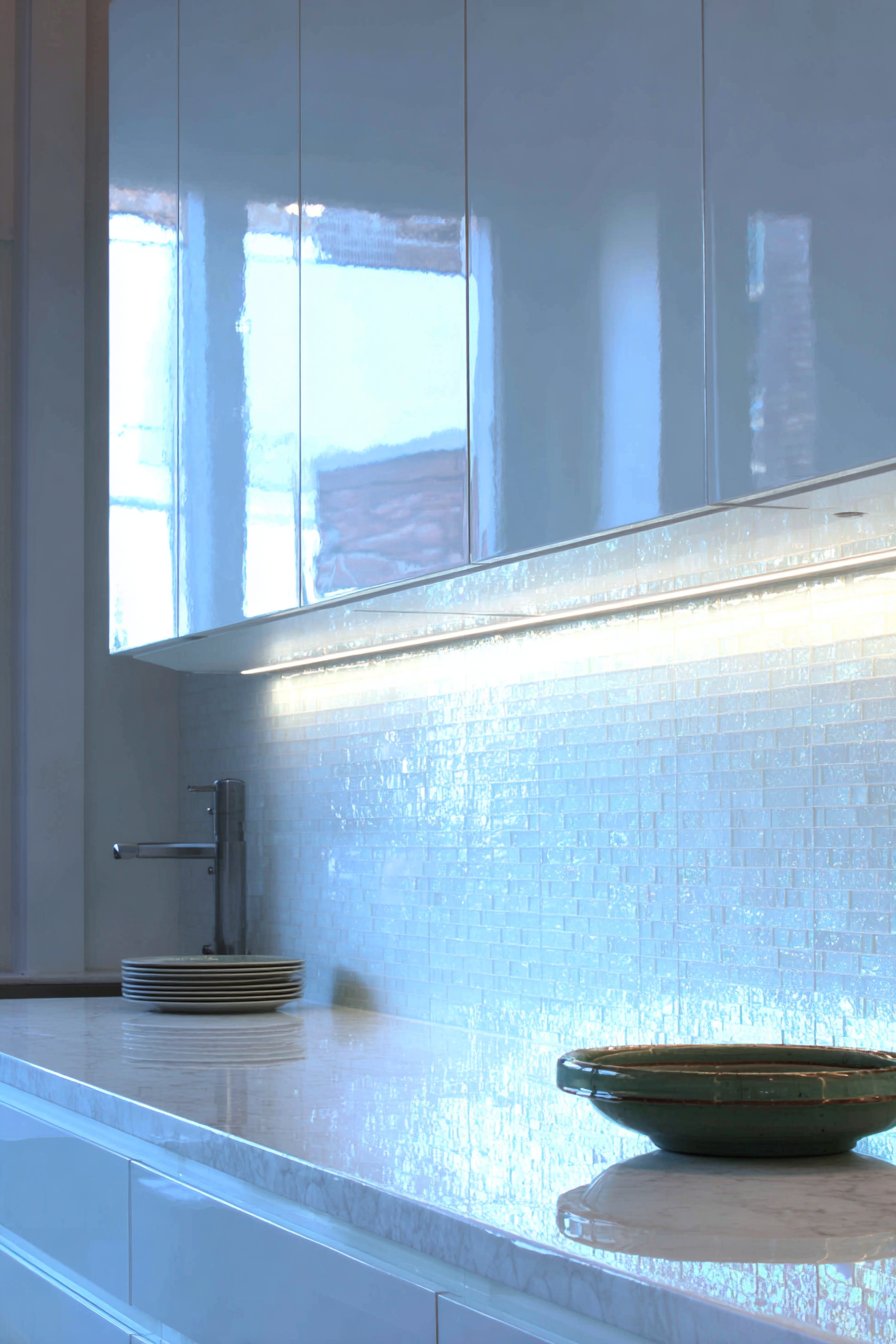
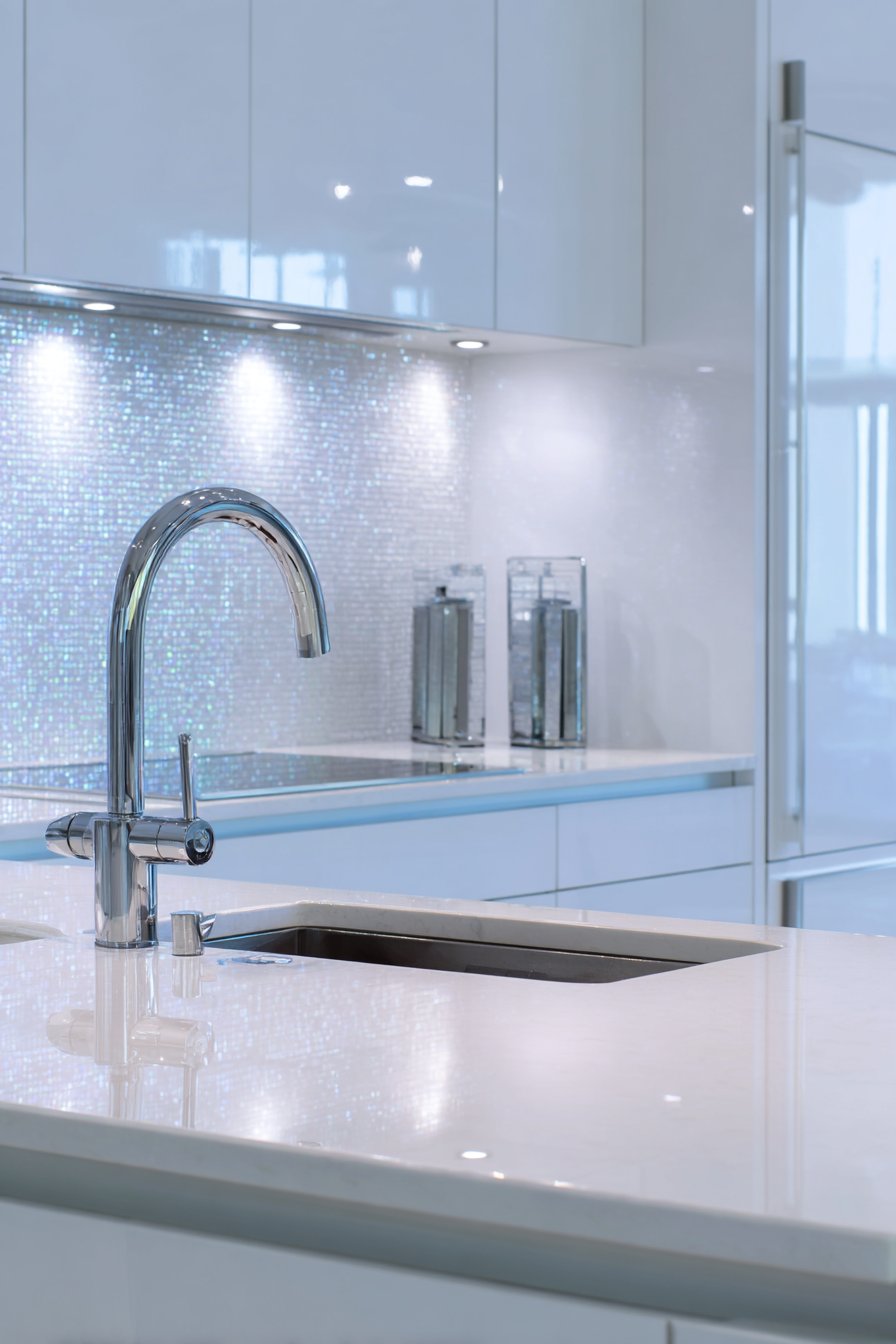
The epitome of modern sophistication emerges in an all white kitchen featuring sleek handleless cabinetry in high-gloss white lacquer that creates impossibly clean, minimalist lines. This approach to white kitchen design eliminates visual clutter entirely, relying on push-to-open mechanisms and integrated pulls to maintain uninterrupted surfaces that reflect light like mirrors. The white glass tile backsplash, with its subtle iridescent quality, adds a layer of complexity to the design, catching and refracting ambient light to create an ever-changing display of subtle color shifts that animate the monochromatic space.
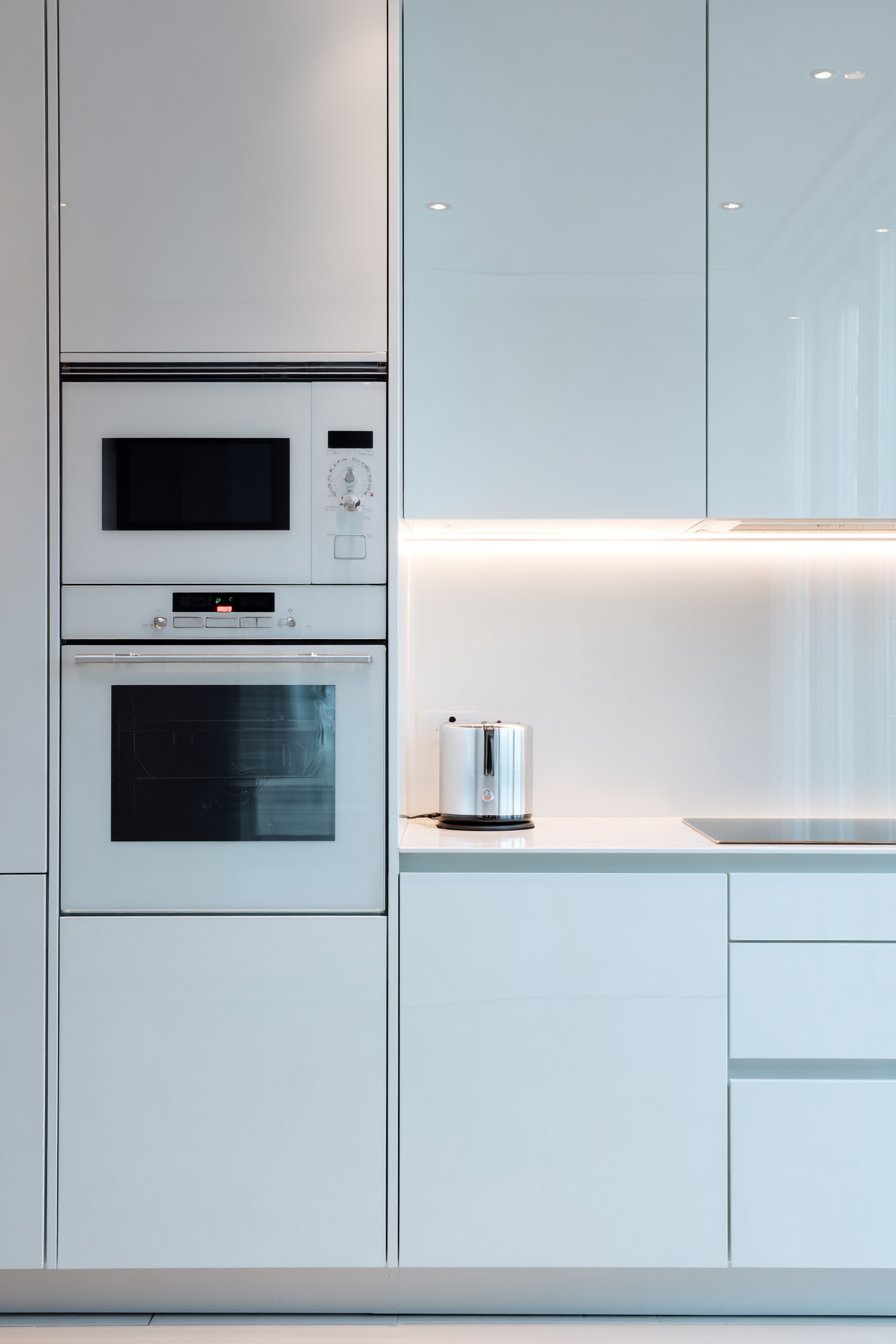
The integration of white appliances represents a crucial design decision that maintains the seamless monochromatic aesthetic. Rather than treating appliances as necessary evils that must be hidden or disguised, this design embraces them as integral elements of the composition, selecting models with sleek white exteriors that blend seamlessly with the cabinetry. The refrigerator, dishwasher, and other appliances become nearly invisible, their presence known only through their functionality rather than their visual impact.
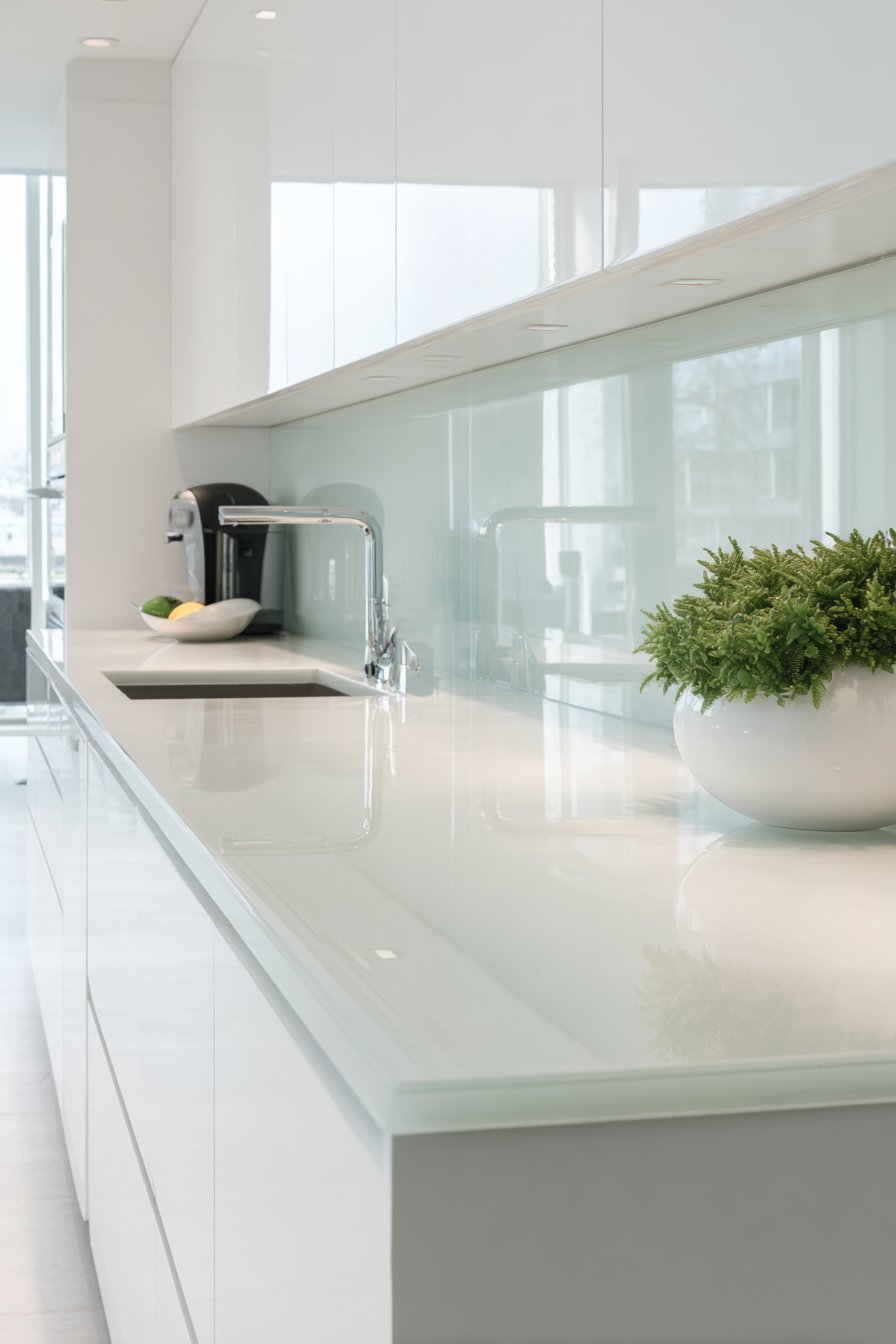
The sophistication of this contemporary design lies in its restraint and its emphasis on material quality and finish perfection. The high-gloss lacquer finish on the cabinetry demands flawless surface preparation and expert application, as any imperfection would be magnified by the reflective surface. Similarly, the glass tile backsplash showcases precision in installation, with perfectly aligned grout lines that create a grid of mathematical precision. Soft natural lighting enhances these qualities, creating reflections on glossy surfaces that add dimension and visual interest while maintaining the serene, uncluttered atmosphere that defines contemporary minimalist design.
Key Design Tips:
- Choose handleless cabinetry with push-to-open mechanisms for clean, uninterrupted surfaces
- Select high-gloss lacquer finishes to maximize light reflection and create a contemporary aesthetic
- Install glass tile backsplash with iridescent properties for subtle visual interest
- Integrate white appliances seamlessly into the cabinetry for a cohesive look
- Ensure flawless surface preparation before applying high-gloss finishes to avoid visible imperfections
- Use soft natural lighting to create flattering reflections without harsh glare
- Maintain precise grout lines in tile installation for a polished, professional appearance
- Minimize decorative elements to honor the minimalist philosophy
5. Inviting Breakfast Nook with Built-In Banquette
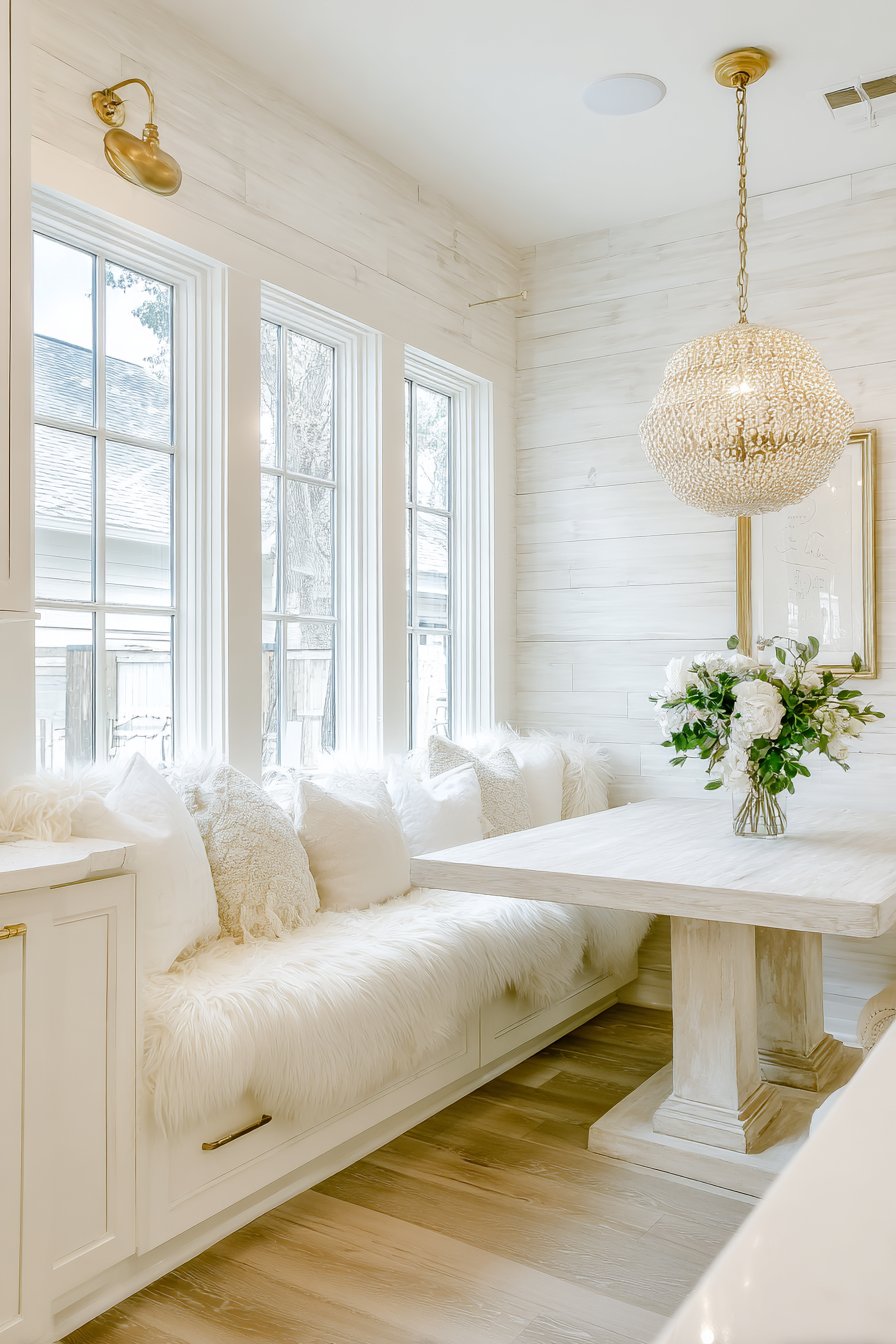
The creation of intimate gathering spaces within the larger kitchen environment finds beautiful expression in an all white breakfast nook featuring a built-in banquette that combines comfort with clever storage solutions. This custom seating, painted in pristine white and fitted with plush white linen cushions, conceals storage drawers beneath that maximize functionality without sacrificing aesthetics. The white pedestal table, centered in this cozy dining area, reveals subtle wood grain beneath a white-washed finish that adds organic warmth while maintaining the monochromatic scheme. This transparent treatment of natural wood demonstrates how white kitchens can incorporate natural materials without abandoning their cohesive color palette.
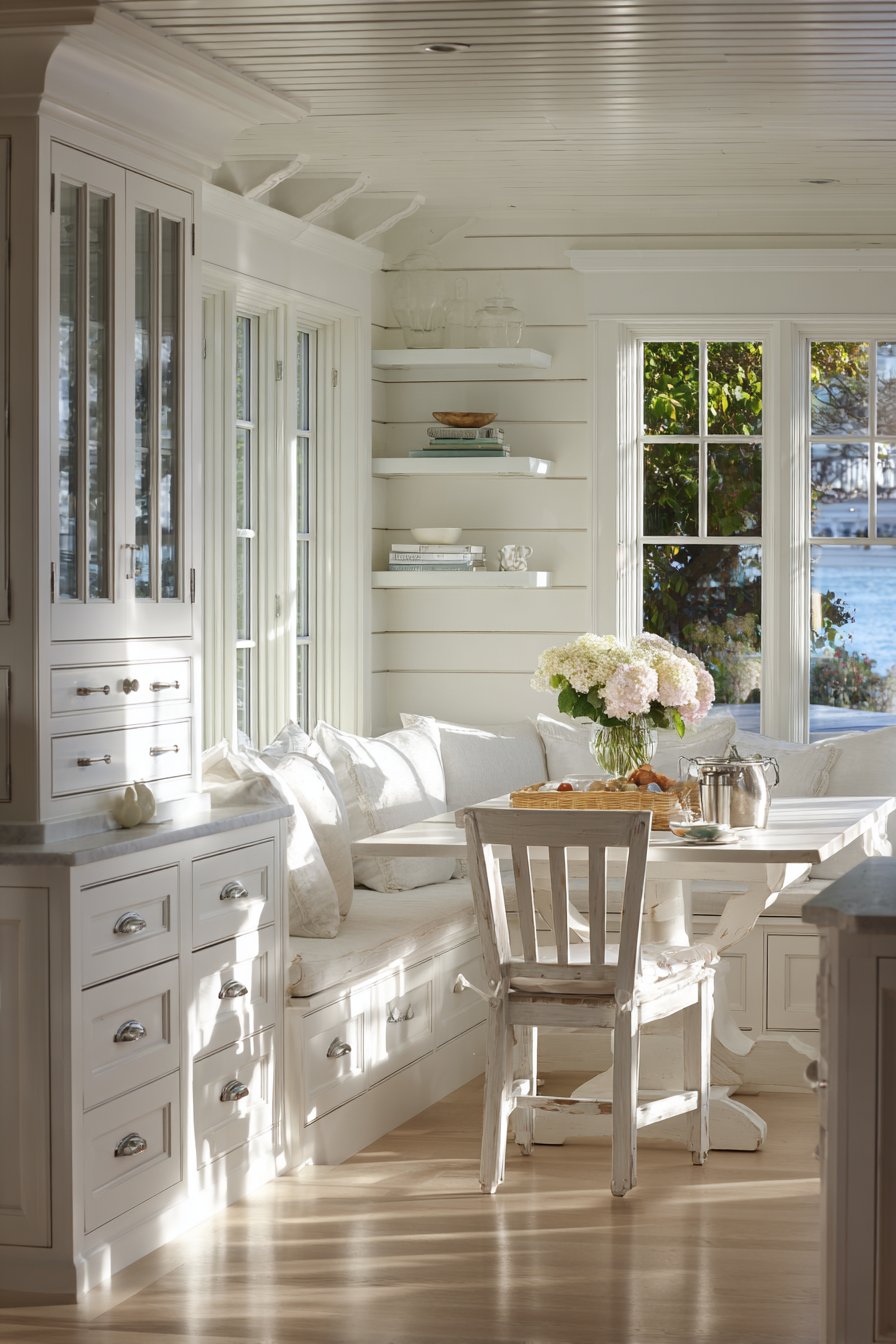
The walls surrounding the breakfast nook feature white shiplap paneling, a popular choice that adds horizontal texture and subtle shadow lines while evoking casual coastal or farmhouse aesthetics. Unlike perfectly smooth painted drywall, shiplap’s dimensional quality creates visual interest through the interplay of light and shadow, with each plank’s edge creating a delicate line that adds rhythm to the vertical surfaces. During golden hour, when warm natural light streams through adjacent windows, these textural elements come alive, creating warm highlights across the layered white surfaces that transform the nook into a glowing sanctuary.
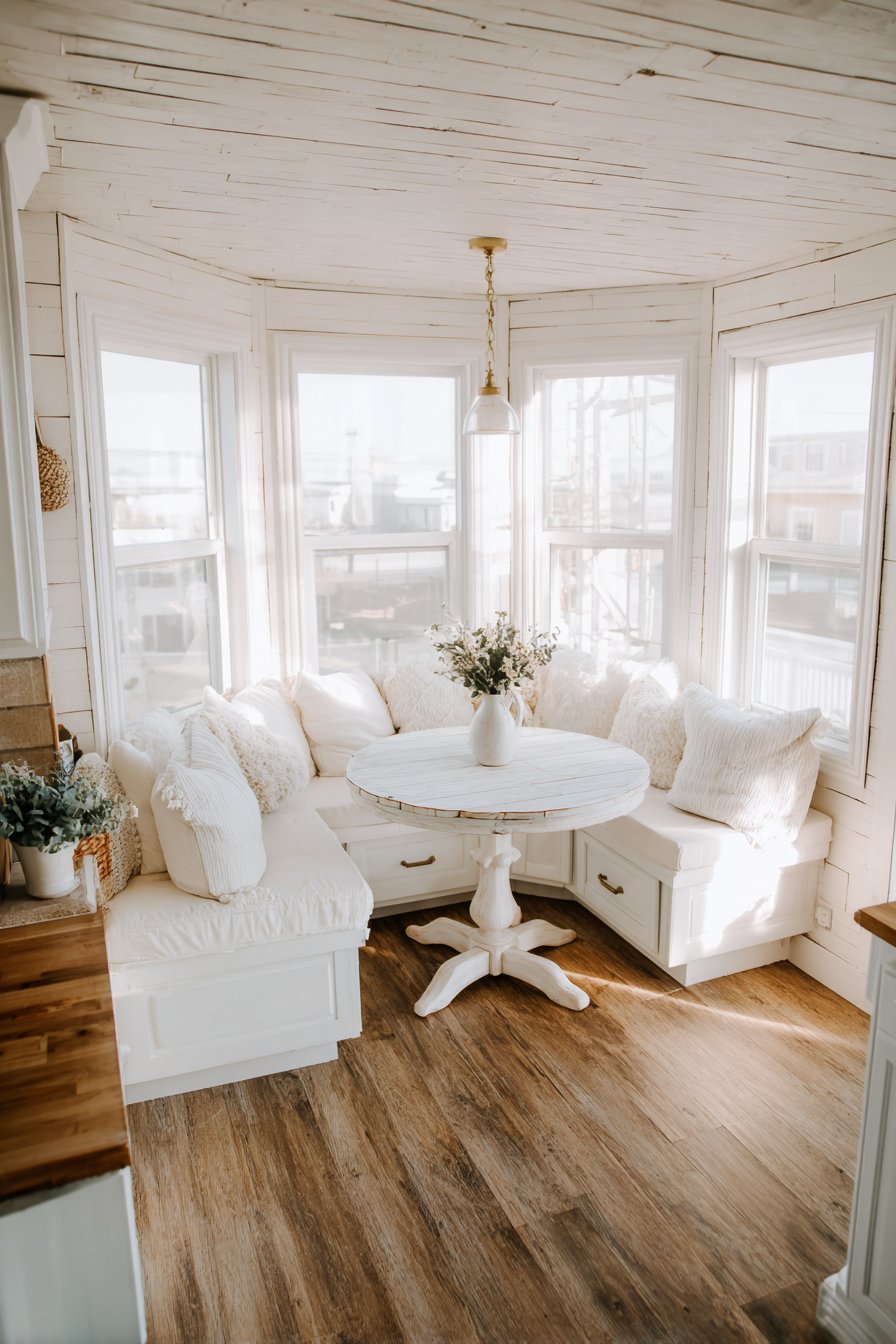
This breakfast nook design demonstrates the importance of creating zones within larger kitchen spaces, offering a dedicated area for casual meals, morning coffee, or homework sessions that feels distinct from the food preparation areas yet harmoniously integrated into the overall design. The built-in nature of the banquette makes efficient use of space while providing significantly more seating capacity than freestanding chairs would allow in the same footprint. The storage drawers beneath transform otherwise wasted space into valuable organizational real estate for table linens, serving pieces, or children’s art supplies.
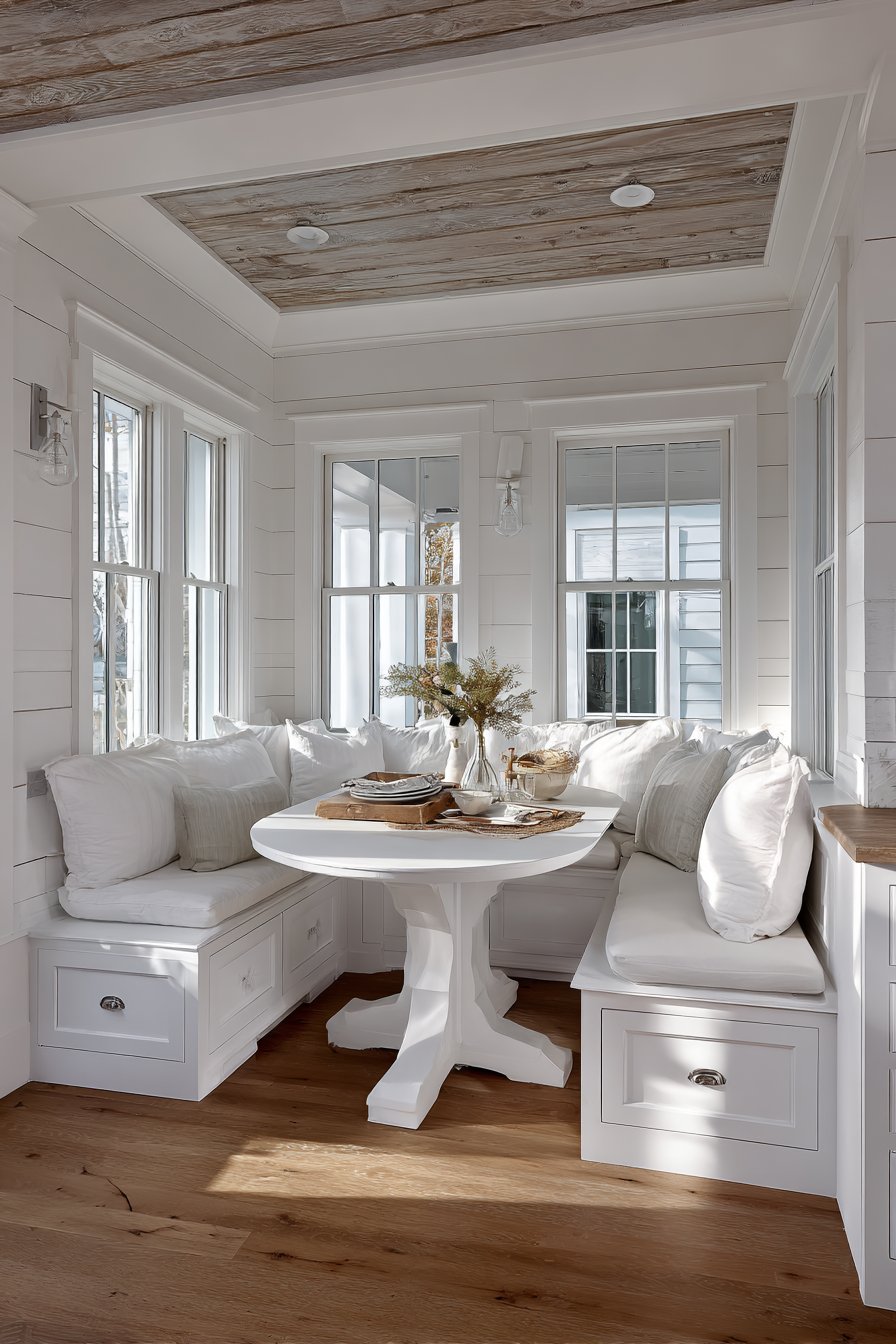
Key Design Tips:
- Build in banquette seating to maximize both seating capacity and storage potential
- Include storage drawers beneath banquette cushions for hidden organizational space
- Choose white-washed finishes on wood furniture to show natural grain while maintaining the white palette
- Install shiplap paneling to add texture and subtle architectural interest
- Use white linen fabrics for cushions and upholstery that can be removed and laundered
- Position the nook near windows to take advantage of natural light throughout the day
- Select a pedestal table to maximize legroom and seating flexibility
- Layer different white tones from warm to cool to create depth and prevent flatness
6. Professional-Grade Functionality with Stainless Accents
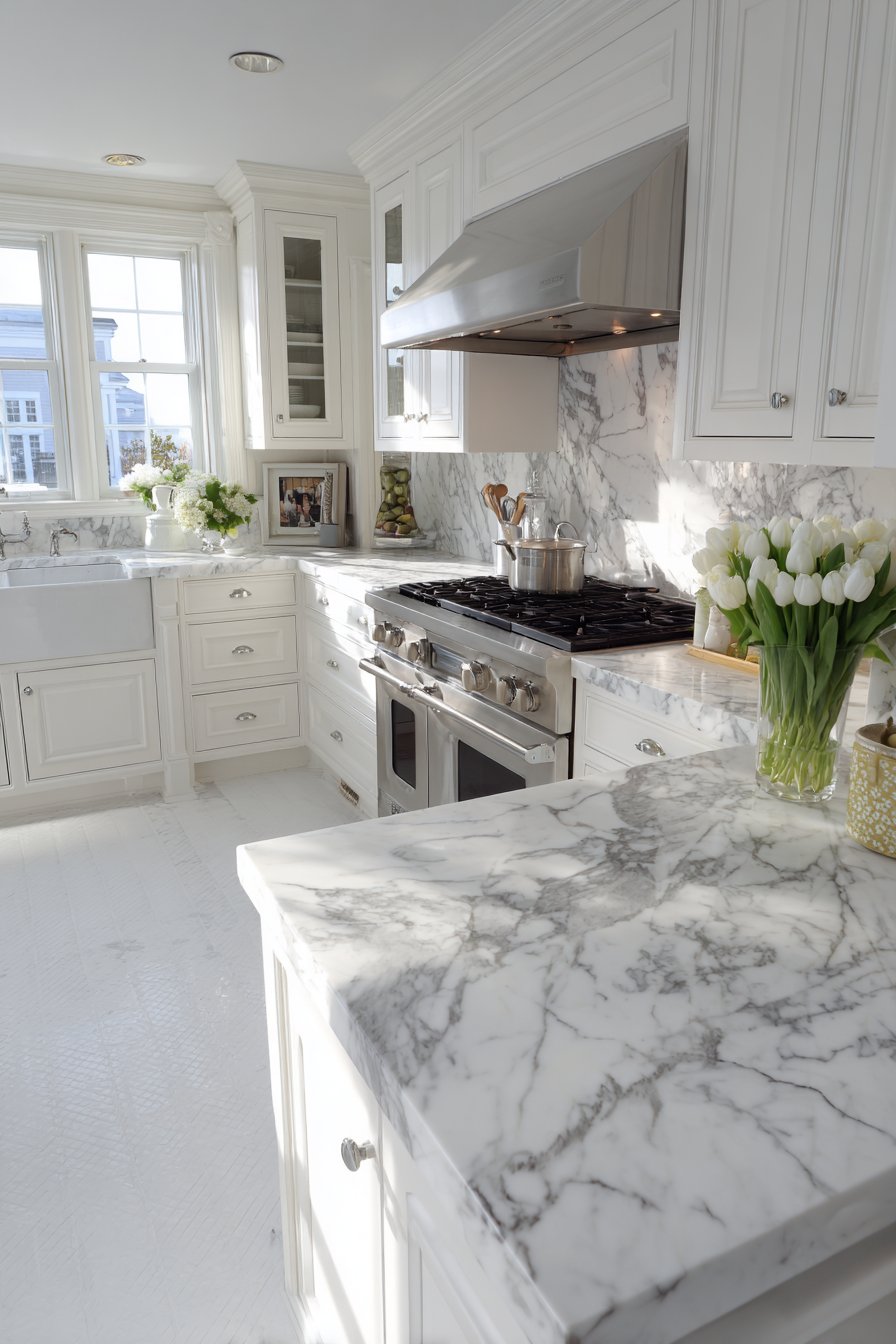
The convergence of residential comfort and professional functionality achieves perfect balance in an all white kitchen where stainless steel appliances provide the singular contrast to an otherwise pristine white color scheme. This design choice acknowledges the practical reality that serious home cooks require professional-grade equipment, transforming potential disruptions to the monochromatic palette into intentional design elements that add visual weight and industrial credibility. The white marble countertops, featuring natural grey veining patterns that echo the cool tones of the stainless steel, create visual connections between the appliances and the surrounding white surfaces.
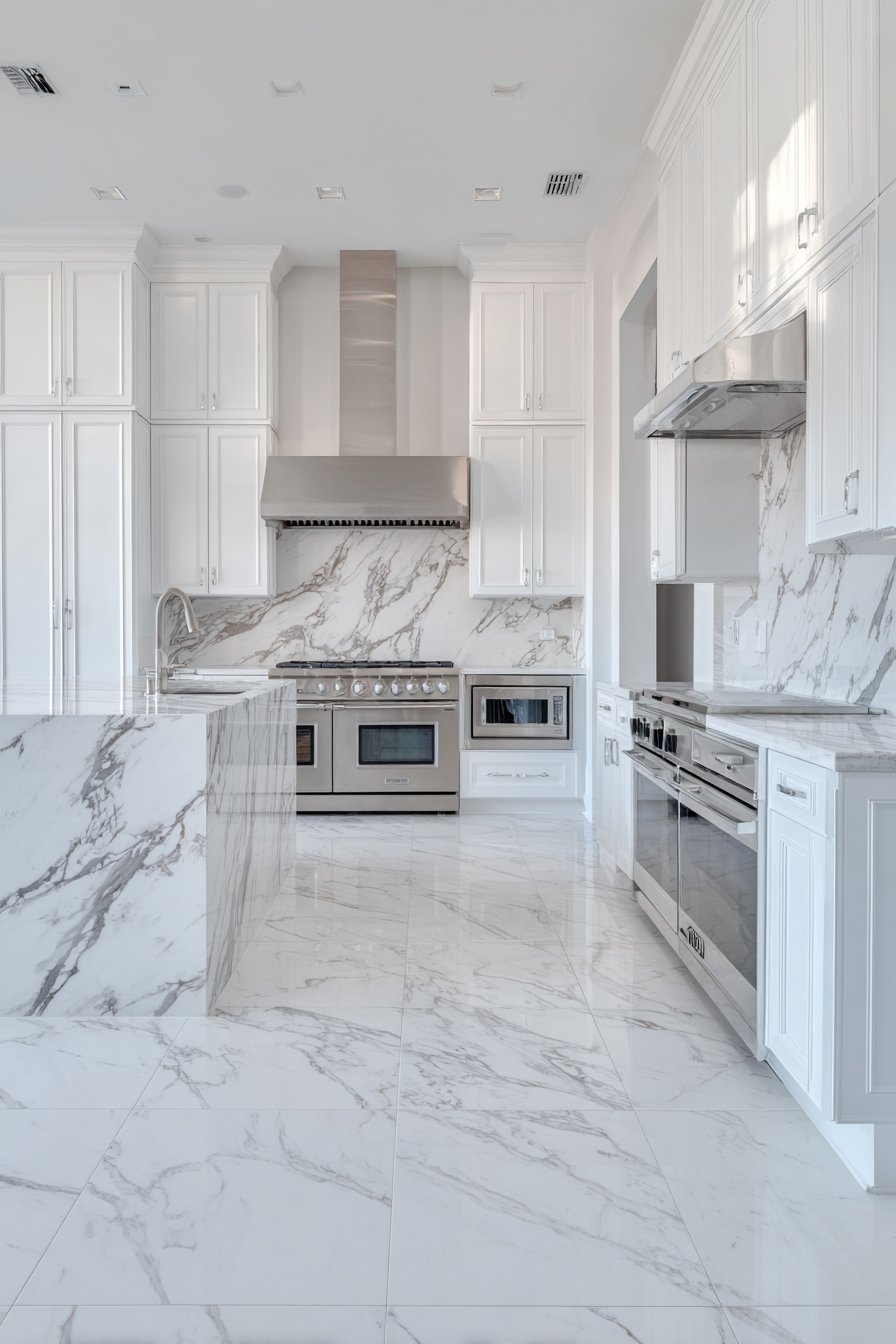
The white flat-panel cabinetry, with its simple profile and clean lines, provides an understated backdrop that allows the quality appliances to take center stage without competing for attention. Brushed nickel knobs add subtle metallic accents that bridge between the white cabinetry and stainless appliances, creating a cohesive material palette that feels intentional rather than compromised. The white porcelain tile flooring, selected for its durability and subtle texture, adds practical benefits including easy cleaning and moisture resistance while maintaining the monochromatic design philosophy.
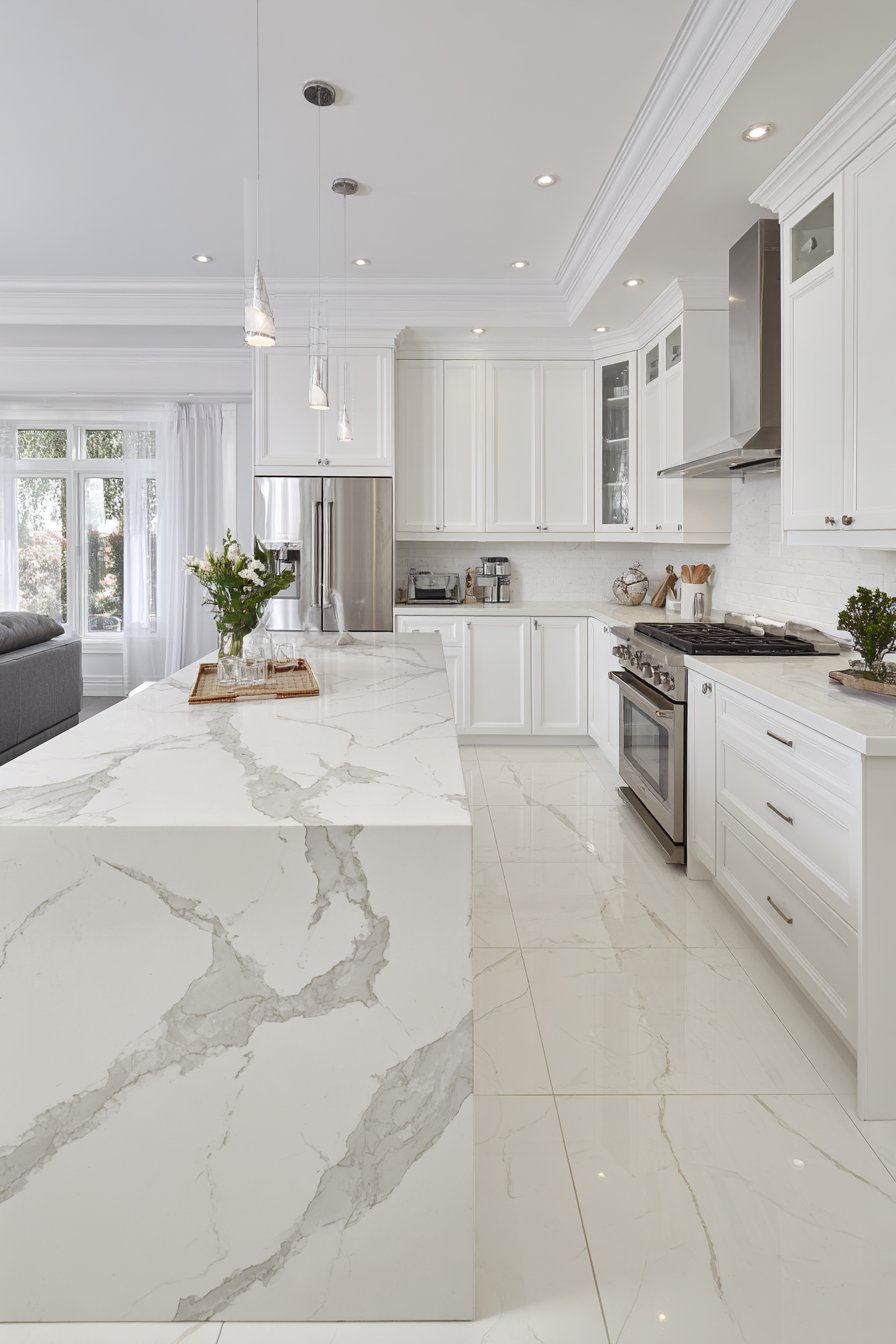
The architectural details of this kitchen reveal themselves through the interplay of natural daylight and carefully considered spatial composition. Wide-angle views showcase the full kitchen layout, demonstrating how the placement of appliances, the flow of work zones, and the generous proportions of the space work together to create both beauty and efficiency. Soft shadows cast by natural light emphasize the room’s architectural details, from the crown molding that caps the cabinetry to the varied white surface finishes that prevent visual monotony. This design proves that an all white kitchen can accommodate professional-grade functionality without sacrificing residential warmth and elegance.
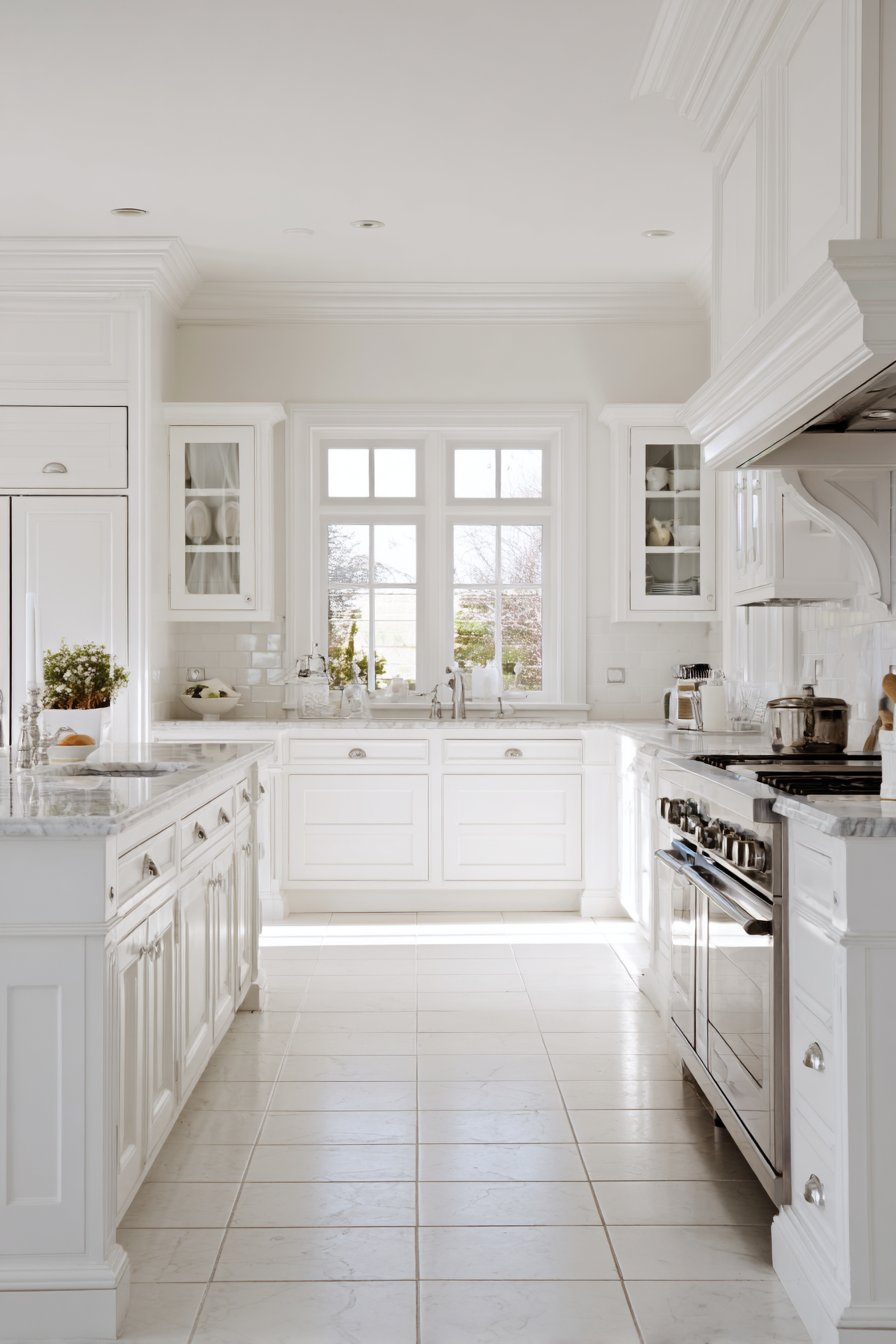
Key Design Tips:
- Embrace stainless steel appliances as intentional design elements rather than disruptions to the white palette
- Select marble with grey veining to create visual connections with stainless steel finishes
- Use flat-panel cabinetry for a clean, contemporary look that doesn’t compete with appliances
- Choose brushed nickel hardware to bridge between white surfaces and stainless steel
- Install porcelain tile flooring for durability and easy maintenance in high-traffic areas
- Position appliances strategically to create efficient work triangles and zones
- Include crown molding to add architectural polish and finish upper cabinets elegantly
- Allow natural light to define architectural details through shadow and highlight
7. Open Shelving Display with Functional Artistry
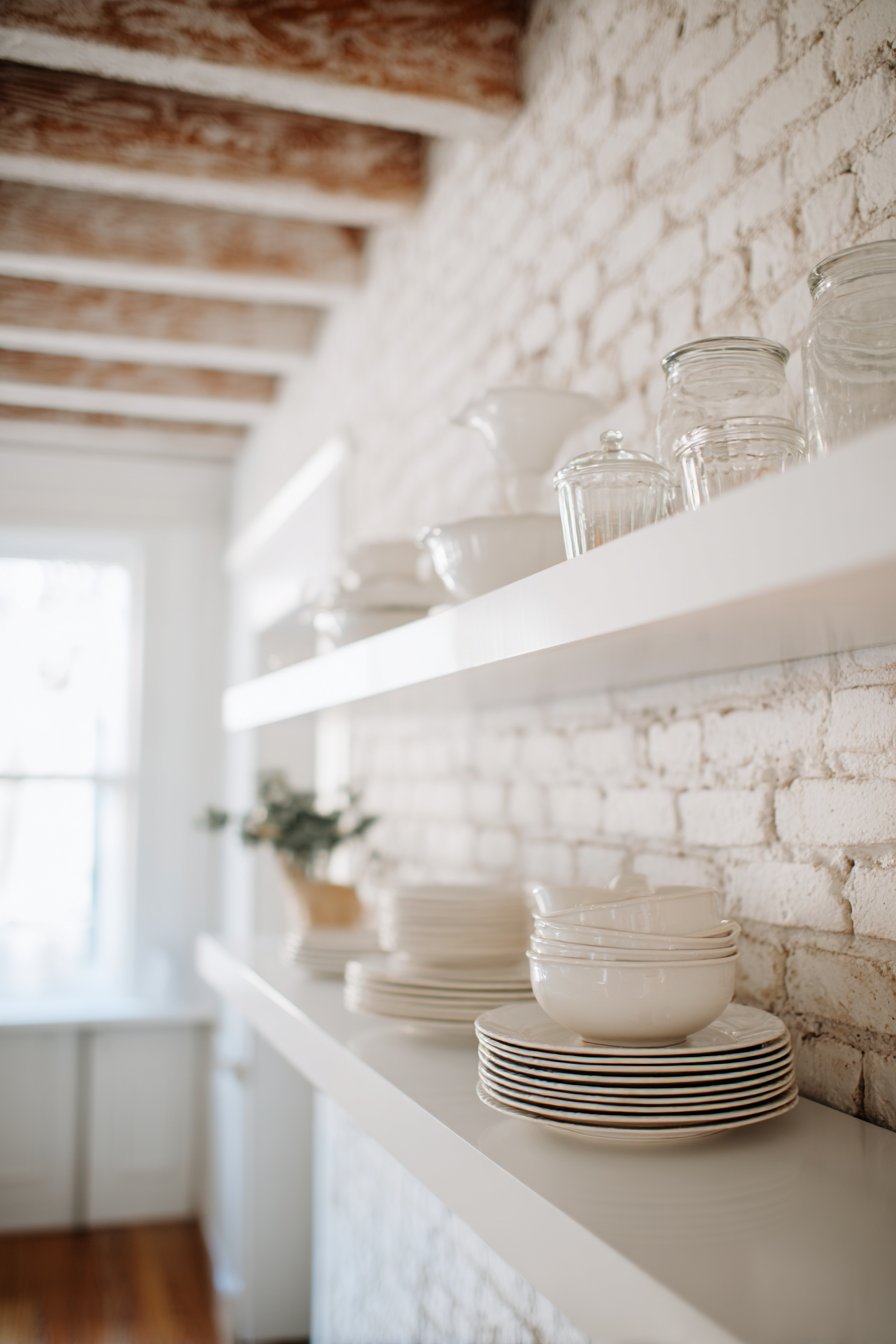
The trend toward open storage finds sophisticated expression in an all white kitchen featuring floating shelves that display white ceramic dishware and glass containers, transforming functional storage into decorative focal points. This approach requires thoughtful curation, as every item on display becomes part of the visual composition, contributing to or detracting from the overall aesthetic. The white subway tiles installed in a classic brick pattern provide a textured backdrop that adds depth without competing with the displayed items, while white painted wood beams crossing the ceiling introduce architectural interest and visual weight to the upper portion of the room.
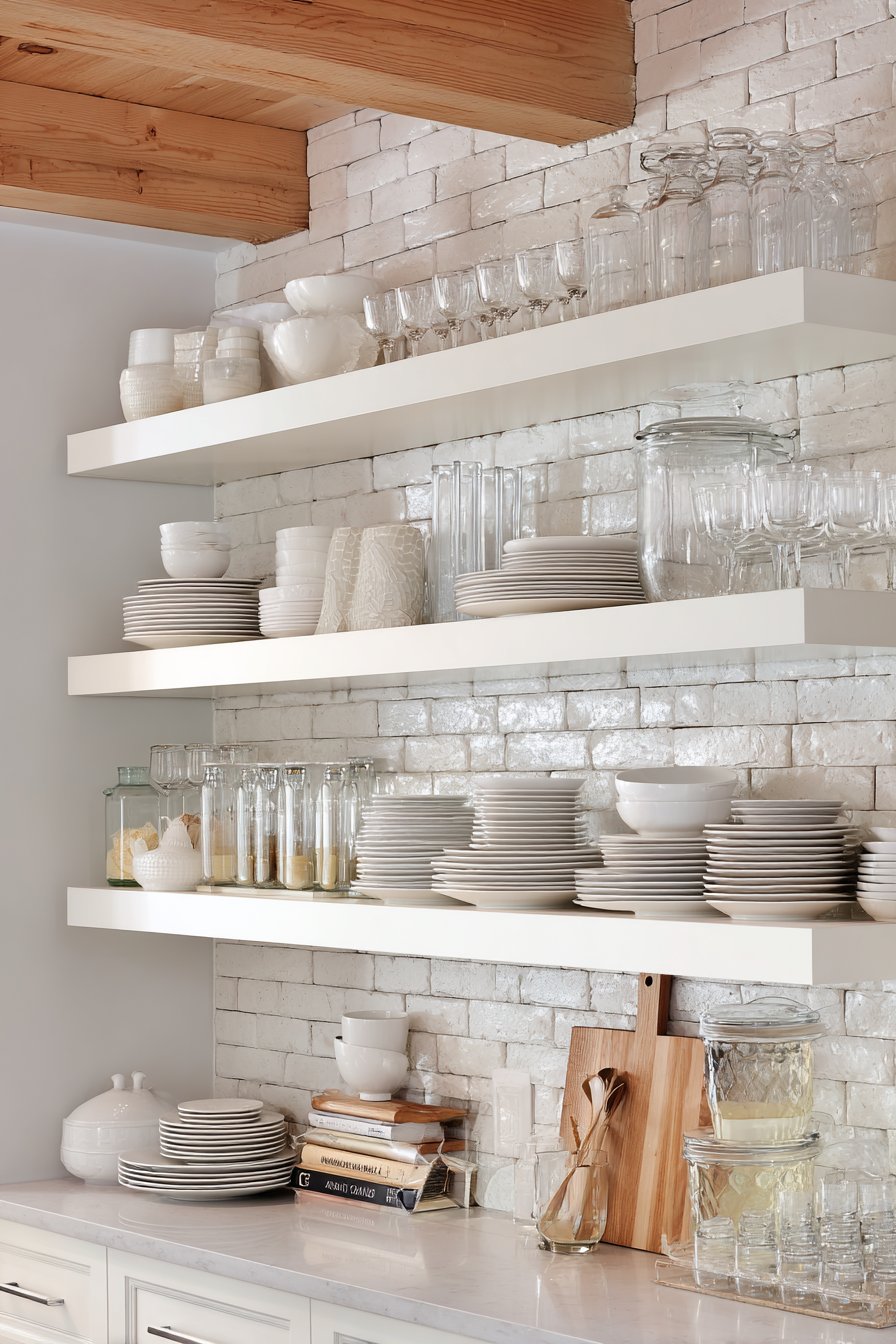
The artistry in this design lies in the careful arrangement of displayed items, which must balance practical accessibility with visual appeal. White ceramic pieces in varying shapes and sizes create a collection that feels organic rather than overly styled, while glass containers add transparency and lightness to the composition. The open shelving eliminates the visual barrier that upper cabinets create, making the kitchen feel more spacious and connected to adjacent living areas while forcing a level of organization and intentionality in what items are kept and how they’re arranged.
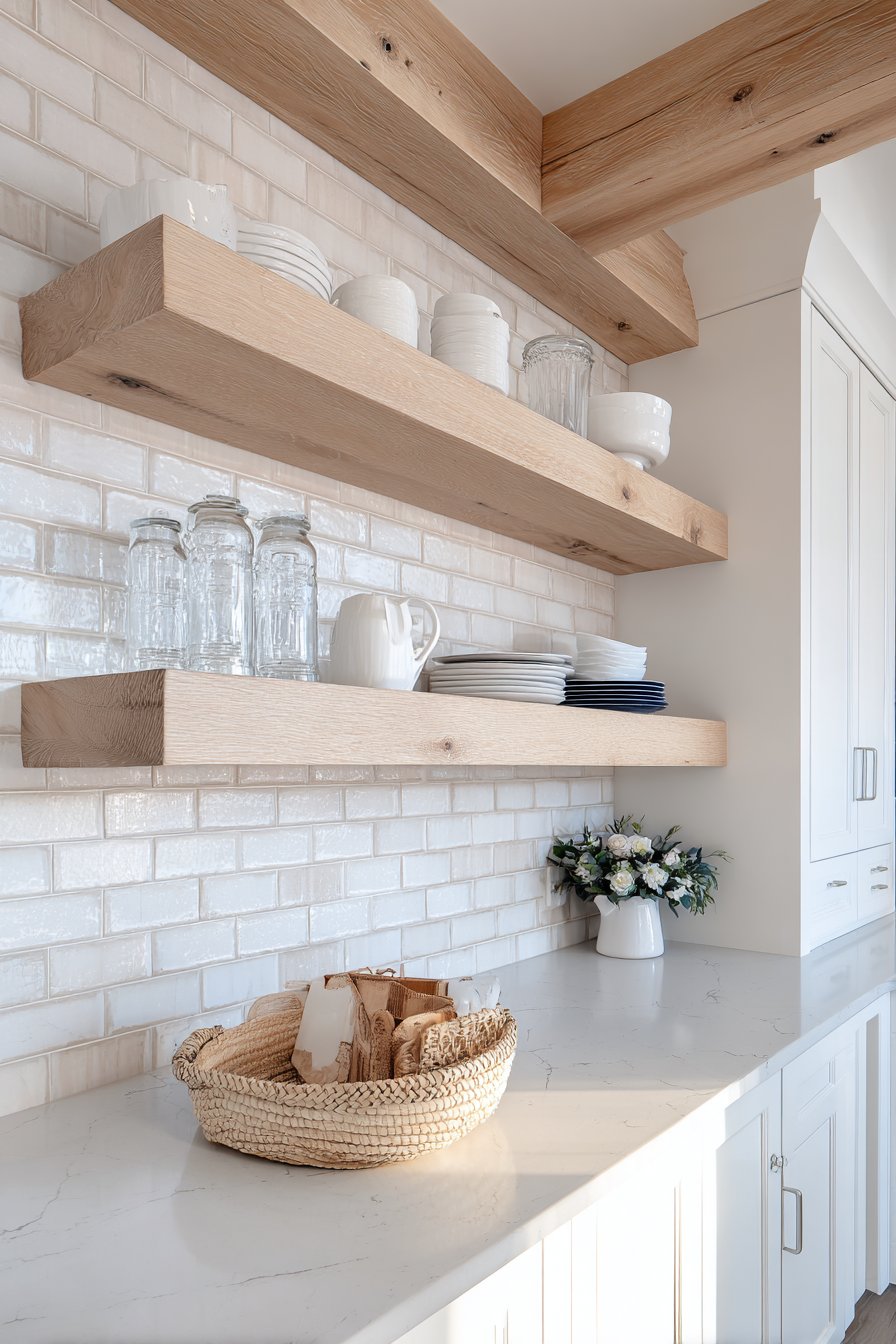
The material textures throughout this kitchen work together to prevent the monochromatic palette from feeling flat or institutional. The subway tile’s brick pattern creates horizontal movement and shadow lines, the wood beams add natural material warmth even when painted white, and the varied ceramic pieces introduce subtle tonal variations through their glazes and finishes. Natural lighting plays a crucial role in bringing these textures to life, creating gentle shadows that emphasize the dimensional quality of the beams, the depth of the tile pattern, and the individual character of each displayed item on the floating shelves.
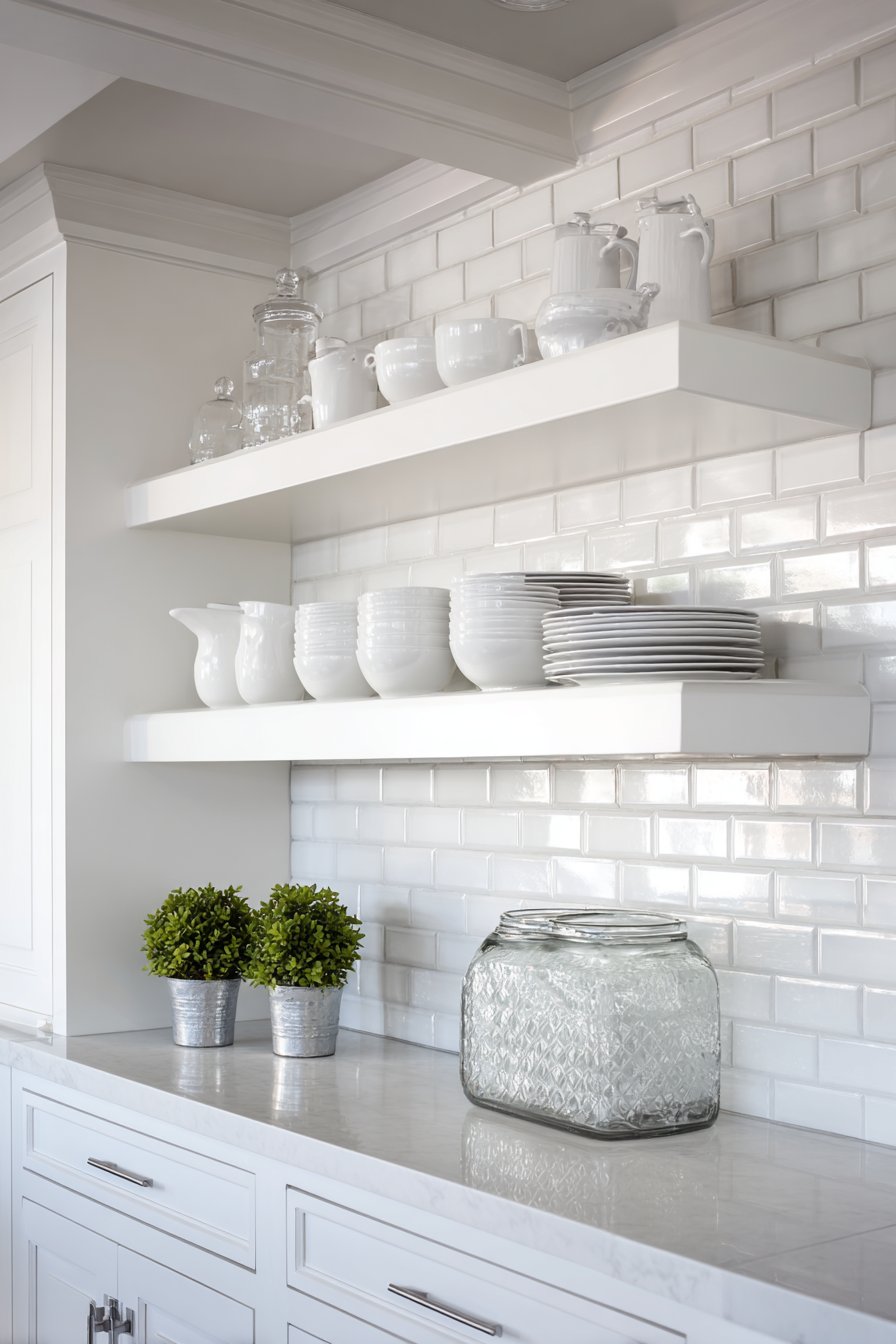
Key Design Tips:
- Install floating shelves to create open storage that makes spaces feel larger and more accessible
- Display white dishware to maintain the monochromatic scheme while adding functional artistry
- Include glass containers to add transparency and visual lightness to shelf displays
- Use subway tiles in brick pattern for classic appeal and subtle textural interest
- Add painted wood beams to introduce architectural character and upper-level visual interest
- Curate displayed items carefully ensuring each piece contributes to the overall aesthetic
- Maintain organization as open shelving makes everything visible and part of the design
- Allow natural lighting to create depth through shadows and highlights on textured surfaces
8. Cottage Charm with Vintage-Inspired Details
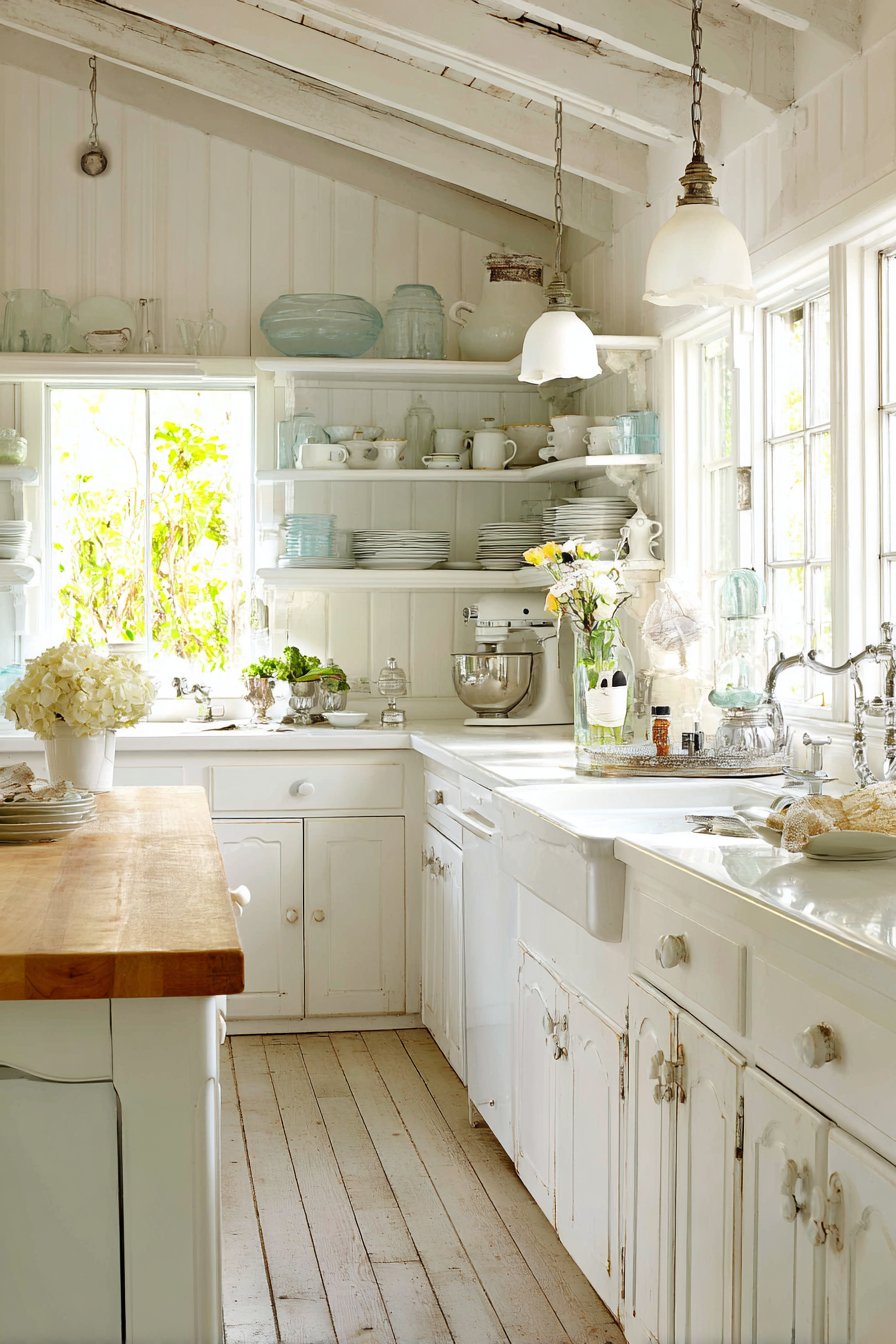
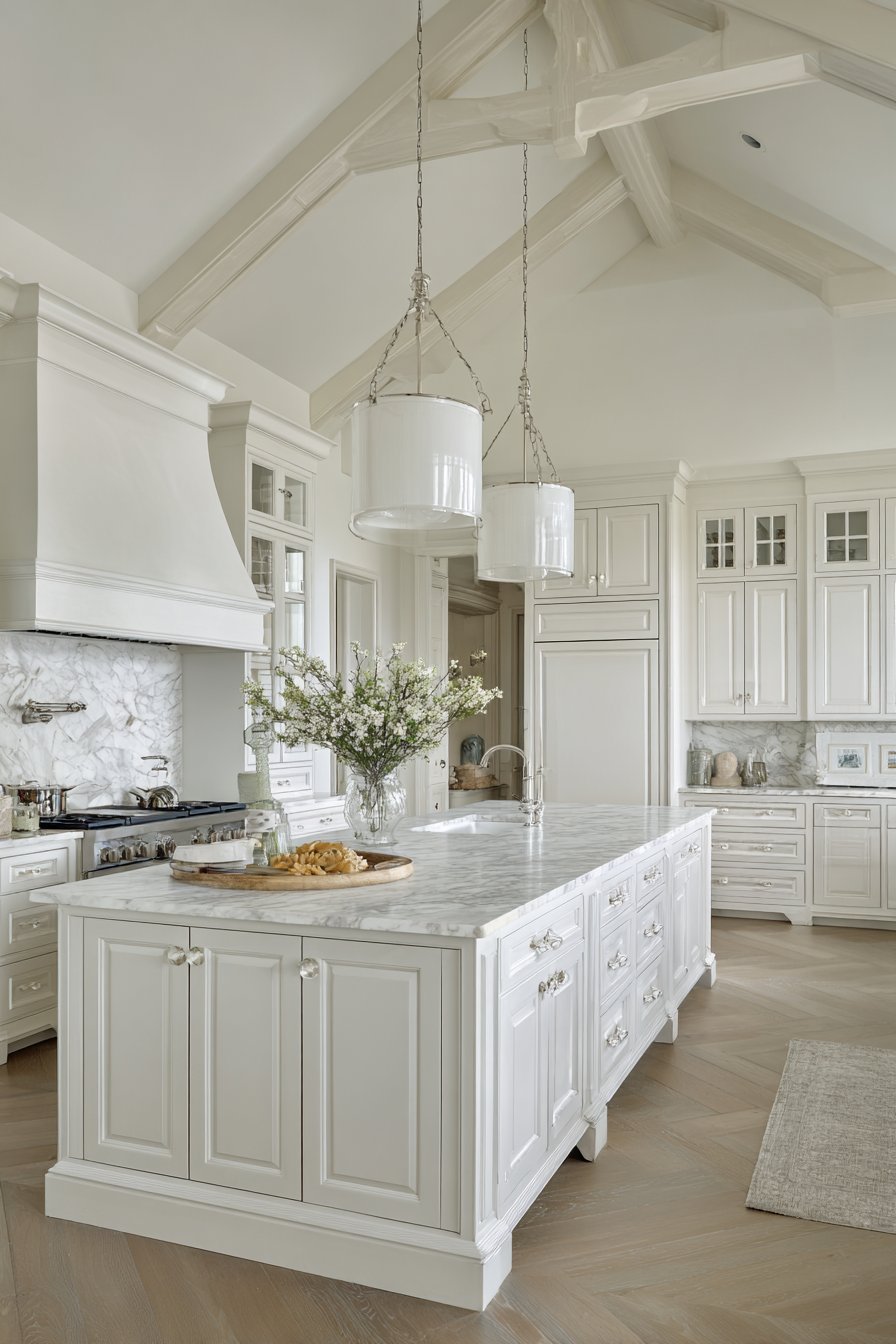
The warmth and character of cottage-style design manifests beautifully in an all white kitchen where raised-panel cabinetry and white butcher block countertops create a space that feels lived-in and loved rather than showroom-perfect. The butcher block countertops, showing natural wood grain beneath a white wash finish, introduce organic texture and subtle warmth that softens the pristine quality of fully painted surfaces. This treatment allows the wood’s natural character to shine through while maintaining cohesion with the all white aesthetic, demonstrating that white kitchens need not abandon natural materials entirely.
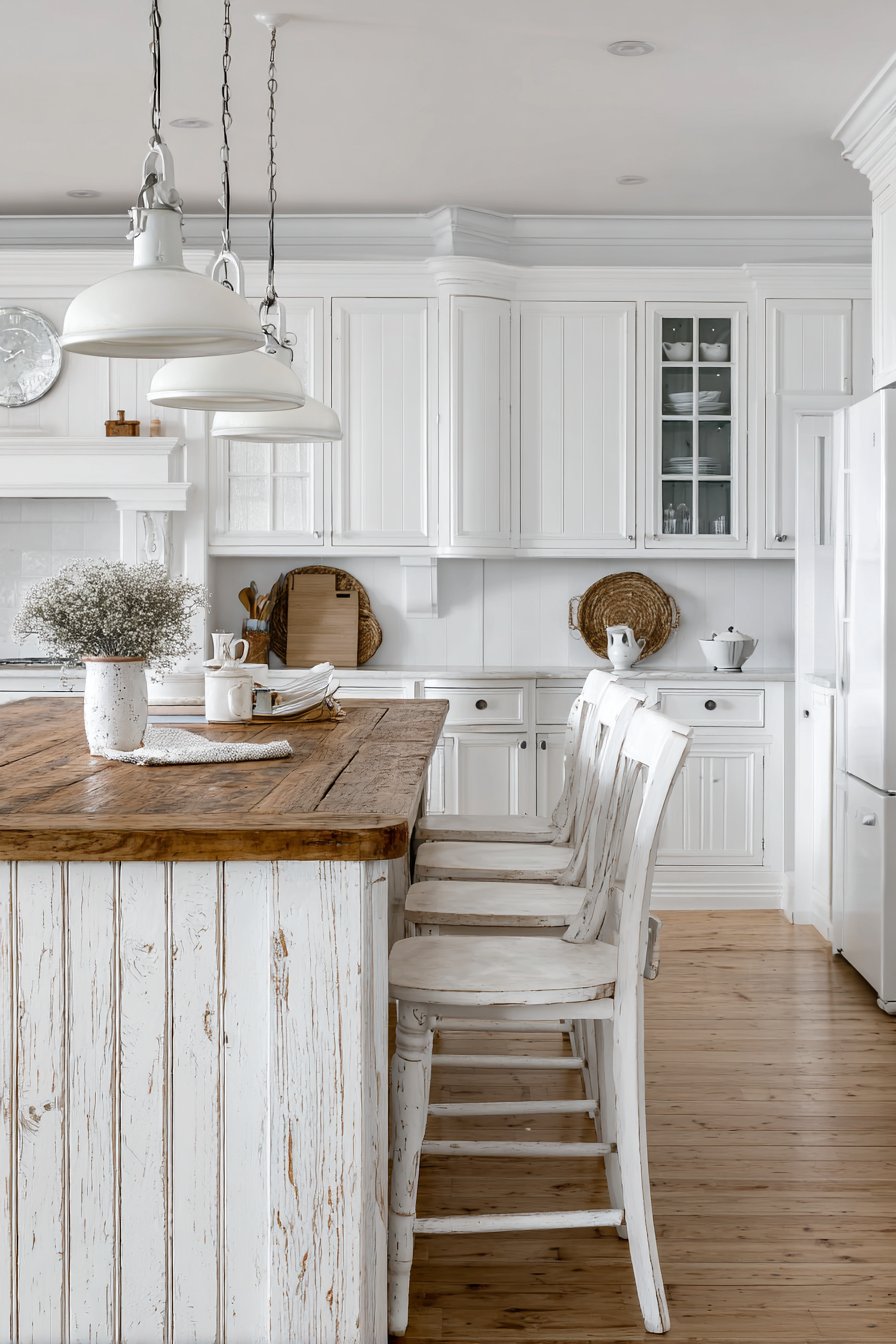
White farmhouse-style pendant lights with milk glass shades hang above work areas, providing both task lighting and decorative charm that reinforces the cottage aesthetic. These fixtures cast a soft, diffused glow that flatters both the space and its inhabitants, avoiding the harsh shadows that can result from poorly planned lighting. Vintage-inspired white porcelain cabinet knobs add authentic period detail that feels collected over time rather than purchased in a single shopping trip, contributing to the charming, lived-in quality that defines successful cottage design.
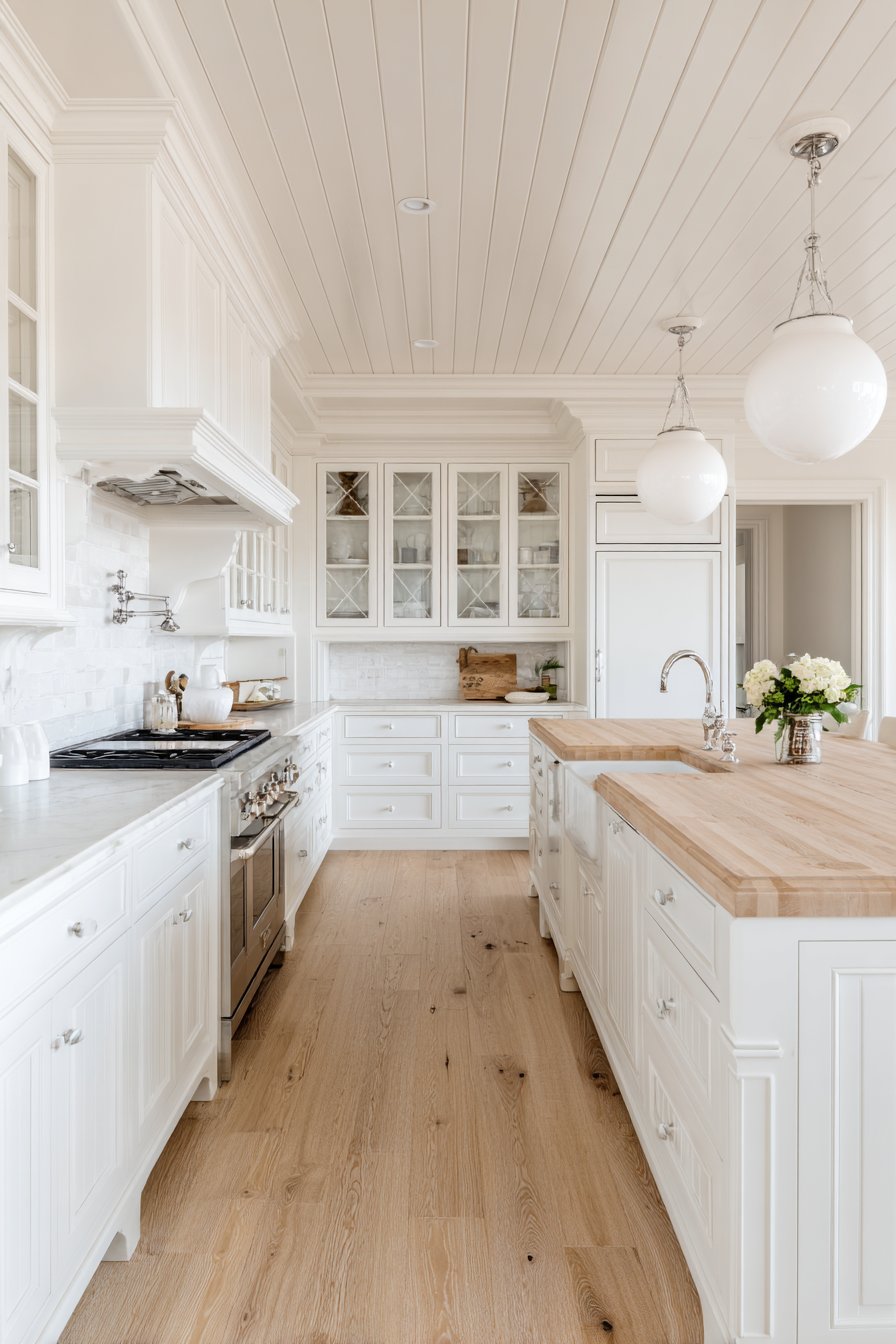
The beauty of this cottage-style approach lies in its embrace of imperfection and character. Unlike contemporary minimalist designs that demand flawless surfaces and precise lines, cottage style welcomes the subtle variations in wood grain, the hand-crafted quality of artisan hardware, and the gentle patina that develops on well-used surfaces over time. The raised-panel cabinetry adds traditional detail and dimensional interest, with each panel’s frame creating shadow lines that animate the cabinet fronts throughout the day. Soft diffused natural lighting enhances these qualities, creating an atmosphere that feels welcoming and comfortable rather than formally elegant.
Key Design Tips:
- Choose raised-panel cabinetry for traditional detail and dimensional interest
- Use white-washed butcher block to show natural wood grain while maintaining the white palette
- Install farmhouse pendant lights with milk glass shades for soft, flattering illumination
- Select vintage-inspired hardware in white porcelain for authentic cottage character
- Embrace natural material variations rather than seeking perfect uniformity
- Allow subtle patina development on surfaces to enhance the lived-in quality
- Use diffused natural lighting to create welcoming rather than harsh illumination
- Mix different white tones to create warmth and prevent a sterile appearance
9. Space-Maximizing Design for Compact Kitchens
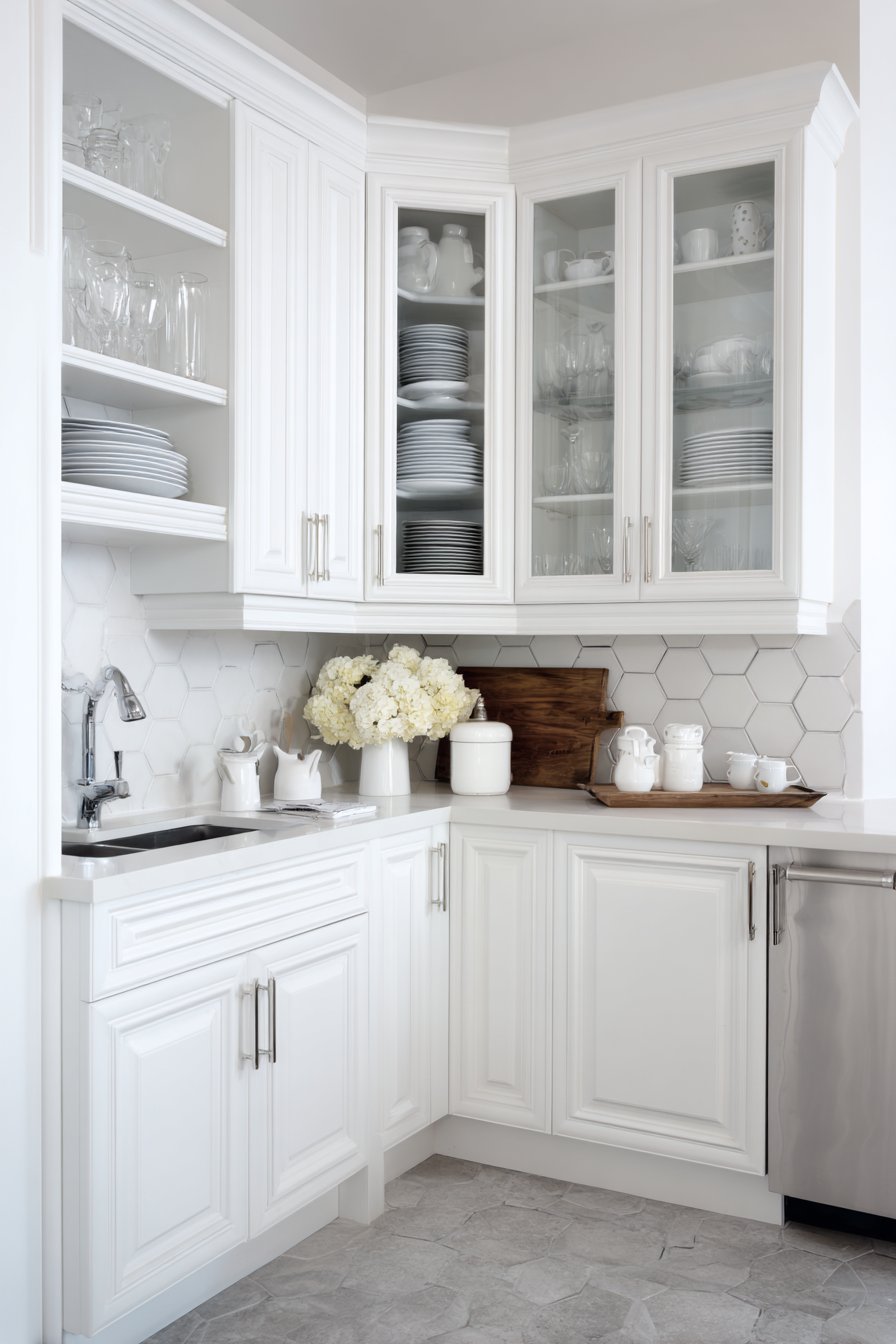
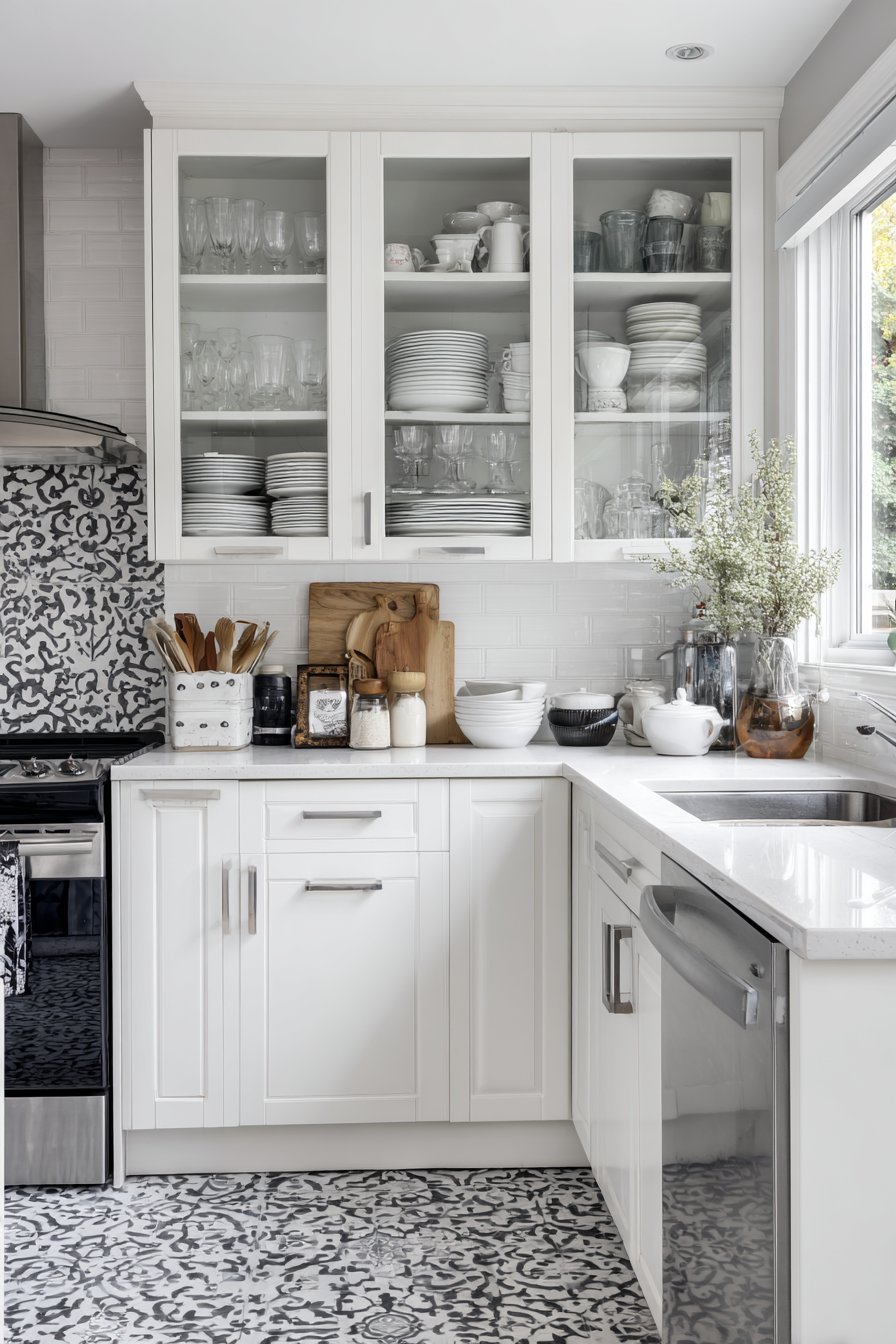
The challenge of creating an all white kitchen in a compact space transforms into an opportunity to demonstrate how the monochromatic palette makes small areas feel significantly larger and brighter. This efficient kitchen maximizes limited square footage with white two-tone cabinetry featuring upper glass-front doors that create visual transparency while revealing organized white dishware. This strategic choice prevents the claustrophobic feeling that solid upper cabinets can create in small spaces, allowing light to penetrate deeper into the room while maintaining the clean, organized appearance essential to successful small-space design.
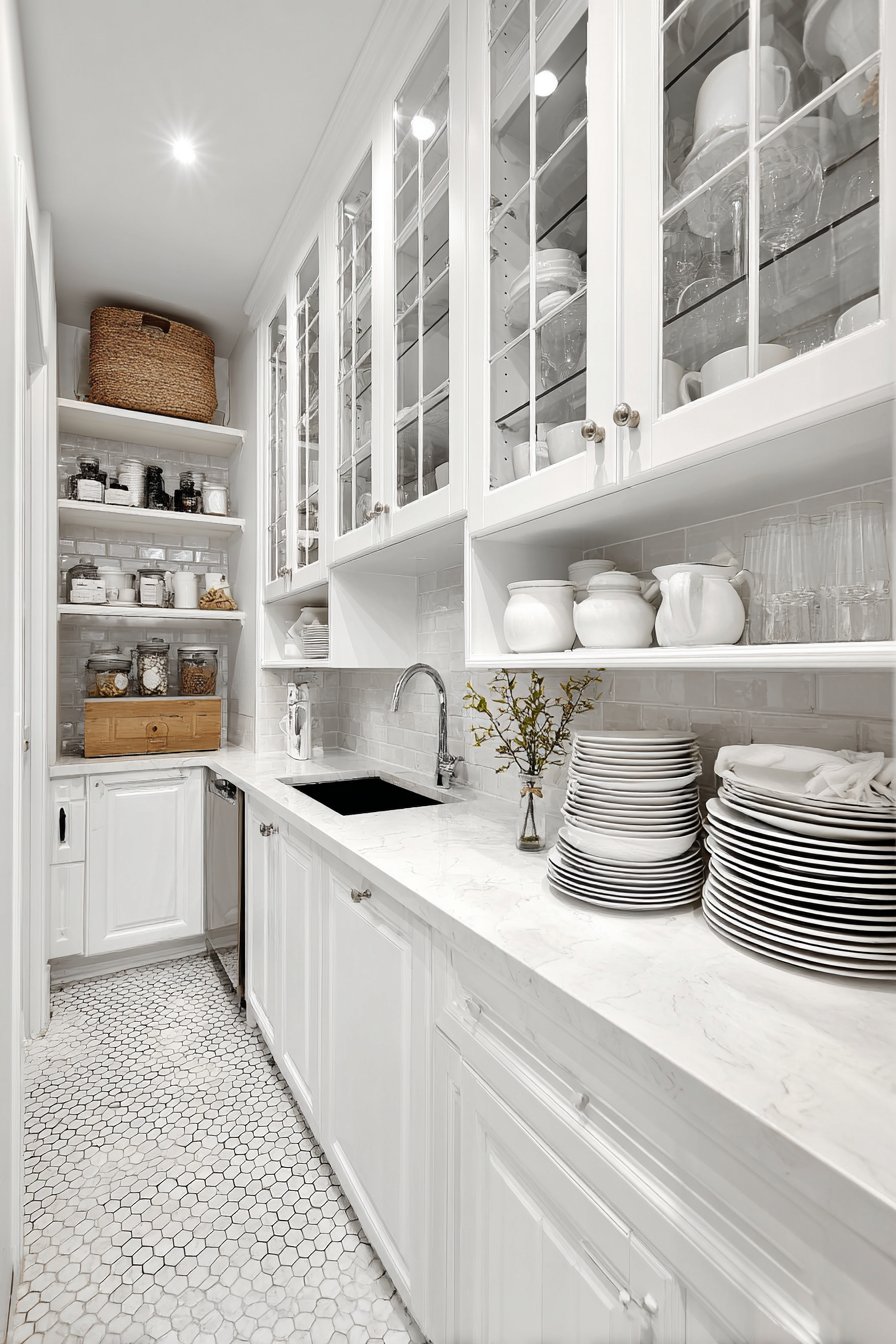
White ceramic hexagon floor tiles create visual interest through geometric pattern while maintaining the monochromatic scheme that expands the sense of space. Unlike traditional square or rectangular tiles, hexagons add contemporary flair and optical complexity that draws the eye across the floor plane, creating movement and interest at ground level. The white stone countertops with a honed finish provide practical work surfaces that resist showing water spots and fingerprints more effectively than polished finishes, an important consideration in compact kitchens where every surface sees frequent use.
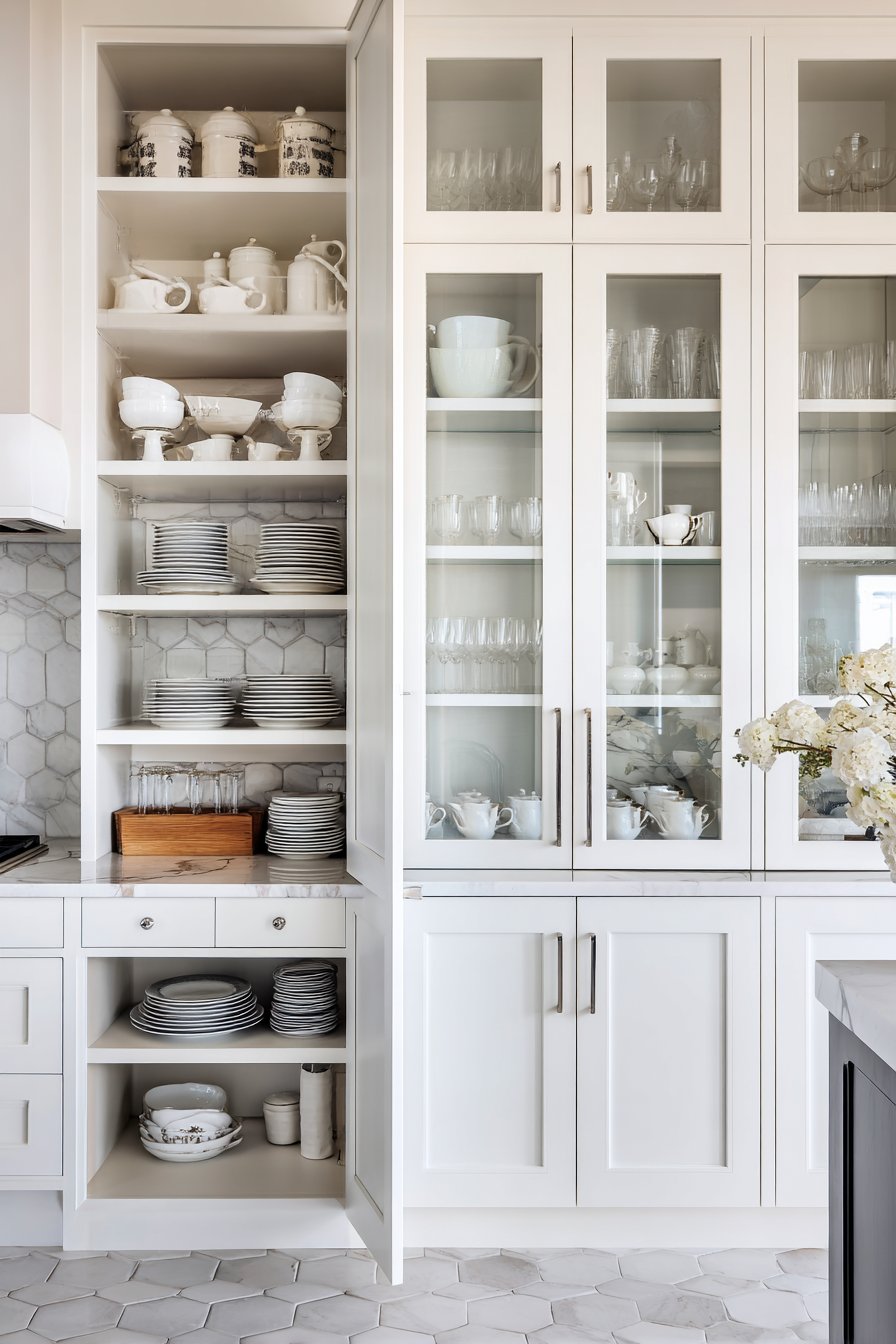
The genius of this compact kitchen design lies in its smart storage solutions and optical illusions that make the space feel larger than its actual dimensions. The all-white palette reflects maximum light, effectively doubling the impact of every natural and artificial light source. Glass-front upper cabinets create depth perception by allowing the eye to see through rather than stopping at opaque doors. The efficient layout places everything within easy reach, eliminating wasted steps and creating a workspace where one person can move comfortably while preparing meals. Professional photography using a wide-angle lens captures these spatial strategies, demonstrating how thoughtful design can overcome dimensional limitations.
Key Design Tips:
- Use glass-front upper cabinets to create visual transparency and prevent claustrophobia
- Display white dishware behind glass doors to maintain the monochromatic expansion effect
- Install hexagon floor tiles for geometric interest that adds visual complexity
- Choose honed stone countertops that resist showing water spots and fingerprints
- Maximize every inch of storage with pull-outs, organizers, and vertical space utilization
- Reflect maximum light with the all-white palette to double the impact of lighting
- Create efficient work triangles that minimize movement in compact spaces
- Use wide-angle photography to capture full layouts and spatial strategies
10. Architectural Luxury with Custom Range Hood
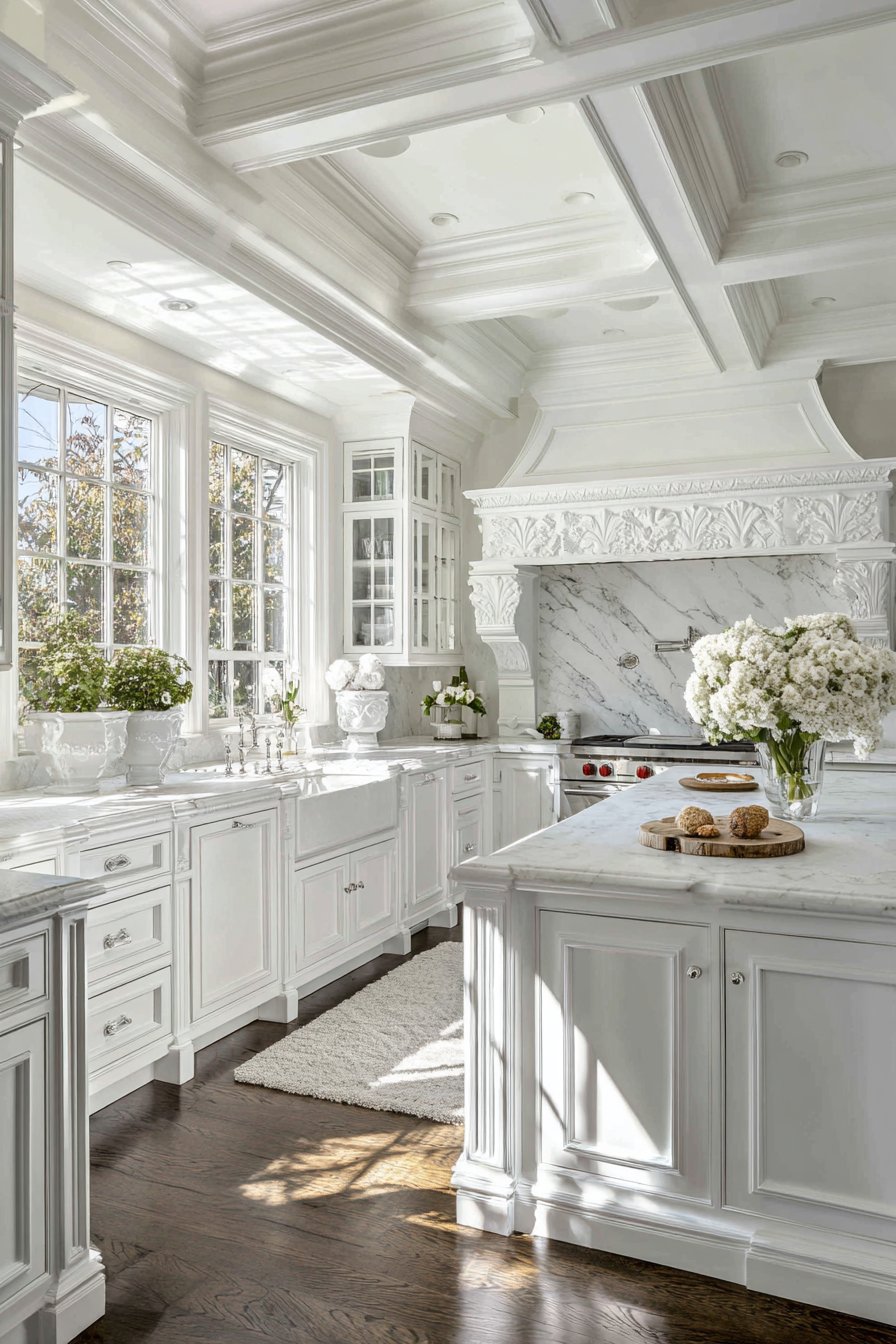
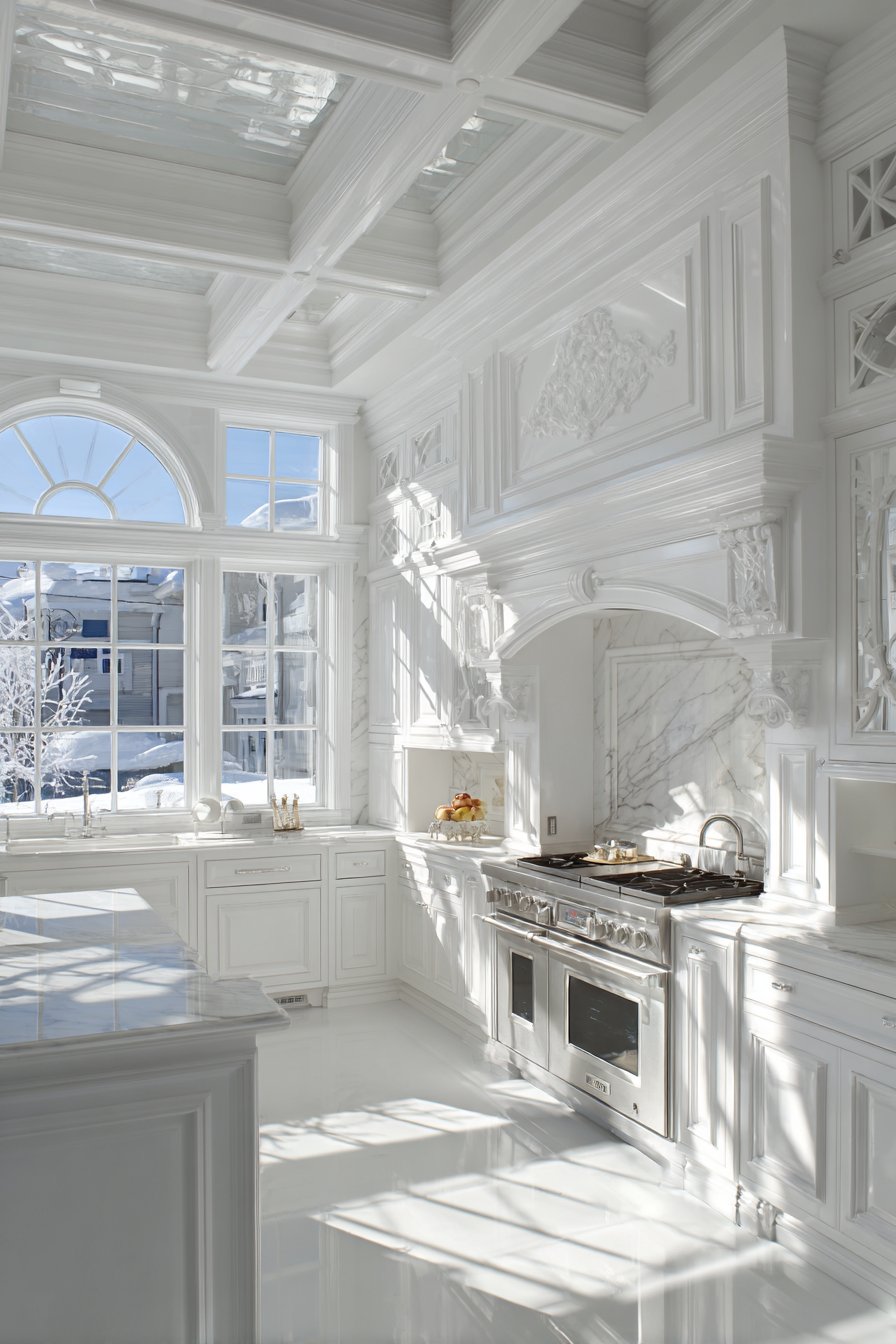
The pinnacle of architectural expression in all white kitchen design manifests in a custom range hood that serves as the commanding focal point, featuring decorative corbels and crown molding details executed in pristine white. This statement piece transforms a functional necessity into an architectural masterpiece, its ornate details showcasing the level of craftsmanship and attention to detail that elevates the entire kitchen into the realm of luxury. The white marble backsplash, with book-matched slabs creating dramatic veining patterns behind the cooking area, provides a natural artwork that anchors the range hood in organic beauty.
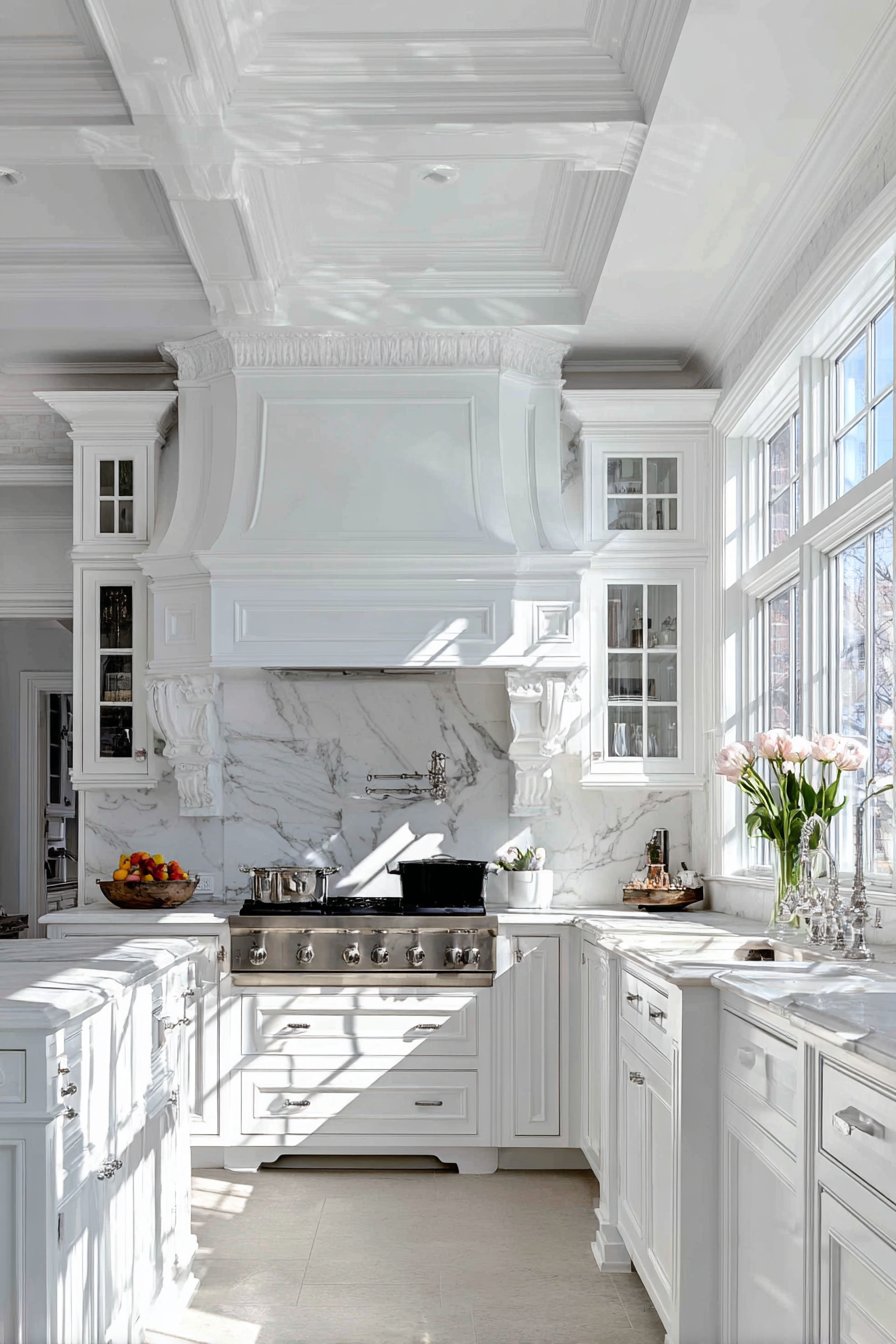
White traditional-style cabinetry with inset doors showcases quality craftsmanship through precise joinery, substantial door thickness, and hardware placement that respects classical proportions. The inset construction, where doors and drawers sit flush within the cabinet frame rather than overlaying it, represents a more expensive and time-consuming approach to cabinetry that produces superior visual results and long-lasting performance. Each cabinet becomes a testament to skilled woodworking, with details that reward close inspection and daily use.
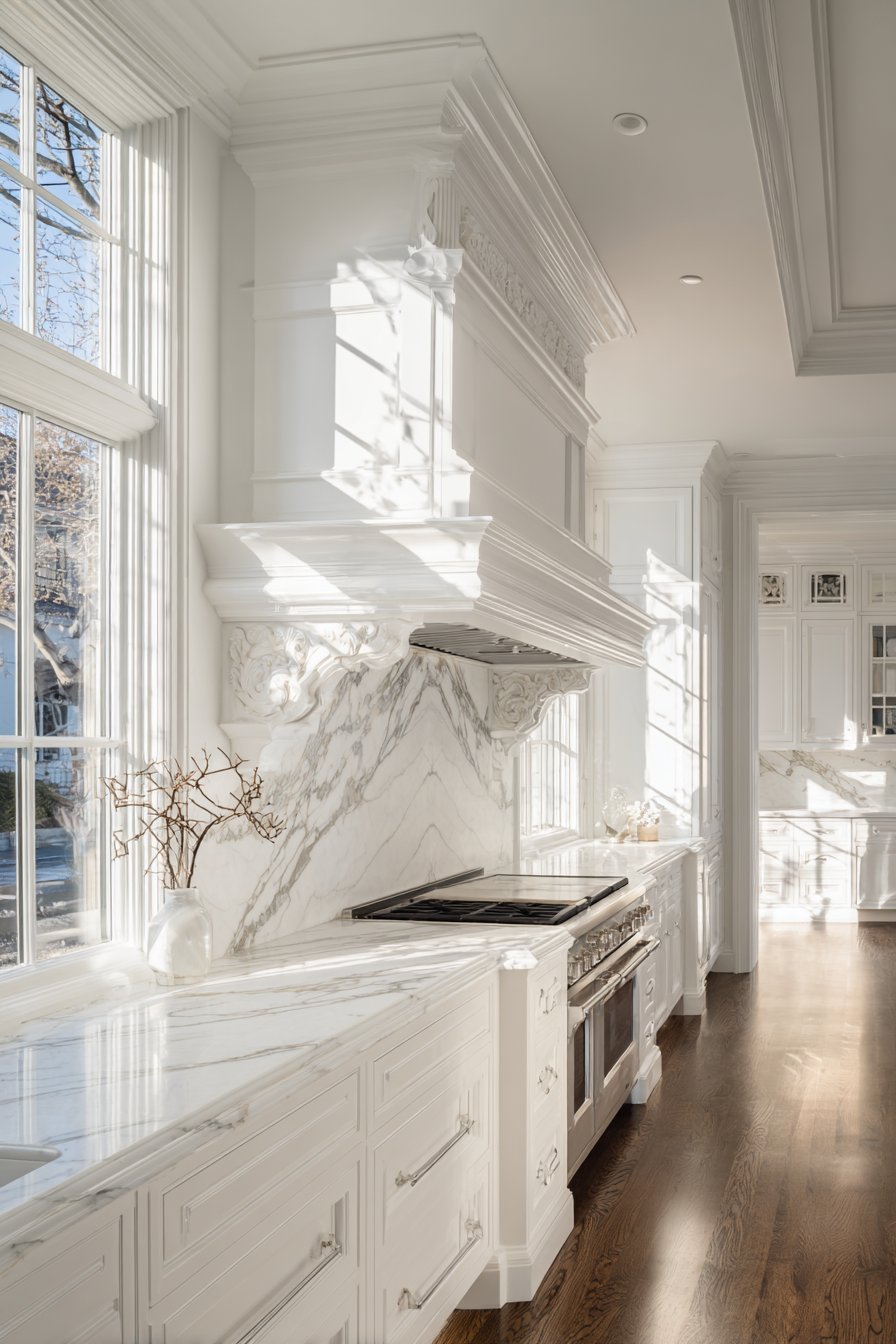
Natural light from multiple windows creates dimensional shadows across the ornate white details, bringing depth and drama to elements that might appear flat under uniform artificial lighting. The sophisticated layering of white tones throughout this kitchen demonstrates master-level design understanding, with warm whites in some areas balanced by cooler tones in others, creating a palette that appears monochromatic at first glance but reveals subtle complexity upon closer inspection. This architectural digest-worthy design proves that an all white kitchen can achieve maximum luxury and visual impact without abandoning its cohesive color philosophy, relying instead on exceptional materials, expert craftsmanship, and thoughtful architectural details.
Key Design Tips:
- Create a custom range hood with architectural details as the kitchen’s focal point
- Add decorative corbels and molding to elevate functional elements into design features
- Use book-matched marble to create dramatic natural patterns behind cooking areas
- Choose inset cabinetry for superior quality and refined traditional aesthetics
- Ensure precise joinery throughout cabinet construction for long-lasting performance
- Install multiple windows to create changing patterns of natural light and shadow
- Layer white tones strategically mixing warm and cool undertones for depth
- Invest in quality materials including substantial door thickness and premium marble
- Emphasize architectural elements through lighting and material selection
Why These All White Kitchen Designs Represent the Best in Contemporary Home Design
The ten all white kitchen designs presented in this comprehensive guide represent the absolute best interpretations of this enduring aesthetic trend for numerous compelling reasons rooted in both practical functionality and sophisticated design principles. These kitchens demonstrate exceptional versatility in style expression, proving that an all white color palette serves as the perfect foundation for designs ranging from ultra-contemporary minimalism to charming cottage warmth, from professional-grade functionality to intimate breakfast nook coziness. This adaptability makes the all white kitchen concept accessible to homeowners with vastly different aesthetic preferences and lifestyle requirements while maintaining the core benefits of brightness, spaciousness, and timeless elegance.
The emphasis on material quality and textural diversity throughout these designs addresses the primary criticism often leveled at all white kitchens: the risk of appearing sterile, flat, or institutional. Each featured kitchen combats this potential pitfall through sophisticated layering of textures including smooth painted surfaces, natural stone veining, dimensional tile patterns, wood grain transparency, metallic hardware, and glass elements. This textural richness creates visual interest and depth without requiring color introduction, demonstrating that monochromatic design can achieve remarkable complexity through thoughtful material selection and surface finish variation. The interplay between matte and glossy finishes, rough and smooth textures, natural and manufactured materials creates compositions that reward both quick glances and prolonged study.
Lighting strategy emerges as a critical factor in the success of these all white kitchen designs, with each example showcasing sophisticated approaches to both natural and artificial illumination. The monochromatic palette magnifies the importance of lighting design, as variations in light quality, direction, and intensity create the shadows, highlights, and dimensional qualities that bring these spaces to life. Natural daylight from strategically positioned windows interacts with white surfaces throughout the day, creating ever-changing displays of shadow and illumination that prevent visual monotony. Layered artificial lighting including ambient recessed fixtures, task-oriented under-cabinet strips, and decorative pendant lights ensures these kitchens function beautifully at all hours while maintaining atmospheric qualities appropriate to different activities and times of day.
The practical benefits of all white kitchens extend beyond aesthetics into functional advantages that impact daily living quality. White surfaces reflect maximum light, effectively reducing the amount of artificial lighting required during daylight hours and lowering energy consumption. The bright, reflective environment improves visual acuity during food preparation tasks, reducing eye strain and increasing safety when handling sharp implements. The psychological impact of white spaces includes feelings of cleanliness, organization, and calm that contribute to reduced stress levels in what can often be a hectic household zone. These functional benefits combine with the aesthetic advantages to create kitchens that genuinely improve quality of life rather than serving purely decorative purposes.
From an investment perspective, all white kitchens represent one of the safest design choices for homeowners concerned with property value and resale potential. While bold color choices in kitchens can limit market appeal by alienating potential buyers with different tastes, the neutral sophistication of an all white kitchen appeals to the broadest possible audience. Real estate professionals consistently identify updated white kitchens as one of the most valuable improvements homeowners can make, often returning significant percentages of the investment upon sale. The timeless quality of these designs means they won’t appear dated quickly, maintaining their appeal and value over extended periods unlike trend-driven color schemes that may feel outdated within a few years.
The storage solutions and organizational strategies showcased in these all white kitchen designs demonstrate how aesthetic excellence and practical functionality can coexist harmoniously. Floor-to-ceiling cabinetry maximizes vertical space utilization, pull-out pantry systems and corner carousels transform awkward spaces into highly functional storage, and custom built-ins like breakfast nook banquettes conceal additional organizational capacity beneath seating areas. These clever storage approaches reduce visual clutter by providing designated homes for every kitchen item, essential for maintaining the clean, uncluttered appearance that allows the all white aesthetic to shine. The organizational emphasis in these designs reflects contemporary lifestyle needs where kitchen spaces must accommodate not only cooking but also dining, socializing, homework, and other multi-functional activities.
Material innovation plays a crucial role in the success of contemporary all white kitchen designs, with advances in surface technology making white finishes more practical than ever before. Quartz countertops with stain-resistant surfaces, porcelain tiles with unprecedented durability, lacquer finishes that resist yellowing and maintain their pristine appearance, and paint formulations that withstand kitchen humidity and temperature fluctuations all contribute to making white kitchens realistic choices for actual living rather than showroom fantasies. These material improvements address historical concerns about maintaining white surfaces, demonstrating that contemporary white kitchens can withstand the rigors of daily family life while maintaining their beautiful appearance with reasonable maintenance efforts.
The architectural detail emphasis in these designs, from custom range hoods to crown molding, from beadboard paneling to shiplap walls, showcases how all white palettes allow architectural elements to take center stage. When color competition is removed from the equation, the eye naturally focuses on form, proportion, and craftsmanship details that might otherwise be overlooked. This architectural focus elevates these kitchens beyond mere cooking spaces into rooms with genuine architectural character that contributes to the overall design integrity of the home. The white treatment of these architectural elements creates visual cohesion while allowing their dimensional qualities to create interest through shadow and light interaction.
The integration of natural elements including marble veining, wood grain, and views to outdoor greenery through strategically positioned windows prevents these all white kitchens from feeling disconnected from nature. The transparent treatment of wood through white-washing techniques and the celebration of natural stone patterns demonstrates how organic materials can be incorporated into monochromatic schemes without abandoning color unity. Window placement that frames outdoor views and admits natural light creates visual and psychological connections to the natural world, essential for creating kitchen spaces that feel nurturing and restorative rather than sterile and cold.
Social and lifestyle considerations underscore the value of these all white kitchen designs in contemporary home life. The bright, welcoming atmosphere created by the white palette makes kitchens feel more inviting for social gatherings, encouraging the kitchen to function as the social heart of the home. The clean aesthetic provides a sophisticated backdrop for entertaining, allowing food presentation, floral arrangements, and table settings to become colorful focal points against the neutral surroundings. The versatility of the white background means homeowners can easily update the kitchen’s personality through accessories, textiles, and decorative elements without requiring major renovations, allowing the space to evolve with changing tastes and seasons.
These ten exceptional all white kitchen designs represent the cutting edge of contemporary kitchen design thinking, balancing aesthetic sophistication with practical functionality, timeless elegance with on-trend details, and individual style expression with broad appeal. They demonstrate conclusively that monochromatic design need not mean monotonous design, that white kitchens can achieve remarkable warmth and character, and that this enduring aesthetic choice continues to dominate high-end kitchen design for compelling reasons rooted in both beauty and practicality.
Conclusion
The exploration of these ten distinctive all white kitchen designs reveals the remarkable versatility, enduring appeal, and sophisticated potential of monochromatic kitchen aesthetics. From the luxury of waterfall marble islands to the practicality of floor-to-ceiling storage, from contemporary minimalist lines to charming cottage details, these designs demonstrate that “all white” serves not as a limitation but as a liberating foundation for creative expression. The key takeaways center on the critical importance of layering textures, mixing surface finishes, emphasizing quality materials, and thoughtfully designing lighting strategies that bring these spaces to life through the interplay of shadow and highlight.
As you consider implementing these ideas in your own home, remember that successful all white kitchen design requires attention to detail, commitment to quality materials, and understanding that visual interest comes from texture, light, and craftsmanship rather than color variation. Whether you’re drawn to the sleek sophistication of contemporary design, the warmth of farmhouse aesthetics, or the timeless elegance of traditional styling, the all white palette provides the perfect canvas for your vision. Embrace the opportunity to create a kitchen that feels spacious, bright, and serene while reflecting your personal style through material choices, architectural details, and the thoughtful integration of functional elements.
We encourage you to experiment with these concepts, adapting them to your specific space constraints, lifestyle needs, and aesthetic preferences. Start by identifying which design approach resonates most strongly with you, then consider how the specific strategies—from material selection to lighting design, from storage solutions to architectural details—can be incorporated into your kitchen renovation or refresh. The timeless nature of all white kitchen design means your investment will continue delivering beauty and functionality for years to come, adapting gracefully as your life evolves while maintaining its essential character and appeal.
