


The bathroom has evolved far beyond its purely functional origins. Today’s aesthetic bathrooms represent personal sanctuaries where design meets wellness, and everyday routines transform into moments of self-care. A thoughtfully designed bathroom can elevate your daily experience, creating a space that soothes the senses while reflecting your unique style. Whether you’re drawn to minimalist zen aesthetics, rustic natural materials, or vintage-inspired charm, your bathroom deserves the same attention to detail as any other room in your home.
Modern interior design recognizes that bathrooms are romantic spaces where we begin and end each day. The right combination of lighting, materials, textures, and colors can dramatically impact our mood and well-being. From spa-like retreats featuring natural stone and organic elements to sleek contemporary spaces with clean lines and monochromatic schemes, the possibilities are endless. Each design approach offers distinct advantages, catering to different personalities, lifestyles, and spatial requirements.
This comprehensive guide explores ten stunning aesthetic bathroom concepts that showcase diverse design philosophies. You’ll discover how to incorporate natural materials like reclaimed wood and river stones, work with various color palettes from sage green to blush pink, and create harmonious spaces that balance form and function. Each design demonstrates how careful attention to fixtures, finishes, and decorative elements can transform an ordinary bathroom into an extraordinary personal haven.
1. Serene Spa Sanctuary with Freestanding Tub
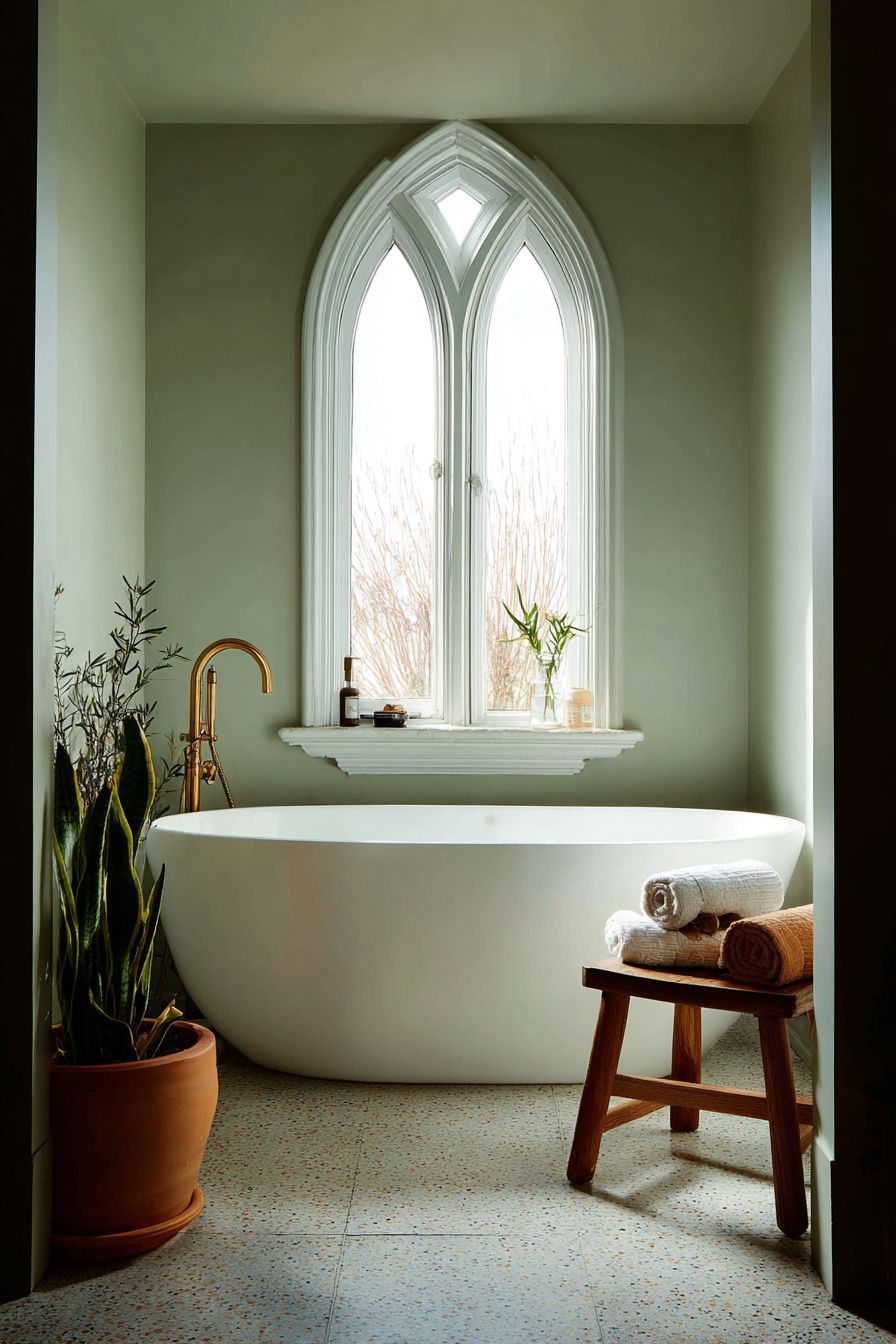
Picture a bathroom where natural light becomes the primary design element. A freestanding white porcelain bathtub sits elegantly beneath a large arched window, inviting both daylight and tranquility into the space. The soft sage green walls create an immediately calming atmosphere, reminiscent of peaceful gardens and natural landscapes. This color choice reduces visual stress while providing a sophisticated backdrop that never feels dated or overwhelming.
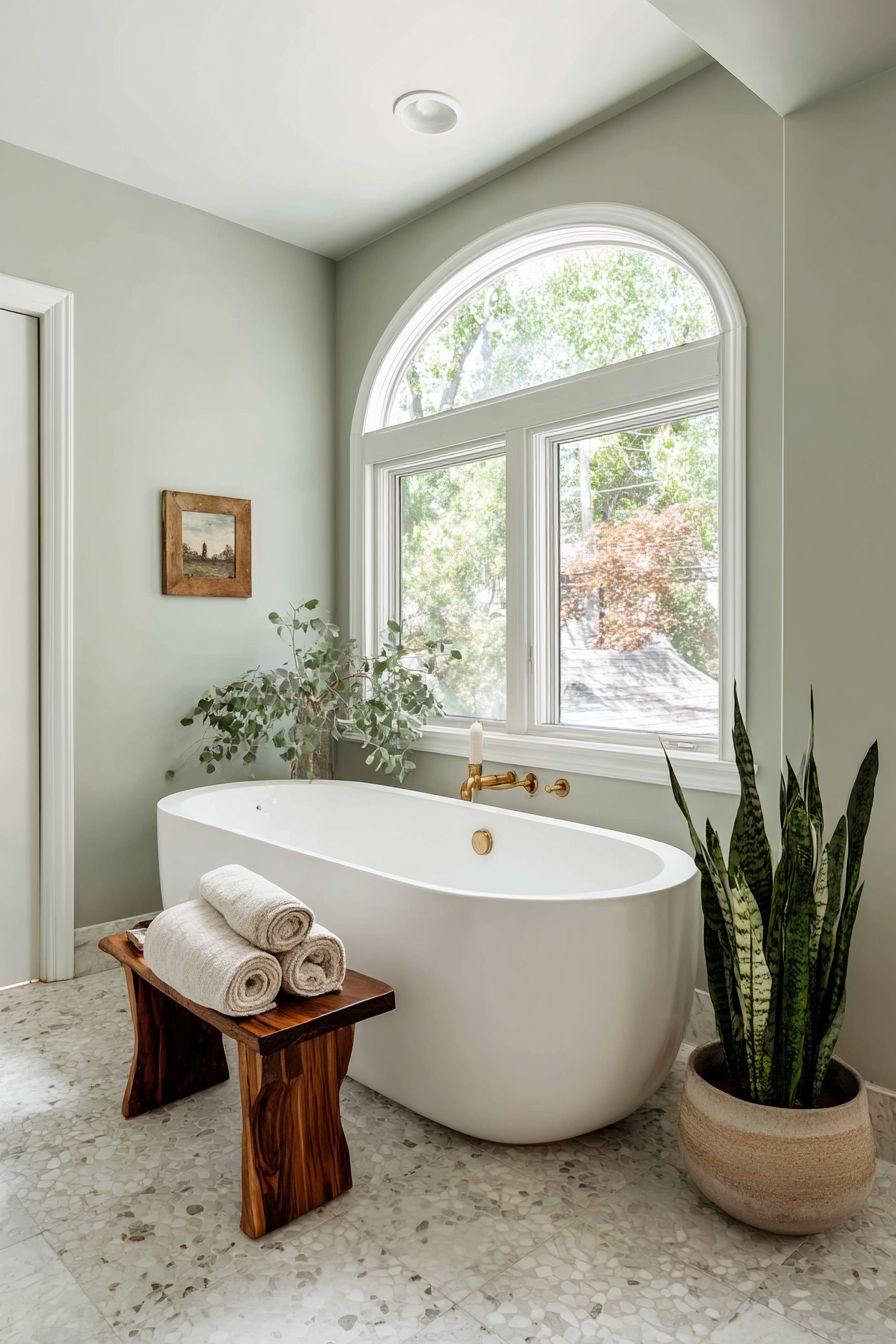
Brass fixtures add unexpected warmth and elegance to this serene environment. The golden tones create a beautiful contrast against the cool sage walls and crisp white porcelain. A vintage-inspired wooden stool serves dual purposes, offering both practical storage for rolled towels and a styling opportunity with eucalyptus sprigs. The aromatic greenery enhances the spa-like quality while introducing organic texture into the space.
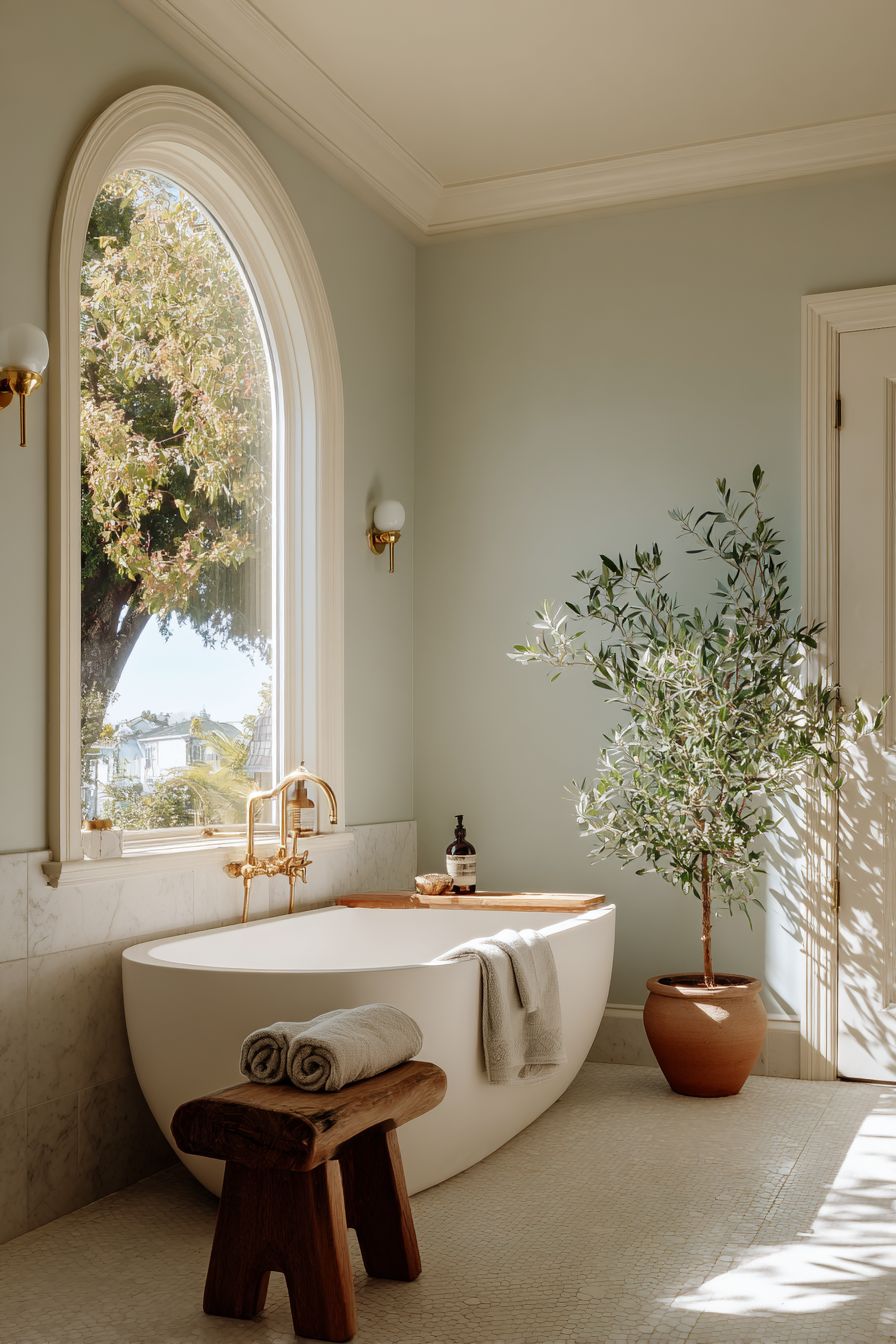
The terrazzo floor tiles ground the design with muted tones that incorporate subtle flecks of color. This practical choice withstands moisture while providing visual interest without competing with the room’s focal points. A small potted snake plant in the corner reinforces the connection to nature while purifying the air. The overall composition achieves a perfect balance between refinement and relaxation.
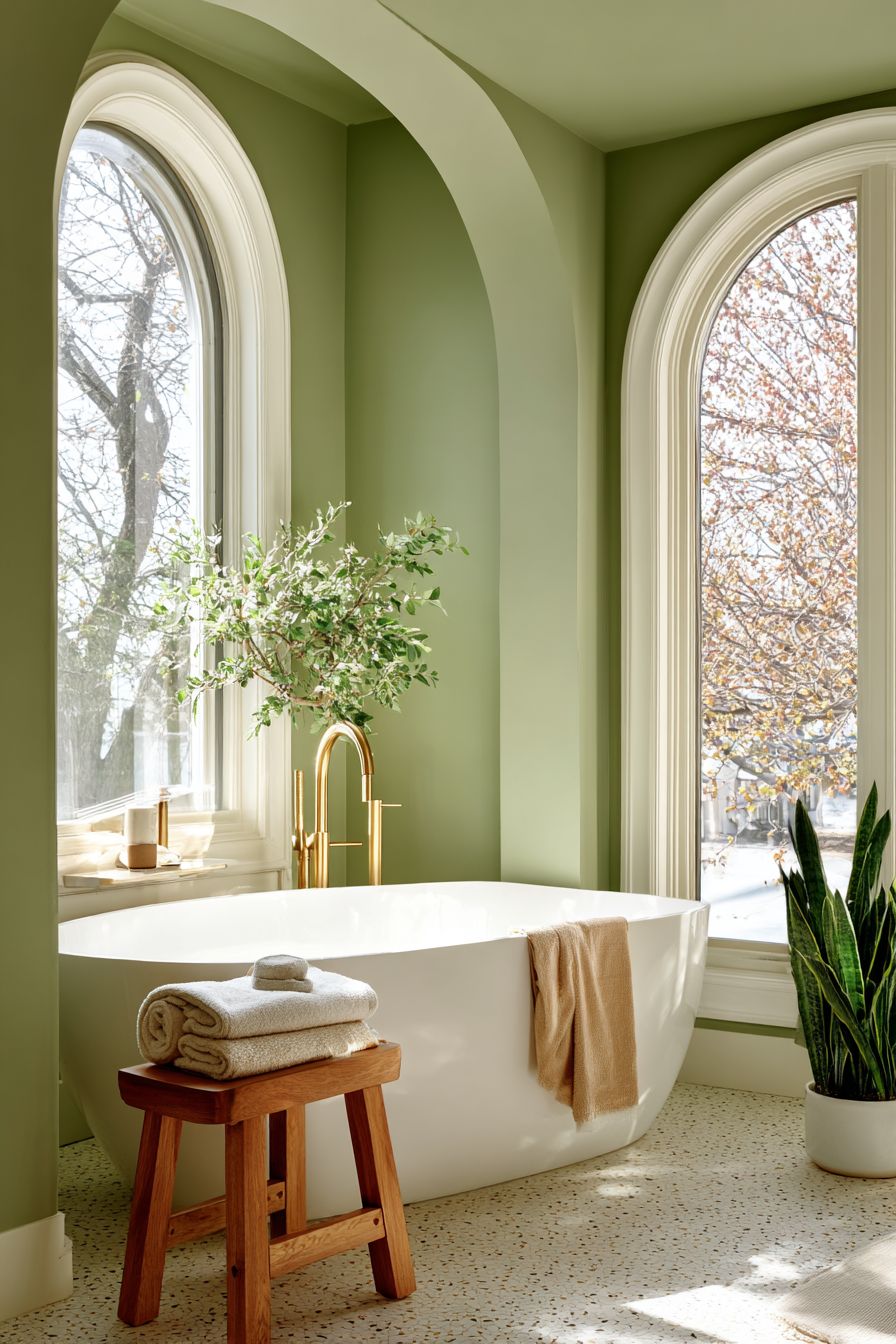
Key design elements for this spa-inspired retreat:
- Choose sage green paint with grey undertones for sophisticated depth
- Position the bathtub near natural light sources to maximize daylight benefits
- Select brass or gold-toned fixtures to add warmth against cool color palettes
- Incorporate eucalyptus or other aromatic plants for sensory enhancement
- Use terrazzo flooring to combine durability with timeless aesthetic appeal
2. Contemporary Elegance with Blush Ceramic Waves
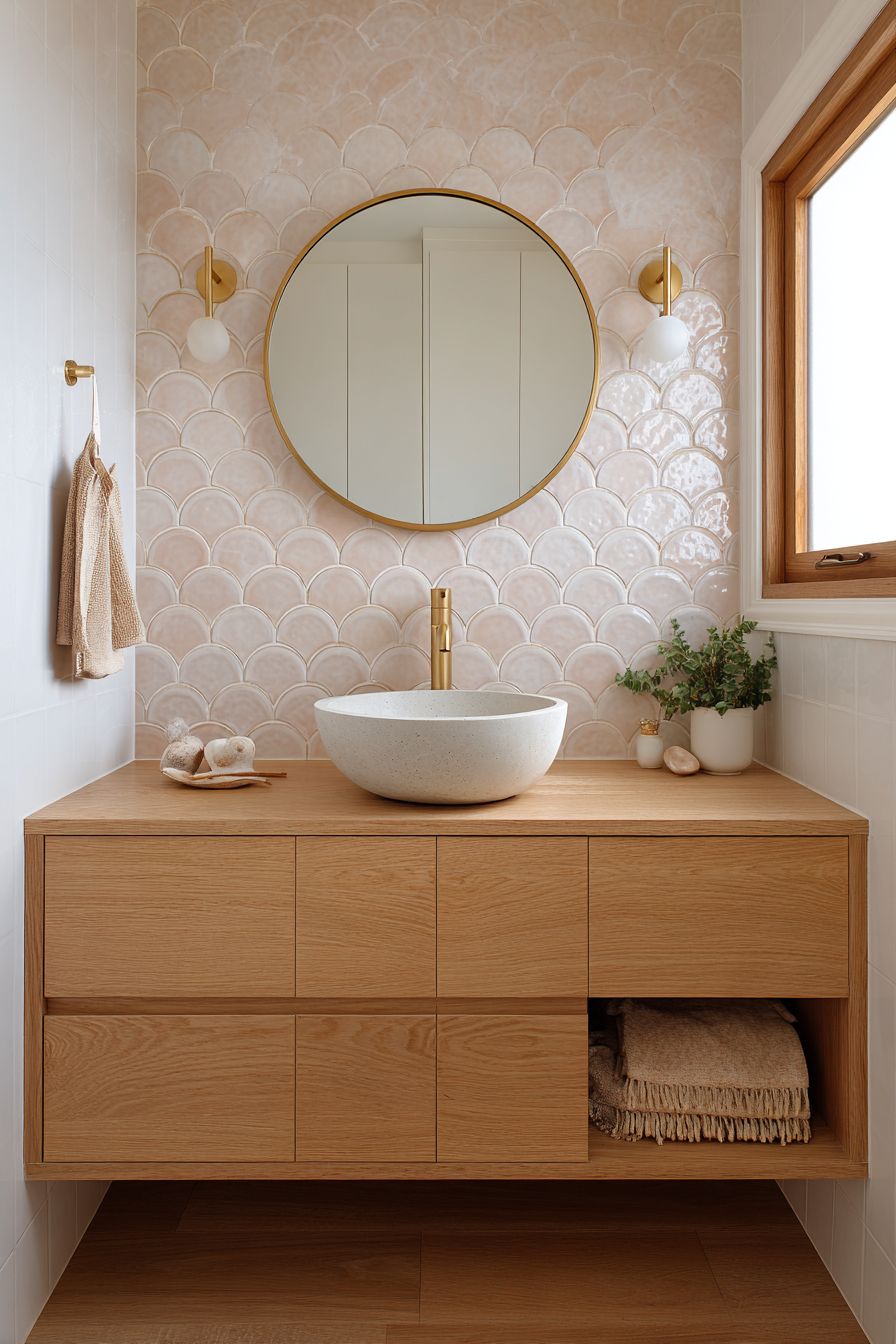
Modern minimalism meets artisanal craftsmanship in this sophisticated bathroom design. A concrete vessel sink sits atop light oak floating cabinetry, creating an interesting material contrast that defines contemporary aesthetics.
The concrete’s raw, industrial quality balances beautifully with the warm, natural grain of oak wood. This pairing demonstrates how opposing textures create visual tension that keeps spaces engaging rather than sterile.
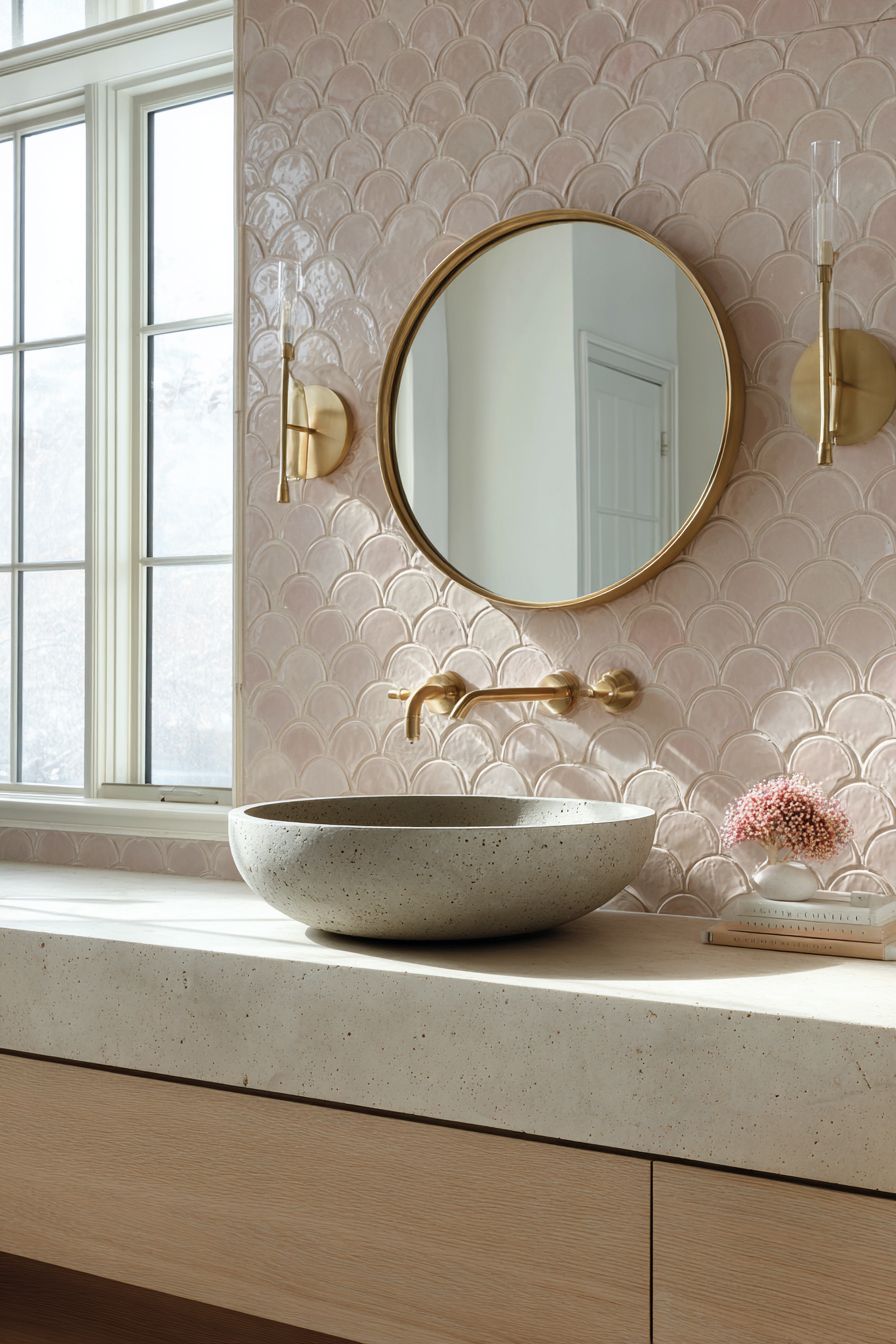
The handmade ceramic tiles arranged in a soft blush pink wave pattern transform a functional wall into an artistic statement. This organic pattern brings movement and fluidity to the space, softening the geometric lines of the vanity and mirror. The gentle color adds femininity without appearing overly sweet, maintaining sophistication through its muted saturation. Artisanal tiles also introduce subtle irregularities that machine-made alternatives cannot replicate, adding authentic character.
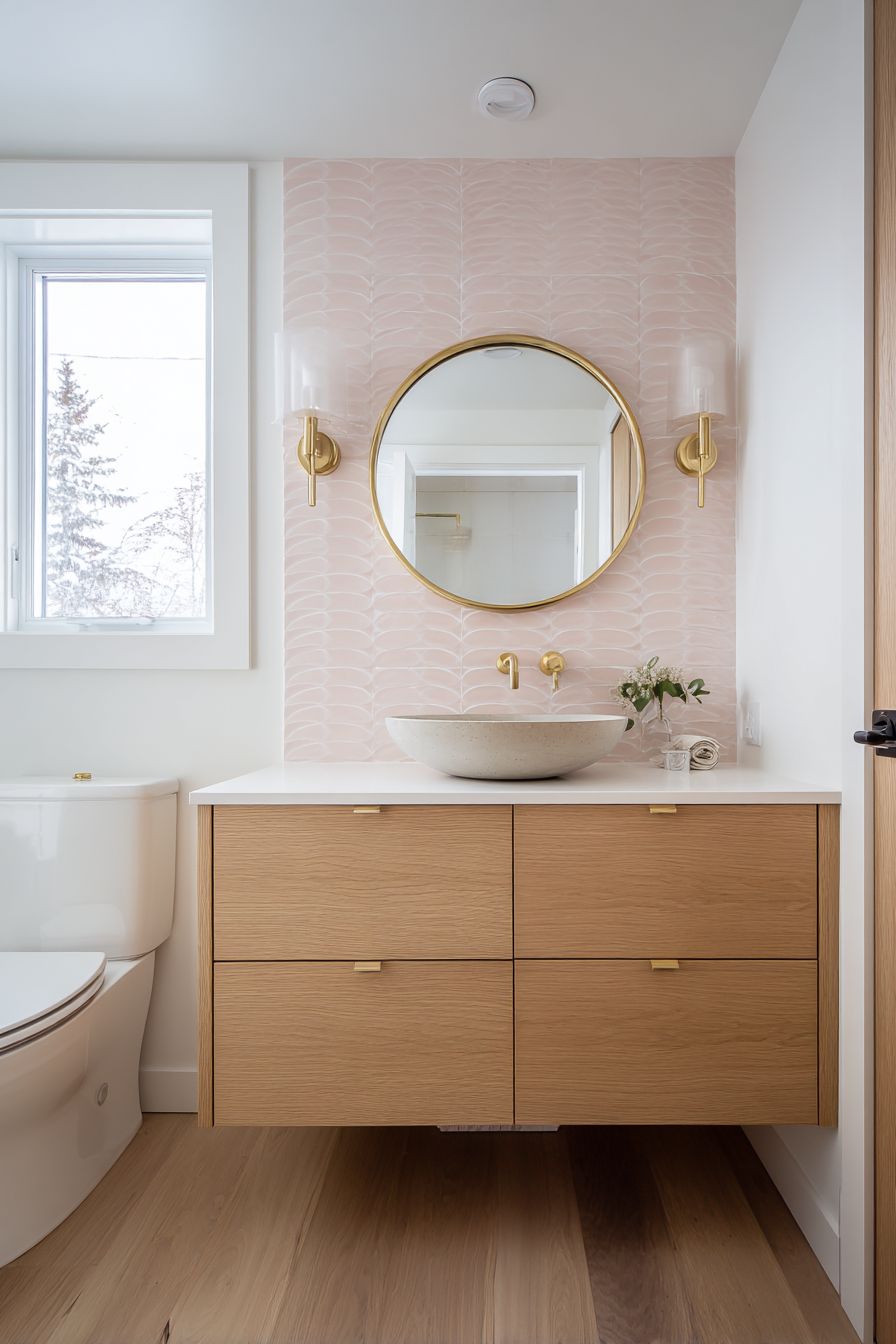
A round brass-framed mirror hangs centered above the sink with matching wall sconces flanking either side. This symmetrical arrangement creates visual harmony while providing optimal task lighting for daily grooming activities. Natural light filtering through a frosted window creates gentle shadows that change throughout the day. The interplay between natural and artificial light sources adds depth and dimension to the space.
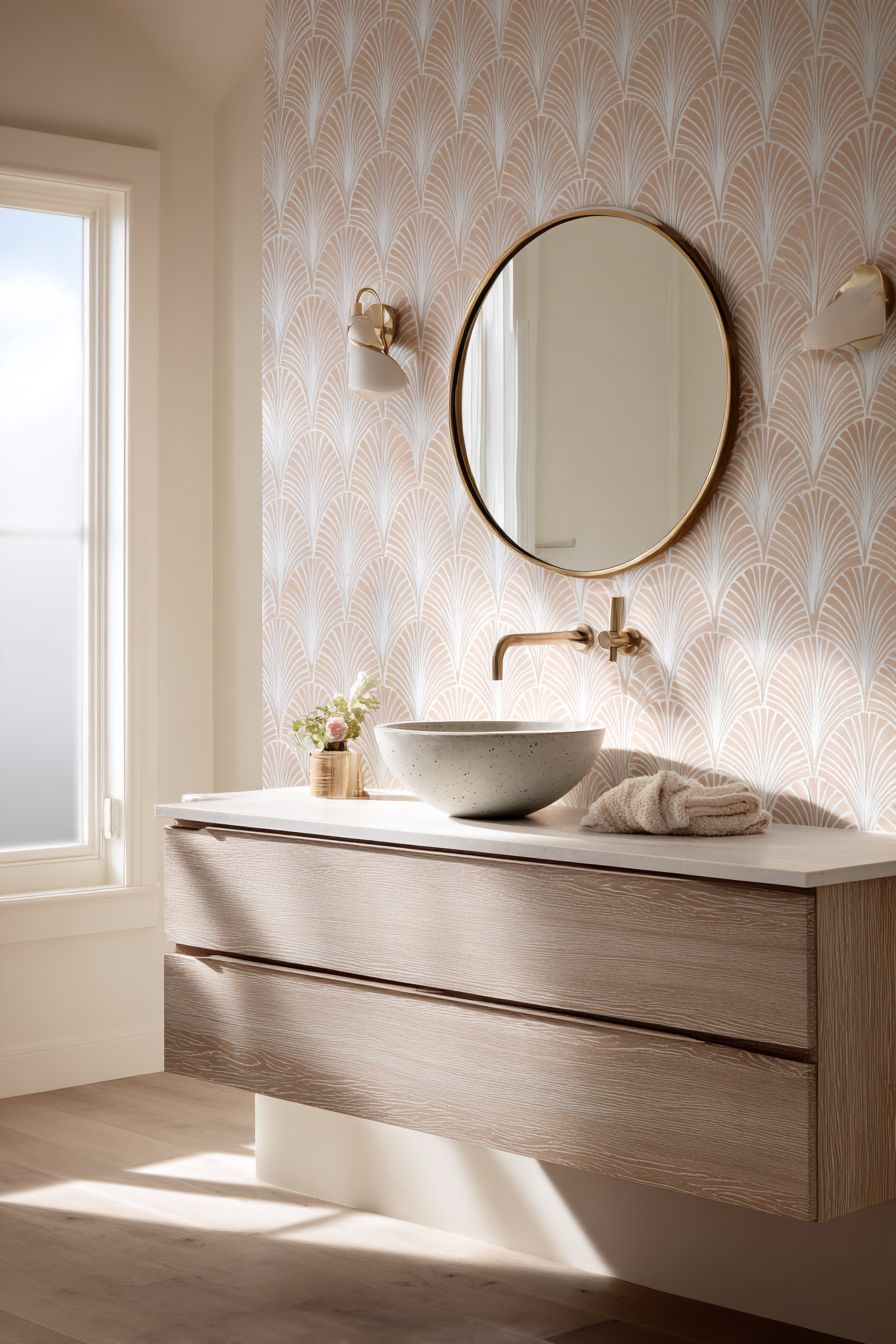
Essential tips for achieving this contemporary look:
- Invest in handmade tiles for unique character that mass-produced options cannot match
- Choose floating vanities to create visual lightness and ease floor cleaning
- Pair industrial materials like concrete with warm wood to prevent coldness
- Use symmetrical mirror and sconce placement for balanced, professional aesthetics
- Install frosted windows to maintain privacy while maximizing natural light flow
3. Clean Lines Shower Retreat with Vertical Subway Tiles
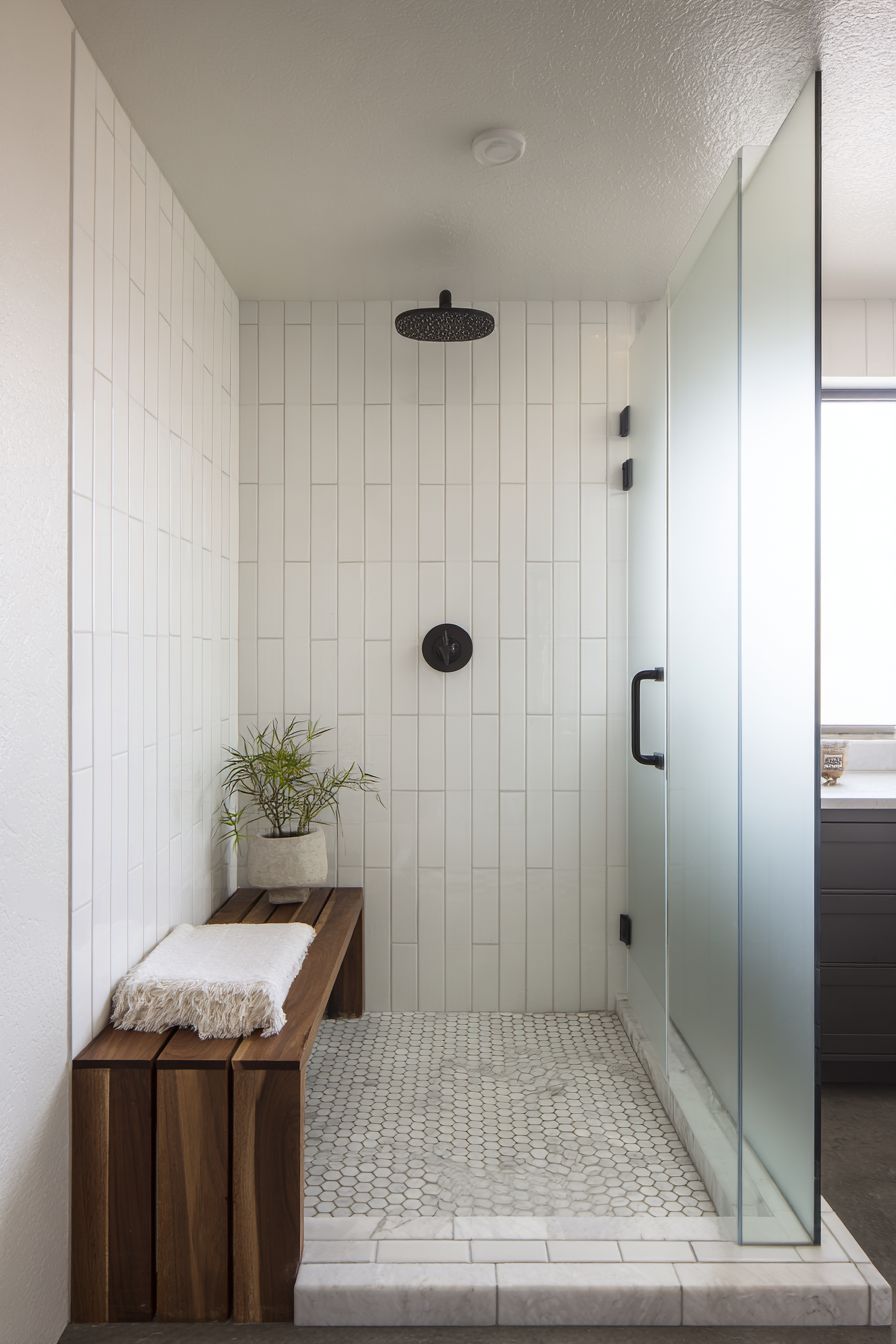
The shower area transforms into a minimalist sanctuary through thoughtful material selection and precise execution. Floor-to-ceiling white subway tiles arranged in a classic vertical pattern create visual height while maintaining timeless appeal.
This orientation elongates the space, making even modest bathrooms feel more expansive. The consistent white palette reflects light beautifully, enhancing the sense of cleanliness and spaciousness that defines spa-inspired design.
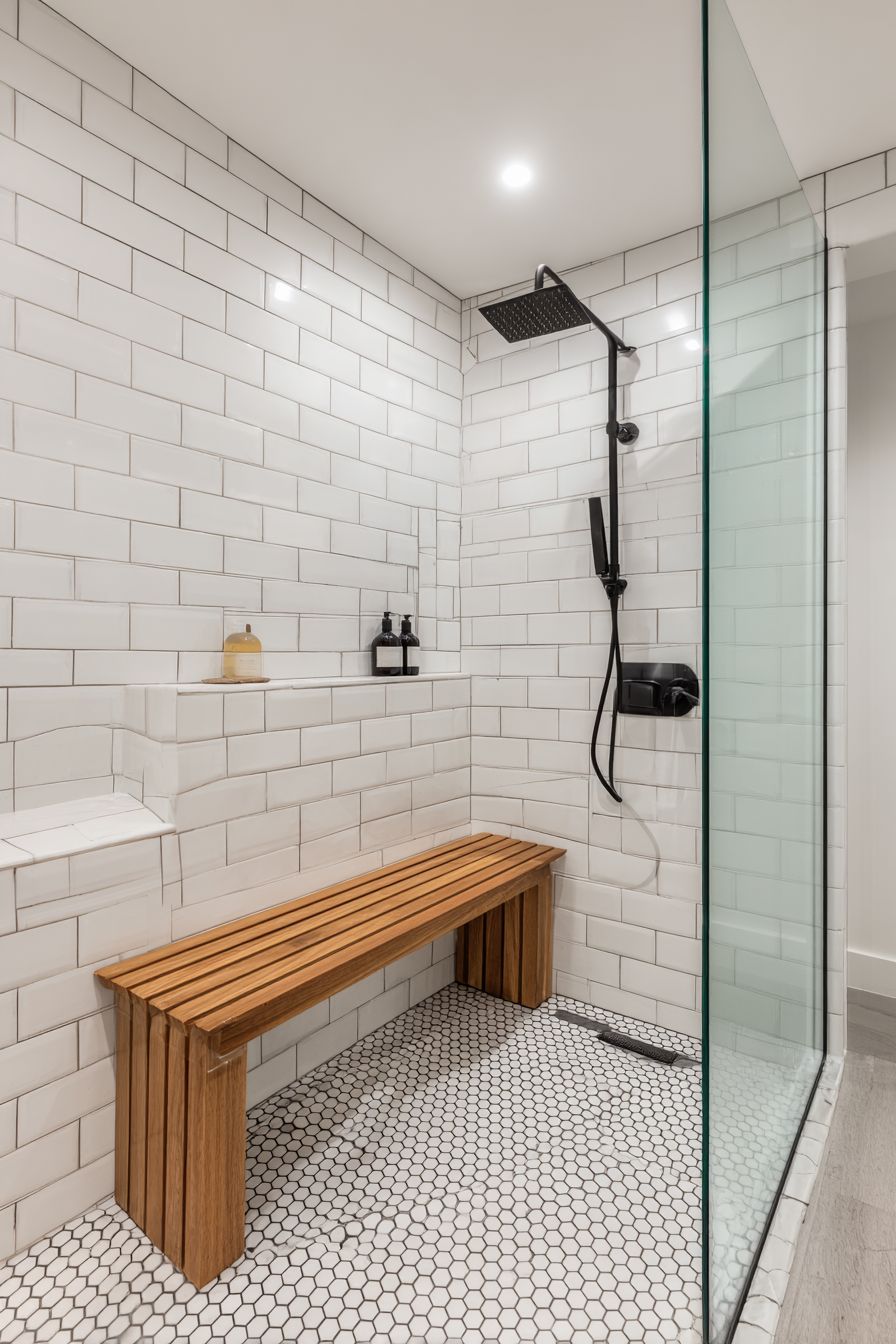
A built-in teak shower bench provides both functional seating and natural warmth that prevents the all-white scheme from feeling sterile. Teak wood naturally resists moisture and mildew, making it ideal for wet environments while introducing organic texture. The matte black rainfall showerhead and fixtures create a striking contrast that anchors the design with bold, contemporary confidence. This high-contrast approach demonstrates how strategic color placement can define architectural features.
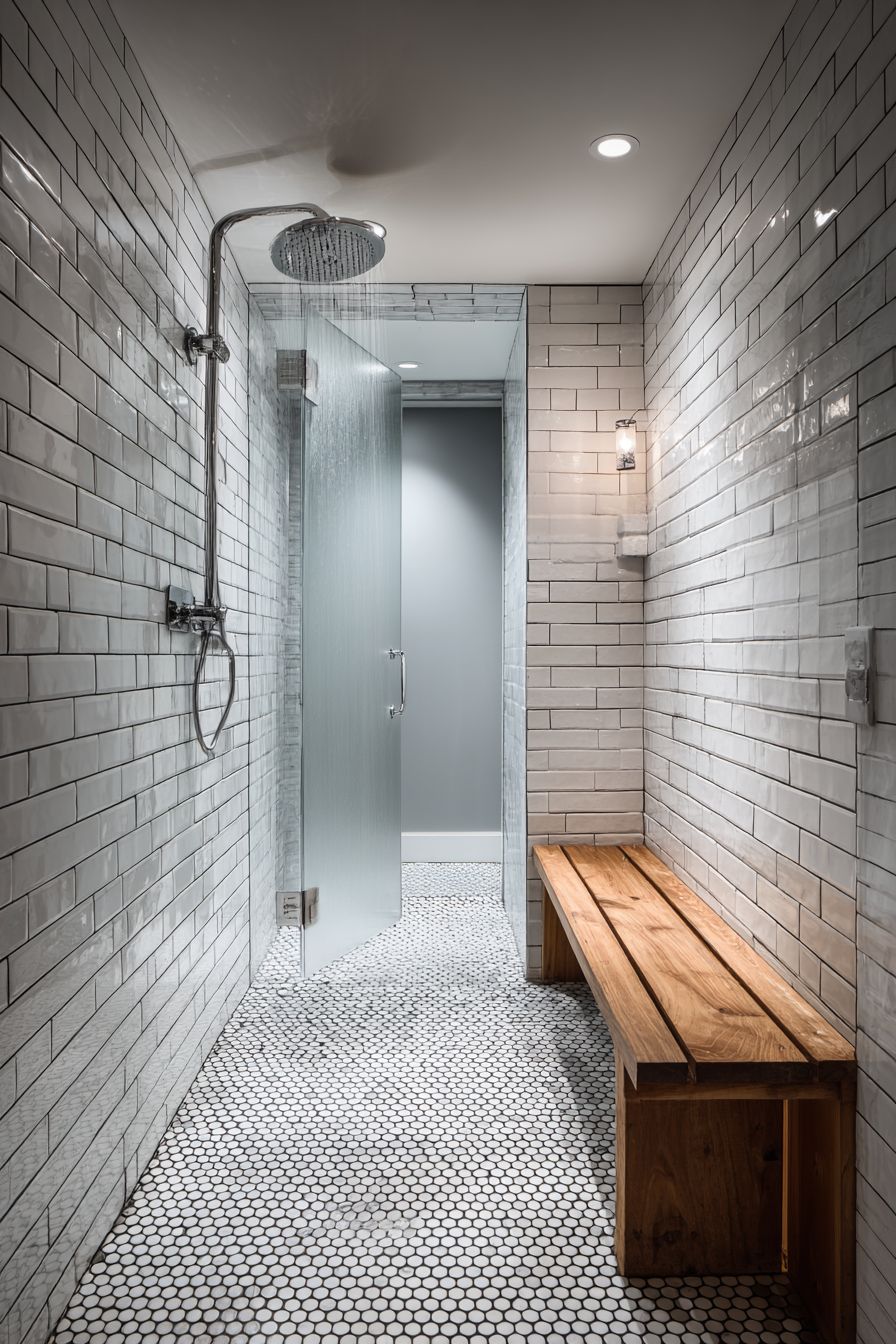
Small white hexagonal floor tiles with dark grout lines add visual interest underfoot without competing with the vertical wall pattern. The geometric shape introduces subtle complexity while the dark grout provides practical benefits, disguising stains better than white alternatives. A frosted glass partition allows light to flow through the space while maintaining separation. The transparency prevents the shower from feeling enclosed or claustrophobic.
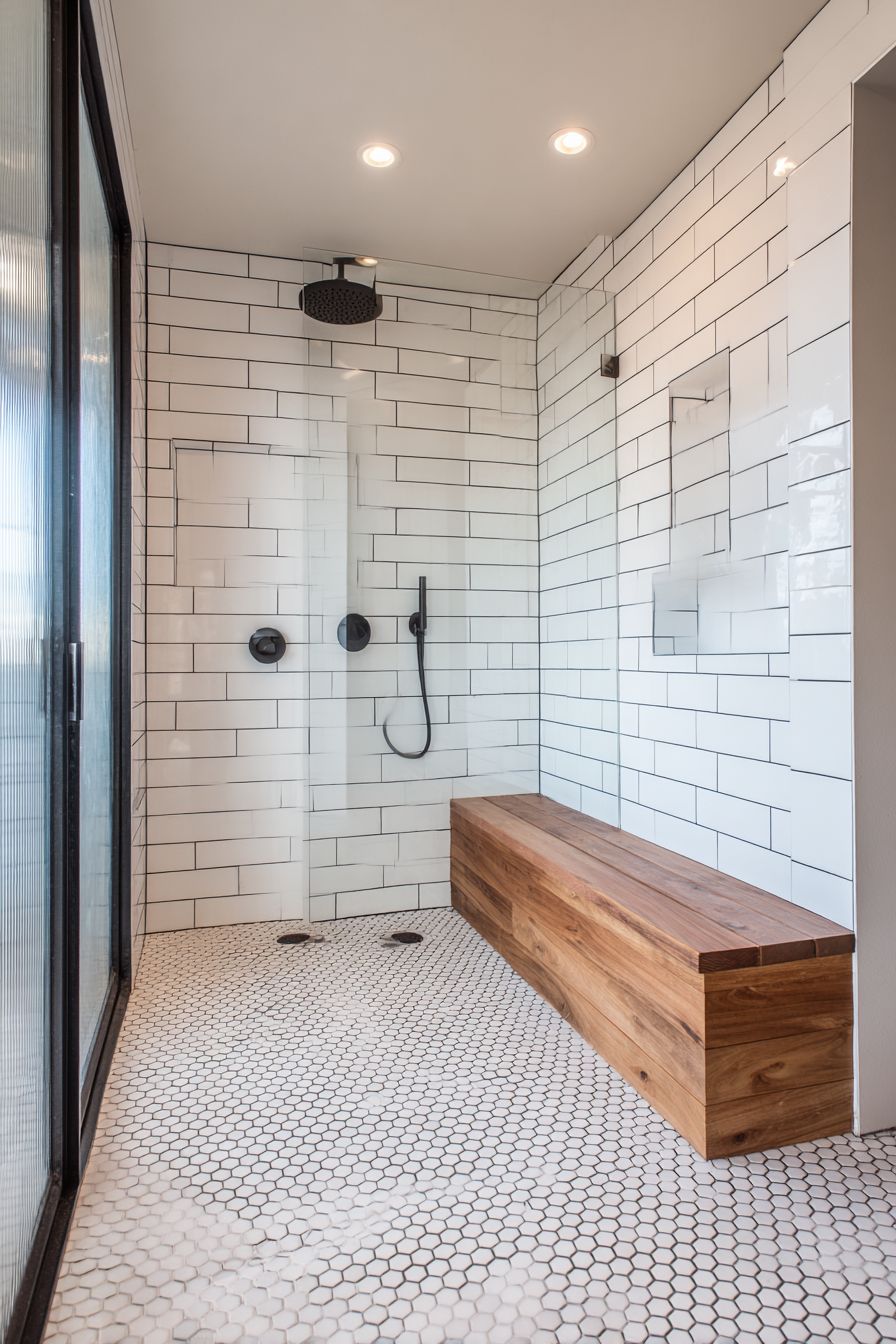
Key considerations for this clean-lined design:
- Orient subway tiles vertically to maximize perceived ceiling height
- Incorporate teak or other water-resistant wood for warmth and durability
- Choose matte black fixtures for dramatic contrast in predominantly white spaces
- Use hexagonal floor tiles to add geometric interest at foot level
- Install frosted glass partitions to maintain openness while defining zones
4. Earthy Sophistication with Natural Stone Statement Wall
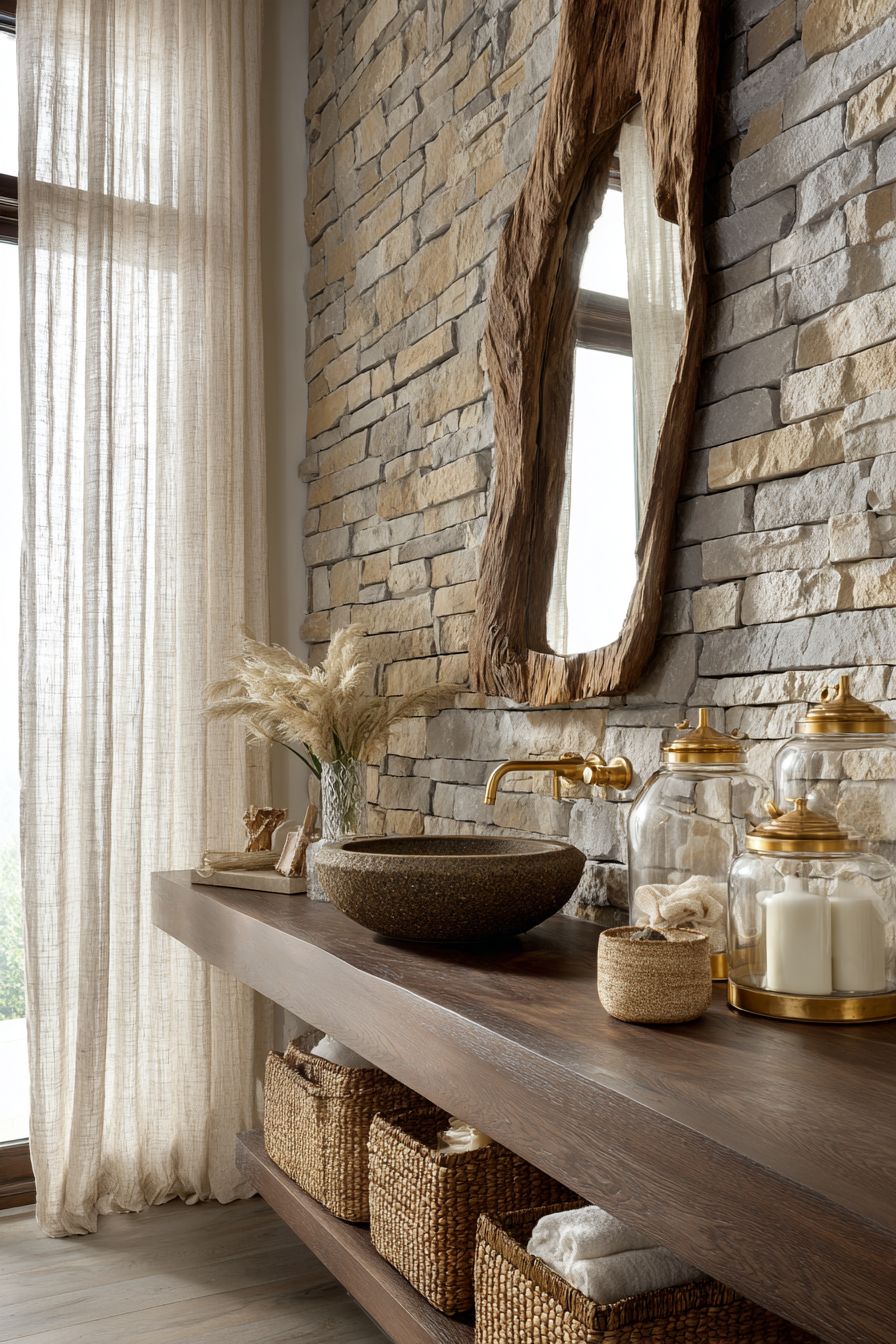
Natural stone tiles in warm beige and cream tones dominate this design, creating a statement wall with visible texture variation. Each tile tells a story through its unique veining and color shifts, bringing geological history into the bathroom. This organic variation ensures the space feels connected to nature while achieving sophistication through material quality. The neutral palette provides versatility, complementing various decorative styles while maintaining timeless appeal.
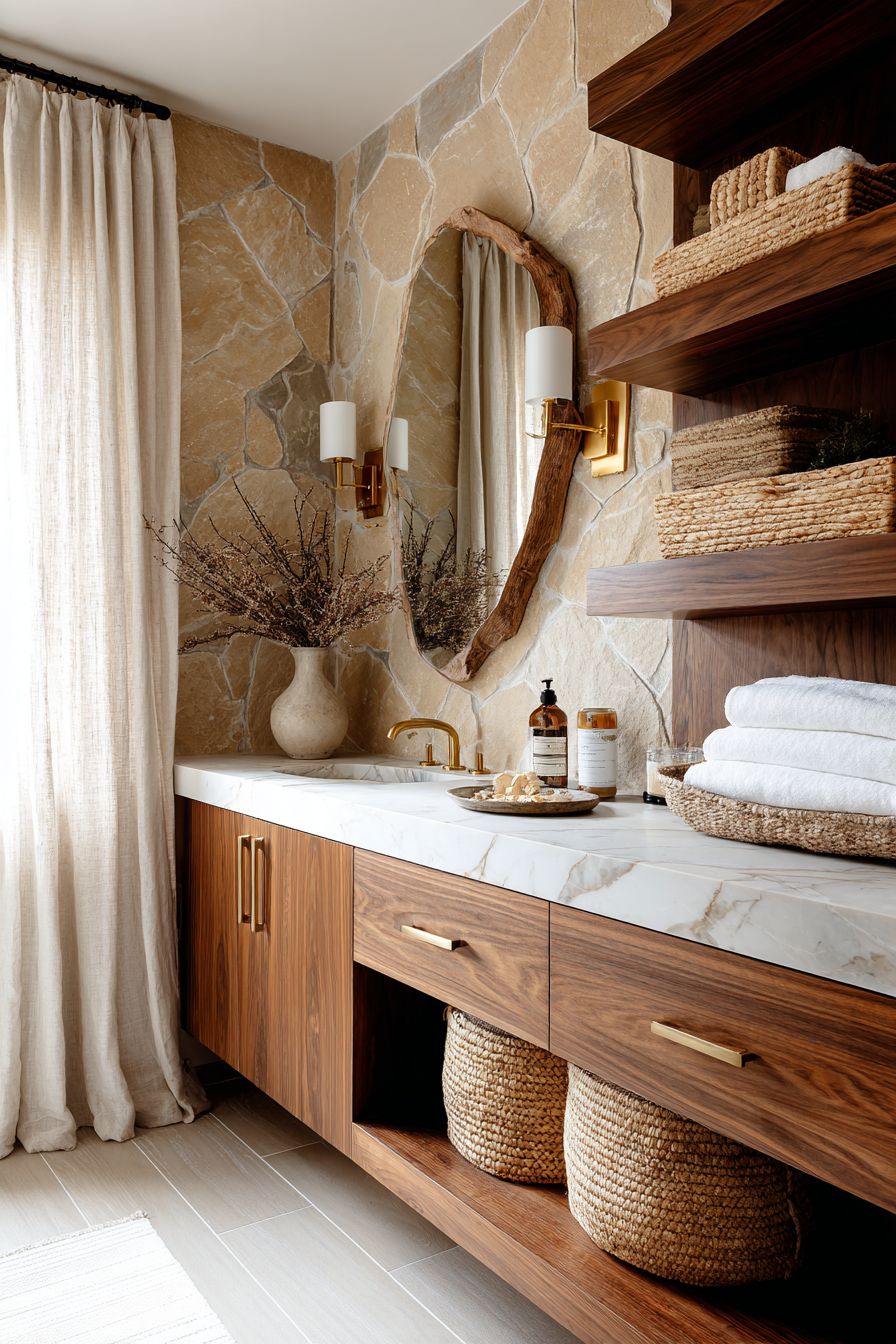
A sleek wall-mounted vanity in walnut wood appears to float beneath an asymmetrical live-edge wood mirror. The live edge preserves the tree’s natural contour, celebrating organic imperfection as a design virtue. This pairing of refined stone with raw wood edges creates balanced tension between polish and authenticity. Brushed gold fixtures complement the warm color palette, their subtle sheen echoing the stone’s natural luster without overwhelming the organic aesthetic.
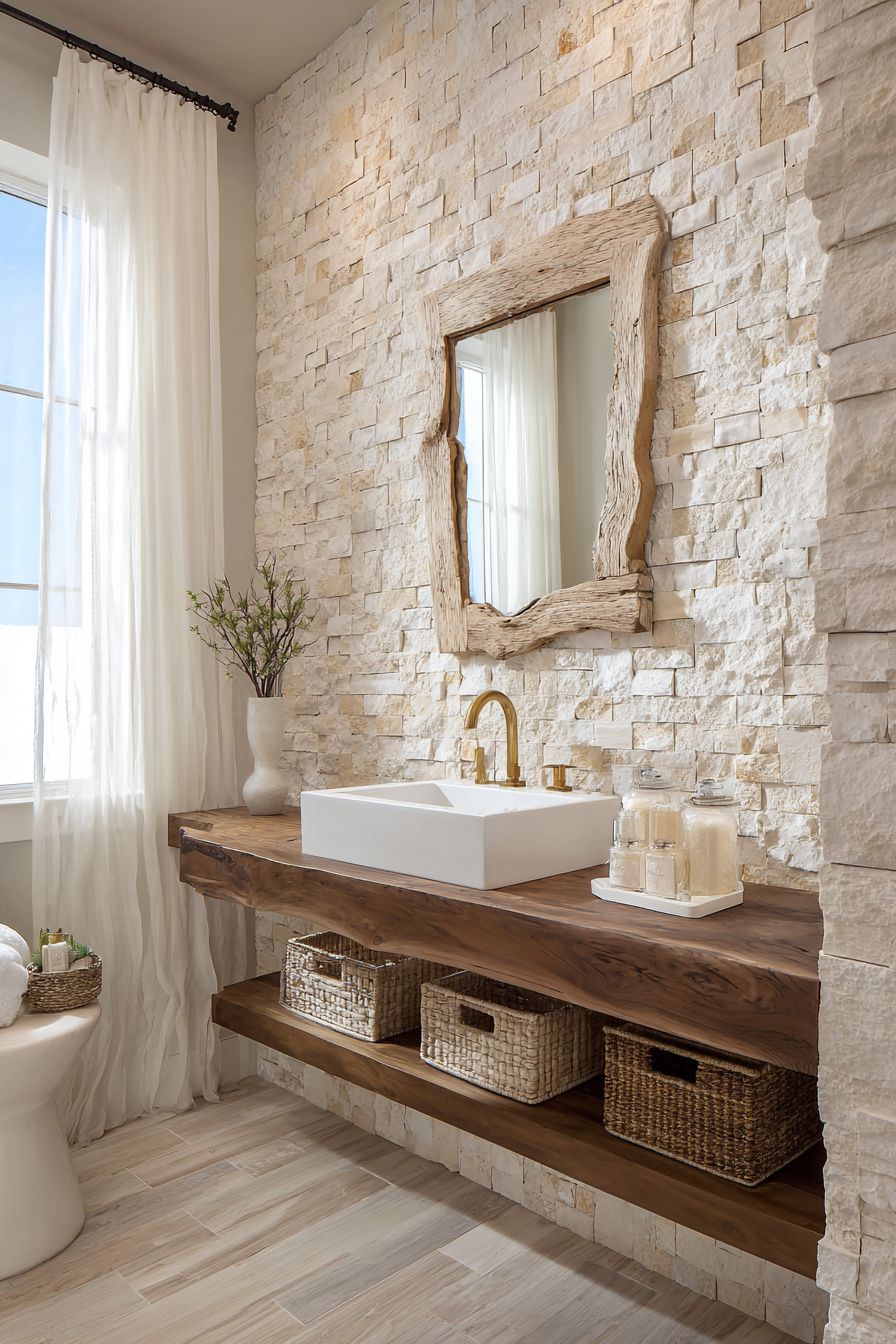
Open shelving displays woven baskets and glass apothecary jars filled with cotton balls and bath salts. This curated styling transforms functional storage into a decorative opportunity, keeping essentials accessible while maintaining visual appeal.
The transparent jars showcase their contents beautifully, adding layers of texture through the materials they contain. Golden hour light streaming through sheer linen curtains bathes everything in warm ambiance, emphasizing the earthy color story.
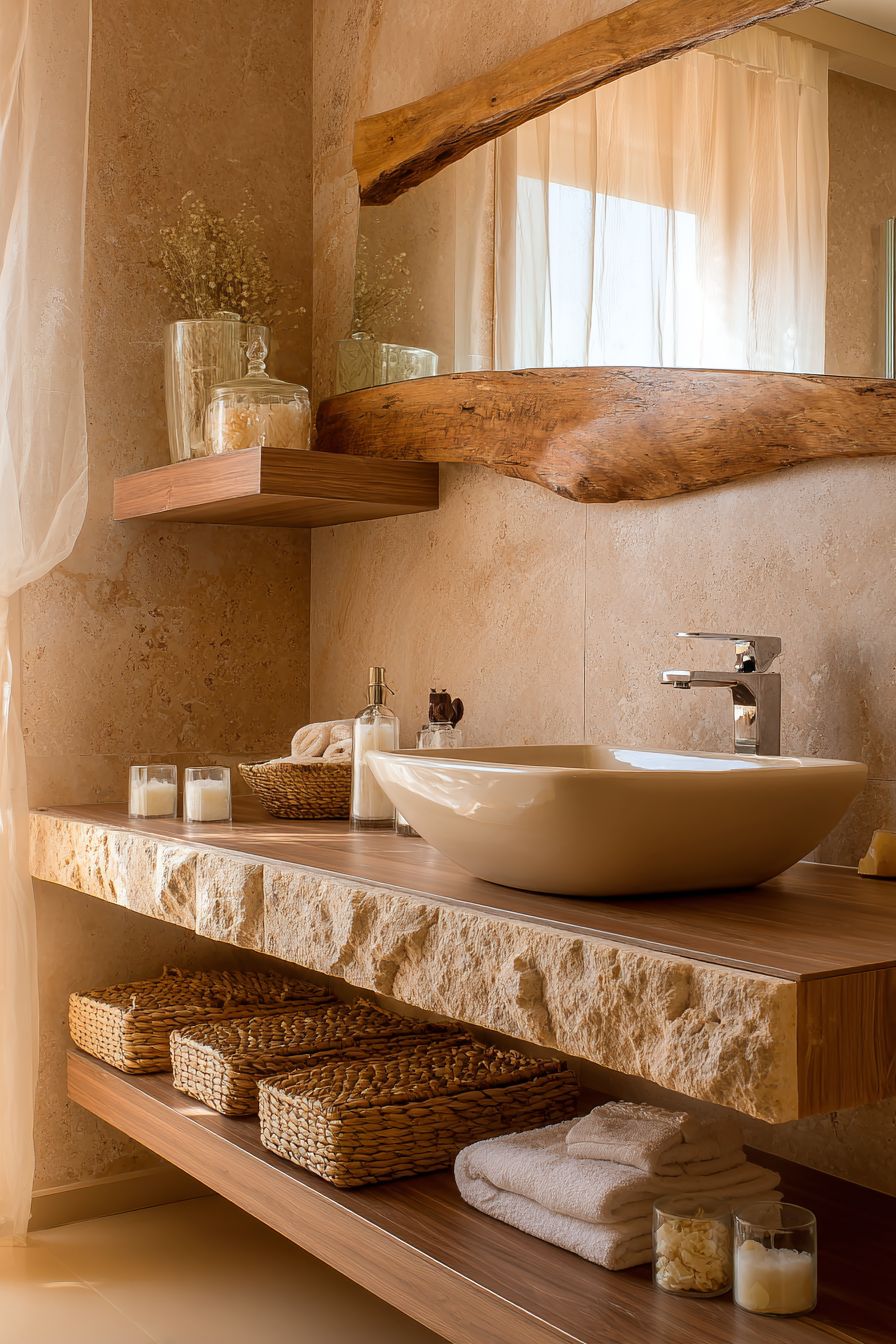
Design principles for this organic luxury approach:
- Select natural stone with visible variation to celebrate authentic material character
- Use live-edge mirrors to introduce organic shapes into geometric bathroom spaces
- Choose brushed gold fixtures to complement warm stone and wood tones
- Style open shelving with natural materials like woven baskets for cohesive aesthetics
- Hang sheer linen curtains to filter harsh light into soft, golden illumination
5. Livable Luxury with Dedicated Reading Nook
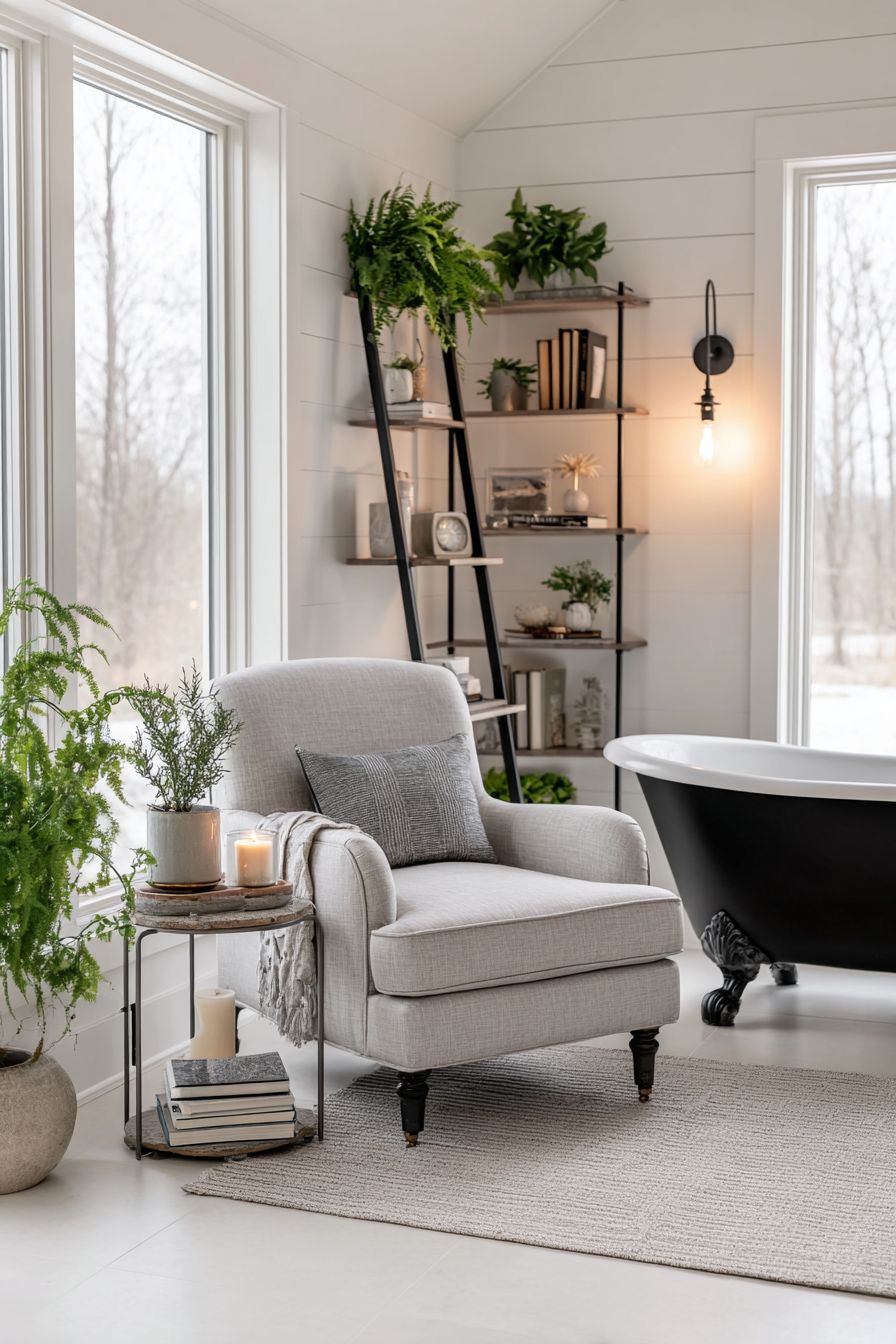
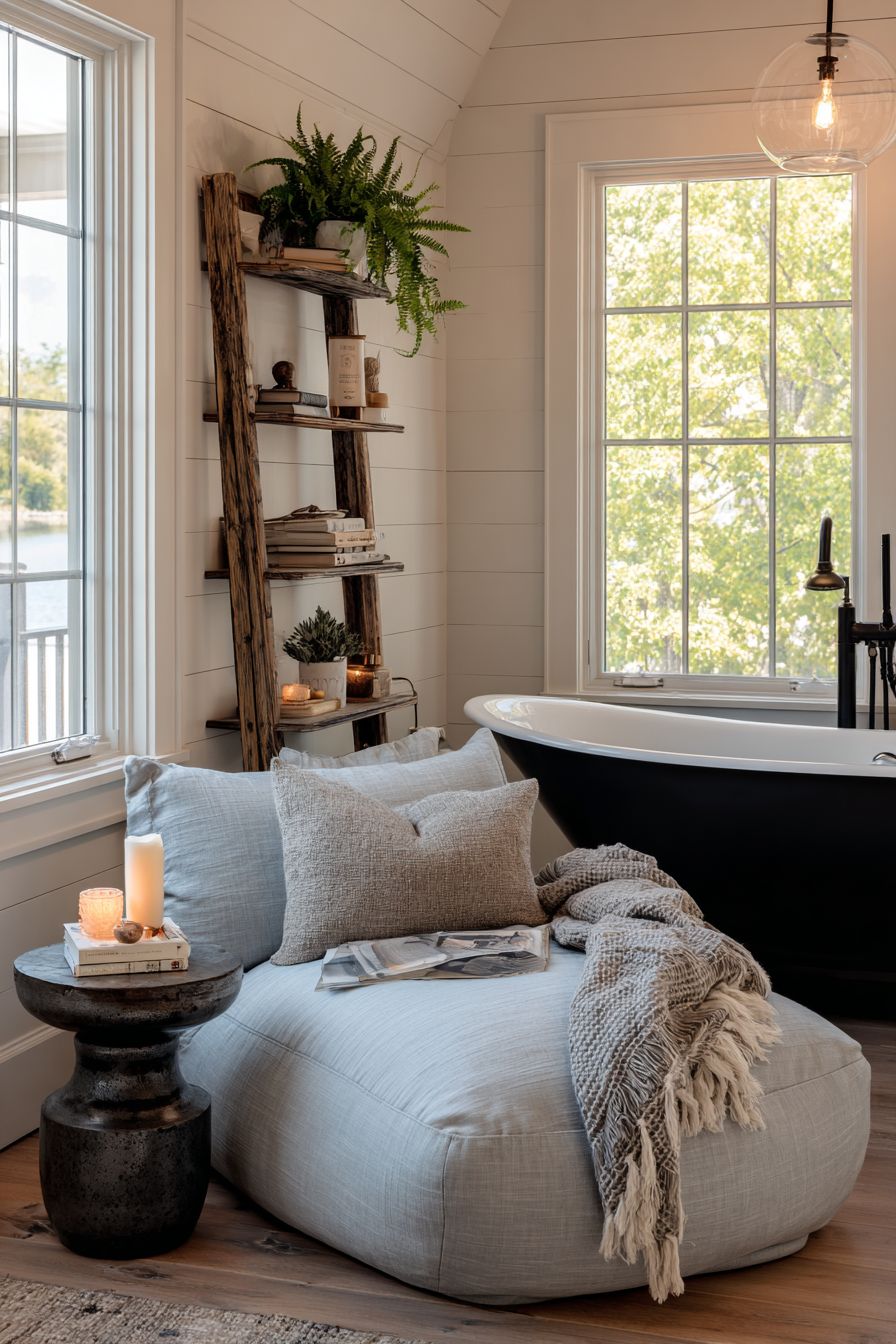
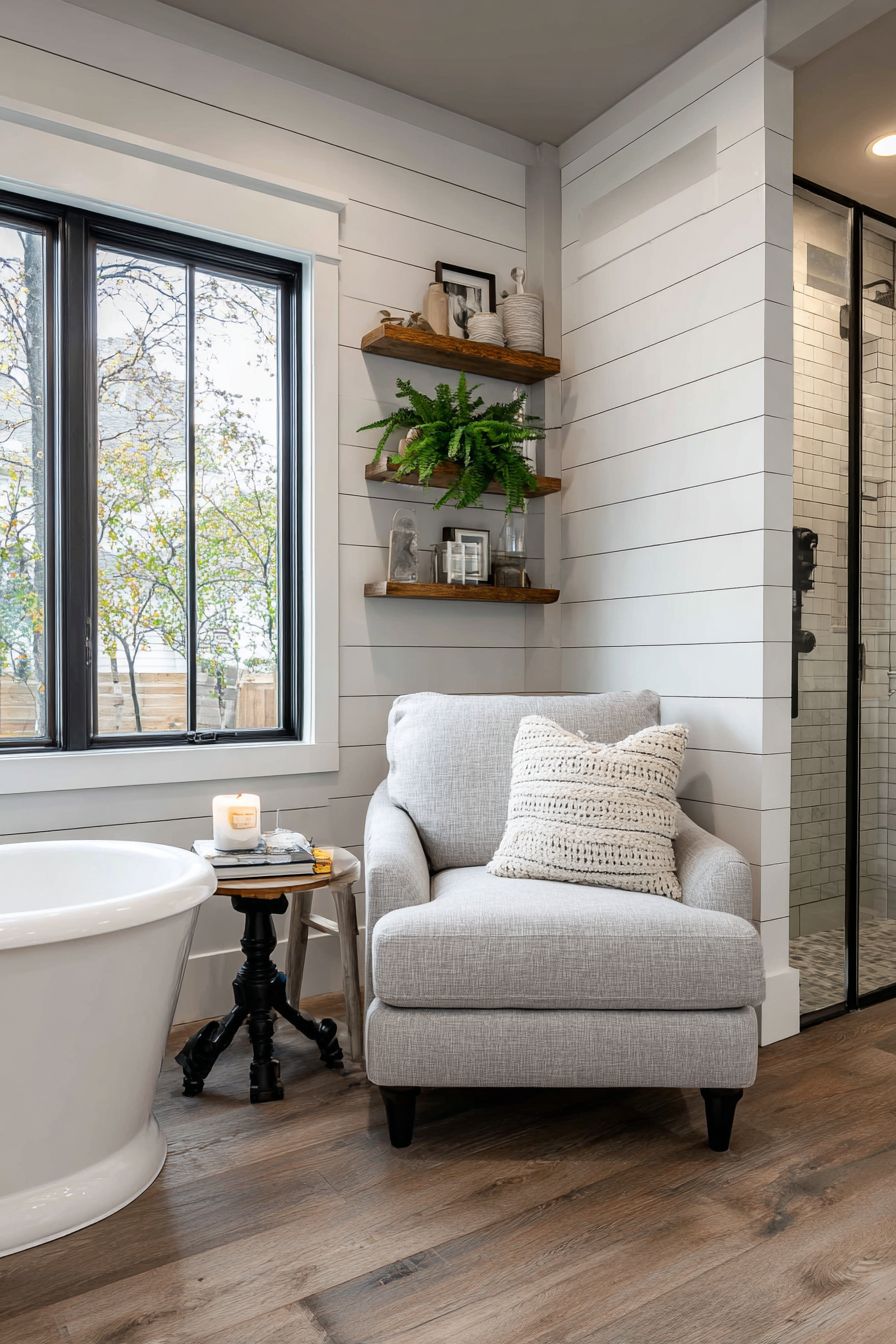
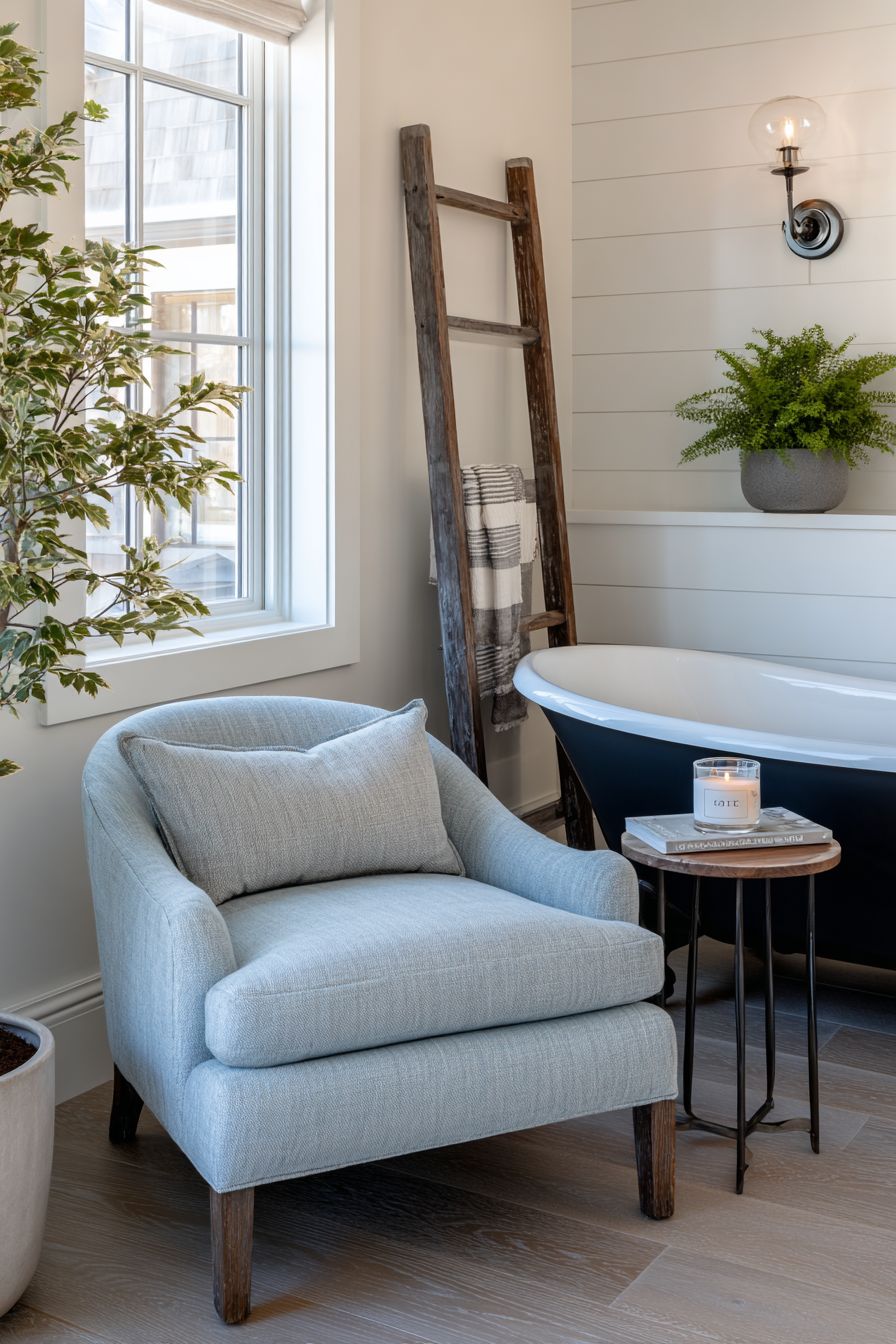
This spacious bathroom reimagines functionality by incorporating a comfortable reading nook within its generous footprint. An upholstered chair in soft grey linen provides a dedicated space for relaxation beyond bathing activities. This unexpected element elevates the bathroom from purely utilitarian to a true retreat space. A small side table holds design books and a scented candle, supporting extended time spent in personal contemplation and self-care.
White shiplap walls create cottage-inspired warmth while maintaining brightness throughout the space. The horizontal lines add architectural interest without overwhelming the senses. A freestanding clawfoot tub painted in matte black serves as a bold focal point, its traditional shape reimagined through contemporary color choice. This fusion of classic form with modern finish demonstrates how vintage elements can feel fresh and current.
Potted ferns arranged on a vintage ladder shelf bring vertical greenery into the space. The ladder’s repurposed function adds character while solving storage needs creatively. Natural lighting creates cozy atmosphere throughout, supporting both active bathing routines and quiet reading moments. This multifunctional approach recognizes that bathrooms can serve various needs beyond their traditional purpose.
Creating a multifunctional bathroom retreat:
- Incorporate comfortable seating if square footage allows for expanded functionality
- Paint vintage fixtures in contemporary colors to bridge traditional and modern aesthetics
- Use shiplap walls to add texture and cottage charm without dark wood tones
- Repurpose ladders or other vintage items for creative storage solutions
- Include multiple lighting sources to support different activities and moods
6. Japanese-Inspired Zen Minimalism with Soaking Tub
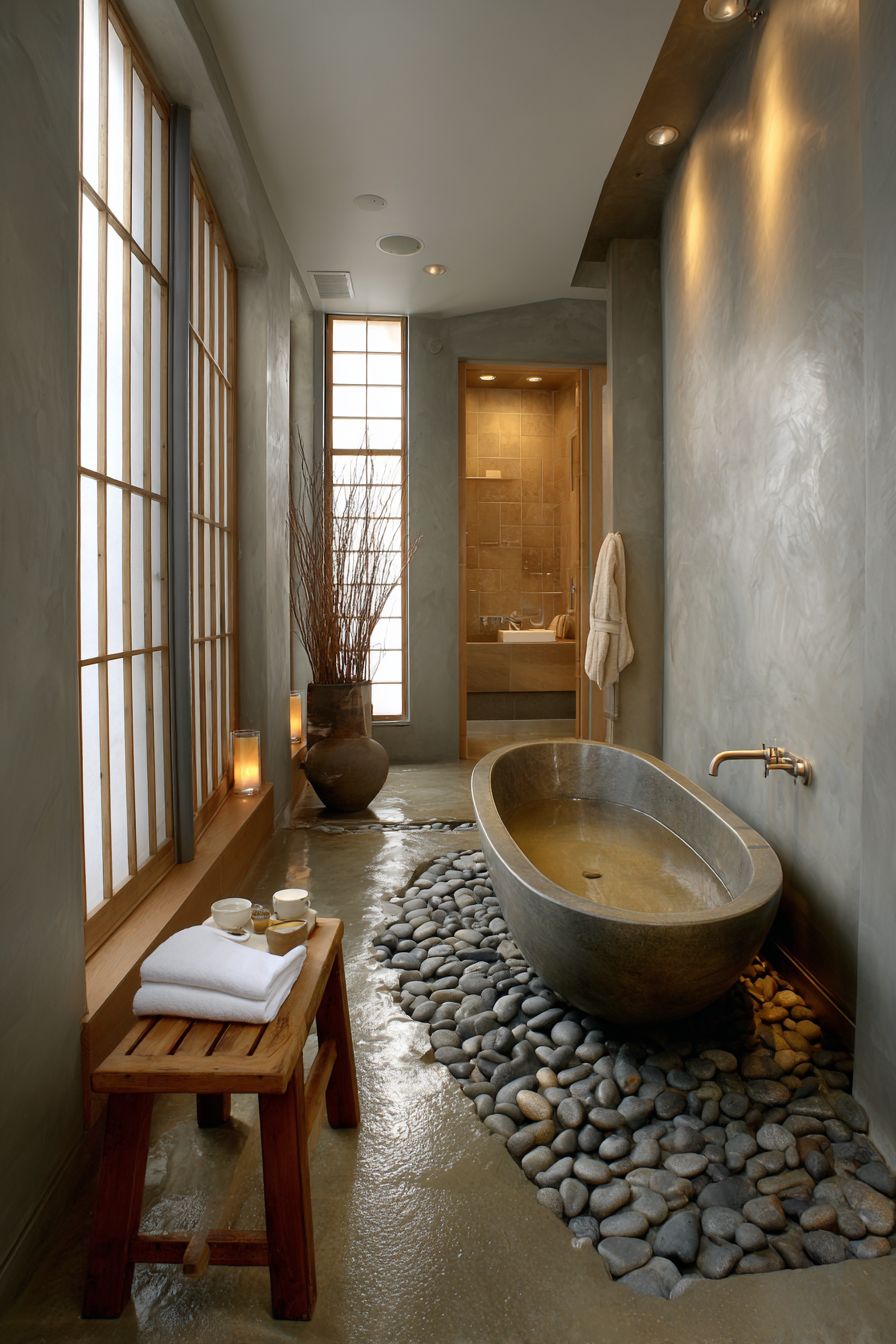
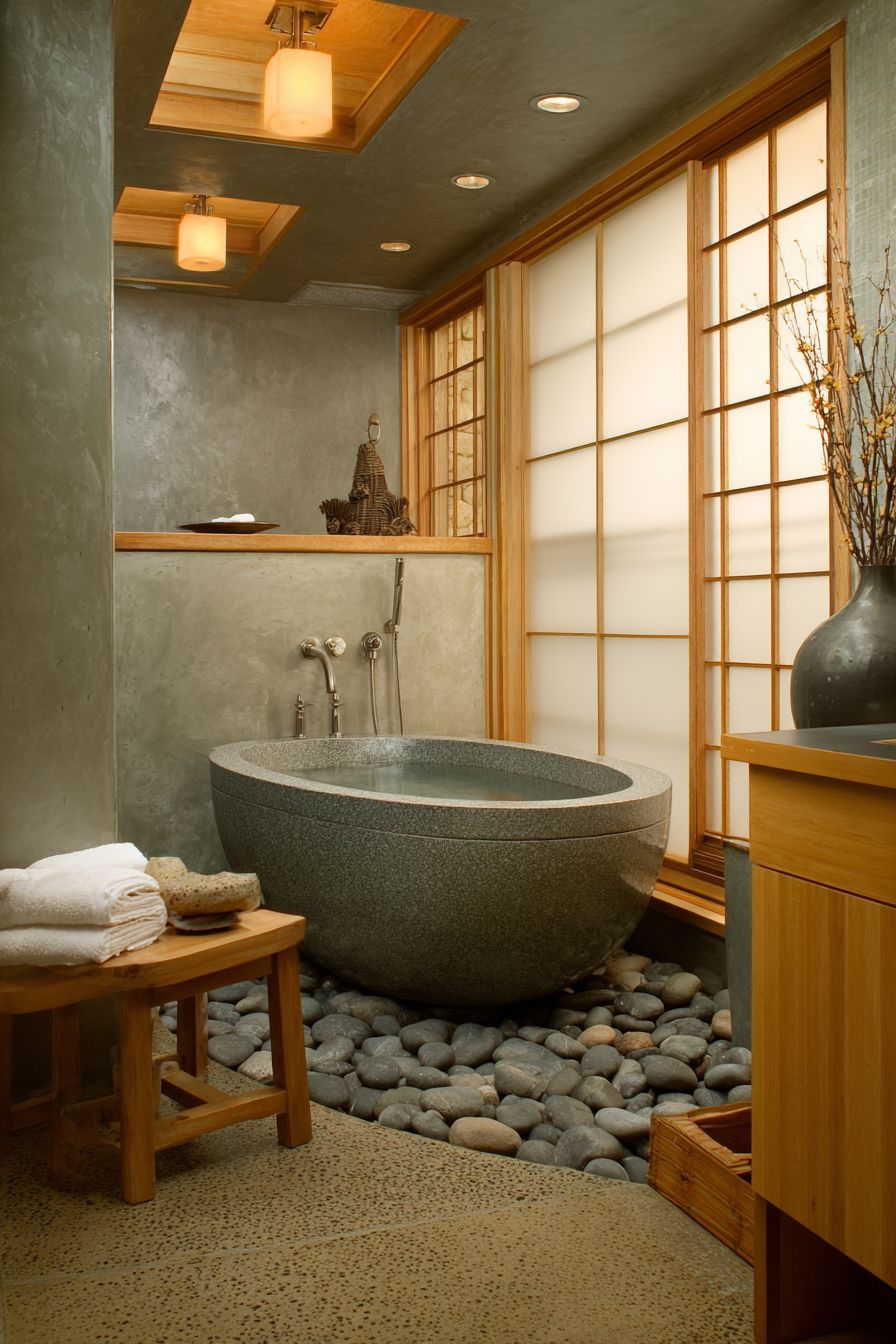
Eastern design philosophy guides this peaceful bathroom centered around a Japanese soaking tub. The tub sits elegantly on smooth river stones, creating a zen-like focal point that grounds the space literally and figuratively. River stones introduce natural texture while referencing traditional Japanese garden aesthetics. Their presence transforms bathing into a meditative ritual, encouraging mindfulness and stress release.
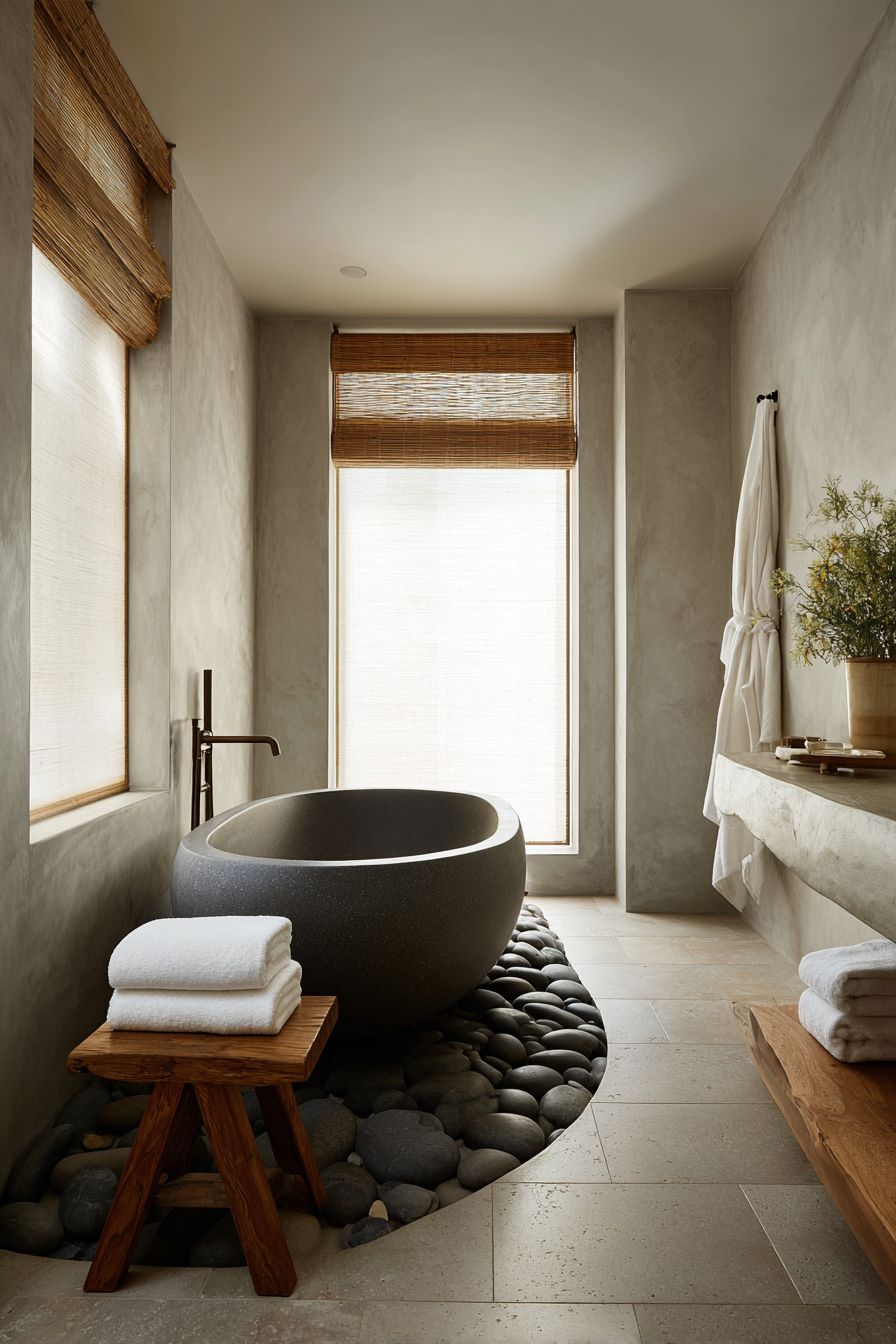
Light grey plaster walls feature a subtle texture that adds depth without distraction. This neutral backdrop allows architectural elements and natural materials to take center stage. Bamboo accents add natural warmth through their distinctive grain and sustainable origins. The material choice reflects Japanese respect for nature and environmental consciousness. A low wooden stool holds folded white towels and a ceramic soap dish, maintaining the minimalist aesthetic through thoughtful restraint.
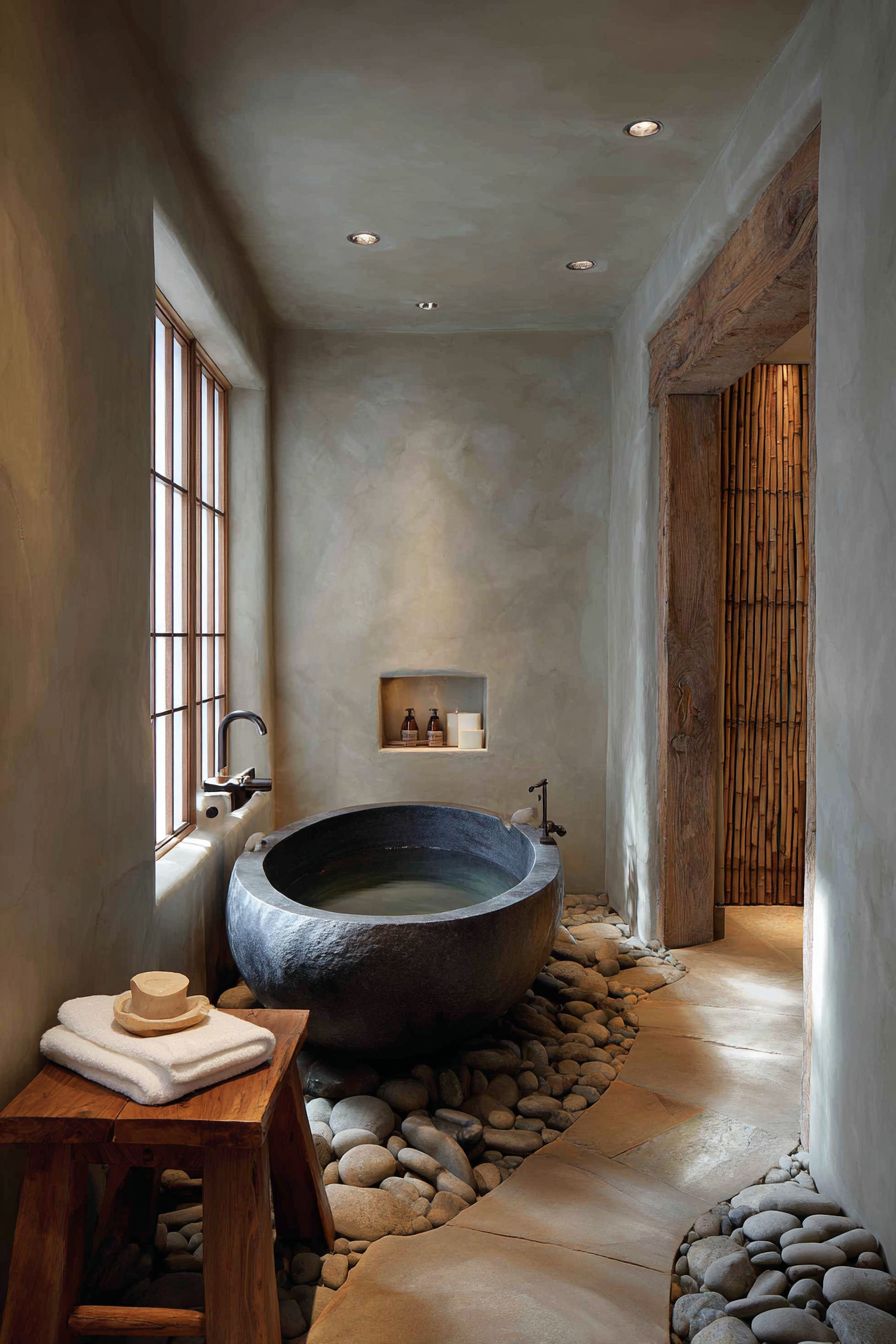
Recessed lighting creates soft ambient glow that complements natural light filtering through translucent paper window coverings. These traditional shoji-inspired coverings diffuse harsh sunlight into gentle illumination that changes subtly throughout the day. The lighting approach supports the peaceful minimalist aesthetic, avoiding harsh contrasts or overly bright task lighting. Every element works in harmony to create a serene atmosphere conducive to relaxation.
Principles for achieving Japanese-inspired tranquility:
- Choose soaking tubs with deeper profiles for an authentic Japanese bathing experience
- Incorporate river stones or pebbles to reference traditional garden aesthetics
- Use bamboo accents sparingly to add warmth while respecting minimalist principles
- Install translucent window coverings to diffuse light softly throughout the space
- Select low-profile furniture and accessories to maintain horizontal calm
7. Curated Elegance with Marble Vanity Styling
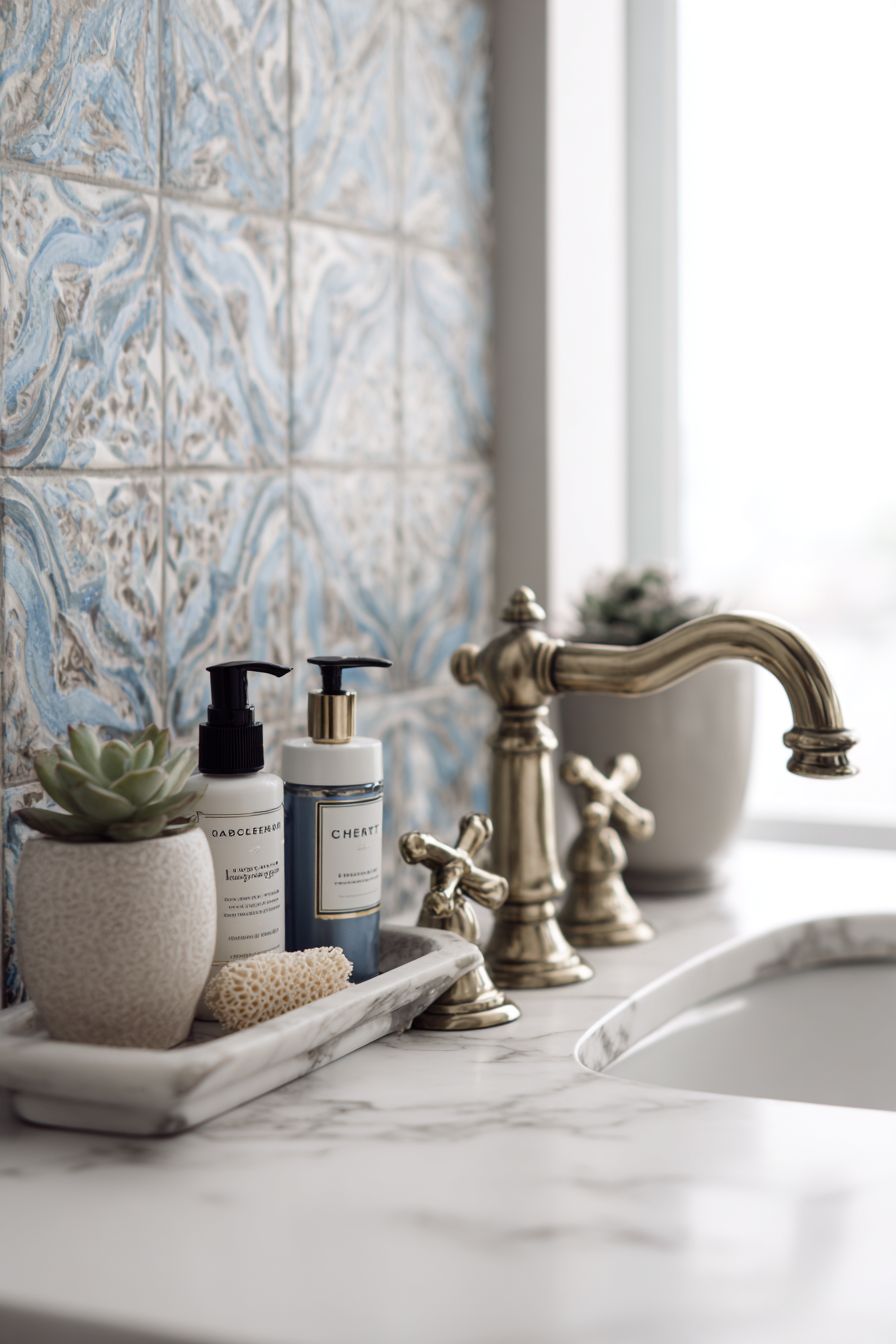
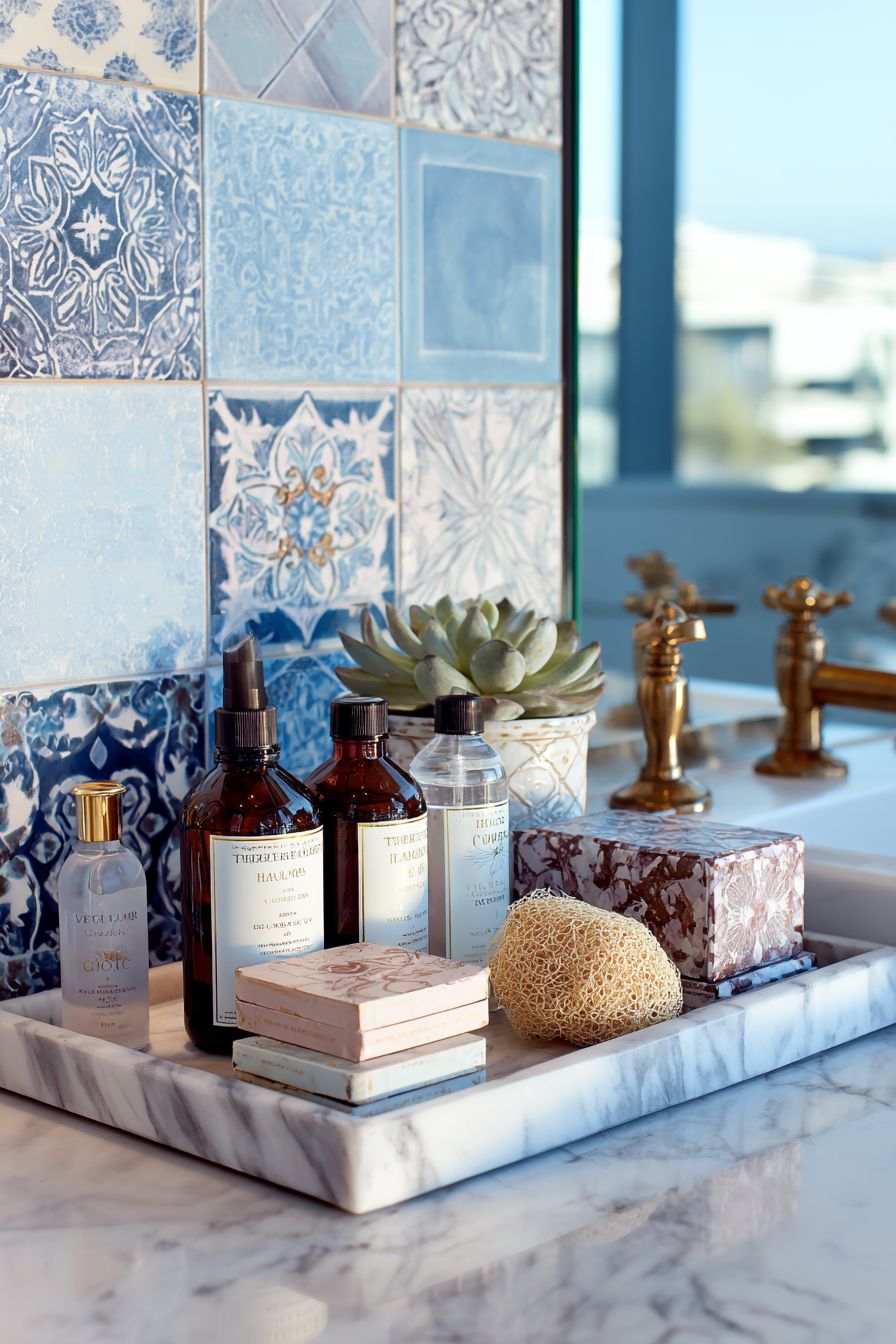
The vanity vignette becomes an art form in this carefully styled design. A marble countertop in white Carrara displays delicate grey veining that has captivated designers for centuries. This classic material choice brings geological beauty into everyday spaces, its natural patterns ensuring no two installations look identical. The cool white surface provides a clean backdrop for thoughtful styling that balances function with aesthetics.
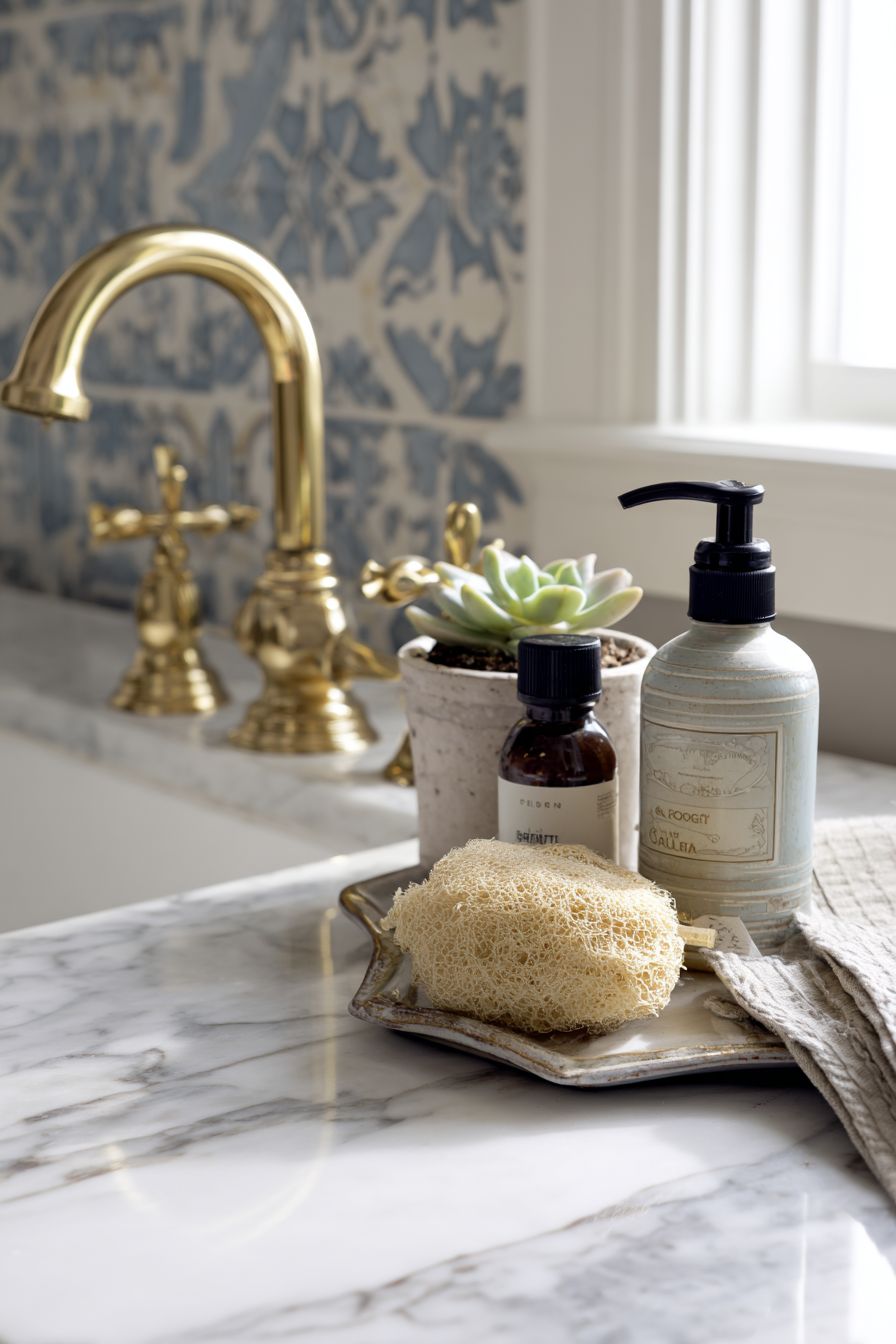
A decorative tray holds luxury skincare bottles arranged with intentional spacing. This simple organizational tool transforms necessary items into curated display, preventing counter clutter while maintaining accessibility. A small succulent in a ceramic pot adds living texture, its sculptural form complementing the geometric bottles. A natural sea sponge introduces organic softness, its irregular shape contrasting with the manufactured smoothness surrounding it.
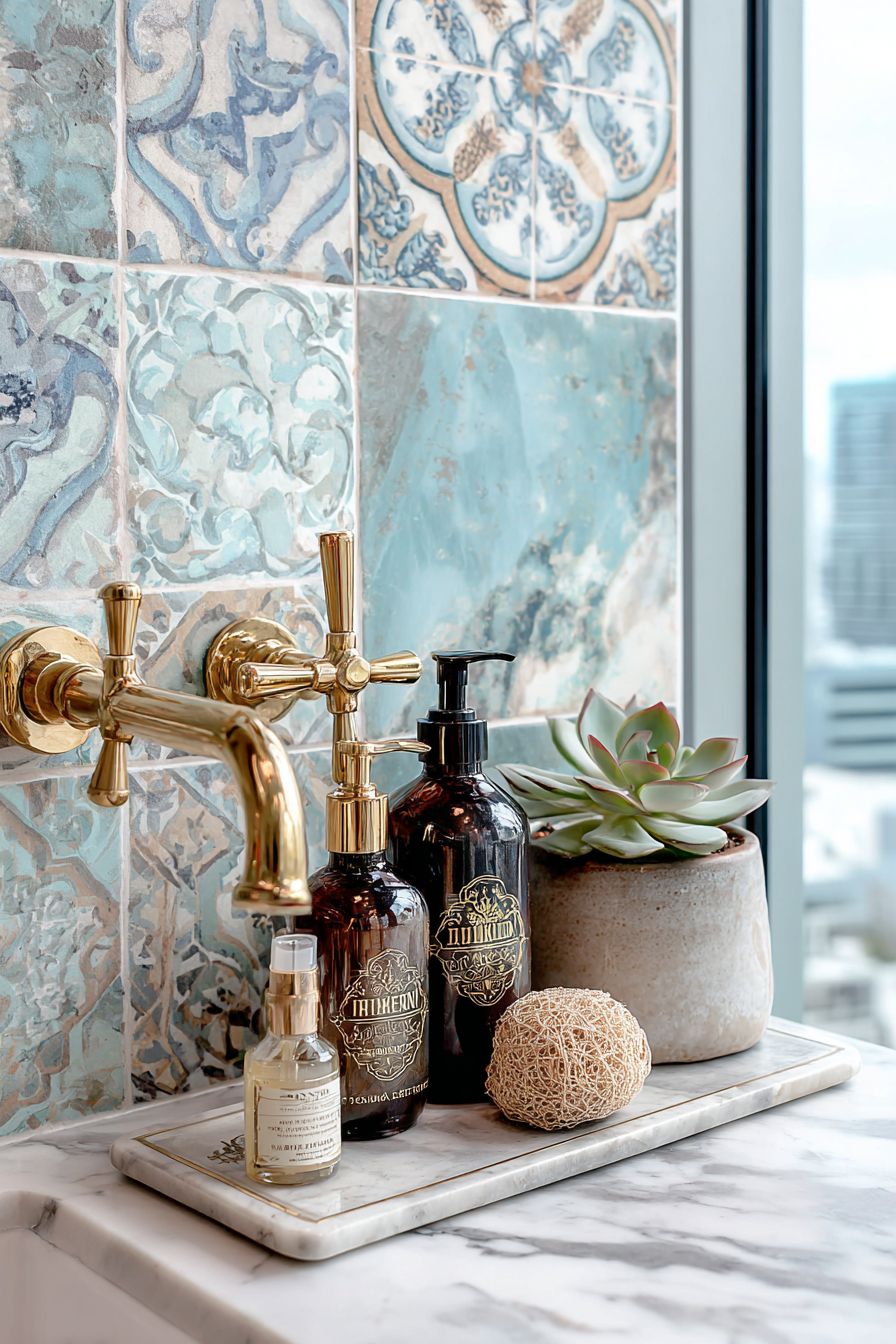
Behind the vanity, patterned cement tiles in soft blues and whites create an artisanal backdrop. These handcrafted tiles demonstrate skilled craftsmanship through their intricate patterns and subtle color variations. A vintage brass faucet with cross handles adds character and historical reference, its patina suggesting stories from another era. The combination of classic marble, vintage fixtures, and artisanal tiles creates layered sophistication.
Styling principles for elevated vanity design:
- Use decorative trays to group related items and prevent scattered clutter
- Choose Carrara marble for timeless elegance with unique natural veining
- Add living plants like succulents for organic texture and air purification
- Install patterned cement tiles as accent walls for artisanal character
- Select vintage-style fixtures with cross handles for traditional charm
8. Sophisticated Simplicity in Monochromatic Shower Design
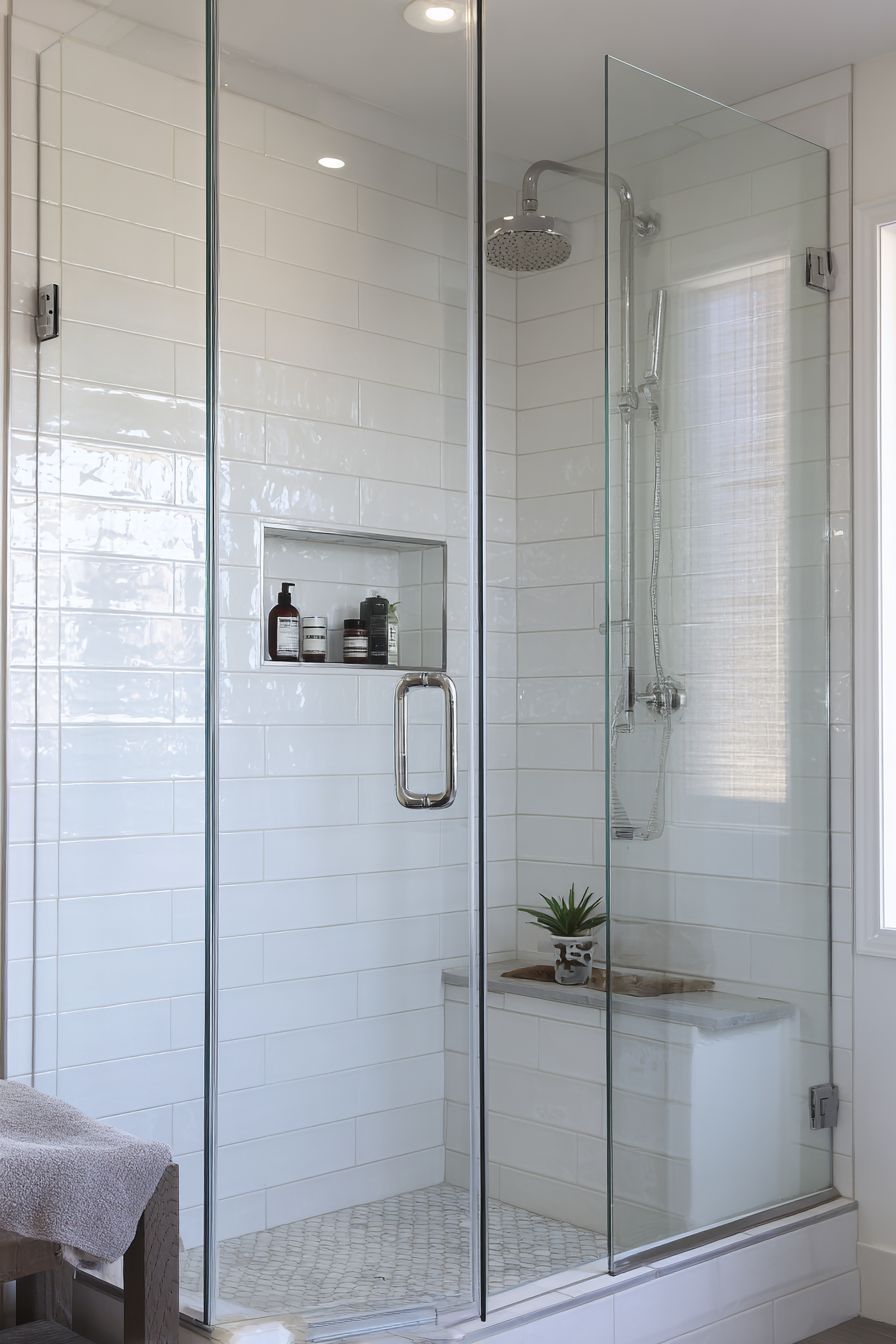
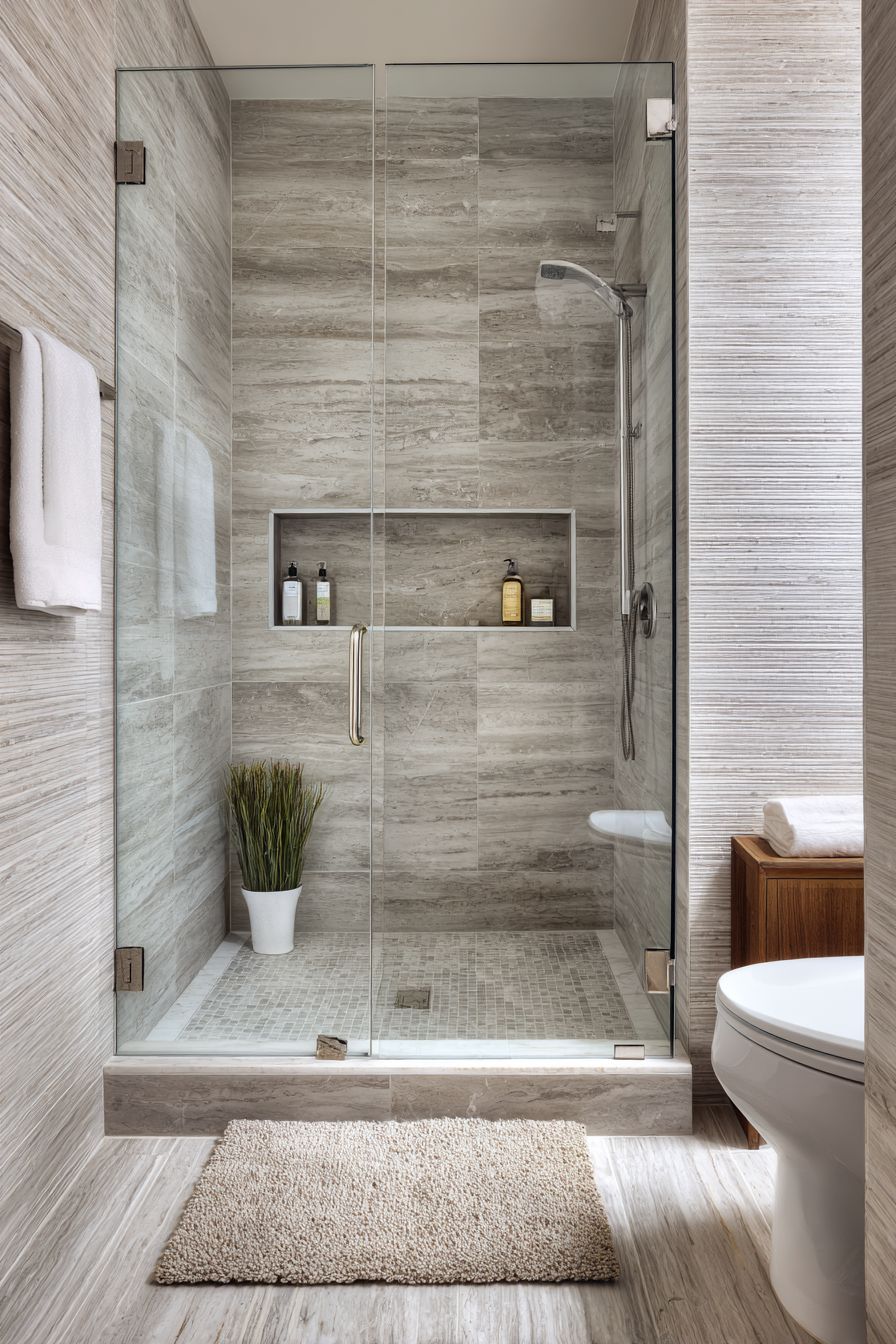
A walk-in shower with seamless glass enclosure exemplifies sophisticated simplicity through restrained material choices. Walls covered in elongated white tiles with subtle vertical texture create a continuous visual flow from floor to ceiling. The monochromatic scheme allows texture to provide interest rather than relying on color contrast. This approach creates calm, focused environment perfect for morning clarity or evening decompression.
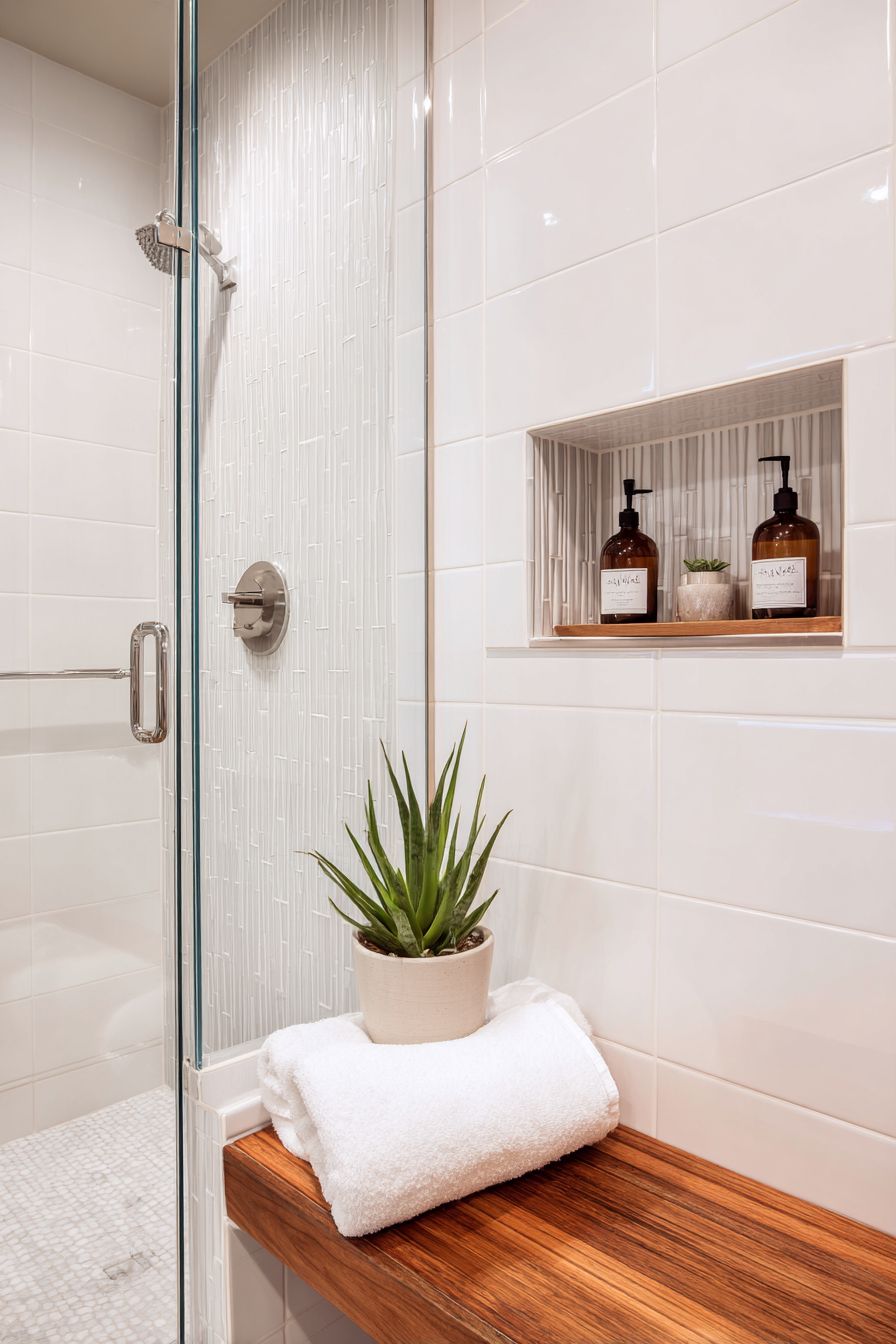
A built-in niche displays high-end bath products in minimalist packaging alongside a small potted air plant. This recessed storage solution keeps necessities accessible without disrupting the clean lines. The product packaging becomes part of the design when chosen thoughtfully, with simple bottles and neutral labels contributing to the overall aesthetic. The air plant adds unexpected life without requiring drainage or extensive maintenance.
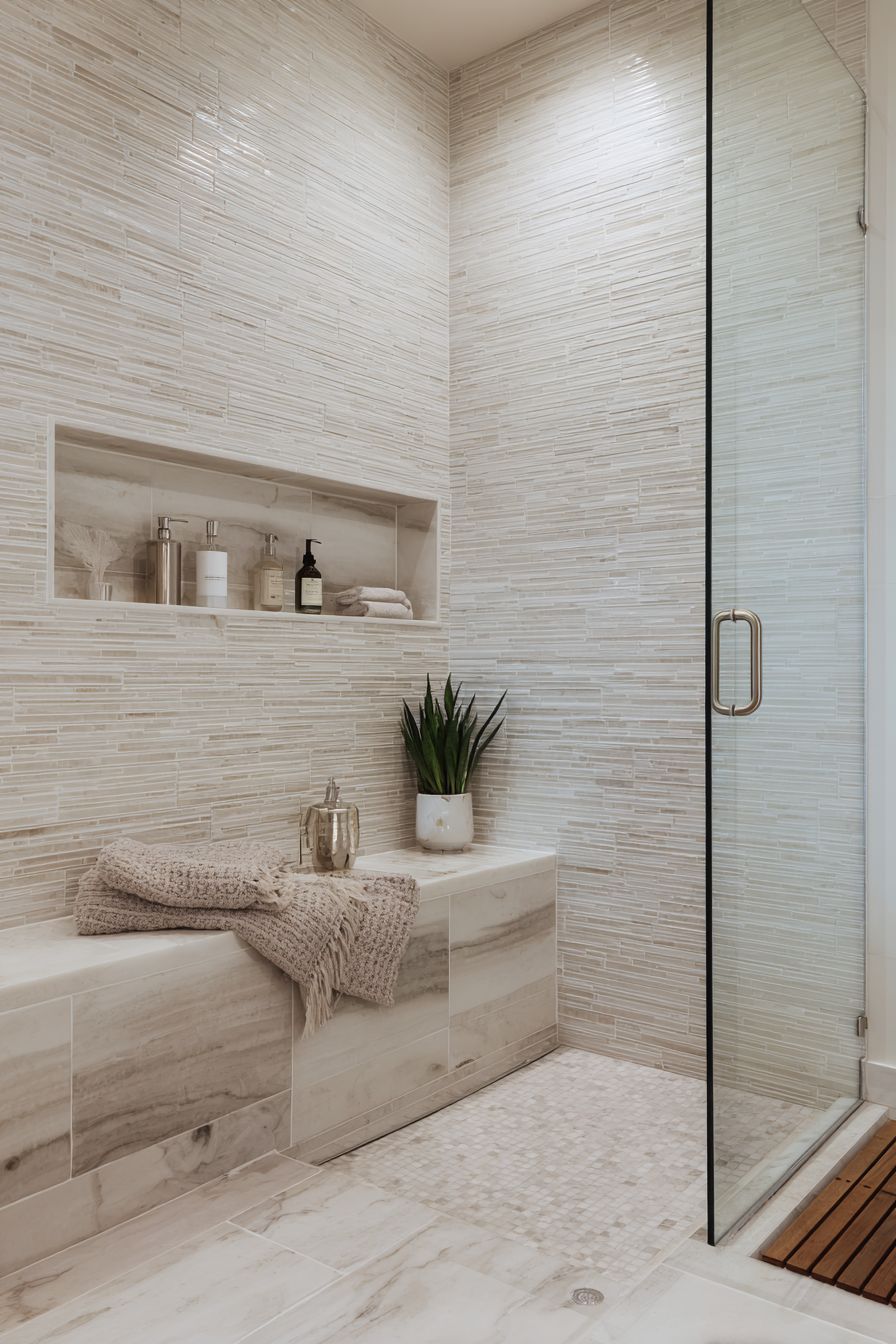
Brushed nickel fixtures complement the clean palette, while natural wood elements from a teak bath mat add essential warmth. The mat’s slatted design allows water drainage while introducing horizontal lines that ground the vertical tile pattern.
The play of light on wet tile surfaces creates dynamic visual interest, with water droplets catching and reflecting illumination. This sophisticated simplicity demonstrates that restraint in color and material can create a powerful impact.
Achieving monochromatic sophistication:
- Use elongated tiles to emphasize the vertical dimension and create modern aesthetic
- Install built-in niches during construction for seamless storage integration
- Choose products with minimalist packaging that complements your color scheme
- Add teak bath mats for natural warmth and practical water drainage
- Select brushed nickel over polished chrome for a softer, less reflective finish
9. Vintage Apothecary Charm with Functional Storage
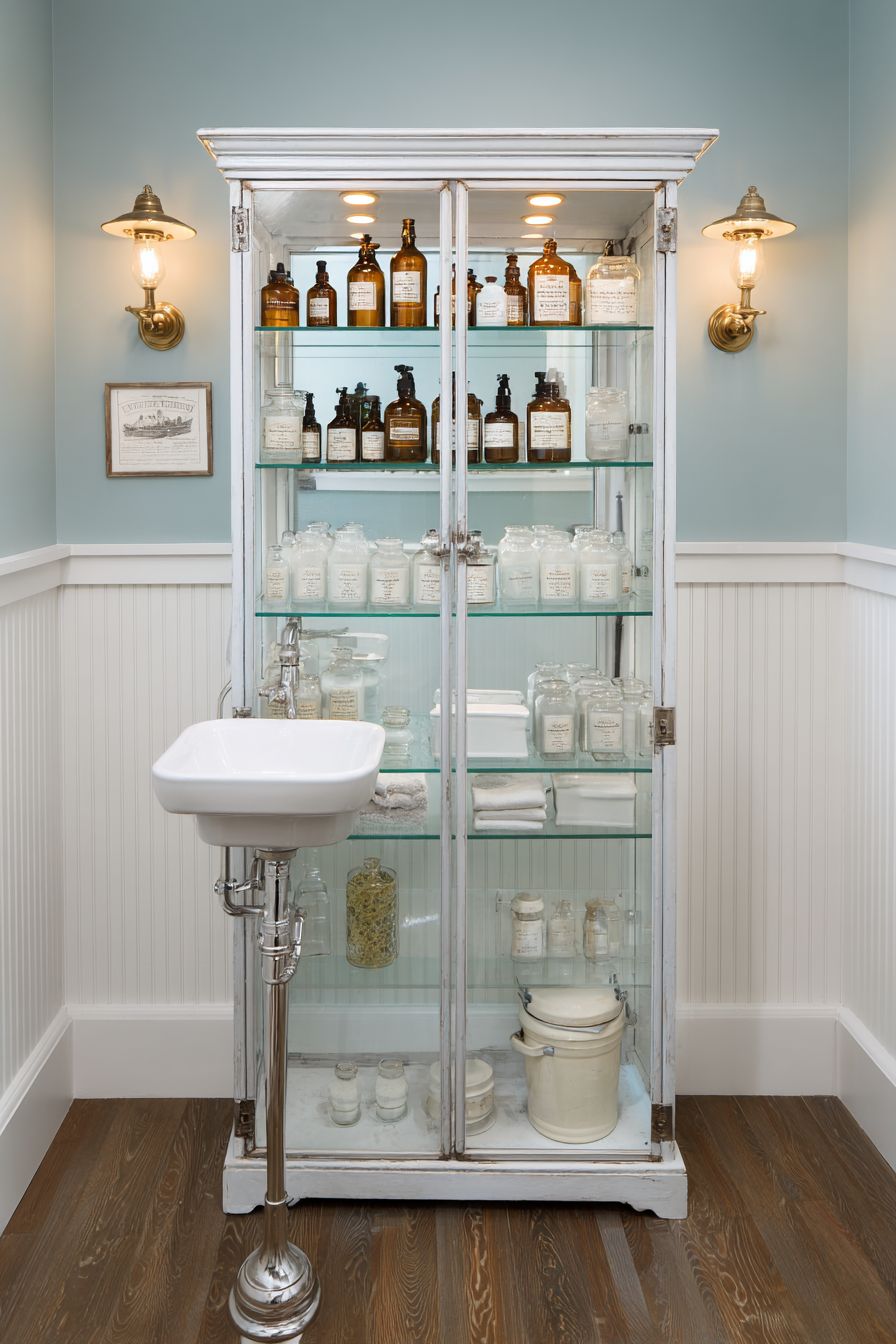
A vintage apothecary-style medicine cabinet serves as this bathroom’s characterful centerpiece. Glass shelves display carefully arranged toiletries in amber bottles and white ceramic containers, transforming daily necessities into a decorative collection. The amber glass references historical pharmacy aesthetics while protecting light-sensitive products. This thoughtful curation demonstrates how functional items can provide visual interest when presented intentionally.
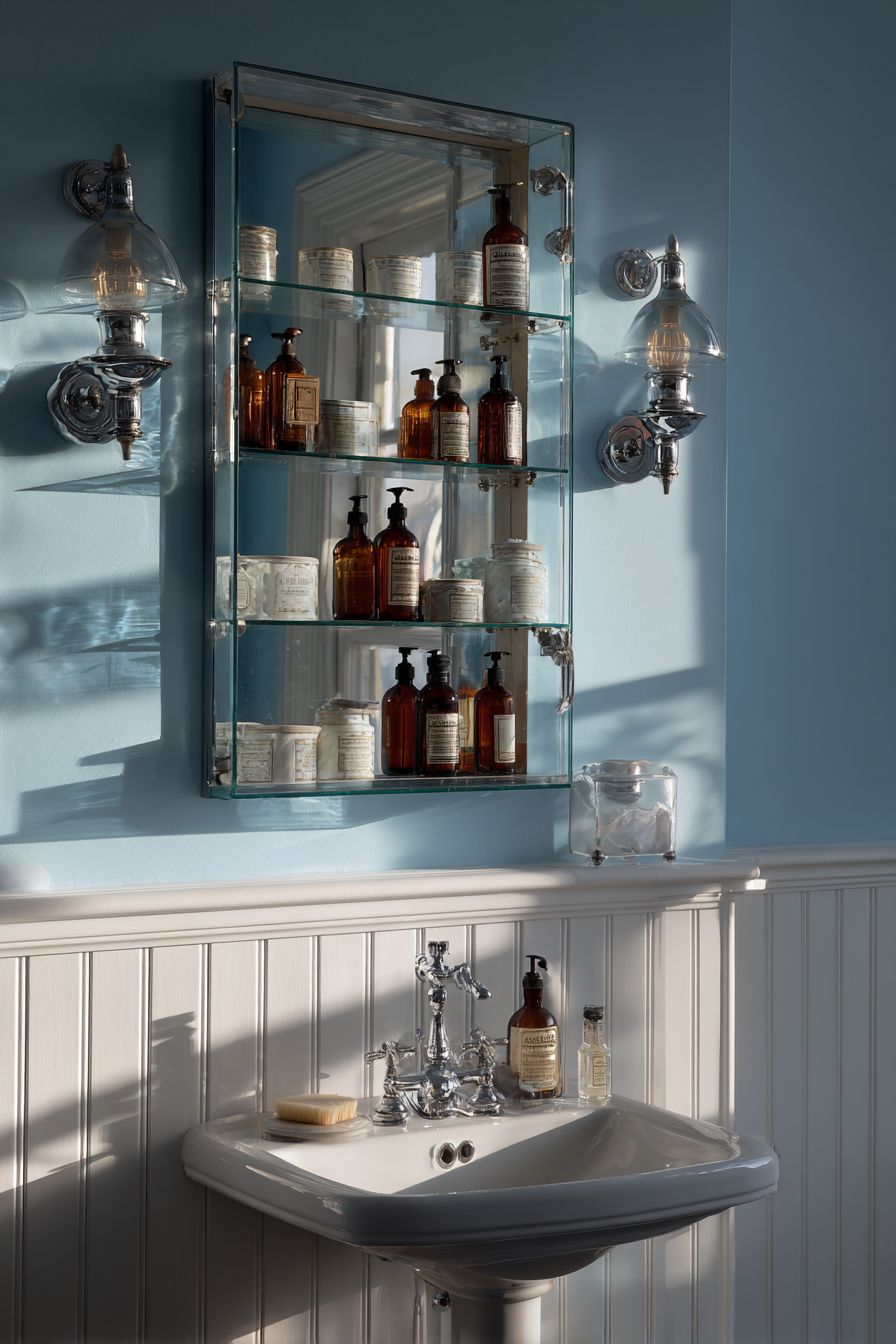
Classic white beadboard wainscoting covers the lower walls while soft grey-blue paint adorns the upper portion. This traditional two-tone treatment adds architectural detail and visual weight distribution. The wainscoting protects walls from moisture and impact while introducing linear texture that catches light beautifully. The grey-blue upper walls provide soothing color that feels both vintage and contemporary.
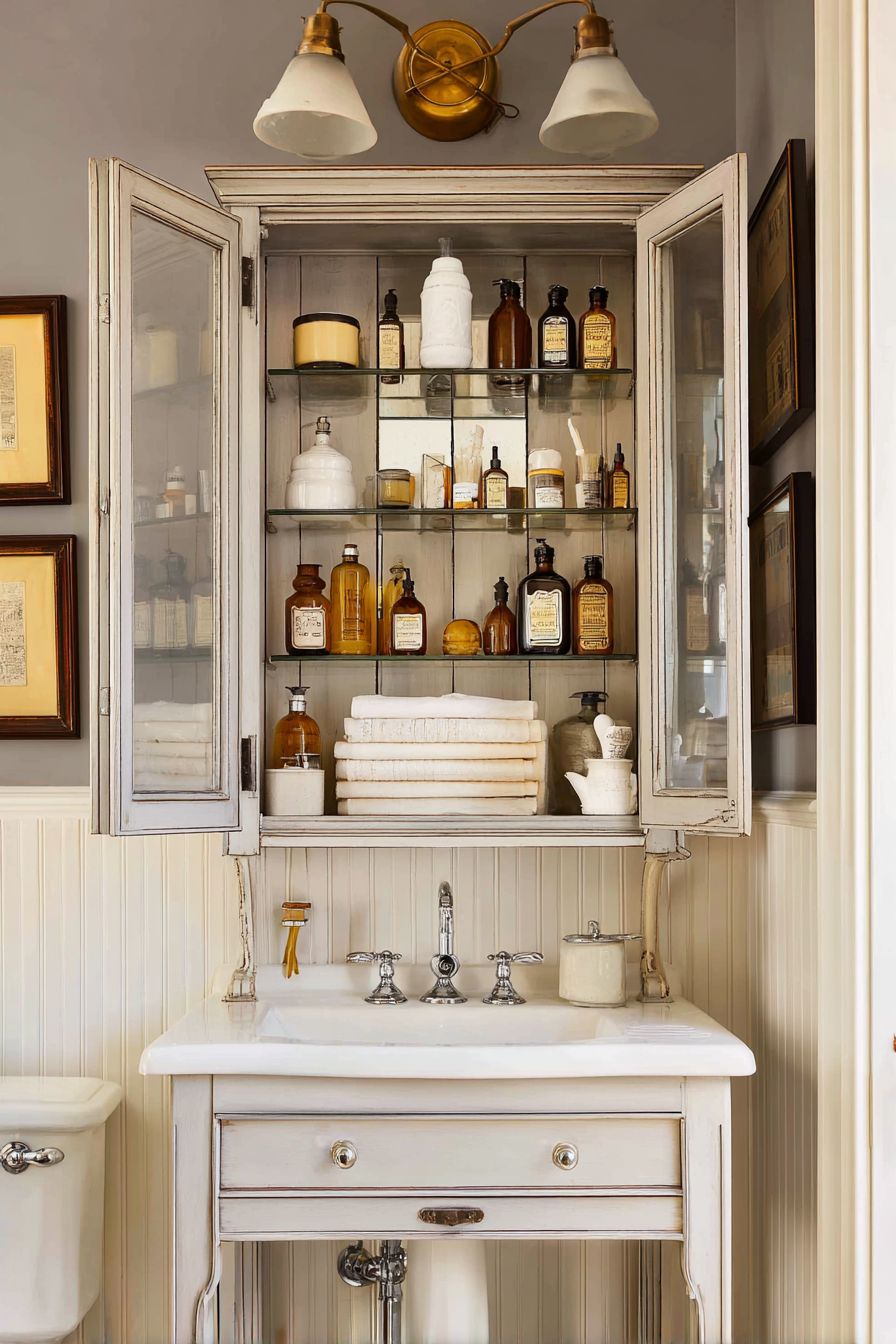
A pedestal sink with porcelain and chrome finish anchors the space with traditional elegance. The exposed pedestal base saves floor space while maintaining classic proportions that never date. Antique brass picture lights illuminate the cabinet, their warm glow highlighting the glassware and creating a romantic atmosphere. This vintage character, combined with functional storage, proves that historical design elements can serve modern needs perfectly.
Incorporating vintage charm with modern function:
- Install glass-front cabinets to display attractive toiletries as decorative elements
- Use beadboard wainscoting for traditional detail and practical wall protection
- Choose pedestal sinks in smaller bathrooms to maximize floor space visibility
- Store products in amber glass bottles for vintage aesthetic and light protection
- Add picture lights above storage areas for task lighting and atmospheric glow
10. Balanced Neutrals with Terrazzo Accent Wall
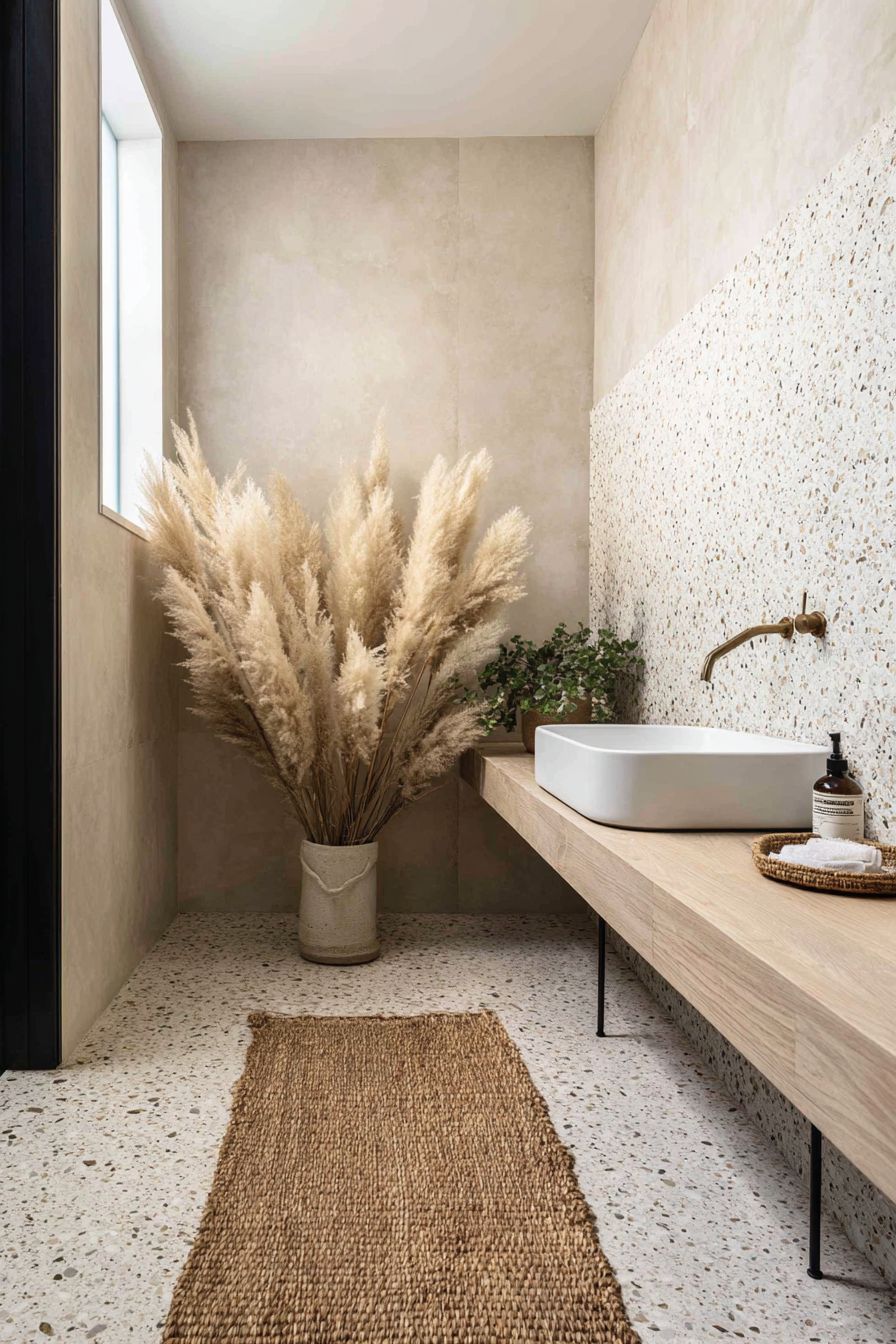
Modern and organic elements combine harmoniously in this thoughtfully composed bathroom. A terrazzo accent wall in soft pastel tones provides textural interest behind a simple white vessel sink. The terrazzo’s speckled pattern introduces subtle color variation while maintaining overall neutrality. This material choice references mid-century design while feeling completely contemporary, demonstrating how certain aesthetics transcend temporary trends.
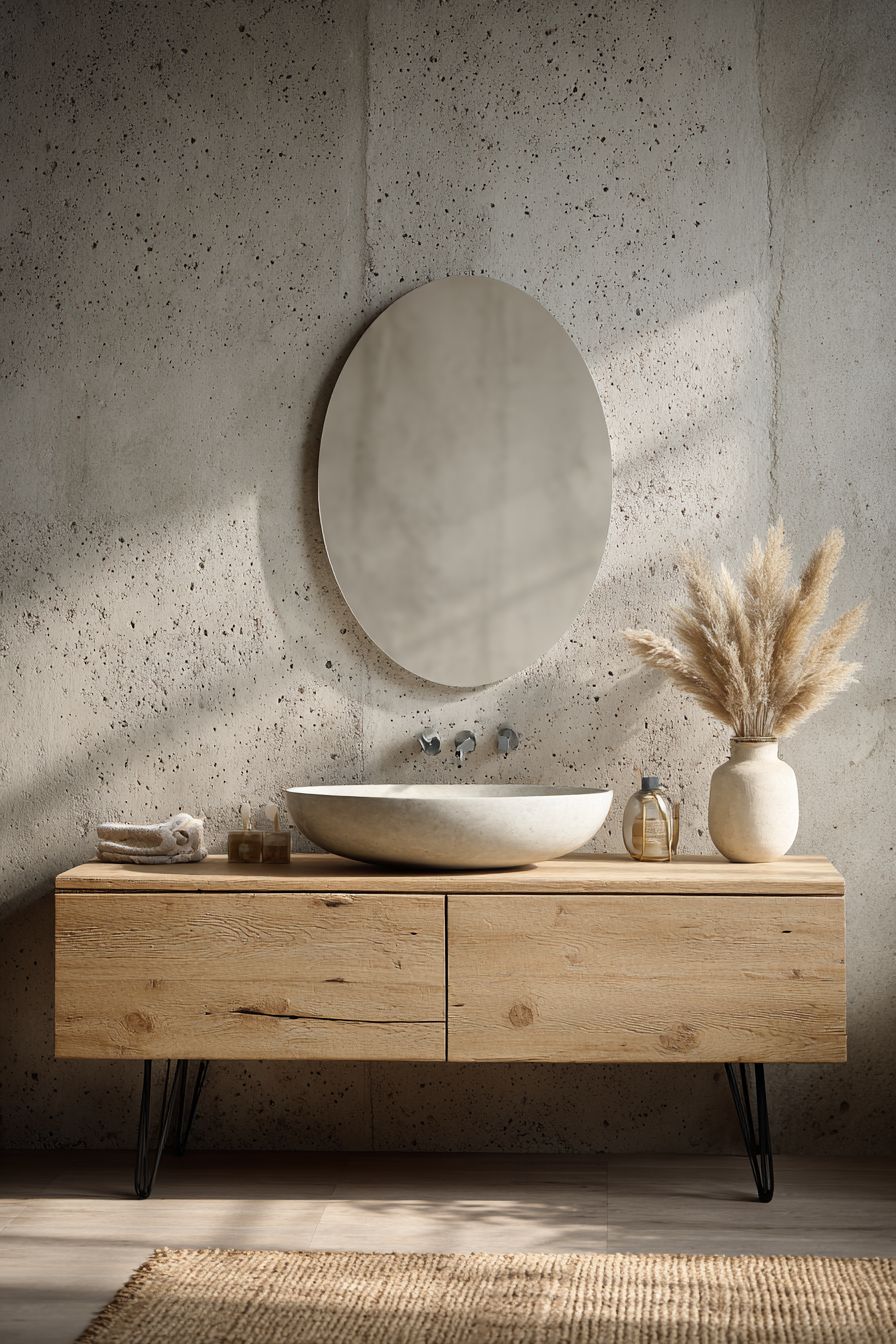
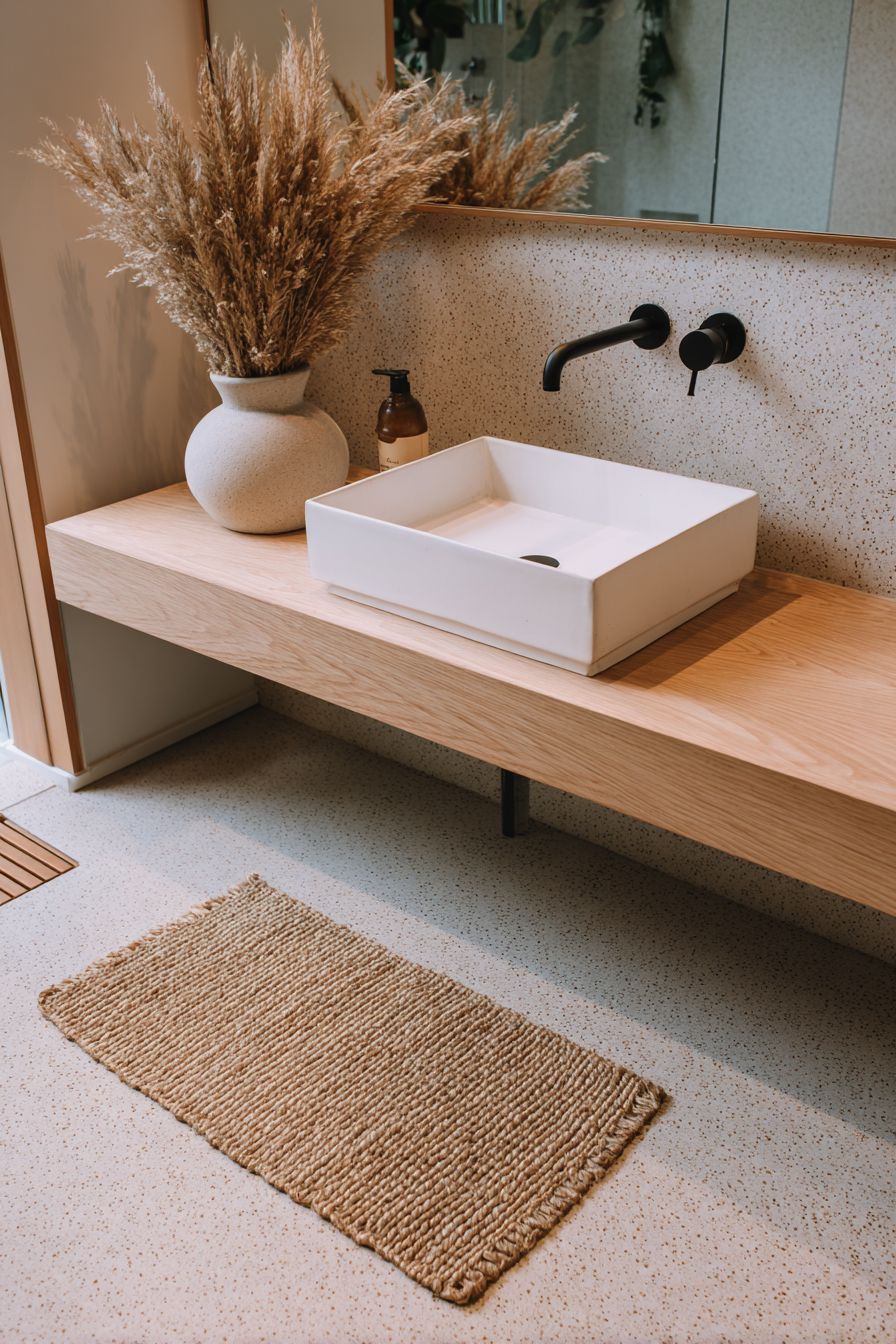
The floating vanity features light ash wood with visible grain and minimalist black metal legs. The wood’s natural patterns bring warmth without overwhelming the clean-lined silhouette. The black metal legs provide structural support while adding an industrial edge that prevents the space from feeling too soft. Dried pampas grass in a ceramic vase adds height and texture, its feathery plumes introducing movement and organic irregularity.
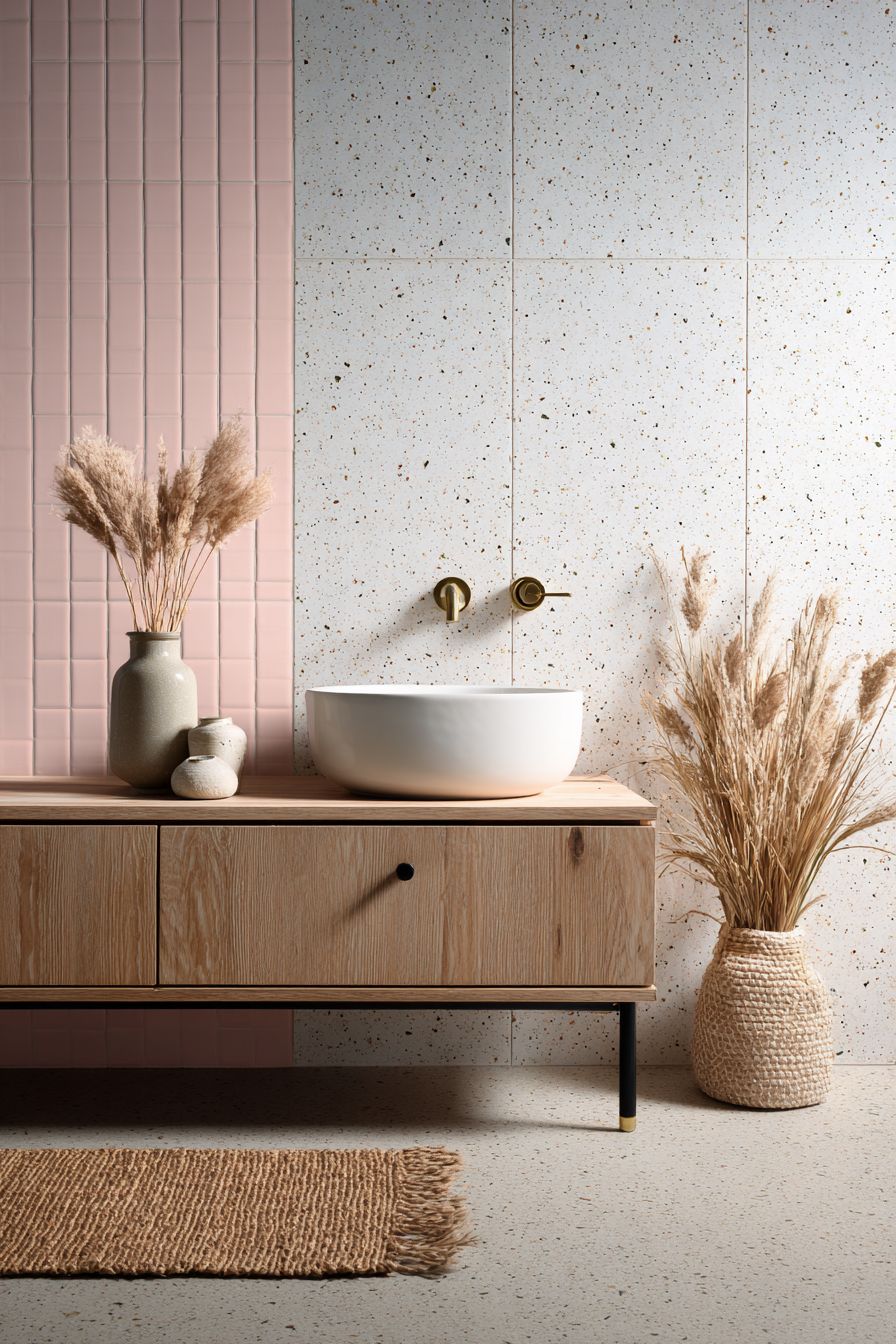
Aged brass fixtures provide subtle warmth that bridges the cool terrazzo and warm wood tones. Their slightly weathered appearance adds lived-in comfort to the contemporary design. A woven jute rug grounds the space while introducing another natural texture underfoot. The layering of materials—terrazzo, wood, metal, ceramic, brass, and jute—creates rich sensory experience while maintaining cohesive neutral palette.
Creating balanced mixed-material design:
- Use terrazzo accent walls to introduce pattern without overwhelming neutral schemes
- Choose floating vanities with visible wood grain for organic warmth
- Add black metal elements to ground soft color palettes with structure
- Incorporate dried grasses or branches for vertical interest and natural texture
- Layer multiple natural materials in similar tones for depth without visual chaos
Why These Aesthetic Bathroom Designs Represent the Best in Contemporary Interior Design
These ten bathroom concepts exemplify excellence in contemporary interior design through their thoughtful integration of materials, lighting, functionality, and aesthetic principles. Each design demonstrates how to create beautiful bathroom spaces that serve both practical needs and emotional well-being. The bathroom design trends showcased here reflect current preferences for natural materials, sustainable choices, and spa-like atmospheres that transform daily routines into self-care rituals.
The aesthetic bathroom movement prioritizes several key elements that appear consistently across these designs. Natural lighting receives primary consideration, with strategic window placement and translucent coverings maximizing daylight benefits. This emphasis on natural illumination reduces energy consumption while supporting circadian rhythms and mental health. The bathroom lighting design in each concept layers ambient, task, and accent lighting to support various activities and moods throughout the day.
Material selection demonstrates commitment to quality and longevity over trendy disposability. Natural stone, solid wood, brass fixtures, and handmade tiles appear repeatedly because these materials age gracefully, developing character over time. The bathroom materials chosen for these designs resist moisture damage while providing tactile richness that synthetic alternatives cannot match. This focus on authentic materials creates bathroom interiors that feel grounded and substantial rather than superficial or temporary.
Color palettes across these designs favor sophisticated neutrals, soft pastels, and nature-inspired hues. Sage green, blush pink, warm beige, soft grey, and classic white dominate, creating bathroom color schemes that promote relaxation without becoming boring. These choices demonstrate an understanding of color psychology and its impact on stress levels and emotional states. The bathroom paint colors featured support the primary function of bathrooms as spaces for cleansing, renewal, and personal preparation.
Storage solutions integrate seamlessly into each design rather than appearing as afterthoughts. Built-in niches, floating vanities, open shelving, and vintage cabinets provide bathroom storage ideas that maintain clean lines while keeping necessities accessible. This integration of function and form ensures that aesthetic considerations never compromise practical needs. The bathroom organization strategies evident in these designs prove that beautiful spaces can also be highly functional.
The incorporation of plants and natural elements appears consistently throughout these concepts. Snake plants, ferns, succulents, air plants, eucalyptus, and pampas grass bring living texture into bathroom spaces while purifying air and connecting inhabitants to nature. These bathroom plants thrive in humid environments, making them practical choices beyond their aesthetic contributions. The biophilic design principles demonstrated here recognize human need for natural connection even in urban settings.
Vintage and artisanal elements provide character that mass-produced items cannot replicate. Live-edge mirrors, reclaimed wood, handmade tiles, vintage fixtures, and repurposed furniture add bathroom character through their unique imperfections and historical resonance. This embrace of individuality counters the homogenization of modern retail design, creating bathroom personality that reflects inhabitant values and taste. The vintage bathroom elements featured demonstrate how historical references can feel fresh when combined with contemporary sensibilities.
The Japanese-inspired designs showcase minimalist bathroom principles that emphasize quality over quantity, negative space as a design element, and mindful material selection. These bathroom zen aesthetics promote mental clarity and stress reduction through visual simplicity. The soaking tub bathroom concept particularly demonstrates how ritualistic bathing can become meditative practice when the environment supports intentional presence.
Contemporary bathroom vanity designs featured here balance visual lightness with adequate storage. Floating vanities create perception of more floor space while concealing plumbing elegantly. The modern bathroom sink options—from concrete vessels to classic pedestals—demonstrate range of aesthetic possibilities within functional constraints. The bathroom mirror ideas showcased, including live-edge, brass-framed, and asymmetrical options, prove that this necessary element can serve as sculptural focal point.
Shower design receives particular attention across multiple concepts, with bathroom tile ideas ranging from classic subway to handmade ceramic waves. The walk-in shower designs eliminate traditional enclosed feeling while maintaining water containment. The spa shower atmosphere created through material choice, fixture selection, and lighting design transforms daily hygiene into luxury experience accessible at home.
The bathroom flooring options presented—terrazzo, hexagonal tiles, river stones, and teak mats—demonstrate how ground-level design decisions impact overall aesthetic success. These bathroom floor ideas balance practical concerns like water resistance and slip prevention with visual interest and textural variation. The grout color choices, particularly dark grout with white tiles, show how small decisions significantly affect finished appearance.
These aesthetic bathroom designs succeed because they recognize that bathroom interior design requires balancing multiple competing demands: moisture resistance, easy cleaning, safety, privacy, adequate storage, proper lighting, ventilation, and aesthetic appeal. The bathroom renovation ideas presented here prove that these requirements need not compromise beauty. Each concept demonstrates that thoughtful bathroom makeover approaches can create spaces that enhance daily life while increasing property value.
The small bathroom ideas embedded in several designs show how spatial constraints can inspire creative solutions rather than limiting aesthetic possibilities. Vertical tile orientation, floating vanities, pedestal sinks, and strategic mirror placement all maximize perceived space. These bathroom space-saving techniques prove that even modest bathrooms can feel luxurious through intelligent design decisions.
The luxury bathroom elements featured—marble countertops, brass fixtures, freestanding tubs, rainfall showerheads—demonstrate how selective investment in quality pieces elevates entire spaces. These bathroom upgrade priorities provide guidance for phased renovation approaches where budget constraints require prioritization. Starting with fixtures and finishes that inhabitants touch daily ensures maximum impact from available resources.
Conclusion
Creating an aesthetic bathroom requires balancing practical functionality with visual beauty, sustainable materials with budget realities, and personal taste with timeless design principles. The ten concepts explored in this article demonstrate diverse approaches to bathroom design, from serene spa sanctuaries to vintage apothecary charm, from Japanese zen minimalism to contemporary mixed-material sophistication. Each design offers valuable lessons in material selection, color coordination, lighting strategy, and spatial composition.
The common threads connecting these designs reveal universal principles for successful bathroom creation. Natural materials, thoughtful lighting, cohesive color palettes, integrated storage, and attention to detail all contribute to spaces that feel intentional and complete. Whether renovating an existing bathroom or designing new construction, these concepts provide inspiration and practical guidance for creating beautiful, functional spaces.
Your bathroom renovation journey should begin with an honest assessment of your needs, preferences, and constraints. Consider which design elements resonated most strongly as you read these descriptions. Perhaps the calming sage green walls spoke to your need for tranquility, or the vintage apothecary cabinet aligned with your love of historical character. Use these concepts as starting points, adapting elements to suit your unique situation rather than attempting exact replication.
Remember that creating an aesthetic bathroom is an investment in daily quality of life. The space where you begin and end each day deserves thoughtful consideration and quality materials that will serve you well for years. Start with small changes if a complete renovation feels overwhelming—new fixtures, fresh paint, better lighting, or curated accessories can transform spaces without requiring major construction. Experiment with these ideas, trust your instincts, and create a bathroom that truly reflects your personal aesthetic while supporting your daily rituals and wellbeing.
