


The modern kitchen has evolved far beyond a purely functional space—it has become the heart of the home, where design aesthetics meet everyday practicality. Among the most captivating trends in contemporary interior design is the pairing of green cabinetry with natural wood elements, creating spaces that feel both grounded in nature and elevated in style. This combination offers a refreshing departure from the stark minimalism that has dominated kitchen design in recent years, instead embracing organic warmth and visual depth that transforms cooking spaces into sanctuaries of natural beauty.
Green and wood kitchens represent more than just a color scheme; they embody a philosophy of bringing the outdoors inside, creating environments that nurture both culinary creativity and emotional well-being. The verdant hues of green cabinetry—from soft sage to deep forest tones—provide a calming backdrop that reduces stress and promotes tranquility, while natural wood introduces texture, warmth, and timeless appeal. This partnership creates a balanced ecosystem where cool and warm tones coexist harmoniously, where smooth painted surfaces contrast beautifully with organic grain patterns, and where modern functionality meets rustic charm. Our mint green kitchen ideas has more inspiration along these same lines.
Whether you’re renovating a spacious culinary haven or reimagining a compact cooking area, the versatility of green and wood combinations offers endless possibilities. From traditional farmhouse aesthetics to sleek contemporary designs, this pairing adapts seamlessly to various architectural styles and personal preferences. In this comprehensive guide, we’ll explore ten distinctive approaches to incorporating green and wood elements into kitchen design, each offering unique insights into materials, spatial arrangements, lighting strategies, and practical functionality that will inspire your own kitchen transformation.
1. Sage Green Shaker Elegance with Natural Oak Warmth
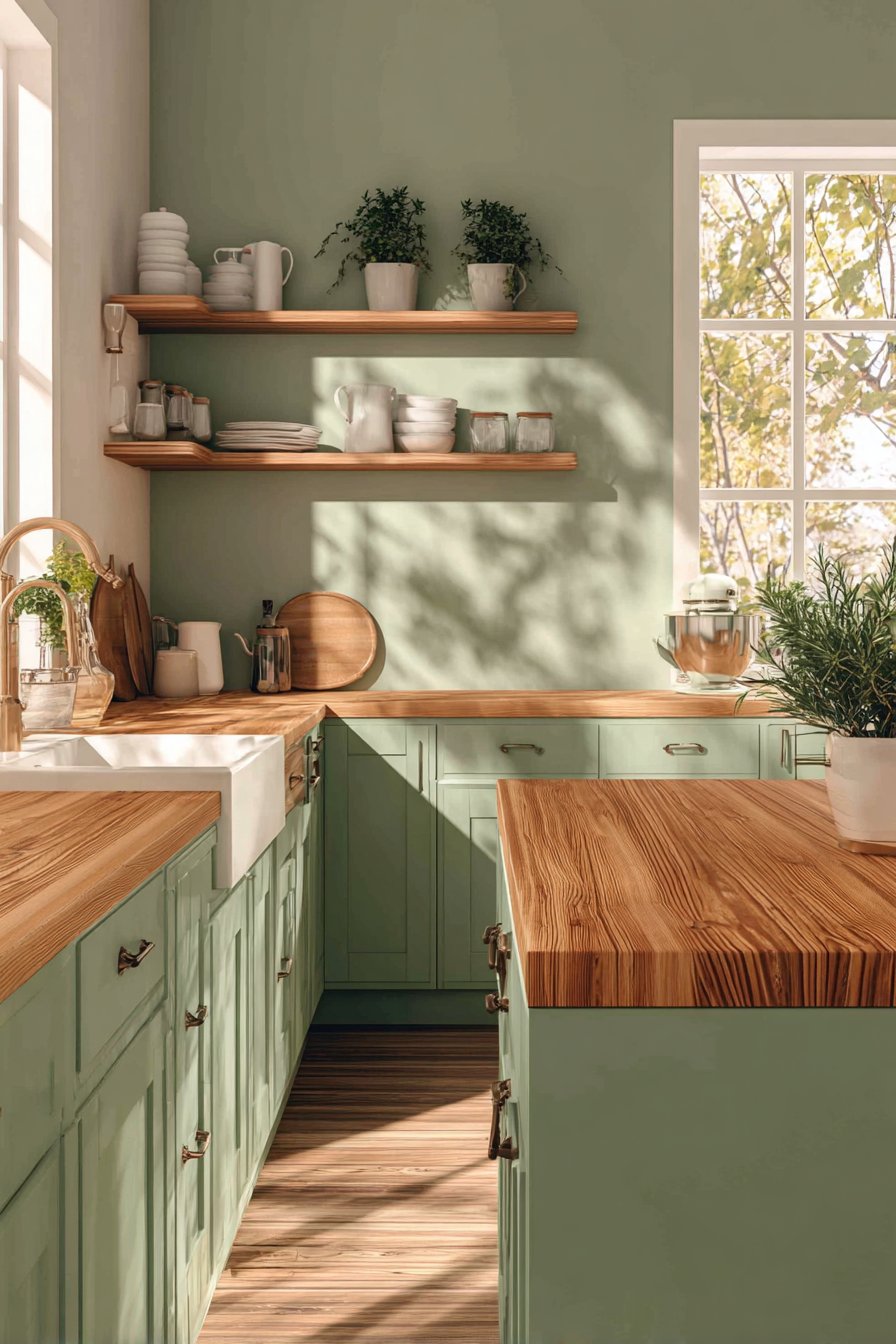
Step into a kitchen where timeless craftsmanship meets organic beauty. Sage green shaker-style cabinetry forms the foundation of this design, its recessed panel doors and clean lines offering a classic aesthetic that never feels dated. The soft, muted green—reminiscent of fresh herb gardens and misty mornings—creates an atmosphere of serene sophistication. These cabinets are paired beautifully with natural oak countertops that showcase prominent grain patterns, each swirl and line telling the story of the tree’s growth and character. The honey-toned oak brings warmth that prevents the green from feeling too cool or clinical, establishing a perfect temperature balance in the space.
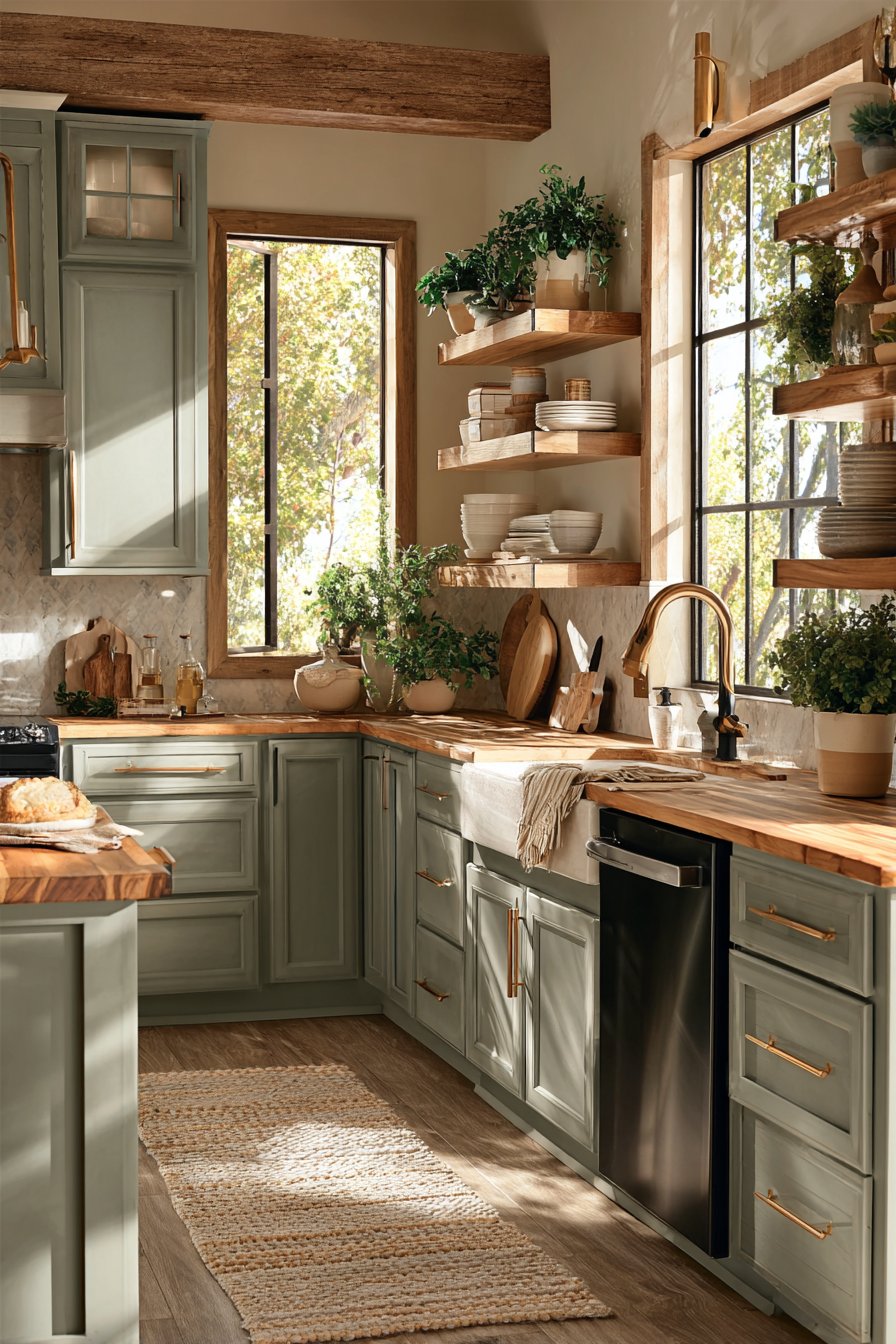
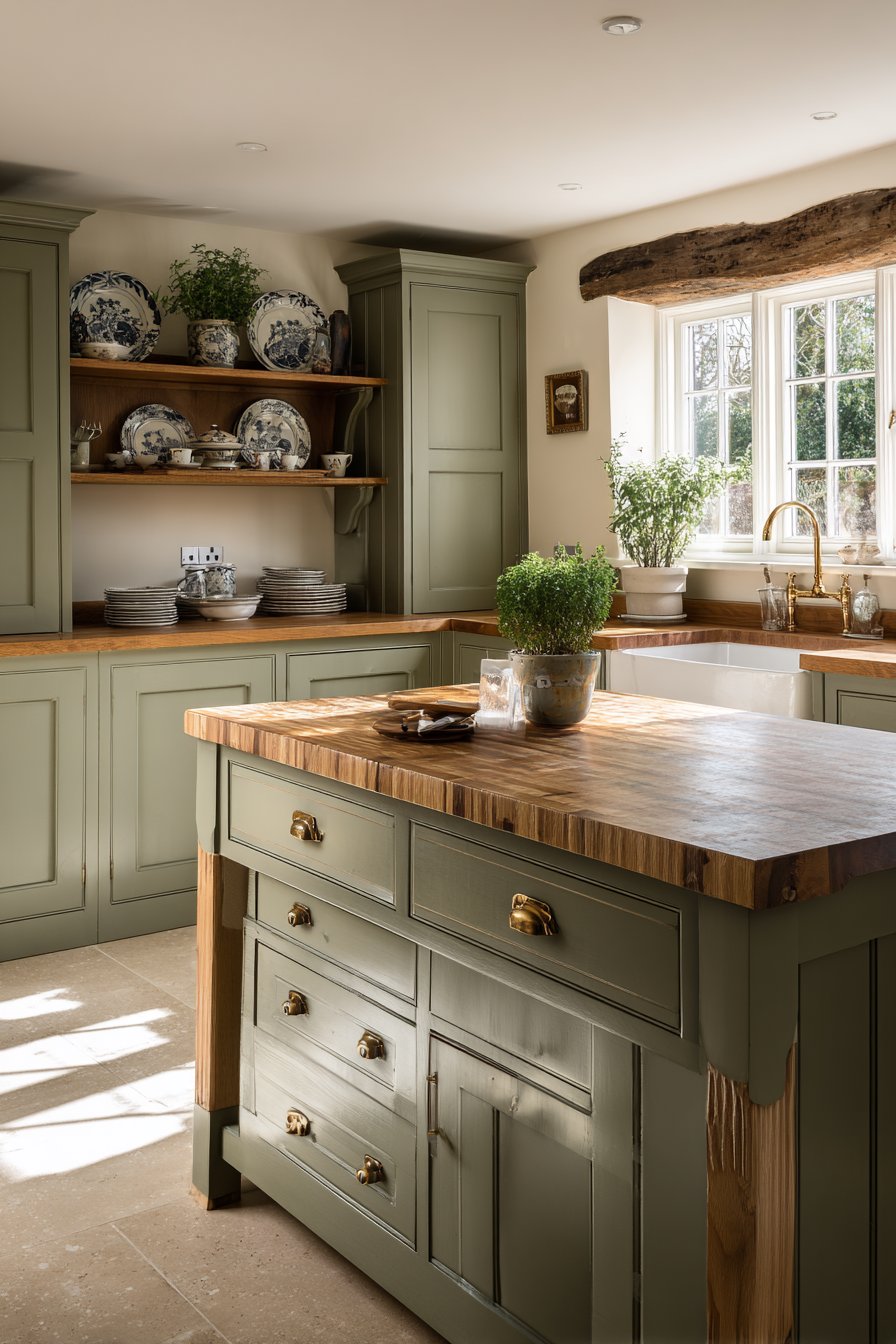
The kitchen island becomes the functional and visual centerpiece, topped with a substantial butcher block surface that invites meal preparation and casual dining alike. Built-in storage drawers fitted with brass hardware add both practicality and a touch of metallic elegance that bridges the green and wood elements. The brass catches the light beautifully, creating small moments of reflection that enhance the overall luminosity of the space. Open wooden shelving mounted on the walls provides both storage and display opportunities, showcasing ceramic dishes in creamy whites and earth tones alongside potted herbs like basil, rosemary, and thyme. These living elements reinforce the connection to nature while adding fresh aromas to the cooking environment. See our small kitchen ideas guide for more direction in this style.
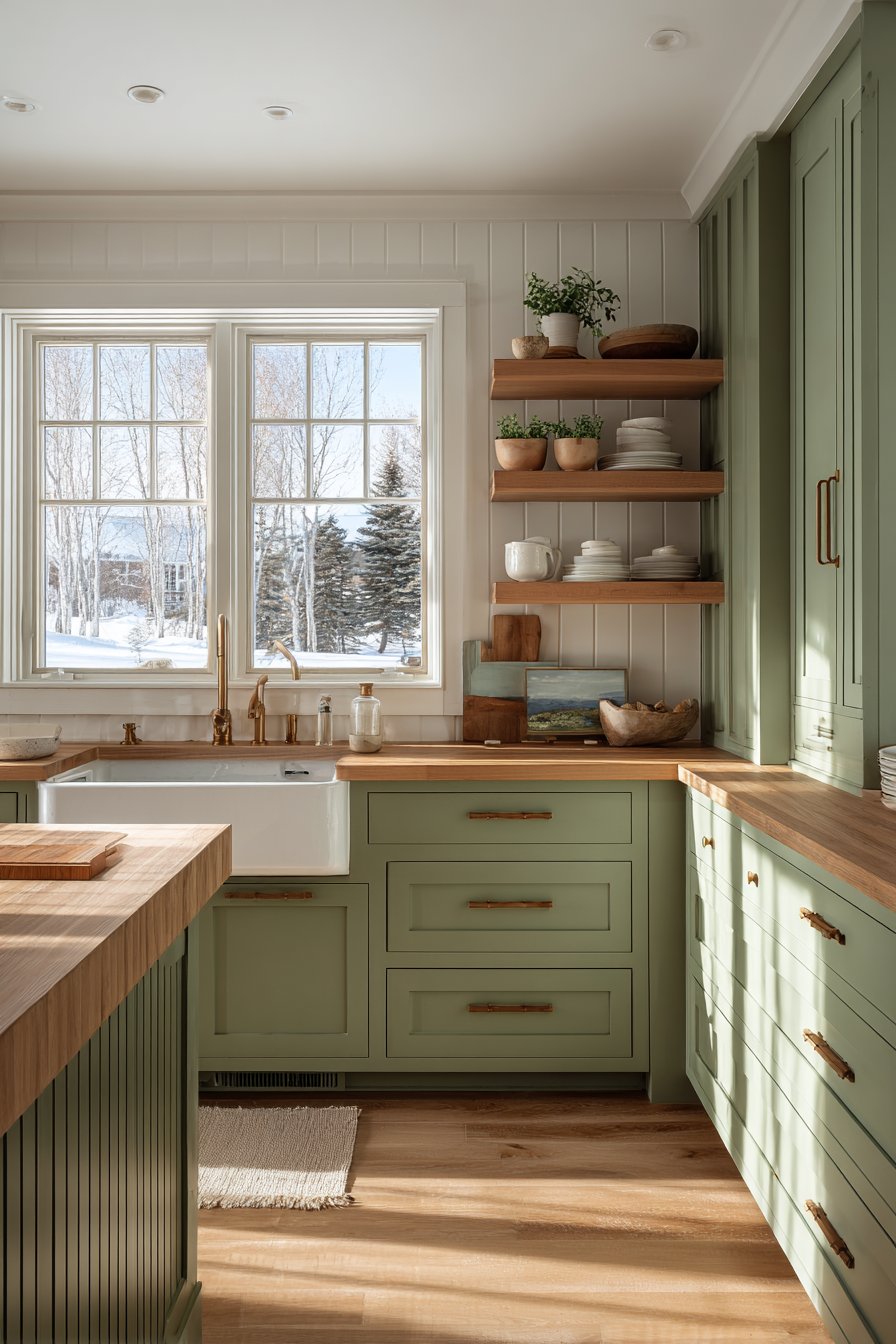
Natural daylight streaming through a generously sized window above the farmhouse sink creates an ever-changing play of light and shadow throughout the day. Morning light illuminates the wood grain with golden warmth, while afternoon sun casts soft shadows that emphasize the dimensional quality of the shaker cabinet doors. The farmhouse sink itself, typically in white porcelain or fireclay, provides a crisp contrast point that keeps the design from becoming monotonous. This arrangement transforms everyday tasks like washing vegetables or rinsing dishes into moments of connection with natural light and organic materials.
Key Design Tips:
- Select sage green in a matte or eggshell finish to enhance the handcrafted quality of shaker cabinetry while minimizing fingerprints and wear
- Choose oak with visible grain patterns rather than highly processed wood to maximize textural interest and authenticity
- Install brass hardware consistently throughout the space to create visual rhythm and tie together green and wood elements
- Position open shelving at eye level for maximum accessibility and to create opportunities for styled vignettes that personalize the space
- Incorporate potted herbs on shelves or windowsills to add living greenery that complements the cabinet color while providing fresh ingredients
2. Forest Green and Walnut Two-Tone Modern Sophistication
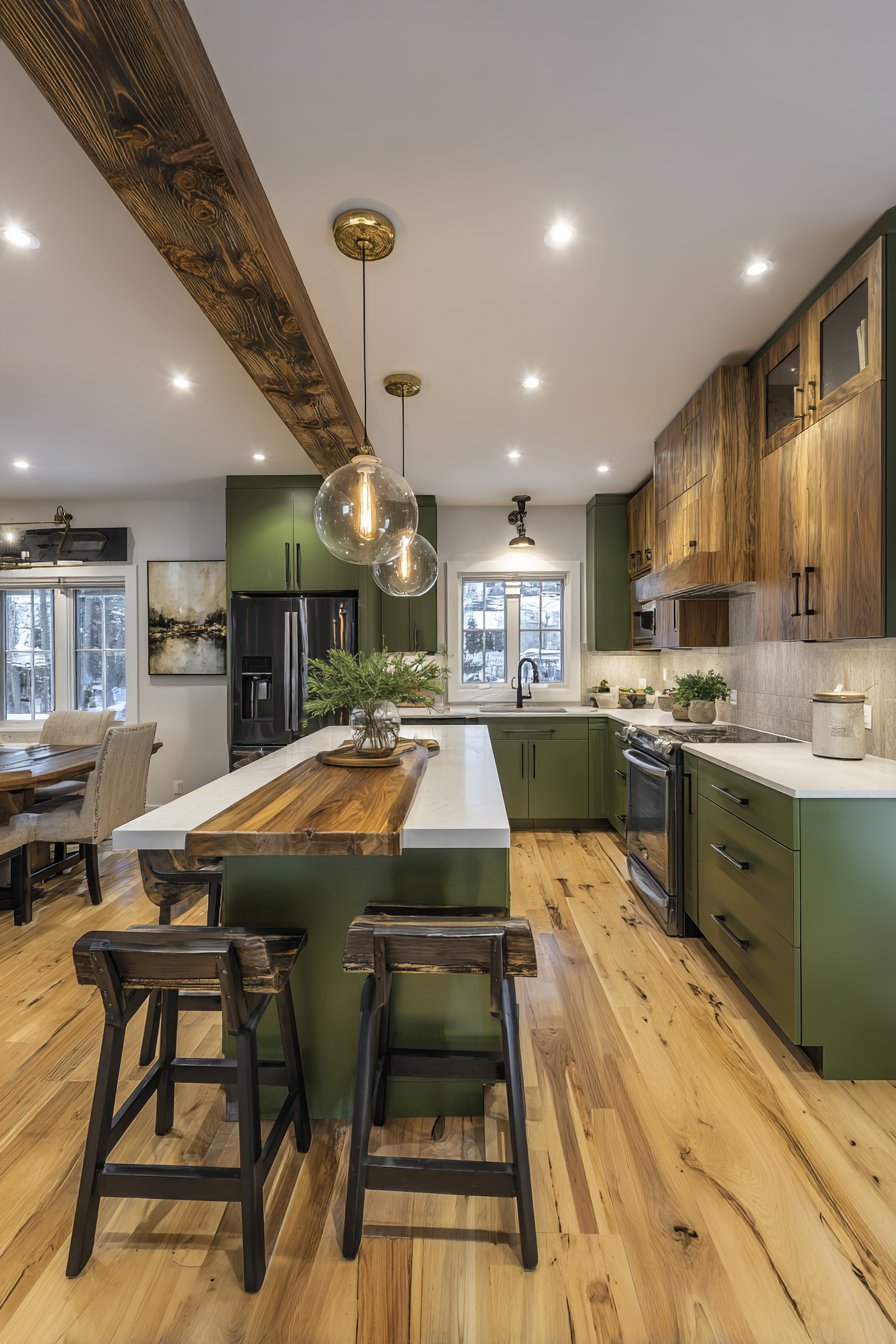
This kitchen design embraces bold contrasts and contemporary sensibilities while maintaining the warmth inherent in natural materials. Deep forest green lower cabinets anchor the space with rich, saturated color that evokes the density of old-growth woodlands. This darker hue on base cabinets serves a practical purpose as well, disguising potential scuffs and wear in high-traffic areas while creating visual weight that grounds the design. The upper cabinets showcase natural walnut with its visible grain patterns, chocolate-brown tones, and occasional purple undertones that make each cabinet door unique. This two-tone approach creates vertical visual interest while allowing both the green and wood to shine without competing for attention.
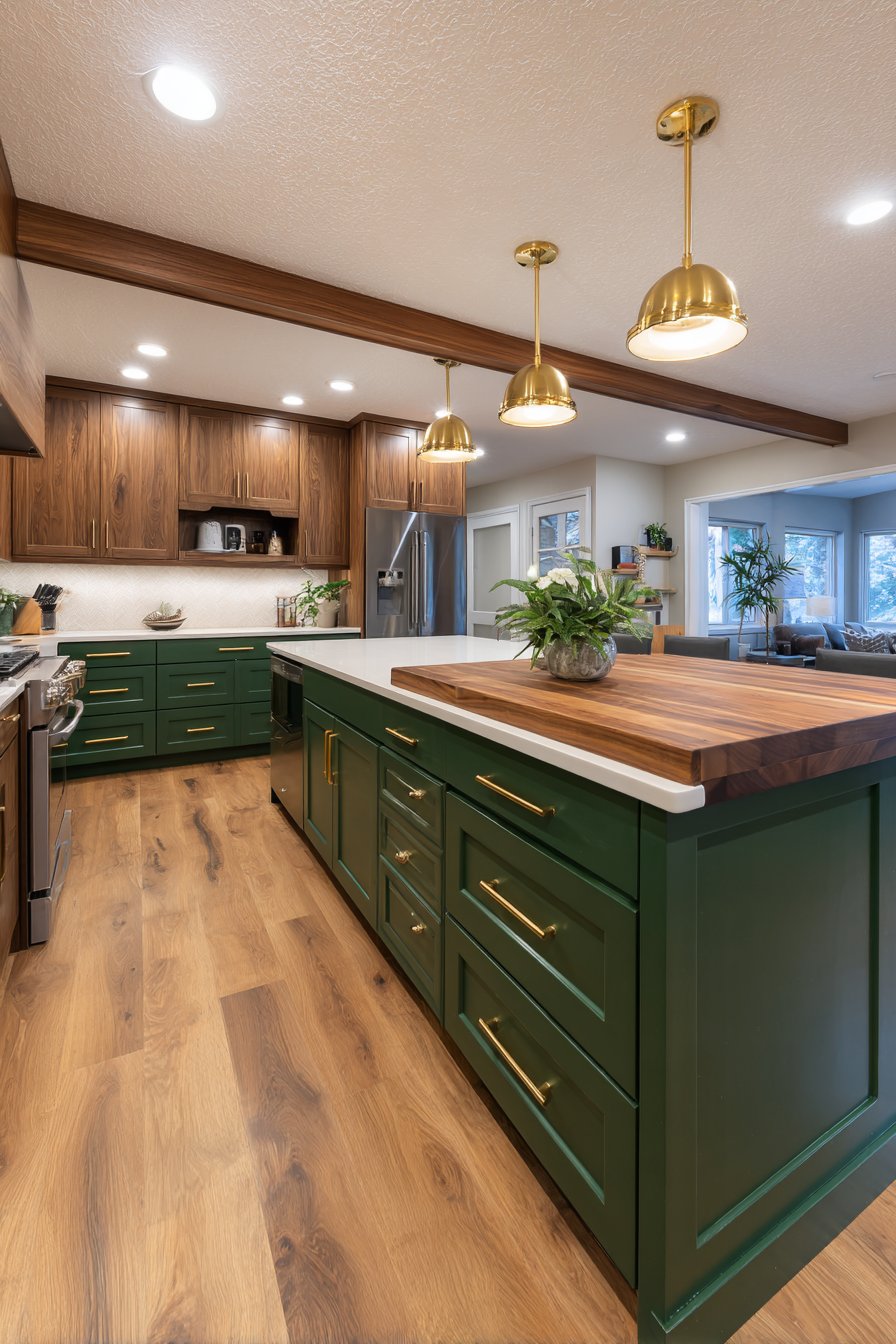
Light oak flooring provides a neutral foundation that prevents the space from feeling too dark or heavy despite the rich cabinet colors. The lighter floor reflects available light upward, brightening the entire room and creating an airy quality that balances the substantial upper and lower cabinetry. A wooden beam accent running across the ceiling adds architectural dimension and draws the eye upward, making the space feel more expansive. This beam, whether structural or decorative, introduces horizontal wood elements that complement the vertical cabinetry and creates a framed, gallery-like quality to the kitchen.
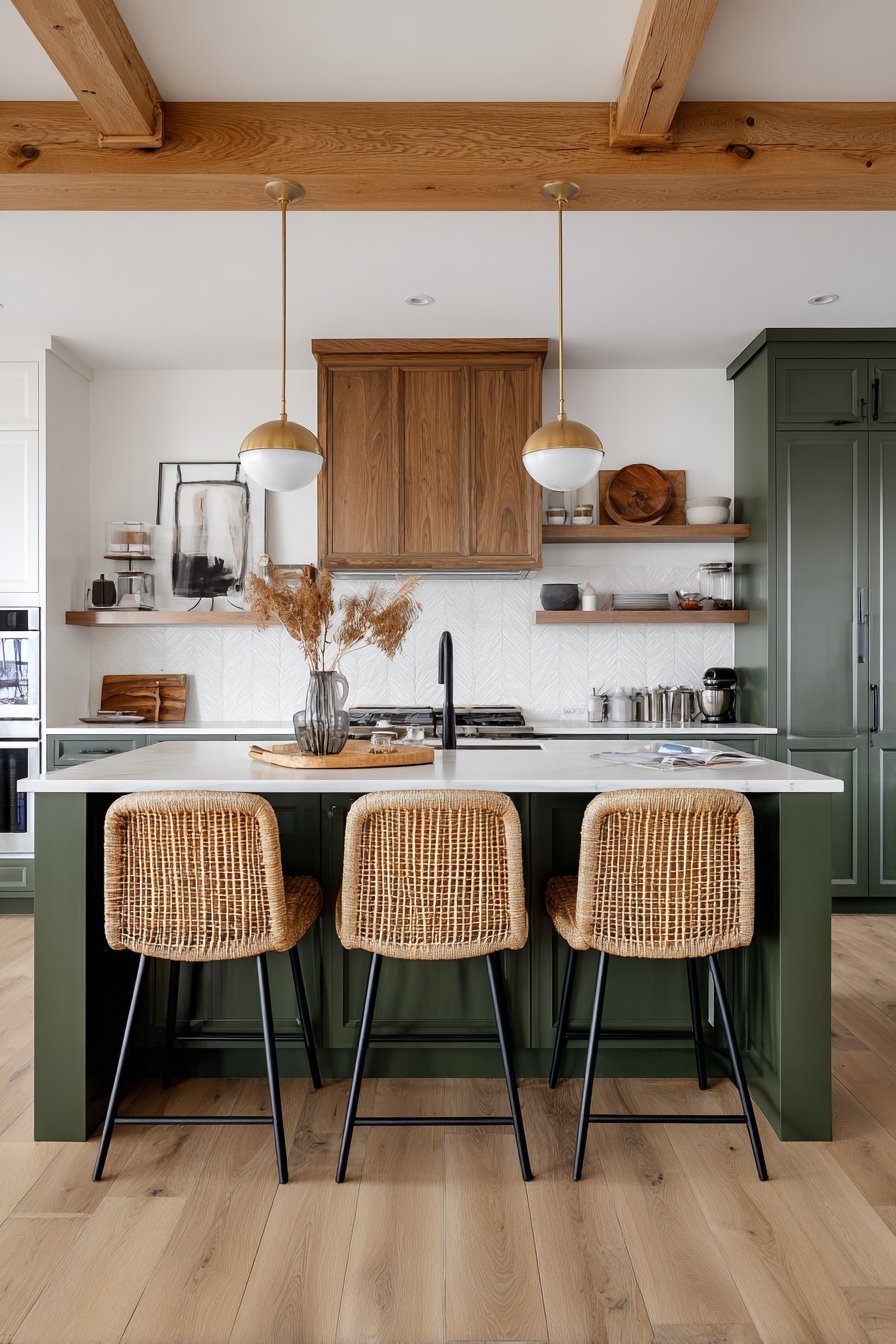
Brass pendant lights suspended above a central wooden prep table provide focused task lighting while contributing to the layered, sophisticated aesthetic. These fixtures cast warm, directed light that makes the prep table a natural gathering point for meal preparation, homework sessions, or casual conversations over coffee. The wooden prep table itself, distinct from the main countertops, offers a movable or stationary work surface that adds flexibility to the kitchen’s functionality. Its presence reinforces the wood theme while providing a less formal, more approachable work surface than traditional stone or engineered countertops.
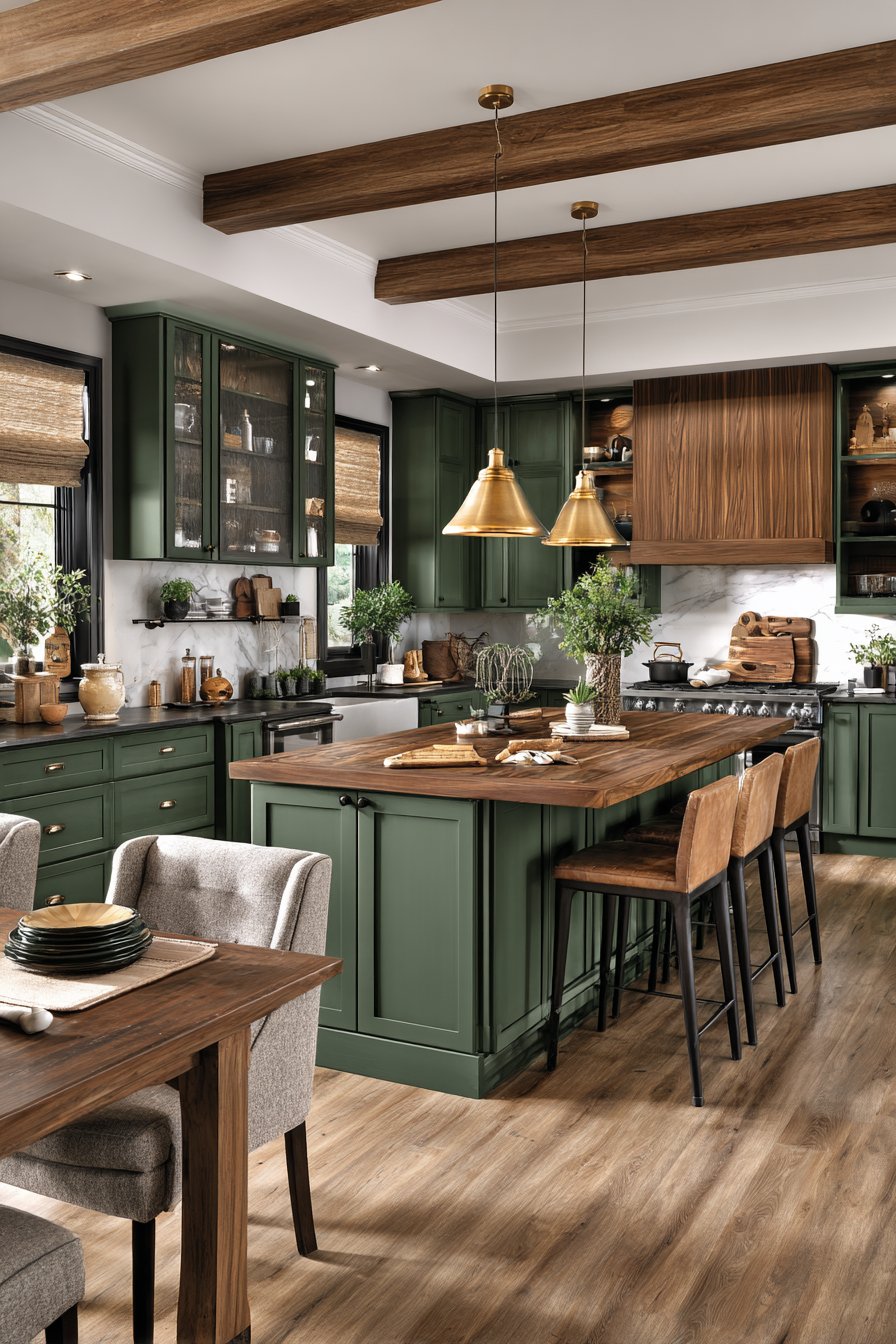
The interplay of materials in this kitchen creates a multi-dimensional experience where light moves differently across each surface. The matte forest green absorbs light, creating depth and mystery, while the walnut’s natural oils give it a subtle luster that catches and reflects ambient illumination. The brass elements provide punctuation marks of brightness that guide the eye through the space and create focal points that prevent the design from feeling static.
Key Design Tips:
- Use darker green on lower cabinets and lighter wood on upper cabinets to maintain visual balance and prevent top-heaviness
- Select walnut with consistent color tones throughout to create cohesion, or embrace variation for a more organic, dynamic appearance
- Install light-colored flooring when using dark cabinetry to reflect light and prevent the space from feeling cave-like
- Add a wooden ceiling beam even in spaces with flat ceilings to introduce architectural interest and additional wood tones
- Choose pendant lights with warm-toned bulbs (2700-3000K) to enhance the natural warmth of wood and complement green cabinetry
- Position the wooden prep table to allow traffic flow on all sides, creating a true central workspace rather than a barrier
3. Mint Green Compact Kitchen with Reclaimed Wood Character
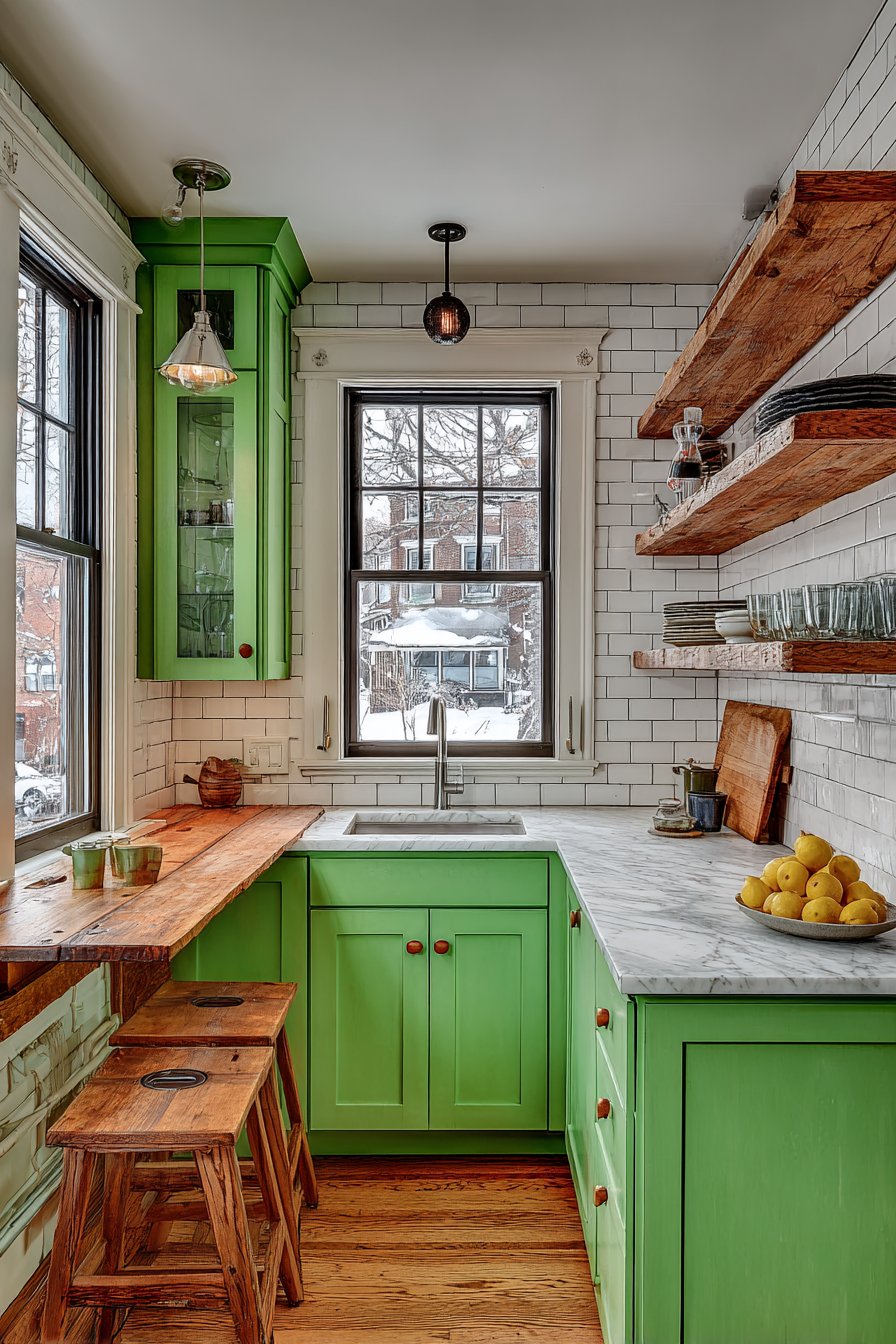
Small kitchens demand clever design solutions, and this mint green and wood combination proves that limited square footage doesn’t mean sacrificing style or personality. Mint green painted cabinets bring a fresh, optimistic energy to compact spaces, their light reflective quality making the room feel more spacious than its actual dimensions. This particular shade of green—softer and more blue-toned than sage—evokes vintage diners and retro aesthetics while feeling thoroughly contemporary when paired with modern fixtures and clean lines. The painted finish provides a smooth, wipeable surface ideal for the close quarters of small kitchens where cabinet faces are more likely to encounter splashes and fingerprints.
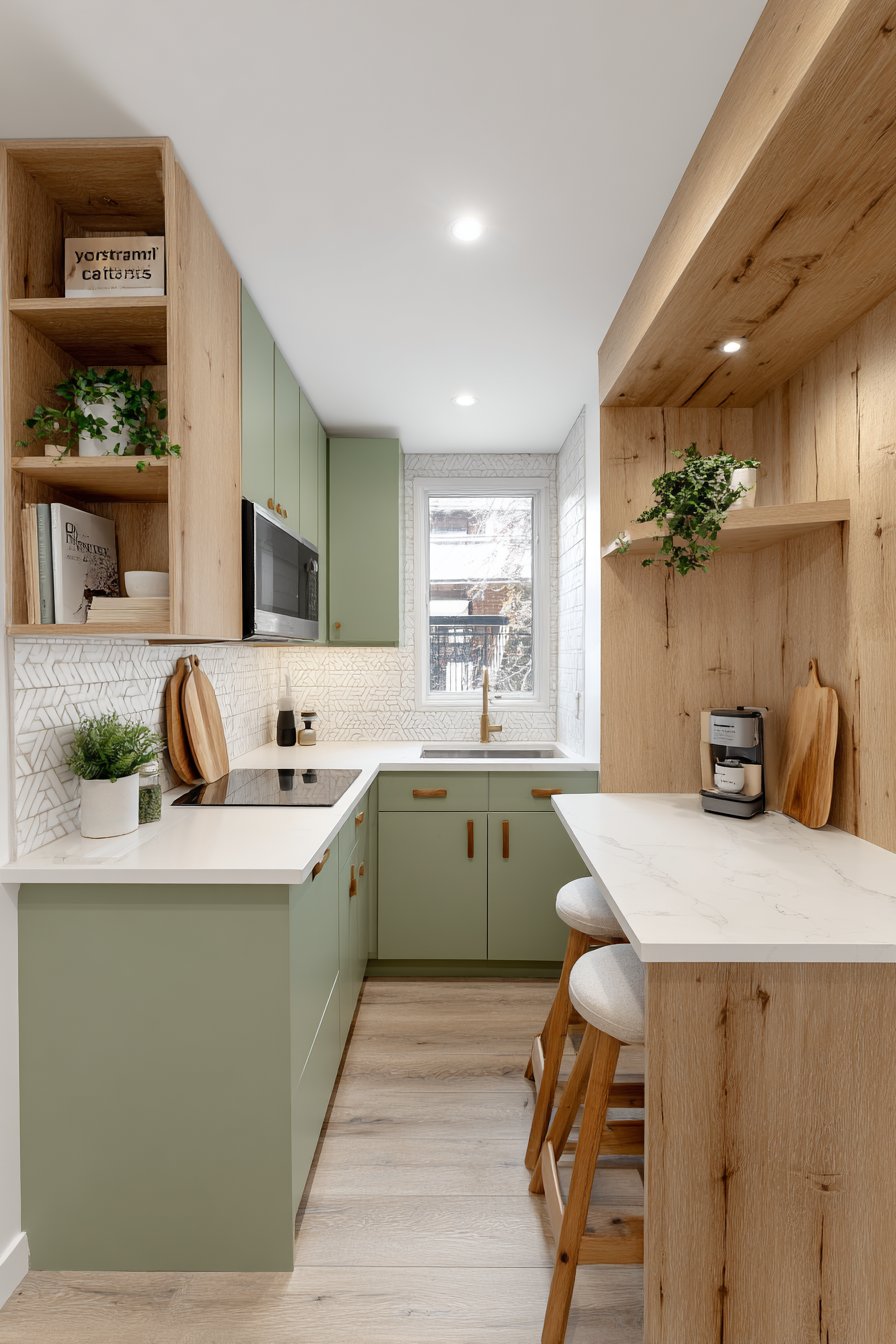
Wooden knobs on the cabinet doors introduce tactile warmth and visual interest without overwhelming the space. These small details make a significant impact in compact kitchens where every element is visible and within arm’s reach. Reclaimed wood floating shelves mounted on the walls maximize vertical storage without the visual weight of closed upper cabinets, which can make small kitchens feel cramped and claustrophobic. The weathered character of reclaimed wood—with its nail holes, saw marks, and varied patina—adds instant history and personality to what might otherwise be a simple, utilitarian space.
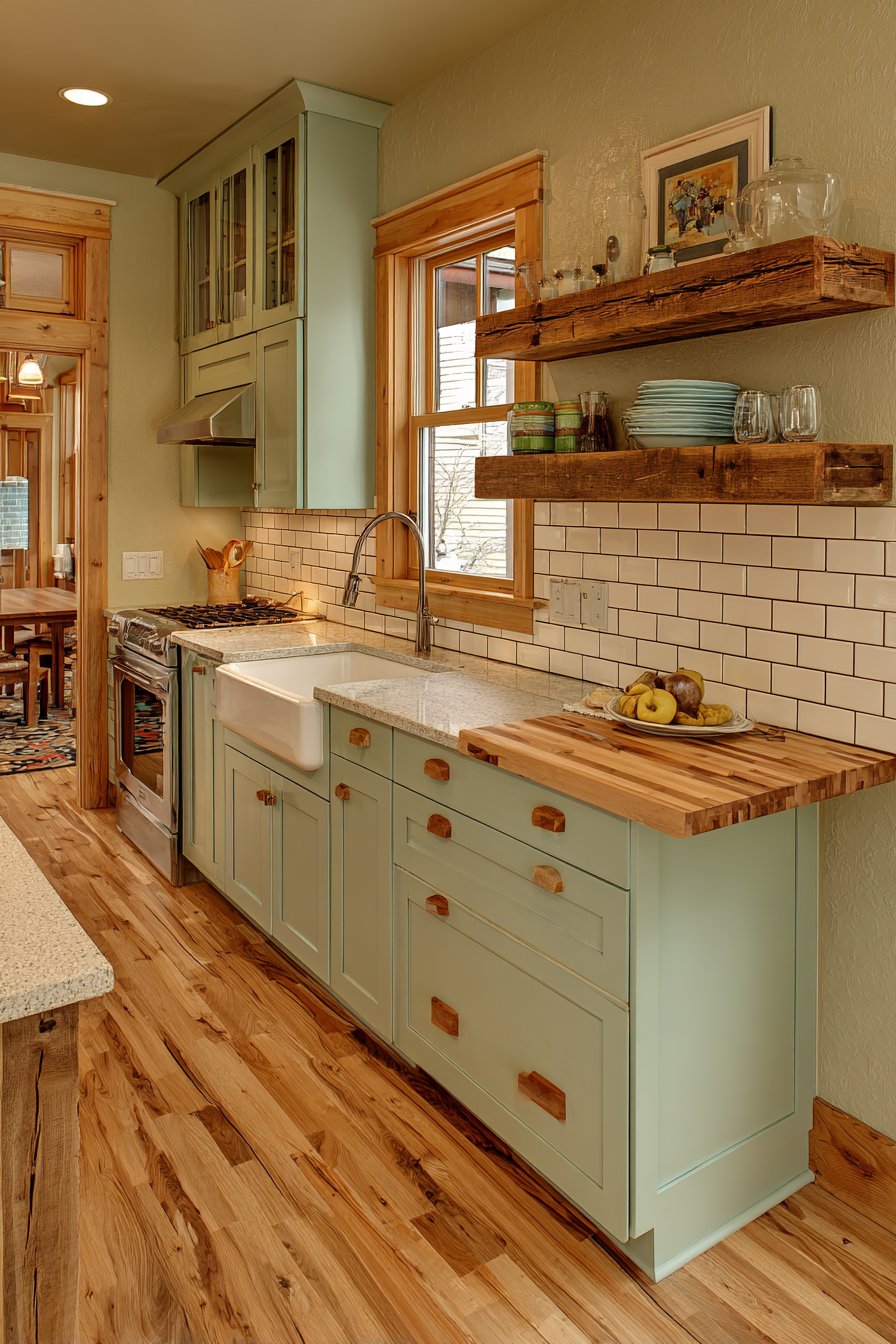
A wooden cutting board station integrated into the counter space beside the sink transforms a basic countertop into a specialized work zone. This built-in cutting board, whether it slides out from beneath the counter or sits in a dedicated recessed area, exemplifies the kind of thoughtful space planning essential in compact kitchens. White subway tile backsplash provides crisp contrast that brightens the space and reflects light while offering an easy-to-clean surface in the splatter zone behind the stove and sink. Natural wood accents appear throughout in bar stools tucked under a small breakfast counter and cutting accessories displayed on open shelves, creating repetition that unifies the design.
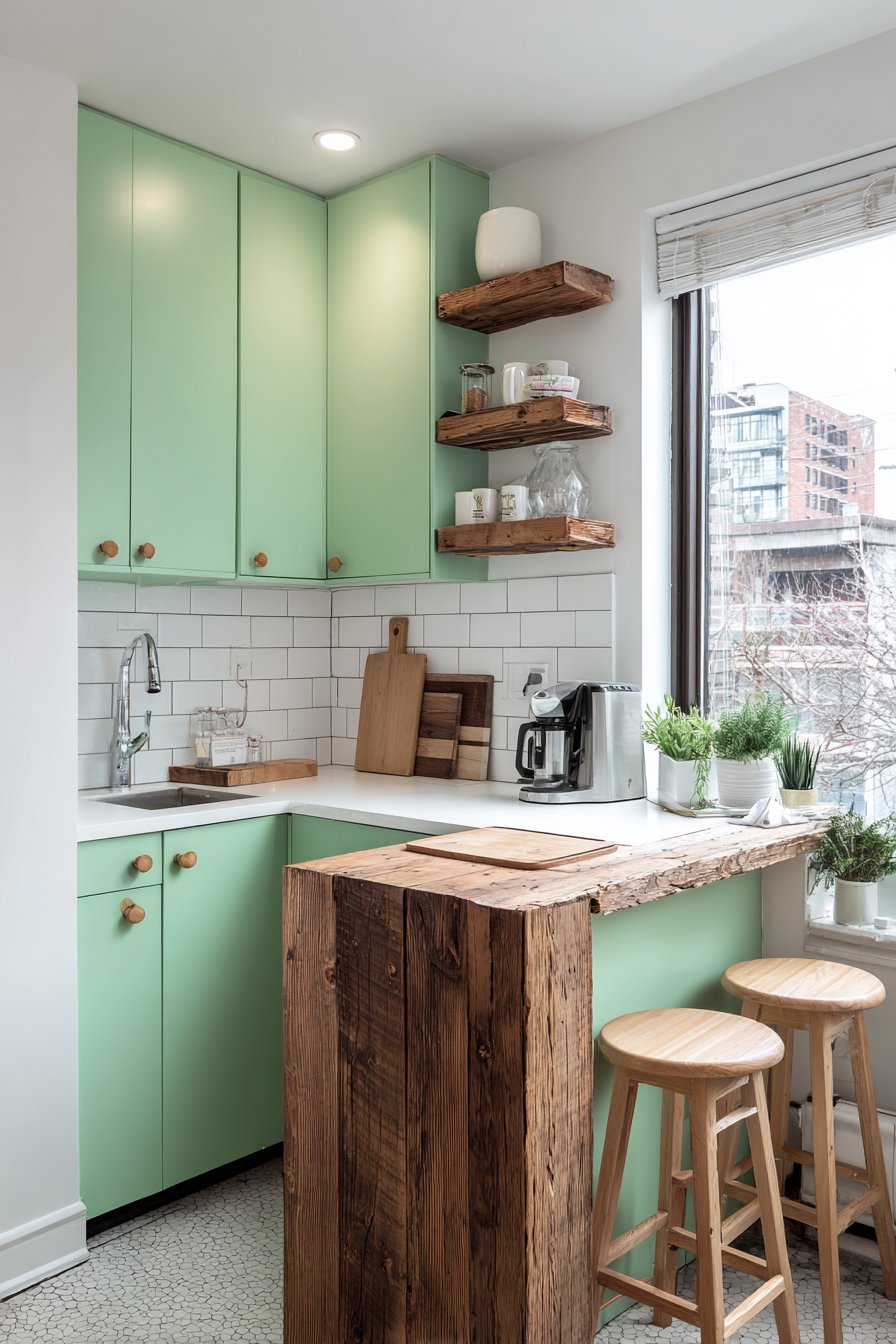
Natural lighting from a nearby window becomes a crucial design element, as artificial lighting alone can make small spaces feel harsh or dim. The window allows daylight to highlight the interplay between the fresh green color and rustic wood elements, creating dynamic shadows and highlights that add depth to the compact space. The practical layout, visible in its entirety from the entry point, demonstrates efficiency without sacrificing aesthetic appeal—every item has its place, and every surface serves both functional and visual purposes.
Key Design Tips:
- Choose lighter green shades in small kitchens to maximize light reflection and create an illusion of greater space
- Install floating shelves instead of upper cabinets to maintain visual openness while providing essential storage
- Integrate specialized work stations like cutting board areas to maximize counter functionality in limited space
- Select white or light-colored backsplash tiles to brighten the space and provide contrast against colored cabinetry
- Use reclaimed wood for character and sustainability, allowing imperfections to add personality rather than polish
- Position a mirror strategically to reflect window light and make the space feel larger
- Keep wooden accessories visible on open shelving to reinforce the wood theme without requiring permanent installations
4. Olive Green Breakfast Nook with Oak Dining Integration
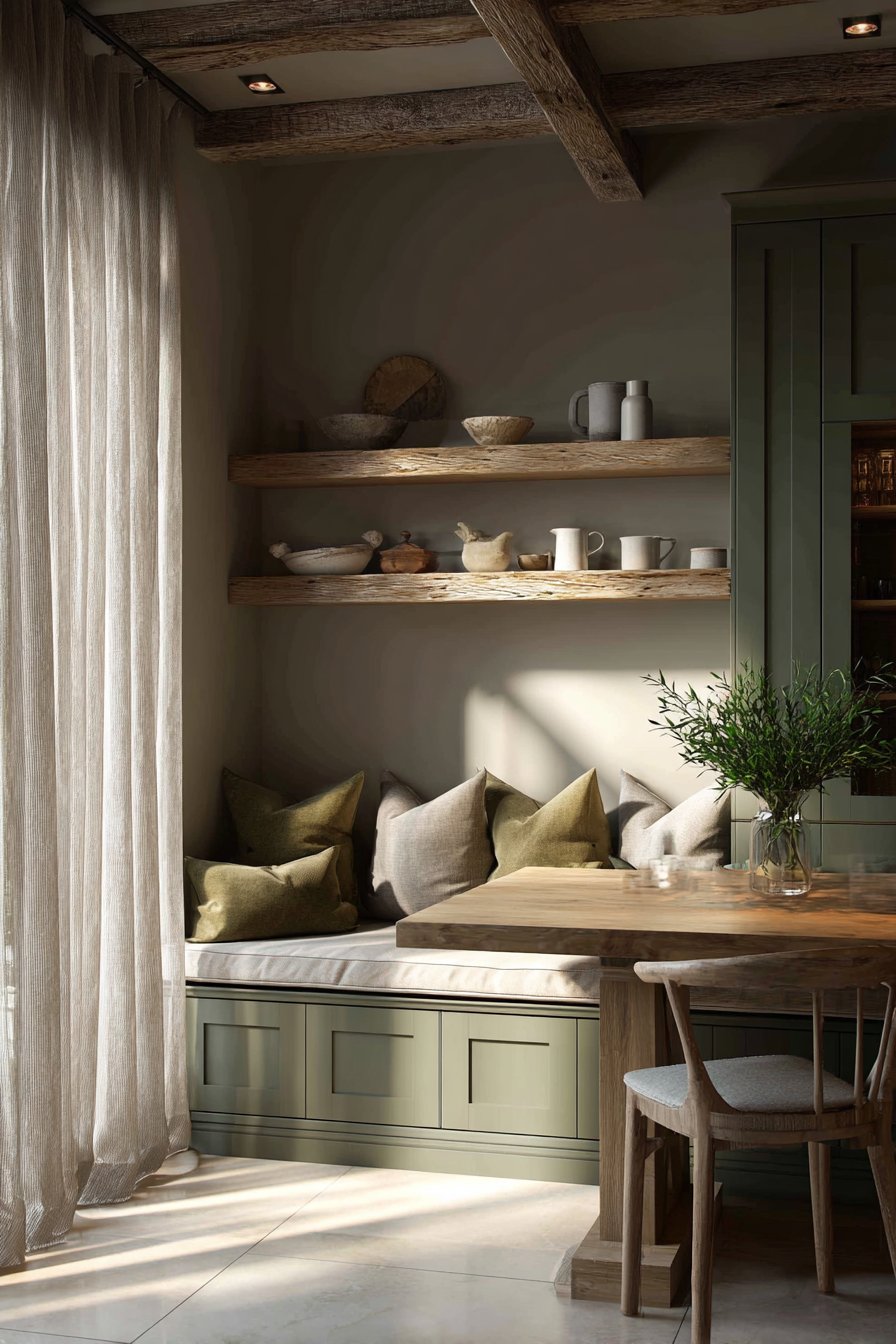
The breakfast nook represents a kitchen’s most intimate gathering space, and this design wraps diners in warmth and natural beauty. Built-in seating with olive green cushions creates a cozy banquette that maximizes seating capacity while minimizing floor space requirements. The olive green—earthier and more yellow-toned than sage—brings a grounded, organic quality that feels particularly appropriate for a dining area. The cushions, upholstered in durable, easy-to-clean fabric, provide comfort for leisurely weekend breakfasts and quick weekday meals alike, their color coordinating seamlessly with the overall green and wood theme.
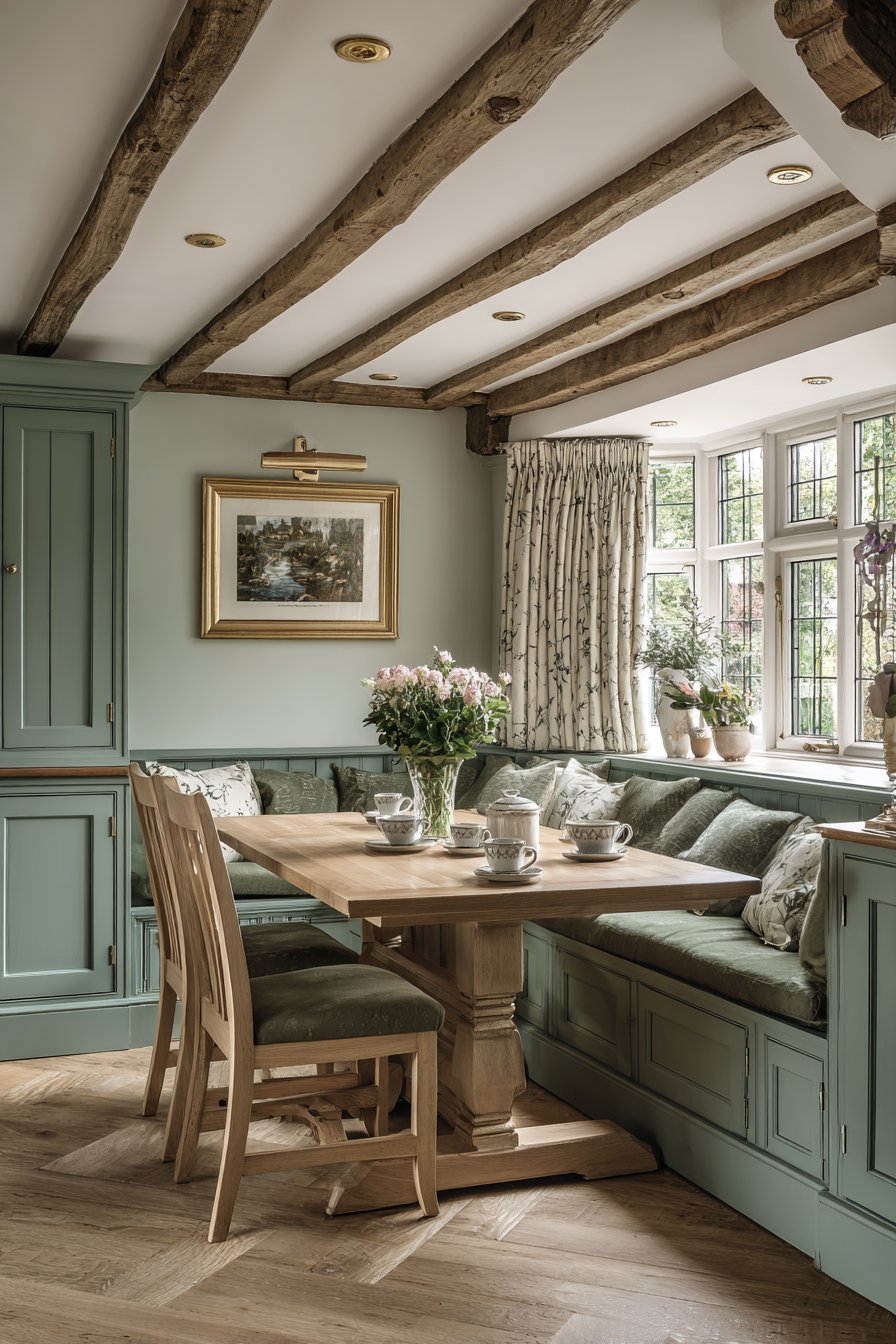
A solid oak dining table with natural finish anchors the nook, its substantial presence conveying permanence and quality. Oak’s hardness makes it ideal for dining tables that must withstand daily use, hot dishes, and the inevitable spills that occur in active households. The natural finish allows the wood’s grain patterns and color variations to show through, creating visual interest that makes the table a focal point rather than merely functional furniture. Green-painted wainscoting covering the lower walls adds architectural detail and protection in a high-traffic area while reinforcing the green color palette. The wainscoting’s horizontal lines create a sense of expansion in the nook, making it feel more spacious and established.
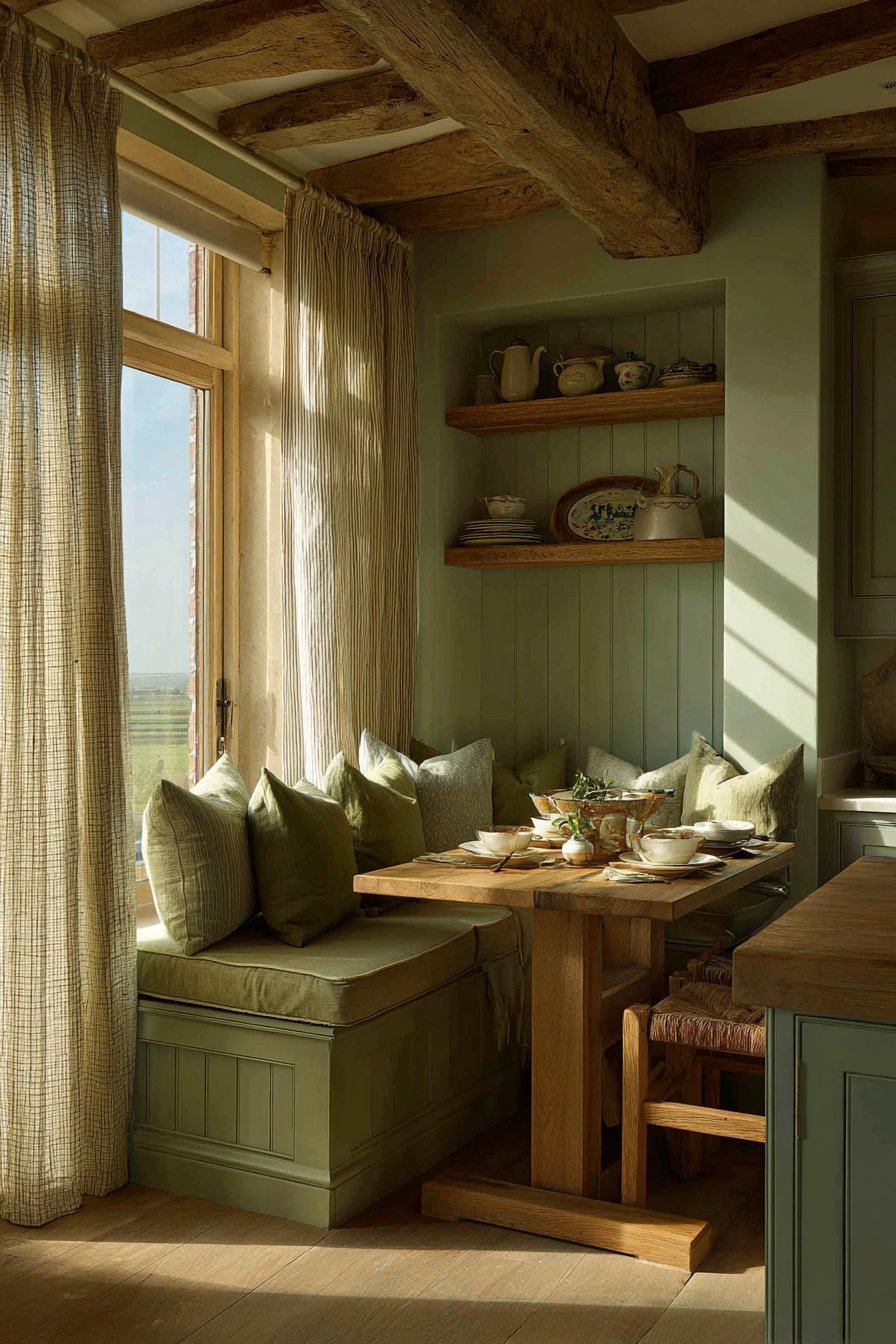
Wooden beams accenting the ceiling above create an intimate, room-within-a-room feeling that defines the breakfast nook as a distinct zone within the larger kitchen. These beams, whether structural or decorative, add warmth overhead and draw the eye upward, creating vertical dimension. A wooden floating shelf mounted on the wall displays vintage kitchenware—perhaps grandmother’s teacups, collected ceramic pitchers, or antique cooking implements—that personalizes the space and creates conversation starters during meals. These displayed items connect the present to the past, adding layers of meaning and memory to the functional space.
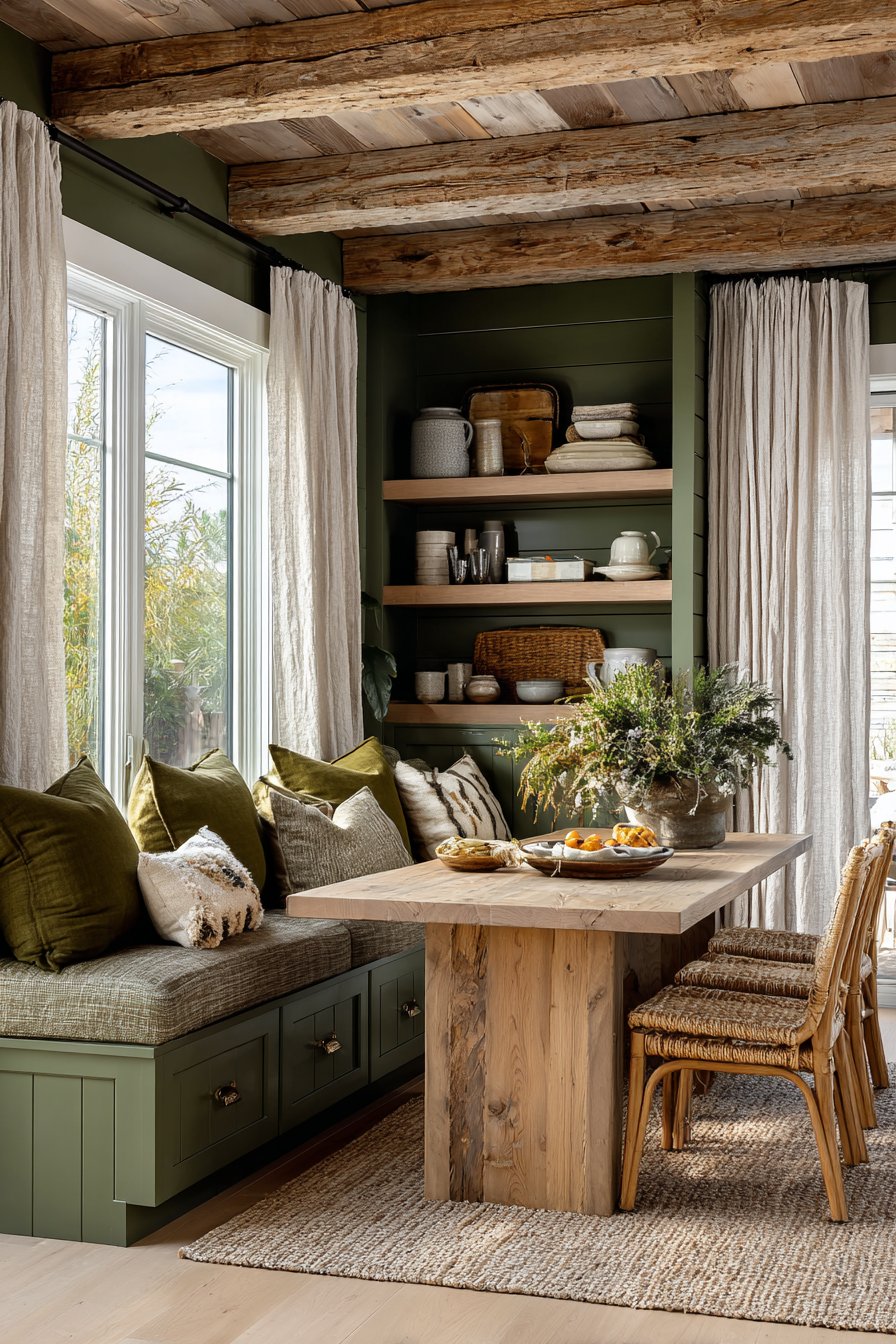
Golden hour natural light filtering through sheer curtains creates the breakfast nook’s most magical quality. As afternoon sun streams through the fabric, it creates warm highlights on the wood surfaces that seem to glow from within. The light complements the earthy green tones, bringing out their yellow undertones and creating a harmonious, sunset-like quality. The sheer curtains soften the light without blocking it entirely, maintaining privacy while preserving the connection to natural illumination that makes this nook feel alive and responsive to the time of day and season.
Key Design Tips:
- Install built-in banquette seating with storage underneath to maximize functionality in the breakfast nook footprint
- Choose olive or earthy green tones for dining areas as these warmer greens stimulate appetite and create welcoming atmospheres
- Select oak for dining tables due to its durability and timeless grain patterns that improve with age and use. Our this timeless kitchen layout breaks down the exact measurements to plan around.
- Add wainscoting to protect walls in dining areas while introducing architectural interest and reinforcing color themes
- Install ceiling beams to define the breakfast nook as a distinct zone and add overhead warmth
- Use sheer curtains rather than heavy drapes to maintain natural light while softening harsh afternoon sun
- Display vintage or meaningful items on open shelving to personalize the space and create conversation opportunities
- Position the table to take advantage of window views and natural light during typical meal times
5. Pine Green Storage Solution with Maple Organization
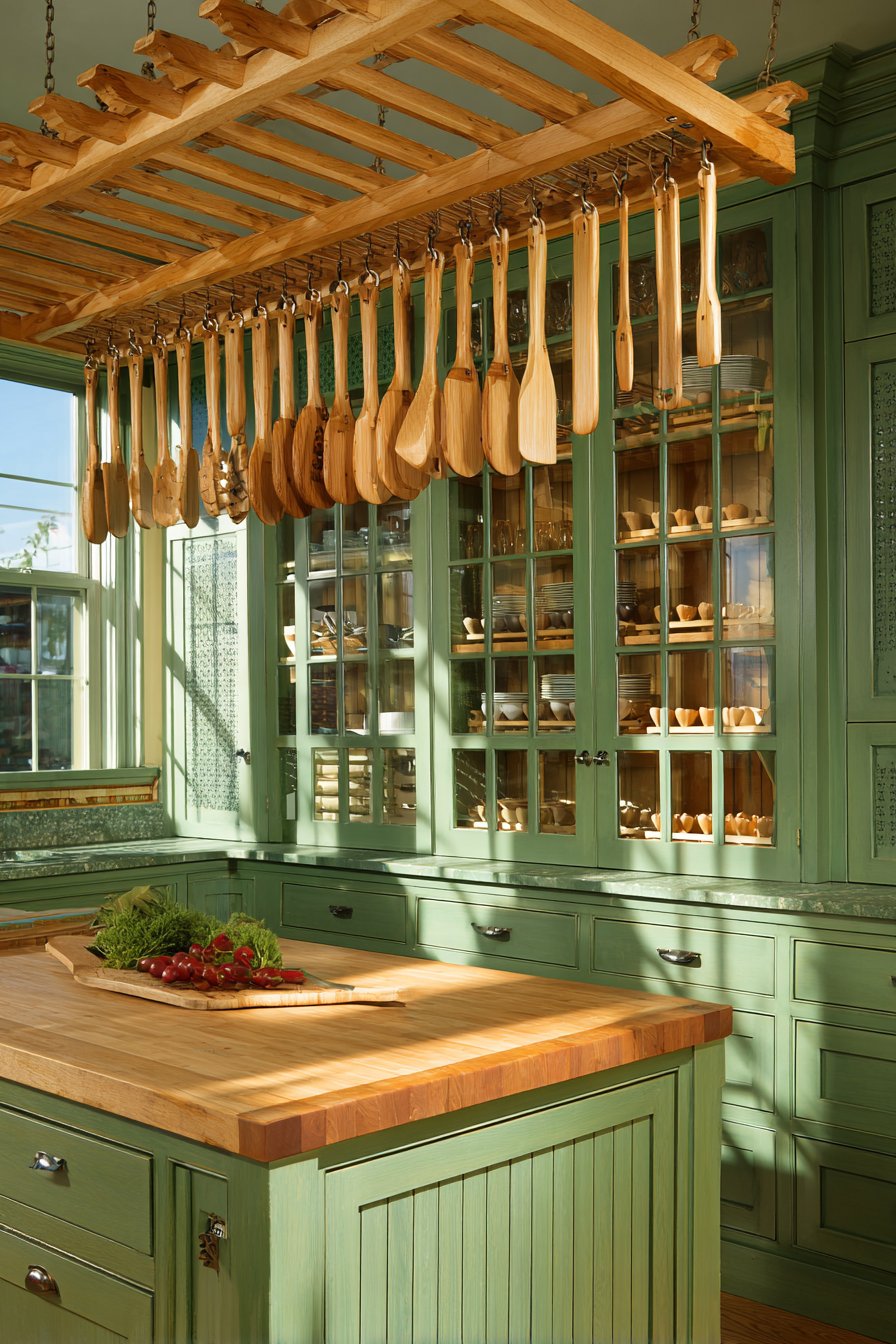
This kitchen design prioritizes organization and accessibility while maintaining strong aesthetic appeal through its sophisticated use of pine green cabinetry and natural wood storage solutions. Floor-to-ceiling pine green cabinets maximize vertical storage space, utilizing the full height of the room to accommodate dishes, pantry items, small appliances, and specialty cooking equipment. The pine green shade—deeper and more blue-toned than mint but lighter than forest green—provides a sophisticated backdrop that feels both classic and contemporary. The full-height cabinets create a built-in, custom appearance that elevates the entire kitchen’s perceived value and design quality.
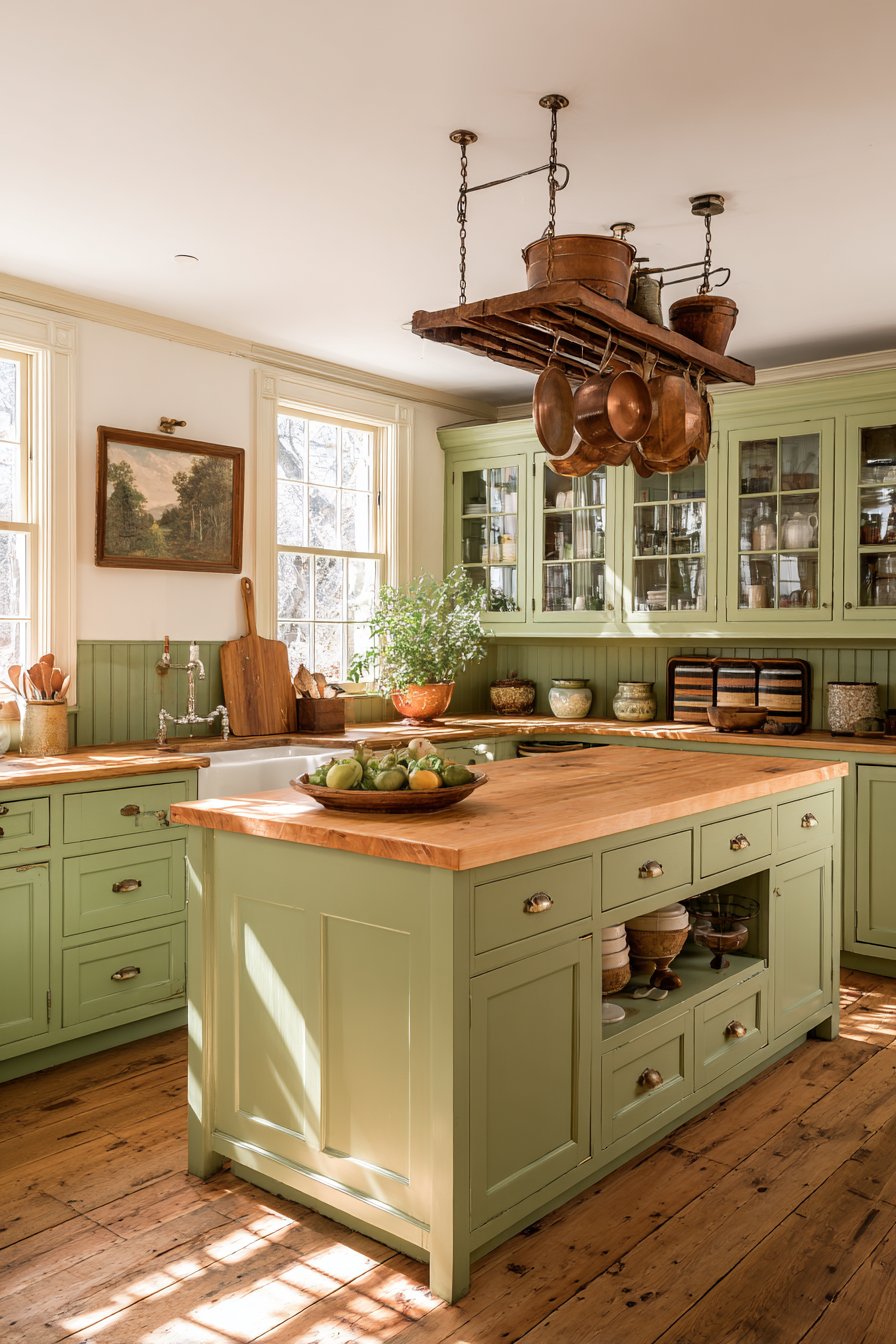
Wooden interior shelving visible through glass-front upper doors creates a beautiful layered effect where the natural wood tones glow warmly against the green painted exterior. This combination of transparency and solid cabinetry provides visual interest while allowing you to showcase beautiful dishware, glassware, or collectibles. The glass fronts also create accountability for organization—when contents are visible, there’s incentive to maintain tidy, aesthetically pleasing arrangements. The wooden shelving itself, whether in natural maple, oak, or pine, introduces warm tones into the cabinet interiors that prevent the green from dominating completely.
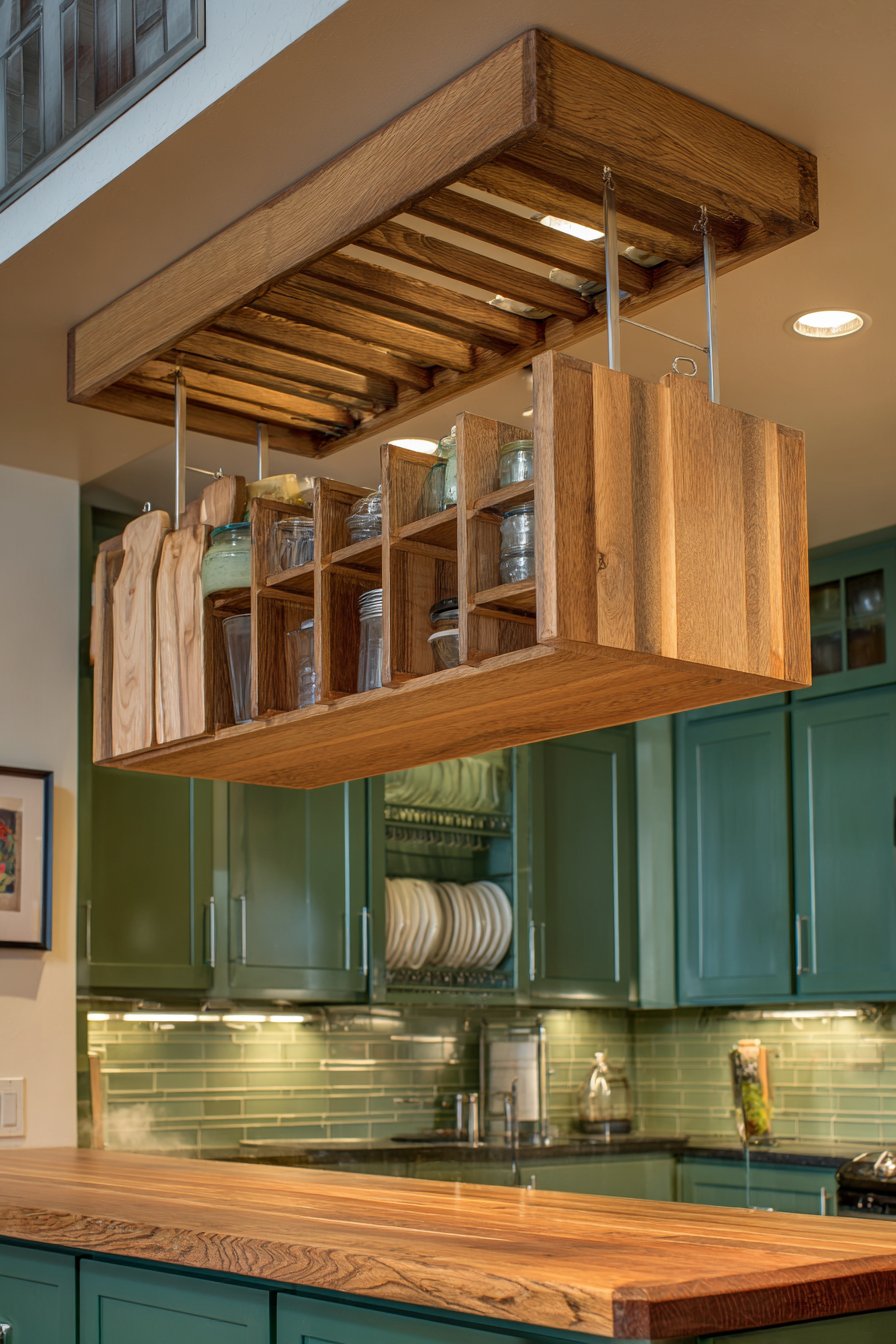
A wooden pot rack hanging above the island serves both practical and decorative functions. Suspended from the ceiling, it keeps frequently used pots and pans within easy reach while freeing up cabinet space for items used less often. The pot rack becomes a design element in its own right, its wooden frame and hanging cookware creating a chef-inspired, professional kitchen atmosphere. The island below features a thick maple countertop with natural edge detail that celebrates the wood’s organic form. This live-edge or natural-edge detail preserves the tree’s original contour on one or more sides, creating a sculptural quality that contrasts beautifully with the straight lines and right angles of the surrounding cabinetry.
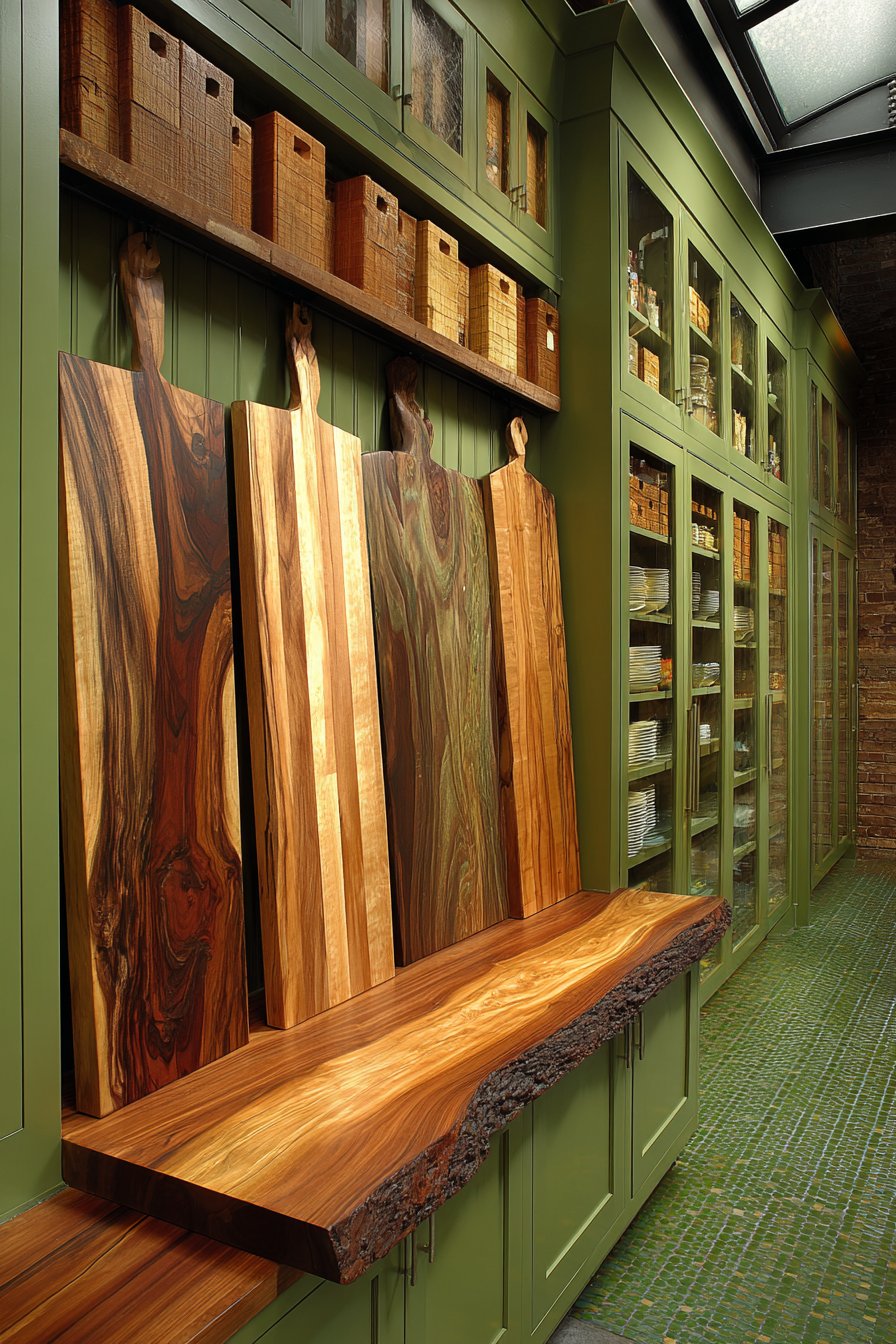
Wooden cutting boards leaning against the green tile backsplash add another layer of wood texture while serving as functional art. These boards—in various sizes and wood species—create visual rhythm and provide easily accessible work surfaces for food preparation. The green tile backsplash, matching or complementing the cabinet color, creates a cohesive look while providing a durable, easy-to-clean surface behind work areas. The organized storage system demonstrates that beauty and function can coexist seamlessly, with every item having a designated, easily accessible location.
Key Design Tips:
- Install floor-to-ceiling cabinetry to maximize storage capacity and create a custom, built-in appearance
- Use glass-front upper cabinets strategically to showcase beautiful items while breaking up solid cabinet expanses
- Choose wooden interior shelving that contrasts with painted exteriors for added depth and warmth
- Hang a wooden pot rack above the island for convenient access and professional kitchen aesthetics
- Select countertops with natural edge details to introduce organic shapes and celebrate wood’s natural form
- Install matching or complementary green tile backsplash to create cohesion between vertical and horizontal surfaces
- Display wooden cutting boards as functional art that reinforces the wood theme
- Ensure adequate lighting inside glass-front cabinets to highlight contents and wooden shelving
- Organize cabinet contents by color and height to create pleasing visual arrangements visible through glass doors
6. Hunter Green Farmhouse with Bronze and Beam Accents
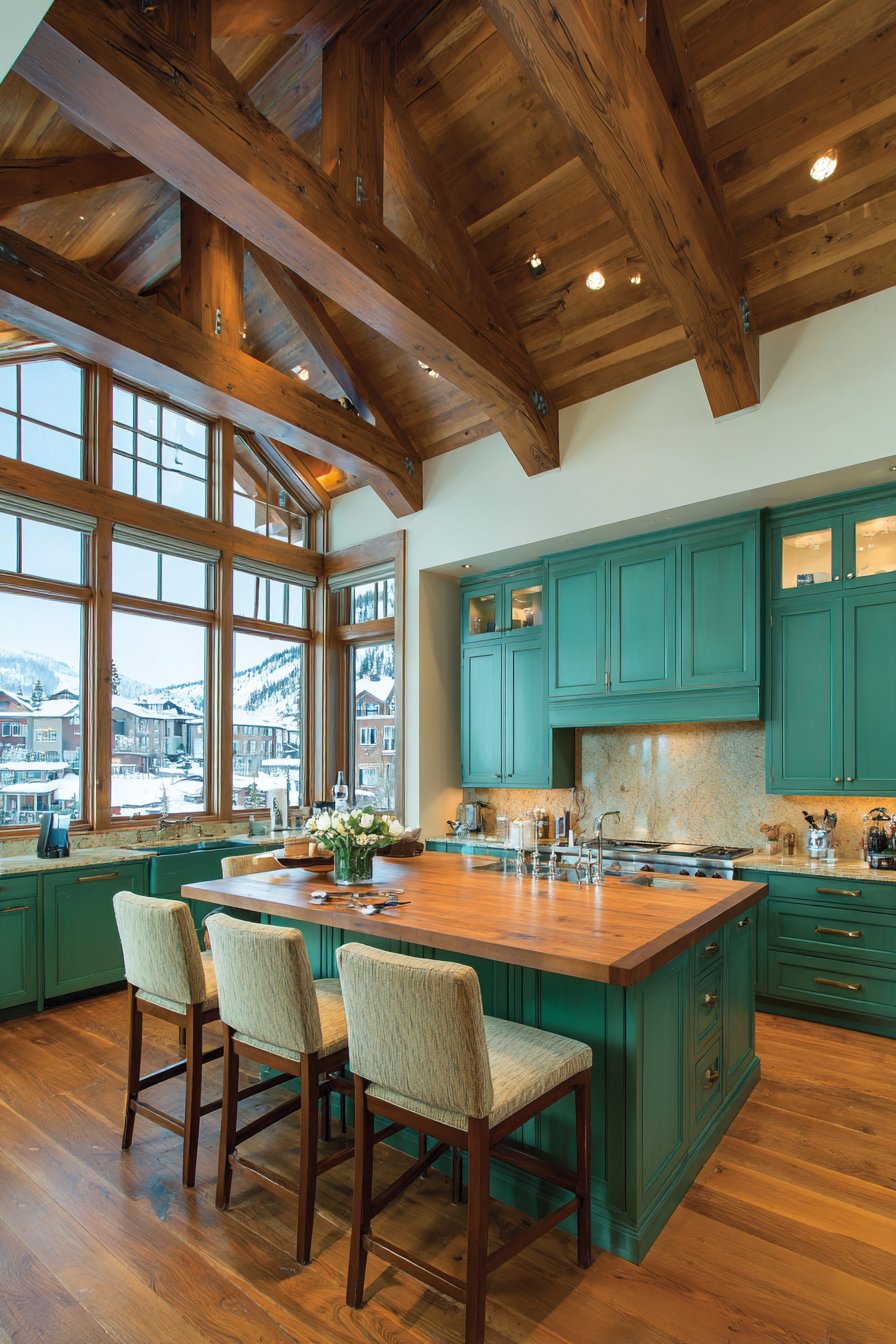
This kitchen embraces farmhouse aesthetics with sophisticated color choices and architectural details that elevate the style beyond rustic cliché. Hunter green base cabinets provide rich, saturated color that feels both traditional and refined. This deep green—reminiscent of British racing cars and private libraries—brings unexpected elegance to farmhouse design, proving that rustic doesn’t mean unsophisticated. The hunter green on lower cabinets creates substantial visual weight that grounds the design while hiding the inevitable wear and tear that occurs in base cabinets subjected to kicks, bumps, and spills.
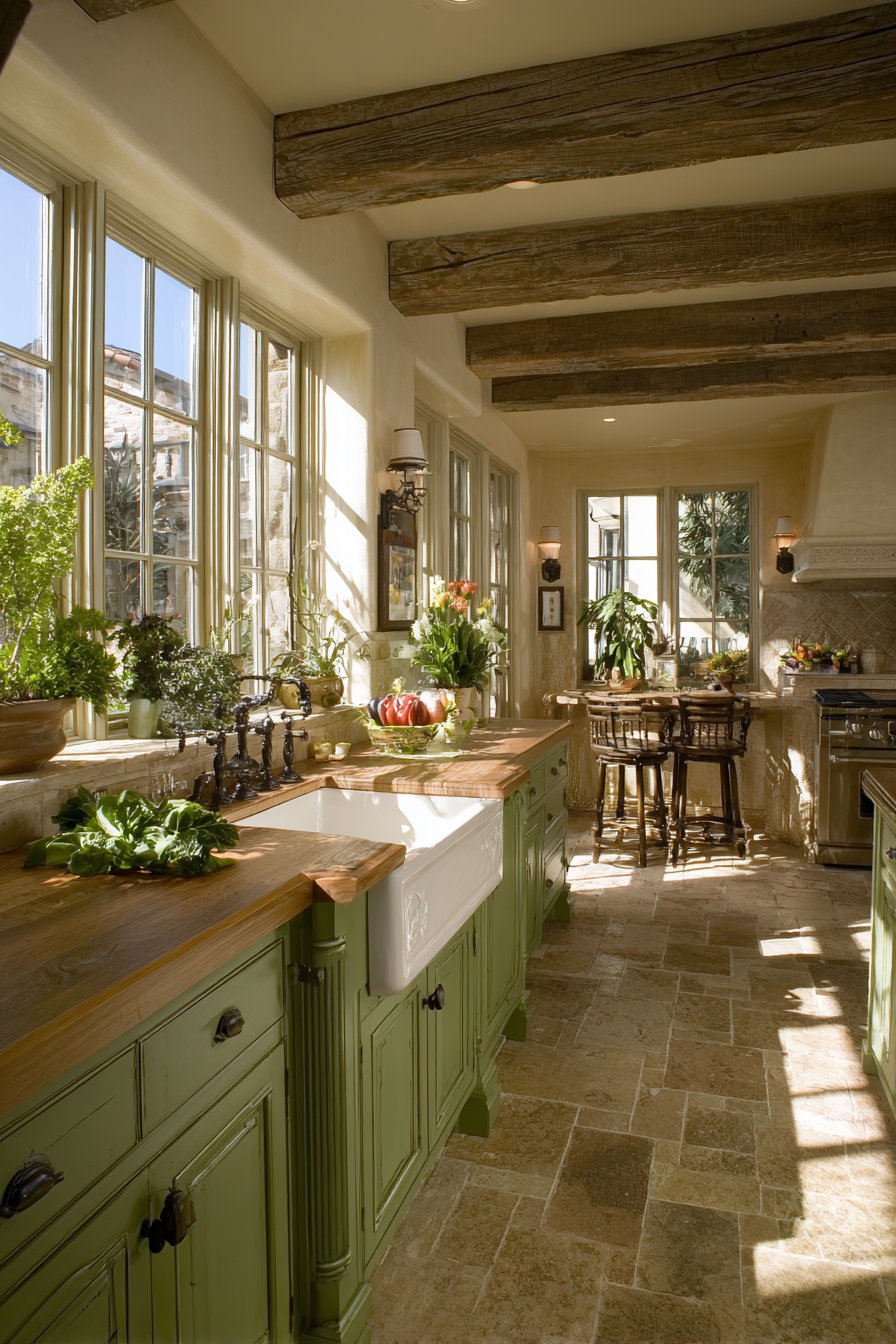
A large farmhouse sink set in natural wood countertops becomes the kitchen’s functional and visual centerpiece. The deep, wide basin accommodates large pots and baking sheets while the apron front creates a distinctive silhouette that’s become synonymous with farmhouse style. The natural wood countertops—likely butcher block or solid wood planks—surrounding the sink provide a warm, water-resistant surface that develops character over time. These countertops require regular maintenance with food-safe oils, but in return they offer unmatched warmth and a living surface that responds to use and care.
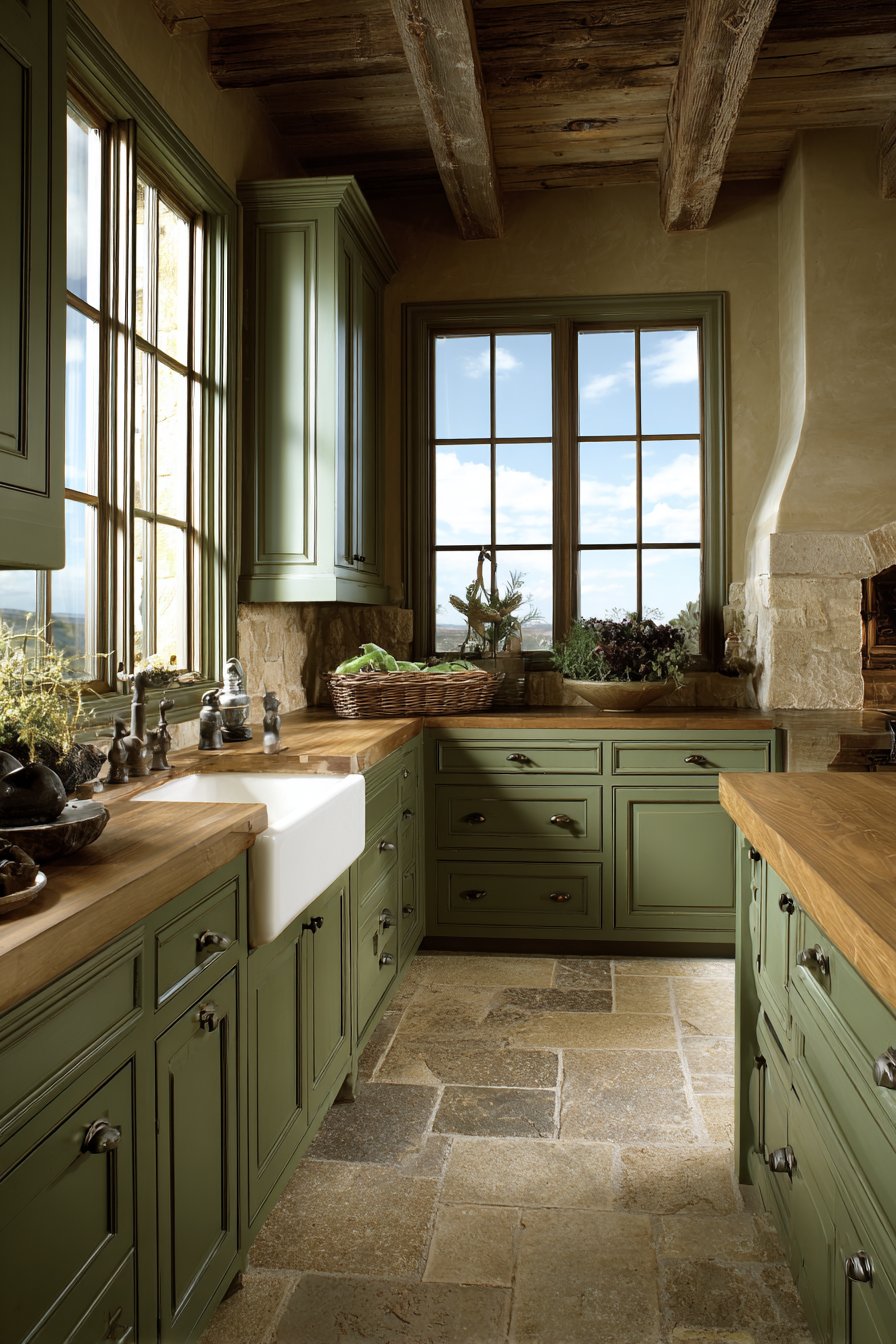
Brushed bronze hardware on the hunter green cabinets introduces metallic elements with an aged, understated quality. Unlike shiny brass or chrome, brushed bronze has a matte, slightly textured finish that feels authentic to historical farmhouse hardware. The bronze’s warm, brown-toned metallic quality bridges the green cabinets and wood elements, serving as a transitional material that unifies the palette. Exposed wooden ceiling beams add architectural interest and create the impression of age and permanence. These beams, whether original to the structure or added for aesthetic purposes, draw the eye upward and make the ceiling an active part of the design rather than an afterthought.
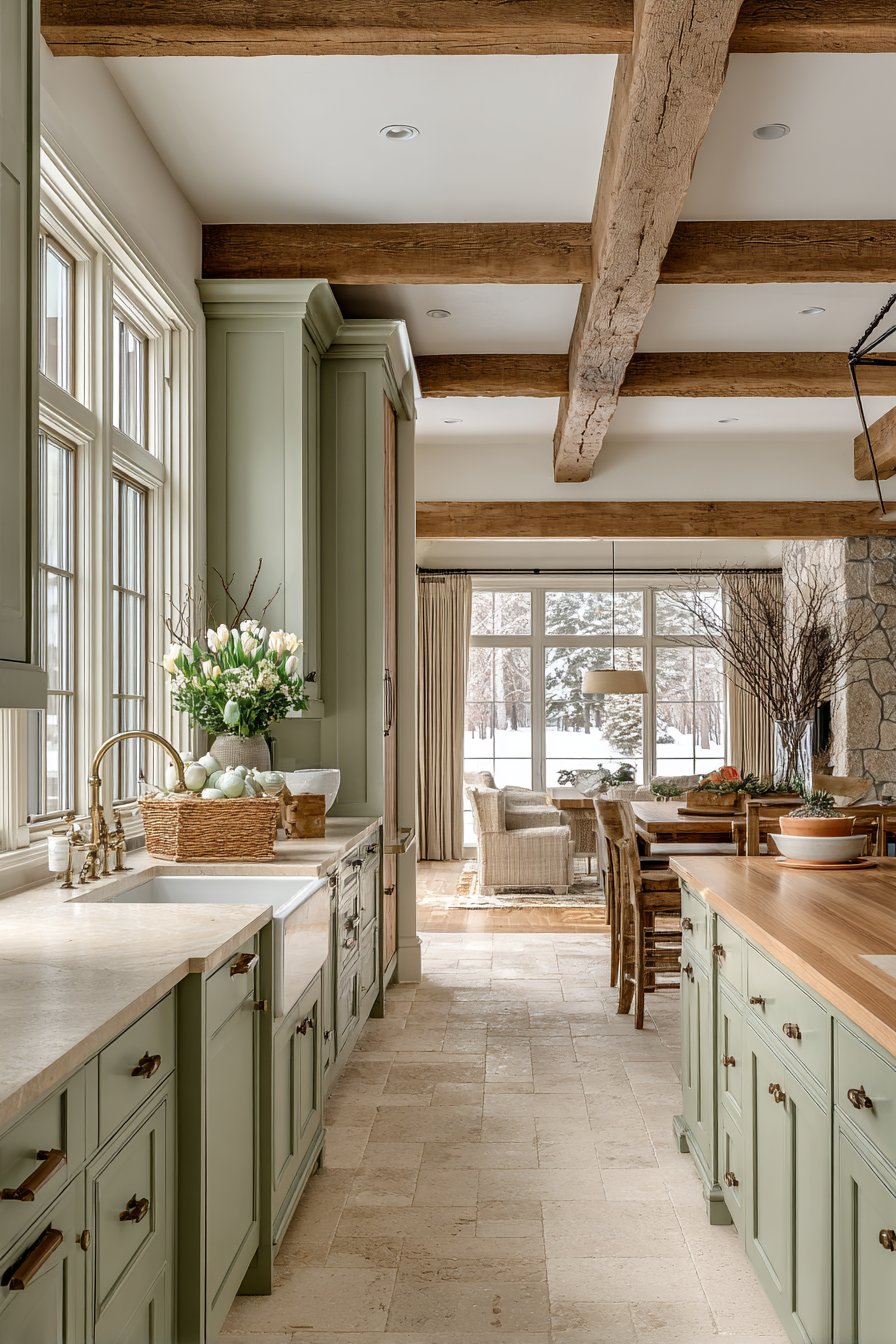
A wooden kitchen island with bar seating anchors the space and provides additional prep surface and casual dining opportunities. The island’s wood construction—often featuring a different wood species or stain than the countertops—creates layered interest and establishes it as a distinct furniture piece within the kitchen rather than just more cabinetry. Natural stone flooring complements both the green and wood elements with its varied tones and cool temperature. Stone’s durability makes it practical for high-traffic kitchens while its natural variation ensures no two sections look identical.
Key Design Tips:
- Choose hunter green for a sophisticated take on farmhouse style that feels refined rather than rustic
- Install an apron-front farmhouse sink as a focal point that defines the style and provides practical deep-basin functionality
- Select natural wood countertops that will develop patina over time, embracing the lived-in quality central to farmhouse aesthetics
- Use brushed bronze hardware for authentic historical feel and warm metallic tones that bridge green and wood elements
- Add exposed ceiling beams to create architectural interest and draw attention to the full height of the space
- Design a wooden kitchen island as furniture rather than built-in cabinetry to maintain farmhouse authenticity
- Choose natural stone flooring for durability and organic variation that complements natural materials
- Install multiple windows to flood the space with soft, diffused daylight that emphasizes material textures
- Allow shadows to play across surfaces rather than over-lighting, which maintains authentic farmhouse character
7. Emerald Green and Walnut Open Shelving Display
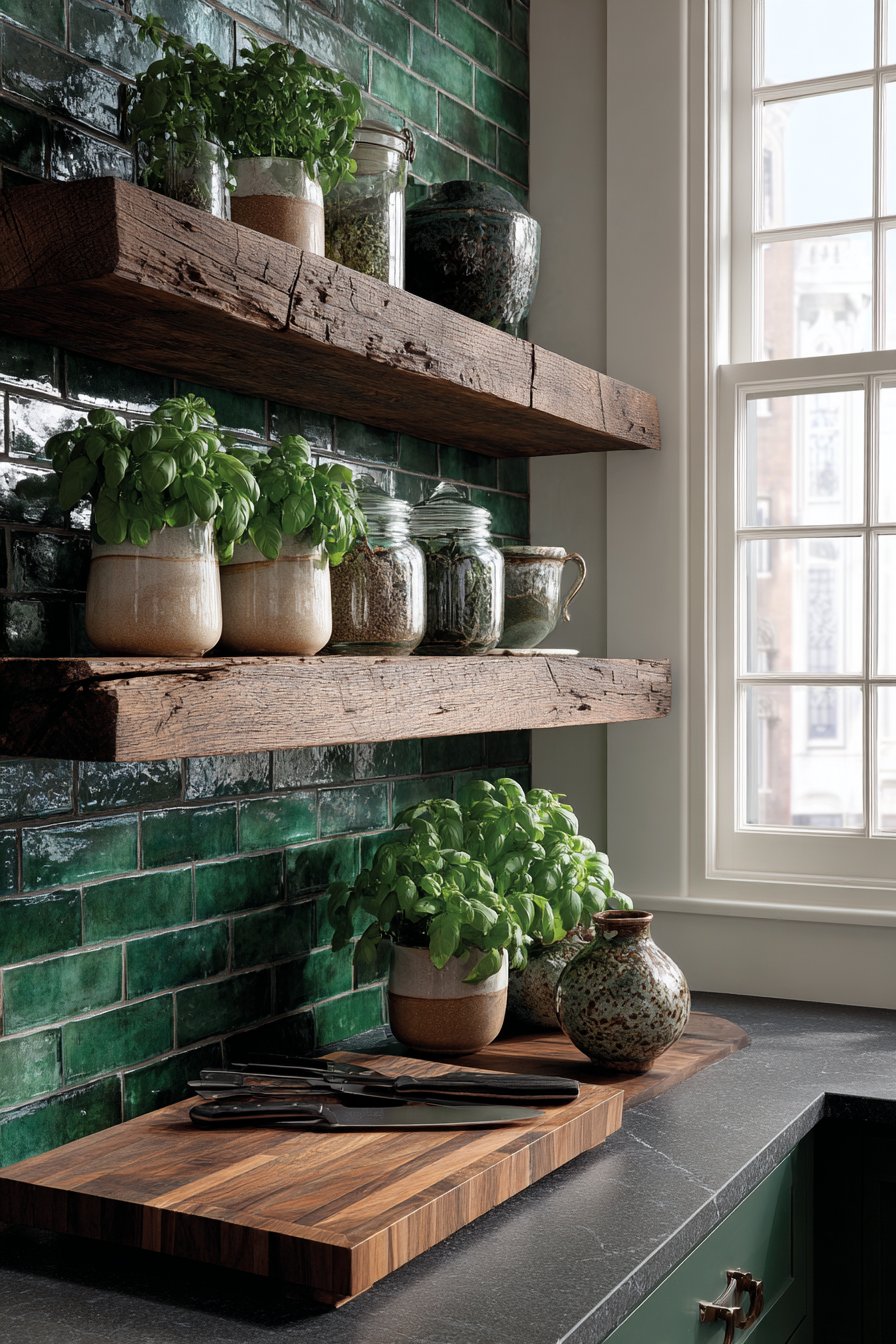
The backsplash area transforms into a design focal point in this kitchen where emerald green subway tiles meet live-edge walnut shelving. Emerald green—more jewel-toned and saturated than sage or mint—brings vibrant energy to the space without overwhelming it when used in the relatively small surface area of a backsplash. The subway tile format, with its classic rectangular shape and beveled edges, catches light differently at various angles, creating subtle dimensional variations across the wall surface. The glossy tile finish reflects light beautifully, making the green appear to glow and shift as you move through the space.
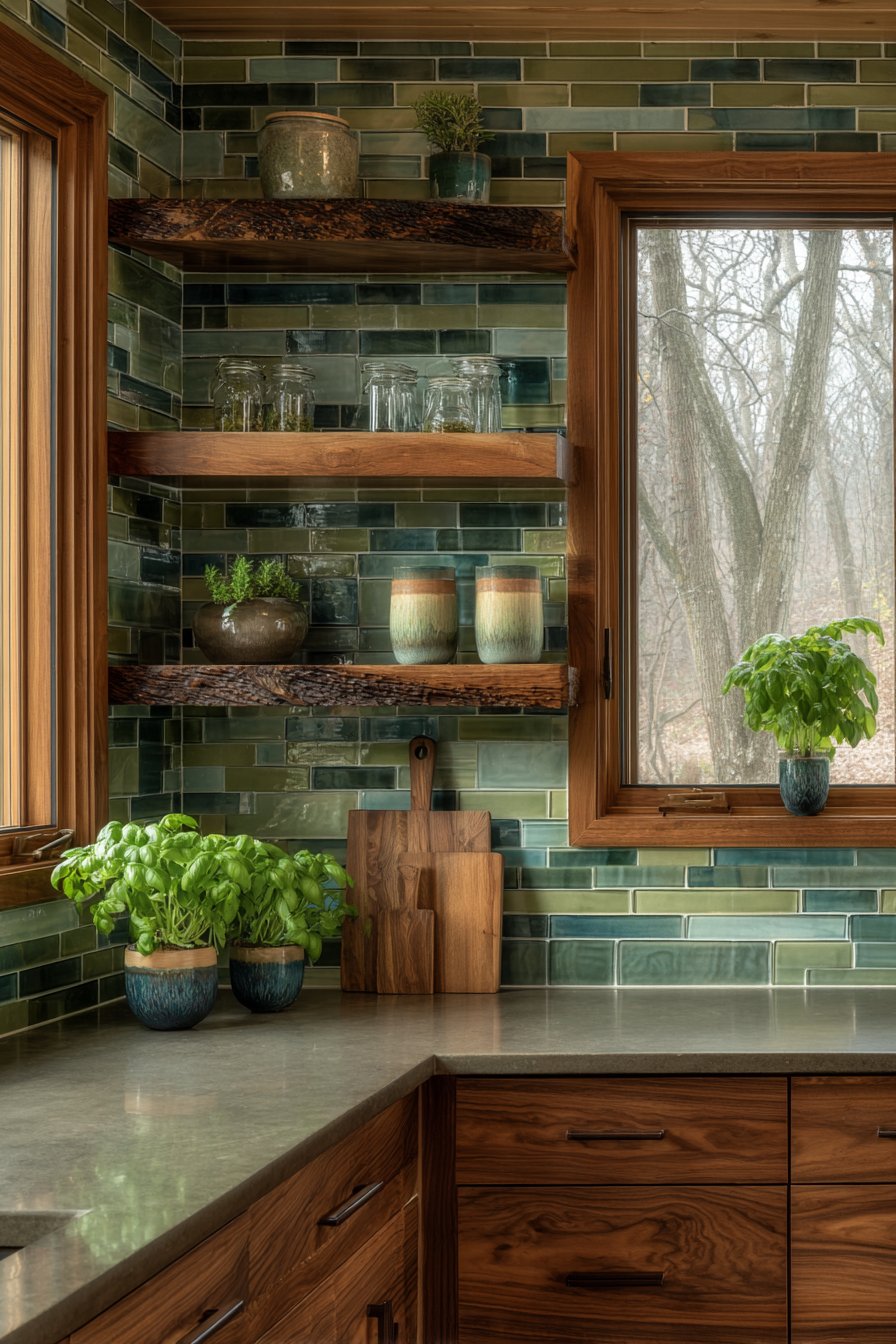
Open shelving made from live-edge walnut planks introduces organic, sculptural elements that contrast dramatically with the straight lines of the tile. Live-edge wood preserves the tree’s natural outer edge, complete with bark remnants and irregular contours that make each shelf unique. Walnut’s rich chocolate-brown color with purple undertones creates sophisticated contrast against the vibrant emerald tiles. The shelves display glass jars filled with dry goods like pasta, rice, and beans that become decorative elements—their varied shapes, colors, and textures creating still-life compositions against the green backdrop.
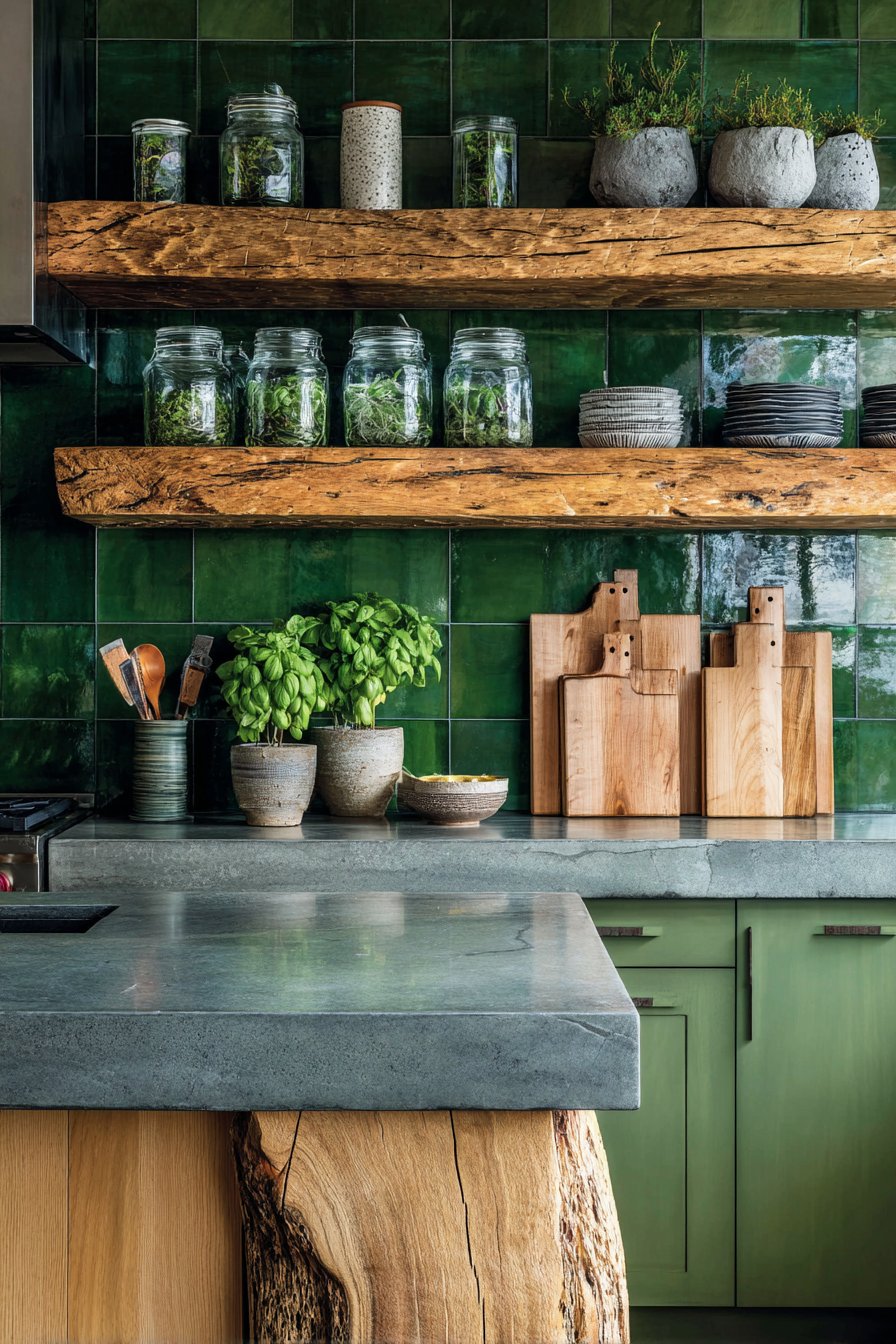
Potted basil plants on the shelves add living elements that reinforce the green color story while providing fresh herbs for cooking. The plants’ bright, fresh green leaves contrast with the deeper emerald tiles, creating tonal variation within the green spectrum. Ceramic containers in whites, creams, and earth tones provide storage and display opportunities that prevent the green and wood from becoming monotonous. Grey stone countertops flanked by green lower cabinets create a neutral foundation that allows the dramatic backsplash to command attention without competing elements.
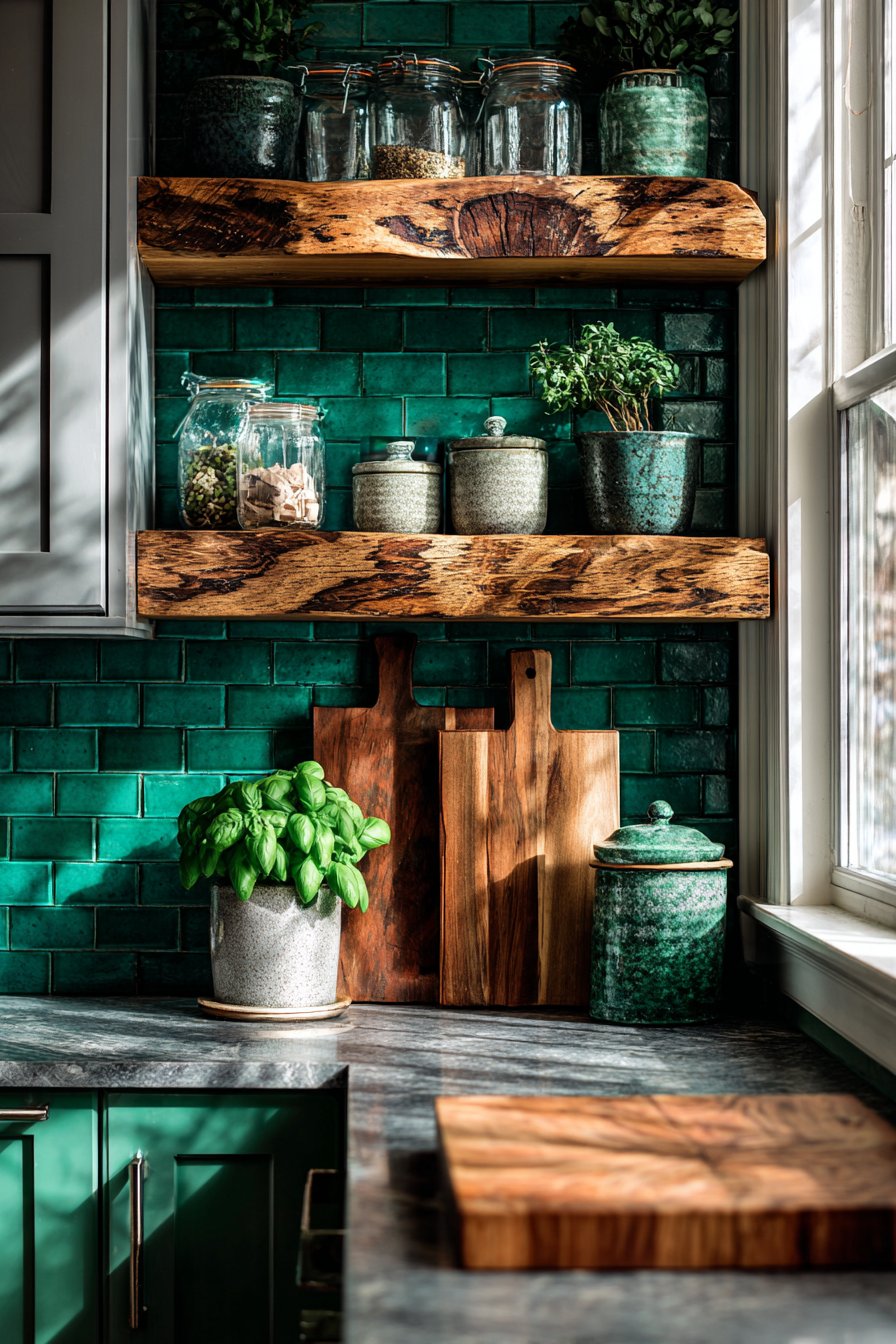
Natural wood knife blocks and cutting boards resting on the countertop continue the wood theme into the work surface, creating accessibility for frequently used tools while contributing to the aesthetic. The detail-focused design captures the texture of the wood grain against the glossy green tile, creating a tactile quality that invites touch and engagement. Natural window light highlighting these elements brings out the organic material qualities—the way light transmits through the emerald tiles creating jewel-like depth, and how it reveals the intricate grain patterns in the walnut.
Key Design Tips:
- Use emerald or vibrant green in smaller doses like backsplashes for maximum impact without overwhelming the space
- Choose glossy tile finish to reflect light and create depth through dimensional variation
- Select live-edge wood for open shelving to introduce organic, sculptural elements that celebrate natural form
- Display glass jars with colorful contents on open shelves to create functional art installations
- Incorporate potted herbs to add living greenery and provide fresh ingredients within arm’s reach
- Use grey or neutral stone countertops to provide restful visual breaks between vibrant backsplash and green cabinetry
- Position shelving at heights that allow easy access while creating visually pleasing compositions
- Install under-cabinet lighting to illuminate shelving contents and highlight the backsplash drama
- Arrange shelf contents thoughtfully by height and color to create cohesive vignettes
8. Sea Foam Green Peninsula with Butcher Block Waterfall
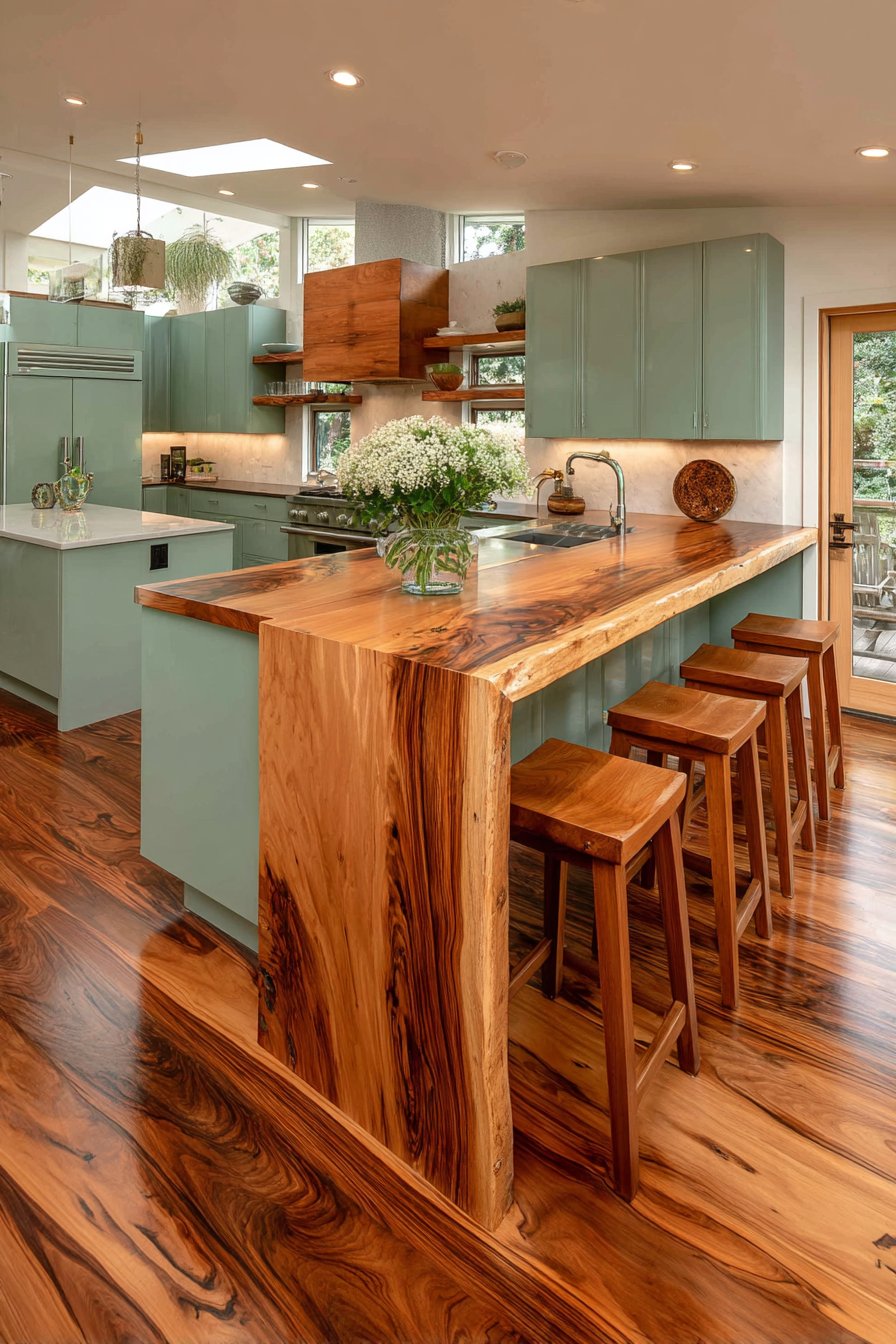
The kitchen peninsula—that versatile configuration that projects from a wall or runs of cabinetry—takes center stage in this design featuring sea foam green painted cabinets and a show-stopping butcher block waterfall countertop. Sea foam green brings coastal, beachy associations with its blue-green tone that evokes shallow tropical waters and sea glass. This lighter, brighter green creates an airy, uplifting atmosphere that makes the kitchen feel fresh and expansive. The painted cabinet finish in matte or eggshell creates a soft, contemporary look that conceals fingerprints while maintaining easy cleanability.
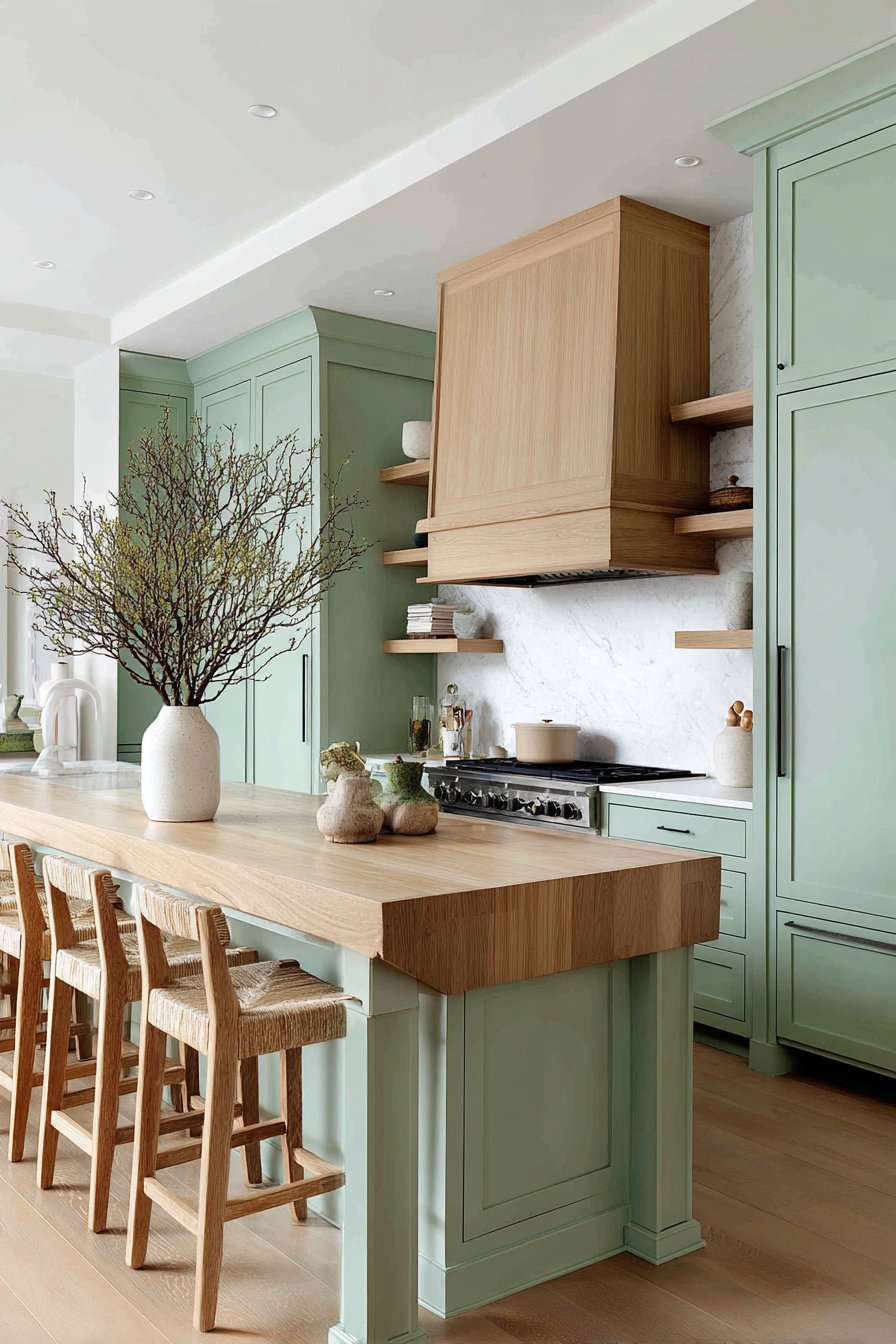
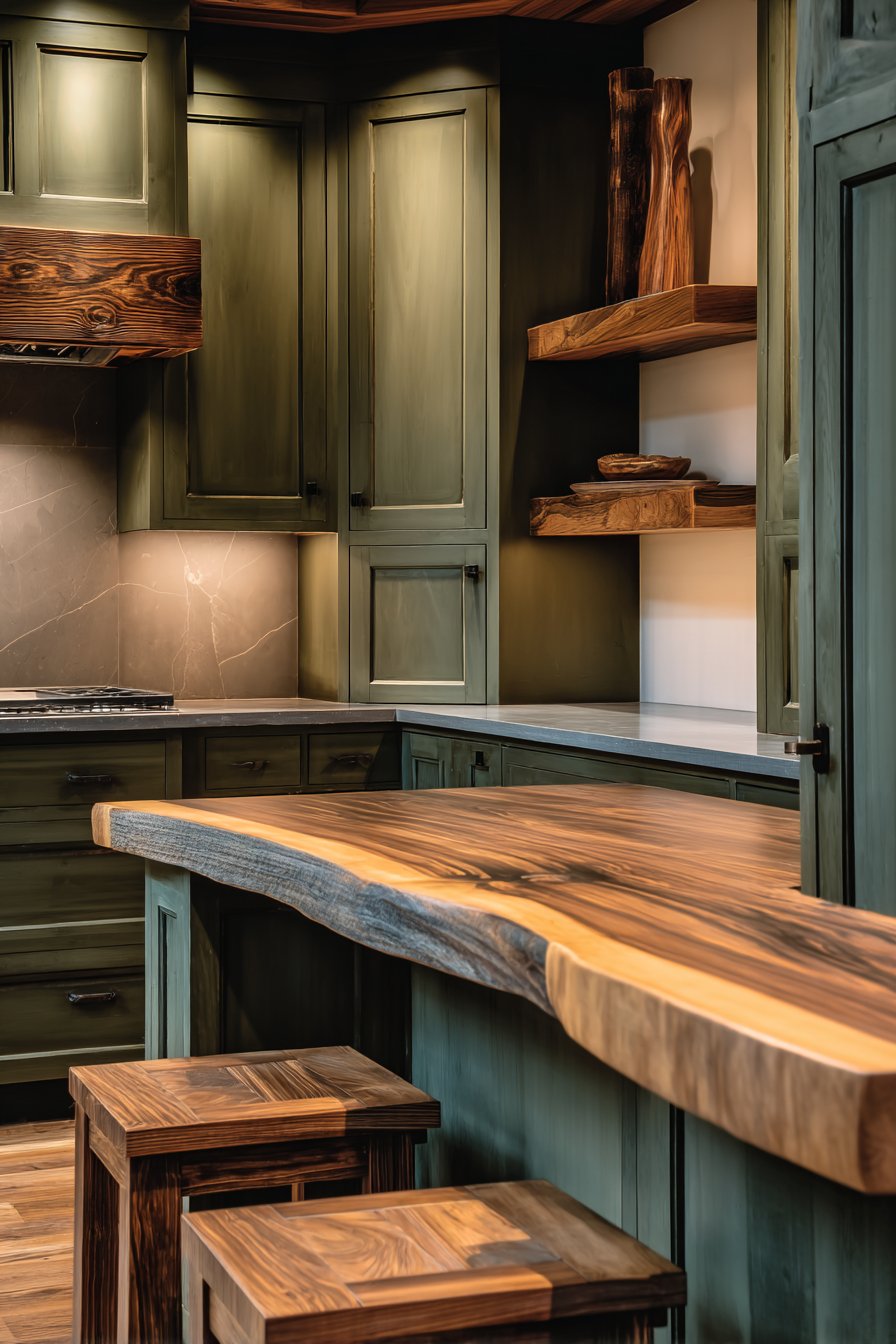
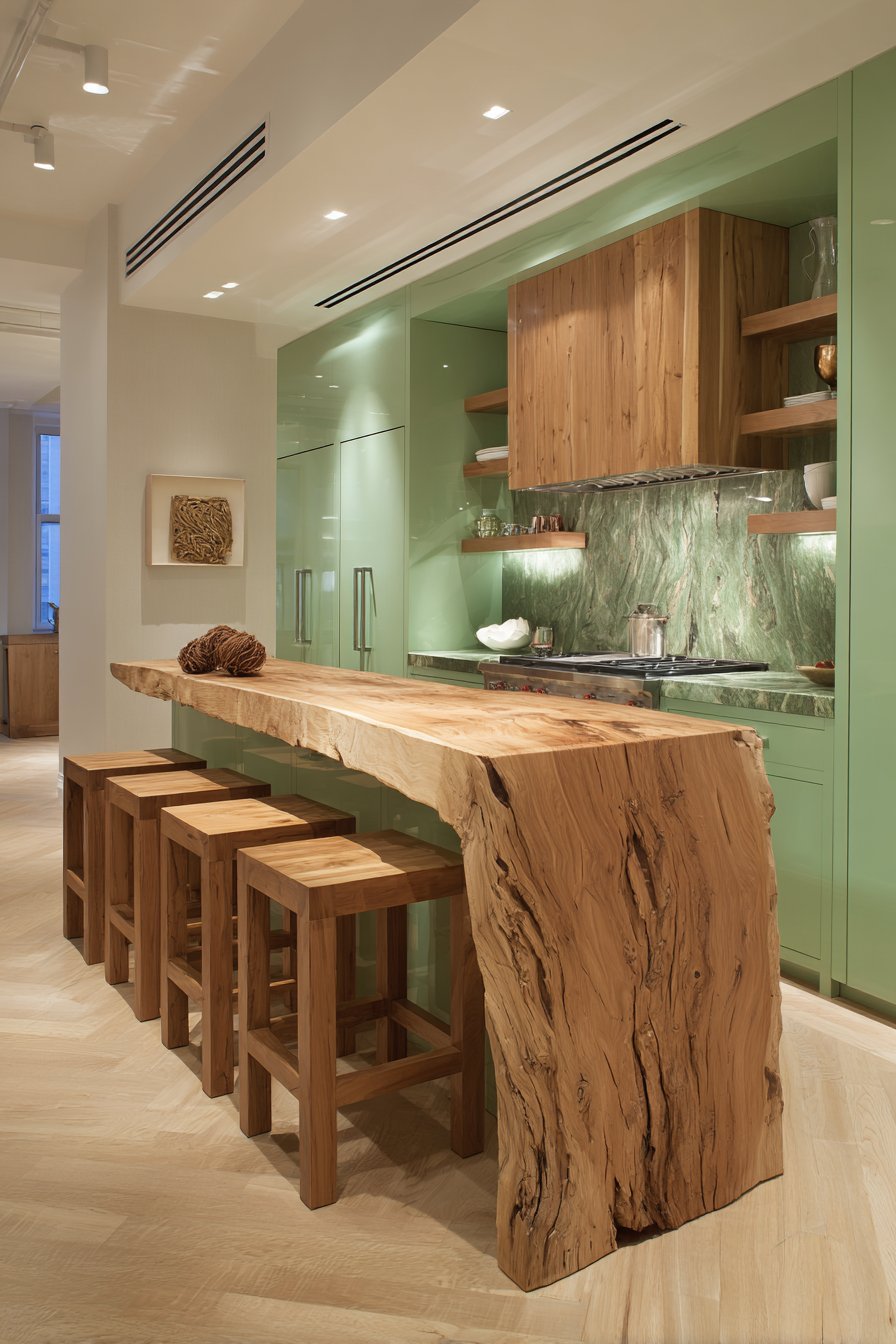
The thick butcher block waterfall countertop becomes the peninsula’s most dramatic feature, with honey-toned oak creating warm contrast against the cool sea foam green. A waterfall edge—where the countertop material extends down the sides to the floor—creates a contemporary, sculptural quality that elevates the peninsula from functional work surface to design statement. The continuous grain pattern flowing over the edge emphasizes the wood’s natural beauty and the craftsmanship required to book-match the grain for visual continuity. The substantial thickness of the butcher block conveys quality and permanence while providing a durable, warm surface for food preparation and casual dining.
Wooden bar stools with natural finish provide seating at the peninsula, their simple forms allowing the waterfall countertop to remain the focal point. The natural wood of the stools coordinates with the butcher block, creating material repetition that unifies the design. The surrounding kitchen features additional wood accents in floating shelves that display dishes and decor, and a wooden range hood cover that transforms a typically utilitarian element into a design feature. This custom hood cover, often constructed from reclaimed wood or new wood with aged finish, creates a focal point on the cooking wall while reinforcing the natural material palette.
Recessed lighting creates subtle highlights on both the matte green cabinet finish and the polished wood surfaces. The lighting strategy layers ambient illumination from ceiling fixtures with task lighting over work surfaces and accent lighting that grazes interesting textures and materials. This multi-layered approach allows the space to adapt to different times of day and activities—bright and energizing for meal prep, softer and more intimate for evening entertaining. The balanced natural and artificial lighting ensures the true colors of both the sea foam green and honey oak remain accurate rather than being distorted by color temperature mismatches.
Key Design Tips:
- Choose sea foam or blue-green tones to create coastal, airy atmospheres that feel fresh and optimistic
- Install a waterfall edge on peninsula countertops for contemporary drama and seamless visual flow
- Select thick butcher block countertops to convey quality and provide durable, warm work surfaces
- Book-match wood grain on waterfall edges for continuous pattern flow and professional finished appearance
- Use natural finish wooden bar stools that coordinate with countertops without matching exactly
- Create a custom wooden range hood cover to transform utilitarian elements into design features
- Install recessed lighting to provide even illumination without visible fixtures that might compete with the design
- Layer lighting types—ambient, task, and accent—to create adaptable illumination for various activities
- Position the peninsula to allow circulation on at least one side while creating clear workspace boundaries
9. Rustic Sage with Reclaimed Barn Wood Authenticity
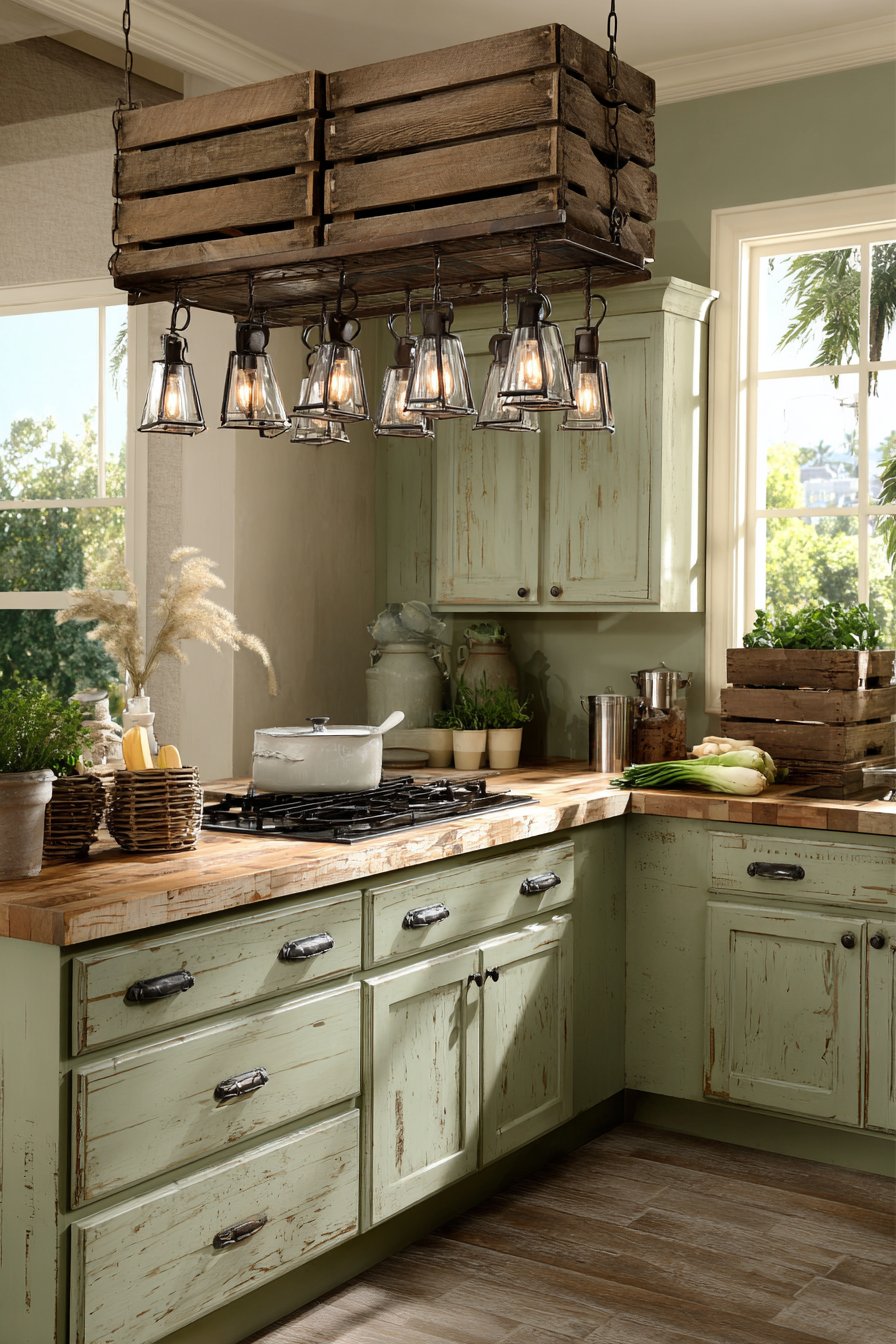
This kitchen embraces imperfection and authentic aged materials, creating a space that feels collected over time rather than designed all at once. Distressed sage green cabinets with visible brush strokes announce that perfection isn’t the goal—character is. The deliberately imperfect finish might include areas where base wood shows through the green paint, variations in paint thickness, and brush marks that create texture. This distressed technique mimics the natural wear patterns that occur over decades of use, creating instant patina that makes new cabinets feel like beloved antiques.
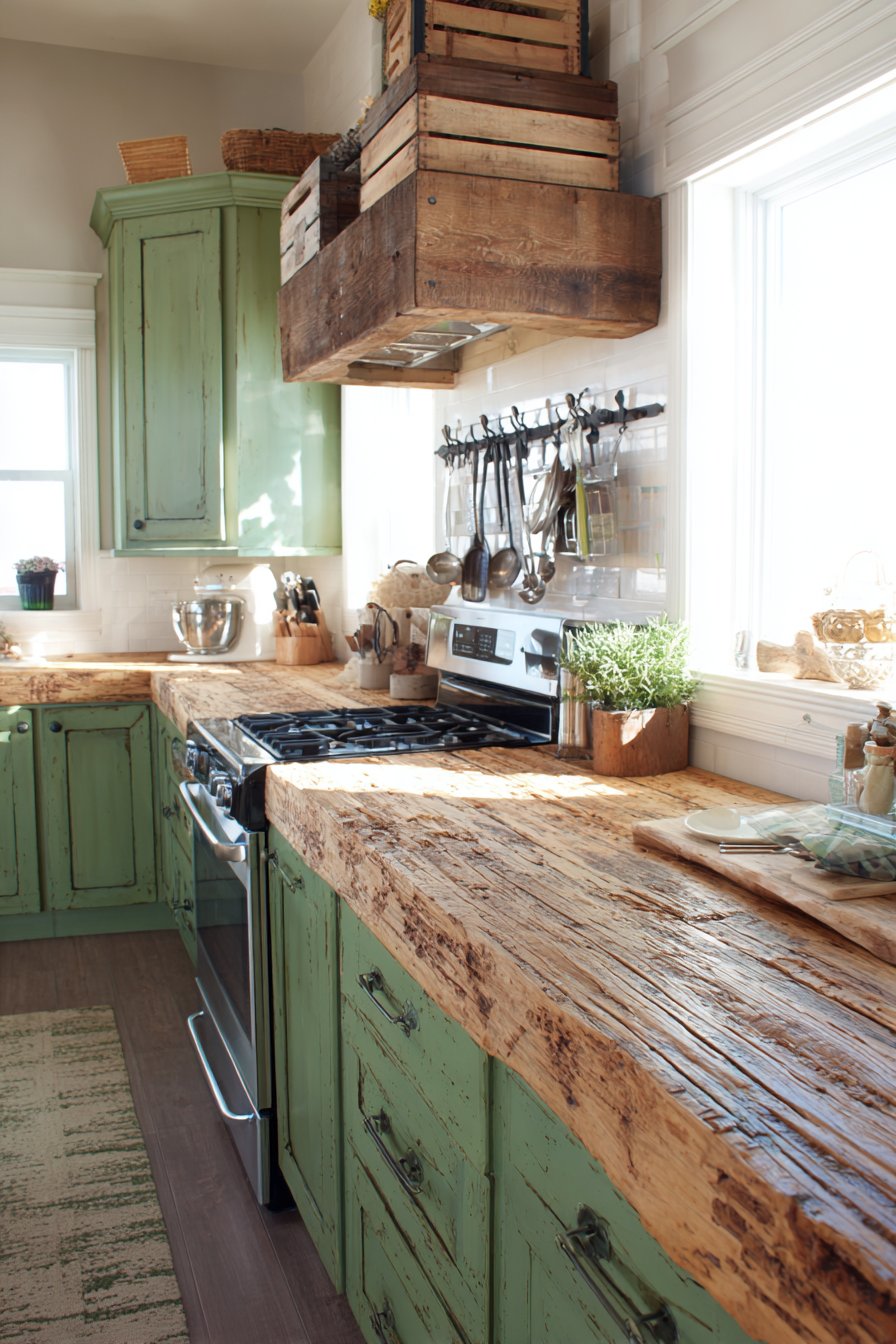
Reclaimed barn wood countertops bring genuine history into the space, their natural knots, nail holes, color variations, and checking (small cracks) documenting years of exposure to weather and use. Each plank tells a story—darker sections might have been protected from sun, lighter areas exposed; nail holes indicate where siding was once attached; color variations reveal different wood species or ages. These countertops require proper sealing to be food-safe and water-resistant, but they maintain their weathered appearance while gaining functionality. The irregular surface created by varied plank widths and slight height differences adds to the authentic rustic character.
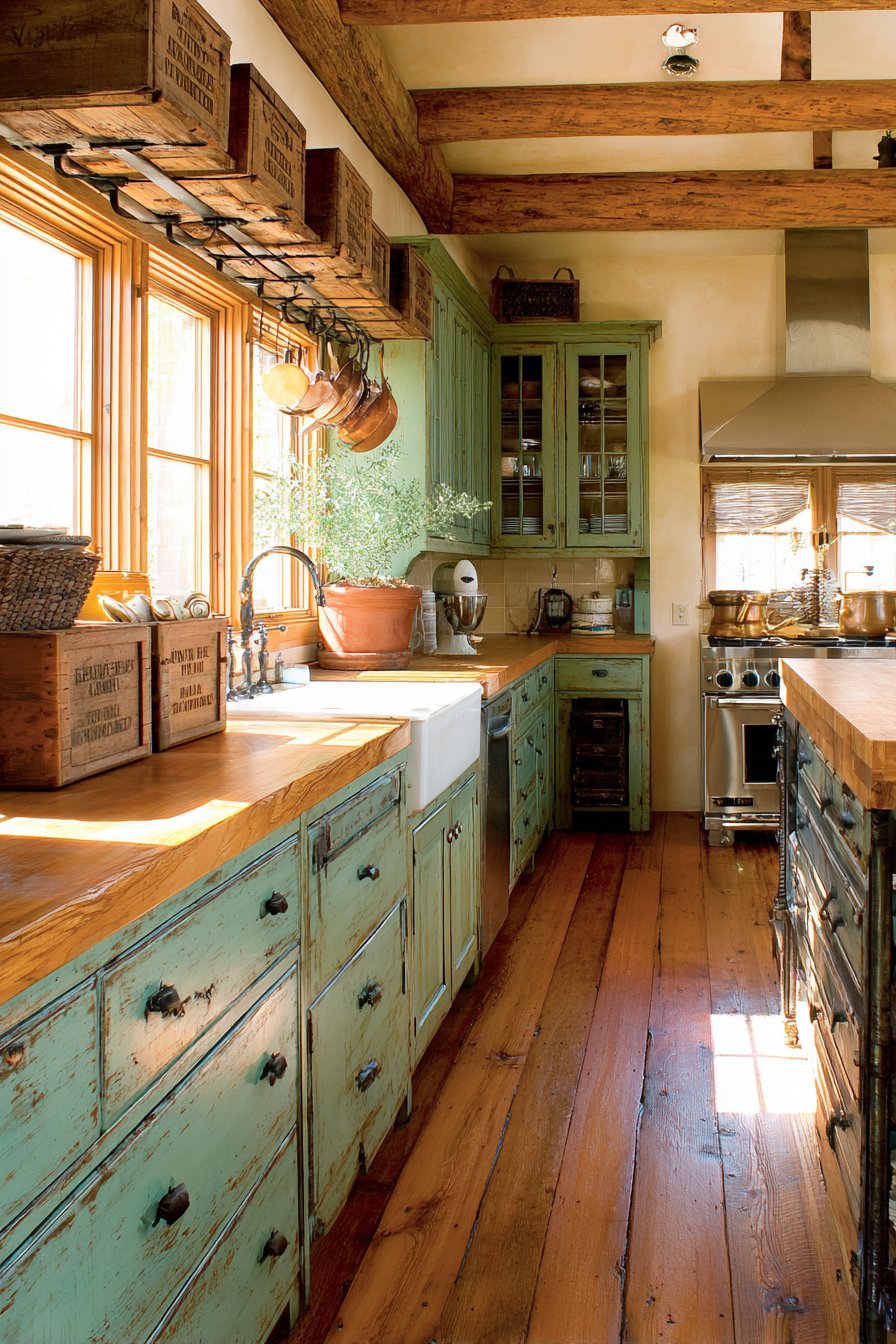
A wooden pot rack with iron hooks hanging above the stove area combines rustic materials in functional design. The pot rack’s wooden frame—perhaps constructed from smaller pieces of reclaimed wood—supports sturdy iron hooks that can handle heavy cast iron and copper cookware. This overhead storage solution keeps cooking tools accessible while creating visual interest in the space above the range. Wooden crate storage boxes sitting atop green painted base cabinets provide additional organized storage with vintage charm. These crates—whether authentic antiques or new crates aged to look vintage—can be labeled, stacked, and rearranged, offering flexible storage that adapts to changing needs.
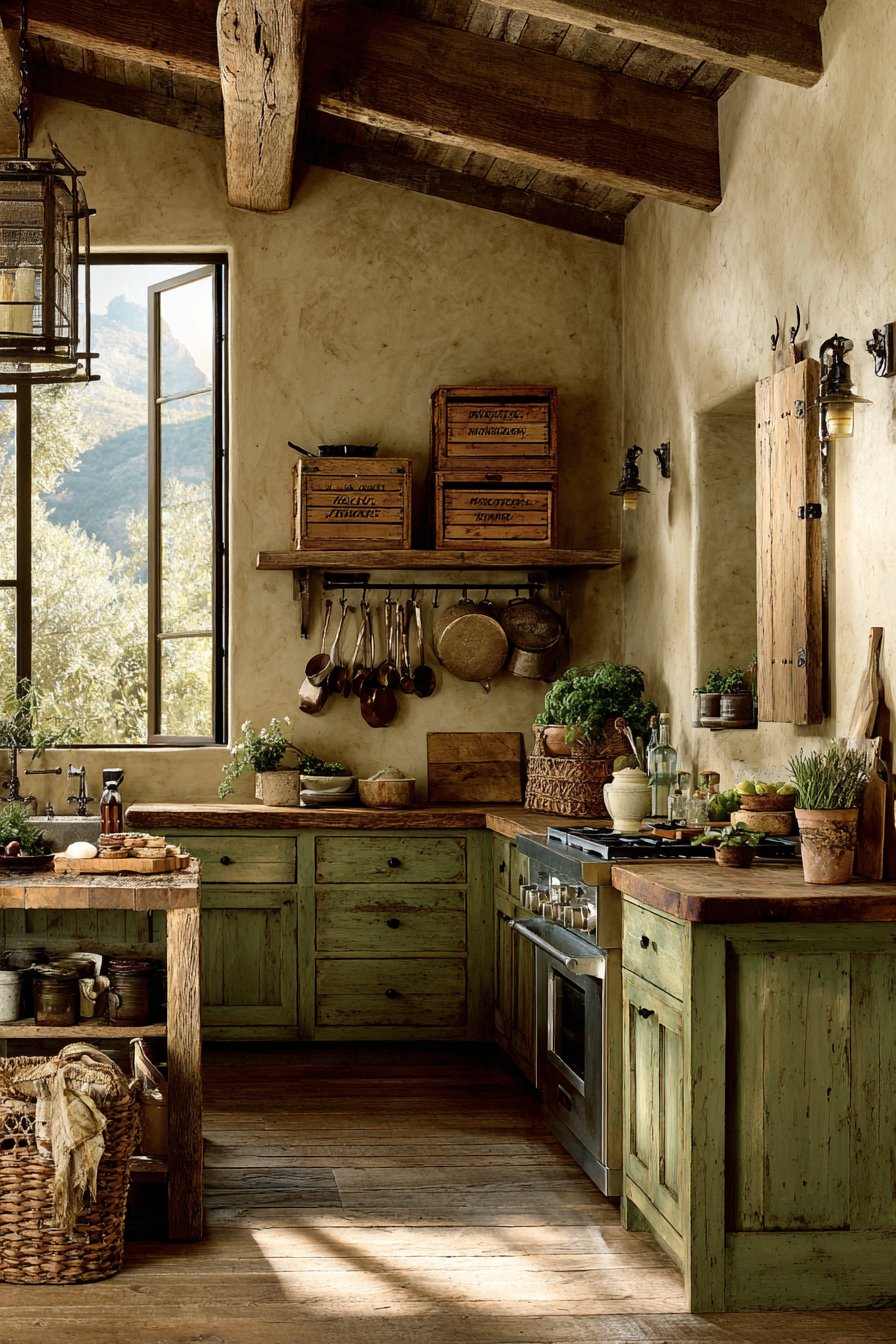
Natural light from a farmhouse window illuminates the space with authentic shadows that highlight the weathered texture of both the painted wood cabinets and natural wood surfaces. Rather than trying to eliminate shadows through aggressive artificial lighting, this design embraces the play of light and dark that creates depth and emphasizes the dimensional quality of textured surfaces. The window itself might feature simple trim, wavy antique glass, or other period-appropriate details that reinforce the authentic rustic character of the entire space.
Key Design Tips:
- Apply paint to cabinets with intentional imperfection, using techniques like dry brushing or strategic sanding to create authentic wear patterns
- Source reclaimed barn wood from architectural salvage yards or specialized suppliers who can verify wood history and safety
- Seal reclaimed wood countertops properly with food-safe finishes that protect without hiding the aged character
- Install pot racks above stoves to keep cooking tools accessible while displaying them as functional art
- Use wooden crates for flexible, visible storage that can be rearranged as needs change
- Embrace natural light and shadows rather than over-lighting, which creates depth and emphasizes texture
- Mix wood species and ages freely—perfect matching works against the collected-over-time aesthetic
- Allow natural knots, nail holes, and checking in wood surfaces rather than filling them for a pristine appearance
- Choose iron hardware and accessories to complement the rustic wood with period-appropriate metal finishes
10. Contemporary Eucalyptus Green with Teak Minimalism
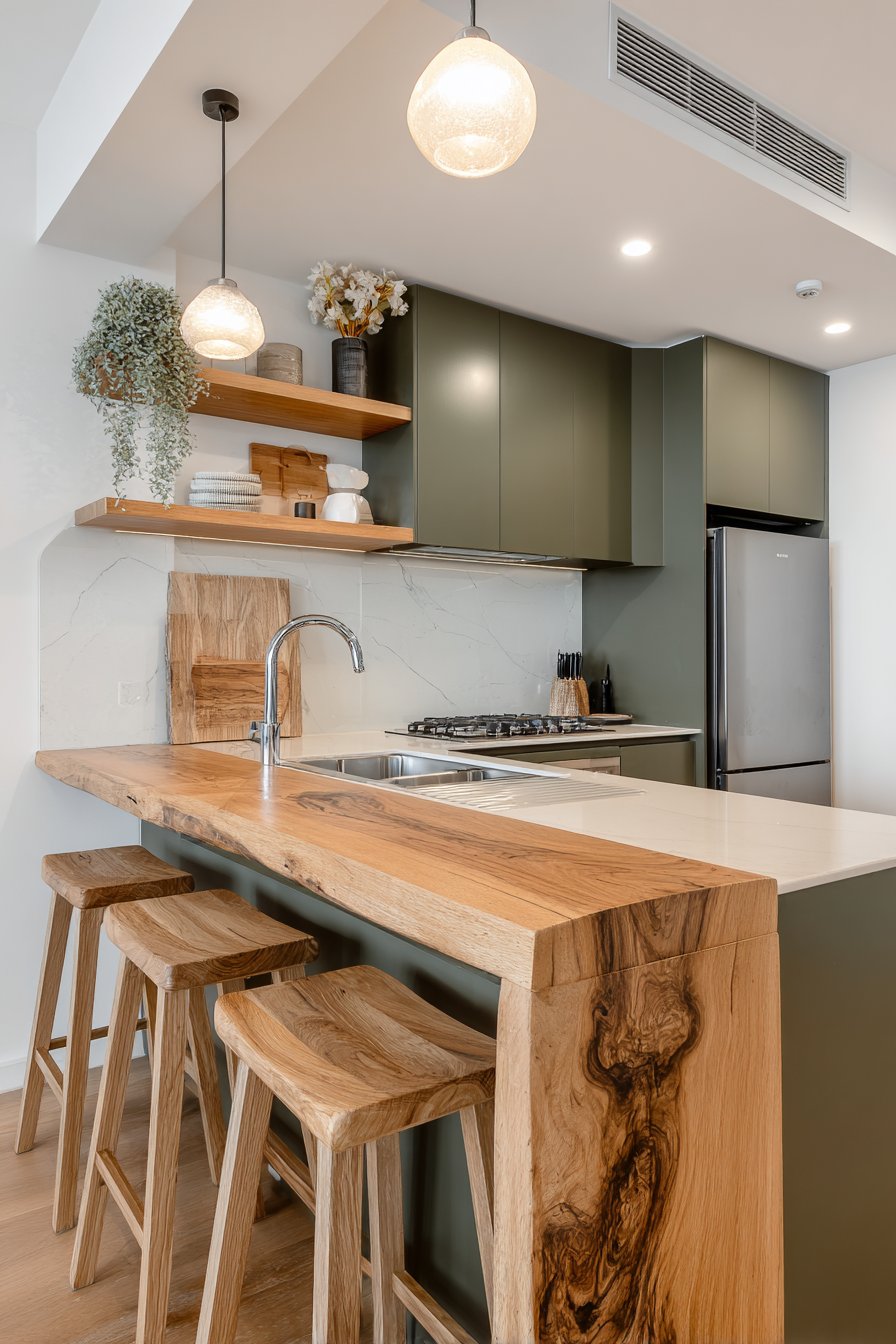
This kitchen demonstrates that green and wood combinations work beautifully in sleek, modern contexts as well as rustic ones. Eucalyptus green flat-panel cabinets provide color with a contemporary sensibility—the soft grey-green tone feels sophisticated and calming without any country or traditional associations. Flat-panel cabinet doors, also called slab doors, feature no trim or dimensional detail, creating smooth, minimalist surfaces that emphasize color and material over ornamentation. The eucalyptus green’s subtle grey undertones prevent it from reading as too cheerful or casual, maintaining the serene, Zen-like quality appropriate for contemporary design.
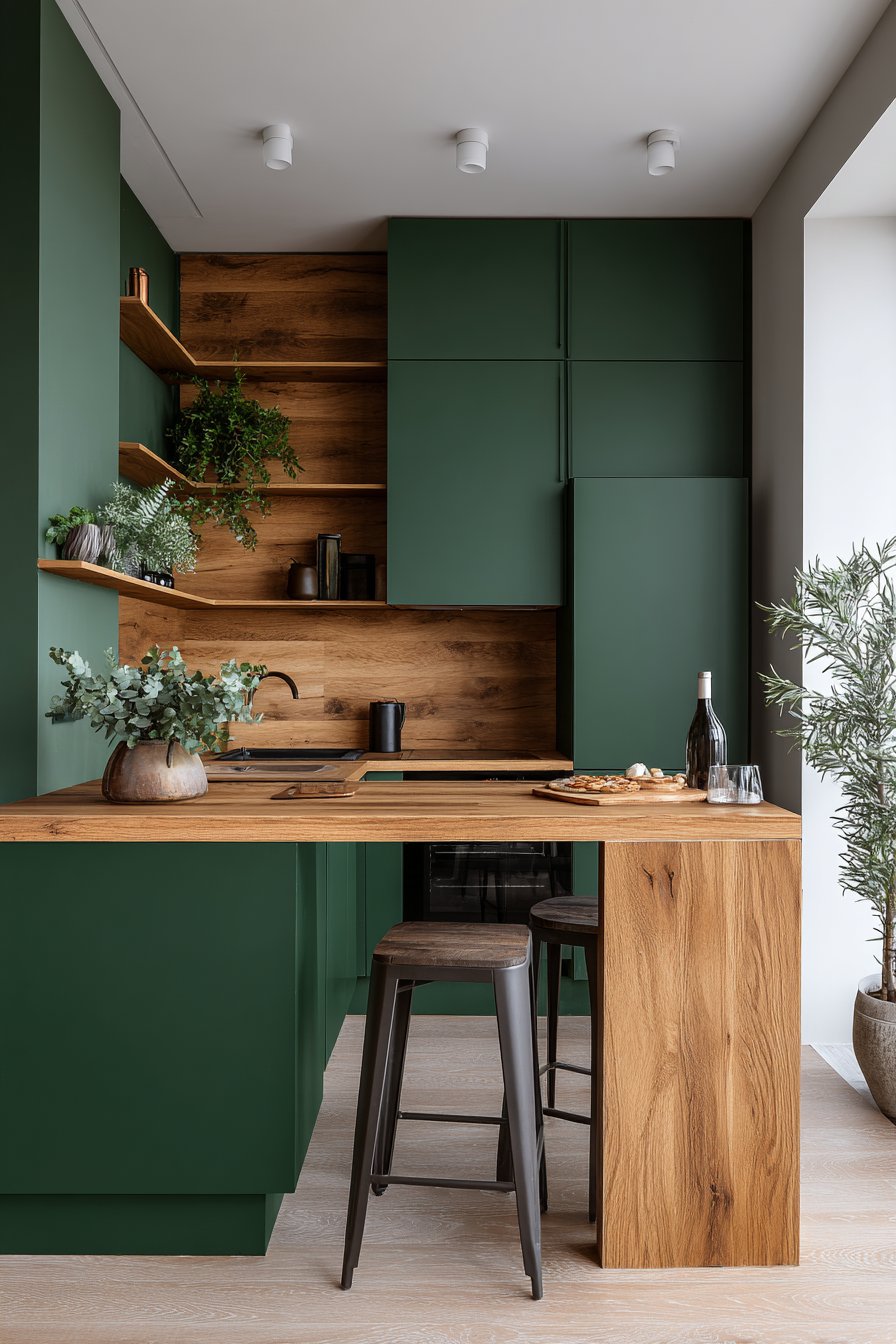
Warm teak wood open shelving and a wooden breakfast bar overhang create dramatic contrast against the cool eucalyptus cabinets. Teak’s golden-brown color with natural oils that give it a soft sheen brings warmth that prevents the contemporary space from feeling cold or sterile. The open shelving, mounted with concealed hardware for clean lines, displays carefully curated items—perhaps matching white dishes, glass containers, or a few select decorative objects. In contemporary design, what you don’t show is as important as what you do, so the open shelving remains edited and uncluttered.
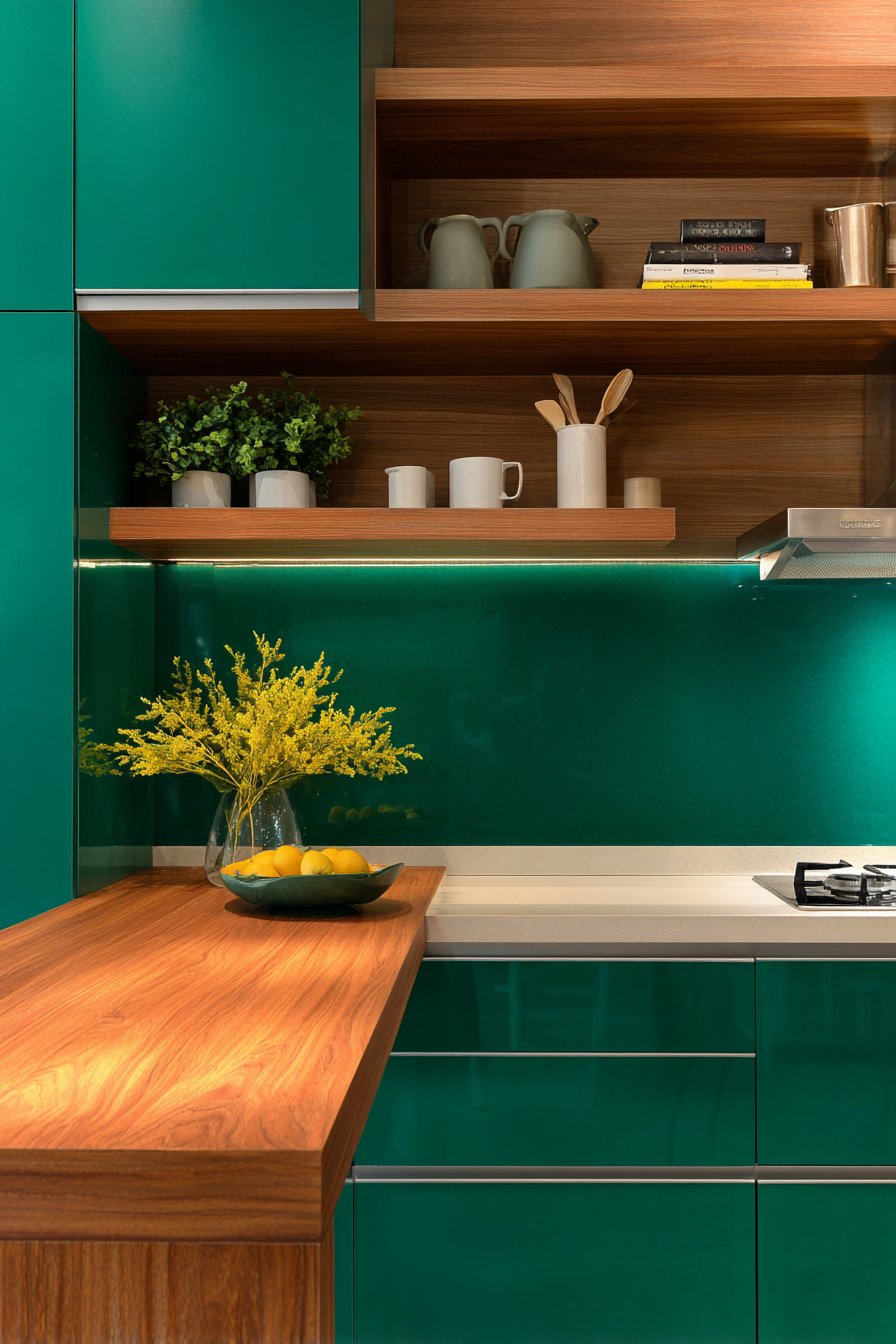
Integrated wooden cutting board slots built into the countertop showcase practical design innovation. These cutting boards slide out from dedicated slots, remaining accessible yet concealed when not in use. This solution eliminates countertop clutter while ensuring cutting surfaces are always within reach. The detail demonstrates the contemporary design principle that form follows function—every element serves a purpose, and beauty emerges from purposeful design rather than applied decoration. Stainless steel appliances provide modern functionality and professional aesthetics while their neutral metallic finish allows the green and wood elements to dominate the color story.
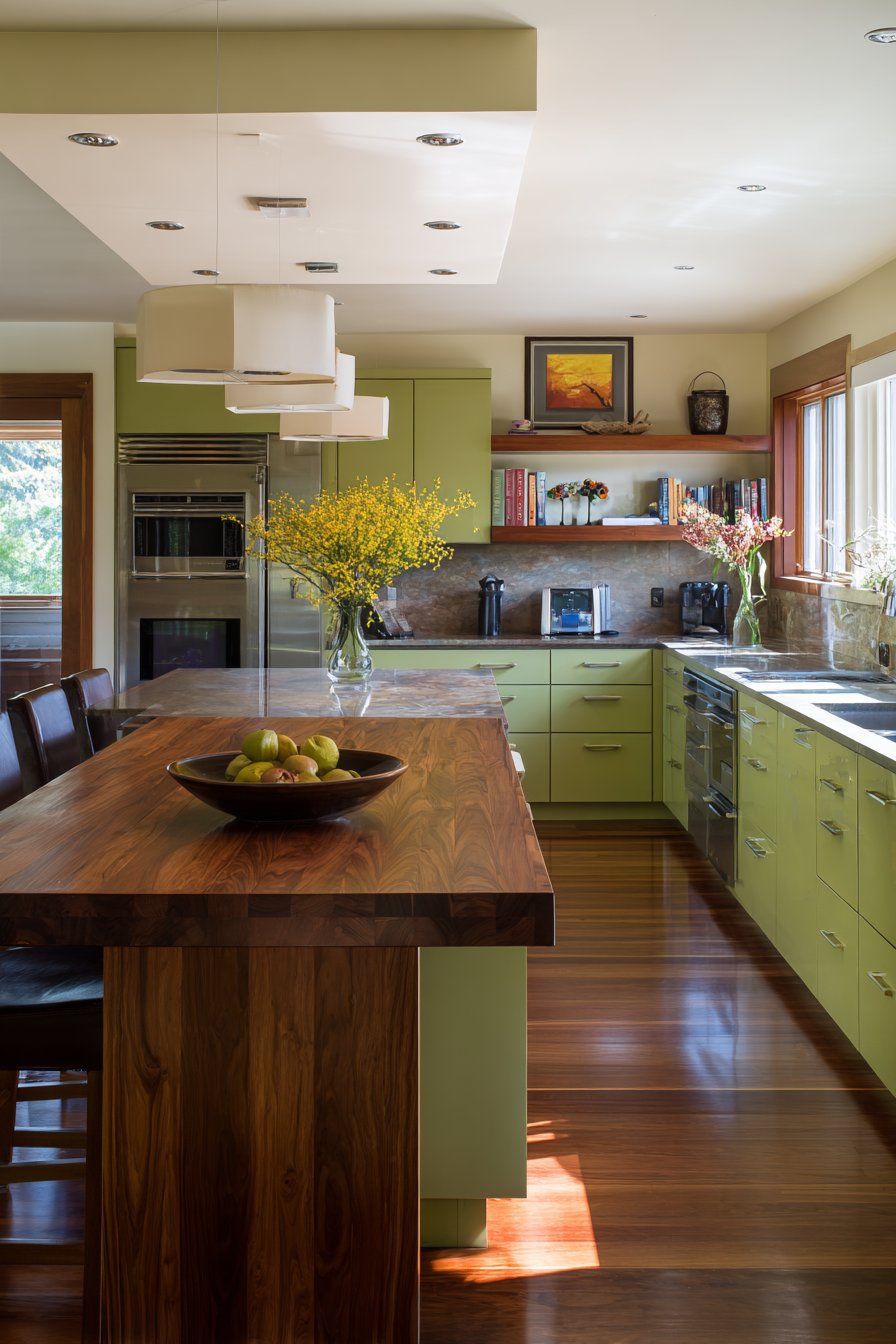
The sophisticated balance between cool green cabinetry and warm wood accents creates visual tension that keeps the design interesting. The smooth painted cabinet surfaces contrast with natural wood grain texture, while the horizontal lines of open shelving balance the vertical cabinet runs. Professional interior photography captures these relationships with soft natural lighting that reveals rather than flattens the material qualities—the way light moves differently across matte painted surfaces versus the subtle luster of oiled teak, and how shadows define the minimalist cabinet edges and shelf depths.
Key Design Tips:
- Choose grey-green tones like eucalyptus for contemporary kitchens, as these sophisticated hues avoid traditional associations
- Select flat-panel cabinet doors for minimalist aesthetics that emphasize material and color over decorative detail
- Use teak or other oiled hardwoods that bring warmth through natural golden tones and soft sheen
- Install open shelving with concealed mounting hardware to maintain clean, floating appearance
- Curate shelving contents carefully, showing only select items that contribute to the minimalist aesthetic
- Integrate cutting boards into countertops with dedicated slots for concealed storage and easy access
- Choose stainless steel appliances for neutral, professional appearance that doesn’t compete with design elements
- Emphasize material contrasts—matte versus lustrous, cool versus warm, smooth versus textured
- Use natural lighting strategically to reveal material qualities without harsh artificial brightness
- Maintain clean lines throughout by concealing or minimizing visible hardware, outlets, and switches
Why Green and Wood Kitchens Are the Ultimate Design Choice
The enduring appeal of green and wood kitchen combinations stems from their ability to satisfy multiple design objectives simultaneously. These kitchens succeed aesthetically by creating visual harmony through complementary colors and contrasting textures. Green, positioned opposite red on the color wheel, brings cooling tranquility to spaces, while wood’s warm tones prevent that coolness from becoming sterile or uninviting. This temperature balance creates environments that feel neither too warm and overwhelming nor too cool and distant, but perfectly calibrated for comfort.
From a psychological perspective, green and wood kitchens support wellbeing in measurable ways. Research in environmental psychology demonstrates that exposure to green tones reduces stress, lowers blood pressure, and promotes mental clarity—essential benefits in kitchens where we often rush through morning routines or decompress after long days. Natural wood elements reinforce these benefits by triggering biophilic responses, our innate connection to natural materials and living systems. Kitchens incorporating genuine wood surfaces show measurable improvements in occupant satisfaction and perceived air quality compared to spaces dominated by synthetic materials.
The versatility of green and wood combinations allows them to transcend style boundaries and adapt to diverse architectural contexts. Traditional farmhouse kitchens employ the pairing through sage cabinetry and reclaimed wood beams, while contemporary spaces achieve equally successful results with eucalyptus cabinets and sleek teak accents. This adaptability ensures that green and wood kitchens won’t feel dated as trends shift, because the combination itself isn’t trend-driven—it’s rooted in timeless principles of natural material use and color harmony that have guided successful design for centuries.
Practically, green and wood kitchens offer durability and aging characteristics that improve rather than diminish over time. Quality wood surfaces develop rich patinas that add character, while green paint can be easily refreshed when needed without requiring complete renovations. The natural color variations in wood mean minor scratches and wear blend into the existing grain patterns rather than appearing as obvious damage. Green painted surfaces, particularly in matte or eggshell finishes, similarly disguise fingerprints and minor scuffs better than stark white or bold dark colors.
Sustainability considerations increasingly influence kitchen design decisions, and green and wood combinations align with environmental values. Wood from responsibly managed forests represents a renewable resource that sequesters carbon, while many green paints now feature low-VOC formulations that minimize indoor air quality impacts. Reclaimed wood options allow designers to repurpose existing materials, reducing demand for new lumber while adding authentic character impossible to replicate with new materials. These environmental benefits appeal to homeowners seeking to minimize their ecological footprint without compromising aesthetics.
The color green itself carries cultural and symbolic meanings that enhance kitchen functionality. Associated with growth, renewal, and nourishment, green subconsciously reinforces the kitchen’s role as a space for sustaining life and health. This association makes green particularly appropriate for areas where we prepare food and gather for meals. Wood’s archetypal symbolism—representing strength, growth, and connection to nature—complements green’s associations, creating layered meaning that resonates on both conscious and unconscious levels.
From a real estate perspective, green and wood kitchens demonstrate strong market appeal across demographic groups. Younger buyers appreciate the environmental consciousness and Instagram-worthy aesthetics, while older buyers respond to the timeless quality and natural material warmth. The combination photographs exceptionally well, crucial for online real estate marketing where kitchen images often determine whether potential buyers schedule showings. Well-executed green and wood kitchens consistently test as high-value design features that contribute to faster sales and higher offers.
The practical maintenance of green and wood kitchens proves less demanding than many assume. Modern wood sealers protect countertops and open shelving from water damage and staining while requiring only periodic re-application. Green painted cabinets need simple soap-and-water cleaning to maintain their appearance, with touch-up paint easily addressing any chips or scuffs. This ease of maintenance means the beautiful design doesn’t require professional upkeep or specialized products, making these kitchens practical for real-world use by busy families.
The tactile qualities of green and wood kitchens contribute significantly to their appeal in ways that purely visual design cannot. Running your hand along a wood countertop or shelf connects you physically with natural material—the grain creates subtle texture, the temperature feels warmer than stone or laminate, and the slight give under pressure feels organic rather than rigid. Green painted surfaces, particularly in matte finishes, offer a soft, almost velvety feel that invites touch. These haptic experiences create emotional connections to the space that transcend visual appreciation alone.
Lighting interacts with green and wood surfaces in dynamic ways that keep the kitchen visually interesting throughout the day and across seasons. Morning light brings out yellow undertones in both green paint and natural wood, creating warmth that energizes breakfast routines. Afternoon light emphasizes cooler tones, providing visual respite during the day’s hottest hours. Evening artificial lighting can be calibrated to enhance either warm or cool tones depending on desired ambiance. This responsiveness to light conditions means the kitchen presents different faces throughout the day, maintaining visual interest and adapting to circadian rhythms.
The acoustic properties of wood contribute to more comfortable kitchen environments in subtle but meaningful ways. Wood absorbs sound rather than reflecting it like hard surfaces such as tile, stone, or glass. Kitchens with substantial wood elements—ceiling beams, extensive open shelving, wood countertops—feel quieter and more peaceful even during active cooking and cleanup. This sound dampening reduces stress and makes conversation easier, transforming the kitchen from a potentially noisy, echoing space into one conducive to connection and communication.
Green and wood combinations accommodate personal style expression through infinite variation in green shades, wood species, hardware finishes, and styling choices. Minimalists achieve clean, serene spaces with pale green cabinets and light wood accents kept to essentials. Maximalists layer saturated emerald cabinets with multiple wood tones, brass fixtures, and abundant open shelving displays. Traditional designers employ sage and oak with classic shaker doors and farmhouse sinks, while contemporary aestheticians pair eucalyptus flat panels with teak geometric shelving. This flexibility ensures the basic green-and-wood framework supports rather than constrains individual creative vision.
The material honesty inherent in green and wood kitchens resonates with contemporary values around authenticity and transparency. When you see wood grain, you’re viewing the actual material, not a photographic reproduction laminated over particleboard. When you see green cabinets, you’re seeing paint applied to real wood doors, not vinyl film wrapped around synthetic cores. This authenticity creates trust and satisfaction—you know what you’re getting, and the materials will behave predictably as they age. In an era of increasingly convincing artificial materials, the genuine article offers reassuring solidity.
From a design longevity perspective, green and wood kitchens avoid the boom-and-bust cycles that plague trend-driven choices. All-white kitchens saturate the market until they feel sterile and boring, then fall from favor. All-grey everything becomes ubiquitous and then dated. But green and wood combinations, drawing on natural color relationships and timeless materials, transcend trend cycles. A well-executed green and wood kitchen designed today will feel current in ten years not because it’s trendy, but because it’s fundamentally sound design based on principles rather than fashions.
The color green’s spectrum—from pale mint to deep forest—allows for precise color matching to existing home palettes and personal color preferences. Those who favor cool tones select blue-greens like sea foam or eucalyptus that coordinate with greys and blues elsewhere in the home. Warm-tone enthusiasts choose olive or sage greens with yellow undertones that harmonize with earth tones, creams, and warm metals. This color flexibility, combined with wood’s natural neutrality, means green and wood kitchens integrate seamlessly with virtually any adjacent room palette rather than creating jarring transitions.
The investment value of green and wood kitchens extends beyond initial installation to include long-term durability and refresh options. Quality wood elements like solid butcher block countertops or genuine hardwood open shelving can be sanded and refinished multiple times over decades, each refinishing restoring them to like-new condition. Green painted cabinets can be repainted in the same shade for refresh or in a new green tone for updated look without replacing the cabinet boxes themselves. This ability to evolve the kitchen’s appearance through relatively modest interventions protects the initial investment while accommodating changing tastes.
Kitchen designers and renovation professionals consistently recommend green and wood combinations to clients seeking timeless appeal with personality. The combination checks multiple boxes—it’s natural and warm, sophisticated and inviting, classic and fresh, functional and beautiful. It photographs well for social media while performing excellently in daily use. It appeals to a broad demographic while supporting individual expression. It coordinates with multiple design styles while maintaining distinct character. These qualities make green and wood kitchens reliable recommendations that satisfy clients and generate positive referrals.
The environmental impact considerations extend beyond material sourcing to include kitchen longevity and waste reduction. Kitchens built with quality wood components and painted in appealing green tones don’t end up in landfills after five years when homeowners tire of trendy choices. The natural materials age gracefully rather than looking worn and shabby, and the color palette remains appealing across changing trends. This longevity reduces the environmental burden of kitchen renovations, which generate enormous amounts of construction waste and require significant energy inputs for new material manufacturing and transportation.
Green and wood kitchens create natural gathering spaces that draw family and friends into the heart of the home. The warm, welcoming aesthetic invites lingering—standing at the island with coffee, perching on wooden bar stools for conversation, sitting at the breakfast nook reading the paper. The colors and materials don’t create visual fatigue or mental stimulation overload, allowing people to relax into the space for extended periods. This quality transforms the kitchen from a purely functional room into a genuine living space where life’s moments unfold naturally.
The practical color-hiding properties of green cabinetry deserve particular attention for real-world kitchen performance. Medium to dark greens effectively disguise the splatter, smudges, and fingerprints that accumulate on kitchen surfaces despite regular cleaning. Unlike white cabinets that show every mark or dark cabinets that reveal every fingerprint, green occupies a practical middle ground. Combined with wood surfaces that similarly hide minor wear, green and wood kitchens maintain their attractive appearance between deep cleanings better than many alternative palettes.
Conclusion
The journey through these ten distinctive green and wood kitchen designs reveals a design approach that honors both aesthetic beauty and practical functionality. From the soft sophistication of sage and oak to the bold drama of emerald and walnut, from compact mint-accented spaces to expansive farmhouse havens, the green and wood combination proves endlessly adaptable to diverse spaces, styles, and needs. These kitchens succeed not through following temporary trends, but by embracing timeless principles—natural materials age beautifully, complementary colors create visual harmony, and spaces designed with both form and function in mind serve their inhabitants well for decades.
The psychological and emotional benefits of green and wood kitchens extend far beyond surface-level aesthetics. These spaces actively contribute to wellbeing through stress-reducing color, biophilic material connections, and sensory-rich environments that engage sight, touch, and even hearing in meaningful ways. The kitchen becomes more than a utilitarian work zone—it transforms into a restorative sanctuary where the simple act of preparing a meal connects you with natural materials, living colors, and the fundamental human need for beauty in everyday spaces.
As you contemplate your own kitchen renovation or new construction, consider the lessons embedded in these diverse approaches. Think about which green shade resonates with your personality—do you gravitate toward the freshness of mint, the groundedness of olive, the sophistication of hunter green, or the serenity of eucalyptus? Consider which wood species speaks to you—the strength of oak, the richness of walnut, the character of reclaimed barn wood, or the contemporary warmth of teak. Reflect on your lifestyle needs—do you require maximum storage, prefer open shelving display, need compact solutions, or want expansive gathering spaces?
Most importantly, trust that the green and wood combination provides a solid foundation that will support your vision while offering room for personal expression. Add brass hardware for traditional warmth or stainless for contemporary edge. Include open shelving to display treasured collections or closed cabinets for streamlined minimalism. Incorporate vintage accessories for collected character or maintain clean surfaces for modern tranquility. The green and wood foundation accommodates all these variations while maintaining its essential appeal.
Your kitchen should tell your story while honoring the timeless principles that make spaces genuinely livable. The green and wood combination offers that rare opportunity—to create something distinctly personal that also possesses universal, enduring appeal. Whether you’re drawn to rustic farmhouse charm or sleek contemporary sophistication, whether you’re working with generous square footage or compact dimensions, the marriage of green cabinetry and natural wood elements will serve you well, creating a kitchen that nourishes both body and spirit for years to come. Begin with these inspirations, adapt them to your unique circumstances, and create a kitchen that welcomes you home every single day.
