


In the world of interior design, the concept of a dark bedroom has evolved from being considered unconventional to becoming one of the most sought-after design trends. While many homeowners instinctively gravitate toward light, airy spaces, there’s an undeniable allure to embracing darker hues in the bedroom—a sanctuary where depth, drama, and intimacy create the perfect retreat from the outside world. Dark bedrooms offer a cocoon-like atmosphere that promotes rest, relaxation, and a sense of sophisticated luxury that lighter palettes simply cannot achieve.
The beauty of dark bedroom design lies in its versatility and the emotional depth it brings to a space. From charcoal greys and midnight blues to deep plums and rich chocolate browns, darker color palettes create layered, nuanced environments that feel both grounding and enveloping. These spaces challenge the conventional wisdom that bedrooms must be bright and white, instead celebrating the power of shadow, texture, and carefully curated lighting to create rooms that feel genuinely restful. The key to successful dark bedroom design is understanding how to balance depth with warmth, how to layer textures to prevent flatness, and how to use strategic lighting to create dimension and interest.
Throughout this comprehensive guide, we’ll explore ten distinct approaches to dark bedroom design, each offering a unique perspective on how to harness the power of darker hues. Whether you’re drawn to minimalist Scandinavian restraint, industrial urban edge, luxurious velvet opulence, or practical space-saving solutions, you’ll discover that dark bedrooms can accommodate virtually any style while maintaining their signature intimate, restful quality. These design concepts demonstrate how thoughtful material selection, lighting design, and spatial composition can transform a bedroom into a sophisticated retreat that feels both timeless and contemporary.
1. Sophisticated Charcoal Grey Platform Bedroom
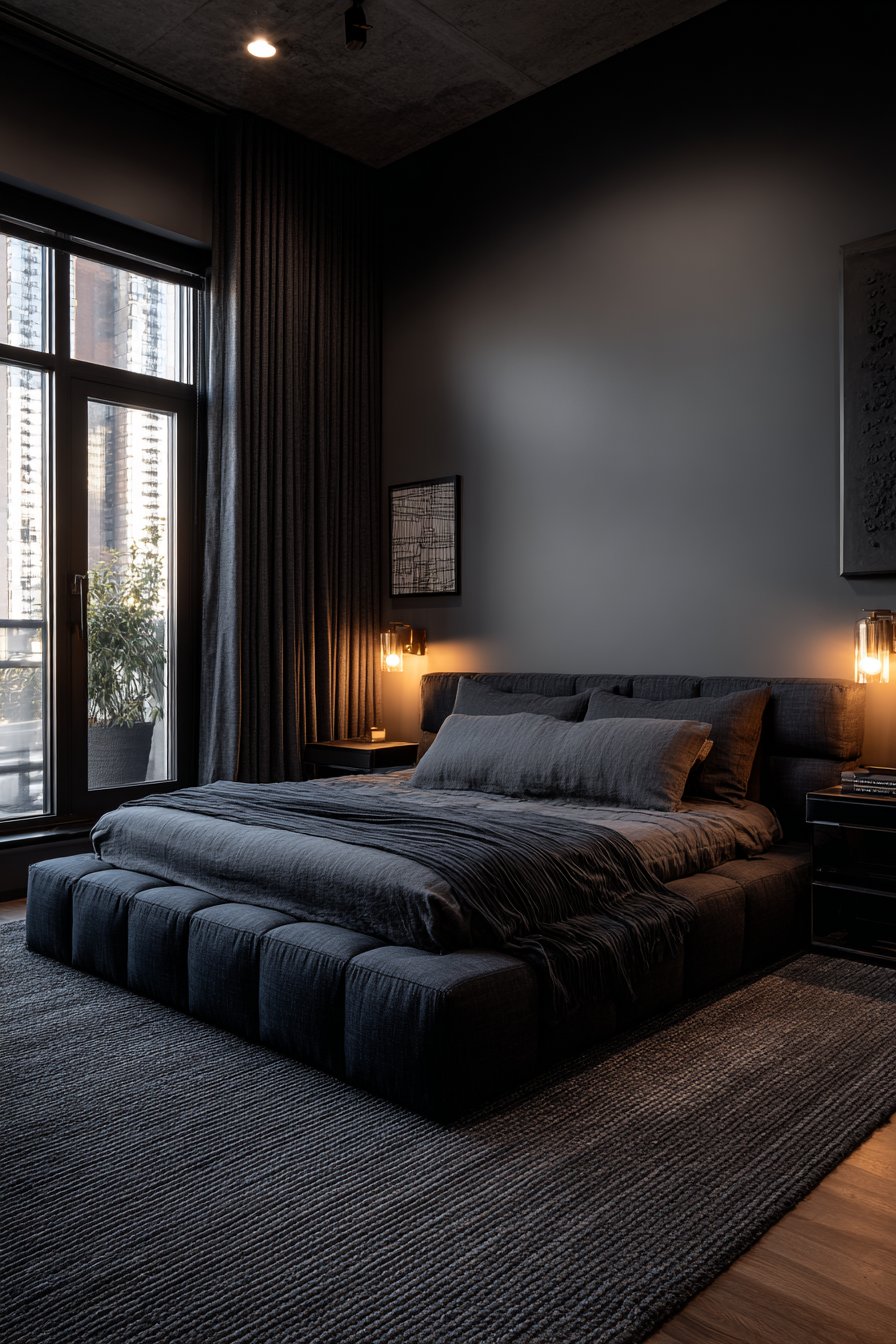
The foundation of this elegant dark bedroom begins with charcoal grey walls that establish an immediate sense of depth and serenity. The space centers around a low-profile upholstered platform bed dressed in deep navy fabric, creating a striking focal point that anchors the entire room. This combination of charcoal and navy demonstrates the sophisticated layering technique essential to successful dark bedroom design—using multiple shades within the same tonal family prevents the space from feeling flat or one-dimensional. The platform style keeps the visual weight low, which is particularly important in dark rooms as it prevents the space from feeling heavy or oppressive.

Flanking the bed, black metal bedside tables provide functional surfaces while their minimalist profiles ensure they don’t compete with the bed’s prominence. These tables support brass table lamps that introduce the crucial element of warm metallic accents—a design choice that prevents dark bedrooms from skewing too cold. The warm ambient lighting these lamps provide creates pools of golden illumination that highlight the room’s rich tones while maintaining the moody atmosphere. At the window, blackout curtains in soft charcoal linen serve double duty: they provide essential light control for quality sleep while contributing to the room’s cohesive dark aesthetic.
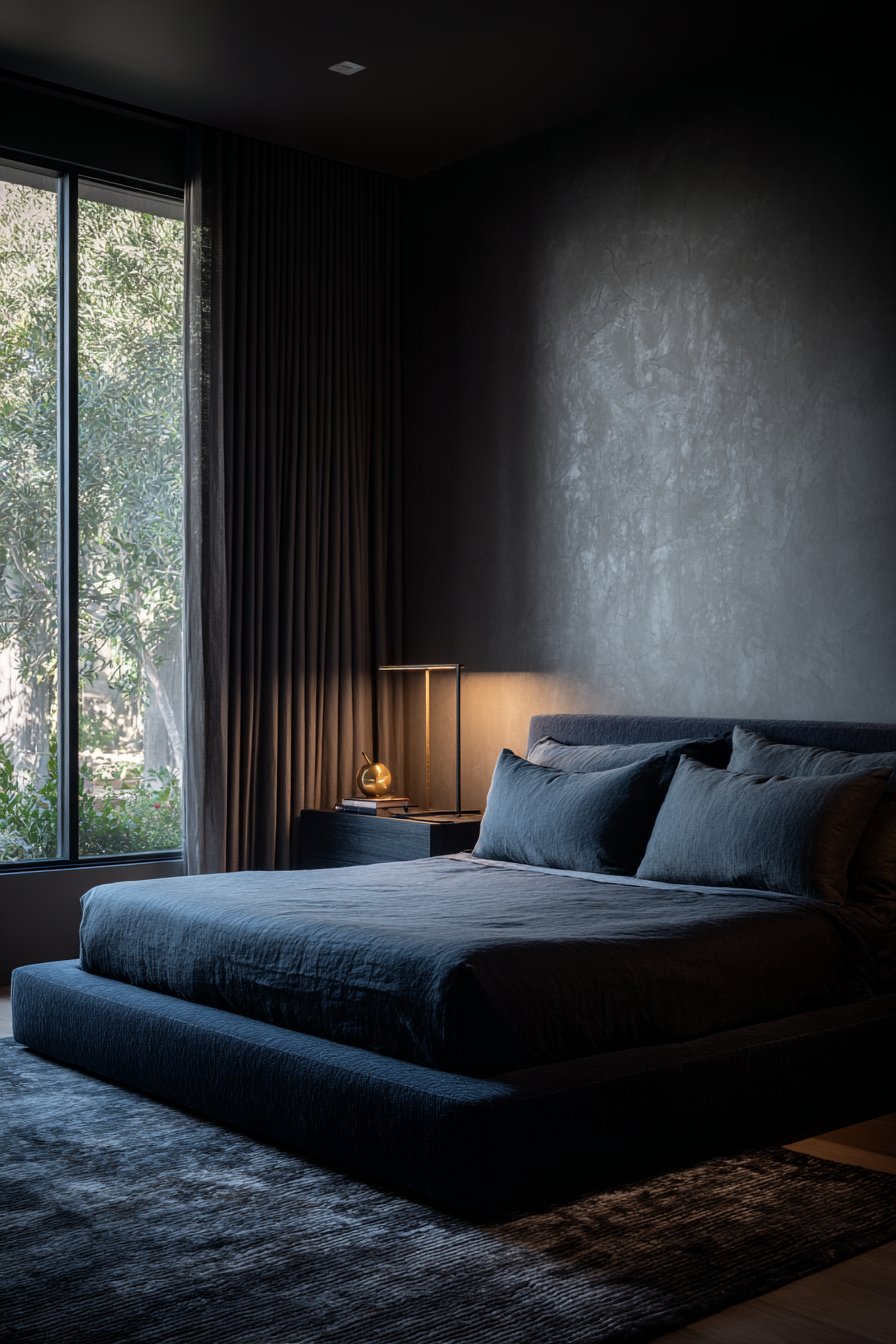
A textured dark grey area rug grounds the space beneath the bed, adding another layer of visual and tactile interest. The rug’s texture is particularly important in dark bedrooms where subtle variations in surface and material create the depth that color contrast might provide in lighter spaces. The professional approach to lighting in this room creates intentional shadows that emphasize the layered tones and textured surfaces—this is where dark bedroom design becomes truly artful, using shadow as a design element rather than something to be eliminated.
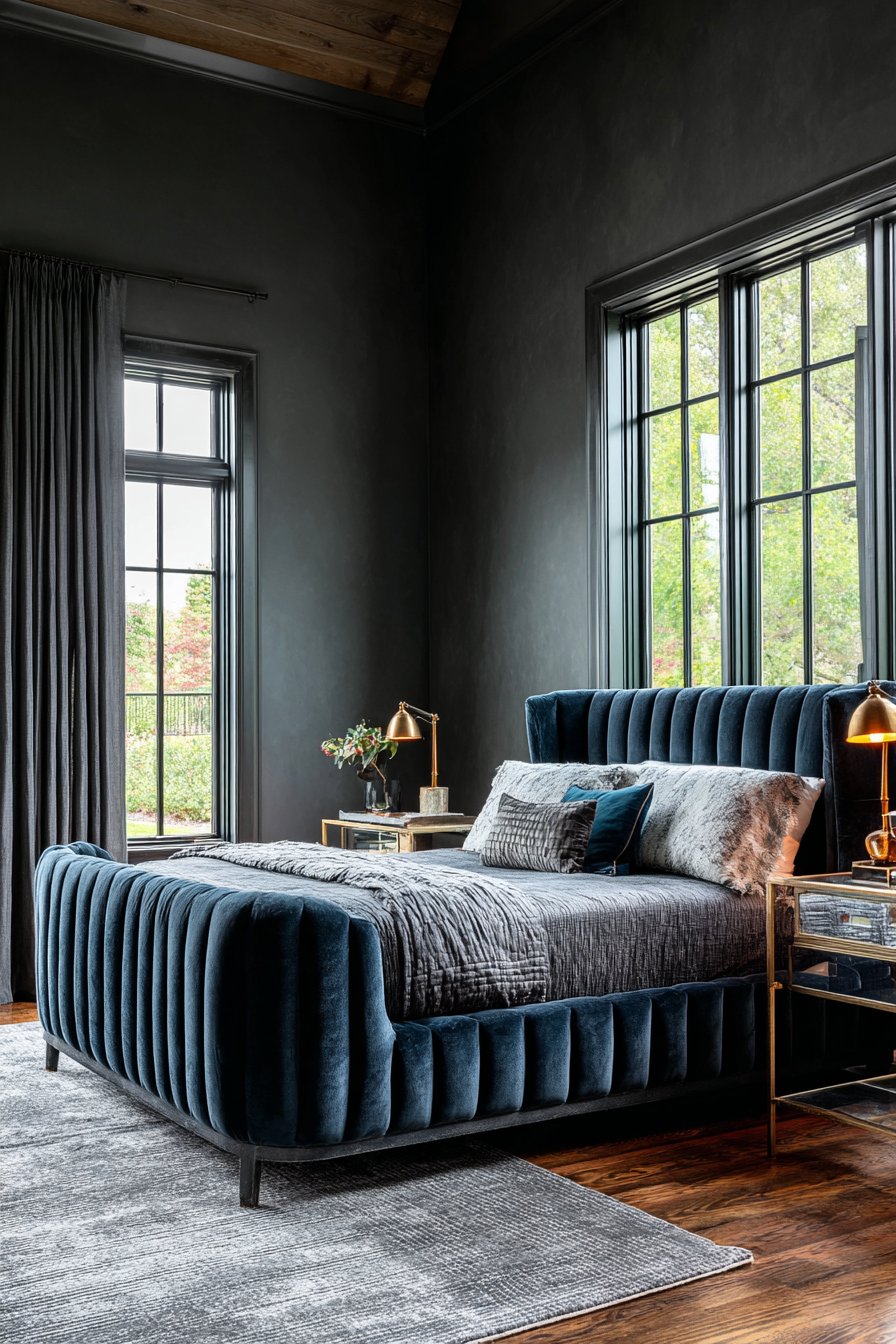
Key Design Tips:
- Layer multiple shades within the same color family to create depth without introducing jarring contrasts that can disrupt the cohesive dark aesthetic.
- Incorporate warm metallic accents like brass through lighting fixtures and hardware to prevent the space from feeling cold or unwelcoming.
- Choose low-profile furniture to keep visual weight near the floor, which helps dark rooms feel more open and less cave-like.
- Invest in quality blackout curtains that contribute to the aesthetic while providing essential light control for better sleep.
- Use texture strategically through rugs, upholstery, and wall finishes to create visual interest that doesn’t rely solely on color variation.
2. Midnight Blue Velvet Accent Wall Retreat

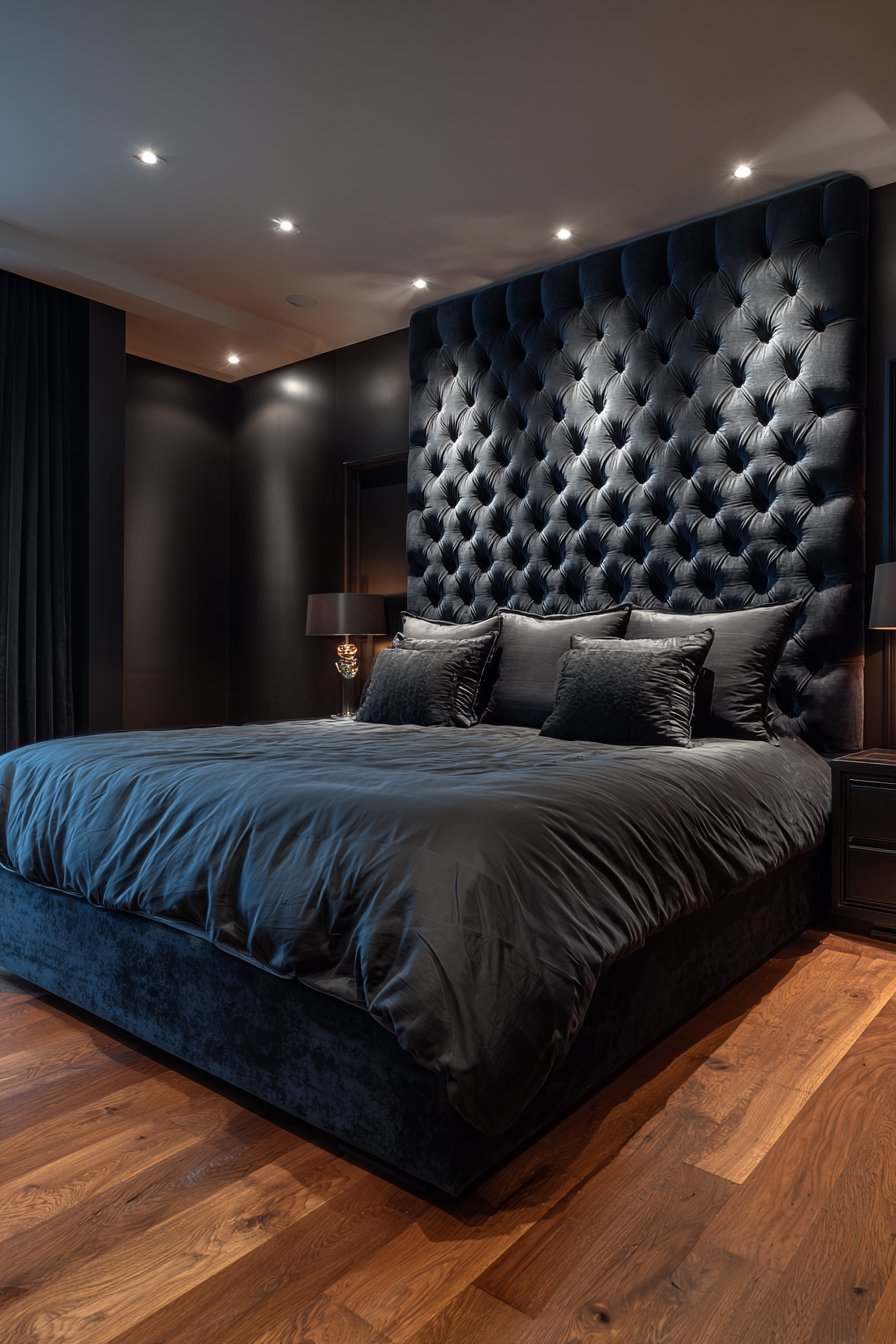
This dark bedroom design takes a bold approach with a matte black accent wall positioned behind the bed, creating an immediate focal point that draws the eye and establishes the room’s dramatic character. Against this deep backdrop sits a tufted velvet headboard in midnight blue, its surface catching light in varying ways due to the subtle sheen variations inherent in quality velvet fabric. This interplay between the ultra-matte wall and the slightly reflective upholstery creates dimensional interest that’s essential in dark spaces—without these variations in finish and texture, the room could feel flat and lifeless.
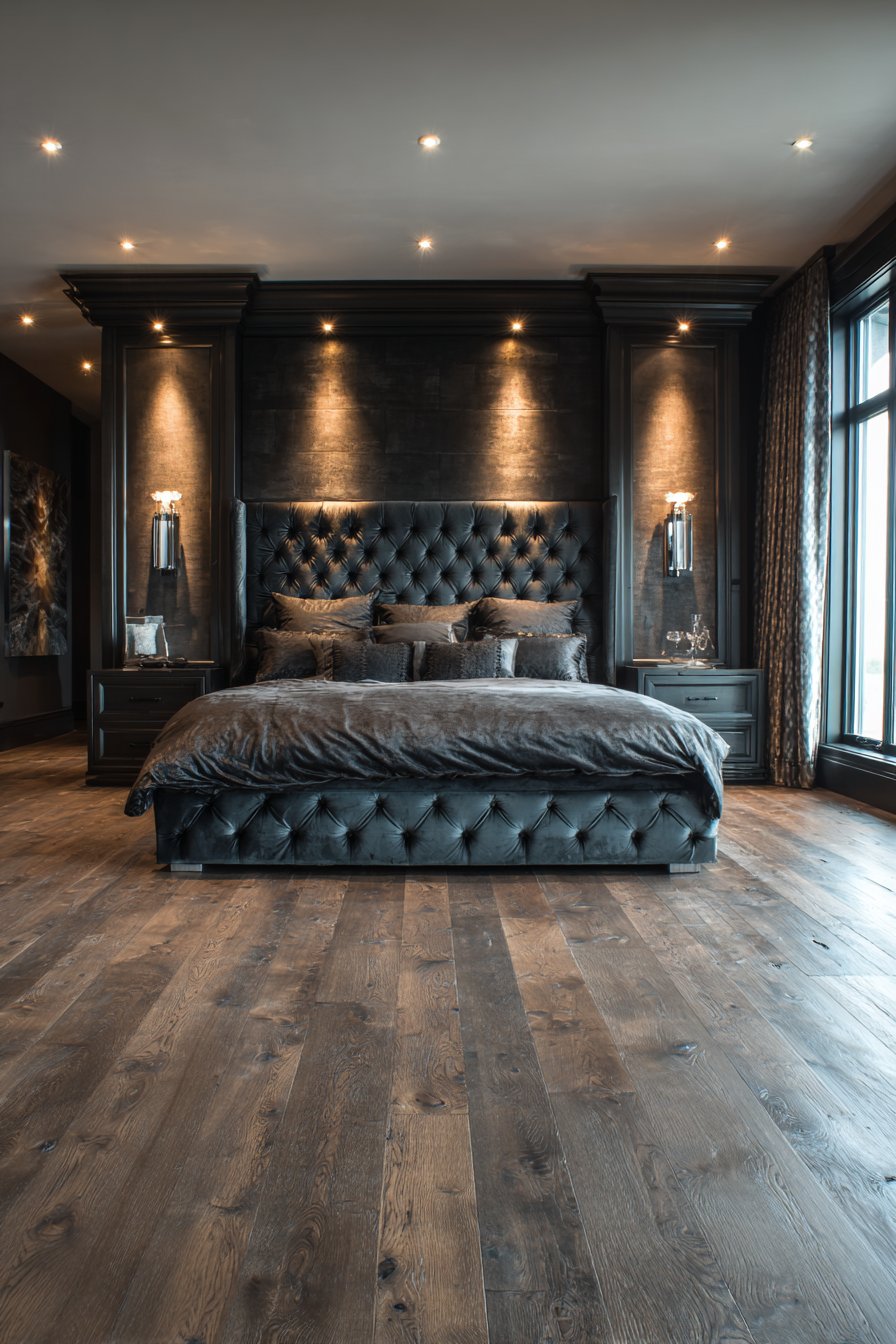
The flooring choice of dark stained oak brings natural warmth and organic texture to balance the more industrial elements of the design. The visible wood grain adds a layer of authenticity and visual interest at the foundational level of the room, reminding occupants that dark bedrooms needn’t feel artificial or overly designed.
This natural element grounds the space and provides a subtle contrast in both color temperature and material that enriches the overall composition. The dark stain maintains the room’s moody aesthetic while the oak’s inherent warmth prevents the space from feeling cold or sterile.
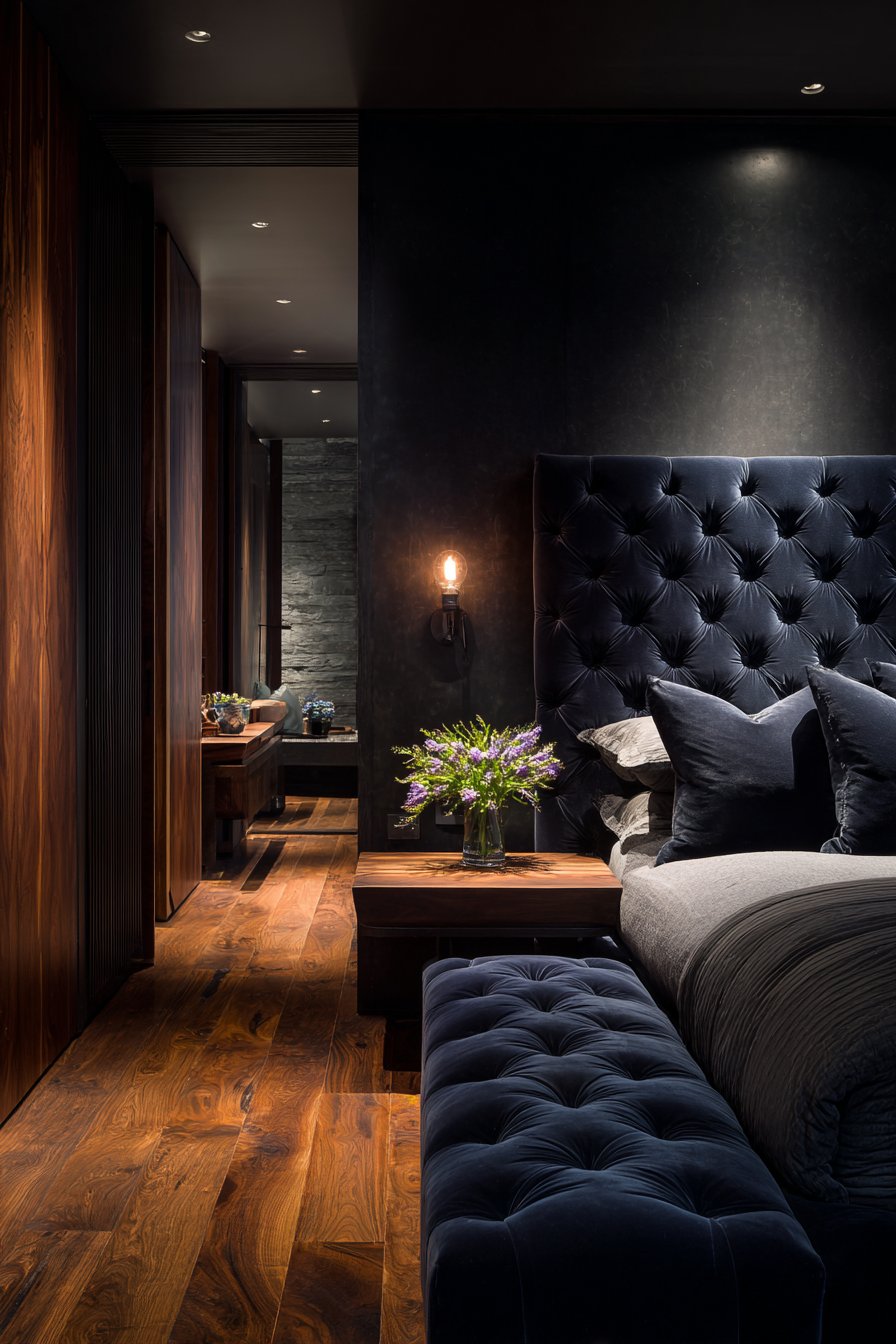
Lighting in this bedroom is carefully orchestrated through a combination of recessed fixtures and bedside sconces, creating multiple sources of soft illumination that pool against the dark surfaces. This layered lighting approach is crucial in dark bedroom design—instead of one overhead source that can create harsh shadows, multiple light sources allow for customizable ambiance and ensure that the darkness feels intentional and luxurious rather than gloomy. The sconces provide functional reading light while contributing to the room’s intimate, cocoon-like atmosphere, casting gentle upward and downward light that emphasizes the wall’s texture and the headboard’s tufting.
Key Design Tips:
- Create contrast through texture and sheen rather than color alone—pair matte finishes with subtle sheen to add dimension.
- Choose one statement wall in the darkest tone to create a focal point without overwhelming the entire space.
- Incorporate natural wood elements to bring warmth and organic texture that balances darker painted surfaces.
- Design a layered lighting scheme with multiple sources at different heights to create flexible, flattering illumination.
- Pay attention to finish variations across surfaces to ensure the space has visual depth and doesn’t appear one-dimensional.
3. Forest Green Reading Nook Sanctuary
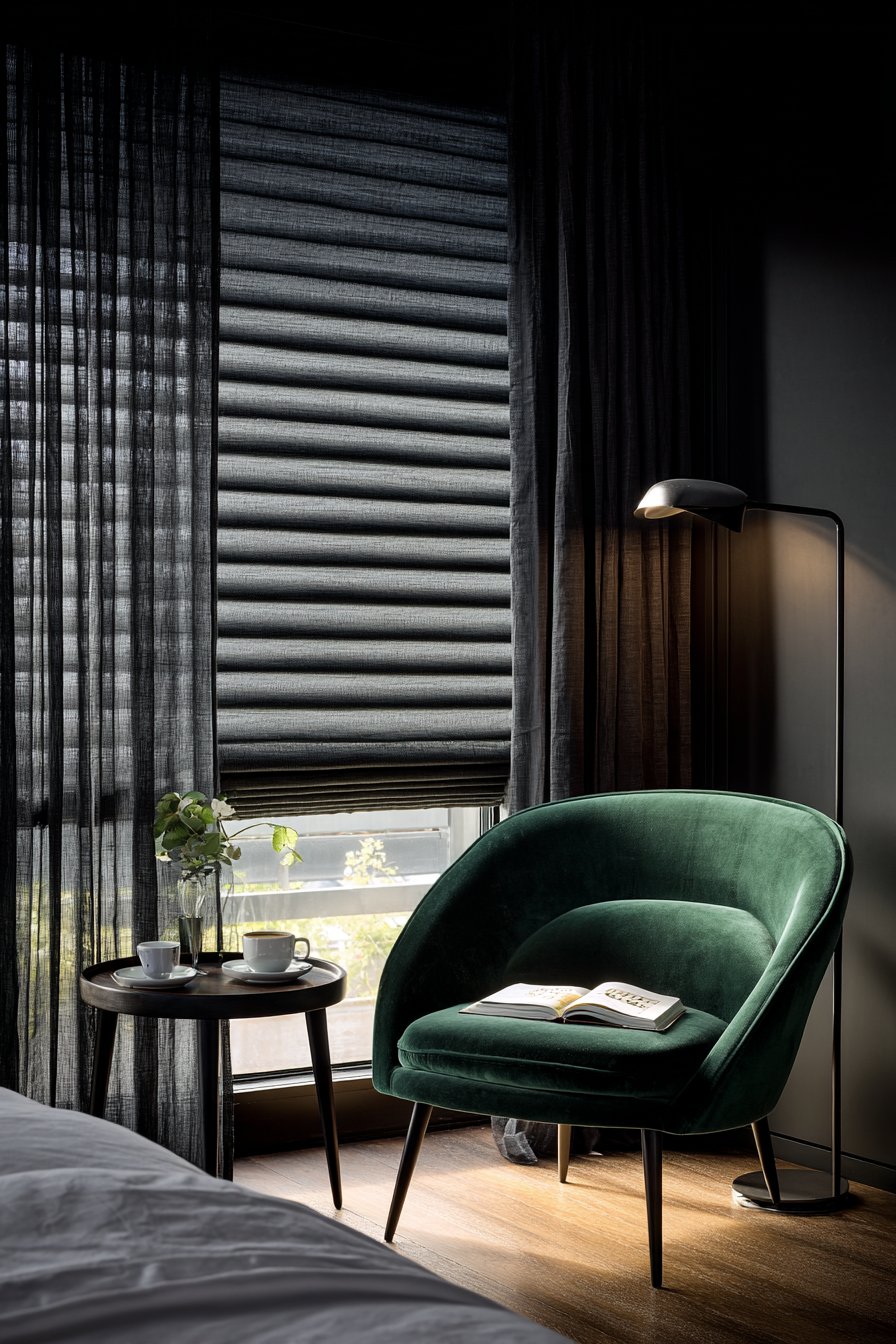
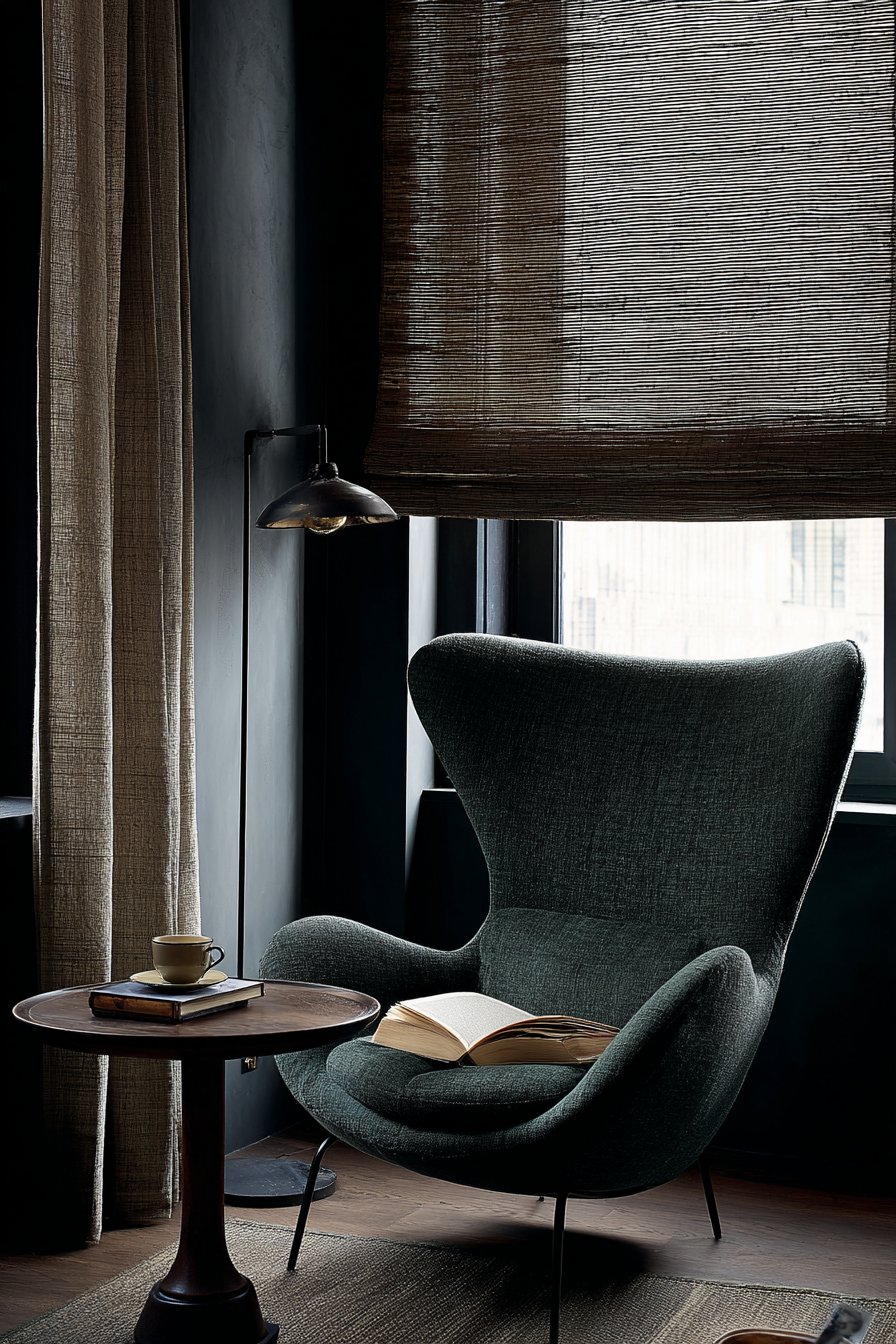
Positioned near a window where natural light can filter through, this dark bedroom reading nook represents the perfect balance between functionality and atmospheric design. The space features blackout Roman shades in charcoal fabric that provide complete light control when needed, but beneath them, sheer under-curtains allow filtered daylight to enter, creating a beautiful interplay between natural illumination and the room’s moody dark walls. This dual-layer window treatment approach is particularly effective in dark bedrooms, allowing occupants to modulate light levels throughout the day while maintaining the intimate character of the space.
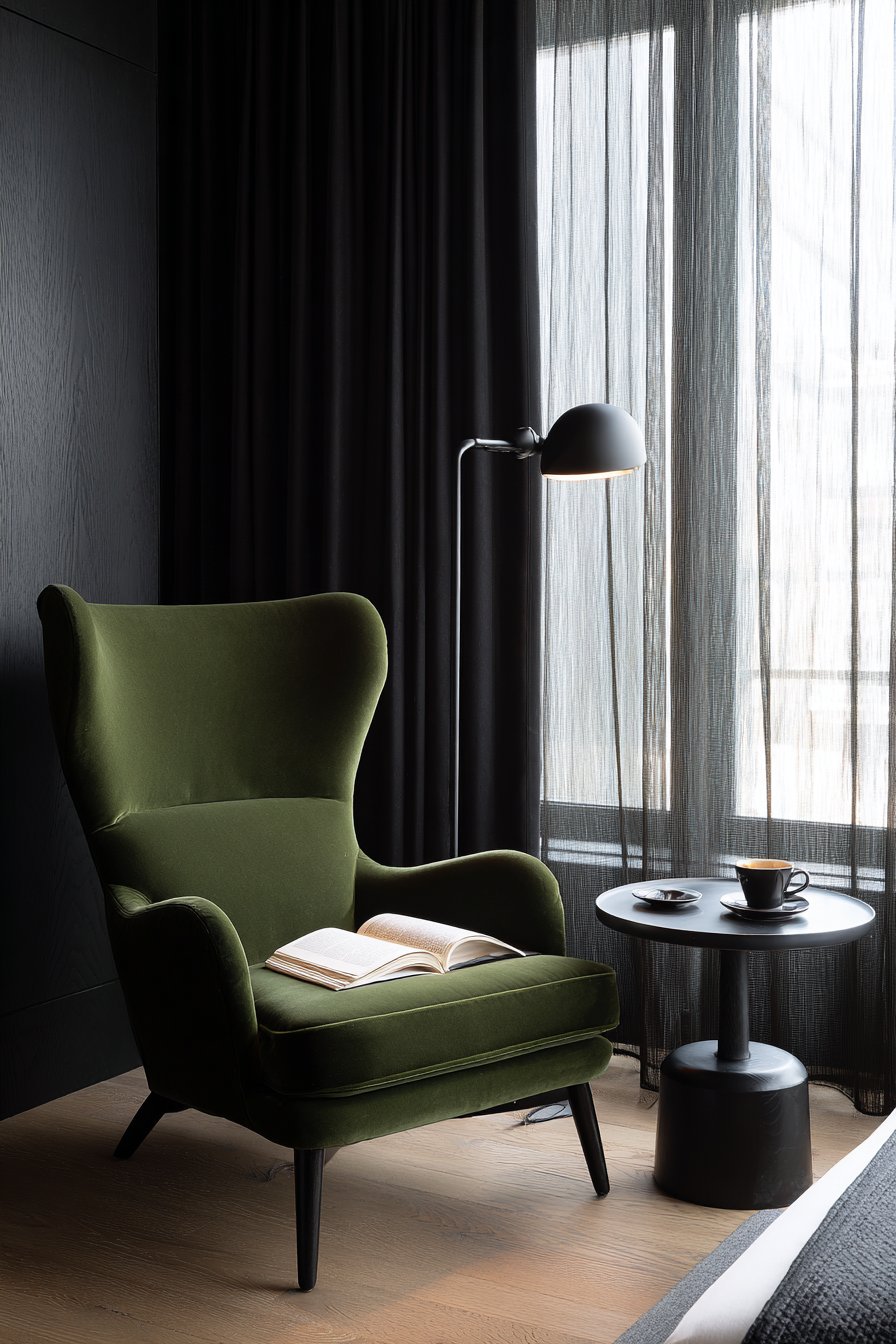
The centerpiece of this nook is a modern wingback chair upholstered in deep forest green velvet, introducing a jewel-tone accent that adds richness and personality to the dark palette. The chair’s silhouette provides the supportive structure ideal for extended reading sessions, while the luxurious velvet upholstery invites touch and adds a layer of tactile sophistication. Beside it stands a slim black metal floor lamp with an adjustable arm—a practical element that provides directed task lighting without introducing visual bulk that could overwhelm the intimate corner space.
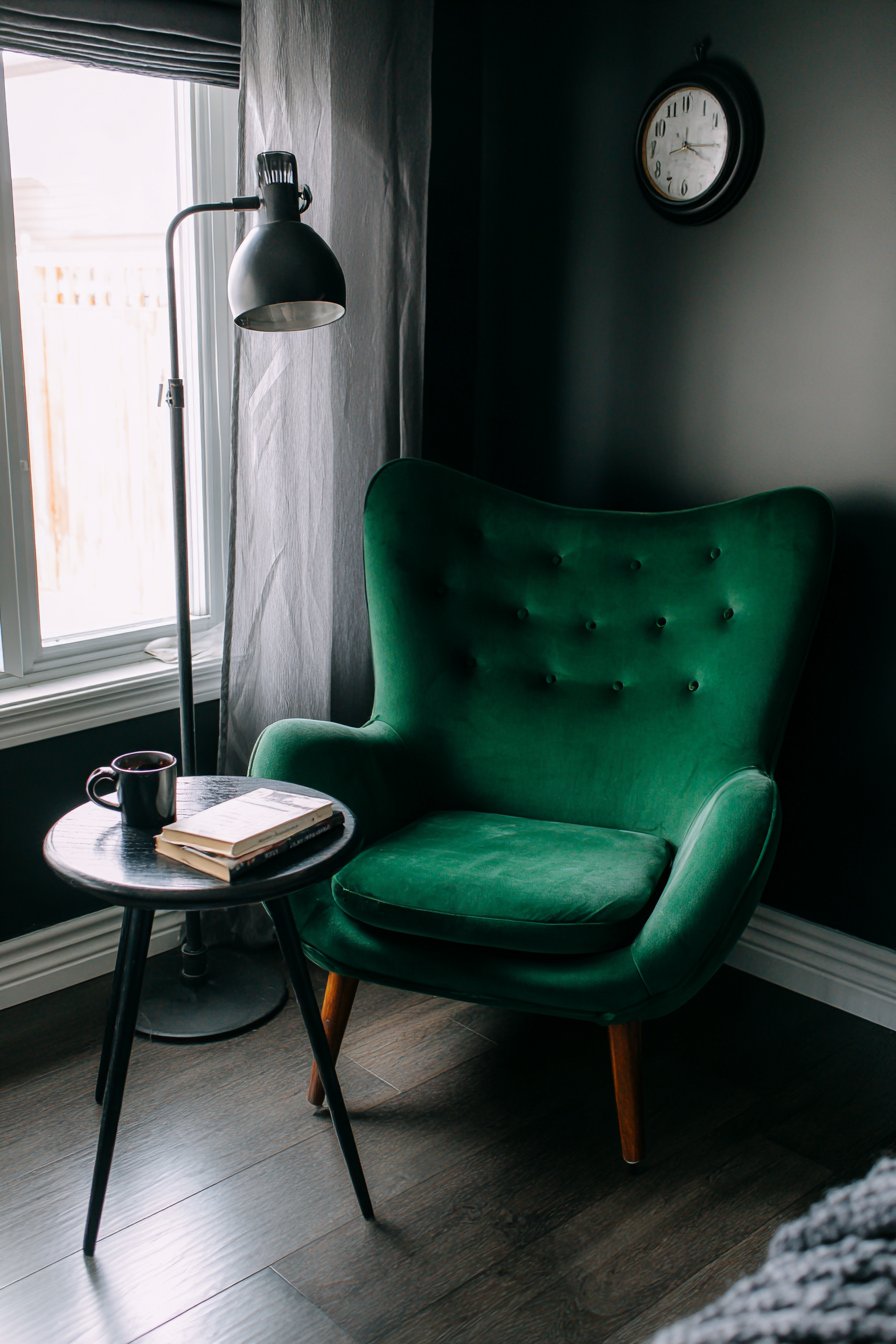
A small round side table in dark walnut completes the vignette, providing a surface for the essential elements of a reading retreat: a current book and a warm cup of coffee. The table’s dark wood finish maintains the overall aesthetic while its modest scale ensures it doesn’t dominate the compact nook.
The natural daylight filtering through the sheer curtains creates a subtle contrast with the moody walls, demonstrating how dark bedrooms can incorporate natural light without compromising their essential character. This reading corner shows that dark bedroom design isn’t about eliminating light, but rather about controlling and sculpting it to create atmosphere and function.
Key Design Tips:
- Layer window treatments with both blackout and sheer options to maintain flexibility in light control while preserving the dark aesthetic.
- Introduce jewel-tone accents like forest green, deep burgundy, or sapphire blue to add personality within the dark color palette.
- Choose adjustable lighting for functional areas like reading nooks to provide task-appropriate illumination without compromising ambiance.
- Scale furniture appropriately for dedicated zones within the bedroom, keeping pieces proportional to their designated area.
- Embrace natural light strategically by allowing filtered daylight to create contrast and dimension rather than completely blocking it out.
4. Espresso Wood Closet System Integration
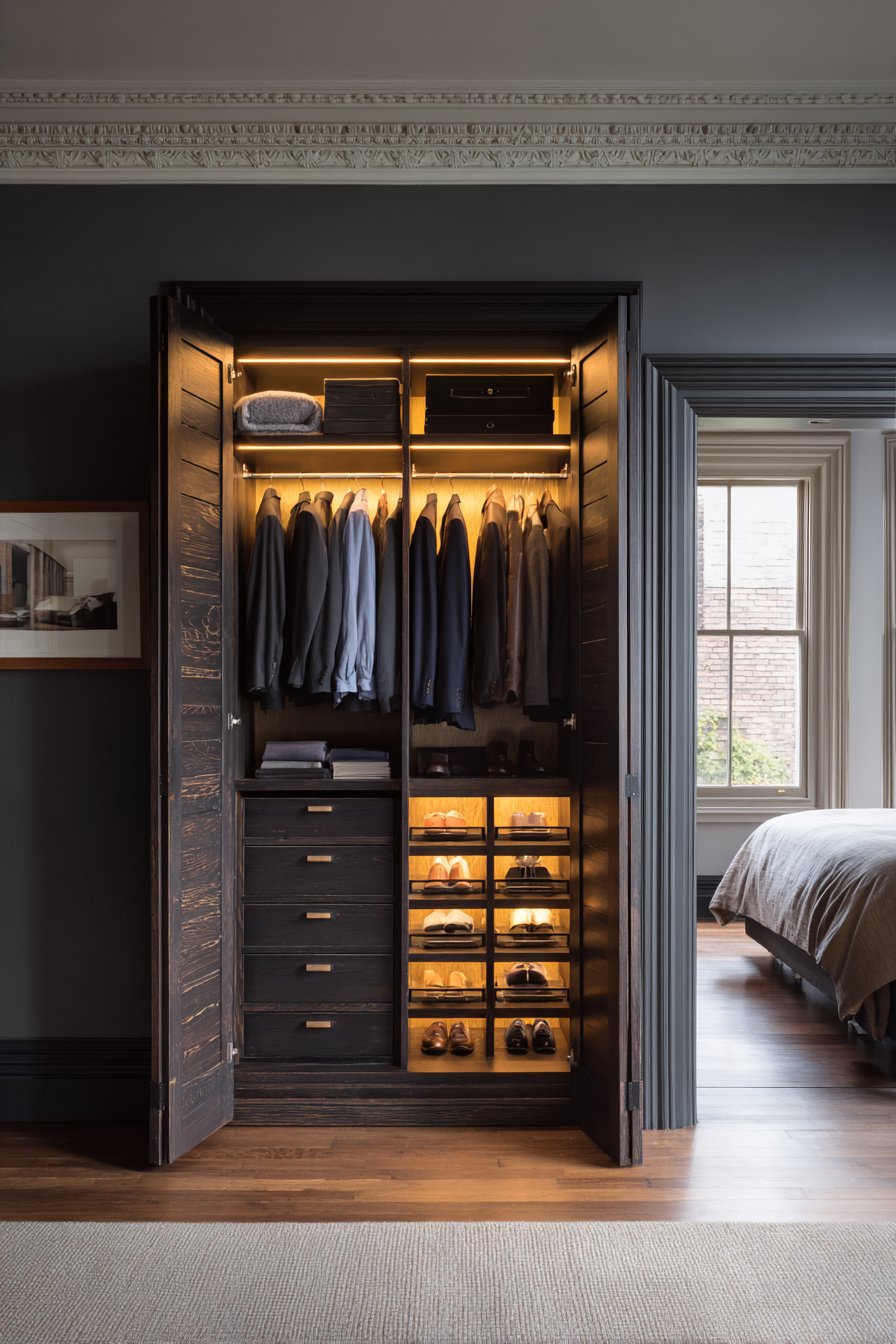
This dark bedroom features an impressive floor-to-ceiling built-in wardrobe system that demonstrates how storage solutions can become integral design elements rather than afterthoughts. The closet is constructed from espresso-stained wood with a rich, deep finish that coordinates beautifully with the deep slate grey walls of the surrounding bedroom. The matte black hardware on each drawer and door provides subtle contrast while maintaining the overall dark aesthetic—this attention to hardware detail is often overlooked but crucial in creating a cohesive, high-end appearance in dark bedroom design.
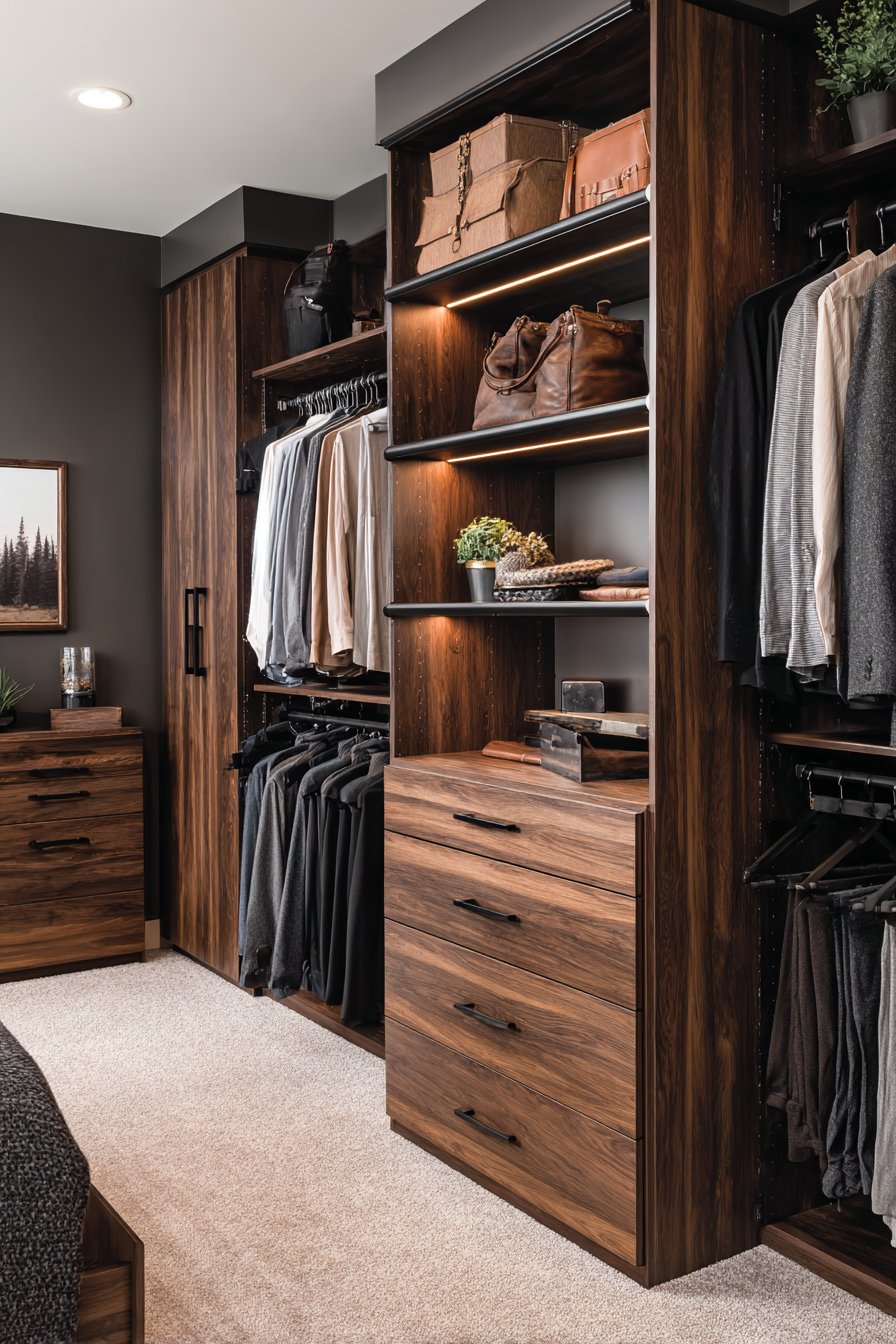
The functionality of this storage system is enhanced by soft-close drawers and multiple hanging sections, all illuminated by integrated LED strip lighting that reveals the organized interior. This interior lighting serves both practical and aesthetic purposes—it makes finding items effortless while creating a warm glow that emanates from the closet when doors are opened. The contrast between the illuminated interior and the dark exterior creates a dramatic reveal effect that adds an element of luxury to the daily routine of selecting clothing or accessories.
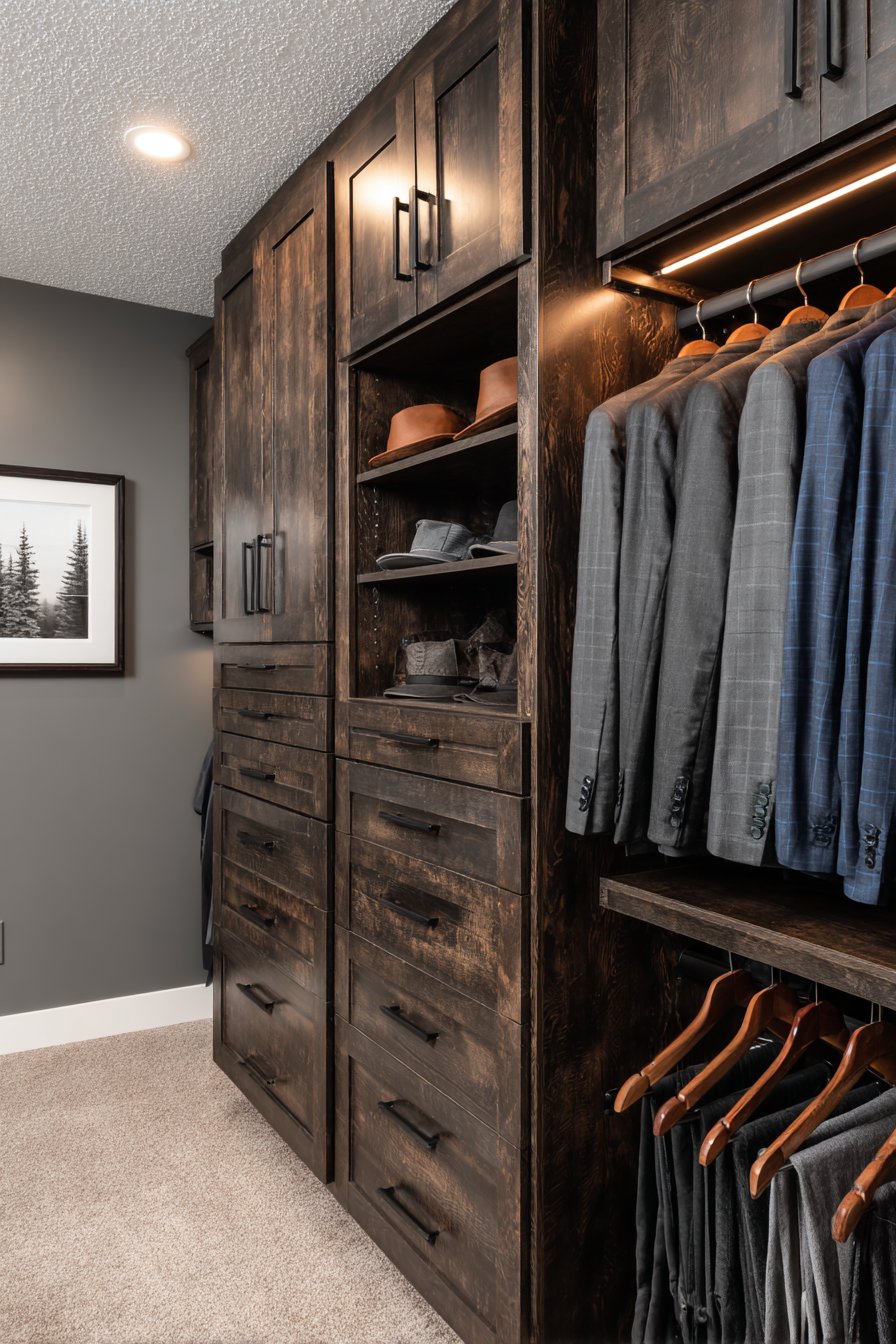
The visible wood grain in the espresso-stained finish adds organic texture and visual interest that prevents the large expanse of built-in cabinetry from appearing monotonous. This attention to material quality and natural characteristics is essential in dark bedroom design, where surface variations create the visual interest that lighter spaces might achieve through color contrast.
The surrounding slate grey walls provide a sophisticated backdrop that allows the rich wood tones to shine while maintaining the room’s overall moody, intimate atmosphere. This integration of substantial storage demonstrates that dark bedrooms can be both beautiful and supremely functional.

Key Design Tips:
- Integrate LED lighting into closet interiors to improve functionality while creating dramatic visual interest when opened.
- Choose quality wood finishes with visible grain that adds organic texture and prevents large surfaces from appearing flat.
- Coordinate hardware finishes throughout the room—consistent use of matte black or other metallics creates visual cohesion.
- Invest in soft-close mechanisms for drawers and doors to ensure the luxury aesthetic is matched by premium functionality.
- Plan floor-to-ceiling storage to maximize capacity while creating clean, contemporary lines that suit dark bedroom aesthetics.
5. Industrial Exposed Brick Urban Loft

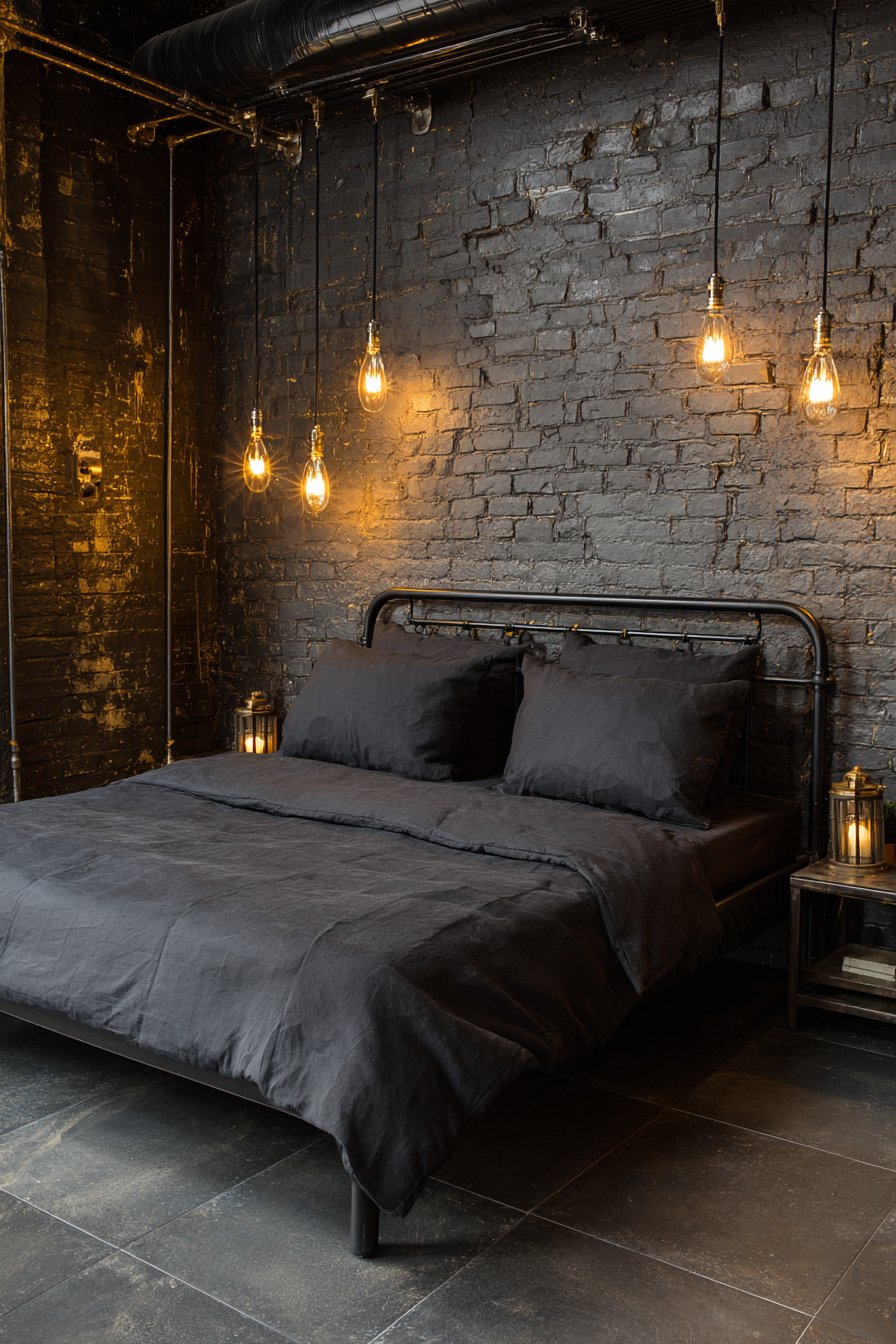
This dark bedroom embraces an industrial aesthetic through the striking use of an exposed brick accent wall in deep charcoal tones, creating immediate texture and character that becomes the room’s defining feature. The brick’s inherent three-dimensionality casts natural shadows across its surface, creating ever-changing patterns as light moves throughout the day. Paired with a matte black metal bed frame, the space achieves a raw, masculine atmosphere that celebrates honest materials and structural elements rather than concealing them behind decorative finishes.
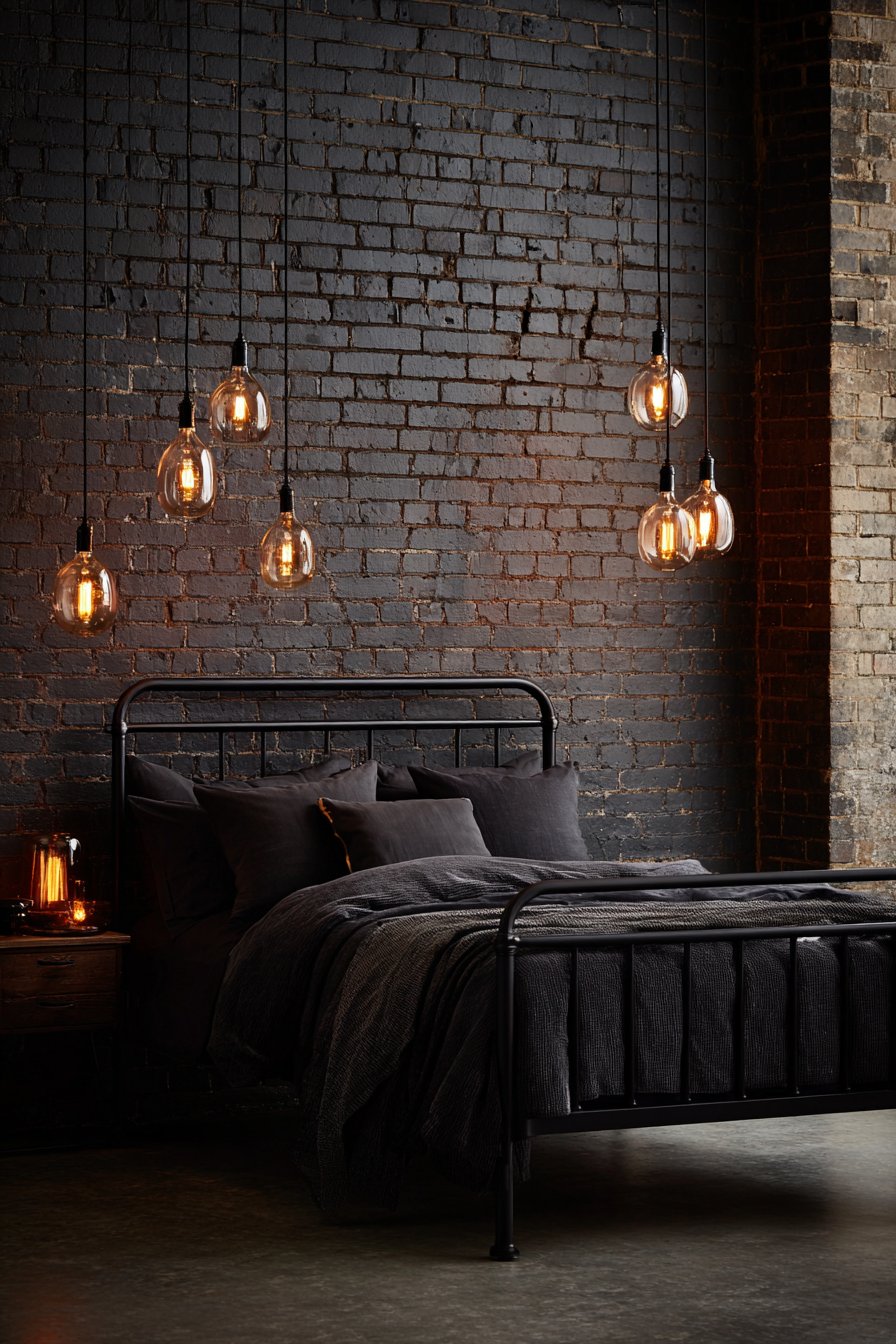
The lighting design in this room is particularly noteworthy, featuring Edison bulb pendant lights suspended at varying heights that create visual rhythm and provide warm, glowing illumination against the textured brick surface. These vintage-style bulbs produce a warm amber light that contrasts beautifully with the cool tones of the charcoal brick and black metal, preventing the industrial aesthetic from feeling cold or harsh. The varying heights of the pendants add visual interest to the vertical plane while ensuring light is distributed at multiple levels throughout the space.
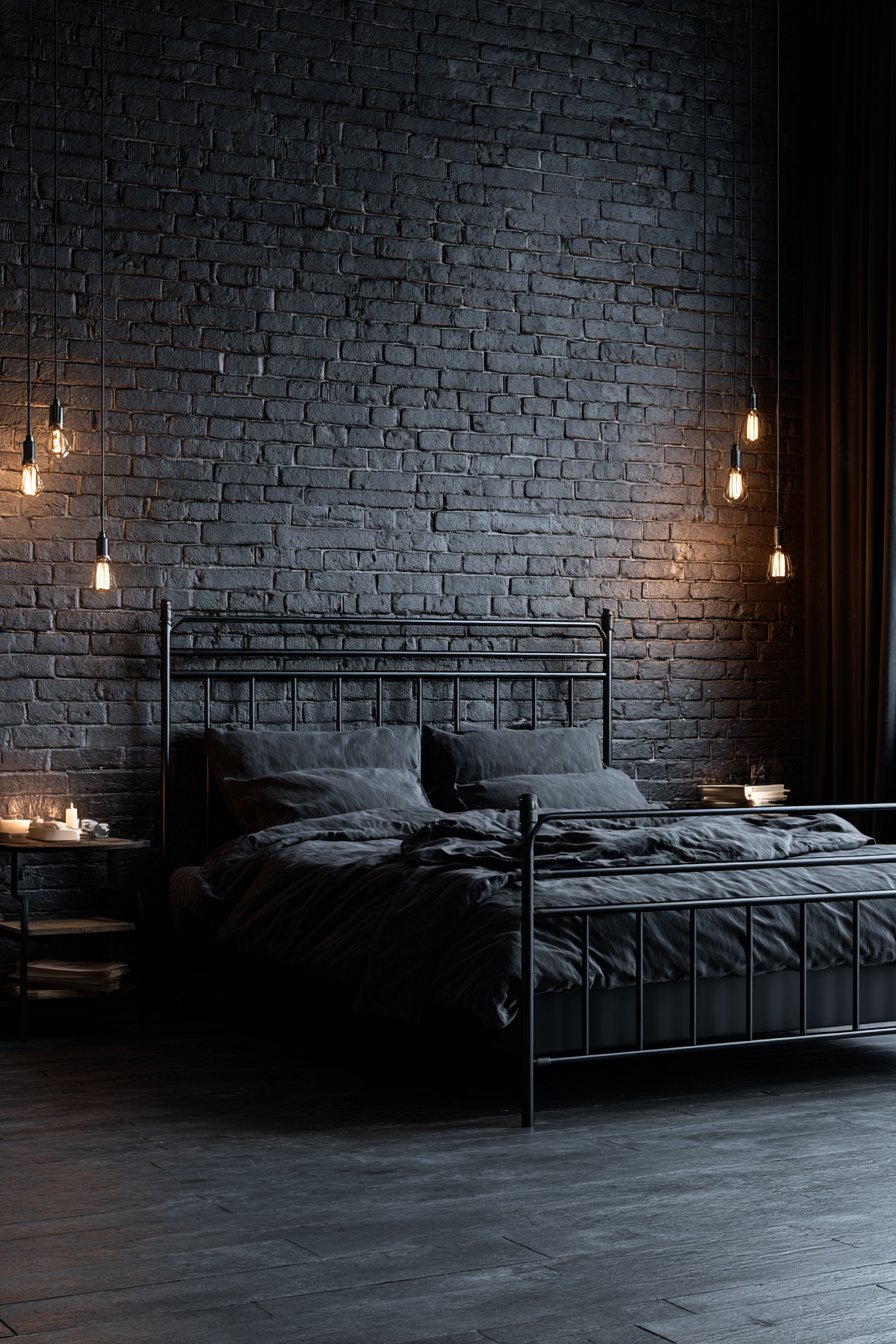
Dark grey concrete-look porcelain flooring reinforces the urban loft aesthetic while providing practical benefits—porcelain’s durability and ease of maintenance make it ideal for bedroom use, while the concrete appearance maintains the industrial design language.
The flooring’s subtle variations in tone prevent it from appearing artificial, and its cool temperature and texture contrast effectively with the warmer tones introduced through lighting and any textile elements in the space. This bedroom demonstrates how dark color palettes can support bold stylistic choices, creating spaces with strong character and authentic material expression.
Key Design Tips:
- Expose architectural elements like brick or concrete rather than covering them, allowing authentic materials to define the space’s character.
- Use Edison bulbs or warm-toned lighting to counterbalance the cool tones typical of industrial materials like metal and concrete.
- Vary pendant heights when using multiple hanging fixtures to create visual rhythm and ensure even light distribution.
- Choose porcelain tiles with realistic surface textures when replicating materials like concrete for practical benefits without sacrificing aesthetics.
- Embrace masculine design elements confidently—industrial dark bedrooms work best when they commit fully to the aesthetic rather than softening it excessively.
6. Plum-Grey Velvet Luxury Suite
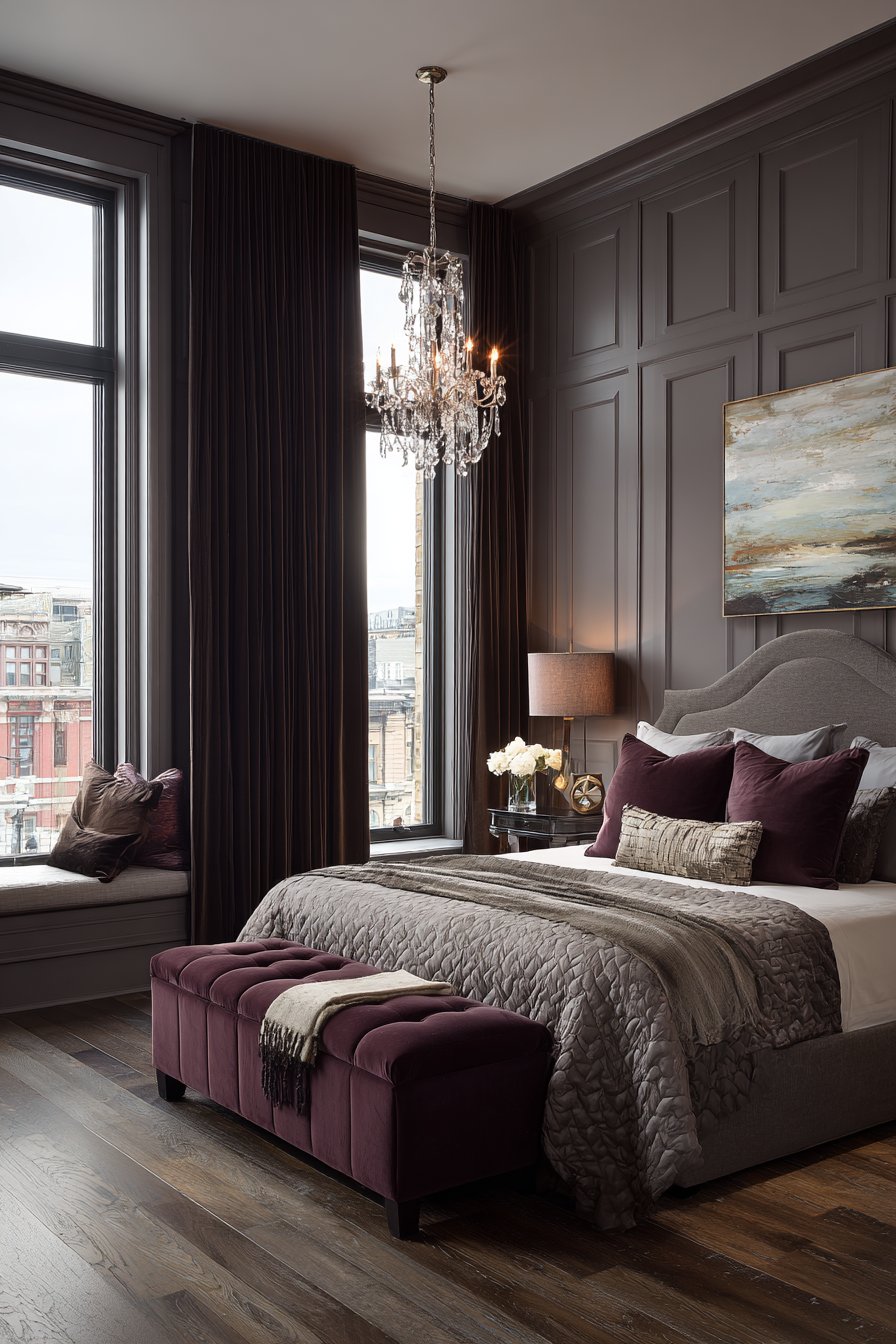
This dark bedroom takes a more opulent approach with deep plum-grey walls that introduce a subtle warmth and complexity not found in pure grey tones. The purple undertones create a sophisticated richness that feels both modern and timeless, providing a dramatic backdrop for the room’s luxurious centerpiece: a velvet upholstered bed in rich eggplant tone.
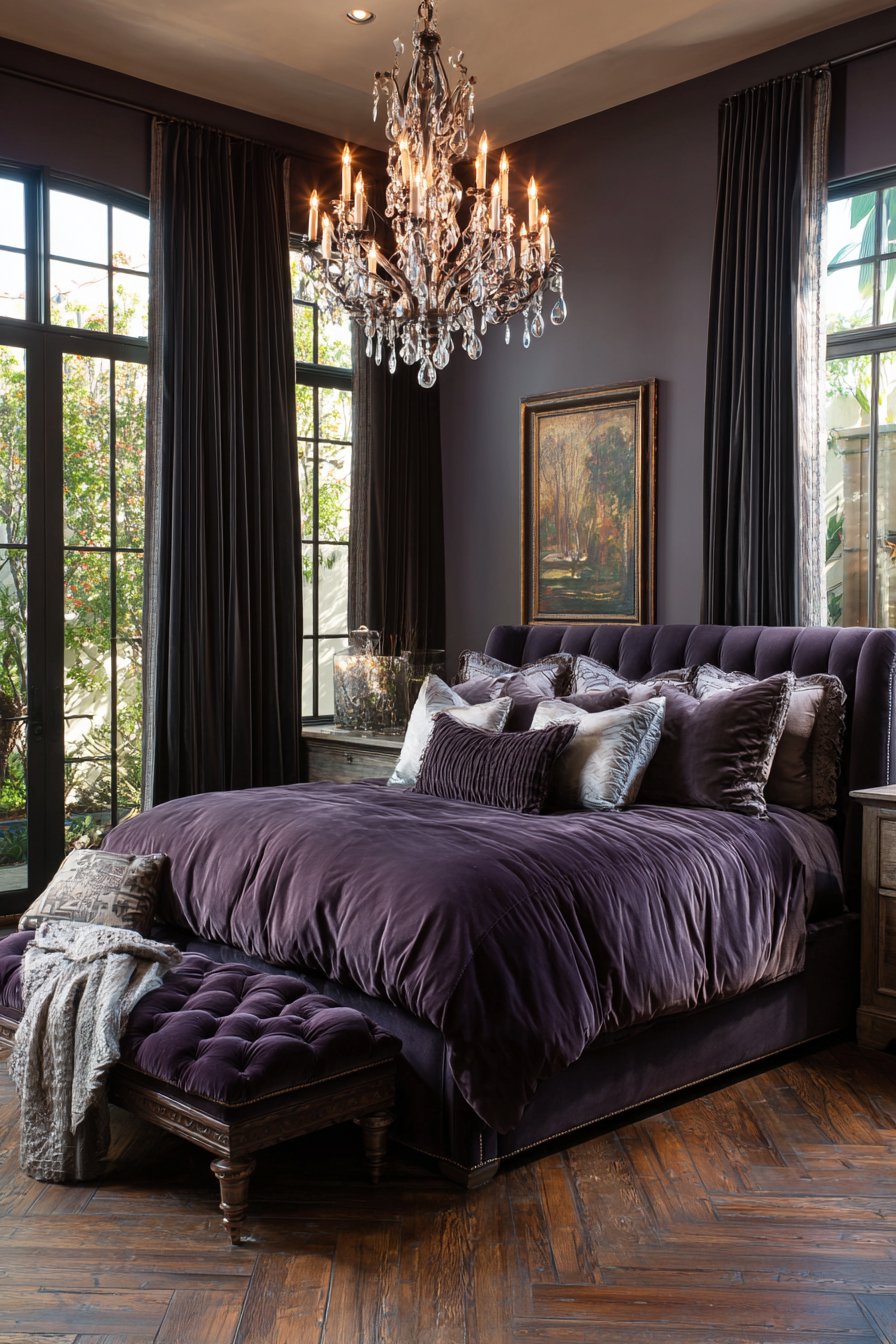
The bed’s sumptuous fabric catches and reflects light in constantly shifting ways, creating a sense of movement and life within the dark space. This play of light across velvet’s pile is one of the most effective ways to add visual interest in dark bedrooms.
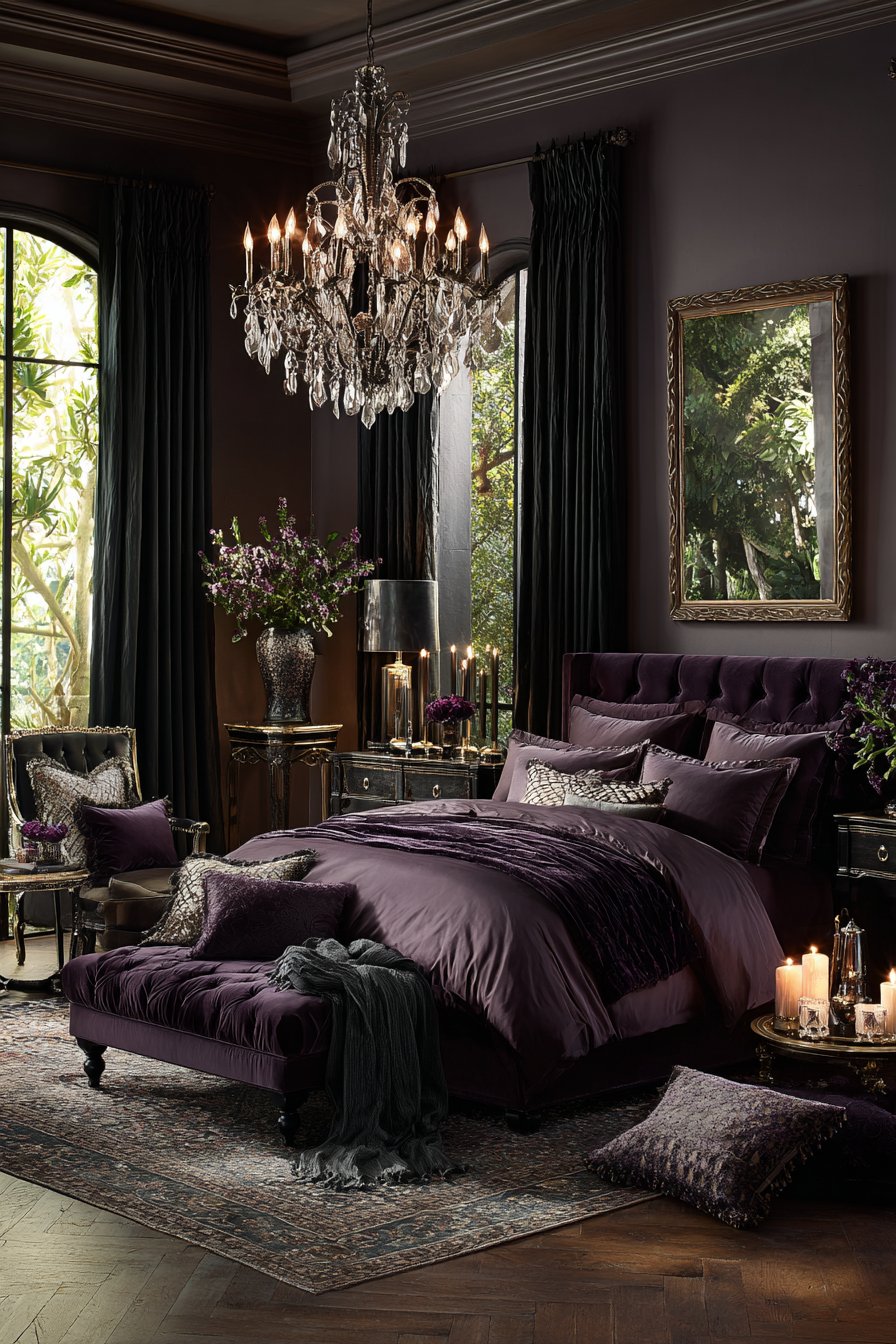
A vintage-inspired crystal chandelier provides an unexpected element of glamour, creating brilliant contrast against the moody backdrop. The chandelier’s faceted crystals catch and refract light, casting subtle rainbow patterns across the ceiling and walls—a magical effect that’s amplified by the dark surfaces that surround it. This juxtaposition of elegant traditional lighting with contemporary dark walls demonstrates how dark bedroom design can incorporate elements from various style periods, creating eclectic spaces with personality and depth.

The dark hardwood flooring features a hand-scraped finish that reveals natural variation and texture, adding another layer of organic authenticity to the luxurious space. At the windows, sheer black curtains layer over blackout panels, creating a sophisticated window treatment that provides both privacy and light control while maintaining visual interest through the layering of semi-transparent and opaque fabrics. When natural light filters through during golden hour, it creates dimensional depth throughout the room and reveals the sumptuous textures of the velvet upholstery in all their tactile glory.
Key Design Tips:
- Consider purple-grey tones as an alternative to pure grey for added warmth and complexity in dark bedroom color schemes.
- Invest in statement lighting like chandeliers that create focal points and add unexpected glamour to moody spaces.
- Choose hand-scraped or distressed flooring to add character and organic variation that enriches the overall design.
- Layer window treatments for both practical function and visual interest, combining sheers with blackout options.
- Time photography or viewing during golden hour to appreciate how natural light transforms dark spaces and reveals texture.
7. Space-Saving Murphy Bed Innovation
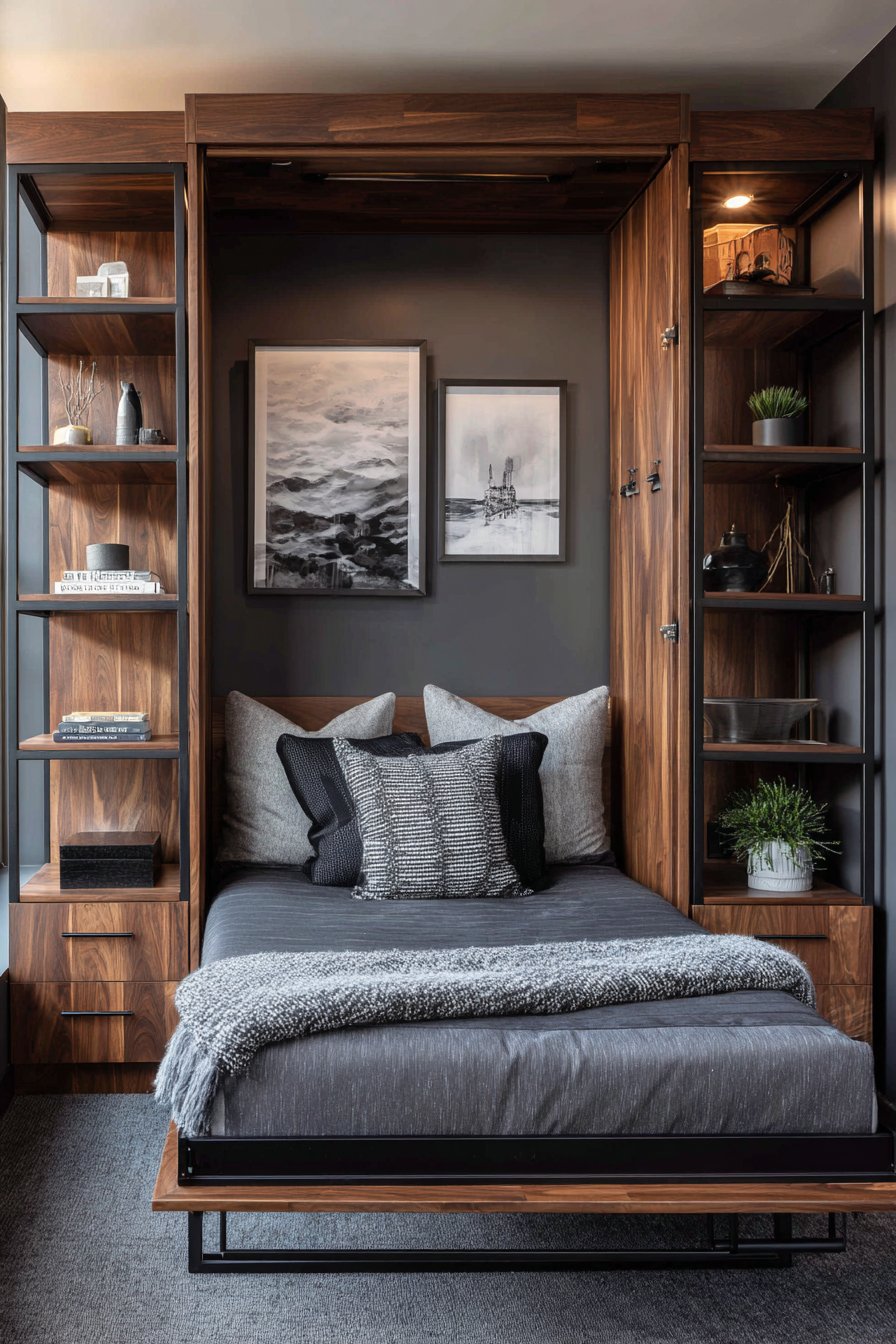
This small dark bedroom demonstrates that limited square footage needn’t limit design ambition or aesthetic impact. The space maximizes functionality through a Murphy bed system featuring dark walnut wood panels that create a sophisticated wall unit when the bed is closed.
This transformative furniture piece allows the bedroom to serve multiple purposes—sleeping space at night, and open living or working area by day. The dark walnut finish maintains the room’s moody aesthetic while the visible wood grain adds warmth and organic texture that prevents the mechanized element from feeling cold or impersonal.
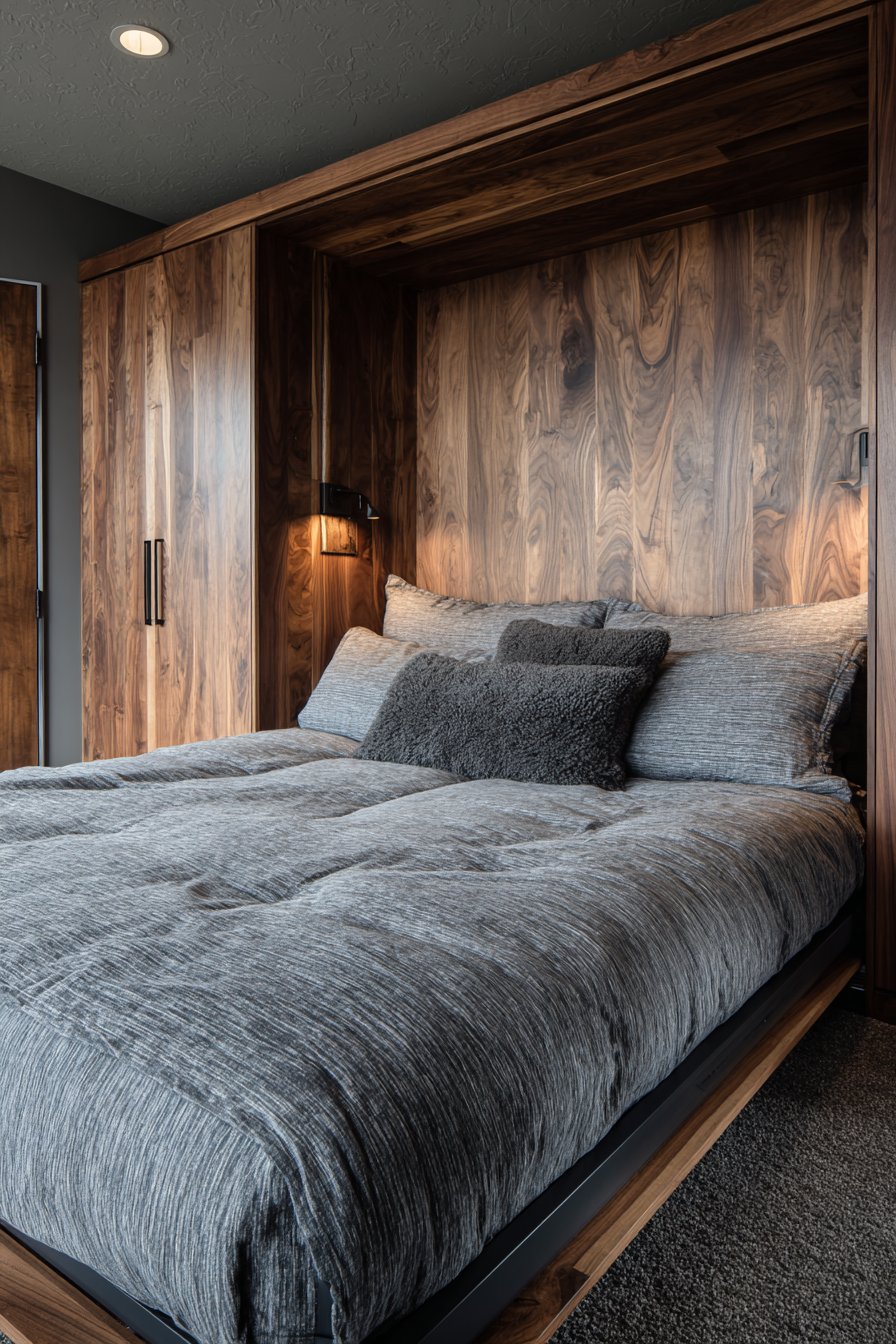
The Murphy bed system incorporates integrated shelving and matte black metal accents that provide both storage and visual interest. Hidden LED lighting within the unit illuminates the shelves and provides ambient lighting that makes the space feel larger and more open than its actual dimensions.
This integrated lighting is particularly important in small dark bedrooms, where strategic illumination can counteract any sense of confinement while maintaining the intimate atmosphere that makes dark bedrooms so appealing.
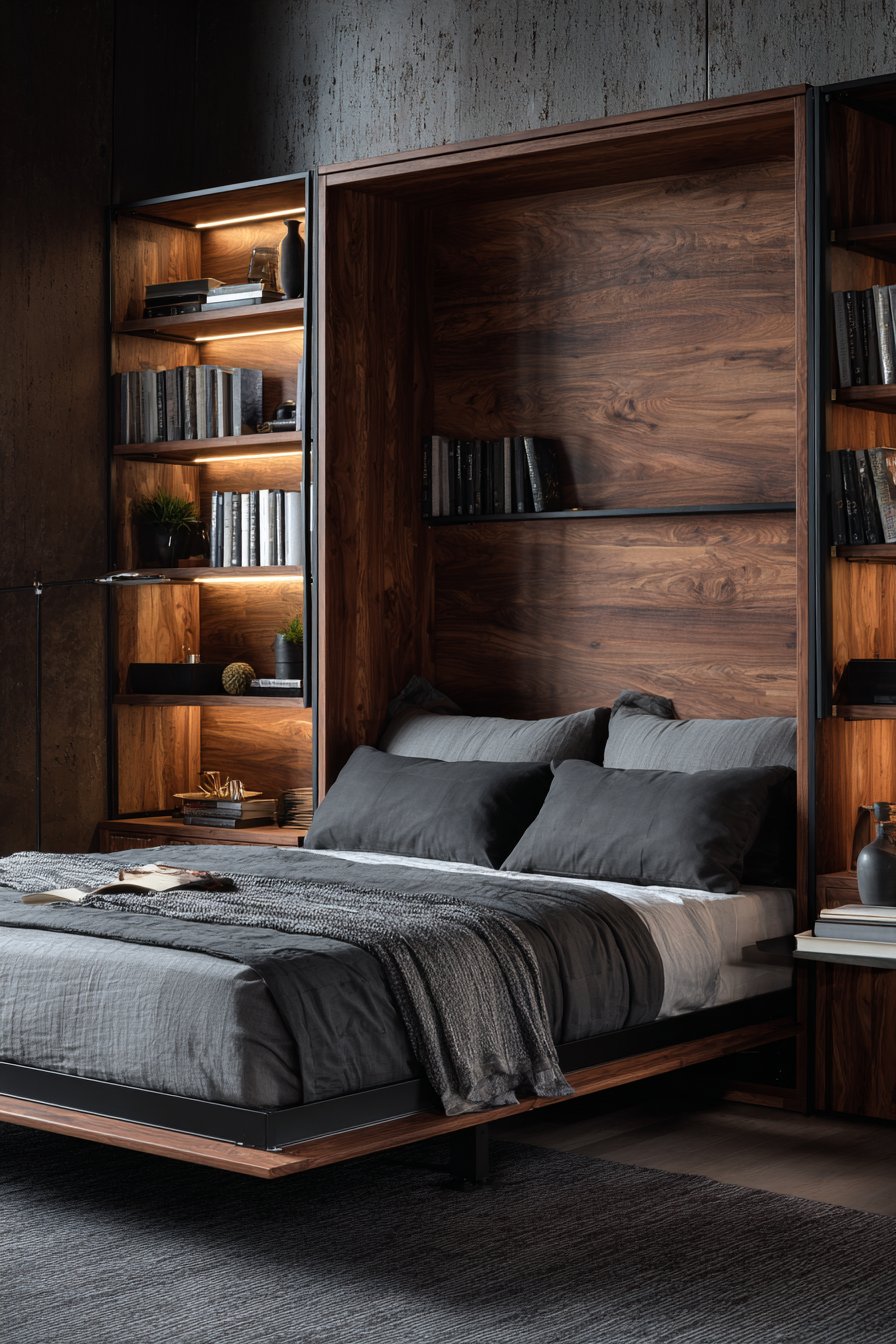
Charcoal walls and dark grey carpeting create a seamless, cocoon-like environment that makes the room feel intentionally compact rather than unfortunately small. The monochromatic dark palette visually unifies all surfaces, which actually makes the space feel more expansive than it would with contrasting colors that break up the walls and floor into separate visual elements. This clever space-saving solution proves that dark bedroom design principles can be applied successfully in compact spaces, creating rooms that are both functional and aesthetically sophisticated.

Key Design Tips:
- Consider Murphy beds for small dark bedrooms to maximize usable floor space without sacrificing the impact of the dark aesthetic.
- Integrate storage into transformable furniture systems to eliminate the need for additional pieces that could clutter small spaces.
- Use LED lighting within furniture pieces to add ambient illumination without consuming floor or surface space with lamps.
- Embrace monochromatic schemes in small dark bedrooms to create visual unity that makes spaces feel larger than their measurements.
- Choose built-in solutions over freestanding furniture to create streamlined, custom-fitted designs that maximize every inch of available space.
8. Home Office Alcove Integration

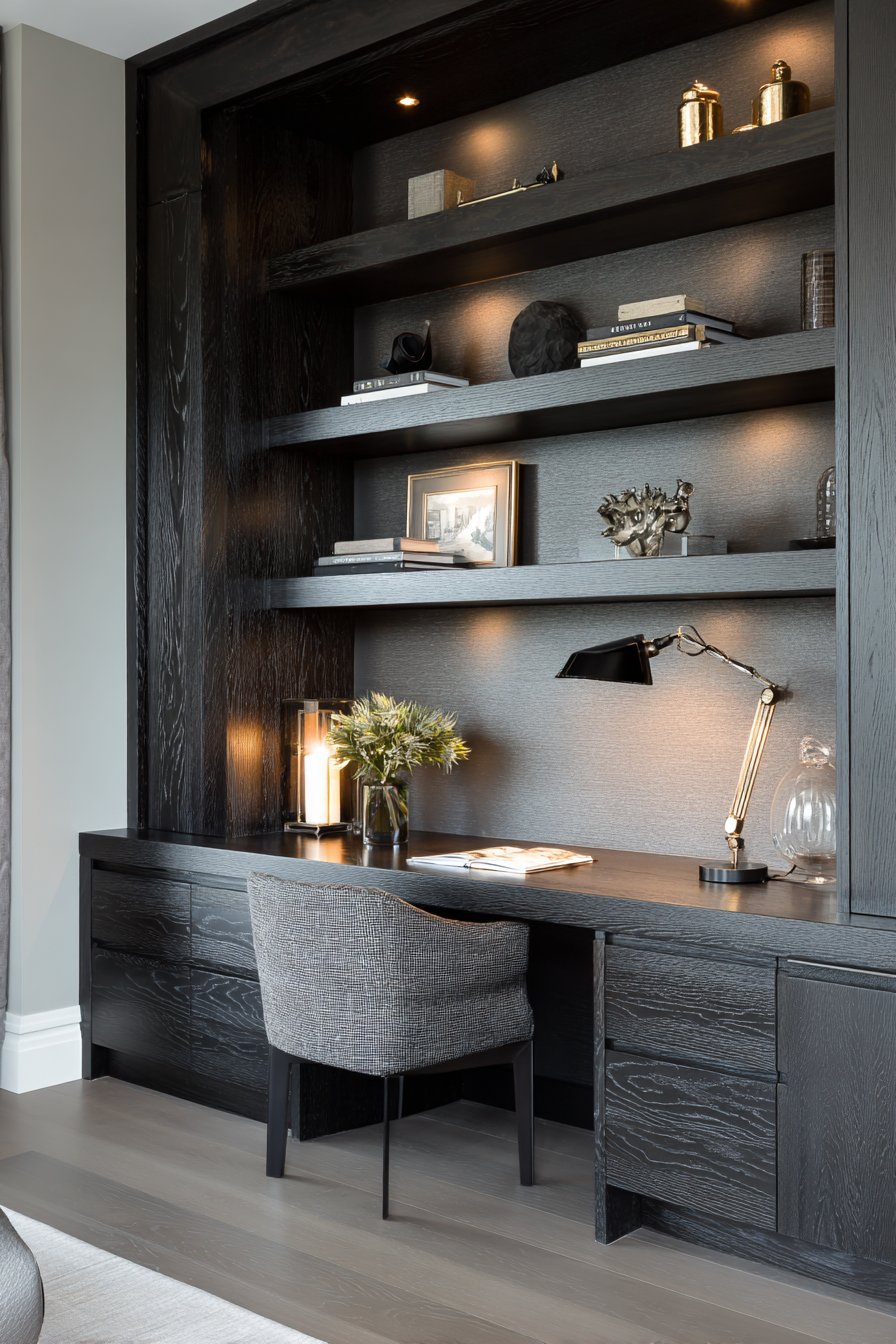
This dark bedroom successfully integrates a dedicated workspace without compromising the room’s restful character, demonstrating how dark color schemes can actually facilitate the separation of different functional zones within a single space. Carved into an alcove, the home office nook features a custom-built desk in black oak with beautifully visible wood grain that adds organic texture while maintaining the dark aesthetic. The alcove’s recessed nature provides natural spatial separation from the sleeping area, while the dark graphite walls create a focused backdrop that minimizes visual distractions during work hours.
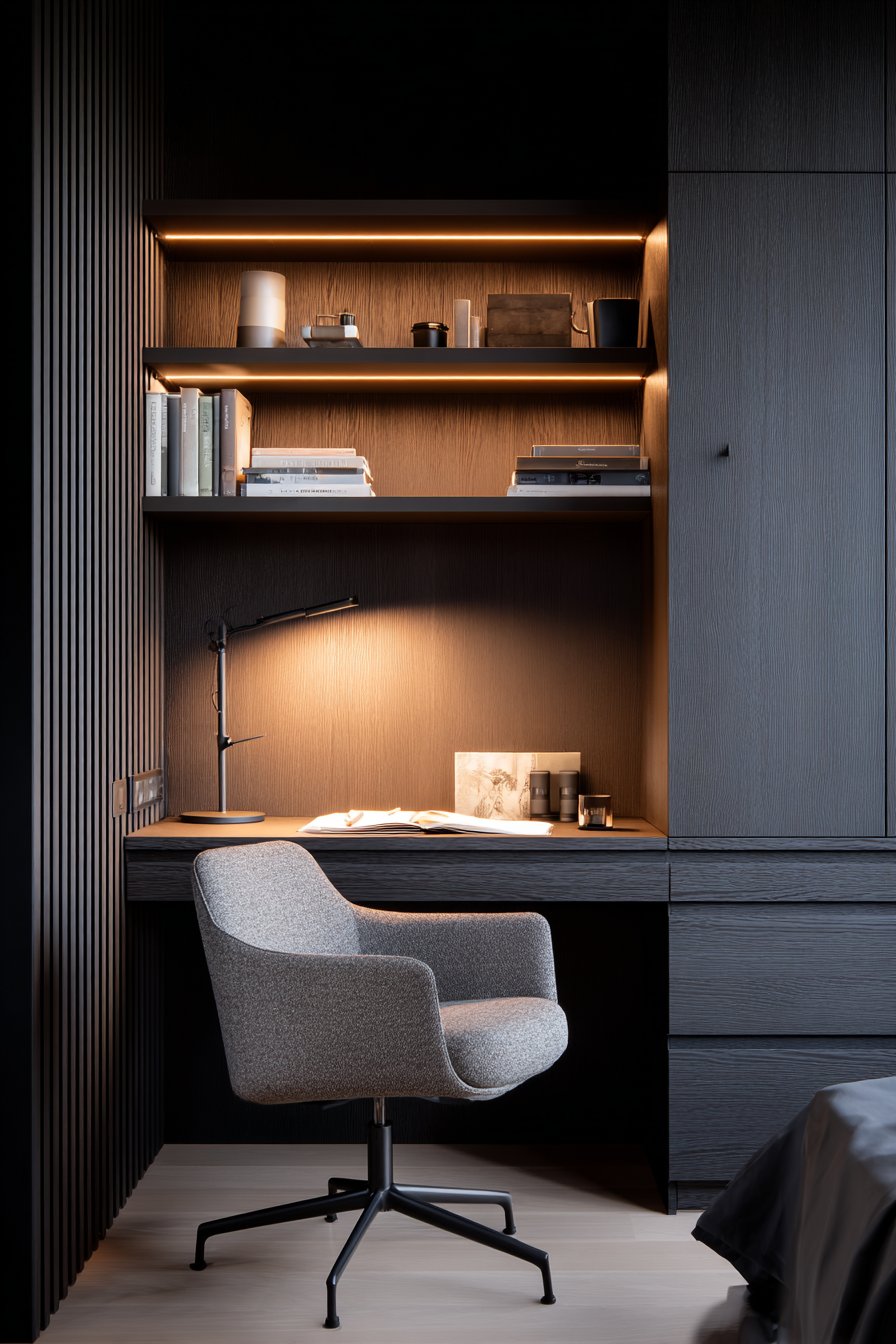
A modern ergonomic chair in charcoal fabric provides comfortable seating for extended work sessions while maintaining the color palette’s cohesion. The chair’s contemporary design complements rather than competes with the custom desk, creating a unified workspace that looks intentional rather than improvised.
A sleek desk lamp with an adjustable arm provides essential task lighting, directing bright, focused illumination exactly where it’s needed for computer work or paperwork without spilling unnecessary light into the bedroom’s sleeping zone.
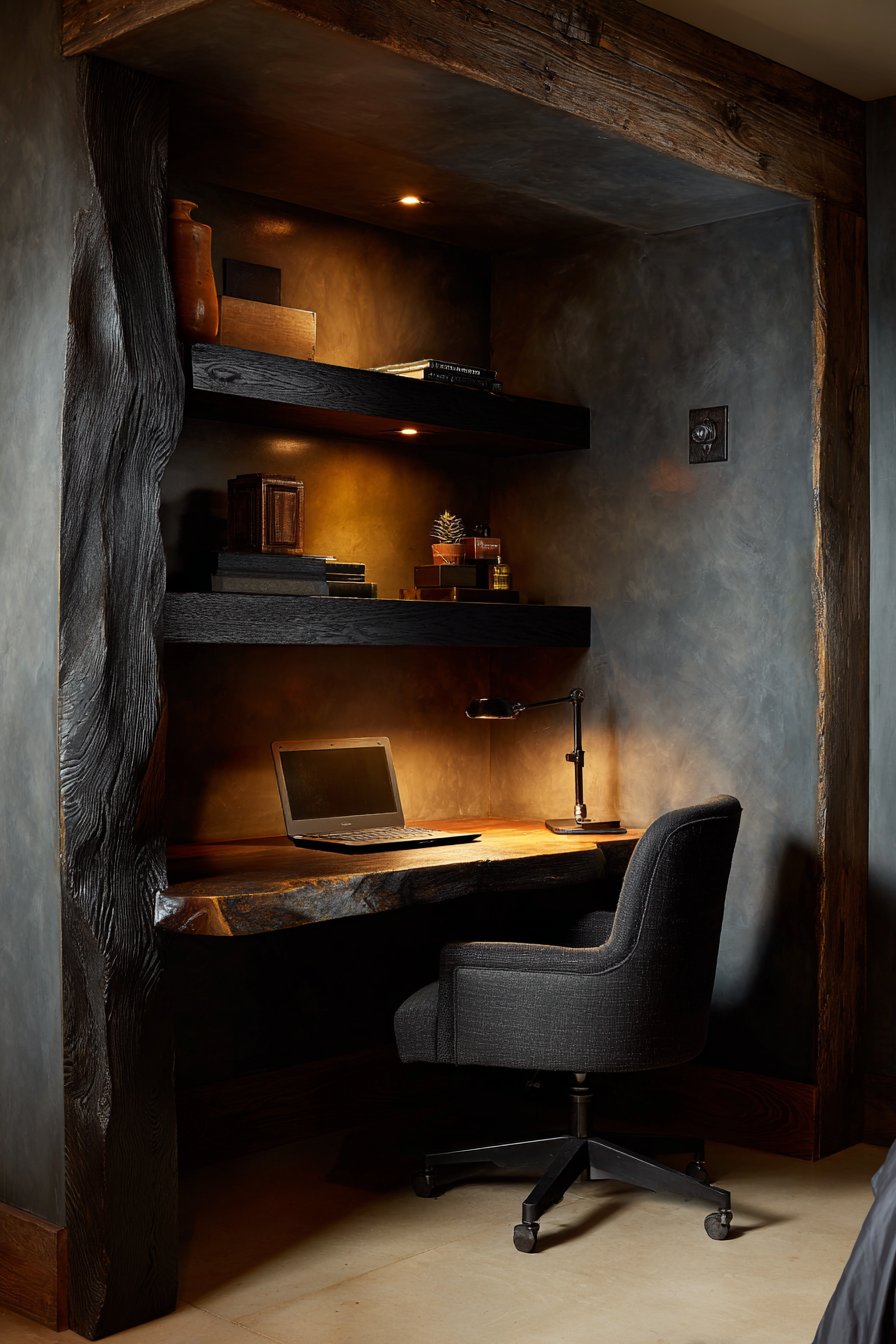
Floating shelves above the desk display minimal accessories against the dark wall, providing storage and personality without visual clutter. The floating mounting system keeps the shelves visually light despite their dark finish, preventing the alcove from feeling heavy or closed-in.
This thoughtful integration of workspace within the dark bedroom environment proves that these spaces can accommodate modern living requirements while maintaining their essential character as restful retreats. The key is creating clear functional zones through strategic furniture placement and lighting rather than relying on color contrast or physical barriers.
Key Design Tips:
- Use alcoves or corners for workspace integration to create natural separation from sleeping areas without requiring room dividers.
- Provide dedicated task lighting with adjustable features to ensure work zones are properly illuminated without affecting bedroom ambiance.
- Choose ergonomic seating that meets functional requirements while maintaining aesthetic cohesion with the dark color palette.
- Install floating shelves to provide storage without adding visual bulk that could make work zones feel cramped.
- Custom-build desks when possible to ensure perfect fit within available space and seamless integration with the room’s design.
9. Scandinavian Minimalist Dark Bedroom
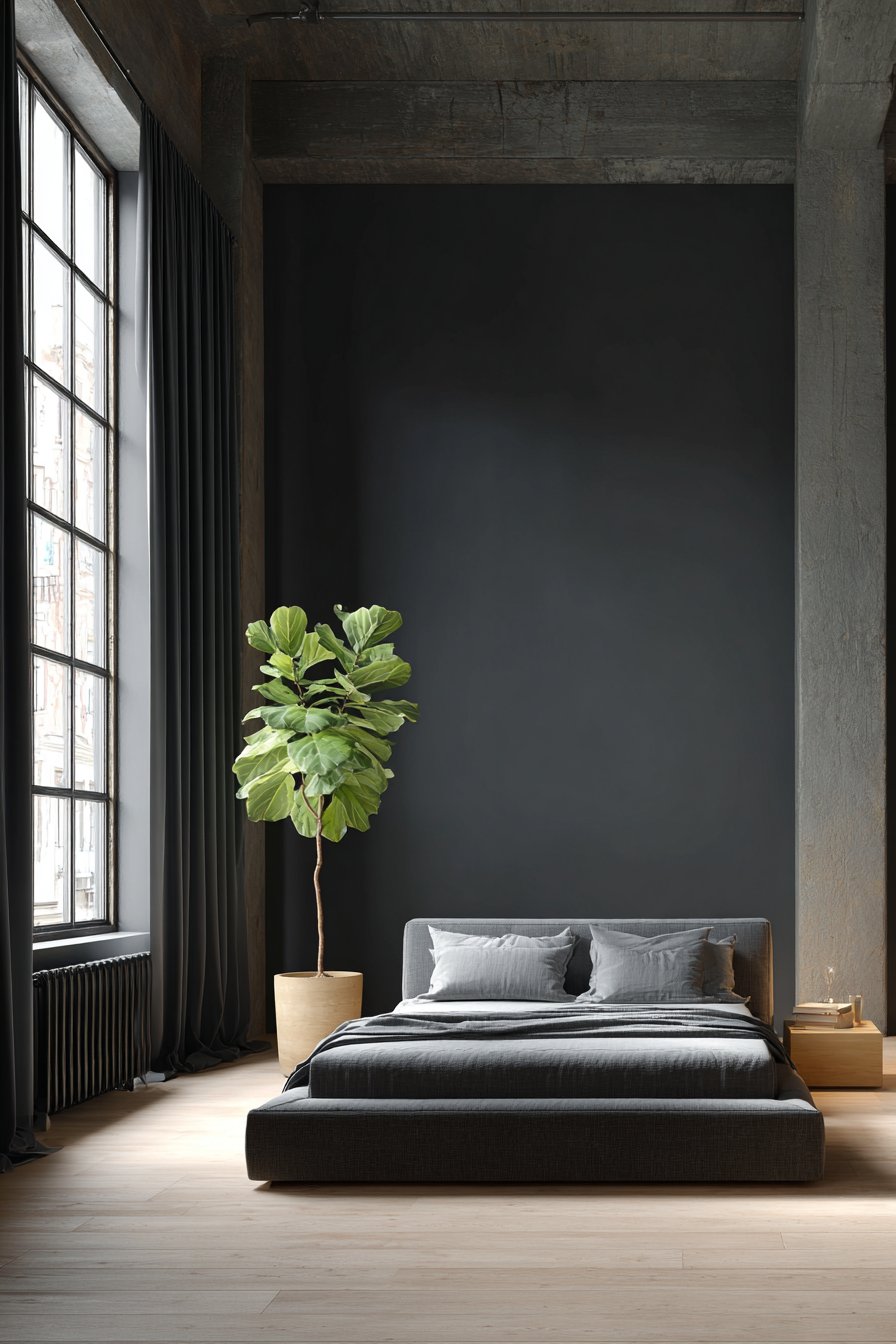
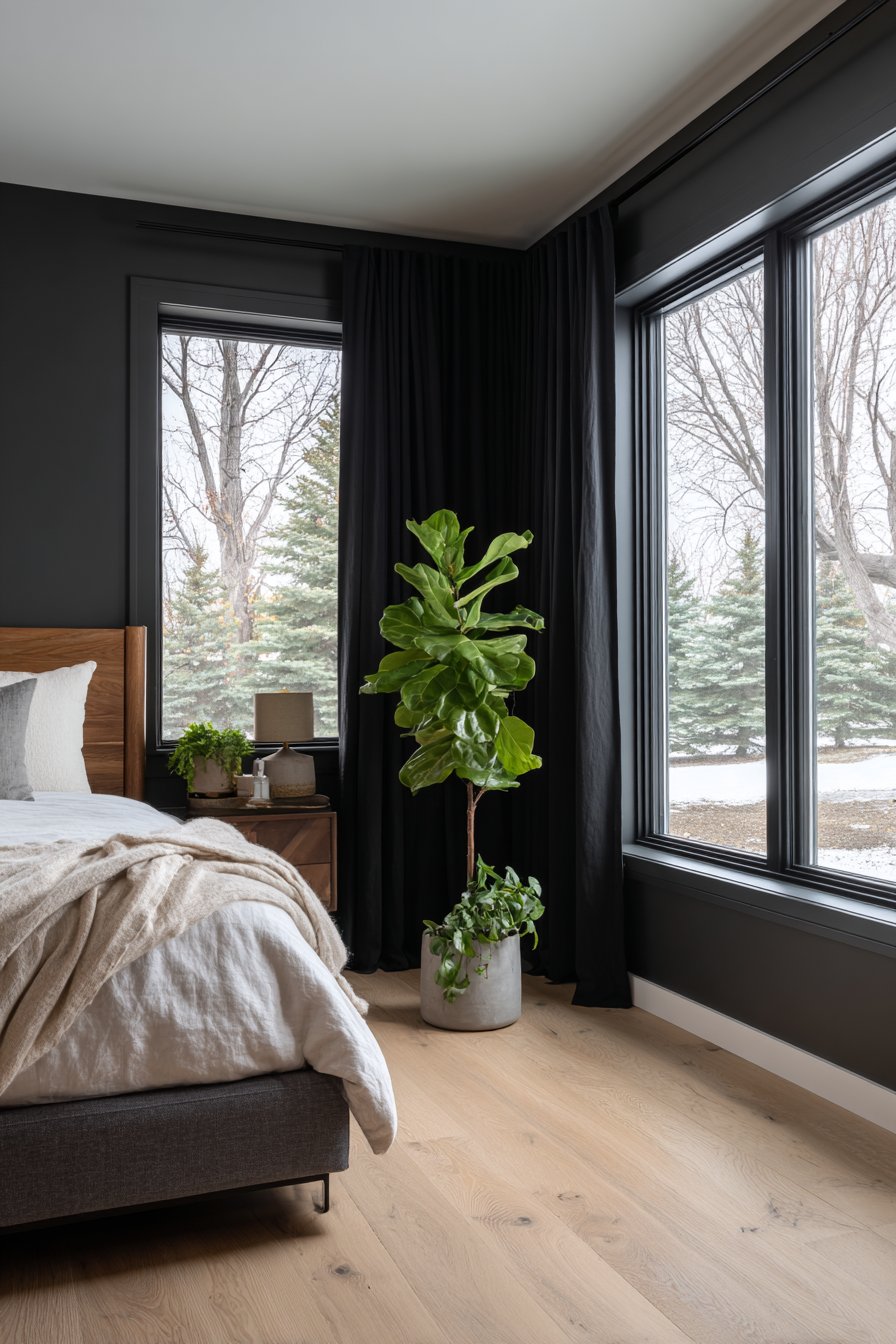
This dark bedroom demonstrates that Scandinavian design principles—simplicity, functionality, and connection to nature—translate beautifully into darker color palettes. The soft charcoal walls provide a gentle, muted backdrop that creates intimacy without drama, embodying the Scandinavian preference for understated elegance over bold statements.
At the room’s center, a simple platform bed dressed in dark grey linen upholstery maintains the minimalist aesthetic through clean lines and absence of unnecessary ornamentation. The linen’s natural texture adds subtle visual interest while its breathability and comfort align with Scandinavian values of quality and functionality.
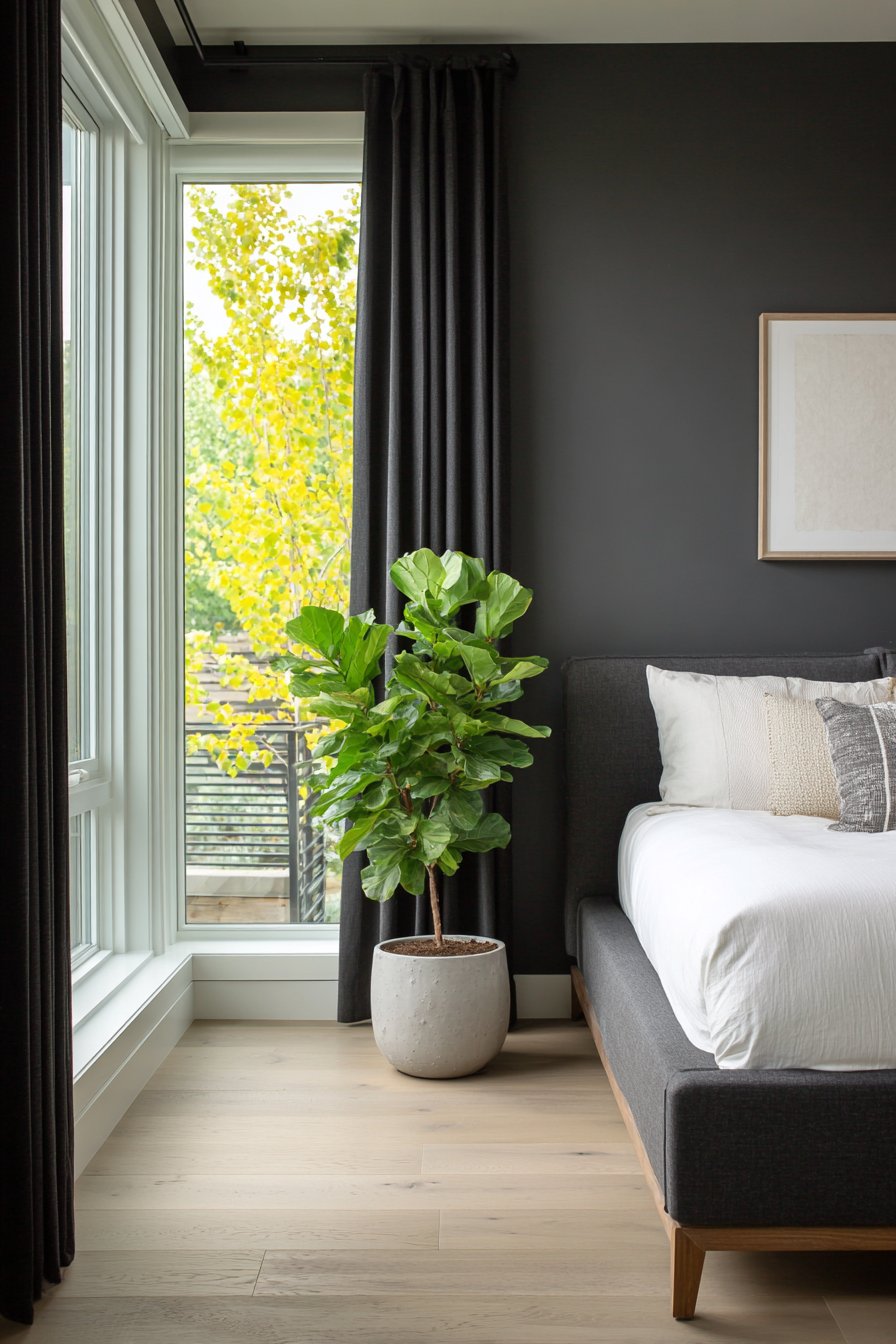
Natural light enters generously through a large window dressed with lightweight black linen curtains that can be drawn back completely to maximize daylight access. This embrace of natural light, even within a dark color scheme, is quintessentially Scandinavian—the design recognizes that darkness should feel cozy rather than oppressive, and that connection to the outdoors remains important even in intentionally moody spaces. The curtains’ lightweight nature ensures they add minimal visual weight when drawn, maintaining the room’s airy, uncluttered feeling.
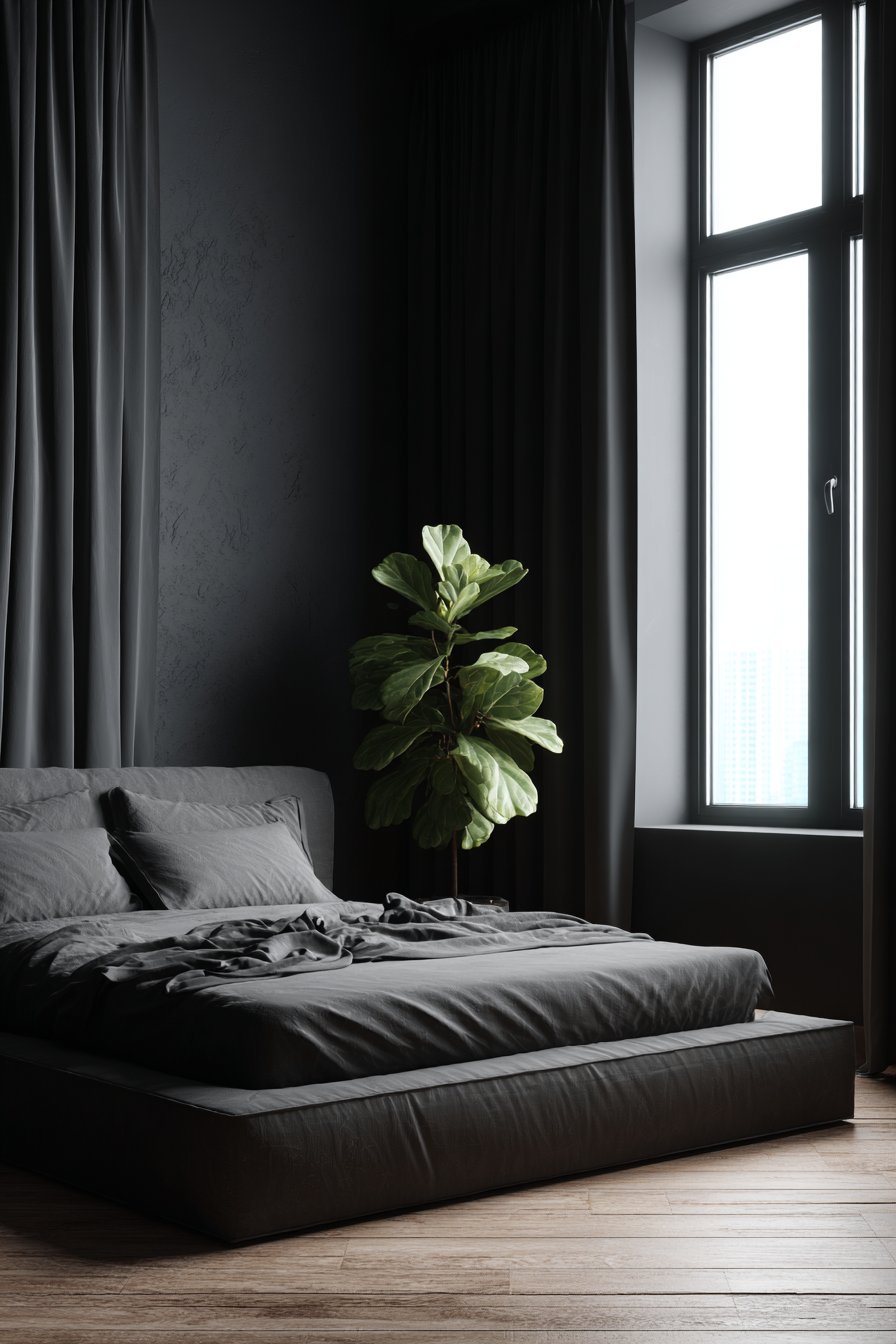
A single fiddle leaf fig plant in the corner introduces the essential element of nature, its vibrant green leaves creating striking contrast against the charcoal walls while purifying the air and connecting inhabitants to the organic world. The light oak flooring provides subtle contrast to the dark walls, its pale natural tone and visible grain pattern adding warmth and preventing the room from feeling too cave-like.
This Scandinavian-influenced dark bedroom proves that minimalism and dark color palettes complement each other beautifully, creating spaces of calm, restful elegance with texture and material quality providing interest rather than decorative excess.
Key Design Tips:
- Embrace natural light even in dark bedrooms by using large windows and lightweight curtains that can be fully opened during daytime.
- Choose quality natural materials like linen and oak that provide texture and authenticity without requiring decorative embellishment.
- Incorporate living plants to add color contrast, improve air quality, and create connection to nature within dark spaces.
- Keep ornamentation minimal and let material quality and subtle texture variations provide visual interest instead of accessories.
- Combine dark walls with lighter flooring to create subtle contrast that prevents spaces from feeling too enclosed while maintaining the moody aesthetic.
10. Layered Luxury Chocolate and Charcoal
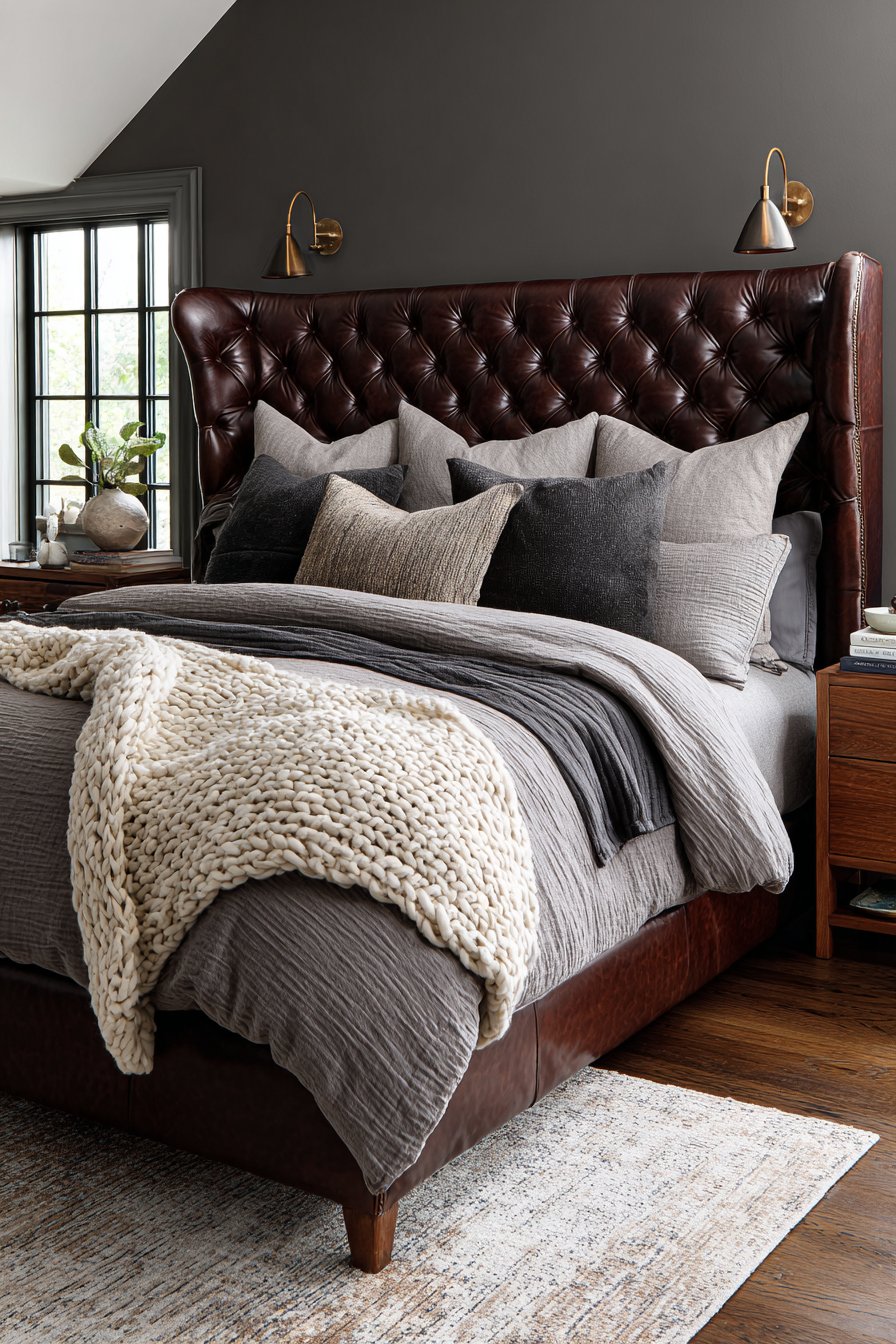
This luxurious dark bedroom represents the pinnacle of sophisticated tonal layering, featuring walls painted in Benjamin Moore’s Kendall Charcoal—a complex grey with subtle warm undertones that creates depth without skewing too cool or too warm. Against this refined backdrop sits the room’s commanding centerpiece: a statement tufted leather headboard in deep chocolate brown.
The leather’s natural grain and slight sheen create visual interest through texture variation, while the deep brown introduces warmth that prevents the grey-dominated space from feeling cold. The button tufting adds traditional elegance and creates subtle shadow patterns across the headboard’s surface.
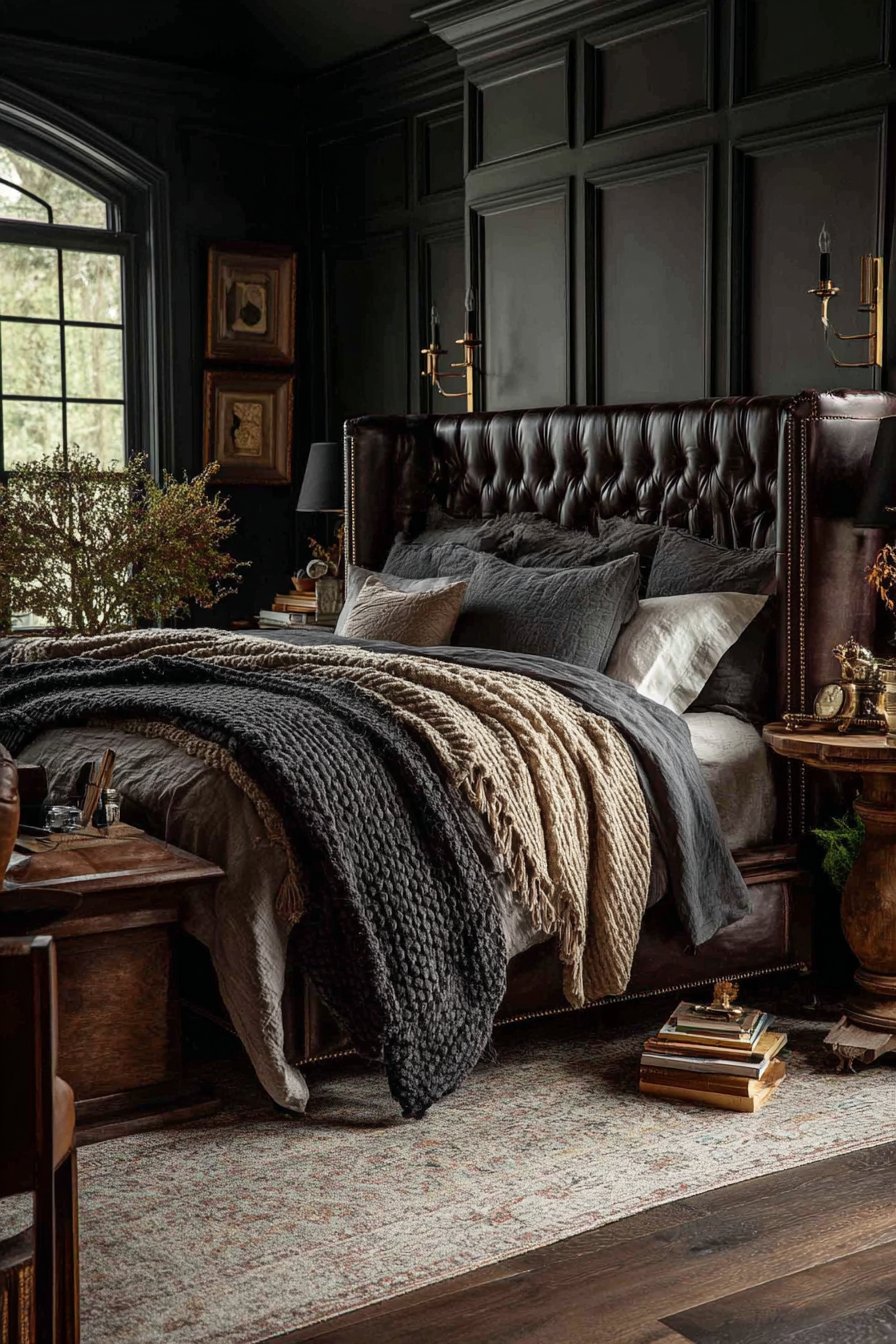
The bedding demonstrates masterful textile layering, incorporating various shades of grey and black through different fabric types that create visual interest purely through texture and subtle tonal variation. A Belgian linen duvet provides the foundation with its natural, slightly irregular weave and matte finish.
Velvet throw pillows add richness through their light-reflective pile, while a chunky knit blanket contributes tactile appeal and casual comfort. This layering of materials—smooth leather, crisp linen, plush velvet, and textured knit—creates a sensory-rich environment that invites touch and provides visual complexity without relying on color contrast.

Antique brass wall sconces flanking the bed provide warm accent lighting that casts a golden glow across the rich surfaces, emphasizing the subtle color and texture differences throughout the space. The brass finish bridges the gap between the grey walls and brown leather, tying the color palette together while introducing a warm metallic element that elevates the entire design.
This bedroom demonstrates the ultimate expression of dark bedroom luxury—a space where every surface has been carefully considered, where texture creates dimension, and where lighting reveals the subtle beauty of a refined, enveloping color palette.

Key Design Tips:
- Layer multiple fabric types in similar tones to create texture-based visual interest that’s sophisticated and cohesive.
- Choose paint colors with subtle undertones like Kendall Charcoal that add complexity without obvious color variation.
- Introduce warm browns alongside greys to add richness and prevent cool-toned dark bedrooms from feeling sterile.
- Use warm metallic finishes like antique brass to bridge color transitions and add luxurious accent notes.
- Invest in quality materials like leather, Belgian linen, and velvet that have inherent visual appeal through texture and finish variations.
Why These Dark Bedroom Designs Represent the Best in Contemporary Interior Design
The dark bedroom designs presented throughout this article represent the cutting edge of contemporary residential interior design for numerous compelling reasons that extend beyond simple aesthetic preferences. Dark bedroom design has emerged as a sophisticated response to modern living challenges—creating spaces that feel genuinely restful in our overstimulated world, providing visual retreat from the brightness of screens and artificial environments, and offering psychological sanctuary through cocoon-like intimacy. These designs succeed because they understand that bedrooms serve a fundamentally different purpose than living areas or kitchens, requiring different design approaches that prioritize rest, privacy, and personal refuge.
From a color theory perspective, these dark bedroom concepts demonstrate advanced understanding of how darker hues actually enhance sleep quality and relaxation. Dark walls absorb rather than reflect light, creating environments where the eye can truly rest without constant visual stimulation. The charcoal grey bedroom, midnight blue accent wall retreat, and plum-grey luxury suite all exemplify how sophisticated dark color palettes reduce visual noise and create the ideal backdrop for quality rest. These spaces work with our circadian rhythms rather than against them, supporting natural melatonin production through reduced light reflection and creating environments that signal to our bodies that it’s time for rest.
The industrial exposed brick bedroom and the Scandinavian minimalist dark bedroom represent the versatility of dark color schemes across different design styles and aesthetic philosophies. Whether embracing raw urban materials or refined Nordic simplicity, dark palettes provide the foundation for authentic style expression. These designs prove that dark bedrooms aren’t confined to one particular aesthetic—they can be luxurious or industrial, minimalist or layered, traditional or contemporary. This versatility makes dark bedroom design relevant to diverse homeowner preferences and architectural contexts, from urban lofts to suburban homes.
The practical innovations demonstrated in designs like the Murphy bed space-saver and the home office alcove integration prove that dark bedrooms excel at addressing modern space constraints and multifunctional living requirements. The dark color palette actually facilitates visual zoning within single spaces, using tonal variations to suggest different functional areas without requiring physical barriers or dramatic color contrasts. The espresso wood closet system integration demonstrates how storage solutions can be seamlessly incorporated into dark aesthetic schemes, creating rooms that are both beautiful and supremely functional—a combination that represents true design excellence.
Material authenticity and texture layering distinguish these dark bedroom designs from lesser attempts at moody interiors. The exposed brick, hand-scraped hardwood floors, visible wood grain finishes, and quality upholstery fabrics all demonstrate commitment to genuine materials rather than artificial substitutes. This material honesty resonates with contemporary values around sustainability and quality, creating spaces that improve with age rather than showing wear. The layered luxury chocolate and charcoal bedroom particularly exemplifies this approach, where Belgian linen, leather, velvet, and brass create a multi-sensory environment that engages touch and sight simultaneously.
Lighting design sophistication sets these dark bedrooms apart from amateur attempts at creating moody spaces. Each design demonstrates understanding that dark rooms require multiple light sources at varying heights and intensities—layered lighting that creates pools of illumination, highlights textures, and allows for mood adjustment throughout different times of day and activities. The Edison bulb pendants in the industrial bedroom, the integrated LED lighting in the Murphy bed system, and the crystal chandelier in the plum-grey luxury suite all show how lighting becomes sculptural and functional simultaneously in dark spaces. This lighting expertise prevents dark bedrooms from feeling gloomy or oppressive, instead creating warmth and dimension.
The psychological benefits of these dark bedroom environments cannot be overstated in our current cultural moment. In an age of constant connectivity, bright screens, and endless stimulation, dark bedrooms provide necessary counterbalance—spaces that feel protected, private, and separated from external demands. The forest green reading nook and the home office alcove both demonstrate how dark environments can support focused activities whether reading, working, or simply being present in quiet contemplation. These spaces acknowledge that restoration requires environments that feel fundamentally different from the bright, stimulating spaces we inhabit during active hours.
Color sophistication evident across these ten designs—from charcoal grey to midnight blue, forest green to plum-grey, espresso to chocolate brown—demonstrates the remarkable range available within dark palettes. These aren’t simply “black rooms” but carefully calibrated color environments that use subtle variations in hue, saturation, and value to create complex, layered spaces. The Kendall Charcoal walls in the luxury bedroom, the deep charcoal brick in the industrial space, and the soft charcoal in the Scandinavian room all show how one general color family (grey) can create vastly different moods through careful selection of specific shades with varying undertones and intensities.
Spatial composition in these dark bedrooms demonstrates advanced understanding of how dark colors affect perceived room dimensions. Contrary to conventional wisdom that dark colors make rooms feel smaller, these designs show how unified dark palettes actually make spaces feel more expansive by eliminating visual breaks between surfaces. The charcoal walls and dark grey carpeting in the Murphy bed room create seamless flow that makes the small space feel larger, while the slate grey walls in the closet system design provide backdrop that makes the room feel cohesive rather than fragmented. This spatial sophistication comes from understanding that darkness, when applied consistently, creates enveloping environments that feel intimate without feeling cramped.
Contemporary relevance of these dark bedroom designs reflects broader cultural shifts toward wellness, authenticity, and personal sanctuary creation. As home environments take on increased importance for work, exercise, entertainment, and rest, bedrooms must work harder to fulfill their primary purpose as sleeping spaces. Dark bedrooms provide clear visual and psychological separation from other home zones, signaling through color alone that these spaces serve different purposes than bright, active living areas. This functional clarity makes dark bedrooms particularly relevant for contemporary open-plan homes where spatial definition helps inhabitants mentally shift between different activities and mindsets throughout the day.
These ten dark bedroom designs represent the best of contemporary interior design because they successfully balance beauty with function, drama with livability, and boldness with sophistication. They demonstrate that exceptional design isn’t about following rules but understanding principles deeply enough to apply them creatively across different contexts, styles, and spatial constraints. From compact apartments to spacious master suites, from industrial lofts to Scandinavian-inspired minimalism, these spaces prove that dark bedrooms offer unmatched potential for creating personally meaningful, aesthetically sophisticated, and genuinely restful sleeping environments that support both our physiological needs and our psychological wellbeing.
Conclusion
The journey through these ten distinct dark bedroom designs reveals the remarkable versatility, sophistication, and contemporary relevance of embracing darker color palettes in our most personal spaces. From the layered elegance of charcoal grey and navy combinations to the raw authenticity of industrial exposed brick, from space-saving Murphy bed innovations to luxurious chocolate leather and velvet compositions, dark bedrooms offer endless possibilities for creating intimate, restful retreats that feel both timeless and thoroughly modern.
The key takeaways from these designs center on several fundamental principles that ensure success when creating dark bedroom environments. First, texture becomes paramount—without the visual interest that color contrast provides in lighter spaces, dark bedrooms rely on material variation, surface finishes, and textile layering to create depth and dimension. Second, lighting must be approached as a sculptural element, with multiple sources at varying heights creating pools of warm illumination that reveal rather than eliminate shadow. Third, warm metallic accents and undertones prevent dark spaces from feeling cold, while natural materials like wood grain and linen add organic authenticity that keeps rooms from feeling artificial or overly designed.
Perhaps most importantly, these dark bedroom designs demonstrate that creating restful, beautiful spaces sometimes means challenging conventional wisdom and trusting in approaches that initially feel counterintuitive. Dark bedrooms succeed precisely because they embrace depth over brightness, intimacy over openness, and shadow over uniform illumination. They create environments that feel protective and personal, spaces that signal to both body and mind that it’s time to rest, reflect, and restore.
As you consider implementing these ideas in your own home, remember that successful dark bedroom design is ultimately about creating spaces that serve your specific needs and reflect your personal aesthetic sensibilities. Whether you’re drawn to minimalist Scandinavian restraint, industrial urban edge, or layered luxury, the dark bedroom concepts explored here provide starting points for experimentation rather than rigid formulas to follow. Start with quality paint in carefully selected dark tones, invest in layered lighting that creates flexibility and warmth, choose textured materials that add tactile and visual interest, and trust that darkness, when thoughtfully designed, creates some of the most beautiful, restful, and personally meaningful spaces we can inhabit. Your bedroom should be your sanctuary—and sometimes sanctuary means embracing the sophisticated, enveloping beauty of darkness.
