


The kitchen has long been considered the heart of the home, and nowhere is this sentiment more beautifully expressed than in traditional kitchen ideas. This enduring style speaks to our innate desire for warmth, comfort, and a connection to the past, while still providing the functionality modern families need. Traditional kitchens embody a sense of permanence and quality craftsmanship that transcends fleeting trends, offering spaces that feel both familiar and refined. With their rich wood cabinetry, classic architectural details, and thoughtfully curated finishes, these kitchens create an atmosphere of welcoming sophistication that never goes out of style.
What makes the traditional kitchen particularly appealing is its remarkable versatility and ability to adapt to various interpretations while maintaining its core aesthetic principles. From the grandeur of cherry wood cabinetry with ornate moldings to the cozy charm of farmhouse sinks and breakfast nooks, traditional kitchens offer countless opportunities for personalization. These spaces celebrate quality materials, attention to detail, and time-honored design elements that create rooms meant to be enjoyed for generations. Whether you’re drawn to the elegance of marble countertops, the warmth of butcher block islands, or the character of hand-painted tile backsplashes, traditional design provides a framework for creating a kitchen that feels both timelessly beautiful and intimately personal.
In this comprehensive guide, we’ll explore ten distinctive approaches to traditional kitchen design, each showcasing different elements, materials, and arrangements that define this beloved aesthetic. From butler’s pantries that evoke the elegance of historic estates to breakfast nooks that invite lingering over morning coffee, these designs demonstrate the depth and richness of traditional styling. You’ll discover how classic elements like raised panel cabinetry, vintage-inspired hardware, and architectural moldings come together to create spaces that honor the past while serving contemporary lifestyles. Whether you’re planning a complete kitchen renovation or simply seeking inspiration to refresh your existing space, these traditional kitchen concepts offer valuable insights into creating a room that will remain beautiful and functional for years to come.
1. Rich Cherry Wood Elegance with Ornate Crown Molding
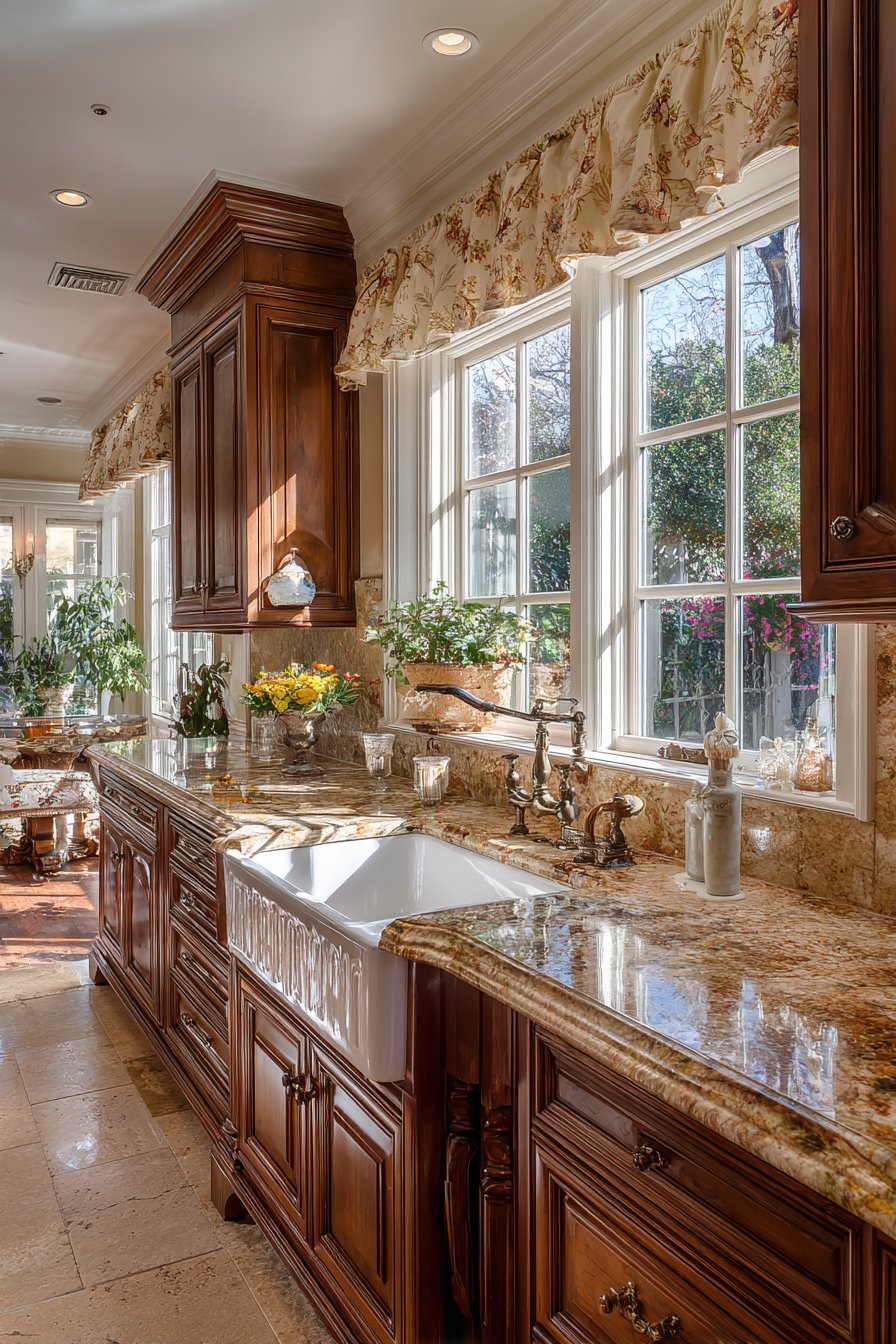
Step into a kitchen where rich cherry wood cabinetry commands attention with its deep, lustrous tones and raised panel doors that showcase masterful craftsmanship. The wood grain tells a story in every cabinet face, with natural variations that add depth and character to the space.
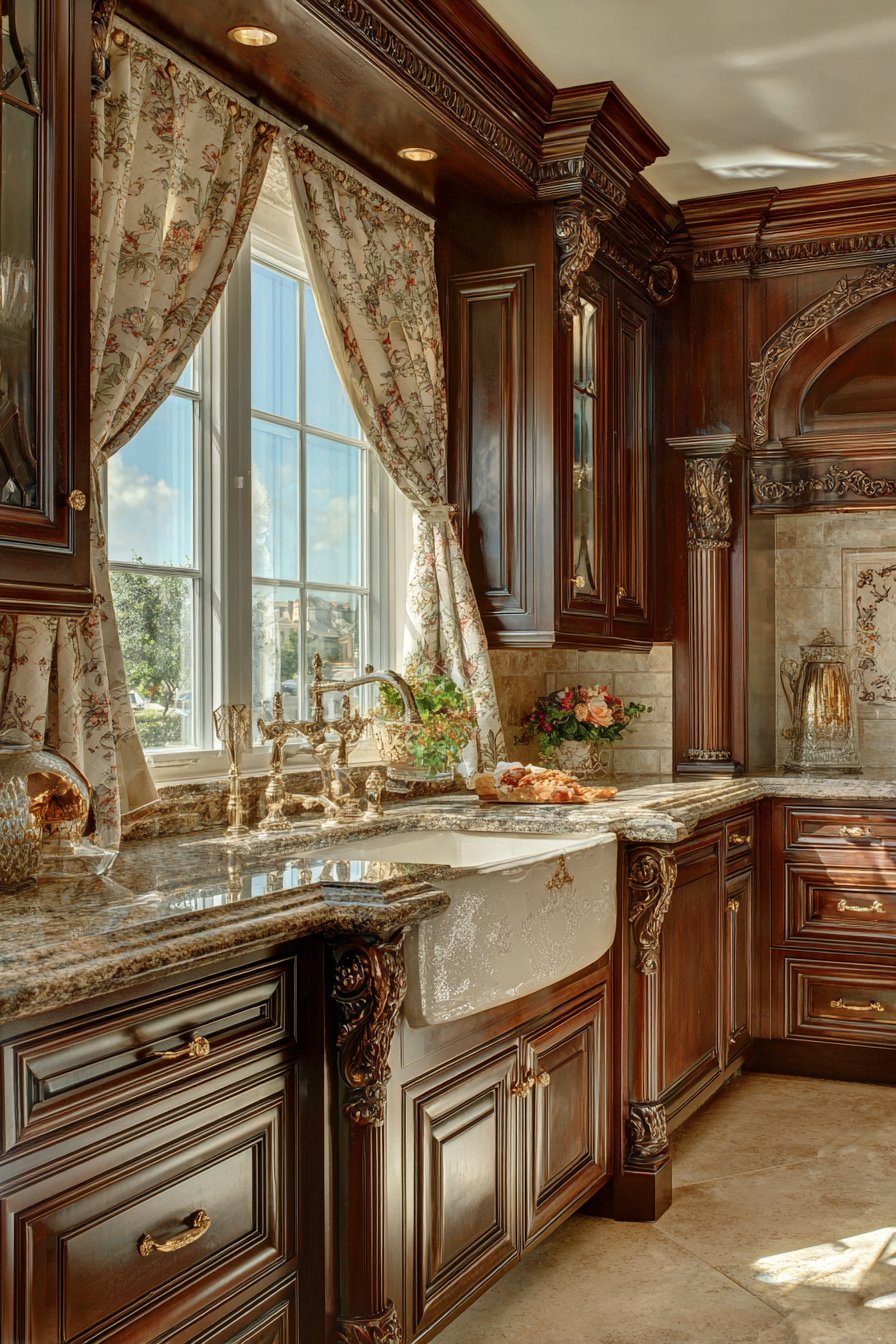
Crown molding extends majestically to the ceiling, creating a sense of grandeur and architectural completion that elevates the entire room beyond simple utility into the realm of fine living. This is a kitchen designed to impress while remaining thoroughly functional, where every detail has been considered and every surface speaks to quality and permanence.

The granite countertops in warm earth tones provide the perfect complement to the cherry wood, their subtle patterns and colors echoing the natural warmth of the cabinetry while offering practical, durable work surfaces. A large farmhouse sink sits proudly beneath a window dressed with café-style curtains featuring a subtle floral pattern that adds softness without overwhelming the space.
The antique brass hardware and fixtures serve as jewelry for the cabinetry, their aged patina providing authentic period detail that ties the entire design together. Each pull and knob has been carefully selected to enhance the traditional aesthetic while providing comfortable, functional access to storage.
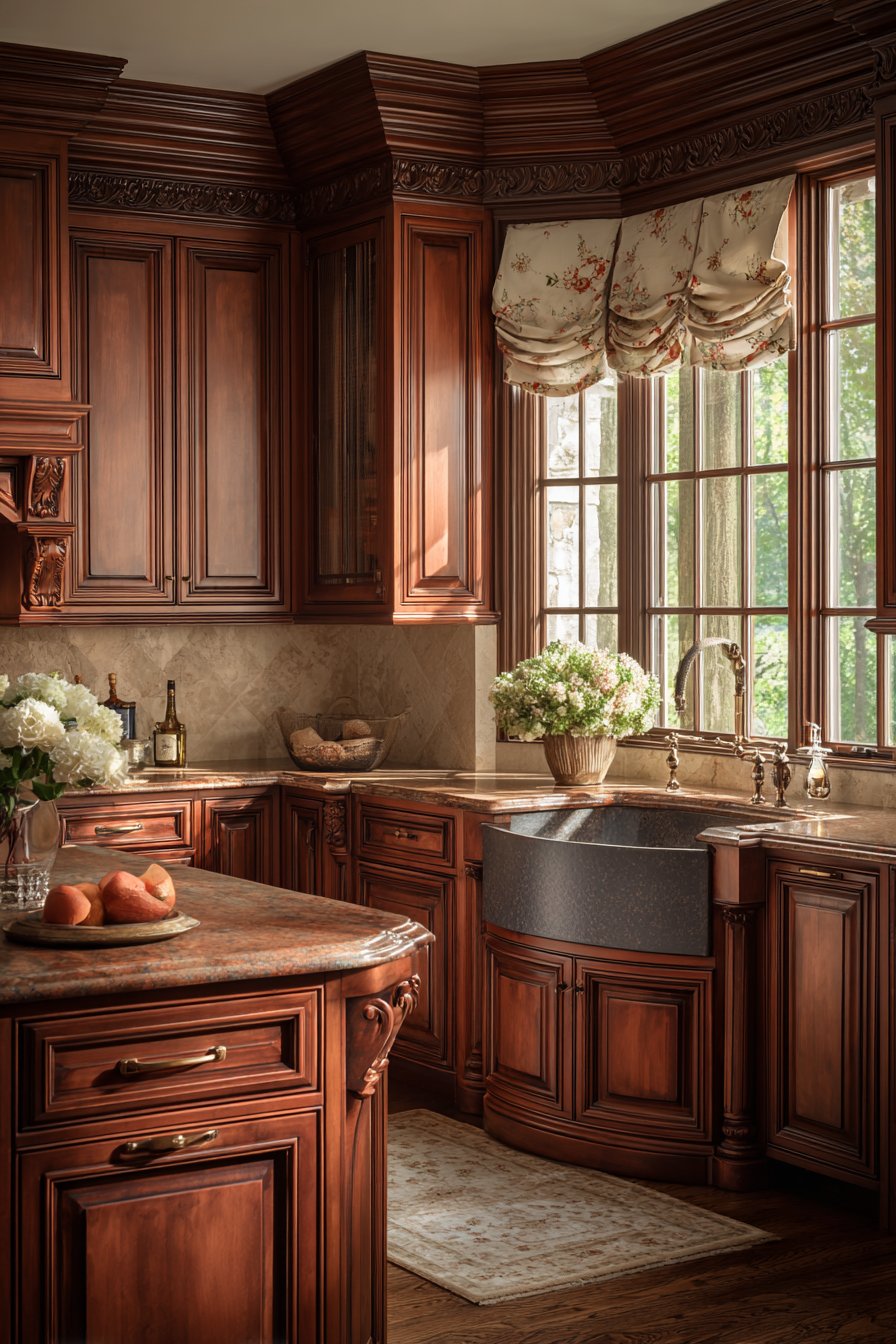
Natural daylight streaming through the windows creates a dynamic interplay of light and shadow throughout the day, highlighting the beautiful wood grain and creating soft shadows that emphasize the depth and three-dimensional quality of the raised panel doors and ornate moldings. The way light moves across these surfaces brings the kitchen to life, revealing new details and nuances as morning light gives way to afternoon sun and eventually to the warm glow of evening illumination. This attention to how natural light interacts with materials and finishes is fundamental to creating a traditional kitchen that feels both grand and genuinely livable.
Key Design Tips:
- Invest in quality cherry wood cabinetry with raised panel doors to establish the foundation of traditional elegance
- Select granite countertops in warm earth tones that complement rather than compete with the wood cabinetry
- Install substantial crown molding that extends to the ceiling for architectural impact and visual completion
- Choose antique brass hardware for authentic period detail that enhances the traditional aesthetic
- Position windows strategically to maximize natural light and showcase the beauty of wood grain and craftsmanship
- Incorporate a farmhouse sink for both practical functionality and classic design appeal
2. Substantial Kitchen Island with Butcher Block Beauty

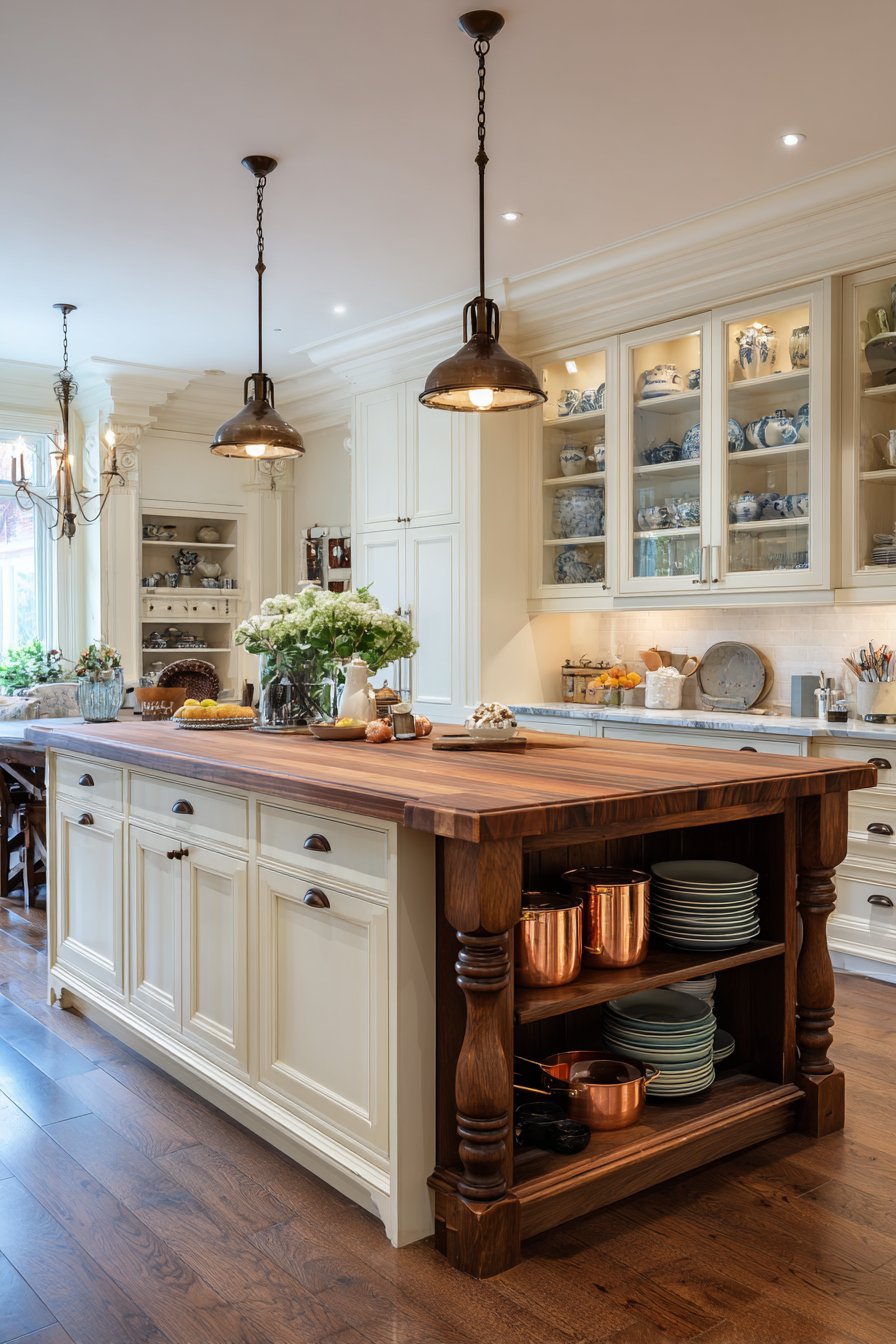
The centerpiece of this traditional kitchen is a substantial island that functions as both a workspace and a gathering place, featuring turned wooden legs that reference classical architectural elements and furniture design. The butcher block countertop showcases natural wood grain variations that make each island unique, with the warm tones and organic patterns of the wood creating a tactile, inviting surface that beckons cooks to roll out dough, chop vegetables, and prepare family meals. This is a working surface with soul, one that will develop character and patina over years of use, bearing witness to countless cooking adventures and family moments.
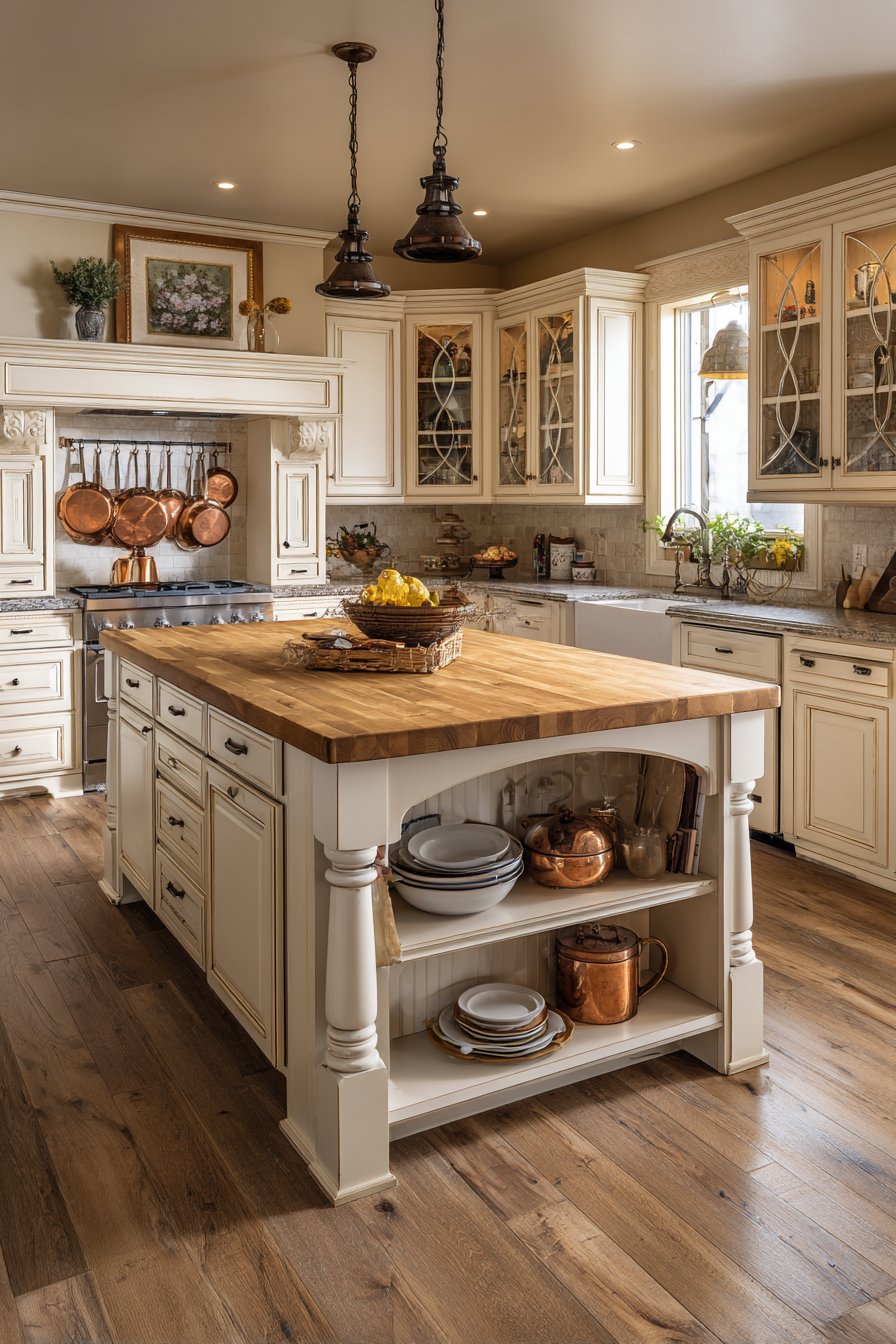
Open shelving on one side of the island displays copper cookware and ceramic dishware, transforming functional storage into an attractive design element that adds warmth and personality to the space. The gleaming copper catches and reflects light beautifully, while the carefully curated dishware collection adds color and visual interest.
This approach to storage celebrates the tools of cooking rather than hiding them away, creating a kitchen that feels lived-in and authentic. The surrounding cabinetry in cream with glass-front upper cabinets continues this theme of display, revealing organized china collections that add both beauty and functionality to the space.
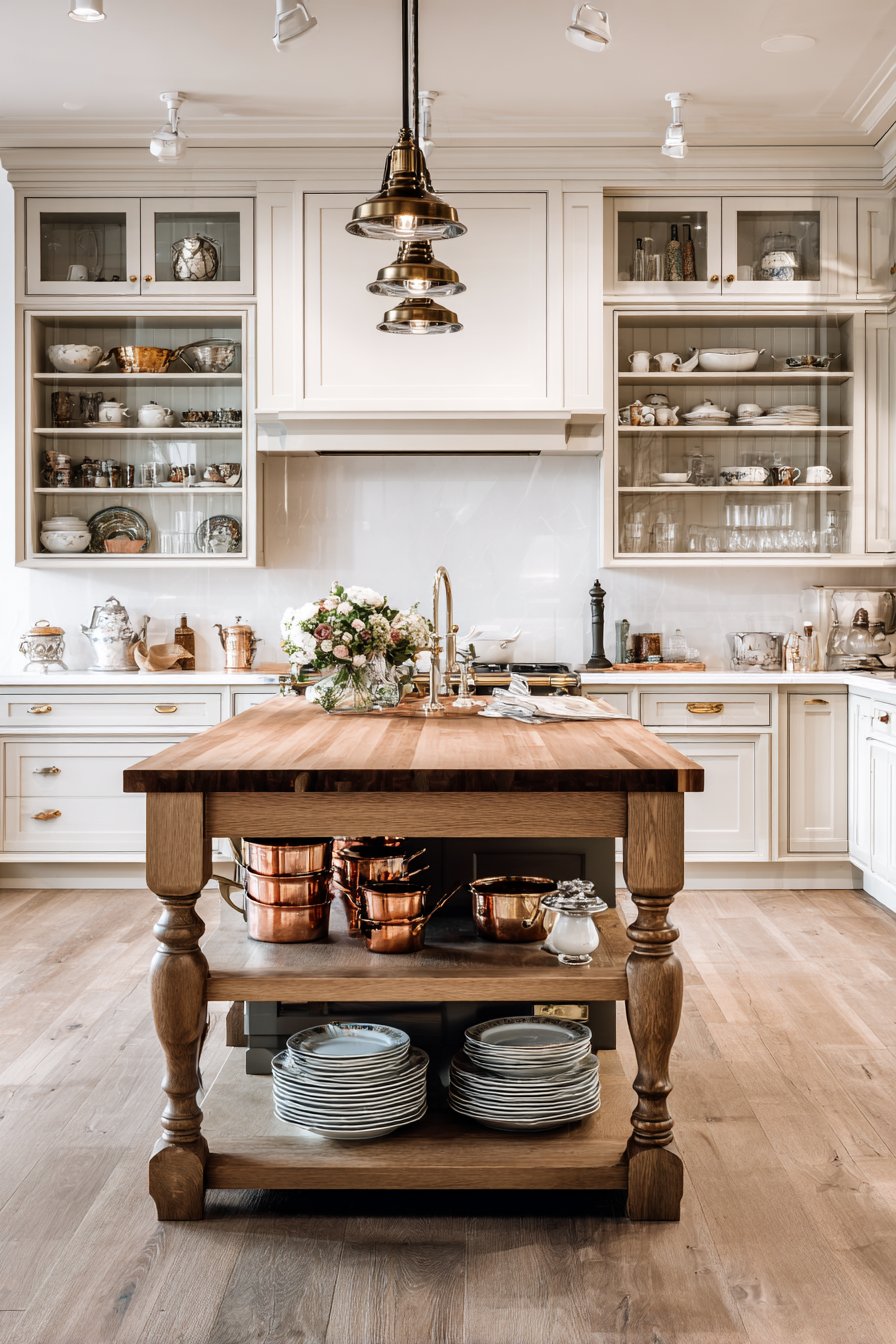
Classic pendant lights with aged bronze finishes hang above the island at precisely the right height to provide task lighting for food preparation while creating an intimate, defined zone within the larger kitchen space. These fixtures serve as sculptural elements that draw the eye upward and add another layer of traditional detail to the design. The balanced exposure of natural and artificial lighting creates a warm, inviting atmosphere throughout the day and into evening hours, with soft natural light highlighting material textures and the functional workspace arrangement. The interplay between the cream-colored perimeter cabinetry and the natural wood island creates visual interest and prevents the space from feeling too uniform or monotonous.
Key Design Tips:
- Choose an island with turned wooden legs and butcher block countertop to create a furniture-quality centerpiece
- Incorporate open shelving to display attractive cookware and dishware as part of the design
- Select cream-colored cabinetry for a lighter, brighter take on traditional style
- Install glass-front upper cabinets to showcase china collections while keeping them protected from dust
- Hang aged bronze pendant lights above the island for both task lighting and decorative impact
- Display copper cookware to add warm metallic accents and celebrate the tools of cooking
3. Classic Range Area with Hand-Painted Tile Focal Point
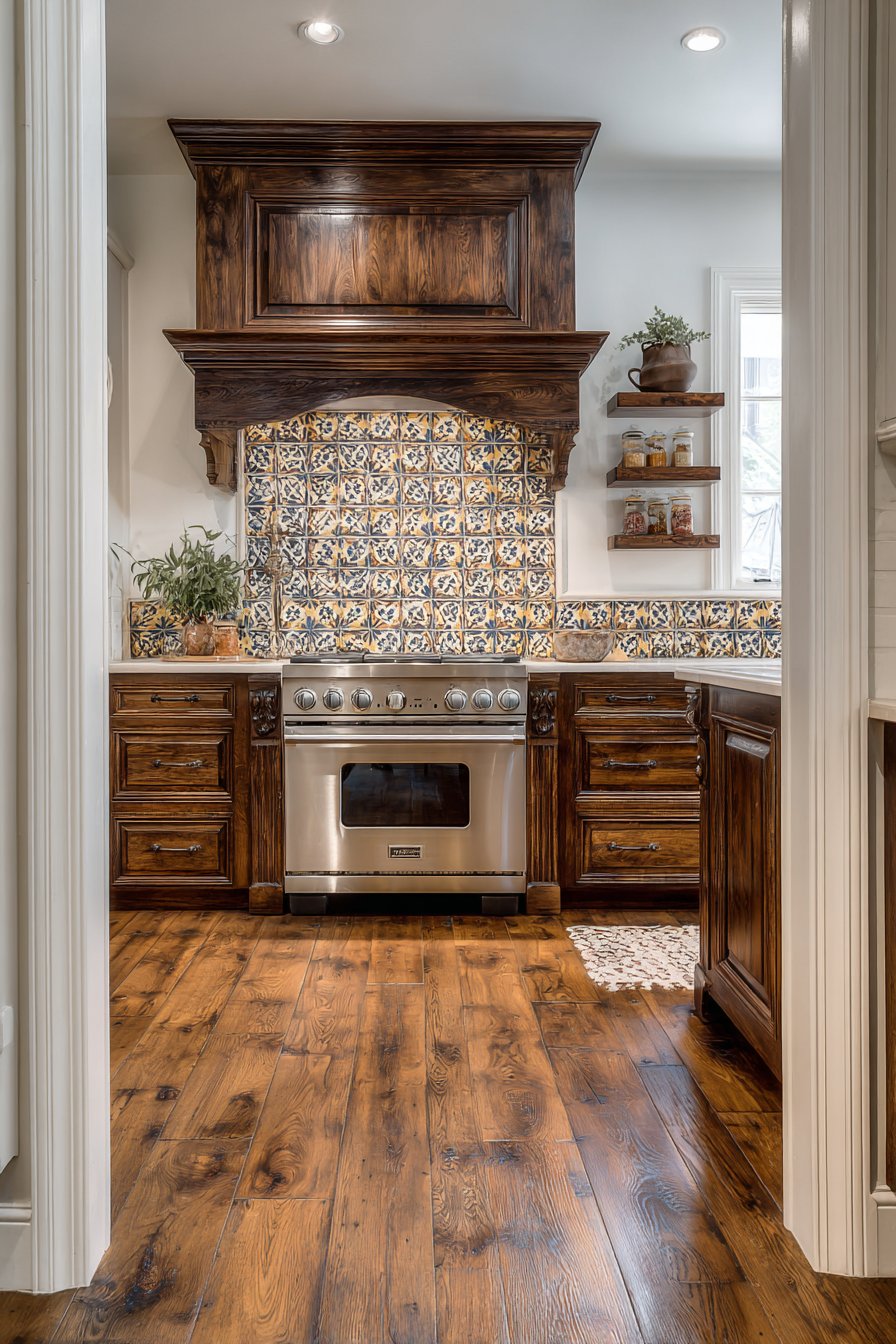
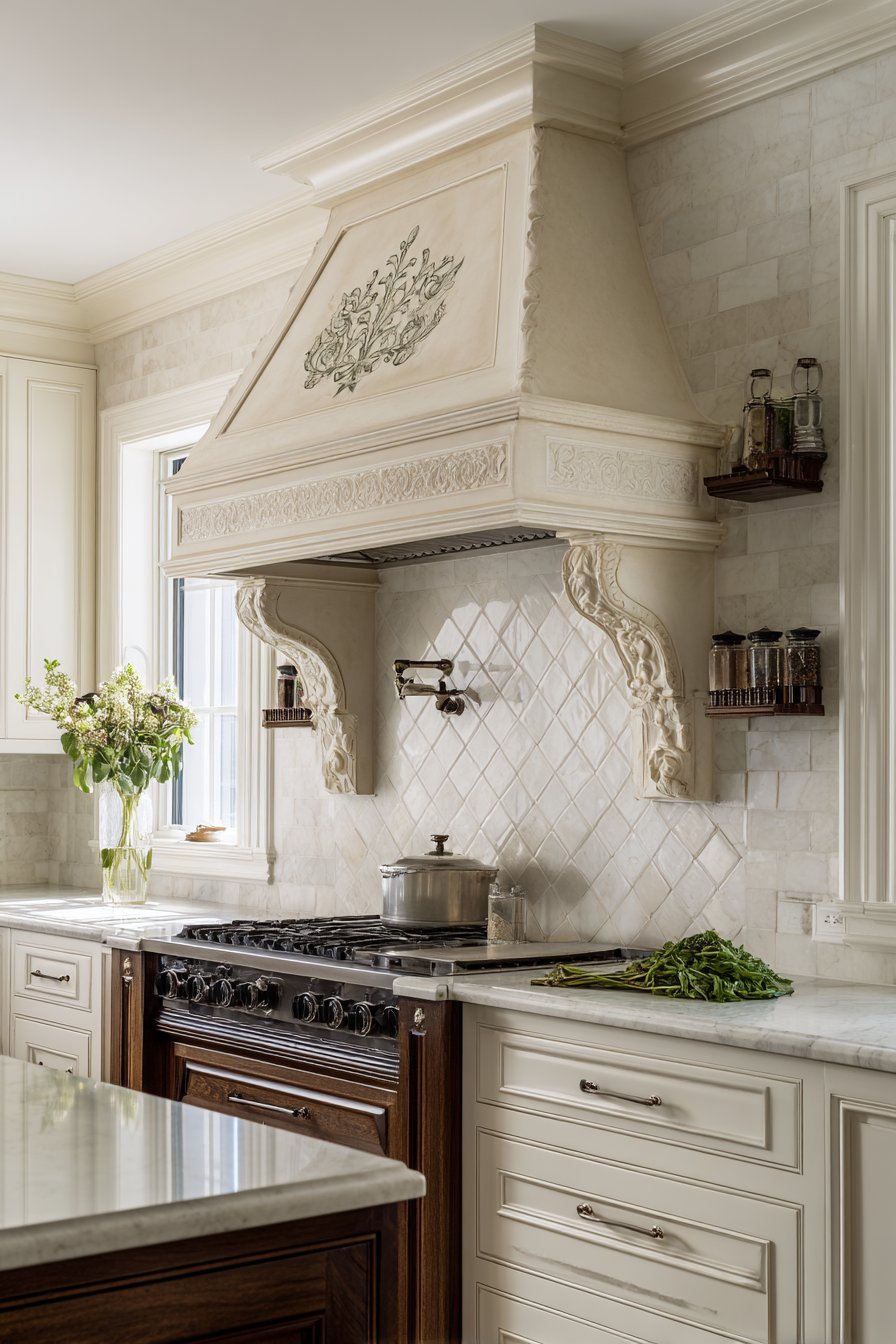
The cooking area becomes the undisputed focal point of this traditional kitchen through the artful combination of a decorative tile backsplash and a substantial range hood that commands attention. The hand-painted ceramic tiles feature subtle botanical motifs that add organic beauty and artisanal quality to the space, with each tile bearing the slight variations and imperfections that come from handcrafted work. These tiles tell a story of craftsmanship and attention to detail, transforming a practical splash guard into a work of art that elevates the entire kitchen. The botanical patterns connect the indoor cooking space with the natural world beyond the kitchen windows.
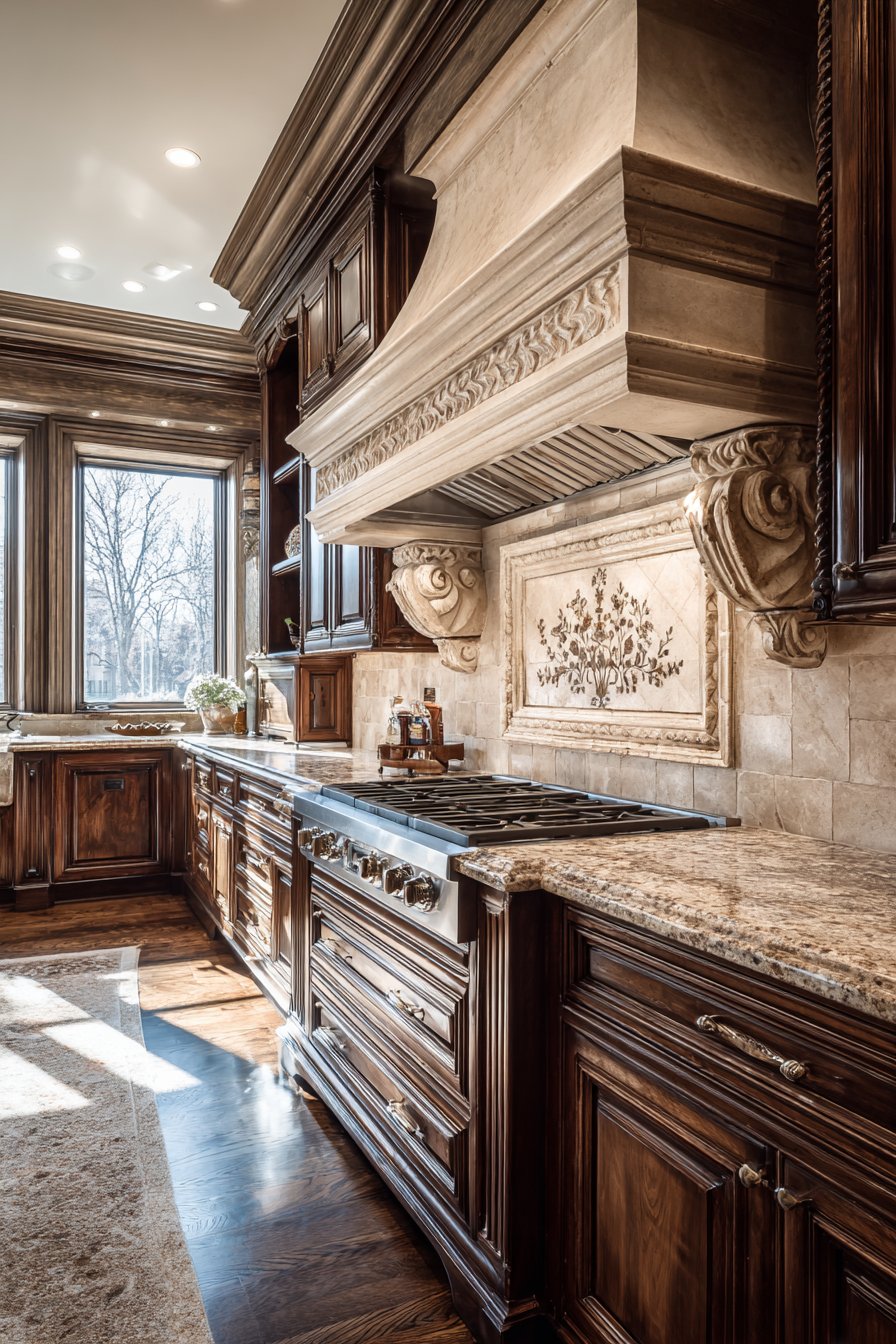
A substantial range hood with corbel supports and intricate molding serves as architectural sculpture, framing the cooking area and creating a sense of importance around the act of preparing meals. The corbels reference classical architecture while providing structural support, and the intricate molding adds layers of visual interest that reward closer inspection. Dark stained wood cabinetry frames the cooking area with gravitas and sophistication, providing a rich backdrop that makes the tile work and metallic elements stand out even more dramatically. Adjacent spice racks and open shelving keep essential cooking ingredients and tools within arm’s reach while adding to the functional beauty of the design.

The polished nickel pot filler faucet and matching range knobs provide authentic period details that enhance both functionality and aesthetics. The pot filler eliminates the need to carry heavy pots of water from the sink to the stove, while its elegant form adds a professional touch that cooking enthusiasts particularly appreciate. Natural window light creates highlights on the tile work and wood surfaces, bringing out the dimensional quality of the hand-painted designs and the depth of the wood grain. The symmetrical composition of this cooking area creates a sense of balance and order that is fundamental to traditional design principles.
Key Design Tips:
- Install hand-painted ceramic tile backsplash to create an artisanal focal point in the cooking area
- Choose a substantial range hood with corbel supports and intricate molding for architectural impact
- Frame the cooking area with dark stained wood cabinetry for dramatic contrast and sophistication
- Add a pot filler faucet for both practical functionality and professional-kitchen appeal
- Include open shelving and spice racks adjacent to the range for convenient access to cooking essentials
- Use polished nickel fixtures to add bright metallic accents that complement the traditional aesthetic
4. Cozy Breakfast Nook with Built-In Comfort
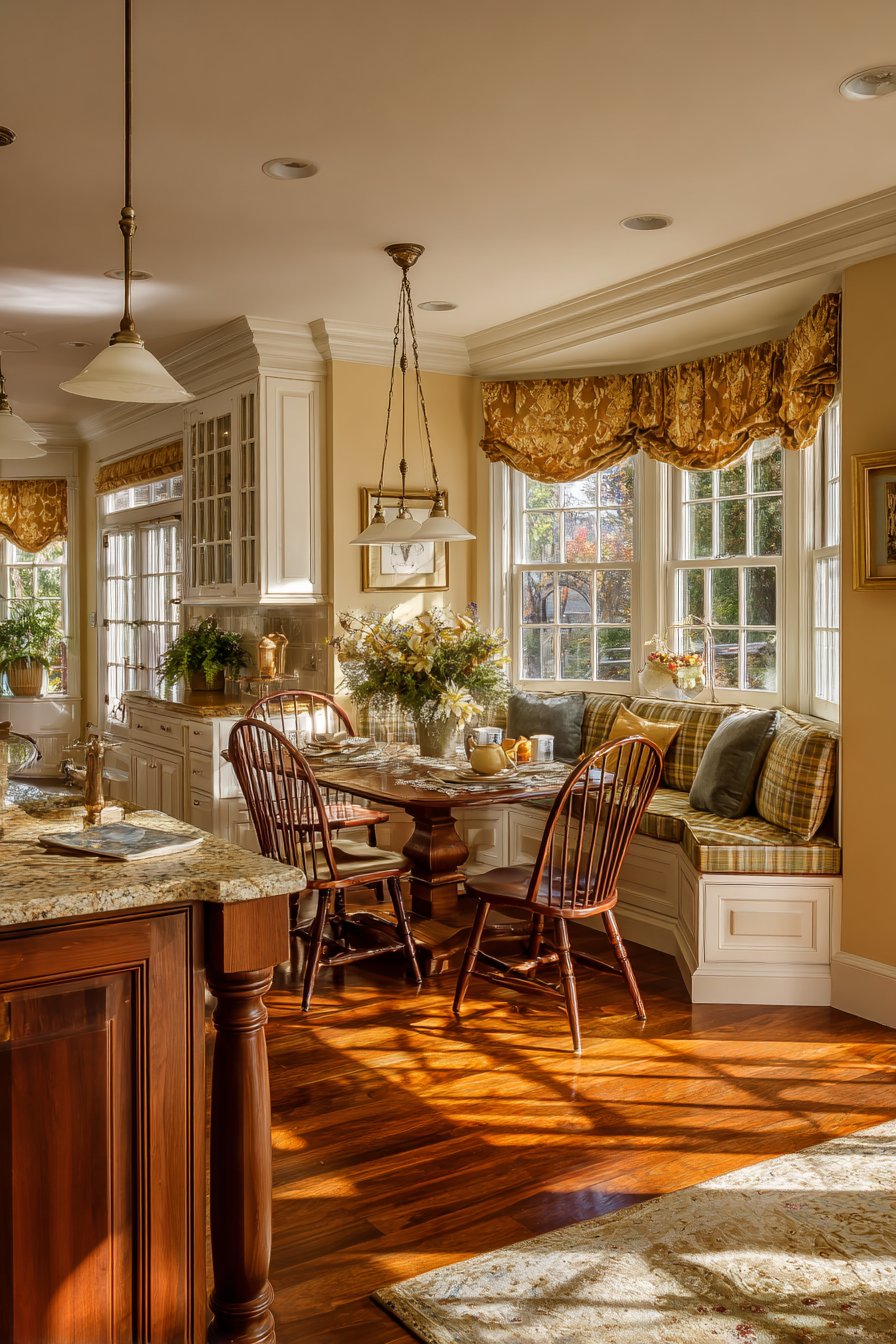
A cozy breakfast nook transforms a corner of the traditional kitchen into an intimate dining retreat where morning coffee and family meals become cherished daily rituals. Built-in bench seating upholstered in classic plaid fabric with coordinating throw pillows creates a comfortable, inviting space that encourages lingering over conversation and food.
The plaid pattern adds visual warmth and a touch of country charm without feeling too casual or informal, striking the perfect balance for a traditional kitchen. The built-in nature of the seating maximizes space efficiency while creating a custom, finished look that feels intentional and permanent.
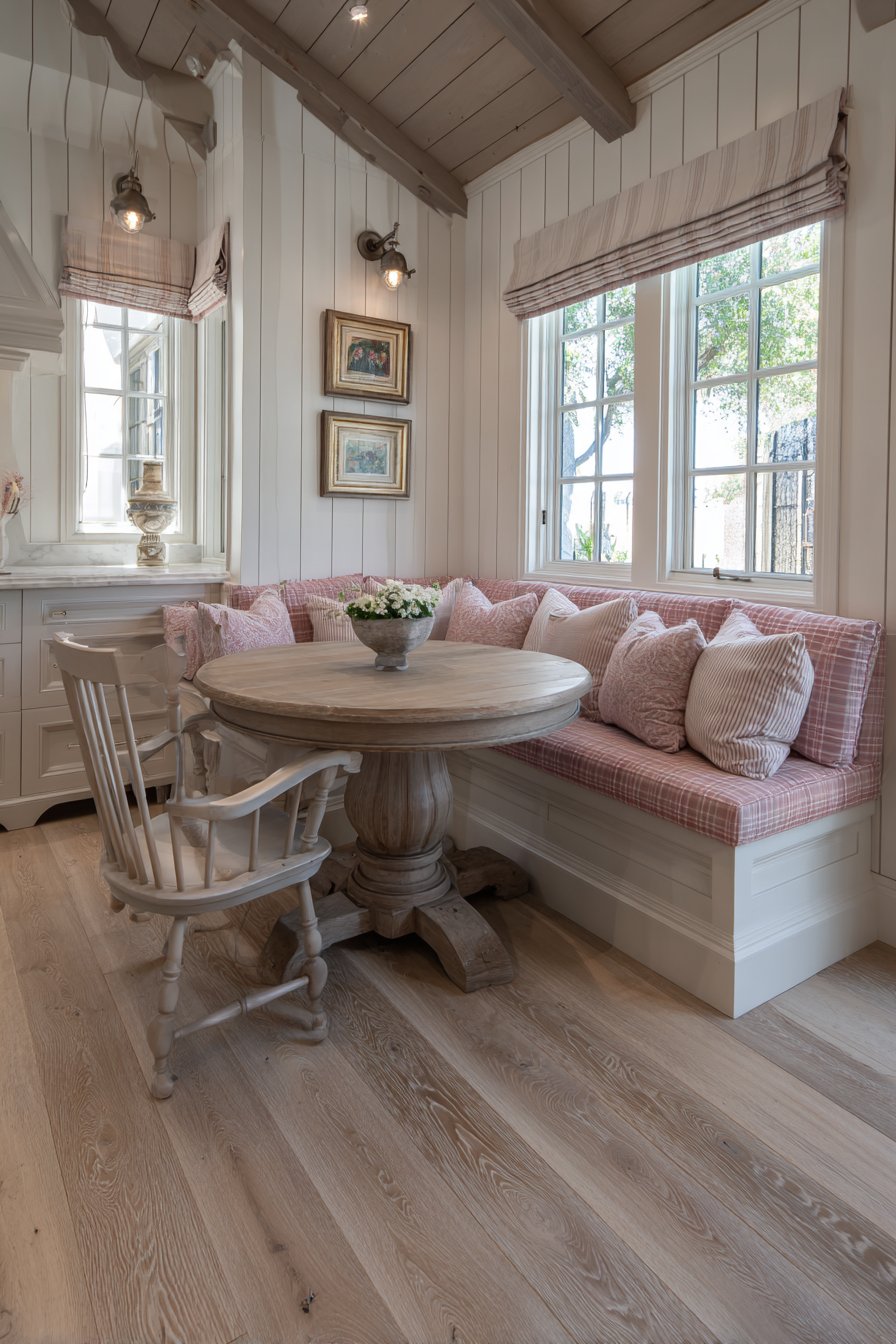
A solid wood pedestal table centers the space, its substantial base and natural wood finish adding another layer of traditional craftsmanship to the nook. Windsor-style chairs with their characteristic spindle backs surround the table, providing additional seating flexibility while contributing to the classic aesthetic. These chairs reference American furniture traditions and add visual interest through their distinctive silhouette. Wainscoting panels in soft white line the walls beneath windows dressed with simple valances, creating architectural interest and protecting walls from the inevitable scuffs and marks that come with daily use. The wainscoting adds another layer of traditional detail that enhances the sense of craftsmanship throughout the space.
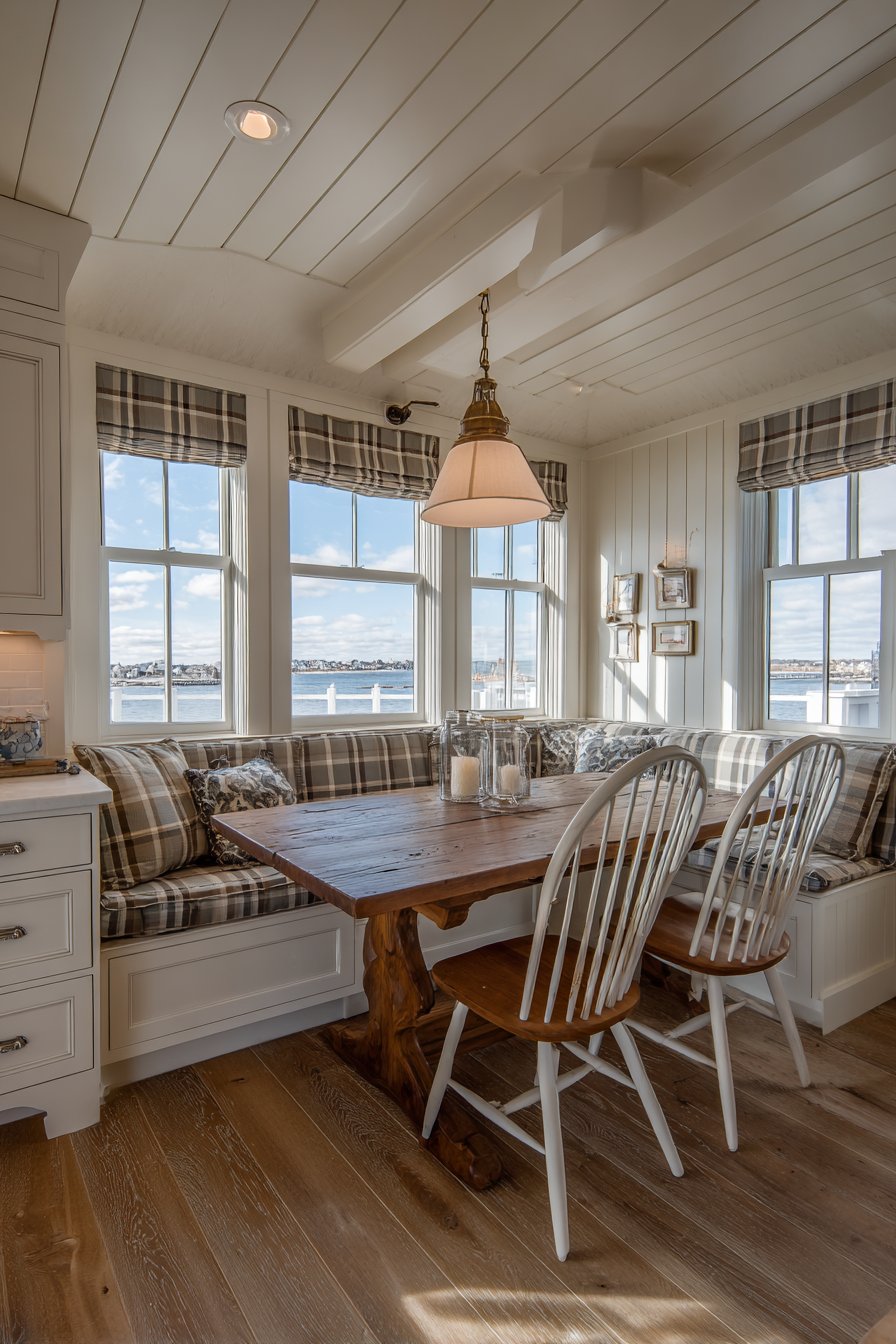
Natural oak flooring shows subtle wear patterns that add character rather than looking damaged or neglected, speaking to the idea that traditional spaces are meant to be used and loved rather than preserved in pristine, untouchable condition. Morning light filtering through the windows creates a warm and welcoming atmosphere that makes this breakfast nook the preferred spot for starting the day. The intimate scale of the dining area contrasts beautifully with the larger kitchen workspace, creating distinct zones within the overall room that serve different functions and moods. This is a space designed for comfort and connection, where form and function unite to support the daily rhythms of family life.

Key Design Tips:
- Create built-in bench seating to maximize space efficiency and provide comfortable, permanent seating
- Choose classic plaid upholstery fabric for timeless appeal and visual warmth
- Select a solid wood pedestal table that provides stability without visual bulk
- Add Windsor-style chairs for flexible seating and traditional American charm
- Install wainscoting panels to add architectural detail and protect walls from daily wear
- Keep window treatments simple with valances that frame views without blocking natural light
5. Elegant Open Shelving with Decorative Corbel Brackets
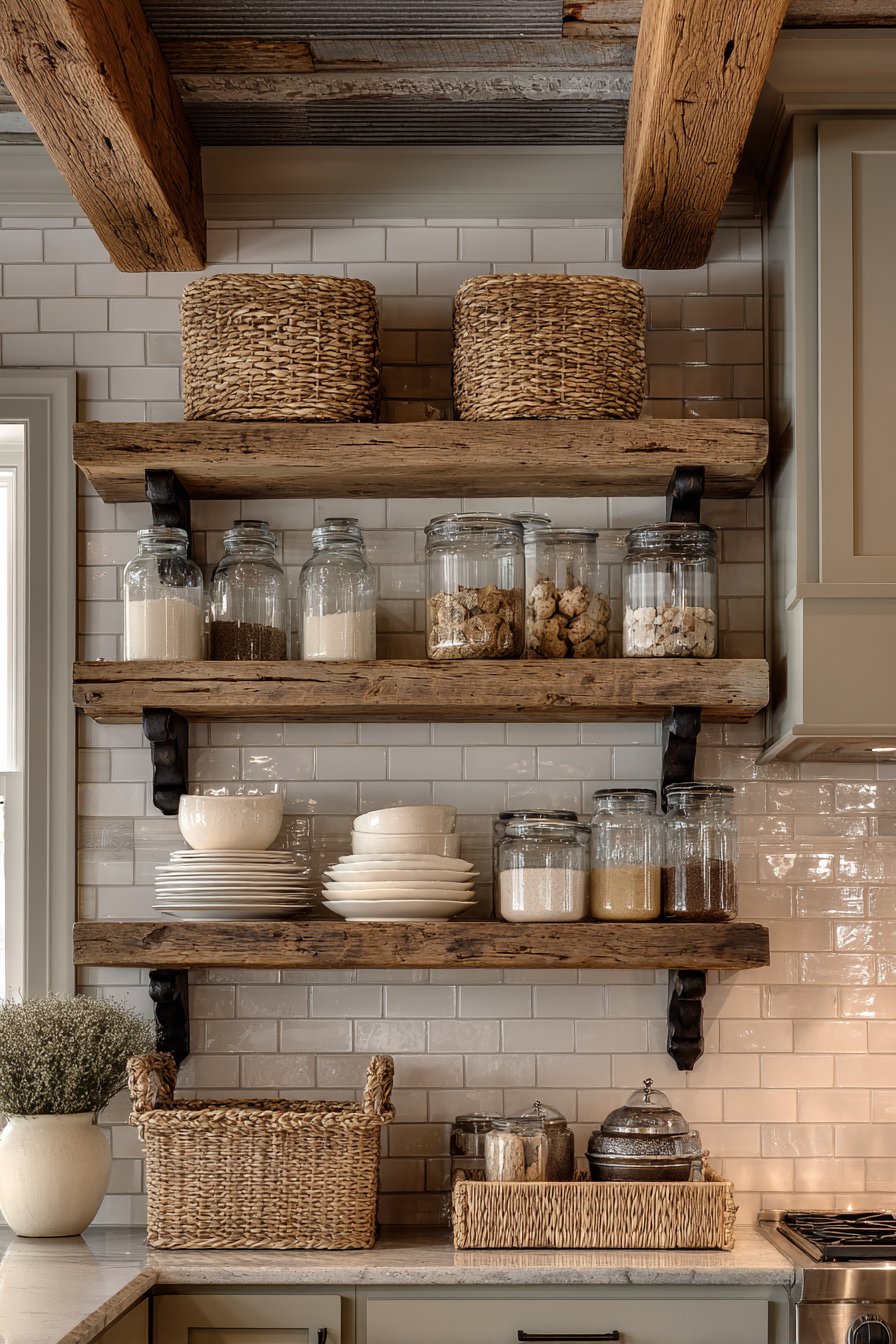
Open shelving takes center stage in this traditional kitchen, proving that functional storage can be both beautiful and practical when thoughtfully executed. Thick wooden planks with decorative corbel brackets in an antiqued finish create substantial shelving that feels more like furniture than basic storage. The corbels add architectural interest and visual support, even though the shelves themselves are structurally sound without them. This attention to decorative detail is characteristic of traditional design, where elements serve aesthetic purposes beyond their functional requirements.
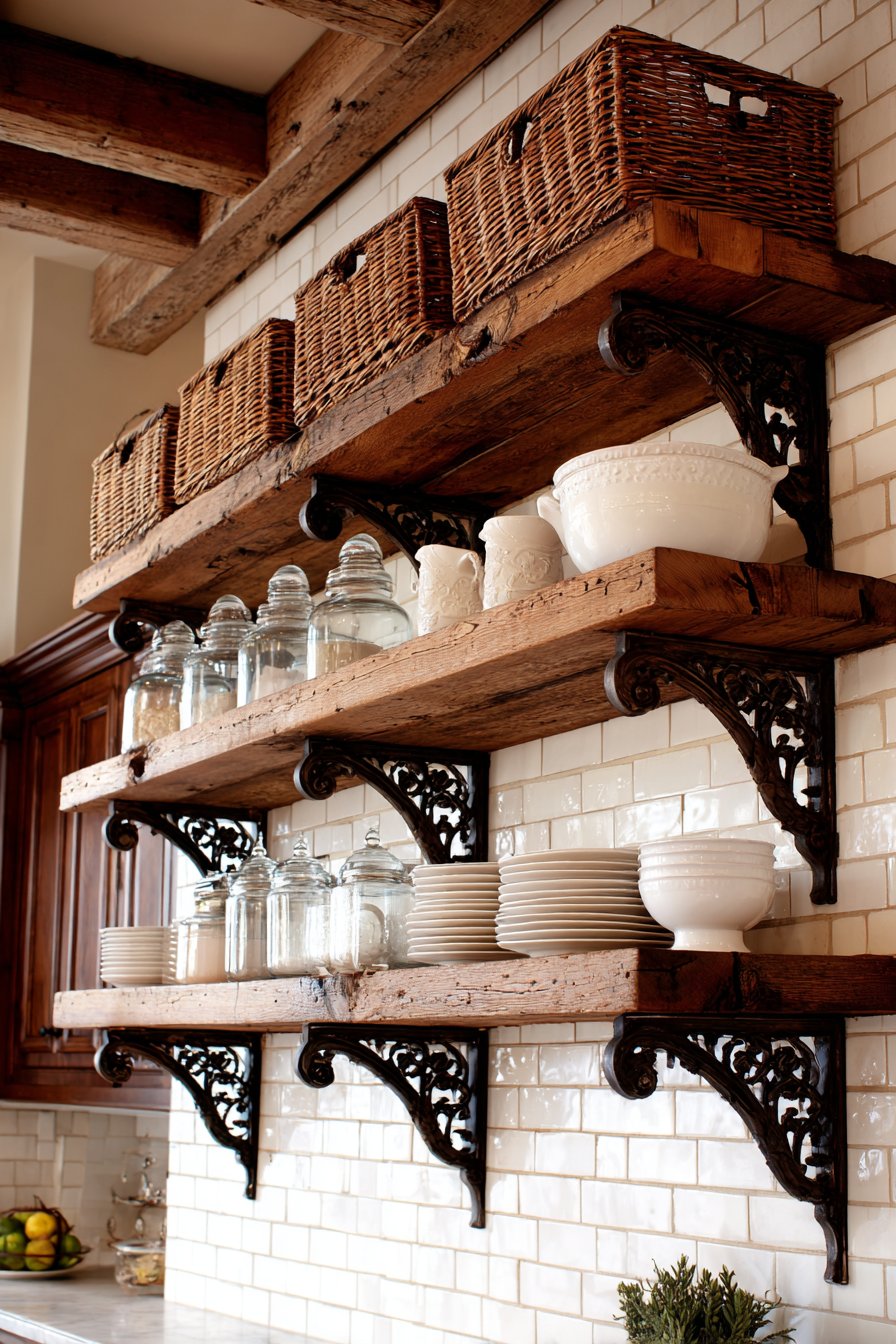
The shelves showcase white ironstone dishes, vintage glass canisters, and woven baskets, creating a curated display that balances form and function. The white ironstone provides a clean, classic backdrop that allows other elements to shine, while the vintage glass canisters add transparency and visual lightness. Woven baskets introduce natural texture and provide concealed storage for less attractive items, proving that open shelving doesn’t mean everything must be on display. This layered approach to open storage creates depth and visual interest while keeping the kitchen organized and functional.

Surrounding walls feature subway tile in classic white with slightly irregular edges that provide authentic character and handcrafted appeal. These tiles reference the traditional subway tiles found in early twentieth-century kitchens while avoiding the overly perfect, machine-made appearance of modern reproductions.
Exposed ceiling beams in natural wood add architectural interest and draw the eye upward, creating vertical dimension and a sense of volume in the space. The beams also provide a visual connection to the wooden shelving below, creating a cohesive design that feels intentional and complete.
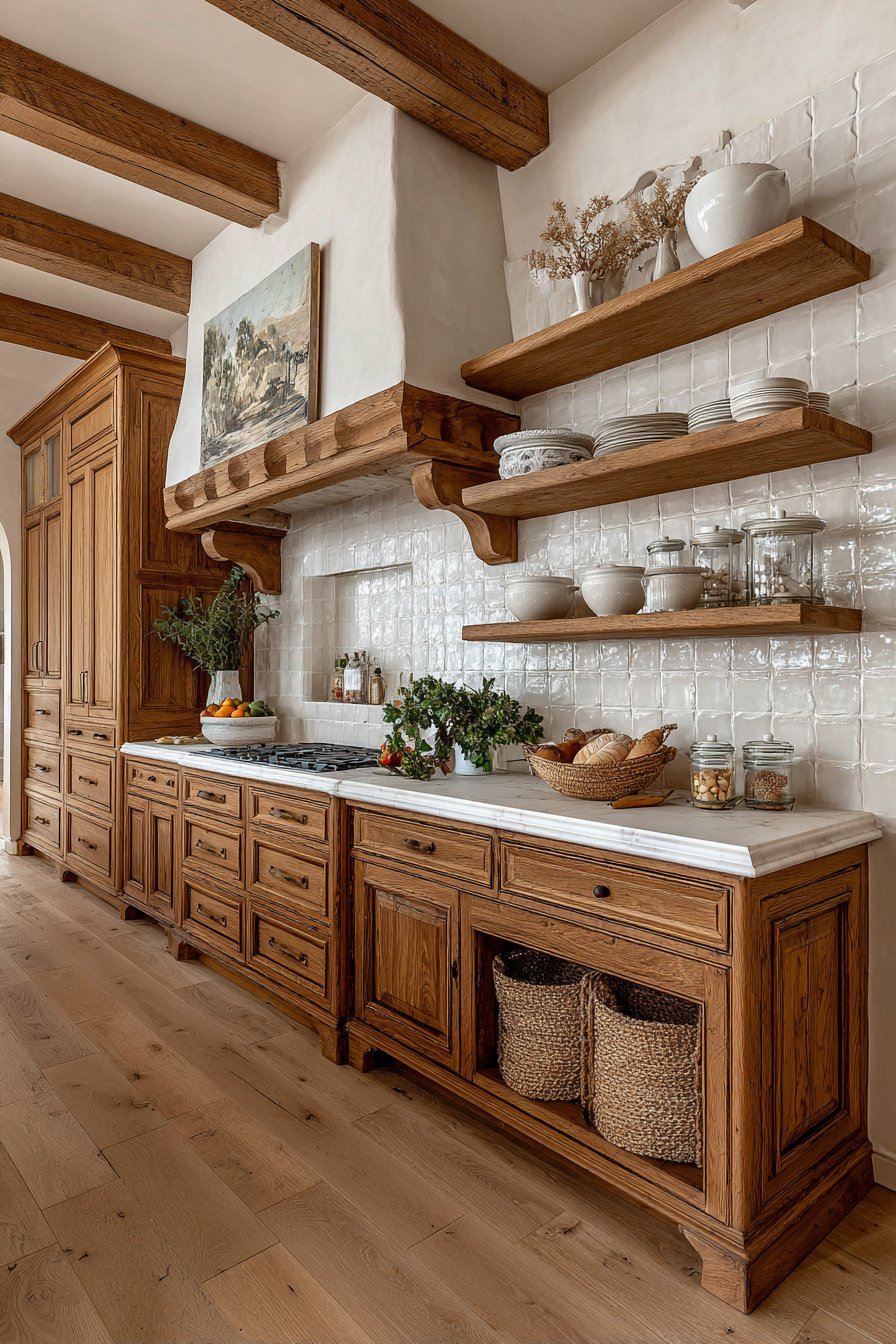
Soft diffused lighting emphasizes the balance between display and function, illuminating the shelving contents without creating harsh shadows or glare. This careful attention to lighting ensures that the open shelving remains practical for finding items while also looking beautiful as a design element. The timeless appeal of traditional kitchen organization shines through in this approach, where everyday items become part of the decor and nothing needs to be hidden behind closed doors. This openness creates a sense of hospitality and generosity, inviting family and guests to feel at home in the kitchen.
Key Design Tips:
- Install thick wooden shelving planks with decorative corbel brackets for substantial, furniture-quality storage
- Display white ironstone dishes as a classic, clean backdrop for other decorative elements
- Use vintage glass canisters for dry goods storage that’s both functional and beautiful
- Include woven baskets on shelves for concealed storage of less attractive items
- Choose subway tile with slightly irregular edges for authentic handcrafted character
- Add exposed ceiling beams to create architectural interest and vertical dimension
6. Classic Apron-Front Farmhouse Sink with Marble Surroundings
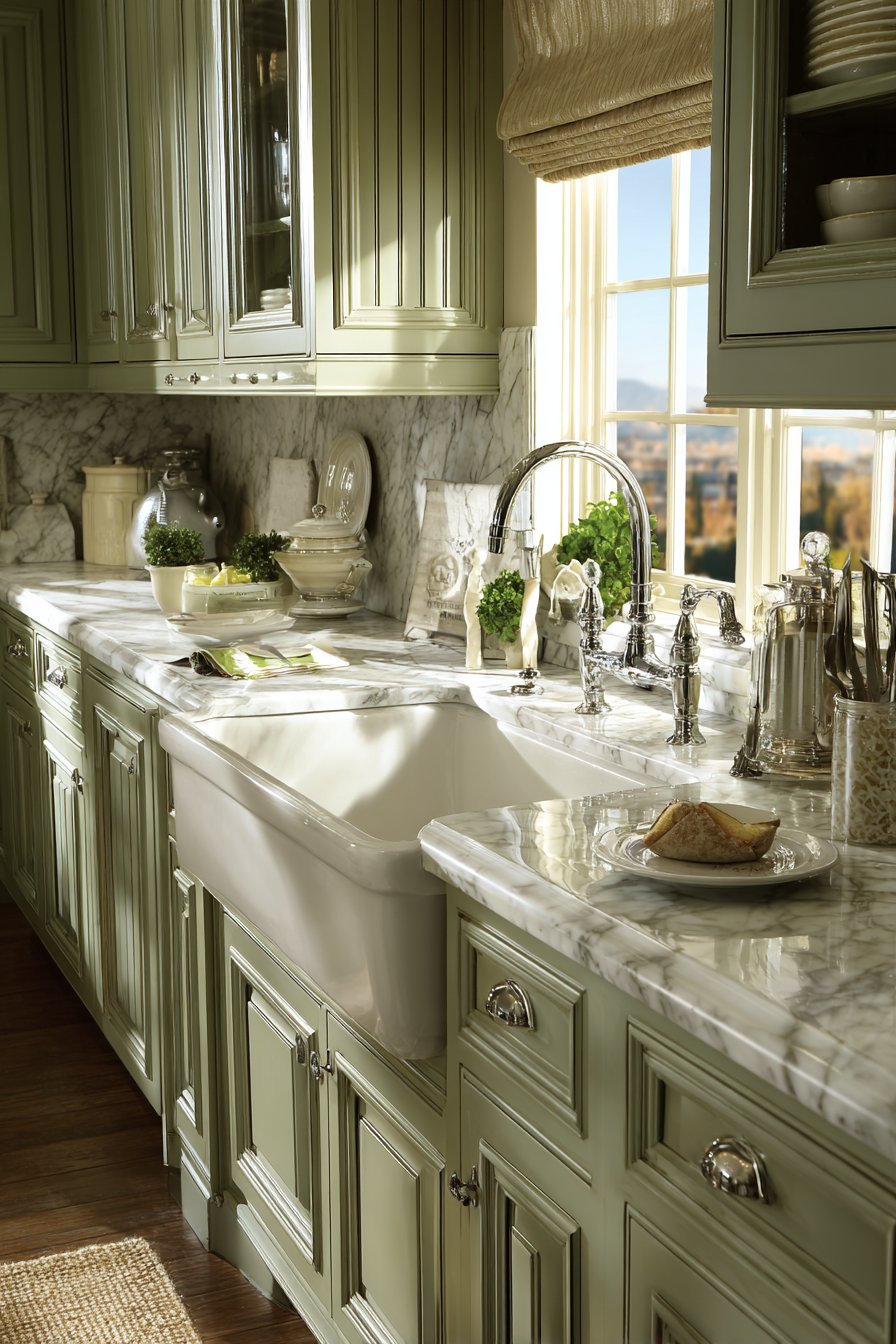
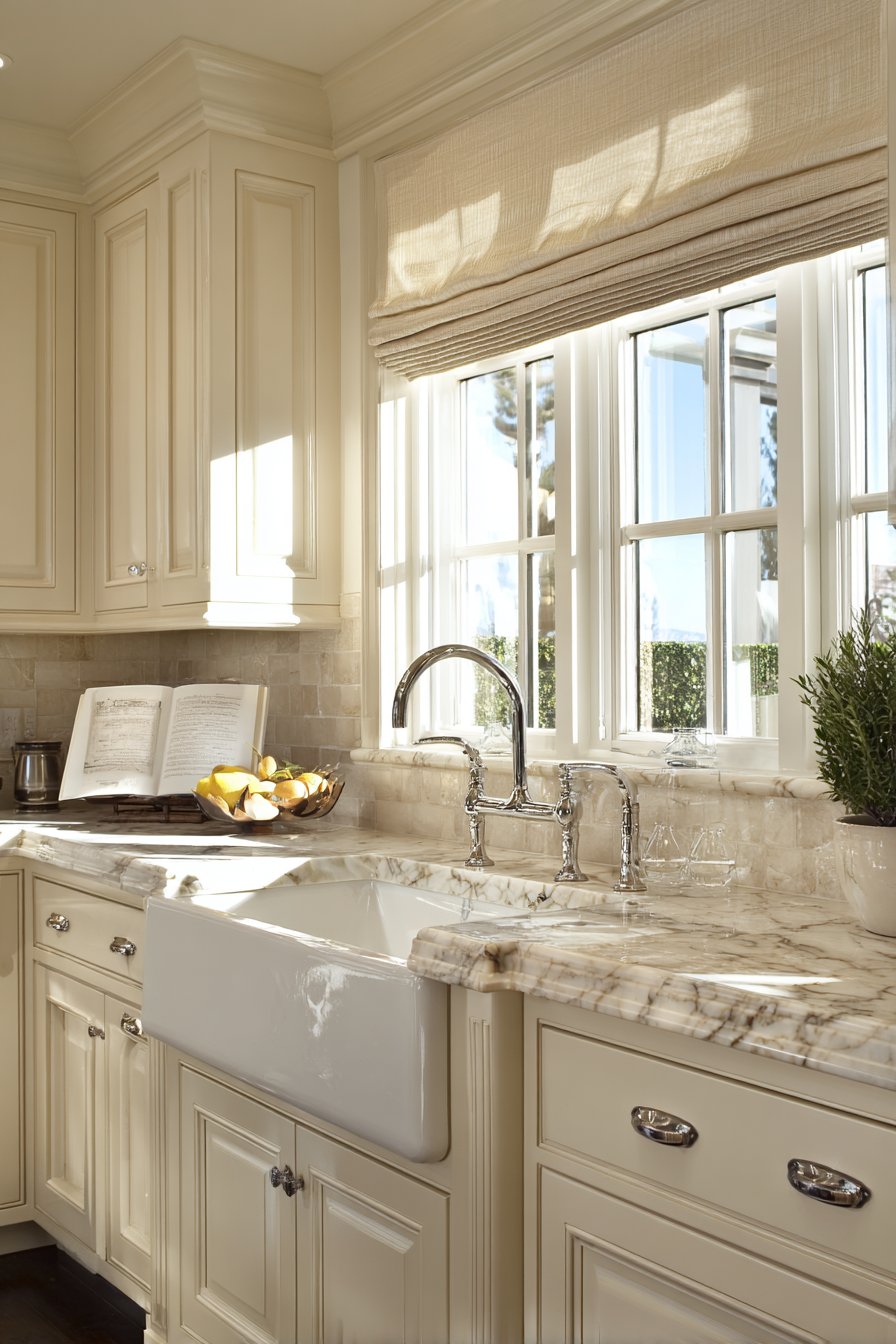
The classic apron-front farmhouse sink in white porcelain serves as the working heart of this traditional kitchen, its generous proportions and distinctive profile making a bold design statement while providing exceptional functionality. The visible subtle crazing in the porcelain adds authentic character that new sinks often lack, suggesting a piece with history and soul rather than something fresh from the factory. This is a sink designed for serious work, with depth and width that can accommodate large pots, baking sheets, and all the demands of active cooking and entertaining. The apron front eliminates the cabinet edge between the user and the sink, creating a more comfortable working position that reduces strain during extended food preparation sessions.

The sink sits proudly in marble countertops displaying natural veining patterns that make each section of counter surface unique and beautiful. The cool elegance of marble pairs beautifully with the warm white of the porcelain sink, creating a sophisticated color palette that feels both fresh and timeless.
A traditional bridge-style faucet in polished chrome spans the sink with graceful curves and classic proportions, its dual handles providing precise control over water temperature and flow. The bright finish of the polished chrome adds visual punctuation to the space while complementing the other metallic elements throughout the kitchen.
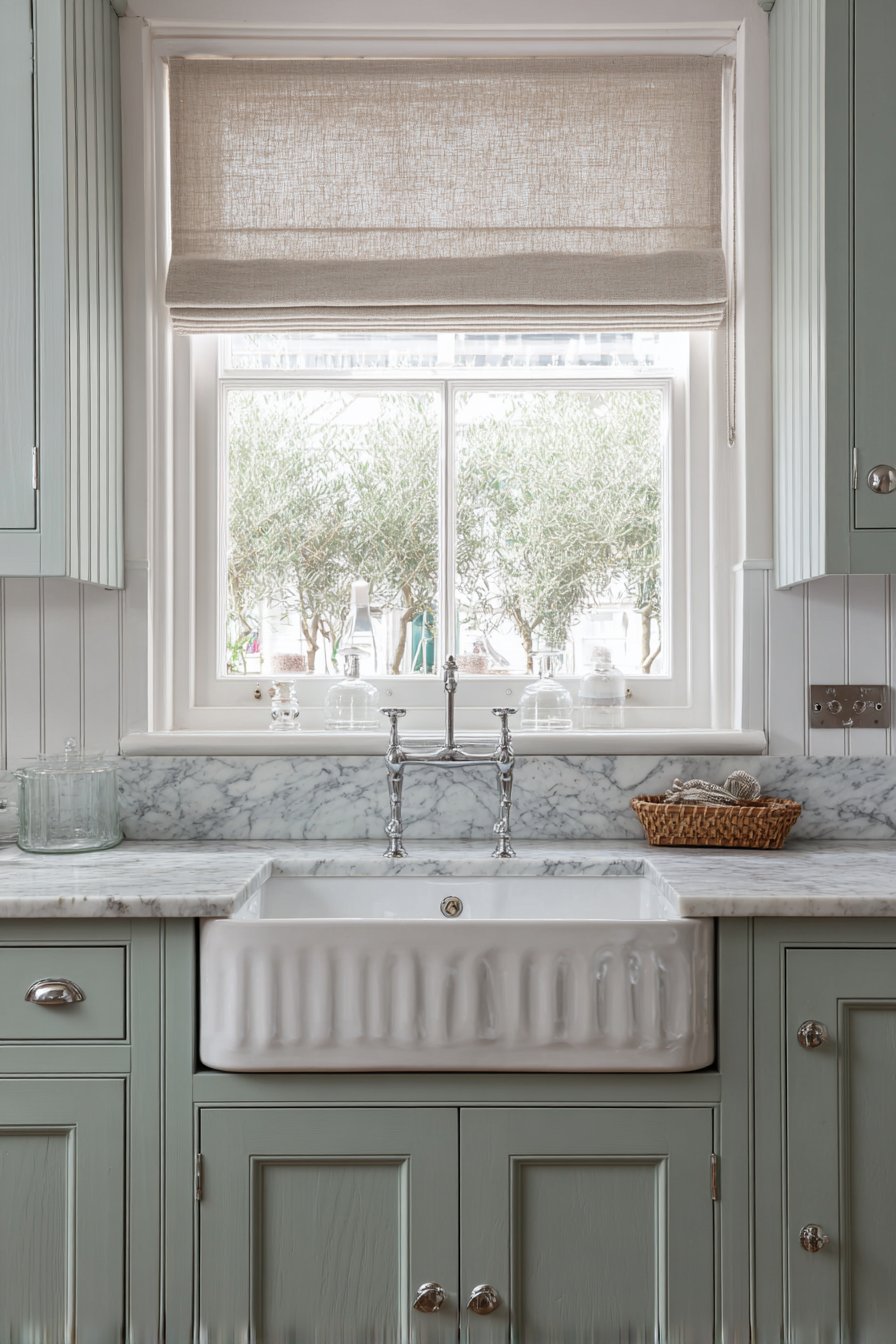
Surrounding cabinetry in sage green with beadboard panel inserts provides practical storage while introducing a soft, sophisticated color that feels both traditional and surprisingly contemporary. The sage green brings a connection to nature indoors, creating a calming atmosphere that makes time spent at the sink more pleasant. The beadboard panel inserts add texture and traditional detail to the cabinet doors, creating visual interest through subtle pattern and shadow. A window above the sink features simple roman shades in linen fabric that can be raised to bring in natural light and views or lowered for privacy and light control. This natural lighting highlights the interplay of traditional materials and finishes, making the sink area a beautiful focal point rather than simply a utilitarian workspace.
Key Design Tips:
- Choose an apron-front farmhouse sink in white porcelain for iconic traditional style and exceptional functionality
- Select marble countertops with natural veining for sophisticated beauty and timeless appeal
- Install a bridge-style faucet in polished chrome for classic form and modern performance
- Paint cabinetry in sage green for a soft, nature-inspired color that feels both traditional and fresh
- Add beadboard panel inserts to cabinet doors for traditional texture and visual interest
- Position a window above the sink and dress it with simple roman shades in natural linen fabric
7. Butler’s Pantry with Floor-to-Ceiling Storage Elegance
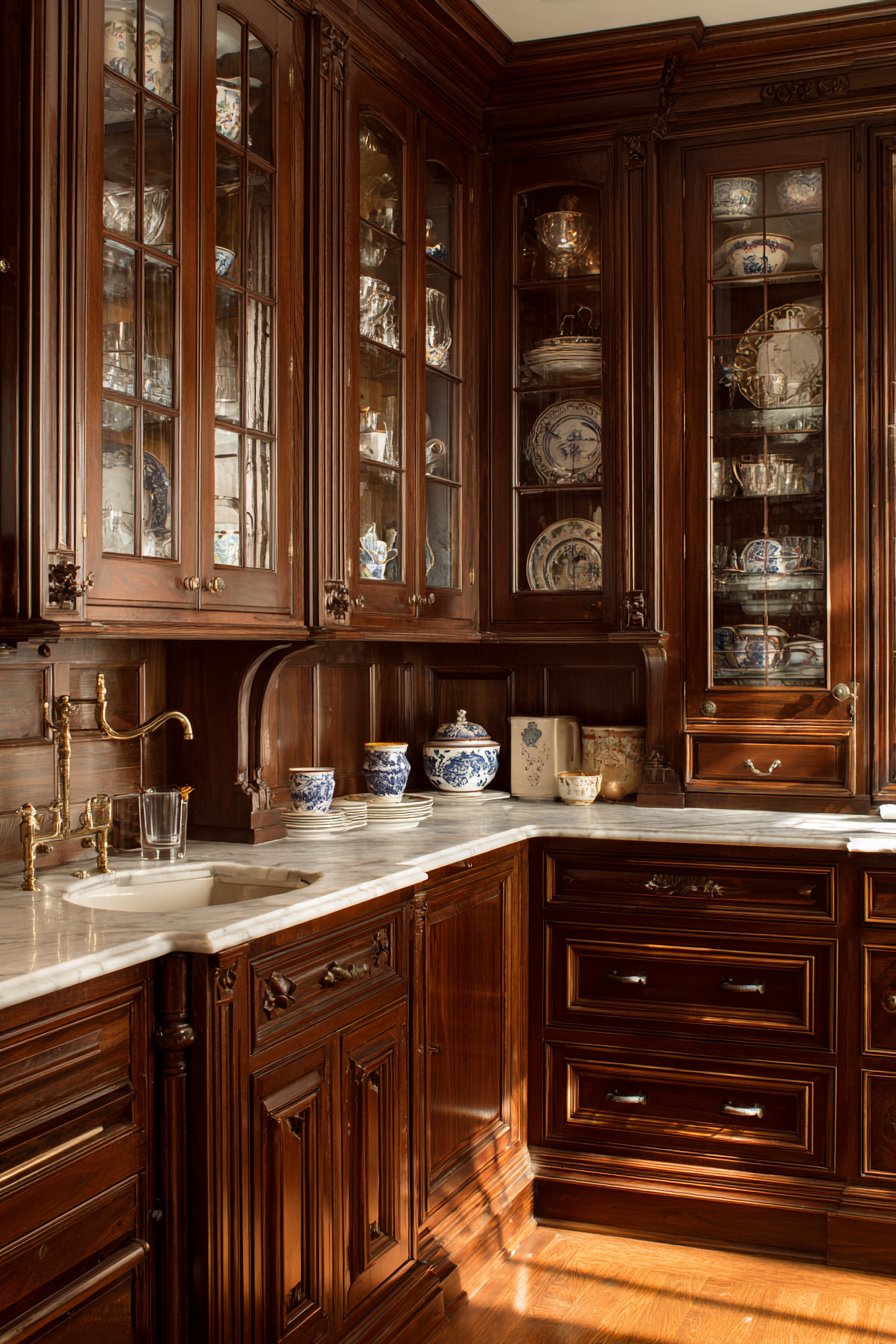
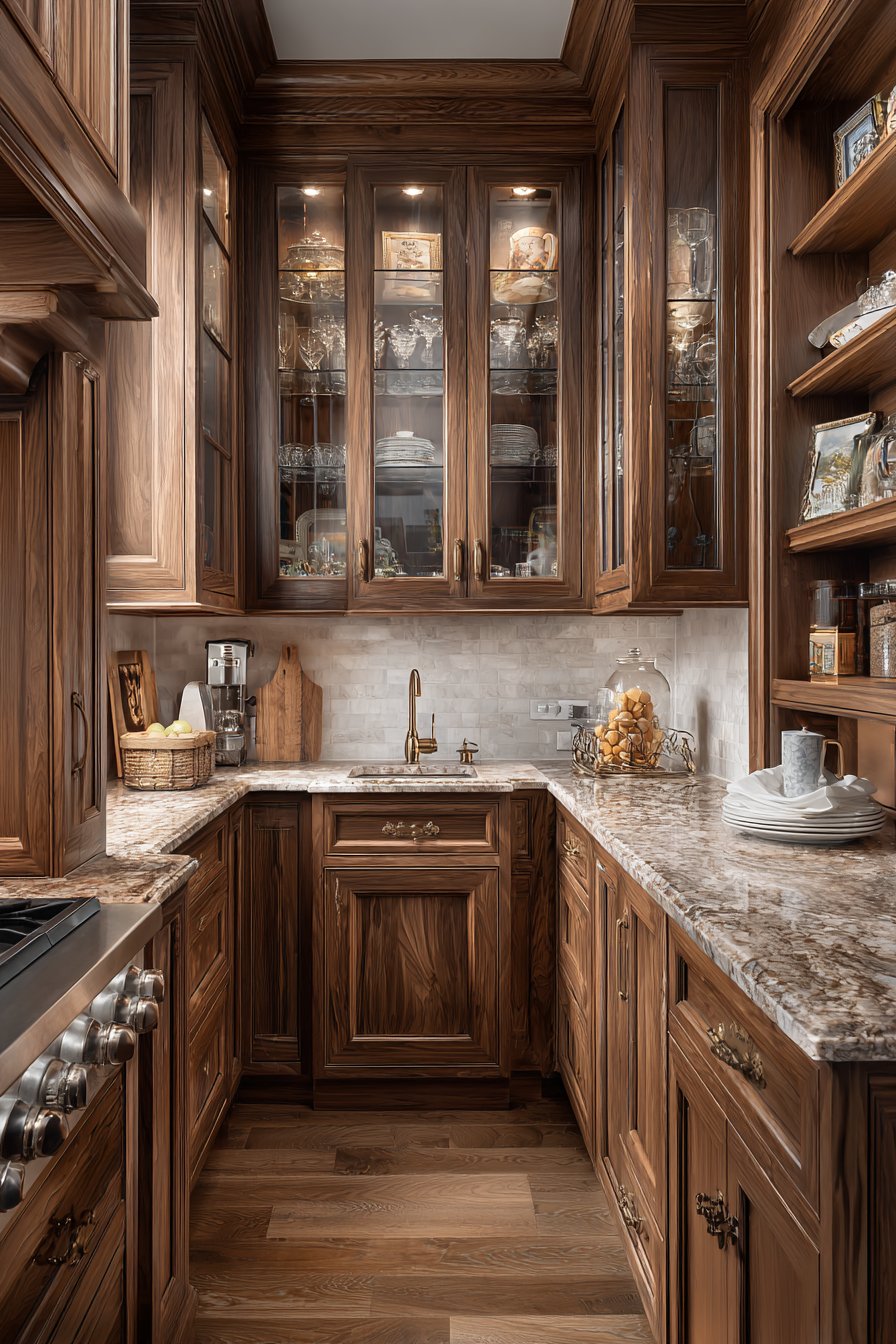
The butler’s pantry represents the height of traditional kitchen luxury and functionality, providing dedicated storage and preparation space that keeps the main kitchen uncluttered while offering organized accommodation for china, glassware, and serving pieces.
Floor-to-ceiling cabinetry in rich walnut finish creates an impressive wall of storage that maximizes every inch of vertical space while showcasing the beauty of quality hardwood. Glass-paneled upper doors reveal organized glassware and serving pieces, transforming practical storage into an attractive display that celebrates beautiful tableware rather than hiding it away. This transparency also makes it easier to find specific items without opening multiple cabinet doors.

A small prep sink with vintage-style faucet sits in a polished granite countertop, providing a convenient location for tasks like filling water pitchers, rinsing delicate glassware, or arranging flowers without interfering with main kitchen activities. This secondary sink proves invaluable when entertaining, allowing multiple people to work simultaneously in different areas without crowding.
Traditional mullioned glass cabinet doors showcase fine china collections, their geometric division of glass panes adding architectural interest while providing glimpses of treasured pieces within. The mullions reference window designs from traditional architecture, creating visual connections between different elements of the home.
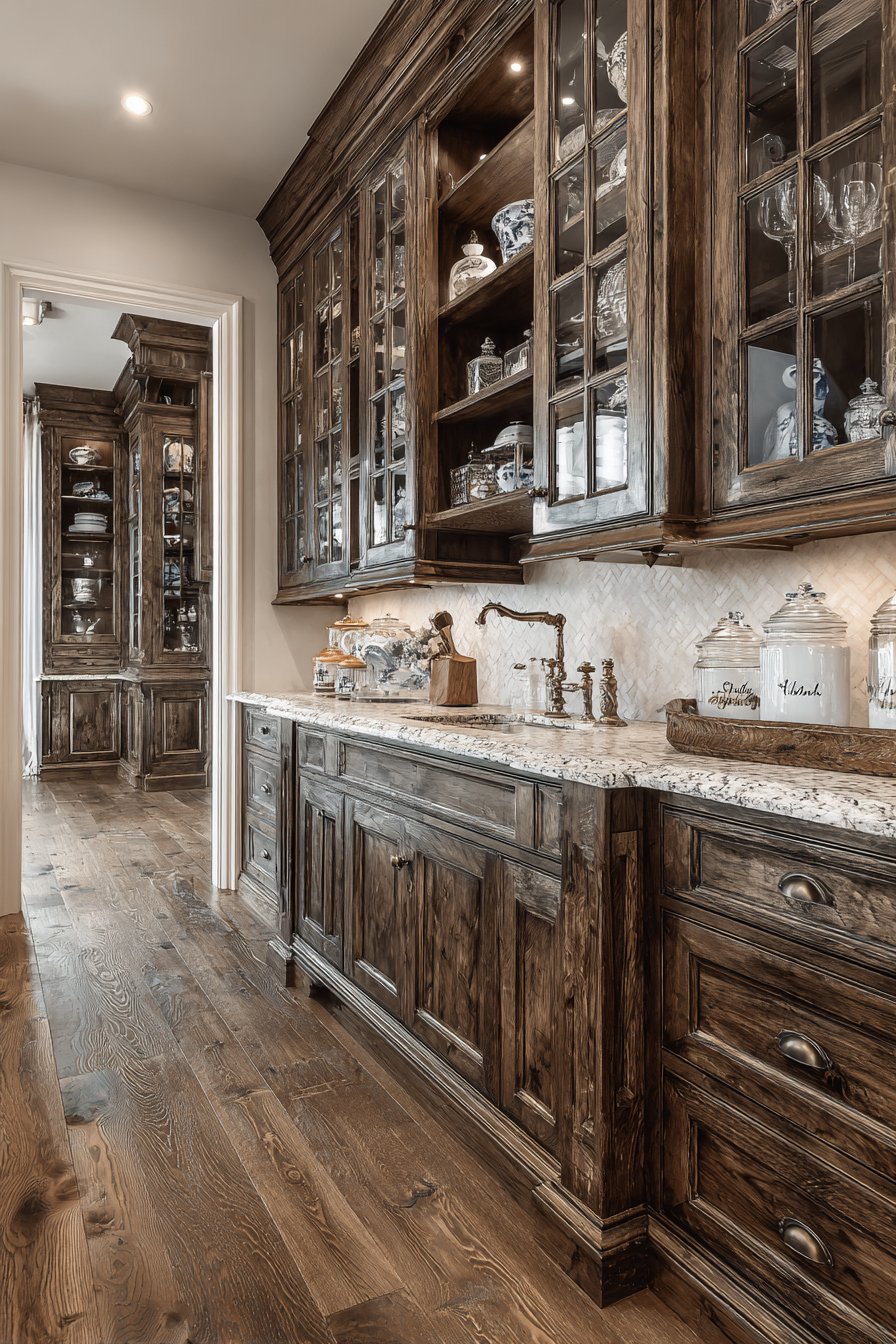
Antique brass cup pulls and bin pulls provide period-appropriate hardware details that enhance the traditional aesthetic while offering comfortable, functional access to storage. The warm tones of antique brass complement the rich walnut cabinetry beautifully, creating a cohesive color palette that feels sophisticated and complete. Balanced exposure in the lighting design ensures that the full pantry layout is visible and functional, with soft lighting emphasizing the wood grain and creating a sophisticated storage solution that’s as beautiful as it is practical. This is a space that makes organization a pleasure, where finding the right serving platter or locating a specific wine glass becomes an experience of interacting with quality materials and thoughtful design.
Key Design Tips:
- Install floor-to-ceiling cabinetry in rich walnut to maximize storage while showcasing beautiful hardwood
- Choose glass-paneled upper doors to display glassware and serving pieces as part of the design
- Add a small prep sink for convenient auxiliary workspace that keeps the main kitchen free for cooking
- Select traditional mullioned glass cabinet doors to add architectural interest and showcase fine china
- Use antique brass hardware to provide period-appropriate detail and warm metallic accents
- Plan lighting carefully to ensure the pantry is both functional and beautiful at all hours
8. Classic Dining Area with Seamless Kitchen Flow
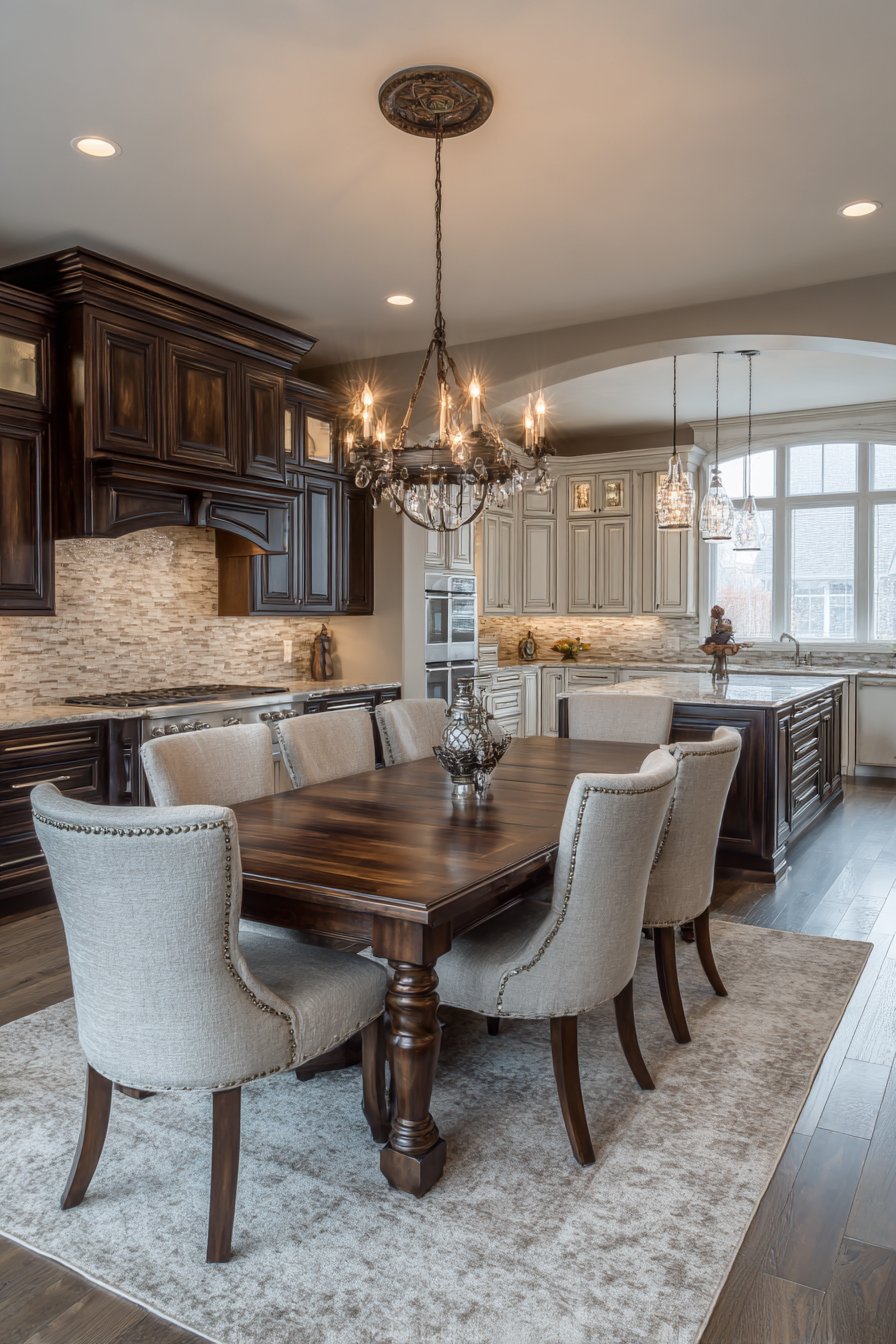
A classic dining area positioned adjacent to the cooking space creates seamless flow between food preparation and serving, making entertaining easier while maintaining the distinct identity of each zone. A rectangular dining table in solid cherry wood with turned legs and natural finish displays the wood grain variations that make each piece of furniture unique and beautiful. The substantial proportions of the table anchor the dining area while providing generous surface area for family meals and entertaining. The turned legs reference traditional furniture design while adding visual interest through their sculptural quality and careful craftsmanship.
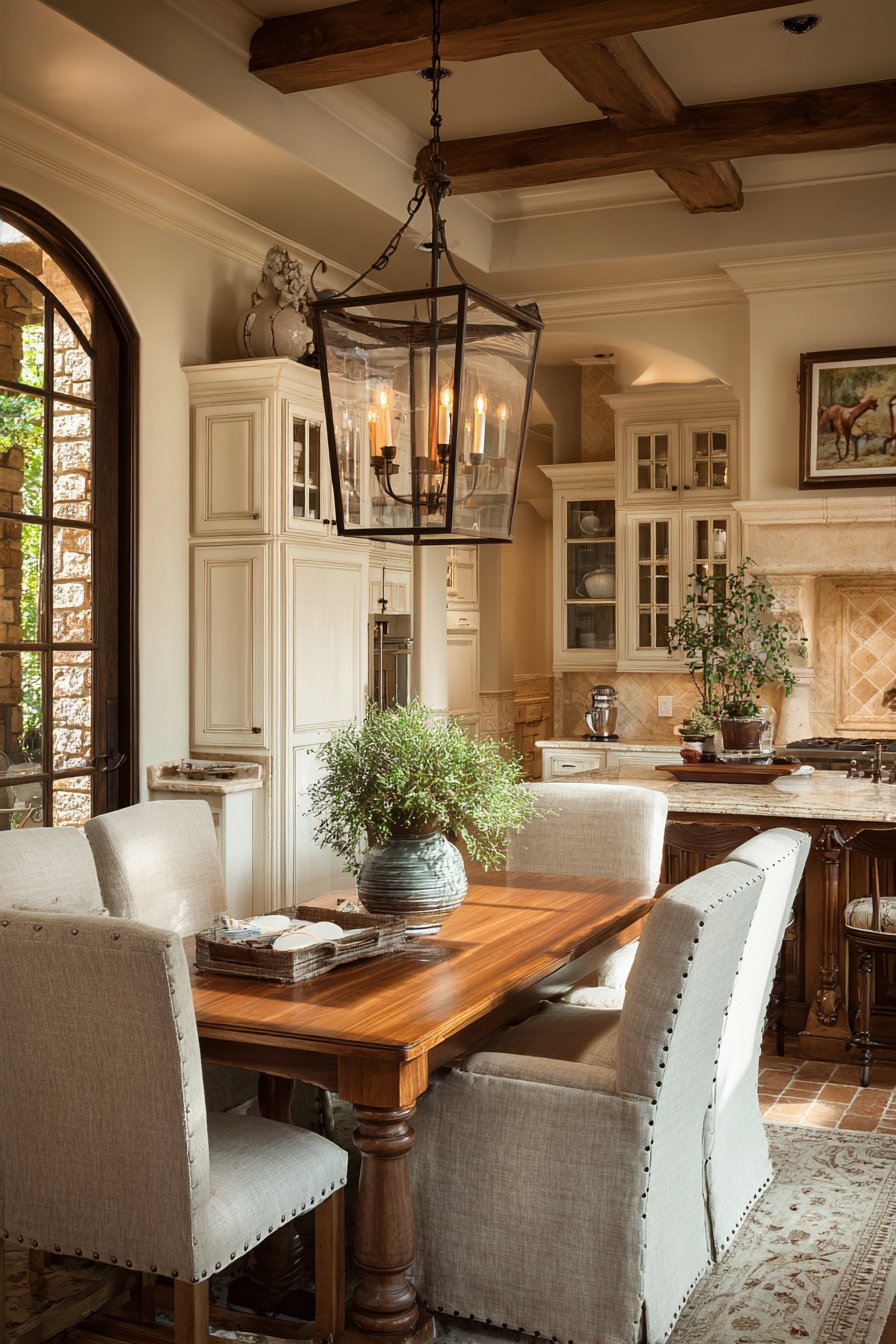
Upholstered dining chairs in neutral linen with nailhead trim surround the table, providing comfortable seating that invites lingering over meals and conversation. The neutral linen fabric creates a sophisticated, understated backdrop that won’t compete with table settings or floral arrangements, while the nailhead trim adds a touch of traditional detail that elevates the chairs beyond basic seating. This careful attention to furniture details ensures that the dining area feels cohesive with the traditional kitchen while maintaining its own identity as a space for gathering and celebrating.

A traditional chandelier with candle-style lights and aged bronze finish hangs centered above the table, providing ambient lighting that creates atmosphere while illuminating the dining surface for practical purposes. The candle-style lights reference historical lighting methods while providing modern electrical convenience, and the aged bronze finish ties into the hardware finishes used throughout the kitchen.
Crown molding and chair rail details frame the space, creating architectural definition that gives the dining area a sense of importance and permanence. These moldings connect the dining area visually to the kitchen while adding layers of traditional detail that enhance the overall design.
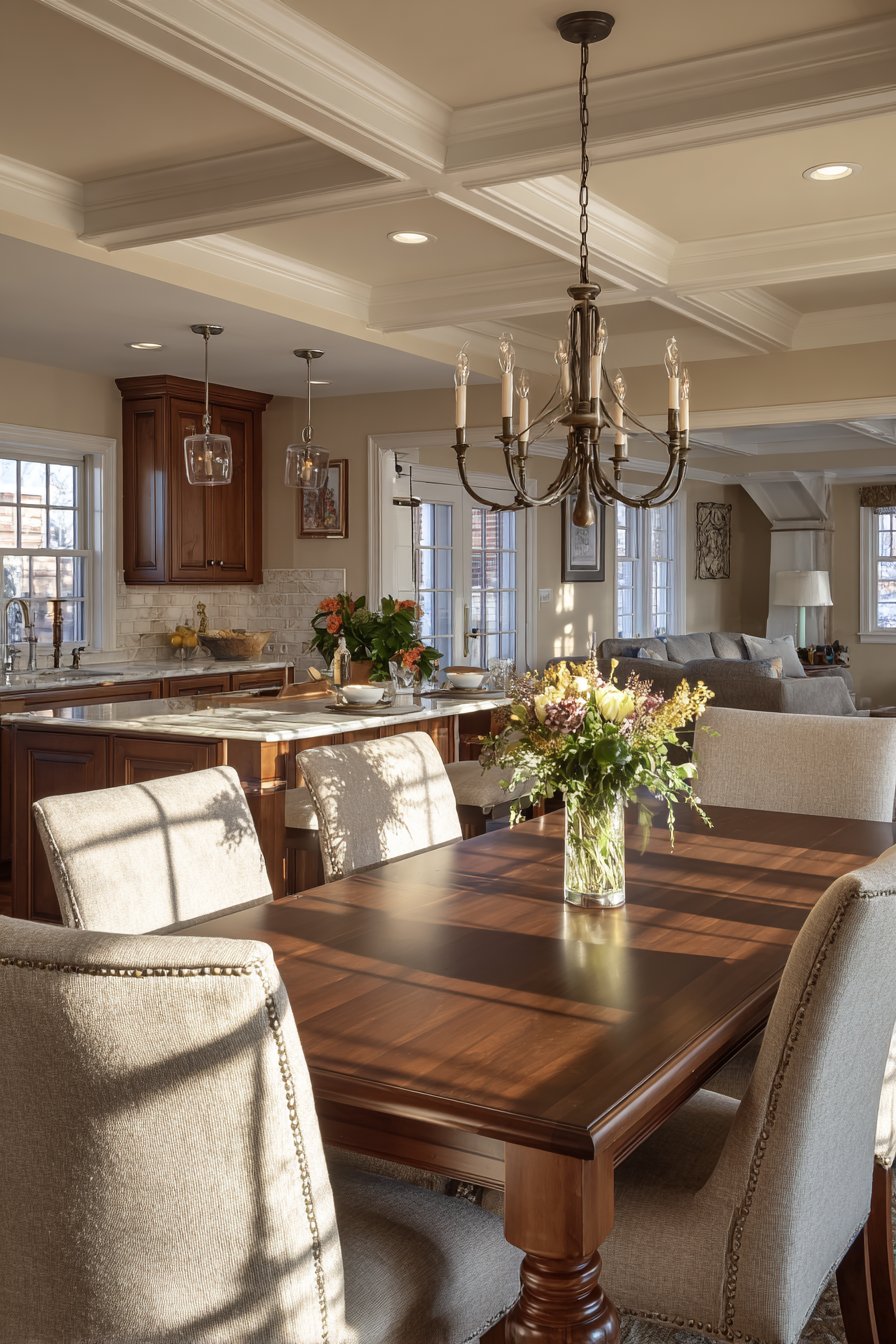
Natural light from nearby windows creates warm ambiance throughout the dining area, with the carefully planned layout ensuring that daylight reaches both the kitchen and dining zones effectively. This seamless flow between kitchen and dining represents one of the great advantages of traditional design, where distinct but connected spaces serve different functions while maintaining visual and functional continuity. The result is a kitchen and dining area that works beautifully for daily family life while being equally suited to formal entertaining and special occasions.
Key Design Tips:
- Position the dining area adjacent to the kitchen for convenient serving and seamless flow between spaces
- Choose a solid cherry wood dining table with turned legs for traditional beauty and substantial presence
- Select upholstered dining chairs in neutral linen with nailhead trim for comfortable, sophisticated seating
- Install a traditional chandelier with candle-style lights to provide both ambient lighting and decorative impact
- Add crown molding and chair rail details to frame the dining space with architectural interest
- Plan the layout to ensure natural light reaches both kitchen and dining areas effectively
9. Practical Storage Solutions with Floor-to-Ceiling Pantry Cabinet
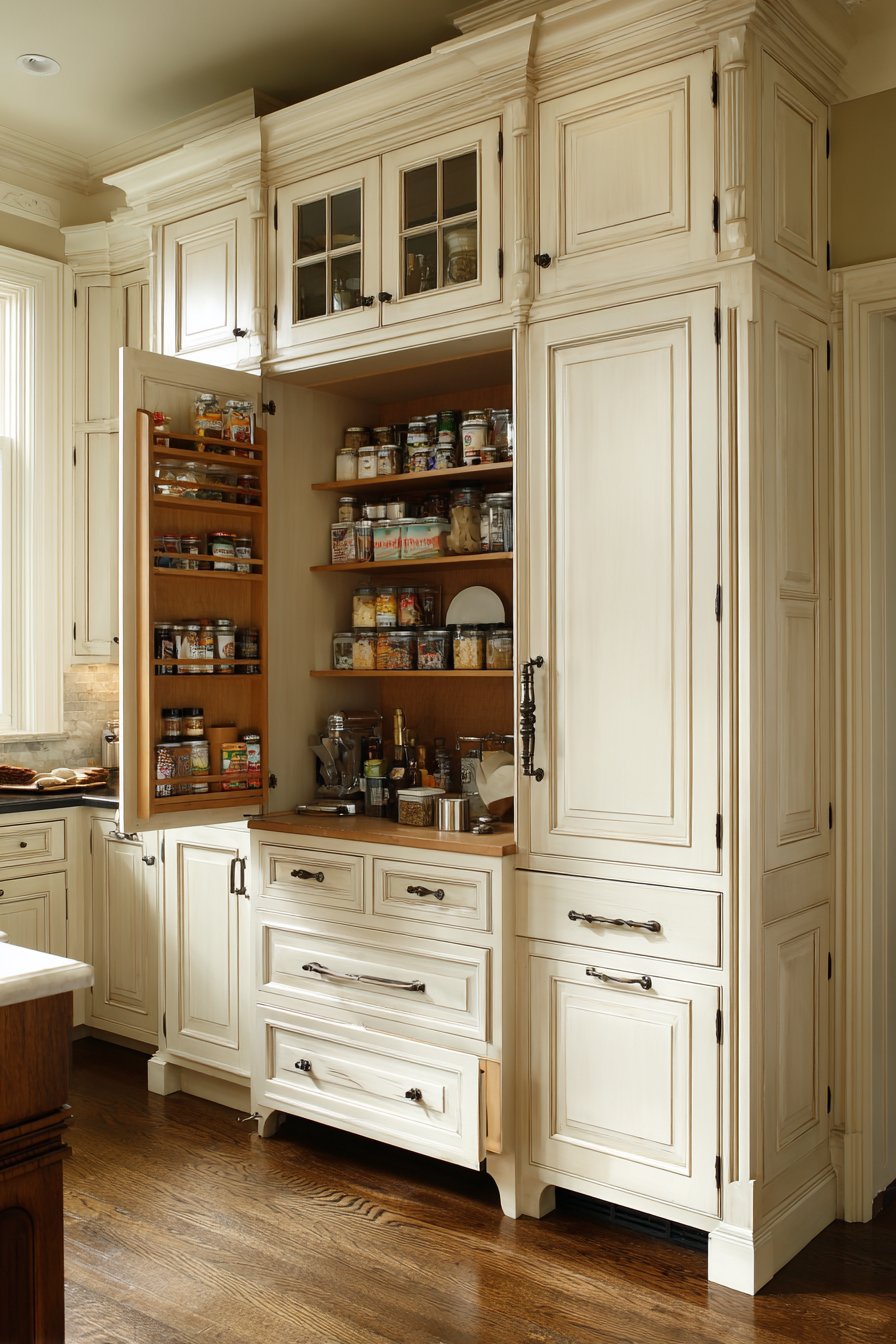
Practical storage solutions take center stage in this traditional kitchen design, proving that organization and beauty can coexist when approached with thoughtful planning and quality materials. A floor-to-ceiling pantry cabinet maximizes vertical storage space, incorporating adjustable wooden shelves that can accommodate items of varying heights, roll-out drawers that bring contents forward for easy access, and integrated spice racks that keep frequently used seasonings organized and visible. This comprehensive approach to pantry design ensures that every inch of space works efficiently while maintaining the traditional aesthetic throughout.

The cabinetry features raised panel doors in cream finish that create a light, bright appearance while maintaining traditional detail and craftsmanship. The raised panels add dimensional interest and shadow lines that prevent the tall cabinet from appearing flat or monotonous.
Oil-rubbed bronze hardware provides rich, dark contrast against the cream cabinetry while contributing to the traditional aesthetic with its aged appearance and substantial feel. The hardware selection proves that even functional elements like drawer pulls and hinges can enhance the overall design when chosen with care and attention to detail.
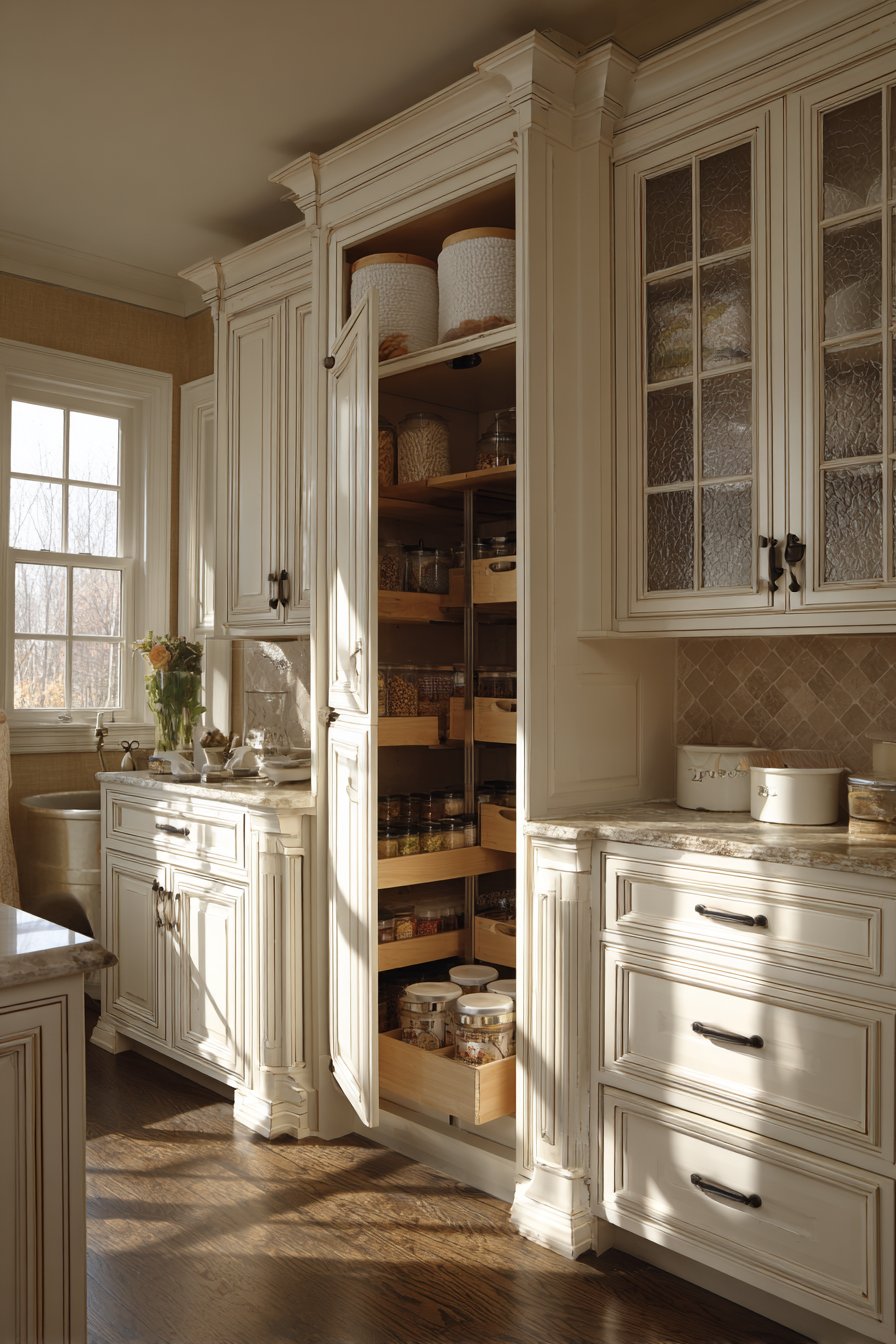
Glass-front cabinets on upper sections display organized containers and baking supplies, making it easy to see what’s available while keeping items protected from dust and kitchen splatter. This transparency encourages organization and makes inventory management easier, reducing the likelihood of purchasing duplicates or letting items expire unseen in the back of deep shelves. The thoughtful organization system revealed when the pantry doors open demonstrates how traditional craftsmanship can serve modern organizational needs, with every element designed to make daily kitchen tasks more efficient and pleasant.
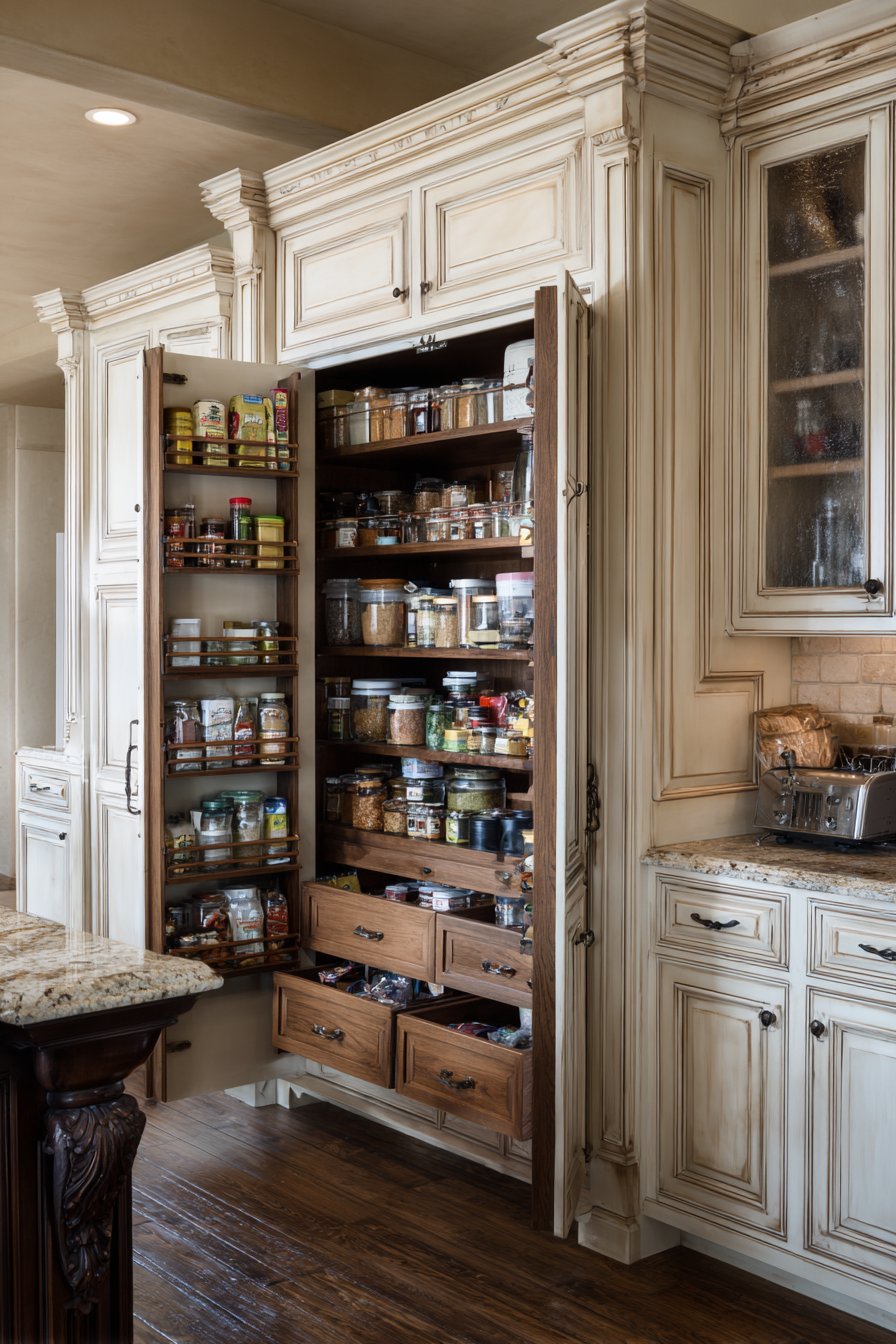
Natural lighting emphasizes the functional design and traditional craftsmanship of the custom cabinetry, with shadows and highlights revealing the quality of construction and the attention paid to details like door alignment, hardware placement, and interior finishing. This is storage that works as hard as it looks good, proving that traditional design principles remain relevant and practical for contemporary lifestyles. The pantry becomes not just a place to store food, but a beautiful example of how form and function unite in a traditional kitchen.
Key Design Tips:
- Install a floor-to-ceiling pantry cabinet to maximize vertical storage capacity and efficiency
- Include adjustable wooden shelves to accommodate items of varying heights and changing needs
- Add roll-out drawers to bring contents forward for easy access without reaching into deep spaces
- Integrate spice racks to keep frequently used seasonings organized and immediately visible
- Choose raised panel doors in cream finish for traditional detail with a light, bright appearance
- Use glass-front upper cabinets to display organized supplies while keeping them protected from dust
10. Classic Workspace with Marble and Wood Contrast
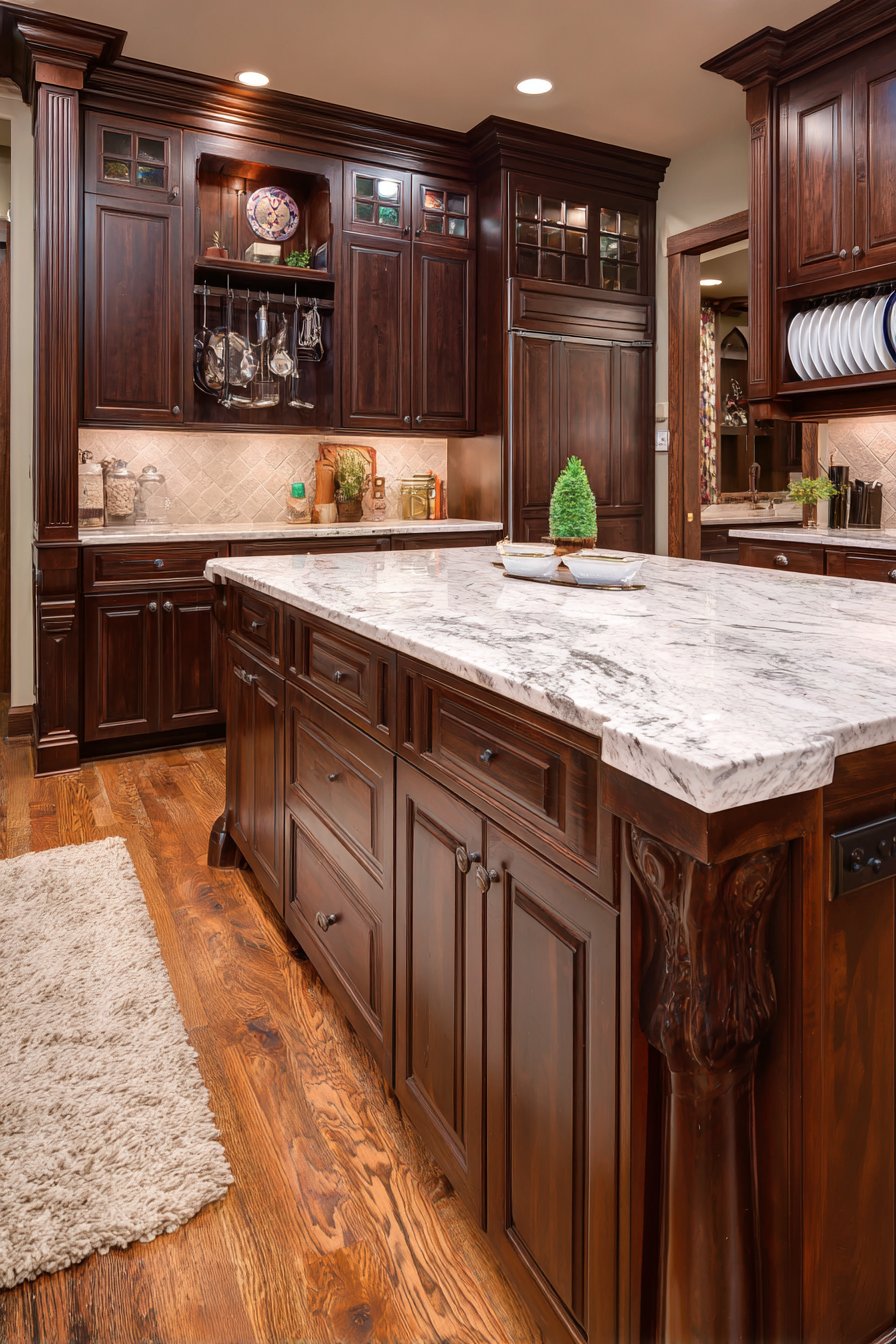
The classic workspace arrangement in this traditional kitchen design creates visual drama through the thoughtful contrast of materials and finishes, proving that traditional doesn’t mean monotonous or predictable. Marble countertops displaying natural grey veining and a honed finish provide sophisticated work surfaces with subtle texture that’s both beautiful and practical.
The honed finish offers a softer, more matte appearance than polished marble while being more resistant to scratching and etching, making it an excellent choice for working countertops that see daily use. The natural grey veining creates one-of-a-kind patterns that ensure no two sections of counter are exactly alike.
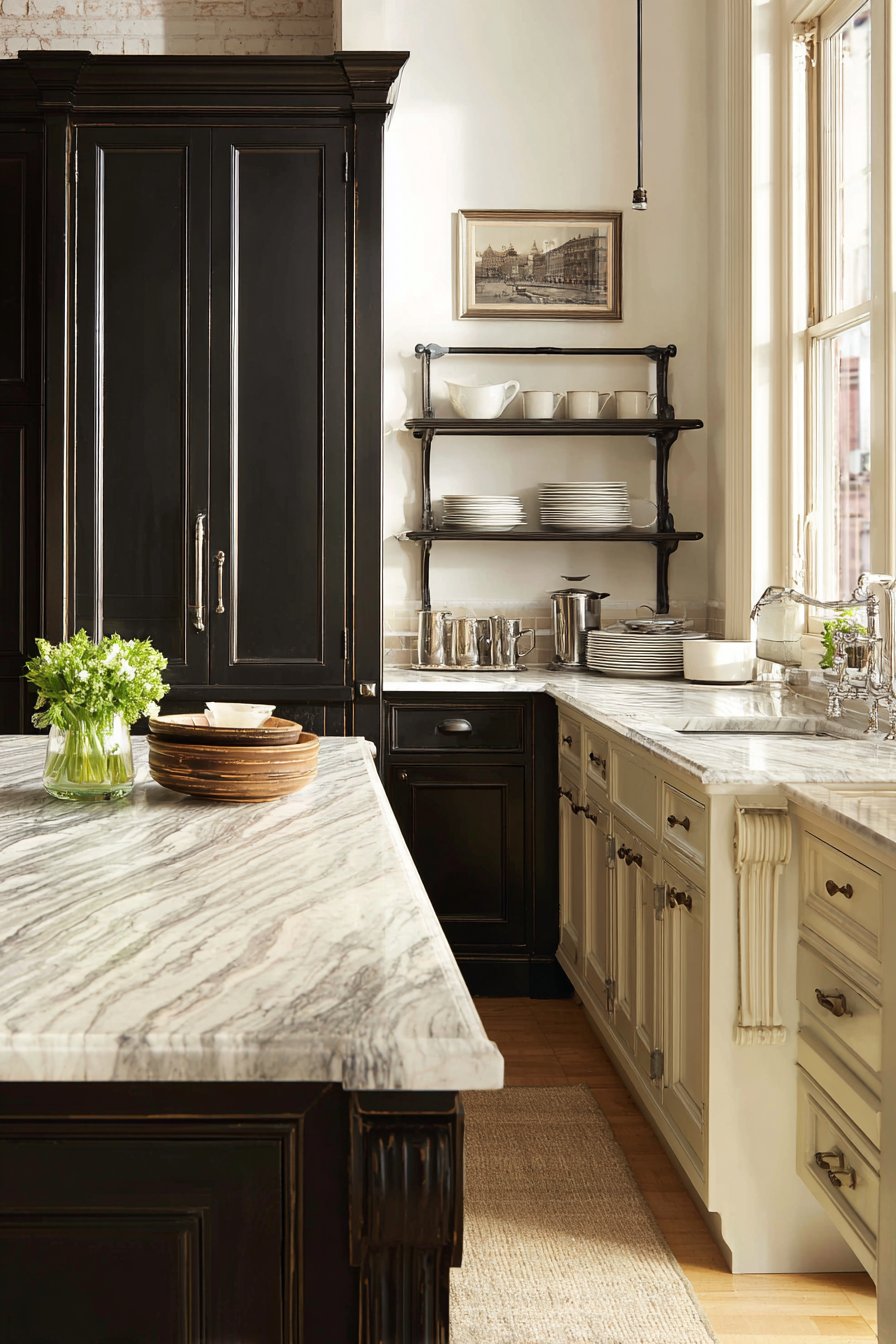
Dark wood perimeter cabinets in espresso stain create a rich, dramatic backdrop that makes the lighter elements in the kitchen stand out more prominently. This deep, almost black-brown finish showcases wood grain while creating a sense of gravitas and sophistication that anchors the entire design.
The contrast between these dark perimeter cabinets and a cream-colored kitchen island topped with the same marble as the perimeter counters creates visual interest and prevents the space from feeling too heavy or dark. This deliberate contrast in cabinet colors is a hallmark of sophisticated traditional design, where variation creates interest while maintaining cohesion.
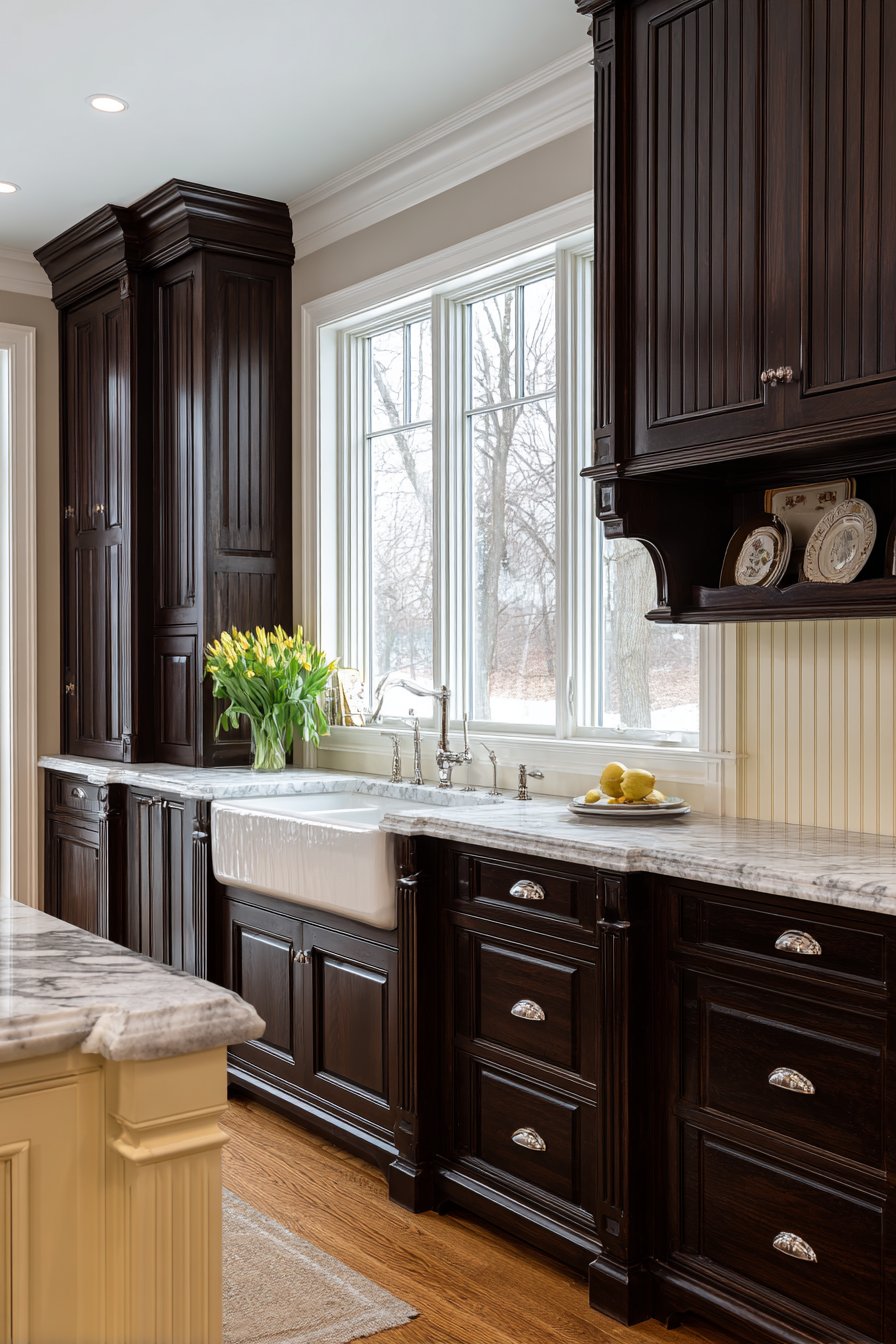
Traditional details including decorative corbels supporting the countertop overhang and a plate rack above the sink area add layers of craftsmanship and functionality. The corbels provide both structural support and visual interest, their carved details catching light and creating shadows that add depth to the design. The plate rack keeps frequently used dishes accessible while displaying them attractively, turning everyday items into decorative elements. Recessed panel cabinet doors and bin-style drawer pulls maintain period authenticity throughout, ensuring that every element contributes to the traditional aesthetic.
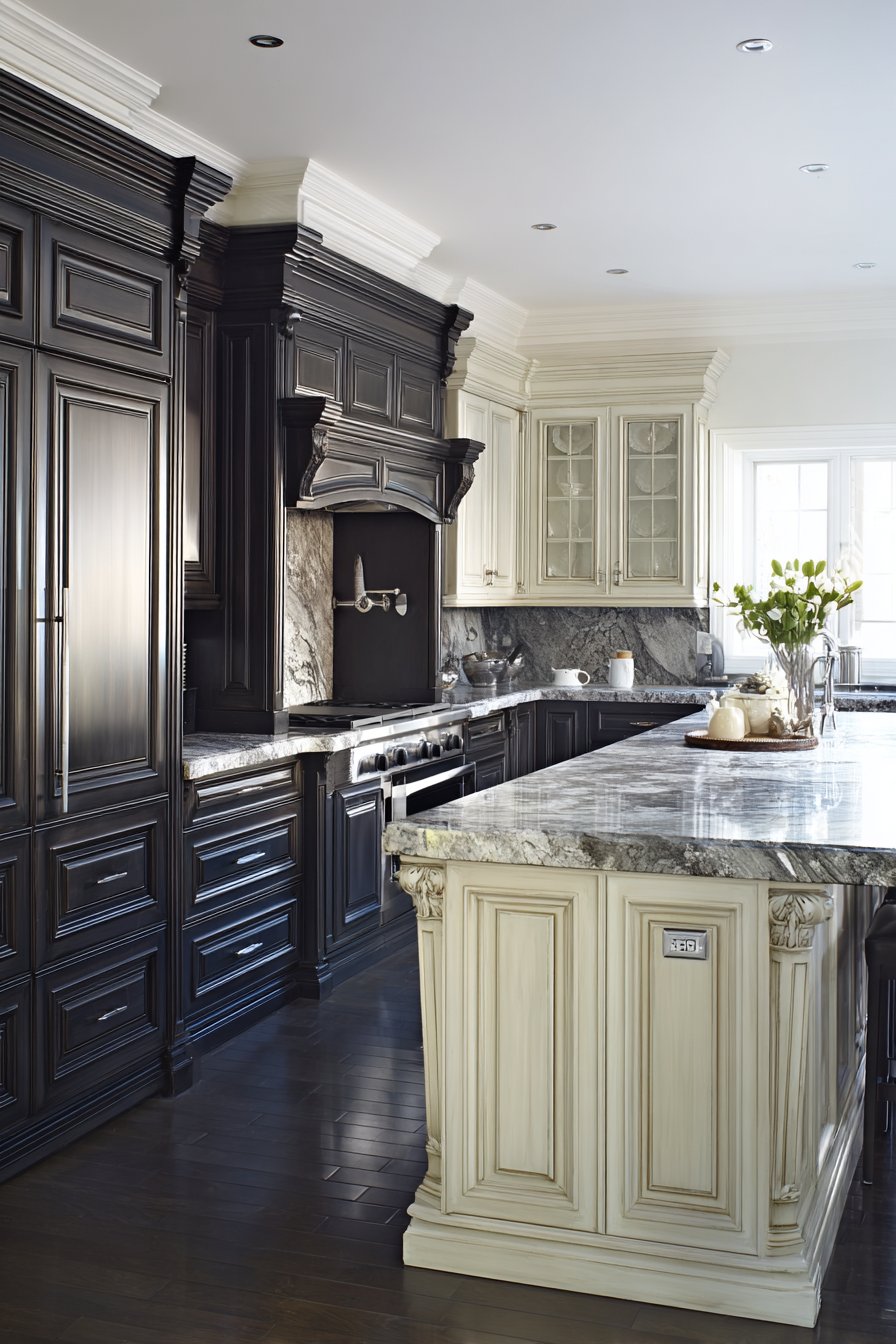
Natural daylight highlighting the contrast between dark and light elements creates a dynamic, ever-changing interplay of shadow and illumination throughout the day. This natural lighting emphasizes material textures and traditional architectural details, revealing the quality of construction and the thoughtfulness of the design. The wide-angle perspective of the complete kitchen layout shows how these contrasting elements work together to create a unified, harmonious space that feels both grand and intimate, formal and functional, traditional and surprisingly fresh.
Key Design Tips:
- Choose marble countertops with natural grey veining and honed finish for sophisticated, practical work surfaces
- Use dark wood perimeter cabinets in espresso stain to create rich contrast and dramatic backdrop
- Contrast dark perimeter cabinets with a cream-colored island for visual interest and balance
- Add decorative corbels to support countertop overhangs while providing traditional architectural detail
- Include a plate rack above the sink for functional storage that displays dishes attractively
- Select recessed panel cabinet doors and bin-style drawer pulls to maintain period authenticity
Why Traditional Kitchen Ideas Remain the Gold Standard
Traditional kitchen designs have earned their place as perennial favorites in home design for compelling reasons that go far beyond simple aesthetics. These kitchens represent a thoughtful approach to creating spaces that serve multiple functions while maintaining beauty and character that endures through changing trends. The traditional kitchen aesthetic draws from centuries of design evolution, incorporating elements that have proven their worth through generations of daily use and enjoyment. When you choose traditional kitchen, you’re investing in an approach that prioritizes quality materials, expert craftsmanship, and timeless appeal that won’t look dated in five or ten years.
The rich wood cabinetry that defines traditional kitchens provides warmth and natural beauty that synthetic materials simply cannot replicate. Whether you choose cherry wood with its deep reddish tones, walnut with its rich brown hues, or oak with its prominent grain patterns, natural wood brings organic beauty and tactile pleasure to the kitchen. These materials age gracefully, developing patina and character that enhance rather than diminish their appearance over time. The raised panel doors characteristic of traditional cabinetry add dimensional interest and shadow lines that create visual depth, preventing flat, monotonous cabinet faces. Crown molding that extends to the ceiling creates architectural completion and visual grandeur, making spaces feel more finished and intentional.
Granite and marble countertops offer both aesthetic beauty and exceptional durability, with natural stone patterns ensuring that each kitchen is unique. The warm earth tones of granite complement wood cabinetry beautifully, while marble’s elegant veining creates sophisticated work surfaces that have been prized for centuries. These natural stone surfaces withstand daily use while maintaining their beauty, and they can be refinished if needed rather than requiring complete replacement. Farmhouse sinks provide both iconic visual appeal and exceptional functionality, with their generous proportions and distinctive apron fronts making kitchen tasks more comfortable and efficient.
The hardware and fixtures selected for traditional kitchens serve as the jewelry of the space, with antique brass, oil-rubbed bronze, and polished chrome finishes adding authentic period detail. These metallic accents catch and reflect light, creating visual interest while providing tactile pleasure every time you open a drawer or turn on a faucet. Hand-painted tile backsplashes transform practical splash guards into artworks that celebrate craftsmanship and add organic beauty through botanical motifs and subtle color variations. Subway tile provides a classic backdrop that works with virtually any traditional style while offering easy maintenance and timeless appeal.
The architectural details that characterize traditional kitchens—wainscoting panels, beadboard inserts, decorative corbels, mullioned glass cabinet doors, and exposed ceiling beams—add layers of interest that reward closer inspection. These elements create depth and dimension, preventing spaces from appearing flat or one-dimensional. They also connect the kitchen visually to other traditional spaces in the home, creating flow and cohesion throughout the residence. Built-in seating in breakfast nooks maximizes space efficiency while creating intimate dining areas that encourage lingering over meals and conversation.
Open shelving in traditional kitchens celebrates beautiful dishware and cookware rather than hiding everything behind closed doors, creating displays that are both functional and decorative. Butler’s pantries provide dedicated storage for china, glassware, and serving pieces, keeping the main kitchen uncluttered while accommodating the collections that make entertaining possible. Floor-to-ceiling storage solutions with adjustable shelves, roll-out drawers, and integrated organizational features ensure that traditional beauty doesn’t come at the expense of practical functionality. These kitchens work as well as they look, supporting the demands of contemporary cooking and entertaining while maintaining their traditional character.
The color palettes typical of traditional kitchens—cream cabinetry, sage green, rich cherry tones, espresso stains, and warm earth tones—create atmospheres that feel welcoming and comfortable rather than cold or clinical. These colors have proven their staying power through decades of design evolution, offering the kind of enduring appeal that more trendy colors cannot match. The careful contrast between dark and light elements creates visual drama and prevents monotony, with dark wood perimeter cabinets balanced by lighter islands or vice versa.
Natural lighting plays a crucial role in traditional kitchen design, with strategically positioned windows ensuring that daylight illuminates work surfaces while highlighting the beauty of materials and finishes. Café-style curtains, roman shades in linen fabric, and simple valances dress windows without blocking precious natural light, maintaining connections to the outdoors while providing privacy when needed. Classic pendant lights, traditional chandeliers with candle-style lights, and carefully planned ambient lighting ensure that kitchens remain beautiful and functional from morning through evening.
The seamless flow between kitchen and dining areas characteristic of many traditional designs makes entertaining easier while maintaining distinct zones for different activities. Rectangular dining tables in solid wood with turned legs provide furniture-quality beauty and substantial proportions that anchor dining spaces. Upholstered dining chairs with nailhead trim offer comfortable seating that invites lingering over meals. These carefully planned layouts support both daily family life and formal entertaining, adapting easily to different occasions and needs.
Traditional kitchens succeed because it honors the past while serving contemporary lifestyles, creating spaces that feel both familiar and refined, formal and functional, grand and intimate. These kitchens acknowledge that cooking and gathering are fundamental human activities deserving of beautiful, well-crafted settings. They celebrate quality over quantity, craftsmanship over convenience, and enduring beauty over fleeting trends. When executed with attention to detail and quality materials, traditional kitchens become the true heart of the home—spaces where families gather, meals are prepared with love, and memories are made day after day, year after year.
Conclusion
Traditional kitchens offer an enduring approach to creating beautiful, functional spaces that serve as the heart of the home for generations. Through the ten distinctive concepts explored in this article, we’ve seen how classic elements like rich wood cabinetry, natural stone countertops, farmhouse sinks, hand-painted tile backsplashes, and thoughtful architectural details come together to create kitchens that transcend fleeting trends. Whether you’re drawn to the elegance of marble and espresso-stained cabinets, the cozy charm of breakfast nooks with built-in seating, or the organizational sophistication of butler’s pantries, traditional design provides a framework for creating spaces that honor craftsmanship and quality.
The beauty of traditional kitchen design lies in its remarkable versatility and adaptability. While all the kitchens we’ve explored share core principles—quality materials, attention to detail, and timeless aesthetic choices—each interprets these principles differently, creating unique spaces that reflect individual preferences and lifestyles. From the warm richness of cherry wood to the fresh sophistication of sage green cabinetry, from the drama of dark-and-light contrast to the cohesive elegance of unified color palettes, traditional design accommodates countless personal expressions while maintaining its essential character.
As you consider incorporating traditional design elements into your own kitchen, remember that authenticity matters more than perfection. Choose quality materials that will age gracefully, select hardware and fixtures that feel substantial and well-made, and don’t be afraid to let your kitchen develop character through use. Traditional kitchens are meant to be lived in and loved, gathering the marks and memories of daily life while remaining beautiful and functional. Whether you’re planning a complete renovation or simply refreshing your existing space with new hardware, lighting, or paint colors, the principles of traditional design can guide you toward creating a kitchen that will remain a source of pride and pleasure for years to come. Embrace the timeless elegance of traditional design, and create a kitchen that truly feels like the heart of your home.
