


Stepping into a high ceiling living room is like entering a cathedral of modern living—a space where architecture reaches skyward and design possibilities become virtually limitless. These soaring spaces, typically ranging from 12 to 16 feet or higher, represent one of the most sought-after features in contemporary interior design, offering a sense of grandeur, openness, and dramatic visual impact that standard ceiling heights simply cannot achieve. The vertical dimension transforms ordinary living areas into extraordinary sanctuaries that feel both expansive and inviting, creating an atmosphere that elevates everyday moments into something remarkable.
The beauty of a high ceiling living room lies in its ability to accommodate bold design elements that would overwhelm traditional spaces. From statement chandeliers that cascade from above to towering gallery walls that draw the eye upward, from floor-to-ceiling windows that flood the space with natural light to vertical gardens that bring nature indoors—these elevated spaces allow for architectural gestures and artistic expressions that redefine what’s possible in residential design. Yet the key to successfully designing a high ceiling living room is not simply filling the vertical space, but rather creating a harmonious dialogue between the impressive height and the human scale of everyday living. This requires thoughtful consideration of furniture placement, lighting design, color selection, and the strategic use of vertical elements that bridge the gap between floor and ceiling.
In this comprehensive guide, we’ll explore ten distinctive approaches to designing high ceiling living rooms, each showcasing different styles and design philosophies. From modern farmhouse charm with exposed wooden beams to industrial loft aesthetics with raw brick walls, from Scandinavian minimalism with vaulted ceilings to biophilic design concepts featuring living plant walls—these design concepts offer practical inspiration and actionable insights for transforming your elevated space. Whether you’re working with a double-height space, planning a complete renovation, or simply looking to maximize the potential of your existing high-ceilinged room, these ideas will help you create a stunning living environment that celebrates vertical architecture while maintaining the warmth and intimacy essential for comfortable daily living. Our why wall design matters in living room aesthetics has more inspiration along these same lines.
1. Double-Height Elegance with Floor-to-Ceiling Windows
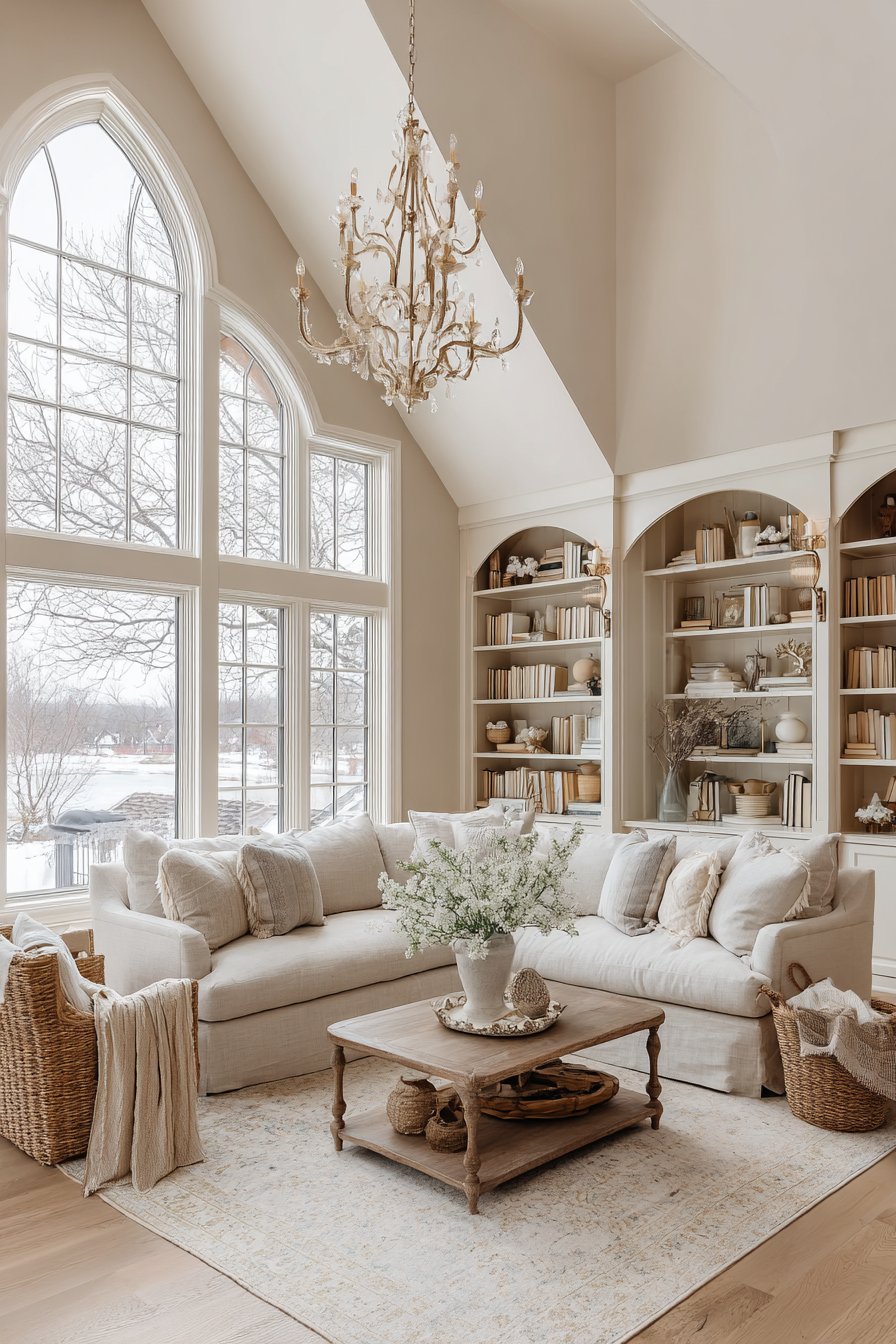
Imagine stepping into a living room where the ceiling soars to double-height proportions and magnificent floor-to-ceiling windows dominate entire walls, creating a breathtaking connection between interior comfort and the natural world beyond. This design concept celebrates the marriage of architectural grandeur and natural illumination, where sunlight floods the space throughout the day, casting ever-changing patterns across the floor and walls.
The vaulted ceiling creates an immediate sense of liberation and spaciousness, transforming the act of simply being in the room into an uplifting experience. The expansive windows frame outdoor views like living artwork, whether overlooking a lush garden, dramatic cityscape, or serene natural landscape, bringing the exterior environment into constant dialogue with the interior space.
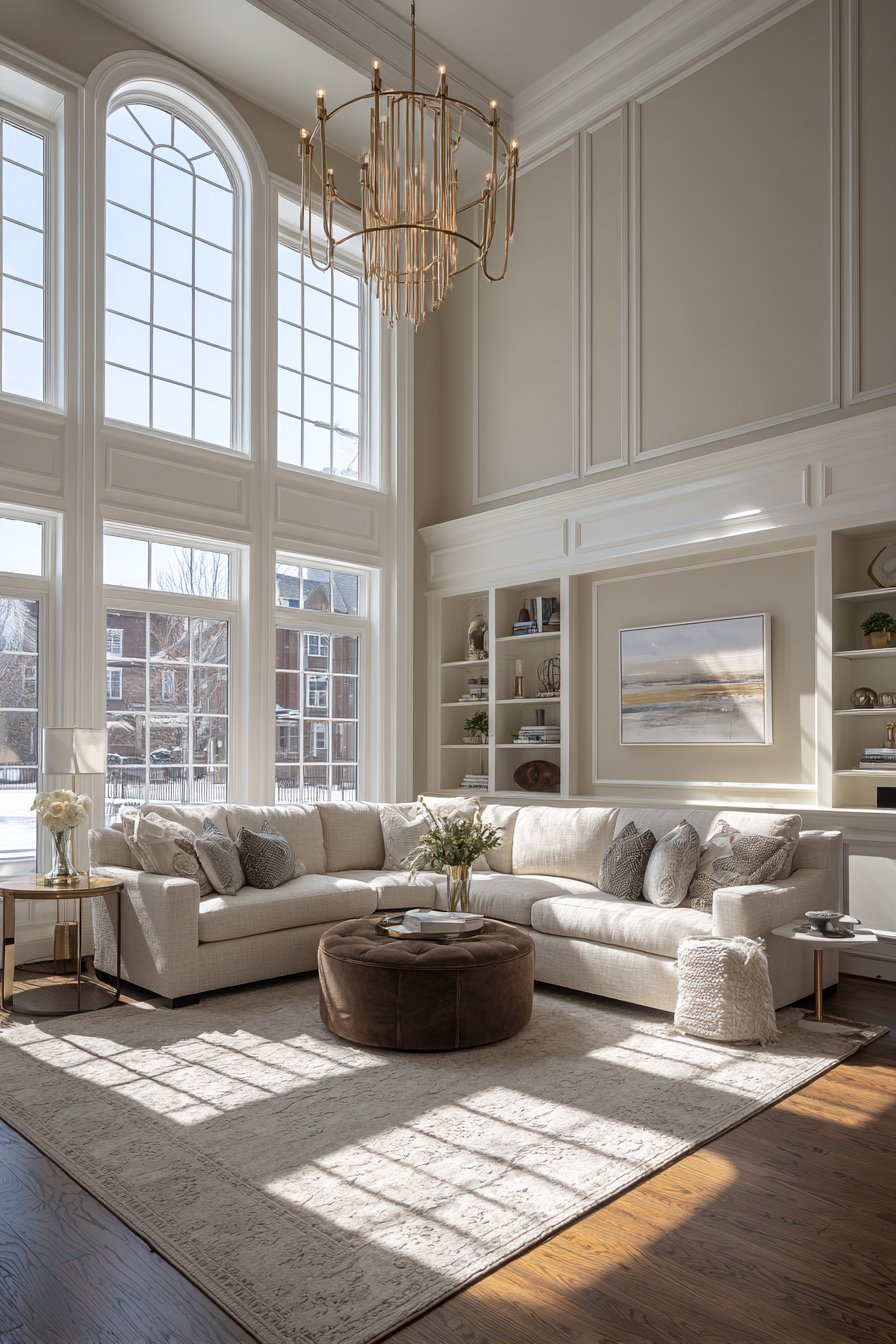
The centerpiece of this impressive room is a statement chandelier suspended from the soaring ceiling, positioned strategically above a sectional sofa upholstered in neutral linen fabric. This chandelier serves multiple critical functions—it fills the vertical void with captivating visual interest, provides essential ambient lighting for evening hours, and creates a dramatic focal point that naturally draws the eye upward to appreciate the full architectural volume.
The fixture might feature cascading crystals that catch and refract light in mesmerizing patterns, or perhaps a modern sculptural design with clean geometric lines that complement contemporary aesthetics. The neutral linen sectional grounds the space at human scale, offering comfortable seating in soft beige, warm grey, or natural oatmeal tones that allow the architectural drama to take center stage while providing a versatile backdrop for various decorative accents.
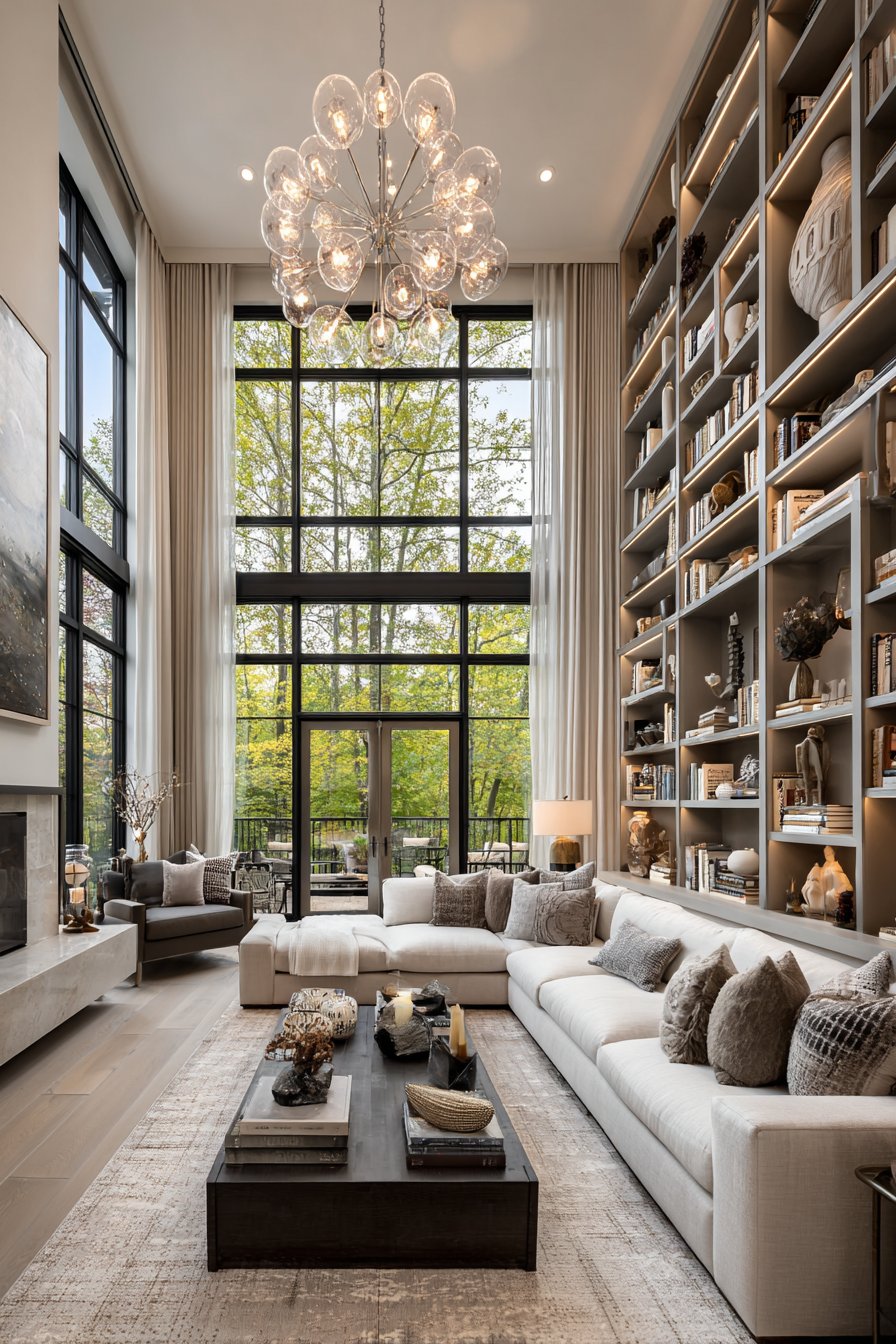
Tall built-in bookshelves reaching upward to 16 feet flank the windows or occupy adjacent walls, brilliantly utilizing the vertical space with both practical storage and significant aesthetic appeal. These floor-to-ceiling shelving units are styled with carefully curated books arranged by color or size, decorative objects that add personality at various heights, sculptural pieces that create focal points, and perhaps trailing plants like pothos or philodendron that add organic movement and soften the geometric lines. Our guide on these how to arrange furniture in a narrow living room walks through this step by step.
The shelves create a rhythmic vertical pattern that emphasizes the impressive height while providing functional storage that would otherwise require additional floor space. The interplay between hard architectural edges and soft upholstered textures creates a perfectly balanced composition that feels simultaneously grand and intimately inviting.
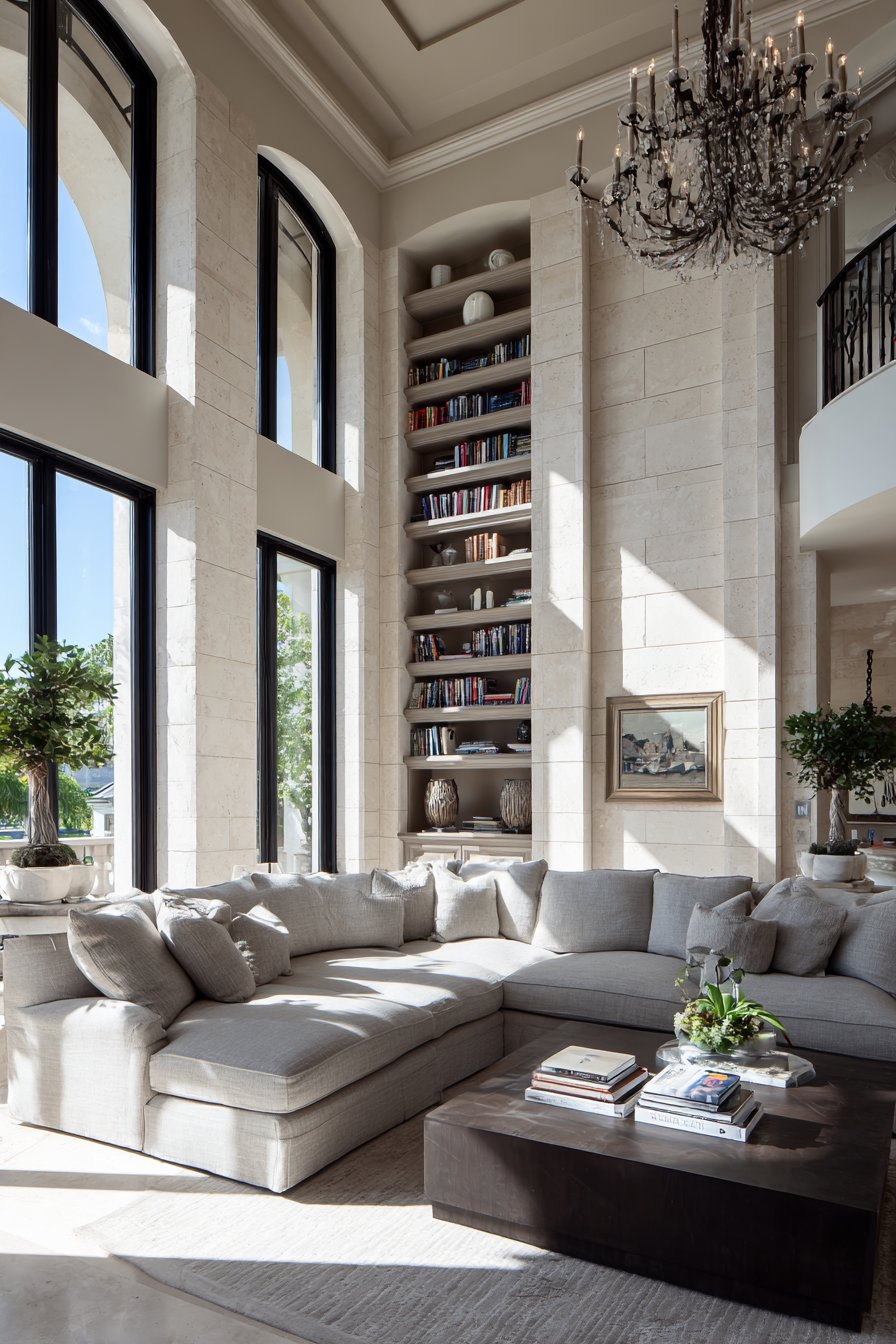
The lighting strategy works on multiple levels throughout this space. Natural daylight serves as the primary source during daytime hours, with floor-to-ceiling windows ensuring even the upper reaches receive illumination. Professional lighting design considers how natural shadows add depth and dimension, creating a dynamic environment that changes throughout the day.
As evening approaches, the statement chandelier takes center stage, while additional ambient lighting from wall sconces or floor lamps at the seating level ensures the space remains functional and inviting after dark. The balanced exposure captures the impressive volume while maintaining correct proportions, showcasing how vertical space and horizontal comfort zones work together harmoniously to create a living room that feels both architecturally significant and warmly welcoming.
Key Design Tips:
- Layer lighting with statement overhead fixtures, ambient table and floor lamps, and natural light management to create depth and functionality throughout all hours of the day and evening
- Install tall built-in storage that reaches toward the ceiling to maximize vertical space without consuming valuable floor area while adding architectural interest
- Choose neutral, natural-toned upholstery for large furniture pieces to create a sophisticated foundation that allows architectural elements to shine without visual competition
- Position furniture strategically using area rugs and groupings to create intimate conversation zones within the grand space, preventing the room from feeling empty or cold
- Treat windows minimally with sheer, light-filtering coverings to maximize natural light while maintaining privacy when needed
- Select chandeliers proportional to ceiling height—a fixture that’s too small will disappear in the vast overhead space and fail to make the intended impact. Our small open kitchen and living room ideas has more inspiration along these same lines.
2. Modern Farmhouse with Exposed Wooden Beams
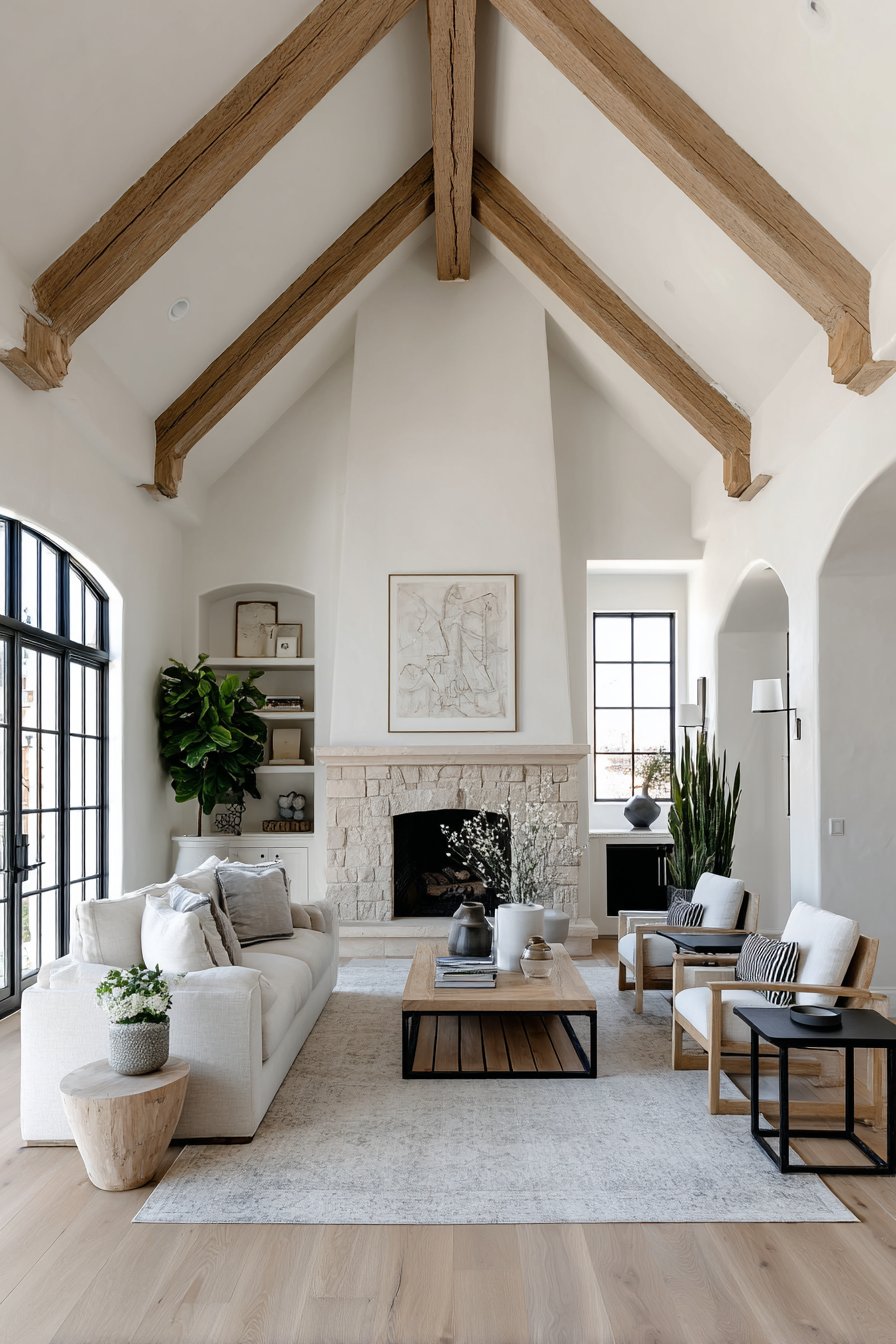
The modern farmhouse aesthetic brings warmth and rustic charm to high ceiling living rooms through the strategic use of exposed wooden beams that span across 14-foot ceilings, creating compelling architectural interest that bridges contemporary comfort with timeless rural character.
These substantial beams, whether original to the structure or added as a design enhancement, draw the eye upward and across the ceiling plane, creating horizontal lines that temper the vertical emphasis of the tall space. The natural wood tones introduce organic warmth that prevents the high ceiling from feeling cold or institutional, instead infusing the room with a sense of history, craftsmanship, and connection to natural materials that defines the modern farmhouse style.
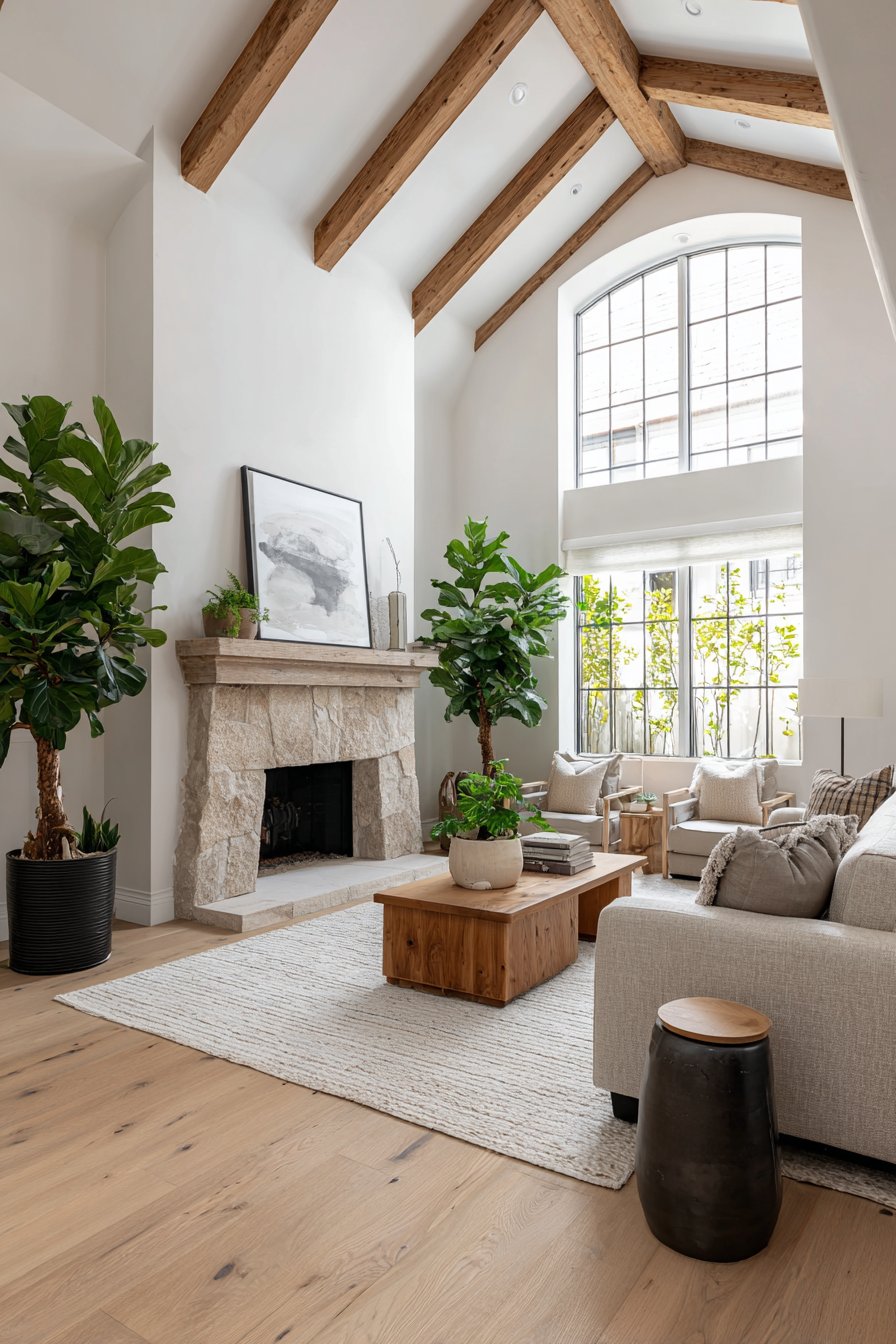
Large potted fiddle leaf fig trees and tall snake plants flank the seating area, their impressive height emphasizing the vertical space while bringing life and natural texture into the room. These tall indoor plants serve a dual purpose in high ceiling living rooms—they fill the vertical void with organic forms that soften hard architectural edges, and they create visual connections between the floor and ceiling that help the space feel more cohesive and less cavernous.
The fiddle leaf figs, with their large, violin-shaped leaves reaching upward on substantial trunks, can grow to eight or ten feet tall, making them ideal for rooms with generous ceiling heights. The snake plants, with their striking upright sword-like leaves, add textural contrast and require minimal maintenance, making them practical choices for homeowners who want the impact of greenery without intensive care requirements.
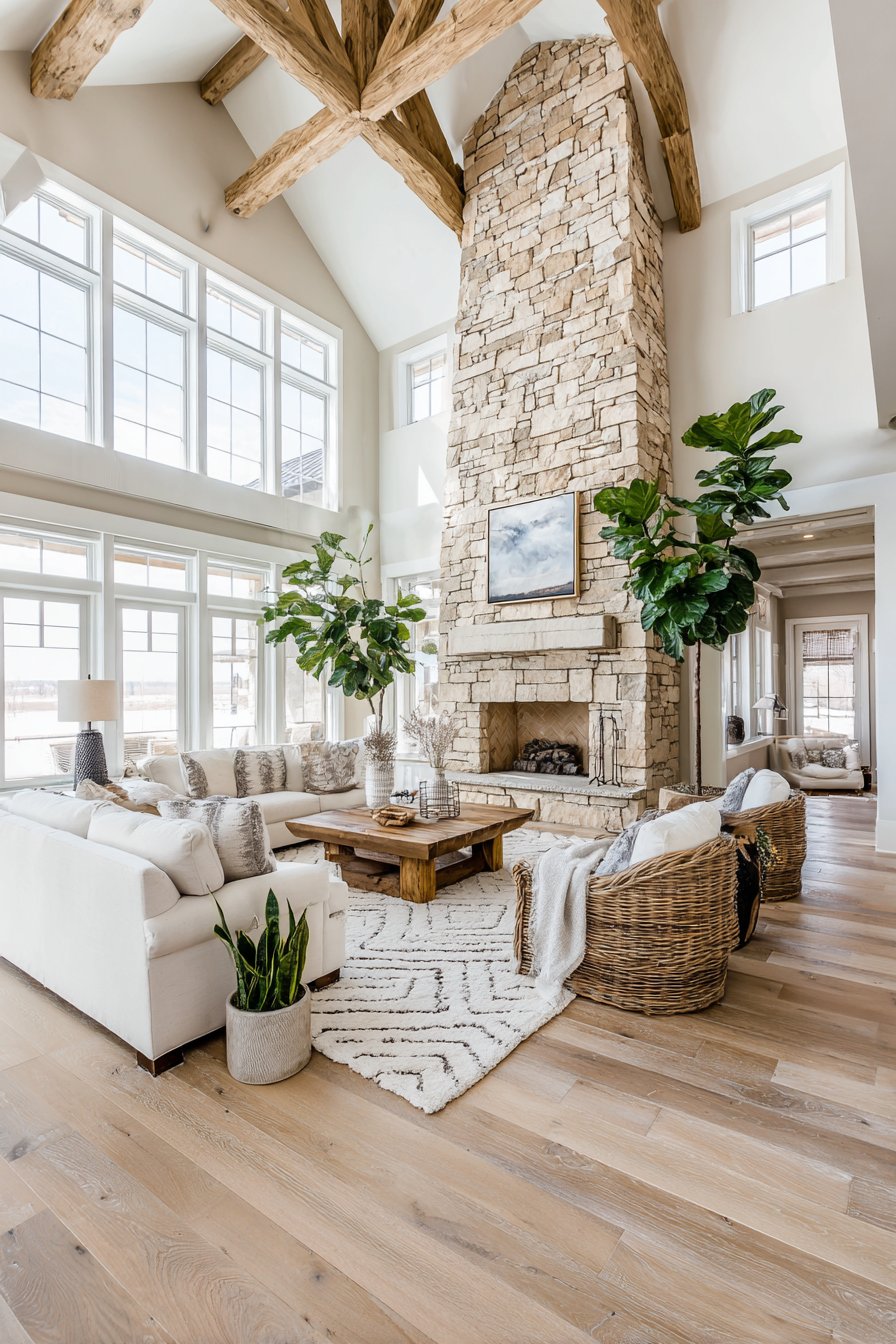
A stone fireplace extends from floor to ceiling as a dramatic focal point, creating a powerful vertical element that anchors the entire room and provides a natural gathering place for seating arrangements. This floor-to-ceiling stone feature might showcase natural fieldstone with irregular shapes and varied earth tones, or perhaps stacked ledgestone with clean horizontal lines, or even smooth river rock in shades of grey and taupe.
The fireplace serves as the room’s visual anchor, drawing attention from floor to ceiling and emphasizing the impressive height while simultaneously creating a warm, inviting focal point that encourages gathering and conversation. The texture of the stone adds another layer of visual and tactile interest, contrasting beautifully with the smooth wood beams overhead and the natural oak flooring below.
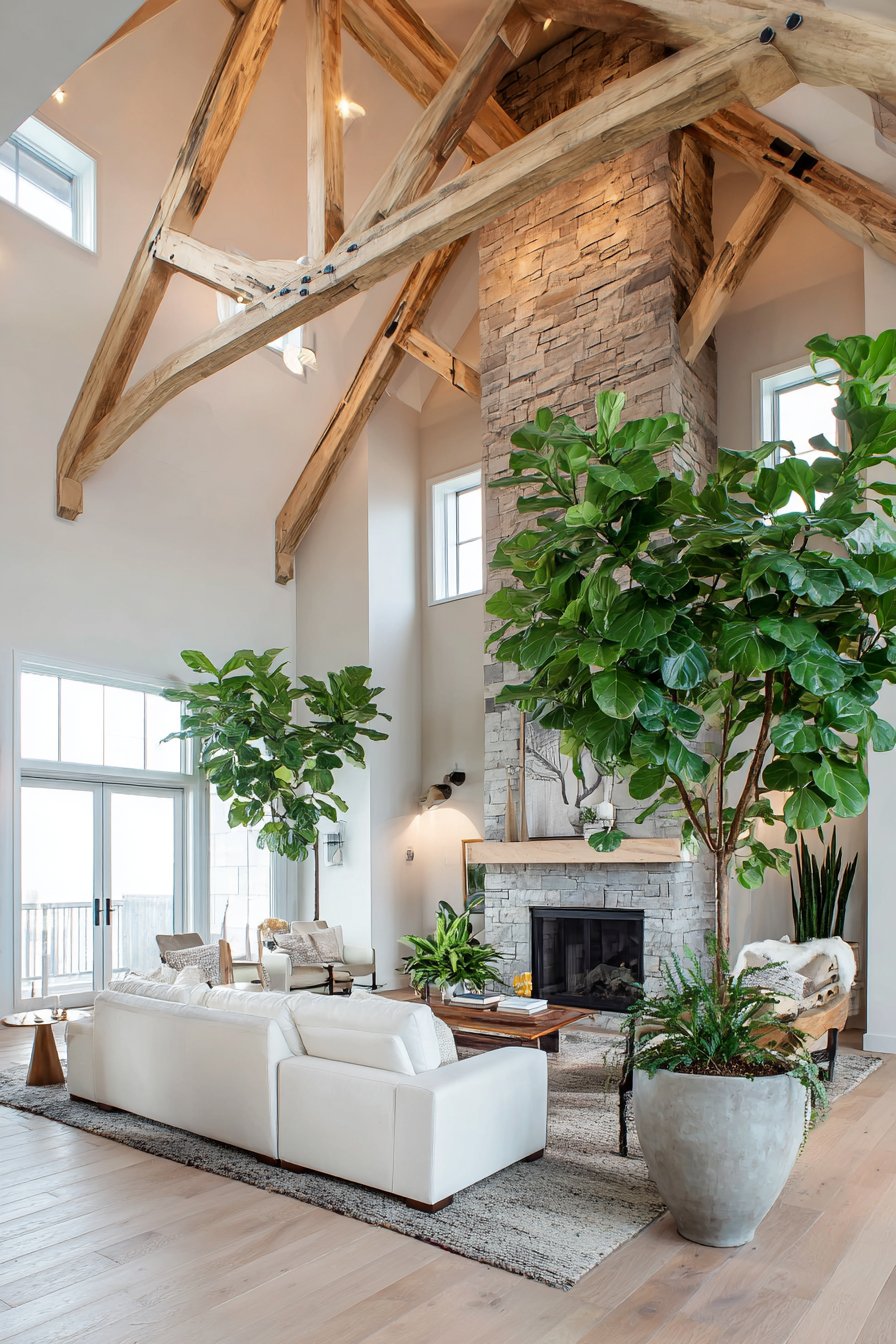
Natural oak flooring with visible grain patterns grounds the space, providing a warm foundation that complements the wooden beams overhead and creates visual continuity throughout the room. The flooring, in honey-toned oak or perhaps a lighter whitewashed oak finish, features prominent grain patterns and natural color variations that add character and prevent the floor from appearing flat or monotonous.
Clerestory windows positioned high on the walls allow soft natural light to stream into the space, illuminating the ceiling beams and upper portions of the stone fireplace while maintaining privacy at ground level. This lighting strategy creates gentle shadows that highlight the texture of materials and add depth to the space, showcasing the natural beauty of wood grain, stone texture, and plant foliage throughout the day.
Key Design Tips:
- Use exposed wooden beams to create horizontal visual interest that balances the vertical emphasis of high ceilings and adds architectural character
- Position tall potted plants strategically to fill vertical space with organic forms that connect floor to ceiling while softening hard architectural elements
- Install a floor-to-ceiling fireplace as a dramatic focal point that anchors the room and provides a natural center for furniture arrangement
- Choose natural oak flooring with visible grain to add warmth and texture while creating visual continuity with wooden ceiling beams
- Incorporate clerestory windows to bring natural light to upper portions of the room while maintaining privacy at ground level
- Select furniture with lower profiles to contrast with the tall ceiling and create comfortable human-scaled zones within the larger space
3. Statement Gallery Wall Reaching Skyward
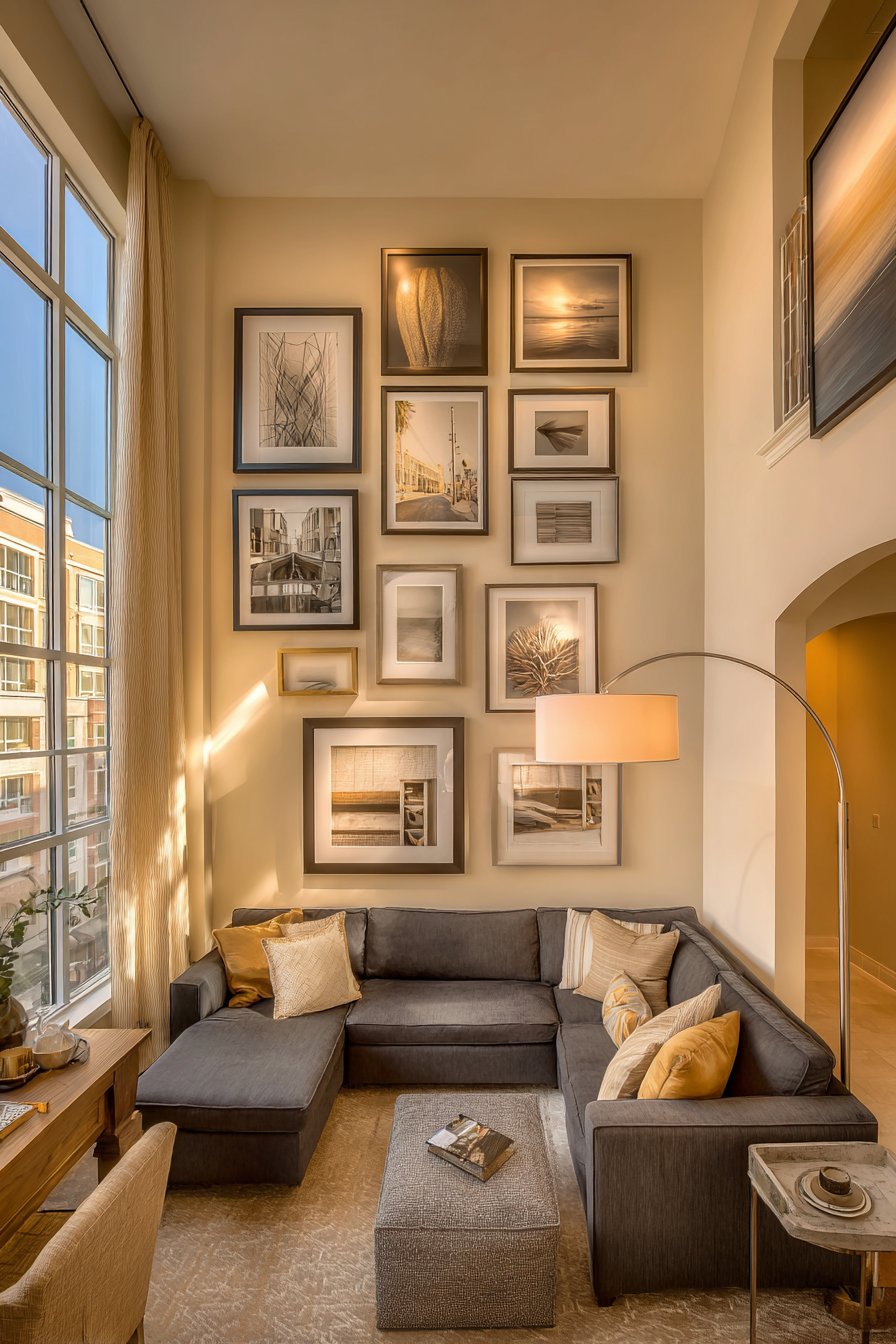
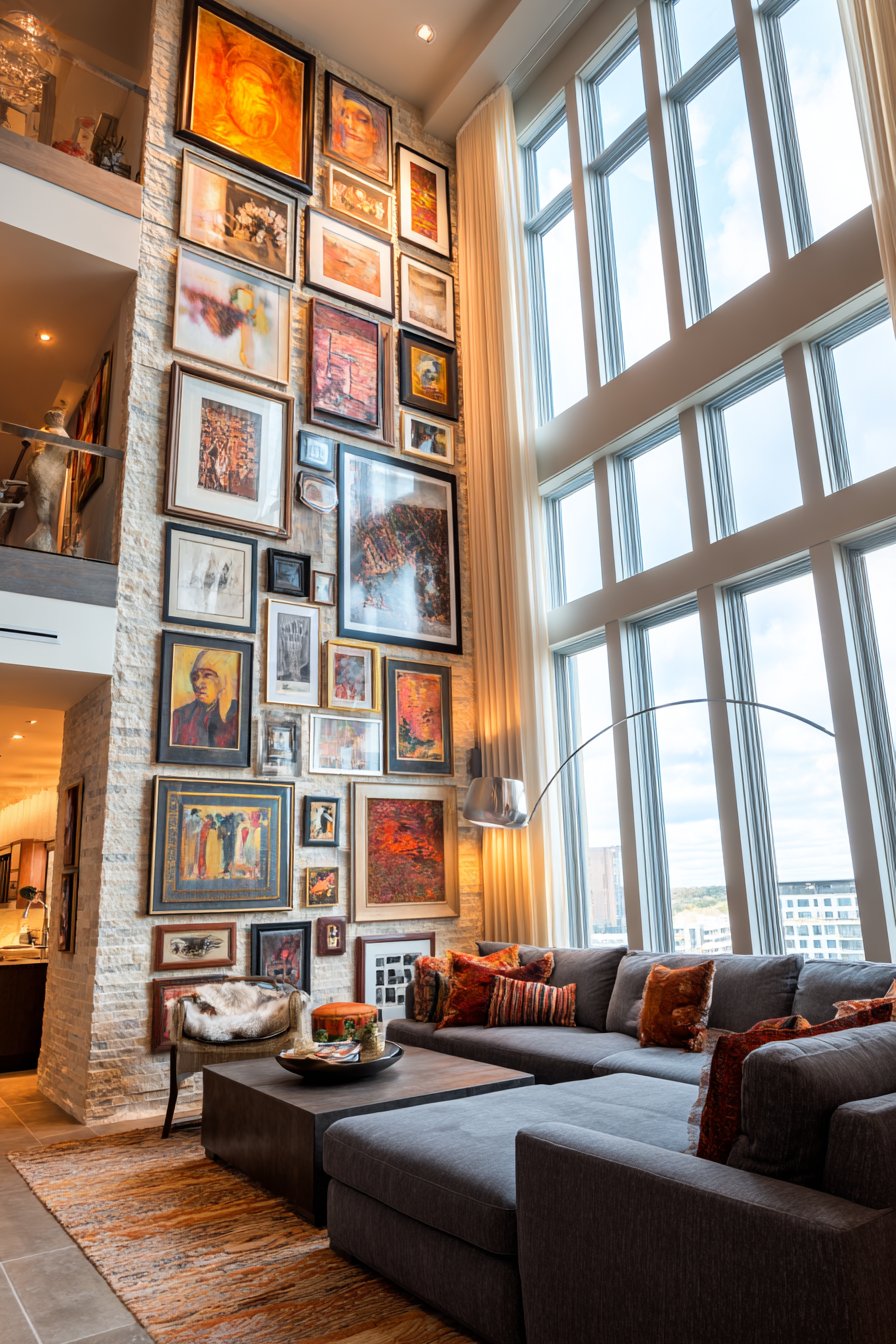
A high ceiling living room featuring a statement gallery wall that extends 12 feet upward transforms an expansive blank wall into a curated exhibition space that showcases personality, artistic taste, and visual storytelling. This design approach takes advantage of the vertical real estate that high ceilings provide, creating an eclectic mix of framed artwork and photographs in various sizes that draws the eye upward in an engaging journey across the wall. The gallery wall might include everything from large-scale canvas paintings and framed photography prints to smaller vintage finds, abstract art, family portraits, and architectural drawings, all arranged in a carefully planned layout that feels organic yet intentional.
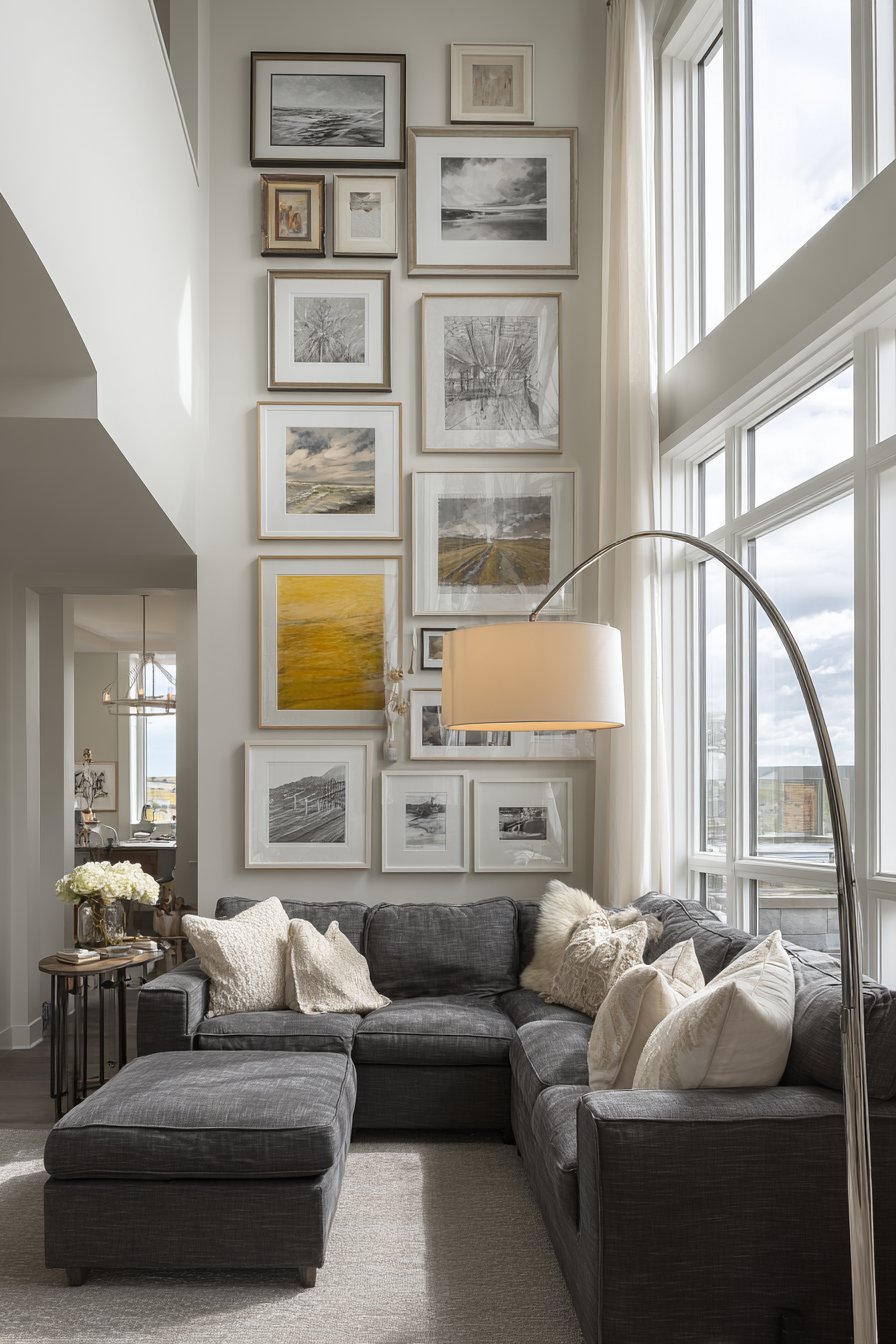
The arrangement of artwork follows principles of visual balance and rhythm, with larger pieces anchoring the lower portions of the wall at eye level where they can be appreciated in detail, while progressively lighter or smaller pieces extend upward into the vertical space. This creates a pyramid or tapering effect that feels natural and prevents the gallery wall from appearing top-heavy or unbalanced.
The frames themselves contribute to the overall aesthetic—mixing materials like weathered wood, sleek metal, ornate gilt, and simple black lacquer adds textural variety and visual interest that prevents monotony. The eclectic mix reflects personal taste and collected memories, transforming the high wall from an intimidating blank canvas into a dynamic focal point that tells a story.
A contemporary sectional in charcoal grey fabric anchors the seating area below, providing a sophisticated neutral foundation that allows the artwork to command attention without competition. The deep charcoal tone offers more visual weight than lighter neutrals, helping to ground the seating area and create definition within the open space.
The low profile of the sectional maintains sight lines to the gallery wall and doesn’t visually cut the room in half, preserving the sense of openness and flow that makes high ceiling rooms so appealing. Plush cushions and textured upholstery in a durable performance fabric ensure the space remains comfortable and functional for daily living while maintaining its design integrity.
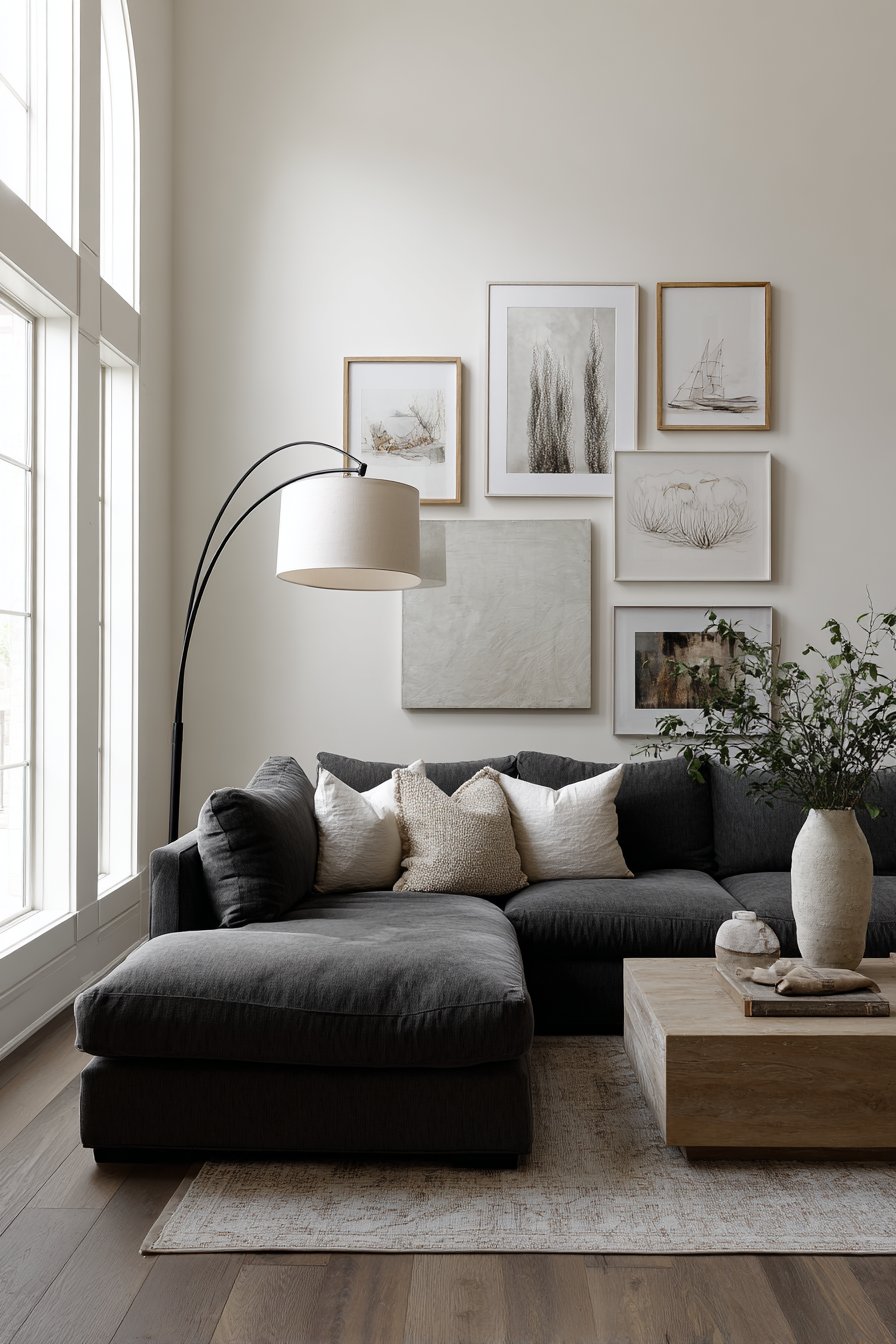
The tall walls are painted in warm white with subtle texture visible in natural light, creating a gallery-like backdrop that enhances the artwork without competing for attention. This warm white—perhaps with undertones of cream or the slightest hint of grey—provides a sophisticated neutral that works with the varied colors and styles in the gallery wall collection.
A modern arc floor lamp reaches upward with its curved design, its graceful arc complementing the vertical emphasis of the room while providing functional reading light that can be positioned over the sectional. The lamp’s sculptural quality makes it a design element in its own right, adding another layer of visual interest that bridges the gap between floor and ceiling.
Key Design Tips:
- Plan your gallery wall layout on paper or using templates before hanging to ensure balanced composition that works with the wall’s proportions
- Start with larger anchor pieces at eye level and extend upward with progressively lighter or smaller pieces for visual balance
- Mix frame styles, materials, and finishes to add textural variety and create an collected-over-time aesthetic rather than a matched set appearance
- Paint walls in warm white or soft neutral tones that enhance artwork without competing for attention or making the space feel stark
- Choose a low-profile sectional in a substantial neutral color to ground the seating area without blocking views of the gallery wall
- Add an arc floor lamp or other tall lighting element to provide functional illumination while emphasizing vertical space and adding sculptural interest
4. Two-Story Windows with Mezzanine Reading Nook
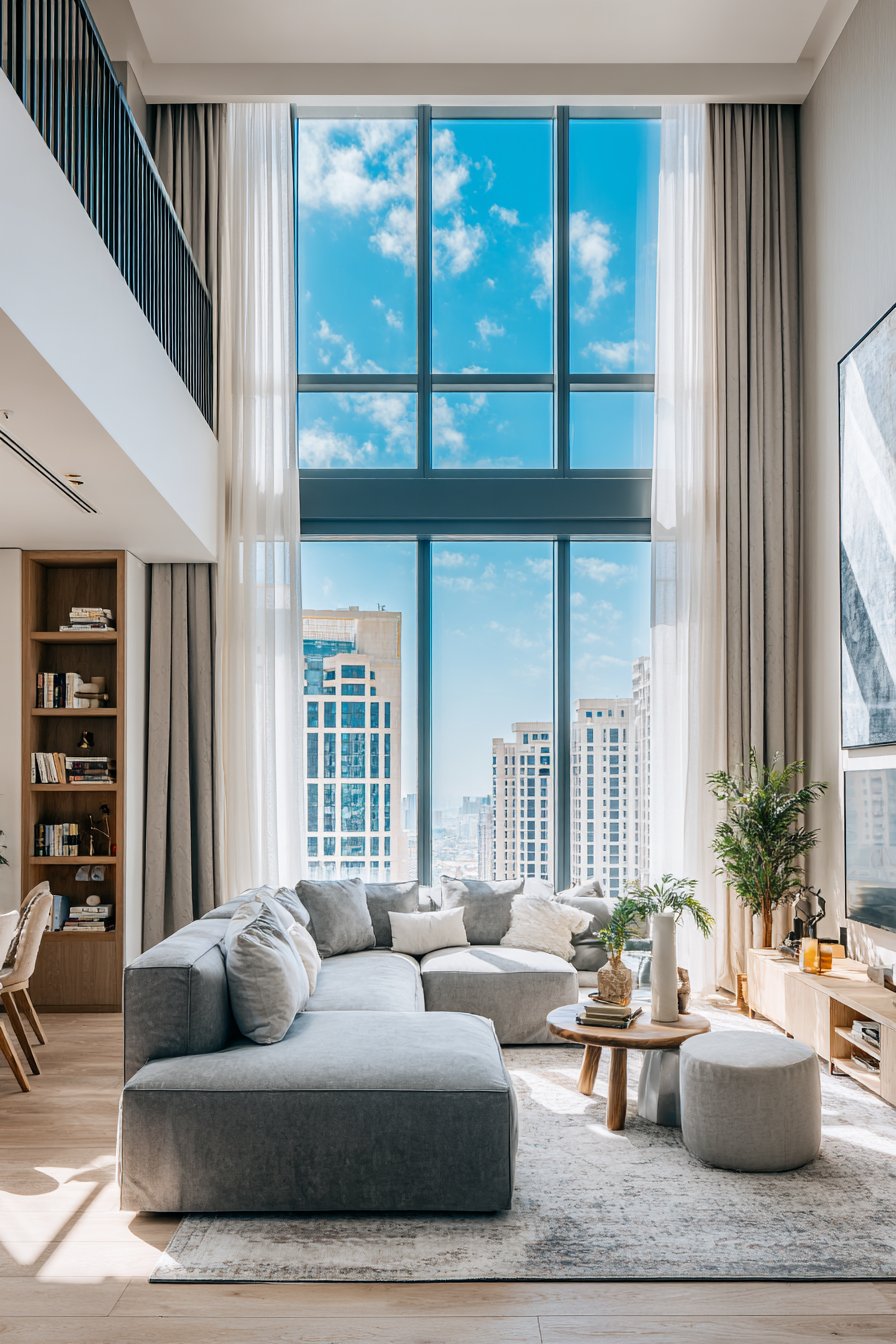
Picture a high ceiling living room where a two-story wall of windows framed by floor-to-ceiling sheer curtains in natural linen creates a luminous space that blurs the boundary between indoors and outdoors. This design celebrates transparency and light, with the expansive windows serving as the defining architectural feature that shapes the entire room’s character.
The sheer linen curtains soften the hard edges of window frames while diffusing direct sunlight into a gentle, even glow that fills the space without creating harsh shadows or glare. When drawn, the curtains add a layer of privacy while maintaining the sense of openness; when pulled back, they frame the windows like theater curtains revealing a spectacular view.
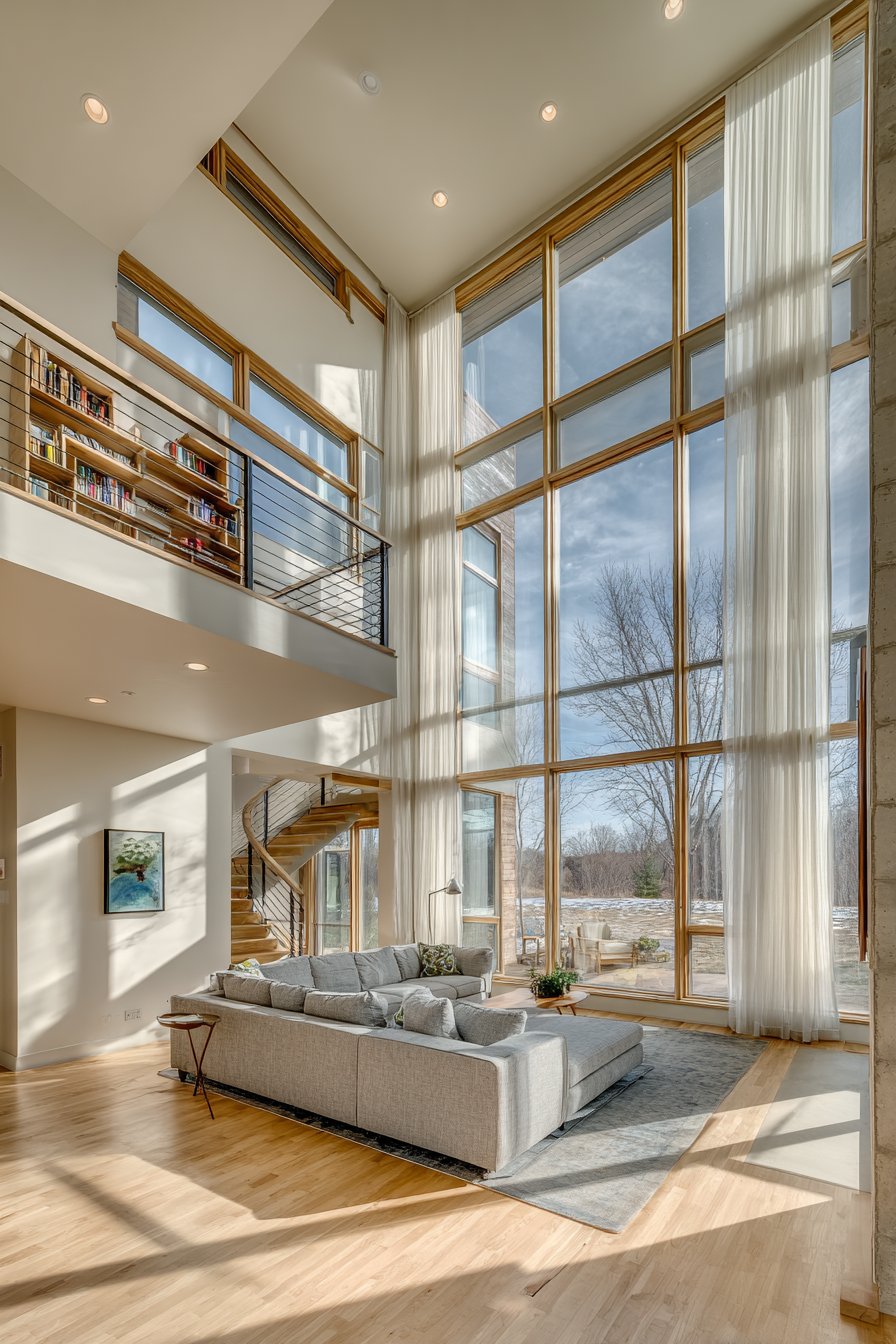
A mezzanine reading nook visible on the upper level adds functional square footage while creating visual interest in the vertical space. This elevated sanctuary, accessed by a staircase or ladder, provides an intimate retreat for reading, working, or simply enjoying the view from a different perspective. The mezzanine demonstrates how high ceiling living rooms can incorporate multiple levels of activity, with social gathering spaces below and private retreat spaces above.
A sleek metal railing defines the mezzanine edge, its transparent or minimalist design ensuring it doesn’t block sight lines or make the space feel closed in. The metal railing might feature cable rails, glass panels, or simple horizontal bars in brushed steel or matte black finish that complements the contemporary aesthetic.
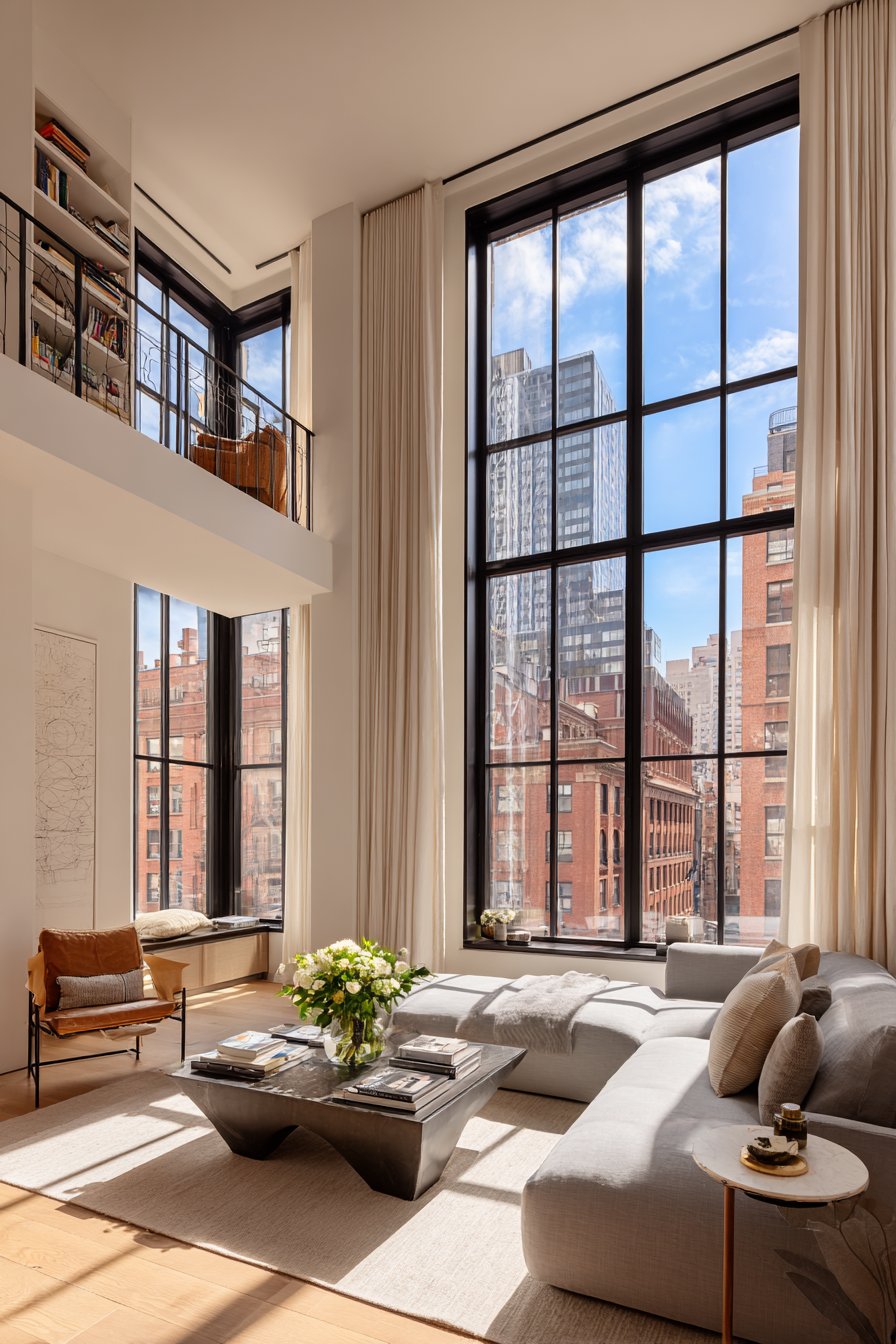
Below the mezzanine, a low-profile modular sofa in soft grey creates deliberate contrast with the soaring vertical space. This intentional juxtaposition between low horizontal furniture and tall vertical architecture is a key principle in designing high ceiling rooms successfully—the contrast emphasizes both elements and creates visual drama while maintaining comfort.
The modular design allows for flexible configuration, whether arranged as a traditional sofa, an L-shaped sectional, or even separated into individual seating elements for different entertaining scenarios. The soft grey upholstery provides a sophisticated neutral that works with various accent colors and doesn’t compete with the architectural drama of the windows and mezzanine.
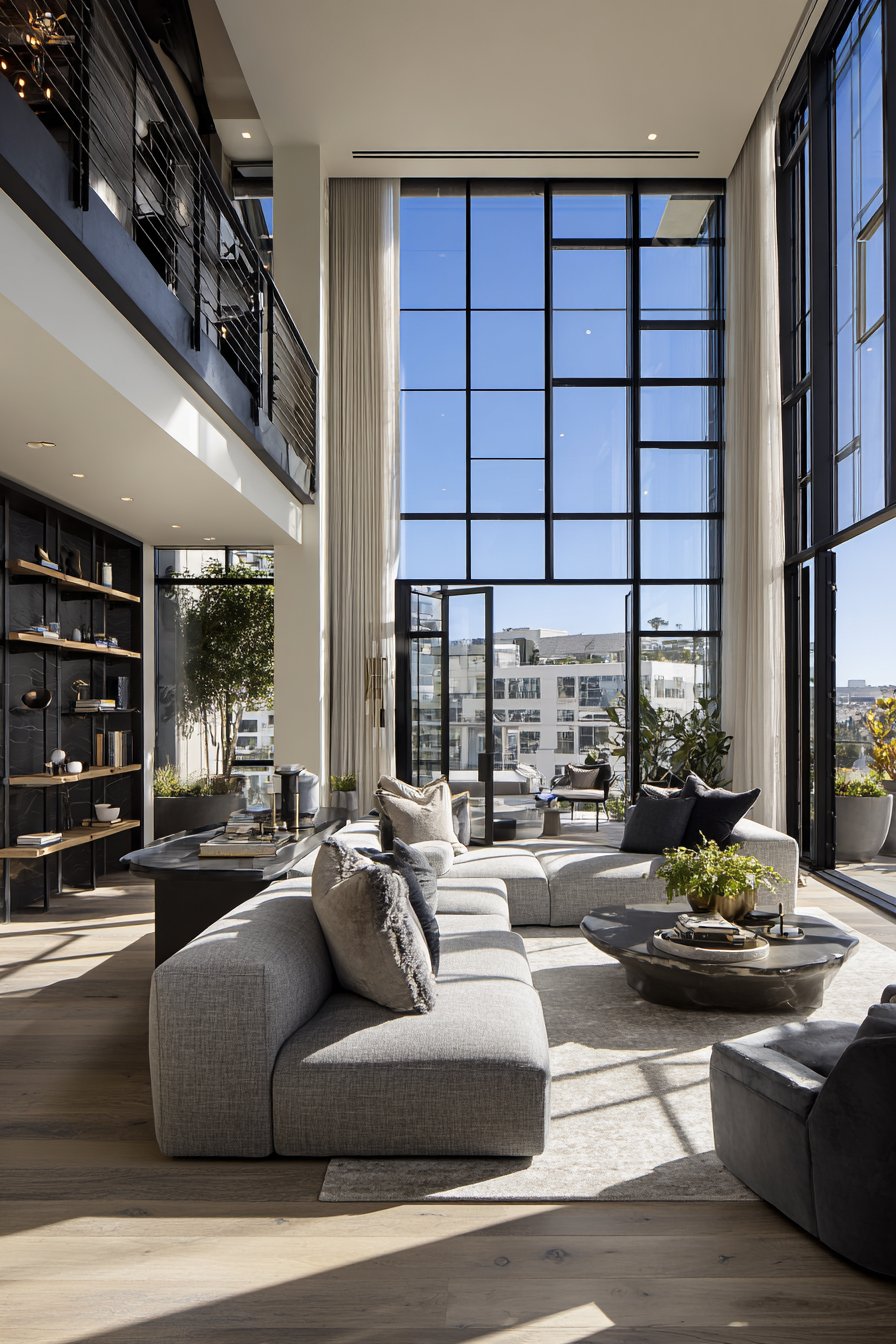
Natural light streams through the expansive windows throughout the day, casting elongated shadows across light oak hardwood floors that add another dimension of visual interest. These moving shadows created by window mullions, curtain folds, and the mezzanine railing create an ever-changing pattern on the floor that brings life and movement to the space.
The light oak flooring, with its pale blonde tones and subtle grain patterns, reflects and amplifies natural light, helping to keep the space feeling bright and airy even in corners farther from the windows. The floor’s smooth surface and light color create a clean canvas that allows the architectural elements and furniture to stand out while contributing to the overall sense of openness and contemporary sophistication.
Key Design Tips:
- Install floor-to-ceiling sheer curtains to soften window expanses while maintaining natural light and creating a sense of height
- Consider adding a mezzanine level to utilize vertical space functionally and create visual interest with multiple activity zones
- Choose low-profile furniture to create contrast with soaring ceilings and emphasize the dramatic difference in scale
- Select light-colored flooring in materials like pale oak to reflect and amplify natural light throughout the space
- Use sleek metal railings with transparent or minimalist designs to define spaces without blocking sight lines
- Embrace the moving shadows created by natural light as a dynamic design element that brings life to the space throughout the day
5. Geometric Pendant Lights at Staggered Heights
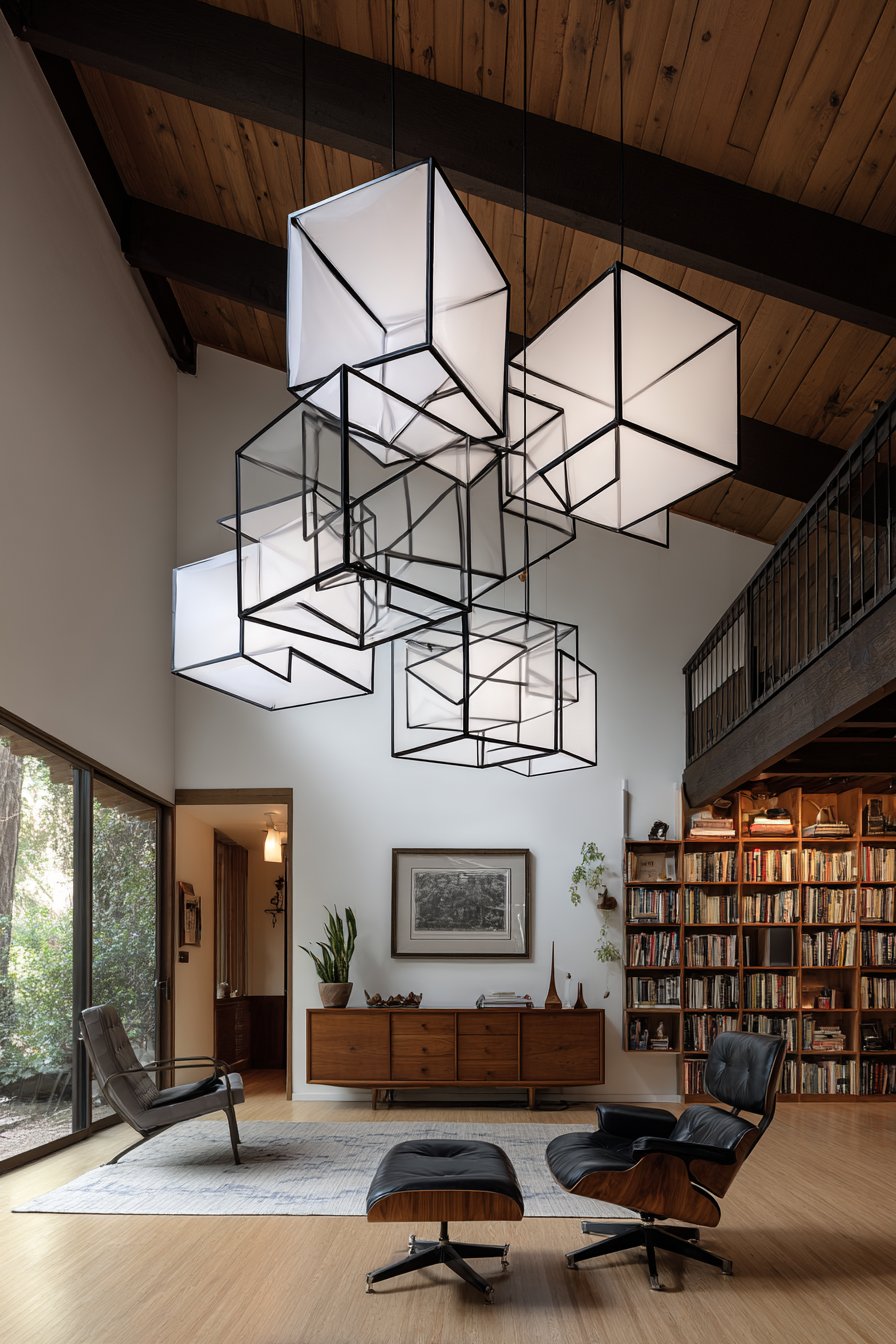
A high ceiling living room featuring a dramatic pendant light installation with three oversized geometric fixtures suspended at staggered heights from a 15-foot ceiling creates immediate visual impact and transforms the upper volume of the space into an artistic focal point. This design approach uses lighting not just as a functional necessity but as a sculptural installation that becomes the room’s defining feature.
The geometric fixtures—perhaps hexagonal cages in matte black metal, spherical wire sculptures, or angular origami-inspired forms—hang at different heights, creating a dynamic composition that draws the eye upward and across the ceiling plane. The staggered heights prevent monotony and create depth, with the lowest fixture hovering perhaps eight feet from the floor and the highest suspended closer to the ceiling.
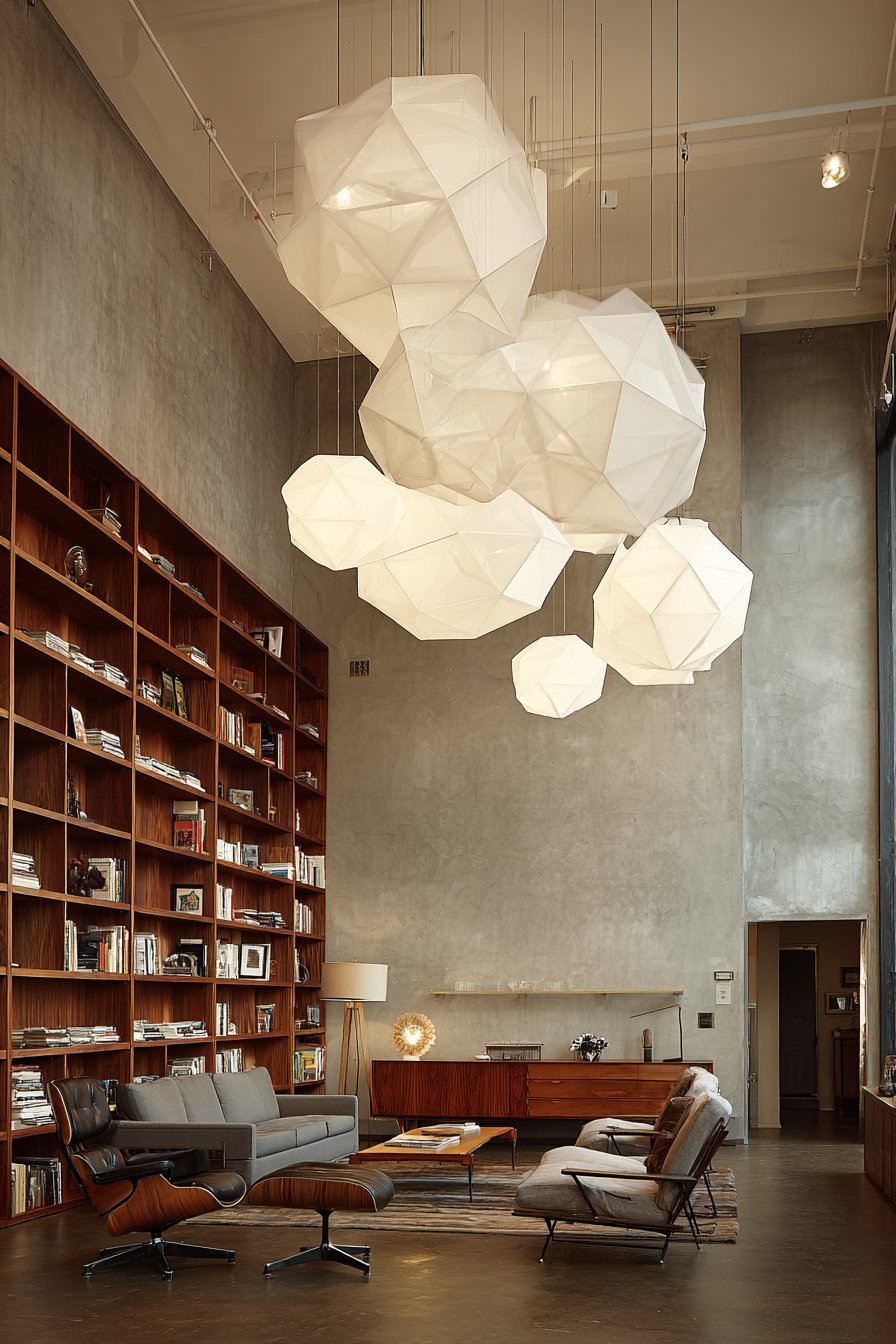
The room combines mid-century modern furniture including a low walnut credenza and an iconic lounge chair with ottoman, bringing timeless design classics into conversation with contemporary lighting. The walnut credenza, with its warm wood tones and clean-lined form, provides essential storage and display space along one wall while contributing horizontal visual weight that balances the vertical emphasis of the ceiling.
Its rich walnut grain and mid-century details like tapered legs and brass hardware add sophistication and warmth. The iconic lounge chair—perhaps an Eames-style design with molded plywood and leather cushions—creates a dedicated reading or relaxation zone, its sculptural form serving as both functional seating and design statement.
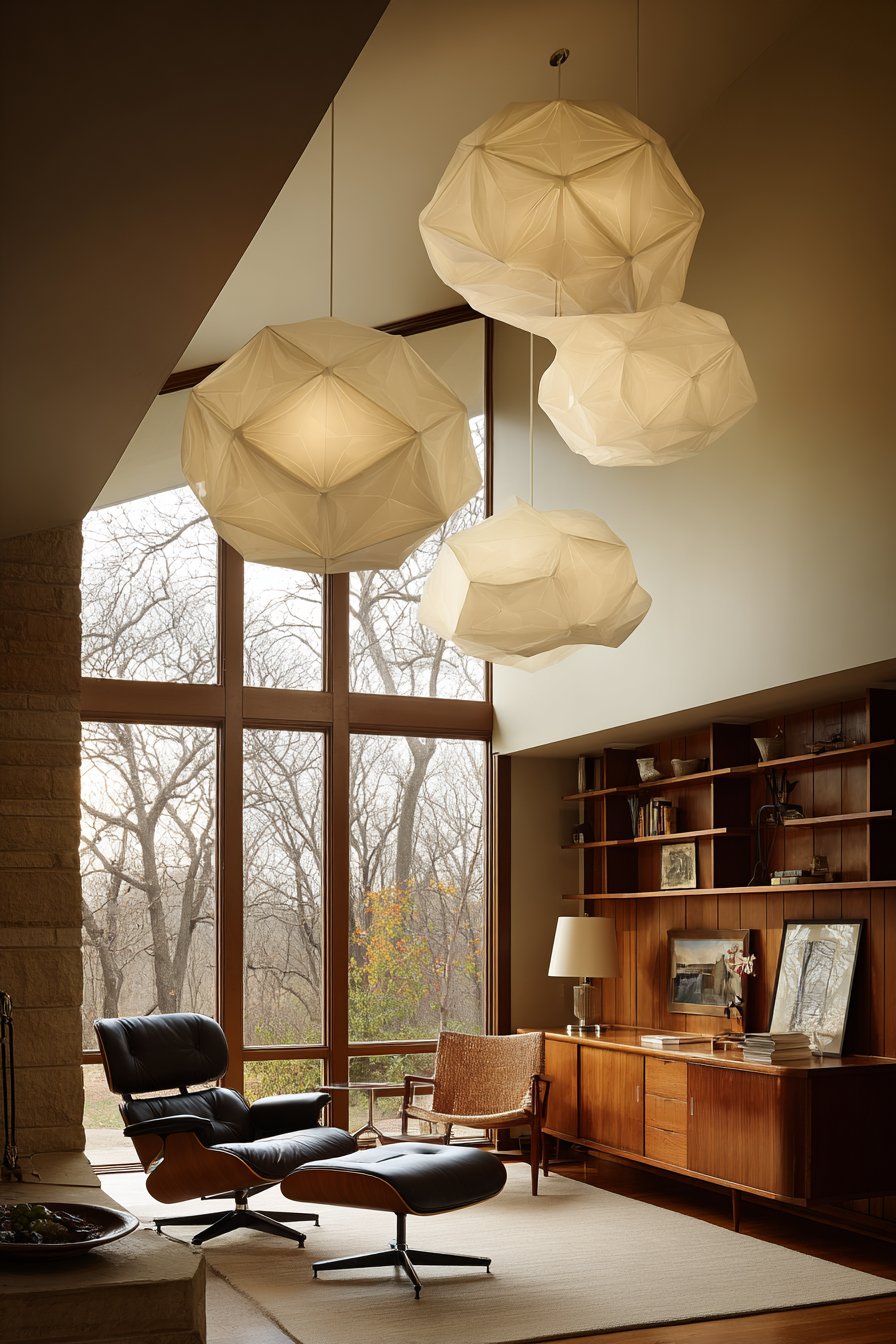
Vertical storage solutions include tall narrow shelving units that reach toward the ceiling, maximizing storage capacity without consuming excessive floor space. These slender vertical units, perhaps in dark wood or powder-coated metal, maintain the room’s open feel while providing practical storage for books, decorative objects, plants, and personal collections.
The narrow profile ensures they don’t overwhelm the space or block natural light, while their height emphasizes the vertical dimension and creates visual lines that connect floor to ceiling. The shelving might incorporate both open sections for display and closed cabinets at the base for concealing less attractive storage items.
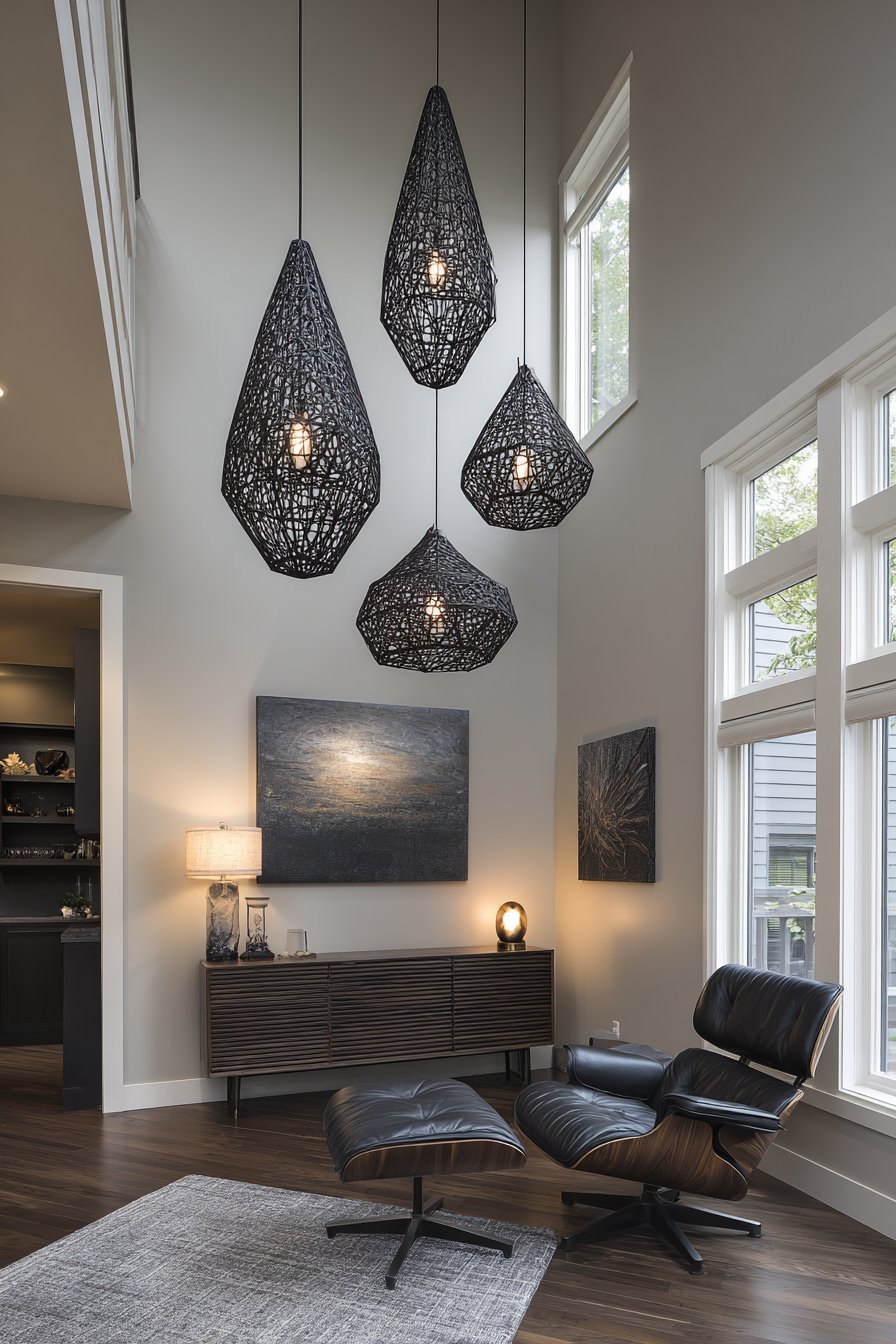
The pendant lights create visual interest in the upper volume through both their physical forms and the patterns of light and shadow they cast across the ceiling and walls. When illuminated, the geometric fixtures become luminous sculptures that transform the room’s atmosphere, with their open metalwork or translucent materials creating dappled light patterns that add texture and movement to otherwise plain surfaces.
The soft diffused lighting creates ambiance for evening hours without harsh glare, while the fixtures themselves remain compelling visual elements even when unlit during daylight hours. The balanced exposure captures the entire room arrangement, highlighting how the hanging lights create interest above while the carefully selected furniture creates intimacy and comfort below, demonstrating the successful marriage of form and function in high ceiling living room design.
Key Design Tips:
- Install multiple pendant lights at staggered heights to create dynamic visual interest in the upper volume and prevent monotonous symmetry
- Choose geometric fixtures with open designs that cast interesting light patterns and shadows on ceilings and walls
- Incorporate mid-century modern furniture with low profiles to contrast with vertical space while adding timeless design appeal
- Use tall narrow shelving units to maximize vertical storage without consuming excessive floor space or blocking light
- Select warm wood tones like walnut for furniture and storage pieces to add warmth and prevent the space from feeling too modern or cold
- Consider how lighting fixtures appear both when illuminated and unlit, ensuring they add visual value at all times
6. Industrial Loft with Exposed Brick and Steel Beams
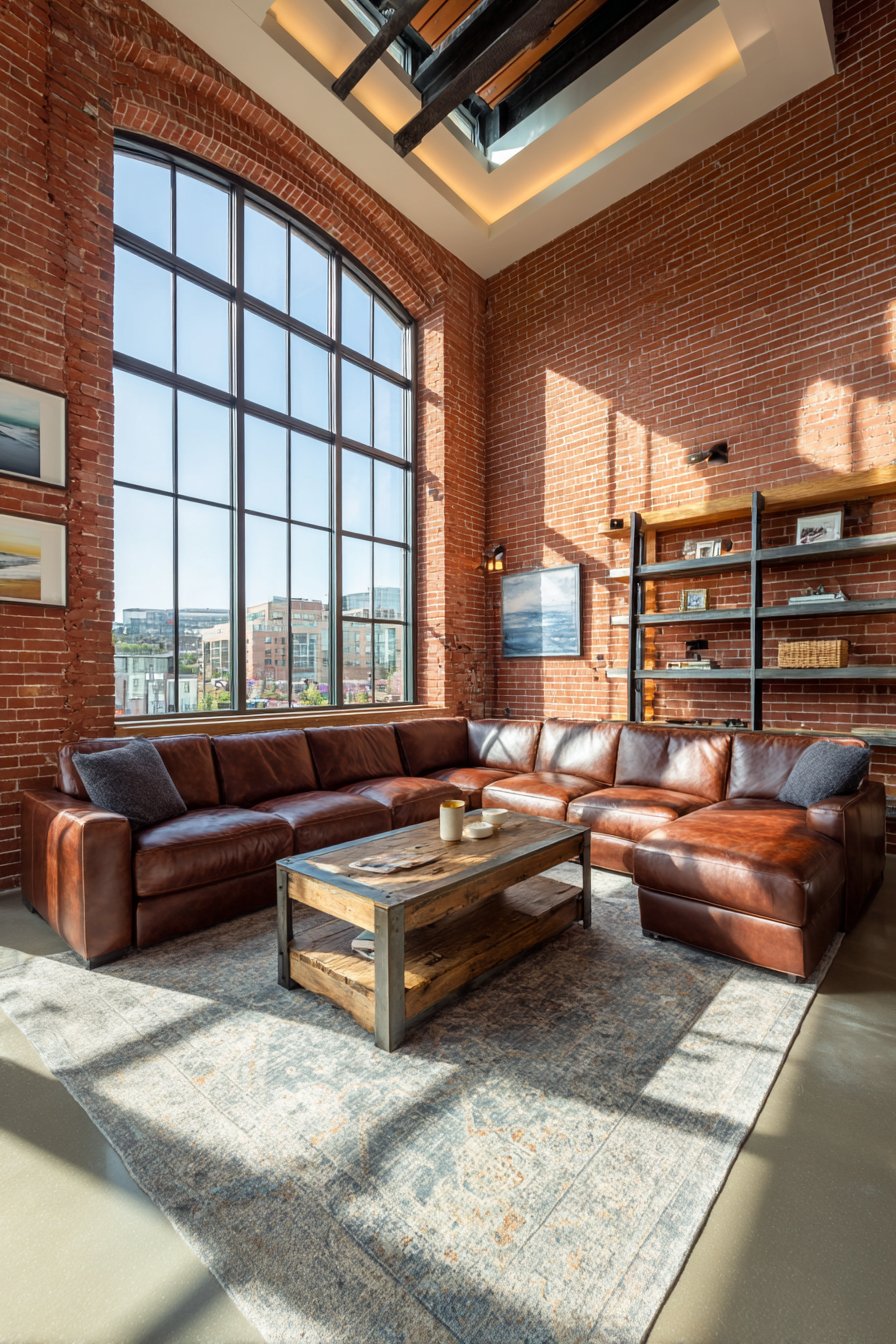
The industrial loft aesthetic brings raw urban character to high ceiling living rooms through exposed brick walls that extend upward to 16-foot ceilings with original steel beams visible overhead. This design celebrates the honest expression of structural elements and materials, embracing the building’s bones rather than concealing them.
The exposed brick, whether in traditional red clay with white mortar joints or painted white for a softer industrial look, provides rich texture and visual weight that makes the tall walls feel substantial rather than empty. Each brick, with its slightly irregular shape and varied coloration, contributes to a surface that’s inherently interesting and prevents the need for excessive wall decoration.
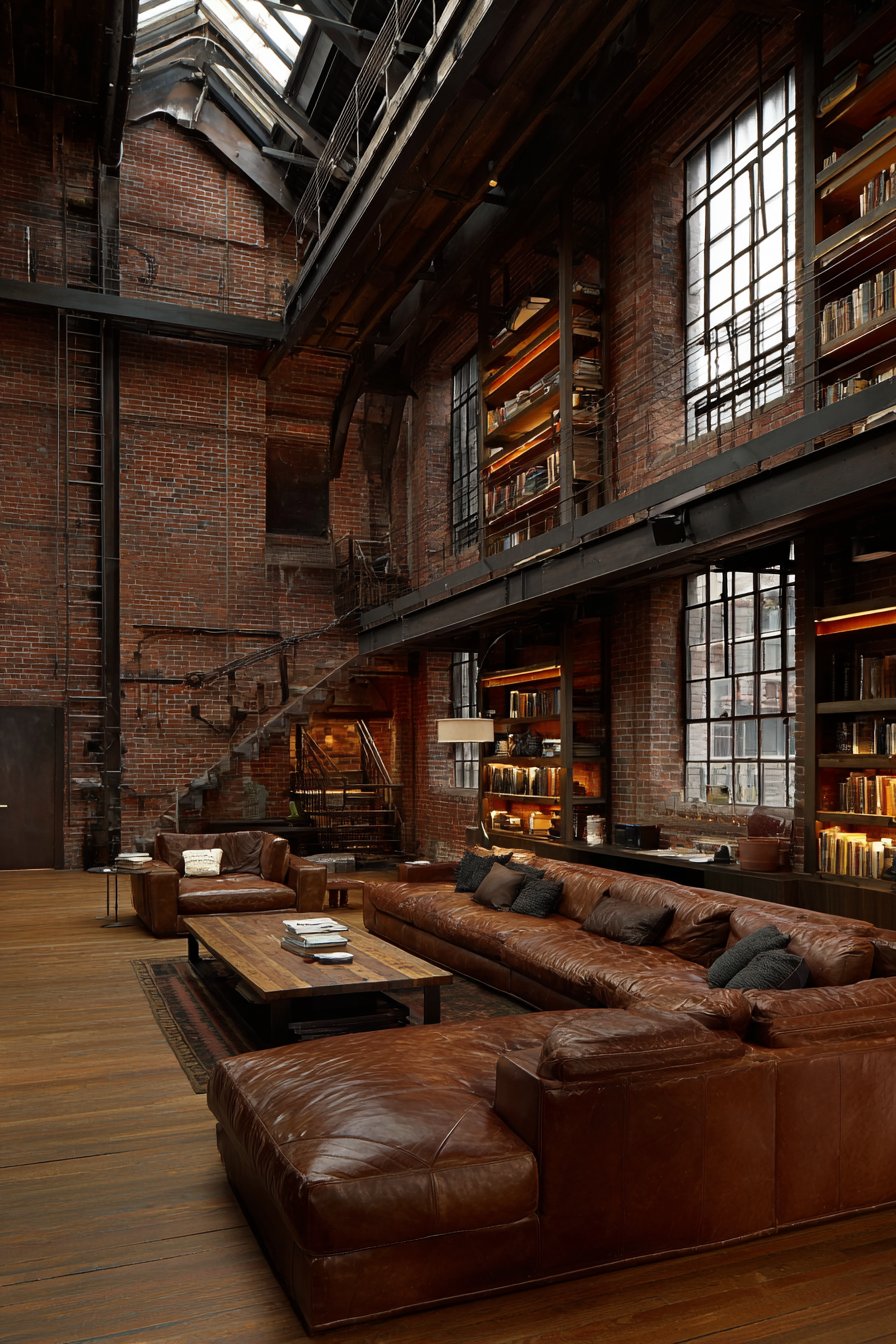
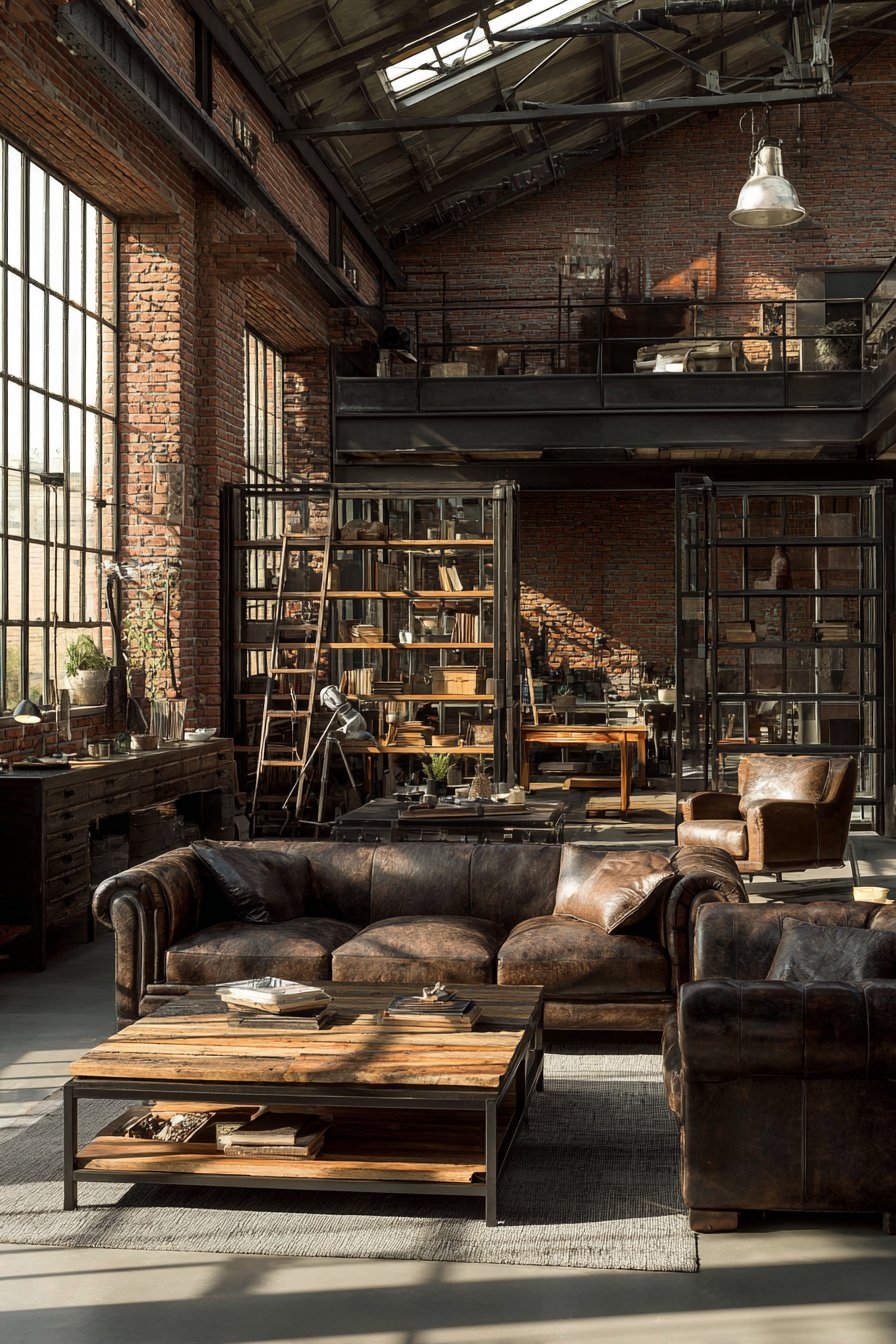
The original steel beams spanning overhead—perhaps I-beams or C-channels with riveted connections and weathered patina—tell the story of the building’s industrial past while providing compelling horizontal elements that balance the vertical emphasis of the soaring ceiling. These structural elements, left exposed and perhaps cleaned or sealed but otherwise unadorned, add an authentic architectural character that can’t be replicated with applied finishes. The industrial materials create a sense of permanence and solidity that grounds the space, while their raw, unfinished quality brings edge and urban sophistication.
Large factory-style windows allow abundant natural light to flood the space, their divided panes and metal frames reinforcing the industrial aesthetic. These windows, whether original to a historic factory or loft building or carefully selected reproductions, feature grid patterns of small panes set in metal frames, perhaps with black powder-coated steel or weathered iron finishes. The divided lights create patterns of shadow and light throughout the day, adding another layer of visual interest to the brick walls and concrete or wood floors. The generous window area ensures the space doesn’t feel cave-like despite the heavy materials, maintaining brightness and connection to the outdoors.
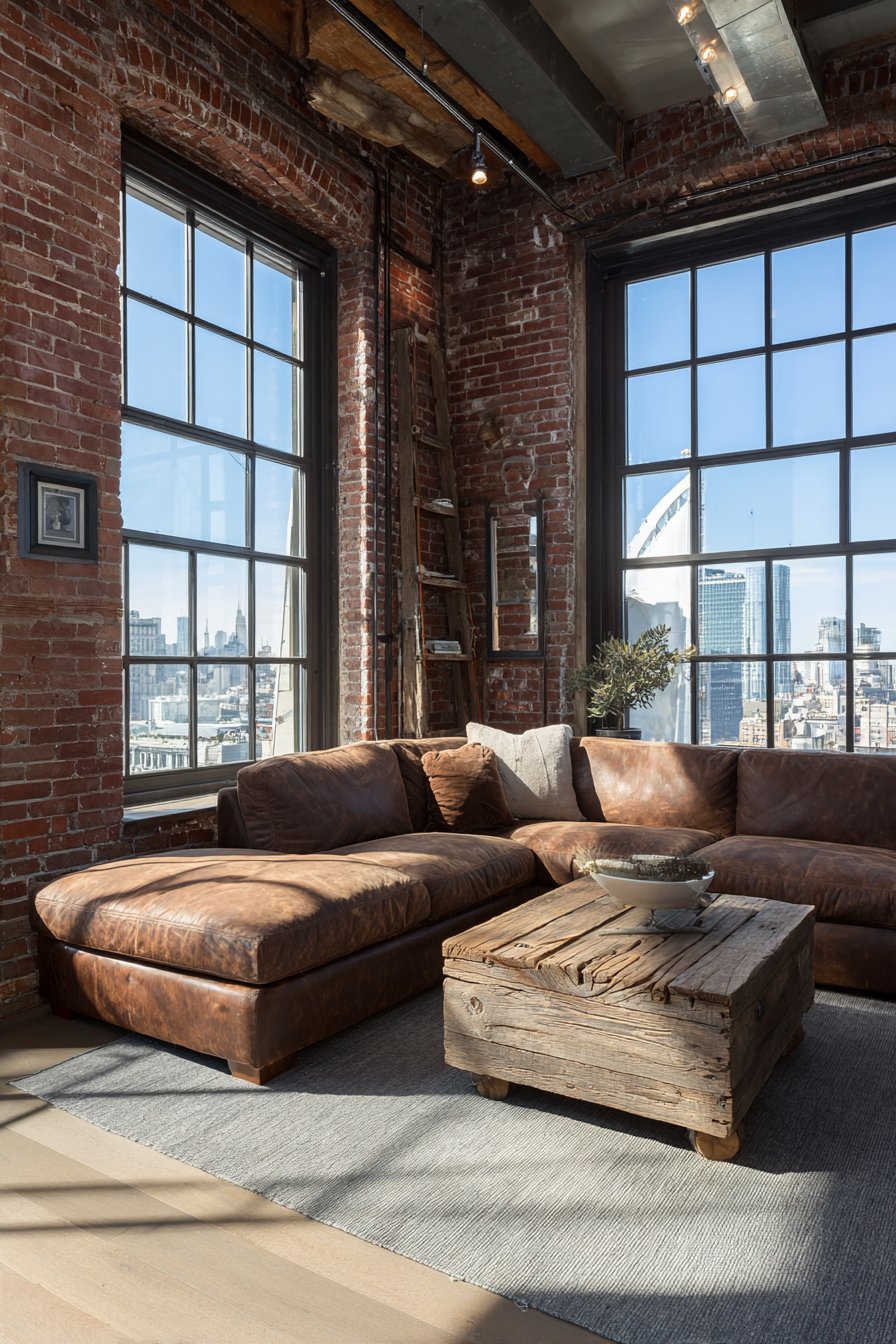
A leather sectional and reclaimed wood coffee table create a grounded seating area that balances the industrial materials with organic warmth and comfort. The leather upholstery, perhaps in cognac brown, distressed charcoal, or classic black, ages beautifully over time and complements the industrial aesthetic while providing durable, comfortable seating. The reclaimed wood coffee table, fashioned from weathered barn wood, old factory flooring, or salvaged timber, brings additional texture and history to the space. Its worn surface, nail holes, and irregular grain patterns tell a story while providing a practical surface for daily living.
Metal and wood ladder shelving units utilize the vertical space for display and storage, their industrial construction echoing the exposed beams overhead while providing functional organization. These ladder-style shelves, leaning against the brick walls or freestanding with metal frames and wood plank shelves, reach toward the ceiling to take advantage of the height. The open design maintains sight lines and doesn’t make the space feel crowded, while the mixed materials of metal and wood create visual interest. Styled with books, plants, vintage industrial objects, and personal collections, these shelves become both practical storage and decorative display that reinforces the loft aesthetic.
Key Design Tips:
- Embrace exposed brick and structural elements as inherent design features rather than concealing them with finishes
- Preserve or restore original architectural details like steel beams, columns, and factory windows to maintain authentic industrial character
- Install or specify factory-style windows with divided panes and metal frames to reinforce the aesthetic while providing ample natural light
- Choose leather upholstery for seating pieces as it ages beautifully and complements industrial materials with organic warmth
- Incorporate reclaimed wood furniture and decor to add texture, history, and warmth that balances raw industrial elements
- Use ladder shelving or other open metal and wood storage solutions to utilize vertical space without overwhelming the room’s openness
7. Compact Space with Vertical Storage Solutions
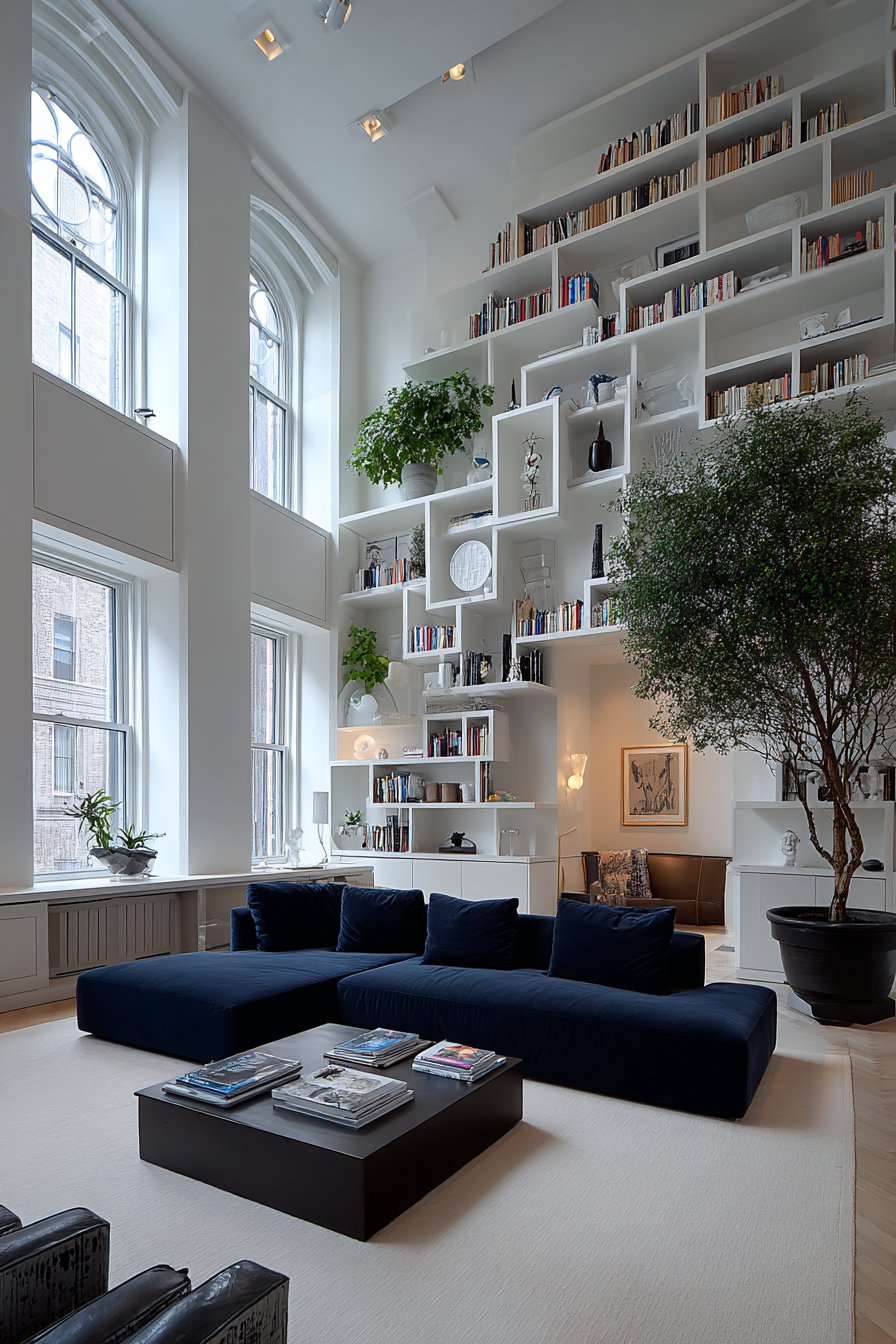
A high ceiling living room designed for smaller square footage demonstrates how clever vertical utilization can maximize functionality without sacrificing style, featuring built-in storage cabinets that extend up to a 12-foot ceiling in a clean white finish. This approach is particularly valuable in urban apartments or compact homes where floor space is at a premium but ceiling height remains generous.
The floor-to-ceiling built-in cabinets, finished in crisp white paint or laminate, provide enormous storage capacity for books, media equipment, dishware, linens, and countless other household items that would otherwise require furniture that consumes valuable floor space. Our these how to create depth in small apartment living rooms guide covers this in more detail.
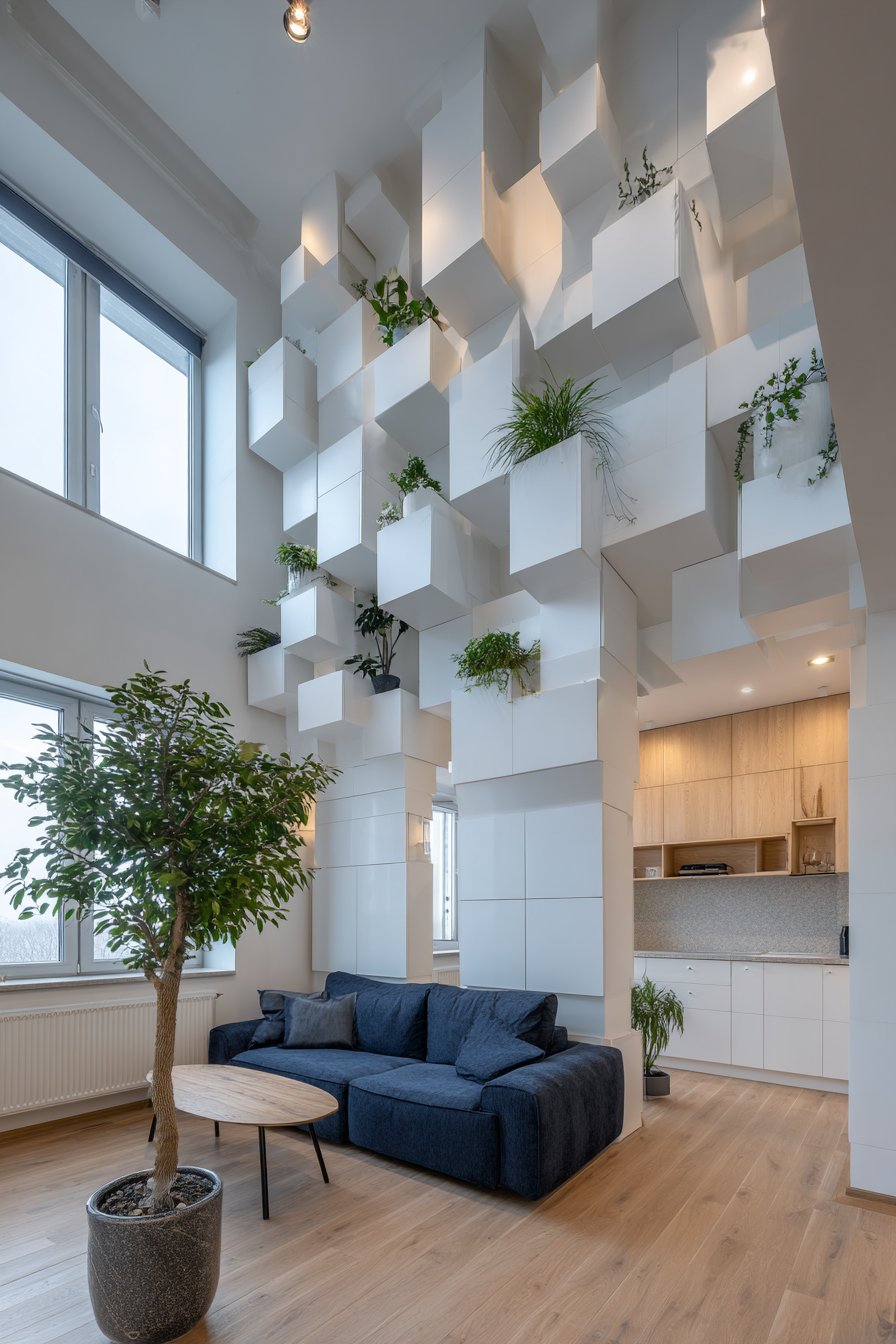
The cabinet design incorporates both open shelving sections and closed cabinets with doors, creating visual variety and allowing for both display and concealed storage. The upper cabinets, accessed by a rolling library ladder or step stool, store seasonal items or less frequently used belongings, while lower sections at arm’s reach house everyday necessities.
The white finish maintains an airy, open feeling despite the cabinets’ substantial presence, reflecting light rather than absorbing it and preventing the storage wall from feeling heavy or oppressive. Crown molding at the ceiling and baseboards at the floor integrate the built-ins seamlessly with the room’s architecture.
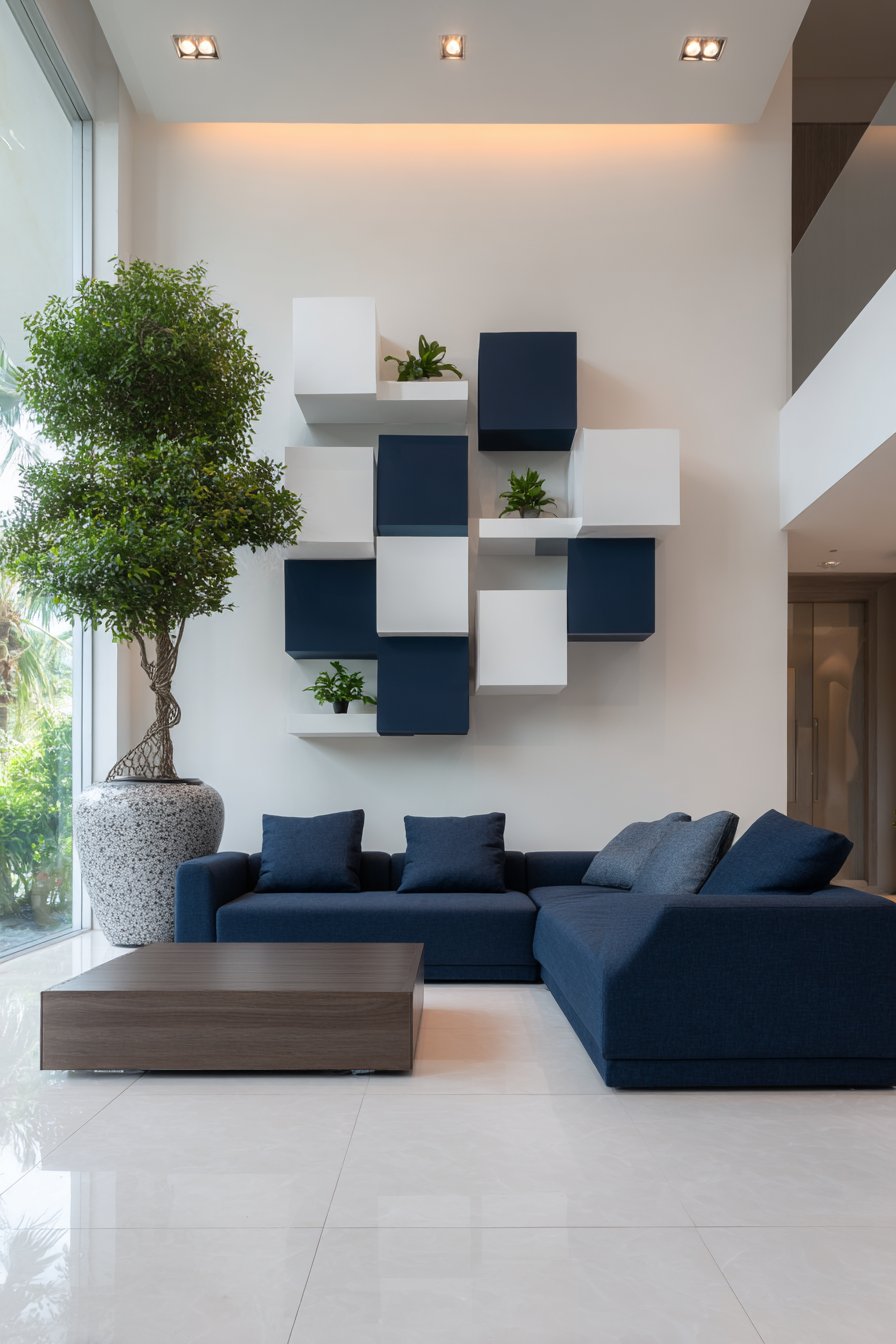
Floating shelves at varying heights display plants and books, drawing the eye upward and creating visual interest at multiple levels throughout the room. These shelves, perhaps in natural wood or painted to match the built-in cabinets, appear to float against the wall without visible brackets, maintaining clean lines.
Arranged asymmetrically at different heights rather than in uniform rows, they create a dynamic visual rhythm that guides the eye upward and emphasizes the room’s height. Styled with a mix of small potted plants, stacked books with covers facing out, decorative objects, and framed photos, these shelves add personality without clutter.
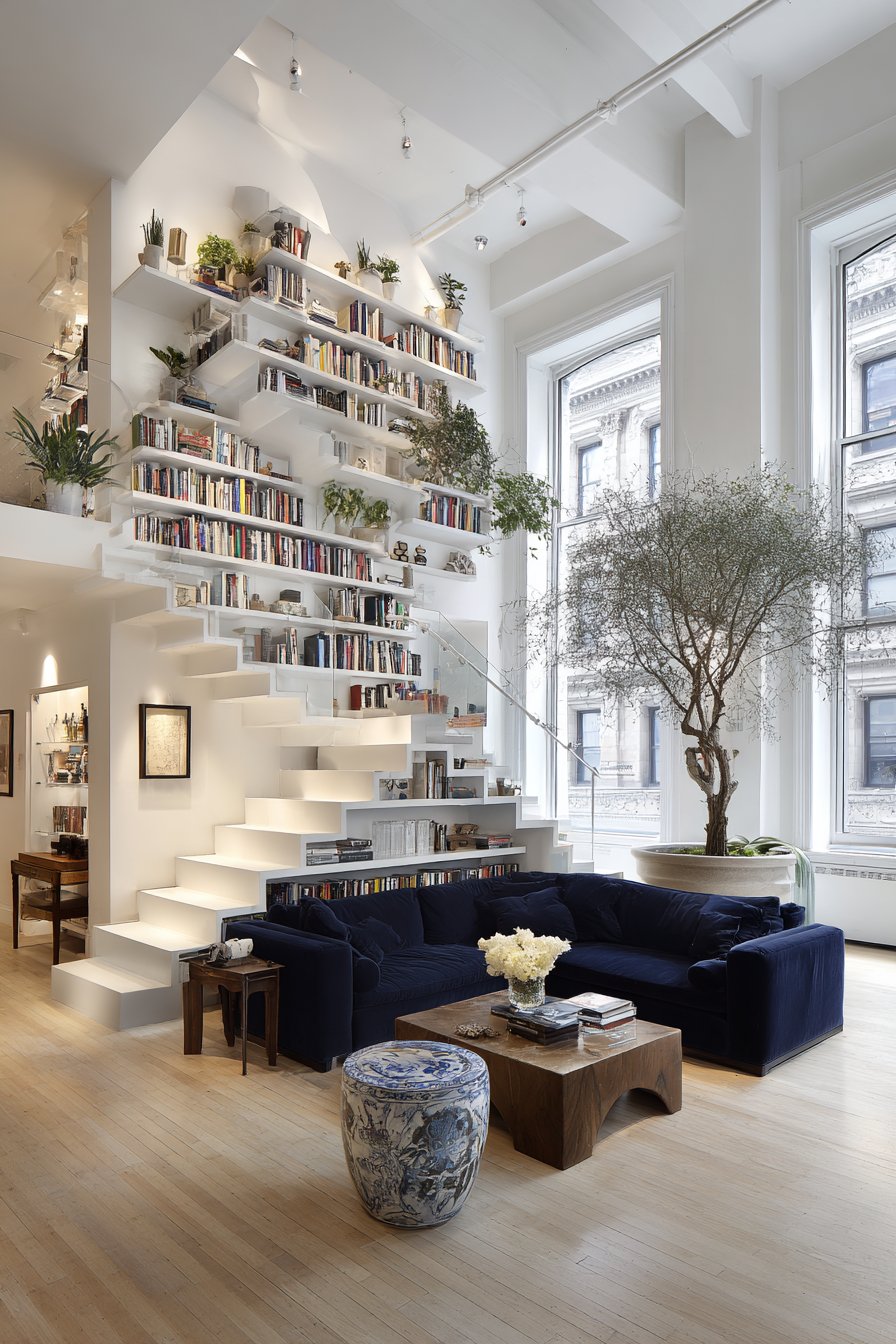
A compact sectional sofa in navy blue grounds the space while maintaining an open feel, its rich color adding depth and sophistication without overwhelming the small footprint. The navy blue provides a welcome contrast to the white built-ins while remaining neutral enough to work with various accent colors.
The sectional’s compact scale and modular design ensure it provides adequate seating without dominating the room, leaving circulation space and maintaining the sense of openness essential in smaller living rooms. A tall indoor tree in a ceramic planter emphasizes the room height, its upward-reaching branches and foliage creating a natural vertical element that softens the geometric lines of the built-in storage.
Key Design Tips:
- Install floor-to-ceiling built-in storage to maximize capacity without consuming floor space, essential in compact living rooms
- Use white or light finishes for tall storage units to maintain an airy feeling and reflect rather than absorb light
- Incorporate both open and closed storage sections to balance display opportunities with the need to conceal everyday clutter
- Add floating shelves at varying heights to create dynamic visual interest that draws the eye upward and emphasizes ceiling height
- Choose compact furniture with lower profiles that provides necessary function without overwhelming the limited floor space
- Include at least one tall plant to emphasize vertical space and add organic softness to geometric storage solutions
8. Scandinavian Minimalism with Vaulted Ceiling
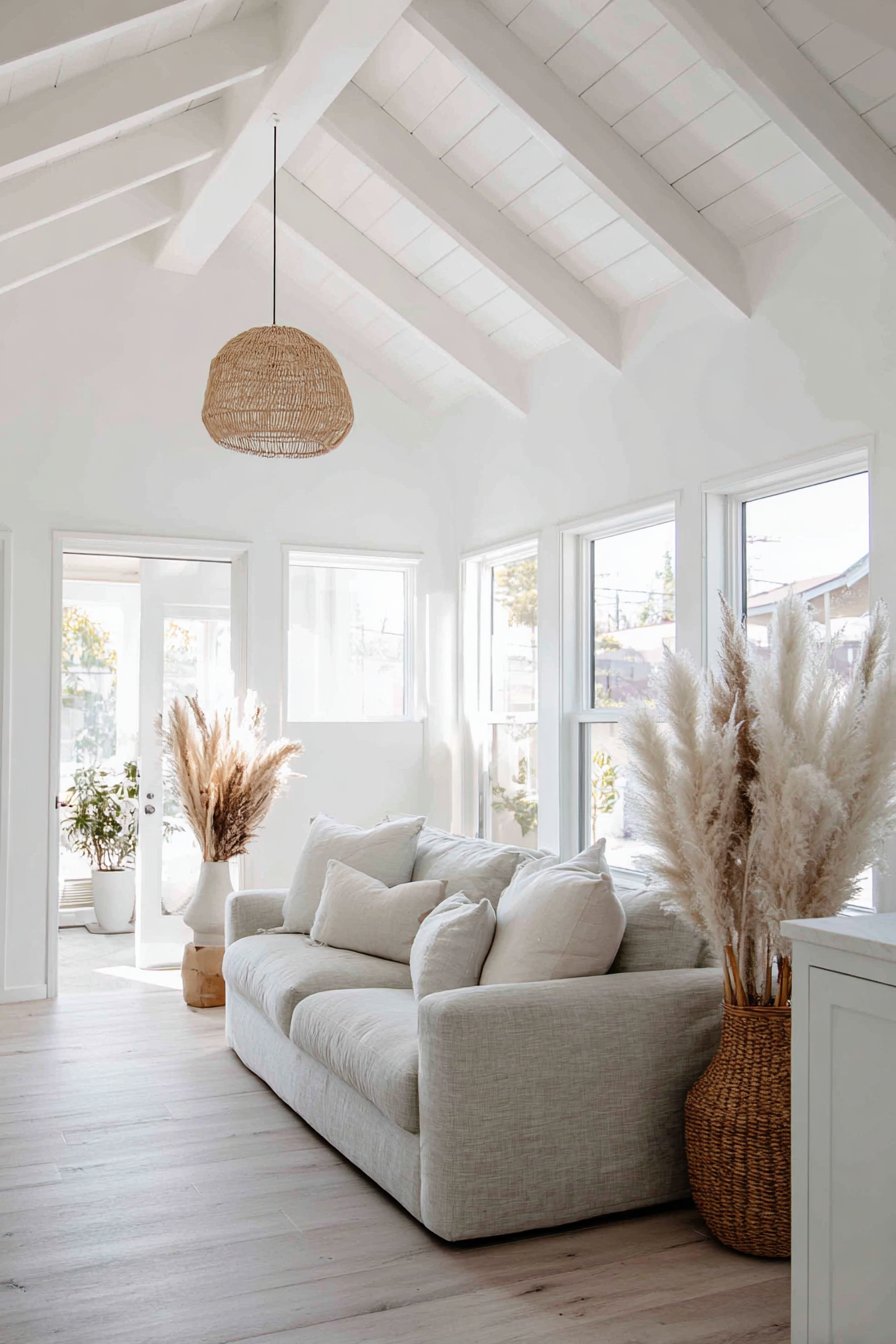
A high ceiling living room with Scandinavian minimalist design featuring white-painted wood plank walls that extend to a 14-foot vaulted ceiling with exposed rafters embodies the Nordic philosophy of simple beauty, natural materials, and functional design. The white-painted tongue-and-groove planks create subtle texture through their horizontal lines while maintaining the bright, airy quality central to Scandinavian design.
The vaulted ceiling follows the roofline, creating a dynamic angular space that feels both cozy and expansive. The exposed rafters, also painted white or perhaps left in natural pale wood, add architectural interest without visual heaviness.
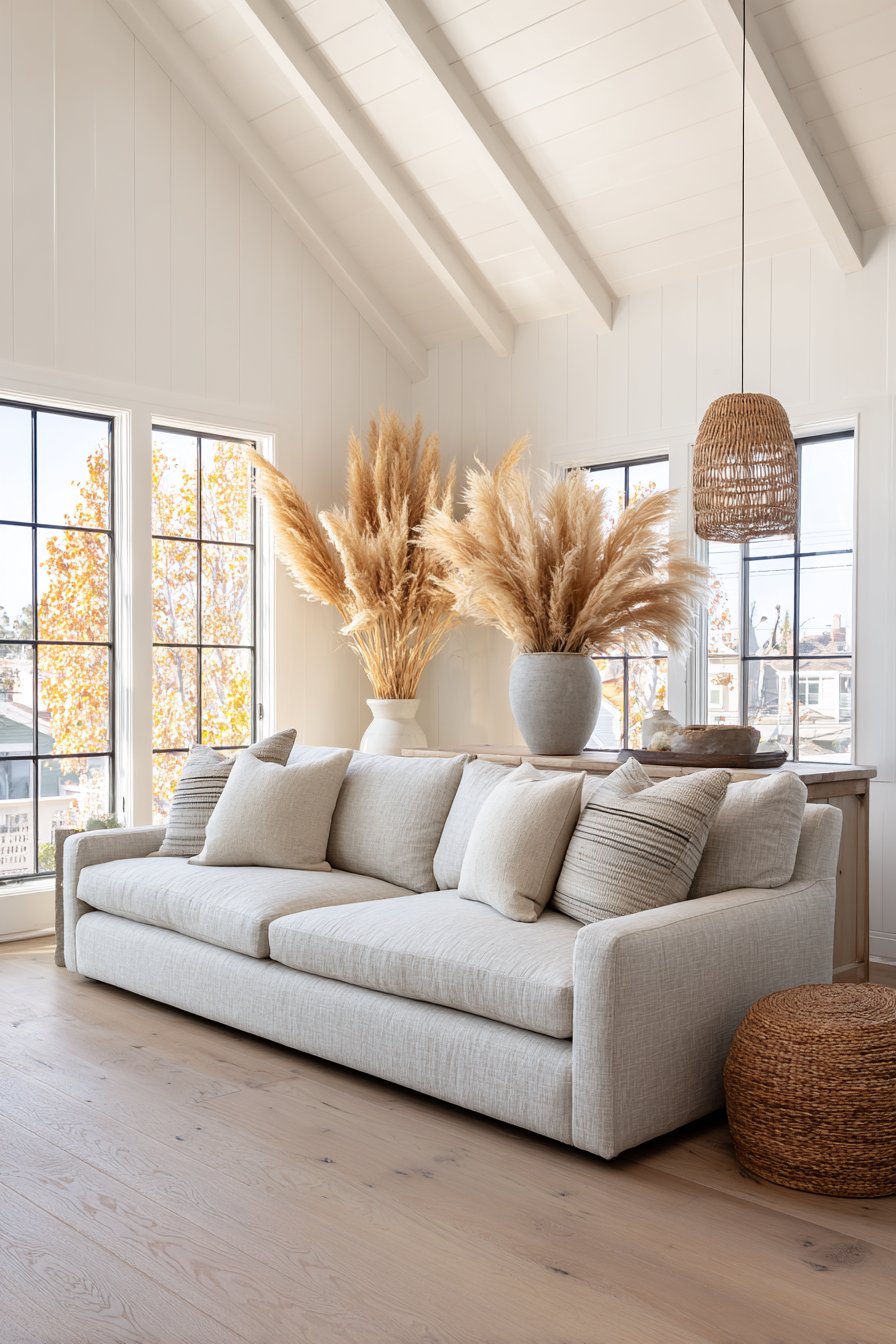
The minimal color palette focuses on whites, soft greys, and natural wood tones, creating a serene environment that feels restful and uncomplicated. This restraint in color allows the quality of light, the beauty of materials, and the purity of form to take center stage.
A simple pendant light with a natural fiber shade hangs above a light grey linen sofa, providing ambient lighting while contributing organic texture through its woven material. The pendant might be crafted from rattan, jute, seagrass, or woven cotton, materials that feel handcrafted and connect the space to natural elements despite the minimal aesthetic.
The light grey linen sofa, with its simple silhouette and natural fabric, embodies Scandinavian design principles of comfort, quality, and understated elegance. The linen upholstery, with its slightly nubby texture and tendency to soften and wrinkle naturally with use, adds organic imperfection that keeps the minimalist space from feeling sterile or cold.
Plush cushions provide comfort without excessive decoration, and the sofa’s clean lines and low profile maintain the sense of calm and order essential to the Scandinavian aesthetic. The light grey tone bridges warm and cool neutrals, working beautifully with both the white walls and natural wood flooring.
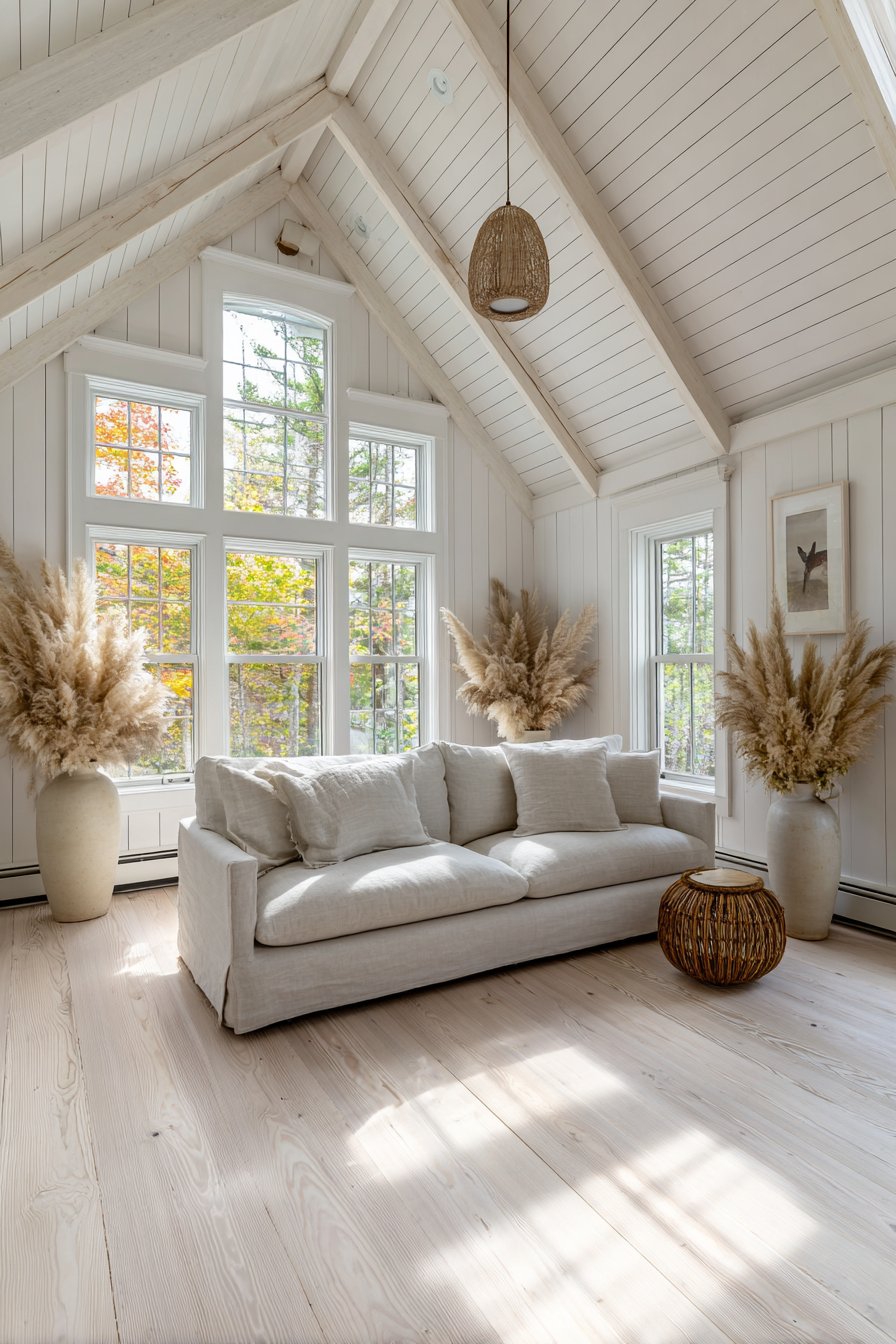
The vertical space is softened by tall dried pampas grass arrangements in ceramic vases placed strategically around the room, their feathery plumes reaching upward while adding movement and organic form. These natural elements, in neutral tones that complement the overall palette, bring life to the space without the maintenance requirements of fresh flowers or live plants.
Wide-plank blonde oak flooring with natural variations grounds the airy space with warm wood tones, its pale color and prominent grain adding subtle visual interest while supporting the Scandinavian connection to natural materials and honest expression of structure.
Key Design Tips:
- Use white or very pale painted wood planks to create subtle texture while maintaining bright, airy quality
- Embrace vaulted ceilings with exposed rafters as architectural features that add interest without excessive decoration
- Limit color palette to whites, soft greys, and natural wood tones for a serene, cohesive environment
- Choose pendant lights with natural fiber shades to add organic texture and warmth to minimal spaces
- Incorporate dried grasses or branches in tall arrangements to soften vertical space with natural movement
- Select wide-plank light wood flooring to ground the space with warmth while maintaining the Nordic aesthetic of natural materials
9. Biophilic Design with Living Plant Wall
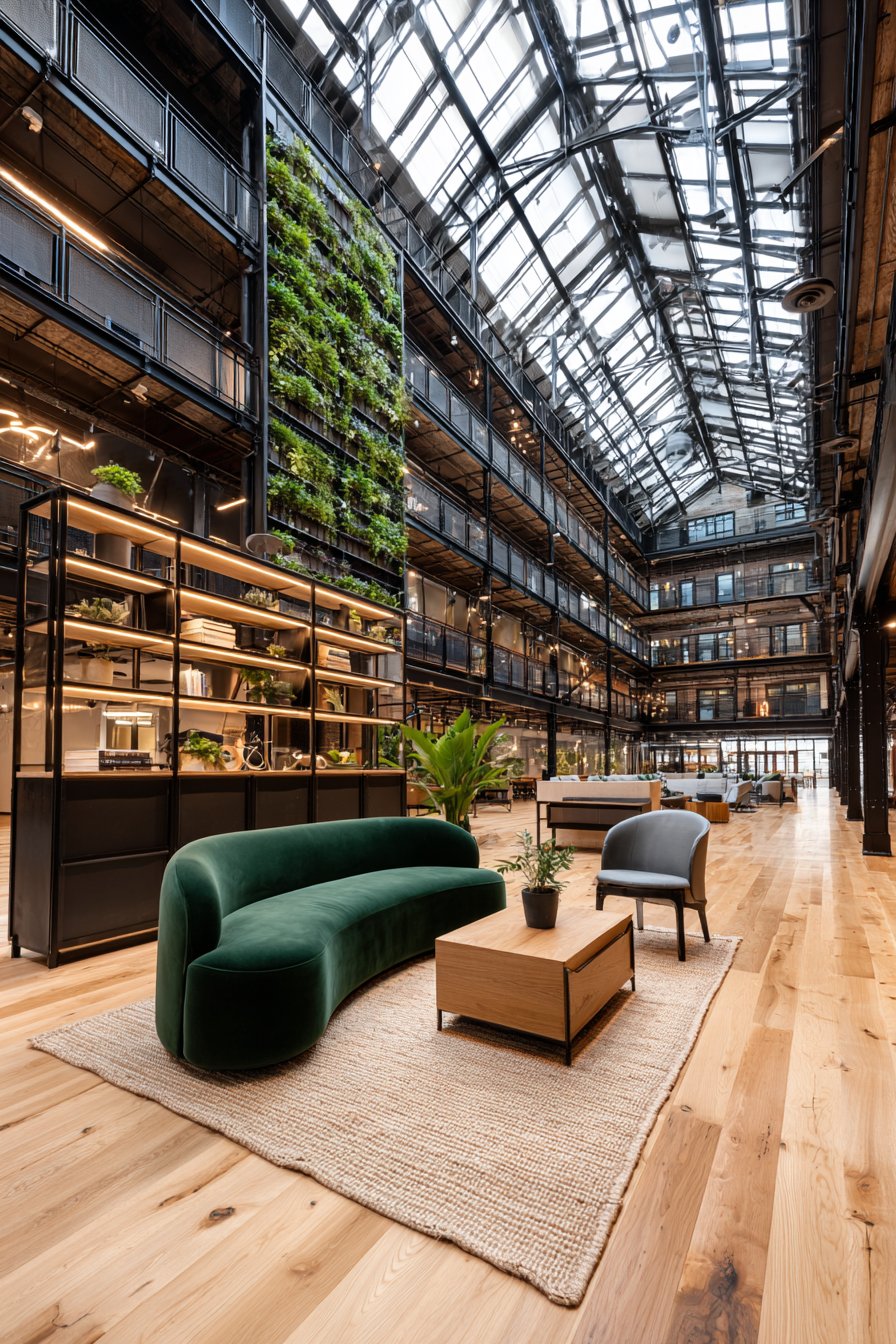
A high ceiling living room featuring a statement indoor plant wall that extends 10 feet upward on one side creates a living vertical garden that transforms the space into a lush urban oasis, celebrating the connection between interior living and the natural world. This biophilic design approach recognizes the human need for connection with nature and brings it directly into the home through a dramatic installation of mixed trailing and upright plants in a modular grid system.
The plant wall might include varieties like pothos with cascading vines, ferns with delicate fronds, philodendrons with heart-shaped leaves, spider plants with arching variegated foliage, and peace lilies with white blooms, creating varied textures, shapes, and shades of green.
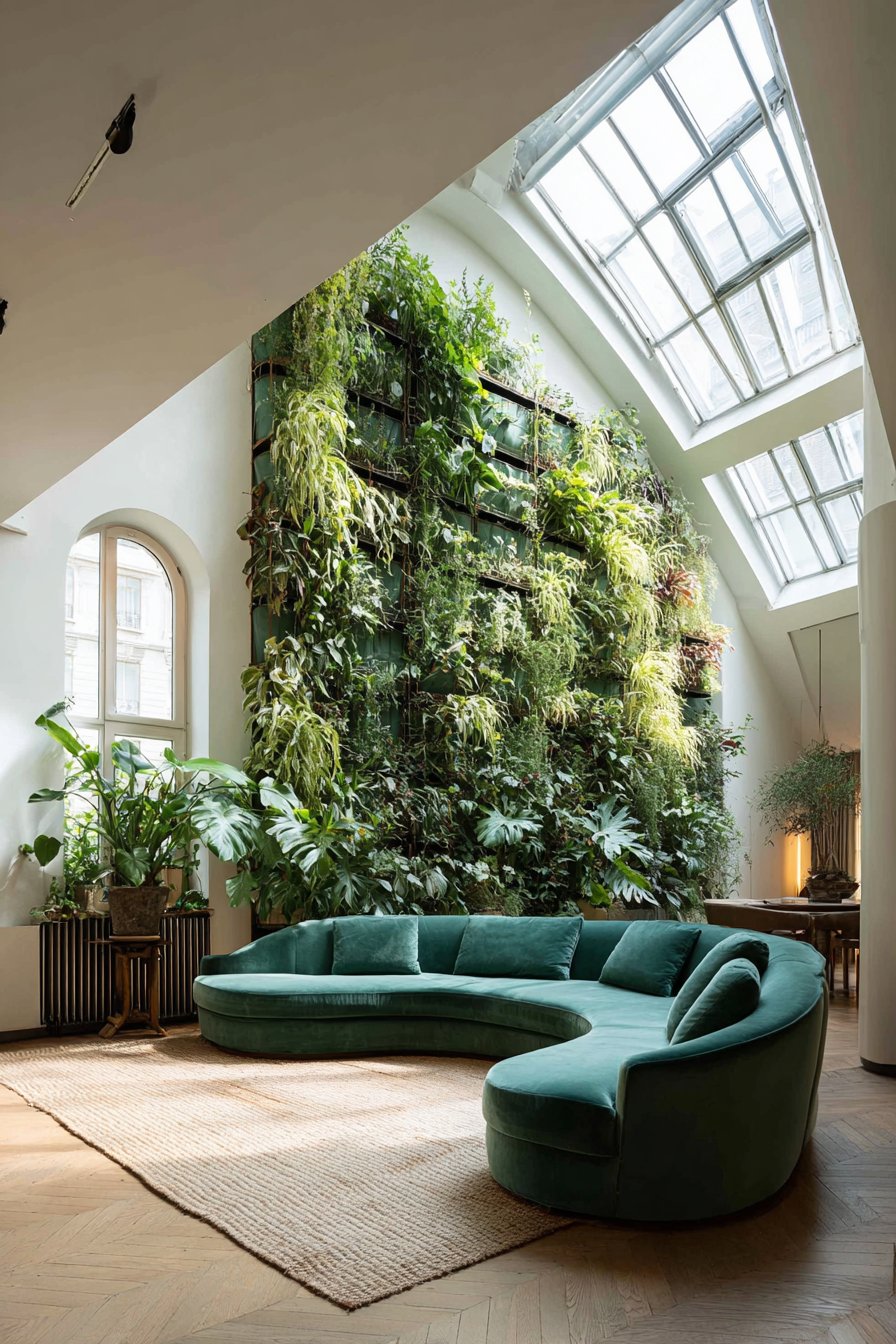
The modular grid system allows for proper irrigation, drainage, and plant care while creating a geometric framework that organizes the organic chaos of growing plants. This system might consist of individual planters mounted to a structural grid, a felt pocket system with integrated irrigation, or a hydroponic living wall with automated watering.
The technical infrastructure remains largely hidden, allowing the lush greenery to appear almost magical in its abundant growth. The plant wall requires consideration of light levels, with grow lights potentially integrated if natural light is insufficient, and access for maintenance, including watering, pruning, and occasional plant replacement.
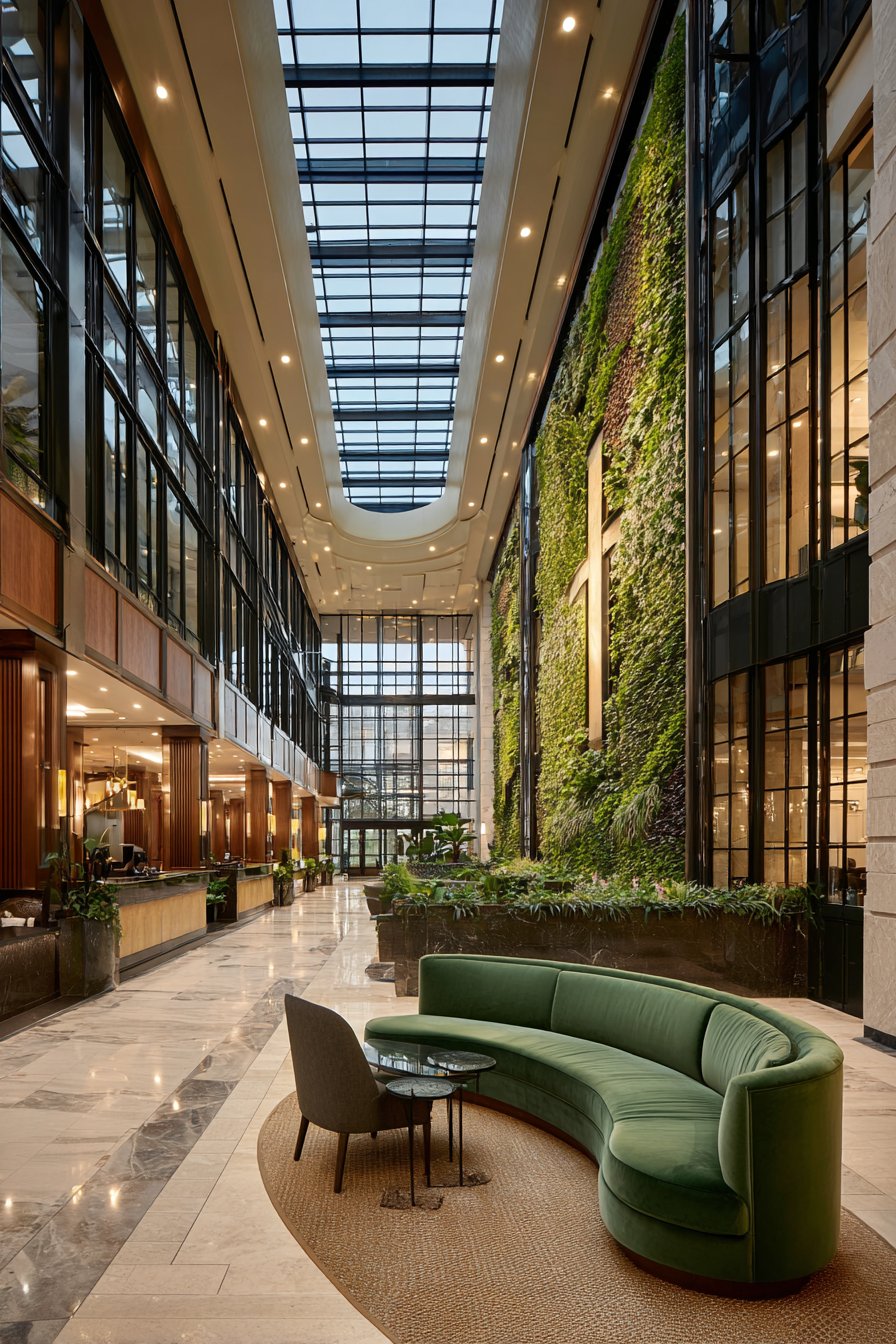
The seating area includes a curved velvet sofa in emerald green positioned to face the plant wall, creating a conversation between the manufactured textile and the living foliage while establishing the plant wall as the room’s focal point. The emerald green velvet brings luxurious texture and saturated color that complements rather than competes with the varied greens of the plant wall.
The curved silhouette of the sofa softens the room’s geometry and creates an embracing, intimate seating arrangement that encourages gathering and conversation. The plush velvet upholstery invites touch and adds sensory richness that elevates the space beyond purely visual interest.
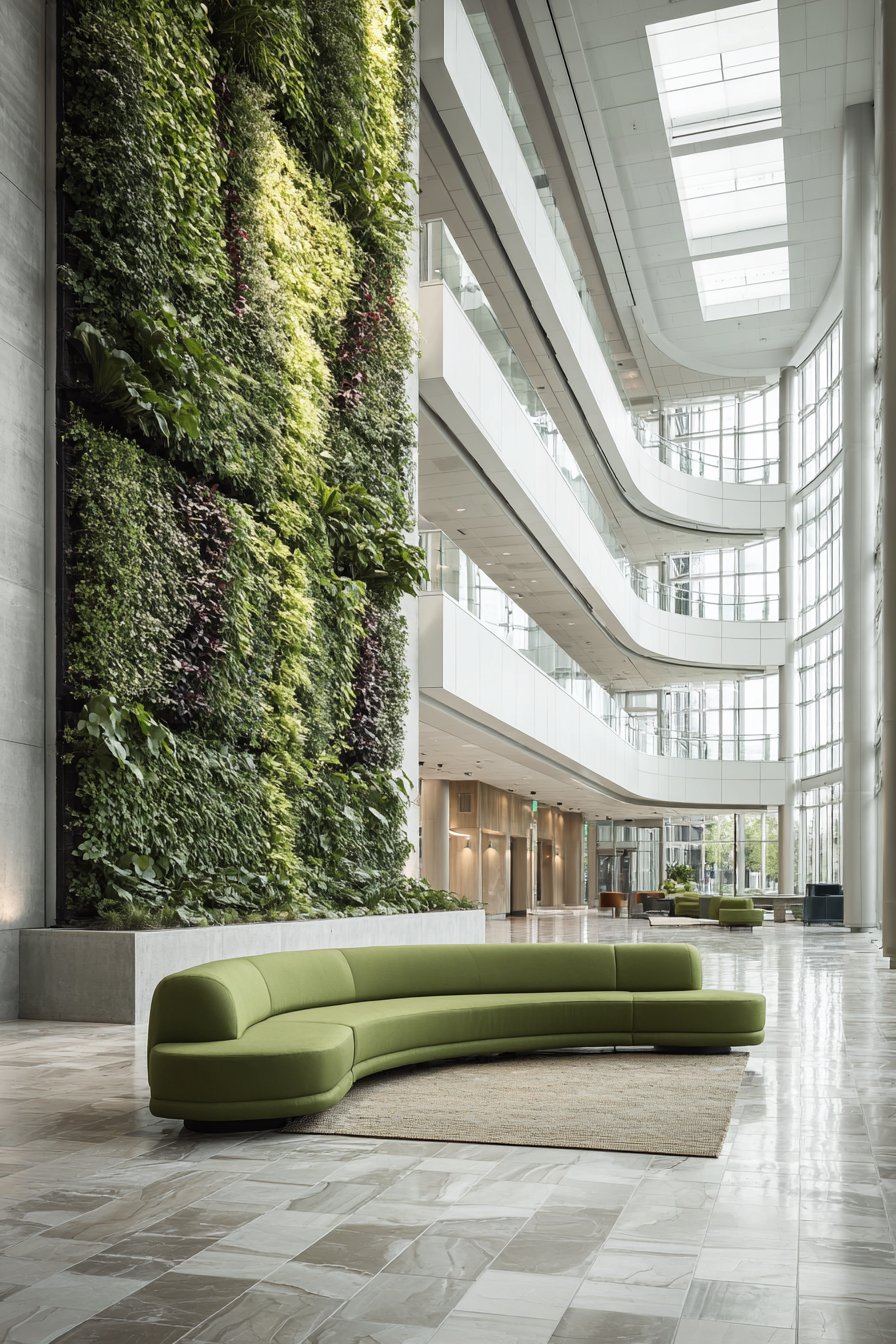
A natural jute area rug defines the conversation space, its organic woven texture and neutral tone grounding the seating arrangement while contributing additional natural material that reinforces the biophilic design concept. The jute’s chunky weave and variations in color from natural fiber add tactile and visual interest underfoot.
Large skylights above bring natural light to both the plants and living area, essential for the health of the plant wall while creating a bright, uplifting environment for the human occupants. The natural light from above eliminates shadows and creates even illumination that showcases the varied textures of foliage and fabric while supporting the photosynthesis necessary for thriving plants.
Key Design Tips:
- Install a modular living wall system with proper irrigation and drainage for successful long-term plant health
- Select a variety of plant types with different textures, growth habits, and light requirements for visual interest and resilience
- Position seating to face the plant wall, establishing it as the focal point and allowing appreciation of the living installation
- Choose furniture in complementary green tones to create a connection with the plant wall while using different materials for contrast
- Incorporate natural fiber rugs and textiles to reinforce the biophilic design concept through multiple organic materials
- Ensure adequate natural or artificial light for both plant health and human enjoyment of the space through skylights or large windows
10. Coastal Contemporary with Shiplap and Natural Textures
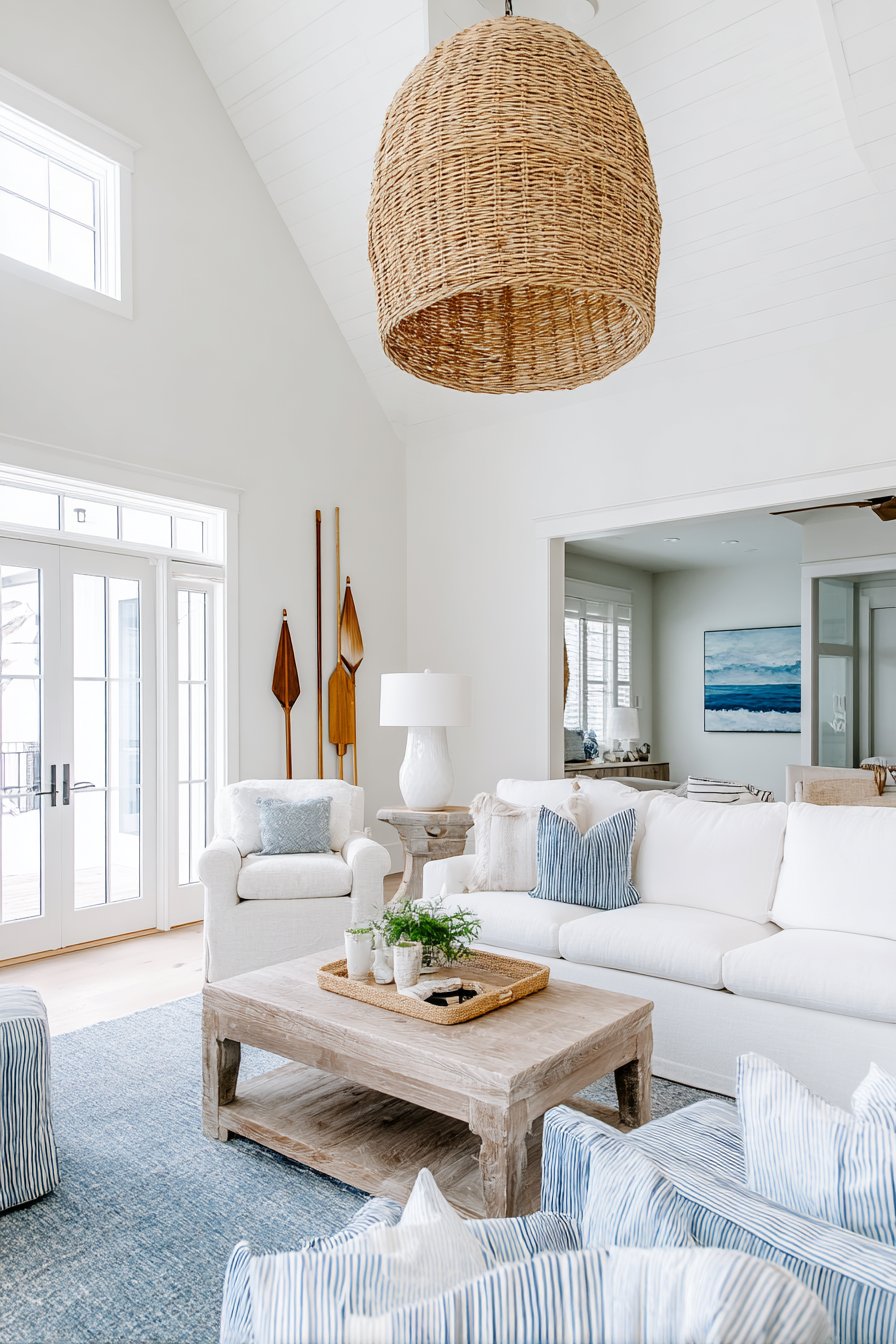
A high ceiling living room with coastal contemporary style featuring a wall of horizontal shiplap painted in soft white extending to 13-foot ceilings brings the relaxed, breezy aesthetic of seaside living to interior spaces. The shiplap paneling, with its characteristic horizontal boards and shadow lines between planks, adds subtle texture and visual interest to walls while maintaining the bright, airy quality essential to coastal design.
The soft white paint—perhaps with the slightest hint of grey or blue undertone—reflects light and creates a backdrop that evokes beach houses, sailboats, and coastal cottages while remaining sophisticated enough for contemporary interiors.
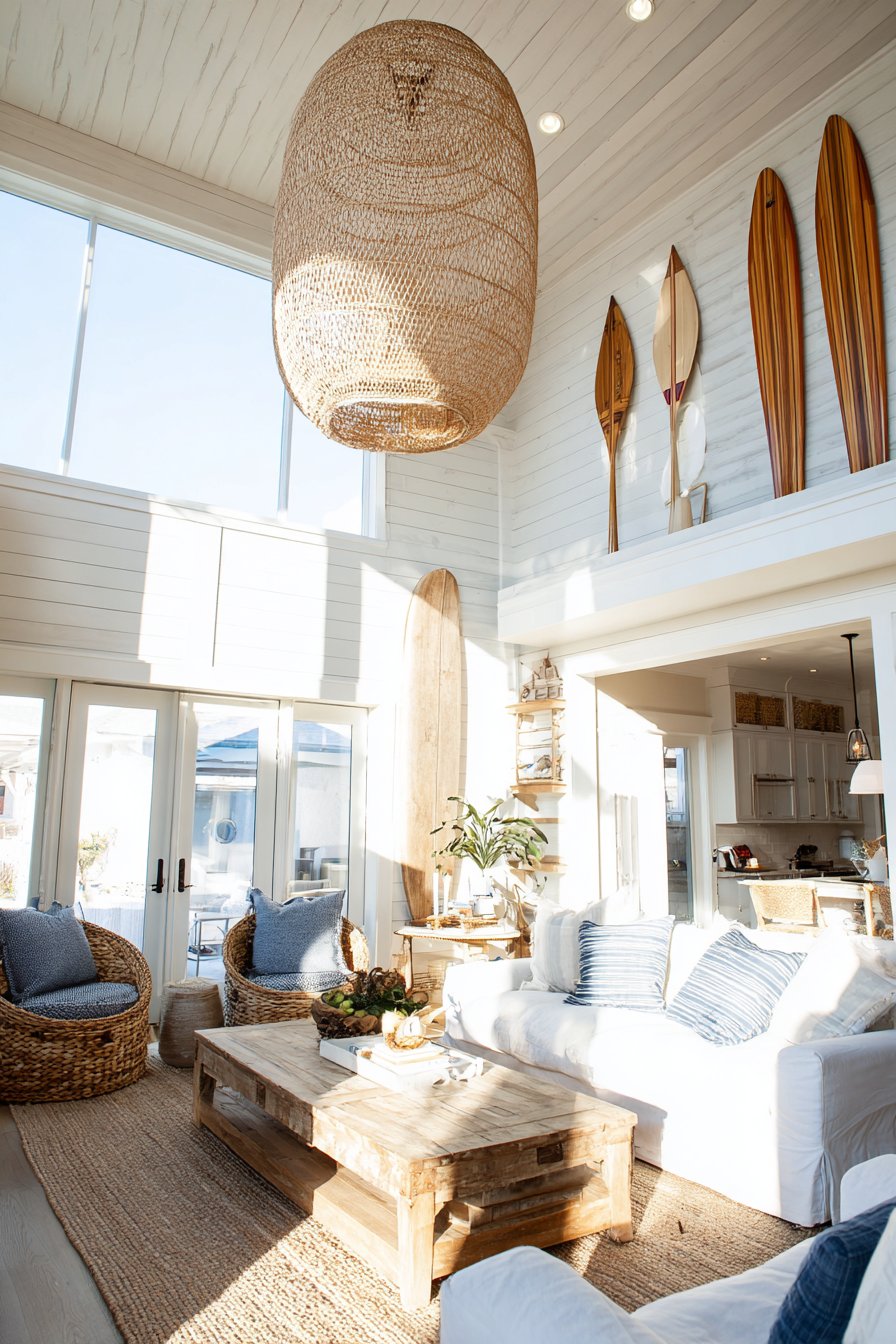
A large woven rattan pendant light hangs prominently in the center, its natural texture contrasting beautifully with the clean walls and establishing organic warmth as a central element in the design. This oversized fixture, perhaps two or three feet in diameter, makes a dramatic statement in the vertical space while maintaining the casual, natural character of coastal style.
The rattan weaving creates intricate shadow patterns across the ceiling when illuminated, adding another layer of texture and visual interest. The natural honey tones of the rattan bring warmth that prevents the white-on-white palette from feeling sterile or cold.
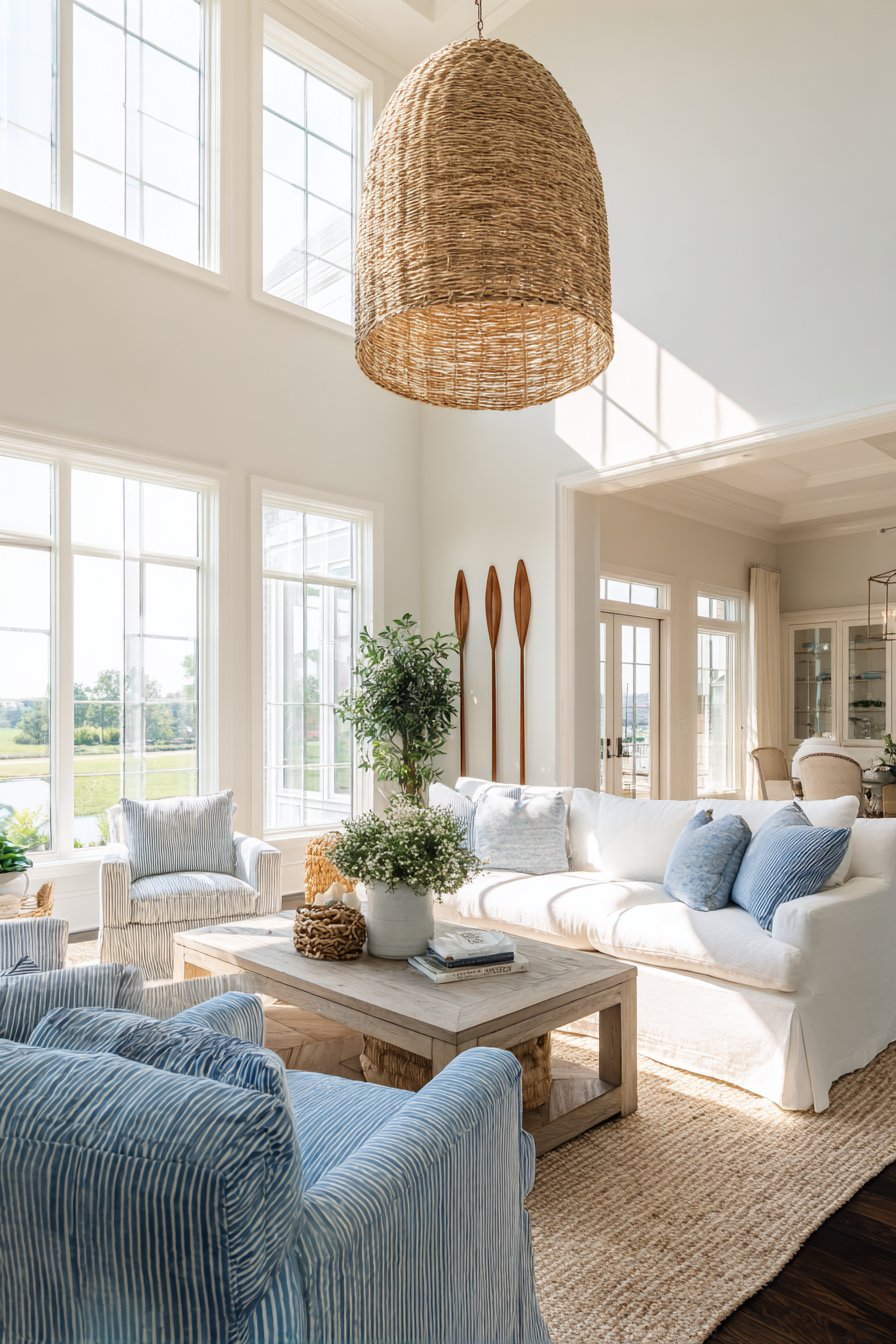
Layered seating includes a slipcovered white sofa and blue-striped accent chairs around a weathered wood coffee table, creating a relaxed, livable arrangement that invites gathering without fussiness. The white slipcovered sofa embodies coastal practicality and casual elegance, its removable covers making it family-friendly while the relaxed fit and soft cotton or linen fabric create welcoming comfort.
The blue-striped accent chairs, in classic ticking stripes or nautical-inspired patterns, add pattern and color that references sky and sea. The weathered wood coffee table, with its sun-bleached finish and distressed surface, brings texture and organic warmth while maintaining the casual, collected-over-time aesthetic of authentic beach house design.
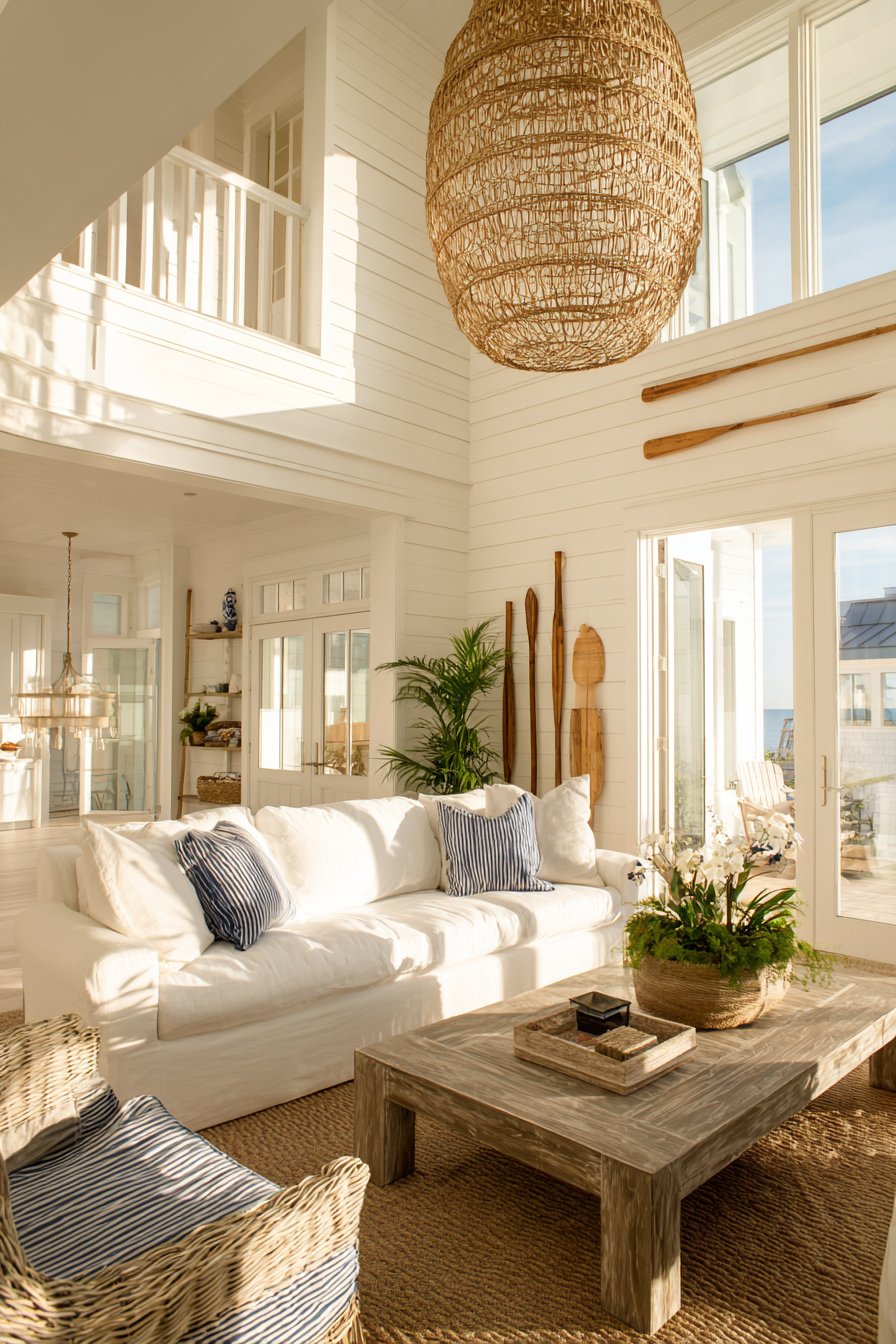
Tall wooden oars and vintage nautical decor lean against the wall, emphasizing the vertical space while reinforcing the coastal theme through carefully curated decorative elements. These oversized accessories—perhaps weathered oars from an old rowboat, vintage fishing nets, or antique nautical flags—reach upward to utilize the wall height while adding personality and storytelling elements.
The weathered wood and authentic vintage quality prevent the coastal theme from feeling costume-like or overly themed. Natural light streams through French doors, the golden hour illumination creating warmth and depth while highlighting the interplay of natural materials and textures throughout the space.
Key Design Tips:
- Install horizontal shiplap paneling to add subtle texture while maintaining bright, airy quality essential to coastal design
- Choose an oversized natural fiber pendant light to make a statement in the vertical space while introducing organic texture
- Layer seating with slipcovered pieces and striped fabrics for a relaxed, livable aesthetic that’s both sophisticated and family-friendly
- Incorporate weathered wood furniture and accessories to add texture and authenticity while preventing the space from feeling too precious
- Use tall decorative elements like oars or vintage nautical pieces to emphasize vertical space while reinforcing the coastal theme
- Maximize natural light through large windows or French doors to create the bright, sun-filled quality of authentic coastal living
Why These High Ceiling Living Room Designs Are the Best
These ten high ceiling living room designs represent the pinnacle of interior design excellence because they successfully address the unique challenges and opportunities that soaring spaces present while demonstrating diverse aesthetic approaches that cater to different personalities, lifestyles, and architectural contexts. The high ceiling living room has become one of the most desirable features in modern residential design, sought after by homeowners and renters alike for the sense of space, light, and architectural drama it provides. However, designing these elevated spaces requires specialized knowledge and careful consideration of multiple factors, including scale, proportion, lighting, acoustics, and the psychological impact of vertical space on human comfort and well-being.
The first design featuring double-height elegance with floor-to-ceiling windows exemplifies how to maximize natural light in high-ceiling living rooms while creating a seamless connection between interior and exterior environments. This approach is particularly effective in contemporary architecture where large expanses of glass have become both technically feasible and aesthetically desirable. The floor-to-ceiling windows serve multiple purposes: they flood the space with natural daylight that reaches even the uppermost portions of the vaulted ceiling, they provide views that become living artwork changing with seasons and weather, they make the room feel even more expansive by eliminating visual barriers, and they reduce the need for artificial lighting during daytime hours, contributing to energy efficiency and sustainable living practices. The statement chandelier suspended in this space demonstrates the importance of proportional lighting fixtures that can hold their own in rooms with impressive vertical volume. Too small a fixture will appear lost and inadequate, while an appropriately scaled chandelier becomes a sculptural focal point that draws the eye upward and celebrates the architectural grandeur. The built-in bookshelves reaching 16 feet high showcase how vertical storage solutions can be both functional and beautiful, providing ample capacity for collections while creating rhythmic visual patterns that emphasize height.
The modern farmhouse design with exposed wooden beams represents a timeless approach that brings warmth and character to high ceiling living rooms through architectural elements that span the overhead space. This design is particularly successful because it addresses one of the primary challenges of tall rooms—the potential for feeling cold or institutional—by introducing natural wood materials that provide visual warmth and organic texture. The exposed beams create horizontal lines that balance the vertical emphasis, preventing the eye from simply shooting straight upward with nowhere to land. The strategic use of tall potted plants like fiddle leaf figs and snake plants demonstrates an innovative solution for filling vertical space with living elements that require no permanent installation and can be rearranged as needed. These plants bring life, movement, oxygen, and biophilic benefits while their impressive height emphasizes the room’s vertical dimension. The floor-to-ceiling stone fireplace serves as a powerful vertical anchor that provides both visual weight and functional warmth, creating a natural focal point around which furniture can be arranged. This design proves particularly appealing to those seeking a balance between rustic charm and modern comfort, making it ideal for suburban homes, renovated barns, or new construction that incorporates farmhouse elements.
The statement gallery wall design demonstrates how art and personal collections can transform a high ceiling living room into a curated exhibition space that reflects the homeowner’s personality and aesthetic preferences. This approach is particularly valuable because it solves the problem of blank wall space in tall rooms without requiring expensive architectural modifications or built-in elements. A gallery wall extending 12 feet upward utilizes vertical real estate that might otherwise remain empty while creating a dynamic focal point that evolves over time as new pieces are added or arrangements are modified. The eclectic mix of framed artwork in various sizes creates visual interest through intentional variety, with the arrangement following principles of balance and composition that prevent the collection from appearing haphazard or cluttered. This design approach is highly accessible to homeowners at various budget levels since it can incorporate everything from valuable original artwork to affordable prints, family photographs, and flea market finds. The charcoal grey sectional provides visual weight and sophistication while allowing the artwork to command attention, demonstrating the importance of furniture selection that supports rather than competes with the room’s primary focal point. The modern arc floor lamp adds sculptural interest while bridging floor and ceiling, its curved form echoing the upward movement of the gallery wall.
The two-story window design with mezzanine reading nook showcases how high ceiling living rooms can incorporate multiple functional levels that maximize usable square footage while creating visual drama. This approach is particularly effective in loft apartments, converted industrial spaces, or new construction designed to take advantage of vertical space for more than just visual impact. The mezzanine adds a private retreat that overlooks the main living area, creating opportunities for reading, working, meditation, or simply observing household activity from a different vantage point. The floor-to-ceiling sheer curtains in natural linen demonstrate sophisticated window treatment strategies for expansive glass surfaces, providing privacy control and light diffusion without blocking views or creating visual heaviness. The low-profile modular sofa creates intentional contrast with the soaring space, proving that successful high ceiling design often relies on juxtaposition between horizontal and vertical elements, between intimacy and grandeur. The light oak flooring reflects and amplifies natural light while its smooth surface allows moving shadows cast by window mullions and architectural elements to create ever-changing patterns that bring dynamism to the space throughout the day.
The geometric pendant light installation at staggered heights represents contemporary lighting design that treats fixtures as sculptural installations rather than merely functional necessities. This approach is ideal for high ceiling living rooms in modern or contemporary homes where clean lines, geometric forms, and artistic expression define the aesthetic. The three oversized fixtures suspended at different heights create visual rhythm and movement, preventing the monotony of symmetrical arrangements while filling the upper volume with compelling forms that remain interesting from multiple viewing angles. The mid-century modern furniture, including the walnut credenza and iconic lounge chair, brings timeless design classics into the space, proving that high ceiling rooms can accommodate vintage or retro furnishings when scaled and positioned appropriately. The vertical storage solutions utilizing tall narrow shelving demonstrate how to maximize storage capacity without consuming excessive floor space, a critical consideration in urban apartments or smaller homes where every square foot counts. This design proves particularly successful in open-plan living spaces where the living room flows into dining or kitchen areas, as the dramatic lighting installation helps define the living zone while maintaining visual connection to adjacent spaces.
The industrial loft aesthetic with exposed brick walls and steel beams celebrates raw architectural honesty that has become increasingly popular in urban residential conversions and new construction seeking to capture loft character. This design approach is particularly effective in buildings with authentic industrial heritage, where original materials tell the story of the structure’s previous life as factory, warehouse, or commercial space. The exposed brick extending to 16-foot ceilings provides rich texture and visual weight that makes tall walls feel substantial rather than empty, while the natural color variations and irregular mortar joints create inherent visual interest that requires minimal additional decoration. The original steel beams overhead add horizontal elements that balance vertical emphasis while their weathered patina and riveted connections provide industrial character that cannot be replicated with applied finishes. The large factory-style windows with divided panes ensure the space remains bright despite heavy materials, demonstrating how industrial design successfully combines rough textures with abundant natural light. The leather sectional and reclaimed wood coffee table bring organic warmth that prevents the industrial materials from feeling cold or unwelcoming, while the metal and wood ladder shelving utilizes vertical space with storage solutions that reinforce rather than contradict the industrial aesthetic. This design particularly appeals to urban dwellers seeking authentic character, creative professionals who appreciate the artistic nature of exposed materials, and those who value sustainable design practices like adaptive reuse and reclaimed materials.
The compact high ceiling living room with vertical storage solutions proves that limited floor space need not limit design possibilities when generous ceiling height is available. This design is particularly valuable for urban apartments, studios, condos, and small homes where square footage comes at a premium but ceiling height remains substantial. The floor-to-ceiling built-in cabinets in clean white finish demonstrate how vertical storage can provide enormous capacity without the footprint of traditional furniture pieces like dressers, bookcases, and media consoles that would crowd a small floor plan. The white finish maintains an airy, open feeling by reflecting rather than absorbing light, a critical consideration in compact spaces where dark colors or heavy materials could make the room feel cave-like or oppressive. The floating shelves at varying heights create dynamic visual interest while drawing the eye upward to emphasize ceiling height, making the room feel larger than its actual square footage. The compact navy blue sectional proves that rich colors can work successfully in small spaces when balanced with light walls and strategic furniture selection. The tall indoor tree emphasizes vertical space while bringing biophilic benefits and organic softness to geometric storage solutions, demonstrating how even compact high ceiling living rooms can incorporate greenery that contributes to air quality and psychological well-being.
The Scandinavian minimalist design with vaulted ceiling and white-painted wood planks embodies Nordic design philosophy that emphasizes simplicity, natural materials, and functional beauty without excess ornamentation. This approach is particularly successful in high ceiling living rooms because it prevents the space from feeling overwhelming or overly decorated, instead creating serene environments that feel restful and uncomplicated. The white-painted tongue-and-groove planks add subtle texture through horizontal lines while maintaining the bright, airy quality central to Scandinavian aesthetics, proving that minimalism need not mean stark or cold when natural materials and thoughtful details are incorporated. The vaulted ceiling following the roofline creates dynamic angles that add architectural interest without requiring additional decoration, while exposed rafters provide structural honesty that Scandinavian design celebrates. The simple pendant light with natural fiber shade demonstrates how organic materials like rattan, jute, or woven cotton add warmth and texture within minimal color palettes. The light grey linen sofa embodies Scandinavian principles of comfort, quality, and understated elegance, with natural fabric that softens and wrinkles beautifully over time rather than maintaining artificial perfection. The tall dried pampas grass arrangements soften vertical space with organic movement while requiring no maintenance, and the wide-plank blonde oak flooring grounds the airy space with warm wood tones that complete the connection to natural materials. This design particularly appeals to those seeking calm, uncluttered environments that support mindful living and appreciate the beauty of simplicity, natural light, and honest materials.
The biophilic design with living plant wall represents the cutting edge of sustainable, health-focused interior design that recognizes the profound benefits of incorporating living nature directly into residential spaces. This approach is particularly powerful in high ceiling living rooms where vertical space provides the canvas for dramatic plant installations that would be impossible in standard-height rooms. The 10-foot plant wall extending upward creates a living artwork that changes and grows over time, providing visual interest that evolves with the seasons as plants mature, flower, or require replacement. The modular grid system with mixed trailing and upright plants demonstrates technical sophistication in irrigation, drainage, and plant care while organizing organic growth into a framework that reads as intentional design rather than random greenery. The biophilic benefits extend beyond aesthetics to include improved air quality through natural filtration, humidity regulation, noise absorption, and psychological benefits including stress reduction, improved mood, enhanced creativity, and increased sense of connection to the natural world. The curved emerald green velvet sofa positioned to face the plant wall creates dialogue between manufactured luxury and living nature while establishing the installation as the room’s unquestionable focal point. The natural jute area rug and large skylights reinforce the biophilic concept through additional natural materials and abundant daylight that supports both plant health and human well-being. This design particularly appeals to environmentally conscious homeowners, urban dwellers seeking nature connection, and those prioritizing health and wellness in residential design.
The coastal contemporary design with shiplap walls and natural textures brings the relaxed elegance of seaside living to high ceiling living rooms through carefully curated materials, colors, and decorative elements that evoke beach houses and coastal cottages. This approach is particularly successful because it creates spaces that feel both sophisticated and livable, formal enough for entertaining yet relaxed enough for everyday family life. The horizontal shiplap extending to 13-foot ceilings adds subtle texture and visual interest while maintaining the bright, airy quality essential to coastal aesthetics through soft white paint with slight grey or blue undertones that reference sea and sky. The large woven rattan pendant light demonstrates how natural fiber fixtures can make dramatic statements in vertical space while introducing organic warmth that prevents white-on-white palettes from feeling sterile. The layered seating with slipcovered white sofa and blue-striped accent chairs creates a relaxed arrangement that balances sophistication with practicality, as slipcovers can be removed for washing—essential in homes with children, pets, or proximity to sandy beaches. The weathered wood coffee table and tall wooden oars leaning against the wall bring authentic coastal character through materials that show age and wear rather than attempting artificial perfection. The French doors allowing natural light to stream in during golden hour create the sun-filled quality of authentic coastal living while providing access to outdoor spaces like decks, patios, or gardens. This design particularly appeals to those drawn to coastal lifestyles regardless of geographic location, families seeking livable elegance, and homeowners who appreciate natural materials, relaxed formality, and connections to maritime traditions and seaside memories.
Each of these ten high ceiling living room designs succeeds because it addresses fundamental design principles while offering distinct aesthetic directions. They demonstrate mastery of scale and proportion, ensuring that furniture, lighting fixtures, and decorative elements are appropriately sized for rooms with impressive vertical volume. They showcase effective lighting strategies that layer natural light, ambient illumination, task lighting, and accent lighting to create functionality and atmosphere throughout all hours. They utilize vertical space purposefully through tall storage solutions, floor-to-ceiling architectural elements, ascending plant arrangements, staggered lighting installations, and gallery walls that draw the eye upward. They create visual connections between floor and ceiling through strategic elements that bridge the vertical distance and prevent the upper and lower portions of the room from feeling disconnected. They maintain human scale and comfort despite architectural grandeur by incorporating low-profile furniture, intimate seating arrangements, warm materials, and design elements that create psychological comfort within impressive physical volume.
These designs also demonstrate versatility across architectural styles, proving that high ceiling living rooms can successfully accommodate everything from industrial loft aesthetics to Scandinavian minimalism, from modern farmhouse charm to coastal contemporary elegance, from mid-century modern sophistication to biophilic design innovation. This versatility is crucial because high ceilings appear in diverse building types including historic conversions, new luxury construction, urban lofts, suburban homes, beach houses, and mountain retreats—each requiring design approaches appropriate to their context, climate, and the lifestyle needs of their occupants. The designs showcase how color palettes ranging from all-white serenity to rich jewel tones can work successfully in tall spaces when balanced with appropriate materials and lighting. They prove that both minimal and maximalist approaches can succeed, whether through Scandinavian restraint or eclectic gallery walls, as long as design decisions remain intentional and cohesive.
The material selections across these ten designs demonstrate sophisticated understanding of how textures, finishes, and surface qualities impact the perception of space and light. Natural materials including wood, stone, brick, leather, linen, jute, and rattan appear throughout, bringing organic warmth that prevents high ceiling rooms from feeling cold or institutional. These materials also age gracefully, developing patina and character over time rather than showing wear as damage. The strategic use of reflective surfaces like light-colored oak flooring and white-painted walls helps bounce natural light throughout the space and into upper reaches that might otherwise remain shadowy. Textured surfaces including exposed brick, shiplap paneling, woven fibers, and visible wood grain add visual and tactile interest that prevents smooth expanses from appearing flat or monotonous.
The furniture selections demonstrate critical understanding of how scale, profile, and placement impact the success of high ceiling living rooms. Low-profile sectionals, modular sofas, and pieces with horizontal emphasis create intentional contrast with vertical space, preventing furniture from competing with architecture while establishing comfortable human-scaled zones within grand volumes. The consistent use of neutral upholstery in colors like grey, beige, navy, and white provides sophisticated foundations that work with various accent colors and allow architectural elements to command attention. The incorporation of iconic design pieces like mid-century lounge chairs or sculptural arc lamps adds artistic merit and timeless appeal that elevates spaces beyond merely functional arrangements.
The lighting strategies across these designs prove particularly sophisticated, recognizing that successful illumination in high ceiling living rooms requires layered approaches addressing multiple needs. Natural light enters through floor-to-ceiling windows, clerestory openings, skylights, and large factory-style expanses, providing primary illumination during daylight hours while reducing energy consumption and supporting circadian rhythms. Statement fixtures including oversized chandeliers, dramatic pendant installations, and geometric compositions fill vertical voids with sculptural forms while providing ambient lighting for evening hours. Task lighting through arc floor lamps, table lamps, and reading lights ensures functionality for specific activities. Accent lighting highlights architectural features, artwork, or design elements while adding depth through strategic shadows and highlights.
The incorporation of plants and natural elements throughout these designs recognizes the profound importance of biophilic design in creating healthy, psychologically supportive living environments. From the dramatic 10-foot living wall to tall potted fiddle leaf figs, from dried pampas grass arrangements to strategically placed indoor trees—these organic elements bring life, movement, air purification, and visual softness that balances hard architectural edges. The plants also serve practical design functions by filling vertical space, creating visual connections between floor and ceiling, adding color and texture, and emphasizing room height through their impressive scale.
The storage solutions demonstrate innovative thinking about how to maximize functionality in high ceiling living rooms without sacrificing aesthetics. Floor-to-ceiling built-ins, tall narrow shelving units, ladder-style bookcases, and vertical storage systems take advantage of height to provide capacity that would require significant floor space if arranged horizontally. These solutions prove particularly valuable in compact living rooms or open-plan spaces where furniture must serve multiple functions while maintaining visual lightness and flow.
These ten high ceiling living room designs represent best practices because they balance multiple competing demands: creating visual drama while maintaining comfort, utilizing vertical space while preserving human scale, incorporating bold design elements while ensuring livability, maximizing natural light while controlling glare and heat gain, providing adequate storage while maintaining aesthetic appeal, and achieving architectural impact while remaining within realistic budgets and maintenance requirements. They offer inspiration and practical guidance for homeowners, renters, interior designers, and architects working with the unique opportunities and challenges that soaring spaces present, proving that high ceiling living rooms can be simultaneously impressive and intimate, architecturally significant and warmly welcoming, visually stunning and practically functional.
Conclusion
The farmhouse living room represents more than a passing design trend—it embodies timeless principles of comfort, authenticity, and practical beauty that resonate across generations and cultural contexts. These ten distinctive designs demonstrate the remarkable versatility within farmhouse aesthetics, showing how core elements like natural materials, neutral palettes, vintage accessories, and comfortable furnishings can be arranged and emphasized differently to create unique spaces that all feel unmistakably farmhouse in character. Whether you’re drawn to the dramatic architecture of exposed trusses and vaulted ceilings, the cozy intimacy of a brick fireplace surrounded by worn leather and soft textiles, or the organized functionality of floor-to-ceiling open shelving, there’s a farmhouse approach that will suit your space and lifestyle.
The key to successfully implementing these ideas lies in understanding that farmhouse design isn’t about perfectly replicating historical interiors or rigidly following predetermined rules. Instead, it’s about embracing certain principles—honoring natural materials, celebrating imperfection and patina, prioritizing comfort and function, incorporating elements with history and story, creating connections to agricultural heritage—while adapting them to serve your particular needs and express your personal style. Start with one or two elements that speak to you most strongly, whether that’s a reclaimed wood coffee table, a slipcover sofa, exposed ceiling beams, or a collection of vintage accessories, and build from there, adding layers gradually rather than attempting a complete transformation overnight.
Remember that the most successful farmhouse living rooms are those that feel lived-in and authentic rather than overly styled or staged. Don’t be afraid of a little mess, some well-earned wear on your furniture, or the accumulated evidence of family life. These elements contribute to rather than detract from the farmhouse aesthetic, which has always celebrated real life over artificial perfection. Choose pieces you love, materials that will age beautifully, and arrangements that serve your family’s actual patterns of living. Mix new purchases with inherited pieces, combine expensive investments with thrift store finds, and allow your space to evolve over time as your needs and tastes change.
The enduring appeal of farmhouse living rooms lies in their ability to make us feel grounded, comfortable, and connected—to history, to nature, to each other, and to simpler times when homes were gathering places and living rooms truly lived up to their names. By incorporating these ideas into your own space, you’re not just following a design trend but participating in a long tradition of creating homes that nurture, comfort, and inspire. Whether you implement a complete farmhouse transformation or simply add a few key elements to your existing décor, you’ll be creating a living room that welcomes family and friends, accommodates real life with grace, and provides the peaceful sanctuary that every home deserves at its heart.
