


The living room serves as the heart of the home, where families gather to relax, entertain, and create lasting memories. At the center of many modern living spaces sits the television, a focal point that demands thoughtful integration into your interior design. Far from being merely a functional necessity, your TV setup presents an opportunity to showcase your personal style while creating a comfortable, visually appealing environment that enhances your daily living experience.
The challenge of incorporating a television into your living room design lies in achieving the perfect balance between functionality and aesthetics. A well-planned TV area should complement your room’s overall design scheme while providing optimal viewing comfort and practical storage solutions. Whether you’re working with a spacious open-concept layout or a compact apartment, the right approach to your television placement and surrounding decor can transform your living room from ordinary to extraordinary.
In this comprehensive guide, we’ll explore ten distinctive TV in living room ideas that cater to diverse design preferences and lifestyle needs. From sleek contemporary setups to cozy farmhouse arrangements, minimalist Scandinavian approaches to luxurious custom-built entertainment walls, each design concept offers unique insights into creating a harmonious space where technology and style coexist beautifully. These carefully curated ideas will inspire you to reimagine your entertainment area and create a living room that truly reflects your personality while meeting your family’s everyday needs.
1. Contemporary Elegance with Wall-Mounted Sophistication

Step into a world of refined modern living where a sleek 65-inch flat screen television commands attention without dominating the space. This contemporary design showcases the television mounted against a textured accent wall in warm grey, creating subtle depth and visual interest that elevates the entire room.
The floating media console in white oak beneath the TV exemplifies clean, minimalist aesthetics while providing essential storage with cleverly integrated cable management that keeps unsightly wires completely hidden from view.
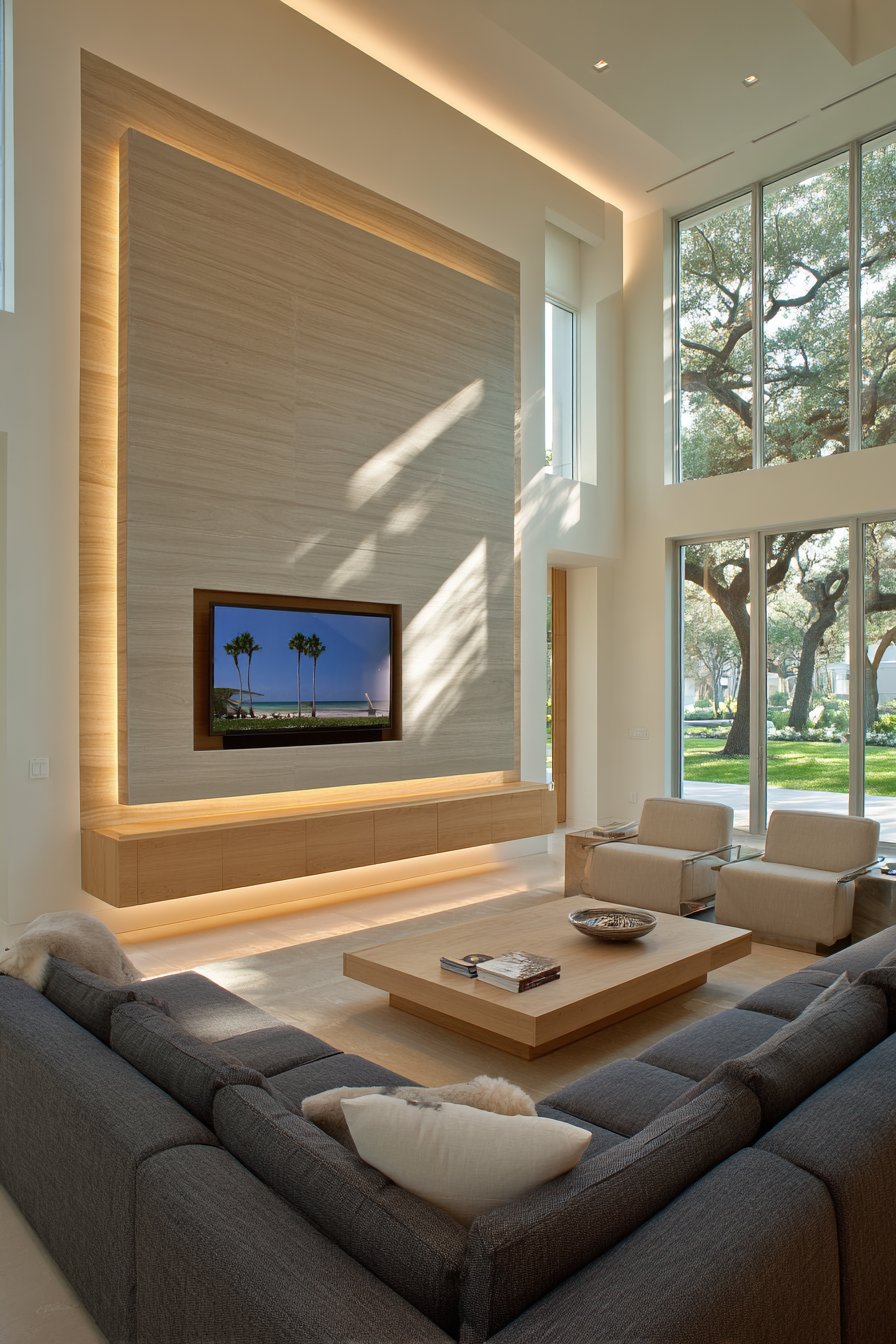
The beauty of this design lies in its masterful use of proportion and negative space. The textured accent wall serves multiple purposes—it defines the entertainment zone, adds tactile dimension to an otherwise flat surface, and creates a sophisticated backdrop that makes the television appear as an intentional design element rather than an afterthought. The warm grey tone works harmoniously with the white oak console, establishing a neutral palette that allows for versatile decor choices throughout the seasons.

Seating arrangements in this contemporary setting prioritize both comfort and conversation. A generous sectional sofa upholstered in charcoal linen faces the entertainment area at an optimal viewing distance, its neutral tone grounding the space while providing visual weight that balances the lighter upper portions of the room. The modern coffee table positioned between the seating and television serves as both a functional surface and a sculptural element that reinforces the room’s clean-lined aesthetic.
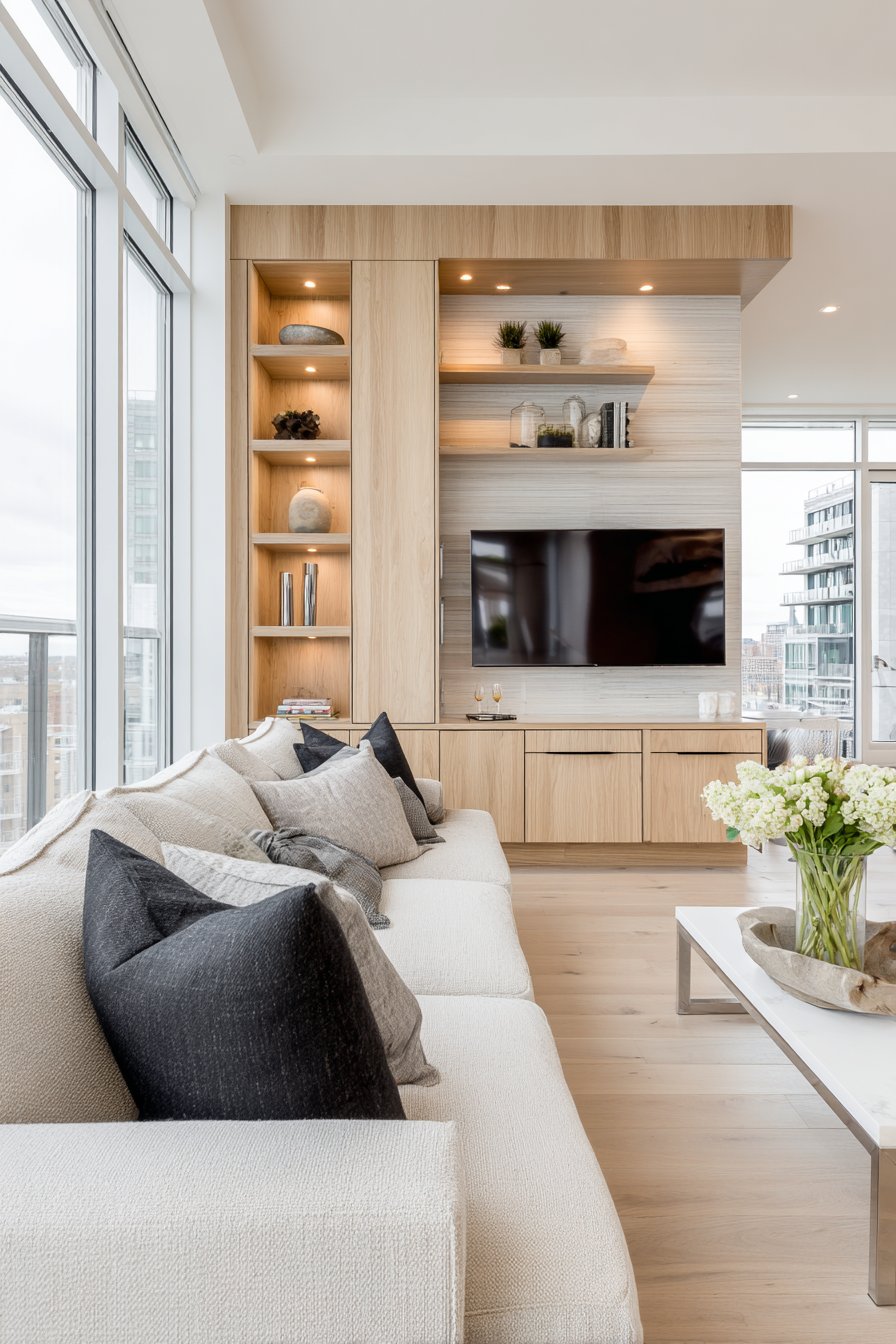
Natural light plays a crucial role in bringing this design to life. Large windows flood the space with soft, diffused daylight that creates dynamic shadows throughout the day, highlighting the room’s architectural features and the carefully chosen furniture pieces. This interplay of light and shadow adds dimension and vitality to the space, preventing the monochromatic color scheme from feeling flat or sterile. The balanced room proportions ensure that no single element overwhelms another, creating a harmonious environment perfect for both relaxation and entertaining.
Key Design Tips:
- Position your wall-mounted TV at eye level when seated to prevent neck strain during extended viewing sessions
- Choose a floating console with integrated cable management systems to maintain the clean, uncluttered aesthetic essential to contemporary design
- Select a textured accent wall material that adds depth without competing with the television screen or creating distracting reflections
- Invest in a quality sectional with deep seating and supportive cushions to maximize comfort during movie marathons
- Use warm grey tones to soften the starkness of pure white while maintaining a contemporary feel
- Ensure your room has adequate natural light sources to reduce eye strain and create a more inviting atmosphere during daytime viewing
2. Rustic Farmhouse Charm with Reclaimed Character
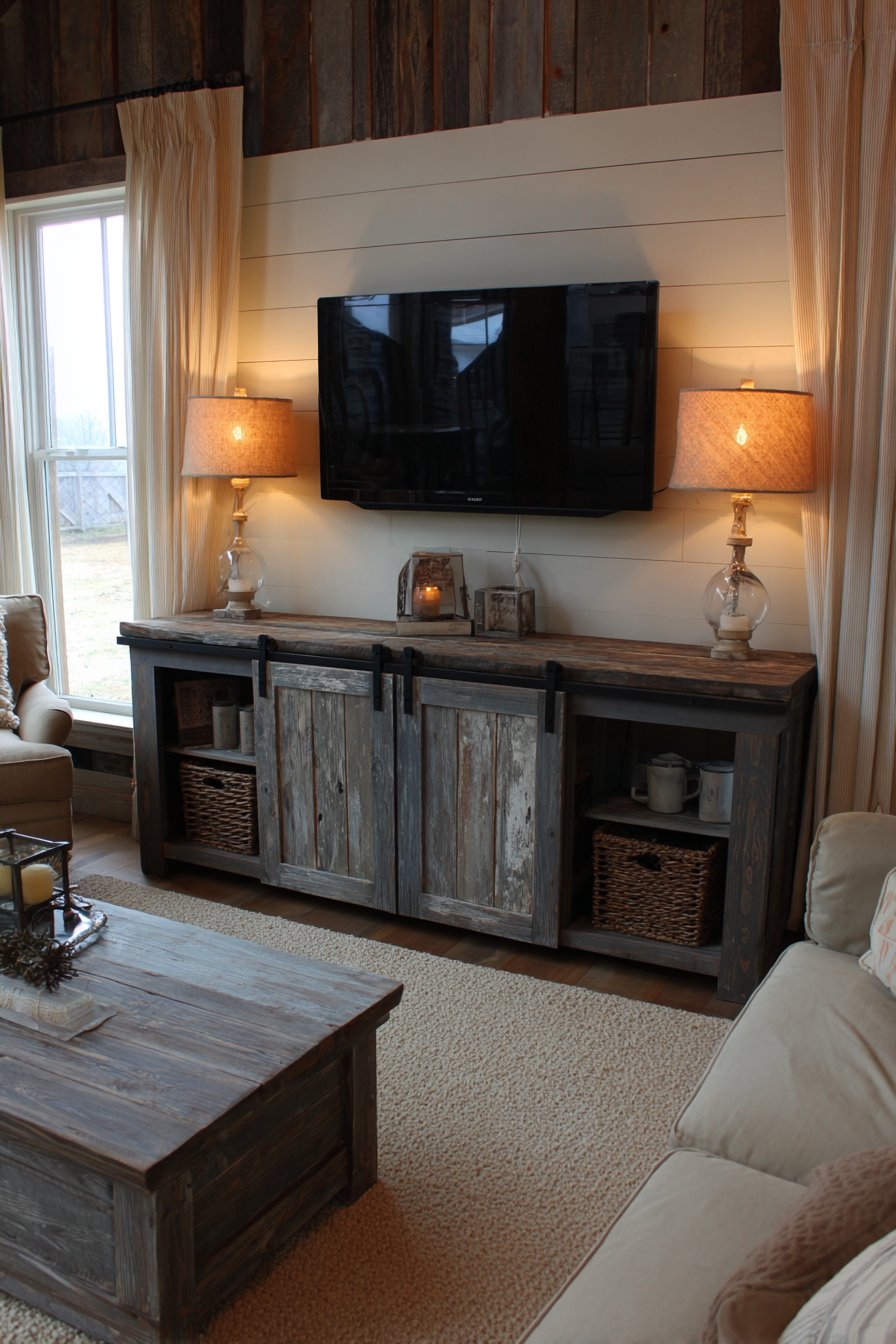
Warmth and authenticity define this inviting farmhouse living room where the television finds its home within a beautifully crafted reclaimed wood media cabinet. The cabinet’s sliding barn doors add both visual interest and practical functionality, allowing you to conceal the television and electronics when not in use while creating a striking focal point that celebrates rustic craftsmanship.
Open shelving integrated into the cabinet design provides perfect display space for family photos, decorative objects, and media components, maintaining the lived-in, collected-over-time aesthetic that makes farmhouse style so enduringly popular.

The television itself is thoughtfully mounted at optimal viewing height on a shiplap accent wall painted in soft white, creating a bright backdrop that prevents the dark wood cabinet from making the space feel heavy or closed-in.
This classic farmhouse wall treatment adds subtle texture and architectural interest while maintaining the room’s airy, welcoming atmosphere. The contrast between the warm, weathered wood tones and the crisp white wall creates visual drama without sacrificing the room’s overall sense of tranquility and comfort.
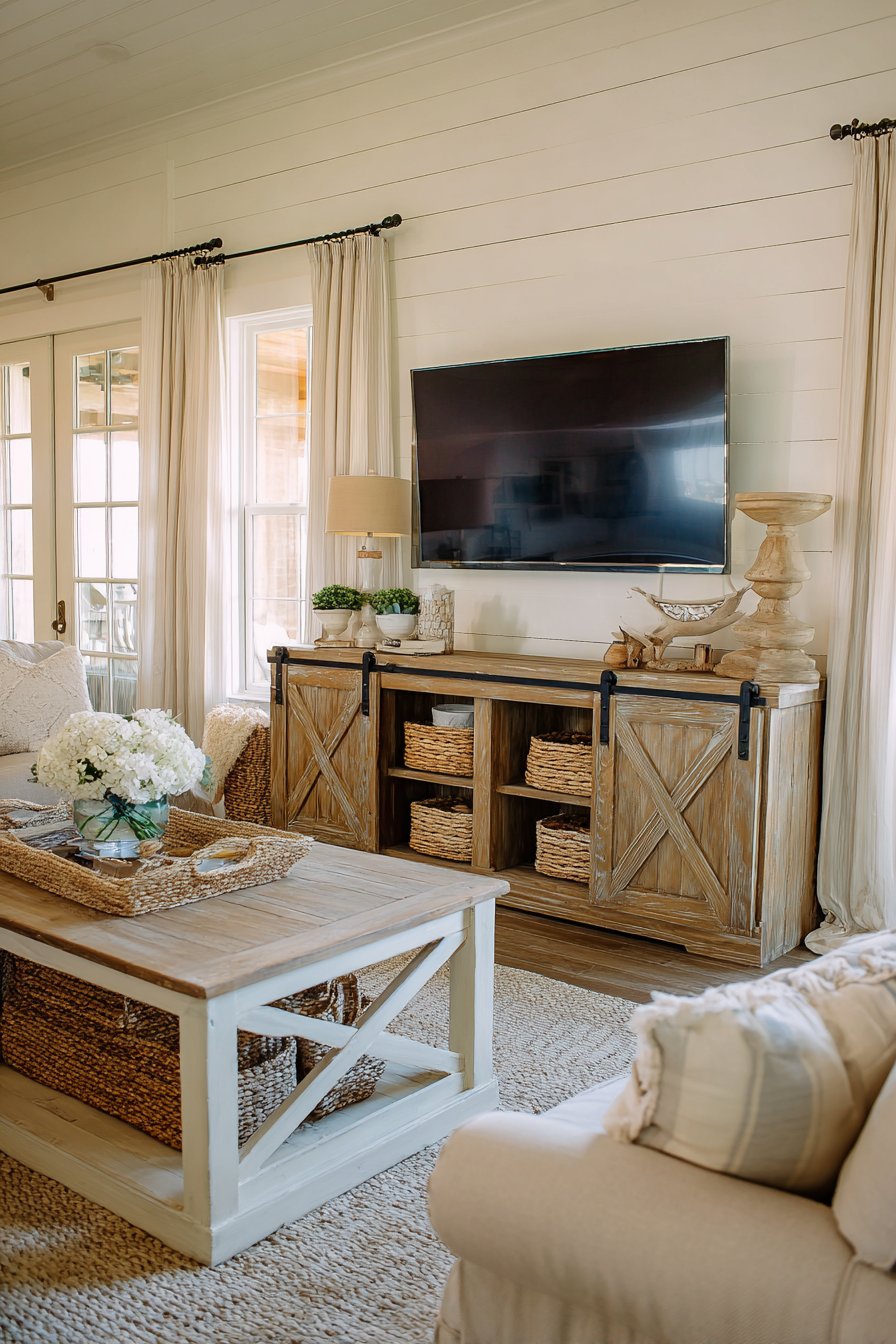
Furniture selection in this farmhouse setting emphasizes comfort and durability without sacrificing style. Oversized seating pieces upholstered in neutral tones invite family and friends to sink in and stay awhile, arranged to facilitate both television viewing and face-to-face conversation.
The generous proportions of these furniture pieces reflect the farmhouse philosophy of prioritizing comfort and livability above all else, while their neutral color palette ensures they’ll work with evolving decor schemes for years to come.
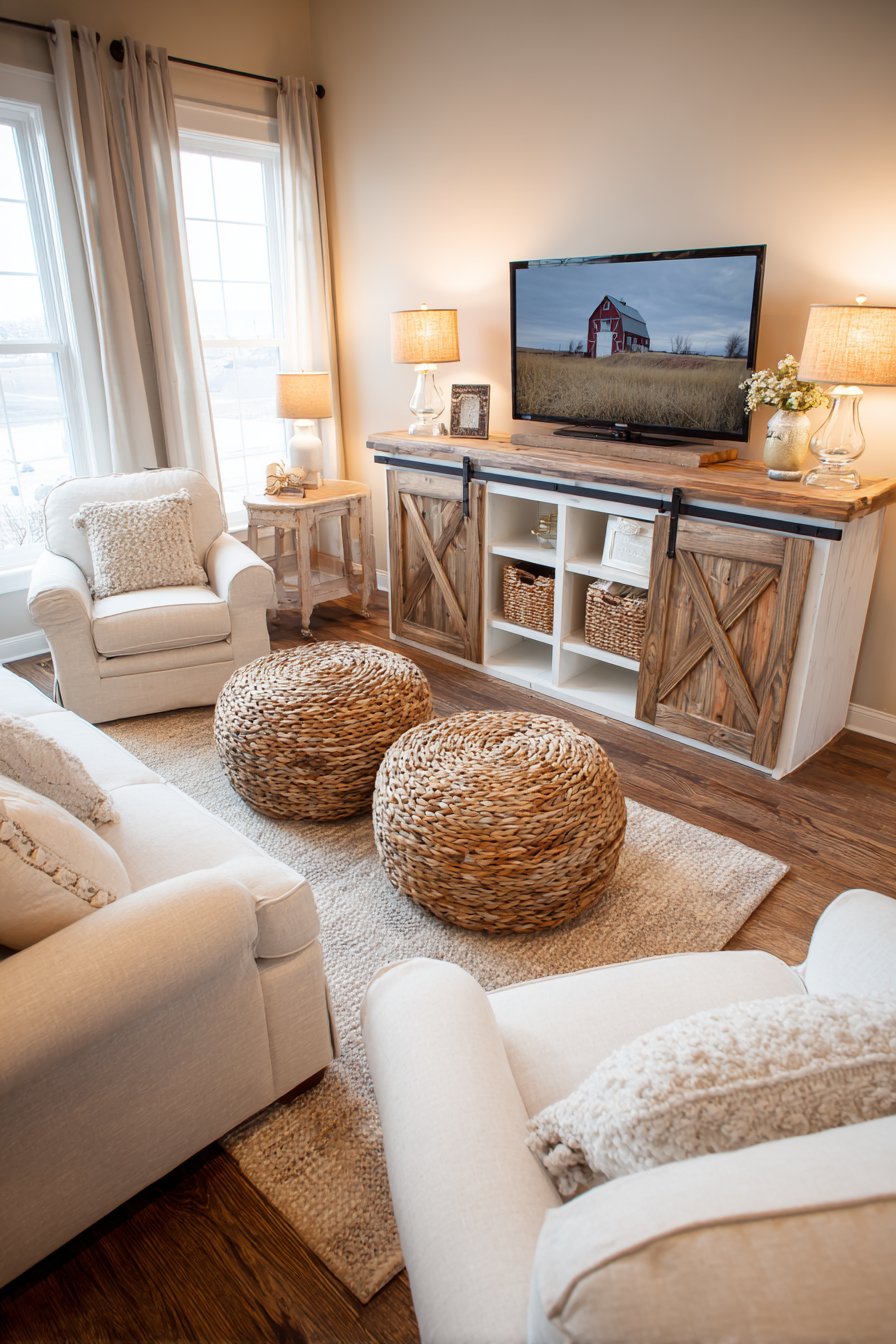
Practical storage solutions seamlessly integrate into this design through the use of woven baskets placed strategically throughout the space. These natural fiber accessories provide homes for throw blankets, remote controls, magazines, and children’s toys while reinforcing the room’s organic, nature-inspired aesthetic. Warm ambient lighting from carefully placed table lamps combines with natural daylight streaming through cotton curtains to create a golden glow that enhances the room’s rustic textures and makes the space feel like a comforting embrace at any time of day.
Key Design Tips:
- Source authentic reclaimed wood for your media cabinet to add genuine character and historical depth to your space
- Install sliding barn door hardware that’s both functional and substantial enough to support repeated daily use
- Paint shiplap walls in soft white or cream to maintain brightness while adding farmhouse-appropriate texture
- Choose oversized furniture with removable, washable slipcovers for practical everyday living
- Incorporate woven baskets in various sizes to provide attractive storage solutions that complement the natural materials
- Layer lighting sources, including table lamps, floor lamps, and natural light to create warmth and eliminate harsh shadows
- Select window treatments in natural fabrics like cotton or linen that filter light softly while maintaining privacy
3. Minimalist Scandinavian Serenity

Embrace the “less is more” philosophy with this pristine Scandinavian-inspired living room where every element serves a purpose and beauty emerges from simplicity itself. A low-profile entertainment unit crafted from natural ash wood showcases the clean geometric lines and expert craftsmanship central to Nordic design traditions. The television appears to float effortlessly against a pristine white wall, creating an almost ethereal quality that aligns perfectly with the minimalist aesthetic’s emphasis on visual lightness and uncluttered spaces.
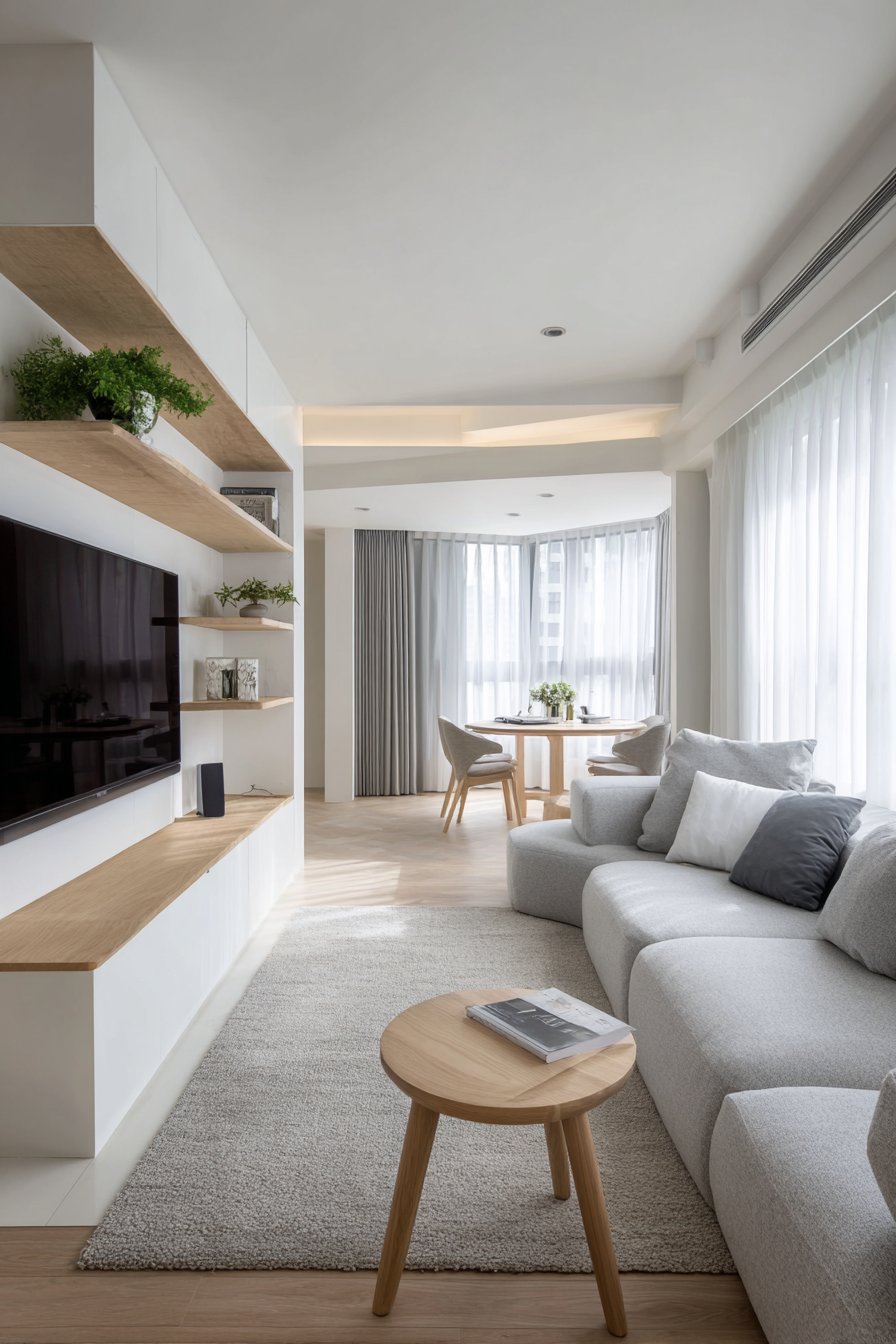
The genius of this Scandinavian approach lies in its meticulous attention to wire management and technical details that maintain the room’s serene, uncluttered atmosphere. Every cable finds its hidden path, every component its designated place, ensuring that technology serves the inhabitants without imposing its presence on the visual landscape.
This dedication to concealing functional necessities allows the space’s inherent beauty—the grain of the ash wood, the purity of the white walls, the soft drape of natural fabrics—to take center stage without distraction.
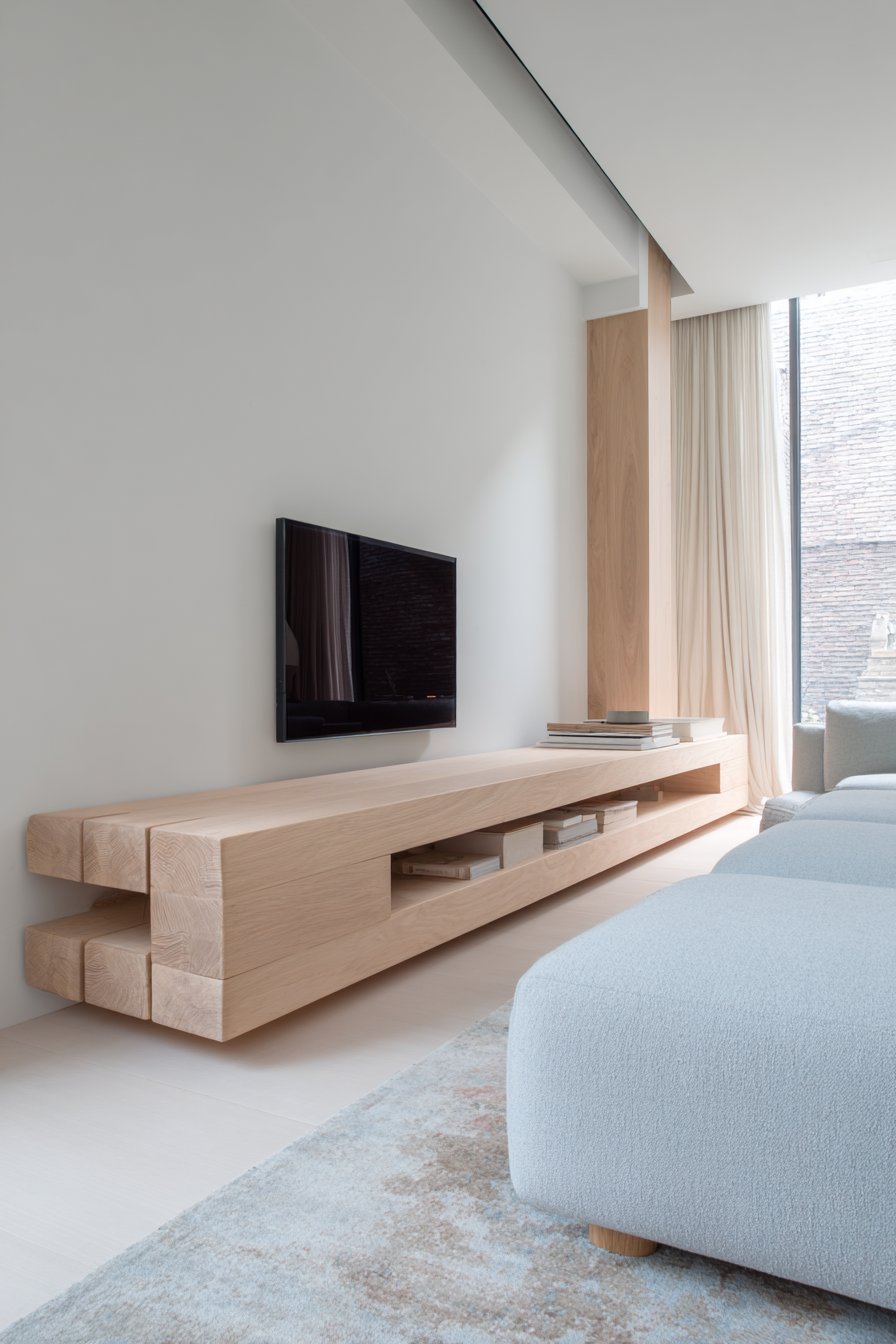
Seating in this minimalist setting takes the form of a light grey modular sofa with exposed wooden legs that echo the entertainment unit’s natural ash construction. This thoughtful material repetition creates visual harmony while the sofa’s low profile maintains the room’s horizontal emphasis and sense of spaciousness. The modular design offers flexibility for different occasions, from intimate movie nights to larger gatherings, without compromising the clean aesthetic that defines Scandinavian style.
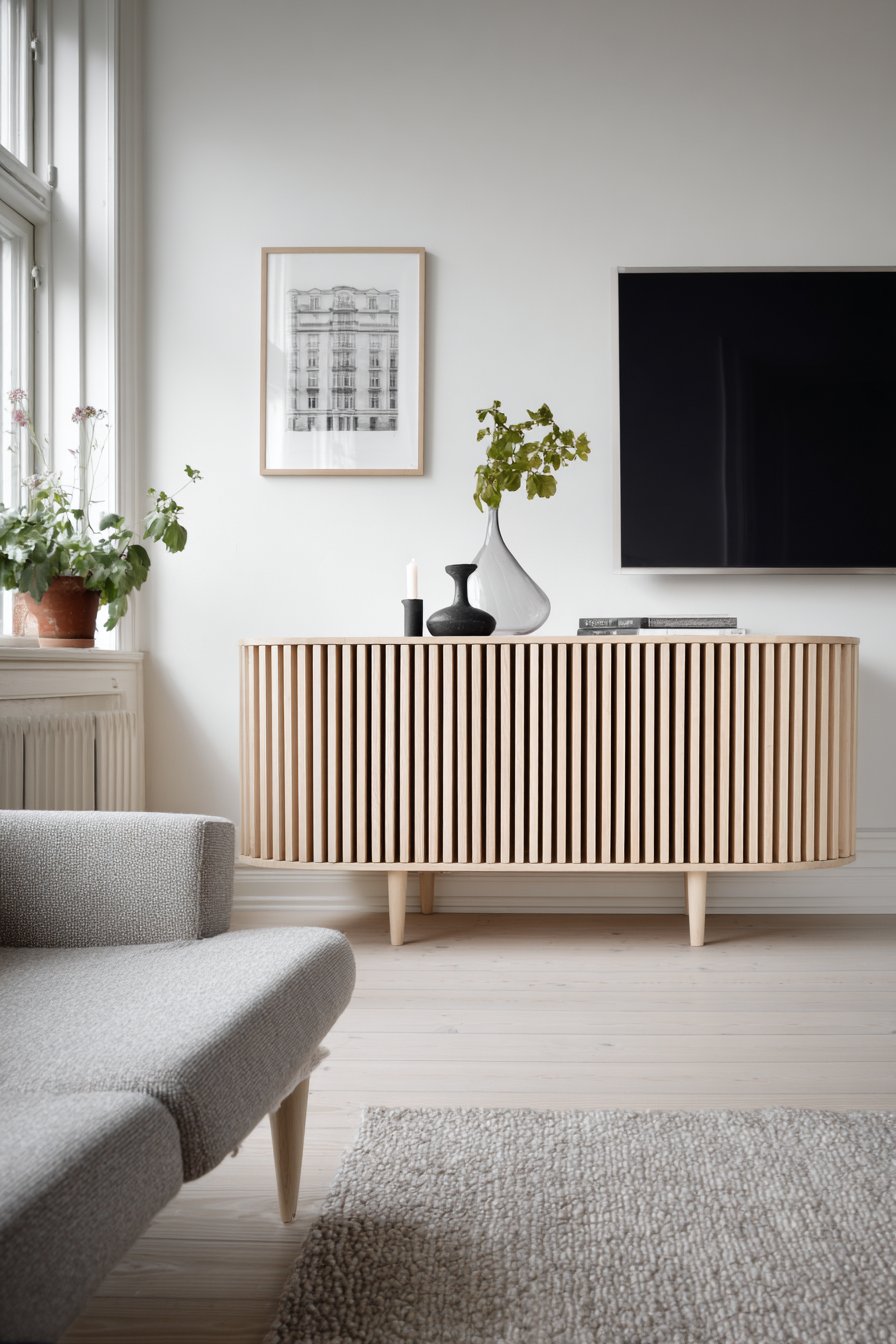
A wool area rug in muted tones grounds the seating arrangement while adding essential warmth and softness underfoot—a crucial element in Nordic design where harsh winters make cozy interiors a necessity rather than a luxury. Soft, diffused natural lighting emphasizes the space’s simplicity and functionality, with large windows left largely unadorned to maximize daylight hours. This connection to natural light reflects the Scandinavian reverence for the changing seasons and the precious sunshine of northern latitudes.
Key Design Tips:
- Invest in quality over quantity, choosing fewer pieces of exceptional craftsmanship rather than filling the space with mediocre items
- Maintain a strictly neutral color palette with white walls, natural wood tones, and soft greys to create a calming foundation
- Prioritize clever storage solutions that keep all clutter, cables, and non-essential items completely out of sight
- Choose furniture with exposed wooden legs to create visual lightness and allow light to flow beneath pieces
- Select natural materials like wool, linen, and untreated wood that age beautifully and connect the interior to nature
- Maximize natural light through large, minimally dressed windows while supplementing with soft, warm artificial lighting for darker months
- Edit ruthlessly, removing any decorative elements that don’t serve a clear functional or aesthetic purpose in the space
4. Industrial Loft Character with Raw Materials
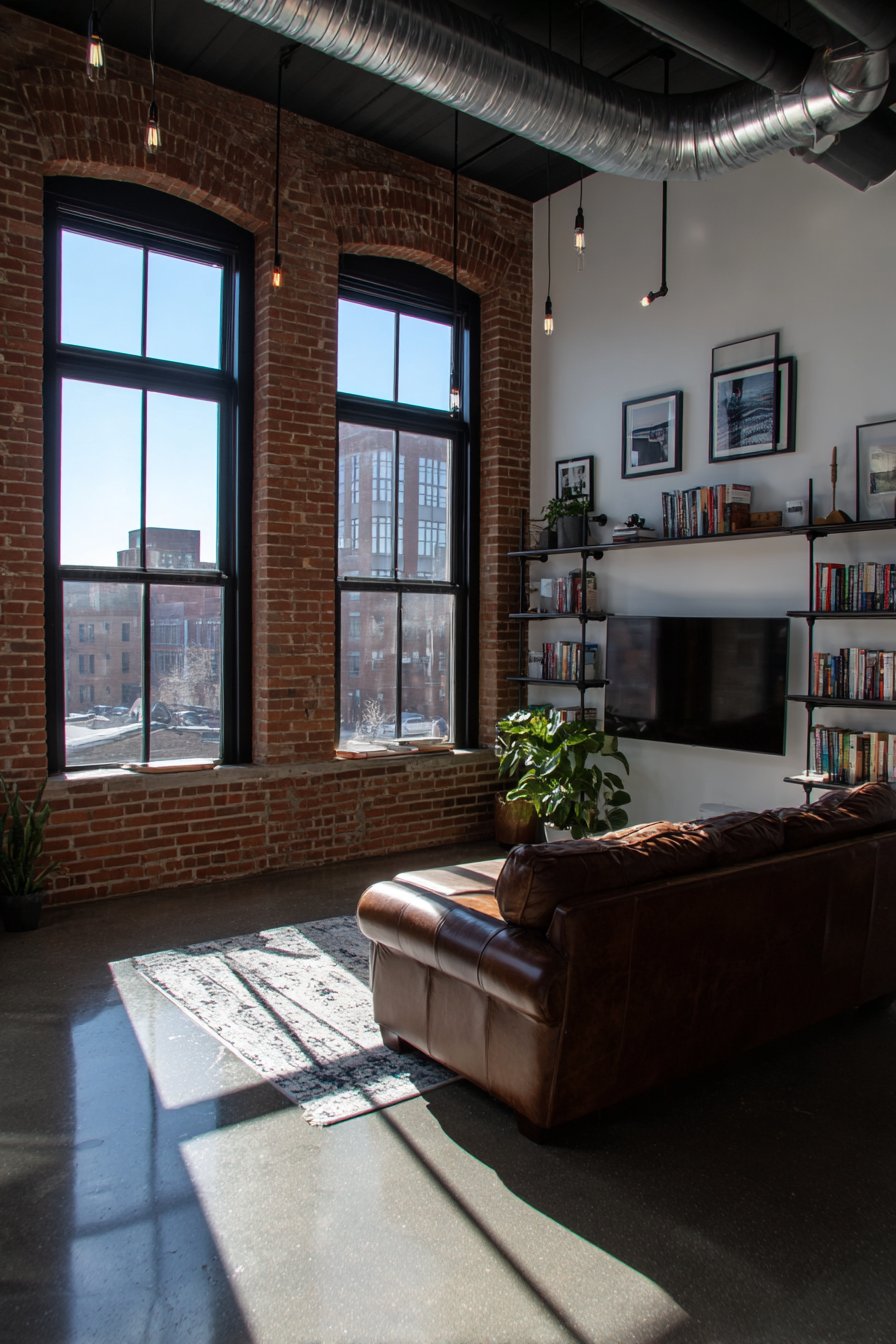
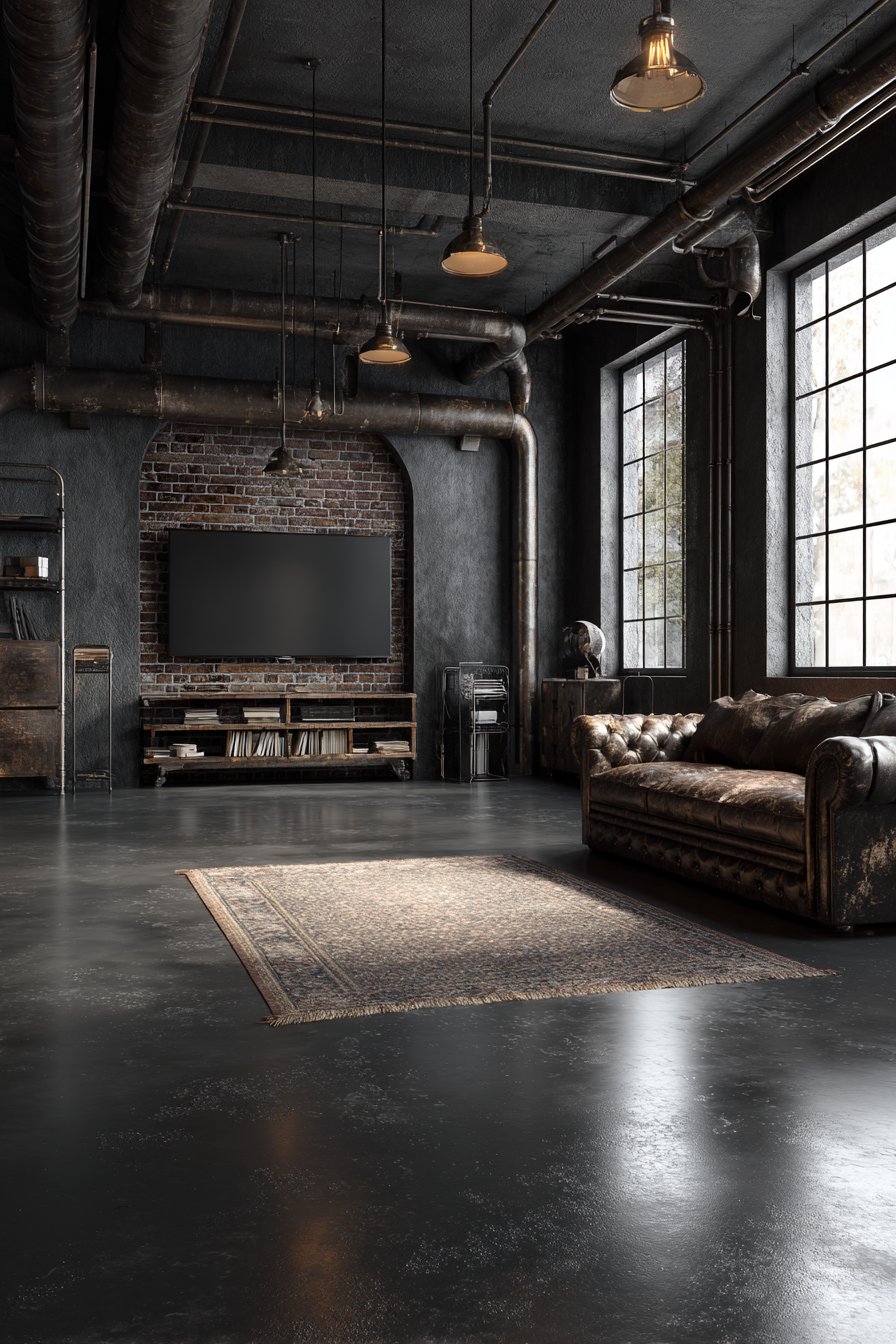
Bold, unapologetic, and distinctly urban, this industrial loft living room celebrates raw materials and utilitarian design while creating a surprisingly comfortable entertainment space. An exposed brick accent wall serves as the dramatic backdrop for a mounted flat screen television, the rough texture and earthy red-brown tones of the aged masonry providing organic warmth that prevents the industrial aesthetic from feeling cold or unwelcoming. This authentic architectural element tells the story of the building’s previous life while anchoring the modern entertainment setup in historical context.
Black metal pipe shelving flanking the television transforms functional storage into sculptural wall art. These industrial shelves, reminiscent of urban infrastructure, display carefully curated books and minimal decorative objects, maintaining the space’s edited aesthetic while providing practical storage for media components and personal collections. The black metal’s strong vertical lines draw the eye upward, emphasizing the loft’s generous ceiling height while creating a balanced visual frame around the television screen.
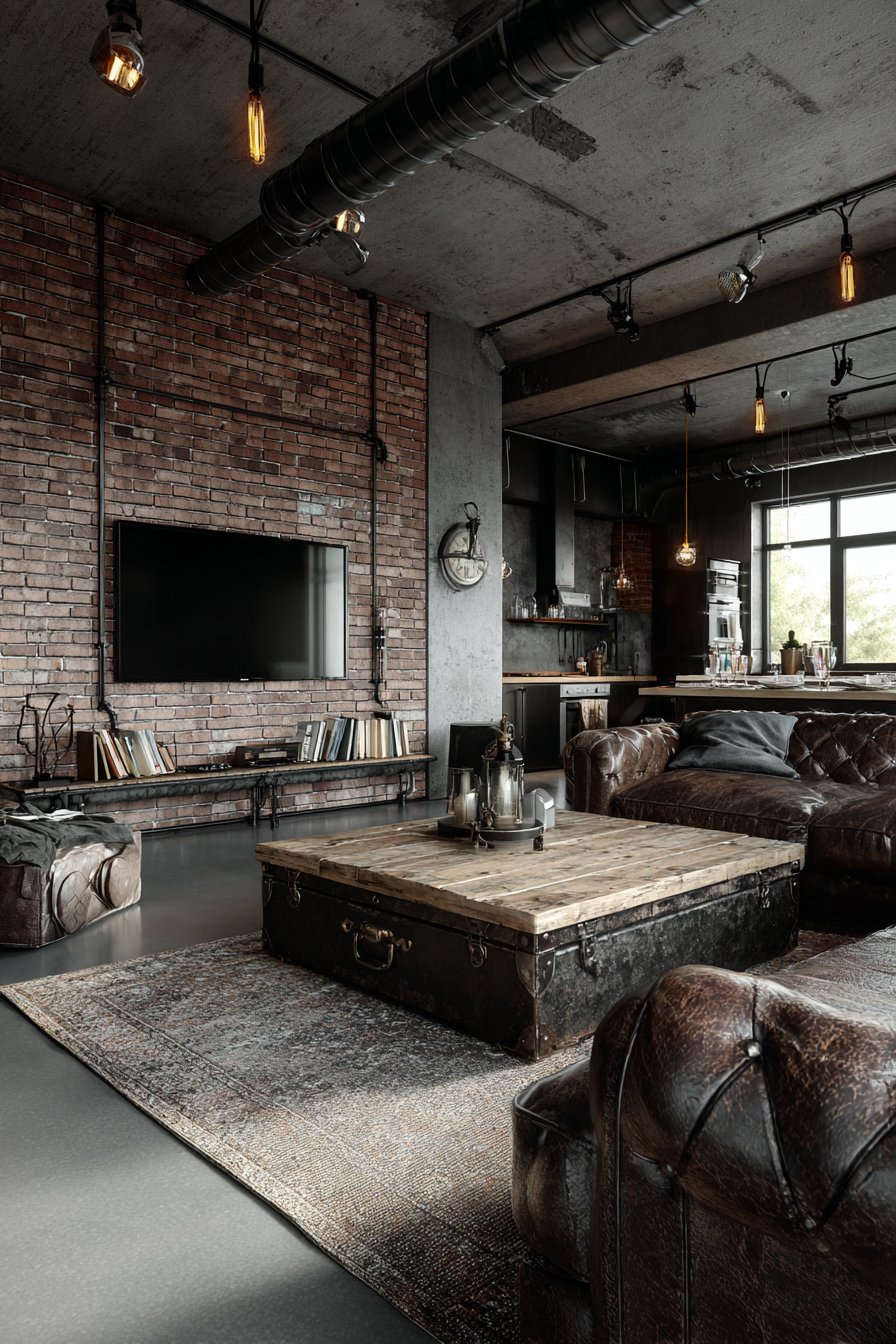
The seating arrangement features a distressed leather sofa that embodies the industrial aesthetic’s appreciation for materials that show honest wear and develop rich patina over time. Positioned on polished concrete floors—another nod to the space’s industrial origins—the sofa grounds the room with its substantial presence and deep, comfortable cushions that invite relaxation despite the room’s harder-edged materials. A vintage area rug softens the concrete underfoot while adding a layer of color and pattern that prevents the neutral industrial palette from feeling monotonous.
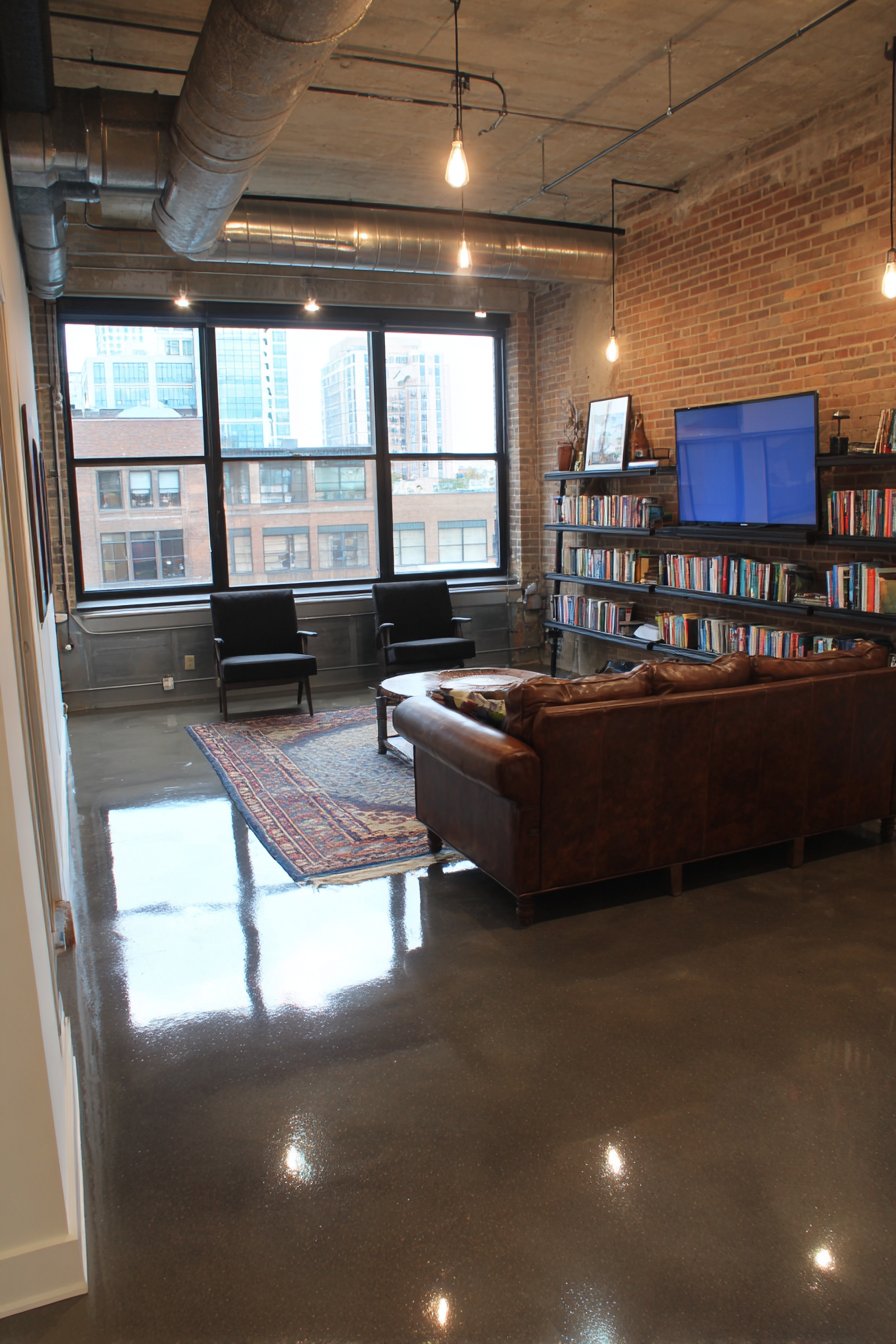
Lighting in this loft setting creates drama and atmosphere through careful layering. Edison bulb pendants suspended from exposed ceiling beams or industrial-style fixtures cast warm, amber-toned light that contrasts beautifully with the cooler tones of metal and brick.
Natural light streaming through factory-style windows with black metal frames creates bold shadows that shift throughout the day, emphasizing the room’s architectural bones and adding dynamic visual interest. This interplay of natural and artificial light, hard and soft materials, vintage and modern elements creates the complex, layered aesthetic that makes industrial design so compelling.
Key Design Tips:
- Expose or emulate authentic architectural elements like brick walls, concrete floors, or wooden beams to establish industrial credibility
- Use black metal piping and fittings for shelving, creating custom configurations that fit your specific space and storage needs
- Choose furniture with honest materials like leather, worn wood, and metal that improve with age rather than showing damage
- Install Edison bulb fixtures or industrial-style lighting with visible bulbs and minimal shades to create warm ambient light
- Leave windows undressed or use simple metal blinds to maximize natural light and maintain the utilitarian aesthetic
- Incorporate one or two vintage or salvaged pieces to add authenticity and prevent the space from feeling like a staged industrial set
- Balance the harder materials with soft textiles like area rugs, throw blankets, and cushions to ensure the space remains livable and comfortable
5. Smart Small Apartment Solutions

Proving that limited square footage need not limit style or functionality, this ingenious small apartment living room demonstrates how thoughtful planning transforms spatial constraints into design opportunities. A corner-mounted television maximizes the often-underutilized corner space, positioning the screen for optimal viewing from multiple angles while freeing up valuable wall space for other purposes. The compact media console beneath features built-in storage drawers that provide essential organization without extending far into the room, maintaining the crucial sense of flow through this multipurpose space.
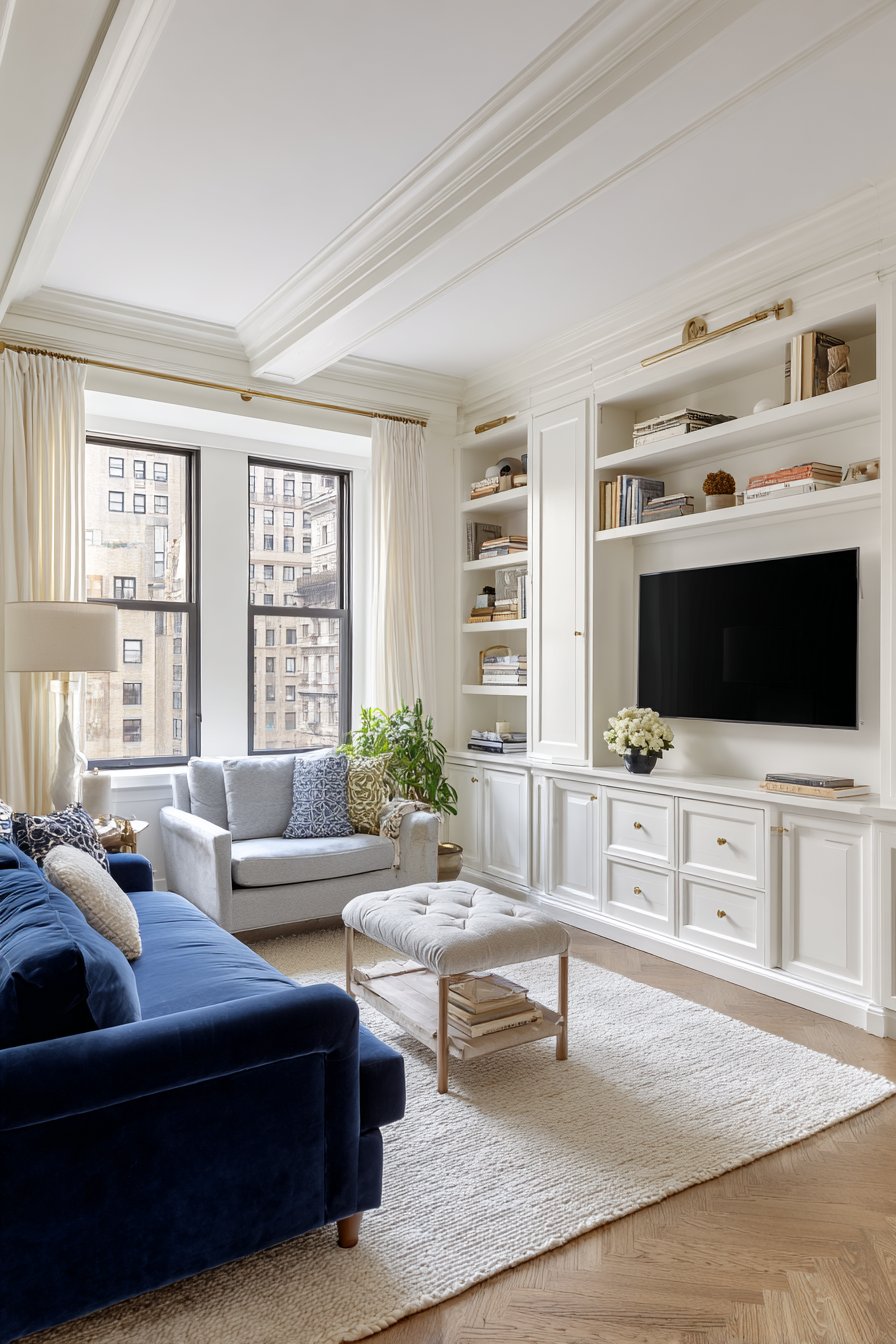
The furniture arrangement in this small space exemplifies strategic planning at its finest. Every piece serves multiple functions and occupies its position for specific reasons related to traffic flow, viewing angles, and spatial proportion. The careful placement ensures that residents and guests can move comfortably through the room while maintaining sight lines to the television and preserving the illusion of spaciousness that makes small-space living pleasant rather than claustrophobic.
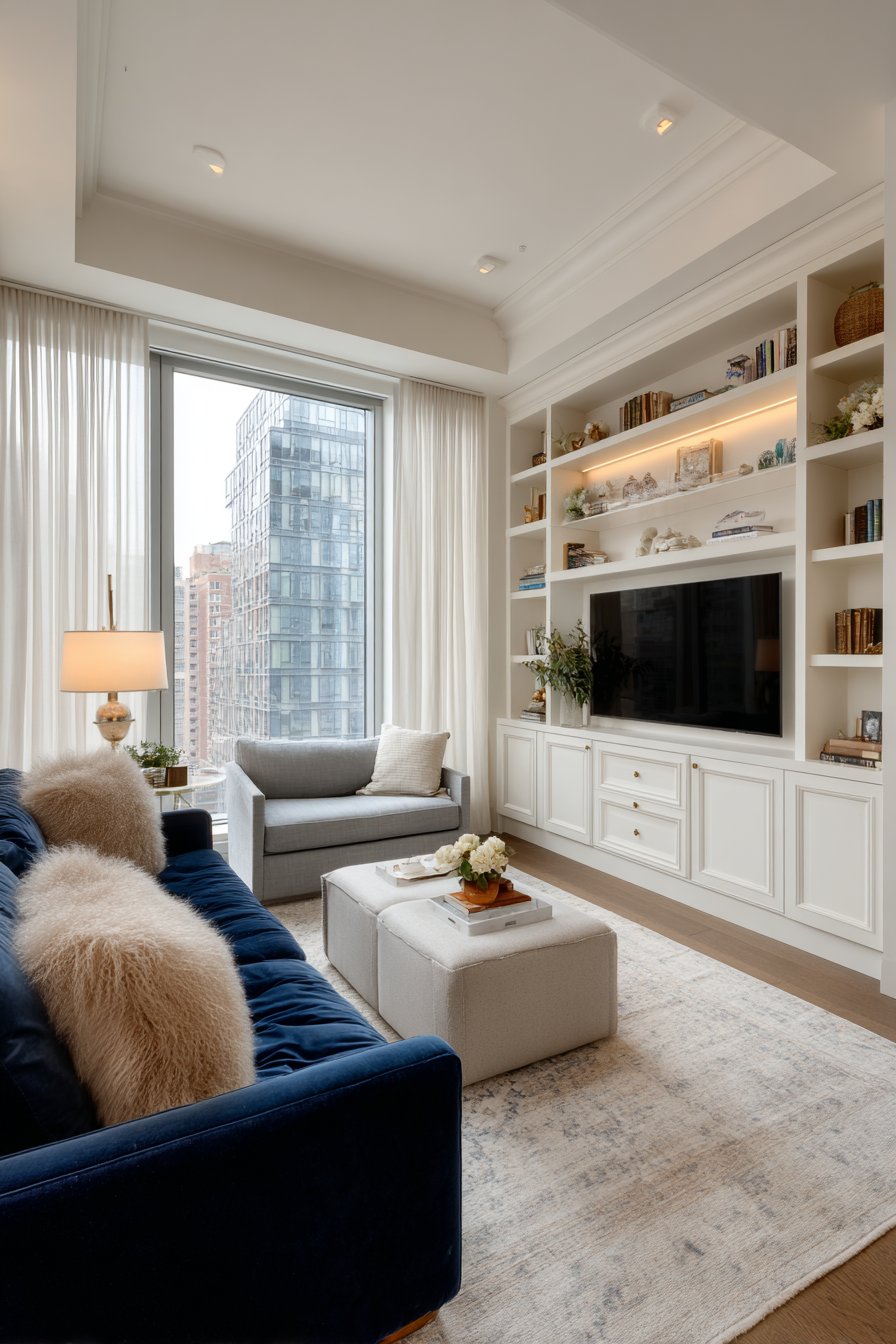
A space-saving loveseat upholstered in soft grey fabric provides comfortable seating for two without overwhelming the compact room with bulky furniture. Its neutral tone recedes visually, creating a calming backdrop that makes the space feel larger and more serene.
Paired with a nesting coffee table set, this seating arrangement offers remarkable flexibility—the tables can be arranged together for entertaining or separated to serve different functions throughout the room, then tucked away when not needed to maximize open floor space.
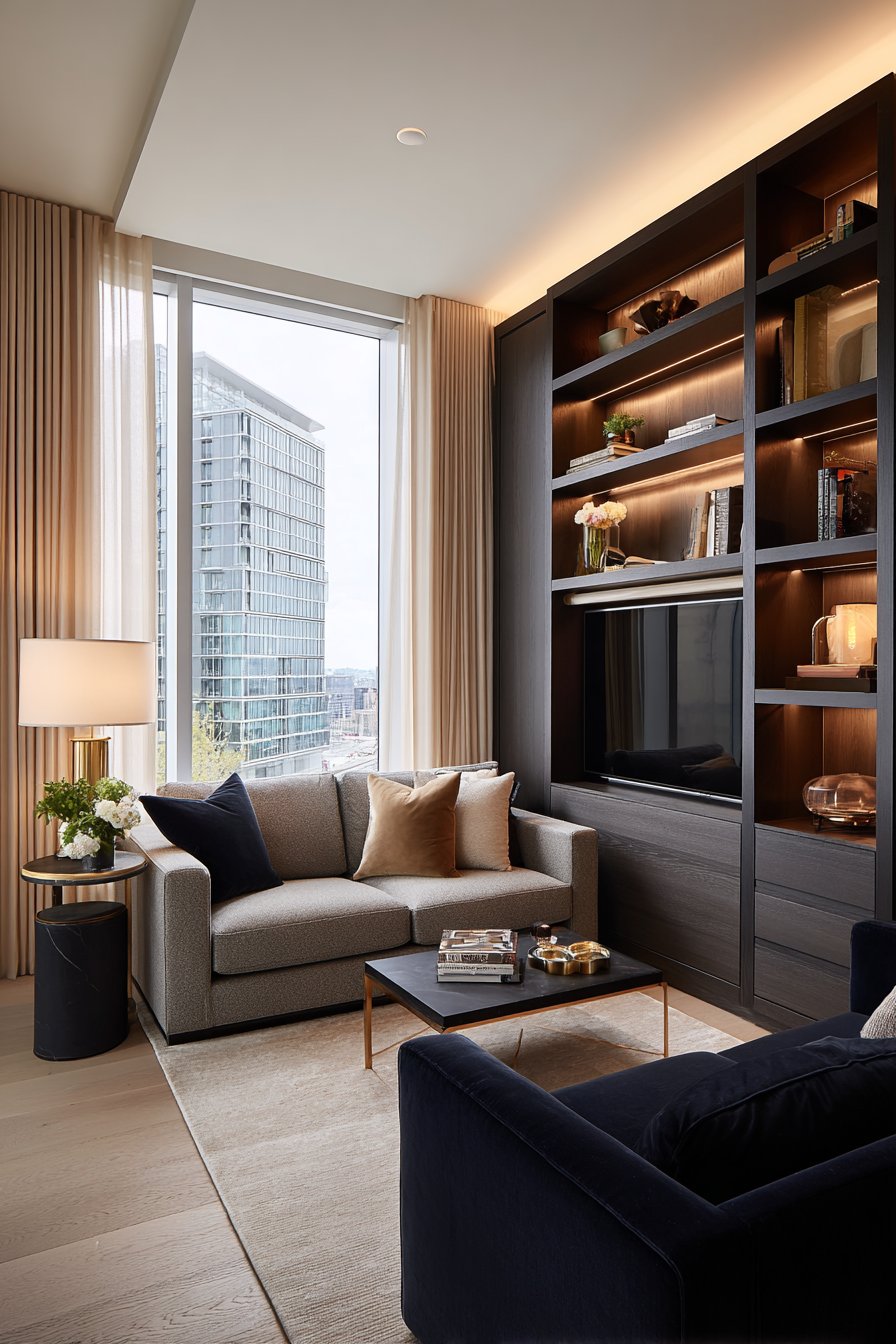
Sheer curtains hanging at the windows perform the delicate balancing act required in small spaces: they provide privacy and visual softness while allowing natural light to flood the room and make it feel more expansive. This careful attention to light management is crucial in compact living spaces where darkness can quickly create a cave-like atmosphere. The translucent fabric filters harsh sunlight while maintaining the connection to the outside world, making the room feel like part of a larger environment rather than a confined box.
Key Design Tips:
- Utilize corner mounting for your television to free up premium straight-wall space for other essential furniture or circulation paths
- Choose furniture with built-in storage to maximize every cubic inch of your limited space without adding clutter
- Select a loveseat or apartment-sized sofa rather than a full sectional to maintain appropriate scale in compact rooms
- Invest in nesting tables, stackable stools, or other multi-functional furniture that can be reconfigured or stored as needs change
- Use light colors throughout to reflect natural light and create the illusion of more space
- Hang sheer or semi-transparent window treatments that provide privacy while allowing light to penetrate and visually expand the space
- Maintain clear sight lines and traffic paths through the room to prevent the space from feeling cramped or cluttered
- Choose a wall-mounted TV to eliminate the need for a large entertainment center and create more floor space
6. Luxurious Custom Entertainment Wall

Sophistication reaches its pinnacle in this opulent living room where technology and craftsmanship unite in a stunning built-in entertainment wall. Custom millwork in rich dark walnut creates floor-to-ceiling cabinetry that transforms an entire wall into a functional work of art. The large television integrates seamlessly into this architectural element, appearing as an intentional component of the overall design rather than an electronic afterthought. Concealed storage compartments and display niches with LED accent lighting provide homes for electronics, collections, and decorative objects while maintaining the sleek, uncluttered appearance that defines luxury interiors.
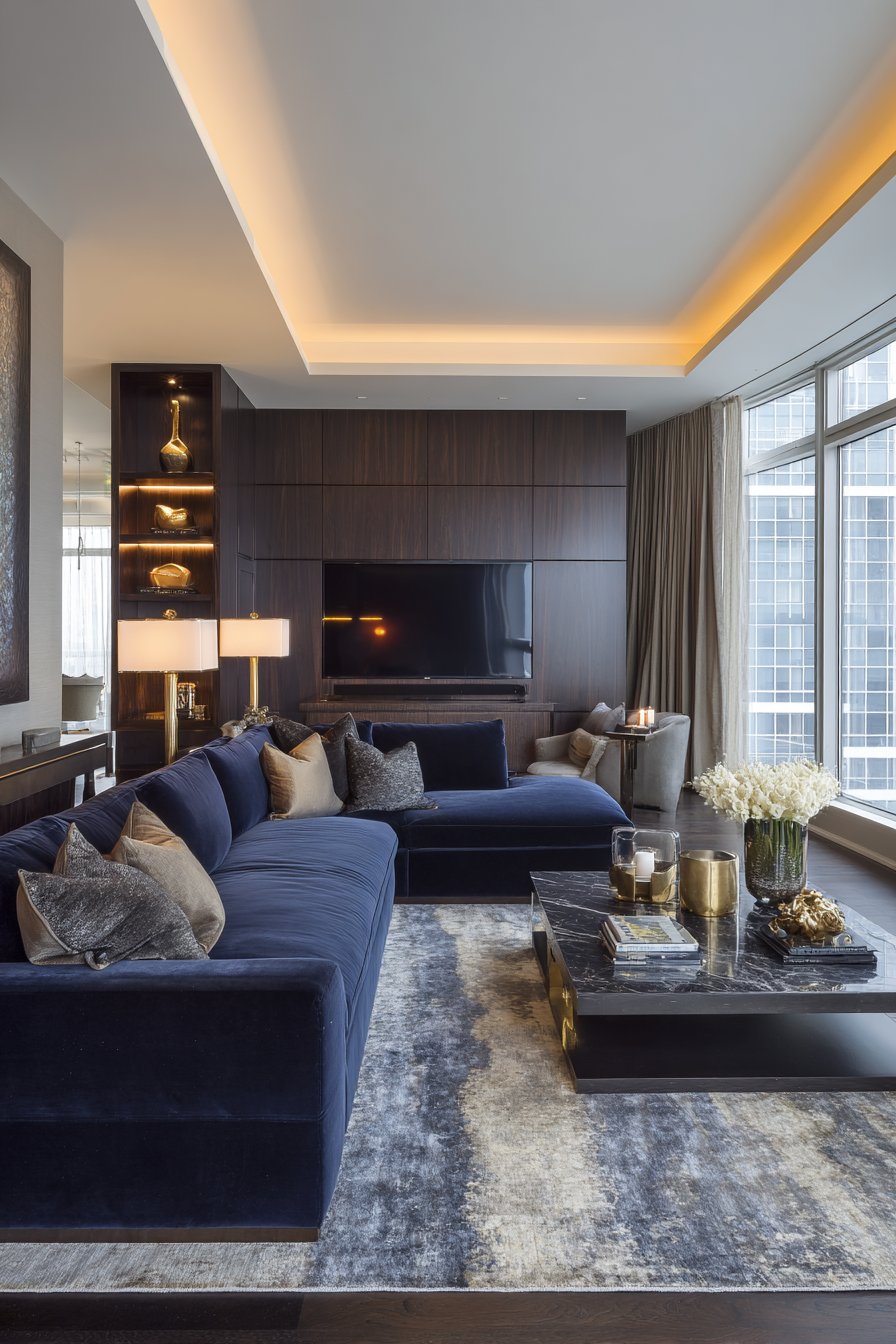
This custom approach to television integration represents the ultimate in personalized design, where every dimension, every shelf height, every drawer depth is calculated to serve the homeowners’ specific needs and preferences. The dark walnut finish exudes warmth and refinement, its deep color and beautiful grain patterns creating visual richness that elevates the entire room. The craftsmanship evident in seamless joints, perfectly aligned doors, and smooth-operating drawers demonstrates the level of quality that separates truly luxurious spaces from merely expensive ones.
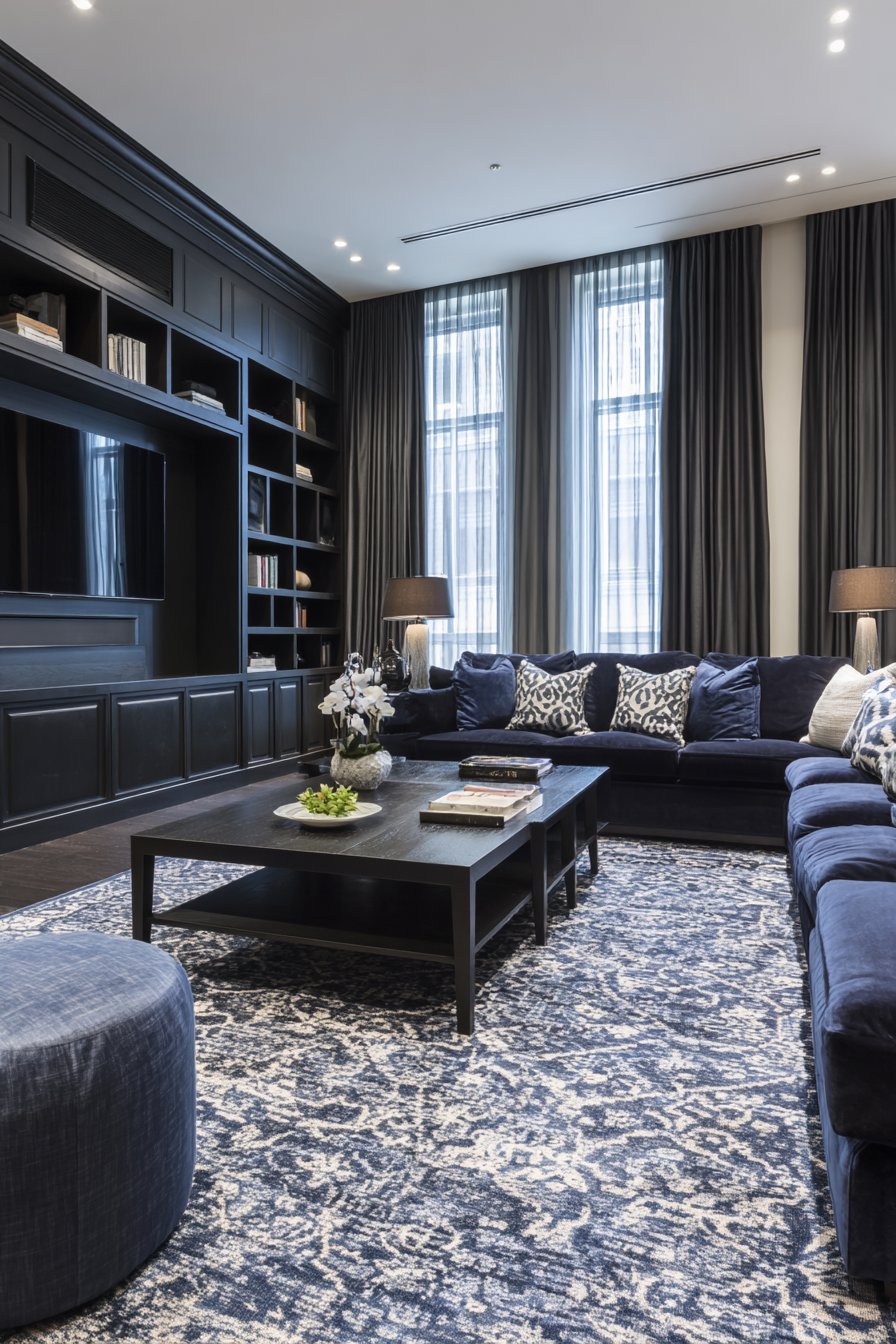
The seating area reflects the same commitment to comfort and elegance. A plush velvet sectional in deep navy creates an intimate viewing environment, its sumptuous fabric inviting touch and its generous proportions promising hours of comfortable relaxation. The jewel-toned upholstery adds a layer of sophisticated color while maintaining a sense of restraint and elegance. Positioned on a thick wool rug that cushions every step, this seating arrangement creates a distinct zone within the larger room—a private theater experience within a domestic setting.
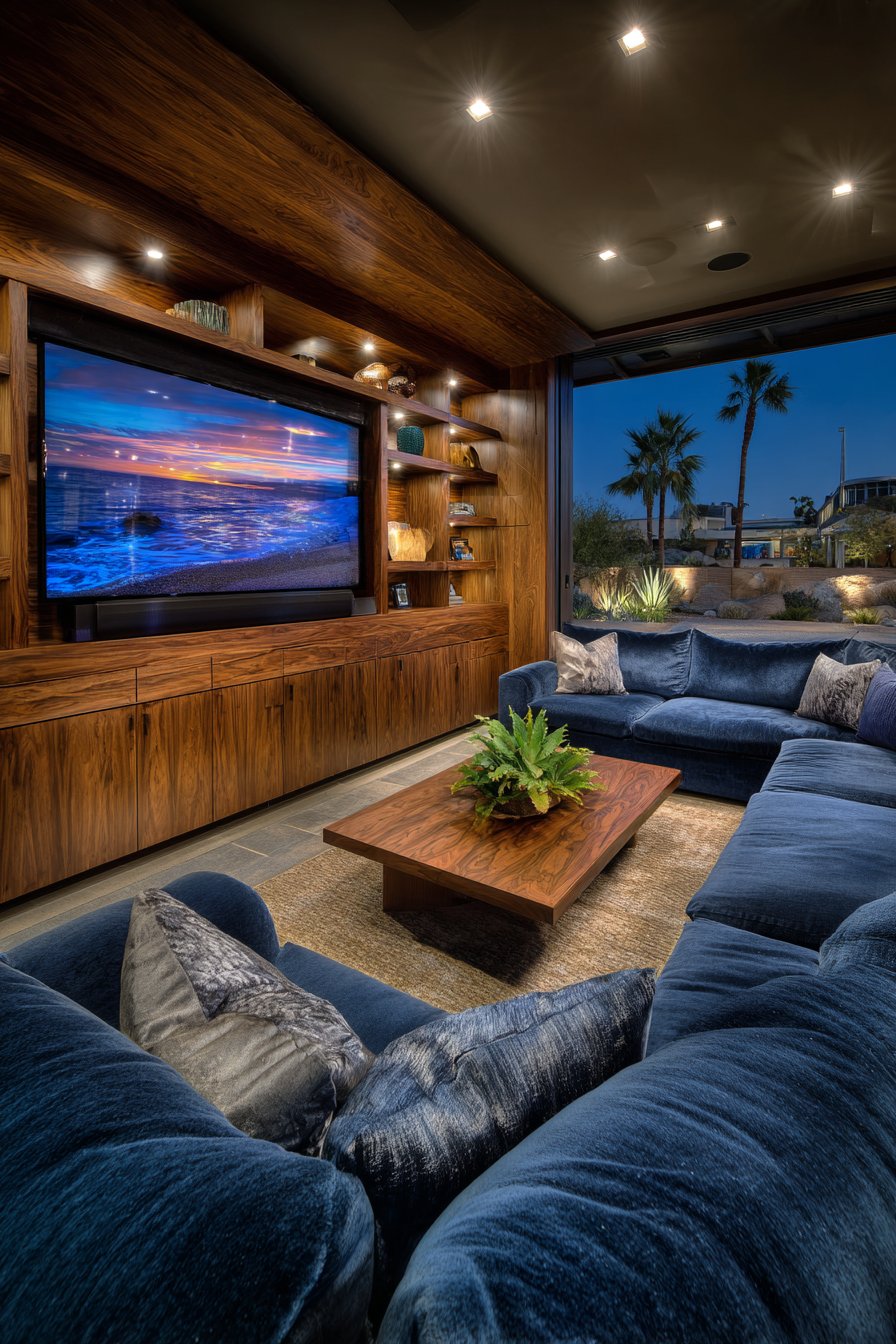
Lighting design in this luxurious space demonstrates the transformative power of layered illumination. Recessed ceiling lights provide general ambient lighting without cluttering the ceiling plane with visible fixtures, while carefully positioned table lamps offer pools of warm task lighting perfect for reading or conversation. The LED accent lighting integrated into the custom cabinetry highlights displayed objects and adds depth to the wall unit, creating visual interest even when the television is off. This sophisticated lighting scheme adapts to different moods and activities, from bright and energizing to soft and intimate.
Key Design Tips:
- Commission custom cabinetry designed specifically for your room’s dimensions and your personal storage needs to maximize both function and aesthetics
- Choose rich wood tones like walnut, mahogany, or cherry for a sense of luxury and timeless sophistication
- Integrate LED accent lighting into shelving and display niches to highlight collections and add visual depth to the entertainment wall
- Invest in plush, high-quality upholstery fabrics like velvet or mohair that feel as luxurious as they look
- Create a layered lighting plan with multiple sources controlled by dimmers to adapt the room’s ambiance to different occasions
- Ensure adequate ventilation for electronics concealed within cabinetry to prevent overheating and extend equipment life
- Include soft-close hardware on all doors and drawers for a whisper-quiet, premium user experience
- Position seating on thick area rugs that define the viewing zone while adding acoustic softening and comfort underfoot
7. Family-Friendly Durability Meets Style
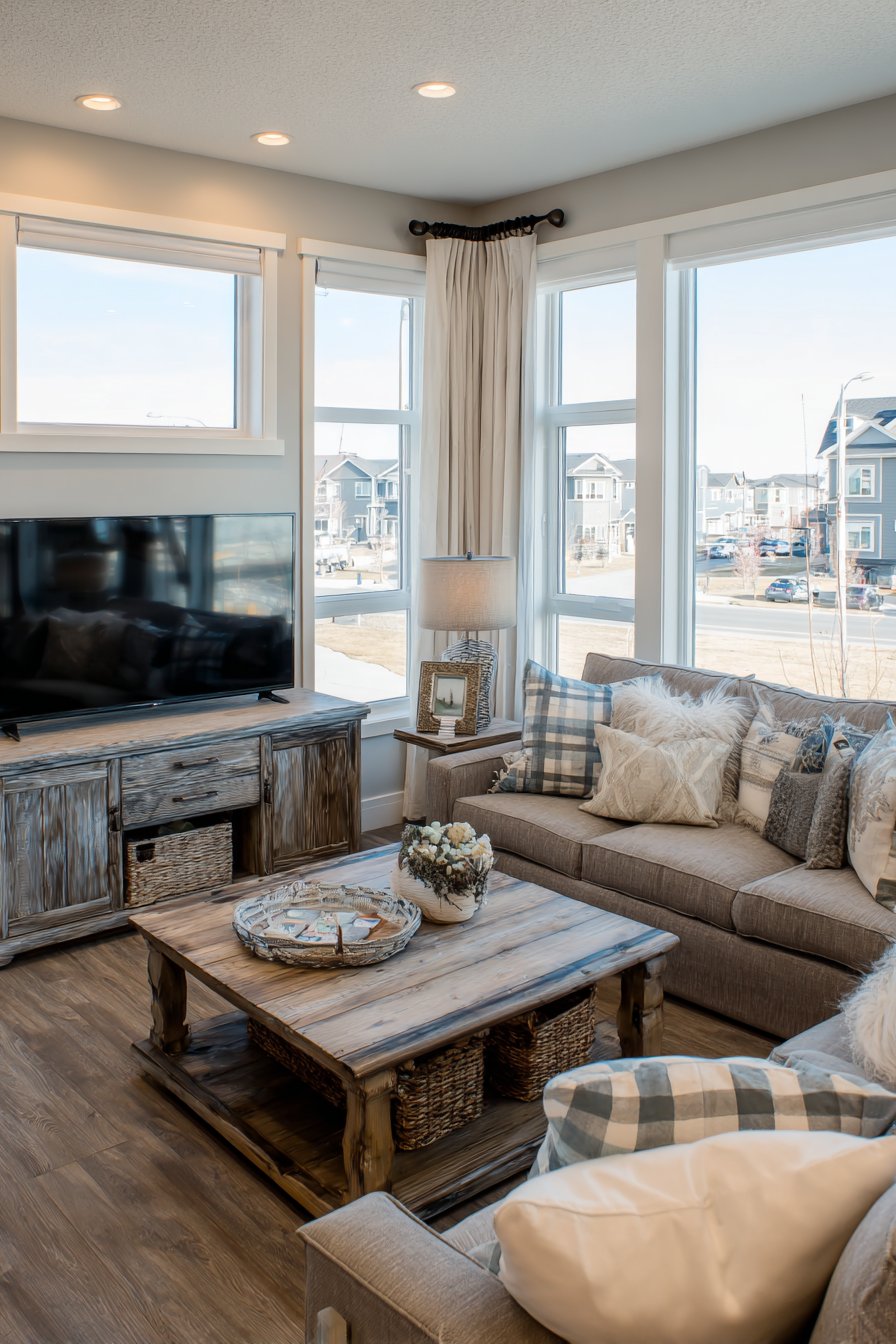
Real life requires real solutions, and this family-friendly living room proves that practicality and style can coexist beautifully. A durable performance fabric sectional in warm taupe stands up to the demands of active family life while maintaining its attractive appearance through countless movie nights, homework sessions, and impromptu fort-building adventures. The neutral tone works with any décor evolution while hiding minor stains and wear far better than lighter alternatives, ensuring the room looks presentable even during the busiest family phases.
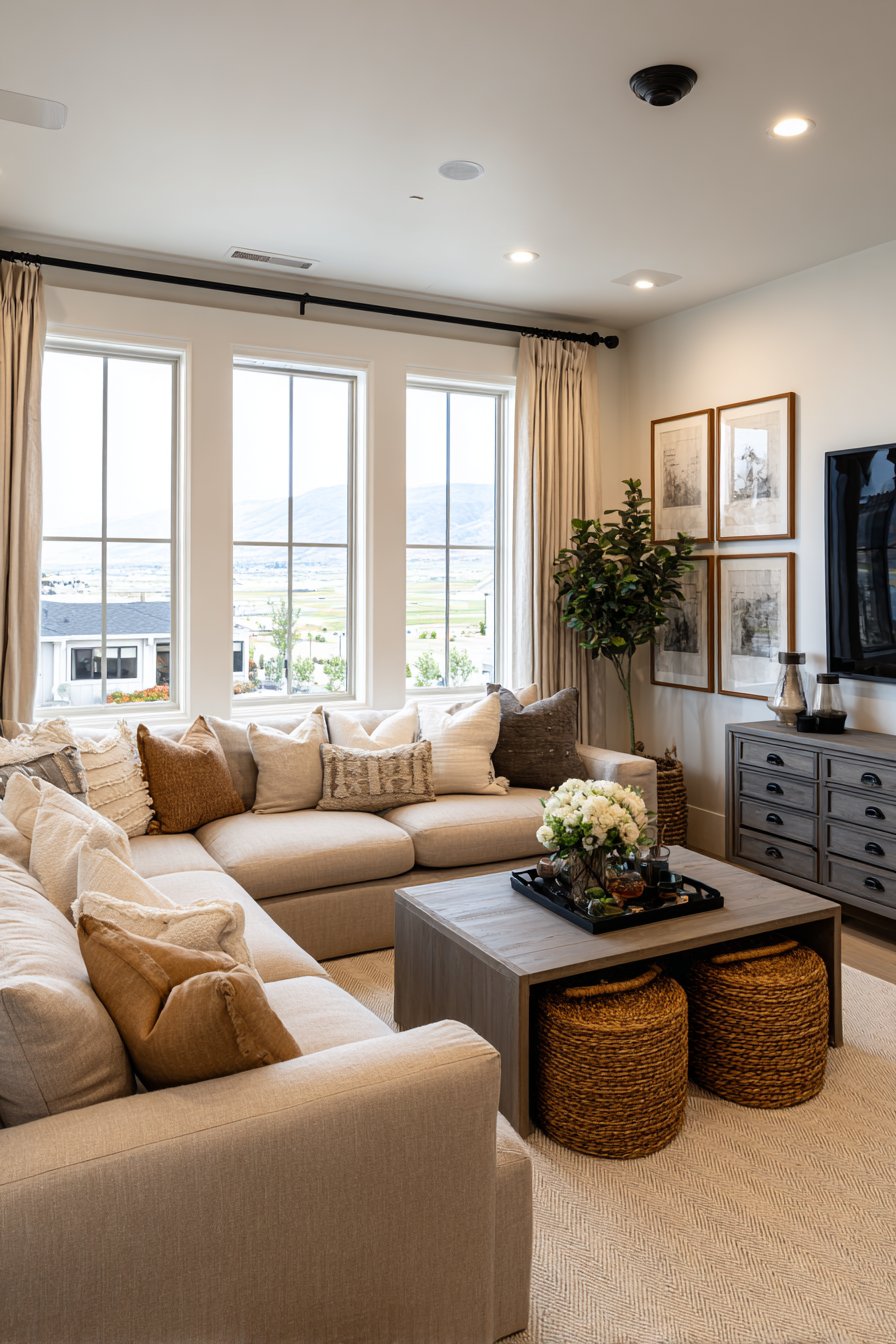
The television sits atop a sturdy media console engineered to withstand the occasional bump from running children or enthusiastic gaming sessions. Soft-close drawers protect little fingers while providing organized storage for game systems, controllers, movie collections, and all the electronic accessories that accumulate in family entertainment spaces. This thoughtful attention to safety and durability doesn’t compromise aesthetics—the console’s clean lines and quality construction ensure it looks intentional and attractive rather than merely utilitarian.
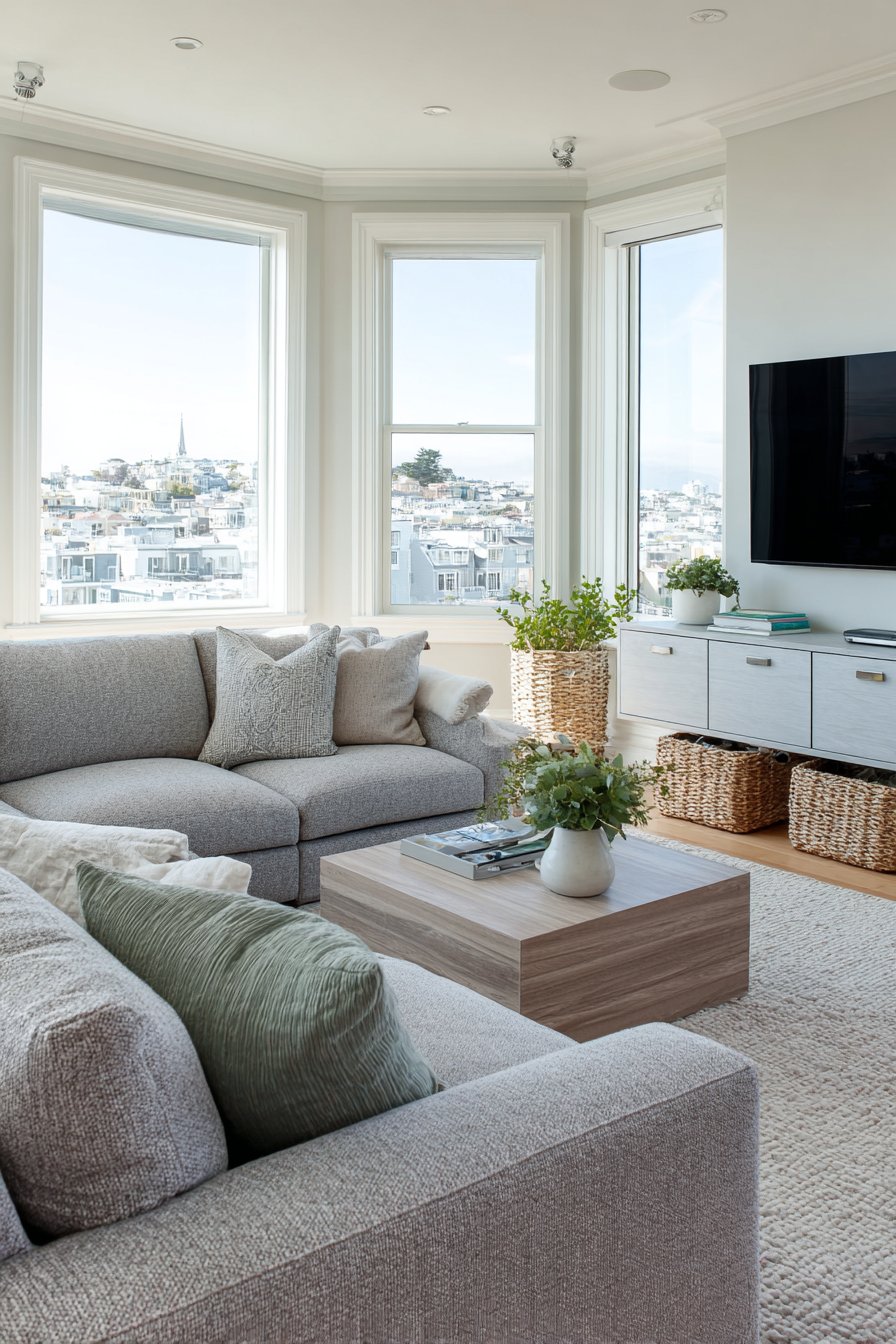
Practical design elements throughout this family-friendly space demonstrate how smart choices create environments that serve real life without sacrificing beauty. Washable throw pillows in coordinating patterns add comfort and color while remaining easily cleanable after spills or messy snack sessions.
A coffee table with rounded edges eliminates sharp corners that could injure small children during active play, while its substantial construction withstands being used as an impromptu coloring station or puzzle assembly area. Organized storage baskets tucked into open shelving or beneath the console keep toys, blankets, and everyday clutter contained yet accessible.
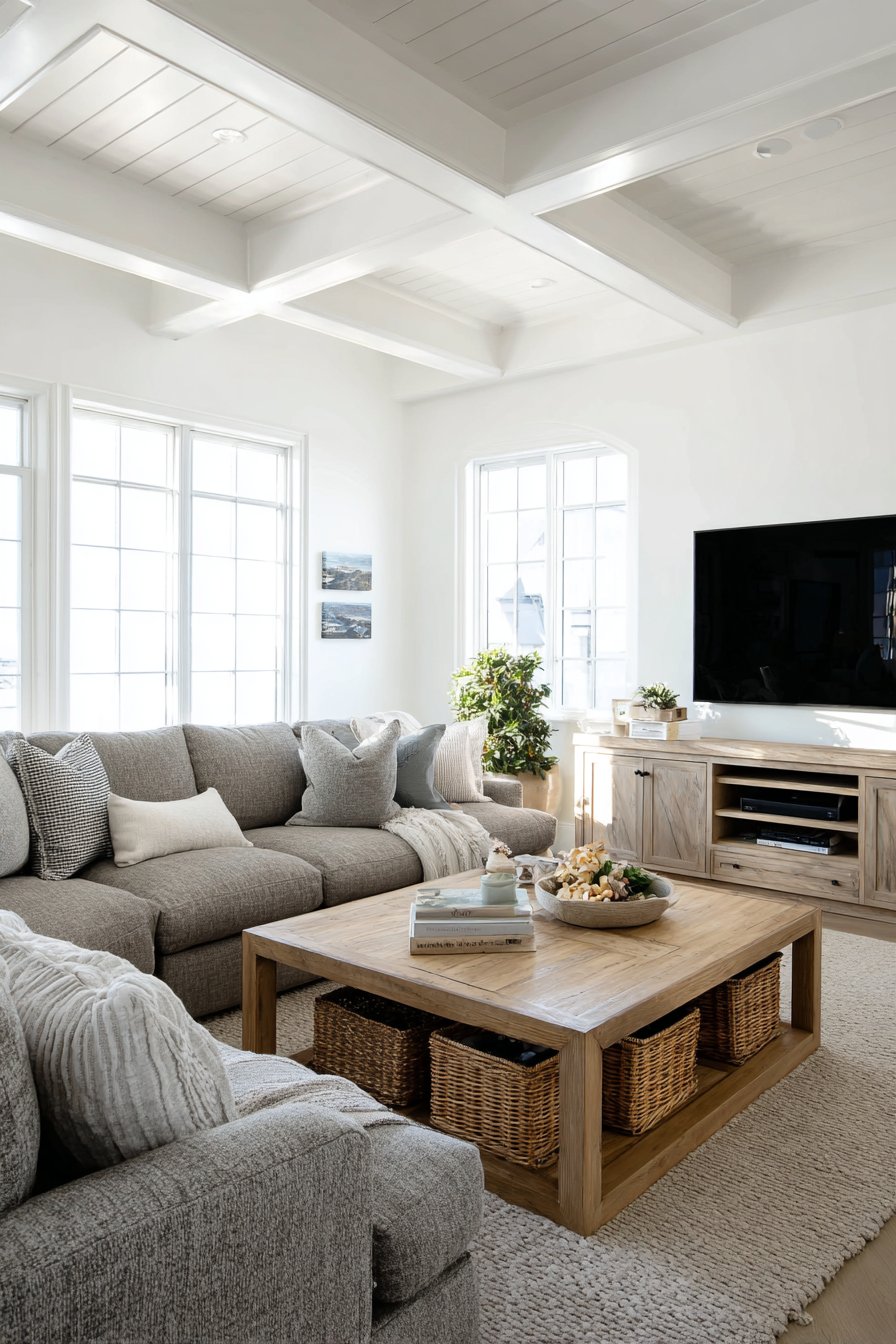
Natural light from double-hung windows combines with dimmable overhead lighting to create a flexible environment suitable for various activities throughout the day. Bright illumination supports homework and reading, while dimmed lights set the mood for family movie nights.
This adaptable lighting scheme recognizes that family living rooms serve multiple functions simultaneously, from quiet individual pursuits to boisterous group activities, all requiring different lighting levels and moods.
Key Design Tips:
- Choose performance fabrics specifically designed to resist stains, fading, and wear while maintaining a luxurious appearance and comfortable feel
- Select furniture with rounded edges and corners to prevent injuries during active play, especially important in homes with young children
- Invest in a media console with soft-close drawers and doors to protect small fingers and reduce noise in open-plan homes
- Use washable slipcovers or throw pillows that can be easily cleaned or replaced as needed without requiring professional upholstery services
- Incorporate closed storage options like baskets, bins, and cabinets to quickly hide clutter when unexpected guests arrive
- Choose neutral base colors for major furniture pieces, adding personality and color through easily changeable accessories
- Install dimmable lighting controlled by wall switches accessible to adults but out of reach of curious toddlers
- Position the television at a height safe from toddler interference while remaining comfortable for seated viewing
8. Mid-Century Modern Retro Revival
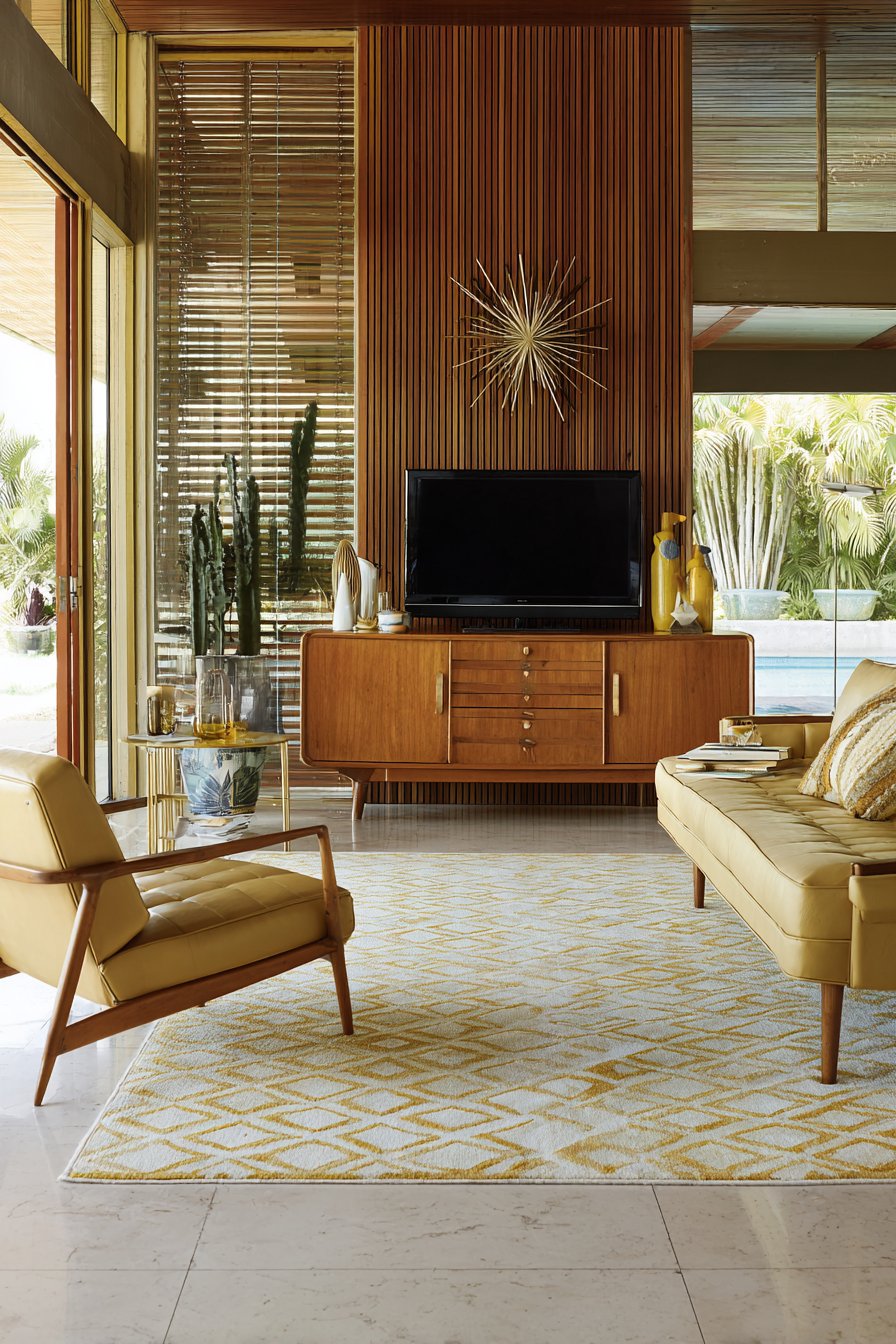
Step back into the golden age of design with this authentic mid-century modern living room where every element celebrates the optimistic, forward-thinking aesthetic of the 1950s and 1960s. A beautifully preserved or expertly reproduced teak credenza with signature tapered legs serves as the media stand, its warm honey tones and clean-lined design epitomizing the era’s emphasis on functional beauty. The credenza’s horizontal emphasis and low profile keep the television from dominating the room while providing practical storage for electronics and media collections behind sliding doors or in smooth-gliding drawers.
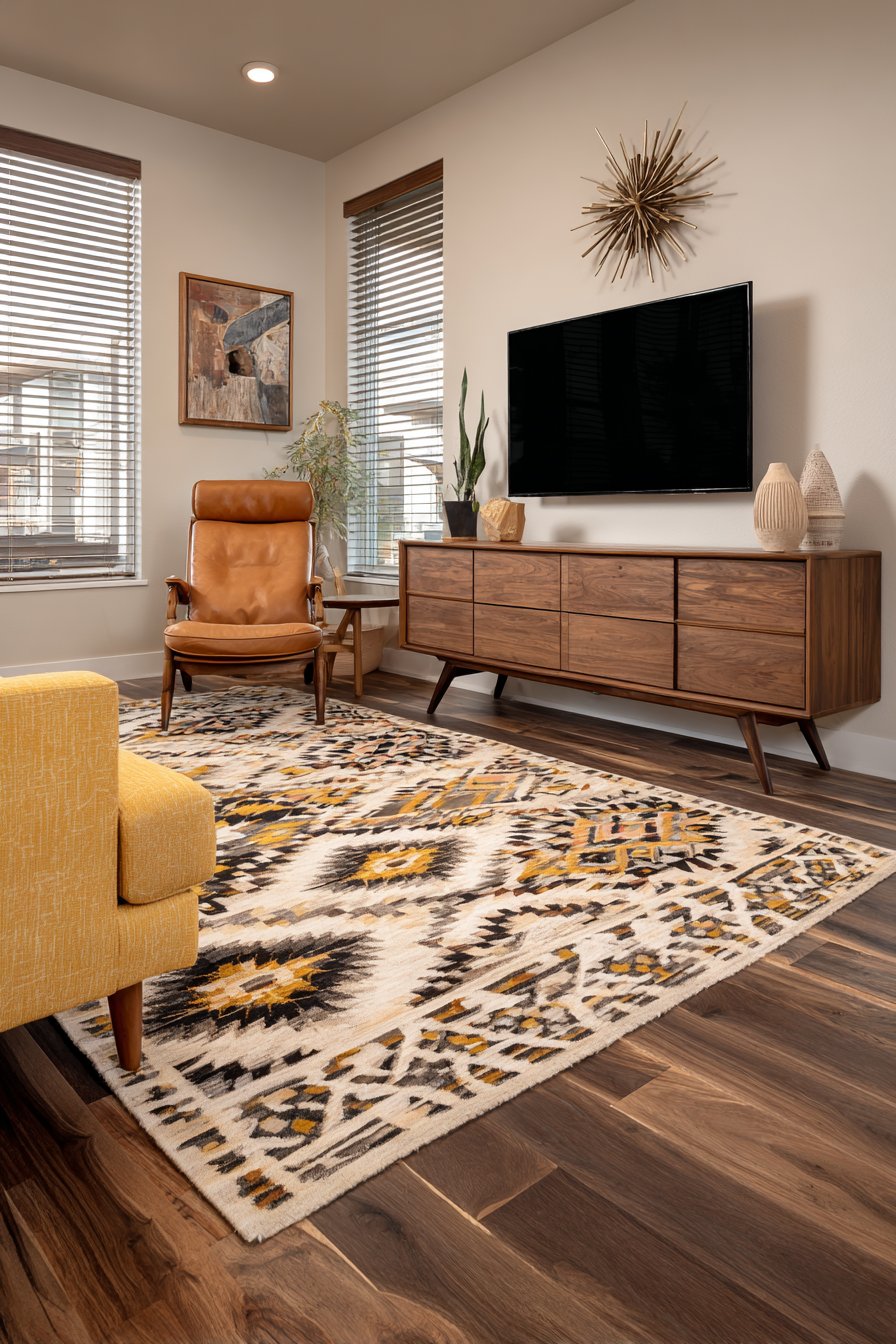
Iconic furniture pieces create a carefully curated collection that honors mid-century design principles. A cognac leather lounge chair—perhaps an Eames-style recliner or a similar period piece—provides a prime viewing spot while serving as sculptural art in its own right.
The rich leather develops a beautiful patina over time, becoming more attractive with age in the authentic mid-century tradition. A low-profile sofa with exposed wooden arms, upholstered in mustard yellow fabric, adds the era’s characteristic optimistic color while maintaining comfortable proportions perfect for extended viewing sessions.
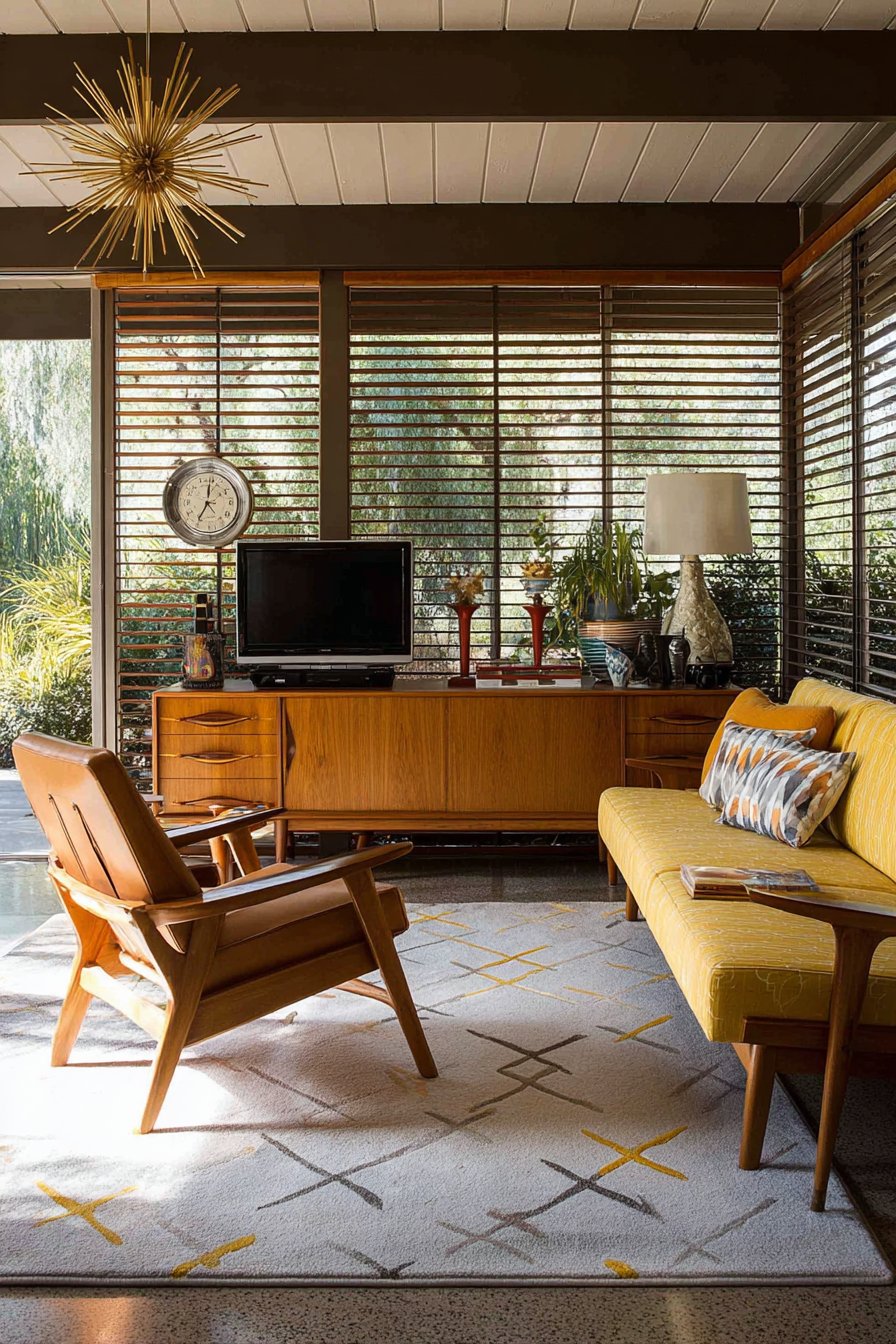
A geometric patterned area rug anchors the seating arrangement, its abstract design and bold colors reflecting the mid-century fascination with modern art and atomic-age motifs. This rug serves multiple purposes: defining the conversation area, adding visual interest to the floor plane, and introducing a pattern that energizes the space without overwhelming it. Period-appropriate accessories complete the authentic aesthetic—a starburst clock on the wall, ceramic vessels in organic shapes, abstract art prints, and perhaps a vintage bar cart ready for entertaining.

Soft natural lighting filtered through horizontal blinds creates the authentic mid-century ambiance crucial to this design’s success. The slatted blinds allow precise control over light levels while creating the characteristic striped shadow patterns that defined mid-century interior photography. This attention to lighting details, combined with the carefully chosen furniture and accessories, transports inhabitants to an era when optimism and innovation drove design forward, creating spaces that remain fresh and appealing more than sixty years later.
Key Design Tips:
- Source authentic vintage pieces or high-quality reproductions of iconic mid-century furniture designs to establish credibility and investment value
- Choose teak, walnut, or rosewood for wooden furniture pieces, reflecting the era’s preference for exotic hardwoods with beautiful grain patterns
- Incorporate the characteristic mid-century color palette including mustard yellow, orange, turquoise, and avocado green alongside neutral tones
- Select furniture with tapered legs and low profiles that create visual lightness and showcase the era’s innovative approach to form
- Add geometric or abstract patterns in textiles, artwork, and accessories to reflect the period’s fascination with modern art and science
- Install horizontal blinds or simple curtain panels rather than heavy drapes to maintain the clean, uncluttered window treatments of the era
- Display period-appropriate accessories like starburst clocks, ceramic pottery, and abstract art to complete the authentic mid-century atmosphere
- Maintain balance between vintage authenticity and modern comfort, ensuring the space serves contemporary living needs while honoring historical design principles
9. Coastal Tranquility and Beachside Living
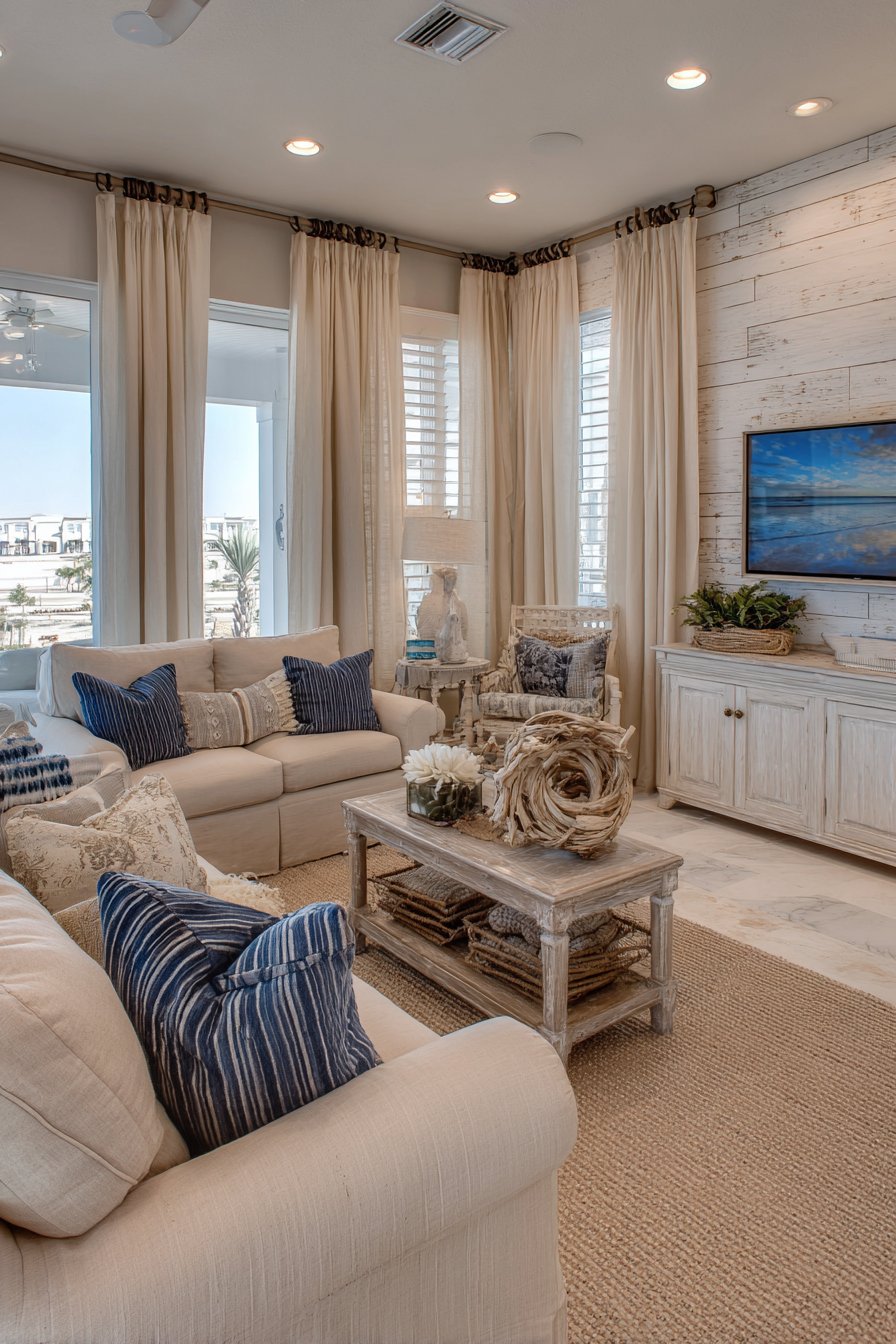
Bring the relaxed elegance of seaside living into your home with this coastal-inspired living room where every element evokes the tranquil beauty of beach landscapes. A whitewashed shiplap accent wall behind the entertainment center creates the perfect backdrop for the television, its soft white finish and subtle texture suggesting weathered beach cottages and salt-scrubbed driftwood. This classic coastal wall treatment adds architectural interest while maintaining the bright, airy atmosphere essential to successful beach house design.
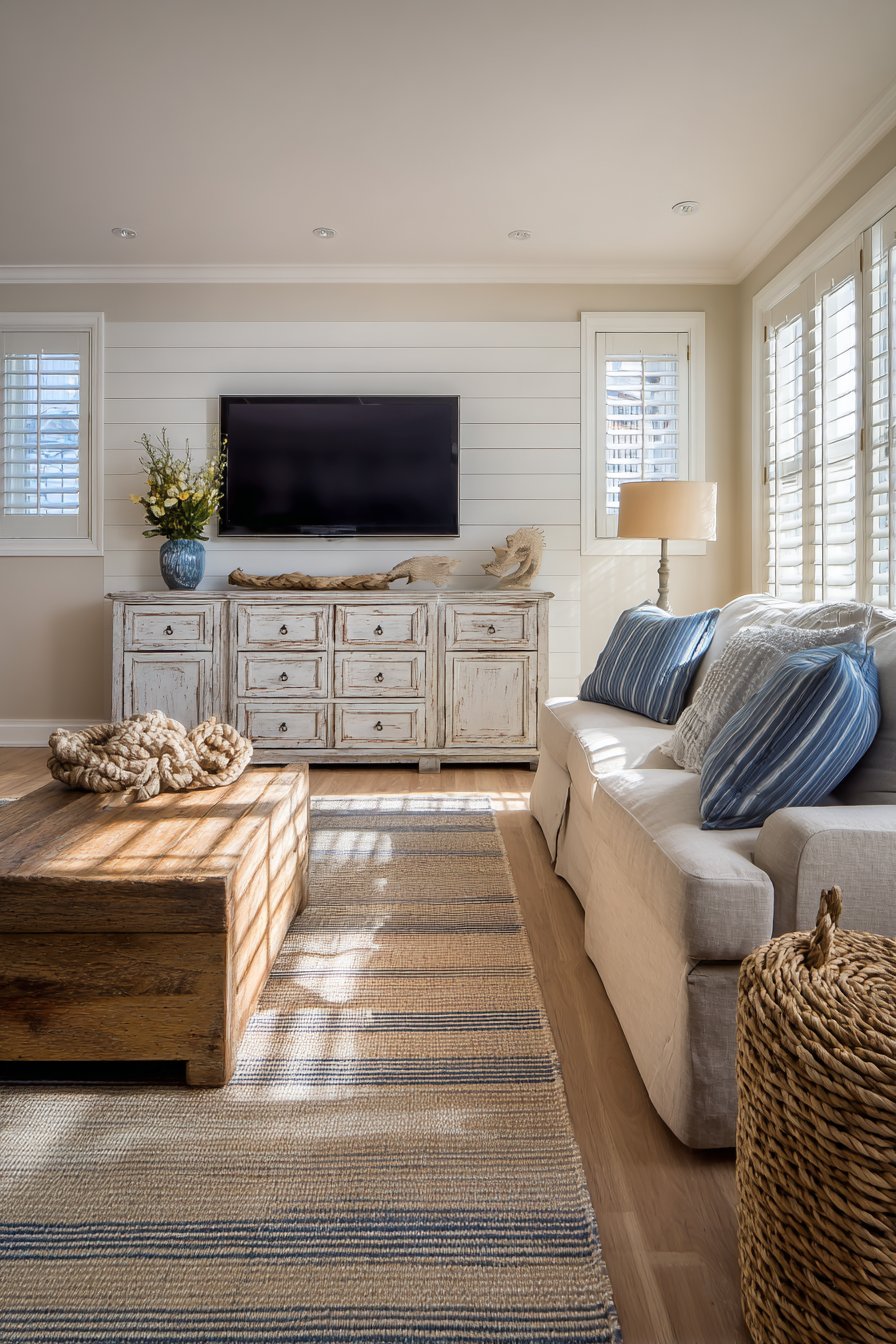
The distressed white wooden media console embodies the coastal aesthetic through both its finish and its thoughtful details. Rope drawer pulls replace conventional hardware, adding a nautical touch that reinforces the beach house theme without becoming overly literal or themed.
The console’s weathered finish suggests furniture that has lived near the ocean for years, developing character through exposure to salt air and sunlight. Open shelving and cabinet space provide homes for entertainment equipment and beach-themed accessories like coral specimens, shells collected during memorable vacations, and sea glass in shades of blue and green.
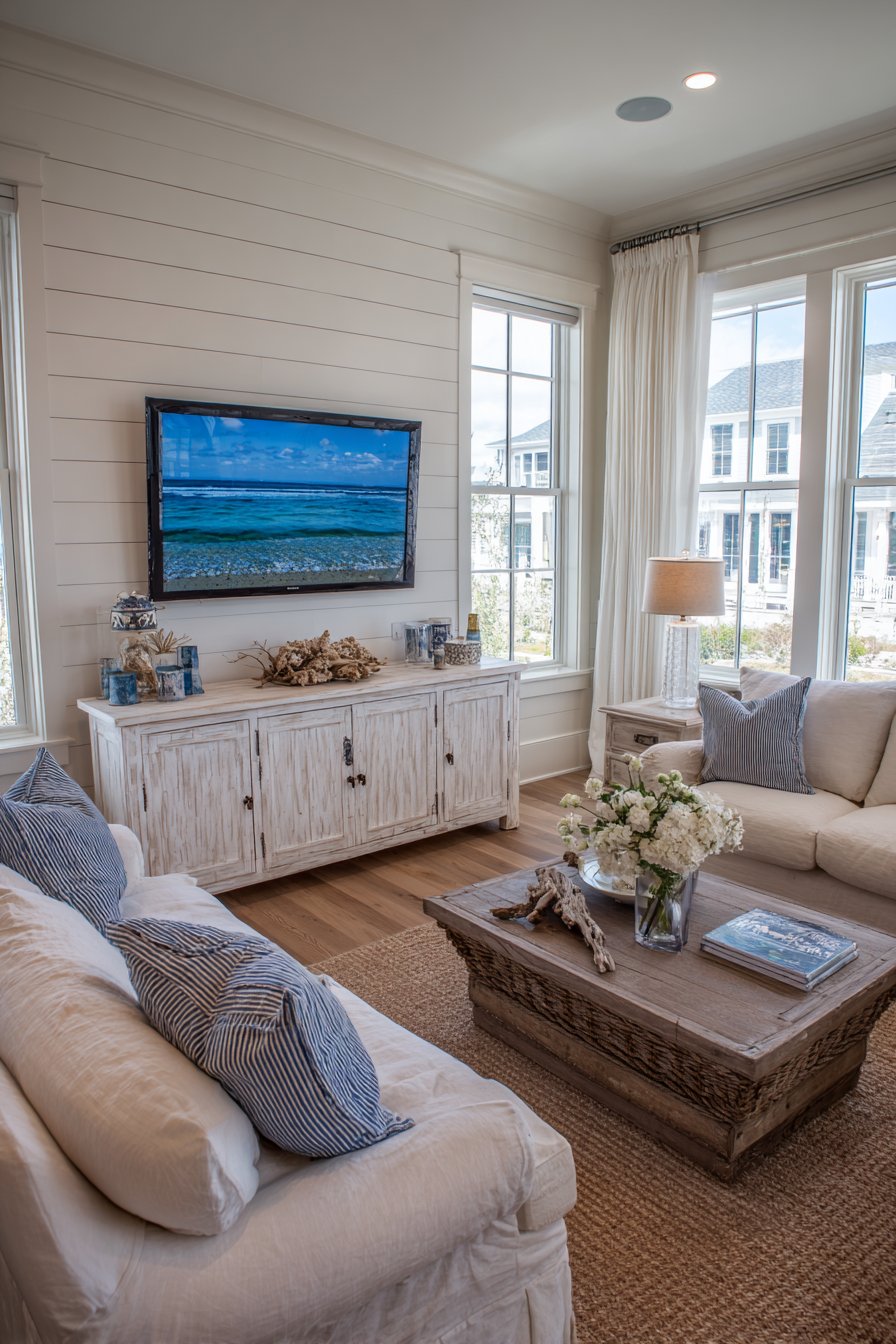
Slipcovered sofas in sandy beige linen create the ultimate in relaxed, casual seating. The slipcovers serve both aesthetic and practical purposes—their rumpled, lived-in appearance contributes to the room’s casual elegance while remaining completely removable for washing when sandy feet or wet swimsuits inevitably appear.
Blue and white striped throw pillows add the quintessential coastal color combination, their crisp pattern suggesting beach umbrellas and sailor’s shirts while providing comfortable back support for marathon viewing sessions.
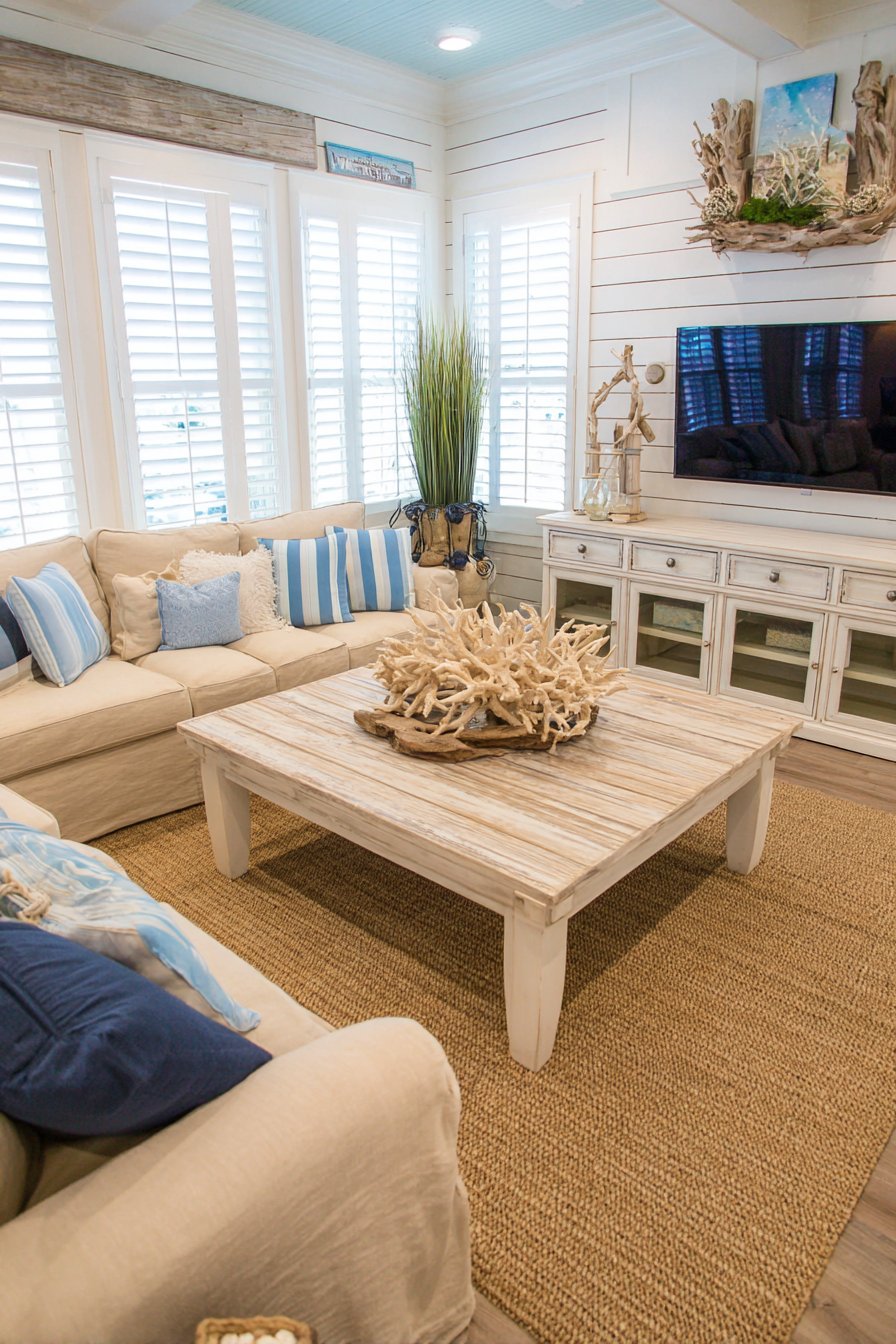
A natural fiber area rug grounds the seating arrangement while reinforcing the connection to organic coastal materials. Woven from jute, sisal, or seagrass, this rug brings texture and neutral color that complements the sandy tones throughout the space. Driftwood accents—perhaps a sculptural piece on the media console or a weathered branch leaning against the wall—bring literal pieces of the beach indoors, their twisted shapes and silvered surfaces telling stories of tides and time. Golden hour sunlight streaming through plantation shutters bathes everything in warm, honey-colored light that makes the space feel like a permanent vacation retreat.
Key Design Tips:
- Paint shiplap or beadboard wall treatments in soft white, cream, or very pale blue to create the characteristic coastal backdrop
- Choose furniture with slipcovers in natural fabrics like cotton or linen that can be easily removed and laundered after beach days
- Incorporate rope details, nautical hardware, and weathered wood finishes to suggest seaside living without resorting to obvious themed decor
- Use a color palette inspired by the beach: sandy neutrals, soft blues and greens, crisp whites, and warm wood tones
- Add natural fiber rugs in jute, sisal, or seagrass to bring organic texture and reinforce the connection to natural materials
- Display authentic coastal finds like driftwood, shells, and coral rather than artificial beach-themed decorations
- Install plantation shutters or simple cotton curtains that filter light softly while suggesting the casual elegance of historic beach cottages
- Maintain an overall sense of breeziness and light by avoiding heavy fabrics, dark colors, or cluttered arrangements
10. Monochromatic Sophistication in Grey and White
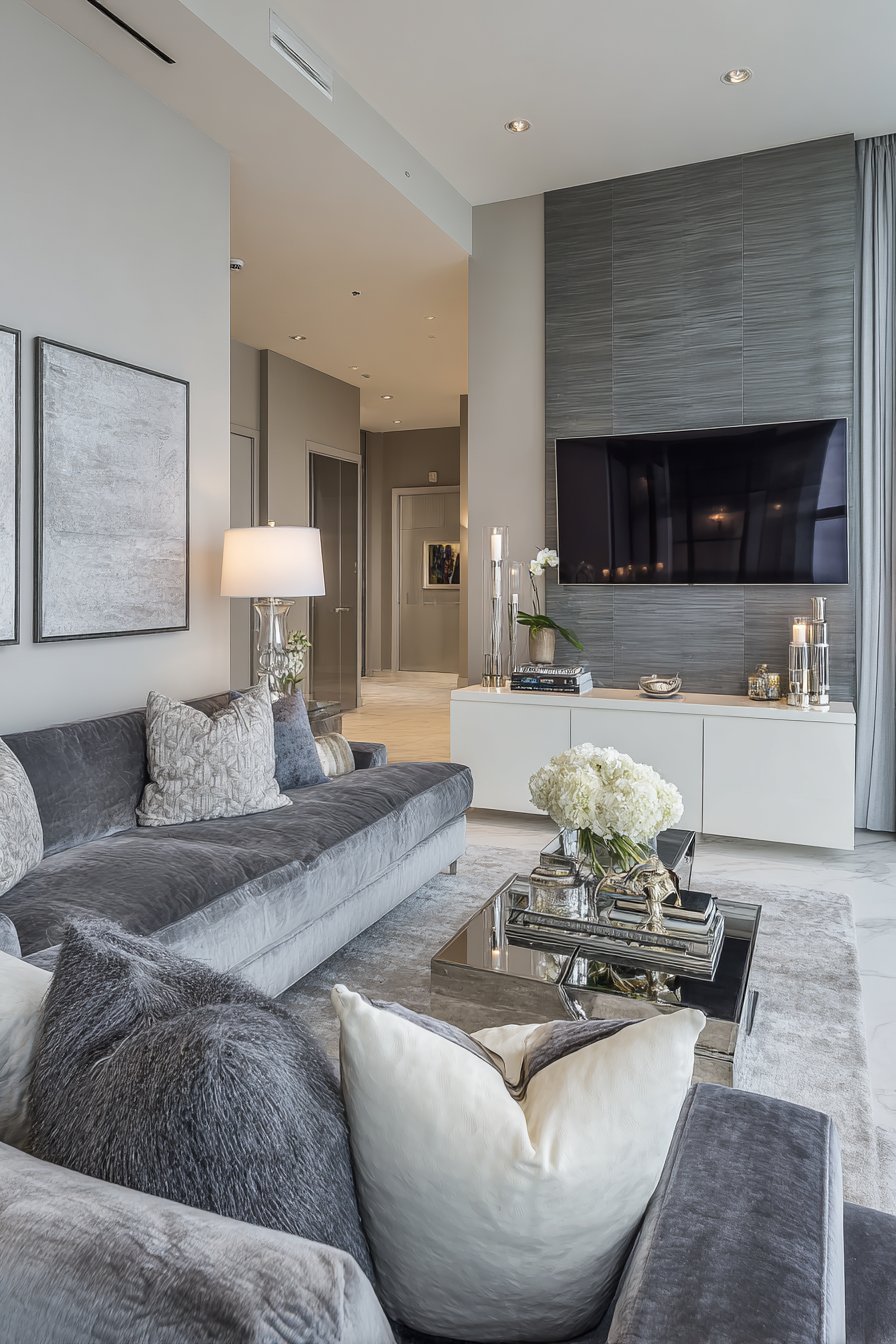
Elegance emerges through restraint in this sophisticated monochromatic living room where variations of grey and white create a refined, cohesive environment of remarkable depth and subtlety. The television mounts on a textured grey wall that adds three-dimensional interest through its surface treatment—perhaps a subtle grasscloth wallpaper, a Venetian plaster finish, or a dimensional paint technique that catches light and creates shadow. This textured backdrop prevents the monochromatic scheme from reading as flat or monotonous, adding crucial visual complexity that rewards close observation.
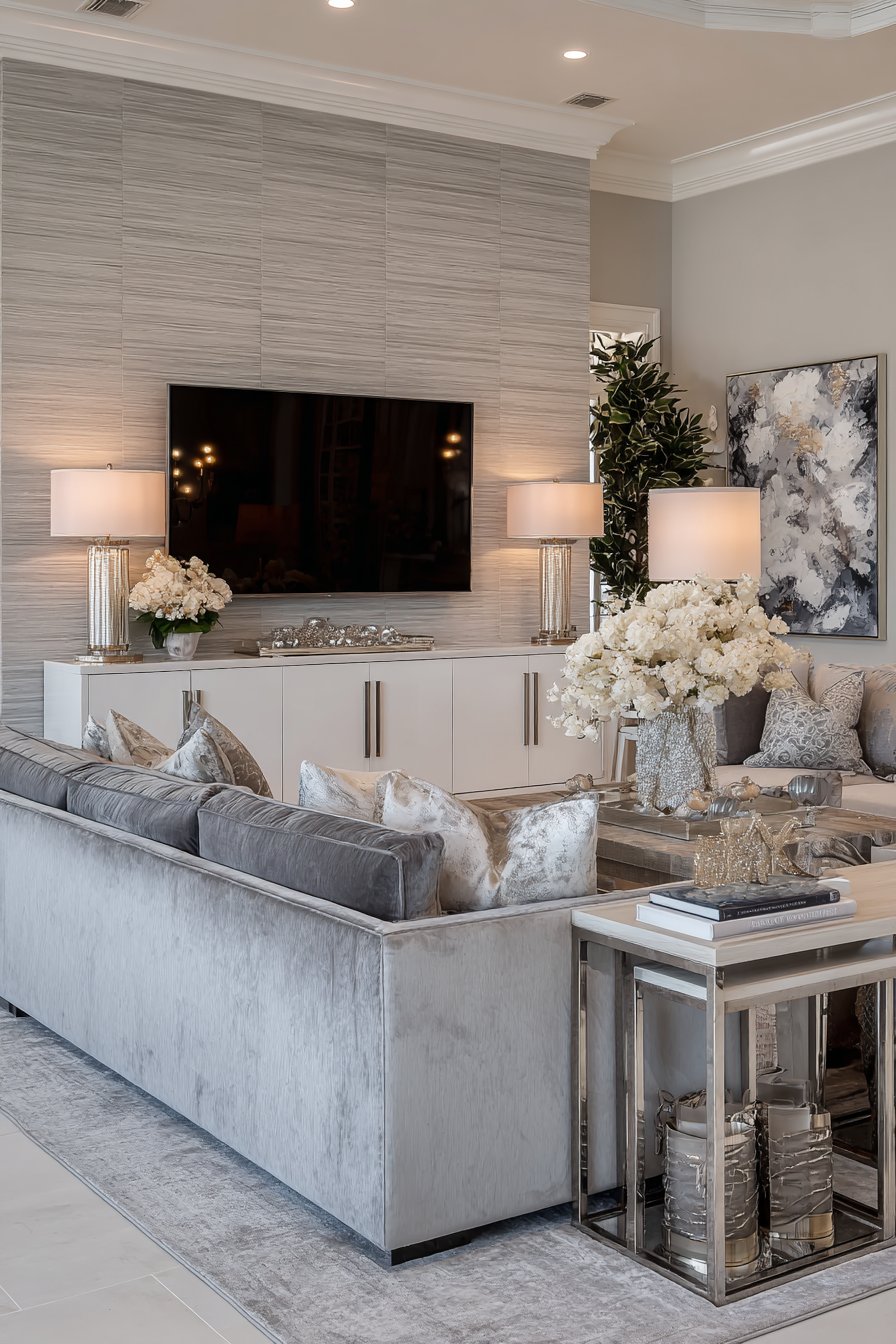
Below the television, a high-gloss white lacquer media console creates a striking contrast to the matte textured wall. The reflective surface bounces light around the room, adding luminosity and visual interest while the pristine white maintains the room’s light, airy feeling.
Hidden storage behind seamless push-to-open doors keeps clutter and electronics completely concealed, maintaining the clean, uninterrupted surfaces essential to successful monochromatic design, where every detail becomes magnified.

The seating area demonstrates the sophisticated possibilities of working within a limited color palette. A grey velvet sofa anchors the space with its sumptuous fabric and substantial presence, while throw pillows in varied grey textures—perhaps one in nubby linen, another in silk, a third in cable-knit wool—create visual interest through tactile variation rather than color contrast.
This layering of different materials and textures within the same color family prevents the monochromatic scheme from feeling boring or one-note, instead creating a rich, complex environment that feels both cohesive and dynamic.
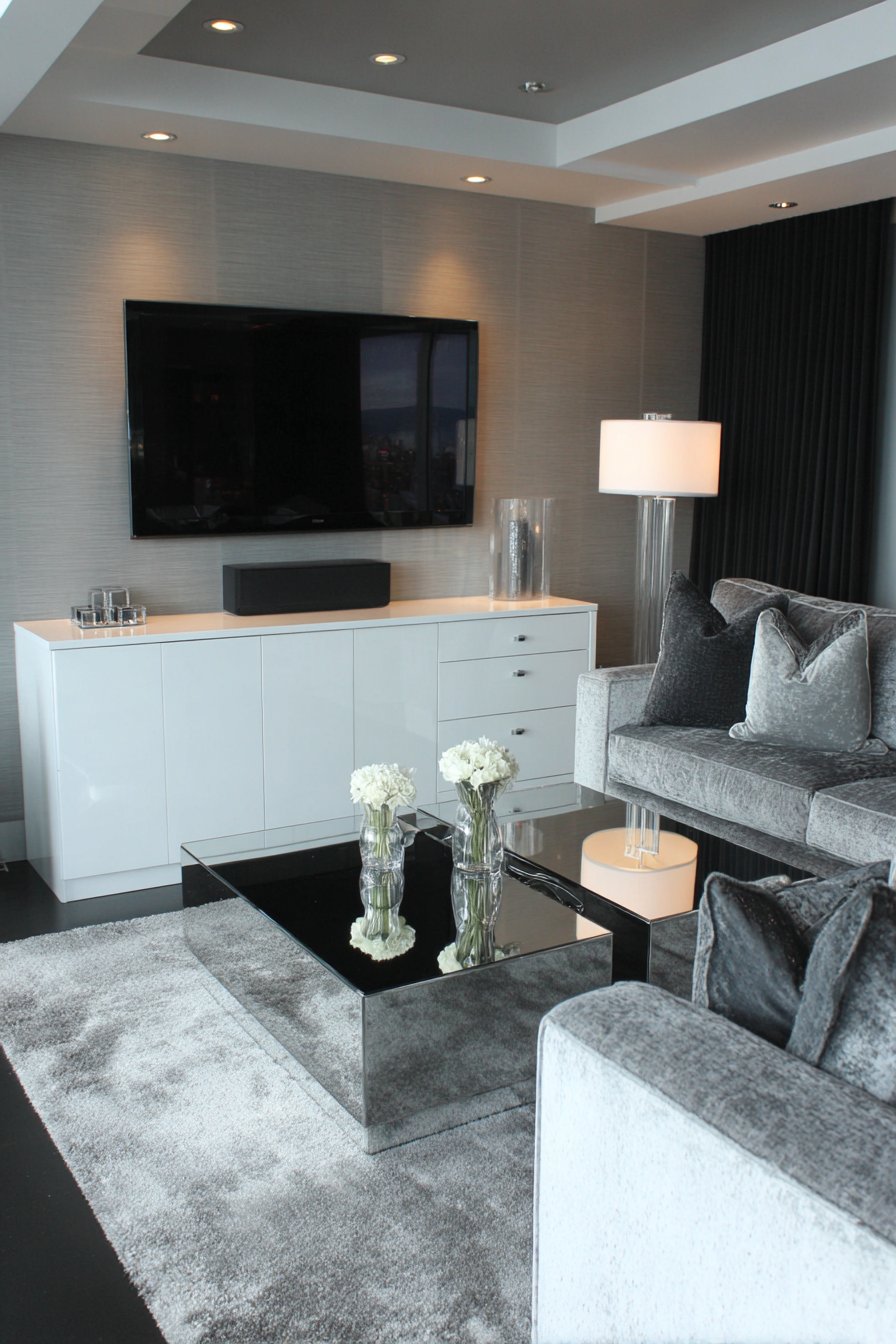
Chrome and glass accent tables add reflective elements that catch and scatter light throughout the space, their transparent and mirrored surfaces creating visual interest without adding color or visual weight. A plush area rug in yet another shade of grey grounds the seating arrangement while its thick pile adds luxurious softness underfoot.
Carefully planned lighting proves crucial to the success of this monochromatic scheme—recessed ceiling fixtures provide general illumination while modern table lamps create pools of warm light that add depth through the interplay of light and shadow. This sophisticated lighting design reveals the subtle tonal variations throughout the space, demonstrating how a limited color palette can create remarkable visual richness when executed with skill and attention to detail.
Key Design Tips:
- Choose a textured wall treatment for your TV backdrop to add three-dimensional interest and prevent flatness in the monochromatic scheme
- Mix matte and glossy finishes to create contrast and visual interest without introducing color variation
- Layer multiple textures within your chosen color family—velvet, linen, silk, leather, glass, metal—to create tactile and visual richness
- Incorporate reflective surfaces like chrome, glass, and lacquer to bounce light and add luminosity to the space
- Plan your lighting design carefully, using multiple sources at different heights to create depth through light and shadow
- Select artwork and accessories in the monochromatic palette to maintain cohesion while adding personality and scale variation
- Include both warm and cool tones within your grey palette to prevent the space from feeling too stark or clinical
- Ensure adequate contrast between elements to prevent the monochromatic scheme from blurring together into visual monotony
Why These TV in Living Room Ideas Represent the Best in Modern Design
These ten carefully curated TV in living room ideas represent the pinnacle of contemporary interior design thinking, demonstrating how television integration has evolved from an afterthought to a central consideration in creating beautiful, functional living spaces. Each design concept addresses the fundamental challenge facing modern homeowners: how to incorporate necessary technology into our homes without sacrificing aesthetic integrity or personal style. The solutions presented here span the full spectrum of design preferences, from minimalist Scandinavian serenity to opulent custom luxury, proving that exceptional television integration is achievable regardless of your aesthetic inclination, budget level, or spatial constraints.
The contemporary wall-mounted design exemplifies the clean-lined sophistication that defines modern living, utilizing floating elements and integrated cable management to create spaces that feel uncluttered and intentional. This approach resonates strongly with homeowners who value simplicity, functionality, and timeless design that won’t feel dated in five or ten years. The farmhouse setup, by contrast, celebrates warmth, authenticity, and the patina of age, incorporating reclaimed materials and rustic finishes that create spaces rich with character and welcoming comfort. This design direction speaks to our collective desire for connection to history and craftsmanship in an increasingly mass-produced world.
The minimalist Scandinavian approach demonstrates how restraint and careful editing create spaces of remarkable serenity and functionality. By eliminating all non-essential elements and focusing on quality over quantity, this design philosophy creates living rooms that serve as respites from our overstimulated, cluttered modern lives. The industrial loft design takes the opposite approach, celebrating raw materials, exposed structure, and utilitarian elements to create spaces with edge, personality, and urban sophistication. This aesthetic appeals to those who appreciate authenticity, history, and the beauty of honest materials showing their true nature.
Small apartment solutions prove that spatial limitations need not limit style or functionality when approached with intelligence and creativity. These clever arrangements optimize every square inch while maintaining visual spaciousness and livability—crucial considerations as urban living becomes increasingly prevalent and housing costs continue to rise. The luxurious custom entertainment wall represents the ultimate in personalized design, demonstrating how bespoke millwork and thoughtful integration can transform a television setup into architectural art. This approach, while representing a significant investment, creates truly unique spaces that reflect the homeowner’s specific needs, preferences, and lifestyle with unparalleled precision.
Family-friendly design solutions acknowledge the reality that living rooms must serve multiple functions and withstand the rigors of active family life. By choosing durable materials, practical layouts, and easy-care finishes, these designs create spaces that remain beautiful and functional through years of heavy use. The mid-century modern revival demonstrates the enduring appeal of great design, showing how the principles established sixty years ago remain relevant and attractive in contemporary homes. This aesthetic bridges past and present, honoring design history while serving modern technological needs.
Coastal style brings the relaxed elegance of beach living into any home, regardless of proximity to actual oceans. Its emphasis on natural materials, light colors, and casual comfort creates spaces that feel like permanent vacations—welcoming, unstressed, and always ready for impromptu gatherings. The sophisticated monochromatic design proves that working within a restricted color palette can create remarkable visual richness through careful layering of textures, finishes, and tones. This approach appeals to those who appreciate subtle complexity and refined elegance over bold color statements.
These diverse approaches to TV in living room design share several critical commonalities that elevate them above mediocre solutions. Each prioritizes proper viewing ergonomics, ensuring the television sits at an appropriate height and distance for comfortable, strain-free watching. Smart storage solutions hide unsightly cables, electronics, and clutter while maintaining easy access to necessary components. Thoughtful furniture arrangement balances television viewing with conversation and other room functions, recognizing that modern living rooms serve multiple purposes throughout each day.
Lighting design receives careful attention in each concept, with layered illumination providing flexibility for different activities and times of day. Natural light integration maximizes daylight hours while artificial lighting creates warmth and ambiance after dark. Material selection demonstrates understanding of how different surfaces, textures, and finishes affect both the visual and tactile experience of a space. Quality craftsmanship and attention to detail ensure these designs age gracefully, maintaining their appeal and functionality through years of daily use.
Perhaps most importantly, each of these TV in living room ideas demonstrates respect for the homeowners’ lifestyle and personal preferences. Rather than imposing a designer’s vision or following fleeting trends, these spaces serve the people who live in them, accommodating their daily routines, entertainment preferences, family dynamics, and aesthetic sensibilities. This human-centered approach to design ensures that these living rooms function as true homes rather than showroom vignettes—beautiful to look at, certainly, but also deeply comfortable to inhabit day after day, year after year.
Conclusion:
The journey to creating your ideal TV living room begins with han onest assessment of your needs, preferences, and constraints. Consider how you actually use your living space—do you host frequent movie nights with friends, or prefer quiet evenings alone with a book and background television? Does your family gather here for game nights and homework sessions, or does this room serve primarily as an elegant entertaining space? Understanding your true lifestyle requirements ensures you select design elements that support your daily reality rather than some idealized vision of how you think you should live.
Budget considerations play a crucial role in determining which design direction suits your situation. While custom-built-in entertainment walls create stunning results, they require significant investment in both materials and skilled labor. Corner-mounted solutions and smart furniture arrangements, by contrast, achieve impressive results with minimal financial outlay, proving that creativity and planning often matter more than unlimited budgets. Consider phasing your project, starting with essential elements like proper TV mounting and adequate seating, then adding refinements like custom storage or upgraded lighting as resources allow.
Don’t hesitate to blend elements from different design concepts to create a personalized hybrid that reflects your unique taste. Perhaps you love the clean lines of Scandinavian design but want to incorporate the warmth of farmhouse materials, or maybe you appreciate mid-century aesthetics but need the family-friendly durability of performance fabrics. The best interiors often emerge from thoughtful mixing rather than rigid adherence to a single style doctrine. Trust your instincts and select elements that genuinely resonate with you rather than following prescribed formulas or chasing fleeting trends that may feel dated within a few years.
Practical considerations deserve equal attention alongside aesthetic preferences. Measure your space carefully before purchasing furniture or planning television placement—a sectional that looks perfect in a showroom may overwhelm your actual living room, while a television that seems adequate in the store might prove too small for comfortable viewing from your sofa’s distance. Consider sight lines from various positions throughout the room, ensuring the television remains visible from primary seating areas without dominating views from adjacent spaces like dining areas or entryways.
The technical aspects of television setup significantly impact your daily enjoyment of the space. Mount your screen at appropriate height—generally, the center of the television should sit at eye level when you’re seated in your primary viewing position. This prevents neck strain during extended viewing and creates a more comfortable, ergonomic experience. Invest in quality mounting hardware and professional installation if you’re uncertain about tackling the project yourself, as improperly mounted televisions pose serious safety hazards and potential property damage.
Cable management transforms good television setups into great ones. Exposed wires dangling down walls or snaking across floors undermine even the most thoughtfully designed spaces, creating visual clutter that distracts from your carefully chosen aesthetic. Explore solutions like in-wall cable conduits, cable management boxes, or furniture with integrated wire routing to keep necessary connections hidden from view. Many modern media consoles include built-in cable management features, while wall-mounted setups benefit from professional in-wall routing that conceals wires completely.
Storage requirements extend beyond simple media component housing. Consider where you’ll keep remote controls when not in use, how you’ll organize streaming device accessories, where movie or game collections will reside, and how you’ll handle seasonal decorative items that rotate through your display areas. Adequate storage prevents the gradual clutter accumulation that plagues many living rooms, maintaining the clean, intentional appearance that makes these spaces pleasant to inhabit. Closed storage conceals visual chaos, while open shelving displays curated collections that add personality without creating disorder.
Lighting design deserves special attention in television-focused living rooms. Avoid positioning your television directly opposite unshaded windows, as this creates problematic glare during daytime viewing and makes screen visibility difficult. Similarly, overhead lights positioned to reflect directly on the television screen create distracting glare that diminishes picture quality. Layer your lighting with multiple sources at different heights—table lamps, floor lamps, recessed ceiling fixtures, and perhaps LED strip lighting behind the television itself—to create flexibility for different activities and times of day. Dimmer switches transform single fixtures into variable light sources that adapt to changing needs throughout evening hours.
Acoustic considerations impact your viewing experience more than many people realize. Hard surfaces like wood floors, glass tables, and bare walls create sound reflection that muddies dialogue and reduces audio quality. Incorporate sound-absorbing elements through area rugs, upholstered furniture, curtains or drapes, and even decorative wall hangings to improve room acoustics. These textile elements serve double duty, enhancing both visual warmth and audio clarity while making your space more comfortable and inviting.
Color psychology influences how you experience your living room during the many hours you’ll spend there. Cool tones like blues and greys create calm, relaxing atmospheres ideal for unwinding after stressful days, while warm tones like beiges, terracottas, and soft yellows foster conversation and social connection. Dark, dramatic colors create cozy, intimate environments perfect for immersive movie watching, while light, neutral palettes make spaces feel larger and more open—particularly valuable in compact rooms or basement areas with limited natural light.
Furniture arrangement requires balancing multiple competing priorities. Seating should position viewers at optimal distance from the television—generally 1.5 to 2.5 times the screen’s diagonal measurement for comfortable viewing without eye strain. However, furniture must also facilitate conversation, maintain traffic flow through the room, and create visual balance within the space. Experiment with different arrangements before committing to final placement, living with each configuration for several days to understand how it supports your actual usage patterns.
Personal expression transforms generic design concepts into spaces that truly feel like home. Display meaningful collections, incorporate artwork that speaks to your interests and experiences, include family photographs that tell your story, and select accessories that reflect your personality rather than simply filling space with generic decorative objects. These personal touches create emotional connections to your space and ensure your living room feels authentically yours rather than resembling a catalog photograph or staged model home.
Consider the future evolution of your space as your needs and circumstances change. Modular furniture offers reconfiguration flexibility, neutral base colors accommodate changing accent colors and accessories, and quality construction ensures pieces remain functional and attractive through years or even decades of use. Avoid overly trendy elements that will quickly feel dated, instead investing in timeless fundamentals that serve as long-term foundations for your evolving style.
Technology continues advancing at remarkable pace, with television sizes, formats, and capabilities changing significantly every few years. Build flexibility into your design to accommodate future upgrades without requiring complete room renovations. Mounting systems that adjust for different screen sizes, media consoles with flexible shelving, and cable management systems that accommodate additional components ensure your thoughtfully designed space adapts to technological changes without becoming obsolete.
Climate and regional considerations influence material and color choices more than many design guides acknowledge. Leather furniture develops beautiful patina in dry climates but may feel uncomfortable in humid regions, while light-colored upholstery that works beautifully in dry areas shows dirt and stains more readily in rainy climates with muddy conditions. Consider your local environment when selecting materials, choosing options that remain attractive and functional within your specific conditions rather than pursuing beautiful ideas that don’t translate to your reality.
Maintenance requirements deserve consideration during the planning phase rather than becoming unpleasant surprises after installation. High-gloss finishes show every fingerprint and require frequent cleaning, while textured surfaces hide minor imperfections but collect dust in their crevices. Performance fabrics resist stains but may lack the luxurious hand of natural fibers, while natural materials develop character through use but require more careful maintenance. Balance your desire for specific aesthetics against your honest assessment of how much time and energy you’ll devote to maintenance and cleaning.
Professional consultation can provide valuable perspective, even if you’re handling most design decisions and implementation yourself. Interior designers, home theater specialists, and even knowledgeable salespeople at quality furniture stores offer insights drawn from extensive experience with what works and what doesn’t in real-world applications. A few hours of professional advice early in the process often prevents costly mistakes and leads to more satisfying final results. Many professionals offer consultation services separately from full-service design packages, making expert input accessible even with limited budgets.
Sustainability considerations increasingly influence design decisions as we recognize the environmental impact of our consumer choices. Investing in quality pieces built to last decades rather than purchasing disposable furniture that requires replacement every few years reduces waste and often proves more economical long-term. Choosing responsibly sourced materials, supporting local craftspeople, and selecting timeless designs over fast-fashion trends creates spaces with reduced environmental footprints while often resulting in more beautiful, meaningful interiors.
The most successful TV living room designs emerge from thoughtful planning that balances aesthetic aspirations with practical requirements, personal preferences with universal design principles, and current needs with future flexibility. These spaces honor the importance of television and media in contemporary life while ensuring that technology serves inhabitants rather than dominating their living environments. By drawing inspiration from the diverse design concepts explored throughout this article and adapting them to your specific circumstances, you can create a living room that provides comfort, functionality, and beauty for years to come.
Begin your transformation today by identifying which of these ten design approaches resonates most strongly with your personal style and lifestyle needs. Study the elements that make each concept successful, consider how those principles might adapt to your specific space and constraints, and start planning the practical steps required to bring your vision to life. Whether you undertake a complete room renovation or implement changes gradually through strategic furniture and accessory updates, each thoughtful improvement moves you closer to a living room that truly reflects who you are and how you want to live.
Your television need not be a design compromise or aesthetic afterthought. With proper planning, quality materials, and attention to the principles demonstrated throughout these inspiring examples, your TV can integrate seamlessly into a living room that balances entertainment functionality with lasting beauty. The result will be a space that welcomes you home each day, accommodates your lifestyle comfortably, and provides a backdrop for the countless memories you’ll create with family and friends in the years ahead. Start envisioning your perfect TV living room today, and take the first steps toward transforming that vision into your everyday reality.
