


In today’s modern homes, the open-concept layout has revolutionized the way we think about living spaces. The integration of kitchen and living room areas creates an inviting, functional environment that promotes social interaction, maximizes natural light, and makes even the smallest apartments feel more spacious. This design approach isn’t just a passing trend—it’s a thoughtful response to how we actually live, cook, entertain, and relax in our homes. Whether you’re working with a compact urban apartment or redesigning a modest family home, the small open kitchen and living room concept offers endless possibilities for creating a space that’s both beautiful and practical.
The beauty of an open-concept design lies in its ability to foster connection while maintaining distinct functional zones. When done correctly, these spaces flow seamlessly from the cooking area to the relaxation zone without feeling cramped or chaotic. The key is understanding how to use furniture placement, color coordination, strategic lighting, and smart storage solutions to define each area while preserving the sense of openness that makes these layouts so appealing. From minimalist Scandinavian designs to warm mid-century modern aesthetics, there’s an open-concept style to suit every personality and lifestyle.
In this comprehensive guide, we’ll explore ten distinct approaches to designing small open kitchen and living room spaces. Each concept showcases unique materials, color palettes, furniture arrangements, and design philosophies that can inspire your own home transformation. Whether you’re drawn to industrial edge, coastal calm, or contemporary sleekness, you’ll discover practical tips and design strategies that will help you create a cohesive, functional, and visually stunning open living space that perfectly reflects your personal style.
1. Seamless Flow with Compact Efficiency
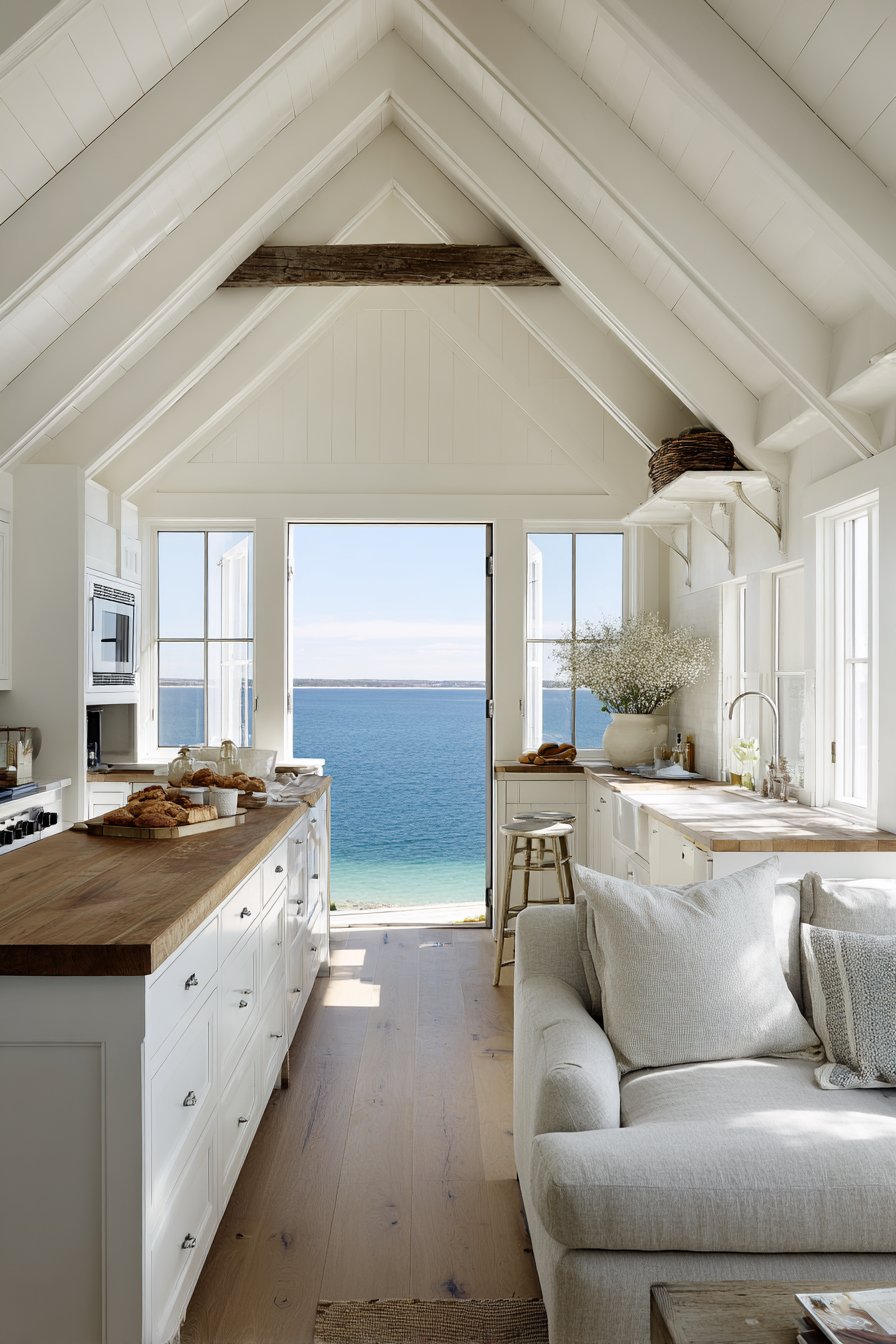
Stepping into this thoughtfully designed space, you’re immediately struck by how naturally the kitchen and living areas complement each other. The compact L-shaped kitchen features pristine white shaker cabinets that bring a timeless, clean aesthetic to the space, paired beautifully with warm butcher block countertops that add organic texture and inviting warmth. This combination creates a perfect balance between traditional charm and practical functionality, making the kitchen feel both welcoming and efficient.
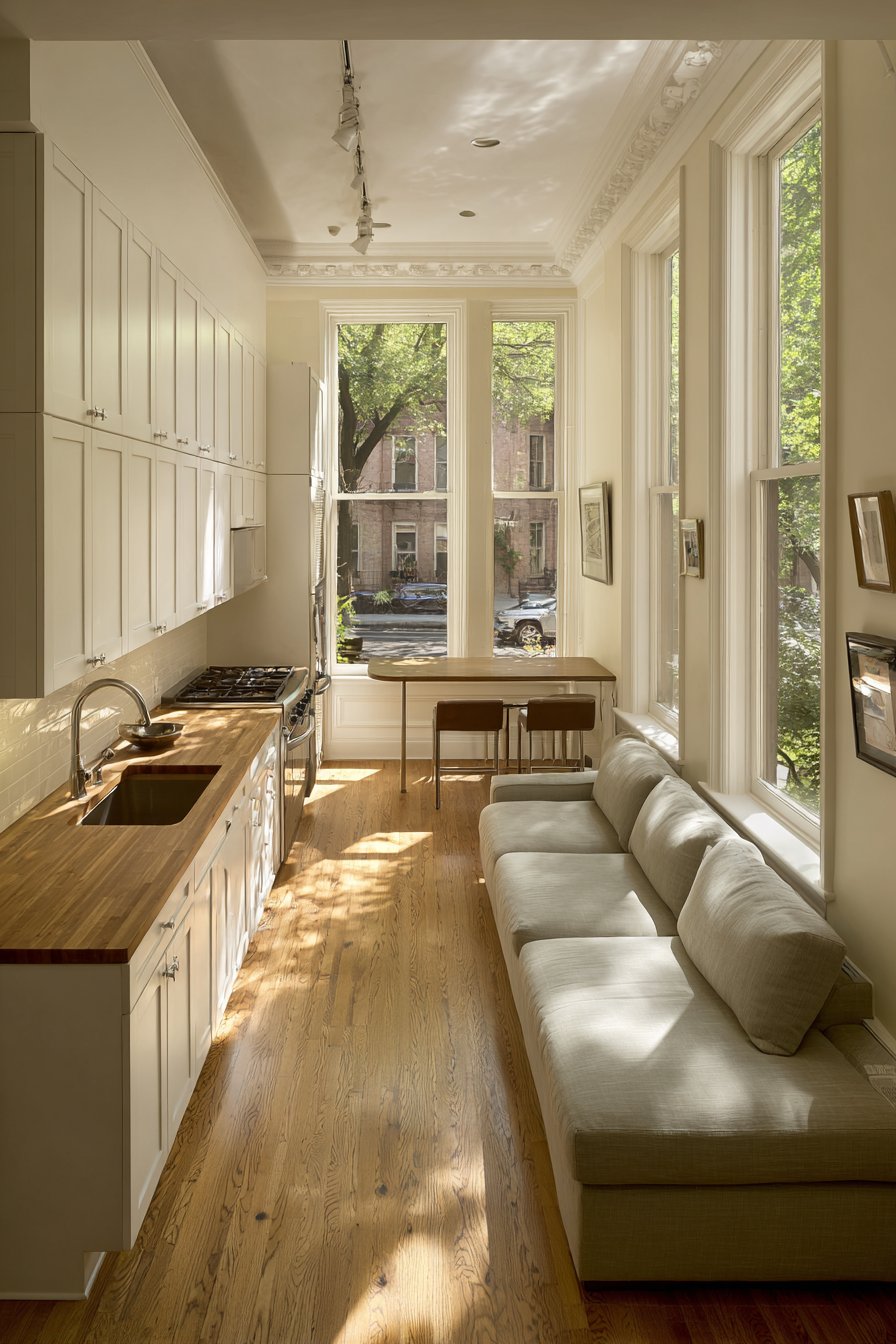
The living area showcases a grey linen sectional sofa strategically positioned to face the kitchen, creating an environment where cooking and conversation flow effortlessly together. This arrangement is ideal for entertaining, allowing the host to remain engaged with guests while preparing meals.
The narrow kitchen island serves a dual purpose—it provides essential bar seating for casual dining while acting as a subtle divider that defines each zone without compromising the open feeling. The natural oak flooring that runs throughout both spaces is perhaps the most crucial unifying element, creating visual continuity that makes the entire area feel like one cohesive room rather than two separate spaces.
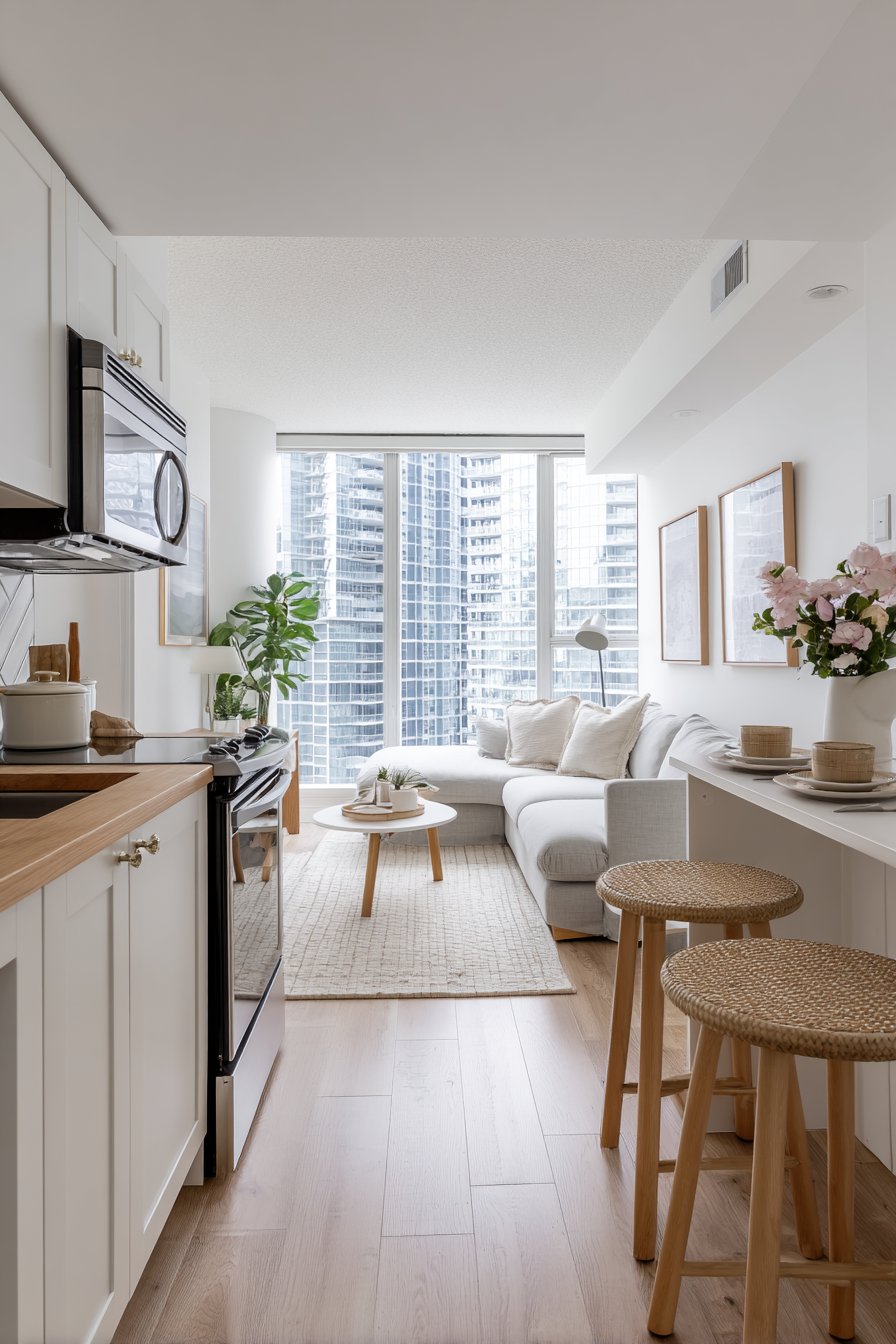
Large windows flood the space with soft natural light, highlighting the efficient layout and emphasizing how well-planned furniture placement can make every square foot count. The sightlines from the sofa to the kitchen create a conversation-friendly environment where family members can easily interact, whether they’re cooking, dining, or relaxing. This design proves that small doesn’t mean sacrificing style or functionality—it simply requires more intentional planning and smarter design choices.
Key Design Tips:
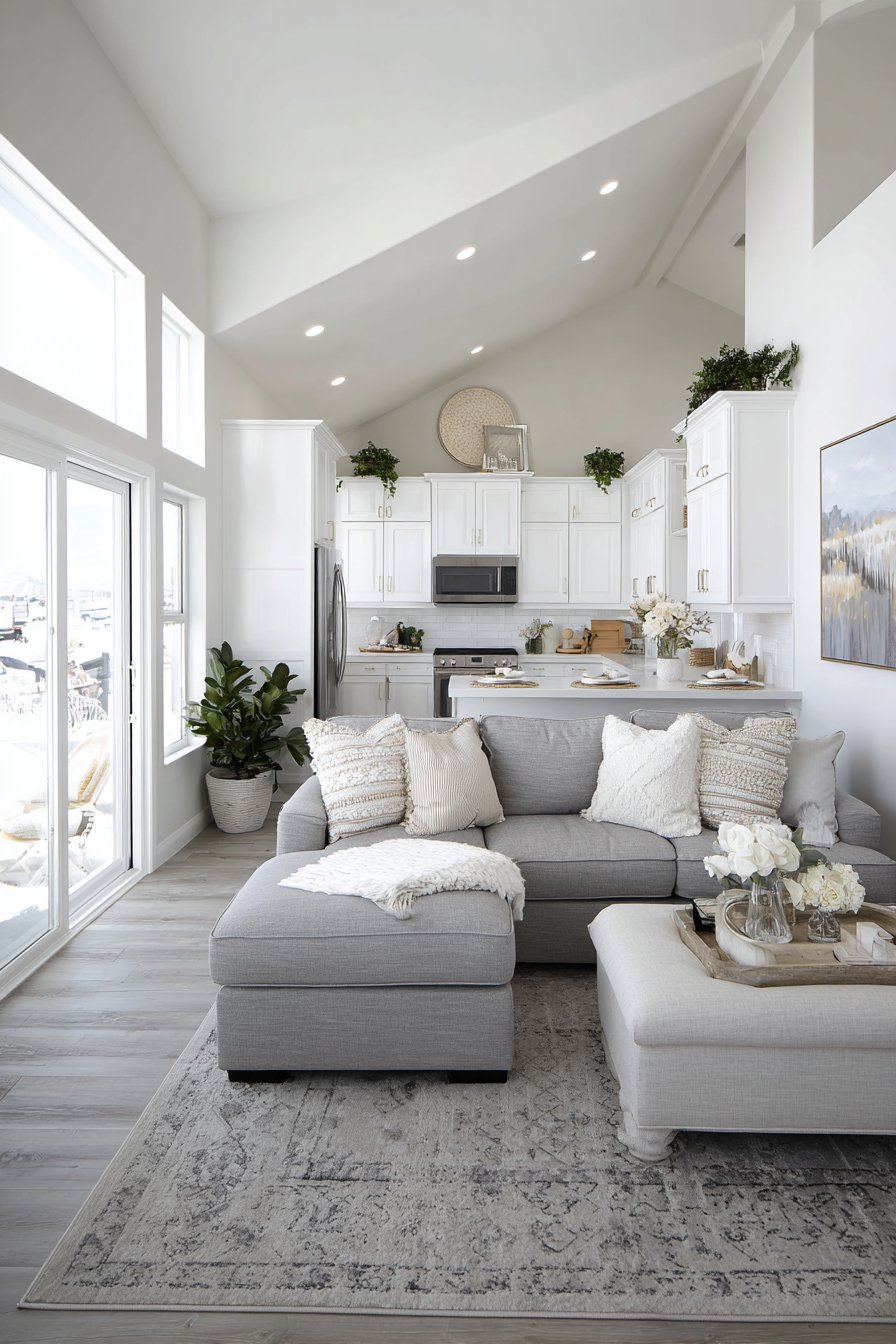
- Choose light-colored cabinetry to maximize the sense of space and reflect natural light throughout the room, making even compact areas feel more open and airy.
- Position seating to face the kitchen to create conversational sightlines that keep the cook connected with family and guests during meal preparation.
- Use a narrow island with bar seating as a multifunctional divider that defines zones while providing additional seating and workspace without blocking visual flow.
- Install consistent flooring throughout both spaces to create visual continuity that makes the combined area feel larger and more unified.
- Maximize natural light by keeping window treatments minimal and choosing furniture that doesn’t obstruct light pathways.
2. Scandinavian Minimalism at Its Finest
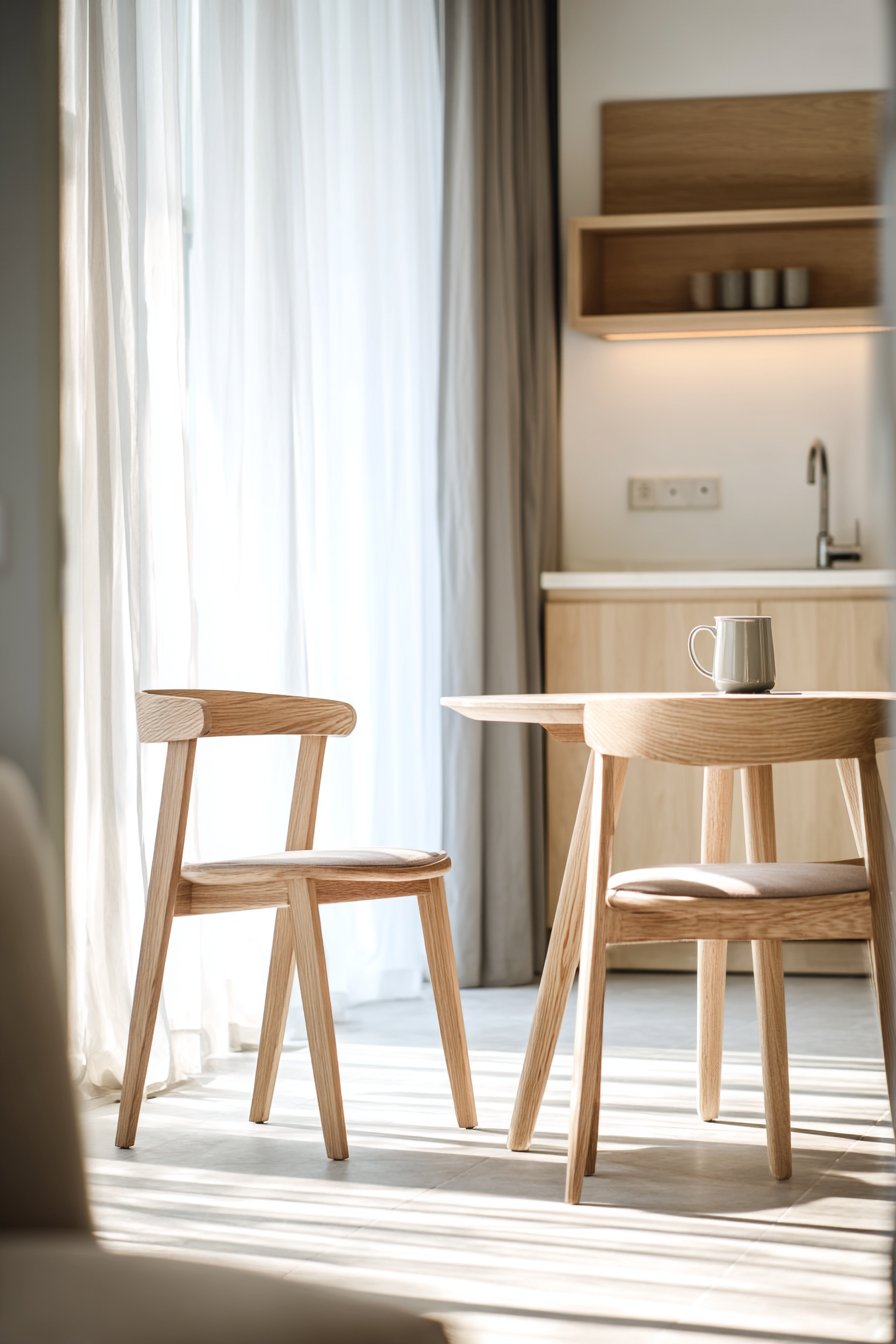
The Scandinavian approach to small open kitchen and living room design is a masterclass in functional minimalism. This space embraces the principle that less is truly more, featuring light wood cabinetry that exudes warmth without overwhelming the senses.
The open shelving in the kitchen area doesn’t just provide practical storage—it creates visual breathing room and connects seamlessly to the floating media console in the living space, establishing a design language that speaks to simplicity and intentionality.
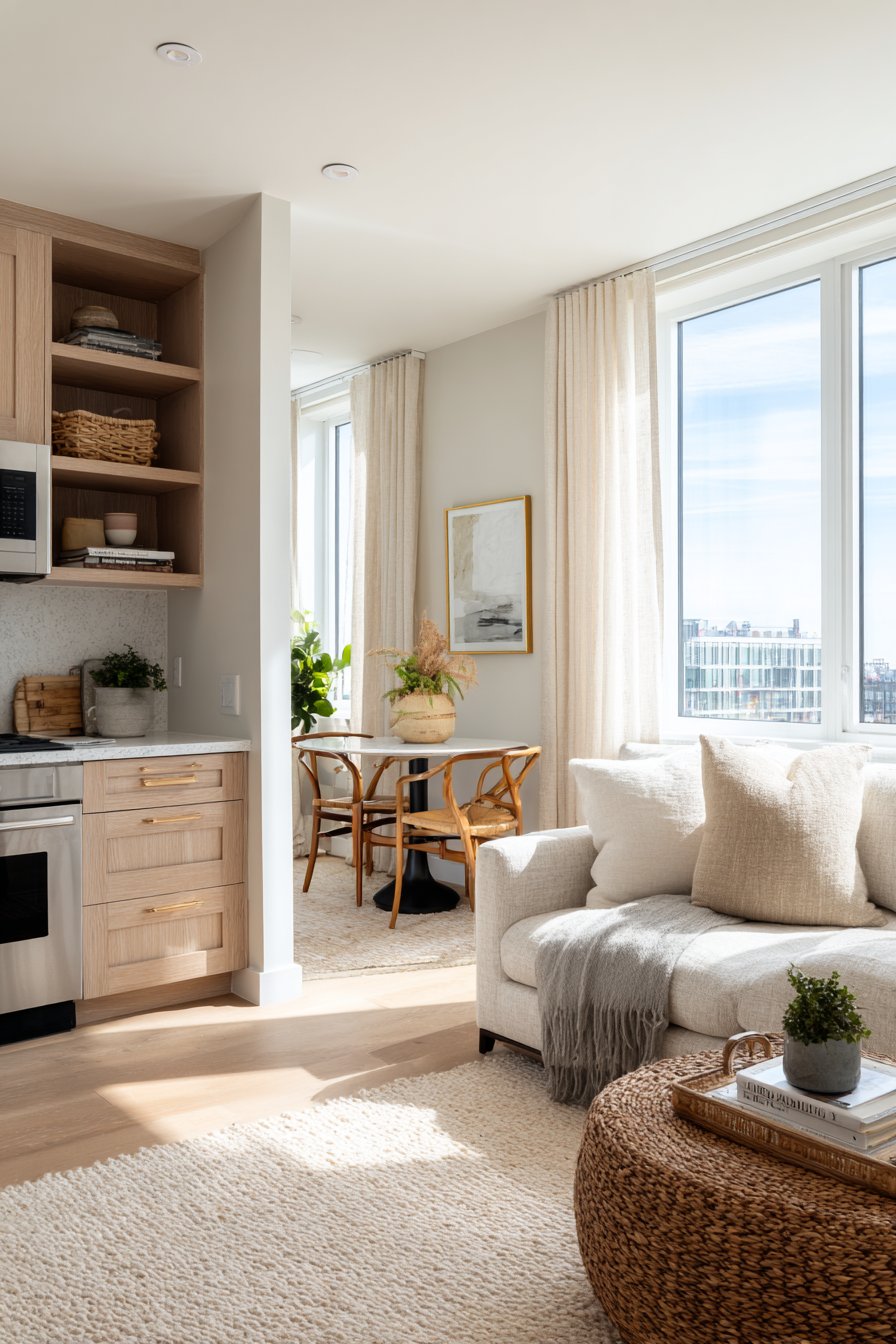
At the threshold between kitchen and living area sits a small round dining table surrounded by classic bentwood chairs, a placement that’s both practical and symbolic. This transitional furniture piece serves as a gentle boundary marker while maintaining the open flow that makes these layouts so appealing.
The round shape is particularly clever in small spaces, as it eliminates sharp corners and facilitates easier movement between zones. The bentwood chairs, with their curved lines and lightweight appearance, reinforce the Scandinavian aesthetic while providing comfortable seating that doesn’t visually clutter the space.
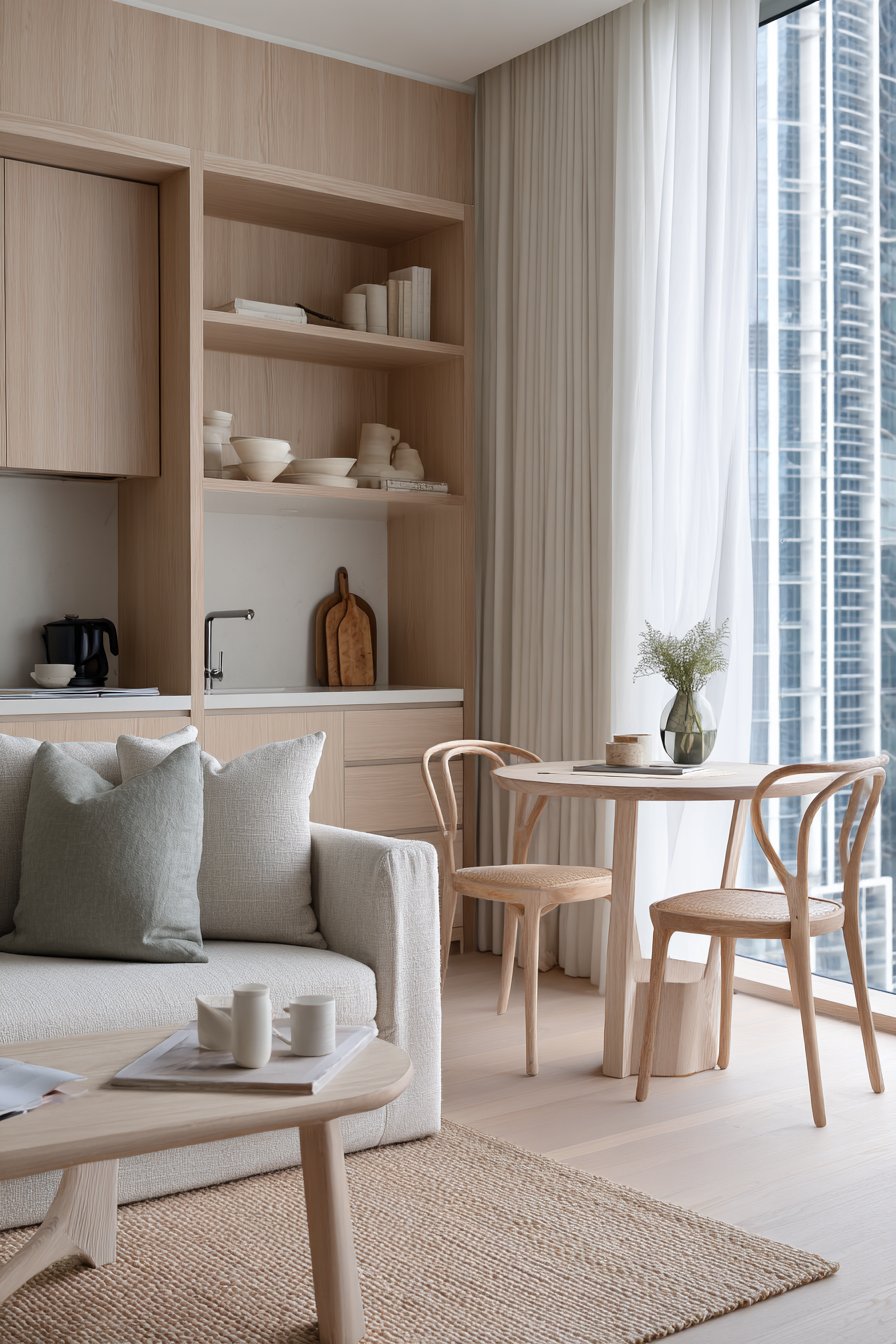
The neutral color palette of whites, soft greys, and natural wood tones creates remarkable visual continuity throughout the space. This restrained color scheme isn’t boring—instead, it allows the textures and forms to take center stage.
Diffused daylight streaming through sheer curtains creates soft shadows that play across textured surfaces, adding depth and dimension to what might otherwise feel flat. The clean lines and functional layout demonstrate that Scandinavian design isn’t about austerity but about creating spaces that are both beautiful and livable, where every element serves a purpose and nothing is superfluous.
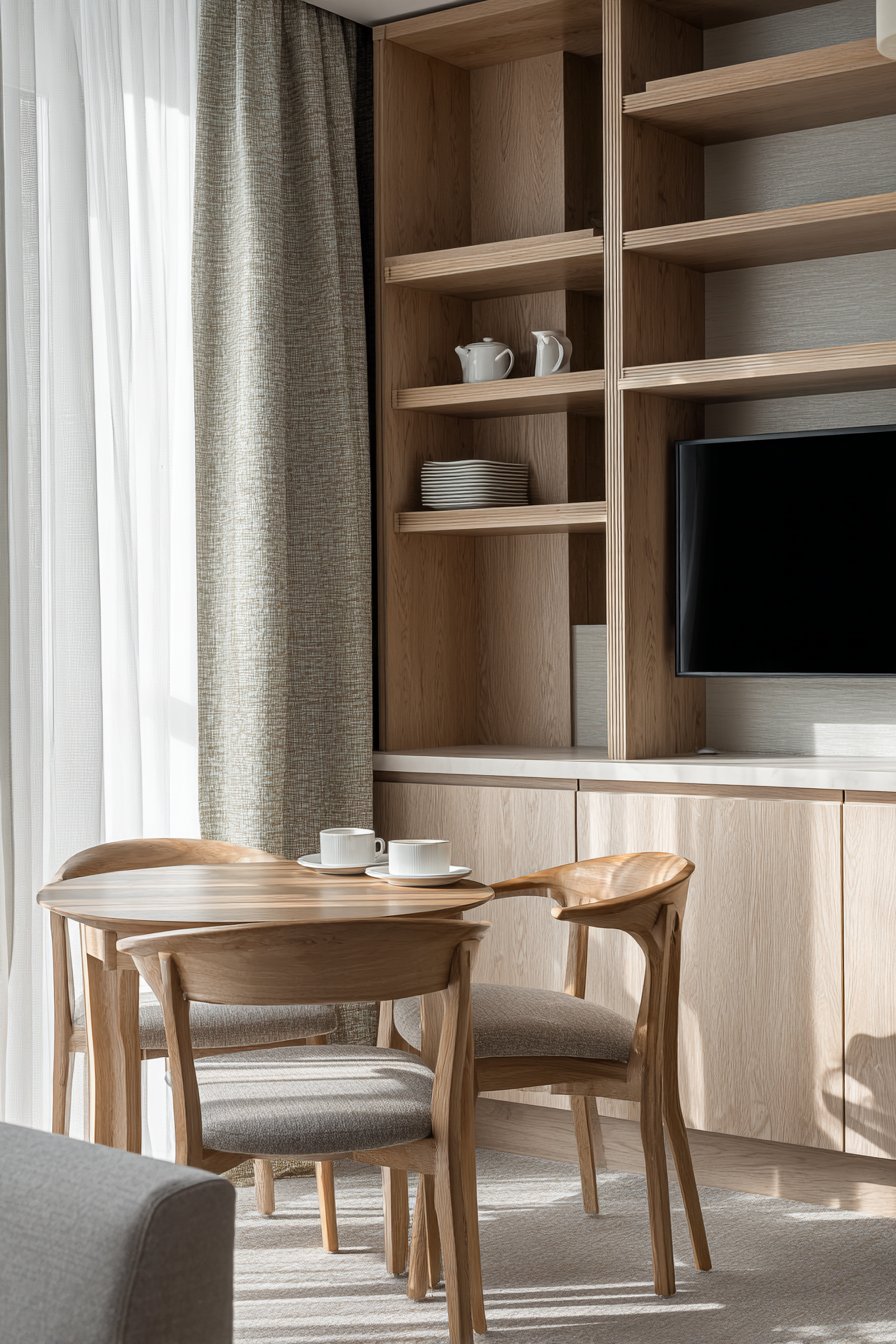
Key Design Tips:
- Embrace light wood tones throughout both spaces to create warmth while maintaining the airy feeling that’s essential in small open layouts.
- Install open shelving instead of upper cabinets to prevent visual heaviness and create opportunities for displaying beautiful kitchenware and décor items.
- Choose a round dining table at the boundary between zones to soften the transition and improve traffic flow in compact spaces.
- Stick to a neutral color palette with whites, greys, and natural woods to create cohesion and make the space feel larger than its actual dimensions.
- Use sheer curtains to filter natural light gently, creating soft illumination that enhances textures without harsh shadows.
3. Industrial-Modern Edge with Raw Materials
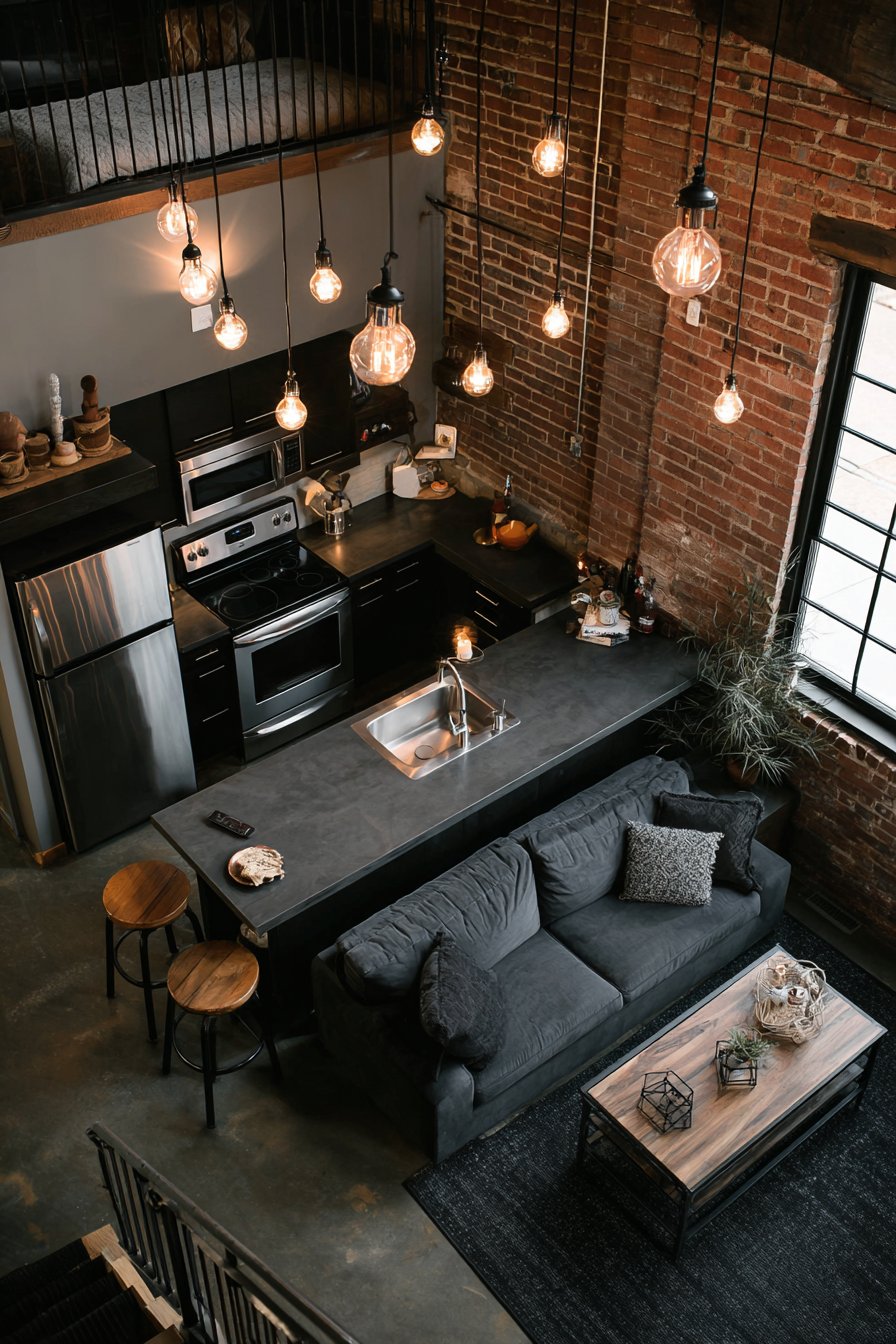
This industrial-modern space makes a bold statement with its raw, honest materials and unapologetic aesthetic. An exposed brick accent wall serves as the dramatic focal point visible from both kitchen and living areas, bringing texture, history, and character to the space. The kitchen embraces industrial authenticity with stainless steel appliances that aren’t hidden but celebrated, concrete countertops that bring raw sophistication, and matte black hardware that adds refined contrast against lighter surfaces.
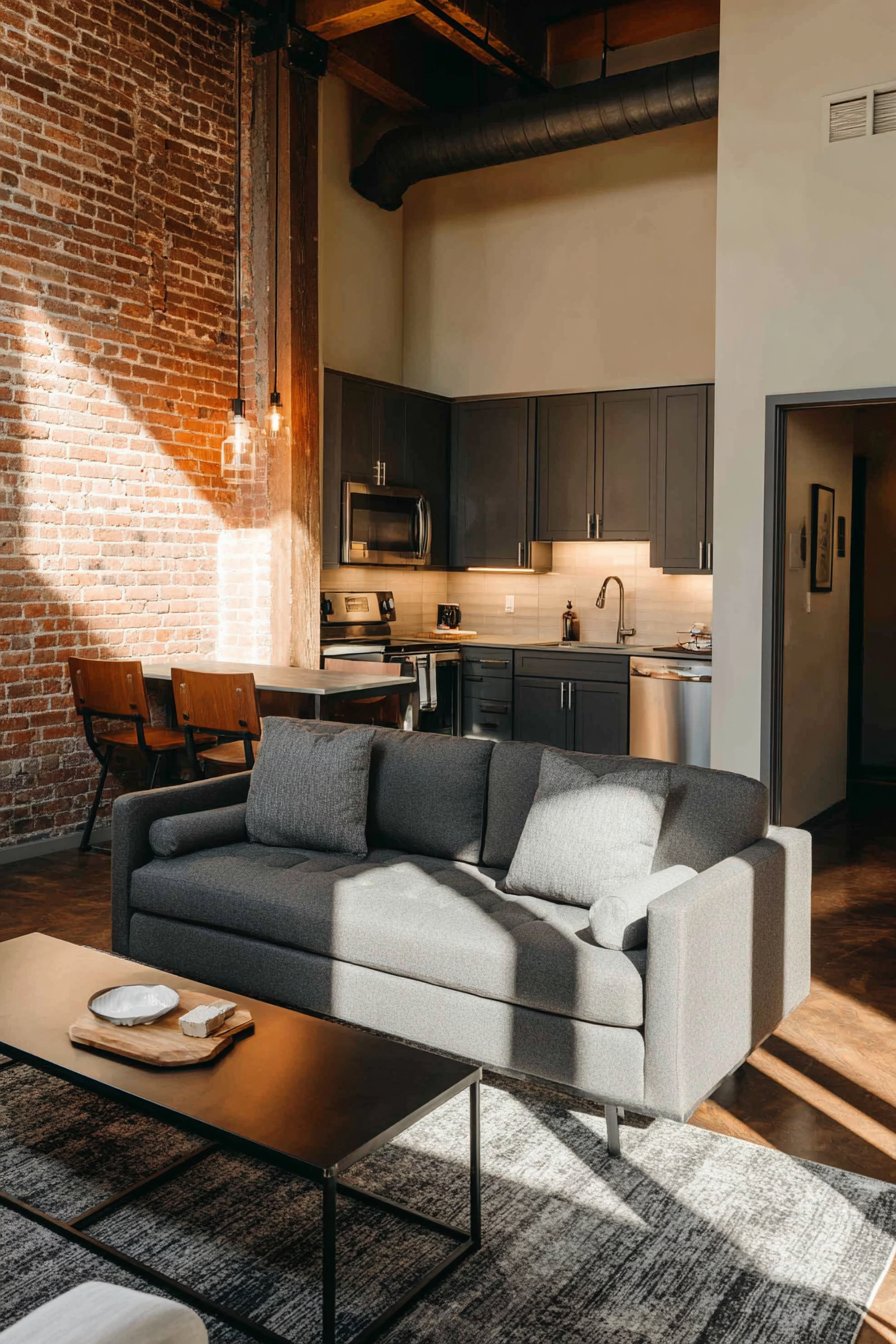
The living area continues the industrial theme with a charcoal grey sofa that provides comfortable seating while maintaining the moody, sophisticated atmosphere. A metal-framed coffee table with clean geometric lines reinforces the industrial aesthetic, its transparent or minimal design preventing the space from feeling overcrowded. The cohesive material palette—brick, concrete, steel, and metal—creates a strong visual identity that ties both zones together despite their different functions.
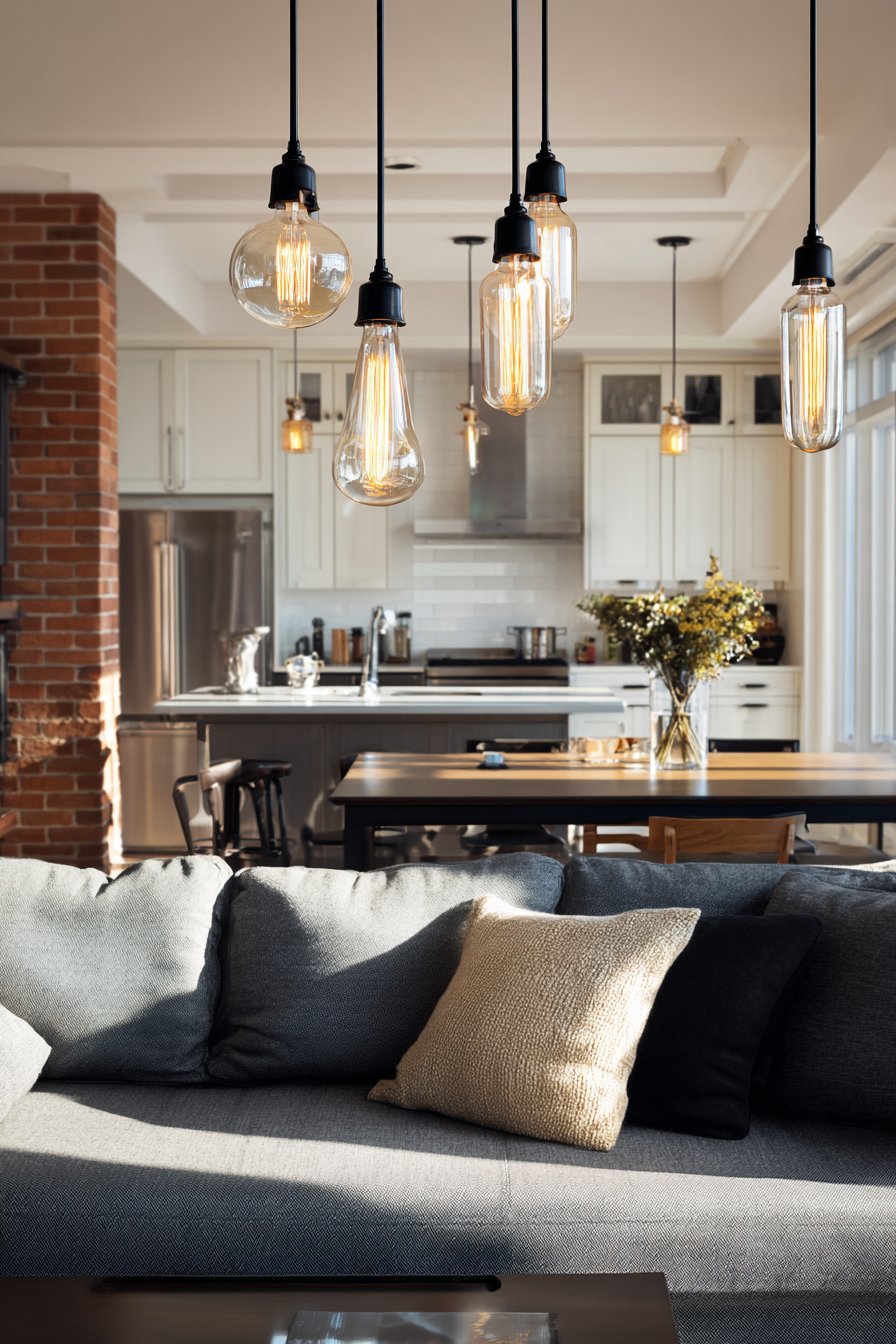
Pendant lighting with Edison bulbs hangs over a small breakfast bar that connects the kitchen and living areas, providing both functional task lighting and atmospheric ambiance. These vintage-style bulbs cast a warm glow that softens the harder industrial materials, creating a space that feels edgy yet inviting.
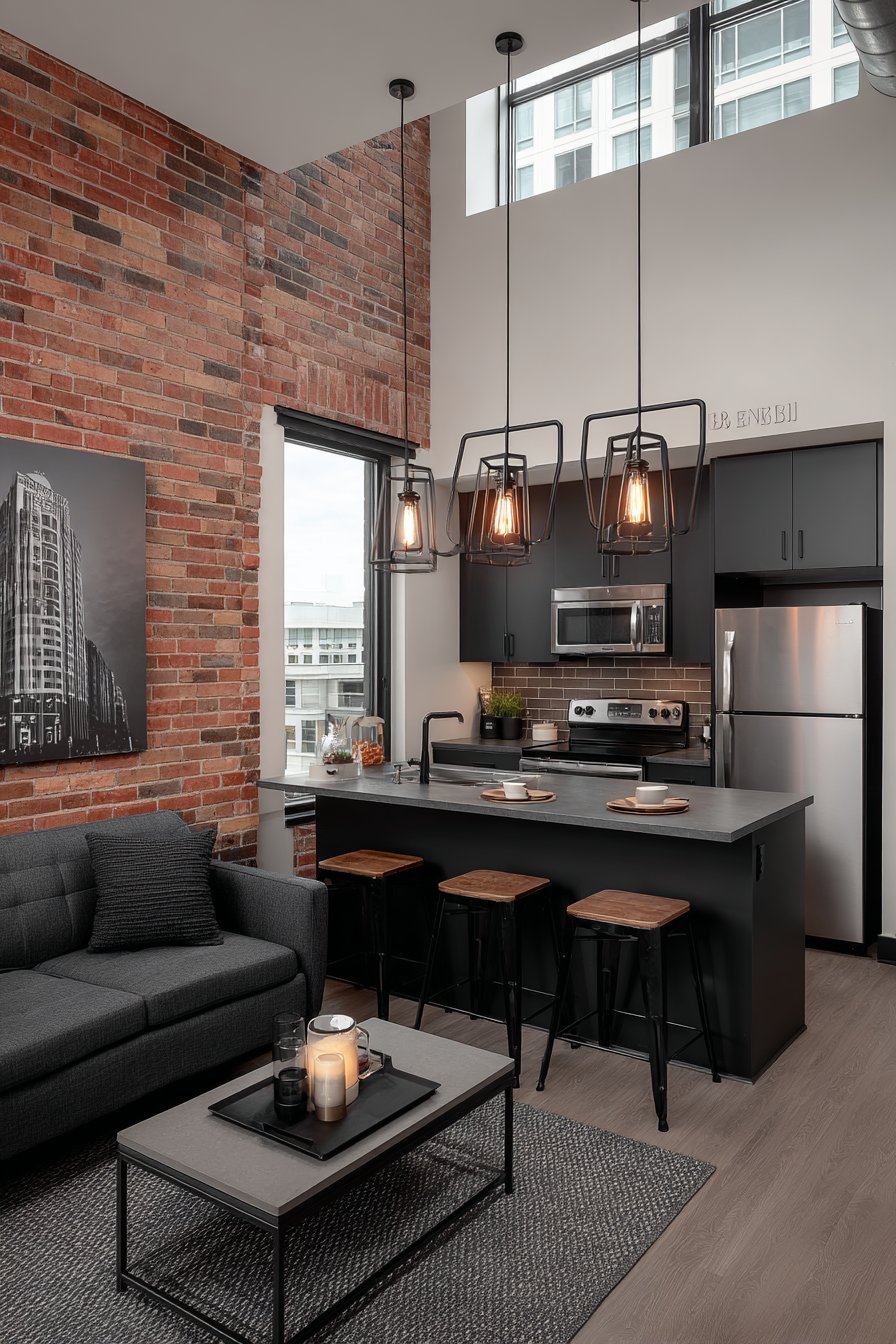
Natural light streams through windows, creating dimensional shadows that play across the textured brick wall and smooth concrete surfaces, adding depth and visual interest throughout the day. This design proves that industrial style can work beautifully in small spaces when carefully curated and balanced with comfortable furnishings.
Key Design Tips:
- Feature one exposed brick or concrete wall as a focal point that adds texture without requiring floor space, maximizing impact in compact areas.
- Choose matte black hardware and fixtures to create visual cohesion and add refined contrast that defines the industrial aesthetic.
- Incorporate mixed metals like stainless steel, black iron, and brass to add variety while maintaining the industrial theme’s authenticity.
- Use Edison bulb pendant lights to provide warm illumination that balances the cooler tones of concrete and metal materials.
- Select furniture with metal frames and clean geometric lines to reinforce the industrial style while keeping visual weight minimal in small spaces.
4. Modern Farmhouse Warmth and Comfort
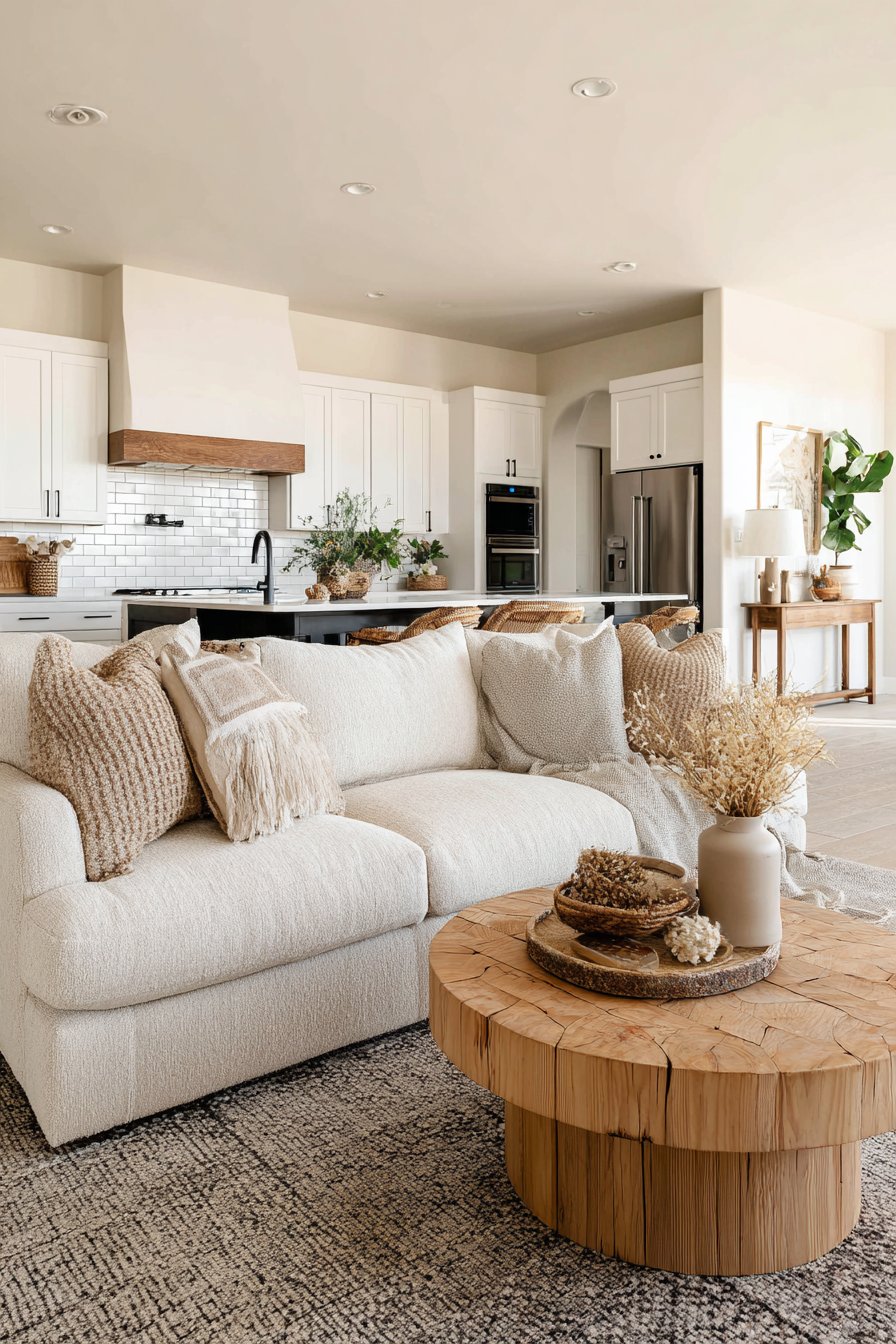
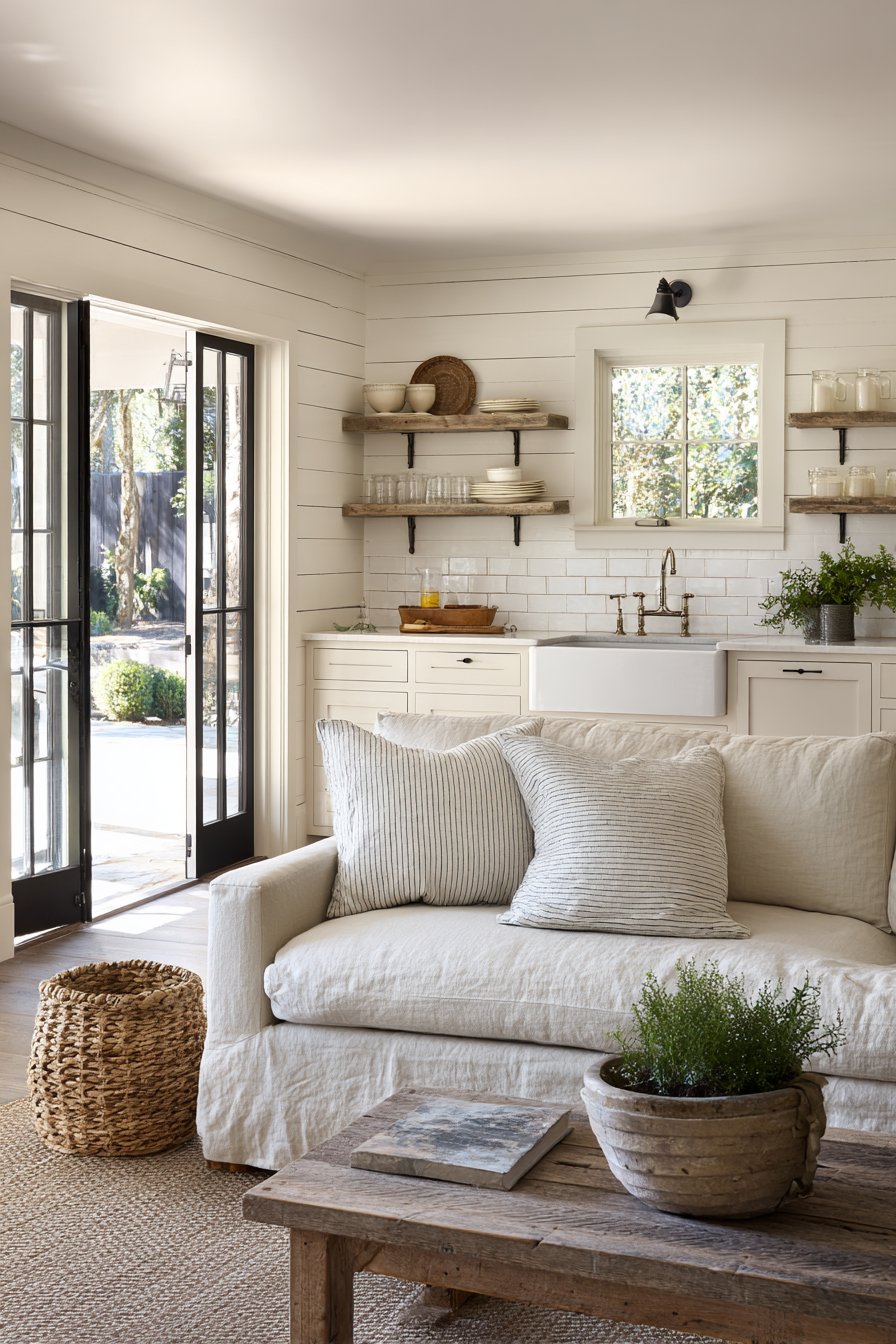
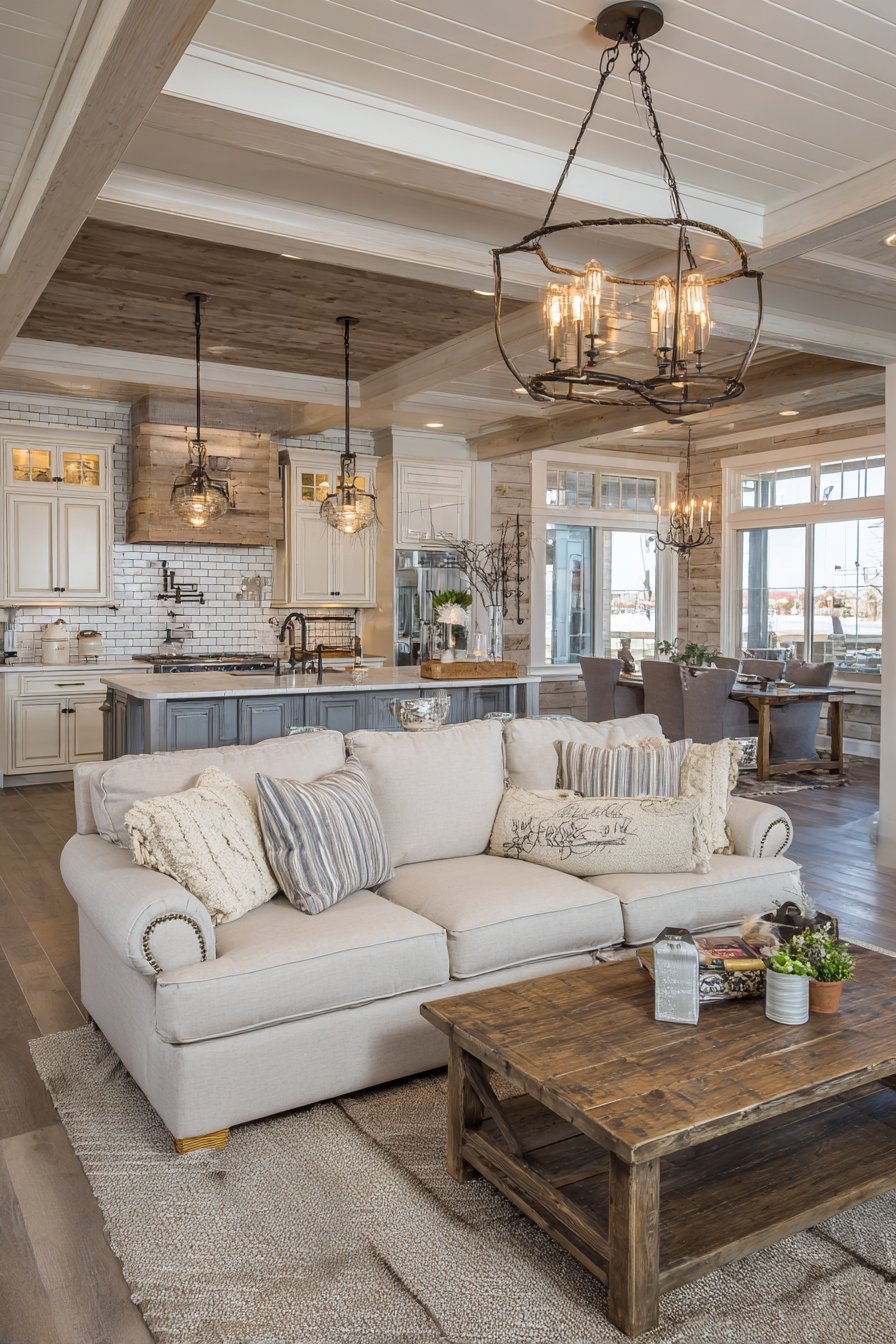
The modern farmhouse style brings rustic charm and contemporary comfort together in this inviting open kitchen and living room. White subway tile backsplash creates a classic backdrop in the kitchen, while shiplap accent walls extend into the living space, creating a visual thread that unifies both areas. This continuation of materials is key to making the open concept feel intentional rather than haphazard, demonstrating how architectural details can define a space’s character.
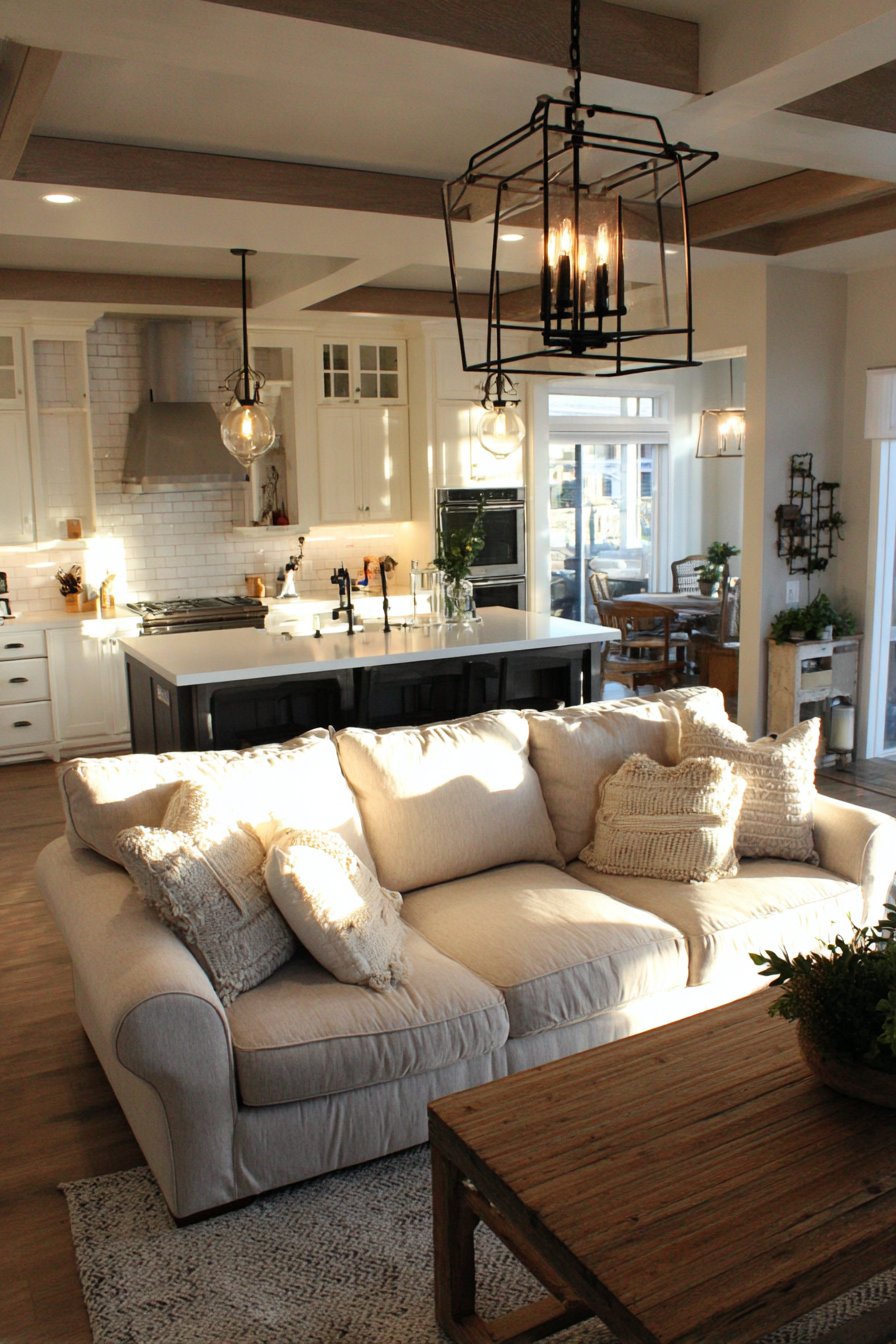
The kitchen showcases quintessential farmhouse elements including a deep farmhouse sink that’s both practical and aesthetically pleasing, paired with vintage-inspired fixtures in brushed nickel or oil-rubbed bronze that add authenticity.
These traditional touches are balanced with modern conveniences, creating a space that honors the past while serving contemporary lifestyles. In the living area, a comfortable linen sofa in soft beige provides generous seating that invites relaxation, while a rustic wood coffee table with visible grain and natural imperfections adds organic warmth and tactile interest.
A narrow console table positioned behind the sofa is a brilliant space-planning solution that provides additional surface area for lamps, books, and decorative items without blocking sightlines to the kitchen. This piece serves multiple purposes—it creates a subtle boundary between zones, adds storage and display space, and can even function as a serving area during gatherings.
Warm natural lighting highlights the textured materials throughout the space, from the dimensional shiplap walls to the grain of the wood furniture, creating a cozy, lived-in atmosphere that makes you want to curl up with a good book or gather friends for a casual dinner.
Key Design Tips:
- Use white subway tile and shiplap to create classic farmhouse details that add texture without overwhelming small spaces with pattern or color.
- Install a deep farmhouse sink as both a practical work element and a design statement that anchors the kitchen’s aesthetic.
- Choose vintage-inspired fixtures in aged metals to add authenticity and character that distinguishes farmhouse style from generic traditional design.
- Position a console table behind the sofa to create additional surface space and subtle zone definition without blocking views or flow.
- Layer textured materials like linen, wood, and tile to build visual interest while maintaining the neutral, calming color palette typical of modern farmhouse style.
5. Clever Storage Solutions for Maximum Functionality
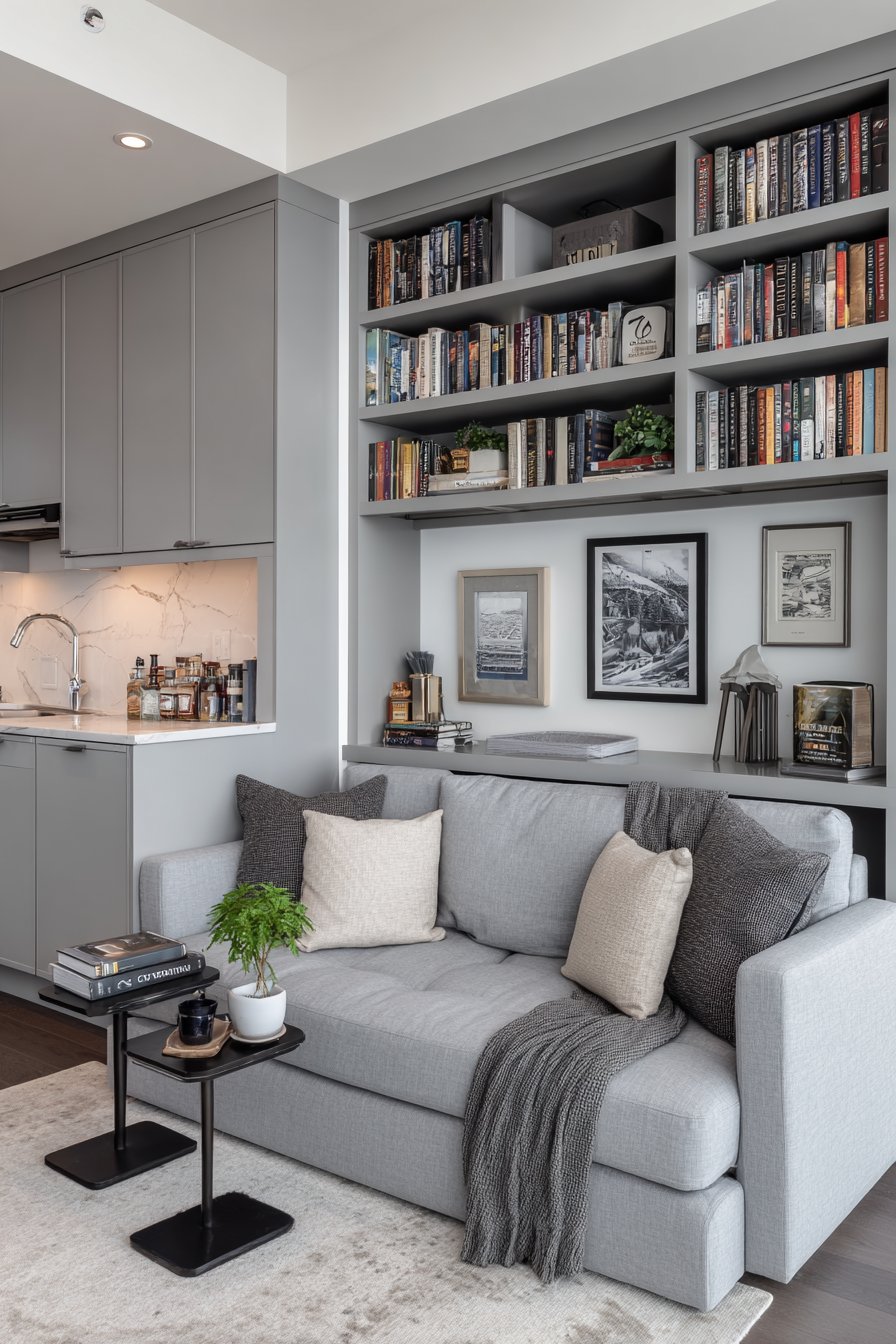
In this brilliantly planned space, storage takes center stage as both a practical necessity and a design feature. Floor-to-ceiling kitchen cabinets create abundant storage capacity while making the walls feel taller, drawing the eye upward and creating a sense of expanded volume.
What makes this design particularly clever is how these cabinets transition seamlessly into built-in living room shelving that accommodates books, display items, and entertainment components. This continuous storage wall creates visual cohesion while addressing the storage challenges that often plague small open-concept spaces.
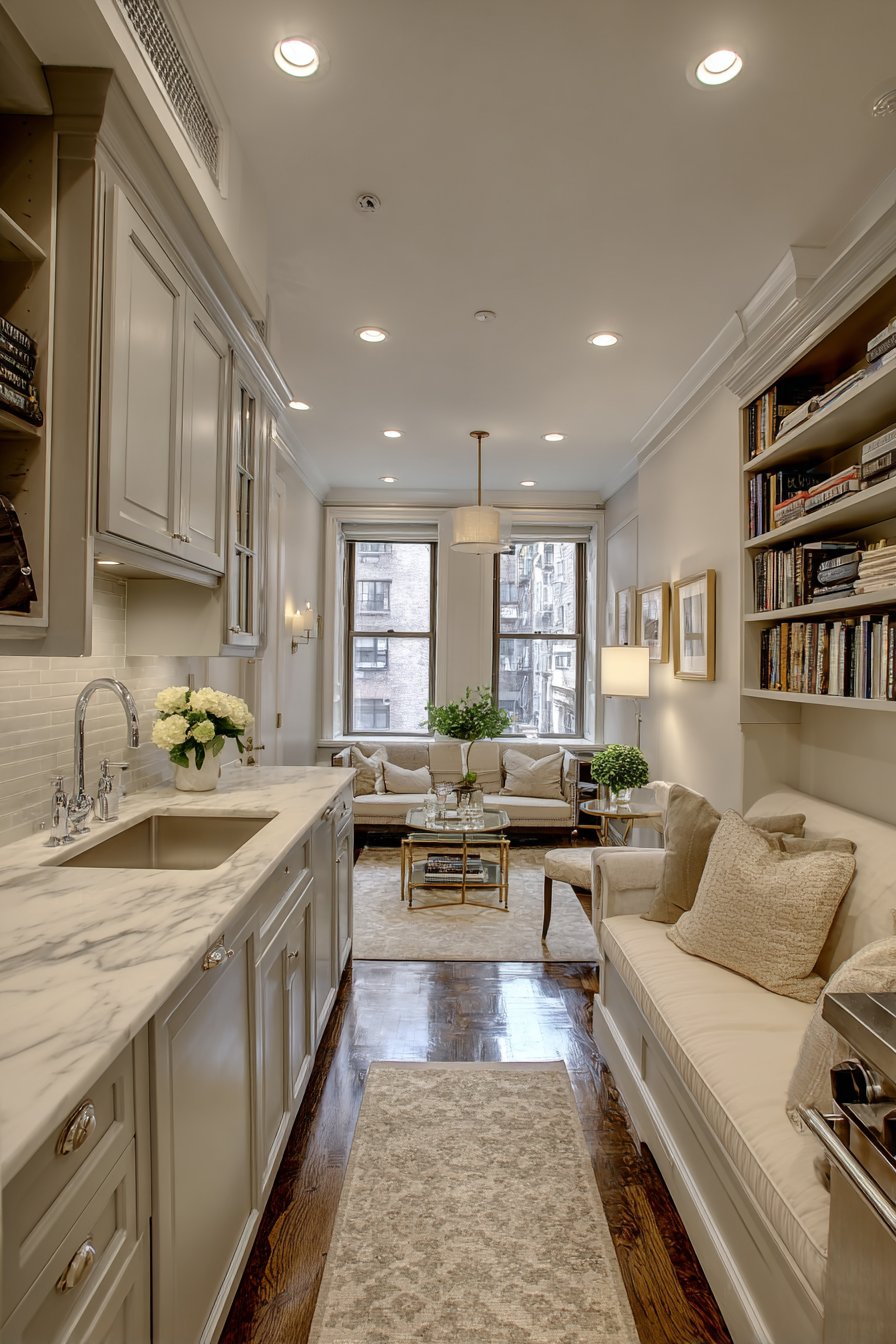
The kitchen features a compact galley layout that maximizes efficiency, with light grey cabinetry that feels modern and sophisticated without the starkness of pure white. White quartz countertops provide a clean, bright work surface that’s both practical and beautiful, their subtle veining adding interest without busy patterns. The galley configuration, with its parallel work surfaces, creates an efficient work triangle that makes cooking more convenient despite the limited square footage.
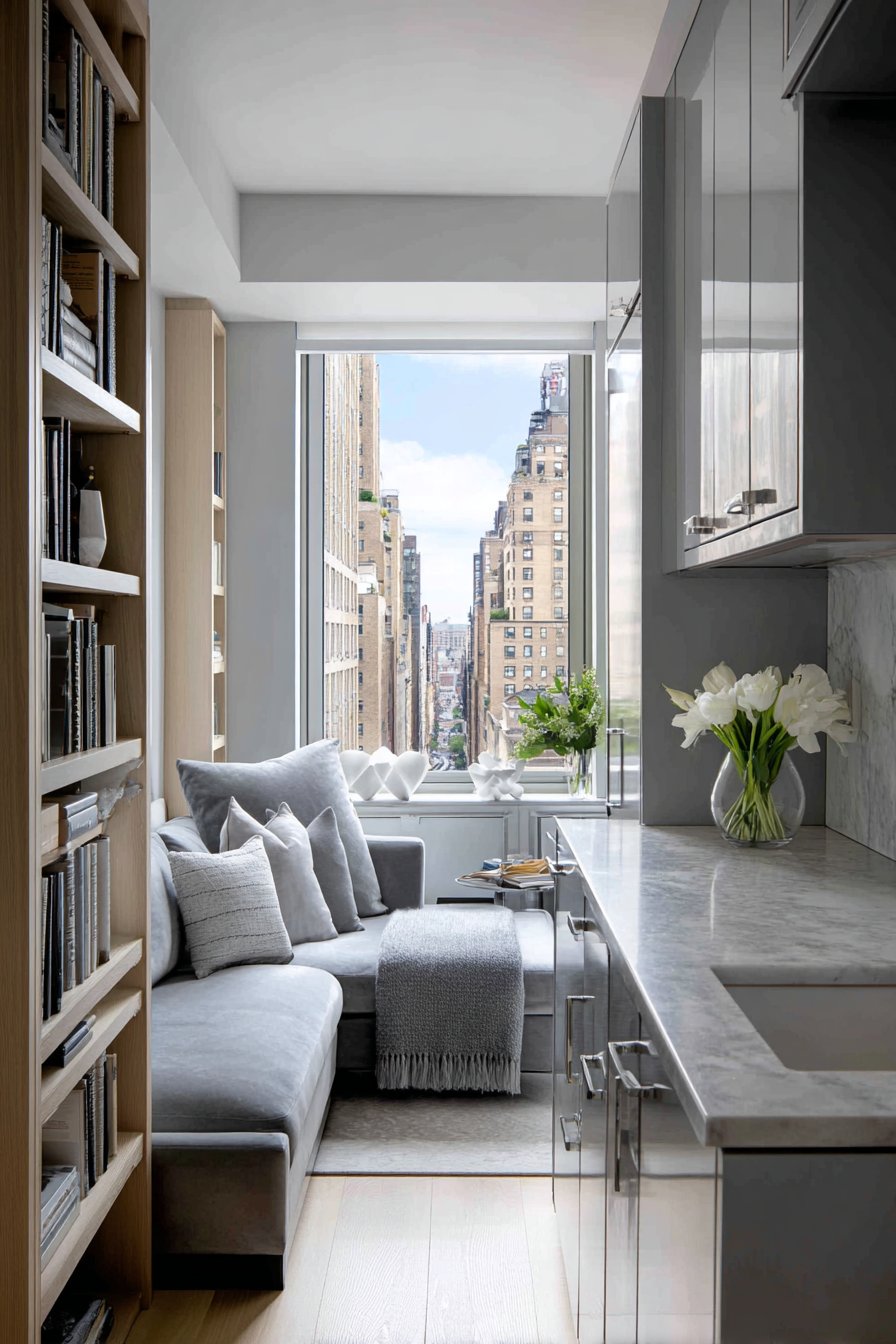
In the living area, a space-saving loveseat provides comfortable seating without overwhelming the room, while nesting tables offer flexible surface space that can be expanded when needed or tucked away when not in use. Recessed lighting throughout both spaces creates even, shadow-free illumination that makes the space feel more open and allows the clean lines of the design to shine. The intelligent use of vertical space demonstrates how thoughtful planning can create abundant storage and functionality in even the most compact open-concept layouts.
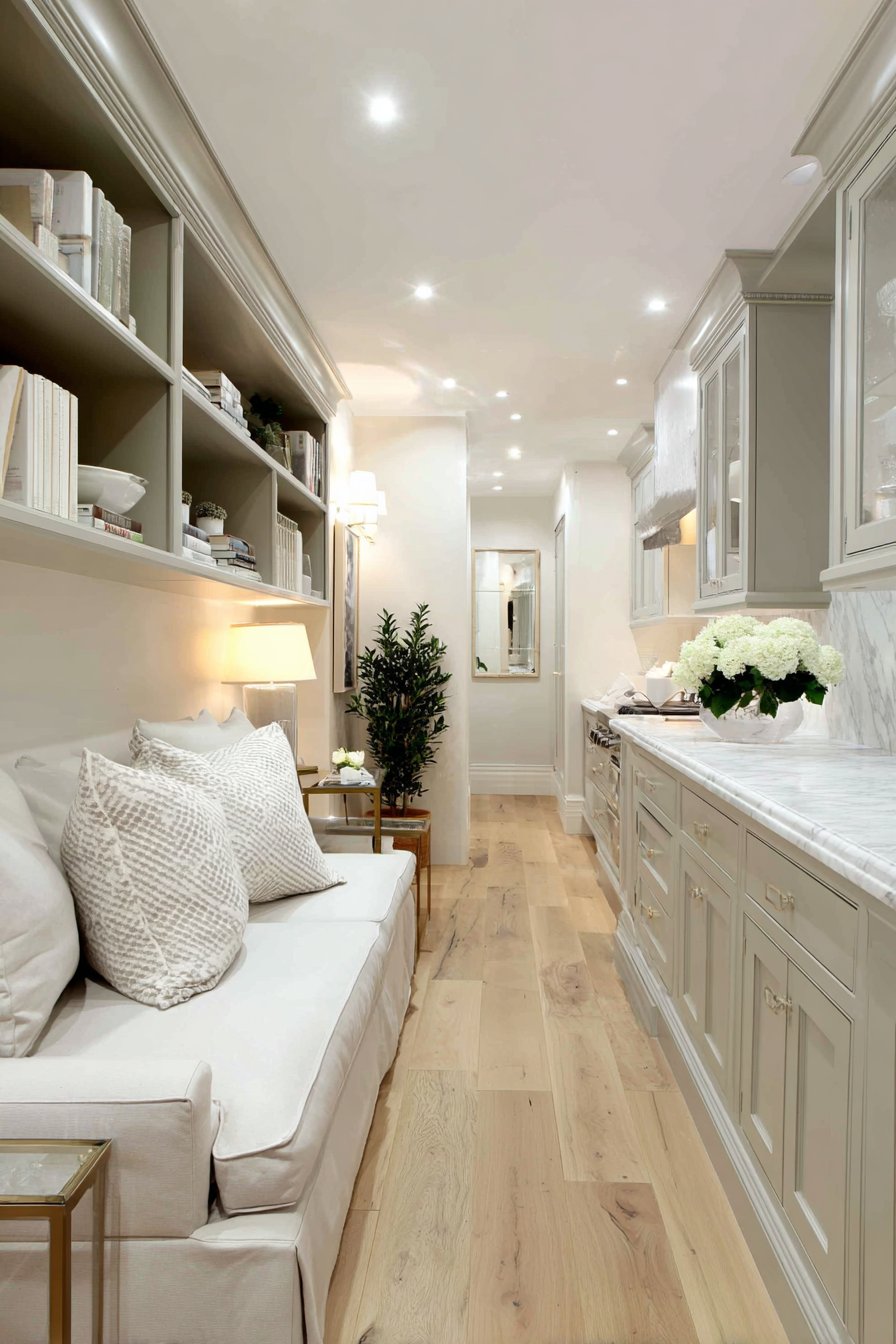
Key Design Tips:
- Install floor-to-ceiling cabinetry to maximize vertical storage space and create the illusion of higher ceilings in compact areas.
- Create built-in shelving that spans both kitchen and living zones to unify the space visually while providing ample organized storage.
- Choose a galley kitchen layout when floor space is limited, as it creates an efficient work triangle without requiring extra square footage.
- Use nesting tables or modular furniture that can be reconfigured based on needs, providing flexibility in how you use your space.
- Install recessed lighting for even illumination that doesn’t consume visual space like pendant or floor lamps would in small areas.
6. Coastal Serenity with Breezy Elegance
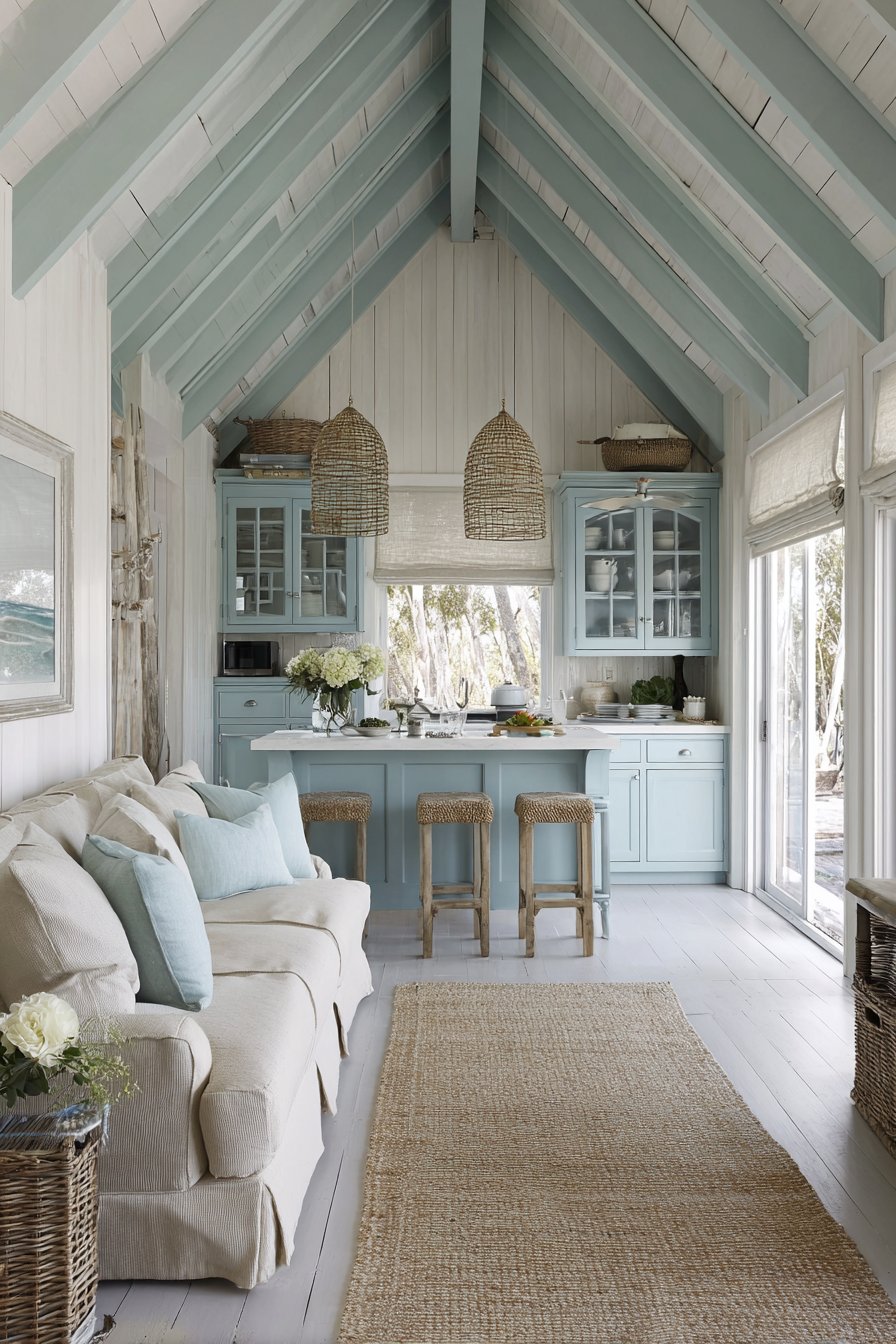
This coastal-inspired space immediately transports you to a relaxed beachside retreat, regardless of your actual location. Soft blue-grey kitchen cabinets set the tone, evoking the colors of sea and sky while maintaining enough neutrality to work with various décor styles. White beadboard paneling adds cottage charm and textural interest, its vertical lines creating subtle visual height that makes the space feel more expansive. These classic coastal materials create a foundation that’s both timeless and refreshingly light.
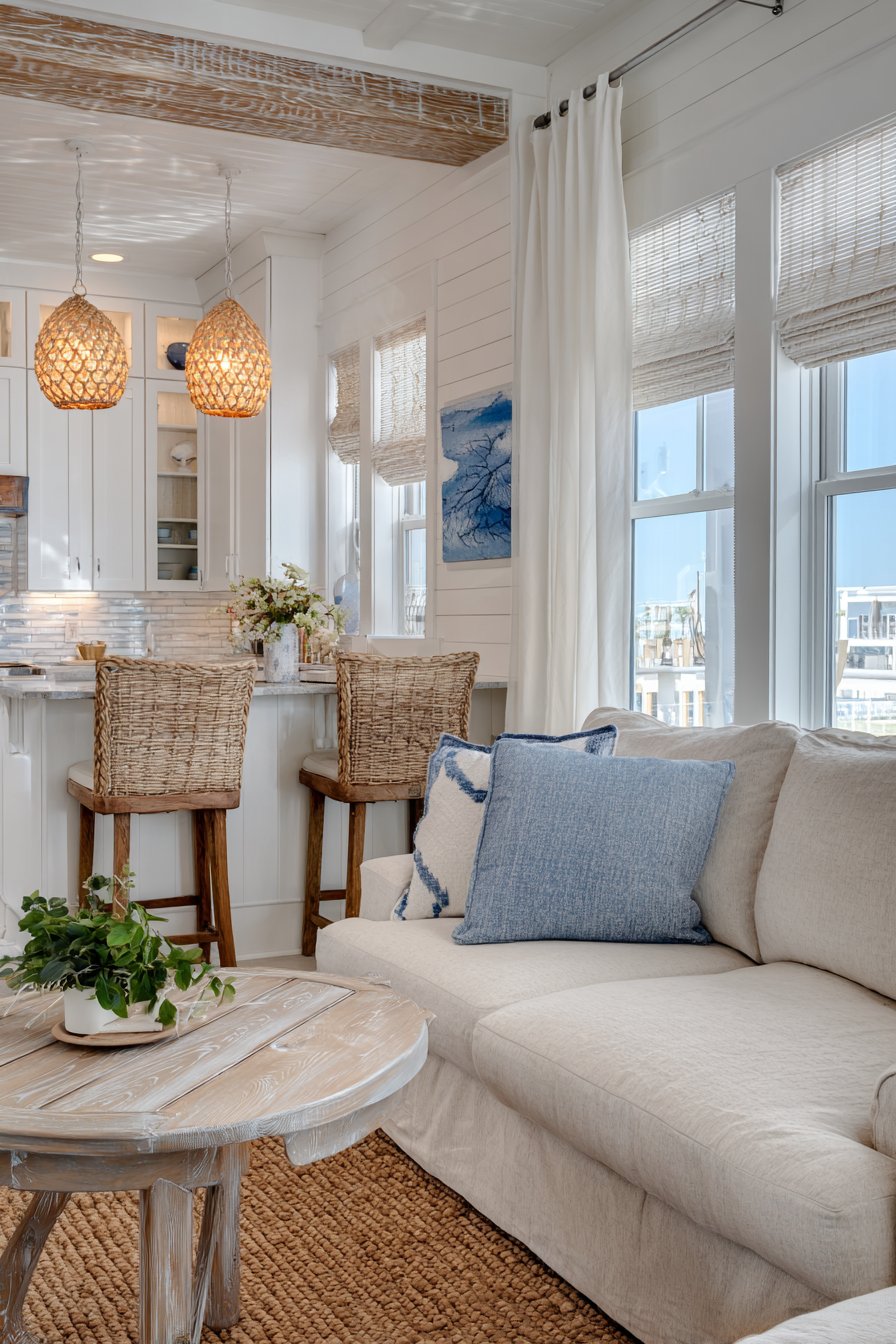
The living area is anchored by a natural jute rug that brings organic texture and warmth underfoot while defining the seating zone. A slipcovered sofa in sandy beige faces the kitchen, its relaxed, washable fabric embodying the casual, worry-free attitude of coastal living.
The slipcover detail is both practical and aesthetic—it allows for easy cleaning while creating soft, informal folds that add visual softness to the space. This combination of natural materials and soft colors creates a palette that feels cohesive across both kitchen and living areas.
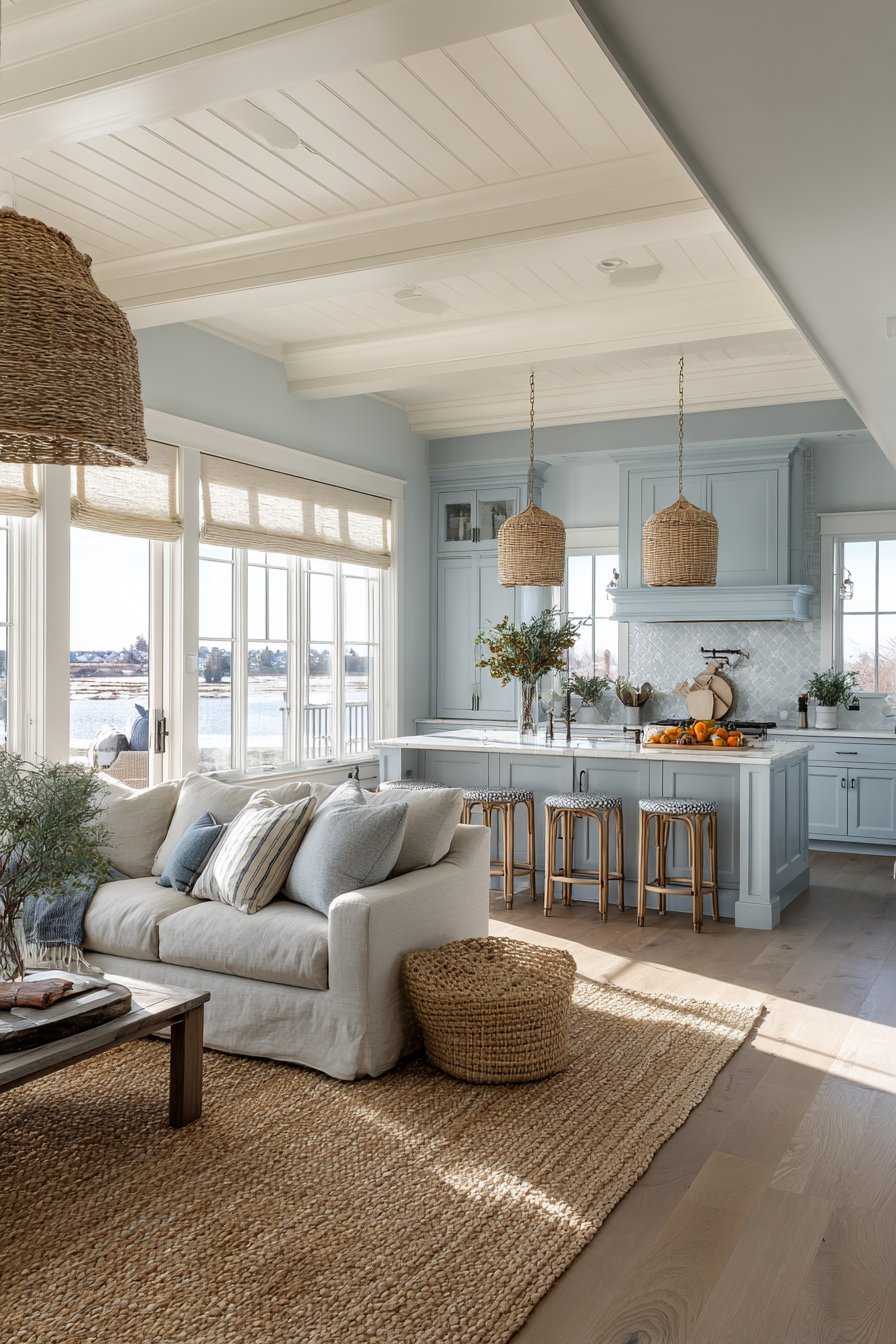
Woven pendant lights hang over a small peninsula with bar stools, creating a casual dining space that bridges kitchen and living room. These natural fiber fixtures add texture overhead while maintaining visual transparency, unlike solid pendants that might feel heavy in a small space.
Large windows with white roman shades allow abundant natural light to flood the interior, while the shades provide control over privacy and light intensity. The diffused lighting emphasizes the light and airy color palette, creating a breezy, relaxed atmosphere that makes this space perfect for those seeking coastal calm in their everyday environment.
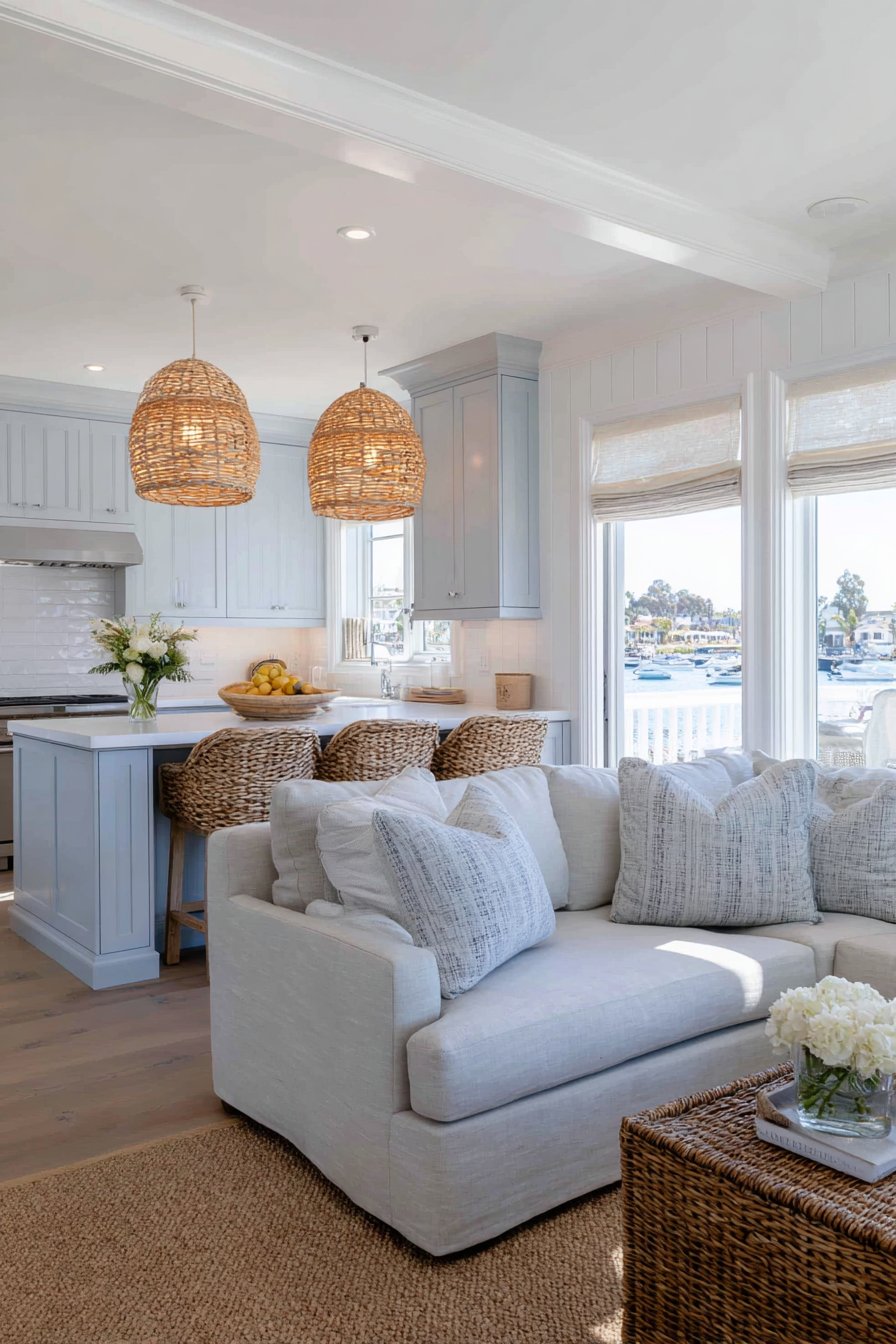
Key Design Tips:
- Choose soft blue-grey cabinetry to introduce color while maintaining the light, airy feeling essential in small open spaces and coastal design.
- Install white beadboard paneling to add cottage character and textural interest without the visual weight of darker wood paneling.
- Layer natural textures like jute rugs, woven pendant lights, and linen upholstery to create depth and interest within a neutral color scheme.
- Use slipcover furniture for a relaxed, casual look that’s practical for everyday living and easy to refresh or clean.
- Maximize natural light with large windows and light-filtering window treatments that maintain privacy while keeping the space bright and welcoming.
7. Contemporary Sleekness with Streamlined Design
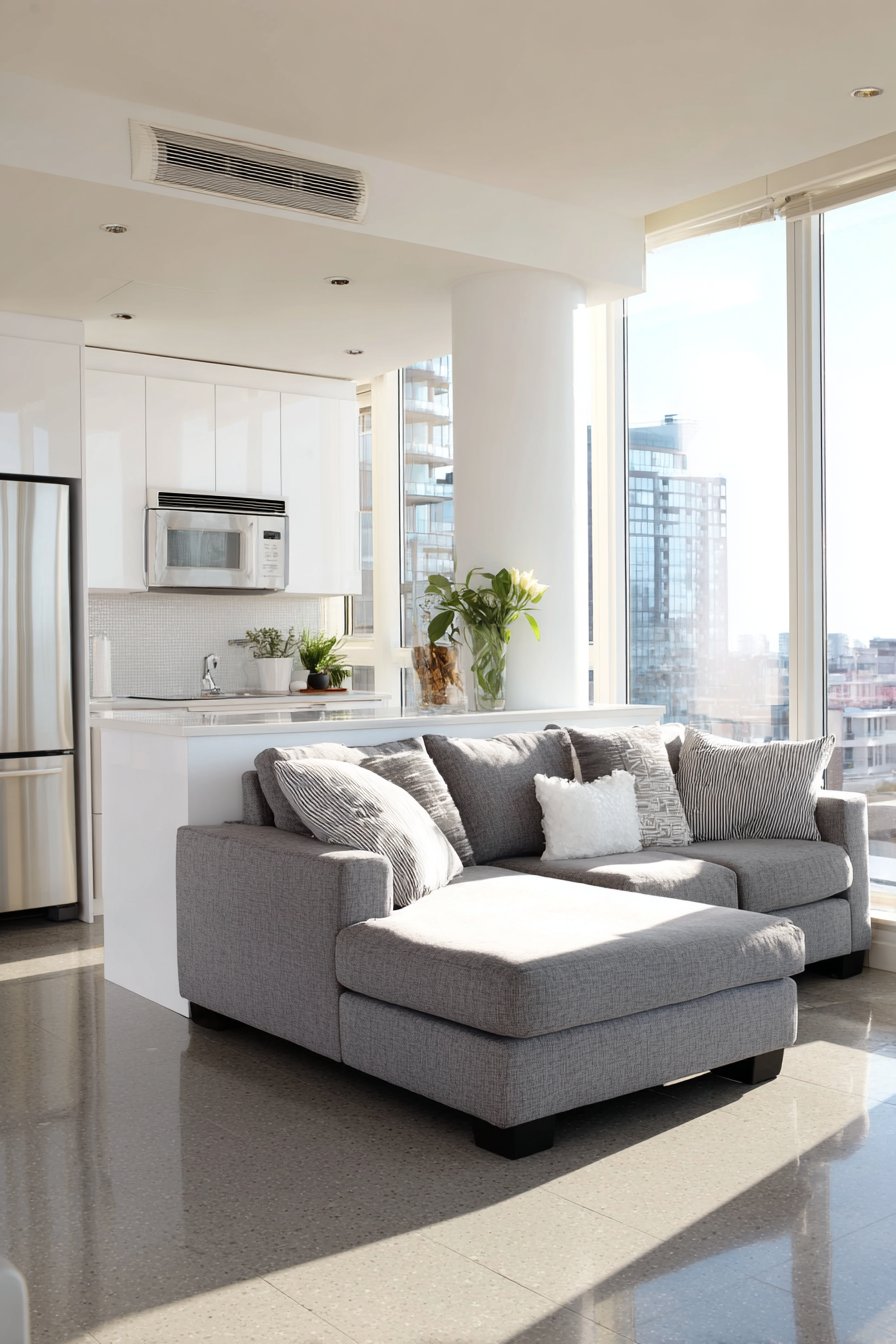
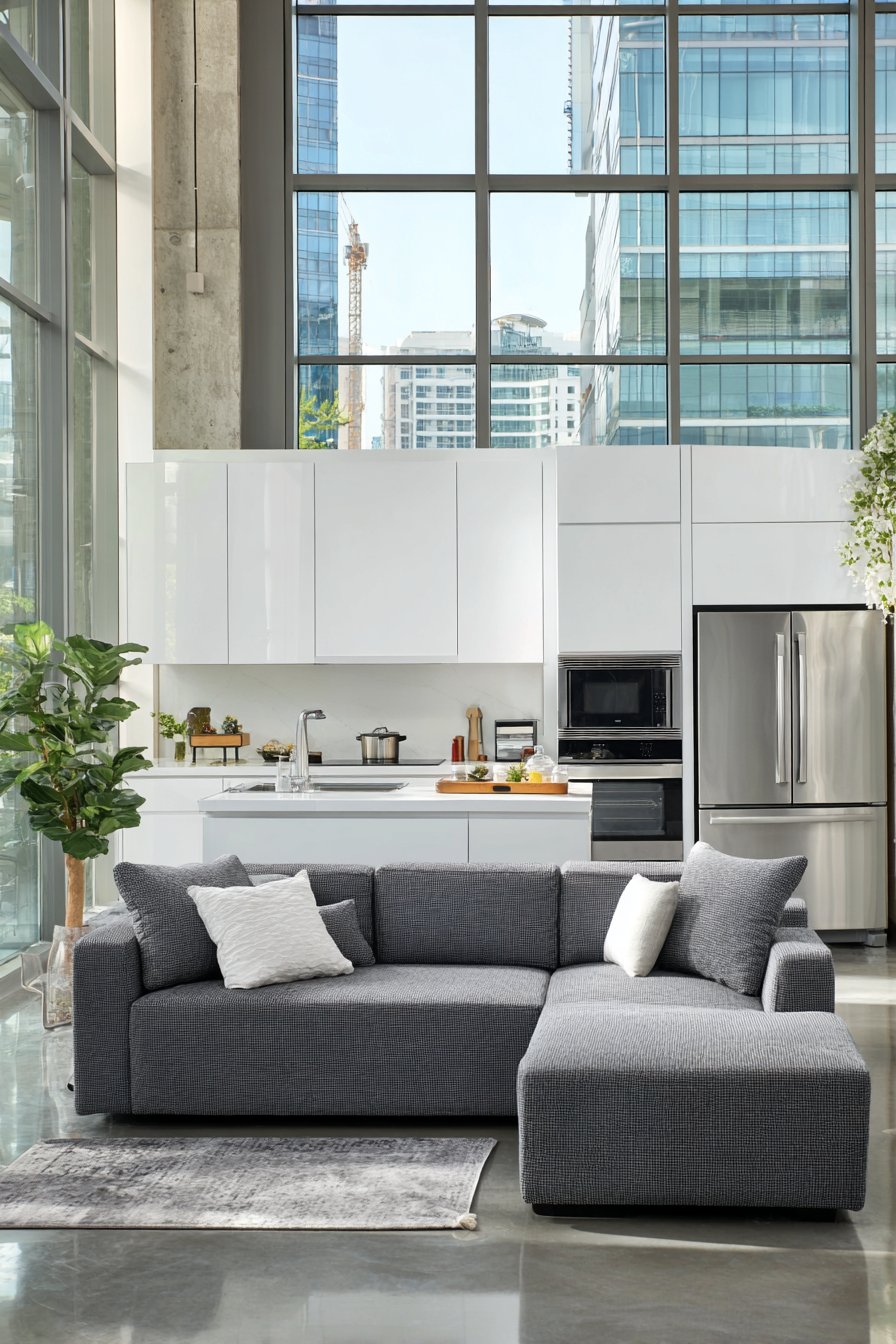
This contemporary space embraces minimalism and sleek sophistication through carefully considered design choices. Handleless white kitchen cabinets create smooth, uninterrupted surfaces that feel modern and refined, their integrated touch-latch mechanisms eliminating visual clutter while maintaining full functionality.
Integrated appliances disappear behind matching cabinet panels, creating a streamlined look that makes the kitchen feel like a seamless part of the living space rather than a separate functional zone filled with appliances.
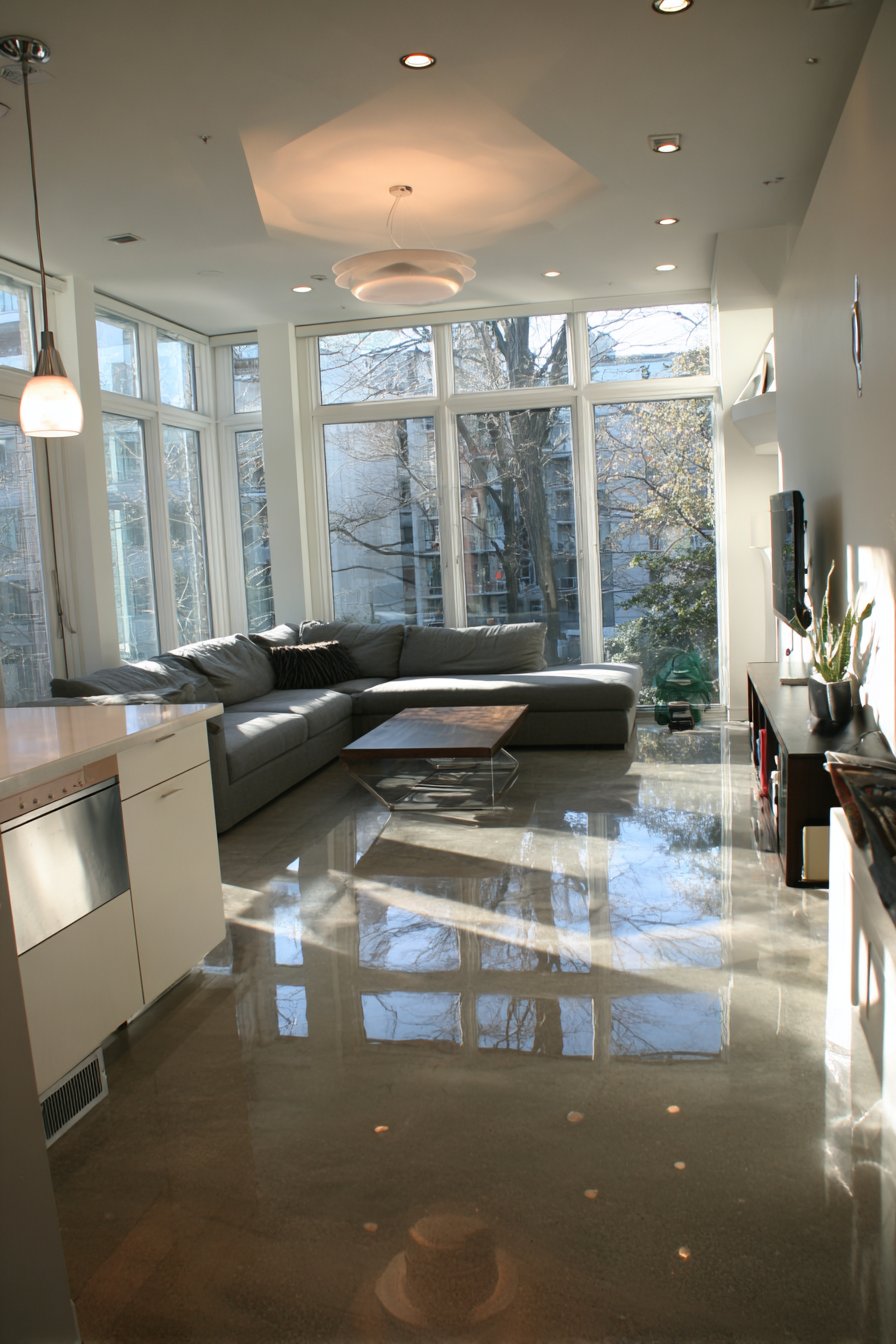
The living space features a modular grey sectional configured specifically to maximize seating capacity without overwhelming the room’s proportions. The modular nature of this sofa is particularly smart in small spaces—it can be reconfigured as needs change or if you move to a different space.
A slim console table mounted behind the sofa provides visual separation between kitchen and living areas while maintaining the open feeling that defines the layout. This mounted piece takes up zero floor space, a clever solution that adds functionality without compromising the sense of openness.
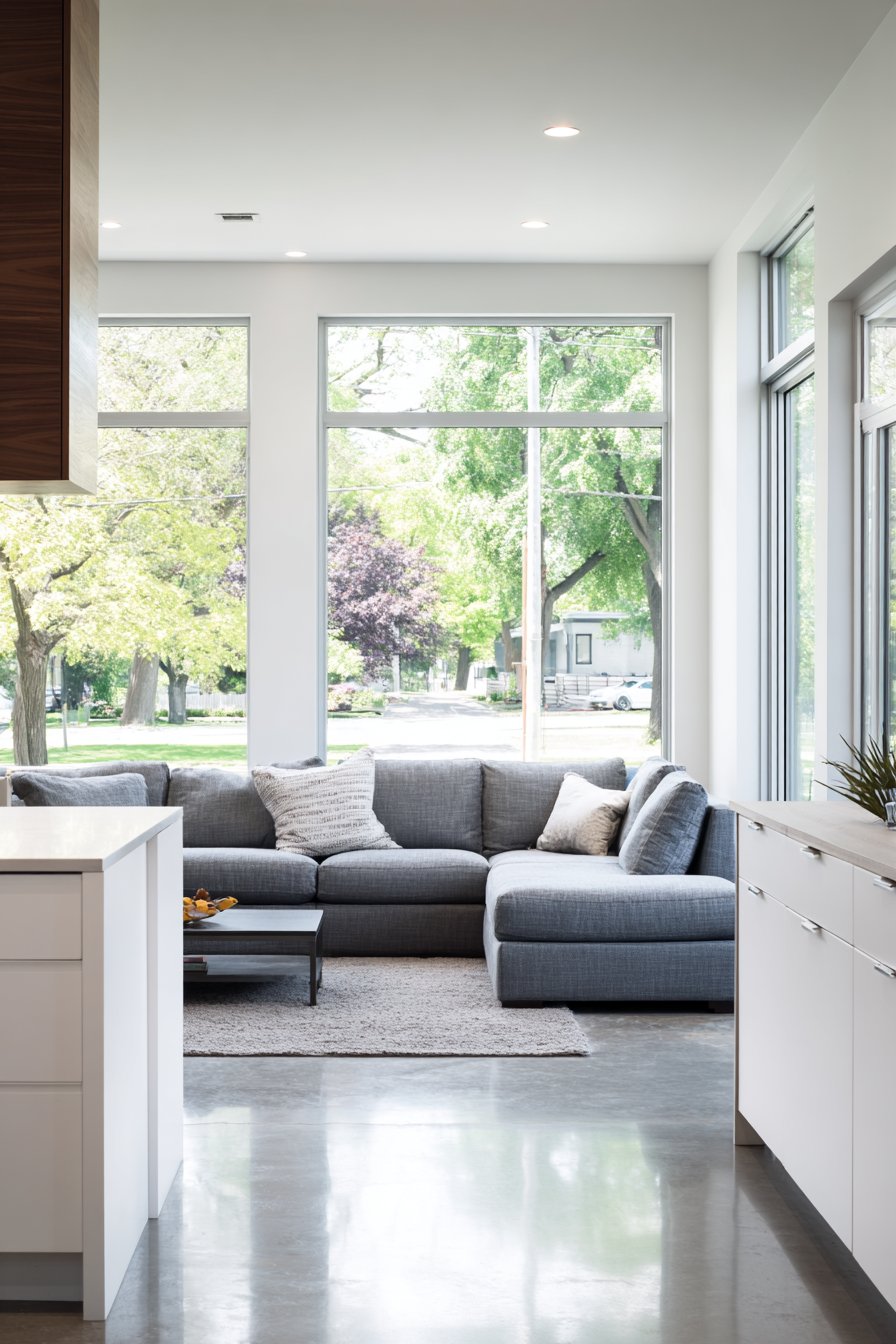
Polished concrete floors reflect natural light streaming from floor-to-ceiling windows, multiplying the illumination and making the space feel significantly larger than its actual dimensions. This reflective quality is one of concrete flooring’s underappreciated benefits in small spaces.
The natural lighting creates clean shadows that emphasize the geometric forms and crisp lines throughout the design. This contemporary approach proves that minimalism isn’t cold or unwelcoming—when executed with attention to proportion, light, and texture, it creates spaces that feel calm, sophisticated, and perfectly suited to modern living.
Key Design Tips:
- Choose handleless cabinets with integrated mechanisms to create smooth, contemporary surfaces free from visual clutter and hardware.
- Integrate appliances behind matching panels to maintain a streamlined aesthetic that doesn’t interrupt the clean lines of the design.
- Select modular furniture that can be reconfigured to adapt to changing needs or different space configurations over time.
- Use polished or sealed concrete flooring to reflect light and create a sense of spaciousness while providing durable, low-maintenance surfaces.
- Mount console tables or shelving to walls instead of using floor-standing pieces to preserve floor space and maintain visual openness.
8. Mid-Century Modern Warmth with Vintage Charm
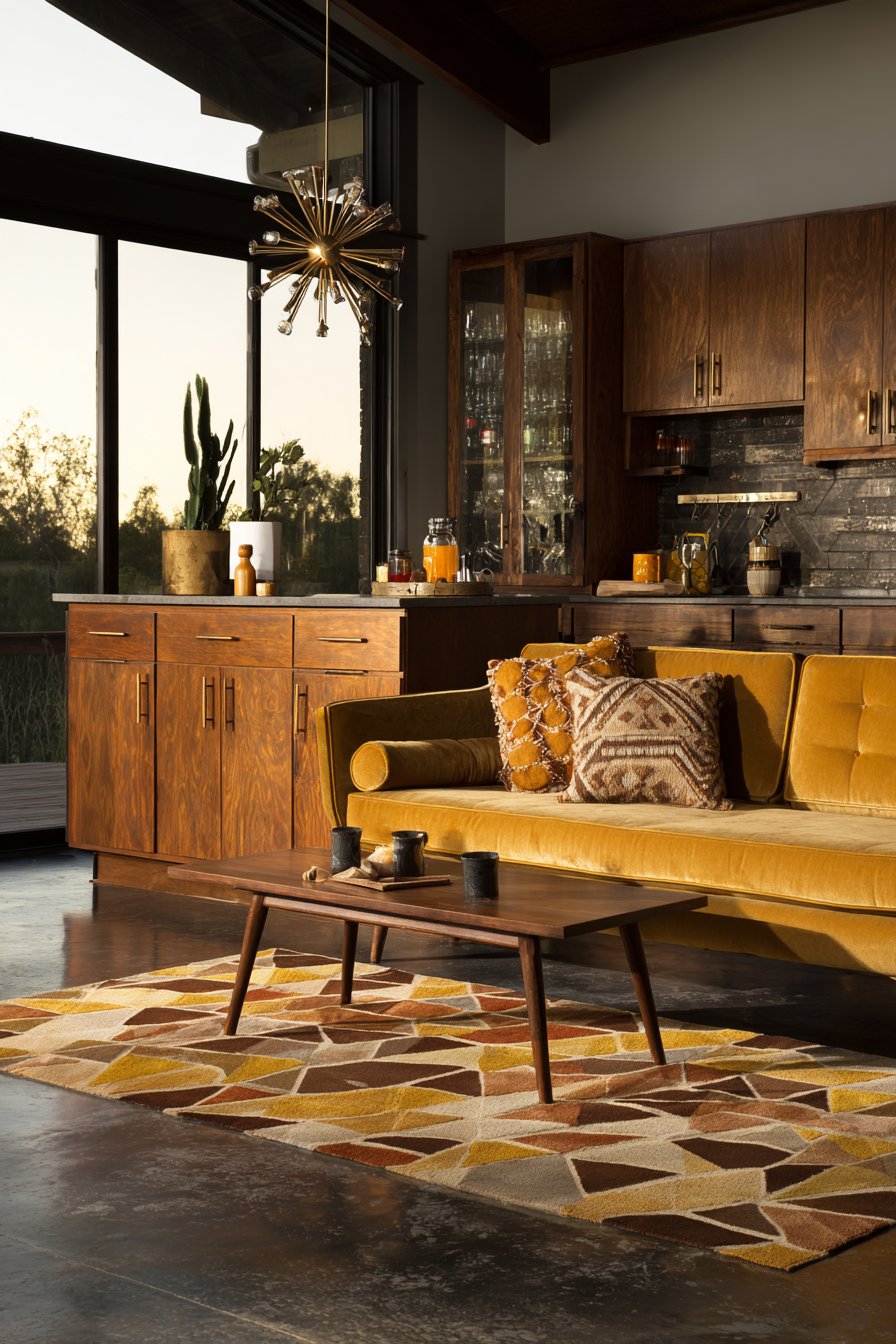
Stepping into this space feels like entering a carefully curated mid-century time capsule, updated with modern comforts and conveniences. The kitchen showcases beautiful teak veneer cabinets with characteristic tapered legs and brass hardware that capture the essence of 1950s and 60s design.
These warm wood tones create an immediate sense of coziness and sophistication, their rich color adding depth without darkening the space. The tapered legs are more than decorative—they create visual lightness by revealing floor space beneath the cabinets, making the kitchen feel less bulky than floor-to-ceiling modern cabinetry.
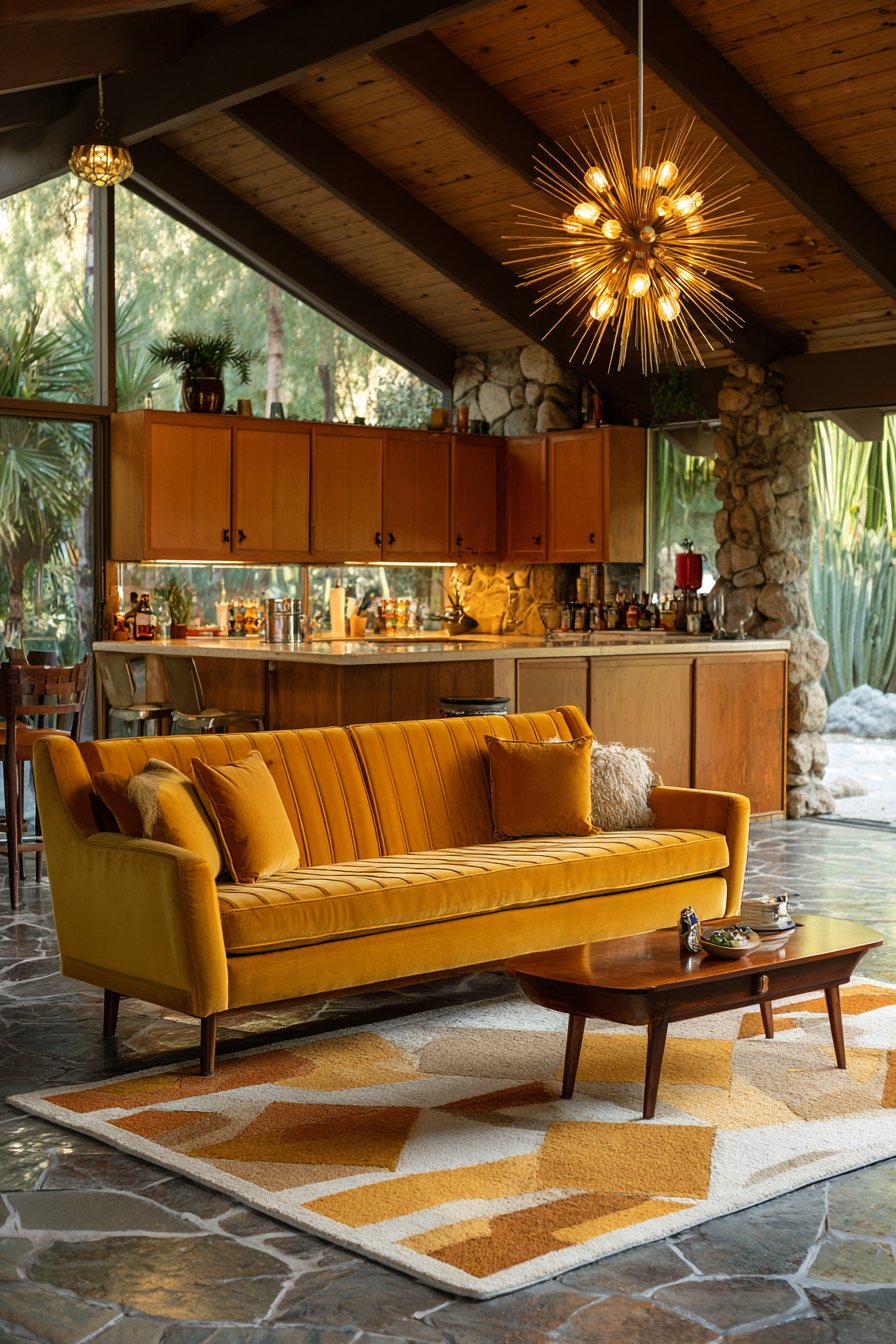
The living area continues the mid-century theme with a low-profile sofa upholstered in luxurious mustard yellow velvet, a bold color choice that adds personality and warmth while staying true to the period’s love of rich, saturated hues.
This statement piece is balanced by a walnut coffee table with angled legs, whose sculptural form and warm wood grain provide visual interest and functional surface space. A geometric patterned area rug in earth tones—ochre, burnt orange, olive, and chocolate brown—defines the living zone while adding another layer of pattern and color that’s quintessentially mid-century.
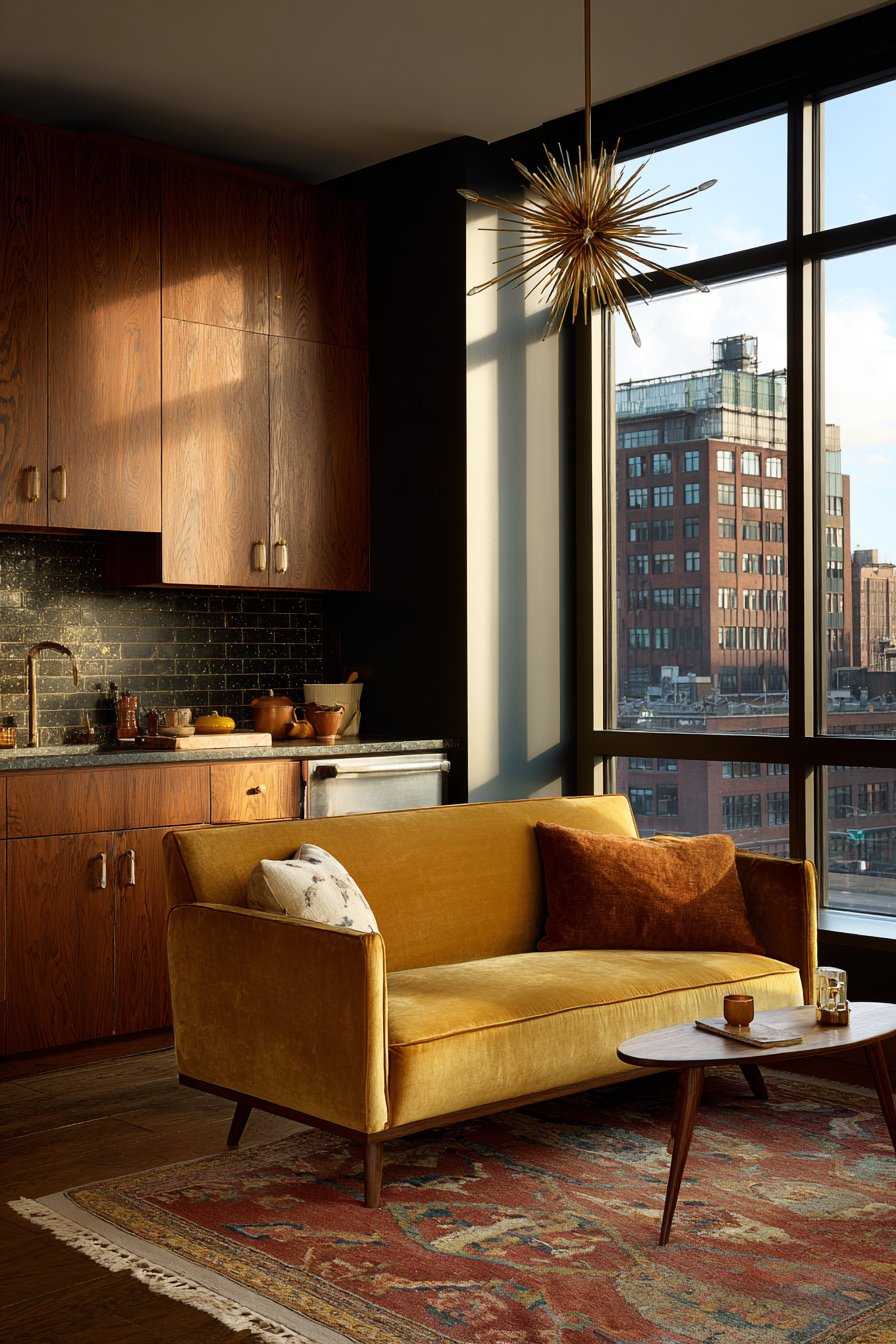
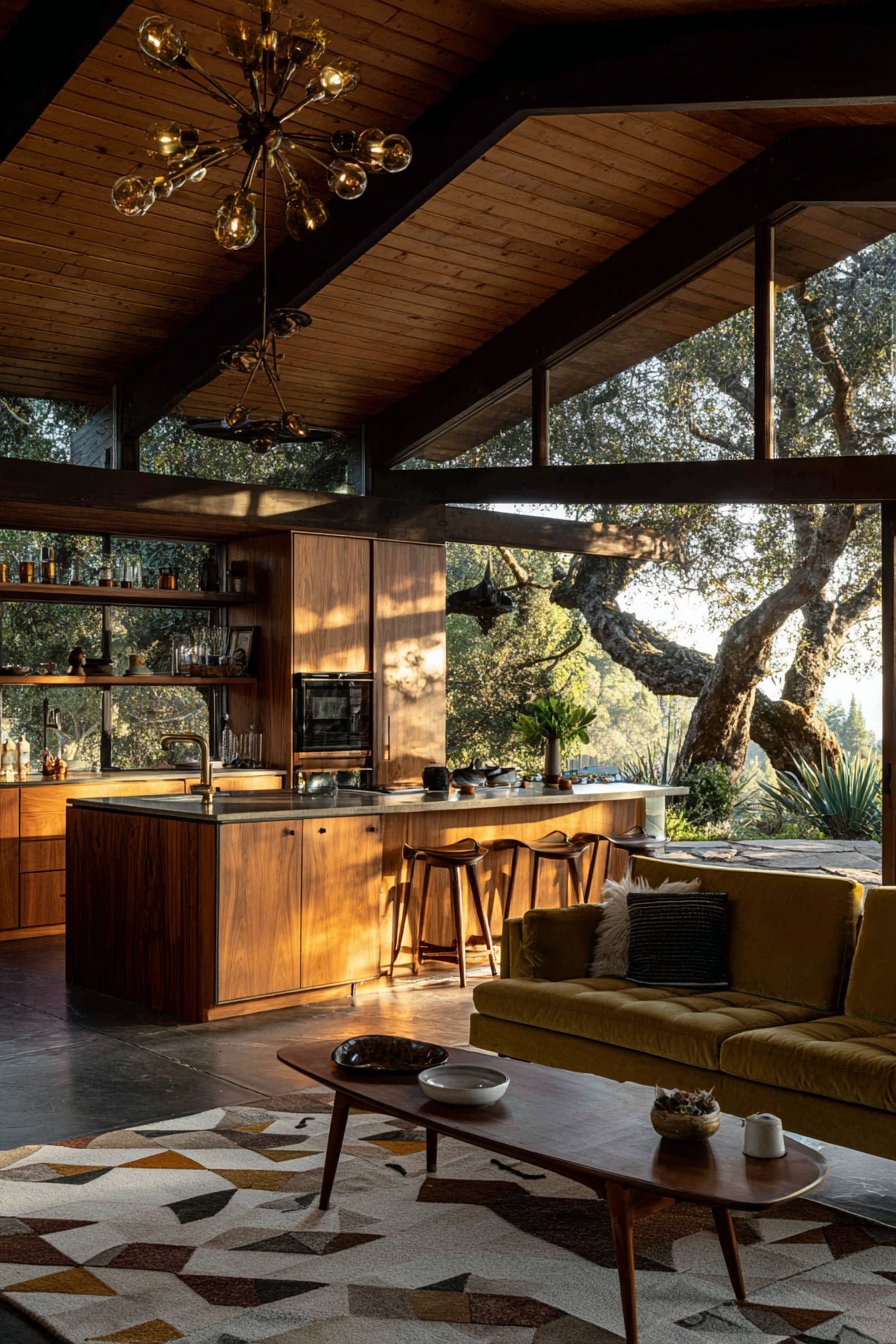
A sputnik-style pendant light hangs above the kitchen peninsula, serving as both functional task lighting and sculptural art piece. This iconic fixture, with its radiating arms and multiple bulbs, captures the optimistic, space-age aesthetic of mid-century design.
Golden hour ambiance through large windows bathes the space in warm light that highlights the rich wood tones and vintage-inspired details, creating an atmosphere that’s both nostalgic and thoroughly livable. This design demonstrates how mid-century modern style can make small spaces feel warm, interesting, and full of personality.
Key Design Tips:
- Choose teak or walnut cabinetry with tapered legs to capture authentic mid-century style while creating visual lightness in small spaces.
- Add a bold accent color like mustard yellow, burnt orange, or teal through upholstery to inject personality and period-appropriate vibrancy.
- Select furniture with angled, tapered legs rather than blocky bases to create visual space beneath pieces and improve traffic flow.
- Incorporate geometric patterns through rugs, pillows, or artwork to add mid-century character without overwhelming compact areas.
- Install a statement light fixture like a sputnik or globe pendant to serve as both functional lighting and sculptural focal point.
9. Maximum Functionality with Multi-Purpose Design
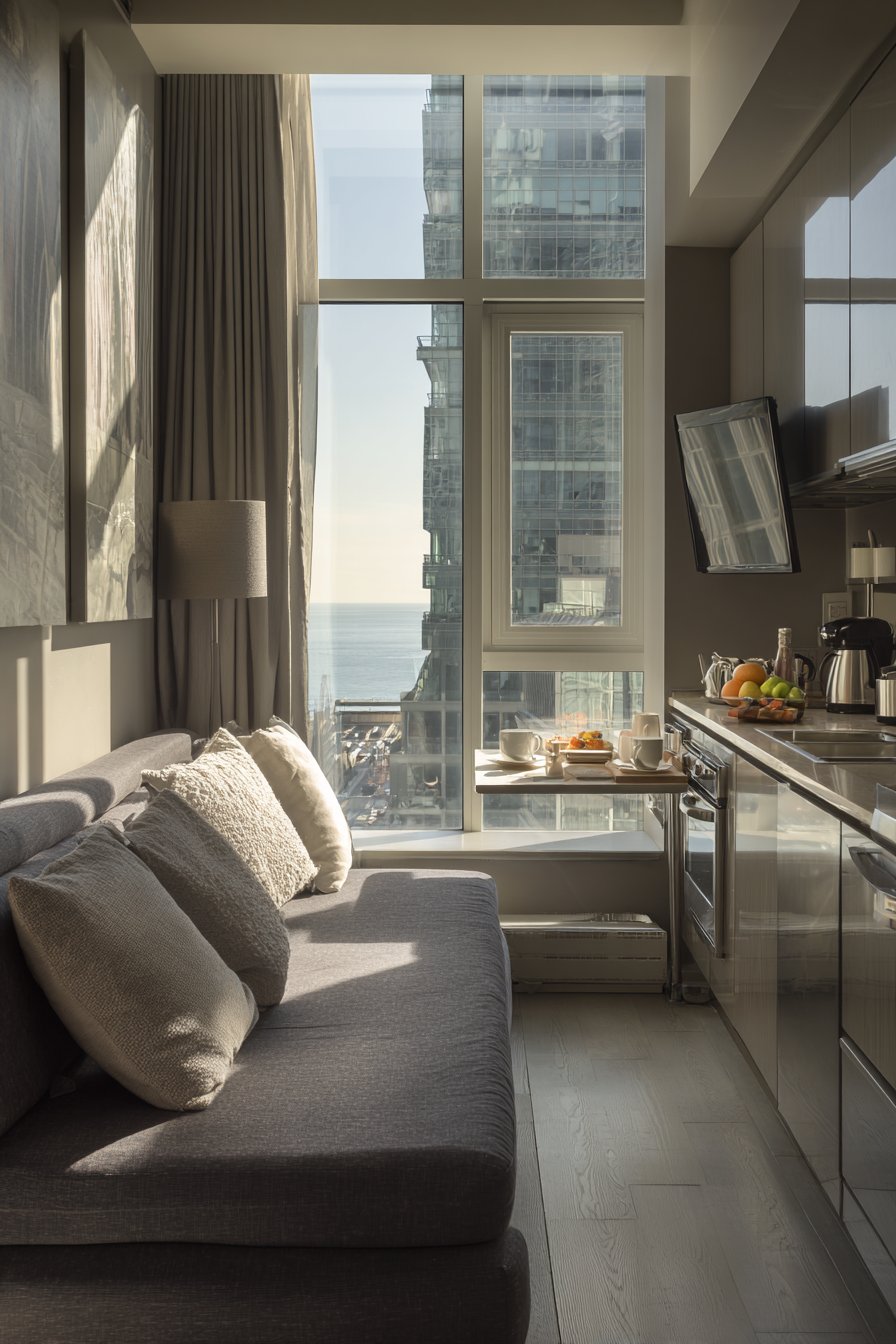
This space is a masterclass in making every element work harder and smarter. The galley kitchen features pull-out pantry storage that maximizes the use of narrow spaces, bringing items from the back forward for easy access without requiring deep bending or reaching.
Under-cabinet lighting illuminates work surfaces while creating ambient glow that makes the kitchen feel welcoming even when overhead lights are off. These practical features demonstrate how thoughtful details can dramatically improve functionality in compact spaces.
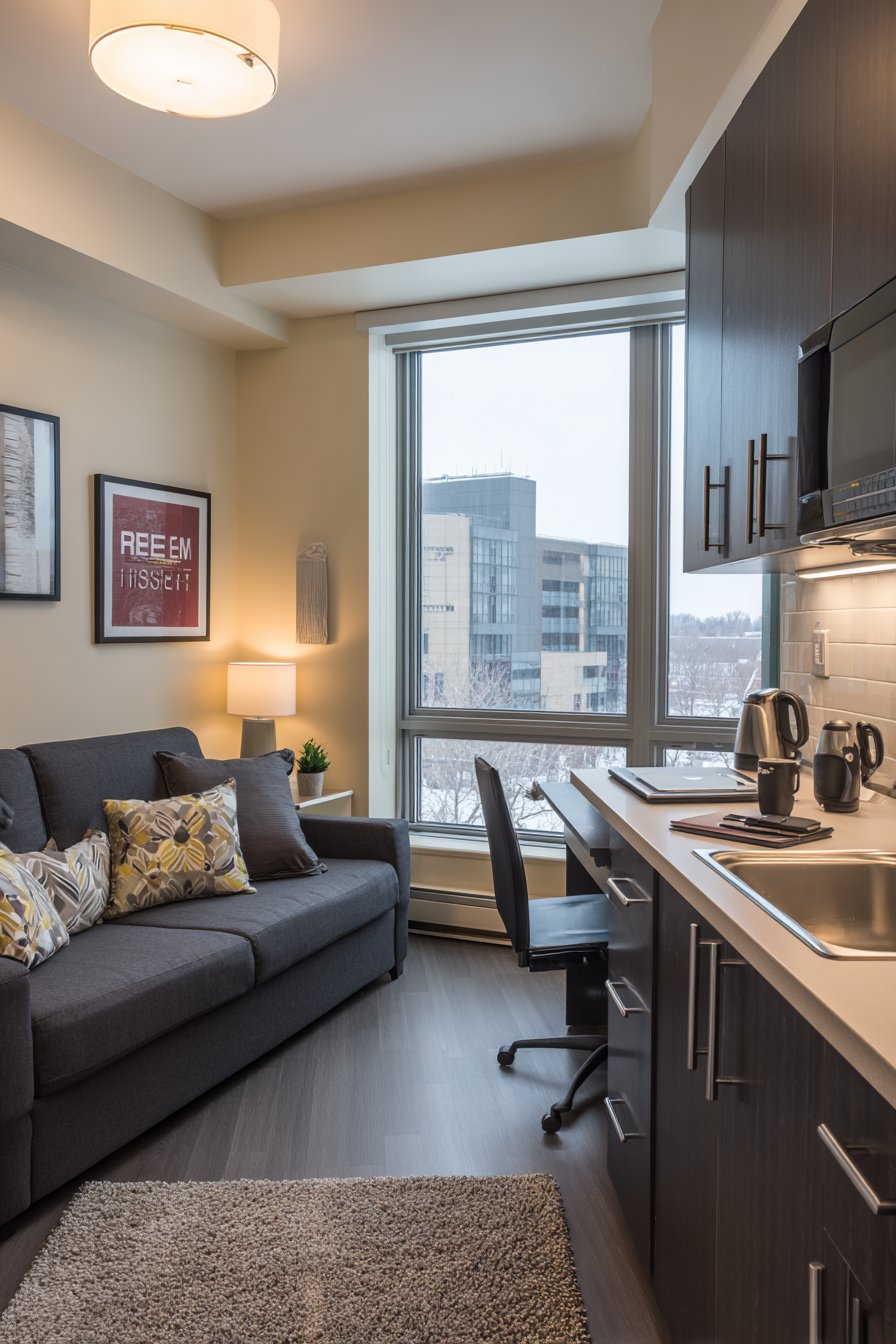
The adjacent living space includes a sleek sofa bed in charcoal grey, a dual-purpose piece that provides comfortable daily seating while offering sleeping accommodations for guests. This flexibility is invaluable in small homes where dedicated guest rooms aren’t feasible.
A wall-mounted TV saves precious floor space that would otherwise be consumed by a media console or entertainment center, while providing optimal viewing angles from both sofa and kitchen area. This vertical use of space keeps the floor area open and uncluttered.
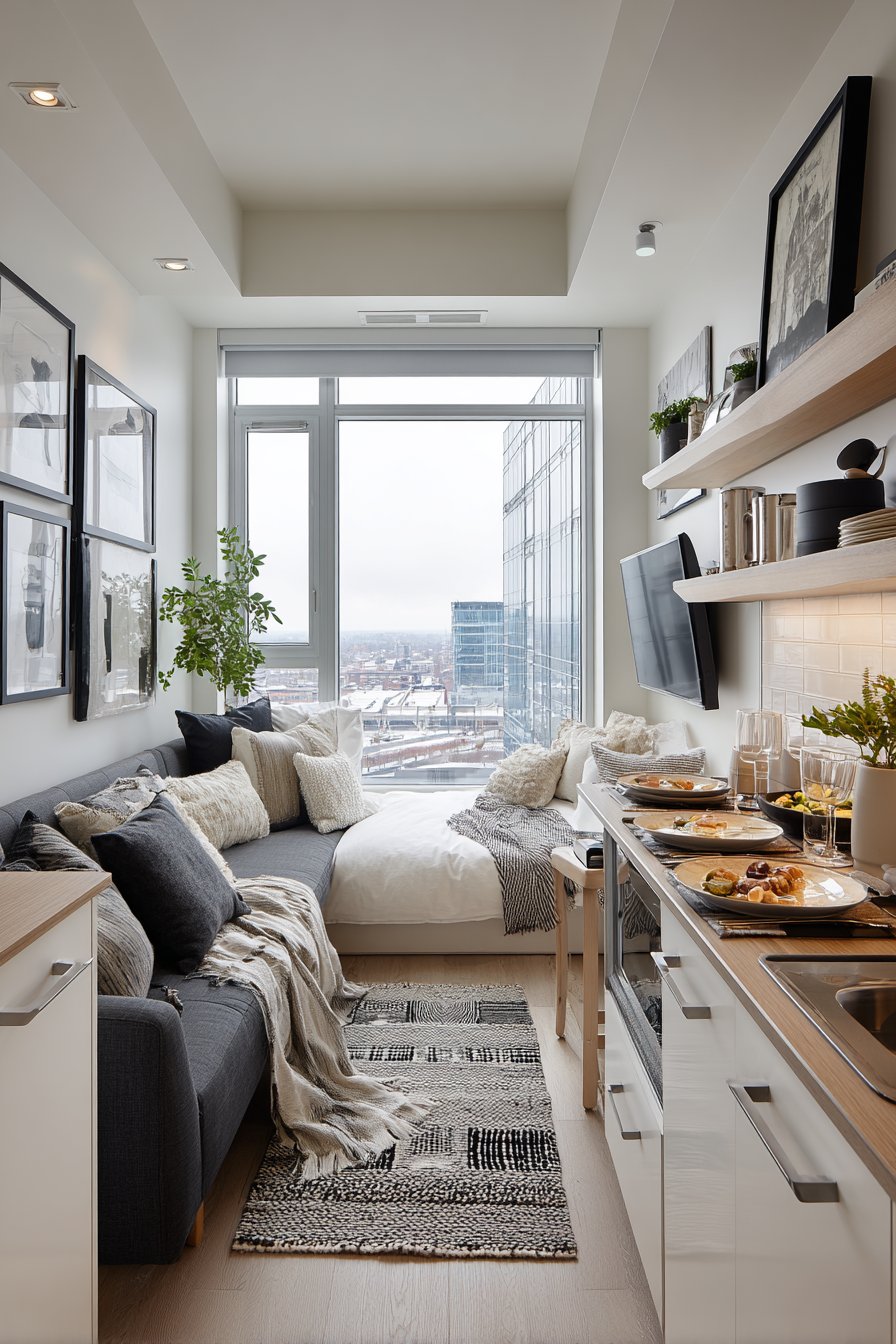
Perhaps the most ingenious feature is the narrow drop-leaf table that folds down from the wall between the kitchen and living areas. When extended, it serves as a dining surface for meals or a workspace for remote work, hobbies, or homework. When folded up, it virtually disappears, taking up mere inches of wall space while leaving the floor completely clear.
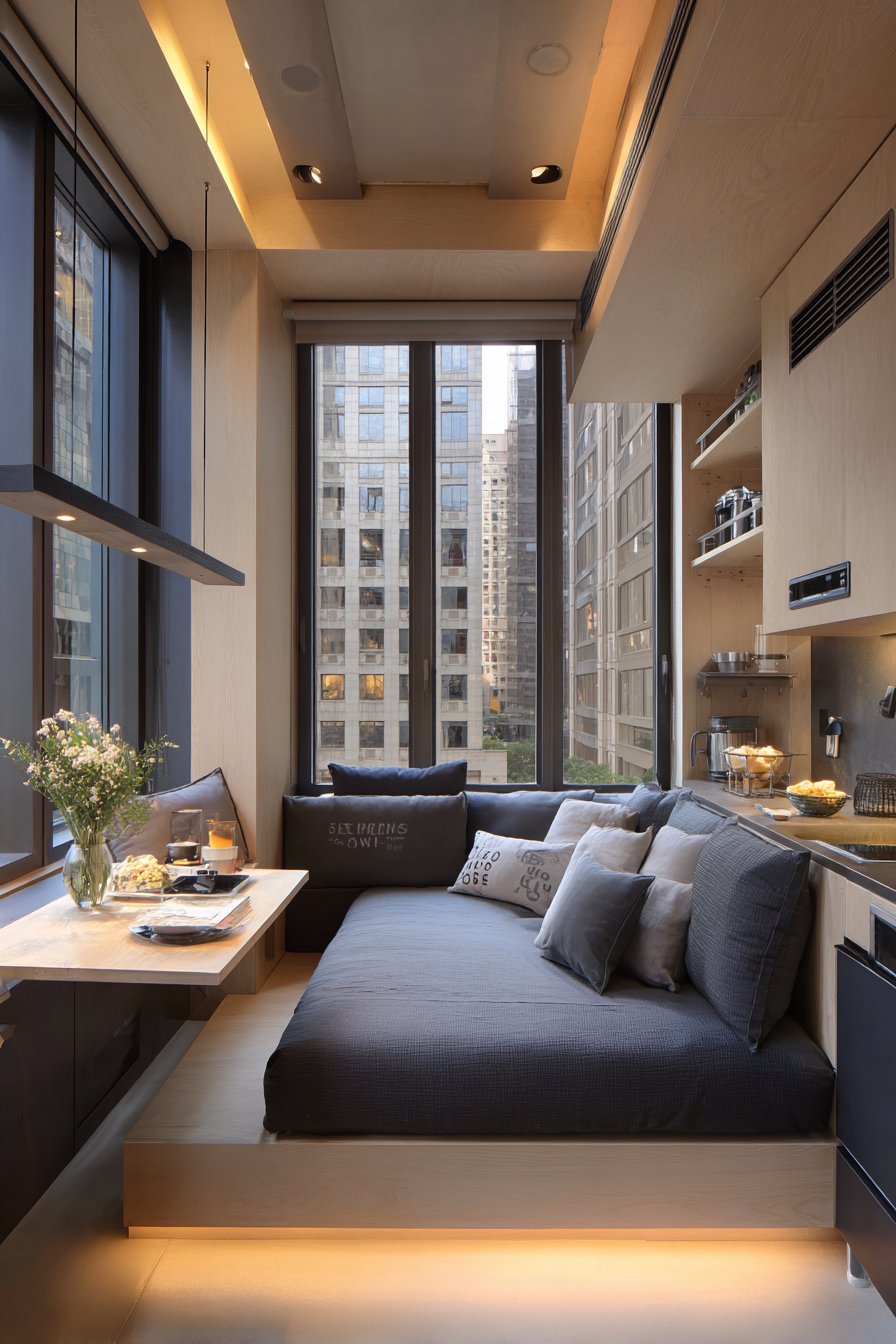
This transformable element perfectly embodies the multi-purpose design philosophy that makes small spaces livable without feeling cramped or compromised. Natural daylight from a single large window creates dimension and highlights these practical innovations, proving that functional design can also be beautiful.
Key Design Tips:
- Install pull-out pantry storage and drawer organizers to maximize accessibility and capacity in compact kitchen spaces.
- Use under-cabinet lighting to improve task lighting while creating ambient illumination that makes spaces feel larger and more welcoming.
- Choose multi-purpose furniture like sofa beds, storage ottomans, or expandable tables to provide flexibility in how you use limited space.
- Mount TVs and floating shelves to walls rather than using floor-standing furniture to preserve valuable floor space.
- Install wall-mounted drop-leaf tables that fold completely flat when not in use, providing full dining or work surfaces when needed without permanent floor space commitment.
10. Transitional Style Bridging Traditional and Contemporary
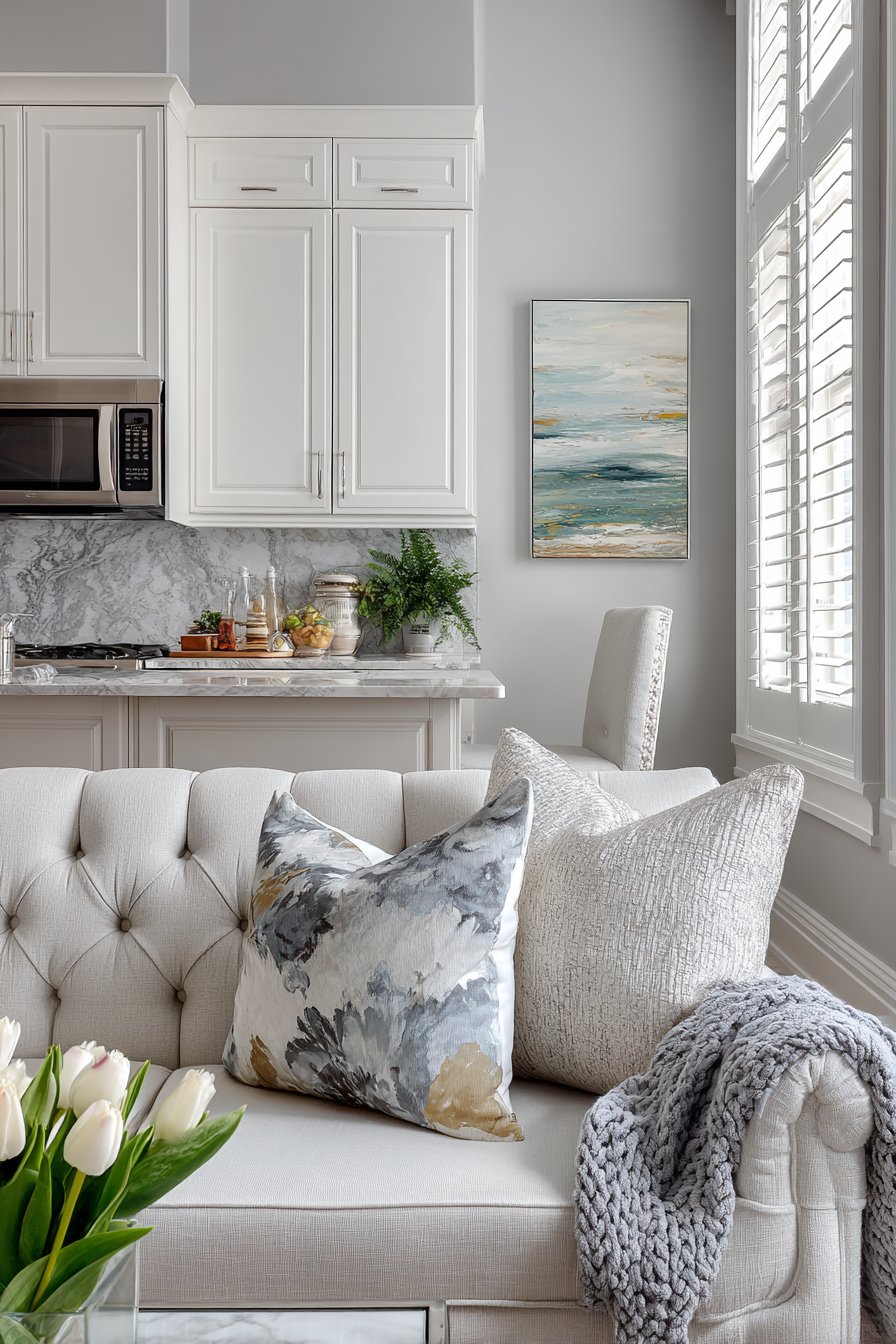
This sophisticated space demonstrates the beauty of transitional design—a style that bridges traditional elegance and contemporary simplicity. The kitchen features classic white raised-panel cabinets that nod to traditional design with their dimensional detailing and timeless appeal.
These are paired with modern stainless steel appliances and grey marble-look quartz countertops that bring contemporary functionality and style. This combination prevents the space from feeling dated while maintaining the warmth and familiarity of traditional design.
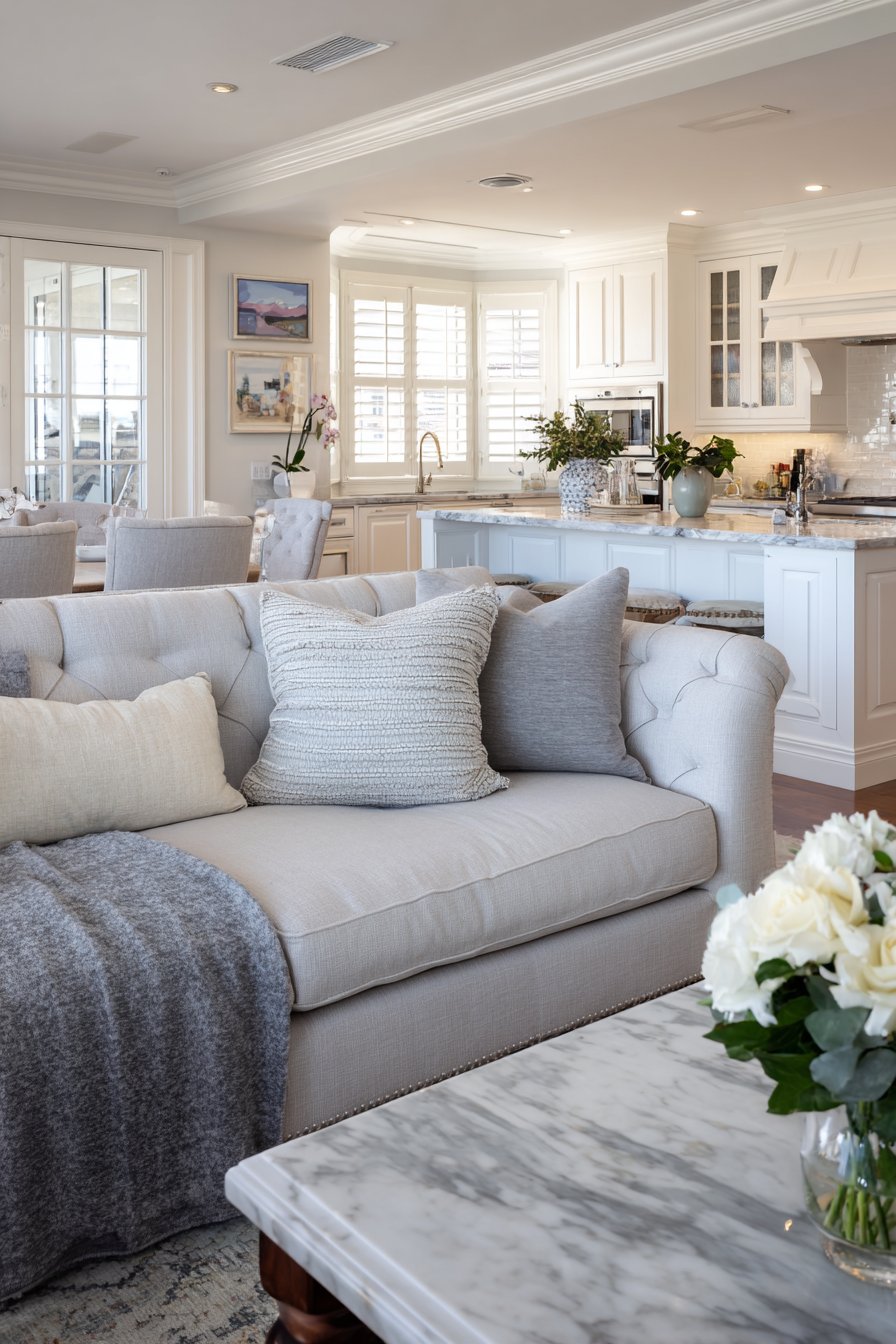
The living area contains a neutral tufted sofa whose button detailing adds traditional elegance, upholstered in a soft grey or beige fabric that works beautifully with the kitchen’s color scheme. The tufting adds texture and visual interest without pattern or color, demonstrating how details can create sophistication.
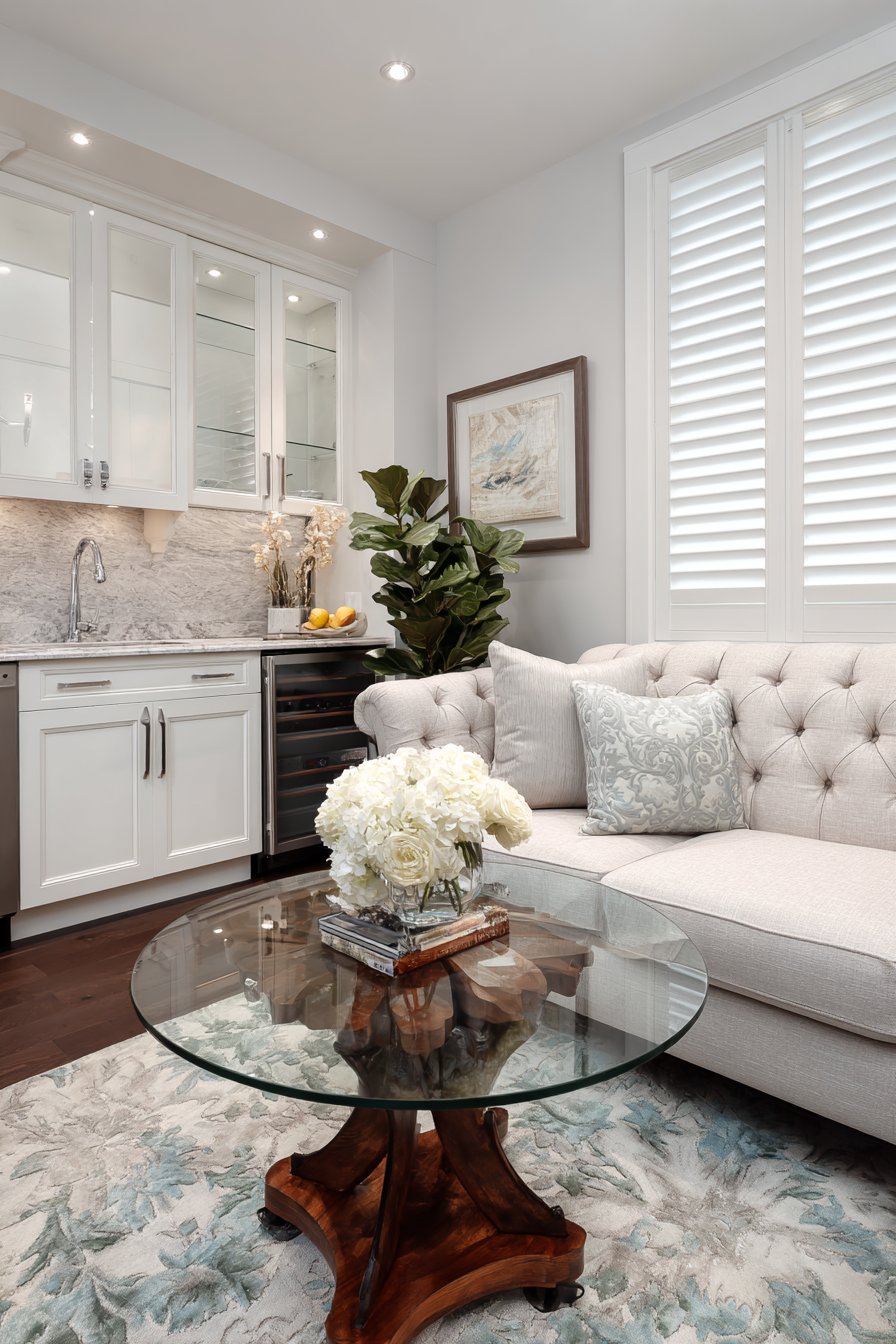
A glass-top coffee table with a traditional wood base perfectly embodies the transitional philosophy—the transparency of the glass keeps the space feeling open and contemporary, while the carved or turned wood base brings traditional craftsmanship and warmth.
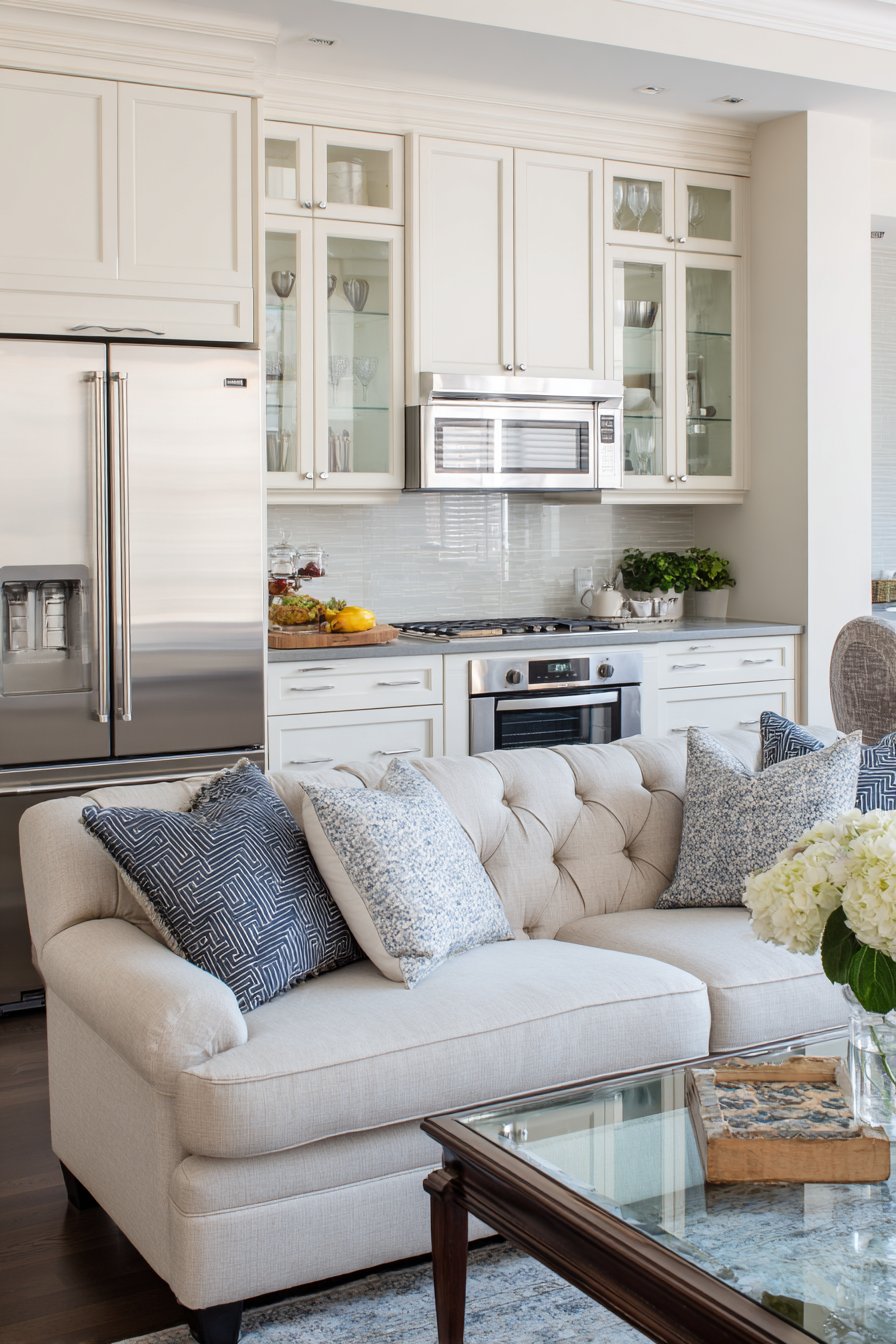
The cohesive palette of greys, whites, and natural wood connects both spaces seamlessly, creating flow and unity throughout the open concept. This restrained color scheme allows the blend of styles to shine without visual competition.
Soft natural lighting through plantation shutters creates gentle highlights on the varied textures and finishes—the dimensional cabinet panels, the subtle veining in the quartz, the tufted upholstery, the polished glass, and the wood grain. These shutters themselves are transitional elements, combining traditional form with clean, contemporary lines. This space proves that you don’t have to choose between traditional comfort and contemporary style—transitional design offers the best of both worlds.
Key Design Tips:
- Combine traditional cabinet styles with contemporary finishes and hardware to create transitional balance that feels both classic and current.
- Choose furniture with one traditional element and one contemporary element, like a glass-top table with a carved wood base.
- Maintain a cohesive neutral palette of greys, whites, and wood tones to unify mixed style elements and prevent visual chaos.
- Add texture through tufting, fabric choices, and material variety rather than relying on pattern or bold colors.
- Use window treatments like plantation shutters or tailored roman shades that bridge traditional and contemporary aesthetics.
Why These Designs Represent the Best in Small Open Kitchen and Living Room Concepts
These ten design approaches represent the pinnacle of small open kitchen and living room interior design for numerous compelling reasons. Each concept addresses the fundamental challenges of open-concept living—maintaining distinct functional zones while preserving visual openness, maximizing storage in limited square footage, creating cohesive aesthetics across different areas, and ensuring comfortable traffic flow. Whether you’re renovating a small apartment kitchen, redesigning compact living spaces, or building a new open-concept home, these designs offer proven solutions that balance beauty with functionality.
The compact L-shaped kitchen with natural flow exemplifies space planning excellence, demonstrating how strategic furniture placement and multifunctional elements like kitchen islands with bar seating can transform cramped quarters into inviting, conversation-friendly spaces. This approach to small kitchen design prioritizes efficiency without sacrificing style, making it ideal for modern lifestyles where the kitchen serves as the home’s social heart. The Scandinavian minimalist design showcases how light wood tones, open shelving, and neutral color palettes can make small spaces feel airy and expansive, proving that open concept kitchen living room layouts benefit enormously from restraint and intentionality in design choices.
The industrial-modern aesthetic demonstrates that bold style statements work beautifully in compact open floor plans when materials are carefully curated. Exposed brick walls, concrete countertops, and matte black hardware create visual interest and personality without requiring additional square footage, making this approach perfect for urban lofts and contemporary apartments. Similarly, the modern farmhouse design shows how combining kitchen and living room spaces can maintain warmth and character through materials like shiplap, subway tile, and natural wood, creating cozy open-concept environments that feel collected and comfortable rather than stark or institutional.
The storage-focused design addresses one of the most critical challenges in small open kitchen and living room layouts—the need for abundant, organized storage that doesn’t overwhelm the space visually. Floor-to-ceiling cabinetry, built-in shelving systems, and vertical storage solutions prove that small open-plan kitchens can be both clutter-free and beautiful. The coastal design illustrates how color psychology and natural materials create specific moods and atmospheres, with soft blue-grey kitchen cabinets, jute rugs, and woven textures establishing a relaxed, beach-inspired vibe that makes small spaces feel like vacation retreats.
The contemporary streamlined approach demonstrates that minimalist kitchen and living room designs can maximize the sense of space through handleless cabinetry, integrated appliances, and polished concrete floors that reflect light and create visual expansion. This style is particularly effective for modern condos and apartments where clean lines and uncluttered surfaces are priorities. The mid-century modern design proves that small spaces can handle rich colors and bold patterns when balanced correctly, with mustard yellow velvet sofas, geometric rugs, and walnut wood tones creating personality-filled environments that never feel overwhelming.
The multi-functional design concept addresses modern living’s evolving needs, showcasing sofa beds, wall-mounted drop-leaf tables, and flexible furniture arrangements that make small open kitchen and living room spaces adapt to different activities throughout the day—from morning coffee to remote work to evening entertaining to overnight guest accommodations. This versatility is essential in compact homes where rooms must serve multiple purposes without dedicated spaces for each function.
Finally, the transitional style demonstrates sophisticated design that appeals to broad audiences by blending traditional comfort with contemporary simplicity. This approach to open-concept design creates spaces that feel established and timeless rather than trendy, with raised-panel cabinets, tufted sofas, and neutral palettes that work across generations and design preferences. These transitional small kitchen living room combinations prove that you needn’t sacrifice elegance for efficiency or traditional charm for modern functionality.
What makes these designs truly exceptional is their recognition that small open kitchen and living room spaces require more thoughtful planning than larger layouts, not less. Each concept addresses sightlines, traffic patterns, lighting layers, storage needs, and visual cohesion with precision and creativity. They demonstrate that limitations in square footage can actually inspire more innovative, intentional design solutions that result in spaces that feel custom-crafted and purposeful.
From a practical standpoint, these designs incorporate current best practices in interior design—from the use of light-reflective surfaces and strategic lighting placement to the selection of appropriately scaled furniture and the implementation of space-saving solutions. They also address contemporary lifestyle needs, recognizing that modern open-concept kitchens must accommodate cooking, dining, working, entertaining, and relaxing within limited footprints. The integration of technology, from wall-mounted TVs to under-cabinet lighting, shows how these spaces embrace modern conveniences without compromising aesthetic appeal.
Color theory plays a crucial role in each design’s success, with careful attention to how different hues affect spatial perception. Light colors and neutral palettes dominate because they reflect light and create visual expansion, while strategic uses of deeper colors add depth and prevent monotony. The cohesive color schemes that flow between kitchen and living areas create unity that’s essential in open-concept designs, preventing the chaotic feeling that can result from disparate color palettes in visually connected spaces.
Material selection in these designs demonstrates sophisticated understanding of how textures, finishes, and surfaces impact both functionality and aesthetics. From butcher block countertops that add warmth to quartz surfaces that provide durability, from linen upholstery that brings softness to concrete floors that offer industrial edge, each material choice serves both practical and design purposes. The layering of different textures—smooth alongside rough, matte beside polished, natural paired with manufactured—creates visual interest and depth that prevents small spaces from feeling flat or one-dimensional.
These design concepts also excel in their approach to lighting, recognizing that proper illumination is critical in small open kitchen and living room layouts. Each design incorporates multiple lighting layers—ambient lighting for overall illumination, task lighting for food preparation and reading, and accent lighting to highlight architectural features or create ambiance. The thoughtful placement of pendant lights, recessed fixtures, under-cabinet lights, and strategic use of natural light demonstrates how lighting can define zones, create mood, and enhance the sense of space.
The furniture arrangements in these designs show masterful understanding of traffic flow and spatial dynamics. By positioning sofas to face kitchens, using islands as natural dividers, incorporating narrow console tables behind seating, and choosing appropriately scaled pieces, these layouts maintain openness while defining distinct functional zones. The strategic placement of dining tables at thresholds between kitchen and living areas creates transitional spaces that belong to both zones, facilitating the flow between cooking, eating, and relaxing activities.
Conclusion
Creating a beautiful, functional small open kitchen and living room requires thoughtful consideration of numerous design elements—from layout and furniture placement to color schemes, materials, lighting, and storage solutions. The ten concepts explored in this article demonstrate that compact spaces can be just as stylish, comfortable, and practical as larger homes when designed with intention and creativity. Whether you’re drawn to the clean simplicity of Scandinavian minimalism, the raw authenticity of industrial design, the cozy charm of modern farmhouse style, or the sophisticated balance of transitional aesthetics, there’s an approach that will resonate with your personal taste and lifestyle needs.
The key takeaways from these designs are universal: maintain visual continuity through consistent flooring and cohesive color palettes, use multifunctional furniture and storage solutions to maximize limited square footage, create definition between zones without blocking sightlines or disrupting flow, layer lighting to provide both functionality and ambiance, and choose materials and textures that add interest and personality without overwhelming compact spaces. Remember that in small open-concept layouts, every design decision has magnified impact—each piece of furniture, every color choice, all lighting fixtures must work harmoniously to create a cohesive whole.
Don’t be intimidated by the constraints of a small footprint. Instead, embrace the opportunity to be more intentional and creative in your design choices. Experiment with different furniture arrangements, test various color combinations, layer textures thoughtfully, and prioritize the elements that matter most to your daily life. Whether you’re cooking weeknight dinners, working from home, entertaining friends, or simply relaxing with family, your small open kitchen and living room can be designed to support and enhance all these activities beautifully. Use these ideas as inspiration to create a space that’s uniquely yours—a home that reflects your personality, serves your needs, and brings you joy every day.
