


Designing a small kids bedroom presents a unique challenge that requires creativity, functionality, and a deep understanding of how children interact with their environment. In today’s world, where urban living often means working with limited square footage, parents and designers alike must find innovative ways to create spaces that are both practical and inspiring for young minds. A well-designed small bedroom can foster independence, encourage organization, and provide a nurturing environment where children can sleep, play, learn, and grow—all within a compact footprint.
The key to successful small bedroom design lies in maximizing every inch of available space while maintaining a sense of openness and comfort. This requires thoughtful consideration of vertical storage solutions, multi-functional furniture, and strategic layout planning. When done right, a small kids bedroom can feel spacious, organized, and personalized, proving that square footage doesn’t dictate the quality of a child’s personal sanctuary. From loft beds that create play spaces underneath to clever storage systems that keep clutter at bay, the possibilities are endless. See our these small kitchen ideas for more direction in this style.
In this comprehensive guide, we’ll explore ten exceptional small kids bedroom designs that demonstrate how smart planning and creative thinking can transform even the most compact spaces into functional, beautiful rooms that children will love. Each design showcases unique approaches to space optimization, storage solutions, and aesthetic appeal, offering inspiration for parents looking to create the perfect bedroom for their little ones. Whether you’re working with a shared room, a tiny nursery, or simply want to make the most of your available space, these ideas will provide practical solutions and design inspiration.
1. Vertical Living with Loft Bed Innovation

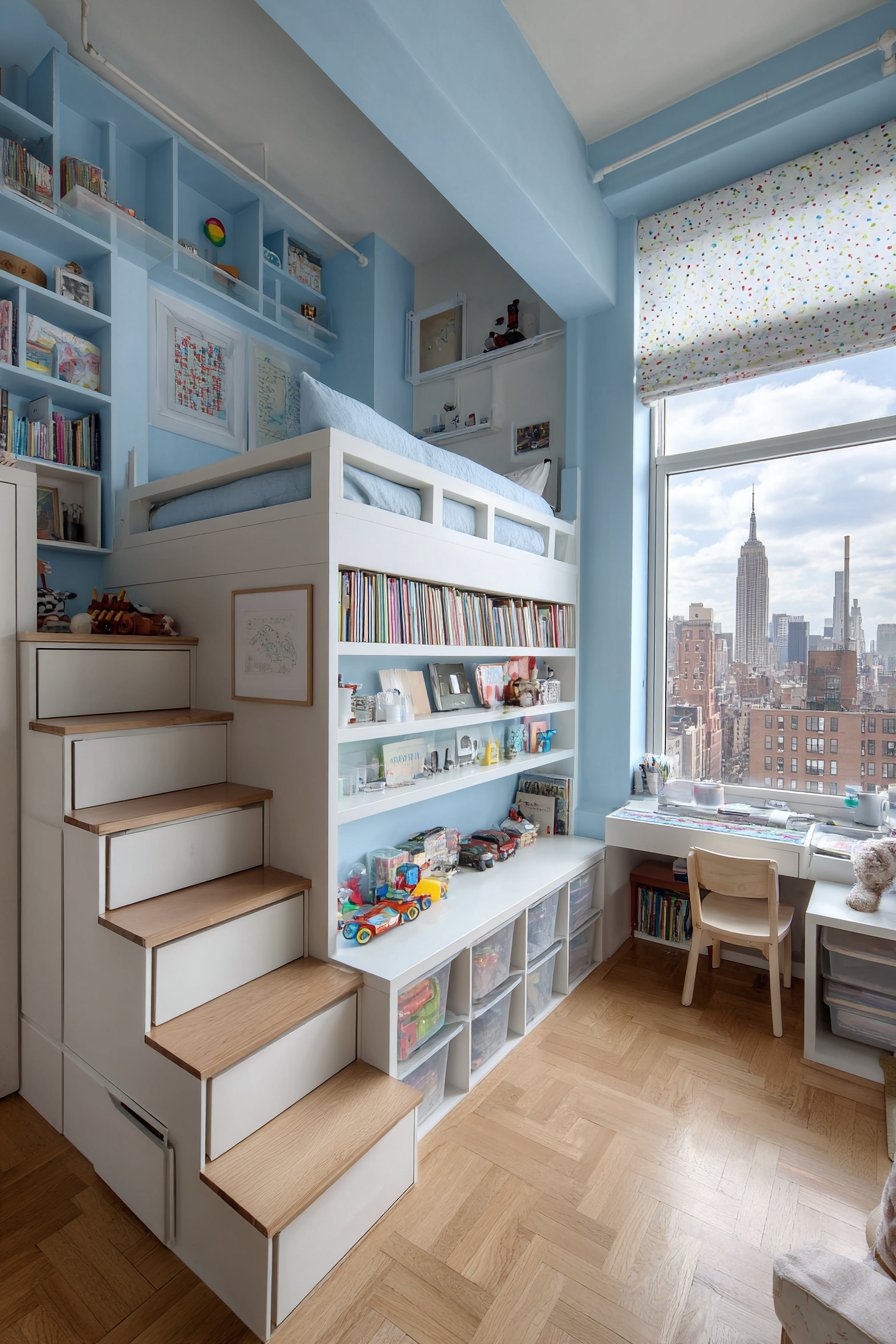
The transformation of a small kids bedroom through vertical space utilization represents one of the most effective design strategies available to modern parents. A loft bed configuration elevates the sleeping area, instantly creating valuable floor space underneath that can serve multiple purposes.
In this cheerful design, the loft bed features ingeniously integrated storage stairs rather than a traditional ladder, with each step containing a pull-out drawer or lift-top compartment for clothing, toys, or books. This dual-purpose approach eliminates the need for separate storage furniture while providing safe, easy access to the elevated sleeping platform.
Beneath the loft, a cozy study nook emerges as a dedicated space for homework, reading, or creative activities. A compact desk with adequate task lighting creates an environment conducive to concentration and learning, establishing healthy study habits from an early age.
The soft pastel blue walls create a calming backdrop that promotes relaxation without sacrificing personality, while white trim adds crisp definition and reflects natural light throughout the space. This color combination works particularly well in small rooms, as lighter hues create an illusion of greater space and airiness.
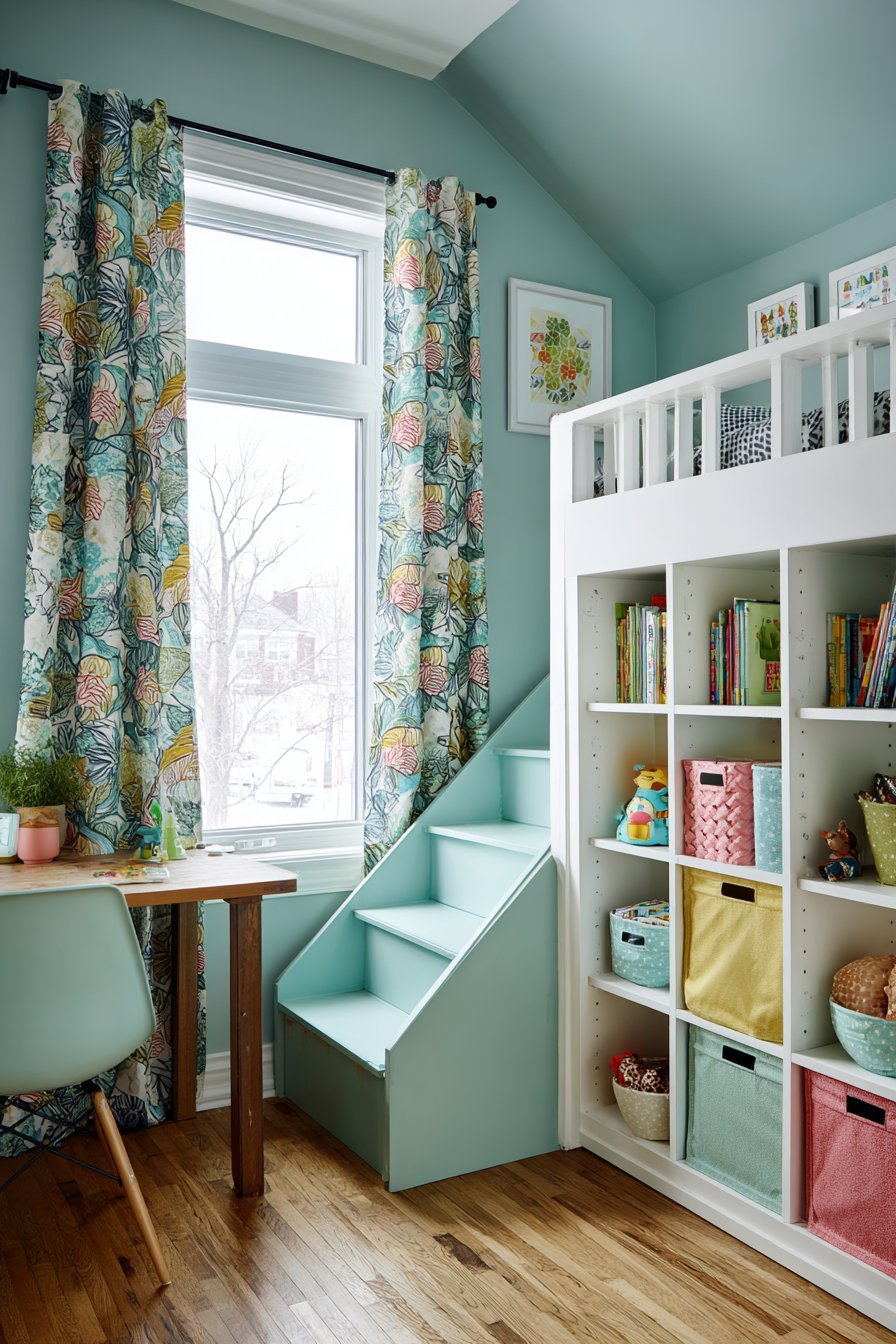
The organizational systems in this design demonstrate the importance of accessible storage in maintaining order within a small bedroom. Open shelving units mounted at child-appropriate heights display colorful books and toys in organized bins, teaching children the value of tidiness while keeping favorite items within easy reach.
The use of clear or labeled bins makes it simple for kids to identify where items belong, fostering independence and responsibility. Natural light streaming through a single window is maximized with playful patterned curtains that add visual interest without overwhelming the space, while the sheer or light-filtering fabric maintains privacy without blocking precious daylight.
Key Design Tips:
- Invest in quality loft bed construction with sturdy railings and proper weight capacity for long-term safety and use
- Design storage stairs with varying depths to accommodate different item sizes from shoes to folded sweaters
- Position the desk area to benefit from natural window light while ensuring adequate artificial lighting for evening study sessions
- Use vertical wall space for additional hooks, pegboards, or floating shelves to maximize storage without consuming floor area. Our floating shelves work better in small bedrooms has more inspiration along these same lines.
- Choose furniture with rounded edges and non-toxic finishes appropriate for children’s spaces
2. L-Shape Twin Bed Configuration for Shared Spaces
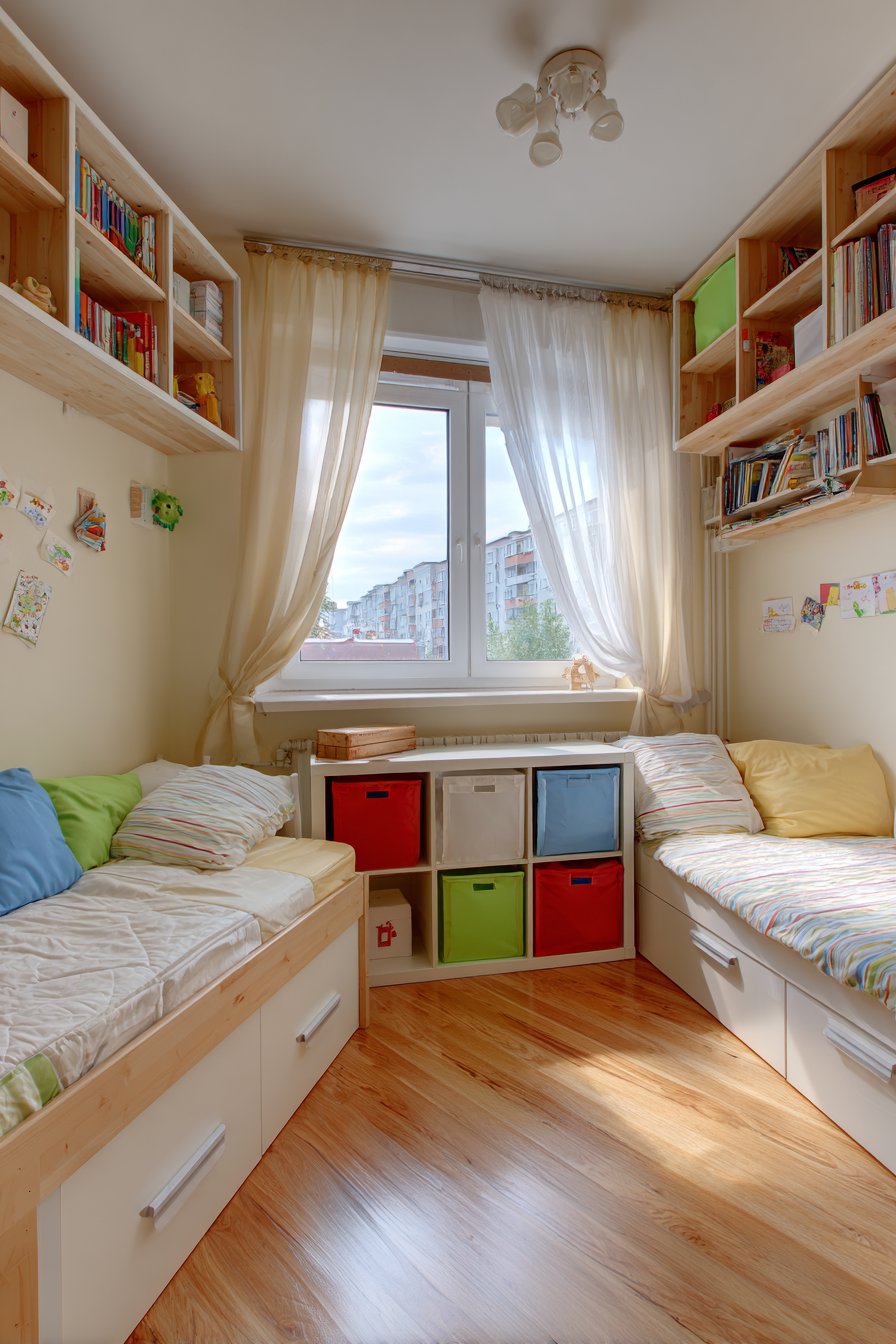
When designing a small kids bedroom for siblings or twins, the L-shape twin bed arrangement offers an ingenious solution that maximizes floor space while providing individual sleeping areas. This practical layout positions two twin beds perpendicular to each other along adjacent walls, creating a corner configuration that leaves the center of the room open for play and activities.
The strategic placement of beds against two walls rather than parallel to each other frees up valuable square footage, transforming what could feel cramped into a surprisingly spacious and functional environment.
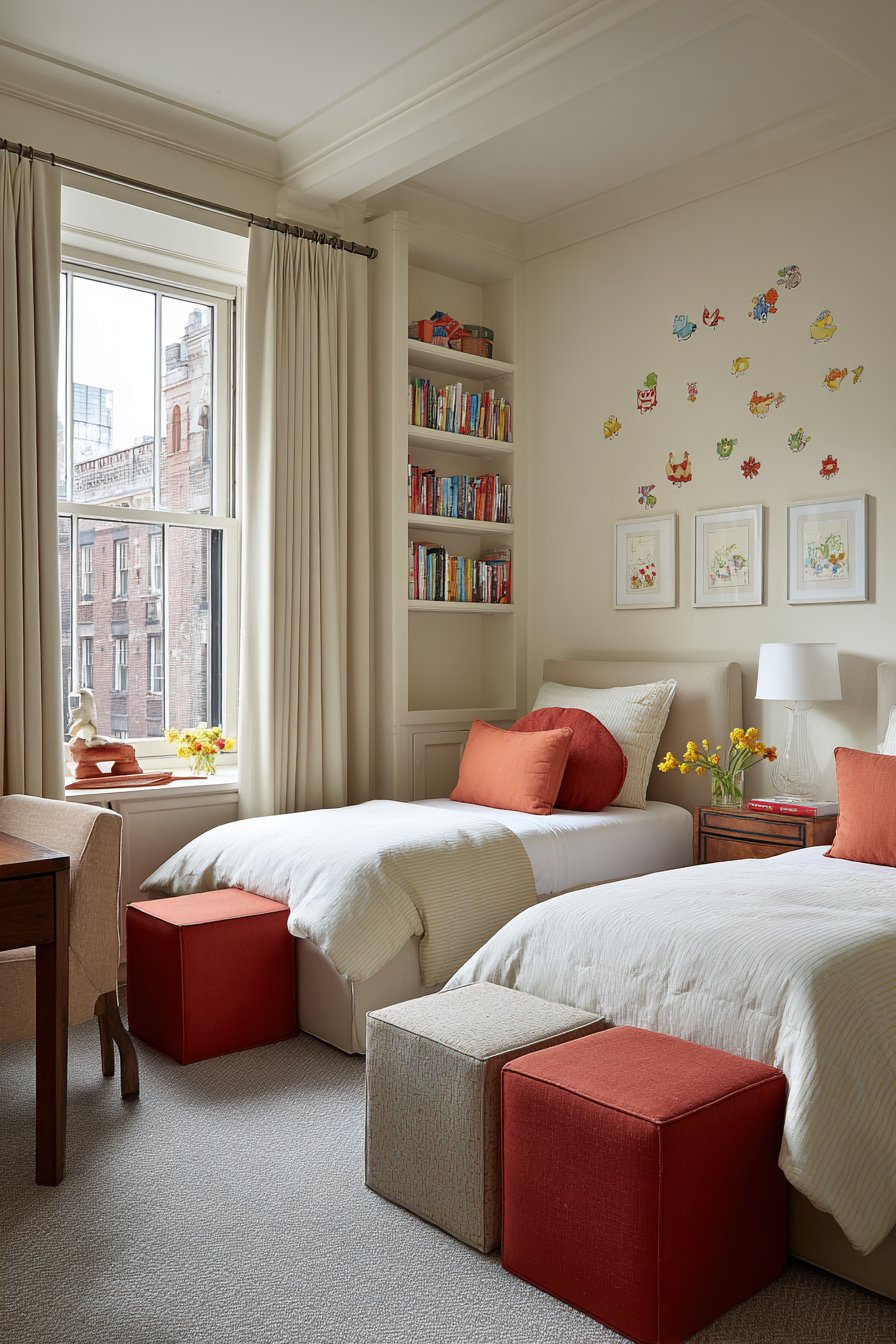
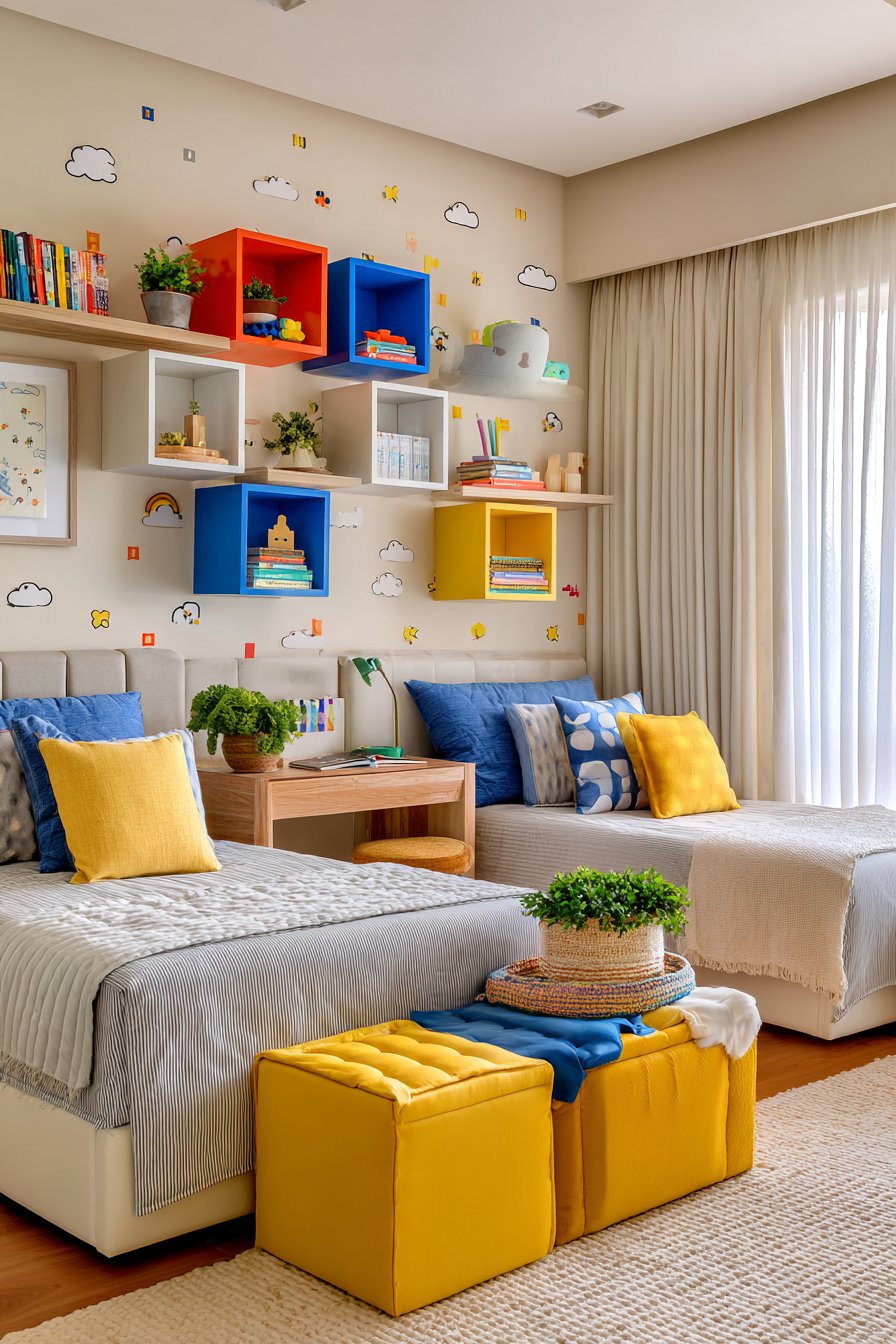
The wall-mounted floating shelves in this design serve as both decorative elements and practical storage solutions for books, small toys, and personal treasures. By keeping storage off the floor, the room maintains a sense of openness while providing ample organizational space.
Fabric storage cubes in primary colors—vibrant reds, blues, and yellows—add cheerful pops of color while keeping smaller items contained and easily accessible. These soft-sided containers are perfect for children’s rooms as they’re lightweight, safe, and can be easily pulled out and returned to their designated spots.
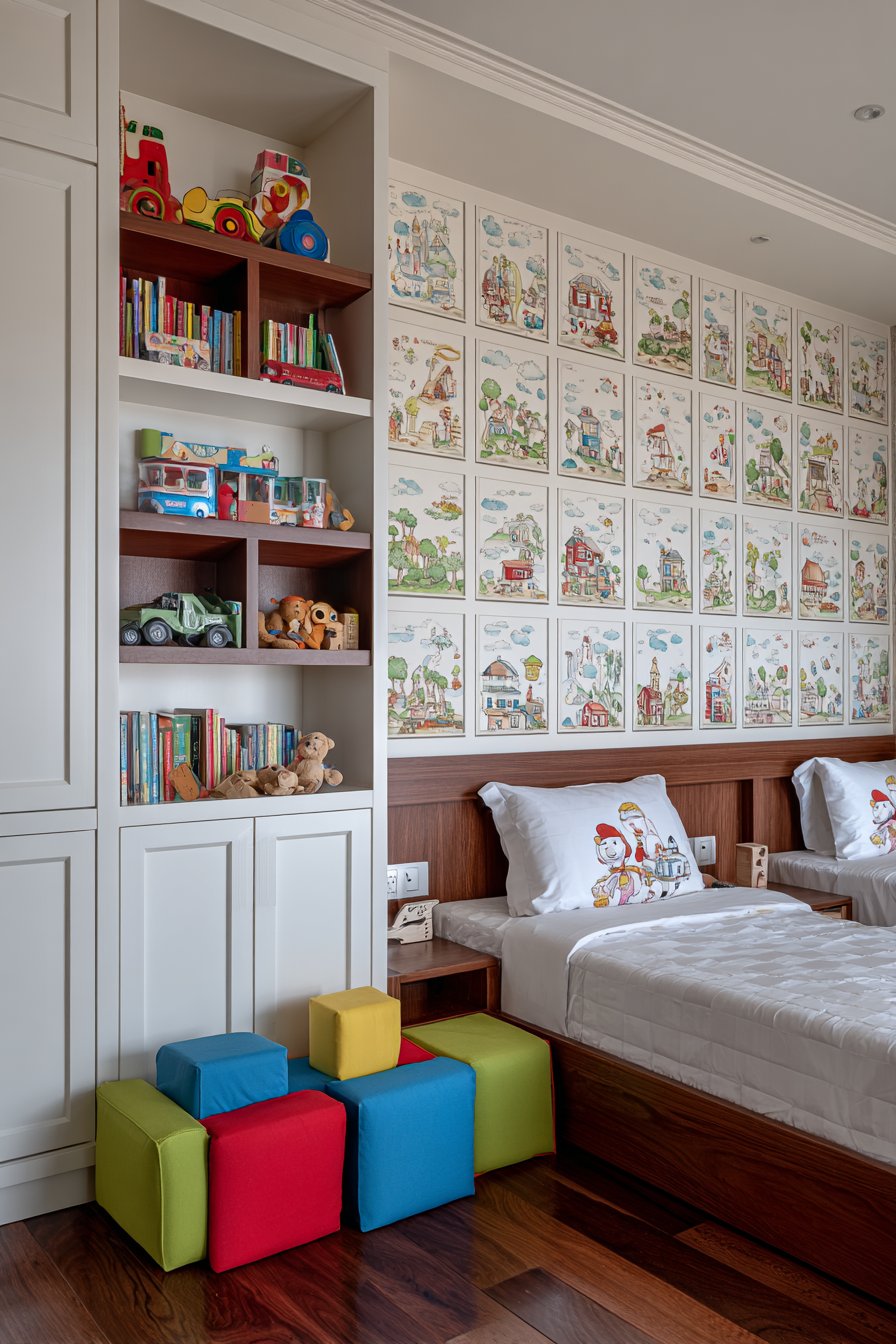
A small wooden desk tucked strategically between the two beds creates a shared workspace that doesn’t intrude on the play area or sleeping zones. This clever positioning makes efficient use of what would otherwise be dead space while providing a dedicated area for homework, crafts, or quiet activities.
The soft cream walls serve as a neutral foundation that prevents the room from feeling visually cluttered, while cheerful wall decals—perhaps featuring clouds, stars, trees, or favorite characters—inject personality and whimsy without the permanence or expense of wallpaper. These removable decorations can be easily changed as children’s interests evolve.
Key Design Tips:
- Ensure both beds receive adequate natural light and have individual reading lamps for bedtime routines
- Use matching bedding in different colors to give each child a sense of personal ownership while maintaining visual cohesion
- Install floating shelves at staggered heights to create visual interest and accommodate items of varying sizes
- Choose a desk with built-in storage or add a small rolling cart underneath to maximize the workspace functionality
- Create designated zones for each child’s belongings to minimize conflicts and encourage respect for shared spaces
3. Transformative Murphy Bed with Integrated Desk
The Murphy bed represents the ultimate space-saving solution for small kids bedrooms, transforming the room’s functionality from day to night with a simple fold-down mechanism. This compact bedroom design showcases a modern Murphy bed that integrates a desk surface, creating a seamless transition between sleep and study modes.
During daytime hours, the bed folds vertically against the wall, revealing a full desk workspace perfect for homework, art projects, or computer activities. When bedtime arrives, the desk clears easily and the bed lowers smoothly, providing a comfortable sleeping surface without permanently consuming precious floor space.
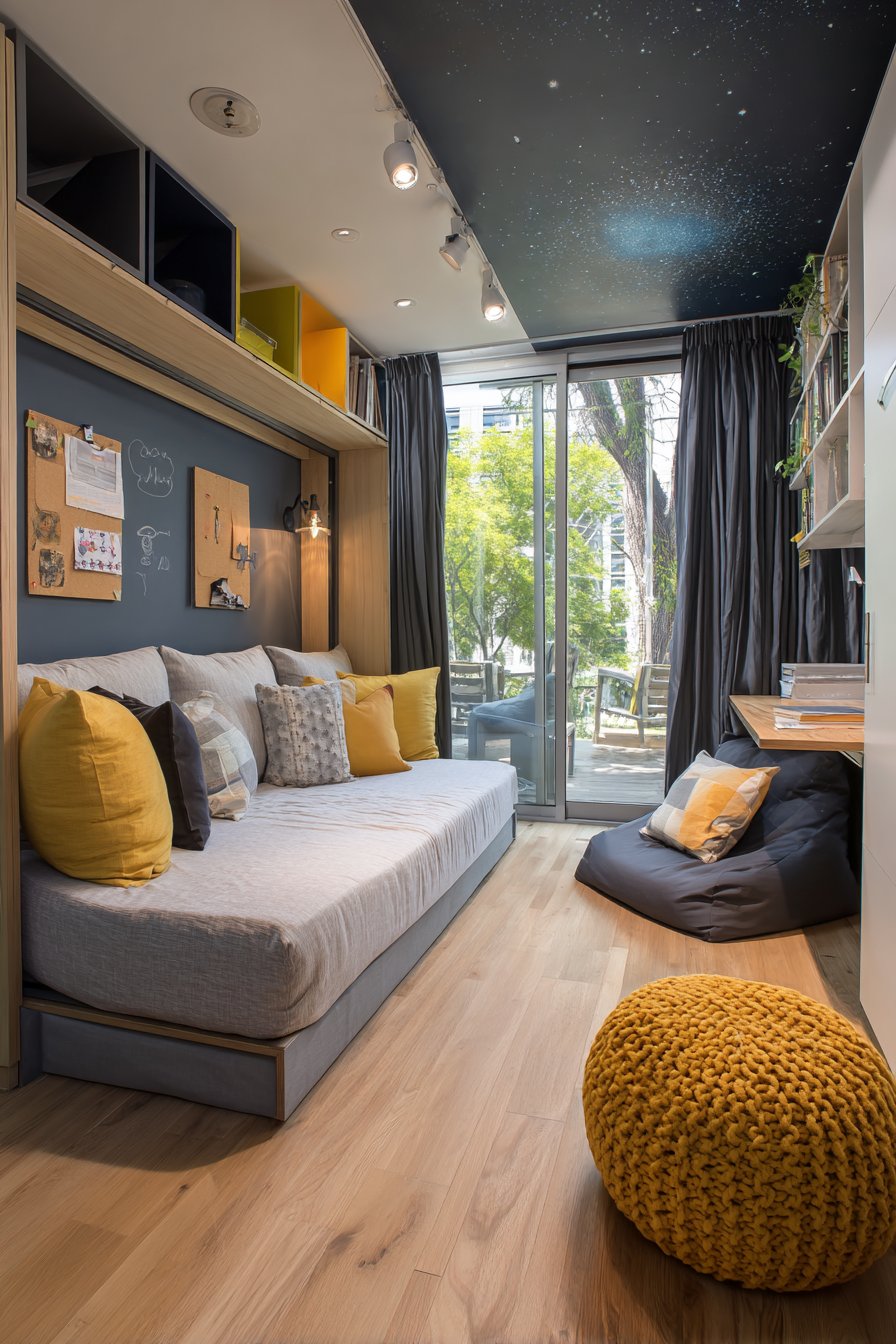
The walls in this innovative design feature magnetic chalkboard paint sections that encourage creativity and self-expression while serving practical purposes for drawing, writing messages, or practicing letters and numbers.
Adjacent pin boards provide dedicated display space for artwork, photos, school achievements, and mementos, creating a personalized gallery that celebrates the child’s accomplishments and interests. This combination of functional and expressive wall treatments maximizes vertical space while adding interactive elements that engage young minds.
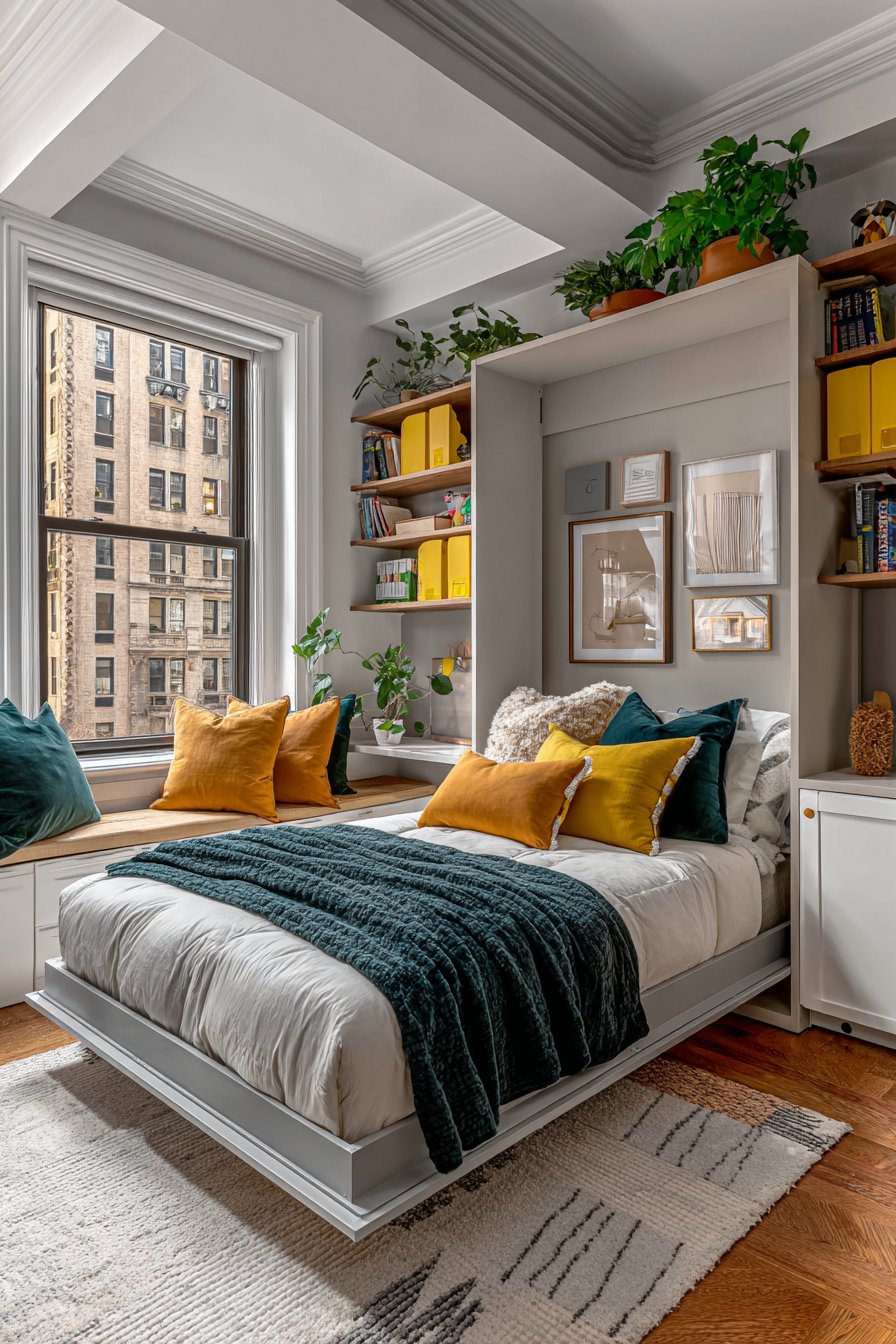
A modular storage system with colorful bins lines one wall, offering flexible organization that can adapt as the child’s needs change over time. These cubes can accommodate everything from toys and games to clothing and school supplies, with each bin assigned to specific categories for easy maintenance.
The small reading corner positioned near the window area features comfortable floor cushions and perhaps a small bookshelf within arm’s reach, creating an inviting nook for quiet time and independent reading. The strategic placement near natural light makes this corner particularly appealing during daytime hours.

Key Design Tips:
- Invest in a hydraulic-lift Murphy bed system with safety locks to ensure smooth operation and prevent accidental closure
- Design the integrated desk with sufficient depth for a laptop or monitor while maintaining structural integrity when the bed is deployed
- Apply chalkboard paint in designated sections with molding or tape borders for a polished, intentional appearance
- Choose modular storage units that can be reconfigured or added to as organizational needs evolve
- Include adequate cushioning in the reading corner with washable covers for easy maintenance
4. Montessori-Inspired Independence and Accessibility
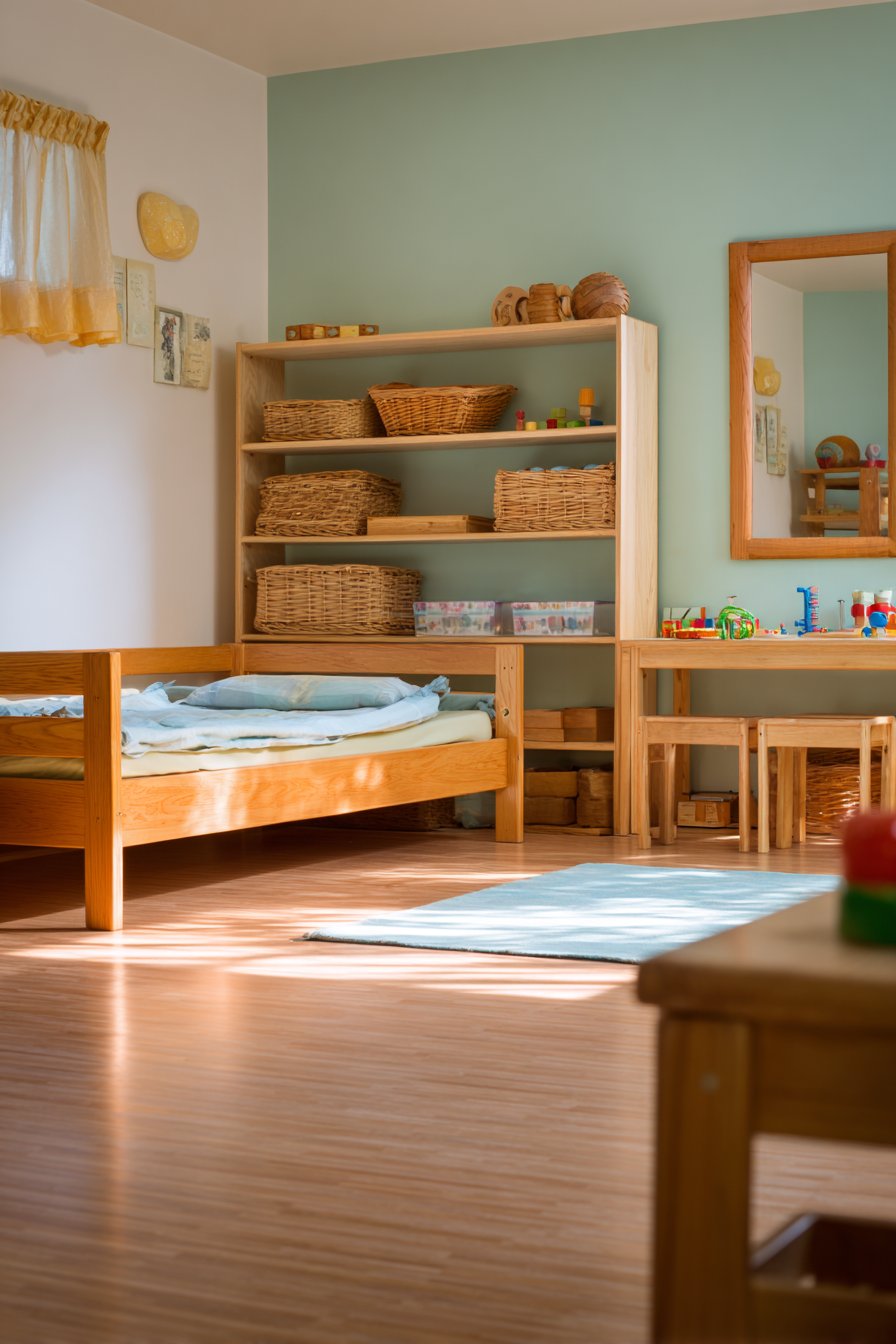
The Montessori approach to bedroom design prioritizes child independence, accessibility, and natural materials, creating an environment that encourages self-directed learning and development. This small kids bedroom exemplifies these principles through a thoughtfully curated selection of furniture and organizational elements positioned at child-appropriate heights.
The low platform bed frame sits close to the floor, allowing even toddlers to climb in and out safely without adult assistance, fostering confidence and autonomy from an early age. This accessible sleeping arrangement eliminates the need for bed rails and reduces the risk of injury from falls.
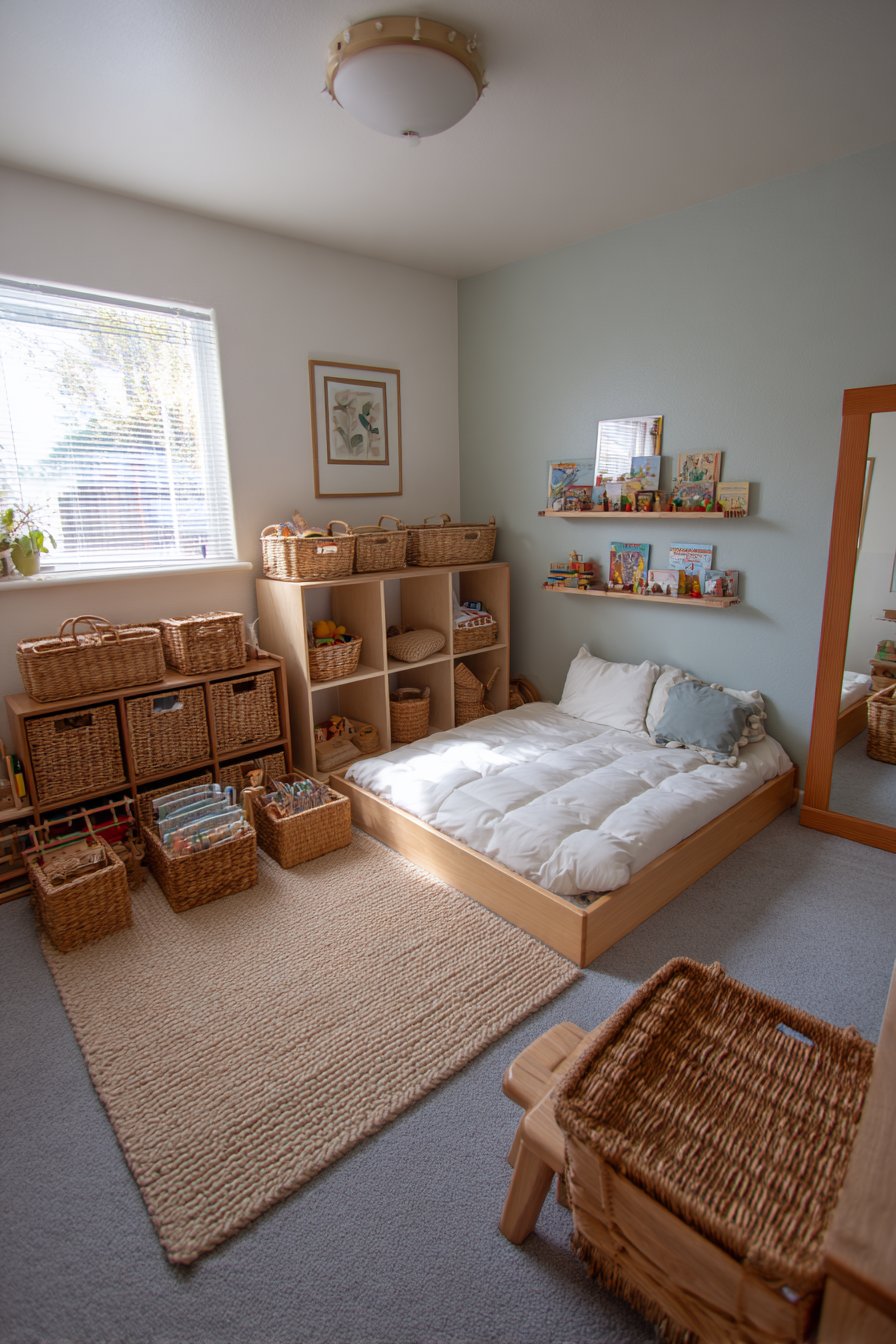
A floor-level mirror serves multiple developmental purposes in this Montessori-inspired space. It encourages self-awareness and helps children with dressing skills, grooming, and understanding their own bodies and movements. The mirror should be securely attached to the wall with appropriate safety backing to ensure it remains safe even in the most active play scenarios.
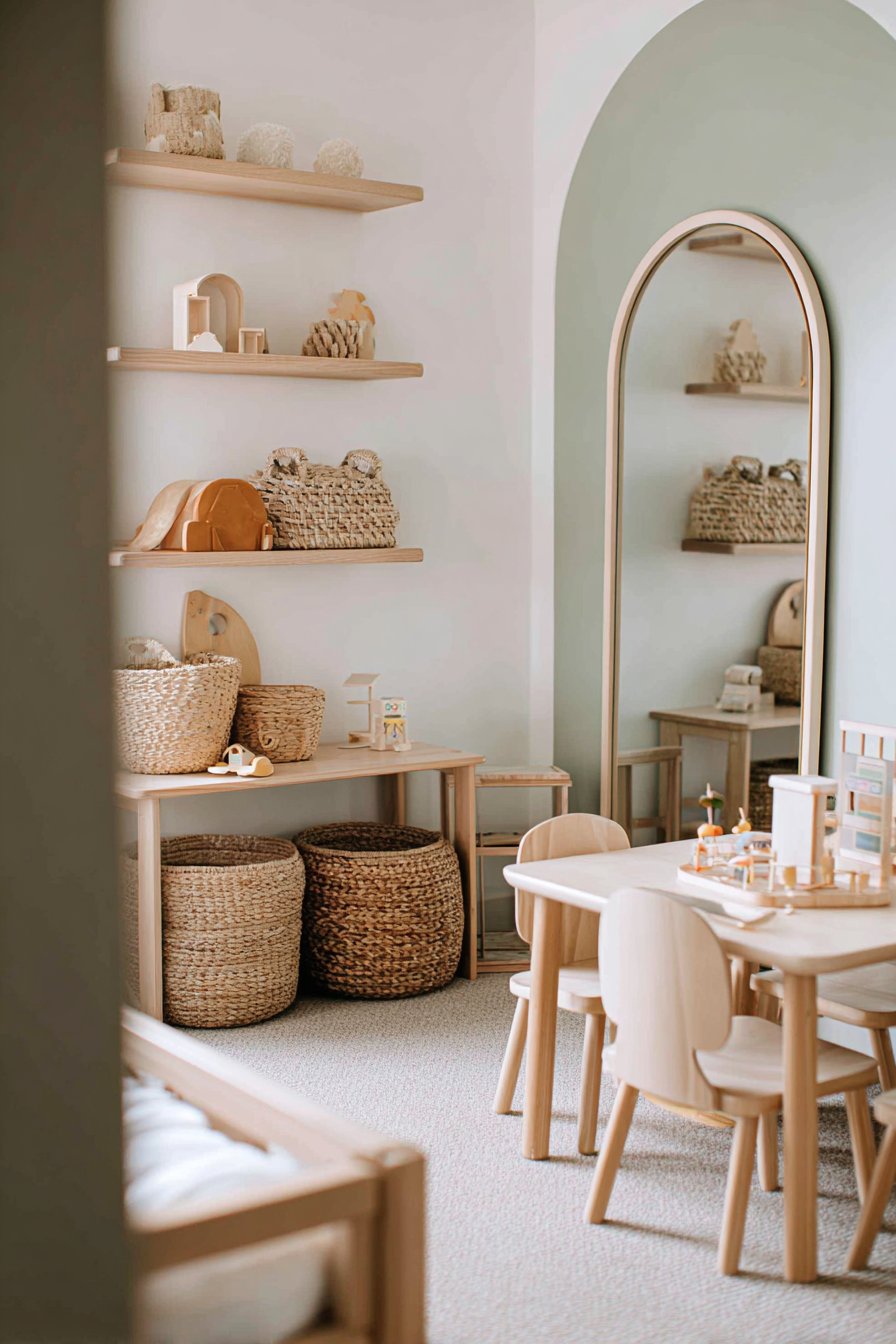
Open toy shelves positioned at child height contain carefully curated selections of age-appropriate toys, books, and materials, with each item clearly visible and accessible. This transparency allows children to make independent choices about their activities and develop decision-making skills.
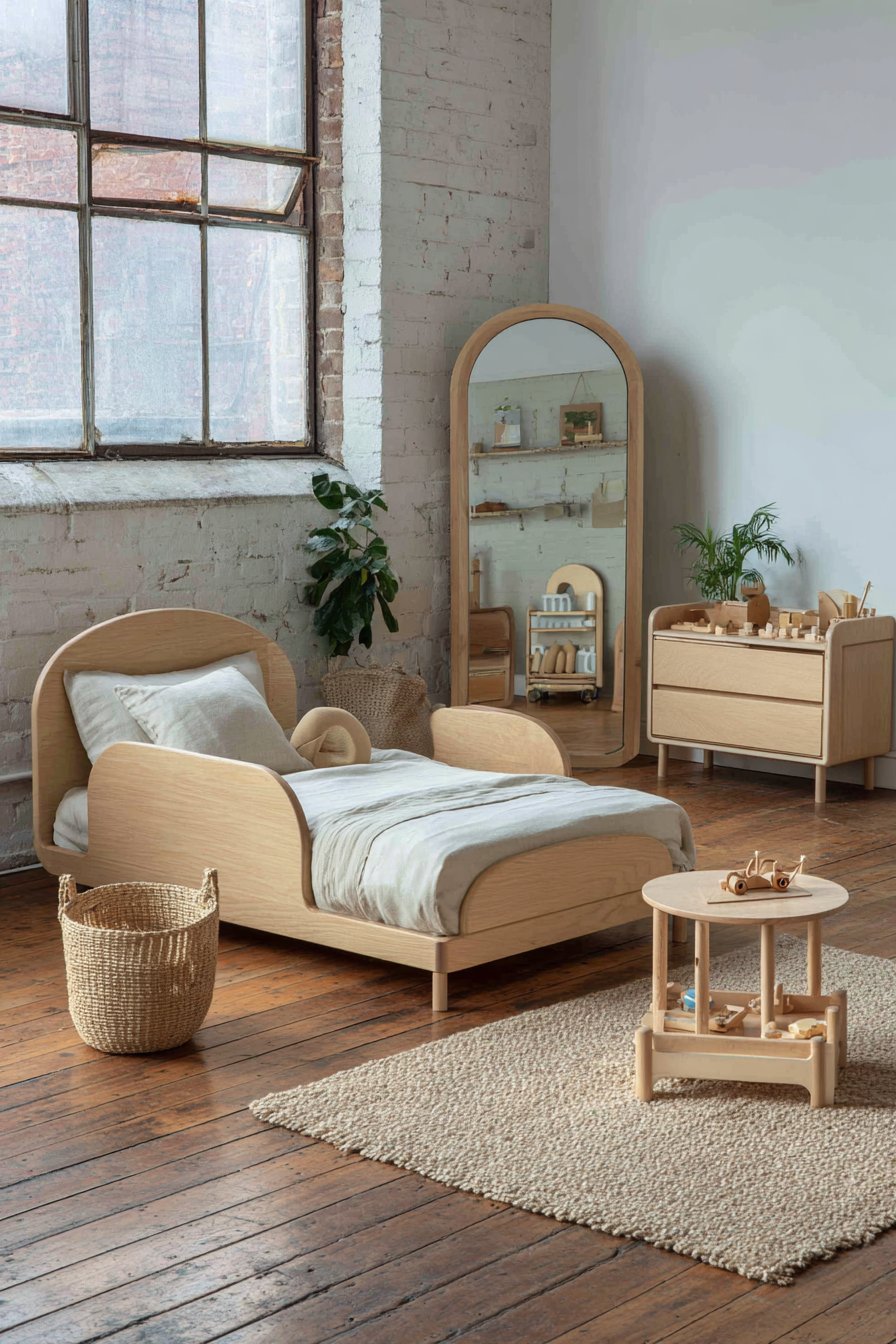
The natural wood furniture in light oak brings warmth and organic texture to the space while aligning with Montessori principles of using natural materials whenever possible. White walls create a calm, neutral backdrop that doesn’t overstimulate young minds, while one accent wall in sage green adds subtle color without overwhelming the senses.
Woven storage baskets throughout the room provide tactile interest and natural organizational solutions that are both beautiful and functional. A small activity table set at the appropriate height gives children a dedicated workspace for puzzles, art projects, building activities, and other hands-on learning experiences.
Key Design Tips:
- Ensure the low bed platform is sturdy enough for years of use and consider a frame that can transition to a standard height later. Our these 8 year girl bedroom ideas has more inspiration along these same lines.
- Install the floor mirror with shatter-resistant acrylic or properly secured safety glass with polished edges
- Rotate toys and materials on the open shelves regularly to maintain interest and prevent overwhelming choices
- Choose natural fiber rugs and textiles that are durable, easy to clean, and free from harmful chemicals
- Create defined activity zones with subtle visual cues like different rugs or floor mats to help children understand spatial organization
5. Trundle Bed Solutions for Flexible Sleeping Arrangements
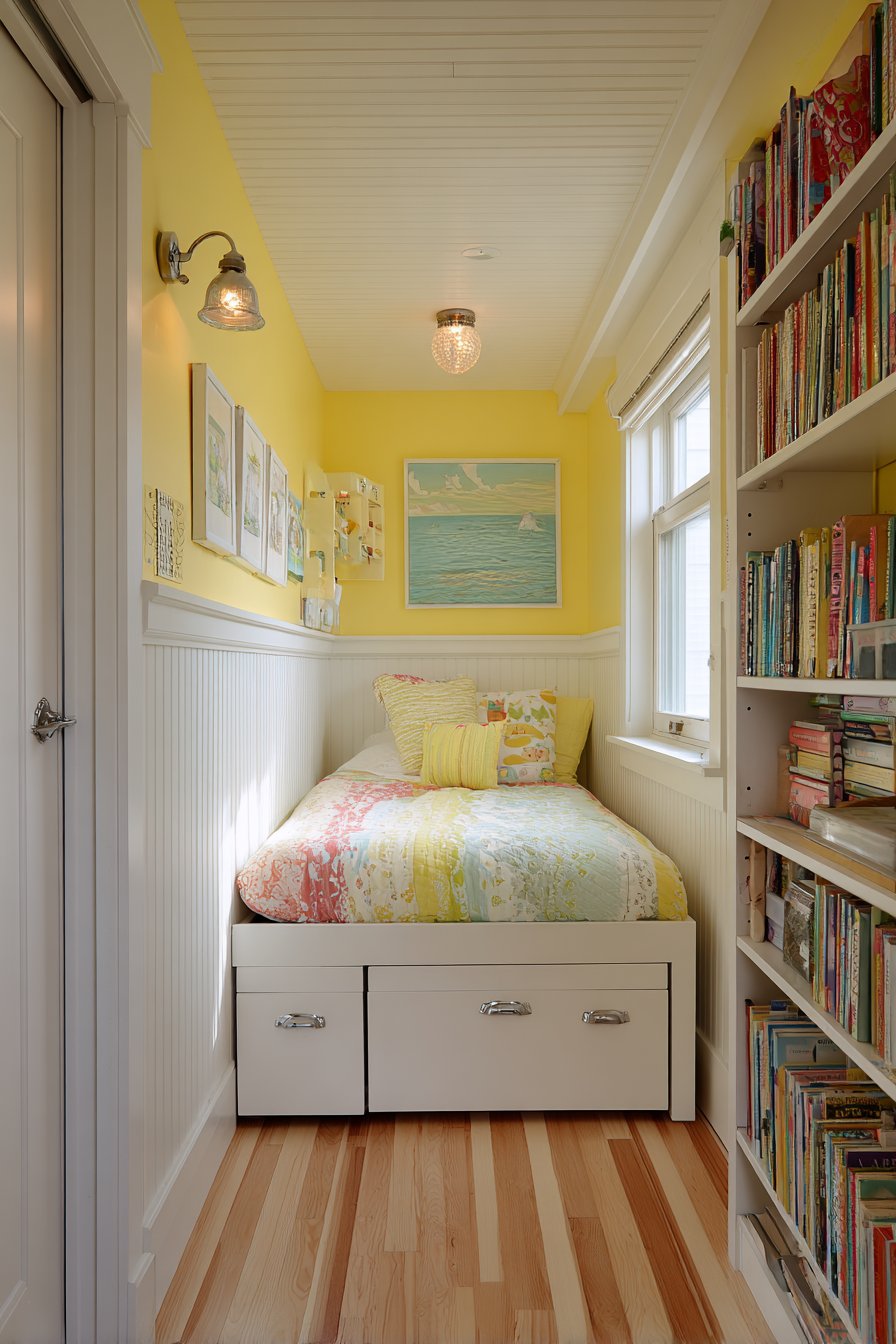
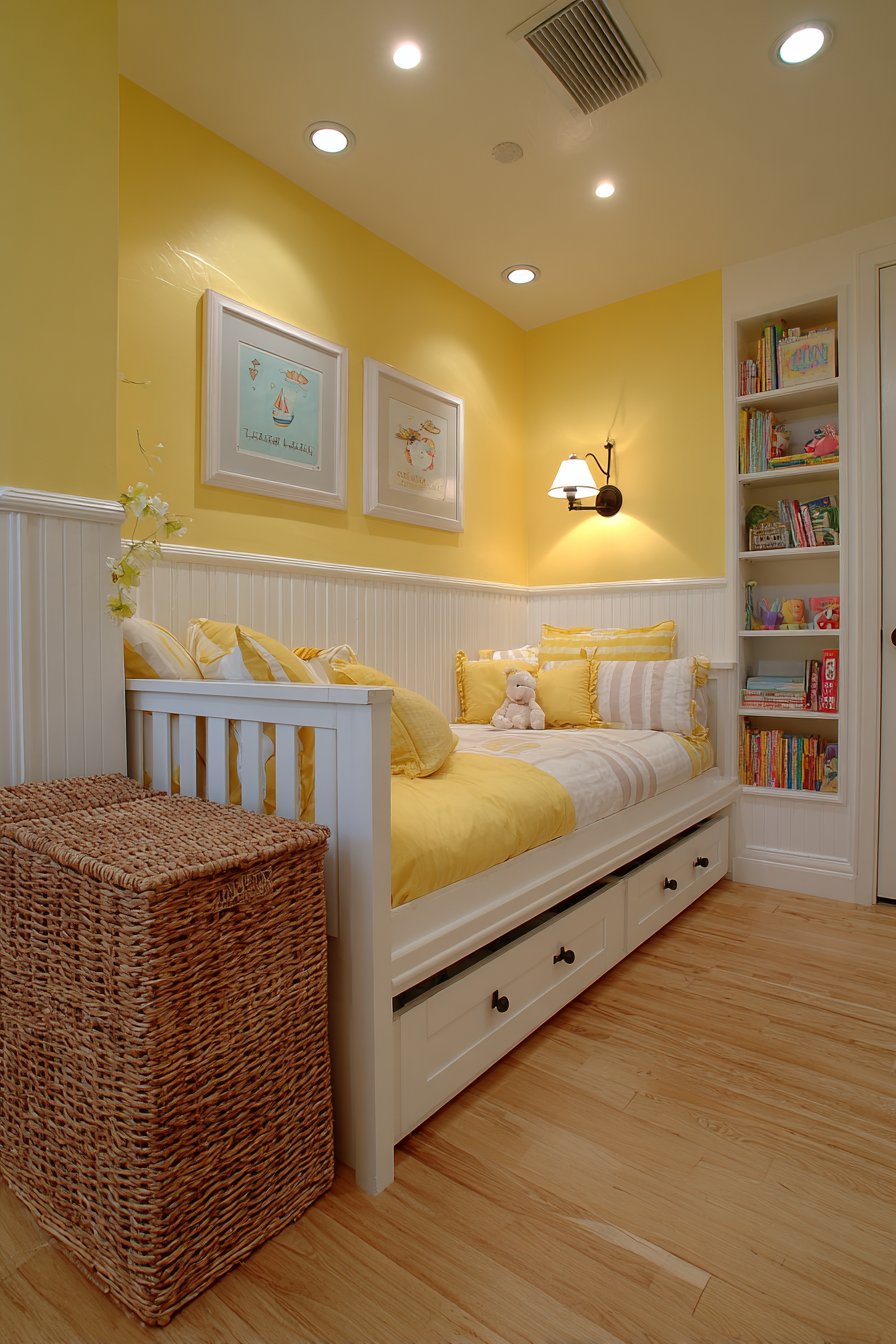
The trundle bed offers an elegant solution for small kids bedrooms that occasionally need to accommodate overnight guests, siblings who want to sleep together, or growing children who’ve outgrown cribs but aren’t ready for full-size beds.
This design features a standard twin bed with a pull-out trundle tucked underneath, invisible during the day but readily available when needed. The beauty of this arrangement lies in its flexibility—the room maintains maximum open floor space for play and activities throughout the day, yet can quickly transform into a dual-sleeping space when bedtime arrives or guests come over.

The narrow vertical bookshelf in this design makes excellent use of limited floor space by extending upward rather than outward. This tall, slender unit can hold an impressive collection of books while occupying a minimal footprint—perfect for young readers who accumulate numerous favorites over time.
A wall-mounted reading lamp positioned above the main bed eliminates the need for a bedside table, saving valuable floor space while providing focused task lighting for bedtime stories and independent reading. The adjustable arm or swivel feature of such lamps allows for precise light direction without disturbing others in the room.
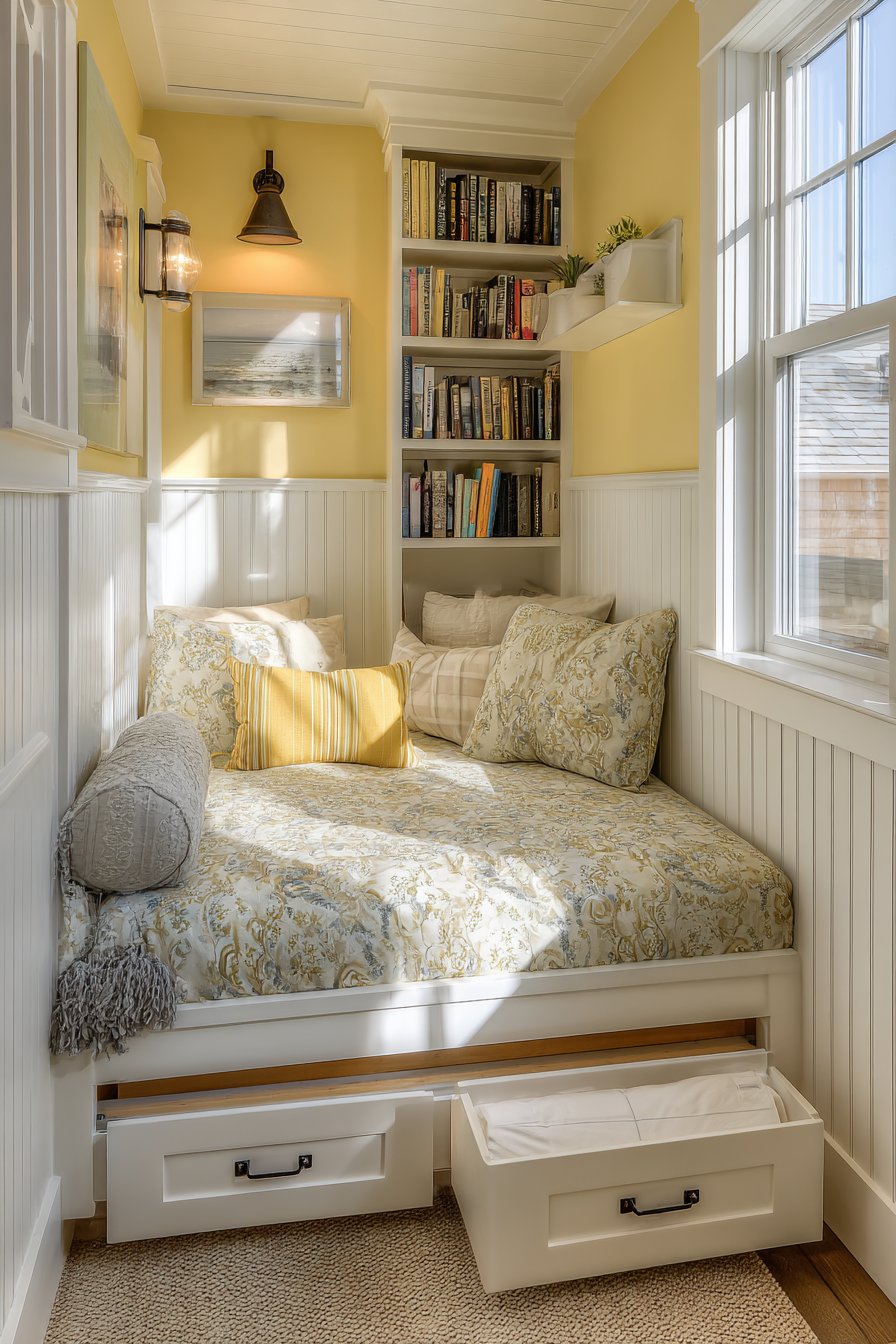
Under-bed rolling storage drawers maximize the utilization of what would otherwise be wasted space beneath the main bed frame. These drawers glide out smoothly on casters or rolling mechanisms, making it easy for children to access stored items independently.
They’re ideal for seasonal clothing, extra bedding, infrequently used toys, or sports equipment. The warm yellow walls in this bedroom create a cheerful, sunny atmosphere that energizes the space and promotes positive moods, while white wainscoting adds architectural interest and visual division that makes the room feel more sophisticated and polished.
Key Design Tips:
- Choose a trundle mechanism with smooth-rolling casters that lock in place to prevent unexpected movement
- Ensure adequate clearance when the trundle is extended so both beds can be accessed comfortably with space for bedside necessities
- Opt for mattresses of appropriate thickness for the trundle frame to ensure comfort without interfering with the rolling mechanism
- Install the wall-mounted lamp with a dimmer switch to adjust brightness for different activities from homework to bedtime reading
- Use the under-bed storage strategically for items that don’t require daily access to minimize drawer traffic and wear
6. Corner Configuration for Maximum Efficiency
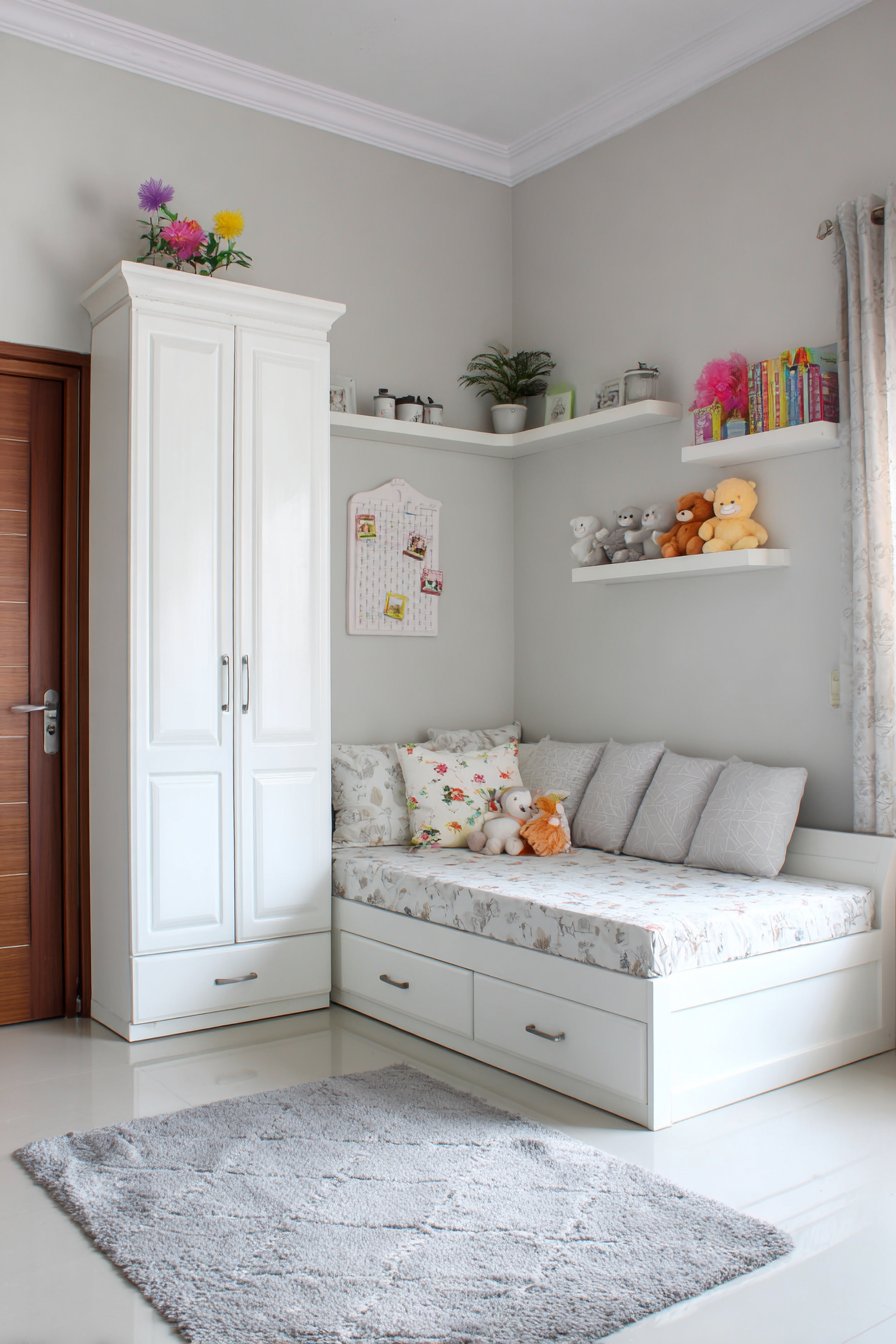
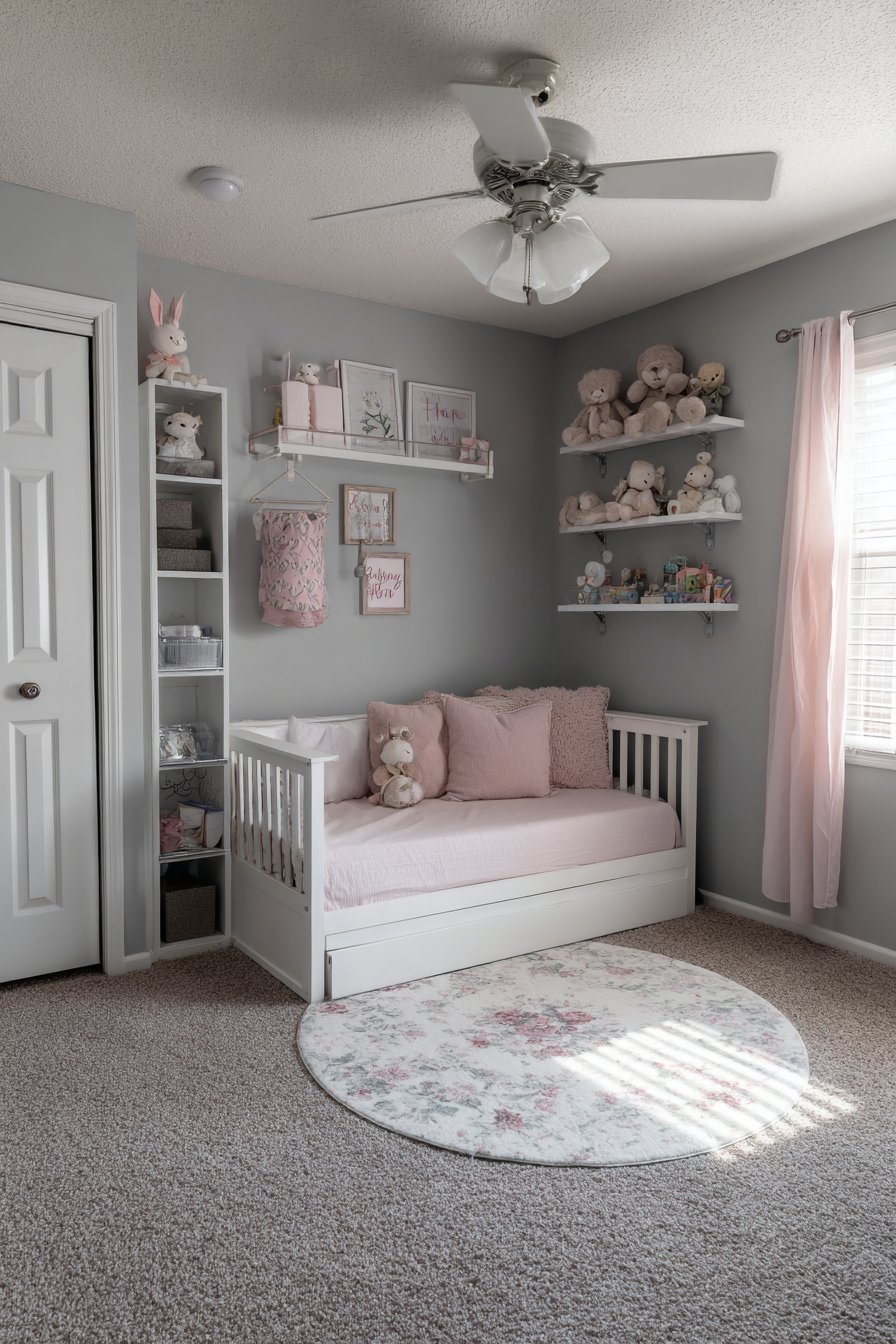
The strategic use of corner spaces represents an often-overlooked opportunity in small bedroom design. This layout positions a single bed along one wall while placing a compact wardrobe with sliding doors in the adjacent corner, creating an efficient L-shape arrangement that maximizes usable floor space in the center of the room.
Sliding doors on the wardrobe are essential in tight quarters, as they eliminate the swing radius required by traditional hinged doors, allowing furniture to be positioned closer together without creating accessibility issues. This thoughtful detail can save 18-24 inches of clearance space—a significant gain in a small room.
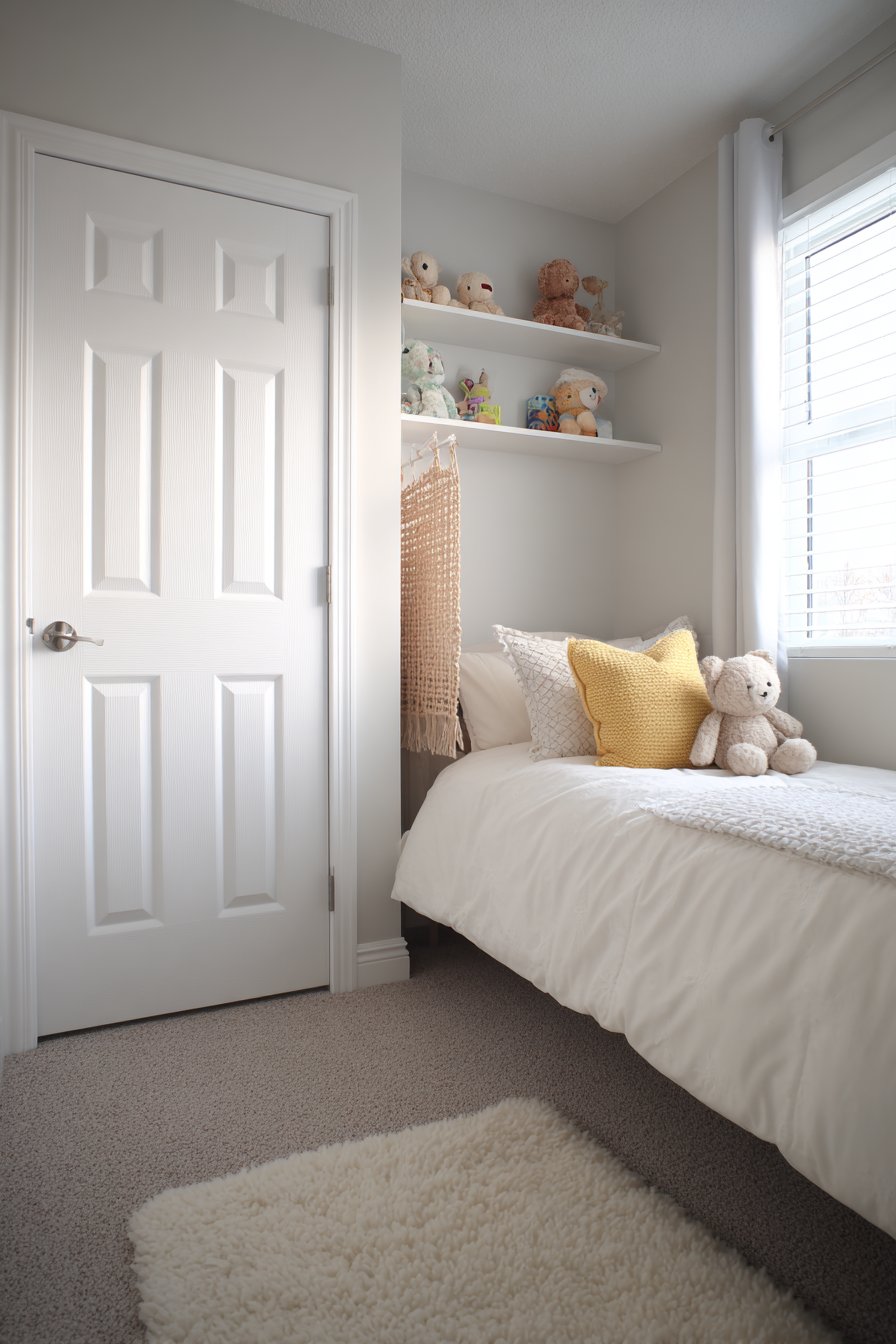
The hanging organizer on the back of the bedroom door transforms what is typically wasted space into valuable storage real estate. These fabric or clear plastic organizers feature multiple pockets perfect for storing shoes, accessories, school supplies, small toys, or grooming items.
The vertical nature of door organizers makes them ideal for small spaces, as they provide substantial storage capacity without consuming any floor or wall space. Floating corner shelves cleverly utilize the often-awkward corner space above the bed or wardrobe, creating display areas for stuffed animals, trophies, books, or decorative items that add personality to the room.
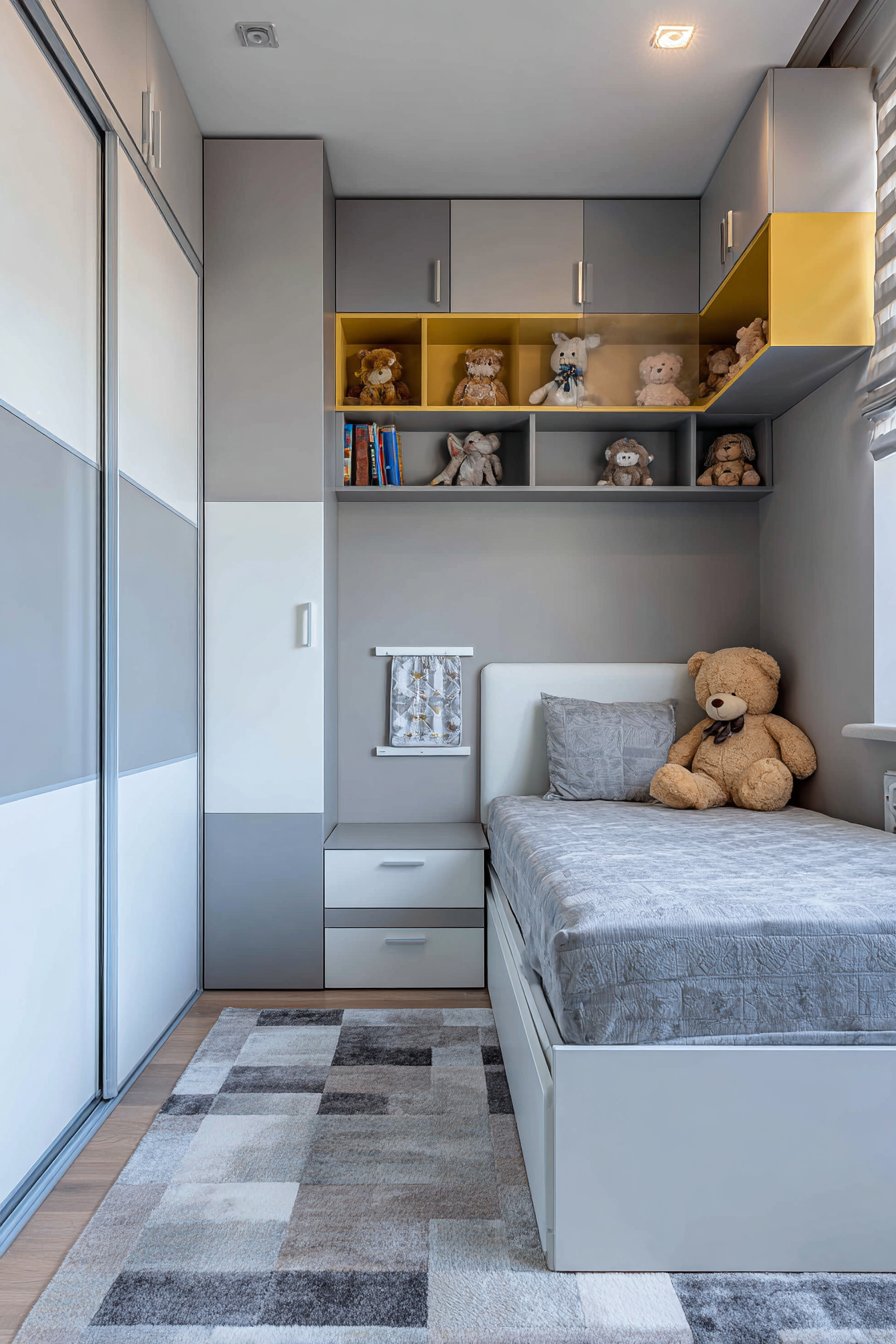
A small area rug defines the play zone in the center of the room, creating a visual and tactile boundary that helps children understand spatial organization. The soft grey walls create a sophisticated, calming backdrop that works equally well for boys, girls, or shared spaces, while white furniture adds brightness and reflects light throughout the room.
This neutral color scheme provides the perfect canvas for colorful accents in bedding, artwork, curtains, and accessories, allowing the room’s personality to be easily updated as the child’s tastes evolve without requiring complete repainting or furniture replacement.
Key Design Tips:
- Position the bed to benefit from natural light while avoiding direct sunlight that might disrupt morning sleep
- Choose a wardrobe with adjustable interior shelving and hanging rods at appropriate heights for children to access independently
- Install floating shelves with proper wall anchors rated for the weight of items to be displayed plus a safety margin
- Select an area rug with non-slip backing or use a rug pad underneath to prevent slipping during active play
- Use matching hangers and storage containers within the wardrobe to maximize space efficiency and maintain visual order
7. Floor-to-Ceiling Built-In Storage Mastery
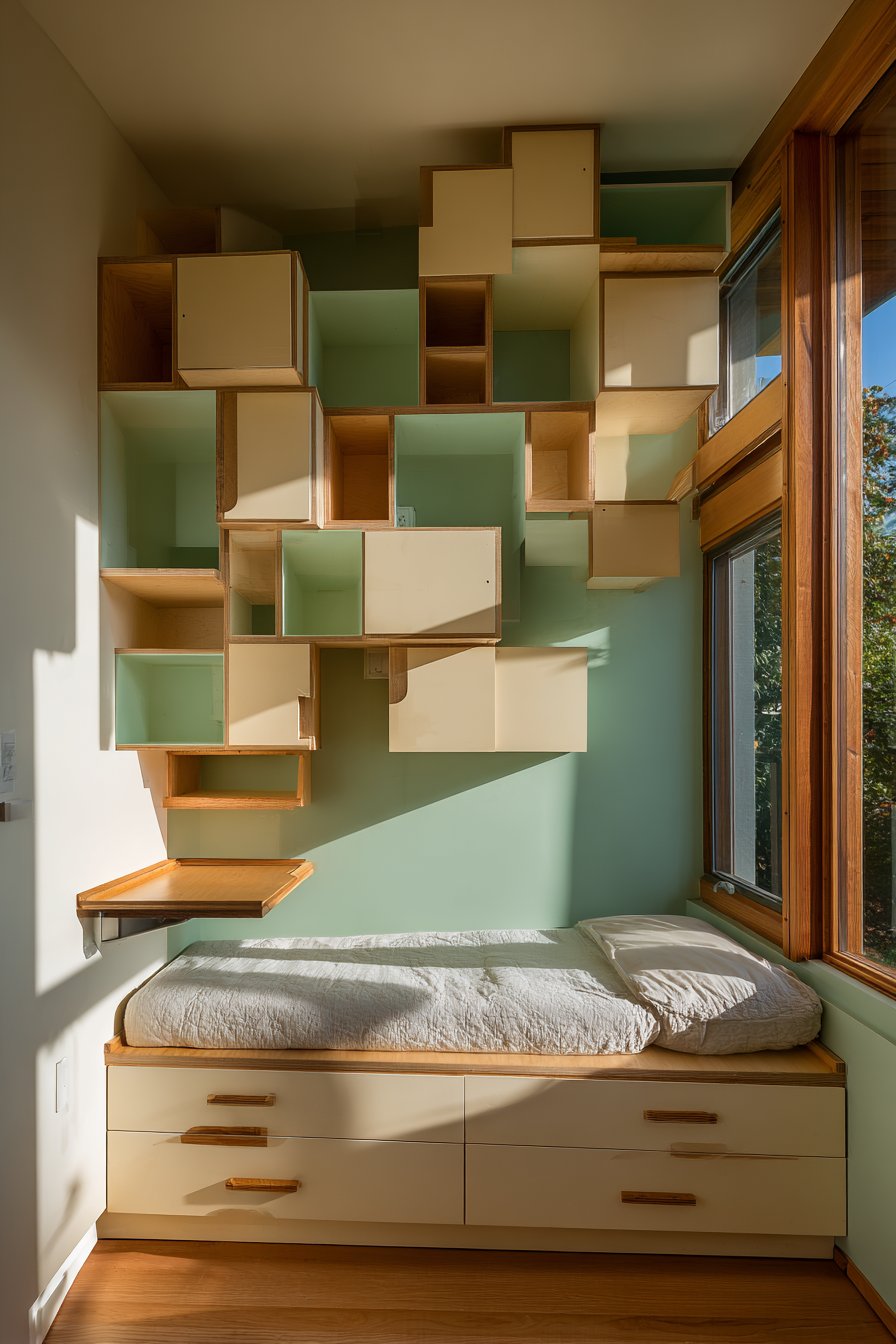
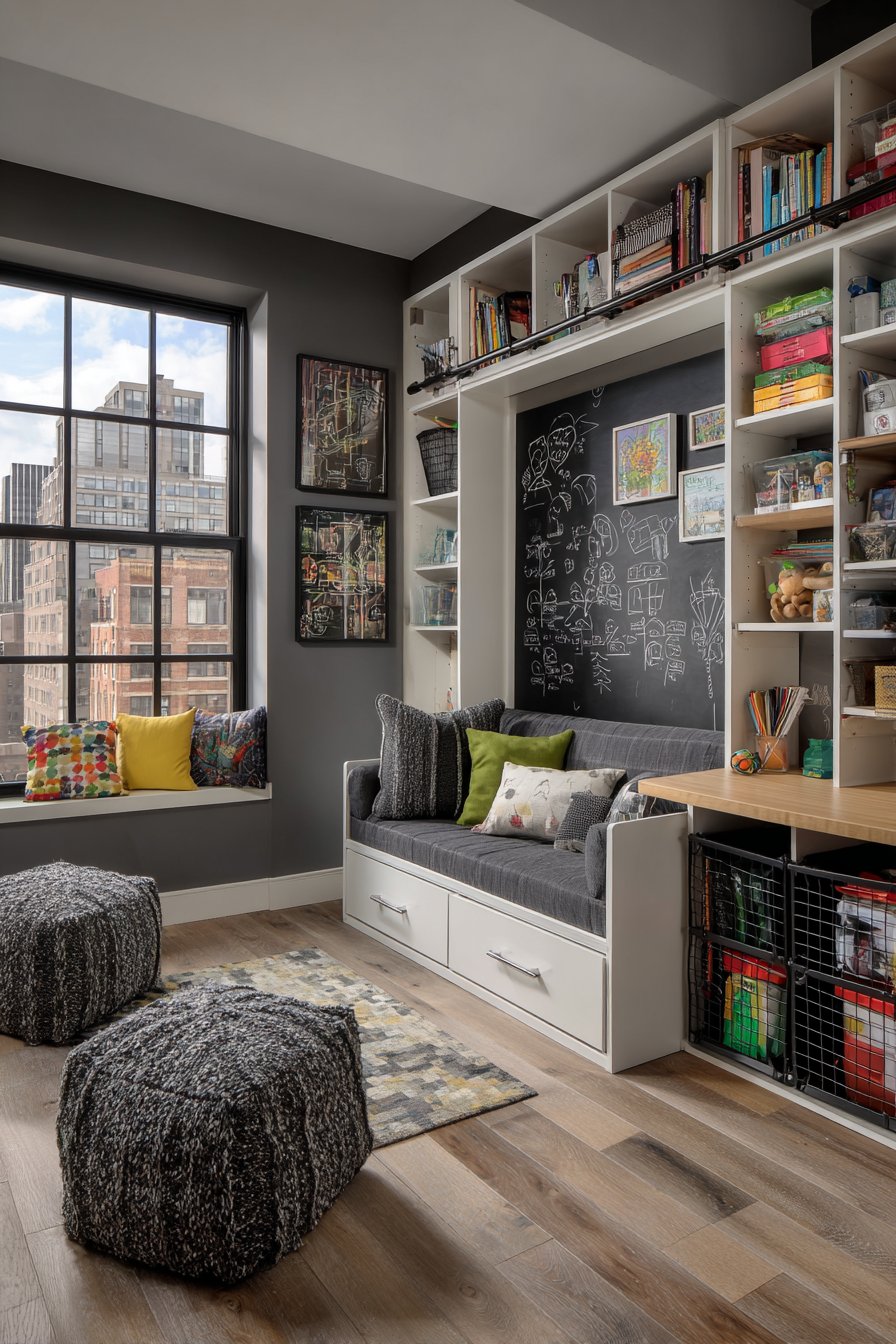
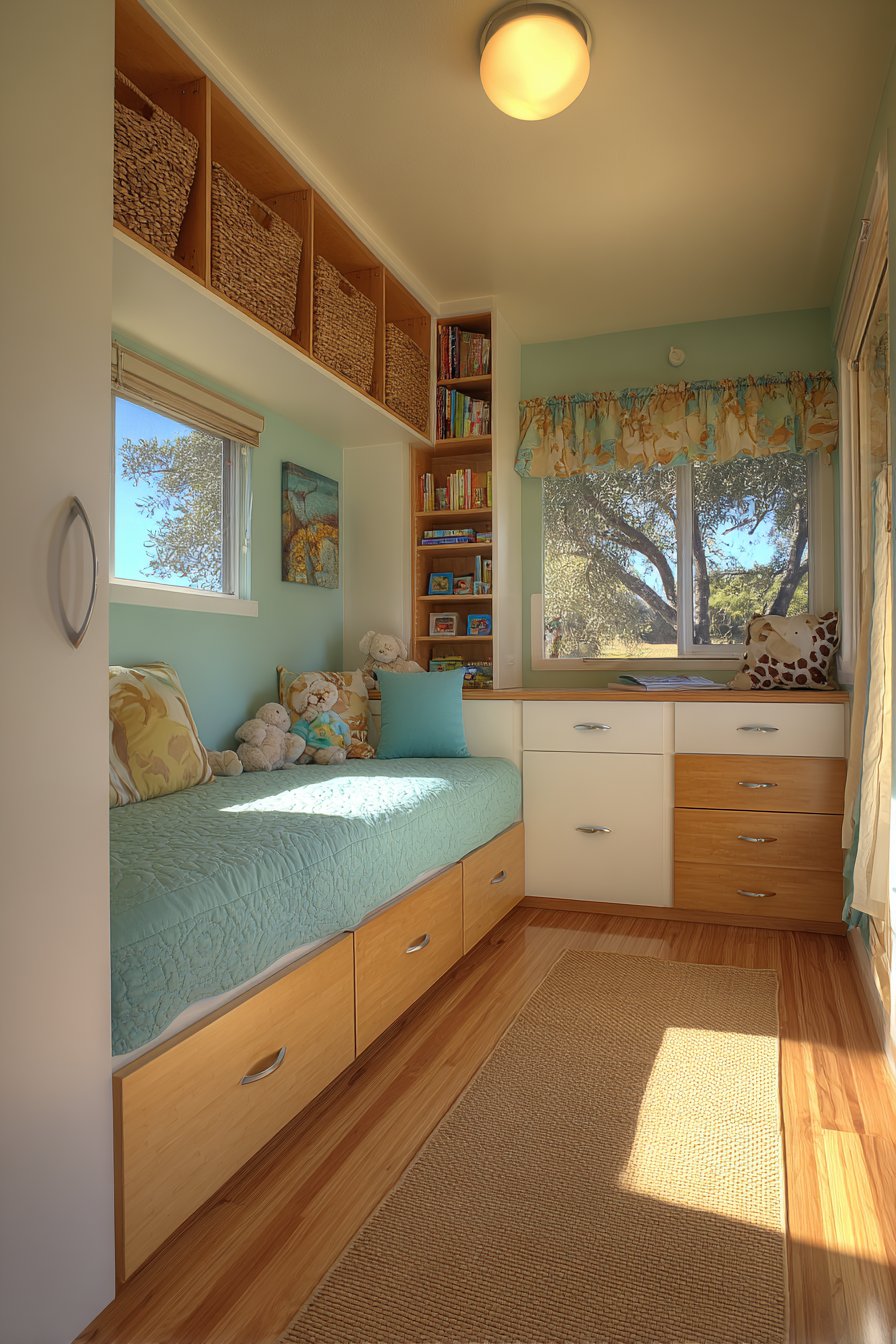
Custom built-in storage represents the ultimate solution for small kids bedrooms, offering tailored organization that maximizes every available inch while creating a polished, cohesive appearance. This design showcases floor-to-ceiling shelving units that span an entire wall, featuring a thoughtful mix of open cubbies for frequently accessed items and closed cabinets for less attractive necessities like out-of-season clothing or bulky items. The combination of open and closed storage creates visual interest while preventing the space from feeling cluttered or overwhelming, striking the perfect balance between accessibility and tidiness.
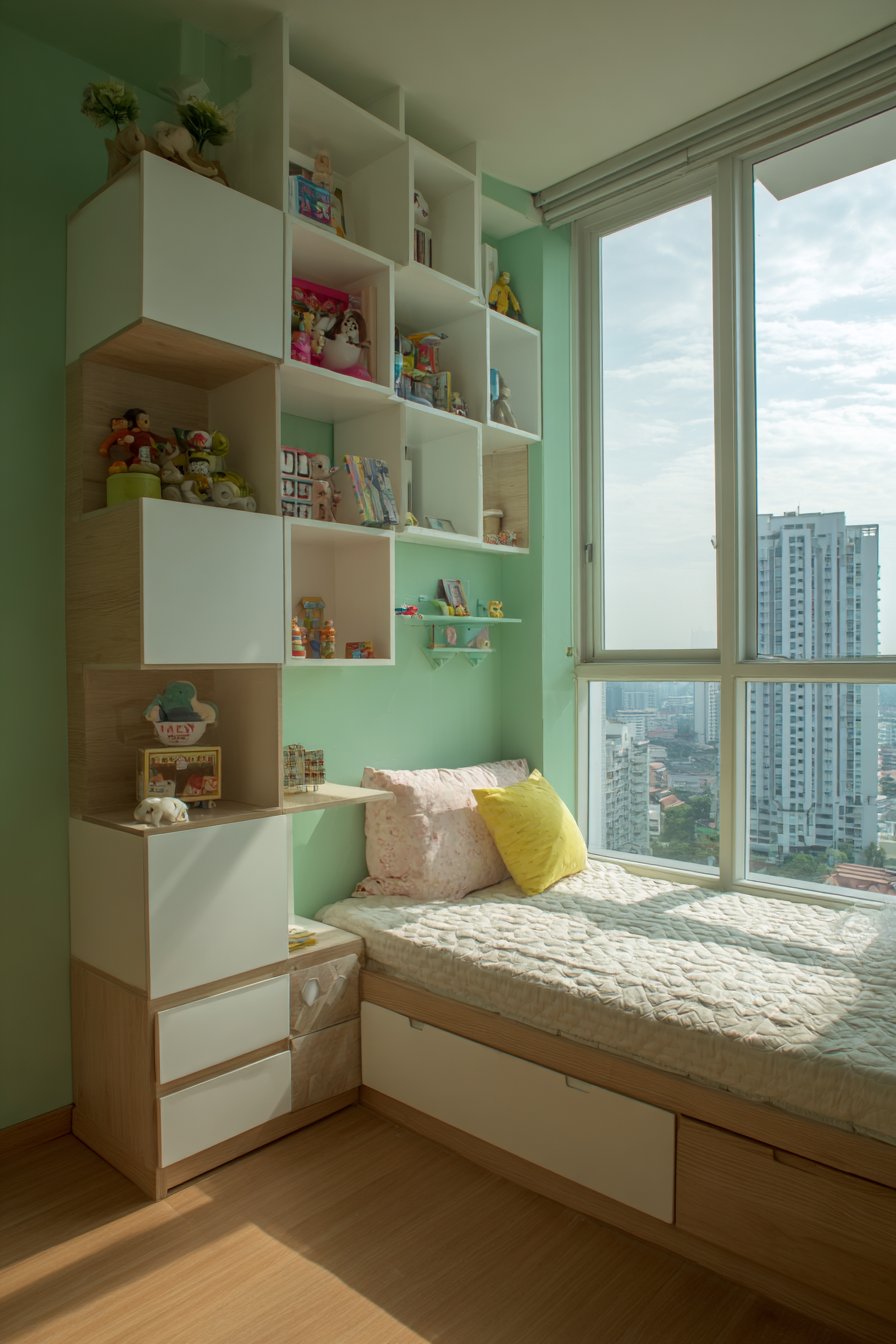
The daybed with built-in drawers underneath serves dual purposes, functioning as both a comfortable seating area during the day and a sleeping surface at night. This versatile piece of furniture eliminates the need for separate bed and sofa, instantly saving space while providing hidden storage for clothing, toys, or bedding.
The drawers typically extend from the front or sides of the daybed, offering easy access without requiring the bed to be moved. The soft mint green walls create a fresh, calming atmosphere that works beautifully with natural wood accents throughout the room, bringing warmth and organic texture to the space.
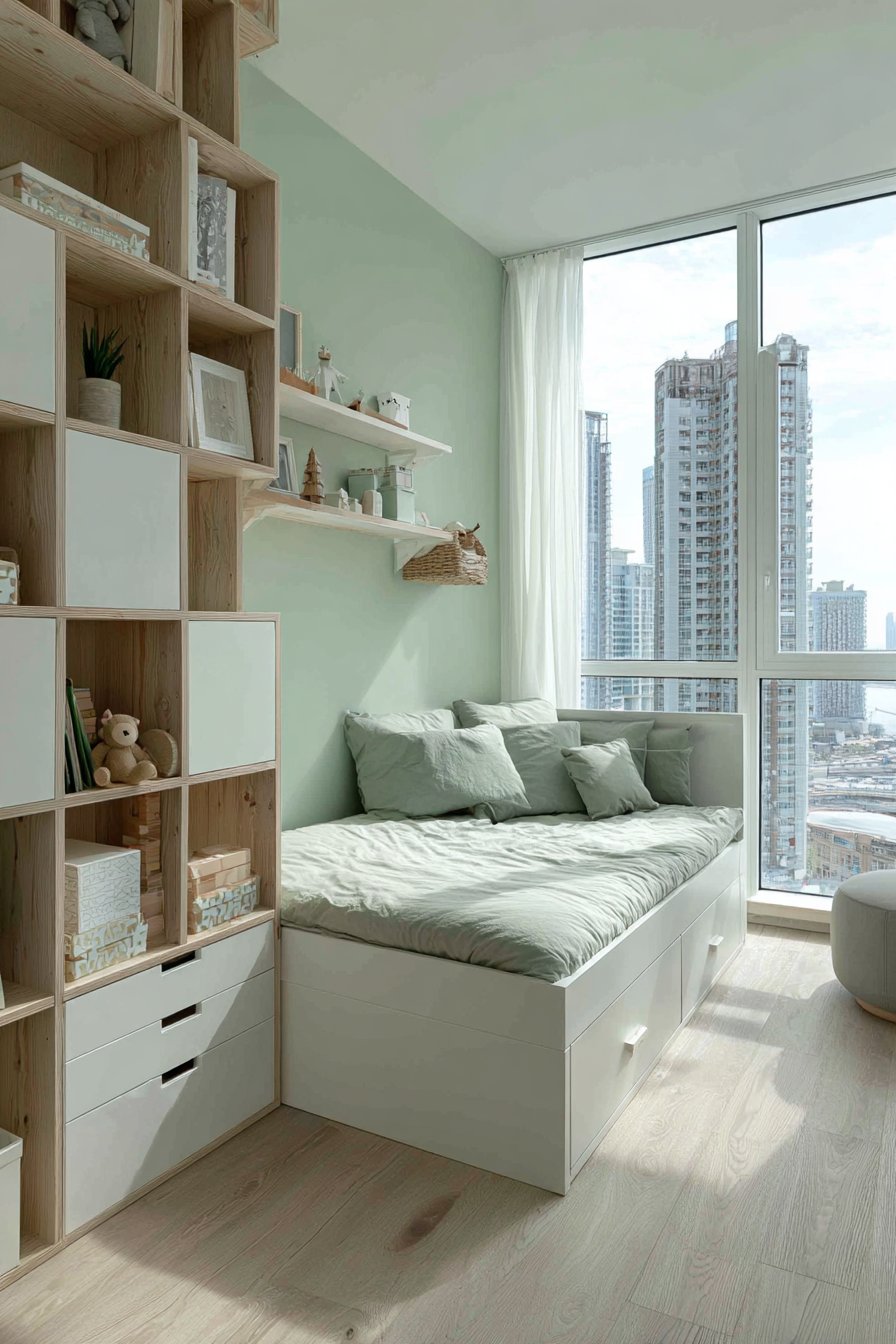
A compact fold-down desk attached to the wall provides dedicated homework space without permanently consuming floor area. When not in use, the desktop folds flat against the wall, completely disappearing and allowing the room to serve other functions.
When needed, it lowers to create a stable work surface supported by hinges or brackets designed to hold the necessary weight of books, laptop, and school supplies. This ingenious solution proves particularly valuable in very small bedrooms where every square foot must serve multiple purposes throughout the day.
Key Design Tips:
- Design built-in storage with adjustable shelves to accommodate changing needs as children grow and their possessions evolve
- Include a mix of cubby sizes within the built-ins to efficiently store everything from small toys to large sports equipment
- Choose daybed mattresses and cushions that are comfortable for both sitting and sleeping to maximize the furniture’s dual functionality
- Install the fold-down desk with sturdy hardware rated for repeated use and ensure adequate leg or bracket support when extended
- Incorporate task lighting above the desk area and within built-in shelving for improved functionality during evening hours
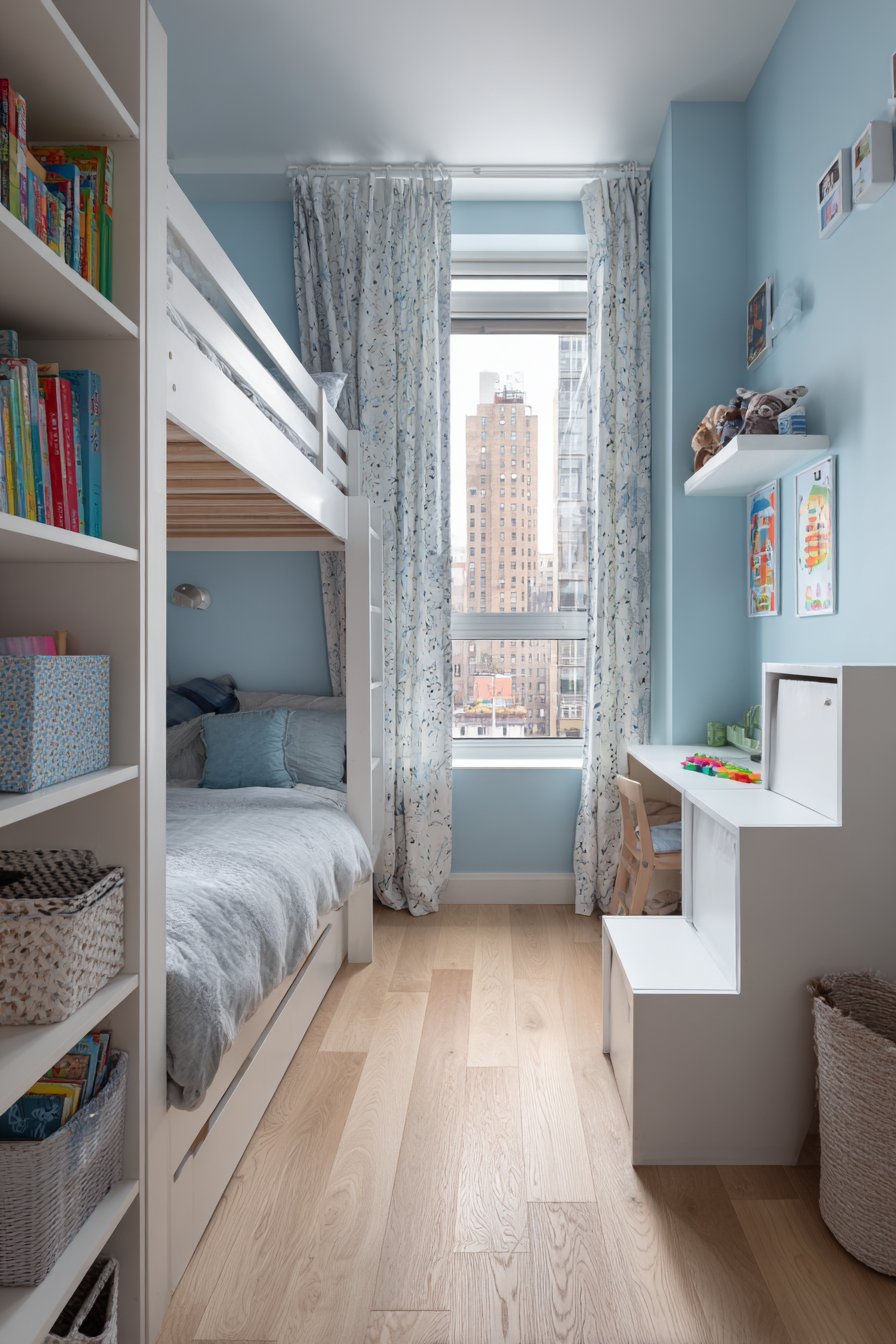
8. Shared Space with Bunk Bed Privacy Solutions
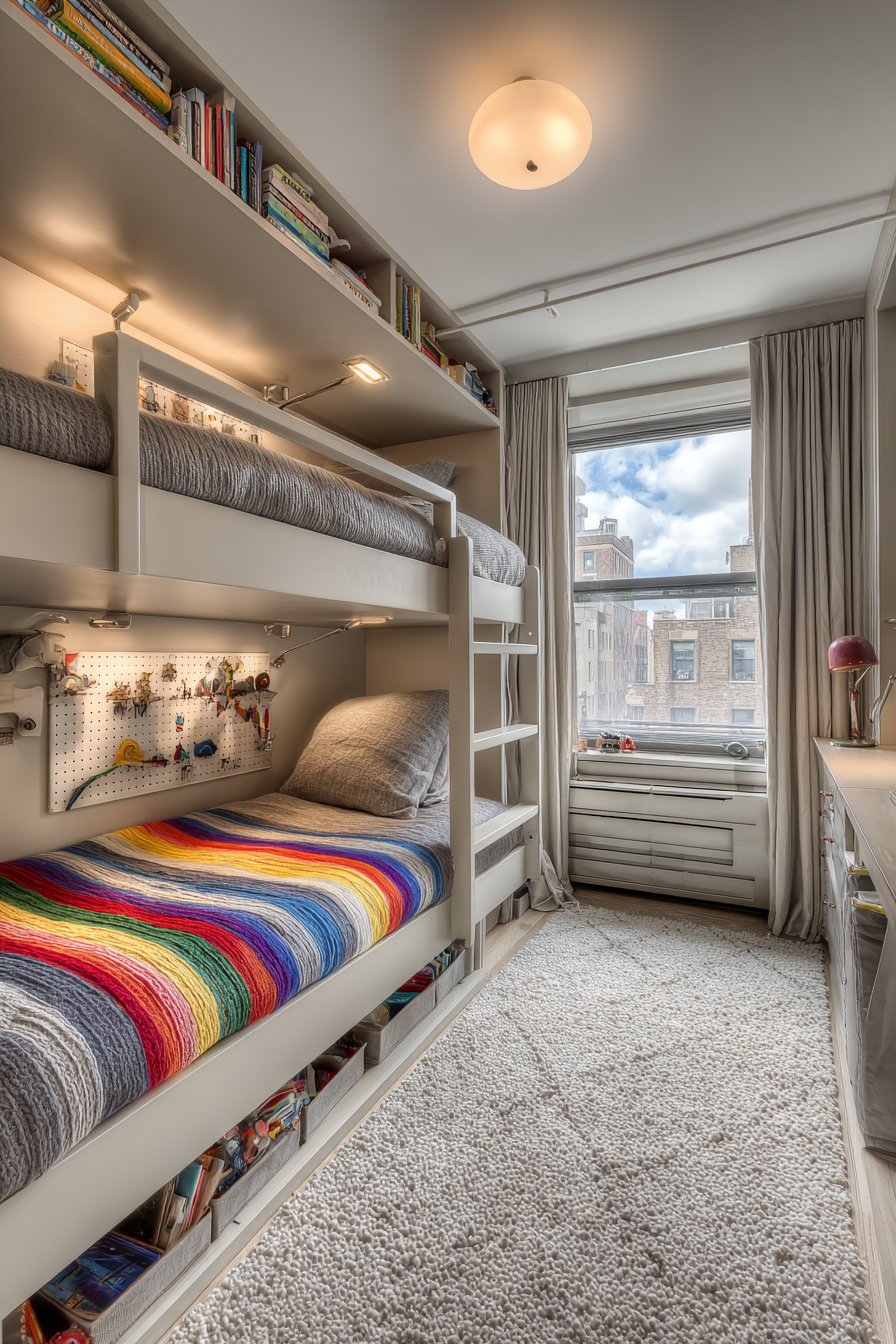
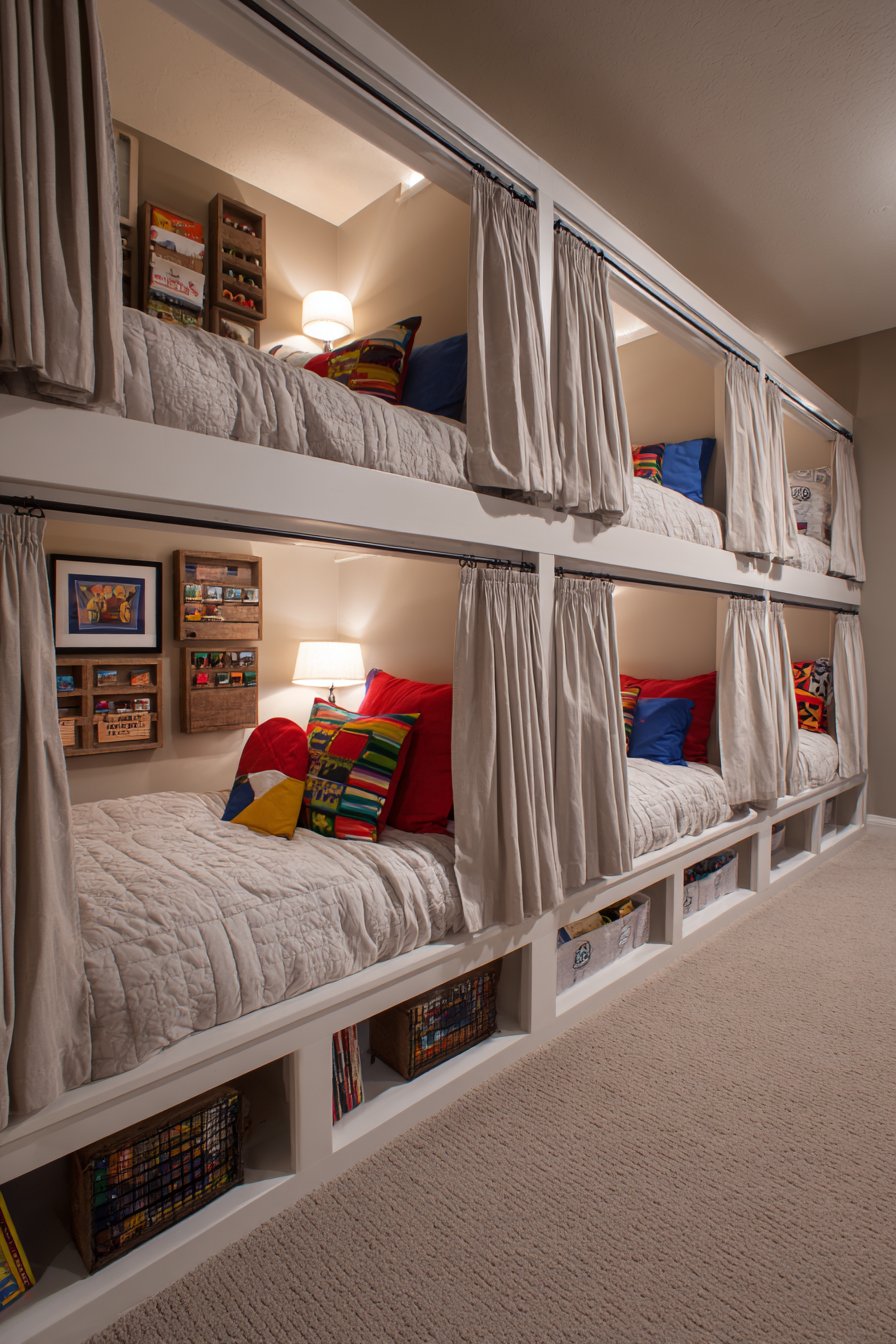
Bunk beds remain the classic solution for small bedrooms shared by siblings, offering two sleeping surfaces within the footprint of one bed. This thoughtful design elevates the bunk bed concept by incorporating individual reading lights and privacy curtains for each sleeper, acknowledging that even in shared spaces, children need personal territory and the ability to control their immediate environment.
The reading lights allow each child to read or play quietly without disturbing their sibling, while the curtains provide visual privacy, sound dampening, and the ability to create a cozy, den-like atmosphere that many children find comforting at bedtime.
Wall-mounted pegboards represent an incredibly versatile organizational tool that can adapt to changing needs over time. These perforated boards accept hooks, baskets, shelves, and other accessories that can be repositioned without tools or new holes, making them perfect for growing children whose storage requirements constantly evolve.
In this bedroom, the pegboards organize school supplies, small toys, art supplies, and accessories, keeping everything visible and accessible while maintaining floor space for other activities. Labeled bins that slide under the bottom bunk provide additional concealed storage for larger toys, dress-up clothes, or seasonal items.
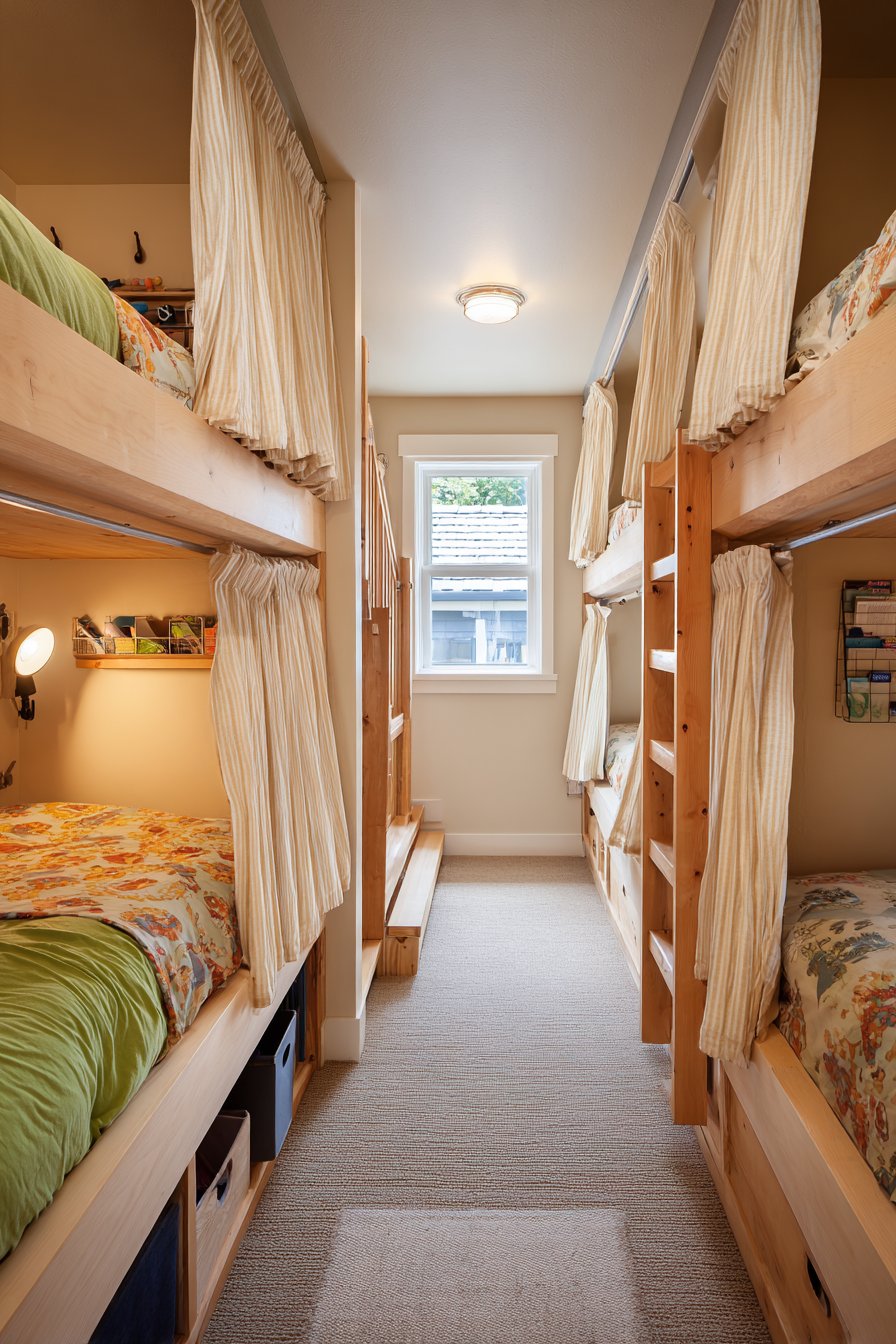
The neutral beige walls create a peaceful foundation that doesn’t favor one child over another—an important consideration in shared rooms where sibling dynamics can be sensitive. Against this calm backdrop, colorful bedding allows each child to express individual personality and preferences without conflicting with the room’s overall design.
This approach also makes it simple to update the room’s appearance by changing bedding as tastes mature, avoiding the expense and effort of repainting. The visual interest comes from textiles, artwork, and accessories rather than permanent architectural elements, providing flexibility and adaptability.

Key Design Tips:
- Ensure bunk bed construction meets current safety standards with secure guardrails and ladder placement on the preferred side
- Choose privacy curtains in lightweight, breathable fabrics that won’t trap heat or create safety hazards and can be easily removed for washing
- Install individual clip-on or mounted reading lights with switches within reach of each sleeper while ensuring cords are safely secured
- Create personal zones within shared space by designating specific storage areas, wall sections, or colors for each child
- Use a sturdy step stool or ladder with non-slip treads for safe access to the upper bunk and to reach high storage areas
9. Nautical Theme with Cabin-Style Functionality
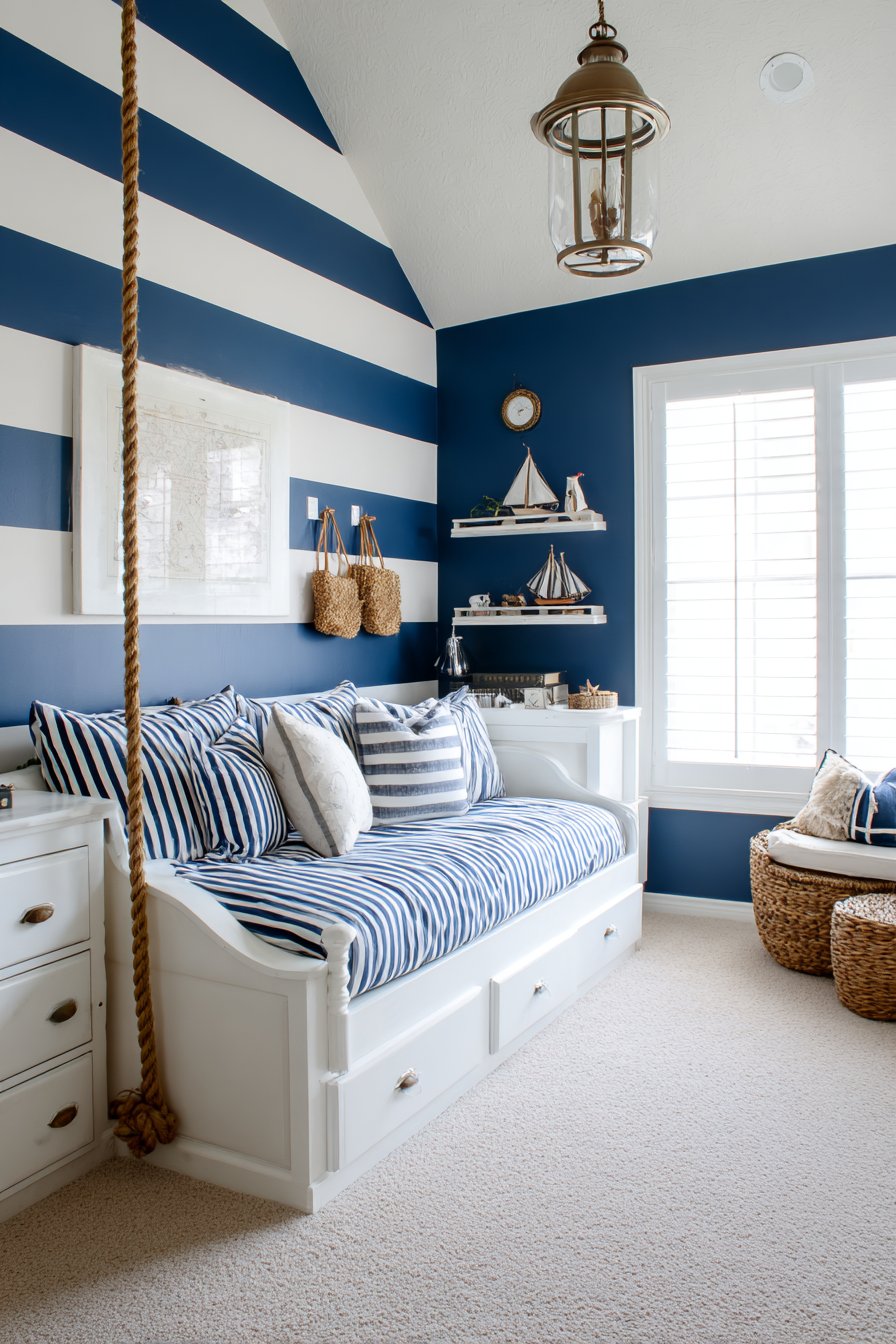
Themed bedrooms can provide wonderful cohesion and personality, especially when the theme incorporates functional elements rather than relying solely on decorative accessories. This nautical-inspired small kids bedroom features a cabin-style bed reminiscent of berths found on boats, with built-in drawers integrated into the bed platform for space-efficient storage.
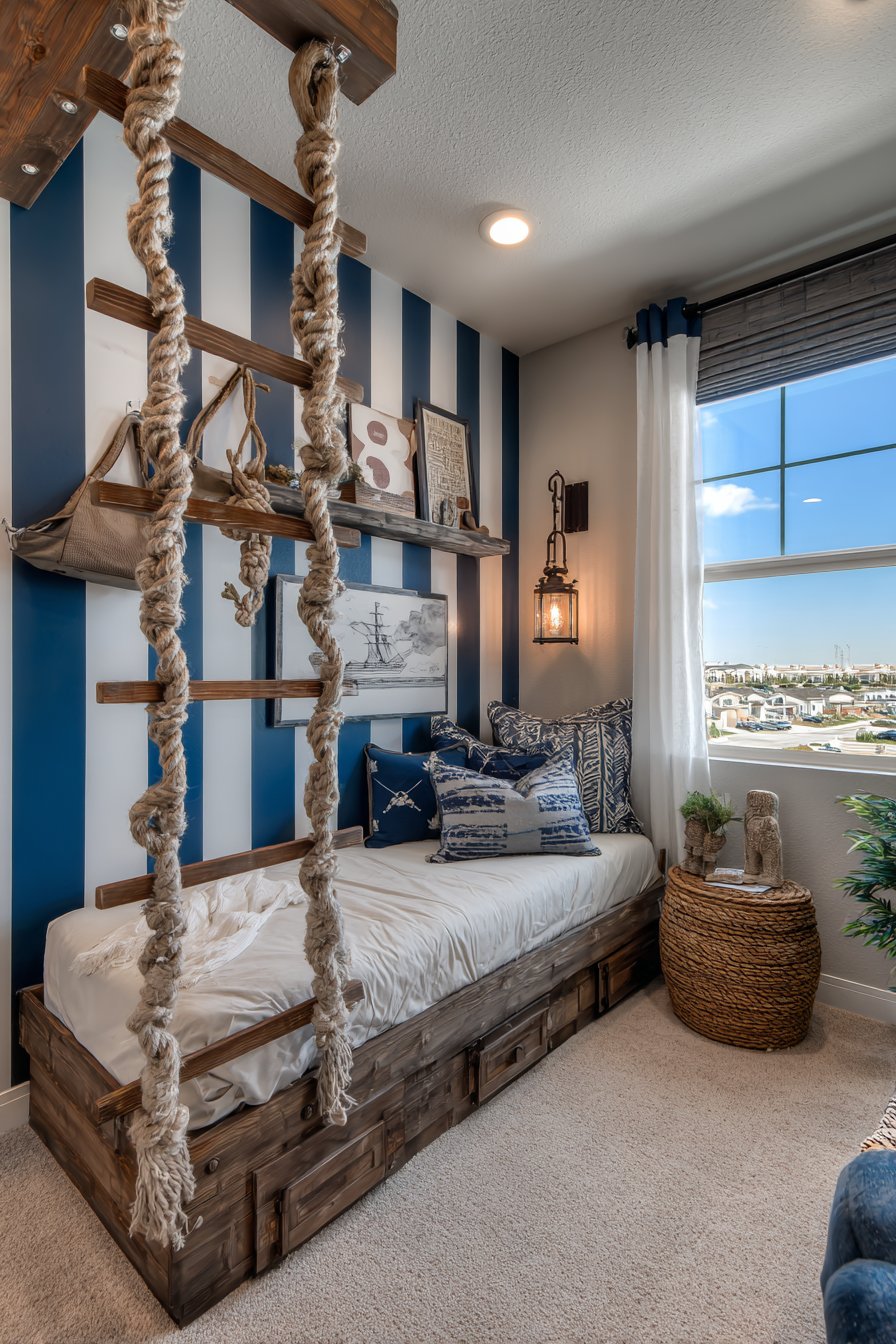
The maritime theme extends to a decorative rope ladder accent—which can be functional or purely aesthetic—adding authentic nautical character while potentially serving as a unique way to access a slightly elevated sleeping platform.
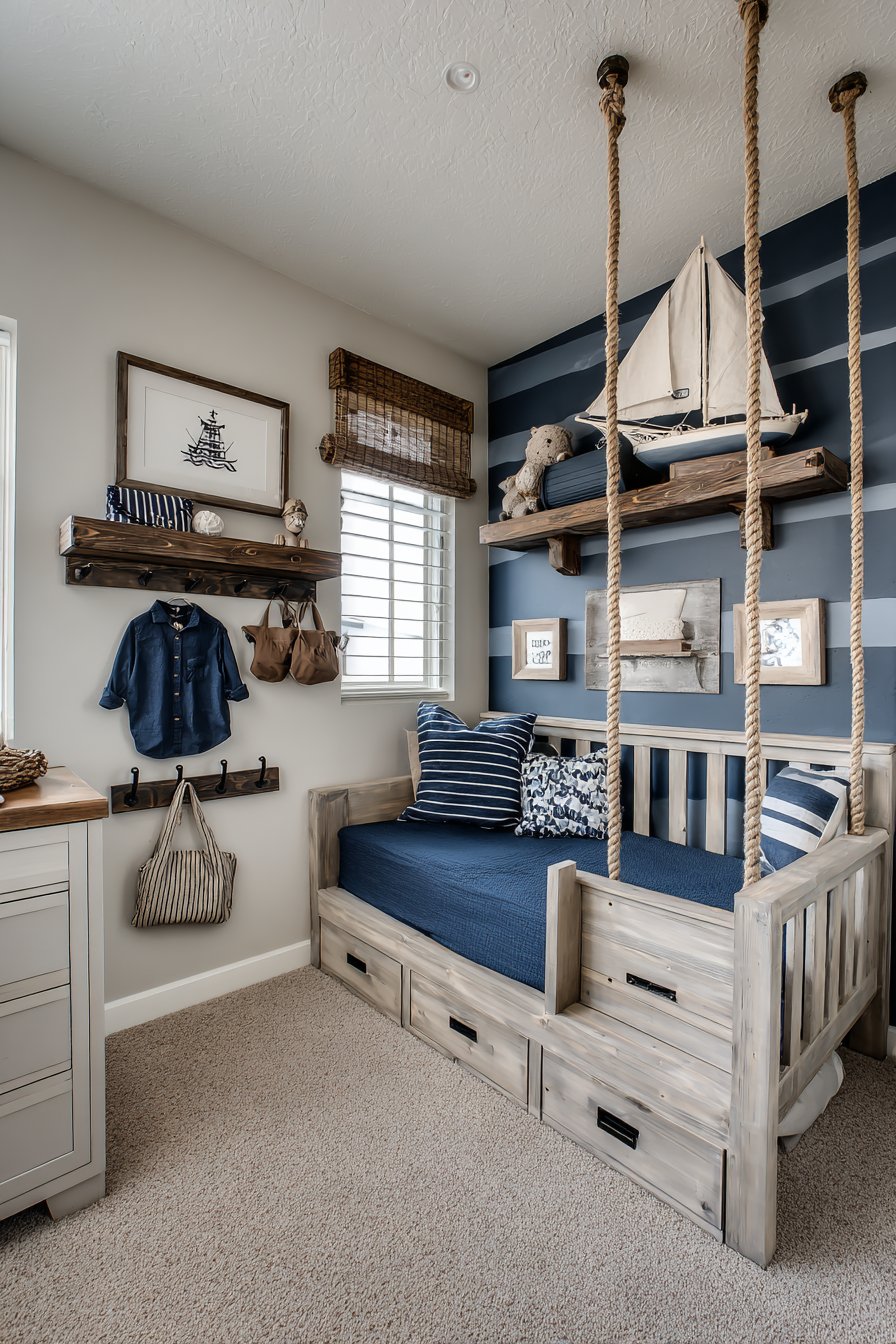
Wall-mounted hooks throughout the room serve the practical purpose of organizing bags, jackets, clothing, and accessories while reinforcing the nautical theme with rope, anchor, or ship wheel designs. These hooks keep frequently used items off the floor and furniture surfaces, making the room feel more organized and spacious.
A compact dresser does double duty in this design, functioning as both clothing storage and a changing station for younger children, with the top surface at an appropriate height for diaper changes or helping children dress themselves. As children age, this surface transitions to display personal items or serve as additional workspace.
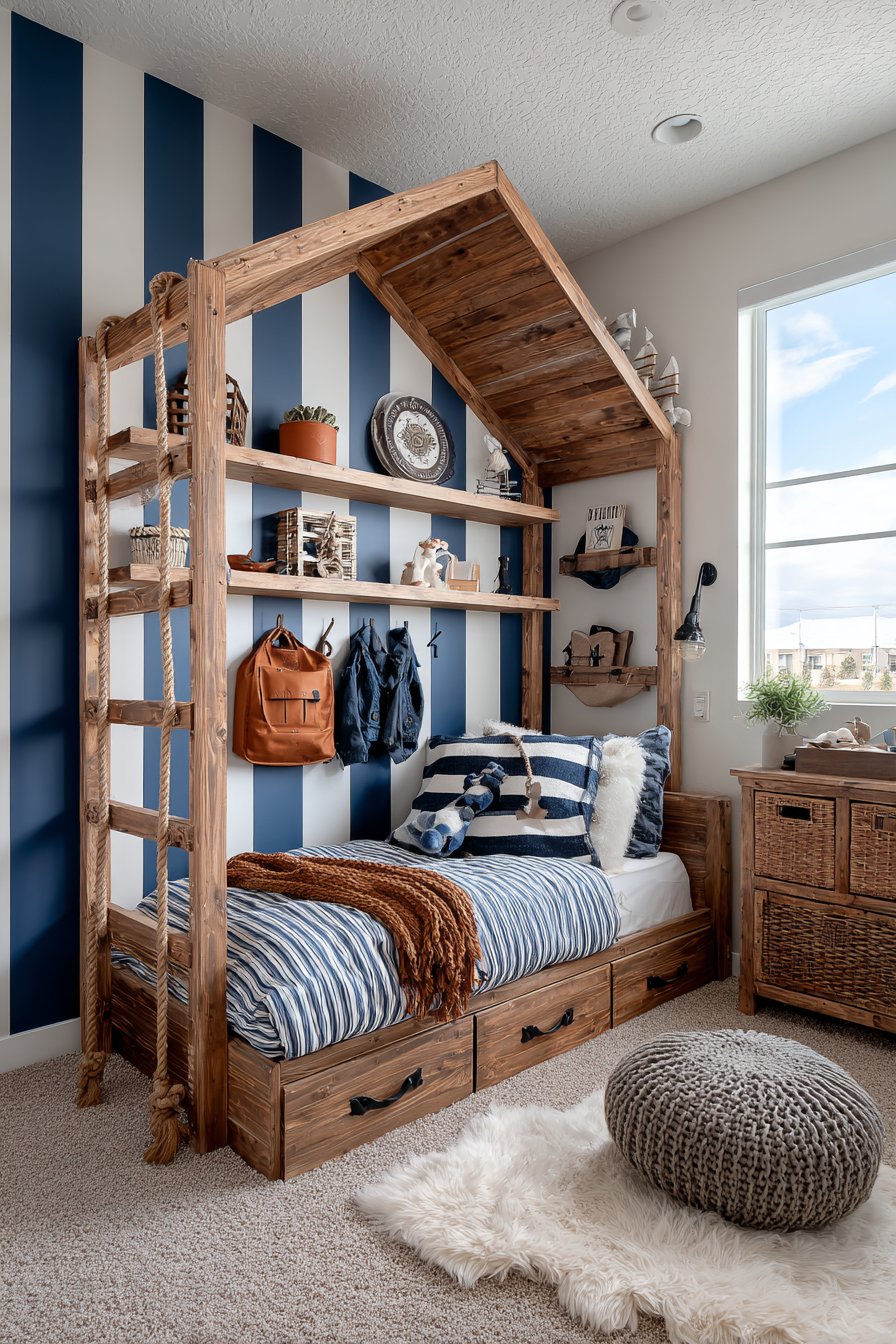
The floating shelves display maritime decorations—perhaps model ships, seashells collected from beach vacations, nautical instruments, or ocean-themed books—that reinforce the theme without cluttering surfaces or consuming floor space.
The navy blue and white striped accent wall creates a dramatic visual impact and authentic nautical atmosphere, while the stripes themselves add vertical lines that can make the room feel taller. The key to successful striped walls in small spaces is ensuring adequate white balance to prevent the room from feeling too dark or enclosed, which is achieved here through white furniture and light-colored flooring.
Key Design Tips:
- Use the built-in bed drawers for items that don’t require daily access to minimize disruption to the sleeping surface above
- Choose wall-mounted hooks with rounded edges and secure installation to prevent injuries during active play
- Ensure the dresser height is appropriate for the child’s current stage while considering future needs as they grow
- Limit the navy blue striping to one accent wall to maintain brightness and prevent the small space from feeling cave-like
- Incorporate rope elements thoughtfully, ensuring they’re securely attached and don’t pose entanglement or strangulation risks
10. Light-Maximizing Layout with Window Positioning
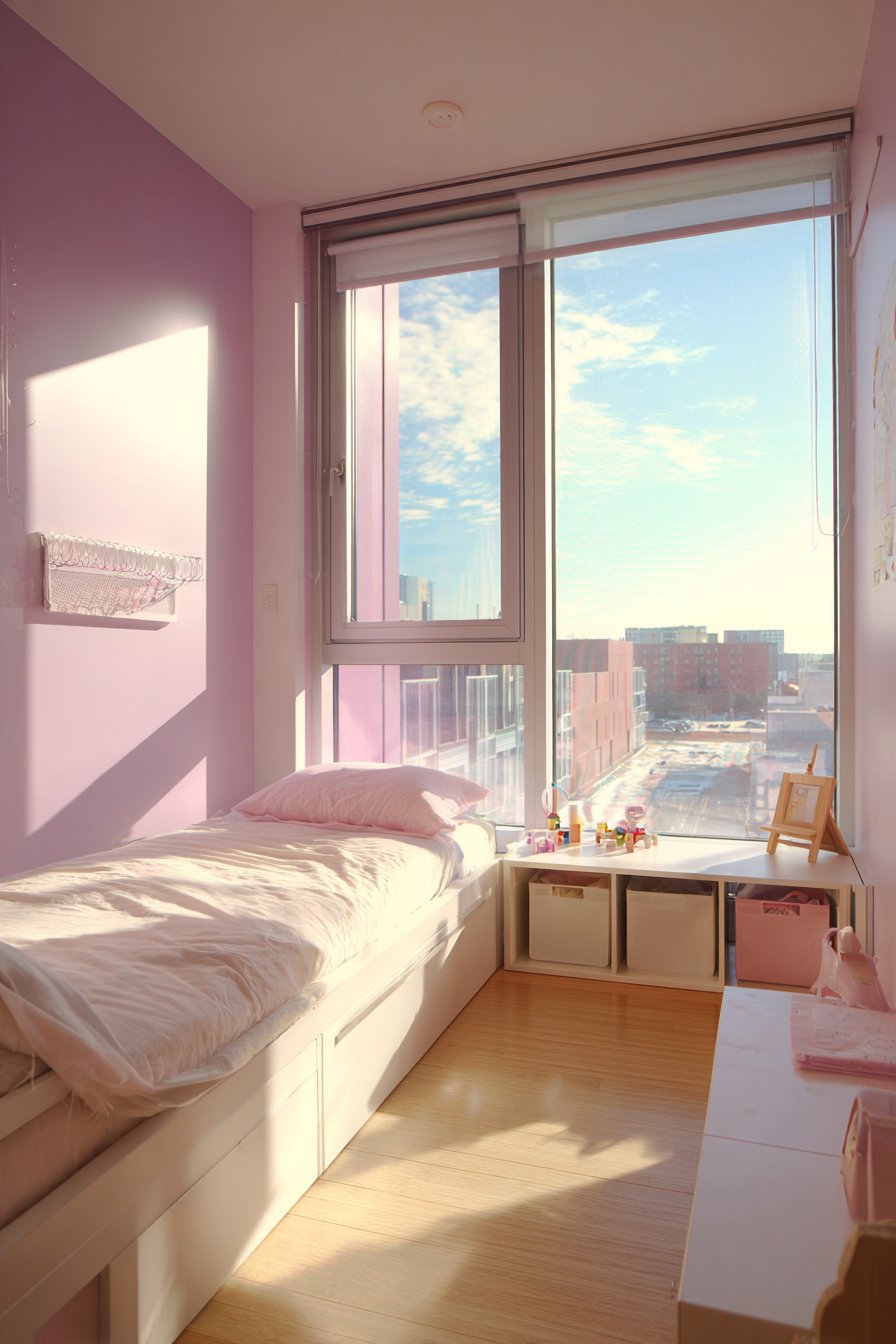
Natural light dramatically impacts how spacious a room feels, making window placement and treatment crucial in small bedroom design. This bright, airy kids bedroom strategically positions the bed beneath a window, taking advantage of the light source while incorporating appropriate safety measures, including a secure rail to prevent falls.
The storage bench positioned at the foot of the bed serves multiple functions: it provides seating for putting on shoes, offers concealed storage for extra blankets or bulky items, and creates a safety buffer between the sleeping area and the window opening.
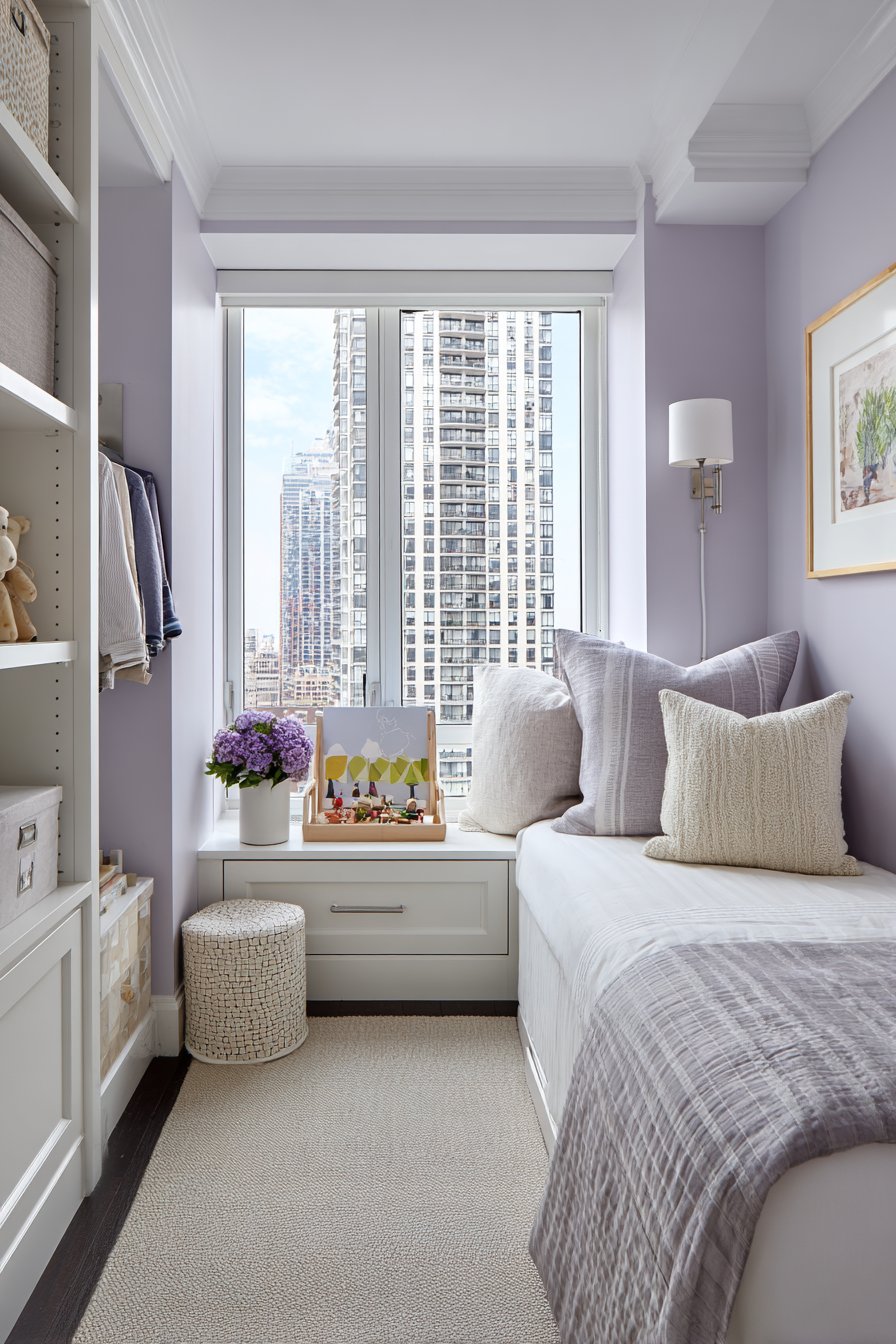
The hanging clothing rod installed at child height represents an important element in fostering independence and good habits. When children can reach their own clothing without assistance, they’re more likely to select their outfits, hang items up after wearing them, and develop organizational skills that will serve them throughout life.
This accessible approach to clothing storage eliminates the need for step stools or constant adult intervention. Modular cube storage for toys offers flexible organization that can be customized with bins, baskets, or left open depending on the items stored and the child’s ability to maintain order.
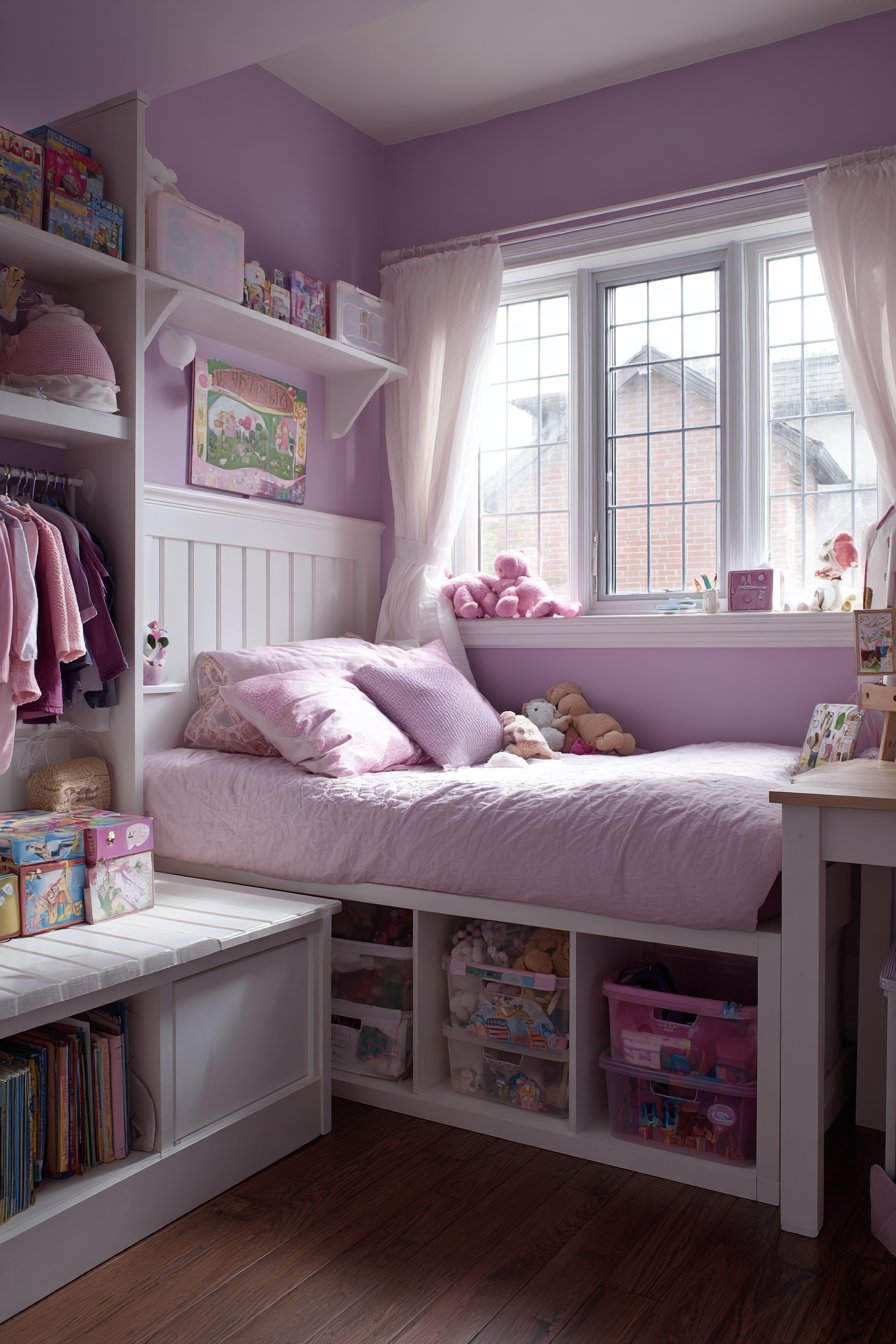
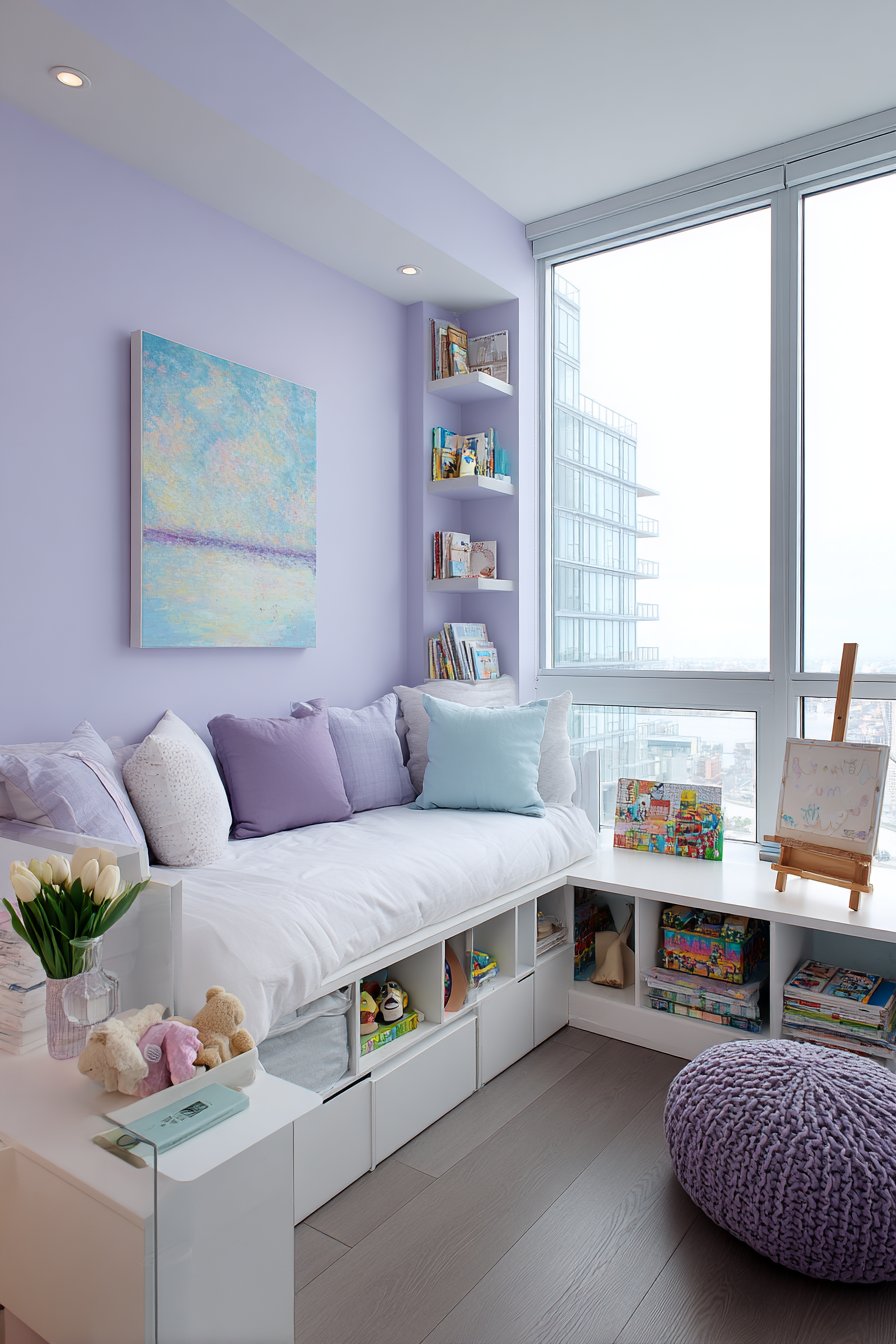
A small art easel tucked into a corner creates a dedicated creative space without requiring permanent installation or significant floor area. The easel can be easily moved or stored when not in use, making it perfect for small rooms that need to serve multiple functions. The soft lavender walls create a dreamy, calming atmosphere while maintaining enough lightness to keep the space feeling open and airy despite limited square footage.
Combined with white furniture that reflects rather than absorbs light, the color scheme maximizes the room’s brightness and creates the illusion of greater space. The golden hour ambiance—that magical time of day when warm sunlight streams through windows—is particularly stunning in this light-filled room, creating an inviting environment where children feel happy and comfortable.
Key Design Tips:
- Install a secure window rail that meets safety standards while allowing the window to open for ventilation
- Choose a storage bench with a soft-close lid mechanism to prevent finger injuries and slam-free operation
- Position the hanging rod at a height the child can currently reach but consider an adjustable system for future height increases
- Use modular cube storage in sizes that fit standard storage bins for easy replacement and consistent organization
- Place the art easel near natural light but away from direct sunlight that might cause glare on the working surface
Why These Small Kids Bedroom Ideas Are the Best Solutions for Compact Spaces
The ten small kids bedroom designs presented in this comprehensive guide represent the pinnacle of space-efficient interior design, each offering unique advantages that address the common challenges faced by parents working with limited square footage. These bedroom ideas excel because they prioritize multi-functional furniture, vertical storage solutions, and child-centered design principles that create environments where young ones can thrive. The emphasis on smart storage systems throughout each design ensures that toys, clothing, books, and personal items have designated homes, reducing clutter and making even the smallest bedrooms feel organized and spacious.
Space-saving furniture solutions like loft beds, Murphy beds, trundle beds, and bunk beds demonstrate how vertical thinking transforms small bedrooms from cramped to comfortable. By elevating sleeping areas or concealing them when not in use, these innovative furniture pieces liberate precious floor space for play, study, and movement—essential activities for growing children. The integration of storage directly into furniture platforms, whether through built-in drawers, staircase compartments, or under-bed rolling units, maximizes efficiency while minimizing the need for additional storage pieces that would crowd the room.
Child-height accessibility features in several designs, particularly the Montessori-inspired bedroom, recognize that furniture scaled appropriately for children fosters independence, confidence, and life skills. When children can access their clothing, books, and toys without adult assistance, they develop autonomy and organizational abilities that extend far beyond bedroom tidiness. Low beds, accessible shelving, child-height rods, and reachable hooks all contribute to environments that respect children’s capabilities while promoting self-sufficiency.
The strategic use of color in these small kids bedroom ideas demonstrates sophisticated understanding of how hues affect spatial perception and mood. Lighter wall colors—soft pastels, creams, whites, and light grays—reflect natural and artificial light, creating the illusion of greater space and airiness. Accent walls in slightly deeper tones add personality without overwhelming, while colorful accessories, bedding, and storage containers inject vibrancy that can be easily changed as tastes evolve. This approach to color planning ensures rooms remain versatile and can grow with children without requiring expensive renovations.
Natural light optimization appears consistently throughout these bedroom designs, reflecting its critical importance in small spaces. Strategic window treatments, reflective surfaces, white or light-colored furniture, and mirror placement all work to maximize available daylight, making rooms feel larger and more inviting. The psychological benefits of natural light include improved mood, better sleep patterns, and enhanced concentration—all particularly important for children’s development and well-being.
Themed designs like the nautical bedroom prove that even compact spaces can express personality and creativity without sacrificing functionality. The key lies in integrating theme elements into functional pieces rather than relying solely on decorative accessories that consume space without contributing utility. When wall colors, furniture shapes, and organizational tools all reinforce a cohesive theme, the result feels intentional and polished rather than cluttered with disconnected decorations.
Flexible and adaptable solutions like modular storage systems, adjustable shelving, fold-down desks, and removable wall decals acknowledge that children’s needs change rapidly. The best small bedroom designs accommodate these evolving requirements without necessitating complete room overhauls. Furniture and organizational systems that can be reconfigured, added to, or adjusted as children grow represent wise investments that extend the functional life of the bedroom design.
Safety considerations underpin every recommendation in these small kids bedroom ideas, from secure bunk bed railings and low platform beds to wall-mounted furniture that prevents tip-over accidents and non-toxic finishes on all surfaces. Small bedrooms require particular attention to safety because limited space means children interact more closely with all room elements. Rounded furniture edges, secure wall anchoring, appropriate lighting, and age-appropriate accessibility all contribute to environments where children can play, sleep, and grow safely.
The organizational systems presented across these designs—from pegboards and floating shelves to labeled bins and door organizers—teach children valuable life skills while maintaining order in tight quarters. When everything has a designated place and storage solutions are intuitive and accessible, even young children can participate in maintaining their spaces. This reduces parental stress while building responsibility and pride in personal environment.
Small bedroom design for children requires balancing practical needs with aesthetic appeal, functionality with personality, and current requirements with future growth. The ideas presented here succeed because they address all these considerations simultaneously, creating bedrooms that are beautiful, efficient, comfortable, and appropriate for the children who inhabit them. Whether implementing a complete room redesign or adopting individual elements from these concepts, parents will find actionable strategies for transforming compact bedrooms into spaces their children love.
Conclusion
Creating a functional, beautiful small kids bedroom requires thoughtful planning, creative problem-solving, and a clear understanding of both spatial constraints and children’s developmental needs. The ten design concepts explored in this guide demonstrate that limited square footage need not limit possibilities—instead, it challenges us to think more innovatively about how every element serves multiple purposes and how vertical space can be as valuable as floor area. From loft beds that create study nooks underneath to Murphy beds that transform rooms from day to night, from Montessori-inspired accessible design to themed rooms with integrated functionality, these ideas offer diverse approaches to common challenges.
The key takeaways from these small bedroom designs emphasize multi-functional furniture, vertical storage solutions, child-appropriate accessibility, light-maximizing color choices, and flexible systems that adapt as children grow. Whether you’re designing a room for one child or creating a shared space for siblings, the principles of efficient layout, smart storage, and thoughtful organization apply universally. Remember that the best small bedroom isn’t necessarily the one with the most furniture or the trendiest decorations—it’s the one that meets your child’s specific needs while creating an environment where they feel safe, comfortable, and inspired.
We encourage you to experiment with these ideas in your own home, adapting the concepts to fit your unique space, budget, and family circumstances. Start with one or two elements that address your biggest challenges—perhaps adding vertical storage to clear floor space, or implementing an organizational system that makes tidying easier for everyone. Small changes can yield significant improvements in both functionality and atmosphere. Most importantly, involve your children in the design process when appropriate, as rooms they help create become spaces they take pride in maintaining. With creativity, planning, and the right approach, any small kids bedroom can become a cherished personal sanctuary where childhood memories are made and treasured for years to come.
