


The kitchen has long been celebrated as the heart of the home, a space where functionality meets beauty, and where memories are created alongside culinary masterpieces. In an era of rapidly changing design trends and fleeting aesthetic movements, the concept of a timeless kitchen has never been more relevant or desirable. A truly timeless kitchen transcends momentary fashions, embracing design principles that remain elegant and functional for decades. These spaces are characterized by quality materials, classic color palettes, thoughtful craftsmanship, and layouts that serve the needs of daily life while maintaining an undeniable aesthetic appeal that never feels dated.
Creating a timeless kitchen requires a deep understanding of design fundamentals, an appreciation for quality materials, and the wisdom to distinguish between trendy elements and enduring styles. Unlike kitchens designed to capture the spirit of a particular moment, timeless kitchens are built on foundational principles that have proven their worth across generations. They favor natural materials over synthetic alternatives, classic color schemes over bold experiments, and quality craftsmanship over mass-produced mediocrity. The beauty of these spaces lies not in their ability to shock or surprise, but in their capacity to provide comfort, functionality, and aesthetic satisfaction year after year.
In this comprehensive exploration of timeless kitchen design, we’ll journey through ten distinct interpretations of this enduring aesthetic. Each space showcases different approaches to achieving timeless appeal, from the crisp elegance of white shaker cabinetry to the warm sophistication of mixed materials and finishes. Whether you’re planning a complete kitchen renovation or seeking inspiration for thoughtful updates, these designs demonstrate how classic principles can be applied in diverse ways to create spaces that will remain beautiful and relevant for generations to come. These kitchens prove that timeless doesn’t mean boring or predictable; rather, it means choosing elements with lasting beauty and proven functionality that will continue to delight and serve you well into the future.
1. Classic White Shaker Elegance with Marble Perfection
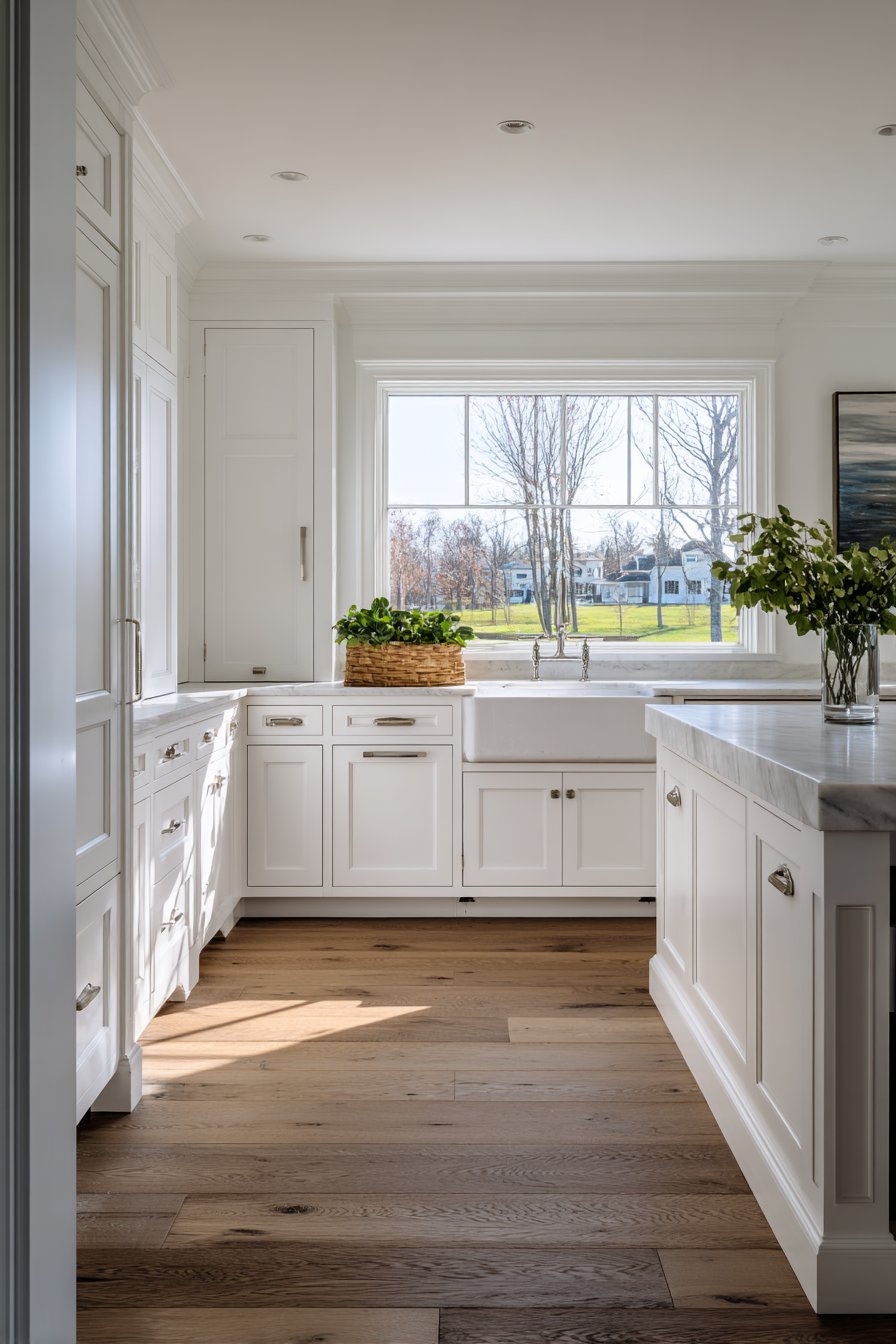
The enduring appeal of white shaker-style cabinetry represents perhaps the most universally beloved approach to timeless kitchen design. This kitchen showcases the perfect marriage of form and function, where clean-lined cabinets with their characteristic recessed panel doors create a sense of order and serenity.
The brushed nickel hardware adds subtle refinement without competing for attention, while the honed marble countertops with their delicate grey veining introduce organic beauty and natural variation. The large farmhouse sink positioned beneath a generous window becomes a focal point that’s both practical and aesthetically pleasing, allowing natural light to flood the workspace and connect the interior to the outdoor landscape.
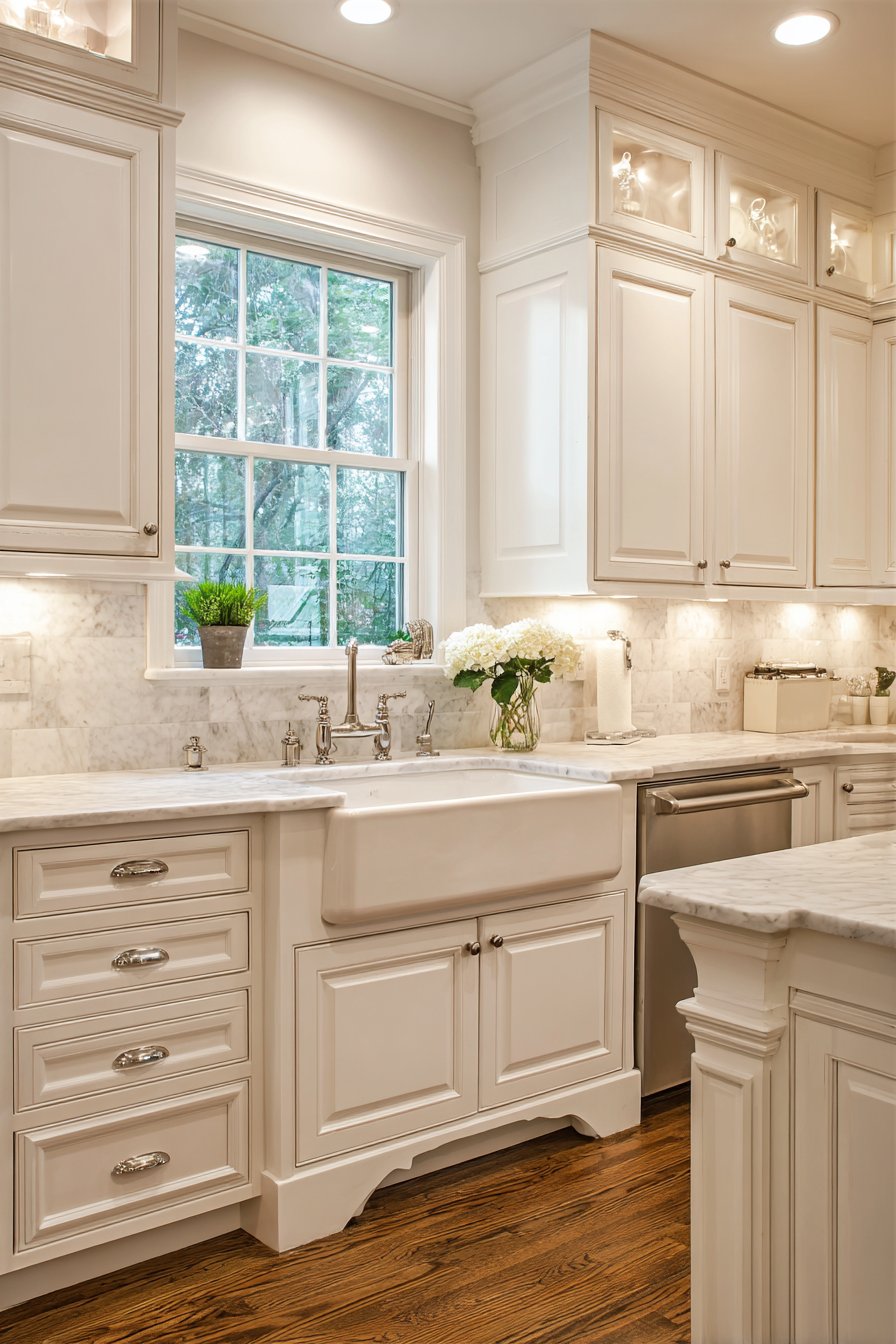
The kitchen island in this design serves multiple purposes, providing essential prep space, additional storage, and an informal gathering spot for family and friends. The matching cabinetry maintains visual cohesion throughout the space, creating a harmonious flow that feels intentional and refined.
The warm honey-toned hardwood flooring introduces much-needed contrast and warmth to balance the cooler tones of the marble and white cabinetry, preventing the space from feeling sterile or cold. The wood’s natural grain patterns and warm undertones create a foundation that grounds the design and adds character developed over time.
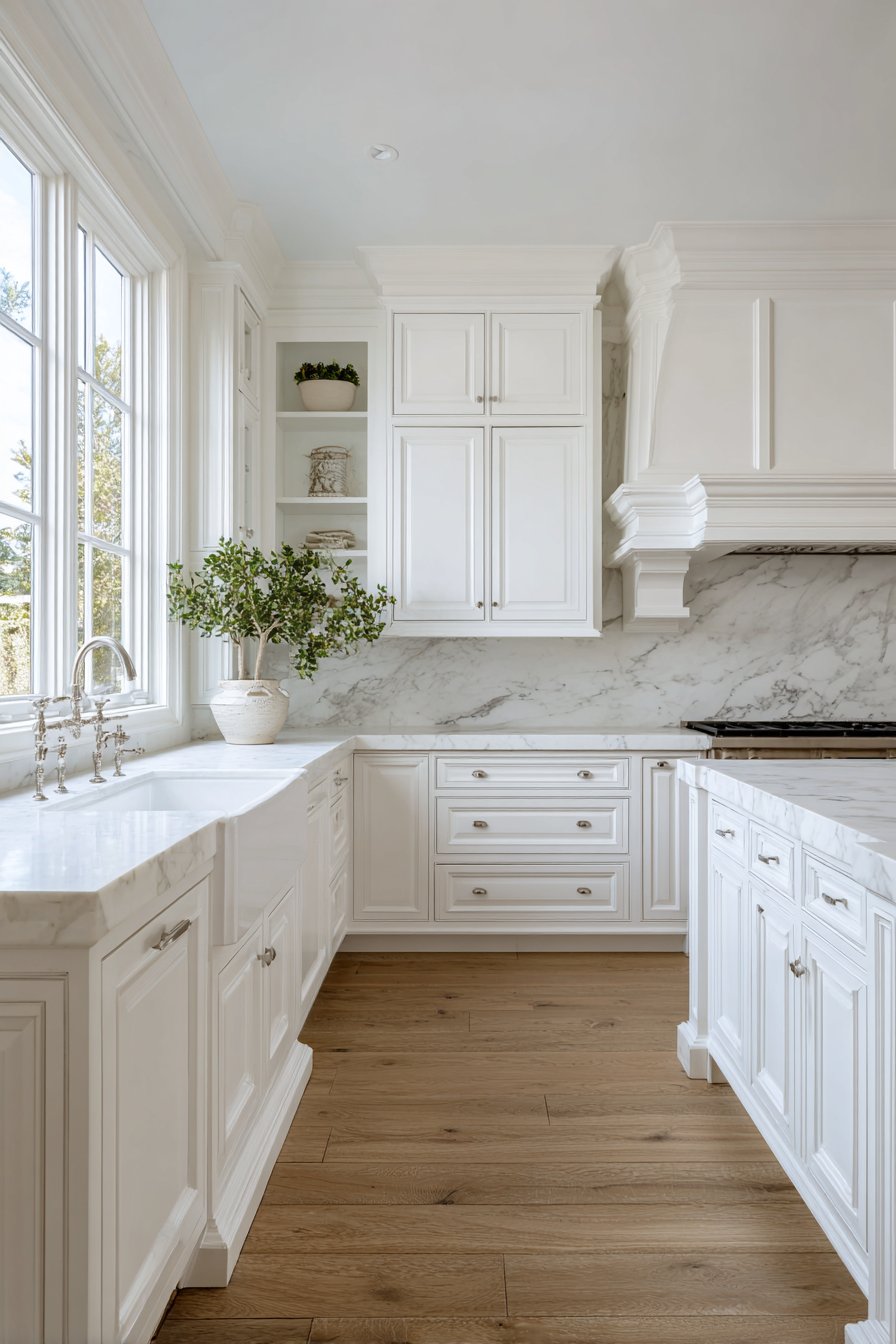
The brilliance of this design lies in its restraint and attention to quality. Every element has been chosen for its lasting appeal and durability. The shaker-style cabinets have remained popular for over a century because their simple, honest construction and clean lines work beautifully in both traditional and contemporary settings.
The natural materials—marble, wood, and quality metals—age gracefully, developing patinas and character that enhance rather than diminish their beauty. The neutral color palette ensures versatility, allowing homeowners to refresh the space with accessories, textiles, or small decorative changes without requiring major renovations.
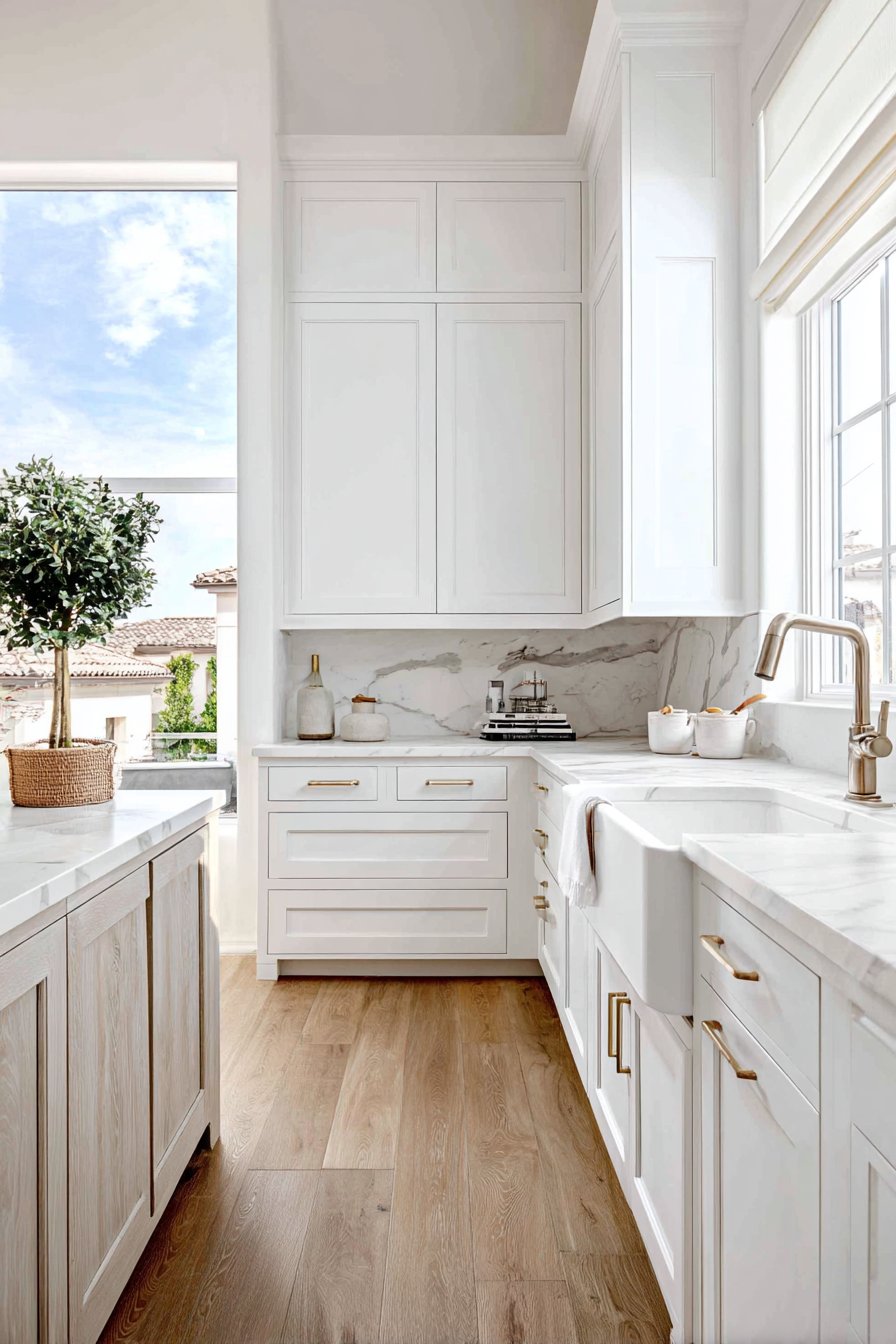
Natural light plays a transformative role in this kitchen, streaming through the window above the farmhouse sink and casting soft, diffused illumination across the work surfaces. This connection to the outdoors and natural light cycles creates a space that feels alive and welcoming throughout the day. The honed finish on the marble countertops reflects light more softly than polished stone, contributing to the gentle, inviting atmosphere while also being more forgiving of everyday wear and water spots.
Key Design Tips:
- Invest in solid wood shaker cabinets rather than veneer alternatives for longevity and the ability to refinish if desired in the future
- Choose honed marble over polished to hide wear patterns and maintain a softer, more livable aesthetic that ages gracefully
- Position the sink beneath a window whenever possible to maximize natural light and create a pleasant work environment
- Select hardware in classic finishes like brushed nickel or aged brass that won’t appear dated as trends shift
- Use hardwood flooring in medium to warm tones to add warmth and create visual balance with white cabinetry
- Maintain consistent cabinet door styles throughout the space for a cohesive, sophisticated appearance
2. Two-Tone Sophistication with Subway Tile Heritage
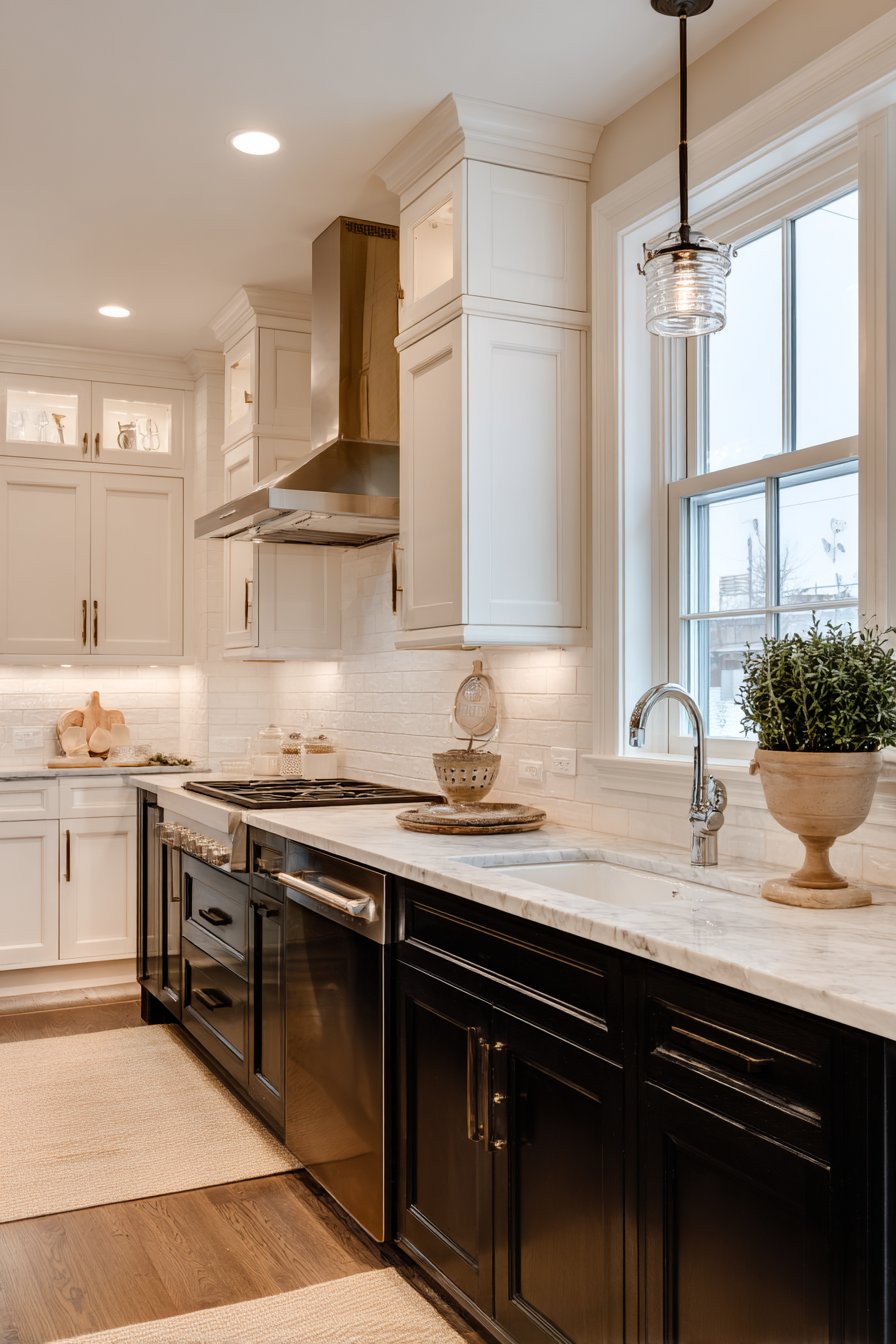
The strategic use of two-tone cabinetry creates visual interest and depth while maintaining the timeless quality essential to enduring kitchen design. This kitchen pairs deep grey lower cabinets with crisp white upper cabinets, a combination that has proven its staying power across decades of design evolution. The classic subway tile backsplash extends from countertop to ceiling in pristine white, creating a bright, clean backdrop that emphasizes the vertical lines of the space and draws the eye upward. This floor-to-ceiling application of subway tile represents a bold yet traditional choice that maximizes the visual impact of this beloved material.
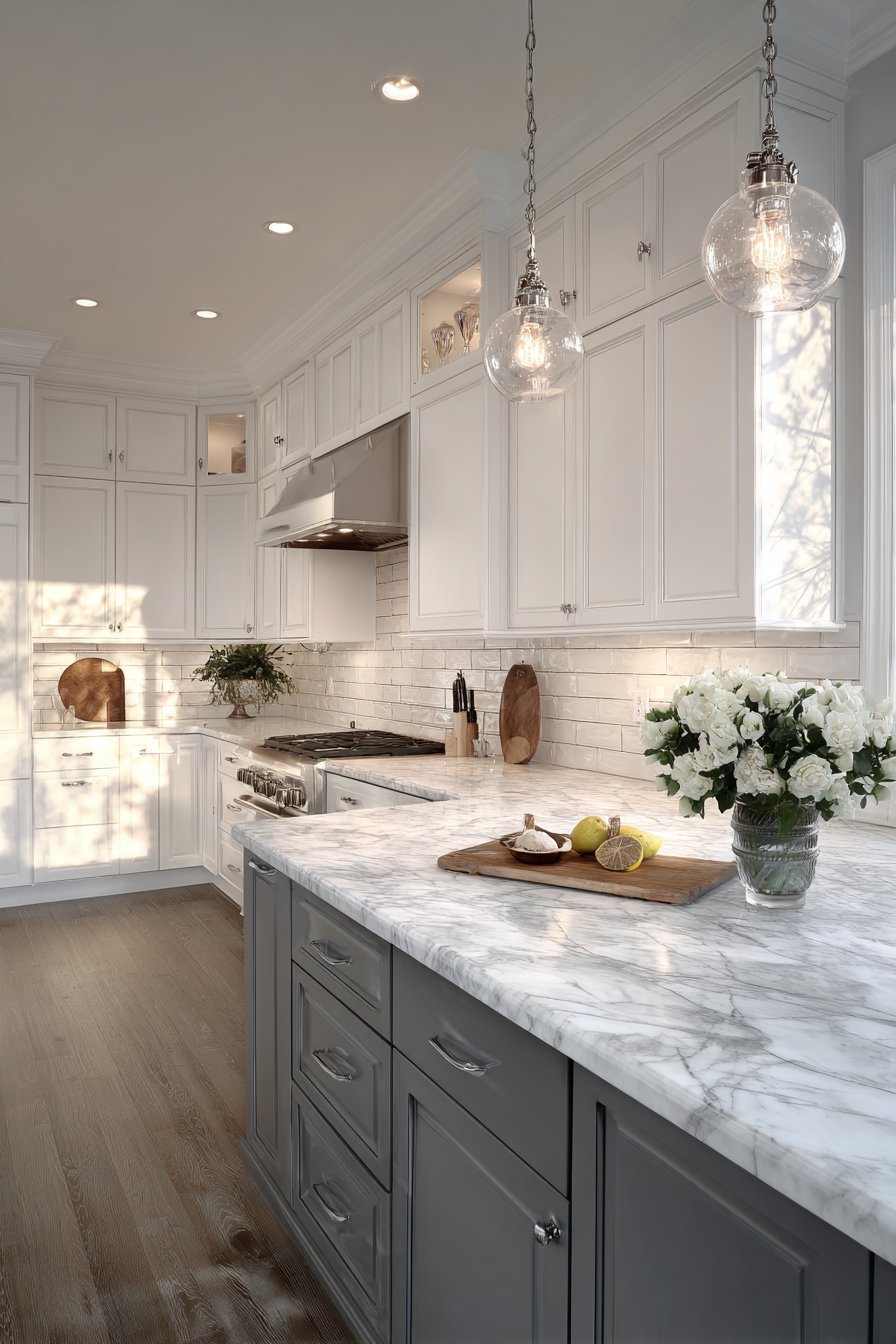
Carrara marble countertops introduce luxury and natural beauty through their characteristic veining patterns, with each slab offering unique markings that make the kitchen truly one-of-a-kind. The organic movement within the marble provides visual interest without requiring additional decorative elements, allowing the material itself to serve as artwork.
Vintage-inspired pendant lights with clear glass shades hang above the prep area, their transparent design maintaining the open, airy feeling of the space while providing necessary task lighting. These fixtures nod to historical design while incorporating modern electrical standards and energy-efficient bulbs.
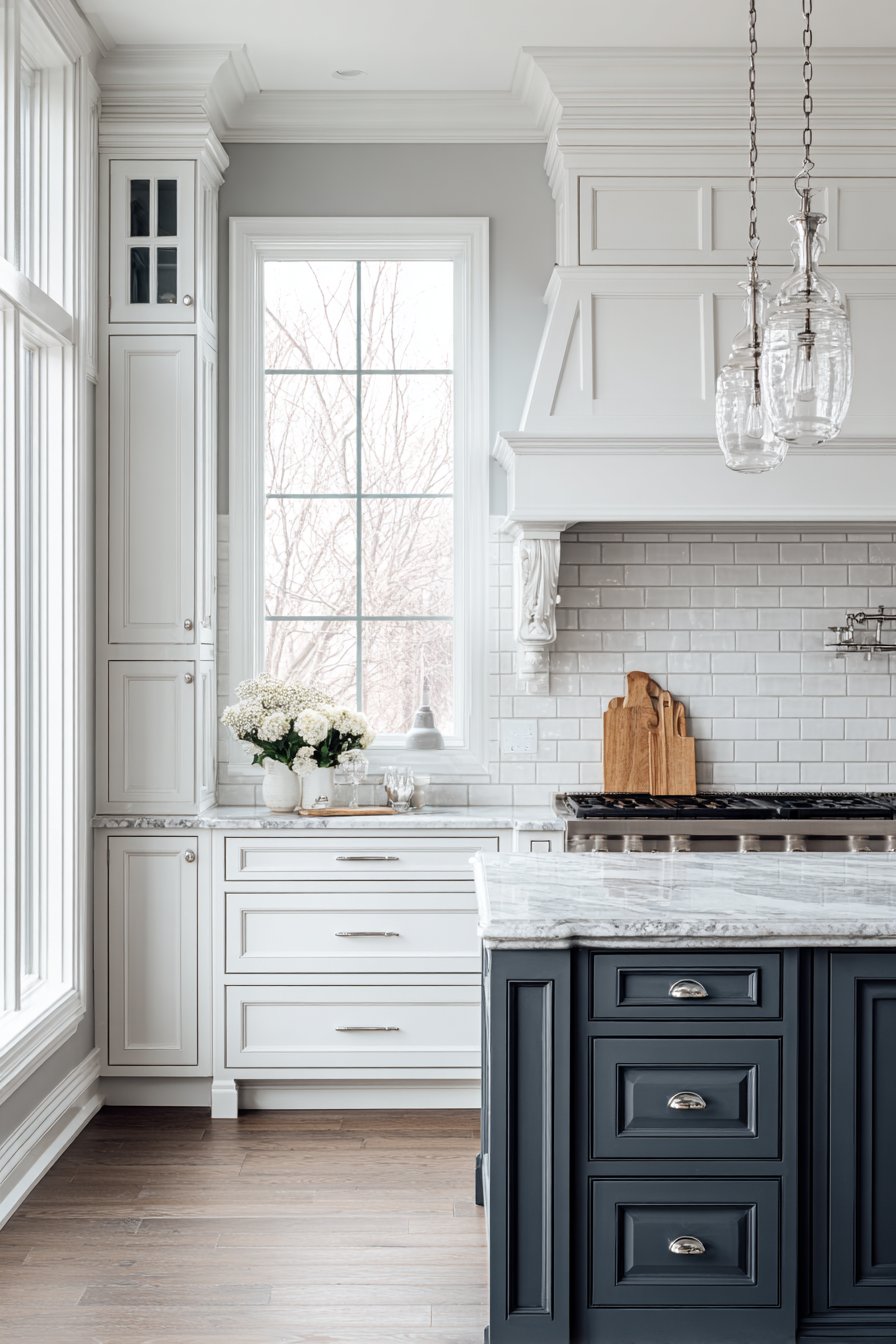
The balanced color scheme in this kitchen demonstrates sophisticated restraint, with the grey lower cabinets anchoring the space visually and hiding wear more effectively than lighter alternatives would. The white upper cabinets prevent the space from feeling too dark or heavy, maintaining brightness and creating the illusion of height.
This thoughtful distribution of color creates a harmonious environment that feels both grounded and uplifting. Natural light from strategically placed windows creates soft shadows that emphasize texture details in the subway tile, revealing the subtle dimensional quality of the beveled edges and the slight variations in the tile surface.
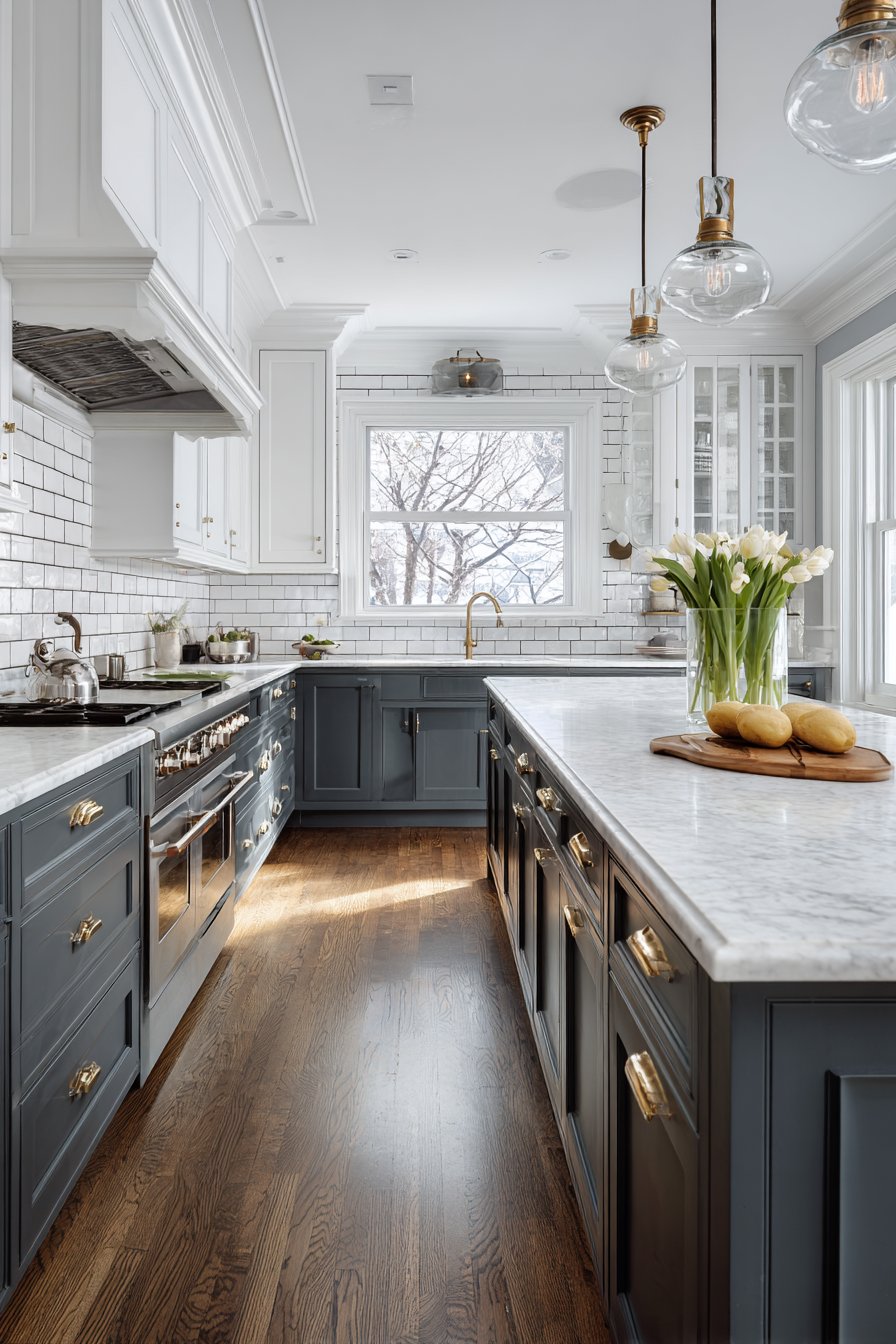
The enduring appeal of subway tile cannot be overstated in timeless kitchen design. Originally used in New York City subway stations in the early 1900s, this simple rectangular tile has transcended its utilitarian origins to become a cornerstone of classic kitchen design. Its clean lines, modest scale, and honest simplicity work beautifully in spaces ranging from traditional farmhouses to urban apartments. The white-on-white palette of tile and grout creates a seamless, cohesive surface that serves as a perfect backdrop for the two-tone cabinetry.
Key Design Tips:
- Use deeper colors on lower cabinets to hide scuffs and wear while maintaining lighter uppers for brightness
- Extend subway tile to the ceiling to maximize its impact and create a sense of height
- Choose natural stone countertops like Carrara marble for authentic character and unique patterning
- Install vintage-inspired lighting fixtures that reference historical design while meeting modern needs
- Maintain a balanced color palette with no more than three main colors to ensure lasting harmony
- Position windows to maximize natural light and create dynamic shadows that enhance texture
3. Professional-Grade Functionality Meets Classic Design
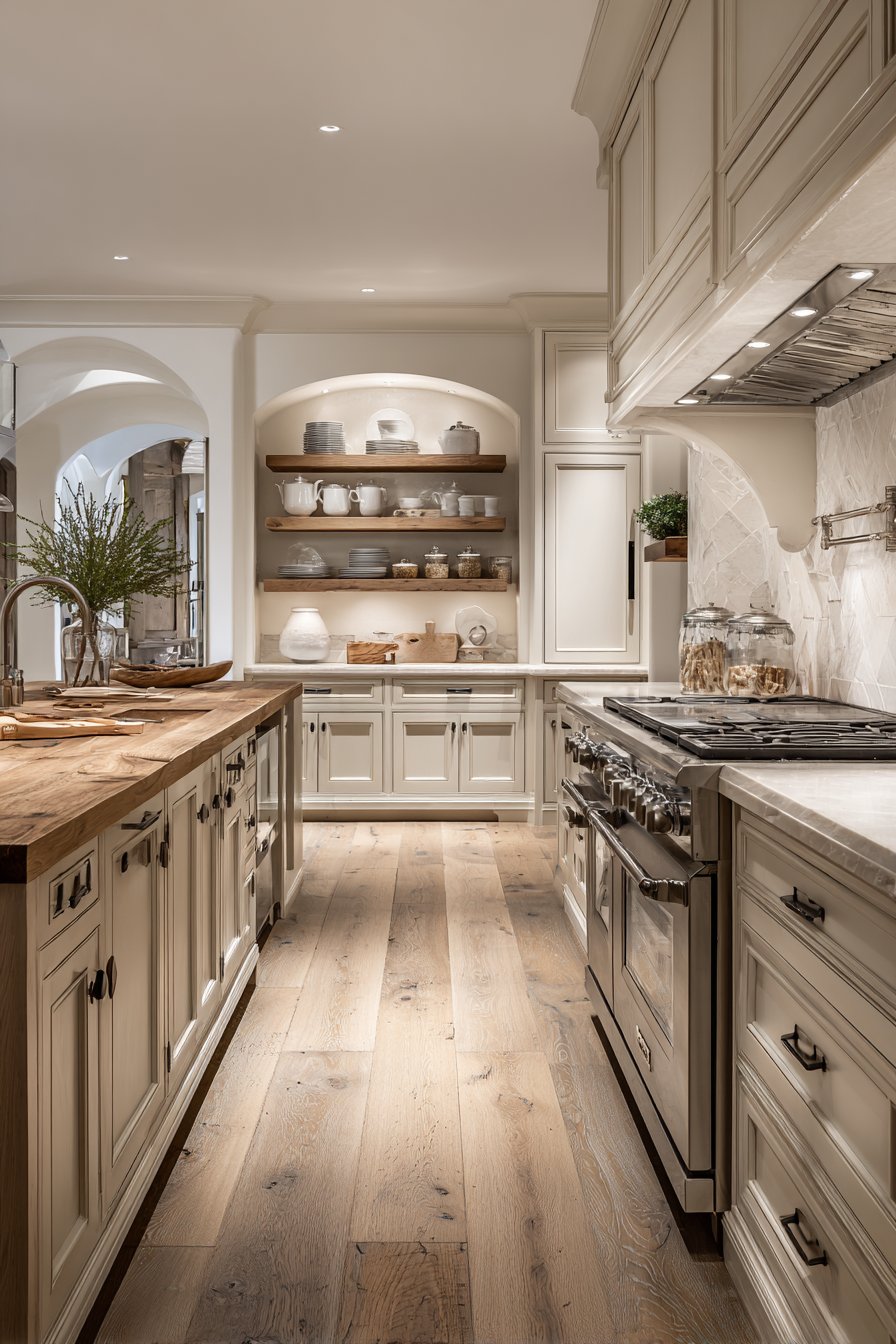
A professional-grade stainless steel range serves as the commanding focal point in this kitchen, celebrating the joy of cooking and elevating the space with restaurant-quality equipment. Flanked by custom built-in cabinetry in a soft cream finish, the range becomes both a functional workhorse and an aesthetic statement about the priorities of the home.
The warm cream cabinetry provides a gentler alternative to stark white, introducing subtle warmth that makes the space feel more inviting and lived-in while maintaining the bright, open quality essential to timeless design.
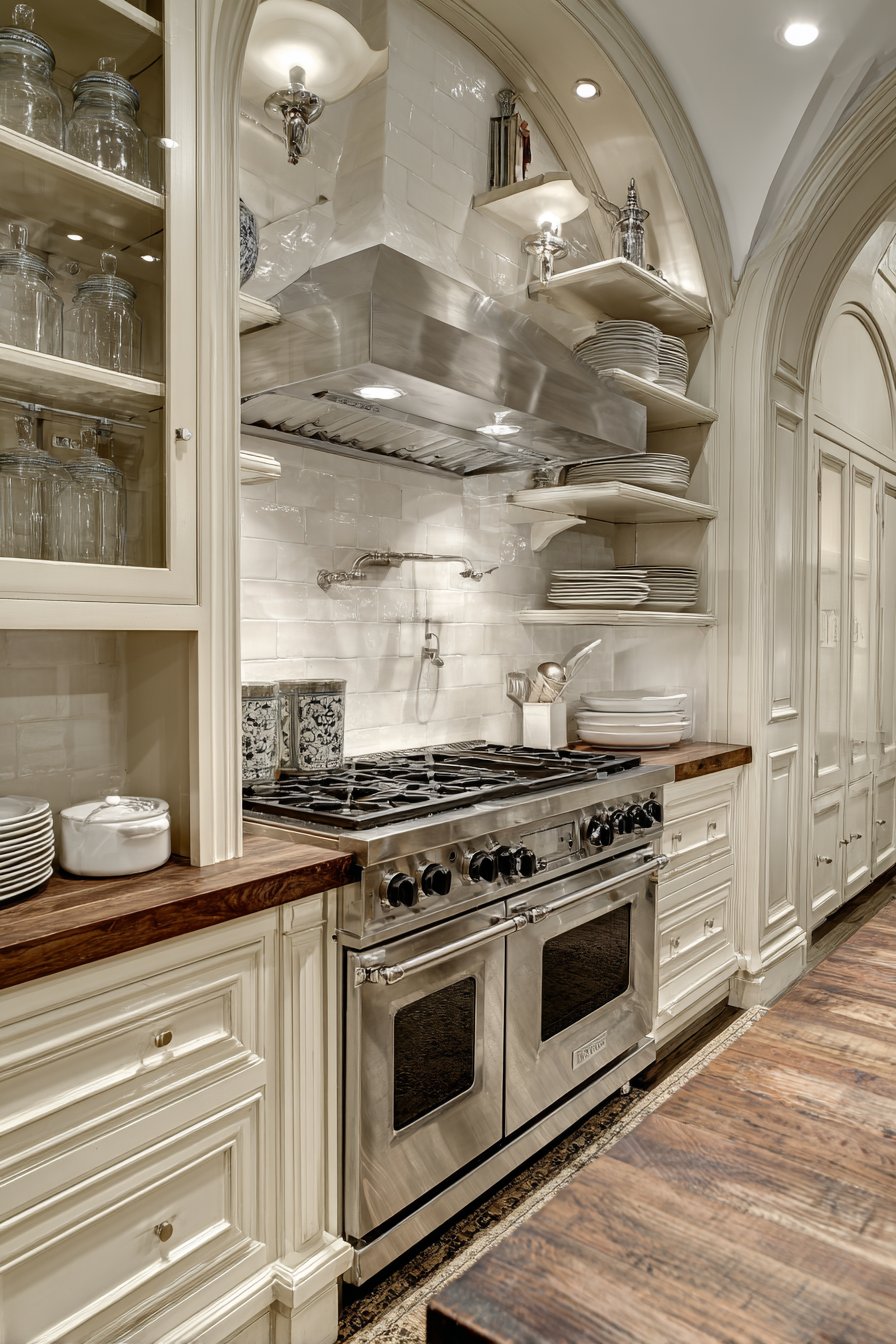
Open shelving displays classic white dishware and glass storage jars, creating visual interest through the honest display of everyday objects. This approach to storage brings both practical convenience and decorative appeal, allowing frequently used items to remain accessible while contributing to the overall aesthetic.
The open shelves break up the visual weight of solid cabinetry and introduce an element of transparency that keeps the space from feeling too enclosed. The careful curation and organization of displayed items becomes part of the design, with white dishware providing crisp contrast against the cream cabinetry and glass jars revealing their colorful contents.
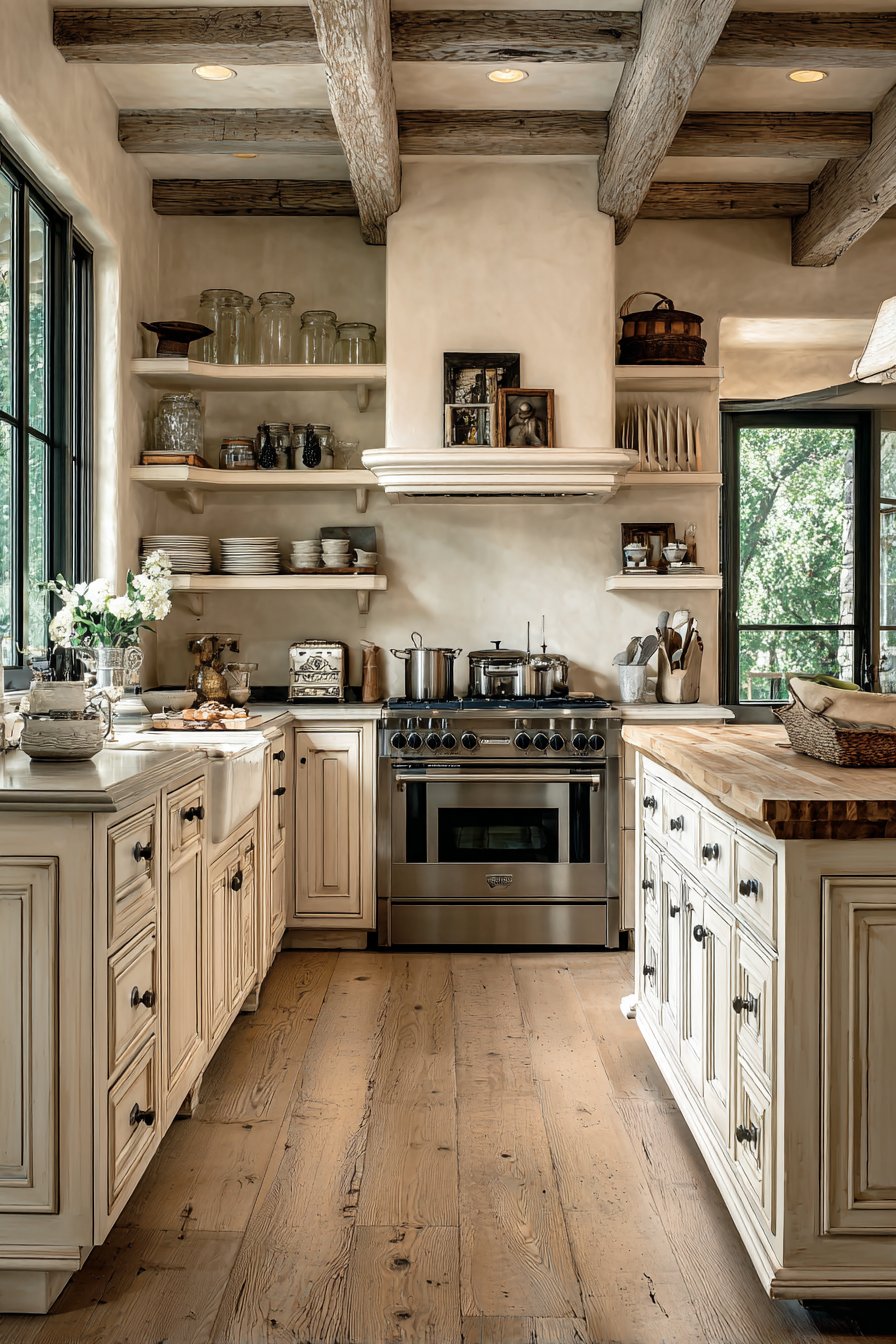
Butcher block countertops on the kitchen island showcase natural wood grain with slight patina from use, celebrating the beauty of materials that age gracefully and tell the story of meals prepared and gatherings hosted. Unlike synthetic surfaces that show every scratch as damage, butcher block develops character over time, with knife marks and gentle wear patterns adding to rather than detracting from its appeal.
The warm wood tones introduce essential natural variation and texture, creating a tactile surface that invites touch and use. The island becomes a central workspace where food preparation, casual meals, and conversation naturally converge.
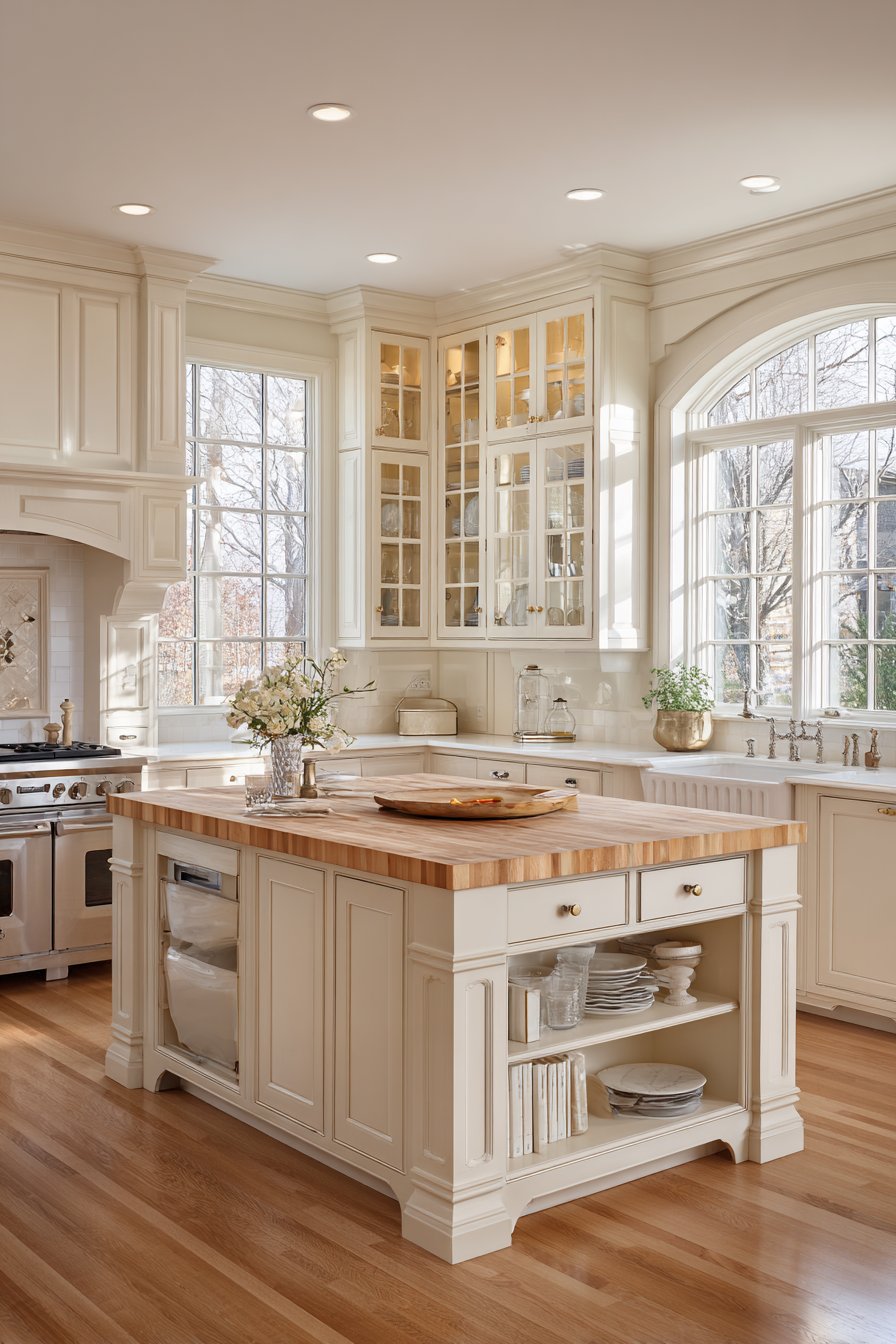
Recessed lighting throughout the ceiling provides ambient illumination, while under-cabinet fixtures create focused task lighting exactly where it’s needed most. This layered lighting approach ensures the kitchen remains functional at all hours while allowing for different moods and activities. The warm ambient glow created by properly positioned lighting enhances the cream cabinetry and brings out the golden tones in the butcher block, creating an inviting atmosphere that encourages lingering and gathering.
Key Design Tips:
- Invest in professional-grade appliances that offer superior performance and classic stainless steel aesthetics
- Choose cream or off-white cabinetry for warmth without sacrificing the bright, open feeling of white
- Incorporate open shelving strategically to display beautiful everyday items and break up solid cabinetry
- Select butcher block for high-use surfaces to embrace materials that age beautifully with use
- Layer ambient, task, and accent lighting to create flexibility and proper illumination for all activities
- Display only attractive, cohesive items on open shelves to maintain visual harmony
4. Traditional Sophistication with Classic L-Shaped Efficiency
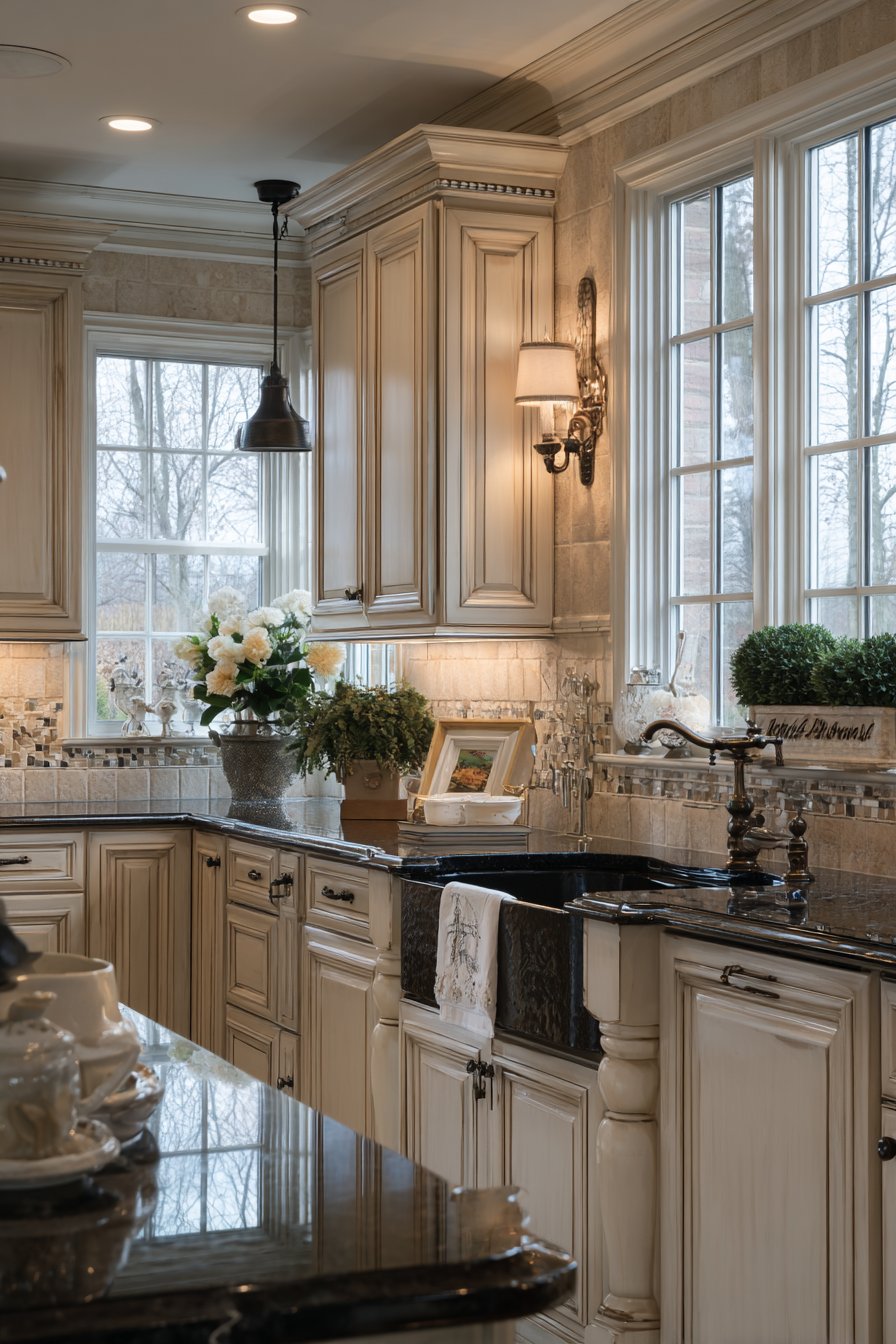
The classic L-shaped layout represents one of the most efficient and enduring kitchen configurations, maximizing corner space while creating a natural work triangle that minimizes steps between key work zones. This kitchen features traditional raised-panel cabinetry in a warm taupe finish that introduces sophisticated color while maintaining neutral versatility.
The raised panels add subtle dimension and shadow lines that create visual interest without overwhelming the space, representing traditional craftsmanship that has stood the test of time. This style of cabinetry references historical precedent while adapting beautifully to contemporary lifestyles.
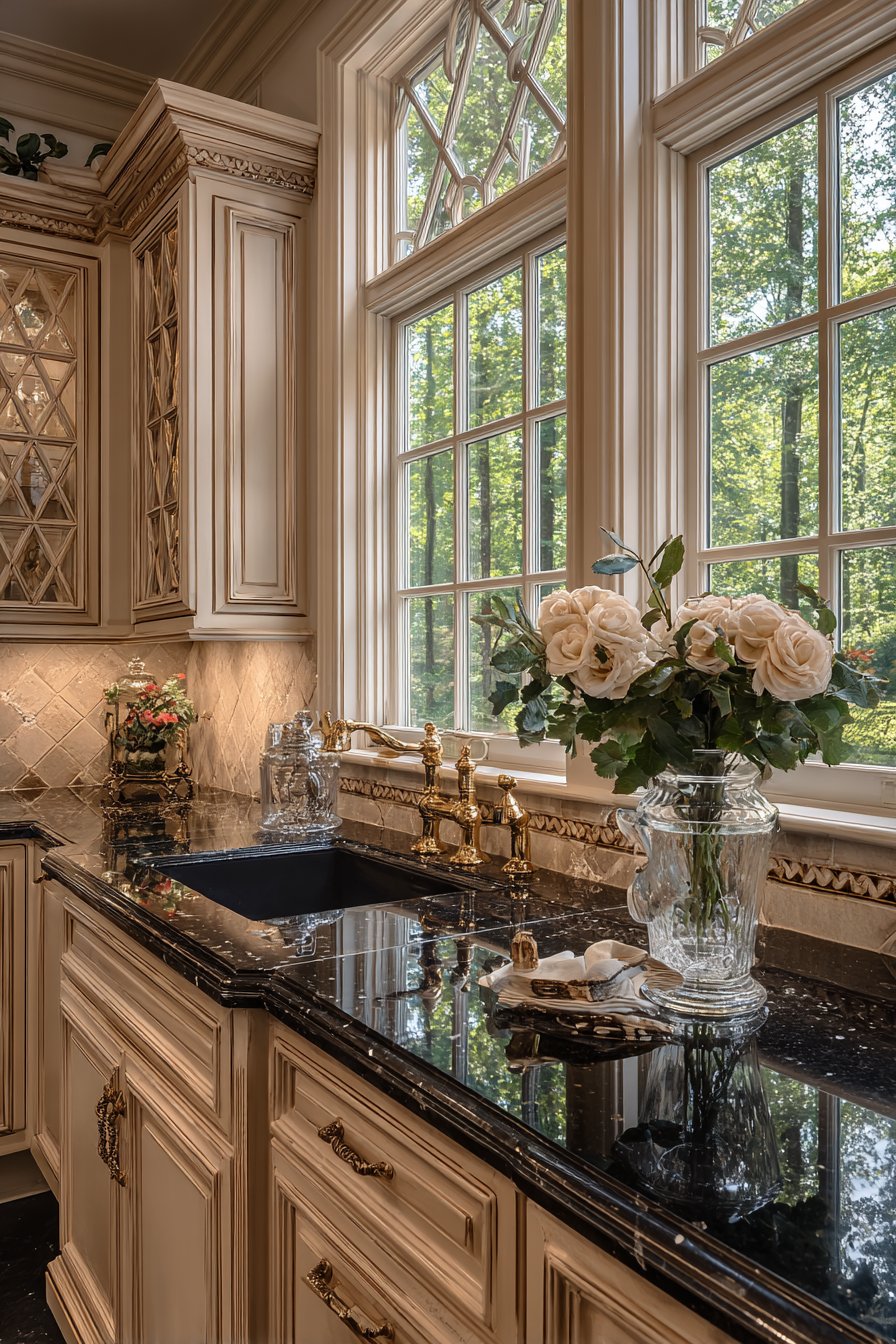
Black granite countertops provide durable work surfaces with a polished finish that catches and reflects natural light, creating moments of sparkle and depth throughout the space. The dark countertops create dramatic contrast with the warm taupe cabinetry, defining the work surfaces clearly and adding gravitas to the design.
Black granite’s reputation for durability and stain resistance makes it an eminently practical choice for busy kitchens, while its natural stone origin ensures that no two installations are exactly alike. The subtle variations in the granite’s pattern add visual interest without requiring additional decorative elements.
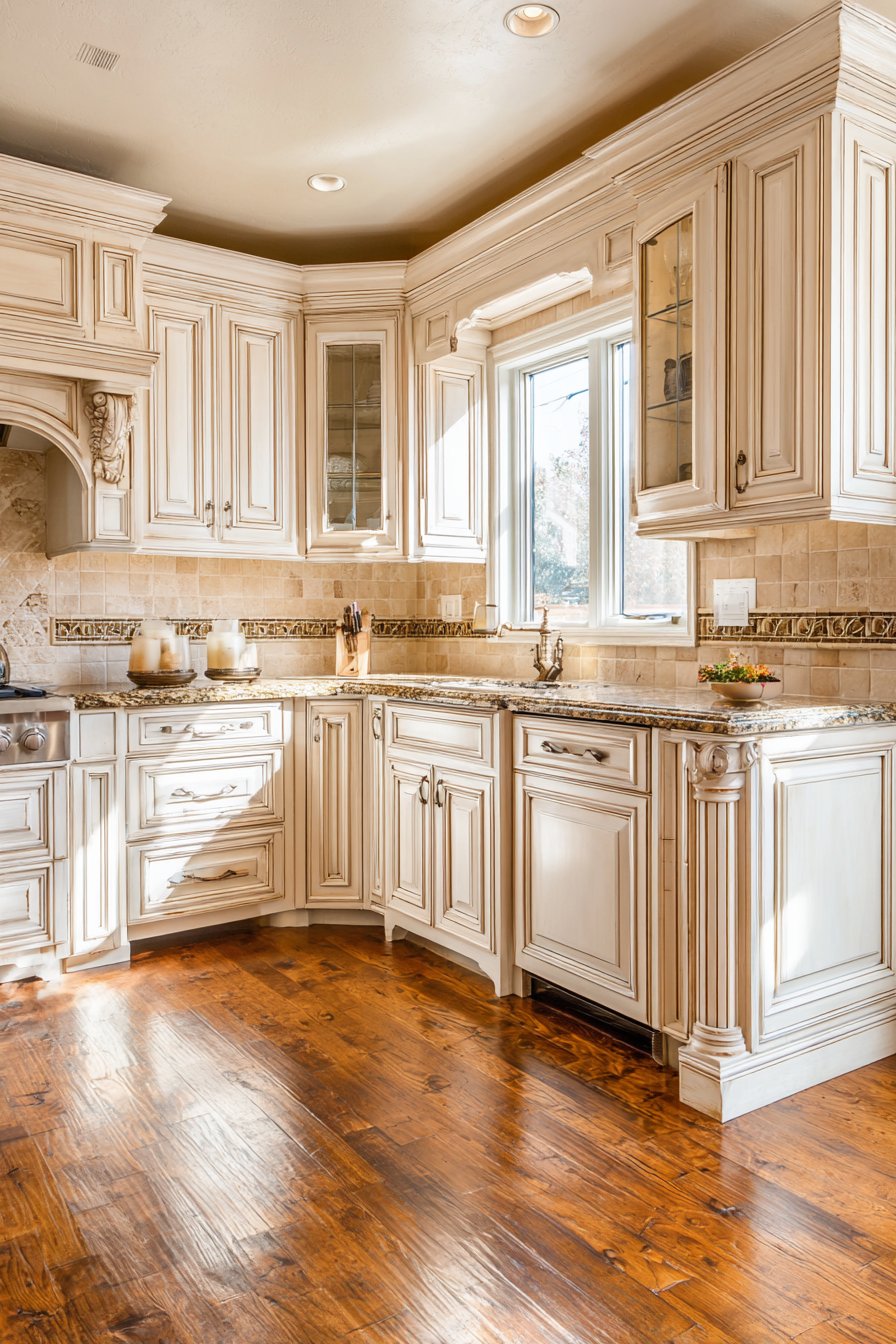
A decorative tile border accents the neutral backsplash, introducing a custom detail that elevates the space beyond builder-grade standards. This thoughtful addition demonstrates the importance of small, quality details in creating a truly timeless kitchen.
Antique brass cabinet pulls and faucet add refined detail and warm metallic notes that complement the taupe cabinetry beautifully. The choice of antique brass over more contemporary finishes represents a commitment to materials that age gracefully, developing a rich patina over time that enhances rather than diminishes their beauty.
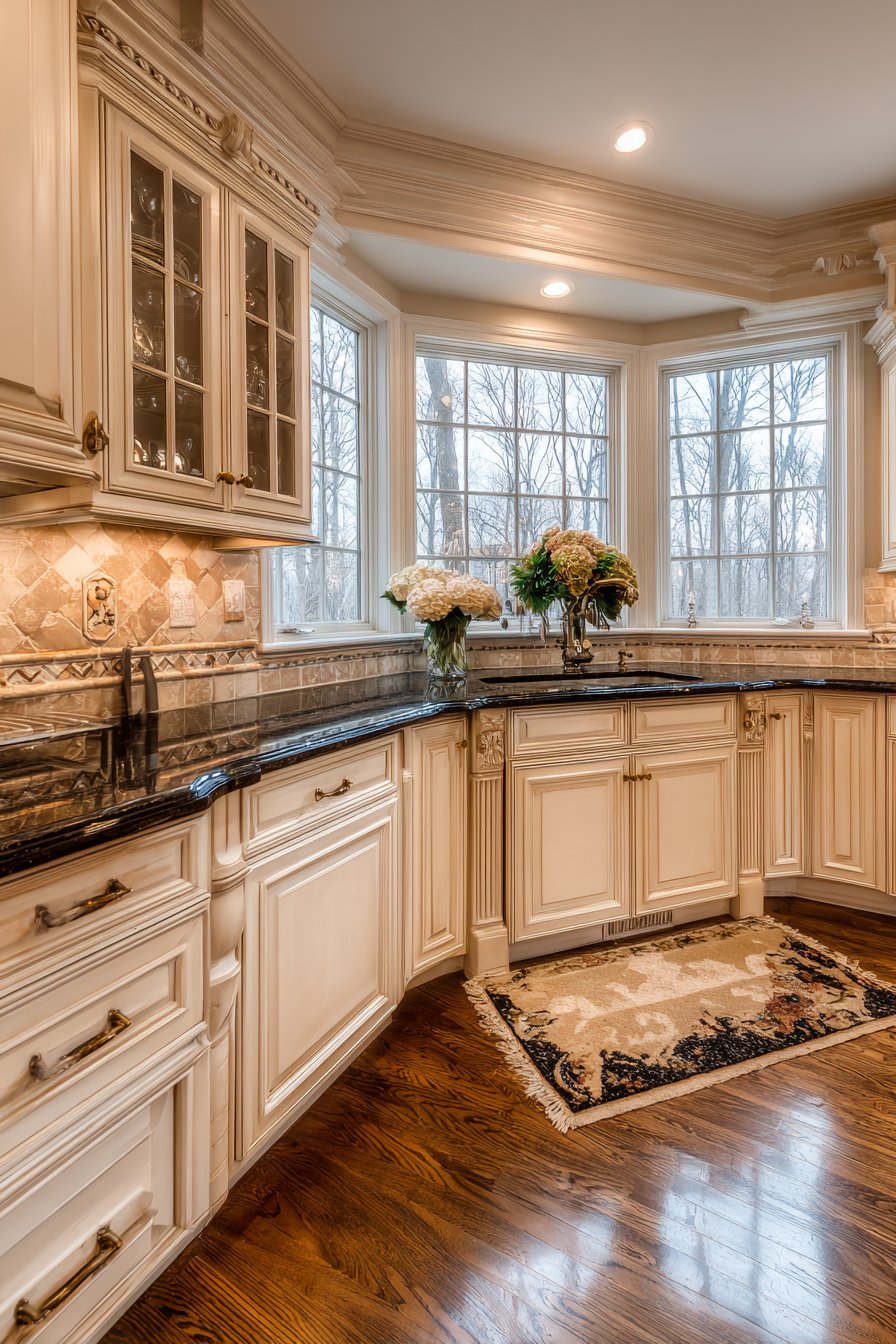
Double-hung windows allow for ventilation and light control while maintaining a traditional aesthetic that has served kitchens for centuries. The natural light streaming through these windows creates dynamic patterns throughout the day, highlighting the sophisticated color palette and emphasizing the quality materials used throughout the space. The L-shaped configuration positions the sink beneath one window while providing ample counter space on either side, creating an efficient workspace that accommodates multiple cooks and various activities simultaneously.
Key Design Tips:
- Utilize the L-shaped layout to create an efficient work triangle between sink, stove, and refrigerator
- Choose raised-panel cabinetry in neutral colors like taupe or grey for traditional sophistication
- Install black granite countertops for dramatic contrast, durability, and timeless appeal
- Add decorative tile borders or insets to personalize the backsplash without overwhelming the design
- Select antique brass hardware and fixtures for warmth and a finish that improves with age
- Position windows to maximize natural light while maintaining privacy and energy efficiency
5. Butcher Block Beauty with Vintage Charm
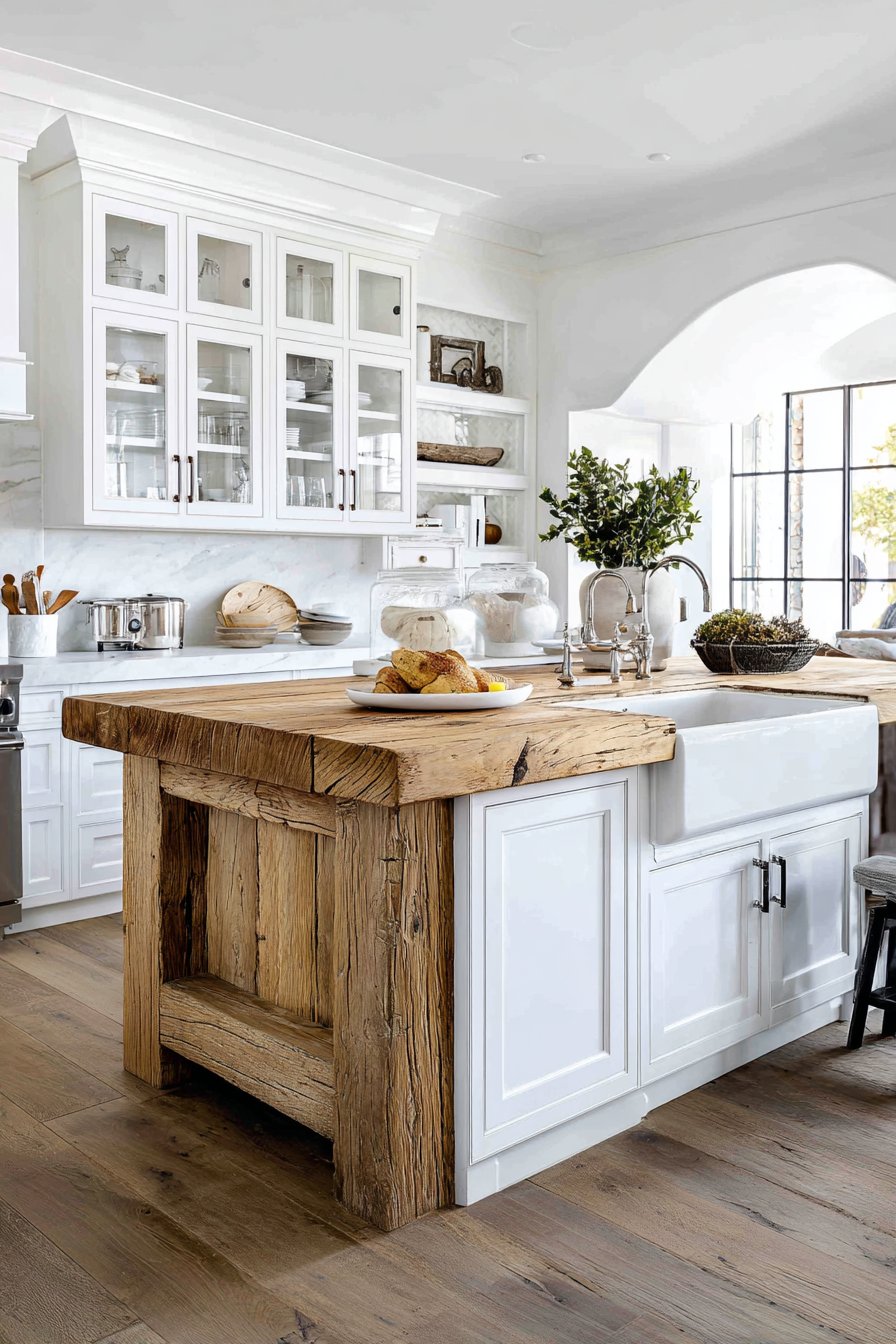
A large center island topped with thick butcher block becomes the undisputed heart of this kitchen, showcasing natural wood variations and gentle wear patterns that tell the story of countless meals prepared and shared. The substantial thickness of the butcher block conveys quality and permanence, while the natural edge detailing celebrates the organic beauty of wood in its near-natural state.
This island serves as preparation surface, casual dining spot, and gathering place, embodying the multifunctional nature of truly successful kitchen design. The warm tones and tactile surface invite interaction and use, making the island a natural focal point where family and friends instinctively congregate.
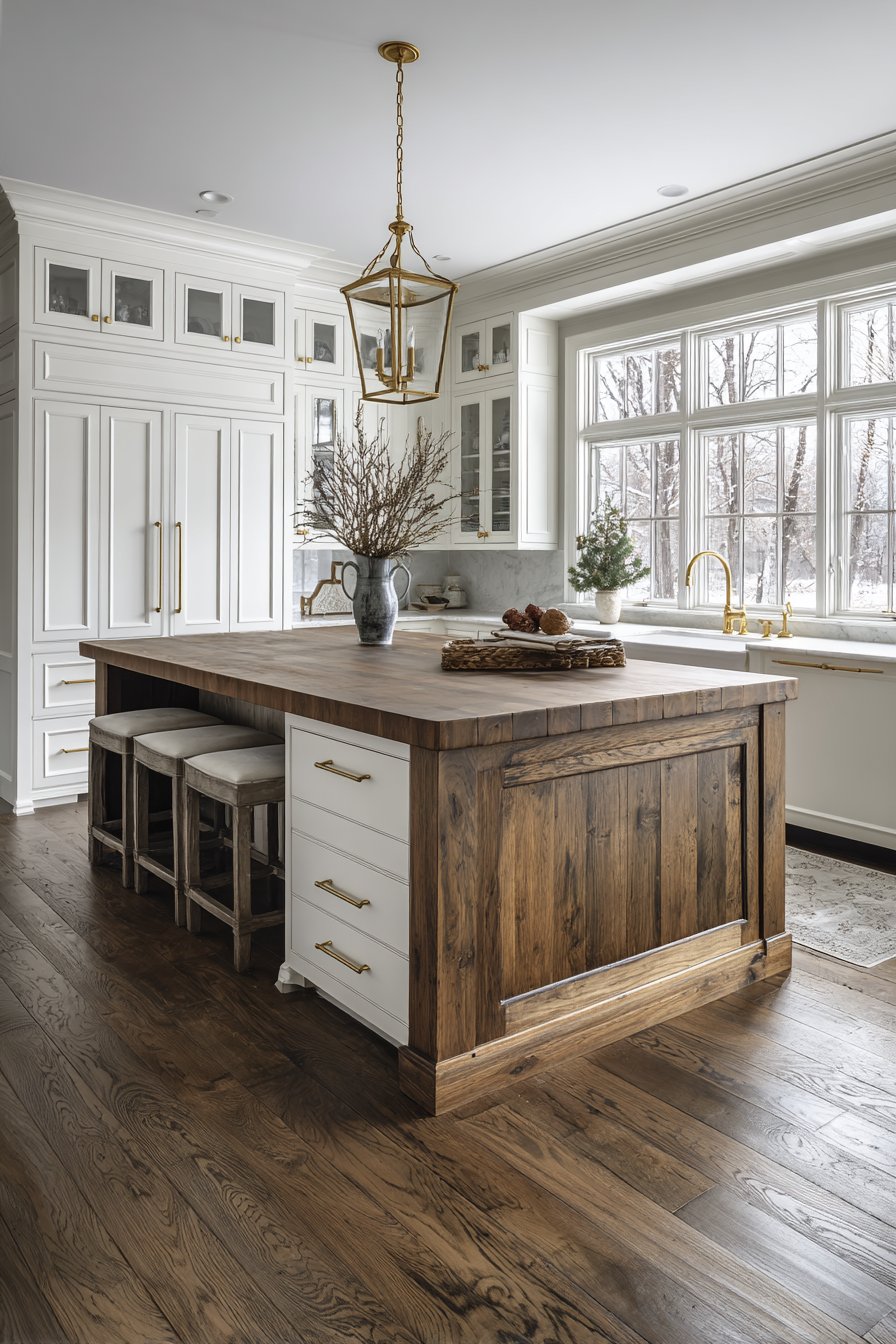
Perimeter cabinets in classic white feature glass-front uppers that display vintage glassware, creating depth and visual interest while maintaining the bright, open feeling essential to timeless design. The transparency of the glass-front cabinets prevents the upper portion of the kitchen from feeling heavy or oppressive, allowing light to pass through and creating an opportunity to display beautiful objects.
The vintage glassware collection becomes part of the room’s decoration, with various shapes, sizes, and subtle color variations adding personality and charm without requiring constant updates or changes.
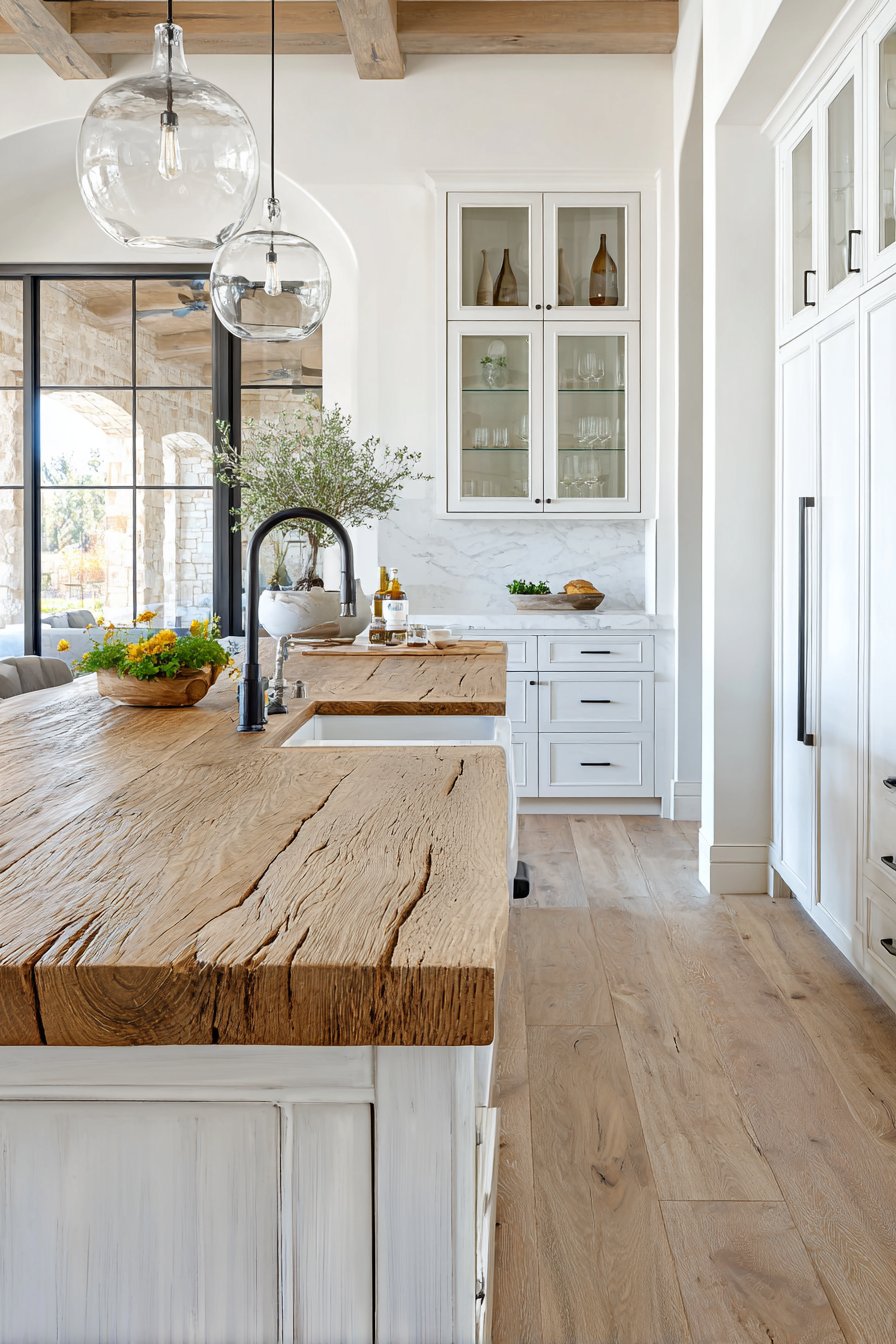
An apron-front sink with a graceful gooseneck faucet sits below the window, creating a classic vignette that has graced beautiful kitchens for over a century. The exposed front of the sink adds architectural detail and traditional character, while the high-arc faucet provides practical clearance for large pots and makes filling vessels easier. This combination of elements creates a workspace that’s both beautiful and highly functional, demonstrating that timeless design never requires choosing between aesthetics and practicality.
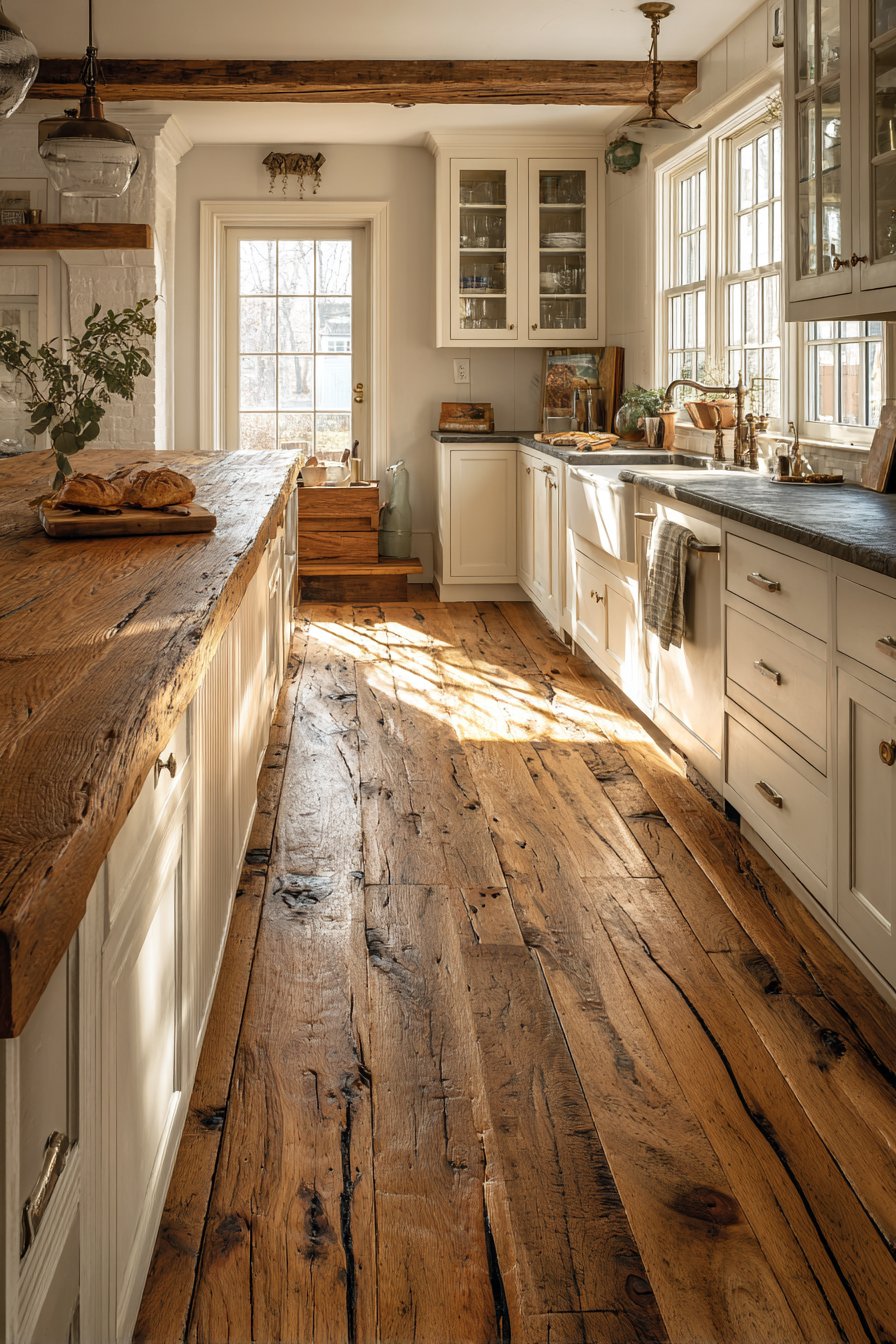
Wide-plank oak flooring shows authentic grain patterns and natural color variation, providing a foundation that anchors the design with organic beauty and proven durability. The wider planks create a sense of expansiveness and reference historical flooring practices when resources were more abundant and quality was prioritized over economy. The natural character marks in the oak—subtle color variations, mineral streaks, and grain patterns—ensure that the floor will never look mass-produced or generic.
Key Design Tips:
- Choose thick butcher block for the island to create a substantial, high-quality focal point
- Install glass-front upper cabinets to display beautiful dishware while maintaining visual openness
- Select an apron-front sink for traditional character and architectural detail
- Pair the sink with a gooseneck faucet for classic elegance and practical functionality
- Use wide-plank hardwood flooring to create a sense of space and reference historical precedent
- Embrace natural materials that show gentle wear patterns as character rather than damage
6. Soft Color Palette with Natural Material Authenticity
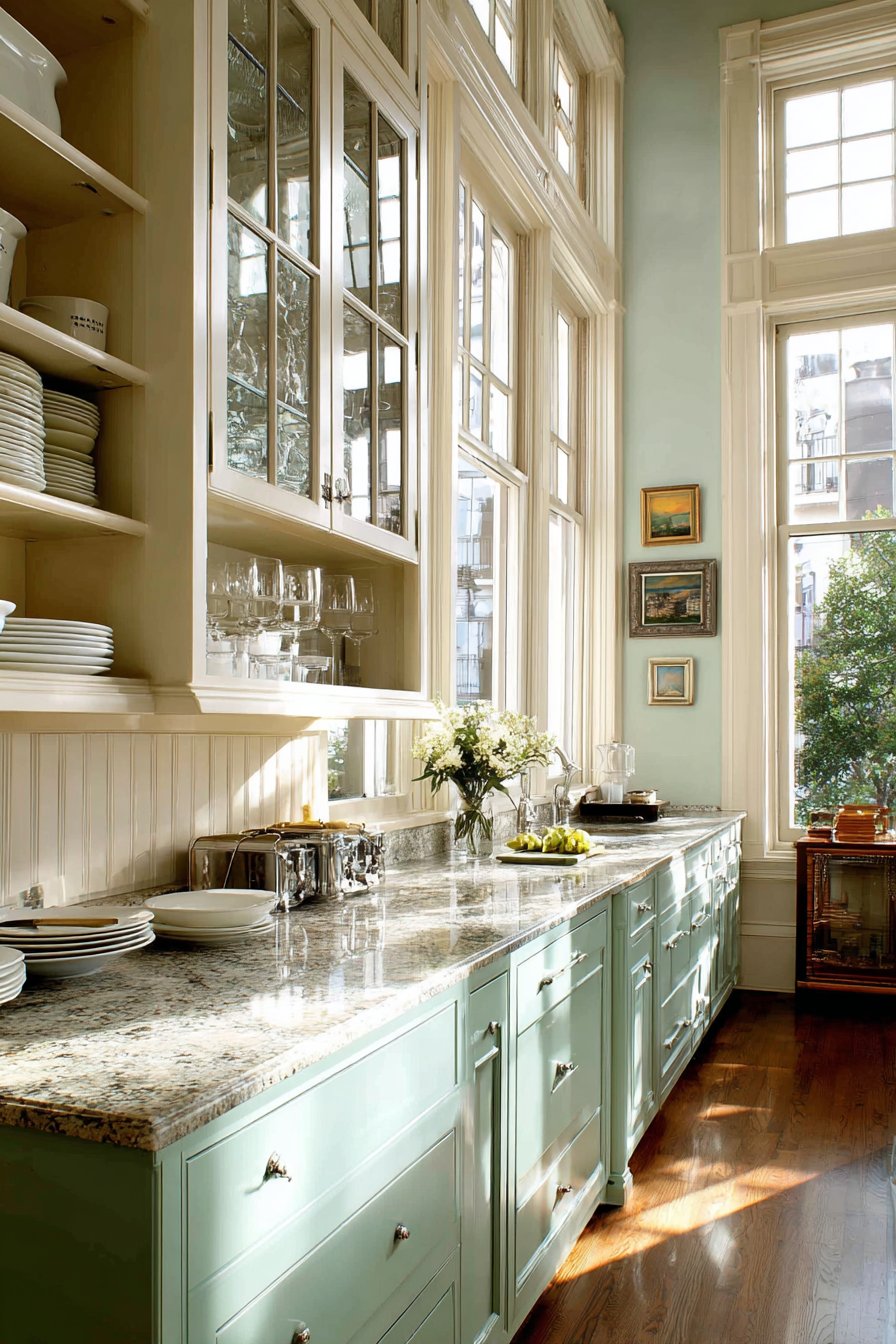
Traditional beadboard paneling on the island base, painted in soft sage green, creates a focal point that introduces gentle color while maintaining timeless appeal. The beadboard detail adds vertical texture and traditional craftsmanship, referencing historical building techniques that have proven their lasting beauty. The sage green represents a thoughtful departure from pure neutrals, introducing nature-inspired color that feels both fresh and grounded. This soft, muted green has appeared in beautiful interiors for centuries, proving its ability to remain relevant across changing design eras.
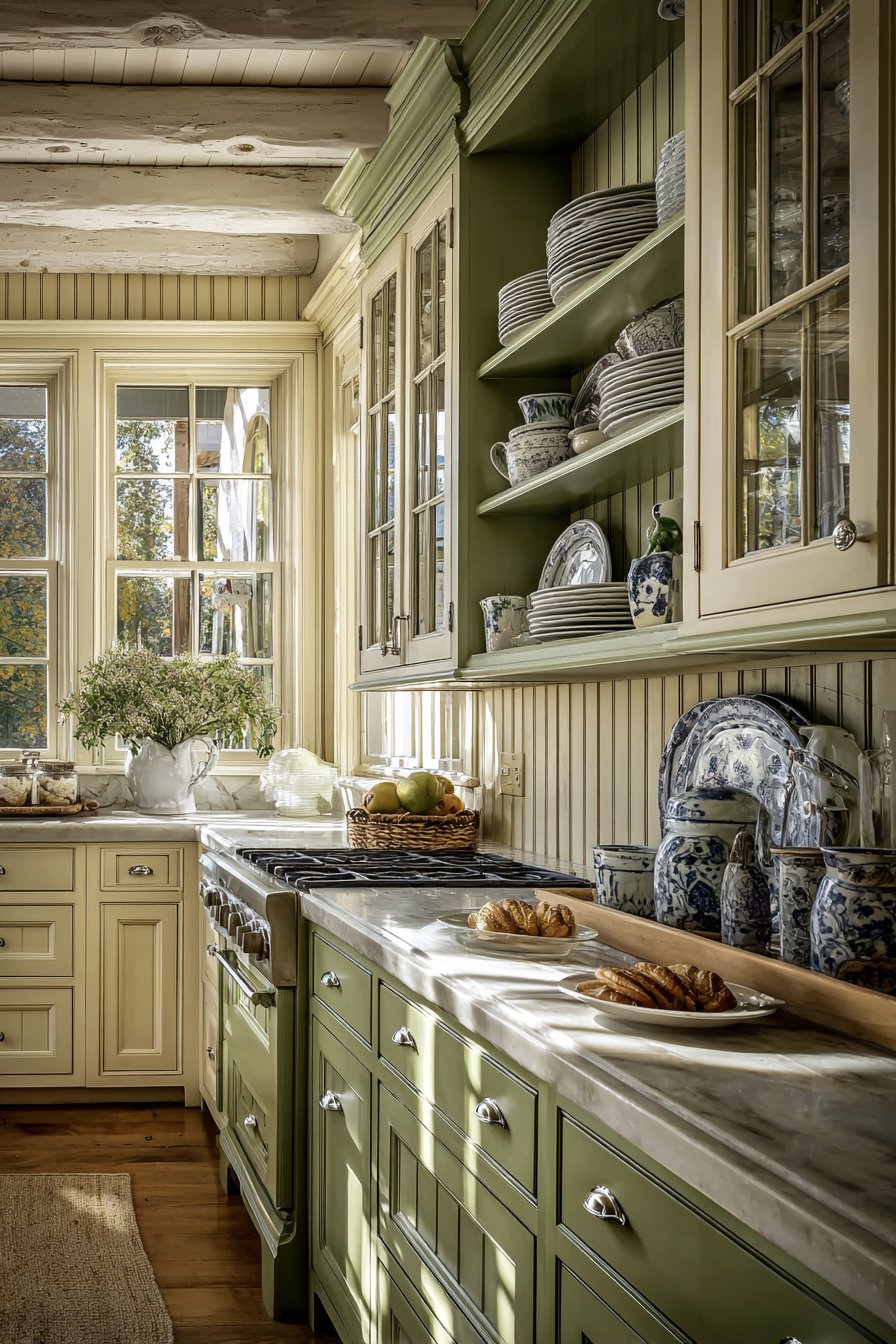
The sage green island contrasts beautifully with cream perimeter cabinetry, creating visual distinction between different functional zones while maintaining overall harmony. This two-tone approach adds sophistication and depth without creating jarring contrast or competing focal points. The cream cabinetry provides warmth and brightness, ensuring the space feels open and inviting despite the introduction of colored elements. This balanced color palette demonstrates restraint and confidence, allowing the quality of materials and craftsmanship to shine.
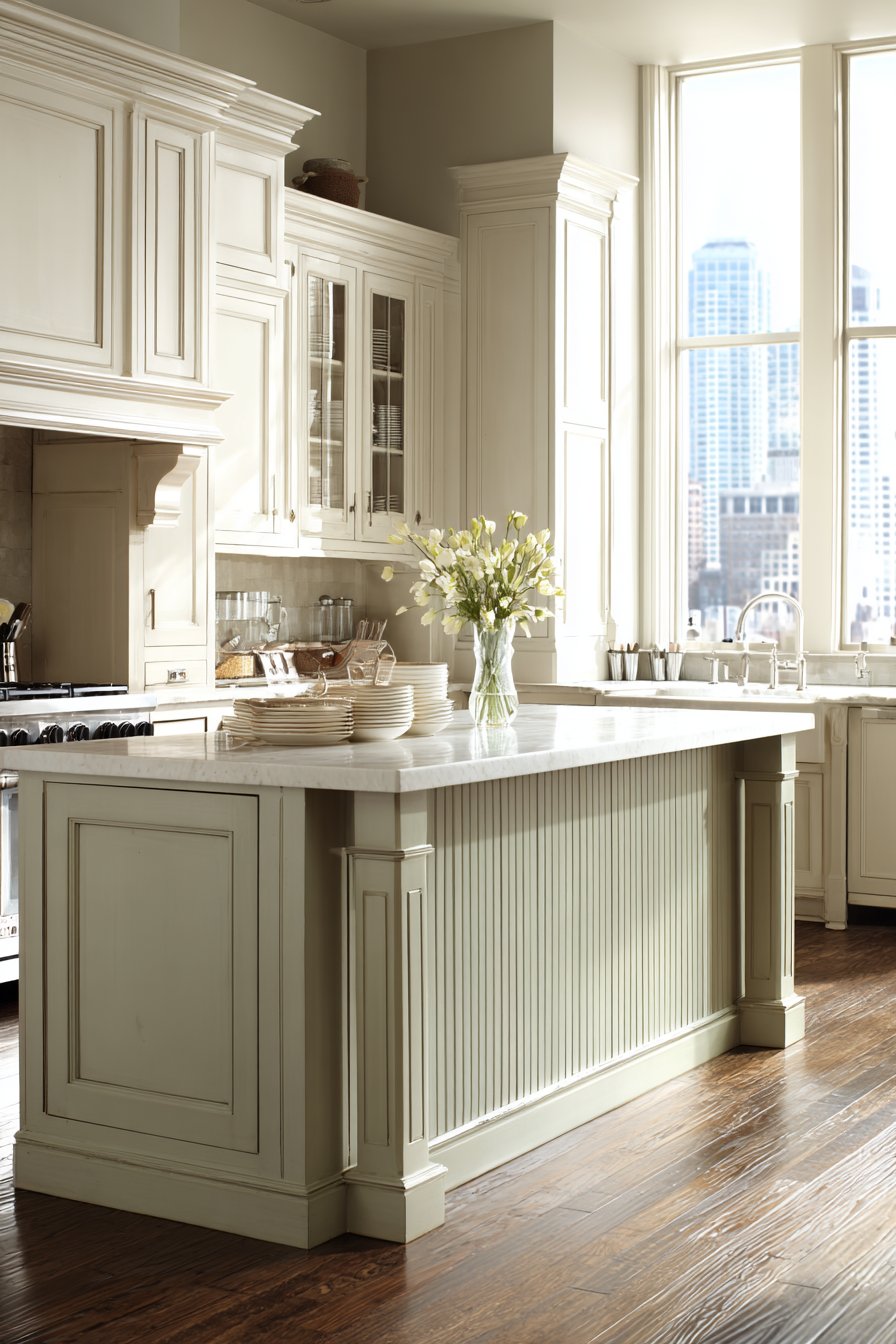
Soapstone countertops display characteristic subtle veining and a distinctive matte finish that sets them apart from more common granite or marble. Soapstone has been used in kitchen applications for hundreds of years, prized for its heat resistance, durability, and unique aesthetic qualities.
The matte surface doesn’t show fingerprints or water spots as readily as polished stone, making it exceptionally livable and low-maintenance. Over time, soapstone develops a rich patina as natural oils darken the surface, creating depth and character that enhance its beauty.
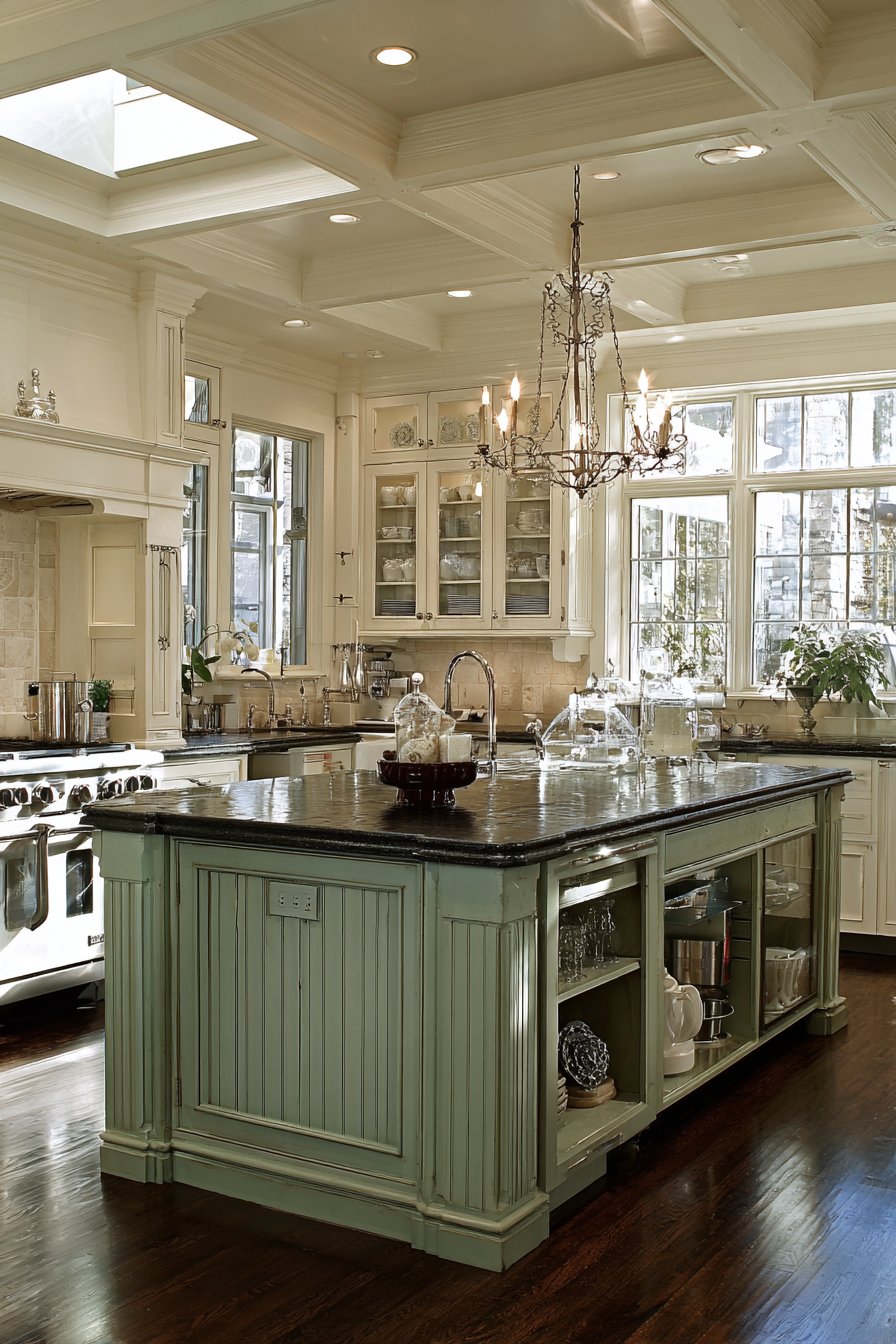
Open plate racks and glass-front cabinets reveal everyday dishware, celebrating the beauty of functional objects and maintaining visual transparency. Polished nickel hardware maintains classic appeal with a finish that works beautifully with both the sage green and cream cabinetry. Natural daylight streaming through multiple windows highlights the balanced composition and creates a bright, welcoming atmosphere. The quality of light in this kitchen changes throughout the day, creating an ever-evolving environment that maintains interest and connection to the natural world.
Key Design Tips:
- Introduce soft, nature-inspired colors like sage green on the island for interest without overwhelming the space
- Use beadboard paneling for traditional texture and craftsmanship detail
- Choose soapstone countertops for unique beauty, durability, and a finish that improves with age
- Install open plate racks to display beautiful everyday dishware as part of the room’s decoration
- Select polished nickel hardware for classic appeal and versatility with various cabinet colors
- Position multiple windows to maximize natural light and create dynamic, changing illumination
7. Galley Efficiency with Symmetrical Grace
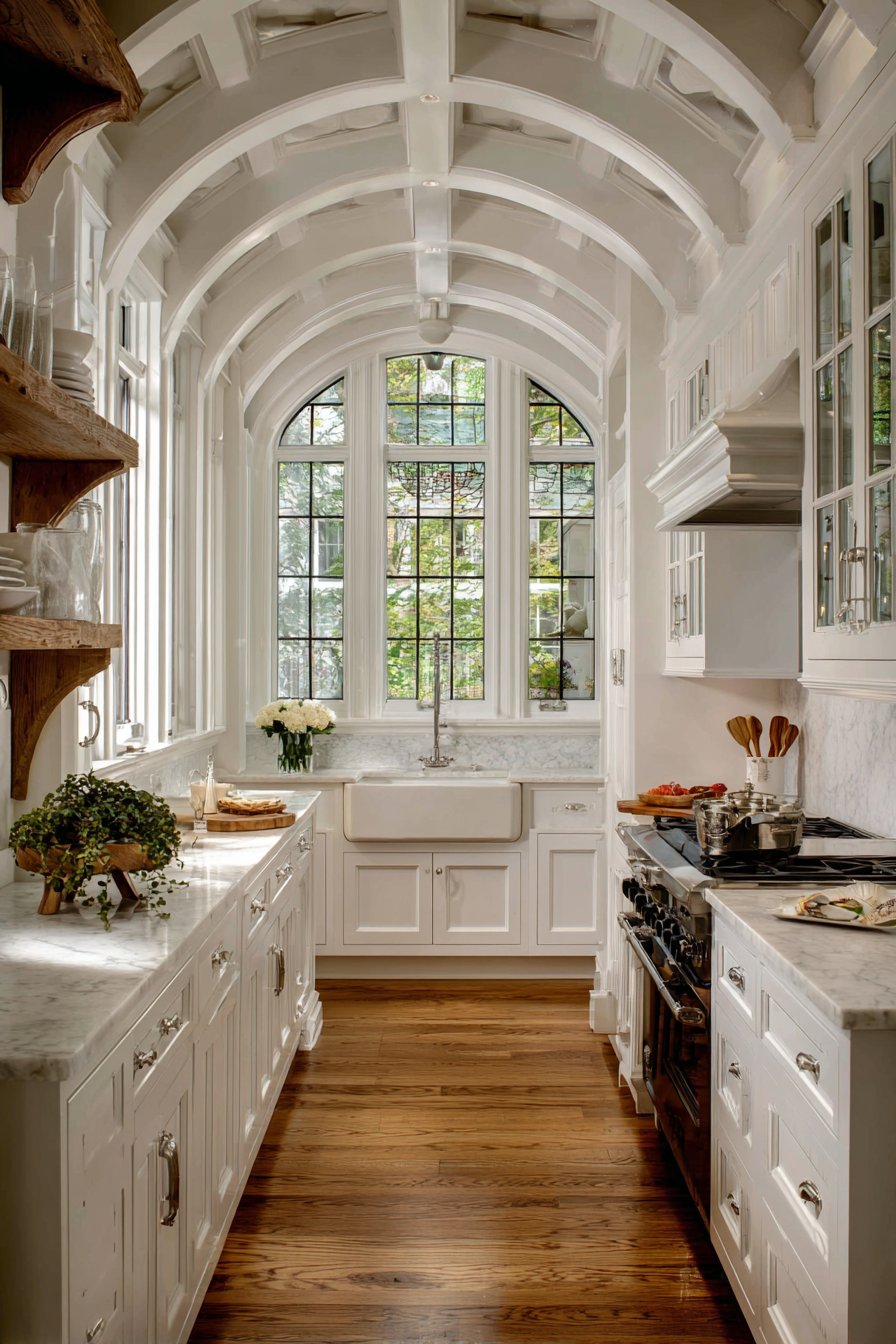
The classic galley layout demonstrates that efficient design and timeless beauty are not mutually exclusive, with symmetrical arrangement creating visual order and functional excellence. White cabinetry on both walls creates clean lines and maximum brightness, making this narrow configuration feel open and spacious rather than cramped.
The parallel arrangement establishes a natural workflow, with everything within easy reach and minimal steps required to move between work zones. This efficient layout has served kitchens aboard ships, in commercial settings, and in homes for generations, proving its fundamental soundness.
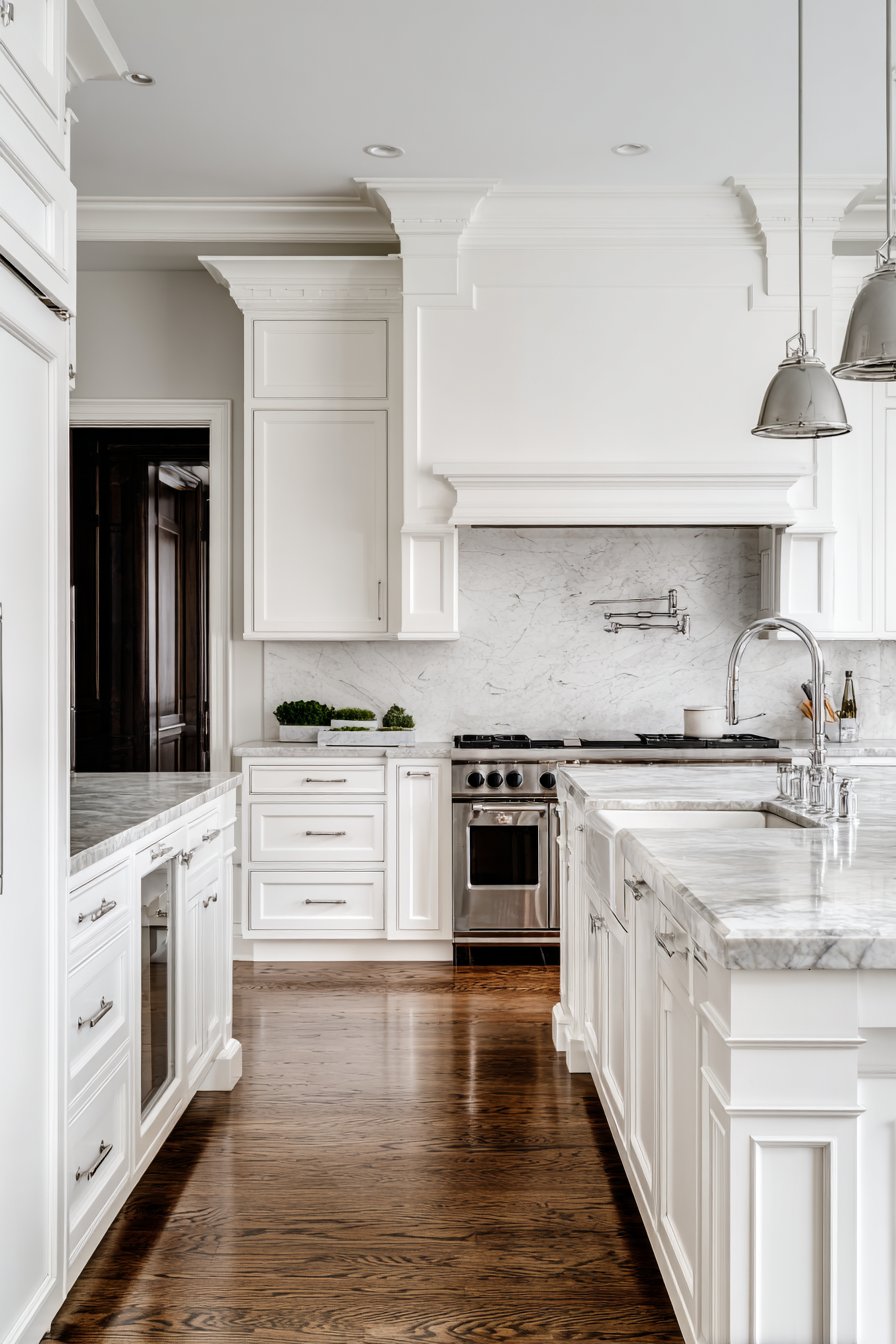
Honed limestone countertops provide neutral work surfaces with natural variation that prevents monotony while maintaining the calm, cohesive feeling essential to successful galley design. The limestone’s subtle texture and soft coloration complement the white cabinetry without competing for attention, allowing the clean lines and efficient layout to take center stage. The honed finish offers practical advantages, hiding wear and water spots while providing a softer, more organic aesthetic than polished stone.
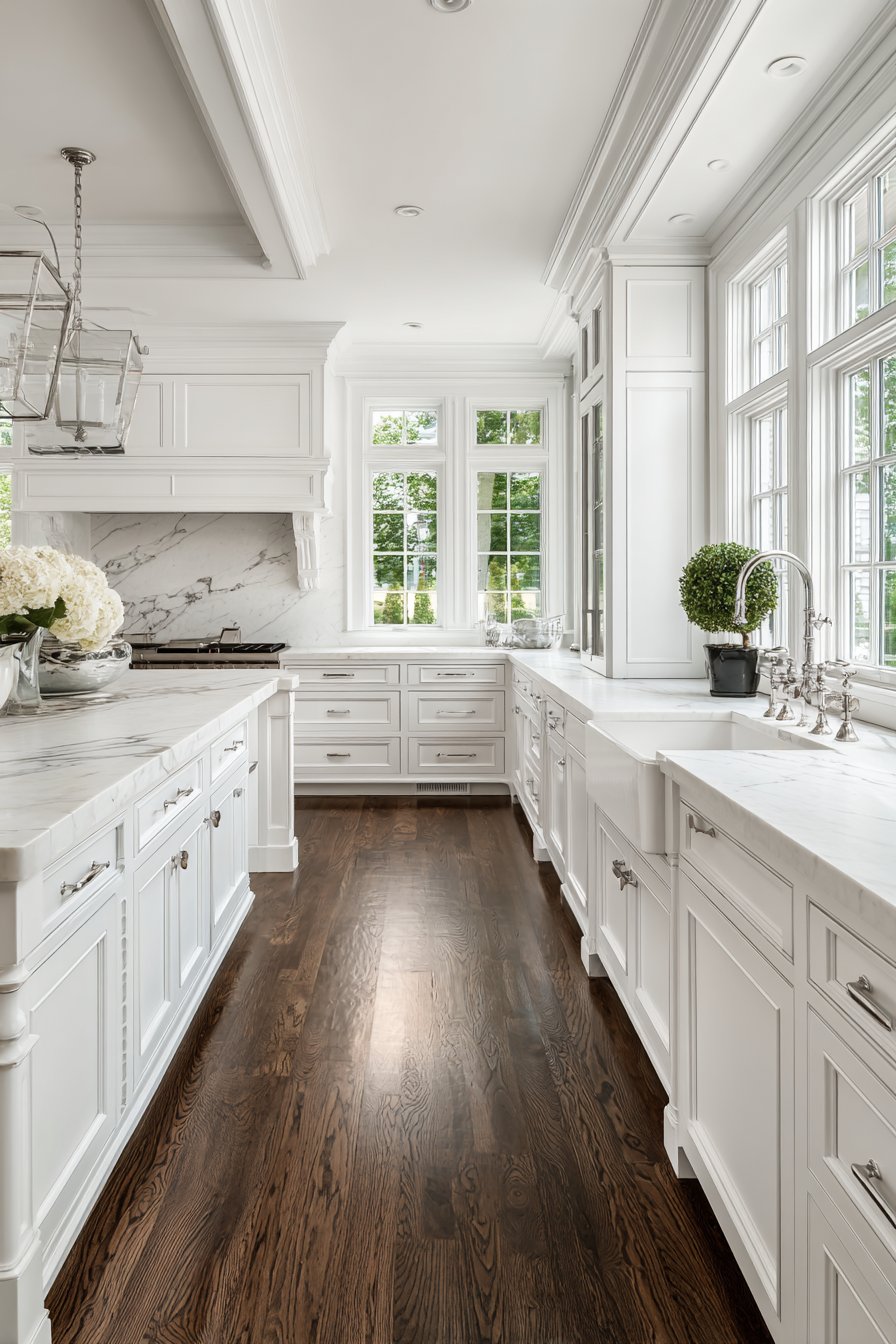
A vintage-style bridge faucet complements the traditional aesthetic, its elegant proportions and classic lines adding distinction to the sink area. This style of faucet, with its exposed bridge connecting hot and cold supplies, references early 20th-century design while offering modern performance and reliability. The attention to this detail elevates the space beyond basic functionality, demonstrating that even utilitarian elements can contribute to the overall aesthetic vision.
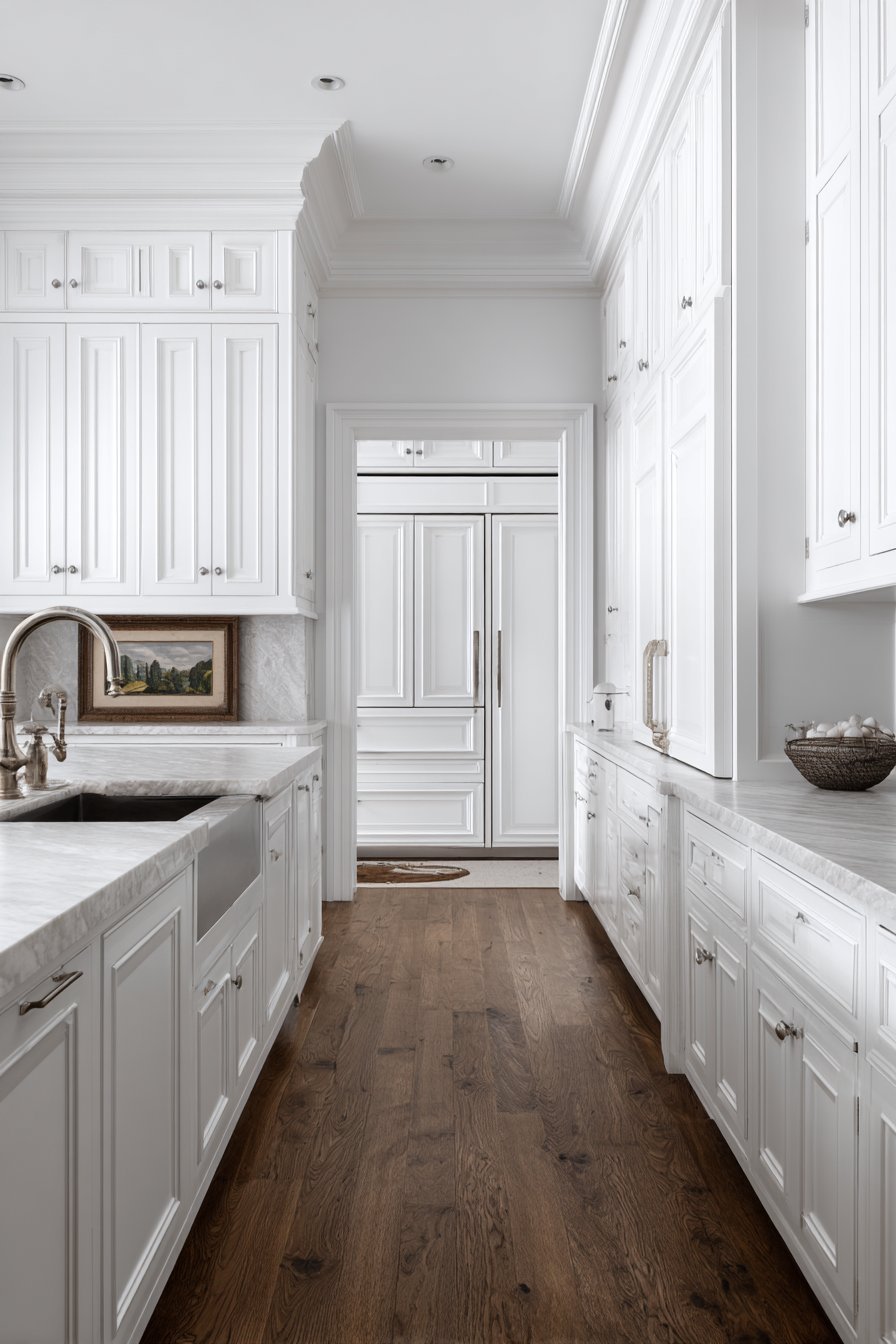
Hardwood floors in medium walnut tone show natural character marks, including subtle grain variations, mineral streaks, and color shifts that ensure authentic beauty. The medium tone provides visual warmth without darkening the space, essential in a galley layout where maintaining brightness is crucial. The walnut’s natural richness adds depth and sophistication, grounding the white cabinetry and creating balance. Soft diffused lighting emphasizes the practical elegance and material authenticity of this enduring design, proving that even compact kitchens can achieve timeless sophistication.
Key Design Tips:
- Embrace the galley layout for ultimate efficiency in compact spaces
- Use white cabinetry on both walls to maximize brightness and create visual spaciousness
- Choose honed limestone countertops for subtle natural variation and practical maintenance
- Install a vintage-style bridge faucet to add character and reference historical design
- Select medium-toned hardwood flooring to add warmth without darkening the space
- Ensure adequate lighting throughout the galley to maintain functionality and openness
8. Architectural Details with Layered Neutral Sophistication
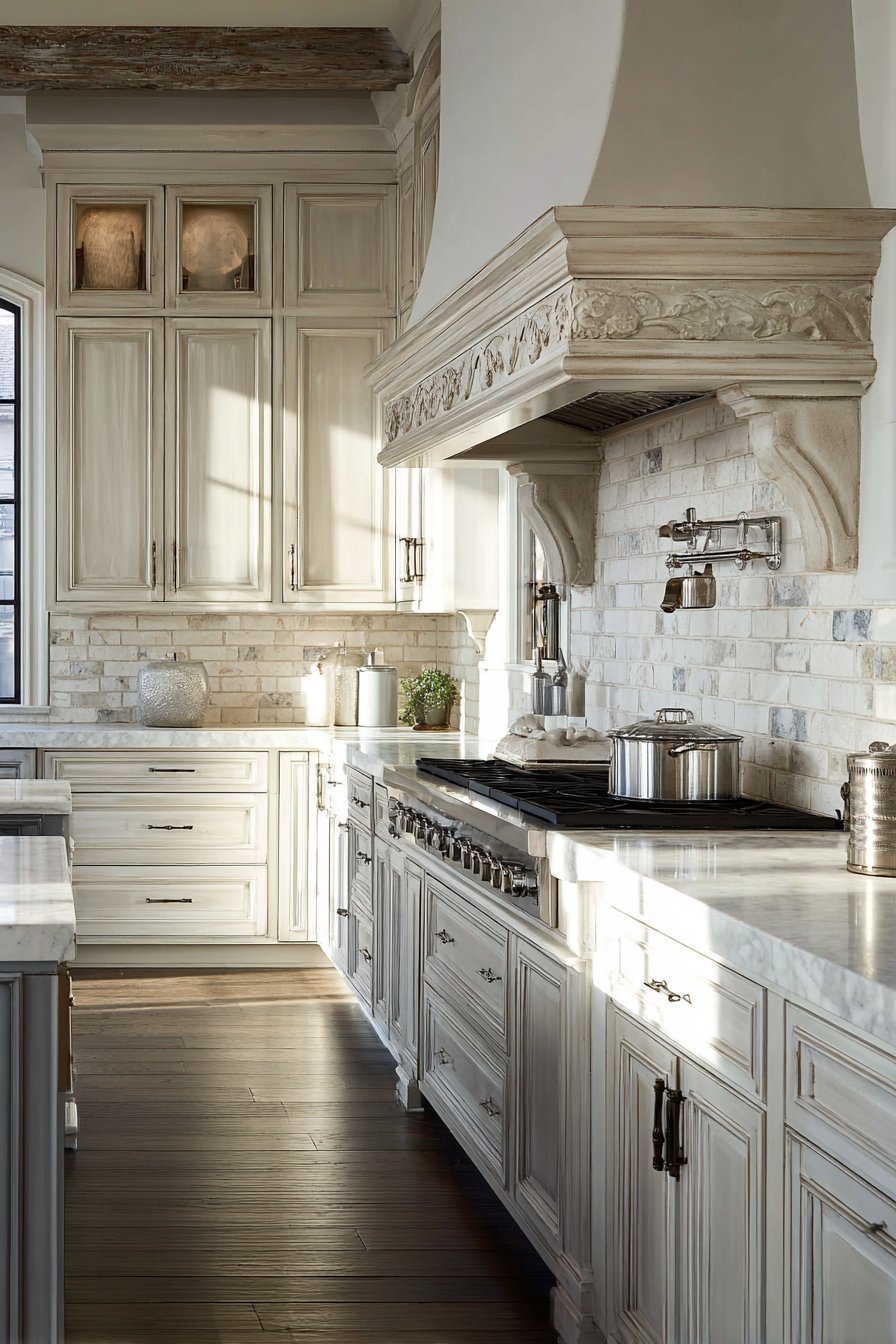
Classic crown molding details on custom cabinetry finished in warm grey create architectural distinction that elevates this kitchen beyond standard installations. The crown molding adds traditional refinement and creates a finished, polished appearance where the cabinetry meets the ceiling.
This attention to detail demonstrates the importance of quality trim work and finishing touches in creating truly timeless spaces. The warm grey finish provides sophisticated color that works beautifully with various design elements while maintaining the neutral versatility essential to enduring appeal.
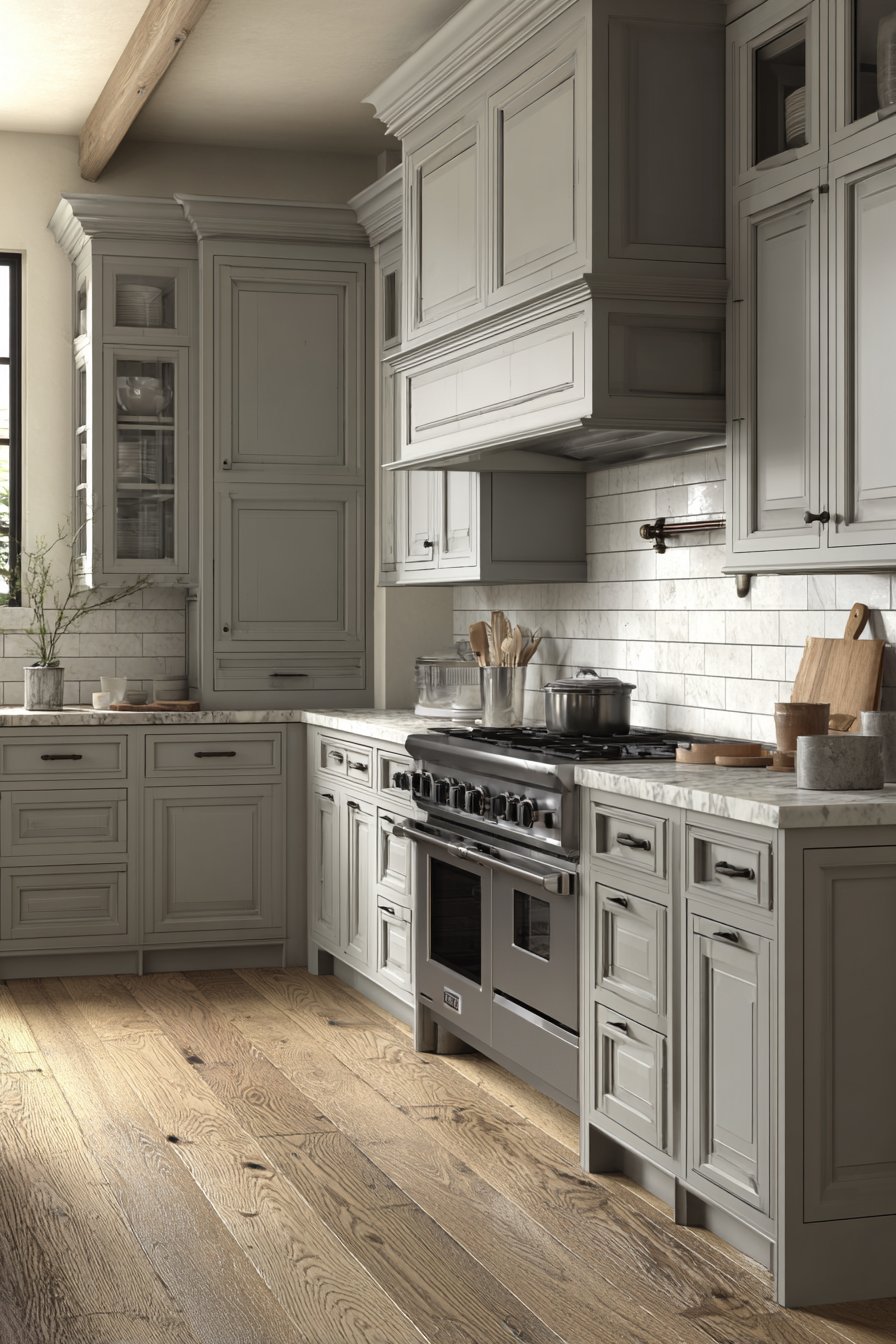
A professional-style range with pot filler faucet serves as the cooking zone centerpiece, combining exceptional functionality with visual impact. The pot filler, mounted on the wall above the range, eliminates the need to carry heavy pots of water from sink to stove, representing thoughtful design that improves daily life.
This practical luxury has become a hallmark of well-designed kitchens, offering convenience that never goes out of style. The professional-style range signals a commitment to cooking excellence and creates a focal point that anchors the entire space.
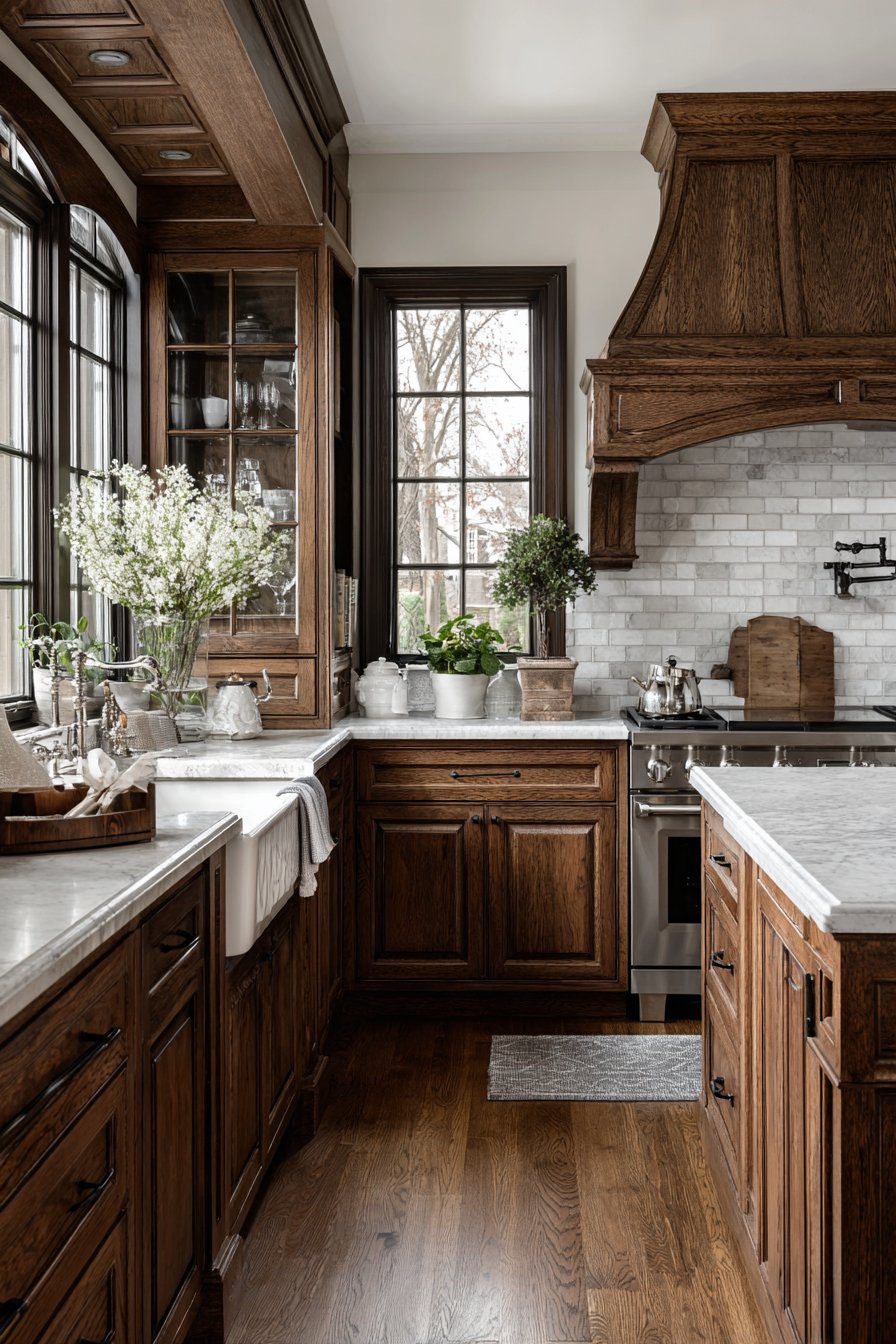
Marble subway tiles create an elevated backsplash with slight texture variation that adds subtle interest while maintaining the clean-lined aesthetic. The use of marble rather than ceramic for the subway tile pattern represents an upgrade that introduces natural stone beauty in an unexpected application.
Each tile displays unique veining and color variation, ensuring that even this classic pattern feels custom and distinctive. The slight dimensional variation in the marble creates shadow lines that add depth and visual texture.
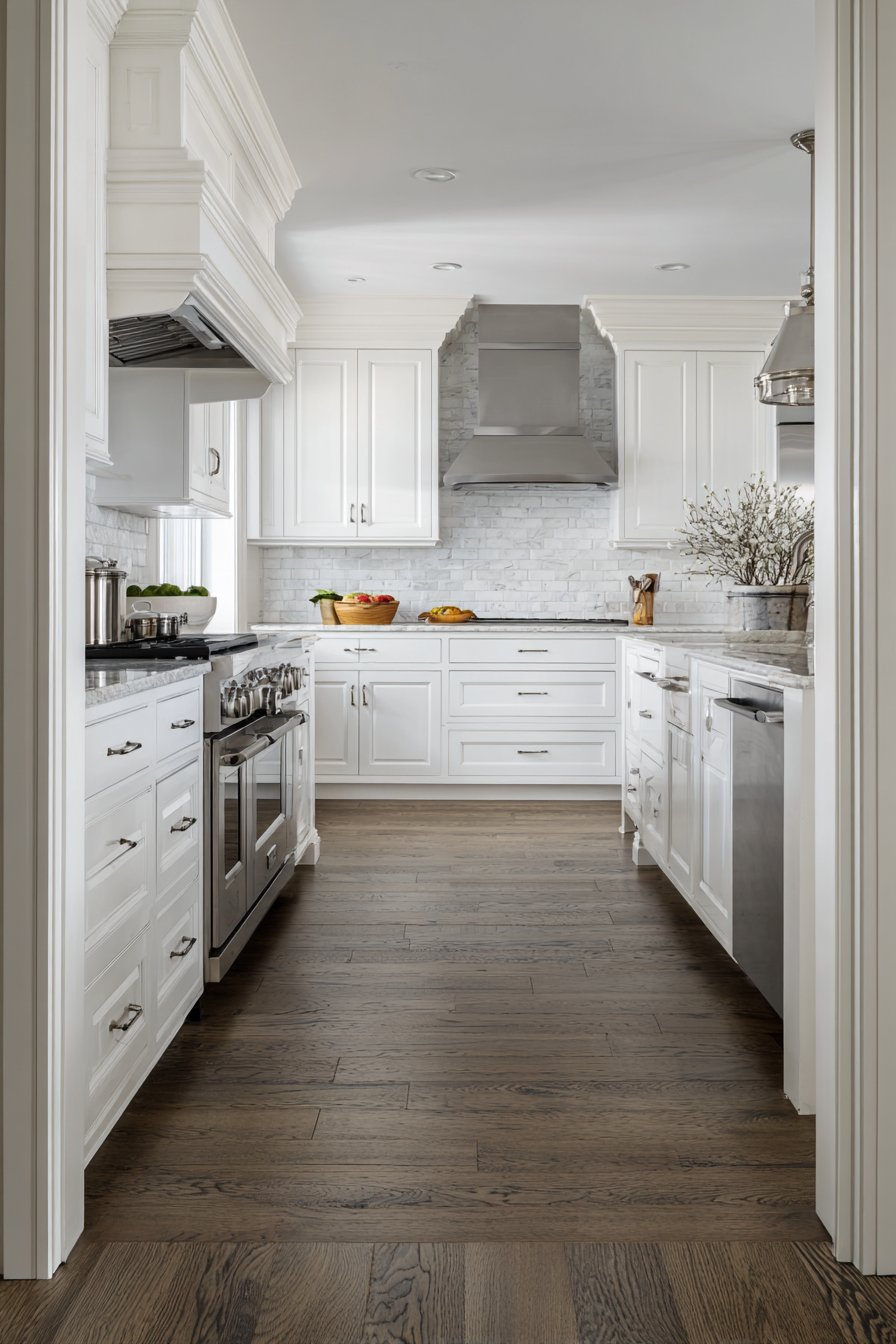
Aged bronze hardware and fixtures add sophisticated detail with warm metallic tones that develop richer patina over time. This finish choice represents a commitment to materials that improve with age rather than requiring replacement as trends shift. Natural light highlights the layered neutral palette—warm grey cabinetry, cream-toned marble, aged bronze metals—creating a sophisticated, harmonious environment. The traditional architectural elements, including crown molding, quality hardware, and attention to proportion, ensure longevity and lasting appeal.
Key Design Tips:
- Add crown molding to cabinetry for architectural refinement and a custom appearance
- Install a pot filler faucet above the range for convenience and professional functionality
- Use marble subway tiles for an elevated take on a classic backsplash pattern
- Choose aged bronze hardware and fixtures for warmth and finishes that improve over time
- Layer multiple neutral tones to create depth and sophistication without bold color
- Invest in professional-grade appliances that combine performance with timeless aesthetics
9. Breakfast Nook Charm with Navy Blue Sophistication
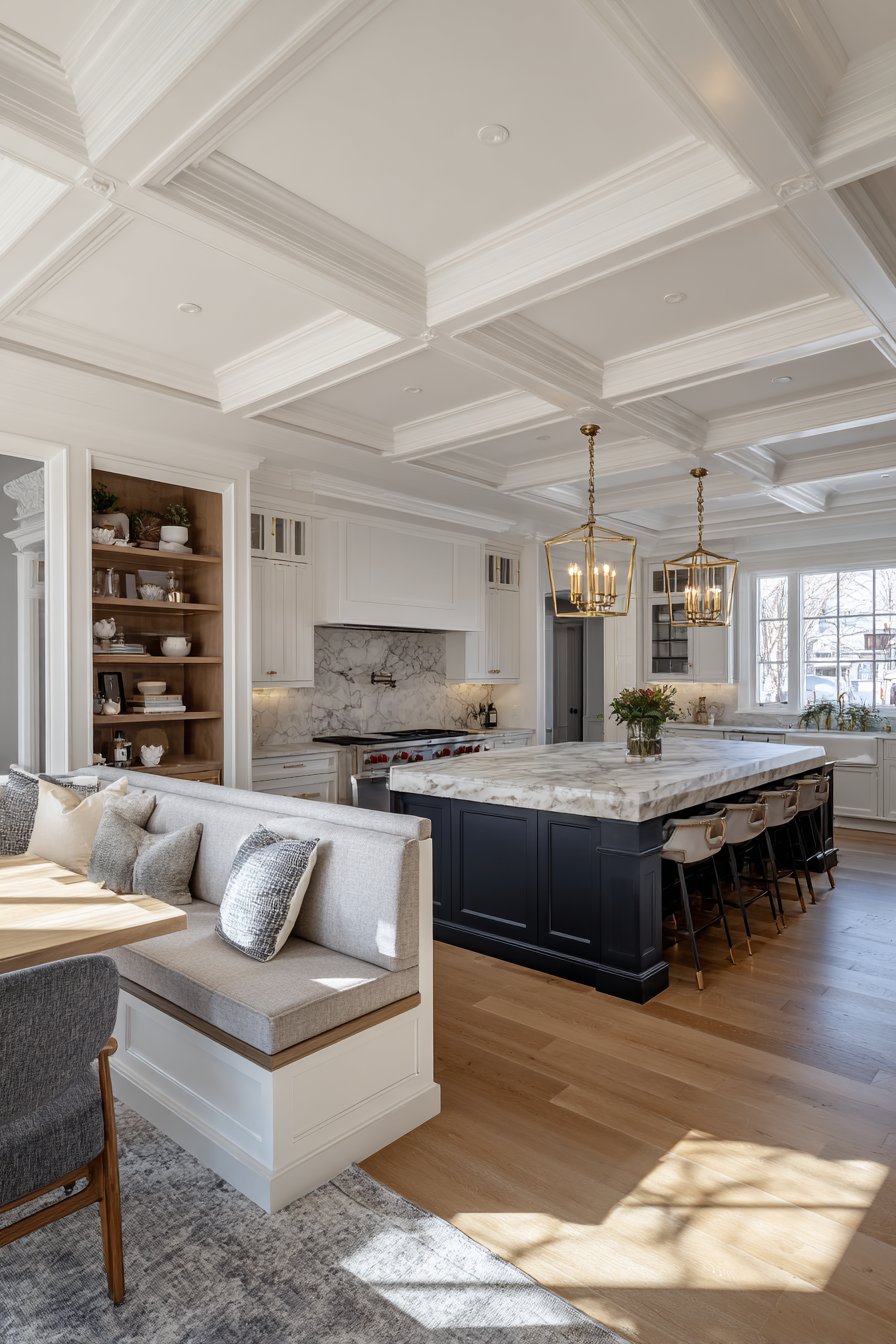
A built-in banquette seating area upholstered in durable linen fabric creates an inviting breakfast nook that encourages lingering over morning coffee and casual meals. The banquette maximizes seating capacity in a compact footprint while providing convenient storage beneath the cushions, demonstrating the multifunctional thinking essential to successful kitchen design.
The linen upholstery introduces soft texture and natural fiber beauty, offering comfort and durability that synthetic alternatives cannot match. The neutral fabric color ensures longevity, easily accommodating changing accent colors in pillows or table settings.
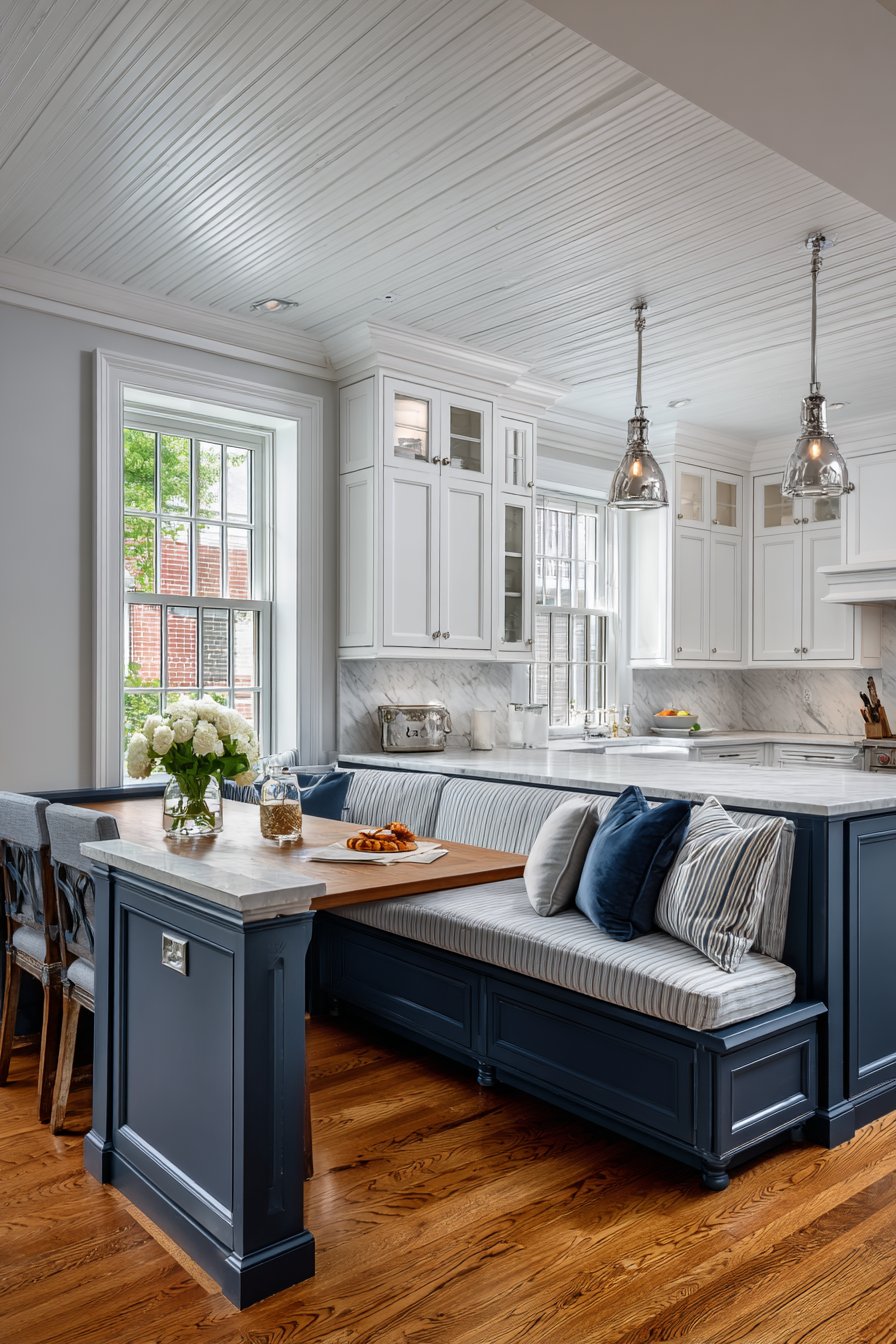
A white tongue-and-groove ceiling adds architectural interest above, drawing the eye upward and creating visual distinction for the breakfast nook area. This traditional ceiling treatment introduces texture and craftsmanship detail, referencing historical building techniques that add character and charm. The white finish maintains brightness and creates the perception of height, making the nook feel more spacious and airy. The linear pattern of the tongue-and-groove boards adds subtle directional movement that enhances the architectural quality of the space.
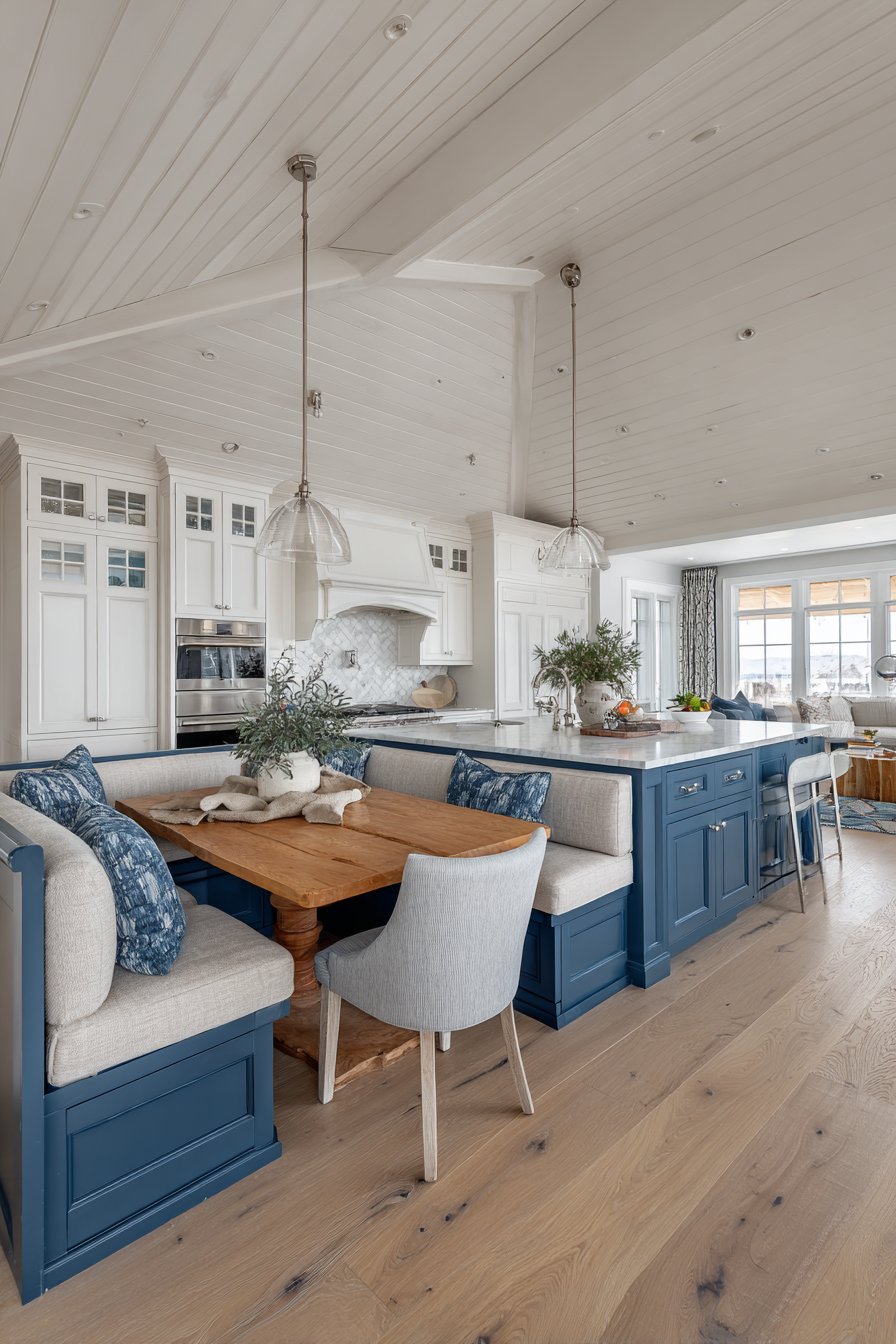
Classic cabinetry featuring navy blue lower cabinets paired with white uppers creates sophisticated contrast and visual interest throughout the kitchen proper. The navy blue represents a bold yet timeless color choice that has appeared in beautiful interiors for centuries, from traditional colonial homes to contemporary spaces.
This deep, saturated neutral works as a grounding element, providing visual weight at floor level while the white uppers maintain brightness and openness. The two-tone approach creates clear distinction between upper and lower zones while maintaining overall harmony.
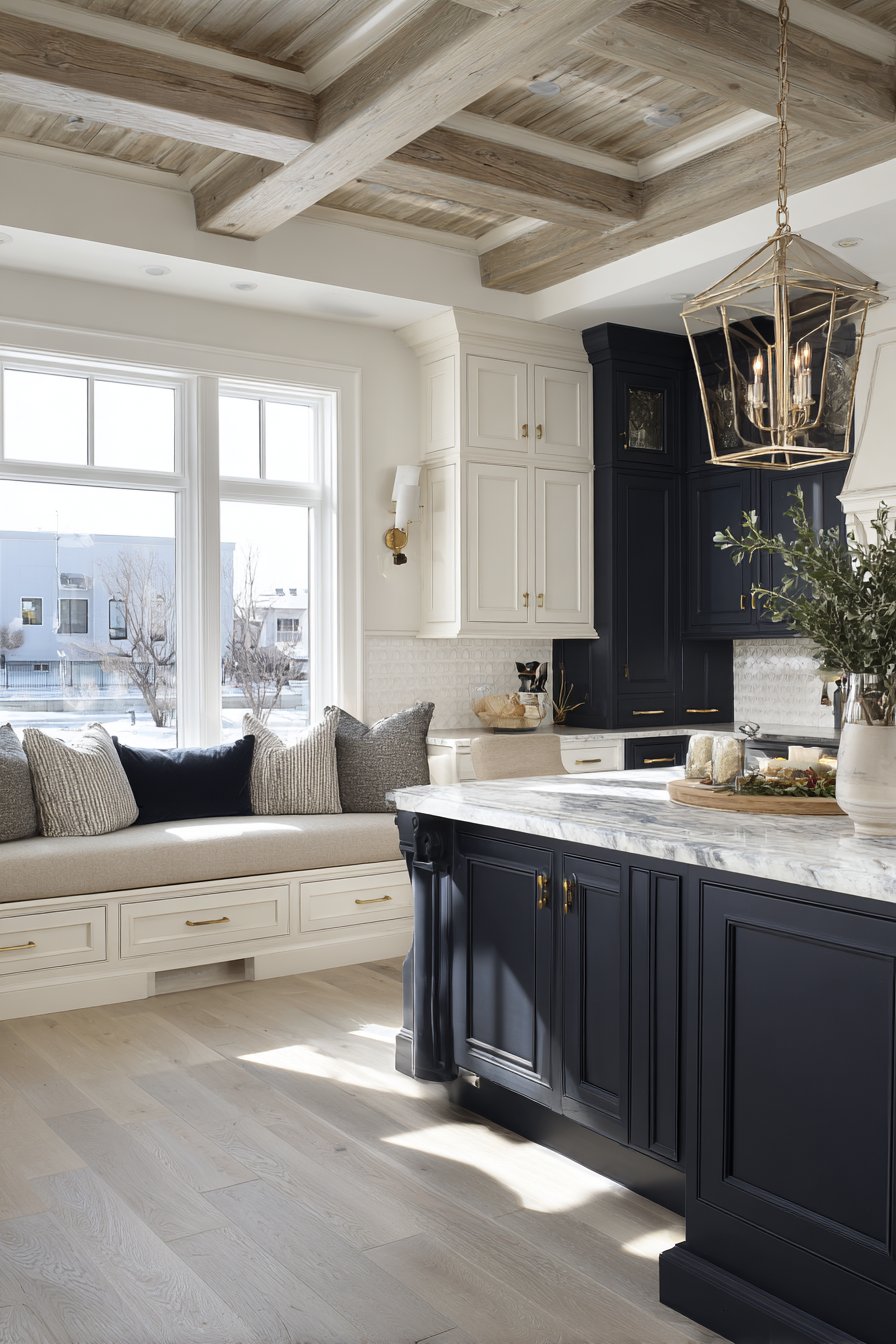
Quartzite countertops mimic marble with realistic veining while offering superior durability and resistance to staining and etching. This engineered stone provides the beauty of natural marble without the maintenance concerns, representing a practical choice that doesn’t compromise aesthetic goals. Schoolhouse pendant lights provide vintage charm with their simple glass globes and classic proportions, adding task lighting above the nook while contributing to the overall design narrative. Morning natural light creates soft highlights on varied textures, including the linen upholstery, tongue-and-groove ceiling, and navy cabinetry, bringing the space to life with natural illumination.
Key Design Tips:
- Build in banquette seating to maximize space efficiency and create cozy dining areas
- Use durable linen upholstery for natural beauty, comfort, and longevity
- Install tongue-and-groove ceiling treatment for architectural interest and traditional charm
- Pair navy blue lower cabinets with white uppers for a sophisticated two-tone contrast
- Choose quartzite countertops for marble-like beauty with superior durability
- Add schoolhouse pendant lights for vintage character and focused task lighting
10. Rustic Refinement with Open Shelving Statement
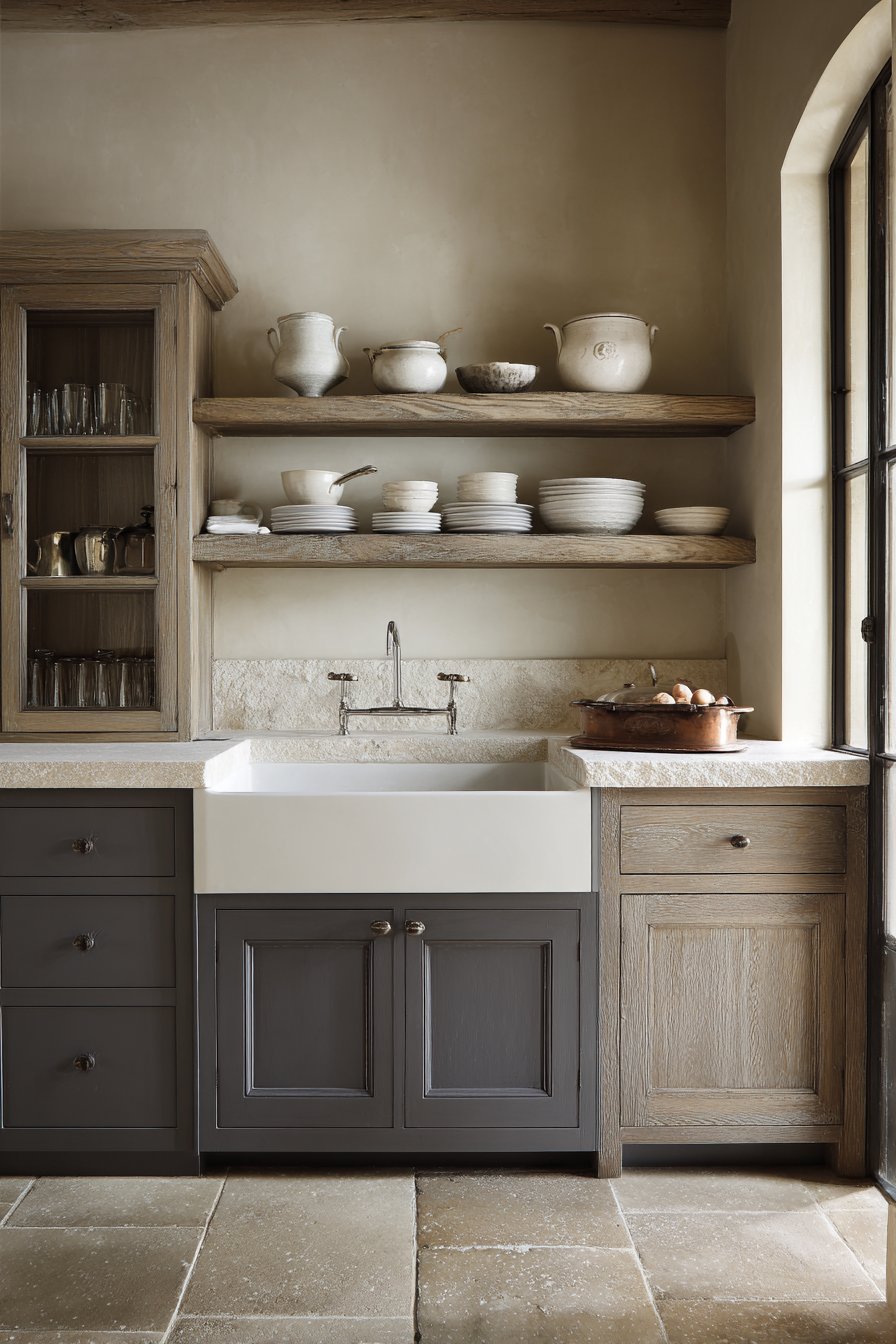
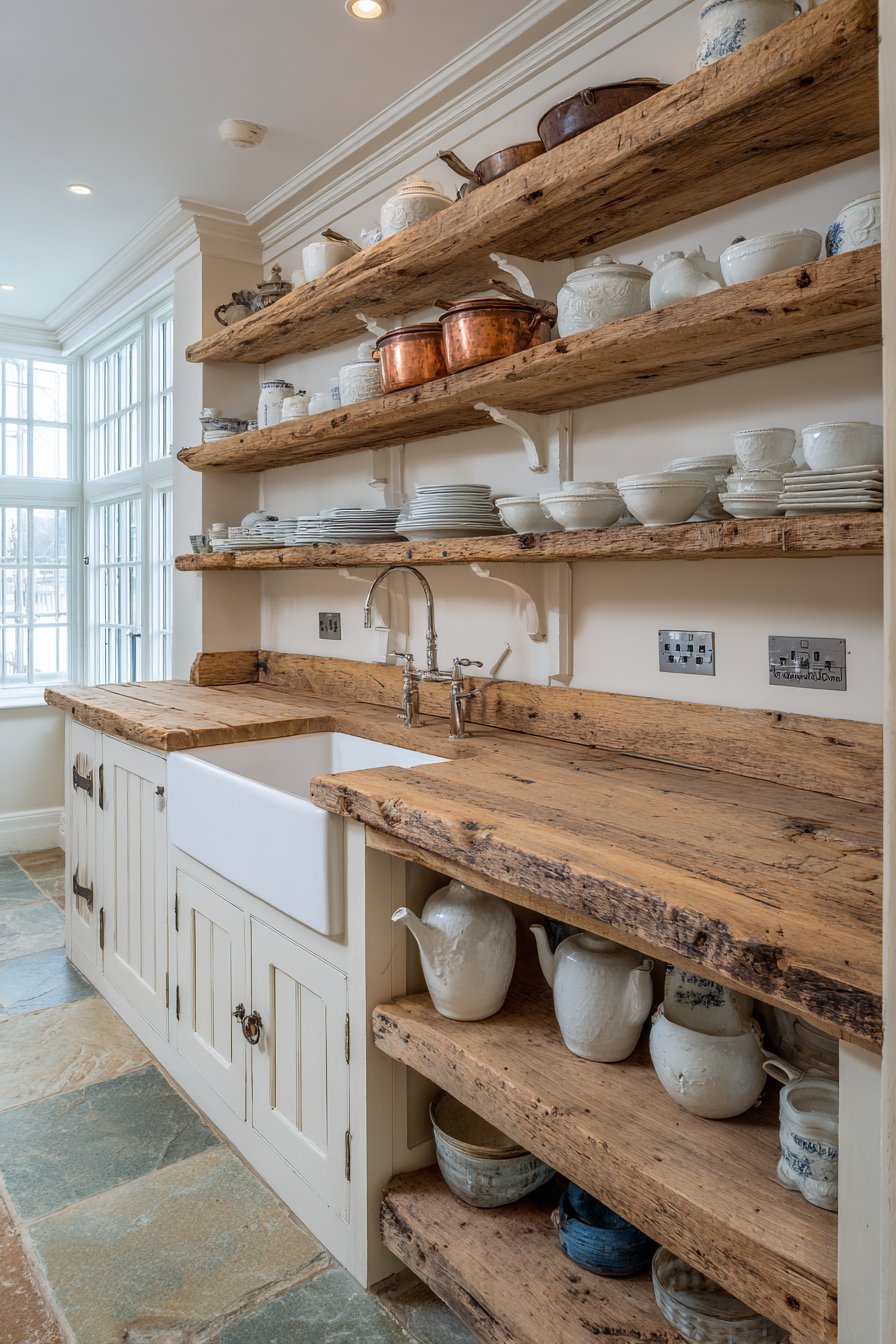
Open shelving crafted from reclaimed wood with visible grain texture and natural edge details creates a striking focal point that celebrates material authenticity and sustainable design principles. The reclaimed wood brings history and character into the space, with weathered surfaces, nail holes, and color variations telling the story of the wood’s previous life.
The natural edge details preserve the organic shape of the tree, introducing curves and irregularity into a space otherwise defined by straight lines and right angles. This contrast between the rustic shelving and more refined elements creates dynamic tension that keeps the design interesting.
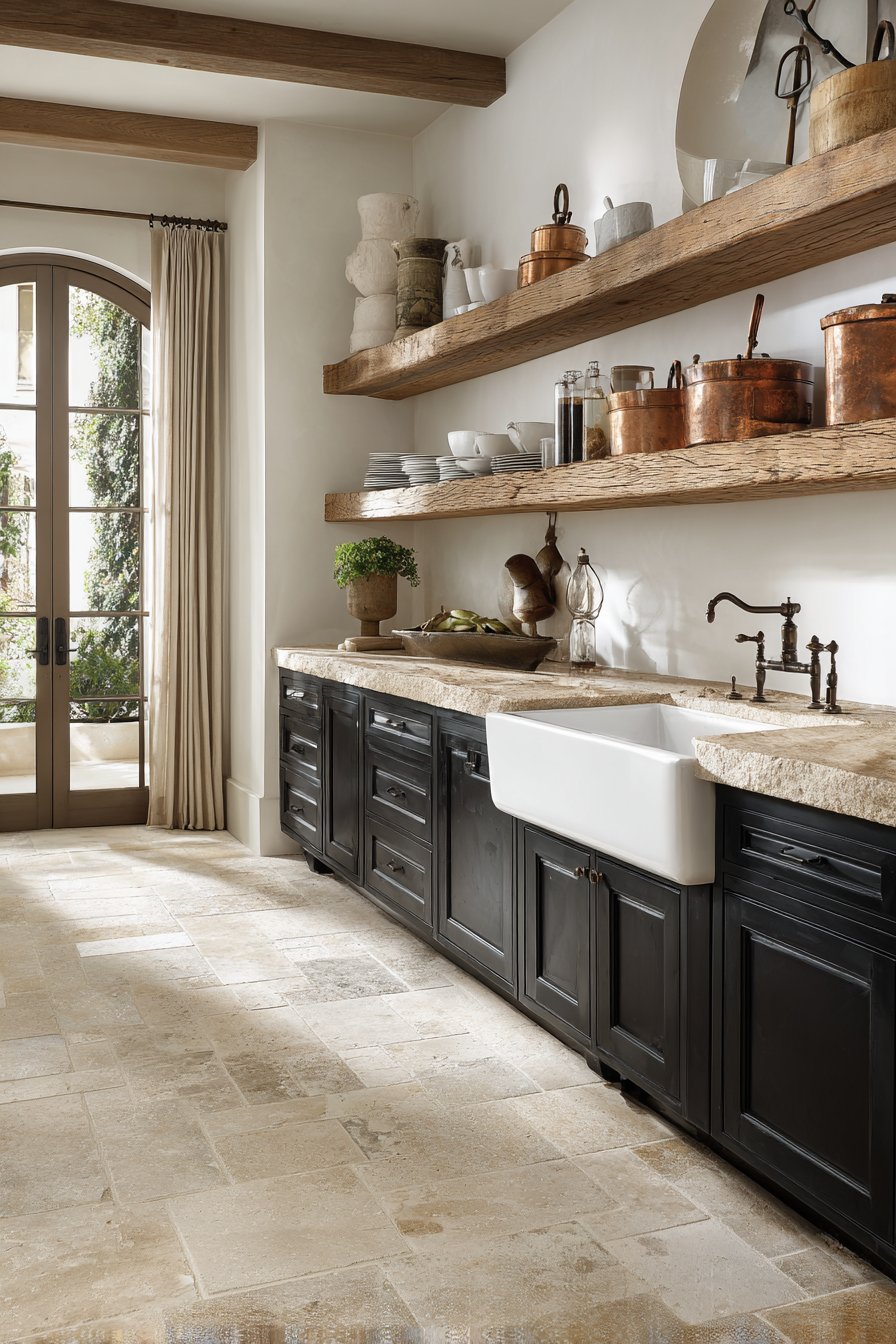
The open shelves display classic white ironstone and copper cookware, transforming everyday functional objects into decorative elements. The white ironstone provides crisp contrast against the weathered wood, while the copper introduces warm metallic notes that catch and reflect light.
This curated display requires thoughtful organization and maintenance, but the visual impact and practical convenience of open storage justify the effort. The copper cookware adds artisanal quality and reference to traditional cooking methods, while also providing superior heat conductivity for serious cooking.
Lower cabinets feature traditional shaker doors in charcoal grey with simple cup pulls, providing substantial storage while maintaining clean lines and timeless style. The charcoal grey offers sophisticated color that hides wear and adds visual weight at floor level, grounding the design and providing contrast with the reclaimed wood shelving. The simple cup pulls represent honest, functional hardware that doesn’t call excessive attention to itself, allowing the quality of the cabinetry and the beauty of the open shelving to take precedence.
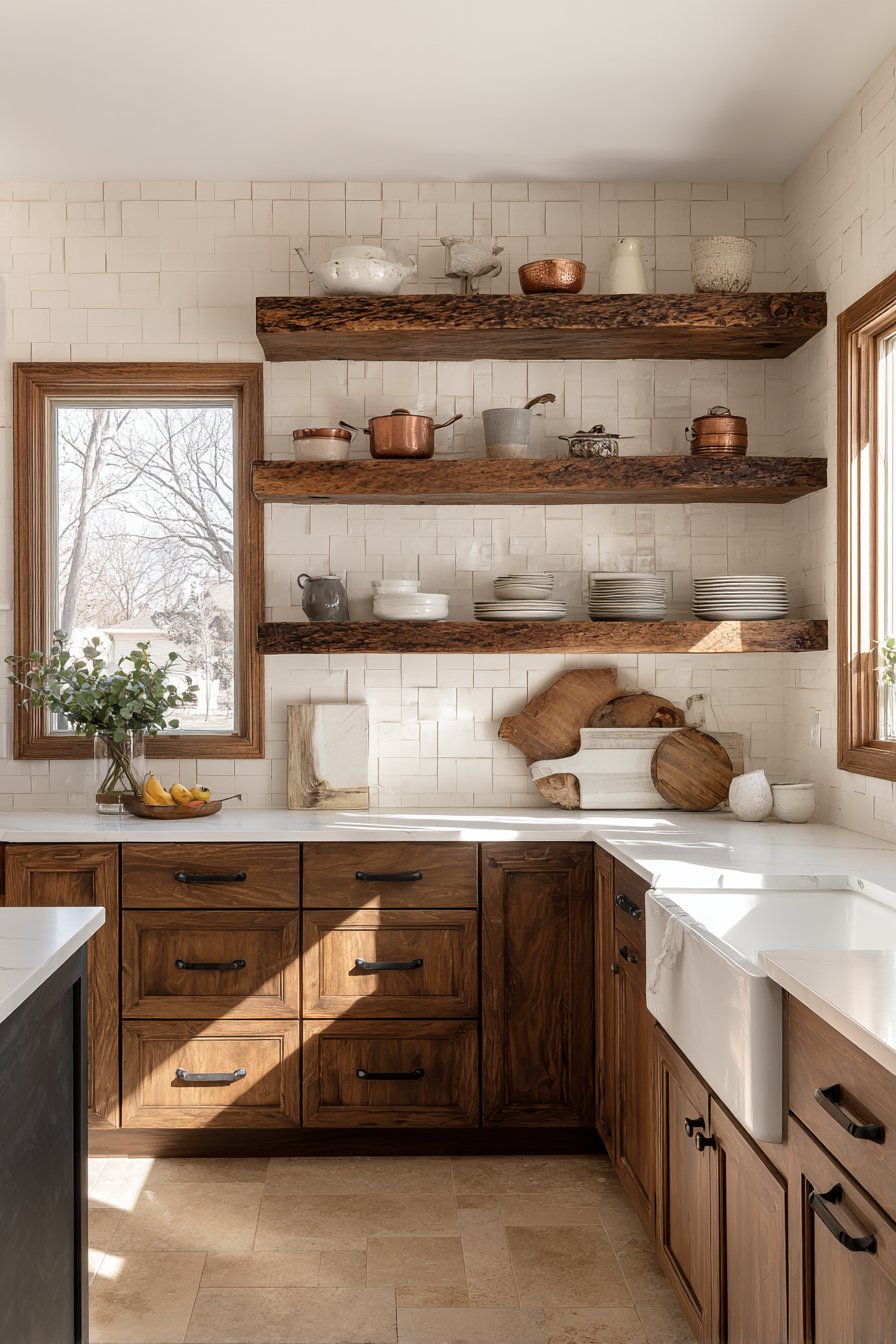
A white ceramic farmhouse sink with exposed apron front anchors the design, providing a traditional focal point that has graced beautiful kitchens for over a century. The generous proportions accommodate large pots and roasting pans while the exposed front adds architectural detail and traditional character.
Natural stone flooring shows subtle color variation that adds visual interest underfoot while providing durability that improves with age. The blend of rustic reclaimed wood, refined shaker cabinetry, traditional fixtures, and natural materials creates an enduringly stylish space that successfully combines casual and formal elements.
Key Design Tips:
- Install reclaimed wood open shelving to introduce sustainable materials and authentic character
- Display beautiful functional items like white ironstone and copper cookware as decoration
- Choose charcoal grey lower cabinets for sophisticated color that hides everyday wear
- Select simple cup pulls for honest, functional hardware that maintains clean lines
- Install a farmhouse sink with an exposed apron front for traditional character and generous capacity
- Use natural stone flooring for durability, subtle variation, and timeless natural beauty
Why These Timeless Kitchen Designs Stand the Test of Time
The ten kitchen designs explored in this article represent the pinnacle of timeless interior design, each demonstrating fundamental principles that ensure lasting beauty and relevance. These spaces succeed because they prioritize quality materials over trendy finishes, classic proportions over dramatic statements, and functional excellence over mere visual impact. Understanding why these designs work helps homeowners make informed decisions when planning their own kitchen renovations or updates, ensuring investments that will continue to satisfy for decades.
Material Quality and Natural Beauty form the foundation of every truly timeless kitchen. Natural stone countertops, including marble, granite, soapstone, limestone, and quartzite, offer unique beauty that cannot be replicated by manufactured alternatives. Each slab displays one-of-a-kind patterns, veining, and color variations that make every installation distinctive. These materials age gracefully, developing character and patina rather than simply showing wear. Similarly, solid wood cabinetry, butcher block work surfaces, and hardwood flooring bring organic warmth and authentic texture that synthetic materials cannot match. The tactile quality of natural materials creates sensory richness that engages multiple senses and creates emotional connections to space.
Classic Color Palettes ensure longevity by avoiding trendy hues that quickly feel dated. The predominance of white, cream, taupe, grey, navy, and sage green in these designs reflects colors that have proven their staying power across generations. These neutral and near-neutral colors provide versatile backgrounds that accommodate changing accent colors, seasonal decorations, and evolving personal style without requiring major renovations. White shaker cabinets, in particular, have remained continuously popular for over a century precisely because their clean simplicity works in virtually any setting and with any decorating style. The strategic use of two-tone cabinetry adds sophistication and visual interest without abandoning neutral versatility.
Traditional Craftsmanship Details elevate these kitchens beyond basic utility into the realm of lasting beauty. Crown molding, raised panels, beadboard detailing, tongue-and-groove ceilings, and quality hardware represent traditional building techniques and finishing touches that signify quality and permanence. These details add shadow lines, texture, and dimensional interest that flat, minimalist surfaces cannot provide. The human eye naturally appreciates well-executed traditional details, recognizing the skill and care required to create them. These elements connect contemporary spaces to design history, creating a sense of continuity and rootedness that pure innovation lacks.
Functional Layouts and Efficient Design ensure these kitchens serve daily life exceptionally well, which is ultimately what keeps them relevant despite changing aesthetics. The classic work triangle, galley efficiency, L-shaped layouts, and generous island designs featured in these kitchens represent configurations proven effective through decades of use. Professional-grade appliances, pot filler faucets, farmhouse sinks, adequate task lighting, and thoughtfully positioned windows demonstrate attention to how kitchens actually function rather than merely how they photograph. Timeless kitchens succeed because they make daily tasks easier and more pleasant, creating positive experiences that generate lasting appreciation.
Balanced Composition and Proportion characterize every design featured here. These kitchens avoid extremes, maintaining equilibrium between light and dark elements, smooth and textured surfaces, open and closed storage, and natural and manufactured materials. This balance creates visual harmony that feels restful and appropriate rather than demanding or exhausting. The proportions of cabinetry, the scale of hardware, the size of tile patterns, and the relationships between different elements all reflect careful consideration and adherence to classical design principles that the human eye finds naturally pleasing.
Natural Light Integration appears consistently throughout these designs, with strategically positioned windows, careful consideration of how light interacts with materials, and layered artificial lighting that supplements daylight. Kitchens with abundant natural light feel more alive, more connected to the natural world, and more pleasant to occupy for extended periods. The changing quality of natural light throughout the day creates dynamic environments that maintain interest without requiring constant updates or changes. Windows positioned above sinks and in breakfast nooks provide both practical illumination and emotional uplift, making daily tasks more enjoyable.
Attention to Texture and Dimension prevents these neutral-palette kitchens from feeling flat or boring. The contrast between smooth marble countertops and rough reclaimed wood shelves, the dimensional quality of subway tile and beadboard paneling, the varied grain patterns in hardwood floors, and the interplay of matte and polished finishes create visual interest through texture rather than color. This sophisticated approach to creating interest ensures designs remain engaging without relying on trendy colors or dramatic contrasts that may feel excessive over time.
Display of Beautiful Functional Objects through open shelving, glass-front cabinets, and plate racks transforms necessary storage into decorative opportunity. Classic white dishware, vintage glassware, copper cookware, and glass storage jars become part of the room’s aesthetic, introducing personality and charm without permanent commitment. This approach celebrates the beauty of everyday objects and creates opportunities to refresh the space simply by reorganizing or adding new pieces to the collection. The transparency and openness prevent kitchens from feeling too enclosed while maintaining the clean lines essential to timeless design.
Investment in Quality Over Quantity characterizes decision-making throughout these kitchens. Professional-grade appliances may cost more initially but provide superior performance and longevity. Solid wood cabinetry can be refinished rather than replaced. Natural stone countertops last for decades. Quality hardware develops beautiful patina rather than showing wear. This philosophy recognizes that true economy comes from buying well once rather than replacing inferior products repeatedly. Timeless kitchens represent investments that appreciate in value both practically and aesthetically.
Flexibility for Personal Expression remains possible within these classic frameworks through accessories, artwork, textiles, small appliances, and displayed collections. The neutral foundations and quality materials provide stable backgrounds that accommodate changing tastes, seasonal decorating, and evolving family needs without requiring renovation. This adaptability represents a crucial advantage of timeless design—the ability to refresh and personalize without major expense or disruption.
The enduring appeal of these kitchen designs stems from their respect for fundamental design principles, commitment to quality materials and craftsmanship, and attention to how spaces actually function in daily life. They represent not a single rigid aesthetic but rather a set of values and approaches that can be interpreted in diverse ways while maintaining timeless character. Whether featuring the crisp elegance of all-white cabinetry, the sophisticated depth of two-tone color schemes, the warmth of butcher block and reclaimed wood, or the refinement of professional-grade equipment, these kitchens demonstrate that timeless design accommodates variety while maintaining certain non-negotiable commitments to quality, proportion, and functionality.
Conclusion
Creating a timeless kitchen represents one of the most rewarding investments a homeowner can make, yielding a space that provides lasting beauty, exceptional functionality, and enduring value. The ten kitchen designs explored in this article demonstrate diverse approaches to achieving timeless appeal, from the classic elegance of white shaker cabinetry to the rustic refinement of reclaimed wood open shelving. Despite their differences, these kitchens share fundamental commitments to quality materials, balanced composition, functional excellence, and restrained aesthetics that transcend fleeting trends.
The key takeaway from these designs is that timeless doesn’t mean sacrificing personality or settling for boring predictability. Rather, it means making thoughtful choices rooted in enduring principles while allowing for personal expression through carefully curated details. Natural materials like marble, limestone, soapstone, hardwood, and butcher block provide organic beauty that improves with age. Classic colors including white, cream, grey, navy, and soft green offer versatile backgrounds that accommodate changing accents and personal style evolution. Traditional craftsmanship details like crown molding, beadboard paneling, and raised panels add dimension and character that flat surfaces cannot match.
Functional considerations prove equally important to aesthetic ones in creating truly timeless spaces. Efficient layouts, adequate lighting, quality appliances, and practical work surfaces ensure these beautiful kitchens serve daily life exceptionally well, which ultimately sustains appreciation far longer than visual appeal alone could maintain. The integration of natural light through thoughtfully positioned windows creates dynamic environments that feel connected to the natural world and provide both practical illumination and emotional uplift.
As you contemplate your own kitchen design or renovation, consider which elements from these timeless examples resonate most deeply with your lifestyle, aesthetic preferences , and practical needs. Perhaps you’re drawn to the crisp elegance of classic white shaker cabinetry with marble countertops, or maybe the warmth of butcher block surfaces and reclaimed wood speaks to your sensibility. You might appreciate the sophisticated contrast of two-tone cabinetry, or find yourself captivated by the efficient grace of a well-designed galley layout. The beauty of timeless design lies in its flexibility—these principles can be adapted to suit various budgets, spatial constraints, and personal preferences while maintaining their essential character.
Practical Steps for Implementing Timeless Design begin with honest assessment of your needs, lifestyle, and long-term plans. Consider how you actually use your kitchen rather than how you imagine using it. Do you cook elaborate meals daily or prefer simple preparation? Do you entertain frequently or enjoy quiet family dinners? Does your household include young children, aging parents, or mobility considerations? Answering these questions honestly guides decisions about layout, materials, and features that will serve you well for decades rather than merely photographing beautifully.
Prioritize Quality in High-Impact Elements by investing in the best cabinetry, countertops, and appliances your budget allows. These foundational elements dramatically impact both functionality and aesthetics, and quality versions will outlast their cheaper counterparts many times over. Solid wood cabinetry can be refinished if you eventually desire a different color, while veneer options offer no such flexibility. Natural stone countertops develop character with age, while laminate surfaces simply show wear. Professional-grade appliances provide superior performance and classic styling that remains relevant regardless of changing trends in panel colors or finishes.
Exercise Restraint with Trendy Elements by limiting them to easily changeable accessories and decorative accents. If you’re drawn to a bold backsplash color or dramatic hardware finish currently popular, consider whether you’ll still love it in five or ten years. Trends move in cycles, and what feels fresh and exciting today may appear dated surprisingly quickly. Reserve experimentation for paint colors, light fixtures, textiles, and decorative objects that can be updated without major expense or renovation. The foundation of cabinetry, countertops, flooring, and layout should reflect timeless principles that transcend momentary fashions.
Embrace Natural Materials Whenever Possible, understanding that their organic beauty and authentic character create connections impossible to achieve with synthetic alternatives. The cool touch of marble, the warm patina of brass hardware, the varied grain patterns in hardwood floors, the smooth texture of soapstone—these sensory experiences enrich daily life in subtle but meaningful ways. Natural materials also age gracefully, with wear patterns and patina adding character rather than signaling the need for replacement. While initial costs may be higher, the longevity and enduring beauty justify the investment.
Plan for Adequate Storage through a combination of closed cabinetry and thoughtfully incorporated open shelving or glass-front cabinets. Clutter destroys the serene atmosphere essential to timeless kitchens, so ensure sufficient storage for all your cooking equipment, serving pieces, pantry items, and small appliances. Consider deep drawers for pots and pans, pull-out shelving for corner cabinets, and designated zones for specific activities. Open shelving works beautifully for displaying attractive items but requires ongoing maintenance and curation to prevent visual chaos.
Invest in Quality Lighting that layers ambient, task, and accent illumination for flexibility and functionality. Recessed ceiling fixtures provide general illumination, under-cabinet lights illuminate work surfaces, pendant fixtures add character and focused light above islands or tables, and natural light from well-positioned windows creates dynamic, changing illumination throughout the day. Dimmer switches offer control over lighting intensity for different activities and times of day. Quality lighting transforms both the functionality and atmosphere of your kitchen, making it pleasant to occupy from early morning coffee to late evening cleanup.
Consider Long-Term Value beyond immediate aesthetics by choosing elements that will appeal to future buyers should you eventually sell your home. While you should design primarily for your own enjoyment and needs, understanding that timeless kitchens represent valuable assets can guide decision-making. Classic styles, neutral color palettes, quality materials, and functional layouts appeal to the broadest audience and provide the best return on investment. This doesn’t mean sacrificing personality, but rather ensuring your personal touches exist within a framework of proven appeal.
Work with Professionals When Appropriate, particularly for major renovations requiring structural changes, plumbing or electrical work, or custom cabinetry installation. Experienced kitchen designers understand space planning, workflow efficiency, and the technical requirements of creating beautiful, functional kitchens. Quality contractors ensure proper installation of cabinets, countertops, and appliances, which dramatically affects both appearance and longevity. While professional services represent additional expense, the expertise and execution quality they provide often prove invaluable, preventing costly mistakes and ensuring results that truly achieve timeless quality.
Allow for Evolution and Personal Expression within your timeless framework by incorporating elements that can easily change as your tastes evolve or seasons change. Swap out bar stools, update window treatments, rotate decorative objects on open shelves, change out hardware, or refresh paint on a single accent wall. These smaller changes keep the space feeling fresh and personally meaningful without requiring major renovation. The stable foundation of quality cabinetry, countertops, and layout provides continuity and coherence while surface changes introduce variety and responsiveness to changing preferences.
Maintain Your Investment through regular care and prompt attention to issues. Seal natural stone countertops as recommended by fabricators. Clean and condition butcher block surfaces to prevent drying and cracking. Tighten cabinet hardware before screws work loose. Address plumbing leaks immediately to prevent water damage. Keep wood floors properly finished to prevent moisture penetration. Regular maintenance preserves both the beauty and functionality of your timeless kitchen, ensuring it continues to serve and delight for decades. Quality materials reward proper care with extended life and enhanced character.
The journey toward creating your own timeless kitchen begins with education, contemplation, and commitment to fundamental design principles. Study kitchens that have remained beautiful and relevant for decades, noting common elements and shared characteristics. Visit showrooms to experience materials and finishes in person, understanding how they feel to touch, how light interacts with surfaces, and how colors appear in different lighting conditions. Gather inspiration from the designs presented in this article while remaining open to interpretations that suit your specific circumstances and preferences.
Remember that timeless design represents not a rigid formula but rather a philosophy rooted in quality, restraint, functionality, and respect for enduring principles. Your timeless kitchen will reflect your specific needs, preferences, and circumstances while embodying these fundamental values. Whether you’re planning a complete renovation, building a new home, or simply refreshing an existing kitchen through thoughtful updates, the principles explored in this article provide guidance toward creating a space that will serve and satisfy you for many years to come.
The kitchens featured here—from classic white shaker elegance to rustic reclaimed wood charm, from sophisticated two-tone designs to efficient galley layouts—demonstrate that timeless appeal accommodates diversity while maintaining certain non-negotiable commitments. Quality materials, classic colors, traditional craftsmanship, functional excellence, balanced composition, and attention to how spaces actually serve daily life unite these varied designs. They prove that timeless kitchens need not look identical, but rather share underlying principles that ensure lasting relevance and beauty.
As you move forward with your kitchen planning or renovation, carry with you the understanding that the decisions you make today will impact your daily experience for years or decades to come. Choose wisely, invest in quality, embrace restraint, prioritize function alongside beauty, and trust in the enduring appeal of natural materials and classic design. Your timeless kitchen awaits—a space that will welcome you each morning, facilitate nourishment and gathering, and remain beautiful and relevant through changing trends, evolving family needs, and the passage of time. The heart of your home deserves nothing less than design that truly stands the test of time.
