


The bathroom has evolved from a purely functional space into a personal sanctuary where we begin and end our days. Thoughtful interior design transforms these essential rooms into havens of tranquility and rejuvenation. Natural bathroom design embraces organic materials, earthy textures, and biophilic elements that connect us with nature. This approach creates spaces that feel authentic, calming, and timeless.
Modern homeowners increasingly seek sustainable, eco-friendly materials that bring warmth and character into their bathrooms. Natural stone, reclaimed wood, bamboo, and living plants offer both aesthetic beauty and environmental responsibility. These elements work together to create spa-like atmospheres that promote wellness and relaxation. The tactile qualities of organic materials provide sensory richness that synthetic alternatives cannot replicate.
This comprehensive guide explores ten exceptional natural bathroom designs, each showcasing unique approaches to organic interior styling. From Japanese-inspired soaking tubs to rustic reclaimed wood vanities, these concepts demonstrate how natural materials create distinctive, inviting spaces. Whether you’re planning a complete renovation or seeking inspiration for smaller updates, these designs offer practical ideas for every style and budget.
1. Teak Soaking Tub Sanctuary with Skylight Illumination
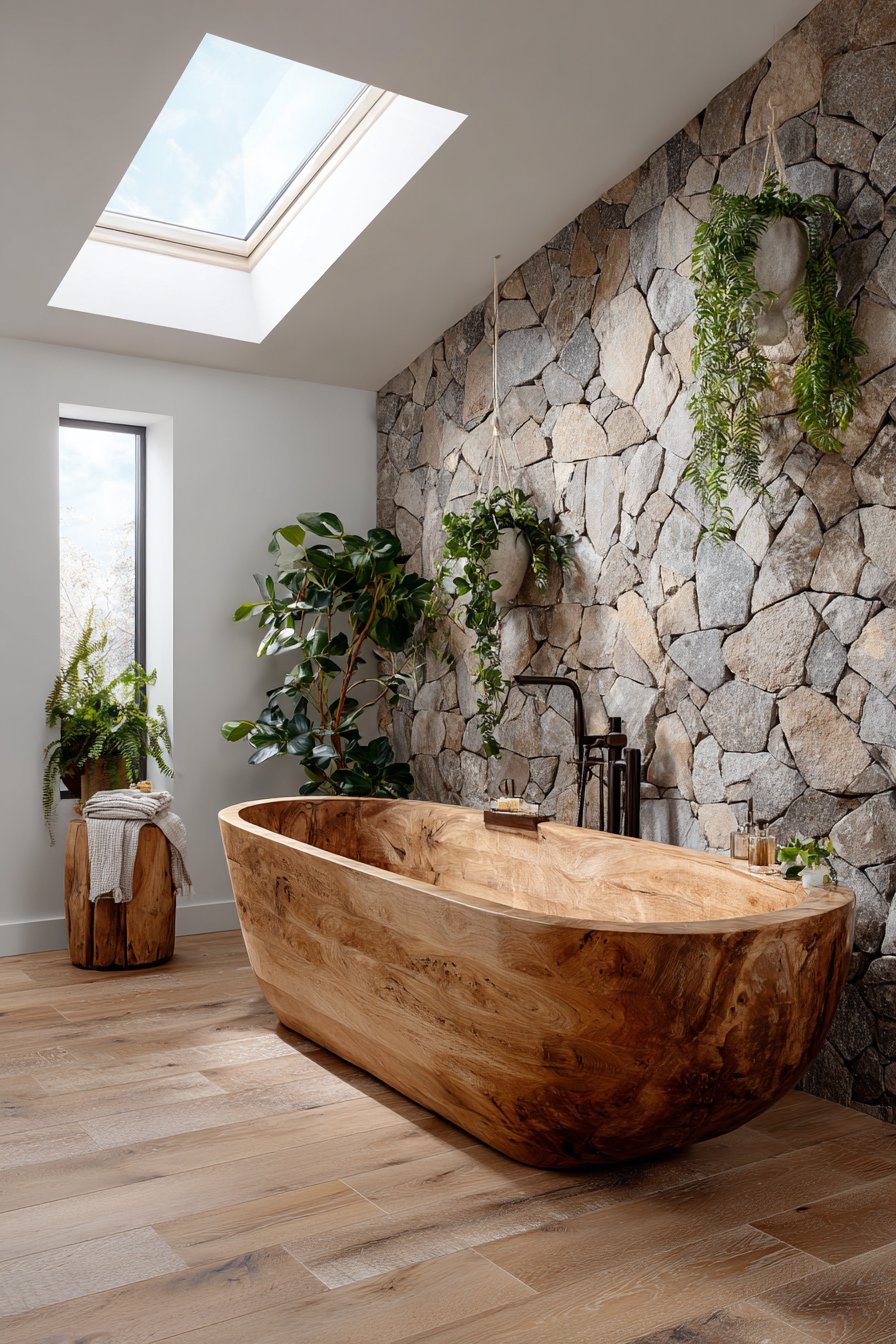
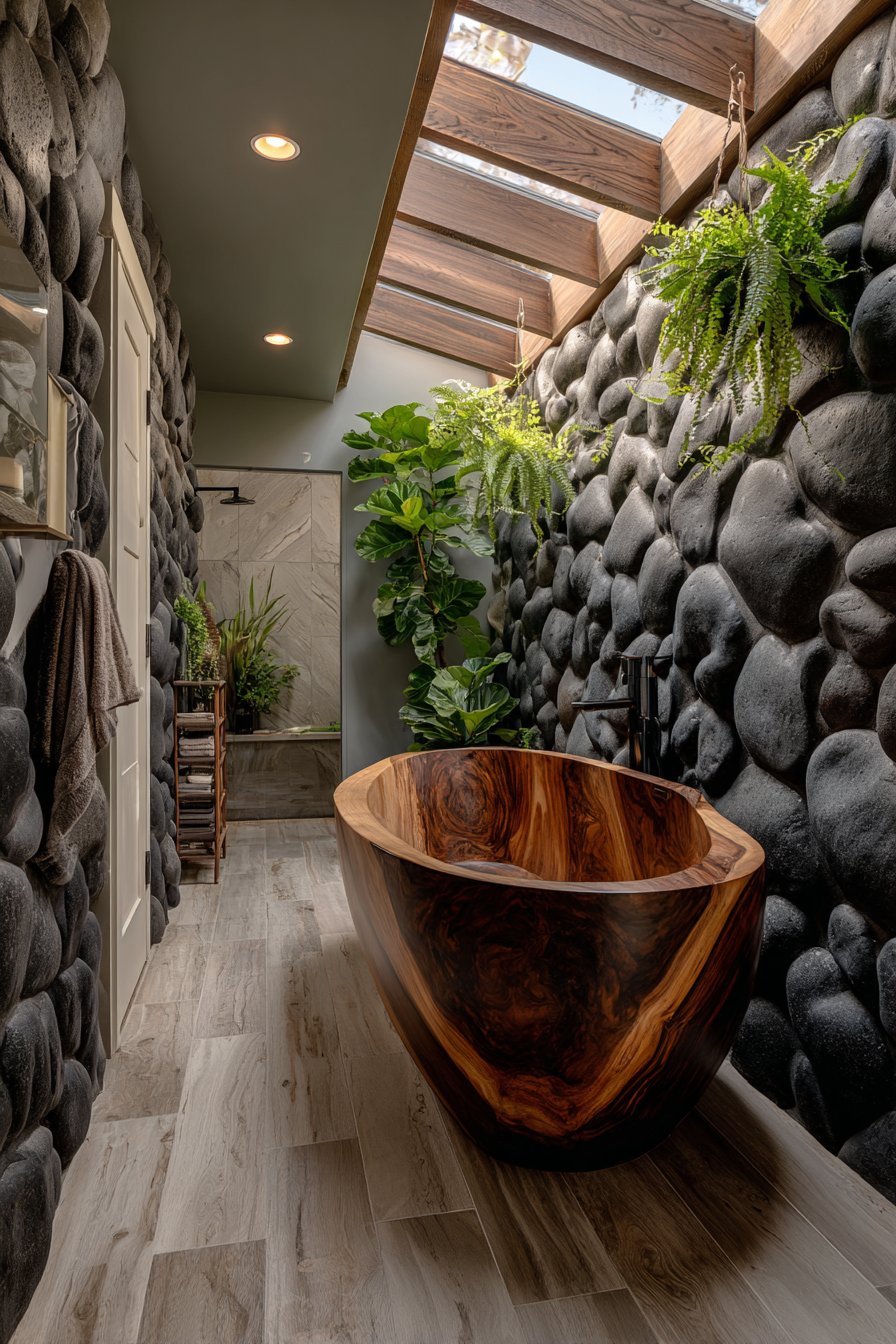
Imagine a freestanding soaking tub crafted from rich teak wood, its beautiful grain patterns visible across the smooth surface. This stunning centerpiece sits beneath a generous skylight that floods the space with soft, diffused natural light throughout the day.
The interplay between the warm wood tones and natural illumination creates an atmosphere of pure serenity. The teak’s natural oils make it perfectly suited for wet environments while developing a beautiful patina over time.
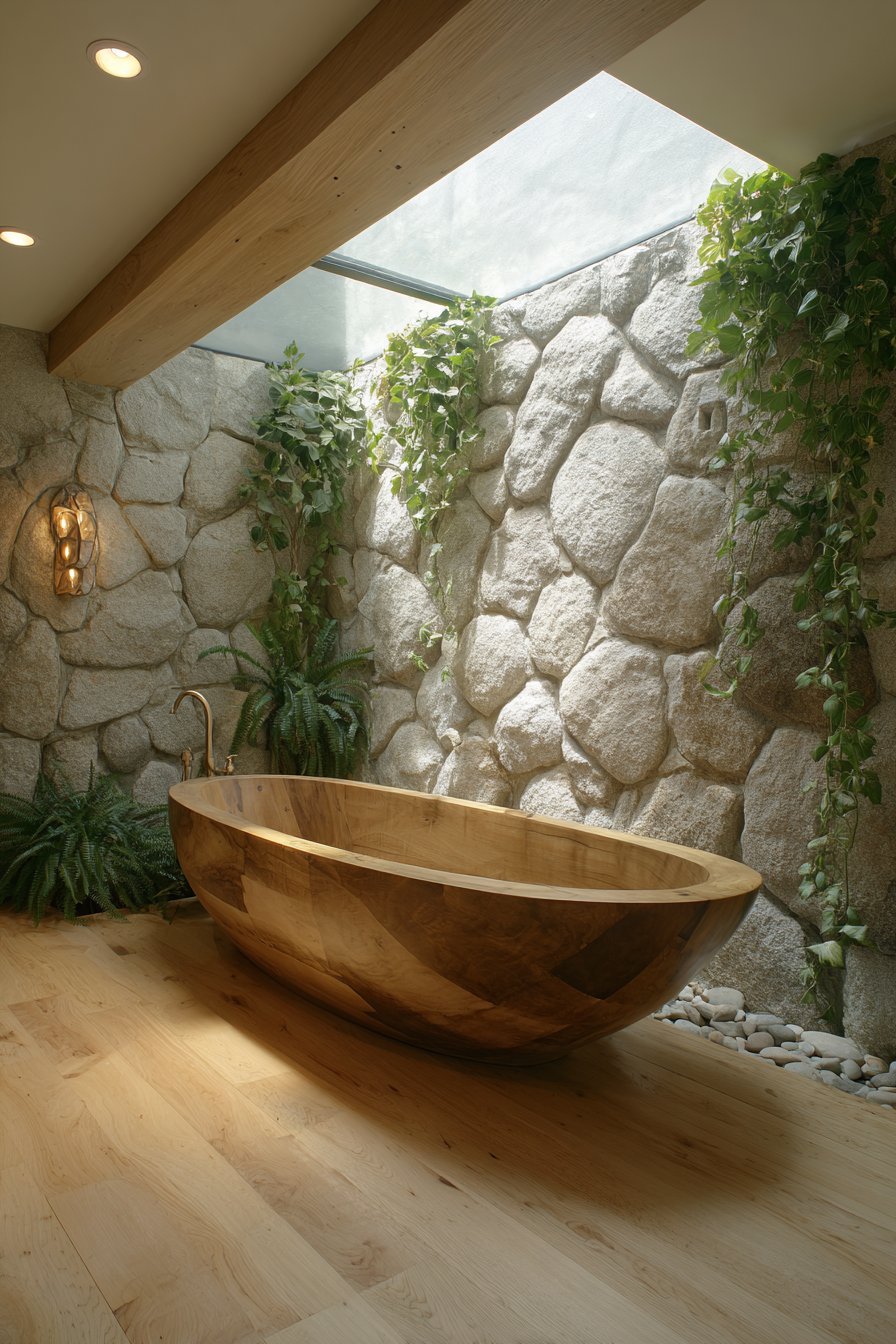
The river stone accent wall behind the tub introduces organic texture and visual interest to the space. Each stone features unique coloring and shape, creating a one-of-a-kind natural mosaic. The irregular surfaces catch light differently throughout the day, adding depth and dimension.
This textural element grounds the design while reinforcing the connection to nature. The stones range from smooth river-worn surfaces to slightly rougher textures, providing tactile variety.
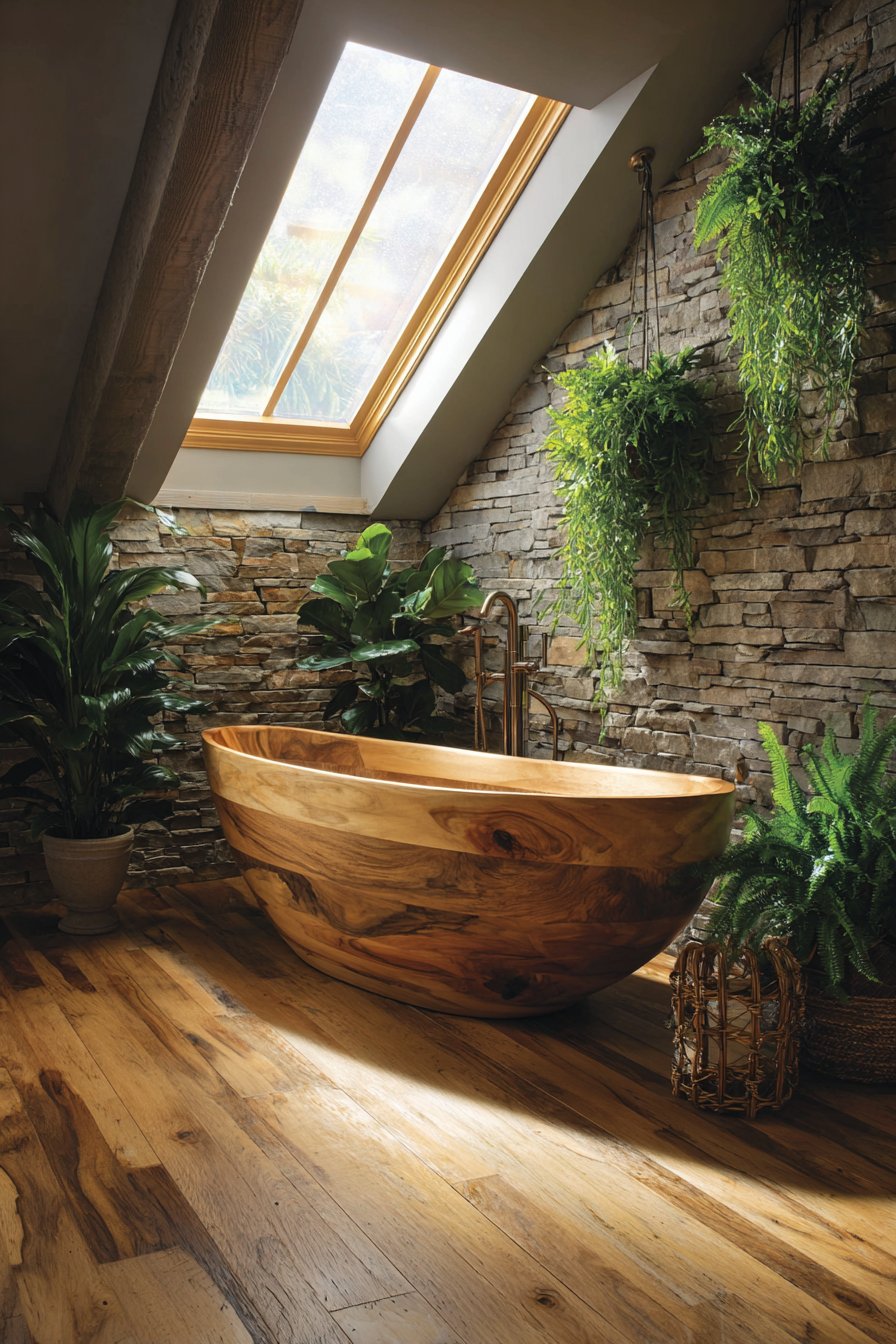
Potted ferns and trailing plants bring living greenery into this spa-like environment. The plants thrive in the humid bathroom atmosphere and filtered skylight illumination. Cascading vines soften hard edges while improving air quality naturally.
Light oak flooring with natural color variations completes the earthy palette, its honey tones harmonizing with the teak tub. The wood grain patterns create visual movement across the floor, leading the eye toward the stunning tub.
Key Design Tips:
- Choose teak wood for bathtubs due to its water-resistant natural oils and durability
- Install skylights to maximize natural light while maintaining privacy in bathroom spaces
- Create accent walls with river stones for organic texture and visual focal points
- Incorporate humidity-loving plants like ferns to enhance the spa atmosphere naturally
- Select light oak flooring to complement darker wood elements and brighten the space
- Position the tub beneath the skylight for optimal natural light during bathing
- Use diffused lighting to create gentle shadows that highlight natural material textures
2. Live-Edge Walnut Vanity with Reclaimed Wood Storage
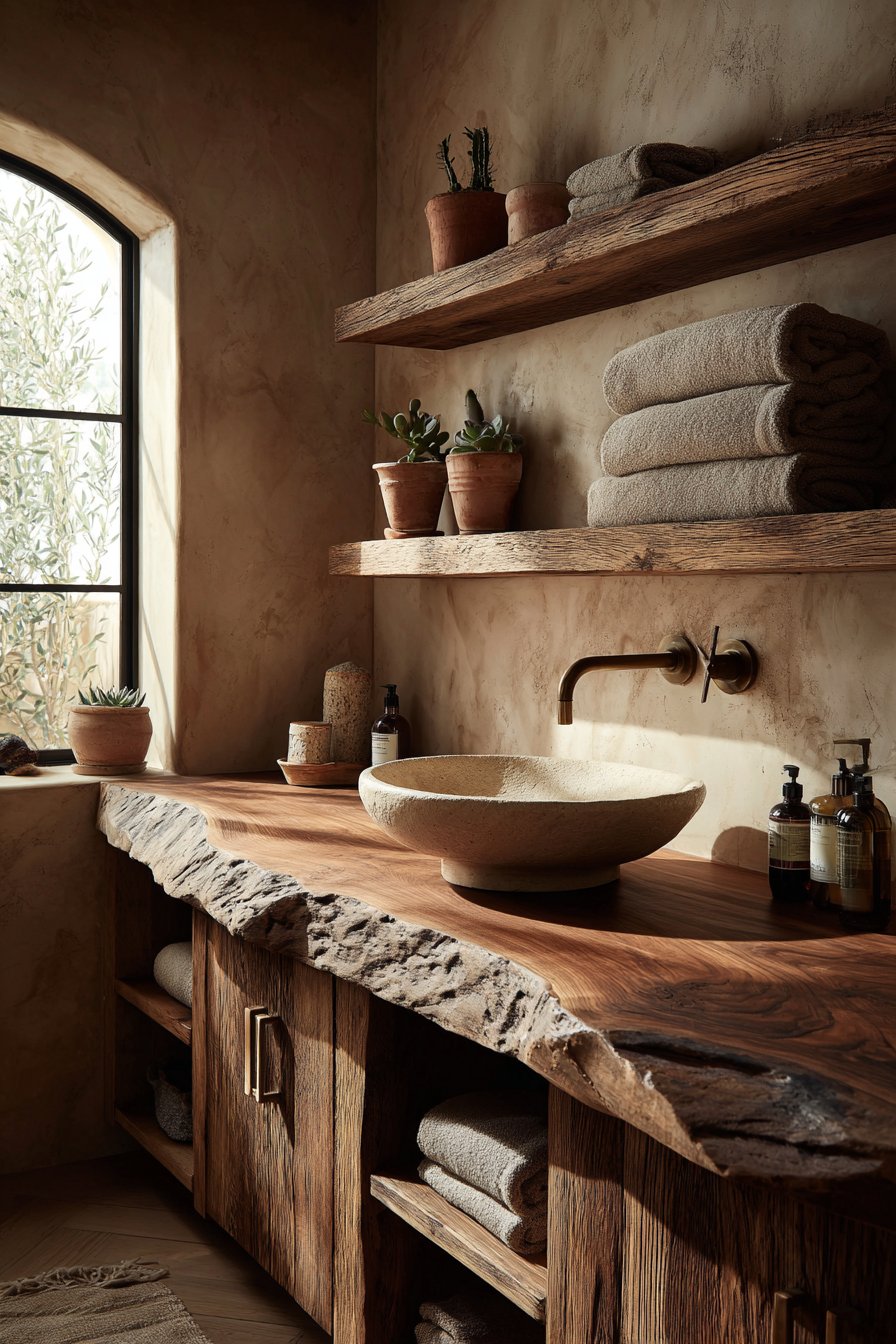
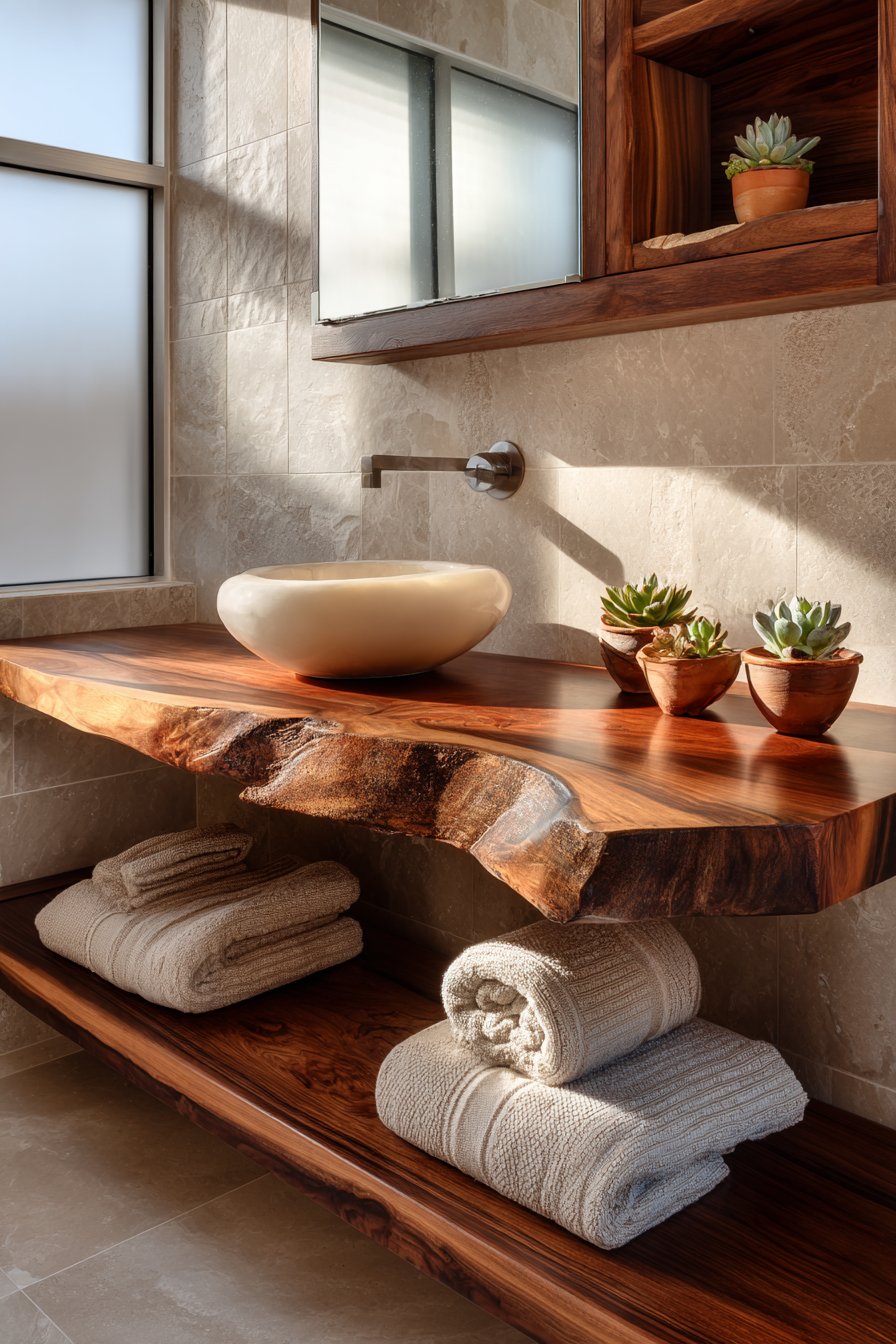
The vanity area showcases a stunning live-edge walnut wood countertop that celebrates the tree’s natural form. The irregular organic edges remain intact, creating a sculptural element that serves as functional art.
Rich walnut grain patterns flow across the surface, each swirl and marking telling the wood’s unique story. Paired with a pristine white ceramic vessel sink, the contrast between refined and rustic creates sophisticated visual tension.
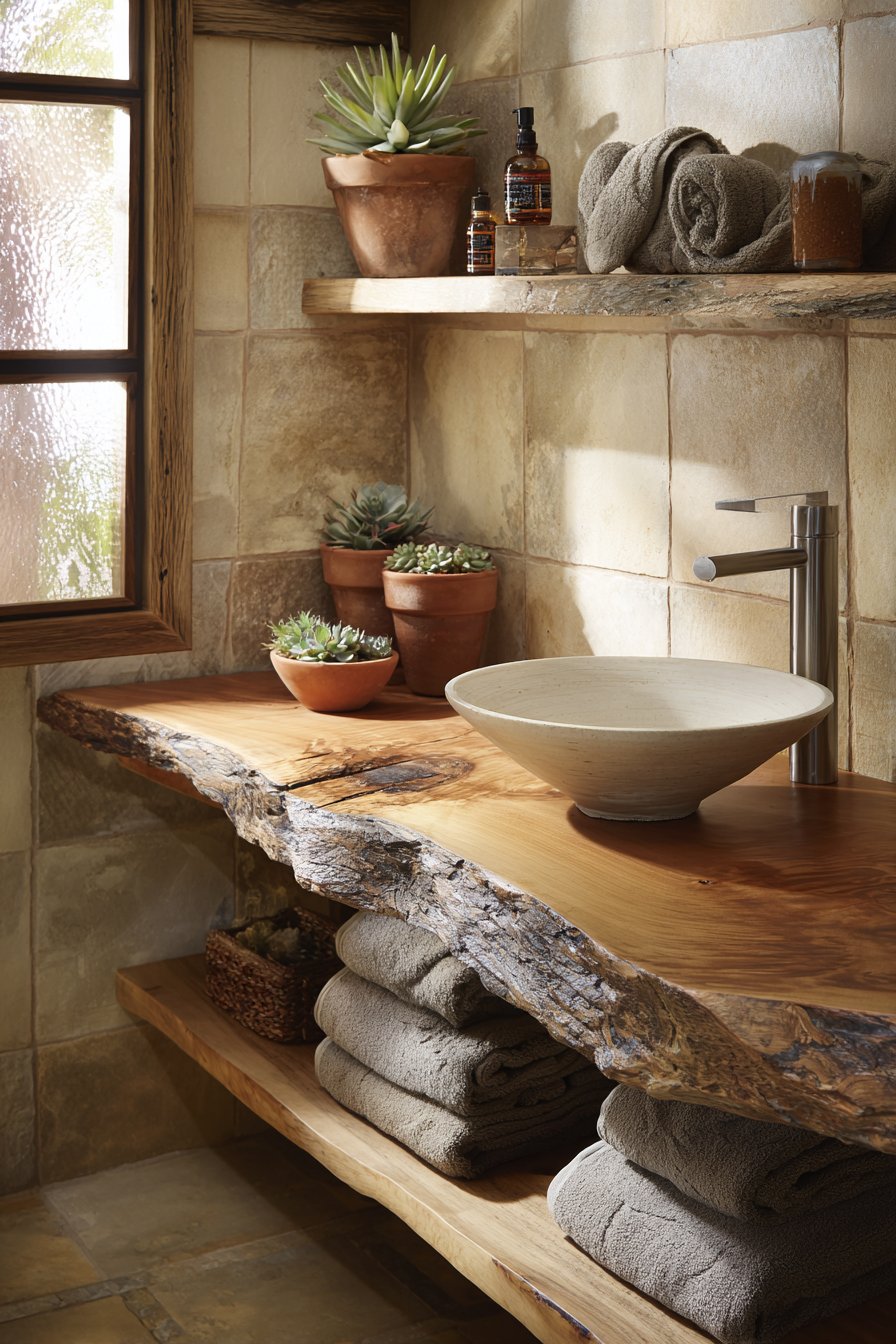
Open shelving constructed from reclaimed wood provides practical storage while adding character and sustainability. The weathered wood shows authentic age marks, nail holes, and color variations that new lumber cannot replicate.
Rolled organic cotton towels in natural tones are displayed alongside small succulents in terracotta pots. This curated arrangement combines functionality with aesthetic appeal, making everyday items part of the design scheme.
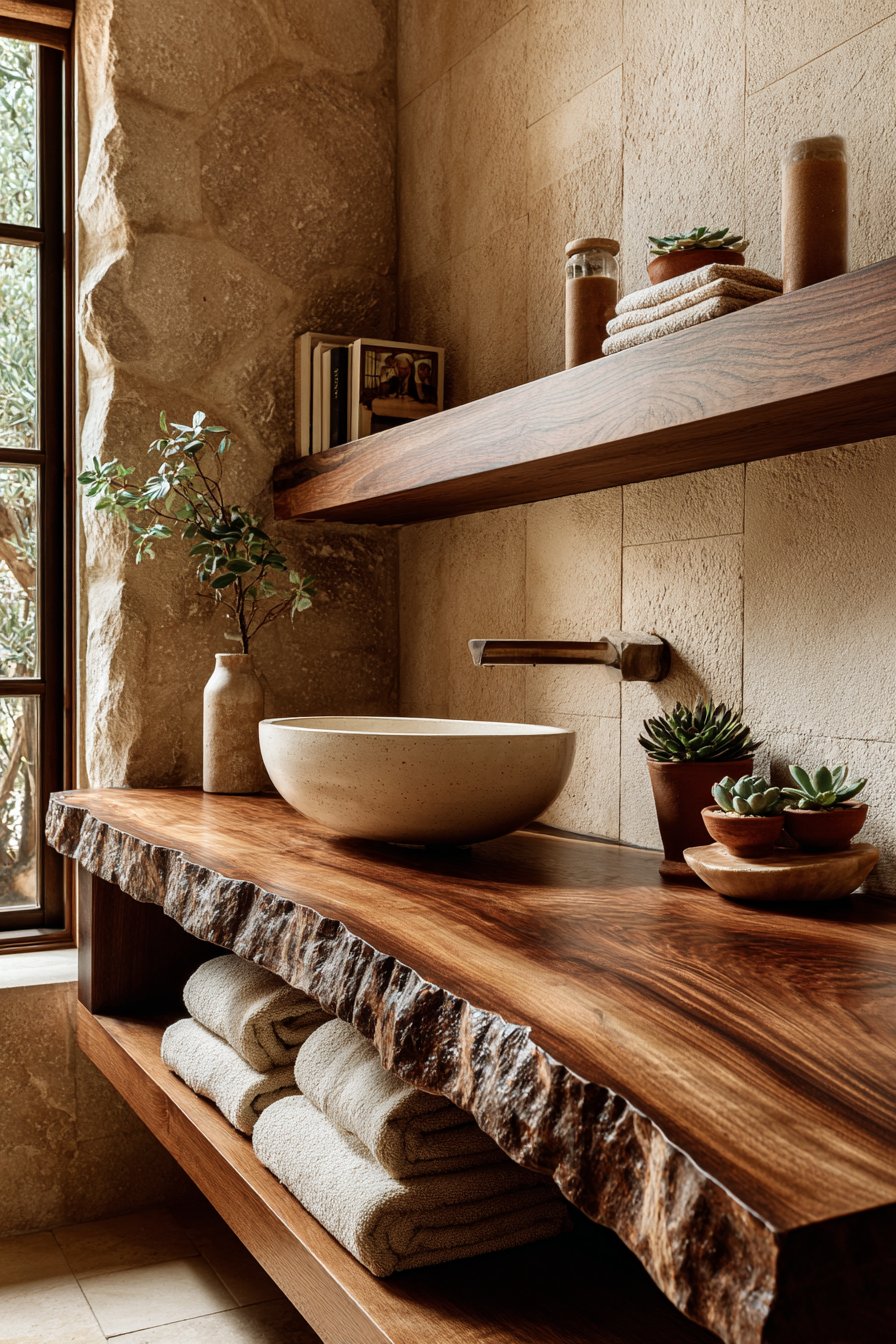
Textured limestone tile walls in warm beige tones provide the perfect neutral backdrop for the statement vanity. The stone’s natural variations create subtle visual interest without competing with the walnut centerpiece.
Natural morning light streams through a frosted window, illuminating the wood grain and creating soft highlights. The diffused light enhances the warm tones while maintaining privacy. This combination of materials—walnut, ceramic, limestone, and reclaimed wood—creates a layered, authentic aesthetic.
Key Design Tips:
- Incorporate live-edge wood countertops to add organic sculptural elements to vanity areas
- Pair dark walnut with white ceramics for striking contrast and visual balance
- Use reclaimed wood for shelving to add character while supporting sustainable design
- Display towels and plants on open shelves to combine storage with decorative elements
- Choose limestone tiles in warm tones to create neutral backdrops for statement pieces
- Install frosted windows to allow natural light while ensuring bathroom privacy
- Select vessel sinks to showcase beautiful countertop materials and add height variation
3. Travertine Shower Enclosure with River Pebble Floor
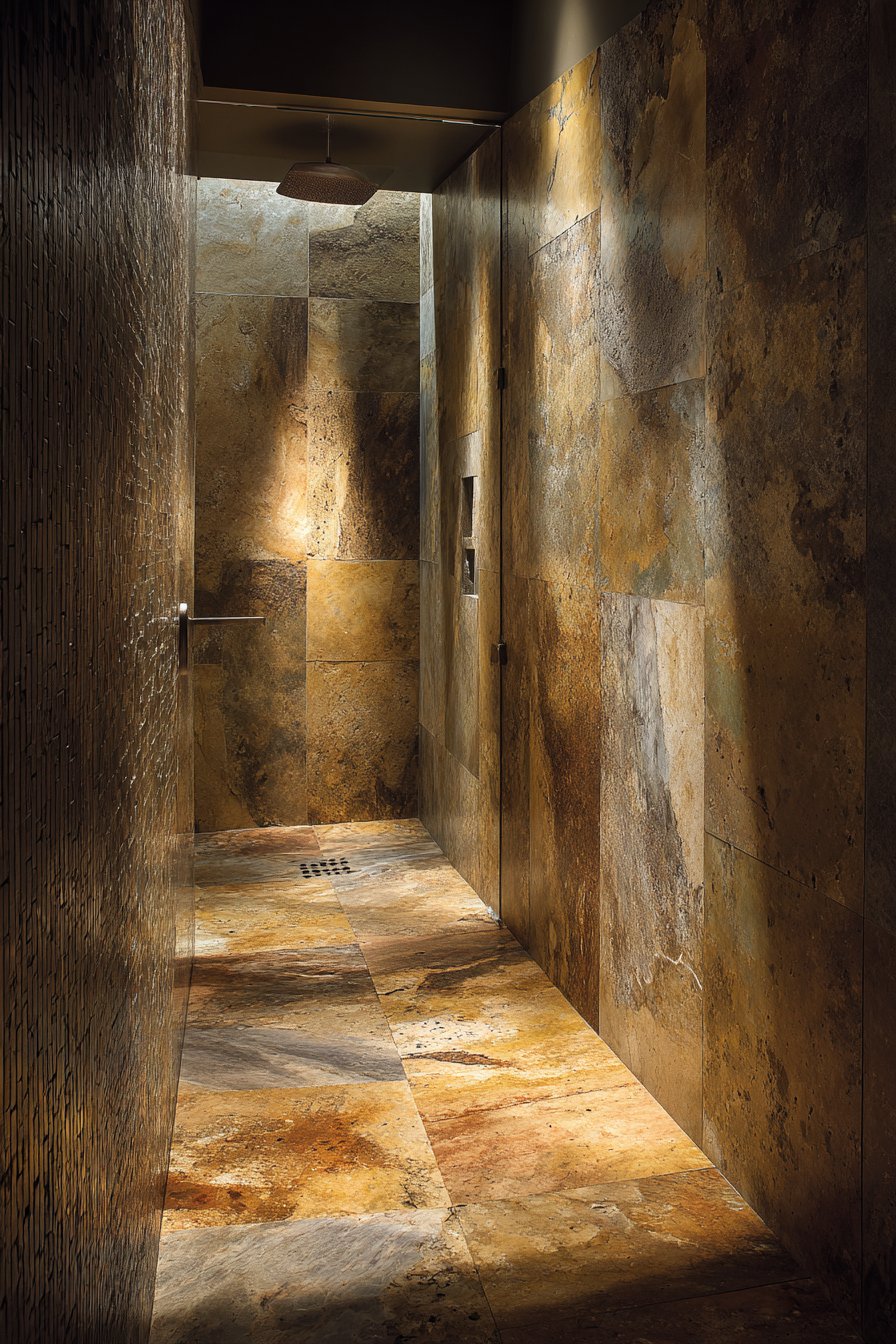
Floor-to-ceiling travertine stone tiles in warm honey tones transform the shower into a luxurious retreat. The natural stone features beautiful variations, with some tiles showing subtle fossil patterns and mineral deposits. Each tile tells a geological story millions of years in the making.
The warm honey and cream tones create a cozy, inviting atmosphere that feels both elegant and grounded. The stone’s natural porosity and texture prevent slippery surfaces while adding visual richness.
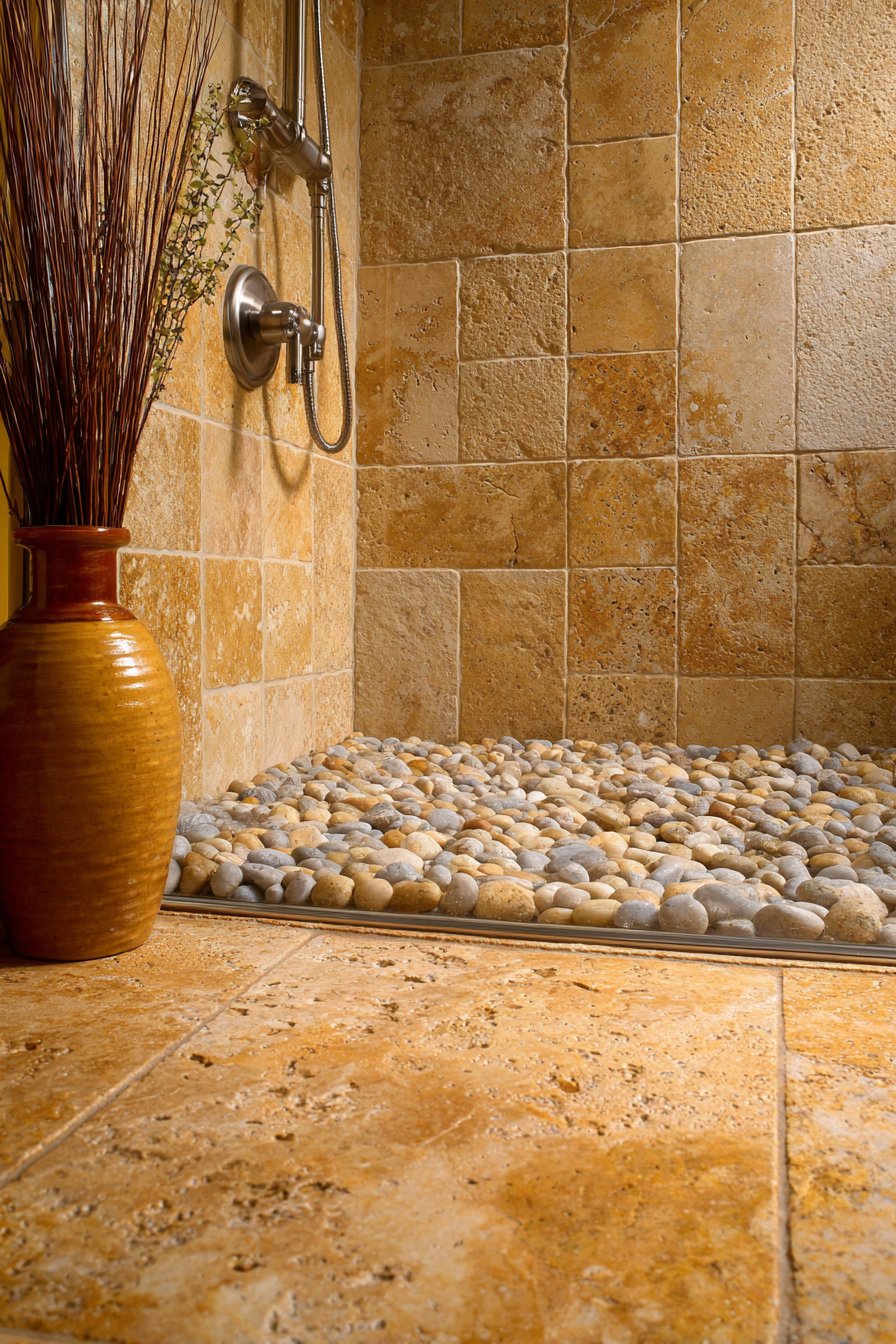
A frameless glass partition reveals the stunning rain shower head finished in brushed bronze. The minimal glass allows the travertine’s beauty to shine while creating an open, spacious feeling. The brushed bronze finish adds warmth and coordinates with the stone’s honey tones.
Water cascades gently from above, mimicking natural rainfall for a soothing bathing experience. The river pebble shower floor provides organic texture and excellent natural drainage between the smooth stones.
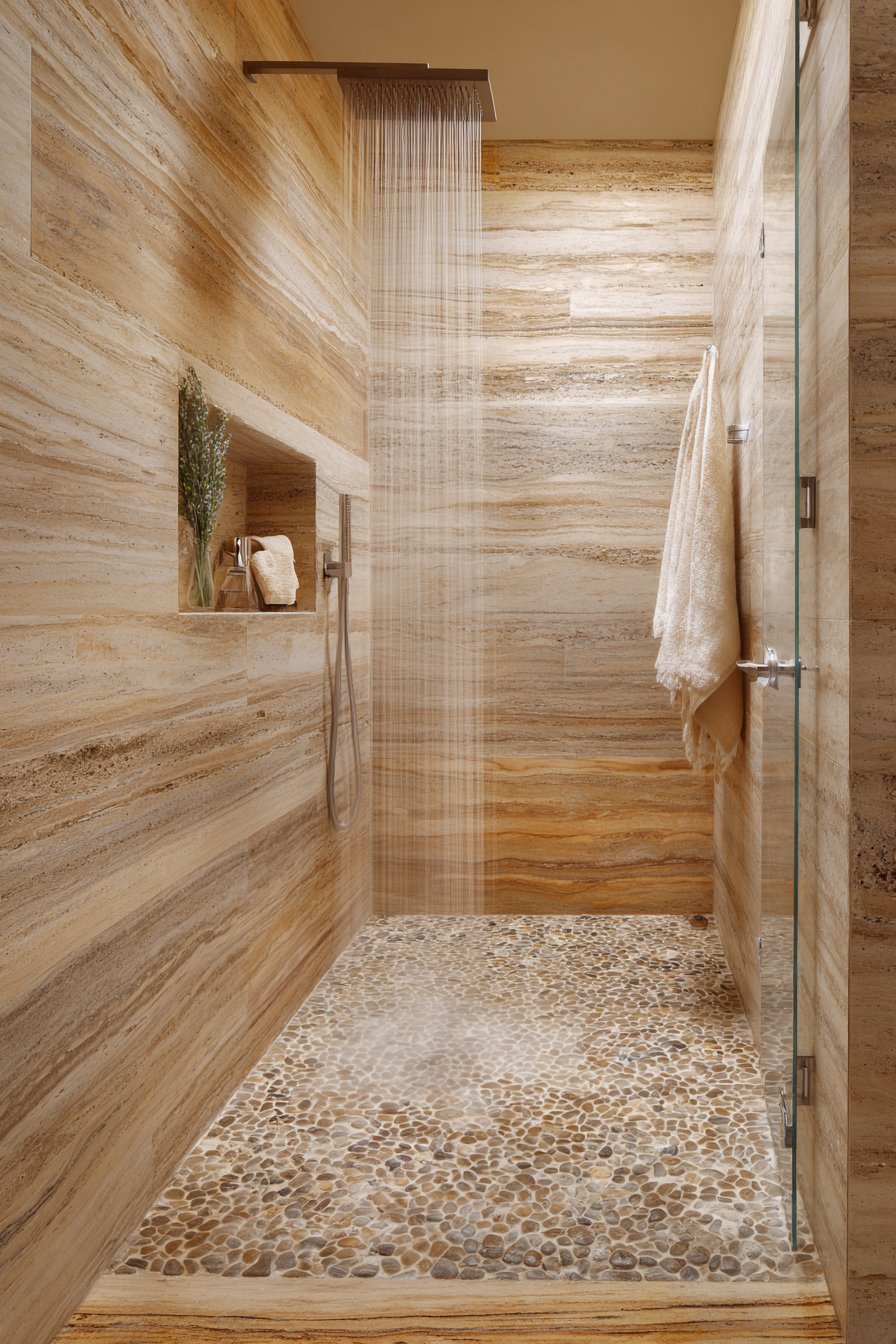
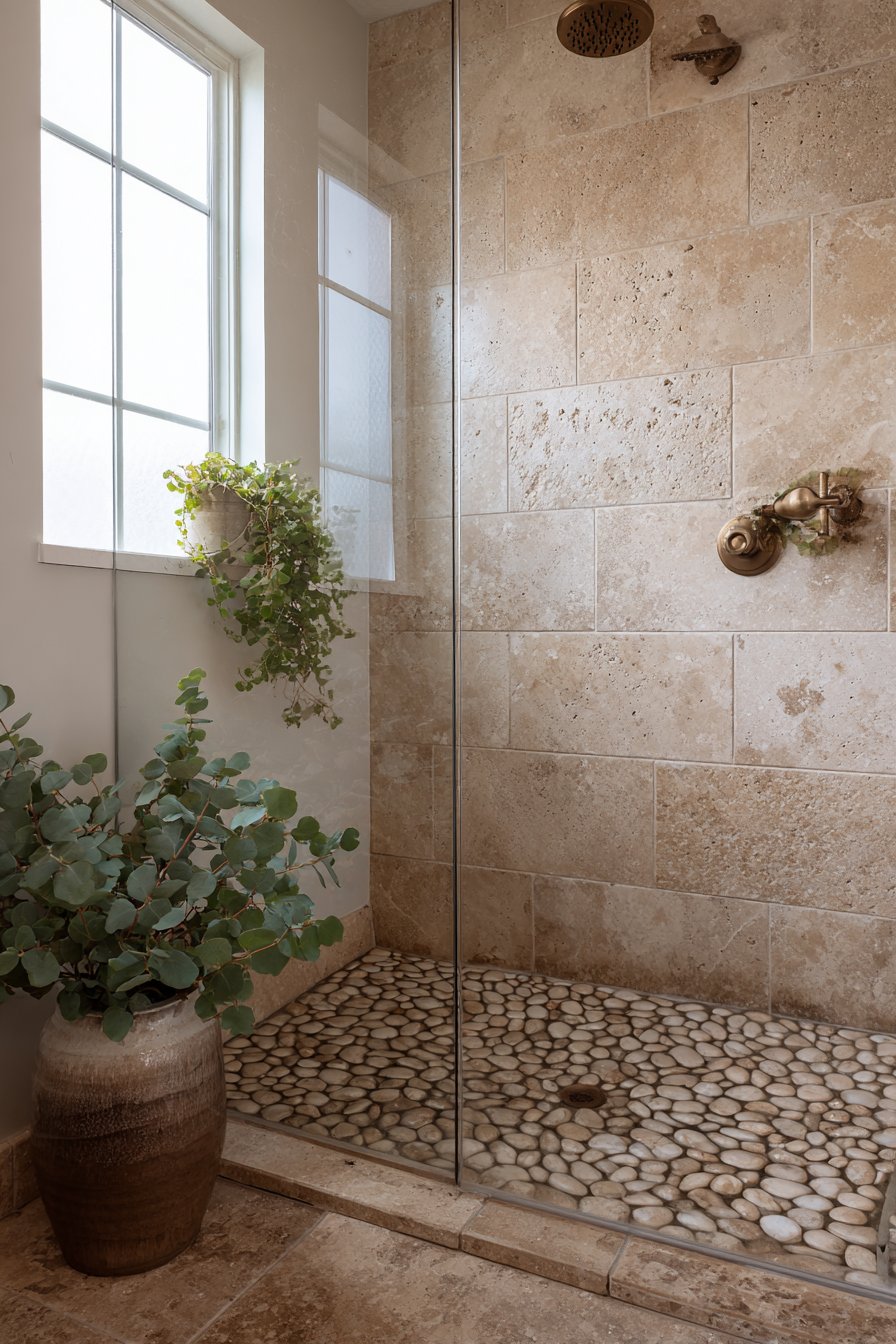
An eucalyptus bundle hangs from the shower head, releasing aromatic oils when activated by steam and water. This spa element adds wellness benefits while introducing additional natural texture.The varied stone textures create depth as natural light plays across irregular surfaces.
The travertine’s transparency allows light to penetrate slightly, creating a subtle glow. This thoughtful material selection transforms daily showering into a rejuvenating sensory experience.
Key Design Tips:
- Use travertine tiles for shower walls to introduce natural variations and warmth
- Install river pebble flooring for organic texture and superior water drainage
- Choose frameless glass partitions to showcase beautiful stone work without visual obstruction
- Add brushed bronze fixtures to complement warm stone tones with metallic accents
- Hang eucalyptus bundles for aromatic spa elements and natural wellness benefits
- Select rain shower heads to create gentle, nature-inspired water flow
- Embrace natural stone variations rather than seeking perfect uniformity in tile selection
4. Sustainable Bamboo Bathroom with Eco-Friendly Materials
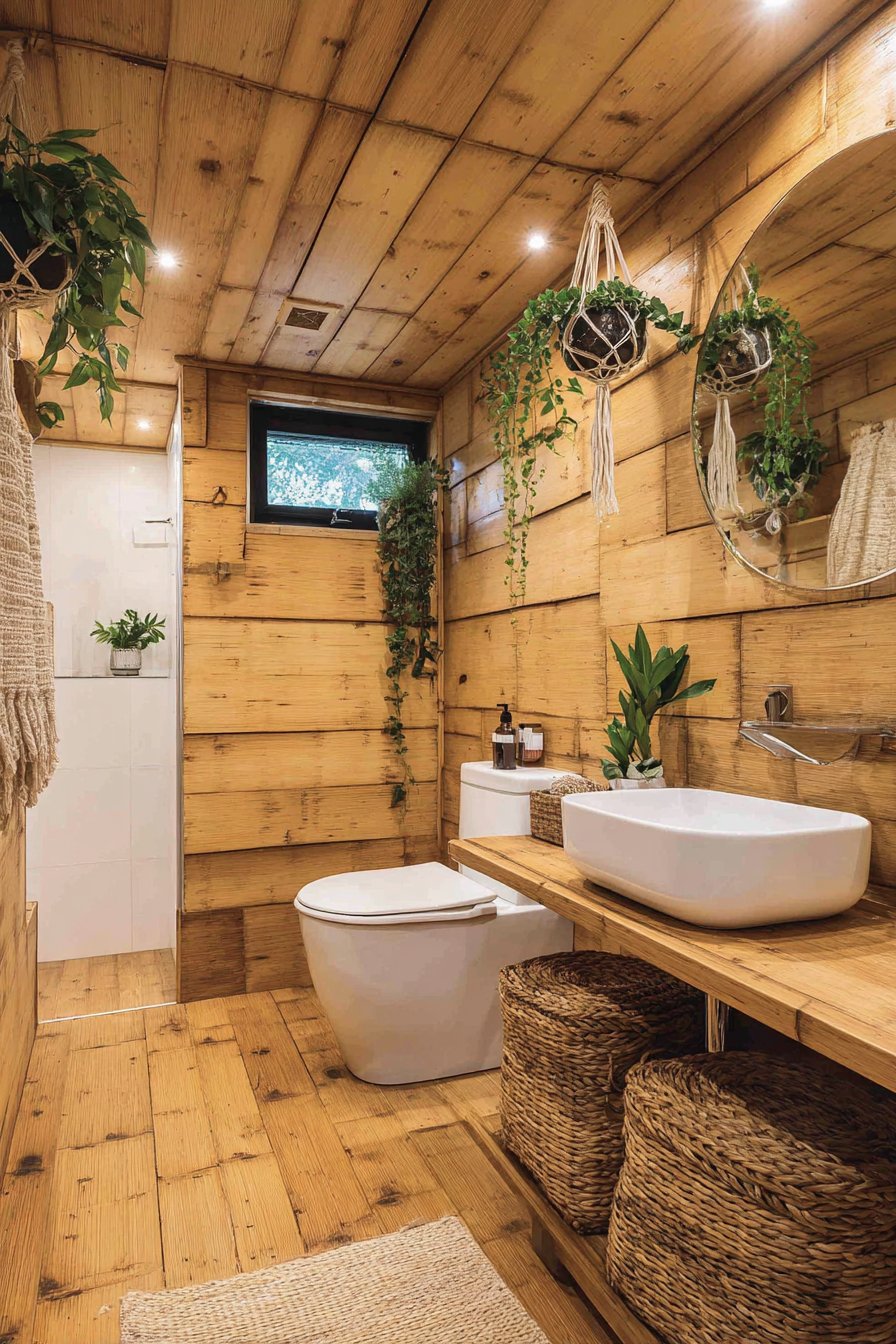
Bamboo wall paneling featuring horizontal grain patterns creates a warm, organic envelope in this compact bathroom. The natural color variations range from light honey to warm amber across different panels. This fast-growing sustainable material offers environmental benefits while delivering visual warmth.
The horizontal orientation makes the small space feel wider and more expansive. The bamboo’s subtle variations prevent monotony while maintaining cohesive aesthetic flow.
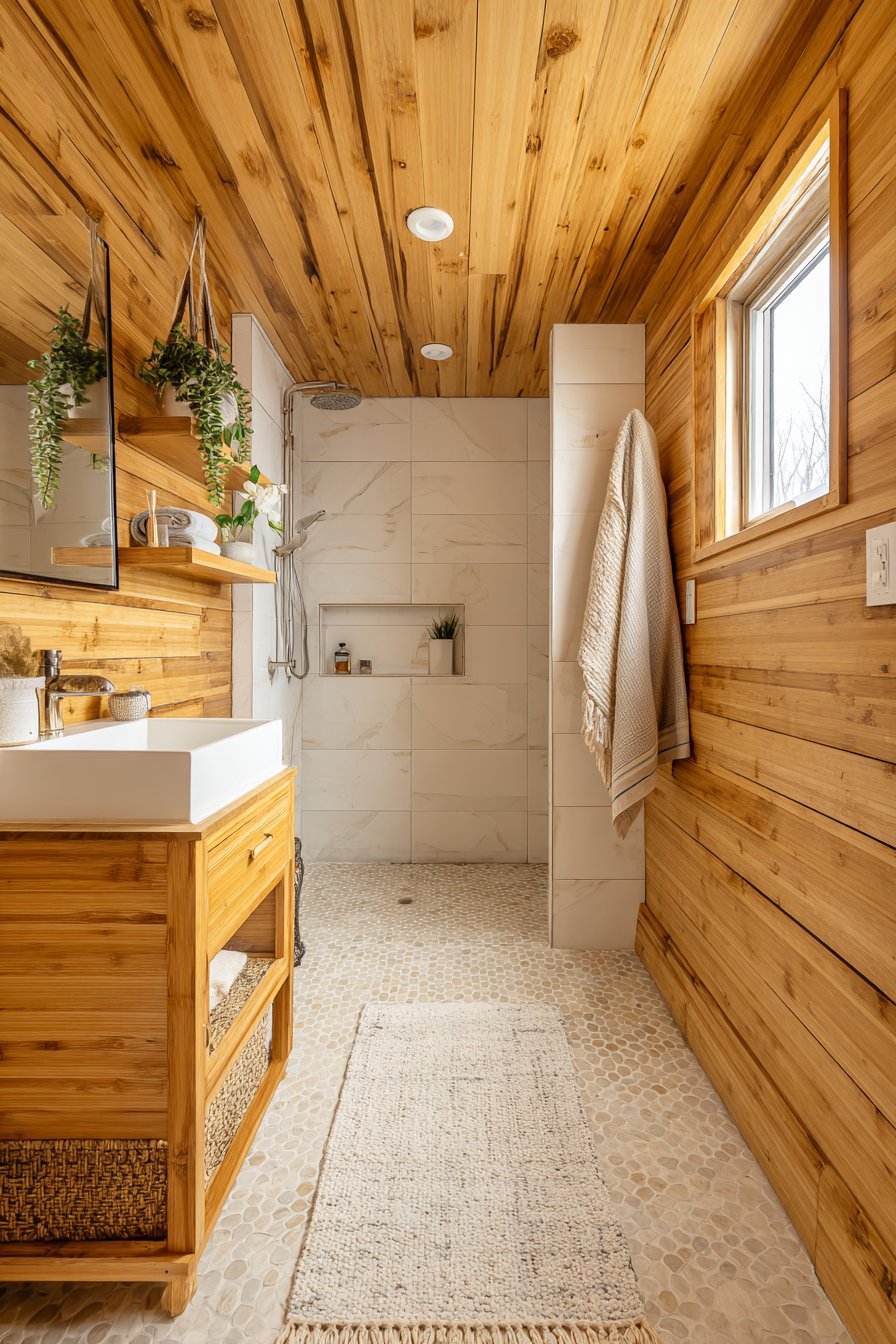
A wall-mounted floating vanity crafted from sustainable bamboo maximizes floor space in the compact layout. The clean lines and minimal profile enhance the room’s airy feeling. Woven rattan basket storage tucked beneath provides textural contrast and practical organization.
White porcelain fixtures maintain clean simplicity, their bright surfaces reflecting light throughout the space. The contrast between warm bamboo and cool white creates balanced visual temperature.
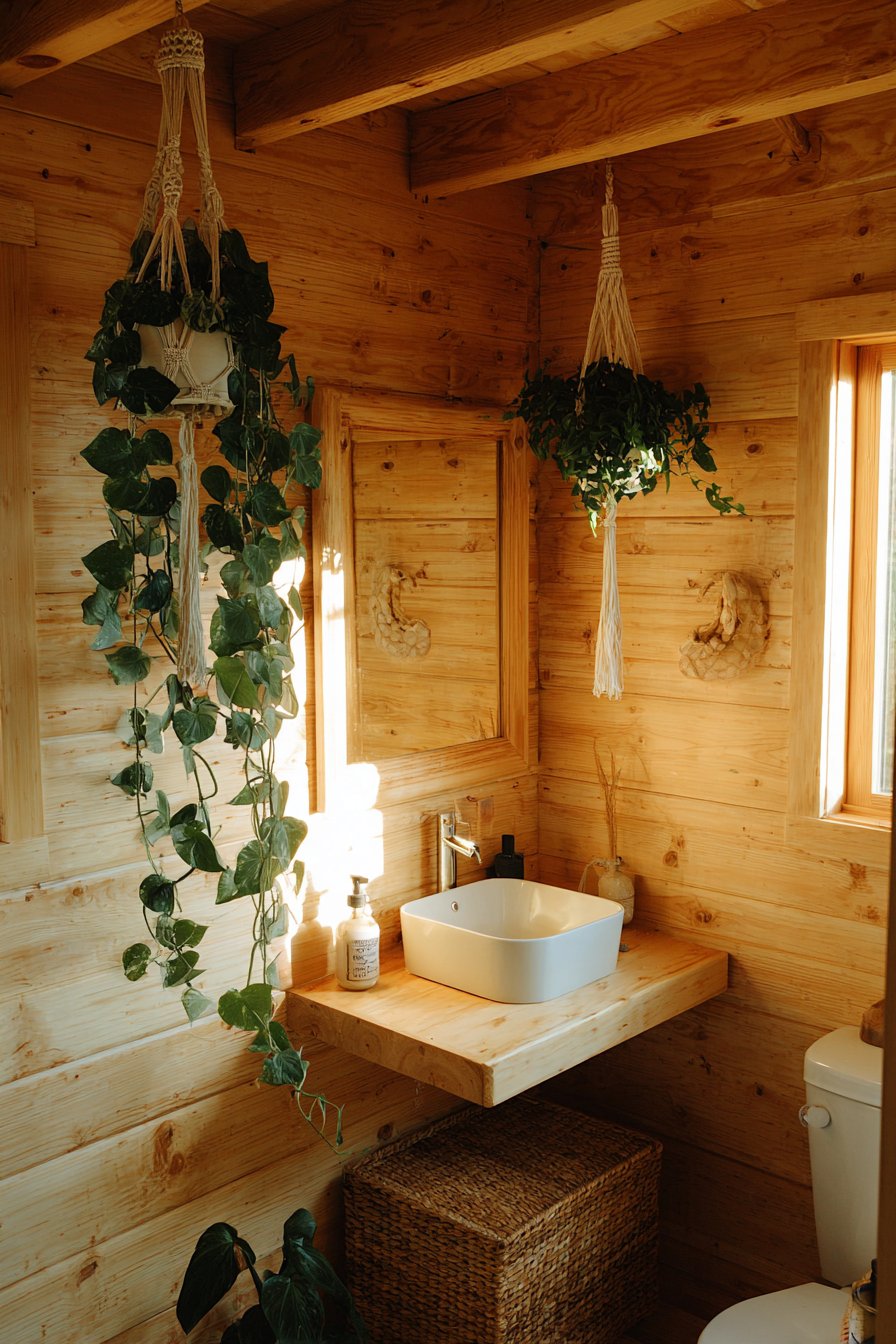
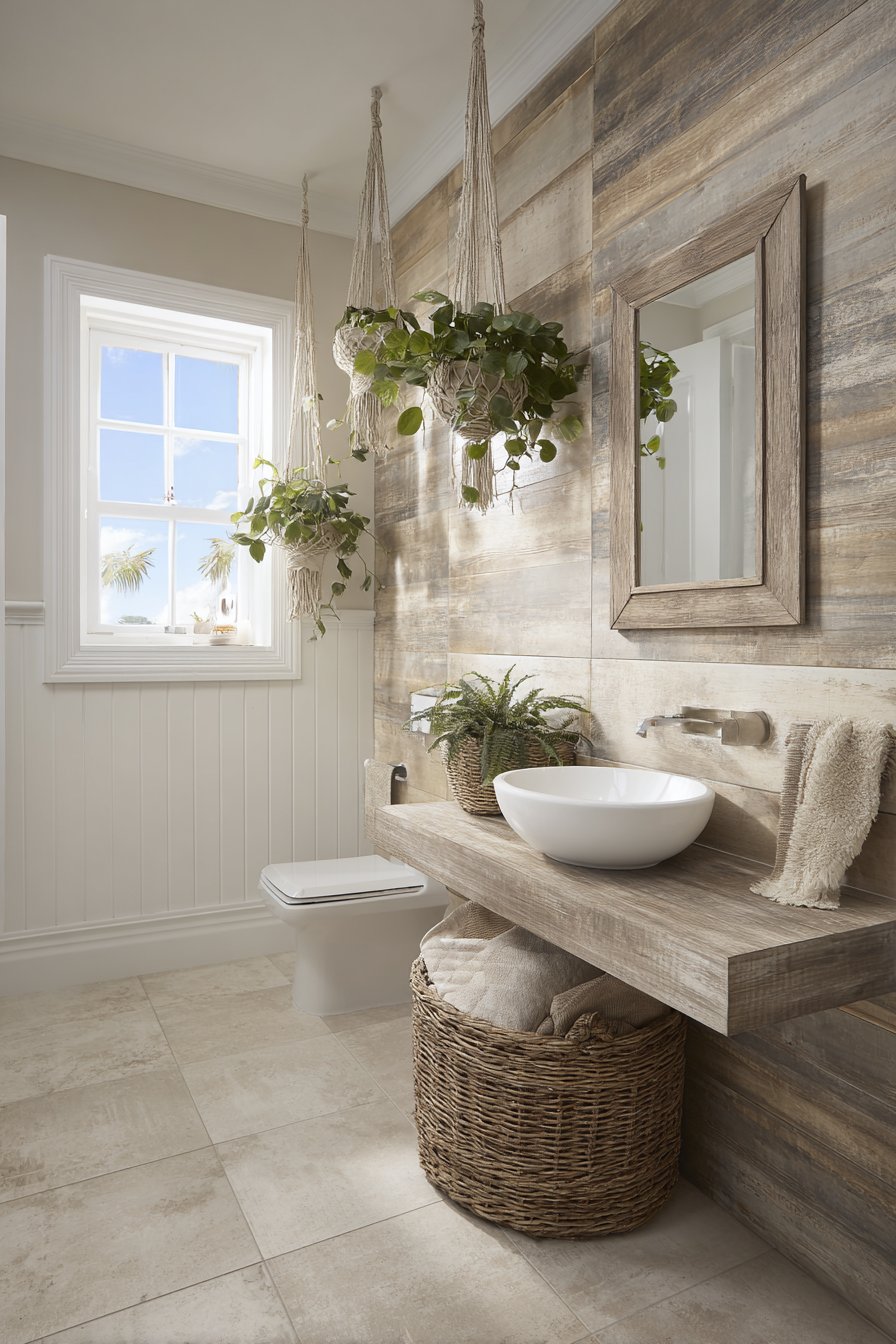
Hanging pothos plants cascade from ceiling-mounted macramé holders, their trailing vines adding movement and life. The plants thrive in bathroom humidity while softening angular lines with organic curves.
Soft natural lighting from a small window highlights the various organic textures throughout the space. The detail-oriented arrangement proves that eco-friendly materials can create both beautiful and highly functional small bathrooms.
Key Design Tips:
- Choose bamboo for wall paneling as a rapidly renewable and sustainable material option
- Install floating vanities in small bathrooms to maximize floor space and create airiness
- Incorporate woven rattan baskets for textural variety and practical storage solutions
- Use white porcelain fixtures to reflect light and brighten compact spaces effectively
- Add trailing plants in macramé holders to introduce vertical greenery without floor space
- Orient bamboo paneling horizontally to make narrow bathrooms appear wider visually
- Select eco-friendly materials that deliver both environmental benefits and aesthetic appeal
5. Stacked Slate Shower with Teak Wood Bench
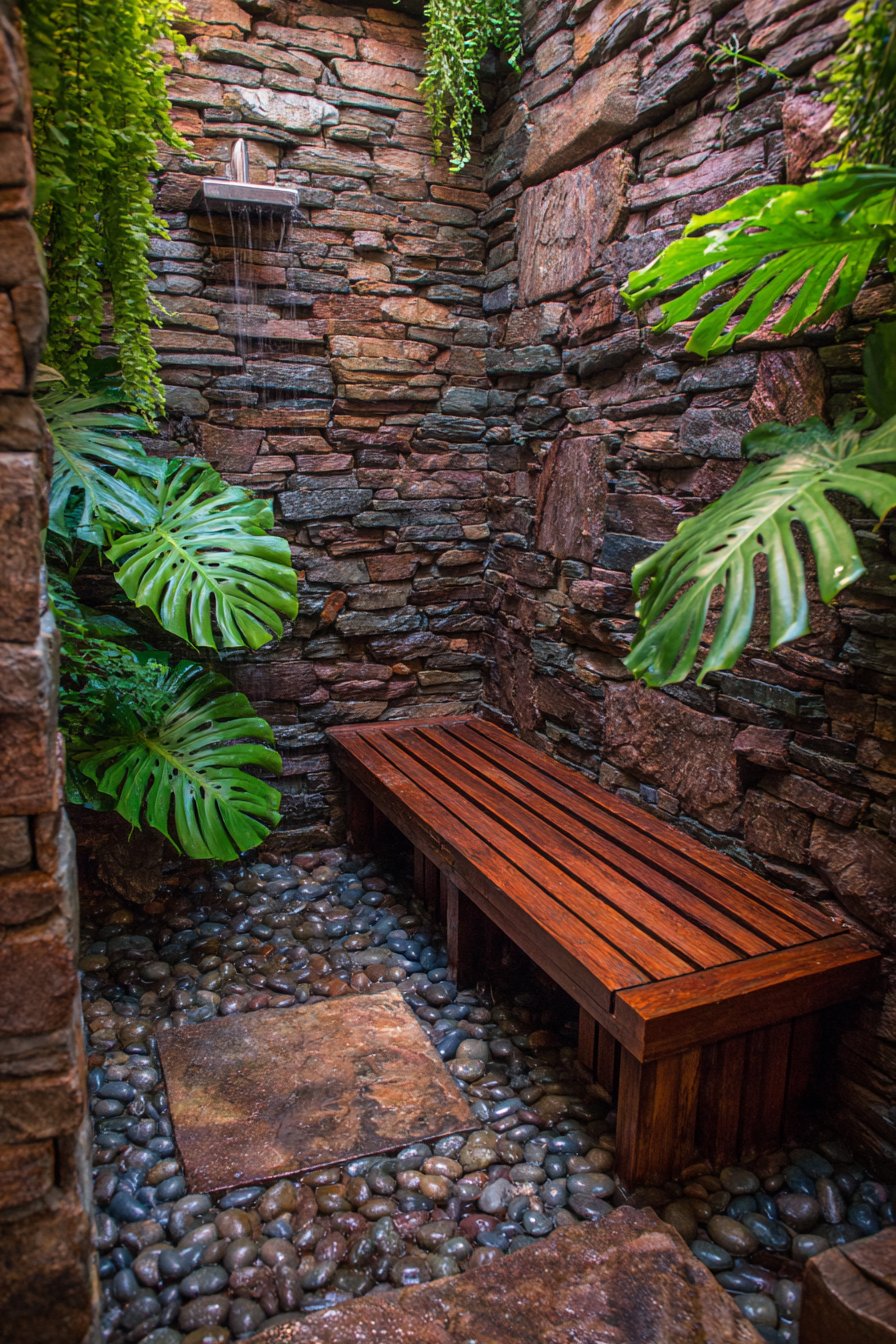
A walk-in shower featuring stacked slate stone walls creates dramatic textural impact with earth tones. The slate ranges from charcoal grey to rust brown, showcasing natural layering and geological stratification.
This three-dimensional stone application adds depth and visual interest far beyond flat tile. The varied colors create an organic gradient that feels both sophisticated and grounded. Each slate piece contributes unique coloring and texture to the overall composition.
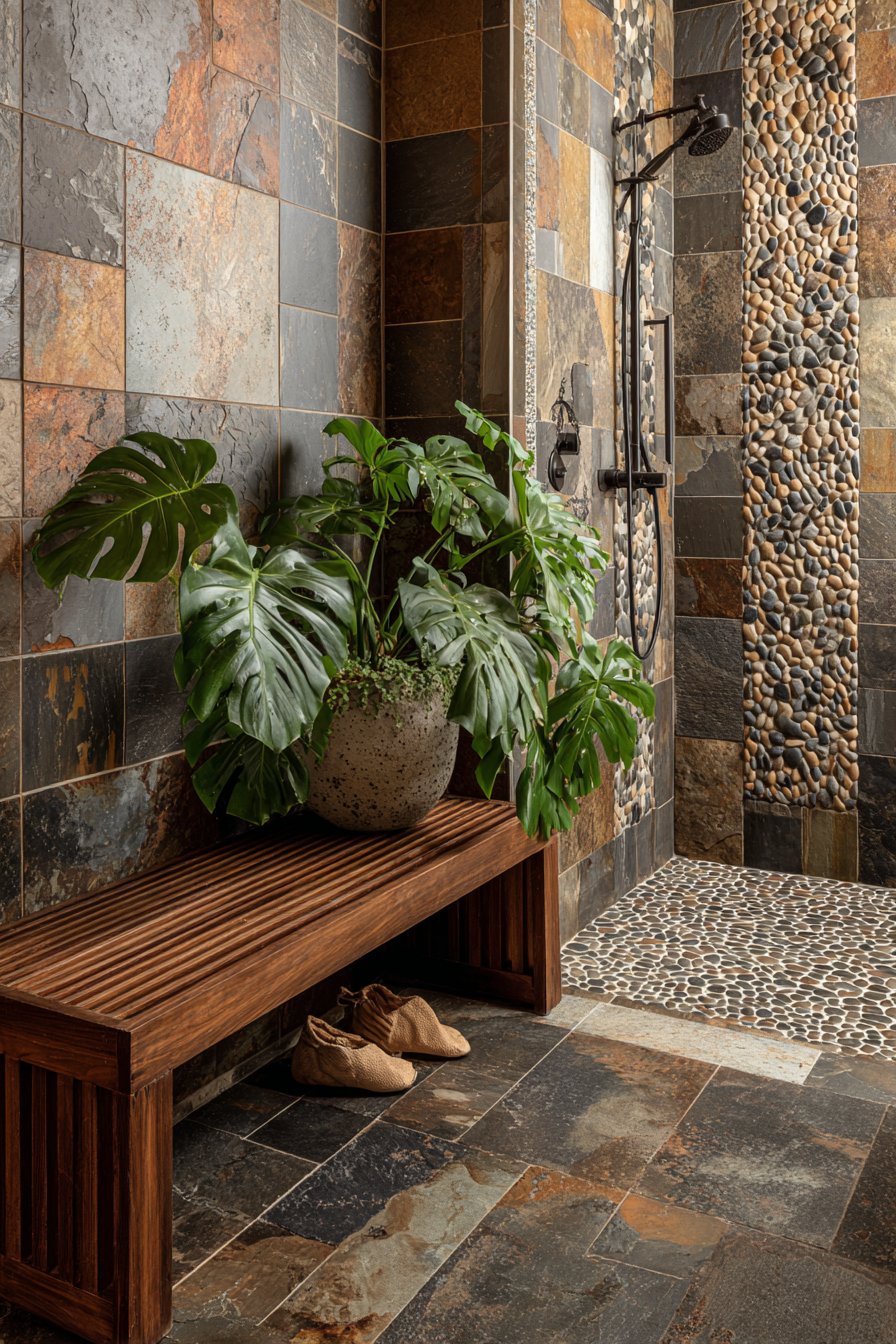
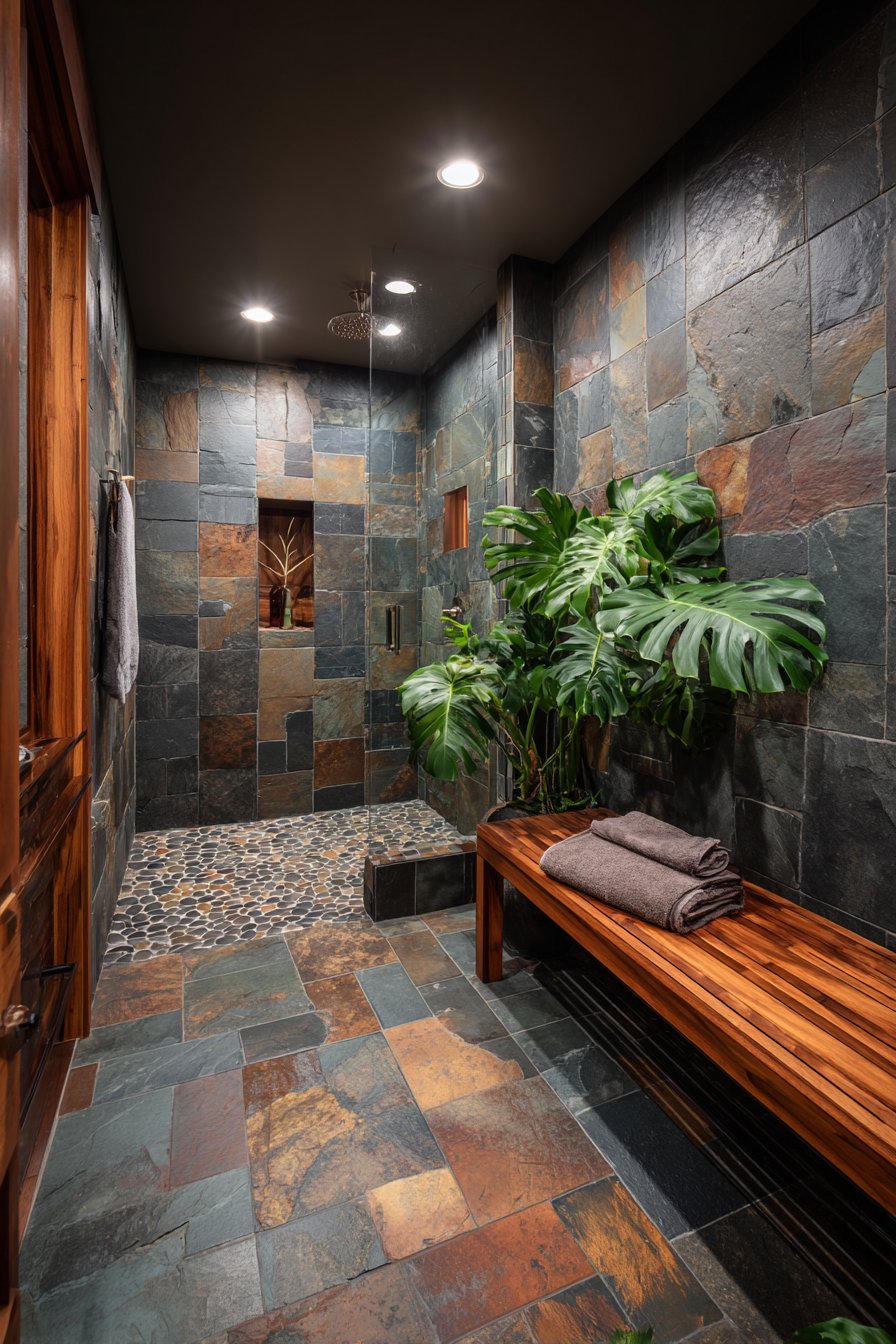
A teak wood shower bench with slatted design provides comfortable seating while allowing proper water drainage. The warm wood contrasts beautifully against the cooler slate tones, introducing temperature balance.
The slatted construction prevents water pooling while adding linear visual interest. This functional element transforms the shower into a spa-like space suitable for extended relaxation. The teak develops a beautiful silvery patina when exposed to water over time.
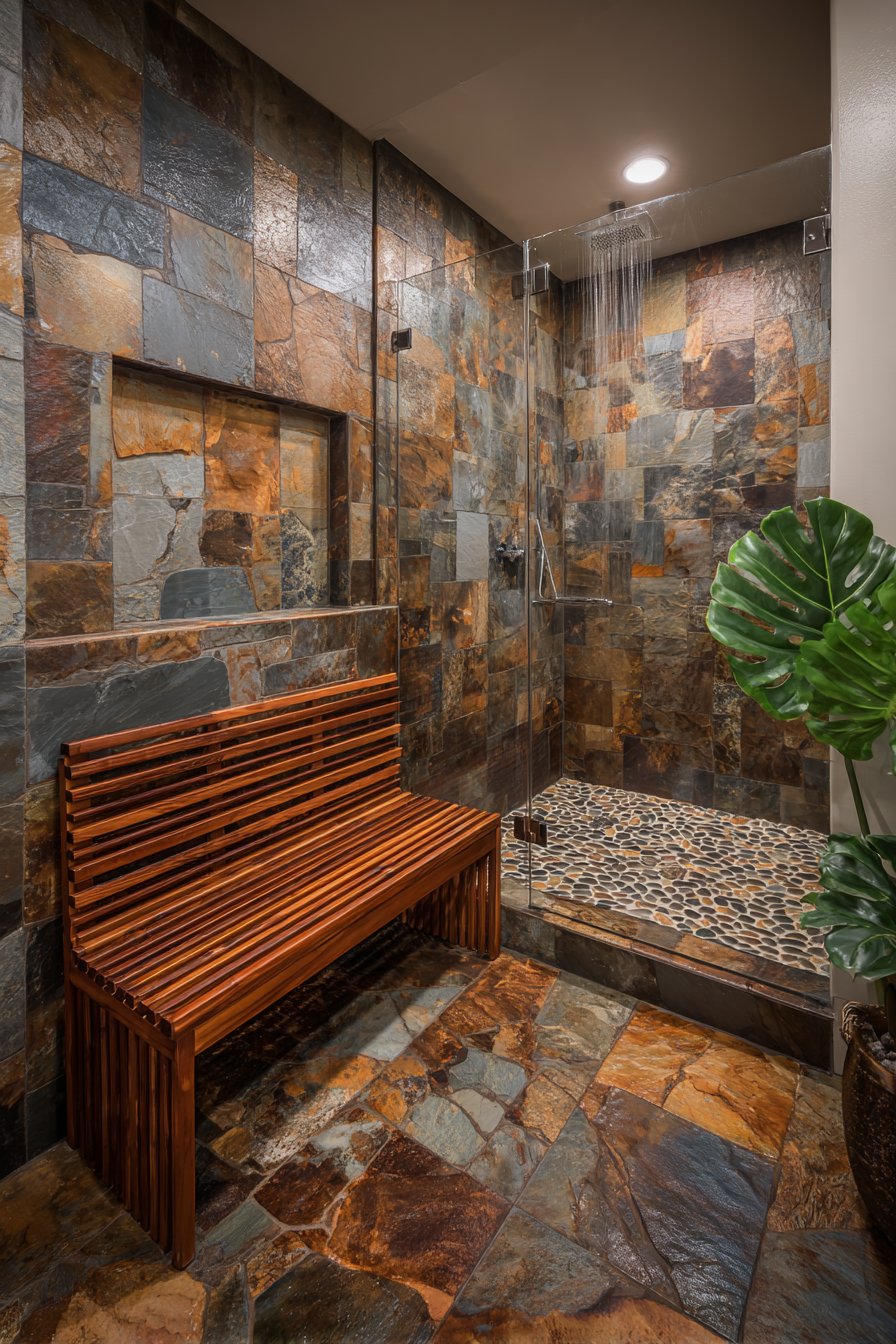
Pebble tile flooring in mixed natural river stones creates an organic pattern beneath your feet. The varied stone sizes and colors provide natural foot massage while ensuring excellent drainage.
A large monstera plant positioned in the corner adds tropical greenery and bold architectural foliage. The plant’s large leaves create striking silhouettes against the textured slate walls. This combination of materials creates a resort-inspired shower that feels luxurious and transportive.
Key Design Tips:
- Use stacked slate for shower walls to create three-dimensional texture and depth
- Install teak shower benches with slatted designs for seating and proper drainage
- Choose pebble tile flooring for a natural foot massage and superior water management
- Incorporate large tropical plants like monstera for bold architectural foliage elements
- Combine cool slate tones with warm wood for balanced temperature in color palette
- Design walk-in showers to create spa-like experiences with multiple material layers
- Select varied earth tones to create natural color gradients from dark to light
6. Oak Storage Shelving with Organized Natural Aesthetic
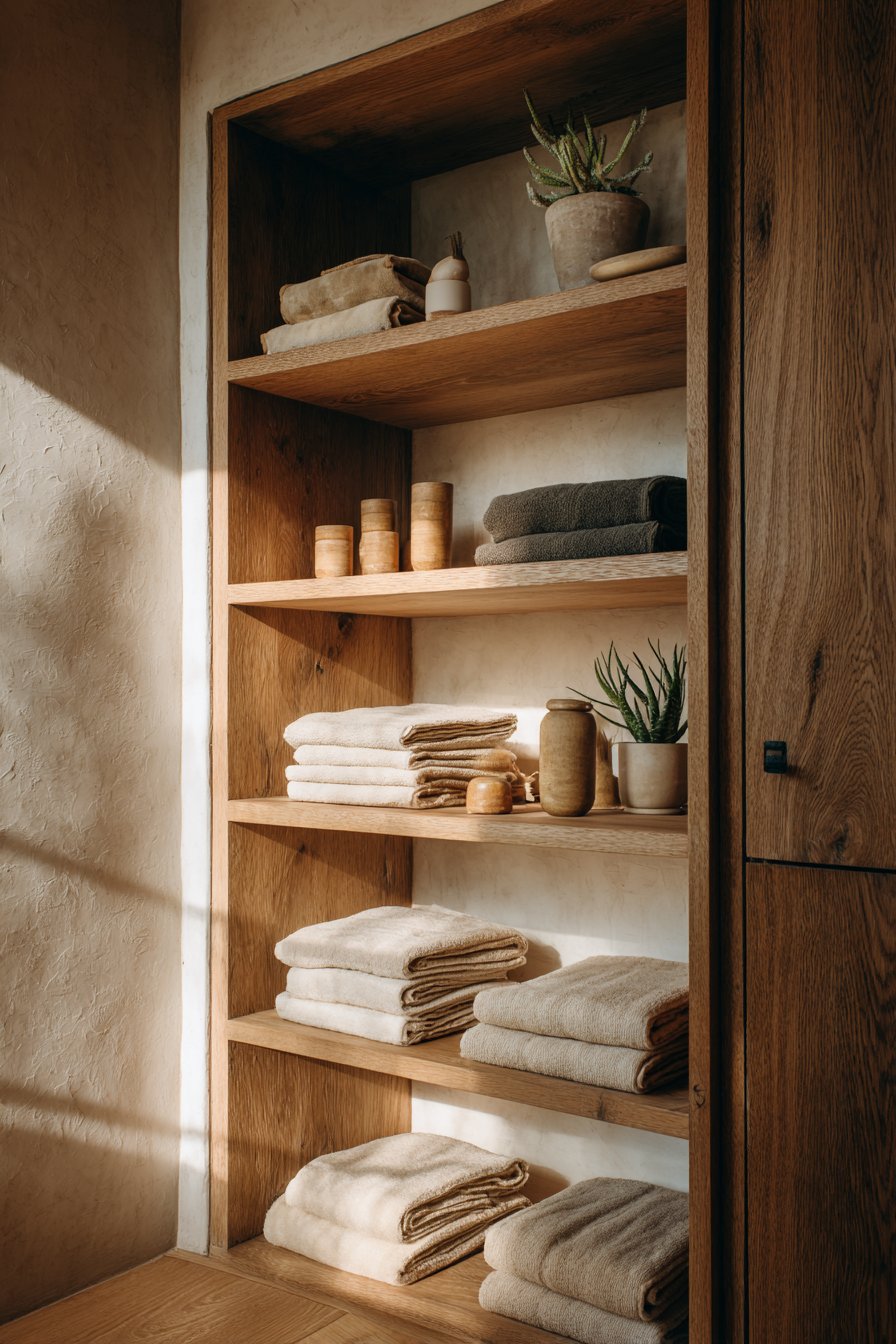
Floor-to-ceiling built-in shelving crafted from light oak wood brings functional beauty to bathroom storage. The wood displays visible knots and grain character that add authentic natural charm.
Each shelf becomes a display opportunity for both practical items and decorative elements. The vertical storage maximizes wall space while keeping floors clear and open. The light oak brightens the space while introducing warm natural tones throughout.
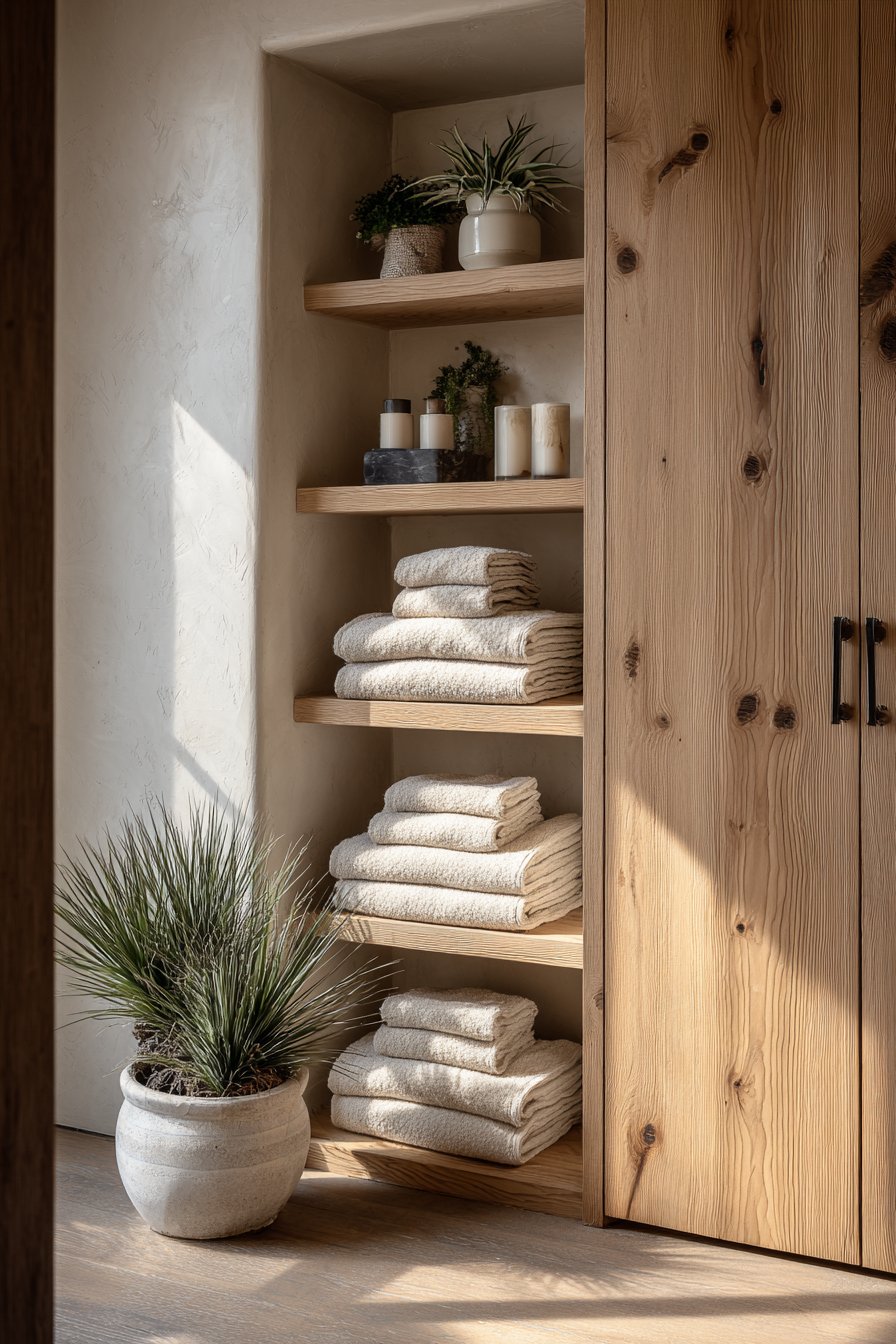
Neatly folded linen towels in natural beige and cream tones are arranged alongside potted air plants. The neutral towel colors complement the oak while maintaining a serene, spa-like palette. Air plants require minimal care and no soil, making them perfect for bathroom environments.
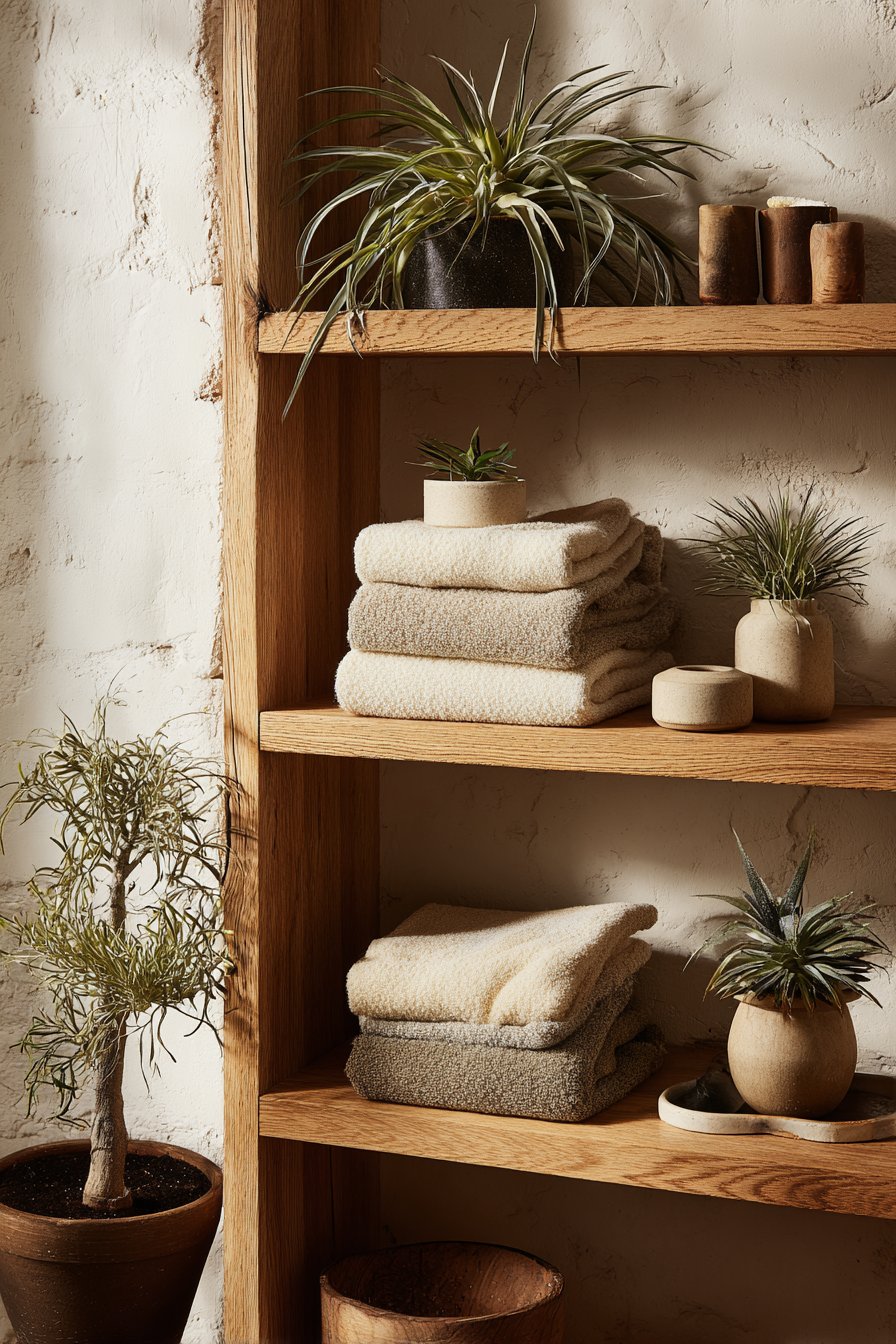
Handmade ceramic containers in earthy glazes hold bathroom essentials while contributing artisanal texture. The curated shelving arrangement balances practical storage with aesthetic presentation.
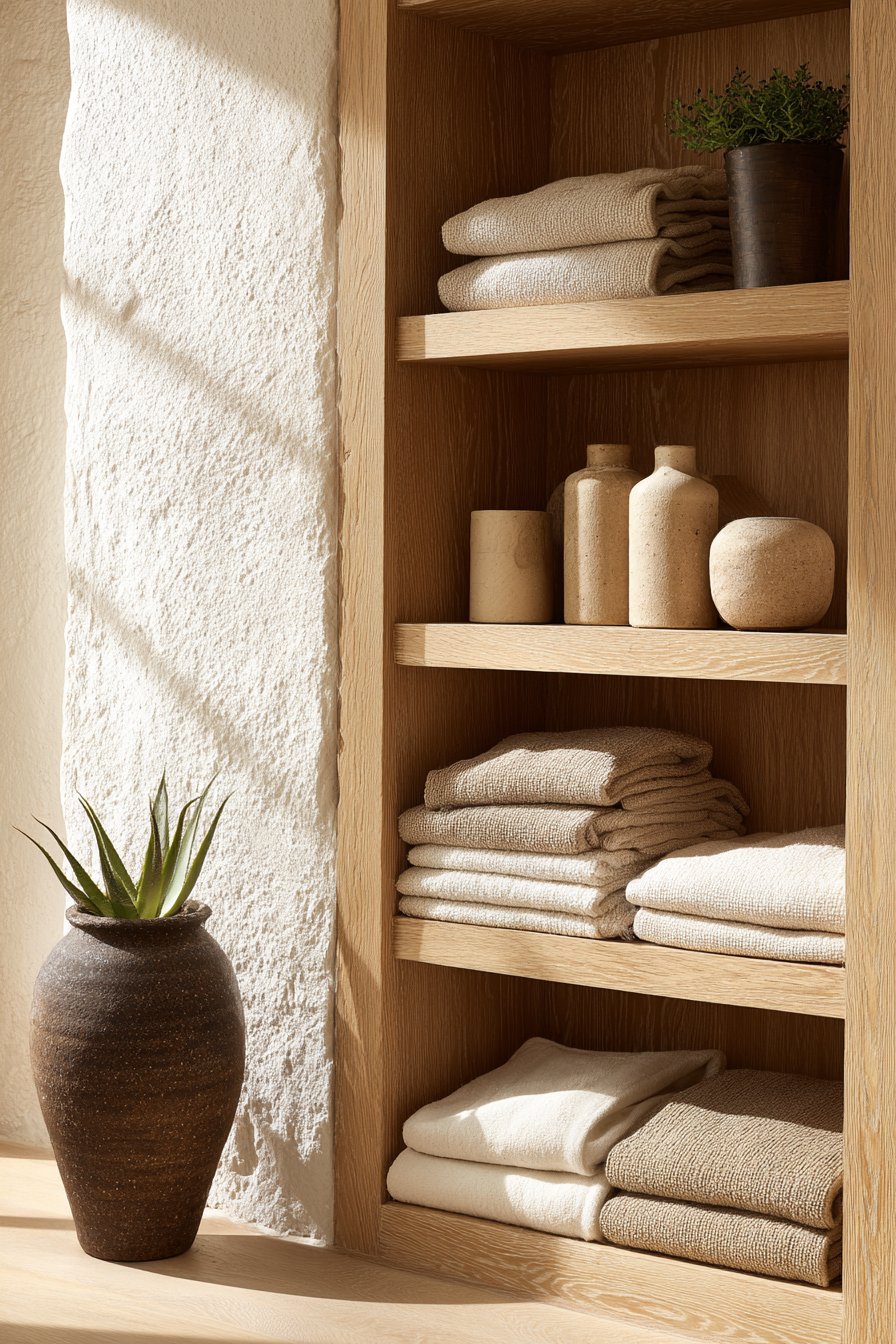
Textured plaster walls in warm white provide a subtle backdrop that allows the oak to shine. The slightly irregular plaster surface adds organic texture without overwhelming the space. Natural afternoon light creates gentle shadows that highlight the wood grain and emphasize depth.
The shadows shift throughout the day, adding dynamic visual interest to the organized display. This approach proves that storage solutions can be both highly functional and beautiful design features.
Key Design Tips:
- Build floor-to-ceiling shelving to maximize vertical storage space in bathrooms
- Choose light oak wood to brighten spaces while introducing natural warmth
- Display towels in neutral tones to maintain serene, cohesive color palettes
- Incorporate air plants for low-maintenance greenery that thrives in humid environments
- Use handmade ceramic containers to add artisanal character and practical organization
- Apply textured plaster walls for subtle organic backdrop that doesn’t compete visually
- Arrange shelves to balance practical storage needs with aesthetic display opportunities
7. Reclaimed Barn Wood Vanity with Marble Countertop
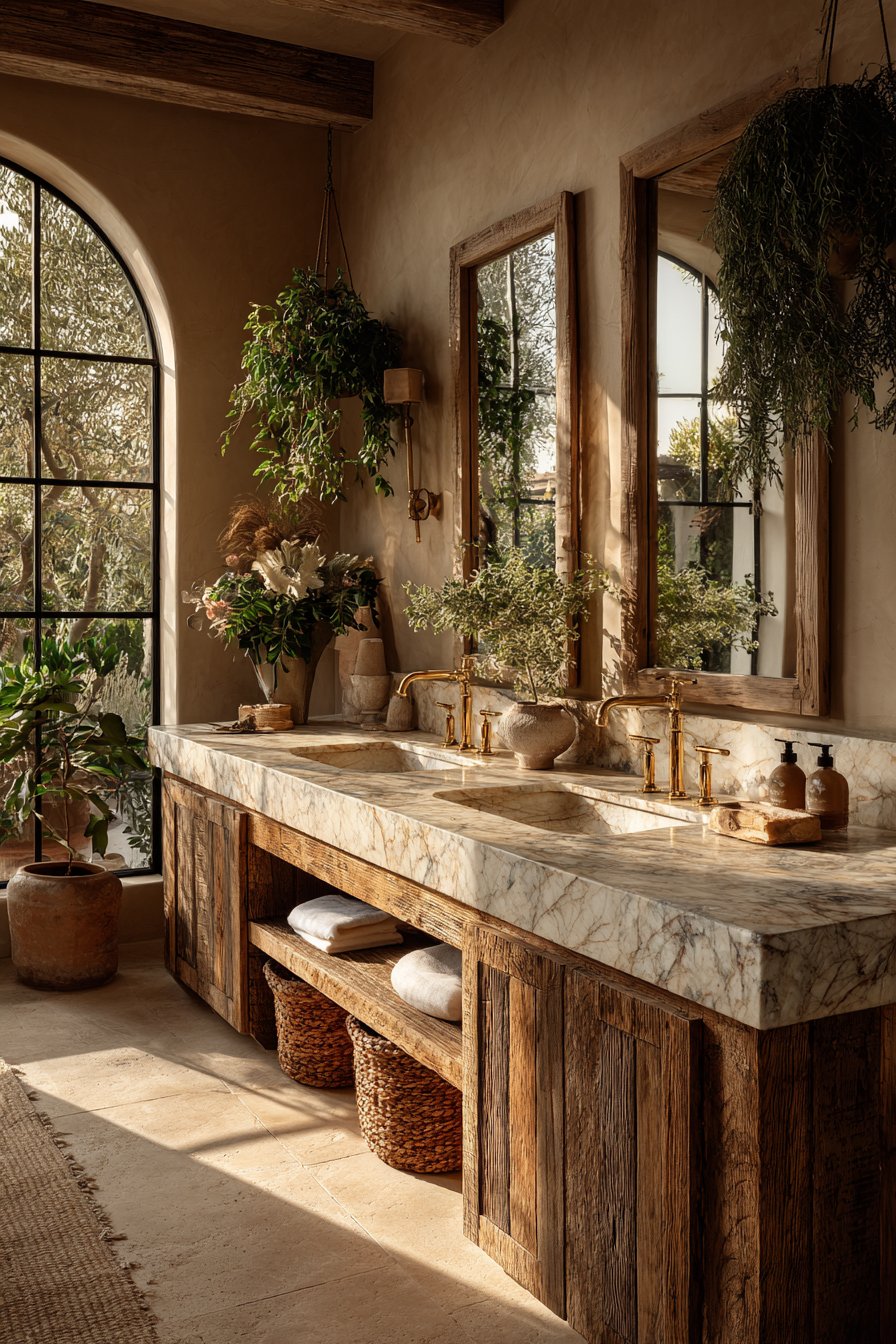
A double vanity featuring a thick marble countertop in cream with subtle grey veining creates elegant sophistication. The luxurious stone surface provides ample space for two users while serving as a stunning focal point.
Set on custom cabinetry made from reclaimed barn wood, the contrast between refined marble and rustic wood creates compelling visual tension. The barn wood shows weathered finish and authentic wear patterns that tell stories of previous lives.
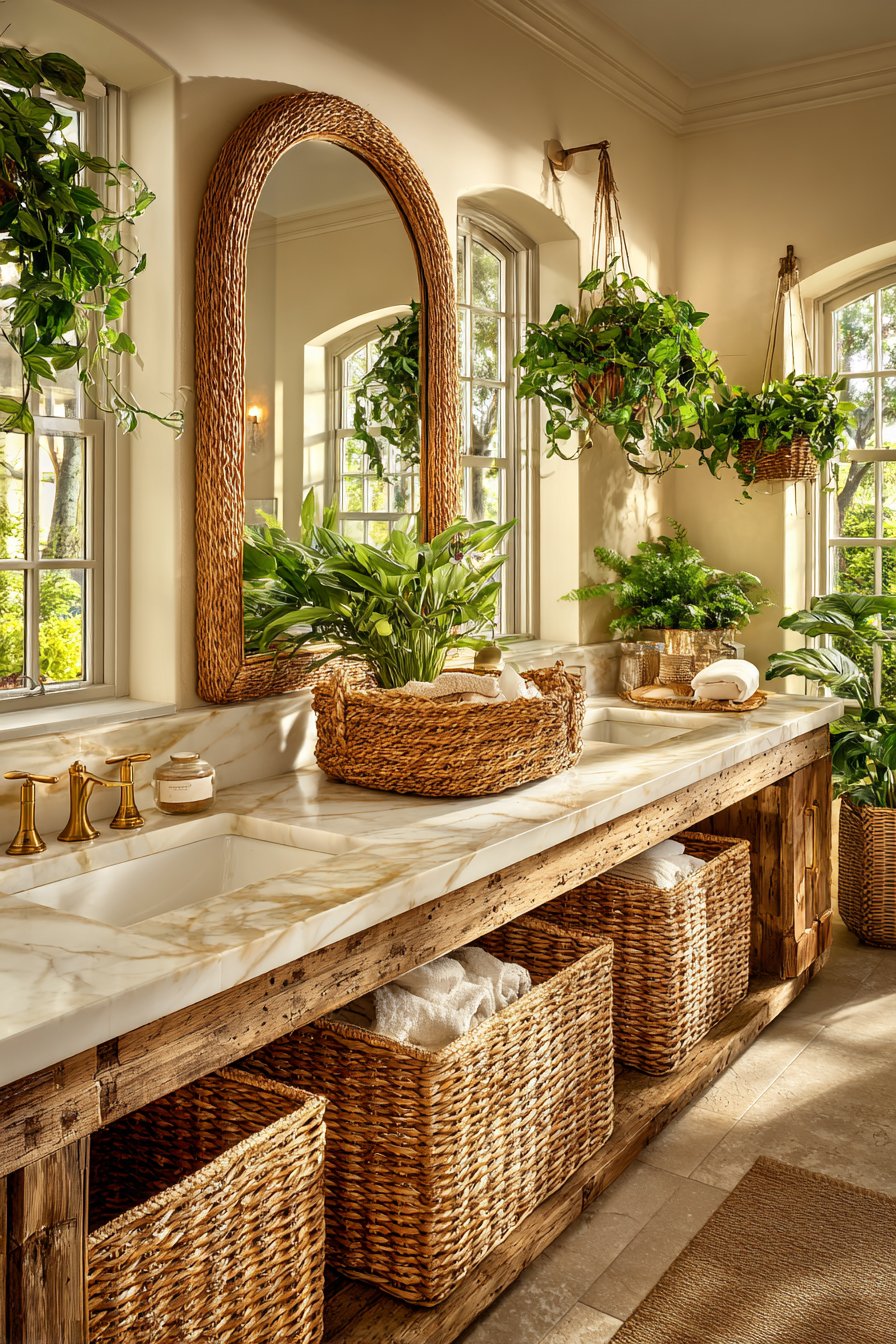
Brushed brass fixtures add warm metallic accents that bridge the cream marble and weathered wood. The soft gold tones enhance the warm color palette while providing subtle luxury.
Large woven seagrass baskets tucked beneath provide textural storage for towels and bathroom essentials. The natural fiber weaving adds organic pattern and softens the vanity’s linear form. The baskets’ neutral tones coordinate seamlessly with the overall earthy palette.
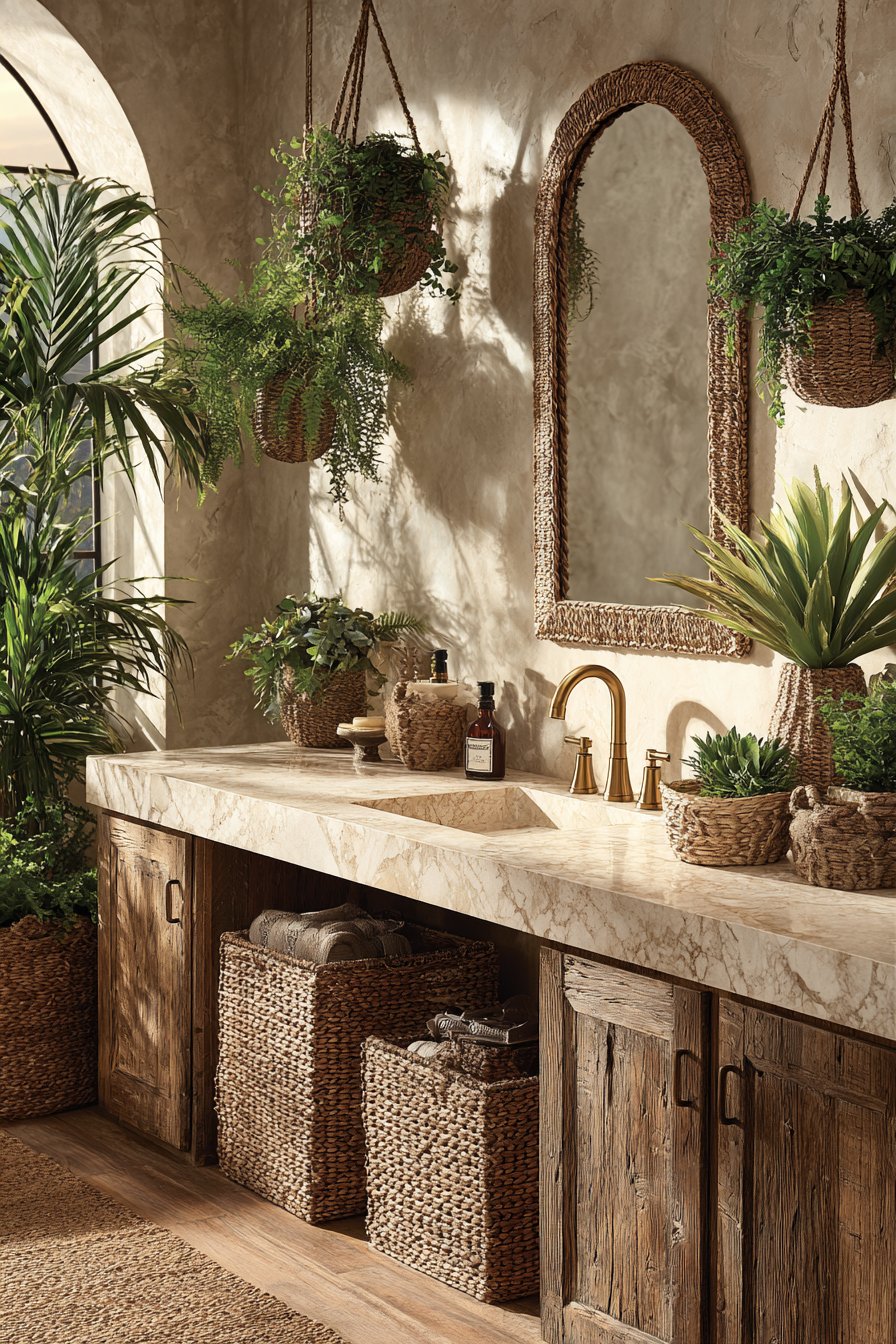
An arched mirror with natural rattan frame reflects abundant greenery from multiple hanging and potted plants. The mirror’s curved shape softens angular elements while the rattan frame reinforces the natural material theme.
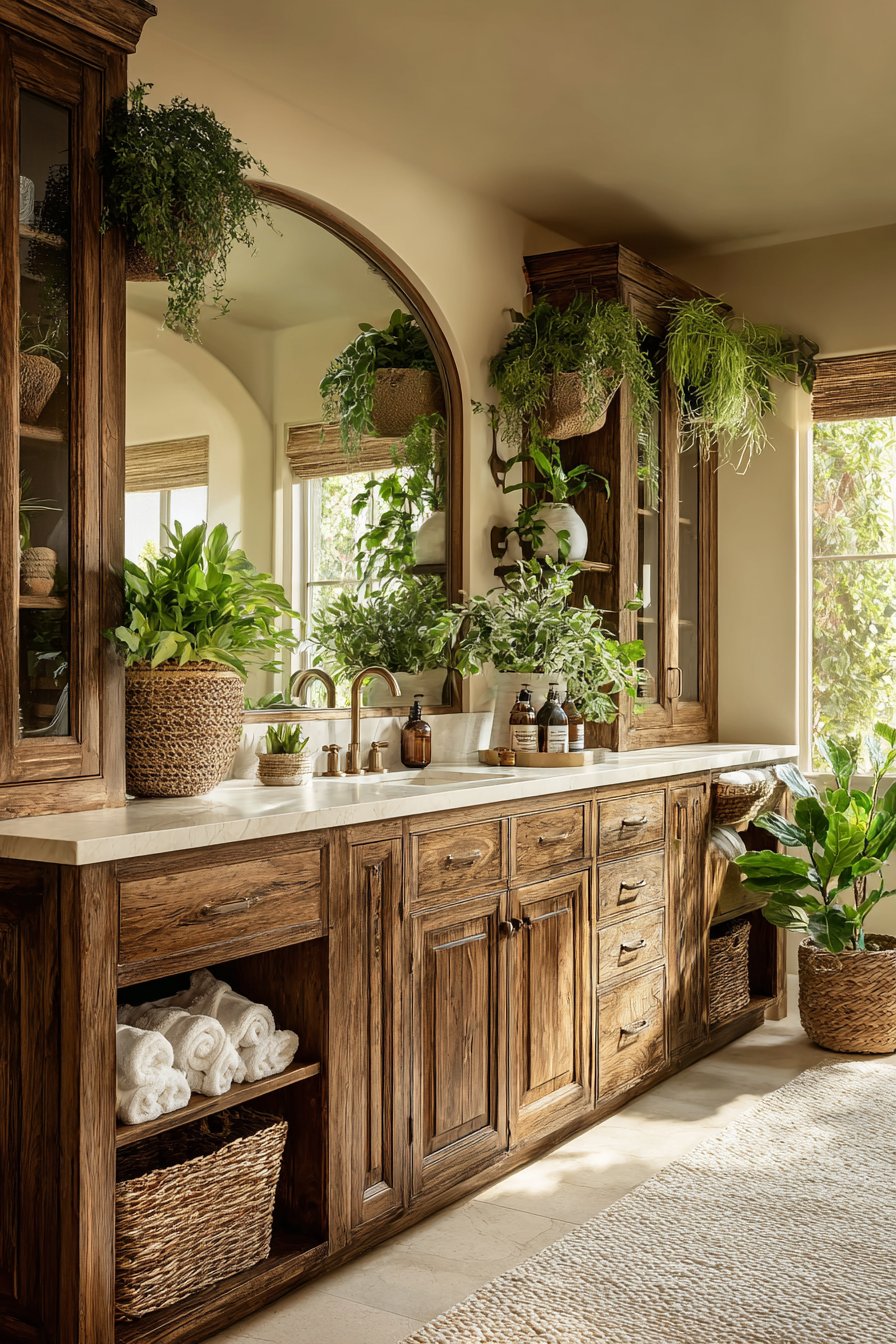
Professional golden hour lighting enhances the warm earth tones and highlights the wood’s natural patina. The low-angle light creates dramatic shadows that emphasize texture and depth. This thoughtful combination creates a vanity area that feels both luxurious and authentically organic.
Key Design Tips:
- Pair marble countertops with reclaimed wood cabinetry for a refined rustic contrast
- Use brushed brass fixtures to add warmth and bridge different material tones
- Incorporate woven seagrass baskets for textural storage beneath vanities
- Choose arched mirrors to soften angular bathroom elements with curved forms
- Select rattan frames to reinforce natural material themes throughout the space
- Display multiple plants to create abundant greenery and improve air quality
- Embrace weathered wood finishes for authentic character and unique patina
8. Japanese Hinoki Cypress Soaking Tub with Zen Elements
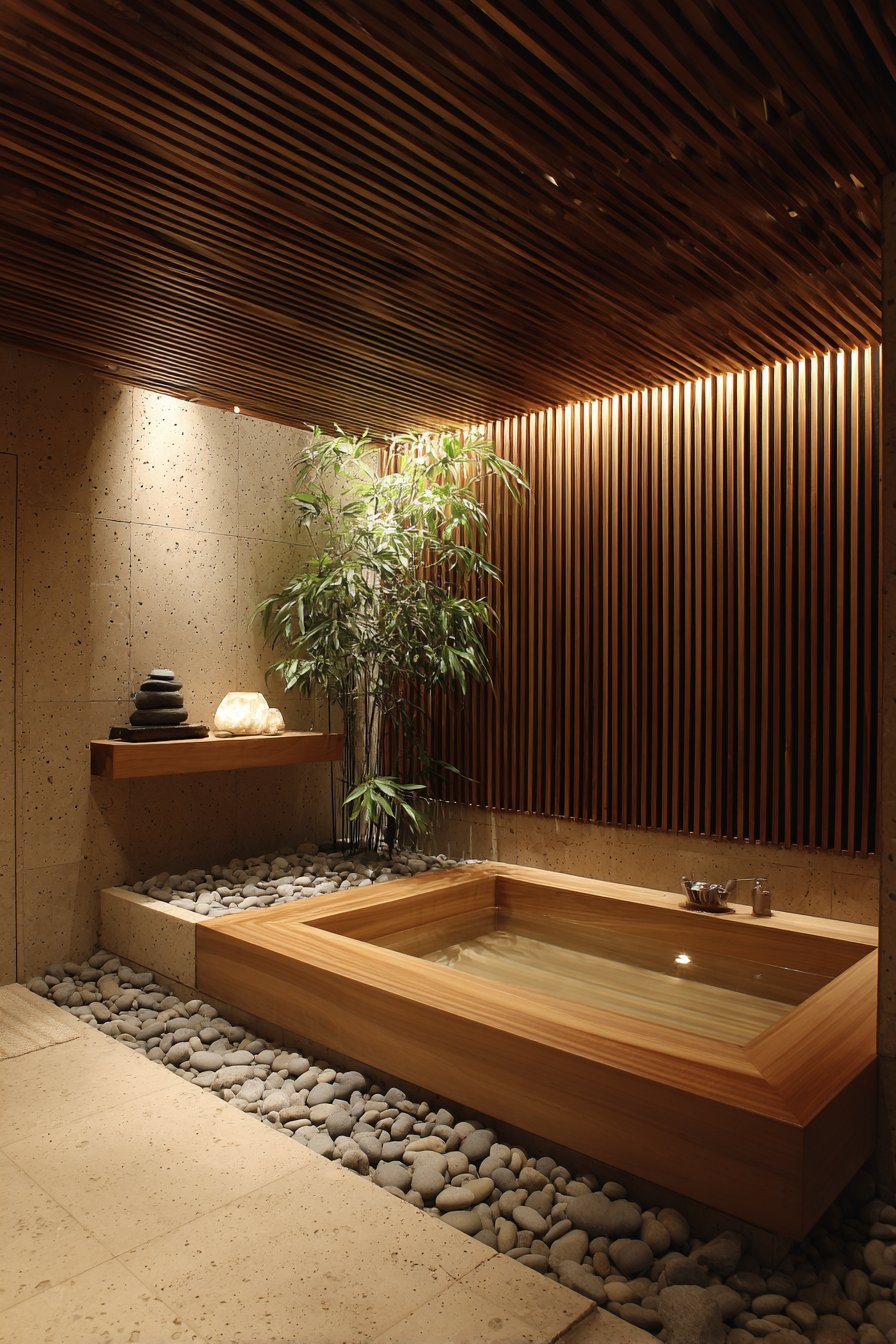
A sunken Japanese soaking tub constructed from aromatic hinoki cypress wood creates an immersive bathing experience. The precious wood releases calming fragrance when in contact with warm water. Surrounded by smooth river rocks set in concrete, the tub integration feels organic and intentional.
The river rocks provide textural contrast against the refined wood grain while creating naturalistic grounding. This traditional Japanese approach transforms bathing into meditative ritual.
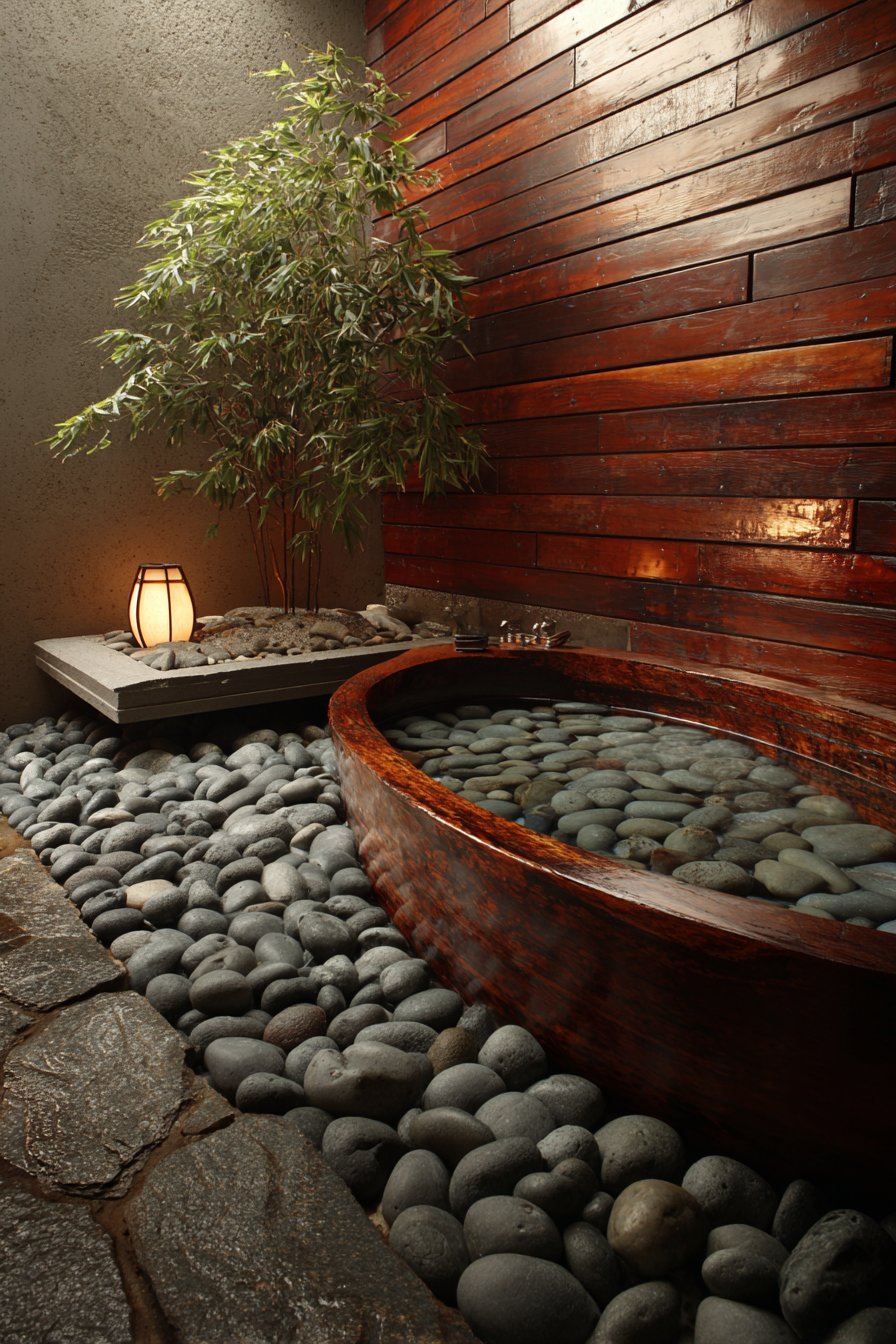
Cedar wood slat wall treatment provides vertical texture while contributing additional natural fragrance to the space. The horizontal slats create rhythmic pattern and visual movement across the wall surface.
Minimalist chrome fixtures maintain clean lines that respect the Japanese aesthetic principles. Their simple forms allow the natural materials to remain the focal points. A small zen garden with carefully raked sand and positioned stones sits on a floating shelf.
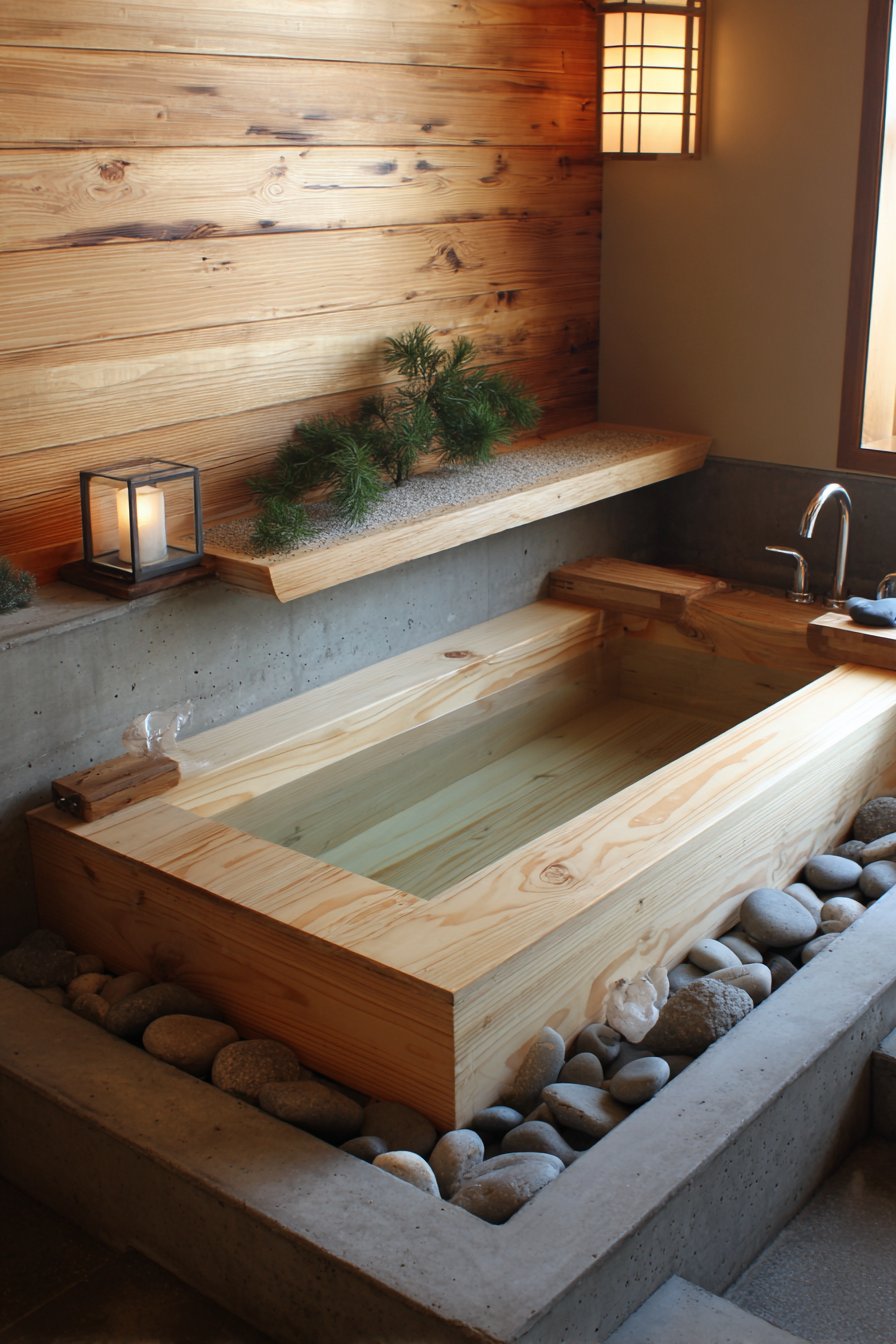
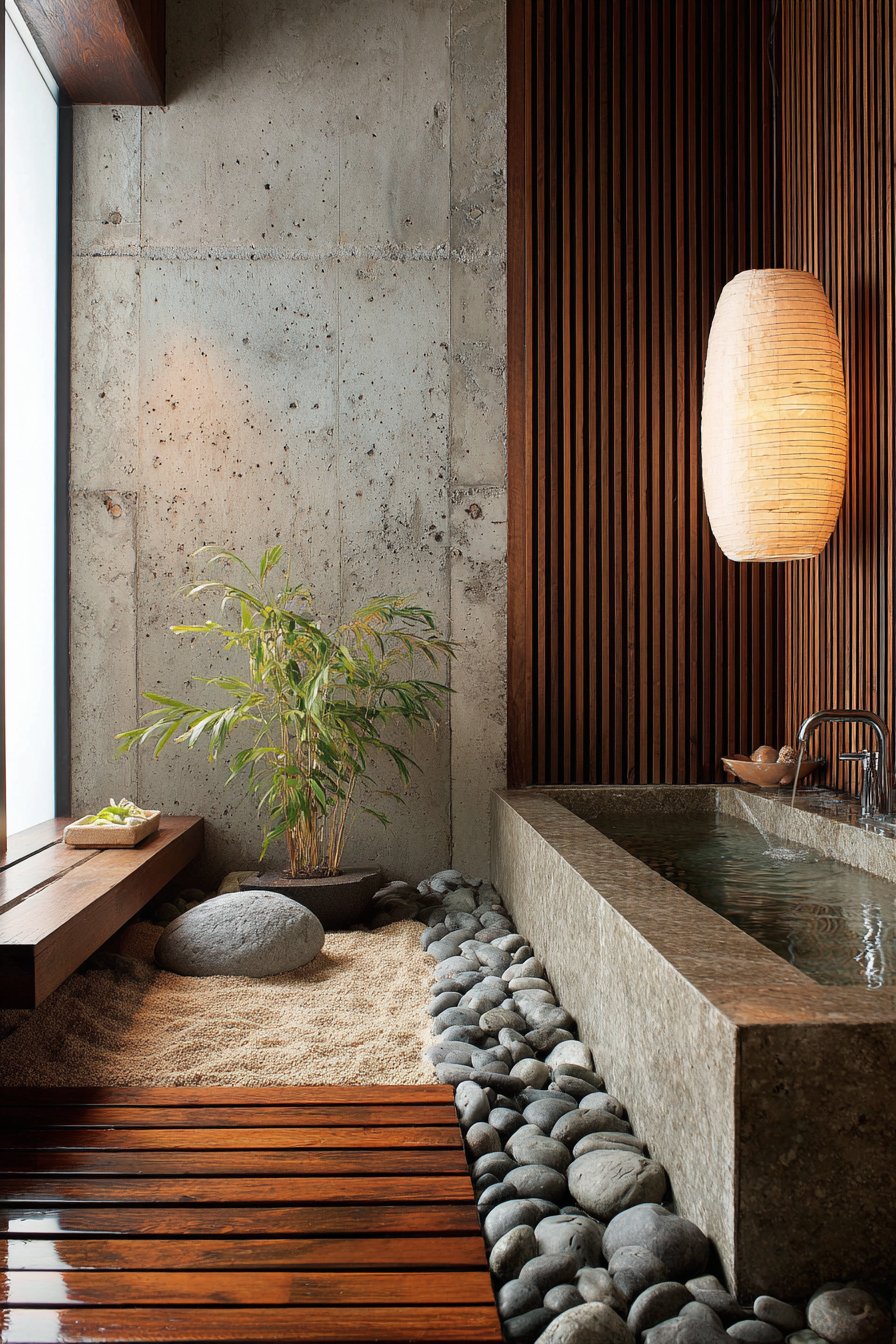
A bamboo plant in simple container adds vertical greenery without overwhelming the minimalist composition. Soft diffused lighting from a paper lantern creates tranquil atmosphere and gentle illumination.
The diffused light enhances the wood grain detail without harsh shadows or glare. Water reflections dance across the cedar walls, creating ever-changing light patterns. This serene design celebrates Japanese bathing culture while integrating organic materials throughout.
Key Design Tips:
- Choose hinoki cypress for soaking tubs to enjoy aromatic properties and traditional authenticity
- Surround tubs with river rocks set in concrete for organic integration
- Install cedar slat walls for vertical texture and additional natural fragrance
- Use minimalist chrome fixtures to maintain clean lines in natural bathroom designs
- Create small zen gardens on shelves for meditative focal points
- Select paper lanterns for soft diffused lighting that creates tranquil atmospheres
- Design sunken tubs for immersive bathing experiences inspired by Japanese culture
9. River Stone Vessel Sink with Three-Dimensional Cork Tiles
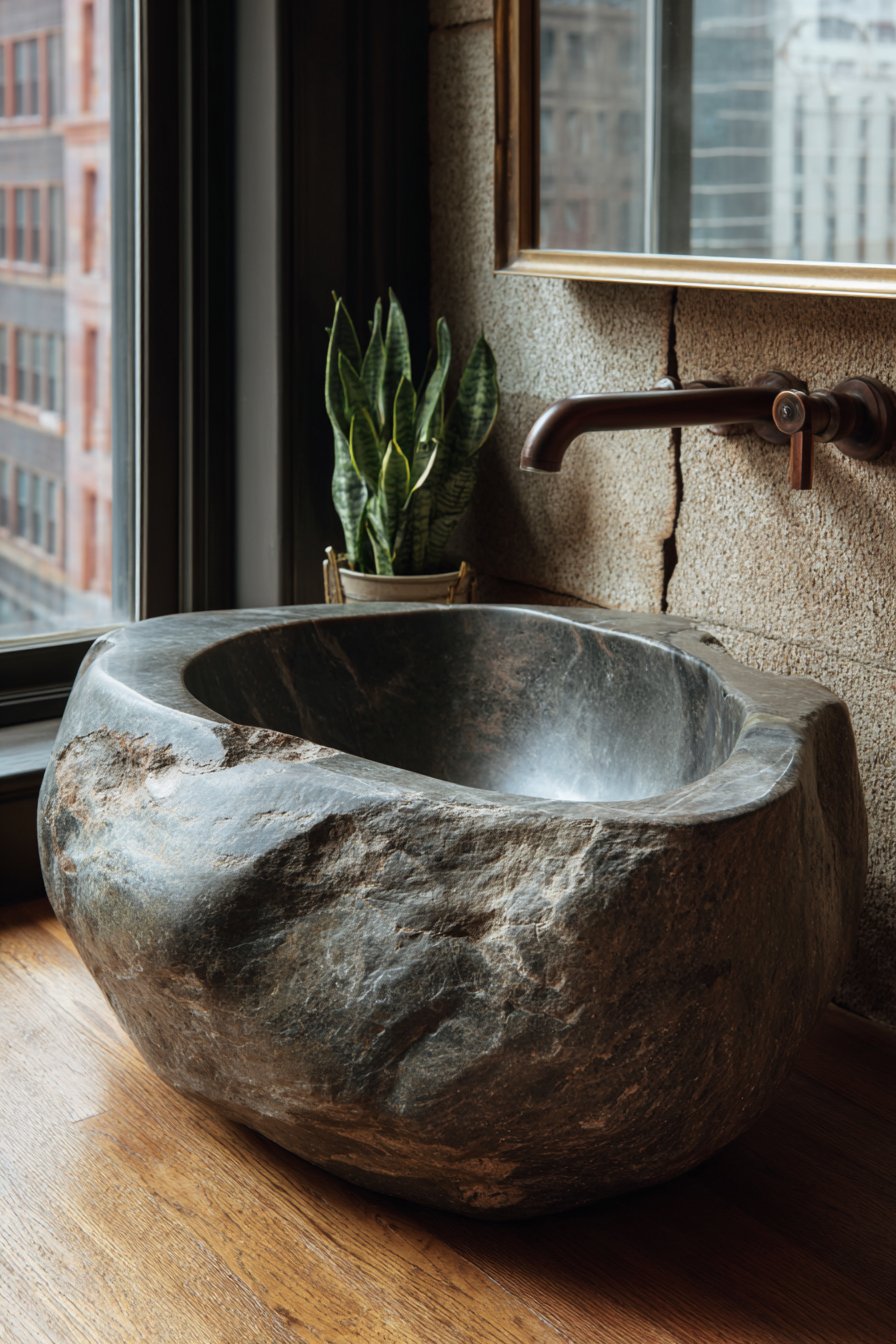
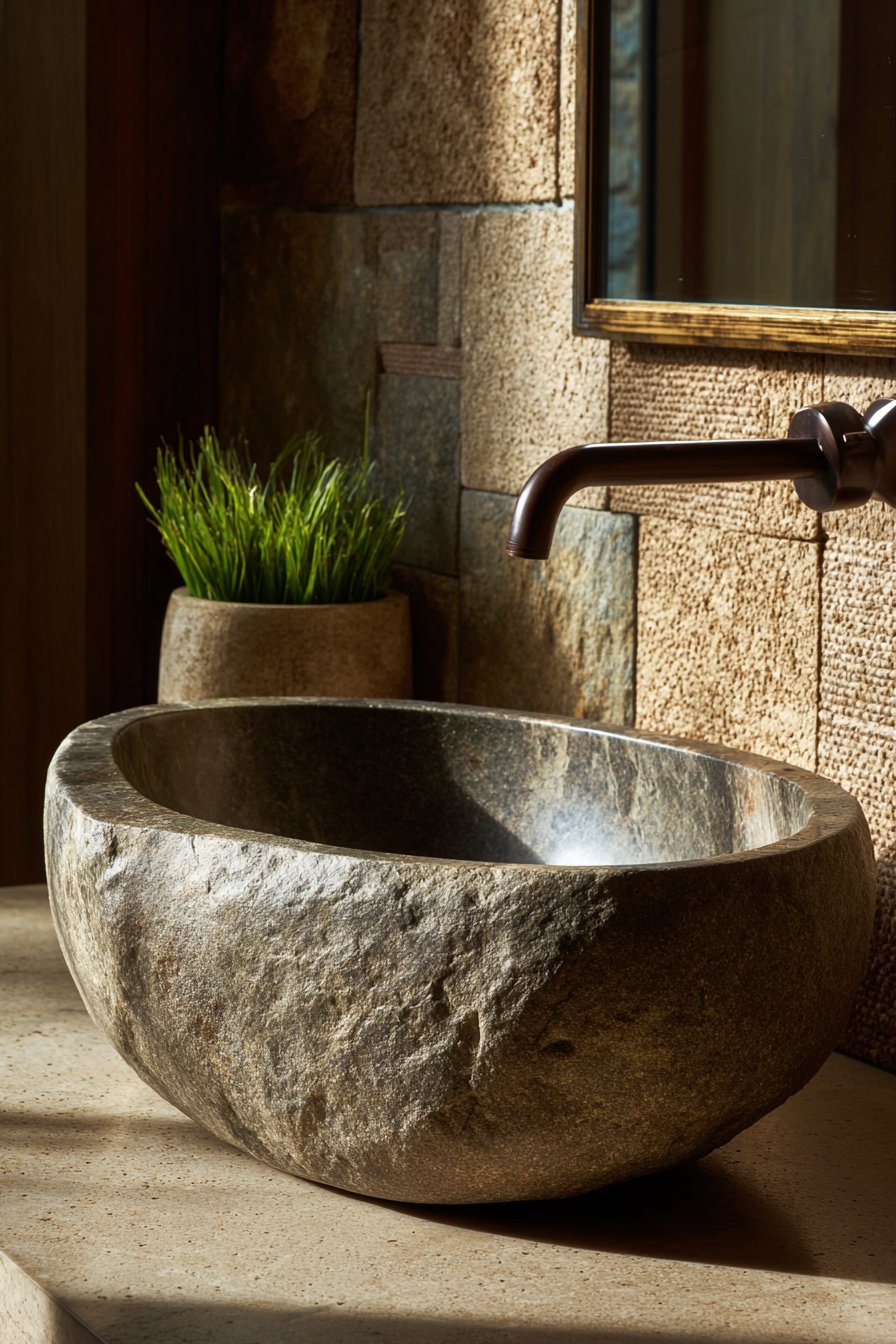
The powder room showcases a vessel sink carved from a single piece of polished river stone. The grey-brown tones feature organic shape and natural surface variations unique to this particular stone.
Each curve and color shift occurred naturally over thousands of years of water erosion. The polished surface reveals the stone’s internal patterns while maintaining smooth tactile appeal. This sculptural sink becomes functional art that anchors the small space.
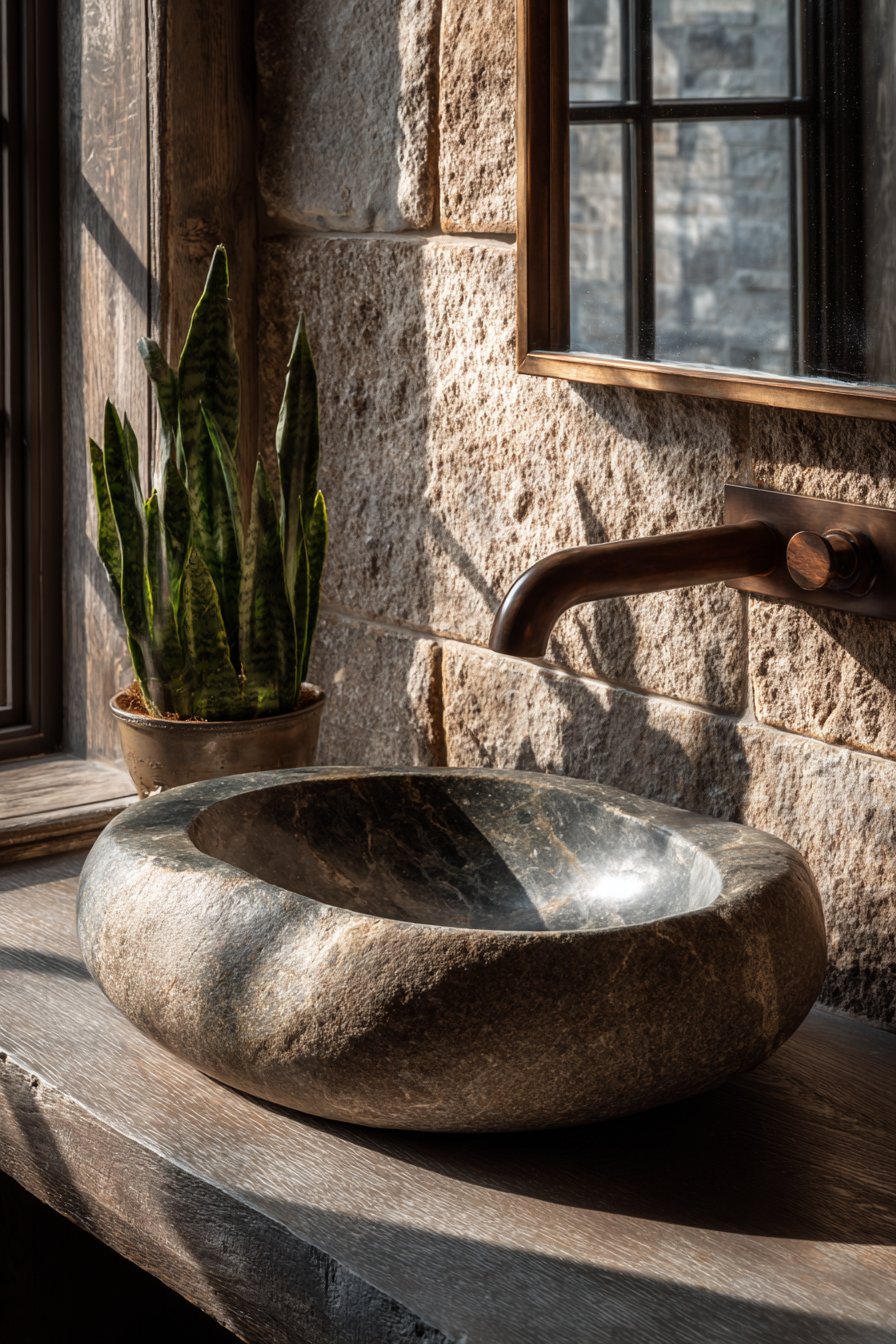
A wall-mounted wooden faucet in dark walnut finish provides striking contrast against the lighter stone. The unusual wooden faucet material adds unexpected organic texture while maintaining full functionality. The accent wall features three-dimensional textured cork tiles in natural tan creating subtle geometric patterns.
The cork’s sustainable harvest process and natural acoustic properties make it both eco-friendly and practical. The dimensional tiles cast small shadows that add depth to the compact powder room.
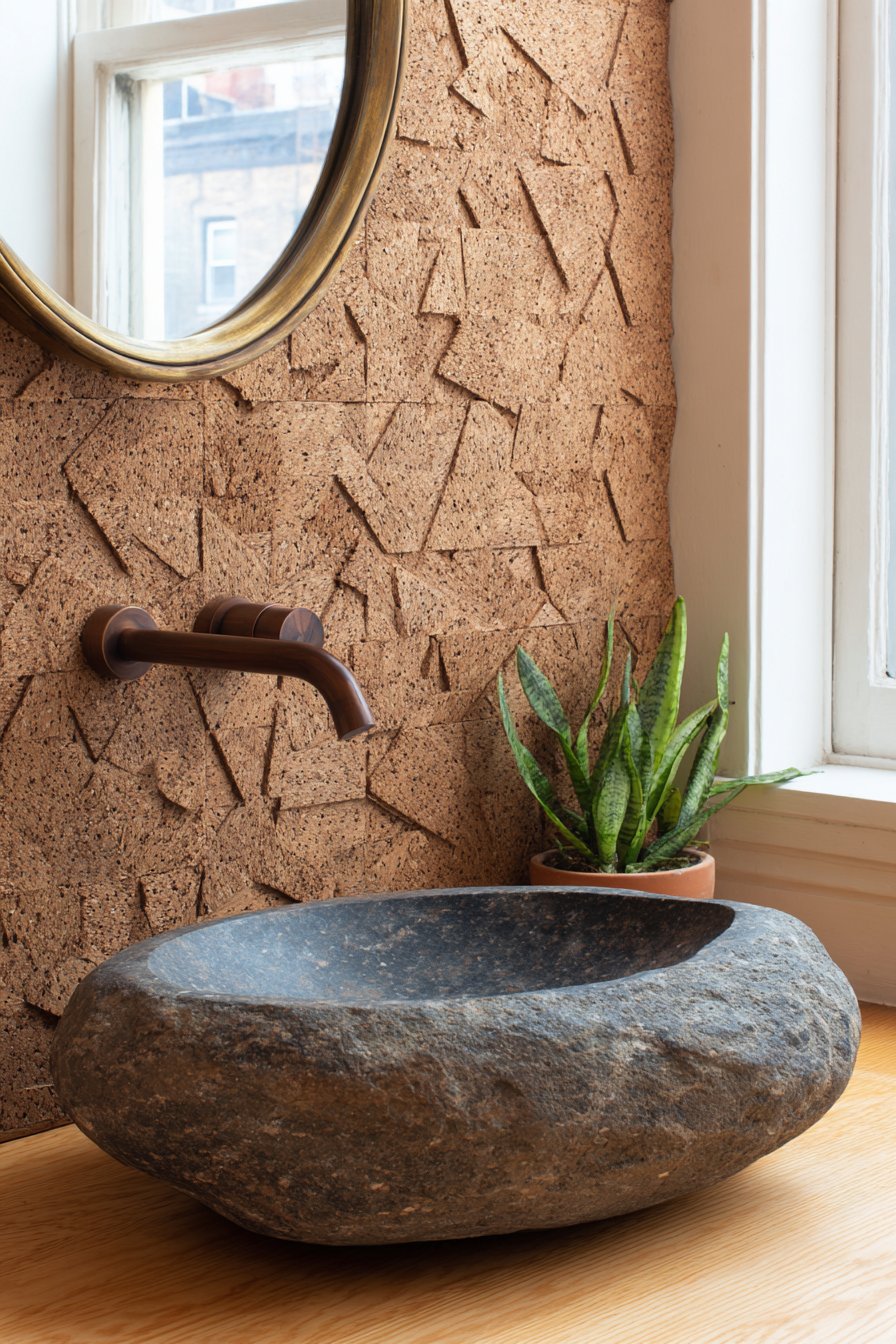
A vintage brass mirror with aged patina reflects the organic materials while adding metallic warmth. A small potted snake plant completes the vignette, its upright form adding vertical interest. The snake plant thrives with minimal light and water, perfect for powder room conditions.
Close-up interior photography would highlight the tactile stone texture and cork pattern detail. The interplay of organic materials under soft natural window light creates an intimate, jewel-box atmosphere.
Key Design Tips:
- Choose vessel sinks carved from single river stones for sculptural focal points
- Install wooden faucets for unexpected organic texture and unique design elements
- Use three-dimensional cork tiles to add sustainable texture and acoustic benefits
- Select dark wood faucets to create contrast against lighter stone sink surfaces
- Incorporate vintage brass mirrors for aged patina and warm metallic accents
- Add low-maintenance plants like snake plants in powder rooms with limited light
- Embrace natural surface variations in stone for authentic organic character
10. Exposed Beam Bathroom with Living Wall and Copper Tub
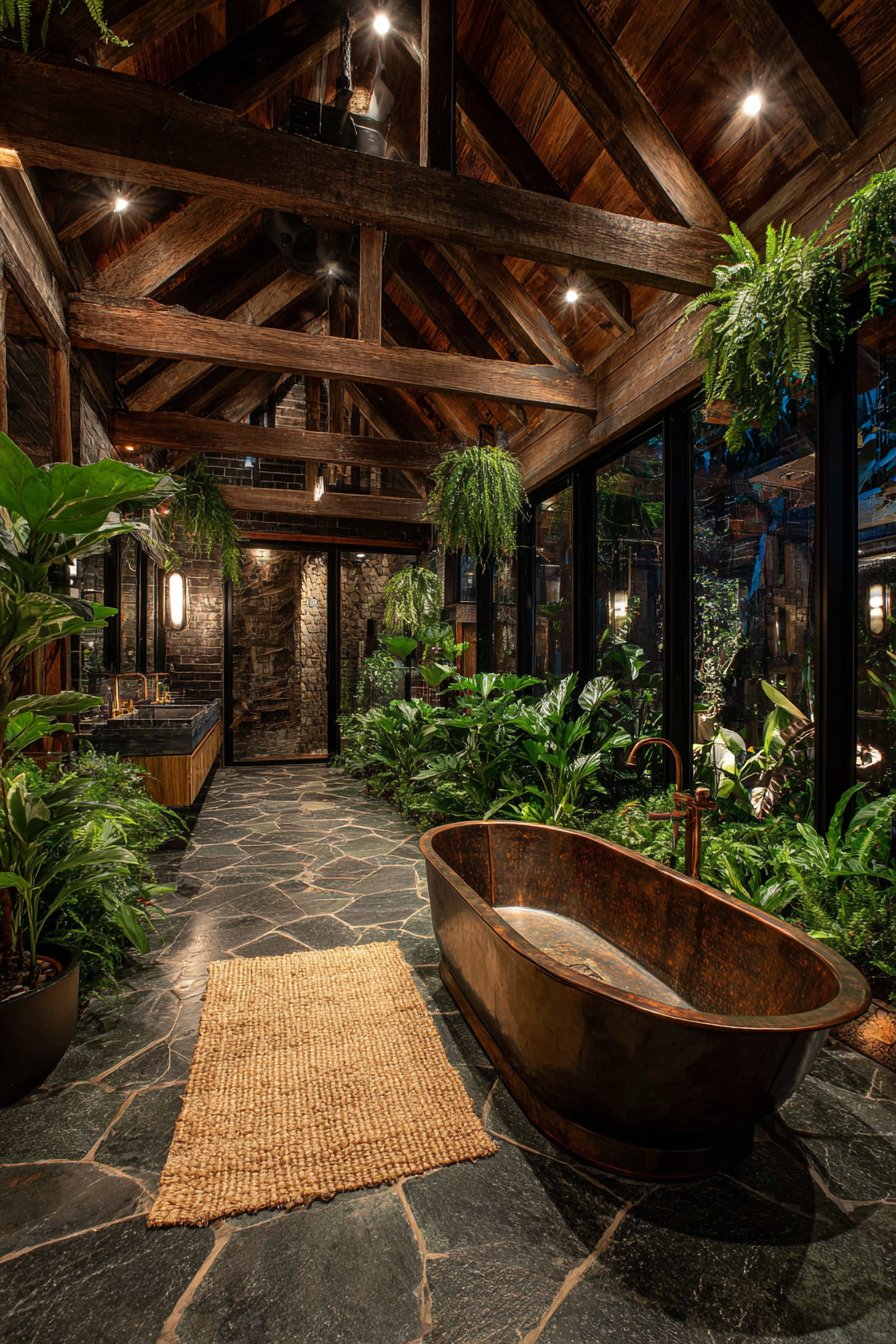
Exposed wooden ceiling beams in aged oak create architectural drama overhead. The beams show authentic character marks and natural darkening that develop over decades. These structural elements add rustic charm while drawing the eye upward to appreciate the room’s full volume. The aged oak’s rich patina cannot be replicated, making each beam unique. The horizontal lines create visual rhythm across the ceiling plane.
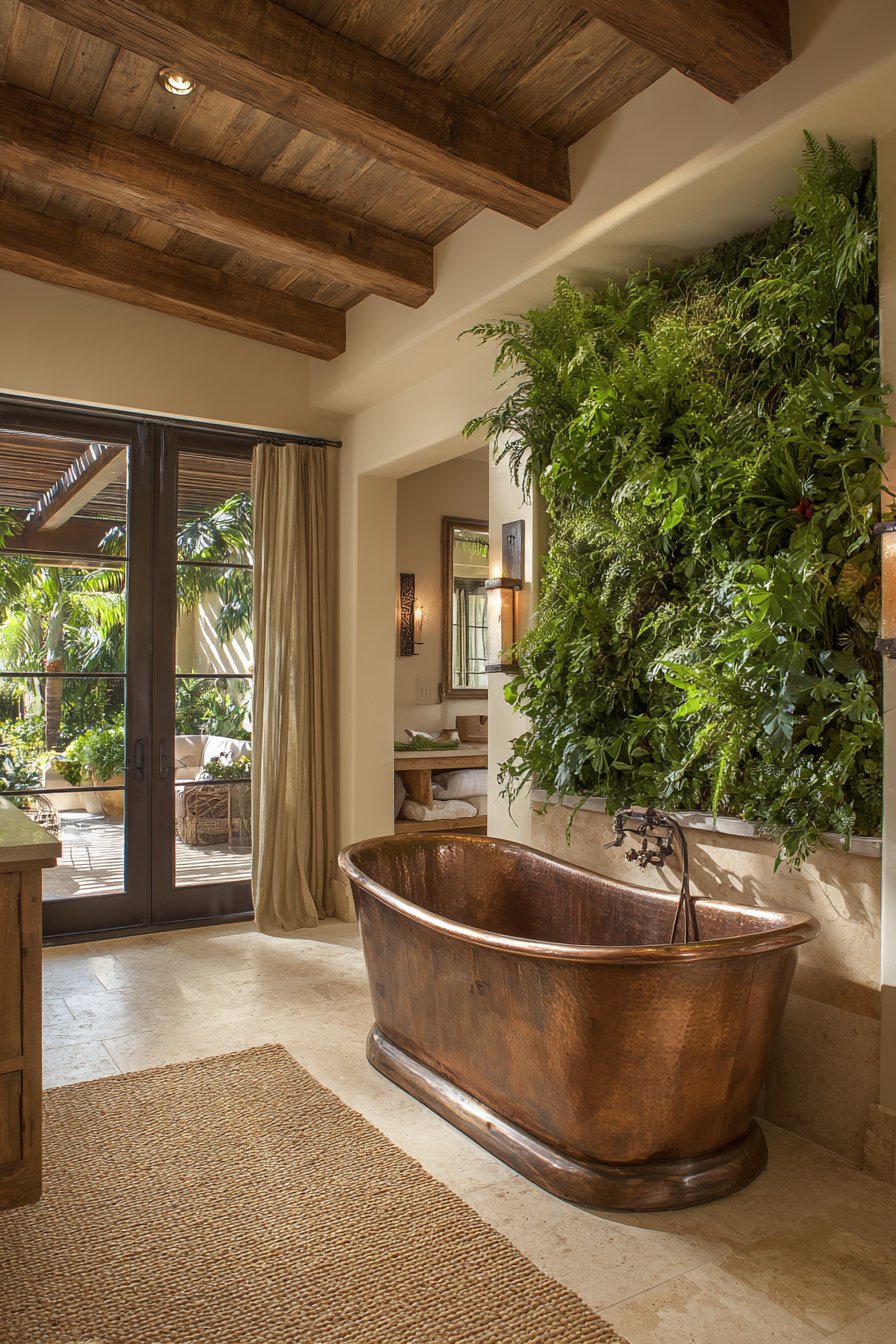
A large picture window frames the garden view while flooding the space with abundant natural light. The window creates seamless indoor-outdoor connection, bringing nature into the bathing experience. A freestanding copper bathtub with natural patina development stands proudly on honed limestone flooring.
The copper’s living finish evolves over time, developing unique green and brown tones. The irregular cut limestone edges maintain organic authenticity while providing durable flooring.
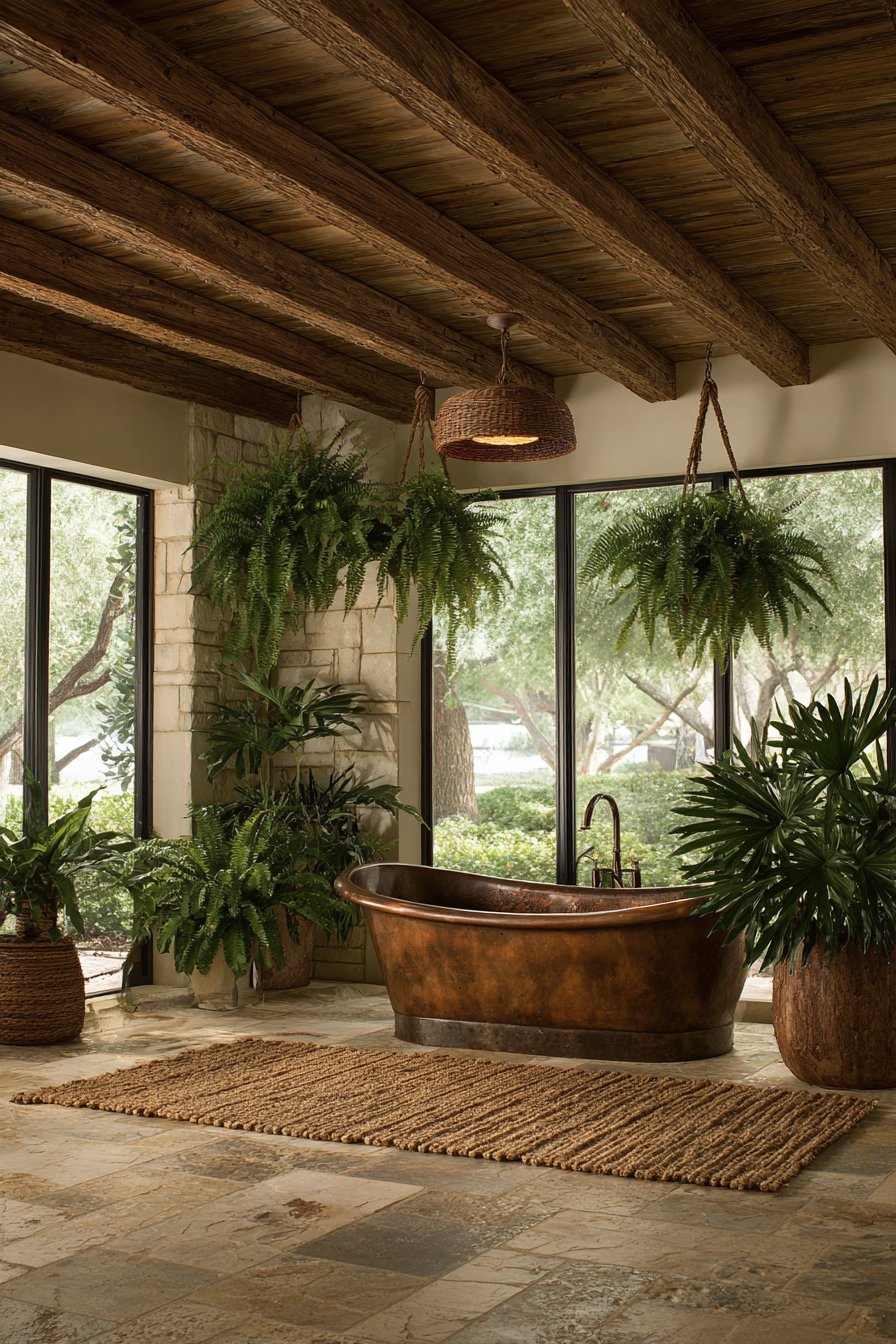
A living wall feature with assorted ferns and tropical plants creates a dramatic vertical garden. The green wall improves air quality while making a bold biophilic design statement. Various plant textures from delicate ferns to broad tropical leaves create visual richness.
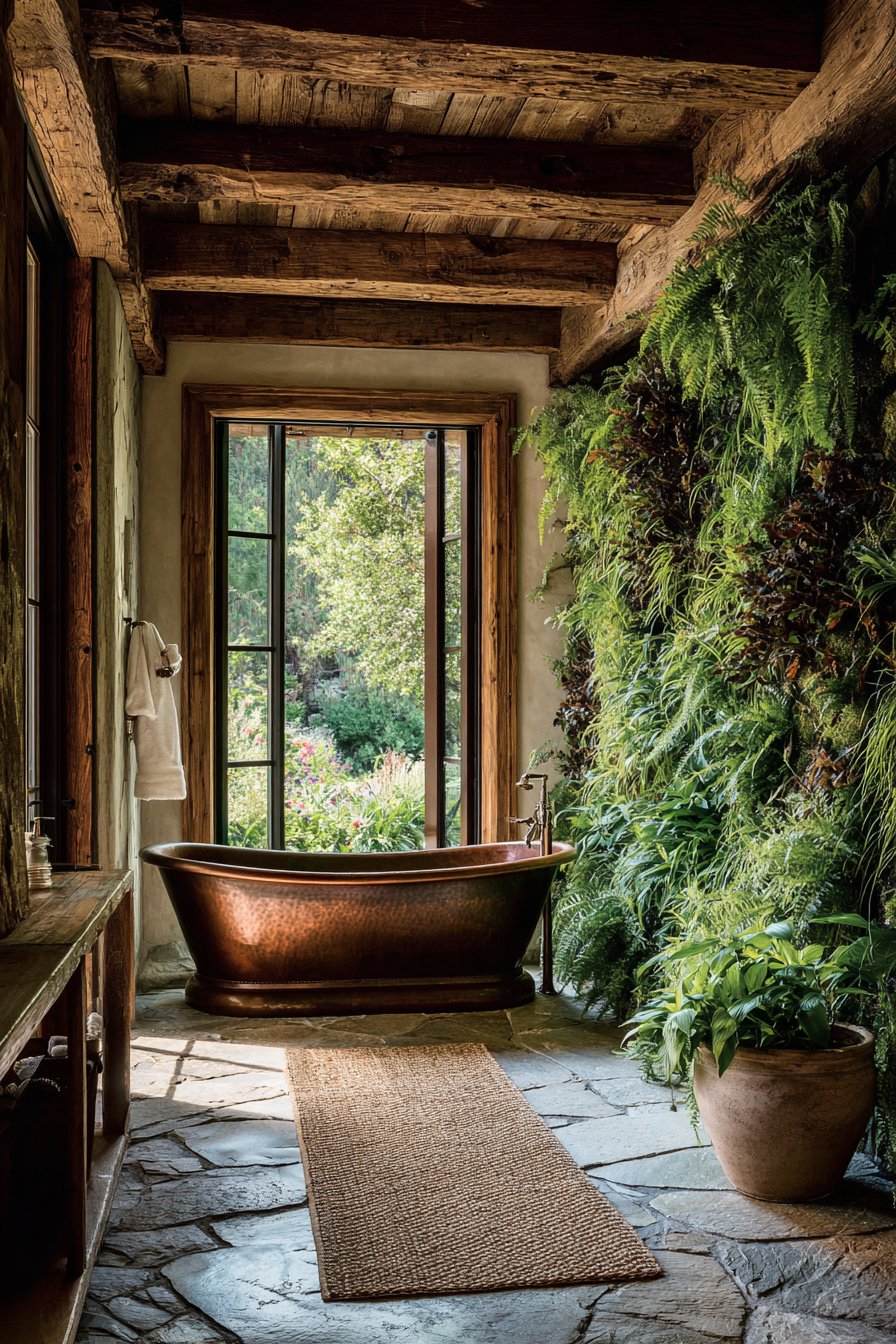
A woven jute area rug adds soft texture beneath bare feet while defining the tub zone. The harmonious integration of indoor-outdoor elements creates a bathroom that feels like a natural sanctuary.
Key Design Tips:
- Expose wooden ceiling beams to add architectural interest and rustic character
- Install large picture windows to frame views and flood bathrooms with natural light
- Choose copper bathtubs for living finishes that develop unique patina over time
- Use honed limestone with irregular edges for organic flooring authenticity
- Create living walls with mixed plants for dramatic vertical gardens indoors
- Add jute rugs for soft natural texture that defines functional zones
- Embrace indoor-outdoor design integration for seamless nature connection
Why These Natural Bathroom Designs Excel
These ten natural bathroom concepts represent the finest approaches to organic interior design for several compelling reasons. Each design prioritizes authentic materials over synthetic alternatives, creating spaces with genuine character and warmth. Natural materials like teak, walnut, bamboo, marble, and various stones bring unique grain patterns, color variations, and textures that manufactured products cannot replicate. The inherent imperfections and variations in organic materials add visual interest and ensure no two bathrooms look identical.
Sustainability remains a central consideration across these natural bathroom designs. Reclaimed barn wood, bamboo paneling, cork tiles, and responsibly sourced stones minimize environmental impact while delivering exceptional aesthetic results. These eco-friendly material choices appeal to environmentally conscious homeowners seeking to reduce their carbon footprint. Natural materials often improve with age rather than deteriorating, developing beautiful patinas that add character over time. Copper tubs oxidize naturally, teak develops silvery tones, and wood surfaces gain rich depth through years of use.
The biophilic design elements incorporated throughout these bathrooms support wellness and mental health. Living plants, natural light, organic textures, and nature-inspired color palettes create calming environments that reduce stress. Research consistently shows that connection with natural elements improves mood, productivity, and overall wellbeing. These bathroom designs transform utilitarian spaces into restorative sanctuaries that nurture both body and mind. The sensory richness of natural materials—the feel of smooth river stones, the scent of cedar and hinoki wood, the visual beauty of wood grain—engages multiple senses simultaneously.
Timeless appeal distinguishes these natural bathroom concepts from trendy designs that quickly feel dated. Organic materials and earth-tone palettes transcend temporary fashion, remaining beautiful for decades. While specific fixture styles may evolve, the fundamental approach of celebrating natural materials endures. These designs honor traditional craftsmanship and material authenticity while incorporating modern functionality. The integration of spa-like elements—soaking tubs, rain showers, natural lighting—elevates daily routines into self-care rituals.
Versatility allows these natural bathroom approaches to adapt to various architectural styles and personal preferences. The Japanese-inspired hinoki tub suits minimalist modern homes, while reclaimed barn wood vanities complement farmhouse aesthetics. River stone elements work equally well in rustic cabins and contemporary urban apartments. The common thread of natural materials provides cohesion while allowing individual expression through specific material selections and compositions. Homeowners can scale these concepts from powder rooms to master bathrooms, adjusting material quantities and complexities to suit available space and budget.
Textural layering creates depth and visual interest that flat, uniform surfaces cannot achieve. Combining smooth marble with rough slate, polished river stone with woven rattan, and sleek glass with weathered wood produces rich, multidimensional spaces. These textural contrasts prevent monotony while maintaining cohesive natural themes. The interplay between different surface treatments catches light in varied ways throughout the day, ensuring the bathroom never feels static or boring. This sophisticated layering demonstrates design expertise that elevates bathrooms beyond basic functionality.
Natural light integration maximizes the beauty of organic materials while reducing energy consumption. Skylights, large windows, and frosted glass bring illumination while maintaining privacy. Natural light reveals the true colors and textures of wood, stone, and plants in ways artificial lighting cannot replicate. The changing quality of daylight throughout the day adds dynamic variation to the bathroom atmosphere. Strategic window placement frames outdoor views, further strengthening the connection between interior and exterior natural elements.
These natural bathroom designs prove that sustainability and luxury coexist harmoniously. Previously, eco-friendly design often meant compromising aesthetics, but these concepts demonstrate that organic materials create the most beautiful, desirable spaces. The investment in quality natural materials pays dividends through longevity, timeless appeal, and daily enjoyment. As homeowners increasingly prioritize wellness, sustainability, and authentic experiences, natural bathroom design continues gaining popularity and relevance in contemporary interior design discourse.
Conclusion
Natural bathroom design offers a compelling alternative to sterile, synthetic spaces that dominate conventional approaches. By embracing organic materials like wood, stone, bamboo, and cork, we create bathrooms that feel warm, authentic, and deeply connected to nature. These ten design concepts demonstrate the remarkable versatility of natural materials and their ability to create distinctive, memorable spaces. From minimalist Japanese soaking tubs to rustic reclaimed wood vanities, each approach celebrates the inherent beauty of organic elements.
The key takeaways emphasize selecting quality natural materials that age gracefully, incorporating living plants for biophilic benefits, and layering varied textures for visual richness. Sustainability should guide material choices without compromising aesthetic goals. Natural light deserves priority in bathroom design, revealing the true beauty of organic materials while reducing energy needs. These principles apply equally to complete renovations and incremental updates that gradually transform existing bathrooms.
Experiment with these natural bathroom ideas in your own home, starting with manageable projects like adding plants, installing wooden shelving, or introducing river stone accents. Even small changes toward natural materials create noticeable improvements in atmosphere and daily experience. As you incorporate organic elements, you’ll discover how these timeless materials transform ordinary bathrooms into personal sanctuaries that nurture wellbeing and celebrate nature’s enduring beauty.
